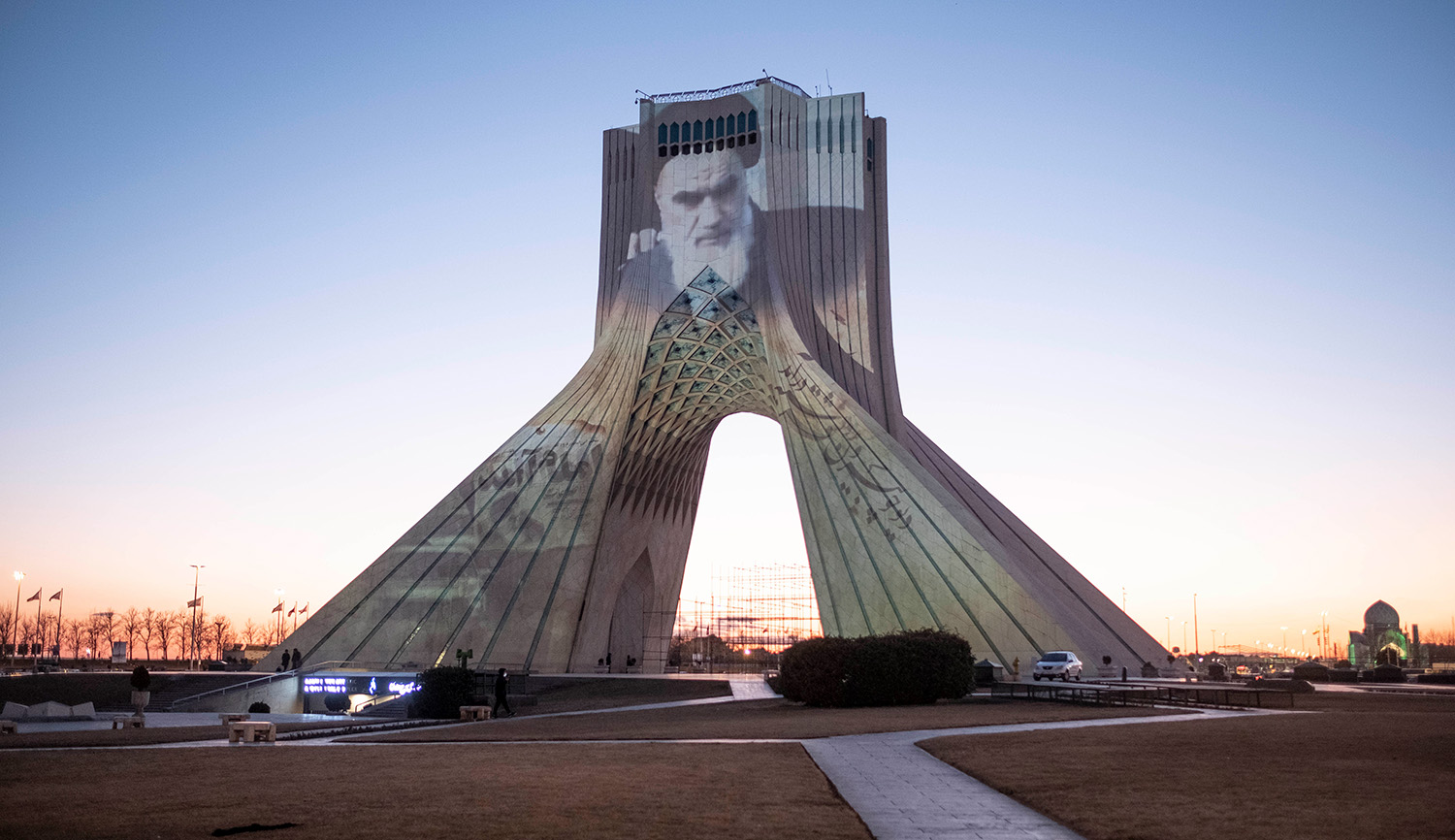
Feints, refrains and unfinished business. 2025 in review

And we are here as on a darkling plain
Swept with confused alarms of struggle and flight,
Where ignorant armies clash by night.
Mathew Arnold, Dover Beach

We called 2024 a “year of everything, everywhere, all at once”, and it earned the name. Crises collided, news arrived faster than we could process it, and the world seemed to exist in a state of constant shock. 2025 did not bring relief. Instead, the chaos began to settle. Wars dragged on, political divides hardened, social tensions deepened, and technology reshaped how we saw and understood it all.

It was the year the world stopped exploding in real time and started being what it had already become: messy, uneven, morally complicated, and stubbornly persistent. A year, indeed, in a world of echoes, refrains and unfinished business. And we spent the year watching power bargain brazenly in plain sight, trying to describe what was happening while it unfolded around us.

From Gaza to Ukraine, Sudan to Syria, from America’s self-inflicted fracture to Australia’s sudden wake-up call on Bondi Bondi, 2025 forced a reckoning: the world did not pause, but it did sort itself – deciding what we would notice, what we would ignore, and what we would learn to live with. Alongside human crises came the continuing advance of AI and chatbots, and the dominion of the algorithms that now govern attention, proving that disruption can be structural as well as geopolitical.

Gaza: War, Then “Ceasefire”

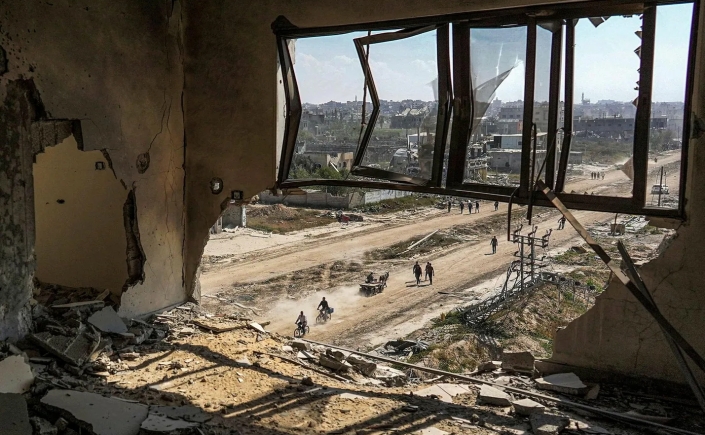
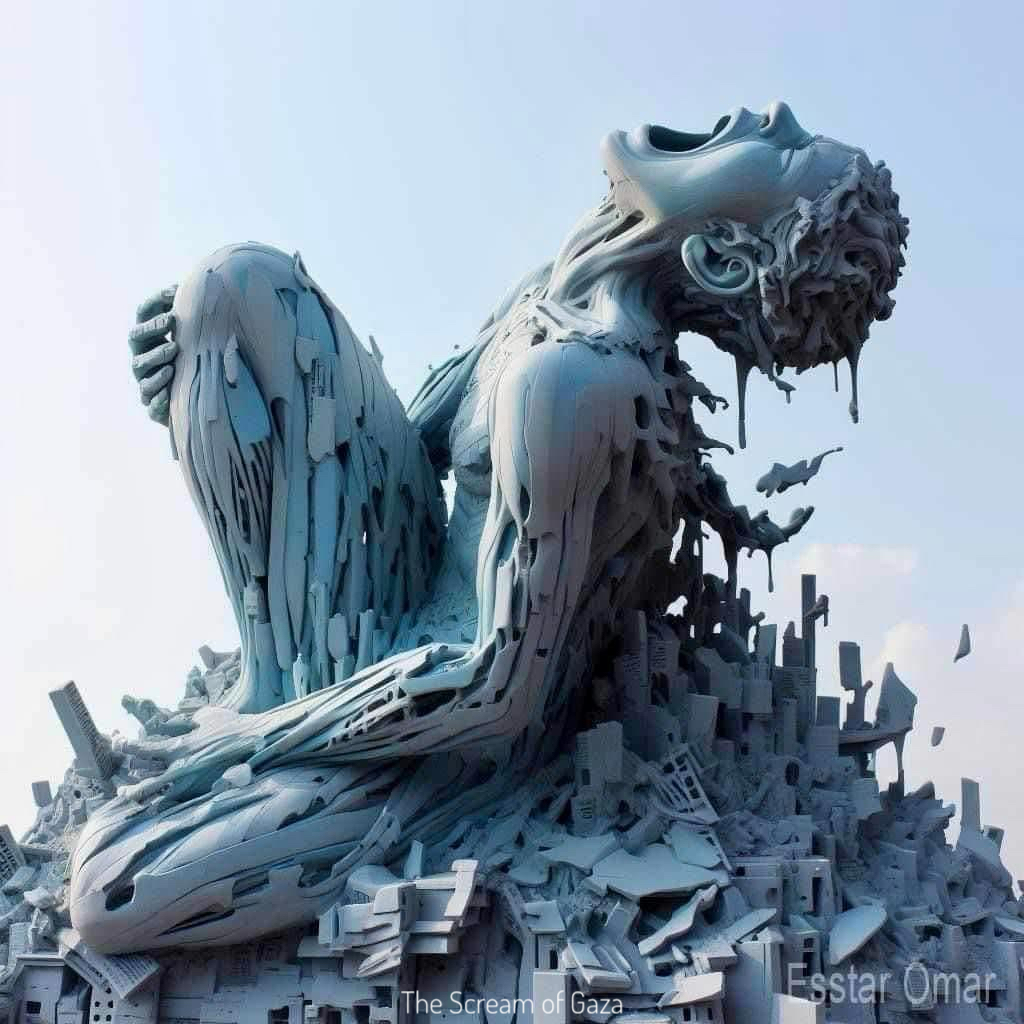
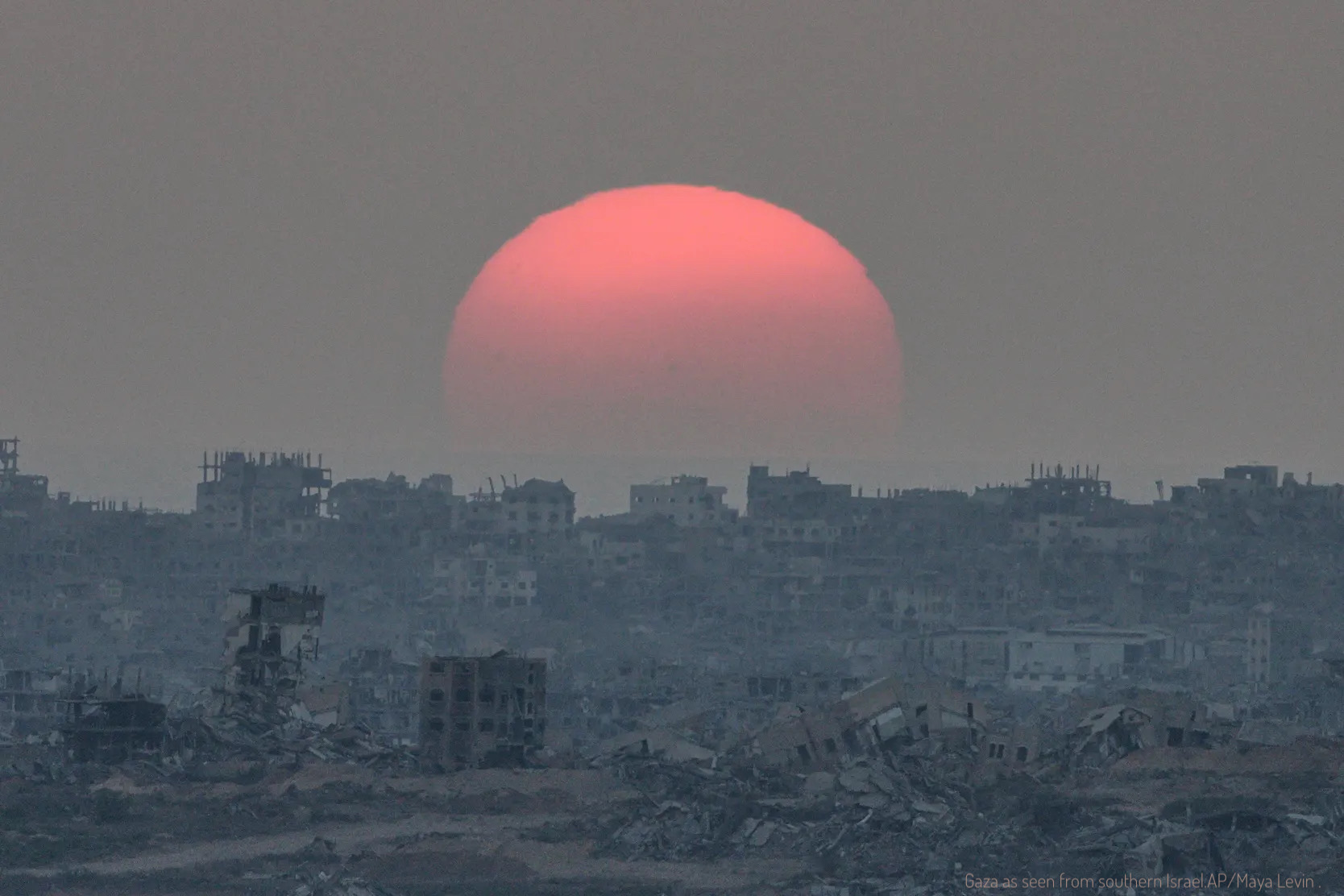
The war in Gaza dominated the year internationally and here in Australia, even as attention ebbed and flowed. Military operations continued for months, followed eventually by a “ceasefire” – a word doing far more work than it should or even justified. Fighting paused, hostages living and dead were returned and prisoners released, but the devastation remained: tens of thousands dead, cities demolished, humanitarian catastrophe unresolved. And the causes of the consequences standing still amidst the ruins and the rubble.

Western governments continued to back Israel while expressing concern for civilians, a contradiction that grew harder to defend, while street protests and online anger seethed all across the world. At the same time, antisemitism surged globally, often hiding behind the language of anti-Zionism. Two realities existed together, and too many people insisted on choosing only one.

By the end of the year, the war had not been resolved – merely frozen. Trust in Western moral leadership had been badly damaged, and Israelis and Palestinians remain in bitter limbo.

See Gaza sunrise or false dawn? Spectacle or Strategy
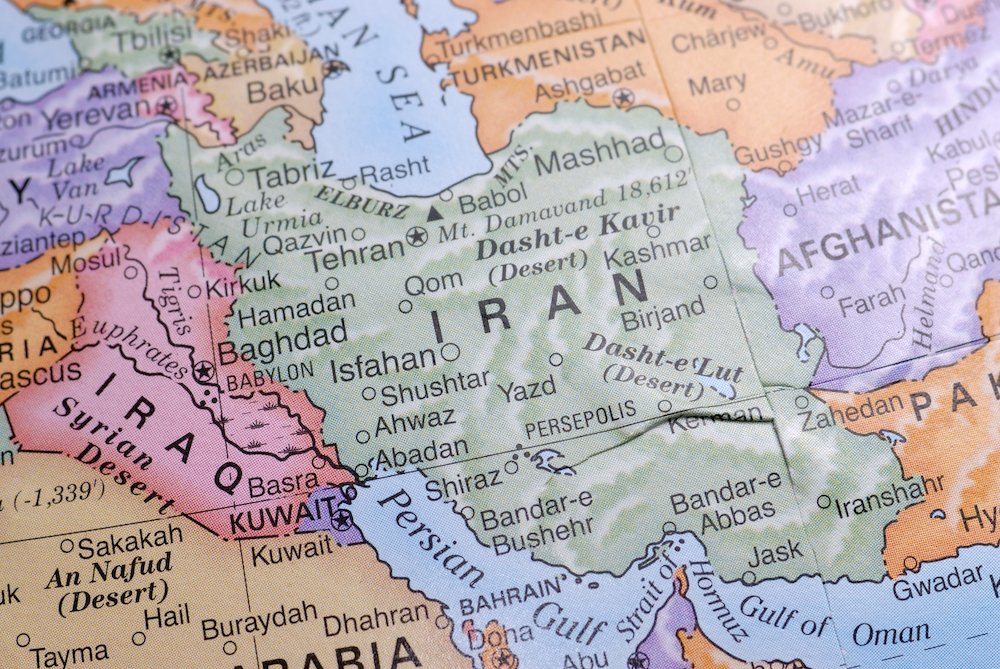
Iran, Israel and America’s bunker busters

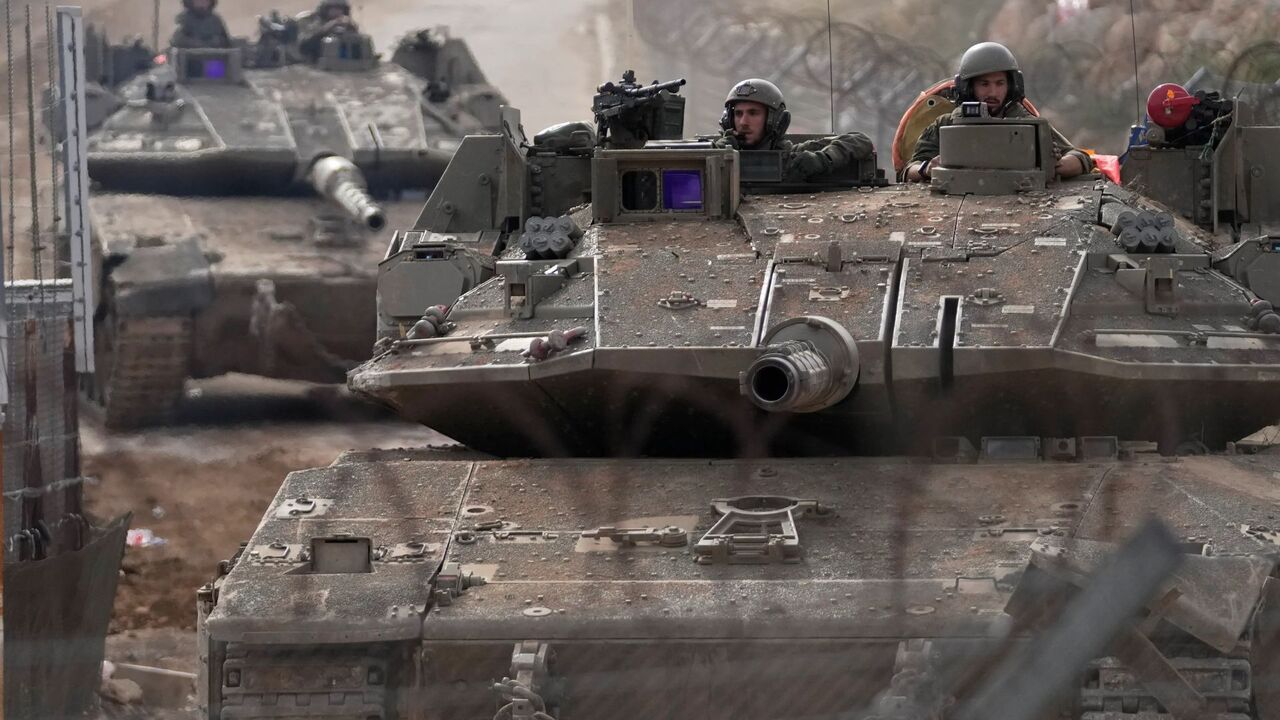
Long-simmering tensions between Israel and Iran spilled into open conflict. What had once been indirect – proxies, cyberattacks, covert strikes – became visible. A brief but destructive war of missile exchanges ended with the United States asserting ordinance, deterrence and control.

The episode was brief but telling. It showed that America still reaches for its guns quickly, even as it struggles to define long-term goals. Another line was crossed, then quickly absorbed into the background of “normal” geopolitics.

Russia, Ukraine and Trump’s “Peace”

Ukraine entered 2025 mired in stalemate. Front lines barely moved. Casualties continued to mount. Western support held, but with clear signs of fatigue. And Donald Trump’s re-emergence reshaped the conversation. His promise to deliver instant “peace” reframed the war not as a question of justice or sovereignty, but of exhaustion. Peace was no longer about what Ukraine deserved, but about what the world was tired of sustaining and what the “art of the deal” could deliver.

The war didn’t end. It simply became something many wanted to stop thinking about. Not Ukraine and Russia, but. The carnage continues.

Donald Trump’s one-way crush on Vladimir gave us the one of the+most cringeworthy moments in global politics – Trump greeting the Russian president in Alaska: As the US president rolled out the red carpet for the world’s most dangerous autocrat, Russia’s attack on Ukraine accelerated. Trump got precisely nothing out of the meeting, except for the chance to hang out with a gangster he so obviously admires and of whom he is embarrassingly in awe.

Syria: Free, but stranded at the crossroads

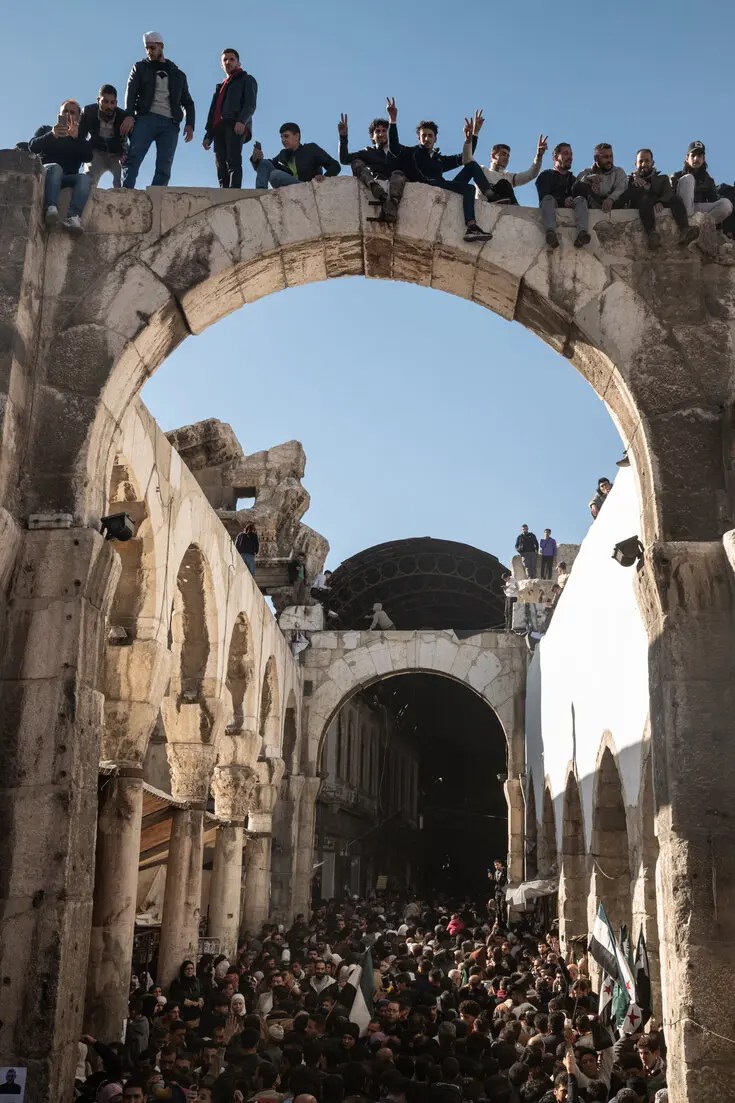
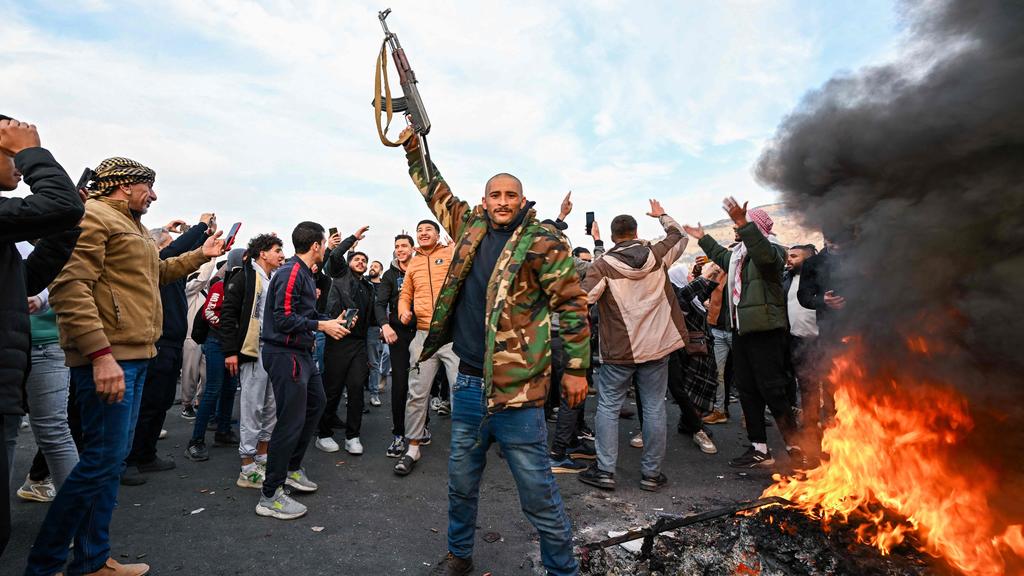
A year after Assad’s fall, Syria remained unstable and unresolved. The regime was gone, but the future was unclear. Old sectarian tensions resurfaced, often in bloodshed, new power struggles emerged, powerful neighbours staked claims and  justice for past crimes remained distant.

Syria in 2025 was neither a success story nor a collapse – but suspended between heaven and hell, a country trying to exist after catastrophe with the rest of the world largely moving on.

See Between heaven and hell … Syria at the Crossroads
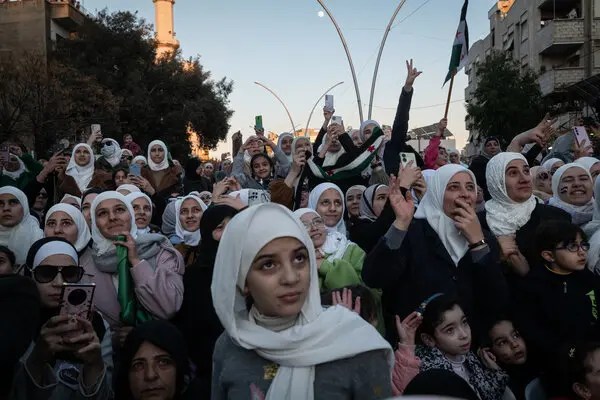
Women in Damascus celebrate the fall of the Assad regime

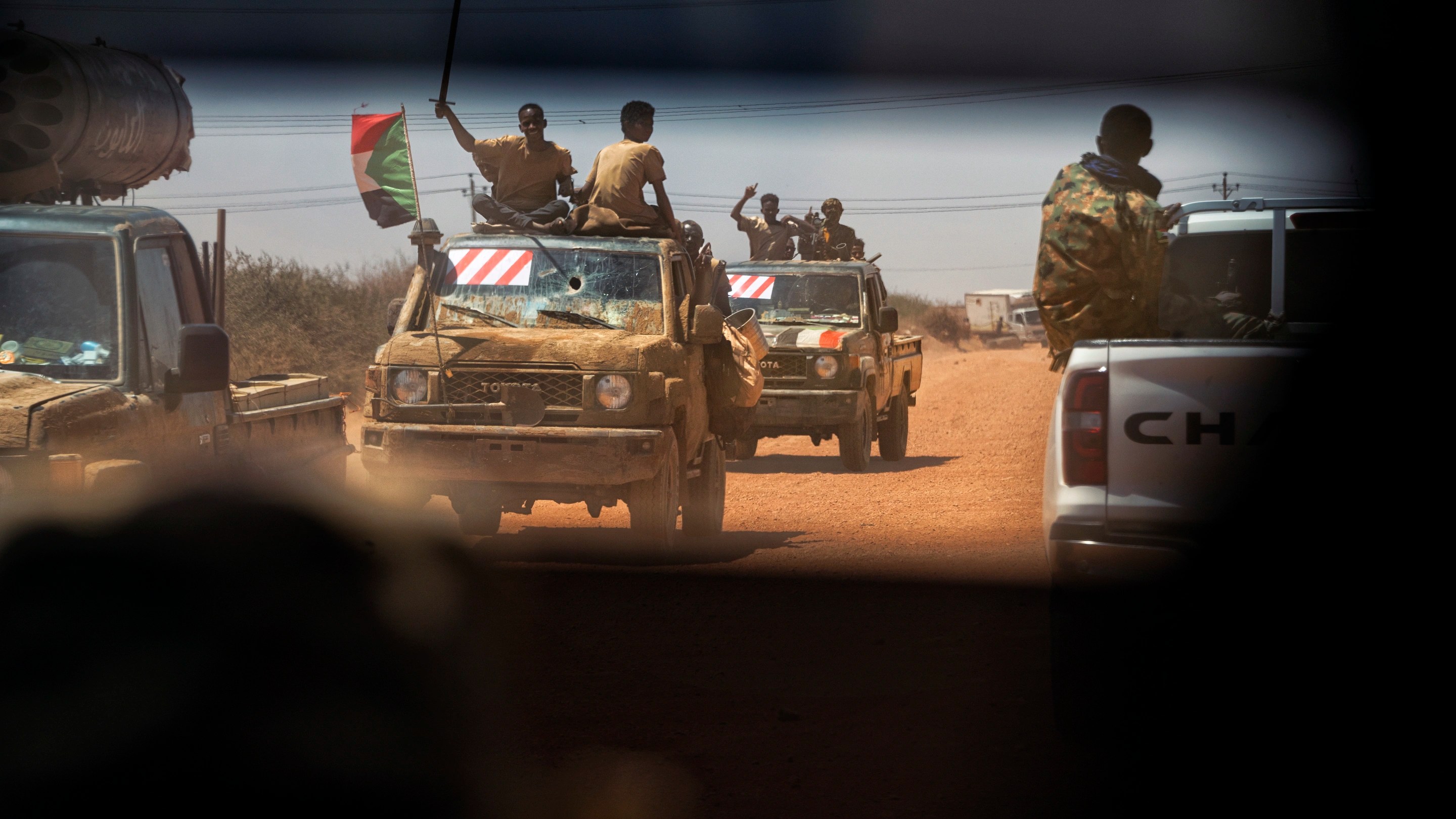
Sudan: what genocide actually looks like

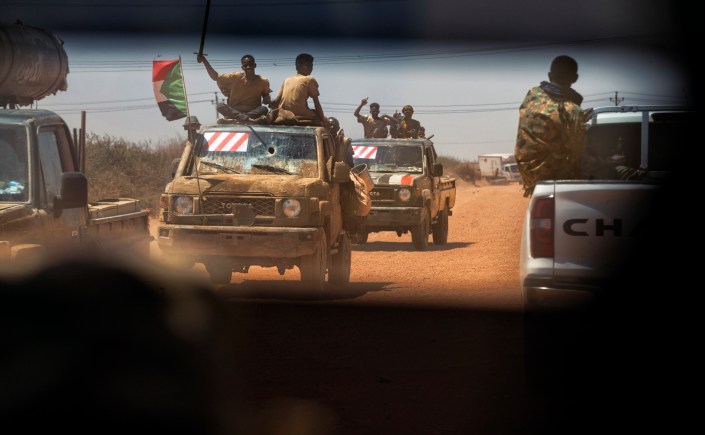
Sudan’s civil war continued with little international attention. Mass killing, ethnic cleansing, famine, and displacement unfolded slowly and relentlessly. This was genocide without spectacle. No clear narrative. No sustained outrage. It showed how mass atrocity can now occur not in secrecy, but in plain sight – and still be ignored.

see The most nihilistic war ever …Sudan’s waking nightmare
America: a country divided against itself

The United States spent 2025 deeply divided, with no sign of healing. Pew Research polling showed that seven out of ten republicans think that the opposite side is immoral while six of ten democrats thinks the same of their rivals.

Trump’s return to power sharpened those divisions. His administration governed aggressively: mass deportations, punitive tariffs, the dismantling of foreign aid, political retribution, and pressure on democratic institutions. The country looked inward and outward at the same time – less cooperative, more transactional, more openly nationalist. Democratic norms eroded not overnight, but through constant stress and disregard. With three years still to run and the tell-tale midterms approaching, allies and cronies are adjusting, bickering rivals are taking notes, and uncertainty has become the defining feature of American leadership. Meanwhile, #47 is slapping his name on everything he can christen, from bitcoins to battleships.

See, for light relief, Danger Angel … the ballad of Laura Loomer 

Monroe Redux: the return of “the Ugly American”

US foreign policy took on a blunt, old-fashioned tone. Pressure on Canada and Mexico increased. Talk of annexing Greenland resurfaced. Venezuela, caught in the maw of Yanqui bullying and bluster, waits nervously for Washington’s next move. The administration promised imminent land operations – and then bombed Nigeria! The revival of the old Monroe Doctrine felt, as baseball wizz Yogi Berra once remarked, like déjà vu all over again, not as strategy, but as instinct. Influence asserted, consultation discarded. The “ugly American” was back, and unapologetic.

See Tales of Yankee power … Why Venezuela, and why now?

Europe at a inflection point

Europe in 2025 didn’t collapse, as many pundits suggested it might, but it shifted. Far-right ideas gained ground even where far-right parties didn’t win and remained, for now, on the fringes albeit closer to electoral success. Borders tightened; policies hardened; street protests proliferated – against immigration and against Israel, Support for Ukraine continued, but cautiously. The continent stood at a crossroads: still committed to liberal values in theory, but increasingly selective in practice.

Uncle Sam’s  cold-shoulder

Rumbling away in the background throughout year was the quiet but  cumulative alienation of America’s allies. Not with a single rupture, but through a thousand small slights. transactional diplomacy dressed up as realism, alliances treated as invoices rather than covenants, multilateralism dismissed as weakness. Europe learned that security guarantees come with a mood swing; the Middle East heard policy announced via spectacle; Asia watched reassurance coexist uneasily with unpredictability.

The new dispensation was illustrated by the Trump National Security Strategy. It is at once candid and contradictory: it outlines a narrower, realist vision of American interests, emphasising sovereignty, burden-sharing, industrial renewal, and strategic clarity, yet it is riddled with silences, evasions, and tensions between rhetoric and likely action. Allies are scolded for weakness while the document avoids naming Russia’s aggression, underplays China, and projects American cultural anxieties onto Europe. These contradictions expose both strategic incoherence and the limits of paper doctrine against presidential temperament, leaving Europe facing an irreversible rupture in trust and revealing a strategy as much about America’s insecurities as its actual global posture.

The post-WW2 order has not so much been dismantled as shrugged at, and indeed, shrugged off. Trust eroded not because the United States has withdrawn from the world, but because it has remained present without being reliable, and presumed itself to be in charge. Power, exercised loudly but inconsistently, has discovered an old truth: allies can endure disagreement, but they struggle with contempt.

Australia in 2025 … high flight and crash landing

Though beset by a multitude of crises – the cost of living, housing, health and education services – the Albanese Labor government was returned comfortably in May, helped by a divided, incoherent, and seemingly out of touch opposition. For the rest the year, federal politics felt strangely frictionless with policy drift passing for stability. The Coalition remained locked in internal conflict, unable to present a credible alternative. The Greens, chastened by electoral defeat and in many formerly friendly quarters, ideological disillusionment, treaded water.

But beneath the surface, social cohesion frayed. Immigration debates sharpened. Antisemitism rose noticeably, no longer something Australians could pretend belonged elsewhere. Attacks on Jewish Australians forced a reckoning many had avoided and hoped would resolve once the tremors of the war in Gaza had ameliorated. Until 6.47pm on 7th December, a beautiful evening on Sydney’s iconic Bondi Beach. Sudden, brutal and in our summer playground, sectarian violence shattered the sense of distance Australians often feel from global disorder. At that moment, politics stopped feeling abstract. The world, with all its instability, barged in and brought the country down to earth.

See This Is What It Looks Like

Lifesavers on Bondi Beach, 20 December 2025. Edwina Pickles

Featured photograph and above:

A handful of bodies on Bondi Beach, and behind them, the howling infinite of expectation, obligation, and the careful rationing of human empathy. The smallness of the beach against the vastness of consequences. On December 20, 2025, Bondi’s iconic lifesavers formed a line stretching the entire length of the beach -silent, solemn, a nation visibly in mourning. Similar tributes unfolded from Perth to Byron Bay, gestures of unity in the face of a shock that touched the whole country.

The Year of the Chatbot: Promise, Power, and Risk

And now, a break from the doom and gloom …

2025 was the year when artificial intelligence became part of daily life. Chatbots ceased to be experimental and became integral, transforming from novelty to utility seemingly overnight. People used it to write, research, translate, plan, argue, comfort, and persuade; institutions and individuals adopted it instinctively. Setting tone as much as content, the ‘bots have lowered barriers to knowledge, sharpened thinking, and helped people articulate ideas they might otherwise struggle to express. Used well, they amplified curiosity rather than replace it.

The opportunities are obvious – but so are the risks. Systems that can clarify complexity can also flatten it. Chatbots sound confident even when wrong, smooth over disagreement, and made language cleaner, calmer, and more persuasive – but not necessarily truer. They reinforce confirmation bias, outrage, and tribal certainty, generating arguments instantly and flooding the zone with plausible-sounding text. As information has became faster, cheaper, and less reliable, Certainty has spread more easily than truth, so truth has to work much harder.

Dependence is subtler but real. Outsourcing thinking – summaries instead of reading, answers instead of wrestling – did not make humans stupid, but less patient. Nuance, doubt, and slow understanding became harder to justify in a world optimised for speed. Yet conversely, man people still seek context, history, and complexity. Used deliberately, AI could slow the pace, map contradictions, and hold multiple truths at once.

By the end of 2025, the question was no longer whether AI would shape public life – it already had. The real question is whether humans would use it as a shortcut, or as a discipline. The technology is neutral. The danger – and the promise – lies in how much thinking we are willing to give up, and how much responsibility we are prepared to keep.

See The promise and the peril of ChatGPT 

Algorithm and blues

Alongside the chatbot sat a quieter, more insidious force: the algorithm itself. By 2025 it no longer simply organised information – it governed attention. What people saw, felt, and argued about was shaped less by importance than by engagement. To borrow from 20th century philosopher and communication theorist and educator Marshall McLuhan, the meme had become the message. Complex realities were compressed into images, slogans, clips, and talking points designed not to inform but to travel. The algorithm rewarded speed over reflection, certainty over doubt, heat over light. Politics, war, and grief were all flattened into content, stripped of context, and ranked by performance. What mattered most was not what was true or necessary, but what disseminated.

Passion without Wisdom

I wrote during the year that we seemed “full of passionate intensity” – Yeats’ phrase still apt in the twenty first century- but increasingly short on wisdom and insight. 2025 confirmed it. Anger was everywhere, empathy highly selective, certainty worn like armour. People felt deeply but thought narrowly. Moral energy surged but rarely slowed into understanding. The problem was not indifference; it was excess – too much feeling, too little reflection. In that environment, nuance looked like weakness and patience like complicity. What was missing was not information, but judgement – the harder work of holding contradiction, of resisting instant conclusions, of allowing complexity to temper conviction. Passion was abundant. Insight, increasingly rare.

Looking Toward 2026

Looking back on 2025, it seems that there  were no endings, neither happy or sad. Just a promise, it seems, of more of the same. The year didn’t solve anything. It clarified things. And if it clarified anything, it was that the world has grown adept at managing, ignoring, or absorbing what it cannot fix. It revealed a world adjusting to permanent instability. In this year of echoes, refrains, and unfinished sentences.

Passion, intensity, and outrage were abundant, but patience, wisdom, and insight remained scarce. Democracies strained under internal and external pressures. Wars lingered unresolved. Technology reshaped thought and attention.

Some argue that hope springs eternal, that yet, even amid the drift and the fractures, glimpses of understanding and resistance persisted, that although the world has settled into its chaos, we can be riders on the storm. But, I fear, 2026 arrives not as break, a failsafe, a safety valve, but as continuation. It looms as a test of endurance rather than transformation.  In my somnolent frame of mind, I’ve reached again for my Yeats. “Things fall apart; the centre cannot hold; mere anarchy is loosed upon the world, the blood-dimmed tide is loosed …”

After the chaos of 2024 and the hardening of 2025, the question is no longer what might go wrong. It’s what we’re prepared to live with.

And so we come to what In That Howling Infinite wrote in 2025.

What we wrote in 2025

It was a year that refused neat endings.

It began in a wasteland – Gaza as moral ground zero – and moved, restlessly, through revolutions real and imagined: Trump as symptom and accelerant, Putin as a man racing his own shadow, Syria forever at the crossroads where history idles and then accelerates without warning. Gaza returned, again and again, sunrise and false dawn, as spectacle and strategy; Sudan burned in near silence; Venezuela re-entered the frame as empire’s backyard as the US disinterred its Monrovian legacy. In That Howling Infinite featured pieces on each of these – several in many cases , twenty in all, plus a few of relevance to them, including an overview of journalist Robert Fisk’s last book (The Night of Power – Robert Fisk’s bitter epilogue). A broadranging historical piece written in the previous year and deferred, Modern history is built upon exodus and displacement, provided a corrective of sorts to the distorted narratives that have emerged in recent years due to a dearth of historical knowledge and the partisan weaponisation of words. 

It was almost as light relief that we turned to other subjects. Of particular interest was AI. Approaching remorselessly yet almost unrecognised in recent years, it banged a loud gong and crept from curiosity to condition, from tool to weather system, quietly rewriting the newsroom, the internet, and the idea of authorship. ChatGPT and other chatbots appeared not as saviours but as promise and peril in equal measure. By year end, we were fretting about using ChatGPT too much and regarding it as something to moderate like alcohol or fatty foods. We published three pieces on the subject in what seemed like rapid succession, and then pestered out – sucked into the machinery, I fear.

What with so much else attracting our attention, we nevertheless managed to find time for some history – including a  particularly enthralling and indeed iconoclastic book on the fall of the Ottoman Empire; the story of an Anzac brigade lost in Greece in 1942; “the Lucky Country” revisited after half a century;  and a piece long in the pipeline on the iconic singer and activist Paul Robeson.

In August, as on a whim, for light relief, we summoned up a nostalgic old Seekers’ song from the mid-sixties, a time when the world was on fire with war and rage much as it is today, but for us young folk back in the day, a time of hope and hedonism. For us, the carnival, clearly, is not over. The machinery is still whirring, the music still loud, and the lights still on. History is insisting on one more turn of the wheel, and the dawn, so often promised, so frequently invoked, has not yet broken.

January
The Gaza War … there are no winners in a wasteland
The way we were … reevaluating the Lucky Country

February
Let’s turn Gaza into Mar e Largo
Trump’s Second Coming … the new American Revolution
Cold Wind in Damascus … Syria at the crossroads

March
Trumps Revolution… he can destroy but he cannot create
Where have all the big books gone?
Putin’s War … an ageing autocrat seeks his place in history

April
The Trump Revolution … I run the country and the world
The Fall of the Ottoman Empire and the birth of Türkiye
Let Stalk Strine .. a lexicon of Australian as it was spoken (maybe)

May
The phantom of liberty … the paradoxes of conservativism
Shadows in search of a name … requiem for a war
The continuing battle for Australia’s history

July
A mighty voice … the odyssey of Paul Robeson

August
109 years of Mein Kampf … the book that ravaged a continent
High above the dawn is breaking … the unlikely origin of a poo song

September
Gaza sunrise or false dawn? Trump’s peace plan
Gaza sunrise or false dawn? Spectacle or Strategy
Will there ever be a Palestinian state?
Why Osana bin lost the battle but won the war
The Night of Power … Robert Fisks bitter epilogue
The promise and peril of ChatGPT
Who wrote this? The newsroom’s AI dilemma

October
AI and the future of the internet
Danger Angel … the ballad of Laura Loomer

November
A forgotten Anzac story in Greece’s bloody history
The most nihilistic war ever … Sudan’s waking nightmare
Answering the call … National Service in Britain 1945-1963
Tales of Yankee Power … at play in Americas backyard

December
Delo Kirova – the Kirov Case … a Soviet murder mystery
Between heaven and hell … Syria at the crossroads
This Is What It Looks Like
Tales of Yankee power … Why Venezuela, and why now?
Marco Rubio’s Venezuelan bargain

Read out reviews of prior years:

That was the year that was – retrospectives

A song for 2026: Lost love at world’s end …

It is our custom to conclude our annual wrap with a particular song that caught our attention during the year. Last year, we chose Tears for Fears’ Mad World.  It would be quite appropriate for 2025. But no repeats! so here is something very different. An outwardly melancholy song that is, in the most ineffable way quite uplifting. that’s what we reckon, anyway …

The Ticket Taker is on the surface a love song for the apocalypse; and it’s it’s one of the prettiest, most lyrically interesting songs I’ve heard in a long while. I could almost hear late-period Leonard Cohen and his choir of angels.

The apocalypse is both backdrop and metaphor. We’re not sure which. Is it really about a world ending, or just about the private ruin of a man left behind by love and fortune. The lyrics are opaque enough to evade final meaning, but resonant enough to keep circling back, like the ferry itself, between hope and futility. A love song, yes, but also a confession of entrapment: the gambler’s hope, the ark one cannot board.

The “Ticket Taker” song was written by Ben Miller and Jeff Prystowsky and is featured on The Low Anthem’s album Oh My God, Charlie Darwin. It features on Robert Plant’s latest foray into roots music – this time with English band Saving Grace. This flawless duet with Suzi Dian is mesmerising and magical.

Jeff will tell you that the song is “pure fiction,” that Ben “just made it up one day” – but fiction, as we know, has a way of smuggling deeper truths than fact dares admit.

Tonight’s the night when the waters rise
You’re groping in the dark
The ticket takers count the men who can afford the ark
The ticket takers will not board, for the ticket takers are tied
For five and change an hour, they will count the passers-by

They say the sky’s the limit, but the sky’s about to fall
Down come all them record books, cradle and all
They say before he bit it that the boxer felt no pain
But somewhere there’s a gambling man with a ticket in the rain

Mary Anne, I know I’m a long shot
But Mary Anne, what else have you got?
I am a ticket taker, many tickets have I torn
And I will be your ark, we will float above the storm

Many years have passed in this river town, I’ve sailed through many traps
I keep a stock of weapons should society collapse
I keep a stock of ammo, one of oil, and one of gold
I keep a place for Mary Anne, soon she will come home

Mary Anne, I know I’m a long shot
But Mary Anne, what else have you got?
I am a ticket taker, many tickets have I torn
And I will be your ark, we will float above the storm

Mary Anne, I know I’m a long shot
But Mary Anne, what else have you got?
I am a ticket taker, many tickets have I torn
And I will be your ark

A forgotten Anzac story in Greece’s bloody history

A king sate on the rocky brow
Which looks o’er sea-born Salamis;
And ships, by thousands, lay below,
And men in nations—all were his!
He counted them at break of day – 
And when the sun set, where were they?
Lord Byron, Don Juan

Christopher Allen, The Australian’s art critic, writes of how Greece’s antiquity presses in on the present. It is a lightweight piece, surveying as it does three millennia of history, from the days of the Greeks, Alexander, the Great and the Romans to those of the Ottomans and their successor states –  but it is elucidating nonetheless.

It is a brief reminder of the veracity of the phrase “history is always with us”, and of how the past continues to shape the present through its influence on culture, human nature, and ongoing events – a constant guide, providing both cautionary tales and inspiration for the future, as we carry our history with us in our identities, cultures, societies and recurring patterns of behaviour. As author and activist James Baldwin is attributed to have said, “History is not the past. It is the present. We carry our history with us. We are our history”.

Greece has always lived a double life. To the casual visitor, it is a sun-splashed idyll of sea and sky, but its history tells a darker story – a long, hard ledger of heroes and horrors, and the stubborn will to survive wedged between warring empires. The last two and a half millennia have been less a tranquil Mediterranean tableau than a parade of conquerors, liberators, and the occasional poet-adventurer.

Over time, Greece has drawn to its shores soldiers and adventurers, poets and dreamers – and naive youths like myself. I hitch-hiked down from what was then Yugoslav in the summer of 1970, a young man with a second-hand rucksack and followed the looping Adriatic highway from Thessaloniki and Athens. I knew enough history to feel the charge of passing near Thermopylae, where Spartans once made their famous last stand against the might of Xerxes. But I wasn’t to learn until over half a century later that an army of ANZACs battled overwhelming odds just a valley away.

The past, in Greece, as in the Middle East, always stands just offstage, awaiting its cue and refusing to stay politely within its own century. It is not merely one of the world’s most benevolent postcards; it is a crossroads of empires, a battleground of ambitions, a cavalcade of famous names and places, where East and West have met, mingled, clashed, and sometimes embraced in the long swirl of history, where the mythic and the modern travel together.

One particular reference also reminds me of how history sends out roots, twigs and branches throughout the settled and hence recorded world.

Tempe, on Sydney’s Cooks River, wears its classical inheritance more openly than most Sydney suburbs. When Alexander Brodie Spark built Tempe House in the 1830s, he christened the estate after the Vale of Tempe in northern Greece – a narrow, ten-kilometre gorge carved by the Pineiós River as it threads between Olympus and Ossa. The poets imagined Poseidon’s trident had cleft the mountains to make it; Apollo and the Muses strolled beneath its laurels; sacred branches were cut there for Delphi. Spark, standing between his own modest “Mount Olympus” and the river, saw a faint echo of the Greek idyll and gave the place its name.

But the Vale of Tempe was never entirely pastoral. Armies have squeezed through that narrow defile for millennia. The Persians marched through it on their way south – Tempe lies just north of the iconic pass of Thermopylae, part of the same chain of passes that determined so much of Greek military history. And in the twentieth century it would again become a stage for outsiders in uniform.

In April 1941 Australian and New Zealand troops, together with British units, were thrown into Greece as Lustre Force – outnumbered, outgunned, and facing a German army with air superiority and modern communications. One of the hardest-fought delaying actions took place – inevitably, given the geography – at Tempe Gorge on 18 April (the featured image of this post, from the collection of the Australian War Museum). The Australian brigade was commanded by Brigadier A.S. Allen, who had formed the first battalion of the new AIF. His “Anzac Force” (apparently the last operational use of that designation) held the gorge long enough to impede the German advance and allow wider Allied withdrawals. The serene valley Spark had sentimentalised became, for a few violent hours, an Anzac bottleneck: those same narrow walls that once sheltered shrines now channelling rifle fire and Stuka attacks. Many of those men would soon find themselves on Crete, resisting the first large-scale parachute assault in military history.

And then – because Australia never resists a touch of Mediterranean whimsy—the Hellenic (and Hellenistic) echoes continue in our own neighbourhood on the Midnorth Coast. Halfway along the road from Bellingen to Coffs Harbour lies the township of Toormina, home to our closest shopping centre and to the Toormi pub. Its name began its life on the slopes of Mount Tauro in Sicily, in the ancient town of Taormina, the site of a famous amphitheater. In the 1980s local Italian residents of who were clients of developer Patrick Hargraves (the late father of a good friend of ours) suggested the name “Taormina” for the new subdivision. He liked the idea but clipped the opening “a” to make it more easily pronounceable- and Toormina entered the Gregory’s and thelocal vernacular.
So in our small corner of New South Wales, Greek myth, Persian marches, Anzac rearguards, and Sicilian nostalgia all whisper from the signposts. Tempe and Toormina: unlikely twins, proof that even the quietest suburb can carry the long shadows of the ancient world.

See also in In That Howling Infinite, Ottoman Redux – an alternative history and The fall of the Ottoman Empire and the birth of Türkiye 

Uncovering a forgotten Anzac story in Greece’s bloody history

From ancient battles to World War II, a visit to Athens’ War Museum exposes the dramatic military history that shaped modern Greece. Christopher Allen’s deeply personal connection unravelled in the process.

Christopher Allen, The Australian, 21 November 2025
James Stuart, View of the Erechtheion, Athens, October 1787. Photo: Royal Academy of Arts, London. Photographer: Prudence Cuming Associates Limited.

James Stuart, View of the Erechtheion, Athens, October 1787. Royal Academy of Arts, London. Photographer. Prudence Cuming Associates Limited.

A little over 200 years ago, the Greeks began their war of independence from the Ottoman Empire, which had conquered most of the Byzantine world in the 15th century; the renaissance in Western Europe thus coincided with the beginning of a new dark age for the Greeks under Turkish oppression. Some islands held out for longer: Rhodes, home of the Knights of St John, was taken in 1522, forcing them to withdraw to Malta; Cyprus, ruled by the French Lusignan dynasty from the time of the Crusades and then by Venice, was brutally conquered in 1571, and Crete, held by Venice since 1205, finally fell after a generation-long siege in 1669.

The Ottoman Empire reached the apogee of its power in the early 18th century, but then began a slow decline, one of whose incidental effects was to make the Greek world more accessible to Western travellers: James Stuart and Nicholas Revett spent time in Athens from 1751 and published their Antiquities of Athens in several volumes in 1762. By the early 19th century, Greece had become part of the itinerary of the Grand Tour; by 1816, the Parthenon Frieze was in the British Museum and profoundly transformed modern understanding of Ancient Greek art.

Meanwhile the Greek War of Independence began with revolts in the Peloponnese in 1821 and a Declaration of Independence in 1822, eliciting a savage response from the Turks and sympathy from intellectuals and the educated public in Western European countries. The slaughter of the population of the island of Chios in 1822 led Eugène Delacroix to paint his famous Massacre at Chios, exhibited in the Salon of 1824 and purchased in the same year for the national collection; it is today in the Louvre. In 1823, the most famous poet of his day, Lord Byron, who had already demonstrated his sympathy for Armenian culture and independence from the Ottomans, went to Greece to help in the fight, both personally and financially.

This 1813 portrait by Phillips depicts Lord Byron, the famous English poet, wearing traditional Albanian attire. It captures his fascination with the Balkans and his travels, marking a moment of cultural exchange in his life. Picture: Alamy

This 1813 portrait by Phillips depicts Lord Byron in traditional Albanian attire. Alamy

Byron’s death in 1824 at Missolonghi only attracted more attention and sympathy to the cause of Greek freedom, and the great powers – Britain, France and Russia – warned the Turks about further repression, even though they were also committed, for different reasons, to maintaining the integrity of the crumbling Ottoman Empire. In 1827, at the Battle of Navarino, an international fleet led by the British and commanded by Sir Edward Codrington destroyed the Turkish and Egyptian navies. After further interventions on land by Russian and French forces, the Ottoman Empire was compelled, by the Treaty of Constantinople in 1832, to accept the independence of mainland Greece, although initially only as far north as the so-called Arta-Volos Line. The north, including Thessaly, Macedonia and Thrace, remained in Ottoman hands and Mustafa Kemal Ataturk was born in the former Byzantine city of Salonika in 1881.

Instability in the Balkan provinces of the Ottoman Empire in the 1870s gave the new Greek nation the opportunity to annex the central region of Thessaly in 1881 (while Britain incidentally acquired Cyprus in 1878). Further important gains were made during the two Balkan Wars (1912-13): much of Epirus in the northwest as well as Salonika and most of southern Macedonia, most of the Aegean Islands and Crete; the British had already ceded the Ionian Islands in 1863 and the Italians would relinquish the Dodecanese after World War II in 1947. Meanwhile, in the aftermath of World War I, Greece had briefly seized eastern Thrace and territories in Anatolia, soon to be retaken by the Turks with immense loss of life in the Great Fire of Smyrna in 1922.

Model of Byzantine warship from the War Museum

Model of Byzantine warship from the War Museum

This is of course a very much simplified version of the extraordinarily complicated story of Balkan politics from the mid-19th century, which forms such an important part of the lead-up to World War I. All of these events were accompanied not only by terrible military casualties on all sides, but by massive disruption to the population of lands where people of different ethnicities and faiths had lived side-by-side for centuries as part of a multiethnic empire, including war crimes and atrocities against civilians and non-combatants. And Greeks who had previously enjoyed political and economic prominence throughout the Ottoman world, including the Phanariots of Constantinople, were first stripped of their privileges, then persecuted and finally expelled in the tragic population exchange of 1923.

All of these events and many more are covered in the exhibits at the Athens War Museum, which I had never visited until a few weeks ago, but which gives a vivid idea of the almost continuous warfare that has been carried on over the past couple of centuries in a land most tourists imagine as a paradise of sea, sun and waterside taverns. The events of the war of liberation, especially as we pass through so many bicentenaries in the current decade, are naturally well represented: there is, for example, a new and interactive display devoted to the sea battle of Navarino and events surrounding this decisive moment in the war.

There are portraits of the many famous leaders of the independence movement in their picturesque costumes, as well as dramatic reimaginings of heroic battles, and of course weapons and equipment of the time. The resonance of the Greek struggle in Western Europe is recalled in a copy of Delacroix’s Massacre at Chios, as well as a version of Thomas Phillips’s portrait of Lord Byron in exotic Albanian costume (1813), of which the original hangs in the British embassy at Athens; another replica by the artist himself, but only of the head and shoulders, is in the National Portrait Gallery in London.

Eugène Delacroix, The Massacre at Chios

But there is much more about the history of Greece in Antiquity, and the chronological arrangement of the displays makes this an effective way to follow the sequence of events, especially the main episodes of the Persian Wars – with the great battles of Marathon in 490BC and Salamis in 480 – as well as the subsequent conflict between Athens and her quasi-subject states on one side and Sparta and her Peloponnesian allies on the other, known as the Peloponnesian War.

This disastrous war (431-404 BC) was followed in the second half of the fourth century by the rise of Philip of Macedon to hegemony, for the first time, over almost all of mainland Greece. After his assassination in 336, his young son, who became Alexander the Great, embarked on a spectacular campaign that led to the conquest of the whole of the vast Persian empire, from Egypt to what are now Afghanistan and Pakistan. Alexander’s conquests led to the extension of Greek language and civilisation deep into Asia, creating the international culture of the Hellenistic period, characterised among other things by a rich and complex exchange of ideas and forms between East and West.

He left an indelible impression on all the lands he conquered and is, for example, the first historical figure in the Persian national epic, the Shahname. By the time of Ferdowsi, who composed this masterpiece a millennium ago, the Persians had forgotten about the Achaemenid dynasty that first created the Persian empire in the sixth century BC; even the great site of Persepolis was and still is called Takht-e Jamshid, the throne of Jamshid, one of the mythical rulers from the great epic.

Each of Alexander’s battles – he is one of the handful of great generals never to have been defeated – is illustrated in clear diagrams, but they are also recalled in later images, in this case particularly in a series of 17th-century engravings whose story is probably unknown to almost all visitors to the museum. These are reproductions of gigantic paintings made as cartoons for tapestries commissioned by the young Louis XIV in the 1660s from Charles Le Brun, who was to become his court painter and who was later responsible for the decorations at Versailles, including the Hall of Mirrors. The series illustrates the valour but also the magnanimity of Alexander, as is clear from the moralising inscriptions attached in the engraved versions. For a long time, the huge canvases were not displayed at the Louvre, but for the last few decades have had their own room upstairs in the Sully wing.

Following the chronological sequence from antiquity we eventually get back to the war of independence and its sequels already mentioned above; but the story continues, after what the Greeks call the Asia Minor Catastrophe of the early 1920s, with a new calamity two decades later. For Mussolini invaded Greece in October 1940 expecting, like Putin in Ukraine, to achieve an easy victory and utterly underestimating the strength and resolve of the Greek army. By the following spring, it was clear that he was getting nowhere, and Hitler decided to come to his rescue by invading Greece in April 1941.

A. Bormans, engraving after Charles Le Brun Alexander and King Porus

A. Bormans, engraving after Charles Le Brun Alexander and King Porus

An Allied army, mostly consisting of Australian and New Zealand troops as well as some British units, was hastily put together and sent from Egypt to Greece as Lustre Force. It was heavily outnumbered by the Germans, who were also massively better equipped and had the benefit of air cover and wireless radio communication. Nonetheless, the Allied army put up a determined resistance in a series of battles including one notable action on April 18, 1941 at Tempe Gorge commanded by my grandfather, then Brigadier AS Allen, who had formed the first battalion of the new AIF and taken our first troops to World War II. The brigade he commanded at Tempe was known as “Anzac Force”, apparently the last use of the term, after the designation Anzac Corps for the whole Australian and NZ component of Lustre Force.

After the evacuation of mainland Greece, my grandfather was sent to fight the Vichy French in Syria, but many of our troops were taken to Crete, where in May 1941 they were faced with the first and only large-scale parachute assault in military history, in which the Germans suffered appalling casualties but ultimately prevailed. Next year will be the 85th anniversary of these dramatic events in Greece and Crete, and among other things will be commemorated by an exhibition of Australian and NZ artists whom I accompanied on a two-week tour of these battlefields in the second half of October.

It was a moving experience to visit what are today the peaceful sites of such desperate battles almost three generations ago, aware at the same time of the long history of warfare in the same lands: the Persians marched through Tempe, which is just north of Thermopylae; Caesar defeated Pompey at Pharsalus (now Farasala), which you pass on the train from Athens to Salonika (now Thessaloniki), and; Cassius and Brutus died at Philippi in Macedonia, defeated by the Caesarian forces of Octavian and Mark Antony.

Christopher Allen is the national art critic for Culture and has been writing in The Australian since 2008. He is an art historian and educator, teaching classical Greek and Latin. He has written an edited several books including Art in Australia and believes that the history of art in this country is often underestimated.

Continue reading

The most nihilistic war ever … Sudan’s waking nightmare

A man said to the universe:
“Sir, I exist!”
“However,” replied the universe,
“The fact has not created in me
A sense of obligation.”
American poet and author Stephen Crane, 1899

Statistics are sometimes used to express the scale of the destruction in Sudan. About 14 million people have been displaced by years of fighting, more than in Ukraine and Gaza combined. Some 4 million of them have fled across borders, many to arid, impoverished places—Chad, Ethiopia, South Sudan—where there are few resources to support them. At least 150,000 people have died in the conflict, but that’s likely a significant undercounting. Half the population, nearly 25 million people, is expected to go hungry this year. Hundreds of thousands of people are directly threatened with starvation. More than 17 million children, out of 19 million, are not in school. A cholera epidemic rages. Malaria is endemic.

But no statistics can express the sense of pointlessness, of meaninglessness, that the war has left behind alongside the physical destruction.

In what can only be described as a melancholy case of selective blindness, the gaze of western mainstream and social media, distracted by other conflicts and causes has been turned away. The global conscience has appeared unmoved. The numbers are obscene, the silence more so.

El Fasher, in Sudan’s far western province of Darfur, is once again the world’s unacknowledged abyss. The UN warns of genocide; videos show unarmed men executed in cold blood, hospitals shelled, aid workers vanished, women violated, and civilians starved into submission. The Rapid Support Forces – the Janjaweed (colloquial Arabic for “devil riders”) in new fatigues – are methodically annihilating ethnic groups such as the Masalit. El Fasher was the Sudanese army’s last holdout in Darfur and its capture marks a milestone in the two yea long civil war, giving the RSF de facto control of more than a quarter of the territory.

Why the silence?

Because Sudan resists the narrative template that powers modern activism. There is no imperial villain, no clear coloniser or colonised, no simple choreography of oppression and resistance. The slaughter of black Africans does not fit the anti-Western moral geometry upon which contemporary protest movements are built. Sudanese bodies fall outside the moral lens of the global North even as they fall in their thousands.

This is not to rank suffering but to note the selectivity of empathy. Sudan’s tragedy lacks the aesthetic of victimhood that flatters Western guilt. The WHO pleads for hospitals; journalists beg for their detained colleagues. It all sounds chillingly familiar – yet no outrage follows. Perhaps because Sudan offers no convenient villain, no redemption arc, no social currency.

At the heart of the moral selectivity of the globalised conscience lies outrage as performance, empathy as branding. Sudan exposes the performative element of protest: empathy contingent on narrative utility. Its tragedy has no liturgy, no public ritual of belonging. It shows what our age truly worships: not justice, but self-expression masquerading as it. And in El Fasher’s unmarked graves lies the measure of this hypocrisy – a mute testimony to the moral vanity of a world that rages for Palestine, hashtags for Ukraine, and sleeps through Sudan.

In That Howling Infinite has touched on this dissonance before in  The calculus of carnage – the mathematics of Muslim on Muslim mortality We wrote back then, in December 2023, when the Sudanese civil war has been raging for the best part of a year: “Call it moral relativism or “whataboutism” (or, like some conjuror’s trick, “don’t look here, look over there!) but it is not a matter of opinion, more a simple matter of observation, to point out that Muslims are in the main subdued when their fellow Muslims are killed by other Muslims … There has been no significant unrest in the West over the hundreds of thousands of Muslims killed by fellow Muslims (apart from a visceral horror of the violence inflicted upon civilians and prisoners by the jihadis of the Islamic State. No public outcry or social media fury, no angry street protests by left-wing activists of vacuous members by armchair, value-signaling clicktavists”. 

Journey to an civil war

American journalist Anne Applebaum wrote very long essay the August edition of The Atlantic: Sudan … the most nihilistic war ever. She believes that Sudan’s devastating civil war shows what will replace the liberal order: anarchy and greed. Her essay reads like a missive from a civilisation already past the point of rescue. The country she describes is less a state than a geography of ruin — a landscape where the coordinates of morality, nationhood, and even information itself have come apart. The title is no exaggeration; it is diagnosis and prognosis both. Sudan, she argues, is not an aberration but a preview — the shape of the world when the liberal order finally collapses, when wars are fought not for gods or ideas but for bullion and bodies.

Sudan’s civil war began, at least formally, as a contest between two men: General Abdel Fattah al-Burhan, commander of the regular army, and Mohamed Hamdan Dagalo, known as Hemedti, who rose from the Janjaweed militias to command the Rapid Support Forces. Both were products of the same regime; both were once partners in repression. When they turned upon each other in 2023, the result was not ideological conflict but a kind of mutual devouring. Each accused the other of betrayal; each proceeded to loot, starve, and bomb the very population he claimed to protect.

Applebaum’s Sudan is not one country but many — an archipelago of fiefdoms and frontiers, each governed by whoever holds the nearest airstrip or gold mine. And gold, indeed, is the keyword: the new oil of an old desert. Sudan possesses vast deposits of it, and with them a vast invitation to corruption. Wagner mercenaries mine and smuggle it northward to fund Russia’s war in Ukraine. The United Arab Emirates bankrolls Hemedti’s RSF in exchange for access and influence. Egypt and Chad manoeuvre for position; Iran quietly re-enters the game. The Sudanese warlords themselves fight not to win the nation but to control the veins of the earth — the alluvial goldfields of Darfur and the Nile Basin that glitter beneath the dust like a curse.

Western governments, overstretched and inward-turned, offer gestures in place of policy. Applebaum notes that the world’s great democracies — once self-appointed custodians of human rights — now behave like distracted landlords. There is a knock at the door, another tenant murdered in the basement, but the owner is on the phone about something else.

In this sense, Sudan is less an anomaly than a mirror. It shows us what happens when international law becomes theatre, when moral outrage is rationed by proximity and profit. It is not merely a humanitarian disaster but a philosophical one: a demonstration that without belief — in justice, in shared reality, in the notion that human suffering still obliges response — politics decays into predation.

Applebaum’s prose, always measured, carries a note of exhausted mourning. The old ideological world — that twentieth-century drama of fascism, communism, and liberal democracy — at least believed in something, even if those beliefs destroyed millions. Today’s warlords believe in nothing at all. They are not even tyrants in the grand style; they are contractors of chaos, CEOs of slaughter, men who weaponise hunger for leverage and sell access to ruins.

What makes her essay so haunting is that Sudan’s nihilism feels contagious. The war may be geographically distant, but morally it is next door. The same disintegration of purpose infects the international response — the shrugging cynicism, the moral fatigue, the slow erosion of empathy. Applebaum’s Sudan is what remains when the “rules-based order” becomes a slogan muttered by people who no longer believe it themselves.

Coda: A Mirror in the Sand

The desert, Applebaum implies, has turned into a mirror of the world’s soul — reflecting its avarice, its indifference, its slow retreat from meaning.

What lingers after Applebaum’s account is not simply pity for Sudan, though that would be reason enough, but unease — the feeling that the world’s moral compass has slipped its pole and is spinning uselessly in our hands. Sudan is not the exception; it is the precedent. It is the world without illusion: borders drawn in dust, governments as rackets, truth dissolved into overlapping transparencies.

Once, wars were waged for empire, for creed, for revolution — each claiming, however falsely, to serve a higher cause. Now they are fought for metal, for markets, for motion itself. The soldiers are mercenaries, the civilians collateral, the nations staging grounds for someone else’s ledger. Applebaum’s overlapping maps are more than an image of Sudan’s confusion; they are an x-ray of a civilisation that no longer shares a moral reference point. We are all now drawing our own maps, colouring the world according to our comfort zones, overlaying them until the truth beneath is invisible.

And so Sudan becomes both tragedy and parable. Its gold mines glitter like tombs of the old order — the liberal dream of rules, rights, and reason — while above them drones and scavengers circle. A century ago, Conrad called it the horror; today it is merely another tab on a newsfeed. The anarchy is not confined to Khartoum or Darfur. It is spreading quietly through the arteries of global indifference, through our own fatigue, our own appetite for distraction.

If Applebaum is right, Sudan is not at the edge of the world but at its centre. The future, it turns out, is already here: gilded, godless, and for sale to the highest bidder.https://www.theatlantic.com/magazine/archive/2025/09/sudan-civil-war-humanitarian-crisis/683563/

Postscript: selective empathy in a world of sorrow

Comparing the international outcry over Gaza to the silence on Sudan has been condemned as intellectual dishonesty. One comment on this post ran this:

“The mainstream media can stir outrage on any topic when its political masters and financial backers want it to. Why has it not done so in this instance? Follow the money is one rule of thumb. I assume it suits the powers that be to let the slaughter continue. I hope more people are inspired to become activists against this dreadful situation, but public opinion tends to follow the narrative manufactured by the media more than impel it. When it comes to pro-Palestinian activism it is the story of a long hard grind of dedicated protestors to get any traction at all against the powerful political and media interests which have supported the Israeli narrative and manufactured global consent for the genocide of Palestinians over many years. And still, although the tide is gradually turning, the West supports Israel to the hilt and crushes dissent. Using the silence in the media and in the streets over the slaughter in Sudan as an excuse to try and invalidate pro-Palestinian activism is a low blow and intellectually dishonest”.

This particular response is articulate and impassioned, but it also illustrates precisely the reflexive narrowing of moral vision that the comparison between Gaza and Sudan was meant to illuminate. The argument hinges on a familiar syllogism: that Western media outrage is never organic but always orchestrated (“follow the money”), that silence on Sudan therefore reflects elite indifference rather than public apathy, and that to highlight that silence is somehow to attack or “invalidate” the legitimacy of pro-Palestinian activism. It is a neat, closed circuit—morally reassuring, rhetorically watertight, but intellectually fragile.

For one thing, the claim that outrage over Gaza is a product of “a long hard grind” of dissenters battling pro-Israel hegemony may be partly true, but it fails to account for the asymmetry of moral attention. Why, if media outrage can be manufactured at will, does it attach so selectively? Why is one tragedy magnified until it becomes the world’s moral touchstone, while another, numerically and humanly no less immense, barely registers? This is not to invalidate solidarity with Gaza—it is to interrogate the mechanisms by which empathy itself is distributed, channelled, and constrained.

The “follow the money” thesis also misses something subtler and more disturbing. Western silence on Sudan is not an act of conspiracy but of exhaustion: no villains clearly marked, no sides easily named, no tidy narrative of good and evil to moralise upon. Sudan’s war—fragmented, internecine, post-ideological—does not lend itself to hashtags or flags on Instagram profiles. It is a horror too complex to package and too distant to own. By contrast, Gaza offers clarity, identity, and the reassuring architecture of blame: victims and oppressors, martyrs and monsters, the colonial morality play in perfect focus.

Thus, when critics accuse those who draw this comparison of “intellectual dishonesty,” they mistake the argument. To juxtapose Gaza and Sudan is not to weigh one body count against another, or to diminish Palestinian suffering. It is to expose the limits of our moral imagination – how empathy becomes performative when it is contingent on narrative simplicity or political fashion.

In Sudan, the gold glitters under the rubble. Warlords, mercenaries, and foreign patrons all claw for it while millions starve. In Gaza, the ruins are televised, moralised, and weaponised. Both are human catastrophes, but only one has an audience.

The point, then, is not that activists for Gaza are wrong—it is that they are lonely. If their struggle truly seeks a universal human justice, it must be capacious enough to include Darfur, Khartoum, El Fasher—to grieve what the cameras do not show. Otherwise, our compassion becomes another form of exceptionalism: the selective virtue of those who need their tragedies to fit the script.

In truth, to compare Gaza and Sudan is not to rank suffering or diminish solidarity, but to expose the limits of our moral bandwidth. Gaza compels because its story is legible—villains, victims, a script the world knows by heart. Sudan confounds because it is too fractured, too many nations within one, too little meaning to hold. There is no clear narrative, only greed, hunger, and gold buried beneath the ruins.

The real dishonesty is not in caring for Gaza, but in mistaking selective empathy for universal conscience. If our outrage depends on simplicity, we risk turning compassion into performance – mourning only what the cameras show, and averting our eyes from what they cannot.

Why Osama bin Laden lost the battle but won the war

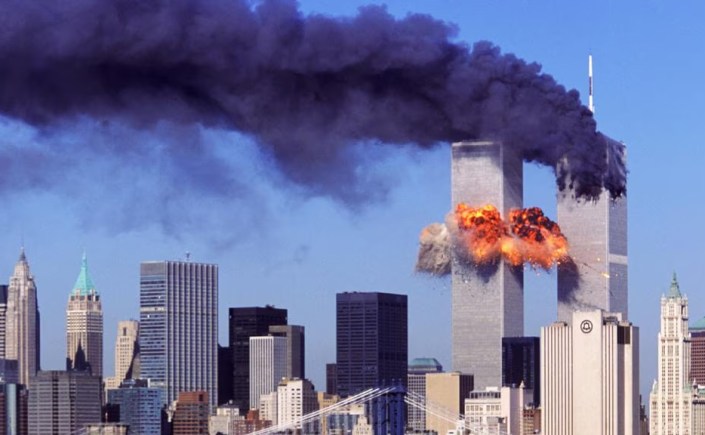
In a recent opinion piece in The Australian conservative British historian and US resident Niall Ferguson reflects on the legacy of 9/11 and concludes – after two decades of analysis – that the attacks on 11 September 2001 signaled not merely terrorism but a broader clash of civilisations that the West is now losing. Recalling his own reactions on that momentous day, Ferguson admits that he initially sought secular explanations for the attacks: economic downturns, American imperial overreach, and global political fragmentation. Yet re-examining Osama bin Laden’s statements, he recognises that the al-Qa’ida leader framed his actions as a religious war against “crusaders,” rooted in Islamic grievance over Palestine and Western dominance. Bin Laden’s explicit appeal to faith, not politics, aligns with Samuel Huntington’s much-criticised thesis that post–Cold War conflict would be cultural, with Islam and the West as enduring antagonists.

Although the United States and its allies largely defeated jihadist terrorism within their own borders—terrorism in Iraq has plummeted and attacks in the U.S. remain rare—Ferguson argues that Islamism has advanced through dawa (non-violent proselytising) and political penetration. Organisations such as the Council on American-Islamic Relations, linked to the Muslim Brotherhood, exploit Western legal and educational institutions while Gulf states like Qatar fund universities and shape intellectual climates. Meanwhile, demographic trends favour Islam: global Muslim populations are rising rapidly and will nearly equal Christians by mid-century, while Western societies grow more secular and internally divided.

Geopolitically, the West faces a resurgent “axis of upheaval”—China, Russia, Iran, and North Korea—while allies waver. The international solidarity that followed 9/11 contrasts sharply with the fragmented reaction to Hamas’s October 7, 2023 attacks on Israel, where UN resolutions condemned Israeli actions more than Islamist violence and several states recognised Palestinian statehood. Public opinion, especially among younger generations, has shifted sharply against Israel and, in some cases, towards open antisemitism; bin Laden’s anti-Western rhetoric even circulates approvingly on platforms like TikTok.

Ferguson concedes that bin Laden lost the “war on terror,” but claims he is winning the longer contest Huntington foresaw. Islamism thrives without spectacular violence, demographic momentum favours Muslim societies, and Western civilisation—once confident in its Judeo-Christian identity—is fractured and uncertain. Two decades after 9/11, Ferguson concludes that the clash of civilisations is real, and the West is no longer clearly ahead.

Also, in In That Howling Infinite, see A Short History of the Rise and Fall of the West , and A Middle East Miscellany

Osama bin Laden’s Posthumous Victory  

Niall Ferguson, The Australian, 19 September 2025
Last week’s azure September skies over New York brought back memories. Twenty-four years ago I was due to give a lecture at New York University. The date of the lecture was September 12. I never flew.

On the day of the attacks, I sat in my study at Jesus College, Oxford, staring incredulously at the pixelated live video of the World Trade Centre twin towers first blazing, then collapsing. Not long after, in April 2002, I accepted a chair at the Stern School of Business at New York University and resigned my Oxford professorship.

My motivation was partly the hereditary Scottish tendency to march towards the sound of gunfire. As a teenager in 1914, my grandfather John Ferguson had volunteered to fight the Germans. This seemed easier.

Regardless of the 9/11 attackers’ motives, I had a strong objection to terrorism as a political method – a result of growing up in Glasgow in the 1970s, when “the Troubles” in nearby Northern Ireland did more than merely resonate.

My first impulse after the attacks, in a piece for The New York Times, was to liken the sympathetic British reaction to 9/11 to the American reaction to the Blitz of 1940-41.

A man stands in the rubble, and calls out asking if anyone needs help, after the collapse of the first World Trade Center Tower. Picture: Doug Kanter / AFP

In the rubble, after the collapse of the first World Trade Center Tower. Doug Kanter / AFP

But I also warned Americans to “steel themselves for a long, inglorious kind of war that governments in Europe already know only too well”. In wars against terrorists, I wrote, “there are no quick victories. The foe does not line up his tanks for you to flatten, his ships for you to sink. His troops live among you.”

Yet this was not the Provisional IRA. Re-reading a transcript of Osama bin Laden’s first post-9/11 video, from November 3, 2001, I am reminded of how explicitly he declared a war of religion. “People were divided into two parts” after 9/11, he declared. “The first part supported these strikes against US tyranny, while the second denounced them.

“The vast majority of the sons of the Islamic world were happy about these strikes,” bin Laden went on, “because they believe that the strikes were in reaction to the huge criminality practised by Israel and the United States in Palestine and other Muslim countries.”

Al-Qaeda mastermind Osama bin Laden.

Al-Qaeda mastermind Osama bin Laden.

There were demonstrations of support for his action “from the farthest point in the eastern part of the Islamic world to the farthest point in the western part of the Islamic world”. This revealed the key reality: “This war is fundamentally religious. The people of the East are Muslims. They sympathised with Muslims against the people of the West, who are the crusaders.”

With the passage of 2½ decades, it is startling just how unambiguous bin Laden was about his religious motive. “Under no circumstances,” he declared, “should we forget this enmity between us and the infidels. For the enmity is based on creed … It is a question of faith, not a war against terrorism.” The goal of all Muslims should now be to “resist the most ferocious, serious and violent Crusade campaign against Islam ever since the message was revealed” to Mohammed.

Bin Laden saw the war he was waging as a counter-attack – “to take revenge for those innocent children in Palestine, Iraq, southern Sudan, Somalia, Kashmir and The Philippines”. The US president, George W. Bush, might be the latest “crusader”, who “carried the cross and raised its banner high”, but bin Laden traced his war back to the aftermath of World War I when “the whole Islamic world fell under the crusader banner … and Palestine was occupied by the British”. Now the tables had been turned. And he had turned them with just 19 men whose faith exalted martyrdom.

George W Bush standing next to retired firefighter Bob Beckwith, speaks to volunteers and firemen as he surveys the damage at the site of the World Trade Center in on September 14 2001. Picture: AFP

George W Bush and retired firefighter Bob Beckwith, September 14, 2001, AFP

You can see why, at the time, many commentators saw 9/11 as vindicating Harvard political scientist Samuel Huntington, whose seminal essay on The Clash of Civilisations had been published in 1993, as well as Princeton scholar Bernard Lewis, who had long argued that Islam was chronically unable to modernise.

My wife, Ayaan Hirsi Ali, was born in Somalia and shared this view, not because she was a scholar of Islam but because she was a Muslim – and, indeed, a former member of the Muslim Brotherhood. In September 2001, she was working at a political think tank in the Netherlands, having sought asylum there in 1992 to escape war-torn Mogadishu and an arranged marriage.

Author Ayaan Hirsi Ali

Author Ayaan Hirsi Ali

In her memoir, Infidel, she recalls how, after hearing bin Laden’s video, she “picked up the (Koran) and the hadith and started looking through them, to check. I hated to do it, because I knew that I would find bin Laden’s quotations in there.” She shot to notoriety by telling the Dutch that the 9/11 attackers were simply following the Prophet Mohammed’s injunction to wage holy war.

Over the past 24 years I have valiantly tried to see 9/11 differently – not as a civilisational clash between Islam and “the West” but as something that fit better into my own secular frame of reference. Raised an atheist, trained as an economic historian, I felt obliged to look behind what I took to be the facade of religious zealotry.

A decade after the attacks, in a piece I wrote for The New York Times Magazine, I portrayed them as the product of four underlying historical trends. First, the spread of terrorism from the Middle East and Europe to the US. Second, the post-2000 economic downturn, combined with widening inequality between nations and a coming oil shock, possibly compounded by a Saudi revolution akin to the one that overthrew the shah in Iran in 1979. (I completely failed to foresee the shale oil revolution and bought into the “peak oil” myth.) Third, the transition of American global power from informal to formal imperialism. And last, the fragmentation of the multicultural polity. (“Rather than anticipating a clash between monolithic civilisations, we should expect a continued process of political disintegration as religious and ethnic conflicts challenge the integrity of existing multicultural nation-states.”)

Missing in this – and in much of my work that followed – was Islam.

In The War of the World (2006), I got a little closer to Huntington, portraying 1979 as a much bigger turning point than 2001 in terms of the demographic as well as political rise of Islam, a point I returned to in Civilization: The West and the Rest (2011). However, laboriously quantifying every war since Huntington’s essay had appeared, I argued that most conflicts since 1993 had, in reality, been within rather than between civilisations. In The Square and the Tower (2017), I applied network theory to the problem, showing how al-Qaeda itself was a network within a much larger network of Islamist organisations; and that its expansion in response to the invasion of Iraq ultimately necessitated a networked response (in the form of General Stan McChrystal’s Joint Special Operations Command). Most recently, in Doom (2021), I downgraded 9/11 to just another disaster, and not a very big one: “In terms of excess mortality, April 2020 in New York City was … three and a half times worse than September 2001, the month of the 9/11 terrorist attack.”

Huntington, Lewis and my wife were right.

In Huntington’s original formulation, “the fundamental source of conflict” in the world after the Cold War would be cultural; “the principal conflicts of global politics” would be “between nations and groups of different civilisations” – “Western, Confucian, Japanese, Islamic, Hindu, Slavic-Orthodox, Latin American, and possibly African”. In particular, Huntington predicted, the “centuries-old military interaction between the West and Islam” could become “more virulent”. He also foresaw a “Confucian-Islamic military connection” that would culminate in a conflict between “The West and the Rest”.

Among the younger generation of proto-woke Ivy League professors, Huntington was widely mocked for his “essentialism”. But consider, with Huntington’s argument in mind, all that has happened since September 2001.

Terrorism has largely been contained in the US and EU, though not globally. In that sense, we won the “war on terror”, which was successfully displaced from the US to the periphery. It was ultimately defeated in Iraq, though not in Afghanistan. Today, as a result, terrorism in the world looks very different from what I foresaw in 2001. According to the Global Terrorism Index 2025, published by the Institute for Economics & Peace, the top five countries most impacted by terrorism last year were: Burkina Faso, Pakistan, Syria, Mali and Niger. Globally, terrorism peaked in 2014-15. In countries such as Iraq, it has declined dramatically. (In 2007, terrorists claimed 6249 lives in Iraq. Last year, the total was just 59.)

In the US, it is widely asserted, white supremacists now pose a bigger terrorist threat than Islamists – although the attack in New Orleans on January 1, 2025, when Shamsud-Din Jabbar killed 14 people by driving a pick-up truck into a crowd on Bourbon Street, is a reminder that Islamic State has not entirely gone away. We now know who murdered Charlie Kirk, and a white supremacist he was not.

Still, the latest Global Terrorism Threat Assessment by the Centre for Strategic and International Studies makes clear just how wrong I was in 2001 to anticipate a sustained campaign of jihadist terrorism in the US. Say what you like about our national security agencies, they won that war.

Yet nonviolent radicalisation (what Islam calls dawa as opposed to violent jihad) has advanced significantly everywhere in the Western world, wherever there are Muslim communities. The critical point – as my wife explained in a book on the subject – is that Islamism as a deeply illiberal political ideology does not need to engage in acts of terrorism to spread.

I never cease to marvel at the ingenuity with which the Muslim Brotherhood and other proselytising organisations spread their networks, through mosques, Islamic centres, schools, colleges and local politics. Consider only the effectiveness of the Council of American-Islamic Relations, founded in 1994, which today boasts on its website of having “100+ active lawsuits” and “600,000+ Legislative Action Alerts”, whatever that means. It has almost 30 offices throughout the country.

Most people who encounter CAIR take it to be something like the Anti-Defamation League for Muslims – a civil rights organisation that just happens to be concerned about the rights of Muslims. But it is not that at all.

Ten countries have recognised the non-existent Palestinian state since October 7, including three European Union EU member states, Ireland, Slovenia, and Spain. Canada, France, Australia and the United Kingdom Britain are itching to join them. Picture: AFP

Ten countries have recognized the non-existent Palestinian state since October 7, including three European Union EU member states, Ireland, Slovenia, and Spain. Canada, France, Australia and the United Kingdom Britain are itching to join them. Picture: AFP

Rather, it is more like a front organisation for the Muslim Brotherhood of America. In a recent article, Ayaan has brilliantly described the many ingenious ways that CAIR exploits the institutions of our open society, most recently settling a lawsuit to avoid revealing its sources of funding.

Good luck following the money. In her words: “The North American Islamic Trust (NAIT) controls mosque properties and financial assets. The Islamic Society of North America (ISNA) lends the Brotherhood a degree of religious legitimacy. The American Muslim Council (AMC) works the political front, cutting deals and building alliances. The Muslim American Society (MAS) runs operations on the ground, embedding itself firmly in local communities. In universities, the International Institute of Islamic Thought (IIIT) shapes the narrative. On campuses, the Muslim Students’ Association (MSA) targets the next wave of recruits. The Islamic Circle of North America (ICNA) and Young Muslims (YM) focus on families and youth.”

Even the United Arab Emirates has proscribed CAIR as a terrorist organisation. Yet dozens of Democratic legislators are on the record on the CAIR website, praising its work as they doubtless also praise the National Association for the Advancement of Colored People.

A complementary effort is the way Qatar – the largest source of foreign donations to US universities since reporting began in 1986 – funnels money into academia. According to the Network Contagion Research Institute, as reported in The Free Press, nearly a third of Qatari donations to American colleges – more than $US2bn – were given between 2021 and 2024. As Mitchell G. Bard shows in Arab Funding of American Universities (2025), this money is one of the reasons college campuses have become such hotbeds of anti-Semitism in recent years.

It is not just that the West has been successfully penetrated by an antagonistic civilisation that fundamentally rejects the fundamental division between religion and politics – church and state – that lies at the heart of both Christianity and Judaism. The West is also being geopolitically outmanoeuvred by “the rest” in just the way Huntington foresaw.

Former Hamas leaders Ismail Haniya and Yahya Sinwar wave during a rally marking the 30th anniversary of the founding of the Islamist movement in 2017. Picture: AFP

Late Hamas leaders Ismail Haniya and Yahya Sinwar during a rally marking the 30th anniversary of the founding of Hamas in 2017. AFP

Contrast the global order after 9/11 with the global order today. We have come a long way since NATO secretary-general George Robertson’s statement on September 11, 2001: “Our message to the people of the United States is … ‘We are with you’.”

In the past three years, Zbig Brzezinski’s worst-case scenario has come about. “Potentially, the most dangerous scenario,” he wrote in The Grand Chessboard (1997), “would be a grand coalition of China, Russia, and perhaps Iran, an ‘antihegemonic’ coalition united not by ideology but by complementary grievances”.

Since the Russian invasion of Ukraine, that grand coalition has come into being, with North Korea as a fourth member. The “axis of upheaval” (China, Russia, Iran, and North Korea) is now co-operating in military, economic and diplomatic ways.

Moreover, the Trump administration’s combative treatment of US allies (the EU, Japan, South Korea) and neutrals (Brazil, India and Switzerland), not least with respect to trade policy, is alienating not only the traditionally non-aligned but also key partners.

The upshot is that Israel is now virtually alone in fighting against the Islamists, so that even the US wants plausible deniability when, as earlier this month, the Israeli Air Force strikes the leadership of Hamas in the Qatari capital, Doha.

The point is that the clash of civilisation continues. Now ask yourself: Who’s winning?

The Hamas attack on Israel two years ago was essentially an Israeli 9/11 (worse in relative terms). But compare the global reactions.

UN Security Council Resolution 1373, adopted unanimously on September 28, 2001, called on all member states to freeze terrorist financing, pass anti-terrorism laws, prevent suspected terrorists from travelling across international borders, and screen asylum-seekers for possible terrorist ties. This was an unprecedented show of international unity.

By contrast, no Security Council resolution could be passed in the wake of October 7. UN General Assembly Resolution ES-10/21 – which called for an “immediate” and “sustained” humanitarian truce and “cessation of hostilities” in Gaza and condemned “all acts of violence aimed at Palestinian and Israeli civilians” – was introduced by Jordan on behalf of a group of Arab states. When it was adopted on October 27, 2023, 121 voted in favour, 44 abstained, 14 absented themselves and only 14 (including Israel and the US) voted against.

This video grab from footage released by the Israeli Hostage and Missing Families Forum campaign group shows what the group described as Israeli female soldiers being captured by Hamas during the October 7 attack on Israel

Video grab from footage released by the Israeli Hostage and Missing Families Forum campaign shows what the group described as Israeli female soldiers being captured by Hamas on 10/7

Ten countries have recognised the non-existent Palestinian state since October 7, including three EU member states, Ireland, Slovenia, and Spain. Canada, France, Australia and Britain are itching to join them.

In short, comparing the world today with that of 24 years ago, I am tempted to say bin Laden lost the war on terror but is winning the clash of civilisations. That’s not to say his particular brand of Salafist jihadism is winning; it can even be argued that it’s in decline. Bin Laden’s creed was always too uncompromising to form alliances of convenience. By contrast, the pro-Palestinian “global intifada” is much more omnivorous, and can easily absorb the old left (Marxism and pan-Arabism) and the new (anti-globalism and wokeism).

Demographically, Islam is certainly winning. According to Pew Research (June 2025), “The number of Muslims around the world grew 21 per cent between 2010 and 2020, from 1.7 billion to 2.0 billion.” That was twice as fast as the rest of the world’s population, increasing the Muslim share from 24 per cent to 26 per cent. Earlier research by Pew (from 2015) forecast that “if current trends continue, by 2050 the number of Muslims will nearly equal the number of Christians around the world”. In Europe, Pew estimated, Muslims would make up 10 per cent of the overall population, up from 5.9 per cent in 2010. In the US, Muslims would outnumber Jews. This does not seem implausible.

At the same time, Western civilisation today is so much more divided than it was 24 years ago. The public response to October 7 illuminated the divisions. Whereas older voters generally remain more pro-Israel than pro-Palestinian, younger cohorts have swung the other way. Perhaps that’s because to Gen Z, September 11 is a faint memory – as distant as the Cuban missile crisis and John F. Kennedy’s assassination were to my generation. But it’s also because the Islamists have done such a good job of co-opting the campus radicals, somehow overriding the cognitive dissonance in slogans such as “Queers for Palestine”, while tapping the anti-Semitism that still lurks on the far right.

According to Brookings, “young Republicans aged 18-49 have shifted from 35 per cent having an unfavourable view of Israel to 50 per cent unfavourable … Among Democrats, there has been an increase of 62 per cent to 71 per cent (with an unfavourable view of Israel) in the 18 to 49-year-old demographic … Only 9 per cent of those aged 18 to 34 approve of Israel’s military actions in Gaza.”

Supporters of Yemen's Houthi’s gather with pictures of Hamas' slain leader Yahya Sinwar during a rally last year. Picture: AFP

Supporters of Yemen’s Houthi’s with pictures of Hamas’ slain leader Yahya Sinwar2024: AFP

A recent poll in Britain by Campaign Against Anti-Semitism revealed a striking shift in attitudes towards Jews. Once again, the swing towards anti-Semitism is more pronounced among the young: “Forty-five per cent of the British public … believes that Israel treats the Palestinians like the Nazis treated the Jews … 60 per cent of young people believe this.

“Forty-nine per cent of 18-24-year-olds are uncomfortable spending time with people who openly support Israel.

“Only 31 per cent of young voters agree that Israel has a right to exist as a homeland for the Jewish people.

“Twenty-six per cent of the British public believes that Israel can get away with anything because its supporters control the media.

“Nineteen per cent of young people believe that the Hamas attack on Israel was justified.”

Such attitudes can be found in Britain on both the political left and the political right. A third of Labour voters say they are uncomfortable spending time with people who openly support Israel, as do 54 per cent of Green Party voters, 15 per cent of whom believe Hamas’s attack on Israel was justified. But almost one in four supporters of the rapidly growing Reform UK party, led by Nigel Farage, believe Jewish people “chase money more than other people do”.

During the Cold War, the West was often referred to as a “Judaeo-Christian” civilisation. That term is starting to seem like an anachronism. Two years ago, another bin Laden pronouncement – his Letter to America, originally published on the first anniversary of September 11 – enjoyed a sudden resurgence of interest, not least because its attacks on the power of American Jews seemed to strike a chord with young users of TikTok.

Palestinians celebrate their return after crossing the border fence with Israel on October 7, 2023. Picture: AFP

Palestinians celebrate their return after crossing the border fence with Israel on 10/7. AFP

One popular video showed a young woman brushing her hair with the caption, “When you read Osama bin Laden’s letter to America and you realise you’ve been lied to your whole entire life.” At one point in November 2023, a TikTok search for #lettertoamerica found videos with 14.2 million views. In total, about 300 videos were posted under that hashtag.

Walking the streets of New York last week, I felt old. To my children, my students and my employees, September 11 is not a memory. It is not even a historical fact. It is something people argue about on social media.

As I write, Tucker Carlson has just told Piers Morgan that an “FBI document” indicated “an Israeli spy ring in the United States … knew 9/11 was coming”. The reality is, of course, that only the conspirators themselves knew that. They also knew, very clearly, why they were going to do it.

It has taken me all these years to understand that 9/11 really was a clash of civilisations. And it has taken me until now finally to face the reality that ours is losing.

Niall Ferguson is the Milbank Family senior fellow at the Hoover Institution, Stanford University, and a senior faculty fellow of the Belfer Centre for Science and International Affairs at Harvard. He is the author of 16 books, including The Pity of War, The House of Rothschild, and Kissinger, 1923-1968: The Idealist. This essay originally was published in The Free Press


The Night of Power – Robert Fisk’s bitter epilogue

“All wars come to an end and that’s where history restarts”

“History stretches out into the future as well as the past”

“All wars may end in negotiations, but not all negotiations end wars”

The indefatigable British journalist, author, and longtime Beirut resident Robert Fisk Robert Fisk died of a stroke in St Vincent’s Hospital, Dublin, on October 30, 2020. He was 75. Fearless and inquisitive, often iconoclastic and controversial, “Mister Robert,” as he was known from Algeria to Afghanistan, was one of the finest journalists of his generation—the greatest reporter on the modern Middle East. There is probably no better body of work for understanding the region. Respected and reviled in equal measure by left and right alike, Fisk spoke truth to power for more than half a century.

He was obsessive, he was angry, and – having read many of his books – I believe he suffered from undiagnosed PTSD throughout his career in the Middle East. His lifelong obsessions were the arrogance and misuse of power, the lies and impunity of the rulers: presidents and prime ministers, kings and emirs, dictators and theocrats, torturers and murderers. And always the countless innocents who endured and suffered, dying in their tens – and tens – of thousands on the altar of power and greed.

The Night of Power 

His last book, The Night of Power: The Betrayal of the Middle East, published posthumously in 2023, takes up where his monumental The Great War for Civilisation (2005) ended—with the contrived U.S.-British-Australian invasion of Iraq. The Great War for Civilisation was a tombstone of a book, literally and figuratively, as was its predecessor Pity the Nation (1990), his definitive history of the Lebanese civil war.

The Night of Power  is no less harrowing, covering the occupation of Iraq, the 2006 Israel–Lebanon war, the Arab Spring, the rise of Egypt’s new pharaoh Abdel Fattah al-Sisi, the lonely death of Mohammed Morsi, Israel’s occupation of the West Bank and seize of Gaza, and the Syrian civil war. It ranges widely – but its coherence lies in Fisk’s unrelenting theme: the cycle of war, the corruption of power, and the persistence of memory. To read it is to feel Fisk’s own cynicism, sadness and anger.

The title is deeply symbolic. In Islamic tradition, Laylat al-Qadr, the Night of Power, is the night the Qur’an was first revealed to the Prophet Muhammad: “The Night of Power is better than a thousand months … Peace it is, until the rising of the dawn” (Qur’an 97). It is a night of blessing beyond measure, greater than a lifetime of devotion. The title is bitterly ironic: the “night of power” he recounts is one of betrayal, cruelty, and endless war.

It is both a summation of his life’s work and a testament to his method. Over four decades, Fisk was a witness to almost every major conflict in the Middle East — Lebanon, Iran, Iraq, Palestine, Algeria, Afghanistan, Syria, Egypt — and the wars of the Yugoslav succession. His dispatches carried both forensic detail and moral outrage. This last work, published in the year of his death, is less a memoir than a vast chronicle of empire, war, betrayal, and resistance.

Fisk had long insisted that reporters must “be on the side of those who suffer.” He was no neutral stenographer of official sources. He distrusted governments – Western and Arab alike – and prized first hand testimony, walking the ruins, speaking to survivors, writing down the words of the powerless. The Night of Power continues in this vein, but with a sharpened sense of history. Fisk threads together centuries of conquest and resistance, showing how imperial arrogance, local despotism, and religious zealotry have conspired to devastate the region.

The last two paragraphs Robert Fisk wrote before his death, closing The Night of Power, cut like a blade through the pieties of Western journalism:

“Failure to distinguish between absolute evil, semi-evil, corruption, cynicism and hubris produced strange mirages. Regimes which we favoured always possessed ‘crack’ army divisions, ‘elite’ security units, and were sustained by fatherly and much revered ruling families. Regimes we wished to destroy were equipped with third-rate troops, mutineers, defectors, corrupt cops, and blinded by ruling families. Egypt with its political prisoners, its police torture and fake elections, was a tourist paradise. Syria with its political prisoners, police torture and fake elections, would like to be. Iran, with its political prisoners, police torture and fake elections was not — and did not wish to — be a tourist paradise.” (p. 533)

In the end, according to those closest to him, including his wife Nelofer Pazira-Fisk, an award-winning Afghan-Canadian author, journalist and filmmaker, who edited the book and wrote its final chapter, Fisk despaired. He feared that nothing he had written over four decades had made any difference – that things had, in fact, grown worse. As Kent says to the blinded King Lear, “All is cheerless, dark, and deadly”.

And yet the worst was arguably still to come: the chaotic retreat of America and its allies from Afghanistan and the Taliban’s reimposition of rule, including the literal silencing of women’s voices; Russia’s invasion of Ukraine and its murderous war of attrition that has now passed its thousandth day; Hamas’s atrocity of October 7, 2023, Israel’s biblical-scale revenge, and the utter destruction of Gaza; and the latest Israel–Lebanon war that saw the decapitation and emasculation of Hezbollah.

The Legacy of a Fearless Reporter

The Night of Power stands as a testament to Robert Fisk’s fearless journalism and his relentless moral compass. Across decades of war reporting, Fisk bore witness to suffering few dared to confront. He was unflinching in exposing the hypocrisies of Western powers, the brutality of dictators, and the costs of occupation, war, and empire. Yet he also captured the human dimension: the courage, endurance, and resilience of those who suffered, whether in Iraq, Gaza, Egypt, or Syria.

This final work synthesizes Fisk’s signature qualities: exhaustive research, direct engagement with the people whose lives were upended, and an ethical rigor that held both oppressors and complicit outsiders accountable. The Night of Power is not merely a chronicle of events; it is a meditation on power, betrayal, and history itself.

Fisk’s prose, vivid and often lyrical, reminds readers that journalism can be a form of witness — bearing truth against overwhelming odds. Even in despair, he recognized the persistence of human agency, the cycles of history, and the moral imperative to see, to name, and to remember. His death in 2020 marked the end of a career unparalleled in courage and conscience, but his work, particularly this last book, endures as both a warning and a guide for understanding the Middle East and the forces that shape our world.

In reading The Night of Power, one cannot avoid Fisk’s central lesson: history may restart at the end of every war, but the witness to injustice is what shapes the moral memory of humanity. The quotations at the head of this review, indeed, the final words of the book, weary yet resolute, are a fitting epitaph. Fisk saw the world as it was, not as we wished it to be: corrupt, cruel, but always turning, always restarting.

All wars come to an end and that’s where history restarts
Robert Fisk, The Night of Power

Postscript

The final chapter of The Night of Power was written by Fisk’s wife Nelofer Pazira-Fisk, She was based in Beirut for fifteen years working alongside her late husband and reported from Iraq, Afghanistan, Turkey, Egypt and Syria. The following podcast by American war correspondent Chris Hedges, with Fisk’s first wife Lara Marlowe is a worthy tribute .

See also, in In That Howling Infinite The calculus of carnage – the mathematics of Muslim on Muslim mortality 

The following briefly summarizes the main themes of The Night of Power drawing largely upon his own words

Robert Fisk’s Catalogue of Carnage

Hear the cry in the tropic night, should be the cry of love but it’s a cry of fright
Some people never see the light till it shines through bullet holes
Bruce Cockburn, Tropic Moon

Iraq: Catastrophe Foretold

Fisk argued that Iraq’s occupation was fraudulent from the start, brutal in execution, and ferocious in its response to insurgency. The Americans tolerated the inhuman behaviour of their own soldiers, relied on mercenaries and “greedy adventurers,” and mixed Christian religious extremism with an absurd political goal of “remaking the Middle East.” It was “tangled up in a web of political naivety and Christian muscularity”.It was bound, he wrote, to end in catastrophe.

“We were pulling at the threads of the society with no sense of responsibility as occupiers just as we had no serious plans for state reconstruction. Washington never wanted Iraq’s land. Of course the countries resources were a different matter, but its tactics did fit neatly into the prairies of the old West. The tribes could be divided and occupiers would pay less in blood. as long as they chose to stay. One set of tribes were bought off with guns and firewater the other with guns and dollar bills. Serious resistance, however, would invoke “the flaming imperial anger” of all occupation armies.

The rhetoric echoed the 19th century missionary zeal of empire. Western fascination with the Biblical lands was used to justify conquest: as Lieutenant General Stanley Maude told the people of Baghdad in 1917, the Allies wished them to “prosper even as in the past when your ancestors gave to the world Literature, Science, and Art, and when Baghdad city was one of the wonders of the world” (p. 92).

The modern occupation, Fisk observed, was nothing but “the rape of Iraq”. Oil wealth was divided up in a scandal of corruption involving US contractors and Iraqi officials. “The costs were inevitably as dishonest as the lies that created the war … I knew corruption was the cancer of the Arab world but I did not conceive of how occupying Power supposedly delivering Iraqi their long sort freedom could into a mafia and at such breathtaking speed”.

Security became a malignant industry; by 2006 mercenaries accounted for half of Western forces, sucking money out of the country. The food system, 10,000 years old, was destroyed by Paul Bremer’s infamous Order 81, which forbade farmers from saving their own seed. Iraq became a “giant live laboratory for GMO wheat,” its people “the human guinea pigs of the experiment”.

And through it all, a campaign of suicide bombings –  unprecedented in scale –  turned Iraq into the crucible of modern terror. Editors never tried to count them. The figures, Fisk noted, were historically unparalleled.

The trial of Saddam Hussein

The US ambassador to Iraq once claimed she had been “unable to convince Saddam that we would carry through what we warned we would.” Fisk dismissed this as absurd. Saddam, he argued, was well aware of Western threats, but the framing of his trial was designed to obscure deeper truths.

If Saddam had been charged with the chemical massacre at Halabja, defence lawyers could have pointed out that every US administration from 1980 to 1992 was complicit in his crimes. Instead, he was tried for the judicial murder of 148 men from Dujail — heinous, but “trifling in comparison” (p. 92). The great crimes of the Baathist regime — the 1980 invasion of Iran, the suppression of Shia and Kurdish revolts in 1991 — were deemed unworthy of the court’s attention.

Pakistan: Fragile State, Useful Pawn

Fisk’s lens widened to Pakistan, where he recorded with scorn the ISI’s admission that the reality of the state was defined not by American might but by “corrupt and low-grade governance”. A US intelligence officer boasted: “You’re so cheap … we can buy you with a visa, with a visit to the US, even with a dinner.”

This, Fisk suggested, was not just Pakistan but almost every Arab or Muslim state in thrall to Washington: Egypt, Jordan, Syria, the Gulf states under their dictators and kings, even Turkey. He wrote that Osama Bin Laden’s choice to hide in Pakistan embodied a weird symmetry: the man who dreamed of a frontierless caliphate sought refuge in the very sort of corrupt, Western-backed dictatorship he despised.

Rendition: Complicity in Torture

The “war on terror” extended beyond borders. CIA, MI5 and MI6 operatives were deeply involved in rendition. Prisoners were knowingly dispatched to states where torture was inevitable, even fatal. Fisk insisted on repeating this uncomfortable truth: Western democracies had integrated torture into their security architecture.

Israel and Palestine: The Last Colonial War

Fisk was unsparing in his treatment of Israel’s expansion. He rejected any obfuscation: Israel seized the opportunity to consolidate its control with a land grab for the most prominent hilltops and the most fertile property in the West Bank for settlements constructed on land legally owned for generations by Arabs, destroying any chance the Palestinian Arabs could have a viable state let alone a secure one.”). These settlements, he wrote, “would become the focus of the world’s last colonial war.”

He surmised: “Will the Jews of what was Palestine annex the West Bank and turn its inhabitants into voteless guest workers and all of mandate Palestine into an apartheid state? There was a mantra all repeat that only other way to resolve Israeli rule in the West Bank would be a transfer of the Palestinians across the Jordan into the Hashemite kingdom on the other side of the river. In other words, expulsion”

The Wall 

Fisk’s Fisk’s description of the Separation Wall is dramatic and unforgettable: an   “immense fortress wall” which snakes “firstly around Jerusalem but then north and south of the city as far as 12 miles deep into Palestine territory, cutting and escarping its way over the landscape to embrace most of the Jewish colonies … It did deter suicide bombers, but it was also gobbled up more Arab land. In places it is 26 feet or twice the height of the Berlin wall. Ditches, barbed wire, patrol roads and reinforced concrete watchtowers completed this grim travesty of peace. But as the wall grew to 440 miles in length, journalists clung to the language of ‘normalcy’ a ‘barrier’ after all surely is just a pole across the road, at most a police checkpoint, while a ‘fence’ something we might find between gardens or neighbouring fields. So why would we be surprised when Italian Prime Minister Silvio Berlisconi, traveling through the massive obstruction outside Bethlehem in February 2010 said that he did not notice it. But visitors to Jerusalem are struck by the wall’s surpassing gray ugliness. Its immensity dwarfed the landscape of low hills and Palestinian villages and crudely humiliated beauty of the original Ottoman walls Churches mosques and synagogues .. Ultimately the wall was found to have put nearly 15% of West Bank land on the Israeli side and disrupted the lives of a third of the Palestine population. It would, the UN discovered, entrap 274,000 Palestinians in enclaves and cut off another 400,000 from their fields, jobs, schools and hospitals. The UN concluded that many would “choose to move out.” Was that the true purpose?“.

Leftwing Israeli journalist Amira Haas, who lives in the West Bank, takes Fisk on a tour of the wall: “Towering 26 feet above us, stern, monstrous in its determination, coiling and snaking between the apartment blocks and skulking in wadis and turning back on itself until you have two walls, one after the other. You shake your head a moment – when suddenly through some miscalculation surely – there is no wall at all but a shopping street or a bare hillside of scrub and rock. And then the splash of red, sloping rooves and pools and trees of the colonies and yes, more walks and barbed wire fences and yet bigger walls. And then, once more the beast itself, guardian of Israel’s colonies: the Wall”.

See also, in In That Howling InfiniteBlood and Brick … a world of walls

Banksy on The Wall. Paul Hemphill, May 2016

Gaza: Junkyard of History

Although Oslo’s creators fantasied that it would become part of the Palestinian state, Gaza’s destiny was isolation. It has been a junkyard of history variously ruled by Christians and Muslims, ruined and rebuilt under the Ottomans, and fought for by the British and Turks in the First World War, and now reduced to a prison state.,

Egypt: A Revolution Betrayed

Mohammed Morsi embodied both hope and tragedy. “An intelligent, honourable, obtuse, arrogant and naïve man”. No visionary, he was “was shambolic, inspiring, occasionally brutal and very arrogant”.  He set off down the road to Egyptian democracy with no constitution no parliament and no right to command his own countries army …set off down the road to democracy “with no constitution, no parliament and no right to command his own country’s army”. And when the end came, as come it must, he could not smell trouble; he did not see what was coming.

In a coup that was not a coup, which former British prime minister Tony Blair called “an awesome manifestation of power”, “the democratically elected president was suspended, the constitution annulled, tekevion stations closed, the usual suspects arrested … Yet President Obama could not bring himself to admit this. He asked the Egyptian military “to return full authority back to a democratically elected civilian government… Through an inclusive and transparent process” without explaining which particular elected civil civilian government he had in mind”.

This was just the beginning. In the six years that followed, Egypt’s executioners and jailers were kept busy. “They hung 179 men, many of them tortured before confessing to murder, bomb attacks or other acts of terrorism”. It was claimed that Al Sisi had returned the country to a Mubarak style dictatorship in the seven years of his own war against the brotherhood between 1990 and 1997. Mubarak’s hangman had executed only 68 Islamists and locked up 15,000. By 2019  Al Sisi had 60,000 political prisoners

To Fisk, this was a sign of fear as much as it was evidence of determination to stamp out terror. Al Sisi had three separate conflict on his hands: his suppression of the brotherhood on the ground that they were themselves violent terrorists, the campaign by Islam extreme groups against Egypt’s minority Christian cops, and most frightening of all the very real al Qaeda and ISIS war against Al Sisi’s own regime. “The prisons of the Middle East, Fisk concluded, were “universities for future jihadi”.

See also, in In That Howling Infinite and Sawt al Hurriya – remembering the Arab Spring

Remember and witness

Silencing the women of the revolution 

The misogyny if the counterrevolution was stark. Fisk wrote: “… if the senior officers wished to prune the branches of the revolution the participation of women was something that could not be tolerated. Why did there suddenly occur without apparent reason a spate of sexual attacks by soldiers that were clearly intended to frighten young women off the street,  revealing a side to the Egyptian military that none of us had recognised. The misogynistic and shocking display of brutality towards women that could not have been the work of a few indisciplined units”. With sexual assaults on women protesters, virginity tests and public humiliation, “heroes of the 1973 war had become molesters”.

The lonesome death of Muhammad Morsi

Morsi would struggle on for years before a series of mass trials would entrap him and his brotherhood colleagues and quite literally exhaust him to death. Morsi’s slow death in solitary confinement was, Fisk insisted, “utterly predictable, truly outrageous and arguably a case of murder”. He was denied treatment, denied family visits, denied a funeral. “To die in a dictator’s prison, or at the hands of a dictator’s security services”, Fisk wrote, “is to be murdered.”

It did not matter, he continued “if it was the solitary confinement, the lack of medical treatment or the isolation, or if Morsi had been broken by the lack of human contact for those whom he loved. “The evidence suggested that Morsi’s death must’ve been much sought after by his jailers, his judges, and the one man in Egypt who could not be contradicted. You don’t have to be tortured with electricity to be murdered”.

Fisk’s description of Morsi’s death is a sad one. “Symbolism becomes all”, he wrote. “The first and last elected president of a country dies in front of his own judges and is denied even a public funeral. The 67-year-old diabetic was speaking to the judges, on trial this time for espionage, when he fainted to the floor. Imagine the response of the judges when he collapsed. To be prepared to sentence a man to the gallows and to witness him meeting his maker earlier than planned must’ve provoked a unique concentration of judicial minds. could they have been surprised groups had complained of Morsi’s treatment for the world media and the world had largely ignored the denunciations. What might have been surprising to his judges was that he managed to talk for five minutes before he departed the jurisdiction forever?”

See also, in In That Howling Infinite, Nowhere Man – the lonesome death of Mohamed Morsi 

Mohammed Morsi in the cage of justice

Russia in the Syrian Cockpit

Regarding Russia’s critical intervention in the Syrian civil war, Fisk wrote:

“We Westerners have a habit of always looking at the Middle East through our own pious cartography, but tip the map 90° and you appreciate how close Syria is to Russia and its Chechen Muslim irredentists. No wonder Moscow watched the rebellion in Syria with the gravest of concern. Quoting Napoleon, who said “if everyone wants to understand the behaviour of a country, one has to look at a map”, my Israeli friend (the late) Uri Avnery wrote that “geography is more important than ideology, however fanatical. Ideology changed with time”.

The Soviet Union, he continued was most ideological country in the 20th century. “It abhorred it predecessor, Tsarist Russia. It would have abhorred its successor, Putin‘s Russia. But Lo and behold – the Tsars, Stalin and Putin conduct more or less the same foreign policy. I wrote that Russia is back in the Middle East. Iran is securing its political semicircle of Tehran, Baghdad Damascus, and Beirut. And if the Arabs – or the Americans – want to involve themselves, they can chat to Putin”.

Yarmouk camp, Damascus. Once the thriving home of Syria’s Palestinian refugees, September 2025

Author’s note

Laylatu al Qadri

لَْيلَُةاْلَقْدِر َخْيٌر ِّمْنأَْل ِف َشْھٍر. َسَلاٌم ِھَي َحَّتى َمْطلَِعاْلَفْجِر
Laylatu alqadri khayrun min alfi shahriin.Salamun hiya hatta matla’i alfajrii
The night of power is better than one thousand months.
(That night is) Peace until the rising of the dawn.
Al Qur’an al Karīm, Surat Al Qadr 97

I first learned about the Quran and The Night of Power in Cairo when I was staying at the home of Haji Abd al Sami al Mahrous a devout Muslim doctor who had cared for me when I had fallen ill. There was a particular beauty and magic about the idea of a night that surpassed all other nights in sacredness. The fascination stayed with me, and when I returned to London and was learning Arabic and studying Middle East politic at SOAS, it inspired a song.

Shape without form, a voice without sound,
He moves in an unseen way;
A night of power, eternal hour,
Peace until the break of day;
The doubter’s dart, the traveller’s chart,
An arrow piercing even to the coldest heart,
A hand surpassing every earthly art,
And shows everyone his own way

Paul Hemphill, Embryo

When Freedom Comes, She Crawls on Broken Glass

In an earlier post in In That Howling Infinite, I wrote:

My song  When Freedom Comes is a tribute to Robert Fisk (1946-2020), indomitable, veteran British journalist and longtime resident of Beirut, who could say without exaggeration “I walk among the conquered, I walk among the dead” in “the battlegrounds and graveyards” of “long forgotten armies and long forgotten wars”. It’s all there, in his grim tombstone of a book, The Great War for Civilization (a book I would highly recommend to anyone wanting to know more about the history of the Middle East in the twentieth century – but it takes stamina – at near in 1,300 pages – and a strong stomach – its stories are harrowing).

The theme, alas, is timeless, and the lyrics, applicable to any of what Rudyard called the “savage wars of peace” being waged all across our planet, yesterday, today and tomorrow – and indeed any life-or-death battle in the name of the illusive phantom of liberty and against those intent on either denying it to us or depriving us of it. “When freedom runs through dogs and guns, and broken glass” could describe Paris and Chicago in 1968 or Kristallnacht in 1938. If it is about any struggle in particular, it is about the Palestinians and their endless, a fruitless yearning for their lost land. Ironically, should this ever be realized, freedom is probably the last thing they will enjoy. They like others before them will be helpless in the face of vested interest, corruption, and brute force, at the mercy of the ‘powers that be’ and the dead hand of history.

The mercenaries and the robber bands, the warlords and the big men, az zu’ama’, are the ones who successfully “storm the palace, seize the crown”. To the victors go the spoils – the people are but pawns in their game.

In 2005, on the occasion of the publication of his book, Fisk addressed a packed auditorium in Sydney’s Macquarie University. Answering a question from the audience regarding the prospects for democracy in the Middle East, he replied:

“Freedom must crawl over broken glass”

When Freedom Comes, She Crawls on Broken Glass 

There goes the freedom fighter,
There blows the dragon’s breath.
There stands the sole survivor;
The time-worn shibboleth.
The zealots’ creed, the bold shahid,
Give me my daily bread
I walk amongst the conquered
I walk amongst the dead

Paul Hemphill, When Freedom Comes

I reference this melancholy state of affairs in man of my songs:

High stand the stars and moon,
And meanwhile, down below,
Towers fall and tyrants fade
Like footprints in the snow.
The bane of bad geography,
The burden of topography.
The lines where they’re not meant to be
Are letters carved in stone.
They’re hollowed of all empathy,
And petrified through history,
A medieval atrophy
Defends a feeble throne.
So order goes, and chaos flows
Across the borderlines,
For nature hates a vacuum,
And in these shifting tides,
Bombs and babies, girls and guns,
Dollars, drugs, and more besides,
Wash like waves on strangers’ shores,
Damnation takes no sides.
Paul Hemphill, E Lucevan Le Stelle

100 years of Mein Kampf … the book that ravaged a continent

Perfection, of a kind, was what he was after,
And the poetry he invented was easy to understand;
He knew human folly like the back of his hand,
And was greatly interested in armies and fleets;
When he laughed, respectable senators burst with laughter,
And when he cried the little children died in the streets.
W H Auden, Epitaph On A Tyrant (1939)

The English poet W. H. Auden spent some time in Berlin during the early 1930s – the last years of the Weimar Republic prior to the Nazi ascendency –Some commentators suggest that Auden actually wrote Epitaph on a Tyrant in Berlin. But It was published in 1939, the year that the Second World War broke out – and Auden had departed the city before the end of Weimar in 1933. But he was full aware of where the world was heading – during the mid-thirties, he’d briefly journeyed to Republican Spain in the midst of the Civil War and to Kuomintang China during its war with Japan – see In That Howling Infinite’s Journey to a war – Wystan and Christopher’s excellent adventure.

The poem has been interpreted as a very brief study in tyranny, but few could doubt whom Auden had in mind. In this very short poem, Auden turns a familiar phrase from the New Testament in upon itself   evoking and then evicting ‘But Jesus said, Suffer little children, and forbid them not, to come unto me: for of such is the kingdom of heaven’ (Matthew 19:14). There is nothing Christlike about this tyrant: he will not suffer the little children to come unto him. The little children, instead, will be the ones to suffer. he also inverts a specific phrase by the nineteenth-century writer John Lothrop Motley, in The Rise of the Dutch Republic (1859), citing a report of 1584 about the death of the Dutch ruler William the Silent: ‘As long as he lived, he was the guiding star of a whole brave nation, and when he died the little children cried in the streets.’

I recalled the poem, one of the very first of Auden’s poems I encountered nearly sixty years ago, as I was reading the essay republished below written by the most erudite economist and academic Henry Ergas on the occasion  of the centenary of the publication on 16 August 1925, of Mein Kampf  (lit.My Struggle), Nazi Party founder and leader Adolf Hitler‘s combined autobiographical reflections and political manifesto, encompassing an uncompromising ideological programme of antisemitism, racial supremacy, and expansionist ambitions.

A century later, the impact of Mein Kampf on the world remains both undeniable and deeply troubling. Initially dismissed by some as the ramblings of a failed revolutionary, the book became the ideological blueprint for the Nazi regime, legitimising policies that culminated in the Holocaust and a world war that claimed tens of millions of lives. Beyond the destruction of the mid-twentieth century, Mein Kampf has endured as a symbol of hate literature, resurfacing periodically in extremist movements, political propaganda, and debates over free speech and censorship. Its centenary compels reflection not only on the book’s historical role in shaping one of the darkest chapters of human history, but also on the persistence of the prejudices and authoritarian impulses it so virulently expressed.

Mein Kampf‘s bitter harvest

The Second World War began on 2nd September 1939 with Germany’s sudden and unprovoked invasion of Poland on 2nd September, and Britain and France’s declaration of war on Germany the day after. On 17 September, the Soviet Union invaded the country from the east in accordance with the Treaty of Non-aggression between Germany and the Union of Soviet Socialist Republics,  ,forever known as the Molotov-Ribbentrop Pact. a neutrality pact between Nazi Germany and the Soviet Union signed in Moscow on August 23, 1939, by foreign ministers Joachim von Ribbentrop and Vyacheslav Molotov, respectively.

Japan formally entered the war on September 22, 1940 with the invasion of French Indochina, having been at war with China since 1931, and officially formed an alliance with Germany and Italy five days later. The United Kingdom declared war on the Empire of Japan  on 8 December 1941, following the Japanese attacks on British Malaya, Singapore and Hong Kong on the previous day, as well as in response to the bombing of the American fleet at Pearl Harbour on December 7. The United States to enter World War II the following day.

World War II ended in Europe on May 8, 1945, with Germany’s unconditional surrender, known as Victory in Europe Day (V-E Day). The war in the Asia Pacific concluded on September 2, 1945, with Japan’s formal surrender aboard the USS Missouri, designated Victory over Japan Day (V-J Day). This followed the atomic bombings of Hiroshima and Nagasaki and the Soviet Union’s declaration of war on Japan

The Nazis, with a little help from their allies and collaborators, murdered (there is no other word) an estimated six million Jews and 11 million others In camps and jails, reprisals and roundups, on the streets of cities, towns and villages, in fields and in forests, and in prison cells and torture chambers. And in the fog of war, the dearth of accurate records, and the vagaries of historical memory, the actual number is doubtless higher – much higher.

The term ‘Holocaust’ generally refers to the systematic and industrialized mass murder of the Jewish people in German-occupied Europe – called the Shoah or ‘catastrophe’ by Jews. But the Nazis also murdered unimaginable numbers of non-Jewish people considered subhuman – Untermenschen (the Nazis had a way with words!) – or undesirable.

Non-Jewish victims of Nazism included Slavs who occupied the Reich’s ostensible lebensraum – living space, or more bluntly, land grab (Russians – some seven million – Poles, another two – Ukrainians, Serbs and others in Eastern Europe caught in the Wehrmacht mincer; Roma (gypsies); homosexuals; the mentally or physically disabled, and mentally ill; Soviet POWs who died in their tens of thousands; Roman Catholics, Protestants, and Orthodox Christians who defied the regime; Jehovah’s Witnesses and Freemasons; Muslims; Spanish Republicans who had fled to France after the civil war; people of colour, especially the Afro-German Mischlinge, called “Rhineland Bastards” by Hitler and the Nazi regime; leftists, including communists, trade unionists, social democrats, socialists, and anarchists; capitalists, even, who antagonized the regime; and indeed every minority or dissident not considered Aryan (‘herrenvolk’ or part of the “master race”); French, Belgians, Luxemburgers, Dutch, Danes, Norwegians, Albanians, Yugoslavs, Albanians, and, after 1943, Italians, men, women and young people alike, involved with the resistance movements or simply caught up in reprisals; and anyone else who opposed or disagreed with the Nazi regime. See below, Ina Friedman’s The Other Victims of the Nazis and also, Wikipedia’s Victims of the Holocaust

Worldwide, over seventy million souls perished during World War II. We’ll never know just how many …

Lest we forget …

From In That Howling Infinite’s  2nd September 1939 – the rape of Poland (1)

The immoral mathematics of World War II – Deaths by Country 

COUNTRY MILITARY DEATHS TOTAL CIVILIAN AND MILITARY DEATHS
Albania 30,000 30,200
Australia 39,800 40,500
Austria 261,000 384,700
Belgium 12,100 86,100
Brazil 1,000 2,000
Bulgaria 22,000 25,000
Canada 45,400 45,400
China 3-4,000,000 20,000,000
Czechoslovakia 25,000 345,000
Denmark 2,100 3,200
Dutch East Indies 3-4,000,000
Estonia 51,000
Ethiopia 5,000 100,000
Finland 95,000 97,000
France 217,600 567,600
French Indochina 1-1,500,000
Germany 5,533,000 6,600,000-8,800,000
Greece 20,000-35,000 300,000-800,000
Hungary 300,000 580,000
India 87,000 1,500,000-2,500,000
Italy 301,400 457,000
Japan 2,120,000 2,600,000-3,100,000
Korea 378,000-473,000
Latvia 227,000
Lithuania 353,000
Luxembourg 2,000
Malaya 100,000
Netherlands 17,000 301,000
New Zealand 11,900 11,900
Norway 3,000 9,500
Papua New Guinea 15,000
Philippines 57,000 500,000-1,000,000
Poland 240,000 5,600,000
Rumania 300,000 833,000
Singapore 50,000
South Africa 11,900 11,900
Soviet Union 8,800,000-10,700,000 24,000,000
United Kingdom 383,600 450,700
United States 416,800 418,500
Yugoslavia 446,000 1,000,000

WORLDWIDE CASUALTIES*

Battle Deaths 15,000,000
Battle Wounded 25,000,000
Civilian Deaths 45,000,000

*Worldwide casualty estimates vary widely in several sources. The number of civilian deaths in China alone might well be more than 50,000,000.

Read also, in In That Howling Infinite: Righteous Among the Nations and Las Treces Rosas – Spain’s Unquiet Graves 

Mein Kampf made depravity the highest form of morality: Hitler’s ‘Nazi bible’ a playbook for hate

A picture-illustration showing Adolf Hitler in Munich in 1932 and his book, Mein Kampf. During WWII Hitler wore a simple uniform rather than the elaborate costume of a supreme commander, highlighting his affinity with the ‘grunts’ on the line. Picture: Heinrich Hoffmann/Archive Photos/Getty Images

A picture-illustration showing Adolf Hitler in Munich in 1932 and his book, Mein Kampf. During WWII Hitler wore a simple uniform rather than the elaborate costume of a supreme commander, highlighting his affinity with the ‘grunts’ on the line. Picture: Heinrich Hoffmann/Archive Photos/Getty Images


W
hen Adolf Hitler’s Mein Kampf (My Struggle) was published exact­ly 100 years ago, the reviews were scathing. The reader, proclaimed the Frankfurter Zeitung, could draw from the book one conclusion and one conclusion only: that Hitler was finished. The influential Neue Zurcher Zeitung was no kinder, lambasting “the sterile rumination of an agitator who is incapable of rational thought and has lost his grip on reality”. As for Karl Kraus, the great Austrian essayist and critic, he famously dismissed it, quipping: “When I think of Hitler, nothing comes to mind.”

But while the book that would become known as “the Nazi bible” was hardly an immediate bestseller, it was far from being a dismal flop. By the end of 1925, nearly 10,000 copies had been sold, necessitating a second print run, and monthly sales seemed to be trending up. Even more consequentially, Mein Kampf, with its comprehensive elaboration of the Nazi world view, proved instrumental in consolidating Hitler’s until then tenuous position as the leader of the Nationalsozialistische Deutsche Arbeiterpartei  (National Socialist German Workers’ Party) or NSDAP. Both Hitler and Max Amann, who ran the Nazis’ publishing house, had good reason to be pleased.

After all, the initial circumstances of the book’s production were scarcely promising. When Hitler arrived at Landsberg prison in November 1923, following the failure of a farcically mismanaged putsch, he was assessed by the staff psychologist as “hysterical” and suicidal. However, having determined to end it all by embarking on a hunger strike, he sat down to write his valedictory statement – and with the full support of the prison’s director, a Nazi sympathiser who was happy to accommodate his every need, the project soon expanded, until the writing came to consume Hitler’s days.

Once Emil Georg, a director of the powerful Deutsche Bank and generous funder of the NSDAP, provided the aspiring writer with a top-of-the-line Remington typewriter, a writing table and all the stationery he required, Hitler’s new career as an author – the profession he proudly declared on his 1925 tax return – was well and truly under way.

The difficulty, however, was that Hitler wrote very much as he spoke. Page after page required substantial editing, if not complete revision. Some of it was undertaken by Rudolf Hess, who had a university degree, and Ernst Hanfstaengl, a German-American Harvard graduate. But many of the most difficult sections were eventually worked over by the unlikely duo of a music critic, Josef Stolzing-Cerny, and Bernhard Stempfle, a priest.

The greatest tensions arose in settling the title. Hitler, with his habitual grandiloquence, had called it Four and a Half Years of Battling Lies, Stupidity and Betrayal. Convinced that title would doom it to failure, Amann adamantly insisted on, and seems to have devised, a shorter alternative. Thus was Mein Kampf, the name that would go down in history, born.

Mein Kampf’s singular lack of focus proved tobe a strength.

Mein Kampf’s singular lack of focus proved to
be a strength.

Viewed superficially, the text, despite its editors’ best efforts, seems inchoate, veering across a bewildering range of grievances, pseudo-historical accounts and exhortations. Yet its singular lack of focus proved to be a strength. It meant there was something in it for each of the social groups the Nazis were attempting to mobilise, with every one of those groups finding the real or imagined harms that afflicted it covered in its pages. And whenever they were discussed, each group’s darkest nightmares were portrayed in striking, often lurid terms.

Hitler himself explained his approach in the book’s discussion of propaganda.

“Most people,” Hitler said, “are neither professors nor university graduates. They find abstract ideas hard to understand. As a result, any successful propaganda must limit itself to a very few points and to stereotypical formulations that appeal to instincts and feelings, making those abstract ideas vividly comprehensible.”

That is exactly what Mein Kampf set out to do – and it did so by hammering three basic themes: that the Germans were victims; that the culprit for the wrongs they had suffered were the Jews; and that only a fight to the death against “world Jewry” could bring Germany’s redemption and return it to the pre-eminence that was its birthright and historic destiny.

What gave the book its resonance was that each of those themes was well and truly in the air. Nowhere was that clearer than in respect of victimhood.

Thus, the end of World War I had not been viewed in Germany as a military defeat. Rather, the widespread perception, vigorously propagated by General Erich Ludendorff, was that had the German army, which retained undisputed mastery over its home soil, not been “sabotaged” by liberals, freemasons, social democrats and communists, it would have held out, forcing the Allies to a settlement.

Key themes in Mein Kampf was that the Germans were victims and the culprit for the wrongs they had suffered were the Jews.

Key themes in Mein Kampf was that the Germans were victims and the culprit for the wrongs they had suffered were the Jews.

The capitulation was, in other words, the result of a “stab in the back” that treacherously delivered the nation to the harsh, grotesquely unjust, treatment eventually meted out at Versailles by the war’s victors.

Closely associated with the resulting sense of unfairness, and of an undeserved defeat, was the smouldering resentment felt by returning soldiers.

World War I had ushered in the glorification of the rank and file, expressed in countries such as France, Britain and Australia by the erection of national memorials for the Unknown Soldier. Here was a figure that represented both the individual and the mass: sanctified by the nation, the Unknown Soldier also stood for the multitudes sent out to die and too quickly forgotten.

That was the case almost everywhere – but not in the newly established Weimar Republic. Unlike its counterparts, the republic erected no national monument, created no worthy memorial: the ghosts of the dead were left unburied.

Moreover, unable to deal with the trauma of the war, the republic accorded veterans no special status: even when their wounds made them entirely disabled, they were entitled only to the paltry benefits accorded to others suffering from similar levels of disability.

With the country’s new leaders abandoning those who had borne so many risks and so much pain on Germany’s behalf, an unbridgeable cleavage opened up between “those who had been there” – with all of their rage and frustration, fury and disillusionment – and those who had not. It is therefore no accident that both for innumerable forgotten soldiers and for the families who had lost their sons and fathers, Hitler, who had lived through the carnage, came to symbolise the unknown soldier of World War I.

Nor is it an accident that during World War II he always donned a simple uniform rather than the elaborate costume of a supreme commander, thereby highlighting his unshakeable affinity with the “grunts” on the line.

Hitler, chancellor of Germany in 1933, is welcomed by supporters at Nuremberg. Picture: Hulton Archive/Getty Images

Hitler, chancellor of Germany in 1933, is welcomed by supporters at Nuremberg. Picture: Hulton Archive/Getty Images

The last, but perhaps most broadly felt, source of the sense of victimhood was the devastation wreaked by the “great inflation”.

The immediate effect of the price hikes, which began in 1921, accelerated in late 1922 and became a hyperinflation (that is, one involving monthly price increases of more than 50 per cent) in 1923 was to obliterate the savings of skilled workers, pensioners and the middle class. No less important, however, it also shattered those groups’ social standing which, in a society still geared to honour and respectability, relied on the ability to conspicuously maintain a dignified lifestyle appropriate for one’s status. Instead, for the first time in their lives, previously comfortable professionals, foremen and highly trained workers were reduced to a struggle of all against all, as they vainly attempted to sell once prized, often hard-earned assets that had suddenly – and mysteriously – become utterly valueless.

And as well as leaving a legacy of trauma, that experience created an enduring sense of unpredictability, casting the new republic as incapable of maintaining intact even the elementary foundations of daily life.

Stefan Zweig was therefore not exaggerating when he wrote, in his The World of Yesterday, that “nothing ever embittered the German people so much, nothing made them so furious with hate as the inflation. For the war, murderous as it was, had yet yielded hours of jubilation, with ringing of bells and fanfares of victory. And, being an incurably militaristic nation, Germany felt lifted in her pride by her temporary victories. But the inflation served only to make it feel soiled, cheated, and humiliated. A whole, scarred, generation could never forget or forgive.”

But where there are victims there must be victimisers – and Hitler delivered those too. Towering among them were the Jews.

Mein Kampf’s obsession with Jews is readily demonstrated: including cognate terms, such as Jewry, the 466 references to Jews in the book outnumber those to every other substantive term, including race (mentioned 323 times), Germany (306), war (305) and Marxism, which gets a paltry 194 – still ahead of national socialism and national socialists which, taken together, are referenced only 65 times.

It is certainly true that there is, in those obsessive references, virtually nothing original. Hitler’s tir­ades largely reassemble the anti-Semitic tropes that had emerged in the late 19th century and that were widely disseminated in a notorious forgery, The Protocols of the Elders of Zion.

But Hitler’s formulation, while substantively irrational, was arguably more logical than most in the way it combined and superimposed elements from conventional anti-Semitism, pseudo-biology and social Darwinism.

Mein Kampf’s promise of redemption was crucial … from the midst of despair, a new notion of German glory and greatness began to emerge. Hitler with Nazi officials in Munich in the summer of 1939, just before the start of WWII.

Mein Kampf’s promise of redemption was crucial … from the midst of despair, a new notion of German glory and greatness began to emerge. Hitler with Nazi officials in Munich in the summer of 1939, just before the start of WWII.

Thus, relying on a loose biological metaphor, it defined Jews as a parasite – but as one that had deliberate agency and that consciously (and collectively) sought to infect its victims, notably the “purer”, more advanced “races”.

Second, it asserted that the resulting infection was not only fatal to its victims but ultimately to their entire “race”.

Third, it projected on to that account the image of a Darwinian struggle that had been fought across recorded history’s entire course, between Jews on the one hand and the superior races on the other: a struggle that could end only with the extinction of the Jews or their adversaries.

And finally, it argued that, unless anti-Semites learnt to display the same degree of ruthlessness, the same insistence on ethnic loyalty, the same stealth and the same forms of manipulation of media and the public sphere, the Jews stood every chance of triumphing because they entirely lacked ethical standards, were exceptionally cunning, ambitious, aggressive and vindictive and – last but not least – had a natural bond to each other, combined with a murderous hatred of others.

The resulting portrayal of Jews was as terrifying as it was bizarre. Jews, it seemed, were chameleons, who were both subhuman yet extraordinarily capable, both fanatical Bolsheviks and natural capitalists, both physically repulsive yet immensely able to seduce and “infect” innocent Aryan maidens.

Moreover, they could shift effortlessly and surreptitiously from any one of those myriad shapes into any another, choosing whatever form was most likely to succeed in destroying their opponent.

As the great German philosopher Ernst Cassirer later recalled, he and his other Jewish friends found those claims “so absurd, so ridiculous, and so crazy, that we had trouble taking them seriously”. But others did not have any difficulty in doing so.

Many forces were at work. Some resulted from the war years. For example, the terrible food shortages caused by the British blockade (which was lifted only two years after the war ended) had resulted in spiralling prices for basics on the black market – with the finger being readily, although entirely incorrectly, pointed at alleged hoarding by Jews.

And more indirectly, but no less potently, the horrific second wave of the 1919 influenza pandemic, in which 400,000 Germans died, had given enormous prominence to notions of infection and contagion. As careful statistical studies subsequently showed, that prominence had enduring effects, as the Nazis secured significantly greater electoral support in the worst affected areas than in those where the death toll was lower.

But by far the greatest factor was the profound disruption of the post-war years, when everything Germans had taken as solid melted into thin air, leaving a pervasive feeling of bewilderment.

For all of its myriad flaws, the Kaiserreich, as the German Empire was known, had exuded a stability that made the future predictable. Now, with one seemingly incomprehensible event piling up on top of another, the desperate search to make sense of the world triggered an equally desperate search for someone to blame.

That was precisely what Hitler’s vast Jewish conspiracy offered. Mein Kampf, Heinrich Himmler pithily noted, was “a book that explains everything”. If it was so effective, Hannah Arendt later reflected, it was because its playing on tropes and stereotypes that were relatively familiar could, at least superficially, “fulfil this longing for a completely consistent, comprehensible, and predictable world without seriously conflicting with common sense”. All of a sudden, things fell into place – with consequences for Europe’s Jews that would forever sully Germany’s name.

Sign erected by British forces at the entrance to the Bergen-Belsen camp. Picture: Imperial War Museum

Sign erected by British forces at the entrance to the Bergen-Belsen camp. Picture: Imperial War Museum

Bodies being flung into a mass grave at Belsen. Picture from the book Children's House of Belsen, by camp survivor Hetty Verolme

Bodies being flung into a mass grave at Belsen. Picture from the book Children’s House of Belsen, by camp survivor Hetty Verolme

If those horrendous conse­quences eventuated, it was because Mein Kampf did not only identify an alleged disease; it also set out a path to national redemption. In that respect, too, its main points were entirely unoriginal.

However, what was relatively new, and especially important, was the unadulterated celebration of death and violence in which they were couched.

Whether Hitler called for Jews to be massacred is a matter of interpretation. What is beyond any doubt is that he came as close to it as one possibly could. The Jews, he claimed, would “accentuate the struggle to the point of the hated adversary’s bloody extermination”. As that happened, it would be absolutely impossible to defeat them “without spilling their blood”. And when it came to that, their opponents, locked “in a titanic struggle”, would have to “send to Lucifer” – that is, to hell – “those who had mounted an assault on the skies”: that is, the Jews.

There would be, in the process, countless victims; but the Aryans who perished would be martyrs, “acting in accordance with the will of the Almighty Creator”, and like Hitler himself “fighting for the work of the Lord”.

As with so much of Mein Kampf, the sheer violence of those calls, and of the text more generally, fell on fertile ground, again especially among veterans.

If those veterans had one thing in common it was the experience of “total war”, characterised by the ever-growing porousness of the boundaries between soldiers and civilians both as combatants and as targets of destruction.

Once they got to the front, it did not take long for ordinary soldiers to discard the fantasies of splendid bayonet charges across fields of flowers. Instead, burrowed underground in trenches filled with slime and excrement, rats and rotting body parts, what many learnt was that life was war, and war was life.

And at least for some, the sacrifice and devotion of their comrades also taught that violence brought out the best qualities in man.

Winifred Williams, a Welsh woman who became a friend and supporter, provided the paper on which Hitler wrote Mein Kampf while he was in jail.

Winifred Williams, a Welsh woman who became a friend and supporter, provided the paper on which Hitler wrote Mein Kampf while he was in jail.

Rendering that habituation to violence even more extreme was the experience of the 5 per cent or so of German soldiers who volunteered for Freikorps (Free Corps) units that fought, from 1918 to 1923, against the wave of revolutionary movements throughout central and eastern Europe.

Particularly in the Baltic states, those struggles were brutally uncompromising, with mass executions not only of adversaries but also of entire villages of helpless Jews. It was in those struggles that many ingredients of Nazism were forged – its symbols, like the death’s head and the swastika; its core staff, who later largely comprised the leading personnel first of the Nazi’s paramilitary units and then of the SS; and the unbridled anti-Semitic savagery of its killing squads. To all those who lived through those struggles, Mein Kampf seemed to perfectly capture their world view.

But Mein Kampf’s promise of redemption was crucial, too. Yes, Germany experienced the aftermath of World War I as an unmitigated disaster. Yet, from the midst of despair, a new notion of German glory and greatness began to emerge. When the war finally ended, the survivors could not but feel an urge to endow it with meaning – with the hope that the countless deaths would be redeemed by creating a better future, not only for themselves but also for the nation, a future shorn of the causes of everything that had gone wrong.

And no one, in the chaos and misery of post-World War I Germany, painted the path to that national salvation as starkly, and as effectively, as Hitler.

Death and destruction follow delirium as surely as dust and ashes follow fire. Two long decades, punctuated by Hitler’s accession to power in 1933, separated, almost precisely, the publication of Mein Kampf from the “Zero Hour”, as it became widely known, on May 7, 1945, when Germany, reduced to rubble, surrendered and officially ceased to exist. The vision – or hallucinations – Hitler had produced in Landsberg’s ja

Death and destruction follow delirium as surely as dust and ashes follow fire. Two long decades, punctuated by Hitler’s accession to power in 1933, separated, almost precisely, the publication of Mein Kampf from the “Zero Hour”, as it became widely known, on May 7, 1945, when Germany, reduced to rubble, surrendered and officially ceased to exist. The vision – or hallucinations – Hitler had produced in Landsberg’s jail ensured that the 20th century’s fields of glory would be sown with the corpses of innocent victims and the distorted fragments of shattered ideals.

Between those dates, the book’s fortunes closely tracked those of its author. After the crash of 1929, and the onset of the Depression, sales boomed; and once the Nazi regime was in place it became ubiquitous. A second volume had appeared in December 1926; it was added to the 400 pages of the first in 1930.

To cope with the length, the combined book was printed on extremely fine paper, exactly like a bible. Soon after that, an ever-wider range of formats – going from cheap paperback versions to extremely luxurious versions bound in leather – was offered to readers.

The regime recommended that municipalities give a good quality copy to newly married couples as they stepped out of the wedding ceremony; estimates vary but it seems two million couples benefited (if that is the right word). The book also became the standard prize in schools, workplaces and party organisations, bestowed on recipients with all the pomp the Fuhrer’s great work demanded. Altogether, by the “Zero Hour”, 12.5 million copies had found their way into the hands of potential readers – yielding Hitler copyright payments, partly deposited in a Swiss bank account, that made him an extremely wealthy man.

How many Germans actually read it is hard to say; the answers given to immediate post-war surveys were understandably evasive. What seems likely, however, is that its influence came less from the scrupulous consumption of the “Nazi bible” than from short excerpts, read out at meetings and over the radio or printed near the mastheads of major papers, as well as from the million or so copies of “reader’s digest”-like variants sold during the Reich’s golden years.

In the chaos and misery of post-WWI Germany, no one painted the path to that national salvation as starkly, and as effectively, as Hitler

In the chaos and misery of post-WWI Germany, no one painted the path to that national salvation as starkly, and as effectively, as Hitler

But its greatest impact was almost certainly indirect. Regardless of what ordinary Germans may or may not have done, abundant evidence shows it was carefully studied and frequently consulted by the Nazi leadership. The regime’s core principle, the so-called Fuhrerprinzip, specified that “what the Fuhrer says is law”: but what the Fuhrer had actually said, and even more so, what he wanted, was almost always hopelessly unclear – yet entire careers depended on guessing it accurately.

As a result, the everyday life of the Nazi hierarchy’s upper echelons was consumed in a competi­tion to “work towards the Fuhrer”, as Hitler’s great biographer, Ian Kershaw, called it: that is, in trying to anticipate the Fuhrer’s will and show that no one could be more ruthless or determined in putting it into effect. It was in that process that Mein Kampf was absolutely fundamental, invariably referred to and systematically used.

And it was through that process that Hitler’s words made depravity the highest form of morality, atrocity the surest sign of heroism, and genocide the key to redemption.

Outside Germany, very few grasped that those horrors would unfold. Winston Churchill, Franklin Delano Roosevelt, Charles de Gaulle and David Ben-Gurion were among those few, carefully annotating early versions and gasping at the book’s implications.

But their warnings were ignored because Mein Kampf was plainly the work of a madman. As the British Labour Party’s leading intellectual, Harold Laski, said, when he was asked why he dismissed it, rational men and women “could not bring themselves to contemplate such a world”, much less believe that “any child of the twentieth century” would regard it as a realistic possibility.

But the Nazi art of politics, as Joseph Goebbels concisely defined it, consisted precisely in making the impossible possible and the absolutely inconceivable a practical reality. That art did not disappear with Nazism’s demise, nor did the murderous anti-Semitism whose seeds Hitler sowed a century ago.

As we mark Mein Kampf’s grim anniversary, we must, this time, take them seriously.

Trump’s revolution … he can destroy, but he cannot create

Trump presides over the death of the old conservatism. The Trumpian paradox is that Trump himself, elected off the back of a powerful conservative movement, is not an authentic conservative. Paul Kelly.

From time to time, In That Howling Infinite republishes articles by News Ltd commentators that I believe are worth sharing with those who cannot scale the News paywall – and those who, out of misguided principle, refuse to read articles by its more erudite and eloquent contributors. This, by The Australian’s editor at large Paul Kelly, is one of those. Regarding what many commentators see as the demise of traditional American conservatism and the advent of a right wing ‘enlightenment’, he writes:

“Trump won in 2024 on, among other things, conservative votes. Yet the conundrum of his presidency is that Trump is reinvigorating conservatism but trashing it at the same time. What will be left of the conservative remnant when he finishes? Trump’s brand of governance is unique, a blend of executive intervention, American nationalism, trade protectionism, contempt for democratic checks and balances, and retreat from US global leadership. None of his successors will replicate this model because it belongs to Trump’s personality. Have no doubt, Trump will permanently change America, but what stays and what goes cannot remotely be guessed at this stage, nor how US conservatism will emerge”.

This is In That Howling Infinite’s second post regarding the present and future ramifications of Donald Trump’s second presidency. We recently published Trumps second coming … a new American Revolution? It noted:

“America made its choice – most, for quite understandable reasons that have little to do with populism, racism, fascism or in fact any of the other “isms’ that are tossed about like confetti at a wedding – and must live with it. The march to the “right side of history” has turned out just to be to the right …

Commentators and author Troy Branston wrote in The Australian, on 9th November 2024: “It’ll be a wild four years with Trump back in power. He remains a despicable and disgusting man devoid of integrity and ethical values, is boorish, moronic, and unstable, and I fear, by a narrow margin, Americans have made the wrong decision. But it a decision that they must live with we must accept”.

We published a similar piece exactly six years ago at the commencement of Trump’s first term: The Ricochet of Trump’s Counter-revolution. Back then, we were unsure what the next three years would bring. This time around, we probably have a good idea, and it’s likely to be a wild ride for America and also the world.

On other matters American in In That Howling Infinite, see My Country ’tis of thee

Trump can dismantle … but he cannot build

Paul Kelly, Th3 Australian, 22 March 2025

Donald Trump is the ultimate transformational leader. He has been characterised as a conservative, a populist and a libertarian, but he transcends any philosophical brand. Trump is unique, a charismatic autocrat whose political essence lies in his idiosyncratic personality.

Trump presides over a political phenomenon – the cultural right is ascendant yet divided and agitated. Trump has a dominant political personality, rather than an ideology, but his personality inspires followers and generates hatred. Trump cannot unite America because his core method is divide and rule.

His path to power involved the hijacking of the Republican Party – once seen as the embodiment of conservative values, free-market capitalism, personal liberty and US global leadership. But Trump has devoured the Republican Party along with the honoured rituals that it championed.

Trump presides over the death of the old conservatism. The Trumpian paradox is that Trump himself, elected off the back of a powerful conservative movement, is not an authentic conservative.

The Trumpian paradox is that Trump himself is not an authentic conservative. Picture: AFP

He has empowered the combined forces of the New Right and the national conservative movement yet in his first three months of office Trump has assailed the core institutions of the American state: the judiciary, the federal bureaucracy, the intelligence agencies, individual liberties, and the foreign policy and economic settlements of the past two generations.

Historian and economist Niall Ferguson, who cheered Trump’s win, recently wrote in The Free Press that few Trump supporters grasped they were voting not just for lower inflation and higher border security “but for a radical project to turn back the economic clock”, with their hero aiming “to reverse at least four decades of American economic history”.

Ferguson said ordinary Americans elected Trump to punish the Democrats for 9 per cent inflation at its 2022 peak and millions of illegal border crossers. While they may not necessarily believe Trump’s claim of a new “golden age” they expect things to get better. But the Trump administration says it is doing things “the hard way”, and delivering “cheap goods” is not such a priority.

The President has now moved into negative territory on the approval/disapproval ratings.

Trump won in 2024 on, among other things, conservative votes. Yet the conundrum of his presidency is that Trump is reinvigorating conservatism but trashing it at the same time. What will be left of the conservative remnant when he finishes?

Trump’s brand of governance is unique, a blend of executive intervention, American nationalism, trade protectionism, contempt for democratic checks and balances, and retreat from US global leadership. None of his successors will replicate this model because it belongs to Trump’s personality. Have no doubt, Trump will permanently change America, but what stays and what goes cannot remotely be guessed at this stage, nor how US conservatism will emerge.

None of this is to deny the impact he will have – cutting federal spending, red and green tape, punishing the curse of identity politics, even perhaps restoring integrity to the education system and reviving a sense of pride and belief in the American dream.

There is a justification for Trump – as a necessary and powerful corrective mechanism for the arrogant over-reach of the progressive establishment in its control of public and private institutions and its attack on the foundations of liberalism. Trump is the figurehead for a cultural transformation driven by an American right that turned traditional conservatism to a radical counter-revolutionary movement. Trump did not create this movement but he has seized control of it through his charismatic appeal.

The extent of the transformation is best grasped in the comparison between Trump and Ronald Reagan, once seen as the best recent reflection of the American conservative presidency.

Reagan’s recent and best biographer, Max Boot, writes: “There were many obvious differences between Trump and Reagan, both in their policies and style. Reagan was pro-immigration, pro-free trade, pro-democracy and pro-NATO. He was also a consummate gentleman who never indulged in name-calling or acerbic putdowns. He was, moreover, a staunch believer in American democracy who would never have dreamed of instigating an insurrection to prevent a lawfully elected candidate from taking office.”

Ronald Reagan was once seen as the best recent reflection of the American conservative presidency. Picture: AFP

Ronald Reagan AFP

Reagan made Americans feel good about themselves – and, for better or worse, he was a two-term successful governing president while shifting the country decisively to the right.

Will Trump be a successful governing president? The jury is out but the omens aren’t encouraging. Interviewed by the author at an early stage of Trump’s first presidency, John Howard, issuing a warning, said: “It’s misleading the political landscape for conservative commentators in Australia to see Donald Trump as the embodiment of modern conservatism. Trump is not my idea of a conservative. Trump is no Reagan or Thatcher and they are the two most conservative lodestars in my lived political experience.”

Both Howard and Tony Abbott have a deeply conventional view of conservatism compared with the Trump project. Abbott previously said the conservative instinct “is to repair rather than to replace, it’s to leave well enough alone, it’s to fix only what needs to be fixing, it draws inspiration from the past and wants the future to be a better version of what we know and love”.

There are shades of Trump in this, but you need to look hard. Howard and Abbott had an orthodox interpretation of conservatism drawn heavily from Edmund Burke, who saw society as a partnership and espoused evolutionary change, backing the American Revolution but opposing the French Revolution.

But in the US this view was de-constructed pre-Trump by a new class of activists and apostles demanding a more radical conservatism. Indeed, Boot wrote: “If Reagan had been alive in 2016, he undoubtedly would have been derided by most Republicans as a RINO (Republican in Name Only) like the two Bushes, John McCain and Mitt Romney” – an accurate yet extraordinary situation.

Since Reagan there has been a mounting belief among US conservatives that they had lost their country; that even Reagan made too many compromises and look what happened! The view took hold that nearly all institutions were controlled by secular progressives hostile to notions of family, faith, nation and educational integrity.

Trump became the instrument of restoration. People with a grievance against the system flocked to him – from the displaced industrial worker to the world’s richest man, Elon Musk, forming an astonishing alliance to smash whatever they hated. And there was plenty of that.

Trump is a conqueror able to puncture and even dismantle an established progressive order – but he manifestly cannot create a replacement order.

Even in his first three months, this is the singular insight. It’s because his presidency is about himself and his colossal ego. Trump is not a builder. He lacks the institutional and policy capacity to strengthen America’s economic base; witness his misunderstanding about how high tariffs work given they will lift prices, penalise consumers and misdirect resources.

A former president of the American Enterprise Institute and self-declared “old establishment conservative” who shifted to the radical side, Christopher DeMuth, writing in 2021, outlined what drove the conservative reinvention: “Have you noticed that almost every progressive initiative subverts the American nation, as if by design?

Donald Trump’s presidency is about himself ... and his colossal ego. Picture: AFP

Donald Trump’s presidency is about himself … and his colossal ego. Picture.  AFP

“Explicitly so in opening national borders, disabling immigration controls and transferring sovereignty to international bureaucracies. But it also works from within – elevating group identity above citizenship; fomenting racial, ethnic and religious divisions; disparaging common culture and the common man; throwing away energy independence; defaming our national history as a story of unmitigated injustice; hobbling our national future with gargantuan debts that will constrain our capacity for action.”

So, the conservatives became the radicals.

Many became activists.

Manhattan Institute senior fellow Christopher Rufo, a leader in the fight against critical race theory in US institutions, outlined his manifesto for counter-revolution in January 2024: “The world of 18th and 19th-century liberalism is gone and conservatives must live with the world as it is – a status quo that requires not conservation but reform, and even revolt. For 50 years establishment conservatives have been retreating from the great political tradition of the West – republican self-government, shared moral standards and the pursuit of eudaimonia, or human flourishing – in favour of half-measures and cheap substitutes.

“The chief vectors for the transmission of values – the public school, the public university and the state – are not marketplaces at all. They are government-run monopolies. Conservatives can no longer be content to serve as the caretakers of their enemies’ institutions, or as gadflies who adopt the posture of the ‘heterodox’ while signalling to their left-wing counterparts that they have no desire to disrupt the established hegemony. We must recruit, recapture and replace existing leadership. We must produce knowledge and culture at a sufficient scale and standard to shift the balance of ideological power. Conservative thought has to move out of the ghetto and into the mainstream.

“My conviction is that ends will ultimately triumph over means; men will die for truth, liberty and happiness, but will not die for efficiency, diversity and inclusion.”

But will they die for Trumpian excesses?

Offering an alternative view, New York Times columnist David Brooks, a sympathiser with Burkean conservatism, warned in 2022 in The Atlantic that Trumpian Republicanism “plunders, degrades and erodes institutions for the sake of personal aggrandisement”. Brooks said, by contrast, the profound insight of conservatism “is that it’s impossible to build a healthy society on the principle of self-interest”.

In February, Brooks spoke to the Alliance for Responsible Citizenship conference in London – an organisation pledged to the revival of Western civilisational principles – saying of Trump, JD Vance and Musk: “They’re anti-left, they don’t have a positive, conservative vision for society, they just want to destroy the institutions that the left now dominates. I’m telling you as someone on the front row to what’s happening, do not hitch your wagon to that star.

US Vice President JD Vance exits the Oval Office in the opposite direction as US President Donald Trump and Elon Musk. Picture: AFP

President Donald Trump, Vice President JD Vance and Elon Musk. AFP

“Elite narcissism causes them to eviscerate every belief system they touch. Conservatives believe in constitutional government – Donald Trump says ‘I can fix this.’ Conservatives believe in moral norms – they’re destroying moral norms. The other belief system that they are destroying is Judeo-Christian faith – based on service to the poor, to the immigrant, and service to the stranger.”

Brooks highlighted the refrain: that Trump is not a conservative and it is folly for conservatives to claim him. In the end, they will be damaged.

Further evidence emerged this week when US Supreme Court Chief Justice John Roberts rebuked Trump – though not by name – after the President called for the impeachment of a federal judge who had ruled against the administration deporting to El Salvador nearly 300 alleged Venezuelan gang members.

When Judge James Boasberg issued an order to temporarily block the move and the administration said the planes were already in the air, the judge verbally ordered the planes to turn around. That didn’t happen.

An angry Trump called the judge a “Radical Left Lunatic”, pointed out the judge hadn’t won the election and nor did he win all seven swing states and should be impeached.

Roberts noted that “for more than two centuries” impeachment was not “an appropriate response to disagreement concerning a judicial decision”. Trump’s immigration tsar, Tom Homan, said: “We’re not stopping. I don’t care what the judges think.”

The Wall Street Journal asked in its editorial: “Are we already arriving at a constitutional impasse when the administration thinks it can ignore court orders?” It said: “What the administration can’t do is defy a court order without being lawless itself.”

Yet there is evidence Trump wants a showdown of sorts with the judiciary given a succession of court decisions that have restrained implementation of his executive decisions.

The messages from much of the MAGA (Make America Great Again) movement is that they want the executive to defy the courts. Trump’s line of attack – that Boasberg didn’t win an election – is revealing because it implies the executive has a legitimacy the judiciary lacks, rather than the two arms being co-equal branches in a separation of power.

Trump didn’t accept Joe Biden’s democratic election by the people; now the issue is whether he will accept decisions by the judiciary. These, obviously, are deep violations of conservative principles.

At the same time Trump and Musk in their campaign through the Department of Government Efficiency to dismantle the “deep state” and generate huge savings are guaranteed to provoke an electoral revolt, let alone make savings on the basis of efficiency.

In The Wall Street Journal, Peggy Noonan, summarised the epic lack of judgment on display. Noonan said: “Everyone knows DOGE will make mistakes, but that isn’t the point. You have to be a fool to think there won’t be dreadful mistakes with broad repercussions. To take on seemingly all parts of government at the same time is to unsettle and confuse the entire government at the same moment. That is dangerous. It was a mistake to announce going in that they’d find $2 trillion in savings.”

They can’t – or, if they do to keep face and honour their target, the issue will finish on the streets and Trump can kiss goodbye to ratings.

Governments around the world – led by Canada but also including Australia – are left with no option but to criticise or attack Trump’s tariff policy. He is bent upon penalising nations – whether friends or potential foes – as he acts on the conviction that America has been ripped off for decades by virtually everybody else. The steel and aluminium decisions have little direct impact on Australia. The issue is: what next? Might Trump damage our beef and pharmaceutical trade? Will he listen to US pharmaceutical company hostility to our Pharmaceutical Benefits Scheme? Will Trump listen to Musk’s demands and declare against Australia’s laws to rein in Big Tech through our ban on the use of social media by children under 16 and our proposed News Media Bargaining Incentive scheme to force digital companies to pay for the news they use?

This week, Jim Chalmers went hard against Trump’s tariff policies. The Treasurer said the decision not to exempt Australia was “disappointing, unnecessary, senseless and wrong”. Australia deserved better “as a long-term partner and ally”. Chalmers criticised Trump’s global policies – not by name – saying the rules underpinning “global economic engagement for more than 40 years are being rewritten”.

Australia’s attitude towards Trump – both the political response and public opinion – will move to resentment and anger if Australia faces more retaliation. Understand what is happening: Trump’s obsessive and flawed view of tariffs is damaging global trade, won’t deliver the gains he predicts for America and, on the way through, is punishing countries such as Australia.

Why would people in Australia support him?

How the Trumpian paradox plays out defies prediction. The movement that helped to put Trump into the White House was an authentic counter-revolution with deep roots in American culture. This is what makes Trump a complex historical figure. He is ignorant of history yet he sees himself as leading a historical revolution.

It is a revolution where Trump has scant interest in the limits to his power – executive power – within America’s constitutional democracy. It is a revolution that defies the basic principles of conservatism although it is given legitimacy by much of the conservative movement. US conservatives face tough political and moral choices ahead – whether to back a leader who has empowered them but thrashes the essence of conservatism.

The Gaza war – there are no winners in a wasteland

The Gaza quagmire is a forever war without winners but with the ceasefire yet to go into effect, if indeed it actually happens, Hamas and its supporters are already declaring victory. As the ceasefire was announced, senior Hamas leader Khalil al-Hayya responded by praising the October 7 massacre as a major achievement that would be taught with pride to future generations of Palestinians. He went on to say that the next step is to rid Jerusalem of all Jews. In Gaza, fighters are openly displaying weapons and firing off “Happy shots” into the air accompanied by the takbirs of cheering onlookers. There are celebrations in the West Bank and in Teheran and Kabul whilst social media resounds with triumphalism by Muslims and western progressives alike. Critics argue that as the deal doesn’t require Hamas to be dismantled. this “victory” sets Gaza and Hamas up for the next war.

Commentator Armin Rosen wrote in Unherd on 18 January:

“Hamas’s reaction to the ceasefire agreement, with its leaders celebrating amid devastation, raises fundamental questions about the meaning of victory. Are wars still won by the usual measures of blood and territory, or is victory now more notional and slippery, a condition existing in the mind above all? Given the sheer scale of destruction over the past year, it seems crass for either side to claim victory. And as one Israeli official told me in early 2024: “You have won when no one has to ask whether you have won or not.”

An end to the war is a long way off and a long-term peace agreement of any kind between Israel and the Palestinians remains a hope and a dream, and in this long and bitter conflict hopes and dreams have so often ended in nightmares. The prospective ceasefire will bring relief and also, grief, to both Israelis and Palestinians, but a large majority of each, in their post-October 7 world, see the conflict as a zero-sum game with no end to it except victory for their side.

If this is a victory, we’d hate to see what defeat looked like.

We republish below an appraisal of the circumstances that have produced the prospective ceasefire at this particular stage in the present conflict and including the realities of multiple battlefields and the wider regional and global events that have compelled it.

© Paul Hemphill 2025. All rights reserved

For more on the Middle East in in That Howling Infinite, see A Middle East Miscellany:  


The battlefield reality behind the Gaza ceasefire

For its part, Israel is victorious on the battlefield – and recognition of that probably accounts for the willingness on both sides to negotiate a ceasefire.

For its part, Israel is victorious on the battlefield – and recognition of that probably accounts for the willingness on both sides to negotiate a ceasefire.

Politicians in Washington are indulging in a certain amount of unseemly grandstanding about who deserves credit for the Gaza ceasefire, provisionally agreed in Qatar this week and announced on Thursday. Outgoing US President Joe Biden boasts of his patient diplomacy through 15 months of war. President-elect Donald Trump touts his threat of “all hell to pay” if Hamas does not free its hostages before his inauguration on Monday (Tuesday AEDT), and the role his newly appointed envoy, Steve Witkoff, played in clinching the agreement.

Israel Prime Minister Benjamin Netanyahu meets US President-elect Donald Trump's Mideast envoy Steve Witkoff at his office in Jerusalem.

Netanyahu meets US President-elect Donald Trump’s Mideast envoy Steve Witkof

These claims are, of course, exaggerated and wildly premature. This is a complex three-stage ceasefire agreement, only the first stage of which has been approved, and whose implementation will be extraordinarily contentious and difficult. The political pointscoring also obscures the military facts on the ground that drove the deal, which resulted less from deft diplomacy than from brutal battlefield reality.

That reality is obvious if we consider that only two of the principals who were in office when the war began will be alive still and in power when any ceasefire takes effect: Israel’s Prime Minister Benjamin Netanyahu and Yemen’s Ansarallah (Houthi) leader Abdul-Malik al-Houthi.

Hamas military commander Yayha Sinwar has been killed, wounded by an airstrike then finished off, live on social media, by an Israeli first-person-view drone in October. His counterpart, Hamas political chief Ismail Haniyeh, also is dead, assassinated by Israel in Tehran in July.

Slain Hamas military commander Yayha Sinwar. Picture: AFP

Slain Hamas military commander Yayha Sinwar. AFP

Many other senior Hamas commanders are dead, as is Hassan Nasrallah, head of Hezbollah, killed in an airstrike that collapsed his headquarters last September.

Nasrallah’s successor, Hashem Safieddine, died days later in another Israeli strike, along with Hezbollah’s intelligence chief, Hussein Hazimah. Dozens of other Hezbollah leaders were killed, thousands wounded and Iran’s ambassador to Lebanon, Mojtaba Amini, blinded in an earlier Israeli covert operation that concealed explosives in pagers and radio transceivers.

Syrian President Bashar al-Assad, a Hezbollah partner and Iranian ally, was overthrown last month and is exiled in Moscow. Iranian president Ebrahim Raisi, a crucial Hamas and Hezbollah sponsor and Assad’s principal backer, died in a helicopter crash last May. Several Iranian Islamic Revolutionary Guards Corps generals – advisers to Hamas, Hezbollah, the Houthis and the Syrian regime – also have been killed. These include the IRGC’s commander in Syria, Razi Mousavi, killed in an airstrike in Damascus shortly after the war began. Iran’s senior adviser to Hezbollah, Abbas Nilforoushan, died in the same strike that killed Nasrallah.

This decapitation of Iranian, Syrian, Hezbollah and Hamas leadership reflects the broader beating that Israel – with extensive non-combat assistance from the US – has dealt its regional adversaries.

Syria’s army evaporated when Assad fled; its navy was sunk at its moorings by Israeli jets and its air force destroyed on its runways in the days after the regime fell. Hezbollah lost thousands, killed and wounded in its two-month war with Israel in 2024, while expending a significant portion of its missile arsenal, to lesser effect than many analysts (including me) expected before the war.

Hamas started the war with its own extensive rocket arsenal and perhaps 40,000 fighters at its disposal between its own military wing, the al-Qassam Brigades, and allies such as Palestinian Islamic Jihad. At least half these fighters have been killed and others scattered or forced underground.

The Gaza Strip is de-urbanised, depopulated and extensively damaged, whole settlements bombed and bulldozed, and millions of civilians displaced to makeshift camps in horrific conditions. It is claimed up to 50,000 Gazans have been killed in the conflict and many times more wounded.

Large areas of Lebanon – especially in the southern region, in Beirut and in Hezbollah strongholds of the Bekaa Valley – have been extensively damaged in Israeli airstrikes. Syria’s cities were battered by more than a decade of war but the final campaign inflicted even further damage.

The exception to this picture is Yemen’s Houthi movement. The Houthis entered the war in late 2023 with a campaign against commercial shipping in the Bab el-Mandab Strait, a chokepoint that carried, before the conflict, 13 per cent of total ship traffic. Their stated intent was to pressure Israel and Israel-friendly nations by holding ships and trade routes at risk until a ceasefire was agreed and Israeli troops withdrew from Gaza. Using aerial drones, missiles, uncrewed surface vessels, armed speedboats and helicopters, the Houthis succeeded in reducing shipping through the strait, costing billions of dollars, disrupting supply chains and damaging more than 87 ships while sinking two and capturing one.

Houthi supporters raise their machine guns during an anti-US and Israel rally in Sanaa, Yemen, in November. Picture: AP

Houthi supporters rally in Sanaa, Yemen, in November. AP

Despite two naval taskforces – one US-led and one assembled by the EU – deploying to protect commercial shipping in the strait, along with extensive airstrikes and a blockade against Yemen’s port of Hudaydah, the Houthis continue their campaign. Their reaction to the news of this week’s tentative ceasefire, so far, has been to threaten that they will resume their efforts if the deal collapses while in fact persisting in their attacks. Iran’s proxies in Yemen remain defiant even as Iran and the others in its self-styled Axis of Resistance are on the back foot.

For its part, Israel is victorious on the battlefield – and recognition of that, rather than fancy footwork by Western diplomats, probably accounts for the willingness on both sides to negotiate a ceasefire. Indeed, it’s possible Israel’s main motivation for a ceasefire arose from the combination of clear battlefield victory close to home along with equally clear inability to suppress the Houthis, who continue launching long-range missiles against Tel Aviv. Benjamin Netanyahu is personally triumphant, albeit facing political and legal challenges.

None of this assuages the pain of Israeli families whose loved ones were massacred in the initial attacks or have been held by Hamas since October 2023. As few as 20 of the roughly 250 hostages taken at the outset of the war may remain alive, though it is almost impossible to say. In Israel, about 980 civilians and an equal number of military personnel have been killed, more than 13,000 wounded and up to a 500,000 displaced from their homes because of ground attacks at the start of the conflict and rocket and missile attacks since then.

Israel also faces difficult decisions, even if the ceasefire is confirmed and broadly holds. Hamas can survive with largely uncontested control over Gazans; there were no significant incidents of anti-Hamas unrest in Gaza at any time during the war. In the displaced persons camps and ruined cities of the Gaza Strip, Hamas maintains political authority. It also has sufficient military potential – at least 10,000 fighters still at large – to maintain the fight in the form of a guerrilla campaign or terrorist activity. Permanent Israeli occupation of Gaza would face an insurgency, while full Israeli withdrawal risks resurgence of conventional capability on the part of Hamas. And Israeli forces are still heavily committed in Lebanon, the Golan and the West Bank, with no immediate end to these deployments in sight.

All of which is to say that, even if this week’s ceasefire does indeed stick, what comes next will be the hardest thing. We can only hope the region’s innocent civilian populations – in Israeli, Palestinian, Lebanese, Syrian and Yemeni territory – receive some measure of relief, however temporary. Who, if anyone, gets the credit for a ceasefire matters far less than the possibility that one may finally be at hand.

David Kilcullen served in the Australian Army from 1985 to 2007. He was a senior counter-insurgency adviser to General David Petraeus in Iraq in 2007-08, followed by special adviser for counter-insurgency to secretary of state Condoleezza Rice. He is the author of six books including most recently The Dragons and the Snakes: How the Rest Learned to Fight the West and The Ledger: Accounting for Failure in Afghanistan.

Syria. Illusion, delusion and the fall of tyrants

So we march to the rhythm of the revolution;
Oh it is our shining hour.
Move to the rhythm of the revolution,
And the revolution’s power.
Run with the rhythm of the revolution,
Storm the palace, seize the crown.
Rise to the rhythm of the revolution,
Shake the system, break it down!
Paul Hemphill, Rhythm of the Revolution

Recent events in the Middle East seem to validate Vladimir Lenin’s aphorism, “there are decades where nothing happens; and there are weeks where decades happen”.

For years” wrote Bel Tru, the Independent’s correspondent in the Levant, a worthy successor to the late Robert Fisk and now retired Patrick Cockburn.East, “the world forgot about Syria. Many believed it was lost in an unsolvable abyss following the collapse of the 2011 revolution into a bloody civil war – made increasingly complex by the intervention of a mess of internal and international actors. Most assumed that the immovable regime of Bashar al-Assad had won, and that nothing would ever change. Few could even tell you if the war was still ongoing, let alone what stage it was at”.

Until Syrian rebel fighters stormed out of their fastness in Idlib province, which had been besieged and contained and for years by government forces and Russian bombers, and in an off sense that too the world by surprise, they took control of Aleppo, Syria’s largest city?

Over the space of a week, it seemed as if the nightmares of the past had come rushing into the present as the current wars in Gaza and Lebanon were pushed to the sidelines.

Iran’s theocratic tyrant Ayatollah Khamenei declared that the rebel offensive that destroyed the 52-year-old Assad dynasty in a mere eleven days was all a foreign plot concocted by the Great Satan and the Little Satan, aided and abetted by the wannabe Sultan of Türkiye (and there might indeed be a kernel of truth in that). In his opinion, it had nothing to do with the fact that the brutal and irredeemably corrupt Syrian regime was rotten to its core and that like the Russian army in 1917, its reluctant conscript soldiers, neglected, poorly paid and hungry, refused to fight for it whilst its commanders ran for their lives. Built to fight Israel and then to subdue Syrians, it had over time ate itself in corruption, neglect and ineptitude. Western radicals of the regressive left will doubtless believe the good ayatollah because that is what they are conditioned to believe rather than learning anything about Syria or the region generally.

if Khamenei could only have removed the mote from his eye, he’d have seen that the fall of Bashar al Assad was the indirect result of the most disastrous series of foreign policy miscalculations since the theocratic regime took power in Tehran in 1979. In the wake of Hamas’s murderous attack on Israel on October 7, 2023, Iran made the fatal error of ordering its proxy Hezbollah in Lebanon to begin a low-level war against northern Israel, lobbing missiles and drones into it almost daily. What Tehran did not calculate was that once Israel had largely destroyed Hamas in Gaza it would turn its guns on to Hezbollah with stunning force. The indirect effect of Iran’s miscalculation was that neither Hezbollah nor Iran was in a position to help Assad repel the rebels when they launched their assault. Iran has now lost its regional ally Syria, in addition to Hezbollah and Hamas, leaving it unusually isolated in the region when its ageing clerical leadership is increasingly unpopular with its own people.

Over the coming weeks and months, commentators, pundits and so-called experts will ruminate on the causes of the fall of one of the Middle East’s most enduring and also, even by the region’s low standards, brutal regime, and on what may or may not happen now.

I republish below two excellent opinion pieces offering some answers to each question respectively. Each in their own way follow the advice of most scholars of the Middle East: expect the unexpected. And whilst most observers admit to having been taken by surprise when Hayat al Tahrir al Sham fell upon Aleppo, including intelligence organizations that ought to have known better, none were perhaps more surprised than the insurgents themselves when only a fortnight ago, they were given the nod by their Turkish patron to endeavour to expand the borders of their statelet and suddenly found themselves on an almost empty highway to Damascus.

Analyst and commentator David McCullen (who has featured prominently on this blog in the past) examines warning signs that may have indicated that all was not well in the Assad kingdom, drawing on on historical parallels to explain why the Bashar al Assad and his longtime all-pervasive and ever-watching security apparatus failed to see the gathering storm unlit it had engulfed them.

He references particularly the political scientist Timur Kuran, the originator of the concept of “preference cascade”: “… under repressive regimes (or ostensibly democratic ones that censor dissent) the gap between public pronouncements and private opinions increases over time, until many individuals dissent from the approved narrative and lose faith in institutions that promote it but remain reluctant to reveal their real views. This “preference falsification” creates a deceptive impression of consensus. It can make regimes believe they have more support than they really do, while convincing dissidents they are all alone so there is no point expressing a contrary opinion. But when an unexpected shock reduces the regime’s power to suppress dissent, people suddenly feel empowered to express their real opinions. They realise these opinions are widely shared and the false consensus evaporates. This can trigger a “preference cascade”, where individuals or institutions suddenly change sides and support for the government collapses overnight”.

Kilcullen concludes: “Given the speed and totality of Assad’s collapse, some observers seem to be assuming that HTS will now, by default, become the dominant player in Syria. On its face, this may seem a reasonable assumption, given what happened in similar situations – Havana 1959, Saigon 1975, Kabul 2021 and so on”. But he cautions that “it would be premature in Syria’s case since the war is very much ongoing. As the northern hemisphere winter closes in and Western allies prepare for a change of administration in Washington, Syria – along with Gaza, Lebanon, the Red Sea, Ukraine, Taiwan and the Korean peninsula – will remain a major flashpoint into the new year”.

Indeed, the immediate future is far from clear. It is axiomatic to say that most commentators who say they understand what is going to happen in the Levant often don’t. To quote B Dylan, something’s happening, and we don’t yet know what it is …

In the second article republished below, Israeli commentator Zvi Bar’el examines possibilities, including the Herculean task of putting the fractured state of Syria back together again. As Australian diplomat David Livingstone wrote in the Sydney Morning Herald on 3 December, “Syria and its conflict is a mosaic of combatants rather than a dichotomy of good versus evil. Loyalties usually reflect a person’s religion or ethnicity. The Sunnis hate the nominally Shiite regime of Assad; Assad himself is the inheritor of atrocities by his father’s regime against the Sunni, including the destruction of Hama and slaughter of many of its inhabitants in 1982; the Kurds want an autonomous homeland; and the Turkmen are no friends to Assad or extremist Sunnis”.

So, where to from here? Syria now pauses at a crossroads, where both hope for a better future, and scepticism that it will be achieved, are equally warranted. Whether or not the new Syrian regime can succeed is an open question.

There is much to be done, with little time and meagre resources to do it. Forces, factions and faiths will now have to be reconciled. The divided country is shattered physically, economically and psychologically. Some 410,000 Syrians are estimated to have been killed in war-related violence up to the end of last year making it the bloodiest conflict of the 21st century to date. The dead will have to counted and accounted for, including tens and tens of thousands lost in the regime’s jails and prisons, and the survivors of rehabilitated. Scores may have to be settled either in blood or in spirit. About half of the country’s pre-war population has either fled abroad or internally displaced. The new government will need to ensure civilians’ safety, enable the return of millions of refugees and internally displaced, and rehabilitate the infrastructure and civil services. But the country is broke, while one economist estimates that the physical damage across the country amounts to $150 billion.

What form will a government take? Does the new administration intend to hold elections? Will HTS leader Ahmed al Shara and his comrades set up a government that will be agreed on by all the communities, factions, militia, and foreign forces? Will the new constitution be Islamic? To this his new prime minister replies, “God willing, but clearly all these details will be discussed in the constitutional process.” When Italian journalist Andrea Nicastro asks him “do I understand correctly when I say you’re ready to make peace with Israel and that you’re hostile to Iran, Hezbollah and Russia?” Al-Bashir thanks him and leaves without answering.

Meanwhile, Arab states, who once spurned Assad’s regime and were tentatively cozying up to him only recently, having invited Syria back into the Arab League. European states are contemplating whether or not to remove HTS from their lists of proscribed terrorist organizations. Assad’s erstwhile backers, Iran and Russia, which in fact controlled large parts of Syria, left Dodge in haste and are now replaced by two new-old occupiers, Israel, and Turkey. One took over the “Syrian Hermon” and a little further – to the condemnation of Arab regimes and the United Nations, the other is completing the occupation of the Kurdish regions in northern Syria.

No love is lost between the two of them, but it seems fate insists on making them meet in war fronts. As Bar’el adds, “… once as partners when they helped Azerbaijan in its war against Armenia and once as enemies in the Gaza front or now on Syrian soil. There’s no knowing, maybe al Shara will be the best man who will get to reconcile between them. Miracles happen, even if under the nose of the best intelligence services in the world, who didn’t know and didn’t evaluate the complete collapse of the Assad regime”. “The warm Arab and international envelope tightening around Damascus”, he writes, “is ready to give him credit although it doesn’t know yet where he’s heading, assuming any leader will be better than Assad. That, by the way, is what the Syrians also believed Assad senior would be when he toppled the rule of General Salah Jedid, only to get a new mass murderer.

Right now, as the old song goes, “the future’s not ours to see …” But we might take hope from the last line of the late Robert Fisk‘s last book, The Night of Power, published posthumously earlier this year: “… all wars come to an end and that’s where history restarts”. 

Author’s note

There have been many stunning pictures published to date of the Syrian revolution, but none that I’ve found as personally poignant as this one. It depicts jubilant Syrians lining the Roman archway that stands at the eastern end of Damascus’ historic Suq al Hamadiyah. When we were last in Syria, in the Spring of 2009, I photographed the arch from inside the darkened Suq (during one of the city’s frequent power cuts) , revealing the impressive remnants of the Roman Temple of Jupiter and the magnificent Omayyad Mosque, the fourth holiest place in Islam (after Mecca, Medina and Al Quds/Jerusalem).

For more on the Middle East in in That Howling Infinite, see A Middle East Miscellany:  

Syrians atop the Roman archway at the end of Damascus’ historic Suq al Hamadiyah

The Suq Al Hamadiyah, Temple of Jupiter and the Umayyad Mosque Mosque. P Hemphill 2009

The Suq Al Hamadiyah, Temple of Jupiter and the Umayyad Mosque Mosque. P Hemphill 2009

Aleppo shock to Hama huge leap forward: triggers in Syria’s 11-day blitz that unravelled Assad

David Kilcullen, The Australian, 13th December 2024

The speed of the regime’s collapse was startling, but it should not have been. Beyond the general dynamics of government collapse, something else was happening.

The regime’s collapse accelerated dramatically after the fall of the central Syrian city of Hama on the evening of Thursday, December 5, Syria time. Picture: Emin Sansar/Anadolu via Getty Images

The regime’s collapse accelerated dramatically after the fall of the central Syrian city of Hama on the evening of Thursday, December 5, Syria time. Picture: Emin Sansar/Anadolu via Getty Images

This was not strictly true: HTS had been biding its time in its stronghold of Idlib province, on Syria’s northwestern border with Turkey, for five years since a ceasefire brokered by Turkish and Russian negotiators in 2020, avoiding direct confrontation with the regime and building its own structure outside state control.

Its parallel government included several ministries and a civil administration, the Syrian Salvation Government, governing a population of four million, the size of Croatia or Panama. Though dominated by HTS, the SSG has been somewhat politically inclusive, and several non-HTS leaders have had key roles in its administration.

It sought to include the independent governance councils that had arisen organically during the early days of the anti-Assad rebellion, and it established local municipal managers to provide essential services across its territory.

HTS’s small combat groups operated like a fast-moving light cavalry force. Picture: Omar Haj Kadour / AFP

HTS’s small combat groups operated like a fast-moving light cavalry force. Picture: Omar Haj Kadour / AFP

American analysts in 2020 assessed the SSG as technocratic, “post-jihadi”, focused on internal stability and non-ideological governance, seeking acceptance from Turkey and the US, and unlikely to become a launch pad for external attacks.

Aaron Zelin – the Western expert most familiar with HTS and the author of an important book on the organisation, The Age of Political Jihadism – has observed that despite still holding extremist beliefs, HTS acts more like a state than a jihadist group.

While the SSG was focusing on social services and economic activity, HTS commanders were investing in advanced military capabilities. Building on experience from before the 2020 ceasefire, HTS organised its forces into small combat groups of 20 to 40 fighters that could mass quickly to swarm a target using several teams, or disperse to avoid enemy airstrikes or artillery.

They were highly mobile, operating like a fast-moving light cavalry force, mounted in a mix of hard and soft-skinned vehicles that included captured armoured vehicles and armed pick-up trucks (known as technicals).

Reconnaissance teams, scouts and snipers moved in civilian cars or on motorcycles. HTS combat groups carried heavy and light weapons including rocket launchers, captured artillery pieces, mortars, recoilless rifles, anti-tank missiles and Soviet-bloc small arms seized from the government or rival resistance groups including Islamic State.

Rebel fighters stand next to the burning gravesite of Syria's late president Hafez al-Assad at his mausoleum in the family's ancestral village of Qardaha. Picture: Aaref Watad / AFP

Rebel fighters stand next to the burning gravesite of Syria’s late president Hafez al-Assad at his mausoleum in the family’s ancestral village of Qardaha. Picture: Aaref Watad / AFP

HTS also used the ceasefire to professionalise itself, studying the wars in Ukraine, Gaza and Lebanon. It established a military academy to educate officers in “military art and science”, and created civil affairs units, humanitarian agencies and a specialised organisation to convince government supporters to defect.

It used drones for reconnaissance, for leaflet drops on regime-controlled areas and as one-way attack munitions to strike targets with explosive warheads. It manufactured weapons and drones, and modified technicals with additional armour. HTS leaders built intelligence networks and command-and-control systems while allegedly also forging relationships with regional intelligence services and special operations forces.

Thus, the strength of HTS was not unexpected in itself. On the other hand, the rapidity of the regime’s collapse – which accelerated dramatically after the fall of the central Syrian city of Hama on the evening of Thursday, December 5, Syria time – was startling. It probably should not have been. Governments, unlike resistance movements, are tightly coupled complex systems that rely on numerous institutions and organisations, all of which must work together for the state to function.

As Joseph Tainter showed in The Collapse of Complex Societies, once co-ordination begins to break down, these interdependent systems unravel, the collapse of each brings down the next, and the entire structure falls apart. For this reason, in a process familiar to practitioners of irregular warfare, resistance groups (which tend to be loosely structured and thus more resilient to chaos) degrade slowly under pressure – and rebound once it is relieved – whereas governments collapse quickly and irrevocably once initial cohesion is lost.

As a team led by Gordon McCormick showed in a seminal 2006 study, governments that are losing to insurgencies reach a tipping point, after which they begin to decay at an accelerating rate. The conflict then seems to speed up and the end “is typically decisive, sudden and often violent”.

This pattern was very noticeable during the fall of the Afghan republic in 2021, for example, which also occurred in an 11-day period. The final Taliban offensive captured every province but one, and took the capital, Kabul, in a series of victories between August 4 and 15, 2021. Many garrisons surrendered, fled without fighting or changed sides.

Initial rebel successes made the regime look weak, allies failed to offer support, the security forces defected and other rebel groups suddenly rose up across the country. Picture: Aaref Watad / AFP

Initial rebel successes made the regime look weak, allies failed to offer support, the security forces defected and other rebel groups suddenly rose up across the country. Picture: Aaref Watad / AFP

To be sure, the Taliban’s final campaign was built on years of coalition-building and insurgent warfare. Similar to HTS, the Taliban relied on patient construction of parallel networks largely illegible to an Afghan state increasingly alienated from, and seen as illegitimate by, its own people.

It also was enabled by a stunningly shortsighted political deal with the US in 2020 and an incompetent US-led withdrawal in 2021. Even so, the collapse of the Kabul government was faster than expected, with president Ashraf Ghani fleeing by helicopter in a manner remarkably similar to Bashar al-Assad’s exit last weekend.

The fall of South Vietnam in 1975 was likewise extraordinarily rapid, occurring in just nine days after the decisive battle of Xuan Loc, with South Vietnam’s last president, Nguyen Van Thieu, fleeing for Taiwan on a military transport plane.

Similarly, Fulgencio Batista’s government in Cuba fell in only five days, between December 28, 1958 – when a rebel column under Che Guevara captured the town of Santa Clara – and the early hours of January 1, 1959, when Batista fled by aircraft to the Dominican Republic. He had announced his resignation to shocked supporters a few hours earlier at a New Year’s Eve party in Havana, starting a scramble for the airport.


In Syria’s case, beyond these general dynamics of government collapse, something else was happening: a military version of what political scientists call a “preference cascade”.

As Timur Kuran, originator of the concept, points out, under repressive regimes (or ostensibly democratic ones that censor dissent) the gap between public pronouncements and private opinions increases over time, until many individuals dissent from the approved narrative and lose faith in institutions that promote it but remain reluctant to reveal their real views. This “preference falsification” creates a deceptive impression of consensus. It can make regimes believe they have more support than they really do, while convincing dissidents they are all alone so there is no point expressing a contrary opinion.

But when an unexpected shock reduces the regime’s power to suppress dissent, people suddenly feel empowered to express their real opinions. They realise these opinions are widely shared and the false consensus evaporates. This can trigger a “preference cascade”, where individuals or institutions suddenly change sides and support for the government collapses overnight.

In particular, the moment when security forces, particularly police, refuse to fire on protesters is often decisive, as seen in the fall of the Suharto government in 1998, the overthrow of Hosni Mubarak in 2011 or the collapse of the East German regime in 1989.

Kuran’s initial work centred on the East European revolutions of 1989, which were unexpected at the time but seemed inevitable in retrospect, something Kuran later came to see as inherent in revolutionary preference cascades.

The most extreme case was the fall of Nicolae Ceausescu in Romania. During a mass rally on December 21, 1989 the dictator suddenly realised, his face on camera registering utter shock, that what he had initially perceived as shouts of support were actually calls for his downfall. When his security ser­vices refused to fire on the protesters, Ceausescu was forced to flee by helicopter. Four days later, he and his wife Elena were dead, executed after a brief military trial.

A woman poses for a photograph with a rebel fighter's gun in Umayyad Square in Damascus. Syria’s population finally felt free to dissent from the dominant narrative. Picture: Chris McGrath/Getty Images

A woman poses for a photograph with a rebel fighter’s gun in Umayyad Square in Damascus. Syria’s population finally felt free to dissent from the dominant narrative. Picture: Chris McGrath/Getty Images

Syria this week was another example of a preference cascade. Initial rebel successes made the regime look weak, allies failed to offer support, the security forces defected and other rebel groups suddenly rose up across the country. Syria’s population – previously reluctant to express anti-regime sentiment for fear of repression or social ostracism – finally felt free to dissent from the dominant narrative. Assad lost control, was forced to flee, and his government collapsed. It is worth briefly recounting the sequence of events.

On November 27, the HTS offensive began with a sudden attack on Aleppo City. The outskirts of Aleppo are only 25km from the HTS stronghold in Idlib, so although the outbreak of violence was a surprise, there was little initial panic. The regime responded with airstrikes and artillery, with Russian warplanes in support.

The first major shock was the fall of Aleppo on November 30, after three days of heavy fighting. As Syria’s second largest city, scene of a bloody urban battle in 2012-16, Aleppo’s sudden collapse was a huge blow to the government. The HTS capture of Aleppo airport, east of the city, denied the regime a key airbase from which to strike the rebels, and cut the highway to northeast Syria. At this point the regime seemed capable of containing HTS, though clearly under pressure, and there was still relatively little panic.

But then on December 4, HTS attacked the city of Hama, which fell on the evening of December 5. This was a huge leap forward – Hama is 140km south of Aleppo down Syria’s main north-south M5 highway, meaning the rebel forces had covered a third of the distance to Damascus in a week. The fall of Hama was another political and psychological blow to Assad’s regime: Hama had never been under rebel control at any time since 2011.

Syrian rebel fighters at the town of Homs, 40km south of Hama, a critically important junction controlling the M5 and the east-west M1 highway that links Damascus and central Syria to the coast, and dominating Syria’s heavily populated central breadbasket. Picture: Aaref Watad / AFP

Syrian rebel fighters at the town of Homs, 40km south of Hama, a critically important junction controlling the M5 and the east-west M1 highway that links Damascus and central Syria to the coast, and dominating Syria’s heavily populated central breadbasket. Picture: Aaref Watad / AFP

The collapse at Hama – and the perception of regime weakness this created – triggered a preference cascade. Immediately, commanders began negotiating with or surrendering to the rebels or evacuating their positions. Also, after Hama’s fall, Iranian forces negotiated safe passage and began withdrawing from Syria, denying the government one of its key allies, further weakening Assad’s credibility, and encouraging yet more supporters to defect.

The regime’s other main ally, Russia, had already retreated to its bases at Khmeimim and Tartous, on Syria’s Mediterranean coast, after losing large amounts of military equipment and a still-unknown number of casualties. The same day, Hezbollah declined to offer material assistance to the Syrian government, given that it was still under Israeli pressure and had taken significant damage in 66 days of conflict.

The town of Homs lay 40km south of Hama – not much closer to Damascus but a critically important junction controlling the M5 and the east-west M1 highway that links Damascus and central Syria to the coast, and dominating Syria’s heavily populated central breadbasket. By early Friday, December 6, HTS combat groups were massing to assault Homs, but the city’s defences collapsed and it fell without a significant fight. By this point, security forces were dispersing, some retreating to Damascus but many fleeing to coastal areas.

The fall of Hama and Homs in quick succession encouraged other rebel groups to pile on, with several now mounting their own offensives against the regime. Uprisings broke out in the southern cities of Daraa and As-Suwayda on Friday and Saturday, December 6 and 7. These were less of a shock than the loss of Hama – Daraa was, after all, the cradle of the revolution in 2011 – but given everything else that was happening, the government simply lacked the forces to suppress them.

Simultaneously, US-backed forces in the far south advanced north from their base at al-Tanf, near the Jordanian border, while US-allied Kurdish troops of the Syrian Democratic Forces attacked in the east, crossing the Euphrates and seizing regime-controlled territory near Deir Ezzour. American aircraft flew airstrikes to support the SDF, which also seized the border post at Bou Kamal, blocking access to Iraqi militias that had been crossing into Syria to support the regime.

By Sunday, the regime had collapsed and the rebels occupied Damascus without a fight. Picture: Louai Beshara / AFP

By this point – last Saturday evening, December 7, Syria time – the government was on its last legs. That night an uprising broke out in Damascus, launched by civilian resistance groups and disaffected military units keen to distance themselves from the regime as the rebels closed in. Government troops began abandoning their posts, changing into civilian clothes, ditching their equipment and disappearing into the night. Large numbers of armoured vehicles, including T-72 tanks, were abandoned in the streets of the capital. Assad had planned to address the nation that evening but did not appear.

Later that night, apparently without asking Assad, the high command of the Syrian armed forces issued an order to all remaining troops to lay down their weapons and disperse. Assad fled about 2am on Sunday, flying out in a Russian transport aircraft. Assad’s prime minister, Mohammed al-Jalali, announced that he was willing to act as caretaker during transition to a provisional government, showing that Syria’s civil government, like the regime’s military forces, had collapsed. Despite initial reports that Assad’s aircraft had been denied entry into Lebanese airspace then shot down over Homs, Russian media reported later on Sunday that he had arrived in Moscow.

By Sunday, the regime had completely collapsed and the rebels, led by HTS commander Ahmed al-Sharaa, formerly known as Abu Mohammed al-Jolani, occupied Damascus without a fight.

The same day, US aircraft mounted dozens of airstrikes across the country, targeting Islamic State or regime forces, while Israeli troops crossed the Golan Heights buffer zone and began advancing towards Damascus. By Monday, despite initially claiming their incursion was limited and temporary, Israeli forces were 25km from Damascus, Israeli politicians had announced the permanent annexation of the Golan, and Israeli aircraft were striking Syrian military bases and sinking Syrian ships at the Latakia naval base.

Israel has denied media reports that its troops have taken control of Syrian territory.
In addition to the Israeli incursion through the Golan, Turkish-backed troops of the Syrian National Army are attacking the SDF across a strip of northern Syria, apparently attempting to create their own buffer zone separating the SDF – which Ankara sees as allied to the Kurdistan Workers Party – from Turkish territory.

The SDF has seized a chunk of eastern Syria, other US-allied rebel groups hold key parts of the south, and Islamic State still has numerous supporters and active cells in the country. Russia still controls its two Syrian bases, while Syria’s ethnic and religious minorities including Christians and Alawites are deeply anxious about the future, despite promises of tolerance from HTS.

Given the speed and totality of Assad’s collapse, some observers seem to be assuming that HTS will now, by default, become the dominant player in Syria. On its face, this may seem a reasonable assumption, given what happened in similar situations – Havana 1959, Saigon 1975, Kabul 2021 and so on.

But it would be premature in Syria’s case since the war is very much ongoing. As the northern hemisphere winter closes in and Western allies prepare for a change of administration in Washington, Syria – along with Gaza, Lebanon, the Red Sea, Ukraine, Taiwan and the Korean peninsula – will remain a major flashpoint into the new year.

David Kilcullen served in the Australian Army from 1985 to 2007 and was a senior counter-insurgency adviser to General David Petraeus in 2007 and 2008, when he helped design and monitor the Iraq War troop surge.

The Most Courted Leader in the Middle East Still Has No State

Arab and European heads of state are lining up to meet Ahmed A-Shara, the leader of the Syrian rebel organizations that ousted Assad, who has returned to his original name and is no longer calling himself al-Golani

Zvi Bar’el, Haaretz ,Dec 13, 2024
After taking control, he hastened to renounce his underground name and resumed his local name, Ahmed A-Shara. He ousted Bashar Assad’s horror regime and started to sprout the first buds of “new Syria,” whose outcome is still hard to fathom. The race for shaking his hand is in full swing.
Qatar is an old friend of A-Shara (one has to practice the name) and during the years of his organization’s existence it supported the militias that made up Hayat Tahrir al-Sham, which he set up on the ruins of Jabhat a-Nusra and it’s also expected to help him rehabilitate his country.

Qatar isn’t alone. In the race to the presidential palace in Damascus the Turkish Foreign Minister Hakan Fidan came first to shake A-Shara’s hand. The foreign ministers of other Arab states, such as Egypt, Saudi Arabia, and the UAE are preparing to land in Damascus in the coming days to personally congratulate the leader of the sister state.

At the same time Biden’s administration is examining the possibility of removing A-Shara and his group from the terrorists’ list while European leaders, headed by Italian Prime Minister Giorgia Meloni, who only two weeks ago spoke of the possibility to normalize their relations with the Assad regime, are already trying to coordinate meetings with the new regime’s leadership.

The irony doesn’t stop there. Iran and Russia, which in fact controlled large parts of Syria, are now replaced by two new-old occupiers, Israel, and Turkey. One took over the “Syrian Hermon “and a little further, the other is completing the occupation of the Kurdish regions in North Syria. No love is lost between the two of them, but it seems fate insists on making them meet in war fronts.

Once as partners when they helped Azerbaijan in its war against Armenia and once as enemies in the Gaza front or now on Syrian soil. There’s no knowing, maybe A-Shara will be the best man who will get to reconcile between them. Miracles happen, even if under the nose of the best intelligence services in the world, who didn’t know and didn’t evaluate the complete collapse of the Assad regime.

The warm Arab and international envelope tightening around Damascus is ready to give him credit although it doesn’t know yet where he’s heading, assuming any leader will be better than Assad. That, by the way, is what the Syrians also believed Assad senior would be when he toppled the rule of General Salah Jedid, only to get a new mass murderer.

The first declarations and interviews of A-Shara and senior officials of his administration sound good and even encouraging. The temporary prime minister, Mohammed al-Bashir, said in an interview to the Italian newspaper Corriere della Sera on Wednesday that at this stage the new administration has three top goals – to ensure the civilians’ safety, to return the refugees and to rehabilitate the infrastructure and civil services.
How to achieve those goals? “It will take time but we’ll get there,” says the former prime minister of the Idlib region’s rescue government under A-Shara’s command and was blasted publicly for the brutal way he ran the rebel province.
Al-Bashir also says the temporary government will serve until the beginning of March, but does not clarify what will happen after that date. Will he manage to draft a new constitution and election law by then? Does the new administration even intend to hold elections, or does he hope within that time to set up a government that will be agreed on by all the communities, factions, militia, and foreign forces?
Will the new constitution be Islamic? To this he replies, “God willing, but clearly all these details will be discussed in the constitutional process.”
Journalist Andrea Nicastro asks him “do I understand correctly when I say you’re ready to make peace with Israel and that you’re hostile to Iran, Hezbollah and Russia?” Al-Bashir thanks him and leaves without answering.
There can be no complaints about a prime minister or organization head who only two weeks ago merely prepared to expand the borders of his control region and suddenly found himself on an empty highway to Damascus, for having no political, economic, or strategic plan and for having to wriggle around ideological and religious issues. A-Shara has more urgent business, for example, an empty state coffer.
If he wants to ensure civilian safety and public services he’ll have to pay wages to thousands of policemen, teachers, judges, garbage contractors, rebuild the crushed electric system, mend roads and traffic lights when not a single dollar, according to al-Bashir, remain in the till.
Head of the Syrian trade bureau said this week Syria will move from a state-controlled economy to a free market economy. This is encouraging but to apply it they will need investors and ensure their investment.
Government ministers, most of them served in the “rescue government” in Idlib, estimate they’d be able to raise funds from Arab countries and mainly the UAE and Turkey, persuade Syrian businesspeople in exile to invest in the homeland and also return to Syria funds that were smuggled out by the Assad regime. But Arab and international aid usually comes with a list of rigid conditions, like demands for a profound economic reform, preserving human rights and minority rights, civilian safety, and no less important a political agenda that is compatible with the donor states’ aspirations.
Syria is not an only child. Soon the donor states will be asked to help to rebuild Lebanon and perhaps later Gaza as well. A conservative estimate sets Syria’s national debt at some $31 billion, $5 billion of them to the IMF and $26 billion to Russia and to Iran.
More realistic estimates cite a debt of more than $30 billion to Iran alone, which invested some $50 billion in the last 14 years.
The oil wells that remained in the Assad regime’s control produced only some 9,000 oil barrels a day, now the new administration can produce oil from the oil fields controlled by the Kurds in the northeast of the state after they retreated from Dir A-Zur, which was reoccupied by the pro-Turkish militias.
But perhaps this will no longer be enough to reinstate the agriculture and food production industry, or to generate millions of workplaces that were lost during the war.
A-Shara portrays himself as “everyone'” leader and his prime minister aspires to set up an administration that represents all the ethnic communities and minorities. But will he gain the cooperation of the Alawite minority, which makes up 10 percent of the population? Will the Kurds in the north give up their aspirations for autonomy?
A large concentration of Alawites resides in the Latakia province on the Mediterranean coast, its people are well armed and afraid that armed militias or the regime itself would want to take revenge on them. Will they agree to disarm?
The Kurds are being pushed out of some of their provinces and only this week retreated from Manjib city west of the Euphrates River, after the Syrian National Army, the large pro-Turkish militia, conquered the city.
This retreat is the outcome of American mediation leaning on a Turkish commitment not to harm Kurdish civilians who leave the city. But Kurds continue to control the regions east of Euphrates, and Turkey wants to keep them away from those too. AT the same time their conduct has made it clear it is ready to cooperate with the A-Shara regime and be an integral part of Syria.

But it’s not clear yet under what terms. Will they want to preserve their provinces’ autonomy, and will the Syrian regime agree, when Turkey operates its military and economic leverages. Will the Kurds even have a bargaining chip left when Trump enters the White House? Trump tried already in 2019 to withdraw U.S. forces from Syria and was blocked by internal and external pressure. Now he may implement his wish with his ally Recep Erdogan.

Syrian commentators have begun to draw a map in which Syria could be a federation divided into autonomous cantons, Kurdish in the north, Sunni-Arab in the center, Alawite in the west and perhaps Druze in the south, a sort of expansion of the Iraqi model where an autonomous Kurdish region exists. The Shi’ites in the south are demanding their own province.
It is doubtful whether this model has a chance of being implemented in Syria but bringing it up in itself shows the explosives in store for the new Syrian regime. This is only a partial list because beyond the various ethnic communities and minorities, A-Shara will have to deal with a population that is mostly Sunni but secular. Will this population toe the line with a radical religious agenda, on which A-Shara was raised and has preached?
So far Syria has conveniently been attached to the “Shi’ite axis though it was an organ of Iran’s Islamic revolution.
But the Alawite faction doesn’t count in Iran as an authentic Shi’ite faction. Hafez Assad himself had to ask his friend, the influential religious leader Moussa al-Sader, to issue a ruling that the Alawite religion is part of the formal “Shi’a” and therefore part of the Islam religion.
This was after a long violent clash he conducted against Sunni and Shi’ite religious leaders who ruled the Alawite faction wasn’t Muslim at all and therefore Assad senior cannot be president, because the constitution stipulated the state’s president had to be Muslim.
A-Shara won’t have that dilemma, but as one who hasn’t concealed his aspiration to set up a religious state, he will have to decide how to settle between the religious vision and the character of the population and the state that hasn’t yet been established

Messing with the Mullahs – misreading the Islamic revolution

Most folk who are into history like to draw parallels and identify patterns in the past that reflect upon the present. As I do also, albeit in a more ambivalent way. Cleaving to Mark (Twain, that is). am fascinated more by the rhymes than the repetitions. Five years ago, i wrote Messing with the Mullahs – America’s phoney war? Events in the Middle East since October 7 2023, not least tit-for-tat aerial exchanges on we have seen in recent months between Israel and Iran, and the potential return of the unreformed and unchained prodigal son on January 6th 2025 render it relevant still. How long will it be before the war drums start beating on the Potomac and the Iran hawks circle over Washington DC seeking the restored king’s feckless and fickle ear? As they say, fools rush in where angels fear to tread.

Back then, I wrote:

“The story of the Iranian Revolution is a complex, multidimensional one, and it is difficult for its events and essence to be compressed into brief opinion pieces of any political flavour, no matter how even-handed they endeavour to be.

The revolution began slowly in late 1977 when demonstrations against Shah Reza Pahlevi, developed into a campaign of civil resistance by both secular and religious groups. These intensified through 1978, culminating In strikes and demonstrations that paralyzed the country. Millennia of monarchy in Iran ended in January 1979 when the Shah and his family fled into exile. By April, exiled cleric and longtime dissident Ayatollah Khomeini returned home to a rapturous welcome. Activist fighters and rebel soldiers overwhelmed troops loyal to the Shah, and Iran voted by national referendum to become an Islamic republic on April 1st, 1979. A new constitution saw Khomeini became Supreme Leader in December 1979.

The success and continuing durability of the Iranian Revolution derived from many sources, and many are not touched upon by commentators and pundits.

One can’t ignore the nature of the monarchy that preceded it – modernist on the one hand, and brutally repressive on the other; nor the unwavering and hypocritical support (including infrastructure, weapons, and intelligence) provided to it by western “democracies” since Britain and the US placed Reza Shah Pahlevi on the throne in 1953.

Nor should we ignore the nature of the unprecedented regime and state that was established forty years ago – a brutal, theocratic, patriarchal, quasi-totalitarian system that endeavours to control all aspects of its citizens’ lives, its rule enforced by loyal militias like the ruthless Basij and by the Revolutionary Guard, a military-industrial complex more powerful than the regular army.

The support and succour that the US gave to the deposed Shah and his family and entourage, and later, to the opponents of the revolution, served to unite the population around a dogmatic, cruel and vengeful regime, which, in the manner of revolutions past and present, “devoured its children”, harrying, jailing, exiling and slaughtering foes and onetime allies alike. One of the ironies of the early days of the revolution was its heterodox complexion – a loose and unstable alliance between factions of the left, right and divine. History is replete with examples of how a revolution besieged within and without by enemies actual and imagined mobilizes it people for its support, strength and survival.”

This brief outline summarises the events of 1979 and the decades which followed. It does not elaborate in any detail on the reasons for the downfall of the Shah and the durability of the regime that succeeded him. An impressive essay in the Jewish cultural e-zine Mosaic endeavours to do just that, providing as it does, insights into the history of modern Iranian history that few people today would be familiar with.

In it, the author suggests that “the most impressive of our experts persist in downplaying or ignoring the Islamic Republic of Iran’s driving forces can lead to misunderstandings of current affairs that are far from academic. Both nuclear negotiations and the sanctions, for instance, are premised on the assumption that Tehran is eager above all else to improve its country’s economy. While Ayatollah Khamenei and his minions doubtless care about trade and finances, they care much more about advancing their religious ideology across the Middle East, and like most religious believers, feel that spiritual concerns must ultimately trump material ones. It’s even possible that some might find the idea of suffering material hardships to achieve ideological goals appealing …

… If I’m right that Iranians didn’t rise up en masse because of the rising costs of onions or because they wanted to drive nicer cars, but because they were passionately opposed to secularization and American influence, then the U.S. cannot make peace with Iran even if the nuclear deal succeeds. The Islamic regime doesn’t oppose America because it supports Israel or Saudi Arabia, but because it represents Western secularism. Unless mass-conversion to Islam is in America’s future, that’s not something that’s likely to go away …

… One hopes that the loss of Afghanistan will finally hammer home the truth that the loss of Iran (in 1979) so signally failed to do: it’s religion, stupid.”

On matters messianic in In That Howling Infinite, see A Messiah is needed – so that he will not come and Al Aqsa Flood and the Hamas holy war. On the Middle East generally, see  A Middle East Miscellany:  

How Iran Thinks

Ze’ev Maghen, Mosaic, 7th March 2022

With a new nuclear deal on the way, attention is again turning to Iran. Four recent books, plus the deal itself, suggest that America and Europe are blind to the regime’s motivating spirit.

A portrait of the late Ayatollah Khomeini projected on the Azadi (Freedom) Monument in western Tehran on the 43rd anniversary of Iran’s 1979 Islamic Revolution in February 2022. Morteza Nikoubazl/NurPhoto via Getty Images.

A portrait of the late Ayatollah Khomeini projected on the Azadi (Freedom) Monument in western Tehran on the 43rd anniversary of Iran’s 1979 Islamic Revolution in February 2022. Morteza Nikoubazl/NurPhoto via Getty Images.

There is a well-known Persian children’s game in which a parent recites limerick-like poems while engaging in horseplay. One version, popular in the mid-20th century, had the father of the household seat himself on a carpet in the living room with one of his progeny standing to his right and the other to his left. The father would declaim:

There once was a cat (yek gorbeh bud)
Poor and miserable (bichareh bud)
A dog came and bit him in the belly (delash-o sag gaz gerefte bud)

(At this point the first child charges across the room and dives headlong into his father’s stomach.)

Next came a bear from behind and nearly killed the cat (khers az poshtesh taghriban koshtesh)

(The second son now bounds over and leaps onto his father’s back.)

But that cat, he rose, and he roared, and . . . turned himself into a lion! (gorbeh beh shir avaz shodeh bud)

(This being the signal for the father to get up and hurl his offspring this way and that onto the soft furniture.) 

More than just child’s play, this post-dinner diversion harbored an obvious historical-ideological meaning—a meaning as relevant today as it was 130 years ago. Anyone looking at a map of modern Iran will perceive the lineaments of what the country’s inhabitants call “the sleeping cat.” This cat—the Iranian state—was indeed in miserable shape domestically and geopolitically by the reign of Naser al-Din Shah (1848-1897). What little authority this Qajar king still possessed over his realm was retained by a method that a 20th-century Iranian intellectual would dub “positive equilibrium”: the sovereign survived by parceling out large swaths of Persian territory and granting irresponsibly generous economic concessions to local potentates and foreign powers so that each would defend the capital and environs against the encroachments of his counterparts. Of the many forces that Naser al-Din Shah had to “buy off” in this manner, none was more menacing than Russia, the bear that jumped onto the cat’s back, or more influential than Britain, the (bull)dog that bit the cat’s belly.

Before ousting the last Qajar ruler in a bloodless coup, the founder of the Pahlavi dynasty (1925-1979), Reza Shah, had risen through the ranks to become commander of the only serious military force in the country, the Cossack Brigade, created with Russian assistance decades earlier by that same Naser al-Din Shah. While in this post, Reza is said to have engaged every morning in a ritual reading of the newspaper, his face waxing redder with each account of Iranian failure or humiliation until finally, in a fit of rage, he would stand up and rip the tabloid to shreds. Soon, this determined corporal would rewrite the headlines that had so dismayed him, and do much to turn the sleeping cat into a rising lion.

Assisted by a cadre of military comrades and nationalist intellectuals, the new monarch set about pacifying the countryside, developing infrastructure, implementing reforms in fields like education, sanitation, technology, agriculture, and women’s rights, and in general shoving Iran, kicking and screaming, into the 20th century. He even gave his subjects three days to come up with last names for purposes of taxation, conscription, and general modernization (hitherto everyone had been known as “so-and-so son or daughter of so-and-so” or by a nickname reflecting his profession, town of origin, or infirmity). For all that Reza Shah has been depicted in post-revolutionary Khomeinist retrospect as the epitome of an incorrigible Westernizer, it cannot be denied that he raised Iran from a trampled and torn-apart virtual protectorate and a conspicuous consumer of European goods to the status of an essentially independent and self-respecting polity boasting border integrity and assiduously cultivating import-substitution industry. That the method employed to achieve all this progress was despotic was a price that even many liberal Iranian thinkers of the time were willing to pay.

Ousted by the allies in 1941 on the pretext of harboring Nazi sympathies—sympathies partially tied to the “Aryan Thesis” that made Germans and Persians ethnolinguistic cousins and that was all the rage in both countries at the time—Reza Shah was replaced by his twenty-one-year-old son Mohammad Reza Shah. In awe of his father, and having spent his teenage years in Switzerland at an elite boarding school, the new king was prepped to take up where the dynasty’s founder had left off. His career, and his overthrow in 1979 by the Islamist movement that now rules Iran, is at the center of four books published in the past decade which I will consider here. These books offer much in the way of fresh insights and original research, correcting some of the misconceptions that plague commentary about the country. And yet, for all their merits, they fail to grasp fully why the shah fell, what motivated the revolutionaries, and by extension, what motivates the current regime. For if we want to be able to make sense of the revolutionary ideologues who now rule Iran, we have to understand the political and cultural order they rebelled against, and why they rose up against it.

By looking at what these four works get right and, more importantly, what they get wrong, we can also better understand why so many Western experts and policymakers so consistently misread the Islamic Republic, its sensitivities, its hierarchies of honor and shame, holy and profane, just and unjust—and why academics are so ill-equipped to figure out a society that doesn’t conform to their own ideas of secular rationalism. With the U.S. about to conclude a second nuclear deal with the Islamic Republic, if press reports are to be believed, it’s worth considering how this regime came to be, and what makes it tick.

I. The Last Shah

As the Council on Foreign Relations scholar Ray Takeyh has shown better than any previous author in The Last Shah, Mohammad Reza’s reign began with an impressive geostrategic victory: with a little help from astute advisors at home and a determined postwar American administration, the fledgling Iranian sovereign induced no less a megalomaniacal expansionist than Joseph Stalin, at the zenith of his power, to pull his troops out of the northwestern province of Azarbayjan (not to be confused with the neighboring Soviet Republic of the same name), where they had supported local socialist secessionist movements. The cold war had begun, and Tehran was poised to reap the benefits.

Mohammad Reza’s next major challenge came from within, in the person of the charismatic prime minister Mohammad-e Mosaddeq (in office 1951-3), perceived ever since in popular imagination—and in much scholarship—as Iran’s fatefully foregone hope for true democracy.

Takeyh sets the record straight, demonstrating more effectively than any writer to date that Mosaddeq was, to the contrary, a highly unstable personality with dangerous dictatorial tendencies. (He also quashes once and for all the myth that the CIA and MI6 were primarily responsible for the 1953 coup that removed him.) The shah, argues this author, though no friend of democracy himself, was ultimately better for Iran than the prime minister. Indeed, Mohammad Reza eventually realized the very dream that Mosaddeq had failed so badly to achieve: not just oil independence, but oil hegemony for Iran. (Remember when we switched the limousine-like sedans we used to drive for the cramped, sardine-cans-on-wheels that we squeeze into today? That was because of the shah.)

Surrounding himself instead with one-dimensional, sycophantic technocrats, the shah soon became the lonely autocrat, a one-man-show.

The second Pahlavi sovereign got so good at his job, Takeyh maintains, that he felt he could dispense with the independent aristocratic elite whose corruption, bickering, and jostling for advantage threw a spoke into his rapidly rotating wheel of progress—even though it was just these aristocrats who had been the agents of his success, and had saved his throne on more than one occasion. Surrounding himself instead with one-dimensional, sycophantic technocrats, he soon became the lonely autocrat, a one-man-show. When the Middle East-wide, and worldwide, revolutionary fever of the second half of the 20th century finally caught up with him in 1979—another significant connection Takeyh makes—Iran’s ruler faced it bereft of the crucial assistance he needed to weather the storm.

II. The Fall of Heaven

The inability to delegate and insistence upon ruling instead of merely reigning that Takeyh perceives as a shortcoming, Andrew Scott Cooper sees as a strength: Mohammad Reza’s hands-on approach to monarchy got things done for his country. To Cooper, the shah is something very different from the corrupt autocrat of most histories, whose disastrous mistakes supposedly smothered democracy and brought about the revolution. Indeed, in The Fall of Heaven, Cooper’s 2016 history of the decline and fall of the Pahlavi dynasty, there is little that has traditionally been held against this despot that isn’t deftly turned into a virtue, or at worst a well-intentioned miscalculation. The abolition of the multiparty system in 1975, itself largely nominal by that time, and the inauguration in its place of the single Rastakhiz (“Resurrection”) party to which all citizens were obligated to pledge allegiance, is presented as a (botched) stepping-stone toward democracy—a claim doubly audacious since, as Takeyh had shown, Rastakhiz’s own leaders admitted that it was a bad joke from day one. Cooper does not scruple to attribute the refusal of Iran’s Westernizing monarch to rule constitutionally to “his skeptical attitude to the 1906 constitution, which he regarded as a European invention imposed on Iran by former colonial powers.” The shah’s innumerable affairs with married women and regular visits to Paris prostitutes were evidence of his “boundless energy,” and usefully cleared his head to attend to matters of state. Even the king’s leisurely helicopter rides (and those of his siblings) over a capital city choked to a stand-still by some of the worst traffic jams in history are depicted by this creative and sometimes credulous author as his majesty’s noble attempt to help alleviate that same congestion.

These impressive feats of legerdemain aside, however, Cooper is no cheap apologist. The Fall of Heaven is a stunning achievement, and will go down in literary-scholarly history as the book that did more to rehabilitate the Pahlavi family’s reputation than any volume published before or since the revolution. Cooper accomplishes this formidable task—punching a corridor through decades of pervasive and unrelenting vilification—primarily by amassing, organizing, analyzing, and presenting in vivid color an unprecedented amount of detail surrounding the final years of the monarchy. On top of play-by-play accounts of the political ins-and-outs, the economic ups-and-downs, the burgeoning unrest and the frantic diplomatic maneuverings, Cooper can tell us for any given date of 1978 what pop song topped the charts, which jewels Queen Farah Diba was wearing, whose child was killed in a hit-and-run accident, what TV series garnered the highest ratings, whether the king had indigestion (and what he took for it), which night-club was the hottest in town, and what the weather and pollution levels were like. Who knew, for instance, that on November 5, 1978, as the Khomeinist tidal wave crested and began to break over the Land of the Lion and the Sun, Fiddler on the Roof was playing to a full house at the Goldis movie theater in Tehran?

Cooper’s broad and meticulous sweep allows him to put a human face to Iranian society on the eve of what may plausibly be called the first genuinely popular revolution in modern times.

Such an accumulation of detail may seem frivolous; it is anything but. Cooper’s broad and meticulous sweep allows him to put a human face to Iranian society on the eve of what may plausibly be called the first genuinely popular revolution in modern times. It also allows him to put a human face to the royal couple—Mohammad Reza and his wife Farah Diba—painting them convincingly as benevolent, idealistic, patriotic, hard-working, fragile but fortitudinous, beleaguered but long-suffering, intelligent and generally likeable. Finally, this author’s wide grasp facilitates the assembly of an incomparably variegated collage of factors that, so he maintains, together contributed to the uprising of 1979. Beyond the usual suspects—a regime that educated the hell out of its subjects but denied them political participation; rapidly rising but no less rapidly disappointed economic expectations; the alienation and radicalization accompanying mass urbanization—Cooper adduces: a milk shortage, an egg shortage, a power outage, a cholera outbreak, a heatwave, a UFO sighting, an earthquake, a tax increase, the kidnapping and murder of a young boy, drought (on the one hand), unseasonably heavy rains (on the other), “a slew of disaster movies” that “emphasized failure of leadership, loss of control, and public panic,” the fact that according to the Asian zodiac 1978 was the Year of the Horse when people are prone to ”let loose” and “ignore the consequences of their actions,” and, to top it off, a plague of locusts.

The present writer admits to entertaining doubts about the “coalescence of causes” approach to historical convulsions. I remain convinced that people make history, and on the rare occasions when the particular person typing these lines does anything at all important, I tend to feel like I do it for one reason. Extrapolating to the relevant macrocosm, I’m basically with Ruhollah Khomeini, who famously remarked that “the Iranian people did not make the Islamic revolution to lower the price of watermelons” but rather did so “for the sake of throwing off the foreign yoke and restoring their kidnapped culture and creed.” (That’s two reasons, but they are closely related). Nevertheless, it cannot be denied that the human will, independent and focused though it may be, is nourished, guided, and battered this way and that by the context surrounding it, and for this reason Cooper’s litany is highly enlightening. Ironically, the only one of our four authors who is not Iranian digs more deeply into daily Iranian reality than any of his colleagues.

III. Moods of Self-Assurance and Insecurity

Louis XIV’s famous quip, L’etat c’est moi (“the state—is me”), rarely rang as true as it did in Iran of the 1960s and 70s. Flush with eleven-figure oil revenues and spoiled rotten by U.S. support that had gone from conditional to unconditional, Mohammad Reza neutered the government apparatuses, military command structures, and traditional pillars of the Persian state—court, bazaar, and mosque—that he saw as so many obstacles to his imperious charge in the direction of the “Great Civilization.” The king became the only game in town, his picture on the wall of every home and business, his decisions the only ones that mattered. Thus, an intimate biography of the man on the throne is essential to an understanding of the state of the Iranian nation in the decades immediately prior to the Khomeinist debacle. In his 2012 The Shah, Abbas Milani—a Stanford political scientist and Hoover Institution fellow—provides us with the best example of such a biography.

Milani chronicles the initially reluctant sovereign’s rise to power with an apposite mixture of objectivity, sympathy, and drama. He masterfully interweaves the personal and political, offering probing analyses of Mohammad Reza’s ambitions and inhibitions, phantoms and phobias, worldviews and prejudices. He covers more widely and perceptively than any earlier scholar the experiences and influences of the prince’s formative years, and arrays before the reader the alternating moods of self-assurance and insecurity, tenaciousness and irresolution, optimism and depression that helped make his reign something akin to a non-stop roller-coaster ride. Milani aptly points out that “many of [the shah’s] weaknesses as a leader were his virtues as a human being,” referring, inter alia, to this embattled ruler’s unwillingness to spill gallons of his countrymen’s blood in order to stay in power.

The king made use of authoritarian methods to propel Iranian society forward—which set that society on a direct collision course with those same authoritarian methods.

No work details and dissects to the same degree the myriad challenges facing this well-meaning monarch on the foreign and domestic scenes (not the least of which was the rampant corruption of his own family), challenges which—by exploiting the cold war, dispersing petrodollars, repressing Communists and clergymen, and generally playing his cards right—he faced down successfully for almost four decades. His inability to face down the final challenge Milani ascribes to a paradox: the king had made use of authoritarian methods to propel Iranian society forward in the direction of literacy, industry, professionalism, research, technology, consumerism, capitalism, nationalism, intellectualism, secularism, and individualism—all of which set that society on a direct collision course with those same authoritarian methods. (Or as Takeyh puts it, the shah “built the modern middle class, but refused to grant it a voice in national affairs.”) Indeed, Milani asserts, monarchy itself as an institution, and the squelching of political participation it inevitably entails, was fast becoming an anachronism by the mid-20th century, especially in the countries that Mohammad Reza held up to his subjects as models, and to whose universities he sent thousands of college students.

IV. Reasons for Ruination

Whereas from Milani we learn about the general from the particular—about the situation in the country from the personality of its ruler—the Yale historian Abbas Amanat, in Iran: A Modern History(2012), takes the reader on an oceanic voyage in the opposite direction. One of the many advantages of this impressively ambitious magnum opus is the historical depth and topical breadth it brings to bear on the issues that have preoccupied us so far, and that preoccupy all who think about contemporary Iran: Mohammad Reza’s record as leader, and the reasons for his ruination.

Amanat, one of the premier Iranologists of our time, whose vast and diverse erudition is matched only by the humanity that permeates his texts, is uniquely qualified to construct the stage upon which the 20th-century showdown between Pahlavism and Khomeinism would be played out. By the time we reach the reign of Mohammad Reza Shah—some 500 pages into the book—we have been exposed repeatedly to an interlocking network of patterns and trends that have functioned as the matrix of Iranian history for centuries, sometimes millennia. Many of these are couched in terms of dichotomies: centripetal versus centrifugal forces, tribal versus sedentary existence, antinomian heterodoxy versus a state-supported clerical establishment, Persian versus Arab, Turk versus Persian, Russian versus British, religion versus nationalism, tyranny versus just rule.

Amanat tackles the tenure of the “King of Kings, Light of the Aryans” (Mohammad Reza’s self-chosen moniker) with all these tensions in mind, while simultaneously illuminating the political, economic, social, and especially cultural mise en scene of the period. We do not get the shah as a willful individual, as a volatile jumble of psychological traits, as with Milani, but the shah as one actor among hundreds of others, in what sometimes feels like a non-fiction Persian version of War and Peace. The dense tangle of processes that eventually led to the fall of the monarchy cannot be easily untangled here, but it should be said that unlike Tolstoy, Amanat does not present the tragic denouement of 1979 as the inevitable result of an amalgam of impersonal forces. The hundreds of authors, artists, ambassadors, academics, activists, and agitators, together with no few vendors, workers, thugs, and other ordinary Iranians who contributed to this momentous event are more often than not introduced by name, their dreams and activities fleshed out, and these many human threads woven together into a kaleidoscopic revolutionary tapestry.

Amanat’s presentation is painfully balanced: he rakes the post-revolutionary regime over the coals for its many human-rights violations, but criticizes the Western supporters of Iraq during its war with Iran in the same breath, and no less fiercely. He takes Mohammad Reza to task for curtailing liberty and stifling creativity, but overall—as with Takeyh, Cooper, and Milani—appreciates much of what the ill-fated Pahlavi sovereign did for Iran, depicting him as a driven reformer with high ideals who transformed his country so profoundly that even the Islamists could not turn back the clock.

Certainly, one must be careful not to overdo such revisionist rehabilitation. It is one thing to debunk Amnesty International’s ridiculous claim— popularized with most effect by Reza Barahani’s powerful but unreliable 1977 Crowned Cannibals—that over 100,000 political prisoners were tortured in the shah’s jails. It is quite another to claim—as does Ervand Abrahamian, the highly regarded scholar who literally wrote the book on the subject—that torture as a method of repression virtually disappeared from the Iranian scene under the Pahlavis, re-emerging with a vengeance only with the onset of the Islamic Republic. The shah was a more benevolent dictator than the image conjured up for the West by the various shrill (and ungrateful) Iranian Students Associations that regularly marred his visits to Europe and the United States; but no small number of atrocities were carried out in his name and with his knowledge. Even Cooper, the Pahlavis’ biggest fan, saddles the king with the ultimate responsibility for decades of state-sponsored prisoner abuse, including not a few extrajudicial murders.

Women in today’s Iran may have to cover their hair, but they vote like maniacs and there are more of them in the universities and in a whole slew of prestigious professions than their male counterparts.

Still, to read these four authors, Iran’s final monarch did far more good than harm. He took a particularly ignorant populace (tellingly, Jewish academicians concluded that even Persian Jews were less knowledgeable than their co-religionists anywhere on the planet) and increased their literacy level sevenfold in less than two decades. He used the endless supply of black gold that percolated up through the Khuzestan flats not just to purchase tanker-loads of state-of-the-art weaponry (useless, in the event, as they had been for his father), but also to build schools, roads, hospitals, clinics, orphanages, universities, vocational colleges, sports centers, airports, sea-ports, factories, research laboratories, parks, zoos, commercial centers, chemical plants, railroads, theaters, galleries, and museums by the thousands. He divvied up latifundia all over the country, compensating the owners fairly and doling out hundreds of thousands of acres to the peasantry. (The fact that these peasants often preferred migration to shantytowns on the edge of big cities to farming their newly acquired plots was a worldwide problem, and not Mohammad Reza’s fault). He protected minorities—Jews, Bahais, Sunni Muslims—and, though a dyed-in-the-wool chauvinist himself, energetically promoted women’s causes. The last achievement was one that Khomeinism could not roll back: women in today’s Iran may have to cover their hair, but they vote like maniacs and there are more of them in the universities and in a whole slew of prestigious professions than their male counterparts.

The king made Iran into a respected player on the international scene, encouraging and inspiring other third-world countries by example, to say nothing of financing their development projects. Though easily irritated by independent thinking among his subordinates, he tolerated more societal dissent than is generally acknowledged, and his “liberalization program” of the late 1970s, as Takeyh points out, actually saw that tolerance increase just before things got really hairy. When the revolutionary tsunami finally hit, thousands of oppositionist intellectuals and activists were of sound enough body and mind to surf on it all the way to victory.

V. Economy or Religion?

So why did the tsunami hit at all? Why, in the end, did the country choose Islamist rule instead? If so many impressive accomplishments can be laid at Mohammad Reza’s door—and they indubitably can—then why did his people, whom he had benefited so greatly, give him the heave-ho in such a peremptory and humiliating fashion? For many, the answer revolves around the bottom line. Despite the dazzling economic success story that was Pahlavi Iran—between 1957 and 1977 the standard of living among the Persian populace rose no less than 500 percent—many Middle East specialists persist in seeking the underlying causes of the Khomeinist revolution in economic woes of one sort or another. Scores of analysts have proffered such confident assertions as the following, from the pen of the astute student of Islamism Nazih Ayubi, drawing on the no-less-astute Iran expert Fred Halliday:

“The revolution was the outcome of a complex and painful process of rapid and uneven economic development. The main reason why it occurred was that “conflicts generated in capitalist development intersected with resilient institutions and popular attitudes which resisted the transformation process.” (Political Islam: Religion and Politics in the Arab World, p. 387)

Takeyh himself opens his study with a question, “Why did Iran have a revolution in 1979?,” and an answer: “The immediate causes can be easily summarized: the economic recession of the mid-1970s had halted the shah’s development projects and created expectations that the state could not meet.” (This is the well-known but discredited “J-curve” theory, which states that an economic boom followed by a sudden downturn tends to cause revolution and unrest.) To his credit, Takeyh contradicts his own assessment at the very end of the book: “The economic recession of the mid-1970s is sometimes casually blamed for the revolution, but the Iranian people were frustrated with the shah’s dictatorship even when the economy was performing well.”

The main problem with such claims is that the various processes they blame for engendering discontent and consequent unrest in Iran—including “inflationary pressures,” “rising expectations,” and the catch-all urbanization and its manifold consequences—were in no way unique to Iran, and were in many if not most cases more moderate versions of simultaneous developments in other third-world polities where no comparable revolutions ensued. One of Amanat’s arguments, for instance, is not only questionable in itself, but could be applied just as well to any other country in the developing world:

”Since the beginning of the Pahlavi era, the Iranian population had improved in every generation physically, hygienically, and medically, from the frail, malnourished, and diseased population at the turn of the 20th century . . . to a relatively healthy, sanitary, and better nourished people in the last quarter of the century. The need for greater quantities and greater varieties of food, home appliances, electronics, and cars thus was bound to become a burden for a government anxious to keep its population economically content. “(p. 655)

None of this holds water. The citizens of Iran did not bare their chests to the bullets of the largest and best-equipped army in the region, overthrow their sovereign, and put an end to a millennia-old monarchical tradition, all for the lack of a toaster oven. The Washington Post had it right way back in 1978: “Rarely would contemporary history appear to provide such an example of a people’s ingratitude towards a leader who has brought about an economic miracle of similar proportions.”

The citizens of Iran did not bare their chests to the bullets of the largest and best-equipped army in the region all for the lack of a toaster oven.

Though no amount of counterargument will eliminate the widespread post-facto imagining of Iranian economic distress (which somehow went unnoticed before the revolution), if we seek to isolate the sui-generis ingredients that went into making the Khomeinist upheaval of 1979, we must look elsewhere. Admittedly, this additionally rules out factors like irritation on the part of the educated classes at the lack of opportunities for political participation: such irritation, too, existed in spades in other countries, and although secular democracy-seekers had kept the embers of Iranian dissidence glowing for years, it was not they who ignited the conflagration. The central motivations for the mass revolutionary action of 1978-9 must be sought in factors more specific to Iran, or at least more unique to the situation in the country at the time.

Where shall we look? Here our masters all fall short. Ask the average Joe who was compos mentis 40 years ago why the Iranians rose up against their ruler. (Mind you, not your average Iranian Joe: Persian-speakers are conspiracy freaks of a caliber beyond anything one finds in the West, and they are convinced to a man that the U. S. was behind the whole thing. Even the shah thought so.) Anyone who paid attention at the time—and who was not an academic and could therefore think straight—was cognizant of the simple truth that the king got canned because he had spat on his people’s most hallowed traditions. He and his coterie of “Westoxified” sophisticates had mocked their rituals, stripped their women, insulted their clergymen, blasphemed their god, replaced their sacred paragons with pagan nymphomaniacs, gotten drunk on their solemn holidays, razed their mosques (sometimes building banks and stadiums in their place), and made common cause with heretics and infidels—all in the name of progress.

We should pause to admit that Milani, Cooper, and others don’t see it this way: they make much of what they claim was the second Pahlavi sovereign’s backpedaling of his father’s harsh secularizing policies, pointing to everything from the son’s oath of office, which included appeals to Allah and commitments to promote Shiism; the widely publicized visit paid by the new monarch to the hospitalized Grand Ayatollah Borujerdi, head of the seminary system in the holy city of Qom; mystical experiences in which Mohammad Reza claimed to have received blessings from this or that imam; his habit of carrying a mini-Quran into his breast pocket; and a significant increase in the number of new places of worship, and a partial easing of the restrictions on the veil, under his reign.

While there is truth to all of this, the broader picture tells a different story. Oaths of office and hospital visits are recognized by the genuinely pious for just what they are: lip service. While assertions of dream visitations by saintly figures can be a feather in the turban of a respected theologian, in the case of non-observant ignoramuses like Mohammad Reza Shah—who once boasted to a gathering of Muslim divines that “I say my prayers every night before bed,” a decidedly non-Muslim comment—such claims merely point to the claimant’s abject irreligiosity. And, one might add, the irreligiosity of those who record and build theories upon such empty gestures.

More importantly, while the father’s anti-clericalism and march toward modernization may have been gruffer, under the son these tendencies matured and expanded relentlessly, to a large extent due to Iran’s exponentially proliferating contacts with Europe and even more so the United States. There were, albeit, more mosques built during this period, but the mushrooming cinemas were the up-and-coming place to be. The veil, it is true, could now be worn, but it was scorned by refined society, and more and more women preferred bouffant hairdos and mini-skirts. As uncomfortable and un-moored as traditional members of Iranian society began to feel in the 1930s, they would feel so to a far greater extent in the 1960s, and if they did not, that was because they had grown accustomed to the direction the country had been taking for decades, not because that direction had changed or been reversed.

The few supposedly regressive features that characterized the reign of the second Pahlavi monarch in connection with religion were offset ten times over by the juggernaut of modernization that was the hallmark of the era. And while traditionalism would on occasion receive disingenuous royal support as a counterweight to radicalism, the shah and his governments were, if anything, more inclined toward socialism than Shiism. Above all, as all our authors readily admit, their lodestar was always the West. In the eyes of the vast conservative sector of Iranian society, Pahlavism was hedonism, plain and simple. In the eyes of the increasing number of students who subscribed to the lay theoretician Ali Shari’ati’s militant neo-Shiiism—young people for whom faith had become cool again, and for whom the imperative of the hour was “the return to ourselves”—Pahlavism was the contemptible, traitorous antithesis of religio-cultural authenticity.

Political Islam has been eulogized by untold analysts almost since its birth, the classic example being Olivier Roy’s 1992 L’échec de l’islam politique (“The Failure of Political Islam”), a book that, given all that has transpired since its publication, should long ago have been renamed “My Failure as a Middle East Expert.” Incurable rationalist-materialists that so many Western thinkers are, it is extremely difficult for them to credit the power of the spiritual or theological, and they accordingly search high and low for alternate motivations, especially economic ones, to explain the behavior of individuals and collectives. Such an approach both informs, and is informed by, schools of thought like Marxism and realpolitik, as well as no few social sciences. Immune to religious passions themselves, scholars and journalists simply can’t accept that these passions can motivate tens of thousands of people.

If there is one deficiency common to the four undeniably outstanding studies we have been reviewing, it is that whereas Ayatollah Khomeini and company were sure that they had risen in revolt because Westernization in Iran had gone too far, our authors are all convinced that the revolution occurred because Westernization had not gone far enough. A related argument has been advanced by the prominent postmodernist scholar Ali Mirsepassi in his 2019 Iran’s Quiet Revolution. Mirsepassi notes correctly that intellectuals close to the Pahlavi court, and the sovereign himself, sometimes coopted the anti-“Westoxification” discourse of leftists and Islamists in order to take the wind out of their sails and, at the same time, delegitimize democracy as a foreign implant. He then maintains, based on this paradox, that it was the Pahlavi rejection rather than the Pahlavi adoption of modernity that led to the dynasty’s destruction, a theory as creative and counterintuitive as it is utterly spurious.

Islam as the central propelling factor in the resistance movement to the shah receives extremely short shrift from Takeyh, Cooper, Milani, and even Amanat. The last scholar’s profound knowledge of Shiism is matched only by his dislike for it: for instance, he calls the premier intellectual pursuit of the ayatollahs in their seminaries “tedious” on no less than four separate occasions in his massive tome. The revolutionaries aver in no uncertain terms that they did it for Islam; but our four authors, and scores of their colleagues, claim to know better.

Certainly, there were other modernizing rulers in other Middle Eastern countries who antagonized their Muslim constituents, both before and after the Iranian revolution. Taking Islam seriously as a motivating and enabling factor means, however, familiarizing ourselves with this confession’s considerable inner diversity. Iranian Islam has been Shiite Islam for over 500 years, and Shiism is a revolutionary vehicle like no other. Thanks to the circumstances of its evolution, the slogan “Fight the Powers that Be” is virtually encoded on its DNA. Moreover, Shiite clerics are comparatively independent of temporal rulers, while enjoying the wall-to-wall obedience of their flocks. Not for nothing did Khomeinism succeed so spectacularly where other Islamist movements had succeeded only partially or failed: the creed on which it is based provided both the impetus and the instrument for its triumph.

VI. Missing the Point

That the most impressive of our experts persist in downplaying or ignoring the Islamic Republic of Iran’s driving forces can lead to misunderstandings of current affairs that are far from academic. Both nuclear negotiations and the sanctions, for instance, are premised on the assumption that Tehran is eager above all else to improve its country’s economy. While Ayatollah Khamenei and his minions doubtless care about trade and finances, they care much more about advancing their religious ideology across the Middle East, and like most religious believers, feel that spiritual concerns must ultimately trump material ones. It’s even possible that some might find the idea of suffering material hardships to achieve ideological goals appealing.

Likewise, President Obama’s negotiations with Iran sought to recognize the country’s “equities” in the Middle East, with the ultimate aim of creating a balance among Iranian, Saudi, and Israeli spheres of influence. Again, Tehran may not be immune to such realpolitik considerations. But ultimately the Islamic Republic is engaged militarily in Yemen, Iraq, and Lebanon to advance the Islamic Revolution. The idea that well-meaning Western diplomats can simply sit Iranian diplomats down with their Saudi, Emirati, and Yemeni counterparts and work out a compromise based on mutual interests completely ignores the theological aspect of Khomeinist foreign policy.

Both nuclear negotiations and the sanctions are premised on the assumption that Tehran is eager above all else to improve its country’s economy.

And all this is even more true when it comes to Israel. Economics and power politics simply fail to explain the conflict between the two countries, which share no borders and had cordial relations under the shah. While Shiism historically contains ample anti-Semitic currents, it is not indelibly anti-Semitic—but Khomeinism is. And it views Jewish sovereignty in the Middle East as an unacceptable offense, which must be eradicated at almost any cost.

But Israel is only the Little Satan. The Great Satan is America, the main driver of “Westoxification.” If I’m right that Iranians didn’t rise up en masse because of the rising costs of onions or because they wanted to drive nicer cars, but because they were passionately opposed to secularization and American influence, then the U.S. cannot make peace with Iran even if the nuclear deal succeeds. The Islamic regime doesn’t oppose America because it supports Israel or Saudi Arabia, but because it represents Western secularism. Unless mass-conversion to Islam is in America’s future, that’s not something that’s likely to go away.

Only several months have elapsed since the richest and most powerful country in the world, having spent $300 million per day for twenty consecutive years on the restoration of the various branches of the national economy and on the creation of a 300,000-strong national army, was sent ignominiously packing with its tail between its legs by a bunch of ill-equipped local amateurs wearing turbans, robes, and sandals. One hopes that the loss of Afghanistan will finally hammer home the truth that the loss of Iran so signally failed to do: it’s religion, stupid

Ze’ev Maghen is chair of the department of Arab and Islamic studies at Bar-Ilan University. His latest book is Reading the Ayatollahs: The Worldview of Iran’s Religio-Political Elite. He is also the author of John Lennon and the Jews: A Philosophical Rampage.