November 1918, the counterfeit peace

Of our elaborate plans, the end
Of everything that stands, the end
No safety or surprise, the end
Jim Morrison

For God so loved the world, that He gave His only begotten Son.  John 3:16

The eleventh hour of the eleventh day of the eleventh month of 1918 saw an end to four years of carnage on the western front and the end of of the First World War. The armies were demobbed and men went home to lives that were changed utterly:  British and French, Austrian and German, Belgian and Italian, Serbs and Bulgarians, Turks and Arabs, and also, soldiers from across the ocean – Americans and Canadians, Australians and New Zealanders,  South Africans and Indians. Friends and foes.

The victors retired to a restless peace, but the vanquished, Germany, Austria, and Hungary, descended into revolution and civil war for a time as  gangs of former soldiers fought on the left and the right. In eastern Europe, the crumbling of empires, the Russian revolution, civil war and the struggle to establish the borders of newly established states meant that armed violence continued, leaving deep scars and bitterness that many ways set the stage for the autocracies of the 1930s and further bloodshed.

The Polish-Soviet war lasted until 1921. The Russian Civil War, ending in 1923, raged across most of today’s Ukraine, Belarus, Moldova and the Baltic region. British, Australian, American and French soldiers were dispatched to Murmansk and Archangel to fight the Red Army; Poles fought Ukrainians and Lithuanians, and defeated the Soviets at the gates of Warsaw; pogroms were perpetrated against Jews just as they had been for years, decades, centuries prior, accelerating  ,  with subsequent consequence, Aliyah to Palestine.

The Greek-Turkish war of 1919-1922, which saw the Greeks, with British and French support, endeavouring to seize Constantinople, led to terrible massacres, and a forced exchange of populations that uprooted one and a half million Greeks and Turks from towns and villages they had occupied for a millennium. Armies marched back and forth across the Great European Plain, bringing devastation and starvation and destroying millions of lives. Central Asia, the lands now covered by the once Soviet ‘’stans likewise became battlegrounds for Reds, Whites and local warlords.

And in ‘John Bull’s Other Island’, as expat GBS Shaw called it, a “terrible beauty was born” – WB Yeats’ exquisite words – the doomed intifada that was the rebellion of Easter 1916, launched, opportunistically yet quixotically whilst English eyes were elsewhere, led exponentially into open rebellion, a qualified victory, and a civil war and partition that rested, roused and then resurrected in Derry in 1968 and decades termed somewhat innocuously ‘The Troubles’.

For some, there was light at the end of the terrible territorial tunnel. Poles, Czechs, Slovaks, Finns, Estonians, Latvians and Lithuanians, achieved statehood, or the restoration of nationhood, as did, fleetingly, Ukrainians, Armenians and Azerbaijanis. Poland reappeared on the map after over a century of having been carved up by empires. Hungarians lost two-thirds of their territory and more than half of their population. “Little” Serbia, which had ignited the Balkan powder keg in 1914, with Gavril Princip’s famous shot that ricocheted through complacent, twitchy and mightily armed Europe, was united with its Slav but religiously fractured Balkan neighbours in the Kingdom of Yugoslavia – and we now know how well that worked out.

Beyond Europe too, a bitter ‘Peace’ sowed dragon’s teeth. Last year, we commemorated the centenaries of the infamous Sykes Picot Agreement, the first draft of a colonial dispensation that established borders that remained unchallenged until Da’ish assaulted the status quo in 2014, and the Balfour Declaration, which set in train the rise and rise of the state of Israel and the long descent of Palestinian hopes for a land of their own. Ironically, the most militant Zionist pioneers and later, soldiers, terrorists and statesmen, emigrated from Poland and the Tsarist empire. These many legacies resonate today.

The end of WW1 saw the destruction of the Ottoman Empire and left Britain in control of Palestine and Mesopotamia. The peace conferences that followed led to the creation of modern Turkey, and, though for decades under French and British colonial rule, Lebanon, Syria, Iraq and Jordan. The Kurds turned up at the conference table but were denied a seat and thereafter, a state.

The war changed more than maps, frontiers and regimes. The needs of modern warfare brought women into the workforce, galvanizing the movements that won them the vote in many democracies. The pace of technological change already underway in industrialized countries was quickened by the demands of war, and advances in land transportation and aviation continued exponentially, as did the development of weaponry, together with the insatiable demand for fossil fuels. Economic privation precipitated the first successful Communist revolution and many failed ones, whilst the peace, resentments, reparations, and recession prompted many to turn to far-right authoritarians in Italy and then Germany. The mass movements of populations helped spread the deadliest epidemic the world has ever known: the 1918 influenza virus or Spanish Flu, which quietly killed possibly up to a hundred million souls – more than both world wars combined.

In the last decades of the Twentieth Century, historians would observe with the benefit of hindsight how the Second World War rose ineluctably from the ashes of the first, just as the division of Europe and the Soviet enslavement (and I say this as a lifelong leftist) of those Eastern European countries that emerged after 1918 led to the Europe of today, and as the peoples of the Middle East reaped the whirlwinds of both conflagrations. Many look back on the tumultuous decades that followed the Great War, and sensing signals and signposts in contemporary  temporal tea leaves, advise is to be afraid, be very afraid.

We like to identify patterns in history that help us understand and explain our contemporary world. But we should exercise caution. To continue the hindsight riff, remember that things we see in the rear view mirror appear closer than they really are. The world is very much different today, as is our knowledge, our perception, our hopes and fears, and so also, our prognostications and expectations. If we can do it all over again, we’ll do it differently, and much more dangerously and destructively. Having learned so much, we have, one fears, understood so little.

 As we remember that moment in Western Europe and the Levant when the guns at last fell silent, let us contemplate melancholy mathematics of the human toll poignantly described by American economist and academic Patrick Chovanec in a fine article in the New York Review of Books, which I have reproduced below:

 “In the Great War itself, over sixteen million people died, including almost seven million civilians. The US got off relatively lightly, with 117,465 people killed, just 0.13 percent of its population. In Serbia, somewhere between 17 and 28 percent of the country’s population was killed. But even numbers like these leave little concrete impression on our minds … people would (tell) me about a grandfather or great-uncle who fought and died in the war, and is forever twenty-four-years old in some field in France, or Turkey, or Italy, or at sea. For most people, that absence is what defined the war: someone left and never came home. The world that they shaped, by their presence and their absence, is the one that we live in, whether we realize it or not. And we, like them, can only grope our way forward, day by day, into an unknown future”.

Qurba-n قُرْبان

Sacrifice  – Rayner Hoff, Anzac Memorial, Sydney

On the occasion of the centenary, read also, Dulce et ducorem est – the death of Wilfred Owen, and A Brief History of the Rise and Fall of the West, 


World War I Relived Day by Day

Photo12/UIG via Getty Images

Gavrilo Princip arrested after his assassination of Archduke Franz Ferdinand of Austria, Sarajevo, June 28, 1914

Four years ago, I went to war. Like many of the people whose stories I followed in my daily “live-tweets” on World War I, I had no idea what I was getting myself into. What began as an impulsive decision to commemorate the hundredth anniversary of Austrian Archduke Ferdinand’s death at the hands of a Serbian assassin, in June 1914, snowballed into a blood-soaked odyssey that took me—figuratively and literally—from the rolling hills of northern France, to the desert wastes of Arabia, to the rocky crags of the Italian Alps, to the steel turret of a rebel cruiser moored within range of the czar’s Winter Palace in St. Petersburg, Russia. And like the men and women who actually lived through it, now that the Great War is ending I find myself asking what, if anything, I’ve learned from it all.

In the American mind, World War I typically occupies an unimpressive place as a kind of shambolic preamble to the great good-versus-evil crusade of World War II, a pointless slugfest in muddy trenches for no worthy purpose, and no worthwhile result. Its catchphrases—“The War to End All Wars,” “Make the World Safe for Democracy”—evoke a wry and knowing chuckle. As if. But the war I encountered, as it unfolded day by day, was far more relevant, passionate, and unpredictable.

Posting daily newspaper clippings and photographs, found mainly in books and online archives, I began to see the Great War as a kind of portal between an older, more distant world—of kings with handlebar mustaches, splendid uniforms, and cavalry charges—and the one that we know: of planes and tanks, mass political movements, and camouflage. It snuffed out ancient monarchies in czarist Russia, Habsburg Austria, and Ottoman Turkey, and gave birth to a host of new nations—Poland, Hungary, Czechoslovakia, Syria, Iraq, Jordan, Lebanon, Finland, Estonia, Latvia, Lithuania, Ukraine, Armenia, Azerbaijan—that, in their struggles to survive and carve out an identity, continue to shape our world today. The British declared their intent to create a national homeland in Palestine for the Jews.

Daily Mirror/Mirrorpix via Getty Images

Russian infantry marching to battle, Poland, August 1914

The needs of the war brought women into the workforce, and helped win them the right to vote. The huge privations it inflicted triggered the world’s first (successful) Communist revolution, and the frustrations it unleashed prompted many, afterward, to turn to far-right authoritarians in Italy and then Germany. And finally—though many have forgotten it—the comings and goings of people caused by the war helped spread the deadliest epidemic the world has ever known: the 1918 influenza virus, which quietly killed an estimated 50–100 million human beings in their homes and in hospitals, more than both world wars combined.

I also encountered a cast of characters more varied and amazing than I thought possible. Rasputin, the dissolute Russian mystic who warned Czar Nicholas that going to war would destroy his dynasty, and was murdered in part because he was (falsely) suspected as a German agent. The Austrian Emperor Karl, who inherited a war he didn’t want, and tried fruitlessly to make peace. T.E. Lawrence, a scholarly young intelligence officer whose affinity for the Arabs helped turn them to the Allied cause, and shaped the modern Middle East. Mata Hari, a Dutch-born exotic dancer who played double-agent, seducing high-ranking Allied and German officers for valuable information, until she was caught and shot by the French as a spy.

Some of the names are familiar, and offer hints of future greatness—or infamy. A young anti-war journalist named Benito Mussolini, sensing the way the wind blows, changes his tune and aggressively advocates for Italy to enter the war, before signing up himself. A young Charles De Gaulle is wounded at Verdun and taken prisoner for the rest of the conflict. A relatively young Winston Churchill plans the disastrous Gallipoli Campaign and pays his penance by serving in the trenches, before making a political comeback. A young Harry S. Truman serves as an artillery officer on the Western Front, alongside (and outranked by) a young George C. Marshall (his future Army Chief of Staff and Secretary of State) and Douglas MacArthur (his future general in the Pacific and Korea). A young George S. Patton develops a fascination with tanks. A young Walt Disney doodles cartoons on the side of the ambulances he drives, in the same unit as a young Ray Kroc (the founder of McDonald’s). Another young ambulance driver, Ernest Hemingway, finds inspiration on the Italian Front for his novel A Farewell to Arms. A young Hermann Göring (later head of the Luftwaffe) becomes a dashing flying ace, while a young Erwin Rommel wins renown fighting at Verdun and in the Alps. Meanwhile, an odd young German corporal, who volunteered in the very first days of the war, is blinded by poison gas in its final days, and wakes up in hospital to the bitter news that Germany has lost. His name is Adolf Hitler.

General Photographic Agency/Getty Images

French troops under shellfire during the Battle of Verdun, 1916

The dramatic panoply of people, places, and events, however, only occasionally rises to the fore. For the most part, the war is a steady stream of ordinary people doing ordinary things: washing their clothes, attending a concert, tallying supplies, fixing a car. History books give us a distorted sense of time, because they fast forward to major events. A day may take a chapter, a month may be passed over in a sentence. In fact, there were periods where nothing much happened—plans were being made, troops trained, supplies positioned—and when you live-tweet, you experience that waiting. Sometimes, it led to intriguing surprises, like photographs of dragon dances performed by some of the 140,000 Chinese laborers brought over to France to lend muscle to the Allied war effort. Mostly, it was a matter of endurance. Each winter, the fighting came to almost a complete stop as each country hunkered down and hoped its food would last. The “turnip winter” of 1916–1917, when the potato crop failed, nearly broke Germany; the increasingly desperate craving for “bread and peace” did break Russia the following year.

The future president Herbert Hoover made his reputation by coordinating food relief shipments to German-occupied Belgium, and later as the US “food czar” ensuring Allied armies and populations were fed. The vast mobilization was effective: by 1918, the Allies were able to relax their food rationing, while Germany and its confederates, strangled by an Allied naval blockade, were on the verge of starvation. America’s war effort was accompanied by a vast expansion in the federal government’s power and reach. It nationalized (temporarily) the railroads and the telephone lines. It set prices for everything from sugar to shoes, and told motorists when they could drive, workers when they could strike, and restaurants what they could put on their menus. It seized half a billion dollars of enemy-owned property, including the brand rights to Bayer aspirin, and sold them at auction. The US government also passed espionage and sedition laws that made it illegal to criticize the war effort or the president. Some people were sent to prison for doing so, including the Socialist Party leader Eugene V. Debs, who ran for president for a fifth and final time from a cell.

Hulton Archive/Getty Images

A woman munitions worker operating a machine in an armaments factory, Britain, circa 1915

Winning the war, however, was far from a sure thing. For three years, the Allies threw themselves against an evenly-matched enemy on the Western Front, without making any breakthroughs, while the Eastern Front gradually crumbled. An early Allied foray to take out Turkey, at Gallipoli in 1915, ended in bloody disappointment. Inducing Italy to enter the war on the Allies’ side, that same year, was supposed to swing the entire conflict in their favor; instead, the catastrophic Italian rout at Caporetto, in the autumn of 1917, put the Allied effort in greater jeopardy. When Lenin seized power in Russia, at the end of 1917, he took it immediately out of the war and ceded immense land and resources to German control. True, the US had by then entered the war, in response to Germany’s submarine campaign against merchant ships and its clumsy diplomatic scheming in Mexico. But with the war in the East essentially won, the Germans saw a window in which they could shift all of their armies to the West and crush the exhausted British and French before enough American troops could arrive to make a difference. Their spring offensive, or “Kaiser’s Battle,” in early 1918 drove deep into Allied lines, prompting the French government to evacuate Paris.

The Germans’ big roll of the dice failed. The Allies held, and the US mobilized much faster than anyone expected. By the summer of 1918, a perceptible change had taken place. Hundreds of thousands of American troops were arriving every month at French ports, and their first units were taking part in battles, piecemeal at first, to push the Germans back. Even in September, however, nearly everyone expected the war to continue into 1919. That was when a huge US army of 3 million men would be ready to take part in a big Allied offensive that would drive all the way to Berlin. It never happened. That fall, the German army—and those of Turkey, Austria, and Bulgaria—first buckled, then collapsed like a rotten log. By November 11, the war was over.

The fact that nobody saw the end coming, the way it did, highlights the value of going back, a hundred years later, and reliving events day by day, as they took place. What may seem obvious now was anything but so then, and we do the people who lived through it, and our understanding of them, a real disservice when we assume that it was. “Life can only be understood backwards,” the Danish philosopher Søren Kierkegaard observed, “but it must be lived forwards.” The British historian C.V. Wedgewood elaborated on the same idea: “History is lived forwards but is written in retrospect. We know the end before we consider the beginning and we can never wholly recapture what it was like to know the beginning only.” We can’t entirely forget that we know what happened next, but when we at least try to identify with people who did not know, we shed new light on them, and on what did happen.

Fine Art Images/Heritage Images/Getty Images

Leon Trotsky with the Soviet delegation to negotiate a peace treaty with Germany, Brest-Litovsk, 1918

Take the Russian Revolution. We see it as the birth of a Communist superpower, and struggle to make sense of the seemingly half-baked, half-hearted effort by the Allies to intervene by sending troops, including Americans, to Russia’s ports in the far north and far east. People at the time, however, saw it almost entirely through the prism of the Great War. At first, the Allies welcomed the overthrow of the czar, and believed it would rejuvenate the failing Russian war effort. By replacing an infamous autocrat on the Allied roster with a fledgling democracy, it made “making the world safe for democracy” a more credible call to arms, and helped pave the way for the US to enter the war. When Lenin took over and made a ruinous peace with the Central Powers, he was seen as simply a German puppet. And when Bolshevik forces, augmented with released German and Austrian prisoners of war, attacked a unit of Czech soldiers crossing Siberia to rejoin the Allies on the Western Front, those suspicions blossomed into fear of a full-fledged German takeover of Russia. The Allies sent troops to key Russian ports to secure the war supplies stockpiled there and provide an exit route for the loyal Czechs. They considered trying to “reopen” the Eastern Front, but realized it would take far too many men. They assumed that when Germany was defeated, their proxy Lenin would eventually fall, and when the war ended, they naturally lost interest. It all makes sense, but only if you see through the eyes that people saw through at the time.

Did it really matter who won the war? In its aftermath, the Great War came to be seen as a colossal waste, a testament to the vanity of nations, of pompous older men sending foolish younger men into the meat-grinder for no good reason. War poems like “Dulce et decorum est” and novels like All Quiet on the Western Front have crystalized this impression. But this was not how people felt at the time. German atrocities in Belgium and on the high seas—some exaggerated, but others quite real—convinced many people that civilization, as they knew it, really was at stake. I was consistently and often surprisingly struck by the sincerity of support, not just on the home front, but among soldiers who had seen the worst of combat, for pursuing the war unto victory. The tone matures, but remains vibrant: these were, for the most part, people who believed in what they were fighting for. At what point the bitter cynicism set in, after the war ended, I cannot say. But at some point, that enthusiasm, and even the memory of it, became buried with the dead.

Bettmann/Getty Images

Boys wearing bags of camphor around their necks to ward off influenza, 1917

Though, in fact, in many places the war did not actually end. An armistice was declared on the Western Front, and the armies there were disbanded and sent home. But Germany, Austria, and Hungary all descended into revolution and civil war for a time, with gangs of demobilized soldiers fighting on all sides. In Russia, the Soviet regime and its multiple enemies would battle for several years, while trying to reconquer territory surrendered when it quit the war against Germany. The Greeks tried to reclaim Constantinople from the Turks, and would be massacred when the Turks succeeded in reconsolidating their country. The Poles fought wars with the Ukrainians and the Soviets to define the boundaries of their newly independent country. Jews and Arabs continue to fight over the new lands liberated from the Ottoman Empire to this day.

In the Great War itself, over 16 million people died, including almost 7 million civilians. The US got off relatively lightly, with 117,465 people killed, just 0.13 percent of its population. In Serbia, somewhere between 17 percent and 28 percent of the country’s population was killed. But even numbers like these leave little concrete impression on our minds. Some of the most touching parts of my experience live-tweeting were the times when people would tweet back to me about a grandfather or great-uncle who fought and died in the war, and is forever twenty-four-years old in some field in France, or Turkey, or Italy, or at sea. For most people, that absence is what defined the war: someone left and never came home. The world that they shaped, by their presence and their absence, is the one that we live in, whether we realize it or not. And we, like them, can only grope our way forward, day by day, into an unknown future.

Historica Graphica Collection/Heritage Images/Getty Images

British artillery at the Somme, France, 1916
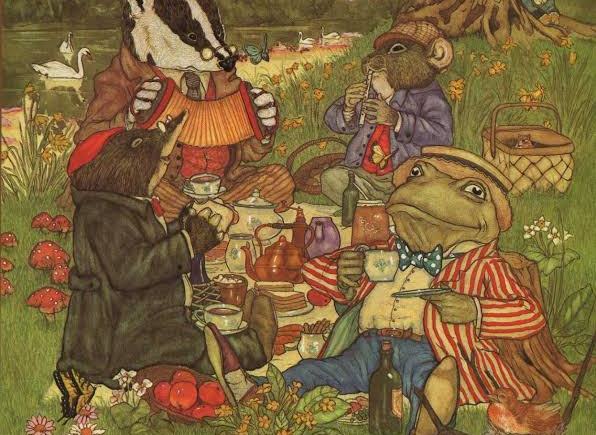
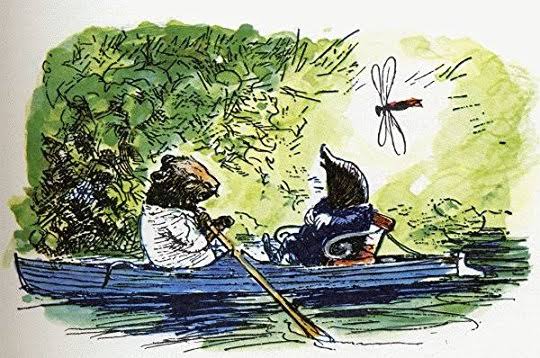
The Wild Wood and the Wide World

On this day, 8th October 1908, The Wind in the Willows, Kenneth Grahame’s classic children’s book was published.

In 1908, Kenneth Grahame retired from his position as secretary of the Bank of England. He moved to Berkshire, where he had lived as a child and spent his time by the River Thames doing much as the animal characters in his book do – “simply messing about in boats”. He elaborated on the bedtime stories he had earlier told to his son Alistair and created a children’s classic that has never been out of print.  It was into its thirty-first printing in 1929 when playwright A. A. Milne, creator of Winnie the Pooh, adapted the most raucous and rambunctious part of it for the stage as Toad of Toad Hall in 1929 – which in 1949 Walt Disney’s studio took to the highest heights of slapstick hilariousness with its animated featurette the same name.

This anthropomorphic of riverside animals was set in a pastoral version of Edwardian England, characterized by its mix of mysticism, adventure, morality, and camaraderie, and celebrated for its evocation of the nature of the Thames valley. It was an early precursor of late-century melodramatic morality tales such as Watership Down (rabbits) and Ducton Wood (moles) which contain none of its endearing magic and humour.

The Wind in the Willows is a strange book. It poses as an almost homoerotic Arcadian fantasy, and yet it is also an opaque upper middle-class tract preaching deference to and and support for the British class system and the established order. Mole looks up to Rat who looks up to Badger and they all kowtow to the ridiculous, pompous and self-indulgent Bullington Club Toad because he is the lord of the manor. The bad weasels and stoats, of course, were the socialist revolutionaries who wanted to wreck the joint. They had to be vanquished by the valiant – one could say vigilante –  forces of righteousness and order – the stout burgers of the riverbank – and violently ejected from Toad Hall. The rule of law is restored, and Mole and Ratty resume their bucolic idyll.

Six years later, this shuttered Edwardian dreamtime shuddered to a terrible end in the carnage of the Great War, and in a decade, Red weasels broke the wheel of history and reset the clock for the rest of the twentieth century.

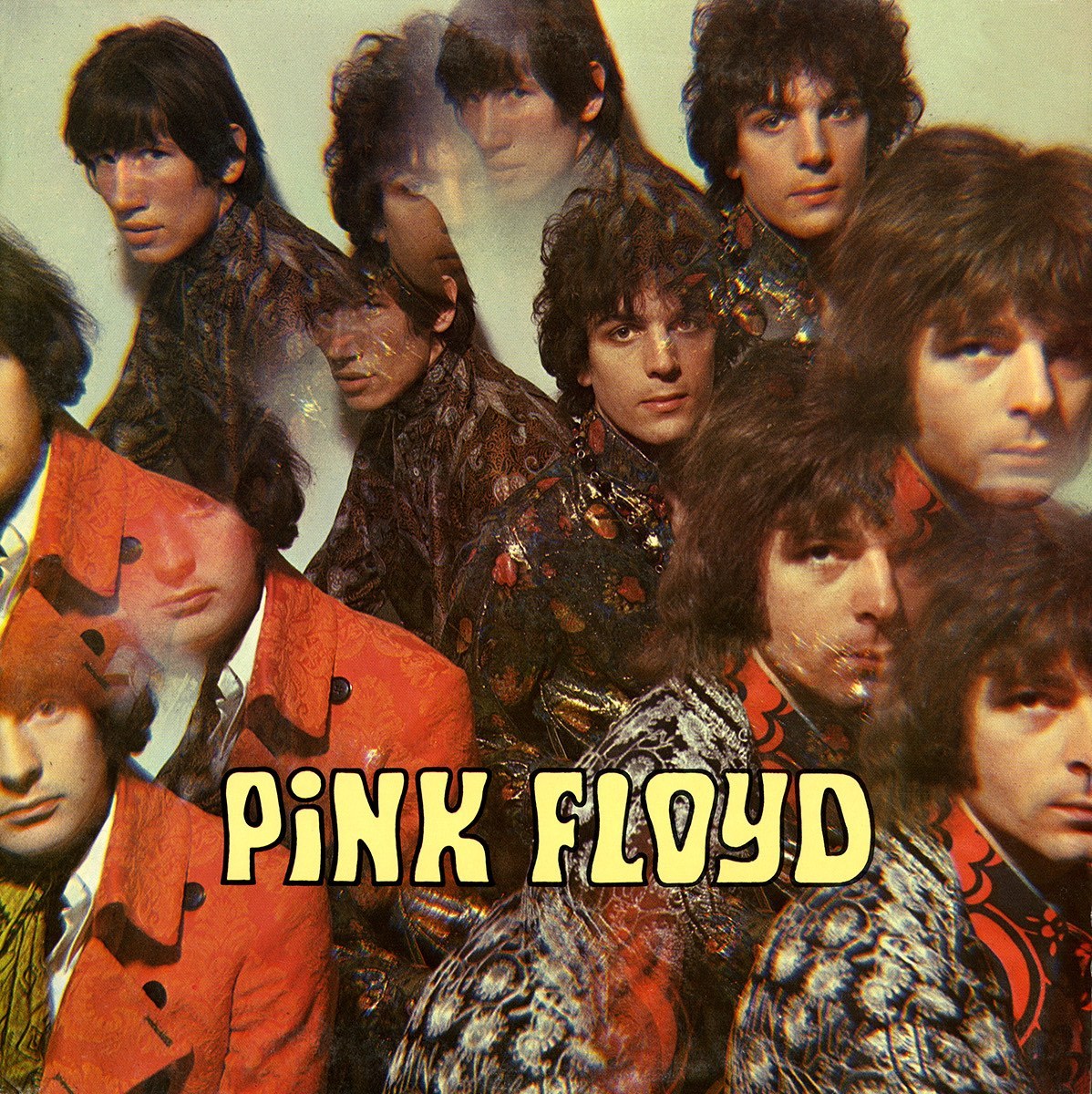
When I first read The Wind in the Willows as a child, it was a fantasy. When I reread it again as a left-wing teenager, living not too far from where the story was set and indeed, often rambling by Thames water’s edge, it was a fable – and a lame one at that. But I really must’ve must’ve been stoned or tripping when I reached Chapter Seven because I fell in love with it. It has been a favourite of mine ever since despite its twee, self-conscious encounter with the “divine”. The Piper at the Gates of Dawn is a most magnificent chapter. No wonder Pink Floyd chose it as the title of their first album back in the day!

Critics have not been so smitten. As Rosemary Hill notes in her excellent centennial review (see below) , it is “one strange, unsettling chapter … that abridgers of the book have always been quick to drop, though Grahame himself thought it essential. In it, Rat and Mole, searching for the Otter’s lost child, are granted a vision of the great god Pan, a muscular, horned god, “the Friend and Helper”, before whom the animals, “crouching to the earth, bowed their heads and did worship”. Whether it is the latent homo-eroticism of the vision or simply the sudden change of tone that makes the scene so uncomfortable, it is certainly a failure. But while artistically it is the weakest part of the book, it is at the same time the key to it. Pan’s parting gift to Rat and Mole is “forgetfulness”. They will not remember the pure happiness of their vision because if they did the memory would grow until it overshadowed and spoiled the rest of their lives with the knowledge that it could never be regained. The “little animals” would never be “happy and light-hearted” again”.

Read it anew here: Chapter 7: The Piper at the Gates of Dawn

Reproduced in full below are two excellent reviews of a centenary annotated edition published in 2009. They place Grahame’s story in the context of its time – an idyllic last summer bathed in golden sunshine before the storm that hit Europe in August 1914, and an equally golden age of children’s books.  There is a certain consensus in both reviews – with which I concur: The Wind in the Willows is a above all a book about longing, but it also also a book about letting go, if only for a brief moment.

And here is the e-book:  The Wind in the Willows  

Wild waters are upon us

Rosemary Hill, The Guardian, 13 June 2009

If Kenneth Grahame’s riverbank idyll inspires nostalgia, it’s because The Wind in the Willows is itself saturated in longing. The tale of Ratty and Toad was, Rosemary Hill argues, a product of its own uneasy times

If the Edwardian age is not remembered as a decade of social discontent and growing international tension when the cracks in the British empire began to show, but as an the reason is largely to be found in children’s literature. It was the age, if not of innocence, then of Jemima Puddleduck, Peter Pan and Mr Toad. Most of what became the canon of English writing for children appeared in a mere nine years. The Tale of Peter Rabbit, the first of the stories that Beatrix Potter modestly referred to as her “little books”, came out in 1902 and was rapidly followed by six more. Peter Pan was first staged in 1904, E Nesbit’s The Railway Children was published two years later, and then, in 1908, came Kenneth Grahame’s The Wind in the Willows, soon to become one of the best loved of them all.

The riverbank adventures of Mole, Ratty and Badger have now taken their place among the earliest memories of four generations and seem timeless, while the impossible, irrepressible Mr Toad got his own stage show, written by AA Milne, as early as 1929 and is still going strong. Yet Grahame’s story and indeed the whole Edwardian renaissance of books for and about children were peculiarly the products of their own uneasy time. If The Wind in the Willows inspires nostalgia now, that is because it is itself saturated in longing for other times and other places.

A year older than JM Barrie and a year younger than E Nesbit, Grahame was, like them, middle-aged when he produced his most enduring work. He was 49 when the book appeared, and described himself, accurately, as a “mid-Victorian”. His was the generation that had known no other monarch than Victoria and that felt with her death in 1901 that they had lost “a sustaining symbol”, as Henry James put it, adding, “the wild waters are upon us now”.

The Wild Wood and the Wide World are the twin menaces that loom over The Wind in the Willows. The sensible Water Rat wants nothing to do with either; it is only the Mole’s naivety and Toad’s hubris that force him to encounter them from time to time. The Mole soon learns his lesson. He is a creature, as he comes to understand, of the “frequented pasture” and the garden plot. “Nature in the rough” is not for him. The life of the riverbank, of messing about in boats, of ample picnics and long rambles, is essentially the life of suburbia, a rapidly growing but not entirely benign sign of the Edwardian times. The railway, which facilitates Toad’s daring escape from prison, had by now brought the branch lines deep into the shires, but with them came the commuters and the red-brick villas that Grahame so disliked. His typically English ambivalence towards suburban life runs like the river through the book. On the one hand, there’s the love of comfort and security, on the other, the chafing at its limitations and the sense that the pursuit of rural bliss may destroy the very thing that it desires.

Grahame was himself part of the phenomenon. Having spent the happiest years of his childhood at Cookham Dene in Berkshire, he returned, shortly before he started work on The Wind in the Willows, with his family and took a house there, grumbling, like Ratty, about incomers and over-crowding. In the episode where Toad’s caravan is overturned by a speeding motor car, the new Norton edition tells us that Grahame’s original version had Ratty shouting after it: “Stockbrokers!” Grahame changed it later to “road hogs”. As a recently retired secretary of the Bank of England he may have felt he was on thin ice.

Other social nuances of home-counties life in the early 20th century are reflected along the river bank. Toad Hall, with its secret passages and Tudor mullions, was given up some time ago by the original family and sold to a Victorian magnate. It is now in the hands, like Britain itself, of a spendthrift, headstrong eldest son who indulges one fad after another and is treated with the respect his pretensions deserve by the older tenantry. Rat points out to Mole the place where they will moor their boat at Toad Hall, next to “That creek on the left, where the notice-board says, ‘Private. No landing allowed'”. Toad blithely sees his non-ancestral home as a desirable commercial property. He describes it as it might be advertised in the new magazine, Country Life, founded in 1897 in London to cater largely to the aspirations of the stockbroking classes: “an eligible self-contained gentleman’s residence … dating in part from the 14th century but replete with every modern convenience … Five minutes from church, post-office, and golf-links.”

Like Beatrix Potter, Grahame was a keen observer of his characters’ domestic arrangements. The opulence of Toad Hall contrasts with Mole End, where the humble collection of prints and popular plaster busts, the outdated Gothic lettering on the house sign and the peculiar garden ornament made of cockle shells, mark Mole out as the Mr Pooter of the riverbank. Badger’s arts and crafts interior, complete with English oak settles and plain brick floor, shows a more cultivated taste. Indeed his home, with its central hall surrounded by “stout oaken comfortable-looking doors”, is in the old English style of suburban country-house design pioneered by architects such as Norman Shaw and admired by connoisseurs at home and abroad.

The trouble with Edwardian suburbia was that it was, as Grahame knew, an optical illusion. With its need for the golf club and the water closet as well as nature and history, it could best be found in the pages of Country Life where Gertrude Jekyll’s artfully planned landscapes dissolved the garden boundaries, while Edwin Lutyens’s houses turned newspaper magnates and mill-owners into county gentry. Great gusts of longing for something wilder and wider, whatever the risk, blow through The Wind in the Willows, as they stirred among many of Grahame’s contemporaries.

The fantasy of the “open road”, which troubles Toad and even sometimes Ratty, found expression in a fashion, which Grahame followed, for long cross-country walks. “Tramping”, as it was sometimes called, suggested a possible temporary change of class as well as scene. The poet WH Davies’s The Autobiography of a Supertramp was published in the same year as The Wind in the Willows and was also a great success. It told of Davies’s travels across thousands of miles of America, living rough and doing menial jobs, as he later recollected them in the tranquillity of Sevenoaks. For the riverbankers, however, there is no such possibility. Their caravan trip ends abruptly when they collide, literally, with modernity in the form of the car. Later, when Ratty is tempted by the sea rat to yield to the call of the Mediterranean, Mole rapidly talks him out of it.

England itself in the early 20th century was suffering from a similar timidity or failure of nerve – what Hermann Muthesius, the shrewd German observer of English life and architecture, called in 1904 “a certain hardening of the arteries”. The 1890s had been very different. Then it was possible briefly to belong to both suburbia and bohemia, and Grahame had. While rising smoothly through the ranks at the Bank of England to become its youngest ever secretary, he was also part of the literary set surrounding Aubrey Beardsley and Oscar Wilde. He had written regularly for The Yellow Book, a magazine devoted to modern decadence in the persons of Max Beerbohm, Walter Sickert and WB Yeats. It was in its second issue that he published the story that made his name, “The Roman Road”, a narrative cast as a conversation between a child and an adult, its message that only the artist and the child are imaginatively free.

Reviewing Grahame’s collection of stories The Golden Age, which was about, but not for, children, the arch-aesthete Algernon Swinburne found it “too praiseworthy for praise” in its lack of sentimentality about its subject. Then came the arrest of Oscar Wilde, the demise of The Yellow Book and a change of mood. Grahame’s Dream Days, another collection of stories published in 1899, was followed by nine years of silence before The Wind in the Willows, which, when it appeared, disconcerted some critics who had admired his earlier work and were not expecting a children’s book.

The editors of the latest editions are not the first to detect a comic echo of Wilde’s tragedy in the rise and fall of Mr Toad. Grahame’s Berkshire home was not far from Reading Gaol, George Gilbert Scott’s turreted Gothic revival prison, where Wilde was incarcerated. Reading is undoubtedly where Toad is taken from court, loaded with chains, having been sentenced to 20 years for being rude to a policeman. “Across the hollow-sounding drawbridge, below the spiky portcullis, under the frowning archway” Toad recedes.

He is disappearing, though, not only into prison but into the Victorian fiction of the past that Reading Gaol represents. As he passes them, the prison warders sprout medieval halberds, there is a rack-chamber and a thumbscrew-room, and the police sergeant suddenly starts to talk in impenetrable Walter Scott Gothic: “Oddsbodikins … and a murrain on both of them!” Toad finds he is immured in the darkest dungeon in “the stoutest castle in all the length and breadth of Merry England”. Merry England, Grahame knew, was a fiction, and it was finished. It could no longer offer a resort for the imagination as it had to the writers of the early 19th century who sought respite from their own times in the pious middle ages. The Edwardians knew much more about history and they were much less sure about God.

Those of them who went on searching for the divine often found it enveloped in clouds of pantheism and neo-paganism, spiritualism and theosophy, the faiths of the doubtful. It is this diffuse but potent supernaturalism that appears in The Wind in the Willows in one strange, unsettling chapter, “The Piper at the Gates of Dawn”. It is a section that abridgers of the book have always been quick to drop, though Grahame himself thought it essential. In it, Rat and Mole, searching for the Otter’s lost child, are granted a vision of the great god Pan, a muscular, horned god, “the Friend and Helper”, before whom the animals, “crouching to the earth, bowed their heads and did worship”.

Whether it is the latent homo-eroticism of the vision or simply the sudden change of tone that makes the scene so uncomfortable, it is certainly a failure. But while artistically it is the weakest part of the book, it is at the same time the key to it. Pan’s parting gift to Rat and Mole is “forgetfulness”. They will not remember the pure happiness of their vision because if they did the memory would grow until it overshadowed and spoiled the rest of their lives with the knowledge that it could never be regained. The “little animals” would never be “happy and light-hearted” again.

At Edward VII’s coronation in 1901 Kipling’s great fin-de-siècle poem, “Recessional”, was read with its tolling refrain “Lest we forget – lest we forget”. But for Grahame and his contemporaries the problem was that they couldn’t forget. The enemy without, the stoats and the weasels from the Wild Wood, might be driven from Toad Hall with sticks, but memory, the foe within, haunted them along with all that they had lost or might be about to lose. And so they turned aside, as one view of history has it, from modernism and went back to the nursery. What they found there, though, was not so much a second childhood as the first, the ideal one, which they preserved forever for their readers – childhood as we may all remember it and as it never was.

Second Wind for a Toad and His Pals

Charles McGrath, New York Times, July 9th 2009

The years between 1900 and the outbreak of World War I, it has often been remarked, were a golden age in Britain for the writing of children’s books. Among the books published then are most of what we remember of Beatrix Potter; several of E. Nesbit’s novels; Kipling’s “Jungle Book” and “Just So” stories, J. M. Barrie’s “Peter Pan in Kensington Gardens,” which became the basis for the stage play; Kenneth Grahame’s “Wind in the Willows”; and “A Little Princess” and “The Secret Garden,” by Frances Hodgson Burnett, who eventually became an American citizen but was born in Manchester, England. In hindsight these books seem to reflect the long, sunny afternoon of Edwardian England, a moment of arrested innocence before the outbreak of the Great War. Many of them also yearn for a rural, preindustrial England that was already vanishing. Part of their appeal is that they’re nostalgic, as we are, for childhood itself, or for a simpler past that seems to embody childhood virtue.

Of all these books “The Wind in the Willows” may be the oddest and most endearing. Too late for the centennial of its original publication in 1908, but a century and a half after the birth of the author, it has been reissued in two large-format annotated editions — one edited by Seth Lerer and published by the Belknap imprint of Harvard University Press, the other edited by Annie Gauger and published by Norton as part of its well-established series that already includes “Alice in Wonderland,”“The Wizard of Oz,” and three volumes of Sherlock Holmes.

“The Wind in the Willows” is probably most famous for a single line, Rat’s remark to Mole: “Believe me, my young friend, there is nothing — absolutely nothing — half so much worth doing as simply messing about in boats.” But the boating adventures, charming as they are, are the least of what makes the book so singular. “The Wind in the Willows” is a children’s book that, unlike most, doesn’t describe a world without grownups; instead, it parodies the grownup world. The characters — Rat, Mole, Badger, Otter, Toad — aren’t just woodland creatures with a few anthropomorphic traits. They’re of indeterminate scale — Toad is toad-size in some scenes but in others big enough to disguise himself as a human — and they have full-blown adult personalities, more nearly Edwardian clubmen than rodents, burrow-dwelling mammals or amphibians. Toad, who has certain traits in common with the overweight, fun-loving King Edward, even parts his hair in the middle, a detail that Beatrix Potter famously took exception to. “A frog may wear galoshes,” she wrote. “But I don’t hold with toads wearing beards or wigs!”

The adventures depicted in the book include the famous riverine idylls and a couple of almost equally well-known scenes of cozy underground bachelor life, which Mr. Lerer says owe something to Ruskin’s ideal of British domesticity. There are also the much wilder episodes of Toad’s manic car theft and car smashing; a Bolshevik takeover of Toad’s great manor house, Toad Hall, by the lower-class stoats and weasels; and, most bizarre of all, a moment of sexual and religious ecstasy when Mole and Rat behold, in the silvery, creeping light of dawn, no less than a naked, shaggy-flanked goat god, Pan himself, taking a break from his piping.

This scene is so charged that Ms. Gauger detects an element of homoeroticism. But then she, by far the more extensive and detailed of the two annotators, is quick to find an erotic subtext throughout a work that Grahame declared to be “free of the clash of sex.” After Toad and Mole companionably spend the night together, she notes, “If this were a novel for adults, Mole and Rat would perhaps consummate their relationship amorously.”

This kind of observation is indicative of the problems inherent in annotating a classic text, even one as well known as this. On the one hand, parts of the cultural landscape that inspired the book are already lost to us, and there are echoes and allusions that we remain deaf to even after having them pointed out, others that we are apt to misinterpret from our habit of seeing sex everywhere. On the other hand, the book is still perfectly readable without pedantic notes or explanations, and Ms. Gauger’s edition, in particular, is so laden with commentary that it sometimes resembles the Talmud, with more commentary than text on the page.

Both editors devote vast amounts of space to defining words like “panoply,” “repast,” “provender,” “vouchsafe,” “sniffy,” “fusty,” “hummocky” that are all in the dictionary and whose meaning hasn’t changed much, if at all, since 1908. And neither is entirely reliable: both think that a “well-metalled road” is one literally paved with metal when a glance at Google would have told them that the term is a synonym for what we think of as tarmac.

Both editors, to be fair, are very good at picking up echoes of Romantic poetry, huge chunks of which were clearly swirling inside Kenneth Grahame’s head while he was writing “The Wind in the Willows,” and both illuminate the text by suggesting, among other things, that Toad — blusterer, aesthete, jailed prisoner — was inspired in part by Oscar Wilde. He probably also owes something to Horatio Bottomley, a flamboyant, gasbag journalist and politician of the time. Mr. Lerer further suggests that Toad’s mania, his grandiosity, his compulsive lies and self-deceptions may derive from Grahame’s reading in Krafft-Ebbing’s “Textbook of Insanity.” A simpler explanation of Grahame’s understanding of wild, unpredictable personality may be that he grew up with an unreliable, alcoholic father who eventually abandoned his two sons.

In general Ms. Gauger is more willing than Mr. Lerer to find the roots of “The Wind in the Willows” in Grahame’s biography, and though she sometimes overdoes it, or explains the parallels at tedious length, her commentary nevertheless provides a sad and illuminating subplot of sorts. In many ways Grahame resembles A. A. Milne, who in 1929 dramatized the Toad sections of “The Wind in the Willows,” which always remained his favorite book. Both, though they had little use for women, were married to remote, difficult wives (Grahame courted his by writing to her in baby talk), and each had a single son whom he both doted on and neglected.

“The Wind in the Willows” began as a bedtime story and evolved over a series of letters (reproduced in the Gauger edition) that Grahame wrote to his son, Alastair, during the long months when he was farmed out to a nanny. Alastair Grahame was born part blind (an inspiration for Mole?) and appears to have been emotionally disturbed. After a miserable experience at school he lay down on some train tracks while an undergraduate at Oxford and was decapitated.

Kenneth Grahame’s own early life was scarcely much happier. His mother died when he was 5, his father ran off, and he was raised by relatives who were too stingy to send him to university. Like P. G. Wodehouse, another aspiring writer with a blighted childhood, Grahame went into the banking business. Unlike Wodehouse, he stuck it out, and by the age of 39 had risen to become secretary of the Bank of England, a post that doesn’t seem to have required him to do a whole lot.

His ostensible life was that of a proper Edwardian gent, with lots of male bonding and messing about in boats, and yet privately he burned to write, to live in his imagination. For all its apparent celebration of neatness and domestic orderliness “The Wind in the Willows” is really a book about letting go. It begins with Mole, tired of spring cleaning, putting aside his whitewash brush and taking to the road, and its true hero is Toad, who is anarchy incarnate.

Officially the text seems to disapprove of him: vain, swaggering and boastful, Toad is reprimanded and briefly chastened, and at one point the other characters even stage what we would call a full-scale intervention to confront him with his car-wrecking addiction. But he nonetheless runs away with the book, just as he runs away from prison disguised as a washerwoman, and supplies most of its narrative energy.

Though Rat is supposed to be a poet, Toad’s Song of Himself, sung to an imaginary audience near the end, is the novel’s most exuberant creation. To say that he is Grahame’s alter ego is too simple. More likely he’s the alter ego Grahame wished he could have but was also a little afraid of. Like a surprising number of stuffy-seeming Edwardians, Grahame was half in love with, and half terrified of, the idea of Pan, who never grows old, never goes to the office, never even bothers to put on clothes, and yet embodies all that is magical about the world we imagined we grew up in.


A Parting Glass – farewell to an old friend


We shall not cease from exploration, and the end of all our exploring will be to arrive where we started and know the place for the first time.
TS. Elliot, Little Gidding

“One of those days in England, with a sword in every pond”, sang Roy Harper, the high priest of anglo-angst. And so it was when we looked out on England and imagined a wider world. Our journey took us to this farthest shore on the brink of the mighty Pacific.

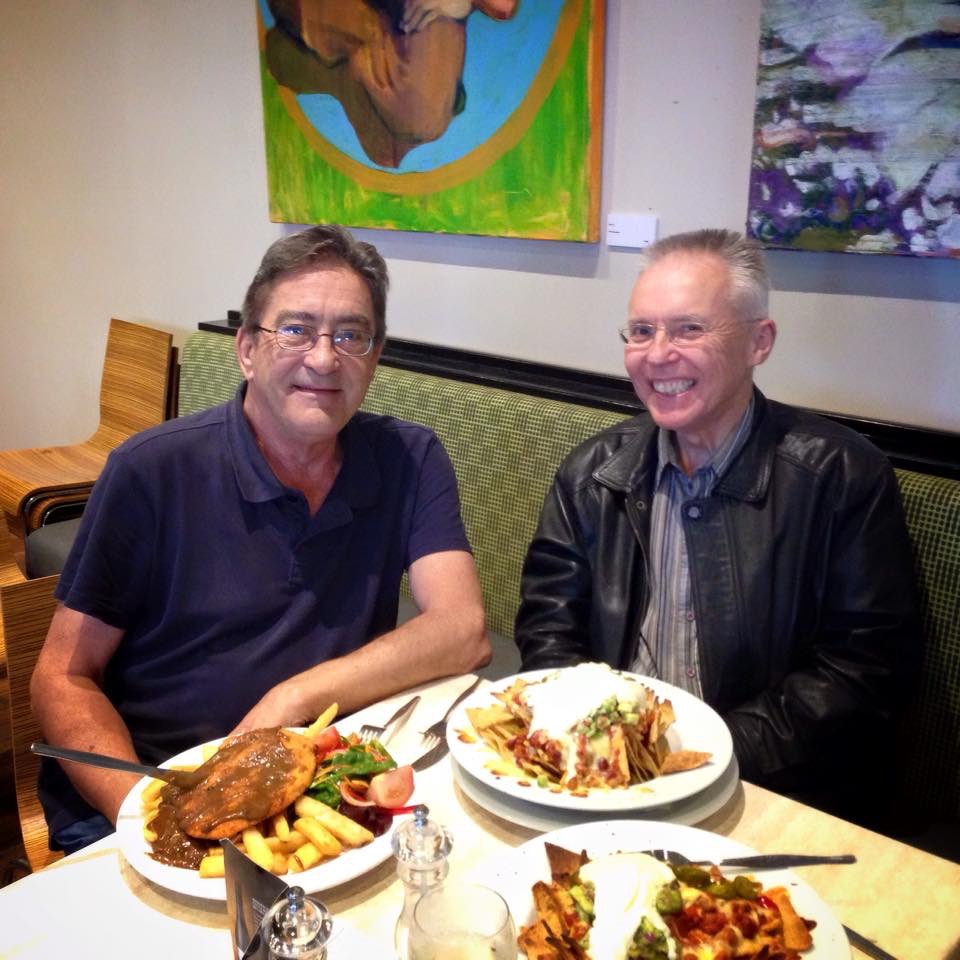
This month saw the passing of a fine old friend whom I’d first met fifty years ago this September when we arrived as young freshmen at the provincial red-brick university in Reading, Berkshire, a provincial southern town on the banks of the River Thames, less salubrious than its famous riverine neighbours Oxford and Windsor, and noted mainly for biscuits and beer. Fate determined that a bunch of disparate ingenues from all parts of the island boarded at the same ‘hall of residence’.

It was there that John and I bonded through folk music. I had a battered Spanish guitar that I’d strung  with steel strings, and had started writing songs and playing them to our friends. One day,  I left my guitar with John and headed to Hull to visit an old school chum and do my first trip (“those were days, yes they were, those were the days”). When I’d landed and hitch-hiked home, John had not only mastered the instrument, but was able to play me a couple of his favourite songs – Ralph McTell’s Streets of  London and Michael Chapman’s One Time Thing (see below). Very soon, he could play them note-perfect from just listening to the vinyl. Instead of me showing him chords and finger picking, he was teaching me. And whilst emulating his guitar idols, over time he assembled a fine repertoire of his own songs.

With a bunch of university friends, we later flatted in London whilst they earned enough money to get themselves overland to Australia. There, two of the fellowship settled down, built families and careers, and raised a mob of clever, creative and beautiful children. I was never born to follow; but life seeks out its own highways and byways, and in time these led me also DownUnder.

Those London days inspired my Harperesque, navel-gazing epic London John (see below).

Though his later life rendered him victim to a treasonous DNA, he fostered and followed through a passion for the wide, dry flatlands west of the Great Divide. He would undertake long-distance solo driving tours “beyond the Black Stump” (which is to say “the back of beyond”, or more prosaically,  “to buggery”); and would send us dispatches of his journeying, with beautiful photographs and stories of shooting the breeze with the locals and playing his guitar in pubs and by camp fires. When driving was physically no longer an option, he’d catch the train to outback Broken Hill.

Like Banjo Paterson, one of our national bards, and his poetic alter-ego Clancy of the Overflow, he treasured “the vision splendid of the sunlit plains extended, and at night, the wond’rous glory of the everlasting stars.

Listen to John’s songs on SoundCloud.

Farewell to North Finchley 1992

Back in the Day …

All those years ago …
Northern lads in a southern town.
Working-class in a middle-class world.
To Reading we’d come and then to London Town.
We are all compadres still.

Lent you my old guitar when I was roved out.
I came home and you’d played like a pro.
Streets of London and One Time Thing.
Note perfect played by ear.
And you were teaching me.

In London we busked on the Undergound
Got busted when playing Pavan.
Bow Street Magistrates Court.
“Soliciting reward without license”.
The only record we’d make together.

You took the hippie trail to Asia and beyond.
Bound for Bondi Beach.
Sang of mushrooms and a dog on the shore.
Four amigos washed ashore DownUnder.
Where you found your true home.

I came hither by another road.
Our paths forever criss-crossed.
Like ships passing in the night.
You headed always to the bush
But got to see our forest home.

Once you lent me your Martin guitar.
And I  went and lost it.
You probably never forgave me for that.
But maybe you’ll find it again in the valley beyond.
Because old friends always meet again.

There’s a song we’d all sung
When we were all young.
Of when we were no longer so.
Written by an ancient Greek
Over two thousand years ago.

I’d rolled it into a song of my own
As bold songwriters do.
And as years run us down and transfigure us
It echoes through the foggy ruins of time.
I hear it now as clear as the days we sang:

In those days when were men,
Ah, you should’ve seen us then.
We were noted our for our courage and agility.
We carried all before us
In battle and in chorus,
And no one could’ve doubted our virility.
But those days are past and gone
And the feathers of the swan
Are no whiter than our heads
For now we’re old.
And yet, as you can see,
Thinning relics we may be,
In spirit, we’re still
Manly, young and bold.

Farewell, old friend,
And flights of angels sing you to your rest.

Vale John Rugg 1949 -2018

Valances

                  (early in the morning at break of day)

Valance: The capacity of something to unite, react, or interact with something; connections; relationships.

In the afternoon they came upon a land in which it seemed always afternoon.
Lord Alfred Tennyson, The Lotus Eaters

Out of the cradle so restlessly rocking,
Ringing the changes that resonate still,
The rolling momentum of memory sailing
Like some graceful galleon, onwards until

We came in due course to harmonious havens,
Seeking the warmth of another land’s sun –
Such was the feeling, and such was the motion
Of onwards, and upwards, and endlessly on,

Out of those valances, casual, knowing,
Seeking out payments for debts never due,
The curious cadence of melodies flowing,
Gathering vagrants in pastures anew,

Forgotten weekends of such transient yearnings,
The edginess felt as we near a strange land,
Vanishing echoes of strange dreams returning,
Just out of reach of the memory’s hand,

They’re falling like mist through my arms,
Flowing like mist through my arms,
Broken memories, fractured songs
Are flowing like mist,

Flowing like mist through my arms,
Broken memories, fractured songs
Are flowing like mist, like mist through my arms.

Out of the days of such recklessly wandering,
Seeking sensation and stretching the mind,
Journeying aimlessly, canyons and castles
Pass ageless and ageing and captive in time,

What lies before us and what lies behind us
Are little compared to the treasures we find,
Are nothing compared to what’s lying within us
As secrets unfold and the stories unwind,

And down through the ages, the prophets and sages
Set beacons to guide us both forward and aft,
We rise on the billow, descend to the hollow,’
Climb to the top-mast, or we cling to the raft,

And when all is unravelled, the road that’s less travelled
Winds back to the start, and we know it again
For the first time, and we know that there’s no more to say,
So early in the morning, at breaking of day.

Falling like mist through my arms,
Flowing like mist through my arms,
Broken memories, fractured songs
Are flowing like mist,

Flowing like mist through my arms,
Broken memories, fractured songs
Are flowing like mist, like mist through my arms.

© Paul Hemphill 2012

Other memories of the ‘Sixties in Into That Howling Infinite: Back in the day: and A Window On A Gone World

  The Old Man’s Tale

Part One

In those days when men were men,
Ah, you should have seen us then
We were noted for our courage and agility.
How we carried all before us,
Both in battle and in chorus,
And no-one one could have questioned our virility.

But those days are past and gone,
And the feathers of the swan
Are no whiter than our heads, for we are old;
And yet as you may see,
Thinning relics we may be,
In spirit we’re still manly young and bold.

Though we may be phased out crocks,
The whiteness of our locks,
Does the country better credit, I should say,
Than the ringlets and the fashions
And the wild immoral passions
Of the namby-pamby youngsters of today.

But for all our sacrifice for to make a better life,
For those who followed to be proud and free.
Oh, we had to watch you grow
Into some horticultural show.
“Was it thus worth all our toil?” The dead ask me.

We lived like men, we looked the part;
We held our country to our heart;
We always did our best and better still;
But you who came too late to fight,
You’re living off the state alright,
And from our hard exertions, take your fill.

But those days, alas, are gone,
And the feathers of the swan
Are no whiter than our heads for now we’re old.
But if we could have seen
What the fruits of toil would’ve been,
Would we still have been so manly, young and bold?

Part Two

The image of my life is laid out before me:
It shows how well I fate, how hard I fall;
How people curse and jibe, how friends ignore me;
And I scream in a soundless voice, “I don’t care at all”.

You look at the world through different eyes to me:
You see life in a greyer shade of white;
Embrace the past, dictating what is there for me;
Telling me what is wrong and just what is right.

But I tell you I just don’t care.
You can’t change my mind.
And all your stories just won’t wear.
Let se speak my mind.

So i don’t fit your picture of the ideal man,
And if I don’t impress your sight – you say I must.
If I don’t don’t suit your taste like so many others can,
Must I conform to gain your meaningless trust?

I tell you I just don’t care.
You can’t harm my mind.
And all your fictions just won’t wear;
Let me speak my mind.

You say my behaviour’s a disgrace to modern life.
This permissive way of living’s got to stop!
“Why can’t you accept the guidance
Of those who are older and wiser?”

But then I just don’t have a wife to swap,
Or the guns to kill,
Or the power to guide men’s lives,
Or to bend their will,

And I don’t have the blood on my hands,
And I don’t have lies in my mind,
And your explanations won’t wear,
And  you won’t change my nine.

And my ears are not deaf to the tears,
And my eyes are not blind to the plight,
And my senses not numb to a world
That has yet to emerge from its night.

Put me on the road to God;
I know it’s the path to Hell;
Ins if I fall, don’t  heed my call.
Just say it was just as well.

© Paul Hemphill, September 1969

Some of John’s favourite songs:

Michael Chapman: One Time Thing. This was one of John’s early favourites back in the day. He’d borrowed guitar when I’d gone off on a frolic and when I’d got back. he’d not only learned how to play guitar, but he played this note perfect – and sang it much better than Chapman.

 Amazing Blondel : Pavan. We got busted when we played this on the London Underground. John used to play the flute riff on his guitar. It was the only record we made together – in Bow Streets Magistrates Court!

Al Stewart. Ivich. Al was a longtime favourite of John’s, from Reading days, and we used to go to see him in Cousins in Soho when we lived in London.  John admired his excellent guitar-work.  A friend of ours – ex-GF of one of our flatmates, actually – went out with Al for a while. I think John had left for Australia by then, but I got to know him. He even came for supper at my folks’ home in Birmingham when he played there once. And most amusing, that was.

Here’s another Al Stewart song that John liked, In Brooklyn

Roy Harper, the English High Priest of Angst, was another of John’s favourites. Here’s one of his ‘softer’ songs. Very nice. Another Day.

And probably, John’s all time favourite, Ralph McTell’s Streets of London. John played this note perfect too, from the get-go. I hated it, but there’s no accounting for bad taste.

Photo Gallery

Picnic in Whiteknights Park 1969. 
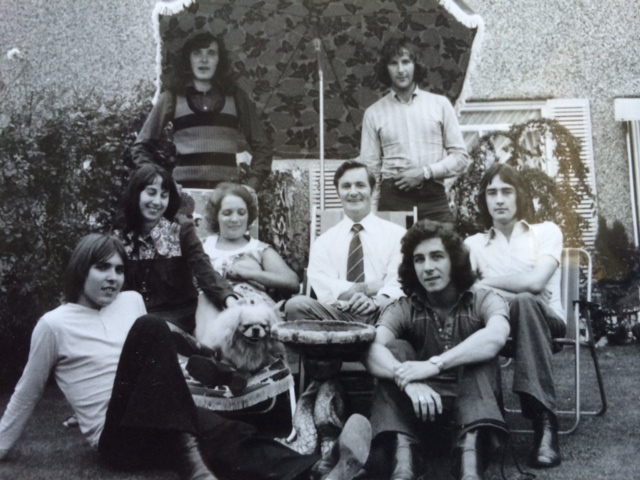
The M1, Summer 1972. Brendan, John, Eric and Paul
Hemphill Family Home, Birmingham, Summer 1972
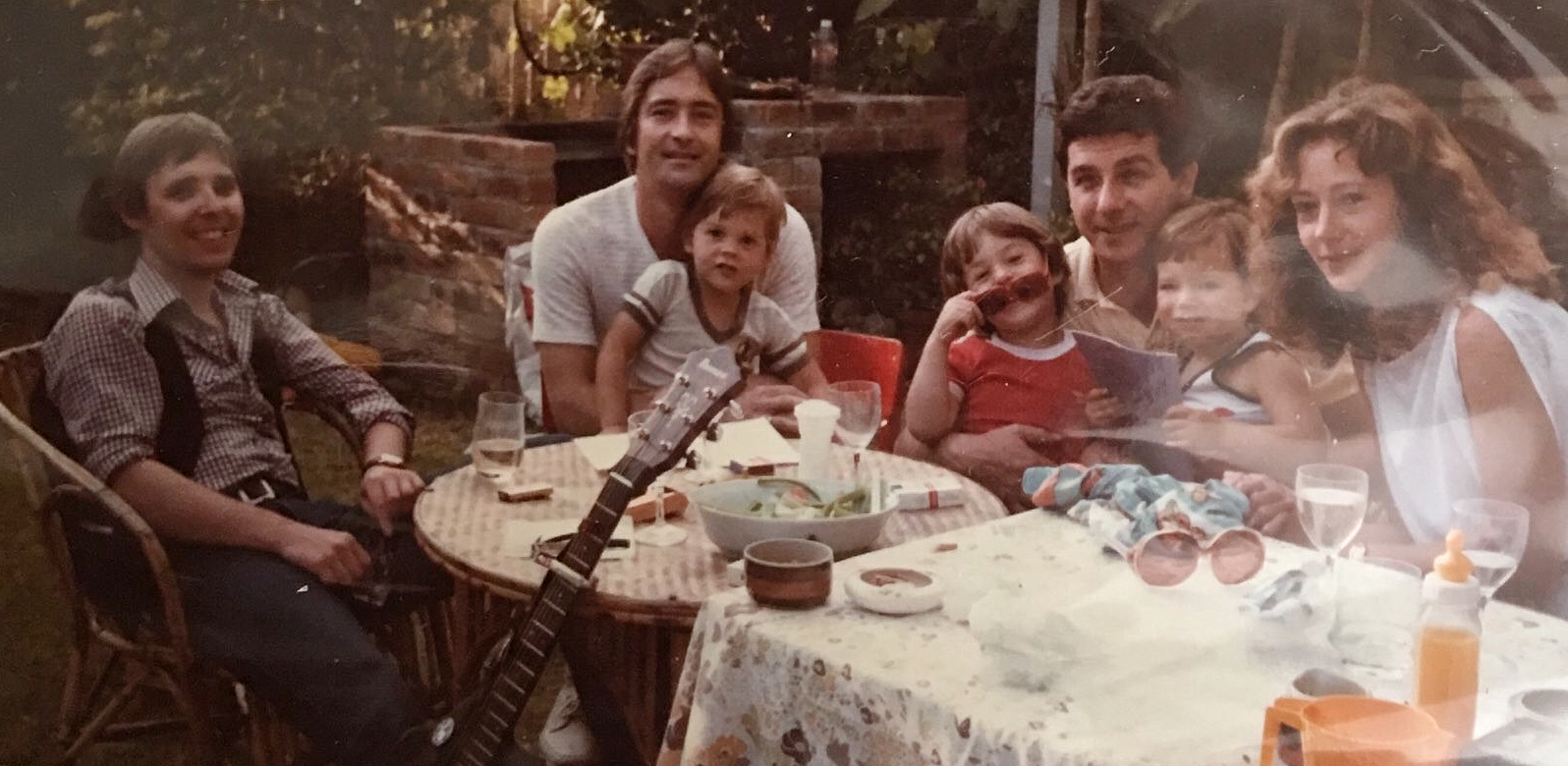
Bardwell Park, October 1983 Paul, John, Andrew, Damian, Christian and Jean
Federal Hotel, Bellingen, December 2013

https://soundcloud.com/user6120518-1/london-john-freefall

Things fall apart, the centre cannot hold – 1968 revisited

The serpentine storylines of Nathan Hill’s astonishing debut novel The Nix converge on the chaos and carnage of the Democratic National Convention in Chicago in August 1968, when Hubert Humphrey was selected as candidate to run against Richard Nixon that fall, and Mayor Daley set the city’s finest upon the thousands who had gathered to protest the Vietnam War, racial injustice, and other social and political ills in what contemporary reports described as a “police riot”.

Hill sets the scene beautifully…

“The day before the riots the weather turned. The grip of the Chicago summer loosened and the air was spring-like and agreeable…In the very early dawn there appeared on the ground a thin, slick dew. The world was alive and lubricated. It felt hopeful, optimistic, and therefore disallowable as the city prepared for battle, as National Guard troops arrived by the thousands on green flatbed trucks, as police cleaned their gas masks and guns, as demonstrators practiced evasion and self-defense techniques and assembled various projectiles to lob at the cops. There was a feeling among them all that so great a conflict deserved an nastier day. Their hatred should ignite the air, they thought. Who could feel revolutionary when the sun shined pleasantly on one’s face. The city instead was full of desire. The day before the greatest, most spectacular, most violent protest of 1968, the city was saturated with want”.

Indeed, for most of that year, the western world was full of unfulfilled desires and unsatisfied wants.

In this, the third in a series of posts recalling the tumultuous events of 1968, we review a year that breathless commentators have dubbed “the year that changed America”, and, drawing an even longer bow, “the year that changed the world”. It was indeed a year of seismic social and political change, from the anti-Vietnam War and civil rights movements in America, to protests and revolutions in Europe, and famine in Africa. And as the year ended, Apollo 8 gave us our first view of our sad, blue planet from space.

It was indeed a great year to be alive, young and engaged – although a very great many endured grief, misery and pain, and met violent deaths. Yet, it is in our nature to imagine and indeed, re-imagine our salad days as the best of times and the worst of times. But looking back through our back pages, the year was perhaps no better or worse, no more significant or seminal than any year fore or aft. Like cars seen through the rear-vision mirror, memories always seem a lot closer and bigger. Recall the last verse of Bobby Goldsboro’s tear-jerker Honey, released that February: “…see the tree how big it’s grown. But friend it hasn’t been too long. It wasn’t big”. But we do, however, enhance our depth of perception, and accordingly, our understanding.

1968 conjures up a kaleidoscope of searing images apart from those of police clubbing demonstrators on the streets of Chicago.

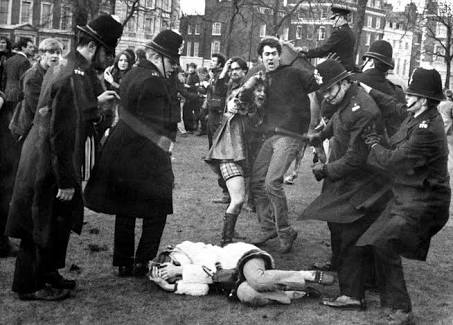
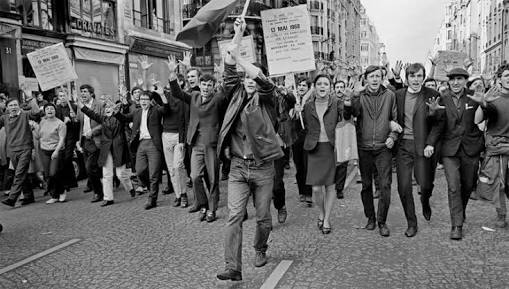
A South Vietnamese general blowing out the brains of a Vietcong prisoner on a Saigon street during the Tet Offensive. The Reverend Andrew Young Jr. and his colleagues, on the balcony of the Lorraine Motel in Memphis standing next to the body of Martin Luther King Jr. and point to where the assassin’s bullet was fired. Students at Columbia University taking over campus buildings, only to be hauled away, battered and bloody by police. Parisian protesters hurling tear gas canisters back at the police. Robert Kennedy felled by Sirhan Sirhan in the basement at the Ambassador Hotel in Los Angeles. Soviet tanks rolling into Prague. Women dumping bras and girdles into a trash can on the boardwalk outside Atlantic City’s Miss America pageant. Protesters facing off against coppers and horses in a violent mêlée in front of the US embassy in London’s Grosvenor Square. Tommy Smith and John Carlos on the Olympic medalists’ platform in Mexico City, raising their black-gloved fists in the Black Panther Salute as second-placed Aussie Peter Norman stands tall and silent in solidarity (a stance which would earn him opprobrium in his still prejudiced and conservative homeland).

As young people in the UK, we viewed these scenes to an exciting and eclectic soundtrack of blues, rock and psychedelia as the pop music cavalcade of the ‘sixties rock ‘n rolled on.

The Beatles sang Hey Jude, and The Rolling Stones, Street Fighting Man, and Jimi Hendrix delivered simply the best-ever cover of a Bob Dylan song with his blistering, sinister All Along the Watchtower. Imagining we were Born To Be Wild, we were invited to get our motors running and head out on the highway, or else to “take the load off, take the load for free”. We could pointlessly ponder the mysterious meaningless of MacArthur Park, or just lay back in a hazy daze with the Hurdy Gurdy Man (a strange ditty that has enjoyed a brief comeback with the recent hippy, trippy Romans-versus-druids soap Britannia). Koo-koo-ka-choo, Mrs. Robinson!

Images and music aside, what was it really like to experience 1968?

Christopher Allen, in a piece in The Australian reviews an exhibition commemorating the events of 1968 at the National Library of Australia in Canberra. His is an original overview, advising caution when seeking signs and patterns in contemporary events. The past, as they say, is a foreign country – they see things differently there. “The signs 50 years ago  were alarming, hopeful or dispiriting, depending on your point of view, but above all conflicting, as are the signs today. We will one day know where events on the Korean peninsula or the latest phase of tensions in the Middle East are leading. The shadowy, seemingly fluid future, with its dramatically ­different possible alternatives, will have become the ossified, unchangeable past.

In an entertaining and upbeat piece in The Guardian, Hendrick Herzberg rebuts that cliched putdown of how people who remember the sixties weren’t really there, recounts his own adventures, and claims that “In a modest way, 1968 was the kind of year that pushes history in some unforeseen, astonishing direction – a gentler little brother to 1492, 1776, 1848, 1914, 1945, and 2001”. I would add 1789, 1939, and 1989 and 2011.  Check them out.

I too remember the ‘sixties, and I too was there, albeit not on the political, social or cultural front lines. But I was at Grosvenor Square, occupied the vice-chancellor’s offices, did drugs (soft, mind), dug Cream, read Oz and IT, and totally got into Hair, which opened in London that year. And today, I share Hetzberg’s reverie: “In 1968, the ‘sixties were almost over, but The Sixties have never fully gone away. For me, and no doubt for many others of my vintage, it’s hard to believe that half a century now separates us from that momentous, tumultuous year, and that 1968 is now as distant in time as 1918 – the year of the end of World War I, the consolidation of Bolshevik power in Russia, and the flu pandemic that killed 50 million people – was in 1968. Fifty years from now, it’ll be 2068. The ‘sixties again! I Can’t wait!”

In contrast, Tod Gitlin gazes through a glass darkly in a sober retrospective for The New York Review of Books: “When we fight over the meaning of the past, we are fighting over what, today, we choose to care about. In this way, the 1968 anniversaries stalk 2018, depicting scene after scene of revolt, horror and cruelty, of fervor aroused and things falling apart, and overall, the sense of a gathering storm of apocalypse, even revolution. Inevitably, the “iconic” images of the time feature scenes of brutality, rebellion, and tragedy”.

And indeed, the enduring historical memory of 1968 is one of a succession of seemingly disconnected conflicts and collisions, turmoil and turbulence, not only in the USA but around the world. Yet beneath the apparent chaos, Gitlin seems to suggest, there were patterns that can only be discerned with the benefit of hindsight or as visions from a great height – much like, perhaps, that iconic image of our blue planet.

“Public life seemed to become a sequence of ruptures, shocks, and detonations. Activists felt dazed, then exuberant, then dazed again; authorities felt rattled, panicky, even desperate. The world was in shards. What were for some intimations of a revolution at hand were, for exponents of law and order, eruptions of the intolerable. Whatever was valued appeared breakable, breaking, or broken”.

The pendulum was swinging away from the previous year’s Summer of Love into a darker place. The lyrics of Steppenwolf’s Magic Carpet Ride, released that September, seem, in retrospect, to describe the turning tide: “Last night I held Aladdin’s lamp, so I wished that I could stay, but before the thing could answer me, well, someone took the lamp away. I looked around, and a lousy candle’s all I found”. In November 1968, Jimi Hendrix sang: “Outside in the cold distance, a wildcat did growl. Two riders were approaching, and the wind began to howl”.

There lurked a new narrative, and this was one of backlash and counterrevolution. “What haunted America”, writes Gitlin, “was not the misty spectre of revolution but the solidifying spectre of reaction. As the right consolidated around an alliance of Christian evangelicals, racial backlashers, and plutocrats, the left was unable, or unwilling, to fuse its disparate sectors. The left was maladroit at achieving political power; it wasn’t even sure that was its goal”.

”This country is going so far to the right you won’t recognize it,” Nixon’s attorney general, John Mitchell, said in 1969. He spoke prematurely. And presciently. Fifty years on from this momentous year, all that is old is new again.


Read on and enjoy these articles and the accompanying pictures.

But first, a poignant memento of 1968 from the 1979 film version of the “tribal love-rock musical” (yep, that how it was marketed back in the day) Hair, which i saw in London in the fall of 1968.

And here are other posts in In That Howling Infinite with regard to the ‘sixties: Springtime in Paris – remembering May 1968Encounters with Enoch; Recalling the Mersey Poets; The Strange Death of Sam Cooke; Looking for LehrerShock of the Old – the glory days of prog rock; Window on a Gone World; Back in the day; The Incorrigible Optimists Club

London

Paris

Prague 


1968: Year of Counter-Revolution

Associates of Dr. Martin Luther King Jr., the slain civil rights leader lying on the motel balcony, pointing in the direction of the assassin, Memphis, Tennessee, April 4, 1968

Commemorations are the greeting cards that a sensation-soaked culture sends out to acknowledge that we, the living, were not born yesterday. So it is with this year’s media reassembly of 1968. What is hard to convey is the texture of shock and panic that seized the world a half-century ago. What is even harder to grasp is that the chief political victor of 1968 was the counter-revolution.

When we fight over the meaning of the past, we are fighting over what, today, we choose to care about. In this way, the 1968 anniversaries stalk 2018, depicting scene after scene of revolt, horror and cruelty, of fervor aroused and things falling apart, and overall, the sense of a gathering storm of apocalypse, even revolution. Inevitably, the “iconic” images of the time feature scenes of brutality, rebellion, and tragedy: a South Vietnamese general’s blowing out the brains of a prisoner on a Saigon street during the Tet Offensive; the Reverend Andrew Young Jr. and his colleagues, on the balcony of the Lorraine Motel in Memphis, next to the body of Martin Luther King Jr., pointing at where the assassin’s bullet had come from; demonstrators at Columbia taking over campus buildings, then hauled away, battered bloody by cops; Parisian protesters hurling tear gas canisters back at the police; Robert Kennedy felled by Sirhan Sirhan’s shots at the Ambassador Hotel;Soviet tanks rolling into Prague; police clubbing demonstrators at the Democratic National Convention in Chicago; women’s liberation activists dumping girdles, hair curlers, and bras (unburnt) in a trash can on the boardwalk outside Atlantic City’s Miss America pageant; Tommy Smith and John Carlos on the Olympic medalists’ platform in Mexico City, raising their black-gloved fists in defiance.
Helmeted police blocking antiwar protesters in Grant       Park, Democratic National Convention, Chicago, Aug 1

A more thorough survey would take note of social collisions that, however violently repressive, failed to register in America with the same supersaturated significance. For example: the killing of three students in Orangeburg, South Carolina, by highway patrol officers after the students protested segregation at a bowling alley (February 8); the near-deadly shooting of the German radical student leader Rudi Dutschke in Berlin (April 11); Chicago police battering a wholly nonviolent antiwar protest (April 27).

As for less bloody demonstrations, there were so many, so routinely, that TheNew York Times regularly grouped civil rights and antiwar stories on designated pages. Neither does this rundown of calamities take into account images that did not see the light of day until much later, like the color shots of the My Lai massacre (March 16), not published until late 1969—by which time they were almost expected. Or the images that never materialized at all, like the slaughter of hundreds of demonstrating students by troops in Mexico City (October 2).

A feminist protester at the Miss America beauty pageant, Atlantic City, New Jersey, September 7 

Images aside, what was it really like to experience 1968? Public life seemed to become a sequence of ruptures, shocks, and detonations. Activists felt dazed, then exuberant, then dazed again; authorities felt rattled, panicky, even desperate. The world was in shards. What were for some intimations of a revolution at hand were, for exponents of law and order, eruptions of the intolerable. Whatever was valued then appeared breakable, breaking, or broken.

The textureof these unceasing shocks was itself integral to what people felt as “the 1968 experience.” The sheer number, pace, volume, and intensity of the shocks, delivered worldwide to living room screens, made the world look and feel as though it was falling apart. It’s fair to say that if you weren’t destabilized, you weren’t paying attention. A sense of unending emergency overcame expectations of order, decorum, procedure. As the radical left dreamed of smashing the state, the radical right attacked the establishment for coddling young radicals and enabling their disorder. One person’s nightmare was another’s epiphany.

The familiar collages of 1968’s collisions do evoke the churning surfaces of events, reproducing the uncanny, off-balance feeling of 1968. But they fail to illuminate the meaning of events. If the texture of 1968 was chaos, underneath was a structure that today can be—and needs to be—seen more clearly.

Two Viet Cong captured during the Tet Offensive, one already dead, the other about to be executed by pistol shot, Vietnam, May 1968

The left was wildly guilty of misrecognition. Although most on the radical left thrilled to the prospect of some kind of revolution, “a new heaven and a new earth” (in the words of the Book of Revelation), the main story line was far closer to the opposite—a thrust toward retrogression that continues, though not on a straight line, into the present emergency. The New Deal era of reform fueled by a confidence that government could work for the common good was running out of gas. The glory years of the civil rights movement were over. The abominable Vietnam War, having put a torch to American ideals, would run for seven more years of indefensible killing.

The main new storyline was backlash. Even as President Nixon assumed a surprising role as environmental reformer, white supremacy regrouped. Frightened by campus uprisings, plutocrats upped their investments in “free market” think tanks, university programs, right-wing magazines, and other forms of propaganda. Oil shocks, inflation, and European and Japanese industrial revival would soon rattle American dominance. What haunted America was not the misty specter of revolution but the solidifying specter of reaction.

Even as established cultural authorities were defrocked, political authorities revived and entrenched themselves. In so many ways, the counterculture, however domesticated or “co-opted” in Herbert Marcuse’s term, became the culture. Within a few years, in public speech and imagery, in popular music and movies, on TV (All in the FamilyM*A*S*HTheMary Tyler Moore Show) and in the theater (HairOh! Calcutta!), profanity and obscenity taboos dissolved. Gays and feminists stepped forward, always resisted but rarely held back for long. It would subsequently be, as the gauchistes of May ’68 in Paris liked to say, forbidden to forbid.

In the realm of political power, though, for all the many subsequent social reforms, 1968 was more an end than a beginning. After les évènements in France in May came June’s parliamentary elections, sweeping General De Gaulle’s rightist party to power in a landslide victory. After the Prague Spring and the promise of “socialism with a human face,” the tanks of the Soviet-run Warsaw Pact overran Czechoslovakia. In Latin America, the Guevarist guerrilla trend was everywhere repulsed, to the benefit of the right. In the US, the “silent majority” roared. As the divided Democratic Party lay in ruins, Richard Nixon’s Southern strategy turned the Party of Lincoln into the heir to the Confederacy. As the right consolidated around an alliance of Christian evangelicals, racial backlashers, and plutocrats, the left was unable, or unwilling, to fuse its disparate sectors. The left was maladroit at achieving political power; it wasn’t even sure that was its goal.

Counter-revolutions, like their revolutionary bêtes noires, suffer reversals and take time to cohere. The post-1968 counter-revolution held the fort against a trinity of bogeymen: unruly dark-skinned people, uppity women, and an arrogant knowledge class. In 1968, it was not yet apparent how impressively the recoil could be parlayed into national power. “This country is going so far to the right you won’t recognize it,” Nixon’s attorney general, John Mitchell, said in 1969. He spoke prematurely.

1968: the year that changed America

Hendrick Herzberg, The Guardian, April 15, 2018

Where were you in the 1960s? And what were you? A toddler, a grade schooler, a teenager? A young adult? Were you already old enough to form your own memories? Or were you old enough but in the “if you can remember The Sixties you really weren’t there” category?

Of course, if you’re like most people, you were nowhere. You hadn’t been born yet. You didn’t exist. But wherever and whatever you were or weren’t, it’s a safe bet that you’ve heard about The Sixties – quite enough, maybe. Ad nauseam, maybe.

There is a continuing theological controversy among sixtiesologists concerning when The Sixties can properly be said to have begun and ended. Tuesday 8 November1960 – the day Senator John F Kennedy was elected president – has a pretty good claim to the beginning. Kennedy’s campaign slogan, which appeared on every campaign poster, had been LEADERSHIP FOR THE 60’s. Out with the dull, conformist, priggish, crewcut, Eisenhowerish Fifties! In with the dashing, exciting, daring, sexy, slightly longer-haired, Kennedyesque Sixties!

A darker view – the view I take – sets the clock of The Sixties ticking three years later. The assassination of President Kennedy was a crack in time. Like Sunday 7 December 1941; and like Tuesday 11 September 2001; Friday 22 November 1963 was “a date that will live in infamy”. And, like them, it was a day that is remembered in vivid detail by those who experienced it.

I was taking a noontime shower in my Harvard dorm room, having been as usual up till dawn getting out the college daily, the Crimson. I heard a faint, muffled radio news bulletin coming through the wall from the neighboring room. As I dried off, I turned on my own radio. I can still see the edge of the shower stall and the little bathroom window next to it. On the grass below, a girl was standing under a tree, weeping. The Crimson put out an extra that afternoon, but without my help. It felt too much like a schoolboy stunt. Rightly or wrongly, I didn’t want to play newspaperman. I didn’t want to be distracted from the communal grief all around me.

So The Sixties, in this conceit, began either in 1960 or, like Philip Larkin’s sexual intercourse, in 1963. And the ending? That too has long been a subject of debate. There are plenty of nominees, two of which may be considered the frontrunners. Like the beginnings, one is light and one is dark. The light one: Friday 9 August 1974, the day Richard Nixon resigned the presidency, freeing the nation from a quarter-century of having had him to kick around. The dark one: Altamont. Sunday 6 December 1969. Google it. Or see the movie.

It is possible to build a narrative around two currents of the year’s events, currents that melded and crisscrossed and fed off each other, to startling effect: the music, mostly a kaleidoscopic, wildly imaginative explosion of rock’n’roll; and the politics, mostly a politics of protest – protest against the Vietnam war, against racial injustice, and, more broadly, against what was experienced as the joyless, stultifying blandness of mainstream American life.

Those two currents, the music and the protests, washed over me as they did over millions of others. In 1966, a year out of college and a newly minted cub reporter for Newsweek, I was lucky enough to land in San Francisco. Something was happening there, and I found myself in a position to absorb it.

Jefferson Airplane pose for a portrait in San Francisco, 3 August 1968.
                              Jefferson Airplane  San Francisco, 3 August 1968. Photograph: AP
The scene, cultural and political, was quite something. A new kind of music – rooted in blues, rock, and electronica, and supercharged by psychedelia – was drawing motley-dressed weekend crowds to a couple of repurposed old dance halls, the Fillmore Auditorium and the Avalon Ballroom. For $2.50 you could spend hours listening and dancing to bands that were still unknown back east or down south in LA – bands still without record contracts but with wonderful names: Jefferson Airplane, the Grateful Dead, Big Brother and the Holding Company, Quicksilver Messenger Service – often paired with iconic bluesmen like Muddy Waters and James Cotton. The walls were mesmerizingly alive with rhythmically pulsating, ever-changing liquid projections. It was, in the patois of the moment, mind-blowing. For the gentle dreamers that Herb Caen, the San Francisco Chronicle’s gossip columnist, had dubbed hippies, the Fillmore and the Avalon were Carnegie Hall and the Philharmonic.

Like every young man of my generation, I had to reckon with the draft. I was against the war, of course, but I didn’t think I had the stomach to go to jail over it. I had zero desire to go to any more schools, graduate or otherwise. I was unmarried and childless. Canada was not my country, my country was the United States of America. I wasn’t physically or mentally ill and was too proud to fake it. And I wasn’t a conscientious objector. On the other hand, I didn’t want to get killed either. My solution was the US navy.

I got a haircut and reported to the naval base at Newport, Rhode Island, for three months of officer training. From there I asked to be sent to Vietnam, but it wasn’t like it sounds. Unless you were a flier (like John McCain, the future senator), a Seal (like Bob Kerrey, also a future senator) or a member of the Riverine Force (like John Kerry, a future senator, presidential nominee, and secretary of state), being a naval officer in Vietnam, especially a “public affairs” officer like me, posed very little physical risk. Instead, however, the navy, in its wisdom, assigned me to a desk job in lower Manhattan.

As the year rushed on, the pace of events grew ever more frenziedI stole away from the office whenever I could, and devoted the time to salving my conscience. I pitched in at the ramshackle headquarters of the War Resisters League. In March, after Robert Kennedy entered the presidential race, I took to hanging around his Manhattan headquarters, doing layouts and writing headlines for the Kennedy Current, the campaign’s weekly tabloid.

As the year rushed on, the pace of events grew ever more frenzied: the bloody shock of the Tet Offensive; the electoral abdication of President Lyndon Johnson; the assassination of Martin Luther King Jr and the riots that followed; the murder of Robert Kennedy; the chaotic, riotous Democratic convention in Chicago; Nixon’s hairsbreadth victory over Hubert Humphrey in November. And me? Well, at Christmastime I got the orders to Vietnam (as a “recreation officer” at the US base in Da Nang) I’d hoped for two years earlier. Only this time I didn’t want to go. My antiwar sentiments had hardened to the point that I decided I preferred jail to further military service, and I announced my intention to refuse the orders.

Riots in Chicago follow the assassination of Martin Luther King.
       Riots in Chicago follow the assassination of Martin Luther King.
Photograph: Lee Balterman/TimePix/Rex Features

But before I could achieve fame as a martyr for peace an unexpected medical difficulty developed: I had a wisdom tooth pulled, the wound bled for days, and when I was diagnosed with a (relatively mild) form of hemophilia, the navy quickly mustered me out. I had managed to have it both ways: veteran (kind of) and resister (in a way).

Why didn’t I think of that?

In 1968 the sixties were almost over, but The Sixties have never fully gone away. For me, and no doubt for many others of my vintage, it’s hard to believe that half a century now separates us from that momentous, tumultuous year, and that 1968 is now as distant in time as 1918 – the year of the end of World War I, the consolidation of Bolshevik power in Russia, and the flu pandemic that killed 50 million people – was in 1968. Fifty years from now, it’ll be 2068.

The Sixties again! I can’t wait!

This is an extract from the introduction to the 30th-anniversary edition of1968 in America: Music, Politics, Chaos, Counterculture, and the Shaping of a Generation by Charles Kaiser, published in the US by Grove Press on 17 April

Take a look back to our future

Christopher Allen, The Australian, June 23rd 2028

Many Cheers on the Founding of the Revolution Committee of Hubei Province, papercut poster (1968). All images from 1968: Changing Times exhibition, National Library of Australia

Many Cheers on the Founding of the Revolution Committee of Hubei Province, papercut poster (1968). All images from 1968: Changing Times exhibition, National Library of Australia

In one of the most famous stories from ­antiquity, Croesus, the proverbially rich king of sixth-century BC Lydia, in what is now Turkey, was disturbed by the rise of the Medes and the Persians on his eastern borders. Thinking it might be wise to crush these potential rivals before they became a serious threat, he consulted the oracle of Apollo at Delphi, plying it with gifts to ensure a favourable answer. The oracle replied that if he made war on the Persians, a great empire would be destroyed. Croesus accordingly gathered his ­armies and ­attacked, but he was defeated and taken prisoner by Cyrus the Great, founder of the Persian ­Empire.

The oracle had a reputation for accurate yet riddling answers. A half-century after these events, Heraclitus, one of the most brilliant Pre-Socratic thinkers and famous for enigmatic aphorisms, declared: “The lord whose oracle is at Delphi neither reveals nor conceals but sig­nifies.” It is up to us to read the sign he gives, and Croesus had fatally misconstrued that sign in his eagerness to hear what he wanted to hear.

The signs 50 years ago, in 1968, were alarming, hopeful or dispiriting, depending on your point of view, but above all conflicting, as are the signs today. We will one day know where events on the Korean peninsula or the latest phase of tensions in the Middle East are leading. The shadowy, seemingly fluid future, with its dramatically ­different possible alternatives, will have become the ossified, unchangeable past.

The political protests of May 1968 in Paris were among the most significant events of that year. Although partly emulating earlier student agitation in the US, the French protests were much broader in their implications. The term that the French use for this movement, la contest­ation, suggests its universal spirit of ­revolt and its nebulous sense of direction, if not nihilistic disorientation. It was a catastrophic time for many young people caught up in the hysteria and afterwards left to pick up the pieces of interrupted studies and broken careers, in an ambience of cynicism and disenchantment. Ever since the revolution of 1789, the French have been prone to political overexcitement, and throughout much of the 20th century ­communists continued to believe in their own kind of revolution in the same way Christians believe in the second coming.

The zealots thought 1968 heralded the end of days and the imminence of the dictatorship of the ­prole­tariat; but the grassroots movement, spreading from students to workers, was not supported by the Communist Party, which was still committed to a totalitarian and Stalinist model of ­central control. A few months later, a similar pattern evolved within the communist world: the opening up of Czechoslovakia to greater freedom, democracy and independence — the Prague Spring — was crushed in August when Soviet tanks invaded the country and ­occupied its capital.

The events of Paris and of Prague dealt a fatal blow to the credibility of communism in the West; the old left began slowly bleeding to death until its collapse with the fall of the ­Berlin Wall 21 years later. Thus May 1968, as in the story of Croesus, did indeed herald the fall of an ­empire, but not the one the student rioters thought they were going to bring down.

Much else happened in 1968, including the opening of the new National Library in ­Canberra, whose anniversary is the occasion for this exhibition. As we enter the exhibition, we are confronted by a wall of 21 tabloid bills, in the centre of which is one announcing the opening of the library. The remaining headlines sum up many other momentous events of the year, starting with the ­mysterious loss of prime minister Harold Holt, who dis­appeared, presumed drowned, while spearfishing off Portsea in December 1967.

America was shocked by two political assassinations: that of Martin Luther King in April and Robert Kennedy in June. Both events are covered in the exhibition by photographs, posters and copies of contemporary news magazines. Particularly interesting, especially today, is an article about the revulsion against gun culture that followed the death of Kennedy, whose brother, president John Kennedy, had been assassinated less than five years earlier. There are pictures of individuals willingly ­giving up guns at police stations: so many were handed in that the police, as we see in another photograph, ended up disposing of them by dumping them in the sea.

John Gorton Visiting Australian Troops in Vietnam, Australian News and Information Bureau (1968)

Meanwhile, the Vietnam War was growing more intense — it was the year of the Tet offensive — and provoking greater opposition at home, mainly because of the draft, of which fatal randomness we are reminded by a set of the wooden balls that were used in the birthday ballots. It was clearly a political mistake to send conscripted soldiers to Vietnam; professional soldiers expect to fight wherever their nation sees fit to send them, but conscripted troops should be reserved for national self-defence.

At the time, however, the spread of commun­ism in Asia looked like a serious ­menace, which it would be smug to discount with the benefit of hindsight. Communism had only recently been suppressed by the British in the course of the Malayan Emergency (1948-60) and, more recently still, by Suharto in Indonesia, in a far bloodier struggle from 1965 onwards. So the threat of violent totalitarian revolution was real. At the same time, there was a prima facie moral justification in helping South Vietnam defend itself against the north. The way that North Vietnamese ­aggression was turned into a fight for freedom in the eyes of many in the West was one of the first examples of the self-destructive neurosis that has afflicted the Western intel­ligentsia for the past couple of generations. A map of ­Vietnam published in the US in 1968 includes an insert labelled “Freedom’s struggle in Asia”, with a pall of black covering Siberia, Mongolia, China and North Vietnam. It is easy to understand the fear of the domino theory in Southeast Asia, and clear that this had serious consequences for Australia.

And to argue that time was running out for the communist dream, and that even China would, within a generation, be starting to build its own unique model, combining capitalist profiteering with communist authoritarianism, would have seemed mere wishful thinking.

For the time being Mao Zedong, after killing 45 million people by starvation during the Great Leap Forward of 1957-62, had launched the almost equally disastrous Cultural Revolution, which lasted from 1966 until his death in 1976, and posters showed beaming peasants and workers celebrating the foundation of new socialist ­regional committees.

This is the great difficulty in anticipating the future: we can imagine plausible scenarios but the really important things are often ones that seem entirely implausible until they happen. It would have seemed far-fetched to suggest that Southeast Asian countries racked with ­poverty and communist insurrection in 1968 would be booming capitalist economies by the early 20th century, but even more unbelievable that one of the most significant threats to s­ecurity, freedom and human rights would one day be the rise of fanatical Islamic belief among the populations of several regional countries. Religion in general was assumed to be a long-spent ­political factor, of marginal relevance in the thinking of left and right.

Even in the Middle East, religion was not yet an important factor. Israel had spectacularly crushed its Arab neighbours in the Six-Day War of 1967 and extended its control over buffer territories in the north and east; its neighbours were angry and humiliated, but were all ruled by secular dictators. Iran was a prosperous, secular and modernising nation under the rule of the shah, even though there was growing opposition to his authoritarian rule. But a map of The Daily Telegraph motor marathon from London to Sydney reminds us how essentially peaceful the region still was: it is many years since such a rally could follow an itinerary from London through Europe to ­Turkey, then on to Tehran, Kabul and Bombay (as Mumbai was then called), before the cars were ferried to Fremantle for the final legs from Perth to Sydney.

Culturally, the period represented a new level of mass consumption of pop music and other media. At the time, pop groups often seemed to give voice to various forms of social and political dissent, but in retrospect their ­objective role was to channel and neutralise the malaise, turning it into harmless entertainment. Television had more or less completed its takeover of family life by 1968; people who used to play the piano or talk or read a book after ­dinner now sat glued to serials and talk shows. TV was a new form of addiction, whose damaging effects we now can begin to understand in the age of far more serious ­addiction to smartphones and other devices.

National Library of Australia at Night from beneath Commonwealth Avenue Bridge near Regatta Point, Canberra, (1968, detail), by Max Dupain

The final part of the exhibition is devoted to the conception, planning and building of the new library. Canberra, only 55 years old in 1968, was still in the process of growing into its ­ambitious urban design. An area from Capital Hill down to the lake had been designated as a special ceremonial triangle, destined to house not only the new Parliament House but also some of the most significant cultural edifices of the new city. These included the National ­Library on one side and the National Gallery, which was established in 1967 and opened in 1982. The new library was a favourite project of Robert Menzies as prime minister, and the exhib­ition includes correspondence and his speech in introducing the National Library­ bill in 1960. Although he retired in January 1966, his successor Holt ­invited him to lay the foundation stone in March that year.

In his speech on that occasion, Menzies expressed­ the hope he would live long enough to see the white marble structure ­reflected in the waters of the lake: this is exactly how Max Dupain photographed the finished structure in 1968. Seeking grandeur in the depth of distance, he takes a view of the new building from across the lake at night, so the library appears as a small but radiant temple-like form, its reflection shimmering silently on the dark waters.

1968: Changing Times.  National Library of Australia, Canberra, Until August 12, 2018

https://www.theaustralian.com.au/arts/review/1968-changing-times-national-library-of-australia-look-back-at-future/news-story/ccefaad03c8a41c8b86a2820f5d53ca4


The Monarch of the Sea

I am the monarch of the sea,
The ruler of the Queen’s Navee,
Whose praise Great Britain loudly chants.
And we are his sisters, and his cousins, and his aunts!
When at anchor here I ride,
My bosom swells with pride,
And I snap my fingers at a foeman’s taunts;
And so do his sisters, and his cousins, and his aunts!
Sir Joseph Porter, HMS Pinafore, Gilbert & Sullivan

Once upon a time, in a land not so far away, there dwelt a prince and his beautiful princess…

It may be hard for post-baby boomer generations with their iPods and iPads, smartphones, Spotify and You Tube to imagine the halcyon days of pop-music when radio, vinyl, and badly mic’ed, ramshackle live performances were the only pop music media available to the fans, when the venerably ‘square’ BBC ruled the airwaves, when teenagers broke the musical shackles of the predictable and unthreatening ‘forties and fifties with its big bands, comic songs and crooners by tuning-in, often under their bed-covers,  to the new ‘sounds’ broadcast by Radio Luxembourg, and when enterprising and adventurous rebels endeavoured to throw off the cultural chains of the monochrome ‘Aunty’ by setting up shop for themselves.

Fifty years ago last September, a new state was born in the North Sea just off the English coast. Its genesis lay in the herculean struggle of the English pirate radio stations to establish free and independent airwaves – events so memorably portrayed in the rock ‘n rolling, all singing and toking The Boat that Rocked.  Check the soundtrack – it’s fab!

Five years ago, newspapers around the world published the obituary of one of the world’s longest reigning but least known monarchs.  This is his story.

Welcome to Sealand

“Sealand is the smallest country in the world. The country‘s national motto is E Mare, Libertas (From the Sea, Freedom), reflecting its enduring struggle for liberty through the years. Sealand has been an independent sovereign State since 1967. Upon the declaration of independence, the founding Bates family raised the Sealand flag, pledging freedom and justice to all that lived under it”.

So goes the Sealand homepage.  That’s the vision. The reality is a little less exalted. But the Principality of Sealand does exist. Its a real-life, royal family, passport-issuing, micro-nation that has been around since 1967, and it is arguably the most credible place like it in the world,, as a browse through the Wikipedia lists of micronations will show.

Roy Paddy Bates was a bit of a buccaneer. A war veteran who had risen to the rank of major in the British army, he’d fought in North Africa, Sicily, and Italy, and had been  wounded in action several times. After the war, he started various enterprises, including an import-export business, a wholesale meat business, and a thirty boat fishing fleet. Nowadays, we’d call him an entrepreneur and throw buckets of public money at him.

In 1965, the the Major Bates family embarked on a project that his wife Joan cheerfully described as “pioneering commercial radio.” Others called it ‘pirate radio’ because at that time the BBC was the only licensed broadcaster in England, Inspired in part by the success of the outlaw Radio Caroline, Roy established a his own pirate radio station on Fort Knock John, one of many abandoned WWII sea forts, a complex of no-frills anti-aircraft forts that were used for shooting down German planes on bombing runs to London, and broadcast pop music and paid advertisements. Radio Essex broadcast to a quarter of England, until HMG summonsed Roy in September 1966 for operating a transmitter without a license – he’d picked a tower just inside England’s three mile territorial limit. He was fined one hundred quid and shut down.

But Roughs Tower, another of the forlorn forts, lay just beyond the pale – six miles out and beyond the limit. This old battle station stands still,  in twenty four feet of chilly North Sea brine, six miles east of Felixstowe, an industrial port on the southeast coast of England. Abandoned like its siblings after the war, it was occupied in 1965 by Jack Moore and his daughter Jane in the name of Wonderful Radio London.

But, in September 1967, the Moores were evicted by Major Roy who wanted to use it to for his own station. On Christmas Eve that year, Roy and his son Michael, then aged fifteen and home from boarding school, dismantled Radio Essex and hauled it to Roughs Tower. The government was snookered – but the Royal Navy blew up another old fort that stood beyond the three mile limit to prevent another hijack, pour décourager les autres.

Shortly afterwards, Roy and Joan were out with friends in a local pub when Joan said that she’d like to have “a flag and some palm trees” to go with the “island” her husband had won for her. The company canvassed the things Roy and Joan could do with a sovereign property, so Roy hired a lawyer to check it out. And yes, there was loophole in international law whereby the Bates family could claim Roughs Tower as its own: “dereliction of sovereignty” – in effect, if you don’t use it, you lose it.

On September 2, 1967, Major Roy renamed the tower Sealand and declared its independence from Great Britain with himself himself as its ‘prince’ and Joan, his princess. In 1975, His Highness introduced Sealand’s constitution, followed soon afterwards by a national flag, a national anthem, currency (pegged to the US $)  and passports,  and printed a series of postage stamps honouring great explorers like Christopher Columbus and Sir Walter Raleigh (both of whom, ironically spent their last days in jail, and Sir Walter ending his lfe on the executioners block).

Officially, the UK doesn’t recognize Sealand, and except for “diplomatic” incidents every now and then, HMG  left this strange little fief alone. Until 1968, that is, when, in a move that helped force the sovereignty issue, Michael fired warning shots at workmen who were servicing a navigational buoy near the platform. When Michael and Roy next set foot on British soil, they were promptly arrested for weapons violations, only to be acquitted in October of that year since as Sealand was “about three miles outside territorial waters,” the Crown’s firearms laws didn’t apply there. The authorities, perhaps sensing an embarrassing precedent, chose not to appeal.

The British government extended its territorial limit to twelve miles in 1987, but Sealand has been allowed to plod on. Over time, other legal cases have appear to have have bolstered the Bates’ sovereignty claim, and the government’s stance remains one of hands-off. In 1984, the Department of Health and Social Security issued a written ruling that Michael Bates did not have to pay his national health insurance for the periods he resided on Sealand. In 1990, Sealand once again fired shots at a boat that came too close, and although local authorities investigated, the matter was quickly dropped.

Sealand was never used for pirate broadcasting. Changes in English law and the broadcasting environment saw Prince Roy lose interest in the pirate radio scene by the late ’60s. He explored other investment opportunities in the ’70s and ’80s, but little came of them except misadventure. Prince Michael has said that that a number of “undesirables” had contacted the family over the years hoping to use the place for various schemes – from setting up some sort of “pleasure island” to smuggling, and Roy has claimed that he was approached during the Falklands War by a group of Argentinians who wanted to buy Sealand and set up camp “on Britain’s doorstep.” “Of course I sent them away,” he told The Independent in 1990. “I’d never do anything that would pose a threat to the UK”. And indeed, he has said that in if Britain has another hour of need, he would rally to the call. Old soldiers never die…

“Cry havoc and let slip the dogs of  war!”

The most momentous moment in Sealand’s history occurred in 1977. when the royal family were approached by a German and Dutch consortium of shady lawyers and diamond merchants who had plans to build a luxury casino on the platform. “They wanted to be part of what we were doing, and they wanted to develop it as well,” Princess Joan recalls. “Then they asked us to go to Austria” for a meeting. Roy was wary, but Joan persuaded him, saying, “What have we got to lose?”

A lot, it would seem.  When they landed in Austria, five men met them and arranged to meet later. They never showed, and the suspicious, highnesses endeavoured to contact the mother ship. “In those days it was very difficult,” said Princess Joan. “We had no radio communication and no telephone communication. We phoned different people who worked in the area – fishermen and the Coast Guard. One of them said, ‘I saw a big helicopter hovering over Sealand.’ It didn’t feel right.”

And it wasn’t. Crown Prince Michael was at Sealand when the helicopter showed up. As he remembers it, the mystery party lowered down a man who claimed to have a telex (remember those?) from Prince Roy confirming that a deal had been done. Prince Mikel didn’t buy that. Then the helicopter lowered a man who whinged that “he was sick and needed a glass of whiskey.” The Prince let the chopper land, but it was ruse : a bunch of Dutch and German mercenaries led by one Alexander Achenbach, a German lawyer who held a Sealand passport, disembarked. Once on the deck, they locked the prince up without food or water for three days. He recounts that his assailants finally put him on a Dutch fishing boat that they “controlled,” took him to Holland, and left him there without passport and money.

He made his way back to Southend, where he met up with his folks. They hired a helicopter and a dashing pilot who’d worked on a few James Bond movies, gathered a posse and set forth to reclaim the fiefdom. When they arrived, Michael, shotgun in hand, slid down a rope and fired a shot – apparently by accident – and the mercenaries surrendered.

Achenbach was taken captive. The governments of Germany, the Netherlanda and Austria petitioned the British Governmet for his release, but HMG declined to intervene, citing its 1968 ruling. Germany sent a diplomat to Sealand to negotiate Achenbach’s release, and the ‘prisoner’ was eventually freed, with Roy asserting thereby that Germany had effectively recognized Sealand as a sovereign nation. Achenbach returned to Germany whereupon he established a government in exile, the Sealand Rebel Government. His successor, Johannes Seiger, continues to claim that he is the one true prince. The SRG too is one of those quixotic micronations. In 2009, another German, calling himself King Marduk I, after the old Babylonian deity, declared that he had claimed Sealand for his own nation, The Kingdom of Marduk! The days of Europe’s dynastic  squabbles are apparently not over. But, honestly, you couldn’t make this stuff up!

“Keep on rockin’ in the free world”

Nowadays, when Sealand blips on the geopolitical radar, it has more often than not been a kind of low comedy that makes it a tabloid favourite. In 1997, for example, when the killer of celebrity Gianni Versace’s assassin committed suicide on a Miami houseboat, police discovered that the man who owned the boat was in possession of a Sealand passport. Nothing eventuated, but as it turned out, it would appear that lots of people have Sealand passports who shouldn’t – these apparently self-replicate without the Bateses’ knowledge. There were an estimated 150,000 in curculatiuon, and in 1997, their majesties revoked all of them. 2000, Sealand made the news again when law enforcement officials in Spain busted a Madrid-based gang allegedly tied to international drug trafficking and money laundering. It appeared to be using a fake Sealand website and thousands of phony Sealand passports as part of its criminal activity. In

Questioned by Interpol, Prince Roy bewailed the injustice of anyone using the Sealand name for black deeds. “[Sealand] has all been a game, an adventure, and it is very unfortunate to see it take this turn,” he told one reporter. “Nobody is more honest than my husband,” Joan said at the time. “He’s so honest he creaks.”

But as the Bates admit, life on Sealand hasn’t always been a thrill, and in recent years the tiny country has been sliding into obscurity. The biggest challenge for Roy was always that of figuring out what to do with their patrimony.  Over the years, Prince Roy, Princess Joan and Michael, the dauphin, earned their keep with humdrum pursuits – like commercial fishing and fish processing – while shuttling back and forth between their royal seat and the mainland as dual citizens of Sealand and the UK. They’d ponder all sorts of moneymaking dreams and schemes like pirate radio outposts, tax havens, pleasure dens, casinos, and internet havens. In January 2007, The Pirate Bay attempted to purchase Sealand after harsher copyright laws in Sweden forced it to look for a base of operations offshore. WikiLeaks is said to have considered moving its servers there – a plan that came to nought when Julian Assange became enmeshed in his Swedish quagmire and his diplomatic quarantine as Ecuadorian Embassy house-guest.

An article in Wired in 2000 entitled Welcome to Sealand – Now Bugger Off! describes a project to set up Sealand as the world’s first truly offshore, almost-anything-goes electronic data haven – a place that occupies a tantalizing gray zone between what’s legal and what’s possible – outside the jurisdiction of the world’s nation-states. Simply put: Sealand won’t just be offshore. It will be off-government. The HavenCo initiative came, saw and collapsed by 2007, but the Wired story is a fascinating insight into the world of geeks and gigabytes.

But in reality, Sealand has been a quixotic financial sink-hole. Whilst none of the Bateses live on Sealand, they did visit and provide upkeep, and say they’ve spent huge amounts on supplies, legal fees, and improvements A caretaker usually occupies the place, which includes modest living quarters, a kitchen, a chapel and an exercise area. Sealand was abandoned briefly after a fire in 2006 but later repaired. Prince Michael has said in recent years that the family would consider selling the place — or, given the complications of selling a supposedly sovereign nation, leasing it –  from 2017 to 2010, a Spanish real estate company offered Sealand for sale for €750,000.

Michael lives in Southend, where he runs his own business. Roy spent most of the ’90s living on Sealand by himself, ready to defend its sovereignty with rifle and shotgun until his was physcially unable to keep his lonely watch. Joan, afflicted with arthritis, retired to Southend, keeping in touch with Roy by cell phone. Roy Bates died on 9th October 2012 after suffering from Alzheimers disease for several years. He was succeeded by his son Michael. On 15th March 2016, it was announced that Princess Joan had passed on, at the age of 86, in an nursing home in Essex.

These events have made Sealand more than a little depressing: a geriatric experiment in nation-building, doomed to die a slow death, beaten into the sea by wind and waves. But Prince Michael, now the Prince of Sealand, said on the patriarch’s passing that their descendants would preside over Sealand for many generations to come.  “The family,” he said, “plans to continue the legacy.”

So we beat on, boats against the current, borne back ceaselessly into the past.

The Great Gatsby,  F Scott Fitzgerald

Prince Roy holding the fort

Roy Bates, Bigger-Than-Life Founder of a Micronation, Dies at 91

William Yardley, The New York Times

Roy Bates, who commandeered a former British military outpost in the North Sea nearly 50 years ago and declared it a sovereign nation, died on Tuesday in Essex, England. He was 91. He had had Alzheimer’s disease for several years, his son Michael said in announcing the death. Make that Prince Michael.

Members of the Bates family still claim dynastic dominion over what they call the Principality of Sealand, a rudimentary platform of concrete and steel rising out of the water seven miles southeast of the main British island. And they are looking to expand the royal family.

Even if you never get the chance to visit — the trip requires a helicopter ride or a willingness to be hoisted by crane from a boat — you, too, can join the royal court of one of the world’s most enduring and entrepreneurial micronations. The official Sealand Web site sells titles (the “Count/Countess Title Pack”: about $320), identity cards, stamps, wristbands and e-mail addresses (just under $10 for six months). “It it helps pay for the whole Sealand thing,” Michael Bates said.

A country does need an economy, and the effort to sustain Sealand with Internet commerce is at least somewhat consistent with why Roy Bates arrived there in the first place.

In the 1960s, Mr. Bates, a former major in the British Army, was among a group of disc jockeys who tried to avoid England’s restrictive broadcasting regulations by setting up pirate radio stations on some of the country’s abandoned offshore outposts, which had been used to fire ground artillery at German aircraft during World War 2. Mr. Bates began broadcasting from one outpost within the three-mile limit of England’s territorial waters, and when he was driven from there in 1966 he planned to start a station at Her Majesty’s Fort Roughs, which was in international waters. Instead, he founded Sealand.

On Sept. 2, 1967, Mr. Bates declared it an independent nation, himself its royal overseer and his wife, Joan, its princess. It was her birthday. “They had a huge love affair,” Michael Bates said. “He really worshiped her.”

Mr. Bates was emboldened the next year when, after he faced weapons charges for firing warning shots at an approaching British vessel, a British court ruled that it had no jurisdiction over the case because the exchange had occurred in international waters.

                Prince Roy Bates and Princess  Joan. Standard/Hulton Archive, via Getty Images

A decade later, a greater drama ensued when a group of Germans with plans to build a luxury casino on the platform tried to take control of Sealand while Mr. Bates and his wife were away. They held Michael Bates hostage for several days before Roy Bates stormed Sealand and retook it in a dramatic helicopter raid. He imprisoned one of the men there. When the German government sought Britain’s help in freeing him, Britain declined to intervene, citing the 1968 ruling.

Germany sent a diplomat, the man was eventually freed, and Mr. Bates asserted that Germany had effectively recognized Sealand as a sovereign nation.

Even after Britain expanded its territorial waters to 12 miles from shore, it mostly left Sealand and the Bateses alone. The family has explored various means of economic development, including housing an Internet company that wanted to create a financial haven without government oversight. It is still considering playing host to an online casino. WikiLeaks is said to have considered moving its servers there. [This plan came to nought when Julian Assange became enmeshed in his Swedish quagmire and an Ecuadorian house-guest]

For now, most of Sealand’s trade is driven by Roy Bates’s grandson James — Prince Royal James — who oversees the Sealand Web site.

“The history of Sealand is a story of a struggle for liberty,” the Web site says. “Sealand was founded on the principle that any group of people dissatisfied with the oppressive laws and restrictions of existing nation-states may declare independence in any place not claimed to be under the jurisdiction of another sovereign entity.”

Paddy Roy Bates was born on Aug. 29, 1921, in London. His father served in the Royal Artillery in World War I and suffered lung damage from being gassed. The family moved to Essex with the goal of improving his health. According to an account on the Sealand Web site, Roy Bates was the only one of five siblings who survived childhood, and he barely survived his 20s, suffering several war wounds as a British soldier.

“He once said that despite the paradox of him breaking away from the U.K. with Sealand, he would do it all again if his mother country needed him,” the account said.

Besides his son, his wife and his grandson, Mr. Bates’s survivors include a daughter, Penelope Hawker, who has not been especially involved with Sealand, and a granddaughter.

Roy Bates was not just a self-made prince, he was a self-made man. After the war, he imported beef and ran butcher shops. He built fishing boats in Essex, and some family members still fish commercially for cockles, mussels, oysters and other seafood. None of the Bateses live on Sealand, though they do visit and provide upkeep. A caretaker usually occupies the place, which includes modest living quarters, a kitchen, a chapel and an exercise area. Sealand was abandoned briefly after a fire in 2006 but later repaired.

Prince Michael and Family

Michael Bates has said in recent years that the family would consider selling the place — or, given the complications of selling a supposedly sovereign nation, leasing it — but he said on Thursday that no sale was planned. He expects his descendants to preside over Sealand for many generations to come.

“The family,” he said, “plans to continue the legacy.”

Further Reading

There’s no better place to start than Sealand’s own home page.

The Wikipedia entry for Sealand is a treasure trove of references about Sealand and also the political and legal aspects of micro-nations. Wikipedia is also a good place to start one ishes to inquire firther on the infinite variety of micronations scattered across the globe.

An article in Wired in 2000 entitled Welcome to Sealand – Now Bugger Off! describes a project to set up Sealand as the world’s first truly offshore, almost-anything-goes electronic data haven – a place that occupies a tantalizing gray zone between what’s legal and what’s possible – outside the jurisdiction of the world’s nation-states. Simply put: Sealand won’t just be offshore. It will be off-government. The HavenCo initiative came, saw and collapsed by 2007, but the Wired story is a fascinating insight into the world of geeks and gigabytes.

For other posts in our Small Stories series of ordinary folk doing extraordinary things, see:  A Tale of Twin Pines  , the story of a Lebanese migrant to New Zealand, The Odyssey of Assid Corban.


Why we’ve never stopped loving the Beatles

I have always wanted to write a tribute to the Beatles, but I can’t better Australian journalist and author David Leser’s piece in the Sydney Morning Herald on Nov 25-26 2017.

So here it is in full, pictures included: 

I was 6½ years old when I saw the Beatles perform Love Me Do on Britain’s Granada Television. Like anyone old enough to remember that moment in 1962, I was thunderstruck – by the harmonies, the haircuts and the wavering harmonica that John Lennon was playing.

Our generation had never heard anything like it – not until we heard Please Please Me, and then I Saw Her Standing There, and then From Me to You, and then She Loves YouI Want to Hold Your HandCan’t Buy Me LoveI Feel FineTicket to RideHelp …

They just kept coming didn’t they? One glorious foot-stomping pop classic after another. Songs that took us to places of head-shaking ecstasy in less than 2½ minutes, blending influences of rock ‘n’ roll, rhythm ‘n’ blues, rockabilly, skiffle and – later – reggae, folk, country and western, Indian, psychedelia and string quartets.

Songs that started with choruses. Songs that went from minor falls to major lifts. Songs with beautiful bridges and mysterious openings, like that indescribable shimmering announcement of A Hard Day’s Night, or the 16-minute medley that concluded Abbey Road, their final recorded album. (And, yes, Abbey Road was always my favourite, even though Rubber SoulRevolverSgt Pepper and The White Albumcould always ambush me with their brilliant innovations.)

Songs that were arrows aimed at the collective heart of nations. Songs that captured the tempo and temper of a generation. Songs that saw two geniuses – John Lennon and Paul McCartney – hunting as one pair to become the greatest songwriting duo in history – and this before George Harrison finally emerged from their oversized shadow.

 Songs that came to represent arguably the greatest outpouring of melody from one source since Mozart. Not scores of good songs. Hundreds of great songs that are still being analysed, deconstructed and, of course, played today.
I was eight when the Beatles came to Australia in 1964 and 300,000 people poured onto the streets of Adelaide to welcome them. I had photos of the Beatles all over my bedroom wall (actually I still have photos all over my wall, although not my bedroom) and I remember crying when my mother went to see them at the Sydney Stadium and told me I couldn’t go.

It was as if I’d lost a member of my own family, which in a way I had; only to be repeated 21 years later when George Harrison died from cancer.

The Beatles were the stuff that dreams and screams were made of and like millions of boys my age, I learnt to play guitar and sing because of them. I fell in love to the Beatles. And with the Beatles – George first, then Paul, then John, then George all over again.

And, truth is, this love has never deserted me – nor many in my generation – no matter how far we’ve travelled from their phenomenon, in time and space. Of course there were other loves too:  the Beatles’ great rivals – the Rolling Stones, the Who, Cream; the Beatles’ successors – Led Zeppelin, Talking Heads and Fleetwood Mac; the Jewish songwriters – Bob Dylan, Leonard Cohen and Paul Simon; the androgynous ground breakers Bowie, Michael Jackson and Prince; not to mention Nick Drake, Tim Buckley, Van Morrison, Cat Stephens and Bruce Springsteen. And all this well before we’d even entered the ’90s.

Such a long list of musical loves, but never like that first great love. And now that Paul McCartney is about to arrive on our shores after a near 25 year absence it feels appropriate to reflect on why this should be so, notwithstanding the millions of words already penned about the Greatest Band the World has Ever Known.

 I remember the moment as though it were yesterday – standing in a hospital corridor waiting to see my sick grandmother – as a woman in the room next door yelled to her deaf mother: ‘Did you hear mum? A madman just shot John Lennon.’

It was always about the music, but the multiple stories that attached themselves to the Beatles were no less compelling. Two motherless Liverpool teenagers, one caustic and witty (Lennon), the other conciliatory and hugely ambitious (McCartney), crossing their city one day to find the only person who could teach them the B7 chord.

And then, in the space of a few short years, forging a songwriting partnership that would see them, by early 1964, capturing 60 per cent of the American singles market, all top five positions on the Billboard’s singles and then, the following week, 14 of the top 100 US singles.

The Beatles give a press conference during their 1964 Australian tour.

They’d honed their stage craft during their Hamburg years (1960-62) when – among the bouncers, gangsters and sex workers of the notorious Reeperbahn​ – they’d performed 800 hours on stage, mostly on Preludin to stay awake, with show-stopping songs like Ray Charles’ What’d I Say.

They were the Rolling Stones before the Rolling Stones ever declared themselves a white Chicago blues band from London. For one thing, McCartney was a virtuoso musician who already knew his way around his left-handed guitar by the age of 15.

Son of a big band leader, he was steeped in famous music hall songs, while also imbued with the rock ‘n’ roll of Fats Domino, Little Richard, Elvis and Chuck Berry, not to mention the revival of British jazz, known as skiffle. Plus he could sing harmonies like an angel and he taught Lennon how to tune his guitar.

By the time he’d reached his prime, he was playing bass, electric guitar, acoustic guitar, piano, harmonica, trumpet, recorder, oboe, flugelhorn, cello, violin, harpsichord, even the drums.

“Mr Lennon, is Ringo Starr the best drummer in the world?” a breathless interviewer once asked John Lennon. “Ringo isn’t even the best drummer in the Beatles,” Lennon replied.

It was an apocryphal story and it belied Ringo’s mastery – his rock-steady backbeat, his tom tom grooves, his syncopated propulsion, his languid rolls. As McCartney noted after Ringo first sat in for original drummer Pete Best: “I remember the moment standing there and looking at John and then looking at George, and the look on our faces was like …what is this? And that was the moment, that was the beginning, really, of the Beatles.”

And then the so-called “Quiet Beatle” George Harrison, the lead guitarist, whose magnificent songwriting talent only began to fully reveal itself in 1968, four years after Beatlemania had swept the world, with songs like While My Guitar Gently WeepsHere Comes the Sun and Something, the latter Frank Sinatra describing as “the greatest love song ever written.”

All great stories naturally have their tension and for the Beatles it was, firstly, the global hysteria that saw them turn their backs on live performances in favour of the studio. There they would end up penning their most brilliant songs – Day TripperWe Can Work it OutNorwegian WoodNowhere ManIn My LifePaperback WriterEleanor Rigby. And all this before they got around to Sgt PepperThe White AlbumLet it Be and Abbey Road.

It was the tension also of the Lennon-McCartney rivalry that, at its best, would see them trading song for song – Lennon’s Strawberry Fields Forever for McCartney’s Penny Lane; or lyric for lyric, as in Day in the Life, arguably their greatest collaboration.

At its worst, though, was the feud that finally erupted in the wake of manager Brian Epstein’s death from a drug overdose in 1967. That’s when, according to Lennon, McCartney began bossing the others around, trying to assert his will over the band.

Lennon was withering about McCartney in his final Rolling Stoneinterview, claiming McCartney was an “egomaniac” who’d tried to destroy – subconsciously – his [Lennon’s] songs. He also damned Yesterday, the most covered song in history, with faint praise.

“Well, we all know about Yesterday,” he said. “I have had so much accolade for Yesterday. That is Paul’s song, of course, and Paul’s baby. Well done. Beautiful … and I never wished I had written it.”

That final interview came three days before Lennon was gunned down and whatever chance there might have been of a true reconciliation between these old Liverpool friends ended with those five shots from Mark Chapman’s .38 Special revolver.

In the 47 years since the Beatles disbanded the question has often been asked: “Who was the better songwriter, Lennon or McCartney?” In 2014, an American documentary crew attempted to provide an answer after spending 10 years asking 550 musicians, directors and actors for their verdict.

One respondent said it was like choosing between your mum and dad. Another said it was like deciding between “food, shelter and clothing”. Lennon got the highest number of votes, although when US President Barack Obama awarded Paul McCartney the annual Gershwin prize for popular song in 2010 he described the now 75 year-old McCartney as “the most successful songwriter in history.

“He has composed hundreds of songs over the years – with John Lennon, with others, or on his own. Nearly 200 of those songs made the charts. Think about that. And stayed on the charts for a cumulative total of 32 years. His gifts have touched billions of lives.”

My friends and I are among those billions, although I might be the most hopelessly devoted of all. Once a month a few of us gather for a night of Beatles songs and I’ll be damned if I’m still not trying to work out the complex chord progressions and the high notes to their two and three-part harmonies.

My daughters, too, are fans, even though they were born two decades after it all ended. When each girl turned five I gave them the complete works of the Beatles with the instruction: “If you want to learn about songwriting and melody then listen to this.”

My elder daughter is now a singer-songwriter, my younger daughter a photographer. No prizes for guessing where we’ll be the night McCartney rolls back the years.Liverpool

See also: Recalling the Mersey Poets 

Deconstructing Dunkirk

During the closing scenes of The Man Who Shot Liberty Valance, the journalist says: “This is the West, sir. When the legend becomes fact, print the legend”.

Acclaimed British historian Max Hastings examines the reality of the events behind Christopher Nolan’s blockbuster whilst pricking the illusions and delusions of the Brexit balloon. “The irony…is that Churchill himself never saw anything in the least glorious about standing alone”. “Wars” said Winston, “are not won by evacuations”.

“After Brexit takes place I fear that this time around we shall be unable to rely upon the Russians to stage a grand diversion in the East to spare us from the hideous economic, social, cultural, and political consequences of attempting to fight on alone, without the impeccable justification that Hitler has forced such a course upon us”.

Whilst these are Hasting’s principal themes, he also demolishes a couple of common misconceptions. Firstly, the Dunkirk “miracle”, impressive as it was, was not the only major evacuation that harrowing summer. A few weeks later, “some 144,000 British troops, together with 24,352 Poles and 42,000 other Allied soldiers, were brought to England. Only historians are much aware of this “second Dunkirk”. Secondly, soldiers on the beach and commentaries thereafter talk of how the “bloody RAF!” was nowhere to be seen in the skies above Dunkirk. Recent archival research how shown that the RAF was indeed active in the hinterland, suffering heavy losses as it fought to prevent reinforcements and materiel reaching the Wehrmacht and and as it attacked the Luftwaffe before it hit the beaches.

During early 2018, I posted the following on the In That Howling Infinite Facebook page in response to an article in The Independent:

Once more into the breach…on Belgian beaches and parliamentary benches

This article, like many of its recent ilk, is bound to a create a furore among the “make Britain great again” brigade (I loved the Katie Hopkins connection…)
I recently watched Dunkirk and Darkest Hour to back, and they made curiously compelling companions. The best thing about Darkest Hour was Gary Oldman’s  portrayal of Winston, and his delivery of the famous speeches (and I could happily watch loyal stenographer Lily James typing out menus all day long – she gave us a luminous Natasha in the Beeb’s recent and eminently bodacious War and Peace).
Dunkirk was harrowing for its portrayal of the chaos aboard the sinking hospital ship and the other doomed rescue ships, and for the chaos and confusion in the cockpits of the spitfires (is there anything Mad Max Tom Hardy isn’t in these days?)
But both films were quite corny and cartoonish in their representation of the “bulldog spirit” of the brave, plucky , and yes, white Englanders (Kenneth Branagh at his Shakespearean best, and Mark Rylance channeling Foyle’s War – there was, however, a token black chap with a small speaking role during Winston’s apocryphal trip on the London Underground – “Yes, Mister Churchill, we shall never surrender!”; and there was a single Frenchie on the beach, although he was nefariously disguised as a Brit and was outed immediately prior to his  demise – played by Aneurin Barnard, another refugee from War and Peace, but being shell-shocked,incognito, or both, didn’t say a word). And apart from the speeches in Darkest Hour, the script in both films was hamfistedly cliched and clunky, and not much different from a Monty Python movie – or those patriotic Ealing Studios English war films.
Which might, of course, have been the intention.These two films and other nostalgia fests like the Crown and Victoria and Albert are quite in keeping with those Ealing films of old with their high production values, great actors like John Mills and Alec Guinness, stirring music in the Vaughn Williams vein, and hammy but patriotic scripts that were in their day Great Britishly politically correct.

For more posts by In That Howling Infinite, visit:
https://m.facebook.com/HowlingInfinite/
https://m.facebook.com/hf1983/

Splendid Isolation
Max Hastings, New York Review of Books, October 12 2017

Christopher Nolan’s epic movie about the rescue of the British army from the beaches of northeastern France in May 1940 has become a worldwide box office success. This is splendid news for its makers, and can do no harm to American, Taiwanese, or for that matter Rajput audiences. In the eyes of some of us, however, its impact upon the British people is calamitous at this moment in our fortunes.

Dunkirk contains no foreigners except a few understandably grumpy French soldiers. It is a British tale that feeds the myth that has brought Churchill’s nation to the cliff edge of departure from the European Union: there is splendor in being alone. This was most vividly expressed at the time by King George VI, who wrote to his mother: “Personally I feel happier now that we have no allies to be polite to & pamper.” One of the British officers who escaped with his battalion via the beaches greeted news that the French had surrendered on June 17 by exulting mindlessly to his comrades in the mess: “Thank heavens they have, now at last we can get on with the war.”

Michael Korda, for decades a celebrated New York publisher, was born in Britain in 1933; his father was Vincent Korda, one of three Hungarian-born brothers who were cinema wizards of their day. Now he offers two books for the price of one, interweaving a historical narrative of the events of 1939–1940, climaxing with Dunkirk, and a succession of vivid fragments of autobiography. He describes the flow of Jewish refugees through the North London homes of his childhood: “They had the haunted look of people who have just witnessed a bad accident, people with aggressive charm and formal manners who had grown up with the Kordas in Túrkeve, or had been to university in Budapest with Alex, or loaned him money, or worked with my father on film sets in Vienna, Paris or Berlin.”

Vacationing in France in the summer of 1939, as the world tumbled toward catastrophe, he recalls his actress mother constantly reprising the comic hit song of the day “Tout va très bien, Madame La Marquise,” which tells of an aristocratic woman on holiday who calls home to check that all is well and hears from her servants of one catastrophe after another, each described as “a little incident, a nothing,” culminating in the suicide of her husband and the incineration of her château. Korda writes: “Even as a boy of six, I observed that everybody in France talked about la ligne Maginot reverentially as if it were a holy object.”

He is very funny about his family’s experiences embarking on the film That Hamilton Woman, which eventually became one of Churchill’s favorites: his father, as set designer, failed to grasp that this was a tale of Admiral Nelson. Supposing it to be about General Wellington, he began to create a backdrop for the Duchess of Richmond’s ball in Brussels before Waterloo.

Once the European struggle began in earnest with the launch of Hitler’s blitzkrieg, Korda writes, “my mother, when she thought about the war at all, had the cheerful conviction that everything would work out well in the end because it always had for Britain, except for the war against the American colonies, and that was too long ago to matter.” He discerns among Britain’s modern Brexiters the mood that he himself witnessed after Dunkirk.

This comparison seems valid. Boris Johnson, Liam Fox, Michael Gove, David Davis, Iain Duncan Smith, Jacob Rees-Mogg, and their misbegotten Tory kin daily assure the British people that once we have cast off the shackles that bind us to Europe, caravels laden with the spoils of free trade will bring gold, frankincense, and myrrh to our island; as an added bonus, the sun will shine every day. Watching Dunkirk, I half-expected Foreign Secretary Johnson to appear in lieu of Winston Churchill, promising to hurl back the Hunnish hordes led by Angela Merkel, and to show no mercy to such knock-kneed Pétainistes as France’s Emmanuel Macron.

The irony, of course, is that Churchill himself never saw anything in the least glorious about standing alone. In May and June 1940 he moved heaven and earth—even fantastically offering Paul Reynaud’s government political union with Britain—to persuade France to stay in the war rather than sign an armistice. When the Nazis invaded Russia in June 1941, Churchill embraced the tyranny of Stalin, morally hard to distinguish from that of Hitler, and greeted the Russians as comrades in arms. The foremost objective of his premiership was to woo the United States into belligerence.

No man understood better than Churchill that while Britain might somehow avert defeat, without fighting alongside friends it could not conceivably aspire to victory. Only necessity and a supremely courageous willingness to defy reason, which many British politicians and generals felt unable to share, caused him in June 1940 to proclaim his country’s determination to fight to the last.

Our most eminent living historian, Sir Michael Howard, who lived through that era relatively early in his ninety-four years, observed to me recently: “The great lesson of my lifetime is that all difficult problems and challenges are best addressed with partners and allies.” This is the wisdom that the modern Brexiters seek to trample. They find the “Dunkirk spirit” refreshingly bracing, which Churchill certainly did not. “I cannot say that I have enjoyed being Prime Minister v[er]y much so far,” he wrote wryly on June 4, 1940, to one of his predecessors, Stanley Baldwin.


And so to the Nolan film. It possesses many of the virtues and vices of Steven Spielberg’s epics, wrapped in a Union flag instead of the Stars and Stripes. It looks terrific, though it is noisier than any battle I have ever attended. It contains some adequate acting, reminiscent of the silent movie era, because the stars deliver few coherent lines, being merely required to look staunch, stressed, and indomitable at appropriate moments.

The film opens with unseen Germans firing on a group of British soldiers in the deserted streets of Dunkirk, killing all but one, Tommy (Fionn Whitehead), whose experiences during the ensuing week, on the beaches and offshore, form a principal theme of what follows. At intervals between being bombed and strafed by the Luftwaffe, Tommy and various companions board ships in hopes of escape, only to find each in turn stricken. Nolan offers some extraordinary sinking scenes: Tommy’s escapes make Leonardo DiCaprio’s misfortunes aboard the Titanic seem tame stuff.

Meanwhile the Royal Navy has commandeered a host of small boats from the harbors of the South Coast and dispatched them to aid the evacuation. One boat owner, named Dawson (Mark Rylance), sets forth with his teenage son, Peter (Tom Glynn-Carney), and a young helper named George (Barry Keoghan). Their first encounter with the war comes when they rescue a traumatized soldier (Cillian Murphy) from a floating hulk. He is so appalled on finding that they are heading for Dunkirk, from which he has just escaped, that he tries to seize control of the boat, hurling George onto a ladder below, which his head strikes with fatal effect—a mawkish moment.

Meanwhile in the air, there are spectacular scenes as three Spitfires duel with the Luftwaffe over the Channel. One RAF pilot (Jack Lowden) ditches in the sea, from which he is rescued by Dawson and his son. As they then approach the beaches amid a throng of such craft, a colonel on the Dunkirk mole (an old term for a pier or jetty) asks the Royal Navy’s Commander Bolton (Kenneth Branagh) what the boats mean. Branagh offers a performance as the elegant, unruffled naval officer that Noël Coward—who played Captain Kinross, based on Lord Mountbatten, in that notable wartime weepie In Which We Serve—might identify with. Bolton answers the colonel laconically: “Hope.” In the cinema where I saw the film, at that moment the audience burst into applause.

The small boats, including Dawson’s, load up with soldiers amid worsening perils—oil from a sunken minesweeper blazes on the water—before setting course for home and a heroes’ welcome. Commander Bolton gallantly lingers on the mole to ensure that some French soldiers can also get away. He remarks wryly that it has been not a bad fortnight’s work to rescue 338,000 British, French, and Belgian troops, when at the outset it was thought that no more than 30,000 could be taken off. Back home, the rescued Tommy reads in a newspaper Churchill’s heroic words to the nation, concluding with the vow that Britain will never surrender.

Most of us would agree that no work of art, whether novel, play, or film, has a responsibility to represent history accurately, any more than Shakespeare did, or David Lean’s Lawrence of Arabia. Spielberg’s Saving Private Ryan opens with a thirty-minute portrayal of the 1944 D-Day landings that is as vivid and realistic as anything we are ever likely to see on screen. Thereafter, however, that film deteriorates into routine Superman stuff that bears no relationship to anything that happened to US soldiers in Normandy. The mini-series Band of Brothers is a superb piece of filmmaking, probably the best ever made about Americans in World War II, but it is suffused with the romanticism that colors all of Spielberg’s work as well as much of that of Stephen Ambrose, who wrote the book from which it derives.

Nonetheless, for the record, we shall consider how far Nolan’s film tells the Dunkirk story like it was. There is no historical background to explain why the British army found itself on the beaches. On May 10, 1940, Hitler invaded France and the Low Countries. The British army, together with a substantial French force, promptly hastened north into Belgium, expecting the Germans to reprise their 1914 Schlieffen offensive.

Instead, however, in fulfillment of the only authentic personal inspiration of Hitler’s career as a warlord, the Wehrmacht’s main thrust pushed through the Ardennes, meeting the French army where it was weakest and bursting across the Meuse. The British found themselves falling back, fighting desultory actions but chiefly making haste to avoid encirclement. When the panzers reached the Channel coast, cutting off the British, the Belgians, and the French Seventh Army from the bulk of France’s forces further south, evacuation became the only plausible, though immensely difficult, option.

The first miracle of Dunkirk was that the German army scarcely interfered with the evacuation, partly because Hermann Goering assured Hitler that the Luftwaffe could dispose of the British, and partly because Churchill’s contingent was marginal alongside the forty-three divisions of the French army still in the field further south. There was no ground fighting in the town or port, so Nolan’s opening scene is spurious.

In the film, all the big ships seeking to rescue troops are sunk in dramatic circumstances, leaving small craft to do the business. This is a travesty. The Royal Navy sent thirty-nine destroyers to Dunkirk, of which only six were sunk, although many were damaged. Two thirds of all the men brought home sailed in big ships, notably including the destroyers, just one third in smaller ones.

The film shows air battles low over the Channel, whereas many soldiers came home full of bitterness toward the RAF because they never saw its aircraft: combat took place thousands of feet above, invisible to those on the ground or at sea. On the British side, it was dominated by Hurricanes, not Spitfires. Nolan shows a fighter floating for some minutes after ditching, whereas the huge Rolls-Royce Merlin engine in its nose would have sent the plane plunging to the bottom within seconds.

The character of Dawson may owe something to Charles Lightoller, a former officer on the Titanic who at the age of sixty-six took his boat Sundowner to Dunkirk, accompanied by his son and a friend, and brought home 120 men. Commander Bolton’s role at Dunkirk was fulfilled in reality by Captain Bill Tennant, who did a superb job as senior naval officer. Oddly enough Tennant, as evidenced by his diary, later became a bitter critic of Churchill’s war leadership.

Onscreen, endless British soldiers perish. Michael Korda suggests that the British army’s rate of loss was “comparable to that in the bloodiest battles of the First World War or the American Civil War, and an indication of just how hard the fighting was.” Yet what was remarkable about the real event was how few men died. In the entire May–June 1940 campaign, including Dunkirk and later episodes, just 11,000 British troops were killed, compared with at least 50,000 French dead.

A further 41,000 British troops were taken prisoner by the Germans, but alongside the 193,000 brought home, the “butcher’s bill” was small. General Sir Harold Alexander, who commanded the rear guard, told Anthony Eden on his return: “We were not hard pressed, you know.” This remark is sometimes cited as an example of his bent for heroic understatement, but was no more than the truth.

Cinema audiences are left to assume that after Dunkirk, the British sat down on their island and prepared to resist the Nazis on the beaches. In truth, in one of Churchill’s more spectacular follies, he promptly insisted upon dispatching another two divisions, one of them newly arrived Canadians, to Normandy and Brittany to show the French government and people that Britain remained committed to fight on at their side.

His chief of staff, Major General “Pug” Ismay, gently suggested to the prime minister that it might be wise for these troops to proceed slowly toward France, since it was obviously doomed. “Certainly not,” replied Churchill angrily. “It would look very bad in history if we were to do any such thing.” Few great actors on the stage of world affairs have been so mindful of the verdict of future generations. On June 13, four days before the French surrender and nine days after the Dunkirk evacuation ended, British soldiers were still landing at Breton ports.

By yet another miracle, within days of arrival in France their commander, Lieutenant General Sir Alan Brooke, persuaded Churchill that they must come home. This time there were no beaches—they embarked through the ports. Many prisoners, tanks, and vehicles, including the entire 51st Highland Division, fell into German hands and there was a spectacular disaster when the liner Lancastria, carrying over three thousand men, was sunk by air attack.

But thanks to Brooke, the prime minister was spared from evil consequences of his reckless gesture. Some 144,000 British troops, together with 24,352 Poles and 42,000 other Allied soldiers, were brought to England. Only historians are much aware of this “second Dunkirk,” and it seems ill-natured to make much of the fact that of 100,000 French soldiers brought to Britain, even De Gaulle at his most sanguine admitted that only one third agreed to serve with his newly created Free French forces, while the remainder preferred repatriation to France.

As for the British people, for the rest of 1940—the mood turned sourer in the following year—they did indeed display a stoicism and even euphoria as irrational as today’s Brexiter exultation. The MP Harold Nicolson wrote in his diary on June 15:

My reason tells me that it will now be almost impossible to beat the Germans, and that the probability is that France will surrender and that we shall be bombed and invaded…. Yet these probabilities do not fill me with despair. I seem to be impervious both to pleasure and pain. For the moment we are all anaesthetised.

The writer Peter Fleming, then an army staff officer, wrote in a similar vein: “It was as though the whole country had been invited to a fancy-dress ball and everybody was asking everybody else “What are you going as?” A latent incredulity [gave]…problems connected with invasion the status of engrossing digressions from the main business of life…. The British, when their ally was pole-axed on their doorstep, became both gayer and more serene than they had been at any time since the overture to Munich struck up in 1937.

Among countless reasons for revering Churchill’s performance in 1940 is that he himself never for a moment succumbed to such silliness. Though he justly described Dunkirk as a deliverance, he also warned the House of Commons and the nation that “wars are not won by evacuations.” He knew that while the men had been brought home, almost all their weapons and equipment had been lost: the British army was effectively disarmed.

Thereafter he and his nation set the world a magnificent example of defiance. But it was an impotent defiance, from which both Britain and democracy were redeemed only by the belated arrival of allies. It was 1944 before Churchill’s soldiers, aided by huge infusions of American men, matériel, and especially tanks, were fit to face a major European battlefield.

In the intervening four years, relatively tiny British forces fought the Germans in North Africa and Italy, and a large imperial army surrendered to the Japanese at Singapore in February 1942. Contrary to persisting British delusions, Hitler’s enmity and ambitions always focused on the East. Because of his invasion of Russia, the British and later the Americans were granted the priceless luxury of being able to prepare at leisure for the belated June 1944 liberation of northwest Europe: the band of brothers of the US 101st Airborne Division, for instance, spent almost two years in uniform before hearing a shot fired in anger.

Michael Korda suggests that thanks to the final triumph in 1945, “Dunkirk was, and remains, perhaps the greatest British victory of World War Two, that rarest of historical events—a military defeat with a happy ending.” This assertion stretches a very large point, not least because Churchill himself regarded the outcome of World War II as anything but happy, since Britain’s voice in the world, not to mention his own, had become so much diminished.

It would be unreasonable to demand that Christopher Nolan should have injected more than a fraction of these realities into his Dunkirk. The most absurd assaults on the film come from India, where critics complain that he does not feature the two companies of Indian service troops who were present on the beaches. This is comparable to the British wailing when Saving Private Ryan appeared that their soldiers were absent without leave from the screen. I wrote at the time that if any nation wants its part in any conflict glorified, it must make the films for itself.

Nolan seems to deserve congratulations for declining to include even a token American, for decades a prerequisite for securing a US audience for a British war movie. Indeed, this imperative so intimidated many British directors and their screenwriters that gallant American characters were often depicted showing the stupid English how battles should be fought.

This latest epic represents a version of history little worse than The Longest Day, A Bridge Too Far, or The Guns of Navarone. Some of us are grateful that so many schoolchildren are going to see it, because they will at least discover that in 1940 there were beaches, the rescue of an army, and sacrifice and considerable fortitude by their forefathers. Britain’s grown-ups, however, should have been forcibly denied entrance to cinemas at this moment when we are threatened with embarkation upon one of the most self-indulgent, willfully foolish acts of self-harm in the nation’s history.

For all the charm of Michael Korda’s personal reminiscence of 1939–1940, he is on much less sure ground in his narrative of the big events, partly because he is obviously a romantic, and partly because he relies heavily on elderly sources, including the British official history of the campaign in France, much of which is tosh. He is surely right, however, to conclude his book by comparing the emotions of the modern Brexiters with those of the British in June 1940: “There was a national sense of relief…at leaving the Continent and withdrawing behind the White Cliffs of Dover.” After Brexit takes place I fear that this time around we shall be unable to rely upon the Russians to stage a grand diversion in the East to spare us from the hideous economic, social, cultural, and political consequences of attempting to fight on alone, without the impeccable justification that Hitler has forced such a course upon us.


Weighing the White Man’s Burden

By all ye cry or whisper,
By all ye leave or do,
The silent sullen peoples
Shall weigh your Gods and you.
Rudyard Kipling

And where the crazy whiteman
And his teargas happiness
Lies dead and long since buried
By his own fantastic mess
Roy Harper

As a young lad in Birmingham, my school chums and I would be enthralled by a world map covered in red – the empire upon which the sun never set. As Britain turns its back on Europe, it would seem that quite a few folk are still enamoured of the defunct Imperium. A 2014 YouGov opinion poll that found 59% British people polled believed the old British Empire was something to be proud of. 34% wished they still had one.

Back in the day, we’d do school projects about cocoa cultivation on the Gold Coast (now Ghana, not our Australian schoolies’ mecca), rubber trees in Malaya and East Africa, and tea plantations in Assam and Ceylon – enhanced by attractive, child-friendly posters and other educational aids provided gratis by the likes of Cadbury, Dunlop and Typhoo. That these household names had factories in our industrial ‘second city’ which encouraged school outings rendered the wonders of empire all the more tangible.

In the Britain of my childhood, the “silent sullen peoples” of Rudyard Kipling’s famous poem were beginning to “colour-up” (pun quite intended) our monochrome, white-bread, demographic cityscape. The bleak and bland streets and suburbs of our English and Irish Birmingham were already rocking with new sounds and flavours, from the ska and reggae beats of Sparkhill to the spicy aromas of Balsall Heath and Alum Rock. There was prejudice, there was discrimination, there was at times violence, but as Britain emerged from the austerity of the war years, as the bombed cities were rebuilt, and a resuscitated economy created a consumer society, labour shortages persuaded politicians to facilitate mass immigration from the empire – and particularly, from the West Indies and the Indian subcontinent

Words like imperialism and colonialism, economics and exploitation, were yet to enter our vocabularies. The colonies and dependencies spread across all continents, and the ‘grown-up’ white ‘commonwealths’ and ‘dominions’ like Australia, New Zealand, Canada, South Africa, and Rhodesia, were the friends, partners, and indeed, children of the mother country.

It was, we perceived, in the innocence of youth and the blinkers of our school curricula, a benign and fruitful partnership of mutual benefit to all. “To serve our captives’ need”, we gave them our civilizing, Judeo-Christian, Anglo-Celtic values, our able and empathetic if patronizing and prejudiced administrators, our gallant soldiers, pious pastors, selfless doctors and inspiring teachers. They in return yielded up their natural resources and an abundance of cheap labour, and when the Empire was imperiled, they despatched their young men in their thousands to perish in our wars.

We were not to know that the mournful notes of the Last Post were sounding across a changing post-war world. The Union Jack was was descending on buildings and parade grounds the world over as unfamiliar new flags were raised in their stead. Tired, broke, and damaged Britain was retreating from Empire, as were France and the Netherlands, and a new imperium was rising in the west. Within a decade, India, and Pakistan and Ceylon were joined by Indonesia, and a score of young nations emerged throughout Africa. France fought long and bloody wars in Vietnam and Algeria to cling on to its colonial patrimony, and it too finally let go of its “fluttered folk and wild”.

And we were not to know the reality of Britain’s “mission civilatrice”. From the seventeenth century, the European colonizing powers were enmeshed by trade, greed, and national aggrandizement in what today we would define as “mission creep”. Distant posts morphed over three centuries into vast bureaucracies, mines and plantations that underwrote the North’s industrial and commercial hegemony, and into societies ruled by white, expatriate elites and segregated by class, caste, clan and colour.

How all this played out in The Raj is described in detail by politician and historian Shashi Tharoor in Inglorious Empire: What the British did in India.  This is reproduced below, together with a video, whilst the full Kipling poem, a song by Roy Harper, and a review by Australian author Christopher Kremmer follows.

Read also my earlier posts on India and the passing of Empire:

For more posts by In That Howling Infinite, visit:
https://m.facebook.com/HowlingInfinite/
https://m.facebook.com/hf1983/

But what about the railways…? The myth of Britain’s gifts to India 

Shashi Tharour, The Gusrdian, March 9, 2017

Holding court ... the lieutenant-general of the Punjab takes tea with maharajas and Rajas in 1875.
The lieutenant-general of the Punjab takes tea with maharajas and Rajas in 1875. Photograph: Popperfoto
Many modern apologists for British colonial rule in India no longer contest the basic facts of imperial exploitation and plunder, rapacity and loot, which are too deeply documented to be challengeable. Instead they offer a counter-argument: granted, the British took what they could for 200 years, but didn’t they also leave behind a great deal of lasting benefit? In particular, political unity and democracy, the rule of law, railways, English education, even tea and cricket?

Indeed, the British like to point out that the very idea of “India” as one entity (now three, but one during the British Raj), instead of multiple warring principalities and statelets, is the incontestable contribution of British imperial rule.

Unfortunately for this argument, throughout the history of the subcontinent, there has existed an impulsion for unity. The idea of India is as old as the Vedas, the earliest Hindu scriptures, which describe “Bharatvarsha” as the land between the Himalayas and the seas. If this “sacred geography” is essentially a Hindu idea, Maulana Azad has written of how Indian Muslims, whether Pathans from the north-west or Tamils from the south, were all seen by Arabs as “Hindis”, hailing from a recognisable civilisational space. Numerous Indian rulers had sought to unite the territory, with the Mauryas (three centuries before Christ) and the Mughals coming the closest by ruling almost 90% of the subcontinent. Had the British not completed the job, there is little doubt that some Indian ruler, emulating his forerunners, would have done so.

Divide and rule ... an English dignitary rides in an Indian procession, c1754. Photograph: Universal History Archive/Getty Images
 Divide and rule … an English dignitary rides in an Indian procession, c1754. Photograph: Universal History Archive/Getty Images

Far from crediting Britain for India’s unity and enduring parliamentary democracy, the facts point clearly to policies that undermined it – the dismantling of existing political institutions, the fomenting of communal division and systematic political discrimination with a view to maintaining British domination.

Since the British came from a hierarchical society with an entrenched class system, they instinctively looked for a similar one in India. The effort to understand ethnic, religious, sectarian and caste differences among Britain’s subjects inevitably became an exercise in defining, dividing and perpetuating these differences. Thus colonial administrators regularly wrote reports and conducted censuses that classified Indians in ever-more bewilderingly narrow terms, based on their language, religion, sect, caste, sub-caste, ethnicity and skin colour. Not only were ideas of community reified, but also entire new communities were created by people who had not consciously thought of themselves as particularly different from others around them.

Large-scale conflicts between Hindus and Muslims (religiously defined), only began under colonial rule; many other kinds of social strife were labelled as religious due to the colonists’ orientalist assumption that religion was the fundamental division in Indian society.

Muslim refugees cram aboard a train during the partition conflict in 1947 ... the railways were first conceived by the East India Company for its own benefit. Photograph: AP
Muslim refugees cram aboard a train during the partition conflict in 1947 … the railways were first conceived by the East India Company for its own benefit. Photograph: AP


It is questionable whether a totalising Hindu or Muslim identity existed in any meaningful sense in India before the 19th century. Yet the creation and perpetuation of Hindu–Muslim antagonism was the most significant accomplishment of British imperial policy: the project of divide et impera would reach its culmination in the collapse of British authority in 1947. Partition left behind a million dead, 13 million displaced, billions of rupees of property destroyed, and the flames of communal hatred blazing hotly across the ravaged land. No greater indictment of the failures of British rule in India can be found than the tragic manner of its ending.

Nor did Britain work to promote democratic institutions under imperial rule, as it liked to pretend. Instead of building self-government from the village level up, the East India Company destroyed what existed. The British ran government, tax collection, and administered what passed for justice. Indians were excluded from all of these functions. When the crown eventually took charge of the country, it devolved smidgens of government authority, from the top, to unelected provincial and central “legislative” councils whose members represented a tiny educated elite, had no accountability to the masses, passed no meaningful legislation, exercised no real power and satisfied themselves they had been consulted by the government even if they took no actual decisions.

As late as 1920, under the Montagu-Chelmsford “reforms”, Indian representatives on the councils – elected by a franchise so restricted and selective that only one in 250 Indians had the right to vote – would exercise control over subjects the British did not care about, like education and health, while real power, including taxation, law and order and the authority to nullify any vote by the Indian legislators, would rest with the British governor of the provinces.

Democracy, in other words, had to be prised from the reluctant grasp of the British by Indian nationalists. It is a bit rich to oppress, torture, imprison, enslave, deport and proscribe a people for 200 years, and then take credit for the fact that they are democratic at the end of it.

A corollary of the argument that Britain gave India political unity and democracy is that it established the rule of law in the country. This was, in many ways, central to the British self-conception of imperial purpose; Kipling, that flatulent voice of Victorian imperialism, would wax eloquent on the noble duty to bring law to those without it. But British law had to be imposed upon an older and more complex civilisation with its own legal culture, and the British used coercion and cruelty to get their way. And in the colonial era, the rule of law was not exactly impartial.

Crimes committed by whites against Indians attracted minimal punishment; an Englishmen who shot dead his Indian servant got six months’ jail time and a modest fine (then about 100 rupees), while an Indian convicted of attempted rape against an Englishwoman was sentenced to 20 years of rigorous imprisonment. In the entire two centuries of British rule, only three cases can be found of Englishmen executed for murdering Indians, while the murders of thousands more at British hands went unpunished.

The death of an Indian at British hands was always an accident, and that of a Briton because of an Indian’s actions always a capital crime. When a British master kicked an Indian servant in the stomach – a not uncommon form of conduct in those days – the Indian’s resultant death from a ruptured spleen would be blamed on his having an enlarged spleen as a result of malaria. Punch wrote an entire ode to The Stout British Boot as the favoured instrument of keeping the natives in order.

Political dissidence was legally repressed through various acts, including a sedition law far more rigorous than its British equivalent. The penal code contained 49 articles on crimes relating to dissent against the state (and only 11 on crimes involving death).

Rudyard Kipling, ‘that flatulent voice of Victorian imperialism would wax eloquent on the noble duty to bring law to those without it’. Photograph: Culture Club/Getty Images


Of course the British did give India the English language, the benefits of which persist to this day. Or did they? The English language was not a deliberate gift to India, but again an instrument of colonialism, imparted to Indians only to facilitate the tasks of the English. In his notorious 1835 Minute on Education, Lord Macaulay articulated the classic reason for teaching English, but only to a small minority of Indians: “We must do our best to form a class who may be interpreters between us and the millions whom we govern; a class of persons, Indians in blood and colour, but English in taste, in opinions, in morals and in intellect.”

The language was taught to a few to serve as intermediaries between the rulers and the ruled. The British had no desire to educate the Indian masses, nor were they willing to budget for such an expense. That Indians seized the English language and turned it into an instrument for our own liberation – using it to express nationalist sentiments against the British – was to their credit, not by British design.

The construction of the Indian Railways is often pointed to by apologists for empire as one of the ways in which British colonialism benefited the subcontinent, ignoring the obvious fact that many countries also built railways without having to go to the trouble and expense of being colonised to do so. But the facts are even more damning.

The railways were first conceived of by the East India Company, like everything else in that firm’s calculations, for its own benefit. Governor General Lord Hardinge argued in 1843 that the railways would be beneficial “to the commerce, government and military control of the country”. In their very conception and construction, the Indian railways were a colonial scam. British shareholders made absurd amounts of money by investing in the railways, where the government guaranteed returns double those of government stocks, paid entirely from Indian, and not British, taxes. It was a splendid racket for Britons, at the expense of the Indian taxpayer.

The railways were intended principally to transport extracted resources – coal, iron ore, cotton and so on – to ports for the British to ship home to use in their factories. The movement of people was incidental, except when it served colonial interests; and the third-class compartments, with their wooden benches and total absence of amenities, into which Indians were herded, attracted horrified comment even at the time.

Asserting British rule during the war of independence, also known as the Indian mutiny, 1857. Photograph: Universal History Archive/Getty Images
 Asserting British rule during the war of independence, also known as the Indian mutiny, 1857. Photograph: Universal History Archive/Getty Images


And, of course, racism reigned; though whites-only compartments were soon done away with on grounds of economic viability, Indians found the available affordable space grossly inadequate for their numbers. (A marvellous post-independence cartoon captured the situation perfectly: it showed an overcrowded train, with people hanging off it, clinging to the windows, squatting perilously on the roof, and spilling out of their third-class compartments, while two Britons in sola topis sit in an empty first-class compartment saying to each other, “My dear chap, there’s nobody on this train!”)

Nor were Indians employed in the railways. The prevailing view was that the railways would have to be staffed almost exclusively by Europeans to “protect investments”. This was especially true of signalmen, and those who operated and repaired the steam trains, but the policy was extended to the absurd level that even in the early 20th century all the key employees, from directors of the Railway Board to ticket-collectors, were white men – whose salaries and benefits were also paid at European, not Indian, levels and largely repatriated back to England.

Racism combined with British economic interests to undermine efficiency. The railway workshops in Jamalpur in Bengal and Ajmer in Rajputana were established in 1862 to maintain the trains, but their Indian mechanics became so adept that in 1878 they started designing and building their own locomotives. Their success increasingly alarmed the British, since the Indian locomotives were just as good, and a great deal cheaper, than the British-made ones. In 1912, therefore, the British passed an act of parliament explicitly making it impossible for Indian workshops to design and manufacture locomotives. Between 1854 and 1947, India imported around 14,400 locomotives from England, and another 3,000 from Canada, the US and Germany, but made none in India after 1912. After independence, 35 years later, the old technical knowledge was so completely lost to India that the Indian Railways had to go cap-in-hand to the British to guide them on setting up a locomotive factory in India again. There was, however, a fitting postscript to this saga. The principal technology consultants for Britain’s railways, the London-based Rendel, today rely extensively on Indian technical expertise, provided to them by Rites, a subsidiary of the Indian Railways.

Mother and children ... the British left a society with 16% literacy, a life expectancy of 27 and over 90% living below the poverty line.
The British left a society with 16% literacy, a life expectancy of 27 and over 90% living below the poverty line. Photograph: Bettmann/Bettmann Archive


The process of colonial rule in India meant economic exploitation and ruin to millions, the destruction of thriving industries, the systematic denial of opportunities to compete, the elimination of indigenous institutions of governance, the transformation of lifestyles and patterns of living that had flourished since time immemorial, and the obliteration of the most precious possessions of the colonised, their identities and their self-respect. In 1600, when the East India Company was established, Britain was producing just 1.8% of the world’s GDP, while India was generating some 23% (27% by 1700). By 1940, after nearly two centuries of the Raj, Britain accounted for nearly 10% of world GDP, while India had been reduced to a poor “third-world” country, destitute and starving, a global poster child of poverty and famine. The British left a society with 16% literacy, a life expectancy of 27, practically no domestic industry and over 90% living below what today we would call the poverty line.

The India the British entered was a wealthy, thriving and commercialising society: that was why the East India Company was interested in it in the first place. Far from being backward or underdeveloped, pre-colonial India exported high quality manufactured goods much sought after by Britain’s fashionable society. The British elite wore Indian linen and silks, decorated their homes with Indian chintz and decorative textiles, and craved Indian spices and seasonings. In the 17th and 18th centuries, British shopkeepers tried to pass off shoddy English-made textiles as Indian in order to charge higher prices for them.

The story of India, at different phases of its several-thousand-year-old civilisational history, is replete with great educational institutions, magnificent cities ahead of any conurbations of their time anywhere in the world, pioneering inventions, world-class manufacturing and industry, and abundant prosperity – in short, all the markers of successful modernity today – and there is no earthly reason why this could not again have been the case, if its resources had not been drained away by the British.

If there were positive byproducts for Indians from the institutions the British established and ran in India in their own interests, they were never intended to benefit Indians. Today Indians cannot live without the railways; the Indian authorities have reversed British policies and they are used principally to transport people, with freight bearing ever higher charges in order to subsidise the passengers (exactly the opposite of British practice).

This is why Britain’s historical amnesia about the rapacity of its rule in India is so deplorable. Recent years have seen the rise of what the scholar Paul Gilroy called “postcolonial melancholia”, the yearning for the glories of Empire, with a 2014 YouGov poll finding 59% of respondents thought the British empire was “something to be proud of”, and only 19% were “ashamed” of its misdeeds.

All this is not intended to have any bearing on today’s Indo-British relationship. That is now between two sovereign and equal nations, not between an imperial overlord and oppressed subjects; indeed, British prime minister Theresa May recently visited India to seek investment in her post-Brexit economy. As I’ve often argued, you don’t need to seek revenge upon history. History is its own revenge.

Inglorious Empire by Shashi Tharoor is published by Hurst & Company at £20

https://www.theguardian.com/world/2017/mar/08/india-britain-empire-railways-myths-gifts#img-2

Rudyard Kipling published his famous poem to salute the US’ conquest of the Philippines in 1899, although he had originally written it to celebrate Queen Victoria Diamond Jubilee.


    The White Man’s Burden

Take up the White Man’s burden –
Send forth the best ye breed –
Go bind your sons to exile
To serve your captives’ need;
To wait in heavy harness
On fluttered folk and wild –
Your new-caught sullen peoples,
Half devil and half child.

Take up the White Man’s burden –
In patience to abide
To veil the threat of terror
And check the show of pride;
By open speech and simple,
An hundred times made plain,
To seek another’s profit,
And work another’s gain.

Take up the White Man’s burden –
And reap his old reward,
The blame of those ye better,
The hate of those ye guard –
The cry of hosts ye humour
(Ah slowly !) towards the light:-
“Why brought ye us from bondage,
“Our loved Egyptian night ?”

Take up the White Man’s burden –
Ye dare not stoop to less –
Nor call too loud on Freedom
To cloak your weariness;
By all ye cry or whisper,
By all ye leave or do,
The silent sullen peoples
Shall weigh your Gods and you.

In 1970, Roy Harper, Britain’s high priest of lyrical angst Roy created a counterpoint with this song from Flat, Baroque and Berserk.

Shashi Tharoor’s indictment of the British in India

Christopher Kremmer, Sydney Morning Herald, August 18, 2017

“Orright,” concedes the leader, Reg, played by John Cleese. “But apart from the sanitation, the medicine, education, wine, public order, irrigation, roads, the freshwater system and public health, what have the Romans ever done for us?”

In Inglorious Empire: What the British Did to India, Shashi Tharoor, writer, politician and United Nations-based diplomat for 30 years, asks a similar question to the one posed by Cleese’s beleaguered revolutionary.

In doing so, he seeks to remind misty-eyed Raj romantics that colonialism was no joke. As empires go, he says, Britain’s was uncommonly ruthless, devious and rapacious in its quest to enslave a people whose leaders failed to see how free trade, unwisely managed, can undermine a country’s long-term sovereignty and prosperity.

In the process, Tharoor accuses a number of historians, most prominent among them, Niall Ferguson, of being apologists for the racial discrimination, violence, economic sabotage and denial of liberty embodied by centuries of British rule in India.
It all began as a harmless commercial enterprise, Tharoor reminds us. In 1600, the British East India Company was formed under royal charter. Its aim was to compete with colonial rivals such as the French and Dutch for lucrative trade opportunities with India, an industrial and cultural superpower that under its Mughal emperors would account for 27 per cent of the world economy.

Awash with gems, natural resources, shipyards and a sophisticated cultural life, the Mughals were happy to trade. By the end of the century, however, they were tired, divided, and overextended. In 1739, the capital at Delhi was sacked by the Persians.

Meanwhile, in the expanding coastal trading posts, the initial presence of armed guards to protect the company’s staff and premises had evolved into a fully fledged army that by 1757 under Robert “Clive of India” had toppled the independent nawab of India’s richest province, Bengal. By 1800, the company had 260,000 men under arms and a talent for regime change that brought 200 million people under its control.

In 1857, after Hindu and Muslim rebels joined in a bloody revolt, India came under direct rule from London, and the company was eventually dissolved. The new Raj survived two world wars and the Great Depression, extending British rule for another 90 years until Gandhi’s Freedom movement triumphed in 1947, albeit at the terrible cost of Partition.

It is unusual, but not unheard of today to meet Indians who believe their country was better off under the Raj. Muddle-headed history is much more prominent in soon to be Brexited Britain. Tharoor cites a 2014 opinion poll that found 59 per cent of British people polled believed the old empire was something to be proud of. Thirty-four per cent wished they still had one.

Tharoor marshalls a formidable array of research to make the case that such attitudes are anachronistic and poorly informed. All the old chesnuts, for example, that the British modernised India, bequeathed it a tradition of parliamentary democracy and civilised the locals by teaching them the gentlemanly sport of cricket, are lined up and skewered, or at least plausibly challenged.

The company smashed India’s advanced textiles industries, literally by demolishing factories and imposing tariffs of 70-80 per cent on exports to Britain. In doing so, they turned a manufacturing, shipbuilding nation into a source of raw materials with little scope for value adding industries. The railways, he argues, were developed principally to more efficiently ship out those raw materials, and were financed by an elaborate and shonky racket that enriched British investors by inflating the cost of Indian rail track to twice that of Australia and Canada.

Meanwhile, ordinary Indians were taxed 50 per cent of their incomes, far beyond their experience and capacity to pay. Defaulters were tortured and jailed or, in the case of two-thirds of Indians under British rule in the late 18th century, fled their lands.

“The bones of the cotton weavers were bleaching the plains of India,” as one colonial administrator observed. The treasuries of princely states such as Bengal were systematically looted by coercive and corrupt methods, while prices for basic commodities were driven up by the opulent lifestyles of expatriate Britons.

Indian taxes not only paid the salaries of the British army of occupation, but also of the hundreds of thousands of Indian troops who became cannon fodder for British interests on the Western Front, at Gallipoli, and in Mesopotamia.

Behind the entire rip-off, as Ferdinand Mount, has observed, “lay the hard calculus of the City of London”. The Indian currency was manipulated to British advantage, and its trade with Europe was forced to go through London. Specifications were set to ensure that Indian steel could not be exported to Britain. India did not miss the bus of the Industrial Revolution – it was forcibly prevented from boarding it.

Discrimination against Indians in civil service employment was rife. Even the arch-colonial writer Rudyard Kipling observed that the bureaucracy was “neither Indian, nor civil, nor a service”. The “justice” British rule gave India meant it was almost impossible for a white man to be given a serious term in jail for murdering his Indian servant, which happened rather a lot. The racism of the occupiers gave the lie to the fiction of modern, enlightened and benign British rule. As one viceroy put it, “We are all British gentlemen engaged in the magnificent work of governing an inferior race”.

Tharoor acknowledges the sincere efforts of many British expats to ameliorate the harsh realities of colonial rule. But even in the 20th century, when the sun was setting on the Raj, enlightenment attitudes took second place to the desire to crush the Indian independence movement. The same people who condemned the nationalist leader Nehru to 10 years in British Indian jail cells also labelled Gandhi’s non-violent campaign for freedom as terrorism. Newspapers that alerted the public to such injustices, particularly the vernacular press, were often censored or shut down.

For all its claims to superiority, the British Empire was in charge in India during no fewer than 11 famines in which 30 to 35 million people died of starvation, Tharoor notes. Ultimately, he believes, Britain’s desire for wealth trumped all other values and considerations. The rhetoric of uplifting the benighted brown man was always a self-serving, grotesque and conceited pose to justify a regime that bribed and murdered, annexed and stole to enrich a certain class of Briton.

This book burns with the power of intellect married with conviction. It ends with Tharoor commenting that the way the Raj ended was its greatest indictment. The collapse of British rule amid devastating sectarian violence and creation of a Muslim “homeland” in Pakistan can be seen as the logical conclusion of 90 years of divide and rule strategies as London clung desperately to power in the subcontinent.

As they washed their hands and packed their carpet bags, the British departed an India in which 84 per cent of people could not read or write their own name in any language. What an achievement. In 1600, Britain produced 1.8 per cent of the world’s gross domestic product, compared with India’s 23 per cent. By the end of the Raj, Britain’s share had multiplied fivefold, while India had been reduced to penury.

But in 70 short years, India’s proud republic has made enormous strides in literacy, numeracy and poverty reduction, and is now the world’s fastest growing major economy.

Yet there are contradictions in the new India’s rise, some with their roots in the British period, like the ruling Hindu nationalist movement’s proclivity to cast the Indian identity in sectarian terms. At times, Tharoor’s determination to resist such trends leads him to downplay the injustices of earlier empires to more graphically illustrate the failings of the British one.

Yet overall, this is erudite, well-written, thoroughly documented and persuasive history that focuses varied sources into a coherent critique of colonialism in the Indian context. Tear up your copies of Ferguson’s neo-liberal mind rot and get angry like Tharoor.


Recalling The Mersey Poets


for we had love and each other and the moon for company
when I spent summer with Monica and Monica spent summer with me

June this year saw the fiftieth anniversary the publication of Roger McGough’s wistful verse-memoir “Summer With Monika”, and in October, we celebrate the publication in 1967 of that great anthology The Mersey Sound which showcased the poetry of Liverpudlians McGough, Brian Patten and Adrian Henry.

Named for the musical revolution that originated in the northern English port city of Liverpool, it became one of the best-selling poetry anthologies of all time, exerting an influence on British poetry well beyond the decade. I bought the slim volume as soon as it came out, and back in the day, guitar in hand, I would set many of its poems to music as it nurtured my nascent song-writing and poetry skills. I recall now Patten’s “Somewhere Between Heaven and Woolworths’, and “Delicate John’ and the tunes I set to them. I still sing McGough’s Great War country-and-western-noir ‘Square Dance’: “Swing your partners dos-y-doed, all around the shells explode”

The poems had an immediacy, a relevance to those breakout times when a young man’s hopes and fears seemed to centre of the availability or otherwise (mostly not) of casual sex with gorgeous dolly birds, the American quagmire in Vietnam, and the imminent threat of a nuclear Armageddon. They spoke in a familiar vernacular, everyday English that we understood and related to about ordinary events and workaday artifacts that acquired a totemic significance upon the printed page. Toasters, teapots and fish ‘n chips. Kardomah cafes and Star of India restaurants. Bus-conductors, postmen, and milk bottles on the doorstep. Schoolyards and superheroes. Miniskirts and monarchy. The northern English weather.

And all this against the soundtrack of some of the greatest popular music that ever was spilling out of radios and record players in the suburban bedrooms and inner city bedsits of teenagers across the land. There wasn’t a great lyrical leap from the songs of the Beatles with their particular Liverpudlian spirit of place to the words, worries and wonderings of our very own British ‘Beat Poets’.

I have visited those days often in these pages. In A Window on a Gone World I wrote:

“This was indeed a decade of change and ferment. Values changed, morals changed, habits changed, clothes changed, music changed (the best music ever). The way people looked at the world and thought about it. We often look back and remark that a supernova of creativity burst over the western world during those years, the likes of which was not seen before and has never been seen again. And nowhere more so than in decadent, decaying, depressing, old England, trapped in tradition, class, and prejudice”.

I browsed through the whole book the other day, and in a way, it was like a reunion party, a meeting and greeting of old friends, a pleasant, nostalgic journey to a gone time. As that well-worn saying goes, the past is indeed another country – we certainly did things different then. The places and the people, the perceptions and perspectives, the preoccupations and the passions. As I read, I’d recognize words, phrases, images, ideas that osmosised into my own verse, particularly poetry I penned in the late sixties and early seventies, and which are gathered up in my Tabula Rasa collection.

It was my habit in those days to scribble little notes in the margins. And there they were now, for me to ponder fifty years on, and to wonder how the world looked when I wore a young man’s skin, and thought with the mind of a raw, inquiring, idealistic youth who had yet to break loose of the ties that bound, of family, school, and town. But the adventure had obviously begun – if only in the imagination, as I read and rehearsed, pondered and prepared for the great escape. An upper sixth, adolescent eclecticism well-illustrated by the picture below of my additions to Adrian Henri’s stream of consciousness nomenklatura:

Like Adrian Henri’s name-dropping, my neatly-written notes list a host of folk living and dead, mostly white and mostly male. Actors, authors and autocrats. Poets, painters, and philosophers. Popstars, policians and television personalities. Most are, even today, remembered and commemorated. Some are long forgotten. There are few on my list that I failed to recognize after  all these years. But praise be to Google! I soon rediscovered that Sean Lemass was Taoiseach of Ireland in 1967; that Frank Mitchell was a notorious ax-murderer killed that year on the orders of the infamous Kray twins; that Manny Shinwell was an MP and trade unionist, and Jack Dash, a communist trade union leader. Bartle Frere was governor of Cape Colony at the time of the Zulu wars, and Dudley Stamp, a celebrated geographer of the British landscape, both included, I believe, because I was doing A Levels in History and Geography at the time, and their names struck a chord of sorts. In the light of my later life DownUnder, one name was particularly prescient: Harold Holt’s short tenure as prime minister of Australia ended in 1967 with a ill-fated swim off the coast of Melbourne. There are now Harold Holt swimming clubs and annual swimathons all over the country.

I will conclude this personal retrospective with a some quotations, poems and recordings:

Brian Patten:

She walks across the room and opens the skylight
thinking, perhaps a bird will drop in
for and teach her to sing

The children who grow old
to who squabble and grow thin
who lick their lips at disaster .
and quietly whisper of sin

Adrian Henri:

I remember
walking in empty squares in winter rain
kissing in darkened hallways
walking in empty suburban streets
saying goodnight in deserted alleyways
in the midnight hour

The Independent recently published an affectionate tribute to Roger McGough on the occasion of this fiftieth anniversary. It includes Roger’s revisiting of one of his iconic poems:

Not for me a youngman’s death
Not a car crash, whiplash
One more for the road, kind of death.
Not a gun in hand, in a far off land
IED hidden in the sand death

Not a slow-fade, razor blade
bloodbath in the bath, death.
Jump under a train, Kurt Cobain
bullet in the brain, death

Not a horse-riding, paragliding
mountain climbing fall, death.
Motorcycle into an old stone wall
you know the kind of death, death

My nights are rarely unruly.
My days of all-night parties
are over, well and truly.
No mistresses no red sports cars
no shady deals no gangland bars
no drugs no fags no rock ‘n roll
Time alone has taken its toll

Let me die an old man’s death
Not a domestic brawl, blood in the hall
knife in the chest, death.
Not a drunken binge, dirty syringe
‘What a waste of a life’ death.

And here is one of my favourites from the Summer of Love:

Summer With Monika

They say the sun shone now and again
but it was generally cloudy
with far too much rain

they say babies were born
married couples made love,
often with each other
and people died
sometimes violently.

they say it was an average ordinary moderate
run-of-the-mill common or garden summer
but it wasn’t

for I locked a yellow door
and I threw away the key.
and I spent summer with Monica
and she spent summer with me

unlike everybody else we made friends with the weather
most days the sun called and sprawled all over the place
or the wind blew in as breezily as ever
and ran his fingers through our hair
but usually it was the moon that kept us company

some days we thought about the seaside
and built sand castles on the blankets
and paddled in the pillows
or swam in the sink and played with shoals of dishes

other days we went for long walks around the table
and picnicked on the banks of the settee
or just sunbathed lazily in front of the fire
until the shilling set on the horizon.

we danced a lot that summer
bossanovaed by the bookcase
or maddisoned instead,
hulligullied by the oven
or twisted round the bed

at first we kept birds in a transistor box
to sing for us but sadly they died
we being to embrace in each other to feed them.
but it didn’t really matter because
we made love songs with our bodies
I became the words
and she put me to music

they say it was just like any other summer
but it wasn’t
for we had love and each other
and the moon for company
when I spent summer with Monica
and Monica spent summer with me.

Freedom at Midnight (1) – the birth of India and Pakistan

The partition of India, seventy years ago this month, is at the heart of the identity of two of the world’s most most populous nations, branded painfully and indelibly onto their consciousness by memories of almost unimaginable violence.

The paradox of Indian (and Pakistani) independence is that the long and torturous struggle for freedom was built upon nonviolence and civil disobedience (led by, and indeed personified by Mahatma Ghandi), and concluded with the peaceful handover of authority from an impoverished Britain that was downsizing its Empire, and yet ended with the partition of the Indian subcontinent into a majority Hindu state and a Muslim one.

The British army departed India with barely a shot fired and only seven casualties, and yet partition brought violent death to between one and two million souls, and the largest enforced mass movement of people in modern history – an estimated fifteen million people were uprooted as communities that had lived together for millennia disintegrated in bloodshed as Muslims fled to the new Pakistan and Hindus and Sikhs fled from that Muslim state to India. The Partition was one of the greatest humanitarian disasters of the 20th Century, a century that was replete with such.

Britain’s exit from India has been well-documented, and yet, is still subject to debate and disagreement. The recent film The Viceroys House, dramatizes the critical months leading up to August 14th 1947, and the countdown to “freedom at Midnight” the title of the celebrated book by Larry Collins and Dominique Lapierre (1975). The film is centered around Lord Louis Mountbatten, the last Viceroy, and his wife Edwina. It one of history’s great ironies that this aristocratic socialite, sportsman, and decorated war-hero, scion of European royals and cousin to the King of England, should be appointed by a Labour prime minister to bring down the curtain on “the jewel in the imperial crown”, ending over three hundred years of British rule, and to usher in a socialist Indian government and a brand-new Muslim state.

It is a story replete with depressing ironies. The atavistic poisons released by partition resulted in the assassination of the Mahatma at the hands of a Hindu fundamentalist. Mountbatten, who had his ship sink under him in the Mediterranean during WW2, and travelled unscathed through a dangerous and disintegrating India, died at sea at the hands of the IRA just over twenty years later. Chilling omens for the modern world – as Mark Twain reportedly observed, history doesn’t repeat itself, but it often rhymes.

Freedom at Midnight, a chronological narrative of that dramatic year, and cited as a source for the film, is an entertaining and informative account. It paints sympathetic yet critical portraits of the principal players – Mr and Mrs Mountbatten, the ascetic and quixotic Gandhi the aloof and shrewd Jawahawal Nehru, the subaritic, dying Muhammad Ali Jinnah, and other leading lights of the Congress Party and the Muslim League, the civil servants and lawyers who had to implement Mountbatten’s exit plan, and India ‘s five hundred and sixty five princes and maharajahs, often sordid, subaritic and picaresque, very occasionally, liberal and progressive, but by 1947, anachronistic and doomed.

Nehru, Mountbatten and Jinnah

A counterpoint to Freedom at Midnight, is another book also cited as a source for The Viceroy’s House: The Shadow of the Great Game: The Untold Story of India’s Partition, by former aide to Mountbatten and longtime India civil servant, Narendra Singh Sarila. Whereas Freedom at Midnight sees HMG as virtually handing Mountbatten a free hand in extricating impoverished Britain from unruly and potentially ungovernable India, Sarila, like many Indian historians, sees the Brits as more clever and subtle than in fact they actually were. Perfidious Albion redux. The film juxtaposes a Romeo and Juliet tale of love across the religious divide against Britain’s alleged strategy of creating a friendly Pakistan as a buffer between newly independent and potentially socialistic India and an aggressive Soviet Union, and also, as a prospective British outpost close to the oil fields of Iraq, Iran and Arabia.

It is as if ingenue  India, and Pakistan, the latter viewed by many some British policy makers as little more than an acronym, were set up to fail. And yet, they did not.

Bu the long arm of history reaches from the partition to the present, and from the present into an  uncertain future. It’s icy fingers probe deeply into the politics and psyches of the Raj’s successor states and the relationships, rarely harmonious, mostly acrimonious, and oftimes toxic, between them. The unrsolved armed truce that exists between India and Pakistan in the wake of two wars, with Kashmir, the one-time, much-beloved rose now a sharp and inextricable thorn. The bloody birth of Bangladesh as Muslim but culturally and racially different East and West Pakistan found that they could not share the same Muslim house. The long and brutal racial and religious civil war in Sri Lanka. The rise of Islamic extremism in Pakistan and Hindu fundamentalism in India, which combined with political and military rivalry and atavistic hatreds, passed on from generation to generation, has exacerbated the already insoluble, seemingly permanent war-zone that is modern Afghanistan, another unfortunate piece on the confused battlefield of that old “Great Game”.

India for all its problems and paradoxes, remains the world’s largest democracy, and is today one of the world’s new economic and technological powerhouses (the so-called BRICs). Pakistan, which many predicted would not last its first decade, but would reunite with India, survived, and today, is regarded by many observers as a nuclear armed, potentially failed state, poised perpetually between rowdy democrats, “born to rule” dynasties, ambitious generals, and medieval mullahs.

Acclaimed historian and longtime resident of India, William Dalrymple, concluded in a succinct review of Nisid Hajari’s Midnight’s Furies in The New Yorker:

“Today, both India and Pakistan remain crippled by the narratives built around memories of the crimes of Partition, as politicians (particularly in India) and the military (particularly in Pakistan) continue to stoke the hatreds of 1947 for their own ends. Nisid Hajari ends his book by pointing out that the rivalry between India and Pakistan “is getting more, rather than less, dangerous: the two countries’ nuclear arsenals are growing, militant groups are becoming more capable, and rabid media outlets on both sides are shrinking the scope for moderate voices.” Moreover, Pakistan, nuclear-armed and deeply unstable, is not a threat only to India; it is now the world’s problem, the epicenter of many of today’s most alarming security risks. It was out of madrassas in Pakistan that the Taliban emerged. That regime, which was then the most retrograde in modern Islamic history, provided sanctuary to Al Qaeda’s leadership even after 9/11”.

The story of one-time Imperial South Asia still has a long way to run.

See also, Freedom at Midnight (2) – the legacy of partition. 

Postscript

In 1947, WH Auden composed a poem commemorating the partition.  Specifically, he wrote of Sir Cyril Radcliffe, the English lawyer appointed by the British government to determine the borders of the new states. It was he who drew the fateful lines on the map of British India. An ironically objective narrative which recounts the story just as Collins and Lapierre tell it in Freedom at Midnight. It is, perhaps by design and intent, reminiscent of a celebrated poem by Dylan Thomas, and indeed, to paraphrase the Welsh Bard, “the hand that signed the paper” felled a city and bred a fever.

Partition

Unbiased at least he was when he arrived on his mission,
Having never set eyes on the land he was called to partition
Between two peoples fanatically at odds,
With their different diets and incompatible gods.
“Time,” they had briefed him in London, “is short. It’s too late
For mutual reconciliation or rational debate:
The only solution now lies in separation.
The Viceroy thinks, as you will see from his letter,
That the less you are seen in his company the better,
So we’ve arranged to provide you with other accommodation.
We can give you four judges, two Moslem and two Hindu,
To consult with, but the final decision must rest with you.”

Shut up in a lonely mansion, with police night and day
Patrolling the gardens to keep the assassins away,
He got down to work, to the task of settling the fate
Of millions. The maps at his disposal were out of date
And the Census Returns almost certainly incorrect,
But there was no time to check them, no time to inspect
Contested areas. The weather was frightfully hot,
And a bout of dysentery kept him constantly on the trot,
But in seven weeks it was done, the frontiers decided,
A continent for better or worse divided.

The next day he sailed for England, where he could quickly forget
The case, as a good lawyer must. Return he would not,
Afraid, as he told his Club, that he might get shot.