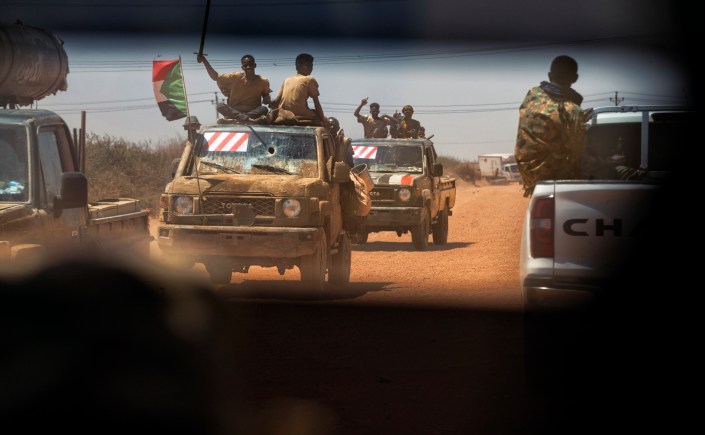
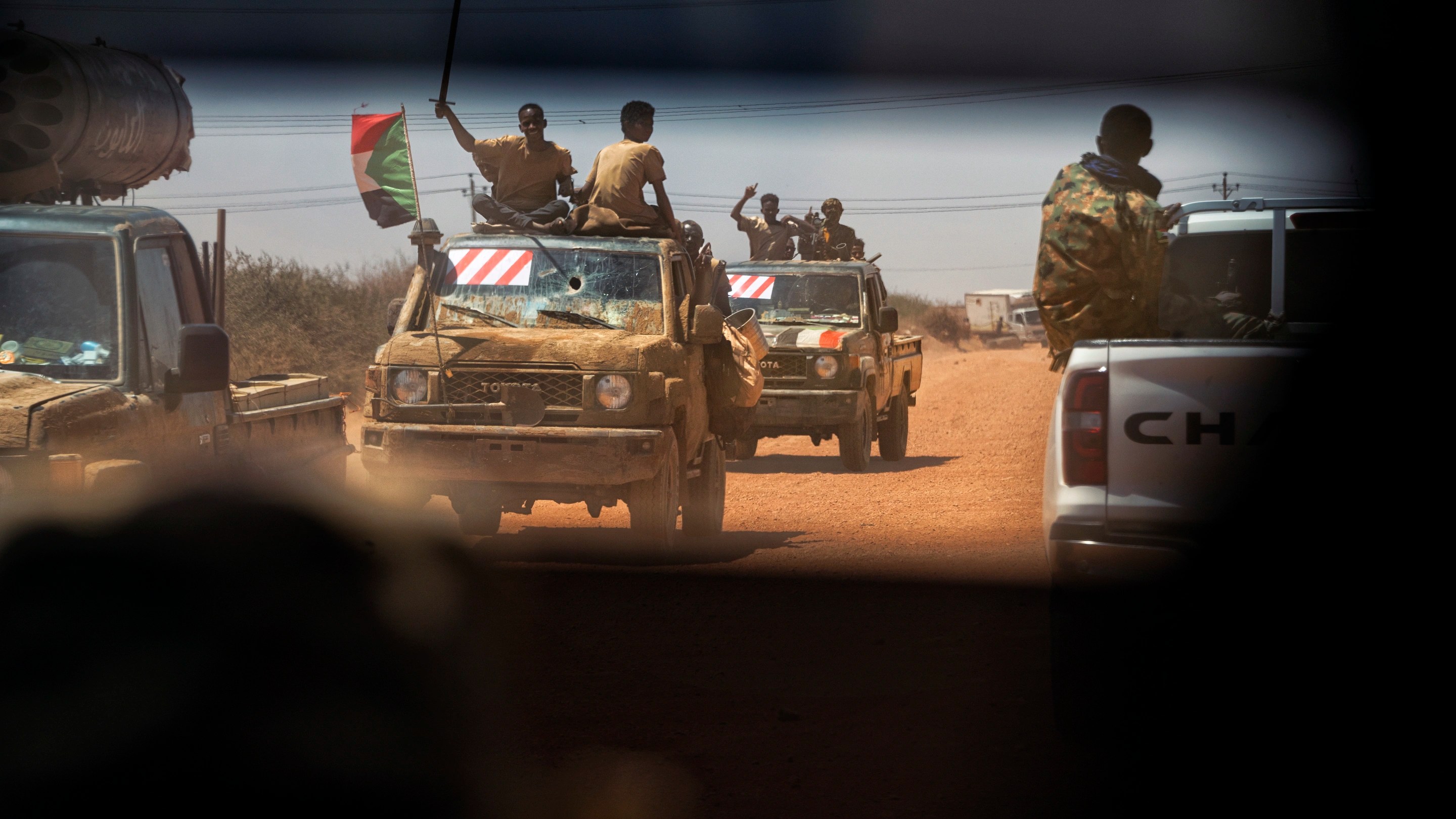
In early November last year, we published The most nihilistic war ever …Sudan’s waking nightmare, a harrowing piece about the atrocities being committed in the West Dharfur region of civil-war torn Sudan. A friend commented on the article, accusing me of intellectual dishonesty in comparing the international outcry over Gaza to the silence on Sudan. His comment was not the first of similar justifications:
“ … with respect to the lack of outrage, the mainstream media can stir outrage on any topic when its political masters and financial backers want it to. Why has it not done so in this instance? Follow the money is one rule of thumb. I assume it suits the powers that be to let the slaughter continue. I hope more people are inspired to become activists against this dreadful situation, but public opinion tends to follow the narrative manufactured by the media more than impel it. When it comes to pro-Palestinian activism it is the story of a long hard grind of dedicated protestors to get any traction at all against the powerful political and media interests which have supported the Israeli narrative and manufactured global consent for the genocide of Palestinians over many years. And still, although the tide is gradually turning, the West supports Israel to the hilt and crushes dissent. Using the silence in the media and in the streets over the slaughter in Sudan as an excuse to try and invalidate pro-Palestinian activism is a low blow and intellectually dishonest”.
This response is articulate and impassioned, but it also illustrates precisely the reflexive narrowing of moral vision that the comparison between Gaza and Sudan was meant to illuminate. His argument hinges on a familiar syllogism: that Western media outrage is never organic but always orchestrated (“follow the money”), that silence on Sudan therefore reflects elite indifference rather than public apathy, and that to highlight that silence is somehow to attack or “invalidate” the legitimacy of pro-Palestinian activism. It is a neat, closed circuit – morally reassuring, rhetorically watertight, but intellectually fragile.
In That Howling Infinite quizzed ChatGPT to collate, distill definitions and explanations of intellectual dishonest because we sensed its presence everywhere in the debate, including – uncomfortably – around my own thinking. Not as accusation, but as inquiry. The Gaza war has a peculiar way of forcing moral positions to harden quickly, of rewarding certainty and punishing hesitation, of turning complexity into suspicion. In that climate, asking what intellectual dishonesty actually looks like felt less like an abstract exercise than a necessary act of self-defence.
An ideological comfort zone
Intellectual dishonesty, then, is the deliberate or unconscious use of argument, rhetoric, or selective reasoning to defend a position one knows – or should know – is incomplete, misleading, or false. It is less about lying outright and more about distorting truth for ideological comfort. It includes cherry-picking evidence, using double standards, appealing to emotion over reason, or refusing to acknowledge valid counterarguments. You could even call it “lying to oneself”, and truth be told, we are all guilty at one time or another.
Regarding the Gaza war, intellectual dishonesty is everywhere, on both sides of the divide, magnified by mainstream and social media’s hunger for moral simplicity and viral outrage. What begins as solidarity curdles into slogan; what starts as empathy ossifies into orthodoxy. And because this conflict sits at the intersection of history, identity, trauma, and power, the temptation to simplify—to choose a side and suspend thinking is especially strong.
I asked the question, then, not to sit in judgement above the fray, but to understand how easily moral seriousness can slip into moral performance, and how even good intentions can narrow rather than enlarge our field of vision.
Intellectual dishonesty is rarely the bald lie. More often it is the careful omission, the selective emphasis, the comfortable narrowing of vision that allows us to remain morally certain while thinking we are being rigorous. It is the use of argument, rhetoric, or evidence not to discover what is true, but to defend what feels right. Cherry-picking, double standards, euphemism, emotional substitution for analysis, the refusal to sit with uncomfortable counter-truth – these are not failures of intelligence so much as failures of discipline. They are the betrayal of thought in service of tribe.
Nowhere is this more visible than in the discourse surrounding Gaza. On all sides, intellectual dishonesty flourishes, amplified by mainstream and social media systems that reward moral clarity over moral accuracy, outrage over comprehension, and certainty over doubt. The war has become not merely a catastrophe but a stage upon which external protagonists perform their own identities, anxieties, and loyalties.
On the pro-Israel side, intellectual dishonesty often takes the form of moral laundering. Hamas’s atrocities – October 7, the hostages, the tunnels, the use of UN personnel and facilities – are rightly invoked, but too often as a solvent that dissolves all subsequent scrutiny. Civilian deaths become “collateral damage,” mass destruction becomes operational necessity, and a stateless, blockaded and exposed population is rhetorically elevated into a symmetrical belligerent confronting one of the most powerful militaries on earth. Euphemisms do heavy lifting: “targeted strikes,” “human shields,” “complex urban environments.” Criticism of Israeli policy is collapsed into antisemitism, not to defend Jewish safety but to foreclose moral argument. What is omitted – the occupation, the blockade, the decades of dispossession and accumulated trauma – is as important as what is said.
On the pro-Palestinian side, dishonesty manifests differently but no less pervasively. Moral outrage hardens into narrative absolutism. Hamas’s crimes are erased, justified, or absorbed into the abstraction of “muqawama”, resistance, or “sumud”, resilience, collapsing the distinction between combatant and civilian. Violence is romanticised, militants transfigured into symbols, their authoritarianism and indifference to Palestinian life quietly excised. Empathy becomes selective: Gazan children are mourned, Israeli families are passed over, or worse, subsumed into theory. History is flattened into a single moment of victimhood, stripped of Arab politics, Islamist extremism, regional failure, and internal Palestinian fracture. The powerful are cast as pure evil, the powerless as pure good, until reality itself becomes an inconvenience.
Mainstream media does not correct this; it accelerates it. Impartiality is performed while distortion is practised. Headlines flatten causality, images are severed from context, asymmetry is neutralised by “both sides” language. Social media perfects the process. Algorithms reward fury, not thought; spectacle, not inquiry. Influencers weaponise empathy itself – choosing which corpses to count, which cities to name, which pictures to publish (sometimes none to fussy about which war they portray), and which griefs to amplify. Moral clarity is produced without moral responsibility.
Beneath all this lies a deeper dishonesty, one that is existential rather than rhetorical. Each side insists its justice is indivisible, when in truth each vision of justice requires the other’s erasure. Gaza becomes less a human tragedy than a mirror onto which Western actors project their unresolved conflicts about empire, identity, guilt, and power. It is here that intellectual dishonesty ceases to be merely argumentative and becomes moral.
This is where the comparison with Sudan – and any forgotten or ignored war in this sad world – becomes instructive and also uncomfortable. When the relative silence surrounding Sudan’s catastrophe is raised, it is often dismissed as “whataboutism” or as an attempt to diminish Palestinian suffering. That response itself reveals the problem. The point is not to weigh body counts or rank atrocities, but to interrogate how empathy is distributed. Why does one horror become the world’s moral touchstone while another, no less vast or humanly devastating, barely registers?
The easy answer – “follow the money,” “manufactured outrage” – “media conspiracy” – “the Jewish Lobby” – is reassuring but incomplete. Western silence on Sudan is less conspiracy than exhaustion. Sudan offers no tidy morality play. No clean colonial narrative. No villains easily costumed for Instagram. Its war is fragmented, internecine, post-ideological: warlords, militias, foreign patrons, gold under rubble. It resists hashtags. Gaza, by contrast, offers clarity, identity, and the comforting architecture of blame. Victims and oppressors are sharply drawn; the script is familiar; moral alignment confers belonging.
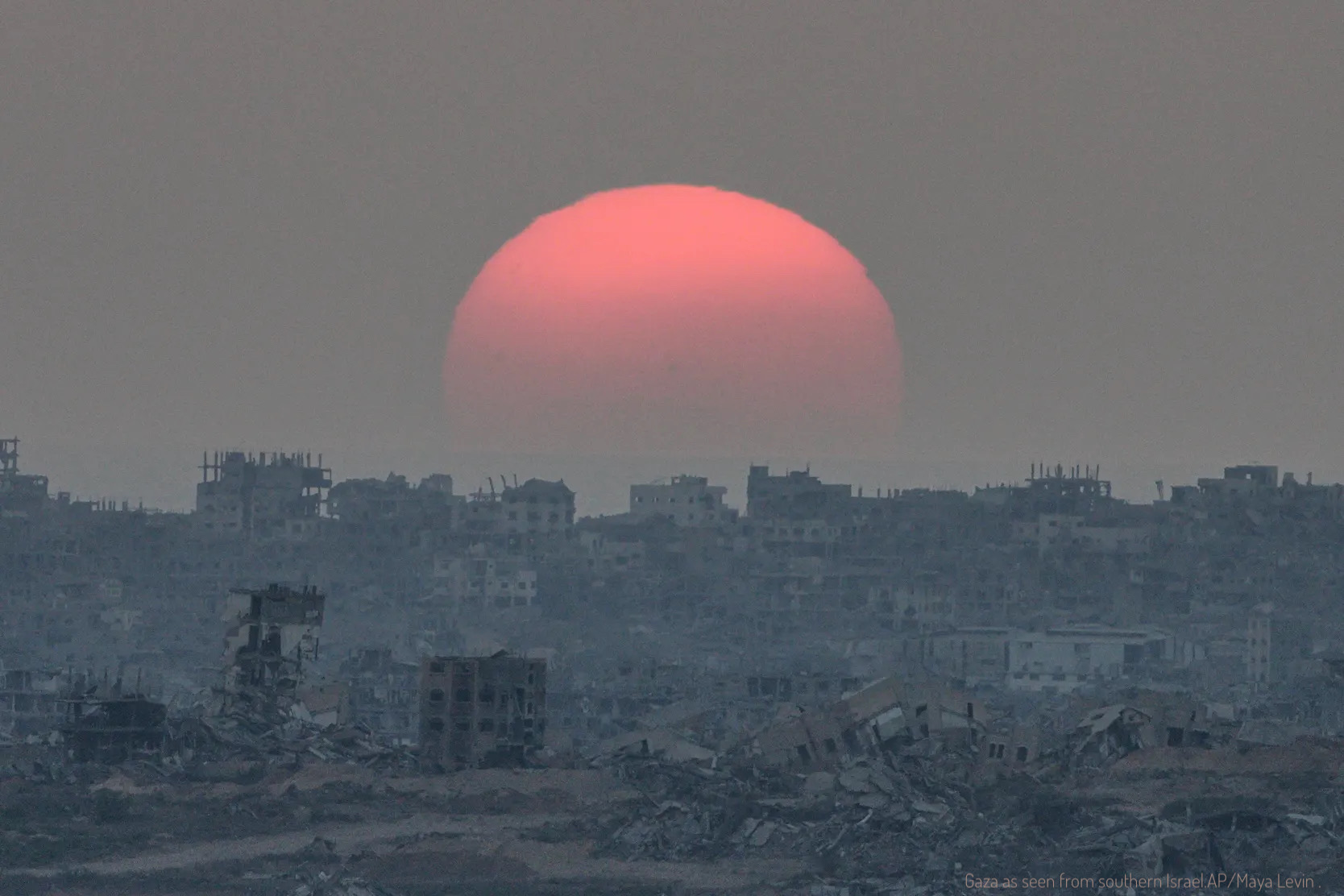
In Sudan, millions starve while the gold glitters in the darkness deep beneath their feet. In Gaza, ruins are televised, moralised, and weaponised. Both are human catastrophes. Only one has an audience.
To point this out is not to invalidate solidarity with Gaza. It is to expose the limits of our moral imagination. Empathy that depends on narrative simplicity is not universalism; it is performance. Compassion that requires a script is conditional. If justice is truly the aspiration, it must be capacious enough to grieve Darfur and Khartoum alongside Gaza City, to care even when the cameras turn away.
Bringing it all back home …
And this brings the argument uncomfortably close to home. Are we too guilty of intellectual dishonesty? To be I honest, yes – probably, at least sometimes. But then, who isn’t? The Gaza war is a moral minefield where even careful minds lose their footing. Passion bends the lens; grief distorts perspective; certainty is seductive. No one who cares deeply escapes the pull of identification.
Endeavouring to see all sides of an argument, age, experience, knowledge, empathy – and a growing impatience with historical illiteracy and intellectual laziness – inevitably shape what we see. A lifetime hatred of antisemitism runs through them as well, a moral watermark that does not fade simply because the world grows louder. These influences are not disclaimers; they are facts. Not excuses, merely coordinates. If an argument is bent to fit a moral arc, felt more keenly for one set of victims, or wearied of slogans masquerading as history, then yes -we have been partial.
The difference lies in knowing it. Intellectual dishonesty becomes moral failure only when it is unacknowledged, when narrative becomes more important than truth, when the lens is never turned inward. What resists dishonesty is reflexivity: the willingness to ask whether one is being fair, whether one is seduced by one’s own argument, whether omission has crept in disguised as clarity.
So yes – guilty, but aware. Fallible, but striving. He who is without sin, after all, should be cautious about throwing stones, especially from within a glasshouse. Perhaps that is as close as any of us come to honesty: to keep turning the lens back on ourselves, again and again, until the view clears – or at least steadies enough to see by.
And that, is arguably not a failure of honesty but a condition of it. To articulate one’s influences is to refuse the pretence of neutrality, to acknowledge that objectivity is not the absence of bias but the discipline of recognising it. Impatience with ignorance is, at its core, a moral impatience: a refusal to see human tragedy flattened into slogans or history reduced to talking points. The danger, of course, is fatigue – after decades of watching the same horrors recur, empathy can harden into exasperation. But awareness of that tendency is itself a safeguard.
We are participants in the long conversation of conscience – who know that clarity and compassion rarely sit still in the same chair, but who insists they at least keep talking. In an age that prizes certainty above understanding, that may be the most honest posture left: to keep turning the lens back on ourselves,, resisting the comfort of tribe, and refusing to let thought become merely another form of allegiance.
Author’s Note …
This opinion piece is one of several on the the attitudes of progressives towards the Israel, Palestine and the Gaza war. The first is Moral capture, conditional empathy and the failure of shock, a discussion on why erstwhile liberal, humanistic, progressive people from all walks of life have been caught up in what can be without subtly described as that anti-Israel machinery.Standing on the high moral ground is hard work! discusses the issues of free speech and “cancellation”, and boycotts with regard to the recent self-implosion of the Adelaide Writers’ Festival, one of the country’s oldest and most revered.
There are moments when public argument stops being a search for truth and becomes a test of belonging. Facts are no longer weighed so much as auditioned; empathy is rationed; moral language hardens into a badge system, issued and revoked according to rules everyone seems to know but few are willing to articulate. One learns quickly where the trip-wires are, which sympathies are permitted, which questions are suspect, and how easily tone can outweigh substance.
What interests me here is not the quarrel itself – names, borders, histories—but the habits of mind it exposes. The ease with which conviction can slide into choreography. The way intellectual honesty is praised in the abstract and punished in practice. The curious transformation of empathy from a human reflex into a conditional licence, granted only after the correct declarations have been made.
Across these pieces I circle the same uneasy terrain: the shaping of facts to fit feelings; the capture of moral language by ideological gravity; the performance of righteousness as both shield and weapon. Cultural spaces that once prided themselves on curiosity begin to resemble courts, where innocence and guilt are presumed in advance and the labour lies not in thinking, but in signalling.
This is not an argument against passion, nor a plea for bloodless neutrality. It is, rather, a meditation on how quickly moral seriousness curdles into moral certainty – and how much intellectual work is required to stand on what we like to call the high ground without mistaking altitude for clarity.
The position of In That Howling Infinite with regard to Palestine, israel and the Gaza war is neither declarative nor devotional; it is diagnostic. Inclined – by background, sensibility, and experience – to hold multiple truths in tension, to see, as the song has it, the whole of the moon. It is less interested in arriving at purity than in resisting moral monoculture and the consolations of certainty. That disposition does not claim wisdom; it claims only a refusal to outsource judgment or to accept unanimity as a proxy for truth.
On Zionism, it treats it not as a slogan but as a historical fact with moral weight: the assertion – hard-won, contingent, imperfect – that Jews are entitled to collective political existence on the same terms as other peoples. According to this definition, this blog is Zionist. It is not interested in laundering Israeli policy, still less in romanticising state power, but rejects the sleight of hand by which Israel’s existence is transformed from a political reality into a metaphysical crime. Zionism is not sacred, but its delegitimisation is revealing – because it demands from Jews what is demanded of no other nation: justification for being.
On anti-Zionism, it has been unsparing. It sees it not as “criticism of Israel” (which you regard as both legitimate and necessary) but as a categorical refusal to accept Jewish collective self-determination. What troubles it most is not its anger but its certainty: its moral absolutism, its indifference to history, its willingness to borrow the language of justice to license erasure. It is attentive to how anti-Zionism recycles older antisemitic patterns – collectivisation of guilt, inversion of victimhood, and the portrayal of Jews as uniquely malignant actors – while insisting, with studied innocence, that none of this concerns Jews at all. If not outright antisemitism, the line separating it from anti-Zionism is wafer—thin, and too often crosses over.
The interest in moral capture is analytical rather than accusatory. It is not arguing that writers, academics, or institutions are malicious; rather, it are argues that they have become intellectually narrowed by the desire to belong to the “right side of history.” Moral capture explains how good intentions curdle into dogma, how solidarity becomes performative, and how the fear of social exile replaces the discipline of thought. It accounts for the strange phenomenon whereby intelligent people outsource their moral judgment to slogans, and experience constraint not as an intolerable injury to the self.
The Adelaide Writers’ Festival affairis seen not primarily about Randa Abdel-Fattah, nor even about free speech. It is a case study in institutional failure and cultural self-deception. The mass withdrawals are viewed not as acts of courage or principle but as gestures of affiliation – ritualised displays of virtue by people largely untouched by the substance of the dispute. What is disturbing is the asymmetry: the speed with which a festival collapsed to defend eliminationist rhetoric, and the silence that greeted the doxxing, intimidation, and quiet cancellation of Jewish writers and artists. Adelaide did not fall because standards were enforced, but because those standards were applied selectively and then disowned at the first sign of reputational discomfort.
Running through all of this is a consistent stance: a resistance to moral theatre, an impatience with historical amnesia, and a belief that intellectual honesty requires limits – on language, on fantasy, and on the indulgent belief that one’s own righteousness exempts one from consequence.
We are not asking culture to choose sides; you are asking it to recover judgment
.See in In That Howling Infinite, A Political World – Thoughts and Themes, and A Middle East Miscellany. and also: This Is What It Looks Like, “You want it darker?” … Gaza and the devil that never went away … , How the jihadi tail wags the leftist dog, The Shoah and America’s Shame – Ken Burns’ sorrowful masterpiece, and Little Sir Hugh – Old England’s Jewish Question




 In That Howling Infinite