A historian talks about Palestine’s deep history

History is rarely as tidy as the stories we tell about it. Places acquire names long before they acquire nations; peoples inherit memories they did not themselves create; languages, religions and identities change without ever quite erasing what came before. Palestine may be one of the world’s most conspicuous examples of this historical palimpsest, a place where ancient geography, successive civilisations and modern national identities have become so entangled that disentangling them can itself seem political.

That is partly why I have always valued William Dalrymple. He is a historian who understands that the past is inhabited by people, not merely populated by dates and events. His recent conversation about Palestine prompted me to revisit not only what he said, but what he left unsaid: the complicated process by which a population became a people, a geographical name acquired a modern national meaning, and history became memory – and memory, in turn, became identity.

It also led me back to a broader fascination of mine: the relationship between history, travel and place, and to writers who understand that landscapes are not backdrops to history but repositories of it.

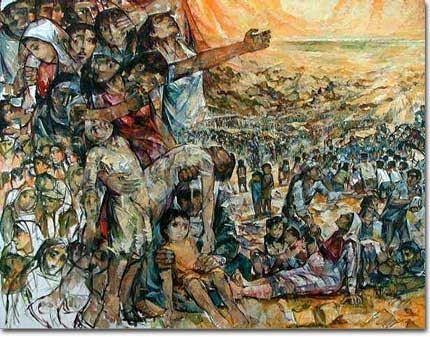
The featured image at the head of this post? When last In Ramallah, de facto administrative “capital” of that part of the West Bank governed  by the  Palestinian Authority – Area A of the Oslo dispensation – we visited the cultural centre of Dar Zahran, a beautifully restored Ottoman house just south of the city. By fortunate serendipity, Dar Zahran was hosting a small exhibition of paintings by the late Palestinian artist Ismail Shammout. This large painting pictures the skyline of Jerusalem – Al Quds with its mosques and churches and the infinite variety of the Palestinian people, was front and centre. [In In That Howling Infinite, see Visualizing the Palestinian Return – the art of Ismail Shammout]

Talking about Palestine and Palestinians

There are some historians whose books I buy almost automatically. British historian William Dalrymple is one of them. I have read many of his works over the years, from his debut, In Xanadu, through From the Holy Mountain, The Last Mughal, Return of a King and The Anarchy (see, in In That Howling Infinite, Bad company – how Britain conquered India, the story of the rise and fall of the notoriously rapacious British East India Company).

Dalrymple is well-educated, well-read, and well-travelled, having had his boots on the ground and its dust on those boots. He is what we call a “popular” historian and not an academic in the narrow sense, writing with enthusiasm, empathy, and the authority of someone who has visited the places he describes. And, to borrow from Bob Dylan, he knows his song well before he starts singing. His aim, refreshingly, is to educate, not to inculcate.

What has always appealed to me is not simply the depth of his scholarship but his refusal to become anyone’s court historian. His admirers come from different directions, and his critics do too. The old Empire loyalists dislike him because he writes unflinchingly about the violence and arrogance of imperialism. Progressives often embrace him for precisely that reason, yet they, too, sometimes seem disappointed when he refuses to enlist in their causes. Dalrymple has always struck me as someone who hoes his own row. He follows the evidence where it leads rather than where his audience might wish it to go.

That quality was on full display in his recent interview with Palestinian journalist and British resident Ahmed Alnaouq on the chat show Palestine Deep Dive, discussing his forthcoming, and as yet unfinished, book on the Palestinians. I encourage reader to take the time to watch the video below before reading the detailed appraisal that follows; but the time poor may nevertheless find it of interest.

To anyone familiar with the history of the region, little of the story itself is unfamiliar. Nor, contrary to some popular assumptions, has this history been ignored by Israeli historians. Ilan Pappé’s A History of Modern Palestine remains one of the best examples of a history that restores Palestinians to the centre of their own story, particularly those who rarely appear in conventional political histories: the villagers who cultivated the land, often on estates owned by absentee urban families or tribal elites who harvested much of the wealth.

That, perhaps, is the real significance of Dalrymple’s project. It belongs not simply to Middle Eastern history but to the much broader revolution that historians call social history. For centuries history was largely the story of rulers, wars, dynasties and diplomacy. Ordinary people appeared only fleetingly. Their lives belonged, if anywhere, to anthropology or sociology. Only relatively recently have historians begun asking what history looked like from the fields rather than the palaces.

Yet there is another trap which Dalrymple carefully avoids.

It has become fashionable to speak of the inhabitants of Palestine as though they constituted an unchanged people stretching seamlessly from biblical times until today. That is no more convincing than similar claims made by almost any nation.

Palestine has always been one of the great crossroads of civilisation. Long before the Philistines and the Hebrews there were other peoples. Afterwards came Assyrians, Babylonians, Persians, Greeks, Romans, Arabs, Crusaders, Mamluks, Ottomans and countless others, accompanied not merely by armies but by settlers, merchants, pilgrims, labourers and refugees. Even in the late Ottoman and British Mandate periods, economic opportunity attracted migrants from throughout the Levant. The Suez Canal, the expansion of Haifa, the Hauran railway, and later British infrastructure projects all drew workers from neighbouring lands. Family names such as al-Misri, al-Shami, Homsi and Halabi quietly preserve those journeys.

And yet Dalrymple is equally correct when he points to the growing body of genetic evidence demonstrating profound continuities across the centuries. Human populations do not simply replace one another like changing tenants. They absorb, intermingle and endure. DNA reveals not racial purity but remarkable persistence.

One aspect of the interview that particularly caught my attention was Dalrymple’s discussion of religion – not as an immutable badge of identity but as another thread in the long weaving of Palestinian society. Conversion, he observed, was rarely a single dramatic event. More often it was gradual, pragmatic and deeply human. Families embraced Christianity under Byzantine rule, Islam under the Caliphates and the Ottomans, sometimes from conviction, sometimes because new rulers brought new opportunities, and often because children simply inherited the world into which they were born. Nor was the movement one way. Jews became Christians; Christians became Muslims; communities adapted over centuries rather than changing overnight.

Language followed much the same path. Arabic became not merely the language of religion but of administration, commerce, literature and everyday life. It gradually supplanted earlier tongues without erasing the peoples who spoke them. Identity, like language itself, accumulated layer upon layer.

His brief reference to Yossef Rapoport’s Becoming Arab particularly caught my attention because I suspect it offers an important clue to the intellectual architecture of the book he is writing Rapoport’s central thesis is that peoples are not born fully formed; they become. It exercised a profound influence on my own essay One Land, Two Peoples: History, Memory, Continuity, and Inheritance. See also, Becoming Arab … the myth of fingerprints

There is a quiet subversiveness in Becoming Arab because it quietly removes the ladder that every competing nationalism insists upon climbing. By demonstrating that Arab identity in medieval Palestine emerged through a long process of linguistic, cultural and social transformation rather than existing unchanged since antiquity, Rapoport undermines the comforting assumption that any modern national identity is primordial and immutable. The implication extends well beyond Palestinians. Jews, too, have continually reinvented themselves through exile, diaspora, return and statehood. Israelis and Palestinians alike remain peoples in the making.

Belonging, then, rests less upon ancient blood than upon lived continuity, accumulated memory and attachment to place. Rapoport gently redirects us away from the sterile question, “Who was here first?”, towards the infinitely richer question, “How do people come to belong?” It is an insight I have found equally illuminating when thinking about the British, the Americans, and even the tangled histories of Russians and Ukrainians. It also underpins what I have elsewhere called the “myth of fingerprints”: the mistaken belief that nations possess fixed and immutable identities when, in truth, every people is a palimpsest, written and rewritten over centuries without ever completely erasing what came before.

Dalrymple also highlighted the remarkable role of churches and monasteries across successive eras – Byzantine, Arab, Ottoman and British. They were far more than places of worship. They were centres of learning, repositories of manuscripts, guardians of memory and, eventually, pioneers of modern education. During the Mandate years, Christian schools became among the first institutions to embrace European models of education. It is therefore hardly surprising that Christian Arabs were disproportionately represented among the intellectual architects of both Arab nationalism and the emerging Palestinian national movement. This, too, complicates the modern tendency to reduce the story to a simple contest between Jews and Muslims. The reality, as always, is richer and more textured.

Dalrymple’s passing reference to George Antonius was equally telling. Antonius remains one of the most poignant figures of the Mandate years. Urbane, multilingual and deeply cultivated, he believed there remained a path towards accommodation between Arab and Jewish aspirations. Alongside moderates such as Musa Alami, he searched for political middle ground as extremism steadily crowded out compromise. Increasingly isolated, distrusted by radicals on both sides and ultimately ignored by the great powers, he watched the possibility of reconciliation slip away. He died in Jerusalem in 1942, disappointed and politically alone. There is something profoundly melancholy about his story. Men such as Antonius devoted their lives to preventing the catastrophe that would later be remembered as the Nakba. History tends to remember the militants, the revolutionaries and the generals; it is far less generous to the moderates who failed. Yet, with the benefit of hindsight, it is often those failed moderates who seem to have understood the coming tragedy most clearly. [See The first Intifada … Palestine 1936]

There is, however, a significant historical link missing from Dalrymple’s account.

To speak of Palestinians as a people with a distinctive heritage, history and culture is entirely legitimate, but it also raises the prior question of when and how that collective identity emerged. The people we now call Palestinians did not arrive in Palestine as a discrete nation from elsewhere; they emerged over centuries from the settled populations of the region, predominantly Arabic-speaking Muslims and Christians alongside smaller Jewish and other communities, whose identities under Ottoman rule were more likely to be local, familial, religious, Ottoman or broadly Arab than specifically Palestinian. A modern Palestinian national consciousness crystallised only in the late nineteenth and, more decisively, the first half of the twentieth century, amid the decline of the Ottoman Empire, the rise of Arab nationalism, British rule, Zionist immigration and the intensifying struggle over the land.

Nor should “Palestine” itself be confused with a Palestinian nation: the name is far older, deriving ultimately from Greek and Roman Palaestina and subsequently used in various forms by Roman, Byzantine, Islamic and European writers; under the Ottomans, the territory was not a sovereign province or nation-state called Palestine but was divided among administrative districts. None of this makes Palestinian identity artificial. Like most modern national identities, it is both modern and genuine, rooted in an older population and a deeply layered attachment to place.

Perhaps Dalrymple simply takes this history as read. More likely, it is unmentioned because the interviewer did not ask about it. He does write about it in a piece published in The Guardian in August 2025 (republished below). But his readers and particularly an audience hearing a relatively compressed interview – may not. When the process by which a people acquired a modern national identity is left unstated, audiences tend to fill the gap with their own assumptions: some hearing an ancient, continuous Palestinian nation, others an identity recently invented from nothing. Both are historical distortions. The point is not to diminish Palestinian peoplehood but to locate it accurately: between the much older history of the land and the modern political history that transformed its inhabitants into distinct national communities.

As with Israeli identity, Palestinian identity belongs to the modern age while drawing upon memories, attachments, communities and histories that are considerably older. That distinction is essential if the Palestinian story is to be understood rather than simply enlisted in one of the competing narratives of the conflict.

It was telling that, despite repeated invitations from his interviewer, Dalrymple steadfastly refused to enter the contemporary ideological battlefield. He would not be drawn into pronouncements about settler colonialism, the legitimacy of Israel or competing national claims. He remained a historian.

Dalrymple displayed the same intellectual discipline when discussion turned towards the future. His interviewer clearly hoped he would venture predictions. He declined. Historians, he observed, can tell us what happened; they are far less qualified to say what will happen. The future delights in making fools of prophets.

Anthony Eden supposedly reduced politics to three words: “Events, dear boy, events.” Orwell supplied the darker warning through the Ministry of Truth: “Who controls the past controls the future. Who controls the present controls the past.” That remains one of the great cautions against allowing history to become merely another instrument of political mobilisation. Less bleakly, Robert Fisk – another writer I greatly admired – offered the wisest answer of all: “My crystal ball is broken.” Those who confidently predict the future almost invariably discover that history has other ideas. [See The Night of Power – Robert Fisk’s bitter epilogue ]

One curiosity remained with me after the interview. Dalrymple remarked upon young Israeli soldiers carrying rifles almost everywhere, yet the obvious question went unexplored: why? I have wondered about this myself ever since my first visit to Israel. I can still picture my late friend Avi’s rifle standing against the hallway wall in his parents’ home in Ramat Gan after he returned from reserve duty during the 1973 war. On my most recent visit I asked Israelis directly. Unless a weapon can be securely stored, soldiers are required to keep it with them. Our friend Shmuel’s son, serving as an army medic, once absent-mindedly left his rifle on a military bus after an exhausting exercise. His reward was several weeks in military prison. What appears to outsiders as a symbol of militarisation is, to many Israelis, simply one more expression of a society shaped by permanent insecurity.

Dalrymple also refers to the annual Jerusalem Day march, an event that commemorates the IDF’s capture of the Old City in June 1967 and the “unification” of the city. We happened to witness similar scenes ourselves near the Western Wall only days beforehand. They were ugly, confronting and impossible to dismiss as merely social media caricature.

I look forward to reading the finished book. Not because I expect it to settle the argument—history almost never does—but because the best historians enlarge rather than narrow our understanding. They remind us that identities are not fossils buried in the earth waiting to be excavated, but living things, fashioned over centuries by conquest and coexistence, faith and language, migration and memory. They leave us with fewer slogans and more questions; fewer certainties and greater humility. In an age increasingly addicted to binaries, that may be the most subversive act of all.

Travelers’  tales

There is a thread that runs through much of my writing, though I did not always recognise it at the time. It is a thread woven from history, travel, memory and place, and it connects figures as seemingly disparate as Jan Morris, Robert Fisk and William Dalrymple. They are very different writers, with different perspectives and different temperaments, but they share a quality that I have always valued: they do not simply describe places; they allow places to speak.

During my early encounters with the history and culture of the Middle East at London’s School of Oriental and African Studies – the “Madrasat al-Jawāsīs”, the “School of Spies”, as Arab friends would jokingly call it – I became fascinated by a trio of British writers whose books transported me into the worlds they described.described. Gertrude Bell, Freya Stark and Jan Morris each approached the region differently, yet all possessed that rare ability to convey not merely information but atmosphere: the smells of markets, the rhythms of streets, the weight of history embedded in landscapes.

Jan Morris was perhaps the greatest exponent of this art. Her genius was not merely as a chronicler of empire, nor simply as a travel writer, but as someone who understood that places possess personalities. She once wrote, “All my life I have felt in places, in landscapes as in cities, an allure that seems to me actually sexual, purer but no less exciting than the sexuality of the body.” It is a remarkable observation because it captures something that many travellers experience but few can articulate: that certain landscapes exert a pull beyond geography, that cities and countries can possess a kind of emotional and even sensual presence.

Bell, the archaeologist, traveller and administrator sometimes called the “Queen of the Desert”, was present at the creation of the modern Middle East after the First World War. Stark travelled through the region in the middle decades of the twentieth century, recording a world already beginning to disappear. James Morris, later Jan Morris, chronicled the rise and decline of British imperial confidence and the uncertain transition into a post-imperial age.

What makes Jan Morris such a fascinating figure is that her personal transformation occurred alongside the transformation of Britain itself. The end of Empire and the discovery of a new identity unfolded in parallel. The writer who chronicled the fading grandeur of British power was also undergoing a profound reimagining of self. Her Pax Britannica trilogy remains an extraordinary work, though it is also deeply complicated. Morris’s relationship with empire was neither a simple condemnation nor an uncomplicated celebration. She recognised its violence and arrogance, yet she was also fascinated by its energy, ambition and sense of adventure. Empire, in her telling, was a vast human drama: magnificent, destructive, creative and cruel.

The Suez Crisis of 1956 represented the moment when that imperial illusion finally collapsed. Morris described it as a kind of tombstone for British power and a crisis of British masculinity. The old confidence had disappeared. The imperial actor who had once imagined himself striding across the world stage was suddenly confronted with his own limitations. “Old forces were dying and new energies emerging,” she wrote. “Patterns that had seemed permanent were falling into chaos.” That insight resonates far beyond Britain. History repeatedly teaches us that identities and institutions which appear permanent are often temporary arrangements. Empires, nations and cultures are not fixed monuments but living things, constantly being reshaped by events.

This is why William Dalrymple’s work has always appealed to me. Like Morris, he understands that history is not simply about dates, battles and rulers. It is about people in places. His great strength is that he belongs to no faction. He follows the evidence, and he makes his own judgments. He resists the temptation to reduce history to contemporary political arguments. Instead, he explored the deeper processes by which societies and identities emerge.

As we have noted above, his observations intersect with Yossef Rapoport’s Becoming Arab, a work that has greatly influenced my own thinking. Rapoport challenges the assumption that national identities are ancient, fixed and immutable. Arab identity in Palestine, he argues, emerged through centuries of linguistic, cultural and social development. This does not diminish Palestinian identity; rather, it explains how all identities are formed.

The same applies elsewhere. Jewish identity has also evolved through exile, diaspora, return and statehood. British identity, American identity, Russian identity and Ukrainian identity are all products of history rather than timeless inheritances. Peoples are not fingerprints stamped permanently into existence. They are palimpsests, written and rewritten across generations, retaining traces of what came before while continually becoming something new.

This is also why Dalrymple’s observations about religion are significant. Faith, like language, is not simply inherited unchanged through the centuries. Communities converted, adapted and transformed. Jews became Christians, Christians became Muslims, and Arabic gradually became the dominant language of administration, commerce and culture. Churches and monasteries served not only as places of worship but as centres of learning and memory. During the British Mandate, as we have noted above, Christian schools were among the pioneers of modern education, and Christian Arabs played a disproportionately important role in the development of Arab nationalism and Palestinian political consciousness.

Again, the lesson is one of complexity. The history of Palestine cannot be reduced to simple categories. It is a story of migration and continuity, faith and adaptation, conflict and coexistence.

A personal coda

I make no comparison between my own experiences and those of writers such as Morris or Dalrymple, who devoted years of their lives to the places they studied. My own travels have been measured in days and weeks rather than prolonged residence, and I possess neither their linguistic gifts nor their local knowledge. Yet they have taught me some of the same lessons.

Over the years I have wandered through mosques and basilicas, monasteries and synagogues, castles and catacombs, museums and markets. I have traced the layers of history in weathered stones, walked streets that have changed little for centuries, and watched successive civilisations leave their marks upon the same landscape. Everywhere, the faces, languages and faiths have reminded me that history is one of mixture rather than purity, continuity rather than replacement. it is this extraordinary diversity that makes these lands so compelling.

Israel and Palestine affected me more deeply than almost anywhere else. I have read widely, but books can only take one so far. I have stood at checkpoints, seen the separation barrier close up and, witnessed the daily inconveniences, restrictions and humiliations that accompany life under occupation. Equally, I have spoken with Israelis and Palestinians whose lives have been shaped by generations of fear and insecurity, and come to understand, even if not always to agree with, the fears that underpin so many aspects of everyday life. By design, good fortune or simple caution, I have never witnessed the violence itself. But I have seen enough to understand that both peoples live with histories that cannot simply be dismissed.

Travel has not made me an idealist, nor has it turned me into a partisan. If anything, it has left me increasingly suspicious of certainties. The longer one spends amidst places where history is layered one civilisation upon another, the harder it becomes to accept simple stories about pure origins, immutable identities, uniquely righteous causes, and uncomplicated heroes and villains. Reality is almost always more complicated – and more human – than that.

Perhaps that is the enduring lesson of writers like Jan Morris, Robert Fisk and William Dalrymple. They remind us that landscapes have longer memories than nations, that stones often preserve truths that politics attempts to conceal, and that history is rarely a straight line. It is a conversation across centuries, written by countless hands.

In the forward to East – an Arab anthology, republished below, I wrote: “these are the lands of testament and prophecy, of sacrifice and sacrament, of seers and sages, of vision and vicissitude”. Their histories are “carved in stone, mysteries locked in stone”. And perhaps that is why they continue to draw us back: because beneath every empire, every ideology and every argument lie the enduring traces of ordinary human beings who lived, loved, fought, worshipped and dreamed in the same places we walk today.

Paul Hemphill and In That Howling Infinite, August 2026

For more on the Middle East in In That Howling Infinite see: A Middle East Miscellany and East – an Arab anthology; and, most recently: Maps, memory, and the myth of fingerprints.

Eastward, aye, he wandered

Forward to East – an Arab anthology  of poems by Paul Hemphill
In these troubled times, I look back on a part of the world that has captivated much of my intellectual life. I was drawn to the Middle East in another age, when it was the land of myth and magic, of dreamers and adventurers, of quixotic tilters at windmills, of pioneers who would make the deserts bloom, of dissemblers and deceivers bearing false promises. The ancient lands of the Bible, the fabled realm of A Thousand and One Nights, the restless quests of Richard Burton, Charles Doughty, and TE Lawrence; the pulp-fiction fantasies of Frank Herbert, James Michener, and Leon Uris; the celluloid myths of Peter O’Toole, Omar Sharif, and Paul Newman.
These are the lands of testament and prophecy, of sacrifice and sacrament, of seers and sages, of vision and vicissitude, of warriors and holy men. The spiritual and the temporal have melded here since time immemorial. We still see the remnants of ancient empires and the echoes of their faiths. We can chart their decline and fall in monuments and mausoleums, in the “tumbled towers and fallen stones, broken statues, empty tombs,” where “ghosts of commoners and kings walk the walls and catacombs of the castles and the shrines.” Histories carved in stone, mysteries locked in stone, as “canyons and castles pass ageless and ageing and captive in time.”
I first travelled through these lands when the gaze of our Western world was directed elsewhere. The big stories then were the Vietnam quagmire and the Cold War, words made flesh when Brezhnev’s Red Army euthanised the Prague Spring – much as Nikita Kruschev crushed Hungary’s short lived revolution a decade earlier. Then plucky little Israel – that’s how the world viewed the Jewish state back in the day – made its pre-emptive blitzkrieg against the braggadocio of Egypt, and the dubious martial prowess of Syria, Jordan, and Iraq, and put the Middle East back in the news again.
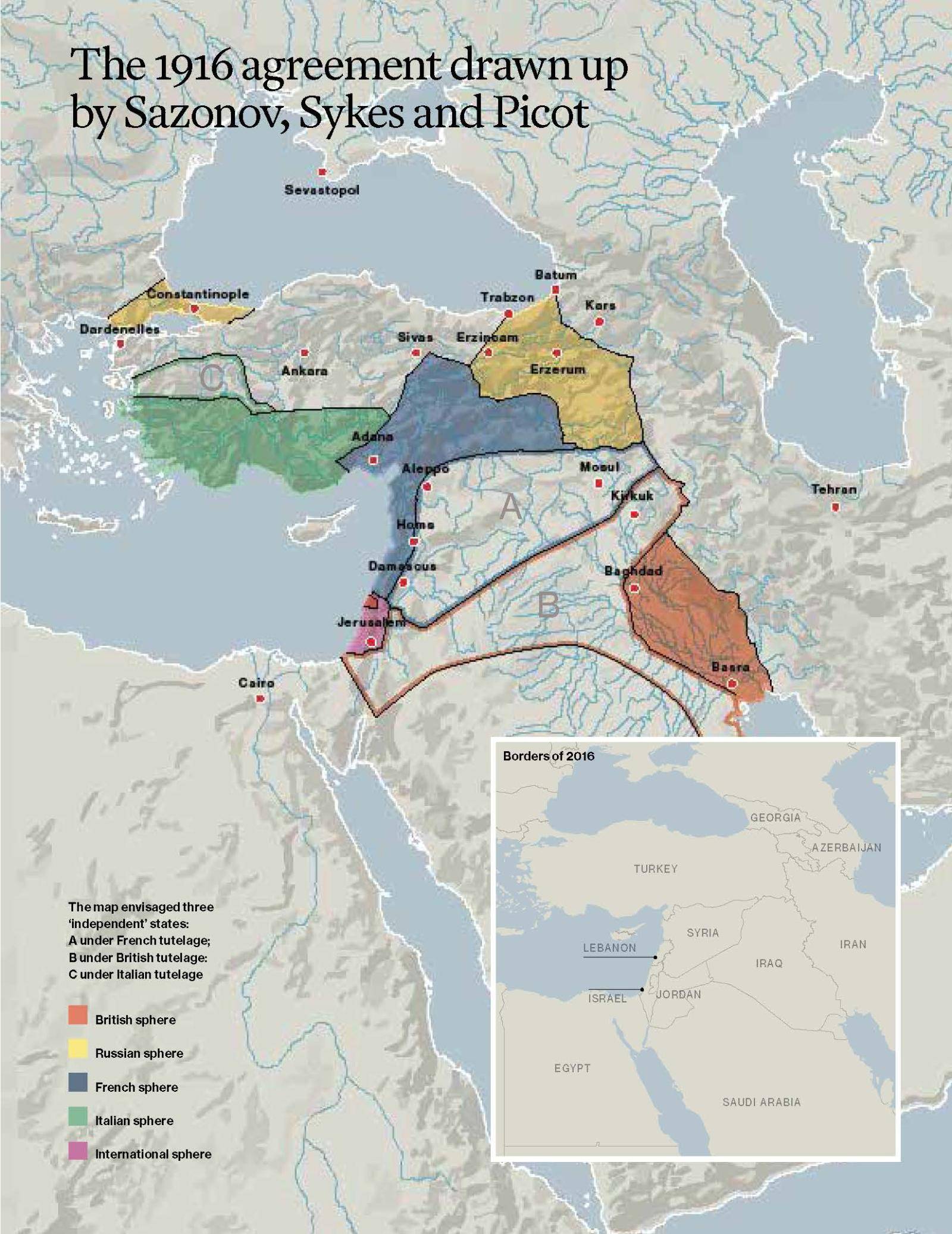
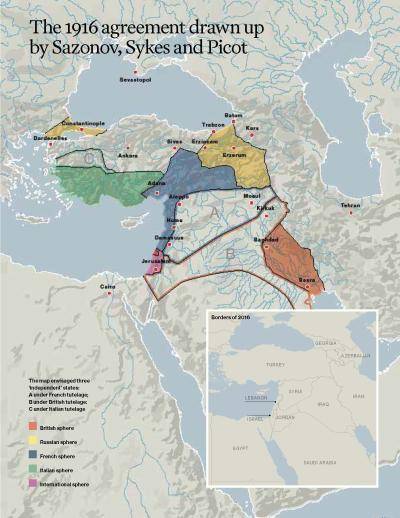
And there it has stayed, with hijackings, hostages, terrorism, the Oil Crisis and OPEC, civil war and invasion in Lebanon, Gulf Wars One, Two, and Three, the Twin Towers, the Wars of American Vengeance. And so to the present day, the brief Arab Spring giving way to a long and bloody Arab Winter, and the demolition of the Sykes-Picot dispensation with Daish’s redrawing of the map of the Middle East, the Abraham Accords with their promise of Arab-Israeli “normalisation” – an opaque and controversial word in this box canyon of false hopes – the fall of the Assad regime and the prospect of a revived Syria, and, in the endgame of many Israeli incursions into Hamas’ Gaza autocracy, the pogrom of October 7 and Israel’s biblical vengeance.
There is a place for dissertations on the state of the world and the tectonic movements that continue to reverberate and ricochet through these most antique of lands. And this is not one. But they have been the inspiration for much of my writing, and this volume is an anthology of those pieces. And unavoidably, they reflect and comment upon ideas and incidents, actions and accidents, memories and monuments.
I wear the weave of history like a second skin, as though each stone, each ruin, each sun-baked wadi, each vibrant soul has pressed itself into my being. As the Irish novelist John Banville wrote, “the past beats inside me like a second heart,” and in these lands, it beats with a particular resonance – ancient and immediate, mythic and human. The Middle East is not merely a subject of study or a theatre for politics; it is a history and geography I have walked through, a landscape I have viewed, a culture I have carried with me in the dust of its deserts, in the sounds and scents of its streets, in the quiet of its mosques, churches and synagogues, and its ruins.
My poems and songs have mirrored what I have carried in memory, and carry still. The cadence of markets and mosques, the call to prayer, the silence of the canyons. the desert wind, remind me that these lands live not only in history books but in lived, sung, remembered experience of all who have passed through They recall centuries of triumph and loss. The past is not distant; it rises in waves, song lines across stone and sand, linking the footsteps of pilgrims, soldiers, merchants, and wanderers with my own.
I know the Old Cities of Jerusalem and Damascus like my own neighbourhood. I’ve promenaded down the Street Called Straight and the Suq Al Hammadiyeh many times; shopped in the ancient Aleppo Souk – before it was destroyed; walked though the deserted Dead Cities of the North – which became later refuge for the homeless; climbed the Masada massif twice, once in the full heat of high summer, and again one time in predawn darkness to watch the sunrise over the Dead Sea and Moab; traveled overland through the Judean Desert to the old monastery of Mar Saba Stood; stood atop the battlements of Krak de Chevaliers; slept a ledge overlooking Petra, the Rose City and walked the Siq both ways three times; rode in a jeep through the canyons of Wadi Rum; traveled on the famous Nairn Express from Damascus to Baghdad, and an old bus through the Khyber Pass; stood by the Euphrates at Babylon, the Nile at Karnak, and the Ganges at burning ghat of Varenesi; visited Palmyra and watched the sunset atop Qala’at Fakhe al Din al Ma’ani.
All of these, now memories, carry the stories of centuries: the echo of prophets, conquerors, poets, and common folk whose lives have risen and fallen in patterns invisible yet inscribed in every wall, every minaret, every crumbling mosaic. The present weighs upon them as heavily as the past: geopolitics, ideology, oil, invasion, and resistance all leave their marks, mingling with the dust of empires long gone. Yet amid it all, the pulse of life persists—bright, stubborn, and singin – reminding me that beauty and despair coexist in ways the mind alone can scarcely contain.
These lands, as I first knew them, were the lands of story, legend, and lore; of pilgrims and explorers; of warriors and sages. And now, reading, writing and singing their echoes through books, prose and verse, I understand that memory, imagination, and presence are inseparable. One cannot approach the Middle East without the awareness that history is embodied, tactile, insistent: in the sun upon skin, the dust on boots, the voices of markets, mosques, and alleys, and in the pull of ruins that hold the ghosts of kings and commoners alike.
Writing about the Middle East, I am reminded that story, song, and memory intertwine. The poems and songs I carry are part of this landscape, as much as the stones and winds themselves, shaping how I see, feel, and reflect. Their cadence is my compass, their imagery my guide, the echoes, the pulse of lands that refuse abstraction. Here, history and the present are inseparable; the past is alive in the dust, the stone, the sun, and the song.
I wear its dust, I carry its past, I feel its presence. In prose and in song, in memory and in presence, I am tethered to these lands. And in this tethering, I find the resonance that drives the writing in this anthology: an awareness of the Middle East not as a distant object but as a living, breathing interlocutor, shaping thought, reflection, and imagination with the weight, warmth, and insistence of centuries.
Decades later, I wrote about my early travels in Tanks for the memory – how Brezhnev changed my life.It encapsulates very much how I travelled in those gone days:

“I’d like to think that perhaps it is something intrinsically part of my software – an ability to adapt, accept, empathize, and, as far as it is indeed possible for a stranger, to become one with the scenery and slip into the machinery, and, to put it bluntly, take it all at face value. As a “stranger in a strange land”, I accepted what I saw, observed, heard and learned, moved on – to quote American beat poet Lawrence Ferlinghetti – like “a mirror walking down a strange street’. For this is how I traveled in those roving years, leaving very little by way of words and pictures of my travelling. All I saw, heard, observed, felt and learned was mostly stashed away on my own, internal hard-drive to be accessed in latter years – waiting, perhaps, for the advent of social media, blogs and highly portable electronic devices”.

For more about these journeys, see Song of the Road (2) – The Accidental Traveller

One of the oldest urban centres: Gaza’s rich history in ruins

The Guardian,17 Oct 2025

In October 2025, William Dalrymple wrote this  fine piece on the long, entangled history of Gaza in The Guardian, publicizing a forthcoming multi-episode series on his excellent Empire podcast. He wrote of how the territory’s ancient heritage has too often been ignored. As we mourn incalculable human losses, learning about its past can help us better understand the present

As a ceasefire brings a measure of peace to the Dresden-like hellscape that Gaza has become, it is time to take stock of all that has been lost. The human cost of what the UN commission of inquiry recognises as a genocide is of course incalculable, but fewer are aware of how much rich history and archaeology has also been destroyed in these horrific months. This is bolstered by the widespread assumption that Gaza was little more than a huge refugee camp built on a recently settled portion of desert. That is quite wrong. In reality Gaza it is one of the oldest urban centres on the planet.

Golda Meir famously declared that “there was no such thing as Palestinians”, but the reality is very different. Palestine is actually one of humanity’s oldest toponyms, and records of a people named after it are as old as literacy itself. Palestine was an established name for the coast between Egypt and Phoenicia since at least the second millennium BCE: the ancient Egyptian texts refer to “Peleset” from about 1450BCE, Assyrians inscriptions to the “Palashtu” c800BCE, and Herodotus c480BCE to “Παλαιστίνη” (Palaistinē). This was all brought home to me as I worked, with my co-presenter Anita Anand, on a 12-part series on Gaza’s history for the Empire podcast.

Gaza was first referenced as a strategic prize in an Egyptian inscription of Thutmose III in the 15th century BCE, where it is referred to as Ghazzati. It is also one of the most fought-over and contested spaces: for more than 4,000 years this area has been an ethnically mixed crossroads, linking Africa with Asia, and the desert with the Mediterranean. It has also been a crucial strategic and economic hub: an often incredibly rich and prosperous port from which the spices, incense, perfumes and wines of western Asia were exported to Greece and Rome, the end of the caravan route from Arabia via Petra. As well as a fortress guarding the strategically crucial route leading from the eastern Mediterranean coastline to Egypt.

Travellers who visited Gaza over the centuries have often remarked on the fecundity of its vegetation and the diversity of its agriculture, both of which are the products of its underground waters and the Mediterranean climate. It is this that enabled Gaza to grow the excellent grapes that for many centuries were made into a much celebrated sweet wine, the Château d’Yquem of the classical world. An exhibition of the salvaged antiquities of Gaza currently showing at the Institut du Monde Arabe in Paris opens with a fabulous display of the distinctive “torpedo jars” in which the Gazans exported their wine. As late as the sixth century AD, these amphorae were reaching both Merovingian France and Anglo-Saxon England.

Each successive power in the Middle East has always wanted to own Gaza, and to conquer it, and over the centuries we hear of a succession of empires – first the Egyptians, Assyrians, Babylonians, Persians, Greeks and Romans, and later the Umayyads, Mamluks, Turks and the British – coming through and fighting to seize it. More difficult to see in the chronicles of conquests and sieges are the locals who have always lived hereabouts, century after century, whose faith has slowly evolved from paganism to all three of the Abrahamic faiths, and whose dominant language has moved from Aramaic to Greek then from Greek to Arabic.

Archaeology shows that the DNA of the different peoples who lived here has remained fairly consistent throughout the centuries: the modern inhabitants of this land, both Jewish and Palestinian, share much the same mix of DNA groups as the peoples who lived here in the bronze age, and whose skeletons have been tested in contemporary labs. The small Samaritan and Palestinian Christian minorities, the latter descendants of the first Christians, exhibit genetic patterns that are especially close to those extracted from ancient skeletons.

Although the town remained a robust centre of paganism long after many other cities in the region, its beachfront was also the home to the earliest monasteries of Palestine, as followers of St Antony of Egypt migrated there bringing the monastic movement to the Levant; soon “the desert became a city” as monasteries sprang up across the region. In 406 the Empress Eudoxia provided the funds for a cathedral for Gaza, and by the end of the sixth century, the celebrated church of St Sergius was built.

The Arab conquest used to be considered a major turning point in the region’s history, but according to many historians and archaeologists who specialise in this period, the conquest is almost invisible archaeologically. Surviving documents from the period indicate that for many years after, Gaza continued as an administrative centre of the region, and Greek-speaking Christians continued to run the bureaucracy. The son and grandson of two of the early chancellors of the Ummayad Caliphs, St John of Damascus, ended his life in the monastery of Mar Saba not very far from Gaza in the Judean desert. In time, the inhabitants of Palestine accepted the language, government and religion of their new masters; but it was a gradual process of transition, over many centuries, not a sudden catastrophic end of civilisation. The Arab conquerors were a small military elite; the local people remained much the same.
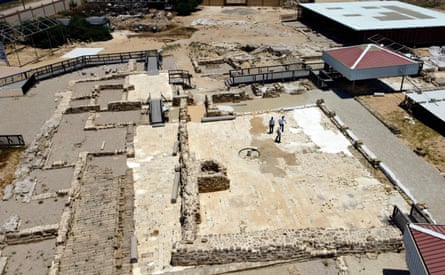
The site of Saint Hilarion monastery, Deir al-Balah, June 8, 2022. Mahmud Hams/AFP/Getty 

Gaza continued to flourish through the Crusader period, when it was given over to the Knights Templar to guard the frontier with Egypt; and even more so after the Mamluks expelled the Crusaders and filled Gaza with fine mosques and caravanserais. During the Ottoman period, Jaffa and Acre took over from Gaza as the most prosperous ports of the region, out of which Galilee cotton and Jaffa oranges were exported; but Gaza remained an important regional centre.

Though Gaza now dominates news bulletins for the worst reasons, it is a place about which we have traditionally learned remarkably little; we are not taught its story in movies or TV documentaries, let alone as part of formal education. Yet it is something we obviously badly need to know in order to grasp current events.

This month sees the publication of several new books addressing that absence. As well as the catalogue of the brilliant Paris exhibition, Trésors sauvés de Gaza: 5,000 ans d’histoire (Saved Treasures of Gaza: 5,000 Years of History) historian Anne Irfan has just produced an excellent primer, A Short History of the Gaza Strip, while Jean-Pierre Filiu has published a supplement to his wonderful Gaza: A Historycalled A Historian in Gaza. In it, he writes: “The Gaza I knew, and whose length and breadth I’ve travelled, has ceased to exist.” All three count as essential reading for those hungry to know more about this ancient territory so as to better understand the current, desperate chapter in its history.

A Short History of the Gaza Strip by Anne Irfan (Simon & Schuster, £18.99). To support the Guardian, order your copy at guardianbookshop.com. Delivery charges may apply.
A Historian in Gaza by Jean-Pierre Filiu (C Hurst & Co Publishers, £16.99). To support the Guardian, order your copy at guardianbookshop.com. Delivery charges may apply.
 

Smyrna 1922 and the Ottoman endgame

History has a habit of turning up unexpectedly in everyday life.

Some fifteen years ago, a muso friend of ours told us about his family’s Greek origins in Ottoman Smyrna. We were in the Black Sheep wine bar in King Street, Newtown, sitting down with a Greek Australian who’d just finished a great set of blues and soul standards talking about events that occurred almost a century earlier. Nationality, language, religion and ancestry did not always fit the neat boxes into which the twentieth century subsequently tried to place them.

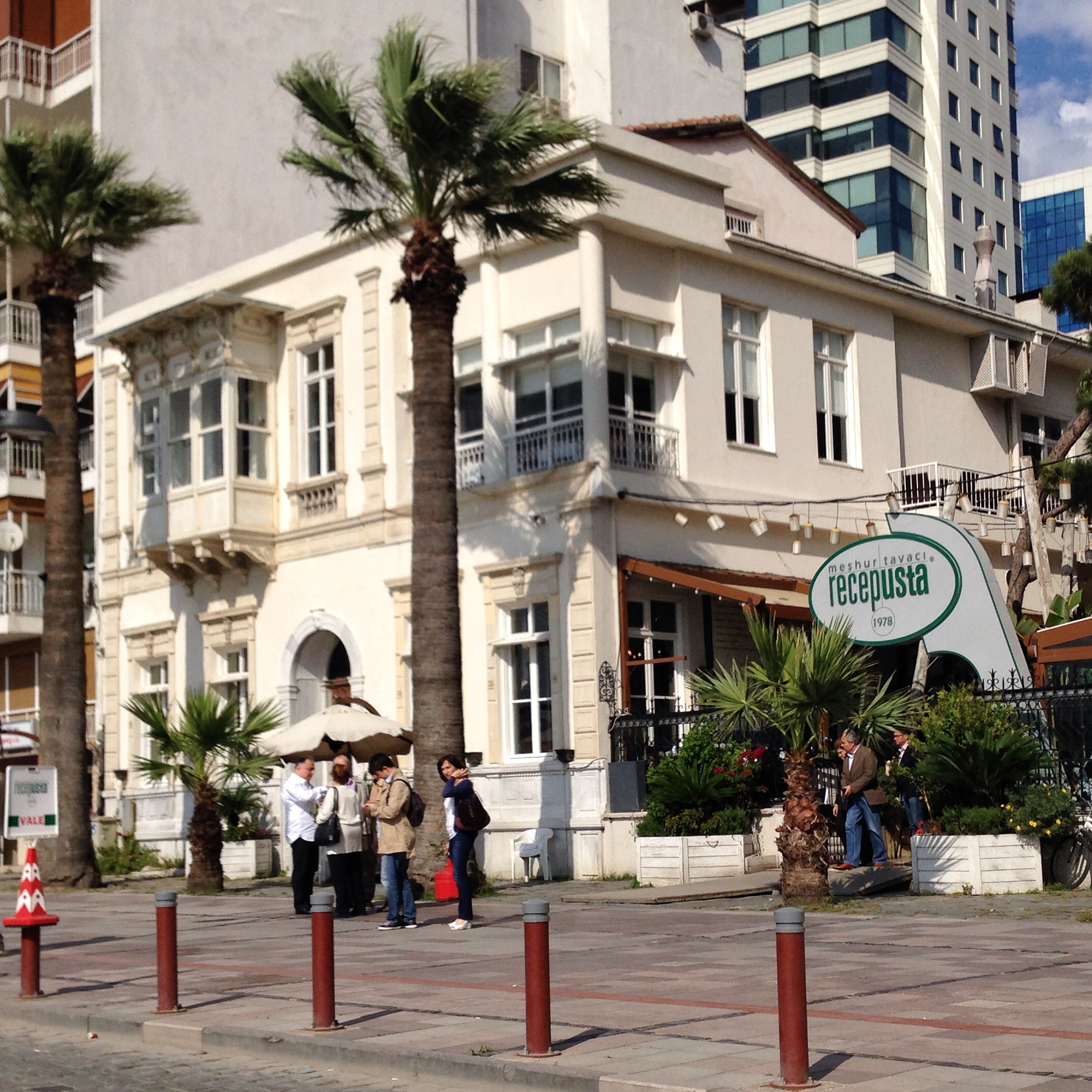
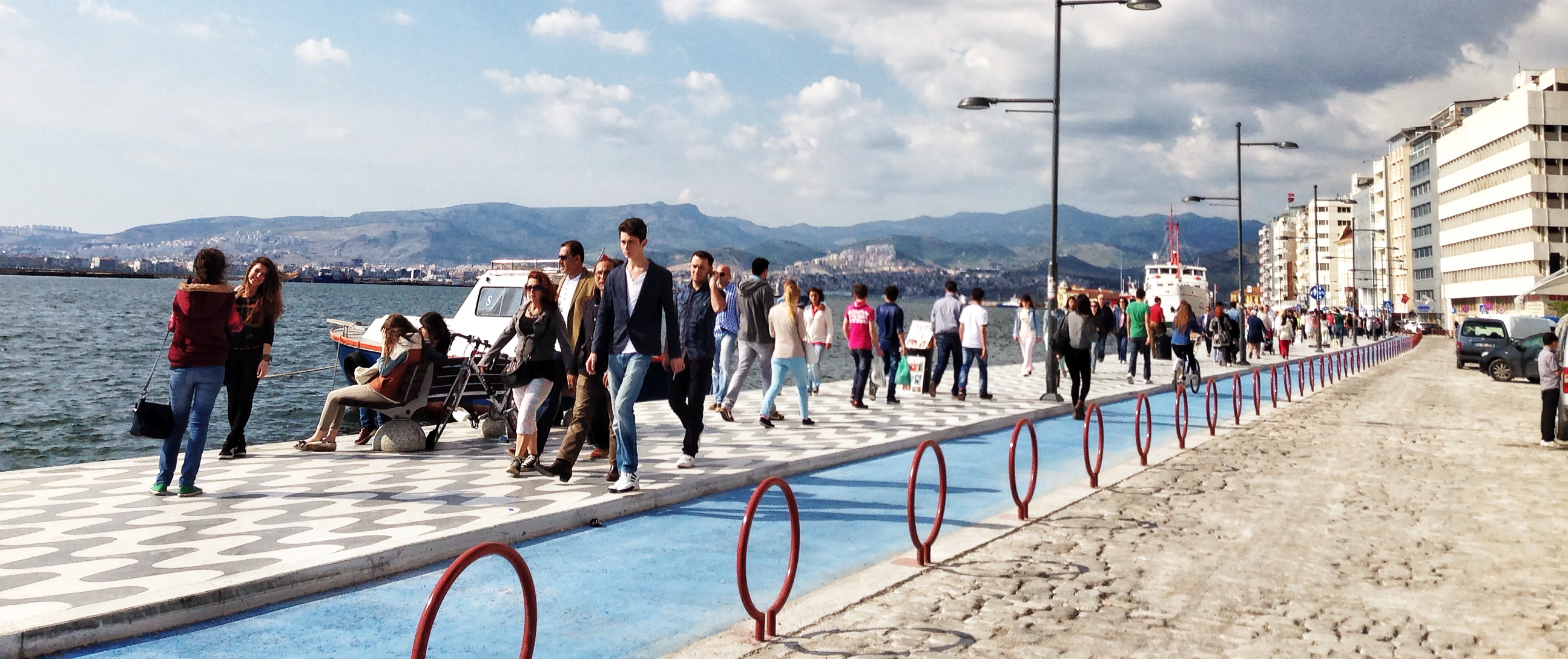
We visited Smyrna – now modern İzmir – in May 2014. We walked along the harbourside promenade, looked across the Aegean Sea, and took photographs that we  sent them to our friend. They were ordinary holiday snaps, in one sense: the waterfront, the sea, the city behind us. But they carried something else with them. We were standing in a place from which his Greek forebears, had once looked towards the same water in circumstances unimaginably different from ours.

It is one of the peculiarities of history that the past can sometimes feel closer through a family anecdote or a photograph than through a library full of books. The old cliché about history leaving fingerprints is, perhaps, not entirely a cliché. Places retain traces of people who have gone, even when almost nothing visible remains of the communities that once inhabited them.

Smyrna is an especially powerful example.

It was once an Ancient Greek city located at a strategic point on the Aegean coast of Anatolia, and was actually two successive settlements: Old Smyrna, founded around the 11th century BC as an Aeolian settlement before being taken over and developed by the Ionians during the Archaic Period, and Smyrna proper, the new city founded from the 4th century BC onward, whose establishment is associated with Alexander the Great. Due to its advantageous port conditions, its ease of defence, and its good inland connections, Smyrna rose to prominence, reaching metropolitan proportions under the Roman Empire, with most of its surviving remains dating from that era, largely following reconstruction after a 2nd-century AD earthquake. Since 1930, the city’s official name has been İzmir.

Modern Izmir, May 2014

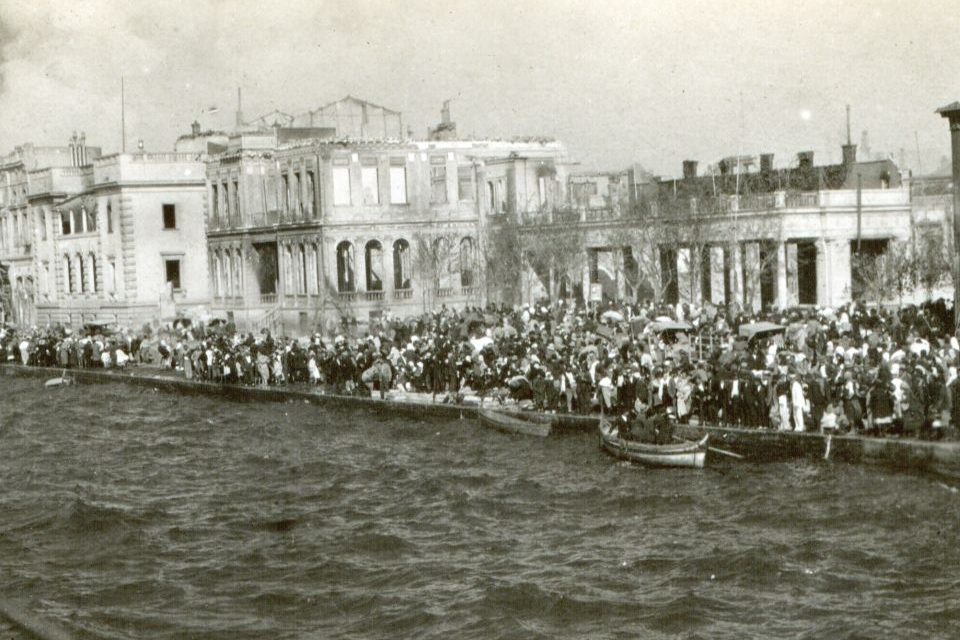
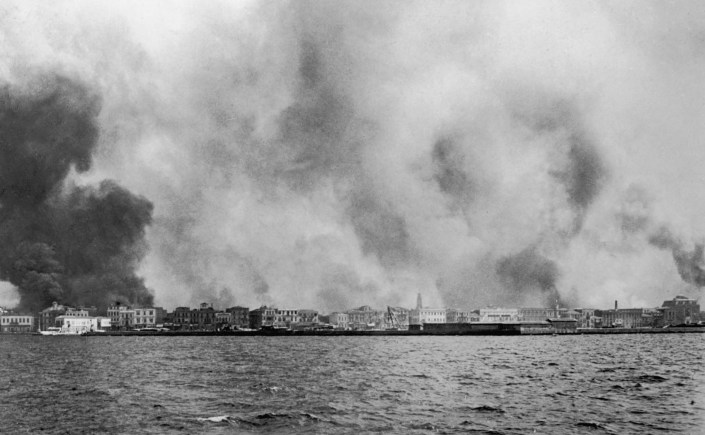
In September 1922, the city’s waterfront became the final refuge of tens of thousands of Greek and Armenian civilians as Turkish nationalist forces entered the city and violence and fire engulfed its Christian quarters. Within a few years, the overwhelmingly Greek character of one of the great cities of the eastern Mediterranean had largely disappeared. But Smyrna was not the beginning of this story. It was one of the last chapters in the extraordinarily violent disintegration of the Ottoman Empire.

The story reaches backwards through the Balkan Wars, the Ottoman-Russian conflicts, the massacres of Armenians in the 1890s, the First World War and the destruction of Armenian and Assyrian communities, and forwards through the Greek Turkish and War, the Treaty of Lausanne and the compulsory exchange of populations. It is a story of imperial collapse and national self-determination, but also of refugees, massacres, deportations, competing territorial claims and the brutal desire of emerging nation-states to make populations conform to political borders.

It is therefore tempting to reduce it to a morality tale. There is certainly no shortage of moral horror in the record. But moral judgement and historical explanation are not alternatives. The challenge is to understand how a multi-ethnic empire that had survived for centuries gave way, through war and revolution, to a collection of more nationally defined states — and why that transformation was accompanied by such extraordinary human suffering.

That is the longer story of Smyrna, and of the Ottoman endgame.

The leaving of Smyrna, September 2022

Smyrna and the Ottoman Endgame

In September 1922, the cosmopolitan city of Smyrna became the final, terrible act in a drama that had been unfolding for more than a decade. The city’s waterfront filled with Greek and Armenian refugees as Turkish nationalist forces entered the city and Christian neighbourhoods were engulfed by fire. Behind them lay the ruins of communities that had existed in Anatolia for centuries; ahead was the Aegean and, for many, an uncertain escape to Greece.

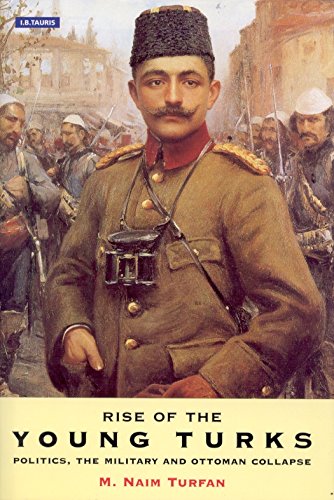
The familiar account of Smyrna begins here, with the fire, the refugees and the ships of the Allied powers lying offshore, apparently unable or unwilling to intervene in one of the final acts in a war that they had effectively lost. But history did not begin in Smyrna. Nor did the destruction of Anatolia’s Christian communities begin with Turkish commander Mustafa Kemal’s nationalist movement. To understand what happened in 1922, one has to go back through the Balkan Wars, the Ottoman defeat in the First World War and, before that, the increasingly violent crisis of the Ottoman state’s relations with its subject peoples.

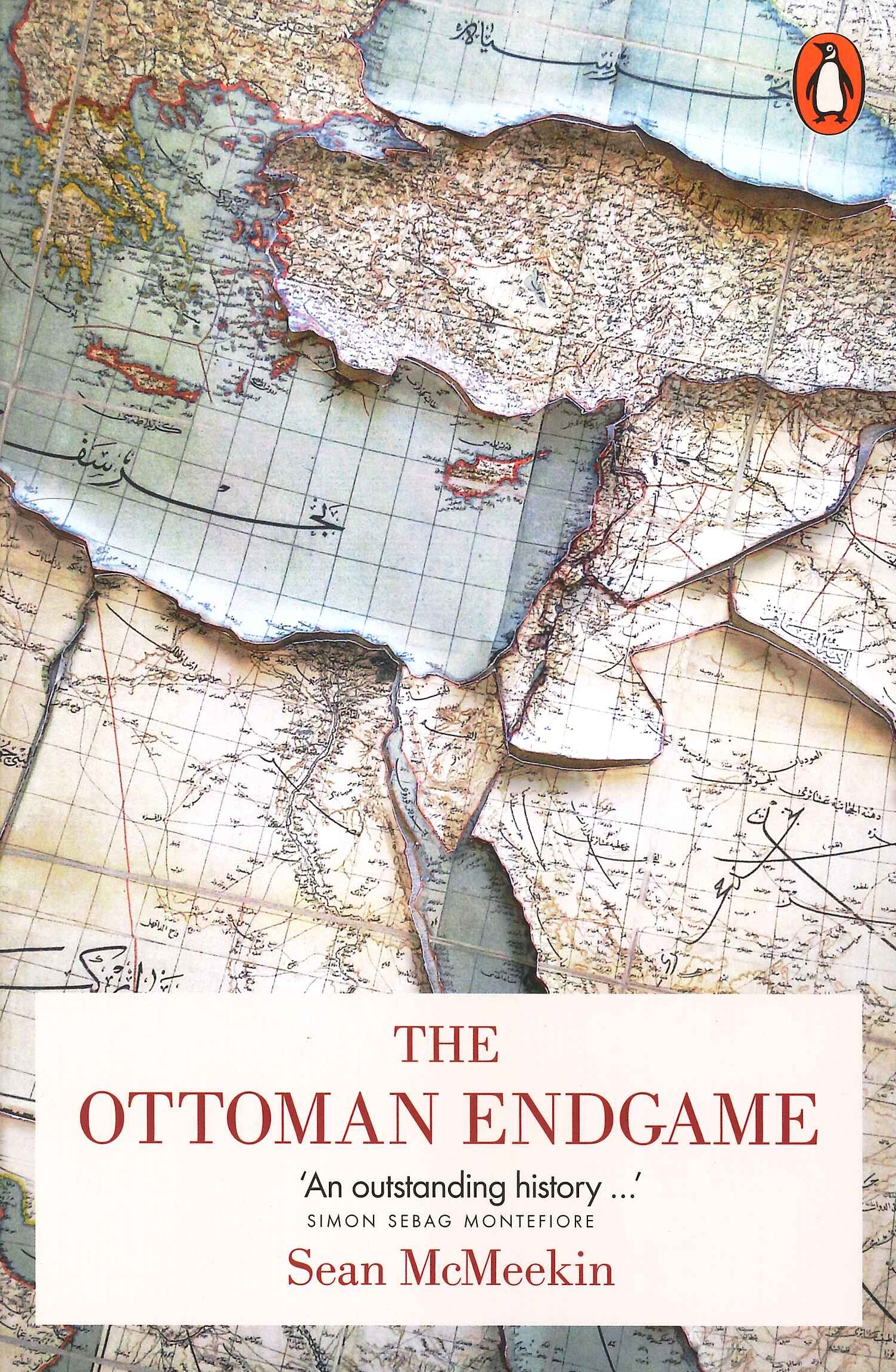
This is the broader story told, with considerable geographical and archival range, by Sean McMeekin in The Ottoman Endgame. It is also the story explored in In That Howling Infinite’s The fall of the Ottoman Empire and the birth of Türkiye : the dissolution of an empire was not a single event but a succession of wars, revolutions, occupations, expulsions and attempts at national reconstruction. The First World War was the central episode, but it was also part of a much longer Ottoman endgame.

The wars before the war

It is convenient to imagine Europe as peaceful until August 1914. It was not. The Ottoman Empire had already been fighting for its survival.

Italy went to war with the Ottomans in 1911, seizing Tripolitania and Cyrenaica, the territories that became Libya. Then came the Balkan Wars of 1912–13, in which the Ottoman Empire lost almost all its remaining European territories. Greece, Serbia, Bulgaria and Montenegro expanded at Ottoman expense, while Albania emerged as an independent state. Romania, often included rather casually in this account, was already an independent kingdom, although it acquired territory from Bulgaria after the Second Balkan War.

The Balkan Wars were particularly important because they demonstrated what the disintegration of a multinational empire could mean in an age of nationalism. Armies advanced, borders changed and populations moved. Christians were expelled from territories conquered by Muslim powers and Muslims were expelled from territories conquered by Christian states. Villages were destroyed, civilians massacred and refugees displaced on a large scale. The demographic transformation of the Balkans was already underway before the First World War began.

This matters because the later violence in Anatolia did not occur in a political vacuum. Ottoman Muslims, many of them themselves refugees from the Balkans and the Caucasus, had seen their homes and communities disappear. The Ottoman state increasingly came to regard the survival of its Muslim population as a matter of national security. At the same time, Christian minorities – particularly Armenians and Greeks – increasingly looked beyond the empire towards their own national movements and, in some cases, to foreign powers.

The result was a vicious feedback loop. Nationalism encouraged separatism; separatism encouraged repression; repression encouraged further separatism. War made the whole process considerably worse.

Armenians and the First World War

The Armenian catastrophe has to be treated separately from what happened to the Greeks and Assyrians, although there were connections between them.

The massacres of Armenians during the reign of Sultan Abdulhamid II in 1894–96 were already a warning of what could happen when imperial authority, Muslim majoritarian sentiment and fears of territorial disintegration collided. Hundreds of thousands of Armenians were killed in massacres and associated violence. The Young Turk revolution of 1908 initially raised hopes of a more constitutional and inclusive Ottoman order, but those hopes deteriorated rapidly as the empire suffered military defeat, territorial losses and political crisis.

When the Ottoman Empire entered the First World War in late 1914 on the side of Germany and the other Central Powers, the Armenian question acquired an altogether more dangerous dimension. Ottoman forces were fighting Russia in the Caucasus, and some Armenian organisations and volunteers did indeed cooperate with the Russians. Armenian soldiers fought in Russian formations, while armed Armenian groups operated behind Ottoman lines. Ottoman fears of an Armenian fifth column were therefore not entirely invented.

But this context does not explain what followed, still less justify it.

In 1915 the Committee of Union and Progress government – what we know as The Young Turks (now a common term to describe ambitious young upstarts) – began the systematic deportation of Ottoman Armenians. Armenian political and community leaders were arrested and killed. Men were separated from their families and frequently murdered. Women, children and the elderly were deported southwards, many towards the Syrian desert. Deportation became a mechanism of destruction.

The death toll remains debated in detail, as such figures inevitably are, but the broad historical conclusion is not seriously in doubt: hundreds of thousands, probably well over a million Armenians, died through massacre, deportation, starvation, disease, exposure and deliberate deprivation. Many women and children were forcibly converted or absorbed into Muslim households. Sexual assault was commonplace. Armenian property was confiscated. An ancient community was not merely displaced; its institutional, demographic and economic foundations were systematically dismantled.

The Ottoman government and its successors have contested the term genocide and have emphasised the extraordinary circumstances of wartime collapse, Armenian collaboration with Russia and the deaths of Muslim civilians. Those Muslim deaths were real and often horrific. But they do not negate the evidence for the organised deportation and destruction of the Armenians. Nor does acknowledging Armenian collaboration with Russia turn an entire ethnic population into a legitimate military target.

The same period brought massacres and deportations of Assyrian Christians in southeastern Anatolia and northern Mesopotamia. The historical record is less comprehensive than for the Armenians, but the destruction of Assyrian communities belongs to the same wider story of wartime demographic violence.

The Greek catastrophe was different – and connected

The fate of the Ottoman Greeks followed a somewhat different chronology.

Greeks had lived throughout the Ottoman domains for centuries. In Anatolia they were concentrated particularly along the Aegean and Black Sea “Pontic” coasts, but Greek communities were also found in the interior. They were not simply recent immigrants or colonial settlers. They were part of the social and economic fabric of the late Ottoman Empire.

During the First World War, some Greek communities were deported or otherwise subjected to coercion and violence. In the Pontic region of the Black Sea, Greek nationalists and armed groups also became involved in conflict with Ottoman authorities and later with Turkish nationalists. The question of Greek communities in Anatolia consequently became entangled with the wider struggle over what would replace the Ottoman Empire.

The decisive change came after the Ottoman defeat.

The Armistice of Mudros in October 1918 effectively ended Ottoman participation in the war. Allied forces occupied strategic parts of the empire, including Constantinople. The victorious powers then contemplated a drastic settlement of Ottoman territory. The Treaty of Sèvres in 1920 proposed a severely truncated Ottoman state and envisaged Greek control or influence over substantial parts of western Anatolia.

The Greek military landing at Smyrna in May 1919 was therefore not an isolated act of Greek aggression. It occurred within the post-war Allied occupation and with Allied approval. Greece, was encouraged by its wartime territorial ambitions and by the vision of the Megali (great) Idea, – a Greek nationalist and irredentist vision that emerged after Greek independence (1821–1829) that  called for the revival of the Byzantine Empire by uniting all regions with significant Greek populations – including parts of the southern Balkans, Anatolia, and Cyprus – still under Ottoman rule into a single Greek state.

Greece believed that it had an opportunity to incorporate territories containing substantial Greek populations and places of enormous symbolic importance to Greek history. But the settlement soon collided with another nationalism:  Mustafa Kemal and the Turkish counter-revolution

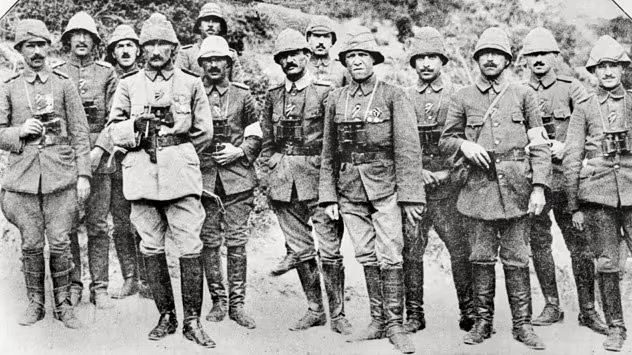
Mustafa Kemal Pasha, the Ottoman commander who had become famous at Gallipoli, emerged as the principal leader of the Turkish nationalist movement. The movement rejected the partition of Anatolia contemplated at Sèvres and sought to establish national sovereignty over the Turkish heartland.

Mustafa Kemal and other Ottoman officers at Gallipoli

This was not simply an Ottoman army fighting a foreign invader. The Ottoman government in Constantinople accepted the Allied settlement; the nationalist movement centred in Anatolia rejected it. Turkey therefore experienced something approaching a war of national liberation combined with civil conflict.

The Greek army advanced deep into Anatolia. For a time, it appeared that Greece might achieve a substantial territorial settlement. But Turkish resistance stiffened. The nationalists defeated the Greek advance and, in August–September 1922, launched the offensive that drove the Greek army back towards the Aegean.

The Greek retreat was accompanied by atrocities and destruction on both sides. Turkish nationalist forces and irregulars committed massacres and expulsions against Christian civilians; Greek forces and retreating troops were themselves responsible for atrocities against Muslim civilians during their occupation and withdrawal. None of this is usefully understood through a simple morality tale in which one side was innocent and the other intrinsically barbarous.

There was, however, an important asymmetry in the final outcome: the Turkish nationalist victory made possible the consolidation of a Turkish nation-state in Anatolia, while the Greek population of much of the region was about to disappear.

Smyrna, September 1922

The events at Smyrna remain among the most contested episodes of the war, particularly regarding responsibility for the city’s fire and the precise number of people killed. The broad outlines are clearer.

Turkish nationalist forces entered Smyrna on 9 September 1922. The Greek Orthodox metropolitan, Chrysostomos, was murdered. There followed widespread looting, violence and attacks on the city’s Christian population. On 13 September a fire began in the Armenian quarter and subsequently consumed large parts of the Greek and Armenian districts.

The city contained a large Muslim population as well as substantial Greek and Armenian communities, and the precise course of the fire remains disputed. What is not disputed is the appalling predicament of the refugees trapped along the waterfront. Tens of thousands, probably far more, sought escape by sea. Allied warships were present. Their crews could see the fire. Their governments were reluctant to intervene militarily in what had become a Turkish nationalist victory and were constrained by the political circumstances of the time. Some Allied personnel and ships did rescue refugees; the larger failure was that the international presence did not prevent the catastrophe.

Smyrna was therefore both an atrocity and a symbol. It marked the end of a substantial Greek and Armenian presence in one of the great cities of the eastern Mediterranean.

But it was not, strictly speaking, the moment when that population vanished. Much of the Greek population had already fled or been displaced during the preceding years, and the final settlement was still to come.

The leaving of Smyrna, September 2022

The population exchange

The Treaty of Lausanne in 1923 replaced Sèvres and internationally recognised the sovereignty of the new Turkish Republic over Anatolia and eastern Thrace. Mustafa Kemal, now Atatürk, had won the war.

Lausanne also gave international legitimacy to the compulsory exchange of populations between Greece and Turkey. Approximately 1.2 million Orthodox Christians were transferred from Turkey to Greece, while roughly 400,000 Muslims were transferred from Greece to Turkey, subject to various exemptions, including the Greek population of Constantinople and the Muslim population of western Thrace.

The exchange was presented as a solution to the problem of minorities. In reality, it was the formalisation of a demographic revolution already substantially achieved through war, massacre, deportation and flight.

It is important not to describe this simply as the expulsion of Christians from Anatolia. Muslims had also been expelled from territories lost by the Ottoman Empire during the Balkan Wars, and the compulsory exchange itself displaced Muslim as well as Christian populations. Nor was the exchange an exclusively Turkish initiative: Greece and Turkey agreed to it, and the victorious European powers incorporated it into the Lausanne settlement.

It was nevertheless an extraordinary admission of failure. The ideal of a multi-ethnic Ottoman political order had effectively given way to the principle that stability could be achieved by separating populations according to religion and, increasingly, nationality.

The irony was profound. The Ottoman Empire had survived for centuries precisely because it did not require everyone within its borders to be Turkish, Arab, Greek, Armenian, Serbian or Bulgarian. Its subjects belonged to overlapping religious, linguistic and local communities. The nineteenth and early twentieth centuries progressively replaced that imperial pluralism with nationalism. By the 1920s, population transfer had become one of the instruments by which the new states sought to make their populations conform to their national boundaries.

The longer Ottoman endgame

This is why I find McMeekin’s The Ottoman Endgame such a useful corrective to the conventional Western story of the First World War.

The war in the Ottoman world was not merely a sideshow to the trenches of France and Belgium. It stretched from Gallipoli to Gaza, Baghdad to Baku, the Caucasus to the Arabian Peninsula. Its consequences extended from the Balkans through Anatolia and the Levant to Mesopotamia. And it was intimately connected with the Russian war, the Russian revolutions and the subsequent Russian Civil War.

The Ottoman collapse also cannot be reduced to the familiar caricature of Britain and France simply carving up an otherwise coherent Middle East according to the lines of the Sykes–Picot Agreement. Sykes–Picot was real and consequential, but it was one of several competing wartime schemes for the disposition of Ottoman territory. Russia, too, had imperial ambitions. Constantinople had long been an object of Russian strategic and religious aspiration. France had its own ambitions in the Levant. Britain was concerned with India, Egypt, Mesopotamia, the Persian Gulf and the routes linking them.

And the Arabs, Armenians, Greeks, Kurds, Turks and other peoples of the empire were not merely passive pieces on a European chessboard. They had their own political ambitions, national movements and armed organisations.

The same complexity applies to Gallipoli. The campaign was certainly a military disaster, and Churchill was one of its principal advocates. But it was not simply Churchill’s personal folly, as the mythology subsequently suggested. It emerged from a much wider strategic debate about how best to defeat the Ottoman Empire and assist Russia. Its failure helped establish Mustafa Kemal as a military leader of consequence.

That matters because the man who became the founder of modern Türkiye was not an outsider who suddenly appeared after the Ottoman collapse. He was an Ottoman officer, a product of the imperial military system and a veteran of the Balkan Wars, Libya and Gallipoli. The Turkish Republic was born not from a clean break with the Ottoman past but from its ruins.

A demographic revolution

There is a tendency, particularly in polemical accounts of this period, to describe the destruction of Anatolia’s Christian communities as a single uninterrupted campaign stretching from the Hamidian massacres through the Armenian genocide to Smyrna. The chronology is more complicated than that.

There were massacres under Abdulhamid II. There were the catastrophic deportation and destruction of the Armenians under the wartime Committee of Union and Progress. There were attacks on Assyrian communities. There were violence and displacement affecting Ottoman Greeks during and after the First World War. There were massacres of Muslims during the Balkan Wars and the Greek occupation and retreat in Anatolia. There was the Turkish nationalist war against Greece. There was Smyrna. Finally, there was the compulsory population exchange.

These events were not identical. Their perpetrators, political circumstances and immediate objectives differed. Nor should the existence of Muslim suffering be invoked to dilute the particular historical responsibility for the Armenian genocide.

But they belong to the same larger transformation: the violent passage from empire to nation-state.

What disappeared was not literally a civilisation that had remained unchanged for two thousand years. Anatolian Christianity itself had changed enormously over those centuries. Byzantine Christianity, Armenian Christianity, Syriac Christianity and Greek Orthodoxy had their own histories and communities. Ottoman society was neither a paradise of tolerance nor a permanent state of persecution. It was a hierarchical imperial order in which religious communities possessed considerable autonomy while remaining unequal before the state.

What disappeared in the early twentieth century was that plural Ottoman world.

By the middle of the 1920s, the Armenian presence in Anatolia had been largely destroyed; the great majority of Anatolian Greeks had gone; Assyrian communities had been devastated and dispersed; and millions of Muslims displaced from the Balkans and Caucasus had been absorbed into the Turkish heartland. The new Republic of Türkiye inherited an Anatolia that was considerably more homogeneous than the Ottoman Empire had been.

The transformation was accompanied by enormous human suffering and the appropriation of property on a vast scale. It also produced the demographic foundations of the modern Turkish state.

The wars of Ottoman succession

Seen from this distance, the Balkan Wars, the First World War and the Turkish War of Independence can be understood as parts of a longer sequence: the wars of Ottoman succession.

The Ottoman Empire had once encompassed much of southeastern Europe, the Middle East and North Africa. Its disappearance created a succession problem of extraordinary dimensions. Who would inherit its territories? Russia, Britain, France, Greece, Italy and the emerging Arab states all had answers. So did the Turks. The Balkan peoples had already answered the question in their own way before 1914.

The wars did not end neatly in 1918. The Ottoman defeat was followed by the Greek-Turkish war; the Russian Revolution and Civil War transformed the Caucasus; Britain and France established mandates in former Arab Ottoman territories; the Turkish Republic emerged from the nationalist victory; population exchanges attempted to impose demographic order upon territories in which communities had been intermingled for centuries.

That is one reason the consequences remain visible today.

The modern Middle East was not simply invented at a European conference after the First World War. Nor was it simply the inevitable product of ancient ethnic and religious hatreds. It emerged from the interaction of imperial collapse, nationalism, local political movements, European intervention, Russian expansion, war, revolution and demographic engineering.

Smyrna was therefore not the beginning of the story, and neither was it quite the end. It was one of the last great convulsions of the Ottoman endgame.

The ships in the harbour in September 1922 were looking at more than a burning city. They were looking at the consequences of a political order that had been collapsing for generations. Behind the flames lay the Balkan Wars, the deportations of 1915, the battles between Greeks and Turks, the Russian-Ottoman struggle in the Caucasus, the Allied occupation, Sèvres and the nationalist revolt led by Mustafa Kemal. Ahead lay Lausanne, the population exchange and the Republic of Türkiye.

The Ottoman Empire had gone. The Greek presence in Anatolia had largely gone with it. So too had the Armenian communities that had survived there for centuries.

But the story was not one of an ancient world simply disappearing beneath the flames. It was the much messier story of modern nationalism being born from the wreckage of empire.

And that is perhaps the more uncomfortable historical lesson. Empires can suppress national conflict without resolving it. When they collapse, the suppressed conflicts do not necessarily disappear. They can return in a more radical form, as competing peoples attempt to turn mixed imperial territories into national homelands. Borders are drawn; populations move; minorities become suspect; refugees become instruments of politics; and, in the worst circumstances, demographic homogenisation becomes a military objective.

The Ottoman Empire was not the only empire to discover this. The Habsburg, Romanov and German empires would suffer their own violent disintegration. Timothy Snyder’s later description of the lands between Germany and Russia as the “Bloodlands” has a broader resonance here. The territories left behind by the collapse of Europe’s great empires became some of the most violent political spaces of the twentieth century.

The Ottoman endgame was one of them. And it is still playing its echoes.

Izmir, May 2014

When we stood on the Izmir waterfront in 2014, there was little to suggest what had happened there ninety-two years earlier. The promenade was busy; the Aegean glittered beyond the harbour and modern İzmir was very much a Turkish city looking confidently towards its future. There was no visible boundary between the city that had been and the city that is.

Yet somewhere in the photographs I sent to our friend back home in Australia was a connection between those two worlds. His family’s roots lay in a city whose Greek population had once been large enough to constitute one of its defining communities. The people themselves had gone, their neighbourhoods transformed, their institutions dispersed, their descendants scattered across Greece and the wider diaspora. But the sea remained.

That is the strange persistence of history. People disappear; places survive. Names change, buildings are demolished, languages fall silent and populations are exchanged. Yet descendants carry fragments of the vanished world with them. Sometimes it is a family story, sometimes a photograph, sometimes a surname whose meaning has travelled further than its bearers ever imagined.

A Greek family descended from Smyrna and living in Sydney is itself a reminder of the untidy human geography of the Ottoman world. It tells us something that maps coloured in the clean shades of modern nation-states cannot: people moved, intermarried, converted, fled, were expelled and reinvented themselves. Their identities were rarely as tidy as the borders that eventually enclosed them.

The history of Smyrna is therefore not simply the story of one massacre or one burning city, terrible though those events were. It belongs to the much larger history of the collapse of empires and the rise of nationalism. The Balkan Wars, the First World War, the Armenian genocide, the destruction and displacement of Assyrian and Greek communities, the Greek advance into Anatolia, the Turkish nationalist victory and the compulsory population exchange were different episodes, with different actors and circumstances. Together, however, they transformed the demographic and political landscape of the eastern Mediterranean.

The Ottoman Empire had not been a harmonious multicultural paradise, and its dissolution did not produce violence from nowhere. But its disappearance removed an imperial framework within which different communities had lived, however unequally, alongside one another. The national states that replaced it promised sovereignty and security. Too often they sought both by making their populations more homogeneous.

That is the uncomfortable lesson of the Ottoman endgame. The twentieth century did not simply replace old empires with neat national democracies. It also produced refugees, minorities without homelands, homelands without their former minorities, and borders drawn through landscapes inhabited for generations by people who had never imagined themselves foreigners.

And yet history is not entirely erased by political transformation.

The harbour is still there.

In 1922, people crowded along that waterfront desperate to escape across the same Aegean. In 2014, an Australian friend of Greek Smyrna ancestry received photographs of that same waterfront from another traveller, standing there in very different circumstances. Between those two moments lies a century of catastrophe, migration and memory.

Perhaps that is what the old phrase about history leaving fingerprints really means. The fingerprints are not always found in monuments or memorials. Sometimes they survive in a surname, a family story, a photograph sent from a distant city — or in the simple recognition that, although the people have gone, you are standing where they once stood.

Roots and fruits.

The empire is gone. The city has changed. The people have dispersed.

But the fingerprints remain.

© Paul Hemphill, August 2026.

The old and the new in modern Izmir, May 2014

Also, in In That Howling Infinite, The fall of the Ottoman Empire and the birth of Türkiye; Ottoman Redux – an alternative history; Sailing to Byzantium; The Watchers of the Water; Cha-cha-cha-changes; People watching in Sultanahmet; and on displacement, Modern history is built upon exodus and displacement

For more on the Middle East, see A Middle East Miscellany

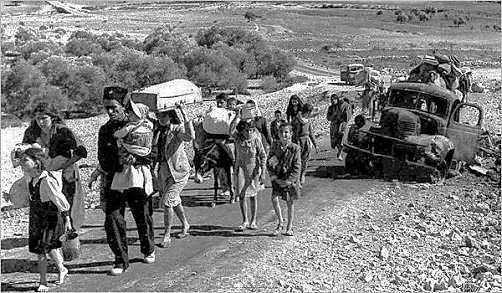
The Great Unravelling – modern history is built on exodus and displacement 

The Great Unravelling – modern history is built on exodus and displacement 

And who will live in the house after us, my father?
The house, my son, will remain as it was!
Why did you leave the horse alone?
To keep the house company, my son.
When their residents go, the houses will die.
Together we will hold on
until we return.
When, my father?
Tomorrow, my son, and perhaps in another day or two!
That tomorrow trailed behind them, chewing the wind
in the endless winter nights.
Mahmoud Darwish

Two years ago, in an essay in In That Howling Infinite published entitled Modern history is built upon exodus and displacement we wrote: “The term ethnic cleansing is elusive and politically charged. In an age of endemic conflict, identity politics and competing narratives, it has become a contested and often diluted concept invoked with increasing frequency. Yet, it remains undefined in law. Unlike genocide or war crimes, it has never been codified as a distinct offence under international law, and so its use is contested.”

Henry Ergas’s essay begins from a premise that is not wrong in itself: the Palestinian Nakba did not occur in isolation from the twentieth century’s wider history of mass displacement. Modernity proved remarkably adept at producing refugees. The collapse of empires, the rise of nation-states, world wars, partitions and revolutions uprooted tens of millions of people. Greeks and Turks, Armenians, Germans, Poles, Indians and Pakistanis, Jews from Arab lands, and many others found themselves swept into movements of population that often combined violence, dispossession and the attempt to create more homogeneous states.

This broader historical context matters because contemporary discussion of Israel–Palestine often proceeds as though 1948 emerged from a vacuum. It did not. The creation of Israel, the Palestinian exodus, and the simultaneous flight and expulsion of Jews from Arab countries all unfolded in a world where population transfer – while morally disturbing to modern sensibilities – was often treated by governments as regrettable but practical statecraft.

Yet Ergas then moves beyond historical context into a stronger argument: that the Palestinians constitute a unique exception because their refugee status became institutionalised rather than resolved. Here too there is a substantial point beneath the rhetoric. Unlike most post-war refugee populations, Palestinian refugee status passed across generations through UNRWA rather than being handled under the broader UNHCR framework. The expectation of return became central to Palestinian national identity and politics. The refugee camps in Lebanon, Syria, Gaza and elsewhere became not simply humanitarian spaces but political spaces.

But this is where the argument narrows and history becomes more selective.

The essay tends to compress a complex chain of causes into a single line of responsibility. The 1948 refugee crisis did not arise simply because Arab leaders invaded and then refused to absorb the consequences. As discussed previously, historians describe a more tangled picture: military collapse, fear, local expulsions, battlefield conditions, psychological warfare, direct expulsions in some areas, and decisions by Arab authorities all played roles that varied from place to place.

Nor does the proposition that Arab states “created” the refugee crisis command broad historical consensus. What is more broadly accepted is that many Arab states subsequently chose policies that preserved refugee distinctiveness rather than encouraging full integration, often because permanent absorption was seen as abandoning claims of return or acquiescing in Israel’s legitimacy.

There is also a danger in drawing too neat a lesson from other twentieth-century displacements. Many of those “successful” examples came after immense suffering and often under conditions we would now regard as profoundly unjust. The Greek–Turkish exchange, the expulsions of Germans from Eastern Europe, and Partition in India all left deep scars that continue to shape politics generations later. Stability eventually emerged, but stability and justice are not identical things.

This recalls themes from that earlier essay of ours. There,  the argument was not that ethnic cleansing or forced population movements are unique, nor that Israel–Palestine should be detached from wider historical patterns. Rather, the point was almost the opposite: modern history itself appears built on recurring acts of uprooting and demographic engineering. Michael Mann called this “the dark side of democracy”: the tendency of modern states toward homogeneity, where political belonging becomes increasingly tied to identity.

The distinction matters because Ergas implicitly suggests that history eventually tidies itself up – that refugees are absorbed, wounds heal, and life moves on, except in the Palestinian case. The historical record appears less orderly. Displacement rarely disappears; it becomes memory, and memory becomes politics.

The Armenian diaspora still carries the memory of 1915. Partition remains embedded in Indian and Pakistani consciousness. The descendants of expelled Germans preserved memory of lost homelands for decades. Jewish memory of exile persisted for two millennia and became central to Zionism itself. Human beings have shown little inclination simply to reconcile themselves to history and forget.

Which brings us back to a previous discussion about stories and belonging in our Blue remembered hills (2) – the history we hold within us – Tolkien’s sub-creation, Scruton’s observations on home, Tyrion Lannister’s line that “there is nothing more powerful than a good story.” Nations are, among other things, stories people tell about themselves. Refugees do not merely lose houses or land; they lose continuity – the narrative linking memory, place and identity.

Palestinians constructed such a narrative around the Nakba. Israelis constructed one around return after exile and persecution. Both narratives contain truths; both contain mythologies; both can harden into absolutes.

That perhaps is the deeper tragedy. The problem was never simply refugee camps or UN agencies or demographic statistics. It was that two peoples built foundational stories around dispossession and return in the same small strip of land – your earlier “TARDIS nation”: a place physically tiny but historically and emotionally vast, where centuries of memory somehow occupy the same ground at the same time.

The twentieth century produced many displaced peoples. Most eventually found states, borders or political settlements that transformed exile into citizenship. Palestinians remain suspended between memory and statehood, between return and permanence. Whether this makes their situation unique is debatable. That it makes it unusually enduring is harder to deny.

The unravelling, then, may not be the Nakba itself, nor UNRWA, nor even 1948. It may be the wider unraveling of an older assumption: that history’s brutal rearrangements eventually settle into stable endings. History has shown a disconcerting habit of reopening what people believed was closed. And memory, unlike borders, seldom remains where states draw the lines.

What about ‘Whataboutism’?

When one widens the frame as we have dine here, an accusation appears sooner or later, often delivered with a certain weary certainty: whataboutism. The implication is not merely that one has made a weak argument but that one has committed a kind of moral sleight of hand- that by widening the frame one is really narrowing the conscience; that by speaking of Greeks and Armenians, Germans and Jews, Indians and Pakistanis, Bosnians and Rohingya, one is attempting to diminish Palestinians by dissolving them into statistics.

The charge deserves attention because there is such a thing as genuine whataboutism. The old Soviet formulation – and what about your own crimes? – was never an attempt at understanding. It was an escape hatch, a manoeuvre for changing the subject rather than addressing it. One suffering became a shield against discussing another. The object was evasion.

But comparison and evasion are not the same thing.

History itself is an exercise in comparison. Historians are forever placing one event beside another, not because they believe suffering can be ranked on some grotesque league table of misery, but because isolated events often become clearer when seen against a wider landscape. The Nakba did not occur on another planet. It unfolded amid a twentieth century that seemed to possess a grim talent for uprooting people from ancestral homes and redistributing them across maps with ruler-straight borders and bureaucratic efficiency. The century moved populations around with astonishing confidence, as though nations were puzzles whose pieces merely needed rearranging.

To note this is not to say that Palestinian suffering was unimportant, or unreal, or somehow cancelled out by the suffering of others. Human beings do not experience tragedy comparatively. Nobody standing beside a burning village pauses to think, yes, but larger displacements occurred elsewhere. People experience loss in the singular. The family home is not less mourned because millions of others lost theirs too.

And yet memory and history often operate differently. Memory looks inward. History looks outward. Memory says: this happened to us. History asks: where else has this happened, and why?

Perhaps the tension lies there.

Because the Holy Land –  a curious, poorly understood TARDIS territory, tiny on a map and infinite in emotional and historical dimensions – contains overlapping stories of exile and return. Palestinians built a national memory around dispossession; Israelis built one around return after exile and persecution. Both stories contain truth. Both contain myth. Both contain wounds carried across generations.

To place one beside wider human experience is not necessarily to belittle it. Sometimes it is the opposite. Sometimes it is an attempt to recognise that the Palestinian tragedy was not an aberration committed by monsters from another species, but part of a recurring and deeply human pattern – our alarming capacity to convince ourselves that peace, security or national redemption can be achieved by separating peoples and remaking maps.

The question, then, is not whether comparison itself is suspect. It is whether comparison is being used to illuminate or to dismiss.

The former enlarges understanding. The latter shrinks it.

And perhaps that distinction matters, because if modern history teaches anything, it is that human beings have shown little talent for forgetting and remarkable talent for carrying stories — stories of homes left behind, keys kept in drawers, vanished streets and remembered landscapes — across decades and across oceans.

Borders may eventually settle.

Memory seldom does.

Keys, homelands and the stories we carry within us

We did not weep
when we were leaving –
for we had neither
time nor tears
and there was no farewell.
We did not know
at the moment of parting
that it was a parting
so where would our weeping 
have come from?”
Taha Muhammad Ali

There is perhaps a further answer to the question of whether widening the frame becomes a form of whataboutism, and it lies in something written years earlier in In That Howling Infinite, in an essay on Mahmoud Darwish, Ismail Shammout and the symbolism of al-’awda –  return: Visualizing the Palestinian Return – the art of Ismail Shammout]

That essay did not begin with demographic tables, refugee agencies, diplomatic resolutions or arguments about international law. It began instead with Darwish’s father and son, with a house left behind and a horse kept company in the absence of those who had gone. It entered history through memory rather than politics. The language was intimate and domestic because exile is experienced first not through abstractions but through ordinary things: streets once walked, kitchens once occupied, olive trees, neighbourhoods and names. Long before displacement becomes a political problem, it is a human one.

Darwish understood Palestine not merely as territory but as metaphor: a homeland certainly, but also a language of longing, absence and dispossession. Palestine became not simply a place on a map but a way of expressing exile itself. Around that idea grew al-’awda, the dream of return, symbolised by al-muftah, the key that appears throughout refugee camps, paintings and political iconography. The key became more than metal. It became continuity –  evidence that interrupted lives had not entirely ended. Villages might disappear, maps be redrawn, and landscapes altered beyond recognition, but the key remained as a quiet refusal to surrender memory.

The earlier essay eventually moved into more contested territory, discussing UNRWA, inherited refugee status and the possibility that institutions established to preserve refugee welfare had also preserved expectation itself, transforming temporary exile into a political condition transmitted across generations. Yet the order in which those arguments appeared matters. The essay did not begin by reducing Palestinians to a demographic question or a bureaucratic problem. It first sought to understand what loss meant to those who carried it.

Perhaps that touches upon the larger issue raised here. Comparative history and lived memory often ask different questions and operate at different scales. History asks about patterns, causes and precedents. It seeks connections and broader landscapes, comparing one experience with another to understand how societies and states behave across time. Memory is more particular and less interested in patterns. It concerns itself with the singular experience of those who lost something and who continue to carry the memory of that loss.

The two perspectives are not necessarily opposed, but neither are they interchangeable. Statistics without memory can become sterile and detached. Memory without wider historical context can harden into myth, becoming a self-contained narrative resistant to complication.

This has been a recurring theme across earlier discussions – from Tolkien’s idea of sub-creation and Scruton’s reflections on belonging to Tyrion Lannister’s observation that there is nothing in the world more powerful than a good story. Stories are not merely embellishments laid over identity; they often become identity itself. They explain where people came from, who they are, and where they imagine themselves to be going.

Palestinians built such a story around the Nakba and the hope of return. Jews built one around exile and return as well: Jerusalem remembered across centuries, prayers ending with Next Year in Jerusalem, memory transformed into national aspiration. Both peoples, in different ways, carried keys. Some were literal objects passed through generations; others existed in memory and imagination.

Perhaps this explains why the accusation of whataboutism can feel misplaced in such discussions. Comparison does not necessarily diminish suffering by placing it alongside other suffering. Sometimes it attempts the opposite. Sometimes it seeks to recognise that exile, loss and the desire for return are among the oldest and most enduring of human experiences.

The danger lies not in telling stories but in mistaking stories for complete maps of reality. A key can indeed open a door, but after enough years –  after generations have passed, after landscapes have changed and houses have disappeared – it may become something else entirely. It becomes not a practical instrument but a memory carried in the hand, a reminder that home is not always a physical place waiting patiently at the end of a road. Sometimes it survives most completely in the minds of those still searching for it.

In That Howling Infinite, May 2026

In That Howling Infinite  has recently published a long essay explaining its position with regard to what is probably the most intractable conflict in modern times: One Land, Two Peoples: History, Memory, Continuity, and Inheritance 

See also in In That Howling Infinite, Modern history is built upon exodus and displacement, Visualizing the Palestinian Return – the art of Ismail Shammout , We did not weep when we were leaving – the poet of Nazareth 

The featured picture at the head of this blog post is one of Palestinian artist Ismail Shammout’s striking illustrations of Al Nakba, the dispossession of tens of thousands of Palestinian Arabs during Israel’s war of independence, from In That Howling Infinite’s Visualizing the Palestinian Return – the art of Ismail Shammout]

Al Miftah

How the Arab world recast the Nakba

Every May, Nakba Day, with its noisy demonstrations on our streets, brings the same charge against Israel: that the displacement of some 700,000 Palestinians in 1948 was a unique crime in modern history. The reverse is closer to the truth. Almost nothing about the Palestinian exodus was singular. What was singular – and which still disfigures the lives of Palestinians, Israelis and the wider world – is what was done with it ­afterwards.

For two centuries, modern states have been built on the unmixing of peoples. The idea is older than the romantic nationalists who weaponised it. Ferdinand and Isabella expelled the Jews from Spain in 1492, and Philip III the Moriscos a century later, precisely because they could no longer imagine a unified crown ruling a religiously mixed people. France’s revolutionary Jacobins, alarmed at Breton, Provencal and Alsatian, declared linguistic uniformity the price of citizenship; Mazzini and his epigoni said much the same for Italy.

Even that arch-liberal John Stuart Mill argued in 1861 that ­representative institutions could scarcely function in countries divided among “different nationalities” speaking different languages.

Bismarck drew the operational conclusion, expelling tens of thousands of Polish and Jewish “foreigners” from Prussia’s eastern provinces in 1885-86 – a program regarded at the time as enlightened statecraft and applauded throughout the liberal press of central Europe.

The unmixing accelerated as the great land empires – Ottoman, Habsburg, Romanov – gave way to nation-states. The Crimean War alone drove 900,000 Muslims from the Caucasus and Crimea into Ottoman territory; the Balkan Wars and the First World War uprooted two million more.

By 1923, the movements were no longer an incidental consequence of war; they were being designed. The burning of Smyrna in September 1922, which destroyed one of the great cosmopolitan cities of the eastern Mediterranean and drove 200,000 Greeks and Armenians into the harbour while Allied warships looked on, made any continued Greek presence in Anatolia impossible – and the world’s diplomats simply codified the new reality.

The Lausanne Convention of January 1923 compelled roughly 1.3 million Greek Orthodox to leave Anatolia for Greece and 400,000 Muslims to leave Greece for Turkey, stripping each of nationality, their possessions and any right of return. Cretan Muslims who had never seen Anatolia and knew only Greek were shipped to Anatolia; Cappadocian Greeks who knew only Turkish were shipped to Greece.

Set against the Armenian genocide of 1915, the exchange was hailed as humane and progressive, and Athens and Ankara settled into the longest peace they had ever known. Raymond Poincare spoke for the age when he concluded that “the mixture of populations of different races and religions has been the main cause of troubles and of war”.

That lesson governed what came next. In 1944, with Hitler’s empire collapsing, Churchill told the Commons he was “not alarmed by the prospect of the ­disentanglement of populations”. The Potsdam Agreement formalised it, providing for the expulsion of 12 million ethnic Germans from Eastern Europe.

The 1948 Palestinian exodus, known in Arabic as the Nakba. Picture: via Getty Images

The 1948 Palestinian exodus, known in Arabic as the Nakba. Picture: via Getty Images

The German share of Czechoslovakia’s population fell from 23 per cent to less than 2 within five years, under Benes’ decrees that stripped ethnic Germans of citizenship and property overnight. Equally, Poland’s minorities, 30 per cent of its inter-war population, were reduced to under 5 per cent; in 1947, the Ukrainian remnant was forcibly scattered across the new western territories to prevent any cohesive ethnic block reforming.

Meanwhile, the dismantling of Japan’s empire moved another five million Japanese back from Manchuria, Korea, Taiwan and Sakhalin, often after long internment, while Koreans and Chinese were marched in the opposite direction. And in 1947, Partition uprooted between 12 and 20 million people on the subcontinent; Pakistani Punjab’s Hindus and Sikhs went from 20 per cent of the population to 0.2 per cent in four years, amid massacres on the Lahore-Delhi railway that nobody who lived through them ever forgot.

Shortly afterwards it was the turn of the Jewish communities of Iraq, Egypt, Libya, Syria, Yemen and Morocco.

Some 800,000 people, whose ancestors had lived in those lands for two millennia, were evicted, forced to flee or statutorily expelled, losing their nationality and all their assets in the process. Iraq’s Jews, once 40 per cent of Baghdad’s population and producers of the country’s first finance minister, were down to under 1 per cent within five years.

In each case the expectation was the same: the receiving state would absorb its co-religionists or co-ethnics and prevent revanchism. Ataturk’s Turkey did exactly that – any attempts by the Muslims expelled from Greece to organise politically were firmly ­repressed.

So did the Allied occupiers, and then Adenauer’s Federal Republic, banning refugee parties in Germany and shutting down any attempt at creating new ones. Forced to accommodate to their new country, West Germany’s 12 million expellees – many of whom either spoke no German or antique forms of German locals could barely understand – powered the Wirtschaftswunder (economic miracle) and helped ­rebuild Germany’s fabled network of small firms.

Nor were they alone in proving a source of flexibility and innovation. In West Bengal, Hindus expelled from East Bengal transformed the jute industry, making it a pillar of India’s economy. The million-odd North Koreans who fled south during and after the Korean War, Chung Ju-yung of Hyundai prominent among them, supplied the entrepreneurial core of what became the South Korean miracle.

Israel, for its part, absorbed almost the entirety of the displaced Jews of the Arab lands: Operation Ezra and Nehemiah airlifted some 120,000 Iraqi Jews in 1950-51; Operation Magic Carpet flew 49,000 Yemenite Jews to Israel in 1949-50; Operation Moses, in 1984, collected the Beta Israel from the Sudanese desert, every wave transforming the country and yielding generations of military heroes and entrepreneurs.

Palestinian fighters beside a burned-out Israeli Haganah supply truck near Jerusalem in 1948. Picture: via Getty Images

Palestinian fighters beside a Haganah supply truck near Jerusalem in 1948. Picture: Getty Images

The pain was always immense; the absorption, almost everywhere, successful. Almost everywhere. For the Palestinians were the single, decisive exception.

In 1948, the Arab states had launched a war the Arab League’s Secretary-General announced would be “a war of extermination and a memorable massacre comparable to the Mongol massacres and the Crusades”, urged on by the rector of Cairo’s Al-Azhar Mosque, who told Muslims resident in Mandatory Palestine to “leave the territory temporarily so that our warriors can freely undertake their task of extermination”.

But unlike every other immediate historical precedent, the Arab states, having lost the war, refused to absorb the refugees their own actions had created. King Abdullah I of Jordan, who alone among Arab leaders had been prepared to come to terms with Israel and absorb the Palestinians, was assassinated at al-Aqsa in 1951 – a warning that subsequent Arab rulers heeded, until Anwar Sadat repeated the gesture in 1981 and met the same fate.

Predictably, the UN played a major role in the tragedy. Of the roughly 50 million people displaced by the Second World War and its aftermath, only two groups – Koreans and Palestinians – were given country-specific UN refugee agencies, and both were meant to be temporary. The UN Korean Reconstruction Agency wound up in 1958. UNRWA’s own founding report warned that “sustained relief operations inevitably contain the germ of human deterioration” and committed to speedily shut down.

Seven decades later, UNRWA still exists. It employs roughly 31,000 staff to serve almost six ­million registered “refugees”, the overwhelming majority of whom were born decades after 1948 and have never set foot in Mandatory Palestine. A fifth-generation Gazan whose ancestors left Jaffa remains classified as a refugee in a way that would be inconceivable anywhere else on earth.

The result was not merely administrative absurdity but political radicalisation. From the Cairo Agreement of 1969 onwards, the Palestinian camps in Lebanon became autonomous political and military zones. There and elsewhere, UNRWA facilities rapidly evolved into an integral part of the terrorist infrastructure.

Refugeehood ceased to be a temporary humanitarian condition and became an institutionalised political identity organised around the goal of destroying Israel, in an illusion that has instead destroyed generation after generation of Palestinians.

The Nakba charade

Those, in short, are the historical realities. But they do nothing to prevent the annual Nakba charade from insisting that Israel committed a uniquely monstrous act of “ethnic cleansing” in 1948.

Well, if ethnic homogenisation was truly the goal, Israel pursued it with startling incompetence. Arab citizens of Israel today are roughly a fifth of the population, a share slightly larger than at independence. And far from being “ethnically cleansed”, Israel is by far the most plural state in its region with its population Jewish (Ashkenazi, Mizrahi, Ethiopian, Russian), Arab Muslim, Christian, Druze, Circassian and Baha’i.

Compare that with northern Cyprus, where Greek Cypriots went from 82 per cent of the population in 1973 to zero within two years of the Turkish invasion.

Erdogan nevertheless stands among the loudest voices accusing Israel of practising precisely what Turkey has long excelled at – the expulsion and displacement of unwanted peoples, most recently the Kurds of northern Syria. Nor is Turkey alone. Saudi Arabia expelled 800,000 Yemeni workers in 1990 in retaliation for Sana’a’s tilt towards Saddam Hussein, while Kuwait expelled every single one of its 400,000 Palestinians in 1991 for the same offence.

These were not isolated episodes of political vengeance or wartime coercion. They formed part of a much broader regional trajectory: the ongoing, largely forced displacement and disappearance of the Muslim Middle East’s non-Muslim and minority populations.

Albert Hourani’s Minorities in the Arab World (1947) brilliantly mapped a region whose Christians, Jews, Yazidis, Druze, Alawites and countless smaller communities sustained a dense and intricate civic fabric. It was, unfortunately, a world on the cusp of extinction.

Today, the Christian share of Egypt, Syria, Iraq and Lebanon combined – around 11 per cent in 1945 – has fallen to 3 per cent, and the decline is accelerating. Syria’s Christians have declined from 9.7 per cent of its population in 1970 to under 2 per cent today; Iraq’s, once above 6 per cent, are well under 1 per cent; Egypt’s Copts continue their long erosion, from 8 per cent to no more than 3 per cent. Lebanon’s Christians, who made up over half of the population in 1970, are now below a third.

Nor is it a question of Christians alone. The Zoroastrians, whose religion once shaped an empire from the Indus to the Nile, have vanished from the Arab Middle East.

The Yazidis were enslaved and slaughtered in their thousands at Sinjar by Islamic State in 2014, in what was unquestionably a genocide. The Man­daeans of southern Iraq, who numbered 60,000 a generation ago, are now a remnant of perhaps 4,000. Almost everywhere, the Baha’is and Ahmadis have fled.

Stark contrast

As for the Jews, they are entirely gone, a population of close to a million across the Arab world reduced to a few thousand, almost all elderly; Egypt’s once 80,000-strong community now numbers in the low hundreds, and Yemen’s 50,000-strong Jewry, planted there in antiquity, was essentially lifted out by Operation Magic Carpet, with the Houthi takeover erasing the few that remained.

The trend is unmistakeable, the contrast stark. While the West accommodates ever more Muslims, the Arab world accommodates ever fewer non-Muslims. Its activists and their Western fellow travellers demand multiculturalism elsewhere; they ruthlessly deny it at home. They denounce Israel; but they are the ones engaged in the systematic destruction of ethnic and religious variety.

That is the historical fact the Nakba charade cannot accommodate. The 20th century normalised population transfer on a colossal scale, and the suffering it caused was sustained, widespread and ­immense.

But no international movement emerged demanding the restoration of Breslau to Germany, the ethnic reconstitution of the Sudetenland, a right of return for the Jews thrown out of the Arab lands, or hereditary refugee status for the descendants of the enormous population movements that swept across what had been British India. The displaced were expected to rebuild their lives where they arrived. However ­brutal the process, however bitter the pain, the governing assumption was clear: refugeehood was to disappear, not reproduce itself across generations.

The Palestinians alone were taught a different lesson – and that is the true Palestinian uniqueness. They were told not to end refugeehood but to preserve and reify it; not to build a future where they were, but to await the destruction of the state beside them; not to reconcile themselves to history, but to believe that history itself could be reversed.

For 75 years, generation after generation has been raised on that promise. It has brought not return but ruin, not recovery but repeated catastrophe. And as Gaza now demonstrates once again, it is the Palestinians themselves who pay the highest price for the post-war world’s longest and costliest political fraud.

What’s in a word? A world of meaning and of pain

And the words that are used for to get the ship confused
Will not be understood as they’re spoken
Bob Dylan, When the Ship Comes in

When I use a word,” Humpty Dumpty tells Alice, with the serene arrogance of the ideologue, “it means just what I choose it to mean – neither more nor less.”
Lewis Carroll, Alice’s Adventures in Wonderland

State governments weigh the prohibition of potentially inflammatory phrases; lawyers parse syllables; activists insist that what is heard is not what is meant, and what is meant is not what is said. The words hover, untethered from consequence, yet curiously heavy with it. And this is where Lewis Carroll, with his disarming Edwardian whimsy, begins to feel less like a children’s author and more like a diagnostician. Alice, still tethered to an older moral physics, asks the only sensible question: whether words can, in fact, be made to mean so many different things. The answer – never quite resolved in Wonderland is being tested here and now on our streets, in own legislatures, and on our social media  feeds. For if words can be made infinitely flexible, then meaning itself becomes negotiable; and if meaning is negotiable, then so too are responsibility and harm.

More than words can say …

We like to imagine that words live quietly in dictionaries, disciplined by etymology and tamed by definition. But they do not live there. They live in history. And history leaves fingerprints.

So, what’s in a word? A root, yes. A history. A memory. A strategy. Sometimes a slur. Sometimes a lament. Often, a rhetorical shortcut. Occasionally a doorway into understanding. We pretend words are neutral. They are not. They are histories. They are wounds. They are strategies. They are prayers. They are threats. They are pleas.

What’s in a word? Enough to start a war. Enough to end a conversation. Enough, if handled carefully, to begin one. The question is not simply what a word means. It is what it does. Does it illuminate complexity, or obscure it? Does it invite argument, or pre-empt it? Does it name suffering without erasing another’s?

Words are fall differentially upon the tongue and the ears; words which some see only as incitement and which the others see only resistance. And yet, these words did not come out of nothing. They arose from lived experience. Palestinians do experience dispossession. Israelis do experience existential threat. Jews carry a historical memory of annihilation that makes the word genocide resonate differently in their ears. Palestinians carry a memory of erasure that makes Nakba less metaphor than inheritance. Each community carries memory as identity. To police to and sanction vocabulary without acknowledging origin and memory is to misunderstand both.

To study a language is to develop a kind of double hearing. You recognise when metaphor shades into innuendo—and when it darkens further into menace.

To study a language is to learn when freedom names a horizon – and when it licenses the powerful to act without restraint. To notice when peace is an aspiration – and when it is a performance designed to defer justice. To recognise when security protects life – and when it expands to govern it; when it names legitimate protection – and when it justifies suffocating control. To feel when homeland gathers memory and when it redraws the map to exclude others. To understand when return is a longing—and when it becomes an argument that displaces those already there.

To study a language is to hear when muqamawwa – resistance – signals dignity – and when it becomes a script that traps a people inside permanent defiance. To know that sumud – steadfastness—can describe dignified endurance and also calcify into the romanticisation of endless struggle. To detect when tadhāmon solidarity – binds people together—and when it flattens complexity into slogan. To recognise when itishhad – martyrdom – honours loss – and when it recruits the living into the service of the dead. To hear when terror names violence—and when it is stretched to delegitimise any form of opposition.

To study a language is to hear when history explains—and when it is curated to absolve.

For years I have studied Arabic – and its roots and patterns: how three consonants generate a constellation of meanings. And I have studied Middle Eastern history with more than academic curiosity – not as spectator sport but with what I would called metaphorical “skin in the game.” Words like jihad, intifada, nakba, aliyah, ‘awda, sumud, words that now ricochet across social media feeds and protest placards, are not abstractions or exotic imports to me. They are layered. Sedimented. They carry centuries in their syntax and sentiment. They are lived terms, argued over, felt in the mouth. And so when someone asks “What’s in a word?” I cannot pretend the answer is neutral.

Intifada. From nafada – to shake off, to shake free. Dust from a cloak. Subjugation from a people. The metaphor is physical, almost domestic. Yet in common Arabic usage, it implies resistance and uprising, and neither are peaceful or passive. In Israeli memory the word is fused to sirens, shrapnel, blown-out windows. It is impossible to hear it without recalling the Second Intifada’s exploding buses and cafés, bloody streets and scattered body parts. So when someone chants “globalise the intifada,” they may imagine solidarity with resistance; others hear a call that premises funerals. The dictionary definition is technically correct. It is also profoundly incomplete. It does not arrive alone; it brings its dead with it.

Or al Nakba. In ordinary Arabic, a misfortune. A bad year. But in Palestinian consciousness it has fossilised into 1948 – villages depopulated, olive groves left untended, families scattered, deeds and keys preserved like heirlooms. It is no longer a generic calamity; it is The Catastrophe. Say it in Ramallah and you evoke dispossession. Say it in western Jerusalem and you may hear, in reply, the memory of a war launched to strangle a newborn state. 1967 is referred to as al Naksa, the setback.

And then there is jihad — perhaps the most mistranslated word in modern political discourse. Its root, jahada, means to strive, to exert oneself. Classical Islamic thought distinguishes between inner moral striving and outward struggle that can be intellectual, and yes, armed defence under defined conditions. Yet modern movements – from anti-colonial insurgencies to nihilistic terror groups – have narrowed and weaponised it. The word has travelled. It has acquired passengers it did not originally carry. To deny that is to be naïve. To reduce it solely to “holy war” is equally ignorant.

Al ‘Awda – the return – carries a weight for Palestinians comparable to the resonance of intifada or nakba. It is not a mere political slogan; it is a moral, legal, and emotional claim bound up with exile, memory, and inheritance and the enduring hope, however fraught, of returning to one’s ancestral land. For Israelis, the concept often triggers apprehension, a fear that the abstract ideal of return could translate into demographic and existential challenge, potentially threatening the state itself. Like intifada or nakba, the word carries histories and futures simultaneously: one side sees longing and justice, the other sees danger.

Hebrew political vocabulary is no less charged. Aliyah – ascent – frames immigration as spiritual elevation. Ge’ulah -redemption – maps theology onto statehood. Am Yisrael Chai – Let Israel Live – evokes covenant, not population. Political vocabulary hums with biblical resonance. It is impossible to excise theology from nationalism in a land where scripture is mapped onto soil.

The power of these words lies not in dictionary meaning, but in the lived and imagined consequences each community projects onto them. So when commentators insist that “intifada just means struggle,” or that “Zionism just means Jewish self-determination,” they are not wrong linguistically. They are incomplete historically. Words do not live in morphology alone. They live in memory.

Let’s cast our etymological web wider and delve deeper in our dictionary and examine words that ricochet across the howling internet in these troubled times. Genocide. Ethnic cleaning. Apartheid. Settler-colonialist. Terrorist. Resistance. Each carries not only denotation but detonation and accusation. Each holds an argument inside a noun. Each is more than description; but also a moral verdict disguised as vocabulary. The German historian Reinhart Koselleck called such terms Kampfbegriffe – battle-words. Words of iron forged in particular historical furnaces, hardened by trauma, and redeployed not merely to describe reality but to shape it.

The same dynamic now saturates discussion of Israel–Palestine. Let’s not pretend that careful language will resolve a conflict this old, this layered, this saturated with grief. But careless language can only make things worse.

Call Israel a “settler-colonial state or an apartheid state” and you situate it in the moral lineage of Algeria, Rhodesia and Pretoria. Call Hamas’ October 7 assault “resistance” and you shift the frame from massacre – to revolt, or to shift the timeframe, to pogrom, the Russian word for destruction, now interpreted as referring to the organised massacres of a particular ethnic group – which, ironically, precipitated the first settlement of European Jews in what was to become Palestine. Call Gaza “genocide” and you summon Auschwitz – whether you intend to or not. Call protesters “terror sympathisers” and you evacuate the possibility of grief motivating them at all. Each move does moral work before the evidence is even considered.

It is here, amid the discourse of colonialism and statehood, that the word genocide warrants careful attention. Unlike settler-colonial or apartheid, which describe systems of domination and segregation, genocide describes intent – the deliberate aim to destroy a people as such. It is not simply a scale of death; it is a moral calculus applied to the machinery of annihilation. To deploy it is to summon not only bodies but histories, to conjure not only numbers but the moral shadow cast by deliberate erasure. In debates over land, displacement, and occupation, it is tempting to apply the term as an ethical accelerant, to compress outrage into a noun. Yet to do so responsibly requires rigor: assessment of intent, systematic targeting, and legal definition. Without that, the word risks inflation, becoming a rhetorical hammer rather than a precise lens. Each word narrows the moral aperture.

And yet, Genocide” now circulates online as hashtag and chant. It trends. It compresses argument into a single, morally incandescent noun. For many who use it in the Gaza context, it is less a legal claim than an expression of horror at the scale of devastation. It is a cry. But cries, once repeated often enough, harden into verdicts.

In Australia, we are hardly innocent of this. We live in a country still wrestling with its own founding vocabulary: terra nullius, invasion, genocide, reconciliation, Voice. These are still contested. We know – or should know – that words can both clarify and inflame. To call Australia “founded on genocide” may be defensible within certain scholarly frameworks; it is also rhetorically maximalist. It shocks the moral nerve. That shock may awaken conscience – or entrench defensiveness. Language is never inert. Words do not merely describe history; they frame it. They allocate blame. They assign virtue. They shape identity.

In That Howling Infinite has spent months untangling these labels. Is Israel a settler-colonial state? Does apartheid apply, and if so, where? Does genocide cross the threshold from metaphor into actionable accusation? Each term compresses arguments into a noun. It performs moral work before the debate even begins.

That compression is seductive. We prefer our tragedies simple: one culprit, one origin story, one clean fingerprint. Words that arrive pre-loaded with moral clarity spare us the labour of nuance. They allow passion and empathy to outrun reason and understanding – which, in an age of instant reaction, they reliably do.

Historical illiteracy compounds the problem. The conflict is older than most of its loudest commentators. Its history is layered with Ottoman legacies, British mandates, partition plans, UN resolutions, wars declared and undeclared, refugees, intifadas, failed peace processes, withdrawals, rockets, settlement blocs, religious revivals, and fractured leaderships on both sides. Yet online discourse flattens this into memes, and to pretend this can be reduced to a meme is historical illiteracy A map. A slogan. A 30-second clip untethered from context. Algorithms reward the sharpest edges. The most incendiary noun travels furthest. Nuance, by contrast, is penalised. It does not trend. It does not fit neatly into a caption. I worry about the generational shift in how these debates unfold. Previous eras had gatekeepers – flawed, certainly – but also editors who demanded sourcing, historians who insisted on chronology. Now discourse is democratised and accelerated. A meme outruns a monograph. A slogan outruns a syllabus.

The language used evolves accordingly. Rhetorical shortcuts proliferate. “From the river to the sea.” “Open-air prison.” “Terror state.” “Colonial entity.” “Death cult.” These phrases are not random; they are engineered for virality. Each word comes preloaded, historical analogies that compress decades into chantable cadences. But chants and slogans compress complexity. They must; that is their function. And that compression distorts: two national movements, two historical traumas, two competing narratives of return and belonging, reduced to a rhyme shouted through a megaphone.

And then there are the slurs: the truncations and code-words. For example, “Zio.” A syllable masquerading as political shorthand yet unmistakably functioning as ethnic hostility. Its power lies partly in deniability. It skirts the boundary of explicit antisemitism while retaining its charge. Deniable enough to evade sanction, sharp enough to wound. But we should be intellectually honest: this phenomenon is not one-directional. The same phenomenon occurs in reverse when “Islamist” becomes a catch-all smear for Muslim political expression, or when “pro-Palestinian” is lazily equated with antisemitic intent. The grammar of dehumanisation is bipartisan: collapsing an entire spectrum of political and religious identity into a caricature designed to foreclose engagement.

So, what, finally, is in a word?

Not merely meaning, but momentum. Not simply definition, but direction. Words do not sit still; they lean. They incline us toward certain conclusions before we have done the work of thinking. They smuggle history into the present tense and call it common sense. They arrive already freighted—with grief, with fear, with memory, with accusation—and we, often unwittingly, become their couriers.

The temptation, always, is to choose the word that does the most work for us—the one that collapses ambiguity, that secures the moral high ground in a single utterance. But that is precisely where language becomes most dangerous: when it relieves us of the burden of holding two truths at once; when it permits us to name one suffering in a way that erases another; when it transforms description into verdict before evidence has even entered the room.

What we do when we misuse words is not trivial. We erode precision. We inflame passions. We collapse law into slogan. We substitute moral theatre for argument. And perhaps most dangerously, we teach ourselves that the loudest noun is the truest one.

History suggests otherwise. It is rarely the loudest words that endure, but the most exacting; not the most incendiary, but the most honest about complexity. The archive is not kind to slogans. It remembers, instead, where language clarified—and where it concealed.

To speak about Israel and Palestine—indeed, to speak about any conflict so saturated with history—is to enter a linguistic minefield in which every term has a past and every past has its partisans. There is no neutral vocabulary here. Only more or less careful usage. Only degrees of awareness. Only the choice, conscious or otherwise, between illumination and incitement.

The task, then, is not to purify language—that is impossible—but to discipline ourselves in its use. To resist the seduction of the Kampfbegriff when it outpaces our understanding. To ask, each time we reach for a word: what history does it carry? What work is it doing? What—and who—does it leave out?

Because if words can start wars, they can also foreclose the possibility of ending them. And if they are capable, at their best, of opening a space for understanding, then that space is narrow, fragile, and easily collapsed by carelessness.

Language will not resolve this conflict. But without care in language, we will not even be able to speak about it honestly.

Coda

To study a language, in the end, is not simply to acquire vocabulary. It is to acquire conscience. It is to hear the echo behind the utterance—the ghost in the grammar. To recognise that every word, especially here, is a small archive: of exile and return, of fear and defiance, of prayer and propaganda. To speak, then, is to handle those archives with a certain humility, aware that one is always, in some sense, trespassing on someone else’s memory.

History suggests otherwise than our instincts: the loudest noun is rarely the truest one. The archive keeps its own counsel. It remembers where language clarified – and where it concealed.

Between the idea
And the reality
Between the motion
And the act
Falls the shadow.

Between the conception
And the creation
Between the emotion
And the response
Falls the Shadow

And in that shadow – linguistic, historical, human – words do their quiet, consequential work.

Postscript

While writing this essay – contemplating the slipperiness of words and widening the lens to the long weather system that has carried them into our mouths – I found myself returning to a simple, disquieting observation: it is no coincidence that so many of the words we have been parsing are Arabic.

It is not that Arabic words per se have become uniquely prone to distortion, nor that there is anything intrinsic to the language that invites what might loosely be called “gaslighting.” What I was circling, rather, is something more historically contingent – and more revealing.

Many of the most contested political ideas of the present moment – intifada, shahid, muqawama, even place-bound words and phrases that travel into English unchanged – are being transmitted untranslated, or only half-translated, into Western discourse. They arrive carrying dense, layered meanings shaped by decades (sometimes centuries) of conflict, theology, nationalism, and lived experience. And then, almost immediately, they are flattened, reframed, or strategically reinterpreted within a different moral and political vocabulary.

In other words, the instability I am sensing is not linguistic but translational – and beyond that, political.

There is, of course, a history to this. One thinks of how words like jihad were narrowed in Western usage to mean “holy war,” their broader theological and ethical dimensions quietly stripped away; or conversely, how certain terms are defended as benign by appeal to their most anodyne, etymological meanings, while bracketing how they are actually heard in context. The same word may present itself as metaphor, slogan, prayer, or threat – depending on who is speaking, who is listening, and what work the word is being made to do.

It is here that the instinct about Wonderland clicks back into place. The move is not uniquely Arabic; it is Humpty Dumpty’s move: control the meaning, and you control the moral frame. But the reason Arabic terms are so prominent in this moment is that the conflicts which have globalised our discourse – Israel–Palestine above all, but also Iraq, Syria, and the wider post-9/11 landscape – have carried those words into English without fully carrying their context with them. They become, in effect, linguistic migrants: visible, charged, and often unmoored.

So yes, it does say something about the modern world. Not that Arabic is uniquely problematic, but that we are living in an age where conflicts travel faster than comprehension, and where words – lifted from one history and dropped into another – become sites of struggle in their own right.

These words have crossed worlds. And in crossing, they have become unmoored enough to be contested, claimed, and weaponised. That unmooring creates opportunity: for some, to soften; for others, to sharpen; for many, to obscure.

It says something, too, about our times – about the way the Middle East has not merely intruded upon but come to dominate political, and indeed social, discourse for more than half a century; at least for as long as I have been paying attention, which is to say, for as long as I have been trying to make sense of the world and finding the same landscape returning, again and again, like a half-remembered refrain.

Let us take June 1967 as a point of departure. For a few brief weeks, the world’s gaze lifted from the humid, grinding quagmire of Indochina and fixed instead upon the sudden, almost biblical drama unfolding in the not-so-Holy Land – a war measured in days but reverberating in decades. Territory shifted, certainly; but something else shifted too: attention, imagination, the sense that this small, overburdened strip of earth had become a stage upon which the modern world would repeatedly rehearse its anxieties.

The focus has waxed and waned since, but it has never truly moved on. 1973 Oil Crisis and the realisation that the region’s tremors could rattle the global economy. The long, theatre-of-the-absurd years of hijackings and televised terror. Camp David’s fragile choreography. The Iranian Revolution, bending time backward and forward at once. The Soviet misadventure in Afghanistan. Lebanon’s fracturing. The attritional horror of the Iran–Iraq War. Kuwait and the return of great-power spectacle. Oslo’s brief, luminous promise. Then 9/11, collapsing distance altogether, followed by Afghanistan again, Iraq again – the sense of recursion, of history caught in a tightening loop.

Then the Arab Spring – hope flickering, briefly, before giving way to Syria’s abyss, to ISIS and its grotesque theatre, to the multiplication rather than the resolution of fault lines. And through it all – before it, beneath it, after it – Israel and Palestine remain: a permanent fixture in the taxonomy of torment, sans pareil, the conflict that resists conclusion, that absorbs language and returns it sharpened, refracted, or hollowed out.

It is from this long saturation – this decades-long immersion in images, slogans, translations, and retranslations – that our present arguments about words emerge. They are not sudden. They are sedimentary. Each phrase we now parse carries within it the residue of these moments, these crises, these unfinished stories.

Which is to say: when we argue about what a word means, we are never only arguing about language. We are arguing about history – compressed, contested, and still very much alive.

In That Howling Infinite, March 2026

For more on the Middle East in in That Howling Infinite, see A Middle East Miscellany.

See also, Moral capture, conditional empathy and the failure of shock, Standing on the high moral ground is hard work! ‘ Same old stone, different rock. What’s in a word?, Shaping facts to feelings – debating intellectual dishonesty

A Lexicon of Disturbing Language

(words that travel intact, and arrive with their weather still clinging to them)

What follows is not a neutral glossary – if such a thing were even possible here – but a kind of field manual for words that arrive already aflame, freighted with history, sharpened by use, carrying within them entire arguments about the world. They are not merely descriptive; they are performative. To utter them is to place a piece on the board, to tilt the frame, to summon histories that do not politely remain in the past.

Some are legal terms that have slipped their moorings and now drift through polemic. Some are borrowed intact from Arabic or Hebrew, carrying their original cadence like an echo that translation cannot quite still. Others are modern coinages – hybrids, sometimes ungainly – that try to compress entire arguments into a single, breathless label. And a few are names – of places, of movements – that have become arguments simply by being spoken.

What unites them is not agreement but charge. They are contested, elastic, often weaponised. They do not just describe reality; they compete to define it. They do not behave like ordinary vocabulary. They travel across languages without quite translating; they narrow, expand, harden, or blur as they move. They do not simply describe events; they encode perspectives on those events. To use them is not merely to speak—it is to situate oneself, however unconsciously, within a contested moral and historical landscape.

I. Catastrophe & Historical Singularity

  • Nakba (النكبة) – literally “catastrophe.” In Arabic it could name any disaster; in English it has hardened into the disaster—1948—fixed, immovable, dense with exile and keys kept as heirlooms. It no longer describes; it declares.
  • Naksa (النكسة) – “the setback,” 1967. A softer word for a different kind of loss—diminution rather than rupture. Its retention signals an internal Arab chronology, slightly askew from the familiar “Six-Day War.”
  • Shoah (שואה) – “catastrophe” or “destruction,” used specifically for the Holocaust. Left untranslated in part to preserve reverence, in part to resist the easy metaphorisation that “Holocaust” sometimes invites.
  • Holocaust – from the Greek “burnt offering” to the Nazi genocide of the Jews, and then outward into broader usage. Its expansion has given it reach—and thinned its edges.
  • Pogrom (погром) – a Russian word meaning violent devastation, carried into English with the memory of anti-Jewish attacks in Tsarist lands. “Riot” feels too incidental; pogrom carries its own geography.

II. Legal Terms, Moral Weapons

  • Genocide – a word forged in law (Lemkin, 1944), precise in definition—intent to destroy a group. In public discourse, however, it often arrives as accusation before judgment, its moral force outrunning its legal threshold.
  • Ethnic Cleansing – deliberately imprecise, emerging particularly from the Balkan Wars of the Nineties, but predating that in Türkiye after WWI,  Eastern Europe at the end of WWII, and I dia and Pakistan in 1948. Its vagueness is its power: suggestive, elastic, difficult to refute without seeming to concede.
  • Apartheid – Afrikaans for “apartness,” rooted in South Africa but now globally mobile. Once invoked, it frames the system under discussion—analogy and indictment in a single stroke.
  • Colonialism / Settler-Colonialism – analytic frameworks that, once applied, tend to fix the narrative: indigenous and invader, permanence and removal. Illuminating, but often closing off alternative readings.

III. Resistance, Struggle, Sanctification

  • Intifada (انتفاضة) – “shaking off,” like dust from a sleeve. In English it is no longer generic; it points almost unavoidably to the Palestinian uprisings of 1987 and 2000. The word carries images—stones, tyres, and checkpoints—and a moral ambiguity that shifts with the speaker.
  • Muqāwama (مقاومة) – “resistance,” yet left untranslated to avoid the bland universality of the English. Muqāwama signals a particular ideological and regional framing—Hezbollah, Hamas, dignity under pressure.
  • Ṣumūd (صمود) – “steadfastness,” though the translation feels thin. Not an event but a posture: staying, enduring, tending olive trees under threat. Translate it, and it risks becoming sentiment; leave it, and it remains an ethic.
  • Jihad (جهاد) – “struggle,” spanning the inner and the outer. In English, that range has narrowed sharply; the word arrives intact, its semantic field diminished, sharpened toward violence.
  • Shahid (شهيد) – “witness” or “martyr.” It does not merely describe death; it consecrates it. In English, its retention often signals an attempt to preserve that sacred charge.

IV. Faith, Doctrine, and Internal Tensions

  • Kāfir (كافر) – “unbeliever,” literally one who “covers” truth. A theological category that, in polemical use, hardens into insult—a boundary drawn sharply between inside and out.
  • Fitna (فتنة) – “discord,” “trial,” “temptation.” Historically tied to early Islamic civil strife, it carries a deep anxiety about internal fracture. To invoke it is often to warn: this way lies chaos.
  • Taqiyya (تقية) – a specific Shi’a doctrine allowing concealment of belief under threat. In English polemic, however, it has been stretched well beyond its doctrinal bounds—transformed into a generalised suspicion of deception.
  • Hudna (هدنة) – “truce.” Yet when retained in Arabic, it often implies something tactical, provisional—a pause rather than a peace.
  • Fatwa (فتوى) – a legal opinion within Islamic jurisprudence, part of everyday religious life. In English, especially post-Rushdie, it has narrowed into something darker—almost synonymous with a death sentence.

V. Identity, Ideology, and the Politics of Naming

  • Zionism – a 19th-century movement for Jewish self-determination. In English today, it rarely sits neutrally: liberation for some, colonialism for others. The word refracts entirely different histories.
  • Zionist – once descriptive, now often accusatory. Its meaning depends less on definition than on tone.
  • “Zio” – a clipped, abrasive form that has shed any descriptive function. It lands as insult, not argument.
  • Aliyah (עלייה) – “ascent.” More than immigration; a movement upward, spiritually and historically. The English equivalent feels earthbound by comparison.
  • Al-‘Awda (العودة) – “the return.” In ordinary Arabic, a simple going back; in Palestinian discourse, the Right of Return—dense with memory, law, and longing. It sits beside the mafteah (مفتاح, the key), object turned symbol, continuity held in the hand.
  • Settler – on its face neutral; in contested زمین, it hardens into accusation. Biography collapses into ideology.
  • Hilltop Youth – a specific Israeli subculture that has become shorthand for a certain strain of ideological extremity and violence – detail turned symbol.

VI. Totalising Labels & Historical Echoes

  • Nazi – historically precise, rhetorically promiscuous. Now shorthand for absolute evil, its overuse both amplifying and diluting its meaning.
  • Fascist – from Mussolini’s doctrine to a generalised insult; elasticity has eroded precision.
  • “Islamo-fascist” – a hybrid, polemical term attempting to map European categories onto Islamist movements. It says as much about the speaker’s framework as the subject.

VII. Organisations as Symbols

  • Hamas (حماس) – “zeal,” and acronym for Ḥarakat al-Muqāwama al-Islāmiyya. In English, it does not settle: government, militia, resistance, terrorism – meanings shift with the voice that utters it.
  • Hezbollah (حزب الله) – “Party of God.” Political party, armed movement, regional proxy; the name itself already contains a claim to divine alignment.
  • Da’ish (داعش) – acronym for al-Dawla al-Islāmiyya fī al-‘Irāq wa al-Shām (Islamic State in Iraq and the Levant). Its use, rather than “ISIS,” often signals rejection; the group dislikes the term, so naming becomes a small act of defiance.

VIII. Circulating & Mediated Words

  • Fawda (فوضى) – “chaos,” but after its journey through Hebrew and global television (Fauda), it now carries a particular aesthetic: kinetic, morally ambiguous, intelligence-driven disorder. Chaos, but stylised.
  • Blitz – from Blitzkrieg, lightning war. In English, softened into metaphor—“media blitz”—yet still faintly haunted by sirens over London.

IX. Place as Argument

  • Al-Aqsa (الأقصى) – “the farthest.” Rarely translated, because the Arabic name carries sanctity, geography, and sovereignty in one breath.
  • Al-Quds (القدس) – “the holy,” the Arabic name for Jerusalem. Its use signals perspective: a city not just inhabited, but claimed, sanctified, contested.
  • Gaza (غزة) – a place-name that has become a metonym: war, siege, suffering, المقاومة. Geography turned symbol.
  • Sabra and Shatila (صبرا وشاتيلا) – no longer merely locations; the names themselves are the event. To say them is to accuse.

Coda: The Grammar of Conflict

What began as a request to a Chat GPT – to gather, sort, define – ends, rather predictably, in something the machine cannot quite resolve. Because the instability is not in the definitions; it is in us. In the way we reach for these words, load them, deploy them, defend them. In the way a term like genocide or Zionist or shahid can close down conversation as quickly as it opens it.

These are not just words. They are positions. Each one carries a shadow text: a history remembered, a grievance asserted, a legitimacy claimed or denied. They compress time, flatten complexity, and yet—paradoxically—expand into entire moral universes the moment they are spoken.

And so the lexicon does not settle the argument; it reveals its terrain.

Between the word and the world, as ever, falls the shadow. And it is in that shadow—where meaning slips, hardens, fractures, reforms—that these battle words continue to do their work, long after they have left the mouth that uttered them.

Lay these words out like this and a pattern emerges. Some words narrow as they travel (jihad, intifada). Some harden into proper nouns (Nakba, Shoah). Some expand until they blur (fascist, genocide). Some are left untranslated to preserve their charge (ṣumūd, muqāwama, al-‘awda).MNone of them are innocent.

They do not simply describe the world; they position the speaker within it. Each word a small act of alignment, a quiet declaration of where one stands. Between what a word once held, and what it is now made to carry, between language as description, and language as argument, there falls that same, shifting shadow. And it is there, in that narrow space, that these words continue to live, and to do their work.

These words do not behave like ordinary vocabulary. They are anchored in place but mobile in use, precise in origin but elastic in deployment. They compress centuries into syllables, turning speech into stance.

To speak them is rarely innocent. Each carries a shadow text- unspoken assumptions, moral alignments, historical claims. They do not simply describe reality; they compete to author it.

And so the disturbance lies here: between what a word once meant, what it now does, and what we need it to prove. In that gap – narrow, shifting, and charged – language itself becomes a kind of battleground, where meaning is not fixed but fought over, again and again.

In That Howling Infinite, March 2026

The following is an essay published in The Australian by economist and commentator Henry Ergas, whom we have republished often in In That Howling Infinite.

Henry Ergas’s essay is essentially an argument about language, memory, and the way slogans prepare the emotional ground for violence long before violence itself occurs. His central claim is that chanting “Globalise the intifada” cannot be dismissed as harmless political speech or reduced to a neutral dictionary definition of intifada as merely “struggle” or “shaking off”. Words, he argues, accumulate historical meaning, and by now intifada is inseparable in the public imagination from the Palestinian uprisings associated with suicide bombings, bus attacks, café massacres, and the Second Intifada’s civilian bloodshed.

Many charged words once had ordinary meanings — holocaust once referred to a burnt offering, pogrom to devastation, nakba to catastrophe. But history hardens language. Certain events become so dominant that they permanently colonise a word’s emotional and moral resonance. Linguists call this “prototype entrenchment”: when people hear “Holocaust”, they do not think of ritual sacrifice; when they hear “intifada”, they do not think of generic resistance. They think of televised violence, bombings, and dead civilians. To insist otherwise is effectively to demand that language forget history.

From there he moves into the philosophy of slogans. A slogan, he argues, is not a precise sentence but a compressed moral universe: heroes, enemies, threats, permissions, identities. He argues that slogans often function through deliberate ambiguity. Their literal wording provides plausible deniability, while their implied meaning carries the emotional force. “Globalise the intifada” can be defended in polite settings as meaning “internationalise the Palestinian struggle”, yet in the street — shouted rhythmically in crowds — it evokes something far darker. The deniability is not a flaw in the slogan; it is part of its design.

The essay’s second movement is about repetition and crowds. Here Ergas draws heavily on Victor Klemperer, the Jewish diarist and philologist who documented how Nazi language gradually normalised extremism. Repetition, he argues, changes moral atmosphere. The first time a slogan shocks; the hundredth time it becomes ordinary. What was once unsayable becomes ambient, then accepted, then difficult to challenge without seeming hysterical or repressive. Language shifts incrementally until society adjusts itself around ideas it would once have recoiled from.

He then turns to crowd psychology, arguing that chants synchronise people emotionally and suppress individual hesitation. In a crowd, slogans cease merely to communicate ideas; they generate collective identity and emotional fusion. The chant creates an “us” and a “them”, and in doing so hardens moral boundaries. Chants such as “Globalise the intifada” are therefore not simply political expressions but mechanisms for creating an atmosphere in which violence becomes imaginable, permissible, even inevitable.

The essay culminates in the claim that the historical relationship between inflammatory slogans and violence is not accidental. Once a society becomes accustomed to rhetoric associated with past massacres, the gap between speech and action narrows. Ergas is careful not to claim that chanting directly causes violence in a mechanical sense; rather, he argues that it conditions people emotionally and morally to accept or rationalise it when it arrives.

Underlying the piece is a broader warning against what Ergas sees as liberal complacency about language — the comforting belief that “they’re only words”. He rejects that entirely. Words, especially ritualised and repeated words, shape moral perception. They define enemies, normalise hostility, and gradually acclimatise societies to what once seemed intolerable. His conclusion is that pretending not to hear the violent historical echoes within “Globalise the intifada” is not tolerance or sophistication, but a dangerous refusal to confront what language is doing in public life.

Chanting ‘intifada’ is a dangerous act that shortens the distance to violence

It took scarcely a moment, once “Globalise the intifada” began to be chanted on our streets and campuses, for its champions to insist the phrase meant nothing of the sort. Intifada, they patiently explained, simply meant struggle; the slogan was no more than a plea to “internationalise the cause”. According to the Palestine Action Group and its Islamist allies, who rallied in Sydney earlier this week, to claim otherwise is to misread the Arabic.

The defence is not merely intellectually dishonest; it reveals why “it is only words” is among the most dangerous sentences people permit themselves to believe.

As an Arabic noun, intifada does indeed possess an old, generic sense: a shaking, a dusting off. That is hardly unusual: holocaust once meant nothing more than a burnt offering; pogrom, in Russian, mere devastation; nakba, in Arabic, a misfortune ranging from mishap to calamity.

Words such as these begin life as ordinary common nouns. But each was claimed by a particular event: from 1945, the Holocaust; from 1987, the intifada. After that, the generic sense survives only in the dictionaries. It does not survive in the public mind.

Linguists call the process “prototype entrenchment”. The mind, hearing a word, reaches for the most vivid, most repeated, most emotionally charged instance and treats that as what the word stands for. Once the historical event has acquired that role, the bare definition recorded in the dictionary can no longer be peeled away from the moral, emotional and political charge the word has come to convey. To hear “Globalise the Holocaust” in 2026 and think “proliferate the supply of burnt offerings” is to misunderstand spoken English.

Asking language to forget history

Exactly the same is true with intifada. Its prototype, in the global imagination, is not struggle in the abstract: it is two uprisings whose iconography, indelibly embedded by the violence that broke out in September 2000, includes suicide bombings of buses, restaurants and a Passover Seder. That is what the word now carries, not at its margins but as its core. The defender of “Globalise the intifada” is in effect asking language itself to forget history. But human communication does not work that way.

The point is more general: a slogan is not a sentence, and the test of whether one has understood it is not whether one can render it in a dictionary gloss. It compresses an entire moral world – heroes, villains, demands, threats – into a phrase made for chanting and succeeds by being two things at once: precise enough to be grasped, ambiguous enough to be denied.

Paul Grice, one of the 20th century’s most important linguistic philosophers, gave the manoeuvre its name: implicature, the part of communication that travels not by what one says but by what one obviously means. To remark “I am not going to call him corrupt” is to inform the room that he is corrupt.

The structure is double-jointed: tested under cross-examination, the speaker retreats to what was literally uttered and accuses the critic of putting words in his mouth. The implicature does the work; the deniability provides the shelter. “Globalise the intifada” provides a textbook case.

A public forum, called “Why it’s right to say: globalise the intifada”, at a park in the Sydney suburb of Redfern, after City of Sydney lord mayor Clover Moore announced council had revoked the organisers’ booking of City of Sydney-owned venue.

A public forum, called “Why it’s right to say: globalise the intifada”, at a park in the Sydney suburb of Redfern, after City of Sydney lord mayor Clover Moore announced council had revoked the organisers’ booking of City of Sydney-owned venue.

Pressed in a courtroom, the chant is glossed away as “internationalise the struggle”. Chanted from a stage on a Saturday afternoon, it means burnt buses, bombed cafes, murdered children.

The audiences who hear it – on both sides – hear that second meaning with perfect clarity. A slogan that everyone really took to mean only “internationalise the struggle” would hardly stir emotions; what does the stirring is precisely the violent imagery the speaker can also deny.

The genuinely dangerous moment, however, is not the slogan in isolation; it comes once the slogan begins to repeat.

The genuinely dangerous moment, however, is not the slogan in isolation; it comes once the slogan begins to repeat.

Repetition is normalisation

Victor Klemperer, the Jewish philologist who retained his sanity during the Third Reich by recording its language in his diary, observed that the regime’s most powerful instrument was its vocabulary, not its decrees: a handful of words, drilled into daily life, did more to remake ordinary Germans than any speech. “Fanatisch”, once unambiguously pejorative, became under repetition a term of praise. “Aktion” became the bureaucratic veil behind which mass shootings disappeared – to incite an aktion was to incite the slaughter of millions of Jews, without actually saying so. Those shifts required no argument, only iteration.

Repetition is, in short, normalisation: hear a phrase once and it can shock; hear it for the 200th time and it has become part of the air we breathe. The extreme becomes ambient; the ambient, obvious; the obvious, embarrassing to question. Thus, each repetition of “Globalise the intifada” wears the menace in rather than out. The cost of saying it falls while the cost of objecting rises. What was once unsayable becomes ever easier to say.

Repetition does its most lethal work, however, not on the solitary newspaper reader but on bodies in a crowd. Slogans are designed not to be murmured but to be chanted rhythmically in unison. Once a phrase enters a crowd, it ceases to function as communication and begins to function as synchronisation. Voices align, breath aligns, sometimes feet align. Individuals shed the small frictions of doubt and hesitation that, in private, would have given them pause.

Anti-zionism group protest at Town Hall with a sign reading

Anti-zionism group protest at Town Hall with a sign reading “Globalise the Intifada”.

Sociologists call this “collective effervescence” and anyone who has been in a stadium at the right moment has felt it. What was an idea in a single skull becomes a felt fact across thousands. Disagreement is not refuted; in the passion of the moment it simply ceases to be available.

The tool that drills the hatred

This is what the pioneering scholars of mass behaviour – Gustave Le Bon, Gabriel Tarde, Emile Durkheim, Sigmund Freud, Elias Canetti – meant by a crowd “having a kind of mind”. Not a mind in the literal sense but something far more dangerous: a temporarily uniform attention, a uniform emotion and – crucially – a uniform sense of who is “us” and who is “them”. Slogans are the instrument that does the tuning: and they are, as Canetti observed in the rise of Nazi antisemitism, the tool that drills in the hatred.

Put these mechanisms together and the result is not innocent speech but the manufacture of an atmosphere. A word historically captured by a violent prototype, dressed up in a deniable paraphrase and chanted by bodies whose private hesitations have been switched off – that is the recipe by which a society talks itself into permission.

It tells one group who it is by telling it who its mortal enemy is. And it tells “the other” – nowadays “the Zios” – that they are no longer part of the moral community. It hardens the shouters against dialogue and compromise. And it thickens the air with the sense that violence, when it comes, will have been only the natural conclusion of what everyone already knew.

The historical record is unambiguous: where crowds are taught to chant a word that already names a massacre, the distance between word and violence, speech and act, never grows it shortens.

The claim that slogans are innocent has always been a flattering one because it relieves us of the duty to attend to what is being said. It allows us to continue repeating comforting platitudes about freedom of expression. But words are not inert, and chanted words least of all.

Whatever else “Globalise the intifada” may mean in the dictionary, what it means in the street is what we must be willing to hear. Pretending otherwise is not tolerance. It is how societies learn, slowly and without noticing, to live with the unforgivable.

Between heaven and hell … Syria at the Crossroads

There are moments in the Middle East when history suddenly shift gears and takes us all by surprise. Lenin knew the cadence: there are decades, he wrote, where nothing happens; and then, weeks in which decades happen. A year ago, Syria – trapped in the vortex of its civil war for almost fourteen years  and virtually ignored by the rest of the world since October 7 2023 – suddenly leapt into one of those crazy weeks, leaving allies, enemies, and analysts alike blinking in the dust. Even now, a year after the astonishing fall of Damascus, the country sits like Kipling’s Tomlinson at the gates of judgement: not quite damned, not fully redeemed, suspended between heaven and hell.

Sleepers awake …

For years, as The Independent’s Bel Trew observed last December (see Syria. Illusion, delusion and the fall of tyrants) the world forgot about Syria – notwithstanding the courageous efforts of western and Syrian reporters and humanitarian workers who strove in perilous circumstances to bear witness. The civil war had become the background hum of the region, a grim drone many had learned to tune out as Ukraine and Gaza dominated the world stage. The regime of Hafez al Assad, brutal and immovable, bolstered by Russia, Iran and Hezbollah, looked set to endure indefinitely. The jihadi rebel enclave in Idlib, though supported by Türkiye, was dismissed as a besieged hold-out. Even those who professed expertise couldn’t reliably tell you whether the war was still ongoing, who was fighting whom, or what stage the conflict had reached. It was as if the wheels of war had stopped spinning.

Then, over the space of days – eleven, to be precise – the wheels spun again. Hay’at Tahrir al-Sham’s fighters burst from their confined redoubt with a momentum no one expected (including, it seems, themselves), sweeping through Aleppo and racing down the highway to the capital. Analysts reached instinctively for historical parallels: Havana 1959, Saigon 1975, Kabul 2021. Analyst David Kilcullen pointed instead to Timur Kuran’s theory of the “preference cascade”: the sudden collapse of a regime that had mistaken silence for loyalty and compliance for consent. Assad’s security apparatus – omnipresent, omniscient, yet somehow oblivious – realised too late that its soldiers had no stomach left for the fight. The all-powerful giant had feet of clay.

It didn’t help that Iran, Assad’s indispensable patron, had stumbled into the most grievous strategic miscalculation of its post-1979 history. Flush with revolutionary zeal, Tehran had kicked the hornet’s nest in Lebanon, prompting Israel to pivot from Gaza to Hezbollah with stunning force. Suddenly Iran’s expeditionary assets were exhausted, its proxies over-extended, and its clerical leadership exposed as both ageing and isolated. Even the Ayatollah’s conspiratorial refrain – that the fall of Damascus was all a plot by the Great Satan, the Little Satan, and the Sultan in Ankara – couldn’t mask the fact that this was less Zionist cunning than simple imperial overreach. When the rebels came, neither Iran nor Hezbollah, nor Russia, entangled in its Ukrainian quagmire, could ride to the rescue.

But the rebels, too, were surprised. Their mandate from Ankara was modest – expand the borders of their statelet a little, test the regime’s nerve. Instead, they found themselves virtually unopposed on the road to Damascus.  In an Informative article in E-zine Unherd republished below, British writer and investigative journalist Tam Hussein  writes how many of the fighters interpreted the victory as divine intervention – not jihadi zealotry, but a sincere theological attempt to explain the inexplicable. The suddenness of Damascus’s collapse felt, to them, like an echo of Muhammad’s bloodless conquest of Mecca. And in a land where the eschatological imagination has always saturated politics, it didn’t take long before social media brimmed with end-times speculation. Ahmed al Shara’a – formerly Abu Mohammad al-Jolani, with a $10 million American bounty on his head – was seen by some as “the one”, and the precursor of the Mahdi and the foretold end of days.

Yet as Hussein rightly notes, miracles make poor policy. The survival of the new Syrian administration will depend not on prophecy but on governance, and on whether Shara’a, interim president and ex-jihadi turned statesman, can transform a miraculous seizure into a sustainable state.

To his credit, he has avoided the catastrophic purges that helped destroy post-invasion Iraq. He has kept the civil service intact, flirted audaciously with Western diplomacy, and allowed at least the theatrical semblance of elections. He has restored the embassy in London, opened channels to Washington, even  visiting the White House  and played the charm-game with Gulf capitals that only recently readmitted Assad into their fold. As Hussein writes, he has shown political finesse: keeping the constitution, appointing seventy parliamentarians himself, and balancing piety with pragmatism.

But the tightrope is frayed. Sectarian wounds – Druze, Alawite, Sunni, Christian – remain raw and unstitched, with the Latakia massacres now entering their fraught judicial phase, and Israel stirring the Druze pot. Kurdish anxieties simmer: the old “Arab-first” chauvinism must be abandoned if Syria’s patchwork is ever to become a tapestry again. Foreign fighters, once lionised, now loiter between hero and hazard, implicated in sectarian atrocities. Kurds clash with Syrian forces; Turkish troops press deeper into Rojava; Israel remains the unpredictable neighbour bestride the Golan; and Iran, though weakened, is never entirely out of the game. It is not inconceivable that the forces that helped topple Assad could yet turn their sights toward Jerusalem in the belief that prophecy demands it.

And there are darker portents too – those flickering shadows that hint the wind of freedom may be blowing from the wrong quarter. The new government’s early gestures toward Islamisation – the hair-covering admonition, the curriculum purge, the dismissal of women from key posts, the torching of a Christmas tree in Hama – suggest that pro-Russia and anti-western platforms like RT and Mint may have a point when they warn that the leopard has not fully changed its theological spots. Shara’a’s declaration that elections may be four years away, the dissolution of the old constitution, and the folding of all rebel factions into state structures recall less a liberal transition than a consolidation of revolutionary power.

Meanwhile, the country remains a mosaic of mini-wars. In the north, Turkish proxies grind against Kurdish forces in Rojava. In the south, local militias continue to resist HTS’s claim to national authority. In the west, Alawite formations cling to their shrinking redoubts. To the east, Islamic State survivors eye the chaos, waiting for the prison gates to break. And overhead, as ever, the Americans and Israelis fly their competing deterrents, ensuring the war never quite ends.

So: Syria stands at the crossroads. Will Syria’s future be heaven, hell, or merely another circle of the inferno?

Optimism is possible – cautiously so. If the West can avoid its habitual fatalism, if, when sanctions are lifted, investment flows, if Turkey and Israel can be coaxed into tolerable coexistence, if Kurdish autonomy is honoured, if sectarian grievances are handled with equity and not vengeance — then Syria could, in time, become a conservatively stable hub. Shara’a’s Idlib experiment shows he can build an economy under duress.

But the inverse is equally imaginable: a Lebanon-style implosion, a Yugoslav-style partition, or a Gaza-style fortress of permanent mobilisation. As Isreali commentator and contributor to Haaretz Zvi Bar’el wrote a year ago, writes, the warm international “envelope” around Damascus is generous but tentative. Nobody quite knows where Shara’a is heading. They simply assume anyone is better than Assad – the same mistake Syrians once made about the old Ba’athi patriarch Hafez al-Assad himself.

Right now, the future’s not ours to see. Something’s happening, but we don’t know what it is, and anyone with a deep knowledge of the Middle East knows that one must expected the unexpected. The old regional wars – Gaza, Lebanon, the Red Sea, Iran’s Axis of Resistance – though seemingly on hold, have not paused to let Syria breathe. The war in Ukraine grinds into winter, the bizarre Gaza peace plan shuffles on, and there are constant political shifts in Washington. Each of these could rewrite the geopolitical chess board yet again.

Still, as Robert Fisk wrote in the final line of the final book he never lived to promote: all wars come to an end, and that’s where history restarts. Syria is restarting now – painfully, precariously, imprecisely –  but restarting nonetheless.

Whether Syria walks toward heaven or hell remains to be seen. The choice –  as ever in the Levant – will not be its alone.

Syria Today: Walking Through the Wreckage

A year after the Assads fell, Syria still moves through its own ruins – startled by its freedom, and half-afraid of it. The dynasty’s collapse ended the nightmare but did not usher in a dream; it simply exposed, in unforgiving daylight, the damage done over half a century of dictatorship and more than a decade of war. The smashed cities are visible to any passer-by; the deeper wreckage – the traumas, resentments, and debts of blood – is harder to map and harder still to mend.

Sednaya prison’s opened gates remain the sharpest indictment. The men who stumbled out were not just survivors but witnesses, their bodies forcing the nation to acknowledge what many had whispered and few had dared investigate. Yet even this reckoning has not united the country. Sectarian reprisals and atrocities on the coast, more atrocity and calls for Druze autonomy demands in Sweida, tribal restlessness in the south and northwest, Kurdish self-rule in the north, and Alawite fear of collective punishment keep the national psyche taut and divided. Bitterness circulates like a second economy.

The economy, meanwhile, balances on a fraying tightrope. Western aid and investment have brought cranes, reopened highways, and a flicker of commerce, but also inflation that is hollowing out households. Reconstruction glimmers like a desert mirage: real enough to chase, never close enough to touch. Corruption accompanying nepotism and patronage has survived the revolution, and many returnees discover that rebuilding a home now costs more than earning one.

Politically, the country sits in an improvised equilibrium. Al Shara’a rules as both liberator and question mark – trusted by some, tolerated by others, watched by all. His pivot toward Washington, his quiet coordination with US forces, and his break with former comrades offer a new direction, but also a gamble. Around him, sovereignty is nibbled at the edges: Israel digs deeper into Quneitra province; Türkiye tightens its grip in the Kurdish north. Liberation has shifted the map without fully restoring control over it.

So Syria stands on the threshold, like Tomlinson, neither damned nor redeemed, simply called to account. The war is over, but its aftershocks and tremors linger in regional loyalties, local vendettas and regional manoeuvres. The people are free, yet unsure of that freedom’s limits and what it asks of them. And the vast machinery of the state still creaks with old habits and temptation.

And yet – a small, highly qualified yet – Syrians are imagining a future again. Not the predetermined script of dictatorship, nor the fatalism of war, but something open, negotiable, theirs’. For a people long told that nothing changes, the mere possibility of change is its own quiet revolution. Hope is not guaranteed; neither is stability. But the impossible has already happened once, and that alone shifts the horizon.

Postscript: the strange, messianic weather of revolutions

Among the HTS fighters Tam Hussein describes, the astonishingly swift and almost bloodless collapse of Damascus could never be reduced to battlefield arithmetic. After over a decade of stalemate and slaughter, the conquest of Damascus and the fall of Assad felt too abrupt, too neat, too historically implausible to be merely human. And so they reached, perhaps instinctively, for the vocabulary of prophecy that has long circulated in the Levant: the old stories of tyrants toppled in the final days, of a just ruler rising at history’s eleventh hour, of a brief season of peace before a climactic confrontation with “the Romans,” a term that in popular imagination now stretches elastically to include Israel, America, or the West at large.

In this folk-level cosmology – not the carefully parsed doctrine of scholars, but the lived, emotional scripture of men who have lived too long fear, death and loss loss – the victory in Damascus reads like a prophetic epic ballad. When a fighter told Hussein that Syria would enjoy “ten years of peace before the war with Israel,” he was drawing from a hazy amalgam of hadith traditions and battlefield folklore to make sense if the improbable: the idea of a lull before the storm, a breathing space before the world tilts into its final reckoning. It is vernacular eschatology, shaped as much by trauma and longing as by text.

Within that register, the murmurs that Shara’a/Jolani might be “the one” carry an unmistakable Mahdist echo. No fatwas or proclamations like when Da’ish leader Abu Bakr  al-Baghdadi famously declared the caliphate from the minbar of Mosul’s al-Nuri Mosque in 2014; but the emotional charge behind the phrase is unmistakabl: an intuitive reach for a Mahdi-shaped idea of the righteous restorer, the unifier, the man who appears when everything has fallen apart. It’s not that anyone literally thinks Jolani is the Mahdi; it’s that the mood of the moment makes such thoughts feel briefly within arm’s length. A silhouette on the horizon, nothing more.

And here, Syria is not unique. Revolutionary periods everywhere – the Protestant Reformation, the French Revolution, the Russian Revolution and Civil War, the Arab Spring even, have their magical phase — those jittery days when people begin to speak as if the world has cracked open, meaning is pouring through the seams, and events blur into myth. When a regime that seemed immovable collapses in a fortnight, people fall back on stories larger than themselves. Sudden upheaval, long suffering, and the ascent of a charismatic figure combine to crack open the ordinary world. Prophecy offers a narrative frame when history seems to be behaving like fable.

So the eschatological edge in these fighters’ conversations tells us less about doctrine and more about psychology. It’s a very human response: a form of magical thinking that arises when reality becomes too strange to process, a way of giving shape to chaos, of telling themselves that their suffering fits into a larger story. A coping mechanism, if you like –  a mythic vocabulary for a moment when Damascus fell, and the ordinary rules stopped making sense and the earth seemed briefly to tilt on its axis.

See also in In That Howling Infinite, Syria. Illusion, delusion and the fall of tyrants and Cold wind in Damascus – Syria at the crossroads. And  on the subject of messianism in general, see A Messiah is needed – so that he will not come

Will civil war return to Syria?

Its future is in the balance

Tam Hussein, Unherd December 8, 2025

A few months ago in Damascus, I discovered a medieval hospital. The door had been left slightly ajar, and I wandered in with my companion Hassan Idlibi — a rebel fighter and old friend. He hadn’t been in the Old City since the fall of Syria’s capital, exactly a year ago today. “When Damascus fell,” he told me, “we were at our lowest ebb. Even the attack on Aleppo was our last gasp. We wanted to break the stalemate. And then we just pushed and pushed, and we ended up sleeping inside the Umayyad Mosque. It was a miracle.”Idlibi, like many Syrians, did not interpret the taking of Damascus through geopolitics — but as divine intervention. This wasn’t because he was a mindless zealot. Far from it. He is one of the most well-read men I know. But, to his mind, the fall of Damascus was so sudden, so unexpected, that only the miraculous could explain it. The victory, he noted, had been achieved by those who had been motivated by Islam. Help had come from foreign fighters, the mujahideen, who travelled from across the globe to aid their co-religionists. And the campaign had been led by a former jihadi, Ahmed al-Sharaa, now the interim president of Syria. At the time, the old al-Qaeda operative, then known by his nom de guerre, Abu Mohammad al-Jolani, had a $10 million American bounty on his head.

After more than a decade of slaughter, no one had expected the capital to collapse. Assad, then president, had seemed like a stubborn wart: unpleasant but immovable. Jolani’s rebel enclave in the northern city of Idlib looked too small, too besieged, to pose a serious threat — though in fact it was performing better economically than inflation-ravaged Damascus, helped along by a reliable flow of Turkish hard currency. I myself expected the rebels to negotiate. What leverage did they have? Yet this rebel government, roughly the size of Croydon, took over the instruments of state, and since then has avoided stumbling into a new civil war.

The unexpected and largely peaceful victory was attributed to piety, prophecy, steadfastness. Some have even compared the final conquest of Damascus to Muhammad’s bloodless conquest of Mecca in 630. The idea of a “miracle”, here, is not mere rhetoric — it shapes political expectations. Some Syrians, at least based on my social media, think all this makes Sharaa “the one”, with my Facebook messages and WhatsApp chats awash with prophetic readings of the present. One believed Syria would now enjoy 10 years of peace before the war with Israel begins. Perhaps, he suggested, this was the prelude to the end of times. After all, so-called “Greater Syria” — encompassing much of the Levant — plays an important role in the Syrian and indeed Muslim sacral imagination. It is where prophets walked and is the place where many of the end of times narratives will play themselves out.

Yet if the fall of Damascus seemed miraculous to many Syrians, the survival of the new administration will depend less on providence than on governance. Despite his past, Sharaa has so far demonstrated an unexpected level of political finesse. He has kept the constitution, held elections — albeit with 70 seats appointed by himself — and all the while has acted the statesman. He is savvy enough to not mind having President Trump spray his latest fragrance on him in the Oval Office, or Syrian Jewish rabbis blessing him.

Sharaa has made some promising early decisions. By keeping the civil service intact, he has avoided the catastrophic purge that helped destroy post-invasion Iraq. He should continue recruiting highly-educated young Syrians from the diaspora — people familiar with Western administrations and political norms. Even so, the administration still has a tendency to fear scrutiny and behaves as if under siege. It should welcome a regulated free press, which would expose blind spots, not undermine authority. The British press has reported that Jonathan Powell’s Inter Mediate is working with the new government. This should be welcomed rather than criticised — not only for reasons of conflict resolution and soft power, but for its value in statecraft and building institutional capacity.

Sharaa’s priorities for the coming year are clear. The country remains immensely fragile, caught in a regional tug-of-war between Israel and its neighbours, and divided along ethnic and sectarian lines. The situation could easily drift into a reprise of Lebanon’s civil war. Sharaa’s first task is therefore to mend Syria’s sectarian and ethnic fractures with a sense of equity. The trials that began this month over the coastal massacres in Latakia will be an important test of how the country intends to move forward. The Druze and Alawite communities — already bruised by conflict and mistrust — require justice delivered without the language of sectarianism.

Meanwhile, Kurdish anxieties must be addressed by ending the Arab-first ideology of the old regime. Syria has never been a purely Arab country: even its favourite son, Saladin, the builder of that hospital I visited and whose grave in Damascus still draws multitudes, was a Kurd. Last year’s tentative permission for Kurdish new year celebrations (Newroz) suggests that a more pluralist future is possible. Yet it remains unclear how far Kurdish cultural expression will be allowed to develop. Already this month, exchanges of fire between Syrian government forces and Syrian Democratic Forces (SDF) units under Kurdish command show how fragile the situation is.

Perhaps the most difficult balancing act involves the foreign fighters who fought on Sharaa’s side. They carry immense symbolic weight in Syrian society — and are the cause of immense fear in the West. Many are ready to resume normal life, but others still see themselves as Islam’s warriors. Recent clashes in the Idlib countryside involving French foreign fighters reflect anxieties that any rapprochement with the West might see them handed over to their home governments. The image of Sharaa standing beside Trump, receiving a symbolic “anointing” of his new fragrance, alarms them even if such engagement is politically necessary.

Granting these fighters legal status, regularising their papers, integrating some into the national army or demobilising them with stipends and educational opportunities — not unlike the GI Bill for US veterans — could go a long way toward neutralising one of Syria’s most volatile pressures.

Then there is the conundrum of Israel. On this, Sharaa has cultivated deliberate ambiguity. At the United Nations, Syria has repeatedly noted its restraint regarding Israel’s illegal strikes on Syrian territory, yet Sharaa has resisted pressure to join Trump’s flagship Abraham Accords. Signing them now would be political suicide. But ambiguity buys him room to manoeuvre — and time to consolidate the state. The question is how long this can last.

For its part, the West has worked to prevent Syria from sliding into another civil war — one that would inevitably spill over into Europe, potentially replaying the exodus of 2015. With regional partners like Saudi Arabia and Turkey, Western governments have effectively restrained Israeli escalation, aware that renewed instability would eventually reach Jerusalem’s door. It’s not impossible to imagine rebels, having overthrown a “pro-Western stooge” like Sharaa and aided by foreign fighters, actually marching toward Israel, convinced that “the infidels” will never allow them to determine their own future. As they did in Damascus, so too — in their imagination — must they do in Jerusalem.

Thus far Sharaa has governed with surprising openness. He has welcomed Britain’s foreign secretary David Lammy, met American diplomats and General David Petraeus, played basketball with US soldiers, and cooperated in counter-terrorism operations. He has also restored relations with London, with foreign minister Asaad al-Shaibani reopening the Syrian embassy.

If Western governments refuse to work with him because of his Islamist roots, they will share responsibility should Syria fracture again. Sharaa’s past is not erased; he may remain an uncomfortable partner. But what is the alternative? That he be excluded from political life and drift into a Castro- or Maduro-like role on the sidelines? If the Saudi Crown Prince can be brought in from the cold after the Khashoggi murder, then almost anything is possible.

Here I recall a meeting with former Saudi spy chief Turki al-Faisal in his South Kensington apartment after the release of his memoir. Faisal lamented how his advice went unheeded after the Afghan-Soviet war. He had urged the international community to launch something akin to a Marshall Plan — an investment programme to stabilise Afghanistan. Had that happened, the region might not have unravelled. Instead, the country collapsed into years of civil war.

Likewise, fully lifting sanctions on Syria and providing a major investment programme, coupled with training and cultural exchange, could restrain the country’s more radical elements. Reining in Israeli escalation, de-escalating the Druze conflict, and mediating between the SDF and Damascus would all help prevent new wars. On this, the West could also spare itself a future security headache by helping Damascus regularise or demobilise foreign fighters rather than leaving them to drift. This would all help to displace messianism.

What, then, would such investment bring the West, beyond avoiding another gaping wound on its eastern flank? For sure, it will not turn Damascus into another Beirut, a place for foreign journalists to party, nor into a Deano-friendly Dubai. Syria will likely remain socially conservative, more like Muscat in Oman. Given time, however, it could become a commercial hub with a distinct cultural life, just as it has been for much of its epic history. This isn’t mere optimism: Sharaa turned Idlib, once a distant town, into a magnet for Damascenes seeking commercial opportunity. Investment now would bring the West a friendly partner, business prospects and political influence. The choice is stark. With support, Syria could become a kind of West Germany: rebuilt, integrated, and stable. Without it, the country risks becoming a new Jerusalem — a battleground charged with fire and prophecy.

Tam Hussein is an award winning investigative journalist and writer. His work has been recognised by the Royal Television Society Awards.

The most nihilistic war ever … Sudan’s waking nightmare

A man said to the universe:
“Sir, I exist!”
“However,” replied the universe,
“The fact has not created in me
A sense of obligation.”
American poet and author Stephen Crane, 1899

Statistics are sometimes used to express the scale of the destruction in Sudan. About 14 million people have been displaced by years of fighting, more than in Ukraine and Gaza combined. Some 4 million of them have fled across borders, many to arid, impoverished places—Chad, Ethiopia, South Sudan—where there are few resources to support them. At least 150,000 people have died in the conflict, but that’s likely a significant undercounting. Half the population, nearly 25 million people, is expected to go hungry this year. Hundreds of thousands of people are directly threatened with starvation. More than 17 million children, out of 19 million, are not in school. A cholera epidemic rages. Malaria is endemic.

But no statistics can express the sense of pointlessness, of meaninglessness, that the war has left behind alongside the physical destruction.

In what can only be described as a melancholy case of selective blindness, the gaze of western mainstream and social media, distracted by other conflicts and causes has been turned away. The global conscience has appeared unmoved. The numbers are obscene, the silence more so.

El Fasher, in Sudan’s far western province of Darfur, is once again the world’s unacknowledged abyss. The UN warns of genocide; videos show unarmed men executed in cold blood, hospitals shelled, aid workers vanished, women violated, and civilians starved into submission. The Rapid Support Forces – the Janjaweed (colloquial Arabic for “devil riders”) in new fatigues – are methodically annihilating ethnic groups such as the Masalit. El Fasher was the Sudanese army’s last holdout in Darfur and its capture marks a milestone in the two yea long civil war, giving the RSF de facto control of more than a quarter of the territory.

Why the silence?

Because Sudan resists the narrative template that powers modern activism. There is no imperial villain, no clear coloniser or colonised, no simple choreography of oppression and resistance. The slaughter of black Africans does not fit the anti-Western moral geometry upon which contemporary protest movements are built. Sudanese bodies fall outside the moral lens of the global North even as they fall in their thousands.

This is not to rank suffering but to note the selectivity of empathy. Sudan’s tragedy lacks the aesthetic of victimhood that flatters Western guilt. The WHO pleads for hospitals; journalists beg for their detained colleagues. It all sounds chillingly familiar – yet no outrage follows. Perhaps because Sudan offers no convenient villain, no redemption arc, no social currency.

At the heart of the moral selectivity of the globalised conscience lies outrage as performance, empathy as branding. Sudan exposes the performative element of protest: empathy contingent on narrative utility. Its tragedy has no liturgy, no public ritual of belonging. It shows what our age truly worships: not justice, but self-expression masquerading as it. And in El Fasher’s unmarked graves lies the measure of this hypocrisy – a mute testimony to the moral vanity of a world that rages for Palestine, hashtags for Ukraine, and sleeps through Sudan.

In That Howling Infinite has touched on this dissonance before in  The calculus of carnage – the mathematics of Muslim on Muslim mortality We wrote back then, in December 2023, when the Sudanese civil war has been raging for the best part of a year: “Call it moral relativism or “whataboutism” (or, like some conjuror’s trick, “don’t look here, look over there!) but it is not a matter of opinion, more a simple matter of observation, to point out that Muslims are in the main subdued when their fellow Muslims are killed by other Muslims … There has been no significant unrest in the West over the hundreds of thousands of Muslims killed by fellow Muslims (apart from a visceral horror of the violence inflicted upon civilians and prisoners by the jihadis of the Islamic State. No public outcry or social media fury, no angry street protests by left-wing activists of vacuous members by armchair, value-signaling clicktavists”. 

Journey to an civil war

American journalist Anne Applebaum wrote very long essay the August edition of The Atlantic: Sudan … the most nihilistic war ever. She believes that Sudan’s devastating civil war shows what will replace the liberal order: anarchy and greed. Her essay reads like a missive from a civilisation already past the point of rescue. The country she describes is less a state than a geography of ruin — a landscape where the coordinates of morality, nationhood, and even information itself have come apart. The title is no exaggeration; it is diagnosis and prognosis both. Sudan, she argues, is not an aberration but a preview — the shape of the world when the liberal order finally collapses, when wars are fought not for gods or ideas but for bullion and bodies.

Sudan’s civil war began, at least formally, as a contest between two men: General Abdel Fattah al-Burhan, commander of the regular army, and Mohamed Hamdan Dagalo, known as Hemedti, who rose from the Janjaweed militias to command the Rapid Support Forces. Both were products of the same regime; both were once partners in repression. When they turned upon each other in 2023, the result was not ideological conflict but a kind of mutual devouring. Each accused the other of betrayal; each proceeded to loot, starve, and bomb the very population he claimed to protect.

Applebaum’s Sudan is not one country but many — an archipelago of fiefdoms and frontiers, each governed by whoever holds the nearest airstrip or gold mine. And gold, indeed, is the keyword: the new oil of an old desert. Sudan possesses vast deposits of it, and with them a vast invitation to corruption. Wagner mercenaries mine and smuggle it northward to fund Russia’s war in Ukraine. The United Arab Emirates bankrolls Hemedti’s RSF in exchange for access and influence. Egypt and Chad manoeuvre for position; Iran quietly re-enters the game. The Sudanese warlords themselves fight not to win the nation but to control the veins of the earth — the alluvial goldfields of Darfur and the Nile Basin that glitter beneath the dust like a curse.

Western governments, overstretched and inward-turned, offer gestures in place of policy. Applebaum notes that the world’s great democracies — once self-appointed custodians of human rights — now behave like distracted landlords. There is a knock at the door, another tenant murdered in the basement, but the owner is on the phone about something else.

In this sense, Sudan is less an anomaly than a mirror. It shows us what happens when international law becomes theatre, when moral outrage is rationed by proximity and profit. It is not merely a humanitarian disaster but a philosophical one: a demonstration that without belief — in justice, in shared reality, in the notion that human suffering still obliges response — politics decays into predation.

Applebaum’s prose, always measured, carries a note of exhausted mourning. The old ideological world — that twentieth-century drama of fascism, communism, and liberal democracy — at least believed in something, even if those beliefs destroyed millions. Today’s warlords believe in nothing at all. They are not even tyrants in the grand style; they are contractors of chaos, CEOs of slaughter, men who weaponise hunger for leverage and sell access to ruins.

What makes her essay so haunting is that Sudan’s nihilism feels contagious. The war may be geographically distant, but morally it is next door. The same disintegration of purpose infects the international response — the shrugging cynicism, the moral fatigue, the slow erosion of empathy. Applebaum’s Sudan is what remains when the “rules-based order” becomes a slogan muttered by people who no longer believe it themselves.

Coda: A Mirror in the Sand

The desert, Applebaum implies, has turned into a mirror of the world’s soul — reflecting its avarice, its indifference, its slow retreat from meaning.

What lingers after Applebaum’s account is not simply pity for Sudan, though that would be reason enough, but unease — the feeling that the world’s moral compass has slipped its pole and is spinning uselessly in our hands. Sudan is not the exception; it is the precedent. It is the world without illusion: borders drawn in dust, governments as rackets, truth dissolved into overlapping transparencies.

Once, wars were waged for empire, for creed, for revolution — each claiming, however falsely, to serve a higher cause. Now they are fought for metal, for markets, for motion itself. The soldiers are mercenaries, the civilians collateral, the nations staging grounds for someone else’s ledger. Applebaum’s overlapping maps are more than an image of Sudan’s confusion; they are an x-ray of a civilisation that no longer shares a moral reference point. We are all now drawing our own maps, colouring the world according to our comfort zones, overlaying them until the truth beneath is invisible.

And so Sudan becomes both tragedy and parable. Its gold mines glitter like tombs of the old order — the liberal dream of rules, rights, and reason — while above them drones and scavengers circle. A century ago, Conrad called it the horror; today it is merely another tab on a newsfeed. The anarchy is not confined to Khartoum or Darfur. It is spreading quietly through the arteries of global indifference, through our own fatigue, our own appetite for distraction.

If Applebaum is right, Sudan is not at the edge of the world but at its centre. The future, it turns out, is already here: gilded, godless, and for sale to the highest bidder.https://www.theatlantic.com/magazine/archive/2025/09/sudan-civil-war-humanitarian-crisis/683563/

Postscript: selective empathy in a world of sorrow

Comparing the international outcry over Gaza to the silence on Sudan has been condemned as intellectual dishonesty. One comment on this post ran this:

“The mainstream media can stir outrage on any topic when its political masters and financial backers want it to. Why has it not done so in this instance? Follow the money is one rule of thumb. I assume it suits the powers that be to let the slaughter continue. I hope more people are inspired to become activists against this dreadful situation, but public opinion tends to follow the narrative manufactured by the media more than impel it. When it comes to pro-Palestinian activism it is the story of a long hard grind of dedicated protestors to get any traction at all against the powerful political and media interests which have supported the Israeli narrative and manufactured global consent for the genocide of Palestinians over many years. And still, although the tide is gradually turning, the West supports Israel to the hilt and crushes dissent. Using the silence in the media and in the streets over the slaughter in Sudan as an excuse to try and invalidate pro-Palestinian activism is a low blow and intellectually dishonest”.

This particular response is articulate and impassioned, but it also illustrates precisely the reflexive narrowing of moral vision that the comparison between Gaza and Sudan was meant to illuminate. The argument hinges on a familiar syllogism: that Western media outrage is never organic but always orchestrated (“follow the money”), that silence on Sudan therefore reflects elite indifference rather than public apathy, and that to highlight that silence is somehow to attack or “invalidate” the legitimacy of pro-Palestinian activism. It is a neat, closed circuit—morally reassuring, rhetorically watertight, but intellectually fragile.

For one thing, the claim that outrage over Gaza is a product of “a long hard grind” of dissenters battling pro-Israel hegemony may be partly true, but it fails to account for the asymmetry of moral attention. Why, if media outrage can be manufactured at will, does it attach so selectively? Why is one tragedy magnified until it becomes the world’s moral touchstone, while another, numerically and humanly no less immense, barely registers? This is not to invalidate solidarity with Gaza—it is to interrogate the mechanisms by which empathy itself is distributed, channelled, and constrained.

The “follow the money” thesis also misses something subtler and more disturbing. Western silence on Sudan is not an act of conspiracy but of exhaustion: no villains clearly marked, no sides easily named, no tidy narrative of good and evil to moralise upon. Sudan’s war—fragmented, internecine, post-ideological—does not lend itself to hashtags or flags on Instagram profiles. It is a horror too complex to package and too distant to own. By contrast, Gaza offers clarity, identity, and the reassuring architecture of blame: victims and oppressors, martyrs and monsters, the colonial morality play in perfect focus.

Thus, when critics accuse those who draw this comparison of “intellectual dishonesty,” they mistake the argument. To juxtapose Gaza and Sudan is not to weigh one body count against another, or to diminish Palestinian suffering. It is to expose the limits of our moral imagination – how empathy becomes performative when it is contingent on narrative simplicity or political fashion.

In Sudan, the gold glitters under the rubble. Warlords, mercenaries, and foreign patrons all claw for it while millions starve. In Gaza, the ruins are televised, moralised, and weaponised. Both are human catastrophes, but only one has an audience.

The point, then, is not that activists for Gaza are wrong—it is that they are lonely. If their struggle truly seeks a universal human justice, it must be capacious enough to include Darfur, Khartoum, El Fasher—to grieve what the cameras do not show. Otherwise, our compassion becomes another form of exceptionalism: the selective virtue of those who need their tragedies to fit the script.

In truth, to compare Gaza and Sudan is not to rank suffering or diminish solidarity, but to expose the limits of our moral bandwidth. Gaza compels because its story is legible—villains, victims, a script the world knows by heart. Sudan confounds because it is too fractured, too many nations within one, too little meaning to hold. There is no clear narrative, only greed, hunger, and gold buried beneath the ruins.

The real dishonesty is not in caring for Gaza, but in mistaking selective empathy for universal conscience. If our outrage depends on simplicity, we risk turning compassion into performance – mourning only what the cameras show, and averting our eyes from what they cannot.

The fall of the Ottoman Empire and the birth of Türkiye

Preface

The featured image of this post is a profile in crystal of Kemal Atatürk that sits on my bookshelf as a reminder of my late friend and academic colleague Mehmet Naim Turfan. Naim, like millions of his compatriots, harboured a deep affection and respect for the legacy of Atatürk, the founder of modern Türkiye and its first president. It was gifted to me by His wife soon after his passing by his wife Barbara. His doctoral thesis was published posthumously in 2000 as Rise of the Young Turks: Politics, the Miliary and Ottoman Collapse. He is cited several times in the book that is the subject of this article. I thought of Naim often while reading the book and writing what follows.

Enver Pasha, soldier, politician and member of the troika that ruled the Ottoman Empire before and during WW1

Ottoman Endgame

Many believe that prior to the outbreak of World War 1 in August 1914, Europe had been at peace. In matter of fact, brutal and bloody little wars had raged in Eastern Europe three years prior, whilst Italy fought the Ottoman Empire for Tripoli and Cyrenaica, both now modern Libya and yet also presently two warring parts of a fractured whole and now being triggered by the aftermath of equally nasty little wars in the same lands in the last quarter of the Nineteenth Century. The Ottoman Empire’s entry into alliance with the Central Powers in 1915 against the Entente of Britain, France and Russia was the direct outcome of what we know refer to generically as The Balkan Wars – which aided and abetted by Russia, saw the emergence of Serbia, Romania and Bulgaria. In retrospect, with the benefit of hindsight, they were the beginning of what we might now refer to as The Wars of the Ottoman Succession. They are not over.

The empire’s entry into the war on the side of the Central Powers against the Entente of Britain France and Russia was a devious, drawn-out business as it sought to take advantage of its potential allies in recovering why it lost in the preceding Balkan Wars that had deprived it of its European provinces,

Few have told the story of the fall of the Ottoman Empire and the birth of modern Türkiye as well as English historian Sean McMeekin in his geographically sprawling and historically enthralling book The Ottoman Endgame. He juxtaposes military operations in the empire with those on Europe’s eastern and western fronts, demonstrating how, in the shifting fortunes of war in Europe, each impacted the other from the first offensives in France and on the eastern front to the Russian Revolutions of 1917.

Author and journalist Christopher de Bellaigue sets the scene well in a brief but compelling review (published in full below with some excellent pictures, along with a article by the author himself):

”For the historian of the first world war, the Ottoman theatre is a blur of movement compared to the attrition of the western front. Its leading commanders might race off to contest Baku and entirely miss the significance of events in the Balkans, while the diffuse nature of operations tended to encourage initiative, not groupthink. The war of the Ottoman succession, as Sean McMeekin calls it, was furthermore of real consequence, breaking up an empire that had stifled community hatreds, and whose absence the millions who have fled sectarian conflict in our age may rue …

For the Ottomans, the “great war” of western historiography was part of a much longer period of conflict and revolution, and arguably not even its climax. The process started with the collapse of the Ottomans’ Balkan empire – encouraged by Russia, moderated by Britain – and it brought to power the militaristic regime of the Committee of Union and Progress, or CUP. When Turkey entered the European war on 10 November 1914, Ottoman innocence was long gone, the army fully mobilised, the people benumbed by loss and refugees and the empire hanging in the balance. And yet, for the CUP and its triumvirate of leading pashas, the Young Turk troika of Enver, Talat and Djemal, the moment was as fraught with opportunity as it was with danger. On the opportunity side of the ledger was the prospect of riding Germany’s coat tails to victory, overturning the Balkan reverses and winning back provinces in the east from the old enemy, Russia. Enver, the CUP’s diminutive generalissimo, even spoke of appealing to Muslim sentiment and marching all the way to India.

For the Russians, the game was about winning Constantinople (or Tsargrad, as they presumptuously called it) and with it unimpeded access to the Mediterranean through the Bosphorus; it was with “complete serenity”, Tsar Nicholas II informed his subjects, that Russia took on “this ancient oppressor of the Christian faith and of all Slavic nations”

The European war on the eastern and western fronts was characterized by attrition and stalemate, but that waged by the Ottomans and the Russians, and soon, the British and French, was in contrast, highly mobile and constantly shifting, with the exception perhaps of the allied assault on the Gallipoli Peninsula which very soon resembled the trench warfare and brutal but futile offensives that characterized the Western Front. It is difficult to comprehend to scale of the war fought in the Middle East in terms of its territorial extent. From Baghdad to Baku, Gallipoli to Gaza, the Black Sea to the Gulf of Aqaba and the Caspian Sea. It was waged across European and Asian Ottoman lands including present day Greece, Bulgaria and Romania in the west, in the Caucasus in the east, in present day Armenia, Georgia and Azerbaijan and Iran, and in the south in present day Syria, Iraq, Jordan, Israel and Palestine.

Though the Sultan departed, and with him, the Islamic Caliphate, and most of the empire’s non-Turkish lands – were lost, under the leadership of former Ottoman commander and war hero Mustafa Kemal Pasha, the Anatolian heartland resisted and ultimately repelled invading foreign armies, and the Turkish state he created endures today as an influential participant in world affairs.

Casting new light on old narratives

McMeekin, writes de Bellaigue, is an old-fashioned researcher who draws his conclusions on the basis of the documentary record. In the case of a conflict between Ottoman Turkey and Germany on one side, and Russia, Britain and France on the other, and involving Arabs, Armenians and Greeks, this necessitates linguistic talent and historical nous of a high order. McMeekin is at home in the archives of all major parties to the conflict and his accounts of some of the more contested episodes carry a ring of finality. Access to previously closed Russian and Turkish archives has provided new and potentially controversial insights into accepted narratives regarding the last years of the Ottoman Empire. Challenging long accepted narratives, he addresses three of the most enduring shibboleths of the First World War.

He jumps right in even before he begins his wide-ranging story, leaves hanging in the air like a predator drone until he returns to it in chronologically due course. The Sykes Picot Agreement of 1916 – the bête noir of most progressive narratives of the modern Middle East, and to many ill-informed partisans, the causus bello of the intractable Arab Israeli conflict – was not the brainchild of perfidious Albion and duplicitous France, but rather a plan for the dismemberment of the Ottoman Empire concocted by the foreign minister of Imperial Russia. France’s Monsieur François-George Picot and Britain’s Sir Mark Sykes played second and third violin to the “third man” Sergei Sazonov. Both Russia and France had for decades sought to establish their political, strategic and economic interests at the expense of the so-called “sick man of Europe”, an ostensibly terminal invalid who throughout the nineteenth century, had experienced many deathbed recoveries. Czar Nicholas II, in common with his Russian Orthodox predecessors, dreamt of bringing Istanbul, formerly Constantinople, the heart of the orthodox patriarchate, or Tsargrad into the empire. It was no coincidence that the infamous Sykes Picot pact was outed by Russia’s Bolshevik regime after the collapse of the Czarist regime to discombobulate the revolution’s foremost European enemies. 

The second icon of “received history” in McMeekin’s sights, is one Australia’s foundation stories – the ill-starred Dardanelles Campaign of 1915 and particularly, the the ANZAC’s Gallipoli legend. It was, from McMeekin’s perspective, a misconceived, poorly planned endeavour to capture the Ottoman capital, to relieve pressure on Russian forces engaged in bitter fighting in Eastern Anatolia, and potentially, to knock the Ottomans out of the war. Contrary to popular conceptions, the British were not exactly enthused by the idea. First Lord of the Admiralty Winston Churchill’s preference was for an assault on the “soft underbelly” of the empire – the port of Alexandretta in Ottoman Syria (now Turkish Antakya), with its strategic and logistic proximity to the Hijaz railway and the hinterland of the Levant. One indisputable fact about Gallipoli is that it assured the ascent Mustafa Kemal, a key commander who had already distinguished himself in the Balkan Wars, who would go on to conduct a fighting retreat of Ottoman Armies through what is now present-day Palestine and Syria, lead Turkish forces to victory in the war of liberation that followed, and, as Kemal Atatürk, would become the founder of modern Türkiye.

The third widely held narrative concerns the Armenian Genocide. Unlike the rulers of modern Türkiye, McMeekin does not deny its occurrence. Nor does he downplay or even ignore it, as does Israel for the idiosyncratic reason that it potentially minimises the horrors of the Shoah. Rather, he places it in the context of events in the empire’s Anatolian heartland. Two predominantly Armenian provinces in Eastern Anatolia were home to active nationalist independence movements, and these gave tacit and actual support to the Russian forces encroaching on the empire from the Caucasus and the Caspian Sea (in present day Azerbaijan and Georgia). Armenian militias fought alongside Russian forces on the Caucasian front whilst partisans operated behind ottoman lines, and cities, town and villages were actually “liberated”, fostering fears in the Istanbul government of an treasonous” fifth column”. McMeekin acknowledges the death toll of what we now recognise the systematic destruction of the Armenian people and identity which was spearheaded by the ruling Committee of Union and Progress (CUP) and implemented primarily through the mass deportation and murder of around one million Armenians during death marches to the Syrian Desert and the forced Islamization of others, primarily women and children. Whilst most probably died of inhumane treatment, exposure, privation and starvation, unknown numbers were murdered.

Kemal Pasha and Ottoman offices at Gallipoli

Parallels

Reading The Ottoman Endgame, I was reminded often of his compatriot Anthony Beevor’s harrowing tale of the Russian Revolution (reviewed in In That Howling Infinite’s Red and white terror – the Russian revolution and civil war. That Revolution and the end of the Ottoman Empire converged. McMeekin notes that with regard to the war in Anatolia and the Caucasus, the treaty of Brest-Litovsk, which ended the war between Czarist Russia and the Central Powers, was poisoned chalice for both Russia and Turkey and as significant as any of the treaties that followed the end of the war.

I found it fascinating that many individuals who were to play a significant part in the Russian Civil war also feature in Ottoman Endgame. Admiral Alexander Kolchak, commander of the imperial Black Sea fleet and General Anton Deniken, commander of Russian forces on the Caucasian front, became leaders of the Tsarist cause and were to command the counter-revolutionary White forces against the Red Army with the Siberian People’s Army and the Volunteer Army in Ukraine.

None were more prominent or as controversial in western narratives, however, as Winston Churchill. As noted above, McMeekin lays to rest the notion that the Dardanelles campaign and Gallipoli were Churchill’s sole doing and his folly – though he did blame himself later on and has been pilloried for it ever since. Ironically, once disgraced, and having volunteered to serve on the Western Front, at the end of the war, he was brought back into Lloyd George’s cabinet as Secretary of State for War. There, he advised against military intervention against Kemal’s nationalist forces and indeed mused about the option of dumping the Sazonov-Sykes-Picot dispensation imposed on the moribund empire’s Arab provinces after the armistice and of restoring the prewar territorial status quo, a kind of circumscribed Ottoman Redux. And yet, as civil war broke out and spread in the nascent Soviet Union, he was alone of his cabinet colleagues in advocating for a full-on allied intervention. Critics claimed that he dreamt, – though some believed that he fantasized – about of creating an effective White army and a borderlands alliance to defeat the Bolsheviks. But his aspirations were foiled by the imperialism of the White leadership and of White officers, and the various national movements’ fear that that if the Whites prevailed, they would restore Russian rule. Britain’s rulers were reticent about shoring up and providing financial, material support and also, soldiers sailors and airmen to brutal to demonstrably homicidal Cossack brigades and revanchist and reactionary royalist autocrats. It is not without reason that admirers and critics alike would agree that Winston had more positions than the Karma Sutra.

The Russian Revolutions – there were two, in February and October 1917 – and the Civil War that followed it, the disintegration of the Ottoman Empire followed by foreign intervention, the war of liberation, and the creation and endurance of Türkiye can be said to have defined the contours of modern Middle Eastern geopolitics, setting the stage for many if not most of the conflicts that have inflicted the region since, including three Gulf wars, the rise and fall of the Islamic State, the Lebanese, Iraqi and Syrian civil wars, and the Arab-Israel conflict, arguably the most intractable conflict of modern times. Cold War and also, the current Ukraine war.

In the wake of the fall of the Russian Empire, the Twentieth Century was not kind to the countries of Central and Eastern Europe. Historian Timothy Snyder called them “the blood lands”. Nor was it kind to the heirs and successors of the Ottoman Empire. Though the tyranny and oppression and the death and destruction wrought by rulers and outsiders upon the lands and peoples of the Middle East has been significantly less than that endured by the people of Eastern Europe and Russia, the region would fit Snyder’s sombre soubriquet.

© Paul Hemphill 2025. All rights reserved

Also in In That Howling Infinite, see Ottoman Redux – an alternative history and Red and white terror – the Russian revolution and civil war

For more on the Middle East, see A Middle East Miscellany

TE Lawrence, General Allenby, Kemal Ataturk, and Ben Gurion

Clone of Russia returns to a Middle East it never really left

Sykes and Picot have taken the blame but actually it was a Russian who drew the map of the Middle East, writes Sean McMeekin

The World Today, 7 December 2018

To judge from press coverage, the emergence of Islamic State has brought about a cartographic revolution in the Middle East. With the borders of Syria and Iraq in flux, journalists have resurrected the legend of Sykes-Picot, wherein Britain and France are said to have divided up the Ottoman empire between them in an agreement signed 100 years ago, in May 1916. Russia’s intervention in Syria, by upstaging the United States and her allies, seems in this view to be completing the rout of western influence in the Middle East, putting the final nail in the coffin of ‘Sykes-Picot’.

Rarely has history been more thoroughly abused. In reality, none of the contentious post-Ottoman borders of the Middle East was settled by Sykes and Picot in 1916: not the Iraq-Kuwait frontier notoriously crossed by Saddam’s armies in 1990, not those separating the Palestinian mandate from (Trans) Jordan and Syria, not the highly contested and still-in-flux Israeli/Palestinian partition of 1948, nor, in the most relevant example from today, those separating Syria from Iraq.

To take an obvious example from recent headlines, Mosul, the Iraqi city whose capture in June 2014 led Abu Bakr al-Baghdadi of Islamic State to proclaim himself Caliph Ibrahim, was actually assigned to French Syria in the 1916 agreement.

Journalists are even more spectacularly wrong in describing the Ottoman partition agreement as exclusively (or even primarily) a British-French affair, omitting the driving role played by Tsarist Russia and her Foreign Minister, Sergei Sazonov.

The final terms of what should more accurately be called the Sazonov-Sykes-Picot agreement were actually hashed out in the Russian capital of Petrograd in the spring of 1916, against the backdrop of crushing Russian victories over the Turks at Erzurum, Erzincan, Batum, and Trabzon (the British were reeling, having been humiliated at Gallipoli and in Iraq, where an expeditionary force would shortly surrender).

The conquest of northeastern Turkey in 1916 left Russia, unlike her grasping allies, in possession of most of the Ottoman territory she was claiming – barring only Constantinople (called ‘Tsargrad’ by the Russians), which still needed to be taken.

At the dawn of 1917, Tsarist Russia was poised to inherit the crown jewels of the Ottoman empire, including Constantinople, the Straits, Armenia, and Kurdistan, all promised to her in the Sazonov-Sykes-Picot Agreement. Along the Black Sea coast, Russian engineers were building a rail line from Batum to Trabzon, with the latter city a supply base for the Caucasian Army, poised for a spring assault on Sivas and Ankara. With Russia enjoying virtually uncontested naval control of the Black Sea, preparations were underway for an amphibious strike at the Bosphorus, spearheaded by a specially created ‘Tsargradskii Regiment’.

After watching her allies try, and fail, to seize the Ottoman capital during the Dardanelles/Gallipoli campaign of 1915 (when Sazonov had first put forward Russia’s sovereign claim on Constantinople and the Straits), Russia was now poised to seize the prize for herself – weather permitting, in June or July 1917.

Of course, it did not turn out that way. After the February Revolution of 1917, mutinies spread through the Russian army and navy, including the Black Sea fleet, just as it was poised to strike.

In a remarkable and little-known coincidence, on the very day the Foreign Minister of the Provisional Government, Pavel Milyukov, first aroused the anger of the Petrograd Soviet and the Bolsheviks by refusing to renounce Russia’s territorial claims on the Ottoman empire – April 4, 1917 – a Russian naval squadron approached the Bosphorus in ‘grand style’, including destroyers, battle cruisers, and three converted ocean liner-carriers which launched seaplanes to inspect Constantinople’s defences from the air. The amphibious plans were not abandoned until fleet commander Admiral AV Kolchak threw his sword overboard on June 21 during a mutiny. Even after ‘revolutionary sailors’ had taken control of the Black Sea fleet, a Russian amphibious strike force landed on the Turkish coastline as late as August 23, 1917, in one last sting by the old Tsargrad beast.

After the Bolsheviks took power, Russia collapsed into civil war, which left her prostrate, at Germany’s mercy. By signing a ‘separate peace’ with the Central Powers at Brest-Litovsk in March 1918, Russia forfeited her treaty claims to Armenia, Kurdistan, Constantinople, and the Straits, throwing the Sazonov-Sykes-Picot agreement of 1916 into chaos, even as new claimants were appearing on the scene, such as Italy and Greece – not to mention local actors: Jewish, Arab, and Armenian troops were attached as national ‘Legions’ to General Allenby’s mostly British army as it rolled up Palestine and Syria. These forces, along with French, Italian, and Greek expeditionary forces sent after the war, and the Turkish nationalists who regrouped under Mustafa Kemal in Ankara to oppose them, would determine the final post-Ottoman borders in a series of small wars between 1918 and 1922, with scarcely a nod to the Sazonov-Sykes-Picot Agreement.

While Russia’s forfeiture of her claims in 1918 was welcome, in a selfish sense, to the other players vying for Ottoman territory, it was not necessarily a positive one for the region. In the absence of Russian occupying troops to police the settlement, the

Allies, in 1919, offered Russia’s territorial share, now defined (in deference to Woodrow Wilson) as mandates, to the United States – only for the Senate to vote down the Versailles Treaty, rendering the arrangement moot. Lacking Russian or American troops as ‘muscle’, the Allies leaned on weaker proxies such as the Italians and, more explosively, local Greeks and Armenians, which aroused the anger of the Muslim masses and spurred the Turkish resistance led by Kemal (the future Atatürk). Armenians, Greeks and Kurds, too, could only lament the vacuum left behind by the departing Russians, which left them to face Turkish wrath alone.

Soviet Russia re-emerged as a player in the Middle East fairly quickly, not least as Mustafa Kemal’s key diplomatic partner during his wars against the West and its proxies from 1920-22. In a reminder of the enduring prerogatives of Russian foreign policy, the Cold War kicked into high gear when Stalin made a play for Kars, Ardahan, and the Ottoman Straits in 1946: these moves, along with the British withdrawal from Greece, Turkey, and Palestine, inspired the Truman doctrine.

In an eerily similar replay of the history of 1917-18, the collapse of Soviet power in 1991 led Moscow to turn inward, withdrawing from the Middle East and inaugurating a period of US and western hegemony in the region, which turned out no less well than the Middle Eastern free-for-all of 1918-22. A prostrate and impoverished Russia put up no objection during the First Gulf War of 1991, and did little more than sputter during the Iraq War of 2003. Russia’s recovery of strength and morale in the Putin years led, almost inevitably, to her return in force to the Middle East – from which, in reality, she never truly left.

The Russian return to the region, along with Turkey’s increasingly overt hostility over her Syrian intervention, resurrects historical patterns far, far older than Sykes-Picot. For centuries, the Ottoman empire was the primary arena of imperial ambition for the Tsars, even as Russians were the most feared enemies of the Turks. In many ways, the Crimean War of 1853-56, which saw western powers (Britain, France, and an opportunistic Piedmont-Sardinia) unleash an Ottoman holy war against the Tsar to frustrate Russian ambitions in the Middle East, is a far more relevant analogy to the present crisis in Syria than the pseudo-historical myths of 1916. It is time we put the Sykes-Picot legend in the dustbin where it belongs.

Diplomatic carve-up: the third man

In David Lean’s 1962 film, ‘Lawrence of Arabia’, a cynical British official explains how the carcass of the Ottoman Empire was to be divided at the end of the First World War under the Sykes-Picot Agreement.

‘Mr Sykes is an English civil servant. Monsieur Picot is a French civil servant. Mr Sykes and Monsieur Picot met and they agreed that after the war, France and England would share the Turkish Empire, including Arabia. They signed an agreement, not a treaty, sir. An agreement to that effect.’

This summary of wartime diplomacy has proved long-lived. It encapsulates the less than honest dealings of the British government with the Arabs – who wanted independence after being liberated from Turkish domination, rather than rule by the European colonial powers – but it leaves out the key figure in the deliberations, Sergei Sazonov, Russian foreign minister, 1910-1916.

Sazonov was one of the most significant diplomats both before and during the Great War. It was thanks to his adroit manipulation that Britain and its allies came to accept that Russia would gain the Ottoman capital Constantinople, in the event of an Allied victory, an outcome that Britain had tried for decades to prevent.

At the talks in the Russian capital Petrograd in 1916, the British and French emissaries were far lesser agents of empire than their host.

Sir Mark Sykes was a gifted linguist, travel writer and Conservative politician, but no top-flight diplomat. As for François Georges-Picot, he was an experienced diplomat and lawyer and noted advocate for a greater Syria under French rule.

But with France having no troops in the eastern theatre of war, he had to accept Russia’s demand to swallow up large parts of what is now eastern Turkey, but which Paris had set out to claim.

Sykes died of influenza in 1919 at the Paris Peace Conference, where Sazanov represented the White Russians. He died in Nice in 1927

The Ottoman Endgame: War, Revolution, and the Making of the Modern Middle East, 1908-1923” by Sean McMeekin

Czar Nicolas I of Russia is sometimes credited with coining the phrase “Sick Man of Europe” to describe the decrepit Ottoman Empire of the mid-nineteenth century. By the early 20th century, there could be little doubt that the disparaging sobriquet applied in spades. The Ottoman Empire was soundly defeated in two Balkan wars in 1912 and 1913 by the comparatively pipsqueak countries of Bulgaria, Greece, Montenegro and Serbia. One result of the wars was that the Empire lost all of its European territories to the west of the River Maritsa, which now forms the western boundary of modern Turkey. Then, when World War I broke out, the Ottomans made the disastrous decision to side with the Central Powers against the Triple Entente, ending up on the losing side of that cataclysm.

882094291

A popular theory is that the carving up of the Ottoman lands after the war, pursuant to the Sykes-Picot Agreement between France and Britain, is the source of many of the problems of the current Middle East. In The Ottoman Endgame, Sean McMeekin concedes that it is not wrong to look to the aftermath of the war for the roots of many of today’s Middle Eastern problems, but the “real historical record is richer and far more dramatic than the myth.” For example, the notorious Sykes-Picot Agreement was sponsored primarily by Russia, whose foreign secretary, Alexander Samsonov, was the principal architect of the agreement. McMeekin’s retelling of the demise of the Ottoman Empire and its recrudescence as modern Turkey is a fascinating and complicated narrative.

Among the interesting facts McMeekin points out is that according to an 1893 census only 72% of the Ottoman citizens were Muslim, and that in the middle of the 19th century the majority of the population of Constantinople may have been Christian. The Balkan Wars started a trend, exacerbated by World War I, toward ethnic cleansing, with hundreds of thousands of Christians leaving the Empire and similar numbers of Muslims moving from territory lost by the Empire to areas it still controlled.

We in the West tend to think of World War I as a static slugfest conducted in the trenches of northern France. But the war in the East, particularly as it applied to the Ottoman Empire, was a much more mobile affair. In fact, the Ottomans ended up fighting the war on six different fronts, as the Entente Powers invaded them from many different angles.

Winston Churchill in 1914

Winston Churchill in 1914

At the outbreak of WWI, the Ottomans allied themselves with Germany out of fear of Russia, which had coveted control over the straits connecting the Black and Mediterranean seas for centuries. In 1914 the Russians invaded Eastern Anatolia and met with initial success. However, Russia feared its early success was quite precarious, and so it inveigled its ally, Britain, to launch a diversionary assault on the Gallipoli peninsula. The “diversion” became one of the most deadly killing grounds of the war, as the British poured hundreds of thousands of men into the battle in hopes of breaking the stalemate on the Western Front. The author credits Russian prodding more than Winston Churchill’s stubbornness for the extent of the British commitment. The Ottomans, led by Mustapha Kemal (later to be known as Ataturk, the “father of modern Turkey”), prevailed in this hecatomb, showing that there was still plenty of fight left in the “Sick Man.”

Turkish General Mustafa Kemal, center, at Gallipoli, 1915

Turkish General Mustafa Kemal, Gallipoli, 1915

The Ottomans also soundly defeated the British in Mesopotamia (modern Iraq) in late 1915, but they were less successful against the Russians, who invaded across the Caucasus and held much of eastern Anatolia until the Bolshevik revolution in 1917 caused them to withdraw voluntarily. The British ultimately prevailed against the Ottomans in 1918 by invading from Egypt through Palestine, with a little help from the Arabs of Arabia.

The Treaty of Versailles, which ended the war in Europe in 1919, did not end the war for the Ottomans. The victorious Allies were ready to carve up much of the Empire for themselves. The Ottoman armies were to disband; England was to keep Egypt and to get Palestine and Mesopotamia; France was to get Syria, Lebanon, and parts of modern Turkey; and Greece was to get a large swath of western Turkey. All might have gone according to that plan, but Mustapha Kemal (Attaturk) was still in charge of a small but effective fighting force in central Anatolia. Attaturk husbanded his forces and fought only when he had an advantage. In a war that lasted until 1923, he was able to expel the Greeks from Anatolia and to establish the boundaries of modern Turkey.

large

McMeekin deftly handles this complexity with a lucid pen. His descriptions of the various military campaigns are riveting. This is not to say that he shortchanges the political machinations taking place. He gives more than adequate coverage to the “Young Turks,” a triumvirate that ruled the Empire from 1909 until they eventually brought it to its ruin in 1919. He also covers the Armenian massacres as objectively as possible, given the enormity of the events described.

Evaluation: This is a very satisfying book and an excellent addition to the enormous corpus of World War I literature. The book includes good maps and photos.

Published by Penguin Press, an imprint of Penguin Random House, 2015

“Let’s turn Gaza into Mar-a-Lago!” Changing the game …

Ah, you loved me as a loser, but now you’re worried that I just might win
You know the way to stop me, but you don’t have the discipline
How many nights I prayed for this, to let my work begin
First we take Manhattan, then we take Berlin

L Cohen

The second coming is certainly interesting. President Donald Trump doing everything he said he’d do – in spades.

His proposal for the reconstruction of the destroyed enclave of Gaza is, as Israeli president Benjamin Netanyahu says, out of the box. It looks like a case of “you guys have had years to sort this out for yourselves! Now let a very stable genius and the greatest nation in the universe to have a go”.

But is it an imperial tantrum or an actual initiative? As Israeli commentator Alon Pinkas states in the article republished below, it is incomprehensible, impractical, illogical, unviable – and illegal. He writes:

“So what does Trump want? Distraction. He thrives in the chaos and constant distractions he creates … Trump is a preeminent agent of chaos. That’s a trademark he has always paraded, boastfully and defiantly. As he said he would, he is actively generating and promoting chaos in America, discord within alliances, and is out to undermine the world order. Agents of chaos sow chaos. It’s that simple. They instill discordance, confusion, controversy and uncertainty. That’s a modus operandi, not a tailored policy or crisis management technique. Agents of chaos and anarchy are by definition out to disrupt the status quo by floating outrageous ideas, based on a simple principle: Everyone viscerally understands the status quo has exhausted its usefulness, more-of-the-same doesn’t work anymore”.

Juxtaposed to this article, we also republish an opinion piece by British broadcaster and journalist Jonathan Sacerdoti. He reckons that Trump’s proposal is at once breathtaking and groundbreaking. I’d like to have some of what he is smoking! But then again, maybe not …

Trump said in the Oval Office that he wants Palestinians to leave Gaza, and that ideally they would not return to the war-torn region. But the ambitious plan is not about to be implemented. Gazans, who survived 15 months of punishing attacks by Israel, largely don’t want to live in exile, and Trump isn’t going to send US troops to push almost 2 million people out of the Strip. Nor will Egypt and Jordan go along with it, despite Trump’s confidence that their reliance on US aid and military support gives him enough leverage to push them to take in massive numbers of Gazan refugees. For both countries, Trump’s proposal crosses red lines.

It is all probably a ploy to “change the game”, and perhaps, to strong arm the wealthy Gulf Arabs into financing Gaza’s reconstruction – though not a dollar will be offered by anyone until Hamas is out of the picture. As for Jordan and Egypt taking the ejected population, they both depend on US economic and military aid, so there’d be heavy Trumpian pressure on them too, though neither are keen to offer the Gazans a home: from past experience, they have no desire to import potential security threats from thousands of exiled jihadis and their families and hundreds of thousands of traumatized and angry refugees.

So, while in all likelihood, the plan will not happen, it will shake up the region nonetheless.

Meanwhile, the world justifiably hyperventilates in reaction to Donald Trump’s statement that the United States will “own” a Gaza Strip that has been ethnically cleansed of Palestinians”. Indeed. The left is hysterically outraged and the right hysterically jubilant. There is ignorance on all sides of the land and its people, their history and culture, needs and aspirations, their resilience and determination to have and to hold.

How people, especially in Gaza, can be so glibly reduced to chattels with no history, no identity, no connection to their land. At least no connection as deep as Trump’s connection to real estate. The two property tycoons are advancing the American Dream for Palestinians – nice big houses, well-paying jobs, upward financial mobility – not the Palestinian dream, which is to return home. They are also selling the renovator’s dream for Gaza: a knock-down-rebuild.

For all his talk about his and others’ “humanitarian hearts”, he probably gives little thought to them as human beings – he asks the world to reframe the rubble of Gaza as a real estate opportunity. He has neither empathy for a people nor an understanding of history and probably sees no personal need nor desire for either. He does not get the power and importance of blood and soil, of religious faith, and a people’s attachment to their homeland, be they Arabs or Israelis. Nor does he understand nor care that to many Arabs and Israelis, this, the modern world’s most intractable conflict, is both existential and sacred. For them, it is much, much more than a real estate deal, but part of their lives and their identity. It does not have a monetary value. See the Qatari carton below, hi ‘ashya’ la tushtaraa.

But never mind that. As republican congresswoman and MAGA acolyte Nancy Mace said in support of Trump’s proposal, “let’s turn Gaza into Mar-a-Largo!”

See also in In That Howling Infinite, Trumps second coming … a new American Revolution? and A Middle East Miscellany.

هي أشياء لا تشترى hi ‘ashya’ la tushtaraa Some things are not for sale. Qatari cartoon

Impractical, Incomprehensible, Illegal: Trump Traps Netanyahu and Sows Chaos With U.S. Takeover Plan for Gaza

Trump’s plan for the Gaza Strip that includes the relocation of 2 million Palestinians is not logical or viable. Whether it’s an imperialist tantrum or an actual ‘out of the box’ initiative, there is really no way to endorse, refute or examine it

Alon Pinkas Feb 5, 2025
Ah, you loved me as a loser, but now you’re worried that I just might win
You know the way to stop me, but you don’t have the discipline
How many nights I prayed for this, to let my work begin
First we take Manhattan, then we take Berlin

Leonard  Cohen

You have to admire the noble attempts to instantly try and make sense of something U.S. President Donald Trump says one day, only to furiously rebuke and deride him the next. Oh wow, the sheer creativity and sublime “out of the box” innovation of proposing to relocate over 2 million Gazans and then “take over Gaza.” Genius.

Makes sense, right? Of course it does, because Gaza truly is uninhabitable. Oh no, but it’s not practical or viable. In fact, it’s incomprehensible.

So what does Trump want? Distraction. He thrives in the chaos and constant distractions he creates. Did he not impose 25 percent tariffs on Canada and Mexico, and then grant them a 30-day extension since they promised they would do the things they are already doing?

Trump is a preeminent agent of chaos. That’s a trademark he has always paraded, boastfully and defiantly. As he said he would, he is actively generating and promoting chaos in America, discord within alliances, and is out to undermine the world order.

Agents of chaos sow chaos. It’s that simple. They instill discordance, confusion, controversy and uncertainty. That’s a modus operandi, not a tailored policy or crisis management technique. Agents of chaos and anarchy are by definition out to disrupt the status quo by floating outrageous ideas, based on a simple principle: Everyone viscerally understands the status quo has exhausted its usefulness, more-of-the-same doesn’t work anymore.

As for the Israeli-Palestinian issue, the endless, irrelevant and incoherent mumbling about “the two-state solution” is just an exercise in futility. Trump only said what many are thinking, right?

Yet still, you might have missed three critical points in Tuesday’s reality TV sitcomin the East Room of the White House. First, until the United States “takes over Gaza,” the cease-fire and stage two of the hostage release agreement need to continue – otherwise how will the Americans take over Gaza?

Second, the United States is applying “maximum pressure” on Iran to compel it to engage in a new nuclear deal. So, no U.S. war in Iran for the time being.

Third, what happened to the “Saudi-Israeli normalization” process?

After Trump returned to power, initially it was all about annexing Canada and turning it into the 51st state. Then came the renaming of the Gulf of Mexico to the Gulf of America. Then came the audacious proposal to purchase Greenland from Denmark – and now the United States wants to take over Gaza and turn it into a Riviera.

Who is Mar-a-Gaza for?

That’s not a bad harvest for two weeks by the “America First” president of a superpower that has always prided itself on being “a reluctant empire.” Are these imperialist tantrums, common-sense truisms aimed at provoking and stirring emotions, a coherent plan? Or are they just outlandish and left-field comments with a life expectancy of several days at best? It could very well be all of the above.

The realtor-in-chief came up with an amazingly simple idea: empty the Gaza Strip so that reconstruction can begin. This real-estate development process evolved throughout Tuesday. First Trump called it a “demolition site,” repeating things he said a few days earlier about how the devastated-to-rubble Strip was uninhabitable. Then his aides said Gaza effectively required 15 years and billions of dollars for reconstruction, so the Palestinians would have no alternative but to move out. That makes sense when you come from real estate.

By noon, Gaza was a “hellhole,” which means that 2 million Palestinians must quickly move to Egypt and Jordan – who, according to Trump, will agree to accept them.

By late afternoon in the White House, Trump was proclaiming that America will take over and turn Gaza into “the Riviera of the Middle East.” But if the Palestinians are relocated, who will this Mar-a-Gaza be built for? Ah, that’s easy according to Trump: “Palestinians, mostly,” though it would also be “an international, unbelievable place.” So maybe Greenlanders fed up with the cold, or Canadians who want an NHL expansion team in Rafah.

Even if you’re not instinctively dismissive of or resistant to Trump’s idea, the total lack of details and specificity make it impossible to endorse or repudiate.

There is no reference to legal matters: By what power and authority can the United States take over Gaza? Logistics: How do you relocate 2 million people, most of whom may not want to leave? Political: Who will manage this process? Financial: Who will fund this monumental undertaking? Regional: Most Arab countries have already vehemently rejected the idea.

Beyond the intuitive inclination to deride the concept, there is really no way to endorse, refute or examine its feasibility. So here’s the bottom line: Do not try to find logic, coherence or patterns. Just wait a few weeks. It may all change.

What Netanyahu did not get 

Throughout his career, Benjamin Netanyahu always followed the sage advice of Yogi Berra: “When you come to a fork in the road, take it.” Years of solipsism, manipulation, deceit, duplicity, confabulation, interpolation and retraction, all woven into a modus operandi that provided him with success.

The indecision-maker would always come up with a speech, delivered with a tormented face and melodramatic baritone, describing the excruciating dilemmas he faced before making no decision. But not making a decision is a decision in and of itself, and he was good at it. Now Trump, for better or worse, is making decisions for him.

Netanyahu’s jig is up. He was nothing more than a prop in the Trump White House show. Trump upended the playing field on Gaza, Iran and everything else. It may not be sustainable, but as of today Netanyahu has to play by Trump’s rules.

Before going to Washington and after his meeting with Trump, he was presented with a fork in the road, a binary choice: desert the hostages, resume a goalless war and save his government in the immediate time frame. Or adhere to the cease-fire agreement he signed, move on to stage two and risk losing his ruling coalition.

Sometimes, making contradictory promises and giving inconsistent assurances is impossible to square. Now Netanyahu will try to market a mirage, according to which he was in on Trump’s plans. Maybe he was.

How does that change the future of Israeli-Palestinian relations? It doesn’t. Can he now annex the West Bank? He cannot. Does it add stability and predictability to relations with the United States? It doesn’t.
So what did Netanyahu get out of his Washington trip? A few days reprieve for his coalition, during which he can persuade them that Trump proved he’ll allow Israel to resume the war. And did Trump do that? No

The audacity of Trump’s Gaza plan

The Spectator, February 2025

Some moments in history demand recognition, not just for their weight in the present but for the seismic shifts they herald. The Trump-Netanyahu press conference was one such moment – not a perfunctory diplomatic exercise, nor a routine reaffirmation of alliance, but an unambiguous declaration of intent. It was a disruption of long-entrenched, failed orthodoxies and the unveiling of a vision that dares to reimagine the Middle East in starkly different terms.

For decades, world leaders have clung to exhausted formulas – peace processes built on illusion, agreements predicated on fantasy, and a wilful refusal to acknowledge the fundamental realities of Palestinian rejectionism and terror. That era is now over. Standing together, the President of the United States and the Prime Minister of Israel made it unmistakably clear: they are not here to mollify, to equivocate, or to perpetuate the cycles of appeasement that have long defined western diplomacy towards the Arab-Israeli conflict. They are here to reset the board entirely.

Amid the declarations that emerged from this historic moment, one stood above all: Trump’s unequivocal statement that the goal is not to reform Gaza, not to manage it, but to remove its population entirely. No more illusions of Palestinian self-rule, no more diplomatic contortions to accommodate an irredeemable status quo. Trump’s is not another failed experiment in Palestinian self-rule – but a move to dismantle the population that carried out the most brutal attack on Jews since the Holocaust and to relocate them elsewhere.

The gravity of this pronouncement cannot be overstated. As Israeli commentator Amit Segal astutely observed, had the hard-right politician Itamar Ben-Gvir proposed such a policy as part of coalition negotiations merely two years ago, it would have ignited an international firestorm. Yet here it was, calmly, deliberately articulated as the official position of the most powerful nation on Earth.

Nor was this an offhand remark – no Trumpian improvisation to be explained away later. The president read from prepared notes, delivering the statement with the deliberation and gravity of a policy long in the making. This was not casual hyperbole, nor an idle provocation; it was a calculated, official pronouncement. It was an act of political theatre designed to break the bubble of denial and intransigence.

But that was only the beginning. Alongside this, Donald Trump laid out an unambiguous multi-part framework: no to a Palestinian state. The old paradigm, a fixture of failed diplomatic orthodoxy, is now irrelevant – a fantasy proven ever more unworkable each time it has been forced into action. Yes to an enduring peace with Saudi Arabia – without Palestinian preconditions. The old linkage between Arab-Israeli normalisation and Palestinian statehood is gone, though the Saudis swiftly denied this. Yes to permanently ending Hamas and ensuring Gaza can never again pose a threat. The destruction will be total. There will be no ‘rebuilding’ for Hamas to rule over, only American led efforts. Yes to stopping Iran’s nuclear ambitions – by any means necessary. Iran will be weakened, its regional reach crushed.

This is not a strategy of containment, nor an effort to sustain the perpetual diplomatic holding pattern that has defined western policy for decades. It is a vision of finality – an approach that seeks not to manage conflict but to bring it to a decisive and irreversible conclusion. If Obama was awarded the Nobel Peace Prize less than eight months into his presidency, Trump must surely be worthy just three weeks into his.

Trump’s ability to impose his will upon seemingly intractable situations is no accident. He understands that power is not merely about policy but about the mastery of organised chaos – the capacity to disrupt, to destabilise, and in doing so, to force a new reality into being. He has demonstrated time and again that resistance to his demands – whether from allies or adversaries – eventually bends to his will. Just ask Mexico, Canada, or the growing list of others. The question, therefore, is not whether this plan is feasible. The question is how long it will take before the world accepts that it is already in motion. Trump’s pronouncement is the emperor’s new clothes of Middle Eastern geopolitics: a reality that exists the moment he dares to name it.

Trump is set now to meet with Egypt’s President and Jordan’s King – two leaders whose cooperation will be critical in reshaping Gaza’s fate. These are not symbolic meetings. They show the seriousness of his intent, and are part of a rapidly unfolding strategy. If past is prologue, their initial resistance will give way to accommodation.

Meanwhile, Netanyahu stood beside Trump not as a mere ally but as a statesman fully aligned with the vision before them. He was not a leader reacting to a surprise American policy shift, but the co-architect of a new regional order. Together, these two men have already upended decades of Middle Eastern diplomacy with the Abraham Accords. What they now propose is even more ambitious.

Furthermore, by means of yet another executive order, Trump gave a forceful rejection of longstanding UN biases against Israel, removing financial and diplomatic support from institutions that have systematically worked against Israel’s legitimacy on the world stage. He cut all US funding to UNRWA, citing its infiltration by designated terrorist groups and the involvement of its employees in the 7 October attack. This move effectively ends American financial support for an agency long accused of fostering anti-Israel narratives and aiding Palestinian terrorism. The order also withdraws the United States from the UN Human Rights Council (UNHRC), halting American participation in a body that has consistently shielded human rights abusers while disproportionately targeting Israel. In addition, the US will conduct a review of its membership of UNESCO, withholding its share of funding and assessing the body’s history of anti-Israel bias, including its efforts to erase Jewish historical ties to significant sites like the Temple Mount and the Western Wall.

Trump’s vision will terrify those who have grown comfortable with the status quo. It will unsettle those who prefer diplomatic inertia to hard truths. And it will enrage those who have built careers, reputations, and fortunes upon the perpetuation of the unsolvable. But what he and Netanyahu propose is not reckless; it is reality-based. It acknowledges the unspeakable truth that policymakers have long whispered but never dared articulate: that Gaza, under its current governance and population, is a failed experiment that cannot be salvaged.

Ever the salesman, Trump frames this all as an opportunity for Gazans to build peaceful, prosperous lives – just somewhere else. Many will recoil at the audacity of this proposition. But is it not more audacious to continue pretending that Palestinian self-rule in Gaza can exist without terror, that this small strip of land under continued Palestinian rule can be anything other than a launchpad for perpetual war?

History will remember this moment not merely for what was said, but for what it signified: the point at which two leaders, long derided by their critics, once again proved that their vision is neither naïve nor impractical, but bold, comprehensive and daring.

Jonathan Sacerdoti (born 1980) is a British broadcaster, journalist, and TV producer. Born in London, his father was a Holocaust survivor, and his grandfather had been an Italian Rabbi.

Cold wind in Damascus … Syria at the crossroads

In December, In That Howling Infinite published Syria. Illusion, delusion and the fall of tyrants, an analysis of the downfall of the Assad dynasty. It observed: “…the immediate future is far from clear. It is axiomatic to say that most commentators who say they understand what is going to happen in the Levant often don’t. To quote B Dylan, something’s happening, and we don’t yet know what it is … Syria now pauses at a crossroads, where both hope for a better future, and skepticism that it will be achieved, are equally warranted. Whether or not the new Syrian regime can succeed is an open question”.

Syria’s political transition is literally a regime change: not simply the switching out of personalities on the throne, but a total philosophical and conceptual reordering of governance. Maybe it’s not the wind of freedom that is blowing through the streets of Damascus.

Russian-oriented media platforms like RT and Mint have been saying for two months now that despite their friendly noises, including pragmatic contacts with western countries like the USA, Britain and France that once treated the Assad regime as a pariah and also regarded Hayat al Tahrir al Shams as a terrorist outfit, and wealthy Gulf states that had only just made up with the old regime, whilst hedging on the thorny issue of relations with Turkey and Israel on the one hand, and former enables of the regime, Russia, Iran and even Hezbollah, on the other, Syria’s new rulers are Islamists at heart and will soon show their true colours.

Maybe they have a point …

In late December, Obaida Arnout, a spokesperson for the Syrian transitional government, said that women’s “biological and physiological nature” rendered them unfit for certain governmental jobs, sparking demonstrations in Damascus and other cities. At a press conference, the new Syrian leader asked a female reporter to cover her hair. There are reports that the new authorities are purging the school curriculum of pre-Islamic history and content deemed contrary to Islamic strictures. Before Christmas, foreign jihadis allied to Hayat al Tahrir al Sham torched a Christmas tree in Hama, leading to protests by Syrian Christians.

Syria’s de facto ruler Ahmed al Shara’a declared that free elections could be four years away, and in late January, seven weeks after he led the rebel offensive that overthrew Bashar al-Assad. he was named president for the “transitional period“. Rebel military commander Hassan Abdul Ghani also announced the cancellation of Syria’s 2012 constitution and the dissolution of the former regime’s parliament, army and security agencies, according to the Sana news agency. As president, Sharaa would form an interim legislative council to help govern until a new constitution was approved, he said. Meanwhile, he added, all rebel groups which opposed Assad in the 13-year civil war would be dissolved and integrated into state institutions.

This may provie difficult if not impossible. in the north, Turkish proxy forces battle with Kurdish forces in semi-autonomous Rojava. in the south, rebel militias oppose the imposition of HTS authority. In the west, Alawite militias who supported the Assads engage in firefights with HTS. In the east, meanwhile, the Americans bombing surviving pockets of Islamic State fighters who may be encouraged by the chaos to stage a jailbreak of tens of thousands of jihadis held in camps guarded by the embattled Kurds.

Maybe it’ll be business as usual in the middle eastern axis of awful. It may be the wind of freedom that is blowing, but then again, maybe not. So far so bad …?

© Paul Hemphill 2025. All rights reserved

For more on the Middle East in in That Howling Infinite, see A Middle East Miscellany.

Women in Damascus celebrate the fall of the Assad regime

Fears Syria is the next Mid-East humanitarian nightmare

To describe the current Syria situation as combustible is consequently an understatement.

To describe the current Syria situation as combustible is consequently an understatement.

No one mourns the wicked, says the song. But, while the end of Bashar al-Assad’s blood-soaked rule is undoubtedly welcome, his overthrow is not likely to solve Syria’s crippling problems.

That Syria’s descent into a murderous civil war was partly triggered by economic factors is clear. Far-reaching land reforms in 1958 and 1962-63 created a vast number of small to very small farms, which accounted for 60 per cent of all agricultural holdings but only 23 per cent of cultivated land. That structure was always precarious; what destroyed it was a trebling in Syria’s population.

With inheritance laws subdividing those holdings as more and more sons survived into adulthood, the marginal farms, which accounted for the bulk of agricultural employment, became completely unviable. Steadily worsening water shortages, culminating in a disastrous drought from 2005 to 2010, then delivered the final blow, precipitating a flight to the cities, particularly from the Sunni areas, that left many rural villages without young men.

But Syria’s heavily regulated, corruption-ridden economy could scarcely absorb the inflow, so more than half of those young men became unemployed, eking out tenuous livelihoods in illegally built complexes on the urban fringes.

People gather to celebrate in Umayyad Square on December 11, 2024 in Damascus, Syria.

People gather to celebrate in Umayyad Square on December 11, 2024

None of that would have provoked the civil war had the rural collapse, and the subsequent rise in poverty, not aggravated deep-seated ethnic and religious conflicts. Exactly like Lebanon and Iraq, the country that gained independence in 1946 was a state without a nation. Nor were there any broadly shared goals or ideas that could shape a unifying national identity.

The extent of the differences became obvious in 1954, when a Sunni-dominated government enacted centralising laws that sparked a Druze revolt. The revolt was quickly suppressed but the inability to define a workable balance between the conflicting groups fuelled six military coups in rapid succession.

It was only in 1966, when the Baath (Resurrection) party seized power, and then in 1970, with the so-called Corrective Revolution, which vested undivided power in Hafez al-Assad, that a degree of stability prevailed. The Baath had secured just 15 per cent of the vote in 1963, the last more or less free election; but, at least initially, it managed to coalesce a viable, if never broad, base of support.

At the heart of that support was the army, whose officer corps, like the Baath, was dominated by Alawites, who replaced the Sunnis decimated in the military purges that followed the coups and countercoups of the previous decade. Complementing that core was a tidal wave of Baathist patronage as sweeping nationalisations in 1964-65 and a 20-fold increase in the size of the public service – enacted in the name of “the scientific Arab way to socialism” – politicised employment decisions.

There is, however, no doubt that the Sunnis, who derived few benefits from that patronage, were left behind, at a time when Islamic fundamentalism was gaining lavish funding from the newly wealthy petro-monarchies. Although a shadowy battle between the regime and the Muslim Brotherhood had raged for some years, the Hama revolt in 1982 proved the key turning point.

Suppressed in a sea of blood, the revolt of Hama’s Sunnis induced Assad to rely even more heavily on a pervasive security apparatus manned by Alawites and controlled by members of his family: of the 12 key officers who ran the military-security complex between 1970 and 1997, seven were linked to Assad by blood or marriage.

That pattern persisted when Bashar al-Assad acceded to the presidency in 2000. By then, however, the transition from “Arab socialism” to an especially degenerate form of crony capitalism had made the cracks in the regime’s foundations ever more glaring.

To begin with, because the Sunni birthrate was much higher than that of the ethnic and religious minorities, the minorities’ share of the Syrian population was a third lower than in 1980, narrowing the regime’s power base, heightening its paranoia and increasing its dependence on outside support (which eventually came from Iran and Russia).

At the same time, the growing concentration of young, unemployed Sunni men in the major towns created an immensely receptive audience for radical imams, who – repeating the Al-Jazeera sermons of Hamas’s spiritual leader, Sheik Youssef al-Qaradawi – denounced the Alawites as “even more defiled than the Jews”.

It is therefore no accident that it was a broadcast by al-Qaradawi, calling, on March 25, 2011, for an uprising to root out the unbelievers, that transformed highly localised demonstrations into a national civil war.

Retracing that civil war’s history would take too long. What matters is that each of its many protagonists sought to create a safe base for its constituency by ruthless ethnic cleansing.

The regime readily accepted – when it did not force – the displacement of some eight million people, mainly Sunnis, out of its area of control. That not only removed potential adversaries; it also allowed the regime, through a special law passed in mid-2018, to expropriate the displaced, reselling their assets (at bargain basement prices) to its Alawite, Christian and Druze supporters. That those minorities, which effected much of the regime’s dirty work, feel threatened by the victims’ return is readily understandable.

Nor was the ethnic cleansing any less brutal in the areas controlled by the regime’s Islamist opponents. In Turkish-controlled Afrin, for example, where Kurds previously comprised 90 per cent of the population, there are virtually no Kurds left, as Turkey’s military has replicated the “demolish and expel” strategy it implemented in Turkish-occupied Cyprus. To make things worse, it has, in what were relatively secular regions, enforced conformity to Islamic precepts to an extent unthinkable in Turkey itself.

Hayat Tahrir al-Sham chief Ahmed al-Sharaa

Hayat Tahrir al-Sham chief Ahmed al-Sharaa

Equally, in Idlib, which is governed by HTS (the Movement for the Liberation of the Levant), Christians, who were treated as dhimmis, have fled, as have any surviving Alawite, Ismaili and Yazidi “heretics”. Ahmed al-Sharaa, who heads HTS, presents himself as a technocratic nation-builder; the reality is that he never abandoned his jihadi outlook, reined in the Islamist fanaticism of HTS’s followers or relaxed the sharia-inspired prohibitions that dominate Idlib’s daily life.

Far from being a model of modernity, Idlib under Sharaa (who has reverted from Abou Mohammed al-Jolani to his original name) closely resembles Gaza under Hamas – an authoritarian, Islamist enclave that survives by diverting humanitarian assistance to fund HTS’s operations. There is every reason to fear Sharaa will try to take Syria down that road, provoking (in a repeat of the Iraqi scenario) a renewed conflict with the former regime’s supporters, as well as with the US-backed Kurds.

To describe the current situation as combustible is consequently an understatement. And it is an understatement too to say that Israel’s precautionary measures, which include strengthening its grip on the Golan Heights, are eminently rational.

Of course, that won’t stop the UN, and Australia with it, condemning the Israeli moves, while staying mum about Turkey’s expansion of its so-called “self-protection zone” in Syria and its indiscriminate bombing of Kurdish villages. But if the Syrian tragedy has a lesson, it is this: in the Arab Middle East, with its deep hatreds, long memories and searing fractures, only sheer power counts. To believe anything else is just a childish fantasy

Modern history is built upon exodus and displacement

“We are cursed to live in a time of great historical significance: when future historians look back at 2023, the distinguishing feature of this year will likely be the recurrence of ethnic cleansing on a vast scale”.

Thus wrote Unherd columnist and former war correspondent Aris Roussinos in December. 2023, but he would draw the same conclusion in 2024 and in 2025. He notes that ethnic cleansing is taking place on a vast scale in many parts of the world. Yet, apart from the current outrage at Israel’s war on Hamas in Gaza, turbocharged as it is by unprecedented and arguably one-sided mainstream and social media coverage, international reaction has been muted to the point of indifference. Roussinos’ article is republished below, and the following overview is inspired by and draws on his observations.

The term ethnic cleansing is elusive and politically charged. In an age of endemic conflict, identity politics and competing narratives, it has become a contested and often diluted concept invoked with increasing frequency. Yet, it remains undefined in law. Unlike genocide or war crimes, it has never been codified as a distinct offence under international law, and so its use is contested.

A United Nations Commission of Experts investigating violations during the wars in the former Yugoslavia offered the most widely cited descriptions. In its interim report it defined ethnic cleansing as “rendering an area ethnically homogeneous by using force or intimidation to remove persons of given groups from the area.” In its final report the following year, the Commission elaborated: it is “a purposeful policy designed by one ethnic or religious group to remove by violent and terror-inspiring means the civilian population of another ethnic or religious group from certain geographic areas.” What is clear in these descriptions is that ethnic cleansing is deliberate, systematic, and political in nature.

The Commission also catalogued the methods through which such policies are carried out. They include murder, torture, arbitrary arrest and detention, extrajudicial executions, rape and sexual violence, severe injury to civilians, confinement of populations in ghettos, forcible deportation and displacement, deliberate military attacks or threats of attacks on civilian areas, the use of human shields, the destruction and looting of property, and assaults on hospitals, medical staff and humanitarian organisations such as the Red Cross and Red Crescent. The Commission concluded that these acts could amount to crimes against humanity, war crimes, and in some instances, fall within the meaning of the Genocide Convention.

Many people today use the term ethnic cleansing interchangeably with genocide, since both involve the violent removal and destruction of communities and often lead to similar outcomes of death, displacement, and cultural erasure. Ethnic cleansing, which refers to the forced expulsion of a group from a territory through intimidation, violence, or coercion, frequently overlaps with acts that fall under the 1948 UN Genocide Convention, such as mass killings and the destruction of cultural or religious life. This blurring of concepts reflects not only the moral outrage provoked by such crimes but also frustration at the narrowness of legal categories, which can leave survivors feeling their suffering has been minimized by technical distinctions. Historical cases illustrate how the line between the two has often been perilously thin: the mass deportations and killings of Armenians in 1915, which many scholars and states regard as genocide and even describe as a holocaust – though Türkiye denies it and Israel avoids official recognition for fear of diluting the unique status of the Shoah – the expulsions and massacres of Bosnian Muslims in the 1990s, and the flight of the Rohingya from Myanmar all show how ethnic cleansing has so often carried genocidal dimensions – as is particularly the case today with the war in Gaza which has polarized and politicized ordinary people and activists alike worldwide who have through lack of knowledge or opportunism conflated the two.

Yet it is important to recognize that genocide and ethnic cleansing are not strictly interchangeable. Genocide requires proof of an intent to destroy, in whole or in part, a national, ethnic, racial, or religious group, whereas ethnic cleansing focuses primarily on expulsion, which may or may not involve that deeper intent to annihilate. Ethnic cleansing can amount to genocide when the purpose is to eradicate a group, but not all instances meet this threshold. In public discourse, however, people motivated more by empathy and emotion than by detailed knowledge of history or law are often inclined to conflate the two, since the lived experience of the victims—violence, displacement, and cultural obliteration – appears indistinguishable from destruction itself. More informed observers, by contrast, emphasize legal precision and historical context, recognizing that while the outcomes often overlap, preserving the distinction remains vital for accurate analysis and accountability.

The moral revulsion ethnic cleansing excites is the natural and humane reaction, but historically and also presently, it is not an uncommon phenomenon. For the American sociologist and academic Michael Mann, ethnic cleansing is the natural consequence of modernity, “the dark side of democracy”: a recurring temptation of the modern nation-state. The following sections provided examples from the last thirty years, followed by a survey of instances of ethnic cleansing during the early to mid Twentieth Century. They describe how ethnic cleansing is not only a crime of forced removal and murder but also an assault on identity, memory, and the very visibility of a people.

[The featured picture at the head of this blog post is one of Palestinian artist Ismail Shammout’s striking illustrations of Al Nakba, the dispossession of tens of thousands of Palestinian Arabs during Israel’s war of independence, from In That Howling Infinite’s Visualizing the Palestinian Return – the art of Ismail Shammout]. More of his art is included below]

Expulsion, eradication and exile

The Wars of the Yugoslav Succession in the 1990s – encompassing Croatia, Bosnia, and Kosovo – offer a clear illustration of ethnic cleansing in a modern European context. As Yugoslavia disintegrated, political and military leaders pursued campaigns aimed at creating ethnically homogeneous territories, often through the systematic targeting of civilians. In Bosnia, Serb forces carried out mass killings, forced deportations, rape, and the deliberate destruction of homes, schools, and cultural heritage sites, culminating in the Srebrenica massacre of 1995, in which more than 8,000 Muslim men and boys were killed. In Croatia and Kosovo, similar tactics were deployed: ethnic minorities were expelled, villages razed, and communities terrorised into flight. The International Criminal Tribunal for the former Yugoslavia (ICTY) documented and prosecuted these actions as crimes against humanity and war crimes, establishing that the campaigns were not chaotic consequences of war, but deliberate, coordinated policies of ethnic removal. The tribunal’s rulings provide a legal benchmark for understanding ethnic cleansing as the purposeful removal of populations through violence, intimidation, and coercion, a pattern that recurs across history and geography—from the forced expulsions of Armenians in 1915, to the population exchanges of Greece and Turkey in 1923, to the contemporary displacement of Rohingya, Palestinians, Ukrainians, and Afghans. These cases demonstrate that ethnic cleansing combines physical violence, forced migration, and cultural erasure, often leaving long-term social, political, and demographic scars that endure generations after the immediate conflict.

Sudan has witnessed repeated waves of ethnic cleansing over recent decades, most infamously in Darfur in the early 2000s, when government-backed Arab Janjaweed militias targeted non-Arab communities with systematic violence. Villages were burned, civilians massacred, women subjected to mass rape, and more than 2.5 million people displaced, in what the International Criminal Court later described as crimes against humanity, war crimes, and genocide. The displacement and destruction in Darfur followed earlier campaigns of forced removal during Sudan’s long north–south civil war, where entire communities in the south and Nuba Mountains were uprooted by aerial bombardment, scorched earth tactics, and starvation sieges. Today, ethnic cleansing has returned with devastating intensity: since April 2023, renewed fighting between the Sudanese Armed Forces and the Rapid Support Forces (successors to the Janjaweed) has triggered mass atrocities, including the killing of thousands and the flight of more than 7 million civilians, many across borders into Chad, South Sudan, and Egypt. Reports of targeted massacres against non-Arab groups in West Darfur suggest continuity with earlier campaigns, underscoring how ethnic cleansing in Sudan is not an isolated event but a recurring feature of its violent political landscape.

The Rohingya expulsions in Myanmar provide a stark contemporary example of ethnic cleansing. Since 2017, Myanmar’s military has carried out systematic campaigns of violence, including mass killings, sexual violence, arson, and the destruction of villages, aimed at driving the Rohingya Muslim population from Rakhine State. More than 700,000 Rohingya have fled to neighbouring Bangladesh, creating one of the world’s largest refugee crises. The violence has been accompanied by measures of cultural and social exclusion: denial of citizenship, restrictions on movement, and the erasure of Rohingya identity from official records. The United Nations and international observers have described these actions as ethnic cleansing, noting the deliberate intent to remove an entire ethnic group from a geographic area, while some investigators have determined that elements of the campaign meet the criteria for genocide.

Armenia and its surrounding regions have been scarred by cycles of ethnic cleansing for more than a century. The Armenian genocide of 1915–1916, carried out by the Ottoman Empire, combined forced deportations, massacres, and cultural destruction with the intent of removing Armenians from their ancestral lands in Anatolia. More than a million were killed or died on death marches, and countless others were scattered into diaspora communities across the Middle East, Europe, and the Americas. Later, in the Soviet period, Armenians and Azerbaijanis experienced repeated forced movements, with pogroms and expulsions erupting during times of political instability. Most recently, the 2023 offensive by Azerbaijan in Nagorno-Karabakh resulted in the flight of almost the entire Armenian population of the enclave—around 120,000 people—into Armenia proper, effectively erasing a centuries-old community. These waves of displacement illustrate how ethnic cleansing in Armenia is not confined to the past but has recurred across generations, leaving lasting demographic, cultural, and political consequences for the region.

During the past two years, mass expulsions from neighbouring countries returned large numbers of Afghans to Taliban-run Afghanistan. Pakistan has deported nearly half a million Afghans; Iran has driven out hundreds of thousands more. What is packaged as “repatriation” is, in many cases, forced displacement: exiles who had tenuous livelihoods, access to education, or limited civil freedoms in exile are now returned to a polity where the rights — especially the rights of women and girls — are ruthlessly curtailed. The Taliban’s record on gender is well known: it controls a society where women are barred from education and work, forced into early marriages, and denied even minimal public freedoms. Public-life prohibitions and systematic punishments disproportionately harm women and girls. Returning families are therefore being pushed into what many observers describe as among the worst possible places in the world for women — a profoundly gendered and life-threatening form of displacement.

The erasure of culture and historical memory

Like genocide, ethnic cleansing may not be limited the physical expulsion or eradication of people. It can be political, cultural and geographical, and often works through more insidious forms of erasure.

China’s policies in Xinjiang are an example. It has renamed at least 630 villages in Xinjiang, erasing references to Uyghur culture in what human rights advocates say is a systematic propaganda rebrand designed to stamp out the Muslim minority group’s identity. Human Rights Watch has documented a campaign of renaming thousands of villages across the region, stripping out references to Uyghur religion, history and culture. At least 3,600 names have been altered since 2009, replaced by bland slogans such as “Happiness,” “Unity” and “Harmony.” Such bureaucratic changes appear mundane, but they are part of a systematic project to erase Uyghur identity from the landscape itself.

Ukraine illustrates another, more violent dimension of contemporary ethnic cleansing. Russia is coercively integrating five annexed Ukrainian regions — an area the size of South Korea — into its state and culture. Ukrainian identity is being wiped out through the imposition of Russian schooling and media, while more than a million Russian citizens have been settled illegally into the occupied zones. At the same time, some three million Ukrainians have fled or been forced out. Torture centres have been established, with one UN expert describing their use as “state war policy.” Russian forces have employed sexual violence, disappearances and arbitrary detentions, and carried out massacres. Civilian deaths officially stand at around 10,000, but independent estimates suggest a figure closer to 100,000. Homes and businesses have been seized and redistributed to the cronies of Russian officials and officers. On top of these abuses, thousands of Ukrainian children have been taken from their families and deported into Russia for adoption and assimilation, with the threat that when they reach 18 they will be conscripted into the Russian military. This programme of child transfers has been declared a war crime by international courts, and represents perhaps the most chilling element of the campaign to erase Ukrainian identity across generations. Russian propagandists, including ideologues such as Alexander Dugin, routinely describe Ukrainians as “vermin” to be eliminated — language that many experts say is consistent with genocidal intent.

The long arm of history

Historical precedent is sobering, underscoring how entrenched practices definable as ethnic cleansing are. Some examples follow.

The Armenian genocide of 1915–1916 is a historical example where the term “ethnic cleansing” can be applied alongside, though not identical to, the legal concept of genocide. Ottoman authorities systematically deported, massacred, and starved Armenians from their ancestral homelands in Anatolia, often under the guise of military necessity. Entire villages were emptied, survivors forced on death marches into the Syrian desert, and cultural and religious heritage deliberately destroyed. These actions aimed to remove the Armenian population from the territory of the Ottoman Empire, making the region ethnically and religiously homogeneous, which aligns closely with contemporary definitions of ethnic cleansing. The genocide combined mass killing with forced displacement and cultural erasure, illustrating how ethnic cleansing and genocide can overlap in both intent and method. (See The Fall of the Ottoman Empire and the birth of Türkiye)

The Armenian case also illustrates how recognition of genocide is often bound up not only with history but with contemporary politics. Türkiye continues to deny that the mass deportations and killings of Armenians in 1915 amounted to genocide, framing them instead as wartime relocations within the collapsing Ottoman Empire. Israel, despite wide acknowledgment among its own scholars of the genocidal character of the events, has avoided official recognition, partly out of diplomatic considerations toward Türkiye, once a key regional ally, but also out of concern that equating the Armenian tragedy with the Shoah might dilute the unique historical and moral status attached to the Holocaust in Jewish memory and international discourse. This reluctance is not unique to Israel: several states have long hesitated to employ the term “genocide” for fear of straining relations with Ankara or complicating their own foreign policy priorities. Such debates demonstrate how the line between ethnic cleansing and genocide is not only a matter of legal precision but also of political narrative, with governments and institutions sometimes reluctant to apply the most condemnatory labels even where evidence overwhelmingly supports them.

As the Northern Irish writer Bruce Clark observed in his excellent book Twice A Stranger on the euphemistically termed “population exchanges” between Greece and Turkey exactly a century ago, “Whether we like it or not, those of us who live in Europe or in places influenced by European ideas remain the children of Lausanne,” the 1923 peace treaty, finalizing the dismemberment of the Ottoman Empire after the First World War, which decreed a massive, forced population movement between Turkey and Greece”, and in effect, One and a quarter million Greek Orthodox Christians were removed from Anatolia, the heartland of the new republic of Türkiye, and nearly 400,000 Muslims from Greece, in a process overseen by the Norwegian diplomat Fridtjof Nansen leading a branch of the League of the Nations which would later – perhaps ironically – evolve into today’s UNHCR.

During the Second World War, Soviet Union alone deported half a million Crimean Tatars and tens of thousands of Volga Germans to Siberia. In 1945, the victorious Allied powers oversaw the removal of some 30 million people across Central and Eastern Europe to create ethnically homogeneous states. At Yalta and Potsdam, Britain, the US, and the Soviet Union endorsed the expulsion of 12 million Germans, over 2 million Poles, and hundreds of thousands of Ukrainians, Hungarians, and Finns.

The partition of British India in 1947 produced one of the largest and bloodiest forced migrations in modern history. As the new states of India and Pakistan were created, an estimated 12 to 15 million people crossed borders in both directions – Muslims moving into Pakistan, Hindus and Sikhs into India – in a desperate effort to reach what they hoped would be safer ground. The upheaval was marked by extreme communal violence, massacres, abductions, and sexual assaults. Between 500,000 and 1 million people are thought to have been killed, and millions more were uprooted from ancestral homes they would never see again. The trauma of Partition continues to shape Indian and Pakistani national identities, as well as the politics of South Asia to this day. (See Freedom at Midnight (2): the legacy of partition) and Freedom at Midnight (1): the birth of India and Pakistan

The dismemberment of Mandate Palestine by the new state of Israel, Jordan and Egypt in 1948 brought two simultaneous mass displacements that remain unresolved. During the first Arab–Israeli war more than 700,000 Palestinians fled or were expelled from their homes in what became Israel. Known as the Nakba or “catastrophe,” this created a vast refugee population now numbering in the millions, many still stateless. Jews living in what is now the Old City and East Jerusalem, and the West Bank seized by Jordan were expelled. Jews living across the Arab world in Iraq, Yemen, Egypt, Libya, Syria and elsewhere – faced growing hostility, persecution, and expulsion. Between 1948 and the 1970s, an estimated 800,000 to 1,000,000 Jews left or were forced out, many stripped of property and citizenship. Most resettled in Israel, where their presence profoundly altered the country’s politics and culture. Palestinians and Jews alike endured dispossession, trauma and exile, and both experiences fuel competing narratives of grievance that continue to define the conflict.

Israelis are themselves, for the most part, the product of 20th-century ethnic cleansings, in the Middle East as well as Europe: indeed the descendants of Middle Eastern Jews, like the Security Minister Itamar Ben-Gvir, are the country’s most radical voices on the Palestinian Question. But unlike the Mizrahim,  and displaced of Eastern and south-eastern Europe, the Palestinians have no Israel to go to. There is no Palestinian state waiting to absorb them. Indeed, for Gaza’s population, the vast majority of whom descend from refugees from what is today Israel, Gaza was their place of refuge, and the 1948 Nakba the foundational event in their sense of Palestinian nationhood. For all that ethnic cleansing punctuates modern history, there is no precedent for such a process of double displacement, and the political consequences cannot at this stage be determined. We may assume they will not be good, and an analogue to Europe’s post-war neighbourly relations will not be found.

Conclusion: The Age of Dispossession 

In many historical cases, expulsions, however brutal, were stabilized by the existence of ethnic homelands ready to absorb the displaced. Refugees were incorporated into nationalist projects in Greece and Türkiye, or into newly homogenized states such as Poland and Ukraine, where they became central to the shaping of modern politics. The Karabakh Armenians driven into Armenia may follow this precedent, potentially reshaping the political order of a small and embattled state.

Ethnic cleansing in the twenty-first century, however, combines these older methods with new techniques. Violence, rape, deportation, and massacre continue, but are now accompanied by cultural erasure, bureaucratic renaming, engineered resettlement, propaganda, and the deliberate targeting of children for assimilation. Unlike many twentieth-century precedents, today’s displaced populations often have nowhere safe to go, forced into territories with no protective homeland or into environments of repression, creating open-ended cycles of dispossession. The erasure of identities in Xinjiang, the coercive integration of Ukrainian territories, the expulsion of Rohingyas and Afghans, the depopulation of Karabakh, and the looming threat of Gaza – where Palestinians face the looming threat of another mass displacement, echoing the 1948 Nakba – collectively demonstrate that ethnic cleansing is not a relic of the past.

It remains a recurring feature of our age – modern history is indeed built upon exodus and displacement – and its human cost is profound and incalculable.

© Paul Hemphill 2024,2025. All rights reserved

Nagoorno Karabakh

Postscript … Al Nakba, a case study in dispossesion

In the late nineteenth and early twentieth centuries, European Jews came to a land that was already inhabited by another, different people. Over two decades, they forced the guarantor power out by terrorism and took the land by conquest, expelling most of  its original inhabitants by force. They have sowed their share of wind, too. Both sides want all the land for themselves.

Al Nakba, is the Arabic name for the “catastrophe” that befell the Arab inhabitants of Mandate Palestine during the war that was fought between Arabs and Jews in 1947-1948, resulting in the expulsion of upwards of 700,000 Arab Palestinians. That it happened is incontrovertible. But the facts, even those that are attested to by all reputable politicians and academic authorities, including Israelis, have long been subject to doubt and distortion by all sides of what has since been called “The Middle East Conflict” – notwithstanding that there have been conflicts in the Middle East more devastating and bloodier in terms of destruction and mortality including in Lebanon, Iraq, Syria, Algeria, Libya, and Sudan.

I do not to intend here to retell the history of Al Nakba. There many accounts available in print including those by Arab and Israeli authors, and in film, particularly an excellent documentary broadcast by Al Jazeera in May 2013 and repeated often?

June 17th, 2018, I wrote about it in a Facebook post:

Al Nakba did not begin in 1948. Its origins lie over two centuries ago….


So begins this award-winning series from Al Jazeera, a detailed and comprehensive account of al Nakba, the establishment of the State of Israel in 1948 and the dispossession and expulsion of the Palestinians who lived within its borders.

It is a well-balanced narrative, with remarkable footage, that will not please the ardent partisans of both sides who prefer their story of 1948 to be black and white.

Revisionist Israeli historians Ilan Pappe, Avi Shlaim, and Teddy Katz describe the ruthless and relentless military operations to clear and cleanse “Ha’aretz”, the land, of its Arab inhabitants and their history, whilst Palestinian historians tell the story from the Palestinian perspective, describing the critical failings of Palestinian’s political leaders and neighbouring Arab governments. Elderly Palestinians who were forced into exile and to camps in Jordan and Lebanon tell their sad stories of starvation and poverty, violence and death, and of terrible sadness, homesickness and longing that the passing years and old age have never diminished.

“When I left my homeland, I was a child. Now, I’m an old man. So are my children. But did we move forward? Where is our patriotism? Patriotism is about the pockets of our current leaders. They build high buildings and go to fancy banquets. They pay thousands for their children’s weddings”. Refugee Hosni Samadaa.

“We’re repeating the same mistakes. Before 1948 the Palestinian National Movement was split on the basis of rival families. Today, it is split into different parties over ideology, jurisdiction and self-interests. We didn’t learn our lesson. We were led by large, feudal landowners. Today, we are led by the bourgeoisie. Before 1948, we were incapable of facing reality. Today, we are just as inept. Before 1948, people chose the wrong leadership. And today, we are following the wrong leaders”. Researcher Yusuf Hijazi.

https://www.aljazeera.com/program/featured-documentaries/2013/5/29/al-nakba

I republish below Roussinos’ article in full, also a brief but comprehensive account about Al Nakba by economist and commentator Henry Ergas.

al Nakba, Ismail Shammout

al Nakba, Ismail Shammout

The truth about the ethnic cleansing in Gaza – modern Europe was built on exodus and displacement

Aris Roussinos, Unherd, December 18 2023

We are cursed to live in a time of great historical significance: when future historians look back at 2023, the distinguishing feature of this year will likely be the recurrence of ethnic cleansing on a vast scale. In just the past few months, Pakistan has deported nearly half a million Afghan migrants, while Azerbaijan has forced 120,000 Armenians — the statelet’s entire population — from newly-conquered Karabakh, both to broad international indifference. As the UNHCR has warned, the forced expulsion — that is, the ethnic cleansing — of Gaza’s Palestinian population is now the most likely outcome of the current war.

With no prospect of Palestinians and Israelis living together peaceably, anything short of absolute military victory unacceptable to both the Israeli government and its voters, but no meaningful plan for who will rule the uninhabitable ruins of post-war Gaza, the only realistic solution to the Palestinian problem, for Israel, is the total removal of the Palestinians. As Israel’s former Interior Minister has declared: “We need to take advantage of the destruction to tell the countries that each of them should take a quota, it can be 20,000 or 50,000. We need all two million to leave. That’s the solution for Gaza.”

Israeli officials have not been shy in promoting this outcome to a war, according to the President Isaac Herzog, for which “an entire nation… is responsible”. Israel’s agriculture minister Avi Dichter has asserted that “We are now rolling out the Gaza Nakba,” adding for emphasis that the result of the war will be “Gaza Nakba 2023. That’s how it’ll end.”Israel’s Intelligence Ministry has published a “concept paper” proposing the expulsion of Gaza’s entire population to the Sinai desert, and Israeli diplomats have been trying to win international support for this idea. According to the Israeli press, Israeli officials have sought American backing for a different plan to distribute Gaza’s population between Egypt, Turkey, Iraq and Yemen, tying American aid to these countries’ willingness to accept the refugees. In a Wall Street Journal opinion piece, two Israeli lawmakers have instead urged Western countries — particularly Europe — to host Gaza’s population, asserting that: “The international community has a moral imperative—and an opportunity—to demonstrate compassion [and] help the people of Gaza move toward a more prosperous future.” The outcome for Gaza’s Palestinians does not appear to be in doubt: what remains to be haggled over is their final location.

The only actor that can prevent the ethnic cleansing of Gaza is the United States, and for domestic political reasons it is disinclined to do so. While the Biden administration declaresit does not support “any forced relocation of Palestinians outside of the Gaza Strip”, it is not taking any action to prevent it. If the expulsion of Gaza’s 2.3 million population comes to pass, the result will be the most significant instance of ethnic cleansing in a generation, which will define Biden’s presidency for future historians. Yet outrage over such events is selective. It is not entirely true, as some Middle Eastern commentators claim, that Western complicity in the looming ethnic cleansing of Gaza highlights a lesser interest in Arab or Muslim lives: the Armenian case highlights that eastern Christians also barely flicker on the world’s moral radar.

This week’s awarding of the right to host next year’s COP29 climate conference to Azerbaijan, just a few months after its ethnic cleansing of Karabakh, reminds us that the supposed international taboo on the practice does not, in reality, exist. When ethnic cleansing is permissible, and when it is a war crime, depends, it seems, on who is doing it, and to whom. Azerbaijan is oil-rich, useful to Europe, and able to buy favourable Western coverage; Armenia is poor, weak and friendless in the world. Similarly, the extinction of much of the Christian population of the Middle East as a result of the chaos following the Iraq War won very little international attention or sympathy: communities which survived in their ancient homelands from Late Antiquity, riding out the passage of Arab, Mamluk, Ottoman and European imperial rule, did not survive the American empire.

Yet while the moral revulsion such events excite is the natural and humane reaction, ethnic cleansing is less rare an event than the crusading military response to its Nineties occurrence in the Balkans may make us think. For the sociologist Michael Mann, ethnic cleansing is the natural consequence of modernity, “the dark side of democracy”. As the Northern Irish writer Bruce Clark observed in his excellent book Twice A Stranger on the euphemistically termed “population exchanges” between Greece and Turkey exactly a century ago, “Whether we like it or not, those of us who live in Europe or in places influenced by European ideas remain the children of Lausanne,” the 1923 peace treaty “which decreed a massive, forced population movement between Turkey and Greece”. One and a quarter million Greek Orthodox Christians were removed from Anatolia, and nearly 400,000 Muslims from Greece, in a process overseen by the Norwegian diplomat Fridtjof Nansen leading a branch of the League of the Nations which would later — perhaps ironically — evolve into today’s UNHCR.

It was a cruel process, wrenching peoples from ancestral homelands in which they had lived for centuries, even millennia— and by the end of it half a million people were unaccounted for, presumably dead. Yet it was viewed as a great diplomatic triumph of the age, perhaps with good reason: without meaningful minorities on each side of each others’ borders to stoke tensions, Greece and Turkey have not fought a war in a century. Indeed, as late as 1993, the Realist IR scholar John Mearsheimer could propose a “Balkan Population Exchange commission” for the former Yugoslavia explicitly modelled on the 1923 precedent, asserting that “populations would have to be moved in order to create homogeneous states” and “the international community should oversee and subsidize this population exchange”. For the younger Mearsheimer, ethnic cleansing was the only viable solution to Yugoslavia’s bloody and overlapping ethnic map: “Transfer is a fact. The only question is whether it will be organized, as envisioned by partition, or left to the murderous methods of the ethnic cleansers.” Thirty years later, however, Mearsheimercondemns Israel’s planned expulsions from Gaza outright.

There is a dark irony here: the forced expulsion of peoples is an affront to liberal European values, yet it is rarely acknowledged that our modern, hitherto peaceful and prosperous Europe is built on the foundation of ethnic cleansing. Perhaps the ramifications of such a truth are too stark to bear, yet it is nevertheless the case that the peaceable post-1945 order depended on mass expulsions for its stability. Using the 1923 exchange as their explicit model, the victorious allies oversaw the forced removal of 30 million people from their homes in Central and Eastern Europe towards newly homogeneous ethnic homelands they had never seen. At the Yalta and Potsdam conferences, Britain, the United States and the Soviet Union settled upon the expulsion of 12 million Germans, more than 2 million Poles and hundreds of thousands of Ukrainians, Hungarians and Finns from their ancestral homes.

As Churchill declared in Parliament in 1944, “expulsion is the method that, so far as we have been able to see, will be the most satisfactory and lasting. There will be no mixture of populations to cause endless trouble, as has been in the case of Alsace-Lorraine. A clean sweep will be made.” Only two years later, once the Cold War had begun and the Soviet Union and its vassal Poland become a rival, did Churchill fulminate against the “enormous and wrongful inroads upon Germany, and mass expulsions of millions of Germans on a scale grievous and undreamed of” by “the Russian-dominated Polish Government”. In ethnic cleansing, as in so many other things, political context is the final arbiter of morality.

But as a result, Germany has never since unsettled Europe with revanchist dreams; both Poland and Western Ukraine became, for the first time in their histories, ethnically homogenous entities. As the Ukrainian-Canadian historian Orest Subtelny has observed, the forced separation of Poles and Ukrainians, once locked in bitter ethnic conflict against each other, has led to today’s amicable relationship: “It seems that the segregation of the two peoples was a necessary precondition for the development of a mutually beneficial relationship between them. Apparently the old adage that ‘good fences make for good neighbors’ has been proven true once more.” That we have forgotten the vast scale of the forced expulsions which established Europe’s peaceful post-war order is, in a strange way, a testament to their success.

Yet what made the mass expulsions following the First and Second World Wars broadly successful was that those expelled at least had ethnic homelands to receive them. In Greece and Turkey, the refugees fully adopted the ethnic nationalism of their new countries, in Greece providing the bedrock of later republican sympathies, and in Turkey the core support for both secular Kemalist nationalism and occasional bouts of military rule. In the newly-homogenous Poland and Ukraine, refugees shorn of their previous local roots and at times ambiguous ethnic identities fully adopted in recompense a self-identification with their new nation-states which has helped define these countries’ modern politics. The 120,000 Karabakh refugees will likely become a political bloc in tiny Armenia, affecting the country’s future political order in ways yet hard to discern.

Israelis are themselves, for the most part, the product of 20th-century ethnic cleansings, in the Middle East as well as Europe: indeed the descendants of Middle Eastern Jews, like the Security Minister Itamar Ben-Gvir, are the country’s most radical voices on the Palestinian Question. But the Palestinians, like the ethnic French narrator of Houellebecq’s Submission, have no Israel to go to. Unlike the 20th century displaced of Eastern and south-eastern Europe, there is no Palestinian state waiting to absorb them. Indeed, for Gaza’s population, the vast majority of whom descend from refugees from what is today Israel, Gaza was their place of refuge, and the 1948 Nakba the foundational event in their sense of Palestinian nationhood. For all that ethnic cleansing punctuates modern history, there is no precedent for such a process of double displacement, and the political consequences can not at this stage be determined. We may assume they will not be good, and an analogue to Europe’s post-war neighbourly relations will not be found.

Egypt’s disinclination to host two million Gazan refugees is not merely a matter of solidarity, but also self-preservation: flows of embittered Palestinian refugees helped destabilise both Lebanon, where their presence set off the country’s bloody ethnic civil war, and Jordan, where they make up the demographic majority. It is doubtful too, given the recent tenor of its politics, that Europe will be eager to receive them, no matter how humanitarian the language with which Israeli officials couch their planned expulsion. Rendered stateless, driven from their homes and brutalised by war, Gaza’s refugees remain unwanted by the world, perhaps destined to become, as the Jews once were, a diaspora people forever at the mercy of suspicious hosts.

A terrible injustice for the Palestinians, their ethnic cleansing may yet provide Israel with a measure of security, even as it erodes the American sympathy on which the country’s existence depends. The broader question, perhaps, is whether or not the looming extinction of Palestinian life in Gaza, like the expulsion of Karabakh’s Armenians, heralds the beginning of a new era of ethnic cleansing, or merely the settling of the West’s unfinished accounts. Like the movements which bloodily reshaped Central Europe, Israel’s very existence is after all a product of the same nationalist intellectual ferment of fin-de-siècle Vienna. In 1923, while acknowledging its necessity, the British Foreign Secretary Lord Curzon called the Greco-Turkish population exchange “a thoroughly bad and vicious [idea] for which the world would pay a heavy penalty for a hundred years to come”. Exactly a century later, Gaza’s Palestinians look destined to become the final victims of Europe’s long and painful 20th century

Nakba, where Palestinian victim mythology began

‘Nakba Day’ was commemorated this week with even more vehemence than usual. The greatest tragedy is that the Palestinian people who fled remain frozen in time.

The Australian, 18th May 2024

Pro-Palestinian protesters hold banners and flags as they listen to speakers at a rally held to mark the anniversary of the ‘Nakba’ or ‘catastrophe’ of 1948, in Sydney on Wednesday. Picture: David Gray/AFP

Protestors at a Sydney rally to mark the anniversary of the ‘Nakba’. David Gray/AFP

On Wednesday, “Nakba Day” was commemorated around the world with even more vehemence than usual as outpourings of hatred against Israel, sprinkled with ample doses of anti-Semitism, issued from screaming crowds.

What was entirely missing was any historical perspective on the Nakba – that is, the displacement, mainly through voluntary flight, of Palestinians from mandatory Palestine. Stripped out of its broader context, the event was invested with a uniqueness that distorts the processes that caused it and its contemporary significance.

It is, to begin with, important to understand that the displacement of Palestinians was only one facet of the sweeping population movements caused by the collapse of the great European land empires. At the heart of that process was the unravelling of the Ottoman Empire, which started with the Greek war of independence in 1821 and accelerated during subsequent decades.

As the empire teetered, religious conflicts exploded, forcing entire communities to leave. Following the Crimean War of 1854-56, earlier flows of Muslims out of Russia and its border territories became a flood, with as many as 900,000 people fleeing the Caucasus and Crimea regions for Ottoman territory. The successive Balkan wars and then World War I gave that flood torrential force as more than two million people left or were expelled from their ancestral homes and sought refuge among their co-religionists.

The transfers reshaped the population geography of the entire Middle East, with domino effects that affected virtually every one of the region’s ethnic and religious groups.

The formation of new nation-states out of what had been the Ottoman Empire then led to further rearrangements, with many of those states passing highly restrictive nationality laws in an attempt to secure ethnic and religious homogeneity.

Nothing more starkly symbolised that quest for homogeneity than the Convention Concerning the Exchange of Greek and Turkish Populations signed on January 30, 1923. This was the first agreement that made movement mandatory: with only a few exceptions, all the Christians living in the newly established Turkish state were to be deported to Greece, while all of Greece’s Muslims were to be deported to Turkey. The agreement, reached under the auspices of the League of Nations, also specified that the populations being transferred would lose their original nationality along with any right to return, instead being resettled in the new homeland.

Underlying the transfer was the conviction, articulated by French prime minister (and foreign minister) Raymond Poincare, that “the mixture of populations of different races and religions has been the main cause of troubles and of war”, and that the “unmixing of peoples” would “remove one of the greatest menaces to peace”.

That the forced population transfers, which affected about 1.5 million people, imposed enormous suffering is beyond doubt. But they were generally viewed as a success. Despite considerable difficulties, the transferred populations became integrated into the fabric of the recipient communities – at least partly because they had no other option. At the same time, relations between Turkey and Greece improved immensely, with the Ankara Agreements of 1930 inaugurating a long period of relative stability.

The result was to give large-scale, permanent population movements, planned or unplanned, a marked degree of legitimacy.

Thus, the formation of what became the Irish Republic was accompanied by the flight of Protestants to England and Northern Ireland, eventually more than halving, into an insignificant minority, the Protestant share of the Irish state’s population; that was viewed as easing the tensions that had so embittered the Irish civil war.

It is therefore unsurprising that further “unmixing” was seen by the allies in World War II as vital to ensuring peace in the post-war world. In a statement later echoed by Franklin Roosevelt, Winston Churchill made this explicit in 1944, telling the House of Commons he was “not alarmed by the prospect of the disentanglement of populations, nor even by these large transferences, which are more possible in modern conditions than they ever were before”.

The immediate effect, endorsed as part of the Potsdam Agreements and implemented as soon as the war ended, was the brutal expulsion from central and eastern Europe of 12 million ethnic Germans whose families had lived in those regions for centuries. Stripped of their nationality and possessions, then forcibly deported to a war-devastated Germany, the refugees – who received very little by way of assistance – gradually merged into German society, though the scars took decades to heal.

Even more traumatic was the movement in 1947 of 18 million people between India and the newly formed state of Pakistan.

As Indian novelist Alok Bhalla put it, India’s declaration of independence triggered the subcontinent’s sudden descent into “a bestial world of hatred, rage, self-interest and frenzy”, with Lord Ismay, who witnessed the process, later writing that “the frontier between India and Pakistan was to see more tragedy than any frontier conceived before or since”. Yet in the subcontinent too, and especially in India, the integration of refugees proceeded to the point where little now separates their descendants from those of the native born.

All that formed the context in which the planned partition of Palestine was to occur. The 1937 Peel Commission, which initially proposed partition, had recommended a mandatory population exchange but the entire issue was ignored in UN Resolution 181 that was supposed to govern the creation of the two new states.

When a majority of the UN General Assembly endorsed that resolution on November 29, 1947, the major Zionist forces reluctantly accepted the proposed partition, despite it being vastly unfavourable to them. But the Arab states not only rejected the plan, they launched what the Arab League described as “a war of extermination” whose aim was to “erase (Palestine’s Jewish population) from the face of the earth”. Nor did the fighting give any reason to doubt that was the Arabs’ goal.

At least until late May 1948, Jewish prisoners were invariably slaughtered. In one instance, 77 Jewish civilians were burned alive after a medical convey was captured; in another, soldiers who had surrendered were castrated before being shot; in yet another, death came by public decapitation. And even after the Arab armies declared they would abide by the Geneva Convention, Jewish prisoners were regularly murdered on the spot.

While those atrocities continued a longstanding pattern of barbarism, they also reflected the conviction that unrestrained terror would “push the Jews into the sea”, as Izzedin Shawa, who represented the Arab High Committee, put it.

Arabs flee in 1948 ahead of the ‘war of extermination’ against Israel. Picture: History/Universal Images Group via Getty Images
Arabs flee in 1948 ahead of the ‘war of extermination’ against Israel.
History/Universal Images Group via Getty Images

A crucial element of that strategy was to use civilian militias in the territory’s 450 Arab villages to ambush, encircle and destroy Jewish forces, as they did in the conflict’s first three months.

It was to reduce that risk that the Haganah – the predecessor of the Israel Defence Force – adopted the Dalet plan in March 1948 that ordered the evacuation of those “hostile” Arab villages, notably in the surrounds of Jerusalem, that posed a direct threat of encirclement. The implementation of its criteria for clearing villages was inevitably imperfect, but the Dalet plan neither sought nor was the primary cause of the massive outflow of Arab refugees that was well under way before it came into effect.

Nor was the scale of the outflow much influenced by the massacres committed by Irgun and Lehi – small Jewish militias that had broken away from the Haganah – which did not loom large in a prolonged, extremely violent, conflict that also displaced a very high proportion of the Jewish population.

Rather, three factors were mainly involved. First, the Muslim authorities, led by the rector of Cairo’s Al Azhar Mosque, instructed the faithful to “temporarily leave the territory, so that our warriors can freely undertake their task of extermination”.

Second, believing that the war would be short-lived and that they could soon return without having to incur its risks, the Arab elites fled immediately, leaving the Arab population leaderless, disoriented and demoralised, especially once the Jewish forces gained the upper hand.

Third and last, as Benny Morris, a harsh critic of Israel, stresses in his widely cited study of the Palestinian exodus, “knowing what the Arabs had done to the Jews, the Arabs were terrified the Jews would, once they could, do it to them”.

Seen in that perspective, the exodus was little different from the fear-ridden flights of civilians discussed above. There was, however, one immensely significant difference: having precipitated the creation of a pool of 700,000 Palestinian refugees, the Arab states refused to absorb them.

Rather, they used their clout in the UN to establish the UN Relief and Works Agency for Palestine Refugees, which became a bloated, grant-funded bureaucracy whose survival depended on endlessly perpetuating the Palestinians’ refugee status.

In entrenching the problem, the UN was merely doing the bidding of the Arab states, which increasingly relied on the issue of Palestine to convert popular anger at their abject failures into rage against Israel and the West. Terminally corrupt, manifestly incapable of economic and social development, the Arab kleptocracies elevated Jew-hatred into the opium of the people – and empowered the Islamist fanaticism that has wreaked so much harm worldwide.

Nor did it end there. Fanning the flames of anti-Semitism, the Arab states proceeded to expel, or force the departure of, 800,000 Jews who had lived in the Arab lands for millennia, taking away their nationality, expropriating their assets and forbidding them from ever returning to the place of their birth. Those Jews were, however painfully, integrated into Israel; the Palestinian refugees, in contrast, remained isolated, subsisting mainly on welfare, rejected by countries that claimed to be their greatest friends. Thus was born the myth of the Nakba.

That vast population movements have inflicted enormous costs on those who have been ousted from their homes is undeniable. Nor have the tragedies ended: without a murmur from the Arab states, 400,000 Palestinians were expelled from Kuwait after the first Gulf War, in retaliation for the Palestine Liberation Organisation’s support of Saddam Hussein. More recently, Myanmar has expelled 1.2 million Rohingya.

But the greatest tragedy associated with the plight of the Palestinians is not the loss of a homeland; over the past century, that has been the fate of tens of millions. Rather, it is the refusal to look forward rather than always looking back, an attitude encapsulated in the slogan “from the river to the sea”.

That has suited the Arab leaders, but it has condemned ordinary Palestinians to endless misery and perpetual war. Until that changes, the future will be a constant repetition of a blood-soaked past