Wystan and Christopher’s excellent adventure

As evening fell the day’s oppression lifted
Far peaks came into focus, it had rained.
Across wide lawns and cultured flowers drifted
The conversation of the highly trained.
Two gardeners watched them pass and priced their shoes
A chauffeur waited, reading in the drive
For them to finish their exchange of views.
It seemed a picture of the private life.
Far off, no matter what good they intended
The armies waited for a verbal error
With all the instruments for causing pain
And on the issue of their charm depended
A land laid waste, its towns in terror
And all its young men slain.
Embassy, WH Auden, from Journey to a War

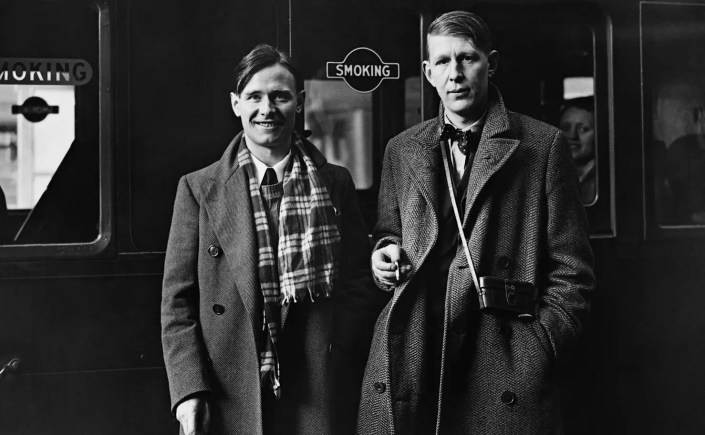
In 1938, English writers WH Auden and  Christopher Isherwood were commissioned by their publishers to write a travel book about the East. Auden was already established as one of Britain’s foremost poets whilst his friend and onetime lover Isherwood was acclaimed as an author and dramatist. His Berlin Stories, two novels set in the last days of the Weimar Republic and today acclaimed as classics of modern fiction; the semi autobiographical Goodbye to Berlin (1939) inspired the remarkable musical Cabaret (1966).

By adventurous choice they went to China for six months, their journey coinciding with Imperial Japan’s brutal invasion. American poet and educator Mildred Boie, reviewing the book for Atlantic in November 1939, takes up the story:  

“With the good fortune of famous and attractive young men they were helped and shown about by everybody from coolies to ambassadors, journalists to generals. They behaved, as they observed and wrote (to judge from the diary), with the engaging frankness and immaturity of English schoolboys, with the ingenious confidence and casual incompleteness of amateurs. But these qualities are inadequate for reporting war, for evaluating life and death in so desperate and disastrously complicated a country as China. The authors were not only amateurs as foreign correspondents, they were also dilettantes: they played at getting to the front, at taking notes on slums, at dashing from formal garden parties to meetings with intellectuals and busy military and diplomatic leaders. They suffered almost as much, certainly as consciously, from blisters, constipation, boredom, sleeplessness, and hangovers as from the shape of poverty, the taste of fear, the sight and smell of death. They were always safe, always outside.” 

Collectively, perhaps, we most resemble a group of characters in one of Jules Verne’s stories about lunatic English explorers. 

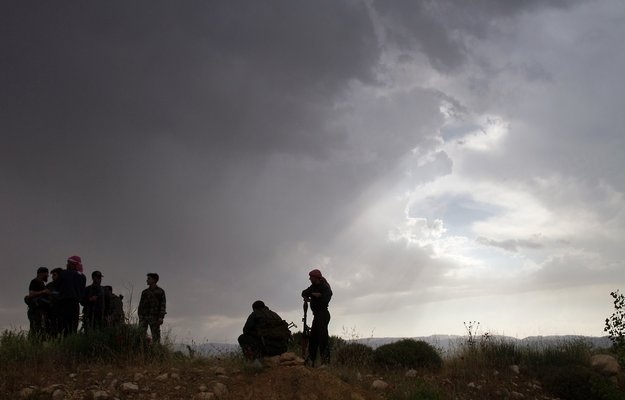
War is bombing an already disused arsenal, missing it and killing a few old women. War is lying in a stable with a gangrenous leg. War is drinking hot water in a barn and worrying about one’s wife. War is a handful of lost and terrified men in the mountains, shooting at something moving in the undergrowth. War is waiting for days with nothing to do; shouting down a dead telephone; going without sleep, or sex, or a wash. War is untidy, inefficient, obscure, and largely a matter of chance. 

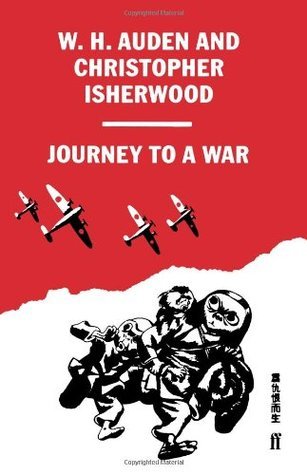
On their safe return, the pair put together Journey to a War, travel book in prose and verse that was published in 1939. The book is in three parts: a series of poems by Auden describing his and Isherwood’s journey to China in 1938; a “Travel-Diary” by Isherwood (including material first drafted by Auden) about their travels in China itself, and their observations of the Sino-Japanese War; and “In Time of War: A Sonnet Sequence with a Verse Commentary” by Auden, with reflections on the contemporary world and their experiences in China. The book also contains a selection of photographs by Auden.

I am never much good at defending the British Empire, even when drunk
Christopher Isherwood

I republish below an excellent article in the blog Books and Boots – Reflections on Books and Art. It provides a more detailed background to the genesis of the book, setting the geopolitical scene, describing  Auden’s  anticlimactic and, it would seem, personally disappointing visit to Spain during its civil war, and the poetry within.

See also in In That Howling Infinite, Better read than dead … books, poetry and reading


WH Auden and Christopher Isherwood

Journey To A War by W.H. Auden and Christopher Isherwood (1939)

When we awoke early next morning the train was crossing a wide valley of paddy fields. The rising sun struck its beams across the surfaces of innumerable miniature lakes; in the middle distance farmhouses seemed actually to be floating on water. Here and there a low mound rose a few feet above the level of the plain, with a weed-grown, ruinous pagoda, standing upon it, visible for miles around. Peasants with water-buffaloes were industriously ploughing their arable liquid into a thick, brown soup.
(Journey To A War, p.191)

Collectively, perhaps, we most resemble a group of characters in one of Jules Verne’s stories about lunatic English explorers. (p.104)

The Sino-Japanese War

In July 1937 – exactly a year after the start of the Spanish Civil War – Japan attacked China. It was hardly a surprise. In 1931 the so-called ‘Mukden Incident’ had helped spark the Japanese invasion of Manchuria (the large area to the north east of China, just above Beijing). The Chinese were defeated and Japan created a new puppet state, Manchukuo (setting up the last Qing emperor as its puppet ruler) through which to rule Manchuria.

Going further back, in 1894–1895 China, then still under the rule of the Qing dynasty, was defeated by Japan in what came to be called the First Sino-Japanese War. China had been forced to cede Taiwan to Japan and to recognise the independence of Korea which had, in classical times, been under Chinese domination.

In other words, for 40 years the rising power of militaristic, modernising Japan had been slowly nibbling away at rotten China, seizing Taiwan, Korea and Manchuria. Now the military junta in Tokyo decided the time was right to take another bite, engineered an ‘incident’ at the Marco Polo bridge on the trade route to Beijing, and used this as a pretext to attack Beijing in the north and Shanghai in the south.

Thus there was quite a lot of military and political history to get to grips with in order to understand the situation in China, but what made it even more confusing was the fact that China itself was a divided nation. First, the nominal government – the Chinese Nationalist Party or Kuomintang under its leader Chiang Kai-shek – had only with difficulty put down or paid off the powerful warlords who for decades had ruled local regions of China after the collapse of the Qing Dynasty in 1911.

But second, Chiang faced stiff competition from the Chinese Communist Party. The two parties had lived in uneasy alliance until Chiang staged a massacre of communists in Shanghai in 1927 which brought the tension between Chinese nationalists and communists into the open.

It was the three-way destabilisation of China during this period – warlords v. Nationalists v. Communists – which had helped Japan invade and take over Manchuria. Prompted by the 1937 Japanese attack the Nationalists and Communists formed an uneasy alliance.

Auden in Spain

Meanwhile, back in Europe, the great political issue of the age was the Spanish Civil War which began when General Franco led a military uprising against the democratically elected government in July 1936. Like many high-minded, middle class liberals, Auden and Isherwood both felt the time had come to put their money where their mouths were. Auden did actually travel to Spain in January 1937 and was there till March, apparently trying to volunteer to drive an ambulance in the medical service. Instead, red tape and the communists who were increasingly running the Republican forces apparently blocked him from getting a useful job. He tried to help out at the radio station but discovered its broadcasts were weak and there were no vacancies.

Frustrated and embarrassed, Auden was back in England by mid-March 1937. The long-term impact of the trip was his own surprise at how much it upset him to see the churches of Barcelona which had all been torched and gutted by a furious radical populace as symbols of oppression. Auden was shocked, and then shocked at his reaction. Wasn’t he meant to be a socialist, a communist even, like lots of other writers of his generation? The Spain trip was the start of the slow process of realisation which was to lead him back to overt Christian faith in the 1940s.

Also Auden saw at first hand the infighting on the Republican side between the communist party slavishly obeying Stalin’s orders, and the more radical Trotskyite and Anarchist parties who, later in 1937, it would crush. Later he paid credit to George Orwell’s book Homage To Catalonia for explaining the complex political manoeuvring far better than he could have. But watching the Republicans fight among themselves made him realise it was far from being a simple case of black and white, of Democracy against Fascism.

So by March 1938 Auden had returned to Britain, where he was uncharacteristically silent about his experiences, and got on with writing, editing new works for publication (not least an edition of his play The Ascent of F6 and Letters From Iceland).

Meanwhile, Christopher Isherwood was living in Paris managing his on-again, off-again relationship with his German boyfriend Heinz. And although he had accommodated Auden on an overnight stop in the French capital and waved him off on the train south to Spain, Isherwood hadn’t lifted a finger for the Great Cause.

Then, in June 1937, Auden’s American publisher, Bennet Cerf of Random House, had suggested that after the reasonable sales of his travel book about Iceland, maybe Auden would be interested in writing another travel book, this time travelling to the East. Isherwood was a good suggestion as collaborator because they had just worked closely on the stage play, The Ascent of F6 and had begun work on a successor, which was to end up becoming the pay On The Frontier. The pair were considering the travel idea when the Japanese attacked China, quickly took Beijing and besieged Shanghai.

At once they seized on this as the subject of the journey and the book. Neither had really engaged with the war in Spain; travelling east would be a way to make amends and to report on what many people considered to be the Eastern Front of what was developing into a worldwide war between Fascism (in this case Japan) and Democracy (in this case the Chinese Nationalists).

China also had the attraction that, unlike Spain, it wouldn’t be stuffed full of eminent literary figures falling over themselves to write poems and plays and novels and speeches. Spain had been a very competitive environment for a writer. Far fewer people knew or cared about China: it would be their own little war.

And so Auden and Isherwood left England in January 1938, boat from Dover then training it across France, then taking a boat from Marseilles to Hong Kong, via Egypt, Colombo and Singapore.

Journey to a War

Journey To A War is not as good as Letter From Iceland, it’s less high spirited and funny. There isn’t a big linking poem like Letter To Lord Byron to pull it together, and there isn’t the variety of all the different prose and verse forms Auden and MacNeice cooked up for the earlier book.

Instead it overwhelmingly consists of Isherwood’s very long prose diary of what happened to them and what they saw in their three months journey around unoccupied China.

The book opens with a series of sonnets and this was the form Auden chose to give the book poetic unity – sonnets, after all, lend themselves to sequences which develop themes and ideas, notably the Sonnets of Shakespeare, or his contemporaries Spencer and Sidney. There’s a collection of half a dozen of them right at the start, which give quick impressions of places they visited en route to China (Macau, Hong Kong). Then, 250 pages of Isherwood prose later, there’s the sonnet sequence titled In Time of War.

But instead of the bright and extrovert tone of Letters From Iceland, Auden’s sonnets are often obscure. They are clearly addressing some kind of important issues but it’s not always clear what. This is because they are very personal and inward-looking. Auden is clearly wrestling with his sense of liberal guilt. The results are rather gloomy. Spain had disillusioned him immensely. He went to Spain thinking the forces of Evil were objective and external. But his first-hand experience of the internecine bickering on the Republican side quickly showed him there is no Good Side, there are no Heroes. History is made by all of us and so – all of us are to blame for what happens. Travel as far as you want, you’re only running away from the truth. If we want to cure the world, it is we ourselves that we need to cure first.

Where does this journey look which the watcher upon the quay,
Standing under his evil star, so bitterly envies,
As the mountains swim away with slow calm strokes
And the gulls abandon their vow? Does it promise a juster life?

Alone with his heart at last, does the fortunate traveler find
In the vague touch of a breeze, the fickle flash of a wave,
Proofs that somewhere exists, really, the Good Place,
Convincing as those that children find in stones and holes?

No, he discovers nothing: he does not want to arrive.
His journey is false, his unreal excitement really an illness
On a false island where the heart cannot act and will not suffer:
He condones his fever; he is weaker than he thought; his weakness is real…

(from The Voyage by W.H. Auden)

‘An illness on a false island’ which is clearly England, a place ‘where the heart cannot act’. The traveller is trying to escape himself but cannot and glumly realises ‘he is weaker than he thought’. Or the thumping final couplet of the sonnet about Hong Kong:

We cannot postulate a General Will;
For what we are, we have ourselves to blame.

Isherwood’s diary

Luckily, the prose sections of the book are written by Isherwood and these are much more fun. He keeps up the giggling schoolboy persona of the novel he’d recently published, Mr Norris Changes Trains (1935), he notes the way the Chinese pronounce their names Au Dung and Y Hsaio Wu, he sounds wide-eyed and optimistic. He hadn’t seen what Auden had seen in Spain, wasn’t struggling with the same doubts.

On February 28 1938 they leave Hong Kong by steamer for Canton and Isherwood finds everyone and everything hilarious. Look a Japanese gunboat! Listen, the sound of bombs falling! He has same facility for the disarmingly blunt image which he deploys in the Berlin stories. The mayor of Canton (Mr Tsang Yan-fu) is always beaming, has a face like a melon with a slice cut out of it. After dinner the Chinese general entertains them by singing Chinese opera, showing how different characters are given different tones and registers (‘the romantic hero emits a sound like a midnight cat’).

He refers to the whole trip as a dream and as a landscape from Alice in Wonderland – they expected Chinese people to behave as in a Gilbert & Sullivan opera and had rehearsed elaborate compliments, and are disarmed when they’re much more down to earth. The train journey on through Hunan province is boring, the tea tastes of fish, they amuse themselves by reading out an Anthony Trollope novel or singing in mock operatic voices.

But this sense of unreality which dogs them is simply because both of them didn’t have a clue what was going on, what was at stake, the military situation,  had never seen fighting or battle and weren’t proper journalists. They were privileged dilettantes, ‘mere trippers’, as Isherwood shamefacedly explains when they meet real war correspondents at a press conference (p.53).

In Hankow the Consul gives them Chiang, a middle-aged man with the manners of a perfect butler to be their guide. They attend the official war briefings alongside American and Australian journalists, they meet Mr Donald, Chiang Kai-shek’s military adviser, the German adviser General von Falkenhausen, Agnes Smedley, Madame Chiang Kai-shek herself, and with delight are reunited with Robert Capa, the soon-to-be legendary American war photographer who’d they’d met on the boat out. They attend traditional Chinese opera, which Isherwood observes with the eye of a professional playwright.

They catch the train to Cheng-chow which has been repeatedly bombed by the Japanese, capably looked after by their ‘boy’, Chiang. They are heading north on the train when they learn that Kwei-teh has fallen, nonetheless they decide to press on to Kai-feng. With them is an exuberant and seasoned American doctor, McClure, who takes them to watch some operations. They walk round the stinking foetid town. They go to the public baths which stink of urine. Then they catch a train to Sü-chow. And then onto Li Kwo Yi where they argue with Chinese commanding officers (General Chang Tschen) to allow them to go right up to the front line, a town divided by the Great Canal.

If you’ve no idea where any of these places are, join the club. I was reading an old edition but, even so, it had no map at all of any part of the journey. Which is ludicrous. The only map anywhere appears to have been on the front cover of the hardback edition, replaced (uselessly) by an anti-war cartoon on the paperback editions, and even this doesn’t show their actual route.

First US edition (publ. Random House)

With no indication where any of these places are, unless you are prepared to read it with an atlas open at your side, Isherwood’s long prose text becomes a stream of clever observations largely divorced from their context. Even an atlas is not that useful given that Isherwood uses the old form of the placenames, all of which, along with most people’s names, have changed. Thus Sian, capital of Shen-si province, is now Xian, capital of Shaanxi Province, Sü-chow is now Suzhou, and so on.

We are intended to enjoy the surreal aspects of travelling in a deeply foreign land – the village restaurant which was papered entirely with pages of American tabloid magazines, and so covered with photos of gangsters and revelations about fashionable divorcees (p.126); or the expensive hotel in Sian whose menu included ‘Hat cake’ and ‘FF potatoes’ (p.141). Beheading is a common punishment because the Chinese believe a body needs to be complete to enter the afterlife. They meet lots of tough and brave American missionaries, mostly from the American south.

Finally, back in Hankow (Hankou) they become part of polite society again, are invited to a party of Chinese intellectuals, a party given by the British admiral and consul, where they meet the legendary travel writer Peter Fleming and his actress wife Celia Johnson, the British ambassador Archibald Kerr, the American communist-supporting journalist, Agnes Smedley (p.156). Fleming pops up a lot later at their hotel in Tunki, and is too suave, handsome and self-assured to possibly be real.

Militarily, Journey To A War confirms the opinions of the modern histories of the war I’ve read, namely that the Nationalist side was hampered by corruption, bad leadership and, above all, lack of arms & ammunition. When they retook cities which had been under communist influence the Chiang’s Nationalists realised they needed some kind of ideology which matched the communists’ emphasis on a pure life and so, in 1934, invented the New Life Movement i.e. stricter morals, which Madame Chiang politely explains.

Isherwood notices the large number of White Russian exiles, often running shops, come down in the world. This reminds me of the Russian nanny J.G. Ballard had during his boyhood in 1930s Shanghai, as described in his autobiography Miracles of Life.

From pages 100 to 150 or so our intrepid duo had hoped to approach the front line in the north and had crept up to it in a few places, but ultimately refused permission to go further, to visit the Eighth Route Army, and so have come by boat back down the Yangtze River to Hankou. Now they plan to travel south-east towards the other main front, where the Japanese have taken Shanghai and Nanjing.

On the Emperor of Japan’s birthday there is a particularly large air-raid on Hankow and they make themselves comfortable on the hotel lawn to watch it. The Arsenal across the river takes a pasting and they go to see the corpses. 500 were killed. Nice Emperor of Japan.

They take a river steamer to Kiukiang and stay at the extraordinary luxury hotel named Journey’s End and run by the wonderfully eccentric Mr Charleton. They catch the train from Kiukiang to Nanchang, stay there a few days, then the train on to Kin-hwa (modern Jinhua). Here they are horrified to discover their arrival has been anticipated and they are treated like minor royalty, including a trip to the best restaurant in town with 12 of the city’s top dignitaries.

Auden and I developed a private game: it was a point of honour to praise most warmly the dishes you liked least. ‘Delicious,’ Auden murmured, as he munched what was, apparently, a small sponge soaked in glue. I replied by devouring, with smiles of exquisite pleasure, an orange which taste of bitter aloes and contained, at its centre, a large weevil. (p.195)

They are taken by car to the town of Tunki. They try to get permission to push on to see the front near the Tai Lake, They have to cope with the officious newspaperman, A.W. Kao. This man gives a brisk confident explanation of what’s happening at the front. Neither Auden nor Isherwood believe it. Isherwood’s explanation describes scenes they’ve seen on their visit, but also hints at what Auden might have seen on his (mysterious) trip to civil war Spain. Auden is given a speech defining the nature of modern war:

War is bombing an already disused arsenal, missing it and killing a few old women. War is lying in a stable with a gangrenous leg. War is drinking hot water in a barn and worrying about one’s wife. War is a handful of lost and terrified men in the mountains, shooting at something moving in the undergrowth. War is waiting for days with nothing to do; shouting down a dead telephone; going without sleep, or sex, or a wash. War is untidy, inefficient, obscure, and largely a matter of chance. (p.202)

Peter Fleming turns up looking gorgeous, professional, highly motivated, speaking good Chinese. He attends briefings, manages the locals with perfect manners. They organise an outing towards the front, with sedan chairs, bearers, two or three local notables (T.Y. Liu, A.W. Kao, Mr Ching, Major Yang, Shien), Fleming is indefatigable. On they plod to Siaofeng, Ti-pu and Meiki. Here the atmosphere is very restless, the miltary authorities are visibly unhappy to see them, half their own Chinese want to get away. The spend a troubled night, with people coming and going at the military headquarters where they’ve bivouaced and, after breakfast, they give in to the Chinese badgering, turn about, and retrace their steps. Twelve hours later the town of Meiki fell to the Japanese. On they plod up a steep hillside, carried by coolies, and down the precipitous other side, down to Tien-mu-shan and then by car to Yu-tsien (p.229).

We stopped to get petrol near a restaurant where they were cooking bamboo in all its forms – including the strips used for making chairs. That, I thought, is so typical of this country. Nothing is specifically either eatable or uneatable. You could being munching a hat, or bite a mouthful out of a wall; equally, you could build a hut with the food provided at lunch. Everything is everything. (p.230)

Isherwood hates Chinese food and, eventually, Auden agrees. At Kin-hwa Fleming leaves them. It’s a shame they’ve ended up getting on famously. It’s interesting that both Auden and Isherwood initially were against him because he went to Eton. The narcissism of minor differences knows no limits.

They say goodbye to all the people they’ve met in Kin-hwa and set off by bus for Wenchow. They take a river steamer from Wenchow to Shanghai.

Arrival in Shanghai on 25 May signals the end of their adventures. They stay in the chaotic, colourful, corrupt city till 12 June. Fascinating to think that over in his house in the International Settlement, young James Graham Ballard was playing with his toy soldiers, dreaming about flying and laying the grounds for one of the most distinctive and bizarre voices in post-war fiction.

And Isherwood confirms the strange, deliriously surreal atmosphere of a Chinese city which had been invaded and conquered by the Japanese, who had destroyed a good deal of the Chinese city but left the International and the French Settlements intact. They attend receptions at the British Embassy, are the guest of a British businessman hosting high-level Japs.

There is no doubt Auden and Isherwood hate the Japanese, can’t see the flag hanging everywhere without thinking about all the times in the past four months when they’ve ducked into cover as Japanese bombers rumbled overhead and fighters swooped to strafe the roads.

This is the only section of this long book with real bite. Isherwood interviews a British factory inspector who describes the appalling conditions Chinese workers endure and notes that they’ll all be made much worse by the Japanese conquerors.

Schoolboys

It’s a truism to point out that the Auden Generation was deeply marked by its experience of English public schools, but it is still striking to see how often the first analogy they reach for is from their jolly public schools, endless comparisons with school speeches and prize days and headmasters.

  • Under the camera’s eye [Chiang kai-shek] stiffened visibly like a schoolboy who is warned to hold himself upright (p.68)
  • Mission-doctors [we were told] were obliged to smoke in secret, like schoolboys (p.88)
  • They scattered over the fields, shouting to each other, laughing, turning somersaults, like schoolboys arriving at the scene of a Sunday school picnic (p.142)
  • The admiral, with his great thrusting naked chin… and the Consul-General, looking like a white-haired schoolboy, receive their guests. (p.156)
  • [Mr A.O. Kao] has a smooth, adolescent face, whose natural charm is spoiled by a perpetual pout and by his fussy school-prefect’s air of authority (p.201)
  • Producing a pencil, postulating our interest as a matter of course, he drew highroads, shaded in towns, arrowed troop movements; lecturing us like the brilliant sixth-form boy who takes the juniors in history while the headmaster is away. (p.200)
  • The cling and huddle in the new disaster
    Like children sent to school (p.278)
  • With those whose brains are empty as a school in August (p.291)

The photos

At the end of the huge slab of 250 pages of solid text, the book then had 31 pages of badly reproduced black and white photos taken by Auden. In fact there are 2 per page, so that’s 62 snaps in all.

I don’t think there’s any getting round the fact that they’re average to poor. Some are portraits of people they met, notably Chiang kai-shek and Madame Chiang, Chou en-lai of the communists, and celebrities such as Peter Fleming the dashing travel writer and Robert Capa the handsome war photographer. A dozen or more named people, Chinese, missionaries and so on. And then lots of anonymous soldiers and scenes, the dead from an air raid, the derailed steam train, coolies in poverty, a Japanese prisoner of war, a Japanese soldier keeping guard in Shanghai, Auden with soldiers in a trench and so on.

Remarkably, few if any of these seem to be online. I can’t imagine they’re particularly valuable and their only purpose would be to publicise the book and promote Auden and Isherwood’s writings generally, so I can’t imagine why the copyright holders have banned them. If I owned them, I’d create a proper annotated online gallery for students and fans to refer to.

In Time of War

The book then contains a sequence of 27 sonnets by Auden titled In Time of War. In later collections he retitled them Sonnets from China. They are, on the whole, tiresomely oracular, allegorical and obscure. The earlier ones seem to be retelling elements of the Bible, Genesis etc as if recapitulating the early history of mankind. These then somehow morph into the ills of modern society with its bombers.

But one of them stands out from the rest because it reports real details and rises to real angry eloquence.

Here war is simple like a monument:
A telephone is speaking to a man;
Flags on a map assert that troops were sent;
A boy brings milk in bowls. There is a plan

For living men in terror of their lives,
Who thirst at nine who were to thirst at noon,
And can be lost and are, and miss their wives,
And, unlike an idea, can die too soon.

But ideas can be true although men die,
And we can watch a thousand faces
Made active by one lie:

And maps can really point to places
Where life is evil now:
Nanking; Dachau.

(Sonnet XVI from In Time of War)

Those last lines have stayed with me all my life. Nanking. Dachau. The darkness at the heart of the twentieth century.

Commentary

The last thing in the book is a long poem in triplets, from pages 289 to 301 and titled simply Commentary.

It’s a sort of rewrite of Spain, again giving a hawk’s eye view of history and society, the world and human evolution. It starts off describing what they’ve seen in Auden’s characteristic sweeping style, leaping from one brightly described detail to another, before wandering off to give snapshots of great thinkers from Plato to Hegel.

But at quite a few points voices emerge to deliver speeches. Then, on the last page, the Commentary becomes extremely didactic, ending with a speech by the Voice of Man, no less, the kind of speech he turned out by the score for his plays and choruses and earlier 1930s poems.

But in this context it seems inadequate to the vast and catastrophic war in China which they have just glimpsed, and which was to last for another seven years (till Japan’s defeat in 1945) and was itself followed by the bitter civil war (1945-48) which was only ended by the triumph of Mao Zedong’s communist party early in 1949.

The Japanese invasion of 1937 turned out to be just the start of a decade of terror and atrocity, and Auden’s response is to have the ‘Voice of Man’ preach:

O teach me to outgrow my madness.

It’s better to be sane than mad, or liked than dreaded;
It’s better to sit down to nice meals than nasty;
It’s better to sleep two than single; it’s better to be happy.

Ruffle the perfect manners of the frozen heart,
And once again compel it to be awkward and alive,
To all it suffered once a silent witness.

Clear from the head the masses of impressive rubble;
Rally the lost and trembling forces of the will,
Gather them up and let them loose upon the earth,

Till they construct at last a human justice,
The contribution of our star, within a shadow
Of which uplifting, loving, and constraining power
All other reasons may rejoice and operate.

It yet another of his prayers, deliberately personal in scale, addressed mostly to chums from public school, fellow poets, friendly dons and reviewers. It is calling on people who are already well-fed, well-educated and mostly decent chaps to be a bit more decent, if that’s alright. But ‘ruffling up your perfect manners’ wasn’t going to stop Franco or the Japs, Hitler or Stalin.

It is ironic of Auden to ask people to remove from their heads ‘impressive rubble’, which I take to mean the luggage of an expensive education in the arts – as that is precisely what he was going to use to make a living out of for the next 35 years and which was to underpin and inform all his later works.

And there are numerous small but characteristic examples of learnèd wit it here, such as when they light a fire which is so smokey that it forces them out of the room and Auden wittily remarks, ‘Better to die like Zola than Captain Scott’ (i.e. of smoke asphyxiation rather than from freezing).

In this respect the Commentary is another grand speech which, like the grand speeches in the plays he’d just written with Isherwood, was, in the end, addressed to himself. Once again, as with Spain, Auden has used a huge historical event to conduct a lengthy self-analysis.

Auden’s contemporary readers were impressed, as ever, by his style and fluency but, as ever, critical of his strange inability to engage with anything outside himself and, specifically, to rise to the occasion of such a massive historical event.

Half way through the text Isherwood tells a story about Auden’s complete conviction that the train they’re on won’t be shot at by the Japanese, whose lines they are going to travel very close to. Sure enough the train emerges on to a stretch of line where it is clearly visible from the forward Japanese lines, which they know to contain heavy artillery, and so they pass a few minutes of terror, petrified that the Japanese might start shelling any second. In the event, there is no shelling, and the train veers away to safety. ‘See. I told you so,’ says Auden, and Isherwood reflects that there’s no arguing with ‘the complacency of a mystic’.

It’s a joke at his old mate’s expense and yet I thought, yes – complacency – in Auden’s case complacency means undeviating confidence in his own mind and art to hold off, inspect and analyse. He creates a rhetoric of concern but it is nothing more than that, a poet’s rhetoric, fine to admire but which changes nothing.

And he knew this, had realised it during the trip to Spain, and had lost heart in the political verse of the 1930s. The pair returned from China via America, where all mod cons were laid on by his American publishers and Auden realised that here was a much bigger, richer, more relaxed, open, friendly and less politically pressurised environment in which to think and write.

He returned to England just long enough to wind up his affairs, pack his bags, then in January 1939 he and Isherwood sailed back to the States which would become his home for the next 30 years, and set about rewriting or suppressing many of his most striking poems from the troubled Thirties, trying to rewrite and then censor what he came to think of as his own dishonesty, pursuing a quest for his own personal version of The Truth.


Related links

1930s reviews

Journey To A War by W.H. Auden and Christopher Isherwood (1939)

Lukannon … Rudyard Kipling’s deep sea song

You’ve got to feel sorry for Rudyard Kipling (1865-1936)

This remarkable poet and storyteller is today rarely read and is often vilified and dismissed as a jingoistic and chauvinistic booster of empire and white civilization. When critics reach for their guns, they “bring out the white man’s burden“and “east and west is west, and ne’er the Twain shall meet”. He is definitely guilty as charged, but he was of his time, and voiced what was then the imperial zeitgeist that enraptured his British constituency. The past, as they say, is another country – they thought much differently then.

But, as those who are familiar with his many poems and stories would attest, the poet was so much more than this.

It was Kipling’s habit to preface and bookend his remarkable if, to contemporary readers, politically incorrect stories with short poems of singular quality.

Lukannon is one of these. The story of The White Seal first appeared in print in the August 1893 issue of the London-based magazine National Review and published again in 1894 as part of the anthology The Jungle Book. Yes, that one. Mowgli, Wolf Cubs, Akela, and all. But, exceptionally for a story in The Jungle Book, none of the action in The White Seal  takes place in India. And, presaging the environmental activism and protests against the controversial seal hunts of the late 20th Century, it is remarkably prescient and pertinent.

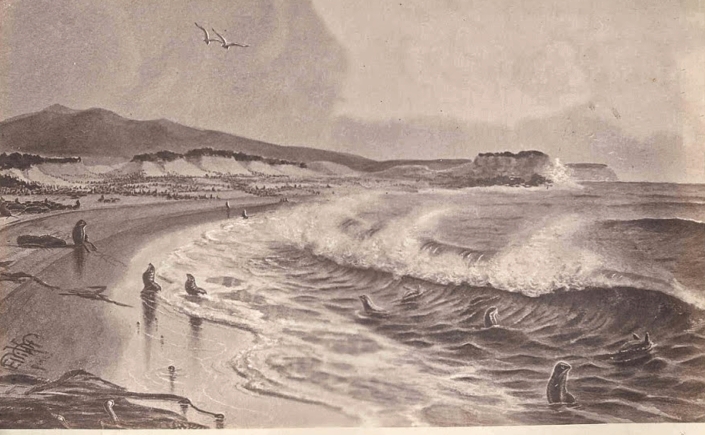
The story is set on an island in the Aleutians in the Bering Sea between Russia and Alaska. It tells of a unique seal who, by leading his fellow seals to a secret hidden beach, saves his kind from the seal hunters. He referred to his poem as “a kind of national anthem for seals”. The title of the poem is the name of a Russian seal-fur trader, Lukanin, who gave his name to these lonely Aleutian beaches in 1788. Kipling wrote: “This is the great deep-sea song that all the St. Paul seals sing when they are heading back to their beaches in the summer. It is a sort of very sad seal National Anthem”.

Back in the day, I set the poem to music. It is featured on the rare recording HuldreFolk Live in London 1988, featuring Paul Hemphill, Victor Mishalow and Adèle Hemphill. During HuldreFolk’s tour of English folk clubs in the northern summer of 1988, it was recorded on a cheap audio cassette by a dinky, clunky old analogue tape recorder – and it shows. But the natural acoustics of the cellar at Bracknell Arts Centre, and the audience’s participation in the choruses made up for a multitude of sins.

© Paul Hemphill 2024. All rights reserved

Lukannon is such a lyrical poem that it lends itself effortlessly to musical settings. Apart from my own, i have discovered three alone, and I am pretty certain that there are many more out there on the world wide web. There is a version by folk duo William Pint and Felicia Dale set to a tune by American musician Bob Zentz from their 1997 album Round the Corner. There is also a contemporary “prog-rock” version by British band Shadows of the Sun.

In 1947, the eccentric Australian expatriate composer Percy Grainger composed a song cycle of The Jungle Book and chose as his centrepiece the story of The White Seal – and particularly, Lukannon “as a protest against civilization.” For more on Grainger’s opus, see below.

Lukannon

I met my mates in the morning (and oh, but I am old!)
Where roaring on the ledges the summer ground-swell rolled;
I heard them lift the chorus that dropped the breakers’ song –
The beaches of Lukannon – two million voices strong!

The song of pleasant stations beside the salt lagoons,
The song of blowing squadrons that shuffled down the dunes,
The song of midnight dances that churned the sea to flame –
The beaches of Lukannon — before the sealers came!

I met my mates in the morning (I’ll never meet them more!);
They came and went in legions that darkened all the shore.
And through the foam-flecked offing as far as voice could reach
We hailed the landing-parties and we sang them up the beach.

The beaches of Lukannon – the winter-wheat so tall –
The dripping, crinkled lichens, and the sea-fog drenching all!
The platforms of our playground, all shining smooth and worn!
The beaches of Lukannon — the home where we were born!

I meet my mates in the morning, a broken, scattered band.
Men shoot us in the water and club us on the land;
Men drive us to the Salt House like silly sheep and tame,
And still we sing Lukannon – before the sealers came.

Wheel down, wheel down to southward; oh, Gooverooska go!
And tell the Deep-Sea Viceroys! the story of our woe;
Ere, empty as the shark’s egg the tempest flings ashore,
The beaches of Lukannon shall know their sons no more!

Percy Grainger’s Jungle Book Cycle

In 1947, the eccentric Australian expatriate composer dedicated a song cycle of The Jungle Book and chose as his centrepiece the story of The White Seal – and particularly, Lukannon. My Kipling ‘Jungle Book’ Cycle, begun in 1898 and finished in 1947, was composed as a protest against civilization.” (Grainger’s programme note, 1947)

Grainger (1882-1961) studied at the Hoch Conservatory in Frankfurt, Germany from 1895-1901 (aged 13-19). Grainger’s mother Rose wrote to her husband John of her fears that young Percy was becoming “more Germanized every day.” In response to Rose’s concern, and to “tickle up the British Lion in him,” John (who was estranged from Rose) sent Percy, among other things, several books by Rudyard Kipling . Kipling’s writings captivated Percy immediately, and he soon started writing choral settings of the poetry, especially those of Kipling’s Jungle Books.

Grainger’s settings of the poetry of Kipling are as extensive as his settings of British folk music; Kay Freyfus’s catalog of Grainger’s manuscript scores lists 36 settings, though Grainger in a 1926 letter to Kipling mentions “some 40 or 50” settings. Grainger felt a strong kinship for Kipling’s writing, and Kipling appreciated and approved of Grainger’s work at setting his poetry. Grainger played several of his choral settings for Kipling during a meeting at Kipling’s home in 1905. Of Grainger’s settings of his poetry, Kipling said, “Till now I’ve had to reply on black and white, but you do the thing for me in colour.”

The Beaches of Lukannon is the centerpiece of the cycle, and arguably the strongest piece musically and emotionally. It tells us the tale of the tragic slaughter of seals by wicked sealers from the seals’ perspective. The opening section, told from the point of view of a seal elder, recounts what the beaches of the Bering Sea Island of Lukannon originally were for the seals – their annual meeting (and mating) opportunity. The central section, reminiscent of the music of Charles Ives in its shifting chromatics, conveys the beauty of the surroundings “before the sealers came.” The final section musically revisits the opening material, but in a smore somber mode.

For more on Rudyard Kipling in In That Howling Infinite, see A Son Goes To War – the grief of Rudyard Kipling 

The Forest Wars – myths, spin and bare-faced lies

What are the roots that clutch, what branches grow
Out of this stony rubbish? Son of man,
You cannot say, or guess, for you know only
A heap of broken images, where the sun beats,
And the dead tree gives no shelter, the cricket no relief,
And the dry stone no sound of water.
TS Elliot, The Wasteland

This murky world of (the state-owned forestry industries) is at best ignorant and self-interested and at worst sinister and corrupt. Its most cynical manoeuvres involve aggressively logging forest as soon as there is a movement for its protection. Another is co-opting First Nations groups under the guise of “forestry gardening” or “cultural thinning”. Here, business-as-usual logging becomes “healing Country”, an attempt to “blackwash” a calamitous PR image … Attempts to regulate have been underfunded and politically compromised … ‘if everyone is losing, why does it continue? When the answer arrives, it is depressingly banal: government capture by vested interests.
Professor David Lindenmayer

There is little that surprises in the following review of Forest Wars by environmental scientist David Lindenmayer.

Eight years ago, In That Howling Infinite published If You Go Down to the Woods Today describing what was then happening to the forest in which we live. As logging has intensified throughout the mid-north coast over the last year, things have not changed, but rather, have gotten much, much worse. 

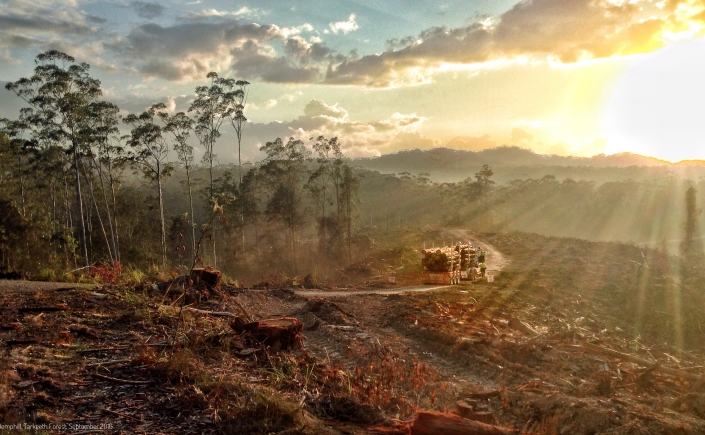
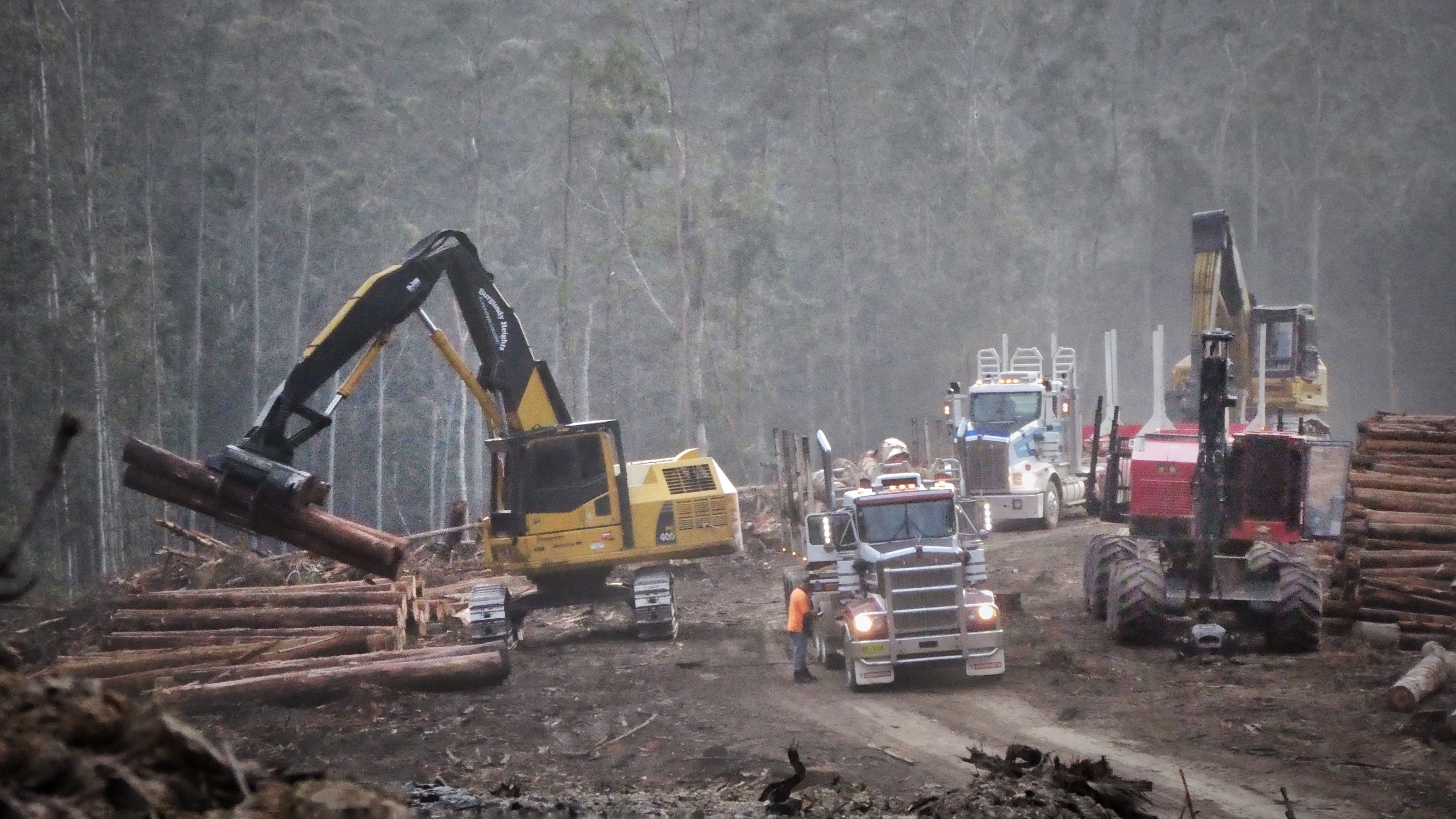
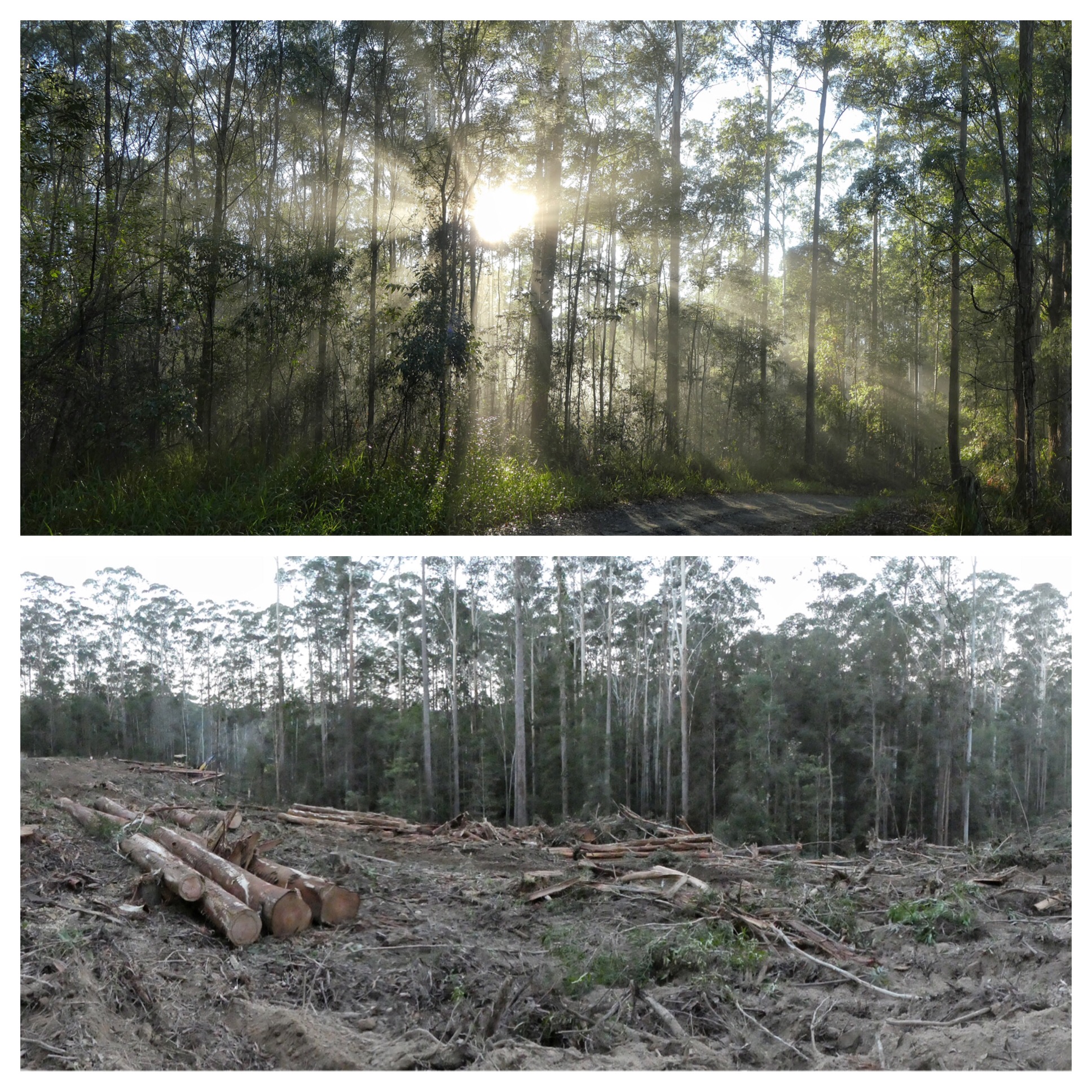
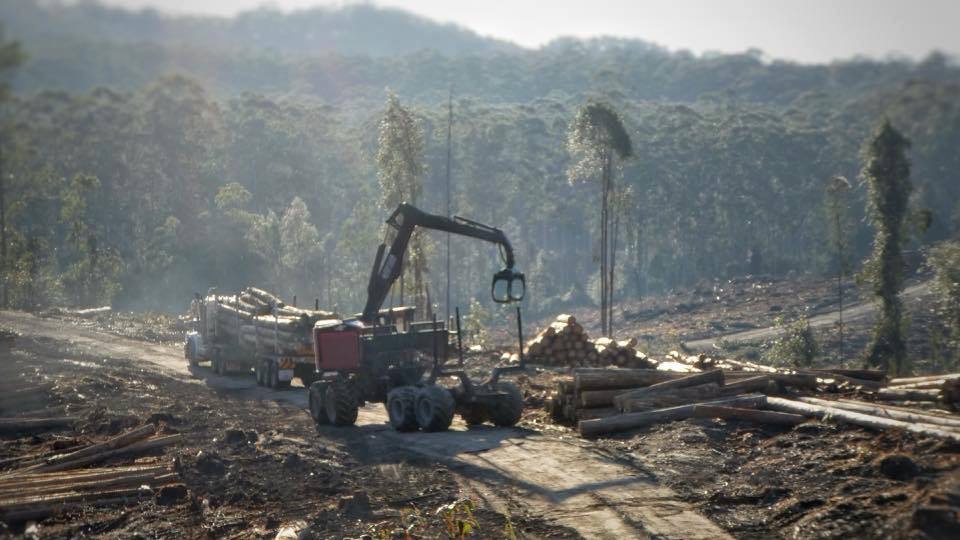
As we survey the desolation and devastation of state forests on the mid-north coast of New South Wales, we bear witness to his words at first hand. For years now we have witnessed the destruction of our ecosystems and critical wildlife habitat by large scale, broad acre industrial logging as harvesters as large as battle tanks camp upon the land like an occupying army. Forestry Corporation NSW’s operations on the Coffs Coast and its hinterland has left us and our precious ecosystem at the mercy of what is by any account a destructive and seemingly unaccountable extractive industry.

See also in In That Howling Infinite’s  Losing Earth series:

“Like an occupying army”


Tarkeeth morning, And Tarkeeth evening.
What a difference a day makes

Myths, spin and outright lies: the truth behind the logging industry

Kurt Johnson, Sydney Morning Herald 7th June 2024

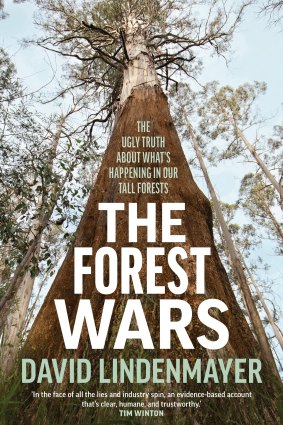
The Forest Wars, by David Lindenmayer (Allen & Unwin 2024)

It was once possible to walk the 1500 kilometres from Melbourne to Brisbane enclosed in native forest. Today Australian forests have been pushed to the margins, surviving as scattered islands, logged around and through. In most states this continues, enabled by expedient myths about forest’s resilience and replaceability that have become entrenched in popular wisdom. These range from “logging is good for fire safety” to “wildlife can simply scuttle away to another tree as soon as one is felled”.

Renowned scientist David Lindenmayer confronts these fables that he was educated on as a young student in his latest offering, The Forest Wars. He is concerned with native forest, which provides a range of benefits beyond forest plantations. Tall, wet eucalypts in particular are not only habitats for native wildlife but are more resistant to fire, better sinks for carbon and can conserve clean water for cities.

Many myths rely on a neoliberal lexicon where native forests are “resources”, or “green capital” and logging can be “sustainable”. It assumes the fungibility of nature, as if one tree were as good as another. The author explains that native forests are complex ecosystems that have developed sometimes for hundreds of years, with ancients that cannot simply be bulldozed and replanted by saplings in another cycle.

Forest Wars begins with its author tracking wildlife, trudging around wet eucalypts and through mossy gullies, but soon evolves into a sustained and righteous tract as we follow him up the production line to the sheer waste at the heart of the enterprise. Another myth: old-growth forest will end as fine furniture. In fact, only four per cent becomes sawn lumber and half of that is used for beer pallets. A whopping 60 per cent is lost as waste, with most wood taken from the forest simply pulped for paper and packaging.

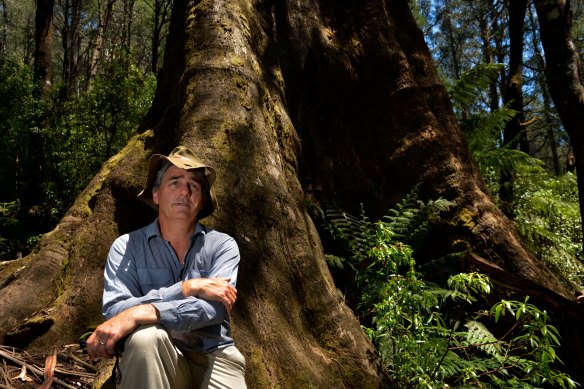
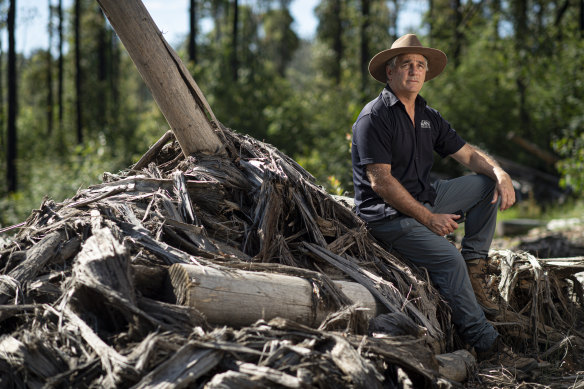
Scientist David Lindenmayer in Healesville.
David Lindenmayer in Healesville. Michael Clayton-Jones

The economics surrounding the destruction of native forests are obscene. State-run enterprises are loss-running, essentially charging taxpayers to destroy their own native forests. VicForests, for instance, has only once reported a profit, while Forestry Tasmania lost an eye-watering $1.3 billion in the decade from 1998. Over the years they have survived on generous loans from state treasuries that will never be repaid, with expenses that include settling lost court cases, and, in the case of VicForests, hiring a private investigator to spy on the author. “Melbourne is not Moscow,” Lindenmayer states.

This murky world is at best ignorant and self-interested and at worst sinister and corrupt. Its most cynical manoeuvres involve aggressively logging forest as soon as there is a movement for its protection. Another is co-opting First Nations groups under the guise of “forestry gardening” or “cultural thinning”. Here, business-as-usual logging becomes “healing Country”, an attempt to “blackwash” a calamitous PR image.

Attempts to regulate have been underfunded and politically compromised. In one instance the author meticulously investigates violations of logging boundaries and gradient guidelines, then submits the analysis to regulators, only to have his findings contradicted. Through an FOI request he discovers their results are nearly identical to his, entering a Kafkaesque netherworld.

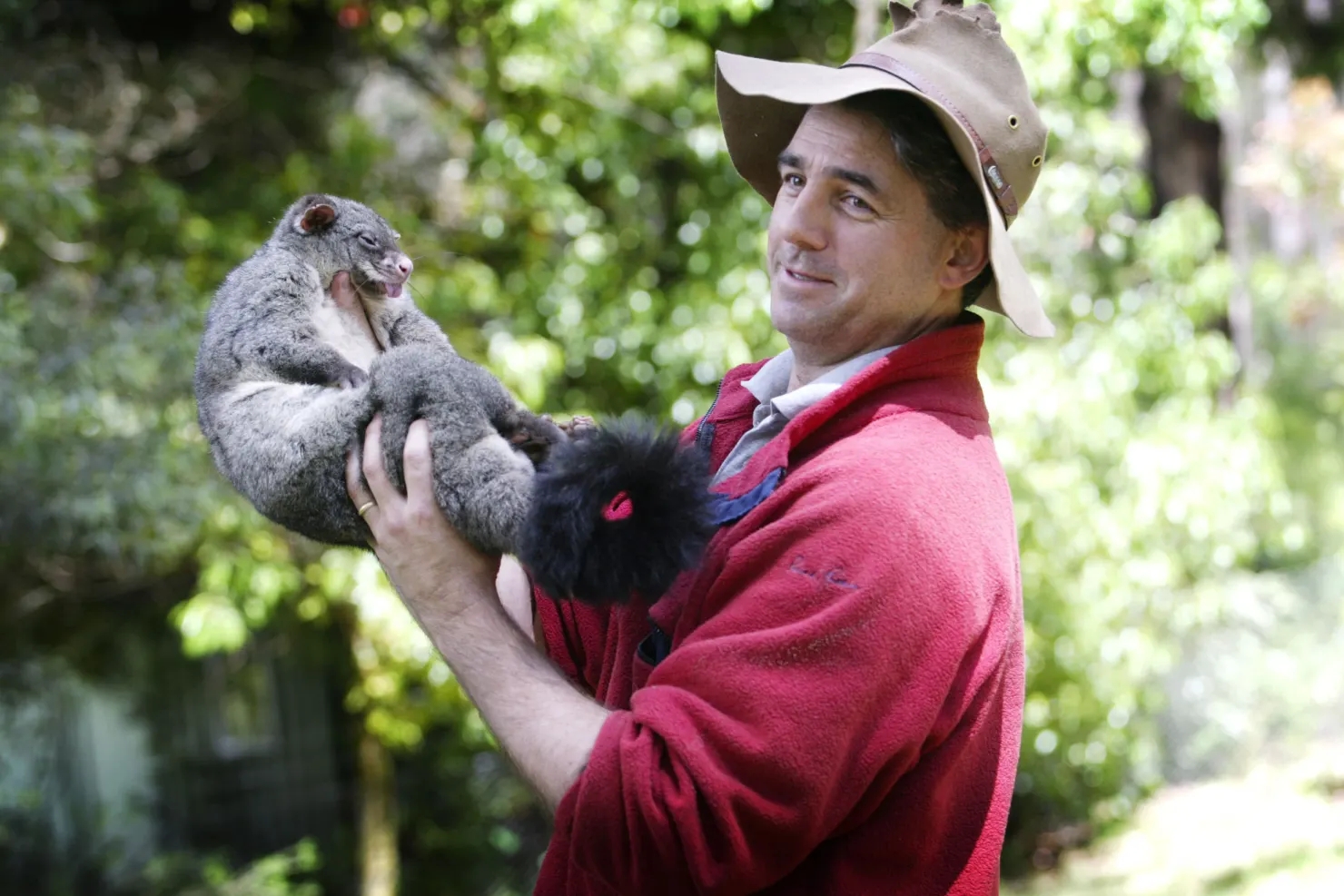
Lindenmayer with a mountain brushtail possum, 2004. Rebecca Halas

The most pressing question is left to the final chapter: if everyone is losing, why does it continue? When the answer arrives, it is depressingly banal: government capture by vested interests.

To lift us from our funk, Lindenmayer offers an invigorating alternate universe. Here forests are protected and valued. They provide habitat for endangered native species, income through carbon sequestering and tourism as well as jobs in management and conservation – far more than heavily mechanised logging provides at present.

As one of the most referenced researchers, Lindenmayer is a world-renowned scientist. Yet again he demonstrates that he is also an excellent science communicator. The book’s 37 myths are mostly treated soberly and, with the aid of diagrams, dispel many popular misconceptions without a hint of condescension. The reader will permit the author wandering from hard science to rhetoric to sum up in the final myths.

I found I was more comfortable in the forest’: The scientist who took on the logging industry

To be honest, the conversation did not begin promisingly.

Everything else was going well. I managed to get there on time and Professor David Lindenmayer was waiting out the front with a cheery grin. He had suggested we go for fish, but not too fancy. I had proposed Fich, which I’d heard was good – a takeaway joint adjoining a smart seafood restaurant in Sydney’s inner west.

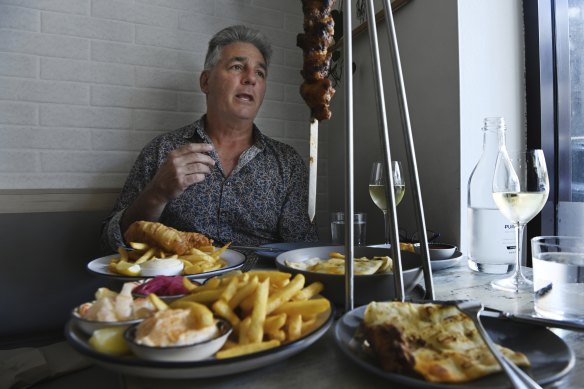
David Lindenmayer at lunch at Fich.

David Lindenmayer at lunch at Fich.Kate Gerachty

He looked neater than you’d expect from a bloke famous for the years he has spent deep in Australia’s oldest and wettest forests and for finding his way into the political heart of the sprawling battles fought over the industries that depend on cutting them down.

Tasmanian salmon is admired by conservationists about as much wood chipping is. The problem is, Lindenmayer explains with the sort of detail you’d expect from a scientist that the salmon are raised in great big floating pens in places like Macquarie Harbour.

There, he says, great clouds of fish poo sinks, sucking the oxygen and life out of the surrounds. Native species like the Maugon Skate, already threatened, are pushed towards extinction.

He explains that these salmon-farming fish-poo death clouds can also contain tiny parasitic worms called nematodes. A quick Wiki session later in the afternoon informs me that nematodes can be found in half the world’s population and that having travelled into space in the payload of the space shuttle Columbia, they are the first known life form to survive a virtually unprotected atmospheric descent to Earth’s surface.

Lindenmayer might be famous as (for a time) the nation’s single most-cited scientist (93,500) for his work on forests and regenerative farming, but he began his career in the water, and before that, he began to explore the natural world with his father, Bruce.

“He was a very, very difficult man to talk to,” recalls Lindenmayer when we get to the scallops.

The old man worked as a rocket scientist at the Woomera missile range and in Melbourne, helping to develop rockets and the propellant that would drive missiles into space or between continents. Eventually, disturbed by the machines’ violent potential, Bruce gave up the work and retrained as an economist.

Around this time, father and son began spending more time together, birdwatching in the bush. Men, says Lindenmayer, communicate better side-by-side, looking out at something rather than towards one another. “No bloke says, ’Let’s go and look at the sunset; they say, ‘let’s go fishing’.”

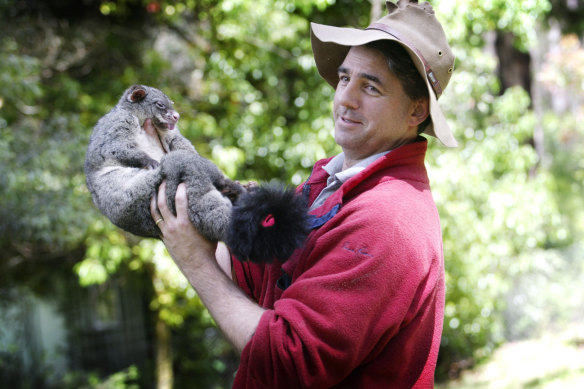
David Lindenmayer with a mountain brushtail possum in 2004.

Lindenmayer with a mountain brushtail possum in 2004. Rebecca Hallas

And so another world began to open somewhere between them. It was not just about what they saw but what they heard. Beside his father, Lindenmayer learned that the sounds birds made could reveal not just what species they were but what sex they were, what they were doing, and what was bothering them.

Those quiet moments resonated.

In the late 1970s, at school in Melbourne and then Canberra, Lindenmayer became a useful athlete, even playing for a graded football team in the Netherlands. Within a year, he realised he was not going to make it.

“I was a goalie. Everyone in the Netherlands has the perfect physique for a goalkeeper. I didn’t. I realised my hands are smaller than Donald Trump’s.” (First noted in the wild by Vanity Fair editor Grayden Carter, Trump’s small hands became a thing during the 2016 election.)

On his return to Australia, Lindenmayer dived into ecology, studying marine biology in Townsville and apprenticing himself to the famous reef ecologist Dr John “Charlie” Veron, the man who would become known as the “godfather to the corals” for his work in building the first expansive and accurate taxonomy of the Great Barrier Reef.

Lindenmayer volunteered on some of that world-leading work, trailing behind Veron underwater in Scuba gear, helping to gather and carry Veron’s coral samples. “He must have spent 10,000 hours underwater,” says Lindenmayer, who spent hundreds of hours in the sea with his mentor. He was calm, and he used less air than anyone. He must have had a set of gills or something. His breathing was incredible.”

Lindenmayer’s was not. “I found that I was more comfortable in the forest rather than in the water. I learnt I could see more in the forest than I could underwater,” he explains. “I didn’t have to concentrate on breathing.”

Our mains have arrived. Lindenmayer has ordered fish and chips and I have opted for a fish skewer. His plate lands like proper fish and chips should. The batter has erupted volcanically around the flesh, and the chips are holding up in the heat. My fish comes in spiced cubes impaled on a fat metal skewer hanging on its own scaffolding over a warm bed of flatbread, attended bowls of pickles and sauces.

It looks much like the famous beef and pork you get at Silvas, the famous old Portuguese joint a block up the road.

Reading Lindenmayer latest book (his 49th), The Forest Wars, you don’t get any sense of comfort. Lindenmayer’s description of his early work in the 1980s building a scientific baseline of how species like the Leadbeater possum, “the sweet-faced faunal emblem of Victoria”, use their habitat trees reads as deeply unpleasant.

The young scientist hauled bundles of traps and equipment, a tall ladder over one shoulder, deep into the dense understory of wattles and ferns, fallen logs and moss of Victoria’s central highlands to set traps, one for every 50 metres of forest. He soon discovered that the possums were “feisty and lighting fast” with a bite. By day’s end, his neck was garlanded with leeches, and in the shower, the water ran red “like a horror movie”.

He immediately fell in love with the work.

Lindenmayer’s work in those forests overturned how modern Australia understands them. When he began in the field, he believed, like everybody else, that trees would rejuvenate endlessly after their logging. His research shows the ecosystems they support are simply lost when they are felled.

His work reveals that rather than protecting us from fire, selective logging removes trees, drying forests out and creating highways for the infernos of the modern era. It has also shown that the animals that live in towering old trees do not move on from logged areas to reestablish themselves elsewhere but die in them when they are cut down.

Professor David Lindenmayer in a native forest near Currawon.

David Lindenmayer in a native forest near Currawon. Wolter Peeters

To establish this, Lindenmayer and the teams he has worked with over 40-odd years spent thousands of hours in the forests.

They sat in silence, watching the animals they had carefully caught, radio-tagged and released – birds, gliders and possums – return time and again to the same hollows high in the bows of the old mountain trees.


Blue remembered hills … memories of an old pal

That is the land of lost content,
I see it shining plain,
The happy highways where I went
And cannot come again
From The Shropshire Lad. AE Houseman

A few days ago, a Facebook message popped up out of the blue from England. It was from the niece of a friend – the daughter of his sister Jean. Heather wrote that they’d like to hear some stories of our time together. Predictably, as it so often is in these declining years, memories came flooding back.

Dave Shaw died suddenly of a brain hemorrhage in in the town of Pershore, Worcestershire, on Saturday 5th January 2013 at the age of 64. He was farewelled at his beloved Pershore Abbey, an historic church I knew well from many visits to his home, on Wednesday 23rd January. I hadn’t seen him since my visit to England in the summer of 2005, and I learnt of his passing by accident. My mother passed away in Nottingham at the end of January, and as Dave would often drop in and visit her when he passed through Birmingham, I rang him up to tell him of her death. I tried his home many times without answer, so I reckoned I’d contact Pershore Council to get in touch with him. My google inquiries ended up at The Evesham Journal, a local Worcestershire newspaper. And that’s when I learned that he had gone.

The following is an expanded version of a piece published in the Evesham Journal on1st February 2013

Our back pages

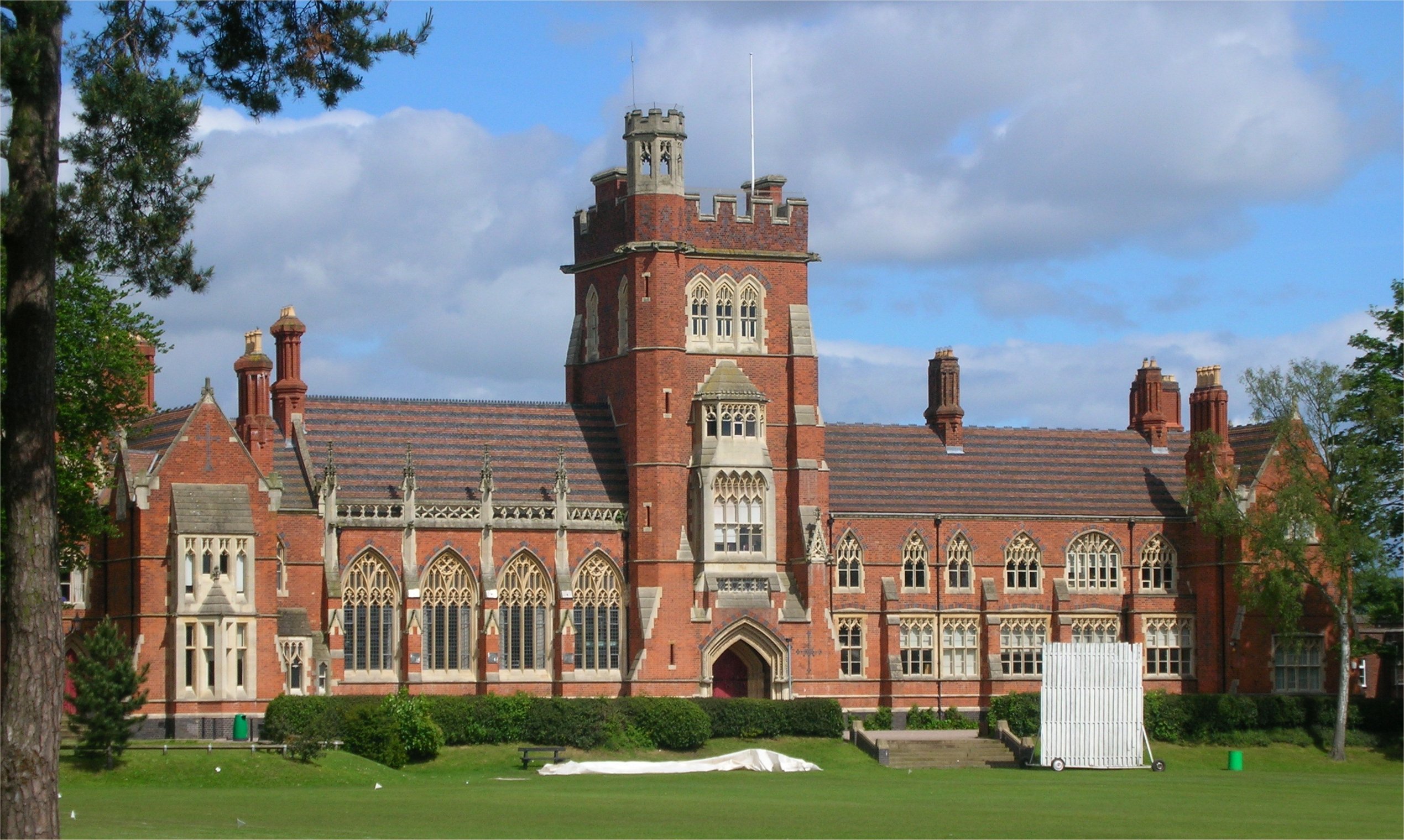
Dave was my oldest friend –  from when we entered Moseley Grammar School in Birmingham in September 1960.

Moseley Grammar School, Birmingham

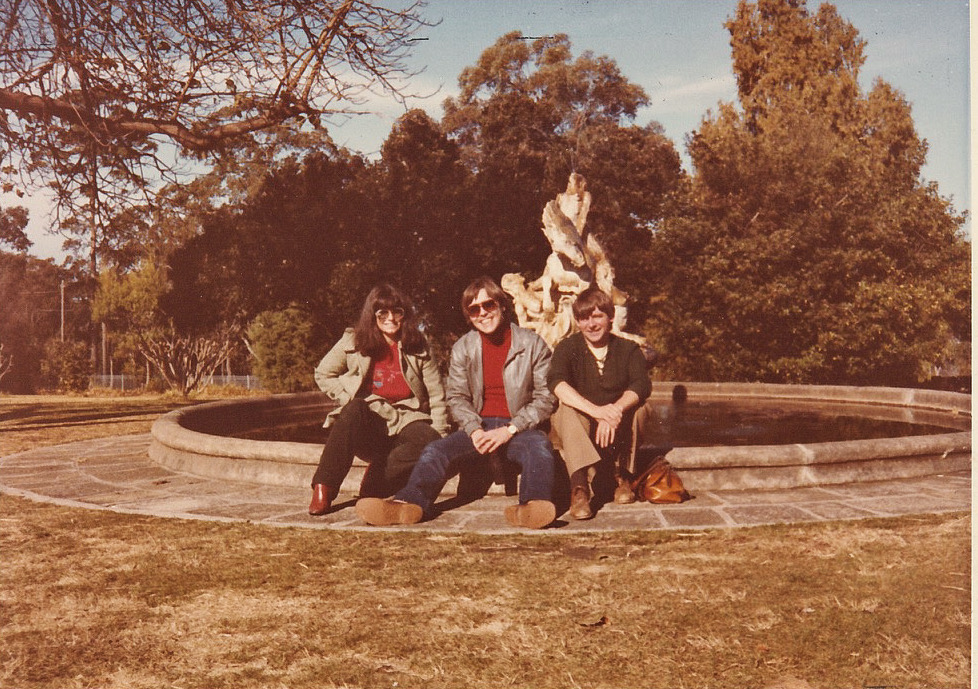
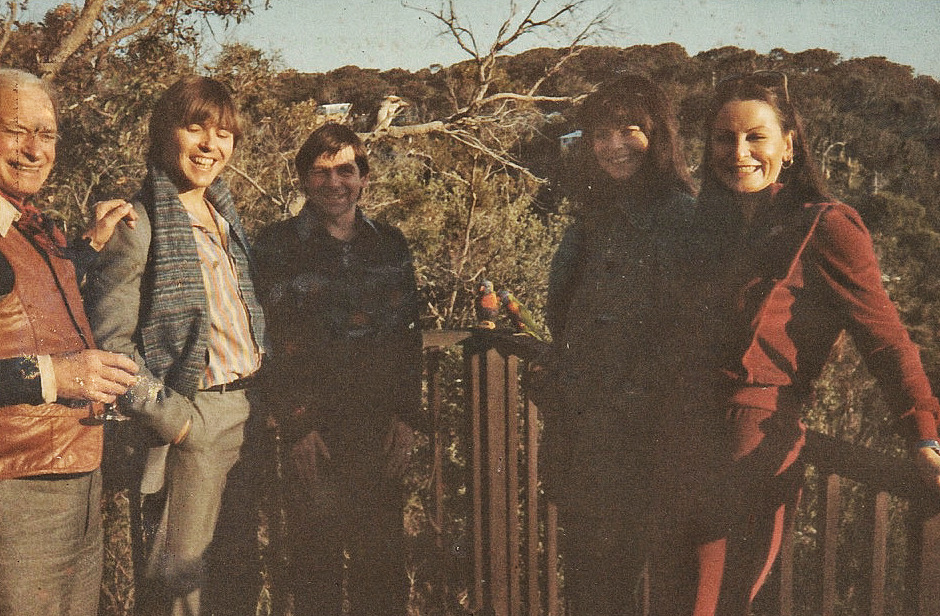
Through the Sixties, we came of age together, shared music, frequented folk clubs, did pub crawls through Birmingham, went to Birmingham City football matches (we were Blues fans and not supporters of Aston Villa, the other Brummie team) and hitchhiked to CND rallies and folk festivals. When we left Brum in 1967 and lived in other cities, we visited each other often and always remained in touch. Although I moved to Australia in 1978, I travelled to Pershore every time I returned to England and caught up with him and his family. One time, Dave came out to Australia. There’s a couple  of pictures here of that trip, featuring Dave, myself, my ex, Libby, and her sister Mary Jane, who was once a famous singer here in Australia but, sadly, took her own life in 1990. It must’ve been about 1982 as Libby and I separated the following year.

But let’s go back to the days when school chums became friends, the time when you began to address your mates by their christian names and not by surname, as was customary in grammar schools back then. Back to the Sixth Form when we began to “put off childish things” and as much as we could in our provincial and underage circumstances, “got with” the sixties zeitgeist and engaged with the wider world. We read the poetry of the American Beat Poets, our own Mersey Poets and John Lennon. We listened to the music, and particularly Bob Dylan. During school holidays, four of us, Dave, Peter Bussey, Malcom Easthope and myself, would go to the Jug o’ Punch in Digbeth run by the celebrated Ian Campbell Folk Group, to drink bitter, sing along to folk songs and listen to the likes of The Dubliners, Al Steward and Roy Harper, and, sigh, a young, gorgeous and melodious Joni Mitchell. We’d meet once a week at the Golden Eagle in Hill Street to talk politics and poetry, and read our own juvenile verse, before heading off to other pubs in the Birmingham CBD.

In those days, it was cool for teenagers to ride motor scooters – if they could get their parents permission. Several of my pals owned one, including Dave who’d bought a second hand lambretta. I recall this today because it reminded me of one of our better-heeled chums who had a brand new model. His dad was a publican, and one time, he threw a party at his father’s pub in Coventry and a mob of us got a lift there from another student who’d actually owned a car – a rare thing in those days. It came back to me today how that party ended for me and Dave. We both got very drunk, I tripped and sprained my ankle, and as we were driven back to Brum, I was sprawled in the back seat, and Dave, sitting beside me, chucked up. That wasn’t the last time I injured myself whilst inebriated. I can’t recall Dave getting as rat-arsed again. 

Later, we graduated to cannabis, and would toke at each other’s homes on weekends – one time, we hired a rowboat in Stratford on Avon and spent a stoned afternoon on the river. So Wind in the Willows. One lovely early summer’s day in 1969 when “we happy few, we band of brothers” camped out in my room at Reading uni, and dropped acid by the lake in nearby Whiteknights Park. It was a strange, trippy day, during which there was a police bust on my hall of residence, and we watched in amaze as people rushed down to the lake and threw many unidentified objects therein.

Fast forward to the eighties …

Though settled in Australia, I visited England often, and always took time out to catch up with Dave in either Birmingham or Pershore. When I was performing at folk clubs in 1987 and 1988, he acted as my local contact person. He also introduced me to his old friend Stan Banks, who’d served in World War II a bomb aimer and photographer on the night raids over Germany. On retirement from school teaching, Stan dedicated himself to the peace movement – which was how Dave came to meet him. Stan shared with us many enthralling and harrowing tales of his flying days.

Dave and I shared a common interest in the environment, cultural heritage and wildlife and we would exchange news on our endeavours. When we’d visit Pershore, he’d always take us out on a ramble or a drive to some out of the way place with an archaic name and take in a few nice country pubs on the way. On one visit, he gave me an instruction sheet for building boxes to shelter micro-bats. We have five of them around our home in northern New South Wales, and several of them are occupied all year around.

Green and progressive in word and deed, and dedicated to Pershore, Dave served as a Town Councillor for twenty-two years. Whenever we’d walk around town together or enter shops and pubs, folk would be always coming up to talk to him. At his funeral, the flag atop the abbey was flown at half-mast for the first time ever whilst fellow councillor Chris Parson praised him as “a giant of a man” – which I found apt but amusing considering Dave was short and slight of stature.

The feature photograph of him with his binoculars and bird book outside the glorious Pershore Abbey is a beautiful way to remember him.

Norman Linsday Gallery and Museum, Faulconbridge, NSW

Dave meets the Boyd Family, Palm Beach, NSW

When Heather read this story, she wrote:

“That is absolutely beautiful! Thank you so much, I hope you had as much pleasure from writing that as I did reading it. I laughed out loud and cried. Lovely. My mum will love this. ❤️ p.s I knew all along he was a stoner!! And with that asthma too? What was he like? I miss him a lot. X”

I replied:

“A lovely bloke. A gentle, laid back soul who was always in a calm, good mood. I recall a time when he visited me in London just as I was about to head off to the Middle East. I’d just had a typhoid shot and  was as sick as a dog – and he’d come all this way to see me off. He was so cool about it. What will be will be. Que sera sera! Did you know he was fluent in Spanish. It was one of his passions. He had Portuguese too, and I believe some Russian. I went through a “Russian phase” too in the early seventies, but ended up in the Middle East instead, by accident, and learned Arabic. Still learning. It’s effing difficult if you don’t have a gift for languages, but it keeps the old brain active.

Heather:

Sounds just like the Dave I knew. I am glad I found one person who he went to the Blues with him as I always wondered. Did you know we put some of his ashes at St. Andrews? Yes he was a language genius wasn’t he? Yes he was a language genius I think. Apparently he could get by in about 9 languages but he was very humble about it.

The ‘sixties … memories of London and Ireland

Dave is referenced many times in In That Howling Infinite, though, for privacy reasons, not by name. I also dedicated one of my poetry books to him: Tabula Rasa – Early Days. Below are a couple of extracts that are specifically talking about Dave.

“As I wrote in a recent trawl through my back pages, Song of the Road – my hitchhiking days: “… that motorway from Brum to London was a road well-traveled. In my final year at Moseley Grammar, I’d often hitch down to London for a weekend with pals who’d gone there before. We’d hang out at cheap and cheerful Pollo’s Italian restaurant in Old Compton Street in Soho and the Coach and Horses across the road and go to Cousin’s folk and blues joint in a cellar in nearby Greek Street, and the 101 Jazz Club off Oxford Street. Bunjies folk café and Ronnie Scott’s jazz club were just around the corner. After a meal or a pint, I’d often catch the last tube to the end of the line closest to the M1. I can’t recall how many times I headed off into the night; and there were always drivers on the road at the witching hour. I guess many folks “get the urge for going”, as Joni sang back then, “and they had to go …” And in those generous times, people were happy to offer a lift to a wayfaring stranger – gentle souls who would not leave strays stranded by the dark wayside; lonesome folks seeking company and conversation in the dark night of the soul; curious people wondering why a young man would hitch the highways in the middle of the English night. Yes, Café Pollo was indeed a significant landmark of my London days:. From Ciao Pollo di Soho – the cafe at the end of the M1

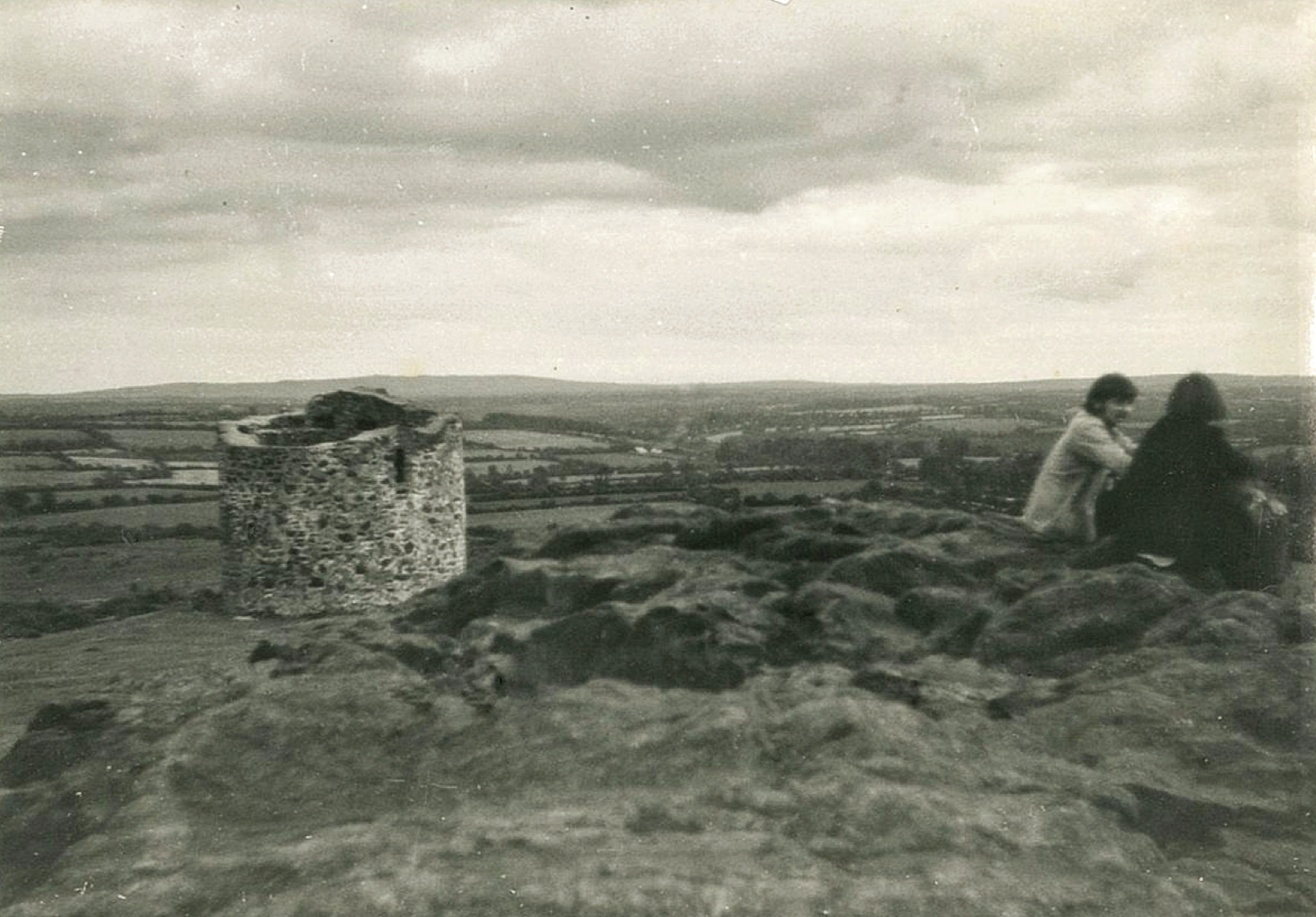
“In the summer of 1969, my brother and I and an old chum spent several weeks in an Enniscorthy that looked and felt like it had not changed since Aunty Mary’s day – so well portrayed in the academy award nominated film Brooklyn. Dressed as we were in hippie garb and sporting long locks, we cut incongruous figures in the pubs and at the local hop, and were so unsuccessful hitchhiking around the county that we walked many a long Irish mile. We hiked to Killane, Sean Kelly’s country, and inspired by the song, climbed upwards though heath and hedge to the top of Mount Leinster. We stayed at 13 Patrick Street and spent a lot of time sitting up on Vinegar Hill, beneath its round tower, looking down on the River Slaney and the town beyond. My brother was a keen photographer, and he took the following picture”. Thats Dave on the left, and me on the right. From The Boys of Wexford – memory and memoir 

“On Vinegar Hill o’er the pleasant Slaney”

And a final vignette, also featured in Song of the Road,from 1970, I think: 

One glorious English summer I arranged to meet up with my late pal Dave Shaw in Cambridge, where he was attending a summer school at the University, and go to the celebrated Cambridge Folk Festival. I clocked off from my work on the motorway, got home, just ten minutes away – I said we were close! – showered and packed, and headed to the Clock Garage roundabout and put out my thumb. I took the M1 to London’s North Circular, and cut across to the A10 (there was no M11 in those days) and, And, my stars were alignment on this night ride, arrived at Dave’s digs in time for breakfast.I don’t remember much of the festival bill, but American folk diva Odetta was singing, and also, our idol, Roy Harper, England’s high priest of angst.

I had to leave Cambridge around Sunday lunchtime, after Roy’s last set, to return to Brum for work on Monday. Rather than head back down to London, to save time – a quixotic idea when you are hitching – I decided to cut cross-country to connect with the M1 at Newport Pagnell – in those days before GPS and route planners, a cheap, creased road map from WH Smith was the best we had, plus a good sense of direction, fair weather and loads of luck. And such are the movements of the cosmos, that my one and only only ride took me to, yes, what was then the bucolic village of Newport Pagnell. It was one of those summer evenings in England, when the days are long, the air warm and languorous, and the light, luminous. Birds were singing and church bells were ringing for evensong, and in my mind’s ear, I’d like to imagine that cows were lowing and sheep were bleating. One could almost feel an ode coming on. So there I was, once more, at the services on-ramp, hitching a ride to Birmingham , and hopping aboard an old Land Rover for what was the slowest and noisiest ride ever – which took me almost to my door”.

Ciao Pollo di Soho – the café at the end of the M1

The Boys of Wexford – memory and memoir

Song of the Road (1) – my hitchhiking days

“When we were younger, time appeared to move more slowly than in our later years. It is in our nature to imagine and indeed, re-imagine our salad days as the best of times and the worst of times. But looking back through our back pages, these years was perhaps no better or worse, no more significant or seminal than any era fore or aft. Like objects seen through the rear-view mirror, memories always seem a lot closer and bigger. When I’ve revisited roads and streets where I grew up, playing or sauntering or rolling home with a skinful in the pale moonlight, they are no way as wide, long or spacious as they are to the mind’s eye. Vivid memories can distort time, making you feel that that weren’t that long ago”. From Blue remembered hills – a land of lost contentment 

Blue remembered hills – a land of lost contentment

We did not weep when we were leaving – the poet of Nazareth

Thursday July 15, 1948, began as another ordinary day for the Ali family in the Palestinian village of Saffuriyya in the Lower Galilee. It was during Ramadan and Umm Taha was busy preparing mulukhiyah for the iftar meal to break the daily fast at sundown. The eldest son, Taha – who was also the family breadwinner – returned after a busy day at the shop. After finishing his meal, he washed his hands and went out to the field to graze two goats he had recently bought. Taha found them to be restless, but couldn’t understand their strange behavior. Suddenly, he heard a strange whirring sound. This sound intensified and then he saw two planes approaching his village. I heard a terrifying boom. I fell to the ground, my knees shaking. Then another boom, and another boom,” he would later recall. Then he heard wailing and saw smoke in the distance, and parents and children scattering in terror. He left the goats and ran toward home to find his family, but found no one there.
Sheren Falah Saab, Haaretz

Taha Muhammad Ali was born in 1931 in the village of  Saffuriyya in the Galilee, then in the British Mandate of Palestine, and now, northern Israel. He fled to Lebanon with his family after their village came under heavy bombardment during the 1948 Arab-Israeli War, part of Operation Dekel (the 10-day Israeli military campaign that captured the Lower Galilee),

They were among more than 700,000 Palestinian Arabs – about half of prewar Mandatory Palestine‘s Arab population – who from their homes or were expelled by Jewish militias and, later, the Israeli army.

We did not weep
when we were leaving –
for we had neither
time nor tears
and there was no farewell.
We did not know
at the moment of parting
that it was a parting
so where would our weeping 
have come from?”

Unlike most who fled, he returned the following year – to Nazareth, where he lived until his death in 2011. During the 1950s and 1960s, he sold religious souvenirs to pilgrims and tourists during the day to Christian pilgrims, and studied poetry at night. Self-taught, through his readings of classical Arabic literature, including Despite ending his formal studies, Ali continued to be interested in reading and writing. He was self-taught and learned the Quran and Arabic grammar and adored classical Arabic poetry. He read American fiction, and English poetry in translation. He began his poetry career in his forties. His shop in Nazareth, near the Church of the Annunciation, became a meeting place for local and visiting writers. his family settled in Nazareth and he opened a souvenir shop.

In fact, his door was always open to intellectuals and cultural figures of that era. “My shop turned into a literary salon,” he told his biographer. Prominent intellectuals and authors like Rashid Hussein, Emile Habiby and Hanna Abu Hanna visited him regularly. He mentioned that even Mahmoud Darwish, the most celebrated of Palestinian poets, and Samih Al-Qasim, who were high school students at the time, visited him and conversed with him about current events.

The Saffuriya of his youth  and the political and social upheavals he endured served as inspiration poetry and fiction that is grounded in everyday experience and driven by a storyteller’s vivid imagination.

A profile on the From the Poetry Foundation website reads:

“Taha Muhammad Ali writes in a forceful and direct style, with disarming humor and an unflinching, at times painfully honest approach; his poetry’s apparent simplicity and homespun truths conceal the subtle grafting of classical Arabic onto colloquial forms of expression. In Israel, in the West Bank and Gaza, and in Europe and in America, audiences have been powerfully moved his poems of political complexity and humanity. He has published several collections of poetry and is also a short story writer.

In a direct, sometimes humorous, and often devastating style, He combines the personal and political as he details both village life and the upheaval of conflict. Comparing Muhammad Ali to his contemporaries, John Palattella commented in a review in The Nation: “Whereas Darwish and al-Qasim, like most Palestinian poets, have favoured the elevated and ornate rhetoric of fus’ha, or classical Arabic, Muhammad Ali writes non-metrical, unrhymed poems that blend classical fus’ha with colloquial Arabic’.”

Amongst contemporary Palestinian poets, Taha was an atypical. His aversion to performing poems that referred to intifada and resistance raised numerous questions in the hothouse atmosphere Israeli and Palestinian politics and conflict. When asked his opinion on what he called “placard like-poetry”, he declared: “The poetry of the stones is fleeting, and the true poetry that lasts is that which depicts what’s behind the stones and what’s behind the intifada, which shows life brimming with feeling and sensation and pain.”

His collections in English include Never Mind: Twenty Poems and a Story (2000) and So What: New and Selected Poems, 1971–2005 (2006), both translated by Gabriel Levin, Yahya Hijazi, and Peter Cole. He traveled to read his work in Europe and the United States, including at the Geraldine R. Dodge Poetry Festival. In 2009, the writer Adina Hoffman published a biography, My Happiness Bears No Relation to Happiness: A Poet’s Life in the Palestinian Century, which won the 2010 Jewish Quarterly Wingate Prize.

Meeting at an airport

I made my first acquaintance with the poetry of Taha Muhammad Ali with a poem about a chance meeting at an airport. Aware of his background, and the tumultuous  times he lived through, it spoke to me on many levels.

In common with much contemporary Palestinian poetry, it portrays thepain of separation and of leaving home – and of exile. It recounts a chance meeting four decades after an event which we are to assume is al Nakba.

Two friends are taking their customary walk to a village spring. The language suggests that they are more than friends – he recalls how is his companion surprises with him questions that send his blood rushing. He answers and she laughs – her laughter startles the starlings into flight,

They part or are parted – we do not know which – and do not see each other again until forty years later when they just chance to bump into each other at a foreign airport in what we assume from the Arabic title of the poem, liqa’ fi matar mahayid , is a “neutral” or “friendly” airport. Are they just travelers or is his old friend an exile? Again we are not told – although Taha did not leave what became Israel, living in Nazareth all his life, so we assume it was the latter.

He is absolutely shocked to encounter his old friend. “Ya lalmuhal min al muhali!” he exclaims, using the a high Arabic idiom equivalent to “Oh my god!
“ or “wow!” He doesn’t think she recognizes him – but it is not so. She asks the very same questions she asked all those years ago. Again his blood rushes. He gives the very same answer. But this time, she does not laugh – instead, she weeps, and there no birds to sing, but invisible, heartbroken doves.

And so, two people meet at last and harbour the same feelings for each other as the first time they met long, long ago. But in life as in art, reconnecting with a loved one does not just bring joy – it can also bring sorrow and regret. It is a timeless theme – think Rick and Lisa reunited unexpectedly and ultimately temporarily in the “gin joint” in Casablanca.

I could go out on a limb and suggest that the lost love encountered at the airport could also be construed as a metaphor for the lost Palestine.

The Israeli newspaper Haaretz provides some further insight into the poem:

“He was in love with his cousin Amira, who would later become a central figure in his poems. He wanted to ask for her hand in marriage, but decided to wait until he was financially stable and had the dowry to offer her family.

On that fateful night when Saffuriyya was bombed as, his hopes of marrying Amira were shattered. He continued to carry her in his heart after his family fled to Lebanon, and he got to meet her again in the refugee camp. However, after a year, Ali’s father decided to try his luck and returned to Israel with his children. Thus, Ali’s love for Amira was buried on the day the family left the Ein el-Hilweh refugee camp.

We were not awake, and we did not fall asleep
on the night we left, that night was not a night for us
No fire was lit, no moon rose

He is not crying over the ruins. Rather, he writes about parting from his beloved Amira. There’s room for sorrow over lives that were cut short, but he always roots it in the personal, without assimilating it into the collective pain.”

Meeting at an Airport follows, in English and in Arabic, together with a selection of Taha Muhammed Ali’s poems – all translated by Peter Cole, Yahya Hijazi and Gabriel Levin

Arab poets and exile

 A million spaces in the earth to fill, here’s a generation waiting still – we’ve got year after year to kill, but there’s no going home. Steve Knightley, Exile

Historical and social memory, and indeed, remembrance and commemoration, and their opposites, forgetfulness and letting go, are intrinsic to our human story … For the exile, the refugee, the involuntary migrant, theirs’ is a yearning, a longing, an absence of belonging – an existential homelessness and rootlessness, that is almost like a phantom limb. It is a bereavement, a loss, a spiritual and cultural death that could qualifies for descriptors drawn from Elisabeth Kübler-Ross’ Five Stages of Grief: (Shock and disbelief), denial, anger, bargaining, depression, (testing) and acceptance.

One way the refugee can assuage his or her anguish is through writing. Chicago librarian and writer Leslie Williams notes: “The literature of exile encompasses bitter, impassioned indictments of unjust, inhumane regimes, but also includes wrenching melancholy for lost homes, lost families, and a lost sense of belonging. The pervasive feeling of rootlessness, of never being quite at home echoes across centuries of exile writing” (read here her The Literature of Exile).

See also, No Going Home – the refugee’s journey (1) and Hejira – the refugee’s journey (2)

Read about other Arab poets in In That Howling Infinite: O Beirut – Songs for a wounded city, Ghayath al Madhoun – the agony of an exiled poet  and Muzaffar al Nawab, poet of revolutions and sorrow 


Jerusalem Rooftops, Sliman Mansur

Jerusalem Heritage, Sliman Mansur

Hope, Sliman Mansur

Meeting at an Airport

Taha Muhammad Ali

You asked me once,
on our way back
from the midmorning
trip to the spring:
“What do you hate,
and who do you love?”

And I answered,
from behind the eyelashes
of my surprise,
my blood rushing
like the shadow
cast by a cloud of starlings:
“I hate departure . . .
I love the spring
and the path to the spring,
and I worship the middle
hours of morning.”
And you laughed . . .
and the almond tree blossomed
and the thicket grew loud with nightingales.

. . . A question
now four decades old:
I salute that question’s answer;
and an answer
as old as your departure;
I salute that answer’s question . . .

And today,
it’s preposterous,
here we are at a friendly airport
by the slimmest of chances,
and we meet.
Ah, Lord!
we meet.
And here you are
asking—again,
it’s absolutely preposterous—
I recognized you
but you didn’t recognize me.
“Is it you?!”
But you wouldn’t believe it.
And suddenly
you burst out and asked:
“If you’re really you,
What do you hate
and who do you love?!”

And I answered—
my blood
fleeing the hall,
rushing in me
like the shadow
cast by a cloud of starlings:
“I hate departure,
and I love the spring,
and the path to the spring,
and I worship the middle
hours of morning.”

And you wept,
and flowers bowed their heads,
and doves in the silk of their sorrow stumbled.

From So What New & Selected Poems, 1971-2005

لقاء في مطار محايد

طه محمد علي

سألتني
وكنا من ضُحى النبعِ
مرة
عائديْْنْ
‘ماذا تكره
ومن تُحِب؟

فأجبتُكِ
من خَلفِ أهدابِ الفُجاءة
ودمي
يُسرعُ ويُسرعْ
كظل سحابِة الزُرْزُورْ
‘اكرهُ الرحيلَ
أحبُّ النبعَ والدربَ
واعبُدُ الضُحى
فَضَحِكْتِ
فأزهرَ لوز
وشدَتْ في الايكِ أسرابُ العنادِلْ

سؤآلٌ
عُمرُه الآن عقودٌ أربعةْ
يا للْجواب من السؤالْ
وجوابٌ
عُمرُه عُمرُ رحيلك
يا لَلْسؤآلِ من الجوابْ

واليومَ
يا للْمُحالْ
ها نحن في مطارٍ مُحايِِدْ
على شفا صُدفةٍ
نَلتَقي
وّيحيْ…؟
نلتقي…؟
وها أنتِ
تُعيدين السؤالْ؟
يا لَلْمُحالِ من المُحالِْ
عَرَفْتُكِ
ولم تعرفيني
‘أهذا أنتَ؟
ولم تُصَدِّقي
وفجأة
انفجرتِ تسألين
‘إن كنتَ أنتَ أنتَ
فماذا تكره
ومن تُحبْ؟

فأجتبكِ
ودمي
يغادرُ الشُرفةْ
يُسْرعُ ويُسْرعُ
كظلِّ سحابةِ الزُرْوُرْ
‘أكره الرحيلَ
أُحبُّ النبعَ والدربَ
وأعبُدُ الضحى

فبكيتِ
فاطرقت ورُودً
وتعثرتْ بحرير حُرقتِها حَمائِمْ

Revenge

At times … I wish
I could meet in a duel
the man who killed my father
and razed our home,
expelling me
into
a narrow country.
And if he killed me,
I’d rest at last,
and if I were ready—
I would take my revenge!

But if it came to light,
when my rival appeared,
that he had a mother
waiting for him,
or a father who’d put
his right hand over
the heart’s place in his chest
whenever his son was late
even by just a quarter-hour
for a meeting they’d set—
then I would not kill him,
even if I could.

Likewise … I
would not murder him
if it were soon made clear
that he had a brother or sisters
who loved him and constantly longed to see him.
Or if he had a wife to greet him
and children who
couldn’t bear his absence
and whom his gifts would thrill.
Or if he had
friends or companions,
neighbors he knew
or allies from prison
or a hospital room,
or classmates from his school …
asking about him
and sending him regards.

But if he turned
out to be on his own—
cut off like a branch from a tree—
without a mother or father,
with neither a brother nor sister,
wifeless, without a child,
and without kin or neighbors or friends,
colleagues or companions,
then I’d add not a thing to his pain
within that aloneness—
not the torment of death,
and not the sorrow of passing away.
Instead I’d be content
to ignore him when I passed him by
on the street—as I
convinced myself
that paying him no attention
in itself was a kind of revenge.

Nazareth, April 15, 2006

ِنْتِقام

أَحْياناً
أَتَمَنّى أَن أُبارِزَ
الشَّخْصَ الذي
قَتَلَ والِدي
وَهَدَمَ بَيْتَنا
فَشَرَّدَني
في بِلادِ النّاسِ
الضَيِّقَةِ
فَإِذا قَتَلَني
أَكونُ قَدْ ارْتَحْتُ
وَإِنْ أَجْهَزْتُ عَلَيْهِ
أَكونُ قَدِ انْتَقَمْتُ!

لكِنْ…
إِذا تَبَيَّنَ لي
أَثْناءَ المُبارَزَةِ
أَنَّ لِغَريمي أُمّاً
تَنْتَظِرُهُ
أَوْ أَباً
يَضَعُ كَفَّ يَمينِهِ
عَلى مَكانِ القَلْبِ مِنْ صَدْرِهِ
كُلَّما تَأَخَّرَ ابْنُهُ
وَلَوْ رُبْعَ ساعَةٍ
عَنْ مَوْعِدِ عَوْدَتِهِ
فَأَنا عِنْدَها
لَنْ أَقْتُلَهُ إِذا
تَمَكَّنْتُ مِنْهُ

كَذلِكَ…
أَنا لَنْ أَفْتِكَ بِهِ
إِذا ظَهَرَ لي
أَنَّ لَهُ إِخْوَةٌ وَأَخَوات
يُحِبّونَهُ
وَيُديمونَ تَشَوُّقَهُمْ إِلَيْهِ.
أَوْ إِذا كانَ لَهُ
زَوْجَةٌ تُرَحِّبُ بِهِ
وَأَطْفالٌ
لا يُطيقونَ غِيابَهُ
وَيَفْرَحونَ بِهَداياه.
أَوْ إِذا كانَ لَهُ
أَصْدِقاءٌ أَوْ أَقارِبٌ
جيرانٌ مَعارِفٌ
زُمَلاءُ سِجْنٍ
رِفاقُ مُسْتَشْفى
أَوْ خُدَناءُ مَدْرَسَةٍ
يَسْأَلونَ عَنْهُ
وَيَحْرِصونَ عَلى تَحِيَّتِه

أَمَّا إِذا كانَ وَحيداً
مَقْطوعاً مِنْ شَجَرَةٍ
لا أَبٌ وَلا أُمٌّ
لا إِخْوَةٌ وَلا أَخَواتٌ
لا زَوْجَةٌ وَلا أَطْفالٌ
بِدونِ أَصْدِقاءٍ وَلا أَقْرِباءٍ وَلا جيران
مِنْ غَيْرِ مَعارِفٍ
بِلا زُمَلاءٍ أَوْ رُفَقاءٍ أَوْ أَخْدان
فَأَنا لَنْ أُضيفَ
إِلى شَقاءِ وَحْدَتِهِ
لا عَذابَ مَوْتٍ
وَلا أَسى فَناءٍ
بَلْ سَأَكْتَفي
بِأَنْ أُغْمِضَ الطَّرْفَ عَنْهُ
حينَ أَمُرُّ بِهِ في الطَّريقِ
مُقْنِعاً نَفْسي
بِأَنَّ الإِهْمالَ
بِحَدِّ ذاتِهِ هُوَ أَيْضاً

نَوْعٌ مِنْ أَنْواعِ الإِنْتِقامِ!

Below, poems from Norbert Bier’s Poetry Dispatch and othet notes from the Undergoud

Where

Poetry hides
somewhere
behind the night of words
behind the clouds of hearing,
across the dark of sight,
and beyond the dusk of music
that’s hidden and revealed.
But where is it concealed?
And how could I
possibly know
when I am
barely able,
by the light of day,
to find my pencil?

from SO WHAT New & Selected Poems, 1971-2005, Copper Canyon Press, 2006,

Empty Words

Ah, little notebook,
yellow as a spike of wheat
and still as a face,
I’ve protected you
from dampness and rodents
and entrusted you with
my sadness and fear,
and my dreams—
though in exchange I’ve gotten from you
only disobedience and betrayal…
For otherwise where are the words
that would have me saying:
If only I were a rock on a hill…
unable to see or hear,
be sad or suffer!
And where is the passage
whose tenor is this:
I wish I could be
a rock on a hill
which the young men
from Hebron explode
and offer as a gift to Jerusalem’s children,
ammunition for their palms and slings!

And where is the passage
in which I wanted
to be a rock on a hill
gazing. out from on high
hundreds of years from now
over hordes ,.
of masked liberators!

And where is what belongs
to my dream of being
a rock on a hill
along the Carmel—
where I call on the source of my sadness,
gazing out over the waves
and thinking of her
to whom I bade
farewell at the harbor pier
in Haifa forty years ago
and still…
I await her return
one evening
with the doves of the sea.

Is it fair, little notebook,
yellow as a spike of wheat
and still as a face,
that you conceal
what you cancel and erase,
simply because it consists of empty words—
which frighten no enemy
and offer no hope to a friend?

From Never Mind – Twenty Poems and a Story,

Twigs

Neither music,
fame, nor wealth,
not even poetry itself,
could provide consolation
for life’s brevity,
or the fact that King Lear
is a mere eighty pages long and comes to an end,
and for the thought that one might suffer greatly
on account of a rebellious child.

My love for you
is what’s magnificent,
but I, you, and the others,
most likely,
are ordinary people.

My poem
goes beyond poetry
because you
exist

Abd al Hadi Fights a Superpower 

In his life
he neither wrote nor read.
In his life he
didn’t cut down a single tree,
didn’t slit the throat
of a single calf.
In his life he did not speak
of the New York Times
behind its back,
didn’t raise
his voice to a soul
except in his saying:
“Come in, please,
by God, you can’t refuse.”

Nevertheless—
his case is hopeless,
his situation
desperate.
His God-given rights are a grain of salt
tossed into the sea.

Ladies and gentlemen of the jury:
about his enemies
my client knows not a thing.
And I can assure you,
were he to encounter
the entire crew
of the aircraft carrier Enterprise,
he’d serve them eggs
sunny-side up,
and labneh
fresh from the bag.

The Palestinian poet who never lamented the occupied land

Sheren Falah Saab, Haaretz, August 30 2023

The play ‘Taha’ offers a glimpse into the life of a poet who eschewed politics, preferring to write about personal pain and lost masculinity

The late poet Taha Muhammad Ali.
The late poet Taha Muhammad Ali. Nina Subin
Thursday July 15, 1948, began as another ordinary day for the Ali family in the Palestinian village of Saffuriyya in the Lower Galilee. It was during Ramadan and Umm Taha was busy preparing mulukhiyah for the iftar meal to break the daily fast at sundown.
The eldest son, Taha – who was also the family breadwinner – returned after a busy day at the shop. After finishing his meal, he washed his hands and went out to the field to graze two goats he had recently bought. Taha found them to be restless, but couldn’t understand their strange behavior. Suddenly, he heard a strange whirring sound. This sound intensified and then he saw two planes approaching his village.
“I heard a terrifying boom. I fell to the ground, my knees shaking. Then another boom, and another boom,” he would later recall. Then he heard wailing and saw smoke in the distance, and parents and children scattering in terror. He left the goats and ran toward home to find his family, but found no one there.
The story of Taha, from an eponymous play that was recently published in Hebrew (as part of the Maktoob project that translates Arabic literature into Hebrew), is based on the life of the Palestinian poet Taha Muhammad Ali, who died in 2011 at age 80.
הכפר ספוריה 1948

Amer Hlehel, the actor and playwright who wrote the play, takes the reader on a reflective journey through the poet’s personal life: from his escape from Saffuriyya as a teenager in 1948 following the occupation of the village, through his adaptation to life in a Lebanese refugee camp, to his return to Israel, which was fraught with dangers.

The play was first produced in 2014 and performed in Arabic at the Al-Midan Theater in Haifa. It was subsequently staged in Nazareth, Jerusalem and Ramallah, and was well-received by Palestinians on both sides of the Green Line. In the play, Hlehel incorporates quotes from things Ali said in interviews and in his meetings with him, as well as excerpts from his poetry.

Writing about leaving their Galilee village, Ali writes: “We did not weep / when we were leaving – for we had neither / time nor tears / and there was no farewell. / We did not know / at the moment of parting / that it was a parting / so where would our weeping / have come from?”

In the play, just as in real life, Ali does not manage to overcome the personal pain, but confronts it by writing poetry. He does not weep for the stones of the house that were destroyed, nor for the land that was occupied, but for the love that he lost and the life that ceased to exist.
Taha Muhammad Ali. 'He is not crying over the ruins. Rather, he writes about parting from his beloved Amira. There’s room for sorrow over lives that were cut short, but he always roots it in the personal, without assimilating it into the collective pain.'

Taha Muhammad Ali was born in Saffuriyya in 1931. At age 10, he stopped his formal education in order to help his father support the family. Later, he opened a grocery store in the village, as described by Hlehel in the play: “I opened the diwan [central room] in our house, which overlooked the main road. I filled the shelves with cigarettes and chocolate and halvah and chewing gum and pens, and the crown jewel was a block of ice inside a bowl with bottles of orange-, apple- and lemon-flavored soda.”

Despite ending his formal studies, Ali continued to be interested in reading and writing. He was self-taught and learned the Quran and Arabic grammar thanks to his neighbor, il-Hajj Taher. “He had a shelf of books and called it a library: the people of the village would read and return them,” he recounted in an interview with Adina Hoffman, who wrote the biography of Ali’s life, “My Happiness Bears No Relation to Happiness: A Poet’s Life in the Palestinian Century.”
It was through Taher’s books that Ali learned about the poets of the Umayyad and Abbasid dynasties (between the seventh and eighth centuries, and eighth and 13th centuries, respectively), and fell in love with classical Arabic poetry.
The sacrifices Ali made on behalf of his family reveal a generous and reserved personality. He was in love with his cousin Amira, who would later become a central figure in his poems. He wanted to ask for her hand in marriage, but decided to wait until he was financially stable and had the dowry to offer her family.
Dr. Daniel Behar. 'Taha Muhammad Ali had a talent to separate himself from the bitterness and political performance that surrounded Palestinian poetry.'

On that fateful night when Saffuriyya was bombed as part of Operation Dekel (the 10-day Israeli military operation that captured the Lower Galilee), his hopes of marrying Amira were shattered. He continued to carry her in his heart after his family fled to Lebanon, and he got to meet her again in the refugee camp. However, after a year, Ali’s father decided to try his luck and returned to Israel with his children. Thus, Ali’s love for Amira was buried on the day the family left the Ein el-Hilweh refugee camp.

In an interview with Hoffman, Ali described that moment as really tough. He immortalized this moment in a poem that is quoted in the play: “We were not awake, and we did not fall asleep / on the night we left, that night was not a night for us / No fire was lit, no moon rose.”
“Taha Muhammad Ali dedicates space to personal sadness in his poetry,” says Daniel Behar, a lecturer in modern Arabic literature at the Hebrew University who translated Ali’s poems for the play. He stresses that Ali’s poems distance themselves from performative-collective lamentation. “He is not crying over the ruins. Rather, he writes about parting from his beloved Amira. There’s room for sorrow over lives that were cut short, but he always roots it in the personal, without assimilating it into the collective pain.”
According to Behar, Ali decided to write in such a personal style as he was not writing with a specific audience in mind.
Ali confirmed these observations while speaking with Hoffman, when he said he would throw his writing “in the drawer and forget about it.” He said he had never thought of becoming a poet or publishing his poems, even though he was interested in culture and literature. After his return from Lebanon in the fall of 1949, his family settled in Nazareth and he opened a souvenir shop. In fact, his door was always open to intellectuals and cultural figures of that era.
'As I read his poems, I felt it was important for the Hebrew audience to get to know him,' says Guy Elhanan, a theater director, actor and translator of the play 'Taha.'

“My shop turned into a literary salon,” he told Hoffman. Prominent intellectuals and authors like Rashid Hussein, Emile Habiby and Hanna Abu Hanna visited him regularly. He mentioned that even Mahmoud Darwish and Samih Al-Qasim, who were high school students at the time, visited him and conversed with him about current events.

But, adds Behar, Ali’s poetry was different from the works of well-known Palestinian poets like Darwish, Tawfiq Zayyad and Al-Qasim, who often focused on Palestinian heroism. “Taha Muhammad Ali had a talent to separate himself from the bitterness and political performance that surrounded Palestinian poetry,” he notes. According to Behar, “his writing was intended to fill the silence of the archive for marginalized forms of life and nameless experiences, and whose voices were absent from written history.”
In 1983, Ali published his first collection of poems, “The Fourth Qasida [ode] and Ten More Poems.” This happened only after his friends urged him to publish his work. He later published a collection of stories, “Fooling the Killers” (1989), and three more collections of poetry: “Fire in the Convent Garden” (1992), “God, Caliph and the Boy with Colorful Butterflies” (2002) and “No More” (2005). A collection of his poems was published in Hebrew in 2006, translated by the author and poet Anton Shammas (published by Andalus).
The cover of Hebrew translation of the play 'Taha.'

“As I read his poems, I felt it was important for the Hebrew audience to get to know him,” says Guy Elhanan, a theater director, actor and translator of the play “Taha.”

One of the key motifs in Ali’s poetry was his native village. “Saffuriyya was dear to his heart and his love for it stood out in all his poems,” says Behar. Taha’s brother, Amin Muhammad Ali, said in an interview with the Al-Raed channel in 2016 that “the village never left him.” He added that his brother documented the small and large details in Saffuriyya throughout his life – in conversations with people, in his poetry, both day and night. The Palestinian poet Naji Daher from Nazareth added in an interview with the same Arab channel that “Ali carried Saffuriyya in his heart everywhere, and he also succeeded in conveying it to the world at large.”
The poem “Abd el-Hadi Fights a Superpower,” written by Ali in 1973 and published in Hebrew in 2006, embodies his approach as a poet. He does not write about Palestinian heroes seeking revenge against the Jews, nor does he try to conceal the sense of defeat and lost masculinity. In the poem, he portrays the character of the village fool Abd el-Hadi as an illiterate person who does not even know what The New York Times is. Between the lines, Ali reveals parts of himself, drawing the reader closer to him. “You can see aspects of Taha Muhammad Ali in the character of Abd el-Hadi – he has a joy and love of life that punctures the sadness and gives value to human love,” says Behar.
Ali concludes the poem with a description of Abd el-Hadi’s forgiving behavior: “Ladies and gentlemen of the jury / about his enemies my client knows not a thing / And I can assure you / were he to encounter the entire crew of the aircraft carrier Enterprise / he’d serve them eggs sunny-side up / and labneh fresh from the bag.”
According to Behar, in this poem (and others), Ali plays with words and sounds that were not customary in Palestinian poetry, offering sharp transitions between dialect and a high literary language.
In 2007, in an interview with the U.S. television program “PBS NewsHour,” Ali talked about his attempts to write poetry in the years after he left school. “This went together, reading and trying to write,” he said. “You have to take the pen and to take a paper, and to be ready to wait for it – otherwise it will come and you are not there. As a writer, you have to train yourself to write. Write anything, but everyday.”
Eight months after the outbreak of the second intifada at the start of the 2000s, Ali was published in London. He and Al-Qasim gave poetry readings to audiences in the British capital. Al-Qasim read his “Poem of the Intifada,” an indictment of those he called “Occupiers Who Do Not Read.” Ali, on the other hand, read distinctly different poems. “None of the poems he read contained a single direct reference to the uprising, to the ‘struggle,’ to children or to stones,” Hoffman wrote in her book.
His aversion to performing poems that referred to the intifada raised numerous questions. Hoffman noted in her book that he was indeed asked his opinion on what she called “placard like poetry.”
“The poetry of the stones is fleeting,” he declared, “and the true poetry that lasts is that which depicts what’s behind the stones and what’s behind the intifada, which shows life brimming with feeling and sensation and pain.”


Deconstructing Donald – translating Trumpspeak

“America is in a mess. We need someone to clean it up. And his name is …”

So run the opening titles of Tim Robbin’s’ 1992 satire Bob Roberts. In a dark case of life imitating art, the story of a Wall Street millionaire who begins his political career as a reactionary folk singer foreshadows the rise of a uniquely American autocrat who channels the pain and anger of millions who feel that they’ve been left behind. The eponymous Bob Roberts is portrayed as a rightwing Bob Dylan, right down to a parody of the famous Subterranean Homesick Blues story boards to the iconoclastic song Times are a’changin’ … Back. Read a 2020 retrospective of this prescient film HERE


False prophets and siren songs

The only path to a subversion of the republican system of the Country is, by flattering the prejudices of the people, and exciting their jealousies and apprehensions, to throw affairs into confusion, and bring on civil commotion,”When a man unprincipled in private life[,] desperate in his fortune, bold in his temper … is seen to mount the hobby horse of popularity … It may justly be suspected that his object is to throw things into confusion that he may ‘ride the storm and direct the whirlwind. Alexander Hamilton to George Washington in 1792.

One cannot and ought not underestimate the power and sheer durability of populism – a political style offering unworkably simple solutions to complex problems, an ebullient rejection of elite expertise in defense of homespun obscurantism. It is a particularly attractive to the many who cleave to populism, nativism, tribalism and atavism, and equate these with nationalism and patriotism – and feel that, nay believe that they’ve been ignored by the powers that be and left behind in life’s rat-race. Trust is in short supply, and indeed, people’s faith in democratic traditions and processes is shaking as populism and a taste for autocracy spreads throughout the ostensibly democratic world. And as the old epigram runs, “cometh the hour, cometh the man” …

We live, it feels, in a time of false prophets. A generation of different and dangerous populists now moves to centre stage. Some like Trump, are undisguised in their racial, sexist and selfish pitches. Trump knows the key to being a successful fraud is to be a grand fraud. He pledges “to make America great again” and wins wide applause. This is because he is an anti-politician, shaking the system, abusing the established politicians, trashing their ideas. He thrives on shock and extravagance in a culture drunk with mindless celebrity. He stands for economic nationalism, trade protectionism, xenophobic hostility,  towards Muslims particularly and a US strategic withdrawal from the world and much of its alliance system. As a wannabe autocrat, he admires actual autocrats, whom, he believes get things done because they break the rules and brook no dissent or contradiction. Nor Americans too averse to the prospect of an American strongman. For decades, polls have suggested that many Americans prefer the smack of strong leadership, even at the cost of jettisoning democratic norms. Back in the mid-1990s, for example, one in 16 Americans thought that a military dictatorship would be a “good” or “very good” thing. By 2014, two years before Trump’s shock victory over Hillary Clinton, that figure had leapt to one in six.

Trump is the vessel through which vast numbers of angry Americans can  channel their rage with the establishment. Back in March 2023, he told a Texas rally: “For those who have been wronged and betrayed … I am your retribution!” His ascent reflects not so much his political brilliance but the absolute contempt an increasing share of Americans have for the nation’s institutions. Hugh Hewitt, in an opinion piece in The Washington Post, wrote recently: “Trump’s fervent supporters continue to believe he is a noble Jean Valjean of American politics being pursued by a mob of Javerts”. Columnist Maureen Dowd is more blunt: “His hallucinatory worshippers admire him as a strongman, even when he’s shown to be liable for sexual assault and an aggrandising con man whose real estate empire was a Potemkin village”.

Irish writer Fintan O’Toole wrote in the New York Review of Book on January 19th how Trump “… exudes a dark energy. His is perhaps the most radical mainstream presidential candidacy in US history. He offers a program of organized revenge, telling his fans that “I am your warrior. I am your justice. And for those who have been wronged and betrayed, I am your retribution.” He promises a transformation of democracy into authoritarianism. He envisages a war on all the “vermin” who have thwarted him. He plans, as The New York Times has reported, “to scour the country for unauthorized immigrants and deport people by the millions per year.” He wants to build giant camps to house those awaiting deportation and to vet would-be travelers to the US for political (and presumably also religious) purity: “US consular officials abroad will be directed to expand ideological screening of visa applicants to block people the Trump administration considers to have undesirable attitudes.” The relentlessness of this determination to reshape the US into an autocracy may be horrifying, but it has the vigor of grand ambition”.

Small wonder the US was recently named a “backsliding democracy” by a Swedish based think-tank, an assessment based on the attempted Capitol coup and restrictions on voting rights in Red states.

Trump could well win, against Biden or against another candidate. The issues he’s running on – illegal immigration, the cost of living, lawlessness and crime – are huge and real. Trump may defeat himself if he campaigns about the injustices done to him. If he campaigns on issues as the champion of ordinary Americans, he’s got a big chance. He is is both instinctively talented as a campaigner but also capable of grievous self harm through wildly undisciplined statements – as with NATO – and narcissistic self-absorption. Driven by grievance and will to power, and behaving, some say, like a mafia boss, he is in so many ways lawless and dangerous.

So dangerous indeed, that many pundits believe that individually, many of his positions and actions, actual and promised, pose existential threats to the United States and its institutions that are far more threatening than any concerns raised by Biden’s age. Some rush to remind Americans of the time when Benjamin Franklin, one of the original framers of the US Constitution, was walking out of Independence Hall after the Constitutional Convention in 1787, and someone shouted out, “Doctor, what have we got? A republic or a monarchy?” To which Franklin supposedly responded, with a rejoinder at once witty and ominous: “A republic, if you can keep it.” 

If once elected, and at a second or third election outvoted by one or two votes, he will pretend false votes, foul play, hold possession of the reins of government, be supported by the States voting for him. Thomas  Jefferson to James Madison in 1787

[The quotations of the founding fathers come courtesy of Jeffrey Rosen, The Washington Post]

Found in translation …

British writer and columnist Gerard Baker does not agree with these latter day Cassandras. I republish below an entertaining and informative article written by this self-ordained translator of Trumpspeak, who describes himself as a “right-wing curmudgeon, writer and media critic. Actually, he is quite Right, a Eurosceptic and according to some, a closet Trumpista. But his piece is quite perceptive.

“Parsing Donald Trump is a uniquely difficult linguistic task …There are multiple layers of challenge. First, you can never have more than 50 per cent confidence that what he is saying is true. Second, much of what he says is intended to entertain, rather than inform or inspire. Third, and most confoundingly, the meaning of what he says is often quite different from the actual content.

In what must be the only feature of Trump’s ministry on earth that is like that of Jesus Christ’s, the former president speaks in parables. Unlike Christ’s, Trump’s stories are primarily designed to showcase his own greatness but, crucially, like the Son of Man’s, they also convey an important larger message … in focusing just on the words – and frequently distorting them – to paint a picture of a deranged despot, they [his critics] miss the meaning, the meta-story, if you like. That is a problem because it means they miss a critical part of understanding what is happening in America.

The truth about Trump and his enduring appeal to so many Americans is that, beyond the unsettling mix of Borscht-belt schtick and Munich-beerhall menace, beyond the verbal minefields of untruths, half-truths and narcissistic bombast, is a serious message channeling the reasonable fears and doubts of at least half the country … Trump understands better than anyone the dissatisfaction of Americans, their weariness with burdens …Trump’s greatest political asset has always been an almost animal-like ability to sniff out public sentiment, and then, in hyperbolic manner, to articulate it; sentiments on immigration, crime or American self-identity that are unsayable, willfully ignored by the established political class”.

© Paul Hemphill 2024.  All rights reserved.

For more in In That Howling Infinite on American politics, see My Country ’tis of Thee

Trump flogging joggers at Sneaker Con, February 2024


Trumpspeak crazy but attuned to Americans’ dissatisfaction with their burdens

Republican presidential hopeful Donald Trump raises his fist at an event in Iowa in January. Picture: AFP

The Republican presidential hopeful at an event in Iowa in January.  AFP

Parsing Donald Trump is a uniquely difficult linguistic task. There are multiple layers of challenge. First, you can never have more than 50 per cent confidence that what he is saying is true. Second, much of what he says is intended to entertain, rather than inform or inspire. Third, and most confoundingly, the meaning of what he says is often quite different from the actual content.

In what must be the only feature of Trump’s ministry on earth that is like that of Jesus Christ’s, the former president speaks in parables. Unlike Christ’s, Trump’s stories are primarily designed to showcase his own greatness but, crucially, like the Son of Man’s, they also convey an important larger message. The task of parsing this is so complicated that much of the media doesn’t even try. As with Pavlov’s dog, Trump rings their bell and away they go, barking like mad about some terrifying new thing the man is threatening.

“It is impacting the flow of support,” the NATO Secretary General said on Wednesday afternoon after a two-day meeting of defence ministers in Brussels. “To some extent, this can be compensated by increased support from… other allies. And European allies and Canada are stepping up, are doing more.
It’s understandable but in focusing just on the words – and frequently distorting them – to paint a picture of a deranged despot, they miss the meaning, the meta-story, if you like. That is a problem because it means they miss a critical part of understanding what is happening in America.

The truth about Trump and his enduring appeal to so many Americans is that, beyond the unsettling mix of Borscht-belt schtick and Munich-beerhall menace, beyond the verbal minefields of untruths, half-truths and narcissistic bombast, is a serious message channeling the reasonable fears and doubts of at least half the country.

So when the permanently unfinished Rubik’s cube of Trump’s mind last weekend produced another multisided Technicolor shocker of an outburst – this time on the subject of the US and NATO – the media as usual gave us the version they wanted us to hear: “Trump says he would encourage Russia to invade NATO countries who do not pay their bills,” says the headline on a story that is still on the BBC website. “I want Russia to invade Europe” in other words.

The first thing to point out is that Trump didn’t say this. He was instead recounting a story from his presidency – telling a campaign audience that when he was pressing European governments to spend more on their own defence, he was asked by a NATO country leader if the US would still protect them from Russian invasion if they didn’t pay up.

“No, I would not. In fact I would encourage them to do whatever they hell they wanted,” he said.

As your reliable translator of Trumpspeak, I’ll say there are three key takeaways from this. First, it didn’t happen. Don’t you think we might have heard about this some time in the past five years if it did?

Second, the point of the story is primarily to emphasise Trump’s own negotiating prowess. This has always been central to his bloated self-image. From casino construction to global security, it’s always about his unique ability to get the deal done. The irony is that the point of Trump’s story was precisely the opposite of what’s been said about it – instead of representing the end of NATO, it is about how (in his own mind) Trump saved the alliance with an act of bravado that forced Europeans to action.

But the most important truth in this fictional story is that Trump understands better than anyone the dissatisfaction of Americans, their weariness with burdens.

Trump’s greatest political asset has always been an almost animal-like ability to sniff out public sentiment, and then, in hyperbolic manner, to articulate it; sentiments on immigration, crime or American self-identity that are unsayable, wilfully ignored by the established political class.

One of these is the idea that the world Americans inhabit is dramatically changed. It is 75 years since the founding of NATO, more than 30 years since the end of the Cold War. It is remarkable how little the foreign policy establishment in the US, or America’s allies, understand the world as it appears to Americans themselves.

This is obviously true of the conspectus of global threats. In this century, first Islamist terrorism and then the rise of China have imposed themselves on the American consciousness. It’s true that NATO allies were reliable contributors to the war in Afghanistan. But that ended in disarray and disillusion – hardly an advertisement for the power of the alliance.

But more important than all that is Americans’ own, very new, sense of their own precariousness. This is not just about the changing global threats but their confidence in the success of their own country.

For more than two decades, with very brief exceptions, the vast majority of Americans have told pollsters they think their country is on the wrong track. For the first time in history most Americans think their children will be worse off than they are.

In these circumstances NATO is increasingly seen not as a critical part of America’s own security but as a costly obligation to others. The statistics – a US that contributes well beyond its economic resources – tell only half the story.

With a few exceptions, most European nations would be unable and even unwilling to stand up to an aggressor. Americans watch as Europeans have grown prosperous but dependent on US security and they resent the obligation, particularly from Europeans who seem to go out of their way to express disdain for America.

This isn’t 1930s isolationism, which reaped its own whirlwind in the 1940s. America then was an emerging superpower reluctant to get into another world war.

Today Americans see themselves as a nation in decline, under siege from global forces – uncontrolled immigration streaming across their southern border, terrorists pledging to murder them at home and abroad, a rising nuclear-armed superpower across the Pacific. And they don’t see where NATO fits in.

Trump’s words are typically extreme. Don’t let the crazy blind you to the deeper message.

The Times

Goosestepping back to political relevance

Blue remembered hills – a land of lost contentment

Let everyone debate the true reality
I’d rather see the world the way it used to be”
A little bit of freedom’s all we lack
So catch me if you can I’m goin’ back
Carole King and Gerry Goffin as sung by Dusty Springfield

Blue Remembered Hills

Into my heart an air that kills from yon far country blows:
What are those blue remembered hills,
What spires, what farms are those?

That is the land of lost content,
I see it shining plain,
The happy highways where I went
And cannot come again

From The Shropshire Lad. AE Houseman

Houseman’s famous poem looks back at childhood as a “land of lost content”; when you are a child you are innocent, and you don’t have a care in the world. He says that childhood is a “happy highway where I went and cannot come again”, implying that they are the best years of your life but that you can never go back there. When the late British playwright Dennis Potter took the poem and turned it in to a play about a group of children on their school holidays in the Forest of Dean in Gloucester, he was asking if childhood is indeed such a land of lost content and are children really so innocent.

“Nostalgia”, literally the pain associated with the thought of home, or homesickness, is derived from the Greek “nostos”, a theme used in Ancient Greek literature – most notably in Homer’s Odyssey –  involving an epic hero returning home after a long time away, often by sea. In Ancient Greek society, it was deemed a high level of heroism or greatness for those who managed to return. The Greeks compared the feeling to the pain of an old wound, a twinge in the heart more potent than memory alone

But nostalgia isn’t all it’s cracked out to be. And indeed, it can bring out the worst in us becoming a millstone of bitterness and regret strung about the necks of discontented souls who drift off into a maze of memories, meanings and emotions.

In the seventeenth century, many considered it an illness that was curable, and could be treated with opium or with trip to the countryside. Other scholars of the phenomenon have noted that until the nineteenth century it was regarded as more a geographical longing than a temporal one, homesickness for a place rather than for an era. American author and essayist Thomas Mallon  wrote in a review in New Yorker: “In the same seventeenth century that prescribed methods of relief for nostalgia, writers like the poet John Milton and Robert Burton, who actually wrote a book called The Anatomy of Melancholy. went hunting for twinges of wistfulness as if these were magic mushrooms. Through the centuries, it has been regarded sometimes a harmless solace and occasionally, as a dangerous indulgence, a mental quicksand in which we allow the past to drown the present”.

Nostalgia’s pain can be exquisite, and many of those susceptible to it have sought to cultivate rather than banish the condition. But even if we do not dive in and get lost in the past, it is nevertheless built into us consciously or subliminally. We practice it culturally all of the time. It is often more triggered by the elemental senses, smell and taste and touch, than the sights and sounds from which constant revivals of fashion and music are constructed. Which, I guess, is why folk still flock to ever recycled retreads of the musicals of Andrew Lloyd Webber. 

The film Casablanca has probably inspired more feelings of nostalgia than any other movie, no matter that its famous song insists that “the fundamental things apply time goes by”. Likewise Yesterday, , the most covered song in history with well over two  thousand iterations: “Yesterday, my troubles seemed so far away.  Now it looks as though they’re here to stay.  Oh, I believe in yesterday”.  As Paul sings in the “outro”, “mmm-mmm-mmm-mmm, hmm-hmm”. I reckon he played us softies like a fiddle. “Oh, it makes you wonder”, exclaims Robert Plant in Stairway to Heaven, another opaquely nostalgic piece

Comedians have been know to lampoon nostalgia. Monty Python’s famous “Four Yorkshiremen” sketch is an absurdist riff on nostalgia itself, its quartet of old codgers wallowing in pseudo-memories of deprivation and competing for pride of place with the sheer awfulness of the pasts that they invent. Australian comic Rodney Rude went outrageously further. Go google.

And then there are “memberberries”. These featured in the long running American TV show South Park in 2016 as a purple sentient grape like-fruit that rots the brain with fake nostalgia. They evoke feelings of nostalgia in those who eat them, recalling pop culture icons that engender comforting feelings for the supposedly good times of the past. They almost constantly talk about things people remember fondly, particularly the original Star Wars trilogy. They always phrase their reminiscing as “member…?” They also make conservative comments, like recalling when marriage was only between a man and Ronald Reagan. “Member when there weren’t so many Mexicans?” They appear seem to be indestructible as one was seen burned by a torch and acid, and electrified with little to no effects, but, can be squished, eaten, and shot. Their exact origin remains unknown, but they are believed to date back to Ancient Rome.

But seriously, nostalgia is like a “pathology” that  presents as an inability to move forward and accept change. As technology frog-marches us into the future, we keep a constant backward glance. 

Personal genealogical research, German academic and cultural historian Tobias Becker reminds us in his recent  Yesterday- A New History of Nostalgia that it is the third most common use of the internet after shopping and pornography. Some of those pursuing it, he notes, are just casually curious,. Others are taking what feels like refuge in an earlier time, or seeking a more solid sense of an ethnic identity that can shape their own outlooks and politics.

And this is where it can get dangerous because the word itself can be weaponised. People on the left often insist that people overtly inclined to nostalgia are really seeking a fig leaf for their own racism. Folk of the right cleave to the revival of glory days of old, whether they existed or not, which at its most extreme can be used as a battle cry in the “war against woke”, “replacement theory” and the likes of the MAGA movement, and even Brexit.

Thomas Mallon, quoted above, provides what I consider a fair explanation for this present day fascination, and to some, preoccupation, with our past. Nostalgia, he reckons, goes much deeper than just an idea or concept. So deep in fact “that one wonders if it isn’t a neurological condition, something fundamental and immune to the vagaries of history. As people begin living beyond their Biblical allotment of seventy years, they experience the first exaggerated panics over forgetting a name or a date, which is usually remedied by a Google search. But then comes the growing realization that short-term memory has nothing like the staying power of the long-term variety. Mentally, the seven ages of man speed up their full-circling, until the past’s sovereignty over the present is complete. The further along one gets, the more one understands that the past is indeed another country, and that, moreover, it is home. Long-term memory’s domination of short may be a hardwired consolation that nature and biology have mercifully installed in us”.

Margaret Thatcher, however, often she might have invoked her hardworking grocer father, generally regarded the past as a place where she wouldn’t be caught dead (she was happier sitting atop a bulldozer or a tank).

[For a broader, academic discussion of the topic see The Future of Nostalgia by the late American cultural theorist and artist Svetlana Boyd (Basic Books, New York 2001 or this précis http://monumenttotransformation.org/atlas-of-transformation/html/n/nostalgia/nostalgia-svetlana-boym.html  She wrote about two kinds of nostalgia: restorative nostalgia, which is an attempt to restore the past, and reflective nostalgia, which focuses on longing, loss and the instability of memory. I don’t want to be 17 again – that starry-eyed slacker! – but neither would I wish that self away. Then there’s Bulgarian author and essayist Maria Popova’s analogy that we are all our ages “stacked within the current self like Russian nesting dolls, not to be outgrown but to be tenderly incorporated”.]

A warm inner glow

What happened to the boy I was?
Why did he run away?
And leave me old and thinking, like
There’d be no yesterday?
Spike Milligan, Indian Boyhood

There’s nothing inherently or intrinsically wrong with nostalgia. Nostalgia is not just wanting to go back to something that no longer exists, but wanting to go back to something because it no longer exists. It’s not just that the past is another country, to borrow JP Hartley’s famous aphorism, where they did things differently, as did we, they perceived and thought things differently too. Whilst we rejoice in “the good old days” of our youth, like the parable of the blind wise men examining an elephant, our perspective is coloured by our experiences and our circumstances before, during and after, and the expectations and assumptions, prejudices and predilections that these engendered.

When we were younger, time appeared to move more slowly than in our later years. It is in our nature to imagine and indeed, re-imagine our salad days as the best of times and the worst of times. But looking back through our back pages, these years was perhaps no better or worse, no more significant or seminal than any era fore or aft. Like objects seen through the rear-view mirror, memories always seem a lot closer and bigger. When I’ve revisited roads and streets where I grew up, playing or sauntering or rolling home with a skinful in the pale moonlight, they are no way as wide, long or spacious as they are to the mind’s eye.

Vivid memories can distort time, making you feel that that weren’t that long ago. It’s not easy to let go of what you can’t forget, particularly if your imagine yourself in a perpetual winter of discontent in which everything passes and everything changes, and the pace, the degree and the contours of change are difficult to comprehend, leaving you feeling discombobulated, disassociated and maybe, even, a little disappointed. But we do, however, enhance our depth of perception and perspective and accordingly, our understanding.

Yet, memories are fallible at the best of times, and the way we narrate our own lives can often be partial versions of the truth. Whether our images of worse-but-better times are accurate, or just scrappy patchworks of meme, myth and memory, they are deeply ingrained.

But with most things, it’s all a matter of proportion.

call it memory, call it geography, call it
the vast landscape of childhood or night—a thing
disappearing—a country turning into a map.
Stav Poleg, Memory and Geography

Sunbathing in Banalities

When we talk about the past, we always reveal something about the present. It is hard to imagine a more intriguing or overlooked body of evidence for assessing recent British social history than the Facebook groups that have proliferated in the last couple of decades as young folk have surrendered the Facebook social media space to us “boomers”. These nostalgia communities have flourished on Facebook as its user base has grown ever older in the past decade.

It may not be “representative” in any quantifiable way, but the sample size is vast, and the memes are a canvas for a whole range of contemporary insecurities and collective memories. History might be written by the winners, but anyone can share a post on Facebook. It has given us something like a more chaotic, 21st-century version of Mass Observation, that treasure trove of vox populi reportage from the ‘thirties onwards.

Though there is nothing generationally unique in the desire to bask in the banalities of our pasts, there are now many Facebook groups devoted to commemorating the same mundane aspects of life. They’re not necessarily rivals – many folk subscribe to several. British groups include The Yesteryears Revisited, Do You Remember This?, I Grew Up In The 1970s, The British Nostalgic Bible, and One Hundred and Ten Percent British. Together, these Facebook groups have close to 2 million members: more than the official pages for the Labour Party, the Conservatives and the Lib Dems combined. The baby boomer nostalgia industrial complex is thriving.

I am a member of several such groups. My favourites are Midland Memories, celebrating where I grew up in Birmingham and it’s environs; Swinging Sixties London, rejoicing in those generous times of music, colour and adventure; Yesterday’s Britain, It was a Better Britain, which i believe is now defunct, was long on nostalgia and short on tolerance for “the new “, but had wonderful pictures; and three fabulous Hippie Trail groups which are a kind of virtual “school reunion” for now superannuated former rovers like myself and many friends who journeyed overland to India and beyond in the sixties and seventies.

On these blue remembered hills, there are no births, marriages or deaths, no wars, no world-historic events, no great men and women of history. There is no post asking “who remembers the Cuban missile crisis?” or “who remembers the sinking of the Belgrano?” Or even, given the recent broadcasting of deliciously subversive The Crown, “where were you when you heard that Prince Di had died?”  Those questions are too remote from ordinary life. Instead, we have “Who remembers ….? … bin men, street cleaners, milkmen and coal men, dinky toys and chocolate bars, gramophones, Dixon of Dock Green and Listen With Mother. We truly are … The Village Green Preservation Society:

We are the Sherlock Holmes English Speaking Vernacular
Help save Fu Manchu, Moriarty and Dracula
We are the Office Block Persecution Affinity
God save little shops, china cups and virginity
We are the Skyscraper condemnation Affiliate
God save Tudor houses, antique tables and billiards …
Preserving the old ways from being abused
Protecting the new ways for me and for you
What more can we do?
Ray Davies, The Kinks

The “proper binmen(the featured picture of this post) and like memes are popular to a degree that may feel initially baffling. They attract phenomenal interest and enthusiasm from older Britons on Facebook, where a whole constellation of meanings and memories are projected on to them: pride, anger, resentment, weariness, ennui and fond, at times very touching, personal recollection. They embody a lost postwar idyll – and often, in many people’s imaginations, point to a decline in the fortunes of a once-proud and powerful nation and its national character, as seen in what is perceived as the apparently appalling state of their modern-day counterparts, and indeed, society as a whole, which is rotten in spirit, character and service.

The gripes of wrath

There used to be trams
Not very quick got you from place to place
But now there’s just jams, half a mile thick
Stay in the human race, I’m walking
They’ve stuck parking meters outside our door to greet us
No, Fings ain’t wot they used t’be
Monkeys flying around the moon
We’ll be up there wiv ’em soon
Fings ain’t wot they used t’be
Once our beer was froffy, but now its froffy coffee
No fings ain’t wot they used t’be
Lionel Bart, as sung by Max Bygraves

This was actually the title song of a 1959 musical produced by British playwright Joan Littlewood with songs by Lionel Bart (of Oliver fame). It launched the career of “Carry On …” star Barbara Windsor. The Carry On films, featuring the cream of contemporary British comedy, were themselves an audiovisual time capsule of a simpler time with their contrived plot lines, slapstick humour and “nudge nudge wink wink” innuendo.

It is a revelation to observe how lovely snaps of the past and “the way we were” (yet another retroflective weepy) can so easily trigger the rantings of “grumpy old white folk” against “wokey snowflakes”. The past was not better or worse than the present. It was just different and we held different views, perceptions, prejudices and, as importantly, expectations. And maybe, it is disappointed expectations and the realities of ageing that engender a jaundiced view of today’s world. To quote American baseball ace Yogi Berra, “the future ain’t what it used to be”.

Those were days when boys were boys, girls were girls, and  “when chips were chips”, not microchips, and preferably with lashings of salt and vinegar and wrapped up in newspaper. These, like so much else, were much better then.

“Everyone knew their place”, lament some aging nostalgists. One member of a “memories” group shared: “In those days we had capital punishment, homosexuals were jailed, and prison was not like a holiday camp. Hardly any illegal immigrants, most children were brought up in a family with two parents who were allowed to discipline their children if necessary. The woke brigade did not exist and snowflakes only fell from the sky in the winter” Another wrote of “a lack of discipline in all walks of society, therefore lack of respect. Too many immigrants from the 50s on, not heeding Mr Powell’s wise words. Glad I’m old and won’t be here in 20 years time; I feel sorry for generations to come. Certain areas are already like the lawless, drug-fuelled, murderous parts of the Caribbean. You can never bring back those wonderful early post war times portrayed in that picture”. And another: “No wokey snowflakes, no oil protesters, no green loonies, people being allowed to get on with their lives. Happy days!” Also, while we’re at it, let’s reclaim well-loved and once casually used words like “gay”, “queer” and “fag” and many others that mean something else, usually unpleasant, today. And we never did get an answer to Spike Milligan’s Goon Show query: “What’s become of that crispy bacon we had before the war, ey

Back in those days, we were “a gentler, kinder more law abiding and respectful society”. There was respect, you read. “Men were men and women were women. Streets were cleaner, as was our language. Policemen were politer. There were no litter, no wogs, no tattoos”. There was no intrusive and onerous health and safety regulations, so kiddies could play on the spotless streets and on unfenced and cluttered bombsites without fear of accident and stranger danger, and almost ever face you’d see was white, and you could actually see those faces

The right wing has an advantage in appealing to dislocated and atomised people: It doesn’t have to provide a compelling view of the future. All it needs is a romantic conception of the past, to which it can offer the false promise of return. When people are scared and full of despair, “let’s go back to the way things were” is a potent message, especially for those with memories of happier times. Those were invariably remembered as socially cohesive – and white.

Ever since then, to quote another song, “It’s been a hard days night …”

Many folk comment about the absence of coloured faces, hijabs, etcetera in old photos, and rant about “the invasion”. They blame “the government” for introducing mass immigration. Hardly surprising when half the government are immigrants themselves”. Some add that politicians ought to to be indigenous – whatever that means as indigeneity is a murky subject. One states that any politician should be an indigenous person . “What idiot first allowed immigrants to take office. Us ordinary folk know they don’t give a hoot for their own people they are in it for themselves and power trip and I’m talking about our own indigenous MPs as for the others …Can you imagine Brits going to Asian countries and being elected to the three highest offices in their government?it just would not happen, but here is does. this is why were are the state we are in”.

When a group member declared “time take the country back!”, I cheekily replied “where to? 1950?”

“There was a time”, someone wrote, “a time when the Sceptred Isle [that came from the Bard of Avon] was full of proper born and bred British folk … who had been through two world wars … Fought for this country … got married had two lovely white children, a boy wearing boys’ things a girl wearing girls’ things … No doubt husband still slogging away twelve hours a day down some coal pit, not sunning himself on some Caribbean island … Showed respect to king and queen … Armed forces … Police and doctors … And discipline was enforced in school and home … There was conscription and hanging and children called out “mum and and dad, auntie and uncle” … A policeman, doctor, teacher were Sir or Miss or Mrs … church on Sunday .. Christening, Confirmation, Holy Matrimony. The priest was a Vicar for the CofE … Vicar was called “Father” there were no women vicars … Catholics were tolerated but the Irish were a problem … I could go on reminiscing but it’s time for my meds and an afternoon nap … GOD SAVE THE KING and GOD SAVE THIS SEPTIC ISLE …

At this point, I realized that this stream of unconsciousness was probably a wind-up. But it encapsulated perfectly a mindset of disconsolate misery. We are not only surrounded by the ghosts of Old Britain – and here in Australia by a comparable cohort – but also by its living dead, the remnants and survivals, the attitudes and assumptions, the fallacies and fears, the nostalgia and the neurosis. As American author William Faulkner wrote, “the past is never past. It is always with us”.

Glory days

I could tell you my adventures—beginning from this morning,” said Alice a little timidly; “but it’s no use going back to yesterday, because I was a different person then.
Lewis Carroll, Alice’s Adventures in Wonderland

And so, the past takes on the appearance of a mythical landscape, and escapist fantasy even, of the monoculture, the civility, the cleanliness of minds, hearts, and places, the abiding sense of order, the and the idea – or the lie, more like, that if things were better run nowadays, we can retreat to it.

The following comment to an article like this one in my favourite e-zine Unherd on 3rd October 2023 put it thus: “… as my generation has aged and the future hasn’t perhaps turned out as well as our parents would have hoped, we have created a slightly cartoonish overly sentimental narrative that harks back to ‘our’ glory days. But of course, they weren’t our glory days at all – they were the glory days of our parents”. WH Auden said it similarly in a sonnet of 1938:

Some could not like or change the young and mourn for
Some wounded myth that once made children good,
Some lost a world they never understood,
Some saw too clearly all that man was born for.

There were never any “good old days”, really. There was poverty, slum dwellings, inequality, intolerance, deference, corporal and capital punishment. Things might seem bad today, but social, medical and technological change and growing awareness and concern for others have made life better overall. The “freedom” of those “good old days” was an illusion. Step out of line, be you female, gay or Red, long-haired or “other”, and you were taunted, cold-shouldered, black-balled or bullied. Homosexuals were jailed. “It was hard”, one member once commented, “but respectful of community. To which I replied: “…yeah, but no, but … there was always an “other”. Irish, Catholics, travelers, beatniks, teddy boys, gays, West Indians

As for everyone “knowing their place”, my place would’ve been at the bottom if not for the social and political change, including free healthcare and education, that enabled working class children to grow up healthy and ambitious.

And what’s with the discipline thing? One group member commented that the banning of corporal punishment in schools was “the start of the rot”, whatever that meant to him (yes, it’s usually males who seem dig a bit of biffo against school children – you see it often on social media when schoolies walk out on climate strikes). I never relished the ruler, cane or gym pump (which I endured, infrequently, fortunately).

Corporal punishment was often administered by teachers who enjoyed meting it out – that it was a power thing, and arguably, at times psycho-sexual. In short, child abuse. I was caned and slippered on several occasions, not for indiscipline at all but for academic performance. The teachers inflicting it were known to be bullies but the powers that be tolerated it because such measures were for “our own good” and didn’t cause long term harm. The “it made a man of me” school are possibly retrofitting their childhood experience to suit their contemporary grumpiness.

The “this will hurt me more than it hurts you”, “it’s for your own good”, and “spare the rod …” etcetera, left me cold. Nor the likes of “manners maketh the man”. I can’t say that this made a “man” of me! That, I put down to the National Health Service, free public education right through to sixth form and scholarships to university – and public libraries.

[As an aside, Fintan O’Toole’s “personal” history of modern Ireland, We don’t know ourselves, describes the horrific abuse meted out on generations of Irish children by church run schools, children’s homes and reformatories – to which the authorities turned a blind eye, and which the public tacitly condoned with its silence. O’Toole is mostly definitely in the “corporal punishment is potentially sadism or sado-masochism” camp]

When it comes to modern devices and distractions, folk hark back with a “we didn’t have … and ….” and “we had to made do with …” To which I reply “we would’ve if we could’ve if it had been invented”. Which is probably the case as we boomers took enthusiastically to music cassettes and cds, Walkman and PCs, mobile phones and smart TVs. Odds are the group members are typing their griping on an iPad or iPhone or similar.

I get it that, for some folk, there is an atavistic, rueful longing for the good old days, a golden age when things were simpler albeit less comfortable, when folk were respectful and deferential, and appreciative of the achievements and sacrifices of their fellow countrymen and, at times, women. otherwise”. But, those “seasons in the sun” were, to quote Boz, “… the worst of times and the best of times”. They were then and now is now.

Think I’m going down to the well tonight
And I’m going to drink ’til I get my fill
And I hope when I get old, I don’t sit around thinking about it
But I probably will
Yeah, just sitting back
Trying to recapture a little of the glory of
Well, the time slips away
Leaves you with nothing, mister, but boring stories of
Glory days
They’ll pass you by, glory days
In the wink of a young girl’s eye, glory days
Bruce Springsteen

A glass half full

“So what? Yes, things change. I’ve noticed. Yes”, wrote British stand-up comic, satirist, writer, and broadcaster Simon Evans, in Quillette, 2nd March 2023. “The sands of time will run through the hourglass and the desert winds will blow away the dust of my bones and raze my vainglorious monuments to the ground. Big deal. I like change. New things replace the old and the world would be boring were it not so”.

Indeed! To riff once more on Charles Dickens, the past and the present are no better or worse, just different. Times change. Things change. We change. I was born in 1949, grew up in the fifties and came of age in the sixties. “Then” was good. It is now 2023, and “now” is good too. Back “then”, I could never have imagined today. 

I’m a glass half full person, and also, a keen participant on social media nostalgie. Not because I’m embittered or regretful, but rather, I derive great enjoyment from basking in “les temps perdu”. Things change, for change they must – and not all change is for the best. To some changes, I am reconciled. Others sadden me, but I have accepted that it is less than politic and also quite pointless to complain.

The “good old days” narratives that “we might’ve been poor, but we were happy” and that simpler, slower-moving times were better than today’s fast-paced, economically and socially and culturally changing world, might be comforting, but may not be realistic ones. Yes, we recall that might’ve been happier, more contented even, as Houseman might’ve thought, and our world seemed bigger and brighter, like objects seen through the rear-view mirror, as noted above; but we were young and naïve and everything was new to us. We looked about ourselves with fresh and un-taught eyes and minds. Back then, we may have been young gods and goddesses, and the open road was laid out before us.

And yet, give me today any day for all its faults, challenges and complications – and its cultural and technological advances. In truth my wife and I would not be here now if not for modern medicine. And that might well be the problem when it comes to our present “civilization and its discontents” (that’s from my old friend Nietzsche). In olden days we’d’ve been dust by now and wouldn’t have had to go through this existential “vale of tears”.

If, like dear dead Dusty, my school boy crush, who opened this piece, I’d like think that if I could go back “to the things I learned so well in my youth, those days when I was young enough to know the truth”,  I’d like to take with me my twenty first century septuagenarian sense and sensibility, sans the world-weary cynicism and physical inconveniences of my age and aging – and my iPad. Forget the phone!

And every day can be my magic carpet ride

On a personal note, back in those dear gone days, I was a Roman Catholic and my folks were paddies and went to a school that was secular with a very strong CofE ethos. Boy Scout, Senior Scout. Working class, obedient to a degree but never deferential to the powers that be, republican from an early age, socialist when I reached the age of independence, though with half-informed thinking, got into fabulous music, went to uni, had sex, did drugs, hitchhiked, travelled the hippy trail, dodged the slings and arrows of outrageous fortune, and even worked for the MoD, emigrated to Australia, where, through hard yakka and a shitload of good fortune, I did quite well for myself. So I’ll admit that my up-beat perspective of today is to a very large degree due to my good fortune. Not that I’ve been especially astute, canny, and opportunistic, but rather, I’ve been lucky with the hands that have been dealt me throughout my life.

And that went right back to the beginning. As I have written often before, my brothers and I grew up in a a comfortable, happy home with loving parents and a great aunt, “with free medical treatment for all our ailments, and free optical and dental care. I still have crooked teeth – no fancy orthodontics on the NHS – but I have all my teeth still. And my eyesight. We were educated, for free. This came in during the war with the Butler Act. So, thanks to the Welfare State, we were housed and healthy enough to get to primary school and beyond. Once there, we had free books, free pens and paper, and compulsory sport, and doctors and nurses would turn up on a regular basis to check our vitals. When we came out the other side, we were free to make our own choices, and chart our own course through the reefs and shoals of life. And thus, we were able to reach the glorious ‘sixties ready to rock ‘n roll”.

The Spirit of ’45

Back in the days gone by

My memories are my greatest riches
From back in the days gone by ,,,…
Time moves on like a melody, and
I can hear those memories sing
Larkin Poe, Tears of Blue and Gold (2020)

Yes, my formative years were the sixties, and I wouldn’t have missed them for quids (not that I’d had anything to do with being born at the right time in the right place), when, if we wished, we were able to break free of the surly bonds of the past. I have written earlier:

“Cynics say that most people who remember the sixties were not there. Well, I was, and I remember it all so well. And was it as great as they say? Yes it was, to me at any rate. But in reality, the story of the ‘swinging sixties’ has grown with the telling. In the closing scene of The Man Who Shot Liberty Valance, the journalist says: “This is the West, sir. When the legend becomes fact, print the legend”. And much of what has been remembered, written, and said about those years has followed that maxim.

This was indeed a decade of change and ferment. Values changed, morals changed, habits changed, clothes changed, music changed (the best music ever, many have argued). The way people looked at the world and thought about it. We often look back and remark that a supernova of creativity burst over the western world during those years, the likes of which was not seen before and has never been seen again. And nowhere more so than in decadent, decaying, depressing, old England, trapped in tradition, class, and prejudice.

And yet, this revolution road was walked by but a few. The greater proportion of the populace, young and old alike, carried on as if nothing untoward was happening. Following in their fathers’ footsteps, faithful to social and economic scripts written before their time, possessed of neither time, means, opportunity or inclination to indulge in the sensual, intellectual, artistic and political playground that was accessible to students and socialites of that generation. People were more affluent, no doubt, more comfortable in a maslovian sense, more socially mobile, better educated (a relative term, this), but overall, not overly adventurous. And truth be said, many of the social and political changes that are said to epitomize the ‘sixties, were well underway during the ‘fifties and even earlier or did not reach true fruition until the decades that followed.

But for we few, we happy few, in our own private Idahos, our little self-important backwaters of intellectual and cultural elitism, times were indeed a’changin”.

London was the “scene”, and then only the West End. The rest of the was still pretty drab and monochrome. But everywhere, clothes and music started to brighten things up.

With these metaphorical themes, so then did the threads unravel, so began a journey that is now drawing to a conclusion. These were the moments I occupied, looking out onto England, but imagining the wider world. And then, from the far side of the world, where the journey will most likely end, in the midst of an Australian forest. Here we are then, with the world literally at our fingertips, as we look out onto a world that is smaller, more knowledgeable, more prejudiced, less wise, more dangerous, more enthreatened, but as ever, beautiful, unfathomable, and magical. And at times like these, perhaps like Banjo, “I somehow fancy that I’d like to change with Clancy” as he “sees the vision splendid of the sunlit plains extended, and at night, the wondrous glory of the everlasting stars”. And hope that like the Bobster, we shall “dance beneath the diamond sky with one hand waving free, silhouetted by the sea, circled by the circus sand, with all memory and fate driven deep beneath the waves”. But let’s leave the last words to AA Milne as we bid farewell forever to The House at Pooh Corner: “wherever they go, and whatever happens to them on the way, in that enchanted place on the top of the Forest, a little boy and his Bear will always be playing”.

Back In The Day

The beat goes on

When we reminisce about our “salad days”, they’re nothing more emotionally satisfying than the music we listened to; it is a portal to those times because there is nothing like songs and music from our past for unlocking memories. As the old crooner used to sing, those “magic moments” provided us with our very own soundtrack, a veritable code that even today, connects us to our contemporaries.

One constant nostalgist Facebook meme is the audio cassette tape. It inaugurated an era when it was possible to control one’s private soundscape, something we all take for granted now. It was cheap, portable, easy to use, and eminently shareable. It could live in the footwell of the a car or the bottom of a backpack. And was thrilling to those of us raised on vinyl. Suddenly, anyone with a cheap tape player could record music and share it. With its advent of the audio cassette, many of us took to compiling party tapes and car tapes of favourite songs to mark our passage from adolescence to adulthood, tapes that we would share with friends and also, with the objects of our young emotions and affections.

Nowadays, we have more ways to access music than at any time in history and a whole world of unfamiliar styles to explore, aided by instant access if we desire, to platforms like You Tube. And yet, there has been research to show that our willingness to explore new or unfamiliar music declines with age. It’s as if we believe, like American songwriter and musician Bob Seger: “today’s music ain’t got the same soul; like that old time rock ‘n’ roll”. There appears to be a consensus that people are highly likely to have their taste shaped by the music they first encounter in adolescence when our brains have developed to the point where we can fully process what we’re hearing, whilst the new experiences and heightened emotions of those years create strong and lasting bonds of memory based on pleasures past.

Donovan and Jenny Boyd wear the love like heaven

Farewell Middle Earth 

I’ll leave my conclusion to American writer, artist and Druid (yes), Cerri Lee:

I suddenly realized it is a profound and overwhelming sense of loss for their world and mine that I feel as the Elves sail away from the Grey Havens. When the Elves leave, they take with them the enchantment from the land, something dies in it and I am left on the shores of Middle Earth amidst a fading beauty, as they sail on into the distance. The realization that now humans will have no restraints in their actions and will push forward the rise of mechanism, commerce on a global scale, and a discarding of anything that even looks like ‘fluffy’ thinking. My Middle Earth will never be the same again and I am constantly mourning its passing through this story. It leads me to wonder if some part of that feeling is what drove Tolkien to write his story.

As a fifty something woman I am starting to feel my age in the way I think. Occasionally I fall pray to the “In my day” ‘rose-tinted’ view of how things were ‘back in the day’. I don’t really think times were ever any better as such, no, definitely not better. But maybe the problems seemed more understandable, more bite sized and chewable. In truth they were not, but memory is a funny thing, as we all know, it can warp and change how we view the past.

I know that things on the global scale have always been complicated, difficult and a fine tightrope walk between warring factions, people in famine and glut, all striving for a peaceful coexistence. It is only the access to media coverage that bring the problems so close to home leaving me with the sense that I am standing before the Black Gates of Mordor, with the armies of the enemy massing on the other side and the Great Eye glaring down on me from his Tower.

© Paul Hemphill 2023.  All rights reserved

Finally I understand why Tolkien’s Elves make me cry

Red and white terror – the Russian revolution and civil war

… as a policeman, I would say, get hold of a man’s brother and you’re halfway home. Nor was it admiration for a better man than me. I did admire him, but I didn’t think he was a better man. Besides, I’ve executed better men than me with a small pistol. 

She’d come to Moscow to look for her child. I helped her as best I could, but I knew it was hopeless. I think I was a little in love with her. One day she went away and didn’t come back. She died or vanished somewhere, in one of the labor camps. A nameless number on a list that was afterwards mislaid. That was quite common in those days.

Yevgraf Zhivargo, in David Lean’s Doctor Zhivago (1965)

“The terror,” declared British Historian Simon Schama in his iconic Citizens: A Chronicle of the French Revolution “was merely 1789 with a higher body count; violence … was not just an unfortunate side effect … it was the Revolution’s source of collective energy. It was what made the Revolution revolutionary’. In short, “From the very beginning […] violence was the motor revolution”.

At the end of the chapter on the coming of thw Revolutionary Wars, he writes: ‘ … poets of romantic weather forecasting like William Wordsworth continued to describe the revolution is a cyclonic disturbance, but increasingly it was no longer the storm that invigorates in cleanses rather a dark and potent elemental rage moving forward in indiscriminate destruction its breath was no longer sweet but foul. It was the wind of war and if the wind of war comes, can the storm clouds of war be far behind’.

I thought a lot about the events of the French Revolution and the Napoleonic wars which followed it as I read English author and historian Anthony Beevor’s latest foray into Russian and Soviet history, Russia – Revolution and Civil War 1917-1921

Some books can be unrelentingly bleak and brutal, so grim and graphic in fact that you have to push yourself to finish them. Cormac McCarthy’s odyssey tale The Road is one such. But one doesn’t often say that about history books. Usually it is time, ennui or both that cry “enough, already!” You set it aside, promising to return to your bookmark – but you never do. I persevered with a veritable catalogue of the horrors that men can inflict upon their fellow humans (and yes, the perpetrators are apparently exclusively male, and the victims are males and females of many ethnicities). Beevor’s previous, highly acclaimed books Stalingrad and Berlin 1945 are chilling, but his latest takes top prize. And finish it I did …

The following is not a review of Beavor’s grim opus as such, but rather a thematic compendium of thoughts and observations derived from or inspired by the book.

Most academic accounts and university courses focus on the ideological and geopolitical dimensions of the origins, rise and consolidation of the Soviet Union, and its ultimate disintegration seventy years later. General public knowledge of the Russian Revolution and the civil war which followed it is relatively limited and cursory, often derived and books like Mikail Sholokhov’s saga of the Don Cossacks, Quiet Flows the Don and The Don Flows Home To The Sea, and Boris Pasternak’s Doctor Zhivago. Indeed, it was these novels and David Lean’s powerful adaptation of Doctor Zhivago that first attracted my interest in Russia as a school student in Birmingham. I majored in Politics at the University of Reading in the United Kingdom, and Soviet history and politics were an important part of my studies. Between those days and today, I’ve read widely about Russia’s history, past and present, and I am familiar with the events, ideas and personalities, their role in the broader and longer tableau of history, and the reverberations that are still felt today.

I have written often in In That Howling Infinite on Russian and Ukrainian history. Although I am no expert, and profess an amateur interest only, I do possess a short and humble pedigree. My tutor in Soviet Studies at Reading was exiled Hungarian academic and historian Tibor SzamuelyLike many refugees from Communism, he was descended from both perpetrators and victims. An uncle of the same name served in the Hungarian Soviet Republic that took power for six months under Béla Kun in 1919 and died violently that year when the revolution failed. He was among that government’s most bloodthirsty ministers and was called “Butcher Szamuely”. Szamuely’s family wound up in Moscow, where Tibor was born, and where his father was executed in Stalin’s purges. Young Tibor served in the Red Army, and he too was arrested and sent to a labour camp. Rehabilitated, he served as Chancellor of Budapest University. In 1964, then nearing 40, he was teaching in the “ideological institute” of Ghana’s Marxist president Kwame Nkrumah when he defected to England.

Back then, I was a political ingenue and a naïve communist sympathizer and fellow traveler, although my evolving perspectives were transforming and expanding. As my tutor, he advised me to study with an open mind and to put off juvenile thinking. He hadn’t been well when I knew him, and he died a year after I graduated. Under his tuition, I’d resolved to specialize in Soviet Studies – but events intervened, and I ended up in the Middle East (and that is another story. see: Tanks for the Memory – how Brezhnev changed my life). I nevertheless retained an active interest in the history and politics of Eastern Europe.

He would always impress upon me the historical and political continuity of what he called The Russian Tradition – the title of his one and only book, The Russian Tradition, published shortly before his death, and now, regrettably, out of print. I purchased a first edition when it was published and it is on my bookshelf still.

Szamuely believed that the bloodstained drama of the revolutions of 1917 – there were two, the social democratic one in the February, the Bolshevik one in November – and the years that followed, including civil war, the establishment of the USSR and Stalinism largely obscured the underlying consistency of Russian history. He did not live to see the decline and fall of the Soviet Union, and the advent of Putin and Russia Redux, but the basic pattern persists, circular and repetitive. The frequent turmoils that have overtaken this vast continent have in their various ways made changes that were essentially superficial, leading in the end to the intensification, under new forms, of the old authoritarian structure.

You – Bolshevik recruiting poster 1918


Contemplating civil wars

A civil war can emerge from the ashes of a wider, ongoing conflagration when factions or parties dispute the nature and terms of the post-bellum status quo and fracture along political and ideological lines. Many civil wars have arisen from the ashes of a prior war when there are what are perceived as existential issues unresolved and the availability of weapons and materièl and experienced and discontented men to use them.

There is a view that civil war can retrospectively be seen as a crucible of nation, a fiery furnace through which the righteous must walk – an ex post facto rationalization of the Nietzschean paradox of “that which does not kill us makes us strong”. Abraham Lincoln verbalized this in his Gettysburg Address in 1863 on a battlefield where the fallen had been only recently interred. Franco made a similar play as he laid claim to the wreckage that was Spain in the wake of three years of carnage, but then petrified his riven, country in autocratic stone until his death many decades later. The Russian Civil War was not accorded such a nation-building ethos as it was viewed by the Bolshevik victors as the crushing of a counter-revolution against a new world already being born.

Given Russia’s vast expanse, long history of restive regions, and large non-Russian ethnicities – all a result of centuries of imperial conquests – there is always the potential for the disintegration of centralized control and fragmentation. There is a rich history of state collapse following wars, revolutions, system breakdowns, economic crises, and other epochal events. Napoleon’s empire collapsed after his disastrous march on Moscow and subsequent defeat at the Battle of Leipzig. In 1918, the Ottoman, Austro-Hungarian, German, and Russian empires all collapsed in military defeat. Of course, people, decisions, and policies played a role, but ultimately it was war and the attendant economic and social crises that pushed these states over the edge into political chaos and often violence.

Once thing for sure, civil war, the Hobbesian “war if all against all” (Hobbes was thinking England’s) is undoubtedly the saddest, bloodiest and most visceral of all conflicts. I leave the last words to WB Yeats:

Things fall apart; the centre cannot hold;
Mere anarchy is loosed upon the world,
The blood-dimmed tide is loosed, and everywhere
The ceremony of innocence is drowned;
The best lack all conviction, while the worst
Are full of passionate intensity.

See: In that Howling Infinite, A House Divided – the Nature of Civil War

All fall down 

Revolutions are unpredictable. They never run in straight lines. They reverberate, the shockwaves expanding and impacting on their vicinity, and way beyond. The shots ricochet, like drive-by shootings and crossfires, and you never know who will be hit, where the bullets will come to rest, and who will be damaged or destroyed. Many people will be liberated, and many enslaved. Many peoples will prosper, and many, many will perish. As TS Elliot wrote, “between the idea and the reality falls the shadow”.”

When the Tsarist Russian empire collapsed halfway through the First World War, it was the first of four great empires to disintegrate. By war’s end, the conflict had destroyed the German, Hapsburg and Ottoman empires. But unlike these three, though the imperial house perished, the empire it ruled did not disintegrate. A handful of national movements, Finnish, Polish, Estonian, Latvian, and Lithuanian succeeded in breaking free, but most of murdered Tsar’s realm emerged from the convulsions of world war, revolution and civil war within a new Soviet empire, one that still ruled millions of square miles and a multitude of peoples.

The Russian Revolutions – the two in 1917, and a failed rising in 1905 in the wake of the disastrous (for Russia) of Russo-Japanese War – and the civil war that followed can be said to have defined the contours of modern European geopolitics, setting the stage for the Cold War and also, the current Ukraine war. The 20th Century was not kind to the countries of Central and Eastern Europe. Historian Timothy Snyder called them “the blood lands”.

The USSR was officially declared in the Bolshoi Theatre on 30th December 1922. Most people find this slightly surprising, because we assume that the Soviet Union must have been proclaimed immediately after The Bolshevik Revolution in November 1917. In fact, it only came into existence after a horrendous civil war that killed an estimated 10 million people, in which the deep national and ethnic tensions inside the old Russian Empire had been laid bare for all to see.

Historian Orlando Figes says in his seminal book about the Bolshevik revolution, A People’s Tragedy, that the failure of democracy in 1917 was deeply rooted in Russian culture and social history and what had started as a people’s revolution contained the seeds of its degeneration into violence and dictatorship.

In Russia, the revolution of February 1917 did not provoke a counterrevolution. The initial absence of any attempt to fight back was illustrative not so much apathy, as a feeling that there was very little of the ancien regime left that was worth defending. The overthrow of the czarist regime prompted a variety of reactions amongst the former ruling class: a resignation to events, bitterness at the incompetence and obstinacy of the Imperial Court, yet also an initial optimism among its more liberal and idealistic members. Most of the nobility and bourgeoisie supported the Provisional Government in the hope that it would at least restrain the worst excesses and keep the country together.

Soon after the November 1917 revolution, Lenin made it clear to the Bolsheviks that civil war was necessary to cleanse Russia of reactionary forces and old ways and to rebuild as a communist state and society. Moreover, he was confident that the Bolsheviks’ example would ignite revolution in the countries of Western Europe. German and Hungarian communists obliged, establishing people’s republics, which in turn invited counter revolution, the ousting of the revolutionaries, and reactionary military and police exacting bloody revenge on any leftists that could find.

The determination to resist only crystallized when the Bolshevik programme in the wake of the Bolshevik Revolution of October 1917 polarized opinion. The question is important when it comes to the origins of the Civil War itself, which led to the deaths of up to 12,000,000 people, the impoverishment of the whole country, and suffering on an unimaginable scale.

In June 1918 the Bolshevik regime was enjoying a brief respite from the rigors of revolution and civil war. Although surrounded on all sides by hostile forces, the Bolsheviks were in no immediate military danger. This welcome hiatus, lasting from the Treaty of Brest-Litovsk (March 1918) to the collapse of the Central Powers at the end of the year, allowed the Bolsheviks to consolidate their political and military strength.

In an uneasy alliance with the Bolsheviks were leftwing Socialist Revolutionaries who still dreamed of a constituent assembly and the anarchists who regarded Brest-Litovsk represented the watershed of the Revolution. In coming to terms with the Central Powers, the Bolsheviks had paid a staggering price in territory and resources. But, more importantly, they had preferred to make a pact with the imperialists rather than attempt to propagate the Revolution through popular initiatives, in particular, by partisan warfare.

Shortly after Brest-Litovsk the Bolsheviks turned against their erstwhile allies. The Cheka (the successor to the Czar’s Okrana secret police and the precursor to the NKVD, the KGB and the FSB) ostensibly created to suppress counterrevolutionaries, was unleashed on the Bolsheviks’ critics on the left. There were fierce battles between Chekists and anarchists in Petrograd and many other Russian cities.

It was game on.

It is difficult to comprehend to scale of the civil war that broke out in Russia in terms of its territorial extent, the numbers of nations and would-be states engaged in the conflict, and the destruction and carnage it wrought to soldier and civilian alike. Nor the ongoing relentlessness. Western European invaders had been defeated in the past (and indeed, the future) by what Mikhail Kutuzov, the Russian general who defeated Napoleon, called General Winter, but within the empire and its Soviet successor, weather did not stop play. Certainly, it complicated military operations, played havoc with logistics and supply-chains, and inflicted indescribable suffering upon soldiers and civilians. And the war went on …

The last of the Romanovs – Tsar Nicholas and his family, murdered by the Bolsheviks in July 1918

Revolution and reaction

If Lenin was politically flexible with foreign powers, he was ruthless with his own people, including rival parties on the left. He grabbed power when the hapless provisional government lost its way in setting up a constituent assembly that was intended to be a democratic representation of all Russians. Lenin initially paid lip service to the assembly, while calling for power to go the “soviets” – people’s councils. In reality he had no intention of allowing any diminishment or oversight of his control of the Bolshevik party and, through its Council of People’s Commissars, the battered Russian state.

But no sooner had the Bolsheviks cemented their rule than they were fighting a civil war on multiple fronts against a mind-boggling array of enemies, stretching from revolutionary socialists  and anarchists to unreconstructed “White Russian” tsarists, nostalgic for a corrupt and flagrantly unjust regime and in between the Reds and Whites were the Greens or Partisans, mainly deserters from all sides who hated both Reds and Whites and attacked both, increasingly so as the war continued. And a range of foreign powers dealt themselves into the game to further their own strategic and ideological interests. [the featured picture of this piece is an idealized manga depiction of charismatic Ukrainian anarchist and Green Nestor Makhno, a larger-than-life figure who miraculous survived the civil way and died in his bed in exile]

The Whites were a confused, fractured and often dysfunctional coalition with rapid changes of command occasioned by personal ambitions and fluctuating military fortunes. White generals were committed to restoring the integrity of the Russian Empire, a self-defeating handicap that alienated potential allies on the fringes, like Finland, the Baltic states and Poland. Churchill underestimated this imperial obsession which prevented the alliances he wanted to defeat the Bolsheviks. The Greater Russia obsession also hampered efforts in the Caucasus where Georgians stirred regions like Ingushetia, Chechnya and Dagestan, giving Britain nightmares of Bolshevism spreading through Central Asia towards India, an obsession that continued through the twenties as described in Peter Hopkirk’s Setting the East Ablaze – Lenin’s Dream of an Empire in Asia.

Out on the edge of the old empire, White warlords endeavoured to carve out kingdoms for themselves. Many commanders spent more time terrorizing locals than fighting the Red partisans who were operating behind enemy lines across the war zone, creating a legacy and tradition the persist to this day.

The diffusion of opponents played into the Bolsheviks’ hands, as their differences were so extreme that a unified opposition fighting force was never a viable option. But if the battle lines were often blurred, the hatred felt by the combatants for each other was nightmarishly vivid.

The White’s defeat in the civil war wasn’t for lack of outside moral and materiel support. It was due largely to their inflexibility, including their refusal to contemplate land reform until it was far too late, and their refusal to grant any autonomy to nationalities of the Czarist Empire. Their administration was so useless that it’s barely existed. Paradoxically, they lost for reasons very similar to the way the Republicans lost the Spanish Civil War two decades later. In Spain, the antifascist alliance of the Republic could not prevail against Generalissimo Franciso Franco‘s disciplined and militarized regime. In Russia, the utterly incompatible alliance of socialist revolutionaries and reactionary monarchists didn’t stand a chance against the single-minded Communist dictatorship.

A leftist libertarian with St. George’s Cross, and a Sister of Mercy nurse, 1916.

World War 1.2

It in many ways it became World War 1.2. The idea of a purely Russian Civil War is misleading simplification, prompting one historian recently to describe it instead as ‘a world war condensed’.

It was waged across European and Asian Russia, including present day Belarus and Ukraine and the successor states of the Soviet Union in the Baltic, the Caucasus, and Central Asia – from Warsaw and Eastern Europe to the Urals and eastwards through the vastness of Siberia’s forests, deserts and tundra to Vladivostok in the Far East, from the arctic north to Crimea and the Black Sea, the Caspian Sea and the borders of what in 1918 ceased to be the Ottoman Empire. Fronts stretched for thousands of miles and advances and retreats likewise. The Trans-Siberian Railway, stretching the length of the former empire from Moscow to Vladivostok, was almost six thousand miles long, and it’s tributary lines served as strategic and logistical thoroughfares for all protagonists who weren’t mounted like the innumerable Cossacks tribes and the nascent Red Cavalry, bringing to prominence the armoured trains that became a symbol of the revolution.

It drew in most of Russia’s contemporary neighbours and more far-flung nations, including The USA, Britain, France, Germany Italy and Japan – the latter providing the largest contingent, estimated by British Intelligence as some 85,000 soldiers, more than many of the various White armies. Combatants included soldiers from these countries, the British dominions of Canada, Australia, South Africa, and India, and Chinese and Mongolian troops. And a multitude of ethnicities fought for their own warlords, their national place in the sun or else their very survival. Caught up in the transcontinental maelstrom were Slavs, Cossacks, Tartars, Turkmen, Arabs, Azeris, Persians, Turks, Armenians, Chechens, Kazakhs, Buryat Mongols, Kalmyks (Europe’s only Buddhist nation) and Jews. White divisions were augmented in Siberia by Mongolian, Chinese, Uighur and Kirghiz mercenaries.

Various nationalist movements arose, successfully and unsuccessfully in all parts of the former Russian Empire. The aftermath of the First World War and the collapse of the Russian Empire saw Polish, German, Italian, Hungarian, Romanian, Czech, and myriad other nationalities fighting for disparate sides, and Beevor skillfully frames the bizarre impact of this on the ethnic nationalist dimensions of the conflict.

The scale of military manoeuvres was unprecedented, as were the physical and supply difficulties over vast distances, and the extremities in climate, particularly the bitter Russian winter. The conflict became very much a cavalry war and indeed, a “railway war” notable for its armoured trains and the logistical lifeline of the Trans-Siberian Railway, protected for much if the conflict by the Czechoslovak Legion, a force of Czech and Slovak nationalists who having fought in the Czarist army, joined the Whites who controlled many towns in Siberia.

In addition to the Czechs, there was also a Polish Legion operating in the Far East. The commanders of both forces became increasingly disenchanted with the White officers who refused to countenance the independence of the border states and who shocked many with their brutality towards prisoners and civilians, and though thousands of miles from Europe, demanded repatriation – ostensibly by sea from Vladivostok.

Western Allies’ ideological perspective of the civil war was ambivalent. Though many, politicians and military alike, were viscerally opposed to Bolshevism and what it stood for, and feared a Red contagion infecting their own countries, a fear that was not unfounded. In the wake of the Revolution, a concatenation of revolts detonated across the globe. Bolshevism spread westwards, from Vienna through Budapest and Sofia to Kiel. The Bavarian Soviet Republic was briefly established in April 1919, before the far-Right Freikorps did it in. Britain wasn’t immune to the ferment. Between the February and October Revolutions, the Leeds Soviet did indeed appear to be the beginning of something, whilst strikes and demonstrations proliferated to be violently put down by the police and army. Winston Churchill alone of his cabinet colleagues wanted a full-on allied intervention and dreamed – some believed he was indeed dreaming but others claimed that he fantasized – of creating an effective White army and a borderlands alliance to defeat the Bolsheviks. But his aspirations were foiled by the imperialism of the White leadership and of White officers and the various national movements’ fear that that if the Whites prevailed, they would restore Russian rule. Britain’s rulers were reticent about shoring up and providing financial, material support and also, soldiers sailors and airmen to brutal to demonstrably homicidal Cossack brigades and revanchist and reactionary royalist autocrats.

British regiments were nevertheless deployed in Siberia and in the Far East as well as the Arctic and Caspian Sea. Royal Navy flotillas blockaded Petrograd in the Baltic, floated up the Volga in the south and down the Dvina in the arctic north, and controlled the Caspian Sea and the waters around the Crimean Peninsula. The Royal Air Force deployed Sopwith Camels and sea planes in surveillance and surveillance missions against the Red forces, who British officers called the “Bolos”. And artillery units and armoured car squadrons were attached to the various White armies.

Wider imperial concerns were in play too. Churchill rang alarm bells as the Reds pushed the Whites back in Siberia and Central Asia, alarming even his reticent cabinet colleagues with prospect of Reds on the borders of the Raj. The Great Game still had over a quarter of century to run before the final whistle blew. In the Far East, Britain and the US, and Reds and Whites alike, were nervous about the designs imperial Japanese was revealing with regard to the resources and the empty lands of eastern Siberia, the island of Sakhalin, the pacific littoral and Manchuria. Intelligence reports revealed that Japanese forces in the region exceeded all others involved, including the warring Russians.

Pogrom

Fratricidal wars are bound to be cruel because of the lack of definable front lines, because of their instant extension into civilian life, and because of the terrible hatreds and suspicions which they engender. The fighting ranged right across the Eurasian landmass was violent beyond belief, especially the unspeakable cruelty of the Cossack atamans in Siberia. Even that archconservative politician VV Shukgin believed that one of the major reasons for the failure of the whites what is a “moral collapse” – that they behaved as badly as their enemy.

There was nevertheless one subtle yet important difference. All too often, whites represented the worst examples of inhumanity, yet on that score, the Bolsheviks were unbeatable. It has been said that their ruthlessness has few parallels in recorded European history up until that time – believing that history was on their side, and that a new world was being created. The almost religious zeal with which they brutalized and killed combatants and innocents alike could be likened to the Albigensian Crusade in the early thirteenth century. [The Crusaders were accompanied by an official representative of the Pope, a French Cistercian monk named Arnaud Amalric. According to accounts written decades later, as the attack began, a soldier asked Amalric how they would be able to tell which Beziers townspeople were Catholics and which were Cathars. Some sources give the alleged quote as “Kill them all, for the Lord knows his own” or as “Kill them all. The Lord knows his own.”]

The focus on ordinary people also means their suffering is brought to the fore. And Beevor is unsparing in showing the chaotic violence of the conflict, and unrelenting in showing the sheer violence of both sides. Reds and Whites are both revealed as more than comfortable burning villages, shooting traitors, suspected or real, and torturing and massacring prisoners, and men women and children caught in the crossfire.

There were many instances of racist violence mainly on the White side – particularly towards Jews. The Whites’ antipathy towards Jews was to some degree due to their perception that most senior Bolshevik were Jewish, but mostly it was that old devil that never went away, antisemitism. The fall of the Romanovs and the ancien regime and the anti-Semitic pogroms they perpetuated continued. Retreat from the major cities brought out the worse in the Whites, with terrible massacres of Jews – although they were not the only perpetrators. Playwright And author Isaac Babel, attached as a correspondent and propagandist to the Red Cavalry on the Polish Soviet front in late 2020 posed the question: “what sort of person is our (Red) Cossack? Many layered: looting, reckless daring, professionalism, revolutionary spirit, bestial cruelty. The population await their saviors. The Jews look for liberation – and in ride the Kuban Cossacks”.

It is estimated that there were some 1300 anti-Semitic pogroms in the Ukraine during the civil war, with some 50000 to 60000 killed by both sides. There were pogroms in Belarus also, but these were not nearly as murderous as in Ukraine. A Soviet report of 1920 mentions 150,000 dead and as many again badly injured.

Churchill was well aware of the effect of the pogroms on public opinion in the West and sought in vain to exert pressure on white leaders to restrain their forces.,

Terror begat terror, leading to greater acts of conspicuous cruelty. After a particularly hard-fought battle in early 1919, a young White horse artillery officer recalled “for the first time since the start of the civil war, prisoners were not shot. There were too many of them”. This did not happen often – and such was the brutality meted out to captives on both sides, shooting was actually a blessing. An Odesa women witness after the fall of the city to the Whites, “Urrrraaa! Four and a half months under these five-pointed star oppressors”. Two days later, Beevor notes, she noted that all the Jews were in hiding. When a city held by the Reds fell to the Cossacks, a a female surgeon observed that fearing a program, two Jewish doctors in her hospital wisely ran to hide in the attic.

Bolshevik leaders and commanders on the field eventually realized that brutality did not endear their cause to the general populace and moderated their behaviour. Some Whites too came to that conclusion, and sought to prevent it at least limit atrocities, but reactionary officers and uncontrollable Cossacks persisted in burning, looting, torturing and murdering, inflicting irreparable damage to the anti-Bolshevik cause. Beevor reports instances when allied forces actually fired on Cossack perpetrators.

The End

As the whites retreated, support for the red army amongst the populace grew, as did its numbers as deserters returned to its ranks encouraged by the announcement of an amnesty and as defections from the White forces grew. Peasants grew less reluctant to serve in the Red Army Fear that with white advances and victory, old landlords would reclaim their land. Success bred success. The Whites’ ranks thinned with desertions defections and the need to transfer troops to defend its rear from attacks by partisans and freelance militias units. The Cossacks, disappointed and tired of war, turned about and headed home to their stanitsas laden with loot. The size of the frontline Red Army was eventually twice that of the Whites, as it eliminated the White armies in the north and east and closed in on the last remaining area under White control, Crimea, where rearguards held out long enough to ensure the evacuation of 150,000 soldiers and civilians by sea protected by the British and French navies.

In the aftermath of total Soviet victory, starvation struck the towns and cities across the land. Food requisitioning detachments scoured the countryside for supplies, their rapaciousness and brutality igniting peasant rebellions from Belarus to Siberia; tens of thousands of peasants rose in revolt, dealing brutally with any Bolshevik that came into their hands. The Red Army and Cheka reciprocated in spades with burning and looting, rape and torture, execution and exile to the emergent Gulag. Workers went on strike in the starving cities, and with the Whites vanquished and the civil war won, the call for democratization of Soviet rule grew louder.

And then, the sailors of the Baltic Fleet at the Kronstadt naval base, who’s guns had heralded the fall of the Romanovs, and whom Trotsky had called “the pride and glory of the Russian Revolution”, rebelled. The regime responded with lies – that the sailors had been suborned and were now Whites – and that White forces in Finland would be crossing the ice to help them. When this didn’t work, I resolved to crush them without mercy, dispatching trustworthy forces against them.

At the end, of 16000 sailors and their families, most were able to cross that ice to final and. But some 3000 fought a last stand and died by assault or firing squad. One of the last cries of protest by the Kronstadt sailors was “All of Soviet Russia has been turned into a Russian penal colony”.

Thus ended the Russian Civil War in November 1920.

… all wars come to an end. And that’s where history restarts.
British war and foreign correspondent Robert Fisk

Evacuees board ship in a Crimean portEpilogue

Epilogue … history repeats

Whilst there were many active fronts during the civil war, often simultaneously, extending for thousands of kilometers, around Archangelsk and Murmansk in the arctic, along the great rivers the Volga, the Don and the Dniester in the south, in the Baltic provinces, and in Belarus, and along the length of the Trans-Siberian Railway. And as during WW2 and the present-day Ukraine war, opposing armies advanced and retreated across Ukraine. Kiev was occupied, often several occasions, by Reds, Whites and Greens, and finally, the Polish Army which invaded Russia and Ukraine in 1920 to reclaim and defend the independence of the onetime Polish state, long divided between the now destroyed Russian, German and Austro-Hungarian empires. The names of the war-torn cities are today tragically familiar. Mariupol and Melitopol, Karchiv and Kherson. Kiev, Odessa and Lvov are now Kyiv, Odesa and Lviv.

© Paul Hemphill 2023 All rights reserved

Posts in In That Howling Infinite, about Eastern Europe:

Thinking globally, acting locally – how landowners can protect koalas

It is generally acknowledged that we in Australia, as elsewhere on Earth, are facing an extinction crisis brought on by climate change and environmental destruction. We see in our own little part of the planet the crisis in microcosm, with accelerated clear fell logging operations in the state forests immediately adjacent to our towns and villages, and in close proximity to our rivers and flood plains with most of the timber extracted from these forests destined for chipping on the wharfs of Port Brisbane for shipping to Asia, or to feed the ostensibly “green” bio-mass power plant at Broadwater, near Byron Bay.

Such harvesting is highly aggressive. It is clear-fell by highly sophisticated and costly harvesters rather than selectively harvest by chains saws as in the past, followed by burning of what cannot be sold off in windrows or in power stations, and ground-spraying of the naked land with a cocktail of toxic chemicals. There is then plantation re-establishment with highly flammable eucalyptus monoculture. All this on moist forest escarpments and lowlands bordering large rivers, where, with heavy rains and frequent flooding, everything – soil, ash, and poison, flows downhill. Ongoing clear-felling in the state forest plantations closely rounding Bellingen and its peri-urban areas adds to the cumulative impact of similarly aggressive harvesting operations in other forests in the Coffs Harbour and Bellingen region in recent years.

Here in Bellingen Shire, people report refugee koalas, many sick, injured and starving, koalas on roadways, in backyards, and on bush properties like our own that border the logging areas. And it is not just our iconic koalas who are threatened by what is in all but name a highly mechanised and relatively unregulated extractive industry. For residents close to and adjacent to these areas, it is equivalent to living next to a open-cut coal mine.

Sitting on the edge of the wilderness
An injured koala beside the clearfell

There are many other protected and endangered species living in the understory and old habitat trees in plantations that are “waiting for the chop”. These include koalas, quolls, sooty and powerful owls, great barred frogs, and fruit doves where forty years of native forest ingrowth and state plantation neglect have ensured the development of a biodiverse ecosystem. But the fragmentation of forest, logging in both state and private forests is destroying the connectivity of healthy koala populations, and koalas are increasingly forced forced to survive on the fringes of the state forests in private landholdings.

So, what can we who live on these borderlands do?

As habitats come increasingly under threat, and as reform and remediation take time, private landholders must do all they can for themselves and for the environment. One option available to them is a legally binding agreement between the landholder and the Biodiversity Conservation Trust under the NSW Biodiversity Conservation Act of 2016

Local Land Services NSW also offers partnerships concentrating specifically on the protection of koalas. It has successfully delivered a koala project, funded by the Australian Government, that focused on recovery actions that protect, enhance and restore Koala habitat on private land in four key Areas of Regional Koala Significance (ARKS) between Port Macquarie and Coffs Harbour. Below is a short video presented by LLS officer Asheley Goodwills about the project, focussing on Bellingen Shire.

LLS’ website notes:

“Koalas are uniquely Australian. They are one of our most loved and iconic animals and people come from all over the world to see them. Koalas, like all native animals, are culturally significant to the Indigenous People of the lands in which they live. Unfortunately, koala populations are more and more at risk of decline for a variety of reasons.
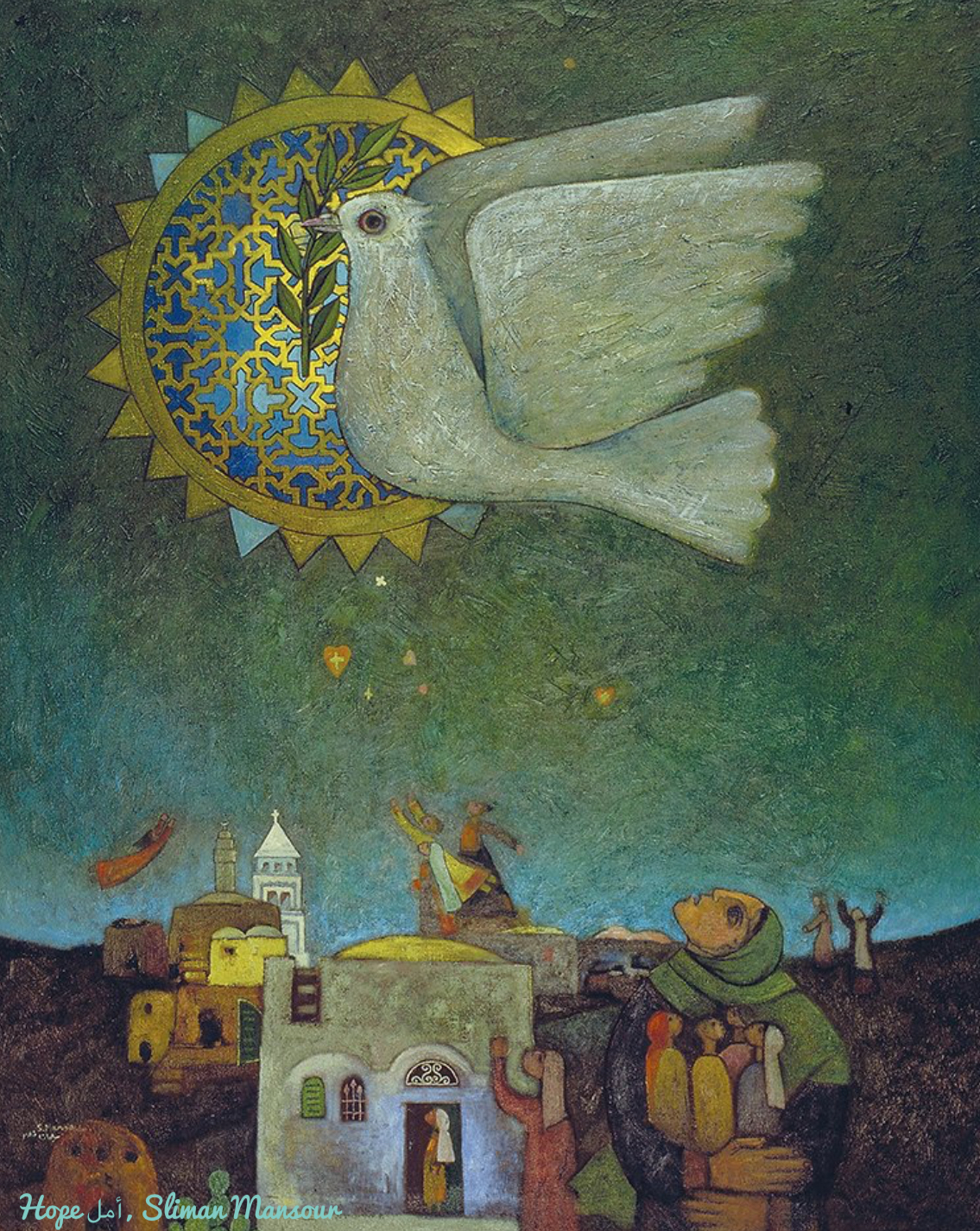
A growing human population, particularly in areas along Australia’s east coast, has led to large-scale clearing of better-quality koala habitats with many koala populations struggling within smaller, fragmented patches of poorer quality habitat. Other threats, such as drought, fire, climate change, disease, vehicle strike and dog attack are further impacting koala populations.

Creating ‘habitat refuges’ in areas remote from, and resilient to, such threats is extremely important for long-term koala persistence”.

What are Conservation Agreements? 

They are designed  and financed by NSW government’s department of environment and heritage, it is available to landholders who demonstrate that their property or part of has conservation value in flora or fauna or both and who wish to preserve its environmental integrity and biodiversity through an agreement creating a Wildlife Refuge or a Conservation Area.

What do they mean?

• The landholder establishes legal protection over a specific part of their property, effectively safeguarding it from logging and from development that might compromise its ecological integrity.

• Conservation agreements are entered on the property’s certificate of title.

• There are a range of options through the BCT or also private covenants that can be on title. Some conservation agreements are in perpetuity; others can be terminated by a future owner.

• In return for preserving part of the property, the landholder can obtain practical and financial help to preserve, protect and enhance its biodiversity.

What are the drawbacks to a conservation agreement?

• Landholders may be worried about an affectation on title and may therefore be reticent about entering into an agreement for perpetuity.

• Prospective buyers may also be reluctant to undertake the obligations under the agreement.

• But times are a’changin’ and increasingly, landholders and potential purchasers of properties in areas of ecological value are interested in conserving and enhancing our natural environment and are willing to do play their own part.

• Real estate agents, valuers and banks are becoming more and more accustomed to dealing with properties containing Wildlife Refuges and Conservation Areas.

What are the landholder’s obligations?

• To maintain the property and keep it in good order.

• To take practical steps to improve its conservation values and prevent harm to its biodiversity.

• To carrying out work where necessary to protect flora and fauna and soil and drainage, and to control invasive weeds and feral animals.

• To permit inspections by BCT to ensure compliance, review work, and undertake surveys and research.

What are the benefits to the landholder?

• The individual landholder can make an important contribution to the long-term conservation of biodiversity in NSW.

• An important incentive of the Conservation Partners Programme is that owners can apply for a conservation partner’s grant. Grants available for Conservation Areas are larger than those available for Wildlife Refuges. They are utilized to maintain and enhance the ecological integrity and biodiversity of the land.

• They can be applied to a range of activities, e.g. revegetation, weed and feral animal control, and infrastructural repairs and maintenance, including access trails, drainage and fencing.

• BCT provides advice and guidance throughout the process, including how to complete the application, recommending contractors, and assessing their quotations.

What is the agreement process?

• The landholder contacts BCT and submits an “expression of interest” in making an agreement. BCT arranges a site visit to explain the process and undertake a preliminary inspection.

• The landholder decides whether the agreement is for a Wildlife Refuge or a Conservation Area.

•An application is submitted providing property details, the area/areas proposed to be conserved, and the landholder’s assessment of the ecological values.

• BCT engages a professional ecologist to provide an expert opinion, make an assessment, draft supporting maps, and recommend whether an agreement should proceed after which BCT decides to make the agreement and commences its preparation.

• The landholder provides supplementary information and schedules, including maps showing what areas are included and which are excluded, e.g. buildings and infrastructure.

Who do you call?

• Bct.nsw.gov.au; info@bct.nsw.gov.nat; 1300 992 688

• You can also reach out to North Coast Local Land Services about natural resource management and funding opportunities. Call 1300 795 299 or emailadmin.northcoast@lls.nsw.gov.au

What are we doing in our Conservation Area?

• We are in year one of a three-year grant cycle with a grant of $15000 a year. and have engaged an experienced local regenerator recommended by BCT.

• The team is engaged in extensive vine and weed control (particularly lantana which may attract invasive bell myna).

• We are very pleased with its work, particularly as it provided good feedback on species present and has identified rare flora that we had not expected to find.

• BCT has been fabulous throughout the process, providing advice and encouragement.

Further posts in In That Howling InfiniteThe agony and extinction of Blinky Bill; Paradise Regained – back to nature in Queensland; The Bonfire of the Insanities – the biofuel greenwash

Koala Detection dogs

We have encountered two koalas on our property over the last two years, including a breeding female with a joey, and we’ve had the good fortune to have been assisted by Canines for Wildlife. 

Here is a lovely film of the detection dogs in action made by our friend Sarah George. They also feature in the LLS film featured above.

Scat hunting on our conservation area

Scats of a female koala and it’s joey found by Canines for Wildlife in our conservation area

Our latest koala high up in a tallowood

Author’s note

We live in heart of the Tarkeeth Forest, some ten kilometers from the seaside town of Urunga on the mid north coast of New South Wales.

The forest rises on Fernmount Range from the Bellinger River to the north and Kalang River to the south forming a watershed and providing a vital connecting forested corridor for koalas between the habitats of the hinterland and coastal lowlands. Above and between the two rivers, the forest is an important rain-harvesting, filtration, and stabilization ecosystem vital to the wetlands and rivers. The lower estuary is formed where the two rivers converge, creating a large and dynamic system which flows into the Pacific Ocean at Urunga.

It is an important habitat for bird, reptilian, mammalian and marsupial wildlife, including koalas, quolls. wallabies, echidnas, goannas, owls, fruit doves, and cockatoos.

The east-west Fernmount Range Trail is an ancient highway from the plains to Urunga, known to the Gumbaynggirr nation as a “place of plenty”. The forest contains areas of significant indigenous culture, recalling song lines and stories of the Dreamtime, places of ceremony, of birth and burial, and of atrocity.

This land was rainforest once. In the late nineteenth and early twentieth centuries, much of it was cleared manually and laboriously for dairy farming, and in the late sixties, most of the landowners sold their farms to Australian Pulp Mills. APM cleared the farmland and established the flooded gum plantation that is now Tarkeeth State Forest to supply a paper mill that was to be built just south of Coffs Harbour. This never happened – the project’s planners had inexplicably overlooked the lack of a massive water supply. Eventually, the plantations were sold to the government-owned Forestry Commission of New South Wales – now Forestry Corporation NSW. The plantation has now been harvested – clear felled, actually, burned, sprayed, and replanted with a highly flammable eucalyptus monoculture. – a matter of considerable concern to us forest neighbours and to many in the Shire.

Silencing The Voice – the Anatomy of a No voter

It takes love over gold
And mind over matter
To do what you do that you must
When the things that you hold
Can fall and be shattered
Or run through your fingers like dust
Mark Knopfler, Dire Straits

The vibe in Bellingen town on the mid north coast of New South Wales during our months of campaigning for Yes and right up to 6pm on Saturday was such that you’d think we’d brought it home. But that was our hearts and hopes speaking – our heads were well aware that we were in trouble. The Yes vote in the two Bellingen booths was at the last count 66% – much like inner city Sydney and Melbourne – but alas we were just a cork bobbing in a rough sea of No. The overall national count was 60% No, an almost mirror image, whilst our federal electorate Cowper, with 67% No, was one of the highest in the country. In 1967, it recorded the lowest Yes vote. Plus ça change, plus c’est la même chose

Like the campaign and media coverage leading up to 14 October, the poll reflected and exposed pre-existing divisions in our society, economy and politics, each melding into each other: Inner city versus outer suburbs, cities versus the regions, younger versus older, affluent versus the less well-off, educated versus less educated, black versus white (and even, black versus black) and the the so-called black armband and the white blindfold narratives of our history. Aboriginal communities wanted the Voice, but suburban and regional Australia rejected it. Even a large number of Labor and Green Party supporters cast No votes. The further one got from the cities, the more Australia said No.

Are we a nervous, frightened nation unwilling to look back, and unable to look forward? Perhaps a less accusatory explanation is that most Aussies are not feeling too generous right now, and that they don’t want to give our First Nation fellow-citizens what they perceive is more than anybody else gets. And we allowed politics and politicians’ interests to erode Australians’ inherent goodwill. We were, it seems easy prey. As Peter Hartcher wrote in Sunday’s online Sydney Morning Herald:

“The giant Gulliver of Australian goodwill allowed itself to be immobilized by a hundred petty Lilliputian doubts and fears, turning five years of Yes into a decisive No. Most Australian adults were unable to sustain their natural big-heartedness when it was beset by an unrelenting storm of hostility and suspicion. John Howard, for instance, urged people to vote No because of the need to “maintain the rage”. What on earth does the former prime minister have to be so angry about? What is it about a disadvantaged minority comprising 3 per cent of the population that demands a sustained national rage? … Political combat overtakes rationality and, regrettably, it easily overwhelms innate human goodwill. The No campaign will be very pleased with itself for so easily frightening and befuddling the electorate out of its inherent good intentions. Australia could be forgiven for being embarrassed.”

Bernard Keane of Crikey was less constrained:

“The Voice, according to the No campaign, is a threat to white Australians – a threat mostly unarticulated, but some particularly racist No campaigners have gone there, saying it will impose reparations, or dispossess Australians of their property. The message of the No campaign, from Peter Dutton and former Liberal leaders like Howard and Abbott, is: be scared. There is always someone out to get you, to take something of yours, to get something you don’t have. You’re the victim. Indigenous peoples are just the latest in a long line of people trying to do you over, with the help of an “elite” that hates you. Live in fear, and huddle in resentment”.

Spruiking the Voice at market stalls over the last three months and visiting many booths in our shire, copping shouts of both encouragement and expletive laden opprobrium, and reading-up on a variety of media, here are some observations by myself and others. Each can apply to one or to many No voters, though not necessary to all.

There were, after all, many, many fair-minded, thoughtful and well-meaning voters who sincerely believed that the Voice was not the way to go, and they would most likely have voted for the constitutional recognition of our First Nations people if it had stood alone as the referendum question – notwithstanding that symbolic recognition by itself was not what the 250 delegates to the First Nations National Constitutional Convention of Australia Aboriginal and Torres Strait Islander leaders asked for in the Uluṟu Statement from the Heart six long years ago.

But all reflect in some way the mindset of a change-averse, suspicious and nervous nation.

Many No voters …
  1. Thought that the Voice went too far and was too powerful – some arguing that it would be litigious and would grind government to a standstill whilst others claimed it would invite indigenous intervention in all areas of policy
  2. Thought that the Voice didn’t go far enough and wasn’t powerful enough – that it was potentially impotent
  3. Thought that it would threaten their property ownership – the cry  “they’ll come after our homes!” echoed claims raised during the Mabo days
  4. Thought that it would take away native title rights from aboriginals (with help from the UN, one person told us)
  5. Thought that a mere 3.5% of the population would control our government (some people actually think the percentage is much greater than that)
  6. Thought that a Voice would lead to a treaty, “pay the rent” and reparations – a bridge too far
  7. Thought a Voice would “divide us” and render one group “more equal than others” – as if we weren’t divided and unequal already as anyone with a skerrick of awareness of Australian history, politics and society would know (but pundits believe that in the end, this was the prime factor in the No victory)
  8. Didn’t understand what they were voting for and didn’t care – lack of knowledge and interest in our political system among so many people is quite worrying.
  9. Didn’t get the Voice model – there were many who didn’t understand it and also many who did and had valid questions on detail and proces
  10. Had little or no knowledge or interest in Australia’s history since 1788
  11. Didn’t have any idea of the process First Nations people went through to arrive at the Statement from the Heart
  12. Were disgruntled with and don’t trust governments, and are basically anti any and everything.- some, like the International Socialists urged a boycott arguing that each side represented a capitalist plot
  13. Thought compulsory voting is a chore and a bore – and is seen by some as anti democraticWe’re rusted on LNP voters who like Dutton, want to take paint off the Labor government
  14. Were PHON, PUP and UAP people; antipodean Trumpistas and Putinophiles, RWNJs, QAnon, anti vaxxers and other conspiritualists; and sovereign citizens (who do not recognize the Australian state at all – “we are all individuals!”, and each man “is an island unto himself”, to reverse the John Donne aphorism
  15. Were Blak Sovereignty indigenous and their white supporters who do not recognize what they see as the colonialist state and demand sovereignty of their own – and ironically, these now claim the outcome as a victory as it will have established their credentials and even attract disappointed and disillusioned Yes voters to their cause. What might have seemed like a cul de sac may one day become a reality
  16. Were misinformed, gullible, naive and easily misled by opportunists, misinformation and downright lies, and came up with the most fantastical scenarios and ridiculous assumptions
  17. Were selfishly thinking that by depriving others of something they’d be better off, that aboriginals get too much already, that they get more than everybody else, and if they get more, they’ll waste it
  18. Were more concerned about money than anything else – we are going through straightened economic times right now with seemingly insolvable cost of living, health  and housing crises – and that it will negatively affect themselves
  19. Weren’t impressed when their rock idols Farnsey, Barnsey and the Oils supported the Voice in song and statement. As left wing columnist Julie Szego noted in a nuanced piece in my favourite  e-zine Unherd, the use of You’re the Voice “was intended to rouse the already converted into evangelical fervour — nostalgic Gen X’ers like me dutifully blubbered – but talkback callers expressed their displeasure at the soundtrack to their youth enlisted in the service of a partisan cause”
  20. Weren’t influenced by our indigenous sports icons Cathy Freeman, Nova Peris, Ash Barty and Yvonne Goolagong Cawley advocating for a Yes vote – and weren’t impressed that the major sporting codes all signed up to Yes
  21. Certainly weren’t impressed when banks and other large corporations put their shareholders’ money into the Yes  campaign – though large donors to No, including Gina Rhinehart, Australia’s richest person, kept their largesse out of the public eye (taking advantage of our lax laws on political donations)
  22. Weren’t put off by the company they had been keeping, including the likes of old Tory warhorses like John Howard and Tony Abbot, the discredited Scott Morrison, the aforementioned Gina, Rupert Murdoch, Pauline Hanson, Alan Jones, Peta Credlin, and an almost unanimous coven of Sky at Night opinionistas
  23. Didn’t have any idea of the process First Nations people went through in 2017 to arrive at the Uluṟu Statement from the Heart (see our prior article The Uluru Statement from the Heart‘)
  24. Believed that The Voice was cooked up by the Albanese Labor government and Aboriginal elites (whoever they are) otherwise know as the so-called “Canberra Voice” – these same people probably deride aboriginals for being uneducated and that when they do get an education, deride them as elites
  25. Were smug and paternalistic, thinking they know exactly what First Nations people need – and that is certainly not A Voice – even though they haven’t been within cooee of or spoken to an aboriginal in their lives
  26. Labor and Green supporters who subscribed to some but not all of the above

What next?

As the indigenous leaders of the Yes23 campaign take time out for refection and grieving, I guess we can now all go back to feeling good about ourselves and our nation, or, as former PM John Howard described it a couple of decades ago, “relaxed and comfortable”.

Questions will most certainly be asked. How did the high levels of support for the Voice slide so far? Why wasn’t there a better response to misinformation? Why couldn’t the falsehoods be sufficiently countered? Why were so many still unsure about this simple proposition? As for some other form of constitutional recognition, as suggested by Dutton, that seems far-fetched without the support of Indigenous Australians. And Labor is in no mood right now to bowl up another referendum on anything, either this term or next. So, while the political caravan moves on, the problems for Indigenous Australians will remain.

This will probably be my last word on the Indigenous Voice to Parliament in In That Howling Infinite (though, of course, never say never!). I’ll leave you with these words of the late Margaret Thatcher on the night she became prime minister of the United Kingdom in May 1979:

“I would just like to remember some words of St. Francis of Assisi which I think are really just particularly apt at the moment. ‘Where there is discord, may we bring harmony. Where there is error, may we bring truth. Where there is doubt, may we bring faith. And where there is despair, may we bring hope’ …  . and to all …. people – howsoever they voted – may I say this. Now that the election is over, may we get together and strive to serve and strengthen the country of which we’re so proud to be a part … There is now work to be done’.

We know what happened next …

Relaxed and Comfortable

© Paul Hemphill 2023 All rights reserved

See also other articles on the Voice to Parliament in In That Howling Infinite, including The Uluru Statement from the Heart, Hopes and fears – the morning after the referendum for The Voice, and A Voice crying in the wilderness

Postscript: on referendums

“Until Saturday, we had not had a referendum for 24 years, and since Saturday, no successful referendum for 45 years. They have become sport for opposition governments to gain political points and a petri dish for propagating misinformation and conspiracy theories. In a hyper-partisan and post-truth world, the prospects of referendum success now depend more than ever on an elusive spirit of bipartisan cooperation”.
Anne Twoomey, constitutional lawyer, SMH 17th October 2023