
It takes love over gold
And mind over matter
To do what you do that you must
When the things that you hold
Can fall and be shattered
Or run through your fingers like dust
Mark Knopfler, Dire Straits
The vibe in Bellingen town on the mid north coast of New South Wales during our months of campaigning for Yes and right up to 6pm on Saturday was such that you’d think we’d brought it home. But that was our hearts and hopes speaking – our heads were well aware that we were in trouble. The Yes vote in the two Bellingen booths was at the last count 66% – much like inner city Sydney and Melbourne – but alas we were just a cork bobbing in a rough sea of No. The overall national count was 60% No, an almost mirror image, whilst our federal electorate Cowper, with 67% No, was one of the highest in the country. In 1967, it recorded the lowest Yes vote. Plus ça change, plus c’est la même chose
Like the campaign and media coverage leading up to 14 October, the poll reflected and exposed pre-existing divisions in our society, economy and politics, each melding into each other: Inner city versus outer suburbs, cities versus the regions, younger versus older, affluent versus the less well-off, educated versus less educated, black versus white (and even, black versus black) and the the so-called black armband and the white blindfold narratives of our history. Aboriginal communities wanted the Voice, but suburban and regional Australia rejected it. Even a large number of Labor and Green Party supporters cast No votes. The further one got from the cities, the more Australia said No.
Are we a nervous, frightened nation unwilling to look back, and unable to look forward? Perhaps a less accusatory explanation is that most Aussies are not feeling too generous right now, and that they don’t want to give our First Nation fellow-citizens what they perceive is more than anybody else gets. And we allowed politics and politicians’ interests to erode Australians’ inherent goodwill. We were, it seems easy prey. As Peter Hartcher wrote in Sunday’s online Sydney Morning Herald:
“The giant Gulliver of Australian goodwill allowed itself to be immobilized by a hundred petty Lilliputian doubts and fears, turning five years of Yes into a decisive No. Most Australian adults were unable to sustain their natural big-heartedness when it was beset by an unrelenting storm of hostility and suspicion. John Howard, for instance, urged people to vote No because of the need to “maintain the rage”. What on earth does the former prime minister have to be so angry about? What is it about a disadvantaged minority comprising 3 per cent of the population that demands a sustained national rage? … Political combat overtakes rationality and, regrettably, it easily overwhelms innate human goodwill. The No campaign will be very pleased with itself for so easily frightening and befuddling the electorate out of its inherent good intentions. Australia could be forgiven for being embarrassed.”
Bernard Keane of Crikey was less constrained:
“The Voice, according to the No campaign, is a threat to white Australians – a threat mostly unarticulated, but some particularly racist No campaigners have gone there, saying it will impose reparations, or dispossess Australians of their property. The message of the No campaign, from Peter Dutton and former Liberal leaders like Howard and Abbott, is: be scared. There is always someone out to get you, to take something of yours, to get something you don’t have. You’re the victim. Indigenous peoples are just the latest in a long line of people trying to do you over, with the help of an “elite” that hates you. Live in fear, and huddle in resentment”.
Spruiking the Voice at market stalls over the last three months and visiting many booths in our shire, copping shouts of both encouragement and expletive laden opprobrium, and reading-up on a variety of media, here are some observations by myself and others. Each can apply to one or to many No voters, though not necessary to all.
There were, after all, many, many fair-minded, thoughtful and well-meaning voters who sincerely believed that the Voice was not the way to go, and they would most likely have voted for the constitutional recognition of our First Nations people if it had stood alone as the referendum question – notwithstanding that symbolic recognition by itself was not what the 250 delegates to the First Nations National Constitutional Convention of Australia Aboriginal and Torres Strait Islander leaders asked for in the Uluṟu Statement from the Heart six long years ago.
But all reflect in some way the mindset of a change-averse, suspicious and nervous nation.
- Thought that the Voice went too far and was too powerful – some arguing that it would be litigious and would grind government to a standstill whilst others claimed it would invite indigenous intervention in all areas of policy
- Thought that the Voice didn’t go far enough and wasn’t powerful enough – that it was potentially impotent
- Thought that it would threaten their property ownership – the cry “they’ll come after our homes!” echoed claims raised during the Mabo days
- Thought that it would take away native title rights from aboriginals (with help from the UN, one person told us)
- Thought that a mere 3.5% of the population would control our government (some people actually think the percentage is much greater than that)
- Thought that a Voice would lead to a treaty, “pay the rent” and reparations – a bridge too far
- Thought a Voice would “divide us” and render one group “more equal than others” – as if we weren’t divided and unequal already as anyone with a skerrick of awareness of Australian history, politics and society would know (but pundits believe that in the end, this was the prime factor in the No victory)
- Didn’t understand what they were voting for and didn’t care – lack of knowledge and interest in our political system among so many people is quite worrying.
- Didn’t get the Voice model – there were many who didn’t understand it and also many who did and had valid questions on detail and proces
- Had little or no knowledge or interest in Australia’s history since 1788
- Didn’t have any idea of the process First Nations people went through to arrive at the Statement from the Heart
- Were disgruntled with and don’t trust governments, and are basically anti any and everything.- some, like the International Socialists urged a boycott arguing that each side represented a capitalist plot
- Thought compulsory voting is a chore and a bore – and is seen by some as anti democraticWe’re rusted on LNP voters who like Dutton, want to take paint off the Labor government
- Were PHON, PUP and UAP people; antipodean Trumpistas and Putinophiles, RWNJs, QAnon, anti vaxxers and other conspiritualists; and sovereign citizens (who do not recognize the Australian state at all – “we are all individuals!”, and each man “is an island unto himself”, to reverse the John Donne aphorism
- Were Blak Sovereignty indigenous and their white supporters who do not recognize what they see as the colonialist state and demand sovereignty of their own – and ironically, these now claim the outcome as a victory as it will have established their credentials and even attract disappointed and disillusioned Yes voters to their cause. What might have seemed like a cul de sac may one day become a reality
- Were misinformed, gullible, naive and easily misled by opportunists, misinformation and downright lies, and came up with the most fantastical scenarios and ridiculous assumptions
- Were selfishly thinking that by depriving others of something they’d be better off, that aboriginals get too much already, that they get more than everybody else, and if they get more, they’ll waste it
- Were more concerned about money than anything else – we are going through straightened economic times right now with seemingly insolvable cost of living, health and housing crises – and that it will negatively affect themselves
- Weren’t impressed when their rock idols Farnsey, Barnsey and the Oils supported the Voice in song and statement. As left wing columnist Julie Szego noted in a nuanced piece in my favourite e-zine Unherd, the use of You’re the Voice “was intended to rouse the already converted into evangelical fervour — nostalgic Gen X’ers like me dutifully blubbered – but talkback callers expressed their displeasure at the soundtrack to their youth enlisted in the service of a partisan cause”
- Weren’t influenced by our indigenous sports icons Cathy Freeman, Nova Peris, Ash Barty and Yvonne Goolagong Cawley advocating for a Yes vote – and weren’t impressed that the major sporting codes all signed up to Yes
- Certainly weren’t impressed when banks and other large corporations put their shareholders’ money into the Yes campaign – though large donors to No, including Gina Rhinehart, Australia’s richest person, kept their largesse out of the public eye (taking advantage of our lax laws on political donations)
- Weren’t put off by the company they had been keeping, including the likes of old Tory warhorses like John Howard and Tony Abbot, the discredited Scott Morrison, the aforementioned Gina, Rupert Murdoch, Pauline Hanson, Alan Jones, Peta Credlin, and an almost unanimous coven of Sky at Night opinionistas
- Didn’t have any idea of the process First Nations people went through in 2017 to arrive at the Uluṟu Statement from the Heart (see our prior article The Uluru Statement from the Heart‘)
- Believed that The Voice was cooked up by the Albanese Labor government and Aboriginal elites (whoever they are) otherwise know as the so-called “Canberra Voice” – these same people probably deride aboriginals for being uneducated and that when they do get an education, deride them as elites
- Were smug and paternalistic, thinking they know exactly what First Nations people need – and that is certainly not A Voice – even though they haven’t been within cooee of or spoken to an aboriginal in their lives
- Labor and Green supporters who subscribed to some but not all of the above

What next?
As the indigenous leaders of the Yes23 campaign take time out for refection and grieving, I guess we can now all go back to feeling good about ourselves and our nation, or, as former PM John Howard described it a couple of decades ago, “relaxed and comfortable”.
Questions will most certainly be asked. How did the high levels of support for the Voice slide so far? Why wasn’t there a better response to misinformation? Why couldn’t the falsehoods be sufficiently countered? Why were so many still unsure about this simple proposition? As for some other form of constitutional recognition, as suggested by Dutton, that seems far-fetched without the support of Indigenous Australians. And Labor is in no mood right now to bowl up another referendum on anything, either this term or next. So, while the political caravan moves on, the problems for Indigenous Australians will remain.
This will probably be my last word on the Indigenous Voice to Parliament in In That Howling Infinite (though, of course, never say never!). I’ll leave you with these words of the late Margaret Thatcher on the night she became prime minister of the United Kingdom in May 1979:
“I would just like to remember some words of St. Francis of Assisi which I think are really just particularly apt at the moment. ‘Where there is discord, may we bring harmony. Where there is error, may we bring truth. Where there is doubt, may we bring faith. And where there is despair, may we bring hope’ … . and to all …. people – howsoever they voted – may I say this. Now that the election is over, may we get together and strive to serve and strengthen the country of which we’re so proud to be a part … There is now work to be done’.
We know what happened next …
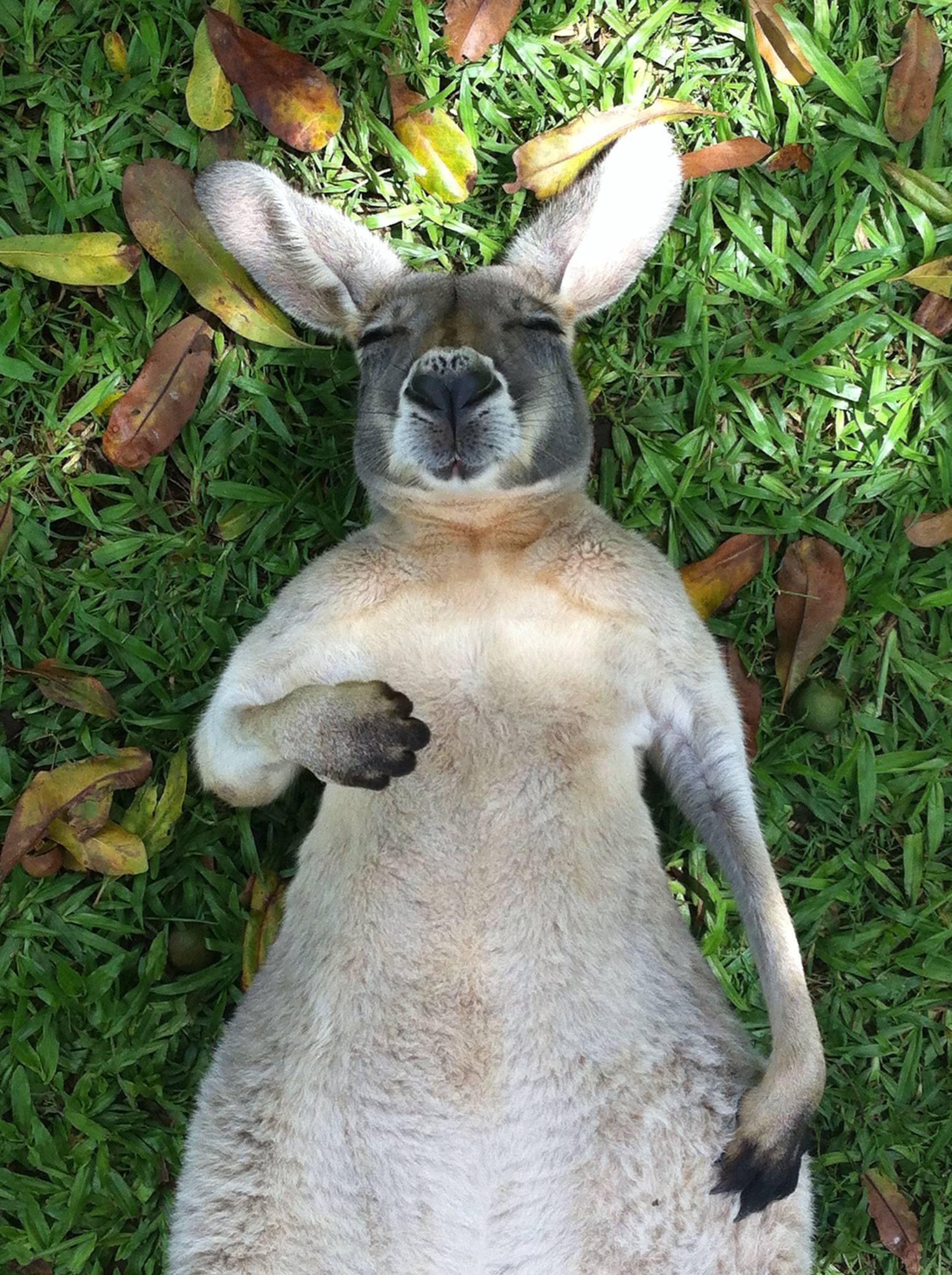
Relaxed and Comfortable
© Paul Hemphill 2023 All rights reserved
See also other articles on the Voice to Parliament in In That Howling Infinite, including The Uluru Statement from the Heart, Hopes and fears – the morning after the referendum for The Voice, and A Voice crying in the wilderness
Postscript: on referendums
“Until Saturday, we had not had a referendum for 24 years, and since Saturday, no successful referendum for 45 years. They have become sport for opposition governments to gain political points and a petri dish for propagating misinformation and conspiracy theories. In a hyper-partisan and post-truth world, the prospects of referendum success now depend more than ever on an elusive spirit of bipartisan cooperation”.
Anne Twoomey, constitutional lawyer, SMH 17th October 2023

 In That Howling Infinite