London, back in the day. What wonders dwelt within. I recall here but a few. The old church of St. Bartolph-Without, which turned up in later days in a bad Dracula movie. The churchyard of St. Paul’s, a haven for summer’s day lunch-timing. Green Park in spring sunshine as the lily white skin of England divests for primavera. Berkeley Square, where the fabled nightingale sang, and where Clive of India, his mind curdled by corruption and conscience, and haunted by guilt and ghosts, cut his own throat.
Read more in Tabula Rasa – Poems of Paul Hemphill, Volume One
My first political excursion. The CND Aldermaston March reaches London, 1966
These are lands of testament and prophecy, of sacrifice and sacrament, of seers and sages, of vision and vicissitude, of warriors and holy men. The spiritual and the temporal have melded here for millennia. We see still the remnants of ancient empires and the echoes of their faiths. We chart their decline and fall in the fortunes of their monuments and their mausoleums, in the “tumbled towers and fallen stones, broken statues, empty tombs” where “ghosts of commoners and kings walk the walls and catacombs of the castles and the shrines”.
The cloud-capp’d tow’rs, the gorgeous palaces, The solemn temples, the great globe itself, Yea, all which it inherit, shall dissolve. Shakespeare, The Tempest, Act 4 Scene 1
Nothing beside remains. Round the decay Of that colossal wreck, boundless and bare, The lone and level sands stretch far away. Percy Bysshe Shelley, Ozymandias
Read also,The Rubble Of Palmyraby Leon Wieseltier, published in The Atlantic, 5th September, 2014
One leg up and one leg down like an old cock sparrer, flyin’ over Piccadilly with me bow an’ arra. Sydney Carter, Eros
Eros has had a good Brasso session and is looking grand in the intermittent summer sunshine. The skylines of Regent Street, Piccadilly, and Shaftsbury Avenue look gorgeous in their Georgian and Regency splendour. The traffic is terrible and the tourists throng in confused and bemused bunches. The theatres still advertise musicals I would never see in a month of Sundays. The royal parks are in full bloom and abound with swans, geese and ducks and their young families. Soho looks as tacky as ever. And although Carnaby Street looks like, well, just any other street, and Swinging London is a fading artifact of the past, London is London as it always was and always will be in my mind’s eye and in my memories.
There is something about London. It’s in the air and it’s in the paving stones, in the crowds and the smell of the rain (lots of it). I have been coming back here every few years for over thirty years. And it still feels like coming home. As time goes by, you forget more than you remember, but random memories come breaking through the years, your thoughts wind back to way back when. London with its technicolor costume of colour, creeds and complexions, it’s paradoxes of posh and poor, it’s troves of trash and treasure.
In 1777, celebrated essayist Samuel Johnson said “when a man is tired of London, he is tired of life”. A cliché, yes, over-used and over-quoted, oft times, out of context. A cover story of Time Magazine on ‘Swinging London’ in April 1966 was entitled “You can walk across it on the grass’. That was and remains part of the magic of the place. That, and its art, its architecture, its history. “Don’t look at”, they say, “look up!” And, exploring the main streets, mean streets and backstreets, parks and parade grounds, mews and alleys of Old London, I always reckoned that old Sam got it spot on – and still do today, whenever I chance to return.
And adjacent, in Hayes Mews, the hostelry with the longest pub name in London, ‘The Only Running Footman’. Such a magical name, it was, conjuring up motion and majesty, speed and style. And it remained in my mind this half-century hence. I had an affinity with this anonymous, antique athlete. These were my running days. I ran everywhere. To the underground, to work, to the shops, to the pub (but not back), though the city, around the town. I revelled in the movement, in the freedom, in the physical and psychological exhilaration of it all. My running days are long over, but I still run in my dreams
These were days of adapting to new environments and circumstances. They were exciting, they were challenging. I was young, restless, at turns, idealistic and cynical, puritanical and hedonistic. In retrospect, days of emotional and intellectual ferment. Days of “finding one’s way in the world”. Not some reformationey, renaissancial, enlightenment thingy. Post-adolescent onanism, more like.
As John Lennon sang: “Strange days indeed. Most peculiar, Mama!“ Irish bombs, miners’ strikes, power cuts, rubbish piled up on streets, and economic recession. A three-day week as England closed down for want of coal. Candles and coldness. Late starts and early finishes. A stack of books left in the lift in case I was caught when the lights went out. In one job, I’d walk through a bomb shattered foyer, into the mail room, to put all the mail thru a whopping great X ray machine to see if the paddies had sent us any letters. The police arrested my bike when I left it chained to a parking meter – in case it was used to hide a bomb. And you would actually hear explosions as you went about your business. Arriving at a much smaller Heathrow Airport, finding it surrounded by armoured cars and armed soldiers and police. I got a kick out of the blitz-like solidarity, the trench humour, and deprivation and darkness. Layla rocked a London that was neither as drear not as dammed as some paint it. Back then, I was in love with the place. I was young, idealistic, and as the poet said “Bliss was it in that dawn to be alive, but to be young was very heaven!“
From Tabula Rasa – Poems of Paul Hemphill , Volume One
Over the heather the wet wind blows, I’ve lice in my tunic and a cold in my nose. The rain comes pattering out of the sky, I’m a Wall soldier, I don’t know why. The mist creeps over the hard grey stone, My girl’s in Tungria; I sleep alone. Aulus goes hanging around her place, I don’t like his manners, I don’t like his face. Piso’s a Christian, he worships a fish; There’d be no kissing if he had his wish. She gave me a ring but I diced it away; I want my girl and I want my pay. When I’m a veteran with only one eye I shall do nothing but look at the sky
We’ve marvelled at Roman brickage from Syria to Cirencester, from Bath to Baalbek, but had never ventured to Hadrian’s Wall in Northumbria. WH Auden’s whimsical song, Roman Wall Blues, came to mind as we stood atop the windswept knoll that is Housesteads Roman Fort on a freezing May morning.
In the preface to Pax, the latest volume of his magisterial history of the Roman Empire, English historian Tom Holland notes that the northern bank of the river Tyne was the furthest north that a Roman Emperor ever visited. What was so important about Hadrian’s visit to Tyneside in 122AD was his decision there to mark in stone, for the first time, the official limits of his Empire. North of this great wall, there was paucity and unspeakable barbarism, scarcely worth bothering about; below the wall was civility and abundance and the blessings of Romanitas. To this day, those 73 miles of the Vallum Hadriani across the jugular of Britain still shape the common conception of where England and Scotland begin and end, even though the wall has never delineated the Anglo-Scottish border. For this colossal structure left enduring psychological as well as physical remains. To the Saxons, it was “the work of giants” and was often thought of as a metaphysical frontier with the land of the dead.
George RR Martin, author of The Game of Thrones, the artistic juggernaut, has said that his Ice Wall separating the northern wintry waste with its nomads and its demons from the settled and temperate Seven Kingdoms of Westeros with it castles and cities, it’s palaces and slums, it’s despots, destitute and the depraved, was inspired by a visit to Hadrian’s Wall – only he built it much longer and much, much higher.
“We walked along the top of the wall just as the sun was going down. It was the fall. I stood there and looked out over the hills of Scotland and wondered what it would be like to be a Roman centurion … covered in furs and not knowing what would be coming out of the north at you. George RR Martin has said that his Ice Wall separating the northern wintry waste with its nomads abd its demons from the settled and temperate Westeros with it castles and cities, it’s palaces and slums, and destitute and the depraved, was inspired by a visit to Hadrian’s Wall – only he built it much longer and much, much higher. “We walked along the top of the wall just as the sun was going down. It was the fall. I stood there and looked out over the hills of Scotland and wondered what it would be like to be a Roman centurion … covered in furs and not knowing what would be coming out of the north at you”.
There we were, then, on the edge of empire. The Roman Empire, that is. Among outposts and outcasts. Up on the hills in the nithering wind and the cold rain, the snow and the sleet, and in the valley below with the baths and the brothels. This is where worlds collided. Between the Roman cives and their satraps, and the barbarians of the northlands. Between Britannia and Caledonia. Where solders from Rome and the Italy-yet-to-be that surrounded it, from Gaul, Batavia, Asturias and Tungria, now France, Spain and the Low Countries, from Germania and Sarmatia in Central and Eastern Europe, marched and marauded, drank and dined, foraged and fucked, lived and died.
At the height of Empire, some seven hundred soldiers manned the fort we now call Housesteads, up high on the moors, a windswept outcrop with a vista of 360 degrees and a temperature near zero. Many more legionaries garrisoned the more sheltered Chesters Fort in the nearby-by valley below where the wall crosses the Tyne. These included cavalry, drafted from Sarmatia, in present day Hungary. This was the fanciful premise of King Arthur (2004) starring Clive Owen as a handsome, tortured soul wandering through a flawed film and Keira Knightly as a scantily clad, elfin warrior Guinevere, backed up by a gallant band of photogenic heroes who hailed from the eastern steppes.
When the Romans departed Britain, Hadrian’s Wall fell into disrepair – it was always permeable, and in time, had served its purpose – which was perhaps as much about public relations as protection. Archeologist Terri Madenholme wrote in Haaretz: “Despite itself having a culture of violence, Rome aimed to project an image of a nation of the civilized, and what better way than having it monumentalized in stone? When Hadrian set to build the 73-miles-long wall drawing the border between Roman Britannia and the unconquered Caledonia, the message became even more clear: this is us, and that’s them. Hadrian’s Wall was much more than just a border control, keeping the Scots in check: it was a monument to Roman supremacy, an attempt to separate the civilized world from the savages”.
“He set out for Britain”, Hadrian’s historian tells us, “and there he put right many abuses and was the first to build a wall 80 miles long [Roman miles] to separate the barbarians and the Romans.”
Housesteads Fort
At Vindolanda, to the south, a small town grew up around a large military camp. First of wood and then of stone, constructed by the legionnaires themselves, who included in their number skilled masons and carpenters. Their settlements endure to engage our imaginations today. In times of turmoil, these soldiers fought and fell. In quieter times, they relaxed and recuperated. And the locals gathered about them, built houses and gardens, opened shops and pubs and those aforementioned brothels. And life went on like it does in our time.
During conflict, the Roman auxiliaries guarded the borderlands, deterring the Picts, a dark-skinned painted people who raided from the northern badlands. When peace prevailed, the locals visited, traded, and settled in the viccii or villages that grew organically to the south of the forts that were constructed at intervals along the empire’s perimeter wall. There, they traded, and provided goods, services and entertainment for themselves and for the martial strangers that had come among them from faraway places they’d never heard of.
In the early days, the auxiliaries were not permitted to bring wives and children to the frontier. But folks being folk, they very soon established friendly relations with their neighbours, and legionaries would keep informal wives and families in the vicus. Soviet writer and war-correspondent Vasily Grossman encapsulated all this poignantly and succinctly in An Armenian Sketchbook: “The longer a nation’s history, the more wars, invasions, wanderings, and periods of captivity it has seen – the greater the diversity of its faces .Throughout the centuries and millennia, victors have spent the night in the homes of those whom they have defeated. This diversity is the story of the crazed hearts of women who passed away long ago, of the wild passion of soldiers intoxicated by victory, of the miraculous tenderness of some foreign Romeo towards some Armenian Juliet”.
Officers were allowed to bring their wives and children to their postings, and these endured their provincial, primitive exile by importing the necessities of a comfortable Roman life, including the celebrated Roman plumbing and central heating. Chesters boasts the best preserved military bathhouse in Britain. And so, the accessories of civic consumerism reached the frontier. Food and wine from the warm South were transported to the cold north-lands. Fashions in clothes and jewelry, day-to-day articles and artifacts, from glass and pewter dinnerware to cutlery, tools and sundry hardware. Recently, it has been revealed that these domestic items included what is believed to be the only known Roman dildo. Remnants and reports gathered in the Vindolanda museum open a window into a gone world.
Housesteads Fort
The wonderful Vindolanda tablets have preserved a picture of the oh-so-normal lives of these transplanted souls so far away from home. Amidst accounts and inventories, orders and troop dispositions, a quartermaster reports that supplies of beer are running low. An officer writes to another in a neighboring fort inquiring about the availability of accommodation for visitors and the quality thereof. One tablet reveals that Roman soldiers wore underpants, which, in view of the locale and climate thereabouts, is comforting to know. And another recounts workplace harassment and bullying that would today invoke grievance procedures. The wife of an officer invites another to a birthday party at her house in Vindolanda. There is an undercurrent of “Please come, I am bored shitless”, though a polite Roman matron would not commit such sentiments to a wooden tablet (nor reveal to her friend the existence of that aforementioned sexual comforter). It is probably the oldest surviving document in Latin written by a woman.
So who were these folk so near to us in their needs and desires, their hopes, fears and expectations, and so far from us in time, space and purpose? What did they think and feel? It is a question oft asked by empathetic history tragics. The thinking of another time can be hard to understand. Ideas and ideologies once compelling may become unfathomable. And the tone and sensibility that made those ideas possible is even more mysterious. We read, we ponder, and we endeavour to empathize, to superimpose the template of our value system, our socialization, our sensibilities upon the long-dead. And thence, we try to intuit, read between the lines, draw out understanding from poems, plays, novels, memoirs, pictures, photographs, and films of the past.
We feel we are experiencing another facet of the potential range of human experience. But in reality, we are but skimming the surface, drawing aside a heavy curtain for a momentary glimpse through an opaque window into the past. Yet, we persist nevertheless, because that is what humans do. Over two and a half thousand years ago, the controversial Greek poetess Sappho wrote ”I tell you, someone will remember us; even in another time”.
And in Vindolanda, up there on the wall, on the weather-beaten rim of the long-gone empire, we do …
One of the great unsung saviours of the UK’s heritage is remembered in the museum housing his remarkable collection at Chesters Roman Fort Museum which houses the Clayton Collection of and 5,500 catalogued items from a variety of sites along the central section of the wall.
Few people today have heard of John Clayton, yet he is one of the single most important individuals in the history of Hadrian’s Wall.
A classically educated Victorian gentleman who combined demanding roles running the family law firm and acting as town clerk for the city of Newcastle-upon-Tyne, Clayton had a passion for archaeology and the Roman military legacy in his beloved Northumberland.
Were it not for Clayton, large parts of Hadrian’s Wall would have disappeared as the industrial revolution fuelled the demand for stone to build factories, mines and mills. His role in the preservation and survival of Chesters Roman Fort – the best-preserved Roman cavalry fort in Britain, is now undisputed.
In the early 19th century Clayton lived at Chesters House in the parkland surrounding the Roman fort and from an early age became fascinated by the Roman relics that surrounded him.
By the 1830s he began buying land to preserve the Wall, at a time when what is now a World Heritage Site was little understood, and was being unthinkingly vandalised by quarrying and removal of stones for reuse. Clayton’s enthusiasm helped preserve the central stretch of Hadrian’s Wall that includes Chesters (Cilurnum), Housesteads and Vindolanda. He carried out some of the first archaeological excavations on the Wall and even brought early tourism to the area by displaying some of the finds at Chesters. Clayton managed the estate and its farms successfully, generating cash to fund further preservation and restoration work on the Wall. He never married, and died in 1890
The museum housing the Clayton Collection was opened next to the fort site in 1903, 13 years after his death. It is privately owned but curated by English Heritage on behalf of the Trustees of the Clayton Collection, and has been refurbished to bring it up to 21st century standards of conservation, display and interpretation. Yet, great care has been taken to respect its character and to retain the feel of a 19th century gentleman antiquarian’s collection, and many of the labels and original cases have been retained..
So, when my time it comes and at last I leave this place, I’ll walk out past the charge hand’s gate and never turn my face. Up to the gates and into the sun, and I’ll leave it all behind, with one regret for the lads I’ve left to carry on their grind. Factory Lad, Colin Dryden
Dermott Ryder, poet, writer, collector and chronicler of songs and stories, singer and songwriter, stalwart of the seventies and eighties Sydney folk scene, one-time manager of the legendary ‘‘Liz” Folk Club, and creator and longtime presenter of the iconic weekly folk radio programme Ryder ‘Round Folk, headed off to his big gig at the great folk club in the sky on the night of Tuesday 3rd March.
A retrospective follows, but first, enjoy two minutes of delight with the theme to Ryder Round Folk: a merrie morris, a hornpipe, and a hoot!
Dermott and I go back a long way, though not as long as most.
He arrived in Oz in 1968 as a Ten Pound Pom. Before that, he’d spent five years in the Royal Artillery on a short term commission, seeing service in Germany and in Malaya, avoiding the nasty places that proliferated during the declining decades of the moribund British Empire. Trained in management, accounting and IT, he worked in Papua New Guinea before settling down in Sydney where he became a pillar of the folk music scene. Since his retirement, he has devoted his energies to his music and writing.
It was Victor Mishalow who first introduced me to Dermott in 1983. He was dropping into 2MBS for an interview on Ryder Round Folk, and he brought me and Yuri the Russian Storyteller along too. We had just launched our short and almost illustrious career as HuldreFolk. Dermott, as guru, mentor, and propagandist for the Sydney folk scene, gave us our first radio appearance. There is a famous photograph to commemorate it (Dermott’s archive of folkdoms’ seventies and eighties should be a national treasure. All the wannabes and could’ve beens, the famous and almost famous are celebrated therein).
The live concerts at 2MBS’s Chandos Street studios were a must-listen on the monthly calendar, with the good and the great of Sydney’s folksingers and musicians doing their thing. Guests included Victor, Yuri, Jim Taylor, Robin Connaughton, Penny Davies, Roger Illot, John Broomhall, Gordon McIntyre and Kate Delaney, Phil Lobl, Mary Jane Field, and the Fagans.
This was when Adele and I got to know Dermott and Margaret Ryder for the first time. We then learnt of his history: his part in the famous folk revival of the late sixties and early seventies, the first Port Jackson Folk Festival, the foundation if the NSW Folk Federation, and the famous Liz Folk Club in the Sydney CBD. He was among that first golden generation of folkies, including Colin Dryden, Gary Shearston, Declan Affley, Warren Fahey, John Dengate, Danny Spooner, Mike McClellan, Bernard Bolan, and Judy Small. Many other performers moved in Dermott’s musical orbit, including Andy George, Rhonda Mawer and the Shackistas of Narrabeen, Jim Jarvis, Al Ward, John Summers, and many, many more.
Dermott and I bonded further with our shared origins in the old country. He of Lancashire Irish heritage (Widnes, actually), and me, an Irish Brummie. We had a shared love of traditional Irish and English folk music. We probably even crossed bars in one of the many English folk clubs, in the ‘sixties. Most notably, the celebrated Jug O’Punch in the Birmingham suburb of Digbeth, run by the famous Ian Campbell Folk Group.*
The Parting Glass
Trad. as sung by Liam Clancy and Tommy Makem
Oh all the money that e’er I had
I spent it in good company
And all the harm that e’er I’ve done
alas, it was to none but me
For all I’ve done for want of wit
to memory now I can’t recall
So fill to me the parting glass
good night and joy be with you all
Oh all the comrades that e’er I’ve had
they are sorry for my going away
And all the sweethearts that e’er I’ve had
they would wish me one more day to stay
But since it falls unto my lot that
that I should rise and you should not
I’ll gently rise and I’ll softly call
good night and joy be with you all
Farewell, old friend.
Leaving Can Be Easy
By Dermott Ryder
Leaving can be easy, when the right time comes. Many will have gone before, in a long, long line. When it’s your turn, you look back, and smile, then look forward to your own new, far horizon.
There are people to tell, and books to return, Broken bridges to mend now, better this way, leave no hurt feelings behind at the end of the day. We are all travellers, and we will meet again.
Don’t think of sleep. Keep that for much later. Give and take addresses and phone numbers. Make promises you probably won’t remember. Be pleasantly surprised and strangely grateful.
Welcome the crowd come to see you on your way, and to share this rite of passage, to keep the faith in this next step in the long tradition of the traveller. Shake hands, and know that you cannot return.
* What a club that was. Back in the day, it hosted the cream of British folk music, including the Dubliners, the Furey Brothers, Martin Carthy, Peter Bellamy, and a very young and acoustic Al Stewart. Overseas guests included Tom Rush, an unknown Paul Simon, a young goddess called Joni Mitchell, and on an antipodean note, Trevor Lucas, who went to marry Fairport’s fair maid, Sandy Denny, and later, become a founding member of The Bushwhackers before his untimely demise in 1989.
When it comes to stories about The Middle East, I am reminded of the Bobster’s closing lines in the wonderful ‘Black Diamond Bay’: “Seems like every time you turn around, there’s another hard-luck story that you’re gonna hear”. Anyhow, getting away from all the doom and gloom, here is something completely different.
Our recent visit to Jerusalem inspired several posts on this blog, and several songs. One of the latter, published below, examines the Jerusalem Syndrome.
This is a group of mental phenomena involving the presence of either religiously themed obsessive ideas, delusions or other psychosis-like experiences that are triggered by a visit to the city of Jerusalem. It is not exclusive to one particular religion or denomination, having affected Jews, Christians and Muslims from many different countries and backgrounds.
Jerusalem is all about faith and passion, and there is no city on Earth that people get more passionate about. The light is luminous. In high summer it almost shimmers. The very air is full of prayer and politics, passion and pain, and the rocks and stones virtually sing a hallelujah chorus of history. I am not a religious person, but I cannot help getting excited by the place – although I do not transcend to transports of delight and delirium.
In The Simpsons episode The Greatest Story Ever D’ohed, the Simpsons travel to Israel where Homer is afflicted with the syndrome, the illness and its effect on Homer being one of the plot’s central themes. In The X-Files episode Revelations, agents Scully and Mulder try to subdue a man afflicted with a form of the syndrome.
The featured photograph at the head of this blog is a real-life version of the above Simpsons picture. The man at centre stage is Carl James Joseph of Detroit, Michigan, ‘The Jesus Guy’ we encountered in the Church Of The Holy Sepulchre. He has been a common sight around the Old City for many years now.j
Of all the cities in the world, why Jerusalem?
“ The Arabs call the city ‘Al Quds’, “The Holy’. It was deemed sacred from pre-history. Those aforementioned iconoclast scholars suggest that Jerusalem was actually the holiest place in Islam, and that like Islam itself and the Prophet, Mecca and Medina were retrofitted to suit the conqueror’s narrative. A city of the mind as much as of this earth, it haunts the prayers and dreams of three faiths, and to this this day, it is coveted and contested. “The air above Jerusalem”, wrote Israeli poet Yehuda Amichai, “is filled with prayers and dreams, like the air above cities with heavy industry. Hard to breathe”. Arthur Koestler wrote: “The angry face of Yahweh is brooding over the hot rocks which have seen more holy murder, rape and plunder than any other place on earth”. Perhaps it is because Jerusalem is mankind’s number one hot spot! “There’s this thing that happens here, over the hell mouth”, says Buffy, “where the way a thing feels – it kind of starts being that way for real. I’ve seen all these things before – just not all at once”. More Jews have probably died violently in Jerusalem than in the Holocaust. And countless folk of other faiths have likewise perished”. From A Brief History Of The Rise And Fall Of The West by Paul Hemphill
A lot of folk put a lot of energy into mattters millenarian, when they could divert it to more practical matters like health, water, human rights, blah, blah blah… Some diligent souls have constructed a 3D virtual second temple as a template for its reconstruction. And they don’t care if they start a world war to get it built. Others strive to create a Caliphate that will precipitate the long foretold great battle at The End of Days. And yet others are endeavoring to recreate Noah’s Ark in Kentucky, USA. Different tribe, same psychosis. Never underestimate the irrational mind. For such is the power of myth and magic even in this techno day and age. More blood has been shed in and for Jerusalem than any other city on earth, and we ain’t done yet!
O Jerusalem!
Sound the trumpets of Zion to summon forth the saints.
From The Song of Solomon
O Jerusalem!
I never thought that faith could be so strong!
Ah, Jerusalem!
I never knew that faith could be such fun!
It’s something you don’t do at home.
It happens in Paris and Rome.
The fevered faithful’s illusion
That causes such holy confusion.
Scully and Mulder have fought it,
Homer Simpson has caught it
In Jerusalem.
Bear me up on angels wings
And other transcendental things.
Cradle me in Jesus’ arms,
Far from home but safe from harm.
Where the Golden Walls still glow,
Let my people go
To Jerusalem.
Never knew that faith could be so strong!
O Jerusalem,
Never knew that faith could be such fun!
Filipinas in a row harmonizing with “Swing Low
Sweet Chariot”.
Charismatic holy clown roams the alleys of the town,
Says he’s hunting down Iscariot.
Pentecostal Germans heard
Their pastor preach the Holy Word.
Drab babushkas clutch their crosses,
Eastern priest in black now blesses
Those who lie with arms out swept
On the rock where Jesus wept,
In Jerusalem.
Never knew that faith could be so strong!
O Jerusalem,
I want whatever they are on!
See that women dressed so plain, thinks she’s
Mary Magdelene
Waiting just beyond the Tomb for her Lord
To come again.
Is he not already here? Don’t you see him
Over there?
In his robe of woven wool, sandals, beard,
And flowing hair.
There’s lady known to me
Who would make a cup of tea
And take it to Mount Scopus every morning
To give to Christ when he returned in glory –
I tell you, I’m not making up this story!
Its Jerusalem!
I never knew that faith could be such fun!
O Jerusalem!
I want whatever they are on!
Sometimes in morning dreams, I see
The Holy City in front of me:
Forever and ever, and world without end,
We all need an invisible friend
In Jerusalem.
Jerusalem Syndrome? Tourist Goes Treasure Hunting in Old City Cave
Nir Hasson Ha’Aretz Mar 15, 2016
Zedekiah’s Cave is a remnant of what was the largest quarry in Jerusalem that dates back to at least Second Temple times. Daniel Bar-On
An American tourist was arrested last week after spending the night in Zedekiah’s Cave, also known as Solomon’s Quarries, which lies under the Muslim Quarter of Jerusalem’s Old City.
Last Thursday afternoon, when the site was open to the public, the 19-year-old entered the cave carrying a backpack. When closing time came, he hid in one of the crevices of the cave and the security people did not notice him as they checked the site before closing. He was there overnight and started digging in various sections of the cave, apparently seeking to find some of the treasures that various legends say have been buried there over the centuries.
While the cave is usually closed on Fridays, last Friday it was opened to do some development work. The workers found the tourist in the cave covered with mud, his backpack full of stones and shards that he’d dug up from the floor of the cave. He was handed over to police and his findings were confiscated.
During questioning the young man could not explain his motives for what he did. Police said he apparently has emotional problems and may have contracted the so-called Jerusalem Syndrome, a phenomenon involving religious obsessions or other psychosis-like experiences seemingly triggered in some people by visiting Jerusalem. He was released and has since left the country.
Zedekiah’s Cave is a remnant of what was the largest quarry in Jerusalem that dates back to at least Second Temple times. It covers some nine dunams (two and a quarter acres), with an entrance between the Old City’s Damascus Gate and Herod’s Gate. Over the years a number of legends and traditions have sprung up involving the cave. The Jewish tradition is that King Zedekiah tried to flee through the cave during the destruction of the First Temple.
A later Muslim tradition identifies the cave as “the cave of Korah,” the place where the biblical Korah and his allies were swallowed up by the earth when they tried to revolt against Moses.
In 1968 a resident of the Old City claimed that his grandfather had hidden three crates of gold coins in the cave before the War of Independence. He asked permission to search for the crates using signs his grandfather had left him and promised in return to give three-quarters of the treasure to the authorities. He was given permission to search but found nothing.
The cave also serves as a ceremonial site for the Freemasons from the 1920s to this day. The Freemasons revere the place, believing it to have been the site from which the stones for the First Temple were quarried. Since the 1980s the cave is operated by the East Jerusalem Development Corporation as a tourist site, and events are held there from time to time.
The Jerusalem Syndrome: Why Some Religious Tourists Believe They Are the Messiah
Chris Nashawaty, Wired, 17th February 2012
Shortly after his 40th birthday, the life of a man we’ll call Ronald Hodge took a strange turn. He still looked pretty good for his age. He had a well-paying job and a devoted wife. Or so he thought. Then, one morning, Hodge’s wife told him she no longer loved him. She moved out the next day. A few weeks later, he was informed that his company was downsizing and that he would be let go. Not knowing where to turn, Hodge started going to church again.
Even though he’d been raised in an evangelical household, it had been years since Hodge had thought much about God. But now that everything seemed to be falling apart around him, he began attending services every week. Then every day. One night, while lying in bed, he opened the Bible and began reading. He’d been doing this every night since his wife left. And every time he did, he would see the same word staring back at him—the same four syllables that seemed to jump off the page as if they were printed in buzzing neon: Jerusalem. Hodge wasn’t a superstitious man, he didn’t believe in signs, but the frequency of it certainly felt like … something. A week later, he was 30,000 feet over the Atlantic on an El Al jet to Israel.
When Hodge arrived in Jerusalem, he told the taxi driver to drop him off at the entrance to the Old City. He walked through the ancient, labyrinthine streets until he found a cheap hostel near the Church of the Holy Sepulchre. He had a feeling that this was important. Supposedly built on top of the spot where Jesus Christ was crucified and three days later rose from the dead, the domed cathedral is the holiest site in Christendom. And Hodge knew that whatever called him to the Holy Land was emanating from there.
During his first few days in Jerusalem, Hodge rose early and headed straight to the church to pray. He got so lost in meditation that morning would slip into afternoon, afternoon into evening, until one of the bearded priests tapped him on the shoulder and told him it was time to go home. When he returned to his hostel, he would lie in bed unable to sleep. Thoughts raced through his head. Holy thoughts. That’s when Hodge first heard the Voice.
Actually, heard is the wrong word. He felt it, resonating in his chest. It was like his body had become a giant tuning fork or a dowsing rod. Taking a cue from the sign of the cross that Catholics make when they pray, Hodge decided that if the vibrations came from the right side of his chest, it was the Holy Ghost communicating with him. If he felt them farther down, near the base of his sternum, it was the voice of Jesus. And if he felt the voice humming inside his head, it was the Holy Father, God himself, calling.
Soon, the vibrations turned into words, commanding him to fast for 40 days and 40 nights. None of this scared him. If anything, he felt a warm, soothing peace wash over him because he was finally being guided.
Not eating or drinking came easily at first. But after a week or so, the other backpackers at his hostel began to grow concerned. With good reason: Hodge’s clothes were dirty and falling off of him. He had begun to emit a pungent, off-putting funk. He was acting erratically, hallucinating and singing the word Jesus over and over in a high-pitched chirp.
“Jesus … Jesus … Jesus …”
Hodge camped out in the hostel’s lobby and began introducing himself to one and all as the Messiah. Eventually, the manager of the hostel couldn’t take it anymore. He didn’t think the American calling himself Jesus was dangerous, but the guy was scaring away customers. Plus, he’d seen this kind of thing before. And he knew there was a man who could help.
Herzog Hospital sits on a steep, sun-baked hill on the outskirts of Jerusalem. Its sprawling grounds are dotted with tall cedars and aromatic olive trees. Five floors below the main level is the office of Pesach Lichtenberg, head of the men’s division of psychiatry at Herzog.
Lichtenberg is 52 years old and thin, with glasses and a neatly trimmed beard. Born into an Orthodox Jewish family in Crown Heights, Brooklyn, he moved to Israel in 1986 after graduating from Albert Einstein College of Medicine in the Bronx and has worked at Herzog more or less ever since. It’s here that he has become one of the world’s leading experts on the peculiar form of madness that struck Ronald Hodge—a psychiatric phenomenon known as Jerusalem syndrome.
On a bright, late summer morning, Lichtenberg greets me in the chaotic lobby of the hospital, smiling and extending his hand. “You missed it!” he says. “We had a new Chosen One brought into the ward this morning.” We go down to Lichtenberg’s office; on top of a bookcase is a giant shofar, a curved ram’s horn that religious Jews sound on the high holidays. A middle-aged British man under the doctor’s care had used it to trumpet the Messiah’s—that is to say, his own—coming. Lichtenberg explains that allowing me to meet his latest patient would violate hospital policy, and he can’t discuss ongoing cases. He’ll talk about past patients as long as I agree to de-identify them, as I did with Hodge. “But,” he adds, “that doesn’t mean we can’t try to find a messiah of our own. In a few days, we’ll take a walk around the Old City and maybe we’ll find one for you there.”
There’s a joke in psychiatry: If you talk to God, it’s called praying; if God talks to you, you’re nuts. In Jerusalem, God seems to be particularly chatty around Easter, Passover, and Christmas—the peak seasons for the syndrome. It affects an estimated 50 to 100 tourists each year, the overwhelming majority of whom are evangelical Christians. Some of these cases simply involve tourists becoming momentarily overwhelmed by the religious history of the Holy City, finding themselves discombobulated after an afternoon at the Wailing Wall or experiencing a tsunami of obsessive thoughts after walking the Stations of the Cross. But more severe cases can lead otherwise normal housewives from Dallas or healthy tool-and-die manufacturers from Toledo to hear the voices of angels or fashion the bedsheets of their hotel rooms into makeshift togas and disappear into the Old City babbling prophecy.
Lichtenberg estimates that, in two decades at Herzog, the number of false prophets and self-appointed redeemers he has treated is in the low three figures. In other words, if and when the true Messiah does return (or show up for the first time, depending on what you believe), Lichtenberg is in an ideal spot to be the guy who greets Him.
“Jerusalem is an insane place,” one anthropologist says. “It overwhelms people.”
While it’s tempting to blame the syndrome on Israel’s holiest city, that wouldn’t be fair. At least, not completely. “It’s just the trigger,” says Yoram Bilu, an Israeli psychological anthropologist at the University of Chicago Divinity School. “The majority of people who suffer from Jerusalem syndrome have some psychiatric history before they get here.” The syndrome doesn’t show up in the Diagnostic and Statistical Manual of Mental Disorders, but it and its kissing cousins are well-known to clinicians. For example, there’s Stendhal syndrome, in which visitors to Florence are overwhelmed by powerful works of art. First described in the early 19th century in Stendhal’s Naples and Florence: A Journey from Milan to Reggio, the disorder can lead to spontaneous fainting, confusion, and hallucinations. Paris syndrome, first described in 1986, is characterized by acute delusions in visitors to the City of Light and for some reason seems to preferentially affect Japanese tourists. Place, it seems, can have a profound effect on the mind.
What’s actually happening in the brain, though, isn’t completely clear. Faith isn’t easy to categorize or study. Andrew Newberg, a neuroscientist at Thomas Jefferson University in Philadelphia, has conducted several brain-imaging studies of people in moments of extreme devotion. The limbic system, the center for our emotions, begins to show much higher activity, while the frontal lobes, which might ordinarily calm people, start to shut down. “In extreme cases, that can lead to hallucinations, where someone might believe they’re seeing the face of God or hearing voices,” Newberg says. “Your frontal lobe isn’t there to say, ‘Hey, this doesn’t sound like a good idea.’ And the person winds up engaging in behaviors that are not their norm.”
SHE WOULD RUB HER TEMPLES, DESPERATE TO DIAL IN THE VOICE OF GOD LIKE SOMEONE TRYING TO TUNE IN A FAR-OFF RADIO STATION.
The psychosis typical of Jerusalem syndrome develops gradually. At first the victim may begin to feel symptoms of anxiety, nervousness, and insomnia. The next day, there may be a compulsive urge to break away from the rest of the tour group and visit holy places like the Church of the Holy Sepulchre or the Church of the Nativity in Bethlehem. Sufferers might follow this with a series of purification rituals such as shaving all of their body hair, clipping their nails, or washing themselves free of earthly impurities. The afflicted may then venture into the Old City to shout confused sermons claiming that redemption is at hand. In some cases, victims believe they are merely a cog in an ineffable process, helping to set the stage for the Messiah’s return with some small task they’ve been given. In more extreme cases, they can be swept up by psychotic delusions so intense, so ornate, that they become convinced they are Jesus Christ. “Jerusalem is an insane place in some ways. It overwhelms people, and it has for centuries,” Bilu says. “The city is seductive, and people who are highly suggestible can succumb to this seduction. I’m always envious of people who live in San Diego, where history barely exists.”
In other words, what you can blame Jerusalem for is looking like, well, Jerusalem. The Old City is a mosaic of sacred spaces, from the al-Aqsa Mosque to the Western Wall of the Temple Mount to the well-trodden stones on which Jesus supposedly walked. Like every city, it’s the combination of architecture and storytelling that makes Jerusalem more than just a crossroads. Great cities, the places that feel significant and important when you walk their streets, always rely on stagecraft—a deftly curving road, finely wrought facades, or a high concentration of light-up signage can all impart a sense of place, of significance. This architectural trickery can even instill a feeling of the sacred. The colonnades around St. Peter’s Square at the Vatican, the rock garden at Ryoanji temple in Kyoto, and the pillars at the Jamarat Bridge near Mecca all shoot laser beams of transcendence into the brain of a properly primed visitor. “Part of the experience of going to these places is the interweaving of past and present,” says Karla Britton, an architectural historian at the Yale School of Architecture. “There’s a collapse of time. And for some people who visit these sacred sights and spaces, this collapse can be psychologically disorienting. The whole act of pilgrimage is deliberately intended as a kind of disorientation.”
That in and of itself doesn’t make someone crazy. “There are a lot of people who come to Israel and feel God’s presence, and there’s nothing wrong with that,” Lichtenberg says. “That’s called, at the very least, a good vacation. God forbid a psychiatrist sticks his nose into something like that.” He smiles and rubs his beard. “But the question is, at what point is belief OK and at what point is it not OK? If someone says, ‘I believe in God,’ OK. And if they say, ‘I believe the Messiah will come,’ fine. And if they say, ‘I believe His coming is imminent,’ you think, well, that’s a man of real faith. But if they then say, ‘And I know who it is! I can name names!’ you go, wait a second—hold on!”
When people with Jerusalem syndrome show up at the hospital, doctors often just let them unspool their stories, however strange the narratives may seem. If the people aren’t dangerous, they are usually discharged. Violent patients might be medicated and kept under observation pending contact with their family or consulate. After all, the most effective treatment when it comes to Jerusalem syndrome is often pretty simple: Get the person the hell out of Jerusalem. “The syndrome is a brief but intense break with reality that is place-related,” Bilu says. “When the person leaves Jerusalem, the symptoms subside.”
Lichtenberg didn’t know any of this when he started at Herzog. Then, shortly after he began his residency in the late 1980s, he met a 35-year-old Christian woman from Germany. She was single and traveling alone in Israel. He remembers her as being gaunt, prematurely gray, and highly educated. The police had picked her up in the Old City for badgering tourists about the Lord’s return. “She arrived in a state of bliss because she believed the Messiah was coming,” Lichtenberg says. “I probably thought, she’s just meshuggeneh.”
Over the next few days, Lichtenberg underwent a transformation of his own. He became obsessed with the German woman’s case. He thought about how she would ricochet from periods of giddy rapture to moments of outright hostility and confusion. During her more manic moments, she wanted to share the Good News with the doctor. In her more depressive ones, she wandered the psychiatric ward desperately trying to hear the voices in her head that had gone momentarily silent. She would rub her temples as if she could dial in the voice of God, like someone trying to tune in a far-off radio station.
The woman stayed at the hospital for a month, until the doctor could arrange for her to be sent home. Lichtenberg has no idea what happened to her after she returned to Germany, but more than 20 years later he can still recall the smallest details of her case. “It was so interesting talking to her, but I was also a little embarrassed because there was no one at the hospital to encourage that sort of thing back then. At the time, the thinking here was more like, OK, what dosage is she getting? Should we increase it?”
This way of thinking is more sympathetic than many psychiatrists would call for. Actually, it wasn’t that long ago that one respected Israeli physician put two patients who both claimed to be the Messiah in a room together just to see what would happen. Each rabidly accused the other of being an impostor, barking fire-and-brimstone threats.
“People come to Israel and feel God’s presence,” Pesach Lichtenberg says. “There’s nothing wrong with that.”
Self-styled prophets have been journeying to Jerusalem on messianic vision quests for centuries. A certain Nazarene carpenter was merely the most charismatic and most written about. But it wasn’t until the 1930s that an Israeli psychiatrist named Heinz Herman clinically described Jerusalem syndrome for the first time. One of his early cases involved an Englishwoman who was so convinced the Second Coming was at hand that she climbed to the top of Jerusalem’s Mt. Scopus every morning with a cup of tea to welcome the Lord.
Most cases are harmless, but there have been disturbing exceptions. In 1969 an Australian tourist named Denis Michael Rohan was so overwhelmed by what he believed to be his God-given mission that he set fire to the al-Aqsa Mosque, one of Islam’s most sacred sites, which sits atop the Temple Mount directly above the Wailing Wall. The blaze led to rioting throughout the city. Rohan later said that he had to clear the site of “abominations” so it would be cleansed for the Second Coming. (The mosque was rebuilt by a Saudi construction company owned by Osama bin Laden’s father.)
More recently, an American man became so convinced he was Samson that he tried—and failed—to move a block of the Wailing Wall. An American woman came to believe she was the Virgin Mary and went to nearby Bethlehem to search for her baby, Jesus. And a few years ago, the Israeli press reported on a 38-year-old American tourist who, after spending 10 days in Israel, began roaming the surrounding hills muttering about Jesus. Shortly after being hospitalized, he jumped off a 13-foot-high walkway near the emergency room, breaking several ribs and puncturing his lung.
Lichtenberg says that during times of uncertainty and conflict (not infrequent in Israel), admissions to his ward spike. For example, in late 1999, when the rest of the world quaintly panicked about the Y2K bug and whether they’d be able to use their ATMs on January 1, Israel was on high alert, afraid that deranged religious crazies would flock to Jerusalem in anticipation of a millennial apocalypse. At the peak, five patients a week were brought into Lichtenberg’s ward. The country’s defense forces were concerned that someone would try to blow up the al-Aqsa Mosque, finishing the job Rohan started 30 years earlier.
One of the patients brought into Herzog at the time was an old man who sold novelty wooden back-scratchers near Lichtenberg’s home. The doctor knew him. He also knew that the man firmly believed he was King David. “Was he psychotic? Yeah, OK,” the doctor says with a shrug. “But I didn’t see any need to keep him. Unfortunately, he passed away recently. Otherwise, I would have loved for you to meet him. He would have been happy to talk to you.”
At 9 the next morning, the doctor and I are walking the narrow streets of the Old City. It seems like a good way to conduct an interview, outside the sterile confines of the hospital. Plus, we are still hoping to meet a messiah.
The scents of cumin and turmeric and cardamom are so overwhelming that my eyes begin to water. And even though the doctor has lived in Jerusalem for 25 years, his sense of direction in the winding alleys of the Muslim Quarter seems sketchy at best. After several embarrassing wrong turns and switchbacks, we find ourselves standing face-to-face with an Arab butcher skinning a goat that hangs on a giant rusty hook. We detour left down a dark passageway and nearly crash into a dozen elderly Italian women dressed in the black clothes of mourning, carrying a 6-foot wooden cross on their hunched backs. They’re huddled together like a rugby scrum, chanting in Latin as they take plodding steps along the Stations of the Cross, reenacting Jesus’ bloody march to his crucifixion.
We move aside to let them slowly pass. Neither one of us says a word. And as soon as they turn the corner and disappear from view, he turns to me. “I’ve got chills. Do you?”
I have to admit I do.
The doctor asks me to try to describe what I’m feeling as if I am one of his patients, and I stammer a response about going to Sunday School as a kid and the thick smell of incense I remember at Easter Mass at my father’s Syrian Orthodox church. But, really, as soon as I try to put the sentiment into words, the chills subside and trickle away.
This is essentially what happened to the patient I’ve called Ronald Hodge. After a month of taking antipsychotic drugs under Lichtenberg’s care at Herzog, he gradually came to accept the hazy reality of what he’d been through. He was still confused, but he was calmer, more cooperative, and he no longer felt voices thrumming through his body. The American consulate arranged for his discharge and put him on a flight back to the States. He went back to his old life.
Lichtenberg and I come to the Church of the Holy Sepulchre. Inside the entrance is the Stone of Unction, symbolizing the spot where Jesus’ body was anointed and wrapped in a shroud after he was taken down from the cross. Men are kneeling with lit candles. Women are kissing the stone and running their rosaries along the top of it. Many are crying. It’s profoundly moving.
We head east toward the Wailing Wall. There, rows of men dressed in black and wearing sidecurls are rocking back and forth as they pray. Lichtenberg grows quiet and slowly approaches the wall, rubbing his hand on one of the giant stones. He leans forward and softly kisses it. After a few minutes, he looks around and says, “No messiahs here today. Sorry.” He seems honestly apologetic.
Later, over a cold drink, Lichtenberg confesses that he sometimes views his patients with less-than-scientific eyes. “I guess when someone comes into the hospital claiming to be the Messiah, my interest is not just clinical,” he says. “Sometimes you can see right away that the patient isn’t the charismatic type. They’re just a sick patient. But, OK, yes, I’ll admit it. There have been a number of people over the years who managed to arouse a certain hope that, hey, wouldn’t it be great if this person really is the One? So far I’ve been disappointed. But you never know who will walk through that door tomorrow.” His cell phone buzzes on the table. He’s needed back at Herzog.
As Lichtenberg walks off toward the hospital, the drone of the muezzin’s call to prayer crackles and hisses over a loudspeaker. The hairs on the back of my neck stand up. Is this the strange power of Jerusalem? Or just the result of an overactive limbic system? It feels deeper than that—more holy. But then again, what is deeper than neurochemistry?
A story of exile and of exiles, of revolutions fought and betrayed, of wars and causes lost, of faith and failure, of shame and regret, tolerance and redemption, of secrets and confidences kept and broken, of untold stories and restless ghosts.
And this winner of France’s prestigous Prix Goncourt is one of the best books I have read in years!
They say for every boy and girl there’s just one love in all the world and I know I’ve found mine. Carole Joyner and Ric Cartey, Young Love, 1956
Come mothers and fathers throughout the land, don’t criticize what you can’t understand. Your sons and your daughters are beyond your command. Your old road is rapdly agin’ . Please get out of the new one if you can’t lend your hand for your times they are a-changin’ . Bob Dylan, 1964
In Montparnasse, a metro station exits onto the wide Place Denfer-Rochereau, the centrepiece of which is a magnificent bronze lion, sculpted by Frédéric Bartholdi, creator of The Statue Of Liberty as a memorial to the heroic defence of Belfort during the Franco-Prussian Way of 1870-1871. Directly opposite is the entrance to the morbidly amazing Catacombes de Paris. On the Boulevard Raspail side of La Place is a big cafe where on a freezing, wet and windy May morning a few years back, Adele and I drank hot espresso whilst waiting for the Catacombs to open. I like to think that in the late fifties, this very cafe was indeed the Balto, where much of this magnificent novel is set:
Le Rive Gauche, as the ‘fifties gives way to the ‘sixties; as the crooners makes way for rock n’roll; as the Cold War divides a continent, sending dissidents and refugees fleeing to a safe haven in Paris; as the Algerian war divides and destroys families: and as the seeds of ‘les evenments de Mai 1968’ are sown in the hearts and souls of France’s young people
It is a coming of age book, of young hopes and fears, love and loss. It is book about writers and reading, and the magic and power of the written word in prose and poetry. Like the games of chess that punctuate the narrative, it is about how life and learning is characterized by strategy and tactics, calculated feints and moves, patience and passion. And the paradox that pervades the story: nothing happens by accident, but never underestimate the power of coincidence.
Michel Marini, our narrator, is a precocious twelve year old when we first meet him, navigating his rocky road through high school, addicted to reading, rock n’roll, playing table football in the local cafes, and his introduction to the club of the title. This gathering of argumentative, chess-playing, smoking and boozing, grumpy old émigrés become in many ways a surrogate family. Michel first encounters these outcasts of Eastern Europe in the back room of a bistro. They are The Incorrigible Optimists Club, where, despite the ancient discord of its members, the club serves as thier sanctuary. “The Poles hated the Russians, who in turn loathed them; the Bulgarians detested the Hungarians, who ignored them; the Germans abhorred the Czechs, who despised the Romanians, who could not care a damn. Here, they were all stateless and equals in adversity.”
Lost souls, the flotsam Old Europe, hugging their faded and vanished dreams, their language, their culture, their sad and often traumatic memories of their past in a strange land. Men without women, stateless, penniless, jobless, homeless, dispossessed of their wives and children. Bent, but not broken. These are memorable characters, each with his own colourful and poignant back story. The pilot who defects for love, the doctor who drives cabs because his qualifications are not recognised. The Hungarian movie idol and his enamoured agent. The mysterious photography expert who befriends and mentors the young narrator. They are trapped between worlds and irreconcilable desires: “When a man achieves his dream, there is neither reason, nor failure, nor victory. What is most important in the Promised Land is not the land, but the promise.”
And there is also Michel’s actual family, his mismatched, over-worked and out- of- time parents, each from a different class and station, and their parents and siblings, particularly Michel’s art-loving Italian grandfather, and his dislocated pied-noir uncle and cousins. His chatterbox little sister, and his tortured, intellectual brother Franck. And front and centre in Michel’s adolescent life, Franck’s girlfriend and her would-be-revolutionary brother, beautiful, intelligent, rebellious, orphaned rich kids who become young Michel’s muses: and literally colliding with him through serendipity and synchronicity, his first true love. And behind them all, casting ominous shadows and unleashing sundering storms, lurks the dangerous backdrop of the closing years of the bitter and bloody Algerian independence war.
A knowledge of the Russian Revolution and its dramatis personae, Stalin’s Terror, The Great Patriotic War, the Hungarian Revolution and the building of the Berlin Wall, and of the ‘savage war of peace’ that was Algeria, is not obligatory, but it certainly helps set the scene for the various stories and vignettes that unfold. Cameo roles include philosopher Jean Paul Sartre, novelist Joseph Kessell, and one Rudolf Khametovich Nureyev – and the sinister ghost at the feast, Iosif Vissarionovich Stalin.
Every now and then, your jaw drops and you say to yourself “this is a masterpiece”! Like when I first heard Keith Jarrett’s Koln Concert and Glen Hansard and Markéta Irglová’s The Swell Season. Sultans of Swing and The Boy in the Bubble. When I first read the opening paragraphs of Catch 22, and Chapter 41 of Moby Dick. The Incorrigible Optimists Club cast the same spell.
I leave the last words to the author: “Before you read a book, you can know immediately whether or not you are going to like it, just as with people, you can tell just from looking at them whether or not you’ll be their friend. You smell it, you sniff it, you wonder whether it’s worth spending time in its company. The pages of a book have an invisible alchemy that imprints itself on our brain. A book is a living creature”.
You cannot find a better testimonial for the printed word than that.
In my earlier blog, The Grand Old New Imperial Hotel, I wrote:
Had the hotel been there in Biblical times, what events we might have witnessed from our balcony. King Herod, the ostensibly psychotic master builder of Bible infamy dwelt opposite as he planned his Second Temple. So did Pontius Pilate. If one accepts the narrative of Simon Sebag-Montefiore, in his Jerusaelm : The Biography, we could also have watched the last journey of Jesus of Nazareth. It was but a short distance from the Citadel where he was condemned and Golgotha where he died: across the square, right at the New Imperial, left just past the Med, and straight on to the Hill of the Skull (where the Church of the Holy Sepulcher now stands). The present Via Dolorosa runs from the site of the Antonine Fortress, on the northern edge of the Haram ash Sharif, to The Church, its course set by custom and customers from Byzantine days.
In memoriam for our old friend, scholar, wise man, and neighbour of 20 Watkin Street.
John Cleverley was a stalwart of many battles with Council, and indeed, with any overbearing and presumptuous authority. At his funeral service, his brother told the story of how his dad sent him to participate in the school nativity play dressed not in shepherd garb, but in the white shirt and red scarf of Mao’s little pioneers.
Adele and I first met John during one of those numerous stoushes we had with the now defunct South Sydney Council, and were good friends ever since. For many years, I would entertain his many Chinese visitors with a formal presentation on accounting in a publishing company. Whenever I would encounter John in the street, we would have a good yack about Australian politics, the doings of the Tories, and the manipulations of the Murdoch empire.
John lived a full and colourful life and left a very large footprint. The obituary tells a great story.
JOHN CLEVERLEY 1931-2014
Education Academic Reached Out To China
John Cleverley, formerly pro dean of the Faculty of Education at the University of Sydney, first visited China in 1972. He was an organising member of the first study tour led by Australian UNESCO education chairman, Professor of education Bill Connell. This group, the first delegation of Australian educators to visit China, was there when the Whitlam government recognised the People’s Republic of China. China was an abiding interest for the rest of Cleverley’s life.
John Farquhar Cleverley was born on June 4, 1931, in an England at peace, but ravished by the Depression. His early years were at Lime Grove in London, from which he was evacuated in 1939 at the outbreak of war. His education started at Lime Grove Preschool, which was followed by Canon Lane Elementary School and later the John Lyon School in Harrow, an endowed grammar school.
Cleverley began work in a cottage industry and progressed to be an office boy in publishing. His decision to migrate to Australia in 1949 with a £10 berth (halved as he was under 18), was fired by his reaction to post-war Britain. He once posed the question: “Why should the accident of status and birth accord status and arrogance?” He believed people should be their own masters, was uninterested in army service to uphold the Empire and hoped for a reconstructed world after the horrors of the war.
In Australia he became a grocery assistant, Commonwealth public servant and a sales representative in publishing. Although unaligned politically he actively opposed the Communist Dissolution Act Referendum in 1951. He wanted a better, fairer more just society based on social inclusion and the free exchange of ideas.
UIn 1951 Cleverley set out on a program of “self-improvement” which continued throughout his life. He took classes at Sydney Technical College, took the NSW Leaving Certificate, matriculated for university entry in 1954, and supported himself by working in a printing foundry at night.
He entered primary teacher training at Balmain Teachers College in 1952 and became president of the Student Representative Council in 1953. He taught at Randwick, Balmain Demonstration and Woollahra Public Schools (in the latter teaching the opportunity class) while he pursued part-time studies at the University of Sydney. In 1958, he married Cecily Kearney.
Work in teacher education followed at Wagga Wagga Teachers College, where the family moved in 1960, before a stint in the Commonwealth Department of Education supporting Colombo Plan students.
At the University of Sydney he systematically pursued his undergraduate and post-graduate studies – a BA, MEd (Hons), and PhD. He moved to Monash University in 1965 then back to Sydney in 1972 to teach international and comparative studies in education and to help Connell to organise the now famous China education study tour of 1972.
Another tour followed in 1976, then many others, as well as many personal visits, often instigated by the Chinese. As a result, Cleverley developed a prodigious network of institutional and personal contacts from which a sustained program of outreach and exchange grew.
With the establishment of the pioneering Sydney University China Education Society (SUCES) in 1972 and under Cleverley’s careful guidance, educational and cultural exchange between China and Australia flourished.
SUCES morphed into the University of Sydney China Education Centre (Australia) in 1986. Cleverley imprinted his view that the society/centre was an apolitical grouping that saw cultural exchange as a public good. Much of what the group did was enlivened by Cleverley’s commitment to “people to people” contact and exchange. This gave the group strong capacity to reach out and host Chinese students and visitors in Australian homes and help them to engage with the Australian community.
Cleverley saw this as a different but successful “relational” approach for sustained success, antithetical to the current “transactional” norm focused on short-term dollar returns. The benefits and value of such exchange have been recognised by successive Chinese ambassadors to Australia.
SUCES received its first guest “worker, peasant, soldier” Chinese students who were studying in Canberra in 1973/4. Then a famous group came in 1979. It was known in China as “Aobang” (The Australian Gang) and in Australia as the “Gang of 9” and the members primarily studied literature or linguistics.
When the group returned to China, six of them established Australian Studies Centres in their home universities. In 2009 there was a 30-year celebration in China of this group and Cleverley was invited and honoured there. Over the years he was appointed an honorary professor at East China Normal University, Jiangxi Agricultural University, Shanpou University and South China Normal University, positions he held until his death.
The education centre, led by Cleverley (who was promoted to professor and married Margaret Teo in 1986) until his retirement, became well-known in educational circles in China and Australia, in Commonwealth and state education departments and by the Chinese Ministry of Education and the consulate in Sydney. It brought prestigious visiting scholars to speak at the University of Sydney, ran cultural exhibitions and displays, obtained grants for cultural exchange, published books and newsletters, held conferences, and was supported by a loyal following of Australian and Chinese associates.
As well as his work with China, Cleverley developed a national social studies curriculum in Papua New Guinea with Gerald Johnston and Roger Hunter. He also did some educational consultancy work in Thailand.
When a new building was proposed and planned for the Faculty of Education at the University of Sydney, Cleverley was called on to oversee the project. The outcome (opened in 1993) gave the faculty excellent facilities, but this was not without rancour. Access to some of the building space was fiercely coveted by some outside the faculty. The battle was won but not without challenge but the Faculty of Education’s position was ably carried by Cleverley.
Cleverley was also active in supporting opportunity for indigenous Australians at the University of Sydney, especially through the Aboriginal Teachers Aides (ATA) program offered through the Koori Centre. In 1983 he was invited to take management responsibility for this program which, though 10 years old, had been poorly funded and was barely viable, running heavily on goodwill and dedication.
His view was that the “disadvantages and disabilities facing Aboriginal people were historic and continuing, and this was indisputable”. For Cleverley the ATA program represented a major social equity initiative. He championed the Koori Centre before and after Commonwealth funding was forthcoming in 1990, and led it until his retirement in 1993.
Cleverley contributed significantly to teaching, scholarship and research in a number of education fields especially in comparative and international studies, particularly Chinese education. At the time of his death two additional works on China were approaching completion. These will be carried to publication by his close colleagues.
John Cleverley is survived by Margaret, children Anne, Helen, Jane, David and Elizabeth, seven grandchildren and his many students, colleagues and friends.
As I relate in my earlier post, ‘Amazing Grace – There’s Magic In The Air‘ : “from the Jaffa Gate, we look out from our balcony in the Imperial Hotel, a late 19th Century mix of trash and treasure, five-star history, and ten-star views”.
Planning our 2014 visit to Jerusalem (we were there in May 2014) I wanted to book a hotel that was both historical and conveniently close to The Old City. I also fancied the idea of staying in a pilgrim hotel so we could witness at first hand the excited comings and goings of the faithful (see my post ‘Messianic Carpet Rides‘). The New Imperial Hotel, just inside the Jaffa Gate, was just the ticket. And we struck solid gold! Stepping down from the Nesher bus on the road outside the famed Walls of Jerusalem and the Citadel (see: Once in Royals David’s Citadel), we looked up towards the Jaffa Gate and there, right above us was the imposing facade of the New Imperial Hotel.
The Jaffa Gate, in the western wall of the Old City (not to be confused with the ‘Western Wall’ or ‘Kotel’ so revered of Judaism), has traditionally been one of the busiest entrances to Jerusalem. Its Arabic name is Bab al Khalil (Gate of the Friend) a reference to Abraham, forefather of both Arabs and Jews. The wall bears the inscription in Arabic: “there is no god but Allah, and Abraham is the friend of Allah”. Topographically the Gate provided the easiest access, so it’s approaches provided a most convenient camping ground for the many invaders who sought to conquer the city. These included Greeks, Romans, Arabs, Frankish Crusaders, Turks, and finally, the British. Caliph Omar Ibn al Khatab entered through this gate after Jerusalem’s capture by the Muslims in 638AD. As did General Allenby, commander of the British forces which captured Jerusalem in December 1917.
Just inside the wall, there were fields of winter wheat until the late nineteenth century; and in summertime, the empty fields became dumping grounds for carcasses of donkeys, camels and horses. The Turkish authorities moved this ‘cemetery’ outside the wall, and what was forever the main thoroughfare, became the location for important commercial institutions, including the Banco de Roma, the Anglo-Palestine Bank, and the German bank of Johannes Frutiger, the Austrian Post Office, The Thomas Cook Tourism and Travel Company, and the studios of a number of Jerusalem’s famous photographers.
And also, several hotels catering for the growing tourist industry, including the Mediterranean Hotel (now called The Petra), and in 1884, the Grand New Hotel, built on land owned by the Greek Orthodox Patriarchate. According to the Thomas Cook Tourist Handbook in 1876, the Mediterranean was “the best in Jerusalem”. Travelers were however wont to damn the Med with faint praise, and soon began to write about the really new, really ‘grand’ hotel with great facilities, round arched windows, high roof pedestals topped by Grecian urns, imposing entrance staircase, and balconies looking right out over Omar Ibn al Khatab Square. See the pictures below from the end of the 19th Century, showing the square in all variety of citizenry and costume.
The place comes with a history. During construction, builders uncovered what was believed to be the Pool of a Bathsheba. It was said that Uriah’s wife was bathing thereon when spied upon by a randy King David. David subsequently sent Uriah off on a suicide mission to clear the way for his own passions. The historical record is confused here. Leonard Cohen and the painter Jean-Léon Gérôme apparently got it wrong. They both placed her up on the roof. The Bible says he saw her from the roof.
The view from the rarely frequented roof terrace of the New Imperial itself, whilst not quite as picaresque as the vision that tempted the poet king, offers a splendid vista of the cupolas of the Church of the Holy Sepulcher and the Dome of the Rock – not to mention a fine peek at the battlements of the Citadel. On the western side, we look out over West Jerusalem and what was the old Arab neighbourhood of Mamilla, now totally rebuilt with a lux shopping mall, the rectangular bulk of the King David Hotel, once the HQ of the British military and bombed by Irgun terrorists in June 1946, and the iconic YMCA tower.
Anyhow, there is still an ancient cistern beneath the hotel. And also, part of the second wall. There are Roman tiles signifying the HQ the Roman Tenth Legion, and part a column erected by the legion, bearing a votive inscription honouring Emperor Augustus’ Legate, Marcus Julius Maximus. It stands there today as a pedestal for a street lamp, in the mews near the hotel front door and right in from of Versavee Restaurant and Bar, where the writer and his companions ate good Jerusalem fare and downed Israeli wine and Taybeh Palestinian beer.
Roman Column outside the New Imperial Hotel
Had the hotel been there in Biblical times, what events we might have witnessed from our balcony. King Herod, the ostensibly psychotic master builder of Bible infamy dwelt opposite as he planned his Second Temple (Herod might have murdered most of his nearest and dearest, but he was fitted up for the massacre of the innocents!). So did Pontius Pilate. If one accepts the narrative of Simon Sebag-Montefiore, in his Jerusaelm : The Biography, we could also have watched the last journey of Jesus of Nazareth. It was but a short distance from the Citadel where he was condemned and Golgotha where he died: cross the square, turn right at the New Imperial, left just past the Med, and straight on to the Hill of the Skull (where the Church of the Holy Sepulcher now stands). The present Via Dolorosa runs from the site of the Antonine Fortress, on the northern edge of the Haram ash Sharif, to The Church, its course set by custom and customers from Byzantine days. But, the wrong side of town! (See Nova Via Dolorosa).
I digress…From rom our hypothetical balcony, we could watch the comings and goings of the conquerors: the entry of the Roman Titus’ legions; Omar Ibn Al Khatab entering al Quds on foot; the arrival of the First Crusade at the Gates of Jerusalem; the exit of the crusader garrison and the Christian inhabitants when the city fell to Salahuddin (portrayed in Ridley Scott’s Kingdom Of Heaven). And thence, Mamlouks, Seljuks, and Ottomans. The last Kaiser, Wilhelm II, stayed at the hotel on his visit to the Holy Land in 1898. His bust still sits in the entrance hall. This is when The Grand became the New Imperial! Kaiser Bill came in style. No walking for him. The wall between the Jaffa Gate and citadel was torn down and its moat filled in on orders from Sultan Abdel Hamid II to enable the Kaiser and his wife and their huge entourage (looked after in grand style by Thomas Cook Tourism & Travel) to motor into the Old City (again, read Sebag-Montefiore’s amusing account).
Twenty years later, General Allenby and his British Army marched through the gate. The good general entered on foot just like old Omar. It would be fun to imagine that he made his proclamation of the liberation of Jerusalem from one of those balconies (probably the big one in the centre, which now serves the office of the present proprietor Walid Dajani); but the reality is that he marched right past the hotel, veered right, and ascending the imposing steps of Kings David’s Citadel, deliver his oration there (although he may have indeed lodged at the New Imperial during his brief sojourn). He spoke of how the Holy City had now been freed from the Turkish yoke, and that, safe in the bosom of His Majesty’s forces, the Palestinians, in all their diversity, Jews, Christians and Muslims, would enter a new era of health, wealth and happiness. If he was aware of the nefarious dealings of Messrs Sykes and Picot, and the arrangement made by Lloyd George and Chaim Weizmann, he did not let on. He left the best news for the politicians to reveal a while later, and for the world to agonize over ever since.
So we enter the Twentieth Century, with its momentous political upheavals, the hotel having several changes of management but remaining largely unchanged, with its balconies, and its grand entry staircase. Walid Dajani’s father, Mohammed, took a “protected” tenancy” of the hotel from the Greek Orthodox Church in 1949, In the 1950s and 1960s, the hotel housed a small cinema, and its elegant ballroom was a favourite Palestinian wedding venue. It was damaged during the 1948 war, and during the 1967 Six-Day War, it was used as a base by Israeli troops, then returned to the Dajani family, the tenants of the property. It is, as far as we know, still owned by the Greek Orthodox Church, a status that ten years ago gave rise to a curious controversy about its future status, and in 2019, to a High Court appeal of its sale, and that of The Petra Hotel, to a shadowy right wing Jewish group – see the link below.
And thence to the present, with Sayyid Dajani greeting us like long-lost relatives, “ahlan wa sahlan bil Quds”.
Postscript
Such was our sojourn at the New Imperial in May 2014 – and our enjoyment of our room and its tiny balcony overlooking Omar Ibn Al Khattab Square, that we stayed there again for a month in 2016, booking the same room with its spectacular view of the comings and goings of all the tribes of Israel. In the warm evening, we’d sit in the roof garden directly across the street from King David’s Citadel with a good bottle of Israeli wine. Gazing on its towers, ramparts and gardens, we’d sense its story in our souls. We’d watch present generations passing beneath its walls, and the young folk dancing on the ramparts, all part of the passing parade of humanity that has lingered by and upon these ancient stones.
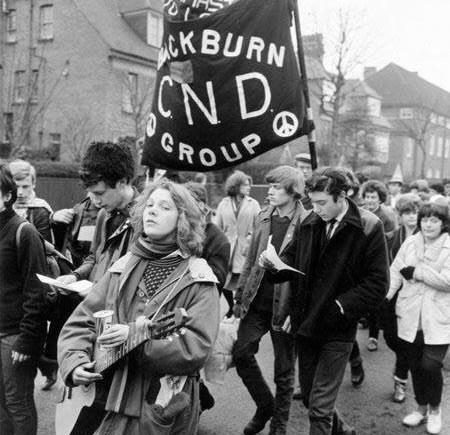



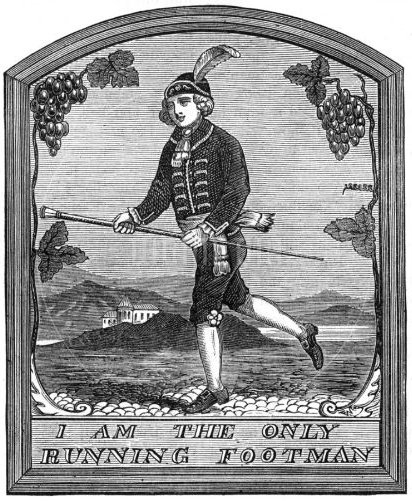


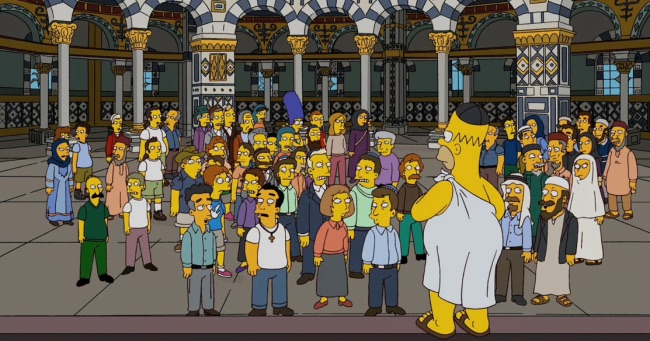


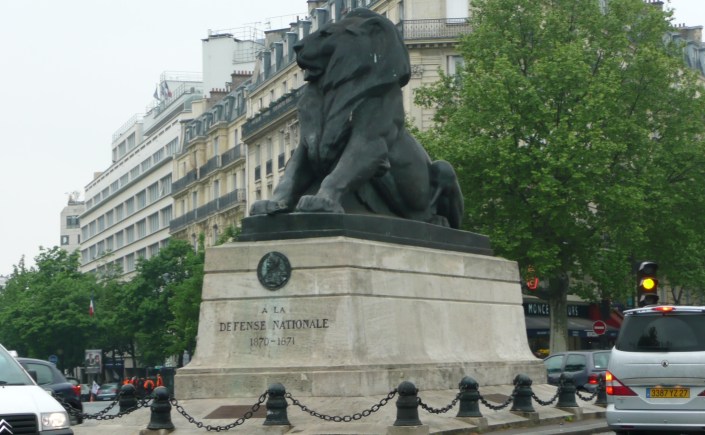
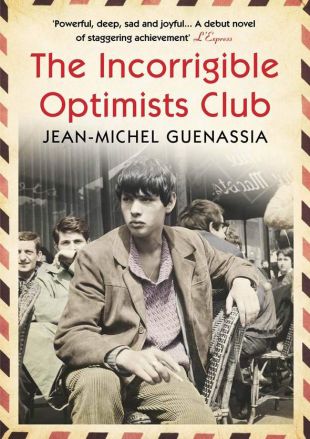

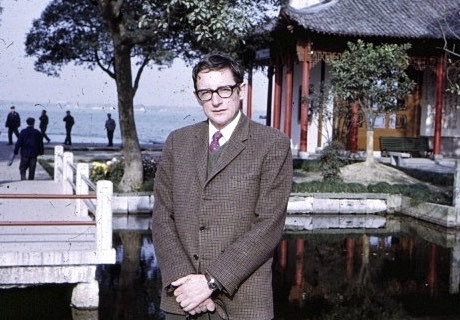

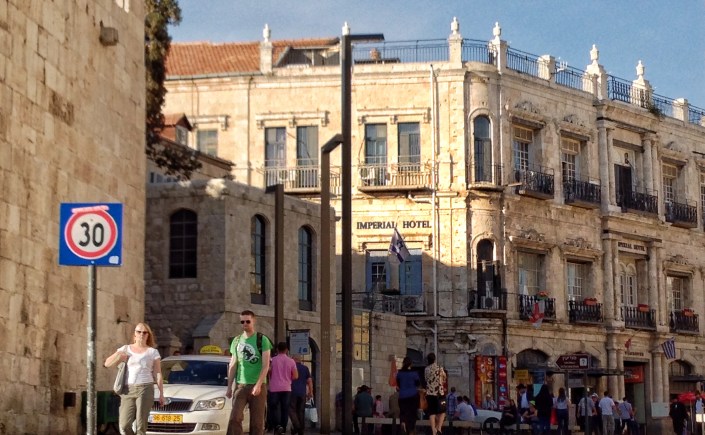
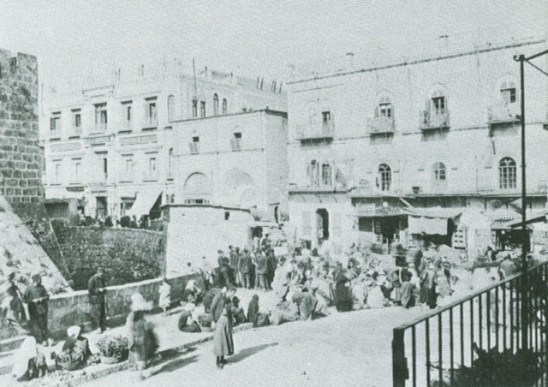

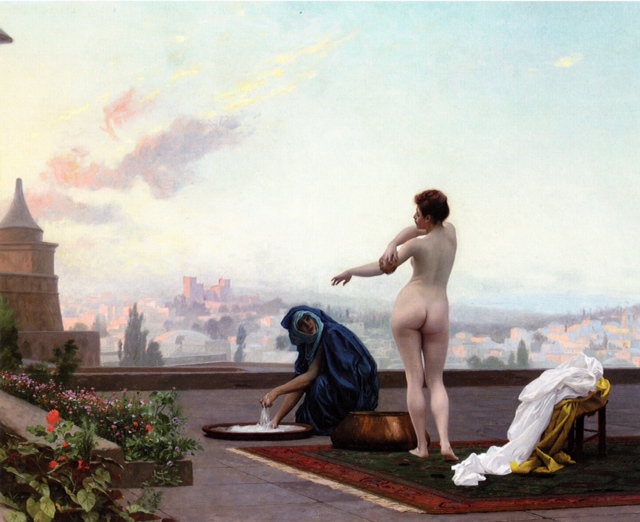
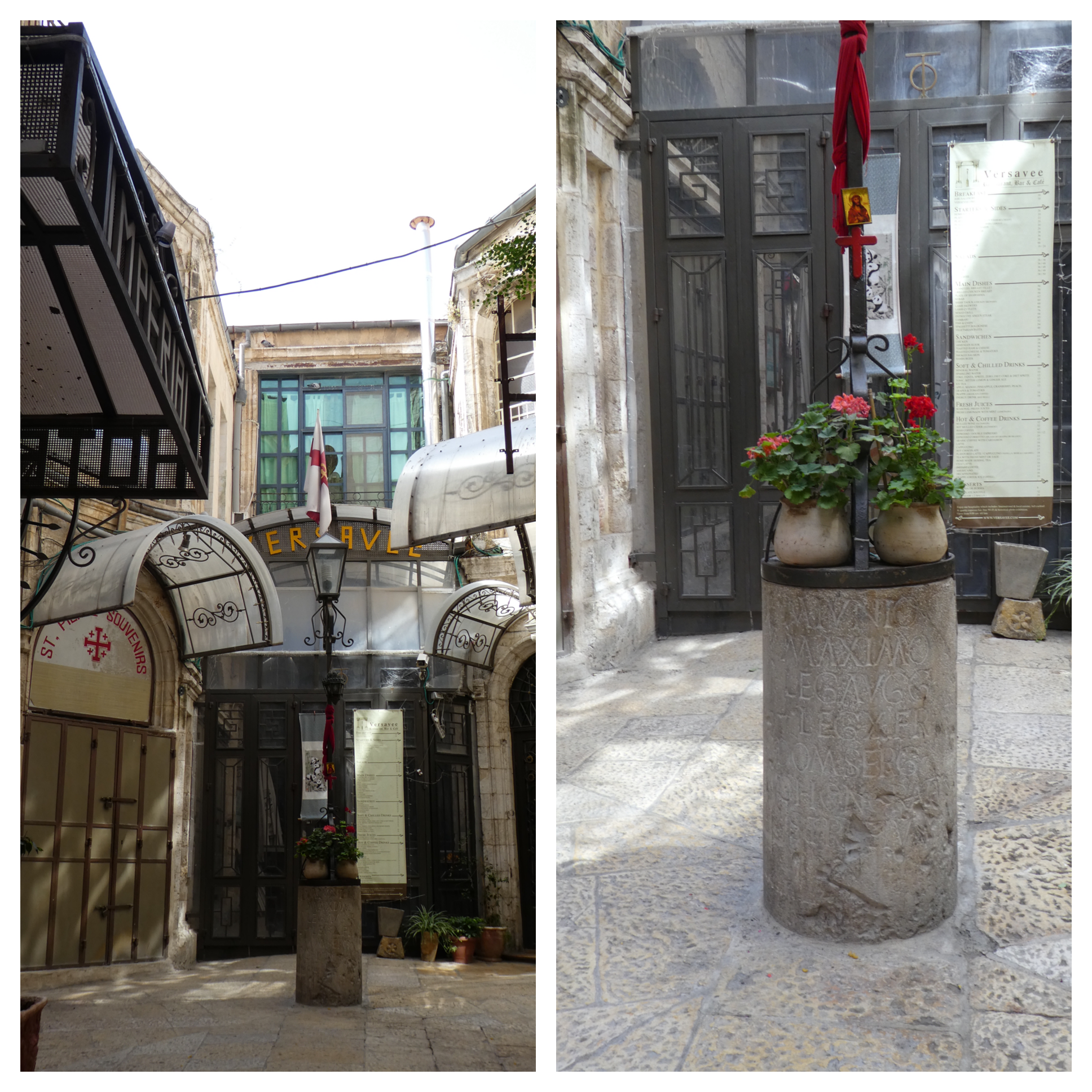
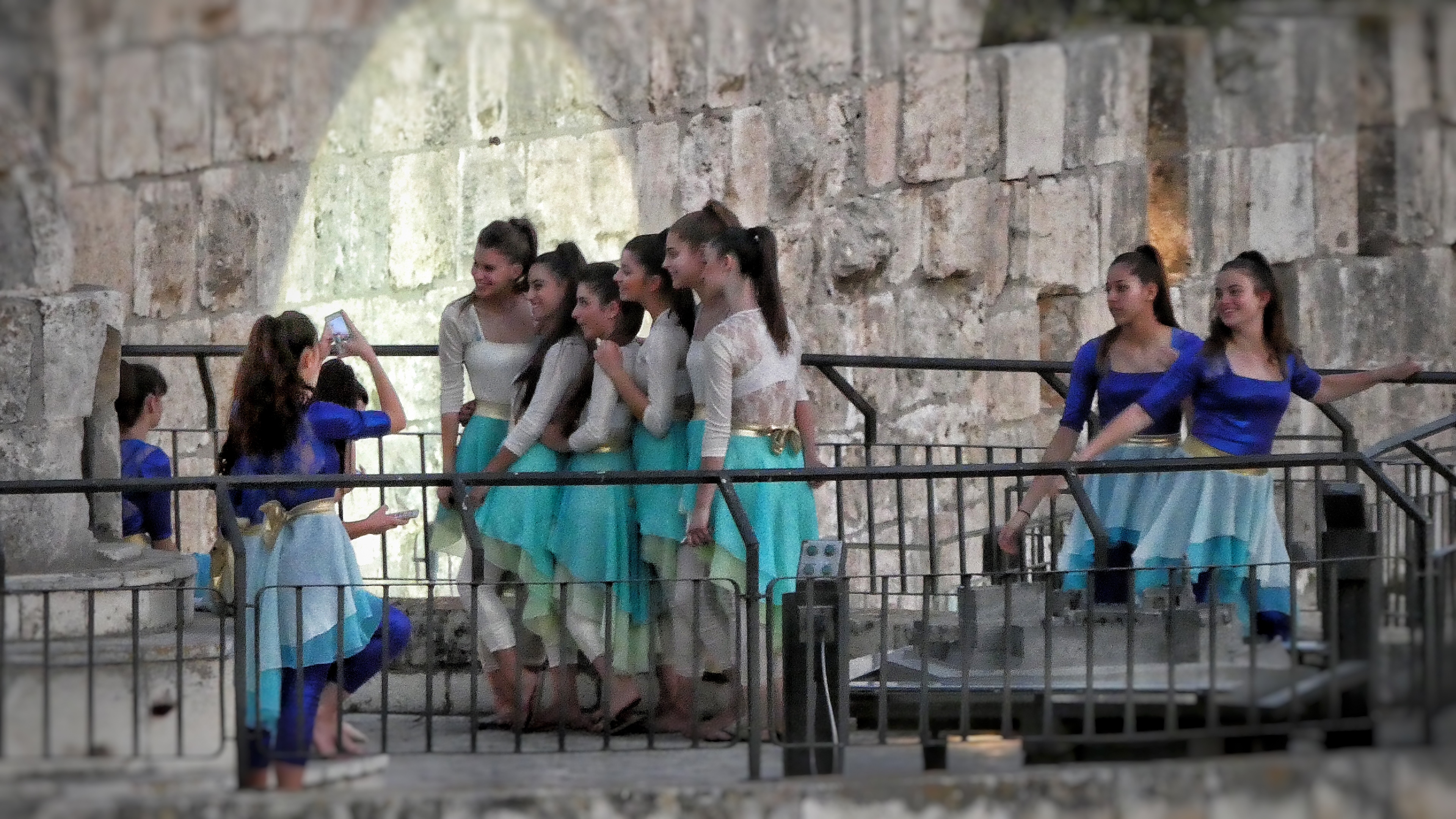


 In That Howling Infinite