Why do countries like ours’ and those of Western Europe appear to have settled into peaceful political processes that manage a degree of continuity and stability, and others do not?
In countries where modern institutions are weak and poorly developed, and a democratic or participatory political culture based on consensus and power sharing has not had the time or the political, social and economic conditions to develop, older loyalties and obligations trump allegiance to the state and nation and respect for, or at least, acceptance of its institutions and processes. Countries like Syria and Iraq, and much of Africa, were in reality modern contrivances superimposed upon the wrecks of old empires. The cartographical design may have been determined by the presence of natural resources in such and such a place, or the location of a port or river, highway or mountain pass. And often, in wide tracts of desert or jungle, mountains or plains, lines were simply on drawn on maps from point to arbitrary point, sometimes with the agreement or collusion of a rival power or friendly local despot.
In lands such as these, loyalty and allegiance to family, clan, tribe, religious sect, and ethnic group held precedence over the fabricated state and its often transplanted institutions and processes. Patronage, nepotism, corruption, and a network of mutual favours and obligations smoothed the paths of people seeking or seizing benefits or appointments. Old ways were tried and true, compared to aspirations or pretensions to fair and open governance. Political parties which emerged on ostensibly western lines were no more than parochial political machines, whilst gerrymandering, branch-stacking, vote-rigging and even violence ensured electoral outcomes that favoured the powers that be.
The culture of dependence and obligation that characterized pre-modern societies in the West is still the norm in much the world. And it is replicated throughout society, from the humble street-vendor to city hall. Need a license? A school scholarship? A better job? A party post? Want to avoid a traffic fine? A law suit? A jail sentence? Money changes hands. Deals are done. Debts are incurred. And social and political relationships are established. And thus, the creaking wheels of bureaucracy and governance turn, driven by patronage and payola, often greased with cash and the threat or actual use of violence encourages the emergence of and tolerance for the zaim, the strong leader. That leader develops a sense of identification with the country – not in the sense of service, but that of ownership. Family, clan, kinship and sect obligations and entitlements cement the zaim – literally “boss” – in place, whist patronage and brutal security forces beholden to the elite ensure that he is not challenged. Hence the mukhabarat (literally, intelligence) keep watch on dissent and protest.
Once in power, it can be difficult for the autocrat to vacate his seat. Family interests, party, sect and ethnic ties, and economic imperatives, and fear of retribution should the patriarch depart, render it dangerous for what amounts to a family business to relinquish the keys to the kingdom, and the levers of power. As they say, he who rides a a tiger never can dismount. Hence in countries as diverse culturally and geographically as Syria, Zimbabwe, the Central African Republic, the central Asian ‘stans of the former Soviet Union, and North Korea, the “dear leader” is strongly encouraged to hang in there by his nearest and dearest.
This is indeed how societies and polities evolved and developed during Europe’s so-called Dark Ages in the wake of the collapse of the western Roman Empire. When authority fails, its place is taken by force. Today, we see it in many places around the world, especially in the Middle East and Africa, where social order is under constant attack from paramilitary thugs and religious fanatics, and violence is endemic. Any large, diverse society includes individuals who do not conform to the law. And it is said that some 10% of us have the potential to become psychopaths. When that society is in a state of breakdown, violence and the resort to force become widespread, these come into into their own as chieftains, warlords, robber barons, and pirate kings rule their parochial roost, commanding mercenaries, militias, and private armies. As the Bard wrote, “Take but order away and hark what discord follows”. Violence breeds violence, requiring a corresponding use of force by the state to maintain order. And if the initial, brutal crackdown fails to stifle dissent and rebellion, to borrow from Shakespeare again, the dogs of civil war are let lose, and all hell breaks loose. The Bard of Avon had his Henry declaim “Cry Havoc”, this being an old English war cry that signaled no quarter, and ensuing rape and pillage.
On the marches of civil wars, the bleeding edges of nations and empires collapse in on themselves like stars to create black holes where roam robber bands, death squads, militias, and drugged and indoctrinated child soldiers deal out death and destruction whilst trading variously in oil, diamonds, heroin, grass, guns, and people, extorting dollars and gold from locals and from foreign donors. Quantrill’s Raiders and Jim Lane’s Red Legs cut a swathe through “bloody Kansas” and Missouri. And other times and places have seen their sad share of jaywalkers and bushwhackers. Swedish and German mercenaries marched back and forth across a devastated Mitteleuropa during the Thirty Years War, just as Reds and Whites ranged and ravaged through Byelorussia and Ukraine during the civil war that followed the Russian Revolution. The dying decades of the Twentieth Century saw this in Bosnia, Chechnya and Afghanistan. And it prevails today in Syria and Iraq, Libya and Yemen, Afghanistan and Africa.
And so, and as clear and present example, to suffering, sad Syria.
Following in Father’s Footsteps, Following Dear Old Dad
Bashar al Assad inherited this patrimony from his father Hafez. He was a reluctant ruler, not expecting to take charge. The heir apparent was his brother, a fast-living hedonist who died in a car crash. He did endeavour to bring about gradualist change in Syria. I saw changes whenever I visited Damascus.
This was not to suggest that Syria was an Arab utopia. There was a large divide between town and country, exacerbated by a a long and ongoing drought that forced many rural folk to migrate to the rundown fringes of the major towns, adding to pressures on resources, housing and employment. Whilst in practice a secular, multi-faith and multi-ethnic society, there was a cultural and spiritual divide between the conservative, Islamic rural communities and a more secular-minded urban middle class. The country was ruled for near on fifty years by a family and elite drawn from a particular, minority sect, which sat atop a pyramid of nepotism, patronage and corruption. And that rule was upheld by a cruel and efficient secret police and military special forces that kept a proactive watch on dissent. There was definitely an air of anxiety and caution amongst those who aspired to a more liberal Syria, with the midnight knock on the door, arbitrary arrest, and detention in one of the regime’s many political prisons being a fact of political life in this secular, socialist country.
But on the other hand, Syria was almost self-sufficient in food and oil products. It had well resourced and efficient health and secular education systems, and a flourishing arts scene. As a nation, Syrians were a tolerant and welcoming people, and within the bounds of religious propriety and political caution, freedom of worship, of expression, of lifestyle, and even of discreet gender preference were given. In the narrow streets of the Old City of Damascus, Thursday night, the eve of the Muslim holy day, was a fairy land of lights and laughter. Courting couples hand in hand, girls in hijab and uncovered alike; families promenading in their “Sunday best”; young goths with spiky hair and black makeup, short skirts and tight jeans. Busy stalls and sweetshops, crowded, street-side cafes – the famous Damascene maqha – or coffee shops.
Foreign observers, friendly and hostile, have noted how well-dressed and cashed-up the refugees flooding into Eastern Europe appear to be. The reality is that these are Syria’s middle class. By local metrics, they were comparatively well-off, and had a strong work ethic and a high wages to savings ratio. These were, and are Syria’s future.
Syrians were genuinely proud of their country, of its status as a centre of Arab culture and Arab nationalism, and of its history. And of its priceless archeological heritage. The Roman cities of Apamea, Palmyra, and Bosra; the Crusader castles of Krak de Chevaliers and Salah ud Din; the Byzantine monastery St.Simeon; the Umayyad mosques of Aleppo and Damascus; the Christian villages of Maaloula and Saidnaya where Aramaic is still spoken; the ancient suqs of Aleppo and Damascus. Syria was a historian’s idea of heaven.
When the revolution broke out, sympathetic commentators wondered whether Bashar would be “Hammersmith Man”, a reference to his former career as a ophthalmologist in London, where he lived for many years with his gorgeous, well connected, merchant banker wife and children, or “Hama Man”, recalling his father’s brutal crackdown on an Islamist revolt in that city in 1981 where in some thirty thousand souls perished at the hands of security forces. In the end, Junior was swept along by the elite’s blinkered but well-tried survival mechanism – force and fear.
Back in the heady days of the Arab Spring, Syrians from all ethic, religious and political groups hoped for a loosening of authoritarian controls. But the regime resorted to form and to repression. Sectarian militias murdered and mutilated initiating a cycle of bloody vengeance as a popular, peaceful and largely secular movement became militarized, polarized, in many areas, Islamized, and as internal and external interests with varying political, religious, and geopolitical motives became involved and embroiled against the regime, against the rebels, against each other. Regular forces, militias, warlords, village defense forces, Kurdish separatists, foreign fighters, mercenaries, foreign air forces, undercover operatives. A war of all against all, as Thomas Hobbes once said. To paraphrase Mark Twain, history might not repeat itself, but it certainly rhymes.
And now, whilst most of the antagonists have been herded by their foreign patrons towards a crowded and reluctant negotiating table, it all seems like a terminal case of “too little too late”. Syria is in ruins, some half a million Syrian are dead, and countless more maimed.and it its population is scattered, weighing heavily on the consciences and economies of neighbours and of the European Union. Syria as a nation state may in fact be no more. There is talk of partition, and a redrawing of the map that emerged from the peace treaties of The Great War. And the odds are that with Russian military support, Bashar al Assad, bete noir, pariah, lame-duck to those governments who wished him gone, and his Iranian and Hizbollah allies, are going to win the civil war.
He may or may not succeed. Right now, his forces are pushing back the rebels, writing himself a pivotal part in the peace. Right now, the parties talk and walk whilst the killing continues, and the diaspora grows. International forums are but talking shops, stages for self-righteous and self-aggrandizing posturing and stotting, acrimonious gatherings that appear to function in a time bubble that is remote from the brutal reality. If and when the guns fall silent, Bashar may or may not be able to put the country back together. He may or may not be able to recreate the multi-faith, modernizing, cosmopolitan society that existed before the war. He may or may not be able to disarm the hundreds of militias and private armies that have proliferated and even prospered during five years of chaos.
He will need billions of dollars and the help and goodwill of many nations to rebuild the towns and cities, and to restore the shattered archeological heritage. He will never bring back the dead, or the skilled and educated exiles who will chose to make new lives in foreign places of greater safety. Nor will he be able to repatriate the thousands of plundered artifacts and treasures that have disappeared into the international black market. He will not be able to heal the wounds, give solace to the bereaved, assuage the grief, counsel and treat the trauma, and divert the desire for vengeance into the promethean labour of reconstruction.
Putting his own words into the mouth of a conquered British chieftain, an old Roman once said, “solitudinem faciunt, pacem appellant” – they make a desert and they call it peace.
A Contemplation of Historical Fiction in Book and Film
A post in the British Medieval History Facebook Group a couple of years back happily anticipated the upcoming showing on US TV channels of the adaptation of British author Philippa Gregory’s War of the Roses White Queen Trilogy. A tiny stone created large ripples. Over 400 comments weighed the pros and cons of the book, the film, and also, the fact that a fictionalized version of history was being discussed so enthusiastically among the ought-to-be seriously-minded group. Much midnight oil was burned over its historical accuracy or lack thereof. There was even hint of transatlantic conflict with American members being overwhelmingly ”pro” for each of the aforementioned and many – but not that many, really – British members being “con”.
I joined those in favour, contributing a mini review: “Good-looking historical soapie, but a story well told, well presented, well cast, and well acted. The whole yarn is there. The power plays, the politics, the treachery, and the bloodletting. The princes in the tower. Clarence drowned in the butt of booze. My horse, my horse, my kingdom for a whole posse of horses. The lead, Rebecca Ferguson, the blonde with the sword in our featured image, was the Bond girl in Spectre, but don’t let that put you off. Richard of Gloucester, who became R3, was perhaps too good looking. He is played by Aneurin Barnard, a fine British actor who did very well as Cilla Black’s beau Bobby in Cilla, as photographer David Bailey in We’ll Take Manhattan, as Boris Drubetskoy in the BBC’s recent War and Peace. And James Frain, who played a smooth and sinister Cromwell in The Tudors, is an obsessive, controlling Warwick the Kingmaker”.
The robust exchange of views among group members inspired me to contemplate the connection between historical fiction and the real deal. What follows is a subjective amble through some of the highs and lows of historical film and fiction. It is a personal reflection, self-indulgent, and replete with comments, asides and digressions.
I confess a liking for slash and bash, doublet and hose, cloak and gown, suddsers. Indeed, to enlarge the historical envelope somewhat, i am partial to the “sword and sandal” epics or yore also, but I’ll l leave those for another day. Whilst I very rarely read the books (there are just too many other things to absorb nowadays), I relish the film adaptations – usually with a nice wine and an iPad and Wikipedia on hand to fact check. I am not too fussy – or high-brow – when it comes to entertainment. I am of the “I like what I like school” of literary appreciation, and I can watch the good, the bad, and the “this doesn’t really do anything for me” (although I have been getting fussier of late).
Tudor eye candy
Some can be excellent. The Tudors was addictive and sumptuous to behold, with its more gorgeous-than-life casting of the lead players. Henry VIII and Anne Boleyn will forever be Jonathan Rhys Meyers and Natalie Dormer for me, notwithstanding Nat’s gorgeous but doomed Marjaery Tyrell in the “you either love it or you hate it” Game of Thronesmega mythology and JRM’s sexy soccer coach in Bend it Like Beckham. The series was bright, glittering, and sexy, with an air of perpetual treachery and danger. Wolf Hall, by contrast, was dark and brooding (not just the candle-lit interiors), dour and doleful, with an air of perpetual treachery and danger – but it was not a patch on Hilary Mantel’s masterful novels. The jewel in the crown has to be the late-seventies sword and sandals saga I Claudius, the life and times of a typical dysfunctional, incestuous, and vicious Roman family that was, to borrow Lady Caroline Lamb’s description of Lord Byron, mad, bad and dangerous to know. All three were relatively historically accurate, though with a fair bit of poetic license for dramatic effect.
I Claudius
Not all are this good, however. The adaption of Ken Follett’s cathedral-constructing edifice, The Pillars of the Earth, was like watching paint dry, and its sequel, World Without Endoutdid it in ennui and melodrama, notwithstanding its concluding twist on what may or may not have really happened to bad, sad King Edward II. The adaptation of Kate Mosse’s Labyrinth, a strange hotchpotch of magic and modernity told a story of the Albigensian Crusade and the persecution of the Cathars in 13th Century France, and was laboured and contrived. But even with these lacklustre longueurs, I hung in to the literally and figuratively bitter end. Historically accurate? Yeah, but, no but, yeah but…
Even second division movies like King Arthur, Gladiator and Kingdom of Heaven can draw me in if well directed, well told, and cinematographically well depicted. When it comes to film-making, Ridley Scott, who directed the latter two, can do no wrong, although he can be hit and miss when it comes to the story line (he fares much better with Sci Fi – think Alien and Blade Runner – than with history). There are exceptions: Braveheart (and not just because the wigs looked like they were purchased from the people who gave us Conan the Barbarian), Troy, which was, well, kind of odd (including, as it did, Brad Pitt’s grumpy, well-buffed Achilles), and Oliver Stone’s Alexander which was actually unwatchable – I gave up on it, and I reckon Colin Farrell would leave this one off his cv.
King Arthur
Fine fiction and, indeed, fine plays often make for fine films. Ian McEwan’s Atonement (prewar England and Dunkirk), David Lean’s Dr Zhivago (the Russian Revolution and Civil War) and Margaret Mitchell’s “Gone with the Wind” (the Old South, before, during and after the Civil War). Alexander Dumas’s La Reine Margotwas transformed into a beautiful, brutal and sad film by Patrice Chereau (dynastic skulduggery and religious persecution in sixteenth century France). Then there is Robert Bolt’s A Man for all Seasons (Thomas More versus Henry VIII), James Goldman’s The Lion in Winter (Henry II versus his wife and sons), and Jean Anouilh’s Becket(Henry II again, versus his troublesome priest). Though all talk and no action – this trio were plays after all – they were beautifully rendered with stellar casts, each portraying a king who had to deal with opinionated, difficult people, each echoing Christoper Marlowe’s Edward II: “Was ever king thus overruled as I ?”
Moreover, high-end historical fiction has entered the literary canon. Like Robert Graves’ I Claudius, Alexander Dumas’ Three Musketeers, Charles Dickens’ A Tale of Two Cities, Victor Hugo’s Les Miserables, Leo Tolstoy’s War and Peace, Mikhail Sholokov’s And Quiet Flows the Don, Boris Pasternak’s Dr Zhivago, and Remarque’s All Quiet on the Western Front. Each of these have made the transition to film, some with more success than others. Are there contemporary works that might enter the pantheon? What do you think? Maybe Hilary Mantel’s Wolf Hall trilogy – and also, her debut, A Place of Greater Safety, a French Revolution door-stop and a masterful retelling of those tortured times.
Queen Margot
Probably the most controversial historical film of all time is David Lean’s “Lawrence of Arabia”. Historians, critics, and partisans of all faiths and factions have argued about this one ever since it first screened back in 1962. It is a deeply flawed film insofar as it reflects a condescending Orientalism, but a timeless masterpiece nonetheless. Love it or loathe it, one cannot deny the charismatic performance of Peter O’Toole, and the magnificent wide-screen vistas of Jordan’s Wadi Rum. That first vista of the desert sunrise with the music of Maurice Jarre. Man! Another film of that ilk – and also one of my all time favourites – is John Huston’s “ The Man Who Would be King”, a ‘boy’s own’ venture based loosely on a story by poet and Empire booster Rudyard Kipling.
Sean Connery and Michael Caine go “undercover” in The Man Who Would Be King
I tend to skip the Mid Nineteenth Century and early twentieth century, which rules out quite a bit of Victoriana and Edwardiana – including “Downton Abbey”, Dickens, Jane Austen, and Emily Bronte. But that is more a matter of personal taste than a dislike for this period. Where does the recent Rajarama “Indian Summers” fit into this mix? A steamy, scenic, well-dressed melodrama of class, caste and copulation set in exotic and tumultuous times. Or the Anglo-Indian ‘upstairs-downstairs’ film “The Viceroy’s House”, a Romeo and Juliet story set against the political duplicity, violence and death of the partition of India in 1947.
To my mind , one of the most enthralling and memorable of historical dramas I have seen is David Milch’s magnificent “Deadwood”. It is set in the eighteen seventies, and is a western too! It ticks all the parental guidance boxes: substance abuse, sexual scenes, strong language, and adult themes. And as a bonus, the acting is superb, the characterization likewise, and the script that traverses from the sacred to the (very) profane and borrows heavily from the raw vernacular and language that channels Shakespeare and Melville. Its lead, Ian McShane, portraying the vicious, conniving, whore-master Al Swearagen, went on to play eccentric Swearagenesque cameos in the aforementioned “Pillars of the Earth” (with predictable, and in that bland film, welcome profanities), in “Game Of Thrones” (an imagining of Al as if he were later to repent and forswear his wicked ways?), and even in a Woody Allen B-movie (“Scoop”, in case you’re interested).
Deadwood
The historical dramas I enjoy can be relatively modern too if they reflect and contemplate well how folk lived, loved and perished in the near past. “Foyle’s’ War”, for example, captures perfectly the ethos and the spirit of place of Britain during the Second World War. Likewise “The Hour” beautifully recreates Britain during the nineteen fifties, just as “Mad Men” draws you back into moods, manners, music and mores of the sixties and early seventies.
But, let’s return to where I began.
Does historical fiction have a place in a History Group forum? Particularly if it plays fast and loose with the established historical record and substitutes glitz and glamour for historical realism.
Historical fiction is for many folk the portal into a lifelong passion for history. And so it was for me. As a young lad growing up in early sixties Birmingham, I devoured Louise Andrews Kent’s “boys own” explorer series. I “went with” them all: Columbus, Marco Polo, Drake, Magellan, and Vasco da Gama. In a sense, I am still travelling with them and their successors both noble and notorious: Cortez and Pizarro, Lewis and Clark, Burton and Speke, Gertrude Bell and Freya Stark, and many others. My adolescent yearnings were sublimated by Sergeanne Golon’s almost soft-porn melodramas featuring the beautiful and pneumatic heroine Angelique. This was my introduction to the history of seventeenth century France: Richelieu, Louis Quatorz, Huguenots, Versailles, and the rest. She was actually bedded by the Sun King himself, and on another exotic frolic, amongst the Barbary pirates, landed herself in the Sultan’s harem. Such thrills for a young lad!
The seed was sown. And good teachers can inspire deeper, and even intense interest. Once my interest in history had been piqued as a youngun’, it was a fabulous teacher who channeled that interest into exploration and inquiry, and a charismatic and wise tutor at university, a Hungarian emigre and refugee of 1956, who despatched me down academic paths. The times were right too – the mid to late sixties, when questioning and dissent were in the air, and old shibboleths were being broken down. Timothy Leary advised that we ought not believe what those in authority told us, and this applied to all authorities, be they political, spiritual, social or intelkectual. I did not cleave to an academic path, however. Travel, romance, and music cast me up on other shores. But the spirit of history still moved me and moves me still.
As for my historical education, the rest, as they say, is history. Or, to quote Saint Paul, “I put off childish things”, and got into the heavy stuff. My point being that young persons’ fiction, and grown-ups’ mass-market (some call it “pulp”) fiction like that of Philippa Gregory, Paulina Simons, and Bernard Cornwell’s Grail Quest, Sharpe and Anglo-Saxon series are inspired by and in turn, inspire an abiding interest in history. An old soldier once told me that he reckoned Zoe Oldenbourg’s “Heirs of the Kingdom”, a tale of the First Crusade and the bloody conquest of Jerusalem, was probably one of the most realistic and visceral depictions of warfare that he had read.
Talking of ‘series’, there is a worrying tendency of writers these days to fail to stop at the red light of one book. I blame it all on Frank Herbert and the fourth, fifth and sixth volumes of his “Dune Trilogy” (he really should have stopped at two!). There was, however a series that I devoured back in the nineteen seventies: George McDonald Fraser’s rollicking, picareque, and quite political incorrect Flashman books. These saw the eponymous anti-hero (the unreconstructed villain in Thomas Hughes’ Victorian yarn “Tom Brown’s Schooldays”) roving and rogering his way through the late nineteenth century, somehow managing to escape by the skin of his teeth from one military disaster after another, including Custer’s famous demise at Little Big Horn, and the last stand of the 44th Foot at Gandamak during the disastrous First Afghan War of 1842, One outstanding volume sees the pusillanimous Flashie fleeing eastwards out of The Crimea having precipitated the disastrous Charge Of the Light Brigade (Captain Nolan was fitted up – and we have had a long poem and at least two questionable films inflicted upon us) and making his way through the vast Asian hinterland, one step ahead of the invading Czarist armies, and of sundry Muslim warlords. Amidst the humour is a poignant reminder of those ‘lost worlds’ that succumbed to the relentless blade of progress,
Gandamak
So, to conclude this self-indulgent post, I think my own position on the usefulness of historical fiction is transparently in the affirmative notwithstanding that I am a history tragic and news junkie, and most of my reading is non-fiction. I love walking down what Welsh poet RS Thomas called ‘the long road of history. My favourite quotation is that of Irish writer John Banville: “the past beats inside my like a second heart”.
Because as human beings, one thing is for certain: we all love a good story. As they say, in Arabic, as indeed in all tongues, times and places, “ka-n ya ma ka-n bil ‘adim izzama-n wa sa-lifi al aSri wa la-wa-n”‘ or, “once upon an time”.
I didn’t surrender, but they took my horse and made him surrender. They have him pulling a wagon up in Kansas I bet.
Chief Dan George, as Lone Watie in The Outlaw Josie Wales
In the winter of ’65 We were hungry, just barely alive By May the 10th, Richmond had fell It’s a time I remember, oh so well, The night they drove old Dixie down.
Robbie Robertson and The Band
The Band, from The Last Waltz
I do not profess to be an expert on the subject, and being an outsider, I do not presume to preach. Nor am I a civil war tragic like some of our politicians here in Australia – they can tell you precisely who said what at what o’clock on such and such a location on this battlefield or that.
Mind you, a civil war that claimed more than seven hundred thousand American lives, tore a young nation apart, and the echoes of which reverberate still one hundred and fifty years later, is bound to exert a degree of fascination on an inquiring mind.
Recently, the dead hand of the American Civil War reached out and touched the hearts of Americans and their friends throughout the world in the wake of yet another mass shooting. This time, a young man gunned down worshippers at prayer. That the victims were folk of colour, and the shooter, a young white extremist, reopened wounds that have never really healed.
What made this massacre different from all the other massacres was the prominence of the Confederate flag in the iconography of the fresh-faced killer. The battle flag of Dixie has never gone away. It flies inThe Dukes of Hazzard, True Blood, and even The Walking Dead, and is a favoured accessory above government buildings and at right wing rallies in The South, those former secessionists states that lay south of the Mason-Dixon line
But what also makes this slaughter different from all those other slaughters is that something is actually being done about it.
Not, however a tightening of gun laws. The Second Amendment is safe and still well kept. The President mourns with the grieving relatives and congregation and breaks into song. POTUS’ rendering of Amazing Grace goes viral on You Tube. But as ever, nothing can be done. No God or mortal can stymy the U.S’ long-time love affair with the gun, nor challenge the NRA choke-hold on the American polity – particularly with the next presidential race in the starting blocks.
No, not the right to bear arms. But the rather, the right to flaunt the Stars and Bars, an enduring symbol of the lost Confederate cause, and a rallying point for those who still believe the rebel cause to be just, those who take solace from an heroic defeat, and those who believed that “the South will rise again”, and indeed those who KNOW that the South has indeed risen again. For have not the white, right wing, God fearing, Clinton-baiting, and Obama-hating ‘Red’ states of the South conquered and colonized the American political system?
Flags can unite nations. And also divide them. And none more so, it seems, than this one. Professor Colin Tatz once said People will forget what you said. People will forget what you did. But people will never forget how you made them feel. This flag is potent symbol that spans both sides of the great divide. It is seen by many a a symbol of racism, and in the wake of the killings, there has been a loud call to remove it from public places and events. Others see it as part of their identity, of who they and their families are. They refuse to surrender it and to trade it in for Old Glory. The call has been met with with, well, dare I say it, defiance and rebellion. If you’ve got one, flaunt it – on houses, on cars, on roadsides, on Facebook posts, blogs and websites. Here are few of th m, all worth reading to place the battle flag in its social and political context:
I do not want to editorialize here. Rather, I would like to share the following piece in the Washington Post. It is symptomatic of the intellectual and cultural reaction to tragic events. If your cannot do something positive and practical about a problem. Advocate something symbolic, politically correct, a placebo even. Like banning the film Gone with the Wind.
The past is another country. They thought things differently there: The iconic film opened with “There was a land of Cavaliers and Cotton Fields called the Old South. Here in this pretty world, Gallantry took its last bow. Here was the last ever to be seen of Knights and their Ladies Fair, of Master and of Slave. Look for it only in books, for it is no more than a dream remembered, a Civilization gone with the wind…”
So, as students of history, do we call for the suppression of an artistic rendering of the past because we feel uncomfortable with the ideas, opinions and sentiments expressed therein? If this sprawling Southern soap opera, this pseudo Shakespearean tale of love lost and found and lost again, against a backdrop of great events, is to be consigned to the oublier of history, why cease there? Why not Lawrence of Arabia? The Outlaw Josie Wales? The Searchers? Showboat?
Let’s not go there. The South will always be with us, in our thoughts, in our historical memory, in our art and literature, our books and films. It is forever on the border of our consciousness. Even when listening to our favourite music.
Born in the early years after the end of World War II, I was aware that the dominant mood was relief that it was over, sadness at those lost and most importantly a forward looking attitude to improve things and not simply to get back to what life had been like before. The traces of the conflict were all around me in once blitzed Birmingham – in the barren, levelled ‘wastelands’ where streets had once stood, in the austerity, and the monotonous and monochrome drabness of couture and cuisine. To my boyish mind, “the war” was a shared community experience, a shadow which few, I now recall, talked about; but also, the stuff of puerile fantasies fostered by comic books, Airfix models, and patriotic movies that were literally and figuratively black and white.
Life was not all roses in those immediate post-war years, but better by far than what went before. Rationing was still in place when I was born in Birmingham in 1949, not ending until 1954. Young men still had to do their national service (the last call up was in 1960, the year I started Secondary school). We lived with our aunt in a cold-water, back-alley walk-up on the border of Balsall Heath (just inside Moseley, a ‘better’ suburb). Aunty Mary was my mother’s mother’s sister. When her sister died and daddy Paddy ran off with another women, Mary brought the six children over to Birmingham from Enniscorthy, County Wexford one by one. She had come to Birmingham from Ireland before the war, after her husband had run off (these things happened in Catholic Ireland). And she lived in that same old house right through the Blitz when German bombers regularly targeted The Second City’s engineering, motor and arms factories, and not a few public buildings including the Piccadilly and Waldorf cinemas on nearby Stratford Road.
I was born in her house. She had a friend who had once given birth, so that friend was the midwife. My brothers followed over the next two years. By then, National Health Service had kicked in, so they were born in hospital. Childbirth, forever dangerous, was now rendered less life threatening. There we all lived, three kids, our folks, three uncles, two aunts, a dog and a cat. Three bedrooms, girls in one, boys in another, and our family in the third. Outside loo and coal shed, no bathroom or hot water (we kids bathed in the kitchen sink and grown- ups went down to The Baths), Cold and damp, and close to the shops. And there we lived until, in 1956 when a council house in Yardley Wood became our first family home. Cold and colder running water that froze in winter, but it was at least inside the house; bathroom with hot water boiled in a big gas boiler; and an outside flush lavatory that was nevertheless immediately adjacent to the backdoor and not down the garden. A big garden too, for winter and spring vegetables, and summer camp-outs.
There we grew, with free medical treatment for all our ailments, and free optical and dental care. I still have crooked teeth – no fancy orthodontics on the NHS – but I have all my teeth still. And my eyesight. We were educated, for free. This came in during the war with the Butler Act. So, thanks to the Welfare State, we were housed and healthy enough to get to primary school and beyond. Once there, we had free books, free pens and paper, and compulsory sport, and doctors and nurses would turn up on a regular basis to check our vitals. And thus, we were able to reach the glorious ‘sixties ready to rock ‘n roll.
Which brings me by a circuitous route to British director Ken Loach’s 2013 documentary, The Spirit of ’45, a celebration of the radical changes that took place under the Labour government of Clement Attlee which came to power in 1945.
What a year that was! No sooner had the war ended, than the British electorate voted out its esteemed and beloved war leader, Winston Churchill, and bought Labour’s promise of a democratic socialism. Drawing on archive footage, and presented in black and white with contemporary interviews with dockers and miners, doctors and nurses, politicians and economists, Loach describes the nationalisation of the public services, and their subsequent privatisation three decades later. His interviewees provide poignant anecdotes about the poverty of the 1930s, dangerous and exploitative working conditions, poor housing, and abysmal health care, and the renewed sense of purpose and optimism after the end of the war and Labour’s landslide victory. He recounts the subsequent expansion of the welfare state, with its free to all medical service, and the nationalization of significant parts of the British economy, most notably, electricity, the railways, and the mines.
The Attlee government was elected due to a general belief that nothing would or could be as it had been before. Britain had pulled together to win the war; now, it would transform the peace. This was The ‘Spirit’ of ’45.
But whilst ‘spirit’ can imply ‘esprit’ and elation, it can also mean ‘ghost’ insofar as Loach rages against the death of all that hope, optimism, and vision in the decades that followed.. It is a call to arms for a return to the public unity of those heady post-war years and against the policies of subsequent governments, and most particularly those of Margaret Thatcher, that have progressively demolished the Britain that Clement Attlee and Aneurin Bevan strove to build. And it is a reminder that the NHS is worth fighting for at a time when it is being progressively dismantled. With stills of modern soup kitchens and the Occupy movement camped outside St Paul’s, Loach clearly believes that Occupy inherits that spirit of ’45.
Viewing The Spirit of ’45 was exhilarating. It was full of Wow! moments. The footage of the poverty of the depression years, the slum dwellings, urchin children playing on the streets or on the slag heaps, the unemployment queues, the scavenging for coal, the Jarrow March. Diseases now preventable or eradicated, then mortal. Five in a bed, and two of them dead. Malnutrition and rickets. Bread and dripping sandwiches? You needed beef for dripping. Fat chance. It was bread and jam, thank you (and grateful for it, one was tempted to respond – there were indeed some Monty Python moments there, particularly the one-down-manship sketch “when I was a lad, we were so poor…”
Relying so heavily on memories and reminiscences, the film is nostalgic, sentimental, and simplistic even, with little in-depth analysis. A tick-a-box of the many innovations that greeted the arrival of the baby boomers. Presented in such a clear and uncluttered fashion, it was quite stirring. That is Ken Loach for you. What you see is what you get: a one-sided history lesson.
The film leaps from the Attlee government straight into the darkest days of the Thatcher government, with no discussion of the political, economic and social changes and challenges in between. The road from Clement to Maggie was an eventful and for many, a traumatic one. The Counter Revolution took decades to establish itself. The great experiment of 1945 contained the seeds of its own destruction.
Loach’s focus on the years of nationalization and privatization makes narrative and dramatic sense.
But the years in between were dramatic also. Read Dominic Sandbrook’s great quartet. The titles say it all: Never Had It So Good: A History of Britain from Suez to the Beatles; White Heat: A History of Britain in the Swinging Sixties; State of Emergency; The Way We Were: Britain 1970–1974; and Seasons in the Sun: The Battle for Britain, 1974-1979. These were best of times, these were the worst of times, as the Great Man might have said. And the worst was to come, when Britain apparently went down the gurgler, and Thatcher had to break it to fix it. And like Dr Frank’s monster, it did not quite come back together right.
The Spirit of ’45 received favourable reviews (one follows), most writers qualifying their praise with Loach’s unapologetic partisanship – he is Ken Loach, after all, and you either dig him or you don’t. My favourite film is his 1995 Spanish Civil War drama,Land and Freedom. And you most certainly don’t get a balanced view of that conflict from this. As with The Spirit of ’45, you just sit back and go for a revolutionary ride.
See also othet memories in In That Howling Infinite:
Ken Loach rarely makes documentaries, and when he does, they’re usually about an urgent topical issue, such as the 1980s miners’ strike (‘Which Side Are You On?’) or the 1990s Liverpool Dockers’ strike (‘The Flickering Flame’). On the surface, ‘The Spirit of ’45’ takes a longer view than those films. This rousing and saddening film reminds us of the air of progress and reconstruction that took hold in British politics immediately after World War II. It takes us right back to the founding of the welfare state and, with it, the nationalization of the health service, transport, energy, housing and other areas of public life, as initiated by Clement Attlee’s 1945-1951 Labour government. The faces we see at the beginning of the film of young Britons celebrating in the fountains at Trafalgar Square in May 1945 symbolize the hope of a nation: that things can only get better after six years of war.
But Loach, the director of ‘Kes’ and ‘Looking for Eric’, is equally concerned with the spirit of modern Britain. For him, the socialism of our past – of Attlee and his comrades Nye Bevan, Herbert Morrison and others – could teach the present a thing or two. And so the second part of ‘The Spirit of ’45’ ponders an altogether different mood than that in the 1940s: Thatcherism and the more recent failure of organised labour to live up to its founding principles. If ‘The Spirit of ’45’ might provoke David Cameron to raise his eyes skywards, it might also have Ed Miliband cowering behind an unwritten manifesto. Loach’s quiet, unforced position is that the left is equally guilty of abandoning the promise and passion of the post-war years.
Yet, as political essays go, this is a tender, soft and humane film. It’s a compelling mix of interviews, old and new, with archive footage, much of it from old newsreels and public information films. There’s no voice-over, just faces and voices – the voices of ageing nurses, doctors, miners, union officials and others, alongside a handful of economists and historians. Some of Loach’s arresting interviewees, like Sam Watts from Liverpool and the former Welsh miner Ray Davies, recall what poverty looked like in the 1930s, reminding us why the welfare state was necessary in the first place. Others, like a trio of nurses from Manchester and the Welsh GP Dr Julian Tudor Hart, remember the excitement and the work of the early NHS. In fact, the NHS emerges as one of the film’s chief concerns: it’s both the great survivor of the welfare state and the institution of that age currently facing the biggest threat from political decisions.
Ninety-odd minutes is not enough for this subject. There are inevitable omissions (no education, for example), and Loach makes a slightly jarring leap from a chronology of nationalization that speeds through the 1950s and ’60s to the 1979 election of Thatcher. But always apparent is his clear thesis and the infectious commitment and fervour of his interviewees. The film works all at once as a lament, a celebration and a wake-up call to modern politicians and voters.
The Lebanese Civil War broke loose forty years ago this month. A cold war fuelled, by aggregating hostility between the Palestinian refugee community, a militarized state within a state, and their reluctant Lebanese hosts, became hot with deadly clashes between Palestinian and Maronite militias. Sects, clans, families, and the political parties and militias that gathered about them, went for their guns, the hounds of hell were loosed, and the massacres began.
In a Levantine echo of the Thirty Years War that raged through Western Europe from 1618, cities were destroyed and the countryside ravaged as armies, militias and gangsters fought over the fallen body of a divided and devastated land. Muslims fought Christians, Sunni fought Shi’a, Maronites fought Orthodox, Druze fought Muslims and Christians, Syrians fought Lebanese and Palestinians, communists fought nationalists, and Palestinians, at one time or other, fought everyone, including other Palestinians. And all changed partners and enemies in a bloody danse macabre that was at once mediaeval and mid-20th Century in its savagery.
This Hobbesian “war of all against all” drew in outsiders. Syrians, who during the course of their intervention, changed allies and adversaries as their political and strategic aims and interests mutated, and ruled the country until, implicated in the assassination of popular former prime Minister Rafik Hariri in 2005, beat an undignified retreat (whilst never quite relinquishing the levers of power). Israelis, threatened by guerrilla attacks in the Fatah land of southern Lebanon, ostensibly invaded Lebanon to destroy the Palestinian military machine, and as the midwife in the birth of the Shi’a Hezbollah, waded with eyes wide shut into a quagmire that many have viewed as their Vietnam. Americans and French, who intervened with the aim of separating the warring sides and pushing them towards a ceasefire, departed in the aftershock of Hezbollah bombs that killed hundreds of their servicemen. And United Nations Blue Berets who serve and die still in the hostile borderlands.
The war raged for the next fifteen years, staggering to an end in 1990 after claiming over 150,000 lives and destroying the lives of tens of thousands of others, including over 100,000 permanently handicapped. Nearly a million souls fled their homes, and some 76, 000 remain displaced to this day, now forgotten in the midst of the new and greater Syrian diaspora, whilst tens of thousands emigrated permanently. There are still some 17,000 “disappeared” who may be either still in Syrian or Lebanese jails, or more likely, in one of hundreds of unmarked graves scattered across this tiny country.
There are no memorials, no cenotaphs, no national commission to trace the missing, and no Madiba to gather and reconcile the sundered tribes. Just memories of what those who endured call “the events”, and for some, a selective amnesia. A harrowing half-life endures, sleeping embers constantly being fanned to life by the ill winds that blow across the porous frontier with Syria and the iron curtain that separates Hezbollah from Israel. It said that old wars beget future wars. And in no land can this be more of a self-fulfilling prophecy if the Gods Of War have their way.
As well they might as the legacy lives on in the rise and rise of Hezbollah, a non-state that is stronger than the state. In the use of car bombs, suicide bombers, foreign hostages, and human shields as canny weapons in what we now call asymmetrical urban warfare. In the destruction of the Palestinians’ once formidable military muscle, now quarantined in the Gaza ghetto and the impotent Palestinian Authority. In remembrance of the massacres of Sabra and Shatilla that still haunt Israeli and Palestinian dreams, when Yasser Arafat decamped for Libya with his army and left his people at the mercy of the Phalange militia. The Palestinians are still in Lebanon, still yearning for their terra irredenta in the south.
And in Lebanon redux, some say the old hatreds linger still and could rekindle the fires of war. Others hope that a younger generation do not take the road to perdition travelled by their elders. Armed young men in Sunni Tripoli and in Beirut’s Shi’a suburbs, and fighting in Syria may disagree. Calmer countries chart their fortunes with the rise and fall of their financial indices, whilst Lebanese can check the political weather by watching the market price of hand-guns and Kalashnikovs. They may have buried the hatchets, but many know where they are buried.
The roots and fruits of the Lebanese civil war are myriad and complex. The redoubtable journalist Robert Fisk unravels them best in his tombstone of book, Pity The Nation. Read it and weep. For it is a bloody saga of trial and treachery, of enmity and endurance, of courage and cravenness, but most of all, of infinite sadness. And none more so than when he writes of a Lebanese doctor, Amal Shamaa: “I had to take the babies and put them in buckets of water to put out the flames. When I took them out half an hour after, they were still burning. Even in the mortuary, they smouldered for hours”. “Next morning”, Fisk continues, “Amal Shamaa took the tiny corpses out of the mortuary for burial. To her horror, they again burst into flames”. Such is the effect of phosphorous shells on mortal flesh.
The title of Fisk’s book is that of a poem written in 1931 by Khalil Gibran, Lebanon’s most celebrated poet, a poem that was both a prophetic testament and a testimony of times to come: “Pity the nation divided into fragments, each fragment deeming itself a nation”.
Pity the nation that is full of beliefs and empty of religion. Pity the nation that wears a cloth it does not weave and eats a bread it does not harvest.
Pity the nation that acclaims the bully as hero, and that deems the glittering conqueror bountiful.
Pity a nation that despises a passion in its dream, yet submits in its awakening.
Pity the nation that raises not its voice save when it walks in a funeral, boasts not except among its ruins, and will rebel not save when its neck is laid between the sword and the block.
Pity the nation whose statesman is a fox, whose philosopher is a juggler, and whose art is the art of patching and mimicking
Pity the nation that welcomes its new ruler with trumpeting, and farewells him with hooting, only to welcome another with trumpeting again.
Pity the nation whose sages are dumb with years and whose strongmen are yet in the cradle.
Pity the nation divided into fragments, each fragment deeming itself a nation.
Kahlil Gibran, The Garden of The Prophet (1933)
ارحم على الامة
ارحم على الأمة المليئة بالمعتقدات والخالية من الدين.
ارحم على الأمة التي تلبس ثوبا لا يحاك.
وتأكل خبزا لا تحصد.
أشفق على الأمة التي تعتبر المتنمر بطلاً ،
ويعتبر منتصرها رائعا.
ارحم أمة تحتقر الشغف في أحلامها
لكنه يخضع لها عندما تستيقظ.
ارحم على الأمة التي لا ترفع صوتها
إلا عندما تمشي في جنازة ،
وتفتخر فقط بين أطلالها ،
ولن تنقذ نفسها عندما توضع رقبتها
بين السيف والكتلة.
ارحم على الأمة التي فيها رجل الدولة وهو ثعلب ،
والفيلسوف مشعوذ
فنه من الترقيع والتقليد
ارحم على الأمة التي تستقبل حاكمها الجديد بصوت عالٍ ،
ويقول وداعا له بسخرية ،
فقط للترحيب بآخر من خلال الاحتفال الصاخب مرة أخرى
ارحم على أمة حكماؤها أغبياء السنين ،
وأولئك الذين لا يزال رجالهم الأقوياء في المهد.
ارحموا الأمة منقسمة ،
وكل قطعة تعتبر نفسها أمة.
خليل جبران
Muslim gunmen clash with right-wing Phalange militiamen outside the Phoenicia Intercontinental hotel in Beirut, December, 1975.
Monday 25th April is Australia and New Zealand’s national day of remembrance for all Anzac solders killed and wounded in their nation’s wars, and to honour servicemen and women past and present. At first, the Anzacs fought in the British Empire’s Wars, beginning with the Boer War, and then through two World Wars. From the mid -twentieth century, they have fought and died in what could ostensibly be called America’s wars even though these were waged under UN, EU or western alliance auspices: Korea, Gulf Wars II and III, Afghanistan, and the current interventions in Syria and Iraq. Incidentally, Australian veterans commanded mercenary forces hired by Saudi Arabia and the United Arab Emirates that laid waste to towns and villages in Yemen during its recent civil way – with the help of American and British weaponry.
At the heart of the Anzac Day remembrance is the Australian and New Zealand Army Corps’ role the Dardanelles campaign of 1915-16, Winston Churchill’s grandiose and ill-conceived plan to take the Ottoman Empire out of the war by seizing the strategic strait between the Black Sea and the Mediterranean, thereby threatening Istanbul, the Ottoman capital. It was a military failure. From the initial seaborne assault to the evacuation, it lasted eight months and cost 114,000 lives with 230,000 wounded.
In 1915, Australians greeted the landings at Gallipoli with unbridled enthusiasm as a nation-making event. But it wasn’t long before they were counting the dreadful cost. More than 8000 Australians died during the Gallipoli campaign. As a loyal member of the British Empire, Australia eventually sent 330,000 men overseas to fight for the King. Volunteers all, not all of them white men – despite the authorities policy of recruiting only Australians of Anglo-Celtic stock, their ranks included many indigenous, Chinese and others. By the time the war ended in 1918, 60,000 of them were dead. As the late historian Ken Inglis once pointed out: “If we count as family a person’s parents, children, siblings, aunts and uncles and cousins, then every second Australian family was bereaved by the war.
[As for the Anzac Day march], I’d say only returned people could march. And then the day would come, I’d hope, when there’d be the last person marching, the last survivor as it were. And I’d think what a great day that would be … because it would mean we’d been at peace for a long time. And that’s what those men in the First World War were fighting for.”
Bill Gammage, historian and author of The Broken Years.
Gallipoli is cited as the crucible of Australian nationhood, but the Anzacs’ part in the doomed campaign was but a sideshow of the wider campaign. Although it is celebrated in Australian song and story, it was the Ottomans’ most significant victory in the war that was to destroy the seven hundred year old Ottoman Empire secure the reputation of its most successful general Mustafa Kemal, who as Ataturk, became the founder of modern Turkey.
Some thirty four thousand British soldiers died on the peninsula, including 3,400 Irishmen, and ten thousand Frenchmen – many of these latter being “colonial” troops from West and North Africa. Australia lost near on ten thousand and NZ three. Some 1,400 Indian soldiers perished for the King Emperor. Fifty seven thousand allied soldiers died, and seventy five thousand were wounded. The Ottoman army lost fifty seven thousand men, and one hundred and seven thousand were wounded (although these figures are probably much higher). An overlooked fact is that some two thirds of the “Turkish” solders in Kemal’s division were actually Arabs from present day Syria, Israel and Palestine – and a small number of European Jews who had settled there and who as Ottoman citizens were subject to conscription.
Gallipoli was indeed a multicultural microcosm of a world at war.
Whilst the flower of antipodean youth is said to have perished on Gallipoli’s fatal shore, this was just the overture. Anzac troops were despatched to the Western Front, and between 1919 and 1918, 45,000 Aussies died there and 124,000 were wounded.
Once upon a war, the Dardanelles Campaign of 1915-16 was a sideshow to the bigger theatres of the Eastern and Western Fronts. To some, it was a reminder that they could not stomach Winston Churchill for this was said to be his greatest stuff up in a career replete with such (although they would admit that he more than exonerated himself his and Britain’s Finest Hour). For many Australians and New Zealanders, it was a national baptism of fire, of youthful sacrifice on the altar of Empire. And notwithstanding the military defeat and retreat, the folly and foolhardiness, in the harrowing adversity and heroism, lay the bones of a young country’s enduring creation myth.
Former soldier James Brown, Anzac’s Long Shadow
There are abundant primary and secondary sources relating to the Dardanelles campaign and the Anzacs, but here is a wiki primer: Gallipoli Campaign
The genesis of a song …
Back in the last century, before ANZAC Day became the secular Christmas that it has become, before marketing people and populist politicians saw its commercial and political potential, before the fatal shore became a crowded place of annual pilgrimage, my Turkish friend, the late Naim Mehmet Turfan, gave me a grainy picture of a Turkish soldier at Gelibolu carrying a large howitzer shell on his back. Then there was this great film by Australian director Peter Weir, starring young Mel Gibson and Mark Lee. There were these images of small boats approaching a dark and alien shore, of Lighthorsemen sadly farewelling their Walers as they embarked as infantry, and of the doomed Colonel Barton humming along to a gramophone recording of Bizet’s beautiful duet from The Pearl Fishers, ‘Au fond du temple saint’ before joining his men in the forlorn hope of The Nek.
There were other melodies I could never quite get out of my head. One I first heard in a musical in Beirut before that magical city entered its Dark Ages – Al Mahatta, written by the famous Rabbani Brothers and starring the Lebanese diva Fayrouz. And The Foggy Dew, one of the most lyrical and poignant of the Irish rebel songs:
Right proudly high over Dublin town, they hung out the flag of war. ‘Twas better to die ‘neath that Irish sky than at Suvla or at Sud el Bar…Twas England bade our Wild Geese go that small nations might be free, But their lonely graves are by Suvla’s waves or the fringe of the grey North Sea.
Over three thousand Irishmen died at Gallipoli.
The song grew out of these many inspirations.
It was first performed in public by HuldreFolk in the closing concert of Coffs Harbour Folk Festival at the RSL on Australia Day 1984. When we had finished, there was absolutely silence in the hall. Then a voice cried out “the sky didn’t fall down!”, and the hall erupted with applause.
And here is HukdreFolk’s rendering of Russian poet Yevtushenko’s account of the parade of German prisoners of war through the streets of Moscow in 1941, juxtaposed with The Watchers of the Water.
Anthem for Doomed Youth
Wilfred Owen
What passing-bells for these who die as cattle?
Only the monstrous anger of the guns.
Only the stuttering rifles’ rapid rattle
Can patter out their hasty orisons.
No mockeries now for them; no prayers nor bells;
Nor any voice of mourning save the choirs,—
The shrill, demented choirs of wailing shells;
And bugles calling for them from sad shires.
What candles may be held to speed them all?
Not in the hands of boys, but in their eyes
Shall shine the holy glimmers of goodbyes.
The pallor of girls’ brows shall be their pall;
Their flowers the tenderness of patient minds,
And each slow dusk a drawing-down of blinds.
When it comes to stories about The Middle East, I am reminded of the Bobster’s closing lines in the wonderful ‘Black Diamond Bay’: “Seems like every time you turn around, there’s another hard-luck story that you’re gonna hear”. Anyhow, getting away from all the doom and gloom, here is something completely different.
Our recent visit to Jerusalem inspired several posts on this blog, and several songs. One of the latter, published below, examines the Jerusalem Syndrome.
This is a group of mental phenomena involving the presence of either religiously themed obsessive ideas, delusions or other psychosis-like experiences that are triggered by a visit to the city of Jerusalem. It is not exclusive to one particular religion or denomination, having affected Jews, Christians and Muslims from many different countries and backgrounds.
Jerusalem is all about faith and passion, and there is no city on Earth that people get more passionate about. The light is luminous. In high summer it almost shimmers. The very air is full of prayer and politics, passion and pain, and the rocks and stones virtually sing a hallelujah chorus of history. I am not a religious person, but I cannot help getting excited by the place – although I do not transcend to transports of delight and delirium.
In The Simpsons episode The Greatest Story Ever D’ohed, the Simpsons travel to Israel where Homer is afflicted with the syndrome, the illness and its effect on Homer being one of the plot’s central themes. In The X-Files episode Revelations, agents Scully and Mulder try to subdue a man afflicted with a form of the syndrome.
The featured photograph at the head of this blog is a real-life version of the above Simpsons picture. The man at centre stage is Carl James Joseph of Detroit, Michigan, ‘The Jesus Guy’ we encountered in the Church Of The Holy Sepulchre. He has been a common sight around the Old City for many years now.j
Of all the cities in the world, why Jerusalem?
“ The Arabs call the city ‘Al Quds’, “The Holy’. It was deemed sacred from pre-history. Those aforementioned iconoclast scholars suggest that Jerusalem was actually the holiest place in Islam, and that like Islam itself and the Prophet, Mecca and Medina were retrofitted to suit the conqueror’s narrative. A city of the mind as much as of this earth, it haunts the prayers and dreams of three faiths, and to this this day, it is coveted and contested. “The air above Jerusalem”, wrote Israeli poet Yehuda Amichai, “is filled with prayers and dreams, like the air above cities with heavy industry. Hard to breathe”. Arthur Koestler wrote: “The angry face of Yahweh is brooding over the hot rocks which have seen more holy murder, rape and plunder than any other place on earth”. Perhaps it is because Jerusalem is mankind’s number one hot spot! “There’s this thing that happens here, over the hell mouth”, says Buffy, “where the way a thing feels – it kind of starts being that way for real. I’ve seen all these things before – just not all at once”. More Jews have probably died violently in Jerusalem than in the Holocaust. And countless folk of other faiths have likewise perished”. From A Brief History Of The Rise And Fall Of The West by Paul Hemphill
A lot of folk put a lot of energy into mattters millenarian, when they could divert it to more practical matters like health, water, human rights, blah, blah blah… Some diligent souls have constructed a 3D virtual second temple as a template for its reconstruction. And they don’t care if they start a world war to get it built. Others strive to create a Caliphate that will precipitate the long foretold great battle at The End of Days. And yet others are endeavoring to recreate Noah’s Ark in Kentucky, USA. Different tribe, same psychosis. Never underestimate the irrational mind. For such is the power of myth and magic even in this techno day and age. More blood has been shed in and for Jerusalem than any other city on earth, and we ain’t done yet!
O Jerusalem!
Sound the trumpets of Zion to summon forth the saints.
From The Song of Solomon
O Jerusalem!
I never thought that faith could be so strong!
Ah, Jerusalem!
I never knew that faith could be such fun!
It’s something you don’t do at home.
It happens in Paris and Rome.
The fevered faithful’s illusion
That causes such holy confusion.
Scully and Mulder have fought it,
Homer Simpson has caught it
In Jerusalem.
Bear me up on angels wings
And other transcendental things.
Cradle me in Jesus’ arms,
Far from home but safe from harm.
Where the Golden Walls still glow,
Let my people go
To Jerusalem.
Never knew that faith could be so strong!
O Jerusalem,
Never knew that faith could be such fun!
Filipinas in a row harmonizing with “Swing Low
Sweet Chariot”.
Charismatic holy clown roams the alleys of the town,
Says he’s hunting down Iscariot.
Pentecostal Germans heard
Their pastor preach the Holy Word.
Drab babushkas clutch their crosses,
Eastern priest in black now blesses
Those who lie with arms out swept
On the rock where Jesus wept,
In Jerusalem.
Never knew that faith could be so strong!
O Jerusalem,
I want whatever they are on!
See that women dressed so plain, thinks she’s
Mary Magdelene
Waiting just beyond the Tomb for her Lord
To come again.
Is he not already here? Don’t you see him
Over there?
In his robe of woven wool, sandals, beard,
And flowing hair.
There’s lady known to me
Who would make a cup of tea
And take it to Mount Scopus every morning
To give to Christ when he returned in glory –
I tell you, I’m not making up this story!
Its Jerusalem!
I never knew that faith could be such fun!
O Jerusalem!
I want whatever they are on!
Sometimes in morning dreams, I see
The Holy City in front of me:
Forever and ever, and world without end,
We all need an invisible friend
In Jerusalem.
Jerusalem Syndrome? Tourist Goes Treasure Hunting in Old City Cave
Nir Hasson Ha’Aretz Mar 15, 2016
Zedekiah’s Cave is a remnant of what was the largest quarry in Jerusalem that dates back to at least Second Temple times. Daniel Bar-On
An American tourist was arrested last week after spending the night in Zedekiah’s Cave, also known as Solomon’s Quarries, which lies under the Muslim Quarter of Jerusalem’s Old City.
Last Thursday afternoon, when the site was open to the public, the 19-year-old entered the cave carrying a backpack. When closing time came, he hid in one of the crevices of the cave and the security people did not notice him as they checked the site before closing. He was there overnight and started digging in various sections of the cave, apparently seeking to find some of the treasures that various legends say have been buried there over the centuries.
While the cave is usually closed on Fridays, last Friday it was opened to do some development work. The workers found the tourist in the cave covered with mud, his backpack full of stones and shards that he’d dug up from the floor of the cave. He was handed over to police and his findings were confiscated.
During questioning the young man could not explain his motives for what he did. Police said he apparently has emotional problems and may have contracted the so-called Jerusalem Syndrome, a phenomenon involving religious obsessions or other psychosis-like experiences seemingly triggered in some people by visiting Jerusalem. He was released and has since left the country.
Zedekiah’s Cave is a remnant of what was the largest quarry in Jerusalem that dates back to at least Second Temple times. It covers some nine dunams (two and a quarter acres), with an entrance between the Old City’s Damascus Gate and Herod’s Gate. Over the years a number of legends and traditions have sprung up involving the cave. The Jewish tradition is that King Zedekiah tried to flee through the cave during the destruction of the First Temple.
A later Muslim tradition identifies the cave as “the cave of Korah,” the place where the biblical Korah and his allies were swallowed up by the earth when they tried to revolt against Moses.
In 1968 a resident of the Old City claimed that his grandfather had hidden three crates of gold coins in the cave before the War of Independence. He asked permission to search for the crates using signs his grandfather had left him and promised in return to give three-quarters of the treasure to the authorities. He was given permission to search but found nothing.
The cave also serves as a ceremonial site for the Freemasons from the 1920s to this day. The Freemasons revere the place, believing it to have been the site from which the stones for the First Temple were quarried. Since the 1980s the cave is operated by the East Jerusalem Development Corporation as a tourist site, and events are held there from time to time.
The Jerusalem Syndrome: Why Some Religious Tourists Believe They Are the Messiah
Chris Nashawaty, Wired, 17th February 2012
Shortly after his 40th birthday, the life of a man we’ll call Ronald Hodge took a strange turn. He still looked pretty good for his age. He had a well-paying job and a devoted wife. Or so he thought. Then, one morning, Hodge’s wife told him she no longer loved him. She moved out the next day. A few weeks later, he was informed that his company was downsizing and that he would be let go. Not knowing where to turn, Hodge started going to church again.
Even though he’d been raised in an evangelical household, it had been years since Hodge had thought much about God. But now that everything seemed to be falling apart around him, he began attending services every week. Then every day. One night, while lying in bed, he opened the Bible and began reading. He’d been doing this every night since his wife left. And every time he did, he would see the same word staring back at him—the same four syllables that seemed to jump off the page as if they were printed in buzzing neon: Jerusalem. Hodge wasn’t a superstitious man, he didn’t believe in signs, but the frequency of it certainly felt like … something. A week later, he was 30,000 feet over the Atlantic on an El Al jet to Israel.
When Hodge arrived in Jerusalem, he told the taxi driver to drop him off at the entrance to the Old City. He walked through the ancient, labyrinthine streets until he found a cheap hostel near the Church of the Holy Sepulchre. He had a feeling that this was important. Supposedly built on top of the spot where Jesus Christ was crucified and three days later rose from the dead, the domed cathedral is the holiest site in Christendom. And Hodge knew that whatever called him to the Holy Land was emanating from there.
During his first few days in Jerusalem, Hodge rose early and headed straight to the church to pray. He got so lost in meditation that morning would slip into afternoon, afternoon into evening, until one of the bearded priests tapped him on the shoulder and told him it was time to go home. When he returned to his hostel, he would lie in bed unable to sleep. Thoughts raced through his head. Holy thoughts. That’s when Hodge first heard the Voice.
Actually, heard is the wrong word. He felt it, resonating in his chest. It was like his body had become a giant tuning fork or a dowsing rod. Taking a cue from the sign of the cross that Catholics make when they pray, Hodge decided that if the vibrations came from the right side of his chest, it was the Holy Ghost communicating with him. If he felt them farther down, near the base of his sternum, it was the voice of Jesus. And if he felt the voice humming inside his head, it was the Holy Father, God himself, calling.
Soon, the vibrations turned into words, commanding him to fast for 40 days and 40 nights. None of this scared him. If anything, he felt a warm, soothing peace wash over him because he was finally being guided.
Not eating or drinking came easily at first. But after a week or so, the other backpackers at his hostel began to grow concerned. With good reason: Hodge’s clothes were dirty and falling off of him. He had begun to emit a pungent, off-putting funk. He was acting erratically, hallucinating and singing the word Jesus over and over in a high-pitched chirp.
“Jesus … Jesus … Jesus …”
Hodge camped out in the hostel’s lobby and began introducing himself to one and all as the Messiah. Eventually, the manager of the hostel couldn’t take it anymore. He didn’t think the American calling himself Jesus was dangerous, but the guy was scaring away customers. Plus, he’d seen this kind of thing before. And he knew there was a man who could help.
Herzog Hospital sits on a steep, sun-baked hill on the outskirts of Jerusalem. Its sprawling grounds are dotted with tall cedars and aromatic olive trees. Five floors below the main level is the office of Pesach Lichtenberg, head of the men’s division of psychiatry at Herzog.
Lichtenberg is 52 years old and thin, with glasses and a neatly trimmed beard. Born into an Orthodox Jewish family in Crown Heights, Brooklyn, he moved to Israel in 1986 after graduating from Albert Einstein College of Medicine in the Bronx and has worked at Herzog more or less ever since. It’s here that he has become one of the world’s leading experts on the peculiar form of madness that struck Ronald Hodge—a psychiatric phenomenon known as Jerusalem syndrome.
On a bright, late summer morning, Lichtenberg greets me in the chaotic lobby of the hospital, smiling and extending his hand. “You missed it!” he says. “We had a new Chosen One brought into the ward this morning.” We go down to Lichtenberg’s office; on top of a bookcase is a giant shofar, a curved ram’s horn that religious Jews sound on the high holidays. A middle-aged British man under the doctor’s care had used it to trumpet the Messiah’s—that is to say, his own—coming. Lichtenberg explains that allowing me to meet his latest patient would violate hospital policy, and he can’t discuss ongoing cases. He’ll talk about past patients as long as I agree to de-identify them, as I did with Hodge. “But,” he adds, “that doesn’t mean we can’t try to find a messiah of our own. In a few days, we’ll take a walk around the Old City and maybe we’ll find one for you there.”
There’s a joke in psychiatry: If you talk to God, it’s called praying; if God talks to you, you’re nuts. In Jerusalem, God seems to be particularly chatty around Easter, Passover, and Christmas—the peak seasons for the syndrome. It affects an estimated 50 to 100 tourists each year, the overwhelming majority of whom are evangelical Christians. Some of these cases simply involve tourists becoming momentarily overwhelmed by the religious history of the Holy City, finding themselves discombobulated after an afternoon at the Wailing Wall or experiencing a tsunami of obsessive thoughts after walking the Stations of the Cross. But more severe cases can lead otherwise normal housewives from Dallas or healthy tool-and-die manufacturers from Toledo to hear the voices of angels or fashion the bedsheets of their hotel rooms into makeshift togas and disappear into the Old City babbling prophecy.
Lichtenberg estimates that, in two decades at Herzog, the number of false prophets and self-appointed redeemers he has treated is in the low three figures. In other words, if and when the true Messiah does return (or show up for the first time, depending on what you believe), Lichtenberg is in an ideal spot to be the guy who greets Him.
“Jerusalem is an insane place,” one anthropologist says. “It overwhelms people.”
While it’s tempting to blame the syndrome on Israel’s holiest city, that wouldn’t be fair. At least, not completely. “It’s just the trigger,” says Yoram Bilu, an Israeli psychological anthropologist at the University of Chicago Divinity School. “The majority of people who suffer from Jerusalem syndrome have some psychiatric history before they get here.” The syndrome doesn’t show up in the Diagnostic and Statistical Manual of Mental Disorders, but it and its kissing cousins are well-known to clinicians. For example, there’s Stendhal syndrome, in which visitors to Florence are overwhelmed by powerful works of art. First described in the early 19th century in Stendhal’s Naples and Florence: A Journey from Milan to Reggio, the disorder can lead to spontaneous fainting, confusion, and hallucinations. Paris syndrome, first described in 1986, is characterized by acute delusions in visitors to the City of Light and for some reason seems to preferentially affect Japanese tourists. Place, it seems, can have a profound effect on the mind.
What’s actually happening in the brain, though, isn’t completely clear. Faith isn’t easy to categorize or study. Andrew Newberg, a neuroscientist at Thomas Jefferson University in Philadelphia, has conducted several brain-imaging studies of people in moments of extreme devotion. The limbic system, the center for our emotions, begins to show much higher activity, while the frontal lobes, which might ordinarily calm people, start to shut down. “In extreme cases, that can lead to hallucinations, where someone might believe they’re seeing the face of God or hearing voices,” Newberg says. “Your frontal lobe isn’t there to say, ‘Hey, this doesn’t sound like a good idea.’ And the person winds up engaging in behaviors that are not their norm.”
SHE WOULD RUB HER TEMPLES, DESPERATE TO DIAL IN THE VOICE OF GOD LIKE SOMEONE TRYING TO TUNE IN A FAR-OFF RADIO STATION.
The psychosis typical of Jerusalem syndrome develops gradually. At first the victim may begin to feel symptoms of anxiety, nervousness, and insomnia. The next day, there may be a compulsive urge to break away from the rest of the tour group and visit holy places like the Church of the Holy Sepulchre or the Church of the Nativity in Bethlehem. Sufferers might follow this with a series of purification rituals such as shaving all of their body hair, clipping their nails, or washing themselves free of earthly impurities. The afflicted may then venture into the Old City to shout confused sermons claiming that redemption is at hand. In some cases, victims believe they are merely a cog in an ineffable process, helping to set the stage for the Messiah’s return with some small task they’ve been given. In more extreme cases, they can be swept up by psychotic delusions so intense, so ornate, that they become convinced they are Jesus Christ. “Jerusalem is an insane place in some ways. It overwhelms people, and it has for centuries,” Bilu says. “The city is seductive, and people who are highly suggestible can succumb to this seduction. I’m always envious of people who live in San Diego, where history barely exists.”
In other words, what you can blame Jerusalem for is looking like, well, Jerusalem. The Old City is a mosaic of sacred spaces, from the al-Aqsa Mosque to the Western Wall of the Temple Mount to the well-trodden stones on which Jesus supposedly walked. Like every city, it’s the combination of architecture and storytelling that makes Jerusalem more than just a crossroads. Great cities, the places that feel significant and important when you walk their streets, always rely on stagecraft—a deftly curving road, finely wrought facades, or a high concentration of light-up signage can all impart a sense of place, of significance. This architectural trickery can even instill a feeling of the sacred. The colonnades around St. Peter’s Square at the Vatican, the rock garden at Ryoanji temple in Kyoto, and the pillars at the Jamarat Bridge near Mecca all shoot laser beams of transcendence into the brain of a properly primed visitor. “Part of the experience of going to these places is the interweaving of past and present,” says Karla Britton, an architectural historian at the Yale School of Architecture. “There’s a collapse of time. And for some people who visit these sacred sights and spaces, this collapse can be psychologically disorienting. The whole act of pilgrimage is deliberately intended as a kind of disorientation.”
That in and of itself doesn’t make someone crazy. “There are a lot of people who come to Israel and feel God’s presence, and there’s nothing wrong with that,” Lichtenberg says. “That’s called, at the very least, a good vacation. God forbid a psychiatrist sticks his nose into something like that.” He smiles and rubs his beard. “But the question is, at what point is belief OK and at what point is it not OK? If someone says, ‘I believe in God,’ OK. And if they say, ‘I believe the Messiah will come,’ fine. And if they say, ‘I believe His coming is imminent,’ you think, well, that’s a man of real faith. But if they then say, ‘And I know who it is! I can name names!’ you go, wait a second—hold on!”
When people with Jerusalem syndrome show up at the hospital, doctors often just let them unspool their stories, however strange the narratives may seem. If the people aren’t dangerous, they are usually discharged. Violent patients might be medicated and kept under observation pending contact with their family or consulate. After all, the most effective treatment when it comes to Jerusalem syndrome is often pretty simple: Get the person the hell out of Jerusalem. “The syndrome is a brief but intense break with reality that is place-related,” Bilu says. “When the person leaves Jerusalem, the symptoms subside.”
Lichtenberg didn’t know any of this when he started at Herzog. Then, shortly after he began his residency in the late 1980s, he met a 35-year-old Christian woman from Germany. She was single and traveling alone in Israel. He remembers her as being gaunt, prematurely gray, and highly educated. The police had picked her up in the Old City for badgering tourists about the Lord’s return. “She arrived in a state of bliss because she believed the Messiah was coming,” Lichtenberg says. “I probably thought, she’s just meshuggeneh.”
Over the next few days, Lichtenberg underwent a transformation of his own. He became obsessed with the German woman’s case. He thought about how she would ricochet from periods of giddy rapture to moments of outright hostility and confusion. During her more manic moments, she wanted to share the Good News with the doctor. In her more depressive ones, she wandered the psychiatric ward desperately trying to hear the voices in her head that had gone momentarily silent. She would rub her temples as if she could dial in the voice of God, like someone trying to tune in a far-off radio station.
The woman stayed at the hospital for a month, until the doctor could arrange for her to be sent home. Lichtenberg has no idea what happened to her after she returned to Germany, but more than 20 years later he can still recall the smallest details of her case. “It was so interesting talking to her, but I was also a little embarrassed because there was no one at the hospital to encourage that sort of thing back then. At the time, the thinking here was more like, OK, what dosage is she getting? Should we increase it?”
This way of thinking is more sympathetic than many psychiatrists would call for. Actually, it wasn’t that long ago that one respected Israeli physician put two patients who both claimed to be the Messiah in a room together just to see what would happen. Each rabidly accused the other of being an impostor, barking fire-and-brimstone threats.
“People come to Israel and feel God’s presence,” Pesach Lichtenberg says. “There’s nothing wrong with that.”
Self-styled prophets have been journeying to Jerusalem on messianic vision quests for centuries. A certain Nazarene carpenter was merely the most charismatic and most written about. But it wasn’t until the 1930s that an Israeli psychiatrist named Heinz Herman clinically described Jerusalem syndrome for the first time. One of his early cases involved an Englishwoman who was so convinced the Second Coming was at hand that she climbed to the top of Jerusalem’s Mt. Scopus every morning with a cup of tea to welcome the Lord.
Most cases are harmless, but there have been disturbing exceptions. In 1969 an Australian tourist named Denis Michael Rohan was so overwhelmed by what he believed to be his God-given mission that he set fire to the al-Aqsa Mosque, one of Islam’s most sacred sites, which sits atop the Temple Mount directly above the Wailing Wall. The blaze led to rioting throughout the city. Rohan later said that he had to clear the site of “abominations” so it would be cleansed for the Second Coming. (The mosque was rebuilt by a Saudi construction company owned by Osama bin Laden’s father.)
More recently, an American man became so convinced he was Samson that he tried—and failed—to move a block of the Wailing Wall. An American woman came to believe she was the Virgin Mary and went to nearby Bethlehem to search for her baby, Jesus. And a few years ago, the Israeli press reported on a 38-year-old American tourist who, after spending 10 days in Israel, began roaming the surrounding hills muttering about Jesus. Shortly after being hospitalized, he jumped off a 13-foot-high walkway near the emergency room, breaking several ribs and puncturing his lung.
Lichtenberg says that during times of uncertainty and conflict (not infrequent in Israel), admissions to his ward spike. For example, in late 1999, when the rest of the world quaintly panicked about the Y2K bug and whether they’d be able to use their ATMs on January 1, Israel was on high alert, afraid that deranged religious crazies would flock to Jerusalem in anticipation of a millennial apocalypse. At the peak, five patients a week were brought into Lichtenberg’s ward. The country’s defense forces were concerned that someone would try to blow up the al-Aqsa Mosque, finishing the job Rohan started 30 years earlier.
One of the patients brought into Herzog at the time was an old man who sold novelty wooden back-scratchers near Lichtenberg’s home. The doctor knew him. He also knew that the man firmly believed he was King David. “Was he psychotic? Yeah, OK,” the doctor says with a shrug. “But I didn’t see any need to keep him. Unfortunately, he passed away recently. Otherwise, I would have loved for you to meet him. He would have been happy to talk to you.”
At 9 the next morning, the doctor and I are walking the narrow streets of the Old City. It seems like a good way to conduct an interview, outside the sterile confines of the hospital. Plus, we are still hoping to meet a messiah.
The scents of cumin and turmeric and cardamom are so overwhelming that my eyes begin to water. And even though the doctor has lived in Jerusalem for 25 years, his sense of direction in the winding alleys of the Muslim Quarter seems sketchy at best. After several embarrassing wrong turns and switchbacks, we find ourselves standing face-to-face with an Arab butcher skinning a goat that hangs on a giant rusty hook. We detour left down a dark passageway and nearly crash into a dozen elderly Italian women dressed in the black clothes of mourning, carrying a 6-foot wooden cross on their hunched backs. They’re huddled together like a rugby scrum, chanting in Latin as they take plodding steps along the Stations of the Cross, reenacting Jesus’ bloody march to his crucifixion.
We move aside to let them slowly pass. Neither one of us says a word. And as soon as they turn the corner and disappear from view, he turns to me. “I’ve got chills. Do you?”
I have to admit I do.
The doctor asks me to try to describe what I’m feeling as if I am one of his patients, and I stammer a response about going to Sunday School as a kid and the thick smell of incense I remember at Easter Mass at my father’s Syrian Orthodox church. But, really, as soon as I try to put the sentiment into words, the chills subside and trickle away.
This is essentially what happened to the patient I’ve called Ronald Hodge. After a month of taking antipsychotic drugs under Lichtenberg’s care at Herzog, he gradually came to accept the hazy reality of what he’d been through. He was still confused, but he was calmer, more cooperative, and he no longer felt voices thrumming through his body. The American consulate arranged for his discharge and put him on a flight back to the States. He went back to his old life.
Lichtenberg and I come to the Church of the Holy Sepulchre. Inside the entrance is the Stone of Unction, symbolizing the spot where Jesus’ body was anointed and wrapped in a shroud after he was taken down from the cross. Men are kneeling with lit candles. Women are kissing the stone and running their rosaries along the top of it. Many are crying. It’s profoundly moving.
We head east toward the Wailing Wall. There, rows of men dressed in black and wearing sidecurls are rocking back and forth as they pray. Lichtenberg grows quiet and slowly approaches the wall, rubbing his hand on one of the giant stones. He leans forward and softly kisses it. After a few minutes, he looks around and says, “No messiahs here today. Sorry.” He seems honestly apologetic.
Later, over a cold drink, Lichtenberg confesses that he sometimes views his patients with less-than-scientific eyes. “I guess when someone comes into the hospital claiming to be the Messiah, my interest is not just clinical,” he says. “Sometimes you can see right away that the patient isn’t the charismatic type. They’re just a sick patient. But, OK, yes, I’ll admit it. There have been a number of people over the years who managed to arouse a certain hope that, hey, wouldn’t it be great if this person really is the One? So far I’ve been disappointed. But you never know who will walk through that door tomorrow.” His cell phone buzzes on the table. He’s needed back at Herzog.
As Lichtenberg walks off toward the hospital, the drone of the muezzin’s call to prayer crackles and hisses over a loudspeaker. The hairs on the back of my neck stand up. Is this the strange power of Jerusalem? Or just the result of an overactive limbic system? It feels deeper than that—more holy. But then again, what is deeper than neurochemistry?
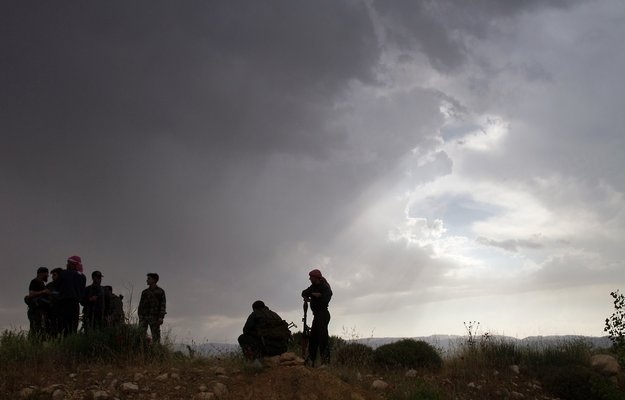



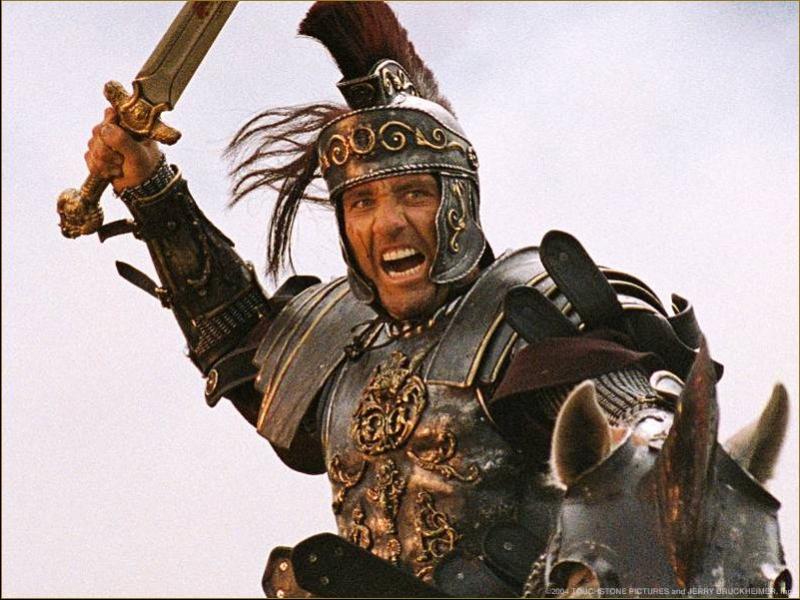
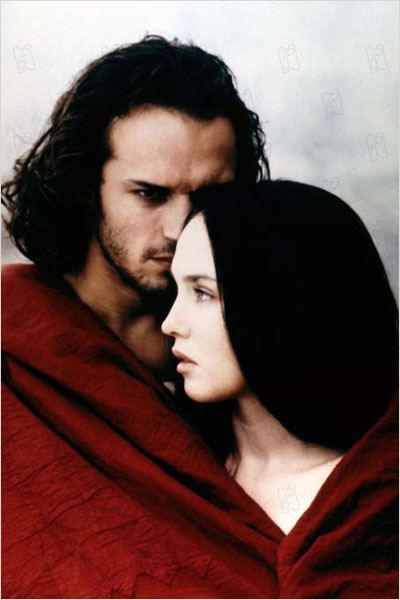
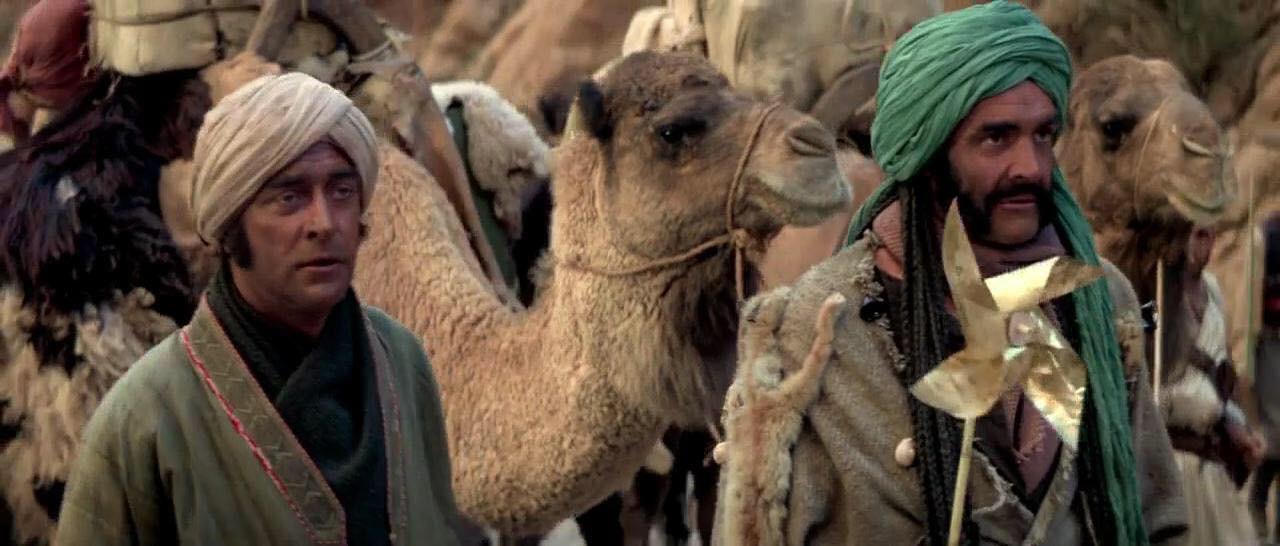


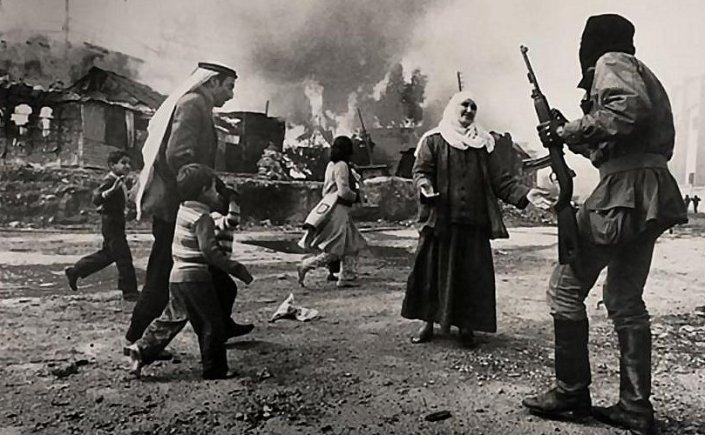


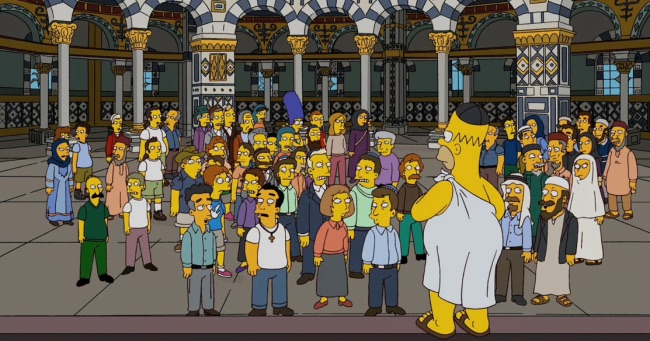


 In That Howling Infinite