Contrary to what many of the historically uniformed opponents of Israel and the US and its allies might think as they rush to judgement on the streets of western cities, the current Israeli Lebanese war (the third of that name) did not begin with the wired pagers and walkie talkies and the killing of much of Hezbollah’s leadership, including its chief, Hasan Nasrallah. It started the day after the Hamas’ murderous assault on Israel’s border communities on October 7th last year, when, ostensibly as a show of solidarity for Hamas and Gaza and with theocratic Iran’s tacit approval, the Lebanese Hezbollah began launching drones and missiles at northern Israel – some 9,000 to date – forcing the evacuation of probably up to 100, 000 citizens to safer areas to the south – where they remain to this day.
Yet, it is only now, a year later, that there are calls internationally for a ceasefire. I’ve seen glaciers move faster! Not that messianic jihadis are much into ceasefires, let alone surrender. It’s not in their doomsday DNA – they’d sooner burn down the house with themselves and their co-religionists inside, as they have done in Gaza.
There is no question that Hezbollah had it coming and that Israel’s strikes have been perfectly justifiable. Hezbollah committed a series of gross miscalculations and grievous strategic blunders. Nasrallah’s delusions of power were his undoing. Now it remains to be seen if Hezbollah can survive the devastation it has suffered in the last two weeks, and more critical for the rest of the world, if the conflict escalated into a regional war in which Israel and Its allies have to confront Iran’s “Ring of Fire”, its “Axis of Resistance” – a war that is actually now being waged on seven fronts: Gaza, the West Bank, Lebanon, Syria, Iraq, Iran – and world opinion.
Anyone who is willing to bet for or against an escalation between Israel and Iran should quit gambling. While the United States’ involvement endeavours to avert further escalation, this is like trying to put toothpaste back in the tube: theoretically possible, practically impossible. Remember the ludicrous American and Israeli concept of “escalate to de-escalate” from merely a week ago. Unpredictable developments and spiraling escalation obviously outpace analysis
Hezbollah members carry the coffins of two commanders during a funeral procession in Beirut’s southern suburbs on September 25. AP
Slouching towards Beirut
The Sydney Morning Herald provided an excellent summary of how the Shia Hezbollah came to create a parasitic state within a state and to dominate Lebanon’s politics, economy and society, outman and outgun the meagre Lebanese army, and to potentially threaten the country’s survival. Like Hamas, its Sunni counterpart in Gaza, it is an Iran-funded messianic, fundamentalist organization dedicated to the elimination of Israel, and the theocratic Islamic Republic of Iran’s most important proxy in the “Axis of Resistance” to the Jewish state and the United States and its allies, a keystone in its Ring of Fire strategy. And also like Hamas, its jihadi ideology, evident in its name, The Party of God, does not permit compromise let alone surrender.
On 27th September, Tom McTague, the political editor of the UK e-zine Unherd wrote in an article called Why Lebanon can’t be saved:
“Today, Lebanon is a dead state, eaten alive by Hezbollah’s parasitic power. The scale of the catastrophe in the country is hard to comprehend, much of it caused by the disruptive nature of Syria’s civil war. Since its neighbour’s descent into anarchic hell, some 1.5 million Syrians have sought refuge in Lebanon — a tiny country with a population of just 5 million. But, more fundamentally, with Hezbollah fighting to protect Bashar al Assad, the opposing countries — led by Saudi Arabia — began withdrawing funds from Lebanese banks. This sparked a financial crisis that left Lebanon with no money for fuel.
By spring 2020, the country had defaulted on its debts, sending it into a downward spiral which the World Bank in 2021 described as among “the top 10, possibly top three, most severe crises globally since the mid-nineteenth century”. Lebanon’s GDP plummeted by around a third, with poverty doubling from 42% to 82% in two years. At the same time, the country’s capital, Beirut, was hit by an extraordinary explosion at its port, leaving more than 300,000 homeless. By 2023 the IMF described the situation as “very dangerous” and the US was warning that the collapse of the Lebanese state was “a real possibility”.
With Iranian support, however, Hezbollah created a shadow economy almost entirely separate from this wider collapse. It could escape the energy shortages, while creating its own banks, supermarkets and electricity network. Hezbollah isn’t just a terrorist group. It is a state within a state, complete with a far more advanced army. “They may have plunged Lebanon into complete chaos, but they themselves are not chaotic at all,” as Carmit Valensi, from the Institute for National Security Studies at Tel Aviv University, told the Jerusalem Post.
Then came 7 October, after which Hezbollah tied its fate to that of the Palestinians, promising to bombard Israel with rockets until the war in Gaza was brought to a close. We have witnessed the frightening scale of its power over the past year, its bombardment forcing some 100,000 Israelis from their homes in Galilee to the safety of the Israeli heartlands around Tel Aviv. For the first time since modern Israel’s creation, the land where Jews are able to live in their own state has shrunk; the rockets are a daily reminder of the country’s extraordinary vulnerability, threatened on all sides by states who actively want it removed from the map – even from history itself. The pretense (in the walk of the Abraham Accords brokered by the US between Israel and a number of ‘friends’ Arab autocracies that the Palestinian and Lebanese questions could be contained, ignored or bypassed as part of a wider grand strategy to contain Iran has been shattered”.
The day after
Some commentators are more upbeat than McTague about Lebanon’s prospects in the event of the weakening if not outright removal of Hezbollah’s stranglehold on Lebanese life. I republish two such below. Both acknowledge that this would not be easy.
Hezbollah’s command-and-control infrastructure is in tatters. But the Iranian control of Syria gives Hezbollah significant strategic depth, and, despite the recent losses, Hezbollah is a very large organization that is deeply woven into Lebanon’s Shia population, the largest sect in the country. But the events of the past two have seen the mystique around Hezbollah broken. Its prestige, built on “resistance” to Israel, has been irreparably damaged – not least by the revelation of how extensively Israeli spies have infiltrated its ranks. Hezbollah’s ability to dominate Lebanon is open to challenge in a way it has not been for decades. The end could well be nigh for the terrorist group.
As Israeli commentator Zvi Bar’el,wrote in Haaretz on 28 September:
“Even if Israel succeeds in destroying the entire stock of Hezbollah missiles that threaten it, the arms that remain in the organization’s hand will continue to serve as a whip threatening Lebanon’s domestic front so long as the country has no effective, equipped and trained army that can contend with Hezbollah. Iran fears that this lever is now liable to lose its power in the face of the heavy blows suffered by Hezbollah, which may lead to the Lebanese public to rear its head, considering the very heavy price it has had to pay for the war that is not its own, whose rationale has not been defense of the homeland, but assisting Hamas.
The Lebanese public and in particular the political rivals to Hezbollah, despite the sharp criticism that has intensified during the war, and in particular over the past two weeks, has still not taken to the streets to confront the organization. The political harmony between Hezbollah’s rivals has not yet ripened, their internecine revulsion and hate rivals what they feel toward Hezbollah, and there is no certainty that even in the face of the destruction of Lebanon will they be able to close ranks. Hezbollah is still demonstrating fighting ability despite the loss of its senior commanders, and the political road map that now appears optimal may disappear if a regional confrontation begins following the expected Israeli strike against Iran.
But the Lebanese have already demonstrated their power several times in the country’s recent history. In 2005, they drove the Syrian forces out of the country following the assassination of Prime Minister Rafik al-Hariri,and in 2008, they violently confronted Hezbollah in a clash that killed dozens. They have toppled governments and forced the replacement of ministers, and most of all, in contrast to Gaza, they have a country that offers a collective national structure that they believe has been undermined by Iran, by way of Hezbollah.
With more than a million Lebanese uprooted from their homes, and Hezbollah’s social and health services no longer capable of responding to the needs of the homeless and wounded, forcing the group to rely on the services of the government it aspired to replace – Iran’s strategic challenge is to prevent a situation in which the country and its people will reject, or at least erode, Hezbollah’s status as the party that determines the nation’s policy and character.’
But the way ahead is daunting. Lebanon was in dire straits even before October 7th.
An economic crisis that began in 2019 and a massive 2020 port explosionfor which Hezbollah was partly responsible, have left Lebanon struggling to provide basic services such as electricity and medical care. Political divisions have left the country of 6 million without a president or functioning government for more than two years, deepening a national sense of abandonment. Reeling from years of economic dysfunction brought on by corruption and the presence of perhaps over a million refugees. A comprehensive international effort is needed to rebuild its political, economic, and military institutions. Yet critical aid and reconstruction money has been withheld precisely because of exasperation with Hezbollah’s corrupting presence in the country.
Lebanon must be freed of Hezbollah and Iran, and it should not be left up to Israel and its highly problematic Netanyahu government. The international community needs to take an active role in supporting Lebanon’s recovery and resisting Iranian interference. The UN Security Council can start the process by demanding the implementation of the United Nations Security Council resolution 1701 which was intended to resolve the2006 Lebanon War. It was unanimously approved by the Security Council and the Lebanese cabinet.
That resolution called for a full cessation of hostilities between Israel and Hezbollah; the withdrawal of Israeli forces from Lebanon to be replaced by Lebanese and United Nations Interim Force in Lebanon (UNIFIL) forces deploying to southern Lebanon; and the disarmament of armed groups including Hezbollah, with no armed forces other than UNIFIL and Lebanese military south of the Litani River which flows about 29 km north of the border. As of 2024, the resolution was not fully implemented. Hezbollah and other armed groups in southern Lebanon have not withdrawn at all; in particular, Hezbollah has since significantly increased their weapons capabilities
The Day After Nasrallah: Lebanon’s Government Is Unsure How to Handle the ‘Historic Opportunity’ Ahead
With Nasrallah gone, Lebanon has a unique opportunity to envision a post-Hezbollah reality, yet the militant organization still maintains a tight grip on the country. They will not permit the government to secure a diplomatic solution acceptable to Israel.
A little more than 20 years after the execution of Saddam Hussein and the end of his reign of terror, and about 13 years after the Arab Spring overthrew a number of dictators, a show of euphoria is resolutely predicting that Hezbollah Secretary General Hassan Nasrallah’s death will “change the map of the Middle East,” accompanied by proposals and work plans meant to take advantage of the opportunity to redraw that “dream map.”
The obvious starting point for this imagined renaissance is Lebanon, whose most significant political, economic and military center since the civil war ended in 1989 with the signing of the Taif Agreement, has now been damaged. The uniqueness and importance of the Taif Agreement was that it sought to shatter the confessional structure of the government that gave Christians a majority in the government and its institutions, as well as in the companies affiliated to it and in the army.
The agreement stipulated that Christians would no longer have an automatic majority in parliament, based on a population census conducted in 1932. Instead, its 128 seats would be divided equally between Christians (and other non-Muslim minorities) and Muslims, a definition that also included the Druze and the Alawite. In the important secondary division of the Muslim sects, 27 seats were allocated to Sunnis and 27 seats to Shi’ites.
At the base of this division was the aspiration that no single sect would ever be able to rule the country exclusively; for a government to be established, each sect would have to form a coalition with other sects that would share the political and economic spoils.
At the time, this structure was seen as an appropriate solution to ending the 15-year civil war. It did not build better politics in the country, but it did give Lebanon years of stability. This structure has not changed and it is not expected to change even after the removal of Nasrallah and Hezbollah’s military leaders; it is anchored in the Lebanese constitution, which no one currently intends to change.
The Taif agreement has led to the formation of trans-confessional coalitions, but they brought the country to economic collapse and to the brink of bankruptcy and political paralysis: In this situation, the rival parties cannot agree on a president, and since it is the president who appoints the prime minister it is then impossible to form a permanent government to make the critical decisions necessary to rescue the state from the crisis.
In an interview with Yossi Melman, former Mossad chief Tamir Pardosaid, “The Israeli government should announce loudly and clearly that Lebanon is a single entity, and that the Lebanese government bears sole responsibility for every act of aggression that comes out of Lebanon. That the territory known to the world as Lebanon has one government, one flag and one army. That any negotiations to end the war and determine security arrangements will only take place with the Lebanese government. This war could be ended within hours from the moment Israel makes this clear and the international community acknowledges the fact that there is only one single legal entity in Lebanon.”
This is a statement that rests on admirable theoretical foundations, but they are detached from the reality of Lebanon and above all from the reality of the torn, crazy patchwork quilt known as the “Lebanese government.” It is true that any negotiations must be conducted with the Lebanese government, and that the country has “one government,” but it is a government with cabinet members who serve on behalf of Hezbollah who, together with their coalition partners from the Amal movement and, until recently, Gebran Bassil’s Christian party the Free Patriotic Movement, hold the government and the country by the throat, with or without Nasrallah. To bring about the “historic change,” Lebanon will have to hold a new general election, which at the present is about as likely as appointing a president or implementing economic reforms.
Lebanon has “one flag and one army,” but in practice it has two armies: the official one, headed by the Christian general Joseph Aoun, who has been mentioned as a candidate for the presidency; and the “Hezbollah army.” Even after all of the latter’s long- and medium-range missilesare destroyed and it no longer poses a threat to Israel, it will still have enough weapons to threaten Lebanon’s internal security and its own political rivals.
The Lebanese Army, on the other hand, is a ghost army. On paper, it has an estimated 80,000 or so soldiers, as well as a token navy and air force, lacking air defenses that could protect Lebanon’s skies from hostile attacks. Above all, it is a bankrupt army, that relies on Qatar and America for the wherewithal that allows the force to pay its soldiers their monthly wages of about $100. Many soldiers on the army’s payroll take on odd jobs in order to support their families.
Hezbollah’s fighters have no such problems. Their salaries are much higher, with a funding pipeline that relies on tremendous assistance from Iran and on the organization’s resources outside of Lebanon, without forgoing their share from the state budget.
During and before the war, Jean-Yves Le Drian, French President Emmanuel Macron’s special envoy to Lebanon, and U.S. President Joe Biden’s envoy Amos Hochstein have presented an operating plan to implement UN Security Council Resolution 1701, in particular the section that prescribes that the Lebanese Army and UNIFIL will deploy in southern Lebanon and prevent the establishment of Hezbollah forces up to the Litani River.
The plan includes recruiting, training, equipping, and arming 15,000 more men for the Lebanese Army and it even has the consent of Prime Minister Najib Mikati’s government, which announced an initial plan to recruit 5,000 “volunteers”. Paralleling the deployment of these forces, when their recruitment and training is completed, Lebanon and Israel will negotiate to mark their land border, which is supposed to neutralize Hezbollah’s grounds for pursuing the conflict with Israel.
Only one element was missing in the plan to complete its implementation: Hezbollah’s agreement. Although Nasrallah hinted that he would not oppose any decision that the Lebanese government would make on the issue of demarcating the border, he stressed that he was only prepared to discuss it after a cease-fire in Gaza. Even after his death, Hezbollah MPs and ministers will continue to be committed to this position.
It may be assumed that if the Lebanese government decides to initiate the plan with Hezbollah’s consent, the Lebanese Army or any international body that goes to Lebanon to help implement the settlement will encounter violent resistance by Hezbollah, for which they will not need long-range missiles. Assault rifles, machine guns, grenades, and IEDs will suffice.
Nonetheless, there is a chance for a turnaround and implementation of the diplomatic action plan, and it lies in establishing a strong political coalition that will adopt the French-American action plan. The key figure for this measure is the Speaker of Parliament Nabih Berri, who, until now, served as Nasrallah’s representative in all negotiating issues on settlements, a cease-fire, and contact with the West.
Berri, 86, is a veteran and sophisticated political battle fox, who has made a fortune estimated at tens of millions of dollars (other estimates mention a billion dollars), and enjoys broad support in the Shi’ite community. In the last elections, in 2022, his party won 15 seats, compared to Hezbollah’s 12.
Nasrallah’s removal may give Berri a major political edge, which if he can exploit to build a supporting coalition, he will be able to navigate Lebanon toward a diplomatic and military settlement or even finally bring about the appointment of the country’s president. And yet, even with his new position of political power, Berri cannot ignore or bypass Hezbollah’s position if he wants to implement a settlement that will satisfy Israel.
To help Berri and the Lebanese government make the “right” decision, it is possible to try and mobilize international pressure, offer financial rewards for Lebanon or threaten sanctions, but it should also be remembered that they have all been applied to Lebanon, before and during the war, without leaving their stamp on Lebanese politics.
It seems that the map of the new Middle East that will begin in post-Nasrallah Lebanon will have to find a different cartography department to draw it.
Without Hezbollah, Lebanon’s Economy Could Rise Out of the Ashes
It’s a long shot, but even amid financial crisis, dysfunctional government and brain drain, Lebanon has many of the raw materials to start over
Back in 2021, it was hard to see how Lebanon could fall any further. The economy had been shrinking since 2011. It fell off a cliff in 2019, with gross domestic product falling by more than half over two years after the national Ponzi scheme that had kept the economy afloat collapsed. The country defaulted on its foreign debt in 2019, its financial system was paralyzed and its main port was decimated in an explosion in 2020. Elections in 2021 resulted in a political stalemate that left the country without a permanent government or president.
As it turns out, things could get a lot worse. As Israelis hail a decisive victory over Hezbollah, Lebanon is being pummeled by Israeli bombs. Hundreds of thousands of residents in the south have fled for fear of Israeli airstrikes. The government – three years later, still a caretaker without a president – not only can’t defend the country, it has done nothing to help the refugees or care for the wounded. “They have no money and they have no control over what’s happening on the ground,” Mark Daou, a lawmaker, told The New York Times.
The old chestnut about Lebanon being the Switzerland of the Middle East is nothing more than a fun fact out of the distant past for the history books. The last time Beirut could boast of being a major banking center was before its civil war erupted in 1975. Today, it would be better described as the Somalia of the Middle East, with warlord No. 1 being Hezbollah.
Yet the Somalia comparison isn’t entirely fair. Amid all the dysfunction and chaos in Lebanon, there remains considerable latent potential to return to the glory days.
In the short term, the economy may be even worse off without Hezbollah, which the hundreds of millions of dollars a year it received in Iranian funding was spent on local goods and services. Lebanon also stands to lose the export receipts from Hezbollah’s drug smuggling, arms and cigarette smuggling, and currency counterfeiting mainly in Latin America.
There is also a risk that Israel’s successful assault on Hezbollah over the past two weeks could set off a new round of sectarian fighting in Lebanon and destroy the last remnant of political stability and a functioning economy. “The demolition of Hezbollah’s capabilities will likely embolden its opponents and anti-Iranian forces within Lebanon,” Imad Salamey, an expert on Lebanon at the Lebanese American University, told Al-Jazeera television.
But the reverse could also happen: the elimination, or at least the significant weakening, of Hezbollah could remove its baleful influence and enable Lebanon to begin rebuilding its decimated economy.
Silver lining
Among other things, Lebanon would have to contend with far fewer Western sanctions, most of which are directed at Hezbollah and affiliated institutions. It is just possible that freed of Hezbollah interference, a government can finally be formed. Aid and investment from the Gulf and the West may be forthcoming for the first time in years.
Perhaps a more intense effort to find natural gas off Lebanon’s Mediterranean coastwill get underway. Lebanon’s enormous diaspora – estimated at 15.4 million, almost three times the domestic population – could be a source of capital and for opening up foreign markets, just as the Jewish diaspora was for Israel in the past. There is even a silver lining to Lebanon’s feckless government, namely less government red tape and low taxes.
But in the end, Lebanon’s economic fate will depend on its people, or more precisely its human capital. Without significant natural resources or a domestic market to support industry, the future will depend on its becoming a knowledge economy, one based on technology and sophisticated services, as Tarek Ben Hassen, a Qatar University economist, proposed in a recent article.
Not surprisingly, even in 2019, before the roof caved in, Lebanon had long ceased to be a globally competitive economy. The World Economic Foundation’s Global Competitiveness Report that year ranked Lebanon 88th of 141 countries, one notch below Tunisia and one above Algeria – not the kind of neighbors a self-respecting country would want on this league table.
But on a few critical metrics, Lebanon came out looking much better. It placed 24th on graduates’ skill sets, 23rd on digital skills and 26th for imparting critical thinking in primary school teaching. And, these rankings probably understate Lebanon’s talent base: Like many countries, they are an average between a highly skilled elite and a less skilled majority. But a knowledge economy can get started with a small elite, if it is sufficiently capable.
Lebanon has another knowledge economy asset in its system of higher education. Despite all the economic and political vicissitudes of the last few years, six Lebanese universities are ranked among the world’s top 1,000 (top-ranking American University of Beirut comes in at 250), according to the QS World University Rankings for 2025.
And although it is not much in evidence these days amid economic collapse (the WEF ranked Lebanon 74th in 2019 for entrepreneurial culture), Lebanon has a long history of entrepreneurship stretching back to the days of the Phoenicians. Lebanese labor costs for engineers and the like are low. These kinds of numbers are a good foundation for a knowledge economy. The catch is that they reflect the situation as it was in 2019; since then, the collapse of the economy caused the country’s traditionally high rate ofemigration to balloon 4.5-fold in 2020 and 2021. Many of those who fled were Lebanon’s best and brightest, and the young who contend with a youth unemployment rate of nearly 50 percent.
If Lebanon can get its act together, it may be able to lure many of these expatriates back. The knowledge that Hezbollah is no longer casting its shadow over the country will certainly be an incentive. The wreckage that Lebanon is today may be seen by the most ambitious and entrepreneurial as an opportunity.
With or without Hezbollah, establishing relations with Israel is unlikely. But if Lebanon were to do that and establish a warm peace involving trade, tourism and business deals, like the one between Israel and the other Abraham Accord countries, the road to a thriving economy would be that much shorter.
In our more secular, rational times, we condemn those who maim and murder in the name of their god. But do not for a moment dismiss the power of religious fervour … The promise of a full remission of all sins and a place in paradise was a powerful motivator (and among some faithful, it still is). Al Tariq al Salabiyin – the Crusaders’ Trail, In That Howling Infinite
… it would be a mistake to assume that the pattern of apocalyptic thought exists only within the framework of religious belief. Its fingerprint can also be found in secular revolutionary movements and in modern ideological worldviews
Amit Vershinsky, Israeli historian and author
Messianism, the belief in the advent of a “promised one”, a Messiah or Mahdi, who emerges as the saviour of a people and who will bring about a better world, has never gone out of fashion, particularly in the Middle East, its theological birthplace. It originated as a Zoroastrian religious belief and flowed into the Abrahamic religions, Judaism, Christianity and Islam, but other faiths also harbour messianistic proclivities. And yet, messianism can be temporal as much as spiritual, as illustrated by the ideological movements which determined the course of twentieth century history.
The yearning for an ideal leader has long been ingrained in our collective psyche: a hero, mortal or divine, who would appear at the darkest hour and lead his people through the struggle to ultimate triumph. Even though we may not personally subscribe to a spiritual belief in the end of days, it is there in our historical memory and in the myths that are often shaped by it, as the following lines, referencing Alexander the Great, Genghis Khan and King Arthur, these “once and future” kings, illustrate:
We sing such songs as we might hear In dreams before day breaking, As ancient echoes hide between The slumber and the waking. We remember, Yes, we remember
Iskander marched this way and back Across these battlefields of old. Persepolis he burned and in Babylon he died, And now, embalmed in gold, He lies waiting.
The killer khan in death reclines Amidst his guards and concubines, Who died so none would ever see The final resting place where he Lies waiting.
And in our own imagining The fabled, once and future king Upon an island in a lake, He slumbers still but will awake One day.
World-renowned Critical Theorist, activist, psychoanalyst, and public Marxist intellectual, Erich Fromm(1900-1980) distinguished two kinds of messianism. One he saw as radical and progressive, the other as regressive and potentially reactionary: “prophetic messianism” and “catastrophic or apocalyptic” messianism.
Prophetic messianism, Fromm argued, conceives the messianic event as occurring within history and time and not arriving through a rupture from history and time. Regressive catastrophic messianism on the other hand sees the messianic event entering history from outside, a force majeure, and not as an outcome of human activity. He saw “prophetic messianism” as a “horizontal” longing, a longing for human-made change, and “catastrophic messianism” as a vertical” longing, a longing for an external, transcendent “saviour” (perhaps a human leader or a deterministic law governing history) that will enter history from a realm outside of human affairs.
Because prophetic messianism views the messianic event as the outcome of human progress, it encourages productive and revolutionary action, and it makes planning or “anticipatory change” possible. By contrast, because catastrophic messianism views the messianic event as the outcome of the transcendent entering history to rescue a fallen humanity, catastrophic messianism encourages passive waiting or even destructive or unnecessarily violent action aimed at speeding the coming of the apocalypse. Like the types of false hope that Fromm warns against, catastrophic messianism risks becoming quietism on the one hand or actively destructive nihilism on the other.
[These two previous paragraphs are an edited extract of a review by Dutch publishing house Brill of Erich Fromm’s Revolutionary Hope by Joan Braune, 1st January 2014}
Today, catastrophic messianism is active and influential in our world’s most enduring conflicts – the clear and present danger facing the non-Muslim world by Islamic extremism, and the current war between the predominantly Jewish State of Israel and the Islamic fundamentalist Hamas and its allies
In islamic eschatology, the end of times will portend Malhama Al-Kubra, the “last battle between the forces of light and of darkness, an apocalyptic struggle so intense that according to some Hadith narrations, were a bird to pass their flanks, it would fall down dead before reaching the end of them. Many texts say that this will take place at Dabiq in northern Syria. As testament to its relevance in contemporary Islamist thinking, the brutally fundamentalist Islamic State adopted the name for its magazine.
The irony is that increasingly in the Jewish state, the existential crisis emanating from the catastrophe of October 7 and the encirclement of the tiny country by enemies determined to wipe it off the map, has arguably fostered a messianic fervour in Israel too.
In an informative article in Haaretz, writer and historian Amit Varshizky contemplates the connections between conflict and catastrophe on the one hand and an emerging messianism on the other among both religious and non-religious Jews.
This article reminded me of British historian Norman Cohn‘s influential book The Pursuit of the Millenium which I first read in ‘seventies. Indeed, Varshinsky refers to him. Cohn’s work as a historian focused on the problem of the roots of a persecutorial fanaticism which became resurgent in modern Europe at a time when industrial progress and the spread of democracy had convinced many that modern civilization had stepped out forever from the savageries of earlier historical societies. In ThePursuit, he traced back to the distant past the pattern ofchiliasticupheaval that marred the revolutionary movements of the 20th century. He had described all his workas studies on the phenomena that sought “to purify the world through the annihilation.
Vershinsky writes:
“The origins of this craving for destruction and strife reside in the belief that the coming of the Messiah will be preceded by a period of “pangs of the Messiah,” characterized by suffering and ordeals; in short, there is no redemption that is not acquired without torments. This is a basic element of political messianism, which interprets historical events in a mythic light, as the embodiment of sanctity in concrete reality … the power of this redemptive mysticism derives from the fact that it does not talk about far-reaching cosmic transformations in the order of creation, as predicted by the Prophets. It refers, rather, to messianic fulfillment within the realm of historical, concrete time, and as such it is tightly linked to human deeds … History demonstrates how apocalyptic interpretations can be created from the experience of an existential crisis, which brings to a head the everlasting tension between deficiency and the striving for fulfillment – a tension that characterizes the human condition in general. Since the start of recorded history, periods that were marked by political crises, plagues, social anxieties and collective despair have been accompanied by the rise of apocalyptic interpretations that have vested history with a new and sanctified significance and have charged the events of the hour with redemptive meaning. As Norman Cohn showed, marking a low point as a formative moment of spiritual renascence that leads to redemption is part of a recurring pattern that appears in all apocalyptic interpretations of events throughout Western history. Cosmic disorder is a precursory and necessary stage for the coming of the Messiah and the establishment of the Kingdom of God … But it would be a mistake to assume that the pattern of apocalyptic thought exists only within the framework of religious belief. Its fingerprint can also be found in secular revolutionary movements and in modern ideological worldviews”.
Disasters are a fertile ground for purveyors of apocalyptic prophecies
Oil-storage facility in Hםuthi-held Hodeida, Yemen after the port was hit by Israeli planes July 20. “War advances “the purification, refining and galvanizing of the Jewish people” Rav Kook.”: AFP
Social media is flooded with clips of rabbis calculating the end times and intoxicated with salvation as they declare that we are poised at the onset of the flowering of our redemption. Rabbi Naftali Nissim, a YouTube star in-the-making, waxed poetic: “There has never been a beautiful period like this… What happened on Simhat Torah [October 7] is a prelude to redemption.” Rabbi Yaakov Maor explained that “Rafah [in Gaza] refers to ‘288 sparks’ [the numerological value of the word ‘RFH,” and a concept in kabbalistic literature]. The redemption is near!” And Rabbi Eliezer Berland, head of the Shuvu Banim group in the Breslav Hasidic sect, promised: “This is the last war before the Messiah. After this war, Messiah Son of David will come.”
But such talk is not confined to the yeshivas and the kollels (yeshivas for married men), it’s even voiced on commercial television. Dana Varon, a presenter and commentator on the right-wing Channel 14, stated, “It’s written in the Mishna: The Galilee will be destroyed and the Golan shall be emptied, and the people of the border wander from city to city, that’s the Mishna coming to realization within us literally, I’m happy about this.”
Her colleague Yinon Magal went even farther in a radio broadcast. “The feeling is that we are approaching great days. We are in a redemptive process, and prophecies are happening.” And on another occasion: “Only the Messiah [can] supplant Bibi.” Magal is a demagogue and the embodiment of narcissism, but his remarks reflect a prevailing sentiment among broad circles of the settler and Hardali(nationalist ultra-Orthodox) right, and one that has also been adopted by broad segments of the ruling party.
The sentiment itself is not new. Since the advent of religious Zionism, it has greased the movement’s ideological wheels and been the driving force of the settlement project and the vision of Greater Israel. What is new is the popularity these ideas enjoy in the present-day political and public discourse, and how they have traveled from the margins of right-wing politics into the Likud center. Prime Minister Benjamin Netanyahu, who is captive by choice of power-hungry Kahanists and other extremists, is dragging Israel into the grip of an apocalyptic ecstasy that is deepening the existing crisis and creating new conditions for realizing the messianic fantasy of conquering all the territories of the Land of Israel, replacing Israeli democracy with the kingdom of the House of David and building the Third Temple.
This accounts for the enthusiastic spirit that has gripped the messianic camp since October 7, as well as the repeated provocations on the part of individuals and groups in an attempt to ignite a conflagration in the West Bank and pull the Arabs in Israel into the blaze.
War of Gog and Magog
The origins of this craving for destruction and strife reside in the belief that the coming of the Messiah will be preceded by a period of “pangs of the Messiah,” characterized by suffering and ordeals; in short, there is no redemption that is not acquired without torments. This is a basic element of political messianism, which interprets historical events in a mythic light, as the embodiment of sanctity in concrete reality. According to this approach, the birth of Israel and the Zionist enterprise, particularly since the victory in the 1967 Six-Day War, are manifestations of emerging redemptive reality. This reading of events is based in part on tractate Berakhot in the Talmud, according to which between this world and the time of the Messiah there is only “servitude to the [foreign] kingdoms.”
Indeed, the power of this redemptive mysticism derives from the fact that it does not talk about far-reaching cosmic transformations in the order of creation, as predicted by the Prophets. It refers, rather, to messianic fulfillment within the realm of historical, concrete time, and as such it is tightly linked to human deeds. Rabbi Shlomo Aviner, the dean of Ateret Yerushalayim Yeshiva and the former rabbi of the settlement of Beit El, put it succinctly: “We assert the absolute certainty of the appearance of our redemption now. There is no barrier here of secret and hidden.”
The same applies to the present war; it needs to be seen in its biblical dimension and perceived through a messianic prism. In this sense, the history of our generation is not much different from the chronicles of the Exodus from Egypt and the conquests of Joshua. At that time, too, the events occurred by natural means and the military victories opened the age of redemption.
The Gaza war, from this perspective, is bringing closer the Jewish people’s collective redemption. Light and dark are intertwined here, destruction and revival are interlocked like revealed and concealed, and as material and spiritual reality. Accordingly, the greater the dimensions of the destruction and the devastation, so too will the spiritual transformation brought by the campaign in its wake be augmented. The war is the purgatory that will steel the spirit of the Jewish people, which is already at the stage of incipient redemption. Anyone seeking a foundation for this idea will find it in the thought of Rabbi Zvi Yehuda Kook (the son of Abraham Isaac Kook): “What is the reason for the War of Gog and Magog? Following the establishment of Israel’s sovereignty, war can possess only one purpose: the purification, refining and galvanizing of Knesset Israel [the Jewish people].”
What is the conclusion? The more that suffering increases, the more good there will be; and “the more they were oppressed, the more they increased and spread out” (Exodus 2:12). They will multiply and burst forth, for like the measure of justice, so too is the measure of mercy. And as Dana Varon noted in replying to her critics, “It’s a good sign. Because if all the bad and the wicked materialize, that is a sign that the good is also guaranteed and is arriving.”
Sanctified victims
The designation of catastrophe as a condition for salvation is not new in human history. History demonstrates how apocalyptic interpretations can be created from the experience of an existential crisis, which brings to a head the everlasting tension between deficiency and the striving for fulfillment – a tension that characterizes the human condition in general. Since the start of recorded history, periods that were marked by political crises, plagues, social anxieties and collective despair have been accompanied by the rise of apocalyptic interpretations that have vested history with a new and sanctified significance and have charged the events of the hour with redemptive meaning.
As the British historian Norman Cohn showed, marking a low point as a formative moment of spiritual renascence that leads to redemption is part of a recurring pattern that appears in all apocalyptic interpretations of events throughout Western history. Cosmic disorder is a precursory and necessary stage for the coming of the Messiah and the establishment of the Kingdom of God.
But it would be a mistake to assume that the pattern of apocalyptic thought exists only within the framework of religious belief. Its fingerprint can also be found in secular revolutionary movements and in modern ideological worldviews. Marxism, for example, is based on the assumption that history is progressing toward a final end, after which there will be no more oppression, injustice or wars. The realization of the Marxist utopia sees extreme aggravation in the living conditions of the working class as a necessary condition for world revolution, and for the formation of a classless society that will bring about the end of history.
Fascism, and German fascism in particular, preserves a central place for apocalyptic patterns of thought. In Hitler’s Third Reich, whose followers adopted the Christian eschatological concept of the “Thousand Year Reich,” extensive use was made of the narrative of fall and redemption as a means to consolidate the Nazi movement’s ideological hold on the German public. The Nazi ideologues and propagandists were successful in evoking the deepest fears of their contemporaries, and in depicting Germany’s military defeat in World War I and the national nadir as a formative moment of illumination, resurrection and renewal.
As the Nazis conceived it, the catastrophe of the war marked the watershed – it was a rupture that exposed the subversive activity of the Jews, awakened the German people to recognize its inner strength and accelerated a process of national renewal. It was precisely the destruction and the mass killing of the Great War that made it possible to formulate a new worldview and philosophy of life that was based on recognition of the vital powers of the race and the organic essence of the people (the Volk). As such, the sacrifice of the war’s fallen was vested with sanctified validity.
The totalitarian movements thus secularized the apocalyptic pattern of thought and implanted it in their worldview. They offered their believers a utopian vision that was based not on divine redemption but on scientific progress, naturalism and the sovereignty of humanity. Their followers were driven by a sense of moral eclipse and existential dread, accompanied by a call to eradicate the old world and to build on its ruins a new, orderly world. The total war, in the Nazi case, or the total revolution, in the communist case, were perceived as a necessary stage to realize the secular utopia, and made it possible to normalize the most horrific crimes and sanctify every form of violence. The historical lesson is thus clear: Every attempt to establish the Kingdom of God on earth is destined to ignite the first of in the abode of man.
Here lies the danger in striving for a politics of “total solutions,” whether on the right or on the left. That form of politics entrenches a false picture of reality and paves the way for demagogues and populist false messiahs who are adept at exploiting social distress and anxiety by appealing to the urge for redemption and the human need for absoluteness.
Not only does political messianism cast on its leaders a sanctity of religious mission that is insusceptible to doubt; it also requires the marking of enemies (or political rivals) as foes that are delaying redemption, in the spirit of the Latin phrase, “Nullus diabolus, nullus redemptor” (No devil, no redeemer). In this sense, the more powerful the messianic idea is, the greater the violence and the destruction it sows when the demand for absoluteness shatters on the rocks of reality; the height of the sublimity toward which it thrusts is matched only by the depth of the abyss into which it is liable to slide. For the more that reality declines to acquiesce to the absolutist demands of the advocates of political messianism, the greater the strength they wield to shape it in the image of their utopian visions; and the more untenable this becomes, the more they attribute their failure to an internal enemy and to the power of abstract conspiracies.
David Ben Gurion: “The Messiah has not yet come, and I do not long for the Messiah to come. The moment the Messiah will come, he will cease to be the Messiah”. Fritz Cohen / GPO
Between the absurd and the meaningful
It’s only natural for people to seek to inform their lives with meaning that transcends their temporary, ephemeral existence. It’s also natural that in periods of mourning and distress they should wish to console themselves and imbue their sacrifice and loss with cosmic meaning. Crisis and catastrophe can indeed serve as an opportunity for renewal, and there is also nothing intrinsically wrong with the longing for redemption or for the absolute that is innate in the human psyche. The danger lies in the attempt to transform redemption into a political program, and the ambition to bring the heavenly kingdom into being in this world. The demand for absolute justice always ends in injustice. Moreover, a cause that relies on unjust means can never be a just cause.
In a meeting with intellectuals and writers in October 1949, David Ben-Gurion said, “The Messiah has not yet come, and I do not long for the Messiah to come. The moment the Messiah will come, he will cease to be the Messiah. When you find the Messiah’s address in the phone book, he is no longer the Messiah. The greatness of the Messiah is that his address is unknown and it is impossible to get to him and we don’t know what kind of car he drives and whether he drives a car at all, or rides a donkey or flies on eagles’ wings. But the Messiah is needed – so that he will not come. Because the days of the Messiah are more important than the Messiah, and the Jewish people is living in the days of the Messiah, expects the days of the Messiah, believes in the days of the Messiah, and that is one of the cardinal reasons for the existence of the Jewish people.”
Those remarks can be taken at face value, but it’s desirable to understand them as a message that encapsulates universal human requirements: People need belief, vision and a guiding ideal, but as is the way with ideals, it’s certain that this too will never materialize but will remain on the utopian horizon toward which one must strive but to which one will never arrive. Humanity, thus, is fated to exist in the constant tension between want and fullness, between the absurdity and futility of life and our need for meaning, purpose and significance. That tension can be a millstone around our necks and enhance the attraction of political messianism in its diverse forms.
Accordingly, it’s a mistake to assume that the allure of messianism can be fought only with rational tools. Myth cannot be suppressed by reason, and the yearning for the absolute cannot be moderated by means of learned, logical arguments. It was Friedrich Nietzsche, of all people, the philosopher who perhaps more than any other is associated with modern atheism and the “death of God,” who maintained that the death of God does not necessarily herald the death of faith, and that the rejection of religion and a consciousness of God’s absence do not mean that the craving for the absolute has ceased to exist.
On the contrary, it is precisely the death of God, precisely his nonexistence, that keeps alive more forcefully the longing for him, and spurs man to find substitutes. Hence Nietzsche’s famous cry: “Two thousand years have come and gone – and not a single new god!” The secular individual who has been orphaned of God is fated to give birth from within to new gods that will provide a response to one’s unfulfilled religious longing. God is dead, but his shadow continues to pursue humanity and to drive people to act in numberless forms and ways.
The denial of God’s shadow and of the unrequited longing of the human psyche for the absolute are the root of the blindness of secular culture in our time, and the source of its weakness in the light of the messianic sentiment. Under the guise of post-ideological pragmatism and economical rationalism, secular liberalism has completely forsaken the psycho-religious needs of the current generation in favor of material utilitarianism, narcissistic individualism and consumerist escapism, and has abandoned the possibility of bringing into being a life of a spiritual and cultural character capable of providing a response to the basic need for meaning and self-transcendence. Secular culture may perhaps allow freedom of choice (and that’s not a little), but in itself it does not offer another positive meta-narrative, guiding idea or existential meaning in an era of consumer and technological alienation. Into this vacuum political messianism has penetrated, as it offers an answer for spiritual longings and existential anxieties.
The formulators of state-oriented Zionism, head by Ben-Gurion, understood this well. They sought to harness the religious impulse to nation building and to the formation of a new Hebrew (Jewish) identity that draws on the messianic sources but does not attach itself to their religious content and instead secularizes it. In this way the messianic tension served Ben-Gurion to forge an ideal vision of a Jewish state that would be a moral paragon and a light unto the nations.
Is a return to the fold of Ben-Gurion-style Zionism the answer? Probably not. One thing, however, is certain: besides the urgent need to separate religion and state, and to anchor Israel’s secular-liberal character in a constitution, a deep transformation is also necessary in secular culture, in education, in artistic creation and in the intellectual-spiritual life. Because in order to do battle against the messianic myth, a counter-myth is needed, one that does not lie within the realms of religion and meta-earthly redemption, but in the imperfect world of humankind. It alone is capable of providing a substitute for the temptations of the diverse types of political messianism and of providing human beings with a horizon free of all supernatural, theistic, utopian or redemptive qualities.
Mainstream and social media are perennially focused on the plight of Palestinian civilians caught in the crossfire between the IDF and the Hamas terrorists embedded amongst and below them with total disregard for their safety and welfare. Negligible attention is paid to what is not in plain sight.
There have recently been reports of Israel endeavouring to recruit influential families and clans in Gaza who traditionally wield social and economic authority at the grassroots level and are often unaligned with groups such as Hamas and Islamic Jihad, to manage the distribution of humanitarian aid and ostensibly to form the nucleus of a future administration once the present hostilities cease. There have also been reports of Hamas operatives reacting violently against those believed to be assisting and indeed organizing the distribution of aid – including attacks on convoys that they are guarding, and the murder of such collaborators and of members of the Palestinian Authority who have also been co-opted to assist. Many may not recall in this febrile political environment that the Hamas and the PA have been mortal enemies for
There are also reports of members of elite families and the well-off paying their way out of Gaza into Egypt via the Rafah crossing, transits that are believed to cost many thousands of dollars to fixers with the appropriate connections.
Left-wing Israeli platform Haaretz reports that one of the recurring stories of the Israel-Gaza war has been the exorbitant fees being charged by Egyptian fixers to get Palestinians through the Rafah border crossing into Sinai. A report last month claimed that one Egyptian travel company has generated nearly $90 million in a few weeksby charging the desperate over $5,000 to leave the Strip. Gazans on social media have grown increasingly critical of the practice, which shows no sign of abating for those able to raise the hefty fees required to leave the war behind.
Many less well-off Palestinians have resorted to trying to raise money with desperate appeals on digital platforms such as GoFundMe. Over the past eight months, an estimated 100,000 people have left Gaza, Diab al-Louh, the Palestinian ambassador to Egypt, said in an interview. Though some got out through connections to foreign organisations or governments, for many Palestinians, exiting Gaza is possible only by way of Hala, a firm that appears to be closely connected to the Egyptian government. Hala charges $US5000 to co-ordinate the exits of most people 16 and older and $US2500 for most who are below that age, according to seven people who have gone through this process or tried to do so.
Other pathways out of Gaza exist, but many of them require large payments, too. One route is to pay unofficial middlemen in the enclave or in Egypt, who demand $US8000 ($12,000) to $US15,000 per person in exchange for arranging their departure within days, according to four Palestinians who had either made the payments or had tried to.
Palestinians connected to international organisations and governments, holders of foreign passports or visas, wounded people and some students enrolled in universities outside Gaza have been able to leave without paying large fees, but most of the more than 2 million people in the enclave do not fall into those categories.
Now the future of that avenue is uncertain, especially after the Israeli military launched an offensive against Hamas in Rafah and took over the crossing there, leading to its closure in May. No Palestinians have been allowed to pass through it since, and it is unclear when it will reopen.
That such stories are largely disseminated by Israeli media may lead outside observers unsympathetic to Israel to dismiss them as hasbara, derived from the Hebrew for explaining, but interpreted by many, particularly the lazy, as public diplomacy propaganda, public relations or spin. But to people with a deeper knowledge of Israeli and Palestinian history, politics, and society, and of the Middle East generally, they are potentially quite credible.
I personally surmised as much when the Australian authorities recently cancelled the visas of several Gaza residents whilst they were in transit from Cairo to Australia – much to the outrage of pro-Palestinian activists and NGOs down under. Our Department of Home Affairs intimated that the rushed visa assessment process raised questions of how the travelers in question had exited Gaza, not just through Egyptian and Hamas controlled checkpoints, but also underneath the border via the so-cheeked Gaza “metro”. These families were clearly well-turned out and well-nourished, looking nothing like the bloodied, hungry and traumatized souls we are seeing daily on our television and social media feeds. Straddling the fence between support for and condemnation of Israel, and running scared of pro-Palestinian public opinion, the Australian government let this matter go.
Haaretz reports that one of the recurring stories of the Israel-Gaza war has been the exorbitant fees being charged by Egyptian fixers to get Palestinians through the Rafah border crossing into Sinai. A report last month claimed that one Egyptian travel company has generated nearly $90 million in a few weeksby charging the desperate over $5,000 to leave the Strip. Gazans on social media have grown increasingly critical of the practice, which shows no sign of abating for those able to raise the hefty fees required to leave the war behind.
The “flight into Egypt” is actually the primary story of the long Haaretz article published below despite its catchy, sensationalist and potentially contentious title which refers to the “Promise of the Hereafter Post-Liberation Palestine” conference, held in Gaza on September 20, 2021, a gathering that has only now, in the wake of the Shabbat pogrom on October 7, received a modicum of media attention.
The promise of the hereafter
This conference was sponsored by the Hamas’ leader in Gaza Yahyah Al-Sinwar and attended by senior officials from Hamas and other Palestinian factions. It discussed preparations for the future administration of the state of Palestine following its “liberation” from Israel after the latter “disappears”.
It is, in essence, a kind of Lebensraum Redux.
Though reported in October 2021 by the Israel-aligned Middle East Media Research Institute (MEMRI), the conference did not attract mainstream and social media interest at the time. Even after October 7, it has received little coverage, with the exception of Israeli media including Haaretz and Times of Israel – presumably because it might have seemed to some as elaborate hasbara. The neglect is nonetheless surprising considering its clear exposition of the Islamist, genocidal intent of the Hamas and Islamic Jihad, and accords with view held by many knowledgeable and well-informed observers and commentators that the original intent of Operation Al Aqsa Flood was to race en masse across the Negev to the Occupied Territories and spark a general Palestinian rising which would precipitate an invasion of Israel by its Arab neighbours – a repeat of 1948 without its al Nakba outcome.
We’ll probably never really know why this scenario was not followed through, and what may have been the outcome. Some may argue that the militants who descended on the borderland kibbutzes and the Nova Trance Festival were distracted by the release of pent-up rage and brutal vengeance after years of siege in Gaza.
The conference’s concluding statement made clear the Resistance’s understanding of “from the river to the sea” and also its Islamist mission. Its very name originates in Quran 17:104: “And We said thereafter unto the Children of Israel, ‘Dwell in the land. And when the promise of the Hereafter comes to pass, We shall bring you as a mixed assembly”.
It claimed as its historical pedigree Muslim victories in the past – over Christians, not Jews, mind – and proposes what appears to be a “back to the future” plan for “the day after“. The following extract is taken from MEMRI’s report on the event:
“Immediately after the liberation, the liberation forces will issue a Palestinian independence document setting out the Palestinian principles, highlighting the Palestinian national identity and its Arab, Islamic, regional and international depth. The formulation of this document will be overseen by a team of experts in the spheres of politics, law and media, for this will be a historic document on the legal and humanitarian levels, a direct continuation of the Pact of ‘Umar Bin Al-Khattab and of the announcement issued by Salah Al-Din upon his liberation of the Al-Aqsa Mosque [in 1187].
The conference published a concluding statement listing “ideas and methods of operation [to be implemented] during the liberation of Palestine” after Israel ceases to exist. This list included, inter alia, a call for drafting a document of independence that will be “a direct continuation of the Pact of ‘Umar Bin Al-Khattab” concerning Byzantine Jerusalem’s surrender to the Muslim conquerors which took place apparently in 638; a definition of the leadership of the state until elections are held; recommendations for engagement with the international community and the neighboring states; a call for preparing in advance appropriate legislation for the transition to the new regime; a call for establishing apparatuses to ensure the continuation of economic activity once the Israeli shekel is no longer in use and to preserve the resources that previously belonged to Israel; and a call for compiling a guide for resettling the Palestinian refugees who wish to return to Palestine.
The conference also recommended that rules be drawn up for dealing with “Jews” in the country, including defining which of them will be killed or subjected to legal prosecution and which will be allowed to leave or to remain and be integrated into the new state. It also called for preventing a brain drain of Jewish professionals, and for the retention of “educated Jews and experts in the areas of medicine, engineering, technology, and civilian and military industry… [who] should not be allowed to leave.” Additionally, it recommended obtaining lists of “the agents of the occupation in Palestine, in the region, and [throughout] the world, and… the names of the recruiters, Jewish and non-Jewish, in the country and abroad” in order to “purge Palestine and the Arab and Islamic homeland of the hypocrite scum”.
Read the complete MEMRI report HERE. It is republished in full after the following Haaretz article.
A former high-ranking Fatah member from Gaza who was well acquainted with the Hamas leadership recently spoke to Haaretz about another aspect of Hamas’s scheme for the “day after,” namely the administrative division of “liberated Palestine” into cantons. He said he was contacted by a well-known Hamas figure who informed him that Hamas was “preparing a full list of committee heads for the cantons that will be created in Palestine.” In 2021, he was reportedly offered the chairmanship of the “Zarnuqa” committee, named after the Arab village where his family lived before 1948, that was slated to cover the cities of Ramle and Rehovot.
The Fatah official reportedly reacted to the Hamas offer in disbelief: “You’re out of your minds.”
The Middle East Media Research Institute (MEMRI), officially the Middle East Media and Research Institute, is an American non-profit press monitoring and analysis organization that was co-founded by Israeli ex-intelligence officer Yigal Carmon and Israeli-American political scientist Meyrav Wurmser in 1997. It publishes and distributes free copies of media reports that have been translated into English—primarily from Arabic and Persian, but also from Urdu, Turkish, Pashto, and Russian.
Critics describe MEMRI as a strongly pro-Israel advocacy group that, in spite of describing itself as being “independent” and “non-partisan” in nature, aims to portray the Arab world and the Muslim world in a negative light by producing and disseminating incomplete or inaccurate translations of the original versions of the media reports that it re-publishes.[9][10] It has also been accused of selectively focusing on the views of Islamic extremists while de-emphasizing or ignoring mainstream opinions.
Hamas believed it would conquer Israel. In preparation, it divided it into cantons
Tens of thousands of Gazans have fled to Egypt since the war broke out, many of them members of the elite who are able to pay the enormous costs. I met old friends in Cairo who were still astonished at the messianic insanity that seized Hamas’ leadership.
CAIRO – In Gaza, they’re known as the “new Jews.” They’re the rich merchants of the Gaza Strip who were the first to flee for their lives after October 7, managed to save themselves and their families, and are continuing to run their businesses safely by remote. While enjoying the good life in Cairo’s luxury hotels, they’re selling the Strip to the highest bidders. When a kilogram of sugar costs 70 shekels (almost $19) and a liter of gas 150 shekels, it’s only natural for the 1.5 million internal refugees in Gaza to add the profiteers to their list of enemies, after Israel and Hamas. Not necessarily in that order.
Escaping the inferno costs around $10,000 per person. It entails finding a wakil (Arabic for “macher”) who can organize entry to Egypt via the Rafah crossing, and getting there safely, hoping that you don’t run into the Israeli army on the way. Having done that, there’s a chance that the gates of paradise to the Land of the Nile will open wide for you. But that doesn’t yet ensure tranquility and security. Cairo is very cheap, by almost any measure, but it’s still expensive in terms of the Gaza Strip. And with no income, and your home in ruins, your property lost, your savings depleted from paying for the exit permits – what future, exactly, is there to dream about? Only a successful Gaza merchant who is adept at maneuvering and surviving between Hamas and Israel will be able to live in Cairo and enjoy its delights. And the city has plenty to offer.
The last time I was in Cairo was after the removal from power of Hosni Mubarak, in 2011. The city was turbulent and frightening. The millions of angry demonstrators who flooded the streets were a third way, beyond the corruption of the Mubarak regime and the fundamentalist takeover of the Muslim Brotherhood led by Mohammed Morsi. That ended with the Egyptian army taking matters into its hands and stifling the breezes of the Arab Spring. Today, photographs of President Abdel Fattah al-Sissi are ubiquitous in Cairo, but they are smaller and more modest than the likenesses of the ousted omnipotent president, who died a pariah.
Cairo has gone back to being a city that never stops, even during Ramadan. The appalling poverty and ostentatious wealth fuse into a bustling urban patchwork of vast shopping malls, narrow alleys, bicyclers precariously carrying sacks of food on their head as they ride, dangerously overloaded pickup trucks swaying to and fro, and packed minibuses carrying the dwellers of this dense city of 10 million through the congested streets.
It’s easy to get lost and disappear here, and that is exactly what thousands of Gazans who fled from the war are trying to do. Their hope is to stay under the radar until they can start a new life in some corner of the world that will agree to accept them. It’s clear to them that they will not be able to stay in Egypt indefinitely. Egypt is hosting them, legally, until things settle down, but it’s not an easy place for foreigners, certainly not for Palestinians.
I flew to Cairo to meet Gazans who fled from the war, some of them old friends from the years when I worked in the Gaza Strip – though not all of them were willing to meet with me. I began by calling S., the brother of my former late cameraman, who died of cancer a year and a half ago. S. was evasive and I couldn’t understand why. After all, I had often stayed in the family home when I was covering the second intifada for Israeli television. On the day of the coup led by Hamas in the Strip in 2007, when armed militants from the Iz al-Din al-Qassam Brigades tried to apprehend my colleague, I saved his life by getting him out of Gaza to Ramallah, in the West Bank. S.’s nephew Amjad explained to me now that S.’s daughter had been killed by an Israeli bomb; besides which, he didn’t want problems with the Egyptians. “It wouldn’t have been easy for him to tell you,” Amjad said apologetically and asked me to forgive S. I understood.
Arriving in Cairo around midday on a Friday, I made my way to the area around the Intercontinental Hotel where many of Gaza’s leading merchants are staying. It’s an extensive complex of structures that include luxury hotels and an immense mall – 10 floors of outlets carrying the world’s top labels and brands. Many young Gazans can be seen here riding the escalators up and down, some carrying bags stuffed with purchases, others just feasting their eyes on the shop windows and trying to digest the disparity between Gaza and Cairo, between a place where death lurks around every corner, and the place that signifies, perhaps, what Gaza could be if its leaders implemented just a fraction of the fantasies that they promised would materialize after the Oslo Accords were signed.
One of the big dreamers from the Oslo period is Sufyan Abu Zaydeh. How ironic it is that the man who dreamed that a Palestinian state would be established alongside Israel is now living in a gated neighborhood called Dreamland, which is about an hour’s drive from the center of Cairo and generations from Palestine Square in Gaza City.
Abu Zaydeh, who’s 64, was one of the first Palestinians to be released from Israeli incarceration following the White House ceremony in 1993. In short order he became something of a Palestinian media star among Israelis, analyzing on local television, in his fluent Hebrew, the complex situation that characterized the period after Oslo. Now, too, he quickly became something of a star on Egyptian TV. Back then he provided a running commentary on a collapsing peace process; today he’s doing the same for a war.
In a taxi on the way to meet him, I passed Ain Shams University, where Sheikh Ahmed Yassin was a student in the mid-1960s and where he hooked up with the Muslim Brotherhood, two decades before he founded Hamas. Along the way we also went by Al-Azhar University, the Muslim world’s most important academic center, which to this day turns out the religious sages shaping modern Islam, and which drove a wedge between the moderate Muslim world and fundamentalist Islam.
Not far from there is the stadium in which President Anwar Sadat was assassinated on October 6, 1981. Indeed, the month of October shouts from every corner of Cairo. For an Israeli, that shout resonates even more powerfully. The debacle and trauma of the Yom Kippur War blend into the trauma of a new, accursed October.
Sufyan Abu Zaydeh, at home in Cairo. His house in Gaza became the Israel Defense Forces’ headquarters in the Jabalya area.Credit: Shlomi Eldar
Wearing slippers, Abu Zaydeh was waiting for me on the shoulder of a side road in his neighborhood, a gated and guarded community of tall, desert-hued buildings. We hadn’t met in person since 2001, the period of the second intifada, and even then the encounter had been in England, where he was a doctoral student. As I stepped out of the cab, we both burst into liberating laughter at the vagaries of fate that have brought us together in different regions of the world.
“When I was released from your [Israel’s] prison in 1993, I was certain that the suffering and pain were over, that – enough – we were starting a life of quiet, peace and hope,” he said with a smile. “But since then I have known only wars. All the time, wars.”
Abu Zaydeh spent time studying Israeli history at Sapir College in Sderot, obtained a doctoral degree in England, and in 2005 was appointed minister of prisoner affairs in the Palestinian Authority. In 2006, he was abducted from his home by the Iz al-Din al-Qassam Brigades, and afterward was persecuted by Palestinian President Mahmoud Abbas, because he was considered loyal to Abbas’ rival, Mohammed Dahlan. Abbas deprived him of his salary and seized his pension and his house in Ramallah. In 2019, Abu Zaydeh was compelled to return to the Gaza Strip, from which he had fled after Hamas’ coup. He lived in Jabalya refugee camp in a closed enclave ruled by Yahya Sinwar‘s gang. “And when I thought I’d already endured everything,” he said, “the war broke out and I became a refugee again.”
He met with Sinwar on many occasions. Their talks, he says, dealt mainly with the economic aid, consisting of funds from the United Arab Emirates, that Dahlan – who himself went into exile in Abu Dhabi in 2011, where he became close to the ruler, Mohammed bin Zayed al Nahyan – sent to the inhabitants of Gaza, principally for projects in the Jabalya and Khan Yunis refugee camps. “We founded many projects and awarded study scholarships totaling millions of dollars to young people,” Abu Zaydeh says. “Hamas had a vested interest in this, because in practice we made things easier for them. That’s the reason they didn’t harass us.”
Not able to hold back, I said, “In other words, you were like [Israeli Prime Minister Benjamin] Netanyahu, who channeled Qatari money to Hamas that helped them build tunnels and establish an army? You also wanted quiet and got smacked in the face.”
But unlike Netanyahu, Abu Zaydeh does not shrink from taking responsibility. He admits his mistake and explains that the Dahlan group wanted to alleviate the distress in Gaza, because they saw themselves as being responsible for their people. They too believed that Hamas was aiming to arrive at a modus vivendi with Israel, and their ambition was to have as many Gazans as possible work in Israel.
On the morning of October 7, when he saw dozens of rockets being fired from the Strip, he thought that Israel had assassinated a top figure in Hamas and that this was the response. But when he saw a military jeep go by his home, and understood that it was carrying a woman abducted from Israel, and saw how dozens of jubilant local residents surrounded – he grasped the intensity of the storm that was about to engulf all of the Gaza Strip. “I knew that Gaza was finished. Gaza was on the road to perdition.”
A compulsive consumer of the Israeli media, Abu Zaydeh is well acquainted with the outlook of the public and the leadership. “I told my wife that the Israelis were going to run over us with tanks and that they would destroy everything. ‘All these tall buildings that you see around you,’ I told her, ‘the Israelis will topple them. One after the other. They will level all of Gaza.'”
Which is indeed what happened. The buildings are gone. Abu Zaydeh’s house became the Israel Defense Forces’ headquarters in the Jabalya area.
On the basis of his experience, observing previous IDF operations, he expected the army to split the Strip into two parts, and that if he did not move fast to leave the north, he would not make it to the Rafah crossing and get his family out. His primary concern was for the life of his daughter and her infant son: They had arrived from Boston for a visit a few days earlier and now were caught on the battlefield.
Only holders of Palestinian passports were being allowed to leave via Rafah, but his American-born grandson didn’t have a local passport. By the time his exit was arranged, the crossing to the south had been closed. But the Abu Zaydeh family hadn’t waited, having arrived at Rafah before the IDF blocked the passage from north to south.
“I had tears in my eyes,” Abu Zaydeh recalls. “I knew I would never return to that place.”
Sufyan Abu Zaydeh in his prison cell in 1993. He was one of the first Palestinians to be released from Israeli incarceration following the signing of the Oslo Accords.Credit: Courtesy of Kan
He was born in Jabalya, as were his children. At the beginning of the 1980s, he was imprisoned in Israel for his membership in Fatah. After his release, he returned to the alleyways of the refugee camp, determined to be a Palestinian leader who would change the world. And when he fled to Ramallah for fear of Hamas, the home in Jabalya remained the object of his longing.
“I didn’t cry only for the house,” he says. “I cried for the dreams that had vanished. For the state that would not be established, for the children who would die for no reason. I had many dreams and hopes – and nothing remains of them. Everything collapsed, together with my house.”
He took a few items, some clothes, photographs and keepsakes, all in one small suitcase for the family. As they entered the car, they still saw happy people around them. “I saw that they were pleased. I saw them and I told my wife that we were headed for perdition.”
I asked him whether he understood the jubilant shouts of many Palestinians when they saw the captives who were brought triumphantly into Gaza.
Not for a moment did he try to defend their reaction. “You can write it in capital letters,” he said. “From my point of view, it’s a disgrace.” He raised his voice so I would not miss his determination. “I, as a Palestinian, say to you in a loud voice: It is a disgrace. I am ashamed that they murdered and abducted people – children, women, old people. I am ashamed. That is not heroism. Absolutely not heroism.”
In the first two days of the war, he recalls, he heard even Hamas figures say that the civilians should be released. “If there was a little sense, the Israelis could have got back the women, the elderly and the children for free. I tell you this with certainty. From knowledge. But Israel thought that pressure would lead to the release of the captives. They didn’t understand what Hamas is.
“But again I say, and I am not afraid to say it: To kill civilians and to abduct women, old people and children is not heroism. And I tell you this as a Palestinian who knows that there are now 32,000 killed and at least 10,000 buried under the rubble. Ten people were killed in my family alone. Nine had nothing to do with Hamas, including a cousin and a nephew. They went to look for food and a missile was fired at them.”
Abu Zaydeh has never been one who feared to utter what he thinks, and from the time we first met, in 1993, I found that he could be unsparingly critical of both the Israelis and the Palestinians. He sometimes paid a price for that attitude. In 1996, after Israel assassinated Yahya Ayyash, the Hamas bombmaker nicknamed “The Engineer,” Abu Zaydeh told Israeli state television that the timing was wrong – not the act itself. (During the two months that followed the killing of Ayyash, Hamas carried out four suicide bombings in Israel, killing a total of 78 people.)
“I understand the Israeli response,” he says about the current, unprecedented round of violence. “I knew there would be a response. But I didn’t believe there would be a response of this cruelty. To kill Ahmed Andor you destroy a whole neighborhood? Have you gone mad?”
Andor was Hamas’ northern Gaza brigade commander, and the man in charge of developing the military wing’s rocket arsenal. On November 16, the IDF bombed the site where he was hiding along with other ranking personnel. IDF Spokesperson Daniel Hagari said afterward, “Two powerful attacks were carried out against two underground compounds.”
According to Abu Zaydeh, the IDF used tons of explosives in the attack, wiping out an entire neighborhood and killing about 250 Palestinians. It was later reported in Israel that three captives – Sgt. Ron Sherman, Cpl. Nick Beizer and civilian Elia Toledano – were killed in a nearby tunnel, apparently as a result of the attack.
“For one person whom you wanted to assassinate, you killed hundreds of people. Does that make sense to you?” Abu Zaydeh says accusingly. “Even if the goal was justified from your viewpoint, and you are fighting against Hamas, do you not have any limits? No red lines? Afterward you are amazed that the whole would comes out against you. Because from your perspective, there are no innocent people in Gaza. As you see it, compassion died and therefore you are shutting your eyes to what is happening in Gaza.”
Destruction in Rafah following the operation to rescue two Israeli captives, during which more than 100 people were killed, according to Palestinian reports .Credit: Ibrahim Abu Mustafa/Reuters
True, I reply. Many Israelis lost the little compassion they still had after seeing the atrocities that Hamas perpetrated in the communities adjacent to the Gaza Strip, and the shouts of joy in the Strip. Those who exulted are now crying, Abu Zaydeh says. “But you can’t undertake an angry response and revenge that go on for six months. Shlomi, for us every day has been an October 7 – every day, for half a year already.”
What riles him no less is the attitude of the Israeli media toward the events in Gaza. As an example, he cites the rescue of two Israeli captives, Fernando Merman and Luis Har, from a refugee camp in Rafah on February 11, in the course of which more than 100 people were killed, according to Palestinian reports.
“You undertook a heroic action to liberate captives who never should have been abducted,” Abu Zaydeh says. “But you also killed 100 civilians, [including] women and children, in order to provide cover for the Israeli force. Is that an act of heroism by the Israelis? To liberate two captives and to kill 100 innocent people?” Abu Zaydeh pounds the table with his fist. “And that doesn’t even merit a mention of one second in the Israeli media?”
I checked his allegation. With the notable exception of Jack Khoury in Haaretz, there was hardly any mention of the circumstances surrounding that rescue in the Israeli media. “So then you say that these are Hamas numbers, and they’re lying,” Abu Zaydeh continues. “Well, no. They are not Hamas numbers. We see it with our eyes. Watch television. Forget Al Jazeera; every other television channel in the world showed the images from Rafah – except for you. And then you say that the Israeli army is the most moral in the world. They are so trigger-happy, Shlomi. It’s wrong. You must not lose compassion.”
In fact, contrary to what is going on today in Gaza, Israel was careful for many years to avoid mass attacks on civilians. If civilians were hurt, Israel was quick to explain, express remorse and learn from the event. The Israeli media took a critical stance and asked questions. The best example is the response to the decision to assassinate Salah Shehadeh, the head of Hamas’ military wing, at the height of the second intifada, in July 2002. The missile that struck his home also killed another 14 civilians. The event caused a public furor in Israel, and 27 Israel Air Force pilots famously sent a letter to protest the action. The then-commander of the IAF, Maj. Gen. Dan Halutz, who defended the assassination, was asked about the event in an interview in Haaretz, and replied that in a situation of that kind, a pilot feels “a light tremor in the wing.” The phrase entered the language as a synonym for a loss of compassion and morality.
I asked Abu Zaydeh whether he had ever thought that Hamas was capable of perpetrating horrors like those of October 7. “If you had asked me,” he replied, “I would have answered like any Israeli intelligence officer: It’s inconceivable that this is what they’re planning. I would not have believed that they would not take into account what would happen to them on the day after.”
He adds, “There were many statements by Hamas before October 7, and we in Fatah would laugh. For example, someone from Hamas wrote on Facebook: ‘Remember, in another few months the al-Qassam men will get to Ashkelon, enter the jail and free all the prisoners.’ That was the atmosphere. It was hard for us to grasp that they believed that with 3,000, 5,000 or even 10,000 armed militants they would conquer Israel. That’s insane. But when you believe that God is sending you to do his bidding, there’s no one to argue with. The signs were out there the whole time.”
Indeed, Abu Zaydeh is well aware that for the past two years the Hamas leadership had been talking about implementing “the last promise” (alwaed al’akhir) – a divine promise regarding the end of days, when all human beings will accept Islam. Sinwar and his circle ascribed an extreme and literal meaning to the notion of “the promise,” a belief that pervaded all their messages: in speeches, sermons, lectures in schools and universities. The cardinal theme was the implementation of the last promise, which included the forced conversion of all heretics to Islam, or their killing.
In a militant speech Sinwar delivered in 2021, after the IDF’s Guardian of the Walls operation in Gaza, he made it clear that he was preparing for a broad war. “We stand before an open confrontation with the enemy, who is stubbornly insisting on transforming the battle into a religious war,” he screamed into the microphone. “We must be ready to defend Al-Aqsa. Our whole nation needs to be ready to march in a ‘raging flood’ in order to uproot this occupation from our land.”
But outside the hard core of the Hamas leadership, talk of an apocalyptic showdown was considered no more than a pipe dream in Gaza, nonsensical prattle that was intended to serve the PR purposes of Sinwar and his group, in order to divert public discussion away from the distress of Gazans. The group’s madness was apparent to many. In fact, anyone who watched the Hamas television channel, heard Sinwar’s speeches or followed his colleagues on Twitter, could have understood that a process was underway in Gaza of preparing people for a large-scale military operation. Yet only a few realized that these were not just fantasies, but a concrete ambition that would be translated into a concrete plan.
An Israeli tank captured near the Gaza border. Those who exulted are now crying”, Abu Zaydeh Credit: Yousef Masoud / AP
Another friend whom I met in Cairo made it clear to me just how operative the plan was.
“We’ve known each other for exactly 30 years and three months,” the friend said, and sat down next to me. Yes, we met in days of hope, when he was released from prison and I spent a night at home shooting a story for Israel TV. He’s 60, a former high-ranking figure in Fatah, who remained in Gaza even after the Hamas takeover. He arrived in Cairo with his family exactly a month ago, still looking for a direction and at pains to keep under the radar. As such, he agreed to speak freely but under an assumed name. I’ll call him “Iyad.”
He’s a well-known figure in Gaza. Despite the hardships there, he never aspired to leave. Not even now. But he had to save his family, he says. After being released from Israeli imprisonment during the Oslo period, he formally renounced the path of violence, and connected with many Israeli peace activists, who to this day call him “brother.” In the past, his son was wounded by an IDF missile, and his Israeli friends raised money to help pay for his medical treatment within Israel. That’s something he will never forget.
Over the years, in all the struggles between Hamas and Fatah, he tried to calm the situation and mediate between the sides, efforts that earned him the confidence of the moderate leaders in Hamas. They didn’t see him as one of theirs, but treated him with respect.
Iyad is well acquainted with Hamas and its leadership, and they with him. A few years ago, during a meeting with Sinwar, the latter crowed about Hamas’ achievements and showed him and a few others their vast tunnels project in Gaza. “He said they had invested $250 million in order to put Gaza under the ground,” Iyad relates. “I told him he was crazy.”
Already then, he says, he knew that Hamas had gone off the deep end. When they started talking about “the last promise,” he too didn’t think it was serious. But in 2021, his opinion changed. By then Iyad realized that this wasn’t some off-the-wall idea propounded by a coterie of “wild weeds,” but that the entire leadership had been taken captive by the Sinwar group’s deranged idea of an all-out battle. They had an orderly plan and they believed they were fulfilling a divinely ordained mission.
“So strongly did they believe in the idea that Allah was with them, and that they were going to bring Israel down, that they started dividing Israel into cantons, for the day after the conquest.”
Iyad describes an astonishing event, which demonstrates the scale of the madness in Hamas. “One day, a well-known Hamas figure calls and tells me with pride and joy that they are preparing a full list of committee heads for the cantons that will be created in Palestine. He offers me the chairmanship of the Zarnuqa committee, where my family lived before 1948.”
The Arab village of Zarnuqa lay about 10 kilometers southwest of Ramle; today the Kiryat Moshe neighborhood of Rehovot stands on its land. Iyad was being informed that he would lead the group that would be in charge of rehabilitating the Ramle-Rehovot area on the day after the realization of “the last promise.”
Iyad says he was flabbergasted. “You’re out of your minds,” he told the Hamas person, and asked him not to call him again.
Iyad’s account may sound wacky, but it will not surprise those who know what went on in “The Promise of the Hereafter Conference,” which was held on September 30, 2021, a few months after the end of Operation Guardian of the Walls. The event, which was held in the Commodore Hotel on the Gaza seashore, discussed in great detail the deployment ahead of the future management of the State of Palestine, following its “liberation” from Israel.
The conference was funded by Hamas and organized by the organization’s Kanaan Obeid. Obeid, who is not a member of the military wing and seems to be a bland, unthreatening administrator, is considered the progenitor of the idea that prepared the hearts of the Hamas leaders and the residents of Gaza for the “Judgment Day” takeover of Israel. He is currently imprisoned in Israel, having been captured as he tried to flee to the south of the Gaza Strip.
Kanaan Obeid at “The Promise of the Hereafter” conference. “We have a registry of the numbers of Israeli apartments and institutions … and we have no choice but to get ready to manage them,” Obeid told the conference.Credit: The Muthana Press’ Youtube account
In a written speech that Sinwar sent to the conference, the organization’s leader hinted that the campaign for the complete conquest of “the state of the Zionists” was “closer now than ever before.” He averred that “victory is nigh” and that the “full liberation of Palestine from the sea to the river” is “the heart of Hamas’ strategic vision… To this end, we are working hard and making many efforts on the ground and deep below it, in the heart of the sea, and in the heights of the heavens… We [can already] see with our eyes the [imminent] liberation and therefore we are preparing for what will come after it…”
Following a lengthy day of discussions, conclusions were reached – which were published at length on the website of MEMRI (the Middle East Media Research Institute), headed by Col. (res.) Yigal Carmon. They dealt with the question of how Hamas should prepare for the day after Israel’s conquest and destruction, and with the establishment of a different state on its ruins. (All quotes from the conference were translated by the institute.)
So detailed were the plans that participants in the conference began to draw up list of all the properties in Israel and appointed representatives to deal with the assets that would be seized by Hamas. “We have a registry of the numbers of Israeli apartments and institutions, educational institutions and schools, gas stations, power stations and sewage systems, and we have no choice but to get ready to manage them,” Obeid told the conference.
One issue was how to treat the Israelis. “In dealing with the Jewish settlers on Palestinian land, there must be a distinction in attitudes toward [the following]: a fighter, who must be killed; a [Jew] who is fleeing and can be left alone or be prosecuted for his crimes in the judicial arena; and a peaceful individual who gives himself up and can be [either] integrated or given time to leave.” They agreed that, “This is an issue that requires deep deliberation and a display of the humanism that has always characterized Islam.”
More specifically, the issue of a brain drain was discussed. “Educated Jews and experts in the areas of medicine, engineering, technology and civilian and military industry should be retained [in Palestine] for some time and should not be allowed to leave and take with them the knowledge and experience that they acquired while living in our land and enjoying its bounty, while we paid the price for all this in humiliation, poverty, sickness, deprivation, killing and arrests,” the conference’s concluding statement asserted.
The participants discussed the establishment of political apparatuses and decided that, “An announcement will be addressed to the United Nations declaring that the State of Palestine has succeeded the occupation state and will enjoy the rights of the occupation state.” They also assumed that the new state would inherit the border agreements with Egypt and Jordan, “as well as the economic zone delimitation agreements with Greece in the eastern Mediterranean, the passage and shipping rights in the Gulf of Aqaba, etc.” Because the shekel’s value was likely to be reduced to “zero,” they would recommend to Palestinians that they to convert all their savings “into gold, dollars or dinars.”
One day, a well-known Hamas figure calls and tells me they are preparing a full list of committee heads for the cantons that will be created in Palestine. He offers me the chairmanship of the Zarnuqa committee, where my family lived before 1948.
Iyad
The conference dealt with the need to recruit personnel for popular committees that would “secure the resources of the land… They will be trained and then assigned to [different] work teams,” the statement declared, adding, “Preparations for this will begin right now, first of all in the Gaza Strip.”
“We are headed for the victory that Allah promised his servants,” the summarizing statement asserted. “The time has come to act.”
“Everyone laughed when Kanaan organized that big show in Gaza,” I was told by a leading Fatah figure from Ramallah with whom I spoke after October 7. “But I didn’t laugh. I knew that the head [behind it] was the head of Sinwar.”
He also added details about the conference. “They invited refugees from 1948 [survivors or their descendants] who are considered to have high status, and gave them tasks in all seriousness. Not only as committee heads, but more than that, genuinely professional roles: handling of land, education, even transportation and communications.”
Because of this, the senior figure says, he was not in the least surprised by Hamas’ attack last October. “I knew where it was going, once Sinwar seized power and removed all his opponents,” he says. “If you’re talking about a blunder, the release of Sinwar from prison in Israel [in 2011] is the forefather of your blunder. You [in Israel] talk about Hamas all the time, and don’t understand that it’s Sinwar. As long as he’s breathing, he manages things, and he is an insane fanatic.” He notes that while Sinwar was “in prison in Israel, he only became more extreme, to the point where he believes truly and sincerely that he is ‘the helper of the prophet Mohammed.'”
The senior figure relates that on one occasion he met a ranking Israeli figure in a Jerusalem hotel and warned him about Sinwar’s character. Israel, he said, doesn’t know who it’s messing with.
Everything was out in the open, but Israel didn’t hear and didn’t see. The Hatzav group in Unit 8200, the signals intelligence division of IDF Military Intelligence, whose personnel collected open intelligence material, was shut down in 2021. Israeli intelligence completely missed the picture that was taking shape.
Volunteers pack food that is slated to be shipped to Gaza, in Cairo this week. Egypt isn’t promising security for those who fled Gaza.Credit: Shokry Hussien/Reuters
It didn’t have to be this way, Iyad relates sorrowfully. From his acquaintanceship with the people involved in Hamas, he notes that Sinwar actually lost the election for the top position that was held on March 10, 2021, half a year before the conference. Nizar Awadallah, from Hamas’ political wing, won the secretly held election by a narrow margin, but Marwan Issa, the No. 2 figure in the military wing, who was killed recently, and his personnel threatened the local members of the Shura Committee, who supervised the polling places, to induce them to change the results. That was done and Sinwar was declared the leader of Hamas for the second time, having previously won an election in 2017.
Reports published around that time contain clear hints about what was to come. In Haaretz, Jack Khoury noted on March 10, 2021, that according to unofficial reports, Sinwar lost to Awadallah in the first round of voting by a few votes. Hamas denied this, claiming that the vote was indecisive and therefore a second round had been declared, which was won by Sinwar. In the second round the fix was in. Awadallah, who was forced to concede defeat, fled from Gaza while he still could.
Nor was he the only one who left. Iyad relates that after Sinwar and his aides seized power, some of the pragmatic figures in the leadership realized that they were heading for a fall and abandoned the Gaza Strip. Although Hamas is a movement that sanctifies death, its leaders turn out to want to keep on living. Ismail Haniyeh, for example, the leader of the organization’s political bureau, settled in Qatar, as did his deputy, Khalil al-Haya. “They didn’t know the date. But they definitely knew where things were heading,” Iyad says.
Others fled from the Strip days before October 7. Dr. Razi Hamad, who was in charge of the negotiations for the release of the abducted soldier Gilad Shalit (held captive for five years, beginning in 2006), left Gaza a week before the invasion and has been in Beirut since then.
Haniyeh’s eldest son took a similar course of action. Around midday on October 2, Abed Haniyeh chaired a meeting of the Palestinian sports committee, which is headed by the minister of sports, Jibril Rajoub. Suddenly he received a phone call, left the room for a few minutes and then returned, pale and confused. He immediately informed the committee – whose members were in a Zoom conference with counterparts in the West Bank – that he had to leave for the Rafah crossing straightaway, as he had just learned that his wife had to undergo fertility treatment in the United Arab Emirates. (He was lying.) He granted full power of attorney to his deputy and left the Gaza Strip hurriedly.
“When the war broke out,” Iyad relates, “two of the committee members who had been at that meeting called me. ‘Look at that bastard,’ they said. ‘If he had told us, we would have run, too.'” Another person who called him said sadly, “Wallah, if we had known that they were going to implement their insane ‘promise,’ we wouldn’t have bought homes, wouldn’t have married, wouldn’t have had children. Now they are in Qatar and we are eating shit.”
This information casts doubt on the view that has prevailed since October 7, to the effect that the Qatar-based political leadership of Hamas wasn’t in on the attack. Even if Haniyeh and his staff weren’t part of the planning, they had advance information about the date of the attack. “Everyone knew the attack was coming,” Iyad says. “But they weren’t sure about the date. It was only on Monday, five days beforehand, that there was apparently a leak.”
“Tell me,” I asked him, “it is possible that everything you’re recounting wasn’t seen or heard by Israeli intelligence?”
Iyad paused for a minute and replied, “They didn’t take heed of the data. They knew about the conference at the Commodore Hotel, which was even reported in the Israeli media. But they didn’t attach any importance to it. It sounded so crazy, they thought it was nothing.”
On October 7, Iyad went to pick dates from the tree that grew in his backyard in Jabalya. When he grasped the scale of the invasion, and saw that abducted civilians and soldiers were being transported into the Strip, he drove his wife and relatives to his home in Sheikh Redwan, which was far from the border with Israel. He remained in the house for the time being. On Tuesday, when the din of the artillery, the tanks and the planes became unbearable, he tried to get into his car and flee, but then the ceiling of his house collapsed, with him inside. He was barely able to pull himself out.
As soon as I reached my daughter’s house, I saw that the house next door had been destroyed and had collapsed on its occupants. So I realized I had to start looking for a way to leave Gaza.”
He reached Cairo a month ago, and he too is troubled by a harsh feeling of defeat and discomfort for having left the people of Gaza to fend for themselves. “I had no choice,” he says. “My wife and my relatives had breakdowns. I couldn’t let that happen.”
Now he’s in Egypt. It’s not clear how and from what he will earn a living, or how he will pay for the house he’s rented on the outskirts of a neighborhood in the vast metropolis of Cairo.
It’s hard to estimate just how many Palestinians have been able to leave the Gaza Strip since the start of the war. Palestinians I spoke to think it’s between 30,000 and 50,000. Naturally, those who managed to get out are those with status and families who had the wherewithal “to buy” an exit ticket to Egypt. But there are also young people whose parents scraped together every dollar they could to send their children out of the Gaza inferno. I met two of them by chance.
When I got to Cairo, I promised myself that I would not approach Palestinians I didn’t already know. Even when I saw dozens of Gazans wandering about the mall in packs, and when I gazed from afar at Palestinian families who were strolling in Tahrir Square or along the Nile promenade, I was very tempted to approach them, but I overcame that journalistic instinct. Who knows? What if they had lost their homes or had people in their family who were killed? How could I introduce myself to them as an Israeli journalist? I was also very meticulous about upholding the terms of my entry visa to Egypt and not to do anything to irk my hosts. I tried to walk the streets of Cairo as though I were transparent.
One day I went for a walk in Tahrir Square. The place where the great revolution of the Arab Spring was launched has changed unrecognizably in the past 13 years. These days it’s neat and quiet. The Egyptians “planted” large concrete pots in which trees are now growing, so that the square will no longer be able to be accommodated large masses of people.
The issue of a brain drain was discussed. ‘Educated Jews and experts in medicine, engineering, technology and industry should be retained [in Palestine] for some time not be allowed to leave.’
Thousands of people come to the historic square every evening, and it wasn’t difficult for me to spot Palestinian families among them, with babies and small children. They didn’t mix with the Egyptians, but sat by the side, in the corners of the square, speaking among themselves.
I saw a group of young Egyptians who were repeatedly photographing their thumbs. I asked them, in English, what they were doing. Two inquisitive young people nearby the side listened to the conversation and laughed. They too thought it was a bizarre trend. Then we started to speak. They spoke fluent English, better than mine. We talked about Egypt. About the square, and they said enviously: If only we could have “Freedom” one day, like the Egyptians. That’s when the penny dropped for me.
They were brothers – Imad and Husam. Their family is from the Rimal neighborhood of Gaza City, their father worked in the Arab Bank, but the whole neighborhood had been destroyed. Their friends and neighbors had been killed. Their parents used all their savings to send them away from the battlefields of Gaza.
Before they could finish their story, I told them that I too had something to say. I told them that I was an Israeli, a Jew, a journalist by profession. The silence didn’t last long, and to my surprise they weren’t alarmed by my revelation. Imad, the older of the two, said he had suspected me from the start, because of the interest I showed in them. “What else do you want to hear?” he asked. I said I’d like to hear the whole story.
They suggested that we go to the bank of the river. So, two young Palestinians and an Israeli who had already seen a lot in Gaza went for an evening stroll to talk about war.
Imad, who’s 21, said that he had completed electrical engineering studies but hadn’t been able to find work and had taken odd jobs. His brother, Husam, 19, is studying computers. Now they have to rebuild their lives from the bottom up.
I asked whether their home is a “total loss.” They laughed at the expression, which of course generally refers to cars. “Why are you laughing?” I asked.
They replied that they were laughing on the outside, but crying inside. I couldn’t possibly know, they told me, how much crying they had accumulated over the years.”
They told me about the day when their mother decided that she had to part from her two older sons. By then, they were staying with an aunt in Dir al-Balah, in the south of the Strip. “We have two sisters and a 7-year-old brother who remained In Gaza, but we couldn’t get them out,” Imad said. To which his brother added, “Mom said that it was her duty to get out whomever she could. Dad was against it at first – he said everyone had to stay together. But when we heard that Israel had destroyed the whole Rimal neighborhood, Dad relented.”
They managed to leave three weeks ago. “Dad was silent, didn’t say a word. Mom cried. I asked her why – told her we’ll return and build a new house.” But their mother was determined. She brought a Quran and had them swear on it that they will never return to Gaza. “Don’t come back here,” she told them. “Look for somewhere else to work, to marry, to build, to live.”
And what did your father say?
“Nothing. Dad was silent. Maybe he knew that he would never see us again.”
Is there any chance of their getting out?
“No. Dad is looking after his mother. She’s 85. And our mother is tired. Where would they go? To Egypt? What’s for them here?”
Do they have food? Money? What will they do?
“What all the Gazans do. Live, die, it’s fate.”
And what about you two?
They referred the question back to me: “And what about you [Israelis]? How long will you go on killing us, huh?”
Their dream is to find a university that will award them a scholarship in Europe or in America. Or, as Husam said, laughing, even in the Congo – as long as there’s no shelling going on.
It was 1:30 A.M. when I got back to the hotel. Two Gazan merchants were sitting in the lobby. I didn’t approach them. Thy were busy selling Gaza to the highest bidder, and I didn’t want to disturb them. Let them go about their business, and I’ll tend to mine
‘Promise Of The Hereafter’ Conference For The Phase Following The Liberation Of Palestine And Israel’s ‘Disappearance’: We Must Differentiate Between Jews Who Should And Should Not Be Killed, And Prevent A Jewish ‘Brain Drain’ From Palestine
MEMRI October 4th 2024
The September 30, 2021 “Promise of the Hereafter[1] – Post-Liberation Palestine” conference, sponsored by Hamas leader in Gaza Yahyah Al-Sinwar and attended by senior officials from Hamas and other Palestinian factions, discussed preparations for the future administration of the state of Palestine following its “liberation” from Israel after the latter “disappears.”
The conference published a concluding statement listing “ideas and methods of operation [to be implemented] during the liberation of Palestine” after Israel ceases to exist. This list included, inter alia, a call for drafting a document of independence that will be “a direct continuation of the Pact of ‘Umar Bin Al-Khattab” concerning Byzantine Jerusalem’s surrender to the Muslim conquerors which took place apparently in 638; a definition of the leadership of the state until elections are held; recommendations for engagement with the international community and the neighboring states; a call for preparing in advance appropriate legislation for the transition to the new regime; a call for establishing apparatuses to ensure the continuation of economic activity once the Israeli shekel is no longer in use and to preserve the resources that previously belonged to Israel; and a call for compiling a guide for resettling the Palestinian refugees who wish to return to Palestine.
The conference also recommended that rules be drawn up for dealing with “Jews” in the country, including defining which of them will be killed or subjected to legal prosecution and which will be allowed to leave or to remain and be integrated into the new state. It also called for preventing a brain drain of Jewish professionals, and for the retention of “educated Jews and experts in the areas of medicine, engineering, technology, and civilian and military industry… [who] should not be allowed to leave.” Additionally, it recommended obtaining lists of “the agents of the occupation in Palestine, in the region, and [throughout] the world, and… the names of the recruiters, Jewish and non-Jewish, in the country and abroad” in order to “purge Palestine and the Arab and Islamic homeland of this hypocrite scum.”
The conference was organized by the Promise of the Hereafter Institute, which was established in 2014; the institute called it “a conference that looks to the future.” Dr. Issam Adwan, chairman of the conference’s preparatory committee and former head of Hamas’s department of refugee affairs, said that the conference’s recommendations would be presented to the Hamas leadership, which also funded the event.[2] The recommendations were also included in the strategies that the Promise of the Hereafter Institute had been drawing up since its establishment to address the phase following the liberation of Palestine.[3]
In his statements for the conference, which were delivered by Hamas political bureau member Kamal Abu Aoun, Hamas leader Al-Sinwar stressed that “we are sponsoring this conference because it is in line with our assessment that victory is nigh” and that “the full liberation of Palestine from the sea to the river” is “the heart of Hamas’s strategic vision.”
This report will review the concluding statement of the September 30, 2021 Promise of the Hereafter conference and statements by several participating officials.
The Concluding Statement Of The “Promise Of The Hereafter” Conference
“Today, on Safar 30, 1443 AH, September 30, 2021, under the generous sponsorship of the leader Yahya Al-Sinwar Abu Ibrahim, head of the Hamas movement in the Gaza Strip, the Promise of the Hereafter Institute held the first strategic vision conference of its kind: the Promise of the Hereafter Conference, which formulated ideas and methods of operation [to be implemented] during the liberation of Palestine in various areas that were discussed at the conference. This complements the strategies that have been formulated by the Promise of the Hereafter Institute since its establishmentin 2014, with the aim of providing a clearer vision for those in charge of liberating Palestine. The following are some of the recommendations [formulated at] the conference:
“1. The sovereign body that is to lead the liberation is the Council for the Liberation of Palestine, which is to include all the Palestinian and Arab forces who endorse the idea of liberating Palestine, with the backing of friendly countries.
“2. The liberation of Palestine is the collective duty of the entire [Islamic] nation, first and foremost of the Palestinian people. Its is [therefore] crucial to formulate a plan for utilizing the nation’s resources and dividing the labor among its different components, each according to its abilities. That is the responsibility of the Council for the Liberation of Palestine.
“3. The Council for the Liberation of Palestine will be headed by a general secretariat, led by a steering council, which, upon the liberation of Palestine, will become an executive council headed by an interim presidential council until the holding of presidential and parliamentary elections and the formation of a new government.
“4. Immediately after the liberation, the liberation forces will issue a Palestinian independence document setting out the Palestinian principles, highlighting the Palestinian national identity and its Arab, Islamic, regional and international depth. The formulation of this document will be overseen by a team of experts in the spheres of politics, law and media, for this will be a historic document on the legal and humanitarian levels, a direct continuation of the Pact of ‘Umar Bin Al-Khattab[4] and of the announcement issued by Salah Al-Din upon his liberation of the Al-Aqsa Mosque [in 1187].[5]
“5. Following the liberation, the Palestinian judicial system will be directly regulated by an interim basic law that will allow implementing the laws from before the establishment of the independent state, each in its area of application, as long as they do not contradict the content of the Palestinian Declaration of Independence or the laws that will be legislated and ratified by the judiciary authorities in Palestine during the interim period or after it, until the unification of the judiciary authorities in Palestine – because the disappearance of states [i.e. Israel] does not mean the disappearance of legal effects, for the law is not abolished but rather amended by another law.
“6. The liberation forces will declare a series of interim laws, to be formulated in advance, including a land and real estate law granting [these forces] control over all state lands and assets, as well as laws [regulating the activity of] the civil service, the interim government, the Palestinian army, the judiciary and security [apparatuses], the return [of the refugees], the [state] comptroller and the municipal authorities.
“7. A [document] will be prepared declaring the application of Palestinian sovereignty over the 1948 territories, setting out a position on various agreements and contracts.
“8. An announcement will be addressed to the UN declaring that the state of Palestine has succeeded the occupation state and will enjoy the rights of the occupation state, based on the articles of the 1978 Vienna Convention on Succession of States.[6]
“9. Upon the liberation, the fate of the national agreements signed by the occupation or the Palestinian Authority will be at the discretion of the Palestinian state, given that the circumstances that prevailed during the occupation of Palestine are not similar to the circumstances that will prevail later. Therefore, it will be possible to consider these agreements from a different perspective, should the [Palestinian] state be inclined to renounce these commitments, born of international agreements that are the basis for the changing circumstances addressed by the 1969 Vienna Convention on the Law of Treaties.[7]
“10. The state of Palestine is likely to inherit from the defunct state of ‘Israel’ the agreements delineating the borders with Egypt and Jordan, as well as the economic zone delimitation agreements with Greece in the eastern Mediterranean, the passage and shipping rights in the Gulf of Aqaba, etc. Wise diplomacy will surely find a way to ensure that no side’s interests in the international agreements will suffer, neither the [interests of] the succeeding state (Palestine) or of the other states.
“11. A committee of legal experts will be established today, to study all the agreements, contracts and organizations that the state of ‘Israel’ has joined, and submit recommendations regarding each of them, determining which agreements the state of Palestine [should] choose to inherit and which it [should] not.
“12. The international community and the peoples of the world will be addressed, in order to clarify Palestine’s foreign policy, based on cooperation and mutual respect; a first diplomatic meeting of the ambassadors and representatives of the [various] states will be held in Palestine, in Jerusalem, the city of peace and freedom, so as to underscore the adherence of the free state of Palestine to the international commitments that promote security, stability and development in the region and the world; letters will be sent to the UN, the ambassadors of the various states and the representatives of the various religions in Palestine.
“13. It is inconceivable that one should lose ownership over one’s land… Therefore, land must be restored to its owners as long as no strategically [important] buildings or facilities have been built on it, in which case the owners will receive fair compensation, in money or land.
“14. A basis for a financial administration must be established, which will be ready to start operating immediately, [even] during the liberation efforts… To this end, the new Palestinian junayh[8] should be circulated at the crucial juncture, in order to prevent a deterioration of the situation, and it should be introduced domestically even now, so that people will become accustomed to it. In addition, we may agree with one of the neighboring Arab countries on the use of its currency on a temporary basis during the interim period. In any case the conference advises the Palestinian people not to keep [Israeli] shekels but to change their savings into gold, dollars or dinars.
“15. In dealing with the Jewish settlers on Palestinian land, there must be a distinction in attitude towards [the following]: a fighter who must be killed; a [Jew] who is fleeing and can be left alone or be prosecuted for his crimes in the judicial arena; and a peaceful individual who gives himself up and can be [either] integrated or given time to leave. This is an issue that requires deep deliberation and a display of the humanism that has always characterized Islam.
“16. Educated Jews and experts in the areas of medicine, engineering, technology, and civilian and military industry should be retained [in Palestine] for some time and should not be allowed to leave and take with them the knowledge and experience that they acquired while living in our land and enjoying its bounty, while we paid the price for all this in humiliation, poverty, sickness, deprivation, killing and arrests.
“17. The return of the refugees must be prepared for gradually, by coordinating in advance with the host countries and establishing temporary absorption centers near the borders with these countries. In this interim period, [the refugees] will register with the census bureau and be issued identity cards, and the Law of Return will be applied to them.
“18. The minute ‘Israel’ collapses, the interim government’s security apparatuses must put their hands on the data regarding the agents of the occupation in Palestine, in the region and [throughout] the world, and [discover] the names of the recruiters, Jewish and non-Jewish, in the country and abroad. This is invaluable information that must not be lost, [for] using this information we can purge Palestine and the Arab and Islamic homeland of the hypocrite scum that spread corruption in the land. This important information will enable us to pursue the fleeing criminals who massacred our people.
“19. A guide book must be compiled explaining the mechanism for repatriating all the refugees who wish to return, and the international community must be charged to do its duty of helping in their repatriation and in realizing the plans for absorbing them in their cities. Wealthy Palestinians must be encouraged to contribute [to the repatriation project] through housing, employment, and investment activity.
“20. When the campaign for the liberation of Palestine begins, the Palestinian fighters will be too busy to secure Palestine’s resources. This means that there will be others not engaged in warfare but possessing physical and mental abilities and the required training who will be recruited to popular committees which can be called ‘guard teams.’ These will comprise men over 40 years of age, as well as women, Palestinians from inside and outside Palestine, whose main job will be to secure the resources of the land and monitor them. They will be trained and then assigned to [different] work teams. Each team will familiarize itself with the institutions and resources it must secure, and record their [status] in an application that will upload [the information] into a central database, part of an administrative system coordinated with the military commander. Preparations for this will begin right now, first of all in the Gaza Strip.
“In sum, the time has come to act. Preparations for the liberation of Palestine began with the spirit of liberation that emanated from this conference, and from the preparations of the fighters whose souls yearn to liberate the land of Palestine and its holy places. We are headed for the victory that Allah promised his servants: ‘O you who have believed, if you support Allah , He will support you and plant firmly your feet [Quran 47:7]’; “They will say, ‘When is that?’ Say, ‘Perhaps it will be soon.’ [Quran 17:51].”
The Promise of the Hereafter conference, sponsored by Al-Sinwar (Source: Palsawa.com, September 30, 2021)
Al-Sinwar’s Statements At The “Promise Of The Hereafter” Conference: Palestine’s Liberation From The Sea To The River Is The Heart Of Hamas’s Strategic Vision
Statements by Yahyah Al-Sinwar, delivered at the Promise of the Hereafter conference by Hamas political bureau member Kamal Abu Aoun, underlined that “the battle for the liberation and the return to Palestine has become closer now than ever before.” Al-Sinwar emphasized the importance of preparing for what was to come, giving as an example the Sword of Jerusalem battle – i.e. the May 2021 Hamas-Israel conflict – which, he said, “did not suddenly break out… rather, the resistance had prepared for it with years of planning, training, and military and intelligence development.” Noting that “the conflict can end only with the implementation of the promise of victory and control that Allah gave us – that our people will live with dignity in its independent state with Jerusalem as its capital. To this end, we are working hard and making many efforts on the ground and in its depths, in the heart of the sea, and in the heights of the heavens… We [can already] see with our eyes the [imminent] liberation and therefore we are preparing for what will come after it…”
He added: “Liberation is the heart of Hamas’s strategic vision, that speaks of the full liberation of Palestine from the sea to the river, the Palestinian refugees’ return to their homeland, and the establishment of a Palestinian state with full sovereignty over its lands, with Jerusalem as its capital… We are sponsoring this conference because it is in line with our assessment that victory is nigh.”[9]
Hamas political bureau member Mahmoud Al-Zahhar referred to the battle of the End of Days, saying in an interview with the Gaza Filastin daily that the Palestinian people and the entire Islamic nationstood at the beginning of a final battle in which Lebanon, Syria, and Jordan must participate. He added that “their participation will finish off the occupation entity in a single day.” The battle of the End of Days will, he said, be a bigger and more intense version of the May 2021 Sword of Jerusalem battle and that “Hamas’s dispute with the plan of [Palestinian Authority President] Mahmoud ‘Abbas and Fatah is that they are settling for the western side of Palestine being for the Jews and the eastern side for the Palestinians – what is known as the two-state solution… We must not relinquish a single inch of our land.”[10]
Palestinian Islamic Jihad Official At The “Promise Of The Hereafter” Conference: The Zionist Entity’s End Is Mentioned In The Quran
In statements on behalf of the National and Islamic Forces, Palestinian Islamic Jihad official Khader Habib said at the conference: “The resistance is engaged in an existential conflict with the Israeli occupation, and it will emerge victorious, as promised by Allah.” He added: “The only conflict which the Quran discusses in detail is the conflict between us and the Zionist enterprise, which is the pinnacle of evil on the global level.” Calling on the Palestinians to be prepared for the ramifications of the divine victory, he noted that the end of the Zionist entity is mentioned in the Quran, and is certain and credible.[11]
ConferenceChairman: Israel’s Disappearance Will Be An Historic Event; We Have A Registry Of Israeli Apartments, Institutions, And Resources
Also at the conference, conference chairman Kanaan Obeid explained: “The aim of establishing ‘The Promise of the Hereafter’ institute in 2014 was to act to implement in every way the vision of the phase that will follow liberation – with regard to the economy, politics, security, and society.” Stating that “liberating the Gaza Strip from the occupation in 2005 was an experience of liberation, and we learned a lesson from it – particularly when the resources of the [abandoned Israeli] settlements [in Gaza] were lost,” he added that following this, “we said [to ourselves] that there is no escape from establishing an institution that will be in charge of preparations and of drawing up the plans for the post-liberation stage.”
He added: “We have a registry of the numbers of Israeli apartments and institutions, educational institutions and schools, gas stations, power stations, and sewage systems, and we have no choice but to get ready to manage them… We believe that the liberation [will come] within a few years, [and] that the disappearance of Israel will be an unprecedented historic event on the regional and global levels will have global ramifications.”[12] He also called on the Palestinians “get rid of with the [Israeli] shekel, because it will have zero value – just as the occupation will have zero value.”[13]
[1] The name apparently originates in Quran 17:104: “And We said thereafter unto the Children of Israel, ‘Dwell in the land. And when the promise of the Hereafter comes to pass, We shall bring you as a mixed assembly.'”
[2]Al-Ayyam (Palestinian Authority), September 6, 2021.
[4] According to Islamic tradition, the Pact of ‘Umar was signed between the Second Caliph ‘Umar Bin Al-Khattab and Sophronius, the Christian patriarch of Jerusalem, upon the Islamic conquest of the city in 638.
[5] Apparently a reference to Salah Al-Din’s decision upon his conquest of Jerusalem to allow Christians and Jews to reside in the city under Islamic rule.
[6] Article 2b of this convention states that “‘succession of states’ means the replacement of one state by another in the responsibility for the international relations of territory.”
It’s a crash course for the ravers – it’s a drive-in Saturday! David Bowie
Apparently, it’s party time in Dubai as the potentially impecunious emirate lowers its COVID19 guard and stands down its morality mukhabarat to lure champagne Charlies and Charlottes from plague infested England and its new-found Israeli tourists to raucous hootenannies in the casbah. Pandemic restrictions be damned! We’ll vaccinate the lot – well, most of them. The occidental groovers and grifters will get their shots before the lowly South and South East Asians who constitute the majority of the Emirates’ expatriate workforce.
Business is business, and why not? In our democracies, it is our right to hire a DJ, bring in the booze and throw a party, inviting all our friends and neighbours. We’re even willing to defy lockdowns and social distancing and risk hefty fines to assert our right, nay, need to be crowdy and rowdy.
Young folk in less liberated and licentious lands should be so lucky. As the story we publish below by Israeli-Arab writer and Haaretz editor Rajaa Natour illustrates, identity politics, cancel culture, and the right to take offence are not the exclusive preserve of the so-called “woke” leftists of the west and their particularistic adversaries on the right. When nationalism, secularism, religiosity, and identity collide the door is wide open for intolerance, misogyny and ignorance.
When travelling through the Middle East and studying Arabic, there are two words that you learn quicksmart: mamnu’ and muharam, ممنوع و محرم. They both mean forbidden, prohibited, “don’t do it!”. The first is the voice of secular authority enforced by police, soldiers and officials; and the second is a religious edict determined by spiritual leaders and enforced by social custom and quite often, self-appointed vigilantes. Islam as a faith observes no separation between the divine and the secular in human affairs, and in Muslim societies, the dividing line is sometimes slim to nonexistent, the one reinforcing the other – with unfortunate consequences for perceived transgressors, as Palestinian musician Sama Abdelhadi found out when she organised a dance party in a remote location, and incurred the wrath of the straighteners, the patriarchy, and, so these would declare, the Almighty.
A crash course for the ravers
A video clip of a dance party hosted by a celebrated female DJ at a what is reputed to be a holy site quickly goes viral on social media, infuriating many Palestinians who claim that the party-goers are debasing and desecrating the sanctity of the shrine, of Word gets out in real-time and the party is gate-crashed by a posse of young Palestinian men who violently expel the revelers. Arrested by the security forces of the Palestinian Authority, the DJ is at first accused of desecrating a holy site, later with violating COVID19 regulations, and is remanded in custody for 15 days.
Natour writes: “When a prophet who is the earthly apostle of the divinity, religious taboos, and a misguided Muslim Palestinian crowd join hands, it’s a lost cause, becoming a Gordian knot. A desecration of a location is directly linked to a desecration of the divinity and, accordingly, as is always the case, the defilement and disgracing of the divine requires punitive measures. And so the second act begins as the wounded Palestinian-Muslim masculinity delivers its punishment. God and his defenders will not rest until blood is shed. This time it was the blood, or more precisely the freedom, of Sama Abdulhadi … But (the) arguments are fatuous. There is no link, historical or religious, between Nebi Musa and the defiled location – its desecration and the violation of the sensibilities of many Muslims, are all imaginary. The intent is to turn an imaginary violation into something real, and a tool in the service of political-religious interests.
The Nebi Musa shrine, by the way, is named for the Prophet Moses – old Moshe is holy to all three Peoples of the Book – and he is reputed to be buried there. The biblical record – which was later borrowed by Christianity and by Islam is clear that Moses did not enter the Promised Land, but rather, expired on a high place overlooking Canaan on the Jordanian side of the Dead Sea – the town adjacent to the archaeological icon of Petra is called Wadi Musa, ‘the valley of Moses’.
Palestinian political leaders (male) cooperate with the demand to issue a moral-religious condemnation of secularism in principle and particularly secular culture. The Palestinian Authority has even suggested a commission of inquiry – a roundabout way of kicking the can up the road. But what bothers the public, it would seem, is not the cultural gap between techno music and Palestinian culture, but rather, it neglects the Palestinian narrative and is therefore not legitimate.
Then Israeli Arab politicians (male) get involved, presenting the violent expulsion of the revelers from the Nebi Musa compound as a national act of heroism, turning the violence and the disqualification of cultural events that have taken over internal Palestinian discourse into a political issue, an oppositional and subversive one. Palestinian secularism is framed as an enemy of Palestinian nationalism that must be silenced.
Then another change occurred in the Palestinian political-cultural discourse. Palestinian secularism, already labeled as inimical to Palestinian nationalism, became an agent of other agendas, in this case, the occupation. This wasn’t merely a struggle between secularism and religiosity, it was the disqualification of secularism as a political alternative before it became a cultural alternative. It was therefore necessary to portray it as a betrayal, to kill it so that religion could grow on its ruins.
Natour concludes: “The people who broke into the party at Nebi Musa represent the same masses who objectify and harass women, who persecute and mock the Palestinian LGBT community, who legitimize the murder of women. These are the masses who will soon burst in, wielding clubs, into the Qasr al-Thaqafa cultural center in Ramallah, without needing to resort to any religious pretext any more”.
Sama Abdulhadi (Lionel Bonaventure/AFP)
The Left’s Palestinian paradox
It is one of the great paradoxes confronting the Palestinians’ western, predominantly left-wing sympathizers. Whether these are advocating one-state or two-state solutions, they declaim that their preferred model, whatever or whenever this comes into being, will be democratic, pluralistic and if not entirely secular, then at least, tolerant, egalitarian and non-discriminatory, respecting human rights and social justice. This, alas, is wishful thinking.
Residents of the Israeli occupied territories and of Gaza are divided on the character and complexion of their hypothetical Palestinian nation state. A majority are long accustomed to authoritarian leaders, the traditional zaim (boss or strongman), and cleave to their Islamic faith, family and clan loyalties, and their conservative social structures and strictures. This is reflected in the ideological schisms between the secularist and radical elements of the Palestinian national movement and its more religious and indeed fundamentalist adversaries. And it would appear that among Palestine’s opportunistic, unelected, often corrupt and predominantly male political elite, nationalism has donned Islamic garb.
It was not always thus. Once upon a not too distant time, the national movement was predominantly secular. Western-style intellectuals and leftist groups played a preeminent role (as it was with most Arab nationalists back in the day, with Christians playing an influential part). Political discourse was premised on the idea that the conflict with Israel and Zionism revolved about territory, human and political rights and “the return” of refugees to their former homes and lands. The goal of the national struggle was to replace the “Zionist regime” with a democratic, secular state where Jews, Christians and Muslims could coexist in peace, or failing this, with the militarily powerful State of Israel unprepared to dissolve itself, a Palestinian State within the borders of the former Jordanian West Bank and onetime Egyptian ruled Gaza.
But the ascendancy of Islamist movements Hamas and Islamic Jihad and their I found on the Palestinian “street” transformed the debate, and the vision of a democratic and secular Palestine is challenged by calls to expel all Jews (the settlers, hundreds of thousands of them, and the IDF) and to establish a state based, ideally, on Shariah Law. And this appeals to an increasingly dispirited, disenfranchised, impoverished, conservative and religious Palestinian street.
Whilst the national movement increasingly abandons its former left-wing, democratic and secular ideals, there is nevertheless sustained broad support for the Palestinian cause among the western left – a broad constituency of mainstream socialists and social democrats, and also the acolytes, partisans and naïfs of the movement for Boycott, Divestment and Sanctions. Many on the left now tolerate developments in the West Bank and Gaza that are at odds with the liberal, enlightened world-view they ostensibly champion, including free elections, freedom of speech and association, religious freedom, human rights, gender equality, and LGBTQ rights.
There has been muted criticism of the actions and rhetoric of the Palestinian Authority and Hamas, and what could be interpreted as tacit support for their corrupt, incompetent and authoritarian rule. The rationale is that if it wasn’t for the occupation, things would be democratically and economically hunky-dory; and there is a tendency to blame only Israel when violence erupts whilst ignoring the dynamics at play in Palestinian domestic politics and the internecine conflicts that dominate them (again, if it wasn’t for the occupation etc.)
The arrest of Palestinian DJ Sama Abdulhadi after she played a set at the Nabi Musa complex wasn’t merely a struggle between secularism and religiosity
Again and again the voices rose, decisive, mechanical, brutal, leaving no room or time for bewilderment: “Get out! Everybody, out, now.” Amid the shrieks, one young voice, angry and bellicose, stood out: “Get out or I’ll blow up the world.” The organizers countered the threats with a limp, apologetic response and stopped the party on the spot.
The shouters weren’t Trumpists invading Capitol Hillin Washington. They were ten young Palestinians from Jerusalemwho violently broke up a party that tookplace on December 26 in the Nabi Musa complex.
The complex features a mosque and other buildings too and is located in the Judean Desert, south of Jericho and east of Jerusalem. These hotheads went there after one of the revelers posted young Palestinian men and women dancing, drinking and smoking on Instagram.
Nabi Musa shrine, the West Bank Dec 2020. Ammar Awad Reuters
In the first act, a video clip was disseminated on social media, quickly going viral and infuriating many Palestinians, who claimed that the party-goers were debasing and desecrating the sanctity of the locale. Obviously, when a prophet who is the earthly apostle of the divinity, religious taboos, and a misguided Muslim Palestinian crowd join hands, it’s a lost cause, becoming a Gordian knot. A desecration of a location is directly linked to a desecration of the divinity and, accordingly, as is always the case, the defilement and disgracing of the divine requires punitive measures.
This is where the second act begins, in which the wounded Palestinian-Muslim masculinity delivers its punishment. God and his defenders will not rest until blood is shed. This time it was the blood, or more precisely the freedom, of Sama Abdulhadi, a popular 29-year-old Palestinian DJ who was mixing the music. She was arrested by the security forces of the Palestinian Authority, at first accused of desecrating a holy site, later with violating Palestinian Health Ministry regulations. She was then remanded in custody for 15 days.
Abdulhadi was born and raised in Ramallah. Her musical trajectory began with the studying of musical production in Jordan. At the same time, in 2006, she started recording music, mainly light dance-pop. Towards 2008 she discovered the wonders of techno, and the genre became the focus of her musical work. The result was two techno albums, which she released under the label Skywalker. In 2011, she was accepted to the acclaimed SAE Institute sound academy in London and became a sound technician.
Abdulhadi was born and raised in Ramallah. Her musical trajectory began with the studying of musical production in Jordan. At the same time, in 2006, she started recording music, mainly light dance-pop. Towards 2008 she discovered the wonders of techno, and the genre became the focus of her musical work. The result was two techno albums, which she released under the label Skywalker. In 2011, she was accepted to the acclaimed SAE Institute sound academy in London and became a sound technician.
Abdulhadi has lived in a number of cities around the world and has performed at highly-acclaimed clubs in Europe, at festivals, and on the largest and most popular online techno music broadcasting platform of them all, Boiler Room. According to Abdulhadi, the party at Nebi Musa was part of a project designed to promote local tourism through techno music.
Nothing helped Abdulhadi, not being a Palestinian woman committed to her people’s struggle against the occupation, not her cultural contribution to the global techno scene, nor even her argument, backed by documents, that she had the approval of the Palestinian Tourism Ministry. The latter retreated after the Palestinian Ministry of Religious Affairs condemned the party, supported by widespread public pressure, and ultimately denied that it had approved the event.
The story didn’t end there. It was kept alive, mainly by male Palestinian leaders, who also capitulated and cooperated in turn with the demand to issue a moral-religious condemnation, which was primarily a castigation of secularism in principle, particularly secular culture as embodied in techno music.
One interesting argument used against Abdulhadi was that her techno music is not part of Palestinian heritage. But what bothered the public was not the cultural gap between this music and Palestinian culture, but the gap in narratives: this music doesn’t tell the familiar Palestinian narrative, therefore it is not legitimate.
Many Palestinian public figures condemned and denounced her actions. Among these were the Ministry of Tourism spokesman, Jarees Qumsiyeh, Hamas spokesman Abdul Latif Qanua, Jericho Governor Jihad Abu al-Asal, and others. Yet others did not make do with mere condemnation. Palestinian Prime Minister Mohammad Shtayyeh promised to punish those responsible and immediately established a commission of inquiry. Many people were angry, condemning the event and demanding retribution, but their arguments focused on religious aspects.
But these arguments are fatuous, as there is no link, historical or religious, between Nebi Musa (i.e. Moses) and this location. Thus, the defiled location, the desecration that occurred and the violation of the sensibilities of many Muslims, are all imaginary. The intent was to turn this imaginary violation into something real, making it a tool in the service of political-religious interests.
And then came the third act, involving among others the Knesset member Ayman Odeh, leader of the Joint List. It was the most dangerous of the three acts in terms of politics and culture. Odeh and others presented the violent expulsion of the revelers from the Nebi Musa compound as a national act of heroism. They turned the violence and the disqualification of cultural events that have taken over internal Palestinian discourse into a political issue, an oppositional and subversive one. Moreover, they presented Palestinian secularism in all its aspects as an enemy of Palestinian nationalism, thus making it imperative to silence it. Regrettably, this discourse has taken wing on social media.
And then yet another change occurred in the Palestinian political-cultural discourse. Palestinian secularism, already labeled as inimical to Palestinian nationalism, became an agent of other agendas, in this case, the occupation. This wasn’t merely a struggle between secularism and religiosity, it was the disqualification of secularism as a political alternative before it became a cultural alternative. It was therefore necessary to portray it as a betrayal, to kill it so that religion could grow on its ruins. The people who broke into the party at Nebi Musa represent the same masses who objectify and harass women, who persecute and mock the Palestinian LGBT community, who legitimize the murder of women. These are the masses who will soon burst in, wielding clubs, into the Qasr al-Thaqafa cultural center in Ramallah, without needing to resort to any religious pretext any more.
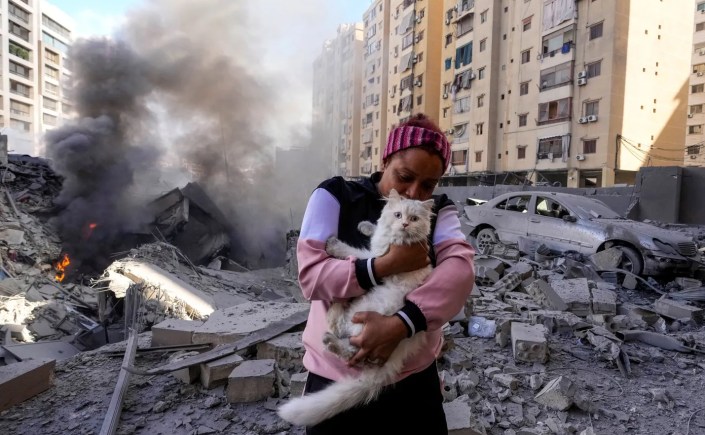


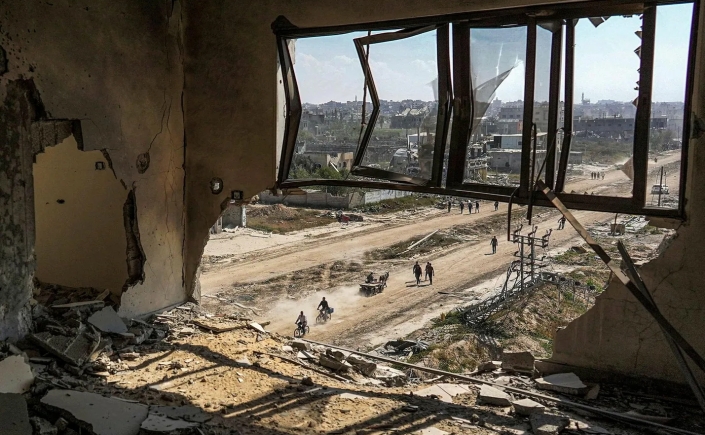
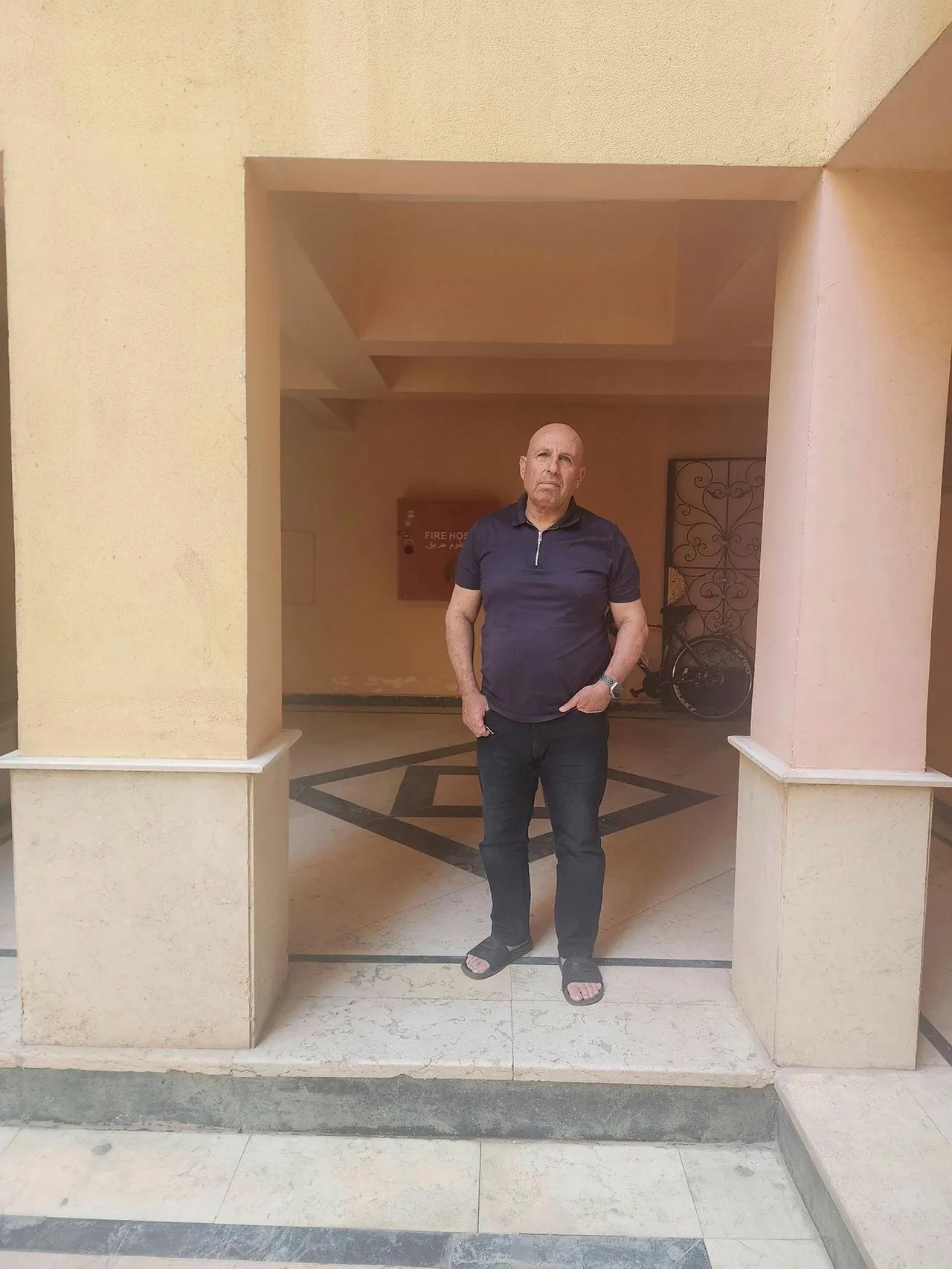
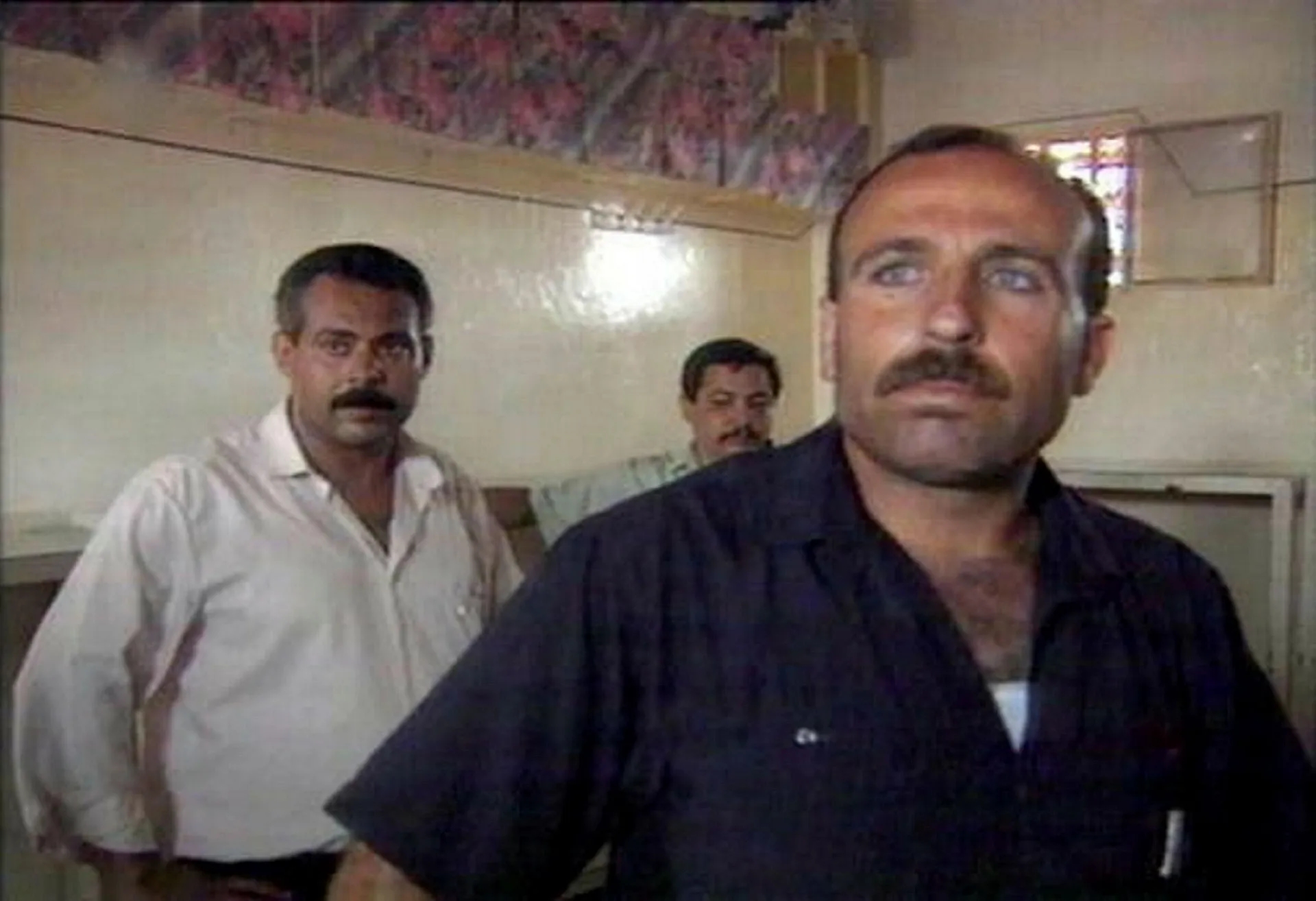
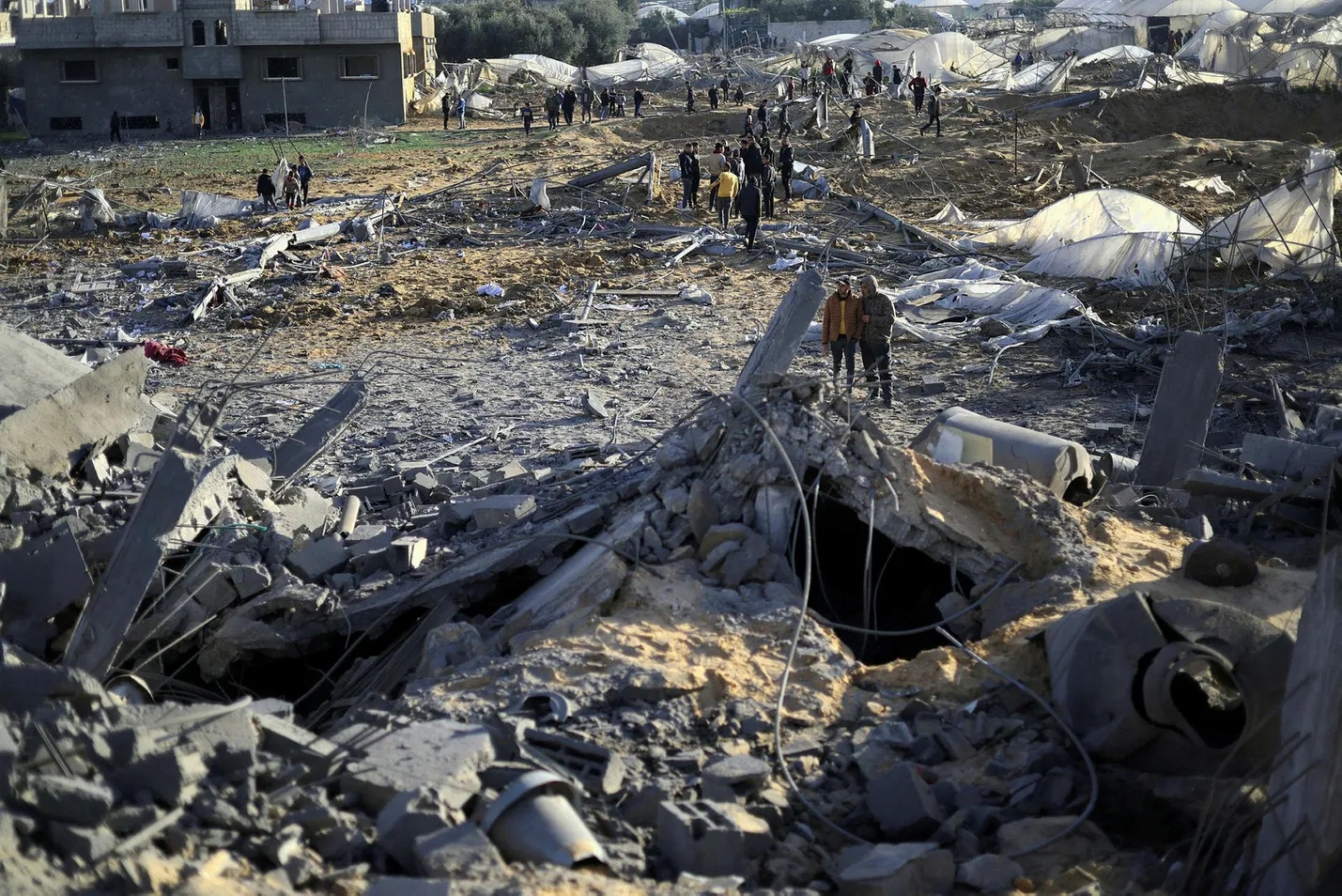
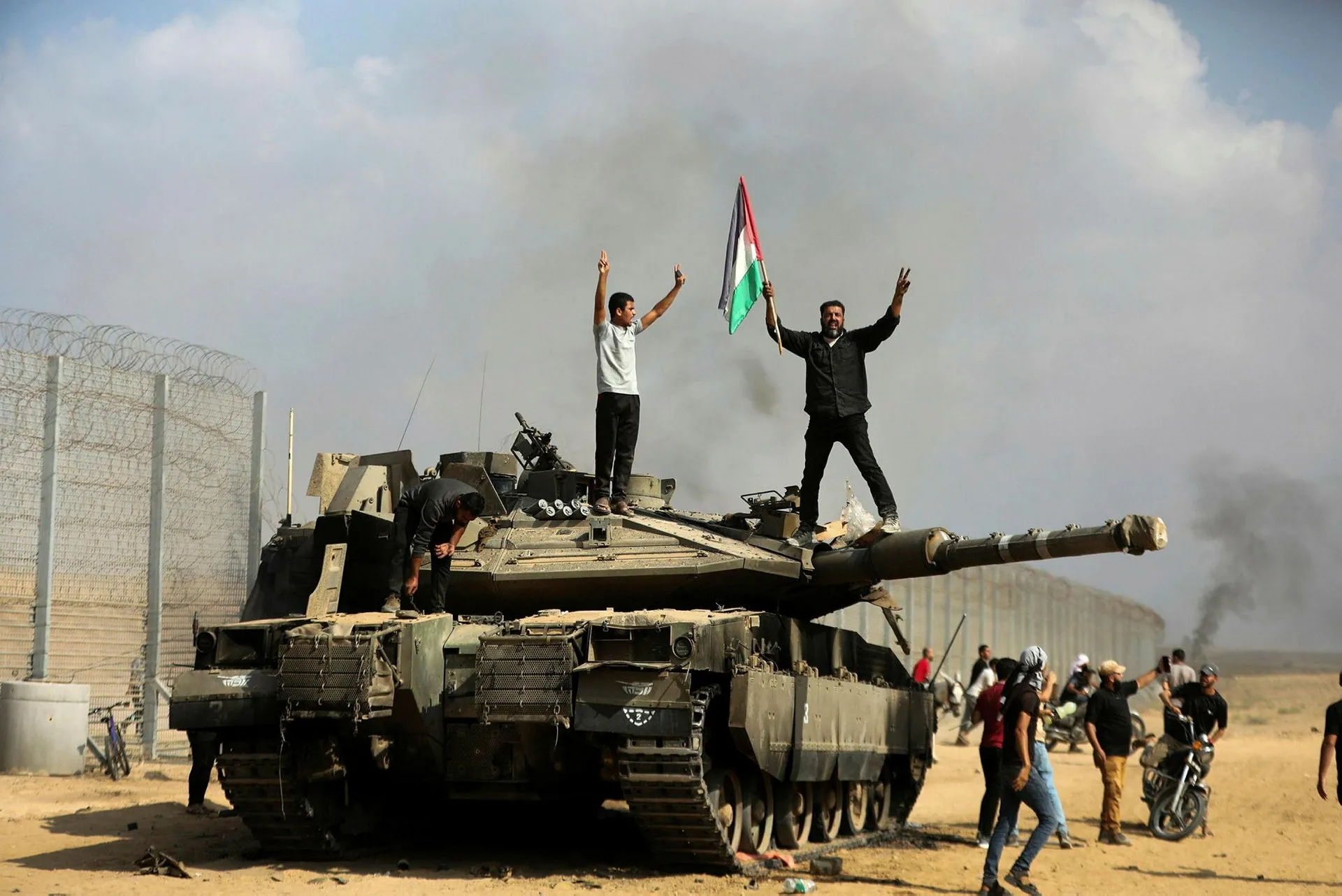
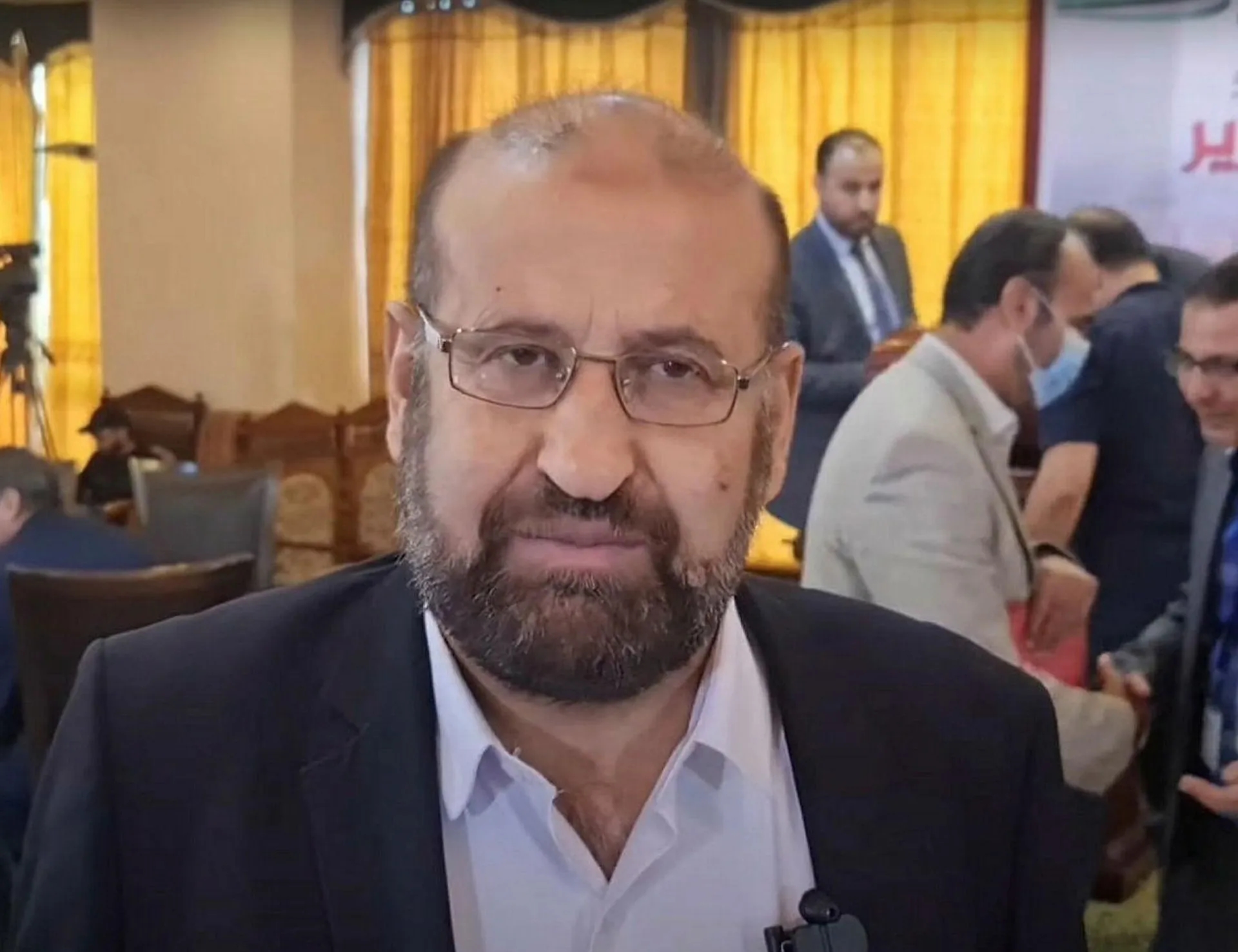
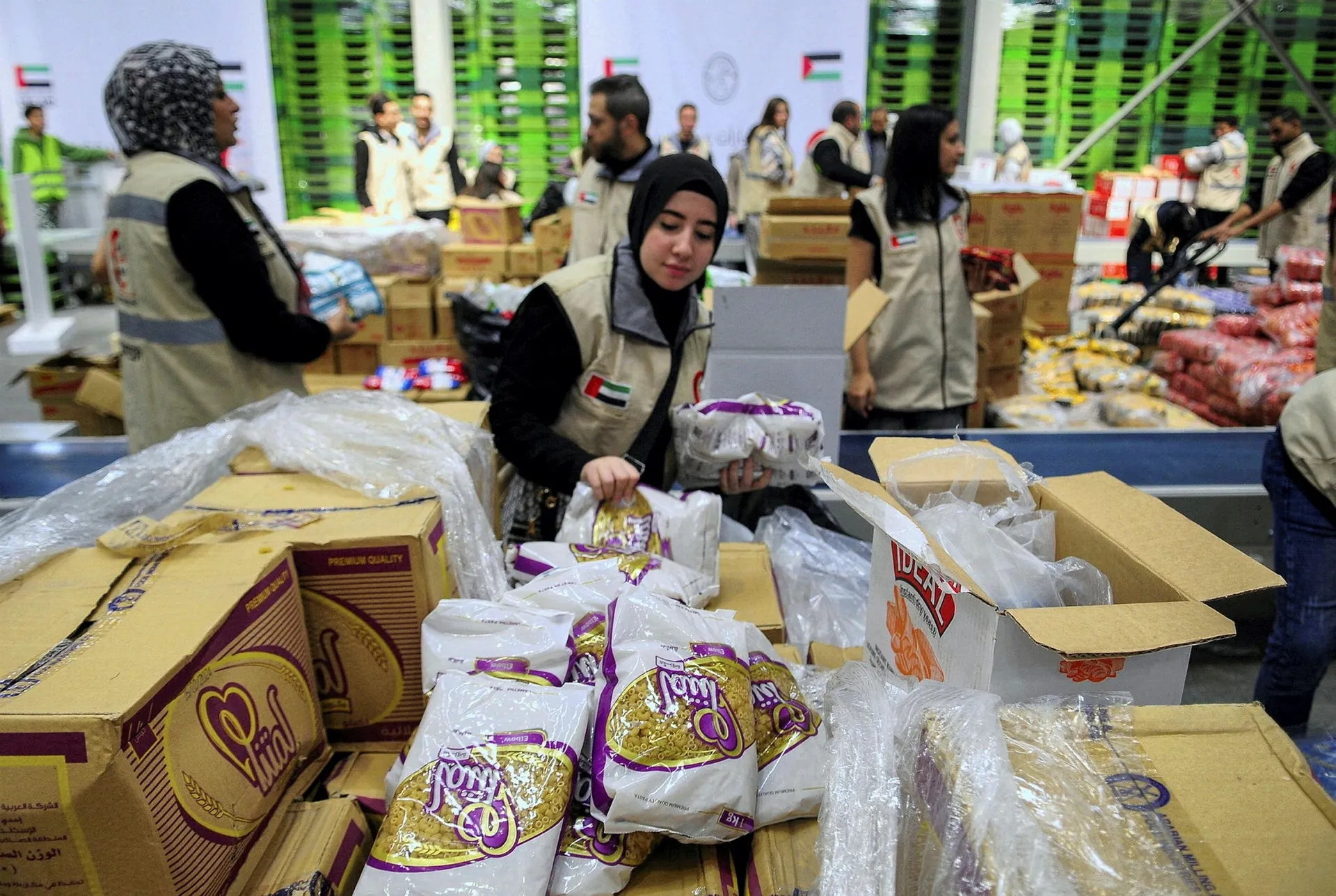


 In That Howling Infinite