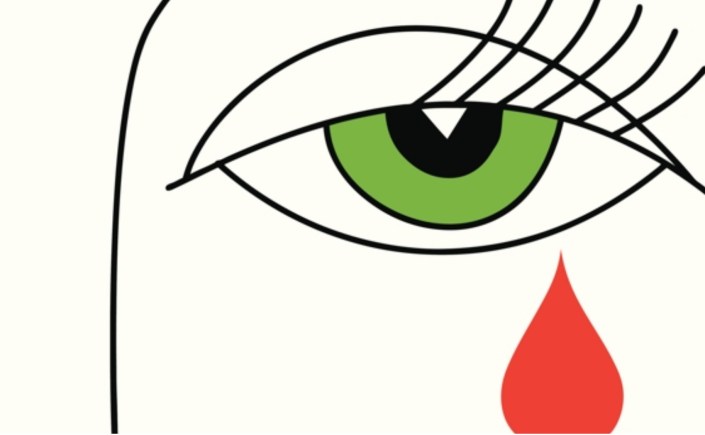
In April 2015, The Spectator published an essay by British columnist and provocateur Julie Burchill entitled Meet the Crybully: a hideous hybrid of victim and victor.
Her piece is essentially an early diagnosis of a cultural type that has since become almost ubiquitous: the person who combines aggression with performative victimhood. Her central argument is that modern society has blurred what used to be clearer moral categories. Once upon a time, she says, with typical Burchillian exaggeration and sardonic nostalgia, bullies bullied and cry-babies cried. They occupied different social roles. The novelty of contemporary culture is the emergence of people who do both simultaneously: attack others while claiming emotional persecution the instant they are challenged.
Hence the “Cry-Bully”: “a hideous hybrid of victim and victor, weeper and walloper.”
The article’s tone is very much old-school polemical journalism – caustic, theatrical, gleefully impolite, full of tabloid-energy metaphors and comic overstatement. But beneath the mischief lies a recognisable argument about contemporary moral culture.
Her broader thesis is that modern media and politics increasingly reward this fusion of aggression and grievance. The crybully uses claims of hurt feelings, victimhood, or marginalisation not merely defensively but offensively – as a weapon to silence critics, claim moral superiority, or evade accountability. The crybully’s sense of victimhood actually intensifies their feeling of entitlement to lash out. “I am wounded; therefore, I may wound. “Burchill sees this dynamic everywhere: celebrity culture, social media, political activism, and ideological extremism.
What makes the article interesting in retrospect is that it appeared in 2015, just as social media outrage culture was becoming fully institutionalised. Burchill intuited early that public life was shifting toward a strange emotional economy where claims of harm could become instruments of power. Victimhood was no longer merely a condition deserving sympathy; it was becoming a source of status, leverage, and immunity.
This links directly to what In That Howling Infinite has discussed earlier about moral capture and conditional empathy. Once victimhood becomes morally sacralised, people compete for it. The crybully therefore occupies a privileged rhetorical position: simultaneously aggressor and protected class, prosecutor and plaintiff. They can strike while claiming defence.
Burchill’s article also reflects a broader generational irritation with what many saw as the rise of therapeutic language in public life – the migration of emotional fragility into politics, media, and everyday discourse. Her complaint is not that suffering is unreal, but that public culture increasingly incentivises people to dramatise injury while behaving atrociously themselves.
What she perhaps underplays – partly because satire flattens nuance by design – is that some of this phenomenon emerges from genuine historical grievances. Not all claims of harm are manipulative performances. Real discrimination, exclusion, and trauma exist. The difficulty, as we discussed, lies in distinguishing authentic vulnerability from weaponised vulnerability.
Still, her phrase has endured because it captured something many people recognised instinctively but lacked vocabulary for. The “crybully” is not simply hypocritical. Hypocrisy at least tacitly acknowledges standards. The crybully goes further: they transform their own grievance into moral permission. Their suffering – real, exaggerated, or entirely performative – becomes justification for intimidation, censorship, cruelty, or coercion.
In that sense, the essay was less a passing cultural jab than an early sketch of a defining personality type of the social-media-political age: emotionally exhibitionist, morally absolutist, permanently aggrieved, and often surprisingly ruthless beneath the tears
While Burchill is widely credited with the term “cry-bully” through this article, she almost certainly did not invent it outright. Variations of the word had appeared earlier in American political and online discourse, usually as an informal insult describing someone who bullies others while presenting themselves as persecuted.
What Burchill did, however, was crystallise and mainstream it. Her article gave the term a memorable definition and a vivid cultural framing at precisely the moment when social-media outrage culture was exploding into mainstream politics and journalism. She turned a loose internet epithet into a recognisable social archetype.
That often happens with language. Orwell did not invent every political tendency he described in “Newspeak”; Tom Wolfe did not invent the social climbers of Radical Chic; but certain writers capture a phenomenon so cleanly that they become permanently associated with naming it. Burchill’s essay performed that function for “crybully.”
And the timing mattered. Around the mid-2010s, Western discourse was undergoing a marked shift toward what critics called “call-out culture,” “cancel culture,” or “performative victimhood.” Universities, media, and online activism increasingly framed disagreement through the language of harm, safety, and trauma. Burchill sensed – with her usual mixture of spite, wit, and instinctive cultural radar – that a new rhetorical type was emerging: people who could deploy the moral prestige of victimhood while behaving in domineering or vindictive ways themselves.
So while she probably didn’t coin the word ex nihilo, she gave it cultural traction and enduring shape. After Burchill, “crybully” stopped being just slang and became shorthand for a broader pathology of contemporary public life.
Let us look further …
The Age of the Crybully
One of the stranger developments of contemporary politics is how ubiquitous and indeed, iniquitous the phenomenon has become. It seems that almost everyone now claims to be oppressed, even – perhaps especially – those wielding considerable cultural, institutional, or social power. The old image of the bully was comparatively straightforward: the loudmouth in the schoolyard, the party apparatchik, the censorious cleric, the overmighty state. Bullies once tended to enjoy their own authority openly. They boasted of strength. They gloried in dominance.
The modern crybully is different. He (and increasingly she, they, and the algorithm itself) seeks not merely power but moral exemption. The crybully wishes simultaneously to strike and to claim injury, to silence while proclaiming persecution, to intimidate while insisting upon fragility. It is domination wrapped in the language of vulnerability. A clenched fist wearing a mitten.
The crybully is hardly confined to one ideology. In fact, one reason the term has gained traction is because nearly everyone recognises it in their opponents while remaining remarkably blind to it in themselves. The progressive activist who demands dissenting speakers be deplatformed because their words create “unsafe spaces”; the nationalist demagogue who attacks minorities while insisting his majority culture is “under siege”; the billionaire politician who controls vast media ecosystems while lamenting persecution by “elites”; the online influencer who launches mobs against critics before posting tearful videos about “harassment” – all belong to the same broad family. Different uniforms, same manoeuvre.
And manoeuvre is the right word, because crybullying is fundamentally strategic. Its psychological architecture resembles what psychologists term DARVO: Deny, Attack, Reverse Victim and Offender. The aggressor denies wrongdoing, attacks critics, and then claims to be the real victim. The rhetorical reversal happens with such speed nowadays that public discourse resembles one of those old farces where everyone keeps running through different doors wearing each other’s hats.
We have discussed before how modern political culture increasingly rewards emotional performance over persuasion. In earlier democratic ideals – however imperfectly realised – argument involved evidence, logic, rhetoric, appeals to principle. One attempted to convince opponents or at least neutral observers. Now the primary objective is often moral positioning within one’s tribe. The goal is not to win the argument but to establish innocence and wickedness: saint and heretic, victim and oppressor.
Victimhood, in this moral economy, becomes a form of currency. Not always consciously, of course. Human beings naturally seek sympathy; suffering confers legitimacy. Historically, societies extended compassion toward the weak because weakness usually correlated with actual vulnerability. But modern media ecosystems – especially social media – have transformed victimhood into performative capital. Visibility accrues to outrage. Status accrues to grievance. Algorithms reward emotional escalation because fury and fear generate engagement. The crybully thrives in precisely such conditions.
One sees this particularly clearly in online political discourse. A person launches a vicious public attack on someone’s livelihood or reputation, encourages pile-ons, delights in humiliation – and the instant they receive criticism in return, they present themselves as traumatised targets of abuse. The asymmetry is extraordinary. “Speech is violence,” they say while engaging in campaigns designed explicitly to destroy reputations, careers, and social standing. The old liberal distinction between disagreement and physical harm collapses conveniently whenever useful. Language becomes simultaneously powerless (“words don’t matter”) and apocalyptic (“this opinion endangers lives”), depending on tactical necessity.
There is, moreover, something deeply theatrical about the crybully phenomenon. Contemporary politics increasingly resembles moral melodrama rather than civic negotiation. Everyone must perform identity publicly; everyone must display emotional authenticity; everyone must signal wounds. Suffering itself becomes competitive. Oppression acquires a prestige hierarchy. Entire ideological ecosystems form around curating grievance narratives – national, racial, sexual, religious, historical – each group insisting its pain uniquely legitimises coercion against others.
And yet genuine suffering is real. This is where the matter becomes morally complicated. Many movements now dismissed as “crybullying” originated in legitimate grievances: racism, antisemitism, sectarianism, misogyny, homophobia, colonial dispossession, economic collapse. We have discussed this tension in relation to Israel-Palestine, where competing historical traumas often become mutually weaponised. Israelis invoke centuries of persecution culminating in the Holocaust; Palestinians invoke dispossession, occupation, and statelessness, encapsukred in al Nakba and al ‘Awda, The Return. Both narratives contain truth. Both can also become rhetorical shields against self-criticism. Trauma explains behaviour; it does not automatically justify it.
The same dynamic appears across Western politics. Parts of the progressive left rightly identified real injustices – discrimination, police abuses, structural inequalities – but sections of the movement gradually drifted toward moral absolutism, where disagreement itself became harm. Meanwhile parts of the populist right, reacting against elite condescension and cultural dislocation, developed their own grievance-industrial complex: every criticism became “censorship,” every electoral loss “theft,” every demographic change “replacement.” Each side increasingly mirrors the other while imagining itself uniquely virtuous.
This mirroring effect is one of the great ironies of the age. The activist denouncing “fascism” adopts authoritarian tactics. The anti-authoritarian populist demands strongman rule. The defender of free speech cheers censorship when directed at enemies. The champion of tolerance displays extraordinary intolerance. The crybully exists because modern political tribes often derive identity less from consistent principles than from emotional narratives of injury.
The media environment intensifies all this. Traditional journalism, for all its flaws, once imposed certain filters: editorial standards, institutional caution, reputational constraints. Social media dissolved many of these barriers. Outrage now travels instantly, context arrives later if at all, and emotional certainty routinely overwhelms factual ambiguity. A claim of victimhood can mobilise millions before verification occurs. By the time nuance appears, the reputational execution has often already taken place.
One might call this the democratisation of accusation.
The result is a culture simultaneously hyper-moralised and strangely amoral. People speak incessantly about empathy while displaying astonishing cruelty toward designated enemies. Public shaming becomes entertainment. Humiliation becomes activism. Entire careers now revolve around ritual denunciation. The crybully does not merely seek victory but emotional submission: the confession, the apology, the compelled affirmation. Medieval heresy trials have returned wearing progressive HR language and algorithmic amplification. Torquemada with a podcast.
Nor is this confined to politics. Corporate culture absorbed the same instincts. Universities too. Institutions increasingly govern through therapeutic language – “harm,” “safety,” “trauma,” “belonging” – while exercising bureaucratic coercion beneath the soft vocabulary: power functioning most effectively when disguised as care.
Yet the phenomenon also reflects a broader civilisational anxiety. Modern Western societies, particularly affluent ones, have become psychologically uncomfortable with conflict itself. We possess immense material comfort yet display extraordinary emotional fragility. Ordinary disagreement is recast as existential threat. Politics becomes therapy; therapy becomes politics. The language of clinical distress migrates into every domain of life. One no longer simply dislikes a viewpoint; one feels “unsafe.” The crybully emerges naturally from cultures where emotional discomfort is moralised and resilience subtly pathologised.
But there is another side to this story. The rise of the crybully also reflects declining trust. People increasingly feel unheard by institutions, alienated from elites, suspicious of media, uncertain about the future. In such environments, grievance becomes identity because shared civic narratives weaken. If citizens no longer believe institutions will treat them fairly, they turn to emotional mobilisation instead. The loudest victim often wins attention. Politics becomes less about governing plural societies than about competing claims to injury.
The danger is obvious. A society where everyone claims victimhood eventually loses the capacity to distinguish between genuine oppression and manipulative performance. Real suffering becomes trivialised through inflation. If all disagreements are violence, then actual violence disappears into semantic fog. Worse still, reciprocal crybullying creates permanent escalation: each faction justifies its aggression as defensive retaliation against the aggression of others. Everyone becomes both persecutor and persecuted in their own mythology.
History offers grim precedents. Ethno-national conflicts frequently evolve through precisely such reciprocal narratives of victimhood. Each atrocity becomes justification for the next. Every side remembers its own dead more vividly than the other’s. The Balkans, Northern Ireland, the Levant, Rwanda – all contain examples of communities simultaneously capable of genuine suffering and genuine cruelty while insisting exclusively upon the former.
What, then, is the alternative?
Perhaps merely recovering the old unfashionable liberal virtues: proportion, reciprocity, scepticism toward one’s own tribe, the ability to distinguish discomfort from oppression, disagreement from violence, criticism from persecution. Perhaps also recovering a thicker skin. Democracies require citizens capable of enduring offence without demanding censorship and capable of exercising power without theatrically claiming helplessness.
Most importantly, they require moral consistency. If intimidation is wrong, it remains wrong when committed by one’s own side. If free speech matters, it matters for opponents too. If empathy is a virtue, it cannot operate tribally alone.
The crybully thrives where morality becomes entirely performative – where appearing wounded matters more than behaving decently. That may be why the phenomenon feels so omnipresent today. We inhabit cultures saturated with public displays of virtue but increasingly uncertain about virtue itself.
And so the age oscillates endlessly between aggression and grievance, outrage and self-pity, accusation and lamentation: societies shouting at one another in the language of trauma while quietly competing for power underneath. The schoolyard bully has not disappeared after all. He has merely discovered the therapeutic vocabulary of the guidance counsellor.
The Morality of the Crybully
What makes the crybully phenomenon so corrosive is not merely hypocrisy – hypocrisy is ancient, almost a constant of political life – but the way it corrodes the very language by which societies distinguish justice from manipulation. In our discussions about moral capture, conditional empathy, intellectual honesty, and the strange contest between the “high” and “low” moral ground, the same pattern kept resurfacing like a half-visible reef beneath modern discourse.
Moral capture occurs when a person or movement becomes so emotionally or ideologically invested in a cause that the cause itself ceases to be examined critically. The tribe absorbs the conscience. One no longer asks, Is this true? Is this proportionate? Is this humane? One asks only: Whom does this help? Whom does this hurt? Morality becomes instrumental rather than principled. At that point, the crybully emerges almost naturally, because any criticism of the cause is experienced not as disagreement but as sacrilege.
And once criticism becomes sacrilege, coercion begins to feel virtuous.
This is where conditional empathy enters the story. We have spoken often about the peculiar narrowing of compassion in modern ideological life: how suffering increasingly counts only when experienced by the “correct” people within the “correct” narrative framework. The dead child in Gaza evokes tears; the murdered Israeli family becomes an inconvenient footnote. Or the reverse: outrage at Islamist terror paired with indifference toward flattened neighbourhoods and stateless civilians. Empathy becomes selective, curated, tribalised. One grieves not for human beings but for symbols.
The crybully weaponises precisely this asymmetry. “Your empathy for them proves your hostility toward us.” Compassion itself becomes grounds for accusation. Nuance becomes betrayal. And so discourse collapses into competitive grievance theatre, each side insisting exclusively upon its own wounds while minimising, rationalising, or outright mocking those of others.
Intellectual honesty is the first casualty.
Not because people necessarily become consciously deceitful, though some do, but because the emotional rewards for self-deception become overwhelming. It is psychologically comforting to believe one’s tribe uniquely moral, uniquely endangered, uniquely justified. The crybully mentality depends upon this self-absolution. One’s own aggression is always defensive; one’s own censorship is protection; one’s own intimidation is accountability. Every act becomes morally laundered through claimed victimhood.
This is why so much contemporary rhetoric feels simultaneously hysterical and curiously hollow. The language of existential peril is deployed constantly, often by people occupying highly privileged institutional positions. Editors, celebrities, politicians, academics, influencers — people with immense platforms and cultural authority — present themselves as besieged dissidents while actively policing dissent around them. The paradox would be comic were it not so socially damaging.
And this returns us to the distinction we discussed between the high and low moral ground.
The low moral ground is simple: naked tribalism, explicit hatred, open authoritarianism. History recognises it easily enough. The high moral ground is more dangerous precisely because it cloaks itself in virtue. The crybully insists not merely that opponents are wrong, but that suppressing them is itself an act of compassion. The language softens while the coercion hardens. One need not burn books if one can socially anathematise their authors. One need not imprison dissenters if one can algorithmically erase them, professionally ruin them, or morally quarantine them.
The old tyrannies often announced themselves with drums and banners. The new ones frequently arrive wrapped in therapeutic language, carrying diversity statements and safeguarding protocols.
That does not mean all claims of harm are fraudulent, nor all activism manipulative. Far from it. There are real injustices, real exclusions, real cruelties. The difficulty lies precisely in disentangling authentic suffering from performative victimhood — and in resisting the temptation to excuse cruelty merely because it is rhetorically framed as justice.
This demands intellectual consistency, which is perhaps the rarest civic virtue of all. It requires the uncomfortable ability to apply one’s standards equally to allies and enemies alike. To condemn dehumanisation even when committed by one’s own side. To acknowledge suffering without immediately converting it into political currency. To resist the narcotic pleasures of outrage and self-righteousness.
Because ultimately the crybully phenomenon reveals something larger about our civilisation: a profound confusion between moral status and moral behaviour.
To suffer does not automatically make one virtuous. To belong to a historically wronged group does not sanctify every action. Nor does possessing power automatically invalidate every grievance. Human beings remain morally complicated creatures, capable of both victimhood and cruelty, often simultaneously. History’s most unsettling lesson may be that the oppressed do not become angels when circumstances change; they become human beings with power.
And perhaps that is the hardest truth modern politics struggles to admit. We prefer melodrama to ambiguity. Saints and monsters are easier to process than flawed people navigating impossible histories. Yet once societies lose the capacity for moral complexity, they drift toward permanent mutual denunciation, each faction simultaneously convinced of its innocence and its persecution.
The crybully is therefore not merely an irritating personality type of the social media age. It is the symbolic citizen of a culture that increasingly confuses feeling wounded with being right, visibility with virtue, and accusation with truth.
A civilisation cannot survive indefinitely on those terms. Eventually reality intrudes. Actions still have consequences. Power remains power even when exercised tearfully. And no amount of therapeutic vocabulary can entirely conceal the ancient human temptation underneath it all: to dominate while claiming righteousness, to wound while insisting one is wounded, to occupy both the throne and the scaffold at once.
This essay was written in conversation with an AI language model, which contributed to drafting, phrasing, and conceptual articulation. What appears here is not unmediated thought, but considered thought: selected, tested, revised and revised again, and owned.
See also in In That Howling Infinite, A Political World – Thoughts and Themes, including:: Moral capture, conditional empathy and the failure of shock, Standing on the high moral ground is hard work and Shaping facts to feelings – debating intellectual dishonesty
Postscript 1. The biggest Crybully of them all?
The term “crybully” usually describes someone who presents themselves as a victim while simultaneously wielding considerable power, attacking opponents, or intimidating critics. Donald Trump is often described that way by critics because his political style combines grievance and dominance in almost theatrical tandem: he portrays himself as persecuted by “elites,” the media, courts, universities, bureaucrats, foreign allies, even election systems – while also projecting strength, retaliation, and triumph.

What makes the label stick for many observers is the contrast. He is, after all, one of the most powerful and protected figures on Earth: billionaire celebrity, former president, political movement unto himself. Yet much of his rhetoric is built around betrayal and victimhood. The emotional engine of Trumpism is often not “we rule,” but “they are cheating us.” That sense of embattlement is politically potent because it invites supporters to feel both aggrieved and righteous simultaneously.
But the phenomenon is hardly unique to Trump, and that is where things become culturally interesting rather than merely partisan. Modern politics across the spectrum increasingly rewards performative vulnerability married to aggression. Institutions, movements, and leaders now compete not just for power but for moral victim status. The language of injury has become a form of authority. In that sense, Trump may be less an aberration than the loudest, most gifted practitioner of a broader age of grievance politics — part WWE heel, part populist tribune, part tabloid Jeremiah railing against the storm while selling tickets to it.
The image itself captures that familiar Trumpian mode: mouth open mid-declaration, fingers pinched in emphasis, occupying the room entirely. It is performance as politics, politics as performance – the old television instinct that attention is oxygen. Whether one sees him as a demagogue, a showman, a symptom, or a political genius often depends on whether one thinks the grievance which he channels is fabricated, exaggerated, or fundamentally real.
Postscript 2. Outside looking in
One of the more curious spectacles of contemporary politics is the rise of the insider who markets himself as an outsider: the millionaire broadcaster presenting as a battler, the nationally syndicated columnist lamenting that “people like me aren’t allowed to speak”, the television panellist with a nightly platform insisting he is being silenced by “the elites”. It is a performance now so common that it barely registers as contradiction.
In Australia, this phenomenon is especially visible in parts of the Sky News ecosystem – Rowan Dean, the opinionated, contrarian editor of the Spectator Australia portal and host of Sky News’ Outsiders programme, being an obvious example – where commentators cast themselves as tribunes of the “forgotten people”, channelling the language of suburban grievance and cultural dispossession while operating from within one of the country’s most powerful media networks. The rhetorical trick is not new. What is new is the intensity with which institutional power now dresses itself in the clothes of marginalisation.
This is where the idea of the “crybully” becomes useful. The crybully combines aggression with perpetual claims of victimhood: attacking, denouncing, ridiculing, demanding consequences for opponents — while simultaneously insisting they are the ones under siege. They are not merely critics of power; they are often participants in it, sometimes beneficiaries of it, but they derive moral energy from presenting themselves as embattled dissidents standing against a corrupt orthodoxy.
The irony, of course, is that many of these figures possess enormous cultural reach. They dominate newspaper columns, television panels, radio slots, publishing circuits, and increasingly lucrative social-media ecosystems built on outrage and resentment. Yet every criticism becomes “censorship”; every disagreement, proof of persecution; every loss of cultural dominance, evidence of oppression.
There is also something profoundly theatrical about it. The old conservative self-image was one of authority, stewardship, and institutional confidence. The new populist pose prefers the aesthetics of rebellion: the leather jacket of anti-establishment defiance worn over the tailored suit of establishment access. The outsider identity becomes less a sociological reality than a branding exercise.
And so we arrive at the peculiar modern spectacle: insiders cosplaying as insurgents, powerful voices speaking endlessly about their powerlessness, media elites railing nightly against “the media elite” – a hall of mirrors in which grievance itself becomes both commodity and shield. For more on this subject in In That Howling Infinite, see: Outside Looking In. Although written ten years ago, it remains relevant.
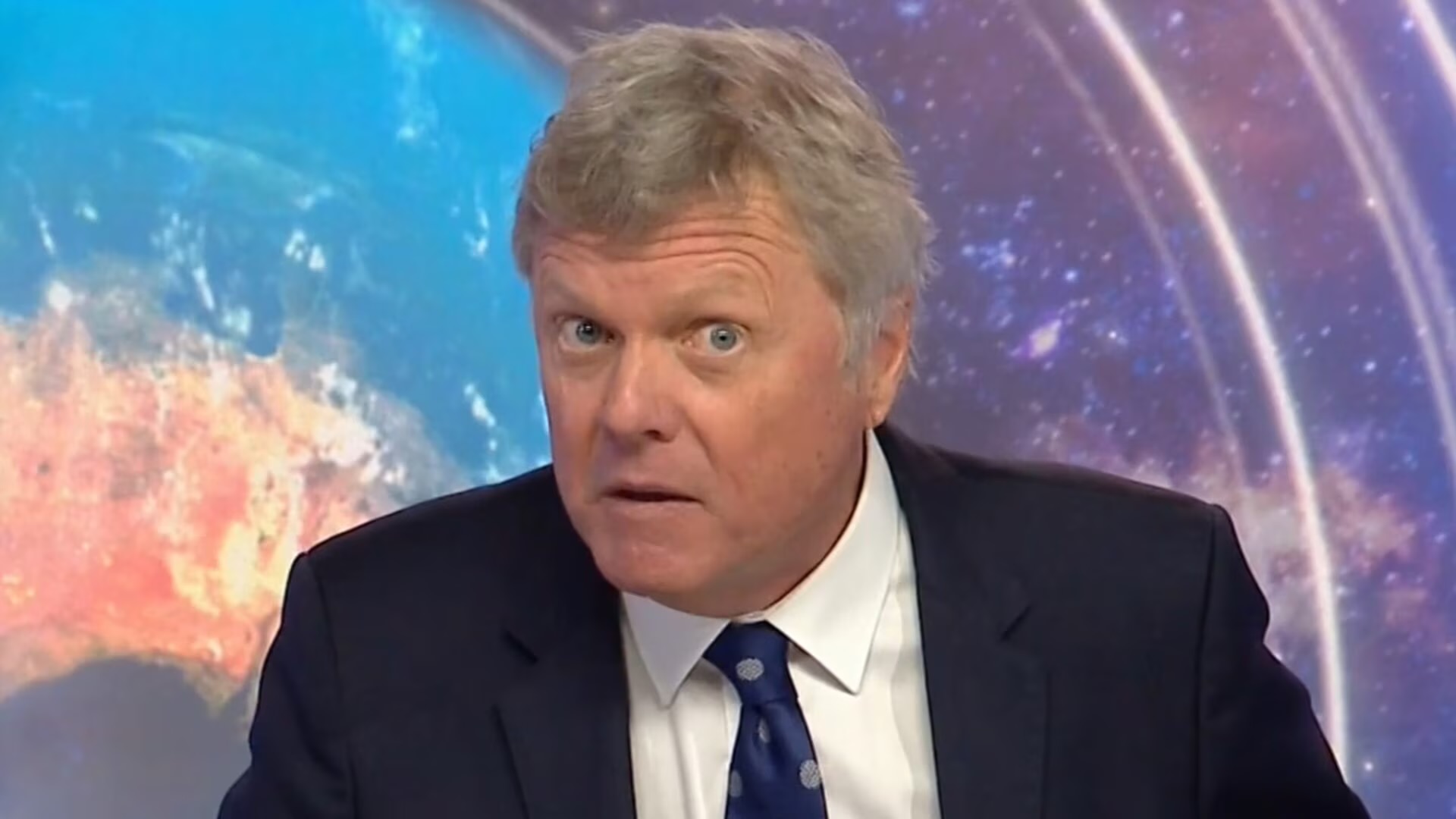
Rowan Deane
Postscript 3. Solid Rock
I am reminded of the Dire Straits song Solid Rock, featured on their 1980 album Making Movies: “When you point your finger ’cause your plan fell through / You got three more fingers pointing back at you “Written by Mark Knopfler, it focuses on themes of accountability, authenticity, and avoiding illusions. It’s a critique of blaming others for personal failures, highlighting that when you blame someone else, the majority of your hand is actually pointing back at yourself.
It is relevant here insofar as it reminds us in its lyrical simplicity about accountability and of how The crybully mentality depends upon the permanent externalisation of blame. Failure is always someone else’s oppression; criticism is persecution; consequences are violence; disagreement is abuse. The self becomes morally untouchable because it is permanently aggrieved. But, as Solid Rock suggests, reality is less accommodating. The line quoted is almost proverbial in its clarity, yet it contains an older moral wisdom modern culture increasingly resists: the possibility that one’s own failures, excesses, delusions, or moral compromises might actually contribute to one’s predicament.
That is precisely what ideological movements captured by grievance struggle to admit. Every setback becomes evidence of conspiracy or persecution rather than occasion for introspection. We see it across the spectrum. Progressives unable to understand why ordinary voters recoil from moral hectoring conclude the electorate is bigoted or “misinformed.” Populists unable to sustain coherent governance blame “deep states,” traitors, immigrants, globalists, or cultural saboteurs. Each side points furiously outward while refusing the quieter, more difficult question: what if part of the problem is us?
Knopfler’s lyric also matters because it quietly rejects the seduction of moral theatre. Making Movies is full of people constructing performances, illusions, romantic myths, cinematic versions of themselves. The crybully does something similar politically: they curate a self-image of perpetual innocence. Yet the hand itself betrays the illusion. Three fingers point back. Human beings remain implicated in their own stories.
That idea has become oddly countercultural. Contemporary discourse rewards certainty, not self-scrutiny. To hesitate, to admit contradiction, to acknowledge one’s tribe capable of cruelty – these are treated as weaknesses. Yet intellectual honesty begins precisely there. We discussed earlier the distinction between the high and low moral ground: the low ground brutalises openly, while the high ground often disguises domination as virtue. Knopfler’s line punctures both forms. It reminds us that moral seriousness begins not with denunciation but with reflection.
There is almost something biblical about it. Before condemning others, examine yourself. Remove the beam from your own eye before pointing out the speck in another’s. The old religious traditions understood a truth modern politics often forgets: self-righteousness is one of the most dangerous intoxicants because it makes cruelty feel deserved.
And perhaps that is why the line lingers. It is not merely a rebuke to blame-shifting; it is a warning against the human tendency to transform disappointment into accusation. The crybully points outward incessantly because looking inward is painful. Self-examination threatens the entire emotional architecture of victimhood. If even part of the responsibility lies within, then the performance collapses.
Knopfler, characteristically, says it with understated elegance rather than ideological bombast. No manifesto, no therapeutic jargon, no grand theory of oppression – just a hand, a finger, and the uncomfortable geometry of blame. Three fingers pointing back. An old truth hiding in plain sight, solid as rock.
 In That Howling Infinite