I wear the weave of history like a second skin, I wake with runes of mystery of how we all begin, I walk the paths of pioneers who watched the circus start, The past now beats within me like a second heart.
Paul Hemphill. E Lucivan Le Stelle
Whilst its scope is eclectic and wide ranging in content In That Howling Infinite is especially a history blog. It’s subject matter is diverse. Politics, literature, music, and memoir are featured – but it is at its most original and informative, a miscellany of matters historical, gathered in Foggy Ruins of Time – from history’s back pages– yes, an appropriation of lyrics from two Bob Dylan Songs.
In compiling the annual retrospective for 2022, I decided I would put together a list of my favourite posts in each of the categories described above, beginning with the history ones. My primary criteria were not so much the subject matter, which is diverse, as can be seen from the ten choices (shown here in alphabetical order) but firstly, what I most enjoyed writing and secondly, those I considered the most original insofar as I referenced and republished few other voices, other than direct quotations from the sources I was consulting and books I was reviewing.
Outlaw songs and outlaw gothic are as much apart if the mythic Wild West as cowboys and gunslingers. A nostalgic canter through some of my personal favourites on records and in movies.
Androids Dolores and Teddy enjoy the Westworld view
Western folk, long on romanticism and short on historical knowledge, associate crusades and crusaders with medieval knights, red crosses emblazoned on white surcoats and shields and wielding broadswords battling it out with swarthy scimitar-swinging, be-turbaned Saracens. Here, we widen that orientalist perspective.
“… one thing is for certain: we all love a good story. As they say, in Arabic, as indeed in all tongues, times and places, “ka-n ya ma ka-n bil ‘adim izzama-n wa sa-lifi al aSri wa la-wa-n”‘ or, “once upon an time”. An original, idiosyncratic and not strictly accurate journey through those foggy ruins of time.
We know how the story of Thomas Cromwell ends. It’s how Booker prize winner Hilary Mantel gets us there that matters. Our questions here are whether Thomas could sense where it was all headed, and whether he could have quit while he was ahead.
“A wide-ranging rural road trip through England’s green and pleasant land takes the traveller by antique and desolated abbeys and monasteries, their ageing walls crumbling and lichen covered, their vaulted pediments open to the English elements. The celebrated poets of the romantic era immortalized these relics in poetry, and even today, when one stands in grassy naves, gazing skywards through skeletal pillars, one can almost feel an ode coming on”. A brief dissertation on Thomas Cromwell’s English revolution.
It is late summer in 1806, in the colony of New South Wales. After he loses everything he owns in a disastrous flood, former convict, failed farmer, and all-round no-hoper and ne’er-do-well Martin Sparrow heads into the wilderness that is now the Wollemi National Park in the unlikely company of an outlaw gypsy girl and a young wolfhound. Historian Peter Cochrane’s tale of adventure and more often than not, misadventure, set on the middle reaches of the Hawkesbury River at time when two culturally and spiritually disparate peoples collided.
In the First century, the Roman Empire was a far-ranging and cosmopolitan polity extending from the shores of the Atlantic to the borders of Persia. As far as we can ascertain from the historical record, Meniscus Diabetes was born in Rome in 25 CE. His father was a Greek slave in the Imperial Household of Tiberius Caesar, Emperor of Rome. These were turbulent times for Rome and Romans, but our hero managed to navigate through them.
The Sport of Kings’ is not a history book – nor is it an historical novel. But it is most certainly about history. And about identity. As Morgan puts it: “You would never escape the category of your birth”. It is also about memory and myth: “Repeated long enough, stories become memory and memory becomes fact”. It is both a meditation on race, on slavery – America’s “original sin” – and a bitter inversion of the American dream.
An illuminating canter through the story of the “Centaurian Pact” between humans and horses. it is at once a ride andrevelation, and a reminiscence of my short-lived ‘cowboy’ days. The horse” has been man’s most important companion – forget cats and dogs – and the most durable of historical alliances, and yet, over the span of a few decades, a relationship that endured for six millennia went “to the dogs” – excuse my awful pet-food pun. And it happened almost unremarked, unnoticed, and unsung.
Our forest neighbour, recently deceased and internationally acclaimed English photojournalist Tim Page ran away from boring ‘sixties Britain to the exotic East at the age of seventeen, taking the ‘overland’ route that decades later would be called ‘the Hippie Trail’. He washed up in the great war of our generation, and left it critically injured and indeed clinically dead in a medivac chopper. This is the story of a war, and a young man who wandered into that war.
The prophet’s lantern is out And gone the boundary stone Cold the heart and cold the stove Ice condenses on the bone Winter completes an age
WH Auden, For the Time Being – a Christmas Oratorio, 1941
I considered using a line from the above as the title of this retrospective of 2022. It was written during 1941 and 1942, though published in 1947, when the poet was in self-exile in the United States and viewing the war in Europe from afar – although the long poem from which it has been extracted does not in itself reflect such pessimism. A more fitting title could be taken from another long poem that was published in another (very) long poem published in 1947 – Auden’s often overlooked masterpiece The Age of Anxiety, a meditation on a world between the wreckage of The Second World War and of foreboding for the impending armed peace that we now look back on as the Cold War, with its oft-repeated mantra: “many have perished, and more most surely will”.
The year just gone was indeed a gloomy one, meriting a dismal heading. There are few indications of where it might take us in ‘23 and beyond, and my crystal ball is broken. Pundits reached for convenient comparisons. Some propounded that it was like the 1930s all over again when Europe constantly teetered on the brink of war. Others recalled 1989 with the fall of the aneroid Wall and the collapse of the Soviet Union. But, beware of false analogies. In 2022, things were more confused. The tides of history have often resembled swirling cross-currents.
Things, of course, might have been worse. There are, as I’ve noted in successive posts on my own Facebook page, many qualified “reasons to be cheerful”. The year could have ended with Ukraine under Russian control. An emboldened China might have been encouraged to launch an assault on Taiwan. A red wave in the midterms would have buoyed Trump. And here in Australia, Scott Morrison might have secured another “miracle” election victory. The West could have retreated on all fronts.
Instead, therefore, I have selected a title that hedges its bets, because, to paraphrase the old Chinese adage, and the title of an earlier retrospective, we certainly live in interesting times and in 2023, and a lot of energy will be spent endeavouring to make sense of them – or, to borrow from Bob:
Pointed threats, they bluff with scorn
Suicide remarks are torn
From the fool’s gold mouthpiece
The hollow horn plays wasted words
Proves to warn that he not busy being born
Is busy dying
B Dylan
The year in review
Christine McVie, longtime and founder member of Fleetwood Mac departed the planet on 30th November this year. And contemplating this year’s posts in In That Howling Infinite, I could not help thinking about one her most famous songs. I recalled that it featured on newsreels of the revolution that ousted the Shah of Iran in 1979.
Why not think about times to come?
And not about the things that you’ve done
If your life was bad to you
Just think what tomorrow will do
Don’t stop thinking about tomorrow
Don’t stop, it’ll soon be here
It’ll be better than before
Yesterday’s gone, yesterday’s gone
The song seemed quite apposite as the soundtrack of a revolution that had overthrown one of America’s many friendly autocrats. At the time, no one could predict what would happen, but, as with the fall of the Berlin Wall in 1989, it was a time optimistic expectation. And yet its shock waves have reverberated and ricocheted in ways unimagined at the time.
As 2022 ends, with blood flowing on the streets of Iran and in the mullahs’s torture cells as young people rise up against a hypocritically brutal theocratic tyranny, we see again and again how that which goes around comes around.
Women, Freedom, Life
If the malign hand of history has literally reached out and gripped Iran’s young women and girls by their hair, it has also endeavoured to strangle the thousand year old Ukrainian nation in the name of an atavistic irredentism. Russian troops invaded the Ukraineon February 24, causing what has since become the largest conflict in Europe since World War II. Out if the spotlight of the world’s easily distracted attention. intractable conflicts lumbered mercilessly on – in Syria, Yemen, Ethiopia, the Congo and many other “far away places with strange sounding names”.
On the far side of the world, the USA continued to struggle with the reverberations of January 6th 2021. Donald Trump, like Dracula, has not gone away, and whilst his 2024 presidential run is looking increasingly shaky, he continues to poison the atmosphere like radioactive dust. The unfortunate folk of the United Kingdom endured three prime ministers during the year, including the shortest ever in the history of the office, and after two years of pandemic, are facing a bleak economic winter as well as a frigid actual one.
In Australia, it was the year of the teal – at least according to those who study the evolution of language, the year we lost a queen, our long-serving foreign head of state, and a king of spin, the down-fallen and disgraced Scott Morrison. And a sodden La Nina saw incessant rain drown large swathes of eastern Australia, visiting misery on thousands. COVID-19 mutated, the Omicron variant surging from beginning of the year, ensuring no end to the pandemic – today, it seems like everyone we know has had it, including ourselves (and we were soooo careful for a full two years!). As restrictions were cautiously lifted, we as a nation are learning to live with it.
Politically, it’s been a grand year for the Australian Labor Party. With our stunning Federal election win in May and in Victoria in November, the Albanese government’s star is on the ascendant and it’s legislative record in six months has out run nine years of Tory stagnation on climate, integrity and equality – a neglect that saw the rise of a new political force in the shape of a proto-party, the aforementioned “teal”, named for the colour of the candidates’ tee shirts. The opposition has been reduced to a bickering and carping crew, and whilst Labor continues to ride high in the polls, the Coalition bounces along the bottom of the pond.
Lismore, northern NSW, March 2023
Flooded house aflame, Lismore March 2022
Christine McVie was just one of many music icons who checked out this past year. The coal miner’s daughter, Loretta Lynn, crooned her last, as did rock ‘n roll bad boy Jerry Lee Lewis and Ronnie “the Hawk” Hawkins, who gave the boys in The Band their big break. Rock heavyweight (literally) Meatloaf took off like his bat out of hell and keyboard evangelist Vangelis boarded his chariot of fire.
One could argue that the most significant departure was that of Britain’s longest serving monarch. Queen Elizabeth II had been on the throne for almost all of my life, as has the now King Charles III who was born four months before me, and of whom, as a nipper, I was jealous. I recall how I watched the queen’s coronation on a tiny black and white television in the crowded and smokey parlour of the boarding house run by a friend of our family. By happenstance, Netflix served up two over the top regal sagas to binge on: the penultimate season of The Crown, which whilst entertaining, was a disappointment in comparison with earlier seasons, and Harry and Meghan which was whilst excruciatingly cringe-worthy, was nevertheless addictive viewing. The passing of Her Maj reminded me that in my lifetime, I have witnessed three monarchs and eighteen British prime ministers (and incidentally, eighteen Australian prime ministers). The public outpouring of grief for the Queen’s ascent to the choir invisible was unprecedented – the picture below demonstrates what the Poms do best …
The Queue along the Thames to pay respect to Her Maj
There were farewells much closer to home. My mediation colleague, aspiring author and friend John Rosley, and Beau Tindall, the son of my oldest Bellingen friend Warren, took off on the same day in May. Peter Setterington, my oldest friend in England – we first met in 1972 – died suddenly in London in March, and our friend and forest neighbour, the world-famous war photographer Tim Page, in August, after a short but nasty illness. Pete is memorialized in When an Old Cricketer Leave His Crease whilst Journey’s end – Tim Page’s wild ride,is an adaptation of the eulogy I gave for Tim in September, one of many on that sunny afternoon day in Fernmount. It is a coda toTim Page’s War – a photographer’s Vietnam journey, a story we published a year ago.
Tim Page by Joanne Booker
What we wrote in 2022
The ongoing Ukraine War has dominated our perception of 2022, from the morning (Australian time) we watched it begin on CNN as the first Russian missiles struck Kyiv, to the aerial assault on infrastructure that has left Ukrainians sheltering through a cold, dark winter. Two posts in In That Howling Infinite examinedthe historical origins of the conflict: Borderlands – Ukraine and the curse of mystical nationalism and The Roots and Fruits of Putin’s Irridentism. “Because of …” Iran’s voice of freedom looks at the song that has become the rising’s anthem. None can predict the outcome – whether it will be a doomed intifada, the Arabic word that literally means a shaking off – historically of oppression – and figuratively, a rising up, like that in Ireland in 1798 and 1916, Warsaw in 1943 and 1945, and Hungary in 1956, or an Inqilab, another Arabic word meaning literally change or transformation, overturning or revolution.
More distant history featured in Menzie’s Excellent Suez Adventure, the story of the Suezcrisis of 1956 that historians argue augured the end of the British imperium, and the role played therein by longtime Australian prime minister Sir Robert Menzies. Johnny Clegg and the Washing of the Spears is a tribute to the late South African singer, dancer and songwriter, and a brief history of the war that destroyed the great Zulu nation, setting the scene for the modern history of South Africa. And journeying further back in time to sixteenth century Ireland, there is O’Donnell Abú – the Red Earl and history in a song, a discussion of the origins of a famous and favorite rebel song.
We cannot pass a year without something literary. We celebrated the centenary of three iconic literary classics in The year that changed literature, and with the release of TheRings of Power, the controversial prequel to The Lord of the Rings, we published a retrospective on the influence of JRR Tolkien. One ring to rule us all – does Tolkien matter? – a personal perspective with an opinion piece by English historian Dominic Sandbrook, an informative and entertaining chronicler of postwar British history and society which featured, in Unherd, an online e-zine that became a “must read” in 2022. A Son Goes To War – the grief of Rudyard Kipling recalls the death in battle on the Western Front in 1917 of the poet’s only son, it’s influence upon his subsequent work, whilst Muzaffar al Nawab, poet of revolutions and sorrowis an obituary for another poet, who seen a lifetime speaking truth to power.
And that was that for what was in so man ways a sad year. Meanwhile, In That Howling Infinite already has several works in progress, including a review of historian Anthony Beevor’s Russia – Revolution and Civil War, what King Herod really thought about the birth of baby Jesus, and the story of a famous and favourite British army marching song.
Time is an ocean but it ends at the shore
You may not see me tomorrow
Bob Dylan
Friends of acclaimed Anglo-Australian photographer, writer and humanist Tim Page, gathered from all across the shire, from the mountains to the sea, and from around Australia on Saturday 10th September to bid him farewell at his bush home in Fernmount next to Tarkeeth Forest to bid him farewell. Bellingen’s resident square-tailed kite did a fly past as if to salute him, and as we sat around the campfire under a full moon, a bevy of fireflies emerged from the forest like faeries coming for to carry him home.
Tim had departed this mortal realm at 4.15pm on Wednesday 24th August 2022, after a relatively short illness. He been sleeping most of the time during those last few days when we dropped by on our way over the hill. We knew it was very close as we’d visited several times, and almost at the exact time of his passing, we’re were actually driving by but decided not to disturb him.
The international and social media response to Tim’s death was astounding and almost instantaneous. Within hours, tributes had been published and posted all over the world. The New York Times published an excellent eulogy, as did the Sydney Morning Herald. The Guardian presented an excellent gallery of his work.An interview by the ABC with Ben Bohane, photojournalist and author and longtime friend and mentee, is both poignant and precise. We had the pleasure of meeting Ben when he visited Bellingen and spent several days with Tim immediately before his death.
He was given a fine send-off. As one mourner noted in a Facebook tribute, “It was a long, melancholic, yet kind of wonderful weekend … the kind of gathering he’d have loved, crammed with people he cared about, the Stones and Dylan rolling out over the Birds of Paradise grove in the gully, a grassy aroma in the air, and tales of his misdemeanours, wisdom and humanity prompting chuckles and affirmations as a light breeze loosened leaves and sent them down in lazy spirals onto his wicker casket …”
Fine eulogies were delivered by Tim’s “brothers” in photo-journalism who’d worked with him over all over the world and down the years. There were tales of battlefields and bar-rooms, of recovery and resilience, of road trips and revelries, of incidents and accidents.
Tim Page 1944-2022
I spoke too, as a friend and a forest neighbour, and also, as a resident of Bellingen Shire. We’d had the privilege and pleasure of sitting with Tim for many an hour during the three months of his decline. We talked of was and when, of our childhoods in Nineteen Fifties England, of life in our valley, of history and politics and of his long and colourful career – and we were able to say goodbye to him in person four days before the end.
This is what I said …
Journey’s End
Living just over the hill, and forever dropping in here at paradise park, Adèle and I spent many an hours sharing stories and gossip with Tim and his partner Marianne and her sister Annette, who we farewelled right here just over a year ago. We all shared a common English heritage, having all grown up in postwar Britain with its rationing, blandness and monochrome conformity – in the midst of the Cold War and under the shadow of the mushroom cloud.
During the three months of his decline, Tim and I would reminisce about our common boyhoods in nineteen fifties England before we both split for foreign parts.
We were into bicycles with drop handlebars and comics like The Beano and illustrated stories about “the war” – which was still a lived experience for the adults around us whilst the sons and brothers of our friends and acquaintances were called up for national service. We’d built the same Airfix aeroplane kits and hung our trophies from our bedroom ceilings – Tim’s are now hanging in his archive bunker over yonder. I believe he still has his Hornby train set and, no doubt, his Meccano – folks here of a certain vintage will know what I mean. He was and remained a great collector of stuff. He even picked up a UN Toyota “technical” utility truck in Bosnia and brought it back here. [Author’s note: he eventually gave the truck to a friend up the valley and it saw service as a water carrier during the devastating wildfires of our 2019-20 Black Summer]
In the sixties, we’d listened to the same music, and used some of the same drugs – me, much less than he. We both took to the Hippie Trail from Europe to Asia taking the ‘overland’ road that decades later would be called ‘the Hippie Trail’.
But Tim had already been two years “in country” when I was demonstrating in front of the US embassy in London’s Grosvenor Square against what Kenny Rodgers would call “that crazy Asian war”.
Tim virtually ambled into the Vietnam War, the last of the “great” wars of the Twentieth Century, and though photography was a teenage hobby, in Vietnam, he drifted into the profession almost by accident. The war was a conflict with many names, but the best is probably one from Ken Burns great documentary: “chaos without a compass”. Tim navigated it cannily if carelessly for several but left ‘Nam a few years later critically injured in a minefield and indeed clinically dead in a medivac chopper. Post-op and recuperating in the US, Tim took himself off to Woodstock, New York State. where it was being said that there was going be a cool scene – which indeed there was, as we all remember: the famous music festival held over three days in August 1969 on Max Yasgur’s dairy farm in Bethel, New York (65 km) southwest of the town of Woodstock. But Tim never got to hear any of the great music – complications from his injuries meant that he had to be medivacced out of Woodstock, probably on the same chopper that had just brought in the legendary Crosby, Stills and Nash.
Tim told us the clear-felled Tarkeeth Forest to our immediate south, just beyond those trees, reminded him of those Vietnam battlegrounds – indeed, the use of fires and herbicides in Forestry Corporation’s “forest re-establishment” reminded him of the devastation wrought by the defoliant Agent Orange in that unfortunate country. Ironically, Agent Orange may have contributed to his illness. He was unable to have MRI scans because of the shrapnel fragments in his liver from one of his many close encounters with the Grim Reaper.
Listening to Tim’s stories, you wonder whether this peregrinating, ever-restless bloke had more lives than a cat! When he was first diagnosed in early May, as Adèle and sat on his hospital bed, I remarked that he’d already used up his nine lives. He replied: “No matter how many times you’ve faced the prospect of death, you’re never prepared for it”.
But, when the end came, he faced it with stoicism and courage. I hope that when we get there, we’ll all be as brave.
Farewell wild rover.
Your’s was a life well lived, and to borrow from Rudyard Kipling, filling the unforgiving minute of the unrelenting day with sixty seconds worth of distance run.
As Bob Dylan sang, “Time is an ocean but it ends at the shore – you may not see me tomorrow”.
Of our elaborate plans, the end Of everything that stands, the end No safety or surprise, the end
Jim Morrison 1967
This painting by his friend Joanne Brooker portrays his long and colourful career.
Any good war picture is an anti-war picture. Tim Page
Almost exactly a year ago, In That Howling Infinite published a piece on Tim’s journey to a war. I had been editing one of his several autobiographical accounts of his adventures and reading Max Hastings’ tombstone of a book, Vietnam – an Epic Tragedy, and spent hours talking to Tim about his life and viewing his splendid if often harrowing pictures. In Tim’s words, written on his archive “bunker”, a converted shipping container that became his last great project (buoyed up on steroids, he’d risen from his bed finished unpacking his collection on the Saturday before he died), “Any good war picture is an anti-war picture”.
“For Tim, it was the worst of times, it was the best of times. “Hot and cold running …” he says, using the vernacular of those days … booze, drugs, girls, he meant – battle injuries and diseases – and action, lots of it, in the air in helicopters and on occasion, fighter bombers, on the land in jeeps, armoured vehicles, and motor bikes, on the rivers in patrol boats, and on foot. The lure of sex, drugs, and excitement – and paid work for a major news agency saw him wash up in Saigon and the celebrated, inebriated Frankie’s House, a kind of home-away-from home and party house for transiting bao chi – ‘round-eye’ newsmen – a decadent, dissolute, de facto foreign correspondents club. From here, they would fan out though war-wracked South Vietnam under the often dodgy and dangerous protection of Uncle Sam. Like the soldiers they accompanied, many came back in body bags or on stretchers. Many just disappeared, and it has been Tim’s mission in life to trace these lost souls. They include his best buddy Sean Flynn, the son of famous actor and pants man Errol Flynn”.
In the 1992 series of Frankie’s House, based on Tim’s Vietnam days, he was portrayed by the Scottish actor Iain Glen, famous nowadays for his role as Ser Jorah Mormont in Game of Thrones.
Iain Glen on the left as Tim Page in Frankie’s House
“Any good war picture is an anti-war picture”.
For what is it to die but to stand naked in the wind and to melt into the sun? And what is it to cease breathing, but to free the breath from its restless tides, that it may rise and expand and seek God unencumbered? Only when you drink from the river of silence shall you indeed sing. And when you have reached the mountain top, then you shall begin to climb. And when the earth shall claim your limbs, then shall you truly dance.
Khalil Gibran
We die with the dying:
See, they depart, and we go with them.
We are born with the dead:
See, they return, and bring us with them.
The moment of the rose and the moment of the yew-tree
Are of equal duration…
TS Elliot, Little Giddng
In 1839, in the midst of a half-century of post-Napoleonic political ferment and incipient revolution, English author Edward Bulwer-Lytton coined the adage “the pen is mightier than the sword”, implying that the written word is more effective than violence as a tool for communicating a point. It’s no wonder that the straighteners, the autocrats and the fundamentalists want to ban and even burn books. In his dystopian novel Fahrenheit 451, published in 1953 at the height of America’s McCarthy anti-communist witch-hunts, Ray Bradbury wrote: “The problem in our country isn’t with books being banned, but with people no longer reading. You don’t have to burn books to destroy a culture. Just get people to stop reading them”.
But, encouragingly, reports of the demise of the written word in the form of the humble published book are exaggerated and premature.
Which brings us to keepers of the flame – the torch of knowledge and not the bearers of the fire-brands, the people who look after our public libraries. Oscar-winning documentary-maker Michael Moore once said admiringly that librarians were a more dangerous group than he had realized: “You think they’re just sitting there at the desk, all quiet and everything. They’re, like, plotting the revolution, man.”
To the American industrialist and philanthropist Andrew Carnegie, libraries were temples of learning and self-improvement. “A library outranks any other one thing a community can do to benefit its people,” said Carnegie, who put his money where his mouth was. By 1929, he had paid for the construction of more than 2500 libraries, most of them in the USA.
Back in the day …
I reckon that I was visiting libraries even before I could read, but that could well be my mind playing tricks on my memory. But once I commenced grammar school, the local library, but a short walk away, was a world of wonders. Yardley Wood Library, in south Birmingham on the quiet northerly extension of busy Highfield Road, between a small housing estate of postwar prefabs on the east and a large expanse of recreation field at its rear, and but ten minutes from home, was the grail of my early education and my widening general knowledge of the outside world.
As an early teen, I’d stay weekends at my Aunt Mary’s house in the inner city on the border of Moseley and Balsall Heath, and the Victorian grandeur and shadowy interior of Balsall Heath Library became yet another “garden of earthly delights”. This library is the featured picture of this post. The tall chimney on the left belongs to the immediately adjacent Balsall Heath swimming baths, where my uncles and aunts who shared our home would take their weekly baths (even if they didn’t need them, as the old saw goes), where I’d go in my weekend sleep-overs, and where, when struggling with my Boy Scout swimming test, I’d push myself through the pool. And loathed every minute, Although I now live in a land blessed with beautiful beaches, I still hate being in water any deeper than my bath!
Yardley Wood Library, Birmingham
In these two “houses of wisdom”, I’d browse the stacks, thumbing through art books and atlases, encyclopaedias and illustratatives, and I’d always have three or four books on loan, with a particular interest in history, biographies and historical fiction. My reading was eclectic ab initio, from the early adolescent “he went with … “ great explorer adventures by Louse Andrews Kent and the many books of H Rider Haggard, both quite politically incorrect and vulnerable to ‘cancellation’ in today’s prescriptive cultural climate, to the relatively anodyne French ‘soft-porn’ of Anne Golon’s Angélique series, to Mikhail Sholokhov’s AndQuiet Flows the Don and its sequel The Don Flows Home to the Sea, which introduced me to Russian history and politics and a youthful dalliance with The Communist Manifesto and the Communist Party. I remain very interested, and have written often on the subject. For example, Stalin’s Great Terror, The Russian Tradition – Russia, Ukraine and Tibor Szamuely, and Red and white terror – the Russian revolution and civil war
Eventually, as I studied for A Levels in the late ‘sixties, I entered Birmingham’s cavernous Central Library in the heart of the Second City. Opening in 1865 and rebuilt in 1882: it was a magnificent edifice within and without. I recall it when I rewatch the Game of Thrones episode in which would-be meister Sam Tarly enters the Citadel in Old Town for the first time. This Victorian relic was replaced by a brand new, brutalist building in 1974 – which I never saw as this too was closed in 2013 and replaced by the present Birmingham Library – which I visited when I was in Birmingham two years later.
Birmingham Central Library
The interior of Birmingham Central Library
The William Shakespeare Room reconstructed atop the new BirminghamLibrary, 2015
My alma mater, Moseley Grammar School boasted a small but diverse library that beckoned during lunch breaks, with its high, wooden-beamed ceiling, it’s wrought iron balcony and the spiral staircase that led up to the landmark school tower in subsequent years, the library was closed for safety reasons, but a recently completed renovation project has brought it back into use as the photo of former pupils gathered therein on the occasion of Heritage Day 2022 shows.
I’ve written fleetingly of this library before: “It was one of those beautiful late-spring evenings that you would get in the England of youthful memory. The evening sun poured through the gothic stained glass windows of the school library – it was one of those schools. A group of lower sixth lads, budding intellectuals all, as lower sixth tended to be, gathered for a ‘desert island disks” show-and tell of their favourite records. Mine was Wishin’ and Hopin’ (by (Dusty Springfield). Then it was on to the next. Clunk, hiss, electric guitar intro, and: “My love she speaks like silence, without ideas or violence, she doesn’t have to say she’s faithful, but she’s true like ice, like fire…” I was gone, far gone. So was Dusty”. From Whats Bob Got To Do With It?
It is one of those instances of serendipity we encounter on our journey through life that the first serious love of my life was studying to be … drum roll! …a librarian, and in time became the chief librarian of a major English university, whilst one of my oldest London friends rose to a that position in the university I attended in the ‘seventies. How about that?
Moseley Grammar School, Birmingham
Former pupils of Moseley Grammar School gather in the refurbished library, 2022
Here in the now …
In Australia, if attendance figures are any indication, the public library is our most valued cultural institution. In the year to July 2018, about 7.6 million people visited Australian libraries – more than went to museums (6.7 million), art galleries (6.3 million), plays (3.9 million) or musicals and opera (3.5 million). But it was the return rate that really set libraries apart. Whereas at least half of those who visited museums or the theatre went only once in the year, three-quarters of library visitors went back at least three times, and one-third visited more than 10 times. Australians make about 114 million visits to public libraries annually.
Here where I now live in Australia, on the Mid North Coast of New South Wales, Coffs Harbour library is the mother ship with satellites at the outlying townships of Woolgoolga and Toormina – the latter is named for Taormina in Sicily, the site of one of the most famous theatres of Greek antiquity. Our own shire has libraries in Bellingen, Dorrigo and Urunga.
I get to the library nearly every time I’m in Coffs Harbour, just to browse the stacks (there is something there for everyone) and check out the history books – as ever – and the large collection of cds. I almost always come away with something I had not intended to read or listen too. It’s a calm and peaceful space, with friendly and helpful staff, and yet always quite busy – particularly at its free computer and wi-fi benches. Members can even borrow ukuleles! [Since this article was written, the library has relocated to brand new premises, and it is even better than before, with a more computers for public use, study rooms off-side for small groups, and meeting rooms available to the public. The ukulele shelf is still there]
As a volunteer with Settlement Services International, before Covid 19 closed our office and cut the flow of refugees to Australia, I often took newly-arrived refugee families there as part of their orientation. I’d help them enroll and give them a brief tour of the facilities, and particularly the computers, the foreign language section which houses a growing collection, including books in Arabic and Farsi, and the children’s section (which hosts regular and free storytelling and craft sessions for preschools kiddies), and encourage them to return – it’s such an excellent introduction to our language, society and culture.
The old Coffs Harbour Library
As the following essay shows, libraries are much much more than their books and their educational and technical resources and facilities. They are not just a reference service but also a place for the vulnerable and the lonely, a “shelter from the storm” for people of all ages and circumstances. In a world where social and community services are being ground down, and loneliness and isolation are endemic, libraries provide vital lifelines for all manner of folk. from elderly people who value the human interaction with library staff and with other visitors, to the isolated young mother who enjoys the support and friendship that grows from a baby rhyme time session, to people who want to play the ukulele (visitors can actually borrow ukuleles as one would borrow books), to people like me just seeking time out time in a peaceful and welcoming space.
I wrote recently about Moseley Grammar School in an article on JRR Tolkien:
“Learning more about the author, I was to discover that he’d grown up in Birmingham, my home town, first in leafy Edgbaston (the home of Cadbury and the Warwickshire County Cricket Club), where he’d attended the prestigious King Edward’s Grammar School – my own school, Moseley Grammar, was not in its league. He lived near Sarehole Mill, in present day Hall Green, around the turn of century, between the ages four and eight, and would have seen it from his house. The locale at that time was rural Worcestershire farmland and countryside and not in the Birmingham ‘burbs. He has said that he used the mill as a location in The Lord of the Rings for the Mill at Hobbiton: “It was a kind of lost paradise … There was an old mill that really did grind corn with two millers, a great big pond with swans on it, a sandpit, a wonderful dell with flowers, a few old-fashioned village houses and, further away, a stream with another mill … “ Sarehole Mill was just down the road from my school, and our sports field and cross country tracks were adjacent to it. On many a wintry, cold, wet and windy Wednesday afternoon, I’d stagger past it on a muddy track. How I hated wet Wednesdays; dry ones were for rugby, and I hated them too!” From: One ring to rule us all – does Tolkein matter?
With the rise of the internet, public libraries were supposed to be on borrowed time. But they’re thriving – their renaissance as much about community as the literary riches they contain. It’s enough to make you Dewey-eyed.
By Jane Cadzow, Sydney Morning Herald, September 28th 2019
Don Royce had an exceptionally happy marriage. “I was the luckiest person I knew,” says the 72-year-old former school principal. When his wife, Laura, died in 2016, Royce felt as if the ground had gone from beneath his feet: “We had been together for nearly 50 years, and suddenly my life … It was like I went over a cliff.” What saved him, or at least cushioned his fall, was his local library.
Australia has about 1500 public lending libraries. Royce, who lives in the Victorian city of Geelong, is one of the nine million of us – more than one-third of the population – who are card-carrying library members. When Laura was alive, he would duck in, grab a few books or magazines, and head home. After her death, he was in less of a hurry. “I wasn’t loitering at the library,” he says, “but I was spending more time there than I had.”
He discovered that his library and others in Geelong offered free tuition on a range of subjects, from tracing family history to efficiently operating a laptop, and he started signing up for classes: “They were useful information sessions. And they were valuable distractions.” Having somewhere to be at a particular time forced him out of bed in the mornings, and into the world. “It just got me up and about.”
Since then, Royce has recovered his equilibrium. He is back to being an occasional rather than constant visitor to the library, but whenever he goes, he is struck anew by how cheering the place is. “Young mothers with their babies meet there,” he says. “I walk past the open windows and see some old guy with a bunch of young people playing chess.” What Royce understands is that local libraries have many different purposes. People go to them for company as well as for literature. They’re centres for research, for recreation, for respite from the daily slog. They’re refuges for the broken-hearted. “They’re really important,” he says.
If attendance figures are any indication, the public library is our most valued cultural institution. In the year to July 2018, about 7.6 million people visited Australian libraries – more than went to museums (6.7 million), art galleries (6.3 million), plays (3.9 million) or musicals and opera (3.5 million). But it was the return rate that really set libraries apart. Whereas at least half of those who visited museums or the theatre went only once in the year, three-quarters of library visitors went back at least three times, and one-third visited more than 10 times. Australians make about 114 million visits to public libraries annually.
“Thirty years ago, people were thinking libraries wouldn’t survive the internet – that they’d just die out,” says NSW State Librarian John Vallance, who supervises NSW’s public library network. “A lot of city planners and council planners were actually planning for a future without local libraries, because the assumption was that everyone would be at home looking at their screens. It’s hard to imagine pundits getting something more wrong.” Far from losing relevance, “libraries are undergoing a renaissance”, says Vallance. It turns out that people love being around books. “And around other people. In fact, I would say the people are just as important as the books. That’s something the planners never really understood.”
Being with people in a pleasant indoor setting usually carries a price of admission, whether it’s $5 for a cup of coffee in a cafe or $100 for a theatre ticket. Even in shopping malls, security guards are likely to ask you to move on if you look like hanging about indefinitely without spending money. “The public library,” says Vallance, “is the one place where absolutely everyone – regardless of their background, their wealth, their status – can be assured of a respectful welcome and a friendly reception.”
Entry to the library is free. You need a (free) library card to borrow items, but anyone can amble in and stay for as long as they like, reading the newspapers, browsing through the books, using the computers, cramming for exams or just occupying a comfortable chair. “You don’t have to buy anything,” says Patti Manolis, chief executive of the Geelong Regional Library Corporation, who, like most librarians she knows, is driven by the conviction that every member of the community deserves access to knowledge and culture. “In Geelong, just under 40 per cent of our members are on incomes of less than $30,000,” Manolis says. “That makes me really happy, because it means our services are reaching those who I believe need them most.”
Oscar-winning documentary maker Michael Moore once said admiringly that librarians were a more dangerous group than he had realised: “You think they’re just sitting there at the desk, all quiet and everything. They’re, like, plotting the revolution, man.” Manolis laughs when I remind her of the quote. “That’s right!” she says. “That’s us.” Chris Buckingham, president of Public Libraries Victoria, agrees that when it gets right down to it, libraries are about people power: “The pursuit of a just and fair society sits at the very core of what we do.” Buckingham thinks of librarians as subversives with big hearts. And a lot of patience. “I mean, they get a thousand questions a day.”
Some of which aren’t easy to answer. “The other day someone came to the desk and asked, ‘How do you have a good life?’ ” says Monica Dullard, who works at inner Melbourne’s St Kilda Library. The inquirer was a middle-aged woman. The librarians on duty found her some books and articles they thought might be enlightening. Also, “they had a nice chat to her,” Dullard says. “The thing is, we take the time.”
People phone with questions, too. “We had someone ring up and ask us how to make chicken soup, because he was feeling a bit poorly,” Dullard says. “We’ve got a huge collection of Jewish cookbooks, so we got a recipe from one of the books we knew was really good and talked this bloke through it, step by step. He made the soup and came in the next week saying he felt much better.”
Even now, in the digital age, the thousands of volumes that line a library’s shelves are its greatest asset. As NSW State Librarian John Vallance likes to point out, “the most cost-effective, long-lasting and energy-efficient form of data storage is paper”. People with library cards have the option of downloading digital versions of books, magazines, music or movies to their electronic devices. But of the 41 million loans a year from NSW public libraries, less than 5 per cent are in digital format. “People still love having something that they can hold in their hands,” Vallance says.
If it’s a real page-turner, all the better. The most borrowed books in Australian libraries in the 12 months to March were The Midnight Lineand Night School, both by bestselling British thriller writer Lee Child. (It was the third year in a row that Child topped the chart.) Next came two Australian novels: Tim Winton’s The Shepherd’s Hut and Jane Harper’s Force of Nature. The most borrowed non-fiction book – the 10th most popular book overall – was The Barefoot Investor, by money-management adviser Scott Pape
For those who visit libraries to use the computers and free WiFi – one in seven Australian households aren’t connected to the internet – the bonus is having someone on hand to help with, say, navigating a job-search website, preparing a resumé or filling in an online citizenship application form. Through necessity, librarians have become tech experts, says Dullard. “At Mother’s Day and Christmas, we get a flood of people coming in, 65-plus, who have been given an iPad as a present and don’t know how to use it. They’re too embarrassed to tell their children, so they sneak into the library and we teach them how to set it up.”
Sometimes staff have to intuit what it is that customers require. Hobart librarian Ryan Burley was shelving books one afternoon when a man who looked to be in his late 20s asked where he could find something to read on anger management. Burley led him to the right area and pulled out a few titles. Sensing that the man wanted to talk, he asked him if he was okay. The customer said he had lost jobs and girlfriends because of his inability to control his anger. Burley said he himself had suffered from depression. The ensuing conversation was long and candid, and by the end of it, the man seemed relieved. “It was like he had actually been heard for the first time,” Burley says. “One key thing stands out to me: libraries are safe spaces. We don’t judge. We don’t discriminate. What that guy needed was empathy, and to know that he wasn’t alone.”
At Burwood Library in inner-western Sydney, librarian Helen Kassidis formed an instant bond with a woman who, after asking for information on divorce, confided that she was going through a painful marriage break-up. “I said to her, ‘Look, I know how you feel,’ ” says Kassidis, who had been through a divorce of her own. Library visitors spill out their troubles quite often, in Kassidis’s experience. “Sometimes there are tears, theirs and mine. Sometimes all I can say is ‘I’m sorry’. ” But usually she can point them toward a possible source of assistance – be it a book title, a website address or the phone number of a government agency. Librarians are in the business of helping people make informed choices, she says. “Whether it’s a kid who chooses that they’re going to read Harry Potter or Enid Blyton, or somebody who’s making massive life decisions, you are, in a small way, empowering them.”
Burwood Library, like others around the country, has customers who practically live there. “Our regulars have formed friendships among themselves,” Kassidis says. “They read the papers and they all have a chat. It’s super-cool.” Over the years, this loose-knit band has contained some colourful characters. “One person we called Cardboard Man, because he made sleeves and collars out of cardboard and wore them every day. He also wore a black cardboard moustache, beard and eyebrows. We totally understood why he never came to the library in a downpour.”
The tide of humanity that washes in and out of the library engenders both fondness and fascination in Kassidis. “I think a lot of people are lonely,” she says. “And working in a library, there is the privilege of helping somebody not feel so lonely, even if it’s just for a couple of minutes.” Basically, she regards her job as a gift. “People and books! It doesn’t get much better than that.”
NSW State Librarian John Vallance
When John Vallance was a boy in Sydney, lending libraries were parsimonious with their books. “You weren’t allowed to borrow more than three at a time,” the NSW State Librarian says. Similar restrictions applied in Brisbane, where I grew up. My mother, a former librarian and voracious reader, would be at the library to swap her books for new ones the minute the fortnightly borrowing period elapsed. When my uncle died, my aunt kept the news from the library so that he could take out books on both their library cards. These days, the sky’s the limit for borrowers. When Vallance visited the NSW Hunter Valley town of Raymond Terrace, which is serviced by a mobile library, he saw an old man with a suitcase leaving the converted semitrailer. “He opened the suitcase and there would have been about 50 books that he’d borrowed,” Vallance says. “The suitcase was so heavy that he had it in a wheelbarrow.”
I admire that fellow’s style. The thrill of knowing I can borrow anything I like hits me every time I walk into my local library. I’m usually there to collect a book I have reserved online, having read a review of it somewhere, but I can rarely resist picking up a couple of extras. What’s most exhilarating is that the system runs on trust: I take the books on the understanding that I will return them on time, in good condition, for others to enjoy. The library lifts my spirits because it makes me feel that I live in a civilised society.
Most people do bring books back by the due date, says Public Libraries Victoria’s Chris Buckingham, who applauds a trend to abolish fines for late returns. The sums may seem low – about 25¢ a day – but some people are on such tight budgets that every cent counts, Buckingham argues, and if they forget to return a book, racking up a few dollars’ debt, it can be enough to stop them going back to the library. In places where financial penalties have been scrapped, he says, the number of people borrowing books has risen.
It seems to Jenny Thompson, of Wollongong City Libraries, that library patrons overwhelmingly want to do the right thing: “There’s a lot of respect there from most people.” In Wollongong, south of Sydney, the central library’s most loyal customers gather outside each morning, waiting to be admitted. On the days it doesn’t open, they have to find somewhere else to go.
“But one public holiday, something went wrong and the electronic doors opened anyway,” Thompson says. “The regulars were able to come in, even though the library was supposed to be closed.” The absence of librarians was barely noticed: “The people who use the computers just went upstairs and got themselves onto the computers. The newspaper-reading guys sat down and started the newspapers. It was really quite funny.”
Though well-ordered – the Dewey Decimal classification system still holds sway – libraries are less hushed and hidebound than they used to be. “We call it the community living-space,” says Monica Dullard, who doesn’t blink when backpackers use the bathrooms at the St Kilda Library to have a wash and rinse out their underwear, then emerge fresh and clean to Skype their parents on the computers. She loves that people now eat in libraries, even sending out for takeaway if they forget to bring a snack: occasionally a pizza delivery guy appears at the desk and asks loudly who ordered the margherita. “Sometimes you see people cooking,” she says. “There are power points all over the place, and we have people who heat up rice, or two-minute noodles.”
So relaxed is the atmosphere that when someone produced a foot spa, plugged it in and started using it, others presumed this was a new service the library was offering. According to Dullard, a queue quickly formed at the counter. “People were saying, ‘Where’s my foot spa?’ ”
To the American industrialist Andrew Carnegie, libraries were temples of learning and self-improvement. “A library outranks any other one thing a community can do to benefit its people,” said Carnegie, who put his money where his mouth was. By 1929, he had paid for the construction of more than 2500 libraries, most of them in the US.
Six years later, a report funded by the Carnegie Corporation painted a bleak picture of the situation in Australia. We had subscription libraries, but they charged membership fees and their collections were pitifully inadequate (“Wretched little institutes which have long since become cemeteries of old and forgotten books”, the report called them). We had a public reference library in each state capital – the oldest and grandest being Melbourne’s, with its magnificent domed reading room – but borrowing from these was not permitted. The books had to be read on the premises. In all of Australia, there were fewer than half a dozen free lending libraries.
Concerned citizens responded to the report by founding the Free Library Movement, and in 1939 NSW became the first jurisdiction to take decisive action, introducing legislation that promised state government financial backing to local councils that opened free lending libraries. As a nation, we haven’t looked back. In the US, the Trump Administration has proposed eliminating almost all federal library funding. In the UK, funding cuts by the Conservative government have seen more than 800 libraries closed or handed to volunteers to run. Here, though, public libraries are not only surviving but thriving. Total government expenditure on libraries has risen to more than $1.2 billion a year, or just less than $50 per person. “In Australia, we’re actually in a very good position,” says Sue McKerracher, chief executive of the Australian Library and Information Association.
Librarians aren’t by nature publicity-seekers. “They go to work each day in the knowledge that they make a difference in people’s lives, and for them that’s enough,” says Public Libraries Victoria president Chris Buckingham. “They’re not necessarily big on making a lot of noise about it.” But when word goes out that this piece is being written, library staff across the country contact me, eager to pass on anecdotes.
From Port Stephens, north of Newcastle on the NSW coast, I get a message about Les, the library regular who brings a bunch of flowers for the desk each week, and Lorna, who brings the librarians baked goods, and Frank, the keen gardener who presents them with home-grown produce. From Tasmania comes the tale of John, the retired butcher, who asked the library for help earning to read and write. Assigned a voluntary tutor, John made good progress. Within a couple of years, he was whipping through Agatha Christie novels and writing his life story for his grandson to read.
From Darwin comes news of a refugee couple who took their daughter to story-time sessions at the library and asked if they could celebrate her birthday there, because the place meant so much to them. “They brought a cake and the father gave a speech and thanked everyone,” says Karen Conway, executive manager of library services in the Northern Territory’s capital city. Obviously there wasn’t a dry eye in the house.
I get emails about libraries that host concerts, book club meetings, knitting circles, author talks, English-language classes, puppet shows and Girl Guides’ sleep-overs. Several correspondents impress on me that libraries are havens for the homeless – cool in summer, warm in winter and dry when it rains. Tracy Fraser, a librarian at Broken Hill, in far-western NSW, talks enthusiastically about the Outback Letterbox Library, a scheme that delivers parcels of books to people living in remote settlements across a 240,000-square-kilometre swathe of inland Australia. “We get letters saying it’s like Christmas every time the books arrive,” Fraser says.
Ed Oberg and Nathalie Fritzen met in the library at Thirroul, a suburb of Wollongong. Ed, a retired mechanical and industrial engineer, had long been an almost daily visitor to the library. On this particular morning, he arrived with his laptop a little later than usual and found all the tables already occupied. He asked Nathalie, an unfamiliar face, if he could share her table. She agreed, though he has since learnt she wasn’t happy about it. “She wanted to be working there by herself,” he says.
Ed noticed that Nathalie’s laptop was a Toshiba, like his. That was an excuse to strike up a conversation, during which he discovered she was visiting from France. “She had a few issues with her computer and I was able to help her,” he tells me. Romance blossomed, and 18 months later, in 2016, the two invited the Thirroul librarians to their wedding. Ed still spends most of his time at the library. Nathalie often joins him. “It’s fantastic,” he says. “We typically know everybody there, she and I.”
Australian voters are not in the habit of voting out governments and they tend not to discard an incumbent lightly. Historically, they have customarily cleaved to non-Labor governments. When they do so, it signals some wider shift in voter attitudes and inclinations. Here is my take on the many reasons why the Morrison government went down.
Oblivious to clear and present dangers
We’ve faced unprecedented crises during the last three years. Drought followed by devastating wild fires and floods – with the pandemic following on almost immediately. Experts agreed that these owed their intensity to climate change, but the federal government was hogtied by its in-house climate denialists, the co-opted satraps of old king coal, and the opinionated talking heads of the House of Murdoch (particularly the hosts of the cable TV “Sky at Night”). There were also crises of integrity and corruption, of rorting and pork-barreling and a refusal to establish a corruption bulldog with teeth; and of sexual assault and sundry naughty shenanigans in the corridors of our parliament. The Liberal Party’s “women problem” has been building for years; women voters have been moving away from the party for years’ have now turned against it with a vengeance. As commentator Samantha Maiden noted, they didn’t get women and women finally got them. The Government was also perceived as reluctant to embrace equity and diversity and to incorporate indigenous Australians, a culture over sixty thousand years old, into our constitution and our parliamentary consensus and consultation.
Whilst ever eager to perpetuate our endemic culture and history wars, it endeavored to weaponize matters of national security, particularly with regard to our strained relationship with China, and was seen by many as cynically planning a “khaki election” – though hairy-cheating drum beating rarely rarely distracts people from the real and present dangers of government incompetence, particularly when wages had Ben stagnant for years, rents and house prices had gone through the roof, and rising inflation was inflicting financial pain on most Australian households.
Our state governments reaped the benefits of comparative competence and incumbency in elections held in all states, and were way ahead of the federal government with regard to climate, equity and integrity. The federal government was weighed and found wanting. Whist eventually delivering resources and dollars, it had dragged its feet in its response to fires, floods, pandemic and vaccine roll-out, and inflationary pressures, forever running to catch up, and the gravest sin, blaming everyone else.
The revolt of the moderates
The government’s resistance to such ostensibly “woke” issues as climate change initiatives, social and gender justice and equity, and racial and religious discrimination, and even sheltering refugees and asylum seekers turned not just progressives against it, but also the party’s moderates, several of whom, educated, professional, wealthy and well connected women in affluent inner-city suburbs – the party’s heartland – decided to set up shop as “independents”, and electorally viable ones too. They’d reckoned the party had moved too far to the populist right and hoped to shock it back to the so-called “sensible centre”. By their reckoning, they and their supporters had not left the party – the party had left them. [See Hearing Voices – is Teal the real Deal? ]
Ironically, they targeted the party’s key parliamentary moderates, who were actually in agreement with them on their core issues, on the grounds they’d voted against their principles in the interests of their careers and party unity. And they took them out. As the Liberal Party comes to terms with its defeat, its recovery, and in rebuilding national support, it has to consider the reality that its moderate heart has been extracted and that the leader in waiting is an unpopular and much lampooned hardliner.
I don’t hold a hose
The coup de grace was delivered by the prime minister himself. He was disliked, hated even, and eventually, ridiculed – not just by progressives, but by his own side. He was condemned as a bully, a misogynist, a flimflam man (‘Scotty from marketing was the moniker he’d inherited from a patchy career in perception management), and, in his own words, a “bulldozer”. Indeed, the alpha male style of politics favored by Morrison and his acolytes, centred around aggression, masculinity (we call it ‘blokeyness’) and a disregard for science, and facts, whilst resonating with some sections of the community, alienated other people who have traditionally voted Liberal. It didn’t help that during our many crises, he was perceived to have gone literally and figuratively ‘walkabout’ – at the height of the bush fires that ravaged our east coast in December 2018, he took his family off to Hawaii for a Christmas holiday. the title of this section is his response to the question whether he thought this was a great idea.
Many colleagues considered him an electoral liability – now the end has come, many are revealing that there was indeed a plan to replace him with the now jilted Josh last autumn, but faithful Frydenberg stuck with his boss.
In the final days of his campaign, an edgy Morrison pledged that he would actually change for the better if we re-elected him last Saturday. In the event, friends and well as foes gave him the old heave-ho. Seven of these independents ousted the party’s most moderate members of parliament, including the Federal Treasurer. The Liberal Party no longer has any electorates overlooking Sydney Harbour. The seats of former Liberal prime ministers Malcolm Turnbull, Tony Abbott, John Howard, Billy McMahon (same area, reconstructed electorate), John Gorton, and Bob Menzies are all now held by Labor or independents. Voters in heartland seats, including those who once financed the party, and business people, it appears will in future be attracted to capable and articulate local independents deeply connected to their community and in touch with its concerns.
I wrote in a Facebook post ten days before the election: “The Australian Labor Party is the only party contesting this election that is campaigning for an actual change of government. To achieve this, Labor has to win – and win big. Politics is zero sum – you win or you lose. It’s a Herculean task. Labor has to win 76 sears outright to govern in its own right. That means holding on to twenty marginal seats and taking seven more from the Coalition … ALL commercial TV channels are strongly backing the Liberal-National Party. The Teals refuse to say what they’d do in the event of a hung parliament. Ignoring or, worse, drowning out Labor’s overarching message – a change of government – only helps the Tories. If Labor fails, voters who bemoan the return of the Coalition have only themselves to blame. Caveat Emptor!”
In the end, an electorate that is traditionally conservative and reluctant to change for changes sake, turned on an unpopular prime minister, a tired and complacent government weighed down by a lacklustre front bench, and a divided Coalition devoid of policy imagination. The Liberals lost a record seventeen seats, losing 19 to Labor, 6 to independents and 1 to the Greens, leaving it with 57 against Labor’s 76, with 14 others – the largest cross-bench in our parliamentary history. The new parliament is the most diverse in our history with more indigenous members than ever before and also more MPs of non Anglo-Celtic descent.
Morrison’s arrogant behaviour, apparent tolerance for undisguised rorting and failure to enunciate a coherent set of values led to most Australians judging he was no leader worthy of the name and showed him the door. Yesterday’s rooster is today’s feather duster, and don’t we feel happy!
The longest day
Voting is compulsory in Australia and unavoidable. Campaigns are about six weeks long, and are relentless, remorseless and as boring as all get out. We are heartily sick and tired of it all by the end. But we turn out nonetheless in numbers unmatched anywhere in the world. There is tradition of party volunteers handing out “how to vote” fliers to assist voters in our unique preferential voting system. And Election Day is always on a Saturday, and there is another tradition of scout troops and school children setting up fundraising hot-dog stands – we affectionately call this “democracy sausage”.
On Election Day, in our electorate, it rained, and rained, and rained – we’ve already had those apocryphal forty days no forty nights and were quite over the extreme wetness – and my wife and I, having organised our folk at the polling stations across our rural area, were “handing out” for the Australian Labor Party in a mountain town, froze to the bone. It was the longest day, but at its end, once the first results had come in, our unloved and unlamented prime minister conceded to his opponent, and our party leader Anthony Albanese became our 31st prime minister in our forty seventh parliament and our first of Italian descent – and without an Anglo-Celtic name – the son of a single mother in a run-down suburb in a council flat. He is only the fourth Labor leader since World War II – alongside Gough Whitlam, Bob Hawke and Kevin Rudd – to win government. the Liberal Party has held government for 51 pf the pass 73 years. In Australian politics, a win from opposition is a mighty feat indeed, notwithstanding that it’s primary vote fell below 33%, it’s lowest since 1931 – though the coalition’s vote sank like a stone to 36%, it’s worst result since Federation.
So now, the Liberal Party grapples with the first stages of grief, shock, anger and denial, and seeks solace from its vale of tears. The narrative according to a chorus of hard line Coalition MPs and mainly News Corps’ columnists and Sky at Night rangers goes like this: the Morrison government positioned itself as “Labor-lite”, experimenting “with the poison of leftism”, because it caved in on net-zero emissions, racked up budget deficits, abandoned “freedom” during the pandemic and shirked on fighting culture wars. To them, this was a shameless Marxist posture which not only failed to placate voters in the Liberals’ traditional seats, but alienated the party from “the Quiet Australians” and blue-collar battlers the party ought to regard as its real base less concerned about climate change than they are focused on cost-of-living pressures and whether their kids are being indoctrinated into radical doctrines at school. But they seem curiously unconcerned about a minimum wage for those struggling quiet Australians.
After nine years of stagnation and little progress on the key issues, Australia has once more a progressive government. There is a danger for a progressive party leader in raising unrealistic expectations, and Albanese is urging people to be patient. Over and over, he has said that he wants to under-promise and over-deliver. He has been cautious with his commitments, so, if there is change under this government, it is likely to come slowly.
[Spoiler Alert! The following paragraph contains many references to sundry ‘isms’ that will confuse and confound most readers. To define these adequately is beyond both the scope and the intention of this particular post. if in doubt, please Google it.}
The founder of the Liberal Party, Sir Robert Menzies, wanted to associate it with classical Victorian Liberalism with its primary emphasis on securing the freedom of the individual by limiting the power of the government, and a brand that would appeal to the innately socially and economically conservative ‘quiet Australians’ of the political centre. Increasingly, over the years, the party became associated with a more literally ‘conservative’ mindset, promoting traditional economic and social values that distinguished it from our contemporary definition of “Liberalism”, which most of us associate with democratic socialism and with the progressive social and fiscal policies advocated by the Australian Labor Party.
Why is Labor called Labor and not Labour?
Labor is spelled Labor and not Labour because, back in the day, in the 1890s, and before federation, In the labour movements, the trade unions that formed the Labor parties in the 1880s, and also the broader socialist movement at the time, there was a lot of reading of American socialist texts. Whilst the “labour movement” and labour parties in places like New Zealand and the United Kingdom all use “Labour”, the Australian Labor Party officially adopted the shorter spelling in 1912.
Prime Minister Anthony Albanese and new MP Chinese-Laotian Sally Sitou
In the past, the major parties have seen independents as a passing nuisance that fades over time, like the Australian Democrats. Their only concern was their preference flow. Times are indeed changing; unless the major parties change, these independents are here to stay … There are no safe seats any more. Peter Beattie, former premier of Queensland, 22 April Sydney Morning Herald
To paraphrase old Karl, a spectre is looming over Australian politics – commentators on the right believe it’s haunting the Liberal and National Party Coalition. But it also hovers over the Labor opposition.
One number is now keeping major party leaders and their confidants awake at night: 76. That is the bare minimum needed to form majority government in the 151 seat House of Representatives. It is the number the Coalition currently commands. And, right now, all the public polls show neither major party has electoral support to hit it.
Voters decide who gets their preferences, not parties. But history shows that the most disciplined flow is from the Greens to Labor. Antony Green’s research on the 2019 result confirms that more than 80 per cent of Greens voters put a two in the Labor column. With the Greens primary at, or above, 10 per cent Labor appears in the best shape to form government because minor party preferences flow to the Coalition at a lower rate. And there is a smorgasbord on offer for disaffected Coalition voters on the left and right. Clive Palmer’s billions have bought roughly 3 per cent of the primary and Pauline Hanson’s One Nation commands a similar number. In 2019, both delivered 65 per cent of their second preferences to the Coalition and 35 per cent to Labor.
But a recent development in Australian electoral politics is sending the statistics skewiff.
Enter the self proclaimed ‘community independents, the so-called ‘voices of …’ movement, labelled by observers across the political spectrum as ‘The Teals’, named for their almost uniform choice in campaign colour. I republish below two typical opinion pieces.
The first is by Paul Kelly, The Australian’s Editor at Large. From time to time, I republish articles by News Ltd commentators that I believe are worth sharing with those who cannot scale the News Corporation paywall. Kelly is one of those. Though undoubtedly of the right, often assuming many of the positions adopted by his more partisan colleagues, though in a much more nuanced and ‘reasonable’ manner, he writes well and wisely, most probably due to his long experience and high reputation on the Australian political scene.
He recently wrote a cogent piece on how the cohort of Teal Independents, backed up by the financial and political resources, and very substantial donations ‘war chest’ of the Climate 200 group, are offering their electorates and ourselves a model of participatory parliamentary democracy that is built on shaky foundations. Climate 200 founder and funder Simon Holmes a Court claims that “the shortest and surest path to good government is a minority government with a quality cross-bench”.
It is probably one of the best analyses of the aspirations and apparent appeal of this relatively recent political phenomenon. I also republish a left-wing perspective by journalist Mark Stanley on the MichaelWestMedia blog. He endeavours to answer the same basic and obvious question as Kelly: is teal the real deal?
Kelly has observed that an unprecedented passion for independents is taking hold in some of the richest suburbs of Australia. Its vanguard comes from predominantly professional, business and educated women who reside in affluent inner-city suburb. Not exclusively so, however. There is Helen Haines, the sitting member for the rural Victorian seat of Indi – and her colour is actually orange. In my own seat of Cowper, on the mid north coast, the anointed independent is well-known and popular health professional with strong local and indeed left wing roots: she is a former member of the Greens. Nor are they all female. Andrew Wilkie, long time Tasmanian MP, Stephen is on the ticket as is Stephen Pocock in the ACT who is running for senate.
These independents believe their voice has been denied for too long. This denial is the genesis of the ‘voices of … ‘ movement although their call is a world of difference from the nihilistic ‘mad as hell and we ain’t gonna take it any more’ populism of the far right and it’s lugubrious svengalis. There is an apparent conviction that the political system somehow is either discredited or broken or corrupt – perhaps all three – and needs to be rescued by a higher moralism. And they appeal to the many voters who see the Labor and the Coalition as Tweedledum and Tweedledee, and possible hope that the independents will ‘keep the bastards honest”, to use an old and defunct catchphrase.
But, Kelly notes, “this is delusion on a grand scale. Public disenchantment with the major parties is a statistical fact. But leaping to the assertion the public wants minority government is a false conclusion”.
The preoccupations of Holmes a Court and his coterie of self-proclaimed ‘community’ Independents do not reflect the country at large. The idea that people in a few rich seats, some of the wealthiest (and least ethnically diverse) electorates in the nation, can redirect Australia towards the path of superior policy morality testifies to denial about the diversity and competing interests across Australia.
Whilst an infusion of progressive populists into the House of Representatives might sound exciting, the outcome could be a more fractured polity and a further decline in the capacity of parliament to legislate challenging national interest policy. This is no way to run a parliament or a government and to look after our country’s interests.
The most important function of an election, Kelly states, is to elect a government. Everyone knows where Liberals, Labor and the Greens stand – but the independents will not say, if given minority government, which party they want in office. A group espousing integrity and transparency will not be honest with the public on the single most important decision they would be required to take as MPs. The reason, of course, is they seek to maximize their vote; like the singer in Leonard Cohen’s sardonic song, they endeavour to be all things to all people: “If you want a lover, I’ll do anything you ask me to. And if you want another kind of love, I’ll wear a mask for you”. “In a sense”, Kelly notes, they trade genuine influence for gesture politics”.
So far so good – and for the most part, I couldn’t agree with him more. But at this juncture, Kelly removes HIS mask. I ought t gave seen it coming when he has commented earlier in his article : “if the public wants more action on climate change, here an easy answer. Vote Labor”. And then, midway through, he lets his conservative cat out of the bag: “It is one thing for these voters to elect independents over sitting Liberal MPs in an act of protest, but it is entirely another thing for voters to tolerate the independents putting a Labor government into power. Do that and your future as an independent is fatally compromised – your future will be tied to the Labor government and any decisions your electorate doesn’t like”.
He points to the lessons learned the hard way by erstwhile Coalition parliamentarians Tony Windsor and Rob Oakeshott who in 2010 ignored the conservative disposition of their seats when they put Julia Gillard’s government into office. Facing hate mail, trolling and even death threats, they were unprepared to stand at the next election. This is the salutary lesson for the teal wave of Independents – for that way madness lies.
Kelly sees the independents as a progressive movement to defeat the Morrison government and that this is their raison d’être: “They seek not just to defeat the Liberal Party but also to engineer, from the outside, a progressive remaking of the party
I disagree strongly with his contention that the independents seek to install Anthony Albanese and his social democrats, I actually regard them as a threat to the prospects of a Labor government. Teal, after all, is not a primary colour. Indeed, it’s primary color is blue, and it’s secondary is green. Chris Kenny, a colleague of Kelly’s at The Australian, has quipped that teal is a blend of Green and blue blood – a thinly veiled swipe at what he perceives the affluent upper-middle class status of most of the inner city independents. But to my mind, one thing thing is for certain – teal is no friend of red.
But I do concur with the argument that are trying to change the system from within. But I would argue that these are conservative “wet liberals” who rather than betraying the party, are trying to drag its dominant right wing grudgingly towards the centre, the so-called “reasonable middle” where the majority of engaged Australians reside. Katrina Grace Kelly, another commentator for The Australian reported a comment from an voter in treasurer Josh Frydenberg’s blue-ribbon but threatened inner-Melbourne seat of Kooyong: “We are educated, moderate and bewildered small ‘L” Liberals wondering what the hell happened top out party”. Kelly writes: ‘Using the brand “independent” is brilliant but also deceptive. They are not a party as such but they have a common cause, common funding and common strategy. They only target government MPs. Frydenberg calls them “fake independents”’. Grumpy former prime minister John Hoard recently referred to them as ‘anti-Liberal groupies’, his ‘banger sisters’ allusion going down a treat among those who reckon that the Coalition has a problem with women.
The irony is that far from recreating the Liberal Party in their own image, insisting en passant that Scott Morrison – and as a bonus, deputy PM Barnaby Joyce – are replaced, and targeting the seats of what moderate Liberal MPs remain in the government, members who actually agree with most of what the independents are advocating, and are also, incidentally, more culturally and ethnically diverse than their challengers, they could potentially hand the leadership and the Lodge not to all-around nice guy Josh Frydenberg but to the not so lean and but definitely hungry defence minister Peter Dutton. Maybe they believe that the prospects of the potentially unelectable Dutton ascending to the party leadership will shock the it into a rush to centre-field. But that is magical thinking!
I believe that the independents are actually a political party in all but name. They spruik the same issues and causes, they sing from the same song sheet, and whilst they receive many donations from idealistic sympathisers from across the political spectrum, they are heavily funded by Climate 200. They even share that body’s financial controller. And they cleave broadly to the mission of Climate 200 cabal – a fairly homogeneous collective of like-minded, disaffected former politicians and pundits. It’s advisory panel includes former Tory John Hewson, disgraced Democrat leader Meg Lees (who many believe destroyed that party), former member for Wentworth Karyn Phelps, Tony Windsor and Rob Oakeshott. The only former Labor luminary is Barry Jones. When I first viewed the panel a month or so back, I swear that list was considerably longer, including several high profile rebel Tories, including defecting MP Julia Banks. As the say, “if it walks like a duck and squawks like a duck, then it is a duck”. QED.
The independents promote a false reality amid a fog of moralism. As Kelly notes, they might “offer much, but their capacity to change politics is heavily limited. In their strengths and flaws, they are a genuine manifestation of Australian democracy” – in all its infinite variety, I might add, and its contradictions.
In the MichaelWest Media blog, Mark Sawyer argues that if the independents are a threat to the Liberals, why’s would Labor get in the way? After, all.the enemy of my enemy is my friend, right. But, he writes: “… smarter heads on the progressive side of politics are likely to be looking a bit further. They know the short-term gain of putting Liberal MPs to the sword could lead to long-term pain”.
Indeed. Whilst challenging the Coalition, the independents’ attitude of “a plague on both their houses”, and a refusal to make deals with the major parties, not only hurts the Liberals, but also weakens Labor. Because, long story short.they want the parties to depend on them.
And yet, as any soft-left and disaffected and defecting Labor and Green supporters argue naively, the Independents’s Big Four pledges around which they rally – climate, integrity, fiscal discipline and treatment of women – do resonate with the electorate.
But there scope is a restricted one. The progressive policies in their brief manifesto theirs are feel-good positions, not policy. In being all things to all men and women they’ve cherry-picked what Sawyer called “the fun bits of the progressive agenda”.
They won’t touch the hard bits, including education and health, and the redistributive economic and fiscal policies (like including increasing taxes for the wealthy and for large corporations) which are central to the social democratic values of the true believers. The independents’ push for equity equality only goes so far.
And there are more areas where the independents fear to tread, other than acknowledging their worthiness. Support for the National Disability Insurance Scheme, for example; help for small business in recovery from the pandemic; truth in political advertising; enshrining a First Nations voice in the Constitution. Issues that require well-thought out policies.
It is much easier to argue as they do that the party system has run its course. But this disingenuous if nor ignorant of Australian history and politics. Although political parties are not mentioned in the constitution, they are parties are actually needed to form and run governments. As all politics 101 students are told, parties inform, articulate and mobilize otherwise unorganized electorates around coherent political platforms. Our parliamentary system is representative democracy, not participatory democracy.
Sawyer states it bluntly: “Broad-based parties gave us Medicare, the NDIS, anti-discrimination legislation – an endless list of civilising measures that have enhanced our democracy. Whether the independents make a better replacement to these mass movements, and whether they are the solution to the challenges facing the nation, is a question that should be posed by the progressive side of Australian politics”.
I’ll leave the last word to Dennis:
Arthur: I am your king!
Woman: Well I didn’t vote for you!
Arthur: You don’t vote for kings!
Woman: Well ‘ow’d you become king then?
Arthur: The Lady of the Lake, her arm clad in the purest shimmering samite, held aloft Excalibur from the bosom of the water, signifying by divine providence that I, Arthur, was to carry Excalibur. THAT is why I am your king!
Man: Listen: Strange women lying in ponds distributing swords is no basis for a system of government! Supreme executive power derives from a mandate from the masses, not from some farcical aquatic ceremony. You can’t expect to wield supreme executive power just ’cause some watery tart threw a sword at you!! I mean, if I went ’round, saying I was an emperor, just because some moistened bint had lobbed a scimitar at me, they’d put me away! Monty Python’s The Holy Grail
There are many delusions in election 2022 but few match the ambition of Climate 200 founder and funder Simon Holmes a Court with his claim that “the shortest and surest path to good government is a minority government with a quality cross-bench”.
“The assertion that Australia’s purpose and performance can be resurrected by building up the independent crossbench and shifting towards minority government is a triumph of cultural fashion over governing reality”.
Paul Kelly .The Weekend Australian, April 8th 2022
Simon Holmes a Court ‘should pray his goal of minority government doesn’t eventuate’There are many delusions in election 2022 but few match the ambition of Climate 200 founder and funder Simon Holmes a Court with his claim that “the shortest and surest path to good government is a minority government with a quality cross-bench”.
This is an astonishing claim – that improvement in Australian governance hinges upon denying a majority party in the House of Representatives and expanding the cross bench. It is a novel idea seen by its champions as an idea whose time has come.
The assertion that Australia’s purpose and performance can be resurrected by building up the independent cross-bench and shifting towards minority government is a triumph of cultural fashion over governing reality. Campaigning in the cause of a weak national government – in order to maximizing your own leverage – makes the Liberal and Labor parties look honourable and honest in their effort to represent their broader constituencies.
Yet the passion for independents is taking hold in some of the richest suburbs of Australia. Its vanguard comes from professional, business and educated women who believe their voice has been denied for too long; from climate-change believers who are sure the supreme test of government today, beyond any other issue, is radical action against global warming; from a visceral distrust, and perhaps a loathing, of Scott Morrison; and from the apparent conviction that the political system somehow is either discredited or broken or corrupt – perhaps all three – and needs to be rescued by a higher moralism.
The independents enjoy a surge of refreshing, spontaneous support, against the backdrop of disenchantment with the major parties and Holmes a Court’s laments about a political system plagued by inaction, self-interest and corruption. He has waxed lyrical, saying if his plan works “the pay-off for Australia will be enormous”. His tweets talk about flipping three Liberal seats. That would do the job and “we wake up on the morning after the election to a new country, visualize that!”
A new country? Based on minority government? Well, we do need to visualize that. How does that actually work? Holmes a Court in his tweets offered an answer: “We’ve seen the strength of minority government. From 2010-13, Julia Gillard’s government worked effectively and efficiently with a quality cross-bench to deliver a well-designed framework for climate action” and, evidently, “opinion polls show there is enthusiasm among voters to make it happen again”.
This is delusion on a grand scale. Public disenchantment with the major parties is a statistical fact. But leaping to the assertion the public wants minority government is a false conclusion. It may be a consequence of a series of voting results across seats – but that’s a different issue. Certainly, the Gillard example cannot sustain the proposition.
If the public wants more action on climate change, there’s an easy answer. Vote Labor. Give Labor a sound mandate. But the leafy seats cultivated by Holmes a Court cannot stomach voting Labor. That’s because this movement (talking now about the blue-ribbon Liberal seats) is one of the most elitist, high-income revolts ever witnessed in our political history.
Its preoccupations don’t reflect the country at large while they do reflect a sizable slice of the post-material, high-wealth seats in question. The extent of uncritical media support for the independents is an insight into the outlook and values of much of the progressive media in Australia. The idea that people in a few rich seats can redirect Australia towards the path of superior policy morality testifies to denial about the diversity and competing interests across this big country.
Central to this movement is a community idealism, the rise of single-issue causes and crusades and intolerance of the major parties whose task is to reflect a wider constituency with its myriad views. The idea that climate-change independents holding the balance of power will intimidate or persuade the major parties into revising their election platforms and going for more climate ambition is neither realistic nor a sound basis on which to achieve change.
An infusion of progressive populists into the House of Representatives might sound exciting but the outcome will be a more fractured polity and a further decline in the capacity of parliament to legislate challenging national interest policy. How do we know this? We know by looking at the way the Senate is now hostage to special-interest minority crossbenchers and is a graveyard for any politically tough reform.
The more scrutiny the independents get, the more dubious their claims become. The most important function of an election is to elect a government. Everyone knows where Liberals, Labor and the Greens stand – but the independents won’t say, if given minority government, which party they want in office. They won’t be honest with the public on the single most important decision they would be required to take as MPs. Where’s the integrity in that?
The reason, of course, is they seek to maximize their vote. It’s about their self-interest, and that’s as old-fashioned as politics. Nothing new there. Holmes a Court should pray his goal of minority government doesn’t eventuate because that would mean the independents would confront the central dilemma of their existence: the conflict between their progressive policies based on their rejection of the Morrison Liberal Party, and the enduring Liberal identity of their seats in the Liberal-versus-Labor contest.
It is one thing for these voters to elect independents over sitting Liberal MPs in an act of protest, but it is entirely another thing for voters to tolerate the independents putting a Labor government into power.
Do that and your future as an independent is fatally compromised – your future will be tied to the Labor government and any decisions your electorate doesn’t like.
The examples of independents Tony Windsor and Rob Oakeshott in 2010 constitute the enduring morality tale. Violating the conservative disposition of their seats, they put the Gillard government into office – far preferring her policies – and neither was prepared to stand at the next election. This is the fast route to terminating an independent’s career.
Rob Oakeshott and Tony Windsor after announcing their decision to back Julia Gillard in 2010.
This dilemma was captured by independent Zali Steggall on the ABC’s recent Q+A program, when she vacillated on which side she would support in minority government only to suggest she might consider the Liberals if they ditched Morrison as leader and that her other problem was Barnaby Joyce as Nationals leader. What’s next? Because the good people of Warringah don’t like Joyce, does he have to go as well?
This is political farce, no way to run a parliament or government, and no way to advance Australia’s real interest. Our political system is already struggling to deliver public interest outcomes, and having minority government for one term or longer is the last step the nation needs.
Sitting Liberals, however, know they face a threat from pivotal cultural changes in their seats. ABC election analyst Antony Green recently told Michelle Grattan from The Conversation that he believed “some” of the new independent candidates will win, thereby increasing the size of the cross-bench and deepening the Liberal Party’s woes.
A bigger question arises about the 2022 election: might success for the independent movement presage a structural change or realignment within conservative politics and the Liberal Party? Is the formula on which John Howard relied – social conservatism and liberal economics – now outdated?
If so, how will the Liberals renovate their profile? And how deep might any re-positioning run?
Basic to this issue is how do blue-ribbon Liberal electorates feel about being rendered largely impotent in the parliament. These are the seats that now or in the recent past have been represented by the most influential figures in the Liberal Party and in Australian governments – Josh Frydenberg, Joe Hockey, Malcolm Turnbull, Tony Abbott, Peter Costello, Andrew Robb, Julie Bishop, Andrew Peacock, among others.
This history and guaranteed influence in the cabinet room is a substantial sacrifice to make. And for what? Independents always get far greater publicity than the standard Liberal MP. Most, if not all, independents are hardworking, intelligent and diligent in following the needs of their electorates. But independents have limited real impact, policy influence and political leverage. In a sense, voters, by making this decision, trade genuine influence for gesture politics.
Perhaps voters won’t care. Independents have a record of holding their seats once they win. Yet the full ramifications of the cultural realignment that is under way are not clear. The independents, driven above all by climate change, believe the Liberals have betrayed their mission and dismiss with contempt Morrison’s major shift in Coalition policy to net zero at 2050.
They demand a climate-change policy that a Coalition government in the current context of Australian politics cannot deliver. But if you are a Wentworth voter keen for climate action, on what basis would you prefer independent Allegra Spender to sitting Liberal Dave Sharma, who is a supporter of more action and destined for a future cabinet? Again, to be brutal, it is the difference between waving the flag and having real influence in future governments.
Cabinet potential: Dave Sharma
The independents constitute a progressive movement designed to defeat the Morrison government. This is their reason for being and, in that sense, they assist Labor’s cause at this election. Indeed, their role in securing a change of government could be vital.
Using the brand “independent” is brilliant but also deceptive. They are not a party as such but they have a common cause, common funding and common strategy. They only target government MPs. Frydenberg calls them “fake independents”. They seek not just to defeat the Liberal Party but also to engineer, from the outside, a progressive remaking of the party.
They specialise in a “feel good” elusive rhetoric that sounds appealing but is designed to deceive and disguise. They say their task is always to consider legislation “on its merits” – but as journalist Margaret Simons pointed out in The Monthly, politics is about “competing merits” and competing interests. Their language aims only to conceal and deny scrutiny.
The job of politicians and parties is to arbitrate between competing merits. That’s what politics is about. It’s why politics is hard, tough and risky. It’s why political parties cannot satisfy everybody, why they need to compromise in meeting the demands of a diverse nation, and why they will always upset people.
The independents promote a false reality amid a fog of moralism. They offer much but their capacity to change politics is heavily limited. In their strengths and flaws, they are a genuine manifestation of Australian democracy.
The big question is whether they will peak at this poll with its anti-Liberal, anti-Morrison sentiment or whether they will put down deeper roots in promise of a political realignment.
Paul Kelly is Editor-at-Large on The Australian. He was previously Editor-in-Chief of the paper and he writes on Australian politics, public policy and international affairs.
Decapitating the Liberals, eliminating the Nationals from the councils of state: what’s not to like for progressive voters about the strong push by the climate independents at the May 21 federal election? Apart from the fact that they are pushing Labor where it cannot realistically go and eating the Greens’ lunch, quite a lot. Mark Sawyer looks at the progressive case against the independents associated with Simon Holmes a Court’s Climate 200 political lobby, and the Voices Of movement?
One of the big pitches of this movement is that these candidates, if elected to Parliament, will vote not on the party line, but consider every issue on its merits and in keeping with the wishes of their electorates. And while it’s an uncomfortable comparison to make, that’s exactly what Manchin and Sinema are doing.
It’s not the thing the rising independents have in common with those so-called enemies of progressive policy.
It’s not only the right under threat
A lot of the attention surrounding the independents standing at the May 21 federal election has come from the right. Not surprisingly since they are a threat to the Liberals. Why would Labor get in the way – the enemy of my enemy is my friend, right?
Smarter heads on the progressive side of politics are likely to be looking a bit further. They know the short-term gain of putting Liberal MPs to the sword could lead to long-term pain.
For a start, there are elements of the progressive agenda that are neatly suppressed by the Independents. Redistributive policies on private schools, taxes, negative gearing and franking credits are not a priority. In 2019 successful independent candidate Zali Steggall pledged to oppose any Labor government action on these issues. They are absent from the Labor agenda in 2022.
The most progressive of the mass-membership parties, the Greens, have switched focus to the Senate as the independent push diminishes their chances of adding to their one MP in the House of Representatives.
The Greens have their dossier of House votes by independents in favour of Stage 3 tax cuts for the wealthy and reforms which effectively restricted class actions against companies. Party hard-heads are making the best of the rise of the green-tinged independents whose economic stance is anathema to them.
As a senior Greens figure, who asked to be not named, put it: “We are glad they are there. We are all for it. They are stealing some of our funding – but that’s not our money anyway – and some of our voter base but they are on the same platform on climate and integrity.
“What we are most worried about is that they are against reform to the tax cuts.
“We still prefer them to LNP any day of the week but they will still pursue an inequality agenda whenever they get the chance.’’
Has the party system run its course?
Then there is the delegitimising of political parties as a vehicle for beneficial change. The Greens have derided the ‘’old parties’’. The independents shove them aside. The latter candidates refuse to answer direct questions about who they would support – Coalition or Labor – in the event of a hung parliament.
Their stance is dictated by the need to maximise support in traditionally conservative electorates. Partly this is because it has proved impossible for candidates to state clearly who they would support in the event of a hung parliament, knowing that most of their supporters want Labor and yet such an admission would open them to claims by the Liberals that they are captive to the left.
Better to argue that the party system has run its course. The future is not only female (in the case of almost all the candidates), but independent. The cause has been helped by the narrative that political parties are toxic places for women, full of bullying, assaults, cover-ups, sexism and even mean girls picking on other women.
But there’s a less comforting side to this individualistic vision. Collectivism is one of the keystones of progressive politics. ‘’Better together; stronger together’’ and all that. ‘’The people united, will never be defeated.’’ Now we are being told to trust the vision of one gifted individual, generally someone who has excelled in elite sport, the corporate world (such progressive beacons as McKinsey is on one CV), medicine and charitable activities. Calling Ayn Rand, it’s Margaret Thatcher on the line.
No person is an island and of course the independents have their networks and their supporters. And their big four pledges (climate, integrity, fiscal discipline and treatment of women) do chime with the interests of their electorate. But there are other issues.
As that previously quoted Greens operative puts it:
“They have to look after wealth, we get that.’’
A government of independents would be an unwieldy beast
Another little examined aspect of the independent push is the difficulties a big bloc of independents would experience and present under the current system.
Nobody reading this article needs to be told that the system expects MPs to form a government, not a ginger group. Over time, the system has demonstrated that political parties are the best way to form a government. And that’s the case even in Australia, where our constitution does not mention parties. The executive is formed from the legislature. The prime minister and other ministers have to be members of parliament.
A parliament of independents could only work in Australia if we separated the executive from the parliament, as in the US and France.
The last time Australians supported a referendum proposal, three propositions were adopted. One was designed to ensure that in the event of any vacancy in the Senate, a person from the former senator’s political party be appointed. The people agreed, in effect, that no independent could replace an elected member of a party if a Senate vacancy arose. The referendum was held 45 years ago on May 21, this year’s election day.
Our parliamentary system is representative democracy, not participatory democracy. And in the chamber, it is that MP alone, voting on government and opposition bills, setting the laws of our nation. An individual, thinking for himself or herself – like Joe Manchin and Kyrsten Sinema. When it comes to a vote in parliament, it can’t be argued that every independent is at the top of a tree made up of grassroots supporters.
It’s not so simple with Simon
Which brings us to Simon Holmes à Court, convenor of Climate 200. Wherever he has made the money he is bestowing on the independents via Climate 200, well, it’s his money and he can do what he likes. And despite attempts by Liberals such as Warren Mundine to make the link, he’s not the Clive Palmer of the left.
But even in the softest interviews, this seemingly reluctant svengali leaves the impression something’s not right. It’s not just tendentious claims that Coalition MPs take their seats for granted (would that be true of any?), or statements that, with just one word change, would be racist or sexist: ‘’There are enough white men in Parliament, we don’t need any more.’’ (And in an era that rightly emphasises diversity in all aspects of society, the diversity presented by the climate independents is something readers can make up their own mind about).
Take the issue of a possible hung parliament and the question of who the independents would support. Interviewers allow Holmes à Court to claim that the Liberals are already in a minority government because of their coalition with the Nationals. Other candidates may be running that line, certainly Zoe Daniel (Goldstein) has said it.
It is political sophistry to match Clive Palmer’s claim that his United Australia Party is the same party that provided two prime ministers in the 1930s. The Liberals and Nationals are in a formal coalition that has been presented, explicitly, to the voters in advance of every election since World War II (except in 1987). The media should challenge the false claim that the Liberals are in a minority government. Hating the Nationals is one thing for a progressive, but to blot out the choices of 16 electorates is anti-democratic.
Holmes à Court hasn’t told us the public would happen to any erring candidate who deviated from the path, who voted in opposition to their colleagues, or gave the government a vital vote, in other words, did a Joe Manchin.
In the end we are left with a Mr Moneybags doing his small bit for a bunch of aspiring parliamentarians. Now there’s a new way of doing things!
Blue-sky thinking: just the fun bits
It seems clear that ‘’Community Independents’’ have a program that cherry-picks the fun bits of the progressive agenda.
Labor accepts that fossil fuels still have a place on the energy grid and as export income. Labor’s man-mountain candidate for Hunter (NSW), Daniel Repacholi, isn’t talking about getting out of coal in a hurry. Labor makes its spokespeople sit on the ducking chair of progressive opinion and defend the continued association with fossil fuels and that emissions target that is more modest than the one the voters rejected in 2019.
Climate change and energy spokesman Chris Bowen battled gamely on the ABC’s Q+A (April 14) but the deck was stacked. It’s easier to shout ‘’no brainer’’ and soak up the applause when calling for an end to the use and export of fossil fuels than get down into the difficult details.
The tough part (raising the money) is left aside. The Greens state they’ll make billionaires pay for their program. The independents don’t even give us that level of complexity. Take Georgia Steele in Hughes (NSW).
Like the fellow independents, Steele’s key planks are, as described on her website: Taking action on climate change; Integrity in politics; Building a robust, sustainable economy; Working towards a more equitable Australia. Opening up any of those topics gets a few extras, such as support for the National Disability Insurance Scheme, help for small business in recovery from the pandemic, truth in political advertising, enshrining a First Nations voice in the Constitution. Stuff Labor would do (minus the subjectivity quagmire of truth in advertising).
Steele’s policy states: ‘’Long term (but starting immediately), we need to transition the economy from one reliant on fossil fuels to one with renewable energy at its centre.
‘’The opportunities here are endless, and the Government needs to recognise and run with them. Maintaining a strong economy is key to a bright future for all.’’
Blue-sky thinking without any sharp edges, such as maintaining the level of exports that underpin the economy. In other words, the perfect pitch.
The new populism
It is possible the Liberal Party could be destroyed by the independents if elected. The Coalition would be reduced to a right-wing rump. That’s the good news, right?
Maybe. But maybe, too, Labor would be sucked into the undertow. In the 1980s Labor decided it needed more than the politics of the ‘’warm inner glow’’ to make lasting changes to Australia. But now we seem to be seeing some sort of mass hypnosis, using key words of integrity, climate and equality, on environment-destroying posters in some of the most affluent places in the nation.
The idea that broad-based political parties are the healthiest thing for Australian democracy might sound hokey, but it is true. Broad-based parties gave us Medicare, the NDIS, anti-discrimination legislation – an endless list of civilising measures that have enhanced our democracy. Whether the independents make a better replacement to these mass movements, and whether they are the solution to the challenges facing the nation, is a question that should be posed by the progressive side of Australian politics.
In 2016, progressives were stunned by the election of Donald Trump and the victory of the Brexit forces in the UK referendum. Hot on the heels of thoseearthquakes came the victories of Bolsonaro in Brazil and Orban in Hungary, and the strong electoral showing of the right in France and Italy. Some analysts sawthese events as the revolt of the masses against the elites. But more analysts, especially on the progressive side, saw populism triumphing over policy.
Now we have populism’s respectable cousin. This is not the ‘’populism’’ that has become a byword for toxic rabble-rousing. This is sane policymaking. We are being told that there is a voice of the people that should be directly transmitted through the parliamentary process. And we are being told that it can only be delivered by independents, not the political parties.
The Climate 200 and Voices Of movements make no bones that, beyond the implementation of a few key principles, the electorate comes first. These movements are focused on some of the wealthiest (and least ethnically diverse) electorates in the nation.
Many historians claim that the Suez Crisis of late 1956 was the end of the beginning of Britain’s retreat from Empire and its decline as a Great Power. Britain’s divestment of its non-Anglo-Celtic empire began with its withdrawn from Palestine and the independence of India in 1947 and 1948 and proceeded apace through the sixties and seventies until today when but a handful of dependencies remain.
Why Britain reacted as it did to the rise of Gamal Abd al Nasser and his seizure of the Suez Canal in 1956 has long fascinated scholars. Watching ‘The Crown’, recently, and its portrayal of Sir Anthony Eden, and recalling Dennis Potter’s marvelously surreal take on the Suez Crisis in ‘Lipstick on Your Collar’, I discovered one possible explanation (though It doesn’t quite explain the decision of France and Israel to join Britain’s last imperial adventure).
The Suez Crisis had far-reaching consequences – though none as catastrophic on a political and human scale as when Britain and Australia joined America’s Iraq crusade in 2003. The humiliating withdrawal from Suez accelerated Britain’s slow decline from “great power” status, and the US’ steady ascent to world leadership. It was the harbinger of the end of an empire on which the sun never set. It burnished Nasser’s revolutionary credentials and gave rise to an anti-western, secular, and socialist Arab nationalism that challenged and, in many countries, toppled the established order in the Middle East. It led, in a short time, to the rise of the Ba’ath regimes in Syria and Iraq, which, it can be argued, set these countries on the road to ruin half a century later. And what might have been the consequences for Eastern Europe is “the West” had not been so distracted on the canal during Hungary’s quixotic revolution and its brutal suppression by the Soviet Union.
The Suez Crisiscame to a boil with what Arabs called the Tripartite Aggression, and Israelis, the Sinai War. Historians refer to it as the Second Arab–Israeli war – between the war that commenced with the conclusion of Britain’s mandate over Palestine, and ended with the establishment of the state of Israel and expulsion of over a quarter of a million Arabs from within the battle-won borders of the new state, and the Six Day War which has changed utterly Israel’s geography, politics, culture, society, identity and international standing.
It commenced with an invasion of Egypt in October 1956 by Israel, followed immediately by the United Kingdom and France. The aims were to regain control the Suez Canal a majority British owned strategic international waterway for the Western nations who depended upon it their oceanic commerce, and also, to remove Egyptian president Gamal Abdel Nasser, who had just nationalized the foreign-owned Suez Canal Company, which administered the canal. After the fighting had started, political pressure from the United States, the Soviet Union and the United Nations led to a withdrawal by the three invaders. It humiliated the United Kingdom and France and enhanced the reputation of Nasser. Although the three allies had attained a number of their military objectives, the Egyptians scuppered forty ships in the canal rendering it useless. As a result of the conflict, the United Nations created the UNEF Peacekeepersto police the Egyptian–Israeli border, British prime minister Anthony Eden resigned, and the Soviet Union, taking advantage may have been emboldened toinvade Hungary.
Fun in the sun
As with all international conflicts, the causes are much more complex than the actual casus belli that precipitate it, and beyond the intention and scope of this article. Issues geopolitical, strategic, tactical, historical, cultural and indeed, psychological proliferated, aggregated and aggravated, converging on one or more ignition points. The Cold War, the rise of Arab nationalism, the Arab Israeli conflict, the decline of the British Empire and Britain’s need to hang onto its status as a world power, and the personalities of the players, particularly the Egyptian leader and the British prime minister.
Sir Anthony greets his troops
And into this complex and volatile maze stepped longtime Australian Prime Minister monarchist and empire loyalist Sir Robert Menzies.
But first …
The view from Down Under
When many British folk of a certain age remember the Suez Crisis in the fall of 1956, they think of the “ Gyppos”, the jumped-up Arabs who defied then embarrassed Great Britain, brought down a prime minister, and dropped the curtain on the empire on which the sun never set. They might also at a stretch imaging a connection from this to Dodi al Fayyad and his dad, Muhammad, the one time owner of Harrods and the creator of that infamous shrine to his lad and the people’s princess who both perished in the Paris car crash that launched a thousand conspiracy theories – one of which was the the establishment’s fear that Diana would would bring forth an Egyptian baby.
As a youngster in Birmingham, the events in Egypt passed me by – I was however quite excited by the revolution in Hungary and the Soviet invasion that followed soon afterwards, and would spend hours drawing pictures of street battles, of tanks and fighters and security services men strung up on lampposts. But many young men doing their compulsory national service, including the sons and brothers of my friends and relatives, were fearful of being sent off to a foreign war, the last one being barely over a decade. This anxiety, and also the imperial angst of crusty ex-army civil servants, is beautifully portrayed in Dennis Potter’s brilliant Lipstick On Your Collar, and also the very commendable drama series The Hour. I have friends and acquaintances of British, Italian, Maltese and French descent who had been born in Egypt but had to leave with their families in during and after the crisis as the Egyptian government, vindictive in its victory, showed them the door.
When Aussies remember the Crisis – well, probably very few do. But way back then, in the days of the White Australia Policy (yes, we really did have that) and the early closing Six O’clock Swill (and yes, we had that too!), apart from many former soldiers who had memories of Egypt in both world wars, we just got on with the matters that preoccupied us in a year that Australian academic and author Hugh Richardson recounts in his highly informative and very entertaining 1956 – the year Australia welcomed the world. Richardson recreates the events of the year surrounding the Melbourne Olympics of November and December 1956, including the introduction of television in Australia, the arrival of Rock Around the Clock, the British nuclear test in the South Australian outback, the Soviet Union’s invasion of Hungary, and immediately before it, the Suez debacle.
Nowadays, many commentators and writers looking back on the fifties paint Australia as an insular, inward-focusing and churlish nation which many now internationally famous Australian abandoned for greener, more cerebral and creative British pastures. Richardson acknowledges this too, but contends that the country was in fact changing, in the early stages of our development into the worldly-wise, technologically connected, creative, cosmopolitan and multicultural nation that we imagine ourselves to be today. Undoubtedly, we are, but some disreputable skeletons still rattle around at the back of our national cupboard and sometimes fall out into the public space to the embarrassment of ourselves and the discomfort of our friends and neighbours.
This is not to say that Australia was detached from world affairs. Our innate conservatism, and religiosity, a traditionally strong emotional attachment to Great Britain, the homeland of most immigrants to Australia in the since the days of the first settlement, and a firm commitment to our alliance with the UK and the US, saw us drawn into the mindsets and machinations of the Cold War.
We signed up for the United Nation’s euphemistically termed “police action” in Korea, a war that concluded with a forever armistice, and contributed troops to the Malayan Emergency, a guerrilla war between Commonwealth armed forces and the Malayan National Liberation Army, the military arm of the Malayan Communist Party, from 1948 to 1960 in today’s Malaysia and Singapore. Australia’s commitment lasted 13 years, between 1950 and 1963 and until Vietnam and Afghanistan, was the longest continuous military commitment in our history.
On the home front, Robert Menzies endeavoured to ban the Communist Party in an Antipodean echo of Senator Joseph McCarthy’s inquisition in America. There were other similarities with the USA as an adolescent ASIO, the Australian Security Intelligence Agency, encouraged dobbers and snitches to shop their neighbours and colleagues. The actual extent and effectiveness of this is unknown to this day. The Labor Party fractured as fervent anti-communist Catholics walked out to establish the Democratic Labor Party, a rift than kept Labor in the political wilderness where it had … for a further sixteen years. And in April 1954, Vladimir Petrov,a Soviet security officer in the Canberra embassy defected to the West with his reluctant, patriotic wife, Evdokia, a valued cryptographer at the embassy, much to the ire of Comrade Khrushchev. In 1956, therefore, Australia was very much on the radar of what President Robert Reagan would later call The Evil Empire.
When Robert met Gamal
In Richardson’s narrative, it appears that unbeknownst to the ordinary man or woman on the Bondi bus, Australia played a significant role in the Suez Crisis, and indeed, there might’ve been a fair chance that our government would have volunteered our soldiers to join the party, much as we’d answered the old country’s call oft times before. But, as far as we know, Britain never asked and Australia never offered. It would appear that longtime Australian Prime Minister Robert Menzies main preoccupation that summer and fall was Britain’s imperial anguish, and how he might help assuage it.
The following narrative is quoted directly from Richardson’s book.
“During the build-up to the Crisis, British prime Minister Anthony Eden became consumed with an obsessional hatred for Nasser, and from March 1956 onward, was privately committed to the Nasser’s ousting. The American historian Donald Neff has written that Eden’s often hysterical and overwrought views towards Nasser almost certainly reflected the influence of the amphetamines to which he had had become addicted following a botched operation in 1953 together with the related effects of sustained sleep deprivation (Eden slept on average about 5 hours per night in early 1956).
Increasingly Nasser came to be viewed in British circles—and in particular by Eden—as a dictator, akin to Benito Mussolini. Ironically, in the buildup to the crisis, it was the actually the Labour leader Hugh Gaitskell and the left-leaning tabloid newspaper The Mirror that first made this comparison. . Anglo-Egyptian relations would continue on their downward spiral.
US President Eisenhower and Gamal Abdel Nasser
During World War II British prime minister Winston Churchill asked Anthony Eden who was foreign minister, to help him identify an appropriate candidate for to be minister of state in Cairo, Egypt. The position was strategically important because of the war in North Africa, but the candidate did not have to be British. Robert Menzies by this time had lost the prime ministership in Australia to John Curtin and was therefore able to be considered. He did not get the job. Eden actually even admitted later Menzies had not been accepted because “he probably would not get on with the people of of the Middle East, being a somewhat difficult person“. Now, Eden as British Prime Minister, was about to send Menzies on a far more difficult assignment.
Edens original observation was perhaps born out several years later when Menzies was in Cairo on a different mission – an international delegation sent to meet Colonel Nasser himself in an effort to persuade him that the canal to be placed under United Nations stewardship). “These Gyppos are dangerous lot of backward adolescents, full of self-importance and basic ignorance”, Menzies wrote in his diary. The attitude, not uncommon at the time, extended beyond the Egyptians. A former Australian High Commissioner to India Indonesia Italy and Kenya, Sir Walter Crocker, noted in 1955: “Menzies is anti-Asian; particularly anti-Indian… he just can’t help it”.
… While race proved challenging for Menzies, perhaps the more confronting charge was his apparent lack of curiosity about other nations, his unshakable faith in English superiority, and his lack of engagement with European languages.
Menzies believed that a strong response might be required to get Nasser to appreciate Britain’s point of view. Menzies was, in the public eye, a “Commonwealth man”. He had walked that stage, found a spot of obeisance near the crown, and felt like a valued elder statesman within the Commonwealth club of nations. But this mission to Egypt propelled him into a new kind of universe where the old verities no longer applied. He was about to embark on a delicate international mission of diplomacy, trying to negotiate with a new leader who was driven by forces Menzies could not fully comprehend, in a region about which had little interest ….
… Menzies had worked assiduously in London to get command of the brief for his mission. He and four advisors had nine meetings exploring the finances of the canal, and had spoken to the canal’s directors and even an engineer who was an expert in the area. Yet there was no discussion about the social and personal elements he needed to understand: why the Suez Canal was so important to the Egyptians, and why Nasser felt it now is the time to express his independence of thought and action.
The consequences of this shortsightedness became clear early on during Menzies meetings with Nasser. Menzies conducted the discussions like the barrister he once was, laying out the evidence, interrogating opinions, prosecuting a case, just as us Secretary of State Dulles had expected him to do. Nasser, Menzies confided to his staff, was naive and uncertain. Menzies believed he could influence him. Menzies base view was far less hospitable. He told Eden that Nasser was “in some ways a likable fellow but so far from being charming, he is rather gauche … I would say that he was a man of considerable but immature intelligence”. Menzies had more generalizations to make: “like many of these people in the Middle East (or even India) who I have met, his logic doesn’t travel very far; that is to say, he will produce a perfectly adequate minor premise , but his deduction will be astonishing”.
Nasser had his own description of Menzies – he was ‘a mule’.”
Coda – “I did but see her passing by …”
Robert Menzies love affair with Britain has opened him to posthumous ridicule in some quarters. Many would not know remember that in 1952, he ordered charges against the communist journalists Rex Chiplin for criticizing the coronation. That came to nought but Chiplin was later hauled before the Royal Commission on Espionage (1954-55), a copycat version of Senator McCarthy’s Committee of in-American Activities
usually connected to his public comment during the visit of the young Queen Elizabeth and her consort to Australia in 1952 when quoting 17th century poet John Ford, he said: “I did but see her passing, and yet I’ll love her ‘til I die”.
“Royalty can have a strange effect on people who come into contact with it. It had an extraordinary effect on an estimated 7 million Australians who flocked to see the young Queen Elizabeth 50 years ago …The estimated figure was about 70 per cent of the Australian population of nearly 10 million. Nearly one million people were thought to have crowded Sydney’s foreshores and streets when the Queen arrived on February 3, when the city’s population was 1.8 million. About 150,000 crammed around Sydney Town Hall and neighbouring streets when she attended the Lord Mayor’s Ball. A newspaper reported that 2000 collapsed in the crush”.
Until the abolition of royal honours by the Whitlam Labor government of 1972-76, Australian worthies were rewards with British knighthoods and were also entitled to sit in the British House of Lords as life-peers. It was Menzies’ fervent wish that he be accorded that honour, and after his retirement in 1966, prime minister William McMahon endeavoured to grant it – but he lost office to Gough Whitlam before he could satisfy Sir Robert’s hearts desire.
Sir Robert Menzies, monarchist, Empire Royalist,and consummate politician kept his hand on the steering wheel of a conservative and complacent Australia from 1949 until his retirement in 1966. Some believe that it was a stultifying hand. Others praise him – and praise him still – him for upholding traditional Australian values, and keeping us relaxed, comfortable and prosperous. But in his influential 1964 book The Lucky Country, academic, social critic and public intellectual Donald Horne wrote: “Australia is a lucky country run mainly by second rate people who share its luck. It lives on other people’s ideas, and, although its ordinary people are adaptable, most of its leaders (in all fields) so lack curiosity about the events that surround them that they are often taken by surprise”. It wasn’t meant as a compliment.
But the times they were a’changin’. Political, cultural and social change was already in motion at the time of the Melbourne Olympics, and continued apace through the sixties, reaching top speed with the election of the Whitlam Labor governmentin 1972.
I first arrived in Australia in December 1976 for a month’s vacation in my first wife’s home country, and immigrated a year later. Gough had gone by the time I landed, inauspiciously sacked by the Governor General at the instigation of the Liberal Party, Robert Menzies’ creation. But the country that became my home of over forty years was no longer that of 1956. That past was, to quote the much-quoted LP Hartley, “another country”.
The Breaker Morant story is back in the news here in Australia with the investigation of our SAS for the unlawful killing and torturing of Afghanis.
Every once in a while, the matter of the trial and execution by firing squad of Harry “the Breaker” Morant for killing unarmed prisoners of war during the 19th Century fin de siecle Anglo-Boer War surfaces as his partisans push for a pardon. The war was Australian troops’ fourth overseas military adventure in the service of British Empire (the first was New Zealand’s Maori Wars, and later, in Sudan and during The Chinese Boxer Rebellion – with few engagements and no battle casualties (see Postscript below).
The argument goes like this: Lieutenants Harry Morant, an immigrant to Australia from Devon, England, and Peter Handcock, Australian born, were tried by a military court and executed unjustly as scapegoats of the British Empire. Some partisans are more nuanced. Celebrated lawyer and human rights advocate Geoffrey Robertson questions whether there was due legal process and not whether the two were guilty as charged.
The general consensus here in Australia, however, is that the two men received a fair trial (by martial law standards, that is ) and got what they deserved. It’s a similar “hero or villain” debate to that which has persisted for a century about our most famous bad guy, bush ranger Ned Kelly. The consensus here too is that Ned received his just deserts for the shooting of the policemen at Stringybark Creek. As Ned said just before dropped through the trapdoor at Melbourne Gaol, “such is life”.
But back to “the Breaker”, Harry Morant, and the subject of the latest book from Australian author Peter FitzSimons, Breaker Morant. Morant earned his sobriquet for his superb horsemanship. Most folk know him only from Bruce Beresford’s excellent 1981 film, Breaker Morant and particularly, his famous last words: “Shoot straight, you Bastards! And don’t make a mess of it!”
Fitz is a “popular historian” and a fine storyteller – and Bob Dylan tragic (I once asked him to write a book about the Bobster, but he hedged with his answer). He has written prolifically on subjects as diverse as Captain Cook, the gruesome Batavia mutiny, and Ned Kelly, and particularly Australian military history, including books about Gallipoli, Pozières, Tobruk and Kokoda. He is an ardent republican, and that comes through strongly in his writing. He is excellent at drawing characters out of history and describing events in detail. I enjoy his tales very much, but I do not like his style – he writes in the vernacular, which is not a bad thing, but embroiders the story much to much, putting words into his historical characters’ mouths and retelling the event, be it a battle or a horse race, as if they were a contemporary action novel.
His Breaker Morant is true to form. Fitz bulls up his voluminous text with extraneous aphorisms and superfluous intrusions “of shreds and patches, of ballads, songs and snatches” (I can be as guilty as he) as if they were intrinsic to the narrative. And his sub-paragraph headings, employing puns and tabloid catchphrases seems to me as contrived and, well, naff.
He has little affection for his subject. “… that ragged, red faced charmer, the ever garrulous Breaker Morant” is introduced to us in the Australian bush as a Pommie, a compulsive liar and cheat, con-artist and impostor, faker and fantasist, one step ahead of creditors and the law. But man, he ride and shoot! There is no colt he cannot tame nor race or polo game he cannot win. And he can drink any man under the table.
Morant is a story teller non parièl – mostly about himself and his much embroidered exploits. He is able to impress and ingratiate himself upon people of all genders, classes and occupations, not the least, our celebrated poet lorikeet Henry “Banjo” Paterson. They bond over a shared accuity for penning bush ballads – and by the standards of that genre, The Breaker holds his own among Australian poets:
There was buckjumping blood in the brown gelding’s veins, But, lean-headed, with iron-like pins, Of Pyrrhus and Panic he’d plentiful strains, All their virtues, and some of their sins. ‘Twas the pity, some said, that so shapely a colt Fate should with such temper endow; He would kick and would strike, he would buck and would bolt Ah! – who’s riding brown Harlequin now?
From starlight to starlight – all day in between The foam-flakes might fly from his bit, But whatever the pace of the day’s work had been, The brown gelding was eager and fit. On the packhorse’s back they are fixing a load Where the path climbs the hill’s gloomy brow; They are mustering bullocks to send on the road, But – who’s riding old Harlequin now?
Style aside, Fitz’s take on the Boer War is well researched, and his narrative is gripping and colourful in descriptions and language, and also characters. His is a cast of hundreds, including entertaining walk-on roles for the likes of young Winston Churchill, Rudyard Kipling, Arthur Conan Doyle, and The Banjo, all of whom served as newspaper correspondents at one time or another during the conflict, and also, the celebrated Daisy Bates, remembered still for her work in remote indigenous communities, who was married to Harry for a short while up Queensland way until she tired of his drinking and gambling.
A dirty little war
The Anglo Boer War (October 1899 to May 1002), second of its name, was a dirty little war, fought for gold and diamonds and sold to the public throughout the empire as a “just war” to defend the interests of the non-Boer Uitlanders (‘outlanders’, who were predominantly British residents of the legitimate Boer republics) and to uphold Imperial honour (the Boers attacked first – a preemptive strike like Israel in 1967). Some sixty thousand Boers and their African auxiliaries (bribed or conscripted) faced off against six hundred thousand British and colonial soldiers, and again, African auxiliaries.
Most of the Imperial forces were British, including militias from Cape Colony and Natal, but Australians, Kiwis, Canadians, and Rhodesians served as eager volunteers in defense of the “home country”, and Indian soldiers were “volunteered” by the Raj, whilst indigenous people served as auxiliaries, and also as porters and servants who were often in the firing line. Mahatma Gandhi served as a stretcher bearer, again, in the line of fire, and established an “ambulance” service for the British army.
Boer (meaning “farmer”) is the common name for Afrikaans-speaking white South Africans descended from the Dutch East India Company’s’s original settlers at the Cape of Good Hope who adhered to the fundamentalist strictures of the Dutch Reformed Church.The Boer forces were citizen soldiers, but small numbers of Irish, Scots and English also served in the Boer commandos, and even some Americans and Frenchmen. Most were often long time settlers who fought to defend their farms and families and also, their country, and others were soldiers of fortune attracted by the Boers’ defense of their liberty.
The Imperial forces were commanded by the ageing but highly respected Lord Roberts, but operational command lay with General Kitchener, a man who was not averse to stringent measures and also to sacrificing his own men if it served his tactical or strategic purpose. Whilst he decreed that once a combatant had laid down his arms he was to be taken prisoner, his directive was sometimes ignored, as the tale of The Breaker illustrated. In the conquest of the Sudan, Kitchener sanctioned cold-blooded murder of tens of thousands of captured and wounded mahdists in revenge for the death of General Gordon.
In his excellent Empire, economic historian Niall Ferguson’s has no kind words for Cecil Rhodes, who had an influential part to play in the events that led to the war, and he is quite iconoclastic with regard to imperial icons like Gordon, Kitchener and also, Baden Powell, the “hero of Mafeking” and subsequent founder of the Boy Scout Movement, all of whom he characterizes as eccentric and potential nutcases. He likes Lawrence and Churchill, however, for all their faults, foibles and fables.
Once introduced in the opening chapter, the eponymous Breaker does does not figure prominently in the narrative until the second half of the book – the first half is taken up with the “formal” war – the military campaigns that conclude with the capture of the Boer capitals of Bloemfontein and Pretoria after the conquest and annexation of the independent Boer republics of The Orange Free Sate and Transvaal.
Thence follows the guerrilla war waged by the “bittereinders” that compelled Generals Roberts and Kitchener to resort to extreme measures to subdue the hold-out Boers, including a scorched-earth policy of demolition and confiscation, barbed wire and blockhouses, and herding civilians, including women and children into concentration camps – their African servants and workers were confined in separate camps. Thousands perished of starvation and disease.
Compelled by the inability of regular military Kitchener authorized the establishment of irregular formations to counter the Boer guerrillas with like-tactics – which is where colonial volunteers, like Harry Morant and his comrades, used to living in the saddle and off the land, came into their own. The latter part of the Boer war thus became one of the first instances of modern counterinsurgency operations, setting a president for further colonial wars – for example, the French in Indochina and Algeria, the British in Aden and Cyprus, and the Americans in Vietnam.
When Roberts returns home to retirement and his chief of staff assumes total command, Kitchener is implacable, vengeful and ruthless in his determination to bring in the bittereinders dead or alive, and to collectively punish their womenfolk and children and their African servants and field hands with the destruction of their livelihood and transportation to the camps outside the main towns. Captured combatants receive the punishment often meted out to rebels against the crown – they are transported – to India, Ceylon, Bermuda, and even Portugal and Madagascar – and ironically, St. Helena, the last exile of Napoleon Bonaparte. In their own way, the exiled Boers were the heirs of the Fenians and trade unionists who ended up in Australia where so many of Kitchener’s bushmen originated.
As peace talks were initiated and ended in stalemate, Kitchener dialed the brutality knob to full. He and his soldiers would refer to Kitchener’s “bag”, the tally of Boers killed or captured – a grim precursor to General William Westmoreland’s fixation with the “body count” during the Vietnam War.
Boers at rest
Boers in action
Dark deeds in a sunny land
Enter the infamous Bushveldt Carbineers. The recruiters were by now literally scraping the barrel; as FitzSimons puts it, “a motley crew, a mix of the old and the bold, the young and the desperate, and those with no better options than joining an outfit destined to be operating in such dangerous realms. No fewer than a third of the new recruits have no military experience whatsoever, and some have never even ridden a horse”. “Rangers, rogues and renegades” and “the rough and the rowdy, the wild and the woolly, and sometimes the demonic and dangerously”, and whilst in the field, as often as not, drunk – both officers and men. And among them, down on his luck in England and almost destitute and desperate, Harry Morant.
In control though not in command is Captain Alfred Taylor, Intelligence Officer and District and Native Commissioner, known to the natives as “Bulala”, killer. A psychopath is on the loose, appointed and sanctioned by Kitchener himself, and he finds willing henchmen in recently promoted and opportunist Lieutenants Morant and Handcock.
Half way through the 500 page book, FitzSimons changes pace. What had up to now been a largely historical narrative interspersed with colourful and entertaining vignettes, becomes a tale of dark deeds in a sunny land.
As Fitz tells it, encouraged by the sinister Taylor, who believes the only good Boer is a dead one, an increasingly delusional and unhinged Morant and the psychotic Handcock embark on a murder spree. As Moran would admit to the court, “we got them and we shot them under Rule 303”, referencing the Lee Enfield, the standard-issue British Army rifle.
Based on transcripts of their subsequent trial and letters and memoirs of fellow carbineers, Fitz reconstructs the events that conclude with Morant’s downfall and death. Reluctant members of firing squads and outright refuseniks put together a dossier and petition detailing the cold-blooded murder of surrendered Boers, children, an unfortunate priest, and also, a carbineer who’d threatened to blow the whistle.
Harry ‘Breaker’ Morant and third from left with the 2nd South Australian Mounted Rifles during the Boer War, circa 1900. .
The book becomes a page-turner as the petition is dispatched up the chain of command, the prospects of a cover-up being high. But no. There are indeed men of integrity in higher command who will see justice done – not the least because they wish to see the dangerous Taylor removed. The more pragmatic view the alleged crimes as impediments to bringing the Boer leaders to the negotiating table.
But the outcome is far from certain. As court martial proceedings conclude and sentences are handed down, including an acquittal for the nefarious Taylor, and a recommendation for clemency by the court after it sentences Moran and Handcock to death for multiple murders – they were in a war zone and under serve strain and provocation after all – Kitchener refused. How could he enter the peace talks that would soon come if the killers were let off the hook?
He dies almost two years to the date of his landing in South Africa with the second Contingent
The war winds down
By war’s end, Britain’s claims to moral supremacy, already questioned by its waging a war of aggression against two small states, was irreparably damaged. Public opinion which had in the beginning embraced jingoism and righteous anger, once informed of the true nature of the war by returning journalists and also soldiers’ letters, and fired up by clergymen and humanitarians, began to question the purpose and the morality of the war. In Australia, the new narrative was championed by none other than Banjo who had early on developed an admiration for the Boer fighters, likening them to the resilient and resourceful folk of the Australian bush.
Many consider the Boer War as marking the beginning of the questioning of the British Empire’s level of power and prosperity; this is due to the war’s surprisingly long duration and the unforeseen, discouraging losses suffered by the British fighting the Boer citizen soldiers; and repugnance with regard to the ruthless treatment of non-combatants. Many parts of occupied Boer republics with their burned farmsteads and plundered lands resembled more a desert than a once prosperous agrarian economy.
Not that the Boers were exemplars of moral rectitude by our enlightened twenty-first Century standards. Their’s was a conservative and indeed fundamentalist society that regarded the indigenous people as inferior and destined to serve their needs. The British regarded the Boers attitude towards the kaffirs as unacceptable – and yet they too regarded the indigenous Africans as their inferiors – but their’s was a righteous though none the less prejudiced and patronizing “white man’s burden” mentality that characterized Victorian Britons’ view of Empire.
By the end of 1901, the British are physically and morally exhausted. Attrition has turned to atrophy. Kitchener craved an end to the conflict. “I wish I could find some way of finishing this war”, he writes to the Secretary of State for War. Especially now that it is is believed that ordered the execution of Boer prisoners “found in khaki” – wearing items of British uniform.
And so it comes to pass that two months after Morant and Handcock are laid in their un-shared un-hallowed grave, the Boer leadership, wanted to end the devastation and human misery, and the British unable to go forward of back, agree to terms, including ceding Boer sovereignty to Britain, an amnesty for all combatants, the return of the far-flung transportees, and the emptying of the camps.
At the end of the day, after twenty months of conflict, some twenty two thousand British forces soldiers perished, whilst five thousand were sick and wounded. Six thousand Boers were killed and twenty four thousand captured whilst twenty one thousand bittereinders surrendered. There were over forty six thousand civilian fatalities, and of 115,000 people incarcerated in concentration camps, twenty seven thousand women and children died, and twenty thousand Africans. Thirty thousand Boer homesteads had been destroyed and tens of thousand of those of Africans, and forty towns had been razed.
By 1910, the Dominion on South Africa had been established with English and Afrikaans as its co-equal languages. The next stage of South Africa’s eventful history had begun.
Butchered To Make A Dutchman’s Holiday
-In prison cell I sadly sit, A d__d crest-fallen chappie! And own to you I feel a bit- A little bit – unhappy! It really ain’t the place nor time To reel off rhyming diction – But yet we’ll write a final rhyme Whilst waiting cru-ci-fixion! No matter what ‘end’ they decide – Quick-lime or ‘b’iling ile,’ sir? We’ll do our best when crucified To finish off in style, sir! But we bequeath a parting tip For sound advice of such men, Who come across in transport ship To polish off the Dutchmen! If you encounter any Boers You really must not loot ’em! And if you wish to leave these shores, For pity’s sake, DON’T SHOOT ‘EM!! And if you’d earn a D.S.O., Why every British sinner Should know the proper way to go Is: ‘ASK THE BOER TO DINNER!’ Let’s toss a bumper down our throat, – Before we pass to Heaven, And toast: ‘The trim-set petticoat We leave behind in Devon.’ At its end the manuscript is described – The Last Rhyme and Testament of Tony Lumpkin
Postscript – Australia’s 19th century wars
Between 1845 and 1872 just over 2,500 Australian volunteers saw service in New Zealand during the wars between the Maori and Pakeha (white colonists) over the ownership of Maori lands. Though Australian born, troops all served in British regiments. The majority of these volunteers came from the colonies of New South Wales, Victoria and Tasmania.
In the early 1880s the British-backed Egyptian regime in the Sudan came under threat from local supporters of Muhammed Ahmed, also known as the Mahdi. In 1883 the Egyptian government was sent south to crush the revolt but instead of destroying the Mahdi’s forces, the Egyptians were soundly defeated. On March 29, 1885 a New South Wales contingent, an infantry battalion and an artillery battery, totalling 758 men. arrived in Sudan, It spent three months there with no major engagements or battle casualties. there were three wounded soldiers and seven deaths from fever or dysentery.
In 1900, a contingent of mainly naval reservists was sent to China to restore order after the Boxer Rebellion. It didn’t take part in fighting and there were no battle casualties. The few fatalities were from disease. The first Australian contingents, mostly naval reservists from New South Wales and Victoria, sailed in August 1900. Australian personnel sent to northern China were not engaged in combat. Six Australian’s died of sickness and injury and none were killed as a result of enemy action.
Read more about Australian history and politics in In That Howling Infinite: Down Under ; and British history in Foggy Ruins of Time
Many Australians past and present view Harry Morant as harshly dealt with, a folkloric antihero sacrificed on the alter of empire, as the following article by Fitz himself explains. But first, a word from an Australian country music icon.
They still sanctify the monster Breaker Morant – and insult the true heroes
Peter FitzSimons, Sydney Morning Herald, September 14, 2021
Edward Woodward as Breaker Morant
The idea that Breaker Morant should be given a posthumous pardon is a persistent one, as is the idea that he should have his name added to the Boer War Memorial in Adelaide – the latter idea getting a new lease of life in a strong article published in TheAdvertiser in Adelaide on Saturday.
For the legend is a beauty: Breaker Morant was a Man From Snowy River in Australian uniform: a brilliant horseman, soldier and bush poet who was cruelly put up against the wall by those Pommy bastards, merely for following their orders.
Yes. So strong and seductive that the article in the ’Tiser records that 70 per cent of their respondents are in favour of Morant’s name being added to the Boer War Memorial. In terms of iconic status, it is of the ilk of the Anzac legend that Education Minister Alan Tudge is insistent must not be questioned in any way in the national history curriculum. As Tudge said last week, the Anzac legend is “not going to be a contested idea on my watch”.
But, based on the book I wrote on Morant, with the help of strong researchers who were able to dig fine detail, let’s contest the Morant legend and look at just one episode of his war career, this one while commanding the roving unit, the Bushveldt Carbineers, in the latter part of the Boer War. The first thing to note is that rather than being Australian, Morant was English and had joined the war effort from Australia after being here for a couple of decades – while the Bushveldt Carbineers was a wholly British unit.
On September 7, 1901, Morant hears of three unarmed, non-combatant Boers heading their way and wanting to surrender. Morant goes out to meet them in the company of one lieutenant and two other troopers. And there they are, up yonder: Boer farmer Roelf van Staden and his two sons, the youngest of whom, Chris, is 12 and desperately ill.
Morant takes immediate action, using a procedure he has previously developed to get through such matters most efficiently. He tells his men that when they get to the clearing up ahead, they must wait till he says “Lay down your arms”, and as soon as they relax, shoot ’em. Arriving at the clearing, Morant barks: “Dismount.” His men do so, and quickly bring up their rifles. The Boers look at them, horrified. “Lay down your arms!” Morant commands.
As planned, the father and his sons relax just a little . . . only for the Troopers to shoot them dead.
How do we know Morant committed these and other atrocities in which a dozen non-combatants were gunned down? There are many reasons, but they include 14 brave Australian soldiers and a Kiwi soldier risking their lives – for the first two soldiers in the Bushveldt Carbineers to publicly dissent had finished with a bullet in their heads – writing a letter to their commanding colonel, asking for Morant to be court-martialled. He was, during which Morant famously boasted of the atrocity of lining up eight unarmed Boer prisoners and shooting them by the side of a road. “We got them, and we shot them, under Rule .303!”
Of course, Morant was a practised hand at shooting prisoners by this time, having ordered a firing squad to execute a lone, injured prisoner, Floris Visser, to the disgust of men and officers alike. At least Visser was given the farce of a “drum head” court-martial, a kangaroo court improvised by Morant to justify murder as revenge for his friend Captain Percy Hunt.
Quoted in the Advertiser on Saturday, the Melbourne lawyer James Unkles said: “Injustices in times of war are inexcusable and it takes vigilance to right wrongs, to honour those unfairly treated and to demonstrate respect for the rule of law. How we respond to this case remains a test of our values and is vitally important.”
Was he speaking in sympathy with the dead Boers? He was not. He was pushing the case for Morant’s posthumous pardon, and for his name to be added to the Boer War Memorial in Adelaide, just as he was a prime agitator behind the Australian Parliament in 2009 voting in favour of petitions being presented to Queen Elizabeth II to review and posthumously overturn Morant’s convictions. Three years later, on the 110th anniversary of the execution of Morant and co-accused Peter Handcock, the Liberal member for Mitchell, Alex Hawke, rose in the House to make a claim for Morant and company’s pardon.
“It is timely for the Australian government to do everything it can to assist the modern-day descendants of these men to access a judicial review of this case. It is the case that the executions were conducted with extreme haste and without appeal.”
(A point of order, Mr Speaker, if I may. An appeal is something they had in civilian courts, but did not exist with courts-martial.)
”I think it is important,” Alex Hawke continued, “that we seek British government’s assistance in releasing all of the available records in relation to this case so that the modern -day descendants can know what happened and rightly, if necessary, receive a judicial review and pardon. It is an episode that appeals greatly to every Australian because of the doctrine of fairness which says that no-one should be treated differently because of their birth, rank or status. We do know that these men were treated differently because of their birth, rank and status. We certainly need legends in Australian history.”
We do. And we have plenty of bona fide ones, without the need to gloss over the record of a war criminal. But still it goes on!
In February 2018, the Australian Parliament passed a motion expressing “Sincere regret that Lieutenants Morant, [et al] were denied procedural fairness contrary to law and acknowledges that this had cruel and unjust consequences; and . . . sympathy to the descendants of these men as they were not tried and sentenced in accordance with the law of 1902.”
Any mention of sympathy and sincere regrets for the defenceless Boers, including children, that Morant had gunned down? None at all. Justice for them? No mention. Just an obsessive focus on aspects of the court-martial where t’s weren’t crossed and i’s weren’t dotted. And equal insistence, despite a lack of any evidence at all, that Morant did what he did under British orders.
Bottom line?
Some historical legends, like that of Morant, are so seductive they live on because people want to believe them. And it’s so powerful you even have serious people pushing the tragic absurdity of an Australian Parliament petitioning the Queen and the British Parliament to posthumously pardon an Englishman fighting for a British unit who committed the worst war atrocities of the Boer War!
But how much more inspirational is the truth? Morant was not the Man From Snowy River put up against the wall by those Pommy bastards. He was a vicious Pommy bastard put up against the wall by the men from Snowy River and others who risked their lives to bring him to justice to stop the atrocities.
There are heroes in this story. They are those troopers who risked their lives to turn Morant in. Imagine their thoughts at his name being next to theirs on the Adelaide Boer War Memorial.
There are victims. They are unarmed Boers ruthlessly gunned down on Morant’s orders.
How monstrously unjust to both heroes and victims to simply go with the legend, unexamined, uncontested.
Of course history must be always examined, contested, reviewed, told from diverse sides. Anything less is indoctrination.
Commentator and counterinsurgency expert David Kilcullenis always worth reading – and below is his latest piece for The Australian.
As the time of the year would have it, I read his review of 2021 as I was completing my own for publication in the That Was The Year That Was series. Here is mine. Kilcullen’s follows.
As for the world at large, COVID19 continues to dominate the news, with more contagious variants popping up all over the place lake a game of “whack a mole”. As does the ongoing struggle to reach global consensus on the need to confront climate change. Tackling both looks a little like the story of Sisyphus, the Greek King of old who was condemned by Zeus to spend eternity rolling a huge boulder to the top of a hill only to have it roll back down as soon as he reached the top.
The year kicked off to a fine start with the January 6th Insurrection in Washington DC as Donald Trump endeavoured to cling on to office by inciting his supporters and sundry militias to storm the Capitol to stop the count of electoral votes that would cede the presidency to Joe Biden. Though he failed, and was impeached for a second time, and the Biden administration sought to calm America’s troubled waters, the Orange One haunts The US’ fractious and paralyzed politics and the prospect of a second Trump term is not beyond imagination.
Trump’s bestie, Benjamin Netanyahu, Israel’s longest serving Prime’s minister, also got the push in the wake of the third election in just over a year. The unique coalition that emerged from torturous negotiations spanned the political, social and religious spectrum – left and right, secular and orthodox, Arab and Jew, and promised little more than maintaining the unsatisfactory status quo, that pertaining to the occupation and the settlements, illegal migrants, and the disproportionate influence the Haredim, none of which are morally, politically, socially or economically sustainable.
China under would-be emperor Xi Jinping continues to aggressively build its military and economic power, determined to take its rightful and long overdue place at the top of the geopolitical ladder, causing consternation among its neighbours and also other powers and fears of war in our time. With Xinxiang’s Uighurs and Hong Kong firmly under its autocratic boot, it continues to expand its nautical footprint in the South China Sea and signals loudly that Taiwan’s days as a liberal democracy are numbered. It’s belligerency is increasingly meeting blow-back as other nations react in various ways to what they perceive as clear and present danger. What happens next is anybody’s guess.
Russia under would-be czar Vladimir Putin continues to aggressively rebuild its military power and influence, determined to revive the glory days of the defunct Soviet Union, whist channeling memories of its former imperial glory. Whilst in no way as powerful as China, it is taking advantage of the the world’s preoccupation with the ascendancy of the Celestial Kingdom Redux to reassert its influence in its own backyard – including the veiled threat to reconquer Ukraine – and also in the world, particularly in Syria and also, through the use of shadowy proxies and mercenaries, in Africa. What happens next is anybody’s guess.
America finally ended its “endless war” in Afghanistan, in a chaotic, deadly scramble that left that country’s forever unfortunate people in the hands of a resurgent and apparently unreformed and unrepentant Taliban. It’s over a 100 days since the last evacuation plane took off in scenes of chaos and misery, leaving behind thousands of employees and others at risk of retribution, and the new regime has yet to establish a working government. Meanwhile professionals, human rights workers, officials of the former regime, members if the old government’s security forces, and especially women and girls wait, many in hiding, for the worst. Meanwhile, winter is coming and th country is broke and on the brink of of starvation. A major humanitarian crisis is imminent. What happens next, everybody does indeed know. As St. Leonard said, “We have seen the future and it’s murder!”
Whilst the war in Afghanistan ended, there are still plenty to go around for the weapons manufacturers and arms dealers, the mercenaries and the proxies. The year began well for Azerbaijan when it emerged victorious from a vicious 44 day drone and missile war against Armenia for control of the Nagorno-Karabakh enclave that saw Turkish and Syrian proxies engaged each side of the conflict. An old War was rekindled in Ethiopia as a Nobel Peace Prize winner sent his troops to rake pillage and conquer a fractious province which turned the tables and is now poses to seize his capital. Hubris extremis? Meanwhile, war went on in the usual places – Syria, Libya, Mali, the Central African Republic, and places too obscure to mention.
Meanwhile, back home DownUnder, the story that dominated political news – apart from COVID19 and the total fuck-up of the vaccine roll-out, was the delinquent behaviour of politicians and their staffers in Parliament House – commentators have likened the goings-on in there to a school yard or frat house, and more bluntly, to a Roman orgy, with tales of bullying and sexual harassment, drunken parties, mutual masturbation sessions, and even rape. The prime minister huffed and puffed and asked his wife how he should deal with the situation; commissions of inquiries were set up; and reports handed down. The motto is “we must do better – and we shall!” But as with most things these days, nobody believes what politicians say anymore.
And not just here in Australia, but all over the world. Trust is in short supply, and indeed, people’s faith in democratic traditions and processes is shaking as populism and a taste for autocracy spreads like … well, a coronavirus. The US was recently named a “backsliding democracy” by a Swedish based think-tank, an assessment based on the attempted Capitol coup and restrictions on voting rights in Red states. In the bizarro conspiracy universe, American right wing commentators and rabble-rousers are urging their freedom-loving myrmidons to rescue Australia from totalitarianism. Apparently we have established Covid concentration camps and are forcible vaccinating indigenous people.
In early December, US President Joe Biden held a summit for democracy, and yet his administration are still determined to bring Julian Assange to trial, a case that, if it succeeds, will limit freedom of speech. The conduct of the trial also poses a threat to the US’s reputation because it could refocus attention on the ugly incidents during the US wars in Iraq and Afghanistan that were exposed by WikiLeaks. There is a strong humanitarian and pragmatic case to look for a way out of Assange’s Kafkaesque nightmare, but the bastions of freedom, America, Britain and Australia show no interest in doing so notwithstanding the harm it does to their democratic credentials.
Uncustomary for him – it must be the season of goodwill – Kilcullen ends his review on a note of cautious optimism:
“Given the events of 2021, all this suggests that in 2022, despite the darkening international threat picture, a more independent, self-reliant, resilient and capable Australia, stepping up to confront the challenges of great-power competition – amid a rising threat from China, declining US influence and an increasingly complex and dangerous security environment – will be necessary and achievable. We should all hope for a sense of urgency and commitment in the face of the new environment’.
I am more sanguine. To quote the famous American coach Yogi Berra. As we leave 2021:
“Predictions are always very hard, especially when they’re about the future”
The security picture for Australia has never been darker or more complex. But several key events this year offer clues into the challenges we’ll be facing in the year ahead.
David KilCullen, Weekend Australian 18th December 2021
Afghans struggle to reach the foreign forces Hamid Karzai International Airport,Kabul.
As we look forward into next year, the geostrategic and security picture for Australia has never been more complex and rarely more challenging. In security terms, this year was one of American weakness, Afghan betrayal, rising Russia-NATO tension and the emergence of space warfare and advanced technologies as domains in a new Sino-American Cold War.
But it was also the year of AUKUS and the year Australia found its feet despite increasingly belligerent bullying from Beijing. Several key events shaped 2021, and these in turn give us a clue as to how things might develop next year.
US weakness
The year began in chaos as Donald Trump’s supporters stormed the US Capitol, seeking to stop what they saw as a stolen election. Belief that an election has been stolen is one of the most well-documented triggers for revolutionary unrest.
Many Republicans, independents and even some Democrats still see the election as rigged – and, by extension, the Biden administration as illegitimate – boding ill for US stability into next year. The unrest that peaked during deadly riots in 200 US cities and all 50 states through the summer of 2020 seems to have subsided. But this is an illusion, since last year’s tension was stoked by the media and anti-Trump politicians.
Now back in charge, establishment institutions have an interest in damping dissent and, as a result, media amplification of unrest has been more subdued this year. But the underlying issues remain: riots continue in places such as Portland and Seattle, racially charged trials have triggered deadly protests, extremists are active on left and right, and murder rates are at levels not seen for 30 years. All of this is likely to come to a head next year around the US midterm elections. The worst inflation in four decades, supply-chain disruptions, labour disputes, retail shortages, soaring fuel prices, persistent Covid-19 restrictions (800,000 Americans have now died during the pandemic) and the most illegal border crossings since records began in 1960 complete the picture of a superpower in decline whose domestic weakness encourages its international adversaries.
Afghanistan: a triple betrayal
US feebleness was evident in August when, without bothering to consult his allies, President Joe Biden insisted on the rampantly incompetent withdrawal from Afghanistan that prompted apocalyptic scenes at Kabul airport. The botched evacuation was not only a betrayal of our Afghan partners – in whom the international community, at Washington’s urging, had invested unprecedented effort since 2001 – but also a betrayal by Biden of NATO and non-NATO allies, including Australia.
Afghans climb atop a plane at the Kabul airport in Kabul,lAugust 16, 2021,
It was a defeat on the scale of Saigon in 1975, though the comparison is unfair to that withdrawal, which was more professional and less self-inflicted than this one. The resulting contempt in coalition capitals (and military headquarters) has been quietly intense, even as Americans’ trust in the armed forces plummeted to its lowest level this century, reflecting the military’s recent inability to win wars and its failure to hold anyone accountable when it loses.
It was a triple betrayal: Afghan leaders from president Ashraf Ghani down abandoned their people in the moment of truth, fleeing to safety while leaving them to the Taliban and the prospect of famine. The UN estimates that more than 20 million Afghans are at risk of starvation this winter, meaning 2022 may well turn out to be an even worse year for Afghans than 2021. Even while many of us continue working frantically to help evacuate his people, Ghani is calmly writing a book in Abu Dhabi – perhaps a sequel to his well-received Fixing Failed States – while his henchmen live large on money squirrelled away in advance of the collapse or carried with them as they fled. Some, such as the leaders of the National Resistance Front, Amrullah Saleh and Ahmad Massoud, fight on, while others (including former president Hamid Karzai) proved courageous in the crisis. But with these few exceptions, never was a people so ill-served by their own leaders or so badly left in the lurch by their self-styled friends.
Russia: playing a poor hand well
America’s enemies, and not only the terrorists emboldened by the Taliban victory, have noticed its weakness. Vladimir Putin moved quickly to fill the vacuum in Afghanistan’s Central Asian borderland, partnering with China on several military and economic initiatives, deploying troops to the Afghan-Tajik border and signing a weapons deal with India, a move that parallels his efforts to win Turkish support through arms sales. In the Pacific, Indian, Atlantic and Arctic oceans Russian ships, submarines and aircraft are more active than at any time since the fall of the Soviet Union 30 years ago next week.
Putin always has been brilliant at playing a weak hand well, and this year has been no exception. In the early months of 2021, with Biden distracted after the Capitol riot, and congress impeaching Trump for the second time, Russian forces pressured Ukraine with a troop build-up and threatening deployments on its border. The result was a conciliatory summit meeting between Putin and Biden in June, seen in Europe as mostly benefiting the Russan side.
Vladimir Putin and Xi Jinping toast with vodka during a signing ceremony in Shanghai
After the Afghan fiasco, Russian activity in the Baltic States and Ukraine ramped up, and Russia’s ally Belarus tested the frontier defences of Poland and Lithuania with a manipulated flood of refugees, copying a Russian technique pioneered in Norway in 2015 and repeated several times since. Now Russian forces, including missile, tank and artillery units – perhaps 175,000 troops in all – are again massing within striking distance of the Ukrainian border, prompting urgent concern in Kiev.
Again, the US response reeked of appeasement, with Biden allegedly urging Ukrainian President Volodymyr Zelensky to offer formal autonomy to the eastern region of his country that has been under de facto Russian occupation since 2014, while assuring Russia and NATO that the US has no plans to fight for Ukraine’s freedom. These assurances were given the same week Biden hosted the Summit for Democracy, posing as leader of the free world. Neither Ukraine’s elected leaders nor Afghan parliamentarians – now on the run for their lives – commented, though Russia and China issued stinging critiques.
With winter approaching, Russian energy exports remain essential for Europe, while Russia – as a side effect of US policies targeting domestic energy production in pursuit of the Green New Deal – is the second largest source of US petroleum imports, giving Putin yet another card to play. The northern hemisphere winter of 2021-22 is thus likely to see Russia making use of its “energy weapon” within a broader suite of coercive tools.
China’s uneasy rise
If Russia played a weak hand well this year, China continued strengthening its hand. Beijing’s navy is growing at an astonishingly rapid pace while the modernisation and professionalisation of its land, air, cyber and rocket forces continue. The regime’s nuclear arsenal is undergoing substantial expansion, with hundreds of new missile silos discovered in remote desert areas. Cyber attacks, economic coercion and diplomatic bullying remain core elements of the Chinese repertoire, even as Western business leaders and sports stars (again with honourable exceptions) turn a blind eye to its crackdown in Hong Kong, bullying of Taiwan and oppression of the Uighurs.
China’s completion last year of its BeiDou satellite constellation, equivalent to the US Global Positioning System, threatened the dominance of GPS for the first time since 1993, with implications for every aspect of Western society, from EFTPOS transactions to infrastructure and transportation. Then in mid-October China tested a fractional orbital bombardment system, a shuttle-like spacecraft moving at hypersonic speed, able to evade missile defences and deliver a nuclear warhead anywhere in the world with limited chance of interception.
The Chinese test demonstrated how far US technology is lagging in this area, while marking the emergence of space warfare as a domain of conflict. Russia’s demonstration of a counter-space capability, destroying one of its own satellites in orbit (and creating a debris cloud that threatened the International Space Station) showed China is not the only adversary in space. Moscow and Beijing have announced joint plans for a permanent moon base, while China’s space station appears to include military modules.
More broadly, hypersonic technology – missiles moving at more than five times the speed of sound that can manoeuvre to avoid defences – are proliferating.
The so-called tech war among the superpowers includes these technologies alongside directed-energy weapons, robotics, nanotechnologies, bioweapons, quantum computing and human performance enhancements. These are among the most important areas of competition in the new cold war, along with the contest to control commodities (rare earth metals, copper, cobalt, lithium and uranium) and assets such as silicon and gallium nitride semiconductors that sustain them.
The first big event for China next year will be the Winter Olympics in February. Australia has joined a US-led diplomatic boycott of the Games, with Britain, Canada, Japan, New Zealand and Lithuania. Others may follow, but a diplomatic boycott – where athletes still participate – will have limited impact.
The Olympics are important for another reason: Admiral John Aquilino, newly appointed chief of US Indo-Pacific Command, has argued that Beijing is holding back on any move against Taiwan until the Games are over, meaning that from next March the risk of war in the Taiwan Strait may rise significantly.
Reservists of the Ukrainian Territorial Defence Forces Kharkiv, Ukraine, December 11, 2021.
Beijing may be emboldened towards any future conflict by US failure in Afghanistan, of which China is the biggest beneficiary. China’s control of mineral resources in the country (and its de facto recognition of the Taliban) gives it leverage, while Beijing’s alliance with Islamabad allows the currently dominant Taliban faction in Kabul, which is heavily influenced by Pakistan’s intelligence service, to draw on Chinese support to consolidate control.
Indirectly, the failure of two decades of intervention in Afghanistan is seen as discrediting Western attempts to meddle in the internal affairs of other countries, vindicating China’s transactional approach.
Beijing’s 25-year strategic co-operation agreement with Tehran, signed in March, lets China import oil directly from Iran, helping to draw Afghanistan into a Chinese-dominated regional economic and security order.
It also reduces China’s reliance on seaborne petroleum imports through the Malacca Strait and South China Sea, making it less vulnerable to US action in the Pacific.
Iran: further than ever from a nuclear deal
For its part, Tehran has made great strides in developing its nuclear capability since 2018, when Trump suspended US participation in the multilateral deal signed by Barack Obama in 2015. This prompted severe concern about Iranian nuclear weapons in Israel and in the Sunni Arab states of the Middle East, while European diplomats warn the 2015 deal will soon be beyond saving. Iran suspended its involvement in talks to rescue the deal, conducting an internal review after its presidential election in June. Though talks have resumed, and Tehran seems willing to co-operate with UN monitoring, a return to the previous deal appears further away than ever. The fact Iran is revising its stance largely because of pressure from Russia and China, rather than in response to US sanctions, underlines American impotence and Sino-Russian influence, even as the two US rivals meet this week to discuss joint responses to what they describe as increasingly aggressive US rhetoric and sanctions threats.
Iran’s dominance in Iraq, Syria and Lebanon (and Lebanon’s ongoing humanitarian and security crisis) has helped cement Tehran’s influence across the Middle East and Levant while reinforcing the regional role of Iran’s proxy, Hezbollah, and the Russia-Iran and China-Iran partnerships that made that position possible. This will persist next year. After the Afghan withdrawal it is hard for Washington to justify its troop presence in Iraq (where the anti-ISIS combat mission has officially ended) or eastern Syria, where US forces are deployed without approval from congress or any clear mission or end state. Something to watch in the coming year will be whether progress towards any resumption of the nuclear agreement coincides with further US withdrawals across the region.
AUKUS: doubling down on a weak partner?
As this overview shows, Australia’s environment this year has been more threatening and less predictable than at any time since the 1930s, as recognised in last year’s strategic update and cyber-security strategy, and underlined by the AUKUS agreement in September. Much has been made of the nuclear-powered submarines to be acquired under the agreement, a truly transformational move for Australian naval capability, though one that will take a long time to implement. Much sooner, indeed starting next year, long-range strike capabilities including Tomahawk and JASSM-ER missiles for the navy and air force, Apache attack helicopters for the army, and self-propelled artillery (under a separate deal with South Korea) will represent an immediate step up in Australia’s military posture. A new national critical technologies strategy, part of the broader technological component of AUKUS, is another important element of the new, more assertive stance.
As 2022 unfolds, AUKUS will represent an important indicator of the way ahead. If the agreement becomes a broadbased framework on which to build expanded co-operation with like-minded players – particularly Britain, which is rediscovering a role East of Suez and partnering with Australia on more issues than ever – then it will strengthen our leverage in the face of this new era of conflict.
If, on the other hand, AUKUS becomes another way to double down on the US relationship, increasing our reliance on a declining partner, the agreement could quickly become a net negative.
Scott Morrison announces the AUKUS pact oe Biden and Boris Johnson
The alienation of France (given that the French have more citizens and more capable military forces than any other European power in the Pacific) carries significant risks, as the South Pacific increasingly looks like a new theatre of conflict with China. Likewise, as India’s recent weapons deal with Russia illustrates, AUKUS can neither replace the Quadrilateral Security Dialogue – the informal partnership between the US, Japan, India and Australia – nor should it.
Encouragingly, 2021 seems to have been the year Australia found its feet despite bullying by Beijing since Canberra’s call for accountability on Covid-19 last year. China’s diplomatic high-handedness, shrill anti-Australian propaganda, economic coercion, cyber attacks, political interference and aggressive deployment of intelligence assets near our coastline were designed to teach us a lesson and show every Western-allied power what happens to those who step out of line. This backfired badly, pushing Australia into closer relations with allies, helping Australia’s economy diversify away from a damaging dependence on China, and prompting a sharp decline in Australians’ perceptions of China.
As a global energy shortage began to bite in late 2021, and China’s growth slowed, Chinese dependence on Australian iron and coal revealed itself as a key aspect of economic leverage – naturally prompting Beijing to threaten Australia over it.
Given the events of 2021, all this suggests that in 2022, despite the darkening international threat picture, a more independent, self-reliant, resilient and capable Australia, stepping up to confront the challenges of great-power competition – amid a rising threat from China, declining US influence and an increasingly complex and dangerous security environment – will be necessary and achievable. We should all hope for a sense of urgency and commitment in the face of the new environment.
In September 2021, our beautiful, talented, wise friend and soul sister Krishna Sundari departed our world.
I am remembering how we first met once upon a lifetime ago. She was Kathy Kellock in those days, and later reverted to her birth name, Kathy D’Amico – she was of American Italian heritage and the music was in her blood – her late father played a mean flugelhorn is a Sydney jazz band
It was in the fall of 1983 at Hornsby Folk Club in Sydney, Australia. This gorgeous, elfin flautist was doing a Jethro Tull riff to Red Gum’s Ned Kelly Song, Poor Ned you’re better off dead, with a couple of folkie lads in a band called Kurrajong. After their set, I went up to her and said “Hi, I’m Paul. Would you like to be in my band?” She said “I’ll give it a go”. And she did. The band was HuldreFolk.
Our group sundered, as is the way of most groups, but we never lost touch, and we’d rendezvous often down the years. There’d be many an impromptu recital along the way. All were special. One enchanted evening, I think it was 2013, we held a house concert in our home in Newtown, Sydney. The band was winding down. “Where’s Eric?” asked Adèle, And away they go, Dimitri, Dominic and Krishna Sundari, into Layla. Llew ran off, quickly returned, and hey! it’s bizouki Layla – andmagic happened. Magic happened often whenever Krishna Sundari picked up her flute.
We’ve all traveled different roads since and have ended up in places we’d never imagined we’d be.
She changed her life and her religion, joining the Krishna faith, letting go of the material world and giving away everything she owned except the clothes she wore – and her flute (after all, Krishna himself was a flautist). She rarely played, but she’d take it out and played like in days of old, enchanting all who heard her.
On enchanted evening, we held a house party at our Newtown home back in about 2013. The band was winding down. “Where’s Eric?” asked Adèle. And in they go, Demitri, Dominic, and Krishna Sundari, into Layla. Llew ran off, returned and hey, bizouki Layla. And magic happened. magic happened often when Krishna Sundari picked up her flute.
Kathy D’Amico, Billy Williams and Wayne Jury jam at our home, December 2016,
Visiting her guru in India, she was at a dham in Kolkata when COVID19 struck, and unable to score a flight back to Australia, remained there for sixteen months. She called us regularly on WhatsApp to tell us that she was safe and happy, and how wonderful it was when during the lockdowns, Kolkata’s pollution disappeared, the skies were blues, and birdsong filled the air. It was only after she was diagnosed with terminal cancer that she was evacuated back to Australia via the Howard Springs Quarantine Camp in Darwin and her family. It was her karma that she passed away in Mullumbimby.
She faced her death with courage and equanimity, confident in her belief that this world is just one station on the way to a better one. Before she left India on a Qantas repatriation flight she joked that if she missed that plane and died, at least she would be cremated beside the Ganges.
At the end of our mutual journey, it’s like we’ve been close friends forever – and forever, we will always be.
At Sri Govinda Dham, Uki
Our deepest condolences to her daughters Sarah and Haley, her son Robert, and granddaughter Naomi, her former partner, Billy Williams and the devotees of the Sri Govinda Dham in Uki on the Tween River.
As my friend and Arabic teacher said when I told him of the loss of friends, Inna lillahi wa inna ilayhi raji’un – إِنَّا لِلَّٰهِ وَإِنَّا إِلَيْهِ رَاجِعُونَ – We belong to God and to Him do we return
Kath played on my two record albums. Here she is in full flight.
Kathy jamming with the Hip Shooters in Mullumbimby




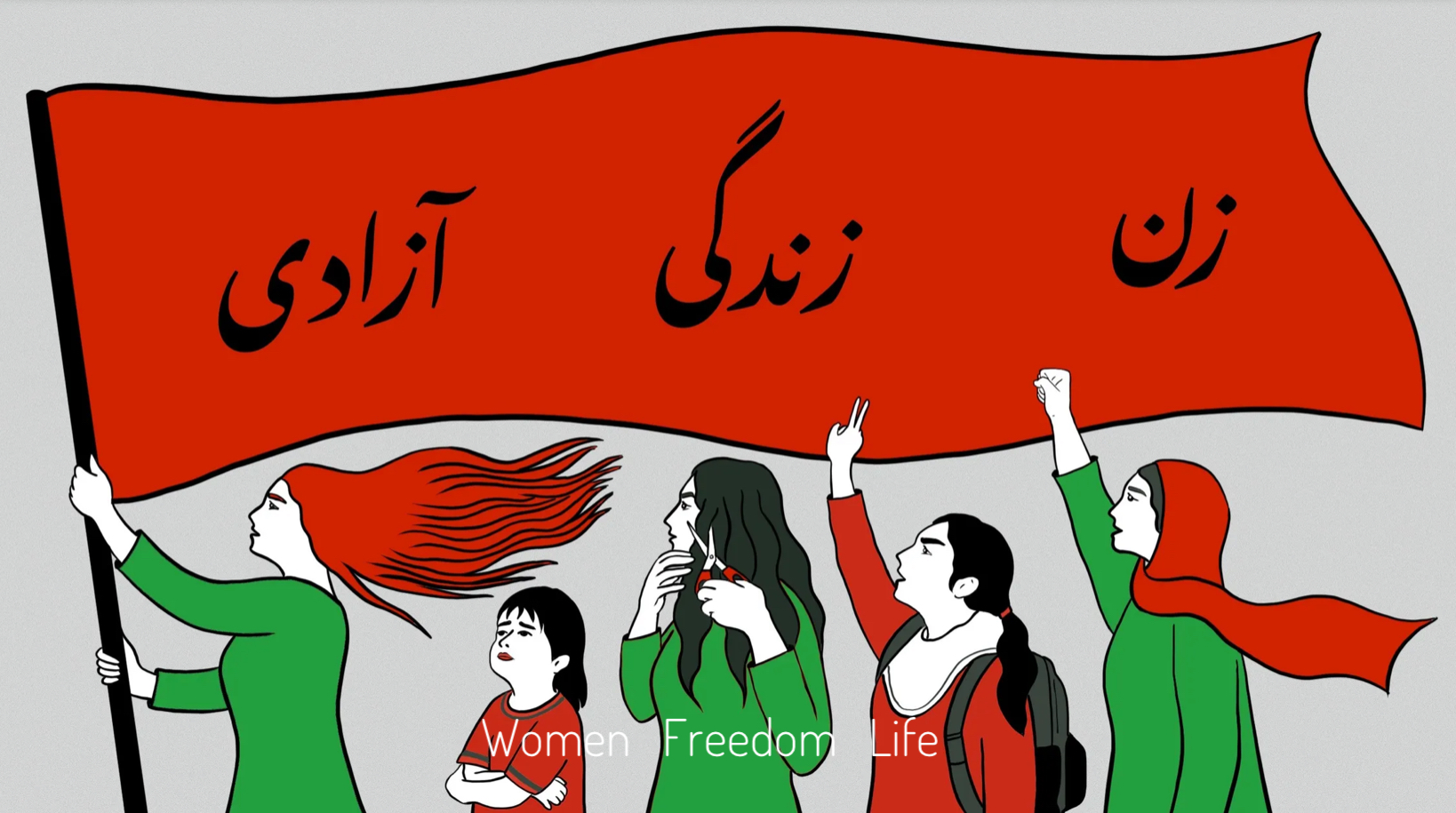


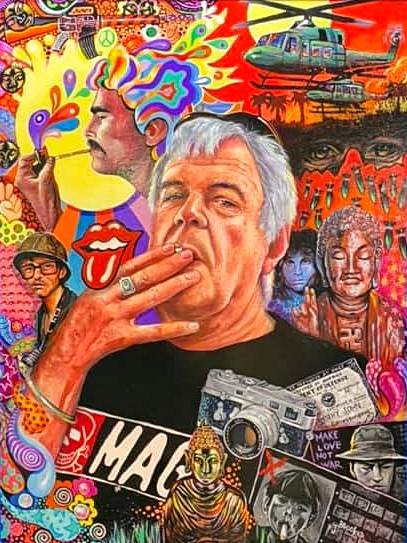



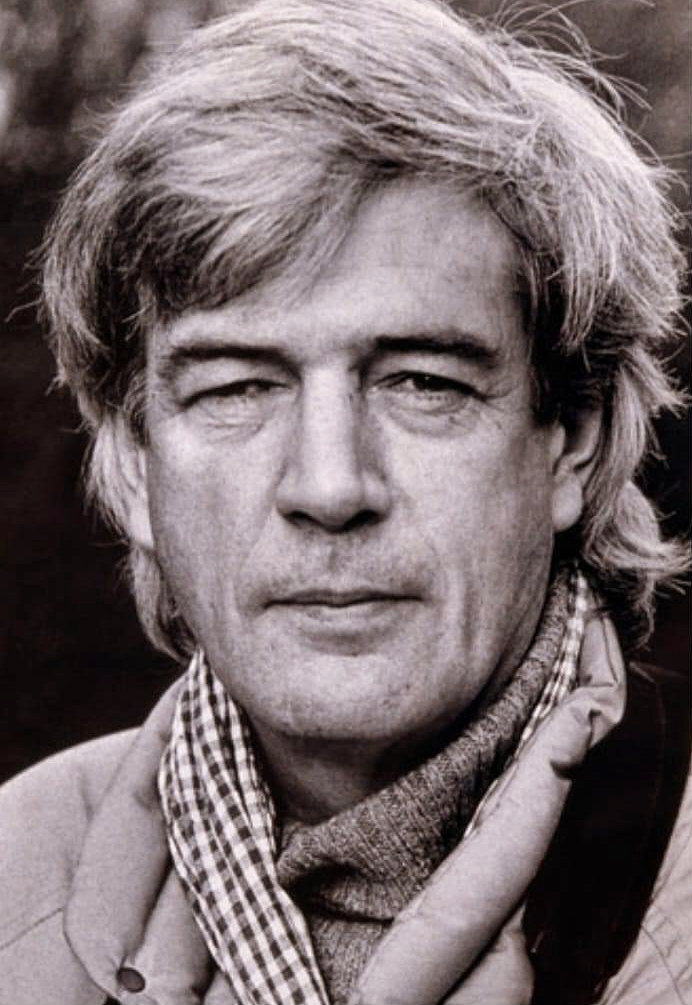


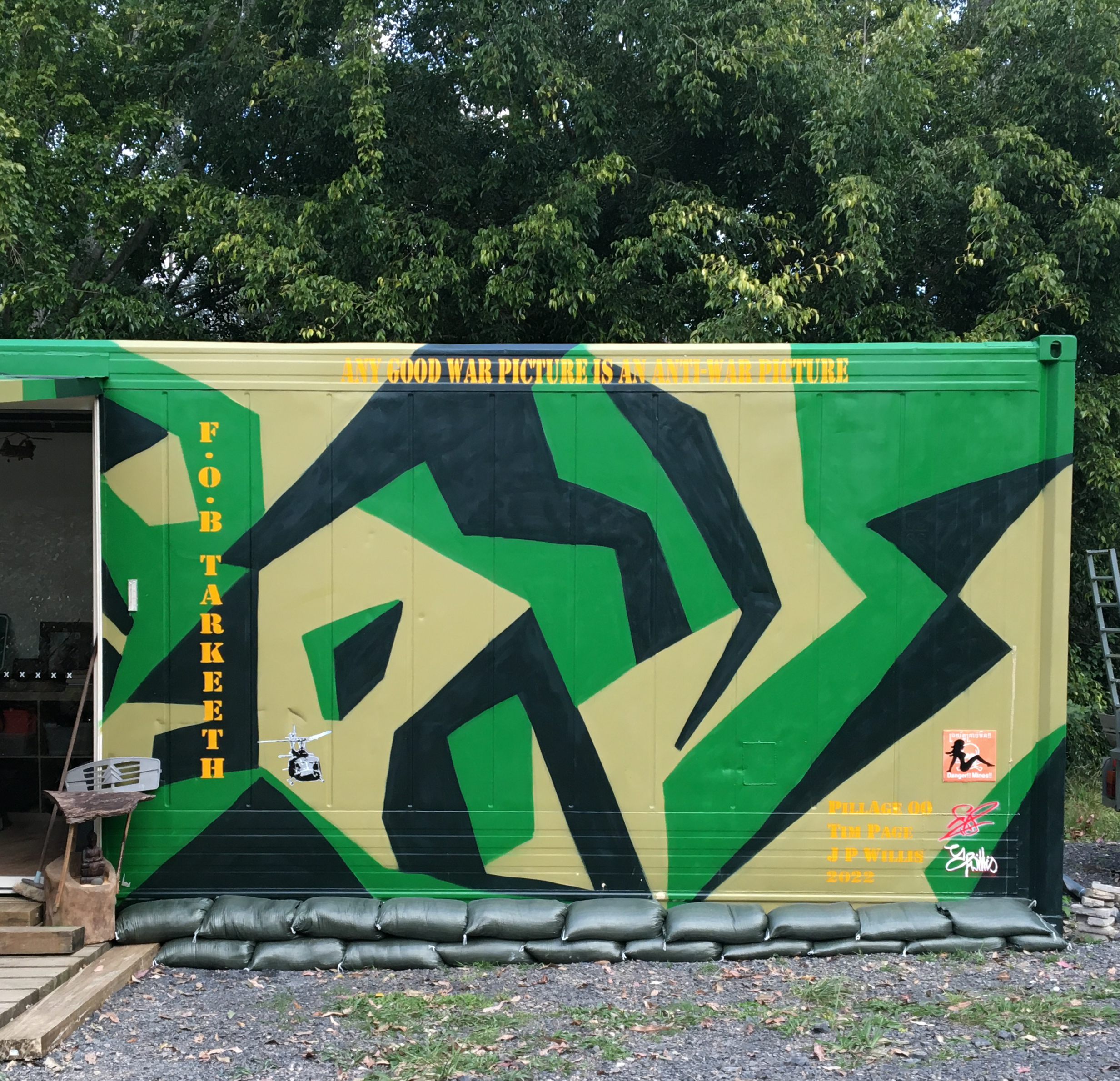

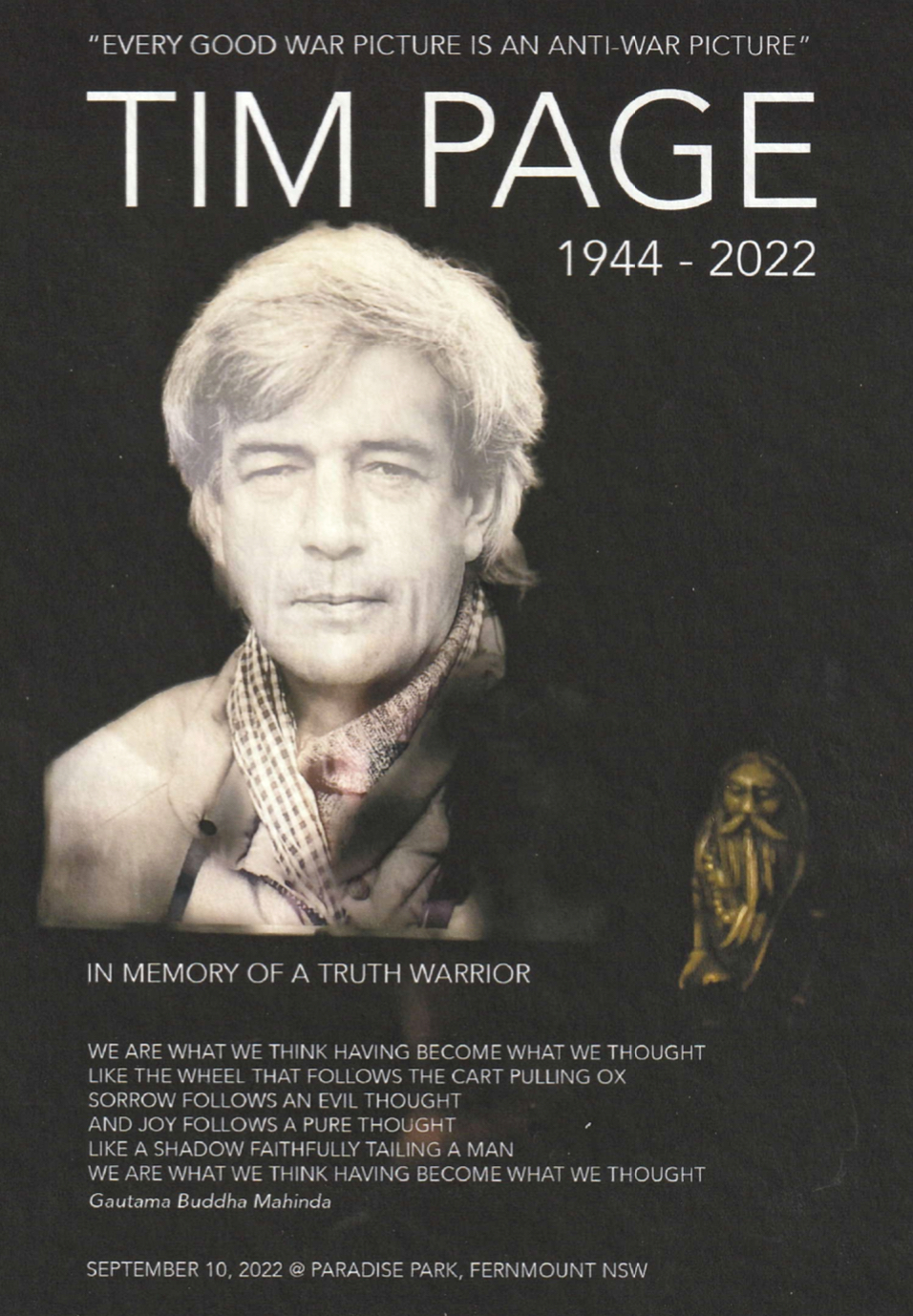


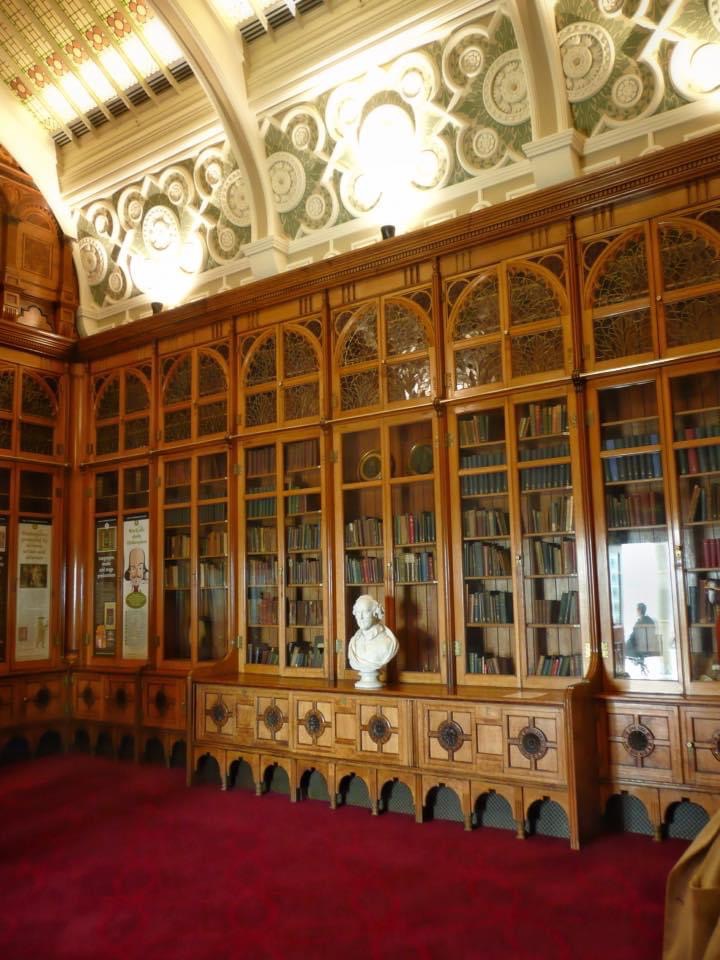
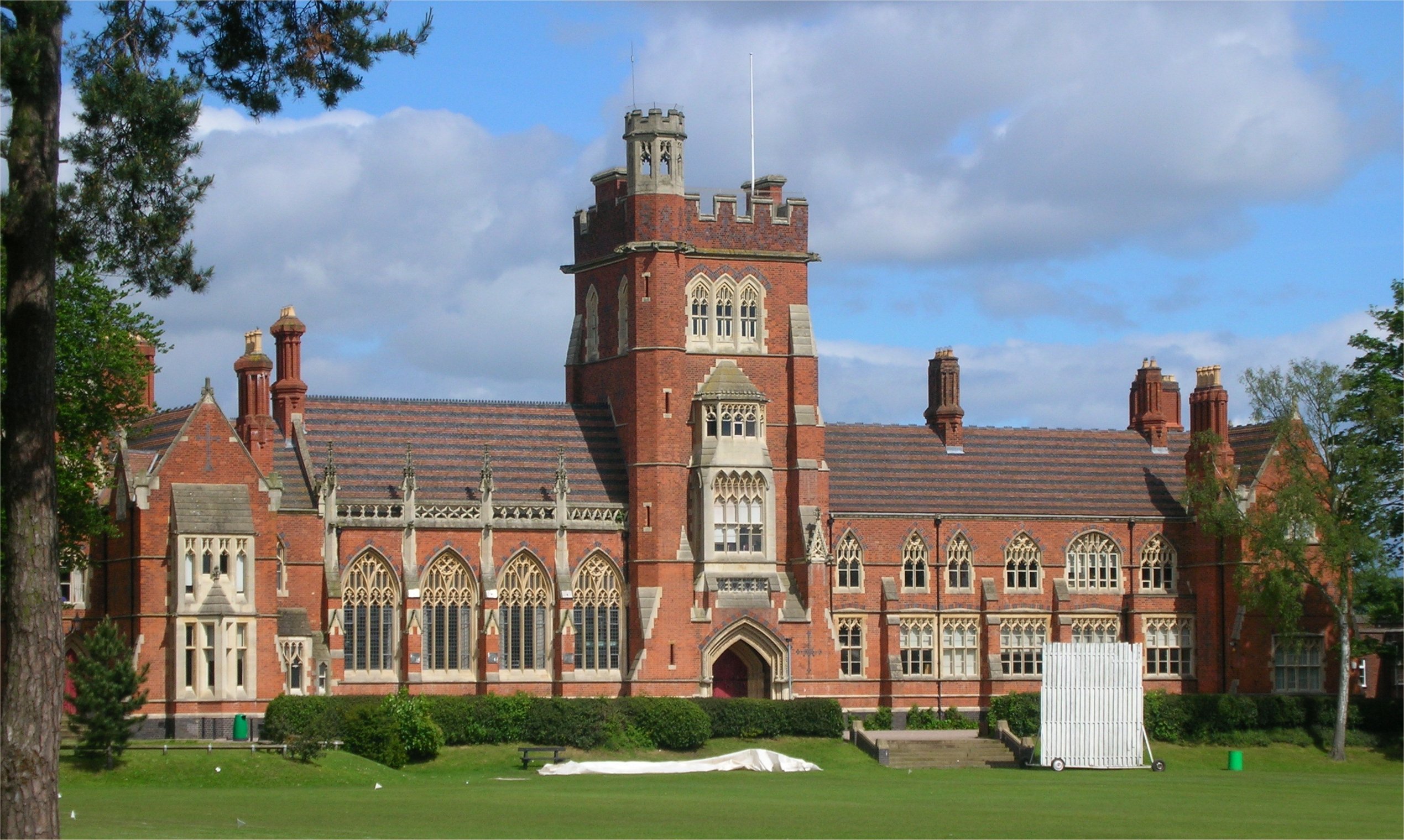
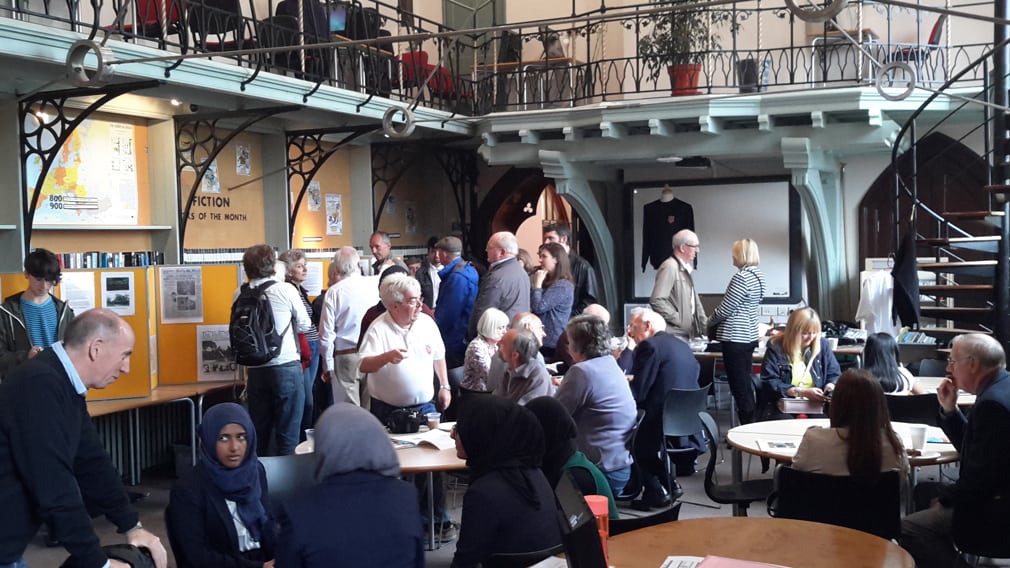


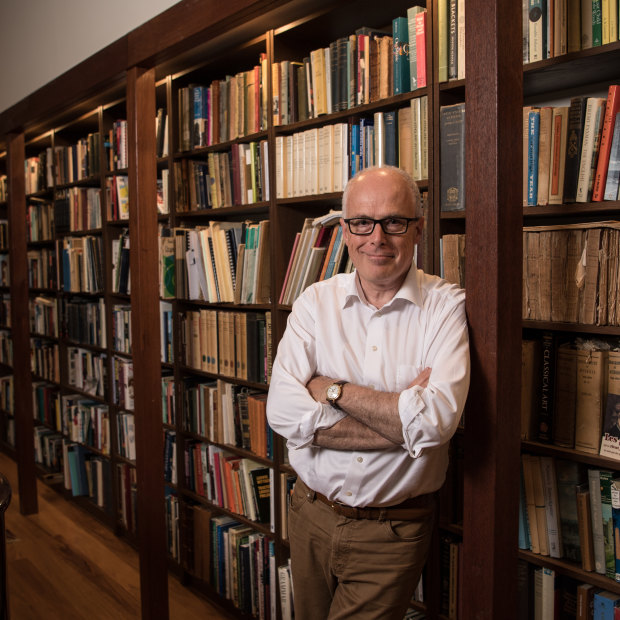
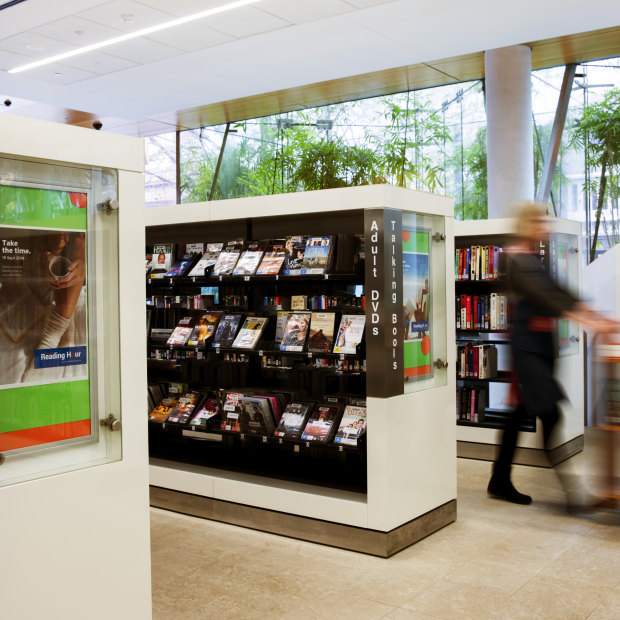



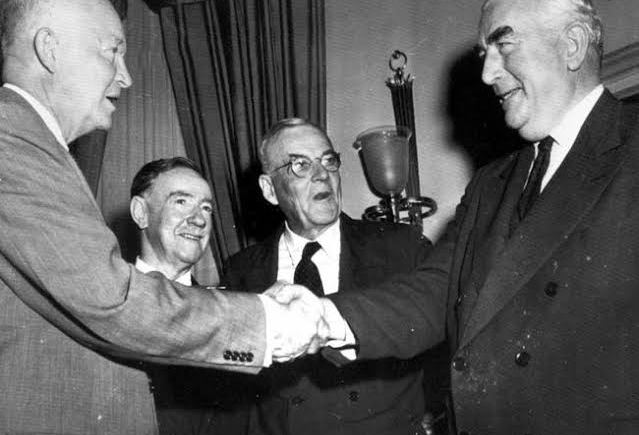
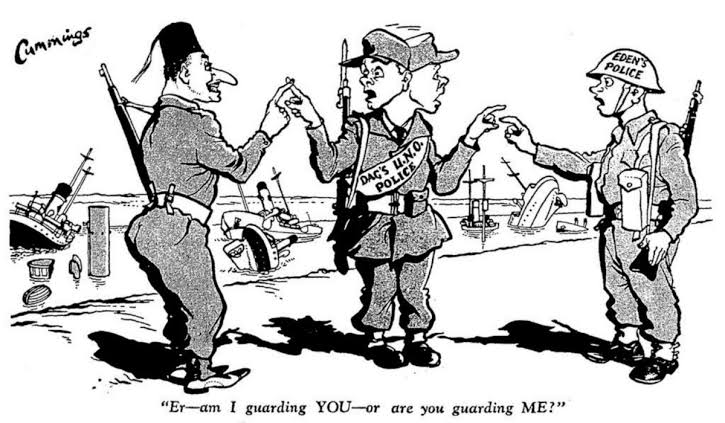
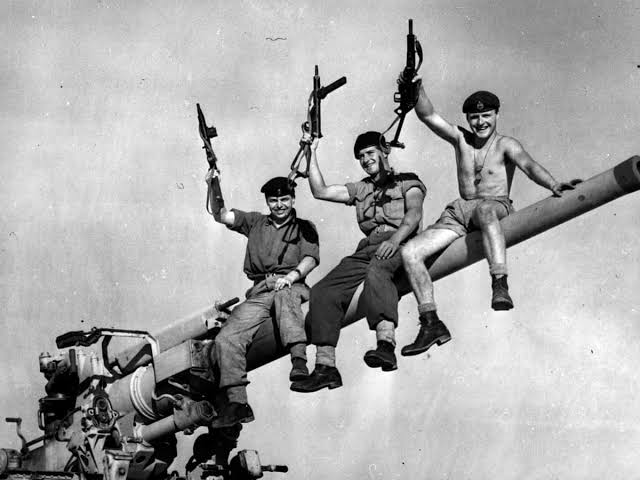
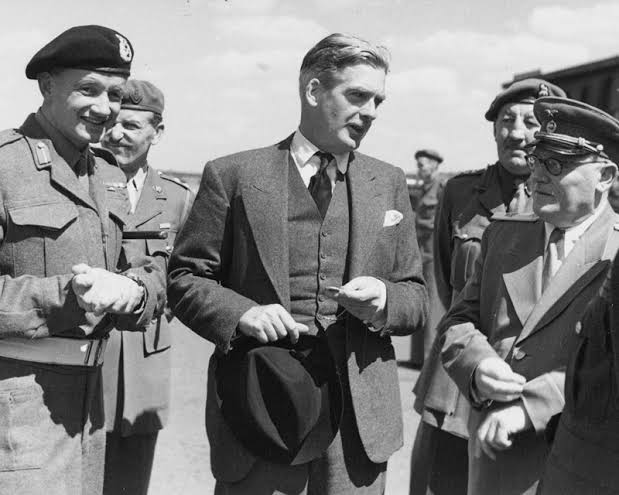
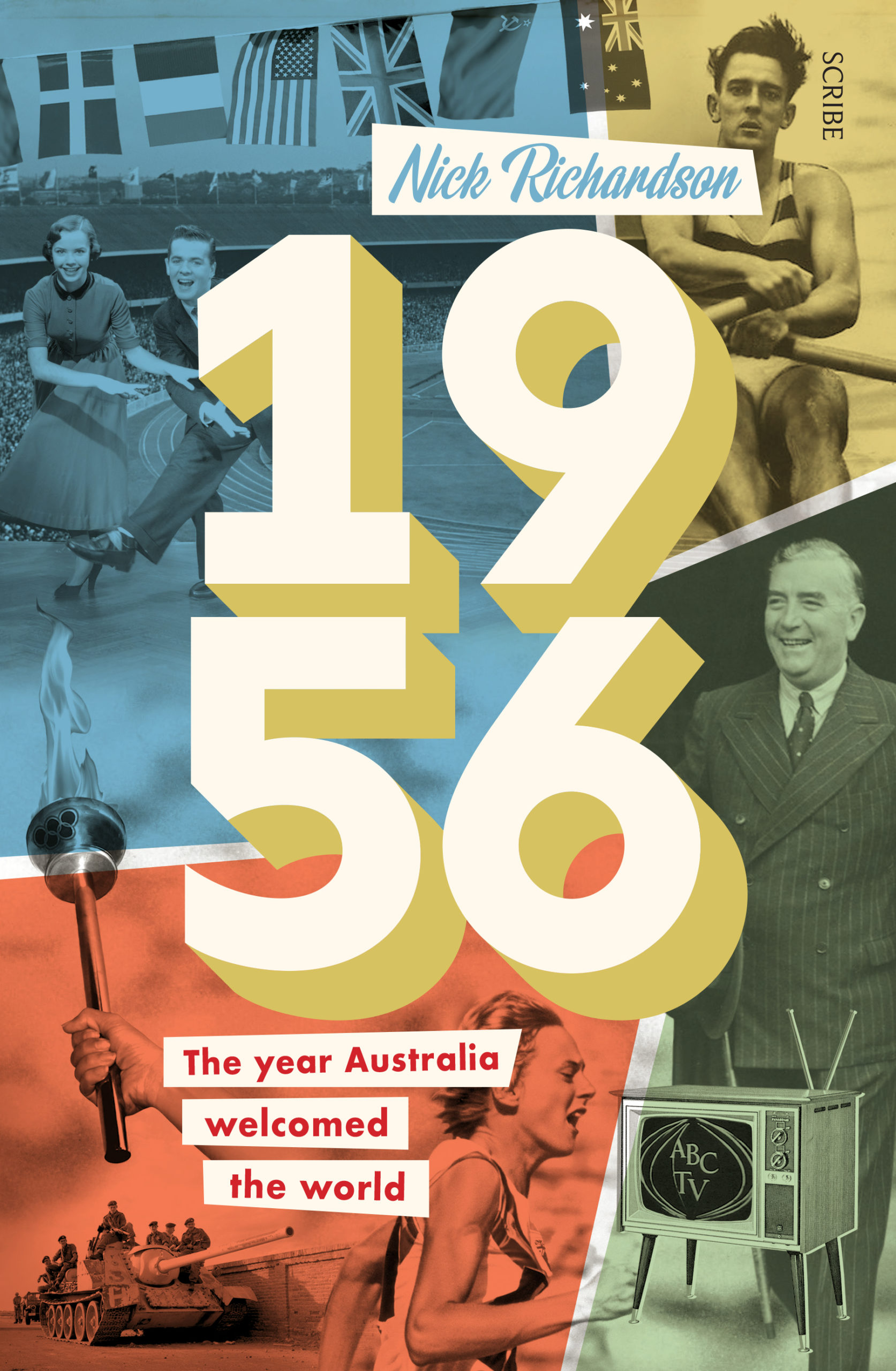
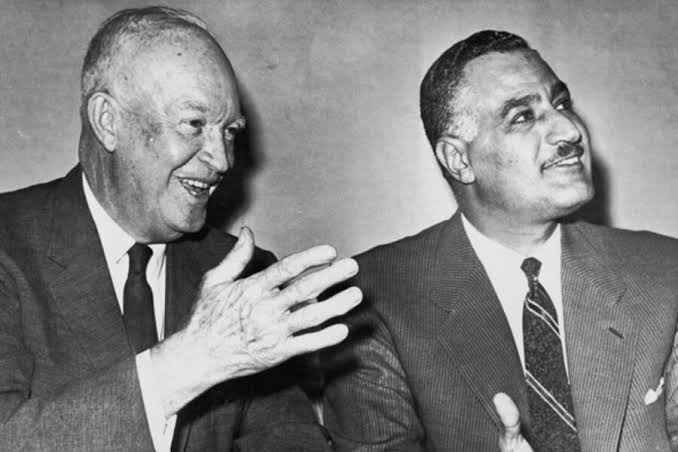


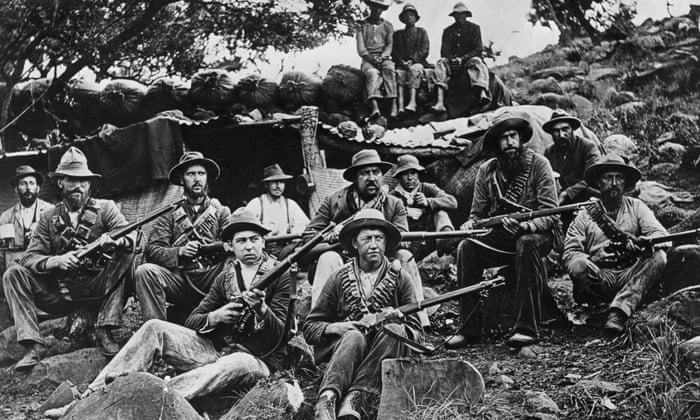




 In That Howling Infinite