Yuri The Storyteller … we’ll sure miss the old bastard!

No man could kill him – but his heart did. Anon

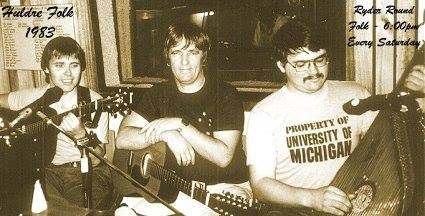
My old friend and Huldrefolk founder member, George Hofsteters, Yuri The Storyteller, passed away peacefully in his sleep yesterday morning, 9th July 2014.

Passing strangest is Yuri’s passing. He had such a life force. He was a force of nature, even, the kind of person you’d think would outlive us all. And it was ironic that he who raged so long against the establishment should go so quietly into the night. I would have expected a contrarian like Yuri to have been lynched by a mob of irate god-botherers.

Yuri’s departure brought me back to the dying decades of the last century, when the shadowy and iconoclastic HuldreFolk appeared out of nowhere with their unique combination of stories and songs, and then almost as suddenly, disappeared into the mists of memory.

I was playing at the celebrated Three Weeds Folk Club in Rozelle in the spring of 1983, performing a cover of Roman poet Meniscus Diabetes‘ popular song Roman Holiday.  I was distracted by a cackling in the front row; and there was Yuri, laughing his head off. After my set, we got together and swapped notes on life, the universe and everything. Fate would have it that celebrated bandurist Victor Mishalow was also on the bill that night. And Yuri and I were enthralled by the magic of the Carlingford Cossack’s grand instrument.

Yuri told us he was a Russian Storyteller, and that he was performing at the Humanist Society the following Tuesday. “Come along and play some songs and tunes”, he said. And so we did. Yuri enthralled us with his spirited rendering of Alfred Noyes’ The Highwayman.  And it was there, in Shepherd Street, Surrey Hills, that HuldreFolk was born. Over the next two years, HuldreFolk, named for the mythical and mystical ‘hidden people’ of Icelandic legend, played throughout Australia.

One such occasion was the very first time I visited Coffs Harbour, a seaside graveyard with lights on the mid north holiday coast of New South Wales, sometimes known as the Costa Geriatrica (as fate would have it, we now live in the forest some forty clicks away from there). Looking for a parking space outside the venue, Yuri cut into a space ahead of a car that had already bagged that spot. A few minutes later, the occupants of the car approached us, looking mean and moody. Tall, broad and hairy, they looked like bad news. Yuri was unperturbed. “My mate Paul is a black belt in karate”, he chirped …

On a return visit to Coffs Harbour, he and Victor Mishalow got a gig performing on the back of a flatbed truck in the mall for a smattering of disinterested passers-by. When they’d finished, the organiser asked Yuri how much they wanted, “Two hundred dollars”, Yuri said. Before the paymaster could reply, Yuri added: “Each!” And they got it.

Yuri could be a proper bastard sometimes.

Although HuldreFolk pursued their own paths and projects, during the following decades, they would pop up in unexpected places, like their namesakes, in ones, twos, threes, and on occasions with guest HuldreFolkies. Their last outing as a trio was in October 2007 at the North By Northwest Poetry And Folk Club. Google the videos on YouTube.

Such was his energy, after a series of concerts, I’d need several months away from him to recover. Whenever we had to do a road trip, Yuri would tell jokes non-stop – it was as if they were on a loop. Once he’d finished his repertoire, he’d automatically start again.

Whenever HuldreFolk worked together, their collaborations were creative and at times, crazy.

Listen to Victor’s haunting bandura arrangements behind many of Yuri’s stories, the bravado of ‘The Ballad of Boreslav’ and the wackiness of ‘The Song Of The Volga Shearers’. Back in the day when I was performing ‘I Still Call Mongolia Home’, ‘Brave Goliath’, and ‘Roman Holiday’, Yuri would say: “There has never been as song about the Spanish Inquisition. Why don’t you write one”. Or, “How about a song about the Vikings?” The rest, of course, is hysterical.

We would always introduce George as “The One And Only Yuri The Storyteller”. Watch him on You Tube reciting the epical ‘McArthur’s Fart’ or the poignant ‘Claudy’, and telling the magical story of ‘The Algonquin Cinderella’ or the faerie ‘Green Lady’, and you will see that he really was.

Goodbye old friend.

Blast from the past

On 28th October 2013, Yuri posted on the HuldreFolk Facebook page:

Hi, Amigo!

You’ve done a great job on the Huldrefolk page, I’m with you 100% and will support at every opportunity. Could not be on your side more if I was Eddie Obeid. Now here comes the ‘but’. It’s only a tiny elephant in a big room.

It’s been quite a while since we’ve trod the boards together. Obviously neither of us will get the applause or the audiences we once had and sensibly, we should be content to let someone else drive the celebrity bus. We once had the opportunity to be bigger than the Kingston Trio and Tiny Tim together, but the choices that were made ensured we would never be plagued by the paparazzi. Yet I do believe we have influenced others with the idea we once spearheaded. Story, song, music are being metamorphosed in countless variations. I’m glad we had something to do with that.

Today, however, I’m puzzled at why one would go to the trouble of going to the ‘Pet Cemetary’ of entertainment to resurrect on social media a tired old dinosaur that is hardly remembered, let alone noticed by all but a small coterie of moth eaten folkies whose perception of “Macarthur’ is deemed akin to ‘high culture’. Traditional folktales, I’m afraid, will always belong in the musty archives and forgotten bookshops. They are a relic. Fossils belong in museums. But then, being the sentimental bastard that my nature dictates me to be, I hope you get something nice and rewarding for your efforts. If it’s sentiment before oblivion, light the fuse. Cheers!

Yuri’s race had less than a year to run when he penned this piece.

In many ways, he was right – a cruel man but fair, as they say.

But what times we had!


Amazing Grace : There’s Magic In The Air

“If I forget thee, Oh Jerusalem!”

Jerusalem, The Golden. The Arabs call the city ‘Al Quds’, “The Holy’. It was deemed sacred from pre-history. Iconoclast scholars suggest that Jerusalem was actually the holiest place in Islam, and that like Islam itself and the Prophet, Mecca and Medina were retrofitted to suit the conqueror’s narrative. A city of the mind as much as of this earth, it haunts the prayers and dreams of three faiths, and to this this day, it is coveted and contested. “The air above Jerusalem”, wrote Israeli poet Yehuda Amichai, “is filled with prayers and dreams, like the air above cities with heavy industry. Hard to breath”. Arthur Koestler wrote: “The angry face of Yahweh is brooding over the hot rocks which have seen more holy murder, rape and plunder than any other place on earth”. Perhaps it is because Jerusalem is mankind’s number one hot spot! “There’s this thing that happens here, over the hell mouth”, says Buffy, “where the way a thing feels – it kind of starts being that way for real. I’ve seen all these things before – just not all at once”. More Jews have probably died violently in Jerusalem than in the Holocaust. And countless folk of other faiths have likewise perished.

Paul Hemphill, A Brief History Of The Rise And Fall Of The West

Jerusalem is all about faith and passion, and there is no city on Earth that people get more passionate about. The light is luminous. In high summer it almost shimmers. The very air is full of prayer and politics, passion and pain, and the rocks and stones virtually sing a hallelujah chorus of history. I am not a religious person, but I cannot help getting excited by the place –  although I do not transcend to transports of delight and delirium.

These include a group of mental phenomena involving the presence of either religiously themed obsessive ideas, delusions or other psychosis-like experiences that are triggered by a visit to the city of Jerusalem. It is not exclusive to one particular religion or denomination, having affected Jews, Christians and Muslims from many different countries and backgrounds. In The Simpsons episode The Greatest Story Ever D’ohed, the Simpsons travel to Israel where Homer is afflicted with the syndrome, the illness and its effect on Homer being one of the plot’s central themes. In The X-Files episode Revelations, agents Scully and Mulder try to subdue a man afflicted with a form of the syndrome.  read all about in Messianic Carpet Rides

It is Shabbat in Jerusalem, and there’s magic in the air.

This morning, Enya wafting across the square in front of the Imperial Hotel. This afternoon, a Gregorian Chant rendering of REM’s “Losing my religion”. This evening, Haredim hustle through Omar Ibn Al-Khatab Square just inside the Jaffa Gate on the way to the Kotel, and the walls in Royal David’s Citadel are alive with Son et Lumiere, a weird blend of classical and faux movie music, retelling the ageless story of this ageless old town.

The Kotel, or Western Wall, is open to all, twenty four seven. Women now have their own section – a hard-fought for innovation. And Jews of all courts and communities share the space without rancour, each tribe differentiated by their interpretation of the Holy Torah, and by their garb, as determined by the fashion codes of 18th Century forebears in Eastern Europe and Mitteleuropa, heedless of the Mediterranean climate.

This, the only variable remnant of the Herodian Great Temple, is Judaism’s Holiest Place. And down below, in the tunnel, one can now actually walk the wall’s fundament (and view the biggest house-brick in history). This too is now a sacred site, the more holy the closer one gets to the location of the long-destroyed Holy of Holies. Tucked away in in a courtyard in the heart of the Arab Quarter is yet another, tiny remnant called appropriately The Little Wailing Wall. It’s location, up a narrow deserted alleyway is one Jews where do not venture. We had the space all to ourselves.

Immediately above the Kotel, on Temple Mount, is the Islam’s third holiest, Al Haram ash Sharif, the “noble sanctuary “. It is said that the Prophet alighted here on his night journey to Jerusalem on Borak, the winged horse with a human face, conversed with Abraham, the father of the three faiths, and thence, ascended to Paradise. Revisionist historians suggest that Jerusalem may indeed have been the primary Islamic city, sacred from times long forgotten, until Mecca and Medina were retrofitted to suit the conquering Muslims’ desert narrative.

Non-Muslims can enter the Haram for strictly limited times (three hours a day, on five days of the week), and then, only through the Maghrebi (or Western) Gate, which ascends like an unsightly concertina from the right of the Kotel Plaza. Admittedly, the Haram custodians are wary of would-be desecrators and of Jewish religious elements seeking to pray on the Mount (haram!), and set precedents for the rebuilding of The Temple. But they do themselves and Islam no favours when the other People Of The Book permit pilgrims of all persuasions and passions to enter their precincts.

And passion is the name of the game.

On the Church Of All The Nations, at the foot of The Mount Of Olives, pious of all nations prostrate hysterically across the stone where Jesus wept and prayed in the Garden of Gethsemene. There is bliss in the Filipino pilgrims choraling ‘Amazing Grace’ in the Basilica of St. Anne. There is ecstasy In The Church of the Holy Sepulcher, an Escher jumble of chapels and chalices. Russian pilgrims, most of them babushkas, led by a priest in black, and looking like they have just come in from their villages on the steppe, clutch their many wooden crosses and clamour at the penultimate Station Of The Cross. A young man dressed like Jesus sits in a terry-towel habit of white, beard and hair looking for all the world like the Jesuses in ‘GodSpell’ and ‘Super Star’. Groups gather in clumps, cabals, and covens and read the Word to each other. A kind of ecclesiastical book club with only one book.

Over the centuries, The Church, as it is called, has seen much biffo and bloodshed as three faiths butted each other for dominance. At times, knives and guns have been drawn. The Ottomans sent in troops at one time to restore order, and they didn’t pussyfoot around. They used their weapons and scores of faithful were killed. Nowadays, there is the occasional dust up with monks from the opposing teams going at each other with baskets and brooms. There is a ladder below the middle window that has not been moved for three hundred years because no one can agree as to which faith can remove it. The right hand door was sealed up several hundred years ago to control (and charge for) pilgrim access. Nowadays, entry is free.

It’s that centuries old conflict between the three custodian faiths, the Roman Catholics, the Greek Orthodox, and the Armenians. They each have their own chapels within the church. The Greek’s have the glitziest. Historically, the first two have always been the strongest, backed by the French and the Russians respectively! It was one of the many causes of the bloody and arguably unnecessary Crimean War. Russian influence prevails still with state-supported legions of pilgrims who throng the Via Dolorosa. The Ethiopians now have a small presence. They have be given a tiny little chapel ON THE ROOF!  And there is a rival Tomb of Christ just outside the Old City walls in Arab East Jerusalem , patronized mainly by Protestants. But that is another story.

You know you are near the the Church of The Holy Sepulcher because the aroma of frankincense and candle wax hits you before you reach the it. The Pope arrives for a flying visit next week, so there are banners and all manner of preparations taking place to greet His Holiness. Outside the church of churches, still the basilica that the crusaders restored to Christendom in a welter of blood and violence, shops hawk kaffiyehs, kippas and headscarves, icons, crucifixes and menorahs. Jerusalem is economically ecumenical. And the patronage of pilgrims unites the divided sects of the Old City in a common purpose that prevails regardless of the political impasse, positions, and non-negotiables that divide their political and pastoral leaders.

At the Jaffa Gate, we look out from our balcony in The grand old New Imperial Hotel, a late 19th Century mix of trash & treasure, five-star history, and ten-star views. The Kaiser slept here in the days when Germany had an emperor. His bust sits in the entrance hall (on the floor, strangely enough, but nothing is surprising in this Fawlty Towers of a hotel). The old gate was demolished to let him and his entourage pass through. He didn’t want to walk like Omar al Khatib did when he first entered al Quds and claimed the city for Islam. British General Allenby walked too, and may have even stood on this same balcony in 1918 when he addressed Jerusalem and declared it liberated from Turkish rule. He left the the best news for the politicians to reveal a while later, and for the world to agonize over ever since.

And meanwhile, back in the now: Jaffa Gate, Shabbat.

The pilgrims are still flowing though like schools of fish, with matching hats, and happy, awestruck faces. Filipinos and Brazilians, Indians and Americans. And in a poignant sort of irony, Germans. Gloria in excelsis Deo! Tourists and backpackers amble through in daggy dress, maps and cameras in hand, all mini-back-packs and sun hats. Why do tourists dress so badly? And why in bright reds and blues that make them stand out so in photographs! Thank god for Photoshop!

Jews of all sects walk by all day and all night, in a myriad of hats and coats, the men in their devotional array, their ladies in plain garb. Young men walk out in groups of black, locked in serious discourse, young women, in many shades of sober fashion, yet all striving somehow for an individual voice. Young folk don bright plumage regardless of the chains of faith. Young soldiers ramble by, a hotchpotch in khaki and beige, half with handbags and sandals, clutching their mobile phones, and half with weapons and in army boots. A reminder that this is at once a land of fable and also one on constant alert. And just to prove this, on occasions, noisy groups of stotting teens with Israeli flags gallivant through the Old City, and one time, semi-automatics, “trying it on” with the ever vigilant Border Police who endeavour to keep the peace on this here frontier. Unmarked white vans, and incongruously, horse floats, are never far behind to foil these attempts to mark territory.

Yes, Jerusalem is all about faith and passion, and there is no city on Earth that people get more passionate about.

© Paul Hemphill 2014.  All rights reserved

image

Read more about Jerusalem in In That Howling Infinite: Oh, Jerusalem, A Middle East Miscellany, and A Short History of The Rise and Fall of The West

Cha … Cha … Changes

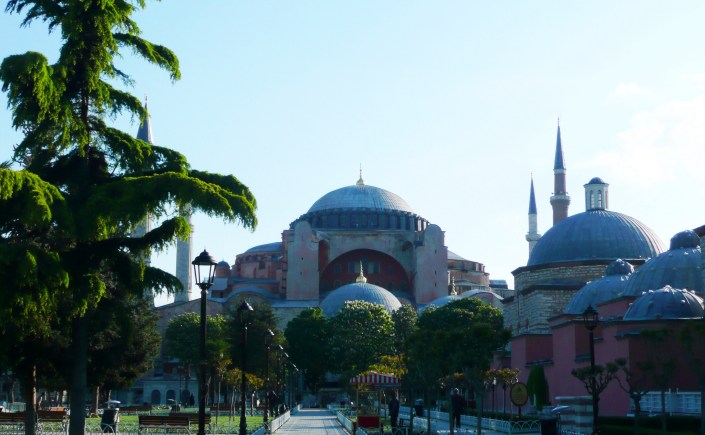
There would be later times (1965, 67, 69…) but I remember the first time. 1962. Having hitched through Europe and arriving in Istanbul. That special feeling. From Sultan Ahmed looking across the Bosporus towards the East, unknown roads and places and in the far distance a very vague idea of India…. Istanbul as a gateway to other worlds and new adventures….I was a young man drifting and dreaming, there were no guidebooks and I had not met anybody who had done the journey or heard stories from the road ahead….. The world was open, and I was ready….
Torben Huss, photographer

Haydarpasha Gan, late November 1972.

The last station on the line, and the end of Asia, after a twenty four hour train journey across Anatolia, from Teheran, including a wintry ferry ride across Lake Van, in the East, in the company of an idiosyncratic and proselytizing German pastor and a Pakistani student. The student and I quickly converted to Lutheranism just to shut him up.

There were no bridges across the Bosphorus in those days. Just the ferry that met the train to take us across to the Golden Horn to Eminou. And thence, a walk up to Sultanahmet, with the address of a doss house given to me by someone I’d met in Meshad near the Persian-Afghani border. A space on a floor for a few lira a night.

And then several weeks in Istanbul on two dollars a day, sleeping on the floor at what today would be called a backpacker’s hostel, broke and waiting for money to be sent from England. Weeks spent wandering the streets, wondering at the mosques and markets, getting stoned (dangerously in those days – remember ‘Midnight Express’?) in the Hippodrome, and dining cheaply morning, noon and night at the Pudding Shop.

Forty years on, and naturally, things have changed in many ways. Haydarpasha is closed for renovations and a rail link crosses the Bosphorus by undersea tunnel. There are now are two impressive suspension bridges.

Asian Istanbul, more of a sleepy suburb then, with some fine buildings scattered along the shore, is now a metropolis in its own right. And Istanbul is a city of thirteen million people.

The Pudding Shop is now world-famous on account of its hippie credentials and sells all kinds of good Turkish tucker, but a shadow of its former simplicity. Where once there thronged ragged and rangey adventurers on their journey east or west, tourists of all nations gather en masse.

The Pudding Shop 1969

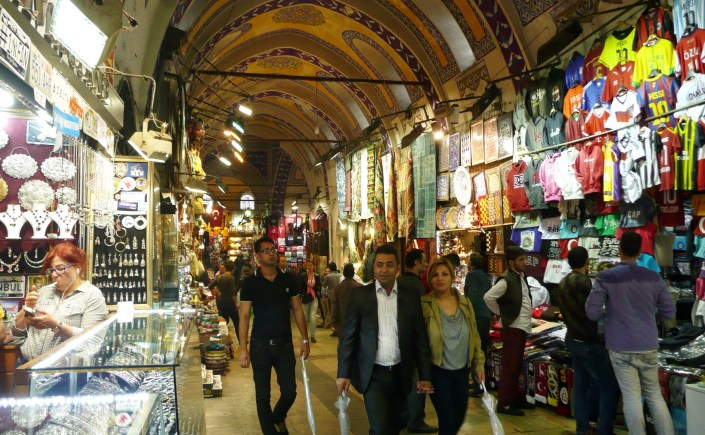
Turkey in general, and Istanbul in particular, is now the place to be and the town to see – in these troubles times, it is a safe ‘Middle Eastern’ holiday destination, and a big cross on the cruise map. Almost every day, a fleet of giant liners ties up on the Yesilkoy quay. And their cargo soon materializes in Sultanahmet to view the BIg Four: the Blue Mosque, Aya Sofya, Topkapi Seray, and the Grand Bazaar. No time for the simple grandeur of the Sulaymaniyah Mosque, the other-worldliness of Byzantine Emperor Justinian’s vast underground cistern, or the aromatic gorgeousness of the Spice Bazaar down by the quays of Eminou.

Though no longer the exotic, half-east-half-west departure lounge for the old hippie trail, Istanbul is still a contradiction of past and present, trash and treasure, modernity and medaevilism. The dialectic is still evident, and maybe more so, between the ever changing now and the ever-present then, in the forever magical monuments and mosques, in the contrast between the modern young Turks in their western gaberdine and the many muhajibiin and well-covered conservatives.

Scratch Istanbul’s surface, and you will find a tangle of medieval streets and 21st Century traffic jams, bad drivers, and worse pavements. Walkers watch out!

And there is a poorer, working class, and even rural Istanbul. Suburbs just off the tourist map, where old men gather outside chai shops smoking, chatting and playing cards, and where women are rarely seen – when they do, most are covered.

Many Turks have come in from rural areas, and are still clad in traditional garb. There are now hundreds, maybe thousands of Syrian refugees in Istanbul now, seeking shelter from the storm in their sad and devastated homeland, and other Arabs fleeing the bitter winter that has followed the Arab Spring. Some rent apartments for their families, others beg in the streets.

As we walked along the highway that boarders the ancient walls and the Bosphorus, a speeding car hit an elderly Syria as he was crossing the dangerous road. We and his distraught family rushed to his aid, and mercifully he was unharmed but in shock, and did not want an ambulance. We placed him in a the comfortable position and I advised the young men with him in Arabic to keep a watch over him and to watch his eyes.

In contrast to these wandering souls, well-heeled Gulf Arabs arrive with too much money and too little taste. Istanbul is viewed as more stable, cosmopolitan, and naughty than tense and tenuous Beirut, and these wealthy visitors often seek to buy property here.

All the contrasts and contradictions are presently being played out in the politics and economics of this modern Turkey, and in the street protests, tear gas, and riot gear across the Golden Horn, up the hill around Taksim and Gezi Park, and across the suspension bridge. Partisans of Prime Minister (now presiden) Erdogan bump up against the Gulenists, followers of an exiled but influential dissident, and against the ever-ardent bearers of Kemal Ataturk’s torch. Folks still revere him as the Father of The Turks, but times change, some say, and so then must Ataturk, although the old man must spin some in his revered grave.

People say that Turkey is a divided nation right now. And this is manifested in accusations of creeping Islamization, counter-accusations of occidental decadence and depravity, allegations of corruption and cronyism, and street violence and police brutality. Back into November 1972, Military Rule was the norm, and dissent was silenced. Turkey was Asian, and Middle Eastern. Now the country still straddles east and west, coughing the European Union with much leas enthusiasms than hitherto or and presenting as the go-between ‘twixt The West and and Iran, and with the volatile lands to the south.

For better or ill, how things have changed.

© Paul Hemphill 2014.  All rights reserved

Torben Huss, Eminonu 1965

For other posts about Turkey in In That Howling Infinite, see: People watching in Sultanahmet, Sailing to Byzantium, Ottoman Redux – an alternative history and The Watchers of the Water  

People Watching In Sultanahmet

‘If you know your history, then you know where you coming from. Then you wouldn’t have to ask me who the ‘eck do I think I am’. Bob Marley, Buffalo Soldiers.

image

People watching in Sultanahmet on a wet Saturday afternoon in Spring.

It’s very like people watching in Newtown, Sydney.

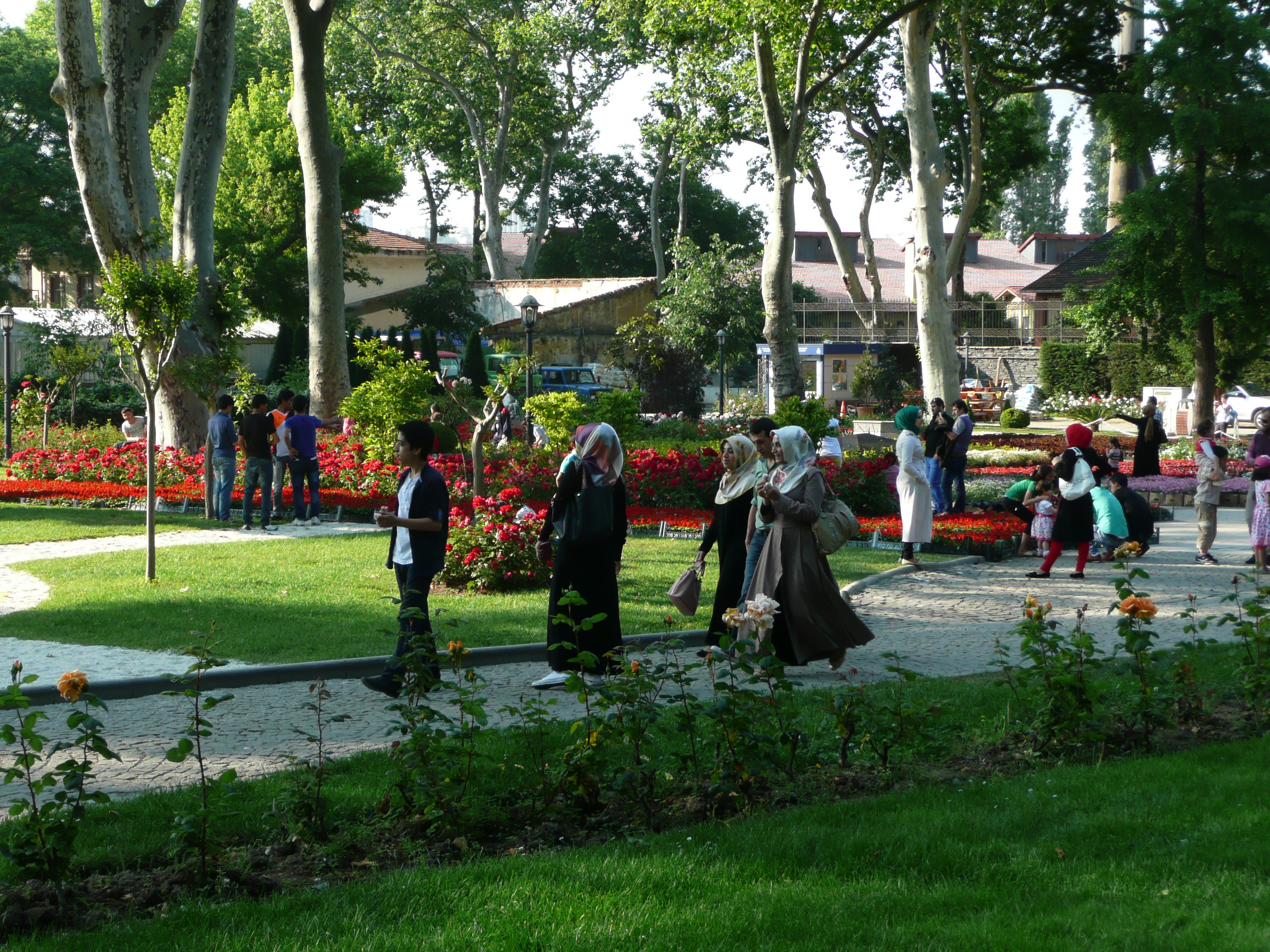
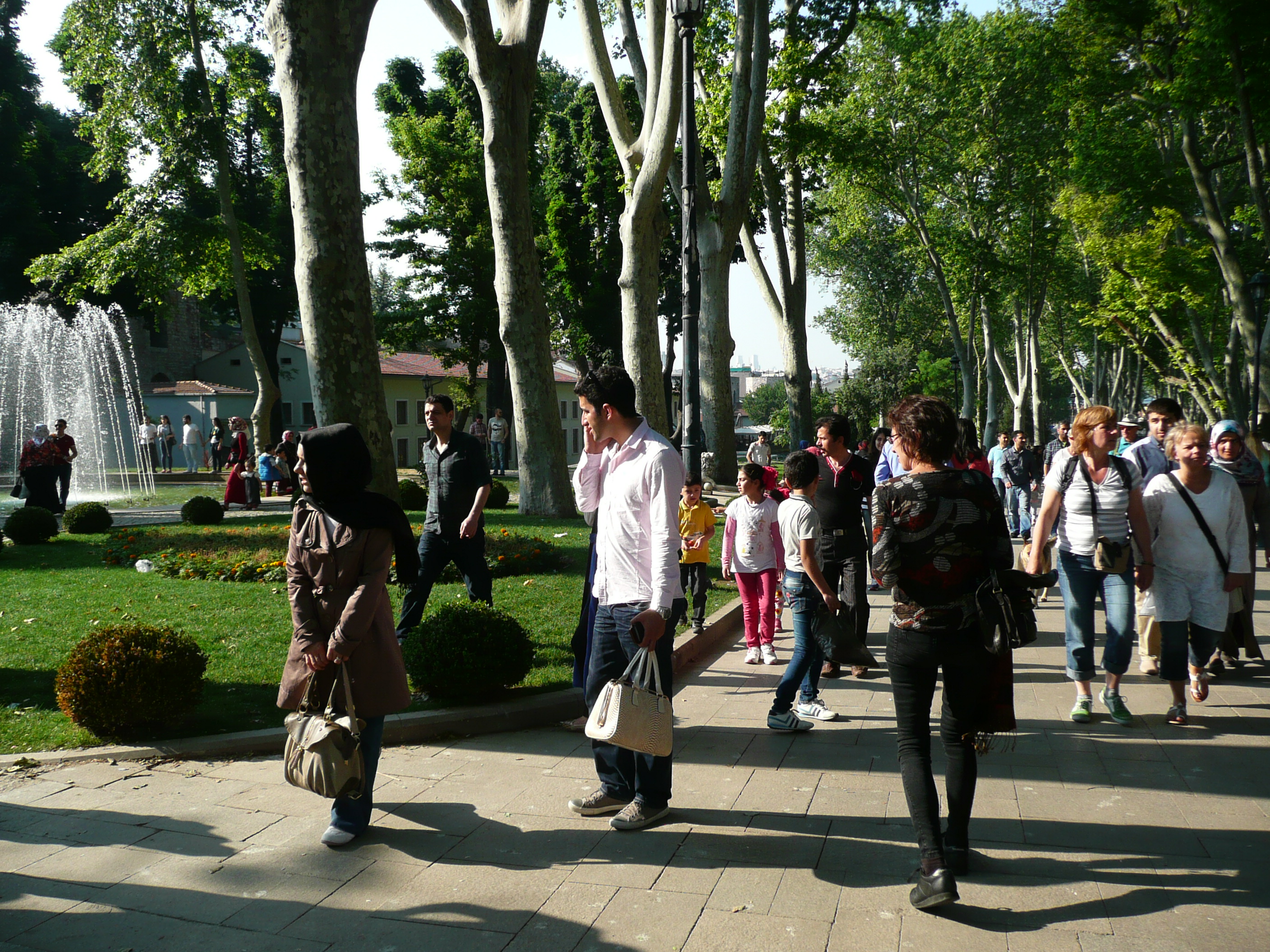
The history of Istanbul, of Turkey, of the Turkish people, is written in the faces of the passersby. There is no pure Turk, just as there is no pure Arab, Jew, Slav, Celt, or Caucasian. Indeed, you see them all passing by. And it has been raining these past two days. The umbrella sellers are making a killing with their see-through parapluies. Everyone, tourists and locals alike are sporting them.

The weekend is promenade time. Families parade up and down, past the pastry and kebab shops, the hawkers and the hustlers. Young men sidle by with their girls, girls walk out with their honeys. Groups of girlfriends, and boy-groups gather and gaggle and gossip. Western folk and eastern folk. This is where east and west meet, literally, figuratively, ethnically, and yes, geographically. And it is written on the faces and in the garb of the perambulating populace.

Sunday in the park

Muhajibabes in beautiful scarves (the Great Bazaar is chocka with wonderful day cashmeres and pashminas – there is no excuse for drabness). “Mandy, Mother of Brian” in vast and bulbous black. Ladies in full cover, some dark and exotic, and mysteriously alluring, and others that make me think that they are doing us all a favour (non-PC, but there you go). I just saw a clown with green hair and a red nose. Fashionistas and paysans. And the many, many ordinary folk, old, young, and babes in arms, enjoying the weekend. All oblivious to the feral dogs and cats that roam through these parts.

There are no pubs on every corner. There are no rows of wine bars. There are no ice-cream and yoghurt shops (though we did find a good bar just across from the square in front of Hagia Sophia).

Oh, it makes you wonder.

For other posts about Turkey in In That Howling Infinite, see: 


Sailing to Byzantium, Ottoman Redux – an alternative history, Cha-cha-cha-changes and The Watchers of the Water  

Bombs and Babies

The Atlantic, Sept 9th 2016

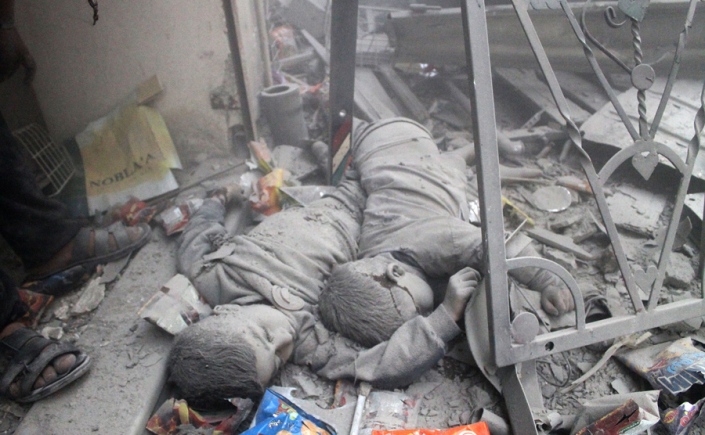
Syrian children have been subjected to “unspeakable” suffering in nearly five years of civil war, with the Government and its allies responsible for countless killings, maiming and torture, and the opposition for recruiting youngsters for combat and using terror tactics in civilian areas, according to the first United Nations report on the issue.   See:  http://www.un.org/apps/news/story.asp?NewsID=47077#.UvKrOWKSzE0

Reports and pictures out of Damascus and Aleppo of the use of barrel bombs, and sarin and chlorine gas on civilian neighbourhoods, I am reminded of Chaim Nachman Bialik’s poem, Al haShehita (On the Slaughter), about the Kishinev Pogrom in the spring of 1903:

And cursèd be he that saith: avenge this! Such vengeance for blood of babe and maiden Hath yet to be wrought by Satan.

1653277_613808708691589_1237424660_n

In A Short History of The Rise and Fall Of The West, I wrote of how, in Pity The Nation, his tombstone of a book about Lebanon’s civil war, and Israel’s intervention therein, the redoubtable journalist Robert Fisk writes of a Lebanese doctor, Amal Shamaa: “I had to take the babies and put them in buckets of water to put out the flames. When I took them out half an hour after, they were still burning. Even in the mortuary, they smouldered for hours”. “Next morning”, Fisk continues, “Amal Shamaa took the tiny corpses out of the mortuary for burial. To her horror, they again burst into flames”. Such is the effect of phosphorous shells on mortals. Made in America, used on Arabs, by Jews. But it happens anywhere and everywhere, inflicted by anyone on everyone.

What’s Bob Got To Do With It?


Or, ‘How I  came to  write songs and play guitar’

I was in love with Dusty Springfield. In the drear tea-time of my adolescent soul, I worshiped her truly, madly, deeply. Tiny girl, big hair, panda eyes, hands moving like a beckoning siren. I just had to hear “da da da da da da” and then “I don’t know what it is that makes me love you so…” and I was hers for the next two and a half minutes. Until…

It was one of those beautiful late-spring evenings that you would get in the England of youthful memory. The evening sun poured through the gothic stained glass windows of the school library – it was one of those schools. A group of lower sixth lads, budding intellectuals all, as lower sixth tended to be, gathered for a ‘desert island disks” show-and tell of their favourite records.

Mine was Wishin’ and Hopin” by you know who. Then it was on to the next. Clunk, hiss, electric guitar intro, and: “My love she speaks like silence, without ideas or violence, she doesn’t have to say she’s faithful, but she’s true like ice, like fire…” I was gone, far gone. So was Dusty.

I bought a guitar. A clunky, eastern European thing. I tried Blowin’in the Wind, but what came out was unrecognisable. My dad said he’d break it over my head. One day, that tipping point was reached. It sounded indeed like Blowin’ in the Wind, or something similar. I was away, and the rest, as they say, was hearsay.