The first 100 Days on the wagon

The end of a fifty year old relationship

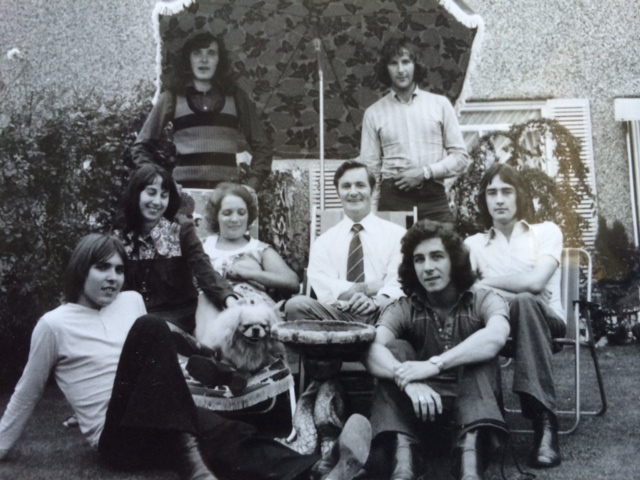
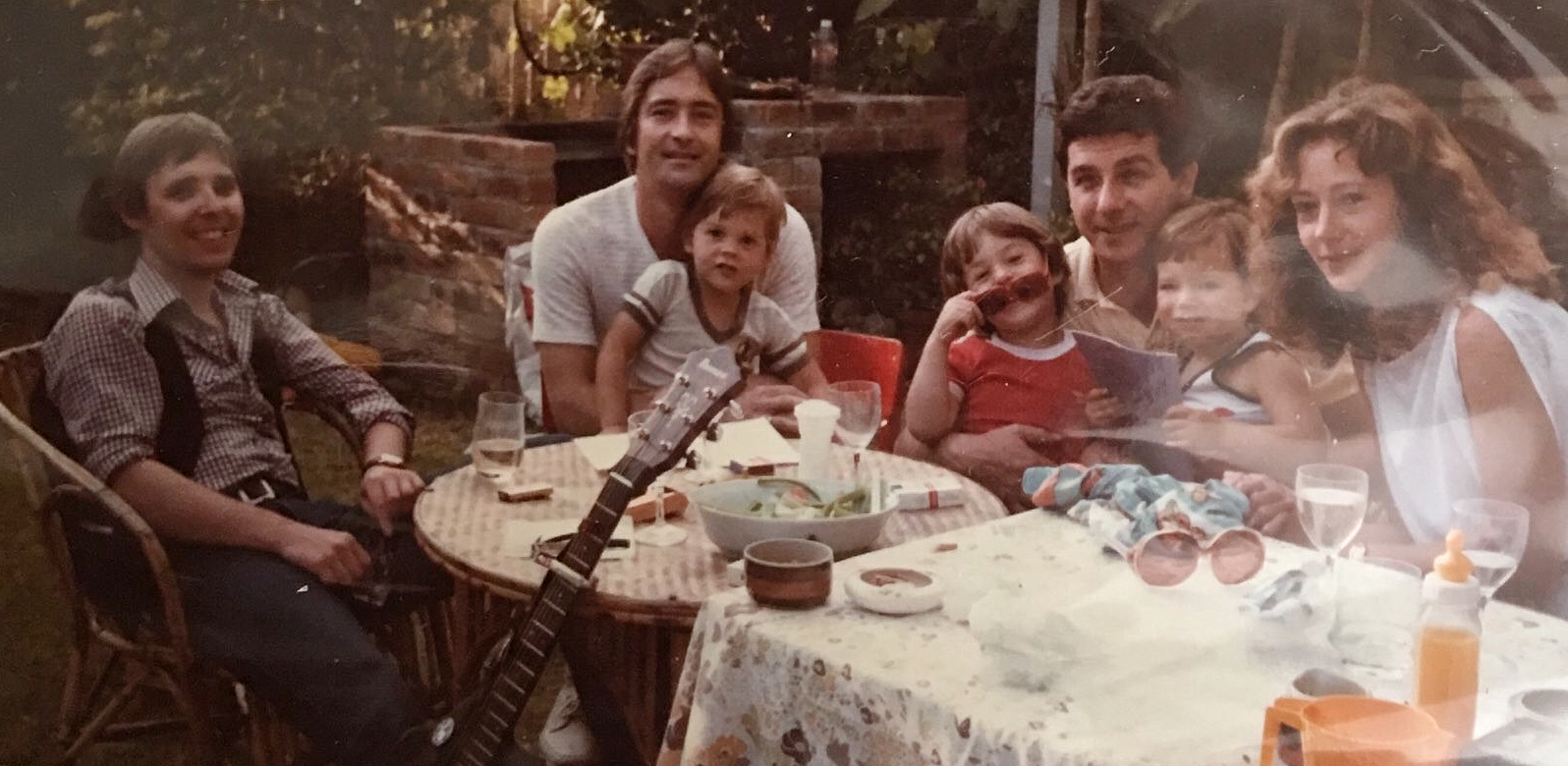
Back in the day, we were young, fun, and quite often, sozzled.

I’ve been a heavy drinker more or less since the seventies, an almost life-member of the just-one-more club. Not recklessly, not always dramatically – though there have been embarrassing beanos I’d rather have forgotten – just faithfully, habitually, the way a generation learned to take the edge off, to mark time, to soften the day, or just because it was what you did. What began as a rite de passage in the late sixties, at folk clubs and at a weekly get-together with school chums became routine in the union bar, and became part of the lifestyle in the seventies.

The first time I visited Australia, in the summer of 76-77, one of the things that impressed me the most, apart from the sun, the beaches, and the Warringah Mall was drive-through bottle shops – oh, and the wine in plastic bladders, the old vin plastique. It wasn’t very good wine – but never mind the quality, feel the weight! As years went, booze was inextricably woven into both downtime and social gatherings. The reality that Australian wine got much better oiled the wheels of inebriation. Celebration or commiseration, to toast good news and to drown the blues. Whether traveling – even in the abstemious Middle East, where there is no drinking culture and where it often haram – or on the property, five o’clock was booze o’clock and time for a sundowner – or two.

Alcohol was never a crisis in my life; it was a companion, a punctuation mark, an easy and unassuming way of moving from one hour to the next without too much friction. Never enjoyed alone, except when writing or composing, and rarely during the daytime hours apart from social occasions. It was woven into evenings, into conversation, into music and writing, into courting, into the social grammar of a life that otherwise often ran on discipline, routine, and contemplation.

But let’s not kid ourselves. However civilised it looked, however bounded it remained, it was still a dependency, addictive in its own quiet, culturally sanctioned fashion. Alcohol is a poison, metabolised as such, and it does no one no good in the long run. It may take its payment slowly, but it always takes it. That is why it had to stop – not because it had ruined anything yet, but because it worked too well, too reliably, and the trajectory was obvious to anyone prepared to look- though we often avert our gaze and carry on.

In these declining days, when every new ache and pain is endured with unease, every blood test, every medical scan is a game of health roulette. And alcohol plays its pernicious part. As if I didn’t already know, the World Health Organisation says there is no safe level of alcohol consumption, and experts tell us that we should be drinking zilch. My doctors too. Multiple studies link alcohol to seven types of cancer.

And then there’s what it does to the brain. I’ve joked in the past that I must’ve been very bright back in my prime because I’ve still got my marbles. But I know full well that I’m no longer a sharp and as perceptive as I once was. “Is my memory waning?”, I ask myself? My longterm memory is fine – but might that just that be the old nostalgia-muscles kicking in?

Folk of a certain age often joke about walking into a room and then wondering why they went there. I do that too – though not often. Sometimes, I’m unable to recall the names of people I ought to have remembered. My internal hard drive is invariably able to chase them down – without resort to Google – but it’s nonetheless a cause for concern. My mother died slowly with dementia. It diminishes you beyond recognition. She was not a drinker, but. Never touched the stuff.

I’ve contemplated cutting back often, and I’ve made many desultory attempts to do so. As the old quip goes, “giving up is easy – I’ve done it many times!” But I’ve never considered actually quitting. Giving up, or drastically cutting back on alcohol, is a conscious decision – and thenceforward, a continuous one. Perhaps my decision came at a time when I was ready to step back.

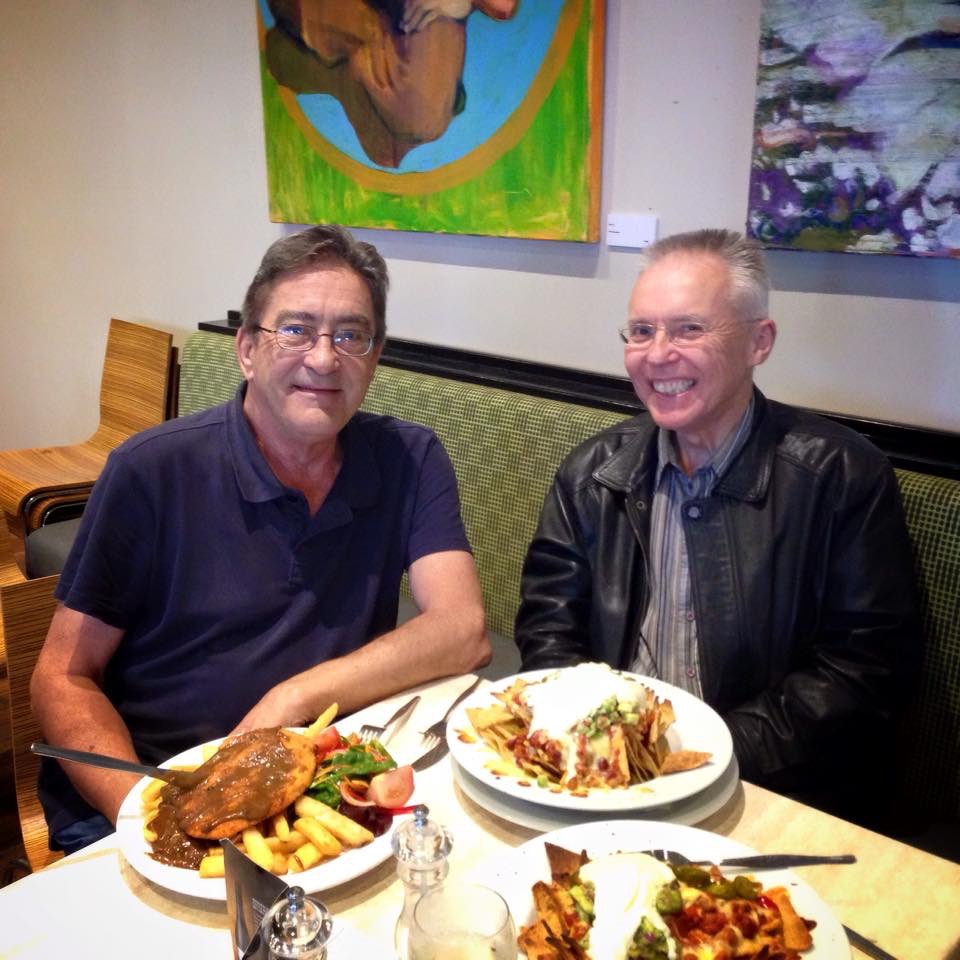
I gave it up one day without ceremony. No declaration, no conversion. No identity shift announced to the world. Well, not quite … I was given a big push – and maybe that’s what’s making it work this time around. I was given a guided tour of  a CT Scan of my grey matter, and … to quote the late Warren Zevon, “Guess what? It ain’t that pretty at all!” The doctor dived deep into my scan, told me what he’d seen, and declared that for me, there could be no safe limit. As I walked out of his rooms, I said “I need a drink”, and we headed straightaway to the Plantation Hotel. And that glass of Italian Pinot Grigio was the end of the liquid line.

When I first embarked on sobriety, I hadn’t a clue whether or not I would succeed. And I was shocked that it was easier than I’d expected. There were no cravings (though I drink more tea and coke) and when month one came to an end, I was ready to step into the next and then the next. It’s like deciding to lose weight, learn a language or change jobs (and I’ve done all this too). You decide that you are going to do it, then you try really hard to stick with it. There’s no magic wand.

Apart from one standard drink a week, on Tuesday or Wednesday, that was that. Initially I kept count – of that one day, and even of the drinks. So much fizz, this many Pinot Grigio, so many Shiraz. Counting turns pleasure into ledger; once you count, you’ve already conceded that something has changed.

For starters, my palate is changing. Fizz does nothing for me now. A former favourite tastes as though it’s had petrol added. The whites have been a pleasant change after the zero-alcohol placebo interregnum in which everything tastes faintly of apples (there are tons of zero or low-alcohol options out there. Some are awful and taste like weird-flavoured fizzy water, but I have my favourites too). The reds, interestingly, still carry a spike, a kick of spice. Something happens – but it’s only the mildest hint of getting stoned – no re-angling of thought, more a slight tilt, the barest of edges being taken off the now. Whatever it may be, red wine is most often my weekly onesie, so I no longer keep count.

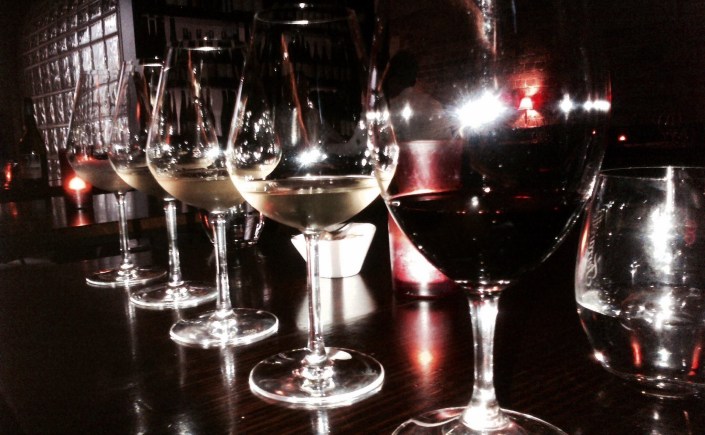
When I took that first glass of red, I let it stand for a while to room – an old habit, but also to make sure it was at its best. But before I’d even picked up the glass, the oddest thing occurred. As I looked at the waiting glass, I felt a flicker of guilt. Not moral guilt, exactly. Not shame. Something quieter and stranger: the nervous system recognising a former solution now marked with an asterisk. A sense that this familiar alteration of being no longer had my clear permission. A fleeting return, perhaps, to the scene of the crime. Like meeting up with an old pal after many years and realising that you no longe4 have much in common.

100 days on, and I’m not tempted to tell a story of revelation. No clouds have parted. Nothing has been cured. But something has shifted, and it’s the sort of shift that only becomes visible in retrospect – by subtraction rather than addition.

When I tell people, most ask me how easy or hard it was and is. I say it’s been hard – but not too hard. Particularly come fizz o’clock when my wife and I we do our evening walkabout and enjoy our sundowner – but I tell them it does become easier as the days and weeks progress. They often casually ask if I’ve noticed any difference since ditching the drink. I keep it brief, so as not to bore them with the details – but the following is my own private dossier.

The changes have not been theatrical, but they have been real. I’ve lost weight; my skin is clearer; my sleep is deeper. I feel that wake more clear-headed now, ready, I guess, for the day ahead. I have more energy. I relax more easily. I  always experienced anxiety, but I sense that its incidence has lessened. Though I still habitually have to find something, anything to get hung up about, it doesn’t feels as pervasive and debilitating. And, I imagine, I’ve become more tolerant of the follies and frailties of others. Or maybe more laid back and lackadaisical.

When I wake at 3am, that existential hour of angst, and the mind instantly revs into restless motion, I don’t lie abed in a state of mental turmoil. Nor do I stir this early as much and as often as I once did – mind you, I turn the bedside clock on its face these days so I’m not as conscious of the hour. If I do wake early and find that I can’t go back to sleep, I write – as I am doing right now. But I sense that not drinking has made me realise how much alcohol contributed to my anxiety. Those occasional tremors and twitches we put down to what might be early onset Parkinson’s might not have been that at all. [In In That Howling Infinite, see It’s 3am and an hour of existential angst ]

I sense a steadiness now. The mental landscape feels different – perhaps clearer, perhaps simply less crowded. Am I more present in the world? Sometimes I think I am. Though I can still inattentive – including towards others – and absent minded. Better able to hold several things in mind at once? Possibly. It could be down to using a chatbot when writing, but I feel that I haven’t been this productive in years. But that doesn’t make me more articulate. A few years back, I senses that I was not longer as up to public speaking as I was if yore – and that has not changed. I put that down to the ageing process – but it could be something less benign. Does the world itself look altered – a little brighter, a little sharper? Perhaps. Though, to be fair, I did have cataract surgery a week after my last drink, which complicates the metaphor.

What is undeniable is time. There seems to be more of it. Whether it’s been created or merely reclaimed is hard to say. Perhaps it’s the same quantity as before, just less of it leaking away – into fog, into fatigue, into the dull, unexamined bargain of later. Evenings are longer now. Much longer. The day closes more slowly without that familiar hinge that once snapped it shut. I’m not sure I’m comfortable with this. I pace myself with a new found evening ritual: zero beer at five or six – the onetime “booze o’clock – followed by a zero Prosecco, with its hint of apple – but at least it has a bit of a bead – then a mineral water or a coke – sugar-free but a caffeine hit. Then it is teatime, with a mineral water to sip and maybe a zero wine – and at last, between nine and ten, a cup of tea and some fruit. It’s interesting how much liquids leaven the longing.

What’s been interesting is what hasn’t happened. I’m told fresh renouncers experience tremors, night sweats, vivid dreams. I haven’t. There’s been no drama of withdrawal. If anything, my nervous system seems to have settled rather than rebelled. Alcohol, it turns out, was not supporting my sleep or steadying my nerves; it was quietly fragmenting both. Removing it didn’t provoke crisis. It removed interference.

These aren’t miracles, but they aren’t imaginary either. And once you begin to notice the benefits, they become their own quiet incentive. Resolve stops feeling like deprivation and starts to feel like momentum.

What remains is the effort. Not physical exhaustion so much as a kind of existential tiredness – the absence of the old accelerator, accelerant, even. Alcohol had been doing a great deal of invisible work: easing transitions, softening edges, carrying me through the long middle stretch of the evening. It marked the end of work, licensed drift, permitted a mild, socially acceptable derangement of thought. As I noted above, I rarely drank alone, except when writing or composing; rarely during the day or working hours, except on social occasions. This was not chaos. It was tuning. A dimmer switch, not a blackout.

And that, precisely, is why it counts as dependency. The brain learned the sequence: evening, glass, “clocking off”, altered state. Reliable, repeatable, intoxicatingly reinforced. Functional addiction is still addiction. Calling it civilised doesn’t change its chemistry. Without it now, that work has to be done consciously. Nothing is anaesthetised. Nothing is rushed through.

There’s a certain grief in that. Grief for ritual, for the reliable companion that marked the end of the day. Grief, too, for a sanctioned way of stepping briefly sideways out of the self, without explanation. There’s a certain ennui too – sometimes with sharp edges. It can feel as though fun has gone missing, or at least changed address. And yes, I miss getting stoned: not smashed, not obliterated, but lightly, productively altered – the associative looseness, the permission to wander.

This isn’t romanticising damage. It’s mourning coherence. Alcohol once bundled ritual, companionship, permission, and altered state into a single, efficient act. Removing it unbundles those functions, and the nervous system doesn’t yet know where to rehouse them. Which is why I suspect this is the real work: not abstinence, but redesign.

I worry, of course, about damage already done. Particularly when I think about how much I actually did consume on a daily basis. Looking back now, I no longer lie to myself about it and admit that it was a fucking lot! After so many years, it’s reasonable to hope the body can still repair what it can. The signs so far suggest it might. The improvements have been quiet and cumulative rather than theatrical. These are the kinds of changes that accrue slowly – and, importantly, tend not to reverse. Reasons to be relatively optimistic then?

What I know for certain is that I can’t simply relent and surrender the hard-won effort – physical and mental – of getting to this point. This isn’t abstinence by accident. It’s something maintained daily, by attention. Ritual and habit will re-form; that’s my nature. But for now, it requires intention and attention rather than habit, awareness rather than drift.

No great revelation, then. Just a steadier hand on the tiller, a longer fuse – or perhaps fewer things lighting it – and a growing sense that less of life is slipping away unnoticed.

The truth is, stopping drinking can be an issue when hanging out with people who still enjoy their evening tipple. It’s helpful to know this in advance if you’re contemplating doing the same. Interactions are now based around a whole new version of what makes us tick. When someone says they are not drinking, the word “boring” appears in a speech bubble above their head. It’s an assumption we tend to make, but I am hoping I can prove the naysayers wrong because it’s OK, amazing actually, being sober.

Written by Paul Hemphill between November 2025 and February 2026.

The following supplementary sections were compiled with the assistance of an AI language model. In That Howling Infinite has deep reservations about the use of  chatbots – see, for example, The promise and the peril of ChatGPT, and but blimey! they are useful and uber efficient.

I asked ChatGPT why I felt a certain guilt and hesitation when having that weekly drink?

After interrogating the published literature, the chatbot replied:

It isn’t really guilt It’s not shame about drinking, not fear of relapse, and not a sign that anything is out of control. What you’re feeling is quieter than that: a brief internal hesitation. Alcohol once had a role in your life. It wasn’t just a drink; it functioned as a regulator. When things felt tense, flat, overwhelming, or sharp, it adjusted the tone. It softened edges and shifted mood. That use may not have been dramatic, but it was real. At some point, you made a conscious decision to step back from that role. You examined it and reduced its authority. Maybe you didn’t ban it outright, but you stopped treating it as the default solution. That was a deliberate, adult choice.

Now when you pick up a glass, even casually, your nervous system pauses. Not because you’re about to spiral. Not because you’re craving more. Not because you’ve failed. It pauses because something that used to be automatic is no longer automatic. The body remembers patterns long after the mind revises them. Dependency in this sense wasn’t only chemical; it was procedural. It was a learned sequence: when pressure rises, do this. When the present feels too sharp, adjust it this way. That sequence still exists in memory. So when you pour, hold, and sip, your system runs a quick internal check: are we choosing this, or reverting to an old move? Is this pleasure, or regulation? The flicker you call guilt is that check-in happening in real time.

Ritual adds another layer. Pouring a drink is structured. It creates a small frame around a moment and signals transition — the day is ending, the evening is beginning. Rituals stabilize us; they give shape to time. But if the original purpose of the ritual changes — if it’s no longer needed for emotional regulation — the gesture can feel slightly off. The act remains, but its old meaning doesn’t fully apply. That mismatch creates unease.

So what’s happening is simple. You changed the contract with yourself, and your nervous system is making sure you meant it. This isn’t weakness; it’s self-trust developing. In the past, the drink required no reflection. Now it does. That pause is evidence that the behavior is no longer automatic. Change often feels like this before it settles. Old habits don’t disappear in drama; they fade through moments of awareness. The body checks in. The mind answers. Over time, the friction lessens. The feeling isn’t moral failure. It’s an old coping mechanism becoming optional, and the fact that you notice it means you’re conscious of your choice. And that’s a quietly healthy place to be.

What’s Actually Happening

Next, I asked my pet chatbot to parse what I’d written above and to explain what was going on in my body and in my mind. Its response was fascinating and illuminating. It wrote:

What’s striking about this period is not the drama of withdrawal, but its absence. That absence is itself informative. It suggests that alcohol, over time, had stopped functioning as a sedative and had become a source of background interference – subtly fragmenting sleep, compressing attention, and lending artificial momentum to the day.

Start with sleep. Alcohol is often mistaken for a sleep aid because it hastens unconsciousness. What it reliably does, however, is fracture sleep architecture. REM cycles are shortened and disrupted; cortisol rises in the early morning hours; the nervous system is nudged toward vigilance just when it should be standing down. Remove alcohol, and the result is not necessarily more dreams or vivid imagery – often the opposite. Sleep deepens, becomes less narratable, less memorable. The absence of the 3am anxiety, the end of clock-checking, suggests a circadian rhythm no longer being chemically jerked out of phase.

This is not REM rebound so much as REM normalisation. The mind does not perform theatrics; it gets on with its work.

Circadian rhythm follows. Evenings lengthen not because the clock has slowed, but because the body is no longer negotiating with itself. Alcohol compresses time by dulling perception and accelerating fatigue. Without it, the day unfolds at a more even tempo. There is less urgency to escape the evening, less unconscious bargaining with “later.” Time feels reclaimed because it is no longer being quietly traded away.

Physically, the changes are cumulative rather than spectacular. Lower baseline anxiety suggests reduced cortisol load. Fewer irritation spikes point to a nervous system no longer oscillating between chemical sedation and rebound arousal. Skin improvement reflects vascular and inflammatory changes rather than vanity; weight loss hints at metabolic recalibration. None of this arrives as euphoria. It arrives as steadiness.

Mentally, the shift is subtle but consequential. Alcohol narrows attention while giving the illusion of focus. Without it, attention broadens. Several things can be held at once, not with brilliance, but with tolerance. The mental landscape feels altered not because it has been transformed, but because it is no longer being continuously nudged off balance. What emerges is not sharpness so much as room.

The fatigue that remains – the existential tiredness – is not a failure of repair but the cost of re-engagement. Alcohol had been doing invisible labour: smoothing transitions, easing social friction, advancing momentum. Without that chemical assistance, effort becomes evenly distributed across the day. Life asks to be met directly. This is tiring in a way sedation is not.

Perspective shifts follow physiology. The world does not become brighter; it becomes clearer. Edges sharpen not because reality has improved, but because one is no longer slightly elsewhere while moving through it. Presence increases by degrees, not declarations. Emotion flattens in places, but also steadies. The fuse lengthens, or perhaps fewer sparks reach it.

None of this constitutes revelation. It is adjustment – systems returning to their own tempo after years of external modulation. The body is not celebrating; it is recalibrating. The mind is not announcing a new identity; it is learning how to occupy the old one without chemical assistance.

If there is a single through-line, it is this: alcohol had been quietly negotiating with time, attention, and effort on my behalf. Removing it returns those negotiations to me. The work is greater. The rewards are quieter. But less of life now passes by unattended

Here’s a clear-eyed, unsentimental checklist of what many people notice after giving up alcohol after decades of use. Not everything happens to everyone, and the timeline isn’t tidy – but this is the landscape.

1. The First Weeks: The Body Re-negotiates

What to expect
• Poor or fragmented sleep (counter-intuitive, but common)
• Night sweats, vivid dreams
• Sugar cravings; appetite swings
• Fatigue that feels existential, not just physical
• Headaches, gut grumbles, reflux shifts
• Mood volatility: flatness, irritability, sudden melancholy

What’s actually happening
• Your nervous system is recalibrating after decades of alcohol-mediated sedation.
• GABA and dopamine systems are under-firing; cortisol can spike.
• The liver, pancreas, and gut microbiome are changing pace.

Look out for
• Withdrawal symptoms beyond mild (tremor, confusion, heart racing) → medical advice immediately
• The false conclusion: “This proves booze was helping me.” It wasn’t. This is readjustment.

2. Weeks 4–12: The Emotional Weather Front

What to expect
• Clearer mornings – but emotionally thinner afternoons
• A strange grief (for ritual, for identity, for the “old companion”)
• Boredom with sharp edges
• Anxiety that feels newly naked
• Moments of startling clarity (“So that’s what I was avoiding”)

What’s happening
• Alcohol was not just a drug; it was a regulator of feeling.
• You’re now encountering emotion without chemical mediation – for the first time in decades.

Look out for
• Over-romanticising past drinking
• Replacing booze with compulsive sugar, scrolling, or righteous self-discipline
• Social withdrawal out of awkwardness rather than choice

3. Months 3–9: Cognitive and Physical Shifts

What to expect
• More stable energy (not euphoria – steadiness)
• Improved memory and verbal fluency
• Less background anxiety; fewer spikes
• Better digestion, skin, blood pressure
• Weight changes (either direction)
• A recalibrated sense of time (evenings feel long)

What’s happening
• REM sleep improves.
• Neuroplasticity increases.
• Inflammation decreases.
• Your baseline is quietly rising.

Look out for
• Impatience: “Is this it?”
• The urge to declare the project finished
• Moral capture in reverse (becoming evangelical or brittle)

4. The Identity Question (Often the Hardest Part)

What to expect
• A sense of being socially “out of phase”
• Re-evaluation of friendships
• A quieter confidence – but also social self-consciousness
• The loss of an easy shorthand for intimacy

Key realisation
You didn’t just stop drinking. You stopped being someone who drinks. That identity shift takes longer than detox.

Look out for
• Believing fun is gone rather than different
• Mistaking sobriety for austerity
• Confusing clarity with certainty

5. One Year and Beyond: The Long View

What many report
• Fewer regrets
•  A calmer moral centre
• More reliable moods
• Better resilience to shock and grief
• A sense of having reclaimed time

But also
• No miracle cure
• Life remains tragicomic
• Pain still visits – just without anaesthetic

6. Practical Guardrails (Worth Having)
• Medical check-in (liver, BP, glucose -baseline matters)
• Sleep hygiene (don’t expect instant improvement)
• One or two sober rituals you enjoy
• language for saying “I don’t drink” that doesn’t invite debate
• At least one person who knows the whole story

Final Note (Not Sentimental, Just True)

After fifty years, alcohol is not merely removed; it leaves a negative space.
That space can feel eerie before it feels free.

But many discover – quietly, without fireworks – that what returns is not youth or joy or certainty, but something rarer: presence without rehearsal.

Liquid Assets: Britain and Australia Compared

Compared to Britain, Australia’s drinking culture is less about the pub as a fixed social institution and more about alcohol as a social lubricant woven through the grain of everyday life. Both societies drink – deeply, historically, sometimes unwisely – but they narrate that drinking differently, and in the telling they reveal something about themselves.

Britain’s drinking culture is, in its classical form, pub-centred, ritualised, and faintly class-coded. Once upon a time, it was centred on the local, but nowadays this is more often  seen in television dramas, Drinking is public and scheduled; it has hours and habits. One goes out to drink. The pub is both setting and container, a space that brackets excess within custom. Even intoxication feels regulated – permitted, but on a leash. The building holds it. The ritual absorbs it.

Excess exists, of course – William Hogarth drew it, temperance preachers thundered against it, and social realists filmed it – but when British culture foregrounds alcohol, it tends to moralise or satirise. Gin Lane is not a celebration. Nor, for that matter, is the kitchen-sink drama. More often, drinking simply sits in the background of the national story. The pub is infrastructure: as assumed as rain, as unremarkable as queueing. Britain drank as much as anyone – often more- but it did not always feel the need to mythologise the fact.

Australia is different. Here alcohol travels. It moves from pub to barbecue to beach to backyard to footy to festival. It is less ceremonial and more ambient – less an event than an accompaniment. Drinking does not structure leisure; it accompanies it, like a soundtrack humming under the scene. Climate plays its part. So does the mythology of mateship, egalitarianism, and a lingering suspicion of restraint (especially if that restraint looks imported or officious). To drink is to belong; to refuse can still read as faintly antisocial, a quiet opting-out of the circle.

This mobility produces a culture more diffuse and more permissive. Where Britain historically contained drinking within the architecture of the pub, Australia lets it spill across open spaces – geographical and symbolic alike. The result is that alcohol becomes not merely a habit but a marker of identity. In Britain people go out to drink; in Australia, drinking often comes along for the ride.

There is a sharper edge to this. Australia’s long struggle with binge drinking, alcohol-fuelled violence, and the normalisation of getting “smashed” – particularly among young men – has required interventions that would feel oddly alien in Britain: lockout laws, public health campaigns, regulatory skirmishes over closing times. Britain, too, has known its laddishness and its Friday-night casualties, but the conversation there increasingly circles moderation, dry months, craft beer over quantity. Australia still wrestles with the idea that having a good time might not require obliteration.

Yet the deepest difference lies not in units consumed but in cultural emphasis. Alcohol features more visibly – more symbolically – in Australian historical imagination than in Britain’s, even when the raw consumption figures do not justify the disparity. In Britain, the pub is a setting. In Australia, the pub and the bottle become characters.

From convict songs and bush ballads to Henry Lawson and Banjo Paterson, from the sly grog shop to the corrugated-iron bar, drinking is bound up with survival, loneliness, defiance, rebellion against authority, and the fragile solidarity of men (usually men) scattered across a vast continent. Alcohol functioned as social glue in isolated, male-dominated frontier societies; as informal currency; as meeting point; as small theatre of resistance to discipline and hierarchy. The drink carried narrative weight. It meant something.

Britain, by contrast, rarely needed to turn alcohol into allegory. It was too embedded, too infrastructural. One drank and moved on. When the bottle demanded attention, it did so as problem or parody, not myth.

So the divergence is this: Britain drank deeply; Australia wrote about it. Britain drank within a culture; Australia fashioned a culture of drinking. One anchored excess to institution and habit; the other wove it into atmosphere and identity. The difference is subtle until the night grows long. Then it shows – in the stories told the next morning, in whether the pub remains the frame or the whole scene dissolves into open air.

Liquid assets indeed: in one country, stored in barrels behind the bar; in the other, poured into the national imagination, where they continue to circulate – warming, bonding, sometimes burning – long after last orders should have been called.

This is no AA Tract

In my conservations with ChatGPT on the subject of the renunciation of liquor, two prior conversations, it seemed like the chatbot had been rifling through the textbooks of Alcoholics Anonymous. Not that I criticise it for that. I get it. I challenged it with this suspicion, and the following was the chatbot’s reply;

I understand why it sounds that way – but what it was doing wasn’t rifling through AA so much as circling the same human terrain AA mapped early and named bluntly.

AA didn’t invent dependency, ritual, permission, or the idea that substances become solutions rather than pleasures. It just systematised them in a moral-spiritual register that’s become culturally dominant. I was working from a phenomenological and neurological lens, not a confessional one – closer to William James than Bill W., closer to habit, embodiment, and meaning than to surrender or sobriety as creed.

A few clarifications, because this matters:

1. This is not an “alcoholic narrative.”
Nothing you wrote resembles loss of control, compulsion, or denial. What you’re describing is post-use reclassification. The substance has been downgraded from instrument to object. That transition produces unease even in people with no addiction history whatsoever. AA language often colonises that space because it’s one of the few vocabularies we have – but the experience itself is broader, older, and not diagnostic.

2. AA talks about morality; you’re talking about permission.
AA frames the problem as moral failing corrected by spiritual realignment. Your description is about authority over state change. Who gets to authorise alteration? The self, the habit, the past, the ritual? That question belongs as much to philosophy and cognitive science as to recovery culture.

3. Ritual ≠ relapse.
AA tends to collapse ritual, memory, and desire into a single danger zone. What I was describing is subtler: ritual persisting after necessity has passed. That’s not pathology; it’s what happens when meaning lags behind behaviour. Cultures deal with this all the time – retired uniforms, obsolete ceremonies, ghost gestures.

4. The nervous system doesn’t speak Twelve Steps.
Bodies remember patterns without subscribing to ideologies. When a former regulator reappears, the system flags it. AA interprets that flag as temptation or warning. I read it as adaptive caution – the organism noting that a previously high-leverage tool is back in view.

So yes – there’s overlap, inevitably. AA has been loud and long-lasting, and it’s soaked into the language. But what we’ve been doing is closer to descriptive anthropology of the self than to recovery doctrine.

If AA says, “This is dangerous; abstain,”
what you’re saying is, “This used to mean something. It doesn’t mean that anymore. Why does the gesture still echo?”

Those are very different questions – and yours is the more interesting one.
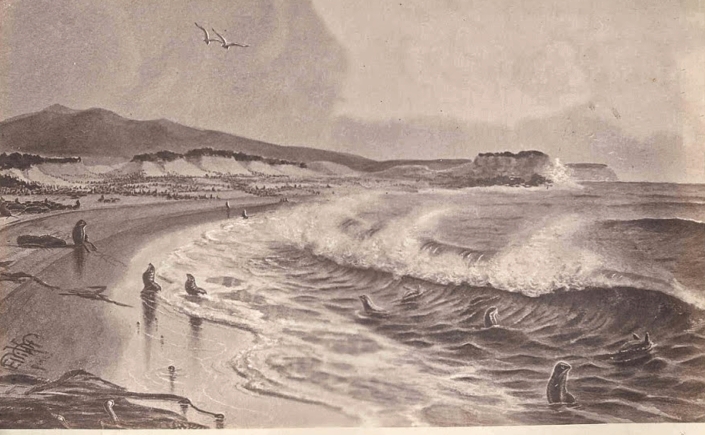


Lukannon … Rudyard Kipling’s deep sea song

You’ve got to feel sorry for Rudyard Kipling (1865-1936)

This remarkable poet and storyteller is today rarely read and is often vilified and dismissed as a jingoistic and chauvinistic booster of empire and white civilization. When critics reach for their guns, they “bring out the white man’s burden“and “east and west is west, and ne’er the Twain shall meet”. He is definitely guilty as charged, but he was of his time, and voiced what was then the imperial zeitgeist that enraptured his British constituency. The past, as they say, is another country – they thought much differently then.

But, as those who are familiar with his many poems and stories would attest, the poet was so much more than this.

It was Kipling’s habit to preface and bookend his remarkable if, to contemporary readers, politically incorrect stories with short poems of singular quality.

Lukannon is one of these. The story of The White Seal first appeared in print in the August 1893 issue of the London-based magazine National Review and published again in 1894 as part of the anthology The Jungle Book. Yes, that one. Mowgli, Wolf Cubs, Akela, and all. But, exceptionally for a story in The Jungle Book, none of the action in The White Seal  takes place in India. And, presaging the environmental activism and protests against the controversial seal hunts of the late 20th Century, it is remarkably prescient and pertinent.

The story is set on an island in the Aleutians in the Bering Sea between Russia and Alaska. It tells of a unique seal who, by leading his fellow seals to a secret hidden beach, saves his kind from the seal hunters. He referred to his poem as “a kind of national anthem for seals”. The title of the poem is the name of a Russian seal-fur trader, Lukanin, who gave his name to these lonely Aleutian beaches in 1788. Kipling wrote: “This is the great deep-sea song that all the St. Paul seals sing when they are heading back to their beaches in the summer. It is a sort of very sad seal National Anthem”.

Back in the day, I set the poem to music. It is featured on the rare recording HuldreFolk Live in London 1988, featuring Paul Hemphill, Victor Mishalow and Adèle Hemphill. During HuldreFolk’s tour of English folk clubs in the northern summer of 1988, it was recorded on a cheap audio cassette by a dinky, clunky old analogue tape recorder – and it shows. But the natural acoustics of the cellar at Bracknell Arts Centre, and the audience’s participation in the choruses made up for a multitude of sins.

© Paul Hemphill 2024. All rights reserved

Lukannon is such a lyrical poem that it lends itself effortlessly to musical settings. Apart from my own, i have discovered three alone, and I am pretty certain that there are many more out there on the world wide web. There is a version by folk duo William Pint and Felicia Dale set to a tune by American musician Bob Zentz from their 1997 album Round the Corner. There is also a contemporary “prog-rock” version by British band Shadows of the Sun.

In 1947, the eccentric Australian expatriate composer Percy Grainger composed a song cycle of The Jungle Book and chose as his centrepiece the story of The White Seal – and particularly, Lukannon “as a protest against civilization.” For more on Grainger’s opus, see below.

Lukannon

I met my mates in the morning (and oh, but I am old!)
Where roaring on the ledges the summer ground-swell rolled;
I heard them lift the chorus that dropped the breakers’ song –
The beaches of Lukannon – two million voices strong!

The song of pleasant stations beside the salt lagoons,
The song of blowing squadrons that shuffled down the dunes,
The song of midnight dances that churned the sea to flame –
The beaches of Lukannon — before the sealers came!

I met my mates in the morning (I’ll never meet them more!);
They came and went in legions that darkened all the shore.
And through the foam-flecked offing as far as voice could reach
We hailed the landing-parties and we sang them up the beach.

The beaches of Lukannon – the winter-wheat so tall –
The dripping, crinkled lichens, and the sea-fog drenching all!
The platforms of our playground, all shining smooth and worn!
The beaches of Lukannon — the home where we were born!

I meet my mates in the morning, a broken, scattered band.
Men shoot us in the water and club us on the land;
Men drive us to the Salt House like silly sheep and tame,
And still we sing Lukannon – before the sealers came.

Wheel down, wheel down to southward; oh, Gooverooska go!
And tell the Deep-Sea Viceroys! the story of our woe;
Ere, empty as the shark’s egg the tempest flings ashore,
The beaches of Lukannon shall know their sons no more!

Percy Grainger’s Jungle Book Cycle

In 1947, the eccentric Australian expatriate composer dedicated a song cycle of The Jungle Book and chose as his centrepiece the story of The White Seal – and particularly, Lukannon. My Kipling ‘Jungle Book’ Cycle, begun in 1898 and finished in 1947, was composed as a protest against civilization.” (Grainger’s programme note, 1947)

Grainger (1882-1961) studied at the Hoch Conservatory in Frankfurt, Germany from 1895-1901 (aged 13-19). Grainger’s mother Rose wrote to her husband John of her fears that young Percy was becoming “more Germanized every day.” In response to Rose’s concern, and to “tickle up the British Lion in him,” John (who was estranged from Rose) sent Percy, among other things, several books by Rudyard Kipling . Kipling’s writings captivated Percy immediately, and he soon started writing choral settings of the poetry, especially those of Kipling’s Jungle Books.

Grainger’s settings of the poetry of Kipling are as extensive as his settings of British folk music; Kay Freyfus’s catalog of Grainger’s manuscript scores lists 36 settings, though Grainger in a 1926 letter to Kipling mentions “some 40 or 50” settings. Grainger felt a strong kinship for Kipling’s writing, and Kipling appreciated and approved of Grainger’s work at setting his poetry. Grainger played several of his choral settings for Kipling during a meeting at Kipling’s home in 1905. Of Grainger’s settings of his poetry, Kipling said, “Till now I’ve had to reply on black and white, but you do the thing for me in colour.”

The Beaches of Lukannon is the centerpiece of the cycle, and arguably the strongest piece musically and emotionally. It tells us the tale of the tragic slaughter of seals by wicked sealers from the seals’ perspective. The opening section, told from the point of view of a seal elder, recounts what the beaches of the Bering Sea Island of Lukannon originally were for the seals – their annual meeting (and mating) opportunity. The central section, reminiscent of the music of Charles Ives in its shifting chromatics, conveys the beauty of the surroundings “before the sealers came.” The final section musically revisits the opening material, but in a smore somber mode.

For more on Rudyard Kipling in In That Howling Infinite, see A Son Goes To War – the grief of Rudyard Kipling 

The great outdoors – camping days

And the bush hath friends to meet him, and their kindly voices greet him
In the murmur of the breezes and the river on its bars,
And he sees the vision splendid of the sunlit plains extended,
And at night the wond’rous glory of the everlasting stars.
Clancy of the Overflow, AB (Banjo) Paterson

Sleeping under the stars, close to nature and exposed to the elements has a timeless allure, whether under canvas or on a bedroll or in a swag. It’s almost atavistic – a harking back to simpler and indeed, primeval days, a retreat albeit temporary from the workaday world and the ties that bind us to it, and a genuine pleasure of the open road.

For those with a drop of vagabond blood in their veins, and the echoes of a gypsy soul, it’s a sure cure for those “summertime blues”!

The Travelling People

Countries where the nomadic life has long been consigned to history and where the sedentary lifestyle is regarded as the civilised norm, individuals and authorities have long struggled to decide what camping is, and who is allowed to do it. Over the decades, the act of sleeping outside has served wildly varying ends: as a return to agrarian ideals, a rite of passage, a route to self-improvement. But whilst some camp for leisure and pleasure, for many, it is a economic and social necessity that has often been condemned as uncivilised, unsanitary, indigent, and even criminal – and it has also served as a proxy for disputes about race, class, discrimination and rootlessness.

For centuries, sleeping outside has been embraced or condemned, depending on who’s doing it. A recent book on the history of camping in the US explores what, exactly, camping is, and how the pursuit intersects with protest culture, homelessness, and identity. A excellent review in The New Yorker is republished below.

In some countries that are seeking to modernise rapidly, heavy-handed authorities have endeavoured to curtail the wandering life by regulation and resettlement, at times, by brute force. Recall the sad conclusion to James A Michener’s novel Caravans, set in Afghanistanand the its movie adaptation, and also British historian Vincent Cronin’s The Last Migration (1957), a  account of the Pahlavi shah’s regime’s repression of the Falqani nomads in the name of “progress”. I can’t recommend it enough. It is tragic and beautiful, and authentic in every finely drawn detail, like a Persian miniature on ivory. Closer to our western consciousness and consciences, is the savage repression and dispossession of the Native American and Australian First Nations. It is historically and culturally ironic that a loop-hole in Australian law decreed that camping was permitted on the lawns of Old Parliament House in Canberra, the Australian capital provided no more than twenty tents were erected. So it was that on Australia Day, 26th January 1972, indigenous activists established an Aboriginal Tent Embassy to protest against the the Australian government’s refusal to recognize indigenous land rights. It is there to this day, drawing national attention to unresolved indigenous issues. Read about the Aboriginal Tent Embassy HERE 

The early light is breaking
The morning sun is waiting in the sky
And I think I’m gonna break away
And follow where the birds of freedom fly

Caravans, Mike Batt

Aboriginal Tent Embassy 26th January 1972

The big backyard

As a nipper in Birmingham back in the late fifties, we had a very large backyard, with a lawn, apple and pear trees and a huge veggie garden. And one of our pleasures during the few warm months of school summer holidays was to erect a tent on that lawn. My brothers and I would spend our days outdoors, with a picnic and an old wind-up phonogram record player, until ordered in at sundown. We’d always wanted to spend the night there but our folks wouldn’t let us. We never understand why – we were perfectly safe in our own garden, and in our suburban backyard, there were none of the wild things we encounter in the wild. Looking back, I surmised that it had a lot to do with social norms. The folks grew up in rural Ireland, and probably associated camping out with the peregrinating ‘travellers’ who were regarded very much as unsightly and shady – a prejudice that persevered into their new lives in Birmingham. Back then, we had other names for them, for which I’ve been called to order on many a Facebook post.

In those days, “the travellers” would camp with their caravans and lorries on the “waste land” (yes, that what we called it, for reasons that were never explained – there was a lot that was not explained back the but was just taken for granted) that used to be homes and factories before the Luftwaffe destroyed them over ten years before. They had Irish accents, and this created an affinity with these itinerant folk as our parents and relatives were Irish immigrants, and we lived in an Irish world of Irish history, politics and music – as a young teen, I loved Ewan MacColl’s beautiful song Freeborn Man of the Travelling People, and it was the very first folk song I ever sang in public – in a billet in Southall during an Easter CND march.

As teens, we joined the Boy Scouts – where camping was deemed not only acceptable when under the auspices of the institution, but also, character building, and a means to learning resilience, self-reliance, and of acquiring valuable Baden-Powell bushcraft skills. To my folks, this gave camping the tick of respectability.

I must’ve been eleven or twelve when I first went off to camp, the whole troop   on the back of an open lorry with all our gear and supplies. That was was my first night away from home, in the middle of nowhere, and it was, well, unsettling. Two blankets pinned together, rucksack for a pillow, rubber groundsheet on the cold hard ground. Washing in the freezing country river. Drop latrines that we had first to dig . Tea “brewed” in a huge dixie, fry-ups in a big frying pan, and “spud bashing”. “Bush” walks and “survival” tips, and the famous “wide game”. Cocoa around a roaring camp of a summer evening fire at night singing jolly scouting songs.

The annual summer camp became a permanent fixture of my early adolescence, and off I went every year until I left senior scouts and grew out of “god, queen and country”. But it was an important and enjoyable experience. I still remember those songs, and snatches often pop into my memory unannounced.

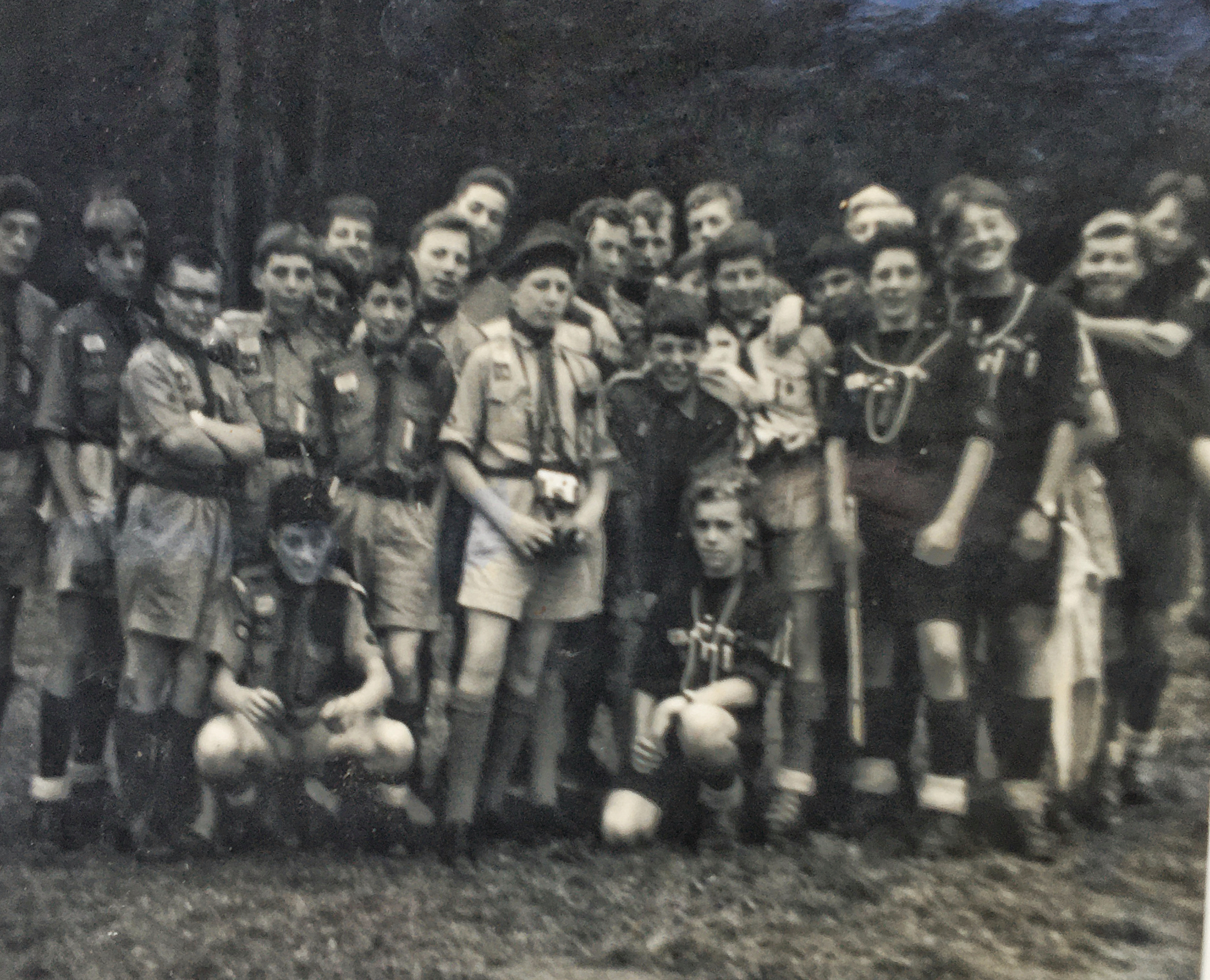
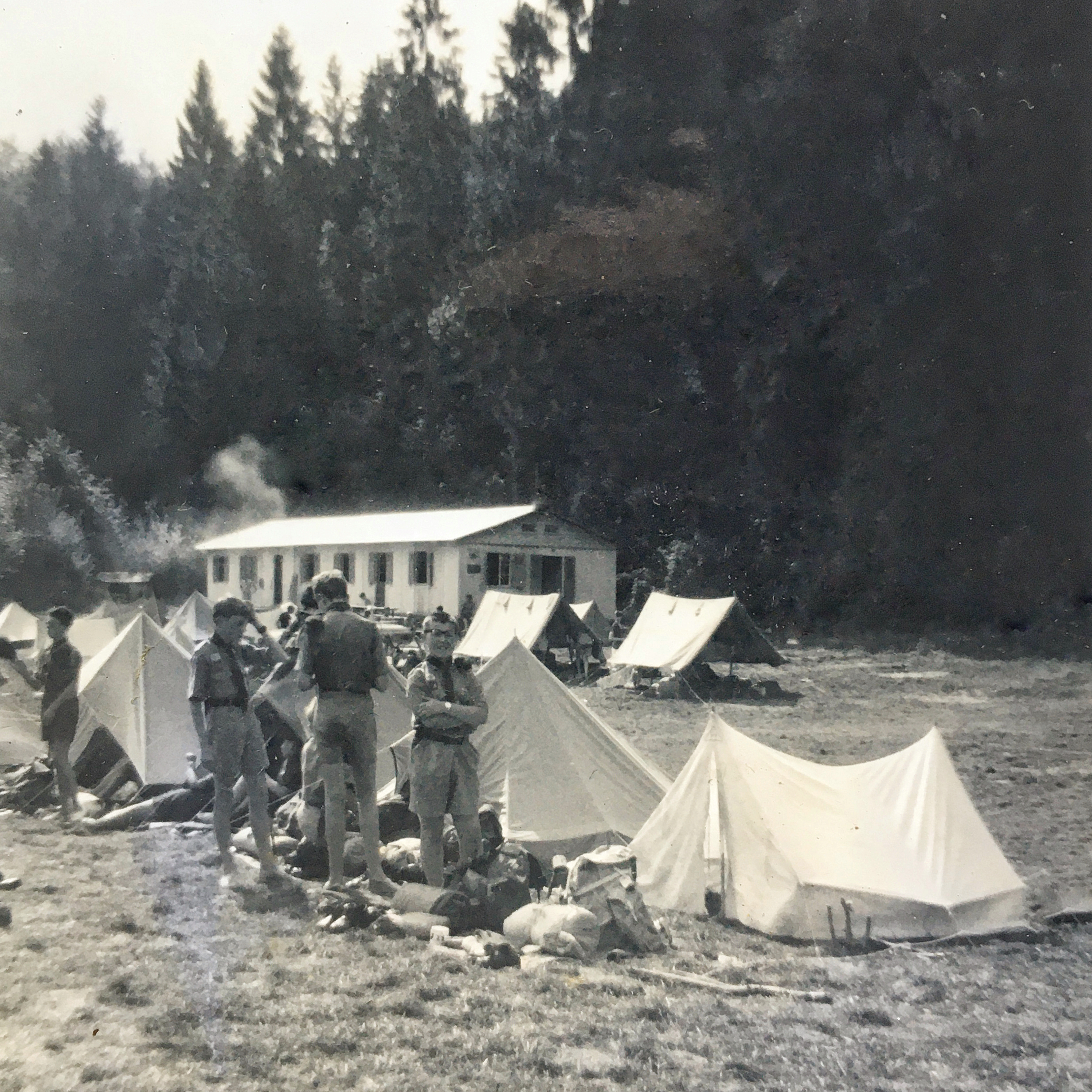
We’d see parts of our land that few of us had the means to travel to, and experience a rural England that city folk had long lost touch with. On overnight hikes we’d tote our backpacks along country lanes and byways, compass and ordinance survey map in hand, and set up a flimsy tent in an open field when the sun went down. The following hazy pictures were taken at a combined South Birmingham troop scout camp in Echternach, Luxembourg, on the German border. We were an eclectic crew – it even included a trio of Sea Scouts (incongruous as Birmingham was a long way from the sea). Of its time – nowadays, such a group shot would be so much more cosmopolitan. That’s me, arms folded.

Echternach Scout Camp, August 1963

Echternach Scout Camp, August 1963

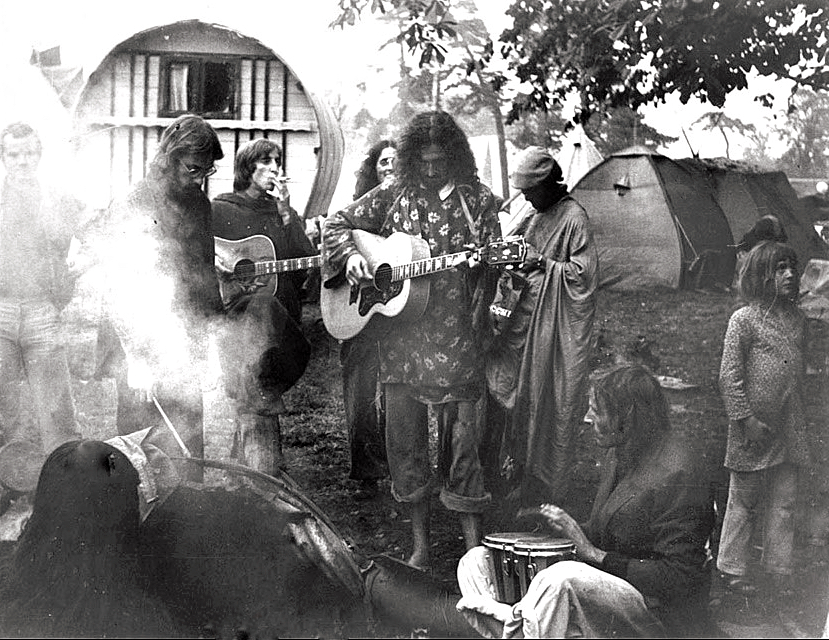
As I grew to manhood – and outgrew scouting, I remained accustomed to sleeping out. At music festivals in rural England in the late sixties, it was a given that we would bed down on site come all weather – as the lovely pictures of the retro-medieval fayres provided by my good friend Charles Tyler show (Charles in the lad with the guitar in the featured photograph). I would often sleep on the side of the road when hitchhiking throughout the land. I’ve slept under the stars in England and Scotland, in Greece and Yugoslavia, Syria and Jordan, Iran and Afghanistan, Pakistan and India.

I’ve awoken covered in snow near the Culloden battlefield outside Inverness; been moved on by Yugoslav police when I’d mistakenly turned in for the night next to a military base outside Niš; settled down in a shabby park by the Sea of Galilee, wary of scorpions; slept on a precarious ledge high above the rose city of Petra in Jordan; bedded down in the desert on the border between Iran and Afghanistan; and battled mosquitoes on the banks of the Hawkesbury River. In latter years, on safari in Tanzania, we awoke in the night in our tent by the Rufiji river to see a big eye staring at us through the flimsy window as an old tusker proceeded to do his business right beside our tent; and sat around a fire of acacia sticks in a makeshift bush camp on the Serengeti savanna.

Just the other day, I was browsing through my travel diary for 26th August 1971 and came upon the description of my nighttime arrival in the outskirts of Amman, Jordan, on my way to Petra and Aqaba – a night I had long forgotten: “In my lostness, I came upon a policeman. And soon, three traffic cops were crashing the ash and buying me tea and bread. At last, they took me to a park, where King Hussein had a palace,  and bade me sleep – under their protection. Come morning, I was gently awoken by the coppers who bought me breakfast and commandeered a taxi to take me into the town centre (where) again, police assisted me by asking a taxi driver to take me to the Aqaba road”. We took risks, we travellers of “the Overland” back in the day, and many times we were blessed with the charity and caring of our fellow humans.

My hitching days are now long gone, and so is the urge to set up camp in the great outdoors – apart from that African journey, when there was little alternative. And yet, I still love the great outdoors and being close to nature. Living off-grid on a rural property far from the madding crowd and surrounded by forest, with birdsong by day and frog song by night, I reckon I have have the best of both worlds.

© Paul Hemphill 2023 All rights reserved

Read also in In That Howling Infinite, Song of the Road (1) – my hitchhiking days, and Song of the Road (2) – The Accidental Traveller

Barsham Faire 1973

Meagan Fair, Pembrokeshire, 1975

The Confounding Politics of Camping in America

For centuries, sleeping outside has been embraced or condemned, depending on who’s doing it. A recent book by the historian Phoebe S. K. Young explores what, exactly, camping is, and how the pursuit intersects with protest culture, homelessness, and identity.
Illustration by Sally Deng 

Just a drop would do, though. Early campers didn’t wish to be mistaken for actual vagabonds, and the line between the two was easily smudged. In 1884, Samuel June Barrows, an outdoors enthusiast and, later, a one-term congressman, warned that a traveller carrying a “motley array of bedding, boxes, bags, and bundles” might arouse “suspicions of vagrancy”; to distinguish oneself from the riffraff, it was best to pack a “de luxe” tent and fashionable attire. Barrows’s anxiety underscored the contradictions of recreational camping, which he described as “a luxurious state of privation.” One of its luxuries was that it was temporary. In the name of leisure, well-heeled campers sought out the same conditions that, in other contexts, they condemned as uncivilized, unsanitary, or criminal.

In “Camping Grounds: Public Nature in American Life from the Civil War to the Occupy Movement” (Oxford University Press), the historian Phoebe S. K. Young finds that Americans have long struggled to decide what camping is, and who is allowed to do it. Over the decades, the act of sleeping outside has served wildly varying ends: as a return to agrarian ideals, a means of survival, a rite of passage for the nuclear family, a route to self-improvement, and a form of First Amendment expression. In Young’s account, it becomes a proxy for disputes about race, class, and rootlessness—all the schisms in the American experiment.

As Barrows slept beneath the stars, countless workers were forced to do the same. In the eighteen-seventies, a boom-and-bust economy and a burgeoning network of railroads compelled laborers to crisscross the nation, following the cycles of the market. The “tramp problem” vexed those of means. Allan Pinkerton, the founder of the ruthless, union-busting Pinkerton National Detective Agency, blamed the Civil War for giving men a taste of “the lazy habits of camp-life.” In 1878’s “Strikers, Communists, Tramps and Detectives,” Pinkerton detailed the “grotesque company” tramps kept by moonlight, writing that debauchees would doze “in a stupid sodden way that told of brutish instincts and experiences.” Scarier than the encampments was the fear that some Americans might find them appealing, retreating from society to enjoy “the genuine pleasure of the road.”

The travel industry soon recognized those pleasures by making tramping an aesthetic, something that campers could slip into and shuck off as they pleased. A writer for Outing, a magazine aimed at moneyed outdoorsmen, preferred to “rough it in the most approved ‘tramp’ style—to abjure boiled shirts and feather beds and dainty food, and even good grammar.” As Young points out, the quotation marks around “tramp” raised a barricade between the imitation and the original. Real tramps led a precarious existence, subject to arrest, surveillance, poverty, and ostracism. When élite campers wore their costume, they shrugged at a world in which, as Pinkerton wrote, “a man may be eminent to-day and tomorrow a tramp.”

The double standard was especially glaring in Native communities. White Americans, including Barrows, saw tribal settlements as the epitome of savagery. The U.S. Office of Indian Affairs hoped that Native populations would disavow their “barbarous life” and take up “a distaste for the camp-fire.” Such goals were presented as matters of public health, but the message diverged sharply depending on the audience. Although Native groups “learned that the only way to prevent consumption was to give up camp life,” Young writes, “recreational campers read that exposure to fresh air and sunlight” could cure the illness. The government forced Native children to attend boarding school and subjected adults to dehumanizing reëducation projects. Meanwhile, Outing, as it had with tramps, presented Indianness as an identity to be adopted and discarded on a camper’s whim. One contributor confessed that summer gave him “an irresistible desire” to “live the life of a savage in all of its most primitive simplicity.”

In the early twentieth century, the automobile allowed legions of new drivers to flock to the countryside. Camping shed some of its élitist pretensions, but its popularity exposed new rifts. Eager for traffic, many towns constructed no-frills auto camps at their outskirts, where entry was often free, at least until the camps attracted hordes of families and their Model Ts. These “tin-can” tourists, as Sunset magazine called them, ate canned food heated on the engine—or, more boldly, by a camp stove connected to the exhaust pipe. Camps couldn’t keep such people away; now that the backcountry, or even the frontcountry, was within reach, Americans intended to pitch their tents wherever they could. From 1910 to 1920, national parks and monuments saw a fivefold increase in visitors, reaching a million a year; by 1930, that figure had jumped to more than three million. The deluge was unmanageable. In addition to arresting vistas and pristine forests, campers expected generous amenities—firewood, electric lights, running water, garbage collection—and they were not in the habit of leaving nature as they found it. California’s redwoods, in particular, were so frequently, heedlessly beheld that their roots began to choke underfoot.

To save the trees, Emilio Meinecke, a plant pathologist for the U.S. Forest Service, conceived a template still in use today: a one-way loop road with short “garage-spurs,” each of which functioned as parking for a designated campsite. By presenting campers with private, manicured spaces, Meinecke hoped to spare the surrounding plant life, reminding visitors that they were “guests of the nation.” Intentionally or not, his campsites had the flavor of the suburbs—the land, once for farming, was now to be savored as a consumer, and every family had its plot. The New Deal funded the “Meineckizing” of almost ninety thousand acres of federal campgrounds, about half of which were new, signalling the rise of what Young calls “the campers’ republic.” “Mixing leisure with nature,” she writes, “became a potent way for citizens to demonstrate national belonging.”

But all was not well in the republic. The Great Depression had pushed record numbers of Americans into homelessness: by one estimate, during one day in the spring of 1933, a million and a half people were sleeping outside or in public shelters, and the actual number was likely higher. Because camping was so popular, budget-minded vacationers were sometimes cheek by jowl with the down-and-out. Who could say which was which? Manufacturers of camping trailers went out of their way to disclaim the use of their products as “a permanent address.” Others argued that campgrounds were too affordable or unsupervised. In 1940, J. Edgar Hoover, never one for understatement, alleged that roadside tourist camps had become “dens of vice and corruption” for “gangs of desperados.” Even Meinecke, for all his talk of hospitality, did not look kindly on extended stays at national parks. In an internal report, he complained that some visitors, “evidently camped for a long time,” had given one of his campsites a “ ‘used,’ second-hand look,” spoiling it for “decent people who are not slum-minded.”

If the U.S. has dithered about the basics of camping—who can do it, where, and for how long—it’s been outright bewildered by camping as political speech. Could anyone have a message so urgent that it can be delivered only by sleeping outdoors? The answer is yes, as thousands of protesters have made clear, but the government has seldom taken them at their word, instead casting them as devious freeloaders or closet indigents. Occupy Wall Street, which famously enjoined its participants to bring tents, honed an approach popularized after the Civil War, when the Grand Army of the Republic, a Union veterans’ group, camped near the Washington Monument to raise awareness of their sacrifices. In 1932, the Bonus Army—thousands of out-of-work veterans seeking their service bonuses—followed suit, encamping in plain view of the Capitol. For weeks, the public debated whether the soldiers were heroes or hobos. President Herbert Hoover, deciding on the latter, ordered the clearing of the camps, resulting in a fiery conflict that claimed at least one life.

But a tent makes a forceful statement: someone is here, and that someone intends to stay. When Martin Luther King, Jr., and the Southern Christian Leadership Conference wanted to show Washington the true toll of poverty, they decided that camping was the only suitable action. The Poor People’s Campaign brought more than two thousand people to the Lincoln Memorial Reflecting Pool in May, 1968, a month after King’s assassination. Known as Resurrection City, the encampment lasted for six weeks, drawing support and ire. A concerned citizen wrote to President Lyndon B. Johnson that “a hoard [sic] of locusts” was abusing “hallowed ground.” Calvin Trillin, writing for this magazine, noted the irony: the poor had intended to show America that they were “sick, dirty, disorganized, and powerless—and they are criticized daily for being sick, dirty, disorganized, and powerless.” By June 24th, the camp had dwindled to five hundred, and police fired tear gas to expel those remaining. A demonstration about homelessness, it seemed, was no different than homelessness itself.

Just three years later, Vietnam Veterans Against the War began planning to camp near the Capitol, and the Nixon Administration, fearing a repeat of Resurrection City, refused to give them a permit. The V.V.A.W. requested a stay on the ban, and the case went to court. Determining the legality of protest encampments, Young writes, “required finding an elusive balance between Constitutional freedoms and public safety.” The N.P.S. would allow only a “simulated” camp on federal grounds: no fires, no tents. John Kerry, who argued for the V.V.A.W., maintained that a real campsite was the only way to “tell our story to the people of this country.” The judge hearing the case, meanwhile, felt that to camp was essentially to sleep and was an act that couldn’t “express a single idea”—and that couldn’t claim First Amendment protection. He upheld the camping ban; the Court of Appeals reversed it; the Supreme Court reinstated it. The V.V.A.W. decided to camp anyway, and, not wanting a public-relations disaster, Nixon let them be. The Washington Post quoted a Park Police officer who, looking over a National Mall clotted with sleeping bags, waxed philosophical: “What’s the definition of camping? You tell me. I don’t know.”

The ensuing decades did little to answer that question. By 2012, Congress was holding hearings on the subject, in which Trey Gowdy, a House member from South Carolina, grilled Jonathan Jarvis, the director of the N.P.S at the time. “What is the definition of camping?” Gowdy demanded. Occupy D.C. had been staying in McPherson Square, in downtown Washington, for months, and Jarvis had been reluctant to say that the protesters were camping—their actions were a means to an end, not the end itself, which was reason enough to avoid enforcing the N.P.S. ban. Gowdy seemed to understand the Occupiers as recreational campers in disguise; their politics were a cover story for a good time, and taxpayers were footing the bill. But the Occupiers emphasized that they weren’t camping at all. (“WE ARE NOT CAMPING,” signs on their tents read.) Campers slept outside for the joy of it; Occupiers wanted “a redress of grievances.” Gowdy couldn’t compute how people camping “for fun” were permitted only in certain areas, while those “pitching a camp in protest of fun” were welcomed by the National Park Service. Without a clear distinction between camping and not-camping—the distinction that generations of Americans had tried and failed to make—he felt that “the fabric of this republic” was “going to unravel.”

From the foggy ruins of time – our favourite history stories

I wear the weave of history like a second skin,
I wake with runes of mystery of how we all begin,
I walk the paths of pioneers who watched the circus start,
The past now beats within me like a second heart.
Paul Hemphill. E Lucivan Le Stelle

Whilst its scope is eclectic and wide ranging in content In That Howling Infinite is especially a history blog. It’s subject matter is diverse. Politics, literature, music, and memoir are featured –  but it is at its most original and informative, a miscellany of matters historical, gathered in Foggy Ruins of Time – from history’s back pages – yes, an appropriation of lyrics from two Bob Dylan Songs.

In compiling the annual retrospective for 2022, I decided I would put together a list of my favourite posts in each of the categories described above, beginning with the history ones. My primary criteria were not so much the subject matter, which is diverse, as can be seen from the ten choices (shown here in alphabetical order) but firstly, what I most enjoyed writing and secondly, those I considered the most original insofar as I referenced and republished few other voices, other than direct quotations from the sources I was consulting and books I was reviewing.

A cowboy key – how the west was sung

Outlaw songs and outlaw gothic are as much apart if the mythic Wild West as cowboys and gunslingers. A nostalgic canter through some of my personal favourites on records and in movies.

Androids Dolores and Teddy enjoy the Westworld view

Al Tariq al Salabiyin – the Crusaders’ Trail 

Western folk, long on romanticism and short on historical knowledge, associate crusades and crusaders with medieval knights, red crosses emblazoned on white surcoats and shields and wielding broadswords battling it out with swarthy scimitar-swinging, be-turbaned Saracens. Here, we widen that orientalist perspective.

The Crusades

A Short History of the Rise and Fall of the West

“… one thing is for certain: we all love a good story. As they say, in Arabic, as indeed in all tongues, times and places, “ka-n ya ma ka-n bil ‘adim izzama-n wa sa-lifi al aSri  wa la-wa-n”‘ or, “once upon an time”. An original,  idiosyncratic and not strictly accurate journey through those foggy ruins of time.

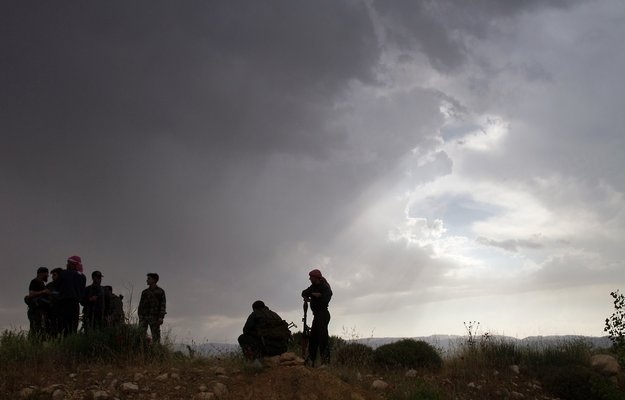
Somewhere in Syria

Beyond Wolf Hall – Icarus ascending 

We know how the story of Thomas Cromwell ends. It’s how Booker prize winner Hilary Mantel gets us there that matters. Our questions here are whether Thomas could sense where it was all headed, and whether he could have quit while he was ahead.

Beyond Wolf Hall – Revolution Road

“A wide-ranging rural road trip through England’s green and pleasant land takes the traveller by antique and desolated abbeys and monasteries, their ageing walls crumbling and lichen covered, their vaulted pediments open to the English elements. The celebrated poets of the romantic era immortalized these relics in poetry, and even today, when one stands in grassy naves, gazing skywards through skeletal pillars, one can almost feel an ode coming on”. A brief dissertation on Thomas Cromwell’s English revolution.

Mark Rylance and Damian Lewis as Tom and Hal

Martin Sparrow’s Blues

It is late summer in 1806, in the colony of New South Wales. After he loses everything he owns in a disastrous flood, former convict, failed farmer, and all-round no-hoper and ne’er-do-well Martin Sparrow heads into the wilderness that is now the Wollemi National Park in the unlikely company of an outlaw gypsy girl and a young wolfhound. Historian Peter Cochrane’s tale of adventure and more often than not, misadventure, set on the middle reaches of the Hawkesbury River at time when two culturally and spiritually disparate peoples collided.

Roman Holiday – the perils of a poet in Nero’s Rome

In the First century, the Roman Empire was a far-ranging and cosmopolitan polity extending from the shores of the Atlantic to the borders of Persia. As far as we can ascertain from the historical record, Meniscus Diabetes was born in Rome in 25 CE. His father was a Greek slave in the Imperial Household of Tiberius Caesar, Emperor of Rome. These were turbulent times for Rome and Romans, but our hero managed to navigate through them.

The Sport of Kings – CE Morgan’s “Great American Novel 

The Sport of Kings’ is not a history book – nor is it an historical novel. But it is most certainly about history. And about identity. As Morgan puts it: “You would never escape the category of your birth”. It is also about memory and myth: “Repeated long enough, stories become memory and memory becomes fact”. It is both a meditation on race, on slavery – America’s “original sin” – and a bitter inversion of the American dream.

The Twilight of the Equine Gods 

An illuminating canter through the story of the “Centaurian Pact” between humans and horses. it is at once a ride andrevelation, and a reminiscence of my short-lived ‘cowboy’ days. The horse” has been man’s most important companion – forget cats and dogs – and the most durable of historical alliances, and yet, over the span of a few decades, a relationship that endured for six millennia went “to the dogs” – excuse my awful pet-food pun. And it happened almost unremarked, unnoticed, and unsung.

Tim Page’s War – a photographer’s Vietnam journey 

Our forest neighbour, recently deceased and internationally acclaimed English photojournalist Tim Page ran away from boring ‘sixties Britain to the exotic East at the age of seventeen, taking the ‘overland’ route that decades later would be called ‘the Hippie Trail’. He washed up in the great war of our generation, and left it critically injured and indeed clinically dead in a medivac chopper. This is the story of a war, and a young man who wandered into that war.

The work, the working, the working life

Ironically, one of my favourite songs about working, Bruce Springsteen’s Factory, was written by a bloke who by his own admission has never done a day’s manual labour for wages in his life. But as for myself, I sometimes feel that I have worked all my life. When I’m busily shoveling soil into a wheelbarrow and tipping it into our garden beds, I imagine that I was born with a shovel in my hands. After all, that’s what my Irish father was doing on the building sites of Birmingham while I was being conceived, gestated, born, and brought up in the first decade of my life.

The Cubs and Boy Scouts’ Bob A Job Week taught me the basics of “working for others” and getting paid for it. Weeding and cleaning and shopping, mostly. I hated it, not least because it took up most of our Easter school holidays, but it was an early lesson in duty and toiling for a cause.

As a schoolie in sixties I just had to have hit parade LPs and singles and Airfix kits and the pocket money provided by my folks did not go that far. So while other kids did paper rounds and helped out in local shops, I worked Friday nights and Saturday morning stacking shelves and cutting boxes in a Sainsbury supermarket on Stratford Road. Later, when my existential needs extended to clothes, books, and beer, a school chum got me a gig on Saturdays and school holidays in the food hall of the now defunct Rackhams department store – it was snobbishly upmarket for Brum, being a division of the famous Harrods of London, and us weekend lads had to wear naff little white waiter’s jackets which did not flatter my then portly (by sixties standards, but relatively svelte today) physique.

Rackhams in the Sixties

On the recommendation of my uncle, I worked for Sheldon Industrial Cleaning on Sundays at various Midlands motor plants, cleaning toilets and floors before the beginning of the weekday shifts. Willing hands would stand outside the Sheldon office in Digbeth hoping to be selected by the foremen and bussed to our workplace, be that in Brum, Coventry or Rugby. Come the long summer school break, when the motor industry workers took their holidays, I and other students would be hired to help with the annual stock-take at the huge Austin plant at Longbridge. One time, I was assigned to help demolish a computer room that was being renovated and upgraded. The old computer was the size and shape of a larger container, and the new one wasn’t much smaller. The iPad I am writing this piece on has probably more processing power.

The Austin, Longbridge, Birmingham

By 1967, I was a fit and adventurous eighteen year old, but still in need of cash. Summertime in the outdoors was an attractive prospect, and labourers’ pay on building sites was excellent for the times – up to fifty quid a week depending on the work, and which, I soon found out, included “danger money”.

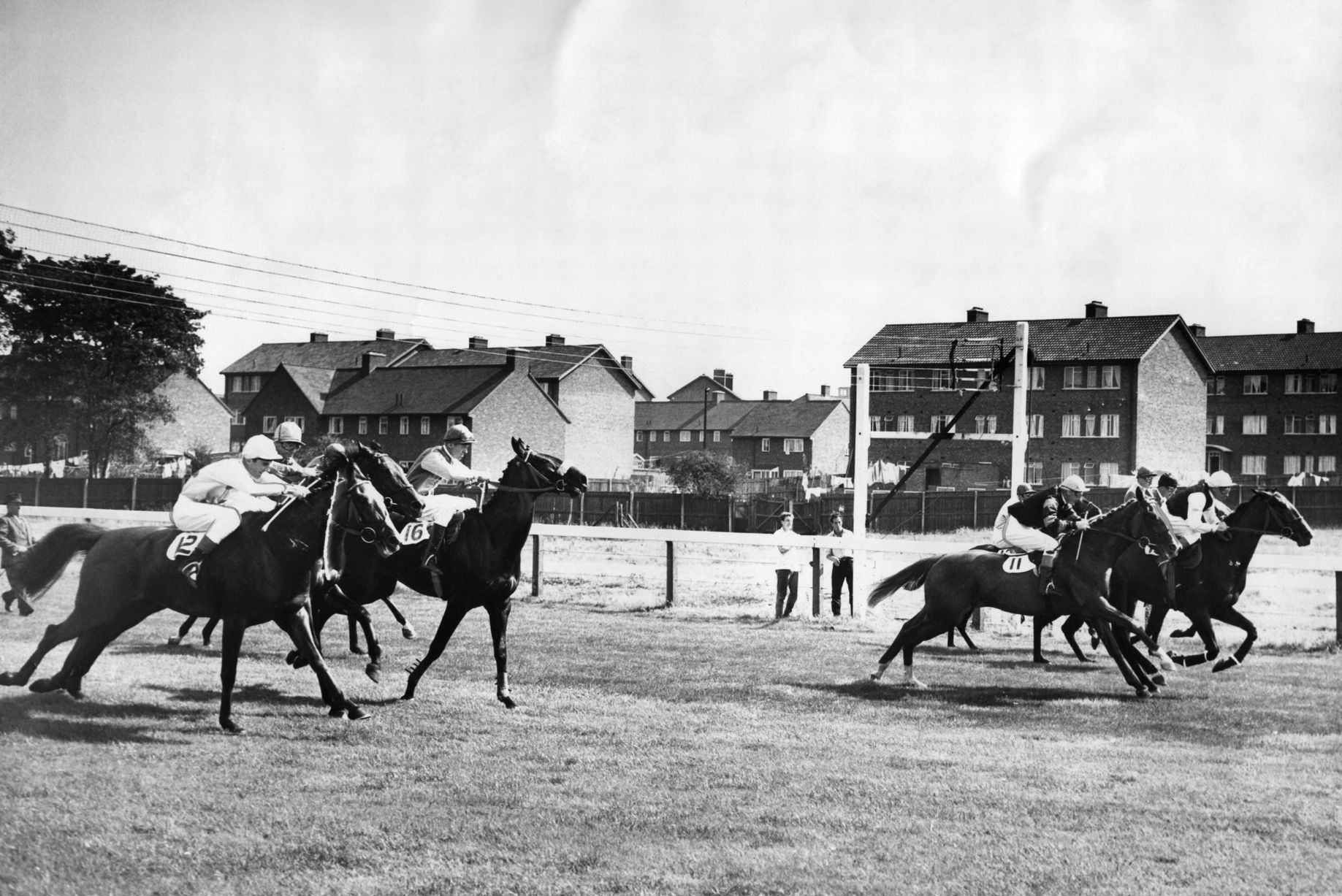
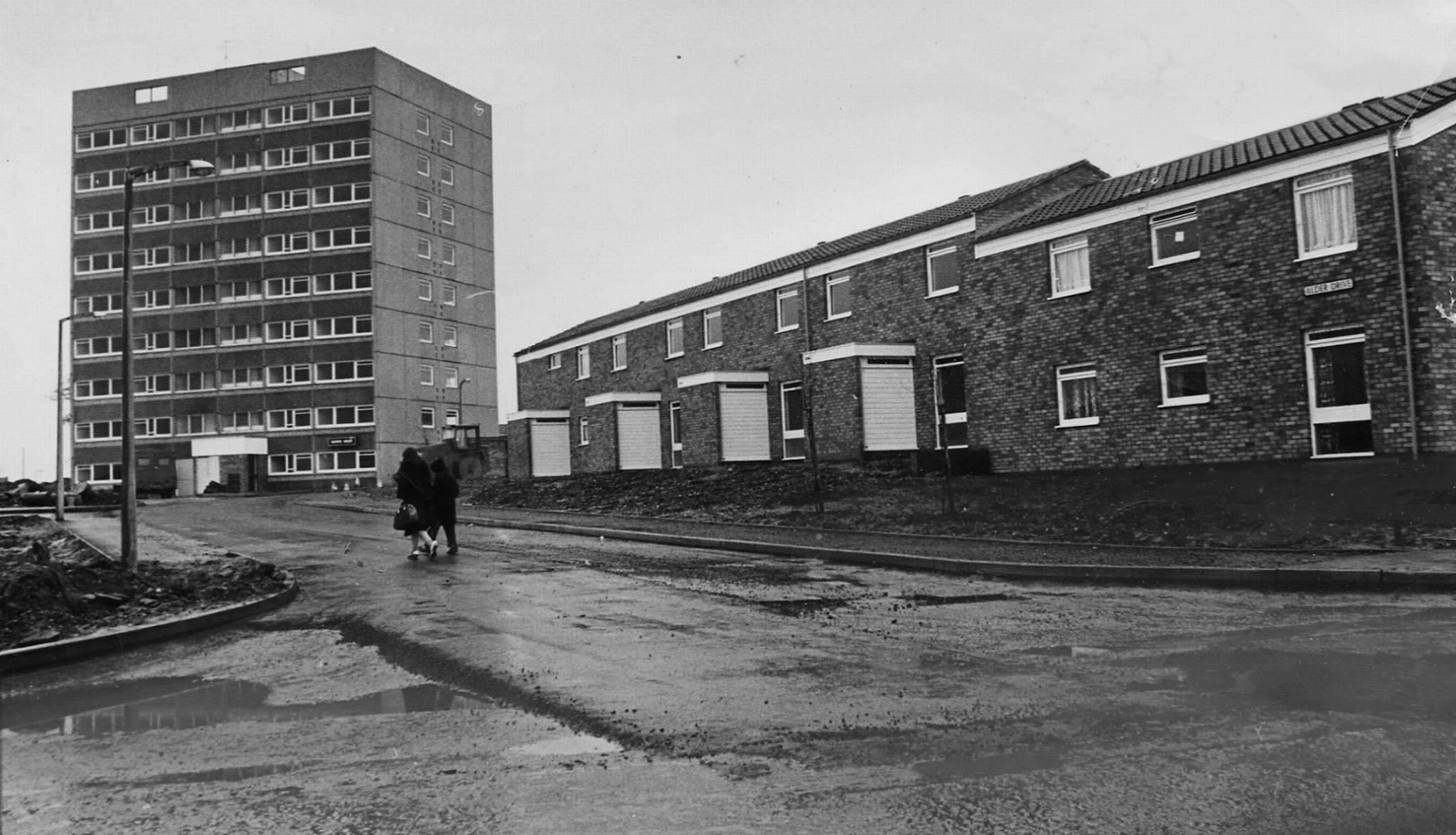
So, for four summers in a row, I spent three months a year working as a laborer  on the new housing estates that were going up all over the fringes of suburban Brum, and most conveniently, near where we lived, on the new estate on what was the old Bromford Race course near Castle Bromwich – high rise flats for Briant on the Bromford, system-built houses on the Chelmsley Wood estate (built on a redundant wartime airfield – there is still a Spitfire Way leading into the estate), and finally on the M1-M6 motorway link at Castle Bromwich with Marples Ridgeway. Inspired by the Clancy Brothers’ folk song, I wanted to join McAlpine’s Fusiliers, but that mob were working down the emerging motorway in what was to become Spaghetti Junction whilst M-R was operating right in from of my parents’ house, building the elevated motorway right on top of the River Tame. I built muscles, risked life and limb, and acquired a great sun-tan.

It might just be symptomatic of our forever changing times, the reality that nothing stands still or lasts for ever, or simply the short term quality and durability of buildings that were built so quickly, so widely, and literally “thrown up” to meet the post war Britain’s need for affordable social housing, but many of the blocks of units that I lived near in those days, and indeed, worked in and around, have been or very soon will be history.

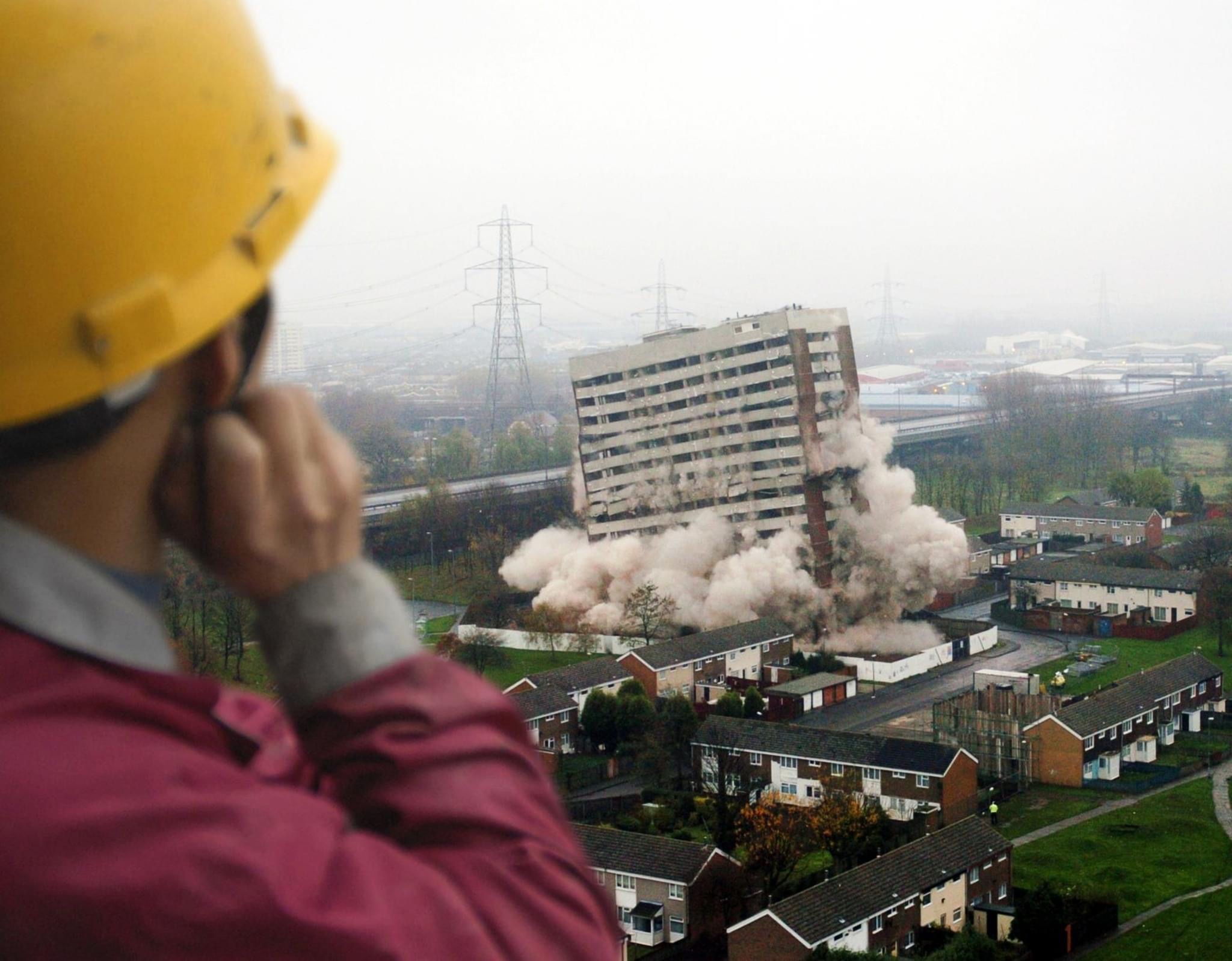
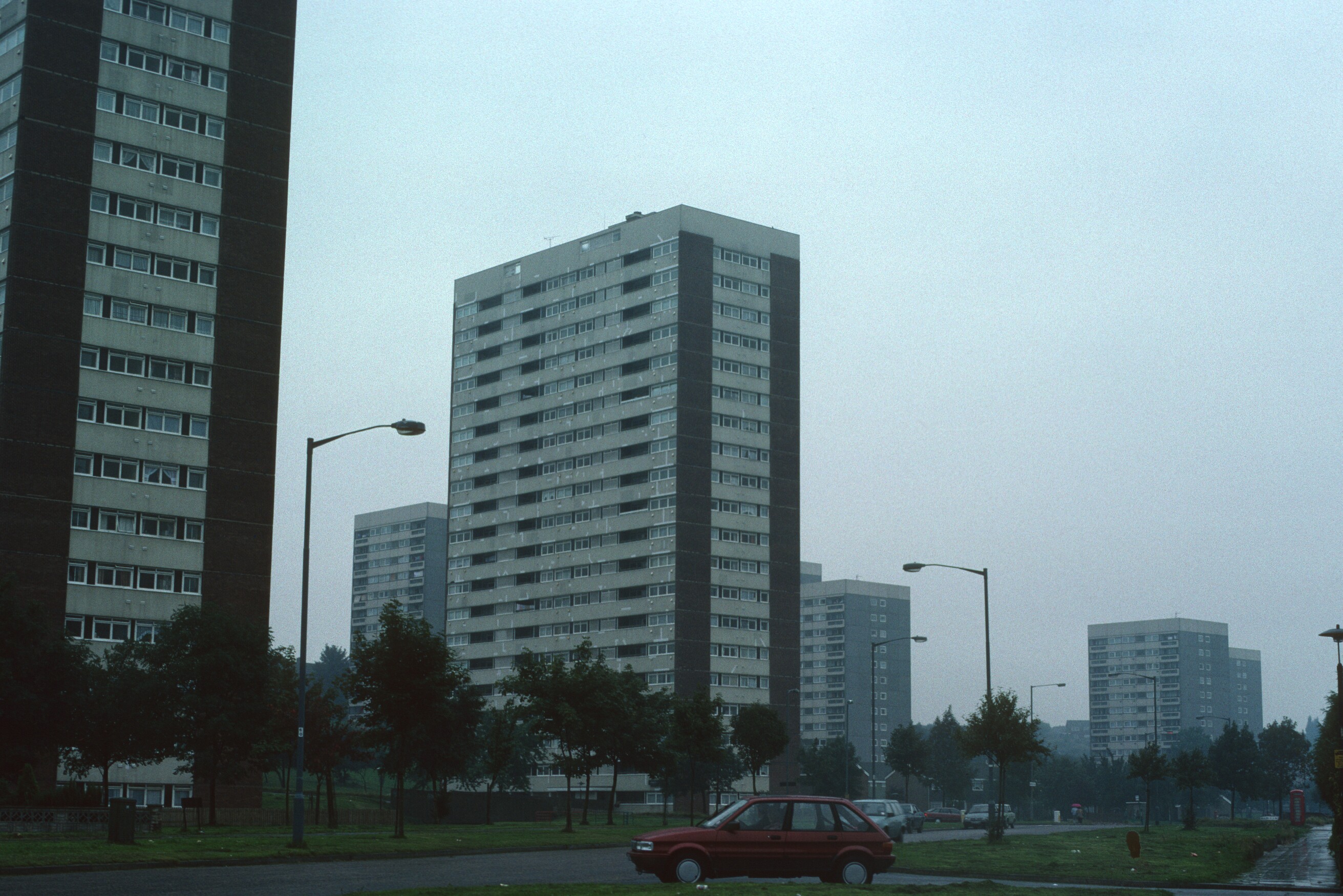
The picture below shows a demolition expert watching the twenty storey Chillingholme Tower on the Bromford’s Hyperion Road collapsing on January 29 2008. The tower was a great monolith standing at the end of our road, Papyrus Way. I lived there in the late sixties when it was first built; it overlooked that motorway I worked on. A short distance down the estate were Bailey Tower and Stoneycroft Tower. They were demolished in 2011, and I am informed that new houses are being built where they once stood. Warstone Tower and Holbrook Tower, two of several 13 storey blocks to their east, have also hit the dust. In the summer of 1967, I worked as a labourer on two of them for Briant. All of my hard work for nothing? 

The demolition of Chillingholme Tower, 2008 I Emma Lee, BirminghamLive

Bromford Bridge Racecourse


System-built housing on Birmingham’s fringes. I lived in one of these.

“High rises” on the Bromford.
In 1967, I worked on two of the smaller ones

Chelmsley Wood council estate as God would have seen it


Another God’s eye view of Chelmsley Wood council estate

Work “on the buildings” was hard, and the hours were long, and I got to meet some great blokes and some right arseholes – my workmates came from all over the United Kingdom – particularly the Emerald Isle, the Indian subcontinent and the Caribbean -the language was colourful and and conversation was often what we’d now describe as as racist and misogynist. I unloaded bags of cement and thousands of house-bricks by hand, dug trenches, and sledge-hammered survey stakes and learnt many things that most students did not, like using kangos and jackhammers, driving tractors, pouring skips of concrete and fixing reinforcement steel.

But those were dangerous days on the construction sites. There was minimal health and safety regulation – helmets were optional and hi-vis had yet to be invented – I witnessed many accidents during my stints on the sites, many serious and some fatal, and I narrowly missed a few myself. Job security was tenuous – most of us “navvies” were hired “on the lump”, and could be “put off” on the spot, and if it rained, we weren’t paid. The term “navvies”, by the way, derived from “navigator” the name given to the Irish labourers who came over to mainland Britain in the nineteenth century to build the canal system. 

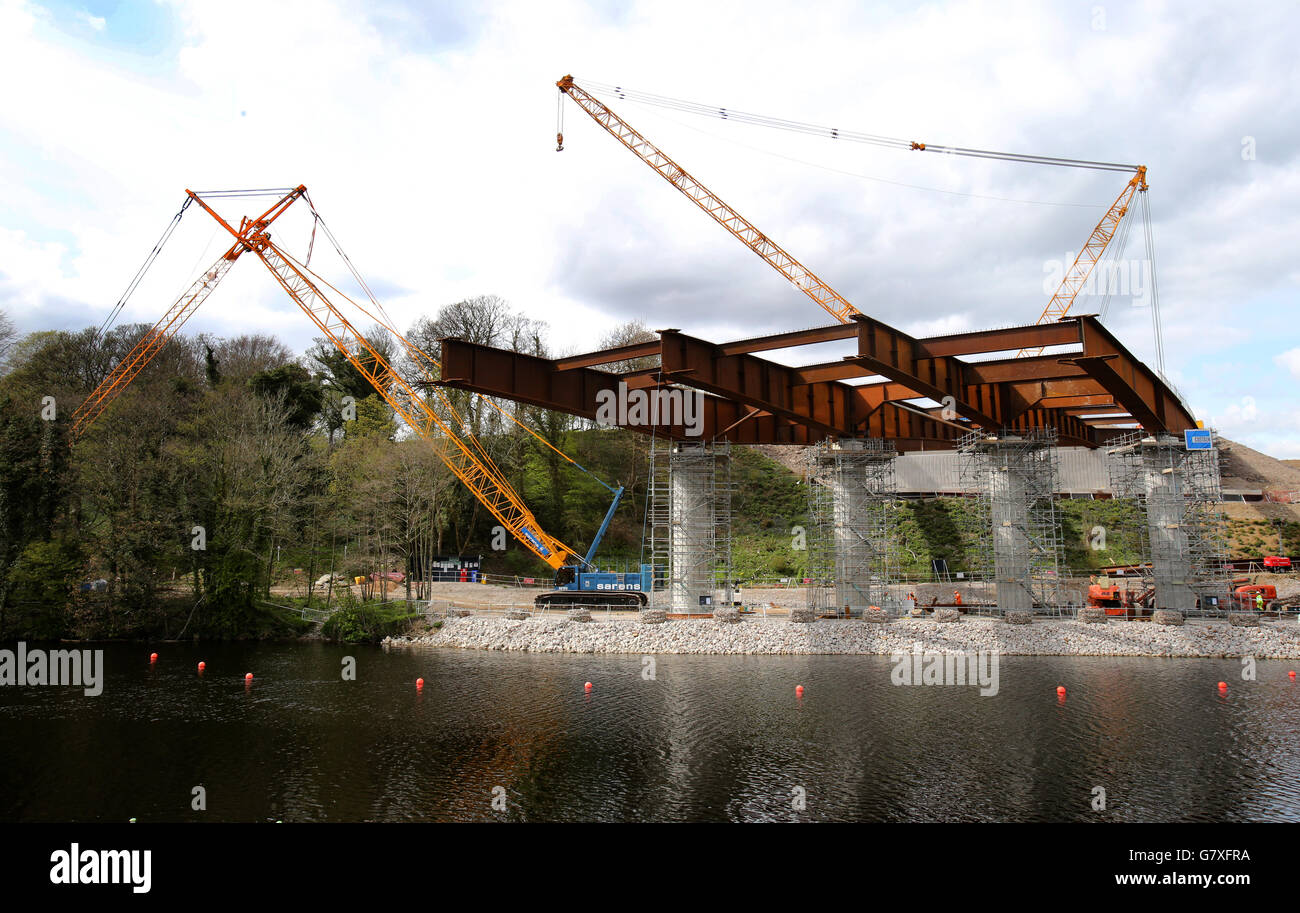
Building the M1-M6 link motorway through north Birmingham

My folks were none too happy about it. My dad had come over from County Tyrone in Northern Ireland in the late forties and had worked on building sites in Birmingham for years before finding work in the motor industry. He still bore the scars and the aches and pains. Having worked so hard to give me and my brothers an education and opportunities that they never had, it was a disappointment for them to see my brother and I head off every morning in work clothes and with lunch boxes, and returning  ten hours later tired, dirty and aching with blistered hands, tired limbs and sore feet. They couldn’t fully comprehend that we did it for quick money and not for a living.

But the money was good, and during my uni years, I was able to spend up big on books and clothes, booze and dope, with enough left over to finance my travels to the Mediterranean and then overland to India and back – it lasted until I finally reached Istanbul, when I had to call my folks for money to ge me back to England.

But that is another tale …

© Paul Hemphill 2022.  All rights reserved

For more biography in In That Howling Infinite, see: Tall Tales, small stories, eulogies and epiphanies

Postscript

My days “on the buildings” inspired many of my songs, poems and prose, though few recordings and documents now exist. One  song that has been uploaded to SoundCloud  is The King of the May, and is published below. It tells how in the early ‘seventies, a man staged a ‘sit-in’ atop a tower crane. High over London Town, he was protesting against ‘the lump’, that exploitative form of casual labour then in use on British building sites as I noted abi ‘‘em there was no compo, no OH&S, no rights. They were tough times – men died. I was there.  The title comes from Allen Ginsberg’s ‘Kral Majalis’. Allen was actually crowned thus in Czechoslovakia – before the Prague Spring of 1968 too. And thank you to WH Auden for the loan of his lyrics. I republish also below two poems I wrote about work when I was on the nine-to-five hamster wheel in Sydney during the eighties. And below two are two prose pieces I wrote about working on the Chelmsley Wood housing estate in 1969. They reflect on the kind of work I was doing, the people I worked with, and the stare I’d mind I was in at the time – which was decidedly under the influence of my politics and also my acid. 

My short career as a labourer effectively ended on the motorway. In the years that followed I entered into clerical and then professional employment in the public and private sectors, although between jobs and also, to make some extra money, I cleaned, gardened, and even worked as a hired hand at Persian carpet auctions holding up beautiful artifacts that I could never afford for punters to lay their money down … And I sang and played my songs across Australia and Britain, including many about my work, my work, my working life …

Early in the morning factory whistle blows
Man rises from bed and puts on his clothes
Man takes his lunch, walks out in the morning light
It’s the working, the working, just the working life
Bruce Springsteen

Poems and Prose ; Chelmsley Wood  – London John and Engineers https://howlinginfinite.com/wp-content/uploads/2022/11/chelmsley-wood.pdf ;

 On the hamster wheel – two poems


Ciao Pollo di Soho – the café at the end of the M1

Soho (needless to say)
I’m alone on your streets on a Friday evening
I’ve been here all of the day
I’m going nowhere with nowhere to go
Al Stewart, 1972

… it felt like we had one toe in the Mediterranean, even though it was January and our fingers were numb under our gloves …
Deborah Levy, The Man Who Saw Too Much

Sometimes, out of the blue, a message from the old country triggers happy memories and sends us wandering through “the foggy ruins of time”. An old friend from my London days emailed me the other day, recalling how back in the day, I’d frequent a cheap and cheerful Italian café in Soho – what was then “swinging” London’s seedy, sexy and infinitely interesting red-light, hip-boutique and cool restaurant mecca. She’d laid down one wintry English afternoon to relax with a novel, and to her surprise, two pages were dedicated to that very same café.

So, as often happens these days, I was soon flicking through my back pages and disappearing through the smoke rings of my mind.

Cut to 1967 and pictures of a gone world …

The café at the end of the M1

As I wrote in a recent trawl through my back pages (OK! Enough with the Bob Dylan already!):

.“… that motorway from Brum to London was a road well-traveled. In my final year at Moseley Grammar, I’d often hitch down to London for a weekend with pals who’d gone there before. We’d hang out at cheap and cheerful Pollo’s Italian restaurant in Old Compton Street in Soho and the Coach and Horses across the road, and go to Cousins folk and blues joint in a cellar in nearby Greek Street, and the 101 Jazz Club off Oxford Street. Bunjies folk cafè and Ronnie Scott’s jazz club were just around the corner. After a meal or a pint, I’d often catch the last tube to the end of the line closest to the M1. I can’t recall how many times I headed off into the night; and there were always drivers on the road at the witching hour. I guess many folks “get the urge for going”, as Joni sang back then, “and they had to go …” And in those generous times, people were happy to offer a lift to a wayfaring stranger – gentle souls who would not leave strays stranded by the dark wayside; lonesome folks seeking company and conversation in the dark night of the soul; curious people wondering why a young man would hitch the highways in the middle of the English night”.

Yes, Café Pollo was indeed a significant landmark of my London days.

I discovered Café Pollo in the Spring of 1966 when I’d first hitched to London with school friends to take part in a Campaign for Nuclear Disbarment march. From ‘66 through ‘71, I’d go there whenever I was in town, and regularly when I ended up living there – right up to my departure for Australia in 1978. When I was studying at the School of Oriental and African Studies, I’d go there for lunch after Friday classes with my best mate and soul brother Mike (we were born on the same day in the same year in a British city beginning with B).

So, for years and years I’d hung out at Pollo’s. Dined there, boozed there, courted there – almost always on spaghetti bolognese and Chianti with a sticky rum baba to follow. It was crowdy, noisy and smokey, and in winter, steamy and clammy – and “cheap as… “

Though I’d left Old England’s shores, I’d visit Pollo’s whenever I returned and catch up with old pals. When I became vegetarian, the bolognese was replaced with pesto pasta liguria or arrabbiata. When The Evening Standard and Time Out recommended it as an excellent “cheap eats”. I thought its glory days of low-key popularity were over. But it was always there, the same as it always was. The feature picture of this post was taken, I think, when Adèle and I were in England in 1987 – I still have that old Chinese denim jacket and use it for sitting around our bonfires in wintertime.

We continued to go there until 2005, when we were denied service as we just wanted a cup of coffee. The next time I popped by, in September 2008, it was gone. Indeed, it had closed soon after our disappointing coffee quest. Having served the impecunious for generations, it was, in the words of a classic London cafés blog, dismantled and dumped, to be born again as a classier, impersonal, cut-out trattoria – La Porchetta Pollo Bar.

But at least, the name and the memory live on …

Cheap, cheerful and unchanging …

Classic Cafés published an excellent obituary to this Soho icon. Here are some extracts:

“The Pollo, at 20 Old Compton Street, with its ox-blood booths, lapidus beanpole railings, contemporary ceiling, murals, top notch signage, and perfectly preserved light fittings always had hungry queues waiting outside. It remained the proverbial Soho institution for as long as anyone could remember. A proper bargain Italian with perfect ‘60s decor, friendly banter and a worryingly high turnover of chefs (there always seemed to be a ‘chef wanted’ sign in the window). “Cheap and cheerful” remains the operative term at the long-standing Italian café Pollo …

… The almost endless hand-written choice of pastas has now been typed up for easier interpretation, but otherwise the menu remains much the same as I remember it being 20 years back. The food is still hearty, the prices are laughable for central London, the coffee is rocket fuel – and the waitresses still insist on doubling you up in the booths with complete strangers …

… Plenty has changed in London. Fortunately, Pollo hasn’t … The Pollo often finds its way onto the ‘top cheap London eats’ lists, and it was the Evening Standard listing under budget eating that first nudged me in its direction a few years ago… It isn’t fancy. It is an Italian restaurant. The inside looks something like a truckers’ caff, with formica tables and little booths, and there is more room downstairs if it looks full. There isn’t a lot of space and the tables are packed in, but the food is good. The main courses consist of a variety (unsurprisingly) of pasta and pizza dishes, again the price range for these tends to be between £3 – £5. There are some risottos as well, and some meat dishes, such as chicken with rice or veal which are a bit more expensive”.

One toe in the Mediterranean …

As for the book my London friend was reading, which inspired her email and my jaunt down the rabbit hole (a pleasant one), The Man Who Saw Everything by Deborah Levy, here’s what the protagonist had to sat about about our café de coeur:

“In late January 1989, Jennifer and I were sitting in a cheap Italian restaurant called Pollo in Old Compton Street, Soho. It was always full of students from Saint Martin’s our school around the corner because it offered its loyal impoverished customers three courses for a fiver. Jennifer had introduced me to Pollo when we first met. Once we discover spaghetti vongole and penne arrabbiata, it felt like we had one toe in the Mediterranean, even though it was January and our fingers were numb under our  gloves … She devoured a plate of spaghetti bolgnese even though she was supposed to be a vegetarian. While she drank water,  I knocked back carafe of red wine and ordered another one …. it was warm inside Pollo. Everyone was smoking and shouting us the waiters thumped plates steaming pasta on the formica table. A young man with a blue mohican was stubbing his cigarette in the avocado that had arrive on a plate. it was stuffed with something pink’.

Al Stewart’s Soho (needless to say …)

Apropos the song quoted at the beginning of this memories, whenever I recall Soho in the sixties, I always think about my bedsitter days in London to the early seventies and also, British singer-songwriter and musician Al Stewart’s over-orchestrated debut album of 1967, Bedsitter Images. I knew Al Stewart’s London ‘ere I first knew London. I bought the album when I first saw him perform at the famous Jug o’ Punch folk club in Digbeth, Birmingham, run by The Ian Campbell Folk Group (I also saw a teenage Joni Mitchell play there – it was love at first sight, and I bought her first album there too, Songs from a Seagull). Al may have autographed his record – I can’t recall. It was stolen from my bedsit room in Reading in 1970 along with many of my favourite discs.

Maybe it’s about what here in Australia that, borrowing from our indigenous compatriots, we might call “spirit of place” – the association with the streets within a hop, skip and an amble from Old Compton Street out into Shaftsbury Avenue and that bookshop in Charing Cross Road, the opening verse of the second track Swiss Cottage Manoeuvres, and that flat in Swiss Cottage, a suburb I used to frequent in the seventies. Maybe it’s the seedy, needy, greedy vibe of the priapic songs on Al’s follow up albums. An old friend and Al Stewart fanboy called them aural masturbation. Although there were many “love chronicles”,  the lengthy titles track of his second album, Al also wrote about melancholy middle aged suburban couples and historical events, with the odd foray into poetic mysticism. My flat mates and I were all fans of Al back then, and went to most of his gigs.

In the early seventies, when a girlfriend started going out with him, I actually got to know him for a brief while. Indeed, one time, when he played in Birmingham Town Hall, me and a couple of pals drove up to my old hometown to see him, and after the show, invited him back to my folks’ place for a late night fry up. My mom reckoned he need fattening up. And afterwards, she and Al sat in the kitchen for a couple of hours talking about pop music. “I love Cat Stevens”, mom said. “Oh, I much prefer the Incredible String Band”, said Al. “Oh, they’re very weird, but Paul like them!” She said. Then they got talking about Mick Jagger. And my dad, in the sitting room, said to us others gathered there, and referring to Al’s stature, said “there’s not much to him is there!”. Strange but nice how you recall these little things. The folks have both passed on …

My Bedsitter Image

© Paul Hemphill 2022.  All rights reserved

For more about London in In That Howling Infinite, see: Back in the Day – my journey, in song and poetry; A Window on a Gone World – London days; Song of the Road – my hitchhiking days; Something about London

Postscript – on another iconic café …

Rowda Ya Habibi

Cheap, cheerful and unchanging, with it garish turquoise neon sign and bold orange awning and signs advertising cushion rooms and belly dancing, Rowda Ya Habibi was a Newtown institution, and one of the first Lebanese restaurants in this cosmopolitan area.

It has been closed these past eighteen months – the pandemic finally closed the doors of this inner west icon, but driving down King Street recently and seeing its fading, sorrowful frontage brought back memories of our Newtown days.

Adèle and I had been coming here for for nigh on thirty five years. We’ve known Antoinette and Asaad Rowda, who ran the restaurant since 1978, and their family for much of that time, and the last time I was there, Antoinette introduced me to the tall handsome man I’d known as a toddler. Whenever I dropped by, we’d chat about Lebanon and Syria – they were Maronite Christians from the north of Lebanon – and I’d practice my Arabic.

I can’t count the number of takeaway felafel rolls we have eaten over the years, an instant and filling meal at a price that satisfied the appetites and wallets of tens of thousands of University of Sydney students, staff from the nearby Royal Prince Alfred Hospital, and locals over the years. And it was the place to go with friends on a budget to enjoy delicious, homemade Lebanese tucker and clap and laugh along to the belly dancer who would sweep in on a Friday night in a flurry of scarves and scimitars and entertain us with her raqs arabiyya dragging unwilling and clumsy customers to their feet to join her in the dance.

And at the risk of upsetting Syrians, Lebanese and Israelis, I’d would declare the house hommus “al ahsin fi al’alim”, the best in all the world.

Rowda Ya Habibi, Newton, Sydney

Song of the Road (1) – my hitchhiking days

May the road rise up to meet you.
May the wind be always at your back.
May the sun shine warm upon your face,
The rains fall soft upon your fields
And until we meet again,
May God hold you in the palm of His hand.
An old  Irish blessing

You just picked up a hitcher
A prisoner of the white lines on the freeway
Joni Mitchell, Coyote

On the road

A recent story in Haaretz brought back memories of my hitchhiking days.

Whilst hitching has lost much of its allure in the west, it remains very popular in Israel. From my very first visit, There are always young people waiting by the roadside – it has always been so for young conscripts travelling home on leave, and motorists have traditionally been comfortable with picking up soldiers waiting with their rifles and kit bags (all non-Haredi or ultra orthodox Israelis must complete national service when they reach 18, and are required to carry their weapons with them at all times if these can’t be securely stored). It is also a popular mode of travel in the occupied West Bank where settlers regard hitching a ride as a political statement of sovereignty and freedom to travel through all of HaAretz, “the land”, and as an economical means of reaching scattered and often isolated (not to mention illegal under international law) settlements. Many drivers regard picking up fellow-settlers as a political and religious duty.


Hitching in the West Bank

This attachment to hitchhiking harbours a strong sense of community, but also, a delusion of safety –  it can and does have deadly consequences. For example, in June 2014, three Israeli teenagers were kidnapped by Hamas operatives at the bus/hitching stop at the Alon Shvut settlements in Gush Etzion and subsequently murdered. The atrocity precipitated Operation Protective Edge, an Israeli bombardment of Gaza which resulted in thousands of civilian deaths, and the kidnap and murder of a Palestinian boy by Jewish extremists. But that is not what this story is about …

In the second decade of the 21st century, hitchhiking is widely viewed as an edgy, even dangerous, activity to be avoided by both a potential hitcher and a prospective motorist contemplating whether to pull over or to drive on. For some, it also carries undertones of bludging and of indigence, although in rural areas like where I live, during these straightened times with high youth unemployment and poor public transport, many young people hitch out of necessity.

But the practice flourished for several decades, particularly during the fifties and sixties when few people owned vehicles and catching a ride with a friendly stranger was means of adventure as well as a mode of travel. Hitchhikers did so for a variety of reasons – a combination of thrift, expedience, and necessity, but also, a sense of romantic adventure – buoyed by what seems in retrospect, a naive sense of invulnerability.

More than just a means of transportation, it was also about social interaction and the opportunity for conversations with strangers. Jack Kerouac, American beat poet and secular patron saint of hitchers. begged to differ. In his seminal On the Road, a book revered more than read, he whinged: “One of the biggest troubles hitchhiking is having to talk to innumerable people, make them feel that they didn’t make a mistake picking you up, even entertain them almost, all of which is a great strain when you are going all the way and don’t plan to stay in hotels”.

In his recent Roadside Americans – the rise and fall of hitchhiking in a changing nation, North Carolina historian Jack Reid writes: “The waning of hitchhiking in the 1980s was a result of social change, but the main reason was related to the economy and to engineering. The highways changed. At the exits from cities, there are now huge interchanges rather than simple junctions, where it was easy to stop a car. Added to that was a sense of alienation, a growing fear of strangers and a loss of intimacy. Another reason was that years of economic prosperity and a significant reduction in car prices enabled many young people to buy their own cars”.

Allons! the road is before us! 

Afoot and light-hearted I take to the open road,
Healthy, free, the world before me,
The long brown path before me leading wherever I choose.
Strong and content I travel the open road.
Walt Whitman, Song of the Open Road

I was thumbing lifts before I’d even heard of Jack Kerouac,  It seemed like the easiest and cheapest thing to do when cash was scarce  and modes of carriage were few, and the open road and the horizon beckoned.

.In the days gone by, when money was tight and adventure beckoned, I hitched all-over England – visiting friends in far-flung towns and villages, attending music festivals and anti-war and anti-nuclear demonstrations, and often, simply for the joy of travelling and exploration.

Looking back, my hitching was destination focused,  getting to where I wanted to go and the route that would take me there rather than exploring the highways and byways, the towns and village in between and the folk therein – although I would take in appreciatively the landscapes and cityscapes I would pass through. The roadside and the adjoining nature strip, were, on the other hand, a world of their own. Between rides, standing at a place I’d never been and to which I would not return, I’d note the micro-milieu – the grass and the wildflowers, the flotsam and jetsam, the discarded bottles and butt ends, the empty cigarette packets and the candy bar wrappers. Vehicles  whizzed by and I’d observe their type and frequency to calculate when I’d likely be picked up. And then, destination in mind’s eye, like stepping into a cold pool,or breaking into a run, I’d extend my arm and raise a thumb, gingerly at first and then with bravado.

Living on the northeastern edge of Birmingham,  close to the motorways heading north and south, I’d simply pack a bag, walk to the nearby roundabout, and put out my thumb. It was, after it own fashion, a kind of commuting between hometown domesticity and the great beyond.

When first I roved out, the M1 started on the outskirts of London at Watford, and ended between Coventry and Rugby. The first section of the M1 Motorway between Watford and Crick, Rugby opened in 1959. Watford Gap Services, known then as The Blue Boar Services, opened on the same day. It was long hailed as the unofficial boundary between the North and South parts of the Britain.

The Coventry Road in south west Birmingham was my launching pad. Watford Gap services was like a transit lounge, as was Newport Pagnell. The large road sign Hatfield and the North was a landmark on the road to home. Daytime, nighttime, the wee small hours, in spring and summer sunshine or winter rain, it didn’t really matter – the M1 never slept.

In time, the road system extended and the M1-M6 link lay just a hundred metres in front my family home. One summer, I worked on that section of the motorway as an “on the lump”  casual navvy. No workers comp,or occupational health and safety in those days. Helmets and gloves were optional. My blood, and that of many others, including some who clocked one fine summer morning and never clocked off, is in that  concrete.

As a sixth former, I’d often hitch to “swinging” London for the weekend, to explore the capital and visit folk and jazz clubs, kipping in shop door-ways and underground car parks under cardboard and napping wrapped in newspapers, and eating at Wimpy bars and Lyons teas houses.

A few years later, whilst at Reading University,  the M4 began near Maidenhead and finished at Chiswick, and every few weekends, I’d stand opposite the cemetery in eastern Reading and hitch a ride to London and back – for sit-ins, marches, happenings at The Roundhouse, free open-air concerts (including the famous Rolling Stones concert in Hyde Park), and to hang with my London girlfriend.

                                                              The Roundhouse, Chalk Farm

When first I roved abroad, I thumbed my way from Budapest to Athens via Yugoslavia and thence back to Blighty, and the following year, on a side-step from the famous hippie trail, from Beirut to Aqaba and back via Petra and Wadi Rum. I slept a night in Petra itself – in those days, a deserted and un-restored hideaway for fugitive Palestinian  fedayeen after the Black September intifada. For reasons that I can not fully explain, I took my future first wife down the same road two years later, including sleeping out among Petra’s Nabatean tombs. And this was to be the end of my gypsy ways and hitching days. They lasted eight years. Thereafter, the famous “open road” was replaced by planes and trains, buses and cars – and one agonizingly crippled Ford transit van (to … an old saying, when life gives you a lemon, you’d wish you’d’ve been willing to spend more on a reliable motor).

If you’ve taken all you need from this post already, off you go … What follows now are an assortment of self-indulgent reminiscences of my hitchhiking days.

From this hour I ordain myself loos’d of limits and imaginary lines,
Going where I list, my own master total and absolute,
Listening to others, considering well what they say,
Pausing, searching, receiving, contemplating,
Gently,but with undeniable will, divesting myself of the holds that would hold me.
I inhale great draughts of space,
The east and the west are mine, and the north and the south are mine.
Walt Whitman, Song of the Open Road

Travellers’ Tales

Well I left my happy home
To see what I could find out
I left my folk and friends
With the aim to clear my mind out
Well I hit the rowdy road
And many kinds I met there
And many stories told me on the way to get there
So on and on I go, the seconds tick the time out
So much left to know, and I’m on the road to find out
Cat Stevens, Tea for the Tillerman

The toad road licked my wheels like a sabre. Marc Bolan

And what should they know of England …

There’s always a first time. We’d all like to daydream that we’d be picked up by Joni Mitchell, like she picked up that scallywag Coyote on her sublime Hejira album. Mine, alas, was as as stocky sixth former with long hair (long for those days) and horn-rims, heading down to London to meet meet up with school chums for the CND Easter March (that was a first too). Standing at the roundabout where the M1 and the world began, having already thumbed from the Coventry Road roundabout opposite the old Swan public house at Yardley, It wasn’t long before a Rolls Royce pulled up. “WTFl!” is what I’d say today A handsome bloke with shades and sideburns who looked like Englebert Humperdinck asked me where I was heading. “London”, I replied. “Of course – where else? Get in”, he said. It was all the way to Marble Arch with pop star Don Fardon – whom I’d never heard of at the time – he later entered the hit parade with a cover of John Loudermilk’s song Indian Reservation. Not a good song, I would say – with many similarly empathetic ballads, it is long on heartstring-pulling  and fucked on imagery and lyrics. If you want to listen to a good song, check out Bruce Cockburn’s evocative Indian Wars and the Australian Goanna Band’s anthemic Solid Rock.
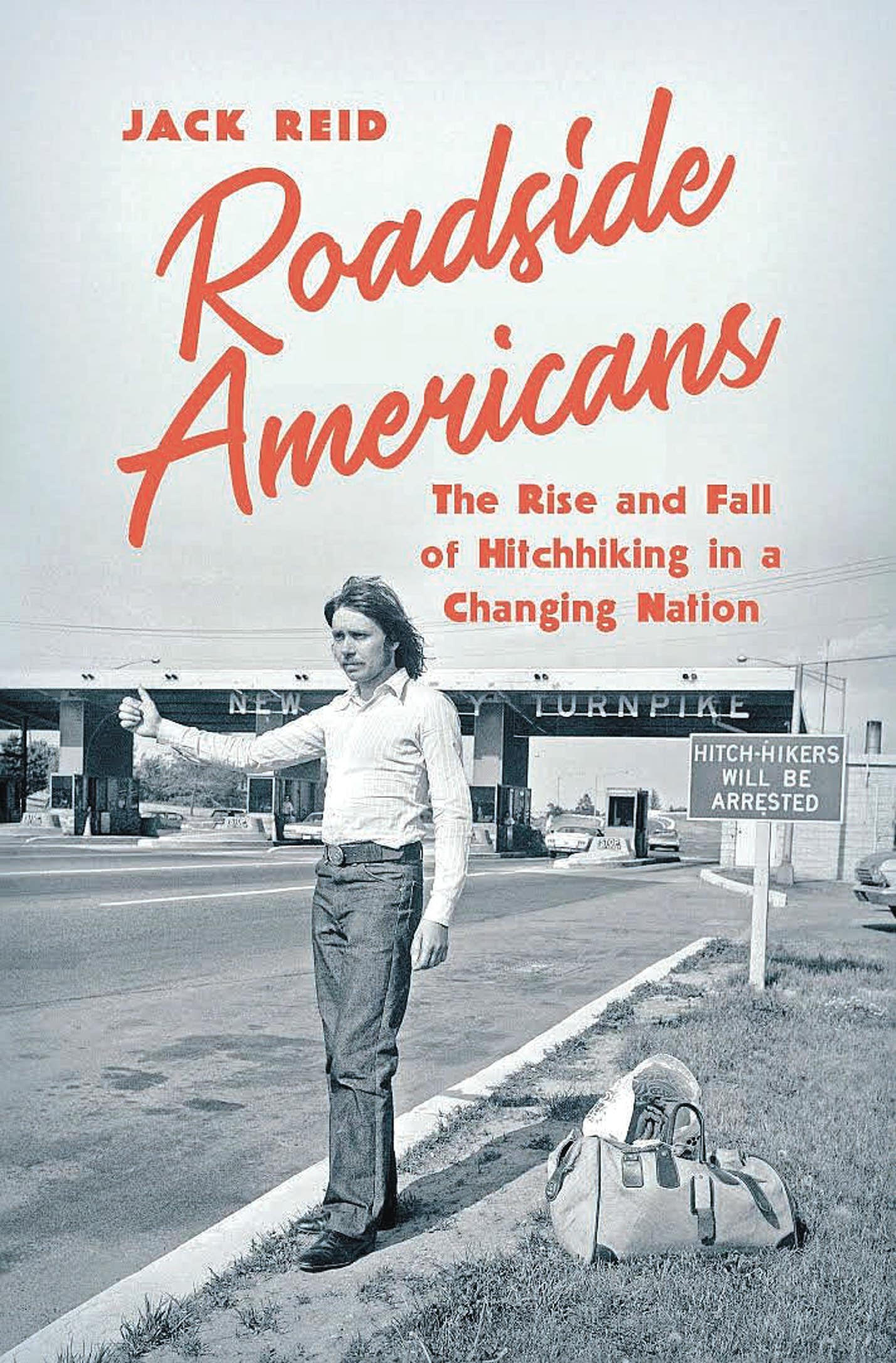
Henceforward, that motorway from Brum to London was a road well-traveled. In my final year at Moseley Grammar, I’d often hitch down to London for a weekend with pals who’d gone there before. We’d hang out at cheap and cheerful Pollo’s Italian restaurant in Old Compton Street in Soho and the Coach and Horses right across the road, and go to Cousins folk and blues joint in a cellar in nearby Greek Street and the 101 Jazz Club off Oxford Street. Bunjies folk club and Ronnie Scott’s jazz Club were just around the corner. After a meal or a pint, I’d often catch the last tube to the end of the line closest to the M1. I can’t recall how many times I headed off into the night; and and there were always drivers on the road at the witching hour. I guess many folks “get the urge for going”, as Joni sang back then, “and they had to go …” And in those generous times, folks were willing to offer a lift to a wayfaring stranger – gentle souls who would not leave strays stranded by the dark wayside; lonesome folks seeking company and conversation in the dark night of the soul; curios people wondering why a young  man would hitch the highways in the middle of the night.

It is now early spring of 1968. I’d repeated my last year at Grammar School, and with assignments completed, an amenable headmaster let me take a week off to travel. This time, I headed northwest across Brum to Darkaston, near Walsall, and what was then the beginning of the M6 – it ended at Lancaster. Travelling through Lancashire, Cumbria and the Lowlands, I reached the outskirts of Glasgow by nighttime. Hitching across the city, I was picked up by a young couple who insisted that I spend the night at their place – they reckoned the green scarf I’d worn around my hat was a risky proposition in that part of sectarianist Glasgow. I loved that old brown fedora; it traveled with me all over England, to Greece and Yugoslavia, and the Middle East until it was stolen along with my harmonica at Wadi Musa, near Petra. Next morning, I was on the road to Edinburgh, crossed the silvery Tay of bad poet William McGonagall fame, transited the granite city of Aberdeen, and by nightfall, I was on the road into Inverness, where I slept by the roadside and woke up covered in snow. Next morning, I was on Culloden field, and thence, continued on my journey. It took me through the Great Glen where I’d caught a local bus that delivered the mail to isolated homesteads, a journey so slow that I was hallucinating mountains and braes for days, and thence to to Loch Lomond and beyond, southering homewards.


The brown fedora, Giza 1971

During my first year at the University of Reading, I kept on hitching – many more journeys to London and back and day trips to nearby Oxford and Windsor. In a cold and rainy April, with first year exams done, I headed east to London and north to the Humber and the port of Hull, to drop on a good friend who had dropped out of uni and to visit an former school chum. In a student share-house near the university, I took my first mescaline trip to the soundtrack of Roy Harper’s sang McGoohan’s Blues’, a twenty minute digression from the concept if not the plot of an iconic if indecipherable television series. “The Prisoner is taking his shoes off to walk in the rain”.  For 1,200 blissful seconds of cosmic consciousness, I found the meaning of life down that wonderful rabbit hole – and had forgotten what I’d found when I’d resurfaced the next morning. Peyote is a very colourful hallucinogenic. I still recall the Fantasia images that passed before my eyes as Roy sang:

Daffodil April petal hiding the game
Forests of restless chessmen life is the same
Tides in the sand sun lover watching us dream
Covered in stars and clover rainbows downstream …
Under the toadstool lover down by the dream
Everything flowing over rainbows downstream
Silver the turning water flying away
I’ll come to see you sooner I’m on my way

As I headed back down south, the wet and windy old weather changed and as I rode through rural Oxfordshire, all a sudden, the sun came out for behind dull English clouds and and Springtime came in verdant glory – as doomed young Robert Browning once declaimed

Oh to be in England now that April ’s there
And whoever wakes in England sees, some morning, unaware,
That the lowest boughs and the brushwood sheaf
Round the elm-tree bole are in tiny leaf,
While the chaffinch sings on the orchard bough
In England—now!

On arrival at my digs in Reading, there was a note from friends telling me that they’d headed off to Devon to spend a weekend with a fellow student’s farming family, and that me and my friend Jean should join them. So within minutes of arriving home, we were off into the west. Navigating Bristol where, I recall for no apparent reason, that on impulse. I’d bought a copy of The Beano comic) and Somerset. Late that night, we arrived in the tiny town Cullompton in the heart of rustic Devon. After some now forgotten but fun times, including a trip to the seaside and getting blotto on local cider, we hitched home. I don’t recall too much of the journey except that it took us through Basingstoke.

                                                                       Cullompton 1969

One glorious English summer I arranged to meet up with my late pal Dave Shaw in Cambridge, where he was attending a summer school at the University, and go to the celebrated Cambridge Folk Festival. I clocked off from my work on the motorway, got home, just ten minutes away – I said we were close! – showered and packed, and headed to the Clock Garage roundabout and put out my thumb. I took the M1 to London’s North Circular, and cut across to the A10 (there was no M11 in those days) and, And, my stars were alignment on this night ride, arrived at Dave’s digs in time for breakfast.I don’t remember much of the festival bill, but American folk diva Odetta was singing, and also, our idol, Roy Harper, England’s high priest of angst.

I had to leave Cambridge around Sunday lunchtime, after Roy’s last set, to return to Brum for work on Monday. Rather than head back down to London, to save time – a quixotic idea when you are hitching – I decided to cut cross-country to connect with the M1 at Newport Pagnell – in those days before GPS and route planners, a cheap, creased road map from WH Smith was the best we had, plus a good sense of direction, fair weather and loads of luck. And such are the movements of the cosmos, that my one and only only ride took me to, yes, what was then the bucolic village of Newport Pagnell. It was one of those summer evenings in England, when the days are long, the air warm and languorous, and the light, luminous. Birds were singing and church bells were ringing for evensong, and in my mind’s ear, I’d like to imagine that cows were lowing and sheep were bleating. One could almost feel an ode coming on. So there I was, once more, at the services on-ramp, hitching a ride to Birmingham , and hopping aboard an old Land Rover for what was the slowest and noisiest ride ever – which took me almost to my door.

… who only England know

The above header is the second half of Rudyard Kipling’s well known if oft misunderstood poem The English Flag, in which the old Imperialist exhorts his insular countrymen to go forth and conquer … In later and less jingoism times, it has been given a more benign slant, along the lines of the adages like “travel broadens the mind” to which I readily subscribe, or as Cat Stevens was to sing at the time “the road to find out”.

And so it was during the holidays before my final year at Grammar School that I tried my thumb on the Continent. With another school pal, I hopped across La Manche to Belgium with the idea of hitching to Amsterdam. Why we chose Belgium, I can’t recall, but my brother had been there shortly before and he reckoned it was a great place for art and architecture (that was his thing – he scored a rare First in architecture at Uni and went to become the chief architect for Nottingham City Council, designing the international ice rink in partnership with Jane Torvill of of skating icons Torvill and Dean fame). We did a lot of beer and chips and saw a lot of great art and architecture in Bruges, Ghent and Brussels – and we visited the Waterloo battlefield, as one would. As for the Netherlands, we got as far as Antwerp but gave up on Amsterdam after a long day of futile thumbing. We were, however, adopted by a young Belgian lass who took us home to meet her ma and pa. We enjoyed a  bucolic Sunday picnic on the banks of a tributary of the Scheldt before heading back to Oostende and England. In retrospect, I regretted that hadn’t turned south south and set a course for Paris, a  pleasure which would have to wait several more years.

My next “big hitch” was by happenstance in Eastern Europe. I’ve written of this before in In That Howling Infinite in Tanks for the Memory – how Brezhnev changed my life. Therein, I recalled how I’d flown to Prague on the first anniversary of the Soviet Invasion for Czechoslovakia, only to have the flight diverted to Budapest in Hungary.

“Given the circumstances of our arrival, and the atmosphere prevailing in the Bloc on the anniversary of Prague invasion, the authorities had given me a visa for four days only. I had therefore to depart the country quick-smart. I had effectively two choices of non-Soviet countries –  westwards to Austria, or south to what was then Yugoslavia. In a split second decision, I took the road less traveled – south to Szeged and the Serbian border. Wondering through the rural outskirts of Novi Sad, I was taken home by a pair of Serbian boys. I spent my first evening with their most hospitable family and slept that night on a bed of furs. “Novi Sad, Beograd” the lads had chanted, and so, instead of setting my direction home, I hitch-hiked south to the ancient Danube city of Belgrade. In the Yugoslav capital, I resolved to keep going southwards. Over the next two weeks, I transited Yugoslavia to Thessaloniki, where decided to continue with my southern odyssey – to Athens and the Greek Islands. At journeys end, I hitchhiked back the way I’d come, only this time, reaching Austria via the Croatian capital of Zagreb”.

My Balkan and Aegean adventures included that aforesaid sleepover in Novi Sad; sleeping by the highway south of Niš where I was awoken in the middle of the night by military police who reckoned I was a security risk; being propositioned – solicited more like – by a gypsy girl whose favours I forsook as she mustn’t have showered for a week; picked up by a Greek lorry-driver near the famous pass of Thermopylae who insisted we skinny-dip in the aquamarine Adriatic; and heading out of Thessaloniki on the road to Macedonia (the Slav one), I was picked by a bus load of frisky young Greek conscripts – I jumped out quicksmart into the night.

By the time I reached Zagreb, I’d had enough of the road and took the train to Vienna and thence to Calais and Albion. But, as I wrote in Tanks for the Memory, my southwards diversion to the Mediterranean fixed my gaze on other pastures and inspired  a lifetime interest in the Middle East. For that is where I roved next: “… the clear Hellenic sky and the cobalt blue of the Mediterranean, the parched hills and pine woods of the Peloponnese, the dazzling light and the warm sun on my body, and the ruins and bones of antiquity sang a siren’s song. As Jack Bruce warbled: You thought the leaden winter would bring you down forever, but you rode upon a steamer to the violence of the sun. And the colours of the sea bind your eyes with trembling mermaids, and you touch the distant beaches with tales of brave Ulysses. My thoughts and dreams no longer ranged eastwards. My next journey took me back to the Mediterranean, and thence, following in the footsteps of Alexander the Great – the golden hero of legend, not the “mad, bad and dangerous to know” destroyer – through the Middle East and on to the famous well-trodden Hippie Trail to India”.

I’d never intended to hit the Hippie Trail back then, in the northern summer of 1971. In fact, I didn’t even know it existed.

I’d just finished my final exams and graduated with a good degree, and after three exciting and formative years, it was as if everything had suddenly ground to a halt. Uni was over; a romantic relationship was on the rocks; I was footloose and free, floating and feeling the urge to escape elsewhere, somewhere, anywhere. I’d no idea at all what I would do next, other than an inchoate plan to undertake post-graduate study – guided by my tutor and mentor exiled Hungarian academic Tibor Szamuely, my academic interest was Eastern Europe and the Soviet Union, but that was to be down the track.

When the finals results came out, I spent the evening at the student union with friends, unwinding and getting pissed; and the very next day, I walked into the Student Travel office and booked a one-way air ticket to Athens, passage by steamer from Piraeus to Alexandria via Limassol, Cyprus, and from Egypt to Piraeus and thence to Tel Aviv, Israel, with no bookings for onward travel.

Seized by the idea of visiting the two principal antagonists of the almost recent Six Day War, I’d a naive and uninformed notion to view both sides of the Arab-Israeli puzzle. Within a few weeks, I’d bought a second-hand rucksack and sleeping bag, converted my savings to traveller’s cheques – there were still currency restrictions in the UK on how much cash you could take out of the country – packed a few things, and in the words of Cat Stevens, I was “on the road to find out”. That road took me through the Middle East, and on and on, until I reached Kolkata in Bengal. What was planned as but a two month holiday to “clear my mind out”, to quote Cat again, extended to over six months as the appetite grew with the eating.

And so I travelled through lands of which I knew little, picking up fragments of history and heritage, parables and politics as onwards I roamed

My final hitching hejiras were played out in the Levant – an Indian traveller I’d met in a Cairo youth hostel had told me that if I thought the slums of Cairo were bad – and to a naive Brummie, they were – I should see those in Kolkata. So that is what I resolved to do. Leaving Egypt, I found my way to Damascus by way of Beirut, with a side-trip to Israel via Cyprus, and on a quixotic notion, I resolved to visit Aqaba, and also Petra, the ancient “rose” city. Back then, I knew next to nothing about the Middle East. I’d recalled Aqaba from the film Lawrence of Arabia; and I’d been told that Petra was a “must see” by a fellow traveller in my Damascus hostel. So, I set off south, to Dara’a, a border town where Lawrence was allegedly captured and buggered by the Turks, and which was, in recent times, the spark that ignited the Syrian civil war.

The Jordanian border lay just beyond Dera’a, but all traffic thereto was forbidden – the Syrian and Jordanian army had just fought a desultory tank battle in one of the many ricochets of the latter’s suppression of the Palestinian Liberation Organisation after the failed Black September intifada the year before. The border checkpoints were still open, however, to traffic from Jordan only. So I walked across a kind of no man’s land, past tank tracks and the occasional military wreck. There was a large concrete marker at the actual borderline, with “welcome to jordan” on one side and “welcome to Syria” on the other. It was a surreal space. It’s was twilight and high summer. The air was hot and still and there was almost total silence. No birdsong, an imperceptible warm wind. And of a sudden, there was a buzzing of flies which which swarmed all about me and the marker. I walked on and before too long, passed through passport control with a tourist visa, and thumbed a ride to Amman, the capital.

I slept that night on the outskirts of Amman and continued on to Ma’an, the jump-off point for the village of Wadi Musa and Petra. Onwards then to Aqaba where, having paddled in the sea and walked about the town, I headed back straightaway the way I’d come, to Ma’an, Amman, Dera’a and Damascus – from whence I took the fabled Nairn Bus across the desert to Baghdad. From there, I traveled by bus through Iran, Afghanistan, and Pakistan, and finally, by train, to Delhi and journey’s end, Kolkata, in the midst of a cholera epidemic and a refugee crisis that was a prelude to the Indo-Pakistan war that led to the birth of Bangladesh.

                                                      By the rivers of Babylon, August 1971
                                                              Agra September 1971
                                                                 Srinegar, October 1971
                                                                           Petra 1973

If you never go, you’ll never grow 

With that, I’ll conclude these travellers’ tales, observing in the present how in all my journeying, I never came to harm, whether by accident, misadventure or malignancy.

As noted in opening paragraphs, there was the “combination of thrift, expedience, and necessity, but also, a sense of romantic adventure – buoyed by what seems in retrospect, a naive sense of invulnerability” .

Back in the day, hitchhiking in Britain and on the continent was taken for granted and hitchers were commonplace, even if the practice was frowned upon by the straighteners and the fearful. In the Levant, it was a rare thing. Passers-by would often ask what I was doing, and why I traveled thus. Saving money, I’d reply, I was on a budget and had a long way to go – which was indeed the case in the days when credit cards had yet to be invented and the cash and travellers’ cheques in your body belt were all you had to get your thousands of miles. But you come from a rich country, they’d say, adding that there were cheap service-taxis and buses, and that it was dangerous and there were men out there who would rob you or do you harm. Yes, but I have a long way to go. A policeman in Jerash in northern Jordan served me Arab tea and cakes and sat me down on a bench outside the police station whilst he flagged down a driver he considered to be a decent man.

Like those Israelis hitching between towns and villages in Israel and between settlements in the Occupied Territories, we who traveled the world before jumbo jets and cruise ships understood that bad things could happen and that they sometimes did whether you journeyed by thumb, van, bus or train. In hotels and hostels from Beirut to Baghdad, Kabul to Kolkata, you’d pick up word-of-mouth “travel advisories”, warnings and “war stories”. In India, I’d been told of a chap who’d been robbed and stranded in Afghanistan, and I actually met him when I bunked down in Sultanahmet, Istanbul, on my way back to Britain.

So yes, there always was a risk; but if you think too much about it, you’d never go, and if you never go, you’ll never grow.

© Paul Hemphill 2021. All rights reserved.

Also in In That Howling Infinite, read: Tanks for the memory – how Brezhnev changed my lifeBack in the Day ; and A Window on a Gone World


Hitching in the West Bank

Continue reading

When Freedom Comes

Flashing for the warriors whose strength is not to fight
Flashing for the refugees on the unarmed road of flight
An’ for each an’ ev’ry underdog soldier in the night
An’ we gazed upon the chimes of freedom flashing
Bob Dylan, Chimes of Freedom

Hear the cry in the tropic night, should be the cry of love but it’s a cry of fright
Some people never see the light till it shines through bullet holes
Bruce Cockburn, Tropic Moon

When Freedom Comes is a tribute to Robert Fisk, indomitable, veteran British journalist and longtime resident of Beirut, who could say without exaggeration “I walk among the conquered, I walk among the dead” in “the battlegrounds and graveyards” of “long forgotten armies and long forgotten wars”. It’s all there, in his grim tombstone of a book, The Great War for Civilization (a book I would highly recommend to anyone wanting to know more about the history of the Middle East in the twentieth century – but it takes stamina –  at near in 1,300 pages – and a strong stomach – its stories are harrowing).

The theme, alas, is timeless, and the lyrics, applicable to any of what Rudyard called the “savage wars of peace” being waged all across our planet, yesterday, today and tomorrow – and indeed any life-or-death battle in the name of the illusive phantom of liberty and against those intent on either denying it to us or depriving us of it. “When freedom runs through dogs and guns, and broken glass” could describe Paris and Chicago in 1968 or Kristallnacht in 1938. If it is about any struggle in particular, it is about the Palestinians and their endless, a fruitless yearning for their lost land. Ironically, should this ever be realized, freedom is probably the last thing they will enjoy. They like others before them will be helpless in the face of vested interest, corruption, and brute force, at the mercy of the ‘powers that be’ and the dead hand of history.

The mercenaries and the robber bands, the warlords and the big men, az zu’ama’, are the ones who successfully “storm the palace, seize the crown”. To the victors go the spoils – the people are but pawns in their game.

There goes the freedom fighter,
There blows the dragon’s breath.
There stands the sole survivor;
The time-worn shibboleth.
The zealots’ creed, the bold shahid,
Give me my daily bread
I walk among the conquered
I walk among the dead

Here comes the rocket launcher,
There runs the bullets path,
The revolution’s father,
The hero psychopath.
The wanting seed, the aching need
Fulfill the devil’s pact,
The incremental balancing
Between the thought and act.

The long-forgotten army
In the long-forgotten war.
Marching to a homeland.
We’ve never seen before.
We feel the wind that blows so cold amidst
The leaves of grass.
When freedom comes to beating drums
She crawls on broken glass

There rides the mercenary,
Here roams the robber band.
In flies the emissary
With claims upon our land.
The lesser breed with savage speed
Is slaughtered where he stands.
His elemental fantasy
Felled by a foreign hand.

The long-forgotten army
In the long-forgotten war.
Marching to a homeland.
We’ve never seen before.
We feel the wind that blows so cold amidst
The leaves of grass.
When freedom comes to beating drums
She crawls on broken glass.

Thy kingdom come, thy will be done
On heaven and on earth,
And each shall make his sacrifice,
And each shall know his worth.
In stockade and on barricade
The song will now be heard
The incandescent energy
Gives substance to the word.

Missionaries, soldiers,
Ambassadors ride through
The battlegrounds and graveyards
And the fields our fathers knew.
Through testament and sacrament,
The prophecy shall pass.
When freedom runs through clubs and guns,
And broken glass.

The long-forgotten army
In the long-forgotten war.
Marching to a homeland.
We’ve never seen before.
We feel the wind that blows so cold amidst
The leaves of grass.
When freedom comes to beating drums
She crawls on broken glass
When freedom comes to beating drums
She crawls on broken glass

© Paul Hemphill 2012

From: Into That Howling Infinite – Poems of Paul Hemphill Volume 5. See also: East – An Arab Anthology , and: A Brief History of the Rise and Fall of the West

A Parting Glass – farewell to an old friend


We shall not cease from exploration, and the end of all our exploring will be to arrive where we started and know the place for the first time.
TS. Elliot, Little Gidding

“One of those days in England, with a sword in every pond”, sang Roy Harper, the high priest of anglo-angst. And so it was when we looked out on England and imagined a wider world. Our journey took us to this farthest shore on the brink of the mighty Pacific.

This month saw the passing of a fine old friend whom I’d first met fifty years ago this September when we arrived as young freshmen at the provincial red-brick university in Reading, Berkshire, a provincial southern town on the banks of the River Thames, less salubrious than its famous riverine neighbours Oxford and Windsor, and noted mainly for biscuits and beer. Fate determined that a bunch of disparate ingenues from all parts of the island boarded at the same ‘hall of residence’.

It was there that John and I bonded through folk music. I had a battered Spanish guitar that I’d strung  with steel strings, and had started writing songs and playing them to our friends. One day,  I left my guitar with John and headed to Hull to visit an old school chum and do my first trip (“those were days, yes they were, those were the days”). When I’d landed and hitch-hiked home, John had not only mastered the instrument, but was able to play me a couple of his favourite songs – Ralph McTell’s Streets of  London and Michael Chapman’s One Time Thing (see below). Very soon, he could play them note-perfect from just listening to the vinyl. Instead of me showing him chords and finger picking, he was teaching me. And whilst emulating his guitar idols, over time he assembled a fine repertoire of his own songs.

With a bunch of university friends, we later flatted in London whilst they earned enough money to get themselves overland to Australia. There, two of the fellowship settled down, built families and careers, and raised a mob of clever, creative and beautiful children. I was never born to follow; but life seeks out its own highways and byways, and in time these led me also DownUnder.

Those London days inspired my Harperesque, navel-gazing epic London John (see below).

Though his later life rendered him victim to a treasonous DNA, he fostered and followed through a passion for the wide, dry flatlands west of the Great Divide. He would undertake long-distance solo driving tours “beyond the Black Stump” (which is to say “the back of beyond”, or more prosaically,  “to buggery”); and would send us dispatches of his journeying, with beautiful photographs and stories of shooting the breeze with the locals and playing his guitar in pubs and by camp fires. When driving was physically no longer an option, he’d catch the train to outback Broken Hill.

Like Banjo Paterson, one of our national bards, and his poetic alter-ego Clancy of the Overflow, he treasured “the vision splendid of the sunlit plains extended, and at night, the wond’rous glory of the everlasting stars.

Listen to John’s songs on SoundCloud.

Farewell to North Finchley 1992

Back in the Day …

All those years ago …
Northern lads in a southern town.
Working-class in a middle-class world.
To Reading we’d come and then to London Town.
We are all compadres still.

Lent you my old guitar when I was roved out.
I came home and you’d played like a pro.
Streets of London and One Time Thing.
Note perfect played by ear.
And you were teaching me.

In London we busked on the Undergound
Got busted when playing Pavan.
Bow Street Magistrates Court.
“Soliciting reward without license”.
The only record we’d make together.

You took the hippie trail to Asia and beyond.
Bound for Bondi Beach.
Sang of mushrooms and a dog on the shore.
Four amigos washed ashore DownUnder.
Where you found your true home.

I came hither by another road.
Our paths forever criss-crossed.
Like ships passing in the night.
You headed always to the bush
But got to see our forest home.

Once you lent me your Martin guitar.
And I  went and lost it.
You probably never forgave me for that.
But maybe you’ll find it again in the valley beyond.
Because old friends always meet again.

There’s a song we’d all sung
When we were all young.
Of when we were no longer so.
Written by an ancient Greek
Over two thousand years ago.

I’d rolled it into a song of my own
As bold songwriters do.
And as years run us down and transfigure us
It echoes through the foggy ruins of time.
I hear it now as clear as the days we sang:

In those days when were men,
Ah, you should’ve seen us then.
We were noted our for our courage and agility.
We carried all before us
In battle and in chorus,
And no one could’ve doubted our virility.
But those days are past and gone
And the feathers of the swan
Are no whiter than our heads
For now we’re old.
And yet, as you can see,
Thinning relics we may be,
In spirit, we’re still
Manly, young and bold.

Farewell, old friend,
And flights of angels sing you to your rest.

Vale John Rugg 1949 -2018

Valances

                  (early in the morning at break of day)

Valance: The capacity of something to unite, react, or interact with something; connections; relationships.

In the afternoon they came upon a land in which it seemed always afternoon.
Lord Alfred Tennyson, The Lotus Eaters

Out of the cradle so restlessly rocking,
Ringing the changes that resonate still,
The rolling momentum of memory sailing
Like some graceful galleon, onwards until

We came in due course to harmonious havens,
Seeking the warmth of another land’s sun –
Such was the feeling, and such was the motion
Of onwards, and upwards, and endlessly on,

Out of those valances, casual, knowing,
Seeking out payments for debts never due,
The curious cadence of melodies flowing,
Gathering vagrants in pastures anew,

Forgotten weekends of such transient yearnings,
The edginess felt as we near a strange land,
Vanishing echoes of strange dreams returning,
Just out of reach of the memory’s hand,

They’re falling like mist through my arms,
Flowing like mist through my arms,
Broken memories, fractured songs
Are flowing like mist,

Flowing like mist through my arms,
Broken memories, fractured songs
Are flowing like mist, like mist through my arms.

Out of the days of such recklessly wandering,
Seeking sensation and stretching the mind,
Journeying aimlessly, canyons and castles
Pass ageless and ageing and captive in time,

What lies before us and what lies behind us
Are little compared to the treasures we find,
Are nothing compared to what’s lying within us
As secrets unfold and the stories unwind,

And down through the ages, the prophets and sages
Set beacons to guide us both forward and aft,
We rise on the billow, descend to the hollow,’
Climb to the top-mast, or we cling to the raft,

And when all is unravelled, the road that’s less travelled
Winds back to the start, and we know it again
For the first time, and we know that there’s no more to say,
So early in the morning, at breaking of day.

Falling like mist through my arms,
Flowing like mist through my arms,
Broken memories, fractured songs
Are flowing like mist,

Flowing like mist through my arms,
Broken memories, fractured songs
Are flowing like mist, like mist through my arms.

© Paul Hemphill 2012

Other memories of the ‘Sixties in Into That Howling Infinite: Back in the day: and A Window On A Gone World

  The Old Man’s Tale

Part One

In those days when men were men,
Ah, you should have seen us then
We were noted for our courage and agility.
How we carried all before us,
Both in battle and in chorus,
And no-one one could have questioned our virility.

But those days are past and gone,
And the feathers of the swan
Are no whiter than our heads, for we are old;
And yet as you may see,
Thinning relics we may be,
In spirit we’re still manly young and bold.

Though we may be phased out crocks,
The whiteness of our locks,
Does the country better credit, I should say,
Than the ringlets and the fashions
And the wild immoral passions
Of the namby-pamby youngsters of today.

But for all our sacrifice for to make a better life,
For those who followed to be proud and free.
Oh, we had to watch you grow
Into some horticultural show.
“Was it thus worth all our toil?” The dead ask me.

We lived like men, we looked the part;
We held our country to our heart;
We always did our best and better still;
But you who came too late to fight,
You’re living off the state alright,
And from our hard exertions, take your fill.

But those days, alas, are gone,
And the feathers of the swan
Are no whiter than our heads for now we’re old.
But if we could have seen
What the fruits of toil would’ve been,
Would we still have been so manly, young and bold?

Part Two

The image of my life is laid out before me:
It shows how well I fate, how hard I fall;
How people curse and jibe, how friends ignore me;
And I scream in a soundless voice, “I don’t care at all”.

You look at the world through different eyes to me:
You see life in a greyer shade of white;
Embrace the past, dictating what is there for me;
Telling me what is wrong and just what is right.

But I tell you I just don’t care.
You can’t change my mind.
And all your stories just won’t wear.
Let se speak my mind.

So i don’t fit your picture of the ideal man,
And if I don’t impress your sight – you say I must.
If I don’t don’t suit your taste like so many others can,
Must I conform to gain your meaningless trust?

I tell you I just don’t care.
You can’t harm my mind.
And all your fictions just won’t wear;
Let me speak my mind.

You say my behaviour’s a disgrace to modern life.
This permissive way of living’s got to stop!
“Why can’t you accept the guidance
Of those who are older and wiser?”

But then I just don’t have a wife to swap,
Or the guns to kill,
Or the power to guide men’s lives,
Or to bend their will,

And I don’t have the blood on my hands,
And I don’t have lies in my mind,
And your explanations won’t wear,
And  you won’t change my nine.

And my ears are not deaf to the tears,
And my eyes are not blind to the plight,
And my senses not numb to a world
That has yet to emerge from its night.

Put me on the road to God;
I know it’s the path to Hell;
Ins if I fall, don’t  heed my call.
Just say it was just as well.

© Paul Hemphill, September 1969

Some of John’s favourite songs:

Michael Chapman: One Time Thing. This was one of John’s early favourites back in the day. He’d borrowed guitar when I’d gone off on a frolic and when I’d got back. he’d not only learned how to play guitar, but he played this note perfect – and sang it much better than Chapman.

 Amazing Blondel : Pavan. We got busted when we played this on the London Underground. John used to play the flute riff on his guitar. It was the only record we made together – in Bow Streets Magistrates Court!

Al Stewart. Ivich. Al was a longtime favourite of John’s, from Reading days, and we used to go to see him in Cousins in Soho when we lived in London.  John admired his excellent guitar-work.  A friend of ours – ex-GF of one of our flatmates, actually – went out with Al for a while. I think John had left for Australia by then, but I got to know him. He even came for supper at my folks’ home in Birmingham when he played there once. And most amusing, that was.

Here’s another Al Stewart song that John liked, In Brooklyn

Roy Harper, the English High Priest of Angst, was another of John’s favourites. Here’s one of his ‘softer’ songs. Very nice. Another Day.

And probably, John’s all time favourite, Ralph McTell’s Streets of London. John played this note perfect too, from the get-go. I hated it, but there’s no accounting for bad taste.

Photo Gallery

Picnic in Whiteknights Park 1969. 
The M1, Summer 1972. Brendan, John, Eric and Paul
Hemphill Family Home, Birmingham, Summer 1972
Bardwell Park, October 1983 Paul, John, Andrew, Damian, Christian and Jean
Federal Hotel, Bellingen, December 2013

https://soundcloud.com/user6120518-1/london-john-freefall

Why “in that howling infinite”?

It refers to Herman Melville’s “Moby Dick”,  a magnificent study in mania and obsession:

“But as in landlessness alone resides highest truth, shoreless, indefinite as God – so better is it to perish in that howling infinite, than be ingloriously dashed upon the lee, even if that were safety!”   Chapter 23

In a figurative sense, it speaks to me of the themes and schemes that are addressed in the thoughts, ideas, songs, poems and stories that will feature in this blog.

Other memorable quotations follow:

“For long months of days and weeks, Ahab and anguish lay stretched out in one hammock as his torn body and gashed soul bled into one another, and so interfusing, made him mad”.  Chapter 41

“Drink, ye harpooneers! drink and swear, ye men that man the deathful whaleboat’s bow — Death to Moby Dick! God hunt us all, if we do not hunt Moby Dick to his death!”   Chapter 36

“Now small fowls flew screaming over the yet yawning gulf; a sullen white surf beat against its steep sides; then all collapsed, and the great shroud of the sea rolled on as it rolled five thousand years ago”.  Chapter 135

In That Howling Infinite is the title of Poems of Paul Hemphill, Volume Five.

For more on  Captain Ahab and Moby Dick, see Chapter 41 and Ahab’s Madness.

Check out In That Howling Infinite on FaceBook:

Ahab’s Paranoia The New Yorker

Moby-Dick

Drink, ye harpooneers! Drink and swear, ye men…

Continue reading