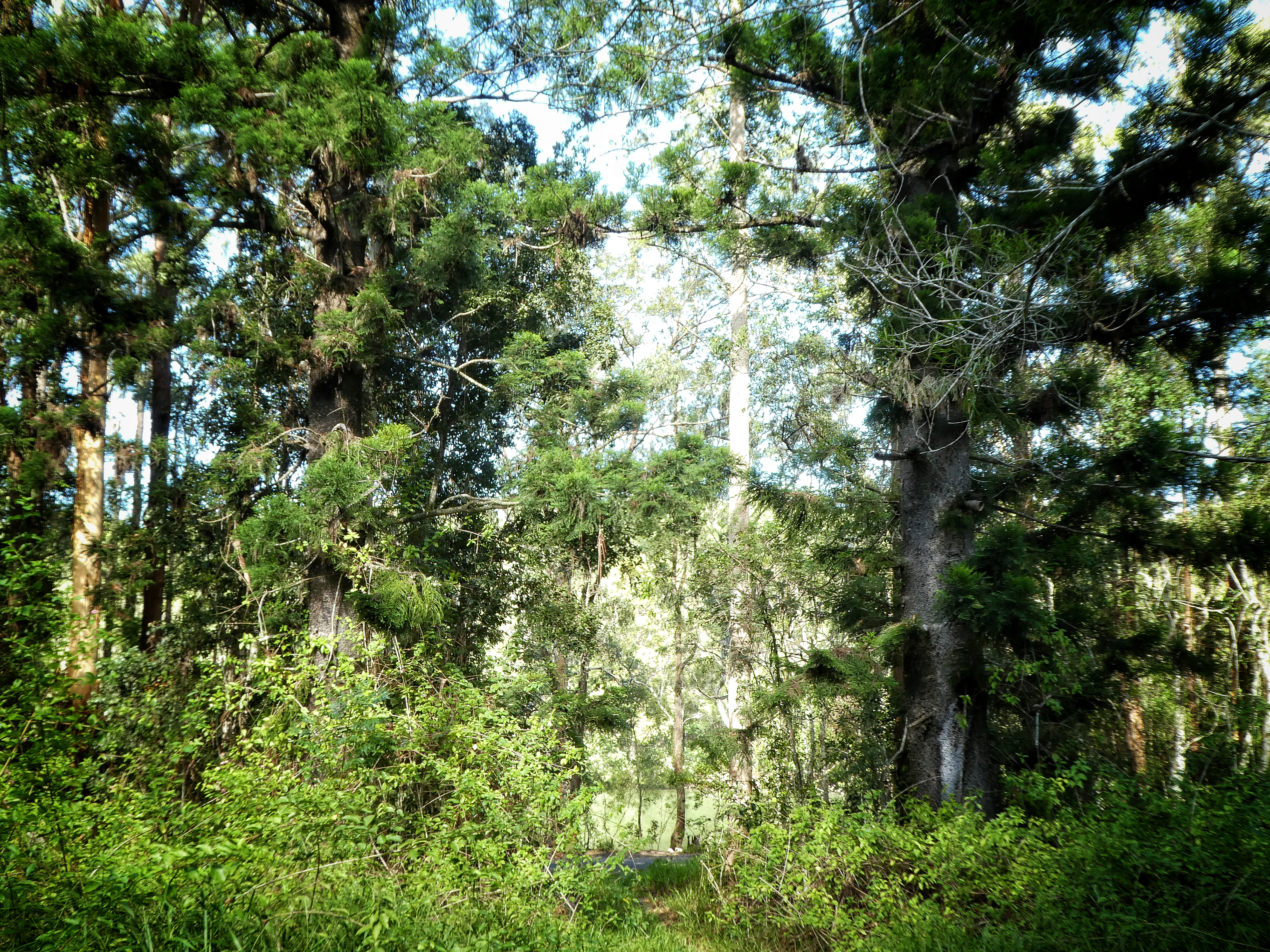
Rocky Road to Heaven’s Gate

And it’s oh, what a beautiful,        
Oh, Oh Lord, what a beautiful city
Twelve gates to the city, hallelujah!
Reverend Gary Davis

We all have a city or, if we are fortunate, cities of our heart. A place you see for the first time and say “I am home”.  It is intangible – a feeling, a sense of you belonging to it, and it belonging to you. You might call it a “spirit of place”. And whenever you return to your city of the heart, you feel that you’ve never been gone, that the years that have passed since your last visit, and the changes time has wrought on it and on yourself mean nought.

I felt this spirit the first time entered London with a bunch of Birmingham school mates on a spree. When I first saw Paris. And when I first crossed the Jebal ash-Sharqi from Lebanon and descended to the oasis that was Damascus.

And so too when first I set eyes on the Old City of Jerusalem, and walked through the Damascus Gate. This ancient gate was the portal to a city that has forever danced on the edge of my consciousness (for that it what these cities do).

I fear that I will not see Damascus again. Back in the day, I was drawn to it again and again. When i spent months in Jordan, I would travel by “service” taxi once a week to Damascus just to BE there. To eat bouza ice cream at Bakdash in the Souk al Hamidiyye. To sit quietly in al Takiyya al-Sulaymaniyya, the most beautiful little mosque I have ever visited. To walk into history along The Street Called Straight. The guards on both sides of the border knew me by name.

Damascus is beyond my reach today. but there is still Jerusalem, Yrushahlahyim, al Quds. the Holy, the Golden, the magical…

Back in the day, I would roll down from Ramallah or Mount Scopus to Jerusalem and stand before it’s faux mediaeval walls. I would walk through the Damascus Gate into the Old City, grab a felafel sandwich, some figs, or a plate of kanafah, depending on the time of day, and amble contentedly through the alleyways and souks down to the Via Dolarosa, and then up Daoud Street to Omar Ibn al Khatab Square and the Jaffa Gate beyond. Traveling back from West Jerusalem, I would retrace my steps, and always with the same sense of wonder and delight.

It was a journey of the senses – the call of the muezzin and the peal of church bells, the cacophony of the hustle and bustle of the marketplace, the colours of the markets and shops, the aromas of spices, sweets, and cooking meats, the infinite variety of dress and custom of the many faiths, tribes and communities that dwelt therein or, like me, were passing through. If I had time on my hands, I would sit for a while in the gardens atop the Haram ash-Sharif, or wander into the Dome of the Rock or al Aqsa to sit and ponder awhile, or else progress through ecstatic clamour of the Escher edifice that is the Church of the Holy Sepulcher.

The Occupation was relatively new then. I was not oblivious to it, but rather, very aware of its manifestations. I had crossed from Jordan, via the famous Allenby Bridge, and had watched my fellow bus passengers, Palestinians, endure the humiliating searches and questions  of the border police, whilst armed military patrols were commonplace. None expected it to endure, ossify, and drag on for fifty years. There was bitterness, shame, and anger, for the memory of an-Naksa of 1967 was fresh, and the wounds livid, but not the frustration and  hopelessness and the latent and actual violence that prevails today.

But, let’s return to the Damascus Gate.

Damascus Gate Thursday

Damascus Gate Thursday

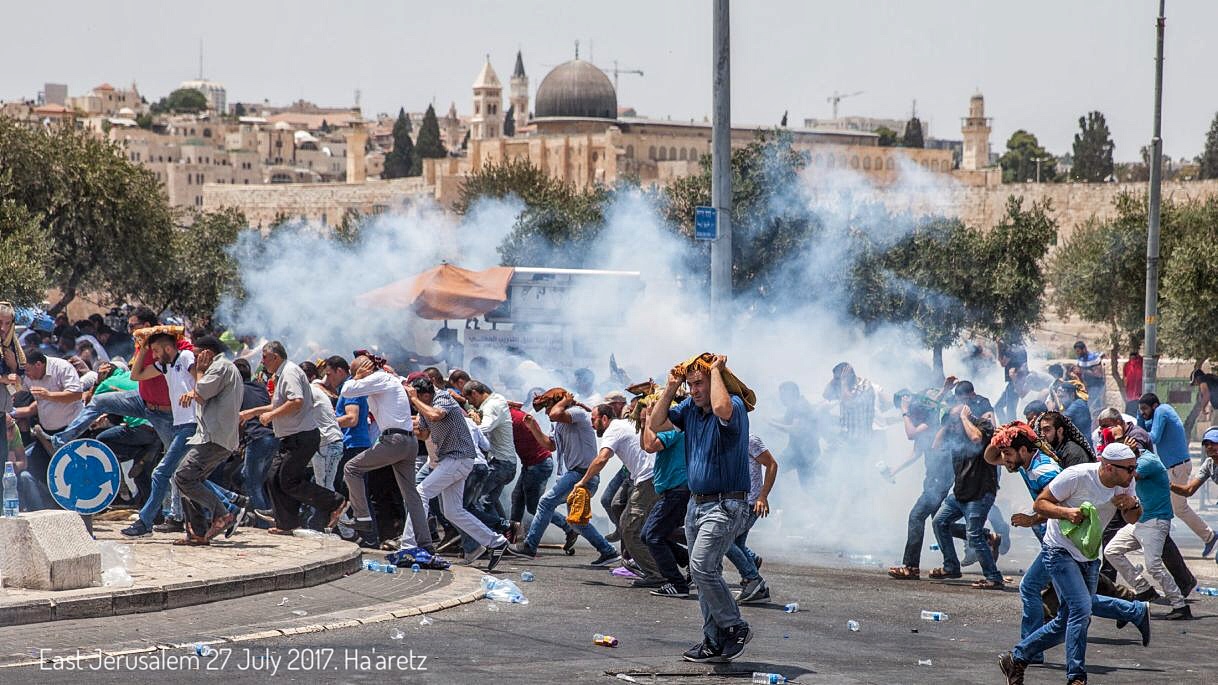
It has been in the news a a lot of late. The recent and still ongoing Intifada Saki-niyeh – the Knife Intifada – has brought this venerable and famous gate into the world’s focus. It has been the site of many violent confrontations of between Palestinian protesters and Israeli security since  October 2015. Many Palestinians have been killed and wounded in the act of attempting to stab Israelis, and several  Israeli police men and women and civilians have been killed or injured.

In recent years, whenever the Israeli authorities, fearing unrest, prohibit access to the Haram ash Sharif for men under fifty years of age, the Gate has become a de facto place of worship as scores of Muslims pray in the open spaces in front of a gate that has now acquired nationalist and religious significance – most recently, the stand-off in July 2017.

Nazmi Jubeh, a professor at Birzeit University notes that the gate “has become a symbol for the Palestinian national struggle because of its accessibility to Palestinians and the main connecting point for both worshippers and for markets.” See Daoud Khuttab’s article in the Middle East newsletter al Monitor – the piece which inspired me to write this post.

Kuttab quotes Azzam Soud, a well-known Palestinian writer whose stories are often set in Jerusalem. The Damascus Gate, he says, is a recurring feature of Palestinian novels and short stories.

It is the Old City’s biggest, oldest, and most important gate, and the beginning of all roads to the north. Today, it stands beside the bus station that services East Jerusalem and the West Bank, and is the most direct access to the al Aqsa Mosque and the Khan Ezzat souk. Before 1948 and the division of Jerusalem, the gate competed with the Jaffa Gate which was the primary entry point for pilgrims. With the partition line running in front of it, the Jaffa Gate was unusable, but since 1967, has been the portal for tourists, pilgrims, and Jewish worshippers visiting the Kotel. The Damascus Gate remains the main entry for Palestinians.

And it will remain, at least for the foreseeable future, a focus and a locus for Palestinian expressions of faith, identity and resistance.

But as with most things in the Holy City, the Gate has a long historical pedigree that is worth recalling.

Damascus Gate in 1856

Damascus Gate in 1856

In antiquity, there were twelve gates to the city. These were destroyed when the Bablylonians razed the walls and the Temple of Solomon.in 587 BCE. Named for the twelve tribes of Israel, these are now best remembered in Revelations and in the Reverend Gary Davis’ song.

The gate we see today was built in 1537 during the reign of the Ottoman Sultan Suleiman the Magnificent. But its existence is very much older than that, as reflected in its Arabic name, Bab al ‘a-mu-d, the Gate of the Column. That refers to a victory column erected by the Romans in honour of the Emperor Hadrian in the second century. It was Hadrian who ordered the rebuilding of Jerusalem as a Roman city in the wake of the city’s destruction by Titus’ legions in 70CE, during the Great Revolt that saw the razing of the temple and the expulsion of most of the Jewish population. The remains of the Roman gates have now been excavated, and we pass under the lintel of that gate, this being inscribed with the name the Romans gave to Jerusalem, Aelia Capitolina.

The gate is situated in the northwest wall where the road leads to Nablus, and thence, in days long past, all the way to Damascus in Syria. Hence its name in Hebrew, Sha’ar Shkhem  or Nablus Gate, and in English, Damascus Gate. Imagine, travelers of old on foot or horseback and caravans of traders passing under that Roman lintel. And even before Hadrian, pilgrims like the biblical Jesus and his comrades would have entered Jerusalem the Golden through this gate to sacrifice at Herod’s massive and magnificent new temple, having journeyed from Galilee and places north. Saul of Tarsus would have set out from this portal on the fateful journey to Damascus that was to transform him into Paul of Tarsus, Christianity’s first and most celebrated missionary, and the catalyst who transmuted a breakaway Jewish sect into a world- wide religion.

The Roman gate was preserved and built upon during the Byzantine, Muslim, and Crusader occupations of Jerusalem, and was given its present form when under Suleiman’s orders, the walls of Jerusalem were rebuilt and seven of the eight gates used today were constructed. The eighth, the New Gate, was constructed in the mid nineteenth century to give Christian pilgrims swifter access to their Holy Places.

Imagine also then, Guy de Lausignan and Reynald de Chatilon at the head of twenty thousand crusaders setting out for their doomed rendezvous with Salah ad Din on the parched Horns of Hattin. Or Christian pilgrims and holy men walking the long miles through Anatolia and Syria to the Holy Places. Or Kaiser Wilhelm on his grand tour through the Sultan’s domain from Istanbul to Damascus and Jerusalem. In Jerusalem, the authorities opened the wall next to the Jaffa Gate so that he could ride through in state. In Damascus, he visited the tomb of Salah ad Din and considering it a little shabby, donated a new improved model. It is still there, in all its gaudy emptiness , alongside the real deal.

In an earlier post, I recounted the history of the Jaffa Gate, the westernmost of the Holy City’s eight gates. Over millennia, this was the pilgrims’ gate, the entry point for the faithful – for Jews come to worship and make sacrifice at the Temple of Solomon and later of that of Herod; and for Christians to walk in the footsteps of the Christ, and to worship at the oft-rebuilt Church of the Holy Sepulcher and the many other Holy Places that have drawn pilgrims to Jerusalem over the centuries. It is named for the port at which so many of these pilgrims disembarked. See my posts Amazing Grace: There’s Magic in the Air, The Grand Old New Imperial Hotel,  and Messianic Carpet Rides.

Read Israeli Sarah Tuttle Singer’s wonderful  tribute to al Wad Street: My Street Has Two Names. It’s a gem.

© Paul Hemphill  March 2016

Postscript

Here is a brief description of each of the eight gates of Jerusalem, counter-clockwise from south to west:

The Zion Gate: Bearing Jerusalem’s earliest biblical name in Hebrew and English, this gate’s  Arabic name is the Gate of the Prophet David, as the Tomb of King David on nearby Mount Zion, is but a short distance away. This gate leads directly to the Armenian and Jewish Quarters. It is also known as “the Hurt Gate”, a reference to the damage it sustained during a vicious firefight in 1948 when Hagannah soldiers fought and failed to lift the Arab Legion’s siege of the Jewish Quarter. The Quarter was razed to the ground and its inhabitants expelled, and was rebuilt when the Old City was taken by Israel in 1967.


The Zion or “Hurt” Gate

The Dung Gate: Its name derives from the refuse dumped here in olden days where the prevailing winds would carry odors away. Nehemiah 2:13 mentions a Dung Gate that was probably near this one. The gate leads directly to the Kotel, the famous Western Wall, and the Southern Wall Archaeological Park.

The Gate of Mercy: This gate, in the eastern wall of the Haram ash Sharif or Temple Mount is also called the Golden Gate or the Eastern Gate, and has been blocked for centuries.  It is said that when Christ returns in glory, and the dead are resurrected, this gate will be miraculously opened.

The Golden Gate, viewed from Gethsemene

The Lion’s Gate: This is named for the pair of ferocious looking carvings that flank it. They are tigers, the heraldic sigil of the blonde, blue-eyed, Albanian 13th Century Sultan Beybars. It is also called St. Stephen’s Gate, after the first Christian martyr, who tradition says was stoned nearby. Lion’s Gate, which leads to the Pools of Bethesda and the Via Dolorosa became famous during the Six Day War when the IDF stormed through en route to the Haram.

Herod’s Gate: Notwithstanding the name, the infamous Judean King, builder and all-round bad boy had nothing to do with this gate. In Arabic and Hebrew this north-facing gate, which leads to the Old City markets, is called the Gate of Flowers. It is said that the name derives from a rosette carved over it. The north facing gate leads to the Old City markets, and is at the southern end of Salah ad Din Street, the main shopping strip of Arab east Jerusalem.

And finally, The Damascus, New Gate, and Jaffa Gates all which are described in this post.

Faces in the Street – images of the Damascus Gate and the ancient Muslim Quarter

Sultan Suleiman Street

Damascus Gate
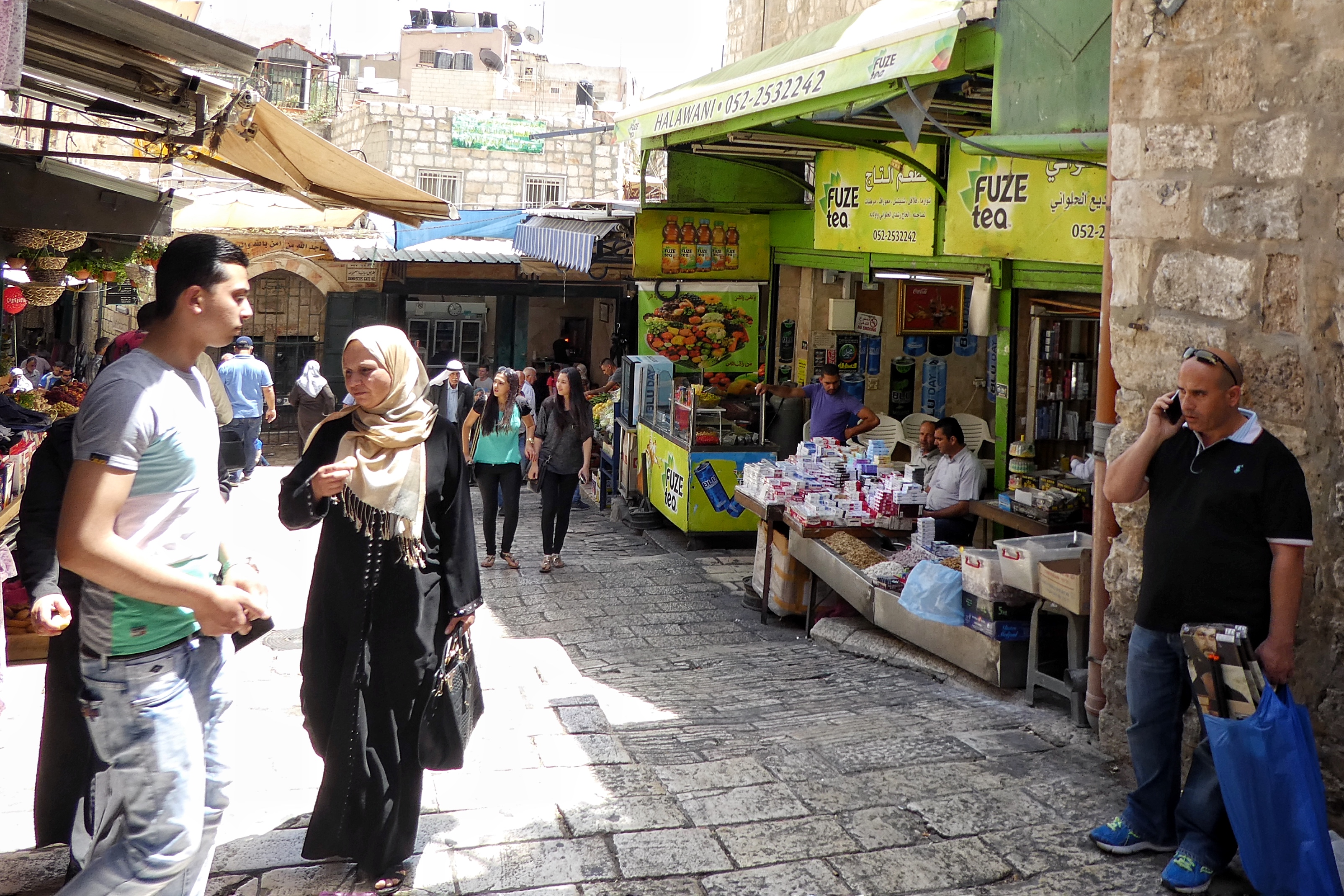
Damascus Gate

Al Wad Street


Al Wad Street

Khan al Zait
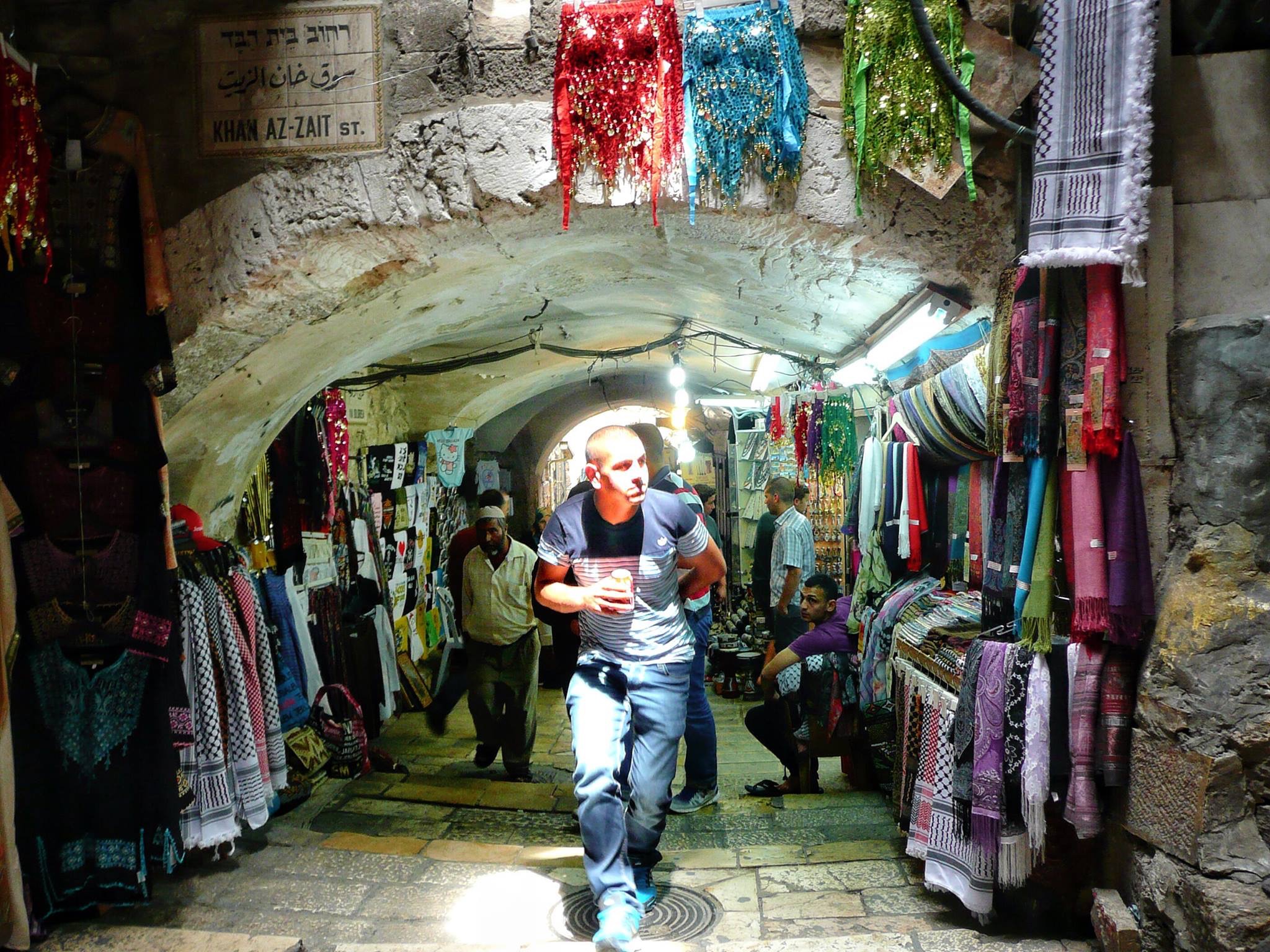
 

Al Zait Street

Al Wad Street
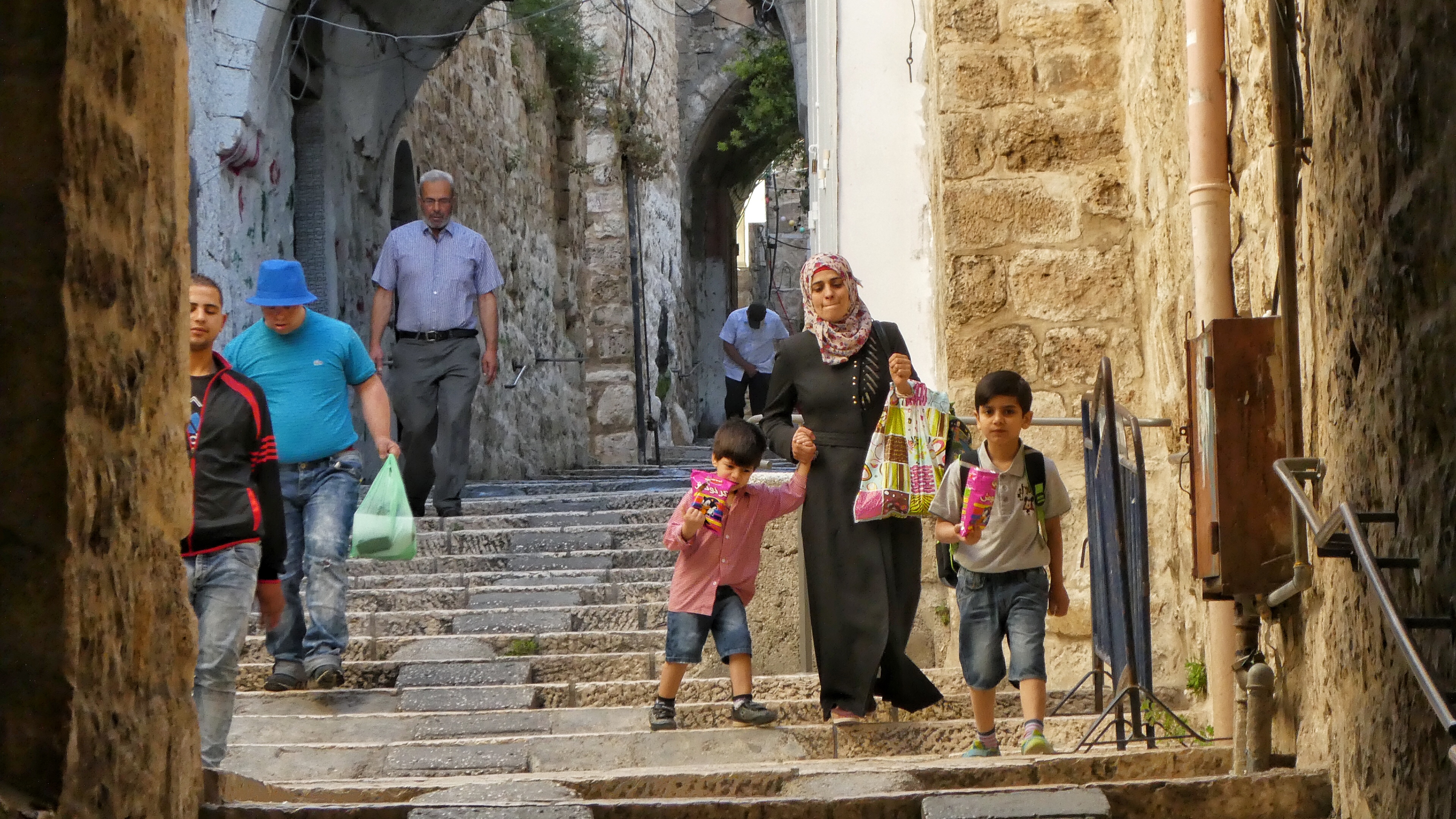
Via Dolorosa

Via Dolorosa

Al Daud Street

Allah ud Din Street
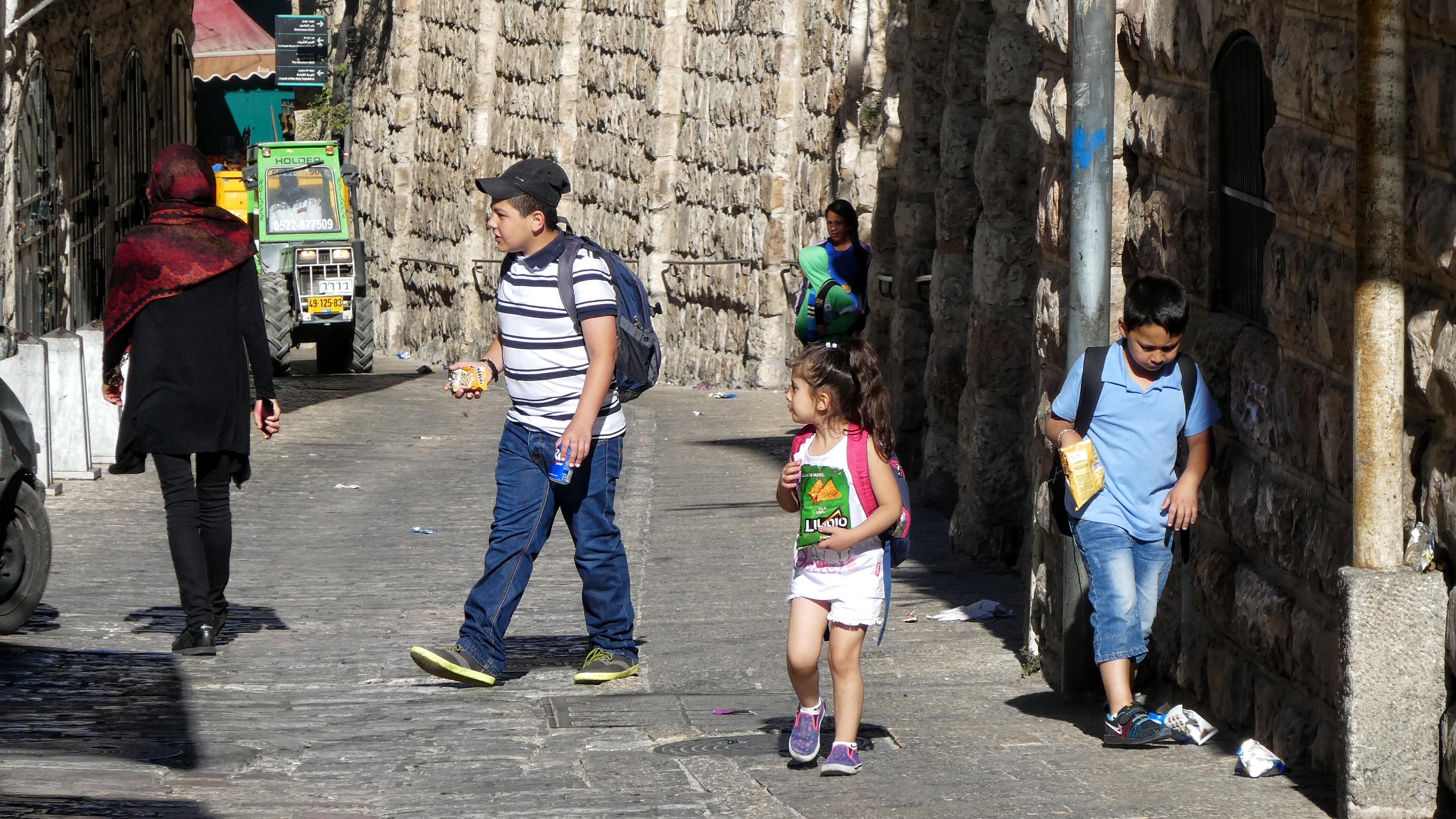
Allah ud Din Street
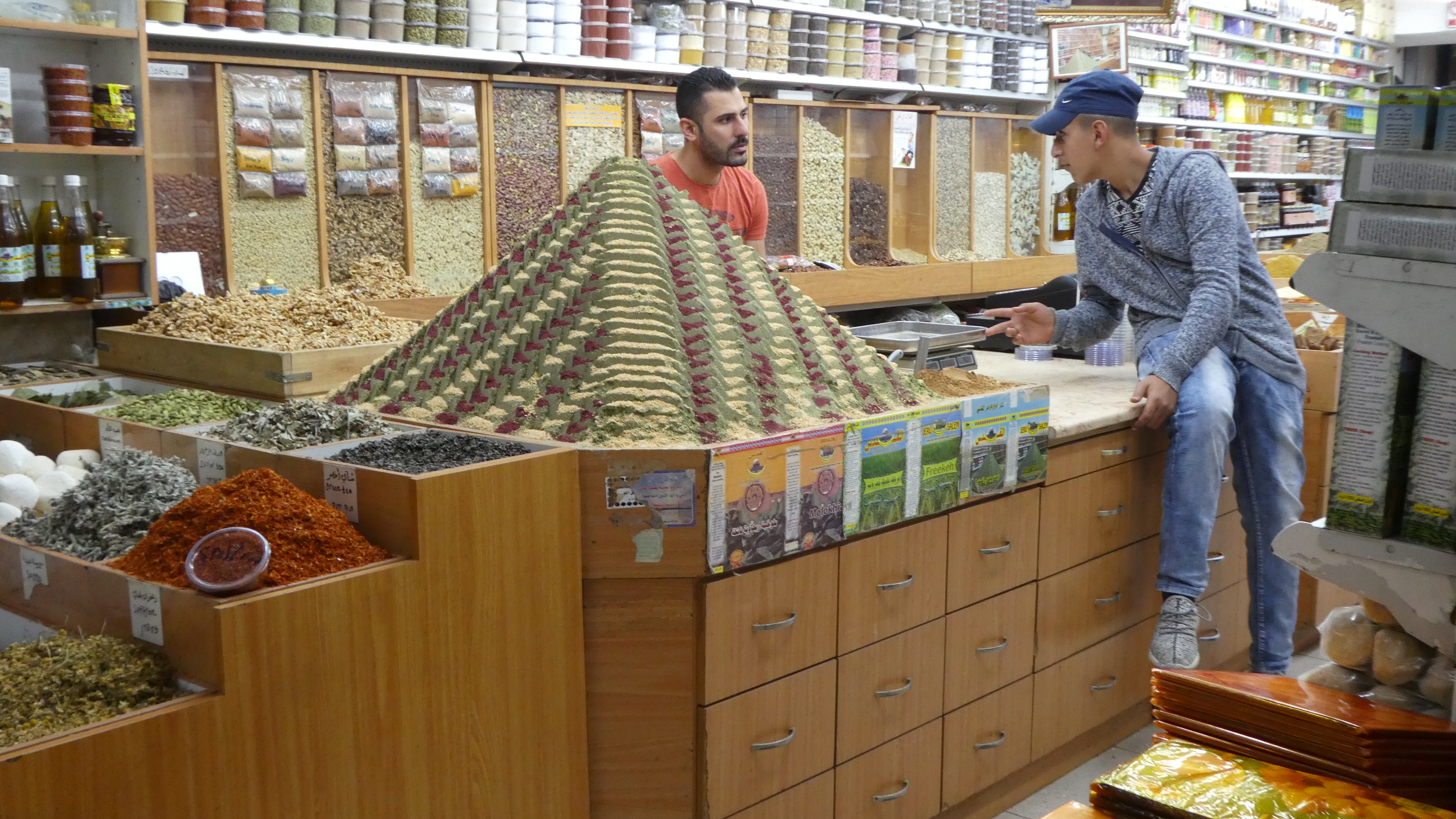
Khan al Zait
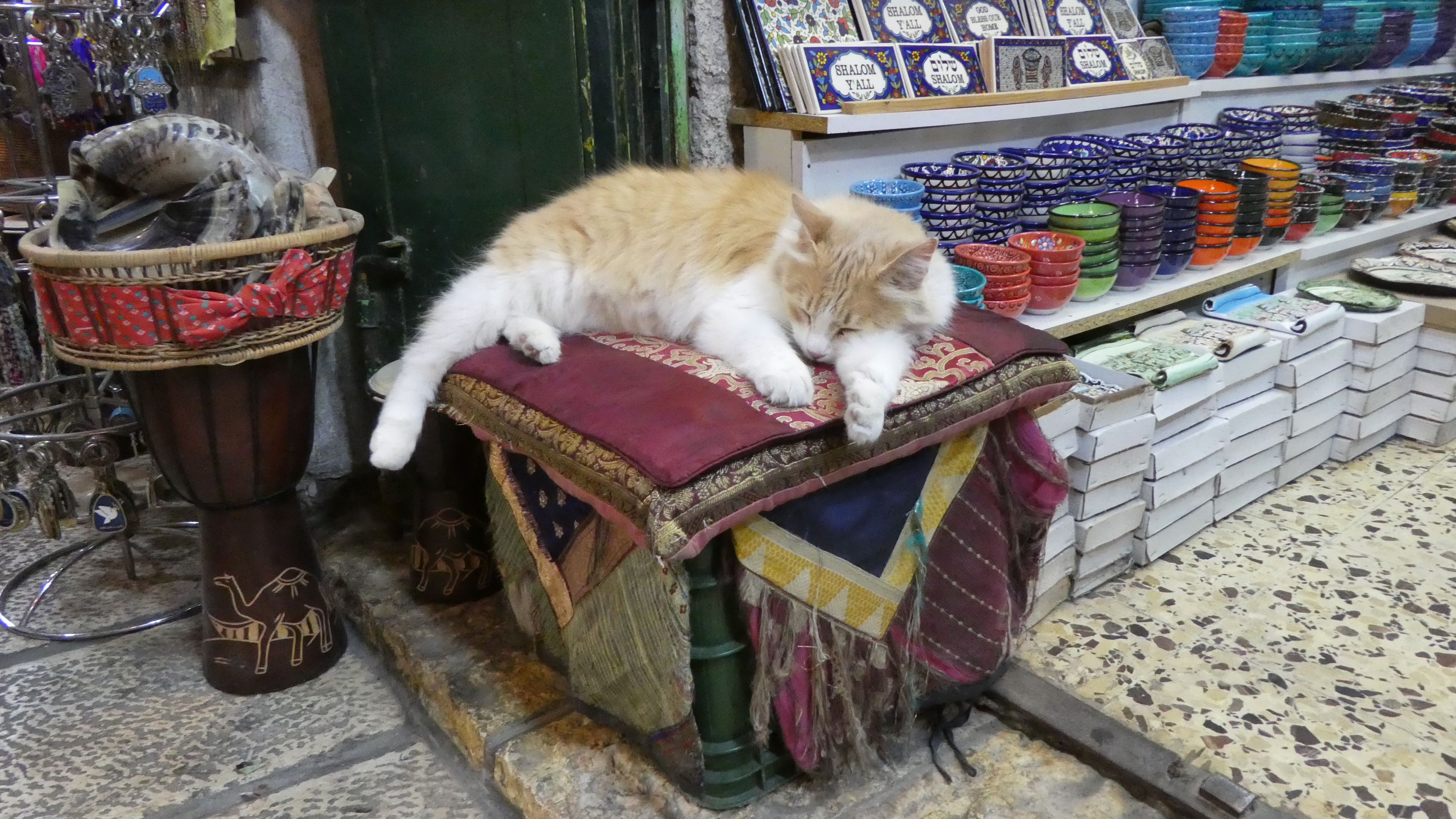
Khan al Zait



Tales of Yankee Power

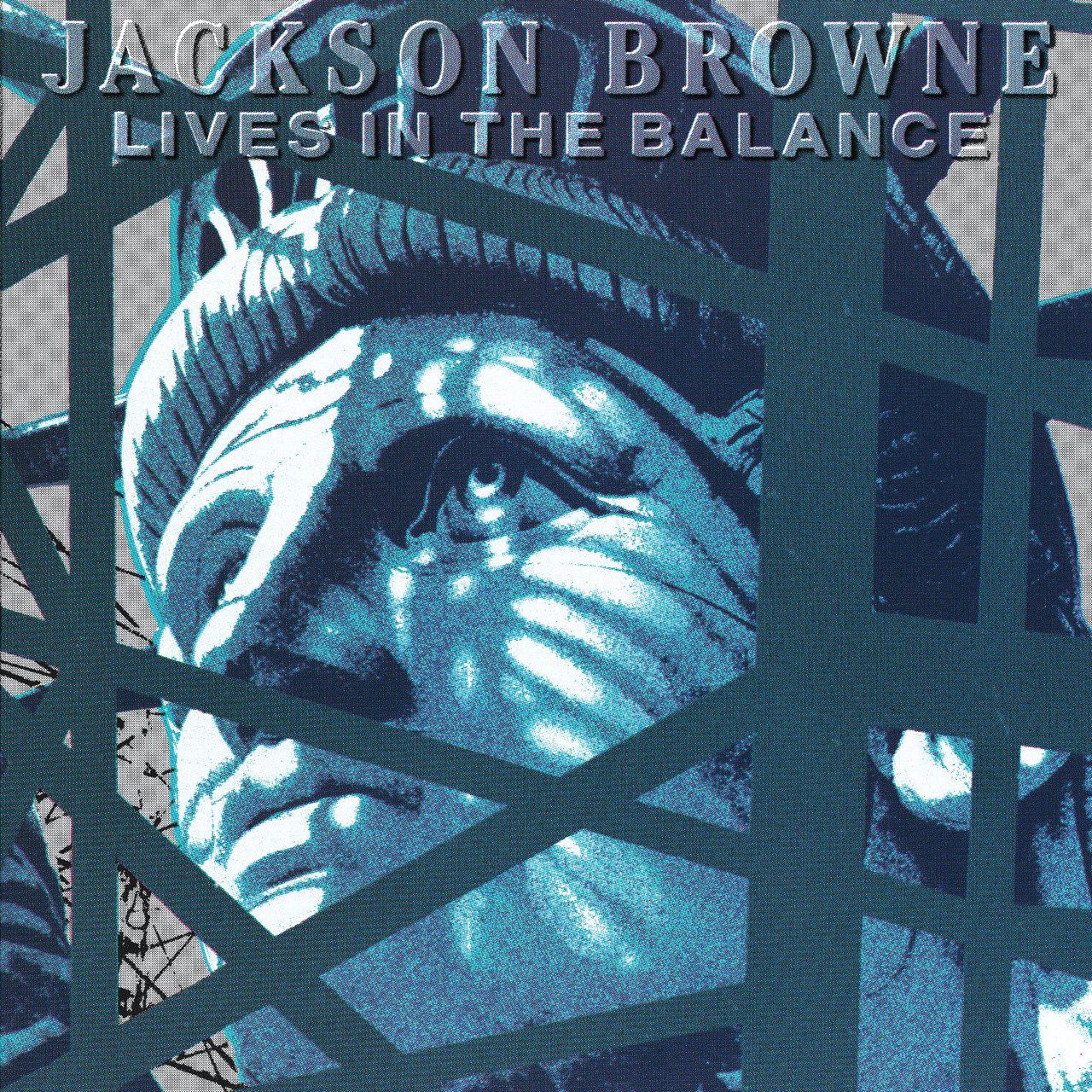
When Jackson Browne released Lives in the Balance in 1986, critics reckoned that its contemporary content, the USA’s bloody meddling in Central America, limited its appeal and long-term significance. And yet, here in the early twentieth first century, with the wars of the Arab Dissolution dragging the world into its vortex, the Great Power politics and proxy wars that taxed intellectual and actual imaginations in that seemingly distant decade jump back into the frame like some dystopian jack in the box. As Mark Twain noted, “history doesn’t repeat itself, but it does rhyme”.

Lives in the Balance was certainly a record for and of its times. Months before the Iran-contra scandal broke, Browne sang “I want to know who the men in the shadows are, I want to hear somebody asking them why. They can be counted on to tell us who our enemies are but they’re never the ones to fight or to die”. After the “arms for hostages” deals hit the news, increased public awareness of the US’ secret and dirty war in Nicaragua inspired him to produce a video for the title track well after the album had passed its sales peak.

Lives in the Balance

The album’s other songs sustained the assault. Soldier of Plenty condemns America’s paternalism towards its poor Latin neighbours. Lawless Avenues, with poignant Spanish lyrics by Browne and Warren Zevon’s old friend and collaborator, Jorge Calderón, takes us down the mean streets of Latino Los Angeles before sending its young anti-hero off to die in America’s wars. In the driving and ironic For America, Browne regrets his prior indifference and qualifies his conflicted patriotism: “I have prayed for America; I was made for America; it’s in my blood and in my bones. By the dawn’s early light! by all I know is right, we’re going to reap what we have sown”. in Til I Go Down, he sings “I’m not gonna shut my eyes, I’ve already seen the lies on the faces of the men of war leading people to the killing floor”. This song aptly plays out the end credits of the harrowing academy award winning The Panama Deception  which documents the US’ invasion of that unfortunate country.

Browne was not the first mainstream singer and songwriter to address America’s long and troublesome relationship with its Latin American neighbours. In his 1983 Stealing Fire and 1984 World of Wonders, Canadian Bruce Cockburn gave us the tragically beautiful Nicaragua and Santiago Dawn and the visceral If I Had a Rocket Launcher. On The Trouble With Normal (1983), there is Tropic Moon, with its cinematic imagery, and the lyrically deceptive Waiting For The Moon. The theme is the same as Browne’s – the North’s intervention in the politics of the South – particularly when comes to financing and arming rogue militias and warlords, and pliable, vicious and corrupt dictators: “Yanqui wake up, don’t you see what you’re doing, trying to be the Pharoah of the West bringing nothing but ruin…You’re my friend but I say Yanqui go home!”

World of Wonders

In this sad world, whenever Uncle Sam (or Uncle Ivan for that matter) plays his hand, something wicked this ways comes: “Little spots on the horizon into gunboats grow – waiting for the moon to show. Might be a party, might be a war when those faceless sailors come ashore. Whatever’s coming, there’s no place else to go, waiting for the moon to show”.

Cockburn’s poetic muse trumps Browne’s agit-prop. These lines from Tropic Moon are nonpareil: “Away from the river, away from the smoke of the burning, fearful survivors, subject of government directives. One sad guitar note echoes off the wall of the jungle. Seen from the air they’re just targets with nowhere to run to”. And: “the light through the wire mesh plays on the president’s pistol like the gleam of bead of sweat in the flow of a candle”.

Very little has changed since Browne and Cockburn sang their Tales of Yankee Power. “But who are the ones that we call our friends? These governments killing their own? Or the people who finally can’t take anymore, and they pick up a gun or a brick or a stone. And there are lives in the balance; there are people under fire; there are children at the cannons; and there is blood on the wire”. And if you were one of those people, why wouldn’t you say “If I had a rocket launcher, I would retaliate!“  As Cockburn sings in Santiago Dawn, “military thugs with their dogs and clubs spreading through the poblacion, hunting whoever has a voice, sure that everyone will run. They come in strong but its not that long before they know its not that easy to leave. To keep a million homeless down takes more than a strong arm up your sleeve”.

From Petrograd to Palestine, the story-line endures. The eighties were also the years of Russia’s Afghan quagmire, which led, ideologically if not geographically to the Chechen pogroms; and of a decade of bloodletting in Lebanon and in what in reality was the First Gulf War, that between Iran and Iraq. The Berlin Wall fell a few years before the events that drove these records, inspiring an outpouring of optimism as the countries of Eastern Europe broke free of the Soviet thrall. But this was not the Kumbaya moment that dreamers yearn for. Ensuing decades have seen a cartography of carnage: Bali and Beslan, Gaza and Grozny, Kabul and Kigali, Manhattan and Mogadishu, Sarajevo and Srebrenica.

We witness the anatomy of the new world economy in which millions of souls are on the move and everything can be traded for value. Bombs and babies, girls and guns, dollars, drugs and more besides. False prophets and bad dreams, broken promises and forlorn hopes, obscured visions and false horizons. “Many have perished, and more most surely will” – a line taken from WH Auden’s often overlooked masterpiece The Age of Anxiety, a meditation on a world in transition between the wreckage of The Second World War and foreboding for the impending armed peace that was itself to endure for another forty five years.

It is sadly ironic that our present world is passing through another time of uneasy transition, between the fixed certainties of great power rivalry and the intractable and bloody asymmetrical conflicts of today.

Paul Hemphill, November 2015 © All rights reserved

Postscript

The other day, I was listening to Dire Straits’ excellent 1985 album Brothers in Arms, and was reminded that several of the songs thereon refer, albeit obliquely, to the “bush wars” of Central America, and possibly also, to the US and Soviet Union’s proxy wars in Southern Africa and Afghanistan. There is Ride Across the River, with its Latino mood, and the beautiful and haunting title track. And there is The Man’s Too Strong, a powerful indictment of the cult of “the big man” that plagues countries all over the world. How often have these tyrants “re-written history with my armies and my crooks. Invented memories. I did burn all the books”. And how often too have they been tolerated, supported and bankrolled by Uncle Sam and Comrade Ivan.

Somewhere In Syria

Author’s Note:

This post is very much a companion piece to my recent post, Allende’s Desk and Osama’s Pyjamas, another tale of Yankee power, and its subject matter echoes that of A Brief History of the Rise and the Fall of the Westand my poem  E Lucevan le Stelle.

Its story does not relate to Bob Dylan’s cryptic and nihilistic Señor (Tales of Yankee Power), from Street Legal (1978), played here by bluegrass wiz Tim O’Brien. As for the meaning of the Bobster’s song, well, that’s pretty hard to fathom. A cowboy fever dream, perhaps; one of those strange illusions you channel in the early morning between sleeping and waking, more about mood than meaning. Perhaps it deserves a post of its own one find day.

Listen to Lives in the Balance in full be clicking on the blue text. Amid the its hard-hitting political commentary sits In the Shape of a Heart, considered to be one of Browne’s finest love songs. Yet this too might be regarded as controversial with regard to what it may or may not imply about the doomed relationship it describes. But like “the ruby she wore on the chain around her neck”, it is a finely cut gem.


Seeing through the eyes of ‘the other’

But who are the ones that we call our friends?
These governments killing their own?
Or the people who finally can’t take anymore
And they pick up a gun or a brick or a stone.
And there are lives in the balance;
There are people under fire;
There are children at the cannons;
And there is blood on the wire.
Jackson Browne, Lives in the Balance

Indomitable ninety-four year old Uri Avnery is an Israeli writer, founder of the Gush Shalom peace movement, veteran of Israel’s Independence War, and former member of the Knesset. He has written a weekly column for Gush Shalom since 1993. I republish his latest in In That Howling Infinite as a reminder that the world looks different from the other side of the wire.

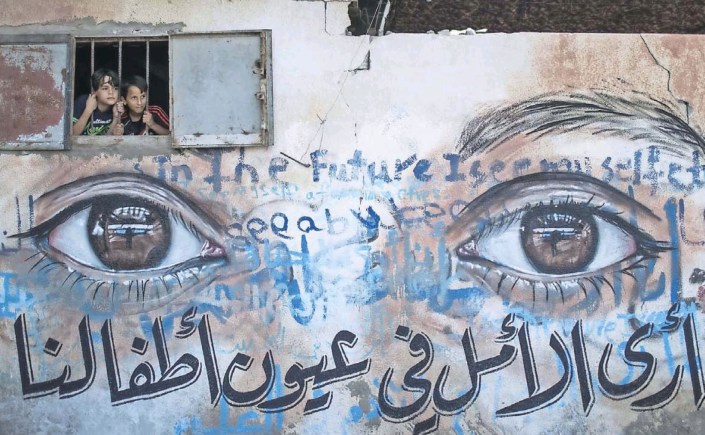
The Arabic in the featured picture says: “View Us Through the Eyes of Our Children”.

See also, my Facing the Fear of the Other, and Children of Abraham

For more posts on Jerusalem, Israel and the Middle East, visit:
https://m.facebook.com/HowlingInfinite/
https://m.facebook.com/hf1983/

A Tale of Two Stories

Uri Avnery, September 29, 2017

This is the story: at 7 o’clock in the morning, an Arab approaches the gate of Har Adar, a settlement close to the Green Line near the Israeli-Arab village of Abu Ghosh.

The man is a “good Arab”. A good Arab with a work permit in the settlement. He lives in the nearby West Bank Arab village of Beit Surik. He received a work permit there because he fits all the criteria – he is 37 years old, married and father of four children. The inhabitants of Har Adar know him well, because he has been cleaning their homes for years.

This Tuesday morning he arrived at the gate as usual. But something aroused suspicion among the guards.. He was wearing a jacket, though the weather was quite hot on this early autumn day. The guards asked him to remove his jacket.

Instead, the man took out a loaded pistol and shot three of the guards in the head at close range – two civilian guards and a member of the semi-military Border Guards. Two of the victims were Arabs (one of them a Druze) and one was a Jew. Another Jew, the local commander of the guards, was severely wounded. Since the assailant had never received military training, the precision of his shots was astounding. The pistol had been stolen 15 years ago.

All Israel was shocked. How could this happen? A good Arab like this? An Arab with permits? Why would he do such a thing in a place where he was well liked and well treated? Where he played with the children? And that after he was thoroughly vetted by the Security Service, which has innumerable Arab spies and is considered well-nigh infallible?

Something extraordinary must have happened. Someone must have incited him against the Jews and the nice people of Har Adar, who had treated him so well. Perhaps the UN speech by Mahmoud Abbas. Or perhaps some secret contacts with Hamas. “Incitement!” cried Binyamin Netanyahu.

But then another fact emerged, which explained everything. The man had quarreled with his wife. He had beaten her up, and she had escaped to her family in Jordan, leaving the four children behind.

So, obviously, he had become temporarily unhinged. In a state of mental derangement he had forgotten the kindness of the Har Adar people. Just a unique case, that need not trouble us further.

But it all shows that you can’t trust the Arabs. They are a bunch of murderers. You cannot make peace with them until they change completely. So we must keep the occupied territories.

THAT IS the story. But there is another story, too. The story as seen by the man himself.

From his home in neighboring Beit Surik, the man – whose name was, by the way, Nimr (“leopard”) Mahmoud Ahmed al-Jamal – could see Har Adar from his home every day when he woke up. For him, as for every Arab, it was a flourishing Jewish settlement, built on expropriated Arab land. Like his own village, it belonged to the Palestinian West Bank which is occupied territory.

He had to get up in the darkness of the night in order to get to Har Adar on time – 7.00 o’clock in the morning – and work hard until late in the night, arriving home at about 10 o’clock. This is the lot of tens of thousands of Arab laborers. They may look friendly, especially when their livelihood depends on it. They may even be really friendly to benevolent masters. But deep in their hearts they cannot forget for a moment that they are cleaning the toilets of the Jews who came to Arab Palestine and occupied their homeland.

Since most of the agricultural land of their villages has been expropriated for Jewish settlements, they have no choice but to work in these low-status jobs. There is no industry to speak of in the West Bank. Wages are minimal, often below the legal minimum wage in Israel proper (some 1500 dollars per month). Since they have no choice, they are not far from being slaves. Like the nice slaves in “Gone with the Wind”.

Such a man may be at peace with this reality, but if something bad happens, he may suddenly become upset with his status and decide to become a martyr. Nimr left behind a letter in which he defended his wife and absolved her from any responsibility for the deed he had planned for the next day.

So these are the two stories, which have very little in common.

The people of Har Adar are completely shocked. Since they live 20 minutes drive from Jerusalem, they do not consider themselves settlers at all, but Israelis like any other. They don’t really see the Arabs all around them as people like themselves, but as primitive natives.

The Har Adar people are not like the fanatical, religious and nearly fascist people in some settlements. Far from it. Har Adar people vote for all parties, including Meretz, the left-wing Zionist party which advocates the return of the occupied territories to the Palestinians. This is not seen as including Har Adar, of course, since there is a consensus among Zionists, right and left, that the settlements close to the Green Line should be annexed to Israel.

Har Adar people can rightly be proud of their achievements. From the air, the place looks very orderly. It has 3858 inhabitants. Their average income is about 5000 dollars a month, well over the national Israeli average (some 3000 dollars). Their local council is the third most efficient in the entire country.

Located in the mountainous area around Jerusalem, it has a beautiful landscape. It also has man-made amenities: a library, a youth club, a skate-park and an amphitheater that seats 720 people. Even for an average Israeli, this is paradise. For the Arabs around, who cannot enter without a special permit, it is a perpetual reminder of their national disaster.

Of course, like other settlements, Har Adar is not located on land that was empty. It occupies the location on which stood a village called Hirbat Nijam, a village which already stood there in Persian-Hellenistic times, some 2500 years ago. Like most Palestinian villages, they were Canaanite, then Judean, then Hellenist, then Byzantine, then Muslim, then crusader, then Mameluk, then Ottoman, then Palestinian – without the population ever changing. Until 1967.

WHEN NIMR was born, all this long history was long forgotten. What remained was the reality of the Israeli occupation.

This now looks like the normal state of things. The members of Har Adar are happy, feeling secure and well guarded by the efficient Security Service, the Border Guard and local mercenaries, mostly Arab citizens of Israel. Neighbors like Nimr seem content, and probably are, if they are lucky enough to have a job and a work permit, even with pitiful wages. The historical grudge lies deeply buried within their consciousness.

And then something happens, something that may be quite irrelevant – like the escape of his wife to Jordan – to bring it all up. Nimr the lowly laborer suddenly becomes Nimr the freedom-fighter, Nimr the martyr on his way to paradise. All his village respects his sacrifice and his family.

Israelis are furious that the families of “martyrs” are paid an allowance by the Palestinian Authority. Binyamin Netanyahu accuses Mahmoud Abbas (Abu Mazen) of incitement to murder with these payments. But it is quite impossible for Abbas to annul them – the outrage reaction of his people would be tremendous. Martyrs are holy, their families respected.

THE DAY after Nimr’s dastardly terrorist act and/or heroic martyrdom, a grandiose national ceremony took place in another settlement.

All the country’s major dignitaries, led by the President and the Prime Minister, assembled to commemorate the 50tth anniversary of “our return to our homeland, Judea and Samaria, the Jordan Valley and the Golan Heights”.

Missing in the list is the Gaza Strip, which Israel has evacuated, leaving behind a tight land and sea blockade aided by Egypt. In the Strip there are about two million Palestinians. Who the hell wants them?

All hell broke loose when the President of the Supreme Court, who was supposed to send a judge to represent the court at this ceremony, canceled his attendance because of the highly propagandist style of the event. She decided that this is party propaganda, in which her court would not take part.

Altogether not a day of quiet in this country, a state without borders and without a constitution, where every story has two totally different sides, where nice and quiet people suddenly become raging martyrs.

There will be no quiet until there is peace, with each of the two peoples living in their own state, a situation where real friendship has a chance of blooming.

Rhiannon the Revelator – In the dark times will there also be singing?

 In the dark times will there also be singing?
Yes, there will also be singing. About the dark times.
Berthold Brecht

Rhiannon Giddens, a multifaceted singer, musician, folklorist and storyteller brings American history alive in her her drive to unearth the stories of forgotten people so that her audiences and listeners may remember them.
On Moon Meets The Sun,  a defiantly joyous song, Giddens and her comrades of Our Native Daughters sing in the round over a polyrhythmic lacework of banjo and guitar, vowing not to let radical suffering diminish humanity. “You put the shackles on our feet, but we’re dancing”, she sings, “You steal our very tongue, but we’re dancing” “Ah, you sell our work for your profit, but we’re dancing,” she scoffs. “Ah, you think our home we have forgotten, but we’re dancing.” Then she recedes into the jubilant tangle of voices: “You can’t stop us now (We’ll be dancing). You can’t keep us down (We’ll be dancing)”.
Rhiannon Giddens: “There is surely racism in this country — it’s baked into our oldest institutions – just as there is sexism, millennia old. At the intersection of the two stands the African American woman. Used, abused, ignored and scorned, she has in the face of these things been unbelievably brave, groundbreaking and insistent. Black women have historically had the most to lose, and have therefore been the fiercest fighters for justice — in large, public ways that are only beginning to be highlighted, and in countless domestic ways that will most likely never be acknowledged.”

https://www.youtube.com/watch?v=F0FfAagEkH8

https://www.youtube.com/watch?v=iZa1AMr7Kk0

Quasheba, Quasheba
You’re free now, you’re free now
How does your spirit fly?
Blood of your blood
Bone of your bone
By the grace of your strength we have life

From the Golden Coast of Ghana
To the bondage of Grenada
You kept the dream of hope alive
They burned your body
They cursed your blackness
But they could not take your lights

Raped and beaten, your babies taken
Starved and sold and sold again
Ain’t you a woman, of love deserving
Ain’t it somethin’ you survived?

Quasheba, Quasheba
You’re free now, you’re free now
How does your spirit fly?
Blood of your blood
Bone of your bone
By the grace of your strength we have life

You dreamt of home, you dreamt of freedom
You died a slave, you died alone
You came from warriors who once built empires
Ashanti’s kingdom carries on

You were forgotten, almost forsaken
Your children founded generations
Your strength sustained them
They won their freedom
Traced their roots to find you [waiting?]

Quasheba, Quasheba
You’re free now, you’re free now
How far your spirit’s flown
Blood of your blood
Bone of your bone
By the grace of your strength we are home

Blood of your blood
Bone of your bone
By the grace of your strength we are home
We are home
We are home
We are home

https://www.youtube.com/watch?v=zse7aJodkKg


Kingston, Jamaica 1983

I am reminded of  Pete Seeger’s adaptation of the old Baptist hymn:

” My life flows on in endless song
Above earth’s lamentation.
I hear the real, thought far off hymn
That hails the new creation
Above the tumult and the strife,
I hear the music ringing;
It sounds an echo in my soul
How can I keep from singing?”

Here is the wondrous Éabha McMahon of Celtic Woman:

https://www.youtube.com/watch?v=Z9hth14hokI


Gerry's avatarThat's How The Light Gets In

In the dark times
Will there also be singing?
Yes, there will also be singing
About the dark times.
– Bertolt Brecht, motto to Svendborg Poems, 1939

In an essay called ‘Undefeated Despair’, John Berger wrote of ‘Despair without fear, without resignation, without a sense of defeat.’ ‘However you look at it’, the Guardian editorialised a few days ago, ‘2017 offers a fearful prospect for America and the world.’ In the words of Paul Simon’s ‘American Tune’, I don’t have a friend who feels at ease when weighing the prospects for the year ahead. In the spirit that some solace may be found in poetry in these dark times, I offer a selection of poems or brief extracts – some have which have appeared in posts here before – which seem to offer meaning and hope; they may reflect Berger’s stance of undefeated despair, offering not ‘a promise, or a consolation, or an oath…

View original post 1,467 more words

Trial and Tribulation – Radio 2bbb’s Tarkeeth interviews

People crushed by laws, have no hope but to evade power. If the laws are their enemies, they will be enemies to the law.  Edmund Burke

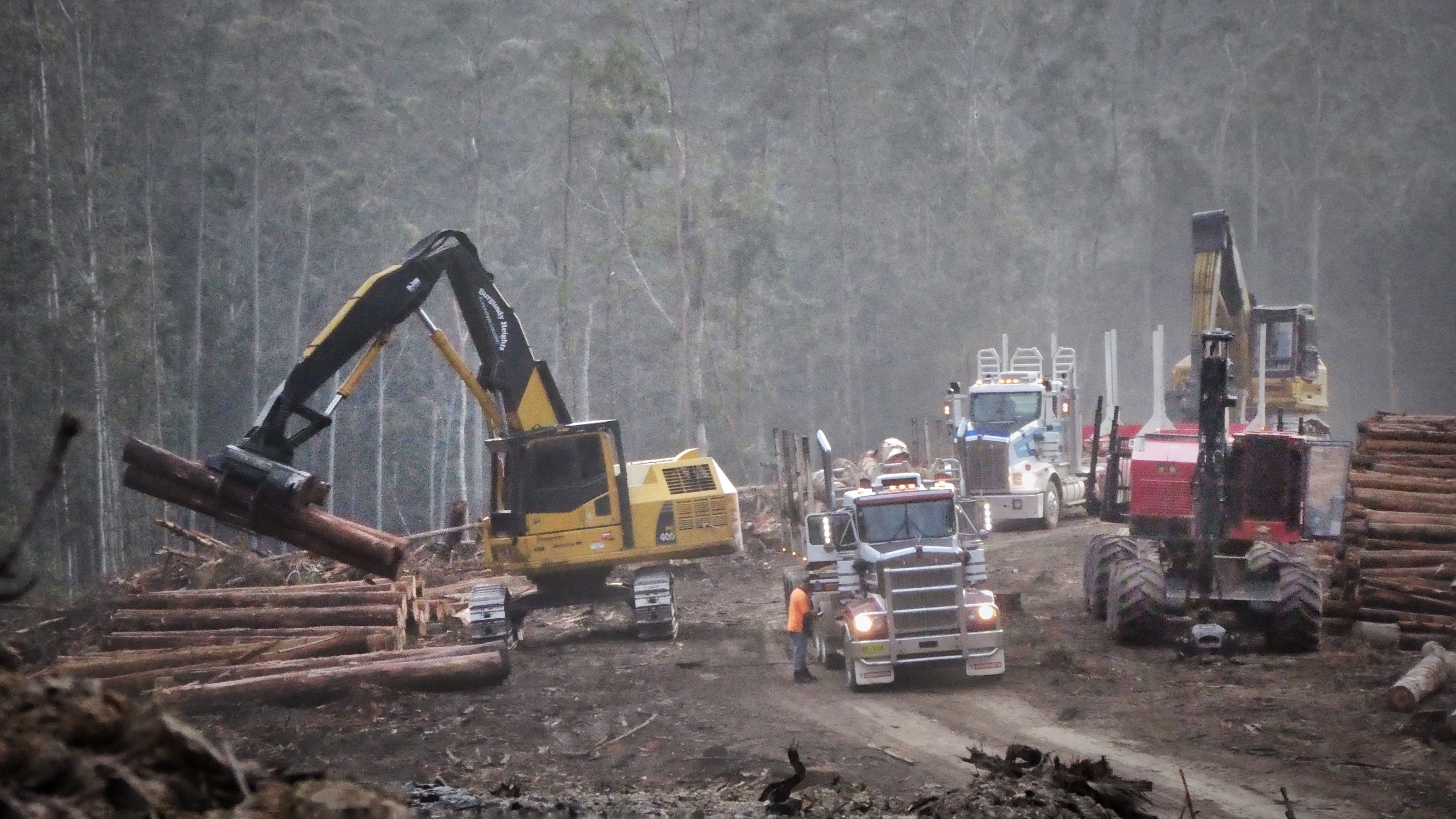
The protest against the aggressive and toxic nature of Forestry Corporation’s clearfell, burn and poison forestry operation at Tarkeeth State Forest has been ongoing for over a year. The protest campaign kicked off in March 2016 with meetings and rallies, followed by the establishment of a protest camp in June, and direct action by forest protectors in July.

In January 2017, the Tarkeeth Three, Peter “Simmo” Simmonds, John “Sean” May, and Amber “AJ” Daley were convicted at Coffs Harbour Courthouse for their direct actions to protect The Tarkeeth. Sean and AJ appealed their convictions, and these were quashed in March. Simmo, a dedicated and veteran environmentalist, did not appeal his conviction because he had breached an earlier bond in relation to his direct action against coal seam gas operations at Narrabri, when he locked on at Tarkeeth. Thus did the Tarkeeth Three become the Tarkeeth Two. Simmo has since been acquitted of breaching the Narrabri bond.

As forest protector and protest leader Susan Weil said after the January trial, the outcome of the court proceedings:“allows people around Australia to not panic, and to not be scared to go out and protest for the environmental issues and social issues that matter to them”.

The following article features two interviews broadcast by Bellingen’s community radio 2bbb, with respect to these direct forest actions and the subsequent court proceedings. There are also live videos of the locks-ons, and links to media coverage.


Bellingen barrister John Carty, Counsel for the appellants, talked with 2bbb radio host Leo Bradney-George about the trial of the Tarkeeth Three, and particularly, the acquittal of the Tarkeeth Two at Coffs Harbour Courthouse on 2nd March 2017.
John Carty explains how Forestry Corporation had acted in a “disingenuous and opportunist” manner.


Prior to the Tarkeeth Three trial on 18th January 2017, forest protector Sean talked with 2bbb radio host Leo Bradney-George about Tarkeeth Forest and its defenders.


Greens MLC Jeremy Buckingham’s live coverage of Simmo’s lock-on at Tarkeeth on 25th July 2016:

Protest leader Susan Weil’s live coverage of the Not In My Forest action group’s onsite protest at Tarkeeth State Forest on 28th July 2016, where Sean and AJ locked on to a timber harvester machine:


A short video of the destructive clearfell and burn forestry operations that inspired the Tarkeeth Three to direct action:


Further reading …

  • Tales of Tarkeeth – other stories in this blog about Tarkeeth’s past and present.

A selection of local media coverage of the Tarkeeth Three:


Tolkien’s Tarkeeth – In the Darkest Depths of Mordor

‘Twas was in the darkest depths of Mordor, I met a girl so fair, ’til Gollum and the evil  one crept up and slipped away with her, her, her…yeah!   Led Zepellin, Ramble On

And the embers of Eden burn. You can even see it from space.  Bruce Cockburn

In September 2016, as the Tarkeeth drama unfolded, I published Tolkien”s Tarkeeth – Images of Isengard. The aggressive forestry harvesting practices employed by Forestry Corporation New South Wales conjured up images of the sorcerer Saruman’s devastation of the forests of Isengard.

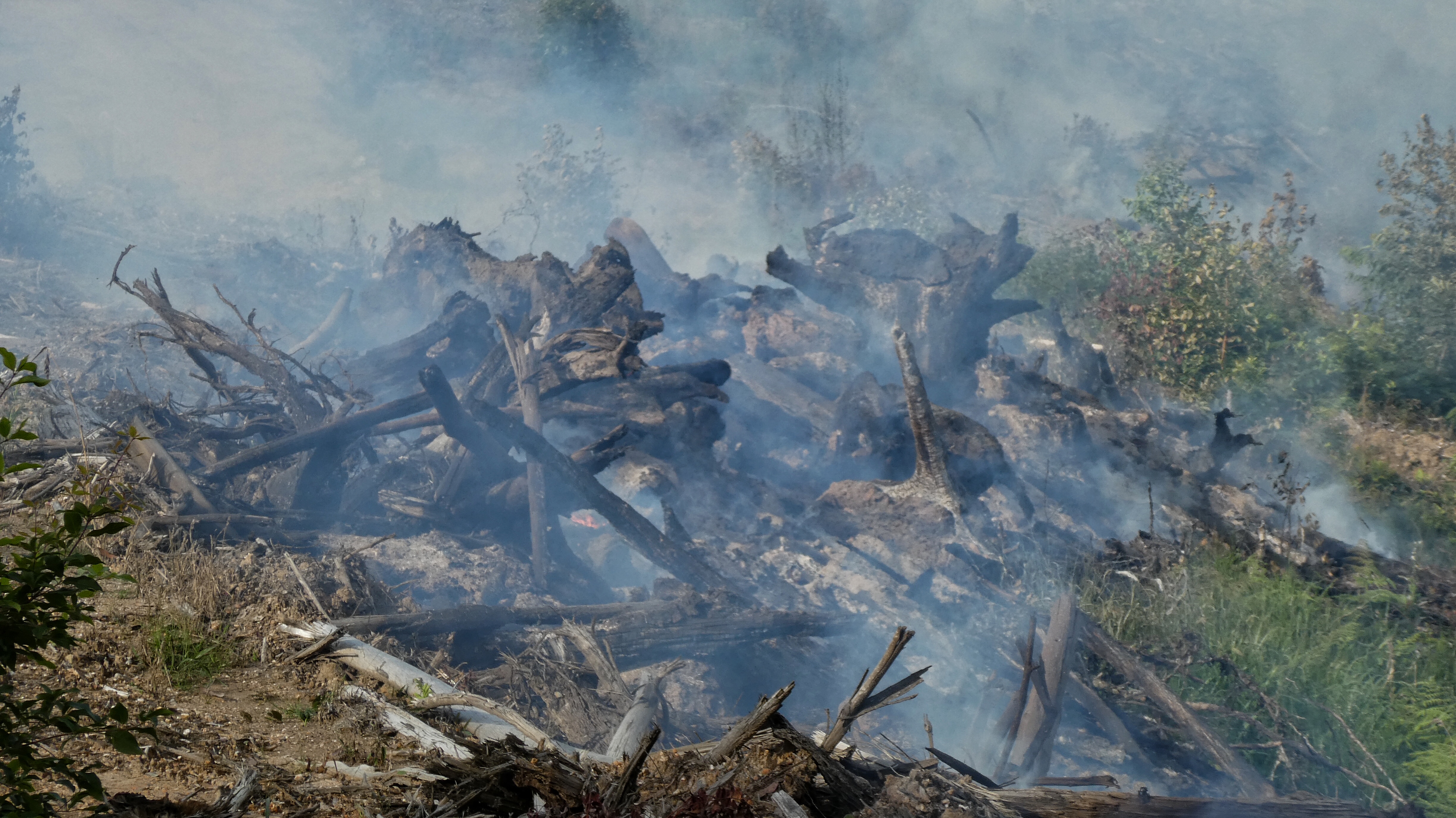
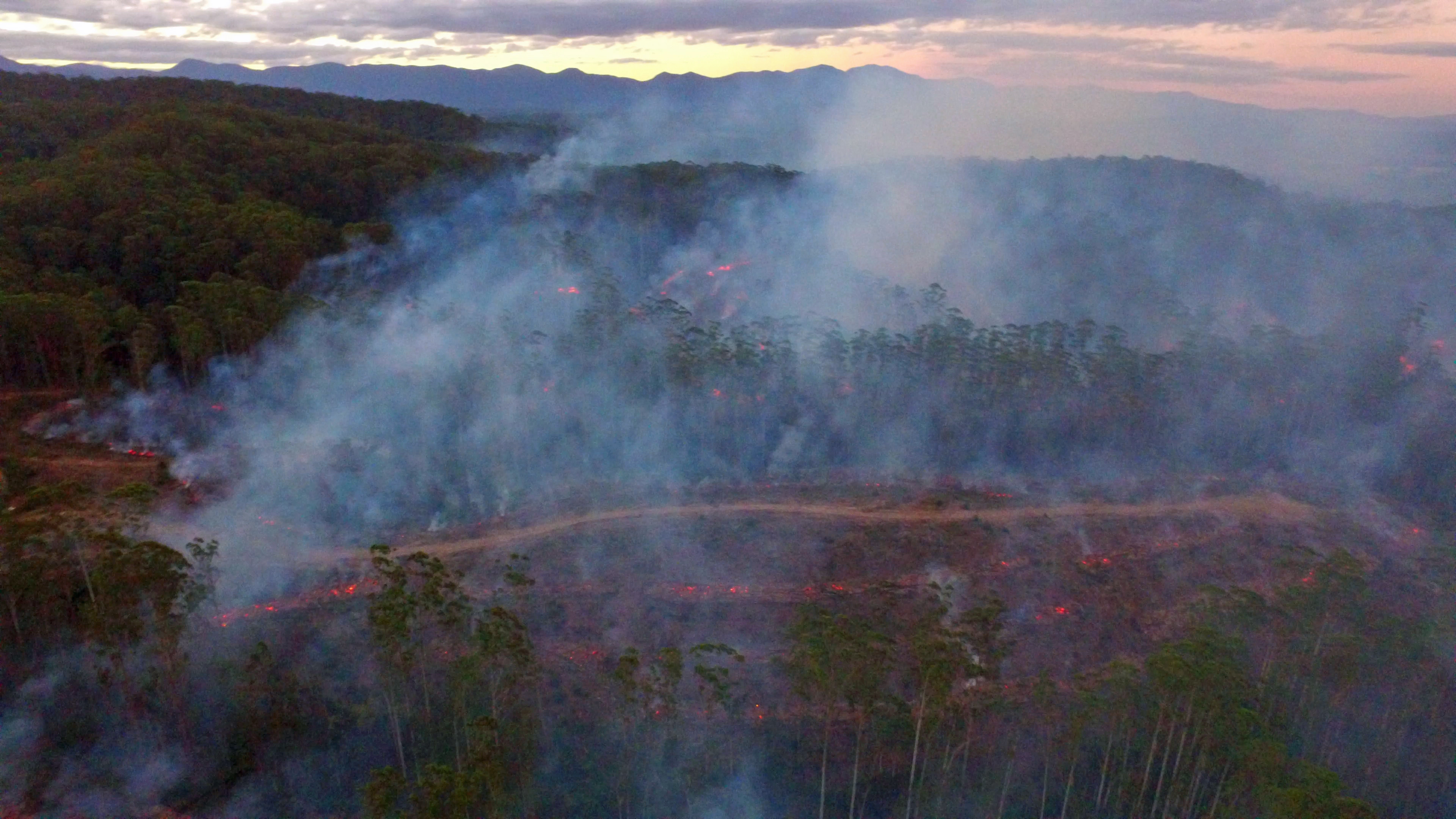
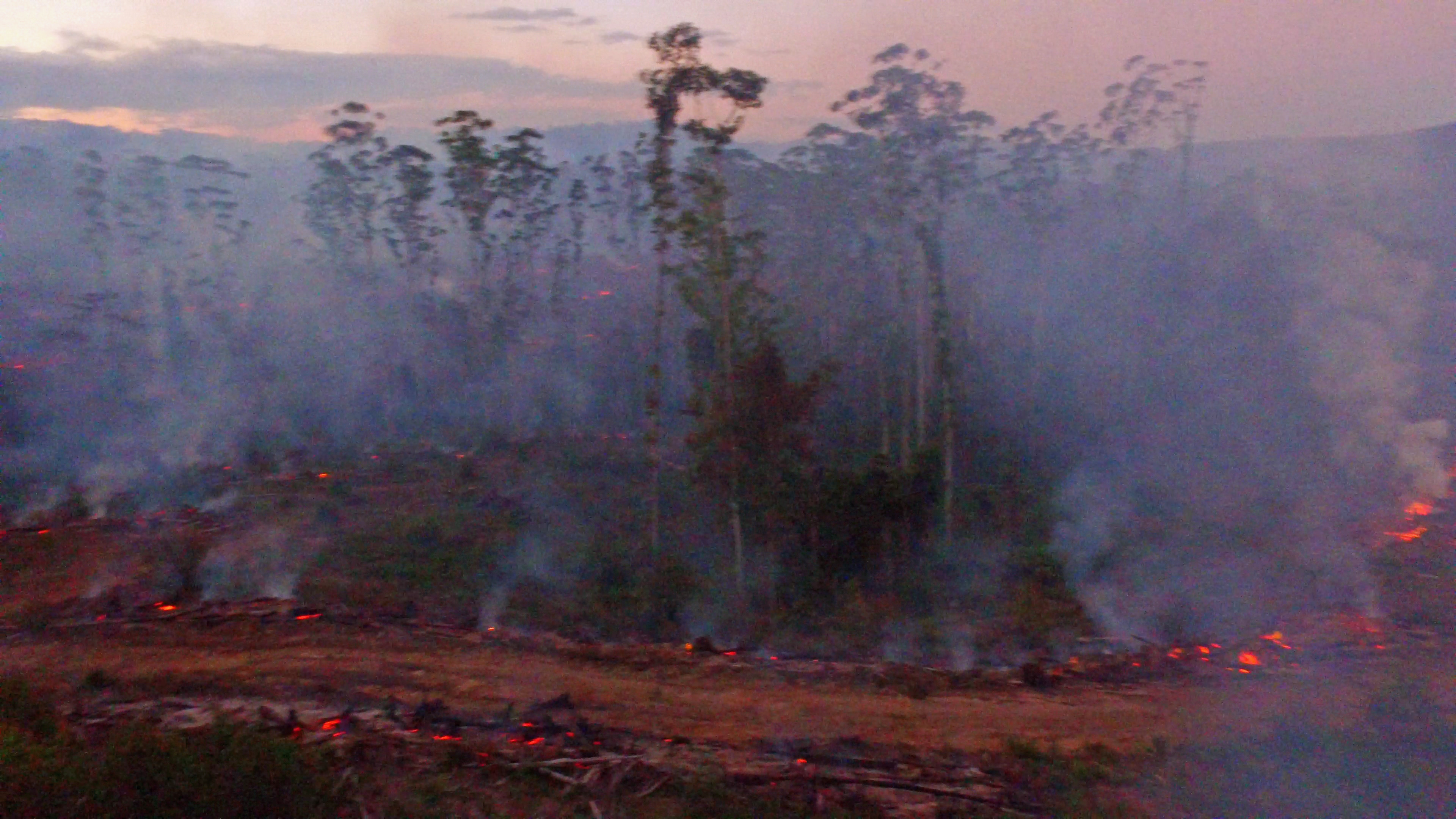
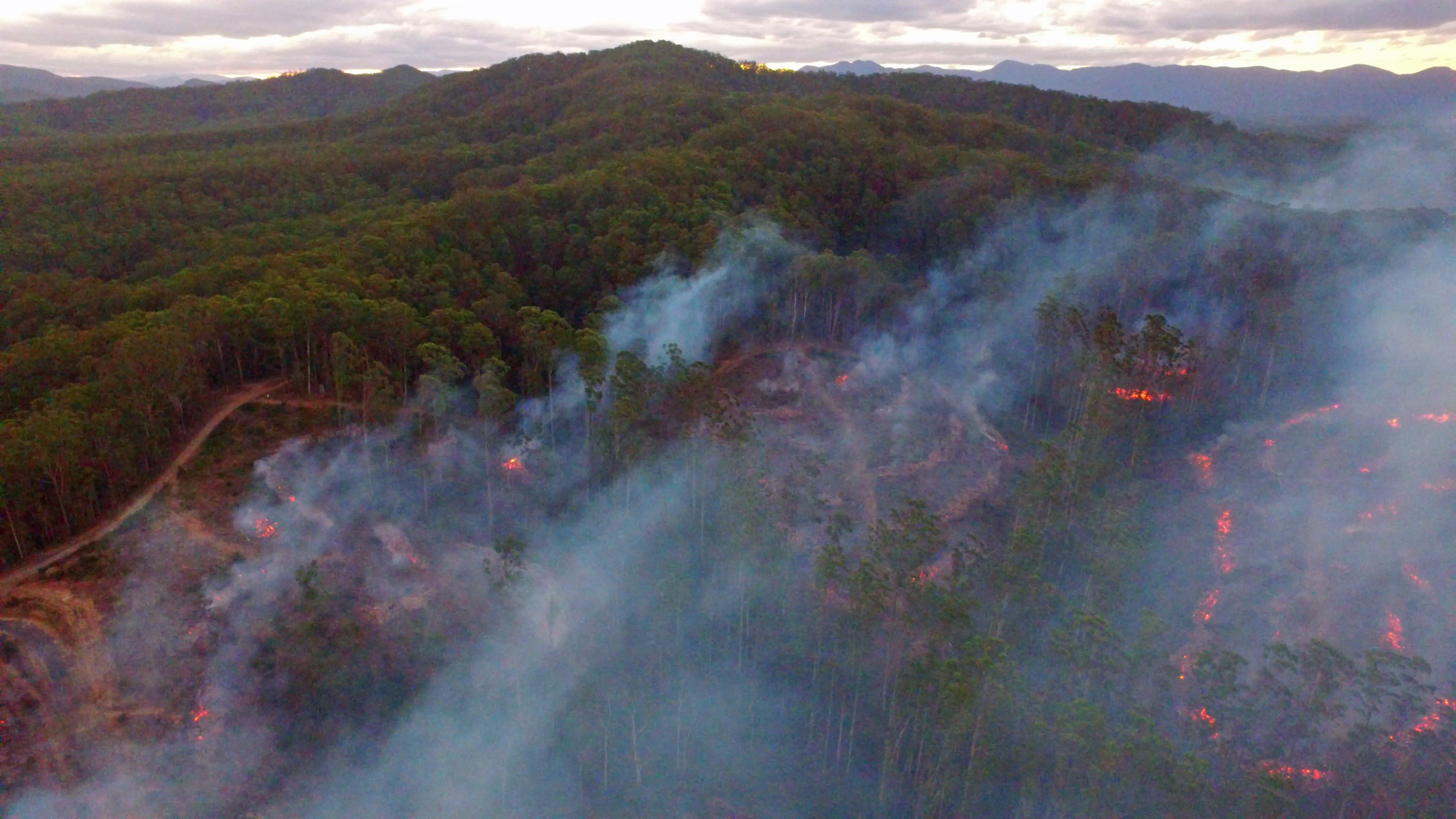
On Tuesday 11th April 2017,  Forestry Corporation  NSW set ablaze the debris left over from its clear-felling. That evening, Gwaihir, the Lord of the Eagles, flew over the burning hills of Bellingen Shire. This is what he saw:

Here is what the local newspaper reported:

https://www.coffscoastadvocate.com.au/news/like-a-scene-from-a-doomsday-sci-fi-movie-flames-b/3169934/

That November, FCNSW set the northside of the Fernmount Range escarpment ablaze in that they describe as routine hazard reduction to enhance our safety from bushfires. Forest defenders called it the Inferno.

https://m.facebook.com/groups/656451855903800/permalink/837814767767507/

And here is what I wrote the previous September:

JRR had never heard of the Tarkeeth Forest, but if he had, I am certain he would have had some harsh words for the clear-felling and burning big that is razing our forest even as I write.

In 1962, he wrote:

“Every tree has its enemy, few have an advocate. In all my works I take the part of trees against all their enemies”.

In 1972, just over a year before his death, he wrote:

“Dear Sir,

With reference to the Daily Telegraph of June 29th, I feel that it is unfair to use my name as an adjective qualifying ‘gloom’, especially in a context dealing with trees. In all my works I take the part of trees as against all their enemies. Lothlorien is beautiful because there the trees were loved; elsewhere forests are represented as awakening to consciousness of themselves. The Old Forest was hostile to two legged creatures because of the memory of many injuries. Fangorn Forest was old and beautiful, but at the time of the story tense with hostility because it was threatened by a machine-loving enemy. Mirkwood had fallen under the domination of a Power that hated all living things but was restored to beauty and became Greenwood the Great before the end of the story.

It would be unfair to compare the Forestry Commission with Sauron because as you observe it is capable of repentance; but nothing it has done that is stupid compares with the destruction, torture and murder of trees perpetrated by private individuals and minor official bodies. The savage sound of the electric saw is never silent wherever trees are still found growing.”

JRR Tolkien Letters 241 and 339

Yes, he really did say “Forestry Commission” – an old British statutory authority that bears no relation to our own government-owned Forestry Corporation, but keep Sauron and also Saruman in mind as you read the following.

As I survey the desolation of the Tarkeeth, I remember the words of poets long-departed.

Thomas Hardy, in his poignantly uplifting ‘The Darkling Thrush’:

The land’s sharp features seemed to be
The Century’s corpse outleant,
His crypt the cloudy canopy,
The wind his death-lament.
The ancient pulse of germ and birth
Was shrunken hard and dry,
And every spirit upon earth
Seemed fervourless as I.

And TS Elliot, in ‘The Wasteland’, a title so prophetically apt when I view the impact of clear-felling on what was until barely a week ago was a diverse ecosystem that had prospered in a failed monoculture plantation (See: my post ‘If You Go Down To the Woods Today‘):

What are the roots that clutch, what branches grow
Out of this stony rubbish? Son of man,
You cannot say, or guess, for you know only
A heap of broken images, where the sun beats,
And the dead tree gives no shelter, the cricket no relief,
And the dry stone no sound of water.

And then, there’s Bruce…


Tolkien’s Tarkeeth – Images of Isengard

JRR had never heard of the Tarkeeth Forest, but if he had, I am certain he would have had some harsh words for the clear-felling that is razing our forest even as I write.

In 1962, he wrote:

“Every tree has its enemy, few have an advocate. In all my works I take the part of trees against all their enemies”.

In 1972, just over a year before his death, he wrote:

“Dear Sir,

With reference to the Daily Telegraph of June 29th, I feel that it is unfair to use my name as an adjective qualifying ‘gloom’, especially in a context dealing with trees. In all my works I take the part of trees as against all their enemies. Lothlorien is beautiful because there the trees were loved; elsewhere forests are represented as awakening to consciousness of themselves. The Old Forest was hostile to two legged creatures because of the memory of many injuries. Fangorn Forest was old and beautiful, but at the time of the story tense with hostility because it was threatened by a machine-loving enemy. Mirkwood had fallen under the domination of a Power that hated all living things but was restored to beauty and became Greenwood the Great before the end of the story.

It would be unfair to compare the Forestry Commission with Sauron because as you observe it is capable of repentance; but nothing it has done that is stupid compares with the destruction, torture and murder of trees perpetrated by private individuals and minor official bodies. The savage sound of the electric saw is never silent wherever trees are still found growing.”

( JRR Tolkien Letters 241 and 339)

Yes, he really did say “Forestry Commission” – an old British statutory authority that bears no relation to our own government-owned Forestry Corporation, but keep Sauron and also Saruman in mind as you read the following.

Images of Isengard

Images of Isengard

As I survey the desolation of the Tarkeeth, I remember the words of poets long-departed.

Thomas Hardy, in his poignantly uplifting ‘The Darkling Thrush’:

The land’s sharp features seemed to be
The Century’s corpse outleant,
His crypt the cloudy canopy,
The wind his death-lament.
The ancient pulse of germ and birth
Was shrunken hard and dry,
And every spirit upon earth
Seemed fervourless as I.

And TS Elliot, in ‘The Wasteland’, a title so prophetically apt when I view the impact of clear-felling on what was until barely a week ago was a diverse ecosystem that had prospered in a failed monoculture plantation (See: my post ‘If You Go Down To the Woods Today):

What are the roots that clutch, what branches grow
Out of this stony rubbish? Son of man,
You cannot say, or guess, for you know only
A heap of broken images, where the sun beats,
And the dead tree gives no shelter, the cricket no relief,
And the dry stone no sound of water.

Tarkeeth Burning

Tarkeeth Burning

In posts to this blog, I endeavour as much as I can to maintain balance, and to avoid overly partisan positions. Today, please forgive me as I break my rule, and reproduce an open letter to the people of Bellingen Shire, the place I call my home, by local farmer, counsellor, forest protector, and mother, Susan Weil. It is a detailed but succinct explanation of what is happening right now in the Tarkeeth Forest.

Read on…

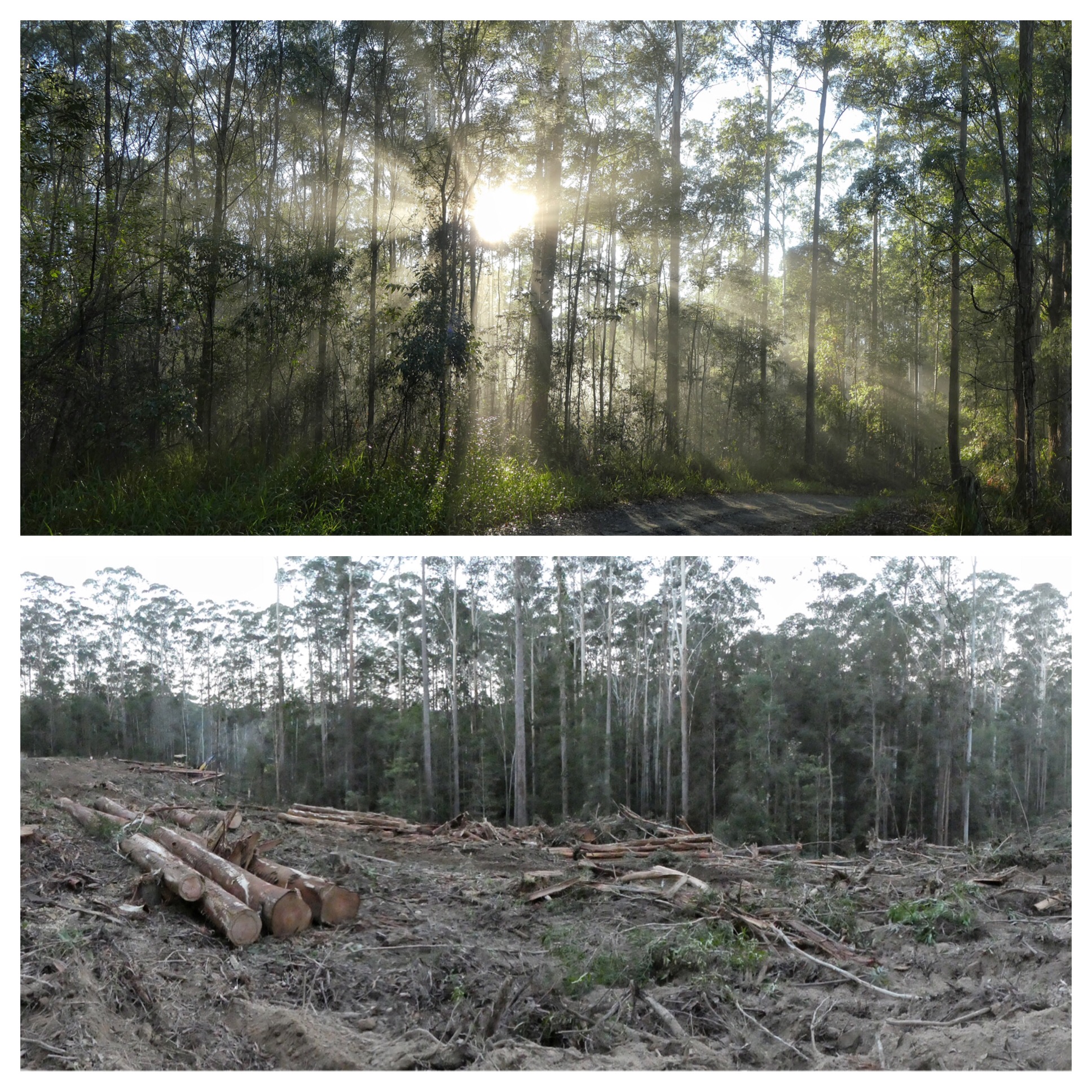
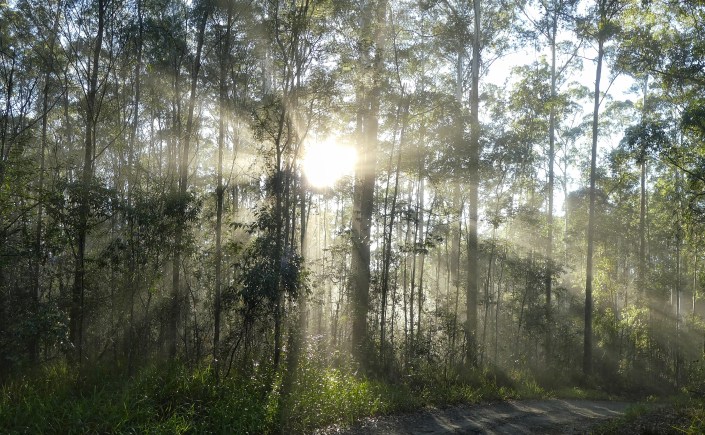
Tarkeeth morning, And Tarkeeth evening. What a difference a day makes

Tarkeeth morning, Tarkeeth evening
What a difference a day makes

The Birds are screaming!  Listen!

Tarkeeth Forest – Wrong Method, Wrong Place

There are consistent misconceptions in our community about the Tarkeeth State Forest. One of them is that we (forest community & concerned peoples) don’t want a single tree cut down (a bit silly for anyone to claim this given our appetite for timber products) and that we are making a big fuss about a plantation whose sole purpose for being there is to provide a consistent supply of quality hardwood products for our community, generating jobs and boosting our local economy.

Some facts: There are between two to three harvesting machines on site ( that translates to three employees) the rest of the jobs are for the haulage truck drivers and a few onsite operation managers. If we are talking about jobs perhaps we should be asking many of the out of work loggers that have been here for generations, many of whom would consider themselves conservationists. Perhaps if we have a conversation with any of these men they would take pride in telling you how well they managed our forests for many years prior to mechanisation and without the environmental fallout associated with clear felling.

They logged selectively and if they did their job properly their methodology would actually help stimulate forest re growth, preserve habitat and support forest diversity. None of these men are being employed by forestry, in fact many of them have been replaced by mechanised corporations like forestry and their livelihoods have been made redundant. So if you’re jumping up and down about job security perhaps you’re just talking about haulage drivers and a small handful of operators not the actual loggers themselves, because I can assure you their not benefitting from clear felling. In fact if we stop clear felling and work with best practise which is selective logging and revert back to more traditional methods then our haulage contractors would be employed far more regularly and consistently then they are currently.

If you’re talking about good quality timber, again you’re mistaken, the majority of all of these forests are flooded gum and as such there will be no profits made from this project. Forestry corporation have admitted that our “Jewel in the crown” as they keep referring to our valley is going to be an assett to them in 40 years time, thats an asset for them not us.

Forestry is currently clear felling the Tarkeeth, Kallang, Tuckers Nob, Newry and Pine creek. That’s a massive cumulative effect of aggressive clear felling in a small valley that sits between the Bellingen river, the Kalang and the Never Never Rivers. You don’t need a science degree to understand the effect that cumulative clear felling will have on our waterways and environment long term as the near extinction of our river turtles showed last year.

I’m hard pressed to find a boost to our local economy (Bellingen itself) bar a few employees for a limited period of time. This operation will end in a few years and provide minimal employment for another 40-50 years. Responsibly managed, selective logging would provide far more jobs far more consistently for this community.

In theory, plantations are an excellent idea in helping to preserve our native forests, but like all good theories in the wrong hands and with poor foundations it doesn’t always translate that well into reality. For instance, the current Plantations and Reafforestation Act 1999 was created by the very same governmnet that currently owns Forestry Corporation. The current Act allows Forestry Corporation to conduct their business with minimal community opposition and one has to wonder about the integrity of any business that can operate in whatever manner they choose without any accountability.

Forestry Corporation claims they have consulted closely with local residents to balance the needs of all stakeholders. The true translation of this means they sat down with the community and told them what they were going to do and ignored and rejected all of the residents requests that would impede their project. Thus grossly betraying the community consultation process. But it’s true they did consult with the community.

They told us they worked closely with the local indigenous community to balance their needs. Whilst I can’t and won’t speak for our indigenous community, suffice to say I think this has been grossly miscommunicated and very poorly managed on all fronts.

The Plantation and Reafforestation Act hasn’t been amended since 1999 (other then to change the name to a Corporation in 2012) and as such lacks current environmental and social standards that are being upheld in the private plantation act and native forest act, both of which are far more stringent in their assessment processes. Why hasn’t the Act been updated in 17 years to reflect current world views and environmental standards?

Forestry Corporations Plantation and Reafforestation Act works on a state wide minimum standard, which means that if there is a plantation in an area of high risk such as all of those found in Bellingen ( steep slopes and high rainfall) they do not have to make any special provisions for these deviations to the standard. They can continue to operate under the same standards regardless of the location. How can this be considered best practise?

One of these standard states a 20m buffer zone for riparian zones. This is hardly ample given the amount of chemicals they plan to use and our high rainfall and steep slopes. You don’t need to be a genius to do the math to see the shortfall and the consequences of that insufficient standard.

The harvest and haulage plan stipulates that Forestry Corporation will commence replanting their new seedlings between 12-18 mths after harvesting, now I’m a farmer, and no decent farmer would ever leave 128 hectares fallow with our heavy rainfall, it would be over run by a myriad of fast growing weeds hence their need to use a chemical cocktail of thousands of litres of glyphosate,metsulfurin, liase and pulse penetrant to manage the weed problem. If a methodology adopted creates another environmental problem such as this how can we accept this as best practise when clearly it is in breach of this? This happened in Gladstone State forest two years ago when as a result of the leaving the forest fallow in excess of 18 months they wanted to deal with the weed infestation (they created ) by aerial spraying. Have Forestry Corporation learned nothing from their previous mistakes? Yet the Tarkeeth harvest plans show no amendment to previous errors, which is obviously very concerning for us. Best practise would demand they replant immediately after harvesting thus mitigating the need for the use of any chemicals in the first place.

Forestry Corporation continues to talk about sustainability when it comes to their forest management plan, but in actual fact, they are only referring to the fact that they will be replacing the existing crop with another. That’s not sustainability that’s just called succession cropping. Sustainability should infer methodology.

One of the definitions of sustainability is “The endurance of systems and processes which includes the four interconnected domains: ecology, economics, politics and culture.”

Sustainability should relate to Forestry Corporations capacity to preserve and look after the environment (soils, habitat, wildlife, waterways and communities) to engage in meaningful dialogues with local community members and adopt their ideas and concerns into their plans, to provide long lasting and consistent employment for local community members and to show respect and care for indigenous sacred sites and artefacts.

Forestry Corporation should be using “best sustainable ” practises such as selective logging to minimise soil disturbance and erosion, to promote biodiversity within the forest and to do away with the need to manage weeds via chemical applications which would not be a problem if the earth were not disturbed in the first place.

Sustainability should include ongoing jobs for ethical logging practises and should include a meaningful dialogue with residents that provides outcomes for everyone’s interests not just the agenda of the corporation itself. We call that best practise.

According to the Forestry haulage and harvest plan they are replanting a chemical dependent monoculture plantation of Blackbutt (90%) and tallowood (10%). This is an interesting point. Forestry has claimed there were no koalas residing in this forest despite statutory declarations provided by residents sighting them and including an independent field study conducted by an ecologist for a Tarkeeth resident. Yet forestry plan to plant tallowood for the same koalas they believe aren’t there and then they plan to destroy the habitat and food source in 40 years.

A research study conducted by forestry commission stated that Tallowwood was slow growing and failed to thrive in this region that white mahogany and Black Butt were the preferred species. Given that, why would Forestry choose to plant this species given its poor performance and in doing so attract a threatened species only to have its habitat and food source removed? It doesn’t seem to add up, whichever way you look at it.

Under the inadequate Plantaction and Reafforestation Act Forestry Corporation can legally behave as corporate vandals, their not breaking any laws because they created a document to protect themselves from any community backlash. Why?

Well we now know the answer to all of our concerns. In 1999 when the Act was created on the back of an environmental push from activists to protect native forests and move towards plantations (a move we support) the government did not want to allow any room for communities and environmentalists to challenge or impede their business. They knew that a plantation if left for 40-50 years to mature would build its own ecosystem, that the native forest would compete and a native understory would develop attracting native wildlife making it hard to tell if indeed it was just a plantation or a diverse forest.

So, to ensure there was no opposition they created a guaranteed harvest plan, to ensure that nothing and no one could impede or prevent a harvest from being carried out. Hence the current Plantation and Reafforestation Act 1999. They created an Act that makes it impossible for anyone to legally challenge their methodologies or practises and it prevents them from being sued as the Act is so lax that it’s impossible to hold them accountable as their not breaking any laws. They wrote their own law.

As a community we have the right to say NO this is not okay, this is not best practise and this is not good for our town long term. We understand their running a business but we want them run it better. Is that unreasonable of us to ask for that?

As a community we have a right to protect our “Jewel in the Crown,” we are in fact protecting Gumbaynggirr land, always was always will be. I believe we can do so for the benefit of all the stakeholders involved. I don’t believe that we need to compromise for the sake of a Corporation that legally manages this land on OUR behalf and is not following best practise and is simply serving their own agenda.

This community would support a well run, responsibly managed selective logging business that balances the needs of all. Why would we not demand that they manage OUR land better? Why is this community squabbling over a plantation when what we are really talking about is ending clear felling and adopting better methodologies and best practise that allows us to have our cake and eat it too. What’s not to support here? Am I missing something ?

To remedy this situation we need accountability and responsible governance – but therein lies the root of this problem. To do that we need to change the laws and amend the Act. That is not an easy process in itself and to do that we need community support.

It’s easy to sit on the sidelines and commentate on this issue, it’s clearly divided opinions in our community and that’s always challenging to deal with. But for those whose lives are being directly impacted by this it’s hard to really understand the anxiety, sadness and fear they face on a daily basis. We rarely act on something unless it affects us directly, I guess that’s human nature but please try and have some compassion for the people who are dealing with this day in and day out as they watch a place they love and cherish being torn apart by a corporation that really doesn’t give a damn.

To feel powerless to affect change is a horrible place to live and whilst it’s easy to get caught up in the semantics of this campaign try and remember that people we care about are hurting over this. I don’t know if the community will ever see eye to eye on this for a myriad of reasons but I hope that within this process we can still hang on to our humanity and see beyond the story.

Susan Weil, Bellingen, 17th August 2016.

image

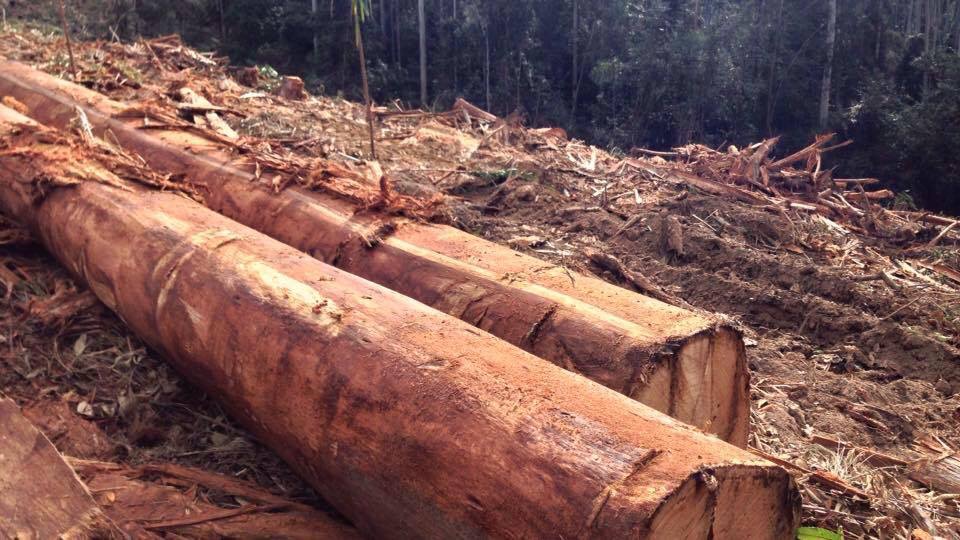
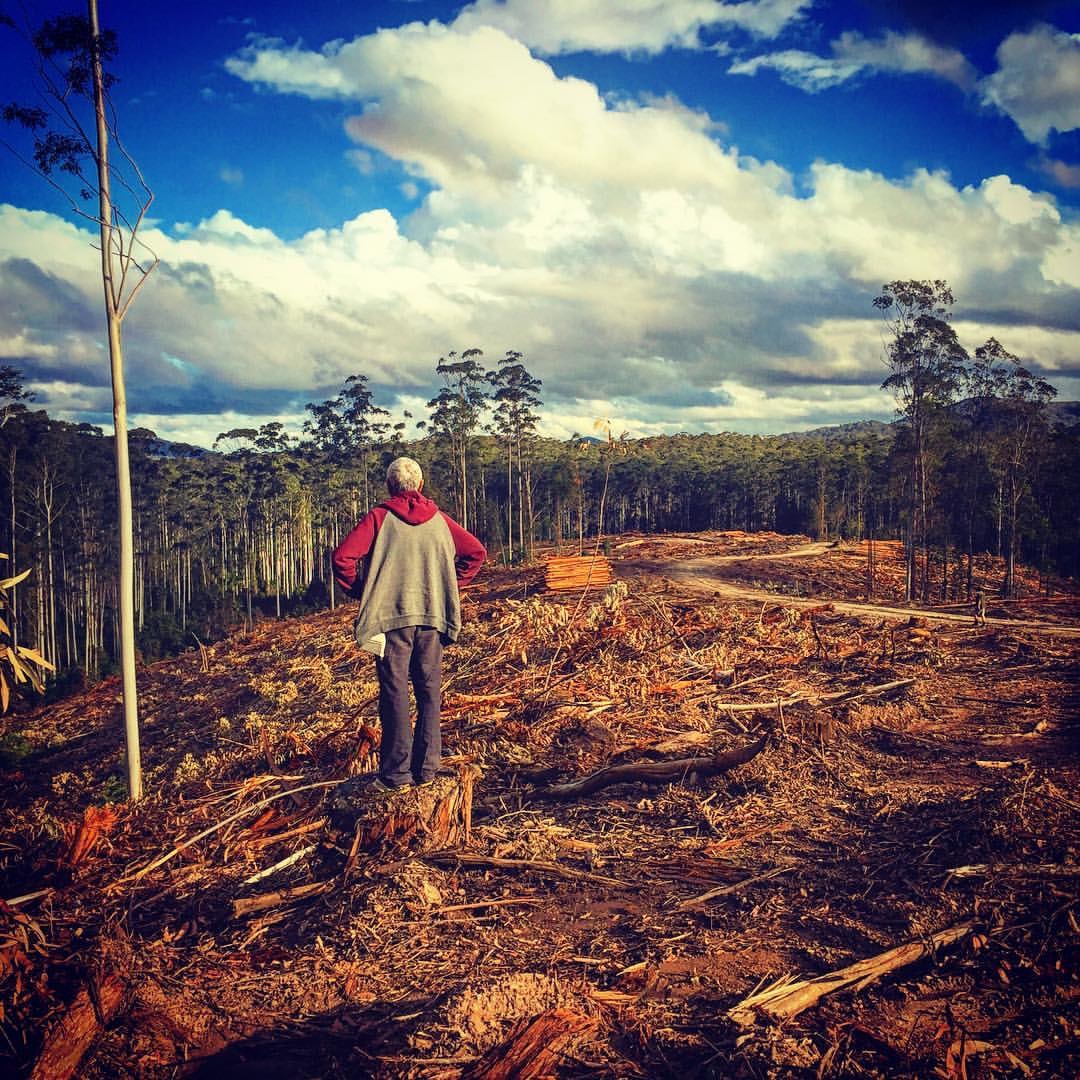
Nothing quite prepares you for the devastation of clear felling. Joby, a Gumbaynggirr elder, surveys the Tarkeeth

Nothing quite prepares you for the devastation of clear felling.                                                                 Joby, a Gumbaynggirr elder, surveys the Tarkeeth


Small Stories – A Tale of Twin Pines

One of the pleasures of moving to the Australian bush and living in Bellingen Shire is discovering its often overlooked history. This is the story of Twin Pines. Not as dippy as Twin Peaks, nor as sinister as Wayward Pines, it is a story of ordinary people doing extraordinary things.

When I first came to this land,
I was not a wealthy man,
So I built myself a shack,
And I did what I could.

I called my shack
Break My Back,
But the land was sweet and good,
And I did what I could.

When I first came to this land,
I was not a wealthy man.
So I built myself a farm.
I did what I could.

Prologue

We in Bellingen Shire , some ten kilometers west of the seaside town of Urunga on the mid north coast of New South Wales. The Tarkeeth Forest lies between the Bellinger and Kalang Rivers, and these are connected tidally to the ocean at Urunga – the only place in Australia where two rivers meet the ocean together. The forest rises from the rivers on either side of the Fernmount Range, the easternmost extension of the Great Dividing Range that spans the eastern edge of our island continent. Above and between the two rivers, it is a rain-harvesting, filtration and stabilization ecosystem vital to the waterways and wetlands around them, and is a habitat for bird, reptilian, mammalian and marsupial wildlife, including koalas, wallabies, echidnas, quolls, goannas, owls, fruit doves and cockatoos. The east-west Fernmount Range Trail is an ancient highway called the Yildaan Dreaming Track. It led from the plains beyond the Dorrigo massif to what is now the seaside town of Urunga, known then to the Gumbaynggirr people as a “place of plenty”. The first people would descend the spurs on the north and south flanks of the range to fishing and ceremonies on the riverside. The Tarkeeth Forest therefore contains areas of significant indigenous culture, recalling song lines and stories of the Dreamtime, places of ceremony, of birth and burial, and of atrocity.

The Fells of Twin Pines

Exploring the history of the forest, I chanced across Lloyd Fell’s story of the Fell Family Farm. This was located close to the present Twin Pines Trail, just east of Fells Road on South Arm Road, and west of the new bridge across the Kalang. It’s a great story of how the road got its name, and of how, in the late 19th century, Moses Lacey, the first selector, ran a store on the river bank. How back then, there was no road along the river, the South Arm (of the Bellinger), and access to farms along the river was by small jetties. South Arm Road was built to serve a quarry, now disused, just west of the present Fell’s Road.

Lloyd tells the story of how in 1926, New Zealand farmer, solo-yachtsman, and returned ANZAC Chris Fell first saw the land that became the family farm, purchasing it from Moses’s deceased estate for a thousand pounds. Chris was impressed by the two mature pines that stood on either side of the track leading to a rough timber house that already stood there – and these gave the farm its name. He cleared the bush, felling and hauling timber (helped by his neighbour Bennett’s bullock team) until he had sufficient land and capital to run cattle. In time, he built up a prosperous dairy business and cattle stud, and he and his wife Laura, a Sydneysider from a well-to-do Vaucluse family, raised their three children there. It was a hard life on the land back then – one of dedication, hard work, and perseverance. Power did not come to the South Arm until 1959. Many in the Shire still remember Chris and Laura and indeed, went to school with Lloyd, Bill and Margaret. When the kids were young, they went to the small Tarkeeth school house located just west of the present Fells Road junction. There are quite a few folk who remember attending the little school before its closure in 1972. Indeed, since I published the story on a local FaceBook page, and a former pupil published a picture of the Tarkeeth School’s “Class of ’68”, old aquaintances and school chums have reconnected with each other. Here is the History of Tarkeeth School. It can be obtained from Bellingen Museum,

Twin Pines is no more. When Chris could no longer work the farm, Bill took over the business. In 1966, with changes in the dairy industry rendering to business unprofitable, he sold it to the Errington family.They sold it shortly afterwards to Australian Paper Mills who in the early ’80s, sold it to State Forests – now the Forestry Corporation. APM cleared the land and established a flooded gum plantation thereon and on adjacent blocks – today’s Tarkeeth State Forest. That plantation is now being aggressively harvested – clear felled, actually – a matter of considerable concern to us locals and to many in the Shire. in the South, the forest comes right down to the Kalang River, and this too is a cause for concern as the harvesting and reforestation operations involve clearfelling, burning and spraying with herbicide. The consequences of an extreme weather event could be dire.

The farm house was not demolished. When the plantation was established, but was destroyed by fire years later. The school was sold to an Erik Johannsen who lived there for many years with a collection of animals. Tragically, he ended his own life after setting fire to the school. Fells Road puts the family name on the map, and whilst the Errintons did not linger here long, they are remembered in Erringtons Trail, a well-maintained forest track linking South Arm Road to the Fernmount Range Trail and thence the Bellinger Valley. Bennett the bullocky has a trail named for him too. Walking through the Forest Corp plantation, you can still just make out the place where the house stood. There is an old dam in the heart of the bush where tomatoes were once grown. In the the forest, amongst the plantation trees and native regrowth, you will come upon large, old angophera, grey gum, bloodwood and black butt habitat trees, their broad, spreading branches indicating that these once grew in open pasture.

The pines are still there, some ten metres in from South Arm Road. They are not on what is now the Twin Pines Trail, but at the beginning of a trail just to the east of it. A pair of big and beautiful hoop pines. And next to one of them, an old gate post, a dumb signpost to a a vanished past. Furthermore, they have had loads of babies. There are small hoop pines close to their parents, and eastwards along the road towards the new bridge over the Kalang. Nature never sleeps.

Hoop pines at Twin Pines, Tarkeeth

Nothing remains of the Fells farm except some old fence posts, but standing there, it is easy to imagine what it would have been like in those days. But one thing has not changed. Walk into the bush halfway between the pines and Eastern Trail, you will see what Chris Fells discovered back in the ‘thirties:

“Down on the left as you looked out of the house, there was an especially thick, almost impenetrable circle of bush surrounding a small lagoon. Within this, was a haven for all kinds of wildlife such as bandicoots, native possums, snakes, frogs, and and a great assortment of birds: parrots, kingfishers, kookaburras, currawongs, black ducks, bowerbirds, honey-eaters, and by the water itself, the beautiful egrets, ibis and spoonbills. If you peep into the lagoon from the road, its great white paperbark trees, knee-deep in thick green water, gave it an air of mystery and magic”.

And indeed, as the photographs below show, the Tarkeeth Lagoon is still quite special. Folk who grew up on South Arm Road and explored the area as children, still remember the mystery of the place. Those animals and birds still live in the Tarkeeth, but the tall paperbarks have long since fallen and lie as moss and epiphyte-covered sculptures beside the water.

img_7570

img_7569

img_7571

Read the full story of Twin Pines here in Lloyd Fell’s small but captivating book:

Click to access TwinPinesStory.pdf

Local historian John Lean’s new book “Settlers of South Bellingen and the Lower South Arm”, his “Settlers of the Upper South Arm and Spicketts Creek”, and also, “The History Of Tarkeeth Public School” are available at the Bellingen and Urunga museums.

For other posts in our Small Stories series of ordinary folk doing extraordinary things, see: The schools of the Tarkeeth, another tale from our neck of the woods; The Odyssey of Assid Corban, the story of a Lebanese migrant to New Zealand, and The Monarch of the Sea, the rollicking tale of an unlikely “pirate king”. There is also  No Bull! a true though somewhat overwrought local saga of battling bovines – set in Bonville, not far north of us.

Chris Fell – The ANZAC Story

A century ago, on 31st October 1917, the Australian Light Horse charged the Turkish trenches during the Battle of Beersheba in one of history’s last great cavalry charges. The 31 light horsemen who fell are buried in the Beersheba War Cemetery along with 116 British and New Zealand soldiers who perished in the Beersheba battle. There are 1,241 graves in the military cemetery, soldiers being brought in from other Great War Middle East battlefields. It is a tranquil, poignant, and beautiful place in the Negev Desert, where the bodies of young men from Australia and New Zealand and from the shires of England, Ireland, Scotland and Wales were laid to rest. “Lest we forget”.

In his ebook The Twin Pines Story, Lloyd Fell tells how his father served as a mounted machine gunner with the New Zealand forces in the Gaza ampaign of late 1917. His war record reports that he was one of the machine gunners who fought through the day before the famous charge to knock out the Turkish machine guns on the strategic al Saba Hill east of Beersheba. Had these fortifications not been overrun, the Light Horse  would have been prevented from advancing on the wells. Afterwards, the machine gunners and their Kiwi mates took part in a bayonet charge against the enemy.

As Jean Bou wrote in The Weekend Australian:
“The New Zealand brigade was sent against Tel el Saba, but this steep-sided hill with terraced entrenchments was formidable. The dismounted horsemen, with the limited fire support of their machine-gunners and the attached horse artillery batteries, had to slowly suppress the enemy defences and edge their way forward. Chauvel sent light horse to assist, but as the afternoon crawled on, success remained elusive. Eventually the weight of fire kept the defenders’ heads down enough that the New Zealanders were able to make a final assault. The hill was taken and the eastern approach to Beersheba opened, but nightfall was approaching.
See:
http://specialreports.theaustralian.com.au/888793/a-remarkable-feat-of-arms/

Beersheba War Cemetery, Israel

This post opened with that great troubadour Pete Seeger singing Oscar Brand’s celebrated pioneer song. I conclude with his rendering of David Mallet’s tribute to the simple life.

Inch by inch, row by row,
Gonna make this garden grow.
Gonna mulch it deep and low,
Gonna make it fertile ground.

Pullin’ weeds and pickin’ stones,
We are made of dreams and bones
Need spot to call my own
Cause the time is close at hand

Postscript – About Bellingen

We have been visiting Bellingen Shire for the last thirty years, and moved a house onto our bush block over twenty years ago. Bellingen, the Bellinger Valley on the Mid North Coast of New South Wales, is well known as a picturesque, well-preserved (founded in 1870) country town. In former times, it was the centre of a thriving dairy and timber industry, and more recently, as a popular tourist spot between the university city of Armidale and the country music capital of Tamworth to the west, and the Pacific “holiday coast” of Coffs Harbour, Sawtell, Urunga, and Nambucca Heads, to the east, with their sand, surf and sun.

Between the two is the Great Dividing Range, the rolling, high country escarpment of the New England Plateau with its gorges and waterfalls, and the world-heritage Dorrigo National Park with it timeless, untouched rainforests – a “land that time forgot”. And linking them all, the old trunk road, aptly if touristically named Waterfall Way.

Bellingen is popular for its cafes and coffee shops, craft industries and shops, music festivals, and federation facades. It’s visual appeal, and it’s bucolic rural environs have seen the town used on many occasions as a film location. In the seventies, it was a Mecca for young people seeking an alternative lifestyle. The hills thereabout are still scattered with cooperatives and communes, or, in local council-speak, multiple occupancies. In the old days, no love was lost between the “hippies” and the farmers and loggers, and politics were dominated by the rural, conservative “born to rule” National and Country Party. Nowadays, it’s heir, the National Party still dominates the political scene, but its clear majorities decrease fractionally election by election, and by the turn of the century, there may no longer be a National Party member. But demographics do change, as does society. The hippies’ children and the farmers’ kids grew up together, attended the high school together, played, partied, and paired together, and now, there are grand children and great grandchildren.

As the timber and dairy industry has declined, Bellingen’s economy has changed. Once exclusively agrarian – including a time as one of the prime producers of cannabis sativa – tourism now plays a vital role. Bellingen advertises itself to visitors and to present and future residents as a clean, green and sustainable shire. Nature’s wonderland, from its golden beaches to its mountain rainforests and waterfalls. A Tourist Heaven with a cornucopia of recreational activities for young and old – from lazy bathing and picnicking to energetic rambling and trecking, camping and climbing, canoeing and fishing. A cultural mecca with many cafes, live music, craft and artisan shops, and music and writers’ festivals.

Two years ago, the online magazine Traveller published a breathless paean to “the bohemian town that is heaven on earth’. Happy traveller Sheriden Rhodes wrote: Some places are so beautiful; it feels like holy ground. For me, Bellingen has always had that consecrated feeling. It’s obvious, given the name the early pioneers gave the Promised Land, a scenic 10 minute-drive from Bellingen’s township itself. Here the land is so abundantly verdant and fruitful; it literally drips with milk and honey. It’s a place so special the fortunate locals that call it home, including its most famous residents George Negus and David Helfgott would much rather keep all to themselves”.

This is the marketing spin hyped up by the council, the chamber of commerce, and real estate and B&B interests. The reality is somewhat different. Bellingen and the “Holiday Coast” generally have seen a large influx of city folk seeking a different lifestyle for themselves and their children, and also of retirees seeking rural or seaside tranquility – in such numbers that Coffs Harbour and its seaside satellites have become in many ways the Costa Geriatrica.

Many newcomers are not fully aware that the Coffs Coast generally is one of the poorest areas of rural New South Wales. Statistics for youth unemployment and senior poverty are among the highest in the state with all the attendant economic, social and psychological impacts as evidenced by high rates of depression, domestic violence and substance abuse. Health and transport services outside the urban centres are  pretty poor. Rising property values and high rents price low-income families and singles out of the market. Decreasing profit margins have forced many of those attractive cafes and coffee shops to close.

Nor is the clean, green, sustainable shire as picture perfect as the brochures portray It. There is environmental degradation with clear-felling and land-clearing, and flammable, monoculture, woodchip-bound eucalyptus plantations that encircle Bellingen – a potential fire bomb primed to explode during one of our scorching, hot dry summers. There is generational degradation of the Bellinger’s banks and the graveling up of its once deep depths. And there the encroachment and expansion of water-hungry, pesticide and herbicide reliant blueberry farms,

But on the right side of the ledger, we in the Shire are indeed blessed by Mother Nature. The coastline boasts magnicent headlands and promontories, and long, pristine and often deserted beaches. The World Heritage Gondwana rainforests are a national treasure, and surrounding national parks truly are a natural wonderland. We never tire of the drive from Urunga to Armidale via Waterfall Way, as it crosses the Great Dividing Range and the New England Plateau. The Kalang River as it flows beside South Arm Road and between the Tarkeeth and Newry State Forests is itself one of the Shire’s hidden and largely unvisited secrets, a haven for fishermen, canoeist and all who love mucking about in boats.

Compared to many places on this planet, we’ve really not much to complain about …


Sic semper tyrannis

You come at the king, you best not miss.
Omar Little, The Wire (after RW Emerson)

The phrase “one man’s freedom fighter is another man’s terrorist” is at once apt, correct, and yet often oversimplified to the point of disingenuousness. The word “terrorist” itself describes its goal. To instill fear in the heart of the enemy. In the past, the target would have been the king, the dictator, the ruling class, and those who served them and upheld their rule. Politicians, officials, solders and policemen. Today, terrorists indiscriminately target whole societies. Irish bombers blasted communities of the rival faith, murdered shoppers, office workers, and pub patrons, as well as soldiers and policemen. Palestinian suicide bombers hit malls and pizza bars in city centres. ISIS, al Qa’ida and the Taliban detonate cars in busy city streets and publicly execute prisoners in callous and calculating “lectures in flesh” (the phrase is civil rights lawyer Geoffrey Robertson’s, from his chilling account of the trials and execution of King Charles I of England and those who sentenced him, The Tyrannicide Brief.).

But targeted and random terrorism has a long historical pedigree. For centuries, it has been the desperate and nihilistic weapon of last resort of resistance and rebellion against perceived oppression and injustice, and against invaders and occupiers.

In the second century BCE Palestine, the Maccabees used assassination in their resistance to the Seleucid Greeks, and a century later, the Jewish zealots, the Sicarii, named for the easily concealed small daggers, paid the Romans in like coin, and ultimately in an insurrection that culminated in the destruction of Jerusalem in 70CE and the scattering of the Jewish race (giving history the emotive and symbolic last exit that was Masada). In an etymological irony that Mark Twain would have been proud of, the present unrest in Jerusalem, a large number of young Palestinians have perished in attempting to stab jewish soldiers and civilians. Their jaquerie is called the “Intifada Sakni-in”, the ‘Knife Uprising – an echo of those long-dead Sicarii “dagger men”.

Nowadays, one would be excused for thinking that “terrorism” and “terrorist” are synonymous with Arabs and Muslims. And a historical precedent reinforces this erroneous assumption. The Hashishan or “Assassins” of Middle East fame (yes, that is where that noxious noun originated) were Muslim men and boys mesmerized and mentored by Rashid ad Din as Sina-n, the “Old Man of the Mountain” (and all this, before Osama in the caves of Tora Bora), and were Twelfth Century  hit-men contracted out to rival Muslim princes in the internecine conflicts that plagued the Levant in the wake of the Crusades and the demise of the great Arab Caliphates.

But the assassin’s knife (and in modern times, the gun and bomb, and latterly cars and trucks) predates these medieval hoods and links the Hebrew rebels of old to the Irgun and Stern Gang who encouraged Britain and the UN to abandon Palestine in 1948, bequeathing most of it to the new state of Israel, and triggering the Palestinian diaspora. European anarchists and Irish rebels and loyalists were adept at shootings and ambushes. In Algeria, during the ‘fifties, the nationalist FLN and the “colon” OAS shot and bombed each other and those unfortunates caught in the crossfire. The IRA perfected the improvised explosive device that today has crippled thousands of American, Canadian, and Australian soldiers in Iraq abd in Afghanistan. Hindu Tamil separatists of Sri Lanka introduced the suicide bomber, an economical and efficient weapon against soft (civilian, that is) targets, deployed today by Islamist killers in the streets of London and Lahore, Damascus and Dar es Salaam, Jerusalem and Jakarta. Whilst Arabs – and particularly Palestinians may have given the world the hijacking of aircraft – a tactic that fell into disuse due to diminishing political returns and rapid response forces – other Arabs showed us how to fly them into public buildings as the whole world watched in horror and disbelief. The shockwaves of this one are still reverberating through the deserts of the east and the capitals of the western world.

In going up up against their occupiers, the Palestinians have an old heritage. In my old country, Boudicca and Caractacus fought a losing battle against the Romans in Britain during the First CE. The Roman historian Tacitus ascribed to a vanquished chieftain the memorable words  “solitudinem faciunt, pacem appellant” – they make a desert and they call it peace. After the battle of Hastings in 1066, the defeated Saxons pushed back against the Normans and brought the genocidal wrath of William the Conqueror down on their heads with the devastating “Harrying of the North”. The Green Man and Robin Hood legends are said to be a retrospective and romanticised remembering of the Saxon resistance. Warrior fugitives from that failed guerilla war fled as far as Constantinple, where many joined the Emperor’s acclaimed Varangarian Guard, (see When Harald Went A Viking) 

In the streets and the countryside of Ireland, my parents’ birthplace, the United Irishmen, Fenians, Free Staters, IRA and Unionists fought against the redcoats, tommies, and black and tans of the British Army. Fought amongst themselves, fought against each other, and killed and were killed in their centuries long war of liberation. And in my adopted country, indigenous Australians fought a futile frontier war against settlers and soldiers just as native Americans did, albeit on a much smaller scale, and paid the price in hangings, massacres, poisoned wells, dispossession, marginalization, and “stolen children”. The legacy of those times lingers still – see The Frontier Wars – Australia’s heart of darkness.

In Central America, Juarez led the Mexicans against the French, and Sandino, Nicaraguans against US marines. Spaniards rose up against Napoleon’s forces, giving the world the word “guerilla”, or “little war”. Russian partisans ambushed the Grande Armé and the Wehrmacht. Throughout occupied Europe, the very term “resistance” became synonymous with the heroic unequal struggle against tyranny. In another of history’s ironies, muqa-wamat, Arabic word for resistance, unites sectarian rivals Hamas and Hizbollah against Israel.

And not just resistance to invasion and occupation, but also against oppression by one’s own rulers. Religious tracts tie themselves in knots reconciling the obligation to obey our rulers with the right to resist and overthrow those that rule badly. The unequal struggle against tyranny – or what is perceived by the perpetrators as tyranny – is the cause that inspires men and women to desperate acts.

The most celebrated in fact, film and fiction is the death of Julius Caesar at the hands of peers who feared that he intended to usurp the ostensibly democratic Republic (ostensible because democratic it was not) and institute one-man rule. That ended badly for the conspirators, and for Rome, as it precipitated years of civil war and ultimately, half a century of empire).

In 1880 the reforming Czar Alexander II of Russia, discovered the hard way that liberating the serfs did not inoculate himself against the bomb that took his legs and his life. His fearful and unimaginative successors hardened their hearts and closed their minds against further reform. setting in train the crackdown on dissent and democratic expression that led eventually to the storming of the Winter Palace on Petrograd in 1917. Narodnaya Volya, the killers called themselves – the People’s Will. And that is what terrorists do. They appeal and owe fealty to a higher court, a greater good, a savage God.

So it was when student and Serbian nationalist Gavril Princip assassinated Archduke Ferdinand of Austria-Hungary in June 1914 and ignited the spark that lit the conflagration of World War 1 which precipitated the demise of the old European empires.

So too when John Brown and his sons brought their broadswords to bear on slavers and their sympathizers and made a date with destiny at Harpers Ferry. Their famous raid may or may not have accelerated the downward slide to the secession and civil war that erupted the following year, but it provided a moral and symbolic prelude and also, the resonating battle hymn of the republic. John Wilkes Booth bookended this bloody era with his histrionic and public murder of Abraham Lincoln, shouting “sic semper tyrannis”, “thus always to tyrants,” attributed to Brutus at Caesar’s assassination – today, it’s the Virginia state motto. Brown and Booth were quite clear in their motives. As was were the segregationalist shooters who did for African Americans Medgar Evers and Martin Luther King. Less so were the killers of the Kennedy brothers in the sixties.

To conclude, sometimes that savage, rebel God is one of faith, sometimes, of blood and soil. In some instances, it is revenge for wrongs real and imagined – the reasons at times lost or forgotten through the passage of time and fading memories. And often, “the cause” is corrupted by the immoral economics of illicit commerce, including contraband, kidnapping, blackmail and extortion. Sometimes all merge in an incongruous hybrid of religious passion, ethic identity, libertarian or anarchistic fervour, and protection racket. As was the case in Northern Ireland, in Lebanon, in sub-Saharan Africa, and currently so in Syria and Iraq.

But most times, terror and turmoil is simply a political weapon planned, targeted and executed as a mechanism of regime change. Rebellion, revolt and revolution. Resisting, opposing, challenging, confronting and defeating the central authority. The seizing, holding, consolidation and keeping of political power.

And one thing is for sure. The outcome is unpredictable. History does not move in straight lines, but often follows a bitter and twisted path. Cliched as it is, the phrase “be careful what you wish for” is an apt one. And when, as Bob Dylan sang, “the line it is drawn, the curse it is cast”, there is no going back. To quote WB Yeats’ famous lines, “all is changed, changed utterly”.

Terrorism, then, can shift the course of history. If we were to stumble into the swamp of alternative histories, imagine what might of happened

If Caesar had walked home from the senate on the Ides of March
If Lincoln had been able to guide the Reconstruction
If the reforming Czar had introduced democratic government to Russia
If Gavril Princip’s shot had missed the archduke
If Kennedy had returned from Dallas
If John Lennon outlived George Harrison
If Yitzak Rabin had left the peace concert in Tel Aviv
If the Twin Towers stood still

To quote “Stairway to Heaven”, a curiously apposite title given the millenarian mindset of many terrorists, “Oh, it makes you wonder!”