Last December, when we wrote our review of the year that was ending, fires were ravaging Eastern Australia, and civil unrest had broken out across the world, from Hong to Chile, Beirut to Bolivia. Calling it The End of the Beginning, we wrote:
“We enter a new decade with an American election that will focus our attention; Britain’s long farewell to Europe; an end, maybe, to Syria’s agony (accompanied by renewed repression and victor’s revenge); the rise and rise of China and the geopolitical challenge it presents to the senescent “Old World”. And that is just a few things we have to look forward to”.
As they say, “be careful what you wish for”, or more prosaically, when men make plans, god laughs.
This was a year unlike any other in my, dare I say it and invite the evil eye, long lifetime. It started so well with the abatement of our smoky, fiery Black Summer, and then the rains came. This was the year optimists hoped would be one of 20/20 vision: progress on tackling climate change, perhaps, and end to the entertaining but scary presidency of Donald Trump, a cure for … well everything.
But it was to be the year of the virus. By year’s end nearly eight million people will have been infected and almost two million will have perished, with the US recording more than any other country – by New Years Day, its death-toll will very likely exceed its dead in World War II. Economies have been shattered, livelihoods threatened or destroyed, borders closed, cities, towns and homes closed, locked-down and isolated.
In its turbulent and divisive election year, the death of George Floyd at the hands of – or more specifically under the knee of a policeman, painted a brutal portrait of the implacable indifference to black life that defines American policing. It reopened America’s long-festering wounds of racial and social injustice, white racism and vigilante violence. Rather than douse the flames with water and retardant, The White House reached for a can of petrol. The Black Lives Matter Movement, like #MeToo in recent years, an incendiary spark ignited protests around the world, showing that police violence, injustice and inequality do not belong to the USA alone.
Armed protesters on the steps of the Michigan State Capitol in Lansing, demanding the reopening of businesses
Whilst most of the world had entered into a kind of limbo, awaiting the vaccine that will end our travails and reopen our countries and indeed, the wide world, others dropped down the rabbit hole of conspiracy theories that alternatively deny that the pandemic exists or that it had been deliberately created and spread by mysterious and malevolent cabal that seeks total control, like some villain from an old James Bond film or an Avengers movie. Social media has enabled a veritable eBay of ideas and explanations where the isolated and excluded who do their own research and follow the breadcrumbs into the Matrix can buy one and get four free.
On a saner but nonetheless destabilizing level, denizens of the so-called “cancel culture” had a field day exercising its democratic right to be easily offended by demanding the deplatforming, defenestration and demolition of persons, ideas, careers, and monuments. Long-dead slavers, imperialists and generals bit the dust; JK Rowling and Nick Cave got a serve, the latter for devaluing that “cancel culture’s refusal to engage with uncomfortable ideas has an asphyxiating effect on the creative soul of a society”; and an episode of Fawlty Towers was temporarily committed to the naughty corner.
In the cold-blooded, brutal real world, there was no abatement in the wars and insurgencies that have been grinding on years now in Africa and the Middle East, whilst an old conflict over blood and soil broke out anew between Armenians and Azerbaijanis. Donald Trump’s much touted “deal of the century” that would reconcile Israelis and Palestinians was revealed to be no more than a shifty and shitty bribe, whilst US-brokered “peace” deals with a bunch of autocracies who had never gone to war against Israel are but smoke and mirrors that like Kushner’s Peace to Prosperity plan throw the unfortunate Palestinians under the bus. It is as if there is, beyond the planets COVID, Conspiracy and Cancel, a parallel universe of misery and carnage, power games and proxy wars.
Meanwhile, China, or more precisely, the Chinese Communist Party, having let loose the virus, has taken advantage of the world’s distraction and confusion by pressing forward in its quest its political, military and economic predominance. Uighurs, Mongolians and Tibetans face cultural extinction whilst in Hong Kong, the flame of freedom flickered and went out. Sooner or later, something is going to give – what some pundits perceive as President Xi’s impatient recklessness will be followed by a reckoning.
Time during 2020 has been elastic and confused. On 21st December, The Guardian asked readers to sum up how they felt about 2020 in one word – and likewise their feelings for 2021. As of Xmas Eve, the standout words were respectively (a) shit, fucked and challenging and (b) hopeful and better. My poll responses were “fascinating” and “unpredictable”.
The year ahead?
Our year in review
And so to our review of what In That Howling Infinite published during the plague year. Curiously, deliberately or by mere circumstances, nothing about the plague.
The year began with the fires and smoke abating here on our Mid North Coast, though raging still in southern New South Wales and eastern Victoria. Inspired by an early Cat Stevens song, we opened with a light, nostalgic history of the firstthe schools of the Tarkeeth, where we live.
Before we knew it, Australian Day was upon us. Normally, the weeks preceding our national day see social and mainstream media, posturing politicians and personalities and cultural warriors of all our tribes caught up in argument and invective about its meaning and significance. This year, however, things are unseasonably quiet. As a nation and a community, we were perhaps too preoccupied with Australia’s unprecedented bush-fire crisis to wage our customary wars of words. Elizabeth Farrelly asked what it means to be Australian: “As the fires rage on, bringing little but anti-green and pro-coal propaganda from our governments, we have a choice. We can go on pretending that exploitation is a sustainable way of life. We can pursue this culture of denial, where truths about nature, climate, women and Indigenous peoples are held in contempt. Or we can smarten up” … It was Australia’s choice – survive by respect or die by stupid.
February saw the first of several cynical and futile attempts by the international community to resolve the morass of the Libyan civil war. In Tangled – a cynic’s guide to alliances in the Middle East, we pointed out that Libya was not the only quagmire of outside powers and their local proxies. Then there the Trump administration’s “deal of the century”. Intended to end half a century of conflict between Israel and Palestine, it was the beginning, dead in the water: Clouded Vision – no peace, no plan, no Palestine, no point.
The ominous drumbeats of the novel coronavirus we now know as COVID19 drew close and closer during January and February, and by mid March, it was all on for young and old. A tiny but loud minority protested that all a cod. It was to misapply Bob Dylan, “just a dream, babe, a vacuum, a scheme babe that sucks you into feeling like this”. With enough being written about the pandemic on mainstream and social media, we took the pasty now very well traveled with The view from the grassy knoll – the resilience of conspiracy theories.
The onward March of the “Conspiratualists” merged by midyear with anti-lockdown protests in otherwise rational western democracies, the violence on America’s streets following the death of George Floyd, and the anticipation of open war between rival militia in the Land of the fearful – home of the heavily armed. As the US descended into a social and political division as contagious as the coronavirus, the calls to right historical wrongs led to the demands that statues of morally dubious long-dead white be torn down led to Arguments of a Monumental Proportions.
In Bad Company – how Britain conquered India, we reviewed The Anarchy, the latest in a long list of excellent histories of the sub-continent by Scottish scholar and longtime resident of India, William Dalrymple – the daunting and depressing story of the rise and fall of the British East India Company, a quasi-military industrial complex that earned the misleading sobriquet The Honourable Company.
Flashman in the Great Game
Just in time for the lock-down, Hilary Mantel gave us the finale of her magisterial and magnificent Wolf Hall trilogy – The Light and the Mirror. In That Howling Infinite took up two themes that threaded through all three books. We know how the story ends, but are fascinated with how Mantel takes us there. Taking as it theme the golden bird-boy flying too close to the sun,Beyond Wolf Hall (2) – Icarus ascending asks the question “could Thomas Cromwell have avoided his doom?” Beyond Wolf Hall (1) – Revolution Road reviews Cromwell’s legacy, the Protestant Reformation that changed the course of English (and British) history.
Mark Rylance and Damian Lewis as Tom and Hal
Fast forward from the life and dangerous times of Henry VIII to the present, and Netflix’ release in November of the third season of The Crown, a sumptuous soap that beguiles even ardent republicans. The latest serve, highlighting the rise and fall of Margaret Thatcher and the salacious pas de trois of Charles, Diana and Camilla, is deliciously seditious. And there was an entertaining Australian interlude, as described in The Crown – the view from Down Under – even if it was actually filmed in Spain.
In August 2020, the largest man-made explosion since Hiroshima and Nagasaki rippled the heart out of Lebanon’s capital. Over two thousand tons of illegal, combustible, unstable, and almost forgotten ammonium nitrate went up in a fireball that resembled an atomic blast. Social media shared memes and messages, hearts and flags, and “we are all Lebanese” profiles. Expatriates and others wrote and spoke about the country’s present turmoil and fears of a return to the bad old days. Many shared videos of songs by Lebanon’s national cultural icon, Fairuz – most particularly, her poignant Li Beirut, which she wrote during the civil war as a tribute to the city’s timeless beauty and the suffering of its people people. O Beirut – songs for a wounded city presents Fairuz’ songs, and also Syrian poet Nizar Qabbani’s famous O Beirut, Mistress of the World, and Khalil Gibran’s iconic Pity the Nation.
And finally, as this strangest of years was ending, we published a frolic that has been several years a’making. A cowboy key – how the west was sung takes us on a leisurely jaunt through some of those grand old songs, films and musicals that have shaped our more pleasant perceptions of America.
And who will live in the house after us, my father? The house, my son, will remain as it was! Why did you leave the horse alone? To keep the house company, my son. When their residents go, the houses will die. Together we will hold on until we return. When, my father? Tomorrow, my son, and perhaps in another day or two! That tomorrow trailed behind them, chewing the wind in the endless winter nights.
Mahmoud Darwish
Palestinian poet Mahmoud Darwish saw Palestine as a homeland but also as a metaphor – for the loss of Eden, for the sorrows of dispossession and and of exile, for the diminishing power of the Arab world in its relationship with the west (Mahmoud Darwish, Palestine as Metaphor). Arab-Israeli commentator Raja Natoor wrote in Haaretz that Darwish “wrote, faithfully communicated and defended the undisputed Palestinian narrative – the linguistic realm that dealt with the homeland and its loss, with displacement and being a refugee. It shaped the awareness and work of many Palestinians, which turned the poet, knowingly or not, into the Palestinian narrative itself and even into the Palestine lost” (June 28, 2020). Blogger Samah Sulaimi wrote a few days later in a reply to Natour: “In the eyes of most of the Palestinian people, Darwish was able to bring the Palestinian narrative into every home where an olive-wood map of Palestine hangs in the living room, on which the following words are engraved in Arabic: على هذه الارض ما يستحق الحياة – “We have on this land all of that which makes life worth living” (8 July 2020).
Palestinian Australian author and academic Nejmeh Khalil-Habib – and my Arabic teacher for many semesters at the University of Sydney – published a paper in Nebula magazine in 2008 examining how the “Return” – al ‘awda العودة – a recurring theme in contemporary Arabic literature – has been dealt with in Arabic fiction, and how it depicted those who live the dream of “Return” and those who actually returned to Palestine after the 1967 war or after the Oslo Accords.
She writes: “The concept of “Return” throughout this literature manifests itself in various ways including the spiritual return (as manifested in dreams and aspirations); the literal, physical return; an individual’s return (a “Return” on the basis of family reunions); the “Return” as a result of the occupation of Gaza and the West Bank after the war of 1967; and the “Return” as a result of the peace process after the “Oslo Accords.”
Al Muftah, المفتاح, the key is an enduring symbol of al ‘awda. It is present in street art and in signs and posters throughout Palestine and in the refugee camps. It is a symbol, of a memory, of one day returning – to lost homes, villages, suburbs, towns, lives and livelihoods. As Nejmeh writes,“The Return” (Al-Awda) is deeply implanted in the Palestinian collective memory. It is rooted in their conscience like a faith that could not be denied, because denying it would mean uprooting the lynchpin upon which modern Palestinian history and identity depends”.
Al Mufta مفتاح
But for many, it is something more than that. Nejmeh writes: “Whether exile happens voluntarily or under oppressive circumstances, the dream of returning home stays alive in the mind of the exiled person. It flares or fades from person to person and from one circumstance to another; however, the concept of “return” ceases to be about its basic meaning, but comes to be seen as a means of resistance and challenging oppression”.
She notes American-Palestinian author and activist Fawaz Turky assertion that “the right and dream of Return is the rock upon which our nation was established and the social balance that unites the nation in this wretched world”.
It is the dream, the hope that enabled tens of thousands of refugees in camps throughout the Levant to perceive their situation as temporary and to resist the allure of assimilation and mainstreaming in their host countries – if this was indeed possible given that most hosts have steadfastly resisted granting Palestinians rights and privileges enjoyed by their own citizens. Whilst being much of the diaspora in the West has accepted inclusion and naturalization, these Palestinians connect with their people and their culture in Palestine, and still celebrate their national holidays.
Between seven and eight hundred thousand Palestinians fled their homes in present day Israel or were expelled during the 1948 war (a similar number of Jews were expelled from Arab countries after 1948). Many remained in Israel either in their original homes or where they sought refuge. They became Israeli citizens, but even for these, the memories endure and many continue to refer to the towns and villages and localities by the names they had prior to the establishment of the state of Israel.
And yet, al ‘awda, and the Right of Return is a chimera, a dream dangled before their eyes by their leaders like a hypnotist’s show. And UN refugee status, a tired old delusion perpetuated by UNRWA to justify its existence and well-paid salaries, and the Arab League as a fig leaf for their pulsanimity. UNWRA’s definition and establishment was at fault from day one, and whilst creating generational refugeedom, it engendered false hope, unrealisable dreams, and a road-block to subsequent peace efforts There is indeed a whole economy, a living, a lifestyle devoted to and dependent on managing the conflict and the refugee problem rather than solving it. The exile was unreasonable and unjust, but the past will never be undone – and most certainly never by UN resolutions.
UNRWA is the only agency dedicated to helping refugees from a specific region or conflict and is separate from the UNHCR, the main UN refugee agency, which is responsible for aiding other refugees all over the world. Unlike UNRWA, UNHCR has a specific mandate to aid its refugees to eliminate their refugee status by local integration in current country, resettlement in a third country or repatriation when possible. It focuses on resettlement and rehabilitation of refugees and building new lives, not maintaining services that prop up a six-decade-long status quo. UNRWA , uniquely, allows refugee status to be inherited by descendants.
Palestinians were not helped by the original establishment of UNRWA which created a special, indeed, unique category of refugee where by heirs and successors are entitled to the aid and benefits normally given only to the dispossessed generation. Normally, the original refugees and their children have either returned to their homelands or have been resettled in another country within one generation. Hence, for better or for worse, Vietnamese, African, Burmese, and even Afghan, Syrian and Iraqi refugees leave the UNHCR’s care in the short to medium term.
But generations of Palestinians are locked into their special jail of statelessness by the duplicity and discrimination of their Arab “brethren” and by their inherited culture of victimhood and dependence. It is a vicious circle which gives all (dis)interested parties an excuse to do nothing but bloviate, and posture, and propose unrealistic resolutions.
The key, therefore, is a forlorn hope, a closed door that no amount of keys can unlock; and the reality is that of a lock-out, out of politics, out of society, out of the jobs and housing market. The refugees are a minority in Palestine. There are no keys for the new houses and apartments that are going up in and around the cities of the West Bank in a property boom that has been going on for several years now and accessible and affordable only for a growing middle class of employees of the PA and foreign NGOs and young professionals.
But for refugees, all this is paradox. They are locked out of the old Palestine of their parents and grandparent and forebears. But they are also locked out the new Palestine that is struggling to be born.
Poets like Darwish and novelists have internalized and reflected al Nakba and al ‘awda in their work. The dream of al ‘awda is reflected in their writing. As it is also done with graphic artists – none as powerfully and poignantly as the late Palestinian artist Ismail Shammout, born in Lydia, Palestine in 1930. When last In Ramallah, de facto administrative “capital” of that part of the West Bank government by the Palestinian Authority – Area A Continue reading →
After months of waiting, President Trump finally unveiled his peace plan for Israel and Palestine on 28th January 2020, to the delight of Israeli prime minister Netanyahu, the disgust of the Palestinians, and the bemusement of many. Amid the sound and the fury, most commentators apparently missed the point – or willfully chose to to do so – that it is not a “plan” as such, but a “vision”. The word is used some sixty times in eighty six pages that contain the political and economic framework. The remaining eighty pages, with an executive summary and copious tables and charts, more resemble a business plan, complete with SWOT analysis, than an actual peace proposal.
But a proposal is exactly what it is – not a plan per se, nor a diktat, as some have labelled it ; nor is it a mediation – as some have inaccurately described it. Rather, its authors claim, it is a basis for further negotiation – should anyone ever get around to talking together. In an excellent piece in Times of Israel,When a vision gets clouded (which I strongly recommend reading) blogger Wendy Kalman gets right to the point:
Both Israelis and Palestinians have long-standing negotiating positions but also must recognize that compromise is necessary to move forward. It is inevitable that each side will support and oppose aspects of this Vision. It is essential that this Vision be assessed holistically. This Vision presents a package of compromises that both sides should consider, in order to move forward and pursue a better future that will benefit both of them and others in the region.
A peace agreement will be forged only when each side recognizes that it is better off with a peace agreement than without one, even one that requires difficult compromises….
The role of the United States as facilitator in this process has been to collect ideas from around the world, compile them, and propose a detailed set of recommendations that can realistically and appropriately solve the conflict. The role of the United States is also to work together with other well-meaning countries and organizations to assist the parties in reaching a resolution to the conflict. But only the Israelis and Palestinians themselves can make the decision to forge a lasting peace together. The final, specific details of the Israeli-Palestinian Peace Agreement, must be worked out directly between the parties…
I have read that many who object to the Vision because Jared Kushner and Jason Greenblatt did not consult with Palestinians. The PA cut ties with the White House after the Trump declared Jerusalem the capital of Israel in 2017. In June 2018, US officials saidthey’d meet with PA officials if invited. They apparently had not been, and with this policy in place for over two years, Abbas refused to take calls from the White House even last month. So, if the Palestinians refused to meet with US officials, they could not have been consulted”.
So, as Kalman suggests, people really ought to read the document rather than barrack for or against it sight unseen and text unread. To this end, we would hope that has been published in Arabic and Hebrew by a neutral third party which would render it accurately and not redact the parts the Palestinian and Israeli Street may not like.
At first glance, the Vision appears solid enough for friends of Palestinian and critics of Donald Trump and Benjamin Netanyahu to suggest that it is a start, at least, the end of the beginning, rather than the beginning of the end. It ticks many boxes, holding out hope for lasting peace, a Palestinian State, normalized relations, and economic opportunity. But, considering the resources available to the authors, and the work that seems to have gone into the economic side of things, it is surprising for its lack of historical and political depth and indeed, accuracy, and for the number of elephants lurking mischievously and maliciously under the worn carpet. And it is these elephants that are disturbing – they whisper that all is not quite what it seems.
The Vision has a black heart insofar as it legitimizes Israel’s past actions, entrenches it’s control, and actually rewards its ongoing bad behaviour whilst giving Netanyahu the green light to commence annexations quicksmart – which he declared he would do until the US pulled sharply at his reins, demanding that he wait the outcome of Israel’s elections in March – its third poll in a year.
The President has called his Vision a “win win”, but Israeli human rights watchdog B’Tselem has described the “Deal of the Century” as “more like Swiss cheese, with the cheese being offered to the Israelis and the holes to the Palestinians”, encapsulating a world view that sees Palestinians as perennial subjects rather than free, autonomous human beings.
On Al Jazeera on the evening of the White House presentation, Daniel Levy, President of the US/Middle East Project, former Israeli diplomat and veteran of past peace plans, pulled few punches:
“It is not an attempt to be viable or fair”, he said. “This is America taking an Israeli proposal and translating it into an American position. But it’s worse than that. It takes what ostensibly looks like what a model peace agreement might look like, and wraps into that an act of aggression, close to a declaration of war, on the Palestinians. It is not intended to advance peace. It’s intended to force the Palestinians to say no, to depict Palestinians as rejectionists, and to allow Israel to pursue, with greater pace and greater support, Israel’s unilateral plans. It’s a very dangerous, cynical and aggressive move”.
Regarding contentious but critical issues, like prisoners, refugees, and settlements , Levy continued, “Instead of putting it in the language of a peace agreement, they’ve put it through this supremacist, extremist and exclusivist grinder where there’s only one side that has to be paid attention to. It turns the entire logic of what peace should be on its head. Israel retains control everywhere. Israel agrees to take on itself not to do things it didn’t intend to do anyway, like this question of Jerusalem … The Palestinians will be under increasing pressure. But bludgeoning them into negotiating won’t achieve peace. It’s taking a sledgehammer to peace efforts”.
He elaborated further 30th January in Don’t call it a peace plan in American Prospect magazine, adding: “In its outward appearance, the plan had such a familiar feel to it, like returning to a place of one’s childhood. But as I absorbed the words, nostalgia gave way to a feeling of having entered a topsy-turvy Alice in Wonderland. The language of peace had been cut and pasted, then put through a grinder, delivering an act of aggression dripping with the coarse syntax of racism. A hate plan, not a peace plan“ … A peace plan has to be predicated on both sides saving face, on both sides being able to declare some kind of victory. The plan announced is a 180-page hate letter from the Americans (and by extension the Israelis) to the Palestinians. Until one reads the entire document (and unless one knows the history of the conflict), it is hard to convey the depth of contempt and scorn this text displays toward Palestinians. It oozes colonialist supremacism”.
There has been commentary aplenty from pundits and partisans on all sides of the argument, many of whom will not have read the document but rather “take their instructions” from their various positions and paymasters. But anyone with a serious interest in the matter, whether by position, profession, or amateur passion, and certainly all with skin in the game, ought to read it, faithfully translated and unredacted. Because It is illuminating – and possibly even hallucinating.
One thing is for sure, it is humiliating. For the Israelis who been promised all they they could wish for – they should by embarrassed by its bias. For the Palestinians who are invited to drop their longtime demands – some of them perfectly reasonable and others, unattainable shibboleths – in return for buckets of cash and international good will. For America’s allies – including its Arab “partners in freedom”, who, reluctant to upset the truculent Trump, gingerly but optimistically posit the that the “vision” is a perfectly good springboard, opening offer, ambit claim or whatever to get long-stalled negotiations going (meanwhile, they are ever wary of a hostile backlash from their sullen, captive citizenry). And for America, so blatantly and cynically giving the thumbs up to what amounts to the occupation and dominion of a powerful country over a weaker one.
Many outside and within the Middle East condemn it because it is one-sided, supremacist and exclusivist – and just plain unfair. And for all it’s worthwhile bits and pieces, it is all of these. Saying that Palestinians should grab a good deal because there won’t be a better one, that they have only themselves to blame for their leaders, and that they never miss an opportunity to miss an opportunity, is to occupy the low moral ground whilst simultaneously eyeing the exit.
It has also been condemned as actually endangering Israelis. The US President has given his blessing to a potentially explosive policy that is not even popular with the Israeli public: polls show that most Israelis are not interested in annexation. This ostensible Israeli “win” offers Israel control over areas of the West Bank that most Israelis have never heard of, let alone lived in (according to the Israeli NGO Peace Now, less than 5% of Israelis live beyond the Green Line). And the price will be paid by the Israeli exchequer, the Palestinians, assorted NGOs, and the soldier boys and girls who will have to maintain order and carry the scars for the rest of town lives.
Reading the Vision, I identified contradictions and cul de sacs that appear to signal it’s true intent – that dark heart I referred to above. David Levy and Yossi Klein Halevi touch on most of them and well merit close reading – but here are my own thoughts.
Distorted Vision
The first pages set the scene. Whilst careful not to spook the horses from get-go, they are anodyne and, indeed, simplistic in recounting the origins and the contemporary status of one of the most intractable international conflicts since World War 2 – very much Arab-Israeli Conflict 101 from a moderately informed albeit partisan and pro-Israel American perspective. But as it gets down to the nuts and bolts, and formulates proposals for a just, equitable and lasting solution (or I assume that this is the intent of all this), it is as if the authors have got all the words and got all the notes but haven’t quite got the song. Put more bluntly, to quote Daenerys Targaryen they have come not to stop the wheel but to break it.
A Capital Idea
An immutable Palestinian demand since the Six Day War of 1967 has been that Jerusalem be the capital of an independent Palestinian State. Notwithstanding the US recognition as Israel’s capital, there was an understanding that if and when such a state eventuates, its capital would be in East Jerusalem. The Vision now proposes that the run-down town of Abu Dis, on the Eastern side of the Separation Barrier (the proposed border between Israel and Palestine) should be the Palestinian capital – in “eastern” but not “East” Jerusalem. It suggests also that the Palestinians can rename it Al Quds and then continues thereafter to refer to the prospective capital as Al Quds, as if saying it makes it so.
This demonstrates either an ignorance of history and of Jerusalem’s significance in both the political and spiritual space, or, worse, a contempt for it. Or both. Al Quds means “The Holy” in Arabic. It has been used to describe Jerusalem for centuries, and indeed, by all Palestinians today and by Muslims the world over. It is not some made-up moniker that can just be attached to Abu Dis like some clever #tag. If it was merely just a location for an administration, Ramallah already boasts a modern parliament building, multi-million dollar presidential palace, and the mausoleum of Abu Amar (Yasser Arafat to us), not to mention a burgeoning middle class and an accompanying building boom.
Soul searching
The casual treatment of the idea al Quds is more than lazy etymology. It is indicative of how the Vision skirts the reality of the deep spiritual belonging and the atavistic yearning that lies at the root of the two competing historical and political narratives: the millennia-old connection with The Land, Ha’Aretz, that is held by religious and secular Jews, Zionist and nationalist alike; and the deep, centuries-old – roots of Arab, Islamic and Christian history and culture in the land of Christianity’s birth. These can’t be distilled down to real estate deals, the involvement of disconnected outside parties, be these brokers honest or dishonest, the chialistic urgings of American evangelicals yearning for ”the End of Days”, and Iran hawks pushing for a Grand Alliance against Shiah Iran and its Arab proxies.
No Going Home
This shallowness is evident also respect to its treatment of refugees, and its cursory dismissal of the Right of Return of the refugees of 1948 and 1967 and their successors. It is not so much that this perspective is a false one. The Right of Return is a chimera, a dream dangled before their eyes by their leaders like a hypnotist’s show. And UN refugee status is a tired old delusion perpetuated by UNRWA to justify its existence and well-paid salaries, and the Arab League as a fig leaf for their pusillanimity. UNWRA’s definition was at fault from day one and whilst creating generational refugeedom, engendered false hope, unrealisable dreams, and a road-block to subsequent peace efforts. But it ought to be addressed sympathetically and not summarily swept off the table in like manner to the matter of Jerusalem. “The Return” (al Awda) is deeply implanted in the Palestinian collective memory – as is “the key’, a a symbol, of a memory, of one day returning – to homes, villages, suburbs, towns, lives and livelihoods lost in al Nakba. These are rooted in the Palestinian conscience like a faith that cannot be denied, because denying it would mean uprooting the lynch-pin upon which modern Palestinian history and identity depends.
According to the Vision, Israel does not deem it justified to foot the bill for the refugees of al Nakba and al Naksa, the generation and their successors who are also registered as refugees in perpetuity under UNRWA’s questionable criteria. The onus will be upon Palestine and neighbouring Arab countries who have refused to recognize their own Palestinian refugees as citizens to sort this one out – with some goodwill and financial assistance from the international community. For, why indeed should the world continue to pay for Palestinian refugees? By way of explanation, the Vision notes that the international community is struggling to find sufficient funds to address the needs of the over 70 million refugees and displaced persons in the world today. And what’s more: “the State of Israel deserves compensation for the costs of absorbing Jewish refugees from those countries. A just, fair and realistic solution for the issues relating to Jewish refugees must be implemented through an appropriate international mechanism separate from the Israel-Palestinian Peace Agreement”. So, “upon the signing of the Israeli-Palestinian Peace Agreement, Palestinian refugee status will cease to exist, and UNWRA will be terminated and its responsibilities transitioned to the relevant governments”. End of story.
Let My People Go
All prisoners in Israel jails will be released on signature of a peace agreement commencing straightaway with minors, women, and seniors, then all others who meet Israel’s release criteria – but all must first sign an undertaking not to say or do anything that annoys Israel. Then there are those who Israel won’t and will never release. There is no mention in the Vision, neither in the historical preamble nor the detail, of a policy of indefinite detention that has seen tens of thousands of minors incarcerated. It is as if the fifty year old occupation and its punitive system of passes and checkpoints, of demolitions and administrative detention, and the civilian population’s continuing resistance to it have occurred in some parallel dimension.
Moreover, the refusal to acknowledge the emotional and psychological influence of the prisoners issue – which has impacted on the loves of thousands upon thousands of people who have passed through the penal system or are still enmeshed within it, and their families and friends, much like the dismissal of al Quds and al Awda, could be interpreted as negligence bordering on contempt.
Borderlines
A territorial swap gives Israel what is already controls – the fertile, strategic Jordan valley in return for two arid and barren strips of land at the fag end of the Negev Desert, bordering on the bleak and unforgiving Sinai, and a chunk of unutilized desert south-east of Hebron. Sure, Israel has a well justified reputation for “making the deserts bloom”, and the many towns, farms and vineyards of the Negev is testament to that. But chucking a bunch of money and technology at a brace of “development” zones strung along a dangerous and well guarded border hardly seems like a fair swap. Nor does a neat new network of highways between scattered Palestinian towns and villages, and segregated access to two Israeli ports (Gaza’s historically famous harbour will not be resurrected). Meanwhile, international boarders are the sole business of Israel, with the compliant assistance Egypt and Jordan.
The Triangle
This is an area originally designated as Jordanian in 1949, but were retained by Israel for military reasons. These communities largely self-identify as Palestinians, and they can now be Palestinians. – notwithstanding the fact that very, very few Israel Arabs would want to live in an Arab state, even if that state was Palestine. And indeed, residents commenced their protests immediately the proposal was mooted.
Freebie
“Every country spends a very significant sum of money on its defense from external threats. The State of Palestine will not be burdened with such costs, because it will be shouldered by the State of Israel. This is a significant benefit for the economy of the State of Palestine since funds that would otherwise be spent on defense can instead be directed towards healthcare, education, infrastructure and other matters to improve Palestinians’ well-being”. So, “don’t worry, be happy,”
Gonna Build a Lego House
The US and Israel will not accept the establishment of a state of Palestine until the Palestinians attain certain standards of good governance. These include a constitution or another system for establishing the rule of law that provides for freedom of press, free and fair elections, respect for human rights for its citizens, protections for religious freedom and for religious minorities to observe their faith, uniform and fair enforcement of law and contractual rights, due process under law, and an independent judiciary with appropriate legal consequences and punishment established for violations of the law. They include also: transparent, independent, and credit-worthy financial institutions capable of engaging in international market transactions in the same manner as financial institutions of western democracies with appropriate governance to prevent corruption and ensure the proper use of such funds, a legal system to protect investments and to address market-based commercial expectations, and meet the independent objective criteria to join the International Monetary Fund. Palestine must establish civilian and law enforcement control over all of its territory and demilitarize its population. And it must also end all programs, including school curricula and textbooks, that serve to incite or promote hatred or antagonism towards its neighbours, or which compensate or incentivise criminal or violent activity.
Once these fortuitous conditions are established to the satisfaction of the US and Israel, “The United States will encourage other countries to welcome the State of Palestine as a full member in international organizations”. Whilst there is absolutely nothing wrong and indeed everything right with this wish-list, this world’s best practice if you will, of good governance – and as the Vision indeed states, no country, least of all Israel wants a failed state on its doorstep – the sad fact is that most countries in the world would fail these worthy and worthwhile criteria, including the Arab countries the US is looking to for support for its project.
Lucky Old Jordan
Whilst matters of borders and security are to be managed by Israel and the US, in close cooperation with Egypt and Jordan, Jordan cops much of the burden of the nation building project: “By virtue of territorial proximity, cultural affinity and family ties, the Hashemite Kingdom of Jordan is well placed to play a distinctive role in providing this assistance in fields such as law, medicine, education, municipal services, historic preservation and institution building. In a manner consistent with the dignity and autonomy of a future State of Palestine, the Hashemite Kingdom of Jordan will offer long-term, on-the-ground assistance in designing relevant institutions and procedures and training of relevant personnel. The objective of such assistance will be to help the Palestinians build strong and well governed institutions”. As noted above, the irony is that cash-strapped, authoritarian Jordan – and indeed most nations in the Middle East – would find it hard to reach the standards of good governance now demanded by the US and Israel.
The Company We Keep
On the subject of less than perfect enablers and abettors, we’d like to thank … “Much appreciation is owed to the Kingdom of Saudi Arabia for its role in the creation of the Arab Peace Initiative, which inspired some of the ideas contemplated by this “Vision”. And acknowledgment too to Egypt, Jordan, and the UAE without whose cooperation and input, this “Vision” would not have been possible”. And yet, as the risk of bearing on a dead horse, none of these would seriously subscribe those qualities and qualifiers that would in the US and Israeli eyes render the prospective state of Palestine suitable to be admitted to the community of nations.
Who’s Country Is This Anyway?
And finally, after the prospective state of Palestine has met all the standards, criteria, qualifies and metrics (I did say the Vision read like a business plan), after neigbouring Arabs states have shouldered their various designated burdens, and the international community have coughed up much of the cash to pave the path to prosperity, all matters related to security and demilitarization, and based upon its own interpretation, Israel has the right to intrude, intervene, interfere, interdict, and otherwise involve itself in the affairs, interests, sovereignty and territorial integrity of the ostensibly independent State of Palestine.
I am reminded of what Hannibal Lecter says to FBI Agent Starling when asking her what motivates serial killer ‘Buffalo Bill’: “He covets”, Lecter says. “That is his nature. And how do we begin to covet, Clarice? Do we seek out things to covet? … We begin by coveting what we see every day … And don’t your eyes seek out the things you want?”
So, what now?
A month has passed since that coopted corroboree in the Oval Room. To quote Rudyard Kipling, “The tumult and the shouting dies; the Captains and the Kings depart”. Israel’s elections are fast approaching, and are expected to be as inconclusive as the previous two, raising the prospect of a fourth – and continuing political paralysis. The world’s fickle focus has shifted to the coronavirus, China’s Belt and Road tilt at global aggrandisement, the bitterest of US elections, and Syrian Idlib’s cruelest of winters. The “deal of the century” has receded into the background noise. But it will not go away, nor will it’s apparent absence make hearts grow fonder.
Ha’Aretz nailed it with a headline: “Trump’s unreal deal: No peace, no plan, no Palestinians, no point”. And in Canada’s Globe and Mail, Israeli author and journalist Yossi Klein Halevi wrote’: “The Trump plan for Palestinian-Israeli peace will almost certainly go the way of all the other failed blueprints to resolve our 100-year conflict. With leaders across the Arab world backing Palestinian opposition, the plan will likely remain an American-Israeli conversation about peace – a wedding without the bride. And yet the release of the plan has had one bracing consequence: It has exposed deeply held myths among both Israelis and Palestinians”.
Some say that this deeply flawed, one-sided and duplicitous Vision was designed to fail, and peevishly contemptuous and prejudiced comments about the Palestinians by Jarred Kushner immediately after their immediate repudiation of his Vision appear to hammer home that conclusion. But should it indeed join previous plans on the garbage tip of barren and broken hopes, it doesn’t warrant or deserve a second coming. Presently, with the status quo effectively frozen, the Israel determines the rules of play. But it does put a ball in the Palestinians’ court. They really do need to get something happening outside the dominant and dominating US-Israeli paradigm that doesn’t involve violence, useless rhetoric and impotent willy-wagging as this just plays into their detractors’ hands. If they, the Palestinians, were able to get their act together (including acquiring half-decent leaders and achieving some of the governance performance indicators highlights in the Vision), they could do what Hawkeye and Trapper did in the uneven football game in Mash, the movie : steal the ball – and throw in a new one.
Whenever I pen commentaries such as this, people ask why I rarely forward my own opinion on the issues I am presenting or discussing. On the contrary, I would argue that my views are fairly transparent in the subjects I chose to engage with, the words I use, and the vein in which I use them.
With respect to my numerous posts about Israel and Palestine, and the Middle East in general, I come to my conclusions from a political science and sociology perspective – that’s where my academic experience came from – and a background in conflict resolution, supported by study and travel. If I do on occasions display any particular bias, it. originates in my longtime interest, understanding and affection for the history, politics and culture of the region, of its geography and archaeology, and of its people of all faiths and nationalities that I make my observations.
I am presently working on a piece that encapsulates my thoughts on this complex and controversial subject. But meanwhile, here is a brief exposition.
I do believe that the systematic dispossession of almost a million Palestinians and the destruction of half of their towns and villages in 1948 is Israel’s original sin. It is the primal stain that colours and corrupts all that followed. And yet, if not for the actions, often daring, often brave, often questionable, and often deplorable, of the politicians and soldiers of 1948 – and of the generations that folllowed – Israel would not exist today. This paradox is addressed sympathetically by Avi Shalit in My Promised Land, referred to above, and scathingly by ‘new history’ scholar Ilan Pappe inTheEthnic Cleansing of Palestine.
The Occupation, fifty years old this year, which grew out of the unexpectedly total victory of June 1967, has taken on strategic, ideological and indeed messianic dimensions by many in the Israeli government and political elite. It compounded the original sin, deepened the primal stain, released the demons of messianic fervour, and wounded Israel’s soul. The settlements locked the nation into the the colonialist project. With the close-call of the Yom Kippur War, the violence and murder of the first and second Intifadat, and present Palestinian jaquerie, Israel’s heart has not just hardened, it has become sclerotic.
I admit that I have always been sympathetic towards Israel – from my first visit in 1972. But it is not a blinkered viewpoint. I am deeply critical of Israeli politics and policies, and have no respect for many of its leaders.
Ayelet Shaked, the nationalist’s La Passionaria, and her boss Naftali Bennett do not not represent ALL Israelis! They hold extremist views just like we in UK, US, and Australia have parties and individuals with extremist views. But there are hundreds of thousands of Israelis who oppose the present government and long for justice and peace. And if – a very big “if” – Arab Israelis and the Israeli left could work together, they could obtain a majority in the Knesset and change Israel’s politics.
Yet meanwhile, Binyamin Netanyahu and his nationalist allies call all the shots, the Israelis continue to control and exploit the land, its people, and its resources, whilst varying degrees of annexation are on the cards. The settlements are an abomination, as are the policies and practices of the state and its occupying army, as described by Lyons and others. There’s no escaping these facts.
But I am likewise critical of Palestinian governance, politics and politicians. Hamas and the PA are on the nose in their respective fiefdoms, and if a moderate “third force” were to arise – and survive, because sure as hell, they would risk being murdered – Palestinians who just want a quiet, normal life, adequate services, and opportunities for their children, and Israelis who want likewise, might – just might – reject their extremist, dogmatic, entrenched leaders and reach some form of modus vivendi.
Palestinians themselves have to take control of their own lives, kick out their corrupt leaders, cease inculcating their children with hatred and jihadism, and use all that international good will and dollars to build a viable economy that can provide jobs, opportunities, and security, economic and physical to the people. Only this way will they be inoculated against cronyism, corruption and extremism. And yet, the dead hand of a moribund, patriarchal, conservative and ethnocentric culture holds them back – but that is the subject of another, future discussion for In That Howling Infinite.
Today, the ‘powers that be’, defenders and beneficiaries of a status quo that looks more like a cul de sac, predominate over a dispiriting array of competing, clamouring factions, left, right, nationalist, secular, tribal, Haredi, and Islamist alike. New, young, brace, local voices in both Israel and Palestine, are not heard.
So what happens next?
I get that question too. And I am perennially reluctant to venture an answer beyond one that runs like “on the one hand…but then on the other”. I inevitably fall back on Robert Fisk’s response to the same question with regard to the calamitous freezing over of the Arab Spring and the fall and rise again of the same old autocrats and tyrants: “my crystal ball is broken”. It’s a cop out, really, but just as cogent as that famous line in that UK spy drama Spooks: “What’s gong to happen to me?” “Bad things!”
One thing is for sure: as songwriter Warren Zevon sang, “the hurt gets worse, and the heart get harder”.
The Kushner Peace Plan, the long awaited solution to the seventy year old – no, century old – conflict between Israelis and Palestinians is, so we are informed via leaks and leading articles (see those at the end of this post), is about to finally be plonked down on the rickety and sloping negotiating table.
What President Trump has dubbed “the deal of the century” – presumably the now twenty years gone by 21st Century – has been developed, with varying degrees of involvement and disdain from both Israel and the the Palestinians, and from several significant others, including the US’ exclusively autocratic and repressive Arab allies. But the primary architects have been presidential adviser Jared Kushner, special envoy Jason Greenblatt, and US ambassador to Israel David Friedman.
Whether this bird can fly is a subject for much current discussion and conjecture in mainstream and left of mainstream media; and we really can’t predict what will happen at this point in time.
But, if indeed we did need a person with Jewish genes to nudge the Israelis and the Arabs to realize peace in the Holy Land, then maybe Trump should have dispatched the Bobster to the Middle East instead of his ingenue and arguably disingenuous businessman son-in-law Jared Kushner and JK’s highly partisan, blinkered and thus discredited amigos.
You gotta serve somebody
Bob Dylan once sang “… there’s no success like failure, and failure is no success at all”. He also crooned: “it ain’t dark yet, but it’s getting there”. And to complete a trifecta of wisdom: “you don’t need a weatherman to know which way the wind blows”.
He has even worked out the Palestinians cannot be pushed to the negotiating table by the US and it’s corrupt, brutal Arab allies: “So many roads, so much at stake. So many dead ends, I’m at the edge of the lake. Sometimes I wonder what it’s gonna take to find dignity”.
And few could match Bob’s credentials for the gig. How’s this for resumé:
“I’ve stumbled on the side of twelve misty mountains. I’ve walked and I’ve crawled on six crooked highways. I’ve stepped in the middle of seven sad forests. I’ve been out in front of a dozen dead oceans. I’ve been ten thousand miles in the mouth of a graveyard”.
And what will you do now, Mr Dylan?
“I’ll walk to the depths of the deepest black forest where the people are many and their hands are all empty, where the pellets of poison are flooding their waters, where the home in the valley meets the damp dirty prison, where the executioner’s face is always well-hidden, where hunger is ugly, where souls are forgotten, where black is the color, where none is the number”.
And then?
“… I’ll tell it and think it and speak it and breathe it, and reflect it from the mountain so all souls can see it. And I’ll stand on on the water until I start sinkin’, but I’ll know my song well before I start singin’”.
And so, there’s Bob “flashing for the warriors whose strength is not to fight, flashing for the refugees on the unarmed road of flight, an’ for each an’ ev’ry underdog soldier in the night”.
He’s “tolling for the rebel, tolling for the rake, tolling for the luckless, the abandoned an’ forsaked, tolling for the outcast, burnin’ constantly at stake … tolling for the searching ones, on their speechless, seeking trail, for the lonesome-hearted lovers with too personal a tale, an’ for each unharmful, gentle soul misplaced inside a jail”.
And yes, “he’s tolling for the aching whose wounds cannot be nursed, for the countless confused, accused, misused, strung-out ones an’ worse, an’ for every hung-up person in the whole wide universe” …
But the question remains, will Palestinian youth, wild at heart and wired to the world, be “wishin’ and hopin’, and thinkin’ and prayin’”, to quote another zeitgeist philosopher, that one day they’ll be able to “gaze upon the chimes of freedom flashing”.
And will Israelis, with their weapons, walls and wire, their soldier boys and girls, and two millenia of yearning for for a place of greater safety, no longer be “condemned to drift or else be kept from drifting”.
I’m finding The Independent’s Middle East correspondent Bel Trew’s reportst very worthwhile and insightful, alongside those of her colleagues Robert Fisk and Patrick Cockburn. Here is Bel’s take on the long awaited Kushner “Plan”, so succinctly encapsulated by Fisk himself:
‘How many times can you fit a South Sea Bubble into a Bermuda Triangle?’
He continued, in fine form:
“Trump’s fey and vain son-in-law, a supporter of Israel’s colonial expansion on Arab land, set off with Trump’s “special representative to the peace process” Jason Greenblatt (who says “West Bank settlements are not an obstacle to peace”) to work out the economic underpinning of Trump’s “deal of the century” …
… Kushner recently went to visit some Muslim killer-states, some of them with very nasty and tyrannical leaders – Saudi Arabia and Turkey among them – to chat about the “economic dimension” of this mythical deal. Middle East leaders may be murderers with lots of torturers to help them stay in power, but they are not entirely stupid. It’s clear that Kushner and Greenblatt need lots and lots of cash to prop up their plans for the final destruction of Palestinian statehood – we are talking in billions – and the Arab leaders they met did not hear anything about the political “dimension” of Trump’s “deal”. Because presumably there isn’t one …
… This very vagueness is amazing, because the Kushner-Greenblatt fandango was in fact a very historic event. It was unprecedented as well as bizarre, unequalled in recent Arab history for its temerity as well as its outrageous assumption … this was the first time in modern Arab history – indeed modern Muslim history – that America has constructed and prepared a bribe BEFORE the acquiescence of those who are supposed to take the money; before actually telling the Palestinians and other Arabs what they are supposed to do in order to get their hands on the loot”.
Read Bel Trew’s articlehere; and Robert Fisk’s, here.
The ancient and holy city of Hebron – al Khalil to Muslims, and named, like Hebron for the Jewish and Islamic patriarch Abraham/Ibrahim – is rarely out of the news; and the news is never good. “There’s this thing that happens here, over the Hell Mouth”, says Buffy the Vampire Slayer, “where the way a thing feels – it kind of starts being that way for real. I’ve seen all these things before – just not all at once”.
In May 2016, we visited Hebron, a fault line of faiths and a front line of an old war still being waged for possession of the Holy Land. It is a hot spot, a flash-point, where tensions between Israelis and Palestinians are usually followed by calamity, and bad things happen. We’ve travelled right through the West Bank, and yet nowhere did we feel exposed to the danger of a sudden flare up of violence and being caught in an indiscriminate crossfire than here in the old heart of the city. It is the seemingly intractable conflict in the raw, a microcosm of the Occupation, and there is no denying the brutality of the place. Most western journalists and commentators give their readers an impression that Israel absolutely dominates this Palestinian city of some 200,000 souls. In reality, the area under military control, immediately surrounding the ancient Ibrahimi mosque, holy to two faiths, is very small. The city, with its high rise apartments, official buildings and shopping malls, looks down on this pressure cooker of a ghetto, where dwell some 700 settlers and thirty thousand Palestinians, segregated from each other by walls and wire, fear and loathing – and by two soldiers to every settler.
On our return, the e-magazine Muftahpublished the following article.
You who build these altars now to sacrifice these children, you must not do it anymore. A scheme is not a vision and you never have been tempted by a demon or a god. You who stand above them now, your hatchets blunt and bloody – you were not there before, When I lay upon a mountain and my father’s hand was trembling with the beauty of the word.
Leonard Cohen, The Story of Isaac
I recently returned from Hebron in the occupied West Bank. The city is a fault line of faiths and a front line in the conflict between Israelis and Palestinians. It is a “hot spot,” a flash-point, a place where tensions between Israelis and Palestinians are usually followed by calamity. Hebron has been a key focus of the tension and violence that has characterized the troubled relationship between Palestinians and Israelis. Since October 2015, over 200 Palestinians and thirty Israelis have been killed across the West Bank, East Jerusalem, and Israel, in the latest flare-up in the decades-long conflict.
In March this year, an Israeli soldier was filmed shooting and killinga wounded twenty-one-year-old Palestinian, following a stabbing attack on Israeli soldiers. The soldier, just nineteen years of age, is now facing trial, amidst massive outcry on both sides of the Israeli-Palestinian divide.. In June, not long after we left Israel, a young Palestinian murdered a thirteen-year-old Israeli girl as she slept in nearby Kiryat Arba. Hours later, a Palestinian woman was shot dead by Israeli soldiers outside of the Ibrahimi Mosque. Later that afternoon, Palestinian gunmen ambushed an Israeli car on a road just south of Hebron, killing a father and wounding his family. Local Palestinians gave emergency first aid to the victims and shielded the children from any further attack.
A Holy Land
Hebron has long been sacred to Muslims and Jews as the last resting place of the prophets Abraham and Isaac – the founding father of Judaism, and the son he had resolved to sacrifice until God ordered him to stay his hand. In the first century BC, Herod the Great, famed builder and bad boy, raised a mighty mausoleum above the cave where Abraham was laid to rest. Abraham’s wife Rachel, and his son, Isaac, Isaac’s wife Rebecca, and Isaac’s sons Joseph and Jacob – whose wrestled with an Angel to represent man’s struggle with God – and Jacob’s wife Leah are also buried there.
As time went by, Christians and then Muslims revered Hebron as a holy place. Abraham was the founding father of both religions and his sons and grandsons, buried in the cave, are considered prophets of Judaism, Christianity and Islam. In time, a mosque was established on Herod’s edifice, and for a short while, during the hundred years of the Crusader kingdom, a basilica too. The well-known story of Isaac and Abraham, told so cryptically by Leonard Cohen is in a way a metaphor for Hebron itself. It is common to Christians, Jews and Muslims (Id al Adha is islam’s Feast of the Sacrifice) but the protagonists in the Qur’an are not Abraham or Isaac or Ishaak, but Ibrahim and Ishmael the son of Hagar, Abraham/Ibrahim’s servant) the genealogical forbears of Muslims. Two faiths, two narratives. [Cohen’s lyrics are reproduced at the end of this article together with my translation into Arabic]
In the thirteenth century, the Mamluk Sultan Baybars expelled the Christians from Hebron. A small community of Jews continued to reside in the town of Hebron, however. In 1929, amidst rising religious and nationalist tension in the British Mandate of Palestine, some seventy Jewish men, women, and children were killed by Palestinians who had been incited to violence by rumours that Jews planned to overrun the Temple Mount in Jerusalem, the third holiest site in Islam. Many local Palestinians also helped save Jewish neighbors from the bloodshed. Following the riots, Hebron’s Jewish community largely ceased to exist, until the an-Naksa, or ‘setback’, of 1967, when Israeli military forces occupied the West Bank, East Jerusalem, Gaza, and the Golan Heights.
In the early days of the occupation, Israeli authorities did not encourage Jews to return to Hebron. One of the first illegal Israeli settlements was established outside Hebron in what is now Kiryat Arba, and thereafter, a small settlement was built around the Mosque of Ibrahim. Beginning in 1979, some Jewish settlers moved from Kiryat Arba to the former Jewish neighborhood near the Abraham Avinu Synagogue which had been destroyed in 1929. Other Jewish enclaves were established with the Israeli army’s support and more homes were subsequently purchased or forcibly taken over from their Palestinian owners.
With the establishment of a Jewish presence in and around Hebron, the religious right-wing demanded that Jews be permitted to pray at the tombs of the patriarchs, and the 700 years old restriction on Jews praying here was lifted. Muslims and Jews were now obliged to share the holy place, although it was formally administered by the Muslim Waqf. Thus, even prayer became a focus of conflict and tension, and sometimes, violence, particularly during each faith’s holy days.
Tensions and Divisions
Since 1979, tensions have continued to increase between the small community of Israeli settlers living in Hebron (several hundred) and the tens of thousands of Palestinians whose lives have been turned upside down by their presence. These tensions reach boiling point in February 1994, when US-born Israeli doctor Baruch Goldstein opened fire on Muslims worshippers during the dawn prayer at the Ibrahimi Mosque. He killed twenty-nine people and wounded another 125 before he was overcome and killed by survivors. Hundreds more Palestinians were killed or injured in the Israeli military’s response to the ensuing violence.
Goldstein had been inspired by a boyhood mentor, the ultranationalist New York Rabbi Meir Kahane, and had belonged Kahane’s militant Jewish Defence League, founded ostensibly to protect Jews from antisemitism, but implicated in numerous acts of violence in the USAand elsewhere. On emigrating to Israel, he joined Kahane’s right-wing Kach Party.
The Israeli government condemned the massacre and responded by arresting Kahane’s followers, and criminalizing Kach and affiliated organizations as terrorists, forbidding certain settlers from entering Palestinian towns, and demanding that those settlers turn in their army-issued weapons. It rejected a demand by the Palestinian Liberation Organisation that all settlers in the occupied territories be disarmed and that an international force be created to protect Palestinians.
UN observers came to keep the peace, but, after Israeli and Palestinian authorities could not reach agreement on resolving the situation, they departed. The Hebron Protocol was signed in January 1997 by Prime Minister Benjamin Netanyahu and PLO Chairman Yasser Arafat under the supervision of US Secretary of State Warren Christopher. Under its terms, Hebron was divided into in two. H1, 80% of the city, and home to over 120,000 Palestinians, was placed under the Palestinian Authority’s control. H2, which was home to nearly 40,000, was placed under the exclusive control of the Israeli Defense Forces (IDF) in order to protect some 600 Israeli Jewish settlers who lived in the area.
Jewish Israelis were barred from entering HI, whilst Palestinians found it nearly impossible to Access H2 unless they lived there. Palestinian residents of H2 experienced forcible displacement, restrictions on their movement, the closure of their businesses, IDF checkpoints and searches, and verbal and physical harassment by settlers protected by the IDF.
In a surreal, sad parody, the mosque too was divided, with a separate mosque and synagogue. The IDF controls access, closing it to Muslims on Jewish holy days and to Jews on Muslim holy days. There are frequent bans on the call to prayer on the grounds that it disturbs the settlers, and likewise on exuberant
Dual Narrative
We travelled to Hebron on a “dual narrative tour”. It was run by Abraham Tours, which operates out of the Abraham Hostel at Davidka Square in Jerusalem, and caters for independent and mainly young travelers on limited budgets. One half of the tour was conducted by a Palestinian guide and the other by a Jewish guide. They walked us though the streets surrounding the Mosque of Ibrahim, and gave us the opportunity to meet and talk with several members of each of the communities.
We visited the Muslim side of the mosque, which retained the wide prayer hall, the empty catafalques of Isaac and Rebecca, the qibla and minbar, and the beautiful dome; and the larger Jewish side, which was, once upon a time, the open courtyard leading to the mosque. Abraham and Sarah occupy the neutral ground between the two halves.
The area around the divided holy place is a ghost town. On one flank, a deserted street is patrolled by young Israeli soldiers in full battle gear, leading to the settler neighborhood. On the other side, past checkpoints and security screening, is Shuhada(martyrs) Street, an impoverished souq with more shops locked up than open, a small number of Palestinian storeowners, and a bevy of children endeavoring to sell us souvenirs. Above the few shops that are still open, there is a wire mesh to catch rocks, garbage, and various unmentionables thrown at Palestinians from Israeli settler families who have literally occupied the higher ground, abutting and overlooking the souq.
Scapegoating the Other
The Palestinians we met told us that Jewish settlers have been trying to drive them out of H2, to claim it for themselves, and that they will resort to all manner of harassment to do so, including throwing stones, and assaulting Palestinian children on their way home from school. Indeed, the United Nations Office for the Coordination of Humanitarian Affairs recently confirmed that movement restrictions, along with on-gong settler violence, reduced income, and restricted access to services and resources, has led to a reduction in the area’s Palestinian population.
It is a desperate, hard life for all the Palestinians who live there. They cling on, refusing to leave or sell their ancestral homes. Offers, some very large, have been made in the past, but people will not trade their birthright, even when they are faced with physical threats to their lives. One Palestinian whose home we visited told me that his late wife was shot by Israeli soldiers, while his children were attacked by settlers. Nowadays, he and his few neighbors have no choice but to remain or flee without compensation as the Palestinian Authority has forbidden selling property to the settlers. And so they remain, in poverty and punishment.
The rebuilt and refurbished settler zone is a mix of run-down apartments. waste grounds, new community buildings and playgrounds, and a street of shops that once served the settlers’ needs but are now locked and neglected in a dusty, empty street. Here, the settlers too play the victim card, claiming that they area harassed, insulted, and killed. We met the administrator of the small Jewish museum and library who told us of how her grandfather was killed in 1929, and how her father was killed by an assailant in his own home.
Today there are two Israeli soldiers for every Jewish settler. They are youngsters, barely out of high school. Heavily armed and nervous. With the power to end or destroy the lives of the Palestinians they occupy, many of them youths just like themselves.
“You who build these altars then to sacrifice these children, you must not do it any more”.
If only it was that simple on the fault line of faith and nation.
Below is a selection of photographs taken during our visit.
Whenever I pen commentaries such as this, people ask why I rarely forward my own opinion on the issues I am presenting or discussing. On the contrary, I would argue that my views are fairly transparent in the subjects I chose to engage with, the words I use, and the vein in which I use them.
With respect to my numerous posts about Israel and Palestine, and the Middle East in general, I come to my conclusions from a political science and sociology perspective – that’s where my academic experience came from – and a background in conflict resolution, supported by study and travel. If I do on occasions display any particular bias, it. originates in my longtime interest, understanding and affection for the history, politics, culture and language of the region, of its geography and archaeology, and of its people of all faiths and nationalities that I make my observations.
I am presently working on a piece that encapsulates my thoughts on this complex and controversial subject. But meanwhile, here is a brief exposition.
I do believe that the systematic dispossession of almost a million Palestinians and the destruction of half of their towns and villages in 1948 is Israel’s original sin. It is the primal stain that colours and corrupts all that followed. And yet, if not for the actions, often daring, often brave, often questionable, and often deplorable, of the politicians and soldiers of 1948 – and of the generations that folllowed – Israel would not exist today. This paradox is addressed sympathetically by Avi Shalit in My Promised Land, referred to above, and scathingly by ‘new history’ scholar Ilan Pappe inTheEthnic Cleansing of Palestine.
The Occupation, fifty years old this year, which grew out of the unexpectedly total victory of June 1967, has taken on strategic, ideological and indeed messianic dimensions by many in the Israeli government and political elite. It compounded the original sin, deepened the primal stain, released the demons of messianic fervour, and wounded Israel’s soul. The settlements locked the nation into the the colonialist project. With the close-call of the Yom Kippur War, the violence and murder of the first and second Intifadat, and present Palestinian jaquerie, Israel’s heart has not just hardened, it has become sclerotic.
I admit that I have always been sympathetic towards Israel – from my first visit in 1972. But it is not a blinkered viewpoint. I am deeply critical of Israeli politics and policies, and have no respect for many of its leaders.
Ayelet Shaked, the nationalist’s La Passionaria, and her boss Naftali Bennett do not not represent ALL Israelis! They hold extremist views just like we in UK, US, and Australia have parties and individuals with extremist views. But there are hundreds of thousands of Israelis who oppose the present government and long for justice and peace. And if – a very big “if” – Arab Israelis and the Israeli left could work together, they could obtain a majority in the Knesset and change Israel’s politics.
Yet meanwhile, Binyamin Netanyahu and his nationalist allies call all the shots, the Israelis continue to control and exploit the land, its people, and its resources, whilst varying degrees of annexation are on the cards. The settlements are an abomination, as are the policies and practices of the state and its occupying army, as described by Lyons and others. There’s no escaping these facts.
But I am likewise critical of Palestinian governance, politics and politicians. Hamas and the PA are on the nose in their respective fiefdoms, and if a moderate “third force” were to arise – and survive, because sure as hell, they would risk being murdered – Palestinians who just want a quiet, normal life, adequate services, and opportunities for their children, and Israelis who want likewise, might – just might – reject their extremist, dogmatic, entrenched leaders and reach some form of modus vivendi.
Palestinians themselves have to take control of their own lives, kick out their corrupt leaders, cease inculcating their children with hatred and jihadism, and use all that international good will and dollars to build a viable economy that can provide jobs, opportunities, and security, economic and physical to the people. Only this way will they be inoculated against cronyism, corruption and extremism. And yet, the dead hand of a moribund, patriarchal, conservative and ethnocentric culture holds them back – but that is the subject of another, future discussion for In That Howling Infinite.
Today, the ‘powers that be’, defenders and beneficiaries of a status quo that looks more like a cul de sac, predominate over a dispiriting array of competing, clamouring factions, left, right, nationalist, secular, tribal, Haredi, and Islamist alike. New, young, brace, local voices in both Israel and Palestine, are not heard.
So what happens next?
I get that question too. And I am perennially reluctant to venture an answer beyond one that runs like “on the one hand…but then on the other”. I inevitably fall back on Robert Fisk’s response to the same question with regard to the calamitous freezing over of the Arab Spring and the fall and rise again of the same old autocrats and tyrants: “my crystal ball is broken”. It’s a cop out, really, but just as cogent as that famous line in that UK spy drama Spooks: “What’s gong to happen to me?” “Bad things!”
One thing is for sure: as songwriter Warren Zevon sang, “the hurt gets worse, and the heart get harder”.
Below, some pictures from our visit to Hebron in May 2016
The Story Of Isaac
Leonard Cohen
The door it opened slowly,
My father he came in,
I was nine years old.
And he stood so tall above me,
His blue eyes they were shining
And his voice was very cold.
He said, “I’ve had a vision
And you know I’m strong and holy,
I must do what I’ve been told.”
So he started up the mountain,
I was running, he was walking,
And his axe was made of gold.
Well, the trees they got much smaller,
The lake a lady’s mirror,
We stopped to drink some wine.
Then he threw the bottle over.
Broke a minute later
And he put his hand on mine.
Thought I saw an eagle
But it might have been a vulture,
I never could decide.
Then my father built an altar,
He looked once behind his shoulder,
He knew I would not hide.
You who build these altars now
To sacrifice these children,
You must not do it anymore.
A scheme is not a vision
And you never have been tempted
By a demon or a god.
You who stand above them now,
Your hatchets blunt and bloody,
You were not there before,
When I lay upon a mountain
And my father’s hand was trembling
With the beauty of the word.
And if you call me brother now,
Forgive me if I inquire,
“just according to whose plan?”
When it all comes down to dust
I will kill you if I must,
I will help you if I can.
When it all comes down to dust
I will help you if I must,
I will kill you if I can.
And mercy on our uniform,
Man of peace or man of war,
The peacock spreads his fan.
قصة إسحاق
ليونارد كوهن
الباب فتح ببطء ،
أبي دخل ،
أنا في التاسعة من عمري.
ووقف عاليا فوقي ،
كانت عيونه الزرقاء مشرقة
وكان صوته شديد البرودة.
قال: “كان لدي رؤية
وأنت تعرف أنني قوي ومقدس ،
يجب أن أفعل ما قيل لي “.
فبدأ الجبل ،
كنت أركض ، كان يسير ،
وكان فأسه مصنوعا من الذهب.
حسنا ، الأشجار لديهم أصغر بكثير ،
البحيرة مرآة سيدة ،
توقفنا لشرب بعض النبيذ.
ثم ألقى الزجاجة.
انكسر بعد دقيقة
ووضع يده علي.
اعتقدت رأيت نسر
ولكن ربما كانت نسر ،
لم أستطع أن أقرر أبدا.
ثم بنى والدي مذبحًا ،
نظر مرة واحدة خلف كتفه ،
كان يعلم أنني لن أختبئ.
أنت الذي تبني هذه المذابح الآن
للتضحية بهؤلاء الأطفال ،
لا يجب أن تفعل ذلك بعد الآن.
المخطط ليس رؤية
ولم تجرِ ابدا
بواسطة شيطان أو إله.
أنت الذي تقف فوقهم الآن ،
فتاكاتك حادة ودموية ،
لم تكن هناك من قبل ،
عندما استلقيت على جبل
وكانت يد والدي ترتجف
بجمال الكلمة.
وإذا اتصلت بي أخي الآن ،
سامحني إذا سألت ،
“فقط وفقًا لخطة من؟”
عندما يأتي كل شيء إلى الغبار
سأقتلك إذا لزم الأمر ،
سأساعدك إذا استطعت.
عندما يأتي كل شيء إلى الغبار
سأساعدك إذا لزم الأمر ،
سأقتلك إذا استطعت.
ارحم زينا
رجل سلام أو رجل حرب ،
الطاووس ينشر مروحة.
Flashing for the warriors whose strength is not to fight Flashing for the refugees on the unarmed road of flight An’ for each an’ ev’ry underdog soldier in the night An’ we gazed upon the chimes of freedom flashing
Bob Dylan, Chimes of Freedom
Hear the cry in the tropic night, should be the cry of love but it’s a cry of fright Some people never see the light till it shines through bullet holes
Bruce Cockburn, Tropic Moon
When Freedom Comesis a tribute to Robert Fisk, indomitable, veteran British journalist and longtime resident of Beirut, who could say without exaggeration “I walk among the conquered, I walk among the dead” in “the battlegrounds and graveyards” of “long forgotten armies and long forgotten wars”. It’s all there, in his grim tombstone of a book, The Great War for Civilization (a book I would highly recommend to anyone wanting to know more about the history of the Middle East in the twentieth century – but it takes stamina – at near in 1,300 pages – and a strong stomach – its stories are harrowing).
The theme, alas, is timeless, and the lyrics, applicable to any of what Rudyard called the “savage wars of peace” being waged all across our planet, yesterday, today and tomorrow – and indeed any life-or-death battle in the name of the illusive phantom of liberty and against those intent on either denying it to us or depriving us of it. “When freedom runs through dogs and guns, and broken glass” could describe Paris and Chicago in 1968or Kristallnacht in 1938. If it is about any struggle in particular, it is about the Palestinians and their endless, a fruitless yearning for their lost land. Ironically, should this ever be realized, freedom is probably the last thing they will enjoy. They like others before them will be helpless in the face of vested interest, corruption, and brute force, at the mercy of the ‘powers that be’ and the dead hand of history.
The mercenaries and the robber bands, the warlords and the big men, az zu’ama’, are the ones who successfully “storm the palace, seize the crown”. To the victors go the spoils – the people are but pawns in their game.
There goes the freedom fighter,
There blows the dragon’s breath.
There stands the sole survivor;
The time-worn shibboleth.
The zealots’ creed, the bold shahid,
Give me my daily bread
I walk among the conquered
I walk among the dead
Here comes the rocket launcher,
There runs the bullets path,
The revolution’s father,
The hero psychopath.
The wanting seed, the aching need
Fulfill the devil’s pact,
The incremental balancing
Between the thought and act.
The long-forgotten army
In the long-forgotten war.
Marching to a homeland.
We’ve never seen before.
We feel the wind that blows so cold amidst
The leaves of grass.
When freedom comes to beating drums
She crawls on broken glass
There rides the mercenary,
Here roams the robber band.
In flies the emissary
With claims upon our land.
The lesser breed with savage speed
Is slaughtered where he stands.
His elemental fantasy
Felled by a foreign hand.
The long-forgotten army
In the long-forgotten war.
Marching to a homeland.
We’ve never seen before.
We feel the wind that blows so cold amidst
The leaves of grass.
When freedom comes to beating drums
She crawls on broken glass.
Thy kingdom come, thy will be done
On heaven and on earth,
And each shall make his sacrifice,
And each shall know his worth.
In stockade and on barricade
The song will now be heard
The incandescent energy
Gives substance to the word.
Missionaries, soldiers,
Ambassadors ride through
The battlegrounds and graveyards
And the fields our fathers knew.
Through testament and sacrament,
The prophecy shall pass.
When freedom runs through clubs and guns,
And broken glass.
The long-forgotten army
In the long-forgotten war.
Marching to a homeland.
We’ve never seen before.
We feel the wind that blows so cold amidst
The leaves of grass.
When freedom comes to beating drums
She crawls on broken glass
When freedom comes to beating drums
She crawls on broken glass
You’re sposed to sit on you ass and nod at stupid things Man that’s hard to do But if you don’t they’ll screw you And if you do they’ll screw you too And I’m standing in the middle of the diamond all alone I always play to win when it comes to skin and bone
Warren Zevon, Bill Lee
The details of US President Donald Trump’s “ultimate deal” for resolving the intractable Israel-Palestine conflict have been leaked, surmised or imagined – no one can be sure at this stage – for a while now. And it is one that the Palestinians would never agree to.
We provide below a selection of articles that discus the intimations, imperfections and implications of the plan that will ostensibly succeed where all other efforts have foundered because as Donald Trump has stated many times, “that is what I do”.
The US has lost its credibility as an “honest broker”, if it ever was one, that is. It is impossible to be a mediator in a conflict or develop a credible peace plan when one side refuses to even talk to you. Palestinian leaders have not met with senior U.S. officials for the past six months, not since Trump announced that he would move the U.S. Embassy in Israel to Jerusalem. Move, it did! And now there are hints that the plan actually takes Jerusalem off the negotiating table.
The Palestinians are in a bind. If they reject the deal, especially one accepted by Israel, the Israeli government could once again argue that it has no partner on the Palestinian side, and move towards annexing large parts of the West Bank, which indeed a number of Israeli openly advocate, rendering the ever-receding prospect of the two-state solution impossible. The end result would push the sides even further apart.
The dice are loaded and the deal is rotten in what is a win-lose game. The nationalists and settlers would would be delighted, and the Palestinians on one hand and the Israeli opposition on the other would be simultaneously cut out and boxed in.
Veteran Middle East correspondent and long time Lebanese resident Robert Fisk pulls no punches. “Is there no humiliation left for the Palestinians?” he asks. Soon to be granted the ultimate deal that, in Jared Kushner’s word, “will give them and their future generations new opportunities, more and better paying jobs and prospects for a better life.” Is Trump’s son-in-law – “adviser” on the Middle East, real estate developer and US investor – delusional? After three Arab-Israeli wars, tens of thousands of Palestinian deaths and millions of refugees, does Jared Kushner really believe that the Palestinians will settle for cash?… How can he humiliate an entire Arab people by suggesting that their freedom, sovereignty, independence, dignity, justice and nationhood are merely “politicians’ talking points”. “ The Palestinians, he states, will not be bought for a fistful of dollars Saudi, US or EU.
Yes they can, and maybe, they will …Maybe the prospect of a quiet, normal life with jobs for young (important given the depressingly high youth unemployment) and old and brass in pocket, might persuade ordinary Palestinians to accept the political and economic normalisation of what would be occupation-lite.
Meanwhile, there are reports that”moderate” Arab countries are supporting the US’s diktat. The current US-Gulf-israel nexus was a work-in-progress during the Obama years and whilst Donald Trump was but a candidate, and now he has delegated carriage of the “ultimate deal” to his neophyte, demonstratively pro-Israeli son-in-law, Jared Kushner. The plan is to remove the Palestinian problem off the table so that they can concentrate on their real enemy, Shiite Iran.
As for those ostensible “Moderates”, the term is an oxymoron. Saudi and the Gulf emirs are tyrants, autocrats and complicit lick-spittles who’d sell out the Palestinians (and the Israelis too, if they could) if they could conscript American blood and treasure in their perennial Sunni grudge match with Shi’a Iran. King Abdullah of Jordan is wise not to trust this shady bunch. With domestic troubles of his own, and over half of his subjects of Palestinian descent, he has good reason to be careful. Dependent on foreign aid, however, he would be vulnerable to US and Saudi pressure. Pressure is also being exerted on Egypt’s dictator al Sissi. Whilst needful of US and Saudi cash, he is probably wary of stirring up further trouble at home with the economic situation still dire, the Islamist threat in the Sinai unabated, and Gaza presenting a clear and present powder-keg on the eastern border. He has enough stuff to deal with without buying into an anti-Iranian alliance and a deal that the Palestinian will not accept. Neither Trump, Israel nor the Gulf plutocrats are popular on the Arab street.
There is talk of Saudi Arabia pumping money into a resurgent, potentially Singaporean Palestine (they do gild this hallucinatory lily). But this doesn’t gel with reports that the kingdom is in financial straits and has enough trouble at the moment at home, with Yemen, and with an ascendant Iran. Overweening crown prince Mohammed bin Salman, however, often ventures where angels fear to tread. That he has peremptorily “summoned” King Abdullah and Abbas to Riyadh with no apparent success (much like that farce with the Lebanese prime minister), might suggest that he has less influence over his fellow Arabs than he or his American pals imagine.
Meanwhile, corrupt, coopted and ailing old Abbas and his very unpopular PA, watching the Kushner caravan bumping over the rocky ground of Middle Eastern politics, would perhaps be wise to hang out for a fairer deal – should that deal ever come along.
Whenever In That Howling Infinite posts commentaries such as this, people ask why I rarely forward my own opinion on the issues I am presenting or discussing. On the contrary, I would argue that my views are fairly transparent in in the subjects I chose to engage with, the words I use, and the vein in which I use them.
With respect to my numerous posts about Israel and Palestine, and the Middle East in general, I come to my conclusions from a political science and sociology perspective – that’s where my academic experience came from – and a background in conflict resolution, supported by study and travel. If I do on occasions display any particular bias, it. originates in my longtime interest, understanding and affection for the history, politics and culture of the region, of its geography and archeology, and of its people of all faiths and nationalities that I make my observations.
I am presently working on a piece that encapsulates my thoughts on this complex and controversial subject. But meanwhile, here is a brief exposition.
I do believe that the systematic dispossession of almost a million Palestinians and the destruction of half of their towns and villages in 1948 is Israel’s original sin. It is the primal stain that colours and corrupts all that followed. And yet, if not for the actions, often daring, often brave, often questionable, and often deplorable, of the politicians and soldiers of 1948 – and of the generations that followed – Israel would not exist today. This paradox is addressed sympathetically by Avi Shalit in My Promised Land, referred to above, and scathingly by ‘new history’ scholar Ilan Pappe in TheEthnic Cleansing of Palestine.
The Occupation, fifty years old this year, which grew out of the unexpectedly total victory of June 1967, has taken on strategic, ideological and indeed messianic dimensions by many in the Israeli government and political elite. It compounded the original sin, deepened the primal stain, released the demons of messianic fervour, and wounded Israel’s soul. The settlements locked the nation into the the colonialist project. With the close-call of the Yom Kippur War, the violence and murder of the first and second Intifadat, and present Palestinian jaquerie, Israel’s heart has not just hardened, it has become sclerotic.
I admit that I have always been sympathetic towards Israel – from my first visit in 1972. But it is not a blinkered viewpoint. I am deeply critical of Israeli politics and policies, and have no respect for many of its leaders.
Ayelet Shaked, the nationalist’s La Passionaria, and her boss Naftali Bennett do not not represent ALL Israelis! They hold extremist views just like we in UK, US, and Australia have parties and individuals with extremist views. But there are hundreds of thousands of Israelis who oppose the present government and long for justice and peace. And if – a very big “if” – Arab Israelis and the Israeli left could work together, they could obtain a majority in the Knesset and change Israel’s politics.
Yet meanwhile, Binyamin Netanyahu and his nationalist allies call all the shots, the Israelis continue to control and exploit the land, its people, and its resources, whilst varying degrees of annexation are on the cards. The settlements are an abomination, as are the policies and practices of the state and its occupying army, as described by Lyons and others. There’s no escaping these facts.
But I am likewise critical of Palestinian governance, politics and politicians. Hamas and the PA are on the nose in their respective fiefdoms, and if a moderate “third force” were to arise – and survive, because sure as hell, they would risk being murdered – Palestinians who just want a quiet, normal life, adequate services, and opportunities for their children, and Israelis who want likewise, might – just might – reject their extremist, dogmatic, entrenched leaders and reach some form of modus vivendi.
Palestinians themselves have to take control of their own lives, kick out their corrupt leaders, cease inculcating their children with hatred and jihadism, and use all that international good will and dollars to build a viable economy that can provide jobs, opportunities, and security, economic and physical to the people. Only this way will they be inoculated against cronyism, corruption and extremism. And yet, the dead hand of a moribund, patriarchal, conservative and ethnocentric culture holds them back – but that is the subject of another, future discussion for In That Howling Infinite.
Today, the ‘powers that be’, defenders and beneficiaries of a status quo that looks more like a cul de sac, predominate over a dispiriting array of competing, clamouring factions, left, right, nationalist, secular, tribal, Haredi, and Islamist alike. New, young, brace, local voices in both Israel and Palestine, are not heard.
So what happens next?
I get that question too. And I am perennially reluctant to venture an answer beyond one that runs like “on the one hand…but then on the other”. I inevitably fall back on Robert Fisk’s response to the same question with regard to the calamitous freezing over of the Arab Spring and the fall and rise again of the same old autocrats and tyrants: “my crystal ball is broken”. It’s a cop out, really, but just as cogent as that famous line in that UK spy drama Spooks: “What’s gong to happen to me?” “Bad things!”
One thing is for sure: as songwriter Warren Zevon sang, “the hurt gets worse, and the heart get harder”.
Featured photograph: Banksey mural on the road into Bethlehem, Paul Hemphill May 2016
Winston Churchill defined the fanatic as one who can’t change his mind and won’t change the subject. Celebrated Israel author Amos Oz argues against religious fundamentalism, political cynicism and wishful thinking, reflecting on the rise of fundamentalism, and how, in an increasingly complex world, we take cover in xenophobia, religious fanaticism, and isolationism. He argues against fanaticism and for the acceptance of differences of opinion, celebrating the Jewish tradition of disputation, interpretation and persuasion and discovering an “anarchist gene” that thrives on disagreement as the perfect antidote to dogma.
Some people argue that Israeli commentators like Amos Oz, David Grossman, Gideon Levi, Uri Avnery, Ari Shavit, and Sarah Tuttle-Singer are cliche-bound idealists who love the Israel they wish to see, and not the one of a real, mutable and dangerous world. Fanatics and zealots themselves, indeed. It is a valid if over-the-top criticism, but does not detract from what they are telling us. They, like their critics love their country with all their hearts. But they and ourselves all have our idealized homeland, a Dreamtime of our memories and imaginations, and it is, in a way, a kind of “magical thinking”. The irony is that the outside, “western” world often appears to share the same, romanticized, idealized and unrealistic concept of what Israel was, is and ought to be, and harshly holds it to that lofty standard regardless of the fact that no nation , however heroic and glamourous its creation story, is pure and innocent.
Nevertheless, Australian publisher Louse Adler distills perfectly the message of this timely, perceptive book:
Dear Zealots: Letters from a Divided Land, by Amos Oz
Louse Adler, The Australian May 26, 2018
Writing about the Middle East may be considered timely, given the latest battles between the Israeli military and the citizens of Gaza. Yet this impasse has been in urgent need of resolution for 70 years.
Whether you celebrate the establishment of the state of Israel or mourn it as the Nakba, what remains a tragedy is the lack of a just solution that brings peace to the region and recognises the equally rights of competing claims.
Dear Zealots: Letters From a Divided Land, the 40th book from Israeli writer Amos Oz, offers the slimmest hope that peace may be possible, and a dire warning about the unholy coalition of anti-democratic forces that may thwart progress. Criticism of Zionism and contemporary Israeli politics is de rigueur in Israel, often cited as a testimony to this democratic island isolated in the midst of a fundamentalist Middle East. It is a truism that debate in Israel is robust and that critics of the state are afforded the right to dissent.
Despite treason accusations and the issuing of death threats, writers and journalists such as Oz, David Grossman, Etgar Keret and Gideon Levy continue to identify the moral malaise infecting Israeli society while the occupation of Palestine continues and settlements increase.
But these longstanding and courageous opponents of the government’s attitudes to its neighbours have had little impact, despite their oratorical skills, international visibility and credibility. Great writers continue to write, speak out, sign petitions and demonstrate to no avail. Paradoxically, beyond Israel it is almost impossible to speak about government policies without inciting the wrath of its loyal defenders.
Into this seemingly intractable quagmire Oz has lobbed his latest literary missile. He argues against religious fundamentalism, political cynicism and wishful thinking. In three powerful essays he reflects on the rise of fundamentalism and why, in an increasingly complex world, we take cover in xenophobia, religious fanaticism, isolationism.
Winston Churchill defined the fanatic as one who can’t change his mind and won’t change the subject. Dear Zealots is an argument against fanaticism and for the acceptance of differences of opinion. Only Oz could include Israel’s “hilltop thugs”, Islamophobes, the Ku Klux Klan and Islamic State in one sentence; adding veganism, smoking and breastfeeding to this catalogue of zealotry. Against the rise of the zealot Oz celebrates the Jewish tradition of disputation, interpretation and persuasion. His discovery of an “anarchist gene” that thrives on disagreement is the perfect antidote to dogma.
Oz loves Israel. He tends to romanticise the place, pointing to the country’s eight million prime ministers, eight million prophets and eight million messiahs. However, a cacophony of voices and opinions doesn’t ensure a genuinely democratic state. A state that does not offer full rights to all citizens, a state inextricably bound by religious authority, where there is no separation of church and state, imperils democracy.
The conflation of Israeli political practice and Jewish heritage makes it difficult to prise apart the state, the residual impact of its eastern European founders, religious influences and the challenging ethnic demographics of the polity.
Oz rages against Halachic Judaism, a form of religious piety demanding blind faith, investing God with supreme authority and believing the Torah protects Jews from assimilation. In Halachic Judaism, the history of the Jewish people is an unchanging story of sin, suffering and repentance. According to this logic, the innocent victims of the Holocaust, like those killed in Israeli military service, are martyrs sanctifying God’s name. Where else do we hear this today?
Who is a Jew remains a fundamental question. The answer delivers remarkable consensus. Everyone seems to agree that the most Jewish Jews are the “black hats”. Next are the settlers, then the traditional Jews who drive to synagogue but don’t eat prawns, then the Jews who are lost. The worst are the Jewish anti-Zionists, lefties who go on about human rights and peace.
Oz argues Jewish identity does not derive from holding fast to religious orthodoxy but is
amassed over generations, customs absorbed from outside which become part of the family, perhaps a certain type of humour, an inclination to be critical and sceptical, to be ironic, self-pitying and sometimes self-righteous, pragmatism tinged with fantasy, ecstasy diluted with scepticism, euphoria blended with pessimism, melancholy cheerfulness, a healthy suspicion of authority and a stubborn resistance to injustice.
The summation by Oz, often described as the secularists’ rabbi, of the commandments is the exhortation “to cause no pain”. That humanist ethos insists on the right of all to equal rights and a dignified life. That principle is disappearing from the fabric of Israel and the moral lacuna is being filled by pieties and pessimism.
Fundamentalism in Israel has brought together an unholy alliance between the ultra-Orthodox Haredim (anti-Zionist) and the (pro-Zionist) Messianic Jews of the settlements. Neither recognise the authority of the state of Israel. Fortress Israel is also the binding idea for Israel’s religious fundamentalists and political right; they perpetuate the myth of Israel being forever in conflict with the rest of the world.
The Israeli left’s attempts to resolve the conflict imply the terrifying prospect that Israel’s exceptionalism will evaporate, its identity will be lost, with assimilation an inevitability. Oz proposes instead that the focus should be on the future, forgetting the border fetishes of both the left and right along with the flags and holy sites.
In the final essay, Dreams Israel Should Let Go of Soon, Oz argues that Israel hasn’t won a war since 1967 and that, after 100 years of struggle, the Palestinian aspiration to self-determination has not been vanquished. There is justice and injustice on both sides in equal measure, and a two-state solution is the only way to ensure the continuation of a Jewish state and justice for the Palestinians. This will require compromise from both, and compromise is the antithesis of zealotry.
Dear Zealots is a passionate polemic against dogmatism and defeatism. Viscerally angered by the idea of irreversibility, Oz rejects as irrevocable the settlements and occupation. Religious fanatics demand a theocratic state; the right continues to ignore international pressure; the left argues that the status quo is apartheid and the only solution is one state. Oz, a left-wing Zionist, opposes occupation but defends the historical right of Jews to statehood. He refuses to give up on democracy, on Israel or on justice for Palestinians.
Jews and Arabs are Semites, sharing more than they have chosen to remember, including a sensibility tinged with pessimism. Perhaps we should keep in mind the story of the Jewish optimist and the Jewish pessimist. The Jewish pessimist turns to the Jewish optimist and says: “Oy, things can’t get any worse for our people!” The Jewish optimist turns to the Jewish pessimist, smiles, and says: “Sure it can!”
It is the obligation of all of us with a social conscience to wish Oz all power to his pen.
Louise Adler is chief executive of Melbourne University Publishing.
Dear Zealots: Letters from a Divided Land, By Amos Oz (Chatto & Windus, 224pp, $29.99)
Whenever I pen commentaries such as this, people ask why I rarely forward my own opinion on the issues I am presenting or discussing. On the contrary, I would argue that my views are fairly transparent in in the subjects I chose to engage with, the words I use, and the vein in which I use them.
With respect to my numerous posts about Israel and Palestine, and the Middle East in general, I come to my conclusions from a political science and sociology perspective – that’s where my academic experience came from – and a background in conflict resolution, supported by study and travel. If I do on occasions display any particular bias, it. originates in my longtime interest, understanding and affection for the history, politics and culture of the region, of its geography and archeology, and of its people of all faiths and nationalities that I make my observations.
I am presently working on a piece that encapsulates my thoughts on this complex and controversial subject. But meanwhile, here is a brief exposition.
I do believe that the systematic dispossession of almost a million Palestinians and the destruction of half of their towns and villages in 1948 is Israel’s original sin. It is the primal stain that colours and corrupts all that followed. And yet, if not for the actions, often daring, often brave, often questionable, and often deplorable, of the politicians and soldiers of 1948 – and of the generations that folllowed – Israel would not exist today. This paradox is addressed sympathetically by Avi Shalit in My Promised Land, referred to above, and scathingly by ‘new history’ scholar Ilan Pappe in TheEthnic Cleansing of Palestine.
The Occupation, fifty years old this year, which grew out of the unexpectedly total victory of June 1967, has taken on strategic, ideological and indeed messianic dimensions by many in the Israeli government and political elite. It compounded the original sin, deepened the primal stain, released the demons of messianic fervour, and wounded Israel’s soul. The settlements locked the nation into the the colonialist project. With the close-call of the Yom Kippur War, the violence and murder of the first and second Intifadat, and present Palestinian jaquerie, Israel’s heart has not just hardened, it has become sclerotic.
I admit that I have always been sympathetic towards Israel – from my first visit in 1972. But it is not a blinkered viewpoint. I am deeply critical of Israeli politics and policies, and have no respect for many of its leaders.
Ayelet Shaked, the nationalist’s La Pasionaria, and her boss Naftali Bennett do not not represent ALL Israelis! They hold extremist views just like we in UK, US, and Australia have parties and individuals with extremist views. But there are hundreds of thousands of Israelis who oppose the present government and long for justice and peace. And if – a very big “if” – Arab Israelis and the Israeli left could work together, they could obtain a majority in the Knesset and change Israel’s politics.
Yet meanwhile, Binyamin Netanyahu and his nationalist allies call all the shots, the Israelis continue to control and exploit the land, its people, and its resources, whilst varying degrees of annexation are on the cards. The settlements are an abomination, as are the policies and practices of the state and its occupying army, as described by Lyons and others. There’s no escaping these facts.
But I am likewise critical of Palestinian governance, politics and politicians. Hamas and the PA are on the nose in their respective fiefdoms, and if a moderate “third force” were to arise – and survive, because sure as hell, they would risk being murdered – Palestinians who just want a quiet, normal life, adequate services, and opportunities for their children, and Israelis who want likewise, might – just might – reject their extremist, dogmatic, entrenched leaders and reach some form of modus vivendi.
Palestinians themselves have to take control of their own lives, kick out their corrupt leaders, cease inculcating their children with hatred and jihadism, and use all that international good will and dollars to build a viable economy that can provide jobs, opportunities, and security, economic and physical to the people. Only this way will they be inoculated against cronyism, corruption and extremism. And yet, the dead hand of a moribund, patriarchal, conservative and ethnocentric culture holds them back – but that is the subject of another, future discussion for In That Howling Infinite.
Today, the ‘powers that be’, defenders and beneficiaries of a status quo that looks more like a cul de sac, predominate over a dispiriting array of competing, clamouring factions, left, right, nationalist, secular, tribal, Haredi, and Islamist alike. New, young, brace, local voices in both Israel and Palestine, are not heard.
So what happens next?
I get that question too. And I am perennially reluctant to venture an answer beyond one that runs like “on the one hand…but then on the other”. I inevitably fall back on Robert Fisk’s response to the same question with regard to the calamatous freezing over of the Arab Spring and the fall and rise again of the same old autocrats and tyrants: “my crystal ball is broken”. It’s a cop out, really, but just as cogent as that famous line in that UK spy drama Spooks: “What’s gong to happen to me?” “Bad things!”
One thing is for sure: as songwriter Warren Zevon sang, “the hurt gets worse, and the heart get harder”.
Bethlehem has captured the imagination of the world for centuries – we are culturally and spiritually drawn to this famous Palestinian town, and specifically, to an event that may or may not have happened 2,020 years ago. Many express doubt but we nevertheless embrace the myth and the magic it inspires: the appearance of a “star of wonder, star of light, star of royal beauty bright”, harking back to prophecies of old; stories of wise men journeying on camels’ back from the exotic and mysterious east, choiring angels, simple shepherds watching their flocks, and homely livestock; and an auspicious birth in the outhouse of a village pub – all the well-loved dramatis personae of the classic manger scene.
These moments in time have long inspired painters and poets, and are recalled by carol singers from the field mice of The Wind in the Willows to the sentimentality of that famous book by the one they now hail as “the man who invented Christmas” to the songs that make shopping at this time of the year cruel and unusual punishment.
For over a century, Christian pilgrims have flocked to Bethlehem from all over the world – until COVID and the current conflict. It has long been the bedrock of the town’s economy. As a frequent visitor to Israel and Palestine, an amateur historian and a one-time catholic, I’ve visited the town and the Church of the Nativity many times over the years. Though I do not profess faith, I treasure Bethlehem for what it represents in Christianity’s story and also my own.
Poets have always been ambivalent about Bethlehem. It’s been invested with a symbolism quite detached from the geographic. TS Elliot’s magi we’re unsure what it all actually meant, whilst to WB Yeats, it might’ve been a place where bad things would happen. But then they hardly knew the place, and them and countless others, it is a place of myth and memory, most of it imagined.
And whilst “the hopes and fears of all our years” abide with this town of some 27,000 souls, it has a life of its own, a history, a society, an economy, and a political story that reaches back eleven thousand years.
Like Jerusalem, its sacred, senior sibling, just ten kilometres away as the crow flies (and much, much longer by road due to the impositions of the occupation), the “little town of Bethlehem” is as much a city of the mind and heart as one of bricks and mortar and of ordinary people with myriad preoccupations and passions.
British author and screenwriter Nicholas Blincoe has now written an affectionate and informative biography of a town that is as close to the heart of our culture as any town ever was, and yet one that is almost unknown. Whilst “the hopes and fears of all our years” abide with this town of some 27,000 souls, it has a story of its own that reaches back eleven thousand years.
Ballad of a border town
Blincoe’s story is part history, part travelogue and memoir, the past intermingling with the present in informative and ofttimes entertaining anecdotes and interviews, memories and personal experiences, as he takes us on a journey from the stone age to the stone wall – one that is in places eight metres in height.
Bethlehem has since the beginning of recorded history been a border-town on a physical and metaphysical borderland.
A borderland between “the desert and the sown”, the Judean Desert with it’s sheep-herding nomads and Bedouin bandits, and the orchards and vineyards in the fertile wadis that for centuries had supplied world-famous wine and olive oil.
A borderland also between the Christians who once constituted a majority, and who for generations have tended to the churches, shrines, and monasteries that were drawn to the holy ground around the Church of the Nativity, and the vast Muslim hinterland from whence over the centuries have come traders and invaders, missionaries and marauders, tourists and tanks. For two thousand years, Jerusalem and Bethlehem have been one of the world’s preeminent destinations for religious tourism, and over two million tourists and pilgrims visit the town each year.
Bethlehem’s location has given it a social, political, economic, and strategic significance disproportionate to its size. It grew the confluence of the springs and aqueducts that have supplied nearby Jerusalem for millennia. “All ittakes to conquer Jerusalem is to seize its water supply…This is what every future invader did.” It was close to the historic trade route between the Kings Road that linked the Hijaz to the Hauran, Damascus and the north, and the ancient Palestinian ports on the Mediterranean.
Its importance as a Christian island in a sea of Islam saw it serve as a refuge for the oppressed and dispossessed of Ottoman pogroms and genocides and also of the Nakba, it has earned a reputuaion as a haven for the more secular and radical elements of the Palestinian national movement their struggle with more religious and indeed fundamentalist adversaries.
But over the last half-Century, it is town that is increasingly cut off and isolated by the Separation Wall, encircled and encroached upon by the ever multiplying and expanding Israeli settlements (forty one at the last count with well over 100,000 inhabitants), hostile and acquisitive settlers, and the daily impositions and injustices of the military occupation with its restricted roads, armed soldiers and border police, checkpoints and the Kafkaesque permit system.
A cultural caravanserai
For most of his historical narrative, Blincoe maintains a degree of scholarly detachment with regard to the serpentine history and politics of the region, and crafts a captivating tale of warlords and adventurers, of soldiers and saints, as a parade of foreign armies pass through. Egyptians, Hittites, Persians, Greeks, and Romans, Arabs, Franks, and Mamluks, Turks, Brits, and finally, Israelis. There is a great picture of a group of Anzacs from the far side of the world in their winter coats emerging from the cave of the nativity in December 1917. Rulers and rebels have passed this way, and many, like mad, bad King Herod, Bar Kokba’s Jewish fighters, and the Shabab of the Palestinian Intifada-t have died nearby.
Given its religious significance, Bethlehem has forever been a focus and at times, a flash-point for events that have enmeshed the Holy Land and its Holy Places, from the fossicking of Emperor Constantine’ mother Helena and the self-imposed exile of estranged Empress Eudocia, through the Muslim conquest, the Crusades and Mongol raids to the Crimean War, the Palestine Campaign of WW1, and the Arab-Israel conflict. Bethlehem’s history has been one of civilization, colonization and conquest.
As a former scholar of philosophy, Blincoe seems particularly at home amidst the theological disputes of the early Christian, Byzantine period, and brings to life a host of passionate, idiosyncratic, adventurous, and infuriating men and women – the wandering saints and scholars, clerics and ascetics, wealthy widows and society matrons of the Middle Ages, and an unending caravan of pilgrims, tourists, evangelical adventurers and amateur archaeologists that have walked these hills and valleys for centuries. As with Jerusalem, seekers of the numinous could never get enough of the place.
He doesn’t shy away from the social, theological and political complexities of his chronicle, but his objectivity is severely tested in his final chapters when writing of Bethlehem and the occupation.
But then he does after all have a lot of skin in the game: he is married to Bethlehem filmmaker Leila Samsour, dividing his time between London and Bethlehem. He is quite embedded with Leila’s Christian Palestinian family, one with deep roots in the town’s history and politics, and has often been in the thick of the crises, protests, incursions and violent clashes that periodically embroil his adopted home.
He is not some desktop warrior, NGO apparatchik or “occupation tourist”. And whilst he deplores the actions of the settlers and the right wing politicians – Avigdor Leiberman and other nationalist MKs are virtual neighbours of his – and ascribes to revisionist Israeli historians like Ilan Pape and Benny Morris’ reading of the Nakba, he is not one of Israel‘s haters But he is disappointed, saddened, infuriated even by the Jewish state’s often cavalier and callous approach to its Palestinians who are its neighbours and also, its sullen, subject people.
Banksy’s Bethlehem Bouquet. Paul Hemphill
Breaking the wheel
Palestine, and with it, Jerusalem and Bethlehem, have always been under strangers’ dominion. But in the past, the rulers largely left the locals to live their own lives and manage their own affairs in accordance with their own social, political, and religious ways, and in the fullness of time, they departed, ceding the land to the next despot. Until, that is, the Israelis. In the words of Daenerys Targaryen: “ We’re not going to stop the wheel. I’m going to break the wheel.”
Year by year, Bethlehem’s economy shrinks. Over two million tourists and pilgrims visit “Royal David’s City” annually, but its economically stressed, and it has the highest unemployment rate (nearly 30%) in the West Bank.
Year by year, Bethlehem’s Christian population diminishes as people head overseas in search of a better life – and particularly its young folk. In 1950, Bethlehem and the surrounding villages were 86% Christian, but by 2016, the Christian population was but 12%.
Year by year, the settlements grow, and settlers, encouraged by an extremist, nationalist government and a seemingly compliant IDF, become more emboldened in their expansion onto Palestinian land. Considered illegal under international law, Israel regards them as legitimate suburbs of Jerusalem- a territorial fait accompli that is tantamount to de facto annexation.
Year by year, Bethlehem becomes more and more cut off from the rest of the West Bank by walls, wire, and a web of “Israeli only” highways, and indeed from the world beyond the wall. Travel to Jerusalem and to the rest of the West Bank is severely restricted by roads, checkpoints and permits, whilst the interaction between Israelis and Palestinians that existed during the seventies and eighties, in workplaces, educational and health institutions, friendships and romances, ceased after the terrors of the second, bomb Intifada as israel and Israelis withdrew into their mental and physical fortress.
A generation of young people on either side of the old and ostensibly moribund Green Line have grown up with negligible contact with their peers on the “other side” – and this is most likely to be limited to military service in the Occupied Territories on the one hand, and confrontations with armed soldiers on the other.
Writing of the 1948 war, Blincoe notes: “From their future actions it became clear that both Jordan and Israel saw the term “Palestine” as an empty tag: it was the name of a piece of real estate rather than the home of people demanding self representation”, this is how he sees the future for Palestine and for Bethlehem, his adopted home. He argues that the settlement project is first and foremost about land and cheap housing for middle and lower class Israelis pressed by rising property values and a shortage of affordable housing to rent or buy in Israel proper. it is real estate developers, he argues, with friends in high places, who are calling the shots, rather than the more visible and vocal Zionist nationalists. As the Israeli historian and one–time deputy mayor of JerusalemMeron Benvenisti puts it, the settlements are a “commercial real estate project that conscripts Zionist rhetoric for profit”. The story of Jesus and the money-changers somehow comes to mind.
It is an intriguing argument that invites further research. it also echoes what would appear to be a similar patter in those parts of the West Bank that are under the direct control and administration of the Palestinian Authority, as we have reported earlier in Castles Made of Sand, an account of the land rush that is taking place in Area A.
With this and all the other pressures in play, from Blincoe’s perspective, the future prospects of Palestine and the little town of Bethlehem not appear to be promising. Bethlehem – Biography of a Town does not have a happy ending.
Synchronicity – a footnote
A few days after this post was published, an article by Hillel Zand appeared in the Matzav Review addressing the settlements and the real estate argument: “Israel’s right-wing has strengthened in recent years because it has promoted heavily financing the settlement project as a way to compensate for the not insignificant negative side-effects of neoliberal economic policy, especially rising housing prices and increasing inequality and poverty…In Israel, the “losers” are being compensated by the advocates of these policies with incentives, subsidies and entitlements that allow them to maintain, or even raise, their quality of life by living in West Bank settlements”.
The Israel-Jordan collaboration referred to by Blincoe also raised its controversial head recently when Justice Minister Ayalet Shaked and her boss Naftali Bennett hinted, favourably, at the prospects of US’ impending “peace deal” that includes the West Bank being ceded to Jordan and Gaza to Egypt. Murmurings from US allies Egypt and Saudi Arabia have also indicated support for such an idea.
Aida Refugee Camp, Bethlehem. Paul Hemphill
Walls and wire define the brotherhood of man. Paul Hemphill
Whenever I pen commentaries such as this, people ask why I rarely forward my own opinion on the issues I am presenting or discussing. On the contrary, I would argue that my views are fairly transparent in the subjects I chose to engage with, the words I use, and the vein in which I use them.
With respect to my numerous posts about Israel and Palestine, and the Middle East in general, I come to my conclusions from a political science and sociology perspective – that’s where my academic experience came from – and a background in conflict resolution, supported by study and travel. If I do on occasions display any particular bias, it originates in my longtime interest, understanding and affection for the history, politics culture and language of the region, of its geography and archaeology, and of its people of all faiths and nationalities that I make my observations.
I am presently working on a piece that encapsulates my thoughts on this complex and controversial subject. But meanwhile, here is a brief exposition.
I do believe that the systematic dispossession of almost a million Palestinians and the destruction of half of their towns and villages in 1948 is Israel’s original sin. It is the primal stain that colours and corrupts all that followed. And yet, if not for the actions, often daring, often brave, often questionable, and often deplorable, of the politicians and soldiers of 1948 – and of the generations that folllowed – Israel would not exist today. This paradox is addressed sympathetically by Avi Shalit in My Promised Land, referred to above, and scathingly by ‘new history’ scholar Ilan Pappe inTheEthnic Cleansing of Palestine.
The Occupation, fifty years old this year, which grew out of the unexpectedly total victory of June 1967, has taken on strategic, ideological and indeed messianic dimensions by many in the Israeli government and political elite. It compounded the original sin, deepened the primal stain, released the demons of messianic fervour, and wounded Israel’s soul. The settlements locked the nation into the the colonialist project. With the close-call of the Yom Kippur War, the violence and murder of the first and second Intifadat, and present Palestinian jaquerie, Israel’s heart has not just hardened, it has become sclerotic.
I admit that I have always been sympathetic towards Israel – from my first visit in 1972. But it is not a blinkered viewpoint. I am deeply critical of Israeli politics and policies, and have no respect for many of its leaders.
Ayelet Shaked, the nationalist’s La Passionaria, and her boss Naftali Bennett do not not represent ALL Israelis! They hold extremist views just like we in UK, US, and Australia have parties and individuals with extremist views. But there are hundreds of thousands of Israelis who oppose the present government and long for justice and peace. And if – a very big “if” – Arab Israelis and the Israeli left could work together, they could obtain a majority in the Knesset and change Israel’s politics.
Yet meanwhile, Binyamin Netanyahu and his nationalist allies call all the shots, the Israelis continue to control and exploit the land, its people, and its resources, whilst varying degrees of annexation are on the cards. The settlements are an abomination, as are the policies and practices of the state and its occupying army, as described by Lyons and others. There’s no escaping these facts.
But I am likewise critical of Palestinian governance, politics and politicians. Hamas and the PA are on the nose in their respective fiefdoms, and if a moderate “third force” were to arise – and survive, because sure as hell, they would risk being murdered – Palestinians who just want a quiet, normal life, adequate services, and opportunities for their children, and Israelis who want likewise, might – just might – reject their extremist, dogmatic, entrenched leaders and reach some form of modus vivendi.
Palestinians themselves have to take control of their own lives, kick out their corrupt leaders, cease inculcating their children with hatred and jihadism, and use all that international good will and dollars to build a viable economy that can provide jobs, opportunities, and security, economic and physical to the people. Only this way will they be inoculated against cronyism, corruption and extremism. And yet, the dead hand of a moribund, patriarchal, conservative and ethnocentric culture holds them back – but that is the subject of another, future discussion for In That Howling Infinite.
Today, the ‘powers that be’, defenders and beneficiaries of a status quo that looks more like a cul de sac, predominate over a dispiriting array of competing, clamouring factions, left, right, nationalist, secular, tribal, Haredi, and Islamist alike. New, young, brace, local voices in both Israel and Palestine, are not heard.
So what happens next?
I get that question too. And I am perennially reluctant to venture an answer beyond one that runs like “on the one hand…but then on the other”. I inevitably fall back on Robert Fisk’s response to the same question with regard to the calamitous freezing over of the Arab Spring and the fall and rise again of the same old autocrats and tyrants: “my crystal ball is broken”. It’s a cop out, really, but just as cogent as that famous line in that UK spy drama Spooks: “What’s gong to happen to me?” “Bad things!”
One thing is for sure: as songwriter Warren Zevon sang, “the hurt gets worse, and the heart get harder”.
On the seventieth anniversary of the foundation of Israel and of the Palestinian Nakba, acclaimed Israeli author David Grossman reached out across the many seemingly irreconcilable, intractable, and atavistic divisions that sunder this tortured land, appealing to what Abraham Lincoln once called “the better angels of our nature”.
It carries a message for all of us, of a universal longing for a world beyond the reach of the long arm of history with its monuments, myths and memories: “Home, where we will live a peace and safe life; a clear life; a life that will not be enslaved — by fanatics of all kinds — for the purposes of some total, messianic, and nationalist vision…That life in it would be measured in its humanity. That suddenly a nation will wake up in the morning, and see that it is human. And that human will feel that he is living in an uncorrupted, connected, truly egalitarian, non-aggressive and non-covetous place”.
Author David Grossman, whose son Uri was killed in the 2006 Lebanon War and who on Thursday will be awarded the 2018 Israel Prize for Literature, addressed bereaved Israelis and Palestinians at an alternative Memorial Day event on April 17, 2018. Below is the full text of his speech
Dear friends, good evening.
There is a lot of noise and commotion around our ceremony, but we do not forget that above all, this is a ceremony of remembrance and communion. The noise, even if it is present, is beyond us now, because at the heart of this evening there is a deep silence — the silence of the void created by loss.
My family and I lost Uri in the war, a young, sweet, smart and funny man. Almost twelve years later it is still hard for me to talk about him publicly.
The death of a loved one is actually also the death of a private, whole, personal and unique culture, with its own special language and its own secret, and it will never be again, nor will there be another like it.
It is indescribably painful to face that decisive ‘no.’ There are moments when it almost sucks into it all the ‘have’ and all the ‘yes.’ It is difficult and exhausting to constantly fight against the gravity of loss.
It is difficult to separate the memory from the pain. It hurts to remember, but it is even more frightening to forget. And how easy it is, in this situation, to give in to hate, rage, and the will to avenge.
But I find that every time I am tempted by rage and hate, I immediately feel that I am losing the living contact with my son. Something there is sealed. And I came to my decision, I made my choice. And I think that those who are here this evening — made that same choice.
And I know that within the pain there is also breath, creation, doing good. That grief does not isolate but also connects and strengthens. Here, even old enemies — Israelis and Palestinians — can connect with each other out of grief, and even because of it.
I have met quite a few bereaved families over these past years. I told them, in my experience, that even when you are at the heart of the pain you should remember that every member of the family is allowed to grieve the way they want, the way they are, and the way their soul tells them to.
No one can instruct another person how to grieve. It’s true for a private family, and it’s true for the larger ‘bereaved family.’
There is a strong feeling that connects us, a feeling of a joint fate, and the pain that only we know, for which there are almost no words out there, in the light. That is why, if the definition of a ‘bereaved family’ is genuine and honest, please respect our way. It deserves respect. It is not an easy path, it is not obvious, and it is not without its internal contradictions. But it is our way to give meaning to the death of our loved ones, and to our lives after their death. And it is our way to act, to do — not to despair and not to desist — so that one day, in the future, the war will fade, and maybe cease completely, and we will start living, living a full life, and not just subsisting from war to war, from disaster to disaster.
We, Israelis and Palestinians, who in the wars between us have lost those dearer to us, perhaps, than our own lives — we are doomed to touch reality through an open wound. Those wounded like that can no longer foster illusions. Those wounded like that know how much life is made up of great concessions, of endless compromise.
I think that grief makes us, those who are here tonight into more realistic people. We are clear-eyed, for example, about things relating to the limits of power, relating to the illusions that always accompany the one with the power.
And we are warier, more than we were before the disaster, and are filled with loathing every time we recognize a display of empty pride, or slogans of arrogant nationalism, or leaders’ haughty statements. We are more than wary: we are practically allergic. This week, Israel is celebrating 70 years. I hope we will celebrate many more years and many more generations of children, grandchildren, and great-grandchildren, who will live here alongside an independent Palestinian state, safely, peacefully and creatively, and — most importantly — in a serene daily routine, in good neighborliness; and they will feel at home here.
What is a home?
Home is a place whose walls — borders — are clear and accepted; whose existence is stable, solid, and relaxed; whose inhabitants know its intimate codes; whose relations with its neighbors have been settled. It projects a sense of the future.
And we Israelis, even after 70 years — no matter how many words dripping with patriotic honey will be uttered in the coming days — we are not yet there. We are not yet home. Israel was established so that the Jewish people, who have nearly never felt at-home-in-the-world, would finally have a home. And now, 70 years later, strong Israel may be a fortress, but it is not yet a home.
The solution to the great complexity of Israeli-Palestinian relations can be summed up in one short formula: if the Palestinians don’t have a home, the Israelis won’t have a home either.
The opposite is also true: if Israel will not be a home, then neither will Palestine.
I have two granddaughters, they are 6 and 3 years old. To them, Israel is self-evident. It is obvious to them that we have a state, that there are roads and schools and hospitals and a computer at kindergarten, and a living, rich Hebrew language.
I belong to a generation where none of these things are taken for granted, and that is the place from which I speak to you. From the fragile place that vividly remembers the existential fear, as well as the strong hope that now, finally, we have come home.
But when Israel occupies and oppresses another nation, for 51 years, and creates an apartheid reality in the occupied territories — it becomes a lot less of a home.
And when Minister of Defense Lieberman decides to prevent peace-loving Palestinians from attending a gathering like ours, Israel is less of a home.
When Israeli snipers kill dozens of Palestinian protesters, most of them civilians — Israel is less of a home.
And when the Israeli government attempts to improvise questionable deals with Uganda and Rwanda, and is willing to endanger the lives of thousands of asylum seekers and expel them to the unknown — to me, it is less of a home.
And when the prime minister defames and incites against human rights organizations, and when he is looking for ways to enact laws that bypass the High Court of Justice, and when democracy and the courts are constantly challenged, Israel becomes even a little less of a home —for everyone.
When Israel neglects and discriminates against residents on the fringes of society; when it abandons and continuously weakens the residents of southern Tel Aviv; when it hardens its heart to the plight of the weak and voiceless — Holocaust survivors, the needy, single-parent families, the elderly, boarding houses for children removed from their homes, and crumbling hospitals — it is less of a home. It is a dysfunctional home.
And when it neglects and discriminates against 1.5 million Palestinian citizens of Israel; when it practically forfeits the great potential they have for a shared life here — it is less of a home — both for the minority and the majority.
And when Israel strips away the Jewishness of millions of Reform and Conservative Jews — again it becomes less of a home. And every time artists and creators have to prove — in their creations — loyalty and obedience, not only to the state but to the ruling party — Israel is less of a home.
Israel is painful for us. Because it is not the home we want it to be. We acknowledge the great and wonderful thing that happened to us, by having a state, and we are proud of its accomplishments in many areas, in industry and agriculture, in culture and art, in I.T. and medicine and economics. But we also feel the pain of its distortion.
And the people and organizations who are here today, especially the Family Forum and Combatants For Peace, and many more like them, are perhaps the ones who contribute most to making Israel a home, in the fullest sense of the word.
And I want to say here, that half of the money from the Israel Prize that I will be receiving the day after tomorrow, I intend to donate and divide between the Family Forum and the Elifelet organization, which looks after the children of asylum seekers — those whose kindergartens are nicknamed “children’s warehouses”. To me, these are groups who do sacred work, or rather — do the simply human things that the government itself should be doing.
Home.
Where we will live a peace and safe life; a clear life; a life that will not be enslaved — by fanatics of all kinds — for the purposes of some total, messianic, and nationalist vision. Home, whose inhabitants will not be the material that ignites a principle greater than them, and supposedly beyond their comprehension. That life in it would be measured in its humanity. That suddenly a nation will wake up in the morning, and see that it is human. And that that human will feel that he is living in an uncorrupted, connected, truly egalitarian, non-aggressive and non-covetous place. In a state that runs simply on the concern for the person living within it, for every person living within it, out of compassion, and out of tolerance for all the many dialectics of ‘being Israeli’. Because ‘These are the living words of Israel’.
A state that will act, not on momentary impulses; not in endless convulsions of tricks and winks and manipulations; and police investigations, and zig-zags, and flip-flops backwards. In general — I wish our government to be less devious and wiser. One can dream. One can also admire achievements. Israel is worth fighting for. I also wish these things for our Palestinian friends: a life of independence, freedom and peace, and building a new, reformed nation. And I wish that in 70 years’ time our grandchildren and great-grandchildren, both Palestinian and Israeli, will stand here and each will sing their version of their national anthem.
But there is one line that they will be able to sing together, in Hebrew and Arabic: “To be a free nation in our land,” and then maybe, at last, it will be a realistic and accurate description, for both nations.
Whenever In That Howling Infinite posts commentaries such as this, people ask why I rarely forward my own opinion on the issues I am presenting or discussing. On the contrary, I would argue that my views are fairly transparent in in the subjects I chose to engage with, the words I use, and the vein in which I use them.
With respect to my numerous posts about Israel and Palestine, and the Middle East in general, I come to my conclusions from a political science and sociology perspective – that’s where my academic experience came from – and a background in conflict resolution, supported by study and travel. If I do on occasions display any particular bias, it. originates in my longtime interest, understanding and affection for the history, politics and culture of the region, of its geography and archeology, and of its people of all faiths and nationalities that I make my observations.
I am presently working on a piece that encapsulates my thoughts on this complex and controversial subject. But meanwhile, here is a brief exposition.
I do believe that the systematic dispossession of almost a million Palestinians and the destruction of half of their towns and villages in 1948 is Israel’s original sin. It is the primal stain that colours and corrupts all that followed. And yet, if not for the actions, often daring, often brave, often questionable, and often deplorable, of the politicians and soldiers of 1948 – and of the generations that followed – Israel would not exist today. This paradox is addressed sympathetically by Avi Shalit in My Promised Land, referred to above, and scathingly by ‘new history’ scholar Ilan Pappe in TheEthnic Cleansing of Palestine.
The Occupation, fifty years old this year, which grew out of the unexpectedly total victory of June 1967, has taken on strategic, ideological and indeed messianic dimensions by many in the Israeli government and political elite. It compounded the original sin, deepened the primal stain, released the demons of messianic fervour, and wounded Israel’s soul. The settlements locked the nation into the the colonialist project. With the close-call of the Yom Kippur War, the violence and murder of the first and second Intifadat, and present Palestinian jaquerie, Israel’s heart has not just hardened, it has become sclerotic.
I admit that I have always been sympathetic towards Israel – from my first visit in 1972. But it is not a blinkered viewpoint. I am deeply critical of Israeli politics and policies, and have no respect for many of its leaders.
Ayelet Shaked, the nationalist’s La Passionaria, and her boss Naftali Bennett do not not represent ALL Israelis! They hold extremist views just like we in UK, US, and Australia have parties and individuals with extremist views. But there are hundreds of thousands of Israelis who oppose the present government and long for justice and peace. And if – a very big “if” – Arab Israelis and the Israeli left could work together, they could obtain a majority in the Knesset and change Israel’s politics.
Yet meanwhile, Binyamin Netanyahu and his nationalist allies call all the shots, the Israelis continue to control and exploit the land, its people, and its resources, whilst varying degrees of annexation are on the cards. The settlements are an abomination, as are the policies and practices of the state and its occupying army, as described by Lyons and others. There’s no escaping these facts.
But I am likewise critical of Palestinian governance, politics and politicians. Hamas and the PA are on the nose in their respective fiefdoms, and if a moderate “third force” were to arise – and survive, because sure as hell, they would risk being murdered – Palestinians who just want a quiet, normal life, adequate services, and opportunities for their children, and Israelis who want likewise, might – just might – reject their extremist, dogmatic, entrenched leaders and reach some form of modus vivendi.
Palestinians themselves have to take control of their own lives, kick out their corrupt leaders, cease inculcating their children with hatred and jihadism, and use all that international good will and dollars to build a viable economy that can provide jobs, opportunities, and security, economic and physical to the people. Only this way will they be inoculated against cronyism, corruption and extremism. And yet, the dead hand of a moribund, patriarchal, conservative and ethnocentric culture holds them back – but that is the subject of another, future discussion for In That Howling Infinite.
Today, the ‘powers that be’, defenders and beneficiaries of a status quo that looks more like a cul de sac, predominate over a dispiriting array of competing, clamouring factions, left, right, nationalist, secular, tribal, Haredi, and Islamist alike. New, young, brace, local voices in both Israel and Palestine, are not heard.
So what happens next?
I get that question too. And I am perennially reluctant to venture an answer beyond one that runs like “on the one hand…but then on the other”. I inevitably fall back on Robert Fisk’s response to the same question with regard to the calamitous freezing over of the Arab Spring and the fall and rise again of the same old autocrats and tyrants: “my crystal ball is broken”. It’s a cop out, really, but just as cogent as that famous line in that UK spy drama Spooks: “What’s gong to happen to me?” “Bad things!”
One thing is for sure: as songwriter Warren Zevon sang, “the hurt gets worse, and the heart get harder”.





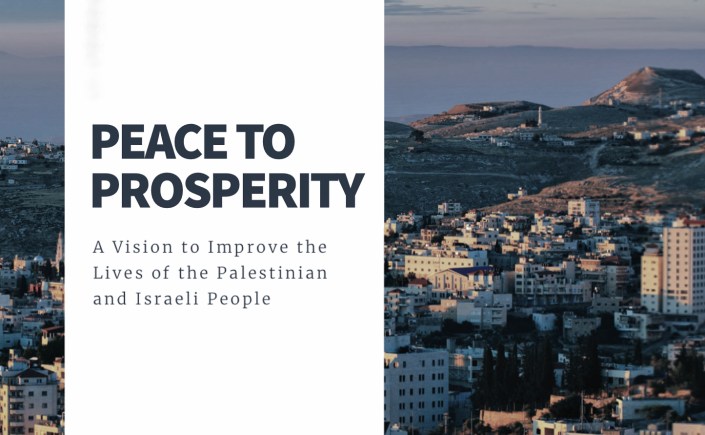
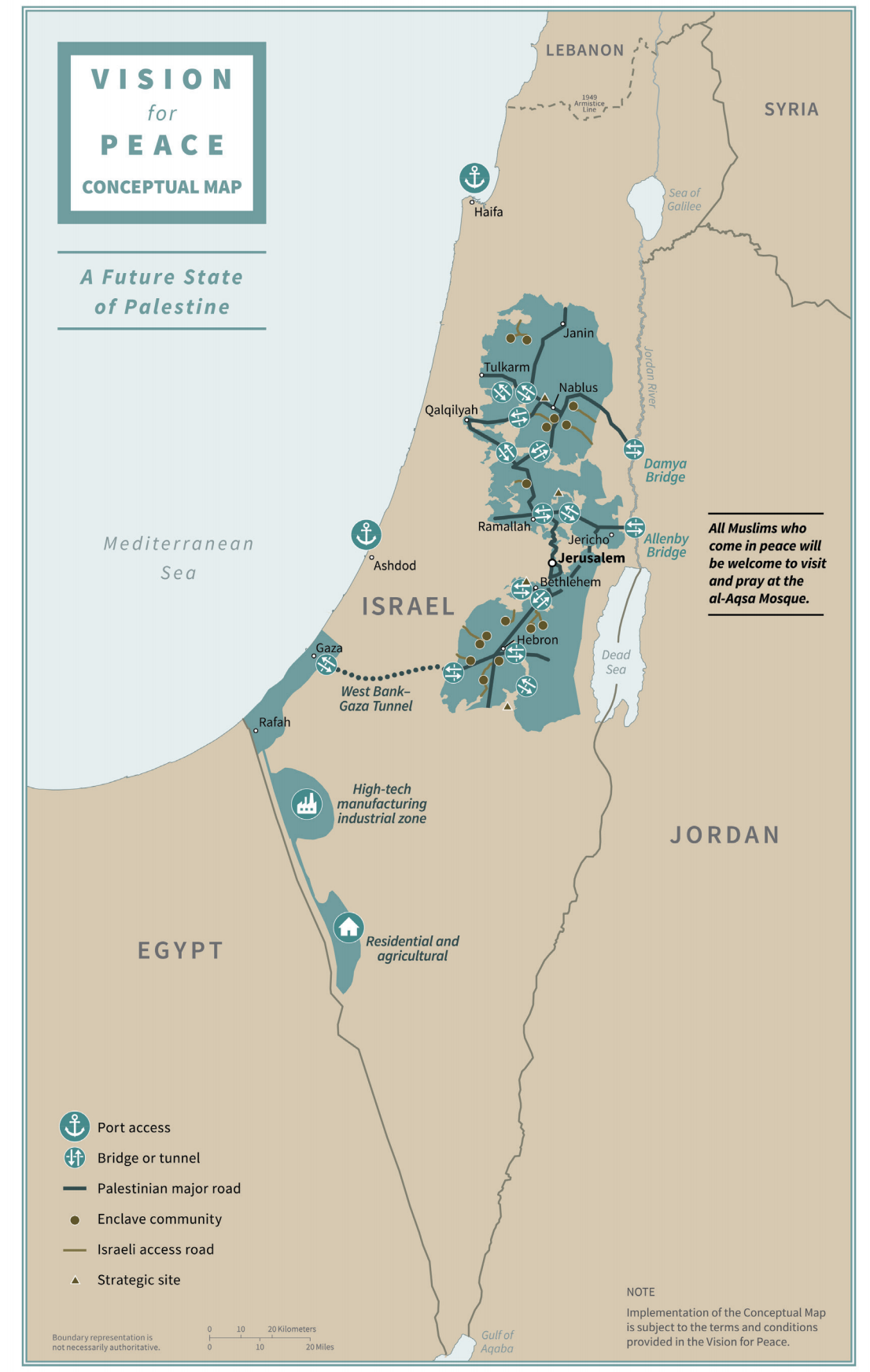


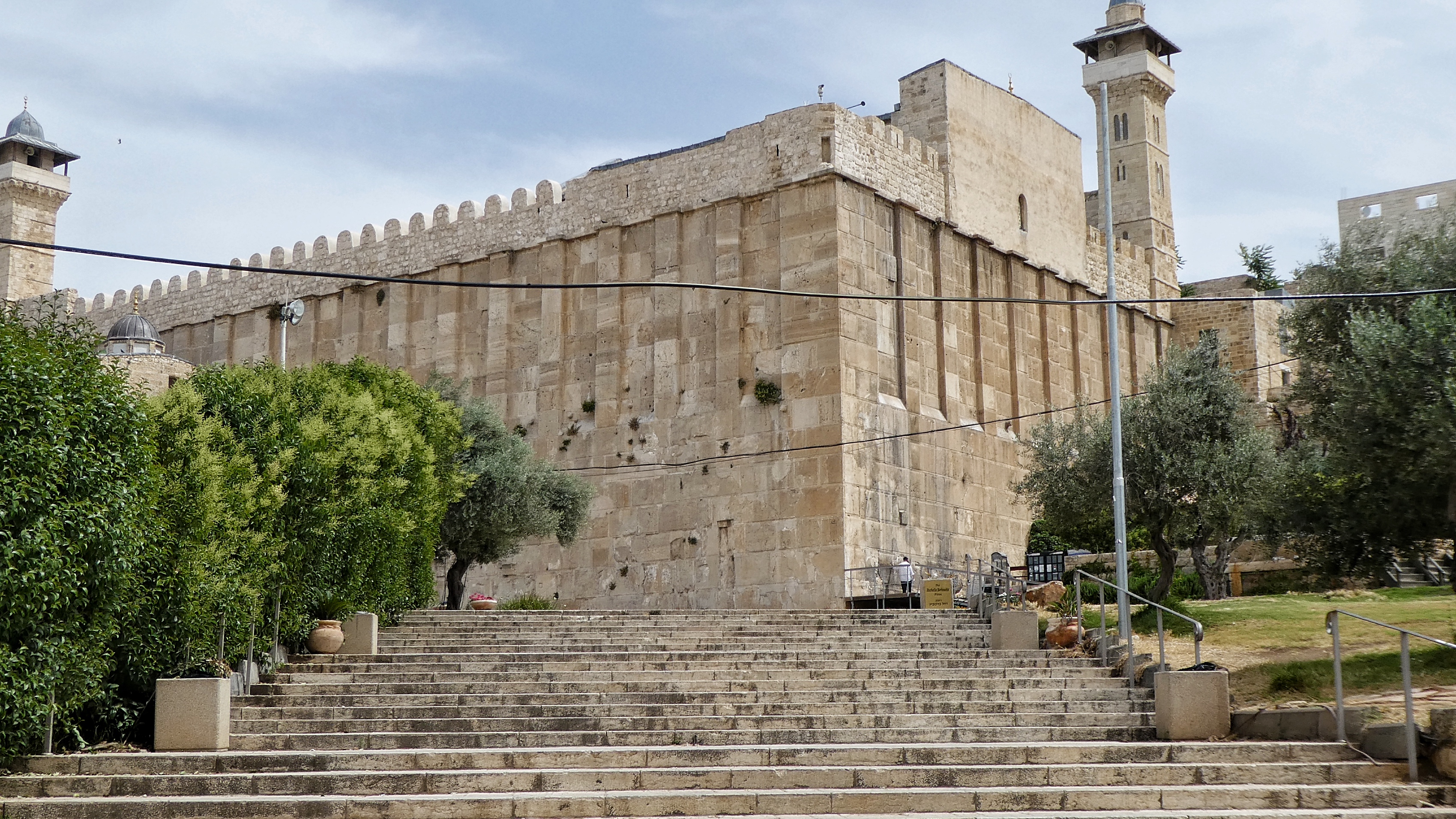


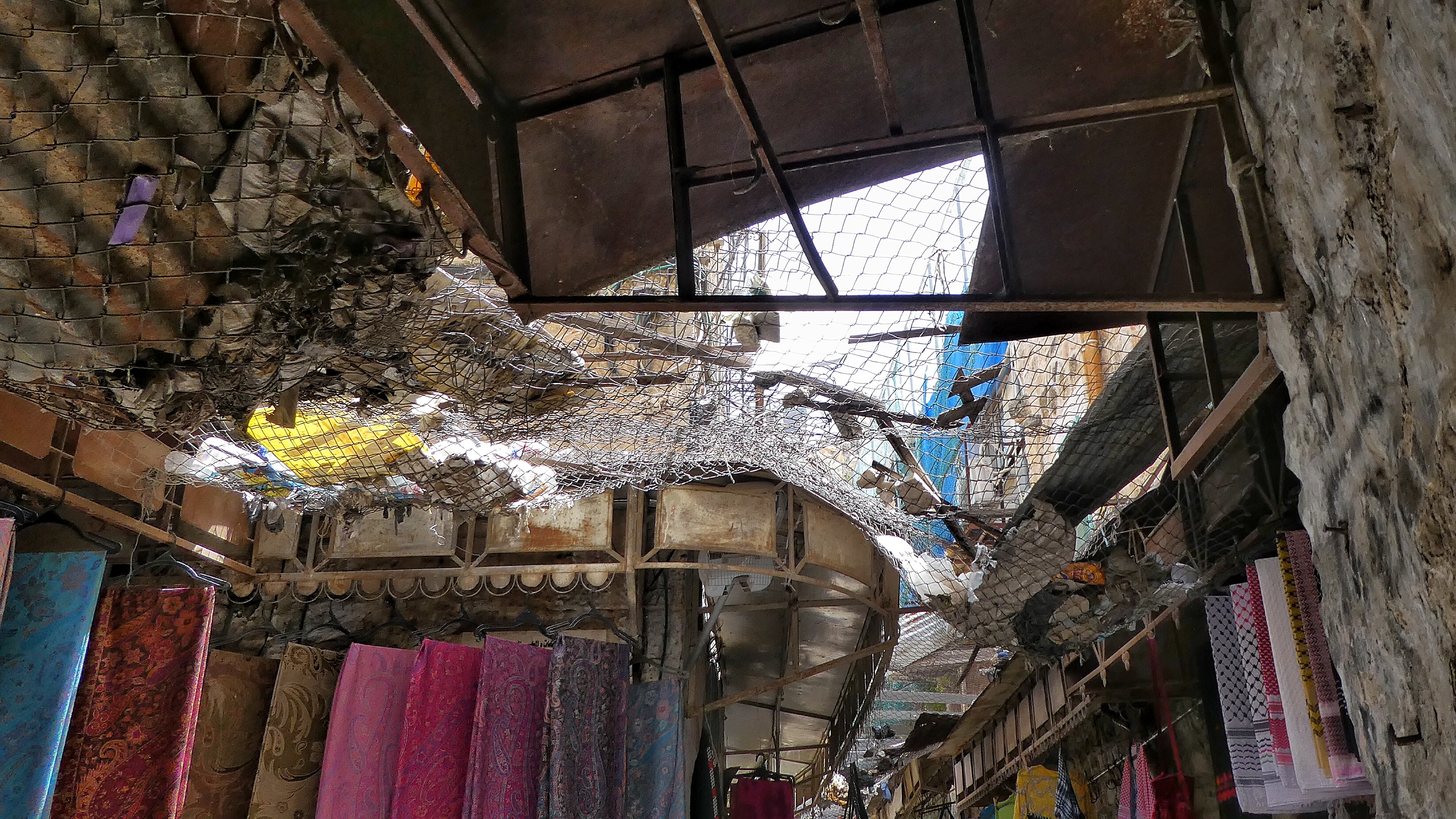


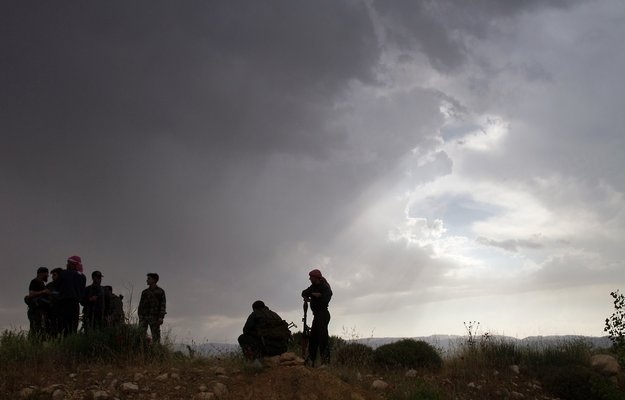


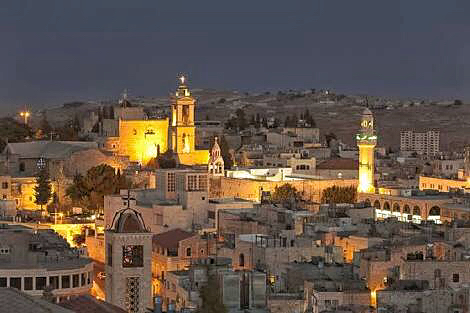


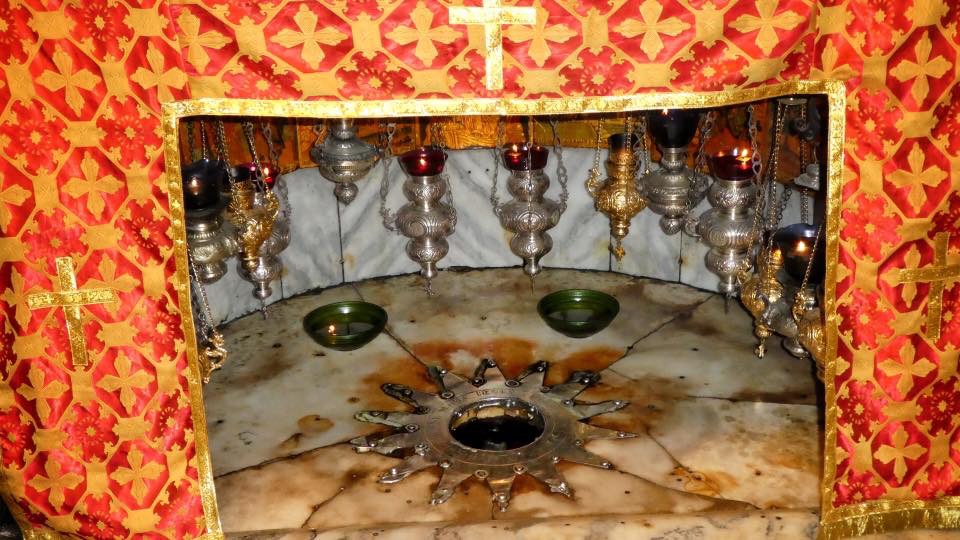

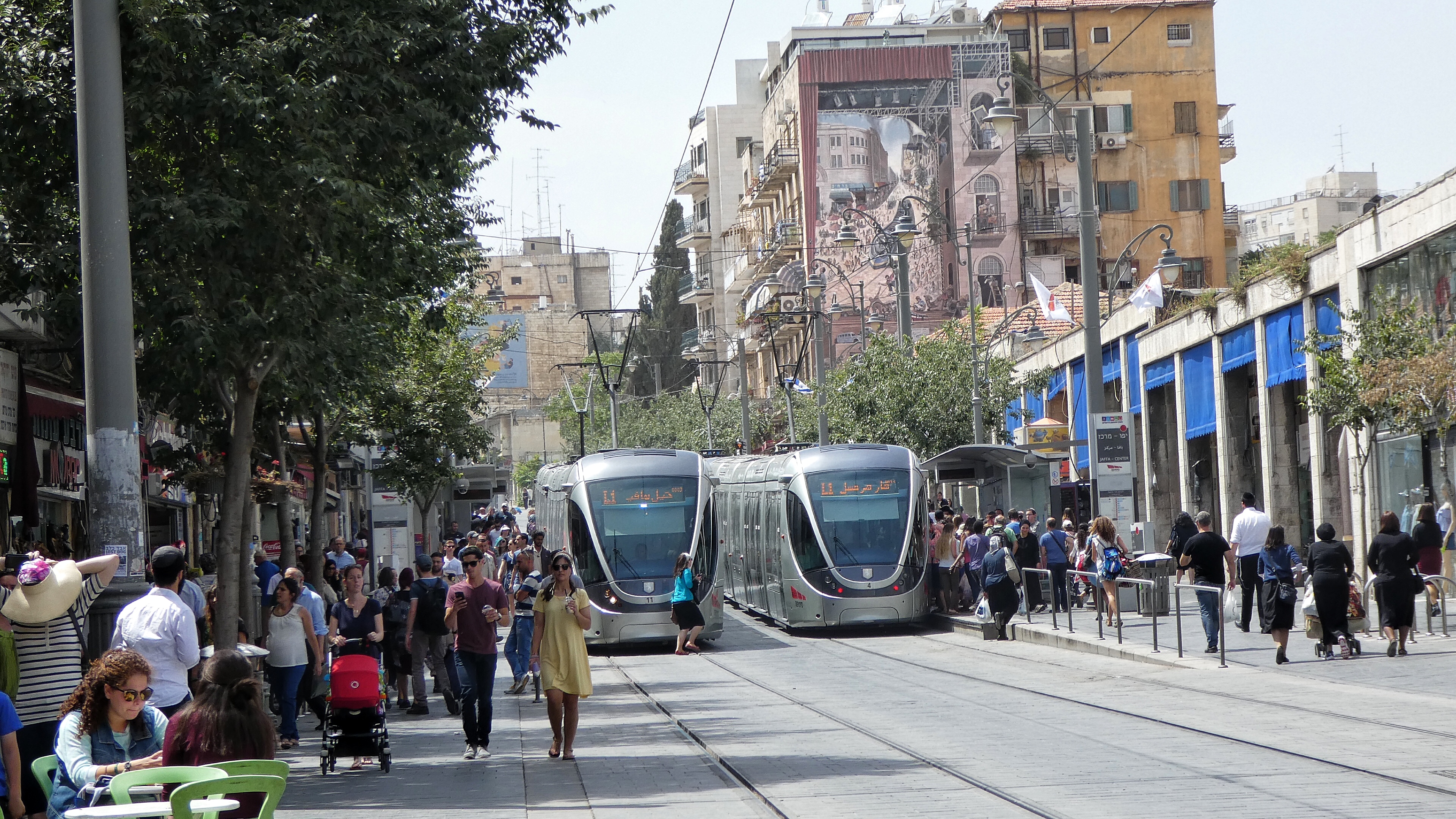
 In That Howling Infinite