It is three years since Australian songstress Judith Durham took the Morningtown Ride.Dusty Springfield’s brother Tom followed soon afterwards.
Judith might not have been my teenage crush – that was Dusty – but The Seekerswere a significant part of my adolescent soundtrack. Aussies were an exotic species back then in Britain, and to me, more associated with now-disgraced Rolf Harris with Tie Me Kangaroo Down Sport and Sun Arise, but there was also Frank Ifield and Patsy Ann Noble. More Aussies followed them to Britain – the Easybeats and Bee Gees entering the pop charts soon afterwards, while soon to be famous actors, artists, authors and activists had already steamed back to Old England’s Shores and were busy making names for themselves.
The Seekers were “discovered” by Tom Springfield and were marketed as the new Springfields, the natural heirs to that wholesome folksey trio (he had written their greatest hits or adapted them from folk standards). When the Seekers folded in 1969, group member Keith Potger gave us the New Seekers, a bunch of pretty blonde Brits who most people now believe wanted to buy the world a coke! For trivia fans, that song was (spoiler alert!) the happy hippie finale of that fabulous series Madmen.
The Seekers released their smash hit, the allegorical song of farewell The Carnival Is Over in 1965. Tom based it on a traditional Russian song about a brutal Cossack rebel [read all about him below]. A natural linguist, he’d learned Russian whilst undergoing compulsory national service in the fifties. Apparently, those few conscripts who graduated from the Ministry of Defence’s Russian Language School as interpreters and translators were regarded as the crême de la crême of conscripts. Often, trainees would put on concerts of Russian songs and plays for their own amusement.
Tom Springfield borrowed the melody of The Carnival is Over from Stenka Razin a traditional folk tune set to music in the 19th Century by Dimitry Sadovnikov. It told the tale of a drunken seventeenth century Cossack rebel who threw his Persian bride of one night over the side of his boat into the Volga River when his men accused him of going soft. Tom changed the story entirely though he retained a nautical riff and cast the star-crossed lovers as the theatre characters Pierrot and Columbinerather than casting them overboard.
Stepan Razin on the Volga (by Boris Kustodiev, (1918) State Russian Museum, St Petersburg.
Tom’s song was an ironic mid twentieth century reimagining in which a tragic, violent and mythic saga of patriotism, loyalty, and patriarchal authority illustrative of national an revolutionary folklore was reinvented into wistful pop as a saccharine song of romance, emotion, loss, and a meditation on the impermanence – how the joys of love are fleeting. No such maudlin melancholy on the part of the preening old riverboat pirate. Over the side she goes!
The lyrics and the sentiment couldn’t have been more different:
From beyond the wooded island To the riverbank he came, On his breast he held a maiden, And his comrades called her name. Then he flung her to the waters, Crying, ‘Thus I make my vow, I will have no foreign woman As a wife to me now.’
Say goodbye, my own true lover As we sing a lovers’ song How it breaks my heart to leave you Now the carnival is gone High above the dawn is waiting And my tears are falling rain For the carnival is over We may never meet again
Pierrot and Columbine
The shift from revolutionary folklore to wistful pop is emblematic of the 20th-century repurposing of folk traditions – filtering political anthems through modern, personal, and emotional frameworks. The lyrics and the sentiment couldn’t have been more different:
If you watch the hoary old Hammer horror film Rasputin, about the sinister Svengali who enchanted the last Czarina of Russia – portrayed herein by that eminent old frightener Christopher Lee – you will recognise the tune as a recurring leitmotif.
There is a clunky film reenactment of the story, sung by the famous Red Army Choir immediately below the Seekers‘ song.
Say goodbye, my own true lover
As we sing a lovers’ song
How it breaks my heart to leave you
Now the carnival is gone
High above the dawn is waiting
And my tears are falling rain
For the carnival is over
We may never meet again
Like a drum, my heart was beating
And your kiss was sweet as wine
But the joys of love are fleeting
For Pierrot and Columbine
Now the harbour light is calling
This will be our last goodbye
Though the carnival is over
I will love you ’til I die
Like a drum, my heart was beating
And your kiss was sweet as wine
But the joys of love are fleeting
For Pierrot and Columbine
Now the harbour light is calling
This will be our last goodbye
Though the carnival is over
I will love you ’til I die
Though the carnival is over
I will love you ’til I die
Stenka Razin
From beyond the wooded island
To the river wide and free
Proudly sailed the arrow-breasted
Ships of Cossack yeomanry.
On the first is Stenka Razin
With his princess by his side
Drunken holds in marriage revels
With his beauteous young bride.
From behind there comes a murmur
“He has left his sword to woo;
One short night and Stenka Razin
Has become a woman, too.”
Stenka Razin hears the murmur
Of his discontented band
And his lovely Persian princess
He has circled with his hand.
His dark brows are drawn together
As the waves of anger rise;
And the blood comes rushing swiftly
To his piercing jet black eyes.
“I will give you all you ask for
Head and heart and life and hand.”
And his voice rolls out like thunder
Out across the distant land.
Volga, Volga, Mother Volga
Wide and deep beneath the sun,
You have never such a present
From the Cossacks of the Don.
So that peace may reign forever
In this band so free and brave
Volga, Volga, Mother Volga
Make this lovely girl a grave.
Now, with one swift mighty motion
He has raised his bride on high
And has cast her where the waters
Of the Volga roll and sigh.
Now a silence like the grave
Sinks to all who stand and see
And the battle-hardened Cossacks
Sink to weep on bended knee.
“Dance, you fools, and let’s be merry
What is this that’s in your eyes?
Let us thunder out a chantey
To the place where beauty lies.”
From beyond the wooded island
To the river wide and free
Proudly sailed the arrow-breasted
Ships of Cossack yeomanry.
… Robeson’s extraordinary career intersects with some of modernity’s worst traumas: slavery, colonialism, the Cold War, Fascism. Stalinism. These are wounds covered over and forgotten, but never fully healed. Not surprisingly, the paths Robeson walked remain full of ghosts, whose whispers we can hear if we stop to listen. They talk to the past, but they also speak to the future.
Jeff Sparrow, No Way But This. In Search of Paul Robeson (2017)
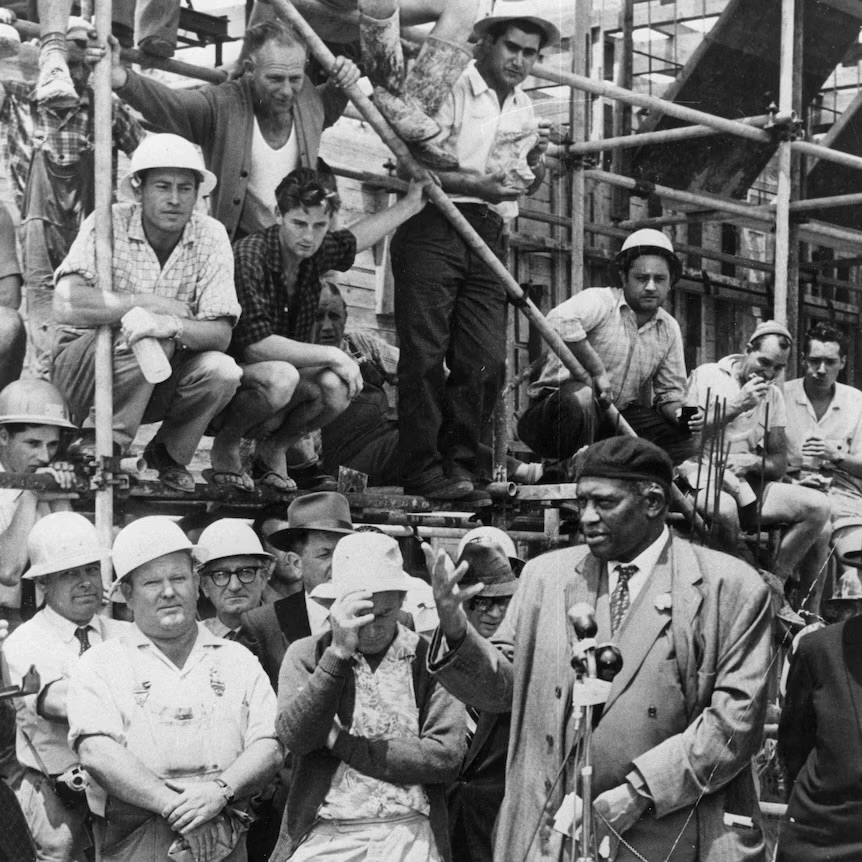
I read Jeff Sparrow’s excellent biography of the celebrated American singer and political activist Paul Robeson several years ago. I was reminded of it very recently with the publication of a book about Robeson’s visit to Australia in November 1960, a twenty-concert tour in nine cities. I have republished a review below, together with an article by Sparrow about his book, and a review of the book by commentator and literary critic Peter Craven. the featured picture is of Robeson singing for the workers constructing the Sydney Opera House.
I have always loved Paul Robeson’s songs and admired his courage and resilience in the face of prejudice and adversity. Duriung his colourful and controversial career (see the articles below), he travelled the world, including Australia and New Zealand and also, Britain. He visited England many times – it was there that my mother met him. She was working in a maternity hospital in Birmingham when he visited and sang for the doctors, nurses, helpers and patients. My mother was pregnant at the time – and, such was his charisma, that is why my name is Paul.
Paul Robeson was a 20th-century icon. He was the most famous African American of his time, and in his time, was called the most famous American in the world. His is a story of political ardour, heritage, and trauma.
The son of a former slave, he found worldwide fame as a singer and an actor, travelling from Hollywood in the USA to the West End of London, to Europe and also Communist Russia. In the sixties, he visited Australia and is long remembered for the occasion he sang the song Old Man River for the workers building the famous Sydney Opera House.
He became famous both for his cultural accomplishments and for his political activism as an educated and articulate black man in a white man’s racist world.
Educated at Rutgers College and Columbia University, he was a star athlete in his youth. His political activities began with his involvement with unemployed workers and anti-imperialist students whom he met in Britain and continued with support for the Republican cause in the Spanish Civil War and his opposition to fascism.
A respected performer, he was also a champion of social justice and equality. But he would go on to lose everything for the sake of his principles.
In the United States he became active in the civil rights movement and other social justice campaigns. His sympathies for the Soviet Union and for communism, and his criticism of the United States government and its foreign policies, caused him to be blacklisted as a communist during the McCarthy era when American politics were dominated by a wave of hatred, suspicion and racism that was very much like we see today,
Paul Robeson, the son of a slave, was a gifted linguist. He studied and spoke six languages, and sang songs from all over the world in their original language.
But his most famous song was from an American musical show from 1927 – Show Boat, by Jerome Kern and Oscar Hammerstein – called Old Man River. The song contrasted the struggles and hardships of African Americans during and after the years of slavery, with the endless, uncaring flow of the Mississippi River. It is sung the point of view of a black stevedore on a showboat, and is the most famous song from the show.
It is a paradox that a song written by Jewish Americans from the Jewish villages of Eastern Europe, the targets of prejudice and pogrom, should voice the cries of America’s down-trodden people.
When the song was first heard, America was a divided country and people of colour were segregated, abused and murdered. The plot of the musical was indeed about race, although it pulled its punches with the romantic message that love is colour-blind
It reflected America’s split personality – the land of the free, but the home of the heartless. Robeson sung the words as they were written, but later in his career, as he became more and more famous, he changed them to suit his own opinions, feelings, sentiments, and politics. So, when he sang to the workers in Sydney, Australia, his song was not one of slavery but one of resistance.
The Big Voice of the Left … Paul Robeson Resounds to this Day
Mahir Ali The Australian November 9, 2010
FIFTY years ago today, more than a decade before it was officially inaugurated, the Sydney Opera House hosted its first performance by an internationally renowned entertainer when Paul Robeson, in the midst of what turned out to be his final concert tour, sang to the construction workers during their lunch break.
Alfred Rankin, who was at the construction site on November 9, 1960, recalls this “giant of a man” enthralling the workers with his a cappella renditions of two of his signature songs, Ol’ Man River and Joe Hill.
“After he finished singing, the men climbed down from the scaffolding, gathered around him and presented him with a hard hat bearing his name,” Paul Robeson Jr writes in his biography of his father, The Undiscovered Robeson. “One of the men took off a work glove and asked Paul to sign it. The idea caught on and the men lined up. Paul stayed until he had signed a glove for each one of them.”
Workers had the best seats when Robeson sang at the Sydney Opera House, 9 November 1960
The visit, Rankin tells The Australian, was organised by the Building Workers Industrial Union of Australia and the Australian Peace Council’s Bill Morrow, a former Labor senator from Tasmania.
In a chapter on Robeson’s visit in the book Passionate Histories: Myth, Memory and Indigenous Australia, which will be launched in Sydney tomorrow, Ann Curthoys quotes the performer as saying on the day after his visit to the Opera House site: “I could see, you know, we had some differences here and there. But we hummed some songs together, and they all came up afterwards and just wanted to shake my hand and they had me sign gloves. These were tough guys and it was a very moving experience.”
In 1998, on the centenary of Robeson’s birth, former NSW minister John Aquilina told state parliament his father had been working as a carpenter at the Opera House site on November 9, 1960: “Dad told us that all the workers – carpenters, concreters and labourers – sang along and that the huge, burly men on the working site were reduced to tears by his presence and his inspiration.”
Curthoys, the Manning Clark professor of history at the Australian National University, who plans to write a book about the Robeson visit, also cites a contemporary report in The Daily Telegraph as saying that the American performer “talked to more than 250 workmen in their lunch hour, telling them they were working on a project they would be proud of one day”. [Curthoy’s book, The Last Tour: Paul and Eslanda Robeson’s visit to Australia and New Zealand, was published at last in 2025]
According to biographer Martin Duberman, Robeson wasn’t particularly enthusiastic about the offer of a tour of Australia and New Zealand from music entrepreneur D. D. O’Connor, but the idea of earning $US100,000 for a series of 20 concerts, plus extra fees for television appearances and the like, proved irresistible.
Robeson had once been one of the highest paid entertainers in the world, but from 1950 onwards he effectively had been deprived of the opportunity of earning a living. A combination of pressure from the US government and right-wing extremists meant American concert halls were closed to him, and the US State Department’s refusal to renew his passport meant he was unable to accept invitations for engagements in Europe and elsewhere. Robeson never stopped singing but was able to do so only at African-American churches and other relatively small venues. His annual income dwindled from more than $US100,000 to about $US6000.
At the time, Robeson was arguably one of the world’s best known African Americans. As a scholar at Rutgers University, he had endured all manner of taunts and physical intimidation to excel academically and as a formidable presence on the football field: alone among his Rutgers contemporaries, he was selected twice for the All-American side.
Alongside his athletic prowess, which was also displayed on the baseball field and the basketball court, he was beginning to find his voice as a bass baritone. When a degree in law from Columbia University failed to help him make much headway in the legal profession, he decided to opt for the world of entertainment, and made his mark on the stage and screen as a singer and actor.
An extended sojourn in London offered relief from the racism in his homeland and established his reputation as an entertainer, not least through leading roles in the musical Show Boat and in Othello opposite Peggy Ashcroft’s Desdemona.
(He reprised the role in a record Broadway run for a Shakespearean role in 1943 and again at Stratford-upon-Avon in 1959)
Robeson returned to the US as a star in 1939 and endeared himself to his compatriots with a cantata titled Ballad for Americans.
In the interim, he had been thoroughly politicised, not least through encounters in London with leaders of colonial liberation movements such as Kenya’s Jomo Kenyatta, Ghana’s Kwame Nkrumah and India’s Jawaharlal Nehru.
He had sung for republicans in Spain and visited the Soviet Union at the invitation of filmmaker Sergei Eisenstein.
Robeson’s refusal to reconsider his political affiliations once World War II gave way to the Cold War made him persona non grata in his homeland: his infatuation with the Soviet Union did not perceptibly pale in the face of horrific revelations about Stalinist excesses, partly because he looked on Jim Crow as his pre-eminent foe. It is therefore hardly surprising that exposure in Australia to Aboriginal woes stirred his passion.
On the day after his appearance at the Opera House site, at the initiative of Aboriginal activist and Robeson fan Faith Bandler he watched a documentary about Aborigines in the Warburton Ranges during which his sorrow turned to anger, and he vowed to return to Australia in the near future to fight for their rights. He made similar promises to the Māori in New Zealand.
But the years of persecution had taken their toll physically and psychologically: Robeson’s health broke down in 1961 and, on returning to the US in 1963, he lived the remainder of his life as a virtual recluse. He died in 1976, long after many of his once radical aspirations for African Americans had been co-opted into the civil rights mainstream. His political views remained unchanged.
It’s no wonder that, as writer and broadcaster Phillip Adams recalls, Robeson’s tour was like “a second coming” to “aspiring young lefties” in Australia.
Duberman cites Aboriginal activist Lloyd L. Davies’s poignant recollection of Robeson’s arrival in Perth on the last leg of his tour, when he made a beeline for “a group of local Aborigines shyly hanging back”.
“When he reached them, he literally gathered the nearest half dozen in his great arms.”
Davies heard one of the little girls say, almost in wonder, “Mum, he likes us.”
She would have been less surprised had she been aware of the Robeson statement that serves as his epitaph: “The artist must take sides. He must elect to fight for freedom or slavery. I have made my choice. I had no alternative.”
Left for Good – Peter Craven on Paul Robeson
The Weekend Australian. March 11 2017
What on earth impelled Jeff Sparrow, the Melbourne-based former editor of Overland and left-wing intellectual, to write a book about Paul Robeson, the great African American singer and actor?
Well, he tells us: as a young man he was transporting the libraries of a lot of old communists to a bookshop and was intrigued by how many of the books were by or about Robeson.
All of which provokes apprehension, because politics is a funny place to start with
Robeson, even if it is where you end or nearly end. Robeson was one of the greatest singers of the 20th century. When I was a little boy in the 1950s, my father used to play that velvet bottomlessly deep voice singing not only Ol’ Man River — though that was Robeson’s signature tune and his early recording of it is one of the greatest vocal performances of all time — but all manner of traditional songs. Not just the great negro spirituals (as they were known to a bygone age; Sparrow calls them slave songs) such as Go Down, Moses, but Shenandoah, No, John, No and Passing By, as well as the racketing lazy I Still Suits Me.
My mother, who was known as Sylvie and loathed her full name, which was Sylvia, said the only time she could stand it was when Robeson sang it (“Sylvia’s hair is like the night … such a face as drifts through dreams, such is Sylvia to the sight”). He had the diction of a god and the English language in his mouth sounded like a princely birthright no one could deny.
It was that which made theatre critic Kenneth Tynan say the noise Robeson made when he opened his mouth was too close to perfect for an actor. It did not stop him from doing Eugene O’Neill’s All God’s Chillun’ Got Wings or The Emperor Jones, nor an Othello in London in 1930 with Peggy Ashcroft as his Desdemona and with Sybil Thorndike as Emilia.
Robeson later did Othello in the 1940s in America with Jose Ferrer as Iago and with Uta Hagen (who created Martha in Who’s Afraid of Virginia Woolf?) as his Desdemona. He toured the country; he toured the south, which was almost inconceivable. When he was told someone had said the play had nothing to do with racial prejudice, Robeson said, “Let him play it in Memphis.”
Southern white audiences were docile until Robeson’s Othello kissed Hagen’s Desdemona: then they rioted. Robeson also made a point, at his concerts and stage shows, of insisting the audience not be segregated. James Earl Jones. who would play Robeson on the New York stage, says in his short book about Othello, “I believe Paul Robeson’s Othello is the landmark performance of the 20th century.”
Robeson would play the Moor again in 1959 at Stratford-upon-Avon. By that time, though, he had fallen foul of 1950s America. He had been called before the McCarthyist House Un-American Activities Committee. You can hear a dramatisation of his testimony with Earl Jones as Robeson, which includes an immemorial reverberation of his famous words when senator Francis E. Walter asked him why he didn’t just quit the US and live in Russia.
“Because my father was a slave and my people died to build this country, and I am going to stay here and have a part of it just like you. And no fascist-minded people will drive me from it. Is that clear?”
It’s funny how it was the real communists such as Bertolt Brecht and Robeson who handled the committee best. Still, in an extraordinary act of illiberalism, they took away his US passport and it took two years for the Supreme Court to declare in 1958 in a 5-4 decision that the secretary of state was not empowered to withdraw the passport of any American citizen on the basis of political belief.
When Paul Robeson sang at the Sydney Opera House
It was this that allowed Robeson to do his Othello in Peter Hall’s great centenary Stratford celebration along with Charles Laughton’s Lear and Laurence Olivier’s Coriolanus. It also allowed him to come to Australia. Very early on Sparrow tells the story of watching the clip of Robeson singing Ol’ Man River to construction workers in Sydney with the Opera House still a dream in the process of meeting impediments. The version Robeson sings is his own bolshie rewrite (“I must keep fightin’/ Until I’m dyin’ ”).
Well, fight he did and bolshie he was. I remember when I was a child my father telling me Robeson was a brilliant man, that he had won a sporting scholarship for American football (to Rutgers, in fact), that he’d gone on to receive a law degree (from Columbia, no less) and that he was so smart he had taught himself Russian.
But the sad bit was, according to my father, that he’d become a communist. Understandably so, my father thought, because of how the Americans treated the blacks. My father’s own radical impulses as a schoolboy had been encouraged, as Robeson’s were on a grander scale, by World War II where Uncle Joe Stalin was our ally in the war against Hitler’s fascism.
But this was the Cold War now, and a lot of people thought, with good reason, that it was behind the Iron Curtain that today’s fascists were to be found. Even if others such as the great German novelist Thomas Mann and Robeson thought they were encroaching on Capitol Hill.
Sparrow’s book No Way But This is circumscribed at every point by his primary interest in Robeson as a political figure of the Left rather than as a performer and artist.
It’s an understandable trap to fall into because Robeson was an eloquent, intelligent man of the Left and his status was also for a while there — as Sparrow rightly says — as the most famous black American on Earth. So his radicalism is both pointed and poignant.
His father, who became a Methodist minister, was born a slave and was later cruelly brought down in the world. But, unlike the old Wobblies whose bookcases he transported, Sparrow is not inward with what made Robeson famous in the first place and it shows.
No Way But This is a great title (“no way but this / killing myself, to die upon a kiss” is what Othello says when he’s dying over the body of Desdemona, whom he has killed) but Sparrow’s search for Robeson is not a great book.
As the subtitle suggests, it is a quest book but Sparrow is a bit like the Maeterlinck character cited in Joyce’s Ulysses who ends up meeting himself (whether in his Socrates or his Judas aspect) on his own doorstep. Sparrow goes to somewhere in the US associated with Robeson and meets a black-deaths-in-custody activist full of radical fervour. She introduces him to an old African-American who was in Attica jail for years. There is much reflection on the thousands of black people who were slaves on the plantations and the disproportionate number of them now in US prisons.
Yes, the figures are disquieting. No, they are not aspects of the same phenomenon even though ultimately there will be historical connections of a kind.
And so it goes. But this is a quest book that turns into a kind of travelogue in which Sparrow goes around the world meeting people who might illuminate Robeson for him but don’t do much for the reader except confirm the suspicion that the author’s range of acquaintance ought to be broader or that he should listen to people for a bit more rather than seek confirmation of his own predilections.
There are also mistakes. Sparrow seems to know nothing about the people with whom Robeson did Othello. There’s no mention of Thorndike, and when Ashcroft comes up as someone he had an affair with, Sparrow refers to the greatest actress of the Olivier generation as “a beautiful glamorous star”. Never mind that she was an actress of such stature, Judi Dench said when she played Cleopatra she could only follow Ashcroft’s phrasing by way of homage.
Sparrow also says “American actor Edmund Kean started using paler make-up for the role, a shift that corresponded with the legitimisation of plantation slavery”. Kean, who was the greatest actor of the later romantic period, was English, not American. His Othello would, I think, be more or less contemporary with William Wilberforce lobbying to have slavery made illegal. Sparrow seems to be confusing Kean with Edwin Booth, the mid-century Othello who happens to have been the brother of John Wilkes Booth, the assassin of Abraham Lincoln. But it’s still hard to see where the plantations fit in.
A few pages later — and it’s not important though it’s indicative — we hear of the rumour that Robeson was “romancing Edwina Mountbatten, Countess Mountbatten of Burma”. Well, whatever she was called in the early 1930s, it wasn’t Countess Mountbatten of Burma because her husband, Louis Mountbatten, the supreme allied commander in Southeast Asia during World War II, didn’t get the title until after the Japanese surrendered to him — guess where?
Such slips are worth belabouring only because they make you doubt Sparrow’s reliability generally. It’s worth adding, however, that his chapter about the prison house that the Soviet Union turned itself into is his most impressive. And the story of the last few years of Robeson’s life, afflicted with depression, subject to a lot of shock treatment, with recurrent suicide attempts, is deeply sad.
He felt towards the end that he had failed his people. He just didn’t know what to do. It was the melancholy talking as melancholy will.
It’s better to remember the Robeson who snapped back at someone who asked if he would join the civil rights movement: “I’ve been a part of the civil rights movement all my life.”
It’s to Sparrow’s credit that he’s fallen in love with the ghost of Robeson even if it’s only the spectral outline of that power and that glory he gives us.
Peter Craven is a cultural and literary critic
The Last Tour: Paul and Eslanda Robeson’s visit to Australia and NZ
Australians of a certain age know all about Paul Robeson’s magnificent voice. They know, too, that on a warm November day more than 60 years ago, the bass-baritone sang to 250 construction workers on the Sydney Opera House building site as the workers sat on scaffolding and stacks of timber and ate their lunch. Fewer know of Robeson’s Pro-Communist and pro-Soviet views and of how those beliefs damaged his career at home and abroad. And that’s not so surprising – as historian Ann Curthoys points out, the Cold War suppression of Robeson’s career and memory has been very effective.
Recovering the story of a man who was once the most famous African-American in the world and his equally impressive wife, Eslanda, is the task Curthoys, who grew up in an Australian communist family in the 1950s and 60s, sets herself in a new book, The Last Tour: Paul and Eslanda Robeson’s visit to Australia and New Zealand.
It follows the couple’s tour – a mix of his concerts and their public talks and media interviews – to Australia and New Zealand over October, November and December 1960. Curthoys goes further, using the seven-week tour by this celebrated singer to explore the social and political changes just beginning in post-War Australia. Her interest is “the slow transition from the Cold War era of the late 1940s and 50s, to the 60s era of the New Left, new social movements and the demand for Aboriginal rights”.
Curthoys is 79 now, but when Robeson toured she was 15 and living in Newcastle, a city the singer did not visit. Her mother, Barbara Curthoys, a well-known activist and feminist, was a fan of the singer but the trip passed the teenager by.
It was only decades later, as she researched her 2002 book on the 1965 Aboriginal Freedom Ride through regional NSW, that Curthoys connected with the story. As a university student she had taken part in the ride and moved from communism to the New Left. When she approached the subject as a historian, she realised that for some riders, their attendance at Robeson’s concerts five years earlier had been a defining moment in their “understanding of racial discrimination and Aboriginal rights”.
Curthoys has had a long career in research and teaching at the Australian National University and the University of Technology, Sydney. She’s part of a remarkable family, and not just parents Barbara and Geoffrey, who was a lecturer in chemistry at Newcastle University. Her sister Jean is a leading feminist philosopher and her husband, John Docker, has written several books on cultural history, popular culture and the history of ideas.
Curthoys began researching The Last Tour in 2007, but put it aside for another project on Indigenous Australians before resuming work on it during the Covid-19 lockdowns. Post-Robeson, she has worked with two scholars on a forthcoming book on the history of domestic violence in Australia.
The tour, she says, was really several tours rolled into one with the Robesons covering many bases – from music to Cold War politics to feminism to Aboriginal rights. It was a conservative era: Robert Menzies’ Liberals ruled federally and five of the six Australian states had conservative governments. Robeson’s presence went unremarked by governments but for fans of his music – and his ideals – the tour was a significant event that was well covered by the press, even those opposed to his views on the Soviet Union.
For some fans, it was a music tour – 20 concerts in nine cities in Australia and New Zealand, at which Robeson sang his show-stoppers, including Deep River, Go Down, Moses; We Are Climbing Jacob’s Ladder, and the song with which he is always identified, Ol’ Man River. The 62-year-old with the extraordinary voice also delivered “recitations” – a monologue from Shakespeare’s Othello, an anti-segregationist poem Freedom Train, and William Blake’s anthem, Jerusalem.
What a thrill for Australian audiences, some of whom had followed the handsome, 1.9m singer and actor since the 1920s. Even in an age of limited communications, Robeson was well-known here through films; records and radio. Curthoys notes that one indicator of his fame was the way promising Aboriginal singers in the 1930s were dubbed “Australia’s Paul Robeson”.
He was famous – and controversial. Unlike many other supporters of communist ideas, Robeson refused to break from the Soviets after the invasion of Hungary in 1958 and continued to defend Moscow. The “anti-communist repression and hysteria” that gripped the US in the McCarthy era had a profound effect on his life and career, Curthoys writes. He was cited in 1947 by the House Committee on Un-American Activities as “supporting the Communist Party and its front organisations”.
A 1949 US tour was destroyed “after mass cancelling of bookings by venue managers either vehemently opposed to his politics or afraid in such a hostile climate of being classed as communist sympathisers themselves”. Then in 1950, he lost his passport. Over the years, he would “become for communists an emblem of defiance in the face of adversity, and one of the communist world’s most prominent speakers for peace,” Curthoys writes.
Unable to travel until his passport was restored in 1958, Robeson was steadfast in his support for communist ideals. That commitment was evident in Australia when the “peace tour” – built around a series of public meetings – was as important to the singer as the popular concerts where he reached a different audience. Curthoys details a related strand – the “workers’ tour”, which involved seven informal concert performances to groups of railway workers, waterside workers and those at work on the Opera House on that November day.
She says the events revealed much about the “the nature of class in Australia and New Zealand” at a time when “strong and confident trade unions” were interested in “broad cultural concerns”. Over several weeks Robeson attracted people who loved his music alongside those who loved his politics. Far from being shunned for his pro-Soviet views, Curthoys suggests, there was support from two different audiences – music people and “left-wing people who were either pro-Soviet or not”.
Even so, the Cold War anxieties over the Soviets meant a positive reception was not necessarily assured when Paul and Eslanda flew into Sydney at midday on October 12, 1960. They were greeted by several hundred fans carrying peace banners but they faced pointed questions about the Soviet Union at the 20-minute press conference at the airport.
Robeson refused to condemn the suppression of the Hungarian uprising and media reports suggested a torrid exchange. Curthoys reviewed a tape of the press conference and says while the questioning was “a little aggressive”, the event was not as bad as reported in the media. Indeed it was “fairly friendly” albeit for a “bad patch” when Robeson refused to budge on Hungary.
That tape and others, along with newspapers and Trades Hall documentation, yielded rich material but so too did the ASIO files on the couple. At the Palace Hotel in Perth on December 2 an ASIO operative appeared to be among those at a reception organised by the communist-influenced Peace Council. Among guests were the writer (and well-known communist) Katharine Susannah Prichard and “two women by the name of Durack, who were writers and/or artists”.
Curthoys sees Robeson as a “very courageous, very intelligent, intellectual person, very thoughtful about music, about folk music, about people”, but says his commitment to the Soviet Union was a costly mistake. He had embraced Moscow when he and Eslanda visited in 1934 at the invitation of Soviet film director Sergei Eisenstein. Later, Robeson, a fluent Russian speaker, would say it was in the Soviet Union that he felt for the first time he was treated “not through the prism of race but simply as a human being”. Curthoys writes: “The excitement and validation he received during this visit would create a loyalty that later events would not dislodge and the public expression of which would damage him politically, commercially and professionally.”
The couple made several trips to the Soviet Union and accepted its political system completely. Curthoys notes: “They made no public comments about Stalin’s forced collectivisation policies that were in place during the 1930s and led to famine and the loss of millions of lives.” In Sydney Robeson was careful, but on November 5 he celebrated the forthcoming anniversary of the Russian Revolution at the Waterside Workers Federation in Sussex Street. Two days later, during his first public concert in the city, he paid tribute to the Soviet Union as “a new society”.
The Soviet Union had been a great influence but so too was the Spanish Civil War, which Curthoys says helped define his view of the political responsibilities of the artist.
“Increasingly famous as a public speaker, on 24 June, 1937, he made a huge impression at a mass rally at the Albert Hall in London sponsored by prominent figures such as WH Auden, EM Forster, Sean O’Casey, HG Wells and Virginia Woolf, held to raise financial aid for Basque child refugees from the war. In what became his most well-known and influential speech, he stressed how important it was for artists and scientists and others to take a political stand: ‘Every artist, every scientist, every writer must decide NOW where he stands. He has no alternative. There is no standing above the conflict on Olympian heights.’”
After World War II, Robeson was deeply involved in radical and anti-racism politics in the US but in 1947, as the Cold War worsened, he had had enough. He announced he intended to abandon the theatre and concert stage for two years to speak out against race hatred and prejudice. In fact he stopped stage acting for 12 years but continued to perform as a singer, often in support of political causes.
It was another 13 years before Australian audiences heard that glorious voice “live”. Australians, it seemed were primed for Paul. The tour may have been ignored by governments but during her research, Curthoys was “overwhelmed” by people “ready to assist, donating old programs, photographs, pamphlets, records, cassette tapes, invitations and other documents”.
Today, much of the Robeson image is defined by his Opera House performance on November 9 – high culture delivered, without condescension, to a building crew by a champion of the workers. Robeson, in a heavy coat, despite the warm weather, sang “from a rough concrete stage”. A PR expert could not have dreamt up a a better way to “democratise” an opera house than having the “first concert” delivered in its half- built shell. Curthoys shows how the event, no matter how memorialised now, was a small part of a tour that proved a financial and political success for the Robesons, who left Australia on December 4.
A few months later, depressed and exhausted, Robeson tried to commit suicide in Moscow. Over the next three years he was treated but could no longer perform or engage in public speaking. Curthoys notes that though his affairs with other women had strained their marriage, he and Eslanda had a common political vision and were together until her death in 1965. Robeson died on January 23, 1976 at the age of 77.
Helen Trinca’s latest book is Looking for Elizabeth: The Life of
Elizabeth Harrower (Black Inc.)
Soho feeds the needs and hides the deeds, the mind that bleeds Disenchanted, downstream in the night Soho hears the lies, the twisted cries, the lonely sighs Till she seems lost in dreams
Al Stewart, Soho (needless to say) (1973)
Whenever I recall London’s Soho in the sixties, I always think about my bedsitter days in the city in the early seventies and also, British singer-songwriter Al Stewart’s over-orchestrated but quite excellent debut album of 1967, Bedsitter Images.
My bedsitter images
My bedsitter images
You could say that I knew Al Stewart’s London ‘ere I first knew London. I bought the album when, as a sixth former, I first saw him perform at the famous Jug o’ Punch folk club in Digbeth, Birmingham, run by The Ian Campbell Folk Group. I’d go there regularly with my schoolmates – we saw some great singers, including a young Joni Mitchell in the summer of 1968 – it was love at first sight, and I bought her first album there too: Songs from a Seagull). Al may have autographed his record – I can’t recall. It was stolen from my bedsit room in Reading in 1970 along with many of my favourite discs – including that one of Joni’s.
Maybe it’s about what here in Australia – borrowing from our indigenous compatriots – we might call “spirit of place”: the association with the streets within a hop, skip and an amble from Old Compton Street out into Shaftsbury Avenue and that bookshop in Charing Cross Road, the opening verse of the second track Swiss Cottage Manoeuvres, and that flat in Swiss Cottage, a suburb I used to frequent in the seventies when several of my friends lived there. You can listen to the whole of album below.
In a trawl through my back pages (OK! Enough with the Bob Dylan already!), wrote of my early encounters with Soho:
”As a sixth former, I’d often hitch to “swinging” London for the weekend, to explore the capital and visit folk and jazz clubs, kipping in shop door-ways and underground car parks under cardboard and napping wrapped in newspapers, and eating at Wimpy bars and Lyons teas houses”.
And naturally, I discovered Soho, a bright, colourful and disreputable warren of narrow streets behind the theatre-strip of Shaftesbury Avenue, with its mix of cafés, trattorias, delicatessen, book shops and strip clubs – and Carnaby Street, internationally famous by then as the fashion mecca and the “place to be” of “Swinging London”.
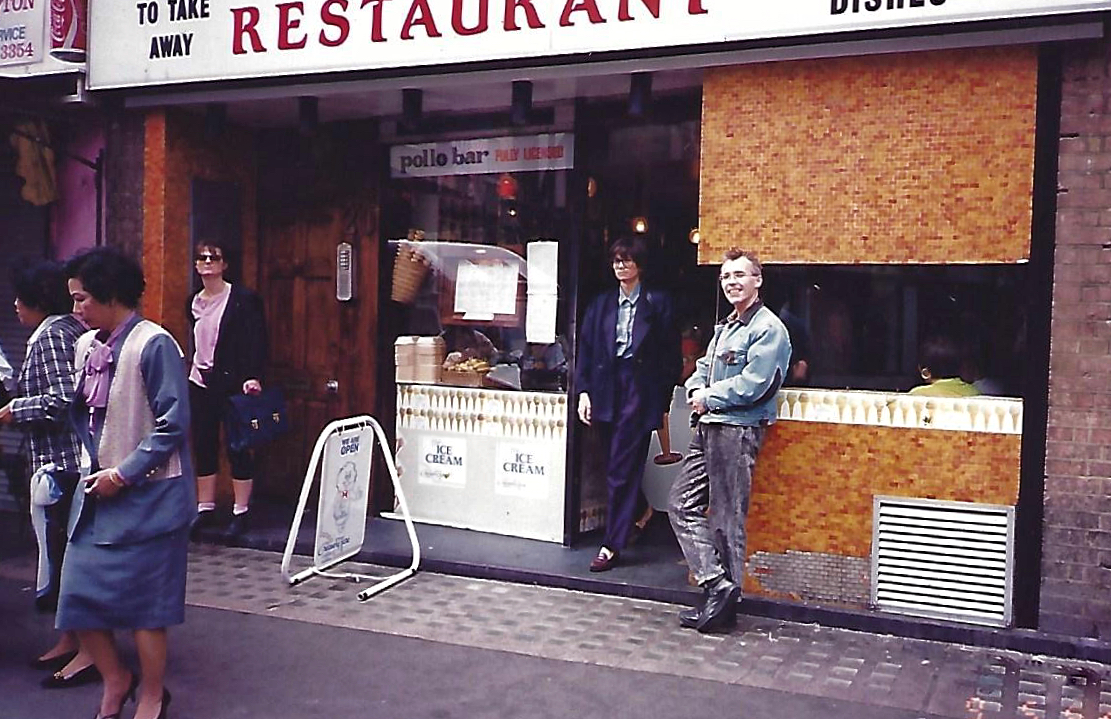
“… the motorway from Birmingham to London was a road well-traveled. In my final year at Moseley Grammar, I’d often hitch down to London for a weekend with pals who’d gone there before. We’d hang out at cheap and cheerful Pollo’s Italian restaurant in Old Compton Street in Soho and the Coach and Horses across the road, and go to Cousins folk and blues joint in a cellar in nearby Greek Street, and the 101 Jazz Club off Oxford Street. Bunjies folk cafè and Ronnie Scott’s jazz club were just around the corner. After a meal or a pint, I’d often catch the last tube to the end of the line closest to the M1. I can’t recall how many times I headed off into the night; and there were always drivers on the road at the witching hour. I guess many folks “get the urge for going”, as Joni sang back then, “and they had to go …” And in those generous times, people were happy to offer a lift to a wayfaring stranger – gentle souls who would not leave strays stranded by the dark wayside; lonesome folks seeking company and conversation in the dark night of the soul; curious people wondering why a young man would hitch the highways in the middle of the English night”. There’s more in Ciao Pollo di Soho – the café at the end of the M1.
Pollo. The café at the end of the motorway
I saw a werewolf with a Chinese menu in his hand, walking the streets of Soho in the rain. Warren Zevon
There was something vicarious in ithe seedy, needy, greedy vibe of the priapic songs on Al’s follow up albums. An old friend and Al Stewart fanboy who has now passed on called them aural masturbation. Although there were many “love chronicles”, the title track of his second album, Al also wrote about melancholy middle aged suburban couples, historical events and more, with the odd foray into poetic mysticism, self-reflection, and also, nonsense. And some excellent instrumentals – he is an imaginative and flamboyant guitarist. My flat mates and I were all fans of Al back then, and went to most of his gigs when he played in London. Here’s one of our favourite ‘history’ songs:
In the early seventies, when a girlfriend started going out with Al, I actually got to know him for a brief while. Indeed, once, when he played in Birmingham Town Hall, me and a couple of pals drove up to my old hometown to see him, and after the show, invited him back to my folks’ place for a late night fry up. My mom reckoned he need fattening up. And afterwards, she and Al sat in the kitchen for a couple of hours talking about pop music. “I love Cat Stevens”, mom said. “Oh, I much prefer the Incredible String Band”, said Al. “Oh, they’re very weird, but Paul like them!” She said. Then they got talking about Mick Jagger. And my dad, in the sitting room, said to us others gathered there, and referring to Al’s stature, said “there’s not much to him is there!”. Strange but nice how you recall these little things. The folks have passed on a long time ago …
Afterthought – Clifton in the Rain
Whilst I always associate Al Stewart with London and Soho, my favourite song is set in a Bristol suburb. Released in 1970, it is gentle, lyrical, and paints a beautiful picture of English weather – and it features the gorgeous Jaqueline Bisset.
The rain came down like beads
Bouncing on the noses of the
People from the train
A flock of salty ears
Sparkled in the traffic lights
Feet squelched soggy leaves across the grain
I took my love to Clifton in the rain
And all along the way
Wanderers in overcoats with
Collars on parade
And steaming in the night
The listeners in the Troubadour
Guitar player weaves a willow strain
I took my love to Clifton in the rain
Jacqueline Bisset
I saw your movie
Wondered if you really felt that way
Do you ever fear
The images of Hollywood
Have you felt a shadow of its pain
I thought of you in Clifton in the rain
This remarkable poet and storyteller is today rarely read and is often vilified and dismissed as a jingoistic and chauvinistic booster of empire and white civilization. When critics reach for their guns, they “bring out the white man’s burden“and “east and west is west, and ne’er the Twain shall meet”. He is definitely guilty as charged, but he was of his time, and voiced what was then the imperial zeitgeist that enraptured his British constituency. The past, as they say, is another country – they thought much differently then.
But, as those who are familiar with his many poems and stories would attest, the poet was so much more than this.
It was Kipling’s habit to preface and bookend his remarkable if, to contemporary readers, politically incorrect stories with short poems of singular quality.
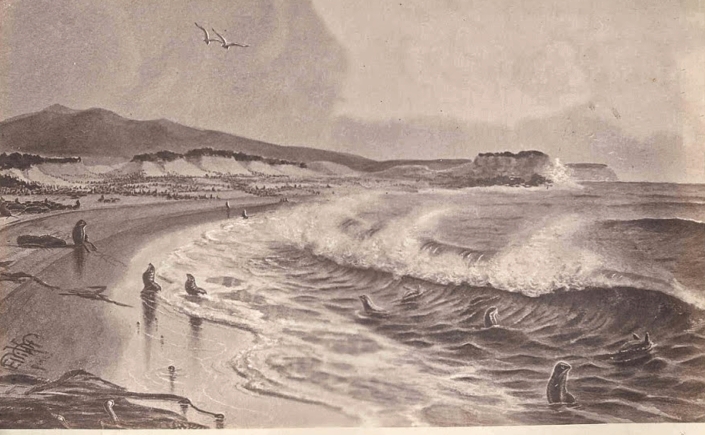
Lukannon is one of these. The story of The White Seal first appeared in print in the August 1893 issue of the London-based magazine National Review and published again in 1894 as part of the anthology The Jungle Book. Yes, that one. Mowgli, Wolf Cubs, Akela, and all. But, exceptionally for a story in The Jungle Book, none of the action in The White Seal takes place in India. And, presaging the environmental activism and protests against the controversial seal hunts of the late 20th Century, it is remarkably prescient and pertinent.
The story is set on an island in the Aleutians in the Bering Sea between Russia and Alaska. It tells of a unique seal who, by leading his fellow seals to a secret hidden beach, saves his kind from the seal hunters. He referred to his poem as “a kind of national anthem for seals”. The title of the poem is the name of a Russian seal-fur trader, Lukanin, who gave his name to these lonely Aleutian beaches in 1788. Kipling wrote: “This is the great deep-sea song that all the St. Paul seals sing when they are heading back to their beaches in the summer. It is a sort of very sad seal National Anthem”.
Back in the day, I set the poem to music. It is featured on the rare recording HuldreFolk Live in London 1988, featuring Paul Hemphill, Victor Mishalow and Adèle Hemphill. During HuldreFolk’s tour of English folk clubs in the northern summer of 1988, it was recorded on a cheap audio cassette by a dinky, clunky old analogue tape recorder – and it shows. But the natural acoustics of the cellar at Bracknell Arts Centre, and the audience’s participation in the choruses made up for a multitude of sins.
Lukannon is such a lyrical poem that it lends itself effortlessly to musical settings. Apart from my own, i have discovered three alone, and I am pretty certain that there are many more out there on the world wide web. There is a version by folk duo William Pint and Felicia Dale set to a tune by American musician Bob Zentz from their 1997 album Round the Corner. There is also a contemporary “prog-rock” version by British band Shadows of the Sun.
In 1947, the eccentric Australian expatriate composer Percy Grainger composed a song cycle of The Jungle Book and chose as his centrepiece the story of The White Seal – and particularly, Lukannon “as a protest against civilization.” For more on Grainger’s opus, see below.
Lukannon
I met my mates in the morning (and oh, but I am old!)
Where roaring on the ledges the summer ground-swell rolled;
I heard them lift the chorus that dropped the breakers’ song –
The beaches of Lukannon – two million voices strong!
The song of pleasant stations beside the salt lagoons,
The song of blowing squadrons that shuffled down the dunes,
The song of midnight dances that churned the sea to flame –
The beaches of Lukannon — before the sealers came!
I met my mates in the morning (I’ll never meet them more!);
They came and went in legions that darkened all the shore.
And through the foam-flecked offing as far as voice could reach
We hailed the landing-parties and we sang them up the beach.
The beaches of Lukannon – the winter-wheat so tall –
The dripping, crinkled lichens, and the sea-fog drenching all!
The platforms of our playground, all shining smooth and worn!
The beaches of Lukannon — the home where we were born!
I meet my mates in the morning, a broken, scattered band.
Men shoot us in the water and club us on the land;
Men drive us to the Salt House like silly sheep and tame,
And still we sing Lukannon – before the sealers came.
Wheel down, wheel down to southward; oh, Gooverooska go!
And tell the Deep-Sea Viceroys! the story of our woe;
Ere, empty as the shark’s egg the tempest flings ashore,
The beaches of Lukannon shall know their sons no more!
Percy Grainger’s Jungle Book Cycle
In 1947, the eccentric Australian expatriate composer dedicated a song cycle of The Jungle Book and chose as his centrepiece the story of The White Seal – and particularly, Lukannon. My Kipling ‘Jungle Book’ Cycle, begun in 1898 and finished in 1947, was composed as a protest against civilization.” (Grainger’s programme note, 1947)
Grainger (1882-1961) studied at the Hoch Conservatory in Frankfurt, Germany from 1895-1901 (aged 13-19). Grainger’s mother Rose wrote to her husband John of her fears that young Percy was becoming “more Germanized every day.” In response to Rose’s concern, and to “tickle up the British Lion in him,” John (who was estranged from Rose) sent Percy, among other things, several books by Rudyard Kipling . Kipling’s writings captivated Percy immediately, and he soon started writing choral settings of the poetry, especially those of Kipling’s Jungle Books.
Grainger’s settings of the poetry of Kipling are as extensive as his settings of British folk music; Kay Freyfus’s catalog of Grainger’s manuscript scores lists 36 settings, though Grainger in a 1926 letter to Kipling mentions “some 40 or 50” settings. Grainger felt a strong kinship for Kipling’s writing, and Kipling appreciated and approved of Grainger’s work at setting his poetry. Grainger played several of his choral settings for Kipling during a meeting at Kipling’s home in 1905. Of Grainger’s settings of his poetry, Kipling said, “Till now I’ve had to reply on black and white, but you do the thing for me in colour.”
The Beaches of Lukannon is the centerpiece of the cycle, and arguably the strongest piece musically and emotionally. It tells us the tale of the tragic slaughter of seals by wicked sealers from the seals’ perspective. The opening section, told from the point of view of a seal elder, recounts what the beaches of the Bering Sea Island of Lukannon originally were for the seals – their annual meeting (and mating) opportunity. The central section, reminiscent of the music of Charles Ives in its shifting chromatics, conveys the beauty of the surroundings “before the sealers came.” The final section musically revisits the opening material, but in a smore somber mode.
I’m not the martial type and have no temperament, time nor tolerance for militarism as a political creed, but one of my favourite folk music records is a 1970, long out of print vinyl album called Songs and Music of the Redcoats. Never re-issued on CD, it is hard to find – but English folksinger Martyn Wyndham-Read kindly sent me a copy a decade or two ago. Its sequel, The Valiant Sailor: Songs & Ballads of Nelson’s Navy, followed in 1973.
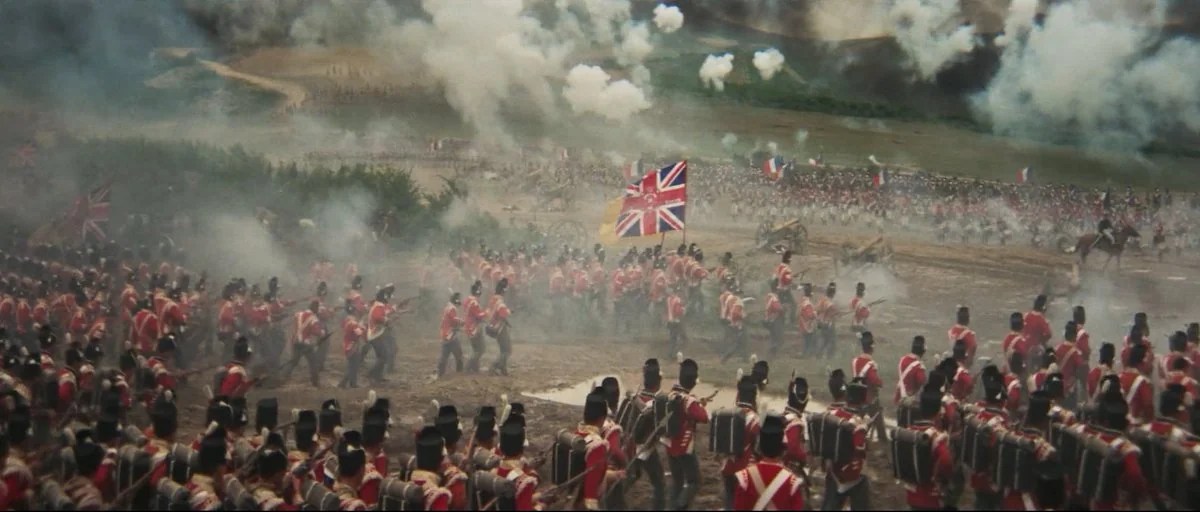
The songs range from the English Civil War to the Boer War, in which the red coat was replaced by khaki, and all the wars between. The War of the Spanish Succession, the Seven Years War (in America, the French and Indian War), the American War of Independence, the French Revolutionary War, the Crimean and Afghan Wars, the Indian Mutiny, the Sudan wars, and the South African War. Standouts for me are The Girl I Left Behind Me, which dates back to 1758, The British Soldier, with its ominous line, “we marched into Kabul and we took the Balar Hizar”, Soldiers of the Queen, which enjoyed immense popularity during the South African War, and in latter days, in the film Breaker Morant, and Stand to Your Glasses Steady, a memento mori of the prevalence of death, most often from disease, in the service of the East India Company. The featured image is from Stanley Kubrick’s 1975 film Barry Lyndon, set during the Seven Years War.
This traditional English marching song has been around for four centuries, probably originating during the War of the Spanish Succession. It was published in Thomas D’Urfey’s Wit and Mirth, or Pills to Purge Melancholy in 1706 and appeared in The Recruiting Officer in 1706, a comedy by George Farquhar, and in John Gay’s The Beggar’s Opera in 1728. The lyrics refer to the War of the Spanish Succession (1701-1714), the Duke of Marlborough, and Queen Anne of England (1665 -1714).
It recalls a time when poor men joined the army out of need and the rich for glory, and when many a young man “took the king’s shilling” or bought an officer’s commission to fight in foreign wars for king or queen and country and to perish far away from home in “far away places with strange sounding names”.
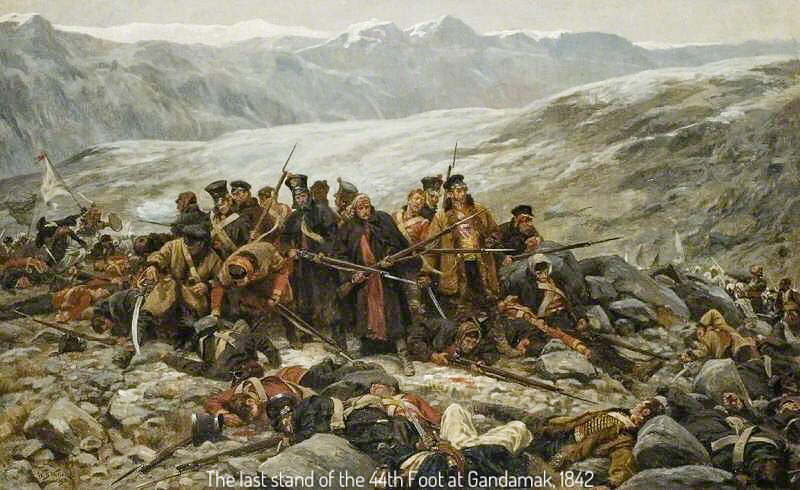
So far away from home: the last stand of the 44th Foot at Gandamak during the disastrous First Afghan War of 1842.
It was very popular in Colonial and Revolutionary America, with both sides singing their own versions. The song remained popular throughout the British Empire although nowadays, its melody serving as an orchestral leitmotif in many movies, including the 1940 Hollywood classic, Northwest Passage which starred Spencer Tracy as Major Robert Rogers, leading is Rangers through French lines during the Seven Years War (1756-1763) to attack an Indian village allied to the French. But it largely faded from public consciousness, until its use in the television adaptation of Bernard Cornwell’s Sharpe series of the 1990s about the green-jacketed Rifles soldiers. I’ve heard the tune is also used in Morris dancing.
Winter Soldier 1702, Robert Payton
Batlle scene from Waterloo, 1970
The song may have actually originated in a nursery rhyme. Tom, Tom, the Piper’s Son” mentions a piper who knows only one tune, this one, although the children’s rhyme may have itself may have started actually started its life on the stagy, written for but not included) in Thomas D’Urfey’s 1698 play The Campaigners. This is the version we sang in primary school in late fifties Birmingham:
Tom, Tom, the piper’s son, He learnt to play when he was young, The only tune that he could play Was ‘over the hills and far away’; Over the hills and a great way off, The wind shall blow my top-knot off.
The words have changed over the years, the only consistent element in early versions being the title line and the tune. D’Urfey’s and Gay’s versions both refer to lovers, while Farquhar’s version refers to fleeing overseas to join the army, whilst Gay’s lyrics reference transportation and indentured labour in the American colonies – which is an altogether different and largely untold story.
MacHeath: Were I laid on Greenland’s coast, And in my arms embrac’d my lass; Warm amidst eternal frost, Too soon the half year’s night would pass. And I would love you all the day. Ev’ry night would kiss and play, If with me you’d fondly stray Over the hills and far away.
Polly: Were I sold on Indian soil, Soon as the burning day was clos’d, I could mock the sultry toil When on my charmer’s breast repos’d. I would love you all the day. Ev’ry night would kiss and play, If with me you’d fondly stray Over the hills and far away.
My favourite version is by English folksinger Martin Wyndham-Read. Based on Farquar’s song, it is well sung with a melodic and measured martial fife or flute accompaniments. Wyndham-Read renders it wistful, poignant, nostalgic, romantic even. It is in itself a perfect recruitment advertisement, part patriotic, part propaganda – the two often operate in unison – promising not only financial reward to folk in straightened circumstances, but camaraderie in a noble purpose, and to riff the Bard of Avon, a “happy few”, a “band of brothers”.
Hark now the drums beat up again For all true soldier gentlemen, Then let us list and march, I say, Over the Hills and far away.
(Chorus) Over the hills and o’er the main To Flanders, Portugal and Spain, Queen Anne commands and we’ll obey, Over the hills and far away.
All gentlemen that have a mind, To serve the queen that’s good and kind, Come list and enter into pay, Then over the hills and far away.
No more from sound of drum retreat, While Marlborough and Galway beat The French and Spaniards every day, When over the hills and far away.
The song is at 5.18 on the YouTube video below. It is a recording of the full album, so indulge yourselves and listen to it in its entirety. The Sharpe version, below, is also based on Farquhar’s, acquiring new lyrics for successive episodes. It was recorded by John Tams who played Dan Hagman in the series.
If I should fall to rise no more As many comrades did before Then ask the fifes and drums to play Over the Hills and Far Away
Postscript- Irish soldiers
By happenstance, as I was completing this post, I was reading The Great Hunger, published in 1962, by English historian Cecil Woodham-Smith (well known back in the day for The Reason Why, her acclaimed story of the Charge of the Light Brigade). It is, she wrote, “a curious contradiction, not very often remembered by England, that for many generations, the private soldiers of the British Army were largely Irish. The Irish have natural endowments for war, courage, daring, love of excitement and conflict; McCauley described Ireland as “an exhaustible nursery of the finest soldiers”. Poverty and lack of opportunity at home made the soldier’s shilling a day, and the chance of foreign Service, attractive to the Irishman; and the armies of which England is proud, the troops who broke the power of Napoleon in the Peninsula and defeated him at Waterloo, which fought on the scorching plains of India, stormed the heights of the Alma in the Crimean campaign, and planted the British flag in every quarter of the globe in a hundred forgotten engagements, were largely, indeed in many cases, mainly Irish”.
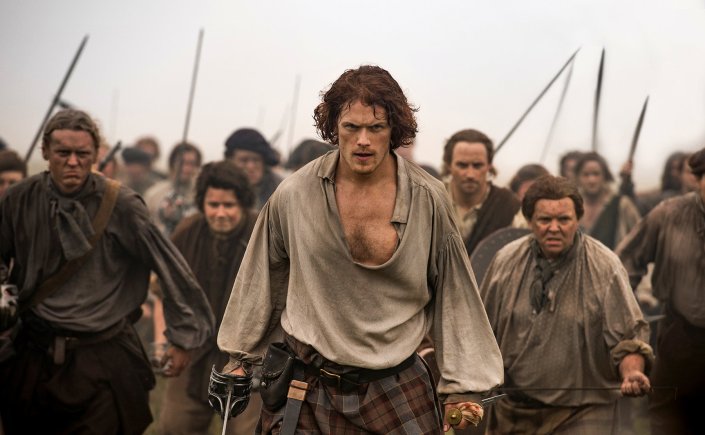
It has been estimated that during the American War of Independence, 16% of the rank and file in the British Army, and 31% of the commissioned officers, were Irishmen. There were indeed Irishmen fighting on both sides (Scots too, as portrayed in the final few series of that entertaining Highland fling, Outlander). In following years, the Irish would swell the ranks to the extent that by 1813 the British Army’s total manpower was estimated to be half English, a sixth Scottish and a third Irish.
In addition to Songs and Music of the Redcoats andThe Valiant Sailor: Songs & Ballads of Nelson’s Navy, I would also highly recommend Strawhead’s 1987 album Law Lies Bleeding (see below). My own marching song, The Marching Song of the New Republic is also included below.
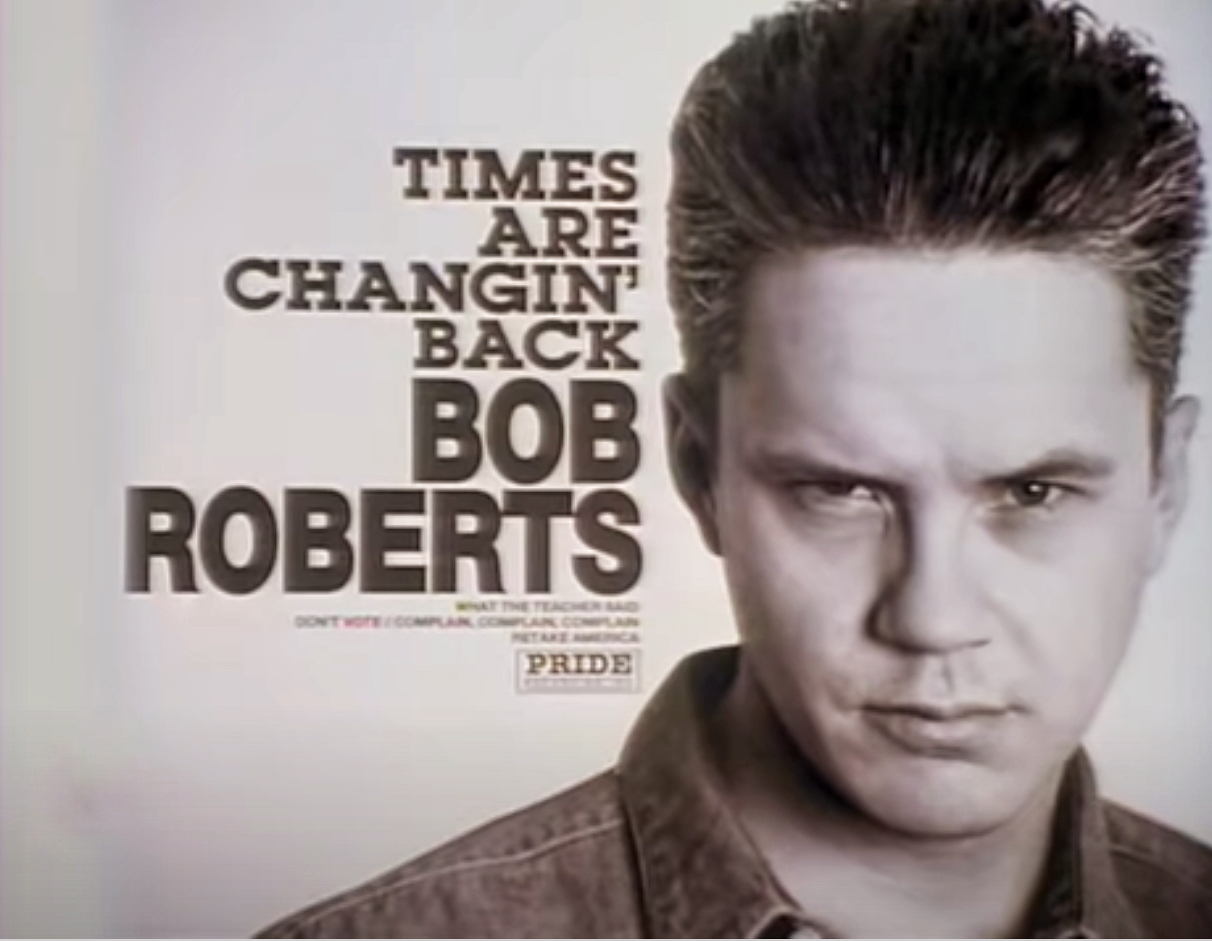
“America is in a mess. We need someone to clean it up. And his name is …”
So run the opening titles of Tim Robbin’s’ 1992 satire Bob Roberts. In a dark case of life imitating art, the story of a Wall Street millionaire who begins his political career as a reactionary folk singer foreshadows the rise of a uniquely American autocrat who channels the pain and anger of millions who feel that they’ve been left behind. The eponymous Bob Roberts is portrayed as a rightwing Bob Dylan, right down to a parody of the famous Subterranean Homesick Blues story boards to the iconoclastic song Times are a’changin’ … Back. Read a 2020 retrospective of this prescient film HERE
False prophets and siren songs
The only path to a subversion of the republican system of the Country is, by flattering the prejudices of the people, and exciting their jealousies and apprehensions, to throw affairs into confusion, and bring on civil commotion,”When a man unprincipled in private life[,] desperate in his fortune, bold in his temper … is seen to mount the hobby horse of popularity … It may justly be suspected that his object is to throw things into confusion that he may ‘ride the storm and direct the whirlwind. Alexander Hamilton to George Washington in 1792.
One cannot and ought not underestimate the power and sheer durability of populism – a political style offering unworkably simple solutions to complex problems, an ebullient rejection of elite expertise in defense of homespun obscurantism. It is a particularly attractive to the many who cleave to populism, nativism, tribalism and atavism, and equate these with nationalism and patriotism – and feel that, nay believe that they’ve been ignored by the powers that be and left behind in life’s rat-race. Trust is in short supply, and indeed, people’s faith in democratic traditions and processes is shaking as populism and a taste for autocracy spreads throughout the ostensibly democratic world. And as the old epigram runs, “cometh the hour, cometh the man” …
We live, it feels, in a time of false prophets. A generation of different and dangerous populists now moves to centre stage. Some like Trump, are undisguised in their racial, sexist and selfish pitches. Trump knows the key to being a successful fraud is to be a grand fraud. He pledges “to make America great again” and wins wide applause. This is because he is an anti-politician, shaking the system, abusing the established politicians, trashing their ideas. He thrives on shock and extravagance in a culture drunk with mindless celebrity. He stands for economic nationalism, trade protectionism, xenophobic hostility, towards Muslims particularly and a US strategic withdrawal from the world and much of its alliance system. As a wannabe autocrat, he admires actual autocrats, whom, he believes get things done because they break the rules and brook no dissent or contradiction. Nor Americans too averse to the prospect of an American strongman. For decades, polls have suggested that many Americans prefer the smack of strong leadership, even at the cost of jettisoning democratic norms. Back in the mid-1990s, for example, one in 16 Americans thought that a military dictatorship would be a “good” or “very good” thing. By 2014, two years before Trump’s shock victory over Hillary Clinton, that figure had leapt to one in six.
Trump is the vessel through which vast numbers of angry Americans can channel their rage with the establishment. Back in March 2023, he told a Texas rally: “For those who have been wronged and betrayed … I am your retribution!” His ascent reflects not so much his political brilliance but the absolute contempt an increasing share of Americans have for the nation’s institutions. Hugh Hewitt, in an opinion piece in The Washington Post, wrote recently: “Trump’s fervent supporters continue to believe he is a noble Jean Valjean of American politics being pursued by a mob of Javerts”. Columnist Maureen Dowd is more blunt: “His hallucinatory worshippers admire him as a strongman, even when he’s shown to be liable for sexual assault and an aggrandising con man whose real estate empire was a Potemkin village”.
Irish writer Fintan O’Toole wrote in the New York Review of Book on January 19th how Trump “… exudes a dark energy. His is perhaps the most radical mainstream presidential candidacy in US history. He offers a program of organized revenge, telling his fans that “I am your warrior. I am your justice. And for those who have been wronged and betrayed, I am your retribution.” He promises a transformation of democracy into authoritarianism. He envisages a war on all the “vermin” who have thwarted him. He plans, as The New York Times has reported, “to scour the country for unauthorized immigrants and deport people by the millions per year.” He wants to build giant camps to house those awaiting deportation and to vet would-be travelers to the US for political (and presumably also religious) purity: “US consular officials abroad will be directed to expand ideological screening of visa applicants to block people the Trump administration considers to have undesirable attitudes.” The relentlessness of this determination to reshape the US into an autocracy may be horrifying, but it has the vigor of grand ambition”.
Small wonder the US was recently named a “backsliding democracy” by a Swedish based think-tank, an assessment based on the attempted Capitol coup and restrictions on voting rights in Red states.
Trump could well win, against Biden or against another candidate. The issues he’s running on – illegal immigration, the cost of living, lawlessness and crime – are huge and real. Trump may defeat himself if he campaigns about the injustices done to him. If he campaigns on issues as the champion of ordinary Americans, he’s got a big chance. He is is both instinctively talented as a campaigner but also capable of grievous self harm through wildly undisciplined statements – as with NATO – and narcissistic self-absorption. Driven by grievance and will to power, and behaving, some say, like a mafia boss, he is in so many ways lawless and dangerous.
So dangerous indeed, that many pundits believe that individually, many of his positions and actions, actual and promised, pose existential threats to the United States and its institutions that are far more threatening than any concerns raised by Biden’s age. Some rush to remind Americans of the time when Benjamin Franklin, one of the original framers of the US Constitution, was walking out of Independence Hall after the Constitutional Convention in 1787, and someone shouted out, “Doctor, what have we got? A republic or a monarchy?” To which Franklin supposedly responded, with a rejoinder at once witty and ominous: “A republic, if you can keep it.”
If once elected, and at a second or third election outvoted by one or two votes, he will pretend false votes, foul play, hold possession of the reins of government, be supported by the States voting for him. Thomas Jefferson to James Madison in 1787
British writer and columnist Gerard Baker does not agree with these latter day Cassandras. I republish below an entertaining and informative article written by this self-ordained translator of Trumpspeak, who describes himself as a “right-wing curmudgeon, writer and media critic. Actually, he is quite Right, a Eurosceptic and according to some, a closet Trumpista. But his piece is quite perceptive.
“Parsing Donald Trump is a uniquely difficult linguistic task …There are multiple layers of challenge. First, you can never have more than 50 per cent confidence that what he is saying is true. Second, much of what he says is intended to entertain, rather than inform or inspire. Third, and most confoundingly, the meaning of what he says is often quite different from the actual content.
In what must be the only feature of Trump’s ministry on earth that is like that of Jesus Christ’s, the former president speaks in parables. Unlike Christ’s, Trump’s stories are primarily designed to showcase his own greatness but, crucially, like the Son of Man’s, they also convey an important larger message … in focusing just on the words – and frequently distorting them – to paint a picture of a deranged despot, they [his critics] miss the meaning, the meta-story, if you like. That is a problem because it means they miss a critical part of understanding what is happening in America.
The truth about Trump and his enduring appeal to so many Americans is that, beyond the unsettling mix of Borscht-belt schtick and Munich-beerhall menace, beyond the verbal minefields of untruths, half-truths and narcissistic bombast, is a serious message channeling the reasonable fears and doubts of at least half the country … Trump understands better than anyone the dissatisfaction of Americans, their weariness with burdens …Trump’s greatest political asset has always been an almost animal-like ability to sniff out public sentiment, and then, in hyperbolic manner, to articulate it; sentiments on immigration, crime or American self-identity that are unsayable, willfully ignored by the established political class”.
Trump flogging joggers at Sneaker Con, February 2024
Trumpspeak crazy but attuned to Americans’ dissatisfaction with their burdens
The Republican presidential hopeful at an event in Iowa in January. AFP
Parsing Donald Trump is a uniquely difficult linguistic task. There are multiple layers of challenge. First, you can never have more than 50 per cent confidence that what he is saying is true. Second, much of what he says is intended to entertain, rather than inform or inspire. Third, and most confoundingly, the meaning of what he says is often quite different from the actual content.
In what must be the only feature of Trump’s ministry on earth that is like that of Jesus Christ’s, the former president speaks in parables. Unlike Christ’s, Trump’s stories are primarily designed to showcase his own greatness but, crucially, like the Son of Man’s, they also convey an important larger message. The task of parsing this is so complicated that much of the media doesn’t even try. As with Pavlov’s dog, Trump rings their bell and away they go, barking like mad about some terrifying new thing the man is threatening.
“It is impacting the flow of support,” the NATO Secretary General said on Wednesday afternoon after a two-day meeting of defence ministers in Brussels. “To some extent, this can be compensated by increased support from… other allies. And European allies and Canada are stepping up, are doing more.
It’s understandable but in focusing just on the words – and frequently distorting them – to paint a picture of a deranged despot, they miss the meaning, the meta-story, if you like. That is a problem because it means they miss a critical part of understanding what is happening in America.
The truth about Trump and his enduring appeal to so many Americans is that, beyond the unsettling mix of Borscht-belt schtick and Munich-beerhall menace, beyond the verbal minefields of untruths, half-truths and narcissistic bombast, is a serious message channeling the reasonable fears and doubts of at least half the country.
So when the permanently unfinished Rubik’s cube of Trump’s mind last weekend produced another multisided Technicolor shocker of an outburst – this time on the subject of the US and NATO – the media as usual gave us the version they wanted us to hear: “Trump says he would encourage Russia to invade NATO countries who do not pay their bills,” says the headline on a story that is still on the BBC website. “I want Russia to invade Europe” in other words.
The first thing to point out is that Trump didn’t say this. He was instead recounting a story from his presidency – telling a campaign audience that when he was pressing European governments to spend more on their own defence, he was asked by a NATO country leader if the US would still protect them from Russian invasion if they didn’t pay up.
“No, I would not. In fact I would encourage them to do whatever they hell they wanted,” he said.
As your reliable translator of Trumpspeak, I’ll say there are three key takeaways from this. First, it didn’t happen. Don’t you think we might have heard about this some time in the past five years if it did?
Second, the point of the story is primarily to emphasise Trump’s own negotiating prowess. This has always been central to his bloated self-image. From casino construction to global security, it’s always about his unique ability to get the deal done. The irony is that the point of Trump’s story was precisely the opposite of what’s been said about it – instead of representing the end of NATO, it is about how (in his own mind) Trump saved the alliance with an act of bravado that forced Europeans to action.
But the most important truth in this fictional story is that Trump understands better than anyone the dissatisfaction of Americans, their weariness with burdens.
Trump’s greatest political asset has always been an almost animal-like ability to sniff out public sentiment, and then, in hyperbolic manner, to articulate it; sentiments on immigration, crime or American self-identity that are unsayable, wilfully ignored by the established political class.
One of these is the idea that the world Americans inhabit is dramatically changed. It is 75 years since the founding of NATO, more than 30 years since the end of the Cold War. It is remarkable how little the foreign policy establishment in the US, or America’s allies, understand the world as it appears to Americans themselves.
This is obviously true of the conspectus of global threats. In this century, first Islamist terrorism and then the rise of China have imposed themselves on the American consciousness. It’s true that NATO allies were reliable contributors to the war in Afghanistan. But that ended in disarray and disillusion – hardly an advertisement for the power of the alliance.
But more important than all that is Americans’ own, very new, sense of their own precariousness. This is not just about the changing global threats but their confidence in the success of their own country.
For more than two decades, with very brief exceptions, the vast majority of Americans have told pollsters they think their country is on the wrong track. For the first time in history most Americans think their children will be worse off than they are.
In these circumstances NATO is increasingly seen not as a critical part of America’s own security but as a costly obligation to others. The statistics – a US that contributes well beyond its economic resources – tell only half the story.
With a few exceptions, most European nations would be unable and even unwilling to stand up to an aggressor. Americans watch as Europeans have grown prosperous but dependent on US security and they resent the obligation, particularly from Europeans who seem to go out of their way to express disdain for America.
This isn’t 1930s isolationism, which reaped its own whirlwind in the 1940s. America then was an emerging superpower reluctant to get into another world war.
Today Americans see themselves as a nation in decline, under siege from global forces – uncontrolled immigration streaming across their southern border, terrorists pledging to murder them at home and abroad, a rising nuclear-armed superpower across the Pacific. And they don’t see where NATO fits in.
Trump’s words are typically extreme. Don’t let the crazy blind you to the deeper message.
It’s good I’m Scottish. I’m Scottish. I am Scottish. I can complain about things, I can really complain about things. Peter Capaldi, the Twelfth Doctor, discovers he has a Scottish accent
The pipes, the pipes are calling …
Well, after nearly a decade, we heard them at last and surrendered to Outlander
The promise of exotic Celtic locations, steamy sex scenes, and graphic violence was too irresistible – all this and the fact that we’d run out of tempting things to watch on Foxtel, SBS and Netflix … And so we settled down to what would be eight seasons of the celebrated time-shifting highland fling (before bingeing on Game of Thrones for the umpteenth time. By happenstance, the final episodes dropped on Netflix on the same day as GoT’s imaginative prequel The House of the Dragons – a fine time for fantasy fans.
If you’re into stories with eye-candy, period costume, great music, loads of gratuitous violence and soft porn garnished with some history, this one’s for you. It’s a bit like reading Playboy for the stories.
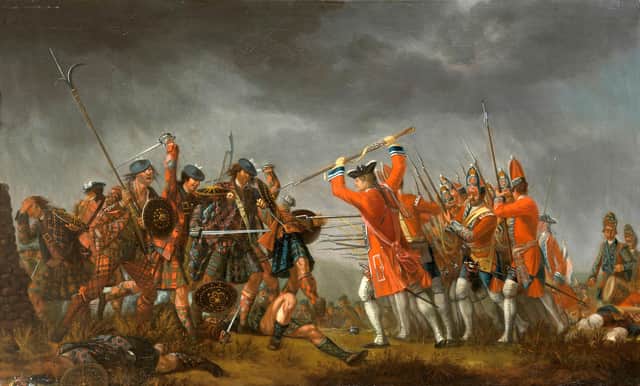
And, of course, there’s time-travel, a perennial fantasy and science fiction trope. Nor is time travel involving Scotland original. The many incarnations of Doctor Who have made many visits to Scotland during their adventures. Way back in 1966 The Highlanders saw Patrick Troughton’s Second Doctor arrive in the Scottish Highlands in 1746 just after the Battle of Culloden. It was here that The Doctor met Jamie McCrimmon (actually, Yorkshire actor, Frazer Hines), a piper of the Clan MacLeod who would go on to be a regular and popular companion to the Doctor. Since then, there have been four Scottish Doctors and many Scottish lead characters. American author Diana Gabaldon says she created the Outlander stories (on which the series is based – there are nine of them) after watching Hines inDoctor Who and based her leading man on him. Hines actually has a role in the 21st century Doctor, Season 1, episode 11.
Fraser Hines as Jamie, 1966
The Whovian Paradox
So, here we were, time-hopping back and forth between 1745 and 1945, the ‘45 Scottish Highland rising and the end of WWII, and then, the American colonies before and during the American War of Independence, the late nineteen sixties and early eighties. The traffic at the magical stone rings of Craigh na Dun, somewhere near Inverness (they’re actually on Lewis in the Outer Hebrides) and North Carolina (apparently, they’re styrofoam) reaches rush hour proportions as one, two, one again, three and four, family members and other sundry “travelers” pass to and fro’.
The title of this piece, as everybody ought to know, is borrowed from the old blues song Born Under A Bad Sign, immortalised, of course by the best rock trio ever, Cream. It describes a narrative arc which follows a “Groundhog Day” formula. The heroine Clare Fraser late of 1945, a former WWII battlefield nurse, after landing in the Scottish Highlands in 1744, is over ensuing years captured by British Army Redcoats, press-ganged by the Royal Navy, arrested by colonial vigilantes, almost burnt for a witch by superstitious puritans, has sex with Bonnie Prince Charlie, and is serially rescued in the nick of time by her husband, rebellious and handsome highlander Jamie Fraser. Jamie is captured, arrested, flogged, enslaved, kidnapped and worse, and is rescued, in the nick of time by his resilient spouse. This happens numerous times, with sundry villains outwitted, overcome and served their just desserts – with plenty of time to spare for many interminable sex-scenes (why take five minutes of screen time when you’ve seven seasons to fill), and one excruciatingly graphic and gratuitous episode of sexual violence which, counting flashbacks, must’ve taken up to a hour or more of screen time. It must have caused consumer conniptions because by series seven, the show runners had seriously toned down the adult content.
Their ill-starred son in law Roger Mackenzie endures a similar helter-skelter ride as he embarks on a literal “hero’s journey” from academic and folksinger to preacher to late twentieth century “househusband” – his adventures including being press-ganged by pirates, “sold” to native Americans, and fighting successively for the British army and the insurgent Continental Army.
For all the back and forth, the melodramatic fol-de-rol, the surfeit of rumpy-pumpy and violence, and the gorgeous highland and American scenery, as a historical and well-costumed drama, it presents a well-researched and historically accurate – if simplified – portrayal of society and politics leading up to the Jacobite Rebellion of 1745-46, including a brutal reenactment of the Battle of Culloden, the last battle fought on British soil, and the American Revolutionary War, of the French court at Versailles, of medical techniques in the 18th Century (Clare is an experienced battlefield nurse and qualified twentieth century doctor), and of the original sins that still haunt the United States today: the institution of slavery and the fate of the indigenous Americans. There are many historical characters including an unflattering portrayal of Bonnie Prince Charlie, the leader of the Jacobite forces, and a more sympathetic George Washington (but not his alleged wooden teeth). There is also a brief cameo for the not yet treasonous Benedict Arnold.
There was an original and to my mind amusing walk-on role which may have gone over the heads of most viewers, particularly as no reference is made to her back story. When Charles Stewart was on the run after Culloden, he was aided in his flight by minor aristocrat Flora MacDonald who was subsequently arrested for her role and consigned to the Tower of London, but later amnestied. She married an army captain also named McDonald, and they emigrated to the American colonies, where she is fleetingly introduced to our Jamie at a society soirée. Her captain actually served with the British forces during the American War of Independence, and as a result, their property was confiscated. They relocated to Canada and soon, after, returned to Scotland.
One early criticism I had of Outlander was that the highlanders all spoke Scottish Gaelic. Not that I’ve a problem with the tongue because it’s a beautiful language and I wish I could’ve learned Gaelic in the past – it was my Irish mother’s native tongue, though she lost it after years of living in England. But because there were no subtitles. I realized very soon that this was intentional as it emphasised just how alien the whole scene must’ve been to English Claire, now dependent upon Jamie, who, like Mel Gibson’s William Wallace, was multilingual, and a handful of bilingual clansmen to understand what was being said around and about her. Jamie’s pet name for her is Sassenach, meaning foreigner or, indeed, Outlander, derived from the English saxonīs or saxons, and used by Catholic highlanders for protestants of the Anglican persuasion. By the second season, to borrow from Jamie, I “dinnae fash”.
Many books and films of the fantasy genre have endeavoured to resolve what one could call the Whovian Paradox – the desire to go back and change history for the better. But, as the ever-regenerating Doctor himself always cautioned his constantly changing and ever-enthusiastic companions, you can’t just go back and alter history. We’ve seen it often in films like Terminator, 12 Monkeys and Looper. For all its melodrama and conjecture, Outlander manages to weave, at times clumsily, through the conundrums and contradictions. But no spoilers here …
Songs of Rebellion
Now, let’s talk about the music. The Outlander books by Diana Gabaldon make constant references to songs and music from the periods in which the stories are set, be these eighteenth century Scotland and America or the twentieth century. The series’ soundtrack created by American composer and musician Bear McCreary works well in providing a sense of place and time. As an old folkie of Celtic blood, I enjoyed hearing snippets of songs and tunes that I’ve known since childhood, including Marie’s Wedding and Johnny Cope.
The main theme, in the opening TikTok’s, and as a leitmotif throughout story is the ersatz Jacobite song Over The Sea to Skye. It’s a grand old song, and I’ve written about it before:
There are many folk songs that we are convinced are authentically “traditional”, composed in the days gone by an unknown hand and passed down to us by word of mouth and then, perhaps, by broadsheets and handbills, rustic kitchens and Victorian parlours, until finally pressed into vinyl during the mid-twentieth century folk revival. And yet many such songs were indeed written by poets and songwriters of variable fame. One such is The Skye Boat Song.
This famous song is one of many inspired by the Scottish Jacobite Rising against Protestant England’s rule in 1745. It recalls the journey of Prince Charles Edward Stuart, “Bonny Prince Charlie”, from Benbecula to the Isle of Skye as he evaded capture by government troops after his defeat at the Battle of Culloden in 1746. The Jacobite Rebellion was sparked by many political, cultural and economic factors. but essentially, it was a dynastic civil war.
Songwriter and philanthropist Sir Harold Boulton, 2nd Baronet composed the lyrics to an air collected by Anne Campbelle MacLeod in the 1870s. According to Andrew Kuntz, a collector of folk music lore, MacLeod was on a trip to the isle of Skye and was being rowed over Loch Coruisk (Coire Uisg, the “Cauldron of Waters”) when the rowers broke into a Gaelic rowing song “Cuachag nan Craobh” (“The Cuckoo in the Grove”). MacLeod set down what she remembered of the air, with the intention of using it later in a book she was to co-author with Boulton.
It was first published in 1884 Around 1885 the famed author Robert Louis Stevenson, considering Boulton’s lyrics words “ unworthy”, composed verses “more in harmony with the plaintive tune”. Purged of Jacobite content, these mentioned neither Charlie nor Culloden.
Boulton’s is the one that endured, along with the sentimental perspective Bonny Prince Charlie
But historical fact has never dimmed the popularity of the song. It is often played as a slow lullaby or waltz in many and varied contexts including soundtracks, including Outlander (adapting the text of the text Robert Lewis Stevenson’s poem “Sing Me a Song of a Lad That Is Gone” (1892).
Billow and breeze, islands and seas,
Mountains of rain and sun,
All that was good, all that was fair,
All that was me is gone.
The rendering of the song changes through the seasons, with female and male solos, a capella and choral. The most poignant is that of season 7, featuring as it does Irish singer Sinéad O’Connor, who passed away this July , not long after the season aired fir the first time. Listen to it below.
There was another piece that was used to excellent and atmospheric effect in the lead up to the Battle of Culloden. Bear McCreary has written: “To properly underscore these episodes, I needed a song that was written during the Jacobite uprising as opposed to after it, a song that makes no comment about loss, only promises of victory. I turned to famed Scottish composer and music historian John Purser, who was gracious with his time and assembled a collection a historically-accurate songs for me. I was immediately drawn to the soaring melody in Moch Sa Mhadainn, song composed by Scottish Gaelic poet Alasdair mac Mghaighstir Alasdair (known in English as Alexander MacDonald), a member of Clan MacDonald of Clanranald). A celebrated poet of the Jacobite era, Alasdair composed this song upon hearing the news that Prince Charles Edward Stuart had landed at Glenfinnan. That was perfect! When Jamie opens the letter in “The Fox’s Lair” and learns he has been roped into the revolution, this song was actually being composed somewhere in Scotland at that very moment.“ Moch sa Mhadainn ‘s Mi a’ Dùsgadh (Early As I Awaken), also known as Oran Eile Don Phrionnsa (Song to the Prince) or Clan Ranald’s Welcome. I have published it at the end of this post.
A Scottish footnote
The two Scottish rebellions of the 18th century were as much civil wars as insurrections against the English Crown. Lowland Scots of the south were against the highlanders of the north. Catholics fought Presbyterians – but many Protestants fought the Crown, a legacy perhaps of the English Civil War, Cromwell’s Commonwealth, the Restoration in the previous century. Clan chiefs allied themselves to the Crown or to the Jacobite cause based upon family ties and self interest. The Crown’s forces at Culloden contained many Scottish soldiers, including senior commanders. Irish Catholic forces who had no love for protestant England fought on the side of the Jacobites. The forces who tracked down the rebels after the battle were often Scots, as were the soldiers and officers carrying out the reprisals and infamous Highland Clearances that followed – the latter being dictated by economics as much as politics, often in the interests of Glasgow and Edinburgh landowners who wanted the land cleared of residents so they could run lucrative sheep farms. A larger than life character like the celebrated Rob Roy MacGregor was very much a charming scoundrel who always had some sort of scheme going, and like most clan leaders, he had contacts in the highest places, including the palace.
I recently rewatched a televisual recreation of the battle of Culloden that I’d first seen in 1964 by British film maker Peter Watkins. For its time, it was a well-balanced account, featuring “interviews” with the principal protagonists on both sides, an engrossing narrative, and some pretty harrowing scenes of the carnage inflicted on the Highland forces by the well-armed and well-trained Redcoats. There is a link to the full film below.
The Jacobite Rebellion itself was sparked by many political, cultural and economic factors. but essentially, it was a dynastic civil war. The battle on Culloden Moor dashed for two and a half centuries the Scots’ dreams of independence. Charles Edward Stuart, the “Young Pretender” to the Protestant Hanoverian English throne that once belonged to the Roman Catholic Stuart clan, fled into exile in France. And that’s where he remained, although his last resting place is in the crypt of Saint Peter’s Basilica in Rome – an ironic ending for this could’ve been champion of Catholic hopes. Bonny Prince Charlie had many romantic and rousing songs written about him. But in reality he wasn’t the dashing, gallant leader that the songs portrayed and that the Scots and their Celtic Irish allies yearned for. He was an indecisive and vacillating leader who thought himself much cleverer and popular than he actually was. portrayal in Outlander is most unflattering. When the going got rough, he got going – and left the the Scots and Irish who supported him with blood and treasure to the tender mercies of the Sassenach foe”.
And yet, the songs live on to this day, most notably in The Skye Boat Song, Mo Gile Mear,Will Ye No Come Back Again. The old and well-recorded favourite Óró sé do bheatha ‘bhaile has also been associated with the Jacobite cause as Séarlas Óg (“Young Charles” in Gaelic). The poet Padraig Pearse, leader of the doomed intifada we know as the Easter Rising of 1916, added new verses, and so the song entered the rebel canon.
Thou art the choicest of all rulers Here’s a health to thy returning, Charlie His the royal blood unmingled Great the modesty in his visage Moch Sa Mhadainn (Song to the Prince)
The Jacobites: ‘Don’t let romanticism obscure the threat they posed
Alison Campsie, 19th Nov 2020
The Battle of Culloden, David Morier, who was paid a pension by the Duke of Cumberland, the commander of the British Army at the battle. PIC: Creative Commons.
The romanticism of Jacobites should not obscure the threat they posed to the British Army in the years following the Battle of Culloden, a leading historian has said.
Professor Murray Pittock, Pro Vice Principal at Glasgow University, said that Jacobites had to be contained “so extensively, and so completely” after the battle in April 1746 with some 12,000 British Army soldiers remaining in Scotland – around 25 per cent of the regular army’s strength at the time.
They soldiers were stationed in 400 cantonment camps – from forts to staging posts – from Lerwick to the Western Isles and from Aberdeen to Gretna, with 60 patrols remaining in Scotland a decade after the battle.
Professor Pittock, in an online lecture hosted by History Scotland magazine, said: “Although Jacobitism became romanticized, that romanticism should not be obscured by its reality.
“Its reality was that it had to be contained so extensively in such a prolonged way and so completely.”
He added: “Although the Jacobites became romanticised the romanticisation was itself a reaction to the seriousness of the threat it was seen as posing at the time.
“Romanticism kept the Jacobites alive but it also kept it at a safe distance.”
Prof Pittock noted that around 1,000 Jacobites died at Culloden with another 2,000 killed in the days that followed given the army’s ‘licence to kill’ supporters of the cause.
By the end of April, British Army soldiers were occupying towns and villages in all corners of the country.
Soldiers were paid 16 guineas for the capture of Jacobite colours and 2s and 6d for every Jacobite musket or broadsword seized, Prof Pittock said.
He added that Cumberland and his commanders rotated their soldiers every three months in order to prevent connections being forged with local people.
Their longer term role was to police ‘Highland dress’, protect the collection of taxes and “overawe the local population”.
But residents chose not to help the soldiers in some cases with a report from Glen Dessary noting that ‘the people are unwilling to part with any provisions’ for the forces.
Desertions were not uncommon, with two deserters from Pulteney’s Regiment sentenced to death. However, it was decided that one should be spared, with a roll of a dice determining who should live, research by Prof Pittock found.
He pointed to the building of Fort George at Arderseir, which served as a British Army garrison from 1757, which cost around £2m to build at a time when Britain was heading into the Seven Years War while servicing a massive national debt.
“What that should tell us that whatever people might think about the Jacobite cause being romanticised, or it being wrong, it was not what their enemies thought at the time,” Prof Pittock added.
“That is extremely important. You cannot understand Jacobitism by looking down the wrong end of a telescope,” he said.
Details of the British Army occupation of Scotland following Culloden have also been brought to light by the Stennis Historical Society, which has researched and digitised hundreds of records of cantonment camps set up across the country post-Culloden.
The Jacobites who fought on after Culloden
The Scotsman, 16th Apr 2019
The battle was lost, the rising was over, and the rebels were told by their leader to go home. But for hundreds of Jacobites, the fight was still on, despite their defeat at the Battle of Culloden, with many remaining armed and engaged long after Bonnie Prince Charlie went on the run on April 16, 1746.
Around 1000 Jacobites gathered the following day at Ruthven Barracks, where a written order from Prince Charles Edward Stuart told them to “seek their own safety” and disband,
But, for many, surrendering was too dangerous an option, according to Professor Murray Pittock, historian and pro-vice principal of Glasgow University.
As time went on, the risks of Jacobites handing themselves in became clear.
Prof Pittock said: “The mood of the Ruthven meetings was downcast. Many fought on to avoid capture or because the risk of surrendering was high.
“To see how the British Army is dealing with people, there is not really a lot of incentive to go home. They think they will be at more risk.
“In June, a number of Jacobites went into Fort William after the British government promised six weeks’ immunity. Captain Scott drowned them in a salmon net.”
Jacobites engaged in low-level disruption, raiding and protection of vulnerable tenantry as well as recruitment to the Irish Brigade and probably Scottish regiments in French service, including Ecossais Royales.
Assassinations of unpopular government officers or sympathizers were also recorded. The British government still considered the Jacobite threat to be “major” at this time with around 12,000 to 13,000 soldiers deployed across the entire country – from Berwick and Stranraer to Elgin, Forres, Stonehaven, Inverbervie and Montrose – by the end of August 1746.
As government forces mobilized, significant units of armed Jacobites continued to appear in the field, said Prof Pittock, who is due to publish a book on the British Army between 1746 and 1760.
At the end of April, 120 armed MacGregor men were recorded in Balqhuidder after marching home ‘colours flying and pipes playing’ with the Army unwilling to tackle or pursue Jacobite units that maintained discipline, Prof Pittock said.
One battalion of Lochiel’s regiment was still operational in May – as were 500 men under Clanranald. Orkney remained under Jacobite control until late that month and, despite British attacks, four local Jacobite lairds remained successfully hidden.
Clans made concerted attempts to resist Cumberland and his men with around a dozen chiefs meeting at Mortlaig in early May.
“At the meeting… they entered into a bond for their mutual defence and agreed never to lay down their arms, or make a general peace without the consent of the whole,” according to an 1832 account by James Browne.
“By the bond of association, the chiefs agreed…to raise on behalf of the prince and in defense of their country, as many able-bodied armed men as they could on their respective properties.”
Around 600 men gathered later that month across the north and west but the clans “ultimately did not have the time or morale to raise or retain enough men in the field,” Prof Pittock said.
Although a unified response failed to materialize, Jacobites remained active across Scotland. Jacobite expresses – the non-stop delivery of letters by horse – continued until August. A British regiment was deployed across Banffshire in the summer of 1746 with insurgents reported in Argyll that September.
Arms were surrendered in the Mearns right into the summer of 1748.
“British atrocities may have been carried out against innocent victims, but there were plenty of continuing Jacobite threats,” Prof Pittock said.
All along the ancient wastes the thin reflections spin
That gather all the times and tides at once we love within
That build the edges round the shrouds that cloud the setting sun
And carry us to other days and other days to one
Roy Harper, The Same Old Rock, Stormcock
It must’ve been May 1969. A cold, wet and windy day in Hull, Yorkshire. I’d hitch-hiked from Reading in Berkshire to London and then northwards on the A1 to visit an old school chum in the Humberside port city. And it is there, in a student share house that I first dropped Mescaline, a derivative of peyote, an hallucinogenic psychotropic favoured by Mexican shamans of yore. In our circles, it was prized for its visual and aural delights rather than the more ”head trip”, mood-manipulating and psychologically unpredictable and potentially unsettling lysergic acid. And that evening, headphones on, I first listened to McGoohan’s Blues.
This eighteen minute digression from the concept if not the plot of an iconic if indecipherable ‘sixties’ television series (that’s the featured picture), was the penultimate track on Folkjokeopus, the third album of English folk singer, songwriter and acoustic guitarist extraordinaire Roy Harper. The song was indeed the whole point of Folkjokeopus – its raison d’être- the rest of the album was predominantly light-weight, comedic psychedelia – with the exception of the bleak and bitter but nevertheless captivating “love gone wrong” song She’s The One.
Wikipedia and generic music sites tell us that Folkjokeopus was released in June 1969, but more hip sources reckon it was released on May Day – and my memory concurs with that because Spring sprung as I was hitching homeward, and I reveled in the record all summer long.
Though I’d been going to folk clubs for several years, I’d not heard much of Roy Harper apart from a throwaway hippie-vaudeville track from his second album on The Rock Machine Turns You On, one of the many popular ”sampler” albums of that. The best was CBS’ double album gatefold Fill Your Head With Rock (loosely defined – it included Leonard Cohen and Laura Nyro).
Sunbathing in the rain …
And how does it feel with your god strapped to your wrist?
And him leading you such a chase …
Roy Harper, How Does It Feel, Flat Baroque and Berserk
So, there was I, on Humberside in a space “somewhere between Heaven and Woolworths”, to borrow from contemporary Mersey poet Brian Patten, who I was into at the time, listening to a sprawling and bawling, angry, eighteen minute solo acoustic guitar-driven folkie rant against capitalism, consumerism, hedonism, religion, conformity, ignorance, deceit, hypocrisy, the system, the establishment, the plutocracy, the banks, the media, the baubles and bibles, modern life … everything really. You can’t fight the manipulated, oppressive, powerless, pointless and utter futility of it all – as the song unfolds, you start out questioning, but you end up obeying.
The singer had indeed become the eponymous Prisoner, yearning for liberty but trapped in a deceptively bucolic and scenic and yet sinister “village” that is in reality an open-air jail – kind of nightmare Butlins Holiday Camp (beloved yet satirised by a generation of Britons) with all attempts at escape foiled. It was in fact filmed in Portmeirion in North Wales, a town that has developed a robust tourist industry on the back of the cult classic.
Patrick McGoohan and Virginia Maskell in The Prisoner
Roy Harper was twenty-eight years of age and already a jaded veteran of the folk-circuit and ad bitter divorcee with heavy personal baggage, a wee son he dotes on and chips on both shoulders (well-balanced, I suppose) raging against the machine. His is a seemingly nihilistic anomie with no direction home, denouncing “the deceit of my friends the betrayals of which I am part …” He sees himself as an outsider, “the festive consumer who end up consumed by the feast”, but nevertheless questioning “the rules and the codes and the system that keeps them in chains, which is where they belong with no poems, no love and no brains”.
This is reflected in many of his songs from that era, most particularly those featured on his fifth and to many, his best album, Stormcock, released in May 1971; and this led me then and always to regard him a kind of high priest of Anglo angst.
There’s this from 1970’s Flat, Baroque and Berserk, already quoted above:
And how does it feel to be the master’s right hand nose? How does it feel to be lieutenant? And how does it feel to be stood on someone’s toes? With a leech bleeding you for rent When you say you want a bit more rank You wanna be a big wheel You can feel magnified if you hide in your pride It’s not real And how does it feel with a white flag in your fist? How does it feel to have two faces? And how does it feel with your god strapped to your wrist? And him leading you such a chase
During my many, many years on the hamster wheel as the mater’s right-hand nose, I would often remember often that penultimate line.
In 1969, Roy had a few more years on the clock than me. I was twenty. A naïf, ingenue, whatever, at the end of the beginning of my journey. I was optimistic, adventurous, devil-may-care, inexperienced with people and their variegated behaviours, untainted by pride and prejudice, and in retrospect unfamiliar with the bitterness and vitriol that he injected into his song. But I guess I “got it”, understood what he was saying to me through those headphones in the sanctum of my “trip” – yeah, that’s where I was at that point in time, for the want of a better description. Though I was aware of what he was preaching, I’d had precious little direct experience – those lessons were down the road apiece, and not that far away either. But that’s another tale … long story short, I was radical when I first heard the song. I remain so half a century hence. And. I still “get it”!
The title of this article, by the way, is taken from an entertaining an informative book by Welsh author Gwyneth Lewis: Sunbathing in the Rain – a cheerful book about depression. This is not to suggest that Roy Harper is actually a depressive – but he’s certainly a master of writing excruciatingly sad, depressing and borderline nihilistic songs and delivering them with an angry, emotional intensity. Having seen him perform live many many times over the following five years, I recall that many times he would deliver rambling and even disjointed introductions and extended soliloquies that taxed his audience’s patience and forbearance. I once walked out at the interval during a gig at the Royal Albert Hall even though he was accompanied by guitar icon and Led Zeppelin alumni Jimmy Page. The songs did indeed mirror the man.
Roy in his seventies, still rockin’ in the free world
But, back to Hull and my headphones …
Having ridden the rollercoaster through the seemingly stream of consciousness rant for some ten minutes, Roy imperceptibly segues into a lyrical, calmer (though still edgy) and quieter mood, a dreamy, trippy vision of hope and resilience, suggesting that despite all the difficulties and diversions, the compromises and cop outs that went with being enveloped, embedded, trapped even, in the system, there is still hope for a better future. And climaxes in a folk-rock coda cum apotheosis.
The band kicked in – and so did the mescaline. Listening today, the band’s entry entrance feels contrived and ponderous, but in my mind’s eye, I can still recall the multicoloured images that flashed across bay closed eyelids. Disneyesque “Fantasia” forms of many ebbed and flowed, shape-shifted and morphed with the music and the lyrics. Rivers and rainbows, fairies and fires, sunrise and sunset, galaxies and stars.
Under the toadstool lover down by the dream
Everything flowing over rainbows downstream
Silver the turning water flying away
I’ll come to see you sooner I’m on my way
And there’s a mirror that I’m looking straight through
And I get it
And there’s a doorway that I’m ducking into
To forget it
But flashing just beyond the sky
The shattering midnight gathers
And reminding me behind my mind
The earth quakes, the sun flakes flutter
Over the mountain fairground
Candy flies stay
Under the moonshine fountain
I’m on my way
Lemon tree blossom ladies
Poured my tea
After the blue sky breezes following me
There’s a river that I’m making it with
And I know it
And I’m floating to I don’t care where
I just go it
But flashing just beyond the sky
The shattering midnight gathers
And reminding me behind my mind
The earth quakes, the sun flakes flutter
Daffodil April petal hiding the game
Forests of restless chessmen life is the same
Tides in the sand sun lover watching us dream
Covered in stars and clover rainbows downstream
And the question in the great big underneath is forever
And the fanfare that I’m forcing through my teeth answers “Never”
But flashing just beyond the sky
The shattering midnight gathers
And reminding me behind my mind
The earth quakes, the sun flakes flutter …
But it was not Roy’s way to end on a brighter note. As with all trips, there is often a comedown:
The pumpkin coach and the rags approach
And the wind is devouring the ashes
Words and images such as those McGoohan’s apotheosis were commonplace back in those days, when Marc Bolan could warble “My people were fair, and had sky in their hair, but now they’re content to wear crowns stars on their brows“. We thoroughly understood that and empathized. And we marveled at the Scottish bard who could pen ‘The Minotaur’s Song‘ and ‘Job’s Tears‘, and then run off with Old Father Hubbard. But then didn’t we all in the days when Tolkien was king, and elves and ents walked amongst us. So when Roy went gambolling through toadstools and daffodils, fairgrounds and fountains, that was just the way it was back then in that Middle Earth between Shangri La and the real world that we’d have to re-enter sooner or later – which I did adventurously two years later.
… down through the years
I dropped mescaline and acid many times over the next few months but though I longed to repeat it, never again did I recreate that very first journey. By year’s end, I’d done with both, and by the end of the eighties, was done with dope. But I remember it still over half a century down the road and I still get flashbacks and glimpses of those fantastical images … How does the great song by that Irish band go?
Unicorns and cannonballs, palaces and piers
Trumpets, towers, and tenements, wide oceans full of tears
Flags, rags, ferry boats, scimitars and scarves
Every precious dream and vision underneath the stars
Yes, you climbed on the ladder with the wind in your sails
You came like a comet blazing your trail
Too high, too far, too soon
You saw the whole of the moon …
And what happened next? I graduated, travelled, moved on, and following Roy’s lead, wrote lengthy, opaque songs well over ten minutes long with sonic, narrative and lyrical transitions just like he had done on Folkjokeopus and Stormcock. These include London John and Christopher Columbus in the seventies, and in latter days In That Howling Infinite which gave its name to this blog, an allegorical saga of a Mad Sea Captain and a White Whale, the dystopian E Lucivan le Stelle, and the irreverent O Jerusalem.
As for Roy Harpe, he is eighty three, with some thirty albums under belt. He was still touring in 2019, but is now officially ‘retired’, and living in a secluded corner of Ireland,
The complete lyrics of McGoohan’s Blues follow the song below.
“I am not a number. I am a free man!” What was The Prisoner?
A Facebook group called Silver Screen Hub posted the following on 26 May 2025:
“What kind of mad genius builds a show like The Prisoner and drops it on 1967 television like a philosophical hand grenade? Patrick McGoohan, that’s who—a man too intense to play James Bond (he turned it down), yet too restless to stay in the spy-fi comfort zone of Danger Man. So he created something far weirder, more provocative, and utterly uncategorizable. The Prisoner is what happens when a Cold War paranoia thriller gets hijacked by Kafka, Orwell, and a pinch of Lewis Carroll, then force-fed into a psychedelic blender. It starts like an espionage mystery, but by the end, we’re in a surreal, existential theme park ride where the rails vanish and the ride turns inward.
For the first batch of episodes, the hook is clean: Number Six resigns from British Intelligence for reasons unknown. He’s abducted and wakes up in the Village, a whimsically sinister resort-like prison where everyone has a number, no one uses names, and nothing is quite as it seems. Each new Number Two—those middle managers of manipulation—takes their turn trying to crack the riddle of his resignation. Why did he quit? Was he going to defect? Is he a threat, or just an enigma wrapped in a black turtleneck? It’s a classic “information is power” game, and Six refuses to play. That stubborn defiance—his relentless “I am not a number, I am a free man!”- is more than a catchphrase. It is the moral engine of the show.
But as the series barrels toward its final episodes, the narrative glue begins to melt. “Fall Out,” the finale, detonates any sense of traditional resolution. Suddenly we’re dealing with masked judges, dancing robed figures, Beatles songs, and an underground lair that feels like Monty Python got hired to direct 1984. The reveal—that Number One is, in fact, Number Six himself (or at least his own darker self)—doesn’t just bend the show’s premise, it vaporizes it. What began as a battle of wills between prisoner and captors transforms into a full-blown identity crisis. We’re left not with answers, but with allegory, ambiguity, and the unnerving suspicion that the Village isn’t just a place. It’s a condition.
So, why was Number Six in the Village? The surface-level answer is: because he quit and they couldn’t risk what he knew. But that’s just the narrative scaffolding. McGoohan had bigger fish to fry—he wasn’t interested in tidy spy plots. The Village, in the end, is less about geography and more about psychology. It’s conformity. It’s societal pressure. It’s the quiet terror of losing your individuality in a world that insists you define yourself by the systems you serve. Number Six’s imprisonment is the cost of his nonconformity—and maybe, his own unresolved ego. In that light, the final episodes aren’t incoherent so much as unflinchingly internal.
What makes The Prisoner brilliant—and infuriating—is that it never lets you settle. It evolves from a stylish spy series into a metaphysical character study, then swerves into satirical opera. No one episode is like the next. “The Chimes of Big Ben” feels like *Mission: Impossible* with better tailoring; “Living in Harmony” is a Western pastiche with mind control; “Once Upon a Time” is a claustrophobic descent into madness. And “Fall Out”? That’s McGoohan lighting the whole set on fire while cackling in Esperanto. The studio was stunned. Audiences were baffled. And fifty years later, we’re still unpacking it.
In Hollywood, that kind of swing-for-the-fences storytelling is rare, especially in an era when networks wanted neat resolutions and smiling leads. McGoohan didn’t care. He wrote, directed, and performed with the fevered conviction of a man trying to warn the world about something too dangerous to name. If Number Six is trapped in the Village, it’s because we all are. Our habits, our fears, our roles—we build our own prisons.T he Prisoner just had the guts to show us the bars.”
McGoohan’s Blues
Nicky my child he stands there with the wind in his hair
Wondering whether the water the wind of the where
I fear that someday he might ask me if mine is the blame
And I’ve got no reply save to tell him it’s all just a game
And Heather and I lay together and I was in love
She weighted up the gains and the losses and gave me the shove
The fear of mankind’s untogetherness pounds in my heart
The deceit of my friends the betrayals of which I am part
And O how the sea she roars with laughter
And howls with the dancing wind
To see my two feet standing here questioning
And I’m just a social experiment tailored to size
I’ve tried out the national machine and the welfare surprise
I’m the rich man the poor man the peace man the war man the beast
The festive consumer who ends up consumed in the feast
And my fife eyed promoter is clutching two birds in the bush
He’s a thief he’s as bad as the joker they’re both in the rush
He’s telling me Ghandi was handy and Jesus sold his ring
(Dunno who to, God maybe)
“And everyone knows dat dis dough’s gonna make me de king”
And O how the sea she roars with laughter
And howls with the dancing wind
To see my two feet standing here questioning
Meanwhile the ticket collectors are punching their holes
Into your memories your journeys and into your souls
Your life sentence starts and the judge hands you down a spare wig
Saying: “Get out of that and goodbye old boy have a good gig”
And the town label makers stare down with their gallery eyes
And point with computer stained fingers each time you arise
To the rules and the codes and the system that keeps them in chains
Which is where they belong with no poems no love and no brains
And O how the sea she roars with laughter
And howls with the dancing wind
To see my two feet standing there questioning
Meanwhile the TV commercials are sweeping the day
Brainwashing innocent kids into thinking their way
The wet politicians and clergymen have much to say
Defending desires of the sheep they are leading astray
And Ma’s favourite pop star is forcing a grin he’s a smash
Obliging the soft-headed viewers to act just as flash
The village TV hooks its victims on give away cash
The addicts are numbers who serve to perpetuate trash
And O how the sea she roars with laughter
And howls with the dancing wind
To see my stupid poetry shuffleing
And the bankers and tycoons and hoarders of money and art
Full up with baubles and bibles and full of no heart
Who travel first class on a pleasure excursion to fame
Are the eyes that are guiding society’s ludicrous aim
And the village is making its Sunday collection in church
The church wobbles ‘twixt hell and heaven’s crumbling perch
Unnoticed the money box loudly endorses the shame
As the world that Christ fought is supported by using his name
And O how the sea she roars with laughter
And howls with the dancing wind
To see my stupid poetry burbling
And the pin-striped sardine-cum-magician is packed in his train
Censoring all of the censorship filling his brain
He glares through his armour-plate vision and says “Hmm, insane”
The prisoner is taking his shoes off to walk in the rain
And the luminous green prima donna is sniffing the sky
She daren’t tread the earth that she’s smelling her birth was too high
Her bank balance castle is built on opinion and fear
Which is all she allows within three hundred miles of her ear
And O how the sea she roars with laughter
And howls with the dancing wind
To see my stupid poetry burbling
And I’ve seen all your pedestal values your good and your bad
If you really believe them your passing is going to be hard
And I’ve thought through our thought and I know that its blind silly season
Occurs when our reasoning is trying to fathom a reason
And if you really know it’s all a joke but you’re just putting me on
Well it’s sure a good act that you’ve got ‘cos you never let on
But if all of that supersale overkill world is for real
Well there’s nowhere to go kid so you might as well start to freewheel
And O how the sea she roars with laughter
And howls with the dancing wind
To see my two feet standing there burbling
And I had this dream in here same time as standing awake
These various visions rushed through as I giggled and quaked
The distant guns thunder my end and I duck for a while
Auntie Lily is handing me candy she chuckles I smile
And our village is where I was born and it’s where I will die
And I’ll never be able to leave it whatever I try
The ebb and the flow of the forces of life pass me by
Which is all that I’ll know from my birth to my last gasping sigh
And O how the sea she roars with laughter
And howls with the dancing wind
To see the dying lying there obeying
My age and my time
The blood fire wine and rhyme
That fills my dream reminds me of an atom in a bubble on a wave
That held its breath for one sweet second then was popped and disappeared
Into fruitful futilities meaningless meaning
Meaningless meaning
Under the toadstool lover down by the dream
Everything flowing over rainbows downstream
Silver the turning water flying away
I’ll come to see you sooner I’m on my way
And there’s a mirror that I’m looking straight through
And I get it
And there’s a doorway that I’m ducking into
To forget it
But flashing just beyond the sky the shattering midnight gathers
And reminding me behind my mind the earth quakes the sun flakes flutter
Over the mountain fairground
Candy flies stay
Under the moonshine fountain
I’m on my way
Lemon tree blossom ladies
Poured my tea
After the blue sky breezes following me
There’s a river that I’m making it with
And I know it
And I’m floating to I don’t care where
I just go it
But flashing just beyond the sky the shattering midnight gathers
And reminding me behind my mind the earth quakes the sun flakes flutter
Daffodil April petal hiding the game
Forests of restless chessmen life is the same
Tides in the sand sun lover watching us dream
Covered in stars and clover rainbows downstream
And the question in the great big underneath is forever
And the fanfare that I’m forcing through my teeth answers “Never”
But the flashing just beyond the sky the shattering midnight gathers
And reminding me behind my mind the earth quakes the sun flakes flutter
The pumpkin coach and the rags approach and the wind is devouring the ashes
And the bush hath friends to meet him, and their kindly voices greet him In the murmur of the breezes and the river on its bars, And he sees the vision splendid of the sunlit plains extended, And at night the wond’rous glory of the everlasting stars. Clancy of the Overflow, AB (Banjo) Paterson
Sleeping under the stars, close to nature and exposed to the elements has a timeless allure, whether under canvas or on a bedroll or in a swag. It’s almost atavistic – a harking back to simpler and indeed, primeval days, a retreat albeit temporary from the workaday world and the ties that bind us to it, and a genuine pleasure of the open road.
For those with a drop of vagabond blood in their veins, and the echoes of a gypsy soul, it’s a sure cure for those “summertime blues”!
The Travelling People
Countries where the nomadic life has long been consigned to history and where the sedentary lifestyle is regarded as the civilised norm, individuals and authorities have long struggled to decide what camping is, and who is allowed to do it. Over the decades, the act of sleeping outside has served wildly varying ends: as a return to agrarian ideals, a rite of passage, a route to self-improvement. But whilst some camp for leisure and pleasure, for many, it is a economic and social necessity that has often been condemned as uncivilised, unsanitary, indigent, and even criminal – and it has also served as a proxy for disputes about race, class, discrimination and rootlessness.
For centuries, sleeping outside has been embraced or condemned, depending on who’s doing it. A recent book on the history of camping in the US explores what, exactly, camping is, and how the pursuit intersects with protest culture, homelessness, and identity. A excellent review in The New Yorker is republished below.
In some countries that are seeking to modernise rapidly, heavy-handed authorities have endeavoured to curtail the wandering life by regulation and resettlement, at times, by brute force. Recall the sad conclusion to James A Michener’s novel Caravans, set in Afghanistan, and the its movie adaptation, and also British historian Vincent Cronin’s The Last Migration (1957), a account of the Pahlavi shah’s regime’s repression of the Falqani nomads in the name of “progress”. I can’t recommend it enough. It is tragic and beautiful, and authentic in every finely drawn detail, like a Persian miniature on ivory. Closer to our western consciousness and consciences, is the savage repression and dispossession of the Native American and Australian First Nations. It is historically and culturally ironic that a loop-hole in Australian law decreed that camping was permitted on the lawns of Old Parliament House in Canberra, the Australian capital provided no more than twenty tents were erected. So it was that on Australia Day, 26th January 1972, indigenous activists established an Aboriginal Tent Embassy to protest against the the Australian government’s refusal to recognize indigenous land rights. It is there to this day, drawing national attention to unresolved indigenous issues. Read about the Aboriginal Tent Embassy HERE
The early light is breaking
The morning sun is waiting in the sky
And I think I’m gonna break away
And follow where the birds of freedom fly
Caravans, Mike Batt
Aboriginal Tent Embassy 26th January 1972
The big backyard
As a nipper in Birmingham back in the late fifties, we had a very large backyard, with a lawn, apple and pear trees and a huge veggie garden. And one of our pleasures during the few warm months of school summer holidays was to erect a tent on that lawn. My brothers and I would spend our days outdoors, with a picnic and an old wind-up phonogram record player, until ordered in at sundown. We’d always wanted to spend the night there but our folks wouldn’t let us. We never understand why – we were perfectly safe in our own garden, and in our suburban backyard, there were none of the wild things we encounter in the wild. Looking back, I surmised that it had a lot to do with social norms. The folks grew up in rural Ireland, and probably associated camping out with the peregrinating ‘travellers’ who were regarded very much as unsightly and shady – a prejudice that persevered into their new lives in Birmingham. Back then, we had other names for them, for which I’ve been called to order on many a Facebook post.
In those days, “the travellers” would camp with their caravans and lorries on the “waste land” (yes, that what we called it, for reasons that were never explained – there was a lot that was not explained back the but was just taken for granted) that used to be homes and factories before the Luftwaffe destroyed them over ten years before. They had Irish accents, and this created an affinity with these itinerant folk as our parents and relatives were Irish immigrants, and we lived in an Irish world of Irish history, politics and music – as a young teen, I loved Ewan MacColl’s beautiful song Freeborn Man of the Travelling People, and it was the very first folk song I ever sang in public – in a billet in Southall during an Easter CND march.
As teens, we joined the Boy Scouts – where camping was deemed not only acceptable when under the auspices of the institution, but also, character building, and a means to learning resilience, self-reliance, and of acquiring valuable Baden-Powell bushcraft skills. To my folks, this gave camping the tick of respectability.
I must’ve been eleven or twelve when I first went off to camp, the whole troop on the back of an open lorry with all our gear and supplies. That was was my first night away from home, in the middle of nowhere, and it was, well, unsettling. Two blankets pinned together, rucksack for a pillow, rubber groundsheet on the cold hard ground. Washing in the freezing country river. Drop latrines that we had first to dig . Tea “brewed” in a huge dixie, fry-ups in a big frying pan, and “spud bashing”. “Bush” walks and “survival” tips, and the famous “wide game”. Cocoa around a roaring camp of a summer evening fire at night singing jolly scouting songs.
The annual summer camp became a permanent fixture of my early adolescence, and off I went every year until I left senior scouts and grew out of “god, queen and country”. But it was an important and enjoyable experience. I still remember those songs, and snatches often pop into my memory unannounced.
We’d see parts of our land that few of us had the means to travel to, and experience a rural England that city folk had long lost touch with. On overnight hikes we’d tote our backpacks along country lanes and byways, compass and ordinance survey map in hand, and set up a flimsy tent in an open field when the sun went down. The following hazy pictures were taken at a combined South Birmingham troop scout camp in Echternach, Luxembourg, on the German border. We were an eclectic crew – it even included a trio of Sea Scouts (incongruous as Birmingham was a long way from the sea). Of its time – nowadays, such a group shot would be so much more cosmopolitan. That’s me, arms folded.
Echternach Scout Camp, August 1963
As I grew to manhood – and outgrew scouting, I remained accustomed to sleeping out. At music festivals in rural England in the late sixties, it was a given that we would bed down on site come all weather – as the lovely pictures of the retro-medieval fayres provided by my good friend Charles Tyler show (Charles in the lad with the guitar in the featured photograph). I would often sleep on the side of the road when hitchhiking throughout the land. I’ve slept under the stars in England and Scotland, in Greece and Yugoslavia, Syria and Jordan, Iran and Afghanistan, Pakistan and India.
I’ve awoken covered in snow near the Culloden battlefield outside Inverness; been moved on by Yugoslav police when I’d mistakenly turned in for the night next to a military base outside Niš; settled down in a shabby park by the Sea of Galilee, wary of scorpions; slept on a precarious ledge high above the rose city of Petra in Jordan; bedded down in the desert on the border between Iran and Afghanistan; and battled mosquitoes on the banks of the Hawkesbury River. In latter years, on safari in Tanzania, we awoke in the night in our tent by the Rufiji river to see a big eye staring at us through the flimsy window as an old tusker proceeded to do his business right beside our tent; and sat around a fire of acacia sticks in a makeshift bush camp on the Serengeti savanna.
Just the other day, I was browsing through my travel diary for 26th August 1971 and came upon the description of my nighttime arrival in the outskirts of Amman, Jordan, on my way to Petra and Aqaba – a night I had long forgotten: “In my lostness, I came upon a policeman. And soon, three traffic cops were crashing the ash and buying me tea and bread. At last, they took me to a park, where King Hussein had a palace, and bade me sleep – under their protection. Come morning, I was gently awoken by the coppers who bought me breakfast and commandeered a taxi to take me into the town centre (where) again, police assisted me by asking a taxi driver to take me to the Aqaba road”. We took risks, we travellers of “the Overland” back in the day, and many times we were blessed with the charity and caring of our fellow humans.
My hitching days are now long gone, and so is the urge to set up camp in the great outdoors – apart from that African journey, when there was little alternative. And yet, I still love the great outdoors and being close to nature. Living off-grid on a rural property far from the madding crowd and surrounded by forest, with birdsong by day and frog song by night, I reckon I have have the best of both worlds.
For centuries, sleeping outside has been embraced or condemned, depending on who’s doing it. A recent book by the historian Phoebe S. K. Young explores what, exactly, camping is, and how the pursuit intersects with protest culture, homelessness, and identity.
Just a drop would do, though. Early campers didn’t wish to be mistaken for actual vagabonds, and the line between the two was easily smudged. In 1884, Samuel June Barrows, an outdoors enthusiast and, later, a one-term congressman, warned that a traveller carrying a “motley array of bedding, boxes, bags, and bundles” might arouse “suspicions of vagrancy”; to distinguish oneself from the riffraff, it was best to pack a “de luxe” tent and fashionable attire. Barrows’s anxiety underscored the contradictions of recreational camping, which he described as “a luxurious state of privation.” One of its luxuries was that it was temporary. In the name of leisure, well-heeled campers sought out the same conditions that, in other contexts, they condemned as uncivilized, unsanitary, or criminal.
In “Camping Grounds: Public Nature in American Life from the Civil War to the Occupy Movement” (Oxford University Press), the historian Phoebe S. K. Young finds that Americans have long struggled to decide what camping is, and who is allowed to do it. Over the decades, the act of sleeping outside has served wildly varying ends: as a return to agrarian ideals, a means of survival, a rite of passage for the nuclear family, a route to self-improvement, and a form of First Amendment expression. In Young’s account, it becomes a proxy for disputes about race, class, and rootlessness—all the schisms in the American experiment.
As Barrows slept beneath the stars, countless workers were forced to do the same. In the eighteen-seventies, a boom-and-bust economy and a burgeoning network of railroads compelled laborers to crisscross the nation, following the cycles of the market. The “tramp problem” vexed those of means. Allan Pinkerton, the founder of the ruthless, union-busting Pinkerton National Detective Agency, blamed the Civil War for giving men a taste of “the lazy habits of camp-life.” In 1878’s “Strikers, Communists, Tramps and Detectives,” Pinkerton detailed the “grotesque company” tramps kept by moonlight, writing that debauchees would doze “in a stupid sodden way that told of brutish instincts and experiences.” Scarier than the encampments was the fear that some Americans might find them appealing, retreating from society to enjoy “the genuine pleasure of the road.”
The travel industry soon recognized those pleasures by making tramping an aesthetic, something that campers could slip into and shuck off as they pleased. A writer for Outing, a magazine aimed at moneyed outdoorsmen, preferred to “rough it in the most approved ‘tramp’ style—to abjure boiled shirts and feather beds and dainty food, and even good grammar.” As Young points out, the quotation marks around “tramp” raised a barricade between the imitation and the original. Real tramps led a precarious existence, subject to arrest, surveillance, poverty, and ostracism. When élite campers wore their costume, they shrugged at a world in which, as Pinkerton wrote, “a man may be eminent to-day and tomorrow a tramp.”
The double standard was especially glaring in Native communities. White Americans, including Barrows, saw tribal settlements as the epitome of savagery. The U.S. Office of Indian Affairs hoped that Native populations would disavow their “barbarous life” and take up “a distaste for the camp-fire.” Such goals were presented as matters of public health, but the message diverged sharply depending on the audience. Although Native groups “learned that the only way to prevent consumption was to give up camp life,” Young writes, “recreational campers read that exposure to fresh air and sunlight” could cure the illness. The government forced Native children to attend boarding school and subjected adults to dehumanizing reëducation projects. Meanwhile, Outing, as it had with tramps, presented Indianness as an identity to be adopted and discarded on a camper’s whim. One contributor confessed that summer gave him “an irresistible desire” to “live the life of a savage in all of its most primitive simplicity.”
In the early twentieth century, the automobile allowed legions of new drivers to flock to the countryside. Camping shed some of its élitist pretensions, but its popularity exposed new rifts. Eager for traffic, many towns constructed no-frills auto camps at their outskirts, where entry was often free, at least until the camps attracted hordes of families and their Model Ts. These “tin-can” tourists, as Sunset magazine called them, ate canned food heated on the engine—or, more boldly, by a camp stove connected to the exhaust pipe. Camps couldn’t keep such people away; now that the backcountry, or even the frontcountry, was within reach, Americans intended to pitch their tents wherever they could. From 1910 to 1920, national parks and monuments saw a fivefold increase in visitors, reaching a million a year; by 1930, that figure had jumped to more than three million. The deluge was unmanageable. In addition to arresting vistas and pristine forests, campers expected generous amenities—firewood, electric lights, running water, garbage collection—and they were not in the habit of leaving nature as they found it. California’s redwoods, in particular, were so frequently, heedlessly beheld that their roots began to choke underfoot.
To save the trees, Emilio Meinecke, a plant pathologist for the U.S. Forest Service, conceived a template still in use today: a one-way loop road with short “garage-spurs,” each of which functioned as parking for a designated campsite. By presenting campers with private, manicured spaces, Meinecke hoped to spare the surrounding plant life, reminding visitors that they were “guests of the nation.” Intentionally or not, his campsites had the flavor of the suburbs—the land, once for farming, was now to be savored as a consumer, and every family had its plot. The New Deal funded the “Meineckizing” of almost ninety thousand acres of federal campgrounds, about half of which were new, signalling the rise of what Young calls “the campers’ republic.” “Mixing leisure with nature,” she writes, “became a potent way for citizens to demonstrate national belonging.”
But all was not well in the republic. The Great Depression had pushed record numbers of Americans into homelessness: by one estimate, during one day in the spring of 1933, a million and a half people were sleeping outside or in public shelters, and the actual number was likely higher. Because camping was so popular, budget-minded vacationers were sometimes cheek by jowl with the down-and-out. Who could say which was which? Manufacturers of camping trailers went out of their way to disclaim the use of their products as “a permanent address.” Others argued that campgrounds were too affordable or unsupervised. In 1940, J. Edgar Hoover, never one for understatement, alleged that roadside tourist camps had become “dens of vice and corruption” for “gangs of desperados.” Even Meinecke, for all his talk of hospitality, did not look kindly on extended stays at national parks. In an internal report, he complained that some visitors, “evidently camped for a long time,” had given one of his campsites a “ ‘used,’ second-hand look,” spoiling it for “decent people who are not slum-minded.”
Black visitors, too, found that the ordinary recreational privileges did not apply to them. The National Park Service couldn’t fathom how to attend to the needs of African Americans, so it simply dissuaded them from coming. “While we can not openly discriminate against them,” the minutes of a 1922 conference read, “they should be told that the parks have no facilities for taking care of them.” The numbers of Black visitors were low, which the N.P.S. took to mean that Black people had no interest in going; in fact, it was evidence that the agency’s deterrents had been effective. If there was wariness among Black communities on the subject of camping, it was, Young notes, well deserved: Black travellers had often been forced to camp in degrading conditions when inns and hotels refused to host them. Like many New Deal agencies, the N.P.S. was obligated to welcome all Americans equally, but parks in Southern states deferred to “local custom,” building segregated bathrooms, campgrounds, and picnic areas. When this policy was finally reversed, in the nineteen-forties, some Southern workers used just enough paint to cover the signs for “Negro Areas” without making them illegible. The discrimination remained, thinly veiled.
If the U.S. has dithered about the basics of camping—who can do it, where, and for how long—it’s been outright bewildered by camping as political speech. Could anyone have a message so urgent that it can be delivered only by sleeping outdoors? The answer is yes, as thousands of protesters have made clear, but the government has seldom taken them at their word, instead casting them as devious freeloaders or closet indigents. Occupy Wall Street, which famously enjoined its participants to bring tents, honed an approach popularized after the Civil War, when the Grand Army of the Republic, a Union veterans’ group, camped near the Washington Monument to raise awareness of their sacrifices. In 1932, the Bonus Army—thousands of out-of-work veterans seeking their service bonuses—followed suit, encamping in plain view of the Capitol. For weeks, the public debated whether the soldiers were heroes or hobos. President Herbert Hoover, deciding on the latter, ordered the clearing of the camps, resulting in a fiery conflict that claimed at least one life.
But a tent makes a forceful statement: someone is here, and that someone intends to stay. When Martin Luther King, Jr., and the Southern Christian Leadership Conference wanted to show Washington the true toll of poverty, they decided that camping was the only suitable action. The Poor People’s Campaign brought more than two thousand people to the Lincoln Memorial Reflecting Pool in May, 1968, a month after King’s assassination. Known as Resurrection City, the encampment lasted for six weeks, drawing support and ire. A concerned citizen wrote to President Lyndon B. Johnson that “a hoard [sic] of locusts” was abusing “hallowed ground.” Calvin Trillin, writing for this magazine, noted the irony: the poor had intended to show America that they were “sick, dirty, disorganized, and powerless—and they are criticized daily for being sick, dirty, disorganized, and powerless.” By June 24th, the camp had dwindled to five hundred, and police fired tear gas to expel those remaining. A demonstration about homelessness, it seemed, was no different than homelessness itself.
Just three years later, Vietnam Veterans Against the War began planning to camp near the Capitol, and the Nixon Administration, fearing a repeat of Resurrection City, refused to give them a permit. The V.V.A.W. requested a stay on the ban, and the case went to court. Determining the legality of protest encampments, Young writes, “required finding an elusive balance between Constitutional freedoms and public safety.” The N.P.S. would allow only a “simulated” camp on federal grounds: no fires, no tents. John Kerry, who argued for the V.V.A.W., maintained that a real campsite was the only way to “tell our story to the people of this country.” The judge hearing the case, meanwhile, felt that to camp was essentially to sleep and was an act that couldn’t “express a single idea”—and that couldn’t claim First Amendment protection. He upheld the camping ban; the Court of Appeals reversed it; the Supreme Court reinstated it. The V.V.A.W. decided to camp anyway, and, not wanting a public-relations disaster, Nixon let them be. The Washington Post quoted a Park Police officer who, looking over a National Mall clotted with sleeping bags, waxed philosophical: “What’s the definition of camping? You tell me. I don’t know.”
The ensuing decades did little to answer that question. By 2012, Congress was holding hearings on the subject, in which Trey Gowdy, a House member from South Carolina, grilled Jonathan Jarvis, the director of the N.P.S at the time. “What is the definition of camping?” Gowdy demanded. Occupy D.C. had been staying in McPherson Square, in downtown Washington, for months, and Jarvis had been reluctant to say that the protesters were camping—their actions were a means to an end, not the end itself, which was reason enough to avoid enforcing the N.P.S. ban. Gowdy seemed to understand the Occupiers as recreational campers in disguise; their politics were a cover story for a good time, and taxpayers were footing the bill. But the Occupiers emphasized that they weren’t camping at all. (“WE ARE NOT CAMPING,” signs on their tents read.) Campers slept outside for the joy of it; Occupiers wanted “a redress of grievances.” Gowdy couldn’t compute how people camping “for fun” were permitted only in certain areas, while those “pitching a camp in protest of fun” were welcomed by the National Park Service. Without a clear distinction between camping and not-camping—the distinction that generations of Americans had tried and failed to make—he felt that “the fabric of this republic” was “going to unravel.”
Stop this day and night with me and you shall possess the origin of all poems.
Walt Whitman, Song of Myself.
The words of America’s national bard came to me as I read for the first time this very morning Last Thoughts on Woody Guthrie, written by Bob Dylan in honour of his idol Woody Guthrie, who at the time was dying from Huntington’s disease.
I hear America singing, the varied carols I hear, wrote Walt Whitman, setting song lines for a young nation, and what was seen at the time as its promise and its bold, independent identity. He reflected his country’s growing up and coming of age to his own personal awakening and awareness, in his seeing and being enlightened. Dylan was to become the young voice of an older but not wiser nation that seemed very much like it was not busy being born, but, rather, under the weight of its myriad contradictions – of the old and the new, the youth and their elders, of war and peace, black and white. Dylan heard the his country’s song in the turbulent, transformed and transforming sixties declaiming that he’d know my song well before I start singing.
In 1855, when Whitman published his first incarnation of Leaves of Grass, no one had yet heard anything like the raw, declamatory, and jubilant voice of this self- proclaimed “American”. And the same could be said of the young Bob Dylan when he broke out from the pack that had gathered in the folk cafés and clubs of New York City in the early years of the nineteen sixties, an enigmatic poetic figure whose songs spotlighted the chaos and division that have long defined what it meant to be an American. It is no wonder that in later years, Dylan would acknowledge his debt to Whitman in I Contain Multitudes – unoriginal and some would argue, pretentious, but then Bob has always borrowed, be it from the Anthology of American Folk Music, the British folk tradition, the avant guard poets of Europe, and the great books of the western literary canon.
Dylan read his poem for Woody aloud once only, reciting it at New York City’s Town Hall on April 12th 1963.
Introducing the poem, he told the audience he’d been asked to “write something about Woody … what does Woody Guthrie mean to you in twenty-five words,” for an upcoming book on the icon left wing singer-songwriter. He explained that he “couldn’t do it – I wrote out five pages, and, I have it here, have it here by accident, actually.” What followed was not a simple eulogy, but a lengthy, 1705 word stream of consciousness treatise on the importance of hope.
Dylan sets the scene by describing the stresses and strains of everyday life and challenging choices we have to make as we navigate it. He describes how these can cause us to feel alone, lost, and without direction. He then explains the need for hope and how we need something to give our lives meaning. He concludes by suggesting that, for him, Woody Guthrie is as much a source of hope and beauty in the world as God or religion.
Reading it for the first time ever this morning, I could hear words, lines and themes from songs that were yet to be written, songs that have followed me down these past sixty years, from those early albums of anger and introspection, protest and perception, through to My Rough And Rowdy Ways.
The recitation was recorded, but was not officially released until 1991, on The Bootleg Series Volumes 1-3 (Rare & Unreleased) 1961-1991, after circulating on bootleg releases for years. The poem is published in full below. The images in the video that follows it are clichéd and distracting; just shut your eyes and listen to the words. I prefer just reading and recalling all those uncounted ballads, songs and snatches and the improbable ‘echoes’ of things to come. I have added a gallery of favourite pictures of the man himself. Enjoy.