So off and on you go The seconds tick the time out There’s so much left to know And I’m on the road to find out … the answer lies within So why not take a look now Kick out the devil’s sin Pick up, pick up a good book now Cat Stevens
Who among us hasn’t revisited a favourite book years after reading it, only to wonder why you read it and what you thought about in the first place.
I first read Robert M Pirsig’s iconic road novel Zen and the Art of Motorcycle Maintenance back in the 1976 – a barely fictional meditation on fatherhood, Zen, tools, and the idea that quality – the main conceptual preoccupation of Pirsig’s life – lay in the repetition of right actions.
I can’t remember why I bought it, and indeed, read it all – other than perhaps because reviewers were raving about it. I had no interest nor aptitude in matters mechanical – I couldn’t even drive in those days. I recall that I found it quite mesmerising in its meticulous “naming of parts”, to quote the WWII poem by Henry Reed juxtaposing the mechanical and natural worlds that encapsulated the urge we have to see significance in the ordinary, the routine, “the drill”.
The blurb on the front cover declared: “this book will change the way you think and feel about your life”. But it didn’t – not a jot. I didn’t say to myself “I want to read a book that will change my life”. At the time, I didn’t reckon I was particularly searching for meaning or enlightenment or anything like that. Life in London was relaxed, comfortable, and interesting. Considering that it was the political and economically unstable mid-seventies, things were moving along quite smoothly. The inevitable speed hump and reset with their disruptions and discontents and an abrupt and unexpected change of location and lifestyle, career and country were a couple of years down the track.
Today, I recall that reading it was a bit of a chore and that the narrative was like watching paint dry, a kind of biker’s Proust. I don’t remember very much of at all – although there’s one thing I relate to this this day – the narrator’s observation that the writing of technical instruction manuals was always delegated to the least productive and capable member of the the production line – which explains why so many are so difficult to follow. Most folk can certainly agree with that.
The book remained on my bookshelf through many moves, including to the other side of the world, and in the last relocation eight years ago, from an inner city terrace to a forest in northern New South Wales, for which I’d culled some two thirds of a library accumulated over half a century. This thumbed, battered and faded paperback hung in there in its creased and purple glory with the image of a wrench morphing into what looks to me like a lotus flower.
Perhaps it survived because I’d always unconsciously resolved to return to it one fine day when I’d reread it and discover a meaning of the universe. I’m nowhere near ready for that reunion. But the retrospective republished below prompted me to pick up the old book – if only because thought I might’ve written some comments on the insides of the cover as was my habit back in the day, and obtain an inkling of what was going on in my younger head I might back in the day. But there was nothing, nada, nix! I was quite disappointed.
My eyes were drawn, however, to the raves on the back cover: “The most exciting book I have read in years” declared a reviewer in Vogue. Newsweek called it “the most explosive detective story of high ideas in recent years”. And inside, before we get to the story, there are three pages of accolades, many in upper case – were this online today, we’d call that shouting! “A miracle that sparkles like an electric dream”. “Exhilarating, dramatic, classic”. “Brilliant and original”. “Profoundly important”. “It lodges in the mind as few recent novels have”. “An unforgettable trip”. The long gone Sydney Sun Herald called it a work of art.
The author of the Pirsig retrospective republished below appears to hold the same opinion. “I am not particularly self-aware” he writes, “nor do I have much memory for the person I was at the time. So I can’t really explain to you why “Zen and the Art of Motorcycle Maintenance” had such a hold on me”. What follows is a philosophical riff on Robert Lewis Stevenson’s well-worn adage that it’s better to travel hopefully than to arrive – even when getting there, like Bono, you still haven’t found what you’re looking for. I do like his last sentence: “If there’s one thing I would say to Pirsig, or even that younger self driving across Montana whose head was filled with a vain, almost-inhuman spirituality, is that everyone, in their way, is trying to find the thing you’re trying to find”. I guess in our own way, we are all seekers.
Earlier this year, I jettisoned half of what remained of what remained of my book collection – books that had followed me as moved from Birmingham to Reading to London, migrated to Australia, and moved from house to house in Sydney and finally settled in the midst of the forest. Out went books of all formats and genres. Mementos of former passions and fashions. Relics of past courses and careers. Old school textbooks, university texts, fiction, nonfiction, dictionaries, coffee table books. I’d worked for years in publishing so the complimentary copies alone were colossal.
My primary criteria was that if I hadn’t looked inside the covers of a book for twenty, thirty, fifty years, then I wasn’t likely to do so in the next five, ten, twenty years I have left on this planet.
And out went Zen and the Art of Motorcycle Maintenance.
Every writer I know has memories they return to in their work over and over again. There is rarely much logic to the choices, nor do such memories tend to align with the sorts of significant events that traditionally make up the timeline of one’s life. My point of fixation, one that’s appeared a few times in my writing, occurred during a solo cross-country road trip I took at the age of nineteen. I was driving to Seattle, where I knew nobody, and was planning to stop for the night in Billings, Montana. It was already late, and I had been keeping myself awake with a non-stop chain of cigarettes and vending-machine coffee I’d dutifully bought at every rest stop along the way. I had a pile of books on tape on the passenger’s seat. About an hour outside of Billings, I put in “Zen and the Art of Motorcycle Maintenance,” which, coincidentally, starts out on a road trip to Montana. The first line—“I can see by my watch, without taking my hand from the left grip of the cycle, that it is eight-thirty in the morning”—had a hypnotic effect on me. I blew through Billings that night, and for the next six hours I listened to Robert M. Pirsig’s barely fictional meditation on fatherhood, Chautauquas, Zen, tools, and the idea that quality—the main conceptual preoccupation of Pirsig’s life—lay in the repetition of right actions.
I am not particularly self-aware, nor do I have much memory for the person I was at the time. So I can’t really explain to you why “Zen and the Art of Motorcycle Maintenance” had such a hold on me. Even back then, I knew that the book was considered a bit gauche—a manual for the type of seekers who plumb out all the parts of Eastern religions that justify their own selfish behavior, who spend their days walking the earth in a fog of patchouli oil and immense self-regard. But I was also captivated by the idea that dharma demanded a sense of conscientious and careful action, whether maintaining a 1966 Honda Super Hawk, shooting free throws, or writing. I was, and I suppose still am, deeply suspicious of the life of the mind, and wanted to believe that enlightenment existed elsewhere.
Over time, I distilled my particular reading of Pirsig down to a line from “I am I be,” a song by De La Soul in which Posdnuos raps, “If I was a rug cleaner / Bet you Pos’d have the cleanest rugs.” The point, as far as I could tell at that young age, wasn’t the competition for the cleanest rugs but, rather, that the dedication to expertly cleaning a rug would yield moments in which the body would fall away from the mind, and you could touch the outer edges of enlightenment.
“On Quality,” a collectionof Pirsig’s speeches, fiction, letters, and musings that was posthumously published last month, might not satisfy the reader seeking a nostalgic return to the road or the mechanic’s shop. The text, instead, reads like a notebook from a life spent pondering: What does “quality” mean? Why are some things better than others? What is it about humans that causes us to recognize the difference? His answer is that quality “is a characteristic of thought and statement that is recognized by a non-thinking or intuitive process.” He continues, “Because definitions are a product of rigid reasoning, quality can never be rigidly defined. But everyone knows what it is.”
As in “Zen and the Art of Motorcycle Maintenance,” Pirsig mostly defines “quality” by what it is not. That book starts with a dichotomy: on one side is the narrator, who maintains his own motorcycle and understands its every function; on the other is his riding partner John, who owns a high-priced BMW and can’t even be bothered to learn how to fix it. The narrator doesn’t understand John’s relationship to his machine and realizes that, whereas the narrator can see the Buddha in the gears of an engine, John believes that technology or man-made things are anathema to the spiritual reasons why he rides his bike. Who, then, is correct—the logician or the romantic? Who is closer to quality? The answer, according to Pirsig, is neither, but also everything:
Quality is the Buddha. Quality is scientific reality. Quality is the goal of Art. It remains to work these concepts into a practical, down-to-earth context, and for this there is nothing more practical or down-to-earth than what I have been talking about all along—the repair of an old motorcycle.
There’s a very good chance that unless you spent a decent portion of your life thinking about dharma, reading the Upanishads, or discussing the works of Shunryu Suzuki, there will be very little in “On Quality” that will be of interest to you. The collection almost reads like a scientific proof that tries to identify the exact location of quality while also arguing, somewhat more convincingly, that such a task is impossible. What the reader is left with, then, are a series of word puzzles and contradictions that can be frustrating, but which reveal a lifelong search for what moves Pirsig in a way he cannot explain. In the book’s preface, Wendy Pirsig tells the story of what happened when her late husband joined the army and was stationed in Korea:
Stepping off the train in South Korea when the troops first arrived, he saw a dusting of snow over the nearby mountains that was so beautiful and strange and reflected such a different culture that he became almost ecstatic. “I walked around. It was like Shangri La,” he recalled years later. “I think I was crying. I just stared at the roofs wondering what kind of culture could have built roofs like that,” he said.
In the lineage of Eastern philosophy in American letters—see the works of Pirsig, J. D. Salinger, Kenneth Rexroth, Gary Snyder, or Jack Kerouac—you’ll often find a desire to negate the innate hunger of life. The authors try to find something better in the image of, say, a red wheelbarrow glazed with rain water next to white chickens. This country, they say, is dull and greedy and always misses the point. The possibility of a new type of ecstatic vision and a life filled with meaningful tasks, I imagine, is what drew me and so many other readers to “Zen and the Art of Motorcycle Maintenance.” We believed Pirsig could see the Buddha in a well-maintained carburetor. We wanted to see it, too, and we wanted to work as he did, perhaps in large part because we saw very little future for ourselves in the striving world.
But, as I read all this back today, I was mostly struck by a central contradiction that appears not only in Pirsig’s writing but also in the work of so many of his fellow literary Zen seekers. On the one hand, Pirsig believes that the universality of quality means that everyone can access it. But he also seems to have very little faith that the people around him—whether John, his motorcycling buddy, or even his readers—can actually see quality in the wild. At times Pirsig treats the task of explaining it like his burden to bear. Yet the idea that something is just good and true for ineffable reasons that defy both logical explanation and romantic self-projection should be familiar to anyone who has listened to Nina Simone sing “I Wish I Knew How It Would Feel to Be Free.” As Pirsig himself acknowledges: we all know.
Sometimes, while scrolling through TikTok late at night, I’ll come across a genre of video in which vocal coaches analyze viral clips of performances by young, effusive singing machines who have been through years of training. Nothing could be more annoying or besides the point than the coaches’ gushings over the control of the upper registers, or the clean transitions in the runs. Pirsig would probably say that these sorts of categorizations are purely an intellectual, and ultimately futile, exercise: he argues—correctly—that only pedants feel the need to contextualize every quality moment into a narrative that tries to discern its truth. But it’s perhaps even more pedantic to process so much of this idea through lengthy, philosophical treatises that try to obscure and make unknowable something we feel nearly every day.
Quality, Pirsig says, surrounds us. It is in a rug cleaned with care, a well-maintained garden, and the order of words in a sentence. I do not know if there is a way to trick oneself into noticing more of these instances of quality, nor do I know if enlightenment rests on the accumulation of little ecstasies, nor do I believe—at least anymore—that those of us who have sought the path through books, meditation, or study have any more access to “quality” than those who have not. If there’s one thing I would say to Pirsig, or even that younger self driving across Montana whose head was filled with a vain, almost-inhuman spirituality, is that everyone, in their way, is trying to find the thing you’re trying to find.
You offspring of serpents who warned you of the wrath to come. Matthew 3:7
There was a land of Cavaliers and Cotton Fields called the Old South. Here in this pretty world, Gallantry took its last bow. Here was the last ever to be seen of Knights and their Ladies Fair, of Master and of Slave. Look for it only in books, for it is no more than a dream remembered, a Civilization gone with the wind. Prelude to the film of Gone with The Wind (1939)
… by the time you can no longer avoid thinking about your history, it has become so complex and confusing that you can no longer think about it clearly, and your morality is what is gone with the wind.
Sarah Churchwell, The Wrath to Come (2023)
American cultural historian Sarah Churchwell’s book The Wrath to Come – Gone With the Wind and the Myth of the Lost Cause or its alternative title, the Lies America Tells (tells itself” is more accurate) is a harrowing read about slavery, America’s original sin; about the civil war fought to end it; the brief Reconstruction years that followed; the lingering stain of white supremacism and racial violence; and of how discriminatory and oppressive Jim Crow laws of the late nineteenth century survived well into the twentieth with lynch law, segregation, vote suppression and the civil rights struggles of the sixties.
The Wrath to Come is also about how historiography – how historians analyze and interpret history, and how “we, the people” recall and retell history.
She quotes author and civil rights advocate James Baldwin’s essay The White Man’s Guilt:
“White man, Hear me! History, as nearly no one seems to know, is not merely something to be read. And it does not refer merely, or even principally, to the past. On the contrary, the great force of history comes from the fact that we carry it within us, are unconsciously controlled by it in many ways, and history is literally present in all we do”.
Churchwell notes how in 1935, Black writer WEB Du Bois warned “against writing history for our pleasure and amusement, for inflating our national ego”, or “using a version of historic fact, in order to influence and educate the new generation along the way we wish”. Such propaganda history is merely “lies agreed upon”, and had enabled a toxic mixture of libel, innuendo and silence to poison the well of American historiography”.
The Wrath to Come is also very much about today. Running right through the narrative are the currents and crises that culminated in the great American unraveling that led to the storming of the Capitol on January 6, 2021 – and as we know well, are yet to be fully played out in November 2024, and, as is most likely, beyond it. January 6th was, in her opinion the actualization of what Baldwin called “the wrath to come”, the moral derangement – spinning the nation off its axis. “Beyond the bars of our foolish little cages”, she writes, “a reckoning looms, at a scale we can’t assimilate”.
As an article in the New Yorker wrote recently, the pertinent issue now is not what caused the Civil War but what we should have learned from it. “January 6, 2021, is not an equivalent date in our history to April 12, 1861, but the radical Republican leaders who lived through the Civil War understood a principle that has been lost on their successors: that, if entrusted with power, leaders who commit assaults on the national government once may well attempt to do so again”. Many commentators remind Americans of the time when Benjamin Franklin, one of the original framers of the US Constitution, was walking out of Independence Hall after the Constitutional Convention in 1787, when someone shouted out, “Doctor, what have we got? A republic or a monarchy?” To which Franklin supposedly responded, with a rejoinder at once witty and ominous: “A republic, if you can keep it.”
“The past is not a prediction” Churchwell writes, “but it is a precedent, creating the possibilities for what the future will tolerate. The American future would, it turns out, tolerate a great deal”.
Gone with the myth
Gone with the Wind shows what white America has believed – and wanted to believe – about its own history; it’ curates and cultivates America’s great white myths about itself.
Churchwell anchors her history around one of the most well known and loved stories of the twentieth centuries – the novel and the film of Atlanta author Margaret Mitchell’s epical Gone With the Wind. But while she may be deconstructing the iconic motion picture, it is very evident that the real target of her thesis is number forty-seven, whom she sees as America’s chaos personified. Whilst describing the brief and ineffective Reconstruction years that followed the American Civil War, with its “scallywags and carpetbaggers”, she gaslights “the greatest grifter the Republic has ever seen”. Like slavers, abortion and Vietnam, Trump is an issue that divides Americans, splitting families, straining the mystic chords of memory.
Within six months of its release in June 1936, Mitchell’s tale of tangled love set against the northern invasion and fall of the Old South, sold one million copies, making it the biggest-selling American novel to that date. It won a Pulitzer Prize and National Book Award, and has sold more than 30 million copies internationally.
The 1939 film adaptation starring Vivien Leigh as willful anti-heroine Scarlett O’Hara and Clark Gable as her rakish third husband Rhett Butler, won eight Academy Awards, including best picture, best actress for Leigh and best supporting actress for African-American actress Hattie McDaniel. McDaniel portrayed Scarlett’s outspoken chief house slave, Mammy, and made film history as the first black woman to take home an Oscar (although she was colour-barred from attending the Atlanta world premier).
Churchwell mounts an excoriating critique of the novel-turned-film for its denialism of the horrors of slavery and “shameless” historical distortions about the civil war and its aftermath. Such denialism, she contends, continues to divide America today.
Churchwell’s book adds a contemporary, political twist to such criticism: she argues America’s “most famous epic romance … provides a kind of skeleton key, unlocking America’s illusions about itself” and she links its sanitized treatment of slavery and promotion of white nationalism to Trumpism and the January 6, 2021, attack on Washington’s Capitol.
“When we understand the dark truths of American experience that have been veiled by one of the nation’s favourite fantasies, we can see how the country travelled from the start of the Civil War in 1861 to parading the flag of the side that lost that war (the Confederate flag) through the US Capitol in 2021.’’
Gone with the Wind advances a misleading version of American history known as the Lost Cause. This is the notion that “the Confederacy fought the Civil War (1861–65) as a principled defense of a noble civilization (the Old South) and its democratic rights, rather than as an unprincipled defense of the white supremacist system of chattel slavery … The specific rights in question were individual states’ rights to keep and trade enslaved people, but the Lost Cause skipped that part.’’
Extending this mythology, the film’s opening title cards briefly mention slavery but also refer to the Old South – which was home to four million slaves – as “a land of Cavaliers and Cotton fields,” and a “pretty world where Gallantry took its last bow.”
Similarly, she writes that Gone with the Wind “marks a cultural breakdown, the point where mythology triumphed over history’’. Therefore, “urging the erasure of Gone with the Wind would simply reinforce that … “
“… when a nation’s myths, no longer make sense of its reality, violence erupts. That is one of the many things that has happened to America. Mythmaking and misinformation have been spinning wildly through American political discourse, so they can be hard to catcher as they float, disembodied across our conversations … Like a carnival magician, myth-making points at something with its right hand while picking our pockets, with its left stop. If we stop looking where it’s pointing, we might just manage to protect our valuables – in this case a republic, if we can keep it … It turns out that the heart of the myth, as well as its mind, and its nervous system, most of its arguments and beliefs, it’s loves and hates, it’s lies and confusions and defense mechanisms, and wish fulfilments, are all captured) for the most part in inadvertently) in America’s most famous epic romance: Gone with the Wind.
… and when a country, become so lost in dreams, that it can no longer see reality, it loses its moral sanity … This book follows American history back down into the myth, to excavate what’s been buried – not just the fact that historians have carefully been long, bringing to light … but also suppressed psycho political realities. The lies, the distortions, justifications, the half-truths, the rampant projections, the cognitive dissonances, the negations, the flat denials all the stinging truths Americans don’t want to admit about ourselves that Gone with the Wind caught like flypaper …
It has often been said that America had to imagine itself to existence. Less often remarked is the corollary, that America is, in a very real sense, mainly a story the nation tells itself. That makes the US singularly subject to the meanings of stories and myths – all nations tell stories about themselves, but America has little to hold it together beyond those stories (which is one of the reasons it fetishes its founding documents). If Gone with the Wind is one of the most popular stories America has ever told about itself, then it matters that it is a profoundly antidemocratic, and a moral horror Show … judgment has been remarkably absent from the stories we tell about ourselves.
While Churchwell hopes that Donald Trump loses the November election, she is hardly optimistic about the republic’s future. She sees the events of the last eight years, and indeed those preceding as “portents of a much deeper dislocation in American society. For over two decades now, Americans have been battered by non-stop crises at home and abroad – from the long War on Terror to Covid and the George Floyd protests – leading to what feels like national exhaustion and a deep pessimism about the future of democracy”.
The old revolution and The Lost Cause
Gone with the Wind took a series of historical forces, and made them seem only natural
Maybe we were on the losing side. Not quite sure it was the wrong one.
Captain Mal Reynolds, Firefly (episode 3)
From the beginning of Donald Trump‘s campaign to the turbulent end of his presidency, debates raged about whether his supporters were motivated by economic anxiety or racial animus. But in America the two are intertwined in a system of racial capitalism.
Gone with the Wind doesn’t just romanticize that system – it eroticizes it. The Lost Cause provided a genesis for modern America’s racialized economics and paramilitary white nationalism, in which racial segregation was the supposedly logical outcome of a fight over states’ rights. But the most vicious fights over these supposedly principled stances on states’ rights have always consistently been over racial power. In fact, states’ rights are almost never invoked in a context that is distinct from race. States’ rights created a fig leaf, an alibi from which white America benefits so deeply that the denials continue to this day.
Slavery was America’s Original Sin, a stain running through its technicolor grain. Over the period of the Atlantic Slave Trade, from approximately 1526 to 1867, some 12.5 million men, women, and children were taken in captivity from Africa; 10.7 million were taken aboard ship to the New World and placed in bondage in the Americas – possibly the costliest in human life of all long-distance global migrations. Four hundred years of slavery ended in civil war and a wasteland.
America’s road to the Civil War took decades. It is beyond the scope of this article. but within a month of Lincoln’s victory in the presidential election of 1861, South Carolina took the fatal step, followed over the next few months by the secession of most of the Lower South. A month after his inauguration, the Civil War erupted with the bombardment of Fort Sumter in Charleston harbour. As Churchwell recounts it, “…. once a people decides that it cannot live together or when a citizenry divides into clearly opposed blocs, it is impossible to predict just how conflict may erupt. But to say that it cannot happen is to ignore history. Even Lincoln downplayed the threat of southern secession during the 1860 campaign, not believing until it was too late that the South ever would take such a final step”.
The American Civil War claimed more than seven hundred thousand American lives, tore a young nation apart, and its echoes reverberate still one hundred and sixty years later, reflecting unresolved political fault lines that go back two centuries. years. Though the war ended slavery, there was still another hundred years of toiling towards true freedom. As Martin Luther King said, “Lord, we ain’t what we want to be; we ain’t what we ought to be; we ain’t what were gonna be, but thank God, we ain’t where we was”.
“The white South grabbed the moral high ground and clung on for dear life – while the white North met it more than halfway. By the turn of the century the south was winning the war of ideas, its big lie accepted across the United States”.
It used to be said that the South would rise again. It did, and indeed, some reckon, the South finally won the war.
Dixie rising
Predictably, the ghosts of the American civil war have been haunting the ongoing presidential campaign and have forced their way back into popular consciousness.
Statues depicting figures from the war – and even of founding fathers or older presidents – and even the names of the schools, military bases and streets, have increasingly become a flashpoints for a real political and cultural struggle. A low-intensity war on the past is now being waged across many states, with the effect of hardening hearts and solidifying the battle lines being drawn in the sand.
In May 2024, it was reported that the Shenandoah County School Board in Virginia would restore the names of Confederate generals Thomas “Stonewall” Jackson, Robert E. Lee and Turner Ashby to two local schools. The controversial reversal comes nearly four years after the names were changed.
“Residents speaking in favour of reverting to the Confederate names included Stuart Didawick, who noted that his family’s roots run deep in the community, where his ancestors received land grants in the decades before the American Revolution. “When you vote on the name restorations”, he asked board members, “will you listen to the opinions of woke outsiders who have for the most part no ties to the land, the history, or the culture of this county? Or will you listen to the voices of the people who elected you to represent them, the people whose families built and have sustained this county for generations?” To which a student and athlete responded: “I would have to represent a man that fought for my ancestors to be slaves,” adding that she would feel as if she’s being disrespectful both to her ancestors and her family’s values.
Another pervasive ghost of the Civil War, the battle flag of Dixie, has never gone away. It was long a favoured accessory above government buildings and at right wing rallies in The South, those former secessionists states that lay south of the Mason-Dixon Line. It played a cameo role in popular culture, flying in The Dukes of Hazzard, True Blood, and even The Walking Dead. The right to flaunt “the Stars and Bars”, an enduring symbol of the lost Confederate cause, and a rallying point for those who still believe the rebel cause to be just, those who take solace from an heroic defeat, and those who believed that “the South will rise again”, and indeed those who KNOW that the South has indeed risen again. For have not the white, right wing, God fearing, Clinton-baiting, and Obama-hating ‘Red’ states of the South conquered and colonized the American political system?
Failed Republican presidential hopeful Nikki Haley was governor of South Carolina, the first state to secede in 1861, in 2015, when in 2015, Dylann Roof, a young white supremacist who had draped himself in the Confederate flag, massacred nine African American parishioners at a Black church in Charleston, the state capital. Haley called for the removal of the Confederate flag from the grounds of the State House, where it had been hoisted in the early 1960s as a rebuke to the civil rights movement. When the flag came down, a ceremony that felt like the final surrender of the Civil War, little did we know that what we were actually witnessing that summer was the beginning of the white nationalist counter-offensive headed by Trump. In a strange quirk of history, he launched his presidential bid the very day before the Charleston massacre.
During the run up to the Republican primaries, POTUS aspirant and Florida Governor Ron DeSantis defended part of his state’s African American history curriculum standards that claimed some enslaved people developed skills that “could be applied for their personal benefit.” Flag-remover Nikki Haley omitted any mention of slavery when she was asked to explain the cause of the Civil War at a town hall event. It wasn’t until the next day that Haley acknowledged the war was “about slavery”. Both now failed candidates reflected unresolved political fault lines that go back nearly 200 years.
In !955, Ella Fitzgerald was jailed for singing to an integrated audience in Texas
Author’s note
Last year, my favorite podcast The Rest is Historybroadcast a long but informative interview with Churchwell herself. The link is below. I also republish a review of the book and its content that first appeared in The Australian in April 2023, and the unique story an escaped slave who found his way to Australia and lived to tell his tale in print – an 18,000-word essay about slavery, titled The United States Governed by Six Hundred Thousand Despots.
Such was my enthusiasm for Churchwell’s book, I transcribed many of what I considered to be memorable and cogent quotes. They are categorized and listed immediately after the following videos.
Like my father before me I will work the land And like my brother above me Who took a rebel stand He was just 18, proud and brave But a Yankee laid him in his grave I swear by the mud below my feet You can’t raise a Kane back up When he’s in defeat
Robbie Robertson, The Band
Churchwell quotes …
The Dixie Dreamtime
The story is cloaked in self-delusion far worse than Scarlet’s, and the film – which recognizes the novel’s flaws more clearly perpetuated these solutions out of commercial interests. This modern myth affirmed all the nation’s favorite illusions about itself, up to and including its faith in its own innocence – and then sold that bill of goods to all and sundry, making a fortune in the process. Scarlett’s blinkers are typical too – the willful ignorance in which American popular memory likes to trade. What she couldn’t or wouldn’t see is the subject of the rest of this book …
… the savage viciousness of Jim Crow produced the consoling legend of a noble land of Cavaliers, and ladies, who presided over loyal servants, with gentle benevolence, which would become America’s favourite story for decades to come. Listen closely to what a culture keeps telling itself, and you’ll know not only what’s on its mind, but what it needs to hear. Gone with the Wind told Americans that they could survive anything, especially if ignored it … the denialism of American culture (is) its refusal to face facts, to recognize that what it tells itself simply isn’t true …
Even as white Americans were sharply censoring the rise of Fascism in Europe, traveling to Spain to volunteer against Franco’s army, they were also longing for the good old days when the United States have enslaved millions of non-white Americans …
Good stock
Slavery was abolished by the war, but white supremacism was not. The problem was that white Americans could abhor slavery, and fight a war to end it, and also abhor Black people. They could believe that slavery was a moral abomination, and also believe in eugenicist racial science that claimed non-white people were biologically inferior to white people, and that racism was the natural order of things, even if slavery was not …
Gone with the Wind appeared a mere decade after the Scopes Monkey Trial took Darwinism to court to try to deny that humans will be related to apes. The immense anxiety sparked by this idea was bound up in older racist tropes which held the Black people were apes and white people were human. Proof that white people were also descended from apes challenged the racial hierarchy …
Once white people were forced to concede that they might’ve come out of jungles two, scientific gracious, and sort through that they had emerged much earlier, and how much farther and Black people
Playing along with lesser folks, taking from them what you can, and then, kicking them to the curb, is also the secret of social Darwinism, which is inextricable from the novels racism. Both preach survival of the fittest, defining fitness through biological determinism, as heritable traits that mean survivalism is a question of innate character rather than environmental good fortune These ideas are fundamentally eugenicist, claiming not only that some humans “stock” is biologically superior to others, but that such groups come racially and ethnically presorted. Presumptions of lesser and greater beings, the right of merit to rule, was at the heart of the argument: an aristocratic entitlement to title that claimed privilege was founded on inherited superiority, rather than brute force or the dumb luck of circumstance … the notion of “good stock” and “breeding” that underpinned scientific racism …
In the wake of first first world war and the Russian revolution, the “red scare” enabled the second Klan to maintained its white supremacism but expanded its list of enemies to include most foreigners, especially Catholics, Jews, eastern and southern Europeans, as well as communist, socialist and labor organizations, all of whom it generally equated. This broad, stroke nativism was strongly eugenicist, promising to protect the “pure stock” of white American Protestantism from the racial “pollution” of mixing with inferior breeds …
Heirs to the white supremacist cause, the replacement theorists, Tucker Carlson, Kyle Rittenhouse. Fox host Tucker Carlson professed to be “shocked” that “seventeen year olds with rifles decided they had to maintain order when no one else would”. This is precisely the alibi that was always offered for white supremacist violence, straight out of Gone with the Wind and the newspaper lynching reports that that accompanied it. Scapegoating makes violence redemptive, as savagery is projected onto its victims, who deserve what they’re getting. The Klan was a group shaped around projection and scapegoating. Apologists of white supremacist from Thomas Dixon and Margaret Mitchell to Tucker, Carlson and Ann Coulter to the hyper partisan mob that stormed the Capitol all insisted that they were defending “extralegal justice”, as if extralegal were not just another word for illegal …
History is endlessly revised, even when it’s been chiseled in stone. Newly discovered facts can improve our understanding of the past, and sometimes people even ask new questions about the same old facts.
… Black Americans are left arguing that they are the ones owed by a nation which is yet to redeem the promises it made to the makes to them. That is the entire import of Dr. King’s 1963 “I have a dream” speech, a metaphor of redemption that he makes explicit, and explicitly economic: “we’ve come to our national capital to cash a check”, King said, on the “promissory note” signed by the architects of our republic, a promise of “unalienable rights” to “life, liberty and the pursuit of happiness”. But America has “defaulted on this promissory note” King charged. “America has given the Negro people a bad check, a check which has come back marked “insufficient funds” .
… the seed of white grievance, a nostalgic, resentment that perceives only loss of individual power, refusing to consider the question of collective equality. Grievance is the politics of narcissism, the refusal to shift your ground, nursing your grudges, building spite into politics, while telling your enemies to move on in the interest of unity, a unity in which you do not believe, and which you have no intention of compromising.
Women’s rights and suffrage
Mitchell was outraged that Blacks could vote and women could not … Real estate was also entangled with women’s rights, as women gradually bou property and paid tax, but still could not vote. Her mother argued the women’s suffrage, and is very terms woman paid taxes, but we’re not allowed to vote drunken bums on the sidewalk because they were men that they haven’t paid a dime when titled to vote, and we are not …
White wealth through property ownership is what Gone with the Wind wants to exult – while trying, less than successfully, to ignore the role of slavery and it’s aftermath in the creation of that wealth.
Gone with the Wind Shows how the mythology of American success stories, including those of immigrants, were also inculpated in the bloody history of institutionalized slavery. The triumphalism of the end of the immigrant success story has worked to school the question of complicity, the suppose and dog in this town, making good does so at the expense, And More, senses of one, of an entire Other, racially marked, underclass.
Fascism and the kloning of the Klan
My summary: Fascism as represented by the KKK and the plethora of “clothes line” political groups distinguished by a colourful array of shirts was characterized by an American nativism, xenophobic, and white supremacist, conspiratorially anti-Semitic and anti-communist paramilitary groups, leveraging existing bigotries on behalf of state violence, consolidating power for one small group, while dehumanizing, persecuting, and annihilating – the eugenicist exultation of certain “bloodlines” of over others, white grievance displaced onto racialized enemies within.
Fascism as represented by the KKK and the plethora of “clothes line” political groups distinguished by a colourful array of shirts was characterized by an American nativism, xenophobic, and white supremacist, conspiratorially anti-Semitic and anti-communist paramilitary groups, leveraging existing bigotries on behalf of state violence, consolidating power for one small group, while dehumanizing, persecuting, and annihilating – the eugenicist exultation of certain “bloodlines” of over others, white grievance displaced onto racialized enemies within.
The affinities between the second Klan and European fascism had only grown clearer since they are simultaneous start in the early 20s, with their shared cults of paramilitary violence, legal apartheids, eugenicist, ideologies, and paranoid cultures … a mast native about the sacredness of the course, the purity of the nation, and the exultation of violence to defend against the enemy within.
… there is a strong case for the fascism of the Klan with its paramilitary violence, it’s extra-legal assertions of power, it’s uniforms and rituals, it’s love of esoterica, its nostalgic racial fantasies, its conspiracy theories, and its existential rejection of the legitimacy of any government that opposes it, as historians of fascism pointed out … It was ennobled by myths of national purity, performed by masculinist cults of the leader, and sold as the will of the people.
Robert O Paxton, in the five stages of fascism, characterized it as a politics, “marked by obsessive preoccupation with community decline, humiliation, or victimhood, and by compensatory cults of unity, energy, and purity, in which a mass based party of committed nationalist militants, working in un easy, but effective collaboration with traditional elites, abandons democratic liberties and pursues, with redemptive violence, and without ethical or legal restraints, goals of internal cleansing and external expansion“.
The Black and brown shirts of European fascism were met by America’s own clothesline politics, all declaring sympathy with European fascism and espousing the rights of the white Christian American herrenvolk to dominate their nation too. The American right wing “haberdashery brigade” includes silver shirts, white shirts, dress shirts, and gray shirts. They were joined by the black Legion, the order of ‘76 and as well as Cristo-fascist groups, including defenders of the Christian faith and the Christian Front, whose members called themselves the brown shirts. The Friends of the Hitler movement, the official Nazi Association in America, was established in 1933, eventually becoming the German American Bund.
Denialism it had nothing to do with European Fascism ….
Racial bigotry in America, the times insisted, was just unthinking in the good, old, thickheaded, prejudiced, irrational human fashion. Whether unthinking racism is preferable to thinking racism is probably immaterial to its victims, as if lynching would be less objectionable if it weren’t defended on the grounds of rationality … i.e. white supremacism was just good old thickheaded American prejudice.
If Gone with the Wind is broadly fascistic in its outlook, the lost cause is even more so, in its glorification of the confederate causus belli, the cults of its leaders of its dead, its propaganda, it’s wars for territorial expansion, and the insistence on the sacred rebirth of the nation in the ashes reconstruction, the new order founded on the ongoing defiance of the federalist government of the United States, and a fundamental rejection of pluralist democracy.
A collection of material at Ferris State’s Jim Crow Museum of Racist Memorabilia, Grand Rapids, Michigan, 2004. Jim Prichard/AP
The Grapes of Wrath
Eight months before the film premiered in Atlanta, John Steinbeck published the grapes of broth, which would become the most popular novel of 1939. Widely hailed as a testament to human endurance, the novel took its title from the battle hymn of the Republic, Julia Ward Howe’s mighty Civil War anthem …Howe’s Bible steeped language comes from the book of revelation, in invoking divine Justice, when God’s truth will force the wine of freedom from the grapes of wrath. It is an image of anger, accumulated, even cultivated, long march of times.
What defined fascist propaganda was never its lies, wrote Hannah Arendt in 1945, for all propaganda is based on lies. What distinguishes fascist lies is that they are intended to negate reality, making “that true, which, until then could only be stated as a lie”. Fascists don’t lie to deceive; they lie to change reality. Lies about the Lost Cause did just that, using fiction to displace reality until the fiction has become a reality. Soon that fiction spread beyond the cult of true believers, normalizing itself in the body, politic for the best part of the century, a cancer legitimating unreason that metastasized long ago Mythology replaced history as the arbiter of American truth.
Line is not only the Hitlerian big lie of propaganda, but a culture of perversive, lying, what a Arendt called “lying as a way of life” and “lying on principle”. It is a systematic dishonesty that destroys the collective space of historical-factual reality.
The Birth of a Nation
In February 1915, upon viewing The Birth of a Nation at a special White House screening, President Woodrow Wilson reportedly remarked, “It’s like writing history with lightning. My only regret is that it is all so terribly true. This line has appeared in numerous books and articles over the past seventy years. But it was appended twenty years after the event to add a spurious authority- from a former president no less – to the mythical account of reconstruction told in the birth of a nation that gone with the wind recycled, creating a very efficient closed circle of mythmaking.
The Birth of a Nation, by all accounts the first American blockbuster, the first historical epic, the first Hollywood film to resemble what movies are like today, premiered in Los Angeles exactly 100 years ago on Sunday. But the centennial won’t be celebratory. It will likely be awkward, sobering even — because in director D.W. Griffith’s 12-reel Civil War saga, the Ku Klux Klan members are the glorious heroes.
Since its premiere on Feb. 8, 1915, the film has been at once wildly popular and widely condemned. It inspired the revival of the KKK but also galvanized what was then a nascent NAACP into action. It helped define what cinema means for American audiences. It was the first film ever shown inside the White House.
After 100 years, it has left a complicated, powerful legacy, but a legacy of what, exactly?
“Excuses are sometimes made by scholars of film for the content, but I don’t think that for the last ten to 15 years there has been any doubt that this is an unequivocally, viciously racist film,” says Paul McEwan, Associate Professor of Media and Communications at Muhlenberg College. McEwan has been studying and writing about the history of Birth of a Nation for 12 years. “I mean, this film makes Gone With the Wind look very progressive.”
Griffith claimed to be filming history, but Birth of a Nation, based on the novel The Clansman by Thomas Dixon, features a stunning revision of Reconstruction. White actors in blackface portray members of a barbaric, sex-crazed militia of freedmen that terrorizes and disenfranchises cowering whites. Black men overtake South Carolina’s judicial system and legislature, swigging whiskey and eating fried chicken on the floor of the State House. After the blackface character Gus attempts to rape a white woman, the protagonists don their hoods and apprehend him, lynching him after their version of a fair trial. The film is ostensibly about white national reconciliation at the expense of emancipated black Americans. A title card punctuates the action toward the end of the silent film to declare, “The former enemies of North and South are united again in defense of their Aryan birthright.” Despite its objectionable content, the film remains an essential part of the discussion about American cinema because of Griffith’s pioneering technical innovations. Things that today are completely taken for granted — like close-ups, fade-outs and even varying camera angles — originated with The Birth of a Nation‘s director and crew.
From the poverty shacks, he looks from the cracks to the tracks And the hoofbeats pound in his brain And he’s taught how to walk in a pack Shoot in the back With his fist in a clinch To hang and to lynch To hide ‘neath the hood To kill with no pain Like a dog on a chain He ain’t got no name But it ain’t him to blame He’s only a pawn in their game
Bob Dylan
In the courtroom of honor, the judge pounded his gavel To show that all’s equal and that the courts are on the level And that the strings in the books ain’t pulled and persuaded And that even the nobles get properly handled Once that the cops have chased after and caught ’em And that the ladder of law has no top and no bottom Stared at the person who killed for no reason Who just happened to be feelin’ that way without warnin’ And he spoke through his cloak, most deep and distinguished And handed out strongly for penalty and repentance William Zanzinger with a six-month sentence
Bob Dylan, The Lonesome Death of Hattie Carroll
In !955, Ella Fitzgerald was jailed for singing to an integrated audience in Houston, Texas
Goosestepping back to political relevance
Artist Barry Blitt’s “Back to the Future.” In another year of political chaos, he “looks forward to depicting the pageantry, solemnity, and awe of the upcoming Presidential election”.
A slave writes to a Sydney paper
I’m trying to imagine what it might have been like to be the editor of a little Sydney newspaper called The Empire in the 1850s when a “fugitive slave” – owned from birth by the invalid daughter of an innkeeper in North Carolina – walked through the door, asking for a copy of the US Constitution.
He wanted to write about the slavery endured by whole branches of his family, and he needed the Constitution for reference.
It seems that this actually happened in Sydney in 1855. The New York Times had a story about it on the weekend. And you’re not going to believe how that story ends.
The slave in question was John Swanson Jacobs, described by the editors of The Empire (they are sadly not named) as “a man of colour, with bright intelligent eyes, a gentle firm voice, and a style of speech decidedly American.”
Jacobs had escaped bondage and made his way to Australia where he was desperate to find somebody willing to tell the story of slavery. By chance, the editors had “the last edition of the United States’ Constitution authorised by Congress” in their offices, and they agreed to lend it to Jacobs, who returned it after a fortnight, with an 18,000 word essay about slavery, titled The United States Governed by Six Hundred Thousand Despots.
The editors of The Empire agreed to publish it, and “scarcely altered a word”.
A first-hand account of slavery by an escaped slave has been found in an Australian newspaper archive.
“The writer is in Sydney; we understand he has been among the successful gold-diggers,” they said. “We shall be much mistaken if his narrative is not read with a lively interest.”
More than 160 years later, you are being offered the opportunity to read that essay, because it has rather amazingly been re-discovered, and published in book form, and oh, it’s so harrowing.
It begins: “I was born in Edenton, North Carolina, one of the oldest States in the Union, and had five different owners in 18 years.
“My first owner was Miss Penelope Hannablue, the invalid daughter of an innkeeper. After her death I became the property of her mother.”
He describes the slavery endured by his father: “To be a man, and not to be. A father without authority – a husband and no protector … Such is the condition of every slave throughout the United States; he owns nothing – he can claim nothing. His wife is not his – his children are not his; they can be taken from him, and sold at any minute, as far as the fleshmonger may see fit to carry them.
“Slaves are recognised as property by the law and can own nothing except at the consent of their masters.
“A slave’s wife or daughter may be insulted before his eyes with impunity; he himself may be called on to torture them, and dare not refuse. To raise his hand in their defence, is death by the law. He must bear all things and resist nothing. If he leaves his master’s premises at any time without a written permit, he is liable to be flogged; yet they say we are happy and contented.”
He describes the death of Mrs Hannablue, and the sale of her slaves: “Here they are, old and young, male and female, married and single, to be sold to the highest bidder … They began to sell off the old slaves first, as rubbish; one very old man sold for one dollar; the old cook sold for 17 dollars; from that to 1,600 dollars, which was the price of a young man who was a carpenter.
“Dr Norcom, whose daughter owned my sister, bought me for a shop boy. It would be in vain for me to attempt to give a description of my feelings while standing under the auctioneer’s hammer.”
Jacobs escaped, and spent years on a whaling ship before landing in Australia. His essay was discovered just a few years ago, by an American literary scholar, Jonathan D.S. Schroeder, who came across it while digging through the Australian online newspaper database, Trove.
It is being published by the University of Chicago Press, who says accounts of slavery by the slaves themselves are exceedingly rare, and precious. They believe that Jacob was the brother of Harriet Jacobs, whose 1861 autobiography, Incidents in the Life of a Slave Girl is revered in the US as one of the first, first-hand published accounts of slavery, and therefore a treasure, as this essay also so very clearly is. You may read the whole thing on Trove or buy the book here.
The 20th century’s most famous fictional lovers had ‘profoundly fascistic worldviews’, according to an author who has mounted an excoriating critique of the novel-turned-film for its denialism of the horrors of slavery.
Clark Gable and Vivien Leigh in Gone with the Wind
American author Margaret Mitchell expected her first and only novel, Gone With The Wind, to sell about 5000 copies. Yet from the day it was published on June 30 1936, Mitchell’s 1037-page fable about the American Civil War and the pampered, manipulative daughter of a Georgia plantation owner, was not merely a bestseller: it evolved into an enduring – and polarising – cultural phenomenon.
Within six months of its release, Mitchell’s tale of tangled love set against the northern invasion and fall of the Old South, sold one million copies, making it the biggest-selling American novel to that date. It won a Pulitzer Prize and National Book Award and has sold more than 30 million copies internationally.
The 1939 film adaptation starring Vivien Leigh as willful anti-heroine Scarlett O’Hara and Clark Gable as her rakish third husband Rhett Butler, won eight Academy Awards, including best picture, best actress for Leigh and best supporting actress for African American actress Hattie McDaniel. McDaniel portrayed Scarlett’s outspoken chief house slave, Mammy, and made film history as the first black woman to take home an Oscar.
The film’s melodramatic love story — Scarlett spends years pining for a man she cannot have — along with its elegant balls, burnt orange skies, hooped gowns and epic scenes of dead and injured Confederate troops, proved a hit with moviegoers around the world. When adjusted for inflation, Gone with the Wind, which tracks Scarlett’s journey through civil war, near-starvation, three marriages and the loss of her only child, remains the highest-grossing film of all time, ahead of Avatar and Titanic.
American author Sarah Churchwell recounts these milestones in her provocative book, The Wrath to Come: Gone with the Wind and the Lies America Tells — and goes on to mount an excoriating critique of the novel-turned-film for its denialism of the horrors of slavery and “shameless” historical distortions about the civil war and its aftermath. Such denialism, she contends, continues to divide America today.
In fact, Churchwell — one of the headline speakers at next month’s Melbourne Writers Festival — argues that society belle-turned-wily survivor, Scarlett O’Hara, and gambler turned doting father, Rhett Butler, are “homicidal white supremacists with profoundly fascistic worldviews’’. Not the kind of academic who pulls her punches, she adds that Mitchell’s novel is “about enslavers busily pretending that slavery doesn’t matter — which is pretty much the story of American history’’.
The novel and film’s depiction of loyal, happy enslaved people — neither Scarlett’s family nor their wealthy plantation neighbours mistreat their slaves — has long been criticised. “Gone with the Wind does such violence to American history that it practically lynches it,’’ black journalist Ben Davis Jr wrote in 1940.
Scarlett (Vivien Leigh) being laced into a corset by Mammy (Hattie McDaniel)
Churchwell’s book adds a contemporary, political twist to such criticism: she argues America’s “most famous epic romance … provides a kind of skeleton key, unlocking America’s illusions about itself” and she links its sanitised treatment of slavery and promotion of white nationalism to Trumpism and the January 6, 2021 attack on Washington’s Capitol. Significantly, just months before this attack, Donald Trump invoked Gone with the Wind at a rally while complaining about the South Korean film, Parasite, winning the Best Picture Oscar. Trump said he wished America would “bring back” films like the 1939 classic: “Can we get, like, Gone with the Wind back please?’’
As an American who lives in London and writes about US culture and history, Churchwell is often asked, “What has happened to America?”, since the 2016 election of Trump as US president “dumbfounded most of the watching world’’. She writes: “When we understand the dark truths of American experience that have been veiled by one of the nation’s favourite fantasies (Gone With The Wind), we can see how the country travelled from the start of the Civil War in 1861 to parading the flag of the side that lost that war (the Confederate flag) through the US Capitol in 2021.’’
In a Zoom interview, Review asks Churchwell whether she has faced pushback over her claims Scarlett and Rhett are homicidal white supremacists. A professor of American Literature at the University of London, she grins and says: “People have noticed it.’’
She says the book hasn’t come out in the US yet – it will be published there in June – “so we’ll see what they think’’ of her revisionist history of this popular American classic.
With her curtain of long blonde hair, Churchwell cuts a glamorous figure as she delivers her rapid-fire answers, which, like her writing, are mercifully free of academic jargon. She says of her denunciation of Scarlett and Rhett: “It is a statement of fact because they both espouse white supremacism over and over and over again. So it’s not an interpretation. It is a simple description of the things that they do and the things that they say.’’
The Wrath to Come – which British critics have described as “extraordinary” and as prising opening “often jaw-dropping history’’ – documents how, when under pressure, Scarlett uses the n-word in the novel. This racial slur appears in Mitchell’s book more than 100 times but was removed from the film’s script after black cast members and activists lobbied the blockbuster’s powerful producer, David O. Selznick.
In Mitchell’s novel, during one wartime crisis, Scarlett threatens to sell a young, flighty slave, Prissy, “down the river’’ and also threatens her with: “You’ll never see your mother again or anybody you know’’. Later, when Scarlett and her Tara household are facing starvation following the siege of Atlanta, she again loses her temper with Prissy, uses the n-word against her for the first time and threatens to “wear this whip out on you’’.
During Reconstruction, Scarlett refers in disparaging terms to “damned n—-r lovers” and when she starts a timber mill business, she is troubled by “free nxxxxrs’” who won’t work for her (because ex-slaves now have the right to resign). All of these racial insults are omitted or softened in the film.
As for those homicidal claims, Scarlett shoots a white Yankee deserter who invades her family’s plantation house, in self-defence, takes his money and hides the body. In the novel, she is initially shocked at her violence, but Churchwell notes how she later mused she “could have … taken sweet pleasure in the feel of his warm blood on her bare feet’’. Rhett Butler, a self-interested gambler who eventually joins the Confederacy, admits in the book he killed a Yankee soldier in a bar-room argument, and murdered a black man because “he was uppity to a lady, and what else could a Southern gentleman do?’’
Then there is the racist language of Mitchell’s novel, which is “far more extreme”, says Churchwell, “than those who haven’t read it probably imagine’’. She argues: “Gone with the Wind never once refers to Black people as people or human beings – not a single time. They are only dehumanised and generic racial categories. Black people are either (various) animals, especially all sorts of apes; or they are savages, just out of the jungle; or they are ‘slaves’, ‘blacks’, ‘darkies’, ‘pickaninnies’, ‘negroes’, ‘mulattos’, or ‘nxxxxrs’.
“ … Tara’s field hands have ‘huge black paws’ and ‘caper with delight’ at encountering Scarlett, while freed slaves run wild ‘like monkeys or small children’ after emancipation, ‘as creatures of small intelligence might naturally be expected to do’.’’
The film uses the now-objectionable term “darkies” and as mentioned above, dropped the n-word. This toning down of the book’s racism “had the perverse outcome of reinforcing the Lost Cause myth that white Southerners treated Black people courteously,’’ Churchwell argues.
For the academic and author, the novel’s racial prejudice goes beyond its extensive use of offensive words: “It’s unreflective in its racism. It thinks there’s such a thing as a willing slave without stopping to think about the fact that those two words literally mean the opposite.’’ Although slavery ended because of the Civil War, she also contends that Gone with the Wind presents America’s post-war reconstruction and new era of rights for freed slaves as a tragedy – for Scarlett, and her slave-owning plantation class.
Churchwell, who has also written cultural histories of other American icons Marilyn Monroe and The Great Gatsby, says Gone with the Wind advances a misleading version of American history known as the Lost Cause. This is the notion that “the Confederacy fought the Civil War (1861–65) as a principled defence of a noble civilisation (the Old South) and its democratic rights, rather than as an unprincipled defence of the white supremacist system of chattel slavery … The specific rights in question were individual states’ rights to keep and trade enslaved people, but the Lost Cause skipped that part.’’
Extending this mythology, the film’s opening title cards briefly mention slavery but also refer to the Old South – which was home to four million slaves – as “a land of Cavaliers and Cotton fields,” and a “pretty world where Gallantry took its last bow.”
Churchwell, who has a PhD in English and American literature from Princeton University, is not the only cultural expert to question Gone with the Wind’s use of racist terms and extreme euphemism. This month, British journalists revealed that Pan Macmillan, publisher of Mitchell’s epic, had added a detailed trigger warning to the 2022 edition, pointing out the novel “includes problematic elements including the romanticisation of a shocking era in our history and the horrors of slavery’’.
In 2020, HBO Max temporarily pulled the film in the wake of George Floyd’s murder. It has since been restored to the streaming service with accompanying videos that denounce its racial representations and examine the film’s historical context.
The African-American rapper Queen Latifah has said the film should have been permanently banned by HBO Max. “Let Gone with the Wind be gone with the wind,’’ she said. Actress and TV host Whoopi Goldberg – the second black woman to win an acting Oscar after McDaniel – disagreed. She favoured educating viewers on the film’s context, adding: “If you start pulling every film, you’re going to have to pull … a very long list of films.’’
Churchwell’s inspiration for her book, which took her five years to write, were the American and UK statue wars. “I initially envisioned it as a much shorter, faster book,’’ she says. “ … At the same time, history kept galloping forward and Gone With the Wind kept coming into the news and Donald Trump kept pushing things forward. And so it was like it had more and more to say to our moment.’’
Sarah Churchwell
She does not advocate cancelling Gone with the Wind or destroying statues. She argues it is better to place key statues of controversial historical figures in museums, with accurate contextual information. Similarly, she writes that Gone with the Wind “marks a cultural breakdown, the point where mythology triumphed over history’’. Therefore, “urging the erasure of Gone with the Wind would simply reinforce that failure’’.
Mitchell disliked nostalgic characterisations of the Old South as a land of “magnolias and moonlight’’. She describes Rhett – the embodiment of masculine virility – as “dark of face, swarthy as a pirate”, and conceived of Scarlett as a not especially beautiful anti-heroine: she was perplexed when her self-centred protagonist became a national heroine. An ex-journalist from Atlanta, Mitchell saw the adoration of Scarlett as “bad for the mental and moral attitude of a nation” and once complained: “The mythical Old South has too strong a hold on their (the public’s) imaginations to be altered by the mere reading of a 1037-page book.’’
The Wrath to Come acknowledges all this but notes that while Mitchell condemns Scarlett’s failings such as her greed and lack of self-awareness, she doesn’t challenge her racism. “Her white supremacism isn’t part of what makes her not admirable for Mitchell,’’ Churchwell tells Review.
Mitchell maintained that her black characters, including Tara’s slaves Mammy, Pork and Big Sam – the latter saves Scarlett’s life when she is attacked – behaved in a more noble manner than their white mistress. “It’s true most of the black characters in the novel are admirable in the sense they’re not evil,’’ responds Churchwell. However, she says that after the Civil War, as slaves were freed, Mitchell’s text often falsely characterised them as “a danger to civilised society’’.
Published in 27 languages, the novel has often been praised as a powerful account of the effects of war on innocent civilians, especially women, and Scarlett has been seen as a proto-feminist — a selfish but determined young woman who endures the chaos of war and flouts the stifling gender conventions of her time by going into business for herself. Former Democrat first lady Eleanor Roosevelt was a fan of the book, writing that it made the lingering enmity of the south “easy to understand … even to those who haven’t understood it before”. As a result, she sympathised, she said, with southern women whose “bitterness persisted so long” against the “northern invaders”.
Churchwell writes scornfully of this: “Even a white liberal like Eleanor Roosevelt sympathised after reading the novel not with enslaved people but with the women fighting to keep them in chains. This is what it means to naturalise a value system.’’ In our interview, Churchwell says Roosevelt’s sympathetic take “was obviously very representative of the ways that Americans read the book at that time’’.
The university professor concedes Scarlett has some winning qualities: “Vivien Leigh’s portrayal of Scarlett is one of the things that makes the film quite indelible. I think it’s an incredible performance. And she takes this character who is unlikable in all kinds of ways — is kind of stupid — and makes her a lot more interesting, charming and sympathetic.’’
McDaniel’s parents had been enslaved and she famously retorted to critics of her devoted house-slave role that she had chosen between $7 a week to be a maid, or $700 a week to play a maid. Even so, on the night she made Oscars history, McDaniel was forced to sit apart from white cast members during the awards ceremony in Los Angeles. Says Churchwell: “A lot of people now have the idea of a Jim Crow segregation in the US as being something that only happened in the south, but …. a kind of an apartheid line ran all the way across the US.’’
What about the notion Mitchell was a product of the early 20th century era, and that adult readers of her saga would understand this? “It’s true up to a point,” replies Churchwell. She says Mitchell’s contemporaries, Hemingway and Fitzgerald, also reflected the casual racism of their era, but “considerably less viciously” than she did. Unlike Mitchell, who defended her right to use the n-word, “they both evolved”.
Although Leigh’s Scarlett and Gable’s Rhett were arguably 20th century film’s most recognisable lovers, Churchwell maintains that Gone with the Wind’s historical distortions are still “vastly underestimated.’’.
“The book has always been recognised as racist,’’ she says. “I certainly didn’t write the book to be like, ‘Hey, I’ve got a revelation, ‘Gone With the Wind is racist – we never knew’.
“But the more that you go into it, the more you realise that there are ways in which we still haven’t reckoned with some of the truths about their (Scarlett and Rhett’s) positions. And (this is) despite the fact that they are both homicidal white supremacists — they just are.’’
Stop this day and night with me and you shall possess the origin of all poems.
Walt Whitman, Song of Myself.
The words of America’s national bard came to me as I read for the first time this very morning Last Thoughts on Woody Guthrie, written by Bob Dylan in honour of his idol Woody Guthrie, who at the time was dying from Huntington’s disease.
I hear America singing, the varied carols I hear, wrote Walt Whitman, setting song lines for a young nation, and what was seen at the time as its promise and its bold, independent identity. He reflected his country’s growing up and coming of age to his own personal awakening and awareness, in his seeing and being enlightened. Dylan was to become the young voice of an older but not wiser nation that seemed very much like it was not busy being born, but, rather, under the weight of its myriad contradictions – of the old and the new, the youth and their elders, of war and peace, black and white. Dylan heard the his country’s song in the turbulent, transformed and transforming sixties declaiming that he’d know my song well before I start singing.
In 1855, when Whitman published his first incarnation of Leaves of Grass, no one had yet heard anything like the raw, declamatory, and jubilant voice of this self- proclaimed “American”. And the same could be said of the young Bob Dylan when he broke out from the pack that had gathered in the folk cafés and clubs of New York City in the early years of the nineteen sixties, an enigmatic poetic figure whose songs spotlighted the chaos and division that have long defined what it meant to be an American. It is no wonder that in later years, Dylan would acknowledge his debt to Whitman in I Contain Multitudes – unoriginal and some would argue, pretentious, but then Bob has always borrowed, be it from the Anthology of American Folk Music, the British folk tradition, the avant guard poets of Europe, and the great books of the western literary canon.
Dylan read his poem for Woody aloud once only, reciting it at New York City’s Town Hall on April 12th 1963.
Introducing the poem, he told the audience he’d been asked to “write something about Woody … what does Woody Guthrie mean to you in twenty-five words,” for an upcoming book on the icon left wing singer-songwriter. He explained that he “couldn’t do it – I wrote out five pages, and, I have it here, have it here by accident, actually.” What followed was not a simple eulogy, but a lengthy, 1705 word stream of consciousness treatise on the importance of hope.
Dylan sets the scene by describing the stresses and strains of everyday life and challenging choices we have to make as we navigate it. He describes how these can cause us to feel alone, lost, and without direction. He then explains the need for hope and how we need something to give our lives meaning. He concludes by suggesting that, for him, Woody Guthrie is as much a source of hope and beauty in the world as God or religion.
Reading it for the first time ever this morning, I could hear words, lines and themes from songs that were yet to be written, songs that have followed me down these past sixty years, from those early albums of anger and introspection, protest and perception, through to My Rough And Rowdy Ways.
The recitation was recorded, but was not officially released until 1991, on The Bootleg Series Volumes 1-3 (Rare & Unreleased) 1961-1991, after circulating on bootleg releases for years. The poem is published in full below. The images in the video that follows it are clichéd and distracting; just shut your eyes and listen to the words. I prefer just reading and recalling all those uncounted ballads, songs and snatches and the improbable ‘echoes’ of things to come. I have added a gallery of favourite pictures of the man himself. Enjoy.
I wear the weave of history like a second skin, I wake with runes of mystery of how we all begin, I walk the paths of pioneers who watched the circus start, The past now beats within me like a second heart.
Paul Hemphill. E Lucivan Le Stelle
Whilst its scope is eclectic and wide ranging in content In That Howling Infinite is especially a history blog. It’s subject matter is diverse. Politics, literature, music, and memoir are featured – but it is at its most original and informative, a miscellany of matters historical, gathered in Foggy Ruins of Time – from history’s back pages– yes, an appropriation of lyrics from two Bob Dylan Songs.
In compiling the annual retrospective for 2022, I decided I would put together a list of my favourite posts in each of the categories described above, beginning with the history ones. My primary criteria were not so much the subject matter, which is diverse, as can be seen from the ten choices (shown here in alphabetical order) but firstly, what I most enjoyed writing and secondly, those I considered the most original insofar as I referenced and republished few other voices, other than direct quotations from the sources I was consulting and books I was reviewing.
Outlaw songs and outlaw gothic are as much apart if the mythic Wild West as cowboys and gunslingers. A nostalgic canter through some of my personal favourites on records and in movies.
Androids Dolores and Teddy enjoy the Westworld view
Western folk, long on romanticism and short on historical knowledge, associate crusades and crusaders with medieval knights, red crosses emblazoned on white surcoats and shields and wielding broadswords battling it out with swarthy scimitar-swinging, be-turbaned Saracens. Here, we widen that orientalist perspective.
“… one thing is for certain: we all love a good story. As they say, in Arabic, as indeed in all tongues, times and places, “ka-n ya ma ka-n bil ‘adim izzama-n wa sa-lifi al aSri wa la-wa-n”‘ or, “once upon an time”. An original, idiosyncratic and not strictly accurate journey through those foggy ruins of time.
We know how the story of Thomas Cromwell ends. It’s how Booker prize winner Hilary Mantel gets us there that matters. Our questions here are whether Thomas could sense where it was all headed, and whether he could have quit while he was ahead.
“A wide-ranging rural road trip through England’s green and pleasant land takes the traveller by antique and desolated abbeys and monasteries, their ageing walls crumbling and lichen covered, their vaulted pediments open to the English elements. The celebrated poets of the romantic era immortalized these relics in poetry, and even today, when one stands in grassy naves, gazing skywards through skeletal pillars, one can almost feel an ode coming on”. A brief dissertation on Thomas Cromwell’s English revolution.
It is late summer in 1806, in the colony of New South Wales. After he loses everything he owns in a disastrous flood, former convict, failed farmer, and all-round no-hoper and ne’er-do-well Martin Sparrow heads into the wilderness that is now the Wollemi National Park in the unlikely company of an outlaw gypsy girl and a young wolfhound. Historian Peter Cochrane’s tale of adventure and more often than not, misadventure, set on the middle reaches of the Hawkesbury River at time when two culturally and spiritually disparate peoples collided.
In the First century, the Roman Empire was a far-ranging and cosmopolitan polity extending from the shores of the Atlantic to the borders of Persia. As far as we can ascertain from the historical record, Meniscus Diabetes was born in Rome in 25 CE. His father was a Greek slave in the Imperial Household of Tiberius Caesar, Emperor of Rome. These were turbulent times for Rome and Romans, but our hero managed to navigate through them.
The Sport of Kings’ is not a history book – nor is it an historical novel. But it is most certainly about history. And about identity. As Morgan puts it: “You would never escape the category of your birth”. It is also about memory and myth: “Repeated long enough, stories become memory and memory becomes fact”. It is both a meditation on race, on slavery – America’s “original sin” – and a bitter inversion of the American dream.
An illuminating canter through the story of the “Centaurian Pact” between humans and horses. it is at once a ride andrevelation, and a reminiscence of my short-lived ‘cowboy’ days. The horse” has been man’s most important companion – forget cats and dogs – and the most durable of historical alliances, and yet, over the span of a few decades, a relationship that endured for six millennia went “to the dogs” – excuse my awful pet-food pun. And it happened almost unremarked, unnoticed, and unsung.
Our forest neighbour, recently deceased and internationally acclaimed English photojournalist Tim Page ran away from boring ‘sixties Britain to the exotic East at the age of seventeen, taking the ‘overland’ route that decades later would be called ‘the Hippie Trail’. He washed up in the great war of our generation, and left it critically injured and indeed clinically dead in a medivac chopper. This is the story of a war, and a young man who wandered into that war.
Things fall apart. The centre cannot hold.
WB Yeats, The Second Coming
Recently, I’ve been enjoying very much the Definitely Dylanpodcasts produced and narrated by broadcaster Laura Tenschert, a board member at the Institute of Bob Dylan Studies at the University of Tulsa, Oklahoma (and yes, you’ve read it right – the Bobster is now a legitimate focus for the academy). With an enchanting Celtic lilt, she brings a fresh, and indeed very original perspective in her exploration of Dylan’s work. Listen, do!
This week, the New York Review of Books published an essay by one of Laura’s Institute colleagues, addressing Bob Dylan’s lyrical narratives of American history. Across the six decades of his career, Bob Dylan has mined America’s past for images, characters, and events that speak to the nation’s turbulent present. And Sean Wilenz discusses in some detail the chronological development of Dylan’s historical songs from With God on Our Side, to Bob Dylan’s 115th Dream, to Blind Willie McTell, to Tempest, and the to the history overload of his latest album of original songs Rough and Rowdy Ways, and most specifically in Murder Most Foul. But what caught my attention, was Cross the Green Mountain.
Now, I’ve been tangled up in Bob Dylan for near on sixty years. Neither a fanatic nor a completist, I bob (yes, I know – bad pun!) out and back in. And sometimes I miss stuff. I missed Blind Willie McTelI, and it is now one of my Dylan favourites. I missed Love and Theft, but caught up with great pleasure – Mississippi is a gem! And I deliberately ignored his take on The Great American Songbook. Diana Krall does it better and she’s also a hot pianist and gorgeous.
And I missed Cross the Green Mountain, which he wrote for the soundtrack of Ted Turner’s American Civil War film Gods and Generals. Though based on a successful book, the film sank without trace. Ted was a Civil War aficionado – he joined the serried ranks of Civil War recreationalists in the epic, hours-long Gettysburg – in the forlorn hope that was Pickett’s Charge, the denouement of that harrowing two day battle. Bob’s song ended up in one of his many Bootleg releases. Here is a truncated version featuring footage from Turner’s film. You can listen to the the complete song together wit Sean’s essay, below.
It is a remarkable song, drawing on a multitude of theological, literary, and historical sources. Sonic ally, it seems to me to reflect the mood and ambiance of the 1997 album Time Out Of Mind, and specifically It’s Not Dark Yet, and also, 2001’s Love and Theft. A blog called Waxing Lyrical describes it thus.
“Cross the Green Mountain is truly one of Dylan’s finest creations. It is astonishing and maddening that such a towering achievement was initially hidden away on a soundtrack, and even despite it’s release on “Tell Tale Signs: The Bootleg Series Volume Eight” is yet to receive anywhere near the attention a lyric of this calibre deserves. In twelve remarkable verses, Dylan essays a civil war history, a visionary history of humanity and a grimly insightful summation of the likely path ahead for us all. It’s a strange, sad species that would choose maintaining a grip on destructive reality, but it is our world; and in Dylan’s hands it is brought into stark focus, and seems all the more revealing of our true nature because of it, as in charting our dreams, our strife and our struggles, he shows that the best and worst of who we are, who we were and who we can be are all strands of a single thread. An elegy, a tribute and a lament, this song is beautifully hewn tale of tragedy that reaches far beyond its overt themes and into the hearts and minds of all who seek to walk a clearer path in a confusing world.
“Not a shot gets fired; no bugles blare; you can’t tell one army from the other. The song dwells upon soldiers in a ravaged land just before the fog of war descends or just after it’s started to lift. Walt Whitman, who spent three years in Washington hospitals tending to mutilated, sick, and dying troops, wrote in his notebook, shortly after Robert E. Lee’s surrender at Appomattox, that “the real war will never get into books.” Dylan tries to get some of that real war into his song”.
And he concludes his review of Bob Dylan as a historian thus:
“It’s hard not to tremble in these dystopic days in American history—days when everywhere you look, the center seems undone—peering out from East Thirty-Eighth Street and Chicago Ave in Minneapolis, or from wherever you happen to have spent the plague year, all the way to the US Capitol, desecrated and bloody. These are days of schism, of evil for evil, when it’s unclear whether we’ll ever reverse the long decay diagnosed in “Murder Most Foul,” or whether, as may be the fate of life on Earth itself, it’s just too late: desire and destiny have already been dismembered, and it feels as though America is back on the cross, with only the slimmest chance that wisdom or redemption will follow. As much as to the past, Bob Dylan’s historical vision speaks to this, our moment.”
Don’t even hear the murmur of a prayer It’s not dark yet but it’s gettin’ there
It’s a gloomy conclusion. For many, however, the glass is half full rather than half empty. As Paul Simon sang In American Tune, “we come in the age’s most uncertain hour and sing an American tune”. But he also added: “you can’t be forever blessed”.
The United States of America is more than North and South, Red and Blue. There are probably more than two Americas: North, South, Black, White, East and West Coast, and the Mid West; the heirs of the Mid 19th Century Know Nothings, nativists and immigrants, and indigenous, and more. It is the country of Trump and his carpetbaggers and of the tele-evangelists, the bitter and twisted, revanchist and retro America, the dangerously blinkered and overconfident America driven by its creation myths of manifest destiny and American exceptionalism. But it is also, the America of Martin Luther King, the Freedom Riders, Barack Obama and Alexandria Ocasio-Cortez and her Quad compadres. It is Walt Whitman’s America and the America of Herman Melville and John Steinbeck. It is the America of Clint Eastwood, Martin Scorsese and Woody Allen. It is Leonard Bernstein’s America, Paul Simon’s America, Woody Guthrie and Bob Dylan’s America.
As Leonard Cohen said, America is “the cradle of the best and the worst”.
But outsiders do indeed look at America today and shake their heads in wonder.
I have prayed for America I was made for America It’s in my blood and in my bones By the dawn’s early light By all I know is right We’re going to reap what we have sown
Jackson Brown, from Lives in The Balance
Both the NYRB and Waxing Lyrical articles are republished in fill below.
This essay is adapted from a keynote lecture delivered at a conference to honor Bob Dylan’s eightieth birthday, “Dylan @ 80,” convened by the Bob Dylan Institute at the University of Tulsa, Oklahoma, May 24, 2021.
Bob Dylan performing at a SNCC voter registration drive, Mississippi, 1963
Two American presidents, William McKinley and John F. Kennedy, bite the dust on Rough and Rowdy Ways, Bob Dylan’s latest record (his thirty-ninth studio album, released last year), and a third, Harry S. Truman, pops up on the next-to-last track, on Mystery Street off Mallory Square in Key West, where Truman had his winter White House. Elsewhere on the album, we cross the Rubicon with Julius Caesar; and on the beautiful song “Mother of Muses,” three Union senior officers from the Civil War as well as two great commanders from World War II (one American, one Soviet), clear the way for Elvis Presley and Martin Luther King Jr. This is not the same phenomenon as the appearance of Ma Rainey and Beethoven, emblems as much as people, in “Tombstone Blues” on his 1965 album Highway 61 Revisited: Bob Dylan brings a different kind of history to bear on this album, though hardly for the first time in his writing. Mystery Street doesn’t actually exist—it’s the one spot in the Key West song that’s imagined—but it is at the center of everything in that liminal paradise, just on Dylan’s horizon line. Once you get to the Mystery, it seems, you’ll find History dwelling there.
This in itself is highly unusual, as few songwriters if any have exhibited Dylan’s historical knowledge, let alone his historical consciousness. In Dylan’s case, though, history is only one branch of knowledge and creativity that absorbs him: whether it’s a Juvenal satire or a picture at an exhibition or a recording of Robert Johnson, Dylan responds by breaking things down, trying to understand how they work and what makes them different from everything else. As the critic Greil Marcus recently noted, it’s helpful to think of Dylan as a scholar, as well as craftsman. Do so and we might better understand how his art works.
But what difference does history—and more specifically, American history—make to Dylan’s work? Dylan has long populated his songs with historical characters, as well as characters from the territory where history shades into legend, and his work is never too far from the larger American mythos emanating from its rough and rowdy past, with its gamblers, prophets, false prophets, and outlaws, from Billy the Kid to Lenny Bruce. In his 2004 memoir Chronicles, Dylan writes, convincingly, of reading deeply in history books once he’d reached Greenwich Village, and of how figures such as the antislavery and civil rights congressman Thaddeus Stevens, who had “a clubfoot like Byron,” made a deep and lasting impression on him.
Dylan has also often seemed to depart from the mental clatter of the present, by living according to a time-warped calendar, in which the Galveston flood or the great Mississippi flood or the sinking of the Titanic have only just happened. Long ago, he has said, he discovered in folk songs a parallel universe of old-fashioned virtues and actions; and in time, that universe became real, so that if someone asked what was happening, the answer was (to take another assassination) that President Garfield had been shot down and there was nothing anybody could do, just as Bascom Lamar Lunsford sang it. “All of this was current, played out and in the open,” Dylan writes, of his Village days. “This was the news that I considered, followed and kept tabs on.” It’s hard to listen to the last two decades of Dylan’s compositions especially and not hear him living in some version of that time warp and pulling his listeners into it, too.
How does he go about it? Well, for one thing, he studies. For a historian, it was fascinating, even thrilling to read, in Dylan’s memoir, of the young rising artist’s visiting the New York Public Library and researching in American newspapers from the Civil War era on microfilm to help calm his mind. Of course, it may never have happened: although I can attest to the book’s spiritual accuracy about the Village in the early Sixties, the author of Chronicles also fabricates, which tells you something about Dylan and his relationship with history. (Indeed, I’m not entirely certain whether he really first encountered Thaddeus Stevens in the early Sixties, when most historians portrayed Stevens as a deformed, vindictive radical, or if he only discovered him later.)
Still, Dylan builds his fantasies from facts, and it was exciting to read of his carefully studying primary historical sources, as assuredly he does. Such was the routine until the Internet made microfilm largely obsolete—and the thought of an ambitious Bob Dylan’s seeking inspiration by threading one of those strips of film into one of those plastic or metal reels on one of those archaic machines, then turning a knob or pressing a lever, trying to keep everything in focus, just as we once did, felt like a kind of validation of his work and, I suppose, of mine. That Dylan remains fascinated with documents from the nineteenth century was affirmed recently by the historian Douglas Brinkley, reporting on Dylan’s research into the details of the gruesome Sand Creek Massacre of Cheyenne and Arapaho in 1864.
What Dylan takes from the past obviously isn’t the same as what the average historian does; the differences and the similarities are equally important. Dylan is no stickler for the kind of factual accuracy that the historian’s craft demands but that the songwriter’s safely ignores. When someone asked E. L. Doctorow if Emma Goldman and Evelyn Nesbit ever met, as they do in his novel Ragtime, Doctorow replied, “They have now.” That’s the spirit Dylan works into his songs.
“A songwriter doesn’t care about what’s truthful,” he told an interviewer in 2012. “What he cares about is what should’ve happened, what could’ve happened. That’s its own kind of truth.” Yet to discover and express that kind of truth requires knowing as much as you can about what actually happened, as much as any historian might hope to. This is surely the reason, I imagine, why Dylan pressed Brinkley for all that he knows about what happened at Sand Creek (which turns out to have been be much less than Dylan had already learned from his studies.).
A trained historian commonly dives into sources with a particular topic or line of narrative in mind and can block out the rest. Dylan, though, can get disoriented and nearly overwhelmed by the unexpected. “The issue of slavery wasn’t the only concern,” he writes in Chronicles of the 1850s. “There were news items about reform movements, antigambling leagues, rising crime, child labor, temperance, slave-wage factories, loyalty oaths and religious revivals. You get the feeling the newspapers themselves could explode and lightning will burn and everyone will perish.”
Once over his bewilderment, though, Dylan soon surpasses most historians in quickly building a syncretic sense of the whole. For example, Civil War–era America, as he says he discovered it a century later, was an unrealistic, grandiose, immensely suffering land, riven by clashing comprehensions of time itself. Enlightenment ideas of liberty and equality, the Declaration of Independence, checks and balances, everything Americans supposedly prided themselves on—indeed, reason itself—could carry you only so far. “After a while,” he continues, “you become aware of nothing but a culture of feeling, of black days, of schism, evil for evil, the common destiny of the human being getting thrown off course.” Shine a light on that America, he writes, and “you could see the full complexity of human nature,” in a place that did not at all resemble the America of the Sixties, “but yet it did in some mysterious and traditional way. Not just a little bit, but a lot.” A reasonable man tracking unreason, Dylan offers a summary metaphor, more pithy and powerful than any historian would ordinarily use: “Back there, America was put on the cross, died and was resurrected.” As important is where Dylan later claimed that perception took him: “The godawful truth of that would be the all-encompassing template behind everything I would write.”
That shows how seriously Dylan takes history. And looking back at some of his major efforts at historical perception, from his early songwriting through Rough and Rowdy Ways, it’s plain that his use of history has matured and become more sophisticated and nuanced over the decades.
A mural by Brazilian muralist Eduardo Kobra in downtown Minneapolis, Minnesota, 2020 Brian Peterson/Star Tribune via Getty Images
Dylan debuted his first obviously historical song, “With God on Our Side,” written when he was twenty-one years old, at Town Hall in April 1963. Although it became something of a favorite over the next couple of years, most famously as performed with Joan Baez, it fell out of his repertoire in 1965, and has remained largely untouched ever since. A sanctimonious lecture about American sanctimony—a counternarrative to what he portrays as the false one the history books tell us—the song is in keeping with an easy iconoclasm, asserting that the American history you’ve been fed is a pack of lies designed to glorify war and conquest. That easy iconoclasm is very much with us amid today’s social and political turmoil, but many of the feelings, as well as observations, inside that song are long out-of-date, stuck inside the high cold war, ban-the-bomb period of American antiwar protest, when every day felt as if human existence was on the brink of superpower thermonuclear annihilation. (In 1989, just as the Berlin Wall was falling, the Neville Brothers recorded an updated version of the song that substituted a new verse about Vietnam for the original one about World War II and the Holocaust. It didn’t catch on.)
As a songwriter’s history lesson, “With God on Our Side” is barely coherent. It has a point to make about the US military’s slaughter of the Indians, and maybe another about the futility of World War I. About the Spanish–American War, though, all it can is say is that the war had its day, whatever that means. It doesn’t know what to make of the Civil War, by which, a historian might point out, the US Army and Navy, with upward of 200,000 Black recruits, nearly half of them formerly enslaved, killing and dying to the strains of “Glory, Glory, Hallelujah,” effectively brought about slavery’s abolition—something the emancipated reasonably regarded as a godly outcome. The song’s most graphic, unsettling line concerns not American war crimes but Nazi Germany’s eradication of the Jews. The song’s final betrayal, of Jesus by Judas Iscariot, though assuredly timeless, invokes absolute evil in ways that reduce American history into foreshortened fable.
What can be said on behalf of the song is that it expresses an outrage, utterly innocent of tragedy, which encapsulates the first two critical lessons anyone needs to learn about American history alongside its achievements and promise: first, that the deadly gap between reality and the nation’s proud, sometimes messianic professions has, at its worst, been real and too often wide; and second, that America the beautiful also has some twisted roots planted in dark and bloody ground. “With God on Our Side” is a preachy song that Dylan had to outgrow, but without its historical foundation, there would have been much less for him to grow on.
“Bob Dylan’s 115th Dream,” written less than two years later and released on his fifth album, Bringing It All Back Home, is no less a protest song than “With God on Our Side,” but the similarities end there. One of the first efforts in Dylan’s shift from folk to rock, it is seemingly a song about what used to be called the discovery of America, and it is as rollickingly uplifting and zany as its predecessor was sententious and leaden. The recorded version opens with a carefully edited false start, but the musicians regroup for a six-and-a-half-minute roller-coaster ride, more joyful than scary, a display of clackety exuberance that brushes the guardrails yet stays on course. Dylan has written of how much, in his early New York years, he came to admire the frenzied comic work of the downtown artist Red Grooms, and “Bob Dylan’s 115th Dream” sounds like a Red Grooms composition put to music. That Dylan has thought to perform it publicly only six more times since that recording session fifty-odd years ago might signal that, unusually for him, he’s decided he likes the recorded version well enough that there’s little to be gained from revisiting it.
Unlike “With God on Our Side,” “Bob Dylan’s 115th Dream” puts us in a real, if also fantasized, historical place—“I think I’ll call it America,” Captain Ahab/A-rab announces early on from his ship as the place comes into view. The song gives us a couple of actual historical names and events—but, as in a dream, the names slip: A-rab’s ship starts out as the Mayflower then morphs into the Pequod; and at the end, when A-rab and the crew prepare to shove off back to sea, they spot the Niña, the Pinta, and the Santa Maria sailing their way, to discover an America that’s already been discovered. And so, as the names slip, time does, too.
The song’s protagonist, one of A-rab’s men, was already familiar to Dylan listeners from an earlier song, the Chaplinesque figure, assumed to be a traveling salesman, forever getting in and out of jams in “Motorpsycho Nitemare” (of which “Bob Dylan’s 115th Dream” is a rewrite, with the identical melody). But this time, the maybe salesman is a hipster sailor traveling across a historical landscape where it’s sometimes 1620, sometimes 1851, sometimes 1492, but always 1965 as well—and could just as easily be America today, which is really the point. From the start, when A-rab, momentarily transformed into Peter Minuit on Manhattan, sets about writing deeds, building a fort, and buying the place with wampum, America’s history collapses into stories of sharp dealers and confidence men, with a handsome ambiguous male waitress dressed in a powder-blue cape, and an undertaker who’s only interested if you’re dead, and people demanding not “Ban the Bomb” but “Ban the Bums” along what Peter Stuyvesant knew as the Bouwerie—an America that always has been and always will be: a newfound land that is frantic, exasperating, jumbled, and irrational beyond the point of absurdity.
Eighteen years later, in 1983, Dylan wrote what some have considered a historical masterpiece.“Blind Willie McTell” is as allusive as “With God on Our Side” is didactic, and as spare and exact as “115th Dream” is rambunctiously ramshackle. It’s another traveling song, but this time, the road is time, starting in a condemned Southland soaked with martyrs’ blood, moving back to the closing-down of a nighttime country tent show, then further back to slavery days and the Civil War, then up to the present via a chain gang and rebel yells, ending with the traveler on the road, his mind on the recurring, punctuating presence of Blind Willie McTell, the Georgia songwriter and bluesman who made his name recording in the 1920s and 1930s. The song offers a lesson about human greed and corruption, envisaged inside Southern history, born of slavery’s whips, the Middle Passage, and Sherman’s March to the Sea, yet with a trace of redemption, or, at any rate, of enduring beauty, and heard as sung and played in a blind black man’s blues.
I’ve sometimes seen “Blind Willie McTell” described as an updated protest song, intended to chart the continuing tragedy and suffering of Blacks in the American new world, and that’s there to be heard in the version recorded nearly forty years ago. But Dylan famously had doubts about the song in 1983 because he didn’t think it was finished, which is why it didn’t appear on Infidels, and, although it’s now esteemed, even beloved among Dylan’s songs, he’s struggling with it still. In contrast to “With God on Our Side” and “115th Dream,” he’s performed it frequently in concert (more than two hundred times since 1997), but over the years, the song has changed and continues to. None of Dylan’s work is fixed, but some songs are less fixed than others, and “Blind Willie McTell” is one of those—though even so, as with every song he alters, the original version never disappears. It is a matter of multiplication, not substitution.
Dylan’s current version of “Blind Willie McTell” eliminates the verse about burning plantations and slavery’s ships; and the chain gang and the rebel yells are gone, too. The song now confines itself historically more or less to McTell’s own time, or maybe as far back as the 1880s; and the verse that is now one of the two remaining historical verses, involving a woman and a fine young handsome man, notes that “Some of them died in the battle/Some of them survived as well,” leaving both “them” and the battle they fought to the listener’s imagination.
I can’t say why Bob Dylan has struggled with the song or why the struggle has led him here, but just as history seriously rendered has ironies and ambiguities as well as certainties, so a master of ambiguity has made this historical song more ambiguous, the suffering less specific, less singular, and less explicit, yet leaving nothing easy about it; while the “power and greed and corruptible seed” that the singer sees everywhere taint us all.
Ironies, more than ambiguities, mark what was, until recently, Dylan’s most ambitious and dedicated work of history: “’Cross the Green Mountain,” written nearly twenty years after “Blind Willie McTell” as part of a film soundtrack, one bright spot in an otherwise abysmal Ted Turner movie about the Civil War. In a mournful arrangement notable for Larry Campbell’s keening fiddle, and written in the style Dylan showcased two years earlier on Love and Theft (released, as luck had it, on September 11, 2001), it is a song of war that the precocious author of “With God on Our Side” could scarcely have imagined writing, yet with a curious possible connection to that older song.
Not a shot gets fired; no bugles blare; you can’t tell one army from the other. The song dwells upon soldiers in a ravaged land just before the fog of war descends or just after it’s started to lift. Walt Whitman, who spent three years in Washington hospitals tending to mutilated, sick, and dying troops, wrote in his notebook, shortly after Robert E. Lee’s surrender at Appomattox, that “the real war will never get into books.” Dylan tries to get some of that real war into his song.
Two striking verses, both reworkings of relatively obscure Civil War poems, spring cruel ironic traps, with a touch of Ambrose Bierce’s spirit, as well as Whitman’s. The first, containing a line lifted from an Ohio-born Confederate poet, relates the moment of the death of “our Captain,” “killed outright he was by his own men.” The second, a condensed rewrite of one of Whitman’s lesser-known poems, relates a mother’s initial shock at receiving a letter that her son has been severely wounded, shock relieved by the letter’s assurance that he has survived and is recovering in a hospital bed—“but,” the narrator encroaches, “he’ll never be better, he’s already dead.”
The living God’s presence pervades “’Cross the Green Mountain,” as something real and not an instrument for warmongering propaganda. But as the song’s cruel ironies dramatize, God’s ways are as inscrutable as His purposes. In that inscrutability, there is an important restatement of “With God on Our Side,” with a twist and a much deeper resonance. There is no godly side in “’Cross the Green Mountain”—Dylan certainly chooses no sides, either in the poetry borrowed or the stories related. And while we know that both Northerners and Southerners prayed to the same God and proclaimed He was on their side, in the song, at least, the Almighty picks neither.
Instead, Dylan writes of “an avenging God,” to whom all must yield—but whom or what, exactly, is God avenging? Abraham Lincoln, in his second inaugural address, began at one point to indict blasphemous Southern justifications of slavery—slavery, which he called the fundamental cause of the war—but he stopped short, lest he turn pharisaical, remarking, “Let us judge not that we be not judged.” Lincoln ventured, rather, that God had inflicted terrible carnage on both the North and the South, as both sides had shared in “the wealth piled by the bond-man’s two hundred and fifty years of unrequited toil.” Dylan, who has certainly read Lincoln’s address, is chiefly interested in other aspects of the war, but his invocation of God the Avenger, smiting “the land of the rich and the free,” squares with Lincoln’s.
Just past sixty years old when he recorded “’Cross the Green Mountain,” Dylan has, over the two decades since, seen the world in which he started out crumble to dust, and watched fiercely urgent events he wrote about in traditional forms pass into history. He was drawn, early on, to the ballad form, not simply as the source of mythic archetypes like John Henry and Stagolee but also as a means of rendering deadly incidents of injustice that touched him. He has lived long enough now for his once-current ballads to become as ancient-seeming as the original ones that inspired him. Give or take a few years, today we stand as distant in time from the killings of Emmett Till, Medgar Evers, and Hattie Carroll as Dylan stood, in 1963, from the killings of William “Billy” Lyons in “Stagolee,” Albert Britt in “Frankie and Albert,” and Delia Green in “Delia.” Longevity has similarly shaped Dylan’s most recent approaches to history, as he has inhabited old ballads about monumental catastrophes from well before his time and invented new ones about catastrophes he remembers well.
Other songwriters’ ballads about the sinking of the Titanic, in 1912, form a subgenre all their own, with a dozen or more different compositions, of which Lead Belly’s “The Titanic” and the campfire favorite “It Was Sad When That Great Ship Went Down” are among the best known. Of all these, Dylan’s “Tempest” (from the album of the same name, released in 2012) is by far the longest, its melody and some of the lyrics lifted from the Carter Family’s “The Titanic,” recorded in 1956. Dylan must have thought the Carters’ version unfinished, and he supplied the missing material, including a couple of time-warp cameos by Leonardo DiCaprio, borrowed, in turn, from James Cameron’s overblown movie. There is a recurring tragic note of a sleeping watchman, but otherwise, the song is a plain yet progressively riveting account that turns to horror: a chaos of floating dead bodies, flooded cabins, and exploding engine rooms, at times resembling a Civil War battle in which, as Dylan sings of the sinking ship, “Brother rose up against brother/In every circumstance/They fought and slaughtered each other/In a deadly dance.” The song offers vignettes of unreflective heroism alongside vignettes of betrayal, human nature in all its complexity amid the disaster.
And so, finally, eight years after that song—that is, in the plague year of 2020—Dylan’s historical quest brought him to the venerable presidential assassination genre with the song “Murder Most Foul” on Rough and Rowdy Ways. He would have known the traditional songs “Charles Guiteau” (about James Garfield’s assassin) and “White House Blues” (about William McKinley’s death) no later than when he first listened to Harry Smith’s Anthology of American Folk Music, released in 1952, in which both appear. Around the same time, he would also have heard Bascom Lamar Lunsford performing “Mr. Garfield” on Lunsford’s Smoky Mountain Ballads album, which had been released by Folkways in 1953.
Long-mislaid manuscripts from late 1963, rediscovered and later obtained by Graham Nash of Crosby, Stills, and Nash in 1989, show that Dylan was deeply affected by John F. Kennedy’s assassination, scribbling lines that included what would become the central image in “Chimes of Freedom.” His only public reaction at the time of that event consisted of his notorious, bungled, confrontational remarks three weeks later, upon receiving a civil liberties award, about seeing something of Lee Harvey Oswald in his own alienated self. He later denied that Kennedy’s killing had stunned him: If it had so affected him, he asked, why hadn’t he written a song about it? Today, just at the point when his songs from 1963 are passing from memory into history, he has written “Murder Most Foul” as a kind of incantatory ballad.
Kennedy’s murder inspired an important song in 1966, perhaps Phil Ochs’s finest, “Crucifixion,” even if its starry imagery, recalling Whitman’s elegy to President Lincoln, at times whirls a little grandly. (Ochs suggested his song was not only about JFK but about Dylan himself, also.) Like Ochs, Dylan presents Kennedy as a lamb led to ritual slaughter. Dylan, however, wishes for little imagery: although the song warps time and constructs its own truth, “Murder Most Foul” is as literal as can be, as literal as the Zapruder film (the footage that is described by the song’s narrator as ugly, vile, and deceitful, but which he has watched thirty-three times or more, trying and failing to make sense of what happened). Unlike the older assassination songs, which focus on the assassin or the deed’s aftermath, “Murder Most Foul” dwells on the actual killing, one cold fact after another feeding the tale, to the point at which Kennedy himself—though, in reality, his head would have just been shattered by the assassin’s bullet—describes falling into his wife’s lap, realizing in a flash he’s been caught in a trap.
The song begins by describing the assassination as a coolly calculated conspiracy, with Kennedy, like Julius Caesar, murdered shamelessly, mockingly, in the broad light of day. The singer then calls upon a mysterious wolfman to howl about the evil deed, when suddenly the song jumps from 1963 to 1964 and the Beatles’ arrival in the US, and then moves ahead in time to the rise and fall of the hippies’ Aquarian Age. Yet the irrepressible evil deed just as suddenly intrudes, uncontained; time slips, bits and pieces from the assassination story swirling around and piling up and blotting out the rest.
The Who’s Acid Queen flashes but swiftly disappears into the song’s most horrible couplets, placing us inside the presidential Lincoln at the fatal instant. We then encounter what seems like an odd reference to Patsy Cline, which in turn refers to Lee Harvey Oswald as a “patsy,” no longer a fellow alienated young man as Dylan had pegged him in 1963 but a fall guy.
Then, out of nowhere, the mysterious wolfman reappears, and he’s none other than the famous rock-and-roll disc jockey Wolfman Jack, crazed, shouting, speaking in tongues, just maybe a prophet, and it’s radio request time, and thence begins the better part of the entire second half of Dylan’s longest song ever, a six-hundred-word cascade of callouts, from Nat King Cole to On the Waterfront’s Terry Malloy to Etta James to Charlie Parker, some of the best of what America has had to offer the world (plus Beethoven’s Moonlight Sonata), tilting to the years since World War II. As in “Blind Willie McTell,” redemption or at least beauty glimmers out of a monstrousness that one of the song’s characters suggests has marked the arrival of the Antichrist. Yet nothing seems to work, and as the requests rampage, the fatal day returns to the song like a revenant, one more time. The perfectly timed bullet left the nation forever changed, forever conflicted, forever haunted: “Play ‘Love Me or Leave Me’ by the great Bud Powell,” the song concludes, Dylan’s voice combining elements of fear, resignation, and menace, “Play ‘The Blood-Stained Banner’—play ‘Murder Most Foul.’” The song becomes a part of the mercurial history it has just related, a history from which there seems to be no escape.
Dylan has studied the events closely, right down to the minute when Lyndon B. Johnson got sworn in. He connects Dealey Plaza with different layers of American culture, from the horror franchise Nightmare on Elm Street to the legendary Dallas barrelhouse and red-light district from which the traditional song “Deep Ellum Blues” takes its name, two miles from the old Texas School Book Depository sitting at 411 Elm Street. He sees the assassination as a ripping point, not a tipping point, when the three Graces died and when the nation, its soul torn away, began “to go into a slow decay.” With the full story unknowable, never to come out—“What is the truth, where did it go/Ask Oswald and Ruby—they oughta know”—“Murder Most Foul” is in part about the nation’s calamitous failure to come to terms with what happened. You don’t need to buy into the song’s conspiratorial set-up, reminiscent of Oliver Stone’s paranoid fantasy film JFK—which might even appear to be a symptom of the cynical nihilism that the assassination unleashed and that has poisoned the nation—in order to find its larger point deeply moving, the point about reckoning and failing to reckon with the dreadful moment in November 1963, when the fall of America began.
More history appears in the songs that precede “Murder Most Foul” on Rough and Rowdy Ways. In “Mother of Muses,” which sounds inspired by something he’d seen in the Nobel Prize medal that he finally picked up in 2017, Dylan looks back in honor to the military he’d denigrated in his 1963 song, when he sang about “the names of the heroes/l’s made to memorize/With guns in their hands/And God on their side.” “Goodbye Jimmy Reed” weaves subtle references to the dead bluesman into a juxtaposition of holiness and sex that is at least as old as the tent show in “Blind Willie McTell.” The awful killing of President McKinley as rendered by Charlie Poole’s slightly macabre 1926 recording of “White House Blues”—not the shooting itself, which the song barely mentions, but McKinley’s unexpected death from gangrene eight days later—is the entryway to Dylan’s “Key West (Philosopher Pirate),” a dreamlike song about a divine paradise, way down at the end of the line.
Bob Dylan performing in Hyde Park, London, England, July 12, 2019 Dave J Hogan/Getty Images for ABA
Thus, then nearing eighty, Dylan concluded his latest meditations, with American history all over the place. It turns out that Dylan was being straight in Chronicles, if not necessarily about every detail of what happened in 1961, then about a deeper truth in all that followed: if the songs have been, as he has said, his lexicon and prayer book, the American past has come to serve as his template for viewing, in a multitude of ways, an explosive culture of feeling, a place where human nature is visible in its full complexity. In his historical view, this is an America utterly different from our own and yet, in some mysterious and traditional way, not so different at all.
Along with the raging mayhem of history, there has been, also, a powerful elegiac quality to Dylan’s recent songwriting in this vein: a backward glance over traveled roads that appears elsewhere in his recent output, especially in the paintings of American cityscapes and byways in his “The Beaten Path Series,” first exhibited in 2016. That quality, which pervades Rough and Rowdy Ways, actually dates back many years, before Chronicles, and is tied to a feeling that a time is soon coming, if not already here, when truth will be erased and, with it, traditional songs and even history itself. Then, he intimates, anything that came before the here-and-now will be time out of mind. “Look out! there wont be songs like this anymore, factually there arent any now,” he wrote in his liner notes to World Gone Wrong, back in 1993. It’s become a late autumnal feeling in his work—call it November-ish, while recalling that November 22, 1963, was a hot, sunny day in Dallas—a feeling that speaks to a wider condition that has built to this very moment.
It’s hard not to tremble in these dystopic days in American history—days when everywhere you look, the center seems undone—peering out from East Thirty-Eighth Street and Chicago Ave in Minneapolis, or from wherever you happen to have spent the plague year, all the way to the US Capitol, desecrated and bloody. These are days of schism, of evil for evil, when it’s unclear whether we’ll ever reverse the long decay diagnosed in “Murder Most Foul,” or whether, as may be the fate of life on Earth itself, it’s just too late: desire and destiny have already been dismembered, and it feels as though America is back on the cross, with only the slimmest chance that wisdom or redemption will follow. As much as to the past, Bob Dylan’s historical vision speaks to this, our moment.
Sean Wilentz is the George Henry Davis 1886 Professor of American History at Princeton. His most recent book is Richard Hofstadter: Anti-Intellectualism in American Life, The Paranoid Style in American Politics, Uncollected Essays, 1956–1965, the first in a multivolume edition of Hofstadter’s work that he is editing for the Library of America. (July 2021)
In a lifetime of writing and performing music, Bob Dylan has constructed a considerable body of work comprised of innumerable songs that speak to individual listeners in distinct yet profound ways. It is my belief that Dylan’s song writing abilities have only increased with the passing years, and that the some of the songs he has composed since his creative “rebirth” in the late 1980’s are equal – if not superior – to anything he wrote in the halcyon days of his youth. I think that whilst his earlier lyrics captured the desired spirit of a generation – which ultimately catapulted Dylan to the forefront of public consciousness – in a more powerful and immediately persuasive manner, I think that in reaching maturity, Dylan has even more to say; and his breadth of understanding of history, contemporary society and his craft has allows him to articulate lyrics that are considerably more controlled than the lyrics of youth, but that don’t compromise the extent to which evocative imagery and alluring ambiguity operate as key components of his style.
Songs such as “Dignity”, “Series of Dreams”, “Ain’t Talkin” and “Not Dark Yet” are magnificent songs that contain lyrics of the highest calibre. It is the depth and complexity of ideas and feeling that render them works of such stark beauty. They also typify Dylan’s current style of ambiguous and resonant simplicity, as opposed to the unrestrained, passionate imagery of earlier times. Each of these songs deserves fulsome analysis, if only to ensure time is actually given over to enjoying them. But it is “’Cross the Green Mountain – Dylan’s contribution to the largely unwatched civil war film, “Gods and Generals” – that in my opinion sits on par with his finest ever lyrics. It is a bold, rich, evocative and ultimately redemptive exploration of conflict on earth. It may take the American Civil War as an inspiration, but the implications of the themes it contains transcend historical connections. It certainly seems to have been designed to encourage listeners to forge meaningful connections between events, peoples and concepts; the very kinds of connections that I would argue that Dylan views as necessary to avoid the kind of bloodshed that he evokes so poignantly.
The song opens with a multilayered invitation to an experience grounded in reality and reflection, via the allusion to dreams and flood. The framing of the ensuing narrative with the context of “monstrous” dream lends the entire lyric a reflective and meditative air. The image of something rising out of the sea seems an image readily associated with the Boxing Day Tsunami of 2005; an event contemporaneous with the song’s origins.
The final lines of the opening stanza attain a level of authoritative ambiguity that Dylan sustains throughout the lyric; the ominous notion of something rising Leviathan-like out of the sea – a kind of vengeful force. But what is interesting is why a vengeful force would strike a land rich and free; intriguingly, the “otherness” of ‘something’ obscures motive, and Dylan’s selection of “rich” as opposed to brave suggests some uncomfortable possibilities.
The image of a “merciful friend” in the song’s second verse conjures an image of death as saviour or one capable of offering release from struggle or strife; but Dylan blurs this redemptive distinction through the placing the image within a question, and then transfers the narrative from the present to the future tense in a manner that accentuates doubt and emotive resonance, rather an any kind of reassuring certainty.
The concluding lines of the second verse are amongst Dylan’s very best. He twists the Shakespearean sentiment of parting as sweet sorrow into a subversive rejoinder, where in death, the departed meet. In the context of a lyric penned as an accompaniment to a civil war dramatisation, one wonders of whom Dylan is thinking when he “thinks of the souls in heaven who will meet”, as the notion of those on opposing sides meeting and accepting each other in death is a tragic counterpoint from which to consider lives lived and lost in brutal conflict.
The apocalyptic imagery of burning altars in the first couplet of the song’s third verse acts an horrific counterpoint to the battleground imagery of advancing troops in its second. Significantly, Dylan moves fluidly, if mysteriously, from either side of the rather abstract conflict that he recounts, so that listeners cannot easily align themselves to the conflict’s heroes. His shifting, elegiac and compassionate narrative dissolves the hero-villain dichotomy into something far more human, and more tragic.
The notion of a foe having crossed over from the other side is mordant and obtuse, an image that, in the context of far-reaching flames most strongly evokes the notion of the devil walking amongst man. It’s a disconcerting image, as is the notion of those soldiers with “more brave blood to spill”, whose sacrifice is simultaneously poignant and pointless, driven both by honour, desperation, and bloodlust. No wonder the flames fall wide, and that the foe has crossed over; it is as though the actions of man have enlarged hell itself.
The shift from foe to God in the fifth verse is startling; suggesting perhaps that an “avenging God” and the foe could be one and the same. The wide streets and dim lines seem oddly redolent of the chartered world of Blake’s “London”; a comparably savage mediation on troubled times. It segues poignantly into one of those eminently quotable Dylan lines sagely reminding us that “lessons of life can’t be learned in a day”. In this context, the grey world seems a neglected pot of wisdom, unwisely discarded.
It’s here that again the boundaries between historical account and contemporary reflection blur darkly. And the fact that our narrator listens while he “stands” is a fascinating detail. Within lies the possibly that this is an act of remembrance, and that the music from a far better land is that of the past, or of Heaven. It’s curious that the natural tendency is to extrapolate forward or backwards in order to locate the better land, even though it may be a lateral leap that is required. Perhaps inevitably, Dylan has drawn upon the innate ethnocentrism inherent in all cultural examinations. The important question that remains all but unanswered is the source of the superiority of the better land; but the return to conflict and loss in the following verse gives a world-weary clue.
The death of the Captain seems drawn with the broad brush-strokes of an oil painting; the lament for what horridly would be termed today a “friendly fire” death seems a poetic tragedy, reclaimed in this context from the self-serving euphemism of the ‘friendly fire’ cliché. There is also, buried within these lines subtle allusion to rebellion and to mutiny; and the “great” is as much an affectation as it is affection. Again, Dylan has selected imagery that is readily interpretable, but with multiple, frequently contradictory possibilities.
In the following stanza, where a seeming time of judgement draws inexorably closer, the “unknown world’s” nature can be simultaneously seen from opposing sides: one on hand it is the hellish uncertainty subsequent to an annihilated world, but on another, it is the world beyond the vicious vices of mankind, where even virtue – perhaps no longer needed in Dylan’s utopia – exists only as memory. The “happy year” images makes the former more plausible than the latter, but both readings exist on an implicit level, and it is the latter interpretation’s presence that shades the deathly imagery of the lyric with such profound melancholy.
The assertive declarative tone of the lyric’s eighth verse is fascinating yet elusively troubling. The notions of blasphemy are disturbing, as is the persona’s exhortation of loyalty to truth and right, in spite of blasphemy being on “every tongue”, which logically must include its own. The irony is resolved only through an embracing of the kind of pluralism that accusations of blasphemy logically preclude through their very existence.
The hectoring self-righteousness of the persona at this point seems satirically designed to induce a knowing inscrutability, one that ultimately coheres with the lyric’s weary blend of compassion and indifference to those involved in the central conflict, albeit in a rather opaque manner. The stated fealty to “truth and to right” seems to be advocating a kind of declarative autonomy fused with an ambiguous incarnation of faith or
fidelity, whereby the writer has simply conveyed things as they are, which serves, bewilderingly, to obfuscate the meaning and message of the lyric still further, behind yet another layer of possible interpretations.
The next verse is one of Dylan’s finest ever creations. It delves further into an exploration of the relationship between purpose, perspective and meaning, with the command to “serve God and be cheerful” seeming both logical and ludicrous in equal measure, in that it may be the only sane choice, in spite of an insane context of war. The choice to link the instruction to serve with being cheerful is fascinating, in that being cheerful can be read as either the end product of serving God, or a second (necessary or tautological) instruction. Depending on how this enigmatic half-line is read, it is either comforting, cynical or something else again. And yet, the concluding, tense-defying “look upward beyond” with its otherworldly overtones seems to yolk together an existence both earthly and spiritual into a single decree, startling in its fusion of futility and its lack of stated alternatives.
These words connect with the following line via one of Dylan’s better employments of the technique of enjambment, as two distinct meanings emerge from within lines that are distinctly (and rhythmically) complete. The notion of looking upward “beyond/the darkness that masks the surprises of dawn” is a surreal subversion of night and day imagery, as the song (and particularly the music)’s somnambulant creep staggers through a world of dark, disturbing visions; and, rather than emerge into a clear, comforting world, it is the night that becomes the place of certainty – underscoring its allure – thereby reinforcing the notion that our day’s actions are little more than an illusory defence against the true darkness and the empty anxieties of each new day.
In this context, the men’s position within the “green grasses of the bloodstained world” seems strangely logical; as though our day’s delusion will inevitably hold sway over other possibilities. At a stroke, Dylan gently, implicitly endorses the notion that reality is little more than smoke and mirrors, but to set it aside is akin to abandoning consciousness, which is as unfathomable in war time as it is in peace time.
The tenth verse is almost unbearably poignant, with its evocation of a world where ghosts permeate every pore of existence. With a deft shift in emphasis, Dylan’s directs the reader/listener’s gaze from the stars above – and their heavenly associations – to a world where the living are “walking in dreams, whoever you are”. Walking in the dreams of the living, including one’s own. And even more powerfully, walking in the dreams of the dead. It’s a startling image of the spirit world; one that simultaneously decries the futility of war, whilst painting the entirety of existence as a sacred place. The final couplet is tightly focused, suffused with sense of stifled grief that comes in acknowledgement of all that must needs be unspoken in times of tragedy and loss, both in terms of the loss of human lives in conflict and in the loss of human possibility that inevitably comes from clinging to the coldly familiar and shunning the bright unknown.
The lyric’s penultimate verse is its most personal, with the tantalising personal touch of a wounded soldier and his mother, where the solider lives on – if only for a fleeting, tragic moment – in the illusion of a letter that lists him as wounded, rather than deceased. It’s a deftly cutting dramatic touch, positioning the reader/listener to feel – apart from sympathy for the mother and her son – that the real tragedy is the delusion.
It’s at this point that the narrator detaches from his worldly reportage, signified initially by notions of being “lifted away”, but ultimately realised in its shift to a collective first-person point of view. Here, Dylan pulls off the astonishing narrative trick of rendering the present and future into the past tense, and acts as the conscience and consciousness of the entirety of humanity. In it, two key understandings are offered: that the fate of humanity rests of the surrendering of fear – or perhaps the fear of fear – and the embracing of the uncertainty and weakness inherent in change and growth; and secondly, that the past, present and future are tangible, malleable and extant, and that the world we inhabit is a stranger, darker, more beautiful and more tragic reality than our limited perspectives allow us to see.
“’Cross the Green Mountain” is truly one of Dylan’s finest creations. It is astonishing and maddening that such a towering achievement was initially hidden away on a soundtrack, and even despite it’s release on “Tell Tale Signs: The Bootleg Series Volume Eight” is yet to receive anywhere near the attention a lyric of this calibre deserves. In twelve remarkable verses, Dylan essays a civil war history, a visionary history of humanity and a grimly insightful summation of the likely path ahead for us all. It’s a strange, sad species that would choose maintaining a grip on destructive reality, but it is our world; and in Dylan’s hands it is brought into stark focus, and seems all the more revealing of our true nature because of it, as in charting our dreams, our strife and our struggles, he shows that the best and worst of who we are, who we were and who we can be are all strands of a single thread. An elegy, a tribute and a lament, this song is beautifully hewn tale of tragedy that reaches far beyond its overt themes and into the hearts and minds of all who seek to walk a clearer path in a confusing world.
They say artists hold a candle to the world so we all can see it a little more clearly. On this occasion Dylan’s light is searing, and we can see just how rocky are our surroundings, and just our precarious our footing. But certainty – however daunting – must eventually hold sway over delusion. It’s just that reality might be a little more complex – and considerably less tangible – than we would like it to be.
Bob Dylan – ‘Cross the Green Mountain
I crossed the green mountain, I slept by the stream
Heaven blazing in my head, I dreamt a monstrous dream
Something came up out of the sea
Swept through the land of the rich and the free.
I look into the eyes of my merciful friend
And then I ask myself, is this the end?
Memories linger sad yet sweet
And I think of the souls in heaven who will meet.
Altars are burning with flames falling wide
The foe has crossed over from the other side
They tip their caps from the top of the hill
You can feel them come; more brave blood to spill.
Along the dim Atlantic line
The ravaged land lies for miles behind
The light’s coming forward and the streets are broad
All must yield to the avenging God…
The world is older, the world is grey;
Lessons of life can’t be learned in a day.
I watch and I wait and I listen while I stand
To the music that comes from a far better land.
Close the eyes of our Captain; peace may he know.
His long night is done; the great leader is laid low.
He was ready to fall; he was quick to defend;
Killed outright he was, by his own men.
It’s the last day’s last hour, of the last happy year
I feel that the unknown world is so near
Pride will vanish and glory will rot,
But virtue lives and cannot be forgot.
The bells of evening have rung
There’s blasphemy on every tongue;
Let them say that I walked in fair nature’s light,
And that I was loyal to truth and to right.
Serve god and be cheerful, look upward beyond
Beyond the darkness that masks the surprises of dawn
In the deep green grasses of the bloodstained world
They never dreamed of surrendering; they fell where they stood.
Stars fell over Alabama, I saw each star;
You’re walking in dreams, whoever you are.
Chilled are the skies, keen in the frost
The grounds froze hard, and the morning is lost.
A letter to Mother came today;
Gunshot wound to the breast is what it did say.
But he’ll be better soon; he’s in a hospital bed.
But he’ll never be better. He’s already dead.
I’m ten miles outside the city and I’m lifted away
In an ancient light at the start of day
They were calm, they were blunt we know them all too well,
We loved each other more than we ever dared to tell.
In the dark times will there also be singing? Yes, there will also be singing. About the dark times. Bertolt Brecht, motto to Svendborg Poems, 1939
Brown girl in the ring, raise your voice and sing
Rhiannon Giddens, a multifaceted singer, musician, folklorist and storyteller brings American history alive in her her drive to unearth the stories of forgotten people so that her audiences and listeners may remember them.
On Moon Meets The Sun, a defiantly joyous song, Giddens and her comrades of Our Native Daughterssing in the round over a polyrhythmic lacework of banjo and guitar, vowing not to let radical suffering diminish humanity. “You put the shackles on our feet, but we’re dancing”, she sings, “You steal our very tongue, but we’re dancing” “Ah, you sell our work for your profit, but we’re dancing,” she scoffs. “Ah, you think our home we have forgotten, but we’re dancing.” Then she recedes into the jubilant tangle of voices: “You can’t stop us now (We’ll be dancing). You can’t keep us down (We’ll be dancing)”.
Songs of Our Native Daughters is at once a harrowing ride through early America’s darkness and also, a celebration of resilience and resistance. As Rhiannon Giddens describes it:
“There is surely racism in this country — it’s baked into our oldest institutions – just as there is sexism, millennia old. At the intersection of the two stands the African American woman. Used, abused, ignored and scorned, she has in the face of these things been unbelievably brave, groundbreaking and insistent. Black women have historically had the most to lose, and have therefore been the fiercest fighters for justice — in large, public ways that are only beginning to be highlighted, and in countless domestic ways that will most likely never be acknowledged.” (NPR – First Listen to Our Native Daughters)
‘… slavery is not a historical event but rather an intrinsic, dominating, and ultimately destructive part of everyone’s day-to-day reality’ (CE Morgan’s “great American novel”)
When the day is done The moon meets the sun We’ll be dancing When the day is done The moon meets the sun We’ll be dancing
You put the shackles on our feet But we’re dancing You steal our very tongue But we’re dancing
Brown girl in the ring Raise your voice and sing Sing us solace Sing us freedom Hold us steady Keep us breathing We’ll endure this You can’t stop us And we’re dancing
You steal our children But we’re dancing You make us hate our very skin But we’re dancing
We’re your sons We’re your daughters But you sell us Down the river May the God That you gave us Forgive you Your trespasses We’re survivors You can’t stop us And we’re dancing
When the day is done The moon meets the sun We’ll be dancing When the day is done The moon meets the sun We’ll be dancing
Like the rabbit We won’t bend to your will Like the spider The smallest will still prevail The stories of our elders We find comfort in these We smile to the sky We move to stay alive And we’re dancing
You steal our work for your profit But we’re dancing You think our home we have forgotten But we’re dancing
Step into the circle Step into the ring Raise your voice and sing Sing freedom Sing freedom You can’t stop us now You can’t keep us down We’ll be dancing
When the day is done The moon meets the sun We’ll be dancing When the day is done The moon meets the sun We’ll be dancing
You can’t stop us now (We’ll be dancing) You can’t keep us down (We’ll be dancing) You can’t stop us now (We’ll be dancing) You can’t keep us down (We’ll be dancing) You can’t stop us now (We’ll be dancing) You can’t keep us down (We’ll be dancing) You can’t stop us now You can’t keep us down You can’t stop us now (We’ll be dancing) You can’t keep us down (We’ll be dancing) You can’t stop us now (We’ll be dancing) You can’t keep us down (We’ll be dancing) You can’t keep us down (We’ll be dancing) You can’t keep us down (We’ll be dancing) You can’t keep us down (We’ll be dancing)
Quasheba, Quasheba You’re free now, you’re free now How does your spirit fly? Blood of your blood Bone of your bone By the grace of your strength we have life
From the Golden Coast of Ghana To the bondage of Grenada You kept the dream of hope alive They burned your body They cursed your blackness But they could not take your lights
Raped and beaten, your babies taken Starved and sold and sold again Ain’t you a woman, of love deserving Ain’t it somethin’ you survived?
Quasheba, Quasheba You’re free now, you’re free now How does your spirit fly? Blood of your blood Bone of your bone By the grace of your strength we have life
You dreamt of home, you dreamt of freedom You died a slave, you died alone You came from warriors who once built empires Ashanti’s kingdom carries on
You were forgotten, almost forsaken Your children founded generations Your strength sustained them They won their freedom Traced their roots to find you [waiting?]
Quasheba, Quasheba You’re free now, you’re free now How far your spirit’s flown Blood of your blood Bone of your bone By the grace of your strength we are home
Blood of your blood Bone of your bone By the grace of your strength we are home By the grace of your strength we are home We are home We are home We are home
I am reminded of Pete Seeger’s adaptation of the old Baptist hymn:
My life flows on in endless song Above earth’s lamentation. I hear the real, thought far off hymn That hails the new creation Above the tumult and the strife, I hear the music ringing; It sounds an echo in my soul How can I keep from singing?
I can’t run no more With that lawless crowd While the killers in high places Say their prayers out loud But they’ve summoned, they’ve summoned up A thundercloud They’re going to hear from me
Here is the wondrous Éabha McMahon of Celtic Woman:
“What these portentous allusions don’t seem to register … is the actual role that Shakespeare played in the American West…(Settlers) performed Shakespeare from Missouri to San Francisco in the Wild Frontier. Gold-miners queued up to land a plum part in favorites like the bloodthirsty Macbeth or Richard III. “Traveling through America in the 1830s, Alexis de Tocqueville observed “There is hardly a pioneer’s hut that does not contain a few odd volumes of Shakespeare. I remember that I read the feudal drama of Henry V for the first time in a log cabin.” An army scout in Wyoming traded a yoke of oxen for an edition of Shakespeare; mines named Cordelia, Ophelia, and Desdemona dotted the Colorado mountains. More recent evocations of this period link the Bard to territorial conquest…When the United States prepared to defend the newly annexed state of Texas from Mexico in 1846, Ulysses S. Grant was cast as Desdemona in an army production of Othello in Corpus Christi”.
President Abraham Lincoln used to love reciting, and was particularly enamoured of Macbeth, the play, not the disturbed anti-hero; ‘Nothing equals it’, he confided, “I think it is wonderful: he confided. John Wilkes Booth, his murderous nemesis, was also an aficionado. Booth, from an acting family, had a particular liking for Henry IV’s fiery and treasonous Geordie rebel, Hotspur, and was impressed in a less theoretical way by the regicidal Brutus in Julius Caesar.
Whilst Shakespeare and his plays attracted countless aficionados of high and low estate, he also found himself involuntarily conscripted into the young nation’s contentious race and immigration debates. eminent abolitionist and and former president John Adams believed that Desdemona was a “wanton trollop” for falling in love with a blackamoor”. Senator Henry Cabot Lodge opposed immigration and used the Bard as one of his weapons against the ‘Calibans” from Southern or Eastern Europe.
These are just a few examples of how The Bard of Avon popped up in at times in American history like a figurative and literary Doctor Who as guide, mentor, exemplar and even catalyst. in his new book, Shakespeare scholar James Shapiro informs us that when great (and small) things happened in the United States, someone, somewhere, was brushing up their bard – as the following review from The Times illustrates. These do not include, however, the present resident of 1600 Pennsylvania Avenue who “may be the first American president to express no interest in Shakespeare”. Or else, as the reviewer remarks, “maybe we’ll see a tweet soon revealing that at private school his Desdemona was accounted the most fabulous Desdemona ever seen”.
Androids Dolores and Teddy enjoy the Westworld view
Deadwood’s wild bunch
The Bard in America’s Uncivil Wars
David Aaronovitch, The Australian, 14th March 2020
On May 10, 1849, outside the Astor Place Opera House in New York, more than 10,000 residents turned out to try to stop the great British Shakespearean actor William Macready giving an interpretation of Macbeth that they didn’t care for. The militia and the hussars were mobilized, artillery was deployed and in the ensuing riot more than a score died and twenty thousand were injured. This was arguably the most extreme event in the history of drama criticism.
This was just one example, according to Shakespeare scholar James Shapiro, of the way in which the playwright turns up at critical moments in American history as guide, mentor, exemplar and even catalyst. When great things happen in the US, someone, somewhere, is brushing up their Shakespeare.
In the case of the 1849 riots, the Bard was largely a pretext. The poor of the city were being roused by populists to attack the wealthy who exploited them, and the blacks and newer immigrants whom they despised. But the bard was a crowd magnet – on one turbulent night, ten thousand New Yorkers saw Macbeth in three separate productions.
As Shapiro explains in his new book, Shakespeare in a Divided America, the theatre then was cheap and became a place where people of all classes gathered. The public battle about how to play Hamlet between Macready and the much more masculinist American actor Edwin Forrest was taken up by partisans as being a matter of tribal importance.
When demonstrations (including the flinging of animal carcasses on stage) led to Macready being invited to perform more safely in a new, smarter, more expensive venue — the Opera House — the “mob” took it amiss. So Shakespeare became a proxy for the war between the wealthy and cosmopolitan on the one hand, and the poorer and angrier on the other.
Indeed, it was a contention of more sophisticated exponents of American nationalism and nativism that Shakespeare was more like the Americans than like the British. His spirit was more authentically represented by those pioneers who left England for the New World than by the descendants of those who remained.
Certainly it is true that some of our best, most popular Shakespearean scholars have been American, and Shapiro is one of them. Readers who have invested in his two books about seminal years in Shakespeare’s creative life, 1599: A Year in the Life of William Shakespeare and 1606: Shakespeare and the Year of Lear, know what a lucid, lively joy he is to read.
And his dissection of the controversy over whether the Elizabethan Mr S wrote his own plays, Contested Will, settles the issue for any sensible reader.
Shapiro is the erudite tip of an American iceberg. He tells us that there are no fewer than 150 summer Shakespeare festivals in the US. I looked them up and decided that the Fairbanks Festival in Alaska looked particularly committed.
This enthusiasm is not universal, however, for, as Shapiro points out, the present incumbent “may be the first American president to express no interest in Shakespeare”. Or maybe we’ll see a tweet soon revealing that at private school his Desdemona was accounted the most fabulous Desdemona ever seen.
This was a fate narrowly avoided by Ulysses S Grant, who as a young officer was slated to play opposite Othello in an army production. His Civil War boss, Abraham Lincoln, though never called to act a part on stage, adored Shakespeare, had a particular affection for Macbeth and would recite long and apposite chunks when he felt moved to.
It was ironic, then, that his murderous nemesis, the actor John Wilkes Booth, was also an aficionado. Booth, from an acting family, had a particular liking for Henry IV’s Hotspur and was impressed in a less theoretical way by the regicidal Brutus in Julius Caesar. Indeed, he was playing as Mark Antony opposite his brothers to 2000 playgoers in a large theatre on lower Broadway in 1864 when Confederate sympathizers set fire to the building next door, hoping the flames would spread. Had the plot worked, it would have been the biggest death scene in theatre history.
Booth’s murder of Lincoln was animated by Lincoln’s promise to give limited suffrage to American blacks. And Shapiro writes a brilliant chapter on how Othello was interpreted in the first part of the 19th century as America’s original sin of slavery began to dominate the nation’s politics.
He focuses on the writings of the former president John Quincy Adams, who in 1836 published an essay on The Character of Desdemona. In it Adams wrote of Desdemona that “when Othello smothers her in bed, the terror and the pity subside immediately into the sentiment that she has her deserts”. Why?
As Shapiro tells us, two years earlier Adams had been at a dinner in Boston with the visiting British actress Fanny Kemble. According to her journals, he told her much the same thing, “with a most serious expression of sincere disgust that he considered all her misfortunes as a very just judgment upon her for having married a ‘n***er’ ”. Kemble had married a Texan slave owner. And she noted the Southern hypocrisy about “amalgamation”, given that, as she now knew, “throughout the South a large proportion of the population is the offspring of white men and coloured women”. One of those instances in which British bluntness punctures US social hypocrisy.
This isn’t a long book and it’s easy to read, elegant, to the point and with well-chosen quotes. Other chapters range from how the character of Caliban informed immigration debates in the early 1900s, to the way in which the screenplay of the movie Shakespeare in Love was watered down because of concerns about positive gay themes and Will’s unpunished adultery.
Possibly my favourite chapter convincingly links the musical Kiss Me Kate (based on The Taming of the Shrew) to the post-war situation of American women. During the war, when Rosie was a Riveter, American women went into occupations previously only held by men. And they liked it.
With those men due back from serving abroad, social psychologists and marriage experts expected trouble. Their answer was clearly that women needed to go back into the home and re-become pliant wives.
That many didn’t meekly accept their lot may be measured in the soaring divorce rate, and possibly in the hugely increased incidence of domestic violence. And it’s at this point that one of America’s most successful Shakespeare-inspired productions, Kiss Me Kate, appears, first on stage and then on film. In the film, one of the most famous scenes is when Petruchio puts Kate over his knee and “spanks” her. It’s even on the poster (see the featured image).
This spanking scene, though it had never occurred in any of the previous productions of The Taming of the Shrew, was by now common in US movies. Shapiro tells us there were five films featuring men spanking grown women in 1945 alone. Now Google the words of that most famous song from the show and you’ll see that Brush Up Your Shakespeare is practically a hymn to wife-beating. Someone really should tell the President.
David Aaronovitch is a columnist at The Times.
Shakespeare in a Divided America, James Shapiro Faber, $39.99
The highway is alive tonight Where it’s headed everybody knows I’m sitting down here in the campfire light With the ghost of old Tom Joad
Bruce Springsteen
In the last of our posts commemorating 1968, we pay tribute to author and Nobel Laureate John Steinbeck who died fifty years ago this month.
Back in the day, The Grapes of Wrath was included in our GCE A level curriculum, nearly thirty years after its publication and its iconic status. It was, to our formative minds, a pleasantly surprising choice. In the mid ‘sixties, before Vietnam became the quagmire that sapped America’s blood and treasure and trashed its post-war reputation as a force for good in the world, the land of the free and home of the brave was also was a beacon of bright consumerism, great movies, and pop music. The idea of an American novel in English Lit, so long the preserve of Britain’s literary canon, wonderful though it was, has a certain excitement to it. It gave to us a new literary language, a different sensibility, a fresh perspective.
But Steinbeck’s America was new to us, an America far removed from of the hope and glory that we’d been accustomed to in the years following what was seen as the US’ triumph in World War Two (the costly and critical contribution of the Soviet Union, now our ostensible foe, was singularly downplayed during these years). The Grapes of Wrath was a revelation, an eye-opener, a primer, indeed, for a youthful awareness and politicisation that would be further nurtured by the escalating war in Indochina and the rise and rise of the civil rights movement in the US. I am of the Left to this day …
The inevitable examination question in the summer 1967 was exactly that: why were studying an American novel? Any discerning reader taking in the opening pages of chapter one can answer this in a trice. The simple beauty, the lyrical and descriptive power, the gradual but relentlessly unfolding narrative is such that I can recite parts of it from memory over half a century later.
To the red country and part of the gray country of Oklahoma, the last rains came gently, and they did not cut the scarred earth. The plows crossed and recrossed the rivulet marks. The last rains lifted the corn quickly and scattered weed colonies and grass along the sides of the roads so that the gray country and the dark red country began to disappear under a green cover. In the last part of May the sky grew pale and the clouds that had hung in high puffs for so long in the spring were dissipated. The sun flared down on the growing corn day after day until a line of brown spread along the edge of each green bayonet. The clouds appeared, and went away, and in a while they did not try any more. The weeds grew darker green to protect themselves, and they did not spread any more. The surface of the earth crusted, a thin hard crust, and as the sky became pale, so the earth became pale, pink in the red country and white in the gray country.
I have reproduced chapter one in full below. In a few short pages, it describes how the the last rains fell on Oklahoma’s cornfields and how the searing summer sun rendered the land to dust, creating the dust bowl so chillingly portrayed by filmmaker Ken Burns in his singular documentaryof that name, and propelling tens of thousands of destitute ‘Okies’ “on the long, hard road of flight” (as Bob Dylan would describe it in Chimes of Freedom) to California. As a literary record of an unfolding environmental disaster, it is without equal. It is poetical, powerful, and profoundly unsettling, and there’s worse to follow.
And then there is this:
The works of the roots of the vines, of the trees, must be destroyed to keep up the price, and this is the saddest, bitterest thing of all. Carloads of oranges dumped on the ground. The people came for miles to take the fruit, but this could not be. How would they buy oranges at twenty cents a dozen if they could drive out and pick them up? And men with hoses squirt kerosene on the oranges, and they are angry at the crime, angry at the people who have come to take the fruit. A million people hungry, needing the fruit- and kerosene sprayed over the golden mountains. And the smell of rot fills the country. Burn coffee for fuel in the ships. Burn corn to keep warm, it makes a hot fire. Dump potatoes in the rivers and place guards along the banks to keep the hungry people from fishing them out. Slaughter the pigs and bury them, and let the putrescence drip down into the earth.
There is a crime here that goes beyond denunciation. There is a sorrow here that weeping cannot symbolize. There is a failure here that topples all our success. The fertile earth, the straight tree rows, the sturdy trunks, and the ripe fruit. And children dying of pellagra must die because a profit cannot be taken from an orange. And coroners must fill in the certificate- died of malnutrition- because the food must rot, must be forced to rot. The people come with nets to fish for potatoes in the river, and the guards hold them back; they come in rattling cars to get the dumped oranges, but the kerosene is sprayed. And they stand still and watch the potatoes float by, listen to the screaming pigs being killed in a ditch and covered with quick-lime, watch the mountains of oranges slop down to a putrefying ooze; and in the eyes of the people there is the failure; and in the eyes of the hungry there is a growing wrath. In the souls of the people the grapes of wrath are filling and growing heavy, growing heavy for the vintage.”
There are few books that strike such a chord with me – books that I reread in whole or in part once in a while, often aloud, just for the verbal and lyrical thrill. Moby-Dick is such a one, Herman Melville’s classic treatise on seafaring, whales and obsession – from which this blog takes its name – particularly chapter forty one which brilliantly describes the demented and doomed sea captain’s descent into madness.
Whilst few writers can lay claim to have written the “great American novel”, Steinbeck and Melville cracked the code. My own personal contender would also be CE Morgan’s Sport of Kings,a long and deep story about a old Kentucky horse-breeding family – the “kings” of the title. Like The Grapes of Wrath, it is a harrowing journey through America’s dark soul. Morgan’s debt to Steinbeck is transparent in her descriptive power.
Far across the road, cattle moaned with longing for a night coming in fits and starts. The air was restless and the crickets thrummed. The hot, humid breath of August was lifting now from the ground, where it had boiled all day, rising to meet the cooler streams of air that hovered over it. Airs kissed and stratified, whitening and thinning as the sun slipped its moorings and sank to the bank of the earth.
Following the excerpt from The Grapes of Wrath, I republish an informative essay from The Independent with regard to a new biography of Steinbeck on the anniversary of his death. He was a gifted, complex and at times, unpleasant man. His stories of the lives of migrants and workers during US’ Great Depression, most notably in The Grapes of Wrath, and his short stories Cannery Row and Of Mice and Men, resonate today, prefiguring as they do the mass migration of populations due to climate changes, infrastructure collapse, the heartless hypocrisy of trickle-down economics, the reluctance and even refusal of the powers-that-be to help those cast by the wayside or onto the scrap-heap, and the demonisation of those are forced to take to the roads and oceans of the world in search of a better, safer life for themselves and their children.
In a 1952 radio interview, Steinbeck said:
“People were starving and cold and they came in their thousands to California. They met a people who were terrified of Depression and were horrified at the idea that great numbers of indigent people were being poured on them to be taken care of when there wasn’t much money about. They became angry at these newcomers. Gradually, through government and through the work of private citizens, agencies were set up to take care of these situations. Only then did the anger begin to decrease and when the anger decreased, these two sides got to know each other and they found they didn’t dislike each other at all.”
I recall Tom Joad’s parting words in the 1940 film adaptationwhen he leaves his family to fight for social and economic justice:
“You don’t aim to kill nobody, Tom?”
“No. I been thinkin’, long as I’m a outlaw anyways, maybe I could — Hell, I ain’t thought it out clear, Ma. Don’ worry me now. Don’ worry me.”
They sat silent in the coal-black cave of vines. Ma said, “How’m I gonna know ’bout you? They might kill ya an’ I wouldn’ know. They might hurt ya. How’m I gonna know?”
Tom laughed uneasily, “Well, maybe like Casy says, a fella ain’t got a soul of his own, but on’y a piece of a big one – an’ then -”
“Then what, Tom?”
“Then it don’ matter. Then I’ll be all aroun’ in the dark. I’ll be ever’where – wherever you look. Wherever they’s a fight so hungry people can eat, I’ll be there. Wherever they’s a cop beatin’ up a guy, I’ll be there. If Casy knowed, why, I’ll be in the way guys yell when they’re mad an’ — I’ll be in the way kids laugh when they’re hungry an’ they know supper’s ready. An’ when our folks eat the stuff they raise an’ live in the houses they build – why, I’ll be there. See? God, I’m talkin’ like Casy. Comes of thinkin’ about him so much. Seems like I can see him sometimes.”
And now, let Steinbeck set the scene for why Tom Joad and his family abandon their farm, pile their possessions on on old truck and head into the west …
The Grapes of Wrath, Chapter One
To the red country and part of the gray country of Oklahoma, the last rains came gently, and they did not cut the scarred earth. The plows crossed and recrossed the rivulet marks. The last rains lifted the corn quickly and scattered weed colonies and grass along the sides of the roads so that the gray country and the dark red country began to disappear under a green cover. In the last part of May the sky grew pale and the clouds that had hung in high puffs for so long in the spring were dissipated. The sun flared down on the growing corn day after day until a line of brown spread along the edge of each green bayonet. The clouds appeared, and went away, and in a while they did not try any more. The weeds grew darker green to protect themselves, and they did not spread any more. The surface of the earth crusted, a thin hard crust, and as the sky became pale, so the earth became pale, pink in the red country and white in the gray country.
In the water-cut gullies the earth dusted down in dry little streams. Gophers and ant lions started small avalanches. And as the sharp sun struck day after day, the leaves of the young corn became less stiff and erect; they bent in a curve at first, and then, as the central ribs of strength grew weak, each leaf tilted downward. Then it was June, and the sun shone more fiercely. The brown lines on the corn leaves widened and moved in on the central ribs. The weeds frayed and edged back toward their roots. The air was thin and the sky more pale; and every day the earth paled.
In the roads where the teams moved, where the wheels milled the ground and the hooves of the horses beat the ground, the dirt crust broke and the dust formed. Every moving thing lifted the dust into the air: a walking man lifted a thin layer as high as his waist, and a wagon lifted the dust as high as the fence tops, and an automobile boiled a cloud behind it. The dust was long in settling back again.
When June was half gone, the big clouds moved up out of Texas and the Gulf, high heavy clouds, rainheads. The men in the fields looked up at the clouds and sniffed at them and held wet fingers up to sense the wind. And the horses were nervous while the clouds were up. The rainheads dropped a little spattering and hurried on to some other country. Behind them the sky was pale again and the sun flared. In the dust there were drop craters where the rain had fallen, and there were clean splashes on the corn, and that was all.
A gentle wind followed the rain clouds, driving them on northward, a wind that softly clashed the drying corn. A day went by and the wind increased, steady, unbroken by gusts. The dust from the roads fluffed up and spread out and fell on the weeds beside the fields, and fell into the fields a little way. Now the wind grew strong and hard and it worked at the rain crust in the corn fields. Little by little the sky was darkened by the mixing dust, and the wind felt over the earth, loosened the dust, and carried it away. The wind grew stronger. The rain crust broke and the dust lifted up out of the fields and drove gray plumes into the air like sluggish smoke. The corn threshed the wind and made a dry, rushing sound. The finest dust did not settle back to earth now, but disappeared into the darkening sky.
The wind grew stronger, whisked under stones, carried up straws and old leaves and even little clods, marking its course as it sailed across the fields. The air and the sky darkened and through them the sun shone redly, and there was a raw sting in the air. During a night the wind raced faster over the land, dug cunningly among the rootlets of the corn, and the corn fought the wind with its weakened leaves until the roots were freed by the prying wind and then each stalk settled wearily sideways toward the earth and pointed the direction of the wind.
The dawn came, but no day. In the gray sky a red sun appeared, a dim red circle that gave a little light, like dusk; and as that day advanced, the dusk slipped back toward darkness, and the wind cried and whimpered over the fallen corn.
Men and women huddled in their houses, and they tied handkerchiefs over their noses when they went out, and wore goggles to protect their eyes.
When the night came again it was black night, for the stars could not pierce the dust to get down, and the window lights could not even spread beyond their own yards now the dust was evenly mixed with the air, an emulsion of dust and air. Houses were shut tight, and cloth wedged around doors and windows, but the dust came in so thinly that it could not be seen in the air, and it settled like pollen on the chairs and tables, on the dishes. The people brushed it from their shoulders. Little lines of dust lay at the door sills.
In the middle of that night the wind passed on and left the land quiet. The dust-filled air muffled sound more completely than fog does. The people, lying in their beds heard the wind stop. They awakened when the rushing wind was gone. They lay quietly and listened deep into the stillness. Then the roosters crowed, and their voices were muffled, and the people stirred restlessly in their beds and wanted the morning they knew it would take a long time for the dust to settle out of the air. In the morning the dust hung like fog, and the sun was as red as ripe new blood. All day the dust sifted down from the sky, and the next day it sifted down. An even blanket covered the earth it settled on the corn, piled up on the tops of the fence posts, piled up on the wires; it settled on roofs, blanketed the weeds and trees.
The people came out of their houses and smelled the hot stinging air and covered their noses from it. And the children came out of the houses, but they did not run or shout as they would have done after a rain. Men stood by their fences and looked at the ruined corn, drying fast now, only a little green showing through the film of dust. The men were silent and they did not move often. And the women came out of the houses to stand beside their men—to feel whether this time the men would break. The women studied the men’s faces secretly, for the corn could go, as long as something else remained. The children stood near by, drawing figures in the dust with bare toes, and the children sent exploring senses out to see whether men and women would break the children peeked at the faces of the men and women, and then drew careful lines in the dust with their toes. Horses came to the watering troughs and nuzzled the water to clear the surface dust.
After a while the faces of the watching men lost their bemused perplexity and became hard and angry and resistant. Then the women knew that they were safe and that there was no break. Then they asked, What’ll we do? And the men replied, I don’t know. But it was all right. The women knew it was all right, and the Watching children knew it was all right. Women and children knew deep in themselves That no misfortune was too great to bear if their men were whole. The women went into the houses to their work, and the children began to play, but cautiously at first. As the Day went forward the sun became less red. It flared down on the dust-blanketed land The men sat in the doorways of their houses; their hands were busy with sticks and Little rocks. The men sat still—thinking—figuring.
John Steinbeck: A flawed genius
Martin Chilton, The Independent 20th December 2018
It’s the 50th anniversary of the death of Steinbeck, who will be the subject of a new biography in 2019. The Nobel Prize-winning author of The Grapes of Wrath was a complicated and controversial man, explains Martin Chilton in The Independent 20th December 2018
“I have left a lot of tracks in my life,” said John Steinbeck, a giant of 20th-century literature, who died on 20 December 1968 at the age of 66. Novels such as Of Mice and Men, The Grapes of Wrath and East of Eden made him world famous, yet some of the truth about his past has taken half a century to come to light. Steinbeck was a complicated and contradictory man – and weirder than you might have thought.
Mad at the World is the title of a new biography to be published in 2019, and there is little doubt that Steinbeck was an angry man. He was outraged by injustice, poverty and prejudice, as his books make clear. He was also capable of more personal animosities, whether that was towards Adolf Hitler, his second wife or even book reviewers (“what lice they are”).
The quirkiness of his character was evident at a young age. Steinbeck was already dreaming about becoming a professional writer when he enrolled as an English major at Stanford University at the age of 17. He tried to sign up for a practical course in how to dissect corpses. “I want to learn about human beings,” he told a clearly unimpressed dean of the medical school. His application was rejected. Medicine’s loss was literature’s gain, and he went on to win a Pulitzer Prize in the novel category (1940), the Nobel Prize in Literature (1962) and the United States Medal of Freedom (1964).
Although he never got the chance to cut up bodies, he was to spend a lot of time in hospital, because illness and freakish accidents were a recurrent theme in his life. The pattern started at high school in Salinas, the Californian town where he was born on 27 February 1902. At age 16, Steinbeck contracted pleural pneumonia and came close to death. A doctor saved him by cutting through his rib cage to drain the fluid. Around a year later, he was seriously ill again and had to have his appendix removed.
Things were little better in adulthood. He had a serious kidney infection that required hospital treatment. He had an operation on a detached retina, an operation to remove varicose veins and another to repair a shattered knee cap after a balcony rail gave way on the second floor of his Manhattan home. In 1959 he suffered a stroke, in 1960 he had a suspected heart attack. At the end of his life, he was poleaxed by a back injury that required complicated surgery.
As fate would have it, an injury to a stranger was one of the decisive factors in pushing Steinbeck towards full-time writing. After leaving Stanford without graduating, he had spells working on farms and as a painter’s apprentice before moving to New York in the mid-1920s. In New York, he worked on a building site, ferrying wheelbarrows loaded with 100 pounds of cement, during the construction of Madison Square Garden. Six weeks into the job, a co-worker fell to a bloody death near where Steinbeck stood. The horrific sight made Steinbeck throw up. He quit his job that night.
His uncle helped him land a job as a reporter for the New York American, a William Randolph Hearst newspaper, but he quickly became disillusioned by journalism and returned to California. He worked as a tour guide and it was in that job he met his first wife Carol Henning. His wedding came shortly after the publication of his first novel, 1929’s Cup of Gold. It was the start of a career that would produce 16 novels and novellas, two sets of short stories, 11 non-fiction books, two plays, two screenplays and a large volume of letters.
Steinbeck sometimes played up to the image of a struggling writer whose upbringing was hard financially. Throughout the 1920s, however, Steinbeck was getting an allowance from his father, the treasurer of Monterey County, of $50 ($700 or £550 in today’s terms) a month. “Most people imagine that Steinbeck came from an impoverished background and was almost one of those workers in The Grapes of Wrath, but his family home in Salinas was a beautiful Victorian house with maids and servants,” said his biographer Jay Parini in 1994. “His was a self-conscious identification with working people, but he always travelled first-class and stayed in suites at the Dorchester in London and the Georges Cinq in Paris,” Parini added.
After a series of well-received novels, including 1935’s Tortilla Flat, Steinbeck won critical acclaim in 1937 for his novella Of Mice and Men, the moving portrait-in-miniature of 1930s California, seen through the friendship of oddball ranch workers George and Lennie. Two years later came The Grapes of Wrath, one of the defining novels of the 20th century, a work of rich descriptive power, in which Steinbeck showed his ability to summon poetry out of poverty in the lives of the “Okie” Joad family.
This deeply affecting story about the oppression of migrant workers, who were fleeing from the Dust Bowl states to California, struck a chord with an America reeling from the Great Depression. By February 1940, the novel was in its 11th printing, having sold nearly half a million copies. More than 15 million copies were bought in the next eight decades and around 50,000 copies are still bought in America every year.
The impact of Steinbeck’s work on the American people was momentous. When I met the singer and actor Harry Belafonte, he told me Steinbeck “was one of the people who turned my life around as a young man”, inspiring “a lifelong love of literature”. Arthur Miller wrote of Steinbeck, “I can’t think of another American writer, with the possible exception of Mark Twain, who so deeply penetrated the political life of the country.”
The 1940 film adaptation of the novel, starring Henry Fonda, is considered a Hollywood classic. Only a bitter legal dispute over the writer’s estate (between Steinbeck’s stepdaughter Waverly Scott Kaffaga and his daughter-in-law Gail Steinbeck) prevented Steven Spielberg from going ahead with his proposed remake of the movie in 2017.
Steinbeck rarely gave interviews, but in 1952 he spoke to the radio network Voice of America about how he had been “filled with anger” at the ill-treatment of migrant workers. “People were starving and cold and they came in their thousands to California,” Steinbeck said. “They met a people who were terrified of Depression and were horrified at the idea that great numbers of indigent people were being poured on them to be taken care of when there wasn’t much money about. They became angry at these newcomers. Gradually, through government and through the work of private citizens, agencies were set up to take care of these situations. Only then did the anger begin to decrease and when the anger decreased, these two sides got to know each other and they found they didn’t dislike each other at all.”
Many years later, it emerged that the FBI file had begun to keep files on the writer at this time, justifying it with claims that “many of Steinbeck’s writings portrayed an extremely sordid and poverty-stricken side of American life”. Thankfully, more enlightened minds than FBI director J Edgar Hoover were in positions of influence when Steinbeck won literature’s most illustrious award. It is notable that the Nobel committee praised his “keen social perception”.
The Grapes of Wrath was making Steinbeck world famous just as the 41-year-old began to fall for a 22-year-old nightclub singer called Gwyn Conger, whom he married in 1943. Three decades later, as a divorcee in her late fifties, Conger gave a series of interviews in Palm Springs to a show business writer called Douglas Brown. These interviews remained unpublished for more than four decades, until they were discovered in a loft in Wales in 2017.
Her recollections have been turned into a book by Bruce Lawson called My Life with John Steinbeck (Lawson Publishing, £19.99), published in September 2018. Conger’s memoir paints a picture of how awful it was being married to a writer she acknowledged as “a tremendously complex man”. Steinbeck was cruel to his wife, particularly during two difficult pregnancies, and the book portrays a man of boorish behaviour and bizarre habits. The only time she ever saw him cry was when his pet rat, called Burgess, died. “John was a sadistic man, of many emotions, but being sadistic was one of his many qualities,” Conger wrote. “And he would let the rat loose to frighten visitors, especially women.”
After they had two children together – Thomas, born in 1944, and John Steinbeck IV, born in 1946 – the acrimony became unbearable and she divorced him in 1948. “The impulse of the American woman is to geld her husband and castrate her sons,” Steinbeck wrote to a friend shortly after his marriage ended. “American married life is the doormat to the whorehouse.” He would exact his revenge a few years later when he based Cathy, the wicked alcoholic character in East of Eden, on Conger. He would also fight her in court throughout the next decade to avoid paying child support.
Steinbeck, a heavy drinker, was not blind to his own failings and mood swings. “I know of no sadder people than those who believe their own publicity,” he said. Steinbeck had suffered from bouts of depression in the 1940s and even after meeting and marrying his third wife, Elaine Scott, he was frequently brought low by what he called his “what-the-hell blues”. Steinbeck said he “hit the bottom” in October 1953, a year after the publication of East of Eden, when he was treated at Lenox Hill Hospital by psychologist Gertrudis Brenner. “A sad soul can kill quicker than a germ,” he remarked.
In this period of mental health problems, he produced some of the strangest work of his career. In 1955, he published a short story called The Affair at 7 Rue de M, a horror-like tale about a child who is unable to get rid of a piece of bubble gum. Wherever he puts it, the gum keeps finding its way back into the boy’s mouth. In desperation, the father cements the gum to a dining table and it takes a week for the piece of gum to die. Steinbeck later burned dozens of stories from this period. He also abandoned a novel about a man who watches one too many westerns on television and then puts on a cowboy hat and heads out to be an urban vigilante.
Poet Ezra Pound once dismissed accounts of a writer’s life as a mere “laundry list” and Steinbeck shared this disdain for focusing on the personal life of an author. Perhaps he has a point. What can we ultimately conclude from the knowledge that Steinbeck preferred writing with pencils (using up to 60 in a day), that he liked jazz, enjoyed playing the harmonica, laughed at jokes by Bob Hope, preferred smoking small cigars and regularly snacked on tuna-covered crackers, washed down by red wine?
“The fact that I have housemaid’s knees or fear yellow gloves has little to do with the books I write,” he said. He derided the public’s need to “create a Steinbeck out of its own imagination” and insisted there were more important matters on which to focus. In 1938, for example, shocked by reports of the Nazi looting and burning of Jewish homes and synagogues in Germany, he was among a small band of writers, including Dorothy Parker, who sent a telegram to President Franklin D Roosevelt urging him to cut all ties with Hitler. Steinbeck became a war correspondent for The New York Herald during the subsequent conflict, reporting from England, North Africa and Italy.
Steinbeck was certainly a progressive in a backward era of race relations. He asked for his name to be taken off the screenplay for the wartime Alfred Hitchcock film The Lifeboat, because he was furious that the “dignified and purposeful” black character he had created had been “distorted”. He wrote to 20th Century Fox to complain about the addition of “a stock comedy negro”, blaming them for “strange and sly obliquities”. Not only did the Fox bosses deny his request, they actively stepped up a publicity campaign that highlighted Steinbeck as the screenwriter. The Oscar nomination he received simply added salt to the wound.
Despite these laudable actions, he was not above his own dirty tactics. In 1958, he was asked by Adlai Stevenson’s fixer, William McCormick Blair Jr, to write a novel that featured a corrupt version of presidential candidate Richard M Nixon. Steinbeck rejected the idea and instead suggested attacks on Nixon’s character, “kidney punch” zingers as he called them, such as starting rumours about Nixon and wife-beating. “All of these are dirty, but as I said, the man who tries Queensberry against gutter fighting is going to get the hell kicked out of him,” Steinbeck wrote to Blair.
John Updike said that for most Americans in the post-war era, Steinbeck’s reputation was as “a best-seller as well as a Nobel Prize-winning author of high intent”, but during the 1960s Steinbeck’s politics moved away from the liberalism that had earned him a reputation as America’s social conscience. He became friends with President Johnson (helping him to write his acceptance speech) and reported sympathetically on the Vietnam war from late 1966 to early 1967.
Observers in Vietnam noted Steinbeck’s fascination for American weaponry, especially the Douglas AC-47 Spooky gunship, nicknamed “Puff the Magic Dragon”. It could fire a hundred rounds of 50-calibre bullets every second. The writer loved going target practice shooting with the same type of M16 rifle the troops carried. He even manned a US army outpost during a night of sporadic fire.
His sons Thomas and John were on active duty in the US army at the time of his visit. John later became a fierce opponent of the war, a stance that put him at odds with Steinbeck, who wrote publicly about how Vietnam peace protesters gave him “a shiver of shame”. Steinbeck derided the hippie demonstrators for their “dirty clothes, dirty minds and their shuffling drag-ass protests”.
It is a characteristically odd twist that the 64-year-old who was able to survive a night taking on the Vietcong – and an attack on a helicopter in which he was a passenger – did himself irreparable harm with the innocuous action of lifting some beer. In Hong Kong, travelling back from Vietnam with his wife Elaine, he helped a Chinese delivery man. As he lifted the case of beer, he ruptured a spinal disc. Six months later, still in agonising pain, he had a five-hour operation on his back. The last few months before his death from a heart attack at his East 72nd Street home in New York were deeply miserable.
Biographers Jackson Benson (1984) and Jay Parini (1995) have previously battled with the character of Steinbeck and that challenge has now been taken up by William Souder, whose biography Mad at the World: John Steinbeck and the American Century will be published by WW Norton & Company in 2019.
There is no shortage of fascinating material for Pulitzer finalist Souder to re-examine. As well as Steinbeck’s writing (the prize-winning novels and less-well known masterpieces such as Cannery Row, The Pearl and Sweet Thursday), there is his sometimes madcap life, such as his drunken treasure-hunting escapades in the Bahamas. Even his friend, the noted psychological novelist Sherwood Anderson, admitted that he couldn’t “figure out Steinbeck”.
With Steinbeck, the unexpected was the norm. When his New York house was burgled in 1963, for example, the police report listed the stolen items as “a television set and six rifles”. The writer enjoyed the idiosyncrasy of humans. When he was asked for his “rules for life” by a friend in Vietnam, Steinbeck replied with his four mottos: “Never make excuses. Never let them see you bleed. Never get separated from your luggage. Always find out when the bar opens.”
Souder says he is excited by the challenge of writing about such a complex figure. “One of the things that attracted me to Steinbeck is that he was far from perfect – as a man, a husband, a writer, he had issues,” Souder told the website Steinbeck Now. “He had a permanent chip on his shoulder. He got side-tracked by ideas that were a waste of his time and talent. Some of his work is brilliant and some of it is awful. That’s what you want in a subject – a hero with flaws. Steinbeck was a literary giant who wouldn’t play along with the idea that he was important. I love that. He was mad at the world because it seemed somehow mad at him.”
Steinbeck wasn’t always mad at the world, though. Ten years before his death, this conflicted genius wrote a memorable letter to Thomas Steinbeck (the full version is available here), after his 14-year-old son revealed he had fallen desperately in love with a girl named Susan.
“There are several kinds of love,” he wrote, signing the letter as “Fa”. “One is a selfish, mean, grasping, egotistical thing which uses love for self-importance. This is the ugly and crippling kind. The other is an outpouring of everything good in you – of kindness and consideration and respect – not only the social respect of manners but the greater respect which is recognition of another person as unique and valuable. The first kind can make you sick and small and weak but the second can release in you strength, and courage and goodness and even wisdom you didn’t know you had … don’t worry about losing. If it is right, it happens – the main thing is not to hurry. Nothing good gets away.”
These tender and optimistic words of advice remain, like Steinbeck’s best writing, an absolute joy, despite the flaws of the man.



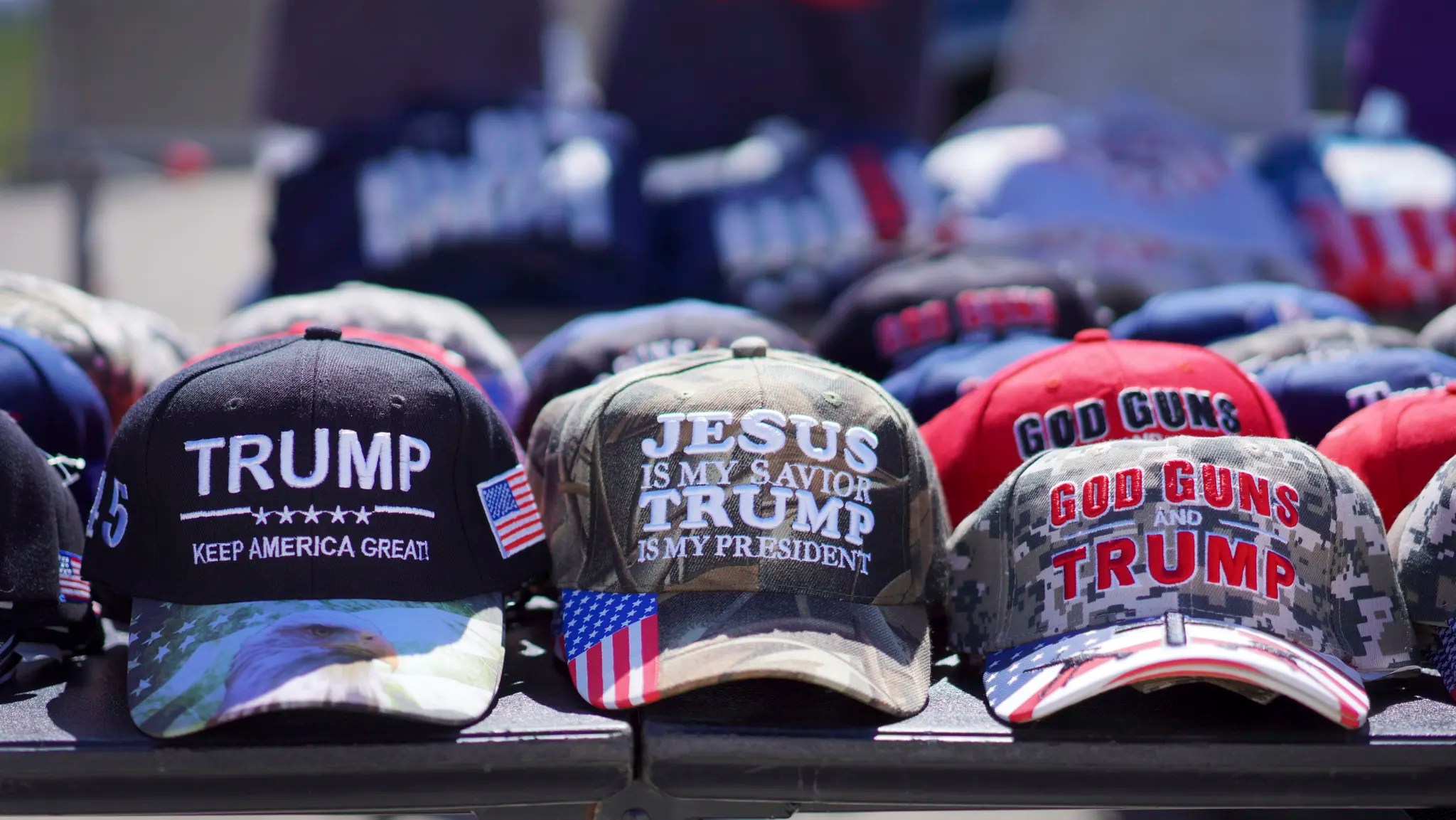


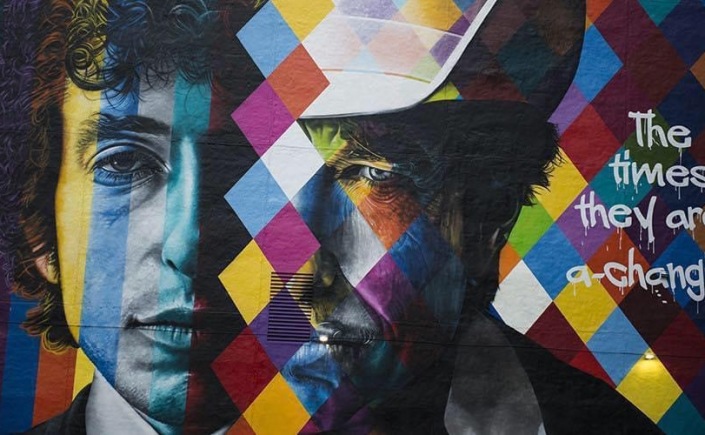
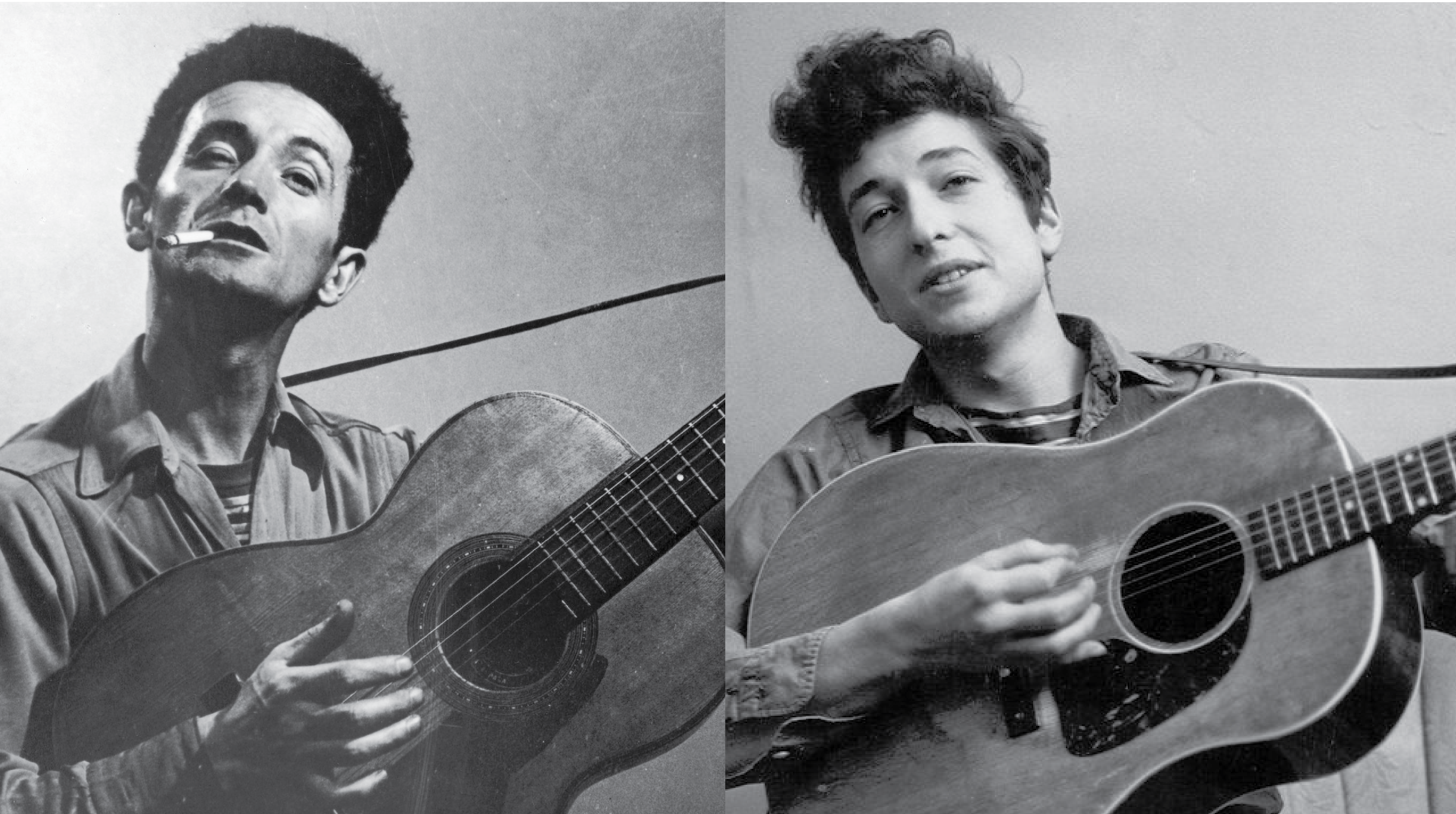
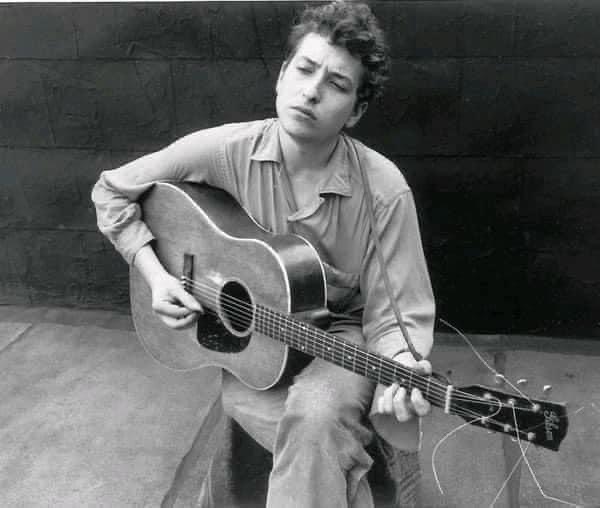


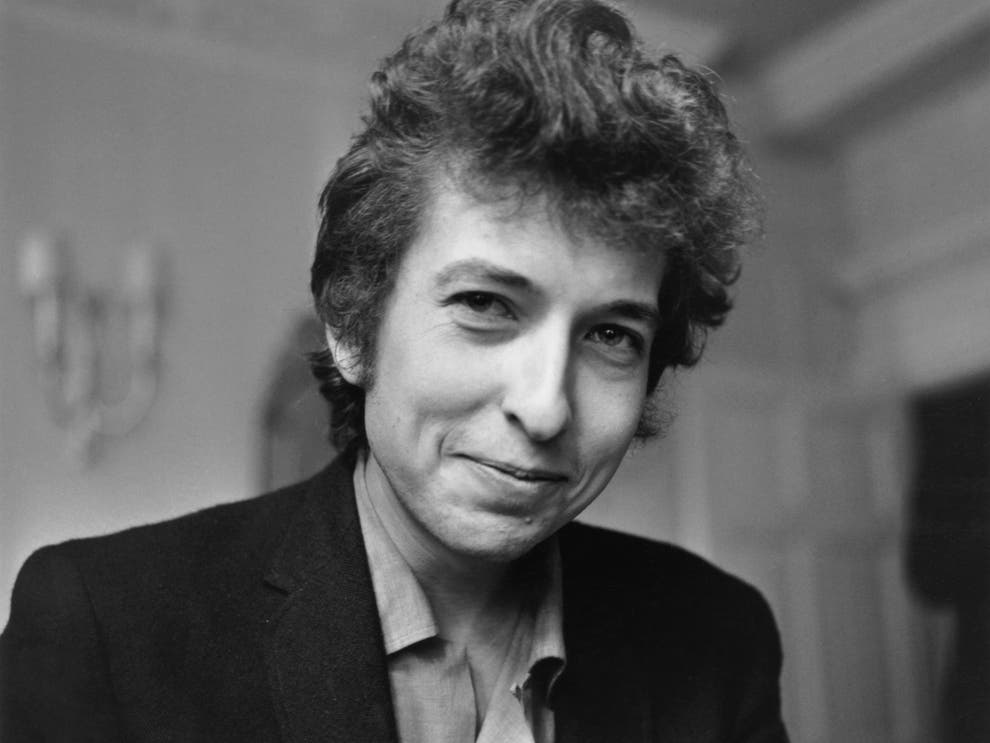


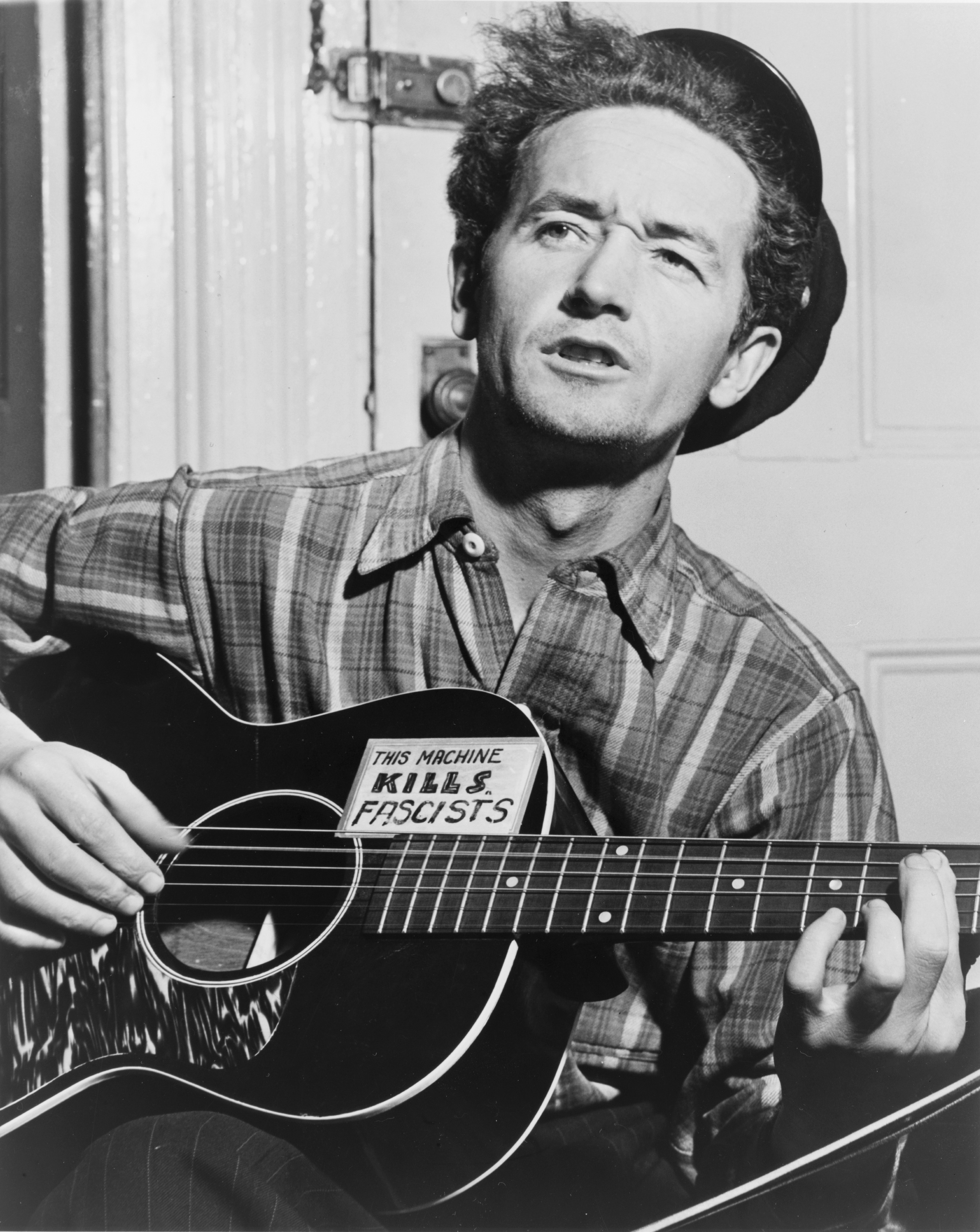


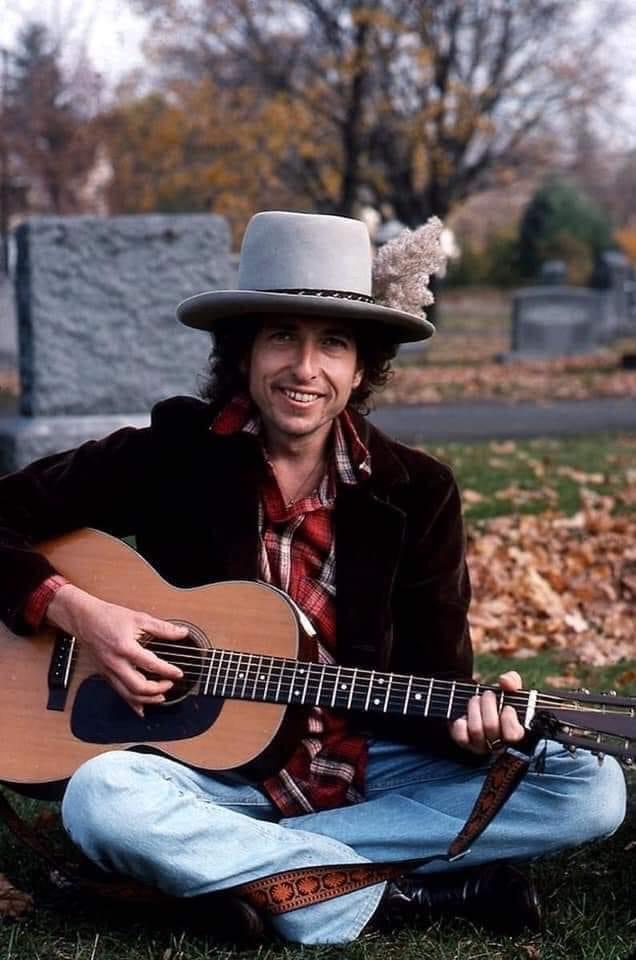

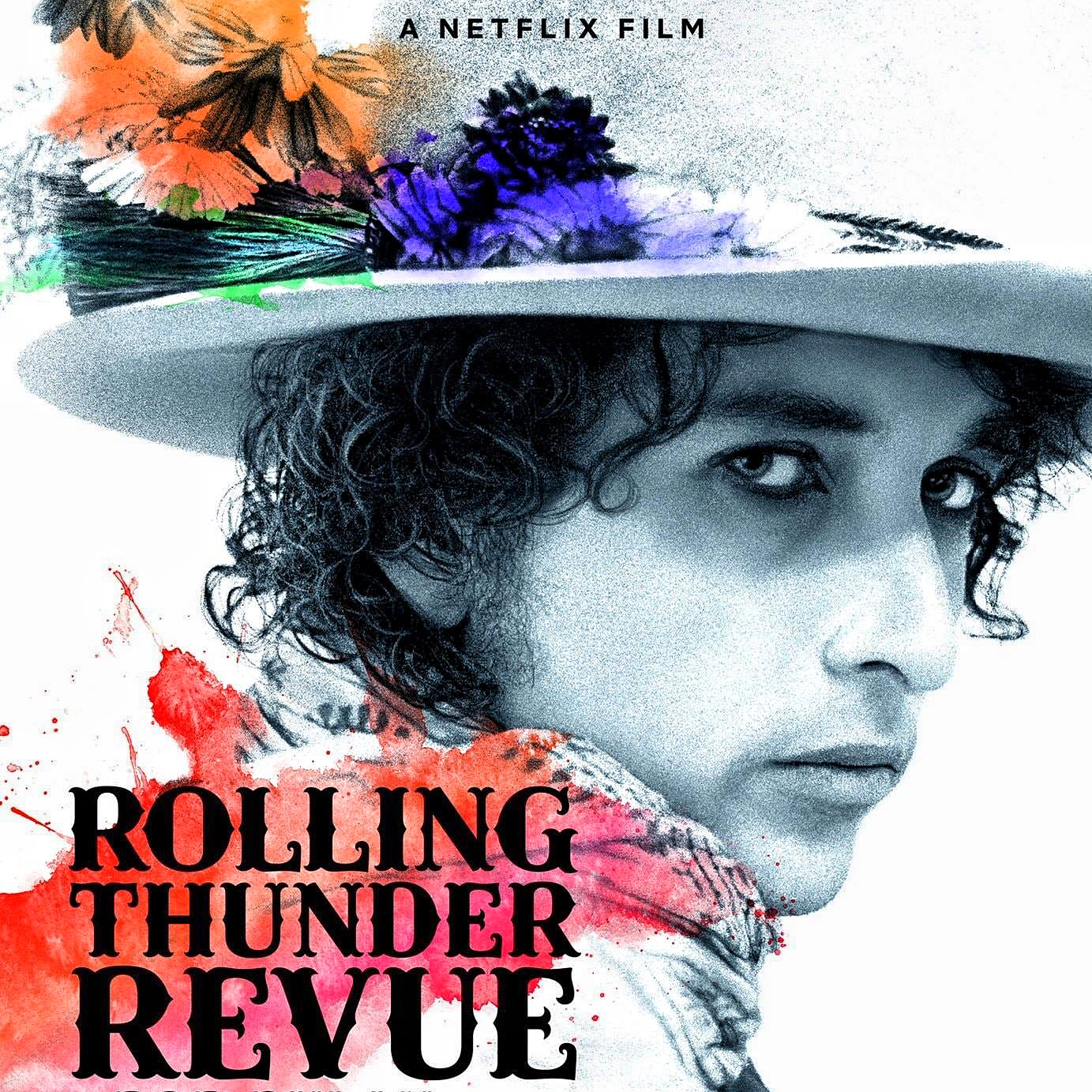


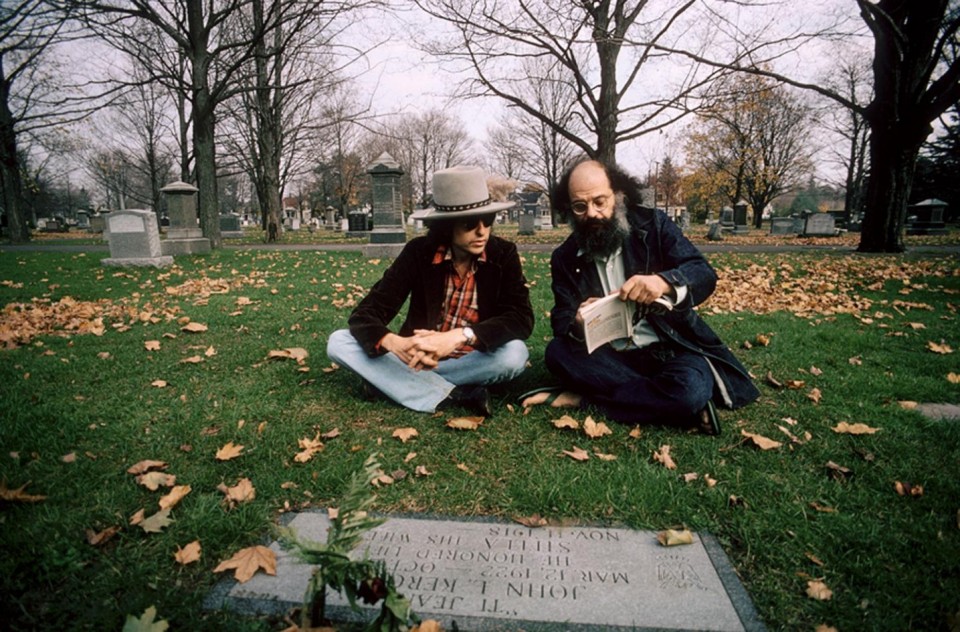
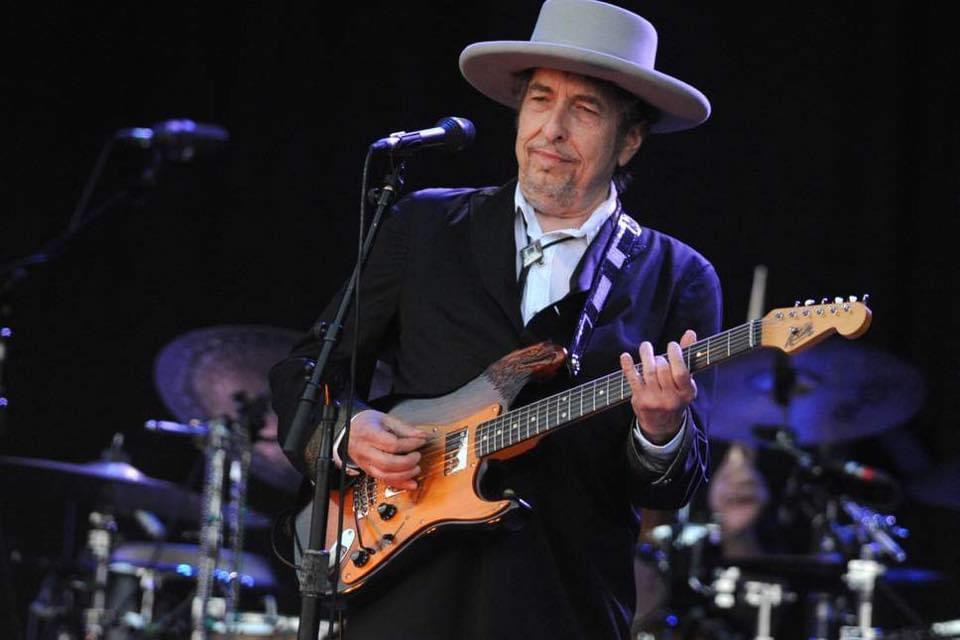
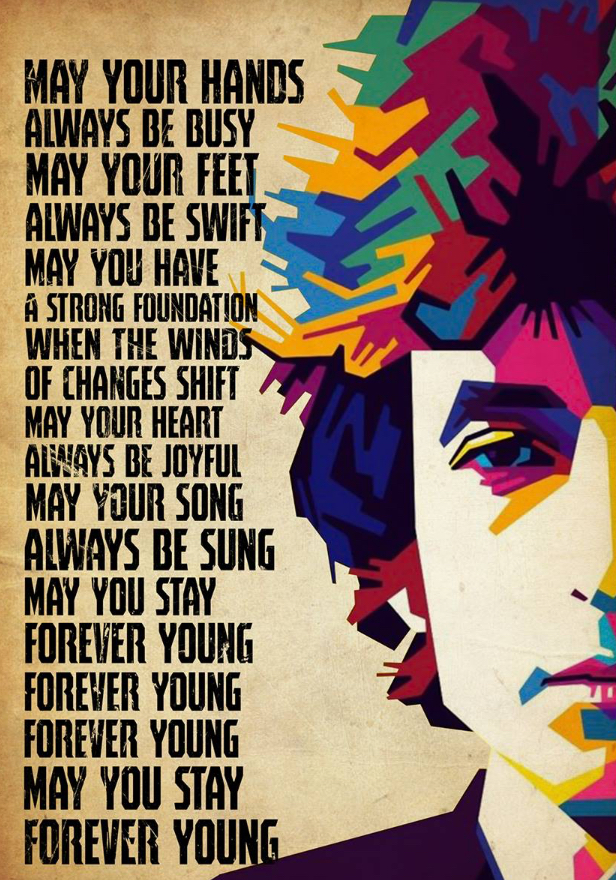






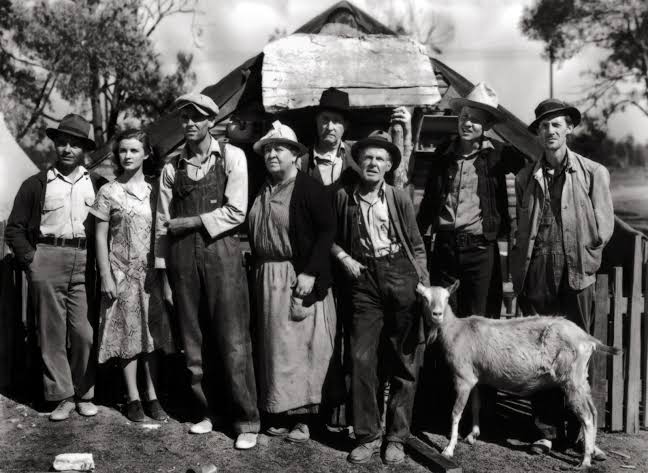


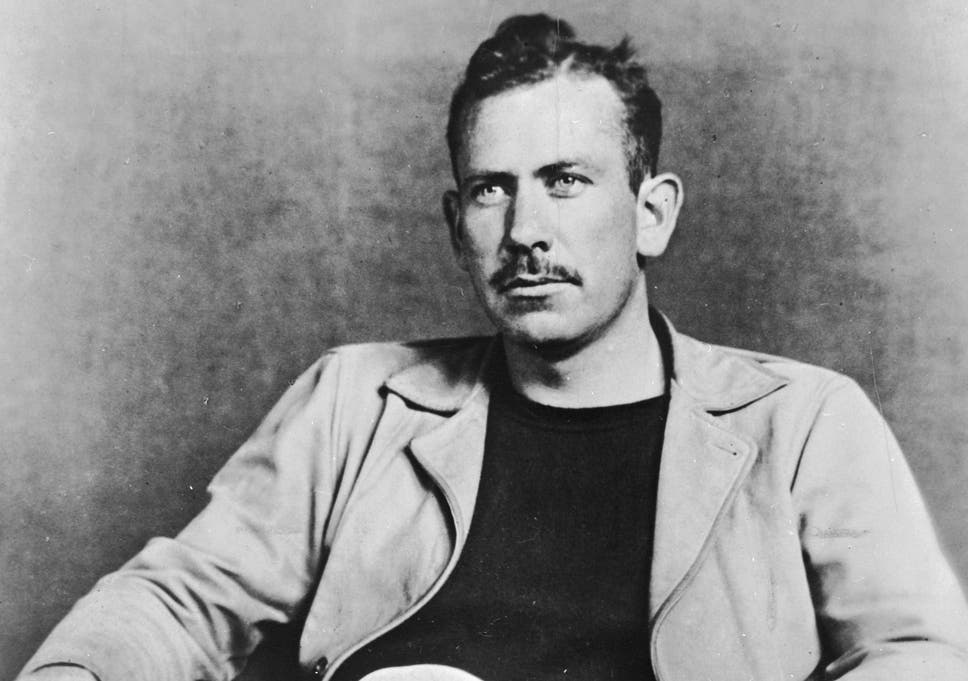
 In That Howling Infinite