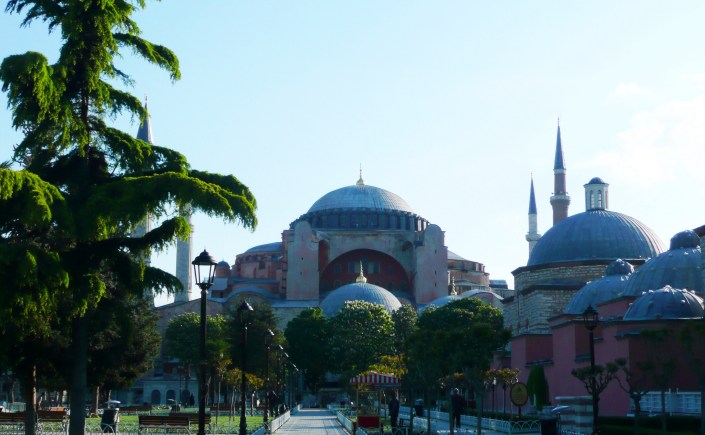
There would be later times (1965, 67, 69…) but I remember the first time. 1962. Having hitched through Europe and arriving in Istanbul. That special feeling. From Sultan Ahmed looking across the Bosporus towards the East, unknown roads and places and in the far distance a very vague idea of India…. Istanbul as a gateway to other worlds and new adventures….I was a young man drifting and dreaming, there were no guidebooks and I had not met anybody who had done the journey or heard stories from the road ahead….. The world was open, and I was ready….
Torben Huss, photographer
Haydarpasha Gan, late November 1972.
The last station on the line, and the end of Asia, after a twenty four hour train journey across Anatolia, from Teheran, including a wintry ferry ride across Lake Van, in the East, in the company of an idiosyncratic and proselytizing German pastor and a Pakistani student. The student and I quickly converted to Lutheranism just to shut him up.
There were no bridges across the Bosphorus in those days. Just the ferry that met the train to take us across to the Golden Horn to Eminou. And thence, a walk up to Sultanahmet, with the address of a doss house given to me by someone I’d met in Meshad near the Persian-Afghani border. A space on a floor for a few lira a night.
And then several weeks in Istanbul on two dollars a day, sleeping on the floor at what today would be called a backpacker’s hostel, broke and waiting for money to be sent from England. Weeks spent wandering the streets, wondering at the mosques and markets, getting stoned (dangerously in those days – remember ‘Midnight Express’?) in the Hippodrome, and dining cheaply morning, noon and night at the Pudding Shop.
Forty years on, and naturally, things have changed in many ways. Haydarpasha is closed for renovations and a rail link crosses the Bosphorus by undersea tunnel. There are now are two impressive suspension bridges.
Asian Istanbul, more of a sleepy suburb then, with some fine buildings scattered along the shore, is now a metropolis in its own right. And Istanbul is a city of thirteen million people.
The Pudding Shop is now world-famous on account of its hippie credentials and sells all kinds of good Turkish tucker, but a shadow of its former simplicity. Where once there thronged ragged and rangey adventurers on their journey east or west, tourists of all nations gather en masse.

The Pudding Shop 1969
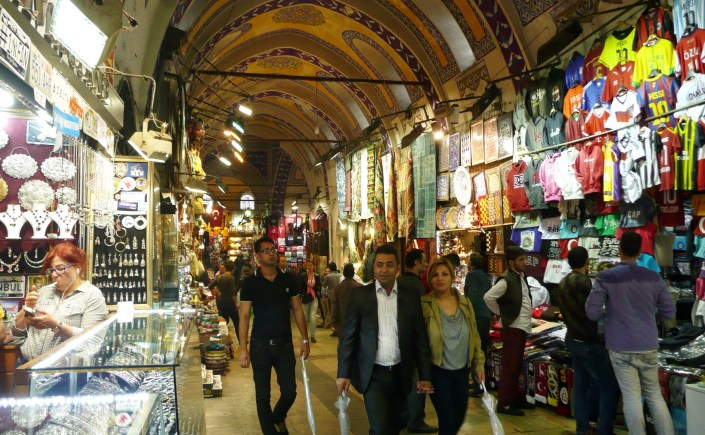
Turkey in general, and Istanbul in particular, is now the place to be and the town to see – in these troubles times, it is a safe ‘Middle Eastern’ holiday destination, and a big cross on the cruise map. Almost every day, a fleet of giant liners ties up on the Yesilkoy quay. And their cargo soon materializes in Sultanahmet to view the BIg Four: the Blue Mosque, Aya Sofya, Topkapi Seray, and the Grand Bazaar. No time for the simple grandeur of the Sulaymaniyah Mosque, the other-worldliness of Byzantine Emperor Justinian’s vast underground cistern, or the aromatic gorgeousness of the Spice Bazaar down by the quays of Eminou.
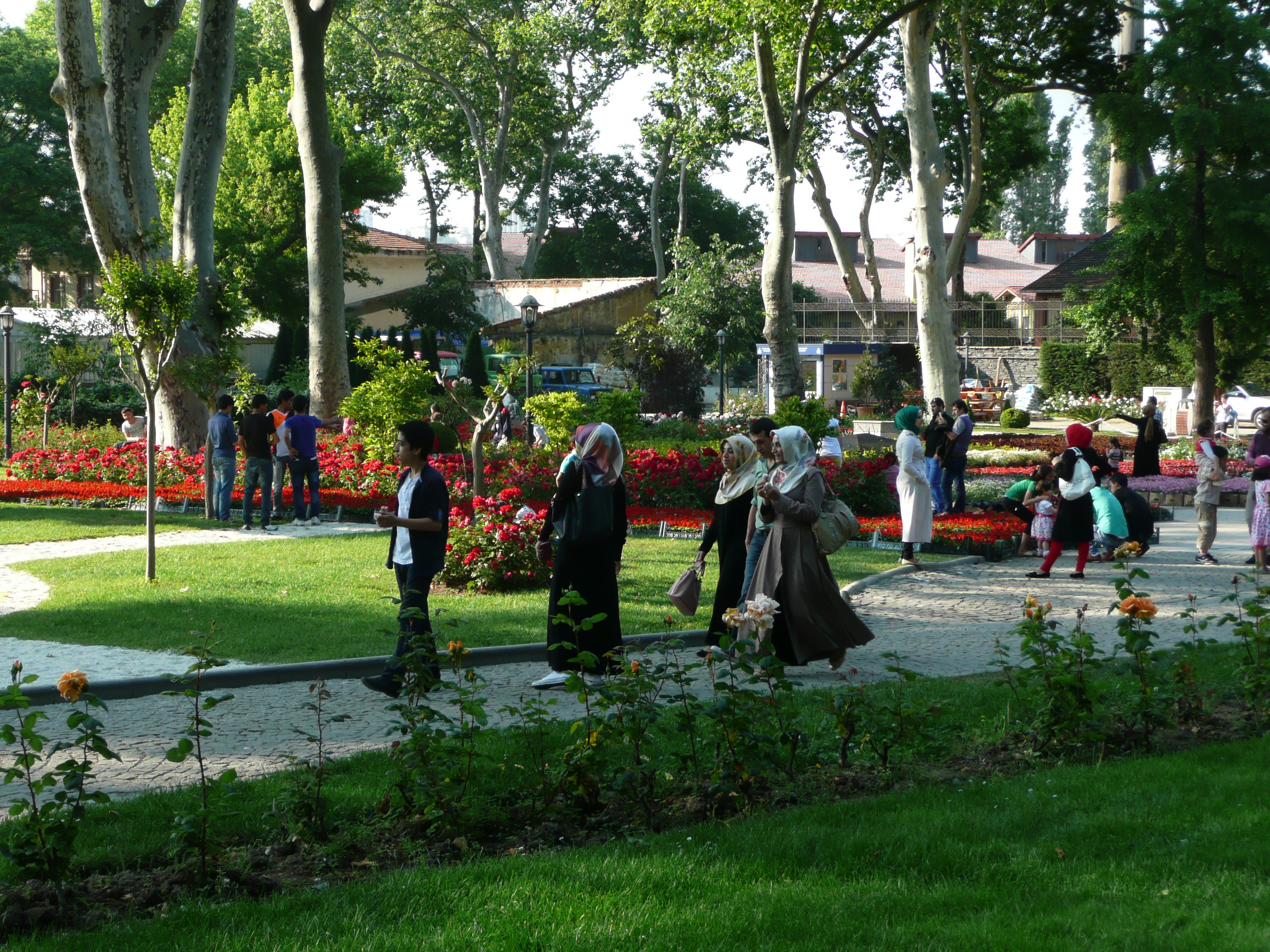
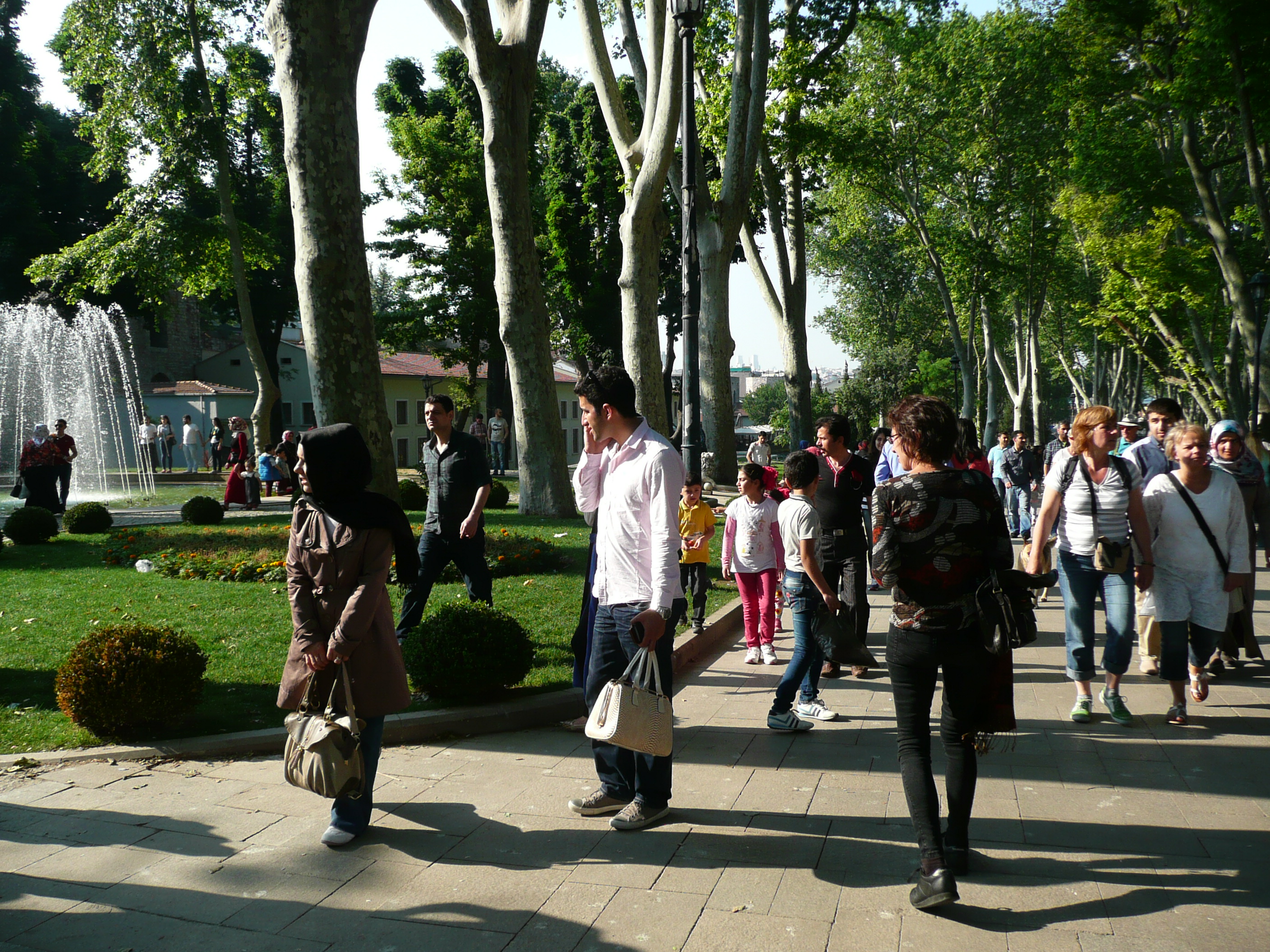
Though no longer the exotic, half-east-half-west departure lounge for the old hippie trail, Istanbul is still a contradiction of past and present, trash and treasure, modernity and medaevilism. The dialectic is still evident, and maybe more so, between the ever changing now and the ever-present then, in the forever magical monuments and mosques, in the contrast between the modern young Turks in their western gaberdine and the many muhajibiin and well-covered conservatives.
Scratch Istanbul’s surface, and you will find a tangle of medieval streets and 21st Century traffic jams, bad drivers, and worse pavements. Walkers watch out!
And there is a poorer, working class, and even rural Istanbul. Suburbs just off the tourist map, where old men gather outside chai shops smoking, chatting and playing cards, and where women are rarely seen – when they do, most are covered.
Many Turks have come in from rural areas, and are still clad in traditional garb. There are now hundreds, maybe thousands of Syrian refugees in Istanbul now, seeking shelter from the storm in their sad and devastated homeland, and other Arabs fleeing the bitter winter that has followed the Arab Spring. Some rent apartments for their families, others beg in the streets.
As we walked along the highway that boarders the ancient walls and the Bosphorus, a speeding car hit an elderly Syria as he was crossing the dangerous road. We and his distraught family rushed to his aid, and mercifully he was unharmed but in shock, and did not want an ambulance. We placed him in a the comfortable position and I advised the young men with him in Arabic to keep a watch over him and to watch his eyes.
In contrast to these wandering souls, well-heeled Gulf Arabs arrive with too much money and too little taste. Istanbul is viewed as more stable, cosmopolitan, and naughty than tense and tenuous Beirut, and these wealthy visitors often seek to buy property here.
All the contrasts and contradictions are presently being played out in the politics and economics of this modern Turkey, and in the street protests, tear gas, and riot gear across the Golden Horn, up the hill around Taksim and Gezi Park, and across the suspension bridge. Partisans of Prime Minister (now presiden) Erdogan bump up against the Gulenists, followers of an exiled but influential dissident, and against the ever-ardent bearers of Kemal Ataturk’s torch. Folks still revere him as the Father of The Turks, but times change, some say, and so then must Ataturk, although the old man must spin some in his revered grave.
People say that Turkey is a divided nation right now. And this is manifested in accusations of creeping Islamization, counter-accusations of occidental decadence and depravity, allegations of corruption and cronyism, and street violence and police brutality. Back into November 1972, Military Rule was the norm, and dissent was silenced. Turkey was Asian, and Middle Eastern. Now the country still straddles east and west, coughing the European Union with much leas enthusiasms than hitherto or and presenting as the go-between ‘twixt The West and and Iran, and with the volatile lands to the south.
For better or ill, how things have changed.
© Paul Hemphill 2014. All rights reserved
 Torben Huss, Eminonu 1965
For other posts about Turkey in In That Howling Infinite, see: People watching in Sultanahmet, Sailing to Byzantium, Ottoman Redux – an alternative history and The Watchers of the Water



 In That Howling Infinite