That was the year that was – don’t stop (thinking about tomorrow)

The prophet’s lantern is out
And gone the boundary stone
Cold the heart and cold the stove
Ice condenses on the bone
Winter completes an age
WH Auden, For the Time Being – a Christmas Oratorio, 1941

I considered using a line from the above as the title of this retrospective of 2022.  It was written during 1941 and 1942, though published in 1947, when the poet was in self-exile in the United States and viewing the war in Europe from afar – although the long poem from which it has been extracted does not in itself reflect such pessimism. A more fitting title could be taken from another long poem that was published in another (very) long poem published in 1947 – Auden’s often overlooked masterpiece The Age of Anxiety, a meditation on a world between the wreckage of The Second World War and of foreboding for the impending armed peace that we now look back on as the Cold War, with its oft-repeated mantra: “many have perished, and more most surely will”.

The year just gone was indeed a gloomy one, meriting a dismal heading. There are few indications of where it might take us in ‘23 and beyond, and my crystal ball is broken. Pundits reached for convenient comparisons. Some propounded that it was like the 1930s all over again when Europe constantly teetered on the brink of war. Others recalled 1989 with the fall of the aneroid Wall and the collapse of the Soviet Union. But, beware of false analogies. In 2022, things were more confused. The tides of history have often resembled swirling cross-currents.

Things, of course, might have been worse. There are, as I’ve noted in successive posts on my own Facebook page, many qualified “reasons to be cheerful”. The  year could have ended with Ukraine under Russian control. An emboldened China might have been encouraged to launch an assault on Taiwan. A red wave in the midterms would have buoyed Trump. And here in Australia, Scott Morrison might have secured another “miracle” election victory. The West could have retreated on all fronts.

Instead, therefore, I have selected a title that hedges its bets, because, to paraphrase the old Chinese adage, and the title of an earlier retrospective, we certainly live in interesting times and in 2023, and a lot of energy will be spent endeavouring to make sense of them – or, to borrow from Bob:

Pointed threats, they bluff with scorn
Suicide remarks are torn
From the fool’s gold mouthpiece
The hollow horn plays wasted words
Proves to warn that he not busy being born
Is busy dying

B Dylan

The year in review 

Christine McVie, longtime and founder member of Fleetwood Mac departed the planet on 30th November this year. And contemplating this year’s posts in In That Howling Infinite, I could not help thinking about one her most famous songs. I recalled that it featured on newsreels of the revolution that ousted the Shah of Iran in 1979.

Why not think about times to come?
And not about the things that you’ve done
If your life was bad to you
Just think what tomorrow will do
Don’t stop thinking about tomorrow
Don’t stop, it’ll soon be here
It’ll be better than before
Yesterday’s gone, yesterday’s gone

The song seemed quite apposite as the soundtrack of a revolution that had overthrown one of America’s many friendly autocrats. At the time, no one could predict what would happen, but, as with the fall of the Berlin Wall in 1989, it was a time optimistic expectation. And yet its shock waves have reverberated and ricocheted in ways unimagined at the time.

As 2022 ends, with blood flowing on the streets of Iran and in the mullahs’s torture cells as young people rise up against a hypocritically brutal theocratic tyranny, we see again and again how that which goes around comes around.

Women, Freedom, Life

If the malign hand of history has literally reached out and gripped Iran’s young women and girls by their hair, it has also endeavoured to strangle the thousand year old Ukrainian nation in the name of an atavistic irredentism. Russian troops invaded the Ukraine on February 24, causing what has since become the largest conflict in Europe since World War II. Out if the spotlight of the world’s easily distracted attention. intractable conflicts lumbered mercilessly on – in Syria, Yemen, Ethiopia, the Congo and many other “far away  places with strange sounding names”.  

On the far side of the world, the USA continued to struggle with the reverberations of January 6th 2021. Donald Trump, like Dracula, has not gone away, and whilst his 2024 presidential run is looking increasingly shaky, he continues to poison the atmosphere like radioactive dust. The unfortunate folk of the United Kingdom endured three prime ministers during the year, including the shortest ever in the history of the office, and after two years of pandemic, are facing a bleak economic winter as well as a frigid actual one.

In Australia, it was the year of the teal – at least according to those who study the evolution of language, the year we lost a queen, our long-serving foreign head of state, and a king of spin, the down-fallen and disgraced Scott Morrison. And a sodden La Nina saw incessant rain drown large swathes of eastern Australia, visiting misery on thousands. COVID-19 mutated, the Omicron variant surging from beginning of the year, ensuring no end to the pandemic – today, it seems like everyone we know has had it, including ourselves (and we were soooo careful for a full two years!). As restrictions were cautiously lifted, we as a nation are learning to live with it. 

Politically, it’s been a grand year for the Australian Labor Party. With our stunning Federal election win in May and in Victoria in November, the Albanese government’s star is on the ascendant and it’s legislative record in six months has out run nine years of Tory stagnation on climate, integrity and equality – a neglect that saw the rise of a new political force in the shape of a proto-party, the aforementioned “teal”, named for the colour of the candidates’ tee shirts. The opposition has been reduced to a bickering and carping crew, and whilst Labor continues to ride high in the polls, the Coalition bounces along the bottom of the pond.

Lismore, northern NSW, March 2023

Flooded house aflame, Lismore March 2022

Christine McVie was just one of many music icons who checked out this past year. The coal miner’s daughter, Loretta Lynn, crooned her last, as did rock ‘n roll bad boy Jerry Lee Lewis and Ronnie “the Hawk” Hawkins, who gave the boys in The Band their big break. Rock heavyweight (literally) Meatloaf took off like his bat out of hell and keyboard evangelist Vangelis boarded his chariot of fire.

Acclaimed British author Hilary Mantel, whose Wolf Hall trilogy inspired back to back posts in In That Howling Infinite in 2020 found “a place of greater safety”, and French author Dominique Lapierre also joined the choir invisible. I had first learned about Israel’s war of independence and the Palestinians’ al Nakba in his O Jerusalem, and about the bloody tragedy that accompanied the birth of India and Pakistan, in Freedom at Midnight, both books featuring in past posts. 

Mark Rylance and Damian Lewis as Tom and Hal

One could argue that the most significant departure was that of Britain’s longest serving monarch. Queen Elizabeth II had been on the throne for almost all of my life, as has the now King Charles III who was born four months before me, and of whom, as a nipper, I was jealous. I recall how I watched the queen’s coronation on a tiny black and white television in the crowded and smokey parlour of the boarding house run by a friend of our family. By happenstance, Netflix served up two over the top regal sagas to binge on: the penultimate season of The Crown, which whilst entertaining, was a disappointment in comparison with earlier seasons, and Harry and Meghan which was whilst excruciatingly cringe-worthy, was nevertheless addictive viewing. The passing of Her Maj reminded me that in my lifetime, I have witnessed three monarchs and eighteen British prime ministers (and incidentally, eighteen Australian prime ministers).  The public outpouring of grief for the Queen’s ascent to the choir invisible was unprecedented – the picture below demonstrates what the Poms do best …

The Queue along the Thames to pay respect to Her Maj

There were farewells much closer to home. My mediation colleague, aspiring author and friend John Rosley, and Beau Tindall, the son of my oldest Bellingen friend Warren, took off on the same day in May. Peter Setterington, my oldest friend in England – we first met in 1972 – died suddenly in London in March, and our friend and forest neighbour, the world-famous war photographer Tim Page, in August, after a short but nasty illness. Pete is memorialized in When an Old Cricketer Leave His Crease whilst Journey’s end – Tim Page’s wild ride,is an adaptation of the eulogy I gave for Tim in September, one of many on that sunny afternoon day in Fernmount. It is a coda to Tim Page’s  War – a photographer’s  Vietnam journey, a story we published a year ago.
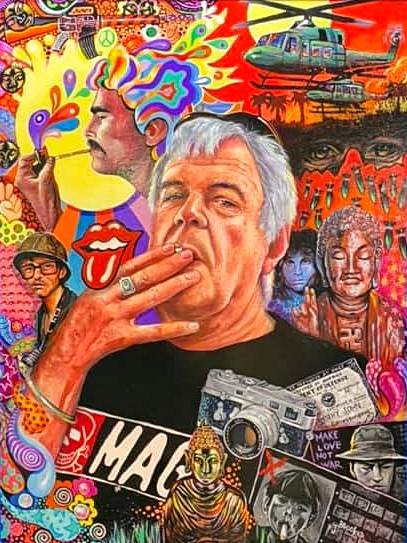
Tim Page by Joanne Booker

What we wrote in 2022

The ongoing Ukraine War has dominated our perception of 2022, from the morning (Australian time) we watched it begin on CNN as the first Russian missiles struck Kyiv, to the aerial assault on infrastructure that has left Ukrainians sheltering through a cold, dark winter. Two posts in In That Howling Infinite examined the historical origins of the conflict: Borderlands – Ukraine and the curse of mystical nationalism and The Roots and Fruits of Putin’s Irridentism. “Because of …” Iran’s voice of freedom looks at the song that has become the rising’s anthem. None can predict the outcome – whether it will be a doomed intifada, the Arabic word that literally means a shaking off – historically of oppression – and figuratively, a rising up, like that in Ireland in 1798 and 1916, Warsaw in 1943 and 1945, and Hungary in 1956, or an Inqilab, another Arabic word meaning literally change or transformation, overturning or revolution.

The run up to May’s Australian elections inspired Teal independents – false reality in a fog of moralism.; and Australia votes – the decline and fall of the flimflam man. 

More distant history featured in Menzie’s Excellent Suez Adventure, the story of the Suez crisis of 1956 that historians argue augured the end of the British imperium, and the role played therein by longtime Australian prime minister Sir Robert Menzies. Johnny Clegg and the Washing of the Spears is a tribute to the late South African singer, dancer and songwriter, and a brief history of the war that destroyed the great Zulu nation, setting the scene for the modern history of South Africa. And journeying further back in time to sixteenth century Ireland, there is O’Donnell Abú – the Red Earl and history in a song, a discussion of the origins of a famous and favorite rebel song.

Then there are the semi-biographical “micro-histories” in In That Howling Infinite’s Tall tales, small stories, obituaries and epiphanies. In 2023, these included: Folksong Au Lapin Agile, the evening we visited Montmarte’s famous folk cabaret; Ciao Pollo di Soho – the café at the end of the M1, the story of a café that played a minor part in my London days, as described in detail in an earlier travelogue, Song of the Road – my hitchhiking days; Better read than dead – the joy of public libraries; The quiet tea time of the soul, an ode in prose to a favourite beverage; and The work, the working, the working life recalling the many jobs I took on in the sixties to keep myself in music, books, travel and sundry vices. 

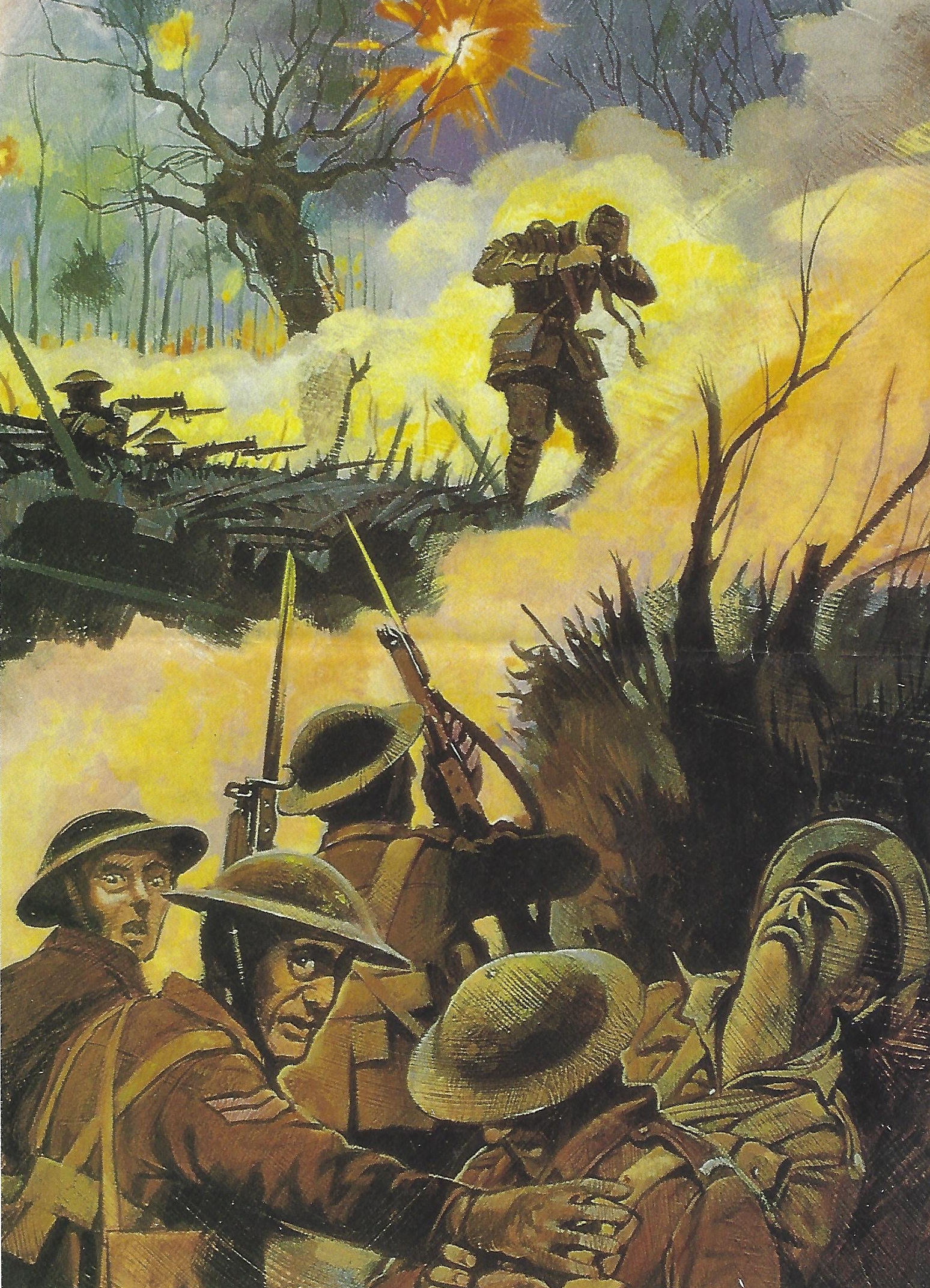
We cannot pass a year without something literary. We celebrated the centenary of three iconic literary classics in The year that changed literature, and with the release of The Rings of Power, the controversial prequel to The Lord of the Rings, we published a retrospective on the influence of JRR Tolkien. One ring to rule us all – does Tolkien matter? – a personal perspective with an opinion piece by English historian Dominic Sandbrook, an informative and entertaining chronicler of postwar British history and society which featured, in Unherd, an online e-zine that became a “must read” in 2022. A Son Goes To War – the grief of Rudyard Kipling recalls the death in battle on the Western Front in 1917 of the poet’s only son, it’s influence upon his subsequent work, whilst Muzaffar al Nawab, poet of revolutions and sorrow is an obituary for another poet, who seen a lifetime speaking truth to power.

And that was that for what was in so man ways a sad year. Meanwhile, In That Howling Infinite already has several works in progress, including a review of historian Anthony Beevor’s Russia – Revolution and Civil War, what King Herod really thought about the birth of baby Jesus, and the story of a famous and favourite British army marching song.

Best wishes for 2023 …
Death of a Son

That was the year that was – retrospectives

Life in Wartime – images of Ukraine

The year that changed literature


Australian literary critic and cultural studies writer Peter Craven has been described as both a “literary hack” and “one of the most prolific, erudite and opinionated voices in Australian literary circles”. In 2004 he was awarded the Pascall Prize for Australian Critic of the Year. whatever subject he applies his keyboard to, be it for iconic poets and authors or literary contemplations on the legacies of Easter and Christmas, he turns out admirable pieces that are eclectic, erudite and empathetic. We have republished two of his articles in In That Howling Infinite ; The Magic of Dylan Thomas, and  Go ask Alice. I think she’ll know,  celebrating Alice in Wonderland’s 150th birthday.

Recently, he celebrated the centenary of the publication of three works he considers to be very near the summit of the western canon. 1922, he writes, was  the annus mirabilis, the miracle year – 1922, – the year  that modernist literature, by common consent the greatest writing the 20th century and its aftermath would witness, caused its greatest splash. 

James Joyce’s Ulysses celebrated its centenary on February 2 this year. In Craven’s opinion, it is ‘the greatest demonstration of what can be done to the English language in the name of fiction’. It was also the year of the death of Marcel Proust, the French author of what would become in English the 12-volume Remembrance of Things Past, and when his English translator began the great English translation of A la recherche du temps perdu (literally, In Search of Lost Time), which Craven considers one of the greatest modern works of fiction in any language.

And in October 1922,  English-American poet TS Eliot published The Waste Land, ‘the modernist poem that sounds like nothing on earth and that is in some ways the easiest entry point to the weirdnesses and wonders of modernism because it is short but easy to be seduced by the beauty of its music and the kaleidoscope of its imagery’.

As a teen I’d read Joyce’s’ short A Portrait of the Artist as a young Man, attracted by its Irishness  – my parents were from the Emerald Isle – but I gave up on Finnegan’s Wake, although I could sing by heart the song that is said to have inspired Joyce to write it, as recorded by that grand old band The Clancy Brothers and Tommy Makem. The sheer size of Ulysses rendered this literary mountain unassailable even though the controversy that swirled about increased its attractiveness to an adolescent contrarian.

But in a boarding house in Delhi at the end of my outward journey on the Hippie Trail, I casually picked up a paperback copy of Ulysses. And for the next two months, Leopold Bloom’s figurative odyssey became my own as I journeyed back to Britain.

That dog-eared, spine-creased paperback  visited Kashmir, Afghanistan, Iran, and Turkey as I headed westwards through the Kyber Pass, Afghanistan, Iran and Turkey. I finished it at last in a boarding house in Sultanahmet in Istanbul, just across from Hagia Sofia and the Blue Mosque, and I dip into it to this day. As Craven writes: ‘The rule with the miracle works of 1922 is to listen to them if your eyes reel. Just as Ulysses will continue to unfold its mysteries if you put on your best stage Irish and force yourself to read aloud’. And that, for me, is the best and only way to appreciate its magic – although being of Irish parentage, I don’t need stage Irish. Small wonder that folk around the world celebrate “Bloomsday” by marathon readings.

As a self-indulgent teenage poet in Birmingham, I’d already been sucked into TS Elliot’s dark universe. In reading Rhapsody on a Windy Night, I believed that, for me  personally, I’d cracked the code of poetry. The Hollow Men has long served me as a political morality play: ‘Between the idea and  the reality,  between the motion and the act falls the Shadow”. And, as a longtime student of the Middle East, I still read The Journey of the Magi to ground my conflicting thoughts about this ever-intriguing part of the world.

As for The Waste Land, to use the language we used back then in that dear, dead decade, it was, well, ‘mind-blowing’, ‘far-out’, and ‘too much’ – and a ‘great trip’. Today, young folk would call it “awesome”. Back then, in bedsits, guitar in hand, I put cantos of it to music – unfinished songs that have never see the light of day.

Craven encapsulates it thus: ‘The Waste Land, which can be read aloud in an hour, is the great circus show of modernism. The collage of languages, the snippets of Dante, and all the many death had undone  … this is an Alice in Wonderland world at the edge of madness: dislocated, disturbed and with an extraordinary dramatic power’.

Who am I to blow against the wind?

Marcel Proust, I could never get into to. As the song goes, ‘I tried, oh my god I tried’, but it went on like wallpaper and was like watching paint dry. Life is too short now, and there is too much to read and too few days to fill, so that land will have to remain unexplored.

Again, Craven comes to my aid. He adores Proust, but acknowledges that he can be hard going: ‘Think of Camus’s remark, “The monotony of Melville, the monotony of the Old Testament, the terrible monotony of Proust.”  I love Herman Melville’s Moby-Dick and for all its length and digression, I consider it one of the best novels ever. The title of this blog is actually taken from it. I regard The King James Bible as one of the most beautiful books ever. But I’ll  defer to Albert Camus’ summation of Marcel.

Craven, however, loves Proust. He wrote, in The Australian on December 9th 2023, in a review if a new translation of Swann’s Way: Remembrance of Things Past is one of the funniest novels ever written as well as one with an extraordinary intellectual architecture and it’s also true that as that expert on translation George Steiner said, no one can read it without feeling a frailty at the heart of their sexual being. It is one of the most dazzling works of fiction ever written which also has a sort of spellbinding maintenance of tone which is not so much monotony as its transcendence. And although it is grounded in personal experience everything is topsy-turvy in terms of its genesis”. But he pinpoints the seminal difference between two of the greatest authors of the Twentieth Century: “… everything in the book looks back. Proust’s Recherche is a hymn to the 19th century, where Joyce sucks up the salt and sweat of the 20th”.

For more in In That Howling Infinite on books and reading, see:  Better Read Than Dead.

How to read Ulysses in 5 easy steps (according to those who have read it):

1. Read it aloud and reread it.
2. Take your time (years, not months).
3. Start at chapter four.
4. Try to read it without trying to understand it on first go. Let go of the bits you don’t understand.
5. Skip the boring parts and go straight to the racy final chapter of Molly Bloom’s sexual musings (then, if not too shocked, you can go back to the masturbation, fisting and defecating chapters).

The year that changed literature

Peter Craven, The Australian, 25th February 2021
Irish writer James Joyce. Picture: SuppliedIrish writer James Joyce

They call it the annus mirabilis, the miracle year – 1922, a century ago now, was the year that modernist literature, by common consent the greatest writing the 20th century and its aftermath would witness, caused its greatest splash.

James Joyce’s Ulysses celebrated its centenary on February 2, and it is the greatest demonstration of what can be done to the English language in the name of fiction. And 1922 was the year Marcel Proust, the author of what would become in English the 12-volume Remembrance of Things Past, died and when his English translator CK Scott Moncrieff began the great English translation of A la recherche du temps perdu (literally, In Search of Lost Time) one of the greatest modern works of fiction in any language.

On top of this, in October 1922 TS Eliot published The Waste Land, the modernist poem that sounds like nothing on earth and that is in some ways the easiest entry point to the weirdnesses and wonders of modernism because it is short but easy to be seduced by the beauty of its music and the kaleidoscope of its imagery.

But let’s stick to the three anniversaries. Ulysses was published on Candlemas, which also happened to be Joyce’s 40th birthday.

It’s called Ulysses as a kind of clandestine joke on the classicism of the world because the hero, Leopold Bloom, is an Odysseus, a Ulysses figure who wanders around Dublin brooding with his own kind of wisdom, even though he knows his wife Molly is having it off with a character called Blazes Boylan. This saddens Bloom but it doesn’t stop the “cultured all round man”, as someone calls him, of acting not only with his own kindness but courage as he distracts himself and feels the depth of his sadness. He enjoys the sight of a girl exhibiting herself for his benefit on the beach, he goes to a funeral and he confronts a benighted patriot, known as the Citizen, the one-eyed Cyclops of this quasi-comical densely encyclopedic retelling of some meta-version of Homer’s Odyssey.

No one, of course, would have cottoned on to the fact Homer had anything to do with this were it not for the title and that Joyce allowed himself to collaborate with Stuart Gilbert (later to be the translator of Albert Camus) about all the obscure parallels. At some Paris party Joyce said to the young Vladimir Nabokov that it had all been “a terrible mistake” and that it was “an advertisement for the book”.

Poet and dramatist TS Eliot (1888-1965).Poet and dramatist TS Eliot (1888-1965).

He was a great leg-puller whichever way you looked at him. What calling the book Ulysses advertised was that this was an epical endeavour Joyce was engaged on that used the fullest possible resources of language in an intrinsically if ambiguously poetic way, but it had something to do with the idea of fidelity in a woman and with the idea of a son-figure.

When Bloom confronts that one-eyed Citizen, he speaks on behalf of love: “I mean the opposite of hatred.” Bloom is a deeply civilised man in his bumbling way, but the son figure he stumbles on – Telemachus to his Odysseus – is Stephen Dedalus, whom readers may have encountered before in A Portrait of the Artist as a Young Man. Stephen is a self-portrait on Joyce’s part of his younger self, “with a great future behind him”, and Stephen is as brilliant as the day is long. Stephen is acrobatically smart, flypapered in the glories of the language of the world. He is proud and quick, and what you cop from the get go is the sheer blinding power of a mind that is Homeric in the compositional sense: this is a talent, it’s insinuated, that might rival Homer and who at first glance is likely to be Greek to anyone who tries to follow him.

“Ineluctable modality of the visible: at least that if no more, sought through my eyes. Signatures of all things I am here to read, seaspawn and seawrack, the nearing tide, that rusty boot.” Stephen’s voice, like the other two major ones – Bloom and Molly – talks to it without any concession of making things easy for the reader, but if you hang on all the main drift of the action, the innuendo and humour and sudden bits of something poignant, will be nakedly clear. It’s a portrait of a city, among other things, and the action is confined to one day. There’s a Nighttown chapter where everything is nightmarish as Stephen gets more and more drunk and where he cries, “Nothung” like a latter-day Siegfried from Richard Wagner’s Ring cycle.

Bloom, full of kindliness, takes him back to his home where Molly (who can be a seductive witch, is also a faithful wife in a fallen world) is in bed, and Bloom asks Stephen if he wants to stay the night.

“Was the proposal of asylum accepted?

“Promptly, inexplicably, with amicability, gratefully it was declined.”

This second last chapter of Ulysses is in question and answer form like a Catholic catechism, and perhaps in secular terms the voice it is couched in represents the spirit that personifies the feeling (love’s too big a word) between Bloom the father figure and Stephen the son. “What spectacle confronted them?” the wholly ghostly voice asks them. And the answer?’ “The heaventree of stars hung with humid nightblue fruit.”

Marcel Proust.French novelist Marcel Proust.

There is an extraordinary grace in the stiltedness of this parody of a Q&A but everything in Ulysses works by principle of parody because the book is deeply comical and it constantly sends up ways in which words fail while also being intent on the well-worn ways in which common garden language is the only language we have to express the things in the heart.

And this is all turned on its head by the grandeur of Molly Bloom’s soliloquy because Molly is also the muse and she can say anything in the most uninhibited way. She can say anything as she mixes everything together. She thinks about sex and then about lions and says, “I imagine he’d have something to say for himself, an old lion would.” And she says, “With him never embracing me except sometimes the wrong end of me.”

The great Irish actor Siobhan McKenna recorded the last half-hour of Ulysses with Molly’s unpunctuated drowsy and erotic ramblings, and she makes the syntax clairvoyantly clear and it remains far and away the finest introduction to Ulysses. A hundred years after its first publication the great climactic “Yes” remains breathtaking. “I asked him with my eyes to ask again yes and then he asked me would I yes to say yes my mountain flower and first I put my arms around him yes and drew him down to me so he could feel my breasts all perfume yes and his heart was going like mad and yes I said yes I will Yes.”

The rule with the miracle works of 1922 is to listen to them if your eyes reel. Just as Ulysses will continue to unfold its mysteries if you put on your best stage Irish and force yourself to read aloud, so Proust with his extraordinary long sentences (all those jewel-laden subordinate clauses) can sometimes be easier to read aloud than for the eye to comprehend. Among Proust performances the Ralph Richardson reading of Swann in Love is the parallel miracle to McKenna’s Molly Bloom.

But when Proust died in 1922 having left behind a completed (though not fully revised) text of the great work he’d changed fiction forever. “For a long time I used to go to bed early” is the first sentence of it and before we know where we are we are brought up close, with the greatest intimacy, to this exquisite sook of a child who is obsessed with being kissed goodnight by his mother and who as an adult narrator sees a lost past rising up for him simply because of the taste of that madeleine and that cup of tea.

Proust is the most essayistic but also the most lyrical of novelists and you can see why William Emp­son, one of the founders of modern criticism, could say his masterwork sometimes reads like criticism of genius of a lost masterpiece because part of the clairvoyant aspect of Proust is to make the interpretative unfolding part of the narrative drive of a book that can seem to make the earth stand still. Think of Camus’s remark, “The monotony of Melville, the monotony of the Old Testament, the terrible monotony of Proust.”

But the terrible monotony of Proust can be a chimera, an illusion. When you try to find it in any individual passage it fades away. The Proustian effect is a monumental thing created out of the book’s cumulative power.

A statue of poet and author James Joyce in downtown Dublin.A statue of poet and author James Joyce in downtown Dublin.

Yes, it’s a quest for time lost. Yes, it narrates a hero’s infatuation with the Guermantes aristocrats – no one has ever captured the besotted fascination with mindless glamour so effectively. Yes, it is also one of the greatest works to depict the power and enfeeblement of helpless, blind obsessive passion. Hence George Steiner saying, “No one could read Proust without feeling a frailty at the heart of their sexual being.”

At the same time, to read A la recherche du temps perdu is to feel you’ve experienced something like the totality of what the novel as an art form can express and represent, the novelistic power of a created world that is also blindingly and absolutely compellingly a recapitulated world.

And what a world. There’s the gay girl who spits on her dead father’s photo. There’s the fact he’s actually a great composer. There’s that extraordinary couple of lovers of the artistic, Madame and Monsieur Verdurin, and she is the greatest portrait of a vulgarian in history. There’s Gilberte with whom the hero – occasionally called Marcel – loves to wrestle. There’s his grandmother, a woman of absolute sincerity and culture and depth of love. There’s Albertine, who’s no better than she should be but can look like the abiding memory of everything. And then there’s the tremendous figure of the Baron de Charlus, gay and growling, an immense comic creation, black and brilliant and unforgettable.

Proust has a sustained treatment of the Dreyfus case that rocked Paris just as in Time Regained the characters are shadowed by the Great War. There is no greater memory of life than Proust. It falls on the reader like a revelation of what? The power of art, the power of life.

The Waste Land, which can be read aloud in an hour, is the great circus show of modernism. The collage of languages, the snippets of Dante, and all the many death had undone, the music of the Rhinemaidens, the cockney speech and the terrible dialogue of the woman who is mentally distressed and the man answering with what might be dispassionate hatred from inside his head. All that summoning up of a world where the gestures of lust are unreproved and undesired and then the kind of word salad where the French poem about the prince in the ruined tower blends with the injunctions of classical Indian precept and right at the end the repeated “shantih” is a token of peace or music or nothing.

But this is an Alice in Wonderland world at the edge of madness: dislocated, disturbed and with an extraordinary dramatic power.

If you don’t know the masterpieces of the annus mirabilis or need to revisit them, the centenary of 1922 is a good excuse