Hopes and fears – the morning after the referendum for The Voice

“We remember emotions … long after the details have faded. For the potency of emotion is barnacled on memory … and I know I’ll remember forever how I will feel when the vote for an Indigenous voice to parliament is declared. Win or lose”. Nikki Gemmell, The Weekend Australian, 23rd September 2023

“At a time when surveys tell us our sense of national pride is falling to alarming levels, we need to ask whether rejecting a voice would help us feel proud of our nation or fuel the growing sense of disconnection”. Chris Kenny, The Weekend Australian, 23rd September 2023

In July, I wrote in A Voice crying in the wilderness:

“Peter Dutton declared  that “the Prime Minister is saying to Australians ‘just vote for this on the vibe”. And yet, it is the “vibe” that will get The Voice over the line. Perhaps the good heart will prevail Australia-wide on polling day and those “better angels of our nature” will engender trust in our indigenous and also political leaders to deliver an outcome that dispels the prevailing doubt, distrust and divisiveness, and exorcise the dark heart that endures still in our history, our culture and our society. Because if the referendum goes down, none of us will feel too good the morning after …

The divisiveness of this referendum will probably be felt for years to come. The polarization it has brought into the open (for some would argue that it has already been there as illustrated by our perennialcukrure and history wars) is a path from which it is notoriously hard to turn back. Whether you were  “Yes” or  “No” may well will be a key marker of political identity? Will it also some to symbolize Australia’s great continental divide?

Sky after Dark and News Corp opinionista Chris Kenny, who is almost alone among his colleagues in speaking out in support of the Indigenous and Torres Strait Islander Voice to Parliament, wrote today of the daunting prospect of a No vote on October 14th, and what it might mean for our country and how we feel about it, and also, about ourselves as Australians. To help readers scale The Australian’s pay-wall, I republish it below.

Here are some cogent points from his article:

“When we wake on Sunday, October 15, it will be too late to reconsider …

First and foremost, a No victory would have repudiated Indigenous aspiration, rejecting a proposal for constitutional recognition and non-binding representation formulated after decades of consideration and consultation. This would not so much be a setback for reconciliation but a roadblock that will take many years to get around …

Would a No vote resolve a single issue or merely delay our attempts to resolve them? Would it make us a better nation, or anchor us to unflattering elements of our past?

Would a Yes victory give us a sense of accomplishment and set us on a course for improvement? Would a Yes vote rejuvenate reconciliation and wrap our arms around Indigenous Australians and their challenges?

Would a Yes victory display a bigger, more optimistic and accepting country? Would a No vote confirm us as a frightened, insular and small-minded nation?

While the No leadership would presumably counsel against celebrations in favour of making sober pronouncements about preventing a constitutional mistake, there would likely be outbreaks of triumphalism from many No supporters if they defeat the referendum proposal.

This would create a harrowing contrast with a mournful Yes camp and the reality of Indigenous Australians feeling rejected in their own country.

Where Yes would have provided a path forward, with immediate work to be done to legislate, construct and implement the voice, defeat will lead to nothing. The task ahead will be simply a return to the status quo, the failed status quo.

Indigenous people, communities and organisations understandably would feel dispirited. Whatever the merits of the respective campaigns, negative politics again would have proven more effective than positive advocacy – a misleading scare campaign would have thwarted a carefully devised and constitutionally conservative reform.

A nation that has been talking the talk on reconciliation would have been revealed as too timid to walk the walk.

We would have spent decades of consideration and consultation to come up with the desired constitutional amendment, and then strangely rejected it.

A country in which all sides of politics say they want reconciliation, representation and recognition would have deliberately refused to give Indigenous people a guaranteed say on matters affecting them. We would have become, for a time at least, the scared weird little country”.

Read the full article below, but first, Back to Gemmell:

“Once upon a time I was tremendously naive. I assumed the Voice would bring Australia together, in joy and healing; that it would mark a new waypoint of maturity in the evolution of our nation. In simpler times I dreamed that the vision of an advisory body on Indigenous affairs, painstakingly devised over 15 long years, would be agreed to, and a new era of nationhood would be ushered in.

The proposal felt necessary, suturing, for all of us. It felt like a proposal that went some way towards lifting the corrosive weight of past wrongs. Considered and careful, it seemed a simple request: for an Indigenous committee to be able to advise parliament on Indigenous issues, without being able to make laws or control funding. Yet what a sour-spirited campaign we’ve seen from the forces determined to scupper this vision …

More than 80 per cent of Indigenous people support this voice proposal. The idea came directly from Aboriginal communities, not politicians. I cannot imagine the broken hearts among many of them if this proposal isn’t carried; it would feel like a soul blow, along with all the other soul blows over generations, that would reverberate for years to come.

Once I dreamt of a feeling of great national pride, and relief, following a successful vote for the Voice. Now I worry there’ll be despair and disbelief among many, that in the end it came to this. And anger. Towards one of its scupperers-in-chief most of all. I feel certain Mr Dutton will never become prime minister if the No vote prevails. Be careful what you wish for, sir. The feeling towards you will linger, long after the specifics have faded”.

Press Gallery journalist of the year David Crow observed in the Sydney Morning Herald on 19th June, “The Voice is more than recognition because Indigenous leaders wanted practical change. The terrible suffering of First Australians over 235 years gave those leaders good cause to demand a right to consult on federal decisions, even at the risk of a tragic setback for reconciliation if the referendum fails. Practical change is ultimately about power, and the polls suggest many Australians do not want to give Indigenous people more power. It is too soon to be sure”.

A gloomy prospect, eh?

See other related stories in In That Howling Infinite: 

No vote would confirm us as a frightened, insular nation
The Weekend Australian, 23rd September 2023
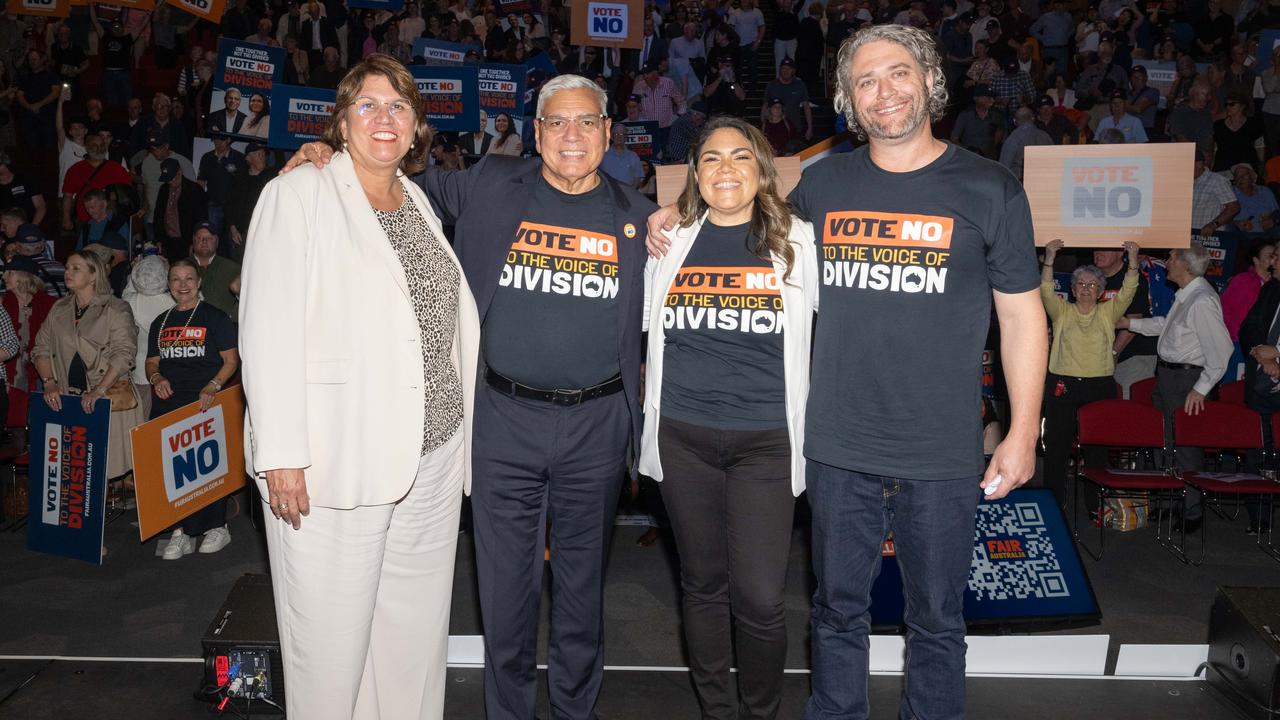
If Australia votes No, the task ahead will be simply a return to the status quo, the failed status quo, writes Chris Kenny. Picture: NCA NewsWire / Morgan Sette

A morning is looming for this nation, just three weeks away, that warrants attention from all voters entrusted with a historic choice.

My worry is that, instead of Ron­ald Reagan’s Morning in America, the dawn after the voice referendum will herald Kris Kristofferson’s Sunday Morning Coming Down. We owe it to ourselves to think carefully about what a No vote would say and do in this country. When we wake on Sunday, October 15, it will be too late to reconsider.

First and foremost, a No victory would have repudiated Indigenous aspiration, rejecting a proposal for constitutional recognition and non-binding representation formulated after decades of consideration and consultation. This would not so much be a setback for reconciliation but a roadblock that will take many years to get around.

Similar to how the same-sex marriage plebiscite overwhelmed the gay and lesbian communities with a sense of acceptance and inclusion, a No victory would represent a fend-off to our Indigenous population. They were promised recognition, engaged in good faith to find a suitable path, made their considered request to the nation, and their fellow citizens will have slammed a door in their face.

And why? To save the nation from the risk of entrenched racial division? Or to deliver an ephemeral partisan win?

After a No victory (the phrase seems like an oxymoron) we would face a vacuum, with Labor, Greens and Liberal voice supporters left defeated and impotent, and the Coalition leadership promising more of the same – although weirdly, a vague promise of some kind of legislated voice in the future. If the referendum is defeated, we would be a discombobulated, dispirited and divided federation for some time to come.

Offers of a second referendum would be seen as a cruel joke. The option of bipartisan support for purely symbolic recognition in the preamble would be the epitome of condescension – telling Indigenous Australians we have rejected their voice but propose, instead, something less, something we are prepared to give, not because it is worthy but because it is easy.

Beads and trinkets.

This strikes to the heart of the reconciliation bargain. Reconciliation is about making good and restoring friendly relations – it is about compromise. Just as apologies require acceptance, reconciliation demands concession from all sides.

Indigenous people have provided a road map to put the sins and trauma of the past behind us and forge a future together. The No campaign rejects this because they believe they will lose something, or risk losing something. This seems selfish and paranoid given we are talking about only a constitutional guarantee to have some kind of body giving Indigenous people a non-binding say on issues that affect them.

What the No campaign is saying is that they want reconciliation without compromise or cost. They want reconciliation where the aggrieved party is given nothing, not even a constitutional protection that injustices cannot easily be perpetrated against them again.

This represents a shrivelled view of this nation’s history and future. The No campaign wants our political architecture to curl up like an echidna under attack, remaining defensive and prickly until the Indigenous issues go away.

If we put aside the deceptive scare campaigns from the No side, which pretends the voice will have real power rather than merely an advisory platform, there is an even uglier aspect to the voice opposition. The campaign has increasingly morphed into an opportunity to vent grievances against any aspect of Indigenous people’s place in our society.

The No advocates now argue that if you do not like welcomes to country, you should vote No to a voice. If you think a lot of money is wasted on Indigenous programs, vote No. If you think Indigenous people should not be given additional opportunities for university, jobs or contracts, vote No. If you think we hear too much about Indigenous culture and history, vote No. If you oppose treaties, Vote No. And if you do not want to shift the date of Australia Day, vote No.

This has become a grab-bag of anti-Indigenous grievance, which makes it the worst manifestation of politics this nation has seen in living memory.

But it is also a collection of issues that will continue to be debated and tackled, whether we have an Indigenous voice or not – which makes the argument inane.

There is a harsh, resentful and divisive element in the debate. And we must be able to call it out without the shrill cries that we are accusing others of racism or demonising people for their views.

It is clear many voters do not want to be troubled by Indigenous issues or aspirations. They might have little or no contact with Indigenous people or problems and want it all to go away. That is a benign and plausible interpretation of what seems to be a visceral rejection of the voice proposition.

These sentiments are not reason enough to vote No. And it should be beneath the No campaign to attempt to exploit them.

Voting No will not make anything go away, except a voice.
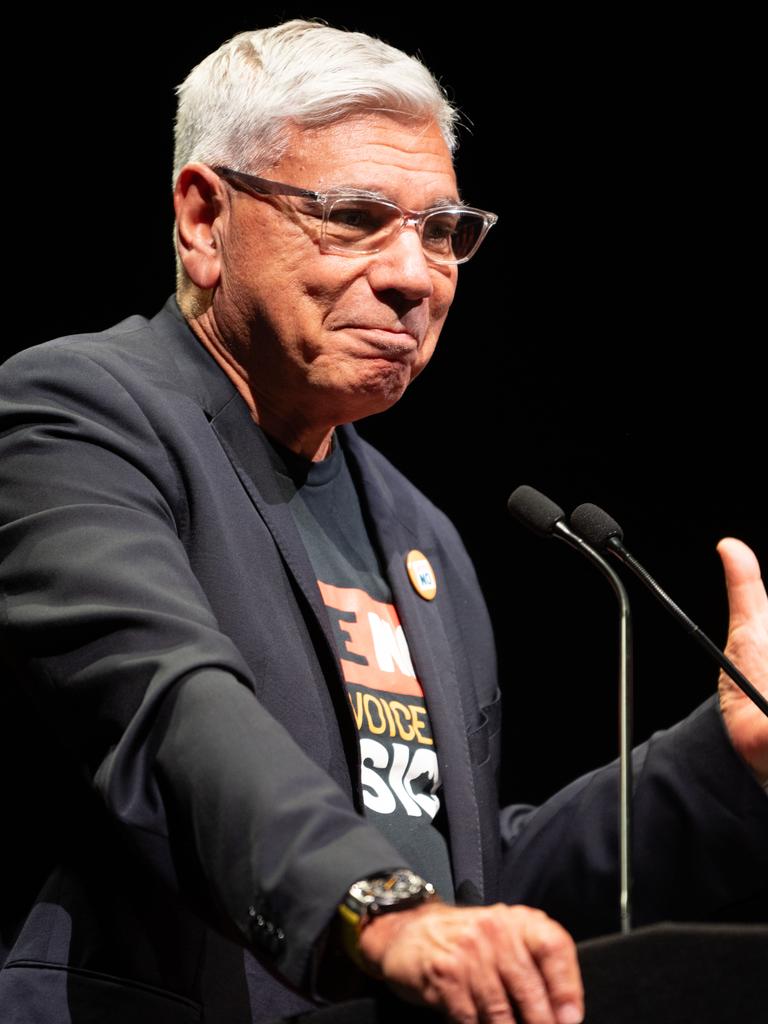
Nyunggai Warren Mundine. Picture: NCA NewsWire / Morgan Sette

Prominent No campaigner Nyunggai Warren Mundine, for instance, wants to shift the date of Australia Day and supports treaties and other agreements between Indigenous groups and governments. And state governments are negotiating treaties and establishing voices regardless.

Yet the No campaign creates irrational fear about treaties and Australia Day. If the No case wins, Mundine and others still will advocate for treaties and shifting Australia Day. So, what is the scare campaign about?

The lead No campaigner, opposition Indigenous Australians spokeswoman Jacinta Nampijinpa Price, is a brave advocate. I have helped to platform her determined efforts to give voice to grassroots Indigenous people for many years, helping her to become a national voice.

Price began speaking up for Indigenous Australians, for her community, as an Alice Springs councillor and entered federal politics to become a voice for the “silent victims” in Indigenous communities. So it is paradoxical that her robust politicking is probably the most influential factor in threatening a permanent Indigenous voice.

Her good intentions are beyond question; Price, her family and supporters believe a voice will amplify the views of the wrong people – the same Indigenous leadership she and her family have battled for years.

This novice senator and rising political star is campaigning against the possibility of a bad voice – yet the Coalition promises to legislate a voice, go figure.

The alternative was for the Coalition to throw in their lot with the voice and ensure it is effective and driven by grassroots concerns – practical rather than ideological. We will never know what might have been.

Taken to its logical conclusion, this fear of the voice running astray is a surrender that would have thwarted the creation of our Federation in the 1890s. Any representative or governance model requires constant engagement and vigilance to protect the complacent mainstream from the activism of the ideologues.

The Coalition decided instead to make this a partisan contest. While Anthony Albanese must wear his share of blame for the failure of bipartisanship, it is rich indeed for the Coalition to blame Labor for the division when it deliberately chose to make this a defining debate between the major parties.

If it is successful, the No campaigners would have done nothing but preserve a situation that the entire nation knows is grossly unsatisfactory. How would history judge them?

We should consider what this does to our sense of worth as a nation. At a time when surveys tell us our sense of national pride is falling to alarming levels, we need to ask whether rejecting a voice would help us feel proud of our nation or fuel the growing sense of disconnection.

Would a No vote resolve a single issue or merely delay our attempts to resolve them? Would it make us a better nation, or anchor us to unflattering elements of our past?

Would a Yes victory give us a sense of accomplishment and set us on a course for improvement? Would a Yes vote rejuvenate reconciliation and wrap our arms around Indigenous Australians and their challenges?

Would a Yes victory display a bigger, more optimistic and accepting country? Would a No vote confirm us as a frightened, insular and small-minded nation?

While the No leadership would presumably counsel against celebrations in favour of making sober pronouncements about preventing a constitutional mistake, there would likely be outbreaks of triumphalism from many No supporters if they defeat the referendum proposal.

This would create a harrowing contrast with a mournful Yes camp and the reality of Indigenous Australians feeling rejected in their own country.

Where Yes would have provided a path forward, with immediate work to be done to legislate, construct and implement the voice, defeat will lead to nothing. The task ahead will be simply a return to the status quo, the failed status quo.

Indigenous people, communities and organisations understandably would feel dispirited. Whatever the merits of the respective campaigns, negative politics again would have proven more effective than positive advocacy – a misleading scare campaign would have thwarted a carefully devised and constitutionally conservative reform.

A nation that has been talking the talk on reconciliation would have been revealed as too timid to walk the walk.

We would have spent decades of consideration and consultation to come up with the desired constitutional amendment, and then strangely rejected it.

A country in which all sides of politics say they want reconciliation, representation and recognition would have deliberately refused to give Indigenous people a guaranteed say on matters affecting them. We would have become, for a time at least, the scared weird little country.

بيان أولورو من القلب – أساس الصوت في البرلمان

إن بيان أولورو من القلب هو وثيقة جميلة، وهي نتيجة مداولات ٢٥٠ مندوبًا إلى المؤتمر الدستوري الوطني للأمم الأولى لزعماء السكان
الأصليين في أستراليا وسكان جزر مضيق توريس الذي عقد على مدى أربعة أيام بالقرب من أولورو في وسط أستراليا في مايو ٢٠١٧.
وبعد عقود من الإعداد، كانت هذه دعوة من هذه المجموعة من شعوب الأمم الأولى إلى الأستراليين من غير السكان الأصليين للدعوة إلى إصلاح جوهري للمساعدة في تحقيق حقوق السكان الأصليين، من خلال إنشاء صوت للسكان الأصليين في البرلمان ولجنة ماكاراتا. “ماكاراتا” هي كلمة يلنو متعددة الطبقات تُفهم على أنها الالتقاء بعد صراع. وينص البيان على أن لجنة ماكاراتا ستتولى عمليات صنع الاتفاق (المعاهدة) وقول الحقيقة بين الحكومات والأمم الأولى.
وتدعو إلى إجراء إصلاحات هيكلية، سواء اعترافًا بالسيادة المستمرة للشعوب الأصلية أو لمعالجة “العجز” الهيكلي الذي أدى إلى تفاوتات حادة بين الأستراليين الأصليين وغير الأصليين. ويدعو إلى إنشاء مؤسستين جديدتين؛ صوت الأمم الأولى المحمي دستوريًا ولجنة ماكاراتا، للإشراف على صنع الاتفاقات وقول الحقيقة بين الحكومات والأمم الأولى.
ويمكن تلخيص هذه الإصلاحات في الصوت والمعاهدة والحقيقة.
الصوت – آلية تمثيلية منصوص عليها دستوريًا لتقديم مشورة الخبراء إلى البرلمان حول القوانين والسياسات التي تؤثر على السكان الأصليين وسكان جزر مضيق توريس.
المعاهدة – عملية صنع اتفاق بين الحكومات وشعوب الأمم الأولى تعترف بالحقوق والمصالح الثقافية التاريخية والمعاصرة للشعوب الأولى من خلال الاعتراف رسميًا بالسيادة، ولم يتم التنازل عن تلك الأرض أبدًا.
الحقيقة – عملية شاملة لكشف المدى الكامل للظلم الذي يعاني منه السكان الأصليون وسكان جزر مضيق توريس، لتمكين الفهم المشترك لتاريخ أستراليا الاستعماري وتأثيراته المعاصرة.

بيان أولورو من القلب

لقد اجتمعنا في المؤتمر الوطني الدستوري ٢٠١٧، قادمين من كل سماء الجنوب، لنصدر هذا البيان من القلب:

كانت قبائلنا من السكان الأصليين وسكان جزر مضيق توريس هي أولى الدول ذات السيادة في القارة الأسترالية والجزر المجاورة لها، وقد امتلكتها بموجب قوانيننا وعاداتنا. لقد فعل أسلافنا ذلك، وفقًا لتقدير ثقافتنا، منذ الخلق، ووفقًا للقانون العام منذ “الأزل”، ووفقًا للعلم منذ أكثر من ٦٠ ألف عام.

هذه السيادة هي فكرة روحية: وبالتالي فإن رابطة الأجداد بين الأرض، أو “الطبيعة الأم”، والسكان الأصليين وسكان جزر مضيق توريس المولودين تظل مرتبطة بها، ويجب أن تعود إلى هناك يومًا ما لتتحد مع أسلافنا. وهذا الارتباط هو أساس ملكية الأرض، أو بالأحرى السيادة. ولا يتم التخلي عنه أو إخماده، ويتعايش مع سيادة التاج.

كيف يمكن أن يكون خلاف ذلك؟ أن الشعوب امتلكت الأرض منذ ستين ألف سنة، وهذا الرابط المقدس اختفى من تاريخ العالم في مائتي عام فقط؟

ومع التغيير الدستوري الأساسي والإصلاح الهيكلي، نعتقد أن هذه السيادة القديمة يمكن أن تتألق كتعبير أكمل عن القومية الأسترالية.

وبالمقارنة، نحن أكثر الناس سجنا على هذا الكوكب. نحن لسنا شعبًا إجراميًا بالفطرة. يتم عزل أطفالنا عن عائلاتهم بمعدل غير مسبوق. لا يمكن أن يكون هذا لأننا لا نحبهم. شبابنا يقبعون في المعتقلات بأعداد فاحشة. ويجب أن يكونوا أملنا في المستقبل.

إن هذه الأبعاد لأزمتنا توضح الطبيعة الهيكلية لمشكلتنا. هذا هو عذاب كوننا بلا قوة

ونسعى إلى إجراء إصلاحات دستورية لتمكين شعبنا واحتلال مكانه الصحيح في بلدنا. عندما يكون لدينا القدرة على تحديد مصيرنا، سوف يزدهر أطفالنا. سيسيرون في عالمين وستكون ثقافتهم هدية لبلدهم.

نحن ندعو إلى إنشاء صوت للأمم الأولى المنصوص عليه في الدستور.

المكاراتا تتويج لأجندتنا: التقارب بعد النضال. إنه يجسد تطلعاتنا لعلاقة عادلة وصادقة مع شعب أستراليا ومستقبل أفضل لأطفالنا على أساس العدالة وتقرير المصير.

نسعى إلى تشكيل لجنة ماكاراتا للإشراف على إبرام الاتفاقات بين الحكومات والأمم الأولى وقول الحقيقة حول تاريخنا.

في عام ١٩٦٧ تم إحصائنا، وفي عام ٢٠١٧ نسعى إلى أن يُسمع صوتنا. نترك المعسكر الأساسي ونبدأ رحلتنا عبر هذا البلد الشاسع. ندعوكم للسير معنا في حركة الشعب الأسترالي من أجل مستقبل أفضل

Read the original English version of The Uluru Statement from the Heart:   https://howlinginfinite.com/2023/09/04/the-uluru-statement-from-the-heart/

See other related stories in In That Howling Infinite: 

Continue reading

The Uluru Statement from the Heart

The Uluru Statement from the Heart, the foundation of the Indigenous and Torres Strait Islander Voice to Parliament is a beautiful thing. Whatever the outcome of Australia’s referendum on August 14th 2023, it will take its place as one if our nation’s iconic documents.

It is brief and written in plain, lyrical and, in my opinion, very moving English. It speaks of the past, the present and the future, of our history and our national story, and of our land, our ‘country’, ancient and modern – how we see ourselves as Australians, and how we’d like to see ourselves as viewed by outsiders. It allows us to reflect on our nation’s colonial past and our future.

Reading it closely and carefully – it is less than an A4 page in length – a reasonable person of good heart and good will can find therein answers to most of the questions that are being raised by warring sides of the Voice debate in a fog of hyperbole, disinformation, ignorance and recrimination. But the reader must first clear his or her head of the sturm und drang (literally storm and stress), fear and loathing and partisan positions that have been established over the last six months. I do not intend to engage in further polemics here – the media, mainstream, social and anti-social are covering this already – but rather, I’ll refer you to the internet links listed at the end of this post.

Slow train coming … 

The Statement from the Heart  is the outcome of the deliberations of 250 delegates to the First Nations National Constitutional Convention of Australia Aboriginal and Torres Strait Islander leaders held over four days near Uluru in Central Australia in May 2017. It forms the basis for the question that will be out to The Australian electorate on Saturday 14th November 2023 – just six weeks away:

A Proposed Law: to alter the Constitution to recognise the First Peoples of Australia by establishing an Aboriginal and Torres Strait Islander Voice.

Do you approve this proposed alteration?

Professor Henry Reynolds, an Australian historian whose primary work has focused on the frontier conflict between European settlers and Indigenous Australians, wrote yesterday:

“To seek the source of the twin pillars of the 2017 Uluru Statement from the Heart – a Voice to Parliament and a makarrata, or treaty – we need to go back to the referendum of 1967 and the assumption of federal powers over Indigenous policy … The Voice to Parliament, which now meets ignorance and misunderstanding, has been with us for more than 50 years, although the bodies varied in name, structure and longevity, The only difference was the desire for entrenchment in the Constitution”.

Decades in the making, coming after two centuries of struggle for recognition and justice, The Statement from the Heart is an invitation from this group of First Nations people to non-Indigenous Australians calling for substantive reform to help realise Indigenous rights, through the establishment of an Indigenous Voice to Parliament and a Makarrata Commission.

Makarrata is a multi-layered Yolngu word describing a process of conflict resolution, peacemaking and justice, or a coming together after a struggle”, and delegates said that it “captures our aspirations for a fair and truthful relationship with the people of Australia”, and that the Makarrata Commission would supervise a process of agreement-making (treaty)  and truth telling between governments and First Nations.

Reynolds reminds us that “the authors of the Uluru statement declared a makarrata was the “culmination of our agenda”, a proposal likely to be far more controversial than The Voice. But it, too, is an idea that has been seriously considered for more than 40 years. The Aboriginal Treaty Committee was founded in April 1979 and led by a group of prominent figures including Dr H C Coombs, Judith Wright and Charles Rowley. Launching it in an address on ABC radio, Coombs called for compensation for the loss of traditional land and disruption of traditional ways of life and the right of Indigenous people to “control their own affairs”.

The Statement from the Heart calls for structural reforms, both in recognition of the continuing sovereignty of Indigenous peoples and to address structural “powerlessness” that has led to severe disparities between Indigenous and non-Indigenous Australians. It calls for the creation of two new institutions; a constitutionally protected First Nations Voice and a Makarrata Commission, to oversee agreement-making and truth-telling between governments and First Nations.

These reforms can be summarized as Voice, Treaty and Truth.

Voice – a constitutionally enshrined representative mechanism to provide expert advice to Parliament about laws and policies that affect Aboriginal and Torres Strait Islander peoples.

Treaty – a process of agreement-making between governments and First Nations peoples that acknowledges the historical and contemporary cultural rights and interests of First Peoples by formally recognizing sovereignty, and that land was never ceded.

Truth – a comprehensive process to expose the full extent of injustices experienced by Aboriginal and Torres Strait Islander peoples, to enable shared understanding of Australia’s colonial history and its contemporary impacts.

The Uluru Statement from the Heart

We, gathered at the 2017 National Constitutional Convention, coming from all points of the southern sky, make this statement from the heart:
 
Our Aboriginal and Torres Strait Islander tribes were the first sovereign Nations of the Australian continent and its adjacent islands, and possessed it under our own laws and customs. This our ancestors did, according to the reckoning of our culture, from the Creation, according to the common law from ‘time immemorial’, and according to science more than 60,000 years ago.
 
This sovereignty is a spiritual notion: the ancestral tie between the land, or ‘mother nature’, and the Aboriginal and Torres Strait Islander peoples who were born therefrom, remain attached thereto, and must one day return thither to be united with our ancestors. This link is the basis of the ownership of the soil, or better, of sovereignty. It has never been ceded or extinguished, and co-exists with the sovereignty of the Crown.
 
How could it be otherwise? That peoples possessed a land for sixty millennia and this sacred link disappears from world history in merely the last two hundred years?
 
With substantive constitutional change and structural reform, we believe this ancient sovereignty can shine through as a fuller expression of Australia’s nationhood.
 
Proportionally, we are the most incarcerated people on the planet. We are not an innately criminal people. Our children are aliened from their families at unprecedented rates. This cannot be because we have no love for them. And our youth languish in detention in obscene numbers. They should be our hope for the future.
 
These dimensions of our crisis tell plainly the structural nature of our problem. This is the torment of our powerlessness.
 
We seek constitutional reforms to empower our people and take a rightful place in our own country. When we have power over our destiny our children will flourish. They will walk in two worlds and their culture will be a gift to their country.
 
We call for the establishment of a First Nations Voice enshrined in the Constitution.
Makarrata is the culmination of our agenda: the coming together after a struggle. It captures our aspirations for a fair and truthful relationship with the people of Australia and a better future for our children based on justice and self-determination.
 
We seek a Makarrata Commission to supervise a process of agreement-making between governments and First Nations and truth-telling about our history.
 
In 1967 we were counted, in 2017 we seek to be heard. We leave base camp and start our trek across this vast country. We invite you to walk with us in a movement of the Australian people for a better future.

The Makarrata Project
 

The Makarrata Project is the twelfth studio album by Australian band Midnight Oil, released on 30 October 2020. The track Uluru Statement from the Heart / Come on Down” features the band and well-known indigenous Australians Pat Anderson, Stan Grant, Adam Goodes, Ursula Yovich and Troy Cassar-Daley. 

See other related stories in In That Howling Infinite: 

https://youtu.be/br8dB_0z3Fk?si=S-GI5zTV0v-QzI5R

If you can bear to hear the truth you’ve spoken … the emptiness of “No”

This is a critical group of voters, whose natural generosity may be undermined by the dog-whistle of division. Their votes will deliver or doom the referendum. Greg Craven.

This referendum is a genuine, good idea to simply get it right. Bill Shorten

The title of this piece is borrowed from the poem by Rudyard Kipling that has served as the source of inspirational manuals, mottos and memes for over a century. It has inspired songs, stories, plays and films – my favourite being Lindsay Anderson’s 1968 anarchist fantasy set in a tyrannical English public school.

Sky after Dark and News Corp opinionista Chris Kenny is almost alone among his colleagues in speaking out in support of the Indigenous and Torres Strait Islander Voice to Parliament. To help readers scale The Australian’s pay-wall, I republish here his advice not to be fooled by the No campaign’s shallow and disingenuous scare tactics. To paraphrase Kipling’s poem, the words of both the referendum and the Uluru Statement from The Heart from which it sprang are “twisted by knaves to make a trap” for the ill-informed and disinterested.

This comes as in the same weekend edition Janet Albrechtsen, one of News’ several No camp tricoteuses * recycles her customary legal arguments (she was a lawyer after all in a past life, though according to a friend of mine who actually worked with her back then, “she thinks she’s much cleverer than she is”). She wrote, disingenuously riffing on the anniversary of Martin Luther King’s seminal “I have a dream” speech – how even the martyred MLK spoke of a land in which there was no distinction between black and white (with the benefi of hindsight, we know how well that dream worked out):

“Australians, without a scintilla of legal training, understand we are inserting into our Constitution brand-new special rights given to a group of people simply because of their race. It is something entirely different to anything in the Constitution right now. By placing this squarely in the Constitution, many Australians understand the High Court will be the ultimate determinant of those rights, not the parliament”.

A dog-whistle if ever I heard one, dressed up in lawyer-speak. Most Australians know sweet FA about our constitution, and their knowledge of our political institutions and the laws which govern them is likewise limited. Moreover, the Voice will not impinge on the lives of most Australians, and yet it’ll mean an enormous amount to First Australians.

Kenny is not alone in The Australian’s pages, however. Conservative expert in constitutional law, Greg Craven, whom I have featured several times in this blog’,  provides a cogent rebuttal of many of the No campaign’s claimsprovides a cogent rebuttal of many of the No campaign’s claims, explaining how the High Court will cleave to constitutional realities and not to conservative fears and fantasies:

“… it is a constitutional principle that powers of the federal parliament should be interpreted broadly. This is a legal fact, rather than the clueless constitutional riffing of senior No campaigners such as Nyunggai Warren Mundine and Senator Jacinta Nampijinpa Price …constitutional provisions are to be interpreted as a whole, not cut and diced for media opportunities. The proposed amendment does not just give parliament power to make laws about the voice. It gives specific capacity to make laws about its composition, functions, powers and procedures. Every one of these envelopes enables parliament to make laws firmly locating the voice within proper constitutional and political limits … make a law compelling the voice to give priority to practical improvements rather than international frolics.

Worried the voice will be an exclus­ive clan of excessively remunerated, over-budgeted bur­eau­crats? Make laws requiring strong qualifications for members, forcing membership to be turned over at regular intervals, mandating modest remuneration, setting overall budget limits, confining staff numbers and banning business-class flights.

Worried about endless, expensive inquiries that could go anywhere, without focus and evidence? Make laws imposing reporting times and parameters for inquiries, mandating that they be based on documented evidence, and making the whole operation subject to the normal assurance measures for government action: the auditor-general, Freedom of Information, administrative review and the criticism of the person who makes the tea.

The court will give parliament the full extent of its power, but no more. It will give proper constitutional respect to the voice, but nothing extra. This is real adherence to the Constitution, not peddling constitutional zombies”.

Craven wrote in The Australian on 12 August 2023:

“Indigenous citizens will have no new powers or constitutional rights. They will have no differential status. Unlike in Canada and the US, there will be no unique Indigenous privileges. There simply will be a means for ­Indigenous people to express collective views to Canberra …The No case is misleading in maintaining the law never differentiates between groups of people based on disadvantage. Multiple equal opportunity Acts, let alone special laws for disabled people, stand out. Will we repeal them?

…The irony is that there is indeed a dramatic division between Indigenous and non-Indigenous Australians, but it is not constitutional, nor does it favour Indigenous citizens. Indigenous people suffer social and economic disadvantage that would see white Australians rise in armed revolt … Preaching against ­division, it divides by pretending to non-Indigenous Australians that Indigenous Australian are getting a cushy, special deal …

Resentment is always a bad base for policy. Logically, one group loses nothing when it is unaffected by modest change assisting some other, profoundly disadvantaged group. Their gain is nobody’s loss. But as a cynical promotion of division, the politics of grudge is highly attractive. Given encouragement, some proportion of people will feel neglected and disadvantaged by the voice. In practice, these will be Australians most exposed to economic hardship through social background or lack and opportunity. .

… Constitutionally, the greatest division and inequality in Australia is that every state gets the same 12 senators, regardless of population. Tasmania gets more places per ­person than Victoria. This is real power, not a constitutionalised chat. It is irrelevant that it was part of the Federation package. The principle is the same”

Recently, Mark Speakman, NSW Leader of the Opposition, former NSW Attorney General and Solicitor General weighed in:

“I don’t see this amendment as racist because, at the end of the day, it is an advisory body that has no constitutional entitlement to be consulted; is not a third chamber; and has no veto rights over legislation or decisions”.

He is is clear-eyed that the Voice is not a “magic wand”, but after decades of failures to close the gap between Indigenous and non-Indigenous Australians, something has to give.  A Voice enshrined in the Constitution offers a pathway forward, he says. “There’s a real possibility it will make no difference. But you’re not running a criminal trial trying to prove beyond reasonable doubt that the Voice will work. You’re weighing up the pros and cons and probabilities. “And other things being equal, we’ll be better off with a Voice like this than without one.” (Sydney Morning Herald 12 August 2023).

Chris Kenny is convinced that is about the politics.

It is almost a tribal thing. Almost two-thirds of Coalition voters oppose altering the Constitution to establish an Aboriginal and Torres Strait Islander Voice, according to July’s Resolve poll. Only 17 per cent are in favour. Near one-in-five Coalition voters remain undecided. As recent analyses of election result illustrate, young and even middle-aged voters are deserting the Coalition in droves – and most women overall, parking their votes with Labor, the Grrens abd the Teal independents.

If the coalition introduced a referendum identical to this on it own initiative – an unlikely prospect, I know, given it had a decade to do so, but chose to do nothing- its boosters in the media, including its News Corp enablersand the Sky After Dark cabal, would be standing in its corner. If the Prime Minister decided that he’d replace a constitutional Voice with a legislated one, as indeed as he has “advocated” – though his National Party counterpart begged to differ – the part room would probably oppose it, as it has done with nearly everything the Labor govern has put up.

Kenny writes:

“The historically significant reconciliation project of the Indigenous voice has now been seized as a partisan, political weapon to be used against the federal Labor government – any doubt about that was removed this week. Senior Coalition figures now see defeating the referendum as their primary political priority to inflict political damage on the Prime Minister.

It is that ugly. It is that cynical … Yet think of what the Coalition might willingly trash in its hard-hearted ploy to take some bark off Anthony Albanese. Decades of Indigenous advocacy and consultation, including by Coalition governments, driven by the noblest of intentions, are being dis­respected. Imperilling reconciliation for partisan advantage is hardcore. Yet this week the opposition led question time with scares about the voice and attempted to censure the Prime Minister, accusing him of running a secret agenda to undermine the nation’s future” (The Australian, 5th August 2023)

And so, here we are on the eve of the “actual” Yes campaign, and we are out on the street and at our local markets handing out information and answering questions on The Voice to Parliament. The vibe is good. You’d think we were home and hosed, but we know therein is a lot of wishful thinking. There’s still way t. I’ll leave the last word to Rudyard who is incidentally one of my favourite poets: “If you can fill the unforgiving minute with sixty seconds’ worth of distance run …”  we certainly shall. But, win or lose, neither those who vote Yes or those who vote No will feel too good on the morning after.

* Tricoteuses is French for a knitting women. The term is most often used in its historical sense as a nickname for the women who supported French Revolution and sat beside the guillotine during public executions of the Reign of Terror, supposedly continuing to knit.

© Paul Hemphill 2023 All rights reserved

See other related stories in In That Howling Infinite: 

Martin Sparrow’s Blues; The Frontier Wars – Australia’s heart of darkness ; Dark Deeds in a Sunny Land – a poet’s memorial to a forgotten crime ; We oughtn’t to fear an Indigenous Voice – but we do; Warrior woman – the trials and triumphs of Marcia Langton 

A Voice crying in the wilderness


Indigenous voice to parliament: Busting eight myths of the No campaign

Chris Kenny, The Weekend Australian, August 26, 2023

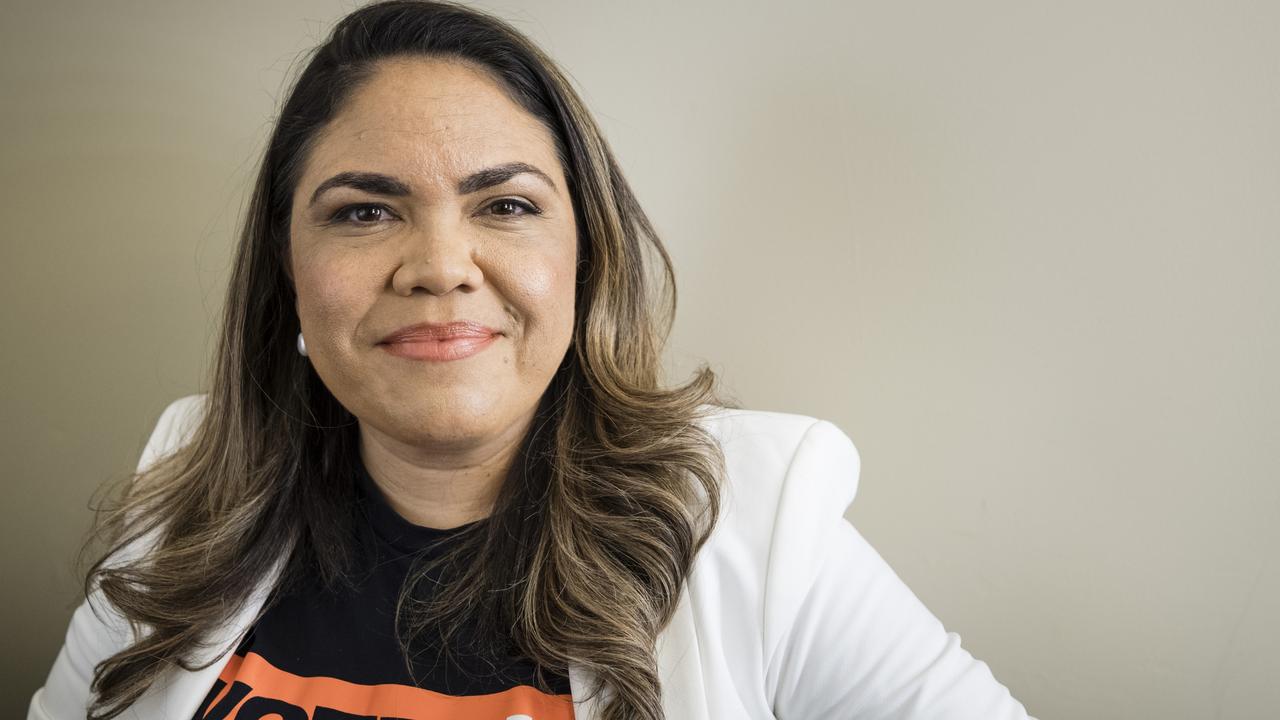
The No campaign is designed to generate anxiety, writes Chris Kenny. Pictured: prominent No campaigner and Coalition Senator Jacinta Nampijinpa Price. Picture: Kevin Farmer

No campaigner and Coalition Senator Jacinta Nampijinpa Price

It was a simple interest in the truth that first entangled me in Indigenous issues almost 30 years ago. Back then I helped to expose the fabrication of the Hindmarsh Island secret women’s business and was scarified by the Keating Labor government, the ABC, Indigenous groups, environmental organisations, activist churches and every other arm of the broader green left.

It was a tough time, but it triggered a royal commission which exposed the episode, vindicated my reporting and endorsed the evidence and integrity of the Ngarrindjeri women who had called out the prostitution of their heritage. “Reconciliation starts with the truth,” said the late Beryl Kropinyeri, one of those courageous and wonderful women back in 1995.

Three decades later, my longstanding support for an Indigenous voice has seen me cross swords with many from the conservative side of the political debate. And again, in a different way, truth is central.

The referendum debate has been toxic at times, on both sides. The aim of the Yes case is to reassure, and the No case aims to heighten fears. I cannot deal with the myriad minor lies and distortions arising day by day but let me outline what I see as some of the major myths of the No campaign:

1 The voice “inserts race” into the Constitution.

This is a blatant mistruth. Race has been in the Constitution since Federation and still exists in two clauses, including under the so-called “race power”. The voice does not mention race (surely an outdated concept) but would ensure that when the government makes special laws or policies ­relating to Indigenous people (ironically, under that existing race power) then Indigenous people will at least have had the opportunity to offer their views.

2 The voice will deliver a treaty, reparations and more.

These claims form the heart of the scare campaign and deliberately ignore the most central ­element of the voice – it will have no legal power, it is advisory only and cannot implement any law or policy. The No campaign persistently raises extreme demands made by activists and pretends they will be delivered through the voice, even though the voice can deliver nothing.

Because it is only advisory, the effectiveness of the voice will be directly linked to the quality of its ideas. If the voice makes wild recommendations, governments will easily ignore it; whereas if it makes sensible recommendations, the voice will carry some weight. Either way, all the power of implementation rests with government and parliament, so the scares are baseless.

3 The Uluru Statement from the Heart is more than one page long.

The Indigenous consensus for a voice is expressed in the 2017 Uluru Statement, which has become the foundational document for political action. Anthony Albanese committed to “implement it in full” – in other words, he has committed to three elements, of voice, truth and Makaratta (a Yolngu word for agreement-making after disputes). The No campaign has used this to raise fears about treaties but then, earlier this month, they suddenly claimed there was a longer, secret version of the statement, explicitly mentioning treaties and reparations, so Labor had signed up to a more radical agenda.

The claim is false. The documents they refer to are background papers and meeting summaries from consultations leading up to Uluru. They have been public all along (including during five years of Coalition government) and no one has signed up to them. The No campaigners have rejected what is obvious from reading the papers, selectively quoting one of the authors, Megan Davis, and ignoring her clarification – Davis had urged people to read these documents to understand the Uluru statement and her choice of words was poor, but so much for secrecy. The “longer” statement claim is a confection aimed at sustaining a scare campaign but, incredibly, some persist with it.

[The Statement From The Heart is published in full at the end of this post]

4 The voice will divide the nation.

The No campaign argues the 1967 referendum ensured Indigenous Australians were “recognised as part of the population” and that a voice will “enshrine division” in the Constitution. This ignores how the main change in 1967 gave the federal government power to make special policies and laws for Indigenous people. Since, we have seen laws, policies, organisations, and government ministers specifically focused on Indigenous Australians – for good or ill. The voice push recognises this power is still required – to manage native title and cultural heritage issues, for instance, and to close the gap. But it proposes that to help ensure these powers are used effectively and not against the interests of Indigenous people, a representative body should provide non-binding advice to government. To characterise this as divisive is to turn practical reality on its head; alternatively, we would remove division by repealing the race power, abolishing native title and cultural heritage laws, scrapping the Indigenous affairs department (NIAA), axing the Indigenous portfolio, and removing every program and project specific to Indigenous communities. The notion is absurd. Given these special provisions must stay, allowing Indigenous people to provide advice on these matters is not divisive but inclusive – nothing more than a fair go.

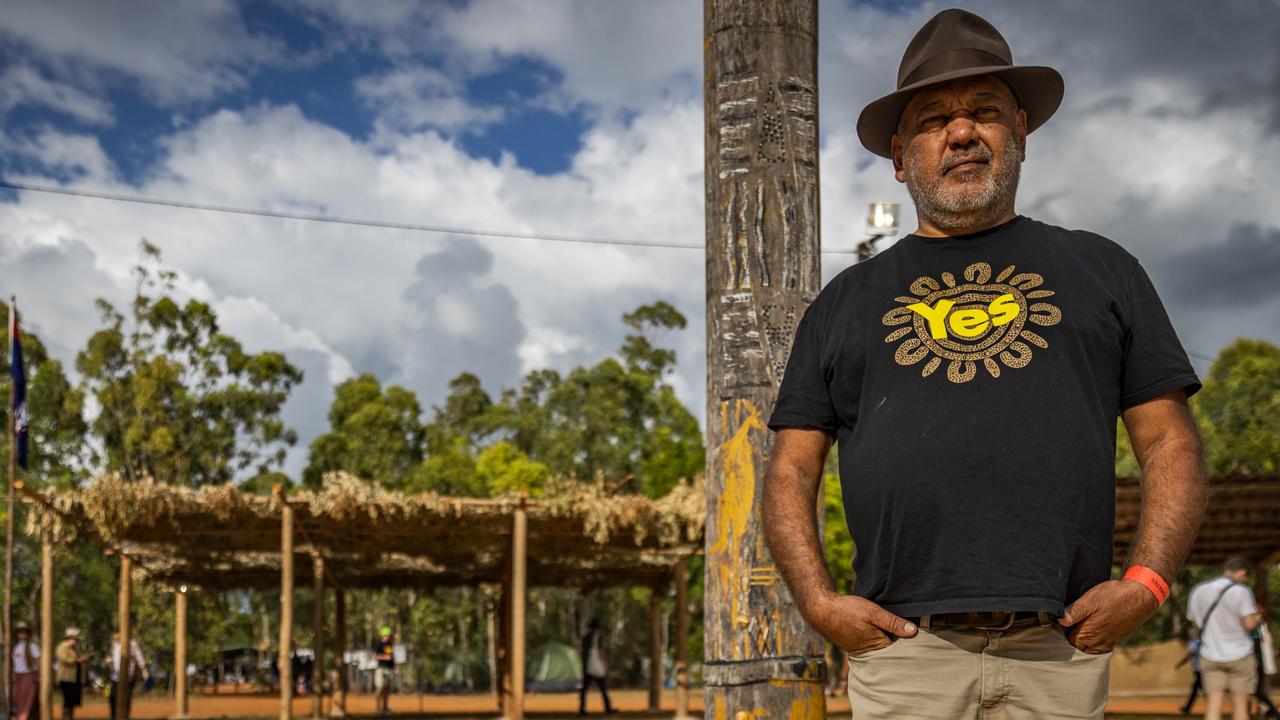
Yes campaigner Noel Pearson. Picture: Getty Images
Yes campaigner Noel Pearson. 

5 The voice is an elite forum or a “Canberra voice”.

This, too, is the opposite to reality. It accurately describes the Indigenous advisory councils that Labor and Liberal governments appointed in the past – under Tony Abbott such a forum was headed by Warren Mundine. These hand-picked bodies have been the epitome of a “Canberra voice” and Indigenous people have had no say on membership.

The voice proposal aims to provide an advisory body chosen by Indigenous people in communities around the country, so that the federal government hears ideas from grassroots communities. The whole thrust of the voice proposal, including under the detailed work I was involved in under the Morrison Coalition government, is to provide local representatives from disparate communities.

6 The voice is overreach beyond recognition.

A constant refrain from No advocates is that the voice is overreach and they would support a simple statement of recognition in the Constitution. This ignores the fact voters were given this choice in the 1999 republic referendum when a constitutional preamble was put, including the words, “honouring Aborigines and Torres Strait Islanders, the nation’s first people, for their deep kinship with their lands and for their ancient and continuing cultures which enrich the life of our country”. It was rejected. Bipartisan support for recognition was kicked along again by John Howard in 2007, and subsequent political and Indigenous consultations settled on the voice as the preferred means of constitutional recognition. If the current proposal is defeated it will be a rejection of the only form of recognition on offer, and a repudiation of Indigenous aspiration for recognition.

Reconciliation cannot progress meaningfully if non-Indigenous Australia declares it will offer constitutional recognition only on its own minimalist terms – a modern version of trinkets and beads.

7   The voice allows 3 per cent of the population to hold sway over the rest.

This myth flips power balance and victim status on their heads. The idea that redressing disadvantage and a lack of agency for our most downtrodden cohort is a threat to the more successful majority is a perversion. To begin, the constitutional wording ensures the voice can make representations only on matters relating to Indigenous people, and even if opponents argue this could be liberally interpreted to cover virtually any government decision, nothing changes the fact the voice is advisory only.

So the idea the voice is a threat to the nation is to create resentment where there should be none. The proposal aims to redress imbalance, not create it. The voice could lead to some difficult political debates, so be it, but all power remains with parliament and the executive.

8 The voice will not fix Indigenous traumas or close the gap.

This argument is desperate but common. It sidesteps the important issues of justice, recognition, and future safeguards by feigning an overarching concern for contemporary outcomes. Opponents assert that a voice would not fix law and order problems in Alice Springs or end domestic ­violence trauma in Indigenous communities. None of us knows. What we do know is that these problems exist now, and current policies have failed.

A voice could provide the grassroots insights and ideas to make a difference, or it could fail like everything else. But the critics cannot pretend to know the outcomes of a consultative body that has not yet been tried.

One of the most prospective aspects of the voice, which ­conservatives should embrace, is that it would give Indigenous communities not only some input, but a share of responsibility for delivering outcomes. It takes away the excuse, if you like, of a lack of agency.

There have been failures on both sides of the voice debate. Early on, leading Yes campaigners engaged in personal abuse, and emotional blackmail remains a recurring theme.

The No campaign is designed to generate anxiety. Without fear, they have no persuasive arguments, especially given that the Coalition has long argued a voice is worthwhile (the only proviso that it is not mandated in the Constitution).

It is a tall ask to scare people about mandating the legislation of a voice when you propose to legislate a voice under existing powers anyway. But so far it is working.

The debate has hardly been front of mind for mainstream voters, so the next six weeks will be crucial.

No doubt the myths will still be peddled. Opponents are intent on baring their teeth at a toothless body.

The Uluru Statement From The Heart

We, gathered at the 2017 National Constitutional Convention, coming from all points of the southern sky, make this statement from the heart:

Our Aboriginal and Torres Strait Islander tribes were the first sovereign Nations of the Australian continent and its adjacent islands, and possessed it under our own laws and customs. This our ancestors did, according to the reckoning of our culture, from the Creation, according to the common law from ‘time immemorial’, and according to science more than 60,000 years ago.

This sovereignty is a spiritual notion: the ancestral tie between the land, or ‘mother nature’, and the Aboriginal and Torres Strait Islander peoples who were born therefrom, remain attached thereto, and must one day return thither to be united with our ancestors. This link is the basis of the ownership of the soil, or better, of sovereignty. It has never been ceded or extinguished, and co-exists with the sovereignty of the Crown.

How could it be otherwise? That peoples possessed a land for sixty millennia and this sacred link disappears from world history in merely the last two hundred years?

With substantive constitutional change and structural reform, we believe this ancient sovereignty can shine through as a fuller expression of Australia’s nationhood.

Proportionally, we are the most incarcerated people on the planet. We are not an innately criminal people. Our children are aliened from their families at unprecedented rates. This cannot be because we have no love for them. And our youth languish in detention in obscene numbers. They should be our hope for the future.

These dimensions of our crisis tell plainly the structural nature of our problem. This is the torment of our powerlessness.

We seek constitutional reforms to empower our people and take a rightful place in our own country. When we have power over our destiny our children will flourish. They will walk in two worlds and their culture will be a gift to their country.

We call for the establishment of a First Nations Voice enshrined in the Constitution.
Makarrata is the culmination of our agenda: the coming together after a struggle. It captures our aspirations for a fair and truthful relationship with the people of Australia and a better future for our children based on justice and self-determination.

We seek a Makarrata Commission to supervise a process of agreement-making between governments and First Nations and truth-telling about our history.

In 1967 we were counted, in 2017 we seek to be heard. We leave base camp and start our trek across this vast country. We invite you to walk with us in a movement of the Australian people for a better future