“We remember emotions … long after the details have faded. For the potency of emotion is barnacled on memory … and I know I’ll remember forever how I will feel when the vote for an Indigenous voice to parliament is declared. Win or lose”. Nikki Gemmell, The Weekend Australian, 23rd September 2023
“At a time when surveys tell us our sense of national pride is falling to alarming levels, we need to ask whether rejecting a voice would help us feel proud of our nation or fuel the growing sense of disconnection”. Chris Kenny, The Weekend Australian, 23rd September 2023
“Peter Dutton declared that “the Prime Minister is saying to Australians ‘just vote for this on the vibe”. And yet, it is the “vibe” that will get The Voice over the line. Perhaps the good heart will prevail Australia-wide on polling day and those “better angels of our nature” will engender trust in our indigenous and also political leaders to deliver an outcome that dispels the prevailing doubt, distrust and divisiveness, and exorcise the dark heart that endures still in our history, our culture and our society. Because if the referendum goes down, none of us will feel too good the morning after …
The divisiveness of this referendum will probably be felt for years to come. The polarization it has brought into the open (for some would argue that it has already been there as illustrated by our perennialcukrure and history wars) is a path from which it is notoriously hard to turn back. Whether you were “Yes” or “No” may well will be a key marker of political identity? Will it also some to symbolize Australia’s great continental divide?
Sky after Dark and News Corp opinionista Chris Kenny, who is almost alone among his colleagues in speaking out in support of the Indigenous and Torres Strait Islander Voice to Parliament, wrote today of the daunting prospect of a No vote on October 14th, and what it might mean for our country and how we feel about it, and also, about ourselves as Australians. To help readers scale The Australian’s pay-wall, I republish it below.
Here are some cogent points from his article:
“When we wake on Sunday, October 15, it will be too late to reconsider …
First and foremost, a No victory would have repudiated Indigenous aspiration, rejecting a proposal for constitutional recognition and non-binding representation formulated after decades of consideration and consultation. This would not so much be a setback for reconciliation but a roadblock that will take many years to get around …
Would a No vote resolve a single issue or merely delay our attempts to resolve them? Would it make us a better nation, or anchor us to unflattering elements of our past?
Would a Yes victory give us a sense of accomplishment and set us on a course for improvement? Would a Yes vote rejuvenate reconciliation and wrap our arms around Indigenous Australians and their challenges?
Would a Yes victory display a bigger, more optimistic and accepting country? Would a No vote confirm us as a frightened, insular and small-minded nation?
While the No leadership would presumably counsel against celebrations in favour of making sober pronouncements about preventing a constitutional mistake, there would likely be outbreaks of triumphalism from many No supporters if they defeat the referendum proposal.
This would create a harrowing contrast with a mournful Yes camp and the reality of Indigenous Australians feeling rejected in their own country.
Where Yes would have provided a path forward, with immediate work to be done to legislate, construct and implement the voice, defeat will lead to nothing. The task ahead will be simply a return to the status quo, the failed status quo.
Indigenous people, communities and organisations understandably would feel dispirited. Whatever the merits of the respective campaigns, negative politics again would have proven more effective than positive advocacy – a misleading scare campaign would have thwarted a carefully devised and constitutionally conservative reform.
A nation that has been talking the talk on reconciliation would have been revealed as too timid to walk the walk.
We would have spent decades of consideration and consultation to come up with the desired constitutional amendment, and then strangely rejected it.
A country in which all sides of politics say they want reconciliation, representation and recognition would have deliberately refused to give Indigenous people a guaranteed say on matters affecting them. We would have become, for a time at least, the scared weird little country”.
Read the full article below, but first, Back to Gemmell:
“Once upon a time I was tremendously naive. I assumed the Voice would bring Australia together, in joy and healing; that it would mark a new waypoint of maturity in the evolution of our nation. In simpler times I dreamed that the vision of an advisory body on Indigenous affairs, painstakingly devised over 15 long years, would be agreed to, and a new era of nationhood would be ushered in.
The proposal felt necessary, suturing, for all of us. It felt like a proposal that went some way towards lifting the corrosive weight of past wrongs. Considered and careful, it seemed a simple request: for an Indigenous committee to be able to advise parliament on Indigenous issues, without being able to make laws or control funding. Yet what a sour-spirited campaign we’ve seen from the forces determined to scupper this vision …
More than 80 per cent of Indigenous people support this voice proposal. The idea came directly from Aboriginal communities, not politicians. I cannot imagine the broken hearts among many of them if this proposal isn’t carried; it would feel like a soul blow, along with all the other soul blows over generations, that would reverberate for years to come.
Once I dreamt of a feeling of great national pride, and relief, following a successful vote for the Voice. Now I worry there’ll be despair and disbelief among many, that in the end it came to this. And anger. Towards one of its scupperers-in-chief most of all. I feel certain Mr Dutton will never become prime minister if the No vote prevails. Be careful what you wish for, sir. The feeling towards you will linger, long after the specifics have faded”.
Press Gallery journalist of the year David Crow observed in the Sydney Morning Herald on 19th June, “The Voice is more than recognition because Indigenous leaders wanted practical change. The terrible suffering of First Australians over 235 years gave those leaders good cause to demand a right to consult on federal decisions, even at the risk of a tragic setback for reconciliation if the referendum fails. Practical change is ultimately about power, and the polls suggest many Australians do not want to give Indigenous people more power. It is too soon to be sure”.
A gloomy prospect, eh?
See other related stories in In That Howling Infinite:
A morning is looming for this nation, just three weeks away, that warrants attention from all voters entrusted with a historic choice.
My worry is that, instead of Ronald Reagan’s Morning in America, the dawn after the voice referendum will herald Kris Kristofferson’s Sunday Morning Coming Down. We owe it to ourselves to think carefully about what a No vote would say and do in this country. When we wake on Sunday, October 15, it will be too late to reconsider.
First and foremost, a No victory would have repudiated Indigenous aspiration, rejecting a proposal for constitutional recognition and non-binding representation formulated after decades of consideration and consultation. This would not so much be a setback for reconciliation but a roadblock that will take many years to get around.
Similar to how the same-sex marriage plebiscite overwhelmed the gay and lesbian communities with a sense of acceptance and inclusion, a No victory would represent a fend-off to our Indigenous population. They were promised recognition, engaged in good faith to find a suitable path, made their considered request to the nation, and their fellow citizens will have slammed a door in their face.
And why? To save the nation from the risk of entrenched racial division? Or to deliver an ephemeral partisan win?
After a No victory (the phrase seems like an oxymoron) we would face a vacuum, with Labor, Greens and Liberal voice supporters left defeated and impotent, and the Coalition leadership promising more of the same – although weirdly, a vague promise of some kind of legislated voice in the future. If the referendum is defeated, we would be a discombobulated, dispirited and divided federation for some time to come.
Offers of a second referendum would be seen as a cruel joke. The option of bipartisan support for purely symbolic recognition in the preamble would be the epitome of condescension – telling Indigenous Australians we have rejected their voice but propose, instead, something less, something we are prepared to give, not because it is worthy but because it is easy.
Beads and trinkets.
This strikes to the heart of the reconciliation bargain. Reconciliation is about making good and restoring friendly relations – it is about compromise. Just as apologies require acceptance, reconciliation demands concession from all sides.
Indigenous people have provided a road map to put the sins and trauma of the past behind us and forge a future together. The No campaign rejects this because they believe they will lose something, or risk losing something. This seems selfish and paranoid given we are talking about only a constitutional guarantee to have some kind of body giving Indigenous people a non-binding say on issues that affect them.
What the No campaign is saying is that they want reconciliation without compromise or cost. They want reconciliation where the aggrieved party is given nothing, not even a constitutional protection that injustices cannot easily be perpetrated against them again.
This represents a shrivelled view of this nation’s history and future. The No campaign wants our political architecture to curl up like an echidna under attack, remaining defensive and prickly until the Indigenous issues go away.
If we put aside the deceptive scare campaigns from the No side, which pretends the voice will have real power rather than merely an advisory platform, there is an even uglier aspect to the voice opposition. The campaign has increasingly morphed into an opportunity to vent grievances against any aspect of Indigenous people’s place in our society.
The No advocates now argue that if you do not like welcomes to country, you should vote No to a voice. If you think a lot of money is wasted on Indigenous programs, vote No. If you think Indigenous people should not be given additional opportunities for university, jobs or contracts, vote No. If you think we hear too much about Indigenous culture and history, vote No. If you oppose treaties, Vote No. And if you do not want to shift the date of Australia Day, vote No.
This has become a grab-bag of anti-Indigenous grievance, which makes it the worst manifestation of politics this nation has seen in living memory.
But it is also a collection of issues that will continue to be debated and tackled, whether we have an Indigenous voice or not – which makes the argument inane.
There is a harsh, resentful and divisive element in the debate. And we must be able to call it out without the shrill cries that we are accusing others of racism or demonising people for their views.
It is clear many voters do not want to be troubled by Indigenous issues or aspirations. They might have little or no contact with Indigenous people or problems and want it all to go away. That is a benign and plausible interpretation of what seems to be a visceral rejection of the voice proposition.
These sentiments are not reason enough to vote No. And it should be beneath the No campaign to attempt to exploit them.
Voting No will not make anything go away, except a voice.
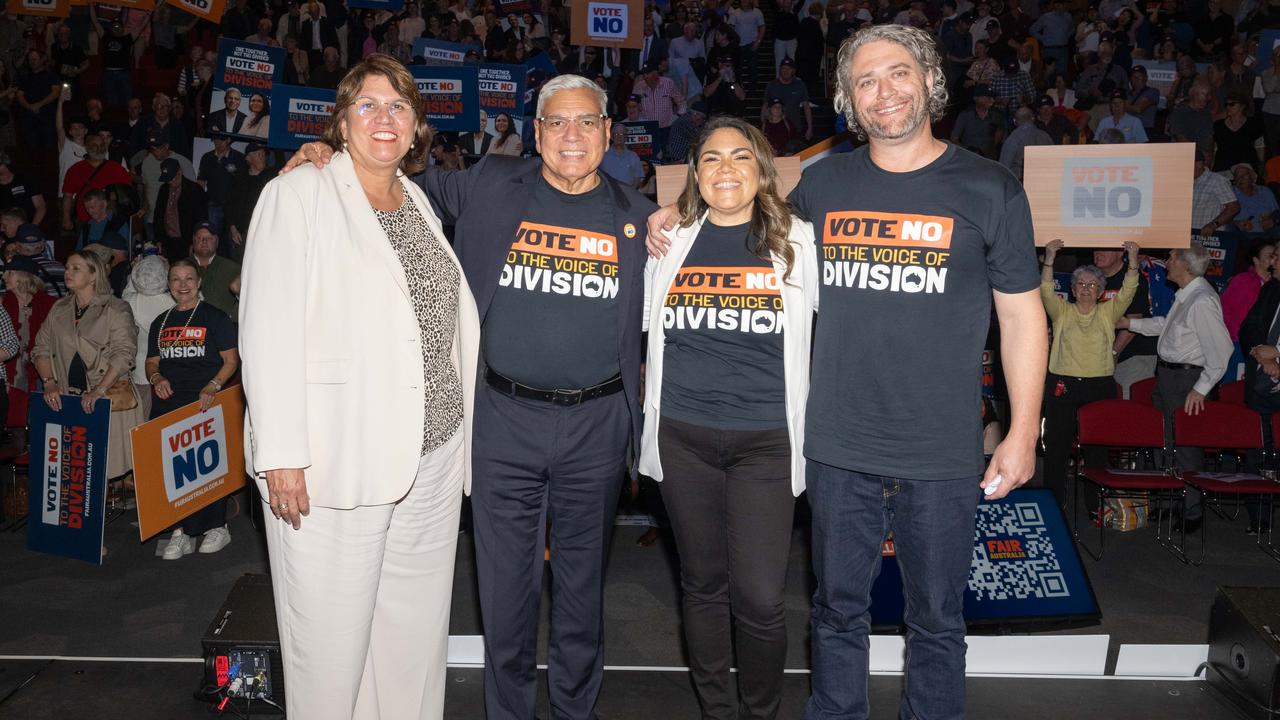
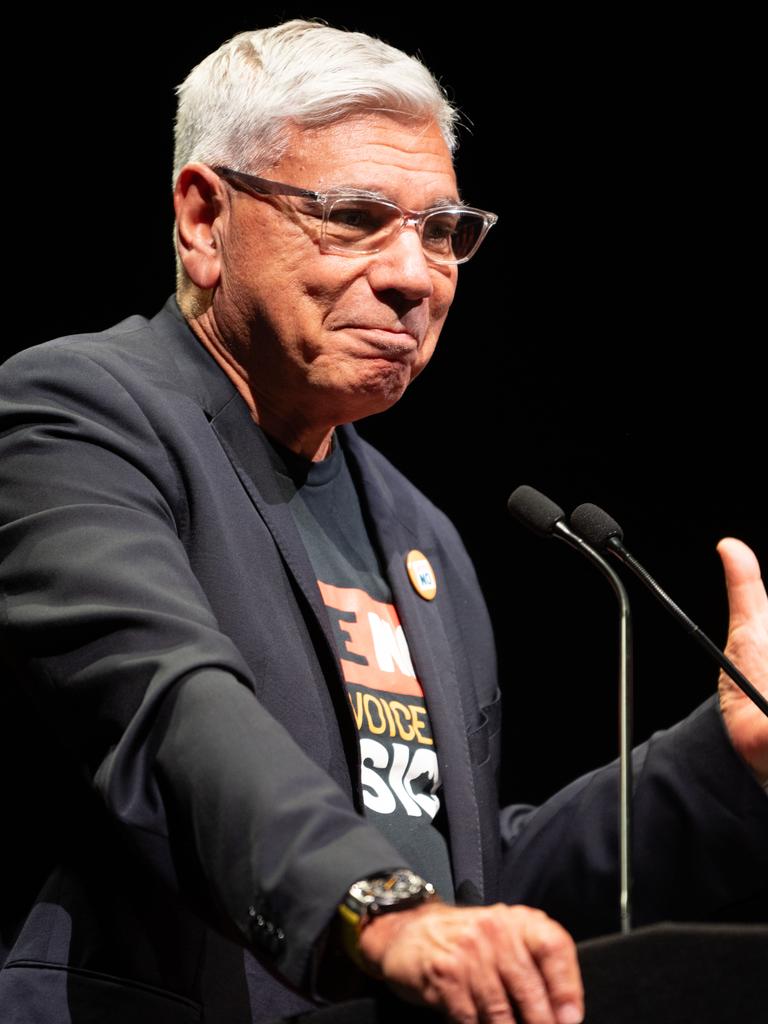
Nyunggai Warren Mundine. Picture: NCA NewsWire / Morgan Sette
Prominent No campaigner Nyunggai Warren Mundine, for instance, wants to shift the date of Australia Day and supports treaties and other agreements between Indigenous groups and governments. And state governments are negotiating treaties and establishing voices regardless.
Yet the No campaign creates irrational fear about treaties and Australia Day. If the No case wins, Mundine and others still will advocate for treaties and shifting Australia Day. So, what is the scare campaign about?
The lead No campaigner, opposition Indigenous Australians spokeswoman Jacinta Nampijinpa Price, is a brave advocate. I have helped to platform her determined efforts to give voice to grassroots Indigenous people for many years, helping her to become a national voice.
Price began speaking up for Indigenous Australians, for her community, as an Alice Springs councillor and entered federal politics to become a voice for the “silent victims” in Indigenous communities. So it is paradoxical that her robust politicking is probably the most influential factor in threatening a permanent Indigenous voice.
Her good intentions are beyond question; Price, her family and supporters believe a voice will amplify the views of the wrong people – the same Indigenous leadership she and her family have battled for years.
This novice senator and rising political star is campaigning against the possibility of a bad voice – yet the Coalition promises to legislate a voice, go figure.
The alternative was for the Coalition to throw in their lot with the voice and ensure it is effective and driven by grassroots concerns – practical rather than ideological. We will never know what might have been.
Taken to its logical conclusion, this fear of the voice running astray is a surrender that would have thwarted the creation of our Federation in the 1890s. Any representative or governance model requires constant engagement and vigilance to protect the complacent mainstream from the activism of the ideologues.
The Coalition decided instead to make this a partisan contest. While Anthony Albanese must wear his share of blame for the failure of bipartisanship, it is rich indeed for the Coalition to blame Labor for the division when it deliberately chose to make this a defining debate between the major parties.
If it is successful, the No campaigners would have done nothing but preserve a situation that the entire nation knows is grossly unsatisfactory. How would history judge them?
We should consider what this does to our sense of worth as a nation. At a time when surveys tell us our sense of national pride is falling to alarming levels, we need to ask whether rejecting a voice would help us feel proud of our nation or fuel the growing sense of disconnection.
Would a No vote resolve a single issue or merely delay our attempts to resolve them? Would it make us a better nation, or anchor us to unflattering elements of our past?
Would a Yes victory give us a sense of accomplishment and set us on a course for improvement? Would a Yes vote rejuvenate reconciliation and wrap our arms around Indigenous Australians and their challenges?
Would a Yes victory display a bigger, more optimistic and accepting country? Would a No vote confirm us as a frightened, insular and small-minded nation?
While the No leadership would presumably counsel against celebrations in favour of making sober pronouncements about preventing a constitutional mistake, there would likely be outbreaks of triumphalism from many No supporters if they defeat the referendum proposal.
This would create a harrowing contrast with a mournful Yes camp and the reality of Indigenous Australians feeling rejected in their own country.
Where Yes would have provided a path forward, with immediate work to be done to legislate, construct and implement the voice, defeat will lead to nothing. The task ahead will be simply a return to the status quo, the failed status quo.
Indigenous people, communities and organisations understandably would feel dispirited. Whatever the merits of the respective campaigns, negative politics again would have proven more effective than positive advocacy – a misleading scare campaign would have thwarted a carefully devised and constitutionally conservative reform.
A nation that has been talking the talk on reconciliation would have been revealed as too timid to walk the walk.
We would have spent decades of consideration and consultation to come up with the desired constitutional amendment, and then strangely rejected it.
A country in which all sides of politics say they want reconciliation, representation and recognition would have deliberately refused to give Indigenous people a guaranteed say on matters affecting them. We would have become, for a time at least, the scared weird little country.
إن بيان أولورو من القلب هو وثيقة جميلة، وهي نتيجة مداولات ٢٥٠ مندوبًا إلى المؤتمر الدستوري الوطني للأمم الأولى لزعماء السكان
الأصليين في أستراليا وسكان جزر مضيق توريس الذي عقد على مدى أربعة أيام بالقرب من أولورو في وسط أستراليا في مايو ٢٠١٧.
وبعد عقود من الإعداد، كانت هذه دعوة من هذه المجموعة من شعوب الأمم الأولى إلى الأستراليين من غير السكان الأصليين للدعوة إلى إصلاح جوهري للمساعدة في تحقيق حقوق السكان الأصليين، من خلال إنشاء صوت للسكان الأصليين في البرلمان ولجنة ماكاراتا. “ماكاراتا” هي كلمة يلنو متعددة الطبقات تُفهم على أنها الالتقاء بعد صراع. وينص البيان على أن لجنة ماكاراتا ستتولى عمليات صنع الاتفاق (المعاهدة) وقول الحقيقة بين الحكومات والأمم الأولى.
وتدعو إلى إجراء إصلاحات هيكلية، سواء اعترافًا بالسيادة المستمرة للشعوب الأصلية أو لمعالجة “العجز” الهيكلي الذي أدى إلى تفاوتات حادة بين الأستراليين الأصليين وغير الأصليين. ويدعو إلى إنشاء مؤسستين جديدتين؛ صوت الأمم الأولى المحمي دستوريًا ولجنة ماكاراتا، للإشراف على صنع الاتفاقات وقول الحقيقة بين الحكومات والأمم الأولى.
ويمكن تلخيص هذه الإصلاحات في الصوت والمعاهدة والحقيقة.
الصوت – آلية تمثيلية منصوص عليها دستوريًا لتقديم مشورة الخبراء إلى البرلمان حول القوانين والسياسات التي تؤثر على السكان الأصليين وسكان جزر مضيق توريس.
المعاهدة – عملية صنع اتفاق بين الحكومات وشعوب الأمم الأولى تعترف بالحقوق والمصالح الثقافية التاريخية والمعاصرة للشعوب الأولى من خلال الاعتراف رسميًا بالسيادة، ولم يتم التنازل عن تلك الأرض أبدًا.
الحقيقة – عملية شاملة لكشف المدى الكامل للظلم الذي يعاني منه السكان الأصليون وسكان جزر مضيق توريس، لتمكين الفهم المشترك لتاريخ أستراليا الاستعماري وتأثيراته المعاصرة.
بيان أولورو من القلب
لقد اجتمعنا في المؤتمر الوطني الدستوري ٢٠١٧، قادمين من كل سماء الجنوب، لنصدر هذا البيان من القلب:
كانت قبائلنا من السكان الأصليين وسكان جزر مضيق توريس هي أولى الدول ذات السيادة في القارة الأسترالية والجزر المجاورة لها، وقد امتلكتها بموجب قوانيننا وعاداتنا. لقد فعل أسلافنا ذلك، وفقًا لتقدير ثقافتنا، منذ الخلق، ووفقًا للقانون العام منذ “الأزل”، ووفقًا للعلم منذ أكثر من ٦٠ ألف عام.
هذه السيادة هي فكرة روحية: وبالتالي فإن رابطة الأجداد بين الأرض، أو “الطبيعة الأم”، والسكان الأصليين وسكان جزر مضيق توريس المولودين تظل مرتبطة بها، ويجب أن تعود إلى هناك يومًا ما لتتحد مع أسلافنا. وهذا الارتباط هو أساس ملكية الأرض، أو بالأحرى السيادة. ولا يتم التخلي عنه أو إخماده، ويتعايش مع سيادة التاج.
كيف يمكن أن يكون خلاف ذلك؟ أن الشعوب امتلكت الأرض منذ ستين ألف سنة، وهذا الرابط المقدس اختفى من تاريخ العالم في مائتي عام فقط؟
ومع التغيير الدستوري الأساسي والإصلاح الهيكلي، نعتقد أن هذه السيادة القديمة يمكن أن تتألق كتعبير أكمل عن القومية الأسترالية.
وبالمقارنة، نحن أكثر الناس سجنا على هذا الكوكب. نحن لسنا شعبًا إجراميًا بالفطرة. يتم عزل أطفالنا عن عائلاتهم بمعدل غير مسبوق. لا يمكن أن يكون هذا لأننا لا نحبهم. شبابنا يقبعون في المعتقلات بأعداد فاحشة. ويجب أن يكونوا أملنا في المستقبل.
إن هذه الأبعاد لأزمتنا توضح الطبيعة الهيكلية لمشكلتنا. هذا هو عذاب كوننا بلا قوة
ونسعى إلى إجراء إصلاحات دستورية لتمكين شعبنا واحتلال مكانه الصحيح في بلدنا. عندما يكون لدينا القدرة على تحديد مصيرنا، سوف يزدهر أطفالنا. سيسيرون في عالمين وستكون ثقافتهم هدية لبلدهم.
نحن ندعو إلى إنشاء صوت للأمم الأولى المنصوص عليه في الدستور.
المكاراتا تتويج لأجندتنا: التقارب بعد النضال. إنه يجسد تطلعاتنا لعلاقة عادلة وصادقة مع شعب أستراليا ومستقبل أفضل لأطفالنا على أساس العدالة وتقرير المصير.
نسعى إلى تشكيل لجنة ماكاراتا للإشراف على إبرام الاتفاقات بين الحكومات والأمم الأولى وقول الحقيقة حول تاريخنا.
في عام ١٩٦٧ تم إحصائنا، وفي عام ٢٠١٧ نسعى إلى أن يُسمع صوتنا. نترك المعسكر الأساسي ونبدأ رحلتنا عبر هذا البلد الشاسع. ندعوكم للسير معنا في حركة الشعب الأسترالي من أجل مستقبل أفضل
History is a myth that men agree to believe. Napoleon
Origin stories often contain a good deal of mythology – not the old gods and goddesses stuff, nor the tales folktales of faeries and elves, but rather, the stories we tell ourselves about who and what we are as a nation, it’s origins, character, it’s constitution The pioneer spirit is one, based on the now dismissed concept of terra nullius (there was nobody and nothing here of any worth when we arrived ) and the belief that white settlement established in the face of hardship and adversity made us the proud nation wer are today. Military valour and prowess is another, born of a military débâcle, and our repeated involvement in foreign wars, many but not all on others’ interests rather than our own. Other shibboleths evolved from these – like egalitarianism, mate ship, and the “fair go”. Periodically, we are forced to look at ourselves and out history, and to grapple with our many mythologies – and we discover that we are not really who we think we are. And, to quote American cartoonist Walt Kelly, who borrowed from the early 19th century US naval hero Commodore Perry, “we have met the enemy – and he is us!”
A leap of faith or a leap in the dark?
We have waited 122 years to recognize in our Constitution the privilege that we have of sharing this continent with the oldest continuous culture on earth. I say to Australians, do not miss this opportunity. Australian Prime Minister Anthony Albanese
Anthony Albanese calls the Torres Strait Islander and Aboriginal Voice to Parliament “the chance to make a positive change that will last for generations”. Peter Dutton says it’s a “reckless roll of the dice” that will “take our country backwards, not forwards”. These are the battle lines drawn around the upcoming referendum on the Voice to parliament, which promises to be a watershed moment in the history of our nation.
If a Yes vote prevails, the Constitution will be amended to formally recognize Aboriginal and Torres Strait Islander peoples with the creation of a new body to represent their interests in the running of this country.
If established , the Voice will be an advisory body to give indigenous people all around the country a say in government policy and programs that affect the lives of their peoples. Critically, the intention has always been to have its existence and validity enshrined in the Constitution. This would have a dual purpose: to formally recognise First Nations peoples as well as to insulate this new body from the threat of an unsympathetic government later attempting to disband it. But if the referendum fails it will bring to a sudden end years of work and, many believe, strike a devastating blow to the process of reconciliation.
Although opposition leader Peter Dutton’s anti-Voice campaign is yielding its bitter fruit in the steady rise in the No vote, it has yet to translate into a noticeable drop in support for Albanese and his Labor government. And Dutton’s friends and rivals continue to point out that he might suffer more politically than the prime minister if the referendum fails. “If Yes wins, he loses. If No wins, he loses anyway,” is how a senior Liberal put it. And so do we as a nation.
The Sydney Morning Herald provides a good explainer of what The Voice is, and how the arguments for and against are playing out. Read it HERE– though you might find the of The First Dog On The Moon more lighthearted:
Controversial indigenous author and anthropologist Bruce Pascoe advises us to read what Megan Davis, a Cobble Cobble woman of the Barunggam Nation and a renowned constitutional lawyer, authoritative public law expert, has written: Voice of reason, a document for Quarterly Essaythat covers the whole ground of colonial assumptions and Indigenous dispossession.
She calmly paints the picture of Aboriginal disadvantage and the origins of that disadvantage. Importantly, however, she emphasizes that Aboriginal and Torres Strait Islander people never ceded the land and the British never followed the terms of occupation as outlined by their sovereign. But Aboriginal people believed in realpolitik and continued to interact with the invader in order to set out their own sovereignty and claims of attachment to the land. She quotes Fred Maynard and William Cooper, both underrated Aboriginal advocates.
Bret Walker SC has said of this situation: “The basis of settlement of Australia is and always has been, ultimately, the exertion of force by and on behalf of the British arrivals. They did not ask permission to settle. No one consented, no one ceded.” The legal authority is completely absent. And in its absence, Australia was able to build, fig leaf by fig leaf, a myth of legitimacy. In this embarrassing nakedness, the few Australian attempts at some adjustment of this situation asked everything of the people and nothing of the state
When, on June 19th, parliament approved both the final wording of the constitutional amendment and the question that will be put to the Australian people later this year to approve it, or not, it was evident that neither a Yes nor a No result was a foregone conclusion. While support for the change had started out high earlier in the year, polling has shown it slipping as a variety of critics across the political spectrum have made their objections known. Still, the Yes campaign has only just officially begun with a series of events across the country this weekend. Nevertheless, as some commentators have pointed out, the Yes campaign appears to be further behind in advocacy and communication than the the Same Sex Marriage plebiscite campaign at this point on the campaign clock.
Like it or not, our civic culture and capacity for community discussion is distressingly thin. Our default setting is to leave it to our politicians to direct public debate. Big proposals like the Voice are inevitably funneled through an argument between a prime minister and a leader of the opposition. Right now, the government’s argument for the Yes case at the political level consists of telling us A: what a good feeling we’ll have if we endorse it, and B: what the Voice isn’t. The political risk for Albanese is that at year’s end, after finally fully devoting himself to the referendum in the vain hope that he can get it over the line, he’s condemned by rising numbers of voters who believe he has treated the burning issues of cost of living and the economy as second-order concerns. That wouldn’t be the future he imagined on election night. Sean Carney, SMH 15 June 2023
In what, alas, is shaping up to be a climactic battle in the Australian culture wars, so much of the rhetoric is exaggerated, inapposite and polarizing. It has the ring of being made in America. What conservative barrister and author Greg Craven describes as “the current wilderness of virulence, the toxic atmosphere now surrounding the Voice”.
Craven wrote in the Weekend Australian on 24th June: “As people of good heart, we should not automatically default to the baser character of our days: to weigh, to calculate, to carp and to critique. We need to ask – intelligently and with proper judgment – not just what conceivably could go wrong if everything went against us but what should go right given pervasive goodwill and even average good fortune … What is the actual opportunity, rather than the determinedly imagined Frankenstein’s monster? … The voice will enable those who have 65,000 years of connection to this country, who are now our most dispossessed, to talk to us, yes, with measured authority, but not with a veto. We are indeed the people of the fair go. How is this not fair?”
Hopes and fears
There exists still a darkness at the heart of our democracy that we struggle to come to terms with; and in these divisive days, it doesn’t take much to reignite our “history wars” as we negotiate competing narratives and debate the “black armband” and “white blindfold” versions of our national story. In That Howling Infinite, The Frontier Wars – Australia’s Heart of Darkness.
In August 2022, mini-micro-party leader Paul Hanson prematurely appointed herself as the leader of the No Vote (others have since grabbed back that dubious role, but she wears the crown well) in an interview with that millionaire champion of strugglers Alan Jones, declaring “If you believe that this is going to create reconciliation then you’re a bloody fool because it’s not.’
Was this contrived or some strange quirk of history and politics that Pauline Hanson resuscitated the the old bogeyman last seen during the lead up to the landmark Mabo decision of thirty years ago – the scare campaign warning that Aborigines would lay claim to our suburban backyards if Eddie Mabo’s High Court challenge succeeded.
Back at the beginning when the Albanese Labor Government was brand new and we basked in the glow of confidence that in a rerun of the 1967 referendum, Australians would embrace the long overdue constitutional recognition of our First Nations people, we believed that such visceral opposition was all bluster, as most scare campaigns tend to be.
Sadly, matters have escalated since then as supporters and opponents have got themselves lost on the woods and weeds of claim and counterclaim, hyperbole and just plain hype, and at times, hysteria. There are reasoned arguments on all sides, and in the middle ground between them, but the malevolent genie is out of the bottle. As Chris Kenny, News Corporation opinionista and Sky After Dark “outsider, but one of the very few amongst his colleagues to actively support the Yes campaign for the Voice to Parliament, wrote in the Australian on 3rd June:
“Here is a sample of the many thousands of messages I have received online: “You’re on the wrong side of history and shame on you, you’re keeping racism alive by supporting the voice.” “The voice is a racist joke.” “No to further division. No to giving up property rights. No to reparations based on lies and skin colour.” “Lockouts from state forests, no hunting if you’re not Indigenous, all would get worse. Why cement the woke mind virus, critical race theory, into the Constitution?” “The voice is racist, divisive, apartheid and undemocratic.” “Voice is nothing but a Trojan horse to impose more communist government on us all. They can’t all truly believe this?”
And by the way, the Voic could also call for changing the date of Australia Day and even, the Australian flag.
At the heart of the Liberal Party’s opposition to the Indigenous Voice is the notion that it divides Australia rather than uniting it because it gives Aboriginal people rights or privileges that others do not enjoy. Peter Dutton riffed on George Orwell when he declared that with regard to the Voice, some would be are “more equal than others”. But the paradox is that if politicians respond to protracted inequality experienced by different groups by continuing to treat them as equals, they perpetuate that inequality.
Lawyer Josh Bernstein wrote in the Herald on 4th July: “The reality is that the No campaign encourages Australians to lie to themselves; to deny reality. To pretend that the disturbing inequalities currently suffered by Australia’s Indigenous population – in life expectancy, health, education, income and rates of incarceration – don’t exist. To deny some of the most disturbing parts of our history. To pretend that Aboriginal Australians were not treated as non-citizens for many decades, were not deprived of the vote, were not separated from their families and were not subjected to massacres and violence”.
Then there are those who warn that should Yes prevail, something wicked this way comes. Whilst not indulging in the far-fetched imaginings of the political extremities, some like News Corp’s Madam Défarge Janet Albrechtsen warn of worse to come as the apparent end-game of the Uluru Statement From The Heart comes to pass: “The Uluru statement is the starting point”, she wrote in The Australian, “It calls for a “First Nations Voice enshrined in the Constitution” but acknowledges this is not the culmination of their ambition. As the statement says, “Makarrata is the culmination of our agenda … we seek a Makarrata Commission to supervise a process of agreement-making between government and First Nations and truth-telling about our history”. A Yes vote in the referendum, she predicts “is not the end of the process but rather the starting gun to a long and divisive treaty negotiation where the voice has the whip hand. This will likely lead to separatism and bitterness, not reconciliation. So if you are worried about the voice, wait until you see the treaty”.
Paul Hanson argues that Voice would be all-powerful, claims and “would override the supremacy of the elected Parliament and undermine the authority of the elected Australian government”, triggering litigation that would lead to “multiple constitutional crises”. She goes further: it could be a frontrunner for the creation of a new Indigenous state and could also be used as a vehicle for the establishment of racially exclusive seats in parliament held only by Indigenous people, similar to New Zealand’s parliament. Read her Senate speech HERE.
Indigenous independent senator Lidia Thorpe, on the other hand, who opposes the Voice on the basis that it will be powerless and compromise Indigenous sovereignty, has already made clear she wants her “progressive No” arguments included in the No case. Hanson has also demanded a say in the official pamphlet that will outline the Yes and No cases. Senator Jacinta Nampijinpa Price is chairing the Coalition committee that will formulate the No camp’s written case. The document will form the opposing half of the Yes/No referendum pamphlet that the Australian Electoral Commission is required to distribute to every Australian household at least 14 days before the vote. There is no legal requirement for the pamphlet to be truthful or accurate.
It is impossible to argue that an Indigenous representative body legislated under a new constitutional mandate is divisive while such a body legislated under existing constitutional provisions is not. This contradiction gives their ploy away. The No campaigners are effectively saying an advisory group drawn from less than 4% of the population advising only on matters affecting this less than 4% will somehow disrupt harmony in Australia. Am I missing something?
In a letter the editor in the Weekend Australian letter 27th May 2023, Janusz Bonkowski of Sunshine Beach, Queensland voiced something similar:
”Chris Merritt (a News Corp columnist in a recent opinion piece) crystallized the major objection to the voice when he said that “all Australians should be equal not just before the law, but before those who make the law and those who apply the law” (“Name-calling Noel Pearson misses the point about shifting support”, 26/5). Fair enough. So he means that nobody should have a voice because that means undue influence. So all lobbyists should be kicked out, no more meetings with business leaders by our elected representatives, no more preferential consideration of submissions by pressure groups, and no more freebies for our politicians and senior public servants. The voice has got nothing to do with one man, one vote; it is about joining the table that the business roundtable, the National Farmers Federation, the ACTU and every other special interest group has been sitting at since federation”.
So, as Anne Twomey, professor of constitutional law at the University of Sydney, wrote in 2029, we ought’nt to fear the voice but we do. We do this “not because of race. It is because of indigeneity. Only indigenous Australians have legal rights that preceded British settlement and continue to apply today. Only indigenous Australians have a history and culture unique to Australia. It is not racist, divisive or a breach of principles of equality to enact laws that deal with native title rights or protect indigenous cultural heritage. Nor is it racist, divisive or in breach of principles of equality to allow the only group about whom special laws are made to be heard about the making of these laws. Indeed, it is only fair, and fairness is a fundamental principle that Australians respect”. There is a link to her article at the end of this piece.
Nuff said …
The good heart or the fearful one?
No more turning away From the weak and the weary No more turning away From the coldness inside Just a world that we all must share It’s not enough just to stand and stare Is it only a dream that there’ll be No more turning away?
If people were being listened to, they would not need a voice. As Prme Minister Anthony Albanese said, back in those early days, “in the past, governments did things for indigenous Australians – ofttimes with good intentions, ofttimes not, and with mixed results. Now it’s time to do things with them”. Whether thevVoic will close the gap is moot, but this is not the point right now.
As Press Gallery journalist of the year David Crow observed in the Sydney Morning Herald on 19th June, “The Voice is more than recognition because Indigenous leaders wanted practical change. The terrible suffering of First Australians over 235 years gave those leaders good cause to demand a right to consult on federal decisions, even at the risk of a tragic setback for reconciliation if the referendum fails. Practical change is ultimately about power, and the polls suggest many Australians do not want to give Indigenous people more power. It is too soon to be sure”.
Peter Dutton declares that “the Prime Minister is saying to Australians ‘just vote for this on the vibe”. And yet, it is the “vibe” that will get The Voice over the line. Perhaps the good heart will prevail Australia-wide on polling day and those “better angels of our nature” will engender trust in our indigenous and also political leaders to deliver an outcome that dispels the prevailing doubt, distrust and divisiveness, and exorcise the dark heart that endures still in our history, our culture and our society. Because if the referendum goes down, none of us will feel too good the morning after …
… they were standin’ on the shore one day Saw the white sails in the sun Wasn’t long before they felt the sting White man, white law, white gun Solid Rock, Goanna 1982
Indigenous voice to parliament – not merely a good idea but the decent thing
Greg Craven, the Weekend Australian, 24th June 2023
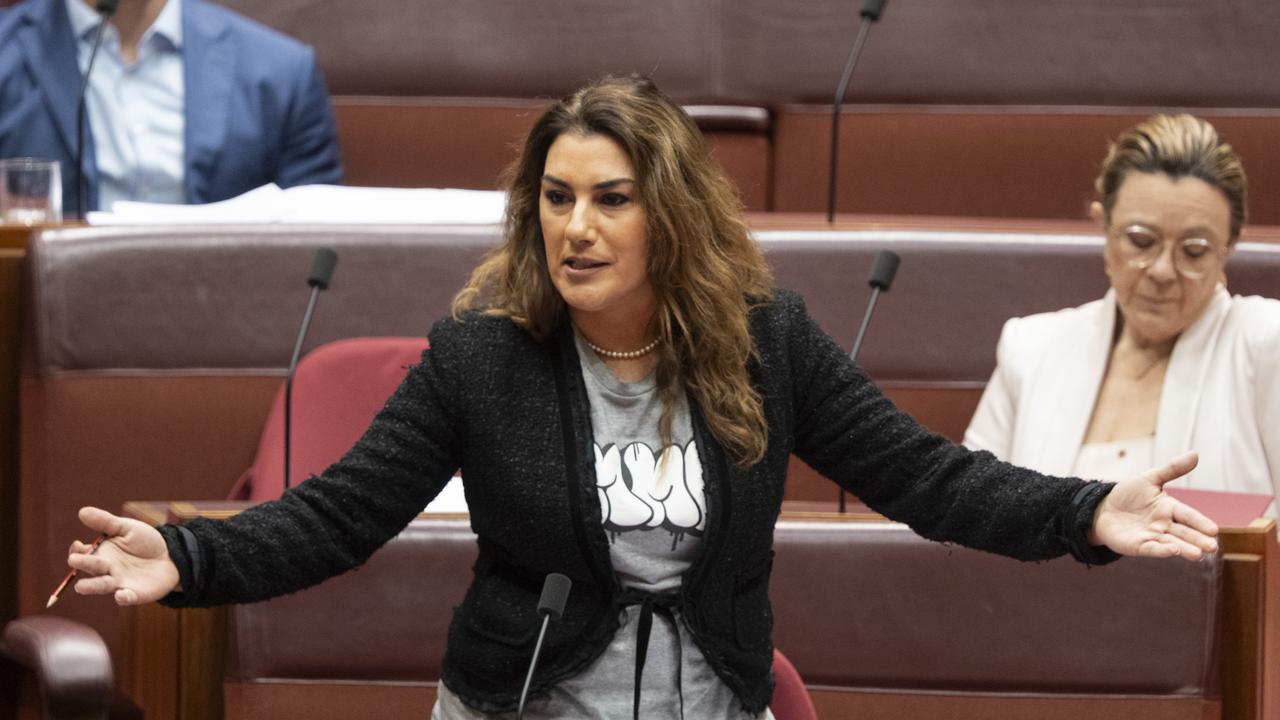
Senator Lidia Thorpe as the Constitution Alteration (Aboriginal and Torres Strait Islander Voice) 2023 is voted on in the Senate. NCA NewsWire / Martin Ollman
No constitutional amendment is easy, and from our current vantage point the Indigenous voicelooks as hard as any. An idea formed in justice and empathy is surrounded by critics, nay-sayers and outright enemies. There are more quibbles and confusions than genuine debates and conversation.
The great challenge with constitutional change is that it becomes – literally – all about words. We forget whatever great good we are aiming for, and rather contend for the perfect adjective or the divinely inspired comma. We are so terrified of the instrumental word-slip that we forget the great imperative the words are meant to serve.
While the constitutional voice was forced in the parliament to duel with dictionaries and thesauruses, the passage of the bill allows us to return to the fundamental truth about successful constitutional amendments. Words are the servants of great constitutional ideas, not the other way around. The heart of those ideas are moral imperatives, not syntax.
Every great constitutional exercise has centred on matters of profound principle. The anti-slavery amendment to the US constitution was not a property law reform or even a realignment of the rights of the states. It was a proposition of humanity.
In Australia, we are famously constitutionally pragmatic, but we need to take a deeper look at the sprawling constitutional project of Federation. Signally imperfect as it was for Indigenous Australians, this was not the administrative reorganisation of the existing colonies. It was the birth of a nation in confidence and hope. The words of the Constitution did not really create Australia. Australia justified them.
As the referendum on the voice goes forward, we need to recapture the notion of constitutional spirit – a concept as familiar to Deakin and Barton as it was to Hamilton and Adams – from the closed fingers of constitutional actuaries. The voice is about the soul of our country, and there is nothing more basic, important and down-right pragmatic as the possession of a soul. Or as our forebears often put it, a good heart.
As people of good heart, we should not automatically default to the baser character of our days: to weigh, to calculate, to carp and to critique. We need to ask – intelligently and with proper judgment – not just what conceivably could go wrong if everything went against us but what should go right given pervasive goodwill and even average good fortune.
We should look at the concept of the voice not through a cracked microscope but a modestly lit window. What is the actual opportunity, rather than the determinedly imagined Frankenstein’s monster? On offer is not a cynical grab for power by a shadowy Aboriginal aristocracy. Frankly, if it were, we would be more than smart and tough enough to frustrate it, before or after referendum.
Nor is this constitutional impetus about “doing something” for Indigenous people. We have tried that for decades, and it has failed, as much for having at its heart a corrosive condescension to helplessness as for any other reason. Indigenous Australians will never rise simply through funding, philanthropy, help, sympathy, compassion or pity.
The only route by which a great people can embrace the indispensable indigeneity of its character, and the people who embody that character, is solidarity.
Solidarity is not some shallow trademark of retro-communists or showy trade unions. It is the sublime concept that people not only live within but within each other. In a Christian context, for example, it means that every person’s humanity is amplified, not qualified, by their commitment to others. The same principle runs through every major religion and most respectable political ideologies.
This is how we must approach our Indigenous brothers and sisters in the referendum. We are not going to give them something, or give up something ourselves, but do something mighty together.
At Federation we created a commonwealth. Now, we advance it.
In fact, Federation is an instructive example in the current wilderness of virulence around the voice. Can anyone doubt that the present No case would have been the No case then? The different states will divide the people. The bureaucracy will run amok. It will all be just too complex and expensive. The risk is just too great.
Listen carefully and you hear the same grudging growls. Those thought leaders who wish to strangle the voice out of contemptuous caution would have throttled the Federation they now flaunt. But the Australian people did not listen. Commonsensical and pragmatic, but still conscious of an irrepressible destiny, they voted Yes. The direct descendant of that vote would be the vote for the voice in October.
One of the great challenges in promoting the voice is that the sort of discussion required is emotionally counterintuitive to Australian public debate, let alone the constitutional politics of our country.
National stereotypes aside, and dismissing the occasional flocks of eccentric fringe protesters, we are not a polity given to the ostentation of public principle. We are not skites of constitutional and public virtue.
Minister Linda Burney during Question Time. Picture: NCA NewsWire / Martin Ollman
Many countries are. The US celebrates its bill of rights and the constitutional bonanza it confers in an unceasing national festival. Its historic failures for numerous racial and other minority groups, and its distortion of representative democracy, are not invited guests. France prosecutes a posterity based on a principle of glory that apparently underlies its numerous failed republics and catastrophic record of lost wars.
Even the British boast and swagger over their timeless constitution. They propound the mother of parliaments, Magna Carta (a parchment for the protection of earls) and the Glorious Revolution, actually a successful bid in aristocratic treason. The stiff upper lip curls in a thin smile of self-congratulation, set to the tune of Rule Britannia and Pomp and Circumstance. It is very hard to imagine constitutionally laconic Australians cavorting for anyone or anything.
But with the voice, a sober enthusiasm has to be achieved if it is to succeed. Australians will never be conned but will need to persuade themselves. The question is how this can happen without an emotionalism and hoopla they will never accept.
One insight is from the sorts of people Australians historically have regarded as being so compelling that they’re heroes: not Ned Kelly-type bunting but genuine figures of public reverence.
From totally different contexts, you might pick our only saint, Mary MacKillop; our most enduring war hero, Jack Simpson (and his donkey Murph); and, particularly in the current context, those two great Indigenous exemplars, senator Neville Bonner and Vincent Lingiari. All of them shared three features.
The first is a predictable lack of “side” or “show”, the true good manners of being Australian.
MacKillop laboured behind a veil. Simpson was shadowed by Murph. Bonner and Lingiari were soft-spoken, humble and self-deprecatory.
The second is that each devoted their lives to a vast project, not national needlework. MacKillop educated and salvaged a desperate Irish-Australian peasantry. Simpson saved multiple lives and gave dignity to hopeless suffering in impossible circumstances. Bonner and Lingiari advanced the justice of their people in the face of the stinging grit of disdain. These were all people who gave a resounding Yes to a truly great work.
The third glaring reality of these lives is that they personified a willingness to embrace risk in the service of good. MacKillop had no business plan, and the chance that she would establish an entire school system was infinitesimal. Simpson threw his life into the dirt of Gallipoli every time he went up some shattered gully. Bonner and Lingiari could never fully know a new Australia each time they fielded insult and injury.
The moral lesson for the voice is that great causes are not won by insurance policies and niggardly doubt. They are achieved by courage and intelligence yoked in the service of profound, national, common principle.
The impetus that prompted a religious sister, a mule driver and two Indigenous men without formal education is the principle that binds Australians as individuals, a nation and a people. That principle also animates the voice.
It is the principle of extravagant fairness.
Many individuals, nations or groups can be fair in the sense that they are not consciously unjust and try not to be too nasty. But extravagant fairness is completely different. This is the fairness that is not only just but generous, joyful, enduring and productive. It is the sort of profound fairness that activated both the Good Samaritan and Weary Dunlop, blessing both receiver and giver.
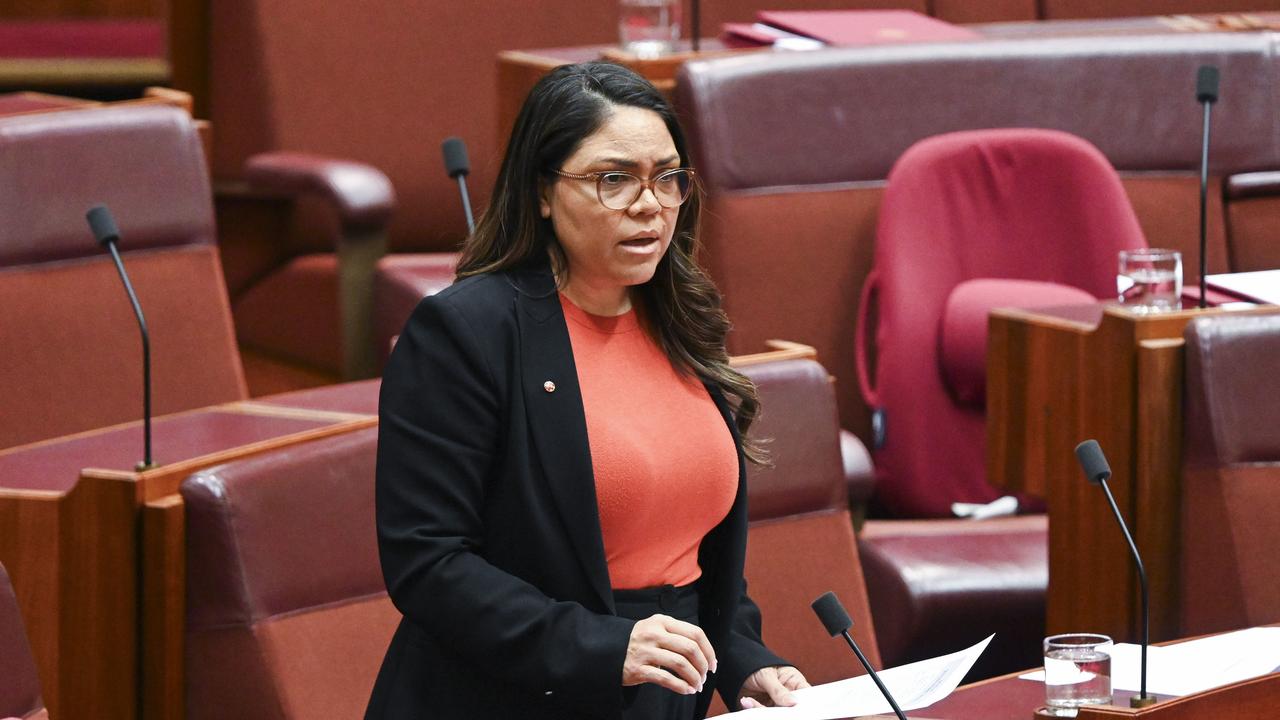
Senator Jacinta Nampijinpa Price. Picture: NCA NewsWire / Martin Ollman
This is the fairness of MacKillop and Bonner, and it is on this sublime national trait – ourselves at our very best – that the case for an Indigenous voice must be based. The strength in fairness, fairness in strength, that is so powerfully expressed in the notion of a fair go.
Appeals to history may be inspiring and even apt. But Australians usually blush at the suggestion of intergenerational praise and are apt to look at its guarantors as the property developers of posterity. But fairness they instinctively understand, as an imperative and a life choice. Postmodern cynics love to deride the concept of a “fair go”, but in a world of self-actualisation and life coaches it probably is the one purely moral proposition that has explicit everyday currency in contemporary Australian existence. When Australians become convinced that a constitutionally enshrined voice represents a fair go for their Indigenous brothers and sisters, they commit to voting Yes.
Undecided voters will vote for it not because they want to feel good about it, let alone because they like the wording, but because it is the right thing to do.
It is our grandmothers’ injunction about doing the “decent thing”. Decency is not merely rightness. It is a consciousness that our actions not only benefit others but in so doing make ourselves better, more human people. As when, in the creation of the voice, the privileged citizens of a nation reach out to some of the nation’s most powerless, the relationship becomes one of equals. Not merely because the voice is a good idea but because it is in the fullest sense just.
The prevalent tone of Australian history is cynical and sarcastic, but potent instances of national decency are not hard to find, often arising out of previous acts or policies of national shame. The justice meted out to the Myall Creek murderers of Aboriginal people was decent. The refusal of the Australian people to vote at referendum in favour of outlawing of the Communist Party, even at the height of the Cold War, was decent. Our historic welcome to the poor, displaced and fugitive from overseas has been decent.
The great challenge of the voice referendum is to engage the potent Australian sense of fairness with the enabling of our Indigenous people. There is so much story and history here that there is almost too much. In the swirling accounts of suffering and dispossession, we all need at least one story that drags at our soul.
Mine is from a dear Indigenous friend, dating back to his grandfather’s time before the war. His people came from NSW, across the Great Divide. They worked hard in hard jobs, splitting timber, working cattle, the odd factory job. In the town, they were not so much hated as tolerated.
One day the trucks turned up at the school. The kids were loaded up. Then the trucks drove around the streets and the mothers were told they would never see their kids again if they did not climb aboard. They were loaded up. Then the trucks drove to the workplaces and told the fathers they would never see their families again if they did not come too. They were loaded up. They were all driven hundreds of kilometres west, away from their lives and their country.
It is the banal administrative indifference that strikes you. It was not about doing evil but about spiritless efficiency. There is a bizarrely hurtful footnote. By an incredible effort that can barely be imagined, my friend’s grandfather had £200 saved in the bank. He had taken our country at its word, and worked for the betterment of his. He never saw his money again. He was robbed.
This awful story, and all like it, are blasphemies against the fair go. They are libels on the betterness of ourselves and our nation, which must be repudiated, and the notion of giving a voice to the descendants of this great and good man could not be more apt.
One of the truly miserly tunes against the voice is that there are other groups who have suffered, others who have felt the sting of discrimination, so why should we single out Indigenous people? As an Irish-Australian, I have ancestors who suffered starvation, dispossession, bigotry and even massacre. Many Vietnamese citizens remember expulsion and imprisonment, and many of our Indian diaspora have lived the refusal of opportunity and disdain.
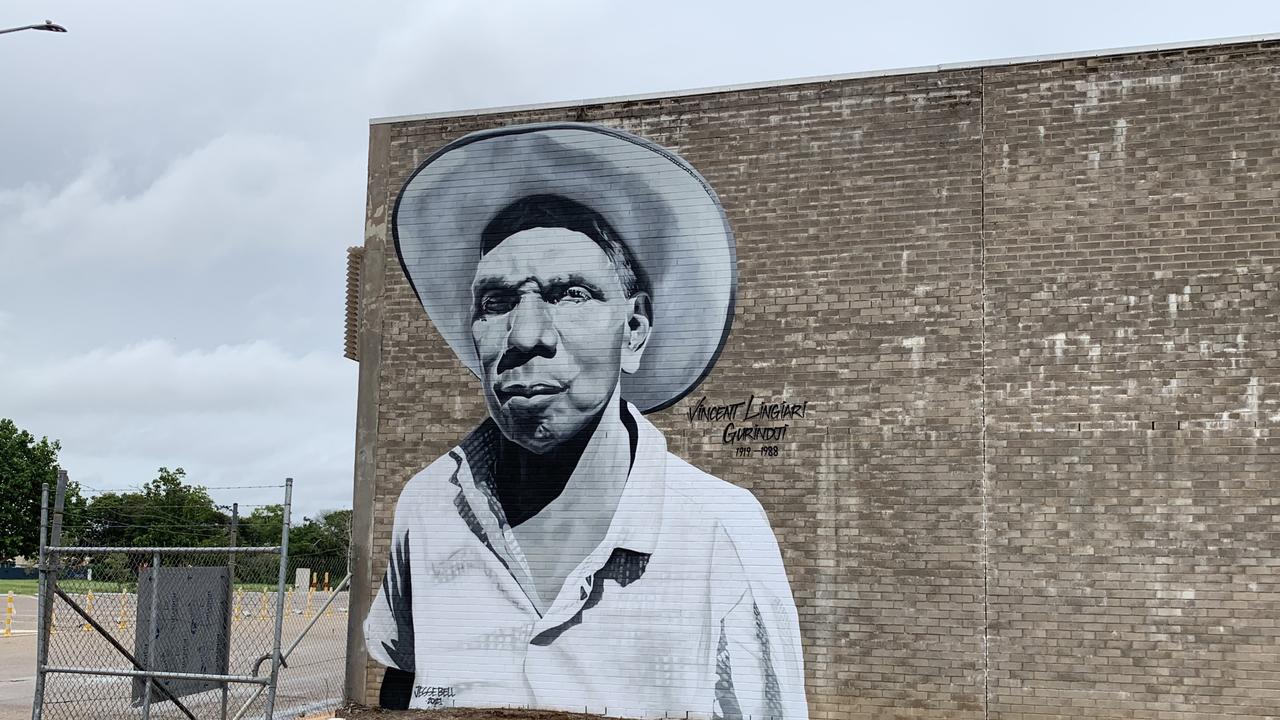
Aboriginal rights activist and Gurindji elder Vincent Lingiari on Railway Terrace in Katherine. Katherine Regional Arts
Yet to expect jealous rejection of Indigenous people by Australia’s great multitude of the previously disadvantaged is a calumny on every Australian Indian, Chinese, Jew, Sudanese or Irishman. On the contrary, the natural feeling that subsists between those who have suffered and those who suffer is a deep empathy. The voice is the occasion for companionship, not contempt.
There also needs to be remembrance. Our richly varied immigrants need to ask themselves which Australians tried their hardest to keep them out, to claim they were dangerous, to say the cost would be too high. It was not Indigenous people.
But when one looks to the bastions of those who are opposed to the voice, there are those same icy sceptics. The lofty who now say the voice will create overpaid Indigenous bureaucrats are the same who said the Chinese would take work, and the Indians never fit in.
It is the same with division, the theme music for the No case. Its proponents claim terror at the fictitious notion of a people divided through the voice by race, but their direct ideological ancestors – some embarrassingly close – inveighed against an Australia divided by the inclusion of coloured ethnic misfits. The Vietnamese would never play cricket and the Chinese would never embrace democracy. Those Catholics breed.
The appalling irony here is that extreme opponents of the voice actually revel in division. Their entire strategy is to ensure that the referendum does indeed divide the Australian electorate so that a majority – however thin – is alienated not only from the voice but from the Indigenous people for whom it would speak.
For these opponents, it will be a good campaign’s work if any burgeoning, institutional alliance between black and white Australians – a work of the left and culture war guerrillas if ever there was one – were to be permanently sidelined. Hence the grotesque language of apartheid to describe the voice. They hijack a monstrous form of racism to impugn a design of national harmony. Whatever is beyond disinformation, this is it.
There are some views that are very hard to rationalise in the voice referendum. Of course, every one of us striving for the voice have friends on the No side, some very active. Other acquaintances are undecided or just plain confused. They may frustrate and even infuriate us. But these are honourable people striving to make sense of their constitutional obligations. No one is entitled to revile them.
Yet there are others, though mercifully few. These are not dissentients of goodwill but hard hearts. For whatever reason, Indigenous people appear an ideological enemy. They dislike any Indigenous cause that doesn’t align with their punitive thinking and deficit ideology. They revel in the language of division and discrimination. Unlike every decent Yes or No voter, they do not contemplate a failed referendum with concern. They savour the thought.
To force these souls of negativity towards alternative reality, what sort of Australia do you actually want? Yes, we understand the rhetoric of radical equality, but what are we going to do with that? Where is the place for co-operation, tolerance and shared commitment in your bleak wasteland of purist liberal theory? What sort of nation are we going to create, rather than prevent?
These ideologues do not represent the bulk of the Australian people. They should not be allowed to con the Australian people. They have no idea of the fairness of the Australian soul. And I hope the Australian public repudiates their ideas by voting Yes.
Over history, many truly awful people have talked about national destiny. Usually this means some great turning point, or new direction. But on the issue of the voice, the great issue of destiny for Australia actually is static in the very best sense: do we remain loyal to ourselves, and our creed of fairness?
The voice will enable those who have 65,000 years of connection to this country, who are now our most dispossessed, to talk to us, yes, with measured authority, but not with a veto. We are indeed the people of the fair go. How is this not fair?




 In That Howling Infinite