That was the year that was – don’t stop (thinking about tomorrow)

The prophet’s lantern is out
And gone the boundary stone
Cold the heart and cold the stove
Ice condenses on the bone
Winter completes an age
WH Auden, For the Time Being – a Christmas Oratorio, 1941

I considered using a line from the above as the title of this retrospective of 2022.  It was written during 1941 and 1942, though published in 1947, when the poet was in self-exile in the United States and viewing the war in Europe from afar – although the long poem from which it has been extracted does not in itself reflect such pessimism. A more fitting title could be taken from another long poem that was published in another (very) long poem published in 1947 – Auden’s often overlooked masterpiece The Age of Anxiety, a meditation on a world between the wreckage of The Second World War and of foreboding for the impending armed peace that we now look back on as the Cold War, with its oft-repeated mantra: “many have perished, and more most surely will”.

The year just gone was indeed a gloomy one, meriting a dismal heading. There are few indications of where it might take us in ‘23 and beyond, and my crystal ball is broken. Pundits reached for convenient comparisons. Some propounded that it was like the 1930s all over again when Europe constantly teetered on the brink of war. Others recalled 1989 with the fall of the aneroid Wall and the collapse of the Soviet Union. But, beware of false analogies. In 2022, things were more confused. The tides of history have often resembled swirling cross-currents.

Things, of course, might have been worse. There are, as I’ve noted in successive posts on my own Facebook page, many qualified “reasons to be cheerful”. The  year could have ended with Ukraine under Russian control. An emboldened China might have been encouraged to launch an assault on Taiwan. A red wave in the midterms would have buoyed Trump. And here in Australia, Scott Morrison might have secured another “miracle” election victory. The West could have retreated on all fronts.

Instead, therefore, I have selected a title that hedges its bets, because, to paraphrase the old Chinese adage, and the title of an earlier retrospective, we certainly live in interesting times and in 2023, and a lot of energy will be spent endeavouring to make sense of them – or, to borrow from Bob:

Pointed threats, they bluff with scorn
Suicide remarks are torn
From the fool’s gold mouthpiece
The hollow horn plays wasted words
Proves to warn that he not busy being born
Is busy dying

B Dylan

The year in review 

Christine McVie, longtime and founder member of Fleetwood Mac departed the planet on 30th November this year. And contemplating this year’s posts in In That Howling Infinite, I could not help thinking about one her most famous songs. I recalled that it featured on newsreels of the revolution that ousted the Shah of Iran in 1979.

Why not think about times to come?
And not about the things that you’ve done
If your life was bad to you
Just think what tomorrow will do
Don’t stop thinking about tomorrow
Don’t stop, it’ll soon be here
It’ll be better than before
Yesterday’s gone, yesterday’s gone

The song seemed quite apposite as the soundtrack of a revolution that had overthrown one of America’s many friendly autocrats. At the time, no one could predict what would happen, but, as with the fall of the Berlin Wall in 1989, it was a time optimistic expectation. And yet its shock waves have reverberated and ricocheted in ways unimagined at the time.

As 2022 ends, with blood flowing on the streets of Iran and in the mullahs’s torture cells as young people rise up against a hypocritically brutal theocratic tyranny, we see again and again how that which goes around comes around.
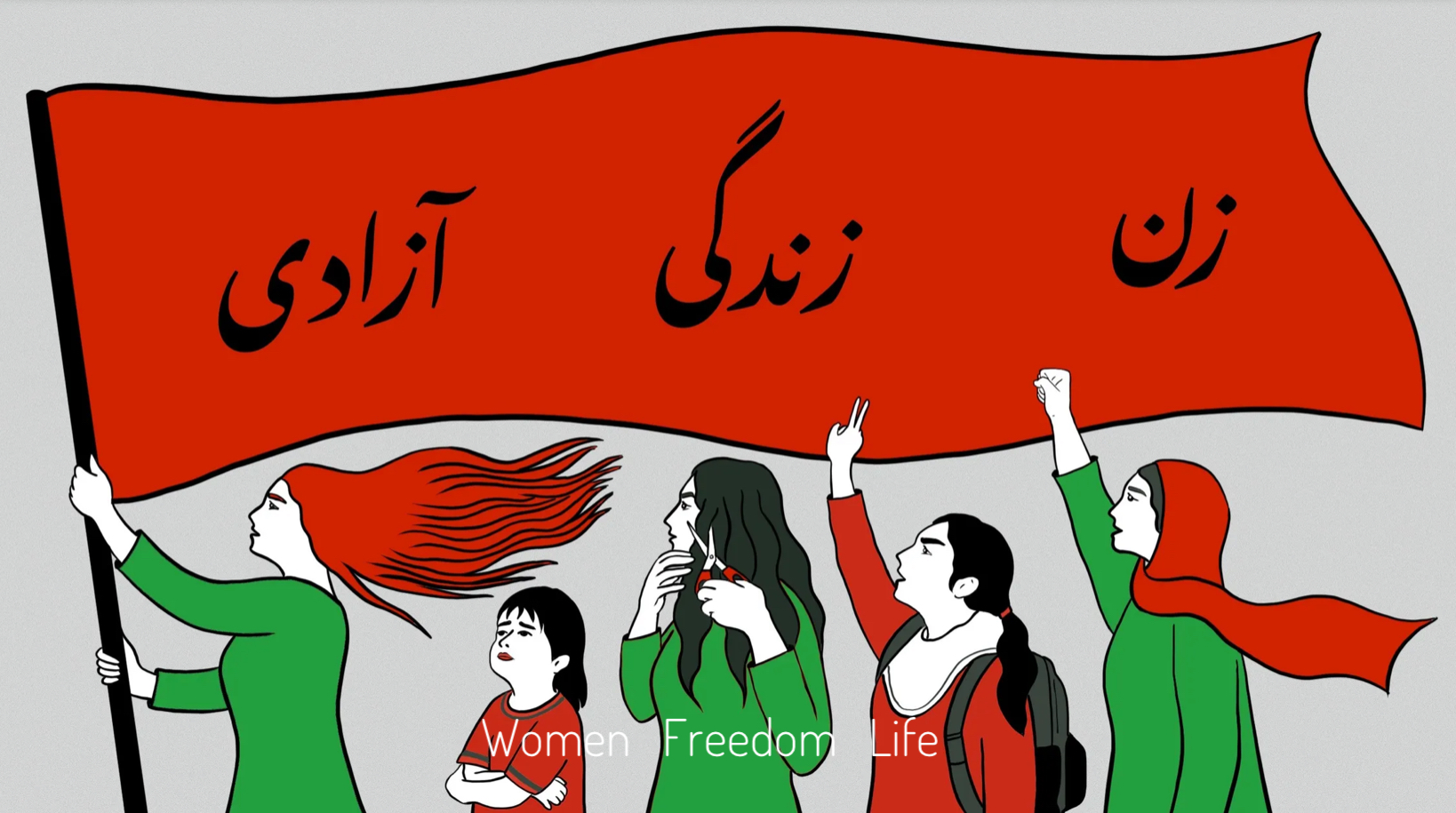
Women, Freedom, Life

If the malign hand of history has literally reached out and gripped Iran’s young women and girls by their hair, it has also endeavoured to strangle the thousand year old Ukrainian nation in the name of an atavistic irredentism. Russian troops invaded the Ukraine on February 24, causing what has since become the largest conflict in Europe since World War II. Out if the spotlight of the world’s easily distracted attention. intractable conflicts lumbered mercilessly on – in Syria, Yemen, Ethiopia, the Congo and many other “far away  places with strange sounding names”.  

On the far side of the world, the USA continued to struggle with the reverberations of January 6th 2021. Donald Trump, like Dracula, has not gone away, and whilst his 2024 presidential run is looking increasingly shaky, he continues to poison the atmosphere like radioactive dust. The unfortunate folk of the United Kingdom endured three prime ministers during the year, including the shortest ever in the history of the office, and after two years of pandemic, are facing a bleak economic winter as well as a frigid actual one.

In Australia, it was the year of the teal – at least according to those who study the evolution of language, the year we lost a queen, our long-serving foreign head of state, and a king of spin, the down-fallen and disgraced Scott Morrison. And a sodden La Nina saw incessant rain drown large swathes of eastern Australia, visiting misery on thousands. COVID-19 mutated, the Omicron variant surging from beginning of the year, ensuring no end to the pandemic – today, it seems like everyone we know has had it, including ourselves (and we were soooo careful for a full two years!). As restrictions were cautiously lifted, we as a nation are learning to live with it. 

Politically, it’s been a grand year for the Australian Labor Party. With our stunning Federal election win in May and in Victoria in November, the Albanese government’s star is on the ascendant and it’s legislative record in six months has out run nine years of Tory stagnation on climate, integrity and equality – a neglect that saw the rise of a new political force in the shape of a proto-party, the aforementioned “teal”, named for the colour of the candidates’ tee shirts. The opposition has been reduced to a bickering and carping crew, and whilst Labor continues to ride high in the polls, the Coalition bounces along the bottom of the pond.

Lismore, northern NSW, March 2023

Flooded house aflame, Lismore March 2022

Christine McVie was just one of many music icons who checked out this past year. The coal miner’s daughter, Loretta Lynn, crooned her last, as did rock ‘n roll bad boy Jerry Lee Lewis and Ronnie “the Hawk” Hawkins, who gave the boys in The Band their big break. Rock heavyweight (literally) Meatloaf took off like his bat out of hell and keyboard evangelist Vangelis boarded his chariot of fire.

Acclaimed British author Hilary Mantel, whose Wolf Hall trilogy inspired back to back posts in In That Howling Infinite in 2020 found “a place of greater safety”, and French author Dominique Lapierre also joined the choir invisible. I had first learned about Israel’s war of independence and the Palestinians’ al Nakba in his O Jerusalem, and about the bloody tragedy that accompanied the birth of India and Pakistan, in Freedom at Midnight, both books featuring in past posts. 

Mark Rylance and Damian Lewis as Tom and Hal

One could argue that the most significant departure was that of Britain’s longest serving monarch. Queen Elizabeth II had been on the throne for almost all of my life, as has the now King Charles III who was born four months before me, and of whom, as a nipper, I was jealous. I recall how I watched the queen’s coronation on a tiny black and white television in the crowded and smokey parlour of the boarding house run by a friend of our family. By happenstance, Netflix served up two over the top regal sagas to binge on: the penultimate season of The Crown, which whilst entertaining, was a disappointment in comparison with earlier seasons, and Harry and Meghan which was whilst excruciatingly cringe-worthy, was nevertheless addictive viewing. The passing of Her Maj reminded me that in my lifetime, I have witnessed three monarchs and eighteen British prime ministers (and incidentally, eighteen Australian prime ministers).  The public outpouring of grief for the Queen’s ascent to the choir invisible was unprecedented – the picture below demonstrates what the Poms do best …

The Queue along the Thames to pay respect to Her Maj

There were farewells much closer to home. My mediation colleague, aspiring author and friend John Rosley, and Beau Tindall, the son of my oldest Bellingen friend Warren, took off on the same day in May. Peter Setterington, my oldest friend in England – we first met in 1972 – died suddenly in London in March, and our friend and forest neighbour, the world-famous war photographer Tim Page, in August, after a short but nasty illness. Pete is memorialized in When an Old Cricketer Leave His Crease whilst Journey’s end – Tim Page’s wild ride,is an adaptation of the eulogy I gave for Tim in September, one of many on that sunny afternoon day in Fernmount. It is a coda to Tim Page’s  War – a photographer’s  Vietnam journey, a story we published a year ago.
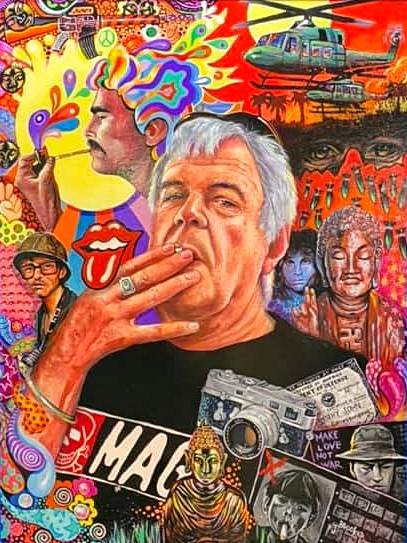
Tim Page by Joanne Booker

What we wrote in 2022

The ongoing Ukraine War has dominated our perception of 2022, from the morning (Australian time) we watched it begin on CNN as the first Russian missiles struck Kyiv, to the aerial assault on infrastructure that has left Ukrainians sheltering through a cold, dark winter. Two posts in In That Howling Infinite examined the historical origins of the conflict: Borderlands – Ukraine and the curse of mystical nationalism and The Roots and Fruits of Putin’s Irridentism. “Because of …” Iran’s voice of freedom looks at the song that has become the rising’s anthem. None can predict the outcome – whether it will be a doomed intifada, the Arabic word that literally means a shaking off – historically of oppression – and figuratively, a rising up, like that in Ireland in 1798 and 1916, Warsaw in 1943 and 1945, and Hungary in 1956, or an Inqilab, another Arabic word meaning literally change or transformation, overturning or revolution.

The run up to May’s Australian elections inspired Teal independents – false reality in a fog of moralism.; and Australia votes – the decline and fall of the flimflam man. 

More distant history featured in Menzie’s Excellent Suez Adventure, the story of the Suez crisis of 1956 that historians argue augured the end of the British imperium, and the role played therein by longtime Australian prime minister Sir Robert Menzies. Johnny Clegg and the Washing of the Spears is a tribute to the late South African singer, dancer and songwriter, and a brief history of the war that destroyed the great Zulu nation, setting the scene for the modern history of South Africa. And journeying further back in time to sixteenth century Ireland, there is O’Donnell Abú – the Red Earl and history in a song, a discussion of the origins of a famous and favorite rebel song.

Then there are the semi-biographical “micro-histories” in In That Howling Infinite’s Tall tales, small stories, obituaries and epiphanies. In 2023, these included: Folksong Au Lapin Agile, the evening we visited Montmarte’s famous folk cabaret; Ciao Pollo di Soho – the café at the end of the M1, the story of a café that played a minor part in my London days, as described in detail in an earlier travelogue, Song of the Road – my hitchhiking days; Better read than dead – the joy of public libraries; The quiet tea time of the soul, an ode in prose to a favourite beverage; and The work, the working, the working life recalling the many jobs I took on in the sixties to keep myself in music, books, travel and sundry vices. 

We cannot pass a year without something literary. We celebrated the centenary of three iconic literary classics in The year that changed literature, and with the release of The Rings of Power, the controversial prequel to The Lord of the Rings, we published a retrospective on the influence of JRR Tolkien. One ring to rule us all – does Tolkien matter? – a personal perspective with an opinion piece by English historian Dominic Sandbrook, an informative and entertaining chronicler of postwar British history and society which featured, in Unherd, an online e-zine that became a “must read” in 2022. A Son Goes To War – the grief of Rudyard Kipling recalls the death in battle on the Western Front in 1917 of the poet’s only son, it’s influence upon his subsequent work, whilst Muzaffar al Nawab, poet of revolutions and sorrow is an obituary for another poet, who seen a lifetime speaking truth to power.

And that was that for what was in so man ways a sad year. Meanwhile, In That Howling Infinite already has several works in progress, including a review of historian Anthony Beevor’s Russia – Revolution and Civil War, what King Herod really thought about the birth of baby Jesus, and the story of a famous and favourite British army marching song.

Best wishes for 2023 …
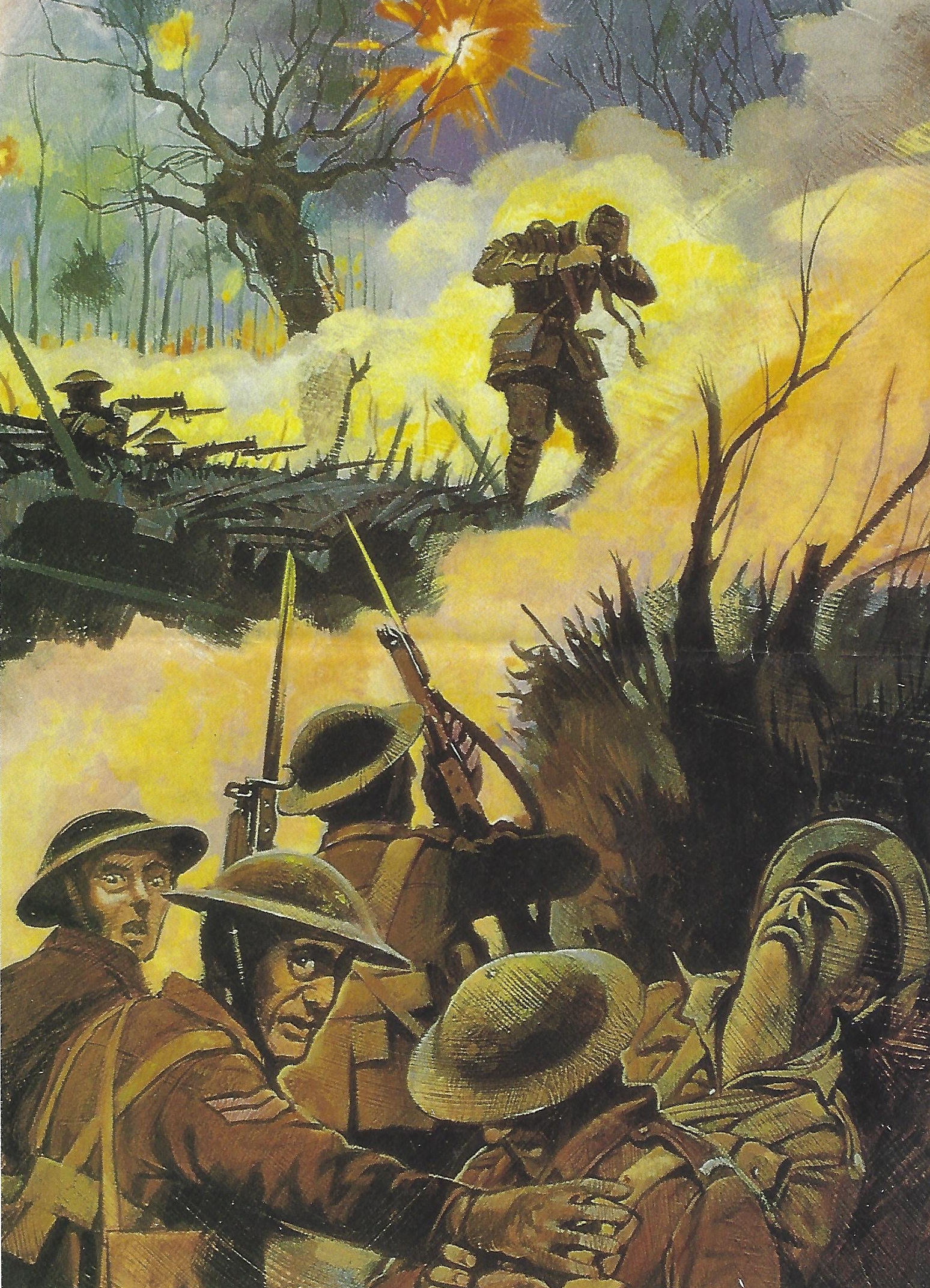
Death of a Son

That was the year that was – retrospectives

Life in Wartime – images of Ukraine
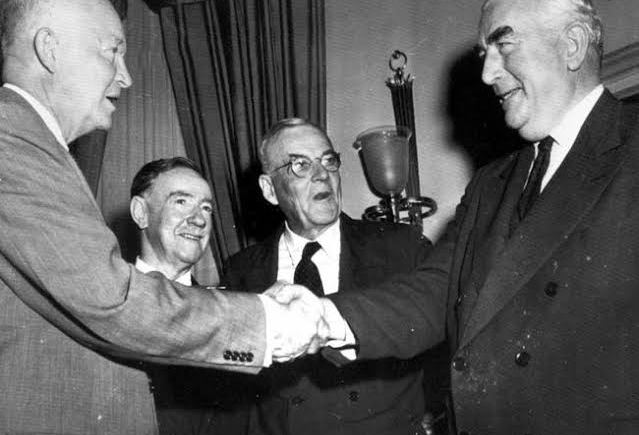
Menzie’s Excellent Suez Adventure

Many historians claim that the Suez Crisis of late 1956 was the end of the beginning of Britain’s retreat from Empire and its decline as a Great Power. Britain’s divestment of its non-Anglo-Celtic empire began with its withdrawn from Palestine and the independence of India in 1947 and 1948 and proceeded apace through the sixties and seventies until today when but a handful of dependencies remain.

Why Britain reacted as it did to the rise of Gamal Abd al Nasser and his seizure of the Suez Canal in 1956 has long fascinated scholars. Watching ‘The Crown’, recently, and its portrayal of Sir Anthony Eden, and recalling Dennis Potter’s marvelously surreal take on the Suez Crisis in ‘Lipstick on Your Collar’, I discovered one possible explanation (though It doesn’t quite explain the decision of France and Israel to join Britain’s last imperial adventure). 

The Suez Crisis had far-reaching consequences – though none as catastrophic on a political and human scale as when Britain and Australia joined America’s Iraq crusade in 2003. The humiliating withdrawal from Suez accelerated Britain’s slow decline from “great power” status, and the US’ steady ascent to world leadership. It was the harbinger of the end of an empire on which the sun never set. It burnished Nasser’s revolutionary credentials and gave rise to an anti-western, secular, and socialist Arab nationalism that challenged and, in many countries, toppled the established order in the Middle East. It led, in a short time, to the rise of the Ba’ath regimes in Syria and Iraq, which, it can be argued, set these countries on the road to ruin half a century later. And what might have been the consequences for Eastern Europe is “the West” had not been so distracted on the canal during Hungary’s quixotic revolution and its brutal suppression by the Soviet Union.

The Suez Crisis in brief

The Suez Crisis came to a boil with what Arabs called the Tripartite Aggression, and Israelis, the Sinai War. Historians refer to it as the Second Arab–Israeli war –  between the war that commenced with the conclusion of Britain’s mandate over Palestine, and ended with the establishment of the state of Israel and expulsion of over a quarter of a million Arabs from within the battle-won borders of the new state, and the Six Day War which has changed utterly Israel’s geography, politics, culture, society, identity and international standing.

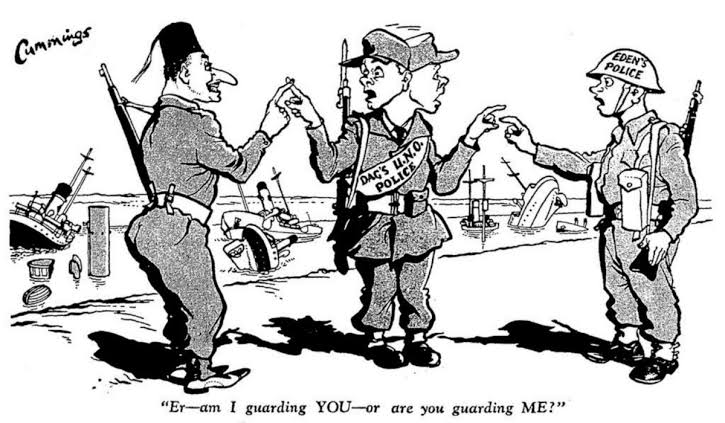
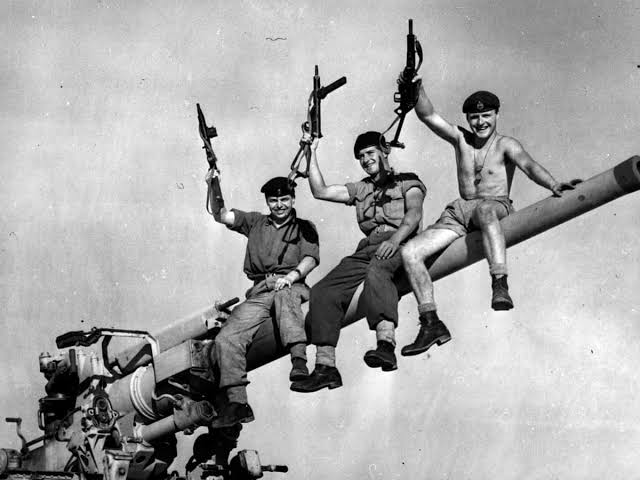
It commenced with an invasion of Egypt in October 1956 by Israel, followed immediately by the United Kingdom and France. The aims were to regain control the Suez Canal a majority British owned strategic international waterway for the Western nations who depended upon it their oceanic commerce, and also, to remove Egyptian president Gamal Abdel Nasser, who had just nationalized the foreign-owned Suez Canal Company, which administered the canal. After the fighting had started, political pressure from the United States, the Soviet Union and the United Nations led to a withdrawal by the three invaders. It humiliated the United Kingdom and France and enhanced the reputation of Nasser. Although the three allies had attained a number of their military objectives, the Egyptians scuppered forty ships in the canal rendering it useless. As a result of the conflict, the United Nations created the UNEF Peacekeepers to police the Egyptian–Israeli border, British prime minister Anthony Eden resigned, and the Soviet Union, taking advantage may have been emboldened to invade Hungary.  

Fun in the sun

As with all international conflicts, the causes are much more complex than the actual casus belli that precipitate it, and beyond the intention and scope of this article.  Issues geopolitical, strategic, tactical, historical, cultural and indeed, psychological proliferated, aggregated and aggravated, converging on one or more ignition points. The Cold War, the rise of Arab nationalism, the Arab Israeli conflict, the decline of the British Empire and Britain’s need to hang onto its status as a world power, and the personalities of the players, particularly the Egyptian leader and the British prime minister.

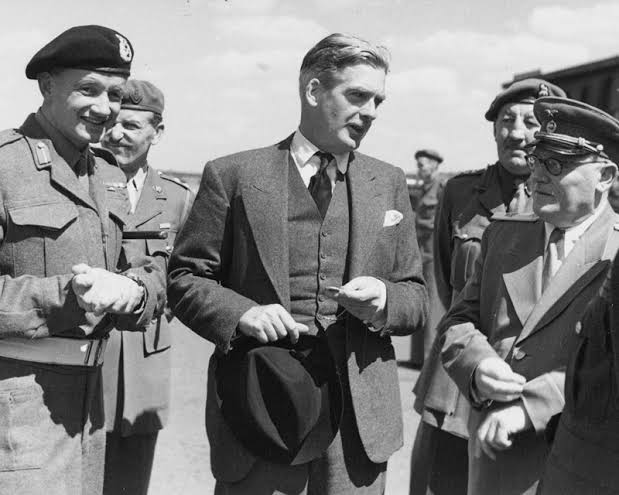
Sir Anthony greets his troops

And into this complex and volatile maze stepped longtime Australian Prime Minister monarchist and empire loyalist Sir Robert Menzies.

But first …

The view from Down Under 

When many British folk of a certain age remember the Suez Crisis in the fall of 1956, they think of the “ Gyppos”, the jumped-up Arabs who defied then embarrassed Great Britain, brought down a prime minister, and dropped the curtain on the empire on which the sun never set. They might also at a stretch imaging a connection from this to Dodi al Fayyad and his dad, Muhammad, the one time owner of Harrods and the creator of that infamous shrine to his lad and the people’s princess who both perished in the Paris car crash that launched a thousand conspiracy theories – one of which was the the establishment’s fear that Diana would would bring forth an Egyptian baby.

As a youngster in Birmingham, the events in Egypt passed me by – I was however quite excited by the revolution in Hungary and the Soviet invasion that followed soon afterwards, and would spend hours drawing pictures of street battles, of tanks and fighters and security services men strung up on lampposts. But many young men doing their compulsory national service, including the sons and brothers of my friends and relatives, were fearful of being sent off to a foreign war, the last one being barely over a decade. This anxiety, and also the imperial angst of crusty ex-army civil servants, is beautifully portrayed in Dennis Potter’s brilliant Lipstick On Your Collar, and also the very commendable drama series The Hour. I have friends and acquaintances of British, Italian, Maltese and French descent who had been born in Egypt but had to leave with their families in during and after the crisis as the Egyptian government, vindictive in its victory, showed them the door.

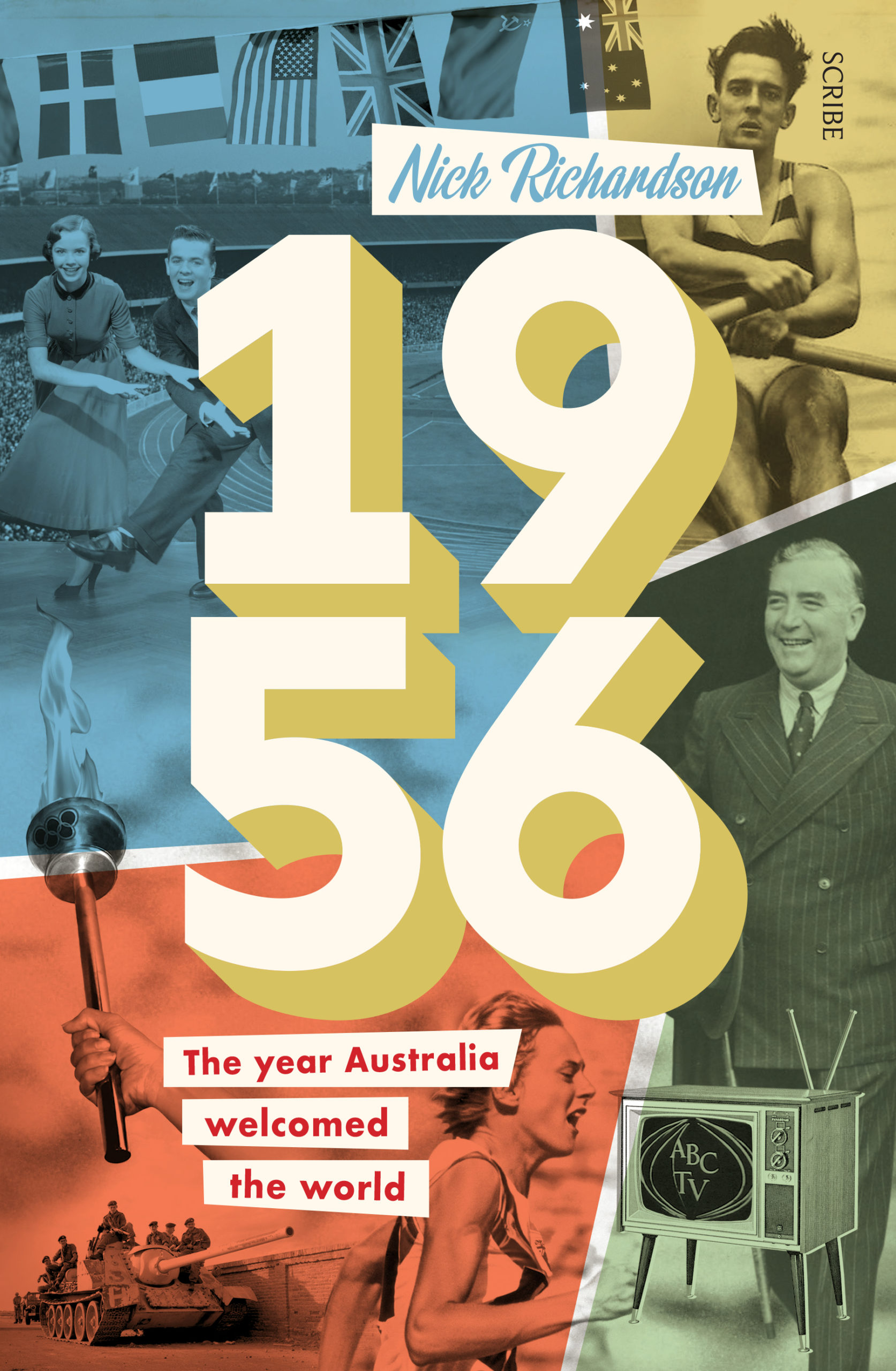
When Aussies remember the Crisis – well, probably very few do. But way back then, in the days of the White Australia Policy (yes, we really did have that) and the early closing Six O’clock Swill (and yes, we had that too!), apart from many former soldiers who had memories of Egypt in both world wars, we just got on with the matters that preoccupied us in a year that Australian academic and author Hugh Richardson recounts in his highly informative and very entertaining 1956 – the year Australia welcomed the world. Richardson recreates the events of the year surrounding the Melbourne Olympics of November and December 1956,  including the introduction of television in Australia, the arrival of Rock Around the Clock, the British nuclear test in the South Australian outback, the Soviet Union’s invasion of Hungary, and immediately before it, the Suez debacle.

Nowadays, many commentators and writers looking back on the fifties paint Australia as an insular, inward-focusing and churlish nation which many now internationally famous Australian abandoned for greener, more cerebral and creative British pastures. Richardson acknowledges this too, but contends that the country was in fact changing, in the early stages of our development into the worldly-wise, technologically connected, creative, cosmopolitan and multicultural nation that we imagine ourselves to be today. Undoubtedly, we are, but some disreputable skeletons still rattle around at the back of our national cupboard and sometimes fall out into the public space to the embarrassment of ourselves and the discomfort of our friends and neighbours.

This is not to say that Australia was detached from world affairs. Our innate conservatism, and religiosity, a traditionally strong emotional attachment to Great Britain, the homeland of most immigrants to Australia in the since the days of the first settlement, and a firm commitment to our alliance with the UK and the US, saw us drawn into the mindsets and machinations of the Cold War.

We signed up for the United Nation’s euphemistically termed “police action” in Korea, a war that concluded with a forever armistice, and contributed troops to the Malayan Emergency, a guerrilla war between Commonwealth armed forces and the Malayan National Liberation Army, the military arm of the Malayan Communist Party, from 1948 to 1960 in today’s Malaysia and Singapore. Australia’s commitment lasted 13 years, between 1950 and 1963 and until Vietnam and Afghanistan, was the longest continuous military commitment in our history.

 On the home front, Robert Menzies endeavoured to ban the Communist Party in an Antipodean echo of Senator Joseph McCarthy’s inquisition in America. There were other similarities with the USA as an adolescent ASIO, the Australian Security Intelligence Agency, encouraged dobbers and snitches to shop their neighbours and colleagues. The actual extent and effectiveness of this is unknown to this day. The Labor Party fractured as fervent anti-communist Catholics walked out to establish the Democratic Labor Party, a rift than kept Labor in the political wilderness where it had  … for a  further sixteen years. And in April 1954, Vladimir Petrov, a Soviet security officer in the Canberra embassy defected to the West with his reluctant, patriotic wife, Evdokia, a valued cryptographer at the embassy, much to the ire of Comrade Khrushchev. In 1956, therefore, Australia was very much on the radar of what President Robert Reagan would later call The Evil Empire.

When Robert met Gamal

In Richardson’s narrative, it appears that unbeknownst to the ordinary man or woman on the Bondi bus, Australia played a significant role in the Suez Crisis, and indeed,  there might’ve been a fair chance that our government would have volunteered our soldiers to join the party, much as we’d answered the old country’s call oft times before. But, as far as we know, Britain never asked and Australia never offered. It would appear that longtime Australian Prime Minister Robert Menzies main preoccupation that summer and fall was Britain’s imperial anguish, and how he might help assuage it.

The following narrative is quoted directly from Richardson’s book.

“During the build-up to the Crisis, British prime Minister Anthony Eden became consumed with an obsessional hatred for Nasser, and from March 1956 onward, was privately committed to the Nasser’s ousting. The American historian Donald Neff has written that Eden’s often hysterical and overwrought views towards Nasser almost certainly reflected the influence of the amphetamines to which he had had become addicted following a botched operation in 1953 together with the related effects of sustained sleep deprivation (Eden slept on average about 5 hours per night in early 1956).

Increasingly Nasser came to be viewed in British circles—and in particular by Eden—as a dictator, akin to Benito Mussolini. Ironically, in the buildup to the crisis, it was the actually the Labour leader Hugh Gaitskell and the left-leaning tabloid newspaper The Mirror that first made this comparison. . Anglo-Egyptian relations would continue on their downward spiral.

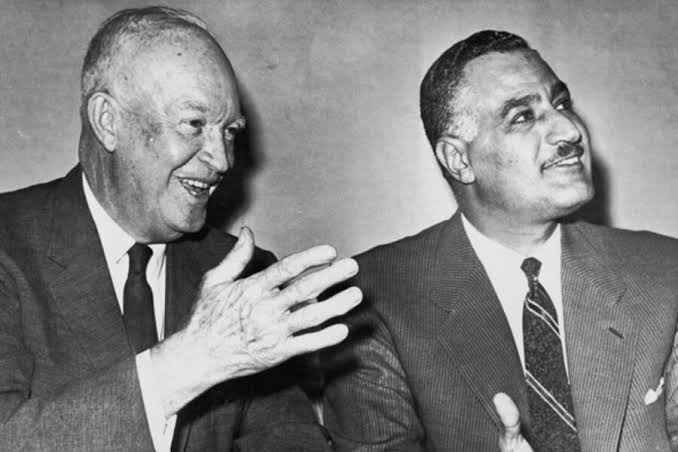
US President Eisenhower and Gamal Abdel Nasser

During World War II British prime minister Winston Churchill asked Anthony Eden who was foreign minister, to help him identify an appropriate candidate for to be minister of state in Cairo, Egypt. The position was strategically important because of the war in North Africa, but the candidate did not have to be British. Robert Menzies by this time had lost the prime ministership in Australia to John Curtin and was therefore able to be considered. He did not get the job. Eden actually even admitted later Menzies had not been accepted because “he probably would not get on with the people of of the Middle East, being a somewhat difficult person“. Now, Eden as British Prime Minister, was about to send Menzies on a far more difficult assignment.

Edens original observation was perhaps born out several years later when Menzies was in Cairo on a different mission – an international delegation sent to meet Colonel Nasser himself in an effort to persuade him that the canal to be placed under United Nations stewardship). “These Gyppos are dangerous lot of backward adolescents, full of self-importance and basic ignorance”, Menzies wrote in his diary. The attitude, not uncommon at the time, extended beyond the Egyptians. A former Australian High Commissioner to India Indonesia Italy and Kenya, Sir Walter Crocker, noted in 1955: “Menzies is anti-Asian; particularly anti-Indian… he just can’t help it”.

… While race proved challenging for Menzies, perhaps the more confronting charge was his apparent lack of curiosity about other nations, his unshakable faith in English superiority, and his lack of engagement with European languages.

Menzies believed that a strong response might be required to get Nasser to appreciate Britain’s point of view. Menzies was, in the public eye, a “Commonwealth man”. He had walked that stage, found a spot of obeisance near the crown, and felt like a valued elder statesman within the Commonwealth club of nations. But this mission to Egypt propelled him into a new kind of universe where the old verities no longer applied. He was about to embark on a delicate international mission of diplomacy, trying to negotiate with a new leader who was driven by forces Menzies could not fully comprehend, in a region about which had little interest ….

… Menzies had worked assiduously in London to get command of the brief for his mission. He and four advisors had nine meetings exploring the finances of the canal, and had spoken to the canal’s directors and even an engineer who was an expert in the area. Yet there was no discussion about the social and personal elements he needed to understand: why the Suez Canal was so important to the Egyptians, and why Nasser felt it now is the time to express his independence of thought and action.

The consequences of this shortsightedness became clear early on during Menzies meetings with Nasser. Menzies conducted the discussions like the barrister he once was, laying out the evidence, interrogating opinions, prosecuting a case, just as us Secretary of State Dulles had expected him to do. Nasser, Menzies confided to his staff, was naive and uncertain. Menzies believed he could influence him. Menzies base view was far less hospitable. He told Eden that Nasser was “in some ways a likable fellow but so far from being charming, he is rather gauche … I would say that he was a man of considerable but immature intelligence”. Menzies had more generalizations to make: “like many of these people in the Middle East (or even India) who I have met, his logic doesn’t travel very far; that is to say, he will produce a perfectly adequate minor premise , but his deduction will be astonishing”.

Nasser had his own description of Menzies – he was ‘a mule’.”

Coda – “I did but see her passing by …”

Robert Menzies love affair with Britain has opened him to posthumous ridicule in some quarters. Many would not know remember that in 1952, he  ordered charges against the communist journalists Rex Chiplin for criticizing the coronation. That came to nought but Chiplin was later hauled before the Royal Commission on Espionage (1954-55), a copycat version of Senator McCarthy’s Committee of in-American Activities

usually connected to his public comment during the visit of the young Queen Elizabeth and her consort to Australia in 1952 when quoting 17th century poet John Ford, he said: “I did but see her passing,  and yet I’ll love her ‘til I die”.

And yet, Sir Robert was not alone in his adulation. As the Sydney Morning Herald wrote on the fiftieth anniversary if the Royal tour:

“Royalty can have a strange effect on people who come into contact with it. It had an extraordinary effect on an estimated 7 million Australians who flocked to see the young Queen Elizabeth 50 years ago …The estimated figure was about 70 per cent of the Australian population of nearly 10 million. Nearly one million people were thought to have crowded Sydney’s foreshores and streets when the Queen arrived on February 3, when the city’s population was 1.8 million. About 150,000 crammed around Sydney Town Hall and neighbouring streets when she attended the Lord Mayor’s Ball. A newspaper reported that 2000 collapsed in the crush”.

Until the abolition of royal honours by the Whitlam Labor government of 1972-76, Australian worthies were rewards with British knighthoods and were also entitled to sit in the British House of Lords as life-peers. It was Menzies’ fervent wish that he be accorded that honour, and after his retirement in 1966, prime minister William McMahon endeavoured to grant it – but he lost office to Gough Whitlam before he could satisfy Sir Robert’s hearts desire.

Sir Robert Menzies, monarchist, Empire Royalist,and consummate politician kept his hand on the steering wheel of a conservative and complacent Australia from 1949 until his retirement in 1966. Some believe that it was a stultifying hand. Others praise him – and praise him still – him for upholding traditional Australian values, and keeping us relaxed, comfortable and prosperous. But in his influential 1964 book The Lucky Country, academic, social critic and public intellectual Donald Horne wrote: “Australia is a lucky country run mainly by second rate people who share its luck. It lives on other people’s ideas, and, although its ordinary people are adaptable, most of its leaders (in all fields) so lack curiosity about the events that surround them that they are often taken by surprise”. It wasn’t meant as a compliment.

But the times they were a’changin’. Political, cultural and social change was already in motion at the time of the Melbourne Olympics, and continued apace through the sixties, reaching top speed with the election of the Whitlam Labor government in 1972.

I first arrived in Australia in December 1976 for a month’s vacation in my first wife’s home country, and immigrated a year later. Gough had gone by the time I landed, inauspiciously sacked by the Governor General at the instigation of the Liberal Party, Robert Menzies’ creation. But the country that became my home of over forty years was no longer that of 1956. That past was, to quote the much-quoted LP Hartley, “another country”.

© Paul Hemphill 2022.  All rights reserved

For posts in In That Howling Infinite on the Middle East, see A Middle East Miscellany, on Australian history and politics, Down Under, and on history generally, Foggy Ruins of Time – from history’s pages.