It is three years since Australian songstress Judith Durham took the Morningtown Ride.Dusty Springfield’s brother Tom followed soon afterwards.
Judith might not have been my teenage crush – that was Dusty – but The Seekerswere a significant part of my adolescent soundtrack. Aussies were an exotic species back then in Britain, and to me, more associated with now-disgraced Rolf Harris with Tie Me Kangaroo Down Sport and Sun Arise, but there was also Frank Ifield and Patsy Ann Noble. More Aussies followed them to Britain – the Easybeats and Bee Gees entering the pop charts soon afterwards, while soon to be famous actors, artists, authors and activists had already steamed back to Old England’s Shores and were busy making names for themselves.
The Seekers were “discovered” by Tom Springfield and were marketed as the new Springfields, the natural heirs to that wholesome folksey trio (he had written their greatest hits or adapted them from folk standards). When the Seekers folded in 1969, group member Keith Potger gave us the New Seekers, a bunch of pretty blonde Brits who most people now believe wanted to buy the world a coke! For trivia fans, that song was (spoiler alert!) the happy hippie finale of that fabulous series Madmen.
The Seekers released their smash hit, the allegorical song of farewell The Carnival Is Over in 1965. Tom based it on a traditional Russian song about a brutal Cossack rebel [read all about him below]. A natural linguist, he’d learned Russian whilst undergoing compulsory national service in the fifties. Apparently, those few conscripts who graduated from the Ministry of Defence’s Russian Language School as interpreters and translators were regarded as the crême de la crême of conscripts. Often, trainees would put on concerts of Russian songs and plays for their own amusement.
Tom Springfield borrowed the melody of The Carnival is Over from Stenka Razin a traditional folk tune set to music in the 19th Century by Dimitry Sadovnikov. It told the tale of a drunken seventeenth century Cossack rebel who threw his Persian bride of one night over the side of his boat into the Volga River when his men accused him of going soft. Tom changed the story entirely though he retained a nautical riff and cast the star-crossed lovers as the theatre characters Pierrot and Columbinerather than casting them overboard.
Stepan Razin on the Volga (by Boris Kustodiev, (1918) State Russian Museum, St Petersburg.
Tom’s song was an ironic mid twentieth century reimagining in which a tragic, violent and mythic saga of patriotism, loyalty, and patriarchal authority illustrative of national an revolutionary folklore was reinvented into wistful pop as a saccharine song of romance, emotion, loss, and a meditation on the impermanence – how the joys of love are fleeting. No such maudlin melancholy on the part of the preening old riverboat pirate. Over the side she goes!
The lyrics and the sentiment couldn’t have been more different:
From beyond the wooded island To the riverbank he came, On his breast he held a maiden, And his comrades called her name. Then he flung her to the waters, Crying, ‘Thus I make my vow, I will have no foreign woman As a wife to me now.’
Say goodbye, my own true lover As we sing a lovers’ song How it breaks my heart to leave you Now the carnival is gone High above the dawn is waiting And my tears are falling rain For the carnival is over We may never meet again
Pierrot and Columbine
The shift from revolutionary folklore to wistful pop is emblematic of the 20th-century repurposing of folk traditions – filtering political anthems through modern, personal, and emotional frameworks. The lyrics and the sentiment couldn’t have been more different:
If you watch the hoary old Hammer horror film Rasputin, about the sinister Svengali who enchanted the last Czarina of Russia – portrayed herein by that eminent old frightener Christopher Lee – you will recognise the tune as a recurring leitmotif.
There is a clunky film reenactment of the story, sung by the famous Red Army Choir immediately below the Seekers‘ song.
Say goodbye, my own true lover
As we sing a lovers’ song
How it breaks my heart to leave you
Now the carnival is gone
High above the dawn is waiting
And my tears are falling rain
For the carnival is over
We may never meet again
Like a drum, my heart was beating
And your kiss was sweet as wine
But the joys of love are fleeting
For Pierrot and Columbine
Now the harbour light is calling
This will be our last goodbye
Though the carnival is over
I will love you ’til I die
Like a drum, my heart was beating
And your kiss was sweet as wine
But the joys of love are fleeting
For Pierrot and Columbine
Now the harbour light is calling
This will be our last goodbye
Though the carnival is over
I will love you ’til I die
Though the carnival is over
I will love you ’til I die
Stenka Razin
From beyond the wooded island
To the river wide and free
Proudly sailed the arrow-breasted
Ships of Cossack yeomanry.
On the first is Stenka Razin
With his princess by his side
Drunken holds in marriage revels
With his beauteous young bride.
From behind there comes a murmur
“He has left his sword to woo;
One short night and Stenka Razin
Has become a woman, too.”
Stenka Razin hears the murmur
Of his discontented band
And his lovely Persian princess
He has circled with his hand.
His dark brows are drawn together
As the waves of anger rise;
And the blood comes rushing swiftly
To his piercing jet black eyes.
“I will give you all you ask for
Head and heart and life and hand.”
And his voice rolls out like thunder
Out across the distant land.
Volga, Volga, Mother Volga
Wide and deep beneath the sun,
You have never such a present
From the Cossacks of the Don.
So that peace may reign forever
In this band so free and brave
Volga, Volga, Mother Volga
Make this lovely girl a grave.
Now, with one swift mighty motion
He has raised his bride on high
And has cast her where the waters
Of the Volga roll and sigh.
Now a silence like the grave
Sinks to all who stand and see
And the battle-hardened Cossacks
Sink to weep on bended knee.
“Dance, you fools, and let’s be merry
What is this that’s in your eyes?
Let us thunder out a chantey
To the place where beauty lies.”
From beyond the wooded island
To the river wide and free
Proudly sailed the arrow-breasted
Ships of Cossack yeomanry.
Fifty years ago, in April 1974, a quartet unknown outside its native Sweden – hardly a musical powerhouse in those days – won the celebrated (yet much maligned by “cool” folk and by progressives who view it as the epitome of capitalism and bad taste) Eurovision Song Contest. The rest, as we say, is pop history. In this age of historical illiteracy, most people today equate Waterloo with ABBA rather than with Napoleon Bonaparte.
I’d watched Eurovision since 1959, when Britain won Eurovision for the very first time – the very straight and formally attired Pearl Carr and Teddy Johnson singing the twee and tweeting Sing Sing Sing Little Birdie, in 1959. I watched Britain win again a few years later with Sandy Shaw and Lulu. But during the early seventies, I was without television and therefore missed the televisual feast of melody and harmony and of costumes that David Bowie would not have been seen dead in – it is said that the seventies was the decade that fashion forgot, and most critics would say that much of the blame for that could be dumped on the singing Swedes’ doorstep.
I confess that I was late in coming to ABBA. The late seventies and early eighties were eventful but distracting times for me personally, I’d heard many of the songs, but was had never really taken much notice, until, one in about 1985, whilst contemplating what it was that made a perfect pop song, I bought a CD of ABBA’s greatest hits.
It was a case of “do you hear the songs, Fernando?”
As a tribute to this now enduring but now virtual quartet, but I can’t better a recent article, republished below, by British author Giles Smith. Read on after the music. As an afterthought, if you’d like to use the iconic reversed B, but don’t know how, cut and paste it now: ᗅᗺᗷᗅ
Loving ABBA was once a love that dared not speak its name – certainly not among 13-year-old boys in the playground. But 50 years after Eurovision victory ABBA is finally supercool.
By Giles Smith, The Weekend Australian, 11th May 2024
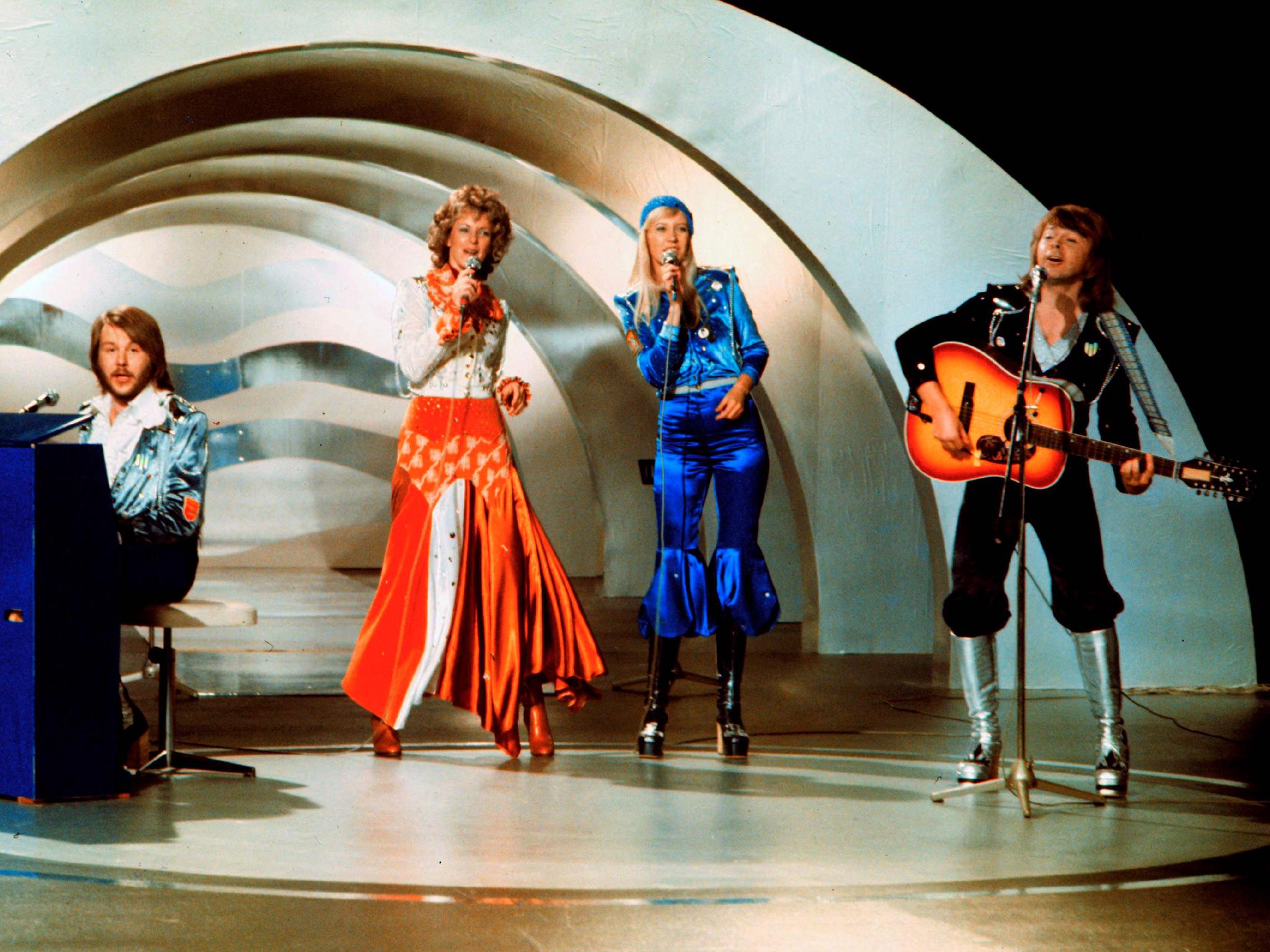
ABBA performs during the Eurovision Song Contest 1974. Picture: Olli LindeborgIt is Britain at the dawn of 1974, and things aren’t looking that great. Energy prices are through the roof. Strikes abound. Production is in decline and people are getting battered by galloping inflation and a soaring cost of living. The governing Conservative Party is badly split over trading arrangements with are through the roof. Strikes abound. Production is in decline and people are getting battered by galloping inflation and a soaring cost of living. The governing Conservative Party is badly split over trading arrangements with Europe, politicians on the far right are enjoying disproportionate levels of media attention, and the country will be asked to vote in two general elections in this single year – a level of political instability unknown in this country since 1910. Familiar? Yes, I know. Plus, extreme weather events are forecast: storms, floods and even tornadoes.
Embattled Prime Minister Edward Heath declares a fuel-saving “Three-Day Work Order” from New Year’s Day, restricting industry to three days per week – kind of “working from home”, but without the work. The Order will stay in place until March 7.
Meanwhile, on billboards and in leaflets, an “SOS” campaign is urging people to “Switch Off Something”, there are power cuts, and the national speed limit has been lowered from 70mph to 50mph in order to conserve petrol.
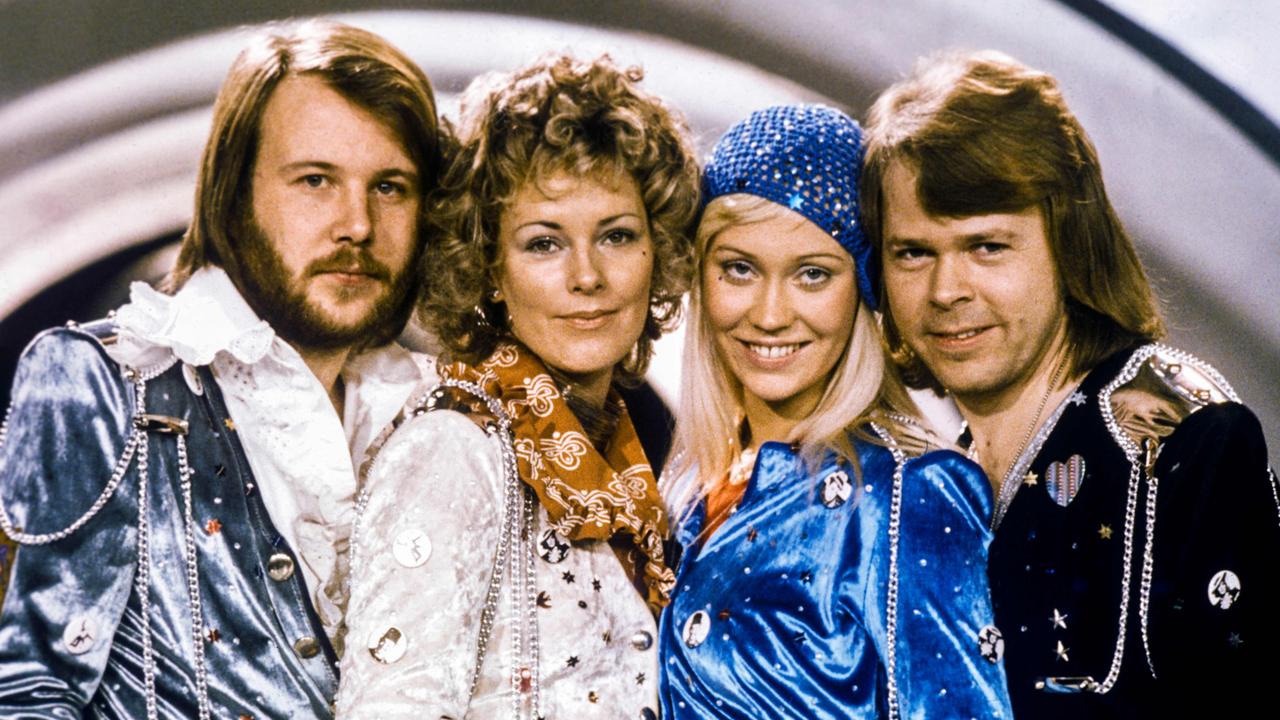
ABBA in 1974. Picture: Olle Lindeborg
Amid this general slide backwards, a feeling is spreading that Britain in general, and England in particular, can’t do anything properly any more – apart, possibly, from football hooliganism, which is about to enter a particularly busy period. So is the Irish Republican Army, whose mainland bombing campaign will, in the coming months, produce explosions at Westminster Hall, the Tower of London, and pubs in Guildford, Woolwich and Birmingham. If the fabric of society holds, the coming summer will at least offer the diversion of a football World Cup in West Germany – but not for England, who have failed to qualify.
I say “more or less” because it’s fairly obvious that the only one who’ll be fully concentrated on the screen throughout tonight’s protracted spectacular (subsequent programs may overrun, cautions our Cliff-Richard-fronted copy of the Radio Times) is going to be me. My mother, typically, with an anglepoise lamp ablaze beside her armchair, will be devoting her energies to creating one of the patchwork quilts that she seems to be producing in industrial quantities in this period. My father, equally typically, will be dividing his attention between the screen, a newspaper, and the backs of his eyelids.
After victory at Eurovision in Brighton. Picture: Anwar Hussein
I alone in this room will be achieving the state of trancelike engrossment which Eurovision no doubt merits – though not, I should admit, because I am helplessly in thrall to the contest’s allure, but because I learned a long time ago in this sitting room that any discernible lapse in concentration on my part will automatically invite an instruction to go to bed. And at this point in my life, the avoidance of bed is essentially the mission every evening. (The contest, incidentally, is starting enticingly late for the semi-professional bed-avoider: 9.30pm.) Anyway, whether I make it to the end or not, Eurovision is on, which means that I am about to have my first meeting with Björn, Benny, Agnetha and Frida.
“And we move now across into Sweden,” says David Vine, the BBC’s voice; he usually commentates on skiing and snooker, but he’s on secondment to the Brighton Dome tonight.
Here they come then – the ABBA group. There’s a couple of bars of galloping guitar, bundled together with a brightly chiming piano, and as it plays, Agnetha and Frida come barrelling down the catwalk from the back of the stage and into our lives, microphone cables paying out behind them.
“My my!” they sing, and it’s as if the show has suddenly shifted a gear and somebody somewhere has stepped on the accelerator.
These days we are entirely comfortable with ABBA’s ubiquity, their presence in the air we breathe. I pluck this randomly from my own experience: in the summer of 2023, wandering around a market in France, I heard a stallholder break briefly into song while looking for change for a customer. “Money, money, money!” he sang. Then I went along the road and had coffee in a cafe where Knowing Me, Knowing You came on. Driving back to where we were staying, I stopped in at a supermarket and dropped food into a trolley to a backdrop of Take a Chance on Me.
Three casual encounters with the music of ABBA in the space of about 90 minutes, then. Just occasionally, as you move around Europe at this point in history, you can be forgiven for concluding that it’s ABBA’s world and we only live in it. What gets harder to remember is that it hasn’t always been this way. It would surprise many of the people happily thronging the ABBA Voyage show in London, unselfconsciously browsing the ABBA sweatshirts and ABBA key fobs and ABBA tea trays in the arena’s store, to hear that a love for ABBA was once a love that dared not speak its name – certainly not among 13-year-olds in a school playground. This author – with his carefully concealed copy of the 1975 album ABBA on cassette – can personally attest to that.
The fact is, for a long time it seemed that where ABBA had come from – both in the sense of Sweden and of the 1974 Eurovision Song Contest, where they first came to prominence – had placed a tight restriction on what the band and their music could ever be or mean to people. Almost three years after they sang Waterloo in Brighton, a review in the Guardian of a rare ABBA live performance in London described them wanly as “four Euro-persons” who made “elegant Eurorock pop”, and remarked by way of conclusion that it was “nice to be able to put four faces to a pleasant sound”. There is, of course, no term in the critical lexicon more damning than “pleasant”. As for the term “Euro“, it comes up again and again in writing about ABBA in this period and is rarely meant positively either.
Two years after that, in 1979, the American rock critic Robert Christgau, writing in the Village Voice, didn’t even try to gild it: “We have met the enemy,” he wrote, after experiencing ABBA in concert, “and they are them.”
As ABBA tried to make their way in the world, it rapidly emerged that the Eurovision Song Contest was a unique kind of springboard that could also function as a trap. Blasted high off that Brighton stage, ABBA would look around for months and years afterwards and discover that somehow all the scenery had tiresomely come with them and was threatening to drag them down again. So: a Swedish act, a Eurovision act … ABBA and their defenders would be a long time struggling to answer the band’s repeated arraignment on these twin charges, both of which, of course, had the disadvantage from the defence’s point of view of being completely undeniable.
“Personally, I hate what they stand for,” a critic wrote in 1979, “and think they are brilliant.” Here at least was evidence of a thaw. But it was also evidence that even defenders of ABBA for a while had to tie themselves in knots of equivocation. So great … and yet so cheesy. Even their most fervent admirers would find themselves acknowledging sometimes that there was something confounding about ABBA, something that was just beyond the grasp.
ABBA are the band you know best that you barely know. Of course, there are ABBA fans and superfans whose commitment to the study of Agnetha, Björn, Benny and Frida in all their manifestations is both clarifying and humbling. But in the slightly less specialised and more ad hoc place where ABBA intersect with the general listener, it’s clear that a certain amount of cloudiness about the band frequently persists.
Somewhat distant even at the blazing height of their fame, the band were only fully and openly embraced by the world some years after they had, to all intents and purposes, ceased to exist. Consequently, today, familiarity with ABBA’s music outstrips familiarity with anything else about them. The band’s members are, by any definition of the term, superstars, yet in 2024, even in circles where ABBA are adored, a confident and unerring ability to know your Benny from your Björn – or even, in some cases, your Agnetha from your Frida – betokens ABBA-knowledge at practically PhD levels. We know, perhaps, that they were two couples whose marriages came apart yet who somehow kept the band on the road even after that, channelling the pain of separation in timeless songs such as The Winner Takes It Alland Knowing Me, Knowing You. But Björn wrote the lyric for the second of those songs two years before he separated from Agnetha and when they were together, seemingly happy and enjoying the arrival of their second child. And Benny and Frida didn’t get married until after Björn and Agnetha had decided to split up.
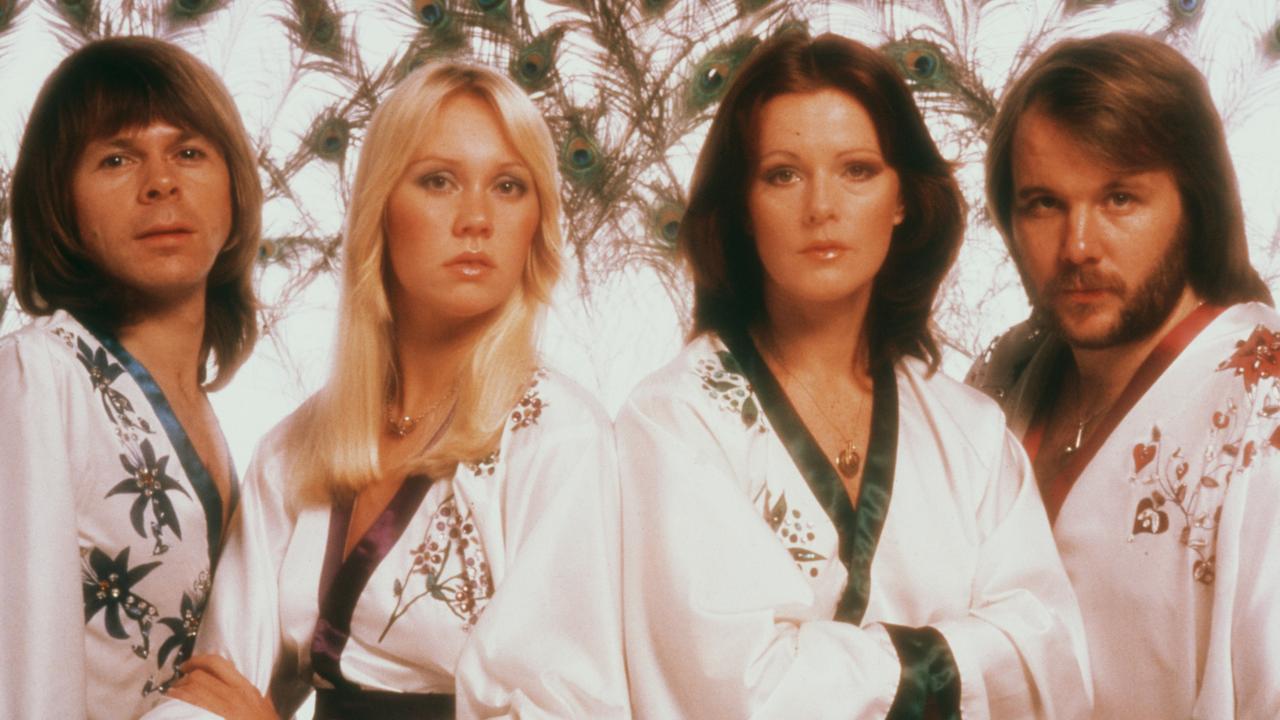
“Personally, I hate what they stand for,” a critic wrote in 1979, “and think they are brilliant.” Picture: Michael Ochs Archives/Getty Images
The truth is, we don’t know much, and most of what we think we know is wrong or improvised or conjecture or (most frequently of all) projection. Glory in its fullest form came to ABBA posthumously, when they had stepped down from the stage and out of the studio; and so, with a purity which is rare in the history of pop – and practically impossible in the social media age – Agnetha, Björn, Benny and Frida burn most brightly in our minds as a set of bombproof songs which a very large number of us appear tirelessly happy to hear. The songs, we do know. But how do we know them?
To all intents and purposes, ABBA finished being a band in 1982. They had eight years together as recording and performing artists – about the same as The Beatles. Then, albeit without ever making an official announcement that they were done, they withdrew, apparently exhausted or wrung out to some extent, and tired of each other’s company, and moved on to other things – solo albums in the case of Agnetha and Frida, the composition of musicals in the case of Björn and Benny. At that point, ABBA were widely felt to have outlived their purpose and, more than that, were regarded in many quarters as irredeemably naff.
There is no image of the members of the band on the cover of ABBA Gold – the 19-song compilation album put together by the Polydor label in 1992, 11 years after the band’s last set of studio recordings – because the album was carefully market-researched in advance of its release and the feedback from the focus groups was that although people were potentially interested in buying a record of ABBA’s hits, and more than happy and able to nominate the songs they wouldn’t mind hearing on it – Take a Chance on Me, The Name of the Game, Super Trouper – they didn’t especially want to own something with the band’s faces prominently displayed on it. So the label went with simple gold lettering on a black background. Such were the feelings around ABBA in 1992.
Yet it was ABBA Gold which began to change the climate around the band, ushering in what we can now regard as ABBA’s renaissance period, helped along, somewhat randomly, by the Australian films Priscilla, Queen of the Desert and Muriel’s Wedding, both released in 1994 – and in due course by the 1999 jukebox musical Mamma Mia! and, in 2008, the first of the two films that arose from it.
At that juncture, a decade into the 21st century, ABBA, once presumed dead and buried, were arguably more alive than they had ever been. ABBA Gold has now sold more than 32 million copies worldwide and is behind only Queen’s Greatest Hits as the UK’s best-selling record of all time.
And then, as 2021 ended, almost out of nowhere, the band re-emerged among us – not just with one final, completely unexpected and time-defying burst of new music, but in the form of the magnetically engaging and mysteriously moving Voyage stage show, which was nothing less than a complete re-imagining of the live concert experience and which revealed the band as a set of idealised, computer-generated versions of themselves which were somehow at once entirely them and not them at all.
At this point, approaching 42 years since their last formally ticketed concert and with the band members now well into their seventies and apparently entirely indifferent to the idea of performing together in the flesh, ABBA had probably never been more prominent – and had arguably never been more ABBA.
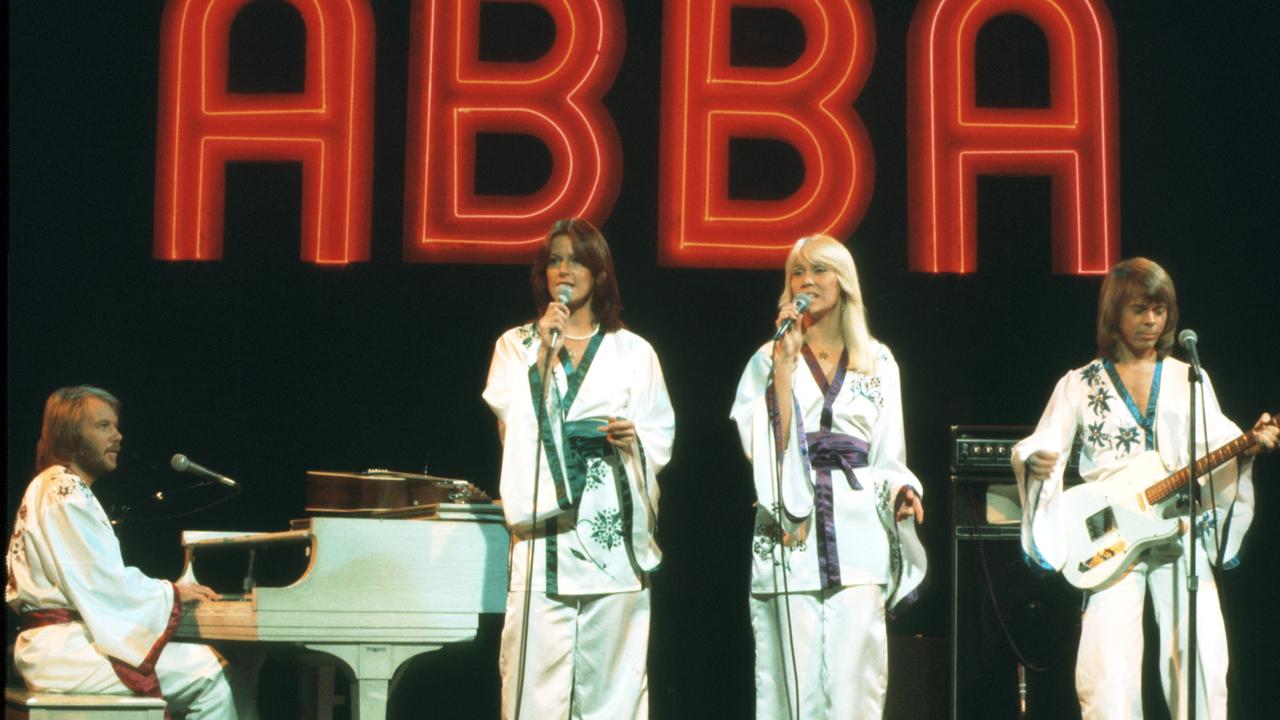
ABBA get a rock star welcome from fans in Melbourne, Australia, 1977
“I’ve been reading you all my life,” a gushing fan once told the author Samuel Beckett.
“You must be very tired,” Beckett replied.
Well, here I am, a full half-century after Waterloo, and in a position to say much the same to the members of ABBA, were I ever to meet them. “I’ve been hearing you all my life,” I could say, “or for nearly all of it that I can remember. And no, actually, before you ask, I’m not tired. Or not of ABBA, anyway.”
Because what would it even mean, in 2024, to say you were tired of ABBA, except by way of admitting that you had run out of patience with pop music altogether, or that pop music had run out of patience with you?
What’s certainly true is that, over the 50 years since Waterloo, ABBA have been liked by pretty much every kind of person and in pretty much every way that it’s possible to like a pop group. They have been consumed in a hurry as sugary pop stars and appreciated soberly as abiding musical craftspeople of exceptional talent. They have been enjoyed ironically and enjoyed entirely sincerely. They have been a guilty pleasure and an utterly unashamed one. Their records have managed to define whole periods and to slip free of history altogether, with the result that, in 2024, their songs are warmly familiar both to 1970s nostalgistes, hungry to revisit their childhoods, and people who weren’t even born when the 20th century ended. They have been feted alike as exuberant gay icons and as the reliable providers of pan-generational dance music for heterosexual wedding receptions. Their music knows the unequivocal love of the very best among us, and yet has also been used to soundtrack lockdown-busting piss-ups in Downing St (the notorious “ABBA party” of November 2020, about which Benny Andersson said, with an understandable instinct for dissociation, “You can’t call it an ABBA party. It’s a [Boris] Johnson party”).
Souvenir edition the Daily Mirror celebrating of Abba’s arrival in Australia.
My My! ABBA Through the Ages by Giles Smith.
In this wildly elastic range, they outperform even The Beatles. Certainly, it is given to vanishingly few groups to have been so many things to so many people at so many different times. It is given to even fewer to have been so many things to so many people while the group’s members simply sat in their various houses for four decades doing nothing (or, at least, nothing ABBA-related).
And that, surely, is the most delicious detail in the deeply satisfying narrative of ABBA’s eventual widespread vindication. All of the things for which they were routinely teased and dismissed along the way eventually turned into things for which they could be uncomplicatedly celebrated and loved.
All Björn, Benny, Agnetha and Frida had to do in order to be fully and resoundingly appreciated was … nothing. They just had to stand by until the rest of us came around.
Here I am, 44 years later, at ABBA Voyage, for the second time, watching not even ABBA but a simulation of ABBA sing this song about heartache, scars, grieving and the longed-for release from grieving. I’m also watching a very artfully realised total eclipse of the Sun, which is the backdrop for this number, the room glowing orange and then slowly falling dark as the song plays, which is quite something.
And, you see, the thing is, everyone at ABBA Voyage sings along to the chorus of Chiquitita. That’s the point of it – they all just pile in. They pile in on it like you wouldn’t believe, raising their arms and swaying.
Chiquitita – the power of the singing, the defiance of grief in it, the iron nature of its consolation, there is stuff in that song that I wouldn’t and couldn’t have got to with any amount of effort in 1979.
Bjorn, Agnetha, Anni-Frid and Benny attend the first performance of ABBA’s Voyage, London 2022. Picture: Nicky J Sims/Getty Images
And it is just so extraordinary how this manifestly artificial show ends up evoking so much in the way of feelings. In an interview, co-producer Ludvig Andersson attributed that ostensibly unlikely outcome to the blurring of “the borderline between real and fantasy worlds”, and how the show’s peculiar position between those borders “triggers feelings about youth and ageing, mortality and immortality”.
And there seems to me to be a lot of truth in that, and especially at this exact point in the show, when the Sun is disappearing before our eyes and the audience has got hold of that chorus, and I mean, really got hold of it, and the whole place is a sea of arms in this gradually darkening room, and two of my brothers are dead and, oh, for god’s sake, now I’m crying in the middle of ABBA’s bloody Chiquitita.
My My! ABBA Through the Ages (Simon & Schuster, $34.99) by Giles Smith
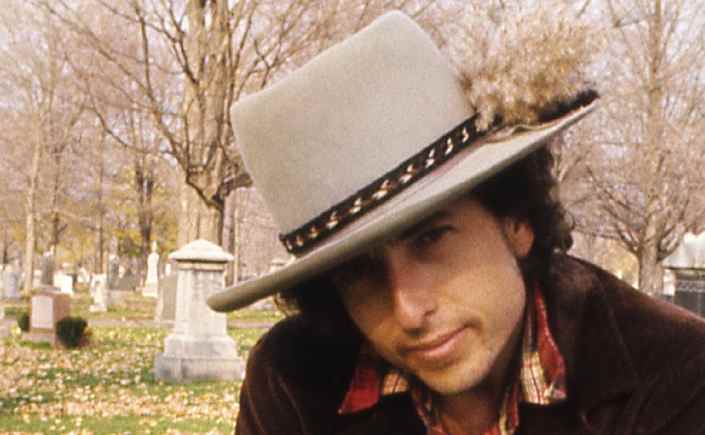
Bob Dylan is currently criss-crossing Australia on yet another circuit of his globe-trotting, decades-long Never Ending Tour. He played Sydney’s gorgeous art deco State Theatre the other night, at oure one-time local venu, the small but venerable Enmore Theatre in Newtown, to acclaim from fans young and old.
Veteran Australian folk music critic Bruce Elderwrote somewhat underwhelmingly: “… given the inevitable limitations (his voice is an ageing, husky, adenoidal instrument; he doesn’t talk to the audience; he always offers new interpretations of his old material; every song was delivered from behind his piano; he never tries to establish a rapport with his audience) this was a fascinating stroll through the “great American songbook” via an eclectic reinterpretation of twenty of his songs”. But friends of mine were much more enthusiastic. Stephane wrote me: “I thought of you last night. The show was great, it was fantastic to see him (he is still in good shape at 77!!). We even saw him smiling and dancing a bit at some stage on a fantastic version of “Gotta serve somebody”. Charles messaged: “It was really, really good. He was in top form. His voice sounded better than it has for quite a while. He played only piano but that with gusto and energy – and sometimes tenderness – throughout. The band cooked and arrangements were brilliantly re-imagined bringing new focus to the lyrics “. And this from Llew: “Started with It Aint Me Babe and Ballad of a Thin Man, so I was happy no matter what else happened. He did an encore of Blowin’ in the Wind and Don’t Think Twice. Not the old versions of course. He never said a word to the crowd”.
At a Bob Dylan concert – and I’ve been to many – we hear what we wish to hear, filtered through the memory of how we heard him all those years ago when we were young and idealistic and our world was new. To this day, I can never get enough of Bob – in all of his many guises. I listen to at least one or two of his songs every week and always discover something I hadn’t heard before. He has been a constant soundtrack to my ever-evolving, often revolving sense and sensibility. I wish that I’d been there in Newtown on Sunday night.
Bob in Newtown
Meanwhile, I have recently read classics professor Richard F Thomas’ scholarly frolic Why Dylan Matters. It is an entertaining and informative if ponderous and overwrought exegesis of the Bobster’s interaction with and intertextualizing (there’s a nice, fresh word for us all) of the old Greek and Roman poets and playwrights, and also poems, plays and folk songs of later vintage, including Rimbaud, of course, and Robbie Burns, and the hunter-collectors Cecil Sharp, Alan Lomax and the eccentric Harry Smith’s encyclopedic Anthology of American Folk Music so well analyzed in Greil Marcus’ insightfull Invisible Republic – Bob Dylan’s Basement Tapes.
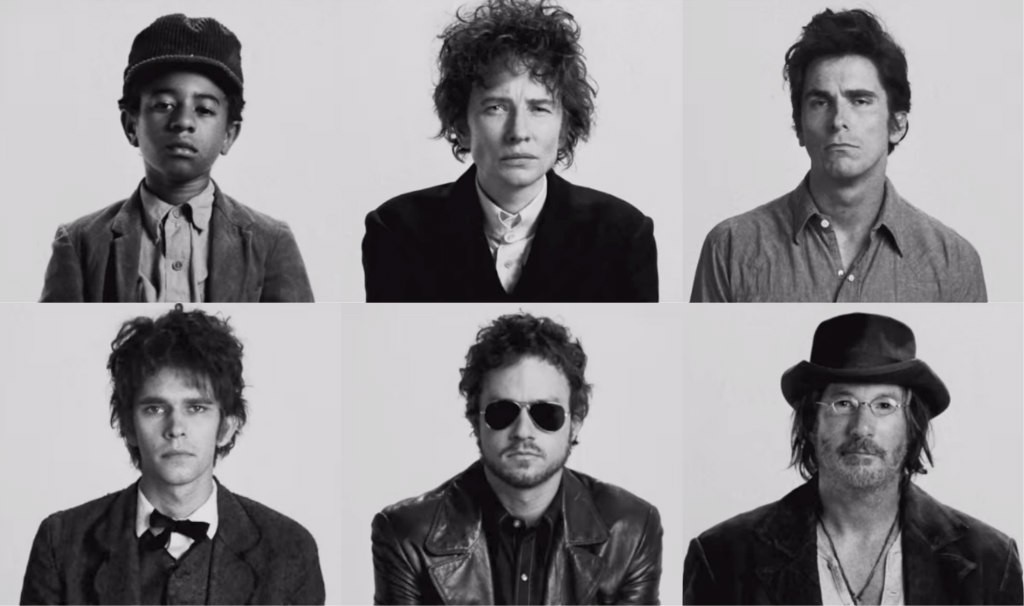
And then, last night, by chance I watched the Todd Hayes’s 2007 film I’m Not There, an imaginative and at times surreal biopic inspired by Bob Dylan’s life and music, in which six actors depict different facets of Dylan’s public persona. I first saw the film when it was release and recall being a tad disappointed at the time and unsatisfied – although I did think that Cate Blanchett was fabulous as electric Bob.
Second time around, however, thought it a marvelous film full of allusions and illusions, facts and fictions, follies and fantasies. The selection of songs was superb, particularly Memphis Blues Again during the many railroad sequences, Ballad of a Thin Man in a smokey Blonde on Blonde cabaret, and The Man in the Dark Black Coat as the leitmotif for the Billy the Kid parable. The mix of extracts from interviews, chronicles, and other stuff was fascinating, and with the lyrics of the songs, demonstrate just what a gifted poet and songwriter Dylan was and is – which is the message Thomas gives in his professorial take on the man.
Cate was, as before, peerless. A great choice if a daring one on the producer’s part. She has the voice, the gestures, the body language down to a tee. She got a global globe award for that, and an Oscar nomination. Ben Whishaw as French poet Arthur Rimbaud is also very good, as is gorgeous Frenchie Charlotte Gainsbourg as Susie/Sara. And, much to my surprise, Richard Gere was good as the aging Billy the Kid (he got away after Pat Garrett done him in).
The weirdest thing is that just that morning, I was reading the lyrics to Tombstone Blues. And the second song up in I’m Not There was Tombstone Blues, sung by the late Richie Havens and a little Marcus Carl Franklin who goes by the name of Woody. They didn’t sing the best verses, but there is a cut, later on, to a Vietnam era President Johnson saying “the sun is not yellow, it’s chicken”. How about that?
With Bob Dylan once more on our fair shores, critic and author Peter Craven explains how Dylan’s “way with words helped change our times”.
It is reproduced below to surmount News Corp’s paywall.
Bob Dylan: rock poet’s way with words helped to change our times
Peter Craven, The Australian, 11th August 2018
For a lot of people who were young in the 1960s and starting to think of themselves as adults, Bob Dylan was a kind of god. And the funny thing is that this image of him as a sort of dynamised genius, a cross between Shakespeare and Marlon Brando, has never really gone away. We thought of him as a great songwriter who was also a great performer and, in a thrilling way, a great poet. And somehow this atmosphere of awe remains.
Dylan released what is probably his greatest album, Blonde on Blonde, in mid-1966 — 52 years ago — yet on his present Australian tour (his first was, you guessed it, in 1966) a lot of bright young kids, millennials aged 22 or so, who are a bit bored with Shakespeare and a bit vague about Brando, will be there along with contingents of their parents or grandparents.
Rock music is partly a domain of classic fashion and no one is going to shift Dylan’s status because, in its contemporary aspect, Dylan created it. As he said to Keith Richards, that old villain of the Rolling Stones, “I could’ve written Satisfaction but you couldn’t have written Desolation Row.” Is that why they gave him the Nobel Prize in Literature two years ago? The fact he could write a 12-minute rock song that could include lines such as:
And Ezra Pound and TS Eliot Fighting in the captain’s tower While calypso singers laugh at them And fishermen hold flowers Between the windows of the sea Where lovely mermaids flow And nobody has to think too much About Desolation Row
Is it that with Dylan, and especially the Dylan of those great records when the singer went electric (though Desolation Row is plucked out on an acoustic guitar with only the lamentation of the harmonica by way of accompaniment), rock music had thrown up a figure with the courage to trail the greatest artistic pretensions like a cloak?
Think of those mermaids in this long, deliberate monstrosity of a song, so lame with the limitations of musical talent and so grand and sepulchral in the way it overcomes them. Do the mermaids deliberately invoke TS Eliot’s Prufrock (“I have heard the mermaids singing, each to each. / I do not think that they will sing to me.”)?
Who knows? You could almost say who cares, as the logic of Desolation Row is annihilating because — whether by design or accident — it’s a pop-art replica of Eliot’s The Waste Land. It’s as if Dylan has revised and rewritten Eliot’s poem and turned it into his own.
All of which is weird beyond belief. Dylan is the singer-songwriter with the highest reputation in the history of rock music, if not the whole of popular music, yet this reputation depends pretty absolutely on a few hours of music that he wrote in the 60s — between his second LP, The Freewheelin’Bob Dylan, in 1963 and John Wesley Harding in 1967, where he is already tending towards lean meditations on the bare bones of country music.
The only other album for which the very highest claims continue to be made is Blood on the Tracks,which dates from 1975 and is venerated by many enthusiasts, but which to the diehards sounds a bit like Dylan imitating himself, whatever claims you make for songs such as Tangled Up in Blue and Idiot Wind, and however endearing it is to hear Dylan throw off lines like “Relationships have all been bad / Mine’ve been like Verlaine’s and Rimbaud”.
You can make a case that Dylan is very like Rimbaud — the French teenager who wrote some of the greatest poetry of the later 19th century — not in his relationships but in his relation to language. Like the French adolescent prodigy he took the poetic diction of our tradition — in its further reach, Western civilisation — and remade it in his own image.
So, in one way he’s like Rimbaud because he blazed so young, so briefly and so brilliantly, and lived to outlive his genius. Though it’s odd in a way to think that with Dylan, as with the casualties of rock 50 years ago (such as Jim Morrison, Janis Joplin and Jimi Hendrix), the reputation depends on the early work.
Then again, that’s some kind of norm, isn’t it? Think of how much the Rolling Stones trade on the vigour of what they wrote 50 or more years ago.
The 60s were when popular music upped its ante. Philosopher Raimond Gaita said to me once that before Dylan, anyone at a university was expected to educate themselves in classical music, according to their limits, but afterwards not. It helped of course that Dylan burst on the world in the early 60s with songs such as Blowin’ in the Wind, so that he’s still sometimes thought of as a folk singer and a protest singer.
Poet Robert Lowell, who thought Dylan wrote some great lines though not sustained poems, said he had “a Caruso voice”, and it’s true that he had a voice — and in some sense still does — of such overpowering individuality that it haunts or harrows the soul.
He created his early music by sounding the depths of what he could learn from Woody Guthrie and the blues, but he gave it a grave monumentality that was at the same time radically individual — it sounded like nothing on earth, it didn’t sound like anything that was ordinarily called singing — yet it seemed, too, to speak for the folk, so that when he says in With God on Our Side “The country I come from / Is called the Midwest”, you believe him.
In fact, as “the unwashed phenomenon, the original vagabond” — as Joan Baez, his one-time lover and very beautiful vocal interpreter once called him — Dylan crisscrosses the US. But in his work from the mid-60s — in particular in the great songs on Blonde on Blonde such as Visions of Johanna (“Ain’t it just like the night to play tricks when you’re tryin’ to be so quiet? / We sit here stranded, though we’re all doin’ our best to deny it”) — he sings in a New York accent.
It’s the voice of the greatest of urban metropolises that enunciates that great line from Just Like a Woman — “I was hungry and it was your world”.
How could he dare to write with that kind of plainness and that kind of grandeur? And how could he create such an opalescent, allusive and elusive thing as the side-long, 11-minute Sad-Eyed Lady of the Lowlands? Perhaps it’s an image of the eternally mourning woman, widowed by life: “And your magazine-husband who one day just had to go” — as much a transcendence of the popular culture it plays on as the very greatest of Warhol.
And that’s the trick with Dylan: he inhabits the form of an idiom he is re-creating. He sounds grounded in the deepest folk tradition yet the inimitable voice is the voice of something that a lifetime ago was a form of rock ’n’ roll. Think of the stately ravaged opening of Just Like Tom Thumb’s Blues:“When you’re lost in the rain in Juarez / And it’s Easter time, too / And your gravity fails / And negativity don’t pull you through …” It sounds pretentious to say this sounds like Baudelaire, but it does.
Dylan’s idiom — a language that was at once streetwise and capable of literary reference — also had extraordinary emotional range. Think of the blistering invective of Positively 4th Street and then place it against the lyricism of Love Minus Zero/No Limit (“My love she speaks like silence / Without ideals or violence / She doesn’t have to say she’s faithful / Yet she’s true, like ice, like fire …”) There’s a dazzling simplicity in that but the juxtaposition of “ideals” and “violence” is completely new in the world of popular music.
The times were a-changing and there’s a symbolic sense in which Dylan changed them. Quite early on he could write a song such as The Lonesome Death of Hattie Carroll that had as its refrain “But you who philosophise disgrace and criticise all fears” where “philosophise” is used in the sense of rationalise but the upshot has a Shakespearean effect; it’s as if Dylan bypasses ordinary literary language to create a kind of sung poetry shorn of artifice.
And it’s there in the most lushly romantic and dreamy of Dylan’s songs, Mr Tambourine Man, perhaps the clearest example of why he is such a great songwriter, why he was once such a dazzling singer and why he is a poet.
In Ballad of a Thin Man Dylan derides someone who has been through all of F. Scott Fitzgerald’s books and is described as having discussed lepers and crooks with great lawyers.
I once discussed Dylan with one of the world’s great literary critics, Christopher Ricks — the man who did the knockout edition of Laurence Sterne’s Tristram Shandy and who wrote the knockdown defence of Milton against his modernist critics. Ricks is one of Dylan’s most formidable admirers. He believes that when you put Dylan’s words together with music, he is an extraordinary maker of worlds out of words.
Dylan created for the rock music of the baby boomer generation a poetic language equal to its hubris in thinking it could discover a new heaven and a new earth, that it could encompass a radical new politics and some kind of derangement of the senses that might open up a new spirituality.
It may be that all these things were delusions or potential traps, but the language he used to shape and shade them has outlasted its occasion. That’s why it speaks to the millennials. That’s why they’ll be there in droves to see the grand old man of rock who is also so much more.
Dylan changed the language in which we think and feel.
Decades ago I gave up rock music and tried my way with classical music. But Dylan’s words and music have never left my mind.
When we shore up the ruins of what we have made Western civilisation, how could he not have a high and mighty place? Who do we think could compare with him?
I’ve read a lot about Dylan, and Peter Craven’s article is excellent, but the thing is, no words seem aver to come anywhere near accurately describing what seems to be a very personal and unique relationship / interpretation each fan of Dylan has with his work.
Here are some of the comments posted in respnse to Craven’s piece:
You make sweeping statements of Dylan’s relevance and output in the context of “decades ago I gave up rock music”. Making your critique of the greatest singer/songwriter’s career output rather shallow. “Tried my way with classical music” – good for you! In my experience, and in my own case, Dylan goes deep and has produced extraordinary work over decades, because of his singing and phrasing. The emotion, uniqueness and genius of his singing. Unfortunately his live voice has been off badly, imo, for about a decade now. The man is genius but it isn’t because of the songwriting. He should never have received a Nobel for Lit, that’s says more about the self important (why do we give it so much attention?) Nobel Academy than anything else. Dylan is rock n rolls greatest and most influential singer songwriter by a million miles. He is steep in rock, country, blues, folk and Americana. How predictable we get another tired article in a broadsheet newspaper misunderstandings & representing Dylan and from someone who “gave up Rock decades ago”. Why give up rock? And gave it up for classical, how worthy!!
He also wrote two of the most vicious put- down songs ever: “Like a Rolling Stone” and “Positively Fourth Street”.
Have seen him three times – each time was different. Would see him again. Love the fact that he constantly reinvents his classics and always has a sensational group of musicians with him. This concert is no exception – his piano playing is standout.
Dylan, in centuries to come, will not be so much seen as a singer song writer, but a written history of humans of the western world of the 20th century. Sent from the future to document and capture a deep understanding of the soul of humanity.
You get the impression of Dylan as an almost unsurpassed songwriter but reluctant performer, due to the brilliant cover versions of his songs. Think of Hendrix with All Along the Watchtower, Peter Paul and Mary with Too Much of Nothing (and Blowin’ in the Wind), Manfred Mann with Just Like a Woman and You Angel You, Bryan Ferry with A Hard Rain’s Gonna Fall, and UB40 with I’ll Be Your Baby Tonight.
l And you might add Simon and Garfunkel’s repertoire…The Sounds of Silence, Bridge Over Troubled Waters, and more thought-generating songs.
@Peter “reluctant performer”!!. No one in the history of rock n roll anywhere near is level of fame and influence has performed as many times. He is engaged in the “Never Ending Tour” that has been going essentially non-stop for two decades! Performance is the absolute essence of who and what Dylan is.
At 76 years of age I loved the good music of the 60s, 70s, and 80s. Occasionally I would hear the radio commentator, mention the name Bob Dylan but that was it. Never knew his songs or was ever interested in them.
He’s my favourite songwriter of all time and undoubtedly a genius, but I gave up on his concerts years ago. There seemed little point when he’d be half way into a song before I could actually (sort of) recognise it. I’ll stick to my record collection – and there are quite a few stinkers in there too – and memories of the great concerts.
I don’t agree with much that Peter Fitzsimmons says, but he called Dylan an impressionist and I think that is the best description of him.
No mention of “Lay lady Lay”. my favourite love song. ” whatever colours you have in your mind, I’ll show them to you, you’ll see them shine” Of course ” lay across my big brass bed” is not too shabby either.
His concerts have been unattendable for 30 years. Still a genius.
He may well be a good poet and songwriter. I agree with Bob Rogers, he should leave performing to others.
f only van Gogh painted like da Vinci, imagine how much better his paintings would be!
Singer-songwriter Otis Redding was born on September 9, 1941, in Dawson, Georgia. He became known the voice of soul music. Just as his career was taking off, he died in a plane crash on December 10, 1967. “(Sittin’ on) The Dock of the Bay” became posthumously his first and only Number One hit in January 1968.
for we had love and each other and the moon for company when I spent summer with Monica and Monica spent summer with me
June this year saw the fiftieth anniversary the publication of Roger McGough’s wistful verse-memoir “Summer With Monika”, and in October, we celebrate the publication in 1967 of that great anthology The Mersey Sound which showcased the poetry of Liverpudlians McGough, Brian Patten and Adrian Henry.
Named for the musical revolution that originated in the northern English port city of Liverpool, it became one of the best-selling poetry anthologies of all time, exerting an influence on British poetry well beyond the decade. I bought the slim volume as soon as it came out, and back in the day, guitar in hand, I would set many of its poems to music as it nurtured my nascent song-writing and poetry skills. I recall now Patten’s “Somewhere Between Heaven and Woolworths’, and “Delicate John’ and the tunes I set to them. I still sing McGough’s Great War country-and-western-noir ‘Square Dance’: “Swing your partners dos-y-doed, all around the shells explode”
The poems had an immediacy, a relevance to those breakout times when a young man’s hopes and fears seemed to centre of the availability or otherwise (mostly not) of casual sex with gorgeous dolly birds, the American quagmire in Vietnam, and the imminent threat of a nuclear Armageddon. They spoke in a familiar vernacular, everyday English that we understood and related to about ordinary events and workaday artifacts that acquired a totemic significance upon the printed page. Toasters, teapots and fish ‘n chips. Kardomah cafes and Star of India restaurants. Bus-conductors, postmen, and milk bottles on the doorstep. Schoolyards and superheroes. Miniskirts and monarchy. The northern English weather.
And all this against the soundtrack of some of the greatest popular music that ever was spilling out of radios and record players in the suburban bedrooms and inner city bedsits of teenagers across the land. There wasn’t a great lyrical leap from the songs of the Beatles with their particular Liverpudlian spirit of place to the words, worries and wonderings of our very own British ‘Beat Poets’.
“This was indeed a decade of change and ferment. Values changed, morals changed, habits changed, clothes changed, music changed (the best music ever). The way people looked at the world and thought about it. We often look back and remark that a supernova of creativity burst over the western world during those years, the likes of which was not seen before and has never been seen again. And nowhere more so than in decadent, decaying, depressing, old England, trapped in tradition, class, and prejudice”.
I browsed through the whole book the other day, and in a way, it was like a reunion party, a meeting and greeting of old friends, a pleasant, nostalgic journey to a gone time. As that well-worn saying goes, the past is indeed another country – we certainly did things different then. The places and the people, the perceptions and perspectives, the preoccupations and the passions. As I read, I’d recognize words, phrases, images, ideas that osmosised into my own verse, particularly poetry I penned in the late sixties and early seventies, and which are gathered up in my Tabula Rasacollection.
It was my habit in those days to scribble little notes in the margins. And there they were now, for me to ponder fifty years on, and to wonder how the world looked when I wore a young man’s skin, and thought with the mind of a raw, inquiring, idealistic youth who had yet to break loose of the ties that bound, of family, school, and town. But the adventure had obviously begun – if only in the imagination, as I read and rehearsed, pondered and prepared for the great escape. An upper sixth, adolescent eclecticism well-illustrated by the picture below of my additions to Adrian Henri’s stream of consciousness nomenklatura:
Like Adrian Henri’s name-dropping, my neatly-written notes list a host of folk living and dead, mostly white and mostly male. Actors, authors and autocrats. Poets, painters, and philosophers. Popstars, policians and television personalities. Most are, even today, remembered and commemorated. Some are long forgotten. There are few on my list that I failed to recognize after all these years. But praise be to Google! I soon rediscovered that Sean Lemass was Taoiseach of Ireland in 1967; that Frank Mitchell was a notorious ax-murderer killed that year on the orders of the infamous Kray twins; that Manny Shinwell was an MP and trade unionist, and Jack Dash, a communist trade union leader. Bartle Frere was governor of Cape Colony at the time of the Zulu wars, and Dudley Stamp, a celebrated geographer of the British landscape, both included, I believe, because I was doing A Levels in History and Geography at the time, and their names struck a chord of sorts. In the light of my later life DownUnder, one name was particularly prescient: Harold Holt’s short tenure as prime minister of Australia ended in 1967 with a ill-fated swim off the coast of Melbourne. There are now Harold Holt swimming clubs and annual swimathons all over the country.
I will conclude this personal retrospective with a some quotations, poems and recordings:
Brian Patten:
She walks across the room and opens the skylight
thinking, perhaps a bird will drop in
for and teach her to sing
The children who grow old
to who squabble and grow thin
who lick their lips at disaster .
and quietly whisper of sin
Adrian Henri:
I remember
walking in empty squares in winter rain
kissing in darkened hallways
walking in empty suburban streets
saying goodnight in deserted alleyways
in the midnight hour
The Independent recently published an affectionate tribute to Roger McGough on the occasion of this fiftieth anniversary. It includes Roger’s revisiting of one of his iconic poems:
Not for me a youngman’s death
Not a car crash, whiplash
One more for the road, kind of death.
Not a gun in hand, in a far off land
IED hidden in the sand death
Not a slow-fade, razor blade
bloodbath in the bath, death.
Jump under a train, Kurt Cobain
bullet in the brain, death
Not a horse-riding, paragliding
mountain climbing fall, death.
Motorcycle into an old stone wall
you know the kind of death, death
My nights are rarely unruly.
My days of all-night parties
are over, well and truly.
No mistresses no red sports cars
no shady deals no gangland bars
no drugs no fags no rock ‘n roll
Time alone has taken its toll
Let me die an old man’s death
Not a domestic brawl, blood in the hall
knife in the chest, death.
Not a drunken binge, dirty syringe
‘What a waste of a life’ death.
And here is one of my favourites from the Summer of Love:
Summer With Monika
They say the sun shone now and again
but it was generally cloudy
with far too much rain
they say babies were born
married couples made love,
often with each other
and people died
sometimes violently.
they say it was an average ordinary moderate
run-of-the-mill common or garden summer
but it wasn’t
for I locked a yellow door
and I threw away the key.
and I spent summer with Monica
and she spent summer with me
unlike everybody else we made friends with the weather
most days the sun called and sprawled all over the place
or the wind blew in as breezily as ever
and ran his fingers through our hair
but usually it was the moon that kept us company
some days we thought about the seaside
and built sand castles on the blankets
and paddled in the pillows
or swam in the sink and played with shoals of dishes
other days we went for long walks around the table
and picnicked on the banks of the settee
or just sunbathed lazily in front of the fire
until the shilling set on the horizon.
we danced a lot that summer
bossanovaed by the bookcase
or maddisoned instead,
hulligullied by the oven
or twisted round the bed
at first we kept birds in a transistor box
to sing for us but sadly they died
we being to embrace in each other to feed them.
but it didn’t really matter because
we made love songs with our bodies
I became the words
and she put me to music
they say it was just like any other summer
but it wasn’t
for we had love and each other
and the moon for company
when I spent summer with Monica
and Monica spent summer with me.
Listening to my good friend Demitri and his King Street Blues combo inspired me to revisit the early soul standards of the late fifties and early sixties. Inevitably the journey took me to Sam Cooke.
Sam Cooke (January 22, 1931 – December 11, 1964), born Samuel Cook, was an African-American recording artist, singer-songwriter and entrepreneur. He is commonly known as the King of Soul for his distinctive vocal abilities and influence on the modern world of music. His pioneering contributions to soul music led to the rise of Aretha Franklin, Bobby Womack, Al Green, Curtis Mayfield, Stevie Wonder, Marvin Gaye, and Billy Preston and popularized the likes of Otis Redding and James Brown.
Cooke had 30 U.S. top 40 hits between 1957 and 1964, and a further three after his death. Major hits included “You Send Me”, “A Change Is Gonna Come”, “Cupid”, “Chain Gang”, and “Twistin’ the Night Away”. And few remember that Herman’s Hermits “Wonderful World” was written and first recorded by Cooke.
He was also among the first modern black performers and composers to attend to the business side of his musical career. He founded both a record label and a publishing company as an extension of his careers as a singer and composer. He also took an active part in the African-American Civil Rights Movement.
On December 11, 1964, Cooke was fatally shot by the manager of the Hacienda Motel in Los Angeles, California, at the age of 33. At the time, the courts ruled that Cooke was drunk and distressed, and that the manager had killed Cooke in what was later ruled a justifiable homicide. Since that time, the circumstances of his death have been widely questioned. Wiki tells the story: http://en.wikipedia.org/wiki/Sam_Cooke








 In That Howling Infinite