Ulster’s history and the long shadow of The Troubles

This is not a comprehensive history of Ireland. It is, rather, an explainer – a guide for the interested reader to understand how the late twentieth-century conflict, known in euphemistic understatement as The Troubles, began, endured, and proved so intractable. Though the guns and bombs have for the most part fallen silent, memories endure. In some quarters, the bitterness remains, the venom lingers, and the need to keep fighting – at least in memory, at least in ritual – has not entirely faded. As the old rebel song goes, “No surrender is the war cry of the Belfast Brigade”. Its notes echo still across streets, walls, and the ever-present consciousness of a place where the past is never far from the present. Though the hatchet may be buried, many remember where they buried it.

The Troubles did not begin in 1969 when civil rights marchers were viciously ambushed by Protestant gangs. They erupted then. Their deeper roots stretched back to the early seventeenth century, when the English Crown undertook the Plantation of Ulster after the defeat of Gaelic lords in the Nine Years’ War (1594–1603). After the Flight of the Earls in 1607, when those lords fled to continental Europe, James VI of Scotland –  now also James I of England – set about remaking Ulster. Confiscated land – taken from Irish Catholic chieftains – was granted to “undertakers” from England and, crucially, from lowland Scotland. This was not mere migration; it was a state project of demographic engineering, designed to pacify and anglicise a rebellious province.

The Plantation was not simply an English imposition; it was profoundly Scottish. Tens of thousands of Presbyterian Scots crossed the narrow North Channel. The geography made it almost inevitable: on a clear day you can see Scotland from Antrim. What had once been a porous Irish sea became, in effect, a corridor of Protestant settlement.

These were not aristocrats alone. Many were farmers, tradesmen, smallholders – industrious, Calvinist, wary of episcopal hierarchy and religious certainly wary of Rome. They brought with them kirk discipline, covenant theology, and a hard-earned suspicion of both Catholic rebellion and Anglican condescension. In the seventeenth century they were themselves dissenters within the British confessional order – not the establishment, though they would become it locally. From that moment, land, religion, and political loyalty fused. Ownership mapped onto confession. Power mapped onto identity.

So when we speak of “settlers,” it is not an abstraction. It is families. It is surnames. It is my own father’s ancestors crossing from Ayrshire or Galloway into Antrim or Down, carving farms from confiscated land, building kirks, speaking Scots-inflected English, marrying within their community, and slowly – almost without noticing – becoming native to a place that had been politically engineered for them. Over generations, the settler becomes the local. The memory of arrival fades; the memory of threat remains.

The seventeenth century hardened the divide. The 1641 Irish Rebellion, with massacres of Protestant settlers, entered Protestant folk memory as proof of Catholic barbarity; Cromwell’s subsequent campaign (1649–53), with its sieges and land seizures, entered Catholic memory as atrocity and dispossession. The Williamite War (1689–91), culminating in the Battle of the Boyne, sealed Protestant ascendancy. In Ulster especially, victory became ritualised memory –  parades, commemorations, banners – history as annual rehearsal.

That is one of the deep paradoxes of Ulster: both communities can claim indigeneity and grievance simultaneously. Catholic memory looks back to dispossession; Protestant memory looks back to siege – 1641, the Boyne, 1798. One narrative emphasises loss of land; the other, survival against massacre. Each contains truth. Each edits.

The eighteenth century formalised Protestant dominance through the Penal Laws, which marginalised Catholics politically, economically, and educationally. Landownership remained overwhelmingly Protestant. Catholics were not exterminated; they were subordinated. Resentment, therefore, did not burn out. It banked.

The nineteenth century complicated everything. The Act of Union (1801) abolished the Irish Parliament and bound Ireland directly to Westminster. Catholic Emancipation (1829) removed many legal disabilities, but not structural inequities. An Gorta Mór (The Great Hunger) (1845–52) devastated the island demographically and psychologically; in Ulster, its effects were uneven, reinforcing regional distinctions. Meanwhile, industrialisation made Belfast a Protestant-majority, shipbuilding powerhouse – economically dynamic, culturally British, and deeply anxious about being subsumed into a Catholic-majority Ireland.

By the nineteenth century, the descendants of those Scottish Presbyterians were no longer temporary colonists but industrial citizens of Belfast — shipbuilders, linen magnates, skilled labourers — economically confident, culturally British, and deeply anxious about being subsumed into a Catholic-majority Ireland.  As Irish nationalism (increasingly Catholic in composition, though not exclusively) pressed for Home Rule — limited self-government within the United Kingdom. Ulster unionists resisted fiercely. “Home Rule is Rome Rule” was not merely a slogan; it was an inherited reflex. Paramilitary formations appeared before the twentieth century: the Ulster Volunteer Force (1912) to oppose Home Rule; the Irish Volunteers (1913) to advance it. Guns were imported on both sides. The pattern was set.

The First World War postponed the crisis but did not dissolve it. The Easter Rising (1916), the War of Independence (1919–21), and the Anglo-Irish Treaty (1921) partitioned the island. Six counties of Ulster -with a built-in Protestant majority – became Northern Ireland, remaining within the United Kingdom. Partition did not resolve identity; it institutionalised it.

Northern Ireland’s new parliament at Stormont operated, for decades, as a Protestant-dominated state. Catholics faced systemic discrimination in housing allocation, employment, and electoral boundaries. This was not apartheid in the South African sense, but it was structured inequality, visible and resented.

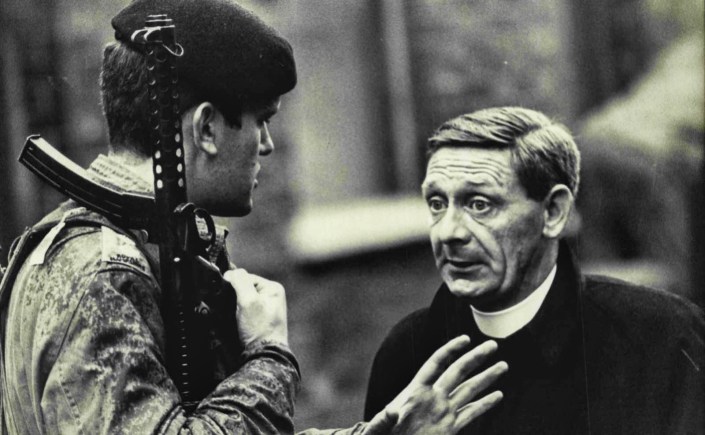
By the 1960s, inspired partly by global civil rights movements, Northern Irish Catholics began peaceful campaigns for equal voting rights, fair housing, and an end to discriminatory practices. The response from elements within the Protestant community and the security apparatus was defensive, sometimes violent. Marches were attacked. The police (RUC), largely Protestant, were perceived as partisan. In 1969, serious sectarian rioting broke out; the British Army was deployed initially as peacekeeper. Very quickly, it became another protagonist.

From there, the Troubles crystallised: Provisional IRA campaigns against British presence and unionist authority; loyalist paramilitary violence against Catholics; tit-for-tat bombings, assassinations, internment without trial, Bloody Sunday (1972), hunger strikes (1981), urban segregation hardening into peace walls and psychological walls alike. Roughly 3,500 people died between the late 1960s and the Good Friday Agreement in 1998. That number, in global terms, is small. Its density in a small place was immense.

Which is why the Troubles cannot be reduced to simple binaries of coloniser and colonised, though that language has its place. The Ulster story is more entangled. Plantation created a settler community; centuries created a rooted one.

The Good Friday Agreement did not erase those centuries. It acknowledged them obliquely: consent as the principle of sovereignty; power-sharing between unionist and nationalist parties; recognition that identity in Northern Ireland could be British, Irish, or both. It was less a solution than a framework for managing disagreement without bloodshed.

And that, perhaps, is the long arc: from plantation to partition to power-sharing. Land engineered into loyalty. Religion hardened into political identity. Memory ritualised into grievance. Grievance institutionalised into governance. Governance resisted into violence. Violence exhausted into compromise.

History hardens. Families blur.

Memory, and the Theatre of Symbols

If history is the argument, memory is the costume in which it appears on stage.

In Ireland — and perhaps nowhere more intensely than in the North — the past does not lie quietly in archives. It walks. It marches. It drums. Specifically, the Lambeg drum is a large traditionally orange-painted drum, beaten with curved malacca canes brought out for  Unionist and the Orange Order’s street parades. Along with the bagpipes, it is one of the loudest acoustic instruments in the world, frequently reaching over 120 dB. Named for the village of  Lambeg it is commonly believed to have come to Ulster with the English settlers orvekse with the army of William of Orange during the Williamite war. Having its roots in 17th-century European military instruments, it was originally smaller. Traditionally it was accompanied by the shrill fife, a small transverse flute similar to the piccolo – and sometimes irreverently referred to as the Audi Orange Flute.

Oliver Cromwell is not merely a seventeenth-century general and dictator; he is a moral shorthand. For Catholics, his name condenses siege, massacre, confiscation – Drogheda and Wexford becoming synecdoche for atrocity itself. “To Hell or to Connacht” may not survive scholarly cross-examination as a verbatim decree, but as memory it requires no footnote. It signals dispossession. It names a wound. Invoke Cromwell and one need not rehearse the details; the symbol carries the freight.

William of Orange – King William III – King Billy – performs a parallel function on the other side of the ledger. Astride his white horse at the Boyne, he is less a Dutch Protestant prince than a guarantor of survival. The Battle of the Boyne (1690) was, in European terms, a minor theatre in a wider war. In Ulster, it became sacrament. Each Twelfth of July, sashes are worn, drums beaten, banners unfurled – if through or adjacent to Catholic areas, so much the better – not to refight the battle but to rehearse belonging and dominion.The Orange Lodge is both fraternal society and mnemonic device. Its rituals keep memory warm. Its parades trace routes that are never neutral, geography turned into catechism.

Thus Oliver Cromwell and King Billy face each other across centuries like bookends of grievance – one representing conquest, the other deliverance –  though each is also more complicated than the emblem allows.

Move forward, and symbolism thickens.

The War of Independence (1919–21) and the Civil War (1922–23) fractured Irish nationalism itself. Partition in 1922 was not only a constitutional arrangement; it was an emotional amputation. For nationalists in the North, the new border confirmed abandonment and unfinished struggle. For unionists, it secured a state in which they would not be submerged. The same act – partition – functioned simultaneously as betrayal and salvation.

Martyrs followed. The executed leaders of 1916. The hunger strikers of 1981, their faces rendered in mural form, eyes large and unsurrendered. Martyrdom, in Ireland, has rarely required embellishment; death itself supplies the poetry. Funerals render it local – masked men in military dress fire shots into the damp airship air. Graves become pilgrimage sites. Names become incantation. Commemoration ceremonies bind past sacrifice to present purpose, as if history were an unfinished sentence demanding completion.

And always, the Protestant marches. The Twelfth of July. Apprentice Boys in Londonderry – a name that changes with  one’s allegiance. Even the name of the city is a declaration. The ancient Derry” gestures toward Gaelic continuity; “Londonderry” toward plantation charter and imperial connection. To choose a word is to choose a side. Language itself becomes boundary wall.

In 1969, the Bogside in Derry turned symbolic geography into lived confrontation. “You Are Now Entering Free Derry” was not merely graffiti; it was a claim to moral and territorial autonomy. The walls and wire that later cut through Belfast –  peace walls, they are called, with a certain exhausted irony –  materialised distrust in concrete and corrugated steel. They were defensive architecture, but also mnemonic devices. Every barrier says: remember.

And then the murals.

On the Falls Road and the Shankill, gable walls became galleries of memory. Masked volunteers with rifles. King Billy crossing the Boyne. Bobby Sands’ thin, resolute face. The Red Hand of Ulster. Palestinian flags in nationalist districts; Israeli flags in loyalist ones – global conflicts borrowed to refract local identity. These images are not random decoration. They are narrative shorthand, pedagogy in paint. Children grow up under them. They learn who they are by the stories on the wall.

Symbolism, of course, simplifies. It flattens ambiguities into heroes and villains, saints and tyrants. Cromwell the monster. King Billy the saviour. The hunger striker the pure martyr. The volunteer the defender of the realm. Real history is messier: Cromwell was brutal and also a product of his century’s ferocities; William’s victory secured Protestant liberties while entrenching Catholic subordination; the independence struggle produced both liberation and internecine slaughter. But symbols do not trade in nuance. They trade in clarity.

Yet the Good Friday Agreement, too, is a symbol – though a quieter one. No horse. No musket. No mural of triumphant death. Its symbolism is procedural: consent, parity of esteem, power-sharing. It offers not a martyr but a mechanism. Its genius is almost anti-theatrical. It asks people to live with ambiguity rather than resolve it in blood.

And so Northern Ireland today remains a place where the past is both curated and contested. Bonfires blaze each July; wreaths are laid each Easter; murals are repainted; walls still stand, though some have gates that open by day. Memory has not faded. It has been domesticated, partially, into ritual rather than riot.

Perhaps that is the final paradox. Symbols once mobilised for war now coexist within a fragile peace. The same banners flutter, but fewer guns answer them. The same songs are sung, but often as heritage rather than summons.

History argues. Memory performs.

And in Ulster –  and in the bloodlines that carry it beyond Ulster — the stage is never entirely dismantled.

What have I now?” said the fine old woman
“What have I now?” this proud old woman did say
“I have four green fields, one of them’s in bondage
In stranger’s hands, that tried to take it from me
But my sons have sons, as brave as were their fathers
My fourth green field will bloom once again” said she
Tommy Makem

Personal Reflection

For me, this is not abstract history. My own lineage embodies that braid: Scottish Protestant migration on one side, Irish Catholic inheritance on the other – far from Belfast or Derry, those threads met in my family; I grew up carrying both memories, the power of both histories.

When I watch film footage or view pictures of Orange parades and civil rights marches, of explosions, street riots and military manoeuvres, of walls and murals, I am not a casual onlooker viewing a “quarrel in a far-away country between people of whom we know nothing”, to borrow Neville Chamberlain’s fateful words. I feel weight of dual inheritance. Scottish Presbyterian settlers on one side, Irish Catholic dispossessed on the other –  both lineages threading through my own family, colliding and entwining in Birmingham, far from the streets of Belfast or Derry.

I grew up knowing these histories not as abstractions but as intimations, as stories that shaped who I was. Though vicariously, I feel the pull of both pasts –  the grievance and the survival, the displacement and the rootedness. Perhaps that is the quiet hope: that memory, with all its violence and ritual, can also be inherited as empathy, that symbols can teach not just fear, but recognition; that families, however braided by history, can live in the space between suffering and reconciliation.

This short history of The Troubles was largely written by an AI language model as an explainer first and foremost, and not as an opinion piece. 

Read more on The Troubles in In That Howling Infinite in Free Derry and the battle of the Bogside: and on Irish history, Mo Ghile Mear – Irish myth and melody, The Boys of Wexford – memory and memoir and O’Donnell Abú – the Red Earl and history in a song 

Dreaming in the night, I saw a land where no man had to fight
Waking in your dawn, I saw you crying in the morning light
Lying where the Falcons fly, they twist and turn all in you e’er blue sky
Living on your western shore, saw summer sunsets asked for more
I stood by your Atlantic sea and I sang a song for Ireland
June and Phil McLough

Postscript … from Blood and Brick … a world of walls

In Belfast, the capital of Northern Ireland, there are imposing walls that have actually stood longer than that in Berlin. Now called the the Peace Walls, they were first erected by the British army in 1969. They were temporary affairs of corrugated iron, as the inter-community conflict solidified and ossified, they were soon extended and upgraded to bricks, steel and concrete. The walls separated predominantly Protestant loyalist and Catholic nationalist enclaves throughout The Troubles, the three decades of bombings, murders, riots and civil-rights protests.

Though not all linked, 38 kilometres of walls still slice through the city, outliving the conflict that engendered them. Only some short sections have been removed – partly they’ve become a tourist attraction, while the communities that live closest to them say they still provide a sense of security – though tensions may have eased, people are easily divided and it’s much harder to bring them together again. In the Shankill and Falls roads area of western Belfast, which were particularly notorious during The Troubles, the wall is splattered with political messaging, which makes it easy to know which side you’re on. One side has portraits of British soldiers and the queen and kerbs are painted red, white and blue. On the other the colours of the Irish flag predominate, framing portraits of Republican heroes and hunger-strike martyrs.

Belfast’s Peace Wall
Blood and Brick … a world of walls

The quality of mercy … looking beyond Iran’s ghost republic

The quality of mercy is not strained;
It droppeth as the gentle rain from heaven
Upon the place beneath. It is twice blest;
It blesseth him that gives and him that takes.
William Shakespeare, The Merchant of Venice

Whilst most media commentary focuses on questions like “will it be any different this time?”, “will outside incitement or intervention actually work?” , and “who can or will replace the current regime?”, this article by Unherd’s Us editor Sohrab Ahmari, and the comments thereon go variously beyond, behind, or beneath, to consider the potential, if any, for those famous “bright sunny uplands” that Churchill foresaw at the end of mortal strife. A précis follows, and also, a discussion of past, recent and contemporary efforts to realise the quality of mercy.

Beyond Iran’s Ghost Republic 

What persists, for now, is a ghost regime: a sad remnant of the last of the great modern revolutions that, like some apparition in a haunted house, is condemned to remain at the scene of its own demise …The Islamic Republic clamoured so much for death, sweet and glorious death, it lost sight of the basics of life: bread, water, electricity. Ghosts don’t need such things, but people do
Sohrab Ahmari, Unherd, 8 January 2026

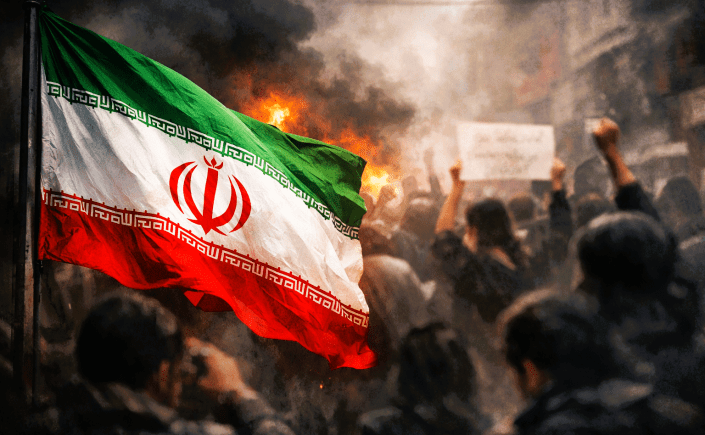
Most media attention on Iran’s latest unrest fixes on the usual coordinates: will this time be any different from 1999, 2009, 2017, or 2022? Will foreign powers, quietly nudging or overtly intervening, succeed where the street protests have failed? And, inevitably, who might step into the vacuum should the current regime falter? These questions, while immediate and superficially urgent, only scratch the surface. Beneath them lies a far subtler and, perhaps, more consequential inquiry: what kind of life, if any, might the Iranian people permit themselves once the machinery of coercion is loosened? Where, if anywhere, are the “bright sunny uplands” that journalists, analysts, and policymakers treat as both metaphorical and material destinations?

The Islamic Republic has already, in practical terms, collapsed into a ghost. Its proxies lie defanged, its currency teeters toward ruin, and the strictures of ideological policing have been quietly suspended in many cities. It clings to slogans, chants, and ceremonial gestures – Death to Israel! Death to the Great Satan! –  long after the infrastructure, credibility, and political capital to back them have evaporated. Ghosts do not need electricity, or potable water, or functioning hospitals, but living people do. And the contrast between the familiar deprivation of Tehran and the gleaming towers, highways, and shopping malls of Istanbul, Dubai, and Riyadh is almost unbearable: the regime sold transcendence and martyrdom, but delivered only rationed life, graft, and perpetual economic anxiety.

Yet a collapse of the state apparatus does not automatically produce moral renewal. This is where both the film It Was Just an Accident and the commentary converge. The plot of Jafar Panahi’s latest work stages a moral test familiar to anyone who has witnessed, read, or lived through the aftermath of institutionalized terror: a man who suffered under the regime confronts a former torturer. The temptation to exact revenge – to allow history’s pain to be paid back in equal or greater measure – is immediate and compelling. Some characters urge restraint, others insist that justice without retribution is an idle abstraction. The film’s tension mirrors a larger societal question: can a people accustomed to cycles of repression, humiliation, and ideological fervour imagine a life beyond revenge, beyond the simple arithmetic of punishment and vengeance?

The comments on Ahmari’s article highlight the same moral and civic dimensions. Several voices underscore a paradox that no headline can capture: the Islamic Republic’s obsession with death and martyrdom was not merely symbolic; it was infrastructurally catastrophic. Water systems were ignored, electricity grids left to decay, the economy warped around fantasies of resistance and martyrdom. Yet, this same absolutist, apocalyptic impulse is not unique to Iran. As some observers wryly note, the West is not immune to ideologies that glorify moral purity and abstract heroism at the expense of lived reality. Certainty, as one commentator put it, often replaces curiosity; neat explanations flatter intelligence and virtue, while obscuring the messy work of sustaining life.

History offers uncomfortably blunt lessons. After the Khmer Rouge, Cambodia did not attempt exhaustive justice; it largely absorbed foot soldiers back into ordinary life, relying on a rough amnesty and the communal refusal of vengeance.   This might be Iran’s imagined future: to survive and flourish, ordinary citizens may need to exercise a similarly imperfect, sometimes clumsy, forgiveness. And yet the impulse to retribution is alive and articulate: Hamid in Panahi’s film embodies the argument that the fanatics who ran the Islamic Republic had no regard for life, and must be repaid in like coin.

Here, we converge on a truth both grim and hopeful: Iran’s fate will not be determined by foreign powers, strikes, or special forces. The country’s reckoning cannot be outsourced. The only way to allow the blood to run dry, to create the possibility –  however tenuous – of “bright sunny uplands,” is through an internal moral negotiation: a willingness to forgive, to rebuild, to live with one another despite the weight of memory and injustice. Forgiveness, in this context, is not an ideal; it is a strategic, civic, and existential necessity. Anything else risks a continuation of cycles that have already brought the country to the nadir described in headlines, film, and commentary alike.

The wider reflection, then, is less about predicting the regime’s fall than understanding the texture of human life that might emerge afterward. If Iranian society cannot cultivate mechanisms for restraint, empathy, and imperfect justice, then the collapse of the ghostly structures of the Islamic Republic will be little more than a ceremonial end to one cycle of totalising politics – ready to be replaced by another. Yet, if these “bright sunny uplands” are glimpsed, they will be the product not of weapons, tweets, or sanctions, but of courage, patience, and the audacious, often maddeningly slow, work of ordinary humans learning to forgive. In that possibility – fragile, improbable, and entirely human –  lies the truer story of Iran, past, present, and perhaps future.

Forgiveness and the Possibility of Civic Renewal

Forgiving is not forgetting; it’s actually remembering –  remembering and not using your right to hit back. It’s a second chance for a new beginning. And the remembering part is particularly important. Especially if you don’t want to repeat what happened.
Attributed to South African Bishop Desmond Tutu

When societies emerge from cycles of repression, violence, and ideological zeal, the first question is often: who will exact justice? Who will punish, and who will pay? Yet history and moral reflection suggest that the question of revenge is only the beginning. More crucial is the question of forgiveness: whether communities traumatized by systemic harm can find a way to release the past, preserve dignity, and allow life to take root. Iran, in the aftermath of decades of ideological extremism, structural neglect, and repeated cycles of protest and repression, faces precisely this moral crossroads.

Desmond Tutu, whose work with South Africa’s Truth and Reconciliation Commission helped a nation emerge from the moral abyss of apartheid, offers a clarifying lens. He reminds us that forgiveness is not weakness, nor a cover-up, nor the erasure of injustice. “To forgive is not just to be altruistic; it is the best form of self-interest,” he said. “If you can find it in yourself to forgive, then you are no longer chained to the perpetrator.” Forgiveness, in this sense, liberates the victim as much as it addresses the harm done. It is a deliberate, often risky act that preserves dignity, confronts wrongdoing honestly, and opens space for a new civic beginning. True reconciliation, Tutu insists, does not soften the truth: “Superficial reconciliation can bring only superficial healing. True reconciliation exposes the awfulness, the abuse, the hurt, the truth.” Forgiving does not mean forgetting; it is remembering without exercising the right to strike back, allowing life to continue without being perpetually tethered to past harm.

Archbishop Desmond Tutu 1931-21

The necessity of forgiveness becomes clearer when we look beyond Iran to societies that have struggled with similar dilemmas. South Africa’s post-apartheid transition, Northern Ireland’s gradual peace after the Troubles, and the painstaking reconciliation efforts in postwar Bosnia demonstrate that societies can arrest cycles of revenge when moral courage is coupled with institutional frameworks. Mechanisms such as truth commissions, negotiated agreements, or cultural rituals allow communities to confront trauma without succumbing to vengeance.

In South Africa, perpetrators were not erased from memory, but acknowledging harm, offering testimony, and sometimes asking for forgiveness created a space in which ordinary life could resume without blood-soaked reprisals. In Northern Ireland, decades of sectarian violence required not only formal accords like the Good Friday Agreement but persistent civic labor, everyday compromises, and the cultivation of mutual recognition across communities. Peace did not arrive because conflict ended; it arrived because people, institutions, and leaders collectively committed to the moral and civic work of restraint, remembrance, and imperfect forgiveness. Bosnia, by contrast, demonstrates how fragile such processes can be: tribunals, localized reconciliation projects, and political compromises made progress possible, but resentment and mistrust lingered for decades.

The lesson is that the labor of forgiveness is painstaking, morally taxing, and never complete; it requires social frameworks, cultural patience, and individual courage.

Other contemporary crises provide a darker counterpoint. Syria, ravaged by civil war, sectarian fragmentation, and foreign intervention, shows how cycles of violence can ossify when forgiveness is absent and survival becomes the primary moral calculus. Gaza and the Palestinian territories, trapped in occupation, blockade, and repeated military incursions, reveal how structural oppression perpetuates the need for revenge, making reconciliation seem both urgent and impossible. Myanmar and Sudan illustrate what happens when accountability fails entirely: persecution, displacement, and entrenched cycles of terror prevent civic life from taking root, leaving ordinary people imprisoned by histories they cannot escape.

In the Iranian context, the challenge is both urgent and intimate. A society habituated to ideological terror and systemic neglect faces a moral crossroads: the temptation of revenge is immediate, visceral, and understandable, but it risks reproducing the very cycles of harm that have brought the country to its present nadir. Panahi’s film It Was Just an Accident dramatizes this dilemma: victims confront their former torturer and wrestle with the question of retribution versus restraint. It is a moral negotiation that mirrors the broader societal question. True recovery cannot be imposed from the outside; no foreign military, sanctions regime, or spectacular intervention can replace the painstaking, often agonizing internal work that forgiveness demands.

Tutu’s reflections provide a moral compass for this work. Forgiveness is neither altruistic fantasy nor moral softening; it is self-liberating, dignity-affirming, and socially generative. “When we see others as the enemy, we risk becoming what we hate. When we oppress others, we end up oppressing ourselves. All of our humanity is dependent upon recognizing the humanity in others.” For Iran, the stakes of this insight are enormous. The collapse of the regime, already a ghost of its former ideological self, creates the space for moral and civic imagination, but it is up to the Iranian people whether that space becomes a playground for revenge or a canvas for rebuilding.

Viewed comparatively, Iran’s predicament is neither unique nor exceptional. Across South Africa, Northern Ireland, Bosnia, Syria, Gaza, Myanmar, and Sudan, we see the same pattern: cycles of violence thrive when forgiveness is absent and collapse is coupled with fear, trauma, and structural weakness. Yet the examples of South Africa and Northern Ireland also offer hope. Even societies deeply scarred by ideology and systemic harm can, through deliberate moral labor, cultivate restraint, empathy, and civic imagination. The “bright sunny uplands” are not gifts of fortune or foreign intervention; they are the product of human choice, moral courage, and the willingness – however faltering and tentative –  to forgive, remember, and begin again.

For Iran, the possibility of civic renewal rests on this moral labor. To forgive is to free oneself from the chains of the past, to preserve human dignity, and to allow ordinary life – bread, water, work, community – to flourish once more. It is difficult, risky, and imperfect work, but it is the only path to a society that can move beyond the cycles of ideological terror, revenge, and ruin. In choosing forgiveness, Iranians do not erase the horrors of the past; they confront them honestly, remember them fully, and, in so doing, claim a future that is no longer dictated by blood, fear, or vengeance.

For more on the Middle East in In That Howling Infinite, see A Middle East Miscellany, Messing with the Mullahs – America’s phoney war? and “Because of …” Iran’s voice of freedom

The cycle of revenge. Iranians must learn to forgive

Iran’s cycle of revenge

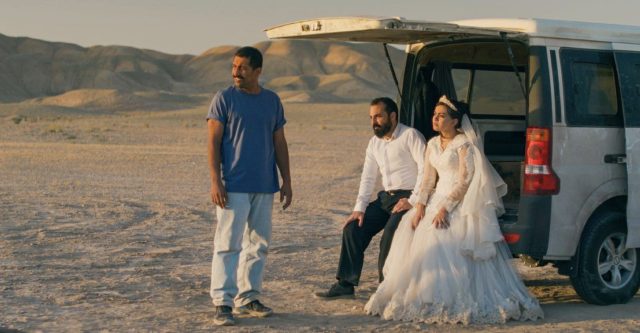
A still from the film ‘It was Just an Accident,’ directed by Jafar Panahi. mk2 Films

Sohrab Ahmari, Unherd, 8 January 2026

It’s become a running joke on Iranian social media — screen captures of Western headlines regarding previous popular uprisings in the country that read: “This isn’t like previous protests in Iran.” The message is that this latest tumult spells the end of the Islamic Republic. Except those earlier headlines appeared in 1999, 2009, 2017, 2022. The storms of popular discontent raged and then dissipated, but the regime didn’t budge.

We are told that the current uprising, sparked initially by anger over inflation, is different. But contrary to expectations, we’re unlikely to see a spectacular end to the regime in the manner of the ouster of Ceaușescu or the fall of the Berlin Wall — the 1989 moment whose eternal return liberals the world over yearn for. No, there won’t be a spectacular collapse, because the Islamic Republic of Iran has, in a sense, already fallen.

Its Arab proxies are defanged. Its nuclear program is partially buried under President Trump’s bunker busters. Its currency is reaching Zimbabwean levels. And it has largely given up enforcing its hijab and other Shiite morality norms in many urban centers. A much more likely ending is one in which more nationalist elements within the current regime take over, with or without a little push by outside powers.

What persists, for now, is a ghost regime: a sad remnant of the last of the great modern revolutions that, like some apparition in a haunted house, is condemned to remain at the scene of its own demise, faintly repeating the slogans of its former vitality, wondering if anyone still cares. Death to Israel! Death to the enemies of the jurisconsult! Death to the Great Satan!

The Islamic Republic clamored so much for death, sweet and glorious death, it lost sight of the basics of life: bread, water, electricity. . . . Ghosts don’t need such things, but people do. Especially people who look around at the likes of Turkey, the United Arab Emirates, and Saudi Arabia, and behold gleaming prosperity, rising living standards, normality. Their own lot, meanwhile, is defined by diminished expectations, massive graft, and life and treasure wasted on building an arc of “resistance” against the Jewish state that was destroyed in a matter of months.

Against this haunted backdrop, it’s up to the Iranian people to decide, now, how they want to live together, and with their region and the world. Will they forgive each other? Or repeat the cycle of totalizing politics, repression, and revenge that brought them to their current nadir in the first place? As it happens, Iran’s greatest living director, Jafar Panahi, addresses these questions in his latest film, It Was Just an Accident, which hit the screen in major cities just as the latest unrest began.

A taut thriller in the style of Jean-Pierre Melville, the film tells the story of Vahid (Vahid Mobasseri in a quietly stunning performance), a worker who happens upon, and kidnaps, Eghbal (Ebrahim Azizi), the intelligence officer who’d tortured him when Vahid joined a labor strike over unpaid wages.

Vahid is about to bury Eghbal in the middle of the desert when he’s gripped by doubt. The real Eghbal had lost a leg fighting in the Syrian Civil War. But the man in the shallow grave insists that his prosthetic leg — whose squeaking sound led Vahid to believe he’d found his erstwhile torturer — is a recent addition. What if he’s got the wrong man? What if he’s about to murder an innocent? This simple doubt becomes the driving force of the film’s plot.

Vahid reunites with a fellow prisoner — Salar, a dissident intellectual — who urges him to free Eghbal, or whoever he is. “This business doesn’t have an ending,” Salar warns Vahid. This could mean that Vahid could face real-world consequences. But it also suggests that the blood in Iran will never run dry if people continually seek revenge. Vahid isn’t convinced. He’s lost everything to the regime Eghbal represents, and he’s bent on making him pay.

Salar refuses to help directly, but he introduces Vahid to a photographer, Shiva, who was also imprisoned for her political activities and tortured by Eghbal. Other former prisoners soon join the group. One of them, Hamid (Mohammad Ali Elyasmehr), instantly identifies the man in Vahid’s van as their torturer (by his smell) and thrills at the thought of inflicting suffering and death upon Eghbal.

Others are more hesitant, partly out of the same doubt that initially stays Vahid’s hand, but partly over deeper qualms: Will torturing and murdering a killer improve anything? No, Shiva and others begin to think. But Hamid is adamant, and it’s notable that while the rest of them are professional-class types who’ve landed on their feet, he’s been less fortunate (and, the film suggests, he was something of a loser even before his prison stint).

Thus unfolds the unlikely moral and philosophical debate folded into the film’s thriller script — a debate that confronts many ordinary Iranians opposed to the Islamic regime. Panahi, to his credit, gives Hamid a decent chance to make his case: to wit, the fanatics who run the Islamic Republic have no regard for the lives they ruin, and anything short of a willingness to act politically — in the Schmittian, friend-enemy sense of the term — is just playing around.

But in the end, the other side “wins” the debate. The kidnapped man’s phone rings. It’s his daughter, crying for her father to come home because her pregnant mother is unresponsive. The gang treks over to his house and drives mother and child to the hospital, where the baby is safely delivered. The group even pools cash to tip the nurses, as custom demands.

Only afterward is it revealed that — spoiler alert — the man in the van really is the torturer who’d subjected them to dozens of mock executions; who’d beaten Vahid so badly, he’s developed kidney problems; who threatened to rape the women before killing them (since, under Shariah law, virgins go straight to paradise).

I won’t spoil more of the plot. What matters is that the Hamid temptation — let us torture the former torturers, execute the executioners — is all too real, and it can derail whatever comes next into another national dead-end. No foreign intervention and no Trumpian Delta Force can save Iran from that outcome. It is up to Iranians themselves to forgive each other, and finally permit the blood to run dry.

Sohrab Ahmari is the US editor of UnHerd and the author, most recently, of Tyranny, Inc: How Private Power Crushed American Liberty — and What To Do About I