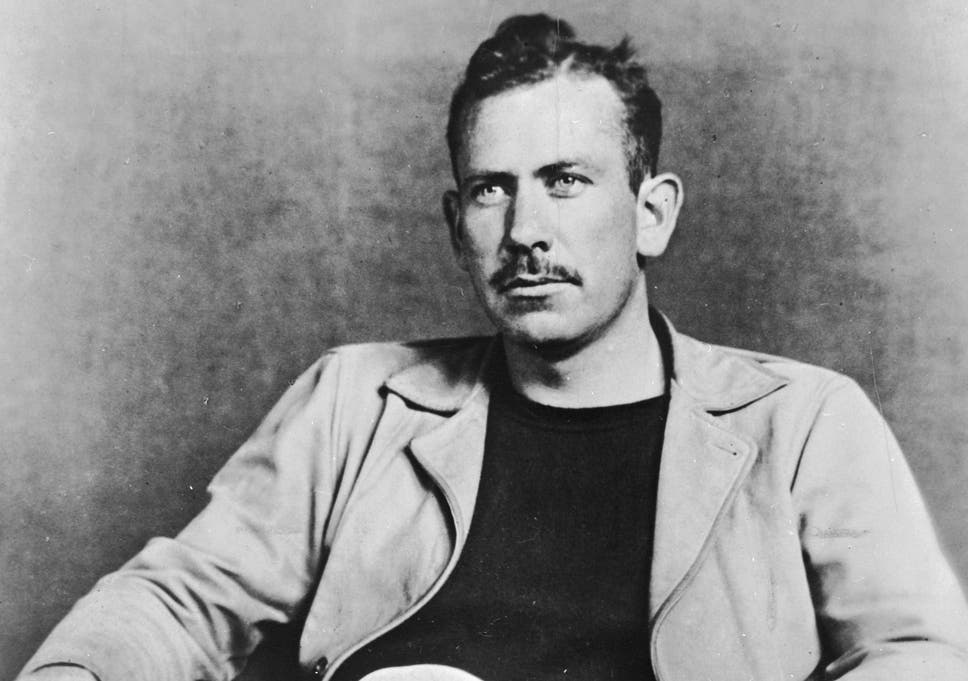
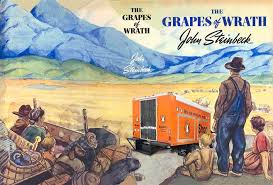
Better read than dead … where have all the big books gone?

The big books. The ambitious books, the life-changing books, the long books, the time-consuming books, the dense books. Not the “classics” because classics aren’t necessarily big and big isn’t necessarily classic (whatever that means, anyway) but the important books our culture used to produce but, today, we rarely see on bookshelves, where have they gone?

My mother used to tell me I was reading almost as soon as I could walk, and I was enrolled in libraries at an early age. In my lifetime, I’ve probably gone through tens of thousands of books of all sizes and genres. Now in my twilight years, though I still I love reading books, I would no longer regard reading as a hobby like I would be in the past, and I do not consume as many books as I did in earlier days. I often feel that I have lost the appetite for “big books” – big in the dimension and the number of pages, but not in the sense of scope and content and the literary reputation of the author. Back in day, I would tackle both the size and the sensibility of books with alacrity and and excitement, eager as I was then for knowledge and insight – those lengthy, complicated, and yes, ambitious, life-changing and time-consuming books that novelist Steve Orr name-checks in the opinion piece republished below.

As for those “big books”, I started early. Grammar School curricula mandated “set books” from the “canon” of English literature. William Shakespeare and Charles Dickens, of course, and also, among others, Christopher Marlowe, Geoffrey Chaucer, Oscar Wilde, GB Shaw, and John Steinbeck. Although we deep-dived into specific books, we were encouraged to read their other works, and more besides. So, I came to know The Iliad, The Odyssey and The Aenead, and also the French ‘greats’ Alexander Dumas and Victor Hugo. I can’t recall how I came to discover Mikhail Sholokov’s dramatic tales of the Don Cossacks, but they gave me a fascination with Russian history that has endured to this day, and introduced me to the Russian Revolution and Civil War – and socialism (see The Russian Tradition – Russia, Ukraine and Tibor Szamuely and other pieces).

During my university years, few non-fiction works of note come to mind though I’m sure I’d have read a few – including all three books of Tolkien’s trilogy which I binged on over one cold and rainy English weekend in Reading. Three years later, whilst traveling the celebrated Hippie Trail to India and back, I’d pick up random tomes in hotels and doss houses along the road. It was between Kashmir and Istanbul, I met James Joyce’s Leopold Bloom and Dostoevsky’s melancholy Prince Mishkin.

Moving to London in the early seventies, I spent hours traveling back and forth on the London Underground – always with a good book in hand. I went through phases. The Russian canon of Tolstoy, Dostoevsky, Pasternak, and Solzhenitsyn, all angst and agony, suited me well in my restless years. When my mood changed from melancholy to mellow, from the blues to the bucolic, I worked through all of Thomas Hardy’s tales of rural England, and discovered that Rudyard Kipling was much, much more than Mowgli. I encountered Milton’s fallen angel ( see Lucifer Descending … encounters with the morning star) whilst Don Quixote and Captain Ahab gave me a good literary workout. The name of this blog is taken from Moby-Dick. Meanwhile, the current best-seller lists provided many worthy reads.

Through the eighties and nineties, I would have several books on the go and would plough through several works of fiction and non-fiction each month. With the onset of the internet and the social media age, my decades long passion for history and politics superseded my fondness for a good book or two as I dedicated more of my leisure hours to news media and on-line feeds. The acquisition of an iPad in 2011 accelerated the demise of the actual printed word. I have never, however, read an e-book, and probably never will, and I buy books still, including several I would argue fitted Orr’s criteria of “big” – particularly CE Morgan’s “great American novel” The Sport of Kings and Hilary Mantel’s Wolf Hall trilogy. But since retiring to the bush, my reading capacity is down to a book every one or two months, depending in on its size.

Orr’s piece reminded me of my once prevailing but receding passion for the tangible printed word, providing not so much an obituary to the “big books” but a wake-up call.

“Maybe it’s time to commit”, he writes, “Maybe it’s time to (re-)rewire our brains to work in years, months, instead of fractions of seconds. Maybe it’s time to stop saying, “I’ll wait for the movie”. Maybe it’s time to admit we all have a little of Ahab’s obsession, Humbert’s lustings – maybe there’s a bit of Christian Stead’s controlling Sam Pollit in all us’.

“In short’, he concludes, “maybe we are the book and the book is us. Let’s admit, as Stead did when writing The Man Who Loved Children, the best way to exorcise the past is to write (and read) about it. This, as it turns out, isn’t a desirable but a necessary thing. Shall we admit, in the end, the questions the big books pose no longer interest us because we no longer interest ourselves?”

Postscript

From Better read than dead – are books the footprints from our past?

Last year, I jettisoned half of a book collection I’d accumulated over sixty years, more went this year – books that had followed me as I moved from Birmingham to Reading to London in the sixties and seventies, migrated to Australia, and moved from house to house in Sydney and finally settled in the midst of a forest in northern New South Wales.

Out went books of all formats and genres. Mementos of former passions and fashions. Relics of past courses and careers. Old school textbooks, university texts, fiction, nonfiction, dictionaries, coffee table books. I’d worked for years in publishing, so the complimentary copies alone were colossal..

I’d already culled boxes of books a decade ago when we’d last moved house and home, and this time, I was determined to downsize further. My primary criteria was that if I hadn’t looked inside the covers of a book for twenty, thirty, fifty years, then I wasn’t likely to do so in the next five, ten, twenty years I have left on this planet.

Nevertheless, I kept back five full shelves Books of poetry, some of them a century old. All-time favourite novels, including the iconic Russians, Hardy, Herbert and Heinlein. Non-fiction histories I regard with particular nostalgia or think might be of use again one day. Books about music and musicians, particularly the Beatles and the Bobster. Recent purchases. And, books I consider “rare” – a subjective descriptor that I can only explain as old books which I picked up in secondhand bookshops when I lived in London in the sixties and seventies. Some, I reckon, are actually rare!

For more on books and reading in In That Howling Infinite, see Better Read Than Dead – the joy of public libraries

Where have all the big books gone?

The big books. The ambitious books, the life-changing books, the long books, the time-consuming books, the dense books. Not the “classics” because classics aren’t necessarily big and big isn’t necessarily classic (whatever that means, anyway) but the important books our culture used to produce but, today, we rarely see on bookshelves, where have they gone?

Why aren’t (many) people writing them? And more importantly, why aren’t people reading them?

This is a not a new concern. Charles Bukowski in 1990 asked: “… well, where are they?/ the Hemingways, the T.S. Eliots, the Pounds … dead, I know/ but where are the re-/ placements, where are the new/ others?’

Poet and writer Charles Bukowski.

Poet and writer Charles Bukowski.

What was a casual question back then seems to have a new ­urgency now.

There are lots of reasons, and I’d like to explore some of them here. I suspect technology, in its various forms, is taking over the jobs we used to trust our brains to do: critical thinking, imagination, reasoning and speech and (civilised) argument and social intercourse at a personal and public level. We say, “Oh, well, I’m too busy to tackle Anna Karenina,” then pick up our phone to check the latest tweet.

We don’t value time in the same way we used to – slow, precious, filled with good smells and sounds and ideas and meaningful things. We’re happy to waste time. Like, surely, we’ll get it back? We’re happy to fill the gap with more technology, updated phones and watches. And the result? We’ve become lazy, and lonely. We’ve privatised our inner spaces, sold off our opinions, let someone else make Pixar and Marvel dreams for us. And worse, for too many people now, everything’s about money. We’ve shat on our curiosity, given up on the daily awe that came from sensing our place in nature, the consolations and compromises that made civilisation possible, and pleasant. The result? Each new generation bleeding out its limited reserves of empathy, understanding and wisdom.

Readers seem hung up on plot. Easy plots. Familiar plots. Plots that come from and return to a screen. Problem being, the big books are about big characters: Miss Havisham, Elizabeth Hunter, Captain Ahab, Tom Joad. It takes time to build up a complex, flawed life on a page, each verb and adjective competing for the smallest breath and bit of meaning. Even when contemporary writers have a crack, readers falter, stray, give up. There’s something easier, more immediate to hand. Something involving the discovery of a body on a beach and working out how it go there. Harold Bloom: “I am not unique in my elegiac sadness at watching reading die, in the era that celebrates Stephen King and J.K. Rowling rather than Charles Dickens and Lewis Carroll.”

Ironically, it’s the loss of critics like Bloom that’s allowed the problem to fester. The loss of literary criticism generally, space in newspapers, reviews themselves (ironically, surviving in 50-word online grabs where they’re easily ignored).

Today, there are fewer places to publish extracts, to make meandering explorations that interrogate context, subtext, the way authors’ lives morph onto the page, how we needn’t make the mistakes of the past, how too many of our views are founded on faulty assumptions.

All of this might seem ho-hum: “It’s a shame but, you know, the world’s changing.”

If it wasn’t for what we risked losing. That is, the understanding of what it means to be a human on Earth, a human among millions who’ve lived and died with the same urges and joys and terrors and disappointments. How else to connect with the tribe of humanity that’s fallen through time’s long ruin? Bloom again: “We read deeply for various reasons, most of them familiar: that we cannot know enough people profoundly enough; that we need to know ourselves better.”

Keira Knightley in a scene from film Anna Karenina.

Keira Knightley in a scene from film Anna Karenina.

Or as Jonathan Franzen put it in How to Be Alone: “Readers and writers are united in their need for solitude … in their reach inward, via print, for a way out of loneliness.”

The very idea of reading deeply; of making connections in order to become better people (or at least remain sane, or maybe even happy). But now, visual seems to have won out over text; we have a poorer understanding of irony, sarcasm, the art of persuasion, voice, a well-turned sentence, the art of choosing the best word (even grammar, spelling); we can’t grasp complex sentences, let alone the formal language that glues so many big books together. In short, we’re out of practice. Kids grow up without books in the house, without reading role models (family, let alone politicians and public figures, having been replaced with sporty types). No one demands sustained reading and schools are too busy teaching “multi-modal” texts (more screens) while avoiding quality books lest they disadvantage non-readers. Meanwhile, the books that are read are short, plotish, weighed down with well-meaning but yawn-worthy attempts at solving the world’s problems. Despite schools’ mission to create readers, at the end of the day they leave more waiting for a bus that’ll never come. Apart from this, schools and universities are busy “de-colonising” bookshelves, removing Pip because (I suspect) the local gauleiter has never read Great Expectations. In short, there goes the Western canon. Anyway, chances are younger English teachers haven’t read much, or they’ve been co-opted from the geography department to make up the numbers.

And what about the writers? Bukowski: “I don’t ask for Dostoevsky, there’s no replacement for Feodor Mikhailovich. But these now, what are/ they: making their tiny splashes, what practiced ineptness, what boredom of language, what a/ crass bastardly trick against print against pages …”

The reasons are complex, but the outcomes clear: writers are no longer culturally important; big books are rarely produced by profit-driven publishers, therefore fewer are written, creating a self-fulfilling Coriolis effect of big books down little drains. But mostly, big books are hard to write. Think of Patrick White churning out an Eye of the Storm or Riders in the Chariot: a hundred thousand-plus handwritten words, typed up, corrected, typed again, “oxy-welded”, years and years of solid, thankless, grinding warfare with an Olivetti and the English language to produce a masterpiece that, even then, required a visionary ­publisher (Ben Huebsch) and well-read public to give it any chance at all.

And talking about the journey. Perhaps part of the problem is that we’ve lost interest in the journey on which writers can take us over our lives. From comics, to pre-franchised, pre-teen Tolkien, the discovery of Holden Caulfield, the oh-so-clever twenty-something Infinite Jest, then to something serious, Bolano, perhaps, and on and on it goes, the road less travelled that’s no longer travelled at all. And what have we lost? The unbroken chain of meaning from Homer to Dante, Chaucer to Shakespeare, to a 20th century profusion of styles that offered Joyce in the morning and Hesse in the afternoon.

For me, as a 12- or 13-year-old, it was Dickens. To think, someone had actually dreamed up Micawber and Betsey Trotwood! Without that narrative, that connection, how do we even know what we’re missing, or misunderstanding? Are we ready to give up the collective memory that, according to Italo Calvino, holds together “the imprint of the past and the plan for the future …”

Or is it simply that we no longer know how to be alone anymore? Bloom said it was all about finding a mind “more original than our own”. But now, we’re all creators, posting a hundred daily autobiographies on TikTok. Ironically, this seems to be leaving us more lonely than ever and, having withdrawn within ourselves, having discovered we’re bored with what’s being said and sung and tweeted, we can’t work out what’s next?

Maybe it’s time to commit. Maybe it’s time to (re-)rewire our brains to work in years, months, instead of fractions of seconds. Maybe it’s time to stop saying, “I’ll wait for the movie”. Maybe it’s time to admit we all have a little of Ahab’s obsession, Humbert’s lustings – maybe there’s a bit of Christian Stead’s controlling Sam Pollit in all us.

In short, maybe we are the book and the book is us. Let’s admit, as Stead did when writing The Man Who Loved Children, the best way to exorcise the past is to write (and read) about it. This, as it turns out, isn’t a desirable but a necessary thing. Shall we admit, in the end, the questions the big books pose no longer interest us because we no longer interest ourselves?

Stephen Orr is an award-winning novelist. He will be a guest at Adelaide Writers’ Week on Wednesday 5 March.

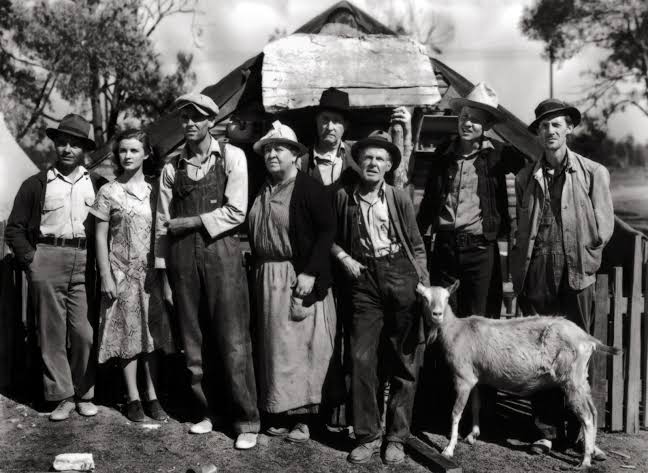
The last rains came gently – Steinbeck’s dustbowl ballad

The highway is alive tonight
Where it’s headed everybody knows
I’m sitting down here in the campfire light
With the ghost of old Tom Joad
Bruce Springsteen

In the last of our posts commemorating 1968, we pay tribute to author and Nobel Laureate John Steinbeck who died fifty years ago this month.

Back in the day, The Grapes of Wrath was included in our GCE A level curriculum, nearly thirty years after its publication and its iconic status. It was, to our formative minds, a pleasantly surprising choice. In the mid ‘sixties, before Vietnam became the quagmire that sapped America’s blood and treasure and trashed its post-war reputation as a force for good in the world, the land of the free and home of the brave was also was a beacon of bright consumerism, great movies, and pop music. The idea of an American novel in English Lit, so long the preserve of Britain’s literary canon, wonderful though it was, has a certain excitement to it. It gave to us a new literary language, a different sensibility, a fresh perspective.

But Steinbeck’s America was new to us, an America far removed from of the hope and glory that we’d been accustomed to in the years following what was seen as the US’ triumph in World War Two (the costly and critical contribution of the Soviet Union, now our ostensible foe, was singularly downplayed during these years). The Grapes of Wrath was a revelation, an eye-opener, a primer, indeed, for a youthful awareness and politicisation that would be further nurtured by the escalating war in Indochina and the rise and rise of the civil rights movement in the US. I am of the Left to this day …

The inevitable examination question in the summer 1967 was exactly that: why were studying an American novel? Any discerning reader taking in the opening pages of chapter one can answer this in a trice. The simple beauty, the lyrical and descriptive power, the gradual but relentlessly unfolding narrative is such that I can recite parts of it from memory over half a century later.

To the red country and part of the gray country of Oklahoma, the last rains came gently, and they did not cut the scarred earth. The plows crossed and recrossed the rivulet marks. The last rains lifted the corn quickly and scattered weed colonies and grass along the sides of the roads so that the gray country and the dark red country began to disappear under a green cover. In the last part of May the sky grew pale and the clouds that had hung in high puffs for so long in the spring were dissipated. The sun flared down on the growing corn day after day until a line of brown spread along the edge of each green bayonet. The clouds appeared, and went away, and in a while they did not try any more. The weeds grew darker green to protect themselves, and they did not spread any more. The surface of the earth crusted, a thin hard crust, and as the sky became pale, so the earth became pale, pink in the red country and white in the gray country.

I have reproduced chapter one in full below. In a few short pages, it describes how the the last rains fell on Oklahoma’s cornfields and how the searing summer sun rendered the land to dust, creating the dust bowl so chillingly portrayed by filmmaker Ken Burns in his singular documentary of that name, and propelling tens of thousands of destitute ‘Okies’ “on the long, hard road of flight” (as Bob Dylan would describe it in Chimes of Freedom)  to California. As a literary record of an unfolding environmental disaster, it is without equal.  It is poetical, powerful, and profoundly unsettling, and there’s worse to follow.

And then there is this:

The works of the roots of the vines, of the trees, must be destroyed to keep up the price, and this is the saddest, bitterest thing of all. Carloads of oranges dumped on the ground. The people came for miles to take the fruit, but this could not be. How would they buy oranges at twenty cents a dozen if they could drive out and pick them up? And men with hoses squirt kerosene on the oranges, and they are angry at the crime, angry at the people who have come to take the fruit. A million people hungry, needing the fruit- and kerosene sprayed over the golden mountains. And the smell of rot fills the country. Burn coffee for fuel in the ships. Burn corn to keep warm, it makes a hot fire. Dump potatoes in the rivers and place guards along the banks to keep the hungry people from fishing them out. Slaughter the pigs and bury them, and let the putrescence drip down into the earth.

There is a crime here that goes beyond denunciation. There is a sorrow here that weeping cannot symbolize. There is a failure here that topples all our success. The fertile earth, the straight tree rows, the sturdy trunks, and the ripe fruit. And children dying of pellagra must die because a profit cannot be taken from an orange. And coroners must fill in the certificate- died of malnutrition- because the food must rot, must be forced to rot. The people come with nets to fish for potatoes in the river, and the guards hold them back; they come in rattling cars to get the dumped oranges, but the kerosene is sprayed. And they stand still and watch the potatoes float by, listen to the screaming pigs being killed in a ditch and covered with quick-lime, watch the mountains of oranges slop down to a putrefying ooze; and in the eyes of the people there is the failure; and in the eyes of the hungry there is a growing wrath. In the souls of the people the grapes of wrath are filling and growing heavy, growing heavy for the vintage.”

There are few books that strike such a chord with me – books that I reread in whole or in part once in a while, often aloud, just for the verbal and lyrical thrill. Moby-Dick is such a one, Herman Melville’s classic treatise on seafaring, whales and obsession – from which this blog takes its name – particularly chapter forty one which brilliantly describes the demented and doomed sea captain’s descent into madness.

Whilst few writers can lay claim to have written the “great American novel”, Steinbeck and Melville cracked the code. My own personal contender would also be CE Morgan’s Sport of Kings, a long and deep story about a old Kentucky horse-breeding family – the “kings” of the title. Like The Grapes of Wrath, it is a harrowing journey through America’s dark soul. Morgan’s debt to Steinbeck  is transparent in her descriptive power.

Far across the road, cattle moaned with longing for a night coming in fits and starts. The air was restless and the crickets thrummed. The hot, humid breath of August was lifting now from the ground, where it had boiled all day, rising to meet the cooler streams of air that hovered over it. Airs kissed and stratified, whitening and thinning as the sun slipped its moorings and sank to the bank of the earth. 

Following the excerpt from The Grapes of Wrath, I republish an informative essay from The Independent with regard to a new biography of Steinbeck on the anniversary of his death. He was a gifted, complex and at times, unpleasant man. His stories of the lives of migrants and workers during US’ Great Depression, most notably in The Grapes of Wrath, and his short stories Cannery Row and Of Mice and Men, resonate today, prefiguring as they do the mass migration of populations due to climate changes, infrastructure collapse, the heartless hypocrisy of trickle-down economics, the reluctance and even refusal of the powers-that-be to help those cast by the wayside or onto the scrap-heap, and the demonisation of those are forced to take to the roads and oceans of the world in search of a better, safer life for themselves and their children.

In a 1952 radio interview, Steinbeck said:

“People were starving and cold and they came in their thousands to California. They met a people who were terrified of Depression and were horrified at the idea that great numbers of indigent people were being poured on them to be taken care of when there wasn’t much money about. They became angry at these newcomers. Gradually, through government and through the work of private citizens, agencies were set up to take care of these situations. Only then did the anger begin to decrease and when the anger decreased, these two sides got to know each other and they found they didn’t dislike each other at all.”

I recall Tom Joad’s parting words in the 1940 film adaptation when he leaves his family to fight for social and economic justice:

“You don’t aim to kill nobody, Tom?”
“No. I been thinkin’, long as I’m a outlaw anyways, maybe I could — Hell, I ain’t thought it out clear, Ma. Don’ worry me now. Don’ worry me.”
They sat silent in the coal-black cave of vines. Ma said, “How’m I gonna know ’bout you? They might kill ya an’ I wouldn’ know. They might hurt ya. How’m I gonna know?”
Tom laughed uneasily, “Well, maybe like Casy says, a fella ain’t got a soul of his own, but on’y a piece of a big one – an’ then -”
“Then what, Tom?”
“Then it don’ matter. Then I’ll be all aroun’ in the dark. I’ll be ever’where – wherever you look. Wherever they’s a fight so hungry people can eat, I’ll be there. Wherever they’s a cop beatin’ up a guy, I’ll be there. If Casy knowed, why, I’ll be in the way guys yell when they’re mad an’ — I’ll be in the way kids laugh when they’re hungry an’ they know supper’s ready. An’ when our folks eat the stuff they raise an’ live in the houses they build –  why, I’ll be there. See? God, I’m talkin’ like Casy. Comes of thinkin’ about him so much. Seems like I can see him sometimes.”

And now, let Steinbeck set the scene for why Tom Joad and his family abandon their farm, pile their possessions on on old truck and head into the west …


The Grapes of Wrath, Chapter One

To the red country and part of the gray country of Oklahoma, the last rains came gently, and they did not cut the scarred earth. The plows crossed and recrossed the rivulet marks. The last rains lifted the corn quickly and scattered weed colonies and grass along the sides of the roads so that the gray country and the dark red country began to disappear under a green cover. In the last part of May the sky grew pale and the clouds that had hung in high puffs for so long in the spring were dissipated. The sun flared down on the growing corn day after day until a line of brown spread along the edge of each green bayonet. The clouds appeared, and went away, and in a while they did not try any more. The weeds grew darker green to protect themselves, and they did not spread any more. The surface of the earth crusted, a thin hard crust, and as the sky became pale, so the earth became pale, pink in the red country and white in the gray country.

In the water-cut gullies the earth dusted down in dry little streams. Gophers and ant lions started small avalanches. And as the sharp sun struck day after day, the leaves of the young corn became less stiff and erect; they bent in a curve at first, and then, as the central ribs of strength grew weak, each leaf tilted downward. Then it was June, and the sun shone more fiercely. The brown lines on the corn leaves widened and moved in on the central ribs. The weeds frayed and edged back toward their roots. The air was thin and the sky more pale; and every day the earth paled.

In the roads where the teams moved, where the wheels milled the ground and the hooves of the horses beat the ground, the dirt crust broke and the dust formed. Every moving thing lifted the dust into the air: a walking man lifted a thin layer as high as his waist, and a wagon lifted the dust as high as the fence tops, and an automobile boiled a cloud behind it. The dust was long in settling back again.

When June was half gone, the big clouds moved up out of Texas and the Gulf, high heavy clouds, rainheads. The men in the fields looked up at the clouds and sniffed at them and held wet fingers up to sense the wind. And the horses were nervous while the clouds were up. The rainheads dropped a little spattering and hurried on to some other country. Behind them the sky was pale again and the sun flared. In the dust there were drop craters where the rain had fallen, and there were clean splashes on the corn, and that was all.

A gentle wind followed the rain clouds, driving them on northward, a wind that softly clashed the drying corn. A day went by and the wind increased, steady, unbroken by gusts. The dust from the roads fluffed up and spread out and fell on the weeds beside the fields, and fell into the fields a little way. Now the wind grew strong and hard and it worked at the rain crust in the corn fields. Little by little the sky was darkened by the mixing dust, and the wind felt over the earth, loosened the dust, and carried it away. The wind grew stronger. The rain crust broke and the dust lifted up out of the fields and drove gray plumes into the air like sluggish smoke. The corn threshed the wind and made a dry, rushing sound. The finest dust did not settle back to earth now, but disappeared into the darkening sky.

The wind grew stronger, whisked under stones, carried up straws and old leaves and even little clods, marking its course as it sailed across the fields. The air and the sky darkened and through them the sun shone redly, and there was a raw sting in the air. During a night the wind raced faster over the land, dug cunningly among the rootlets of the corn, and the corn fought the wind with its weakened leaves until the roots were freed by the prying wind and then each stalk settled wearily sideways toward the earth and pointed the direction of the wind.

The dawn came, but no day. In the gray sky a red sun appeared, a dim red circle that gave a little light, like dusk; and as that day advanced, the dusk slipped back toward darkness, and the wind cried and whimpered over the fallen corn.

Men and women huddled in their houses, and they tied handkerchiefs over their noses when they went out, and wore goggles to protect their eyes.

When the night came again it was black night, for the stars could not pierce the dust to get down, and the window lights could not even spread beyond their own yards now the dust was evenly mixed with the air, an emulsion of dust and air. Houses were shut tight, and cloth wedged around doors and windows, but the dust came in so thinly that it could not be seen in the air, and it settled like pollen on the chairs and tables, on the dishes. The people brushed it from their shoulders. Little lines of dust lay at the door sills.

In the middle of that night the wind passed on and left the land quiet. The dust-filled air muffled sound more completely than fog does. The people, lying in their beds heard the wind stop. They awakened when the rushing wind was gone. They lay quietly and listened deep into the stillness. Then the roosters crowed, and their voices were muffled, and the people stirred restlessly in their beds and wanted the morning they knew it would take a long time for the dust to settle out of the air. In the morning the dust hung like fog, and the sun was as red as ripe new blood. All day the dust sifted down from the sky, and the next day it sifted down. An even blanket covered the earth it settled on the corn, piled up on the tops of the fence posts, piled up on the wires; it settled on roofs, blanketed the weeds and trees.

The people came out of their houses and smelled the hot stinging air and covered their noses from it. And the children came out of the houses, but they did not run or shout as they would have done after a rain. Men stood by their fences and looked at the ruined corn, drying fast now, only a little green showing through the film of dust. The men were silent and they did not move often. And the women came out of the houses to stand beside their men—to feel whether this time the men would break. The women studied the men’s faces secretly, for the corn could go, as long as something else remained. The children stood near by, drawing figures in the dust with bare toes, and the children sent exploring senses out to see whether men and women would break the children peeked at the faces of the men and women, and then drew careful lines in the dust with their toes. Horses came to the watering troughs and nuzzled the water to clear the surface dust.

After a while the faces of the watching men lost their bemused perplexity and became hard and angry and resistant. Then the women knew that they were safe and that there was no break. Then they asked, What’ll we do? And the men replied, I don’t know. But it was all right. The women knew it was all right, and the Watching children knew it was all right. Women and children knew deep in themselves That no misfortune was too great to bear if their men were whole. The women went into the houses to their work, and the children began to play, but cautiously at first. As the Day went forward the sun became less red. It flared down on the dust-blanketed land The men sat in the doorways of their houses; their hands were busy with sticks and Little rocks. The men sat still—thinking—figuring.


John Steinbeck: A flawed genius

Martin Chilton, The Independent 20th December 2018

It’s the 50th anniversary of the death of Steinbeck, who will be the subject of a new biography in 2019. The Nobel Prize-winning author of The Grapes of Wrath was a complicated and controversial man, explains Martin Chilton in The Independent 20th December 2018 

New light was shed on the writer when interviews given by his second wife were found in a loft in Wales last year

“I have left a lot of tracks in my life,” said John Steinbeck, a giant of 20th-century literature, who died on 20 December 1968 at the age of 66. Novels such as Of Mice and Men, The Grapes of Wrath and East of Eden made him world famous, yet some of the truth about his past has taken half a century to come to light. Steinbeck was a complicated and contradictory man – and weirder than you might have thought.

Mad at the World is the title of a new biography to be published in 2019, and there is little doubt that Steinbeck was an angry man. He was outraged by injustice, poverty and prejudice, as his books make clear. He was also capable of more personal animosities, whether that was towards Adolf Hitler, his second wife or even book reviewers (“what lice they are”).

The quirkiness of his character was evident at a young age. Steinbeck was already dreaming about becoming a professional writer when he enrolled as an English major at Stanford University at the age of 17. He tried to sign up for a practical course in how to dissect corpses. “I want to learn about human beings,” he told a clearly unimpressed dean of the medical school. His application was rejected. Medicine’s loss was literature’s gain, and he went on to win a Pulitzer Prize in the novel category (1940), the Nobel Prize in Literature (1962) and the United States Medal of Freedom (1964).

Although he never got the chance to cut up bodies, he was to spend a lot of time in hospital, because illness and freakish accidents were a recurrent theme in his life. The pattern started at high school in Salinas, the Californian town where he was born on 27 February 1902. At age 16, Steinbeck contracted pleural pneumonia and came close to death. A doctor saved him by cutting through his rib cage to drain the fluid. Around a year later, he was seriously ill again and had to have his appendix removed.

Things were little better in adulthood. He had a serious kidney infection that required hospital treatment. He had an operation on a detached retina, an operation to remove varicose veins and another to repair a shattered knee cap after a balcony rail gave way on the second floor of his Manhattan home. In 1959 he suffered a stroke, in 1960 he had a suspected heart attack. At the end of his life, he was poleaxed by a back injury that required complicated surgery.

As fate would have it, an injury to a stranger was one of the decisive factors in pushing Steinbeck towards full-time writing. After leaving Stanford without graduating, he had spells working on farms and as a painter’s apprentice before moving to New York in the mid-1920s. In New York, he worked on a building site, ferrying wheelbarrows loaded with 100 pounds of cement, during the construction of Madison Square Garden. Six weeks into the job, a co-worker fell to a bloody death near where Steinbeck stood. The horrific sight made Steinbeck throw up. He quit his job that night.

His uncle helped him land a job as a reporter for the New York American, a William Randolph Hearst newspaper, but he quickly became disillusioned by journalism and returned to California. He worked as a tour guide and it was in that job he met his first wife Carol Henning. His wedding came shortly after the publication of his first novel, 1929’s Cup of Gold. It was the start of a career that would produce 16 novels and novellas, two sets of short stories, 11 non-fiction books, two plays, two screenplays and a large volume of letters.

Steinbeck sometimes played up to the image of a struggling writer whose upbringing was hard financially. Throughout the 1920s, however, Steinbeck was getting an allowance from his father, the treasurer of Monterey County, of $50 ($700 or £550 in today’s terms) a month. “Most people imagine that Steinbeck came from an impoverished background and was almost one of those workers in The Grapes of Wrath, but his family home in Salinas was a beautiful Victorian house with maids and servants,” said his biographer Jay Parini in 1994. “His was a self-conscious identification with working people, but he always travelled first-class and stayed in suites at the Dorchester in London and the Georges Cinq in Paris,” Parini added.

After a series of well-received novels, including 1935’s Tortilla Flat, Steinbeck won critical acclaim in 1937 for his novella Of Mice and Men, the moving portrait-in-miniature of 1930s California, seen through the friendship of oddball ranch workers George and Lennie. Two years later came The Grapes of Wrath, one of the defining novels of the 20th century, a work of rich descriptive power, in which Steinbeck showed his ability to summon poetry out of poverty in the lives of the “Okie” Joad family.

This deeply affecting story about the oppression of migrant workers, who were fleeing from the Dust Bowl states to California, struck a chord with an America reeling from the Great Depression. By February 1940, the novel was in its 11th printing, having sold nearly half a million copies. More than 15 million copies were bought in the next eight decades and around 50,000 copies are still bought in America every year.

The impact of Steinbeck’s work on the American people was momentous. When I met the singer and actor Harry Belafonte, he told me Steinbeck “was one of the people who turned my life around as a young man”, inspiring “a lifelong love of literature”. Arthur Miller wrote of Steinbeck, “I can’t think of another American writer, with the possible exception of Mark Twain, who so deeply penetrated the political life of the country.”

The 1940 film adaptation of the novel, starring Henry Fonda, is considered a Hollywood classic. Only a bitter legal dispute over the writer’s estate (between Steinbeck’s stepdaughter Waverly Scott Kaffaga and his daughter-in-law Gail Steinbeck) prevented Steven Spielberg from going ahead with his proposed remake of the movie in 2017.

Steinbeck rarely gave interviews, but in 1952 he spoke to the radio network Voice of America about how he had been “filled with anger” at the ill-treatment of migrant workers. “People were starving and cold and they came in their thousands to California,” Steinbeck said. “They met a people who were terrified of Depression and were horrified at the idea that great numbers of indigent people were being poured on them to be taken care of when there wasn’t much money about. They became angry at these newcomers. Gradually, through government and through the work of private citizens, agencies were set up to take care of these situations. Only then did the anger begin to decrease and when the anger decreased, these two sides got to know each other and they found they didn’t dislike each other at all.”

Many years later, it emerged that the FBI file had begun to keep files on the writer at this time, justifying it with claims that “many of Steinbeck’s writings portrayed an extremely sordid and poverty-stricken side of American life”. Thankfully, more enlightened minds than FBI director J Edgar Hoover were in positions of influence when Steinbeck won literature’s most illustrious award. It is notable that the Nobel committee praised his “keen social perception”.

The Grapes of Wrath was making Steinbeck world famous just as the 41-year-old began to fall for a 22-year-old nightclub singer called Gwyn Conger, whom he married in 1943. Three decades later, as a divorcee in her late fifties, Conger gave a series of interviews in Palm Springs to a show business writer called Douglas Brown. These interviews remained unpublished for more than four decades, until they were discovered in a loft in Wales in 2017.

After they had two children together – Thomas, born in 1944, and John Steinbeck IV, born in 1946 – the acrimony became unbearable and she divorced him in 1948. “The impulse of the American woman is to geld her husband and castrate her sons,” Steinbeck wrote to a friend shortly after his marriage ended. “American married life is the doormat to the whorehouse.” He would exact his revenge a few years later when he based Cathy, the wicked alcoholic character in East of Eden, on Conger. He would also fight her in court throughout the next decade to avoid paying child support.

Steinbeck, a heavy drinker, was not blind to his own failings and mood swings. “I know of no sadder people than those who believe their own publicity,” he said. Steinbeck had suffered from bouts of depression in the 1940s and even after meeting and marrying his third wife, Elaine Scott, he was frequently brought low by what he called his “what-the-hell blues”. Steinbeck said he “hit the bottom” in October 1953, a year after the publication of East of Eden, when he was treated at Lenox Hill Hospital by psychologist Gertrudis Brenner. “A sad soul can kill quicker than a germ,” he remarked.

In this period of mental health problems, he produced some of the strangest work of his career. In 1955, he published a short story called The Affair at 7 Rue de M, a horror-like tale about a child who is unable to get rid of a piece of bubble gum. Wherever he puts it, the gum keeps finding its way back into the boy’s mouth. In desperation, the father cements the gum to a dining table and it takes a week for the piece of gum to die. Steinbeck later burned dozens of stories from this period. He also abandoned a novel about a man who watches one too many westerns on television and then puts on a cowboy hat and heads out to be an urban vigilante.

Poet Ezra Pound once dismissed accounts of a writer’s life as a mere “laundry list” and Steinbeck shared this disdain for focusing on the personal life of an author. Perhaps he has a point. What can we ultimately conclude from the knowledge that Steinbeck preferred writing with pencils (using up to 60 in a day), that he liked jazz, enjoyed playing the harmonica, laughed at jokes by Bob Hope, preferred smoking small cigars and regularly snacked on tuna-covered crackers, washed down by red wine?

“The fact that I have housemaid’s knees or fear yellow gloves has little to do with the books I write,” he said. He derided the public’s need to “create a Steinbeck out of its own imagination” and insisted there were more important matters on which to focus. In 1938, for example, shocked by reports of the Nazi looting and burning of Jewish homes and synagogues in Germany, he was among a small band of writers, including Dorothy Parker, who sent a telegram to President Franklin D Roosevelt urging him to cut all ties with Hitler. Steinbeck became a war correspondent for The New York Herald during the subsequent conflict, reporting from England, North Africa and Italy.

Steinbeck was certainly a progressive in a backward era of race relations. He asked for his name to be taken off the screenplay for the wartime Alfred Hitchcock film The Lifeboat, because he was furious that the “dignified and purposeful” black character he had created had been “distorted”. He wrote to 20th Century Fox to complain about the addition of “a stock comedy negro”, blaming them for “strange and sly obliquities”. Not only did the Fox bosses deny his request, they actively stepped up a publicity campaign that highlighted Steinbeck as the screenwriter. The Oscar nomination he received simply added salt to the wound.

Despite these laudable actions, he was not above his own dirty tactics. In 1958, he was asked by Adlai Stevenson’s fixer, William McCormick Blair Jr, to write a novel that featured a corrupt version of presidential candidate Richard M Nixon. Steinbeck rejected the idea and instead suggested attacks on Nixon’s character, “kidney punch” zingers as he called them, such as starting rumours about Nixon and wife-beating. “All of these are dirty, but as I said, the man who tries Queensberry against gutter fighting is going to get the hell kicked out of him,” Steinbeck wrote to Blair.

John Updike said that for most Americans in the post-war era, Steinbeck’s reputation was as “a best-seller as well as a Nobel Prize-winning author of high intent”, but during the 1960s Steinbeck’s politics moved away from the liberalism that had earned him a reputation as America’s social conscience. He became friends with President Johnson (helping him to write his acceptance speech) and reported sympathetically on the Vietnam war from late 1966 to early 1967.

Observers in Vietnam noted Steinbeck’s fascination for American weaponry, especially the Douglas AC-47 Spooky gunship, nicknamed “Puff the Magic Dragon”. It could fire a hundred rounds of 50-calibre bullets every second. The writer loved going target practice shooting with the same type of M16 rifle the troops carried. He even manned a US army outpost during a night of sporadic fire.

His sons Thomas and John were on active duty in the US army at the time of his visit. John later became a fierce opponent of the war, a stance that put him at odds with Steinbeck, who wrote publicly about how Vietnam peace protesters gave him “a shiver of shame”. Steinbeck derided the hippie demonstrators for their “dirty clothes, dirty minds and their shuffling drag-ass protests”.

It is a characteristically odd twist that the 64-year-old who was able to survive a night taking on the Vietcong – and an attack on a helicopter in which he was a passenger – did himself irreparable harm with the innocuous action of lifting some beer. In Hong Kong, travelling back from Vietnam with his wife Elaine, he helped a Chinese delivery man. As he lifted the case of beer, he ruptured a spinal disc. Six months later, still in agonising pain, he had a five-hour operation on his back. The last few months before his death from a heart attack at his East 72nd Street home in New York were deeply miserable.

Biographers Jackson Benson (1984) and Jay Parini (1995) have previously battled with the character of Steinbeck and that challenge has now been taken up by William Souder, whose biography Mad at the World: John Steinbeck and the American Century will be published by WW Norton & Company in 2019.

There is no shortage of fascinating material for Pulitzer finalist Souder to re-examine. As well as Steinbeck’s writing (the prize-winning novels and less-well known masterpieces such as Cannery Row, The Pearl and Sweet Thursday), there is his sometimes madcap life, such as his drunken treasure-hunting escapades in the Bahamas. Even his friend, the noted psychological novelist Sherwood Anderson, admitted that he couldn’t “figure out Steinbeck”.

With Steinbeck, the unexpected was the norm. When his New York house was burgled in 1963, for example, the police report listed the stolen items as “a television set and six rifles”. The writer enjoyed the idiosyncrasy of humans. When he was asked for his “rules for life” by a friend in Vietnam, Steinbeck replied with his four mottos: “Never make excuses. Never let them see you bleed. Never get separated from your luggage. Always find out when the bar opens.”

Souder says he is excited by the challenge of writing about such a complex figure. “One of the things that attracted me to Steinbeck is that he was far from perfect – as a man, a husband, a writer, he had issues,” Souder told the website Steinbeck Now. “He had a permanent chip on his shoulder. He got side-tracked by ideas that were a waste of his time and talent. Some of his work is brilliant and some of it is awful. That’s what you want in a subject – a hero with flaws. Steinbeck was a literary giant who wouldn’t play along with the idea that he was important. I love that. He was mad at the world because it seemed somehow mad at him.”

Steinbeck wasn’t always mad at the world, though. Ten years before his death, this conflicted genius wrote a memorable letter to Thomas Steinbeck (the full version is available here), after his 14-year-old son revealed he had fallen desperately in love with a girl named Susan.

“There are several kinds of love,” he wrote, signing the letter as “Fa”. “One is a selfish, mean, grasping, egotistical thing which uses love for self-importance. This is the ugly and crippling kind. The other is an outpouring of everything good in you – of kindness and consideration and respect – not only the social respect of manners but the greater respect which is recognition of another person as unique and valuable. The first kind can make you sick and small and weak but the second can release in you strength, and courage and goodness and even wisdom you didn’t know you had … don’t worry about losing. If it is right, it happens – the main thing is not to hurry. Nothing good gets away.”

These tender and optimistic words of advice remain, like Steinbeck’s best writing, an absolute joy, despite the flaws of the man.


Here are other posts in In That Howling Infinite with regard to 1968:  Things fall apart – the centre cannot hold;  Springtime in Paris – remembering May 1968Phil Och’s Chicago Blues ; and Tanks for the memory – how Brezhnev changed my life

And the ‘sixties: Encounters with Enoch; Recalling the Mersey PoetsThe Strange Death of Sam CookeLooking for LehrerShock of the Old – the glory days of prog rockWindow on a Gone WorldBack in the day; and, The Incorrigible Optimists Club

Why “in that howling infinite”?

It refers to Herman Melville’s “Moby Dick”,  a magnificent study in mania and obsession:

“But as in landlessness alone resides highest truth, shoreless, indefinite as God – so better is it to perish in that howling infinite, than be ingloriously dashed upon the lee, even if that were safety!”   Chapter 23

In a figurative sense, it speaks to me of the themes and schemes that are addressed in the thoughts, ideas, songs, poems and stories that will feature in this blog.

Other memorable quotations follow:

“For long months of days and weeks, Ahab and anguish lay stretched out in one hammock as his torn body and gashed soul bled into one another, and so interfusing, made him mad”.  Chapter 41

“Drink, ye harpooneers! drink and swear, ye men that man the deathful whaleboat’s bow — Death to Moby Dick! God hunt us all, if we do not hunt Moby Dick to his death!”   Chapter 36

“Now small fowls flew screaming over the yet yawning gulf; a sullen white surf beat against its steep sides; then all collapsed, and the great shroud of the sea rolled on as it rolled five thousand years ago”.  Chapter 135

In That Howling Infinite is the title of Poems of Paul Hemphill, Volume Five.

For more on  Captain Ahab and Moby Dick, see Chapter 41 and Ahab’s Madness.

Check out In That Howling Infinite on FaceBook:

Ahab’s Paranoia The New Yorker

Moby-Dick

Drink, ye harpooneers! Drink and swear, ye men…

Continue reading