Things fall apart, the centre cannot hold – 1968 revisited

The serpentine storylines of Nathan Hill’s astonishing debut novel The Nix converge on the chaos and carnage of the Democratic National Convention in Chicago in August 1968, when Hubert Humphrey was selected as candidate to run against Richard Nixon that fall, and Mayor Daley set the city’s finest upon the thousands who had gathered to protest the Vietnam War, racial injustice, and other social and political ills in what contemporary reports described as a “police riot”.

Hill sets the scene beautifully…

“The day before the riots the weather turned. The grip of the Chicago summer loosened and the air was spring-like and agreeable…In the very early dawn there appeared on the ground a thin, slick dew. The world was alive and lubricated. It felt hopeful, optimistic, and therefore disallowable as the city prepared for battle, as National Guard troops arrived by the thousands on green flatbed trucks, as police cleaned their gas masks and guns, as demonstrators practiced evasion and self-defense techniques and assembled various projectiles to lob at the cops. There was a feeling among them all that so great a conflict deserved an nastier day. Their hatred should ignite the air, they thought. Who could feel revolutionary when the sun shined pleasantly on one’s face. The city instead was full of desire. The day before the greatest, most spectacular, most violent protest of 1968, the city was saturated with want”.

Indeed, for most of that year, the western world was full of unfulfilled desires and unsatisfied wants.

In this, the third in a series of posts recalling the tumultuous events of 1968, we review a year that breathless commentators have dubbed “the year that changed America”, and, drawing an even longer bow, “the year that changed the world”. It was indeed a year of seismic social and political change, from the anti-Vietnam War and civil rights movements in America, to protests and revolutions in Europe, and famine in Africa. And as the year ended, Apollo 8 gave us our first view of our sad, blue planet from space.

It was indeed a great year to be alive, young and engaged – although a very great many endured grief, misery and pain, and met violent deaths. Yet, it is in our nature to imagine and indeed, re-imagine our salad days as the best of times and the worst of times. But looking back through our back pages, the year was perhaps no better or worse, no more significant or seminal than any year fore or aft. Like cars seen through the rear-vision mirror, memories always seem a lot closer and bigger. Recall the last verse of Bobby Goldsboro’s tear-jerker Honey, released that February: “…see the tree how big it’s grown. But friend it hasn’t been too long. It wasn’t big”. But we do, however, enhance our depth of perception, and accordingly, our understanding.

1968 conjures up a kaleidoscope of searing images apart from those of police clubbing demonstrators on the streets of Chicago.

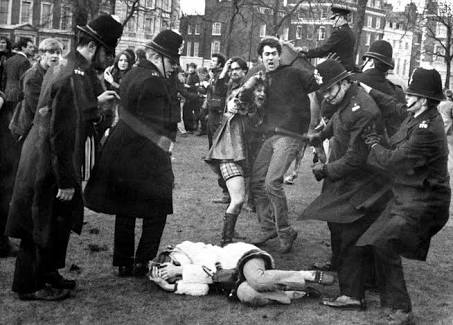
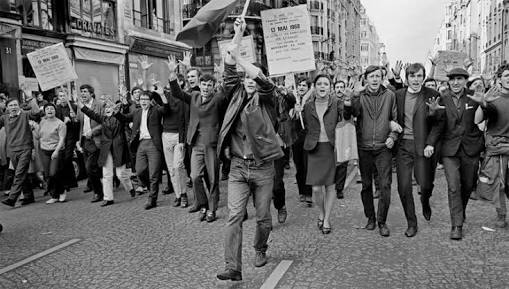
A South Vietnamese general blowing out the brains of a Vietcong prisoner on a Saigon street during the Tet Offensive. The Reverend Andrew Young Jr. and his colleagues, on the balcony of the Lorraine Motel in Memphis standing next to the body of Martin Luther King Jr. and point to where the assassin’s bullet was fired. Students at Columbia University taking over campus buildings, only to be hauled away, battered and bloody by police. Parisian protesters hurling tear gas canisters back at the police. Robert Kennedy felled by Sirhan Sirhan in the basement at the Ambassador Hotel in Los Angeles. Soviet tanks rolling into Prague. Women dumping bras and girdles into a trash can on the boardwalk outside Atlantic City’s Miss America pageant. Protesters facing off against coppers and horses in a violent mêlée in front of the US embassy in London’s Grosvenor Square. Tommy Smith and John Carlos on the Olympic medalists’ platform in Mexico City, raising their black-gloved fists in the Black Panther Salute as second-placed Aussie Peter Norman stands tall and silent in solidarity (a stance which would earn him opprobrium in his still prejudiced and conservative homeland).

As young people in the UK, we viewed these scenes to an exciting and eclectic soundtrack of blues, rock and psychedelia as the pop music cavalcade of the ‘sixties rock ‘n rolled on.

The Beatles sang Hey Jude, and The Rolling Stones, Street Fighting Man, and Jimi Hendrix delivered simply the best-ever cover of a Bob Dylan song with his blistering, sinister All Along the Watchtower. Imagining we were Born To Be Wild, we were invited to get our motors running and head out on the highway, or else to “take the load off, take the load for free”. We could pointlessly ponder the mysterious meaningless of MacArthur Park, or just lay back in a hazy daze with the Hurdy Gurdy Man (a strange ditty that has enjoyed a brief comeback with the recent hippy, trippy Romans-versus-druids soap Britannia). Koo-koo-ka-choo, Mrs. Robinson!

Images and music aside, what was it really like to experience 1968?

Christopher Allen, in a piece in The Australian reviews an exhibition commemorating the events of 1968 at the National Library of Australia in Canberra. His is an original overview, advising caution when seeking signs and patterns in contemporary events. The past, as they say, is a foreign country – they see things differently there. “The signs 50 years ago  were alarming, hopeful or dispiriting, depending on your point of view, but above all conflicting, as are the signs today. We will one day know where events on the Korean peninsula or the latest phase of tensions in the Middle East are leading. The shadowy, seemingly fluid future, with its dramatically ­different possible alternatives, will have become the ossified, unchangeable past.

In an entertaining and upbeat piece in The Guardian, Hendrick Herzberg rebuts that cliched putdown of how people who remember the sixties weren’t really there, recounts his own adventures, and claims that “In a modest way, 1968 was the kind of year that pushes history in some unforeseen, astonishing direction – a gentler little brother to 1492, 1776, 1848, 1914, 1945, and 2001”. I would add 1789, 1939, and 1989 and 2011.  Check them out.

I too remember the ‘sixties, and I too was there, albeit not on the political, social or cultural front lines. But I was at Grosvenor Square, occupied the vice-chancellor’s offices, did drugs (soft, mind), dug Cream, read Oz and IT, and totally got into Hair, which opened in London that year. And today, I share Hetzberg’s reverie: “In 1968, the ‘sixties were almost over, but The Sixties have never fully gone away. For me, and no doubt for many others of my vintage, it’s hard to believe that half a century now separates us from that momentous, tumultuous year, and that 1968 is now as distant in time as 1918 – the year of the end of World War I, the consolidation of Bolshevik power in Russia, and the flu pandemic that killed 50 million people – was in 1968. Fifty years from now, it’ll be 2068. The ‘sixties again! I Can’t wait!”

In contrast, Tod Gitlin gazes through a glass darkly in a sober retrospective for The New York Review of Books: “When we fight over the meaning of the past, we are fighting over what, today, we choose to care about. In this way, the 1968 anniversaries stalk 2018, depicting scene after scene of revolt, horror and cruelty, of fervor aroused and things falling apart, and overall, the sense of a gathering storm of apocalypse, even revolution. Inevitably, the “iconic” images of the time feature scenes of brutality, rebellion, and tragedy”.

And indeed, the enduring historical memory of 1968 is one of a succession of seemingly disconnected conflicts and collisions, turmoil and turbulence, not only in the USA but around the world. Yet beneath the apparent chaos, Gitlin seems to suggest, there were patterns that can only be discerned with the benefit of hindsight or as visions from a great height – much like, perhaps, that iconic image of our blue planet.

“Public life seemed to become a sequence of ruptures, shocks, and detonations. Activists felt dazed, then exuberant, then dazed again; authorities felt rattled, panicky, even desperate. The world was in shards. What were for some intimations of a revolution at hand were, for exponents of law and order, eruptions of the intolerable. Whatever was valued appeared breakable, breaking, or broken”.

The pendulum was swinging away from the previous year’s Summer of Love into a darker place. The lyrics of Steppenwolf’s Magic Carpet Ride, released that September, seem, in retrospect, to describe the turning tide: “Last night I held Aladdin’s lamp, so I wished that I could stay, but before the thing could answer me, well, someone took the lamp away. I looked around, and a lousy candle’s all I found”. In November 1968, Jimi Hendrix sang: “Outside in the cold distance, a wildcat did growl. Two riders were approaching, and the wind began to howl”.

There lurked a new narrative, and this was one of backlash and counterrevolution. “What haunted America”, writes Gitlin, “was not the misty spectre of revolution but the solidifying spectre of reaction. As the right consolidated around an alliance of Christian evangelicals, racial backlashers, and plutocrats, the left was unable, or unwilling, to fuse its disparate sectors. The left was maladroit at achieving political power; it wasn’t even sure that was its goal”.

”This country is going so far to the right you won’t recognize it,” Nixon’s attorney general, John Mitchell, said in 1969. He spoke prematurely. And presciently. Fifty years on from this momentous year, all that is old is new again.


Read on and enjoy these articles and the accompanying pictures.

But first, a poignant memento of 1968 from the 1979 film version of the “tribal love-rock musical” (yep, that how it was marketed back in the day) Hair, which i saw in London in the fall of 1968.

And here are other posts in In That Howling Infinite with regard to the ‘sixties: Springtime in Paris – remembering May 1968Encounters with Enoch; Recalling the Mersey Poets; The Strange Death of Sam Cooke; Looking for LehrerShock of the Old – the glory days of prog rock; Window on a Gone World; Back in the day; The Incorrigible Optimists Club

London

Paris

Prague 


1968: Year of Counter-Revolution

Associates of Dr. Martin Luther King Jr., the slain civil rights leader lying on the motel balcony, pointing in the direction of the assassin, Memphis, Tennessee, April 4, 1968

Commemorations are the greeting cards that a sensation-soaked culture sends out to acknowledge that we, the living, were not born yesterday. So it is with this year’s media reassembly of 1968. What is hard to convey is the texture of shock and panic that seized the world a half-century ago. What is even harder to grasp is that the chief political victor of 1968 was the counter-revolution.

When we fight over the meaning of the past, we are fighting over what, today, we choose to care about. In this way, the 1968 anniversaries stalk 2018, depicting scene after scene of revolt, horror and cruelty, of fervor aroused and things falling apart, and overall, the sense of a gathering storm of apocalypse, even revolution. Inevitably, the “iconic” images of the time feature scenes of brutality, rebellion, and tragedy: a South Vietnamese general’s blowing out the brains of a prisoner on a Saigon street during the Tet Offensive; the Reverend Andrew Young Jr. and his colleagues, on the balcony of the Lorraine Motel in Memphis, next to the body of Martin Luther King Jr., pointing at where the assassin’s bullet had come from; demonstrators at Columbia taking over campus buildings, then hauled away, battered bloody by cops; Parisian protesters hurling tear gas canisters back at the police; Robert Kennedy felled by Sirhan Sirhan’s shots at the Ambassador Hotel;Soviet tanks rolling into Prague; police clubbing demonstrators at the Democratic National Convention in Chicago; women’s liberation activists dumping girdles, hair curlers, and bras (unburnt) in a trash can on the boardwalk outside Atlantic City’s Miss America pageant; Tommy Smith and John Carlos on the Olympic medalists’ platform in Mexico City, raising their black-gloved fists in defiance.
Helmeted police blocking antiwar protesters in Grant       Park, Democratic National Convention, Chicago, Aug 1

A more thorough survey would take note of social collisions that, however violently repressive, failed to register in America with the same supersaturated significance. For example: the killing of three students in Orangeburg, South Carolina, by highway patrol officers after the students protested segregation at a bowling alley (February 8); the near-deadly shooting of the German radical student leader Rudi Dutschke in Berlin (April 11); Chicago police battering a wholly nonviolent antiwar protest (April 27).

As for less bloody demonstrations, there were so many, so routinely, that TheNew York Times regularly grouped civil rights and antiwar stories on designated pages. Neither does this rundown of calamities take into account images that did not see the light of day until much later, like the color shots of the My Lai massacre (March 16), not published until late 1969—by which time they were almost expected. Or the images that never materialized at all, like the slaughter of hundreds of demonstrating students by troops in Mexico City (October 2).

A feminist protester at the Miss America beauty pageant, Atlantic City, New Jersey, September 7 

Images aside, what was it really like to experience 1968? Public life seemed to become a sequence of ruptures, shocks, and detonations. Activists felt dazed, then exuberant, then dazed again; authorities felt rattled, panicky, even desperate. The world was in shards. What were for some intimations of a revolution at hand were, for exponents of law and order, eruptions of the intolerable. Whatever was valued then appeared breakable, breaking, or broken.

The textureof these unceasing shocks was itself integral to what people felt as “the 1968 experience.” The sheer number, pace, volume, and intensity of the shocks, delivered worldwide to living room screens, made the world look and feel as though it was falling apart. It’s fair to say that if you weren’t destabilized, you weren’t paying attention. A sense of unending emergency overcame expectations of order, decorum, procedure. As the radical left dreamed of smashing the state, the radical right attacked the establishment for coddling young radicals and enabling their disorder. One person’s nightmare was another’s epiphany.

The familiar collages of 1968’s collisions do evoke the churning surfaces of events, reproducing the uncanny, off-balance feeling of 1968. But they fail to illuminate the meaning of events. If the texture of 1968 was chaos, underneath was a structure that today can be—and needs to be—seen more clearly.

Two Viet Cong captured during the Tet Offensive, one already dead, the other about to be executed by pistol shot, Vietnam, May 1968

The left was wildly guilty of misrecognition. Although most on the radical left thrilled to the prospect of some kind of revolution, “a new heaven and a new earth” (in the words of the Book of Revelation), the main story line was far closer to the opposite—a thrust toward retrogression that continues, though not on a straight line, into the present emergency. The New Deal era of reform fueled by a confidence that government could work for the common good was running out of gas. The glory years of the civil rights movement were over. The abominable Vietnam War, having put a torch to American ideals, would run for seven more years of indefensible killing.

The main new storyline was backlash. Even as President Nixon assumed a surprising role as environmental reformer, white supremacy regrouped. Frightened by campus uprisings, plutocrats upped their investments in “free market” think tanks, university programs, right-wing magazines, and other forms of propaganda. Oil shocks, inflation, and European and Japanese industrial revival would soon rattle American dominance. What haunted America was not the misty specter of revolution but the solidifying specter of reaction.

Even as established cultural authorities were defrocked, political authorities revived and entrenched themselves. In so many ways, the counterculture, however domesticated or “co-opted” in Herbert Marcuse’s term, became the culture. Within a few years, in public speech and imagery, in popular music and movies, on TV (All in the FamilyM*A*S*HTheMary Tyler Moore Show) and in the theater (HairOh! Calcutta!), profanity and obscenity taboos dissolved. Gays and feminists stepped forward, always resisted but rarely held back for long. It would subsequently be, as the gauchistes of May ’68 in Paris liked to say, forbidden to forbid.

In the realm of political power, though, for all the many subsequent social reforms, 1968 was more an end than a beginning. After les évènements in France in May came June’s parliamentary elections, sweeping General De Gaulle’s rightist party to power in a landslide victory. After the Prague Spring and the promise of “socialism with a human face,” the tanks of the Soviet-run Warsaw Pact overran Czechoslovakia. In Latin America, the Guevarist guerrilla trend was everywhere repulsed, to the benefit of the right. In the US, the “silent majority” roared. As the divided Democratic Party lay in ruins, Richard Nixon’s Southern strategy turned the Party of Lincoln into the heir to the Confederacy. As the right consolidated around an alliance of Christian evangelicals, racial backlashers, and plutocrats, the left was unable, or unwilling, to fuse its disparate sectors. The left was maladroit at achieving political power; it wasn’t even sure that was its goal.

Counter-revolutions, like their revolutionary bêtes noires, suffer reversals and take time to cohere. The post-1968 counter-revolution held the fort against a trinity of bogeymen: unruly dark-skinned people, uppity women, and an arrogant knowledge class. In 1968, it was not yet apparent how impressively the recoil could be parlayed into national power. “This country is going so far to the right you won’t recognize it,” Nixon’s attorney general, John Mitchell, said in 1969. He spoke prematurely.

1968: the year that changed America

Hendrick Herzberg, The Guardian, April 15, 2018

Where were you in the 1960s? And what were you? A toddler, a grade schooler, a teenager? A young adult? Were you already old enough to form your own memories? Or were you old enough but in the “if you can remember The Sixties you really weren’t there” category?

Of course, if you’re like most people, you were nowhere. You hadn’t been born yet. You didn’t exist. But wherever and whatever you were or weren’t, it’s a safe bet that you’ve heard about The Sixties – quite enough, maybe. Ad nauseam, maybe.

There is a continuing theological controversy among sixtiesologists concerning when The Sixties can properly be said to have begun and ended. Tuesday 8 November1960 – the day Senator John F Kennedy was elected president – has a pretty good claim to the beginning. Kennedy’s campaign slogan, which appeared on every campaign poster, had been LEADERSHIP FOR THE 60’s. Out with the dull, conformist, priggish, crewcut, Eisenhowerish Fifties! In with the dashing, exciting, daring, sexy, slightly longer-haired, Kennedyesque Sixties!

A darker view – the view I take – sets the clock of The Sixties ticking three years later. The assassination of President Kennedy was a crack in time. Like Sunday 7 December 1941; and like Tuesday 11 September 2001; Friday 22 November 1963 was “a date that will live in infamy”. And, like them, it was a day that is remembered in vivid detail by those who experienced it.

I was taking a noontime shower in my Harvard dorm room, having been as usual up till dawn getting out the college daily, the Crimson. I heard a faint, muffled radio news bulletin coming through the wall from the neighboring room. As I dried off, I turned on my own radio. I can still see the edge of the shower stall and the little bathroom window next to it. On the grass below, a girl was standing under a tree, weeping. The Crimson put out an extra that afternoon, but without my help. It felt too much like a schoolboy stunt. Rightly or wrongly, I didn’t want to play newspaperman. I didn’t want to be distracted from the communal grief all around me.

So The Sixties, in this conceit, began either in 1960 or, like Philip Larkin’s sexual intercourse, in 1963. And the ending? That too has long been a subject of debate. There are plenty of nominees, two of which may be considered the frontrunners. Like the beginnings, one is light and one is dark. The light one: Friday 9 August 1974, the day Richard Nixon resigned the presidency, freeing the nation from a quarter-century of having had him to kick around. The dark one: Altamont. Sunday 6 December 1969. Google it. Or see the movie.

It is possible to build a narrative around two currents of the year’s events, currents that melded and crisscrossed and fed off each other, to startling effect: the music, mostly a kaleidoscopic, wildly imaginative explosion of rock’n’roll; and the politics, mostly a politics of protest – protest against the Vietnam war, against racial injustice, and, more broadly, against what was experienced as the joyless, stultifying blandness of mainstream American life.

Those two currents, the music and the protests, washed over me as they did over millions of others. In 1966, a year out of college and a newly minted cub reporter for Newsweek, I was lucky enough to land in San Francisco. Something was happening there, and I found myself in a position to absorb it.

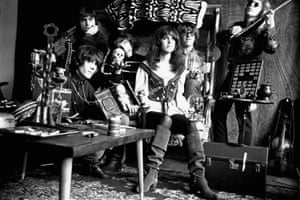
Jefferson Airplane pose for a portrait in San Francisco, 3 August 1968.
                              Jefferson Airplane  San Francisco, 3 August 1968. Photograph: AP
The scene, cultural and political, was quite something. A new kind of music – rooted in blues, rock, and electronica, and supercharged by psychedelia – was drawing motley-dressed weekend crowds to a couple of repurposed old dance halls, the Fillmore Auditorium and the Avalon Ballroom. For $2.50 you could spend hours listening and dancing to bands that were still unknown back east or down south in LA – bands still without record contracts but with wonderful names: Jefferson Airplane, the Grateful Dead, Big Brother and the Holding Company, Quicksilver Messenger Service – often paired with iconic bluesmen like Muddy Waters and James Cotton. The walls were mesmerizingly alive with rhythmically pulsating, ever-changing liquid projections. It was, in the patois of the moment, mind-blowing. For the gentle dreamers that Herb Caen, the San Francisco Chronicle’s gossip columnist, had dubbed hippies, the Fillmore and the Avalon were Carnegie Hall and the Philharmonic.

Like every young man of my generation, I had to reckon with the draft. I was against the war, of course, but I didn’t think I had the stomach to go to jail over it. I had zero desire to go to any more schools, graduate or otherwise. I was unmarried and childless. Canada was not my country, my country was the United States of America. I wasn’t physically or mentally ill and was too proud to fake it. And I wasn’t a conscientious objector. On the other hand, I didn’t want to get killed either. My solution was the US navy.

I got a haircut and reported to the naval base at Newport, Rhode Island, for three months of officer training. From there I asked to be sent to Vietnam, but it wasn’t like it sounds. Unless you were a flier (like John McCain, the future senator), a Seal (like Bob Kerrey, also a future senator) or a member of the Riverine Force (like John Kerry, a future senator, presidential nominee, and secretary of state), being a naval officer in Vietnam, especially a “public affairs” officer like me, posed very little physical risk. Instead, however, the navy, in its wisdom, assigned me to a desk job in lower Manhattan.

As the year rushed on, the pace of events grew ever more frenziedI stole away from the office whenever I could, and devoted the time to salving my conscience. I pitched in at the ramshackle headquarters of the War Resisters League. In March, after Robert Kennedy entered the presidential race, I took to hanging around his Manhattan headquarters, doing layouts and writing headlines for the Kennedy Current, the campaign’s weekly tabloid.

As the year rushed on, the pace of events grew ever more frenzied: the bloody shock of the Tet Offensive; the electoral abdication of President Lyndon Johnson; the assassination of Martin Luther King Jr and the riots that followed; the murder of Robert Kennedy; the chaotic, riotous Democratic convention in Chicago; Nixon’s hairsbreadth victory over Hubert Humphrey in November. And me? Well, at Christmastime I got the orders to Vietnam (as a “recreation officer” at the US base in Da Nang) I’d hoped for two years earlier. Only this time I didn’t want to go. My antiwar sentiments had hardened to the point that I decided I preferred jail to further military service, and I announced my intention to refuse the orders.

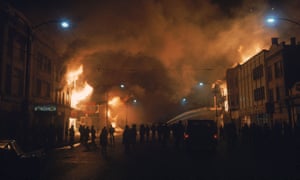
Riots in Chicago follow the assassination of Martin Luther King.
       Riots in Chicago follow the assassination of Martin Luther King.
Photograph: Lee Balterman/TimePix/Rex Features

But before I could achieve fame as a martyr for peace an unexpected medical difficulty developed: I had a wisdom tooth pulled, the wound bled for days, and when I was diagnosed with a (relatively mild) form of hemophilia, the navy quickly mustered me out. I had managed to have it both ways: veteran (kind of) and resister (in a way).

Why didn’t I think of that?

In 1968 the sixties were almost over, but The Sixties have never fully gone away. For me, and no doubt for many others of my vintage, it’s hard to believe that half a century now separates us from that momentous, tumultuous year, and that 1968 is now as distant in time as 1918 – the year of the end of World War I, the consolidation of Bolshevik power in Russia, and the flu pandemic that killed 50 million people – was in 1968. Fifty years from now, it’ll be 2068.

The Sixties again! I can’t wait!

This is an extract from the introduction to the 30th-anniversary edition of1968 in America: Music, Politics, Chaos, Counterculture, and the Shaping of a Generation by Charles Kaiser, published in the US by Grove Press on 17 April

Take a look back to our future

Christopher Allen, The Australian, June 23rd 2028

Many Cheers on the Founding of the Revolution Committee of Hubei Province, papercut poster (1968). All images from 1968: Changing Times exhibition, National Library of Australia

Many Cheers on the Founding of the Revolution Committee of Hubei Province, papercut poster (1968). All images from 1968: Changing Times exhibition, National Library of Australia

In one of the most famous stories from ­antiquity, Croesus, the proverbially rich king of sixth-century BC Lydia, in what is now Turkey, was disturbed by the rise of the Medes and the Persians on his eastern borders. Thinking it might be wise to crush these potential rivals before they became a serious threat, he consulted the oracle of Apollo at Delphi, plying it with gifts to ensure a favourable answer. The oracle replied that if he made war on the Persians, a great empire would be destroyed. Croesus accordingly gathered his ­armies and ­attacked, but he was defeated and taken prisoner by Cyrus the Great, founder of the Persian ­Empire.

The oracle had a reputation for accurate yet riddling answers. A half-century after these events, Heraclitus, one of the most brilliant Pre-Socratic thinkers and famous for enigmatic aphorisms, declared: “The lord whose oracle is at Delphi neither reveals nor conceals but sig­nifies.” It is up to us to read the sign he gives, and Croesus had fatally misconstrued that sign in his eagerness to hear what he wanted to hear.

The signs 50 years ago, in 1968, were alarming, hopeful or dispiriting, depending on your point of view, but above all conflicting, as are the signs today. We will one day know where events on the Korean peninsula or the latest phase of tensions in the Middle East are leading. The shadowy, seemingly fluid future, with its dramatically ­different possible alternatives, will have become the ossified, unchangeable past.

The political protests of May 1968 in Paris were among the most significant events of that year. Although partly emulating earlier student agitation in the US, the French protests were much broader in their implications. The term that the French use for this movement, la contest­ation, suggests its universal spirit of ­revolt and its nebulous sense of direction, if not nihilistic disorientation. It was a catastrophic time for many young people caught up in the hysteria and afterwards left to pick up the pieces of interrupted studies and broken careers, in an ambience of cynicism and disenchantment. Ever since the revolution of 1789, the French have been prone to political overexcitement, and throughout much of the 20th century ­communists continued to believe in their own kind of revolution in the same way Christians believe in the second coming.

The zealots thought 1968 heralded the end of days and the imminence of the dictatorship of the ­prole­tariat; but the grassroots movement, spreading from students to workers, was not supported by the Communist Party, which was still committed to a totalitarian and Stalinist model of ­central control. A few months later, a similar pattern evolved within the communist world: the opening up of Czechoslovakia to greater freedom, democracy and independence — the Prague Spring — was crushed in August when Soviet tanks invaded the country and ­occupied its capital.

The events of Paris and of Prague dealt a fatal blow to the credibility of communism in the West; the old left began slowly bleeding to death until its collapse with the fall of the ­Berlin Wall 21 years later. Thus May 1968, as in the story of Croesus, did indeed herald the fall of an ­empire, but not the one the student rioters thought they were going to bring down.

Much else happened in 1968, including the opening of the new National Library in ­Canberra, whose anniversary is the occasion for this exhibition. As we enter the exhibition, we are confronted by a wall of 21 tabloid bills, in the centre of which is one announcing the opening of the library. The remaining headlines sum up many other momentous events of the year, starting with the ­mysterious loss of prime minister Harold Holt, who dis­appeared, presumed drowned, while spearfishing off Portsea in December 1967.

America was shocked by two political assassinations: that of Martin Luther King in April and Robert Kennedy in June. Both events are covered in the exhibition by photographs, posters and copies of contemporary news magazines. Particularly interesting, especially today, is an article about the revulsion against gun culture that followed the death of Kennedy, whose brother, president John Kennedy, had been assassinated less than five years earlier. There are pictures of individuals willingly ­giving up guns at police stations: so many were handed in that the police, as we see in another photograph, ended up disposing of them by dumping them in the sea.

John Gorton Visiting Australian Troops in Vietnam, Australian News and Information Bureau (1968)

Meanwhile, the Vietnam War was growing more intense — it was the year of the Tet offensive — and provoking greater opposition at home, mainly because of the draft, of which fatal randomness we are reminded by a set of the wooden balls that were used in the birthday ballots. It was clearly a political mistake to send conscripted soldiers to Vietnam; professional soldiers expect to fight wherever their nation sees fit to send them, but conscripted troops should be reserved for national self-defence.

At the time, however, the spread of commun­ism in Asia looked like a serious ­menace, which it would be smug to discount with the benefit of hindsight. Communism had only recently been suppressed by the British in the course of the Malayan Emergency (1948-60) and, more recently still, by Suharto in Indonesia, in a far bloodier struggle from 1965 onwards. So the threat of violent totalitarian revolution was real. At the same time, there was a prima facie moral justification in helping South Vietnam defend itself against the north. The way that North Vietnamese ­aggression was turned into a fight for freedom in the eyes of many in the West was one of the first examples of the self-destructive neurosis that has afflicted the Western intel­ligentsia for the past couple of generations. A map of ­Vietnam published in the US in 1968 includes an insert labelled “Freedom’s struggle in Asia”, with a pall of black covering Siberia, Mongolia, China and North Vietnam. It is easy to understand the fear of the domino theory in Southeast Asia, and clear that this had serious consequences for Australia.

And to argue that time was running out for the communist dream, and that even China would, within a generation, be starting to build its own unique model, combining capitalist profiteering with communist authoritarianism, would have seemed mere wishful thinking.

For the time being Mao Zedong, after killing 45 million people by starvation during the Great Leap Forward of 1957-62, had launched the almost equally disastrous Cultural Revolution, which lasted from 1966 until his death in 1976, and posters showed beaming peasants and workers celebrating the foundation of new socialist ­regional committees.

This is the great difficulty in anticipating the future: we can imagine plausible scenarios but the really important things are often ones that seem entirely implausible until they happen. It would have seemed far-fetched to suggest that Southeast Asian countries racked with ­poverty and communist insurrection in 1968 would be booming capitalist economies by the early 20th century, but even more unbelievable that one of the most significant threats to s­ecurity, freedom and human rights would one day be the rise of fanatical Islamic belief among the populations of several regional countries. Religion in general was assumed to be a long-spent ­political factor, of marginal relevance in the thinking of left and right.

Even in the Middle East, religion was not yet an important factor. Israel had spectacularly crushed its Arab neighbours in the Six-Day War of 1967 and extended its control over buffer territories in the north and east; its neighbours were angry and humiliated, but were all ruled by secular dictators. Iran was a prosperous, secular and modernising nation under the rule of the shah, even though there was growing opposition to his authoritarian rule. But a map of The Daily Telegraph motor marathon from London to Sydney reminds us how essentially peaceful the region still was: it is many years since such a rally could follow an itinerary from London through Europe to ­Turkey, then on to Tehran, Kabul and Bombay (as Mumbai was then called), before the cars were ferried to Fremantle for the final legs from Perth to Sydney.

Culturally, the period represented a new level of mass consumption of pop music and other media. At the time, pop groups often seemed to give voice to various forms of social and political dissent, but in retrospect their ­objective role was to channel and neutralise the malaise, turning it into harmless entertainment. Television had more or less completed its takeover of family life by 1968; people who used to play the piano or talk or read a book after ­dinner now sat glued to serials and talk shows. TV was a new form of addiction, whose damaging effects we now can begin to understand in the age of far more serious ­addiction to smartphones and other devices.

National Library of Australia at Night from beneath Commonwealth Avenue Bridge near Regatta Point, Canberra, (1968, detail), by Max Dupain

The final part of the exhibition is devoted to the conception, planning and building of the new library. Canberra, only 55 years old in 1968, was still in the process of growing into its ­ambitious urban design. An area from Capital Hill down to the lake had been designated as a special ceremonial triangle, destined to house not only the new Parliament House but also some of the most significant cultural edifices of the new city. These included the National ­Library on one side and the National Gallery, which was established in 1967 and opened in 1982. The new library was a favourite project of Robert Menzies as prime minister, and the exhib­ition includes correspondence and his speech in introducing the National Library­ bill in 1960. Although he retired in January 1966, his successor Holt ­invited him to lay the foundation stone in March that year.

In his speech on that occasion, Menzies expressed­ the hope he would live long enough to see the white marble structure ­reflected in the waters of the lake: this is exactly how Max Dupain photographed the finished structure in 1968. Seeking grandeur in the depth of distance, he takes a view of the new building from across the lake at night, so the library appears as a small but radiant temple-like form, its reflection shimmering silently on the dark waters.

1968: Changing Times.  National Library of Australia, Canberra, Until August 12, 2018

https://www.theaustralian.com.au/arts/review/1968-changing-times-national-library-of-australia-look-back-at-future/news-story/ccefaad03c8a41c8b86a2820f5d53ca4


Sic semper tyrannis

You come at the king, you best not miss.
Omar Little, The Wire (after RW Emerson)

The phrase “one man’s freedom fighter is another man’s terrorist” is at once apt, correct, and yet often oversimplified to the point of disingenuousness. The word “terrorist” itself describes its goal. To instill fear in the heart of the enemy. In the past, the target would have been the king, the dictator, the ruling class, and those who served them and upheld their rule. Politicians, officials, solders and policemen. Today, terrorists indiscriminately target whole societies. Irish bombers blasted communities of the rival faith, murdered shoppers, office workers, and pub patrons, as well as soldiers and policemen. Palestinian suicide bombers hit malls and pizza bars in city centres. ISIS, al Qa’ida and the Taliban detonate cars in busy city streets and publicly execute prisoners in callous and calculating “lectures in flesh” (the phrase is civil rights lawyer Geoffrey Robertson’s, from his chilling account of the trials and execution of King Charles I of England and those who sentenced him, The Tyrannicide Brief.).

But targeted and random terrorism has a long historical pedigree. For centuries, it has been the desperate and nihilistic weapon of last resort of resistance and rebellion against perceived oppression and injustice, and against invaders and occupiers.

In the second century BCE Palestine, the Maccabees used assassination in their resistance to the Seleucid Greeks, and a century later, the Jewish zealots, the Sicarii, named for the easily concealed small daggers, paid the Romans in like coin, and ultimately in an insurrection that culminated in the destruction of Jerusalem in 70CE and the scattering of the Jewish race (giving history the emotive and symbolic last exit that was Masada). In an etymological irony that Mark Twain would have been proud of, the present unrest in Jerusalem, a large number of young Palestinians have perished in attempting to stab jewish soldiers and civilians. Their jaquerie is called the “Intifada Sakni-in”, the ‘Knife Uprising – an echo of those long-dead Sicarii “dagger men”.

Nowadays, one would be excused for thinking that “terrorism” and “terrorist” are synonymous with Arabs and Muslims. And a historical precedent reinforces this erroneous assumption. The Hashishan or “Assassins” of Middle East fame (yes, that is where that noxious noun originated) were Muslim men and boys mesmerized and mentored by Rashid ad Din as Sina-n, the “Old Man of the Mountain” (and all this, before Osama in the caves of Tora Bora), and were Twelfth Century  hit-men contracted out to rival Muslim princes in the internecine conflicts that plagued the Levant in the wake of the Crusades and the demise of the great Arab Caliphates.

But the assassin’s knife (and in modern times, the gun and bomb, and latterly cars and trucks) predates these medieval hoods and links the Hebrew rebels of old to the Irgun and Stern Gang who encouraged Britain and the UN to abandon Palestine in 1948, bequeathing most of it to the new state of Israel, and triggering the Palestinian diaspora. European anarchists and Irish rebels and loyalists were adept at shootings and ambushes. In Algeria, during the ‘fifties, the nationalist FLN and the “colon” OAS shot and bombed each other and those unfortunates caught in the crossfire. The IRA perfected the improvised explosive device that today has crippled thousands of American, Canadian, and Australian soldiers in Iraq abd in Afghanistan. Hindu Tamil separatists of Sri Lanka introduced the suicide bomber, an economical and efficient weapon against soft (civilian, that is) targets, deployed today by Islamist killers in the streets of London and Lahore, Damascus and Dar es Salaam, Jerusalem and Jakarta. Whilst Arabs – and particularly Palestinians may have given the world the hijacking of aircraft – a tactic that fell into disuse due to diminishing political returns and rapid response forces – other Arabs showed us how to fly them into public buildings as the whole world watched in horror and disbelief. The shockwaves of this one are still reverberating through the deserts of the east and the capitals of the western world.

In going up up against their occupiers, the Palestinians have an old heritage. In my old country, Boudicca and Caractacus fought a losing battle against the Romans in Britain during the First CE. The Roman historian Tacitus ascribed to a vanquished chieftain the memorable words  “solitudinem faciunt, pacem appellant” – they make a desert and they call it peace. After the battle of Hastings in 1066, the defeated Saxons pushed back against the Normans and brought the genocidal wrath of William the Conqueror down on their heads with the devastating “Harrying of the North”. The Green Man and Robin Hood legends are said to be a retrospective and romanticised remembering of the Saxon resistance. Warrior fugitives from that failed guerilla war fled as far as Constantinple, where many joined the Emperor’s acclaimed Varangarian Guard, (see When Harald Went A Viking) 

In the streets and the countryside of Ireland, my parents’ birthplace, the United Irishmen, Fenians, Free Staters, IRA and Unionists fought against the redcoats, tommies, and black and tans of the British Army. Fought amongst themselves, fought against each other, and killed and were killed in their centuries long war of liberation. And in my adopted country, indigenous Australians fought a futile frontier war against settlers and soldiers just as native Americans did, albeit on a much smaller scale, and paid the price in hangings, massacres, poisoned wells, dispossession, marginalization, and “stolen children”. The legacy of those times lingers still – see The Frontier Wars – Australia’s heart of darkness.

In Central America, Juarez led the Mexicans against the French, and Sandino, Nicaraguans against US marines. Spaniards rose up against Napoleon’s forces, giving the world the word “guerilla”, or “little war”. Russian partisans ambushed the Grande Armé and the Wehrmacht. Throughout occupied Europe, the very term “resistance” became synonymous with the heroic unequal struggle against tyranny. In another of history’s ironies, muqa-wamat, Arabic word for resistance, unites sectarian rivals Hamas and Hizbollah against Israel.

And not just resistance to invasion and occupation, but also against oppression by one’s own rulers. Religious tracts tie themselves in knots reconciling the obligation to obey our rulers with the right to resist and overthrow those that rule badly. The unequal struggle against tyranny – or what is perceived by the perpetrators as tyranny – is the cause that inspires men and women to desperate acts.

The most celebrated in fact, film and fiction is the death of Julius Caesar at the hands of peers who feared that he intended to usurp the ostensibly democratic Republic (ostensible because democratic it was not) and institute one-man rule. That ended badly for the conspirators, and for Rome, as it precipitated years of civil war and ultimately, half a century of empire).

In 1880 the reforming Czar Alexander II of Russia, discovered the hard way that liberating the serfs did not inoculate himself against the bomb that took his legs and his life. His fearful and unimaginative successors hardened their hearts and closed their minds against further reform. setting in train the crackdown on dissent and democratic expression that led eventually to the storming of the Winter Palace on Petrograd in 1917. Narodnaya Volya, the killers called themselves – the People’s Will. And that is what terrorists do. They appeal and owe fealty to a higher court, a greater good, a savage God.

So it was when student and Serbian nationalist Gavril Princip assassinated Archduke Ferdinand of Austria-Hungary in June 1914 and ignited the spark that lit the conflagration of World War 1 which precipitated the demise of the old European empires.

So too when John Brown and his sons brought their broadswords to bear on slavers and their sympathizers and made a date with destiny at Harpers Ferry. Their famous raid may or may not have accelerated the downward slide to the secession and civil war that erupted the following year, but it provided a moral and symbolic prelude and also, the resonating battle hymn of the republic. John Wilkes Booth bookended this bloody era with his histrionic and public murder of Abraham Lincoln, shouting “sic semper tyrannis”, “thus always to tyrants,” attributed to Brutus at Caesar’s assassination – today, it’s the Virginia state motto. Brown and Booth were quite clear in their motives. As was were the segregationalist shooters who did for African Americans Medgar Evers and Martin Luther King. Less so were the killers of the Kennedy brothers in the sixties.

To conclude, sometimes that savage, rebel God is one of faith, sometimes, of blood and soil. In some instances, it is revenge for wrongs real and imagined – the reasons at times lost or forgotten through the passage of time and fading memories. And often, “the cause” is corrupted by the immoral economics of illicit commerce, including contraband, kidnapping, blackmail and extortion. Sometimes all merge in an incongruous hybrid of religious passion, ethic identity, libertarian or anarchistic fervour, and protection racket. As was the case in Northern Ireland, in Lebanon, in sub-Saharan Africa, and currently so in Syria and Iraq.

But most times, terror and turmoil is simply a political weapon planned, targeted and executed as a mechanism of regime change. Rebellion, revolt and revolution. Resisting, opposing, challenging, confronting and defeating the central authority. The seizing, holding, consolidation and keeping of political power.

And one thing is for sure. The outcome is unpredictable. History does not move in straight lines, but often follows a bitter and twisted path. Cliched as it is, the phrase “be careful what you wish for” is an apt one. And when, as Bob Dylan sang, “the line it is drawn, the curse it is cast”, there is no going back. To quote WB Yeats’ famous lines, “all is changed, changed utterly”.

Terrorism, then, can shift the course of history. If we were to stumble into the swamp of alternative histories, imagine what might of happened

If Caesar had walked home from the senate on the Ides of March
If Lincoln had been able to guide the Reconstruction
If the reforming Czar had introduced democratic government to Russia
If Gavril Princip’s shot had missed the archduke
If Kennedy had returned from Dallas
If John Lennon outlived George Harrison
If Yitzak Rabin had left the peace concert in Tel Aviv
If the Twin Towers stood still

To quote “Stairway to Heaven”, a curiously apposite title given the millenarian mindset of many terrorists, “Oh, it makes you wonder!”

A Window on a Gone World

London, back in the day. What wonders dwelt within. I recall here but a few. The old church of St. Bartolph-Without, which turned up in later days in a bad Dracula movie. The churchyard of St. Paul’s, a haven for summer’s day lunch-timing. Green Park in spring sunshine as the lily white skin of England divests for primavera. Berkeley Square, where the fabled nightingale sang, and where Clive of India, his mind curdled by corruption and conscience, and haunted by guilt and ghosts, cut his own throat.

Read more in  Tabula Rasa – Poems of Paul Hemphill, Volume One

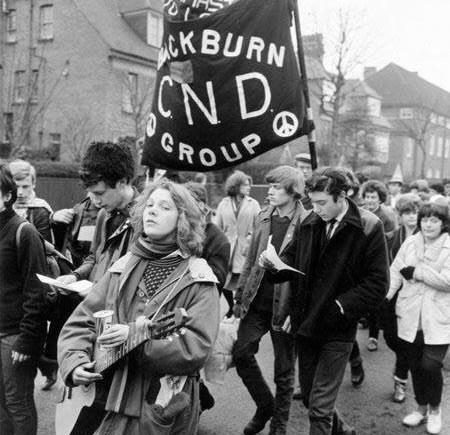
My first political excursion. The CND Aldermaston March reaches London, 1966

My first political excursion. The CND Aldermaston March reaches London, 1966

CND

See also The Spirit of ’45  and Something About London.


Back In The Day

I was in love with Dusty Springfield. In the drear tea-time of my adolescent soul, I worshiped her truly, madly, deeply. Tiny girl, big hair, panda eyes, hands moving like a beckoning siren. I just had to hear “da da da da da da” and then “I don’t know what it is that makes me love you so…” and I was hers for the next two and a half minutes. Until…

It was one of those beautiful late-spring evenings that you would get in the England of memory. The evening sun poured through the gothic stained glass windows of the school library – it was one of those schools. A group of lower sixth lads, budding intellectuals all, as lower sixth tended to be, gathered for a ‘desert island disks” show-and tell of their favourite records. Mine was ‘Wishin’ and Hopinby you know who. Then it was on to the next. Clunk, hiss,  guitar intro, and: “My love she speaks like silence, without ideas or violence, she doesn’t have to say she’s faithful, but she’s true like ice, like fire…” Bob had arrived, and I was gone, far gone. So was Dusty.

dusty

I bought a guitar. A clunky, eastern European thing. I tried ‘Blowin’ in the Wind’, but what came out was unrecognisable. My dad said he’d break it over my head. One day, that tipping point was reached. It sounded indeed like ‘Blowin’ in the Wind’, or something similar. I was away, and the rest, as they say, was hearsay.

Young Bob

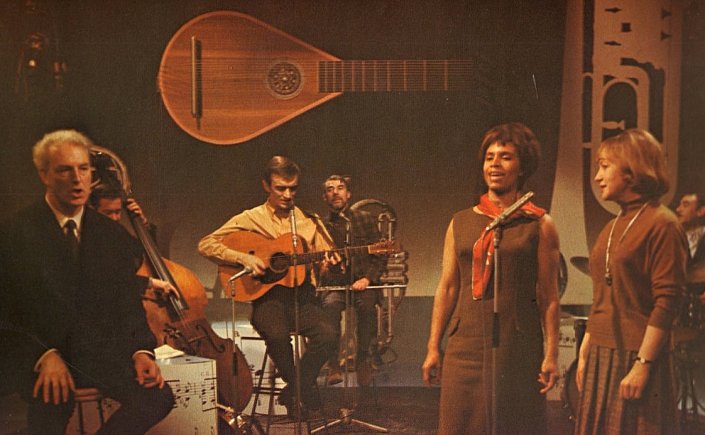
On a  high of hope and hype, so it all began. With a heritage of Irish rebel songs and folksongs, and the ‘sixties folkie canon (but never, ever ‘Streets of London’). Sea shanties, a capella Watersons, Sydney Carter’s faith-anchored chants, ‘The Lord of the Dance’ being the most beloved (a song now and forever burdened with the curse of Michael Flatley). Across the pond, young Bob Dylan, Joan Baez, and Peter, Paul & Mary decanted fine old wine into new bottles, and during the Easter CND march in London in 1966, billeted in an old cinema in Southall, a first public ‘performance’ with Ewan MacColl’s “Freeborn Man of the Traveling People”. The journey had begun, and, as the father of America poetry had crooned, “Afoot and light-hearted, I take to the open road, healthy, free, the world before me, the long brown path before me, leading wherever I choose”.

And it led beside strange waters. “Marc Bolan warbled “My people were fair, and had sky in their hair, but now they’re content to wear crowns stars on their brows“. But didn’t they all in the days when Tolkien was king, and elves and ents walked amongst us. We thoroughly understood and empathized. And we marveled at the Scottish bard who could pen ‘The Minotaur’s Song and ‘Job’s Tears‘, and then run off with Old Father Hubbard. Then Roy Harper, the high priest of Anglo angst, sang ‘McGoohan’s Blues’, a twenty minute digression from the concept if not the plot of an iconic if indecipherable television series. “The Prisoner is taking his shoes off to walk in the rain”.

Unicorn(Album)

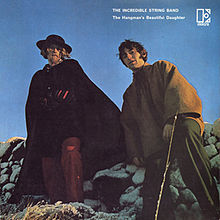
‘The Songs of Leonard Cohen’ played in every wannabe poet’s bedsit. “Come over to the window, my little darlin’. I’d like to try and read your palm“. What a pick-up line, so fitting for the generous times that were the ‘sixties. Others might sigh over the agonies of ‘The Stranger Song’, and ‘The Stories of the Street’. But I preferred the drollery of “Sometimes I see her undressing for me; she’s the sweet, fragrant lady love meant her to be“. And the wondrous punch-line of ‘Chelsea Hotel #2‘, that gorgeous tribute to the peerless Janis: not what happened on the unmade bed, but “we are ugly, but we have the music”. Bob segued from folk to rock, carrying with him many if not all of acolytes on the joker man’s journey from “Oxford Town” to “Desolation Row”. To this day, people ponder the meaning of Jewels and binoculars hang from the head of the mule”‘ and marvel at “The ghosts of electricity howl in the bones of her face“.

HangmansBeautifulDaughter

Read on in the full Introduction to In That Howling Infinite – Poems of Paul Hemphill, Volume Five

© Paul Hemphill 2013.  All rights reserved.

Something About London

One leg up and one leg down like an old cock sparrer, flyin’ over Piccadilly with me bow an’ arra.  Sydney Carter, Eros

Eros has had a good Brasso session and is looking grand in the intermittent summer sunshine. The skylines of Regent Street, Piccadilly, and Shaftsbury Avenue look gorgeous in their Georgian and Regency splendour. The traffic is terrible and the tourists throng in confused and bemused bunches. The theatres still advertise musicals I would never see in a month of Sundays. The royal parks are in full bloom and abound with swans, geese and ducks and their young families. Soho looks as tacky as ever. And although Carnaby Street looks like, well, just any other street, and Swinging London is a fading artifact of the past, London is London as it always was and always will be in my mind’s eye and in my memories.

There is something about London. It’s in the air and it’s in the paving stones, in the crowds and the smell of the rain (lots of it). I have been coming back here every few years for over thirty years. And it still feels like coming home. As time goes by, you forget more than you remember, but random memories come breaking through the years, your thoughts wind back to way back when. London with its technicolor costume of colour, creeds and complexions, it’s paradoxes of posh and poor, it’s troves of trash and treasure.

In 1777, celebrated essayist Samuel Johnson said “when a man is tired of London, he is tired of life”. A cliché, yes, over-used and over-quoted, oft times, out of context. A cover story of Time Magazine on ‘Swinging London’ in April 1966 was entitled “You can walk across it on the grass’. That was and remains part of the magic of the place. That, and its art, its architecture, its history. “Don’t look at”, they say, “look up!” And, exploring the main streets, mean streets and backstreets, parks and parade grounds, mews and alleys of Old London, I always reckoned that old Sam got it spot on – and still do today, whenever I chance to return.

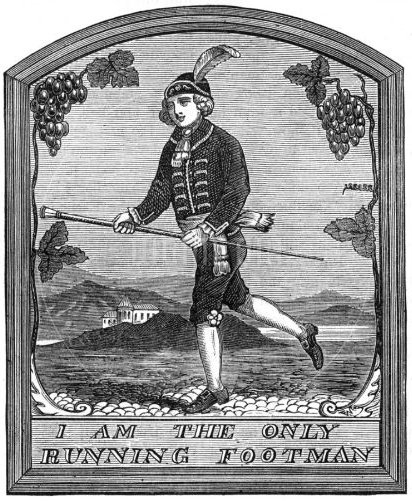
And adjacent, in Hayes Mews, the hostelry with the longest pub name in London, ‘The Only Running Footman’. Such a magical name, it was, conjuring up motion and majesty, speed and style. And it remained in my mind this half-century hence. I had an affinity with this anonymous, antique athlete. These were my running days. I ran everywhere. To the underground, to work, to the shops, to the pub (but not back), though the city, around the town. I revelled in the movement, in the freedom, in the physical and psychological exhilaration of it all. My running days are long over, but I still run in my dreams

running footman

These were days of adapting to new environments and circumstances. They were exciting, they were challenging. I was young, restless, at turns, idealistic and cynical, puritanical and hedonistic. In retrospect, days of emotional and intellectual ferment. Days of “finding one’s way in the world”. Not some reformationey, renaissancial, enlightenment thingy. Post-adolescent onanism, more like.

As John Lennon sang: “Strange days indeed. Most peculiar, Mama!“ Irish bombs, miners’ strikes, power cuts, rubbish piled up on streets, and economic recession. A three-day week as England closed down for want of coal. Candles and coldness. Late starts and early finishes. A stack of books left in the lift in case I was caught when the lights went out. In one job, I’d walk through a bomb shattered foyer, into the mail room, to put all the mail thru a whopping great X ray machine to see if the paddies had sent us any letters. The police arrested my bike when I left it chained to a parking meter – in case it was used to hide a bomb. And you would actually hear explosions as you went about your business. Arriving at a much smaller Heathrow Airport, finding it surrounded by armoured cars and armed soldiers and police. I got a kick out of the blitz-like solidarity, the trench humour, and deprivation and darkness. Layla rocked a London that was neither as drear not as dammed as some paint it. Back then, I was in love with the place. I was young, idealistic, and as the poet said “Bliss was it in that dawn to be alive, but to be young was very heaven!“

From Tabula Rasa Poems of Paul Hemphill , Volume One 

image


The Spirit of ’45

I was a child of the Welfare State.

Born in the early years after the end of World War II, I was aware that the dominant mood was relief that it was over, sadness at those lost and most importantly a forward looking attitude to improve things and not simply to get back to what life had been like before. The traces of the conflict were all around me in once blitzed Birmingham – in the barren, levelled  ‘wastelands’ where streets had once stood, in the austerity, and the monotonous and monochrome drabness of couture and cuisine. To my boyish mind, “the war” was a shared community experience, a shadow which few, I now recall, talked about; but also, the stuff of puerile fantasies fostered by comic books, Airfix models, and patriotic movies that were literally and figuratively black and white.

Life was not all roses in those immediate post-war years, but better by far than what went before. Rationing was still in place when I was born in Birmingham in 1949, not ending until 1954. Young men still had to do their national service (the last call up was in 1960, the year I started Secondary school). We lived with our aunt in a cold-water, back-alley walk-up on the border of Balsall Heath (just inside Moseley, a ‘better’ suburb). Aunty Mary was my mother’s mother’s sister. When her sister died and daddy Paddy ran off with another women, Mary brought the six children over to Birmingham from Enniscorthy, County Wexford one by one. She had come to Birmingham from Ireland before the war, after her husband had run off (these things happened in Catholic Ireland). And she lived in that same old house right through the Blitz when German bombers regularly targeted The Second City’s engineering, motor and arms factories, and not a few public buildings including the Piccadilly and Waldorf cinemas on nearby Stratford Road.

I was born in her house. She had a friend who had once given birth, so that friend was the midwife. My brothers followed over the next two years. By then, National Health Service had kicked in, so they were born in hospital. Childbirth, forever dangerous, was now rendered less life threatening. There we all lived, three kids, our folks, three uncles, two aunts, a dog and a cat. Three bedrooms, girls in one, boys in another, and our family in the third. Outside loo and coal shed, no bathroom or hot water (we kids bathed in the kitchen sink and grown- ups went down to The Baths), Cold and damp, and close to the shops. And there we lived until, in 1956 when a council house in Yardley Wood became our first family home. Cold and colder running water that froze in winter, but it was at least inside the house;  bathroom with hot water boiled in a big gas boiler; and an outside flush lavatory that was nevertheless immediately adjacent to the backdoor and not down the garden. A big garden too, for winter and spring vegetables, and summer camp-outs.

There we grew, with free medical treatment for all our ailments, and free optical and dental care. I still have crooked teeth – no fancy orthodontics on the NHS – but I have all my teeth still. And my eyesight. We were educated, for free. This came in during the war with the Butler Act. So, thanks to the Welfare State, we were housed and healthy enough to get to primary school and beyond. Once there, we had free books, free pens and paper, and compulsory sport, and doctors and nurses would turn up on a regular basis to check our vitals. And thus, we were able to reach the glorious ‘sixties ready to rock ‘n roll.

Which brings me by a circuitous route to British director Ken Loach’s 2013 documentary, The Spirit of ’45,  a celebration of the radical changes that took place under the Labour government of Clement Attlee which came to power in 1945.

What a year that was! No sooner had the war ended, than the British electorate voted out its esteemed and beloved war leader, Winston Churchill, and bought Labour’s promise of a democratic socialism. Drawing on archive footage, and presented in black and white with contemporary interviews with dockers and miners, doctors and nurses, politicians and economists, Loach describes the nationalisation of the public services, and their subsequent privatisation three decades later. His interviewees provide poignant anecdotes about the poverty of the 1930s, dangerous and exploitative working conditions, poor housing, and abysmal health care, and the renewed sense of purpose and optimism after the end of the war and Labour’s landslide victory. He recounts the subsequent expansion of the welfare state, with its free to all medical service, and the nationalization of significant parts of the British economy, most notably, electricity, the railways, and the mines.

The Attlee government was elected due to a general belief that nothing would or could be as it had been before. Britain had pulled together to win the war; now, it would transform the peace. This was The ‘Spirit’ of ’45.

But whilst ‘spirit’ can imply  ‘esprit’ and elation, it can also mean ‘ghost’ insofar as Loach rages against the death of all that hope, optimism, and vision in the decades that followed.. It is a call to arms for a return to the public unity of those heady post-war years and against the policies of subsequent governments, and most particularly those of Margaret Thatcher, that have progressively demolished the Britain that Clement Attlee and Aneurin Bevan strove to build. And it is a reminder that the NHS is worth fighting for at a time when it is being progressively dismantled. With stills of modern soup kitchens and the Occupy movement camped outside St Paul’s, Loach clearly believes that Occupy inherits that spirit of ’45.

Viewing The Spirit of ’45 was exhilarating. It was full of Wow! moments. The footage of the poverty of the depression years, the slum dwellings, urchin children playing on the streets or on the slag heaps, the unemployment queues, the scavenging for coal, the Jarrow March. Diseases now preventable or eradicated, then mortal. Five in a bed, and two of them dead. Malnutrition and rickets. Bread and dripping sandwiches? You needed beef for dripping. Fat chance. It was bread and jam, thank you (and grateful for it, one was tempted to respond – there were indeed some Monty Python moments there, particularly the one-down-manship sketch “when I was a lad, we were so poor…”

Relying so heavily on memories and reminiscences, the film is nostalgic, sentimental, and simplistic even, with little in-depth analysis. A tick-a-box of the many innovations that greeted the arrival of the baby boomers. Presented in such a clear and uncluttered fashion, it was quite stirring. That is Ken Loach for you. What you see is what you get: a one-sided history lesson.

The film leaps from the Attlee government straight into the darkest days of the Thatcher government, with no discussion of the political, economic and social changes and challenges in between. The road from Clement to Maggie was an eventful and for many, a traumatic one. The Counter Revolution took decades to establish itself. The great experiment of 1945 contained the seeds of its own destruction.

Loach’s focus on the years of nationalization and privatization makes narrative and dramatic sense.

But the years in between were dramatic also. Read Dominic Sandbrook’s great quartet. The titles say it all: Never Had It So Good: A History of Britain from Suez to the Beatles; White Heat: A History of Britain in the Swinging Sixties; State of Emergency; The Way We Were: Britain 1970–1974; and Seasons in the Sun: The Battle for Britain, 1974-1979. These were best of times, these were the worst of times, as the Great Man might have said. And the worst was to come, when Britain apparently went down the gurgler, and Thatcher had to break it to fix it. And like Dr Frank’s monster, it did not quite come back together right.

The Spirit of ’45 received favourable reviews (one follows), most writers qualifying their praise with Loach’s unapologetic partisanship – he is Ken Loach, after all, and you either dig him or you don’t. My favourite film is his 1995 Spanish Civil War drama, Land and Freedom. And you most certainly don’t get a balanced view of that conflict from this. As with The Spirit of ’45, you just sit back and go for a revolutionary ride.

See also othet memories in In That Howling Infinite:

Dave Calhoun, Time Out, 11th Feb 2013

Ken Loach rarely makes documentaries, and when he does, they’re usually about an urgent topical issue, such as the 1980s miners’ strike (‘Which Side Are You On?’) or the 1990s Liverpool Dockers’ strike (‘The Flickering Flame’). On the surface, ‘The Spirit of ’45’ takes a longer view than those films. This rousing and saddening film reminds us of the air of progress and reconstruction that took hold in British politics immediately after World War II. It takes us right back to the founding of the welfare state and, with it, the nationalization of the health service, transport, energy, housing and other areas of public life, as initiated by Clement Attlee’s 1945-1951 Labour government. The faces we see at the beginning of the film of young Britons celebrating in the fountains at Trafalgar Square in May 1945 symbolize the hope of a nation: that things can only get better after six years of war.

But Loach, the director of ‘Kes’ and ‘Looking for Eric’, is equally concerned with the spirit of modern Britain. For him, the socialism of our past – of Attlee and his comrades Nye Bevan, Herbert Morrison and others – could teach the present a thing or two. And so the second part of ‘The Spirit of ’45’ ponders an altogether different mood than that in the 1940s: Thatcherism and the more recent failure of organised labour to live up to its founding principles. If ‘The Spirit of ’45’ might provoke David Cameron to raise his eyes skywards, it might also have Ed Miliband cowering behind an unwritten manifesto. Loach’s quiet, unforced position is that the left is equally guilty of abandoning the promise and passion of the post-war years.

Yet, as political essays go, this is a tender, soft and humane film. It’s a compelling mix of interviews, old and new, with archive footage, much of it from old newsreels and public information films. There’s no voice-over, just faces and voices – the voices of ageing nurses, doctors, miners, union officials and others, alongside a handful of economists and historians. Some of Loach’s arresting interviewees, like Sam Watts from Liverpool and the former Welsh miner Ray Davies, recall what poverty looked like in the 1930s, reminding us why the welfare state was necessary in the first place. Others, like a trio of nurses from Manchester and the Welsh GP Dr Julian Tudor Hart, remember the excitement and the work of the early NHS. In fact, the NHS emerges as one of the film’s chief concerns: it’s both the great survivor of the welfare state and the institution of that age currently facing the biggest threat from political decisions.

Ninety-odd minutes is not enough for this subject. There are inevitable omissions (no education, for example), and Loach makes a slightly jarring leap from a chronology of nationalization that speeds through the 1950s and ’60s to the 1979 election of Thatcher. But always apparent is his clear thesis and the infectious commitment and fervour of his interviewees. The film works all at once as a lament, a celebration and a wake-up call to modern politicians and voters.