Let Stalk Strine – a lexicon of Australian as it was once spoken (maybe)

How’s your ebb tide?
Do you sign on the dotted lion?
Is your tea nature Orpheus Rocker?
Who is Charlie Charm Puck in ‘Waltzing Matilda’

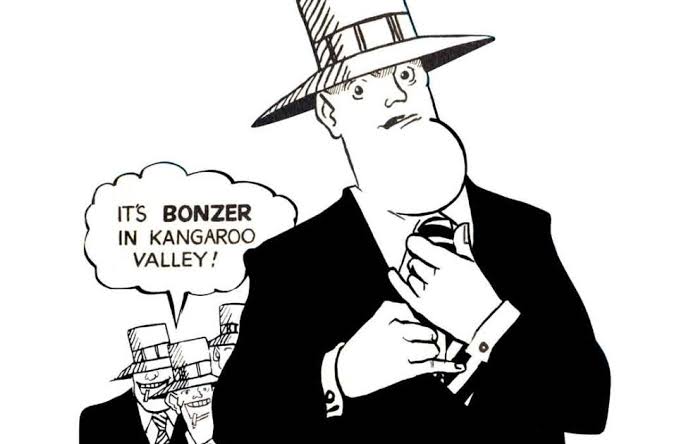
Back in London in the early seventies, when Earl’s Court in Kensington was such a mecca for itinerant Australians that it was known in London and in Australia as Kangaroo Valley, I was acquainted with many expatriate and transient Aussies. Indeed, I married one I’d met at the School of Oriental and African Studies where we were both studying.

Breaking free of the cultural confines of their conservative country, many young Aussies overcame historian Geoffrey Blainey called “the tyranny of distance” by flying across it or joining the famous Hippie Trail from Southeast Asia to what many still referred to as “The Old Country”. Some became household names, including actor Barry Humphries, writer Clive James, art critic Robert Hughes, journalists John Pilger, lawyer Geoffrey Robertson, fashion designer Jenny Kee and sociologist Germaine Greer, and bands like The Easy Beats and The Bee Gees, who were actually Poms returning home, and the Seekers. By far the most controversial were the editors of Oz Magazine, Richard Neville, Richard Walsh and Martin Sharpe, the defendants in the infamous Oz Trial of 1970, at the time, the longest obscenity trial in British legal history, and the first time that an obscenity charge was combined with the charge of conspiring to corrupt public morals. See The Australians who set 60s Britain swinging 

Most, however, were just ordinary folk, and they were so ubiquitous in London that they were often the butt of jokes (mostly good natured) and comedies, as personified in the cringeworthy uber-Coker Barry McKenzie which featured in Nicholas Garland’s comic strip in the satirical magazine Private Eye and Bruce Beresford’s dubious directorial debut, The Adventures of Barry McKenzie. 

I was fascinated and highly amused by the Aussie’s accents and their many hilarious colloquialisms, including “I’m as dry as a dingo’s conger” and “flat out as a lizard drinking”. To assist my communication with these antipodean strangers, I purchased a little lexicon assembled by Professor Afferbeck Lauder of the University of Sinny. I was assured that this was exactly how Strine was spoke by dinkum Strayans.

When I emigrated DownUnder a few years later, I found that very few natives spoke proper Strine – though there was The Paul Hogan Show – that the Australian accent was perpetually evolving due to the country’s exposure to outside cultural influences – especially American and British – and its increasing multiculturalism.

Rereading Let Stalk Strine recently, I found was a little like opening a time capsule or deciphering a text of Chaucerian English, though vagrant traces of the old vernacular linger still in such “Australianisms” as nukelar, envimint, gomint, and, of course, Straya. But even the use of words such as these is not widespread, and usually confined to interviews with National Party politicians and Pauline Hanson.

The book is still available, and although air fridge Strines and new Strines no longer speak the lingo, it is picture of the strine wire flife half a century ago.

Here are some of my personal favourites. They’re still pretty grouse after all these years.

There’s “baked necks” and “egg nishner”, “garbled mince” and “nairm semmitch”, the public speaking opener “laze and gem…”, and the nursery rhyme Chair Congeal. There’s idioms like “fitwer smeeide” and “fiwers youide”, translated as “if I were you, I would” and “if I were you, I’d…” as in “fitwer smeeide leave him. He saw-way sonn the grog” and “fiwers youide leave him anode goan livener unit”. And there’s the prefix didjerie as in “didgerie dabout it in the piper” and “ didgerie lee meenit or were you kidding”, and, of course, “he plays the didgerie do real good”.

My personal favourite, relevant, apt even, to this day is “Aorta”.

To quote the author, it is “the personification of the benevolently paternal welfare state to which all Strines – being fiercely independent and individualistic- appeal for help and comfort in moments of frustration and anguish. The following are typical examples of such appeals. They reveal the innate reasonableness and sense of justice which all Strines possess to such a marked degree: “Aorta build another arber bridge. An aorta stop half these cars from cummer ninner the city – so a fella can get twerk on time”. “Aorta have more buses. An aorta mikey smaller so they don’t take up half the road. An aorta put more seats in ‘em so you do a tester stand all the time. An aorta put more room in ‘em. You can tardily move in ‘em air so cradled. Aorta do summing about it.”

For more on Australia in In That Howling Infinite, see Down Under

Al Stewart’s Soho (needless to say …)

Soho feeds the needs and hides the deeds, the mind that bleeds
Disenchanted, downstream in the night
Soho hears the lies, the twisted cries, the lonely sighs
Till she seems lost in dreams
Al Stewart, Soho (needless to say) (1973)

Whenever I recall London’s Soho in the sixties, I always think about my bedsitter days in the city in the early seventies and also, British singer-songwriter Al Stewart’s over-orchestrated but quite excellent debut album of 1967, Bedsitter Images. 

My bedsitter images

My bedsitter images

You could say that I knew Al Stewart’s London ‘ere I first knew London. I bought the album when, as a sixth former, I first saw him perform at the famous Jug o’ Punch folk club in Digbeth, Birmingham, run by The Ian Campbell Folk Group.  I’d go there regularly with my schoolmates – we saw some great singers, including a young Joni Mitchell in the summer of 1968 – it was love at first sight, and I bought her first album there too: Songs from a Seagull). Al may have autographed his record – I can’t recall. It was stolen from my bedsit room in Reading in 1970 along with many of my favourite discs – including that one of Joni’s.

Maybe it’s about what here in Australia – borrowing from our indigenous compatriots – we might call “spirit of place”: the association with the streets within a hop, skip and an amble from Old Compton Street out into Shaftsbury Avenue and that bookshop in Charing Cross Road, the opening verse of the second track Swiss Cottage Manoeuvres, and that flat in Swiss Cottage, a suburb I used to frequent in the seventies when several of my friends lived there. You can listen to the whole of album below.

In a trawl through my back pages (OK! Enough with the Bob Dylan already!), wrote of my early encounters with Soho:

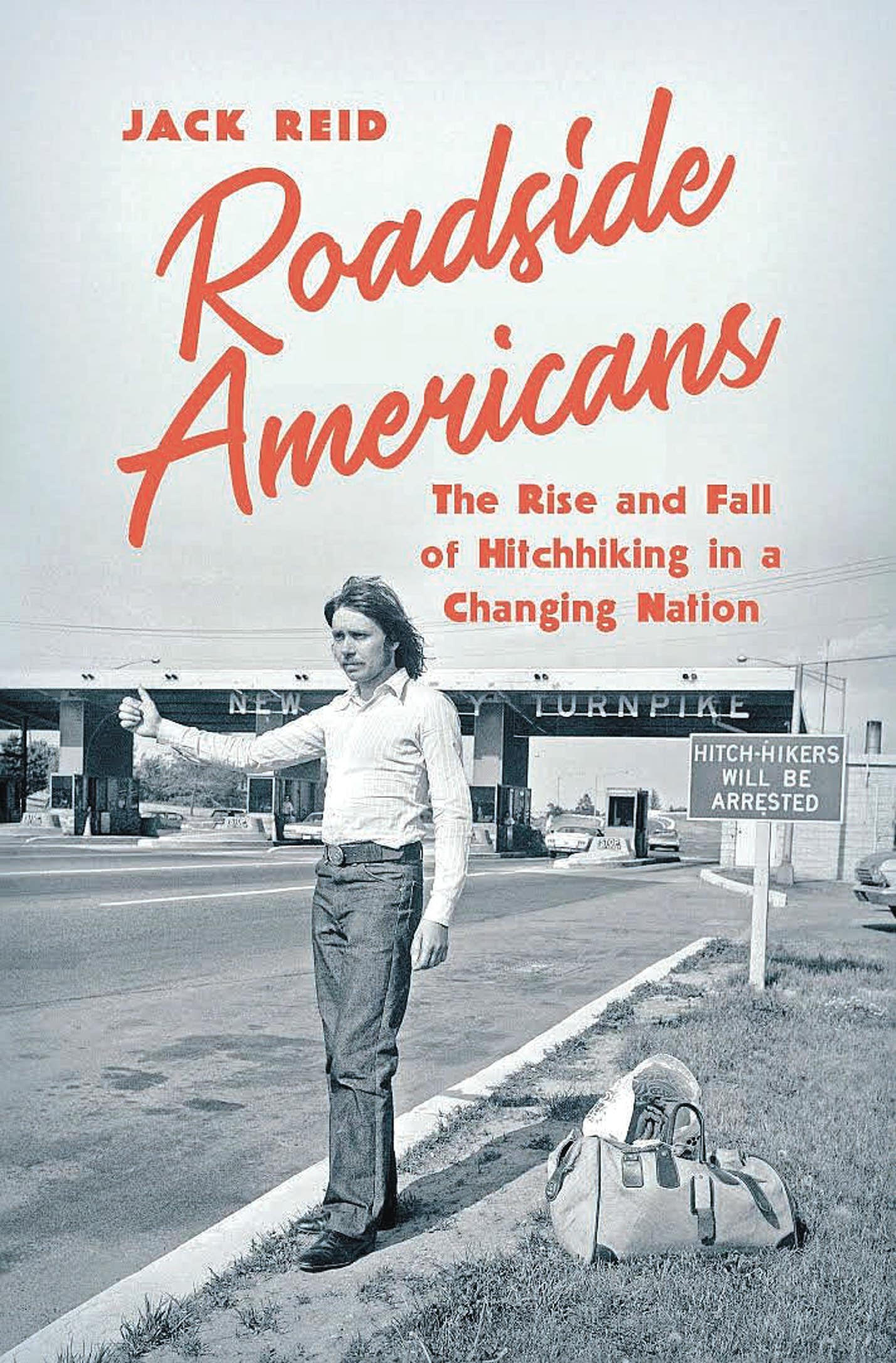
”As a sixth former, I’d often hitch to “swinging” London for the weekend, to explore the capital and visit folk and jazz clubs, kipping in shop door-ways and underground car parks under cardboard and napping wrapped in newspapers, and eating at Wimpy bars and Lyons teas houses”.

And naturally, I discovered Soho, a bright, colourful and disreputable warren of narrow streets behind the theatre-strip of Shaftesbury Avenue, with its mix of cafés, trattorias, delicatessen, book shops and strip clubs – and Carnaby Street, internationally famous by then as the fashion mecca and the “place to be” of “Swinging London”.

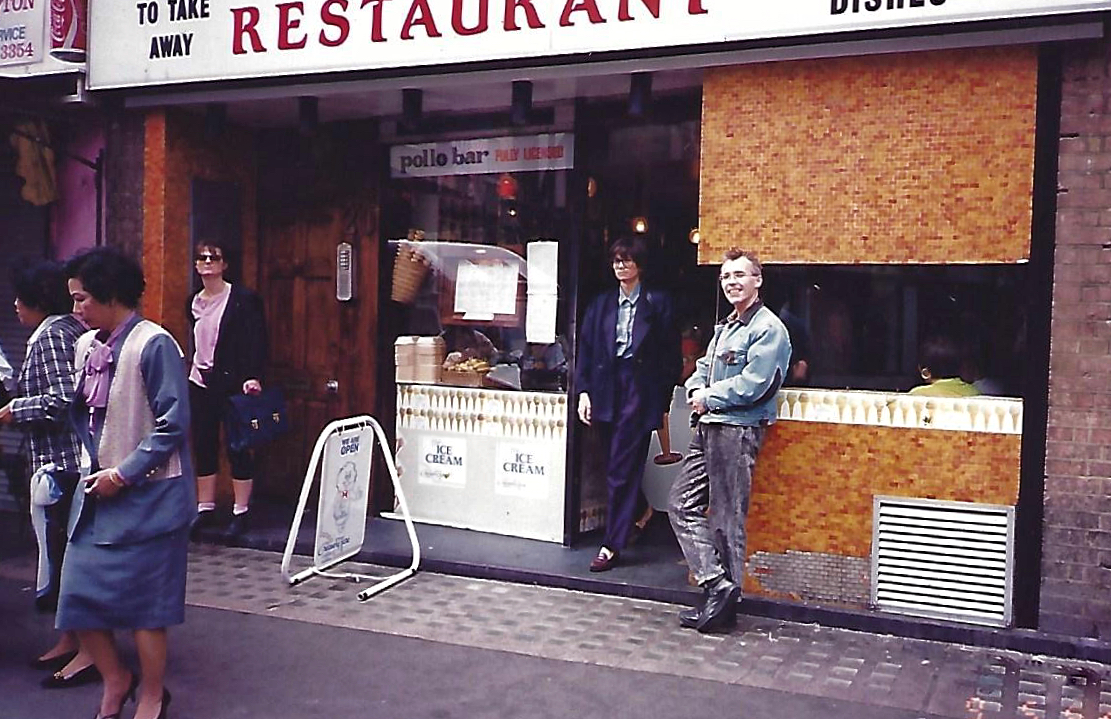
“… the motorway from Birmingham to London was a road well-traveled. In my final year at Moseley Grammar, I’d often hitch down to London for a weekend with pals who’d gone there before. We’d hang out at cheap and cheerful Pollo’s Italian restaurant in Old Compton Street in Soho and the Coach and Horses across the road, and go to Cousins folk and blues joint in a cellar in nearby Greek Street, and the 101 Jazz Club off Oxford Street. Bunjies folk cafè and Ronnie Scott’s jazz club were just around the corner. After a meal or a pint, I’d often catch the last tube to the end of the line closest to the M1. I can’t recall how many times I headed off into the night; and there were always drivers on the road at the witching hour. I guess many folks “get the urge for going”, as Joni sang back then, “and they had to go …” And in those generous times, people were happy to offer a lift to a wayfaring stranger – gentle souls who would not leave strays stranded by the dark wayside; lonesome folks seeking company and conversation in the dark night of the soul; curious people wondering why a young man would hitch the highways in the middle of the English night”. There’s more in  Ciao Pollo di Soho – the café at the end of the M1.

Pollo. The café at the end of the motorway

I saw a werewolf with a Chinese menu in his hand, walking the streets of Soho in the rain. Warren Zevon

There was something vicarious in ithe seedy, needy, greedy vibe of the priapic songs on Al’s follow up albums. An old friend and Al Stewart fanboy who has now passed on called them aural masturbation. Although there were many “love chronicles”, the title track of his second album, Al also wrote about melancholy middle aged suburban couples, historical events and more, with the odd foray into poetic mysticism, self-reflection, and also, nonsense. And some excellent instrumentals – he is an imaginative and flamboyant guitarist. My flat mates and I were all fans of Al back then, and went to most of his gigs when he played in London. Here’s one of our favourite ‘history’ songs:

In the early seventies, when a girlfriend started going out with Al, I actually got to know him for a brief while. Indeed, once, when he played in Birmingham Town Hall, me and a couple of pals drove up to my old hometown to see him, and after the show, invited him back to my folks’ place for a late night fry up. My mom reckoned he need fattening up. And afterwards, she and Al sat in the kitchen for a couple of hours talking about pop music. “I love Cat Stevens”, mom said. “Oh, I much prefer the Incredible String Band”, said Al. “Oh, they’re very weird, but Paul like them!” She said. Then they got talking about Mick Jagger. And my dad, in the sitting room, said to us others gathered there, and referring to Al’s stature, said “there’s not much to him is there!”. Strange but nice how you recall these little things. The folks have passed on a long time ago …


Afterthought – Clifton in the Rain

Whilst I always associate Al Stewart with London and Soho, my favourite song is set in a Bristol suburb. Released in 1970, it is gentle, lyrical, and paints a beautiful picture of English weather – and it features the gorgeous Jaqueline Bisset.

The rain came down like beads
Bouncing on the noses of the
People from the train
A flock of salty ears
Sparkled in the traffic lights
Feet squelched soggy leaves across the grain
I took my love to Clifton in the rain

And all along the way
Wanderers in overcoats with
Collars on parade
And steaming in the night
The listeners in the Troubadour
Guitar player weaves a willow strain
I took my love to Clifton in the rain

Jacqueline Bisset
I saw your movie
Wondered if you really felt that way
Do you ever fear
The images of Hollywood
Have you felt a shadow of its pain
I thought of you in Clifton in the rain

There’s a nice retrospective on the Troubadour Folk Club in Bristol here:

English actress Jaqueline Bisset

Something About London

Ciao Pollo di Soho – the café at the end of the M1

Blue remembered hills … memories of an old pal

That is the land of lost content,
I see it shining plain,
The happy highways where I went
And cannot come again
From The Shropshire Lad. AE Houseman

A few days ago, a Facebook message popped up out of the blue from England. It was from the niece of a friend – the daughter of his sister Jean. Heather wrote that they’d like to hear some stories of our time together. Predictably, as it so often is in these declining years, memories came flooding back.

Dave Shaw died suddenly of a brain hemorrhage in in the town of Pershore, Worcestershire, on Saturday 5th January 2013 at the age of 64. He was farewelled at his beloved Pershore Abbey, an historic church I knew well from many visits to his home, on Wednesday 23rd January. I hadn’t seen him since my visit to England in the summer of 2005, and I learnt of his passing by accident. My mother passed away in Nottingham at the end of January, and as Dave would often drop in and visit her when he passed through Birmingham, I rang him up to tell him of her death. I tried his home many times without answer, so I reckoned I’d contact Pershore Council to get in touch with him. My google inquiries ended up at The Evesham Journal, a local Worcestershire newspaper. And that’s when I learned that he had gone.

The following is an expanded version of a piece published in the Evesham Journal on1st February 2013

Our back pages

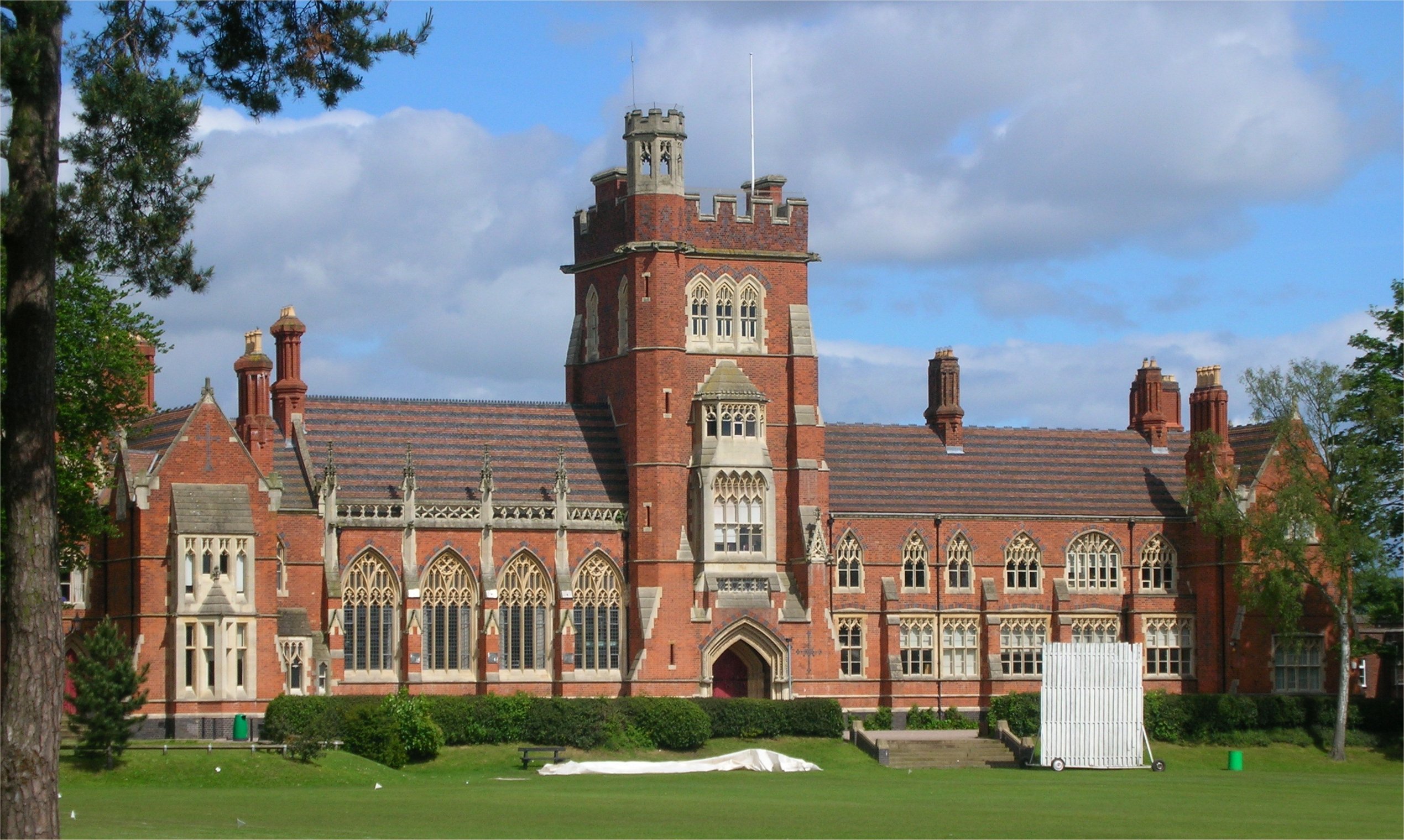
Dave was my oldest friend –  from when we entered Moseley Grammar School in Birmingham in September 1960.

Moseley Grammar School, Birmingham

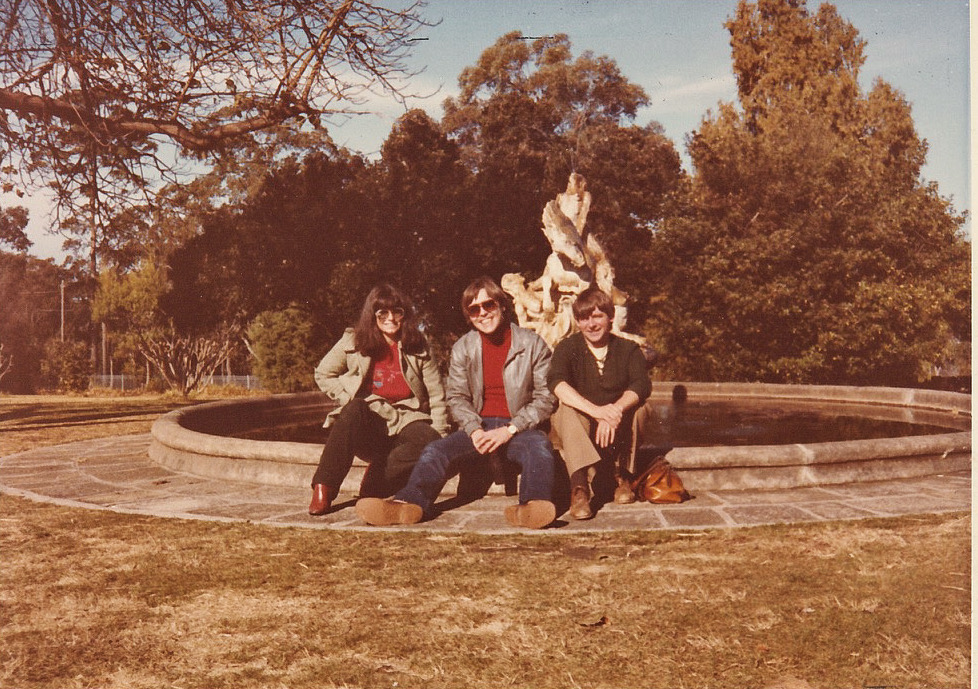
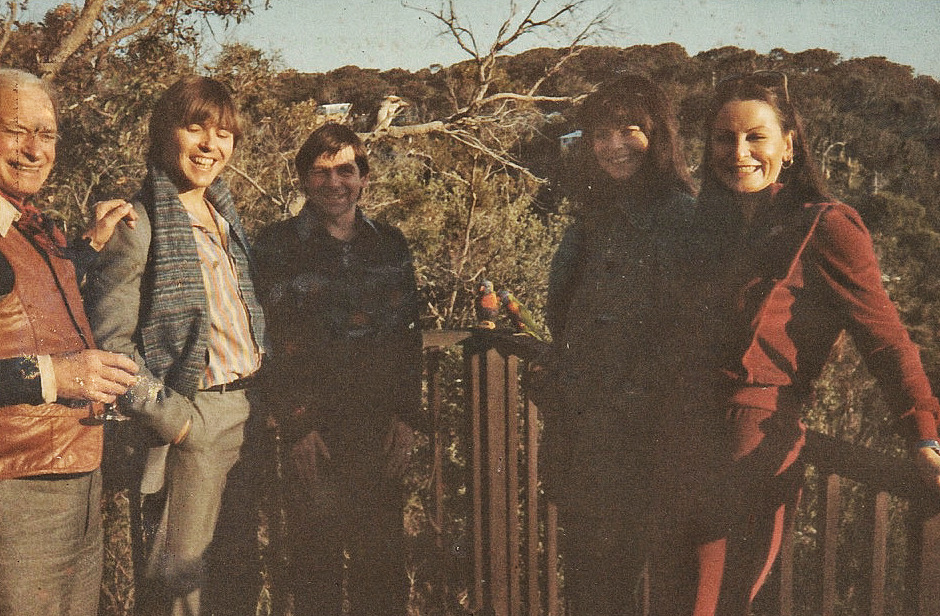
Through the Sixties, we came of age together, shared music, frequented folk clubs, did pub crawls through Birmingham, went to Birmingham City football matches (we were Blues fans and not supporters of Aston Villa, the other Brummie team) and hitchhiked to CND rallies and folk festivals. When we left Brum in 1967 and lived in other cities, we visited each other often and always remained in touch. Although I moved to Australia in 1978, I travelled to Pershore every time I returned to England and caught up with him and his family. One time, Dave came out to Australia. There’s a couple  of pictures here of that trip, featuring Dave, myself, my ex, Libby, and her sister Mary Jane, who was once a famous singer here in Australia but, sadly, took her own life in 1990. It must’ve been about 1982 as Libby and I separated the following year.

But let’s go back to the days when school chums became friends, the time when you began to address your mates by their christian names and not by surname, as was customary in grammar schools back then. Back to the Sixth Form when we began to “put off childish things” and as much as we could in our provincial and underage circumstances, “got with” the sixties zeitgeist and engaged with the wider world. We read the poetry of the American Beat Poets, our own Mersey Poets and John Lennon. We listened to the music, and particularly Bob Dylan. During school holidays, four of us, Dave, Peter Bussey, Malcom Easthope and myself, would go to the Jug o’ Punch in Digbeth run by the celebrated Ian Campbell Folk Group, to drink bitter, sing along to folk songs and listen to the likes of The Dubliners, Al Steward and Roy Harper, and, sigh, a young, gorgeous and melodious Joni Mitchell. We’d meet once a week at the Golden Eagle in Hill Street to talk politics and poetry, and read our own juvenile verse, before heading off to other pubs in the Birmingham CBD.

In those days, it was cool for teenagers to ride motor scooters – if they could get their parents permission. Several of my pals owned one, including Dave who’d bought a second hand lambretta. I recall this today because it reminded me of one of our better-heeled chums who had a brand new model. His dad was a publican, and one time, he threw a party at his father’s pub in Coventry and a mob of us got a lift there from another student who’d actually owned a car – a rare thing in those days. It came back to me today how that party ended for me and Dave. We both got very drunk, I tripped and sprained my ankle, and as we were driven back to Brum, I was sprawled in the back seat, and Dave, sitting beside me, chucked up. That wasn’t the last time I injured myself whilst inebriated. I can’t recall Dave getting as rat-arsed again. 

Later, we graduated to cannabis, and would toke at each other’s homes on weekends – one time, we hired a rowboat in Stratford on Avon and spent a stoned afternoon on the river. So Wind in the Willows. One lovely early summer’s day in 1969 when “we happy few, we band of brothers” camped out in my room at Reading uni, and dropped acid by the lake in nearby Whiteknights Park. It was a strange, trippy day, during which there was a police bust on my hall of residence, and we watched in amaze as people rushed down to the lake and threw many unidentified objects therein.

Fast forward to the eighties …

Though settled in Australia, I visited England often, and always took time out to catch up with Dave in either Birmingham or Pershore. When I was performing at folk clubs in 1987 and 1988, he acted as my local contact person. He also introduced me to his old friend Stan Banks, who’d served in World War II a bomb aimer and photographer on the night raids over Germany. On retirement from school teaching, Stan dedicated himself to the peace movement – which was how Dave came to meet him. Stan shared with us many enthralling and harrowing tales of his flying days.

Dave and I shared a common interest in the environment, cultural heritage and wildlife and we would exchange news on our endeavours. When we’d visit Pershore, he’d always take us out on a ramble or a drive to some out of the way place with an archaic name and take in a few nice country pubs on the way. On one visit, he gave me an instruction sheet for building boxes to shelter micro-bats. We have five of them around our home in northern New South Wales, and several of them are occupied all year around.

Green and progressive in word and deed, and dedicated to Pershore, Dave served as a Town Councillor for twenty-two years. Whenever we’d walk around town together or enter shops and pubs, folk would be always coming up to talk to him. At his funeral, the flag atop the abbey was flown at half-mast for the first time ever whilst fellow councillor Chris Parson praised him as “a giant of a man” – which I found apt but amusing considering Dave was short and slight of stature.

The feature photograph of him with his binoculars and bird book outside the glorious Pershore Abbey is a beautiful way to remember him.

Norman Linsday Gallery and Museum, Faulconbridge, NSW

Dave meets the Boyd Family, Palm Beach, NSW

When Heather read this story, she wrote:

“That is absolutely beautiful! Thank you so much, I hope you had as much pleasure from writing that as I did reading it. I laughed out loud and cried. Lovely. My mum will love this. ❤️ p.s I knew all along he was a stoner!! And with that asthma too? What was he like? I miss him a lot. X”

I replied:

“A lovely bloke. A gentle, laid back soul who was always in a calm, good mood. I recall a time when he visited me in London just as I was about to head off to the Middle East. I’d just had a typhoid shot and  was as sick as a dog – and he’d come all this way to see me off. He was so cool about it. What will be will be. Que sera sera! Did you know he was fluent in Spanish. It was one of his passions. He had Portuguese too, and I believe some Russian. I went through a “Russian phase” too in the early seventies, but ended up in the Middle East instead, by accident, and learned Arabic. Still learning. It’s effing difficult if you don’t have a gift for languages, but it keeps the old brain active.

Heather:

Sounds just like the Dave I knew. I am glad I found one person who he went to the Blues with him as I always wondered. Did you know we put some of his ashes at St. Andrews? Yes he was a language genius wasn’t he? Yes he was a language genius I think. Apparently he could get by in about 9 languages but he was very humble about it.

The ‘sixties … memories of London and Ireland

Dave is referenced many times in In That Howling Infinite, though, for privacy reasons, not by name. I also dedicated one of my poetry books to him: Tabula Rasa – Early Days. Below are a couple of extracts that are specifically talking about Dave.

“As I wrote in a recent trawl through my back pages, Song of the Road – my hitchhiking days: “… that motorway from Brum to London was a road well-traveled. In my final year at Moseley Grammar, I’d often hitch down to London for a weekend with pals who’d gone there before. We’d hang out at cheap and cheerful Pollo’s Italian restaurant in Old Compton Street in Soho and the Coach and Horses across the road and go to Cousin’s folk and blues joint in a cellar in nearby Greek Street, and the 101 Jazz Club off Oxford Street. Bunjies folk café and Ronnie Scott’s jazz club were just around the corner. After a meal or a pint, I’d often catch the last tube to the end of the line closest to the M1. I can’t recall how many times I headed off into the night; and there were always drivers on the road at the witching hour. I guess many folks “get the urge for going”, as Joni sang back then, “and they had to go …” And in those generous times, people were happy to offer a lift to a wayfaring stranger – gentle souls who would not leave strays stranded by the dark wayside; lonesome folks seeking company and conversation in the dark night of the soul; curious people wondering why a young man would hitch the highways in the middle of the English night. Yes, Café Pollo was indeed a significant landmark of my London days:. From Ciao Pollo di Soho – the cafe at the end of the M1

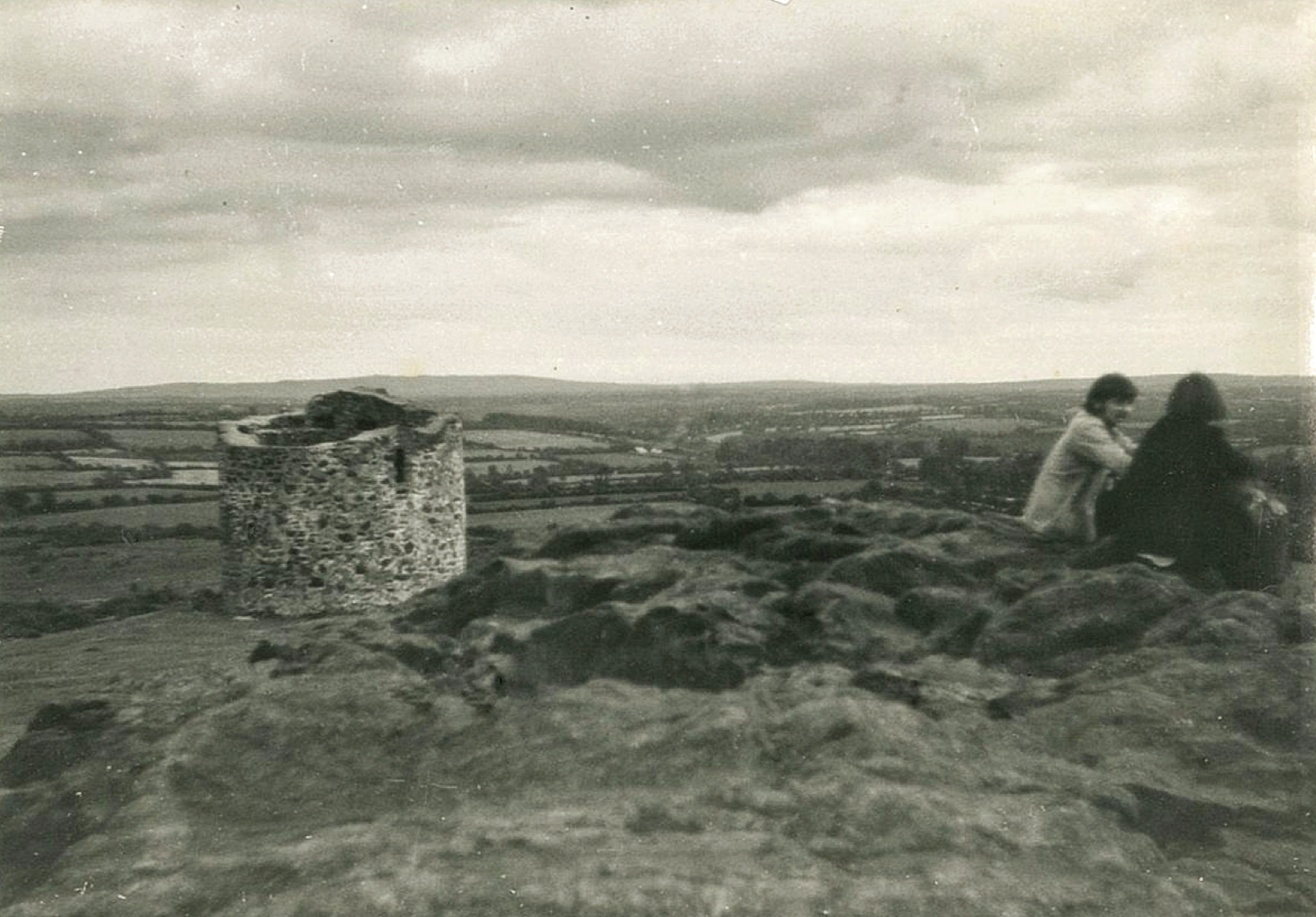
“In the summer of 1969, my brother and I and an old chum spent several weeks in an Enniscorthy that looked and felt like it had not changed since Aunty Mary’s day – so well portrayed in the academy award nominated film Brooklyn. Dressed as we were in hippie garb and sporting long locks, we cut incongruous figures in the pubs and at the local hop, and were so unsuccessful hitchhiking around the county that we walked many a long Irish mile. We hiked to Killane, Sean Kelly’s country, and inspired by the song, climbed upwards though heath and hedge to the top of Mount Leinster. We stayed at 13 Patrick Street and spent a lot of time sitting up on Vinegar Hill, beneath its round tower, looking down on the River Slaney and the town beyond. My brother was a keen photographer, and he took the following picture”. Thats Dave on the left, and me on the right. From The Boys of Wexford – memory and memoir 

“On Vinegar Hill o’er the pleasant Slaney”

And a final vignette, also featured in Song of the Road,from 1970, I think: 

One glorious English summer I arranged to meet up with my late pal Dave Shaw in Cambridge, where he was attending a summer school at the University, and go to the celebrated Cambridge Folk Festival. I clocked off from my work on the motorway, got home, just ten minutes away – I said we were close! – showered and packed, and headed to the Clock Garage roundabout and put out my thumb. I took the M1 to London’s North Circular, and cut across to the A10 (there was no M11 in those days) and, And, my stars were alignment on this night ride, arrived at Dave’s digs in time for breakfast.I don’t remember much of the festival bill, but American folk diva Odetta was singing, and also, our idol, Roy Harper, England’s high priest of angst.

I had to leave Cambridge around Sunday lunchtime, after Roy’s last set, to return to Brum for work on Monday. Rather than head back down to London, to save time – a quixotic idea when you are hitching – I decided to cut cross-country to connect with the M1 at Newport Pagnell – in those days before GPS and route planners, a cheap, creased road map from WH Smith was the best we had, plus a good sense of direction, fair weather and loads of luck. And such are the movements of the cosmos, that my one and only only ride took me to, yes, what was then the bucolic village of Newport Pagnell. It was one of those summer evenings in England, when the days are long, the air warm and languorous, and the light, luminous. Birds were singing and church bells were ringing for evensong, and in my mind’s ear, I’d like to imagine that cows were lowing and sheep were bleating. One could almost feel an ode coming on. So there I was, once more, at the services on-ramp, hitching a ride to Birmingham , and hopping aboard an old Land Rover for what was the slowest and noisiest ride ever – which took me almost to my door”.

Ciao Pollo di Soho – the café at the end of the M1

The Boys of Wexford – memory and memoir

Song of the Road (1) – my hitchhiking days

“When we were younger, time appeared to move more slowly than in our later years. It is in our nature to imagine and indeed, re-imagine our salad days as the best of times and the worst of times. But looking back through our back pages, these years was perhaps no better or worse, no more significant or seminal than any era fore or aft. Like objects seen through the rear-view mirror, memories always seem a lot closer and bigger. When I’ve revisited roads and streets where I grew up, playing or sauntering or rolling home with a skinful in the pale moonlight, they are no way as wide, long or spacious as they are to the mind’s eye. Vivid memories can distort time, making you feel that that weren’t that long ago”. From Blue remembered hills – a land of lost contentment 

Blue remembered hills – a land of lost contentment

The Rite Stuff – the coronation’s pomp and circumstance

… remember in this country of yours that every man, woman and child who sees you will remember it with joy – remember it in the words of that 17th century poet who wrote these lines, “I did but see her passing by and yet I’ll love her till I die”.
Australian Prime Minister Sir Robert Menzies to Queen Elizabeth, Melbourne, 1963.

Watching a coronation is the constitutional equivalent of visiting a zoo, and finding a Triceratops in one of the enclosures.
British historian Tom Holland

The United Kingdom is alone in Europe in marking the accession of a new monarch with a coronation. Indeed, no monarchy can lay claim to a longer lineage – one reaching back it is said to the Bronze Age and rooted in history and religion, and also magic and superstition. Inside Westminster Abbey, ­audiences will be encouraged to follow six phases of what is essentially a medieval rite, some of it dating back to Anglo-Saxon kingship: the recognition, oath, anointing, investiture (which includes the crowning), enthronement and homage. Britain is indeed the only ­European monarchy to retain a religious ceremony.

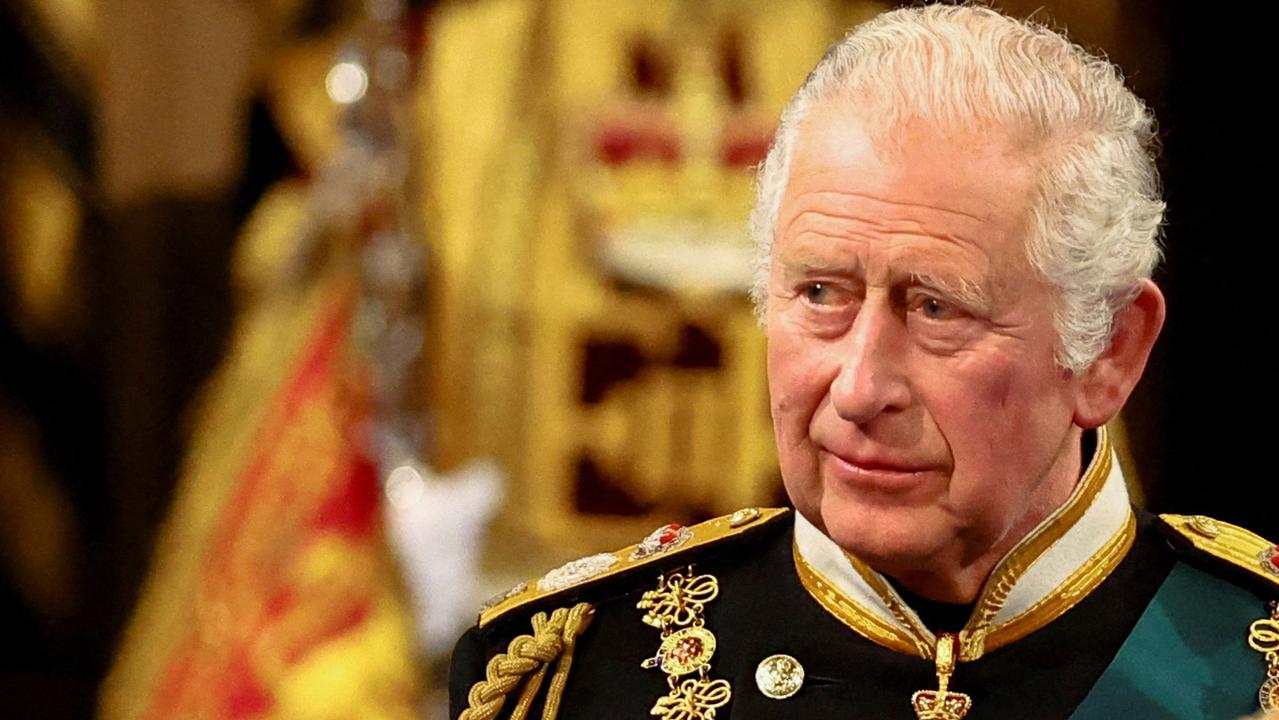
So, anyone expecting that the upcoming coronation of King Charles III and Queen Camilla would be a thoroughly modern affair suited to the 21st Century is likely to be disappointed.

One significant innovation, however, is that millions of other Commonwealth citizens attending coronation events and watching on television will be asked to cry out and swear allegiance to the King with the public given an active role in the ancient ceremony for the first time in history.

King Charles III’s coronation service – the first for a British monarch in 70 years – has been modernised to include the first-ever Homage of the People and will also include faith leaders from Jewish, Hindu, Sikh, Muslim and Buddhist communities to better represent the make-up of modern Commonwealth countries. A new homage was written to allow “a chorus of millions of voices” to be “enabled for the first time in history to participate in this solemn and joyful moment”, Lambeth Palace – the office of the Archbishop, announced. The Archbishop of Canterbury will call upon “all persons of goodwill in The United Kingdom of Great Britain and Northern Ireland, and of the other Realms and the Territories to make their homage, in heart and voice, to their undoubted King, defender of all … a great cry around the nation and around the world of support for the King” from those watching on television, online or gathered in the open air at big screens.

…. our strength in ages past

As these two highly entertaining and most informative articles makes clear, whilst the guest list is much shorter than that of past right royal enthronements, in the interests of public health bad safety, we are told.  There will be no silk stockings and knee breeches for the King or any of the peerage; the number The length of the ceremony has been shortened, for economy and impatient news cycle. The banquets and street parties have been exhorted to eat quiche, a nod to HM’s vegetarianism. The old times are by no means a’changin’. But, rites and rituals historically and hysterically archaic and arcane will prevail as will the imprimatur of the deity, the unctuous sanction of the demographically diminished Church of England and the rights and privileges of the theoretically hereditary aristocracy are upheld in time-honoured, anachronistic fashion.

The first is written by Australian constitutional expert Anne Twomey who has taken time off from her busy day-job explaining defending the coming referendum on the Indigenous and Torres Strait Island Voice to Parliament.  the second, by Observer columnist Catherine Bennett describes the amazing and unforetold apotheosis of soon to be Queen Camilla, Charle’s longtime paramour.

But first, a brief forward from celebrated/celebrity Anglo-Australian barrister and author Geoffrey Robertson. He is no fan of royalty, and is possessed of a sharp pen and a wit to match:

“In London, plans for the coronation of the King and Queen of Australia proceed apace. The ceremony is entirely unnecessary because Charles has been our lawful king from the moment of his mother’s death. This event has no meaning in law; it is merely a superstitious rite whereby God is supposed to anoint the King to run the Church of England, a church to which, according to our last census, only 9.8 per cent of Australians adhere. [Indeed, some 40% of Britain’s profess to having no religion, whilst Christianity accounts for a large diminishing proportion of believers in a celestial deity]

But sadly we will not see the most important bit, the spiritual centre of the ceremony, which the palace has decided must be censored. This is the divine appointment itself. Suddenly, in a Pythonesque moment, into the abbey will rush a team of Knights of the Garter carrying a large tent, which they will erect to cover the King and Queen, the Queen’s hairdresser, and the Archbishop of Canterbury. Inside, unseen by the public, the King will change into a white shirt and be anointed with holy oil – on his head, his breast, and his hands – ladled from the coronation spoon. The holy oil has already been mixed in Jerusalem, with the traditional ambergris eliminated reportedly because the King supports “save the whales”.
The Queen is then anointed on her head, and the royal hairdresser steps forward to clean her up. The King quick-changes back into his purple robes, and the divinely appointed monarchs step out of the canopy and back into view for Charles to swear the coronation oath, “to maintain the Protestant Reformed religion and preserve inviolably the settlement of the Church of England”. The King is at last allowed to sit on his throne (it’s only built for one) holding his orb and sceptre, to “receive homage” from the audience. It is uncertain whether Prime Minister Anthony Albanese will manage to swear to be “your liegeman of life and limb and of earthly worship, to live and die against all manner of folks, so help me God”.
Amen!

Meanwhile, down under …

On Saturday, when the Archbishop of Canterbury conducts the coronation at Westminster Abbey, he will not just be crowning Charles as the King of England, but the King of Australia as well – though we Aussies will not be granted a three day holiday for the occasion like our British cousins.

Australians should never underestimate Charles III’s deep emotional connection to this country.

When the late Queen was crowned in 1953, she promised “to govern the peoples of the United Kingdom of Great Britain and Northern Ireland, Canada, Australia, New Zealand, the Union of South Africa, Pakistan and Ceylon, and of [Her] Possessions and the other Territories to any of them belonging or pertaining, according to their respective laws and customs”. These were the nations which at the time were British dominions, and constituted what is still called “the Realm”, i.e. the countries which recognised the sovereign as their head of state.

The words of the coronation oath that Charles will take are briefer. As there are now 15 Realm nations (of which Australia is one), it has been decided not to list them all individually. His majesty’s promise will be to govern “the Peoples of the United Kingdom of Great Britain and Northern Ireland, [His] other Realms and the Territories to any of them belonging or pertaining”.

And thereafter, to reprise, we will be exhorted to pledge homage “in heart and voice, to our undoubted King, defender of all … “

On matters monarchical, read also in In That Howling Infinite, The Crown – the view from Down Under; Beyond Wolf Hall (1) – Revolution Road, Beyond Wolf Hall (2) – Icarus ascending, and Bringing it all back home – the missing mosaic and other ‘stolen’ stuff 

Expect arcane pomp during King Charles III’s coronation

Anne Twomey, The Weekend Australian, 22nd April 2023

What can we expect from Charles’ coronation? Picture: AFP

The right to brandish a wand, bear a golden spur or produce a right-handed scarlet glove is more likely to conjure associations with Hogwarts than Westminster Abbey. Yet these rights have been bitterly fought over by British families for centuries, leading to a tense wait for the email summons to fulfil their dynastic destinies at the upcoming coronation.

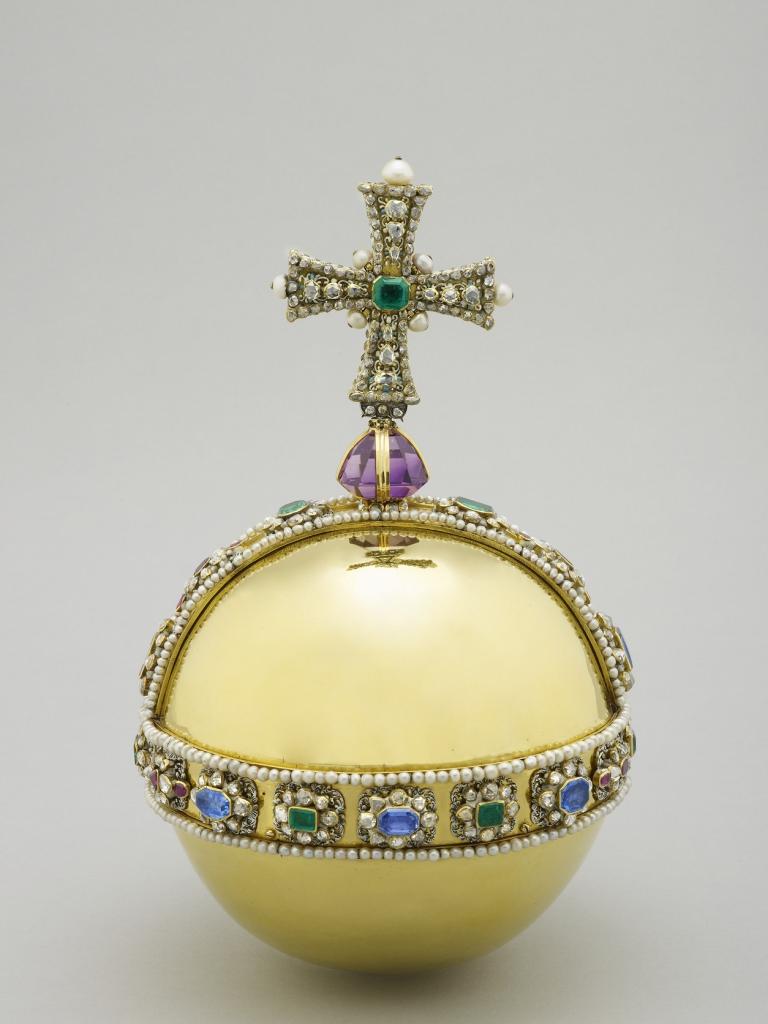
The Sovereign’s Orb was made from gold in the 17th century.
The Sovereign’s Orb, made from gold in the 17th century.
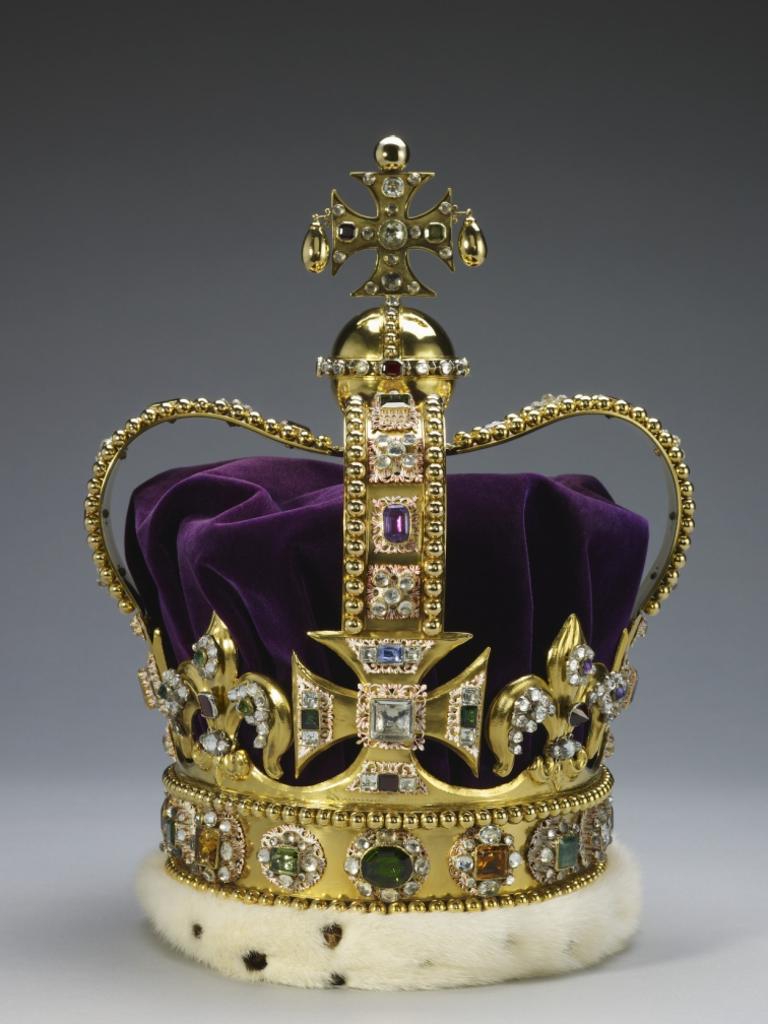
St Edward’s Crown will be used to crown the King. It was made for King Charles II in 1661, as a replacement for the medieval crown which had been melted down in 1649.
St Edward’s Crown, used to crown the King was made for King Charles II in 1661
to replace the medieval  one melted down in 1649 under Oliver Cromwell.

For King Charles III, it will be quite the dilemma. Does he cut out the historical rights and duties of ancient British families to perform particular services at the coronation, such as the King’s Champion, so he can present a modern, relevant monarchy to the world? Or would doing so set the monarchy adrift from the history that justifies its existence?

It seems he is taking a halfway approach, with some of the eccentric pomp and drama surviving, while other roles have been swept away into the dustpan of history.

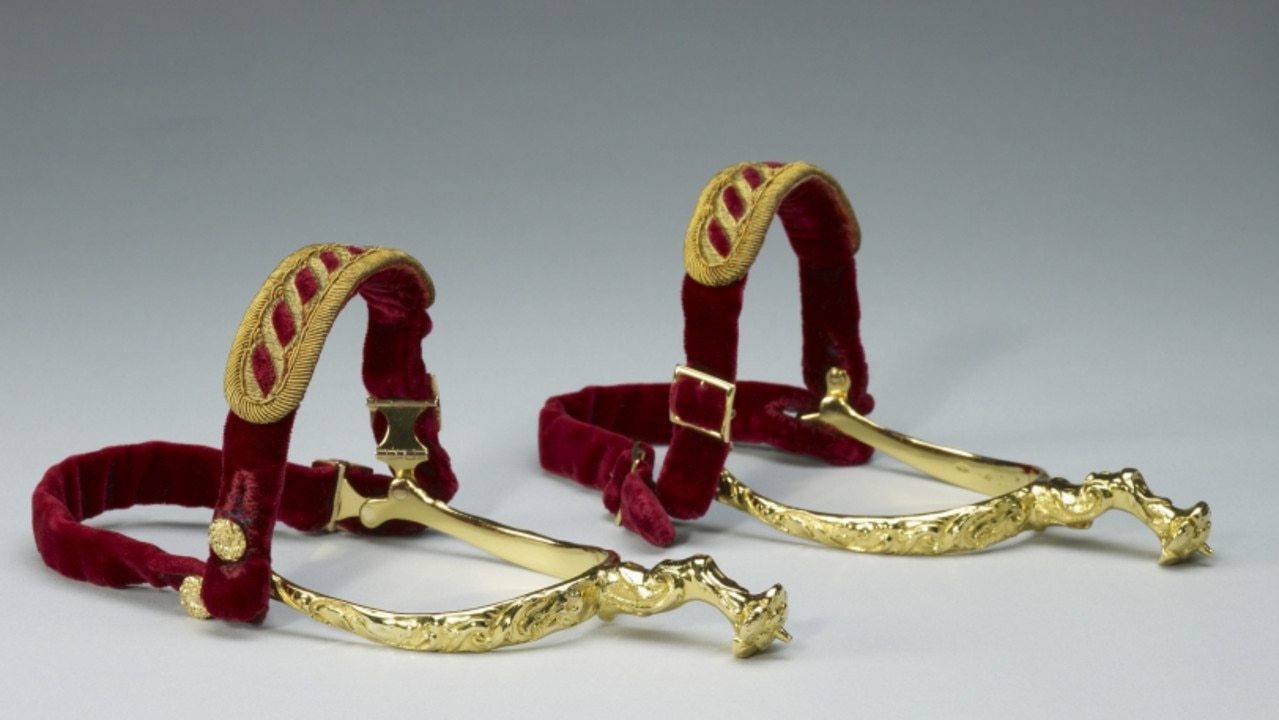
The golden spurs

One of the most fought-over roles has been to carry the golden spurs and present them to the King, touching them against his ankles.

The gold, leather and velvet spurs symbolise knighthood, and they were altered in 1820 for King George IV.
The gold, leather and velvet spurs symbolise knighthood

Spurs were first presented at the coronation of Richard the Lion­heart at Westminster Abbey on September 3, 1189. They symbolised his chivalry and his valour as a knight. John Marshal was accorded the honour of presenting them, and this honour has been passed down to his descendants.

The chronicler of Richard’s coronation recorded that there were “evil omens” at the service, including a bat that swooped around the king during the ceremony and a mysterious pealing of bells. Richard survived another decade until dying from battle wounds in 1199.

But the evil omen may have attached itself to the bearer of the spurs, as his line of descendants was sometimes disrupted, with one heir suffering summary execution after having been accused of sorcery in the 14th century and another being killed in a tournament. Second marriages and failures to produce male heirs resulted in disputes about which branch of the family had inherited its coronation rights.

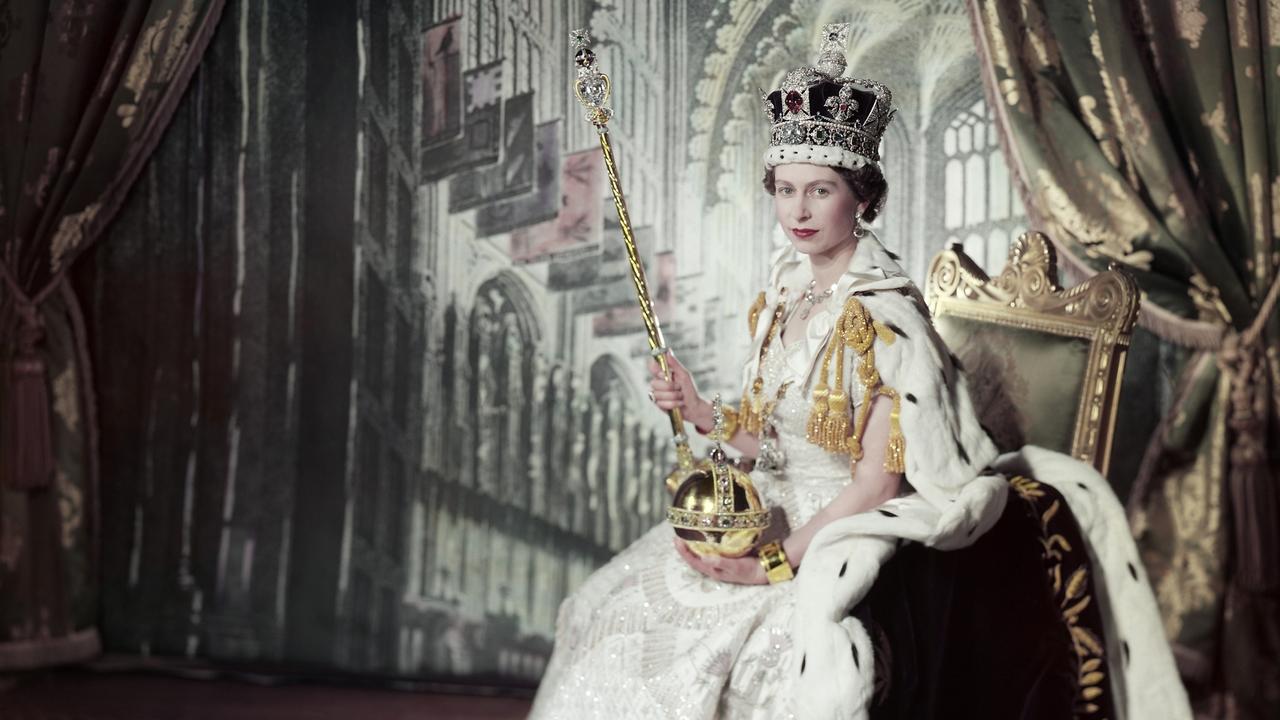
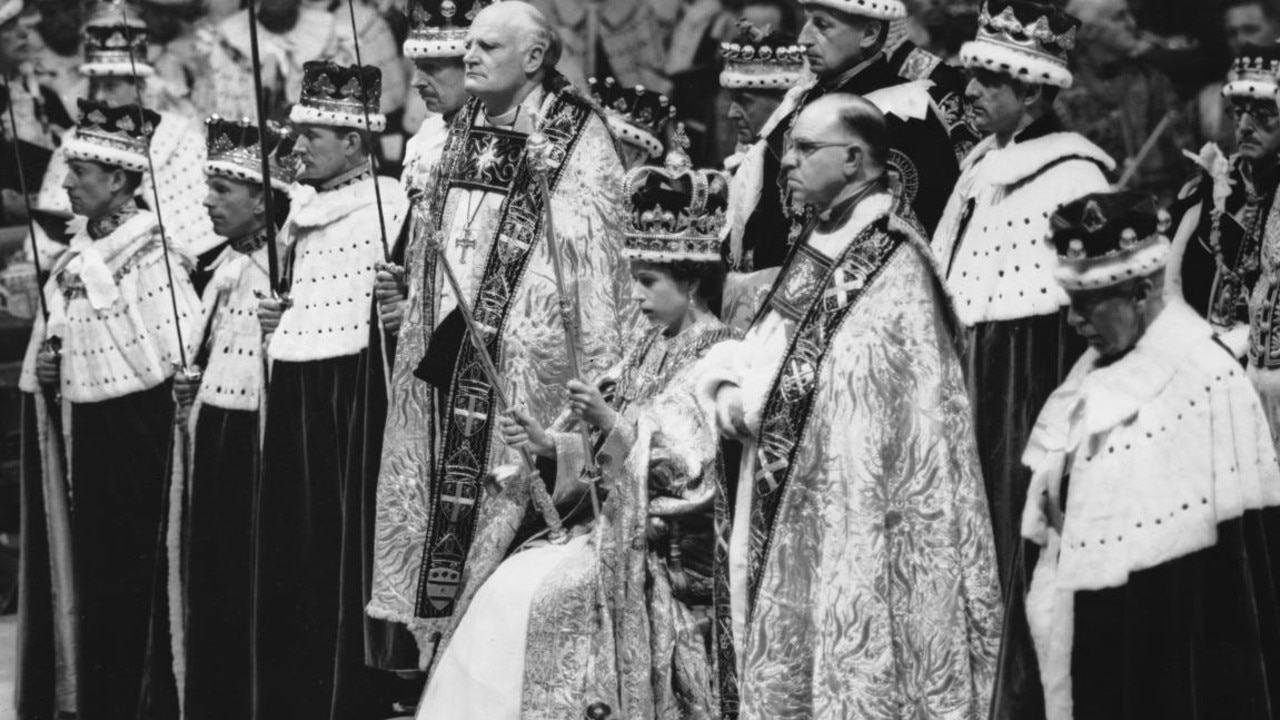
Queen Elizabeth II on her Coronation Day, 1953 by Cecil Beaton.

In the 19th century, the role was dominated by the redoubtable Barbara, Baroness Grey de Ruthyn, a notable fossil collector and geologist, who carried the spurs with aplomb at the coronations of George IV, William IV and Queen Victoria. But her two marriages and a surfeit of daughters who were co-heirs led to a messy chain of inheritance, with four families fighting for the coronation honour ever since.

These disputes were resolved before each coronation by a court of claims, where barristers armed with large scrolls of family trees would battle it out before eminent judges. In 1902, the court held that none of the three claimants had proved their right to carry the spurs at the coronation of Edward VII, and left it to the king to decide. He diplomatically decided that Baron Grey de Ruthyn could carry one spur and the Earl of Loudoun could carry the other. The same division was applied at the coronation of George V.

But in 1936 the coronation court of claims inconveniently found that three claimants had established their claim – Lord Hastings, the Earl of Loudoun and Lord Churston. King George VI, probably wishing he had three legs, found he could not divide two spurs into three and appointed Lord Hastings and Lord Churston to carry one spur each. The same decision was made in 1953 at the coronation of Queen Elizabeth II.

So who would win the right to carry the golden spurs at the coronation of King Charles III? The elderly Lord Churston died in February and the role instead has gone to Lord Hastings, a retired actor and farmer, along with the Earl of Loudoun, an Australian who lives in Wangaratta in Victoria. Each will carry one of the golden spurs.

As the Earl of Loudoun presents his spur, he might indulge a passing thought about how it could have been him on the throne. Some historians have argued that King Edward IV was illegitimate and that the throne should therefore have been passed down a different line to the current Earl of Loudoun.

But while his family still claims the right to present the golden spurs at the coronation, it does not make any claim to the throne.

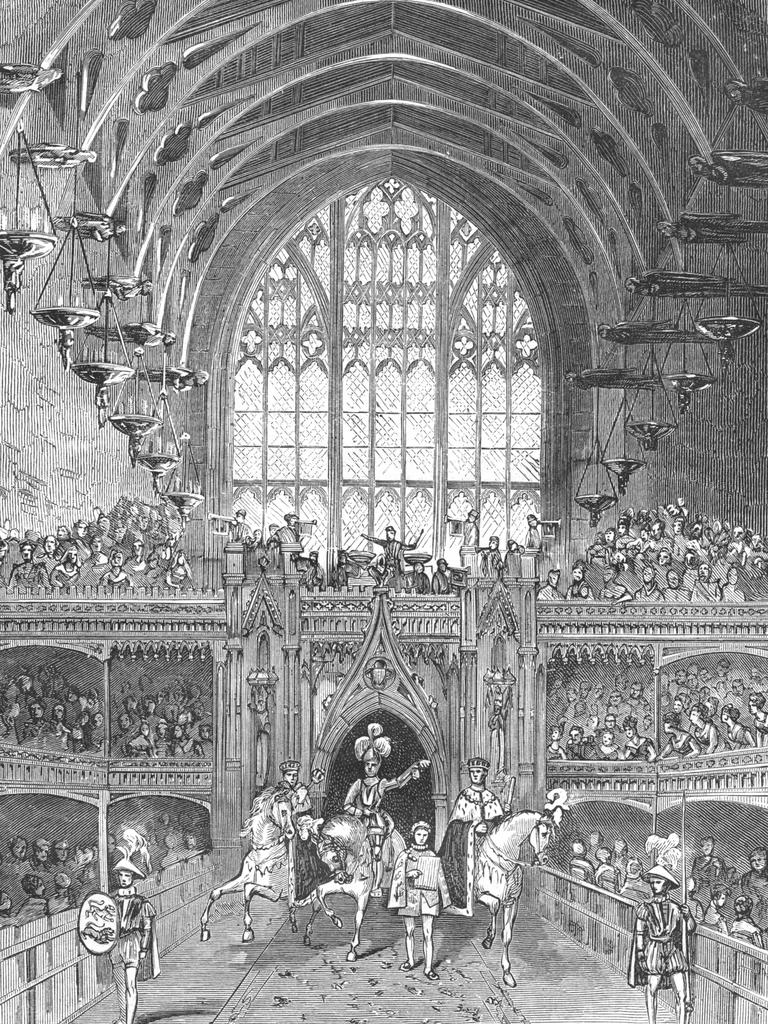
Coronation of George IV in Westminster Hall: The Champion's Challenge, 1897. Picture: Print Collector/Getty Images
Coronation of George IV in Westminster Hall: The Champion’s Challenge 1897. 

The King’s Champion

If the earl did challenge the King’s right to the throne, he could have to face in mortal combat a retired accountant and farmer, Francis Dymoke, who is the King’s Champion. This role, which he traces back to an ancestor who aided William the Conqueror, is actually attached to the ownership of his family home, the manor of Scrivelsby. Anyone who owns the land is the lord of the manor and is therefore the King’s Champion.

It would be interesting to see how a real estate agent would price this unusual land attribute, but as the Dymoke family has held on to the land for many centuries the role of King’s Champion has remained in the family.

Originally it entailed wearing full armour and riding a horse into the coronation banquet in Westminster Hall. The champion would throw down a gauntlet three times in a challenge to anyone who disputed the king’s title. If the challenge was accepted, there was an obligation to fight to the death. The sight was so impressive, however, that no one ever challenged the champion, although one wonders whether any “sovereign citizens” today might take up the gauntlet.

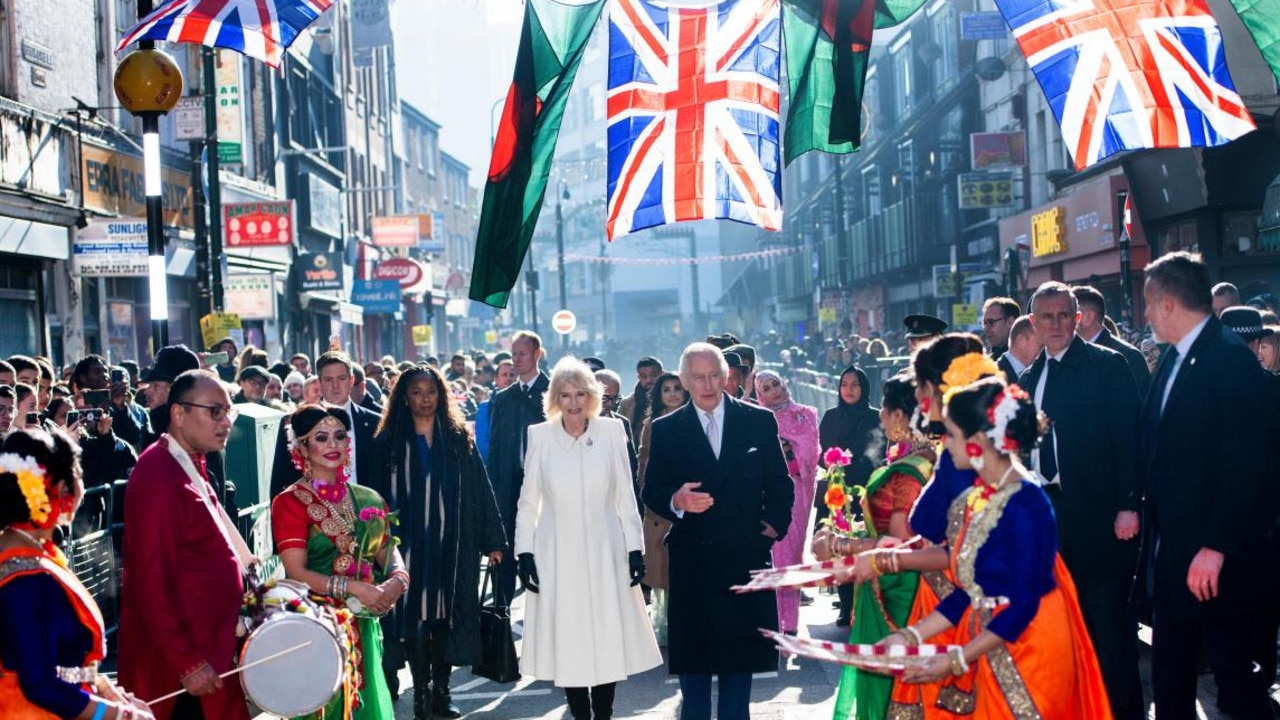
British Bangladeshis welcome the King and Queen on a visit to Brick Lane in February. Picture: Reuters/The Times
British Bangladeshis welcome the King and Queen on a visit to Brick Lane in February

The greater challenge for the champion was to find a horse that could back out of Westminster Hall without facing its rear-end towards the king, knocking over any tables or defecating over the diners. The last champion to perform this feat at the banquet hired a circus horse that had been trained to walk backwards. But it is claimed that as soon as the horse heard applause from the guests, it assumed it was in the circus and started performing circus tricks, much to the consternation of the man in armour seeking to maintain his balance and the solemnity of the occasion.

As the banquet is no longer held, this picturesque role has ceased. But the King’s Champion was instead given the duty of carrying the Standard of England in the 1937 coronation and the Union Flag at the 1953 coronation.

While the current champion filled in his online form to claim his place, the most recent announcement by the Coronation Claims Office (which replaced the coronation court of claims) made no mention of a role for the King’s Champion. Perhaps the champion’s day is done, or maybe he will get back on the horse.

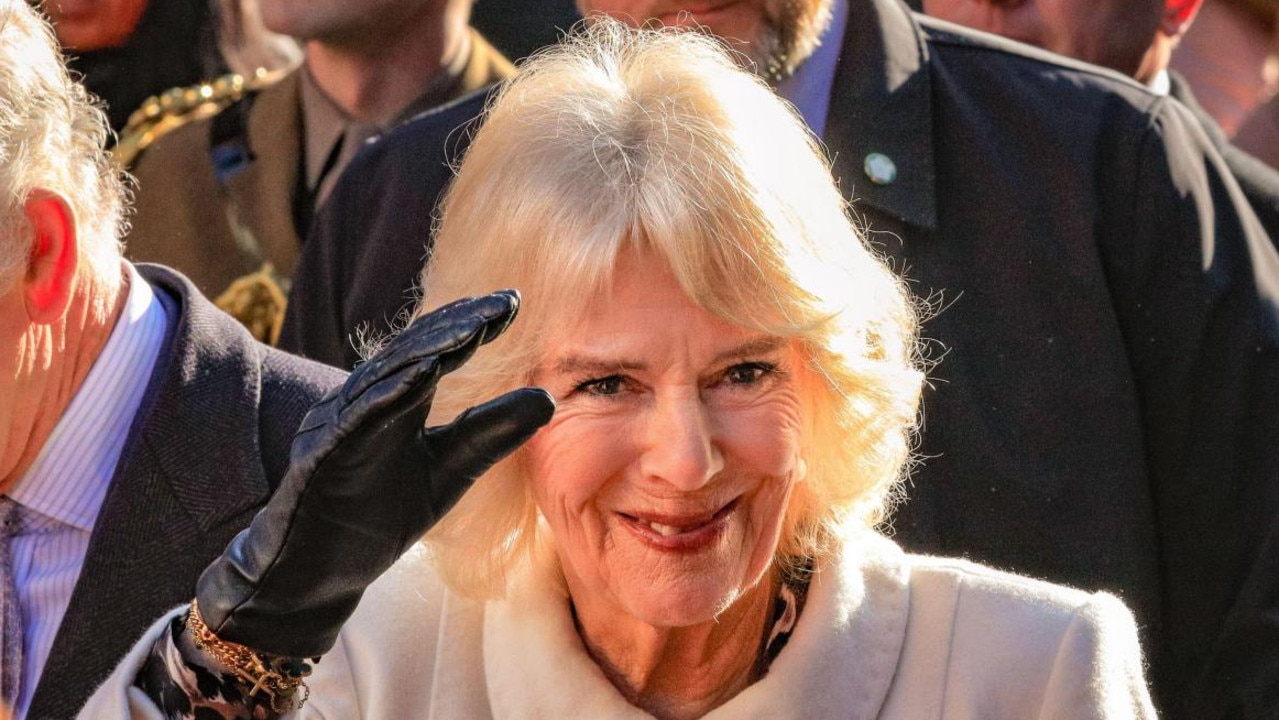
Queen Camilla. Picture: Imageplotter/Alamy/The Times
Queen Camilla. The Times

The scarlet glove

Another duty that attaches to the ownership of land is to provide a scarlet glove for the King’s right hand and to support his arm while he holds the royal sceptre during the coronation ceremony. This duty attaches to the lord of the manor of Worksop. From the coronation of Charles II, the owner of the land was the Duke of Norfolk, but in 1840 part of the land was sold to the Duke of Newcastle.

There was a dispute about whether he owned the right part of the land to claim the glove duty, but in 1902 the court of claims decided that he did, and the duke’s family fulfilled this role in the coronations of 1902, 1911 and 1937.

But by 1953 the duke had passed ownership of the land to a family company. The court of claims decided that only an individual, as lord of the manor, could provide the glove and support the king’s arm, so the Duke of Newcastle was excluded.

The manor of Worksop was later sold and it is unknown who owns it and whether they have made a claim to exercise their glove duty. If a prominent footballer, Russian oligarch or a pop singer is seen propping up the King’s elbow during the coronation, you will now know why.

Wands

Elizabeth II holds the royal sceptre at her coronation in 1953. Picture: Topical Press Agency/Getty/The Times
Elizabeth II holds the royal sceptre at her coronation in 1953 

The most dramatic moment at the end of the funeral rites for Queen Elizabeth II was when the Lord Chamberlain broke his wand of office and placed it on the queen’s coffin as it was interred.

But a coronation marks the beginning of a reign, so there are plenty of wands, rods, batons and sticks on display, including St Edward’s staff.

So far, we know that the Lord High Constable of Scotland, the Earl of Erroll, has won his right to carry a silver baton tipped at each end with gold.

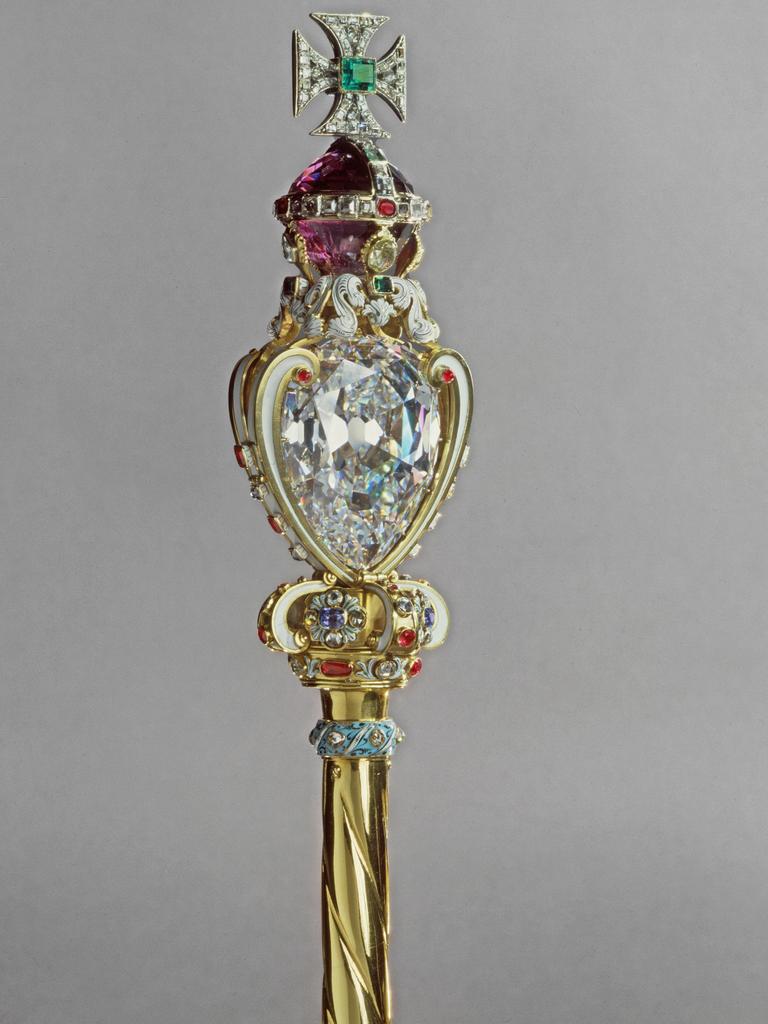
The Sovereign's Sceptre with Cross.
The Sovereign’s Sceptre with Cross.
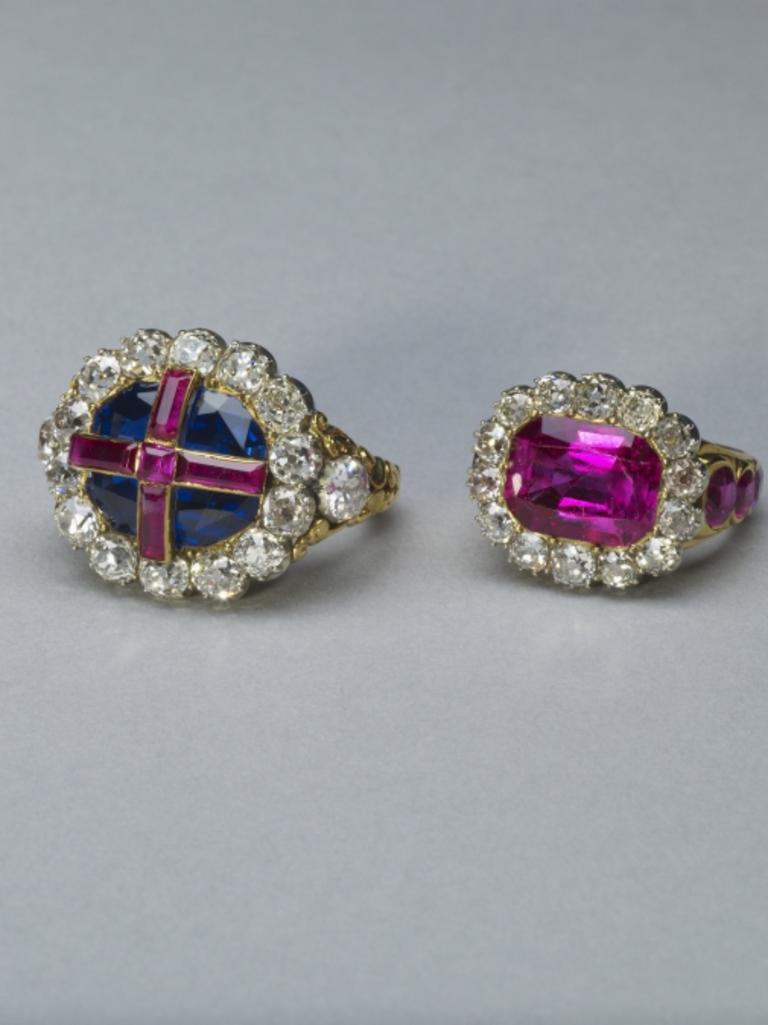
The Sovereign’s Ring, left, and Queen Consort’s Ring.

The Lord Mayor of London, who traditionally carries the crystal mace, will participate. In addition, the Usher of the White Rod (as distinct from the Usher of the Black Rod, who is a parliamentary officer, and the Ushers of the Green Rod, Scarlet Rod, Blue Rod and Purple Rod who serve the royal household) has been invited to attend.

As for the white wand, it is traditionally wielded by the Lord High Steward of Ireland, but the Coronation Claims Office may have exercised the modern-day equivalent of the disarming spell Expelliarmus, leaving him wandless. We must await the coronation spectacle to find out.

Anne Twomey is a professor emerita at the University of Sydney and a constitutional expert.

As Charles is bestowed with mystical powers, so much for a secular coronation

The Guardian, 16th April 2023
The Church of England is doing its best to turn the new king and queen into latter-day deities

In 1996 more than half of England’s bishops thought Camilla and Charles should never marry. When, in 2005, they did, in a register office, 73% of those polled were opposed to her becoming queen. Although the late queen then denied Camilla the bespoke name checks in Anglican worship enjoyed (until their withdrawal in 1996) by Charles’s first wife, she did enjoy inclusion in regular state prayers for “all the royal family”, followed by her 2022 orison upgrade, one that can still shock unwary congregants out of a spiritual reverie: “Almighty God, the fountain of all goodness, we humbly beseech thee to bless Camilla the Queen Consort.

Now, after a transformation that might in more primitive times have been considered miraculous, the Church of England invites us in its new booklet, Daily Prayers for the Coronation of King Charles III, to celebrate Camilla’s “calling to a life of public service”. Church of Ireland liturgists beseech – or challenge – God, in another Camilla prayer, to “make her an example of virtue and godliness”. If this dismays Diana loyalists unable to forget the rottweiler years, Camilla’s acolytes could reasonably argue that a similar delay in St Augustine’s calling only added to his appeal. There may be hope, yet, for Prince Andrew.

Whatever the final shape of the coronation, traditionalists who fear – as recently reported – that Charles wants some all-faithsy sort of variations on the old template, should surely take heart from the conviction, as testified by feats of prayer-composition alone, with which the Church of England has assumed ownership of the rite. (Not forgetting the king’s probable awareness that a more modest or ecumenical coronation would likely come at considerable cost in Camilla homage.)

While the palace states, vaguely, that the ceremony “will reflect the monarch’s role today”, a letter from the archbishops of Canterbury and York reminds clergy that the ornate enthronement is a religious event: “through it we receive from Jesus”. Though, in a more easily observable transaction, it also receives from the king, in visibly enhanced status, while his mystical authority is, in return, supplied by the clergy in a style that might have verged on the obsequious at the Restoration.

In today’s new coronation prayer we are invited to pray, for example, on behalf of “thy chosen servant Charles our King and Governor”, “that we and all his subjects (duly considering whose authority he hath) may faithfully serve honour and humbly obey him”. A prayer for journalists, in particular, to remember, next time they are denied information on whatever finances he hath concealed.

Repeated arguments for a much edited or secular coronation, citing dwindling Christian belief as well as protagonists less obviously creditable than was Elizabeth in 1953, appear to have dented neither the church’s coronation ambitions nor the palace’s matching enthusiasm for spiritual choreography and knick-knacks. Only the Koh-i-noor has been sacrificed, to be sensitively replaced at the religious ceremony by the largest diamond in the world, the South African Cullinan. With decorative crosses over them, such jewels “remind us”, the prayerbook explains to the untutored, “that Jesus Christ is king over all”.

A royal guide to the “sacred regalia” confidently ignores the possibility that the non-religious, now outnumbering Christians in England and Wales, might find its inventory of treasures, if not absurd, roughly as meaningful as museum labels speculating on the importance of some prehistoric grave-good. Which is not to say that I wouldn’t like my own eagle-shaped chrism-dispenser with convenient removable head; “the oil is poured through an aperture in the beak”.

Non-believers must simply accept that, say, Camilla’s 3ft ivory rod with a dove “symbolic of the Holy Ghost” is too critical to national reverence to allow substitution with a replica more suited to the same nation’s acquired aversion to ivory. That this rod was brand-new on its introduction in 1685 merely underlines, to the devout, the still greater sacredness of an older spoon used in the anointing process. And that this year’s olive oil is literally from the Mount of Olives demonstrates, says the archbishop of Canterbury, “the deep historic link between the Coronation, the Bible and the Holy Land”.

If these links fail to convince younger, more secular, more republican-minded subjects, they may not automatically impress older ones whose presumed pro-Charles tendencies are potentially offset by long memories. Anyone who can recall him, aged 32, smirking “Whatever ‘in love’ means” at the 19-year-old Diana, may think there are worthier objects of prayer. And when did the virtuous Camilla, famously lazy and still a sucker for £735-a-night wellness retreats, start reminding clerics of King Solomon? Or is the deep religious message of the coronation one that the last queen’s conduct helped for so long to obscure: that with heredity in charge, the Church of England is never safe from supreme governance by a future version of Prince Andrew?

Either way, even given the accepted difficulties of picking spiritual leaders, it might have been wise for a church dedicated to the poor to invite fellow professionals to share the responsibility of anointing an irascible billionaire, however docile Charles might currently appear.

No wonder some of the coronation prayers read like a cry for help.

Day 27, “Self-control”: “As we remember the important tasks set before our King, and the challenges he will face, we pray that the fruit of self-control, which informs all our actions and decisions, will give him patience and strength…”

Amen.

Catherine Bennett is an Observer columnist

Bringing it all back home – the missing mosaic and other ‘stolen’ stuff

“Old stuff. The Old World is full of it. But objects speak.They tell us things”.

The word “loot” derives from from the Hindi lūṭ or “booty” either from Sanskrit loptra, “booty, stolen property” orluṇṭ, “to rob, plunder”. It is one of the many words that entered into the anglophone vernacular in the wake of European imperial expansion. Charles James’s “Military Dictionary, London 1802, defines it as “Indian term for plunder or pillage”, and “goods taken from an enemy”. Like the very concept of empire itself, the word is a loaded one, loaded with historical memories, with national identities, and with differential moralities. Are goods taken in war by the victors as reparations or recompense for blood and treasure spent? Are they stolen goods that the perpetrators have a moral obligation to return to their rightful owners – or, as is the case with most of the inheritors of once imperial patrimony, the current territorial powers that be.

These questions loom large in the commentatary of an entertaining if lightweight, and yet, most informative programme running on the ABC at the moment, called, provocatively, Stuff the British Stole.

In this Australian-Canadian production Marc Fennell, the affable host the ABC’s Mastermind, trots the globe recounting the stories of the artefacts that ended up in British and Australian museums, galleries and churches during the days of Empire. Arriving in the wake of global protests that have seen statues ripped down and colonial legacies scrutinised with renewed vigour, the series offers an accessible beginner’s guide to the British empire’s long shadow and sticky fingers. Along the way, he encounters academics and diasporic communities for whom these objects, and the dispossession, death and cultural erasure they represent, have been open wounds for generations.

Each artefact acquired during the age of Empire is a reminder of colonial rule, be this benign or oppressive as determined from the perspective of the observer. For a long time, Britain’s best excuse for having nicked and then held on to many of these priceless antiquities has been that in a world of chaos and destruction, its institutions have long been the safest place to keep its ill-gotten treasures. The programme asks rhetorically in commentary and actually to museum curators: “is there an honourable way of handing in to your stolen stash?” Shouldn’t you be handing it back to its people? “Is this loot” asks the narrator of the director of the Art Galley of NSW. It is a public art gallery”, he replies.” … it belongs to the people of NSW … it’s there for education and discussion … I think it’s best not to use words like this right away … it was coming out of the rubble in the middle of a war zone … its a bit problematic”.

Britain was not the sole perpetrator of plunder, mind. A lot of loot of found its way into the museums of other European empires and and also the United States and Russia. And it was acquired in much the same way, in a mix of altruism, academic inquiry, subterfuge and outright banditry.

In our own travels, Adèle and I encountered an amusing tale of imperial skulduggery. When we were in Damascus, we stood by the modest catafalque of the celebrated Muslim war lord Salah ad Din al Ayubi, known in the west as Saladin, as our guide recounted the story of how before the First World War, the German Kaiser visited the Levant, then under the rule of the Ottoman Empire. Whilst visiting the Old City of Damascus, Wilhelm cast covetous eyes over the famous sultan’s casket. It is said that his entourage attempted to poach Salah ad Din’s tomb and spirit it back to Germany, but was intercepted by the Sultan’s police. By way of contrition, the emperor presented Damascus with a gaudy new catafalque more suited, he reckoned, to the last resting place of a renowned warrior. The two monuments now sit side by side in Salah ad Din’s small mausoleum beside the looming Roman wall of the splendid Umayyad Mosque, and pilgrims weep beside them. Our guide, a Syrian Kurd, upbraided elderly fellahin visiting from the countryside for praying at the empty fake – “don’t you know that Salah ad Din al Ayubi was not Arab but Kurdi, and he is in that tomb, not this one!”

But I digress …

Marc Fennell with Stuff the British Stole

A stone and a rock, a statue and a shirt …

Episode One kicks off a tad earlier than Imperial age, and closer to home with Scotland’s Stone of Scone, the big brick upon which Scottish kings were crowned until Edward I took it home to Westminster as a symbol of Sassenach conquest. It has seated the arses of British monarchs ever since, and though it was sent back home to Edinburgh in recent times as a recognition of Scottish nationalist sympathies, it will doubtless be lent to London for the enthronement of Charles, Third of His Name.

But the usual imperial suspects follow. There’s the Koh i Nor Diamond “gifted” to Queen Victoria from an adolescent Duleep Singh, maharajah of the independent but defeated state of Punjab, along with his empire, in the mid-19th century It is now in Britain’s Crown Jewels, tucked away in the vaults of Tower of London (the ones on show to the public are replicas). Once the centrepiece of the Great Exhibition, the diamond is now set in a crown that Queen Consort Camilla may or may not wear at her husband’s coronation in May. Britain’s royals have amassed a Smaug-like treasure trove of bling that might featured in future lists of Stuff the British Stole.

The Peking Shadow Boxer is an ancient bronze statue “rescued” from the ruins of war by a British sea captain during the Boxer Rebellion at end of the nineteenth century and now somewhere in the storerooms of the Art Gallery of New South Wales – the rebellion was one of Australia’s first overseas war. Then there is the story of a ceremonial war-shirt once worn by Native American Blackfoot chief Crow Foot, his “uniform’ or regalia, if you will, “gifted” (no one really knows how or why) to the Mounties during treaty negotiations when Canada was a British Dominion, and now, “in a place where it does not belong”, in London’s V&A Museum. This episode was particularly visceral. Coming almost contemporaneously with the recent revelations of what happened in Canadian “residential schools” that endeavoured to “take the Indian out if the Indians”.

We’ve heard that one in Australia too as we still struggle to come to terms with our past. As Mark Twain quipped, history might not repeat, but sometimes it rhymes. And it is passing ironic that the final episode is a brief, sadly predictable chapter in Australia’s frontier war in the early Nineteenth Century.

The hunt for Yagan’s head

Yagan was warrior and Noongar man whose people lived by what is now the Swan River near Perth in Western Australia. Settlement land grabs and tit for tat robberies and murders, and revenge for the deaths for his brother and father provoked him to violence. The colonial authorities put a price of his head, dead or alive, for a payback killing in 1834-35 and he was shot in the back by two young settlers. His head cut off and was paraded around the colony to send a message to his people.

It took over a century to track down Yagan’s head. Ken Colberg, a Noongar war veteran and elder, made it his mission to find it. He traced it to a house in London – a colonial lieutenant had brought it back to England and endeavoured to sell it to a surgeon who was interested in such “trophies “. The surgeon declined to purchase it so the soldier conveyed it to Liverpool where he flogged it to Liverpool Museum. Over a century later, on the instructions of the museum, it was buried in Everton Cemetery near Liverpool in an unmarked common grave along other with other remains including 22 still born babies interred by a local hospital. Two English archaeologists agreed to assist Ken in his quest, tracing the location of the grave and negotiating with the authorities and descendants of the deceased children to effect Yagan’s exhumation.

It was handed over to a Noongar delegation in Liverpool Town Hall on 28th August 1997 – the day Princess Diana died in Paris. Ken made a passing reference to this during the ceremony: “That is how nature goes … Nature is a carrier of all good things and all bad things. And because the Poms did the wrong thing, they now have to suffer”. That went down well in the. Australian media, his comment prompted a media with newspapers receiving many letters from the public expressing shock and anger. Ken later claimed that his comments had been misinterpreted.

Yagan’s remains were finally laid to rest in Australian soil, on the banks of the Swan River on Noongar country.

And so concluded the first season of Stuff the British Stole. But there’s more to come – season two is promised and is already available as a podcast. It includes Tipu Sultan’s mechanical Tiger from Bengal, India, presently in the British Museum, commissioned by the sultan and depicting a tiger munching down on a prostrate English soldier. That one was taken when Tipu met his doom at the hands of Clive (of India, that is, and looter in chief of Indian artefacts). There’s there’s a revered chalice from Cork from a time when catholic worship was banned by British authorities; the Gweagal Shield acquired by Captain Cook when he hove to in Botany Bay; and the Makomokai tattooed heads from Aotearoa. And, of course, the most celebrated of artefact of all, the Elgin Marbles that most folk associate with the British Museum rather than with the Athens Parthenon which has served successively as a temple, church and mosque before Venetian ships bombed it in the seventeenth century – and from whence the eponymous Lord Elgin lifted them on the dubious pretext of preservation and plonked them down in perfidious Albion.

The return of Yagan. Ken Colberg is in the centre

Which brings us to the mosaic …

This is the story that enticed me into Stuff the British Stole and thence, into this post. Having enjoyed half a century of interest in the Middle East, I was immediately sucked in. And as with Yagan’s los head, it too has as Australian connection.

It is April 1917, during the second battle of Gaza, and British General Allenby’s army of soldiers from Britain and its empire is pushing northwards across the Negev Desert towards Ottoman-ruled Gaza and thence Jerusalem. It’s not officially called Palestine yet – the old Roman name, favoured by theologians, romantics, and British tourists and politicians, would not enter world politics and controversy for a few years yet. The Reverend William Maitland Woods is chaplain of the Australian and New Zealand Anzac division, and soldiers of a Queensland brigade of the Australian Light Horse are digging trenches at Besor Springs, near Gaza. The Reverend is an amateur archeologist and made a habit of entertaining the troops with stories about the Holy Lands where they were campaigning. The soldiers uncover the remnant of a 6th Century Byzantine mosaic dating from 561-562, during the reign of Emperor Justinian. A excited chaplain seeks professional advice from curators at the Cairo Museum and is given permission to organise a group of volunteers to uncover and remove the remains. Sapper McFarlane of the New Zealand Wireless Troop was given the job of drawing what they uncovered. That’s him in the picture below.

The reverend convinces his higher-ups that the mosaic must be saved, and sixty three crates are sent to Cairo. Egypt at the time was a British “dependency “ (good word, that).

There then commenced a tussle between British high command in Cairo and the Australian defence department. By September 1917, the Australian Records Section was feverishly collecting battlefield trophies. Charles Bean the official ANZAC historian liked to call them “relics”, consistent with the reverential language of “spirit”, “sacrifice” and “the fallen” he afforded his soldiers. The British : “It’s not a trophy of war – you cannot have it – it may be returned” or words to that effect. TheAussies: we wanted stuff for our prospective Australian War Museum, and anyhow, we’ve shed blood in this fight”.

And so, what would be called the Shellal Mosaic ended up in Canberra. Most of it, anyway. Other fragments found their way to St James Church in the Sydney CBD and in a church in Brisbane. It is believed that some diggers took pieces too. In 1941, when the War Memorial was under construction, an appeal was sent out to ageing members of the light horse regiments to return the bits they’d souvenired, but there were few, if any, volunteers.

Concerned, with very good reason, that the treasure might not get all the way Down Under, Woods gathered up several baskets of tesserae from the site, the individual fragments from which a mosaic is made, and commissioned an artisan to fashion an exact replica of the inscription headstone, one metre by half a metrre. He gave this to a friend, a Colonel John Arnott who at war’s end, returned to his family property at Coolah in rural New South Wakes and embedded itinto his garden steps. The farmhouse and its steps are with the family today.

Ancient History interlude: What makes the Shellal Mosaic such a significant archaeological find? For one, it was a Christian chapel from the Byzantine period when Hellenic pagan culture was giving way to Christianity. For two, the mosaic was made of marble, an expensive material and not commonly used other than by the very wealthy. And for three, the use of exotic animals from different lands, such as lions, tigers, flamingos and peacocks, common images in Byzantine art, all paying homage to a central chalice, could point to other pagan races and lands embracing Christianity.

The Shellal Mosaic

Yet, the tale gets curiouser and curiouser …

During the excavations, Maitland Woods discovered a chamber beneath the mosaic. It contained human bones lying with its feet to the east and its arms closed on the chest. The bones and inscriptions on the mosaic got the reverend quite excited, more so than the more mosaic itself as a rough translation of the inscription suggested to him that let him they were the bones were those of St George – of England and dragon fame, not the Dragons.the league football team of the eponymous suburb in southern Sydney which was not established until 1920. They were not, however. Saintly George lived in intolerant pagan Roman times and was martyred for his faith. More likely, they belonged to a local bishop time called as George. Woods feared these would be sent to England in perpetuity so he packed them up and gave a ‘parcel’ to his friend, Reverend Herbert Rose, for safe keeping, and this found its way to Rose’s home parish of St Anne’s in Strathfield in Sydney’s inner west, where they are interred in the floor in front of the church’s communion table. Woods’ fears were justified. During the delivery of the remaining bones from Cairo to London, George’s skull disappeared, never to be seen again.

As Yagan would aver, heads do that.

© Paul Hemphill 2023 All rights reserved

For further history stories in In That Howling Infinite, see Foggy Ruins of time – from history’s back pages

For stories about the Middle East, see A Middle East Miscellany

For stories about Australia and also the Frontier Wars, see Down Under – Australian history and politics 

Bronze, stone and possum fur

That was the year that was – don’t stop (thinking about tomorrow)

The prophet’s lantern is out
And gone the boundary stone
Cold the heart and cold the stove
Ice condenses on the bone
Winter completes an age
WH Auden, For the Time Being – a Christmas Oratorio, 1941

I considered using a line from the above as the title of this retrospective of 2022.  It was written during 1941 and 1942, though published in 1947, when the poet was in self-exile in the United States and viewing the war in Europe from afar – although the long poem from which it has been extracted does not in itself reflect such pessimism. A more fitting title could be taken from another long poem that was published in another (very) long poem published in 1947 – Auden’s often overlooked masterpiece The Age of Anxiety, a meditation on a world between the wreckage of The Second World War and of foreboding for the impending armed peace that we now look back on as the Cold War, with its oft-repeated mantra: “many have perished, and more most surely will”.

The year just gone was indeed a gloomy one, meriting a dismal heading. There are few indications of where it might take us in ‘23 and beyond, and my crystal ball is broken. Pundits reached for convenient comparisons. Some propounded that it was like the 1930s all over again when Europe constantly teetered on the brink of war. Others recalled 1989 with the fall of the aneroid Wall and the collapse of the Soviet Union. But, beware of false analogies. In 2022, things were more confused. The tides of history have often resembled swirling cross-currents.

Things, of course, might have been worse. There are, as I’ve noted in successive posts on my own Facebook page, many qualified “reasons to be cheerful”. The  year could have ended with Ukraine under Russian control. An emboldened China might have been encouraged to launch an assault on Taiwan. A red wave in the midterms would have buoyed Trump. And here in Australia, Scott Morrison might have secured another “miracle” election victory. The West could have retreated on all fronts.

Instead, therefore, I have selected a title that hedges its bets, because, to paraphrase the old Chinese adage, and the title of an earlier retrospective, we certainly live in interesting times and in 2023, and a lot of energy will be spent endeavouring to make sense of them – or, to borrow from Bob:

Pointed threats, they bluff with scorn
Suicide remarks are torn
From the fool’s gold mouthpiece
The hollow horn plays wasted words
Proves to warn that he not busy being born
Is busy dying

B Dylan

The year in review 

Christine McVie, longtime and founder member of Fleetwood Mac departed the planet on 30th November this year. And contemplating this year’s posts in In That Howling Infinite, I could not help thinking about one her most famous songs. I recalled that it featured on newsreels of the revolution that ousted the Shah of Iran in 1979.

Why not think about times to come?
And not about the things that you’ve done
If your life was bad to you
Just think what tomorrow will do
Don’t stop thinking about tomorrow
Don’t stop, it’ll soon be here
It’ll be better than before
Yesterday’s gone, yesterday’s gone

The song seemed quite apposite as the soundtrack of a revolution that had overthrown one of America’s many friendly autocrats. At the time, no one could predict what would happen, but, as with the fall of the Berlin Wall in 1989, it was a time optimistic expectation. And yet its shock waves have reverberated and ricocheted in ways unimagined at the time.

As 2022 ends, with blood flowing on the streets of Iran and in the mullahs’s torture cells as young people rise up against a hypocritically brutal theocratic tyranny, we see again and again how that which goes around comes around.

Women, Freedom, Life

If the malign hand of history has literally reached out and gripped Iran’s young women and girls by their hair, it has also endeavoured to strangle the thousand year old Ukrainian nation in the name of an atavistic irredentism. Russian troops invaded the Ukraine on February 24, causing what has since become the largest conflict in Europe since World War II. Out if the spotlight of the world’s easily distracted attention. intractable conflicts lumbered mercilessly on – in Syria, Yemen, Ethiopia, the Congo and many other “far away  places with strange sounding names”.  

On the far side of the world, the USA continued to struggle with the reverberations of January 6th 2021. Donald Trump, like Dracula, has not gone away, and whilst his 2024 presidential run is looking increasingly shaky, he continues to poison the atmosphere like radioactive dust. The unfortunate folk of the United Kingdom endured three prime ministers during the year, including the shortest ever in the history of the office, and after two years of pandemic, are facing a bleak economic winter as well as a frigid actual one.

In Australia, it was the year of the teal – at least according to those who study the evolution of language, the year we lost a queen, our long-serving foreign head of state, and a king of spin, the down-fallen and disgraced Scott Morrison. And a sodden La Nina saw incessant rain drown large swathes of eastern Australia, visiting misery on thousands. COVID-19 mutated, the Omicron variant surging from beginning of the year, ensuring no end to the pandemic – today, it seems like everyone we know has had it, including ourselves (and we were soooo careful for a full two years!). As restrictions were cautiously lifted, we as a nation are learning to live with it. 

Politically, it’s been a grand year for the Australian Labor Party. With our stunning Federal election win in May and in Victoria in November, the Albanese government’s star is on the ascendant and it’s legislative record in six months has out run nine years of Tory stagnation on climate, integrity and equality – a neglect that saw the rise of a new political force in the shape of a proto-party, the aforementioned “teal”, named for the colour of the candidates’ tee shirts. The opposition has been reduced to a bickering and carping crew, and whilst Labor continues to ride high in the polls, the Coalition bounces along the bottom of the pond.

Lismore, northern NSW, March 2023

Flooded house aflame, Lismore March 2022

Christine McVie was just one of many music icons who checked out this past year. The coal miner’s daughter, Loretta Lynn, crooned her last, as did rock ‘n roll bad boy Jerry Lee Lewis and Ronnie “the Hawk” Hawkins, who gave the boys in The Band their big break. Rock heavyweight (literally) Meatloaf took off like his bat out of hell and keyboard evangelist Vangelis boarded his chariot of fire.

Acclaimed British author Hilary Mantel, whose Wolf Hall trilogy inspired back to back posts in In That Howling Infinite in 2020 found “a place of greater safety”, and French author Dominique Lapierre also joined the choir invisible. I had first learned about Israel’s war of independence and the Palestinians’ al Nakba in his O Jerusalem, and about the bloody tragedy that accompanied the birth of India and Pakistan, in Freedom at Midnight, both books featuring in past posts. 

Mark Rylance and Damian Lewis as Tom and Hal

One could argue that the most significant departure was that of Britain’s longest serving monarch. Queen Elizabeth II had been on the throne for almost all of my life, as has the now King Charles III who was born four months before me, and of whom, as a nipper, I was jealous. I recall how I watched the queen’s coronation on a tiny black and white television in the crowded and smokey parlour of the boarding house run by a friend of our family. By happenstance, Netflix served up two over the top regal sagas to binge on: the penultimate season of The Crown, which whilst entertaining, was a disappointment in comparison with earlier seasons, and Harry and Meghan which was whilst excruciatingly cringe-worthy, was nevertheless addictive viewing. The passing of Her Maj reminded me that in my lifetime, I have witnessed three monarchs and eighteen British prime ministers (and incidentally, eighteen Australian prime ministers).  The public outpouring of grief for the Queen’s ascent to the choir invisible was unprecedented – the picture below demonstrates what the Poms do best …

The Queue along the Thames to pay respect to Her Maj

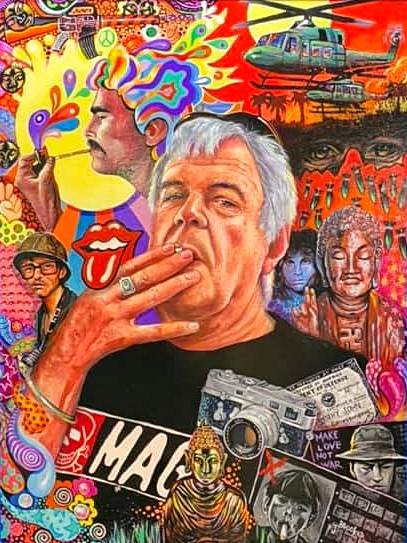
There were farewells much closer to home. My mediation colleague, aspiring author and friend John Rosley, and Beau Tindall, the son of my oldest Bellingen friend Warren, took off on the same day in May. Peter Setterington, my oldest friend in England – we first met in 1972 – died suddenly in London in March, and our friend and forest neighbour, the world-famous war photographer Tim Page, in August, after a short but nasty illness. Pete is memorialized in When an Old Cricketer Leave His Crease whilst Journey’s end – Tim Page’s wild ride,is an adaptation of the eulogy I gave for Tim in September, one of many on that sunny afternoon day in Fernmount. It is a coda to Tim Page’s  War – a photographer’s  Vietnam journey, a story we published a year ago.

Tim Page by Joanne Booker

What we wrote in 2022

The ongoing Ukraine War has dominated our perception of 2022, from the morning (Australian time) we watched it begin on CNN as the first Russian missiles struck Kyiv, to the aerial assault on infrastructure that has left Ukrainians sheltering through a cold, dark winter. Two posts in In That Howling Infinite examined the historical origins of the conflict: Borderlands – Ukraine and the curse of mystical nationalism and The Roots and Fruits of Putin’s Irridentism. “Because of …” Iran’s voice of freedom looks at the song that has become the rising’s anthem. None can predict the outcome – whether it will be a doomed intifada, the Arabic word that literally means a shaking off – historically of oppression – and figuratively, a rising up, like that in Ireland in 1798 and 1916, Warsaw in 1943 and 1945, and Hungary in 1956, or an Inqilab, another Arabic word meaning literally change or transformation, overturning or revolution.

The run up to May’s Australian elections inspired Teal independents – false reality in a fog of moralism.; and Australia votes – the decline and fall of the flimflam man. 

More distant history featured in Menzie’s Excellent Suez Adventure, the story of the Suez crisis of 1956 that historians argue augured the end of the British imperium, and the role played therein by longtime Australian prime minister Sir Robert Menzies. Johnny Clegg and the Washing of the Spears is a tribute to the late South African singer, dancer and songwriter, and a brief history of the war that destroyed the great Zulu nation, setting the scene for the modern history of South Africa. And journeying further back in time to sixteenth century Ireland, there is O’Donnell Abú – the Red Earl and history in a song, a discussion of the origins of a famous and favorite rebel song.

Then there are the semi-biographical “micro-histories” in In That Howling Infinite’s Tall tales, small stories, obituaries and epiphanies. In 2023, these included: Folksong Au Lapin Agile, the evening we visited Montmarte’s famous folk cabaret; Ciao Pollo di Soho – the café at the end of the M1, the story of a café that played a minor part in my London days, as described in detail in an earlier travelogue, Song of the Road – my hitchhiking days; Better read than dead – the joy of public libraries; The quiet tea time of the soul, an ode in prose to a favourite beverage; and The work, the working, the working life recalling the many jobs I took on in the sixties to keep myself in music, books, travel and sundry vices. 

We cannot pass a year without something literary. We celebrated the centenary of three iconic literary classics in The year that changed literature, and with the release of The Rings of Power, the controversial prequel to The Lord of the Rings, we published a retrospective on the influence of JRR Tolkien. One ring to rule us all – does Tolkien matter? – a personal perspective with an opinion piece by English historian Dominic Sandbrook, an informative and entertaining chronicler of postwar British history and society which featured, in Unherd, an online e-zine that became a “must read” in 2022. A Son Goes To War – the grief of Rudyard Kipling recalls the death in battle on the Western Front in 1917 of the poet’s only son, it’s influence upon his subsequent work, whilst Muzaffar al Nawab, poet of revolutions and sorrow is an obituary for another poet, who seen a lifetime speaking truth to power.

And that was that for what was in so man ways a sad year. Meanwhile, In That Howling Infinite already has several works in progress, including a review of historian Anthony Beevor’s Russia – Revolution and Civil War, what King Herod really thought about the birth of baby Jesus, and the story of a famous and favourite British army marching song.

Best wishes for 2023 …

Death of a Son

That was the year that was – retrospectives

Life in Wartime – images of Ukraine

When an old cricketer leaves the crease,

When the day is done and the ball has spun in the umpire’s pocket away, and all remains in the groundsman’s pains for the rest of the time and a day. There’ll be one mad dog and his master, pushing for four with the spin, on a dusty pitch with two pounds six of willow wood in the sun.

It was a magical Sunday afternoon during an English Indian Summer in September 2008, an afternoon that evokes memories of long gone childhood and adolescence. I was England on my tod to surprise my mother on her 80th Birthday, and passing through London, I was staying with one of my oldest friends and his family in Muswell Hill. He asked me if I’d like to pop down with him to the local cricket club to down a few ales and watch a game.

Now, in all of my adult life, I have never been into spectator sports, and I haven’t watched a cricket match for over half a century. But I was enjoying the company and the craic, and thought “well, why not?” So there we were, sitting in the little members stand, drinking beer and calling out “well bowled!” and “well played, sir!” like a pair of old die-hards. In addition to his many other talents, Peter was an avid and talented amateur cricketer, and the game was his passion – he once considered a professional career and in retirement and was part of a peregrinating team of amateur players who would criss-cross the world giving kit and coaching to young people who lacked the skill and wherewithal to play. The visited some thirty countries in their cricketing odyssey.

Peter Setterington passed away in his sleep on Wednesday 23rd March. He was almost seventy five. We’d been firm friends for five decades. It’s 4am the following Sunday and I’m sitting here writing this eulogy in a hotel room on the fifty fifth floor overlooking Sydney’s Darling Harbour and listening to Roy Harper’s tribute to the game that is played in heaven. It’s cold and rainy outside and this echoes the emptiness I am feeling inside.

‘Twas in another lifetime

When the moment comes and the gathering stands, and the clock turns back to reflect on the years of grace as those footsteps trace for the last time out of the act. Well this way of life’s recollection, the hallowed strip in the haze, the fabled men and the noonday sun are much more than just yarns of their days.

1972. I was house sharing with former uni pals in London’s East Finchley. One of my friends worked for a market research company located on the top floor of an ornate Georgian building in Trafalgar Square. It’s still there – it’s the one with the little cupola on top. He talked about this very friendly, garrulous, and ambitious bloke who’d just joined the team. Not long afterwards a girl who also worked there threw a party in Romford, Essex and invited Chris and us flat mates. And so one Saturday evening in spring, we all headed over there.

The party is now a blur. I was introduced to Peter for the first time, but then proceeded to get blind drunk. I passed out on the bathroom floor and woke up in a flat near Hampstead Heath with the sun streaming through the windows. A kindly lass had volunteered to put me up for the night and Peter, who lived in close by in Swiss Cottage at the time, had driven us there. I think I was fully clothed. He rang me up a few days later to ask how I was, and we became fast friends.

His helping me out at that party when we were total strangers was an early display of the decency and generosity of spirit that he showed to me and to others on many subsequent occasions. When a mutual friend got himself into dire straits and seem to have disappeared off the face of the earth, Peter made every effort to track him down until the trail went cold in Thailand. He was like that.

Later that year, my friends hit the Hippie Trail, ending up in Australia. I moved to a bedsit in Finsbury Park and commenced my Middle East studies at the School of Oriental and African Studies. A year later, I moved in with two gay friends who had a big house in Highgate. I cleaned the place and lived there for free in a top floor flat. They would introduce me to friends as “the only queer in the house”. Peter would often drop in of an evening in an old red Post Office van and we’d pop over to Jack Straw’s Castle by Hampstead Heath for a drink. He ran a mobile disco on the side at the time, and the van was the “band bus”.

During my London days, we’d visit each other and he’d have great parties. Peter really knew how to enjoy life and to help others to do so to. In March 1974, he threw one for me at his Swiss Cottage home to celebrate my 25th birthday, to which I invited all my London friends. I recall walking home to Highgate across the Heath in the early morning mist.

I’d stay weekends now and then with Peter’s folks in Oxford – Spring and summertime walks in bucolic gardens, punts on the River Cherwell and Pyms on the back porch. So quintessentially English. If I recall rightly, his father was a teacher at the university, well read and very erudite. His mother, whom Freddie has met whilst he was on military service, was a charming and beautiful Burmese lady who treated me like part of the the delightful and happy family.

In 1978, my wife and I moved to Australia. But when I returned to the old country, I’d stay with Peter and Jenny, first in Finsbury Park, and later in Muswell Hill near the Alexandra Palace. His home was our home, and as the years rolled by, Adèle, my second wife, and I watched Peter and Jenny’s sons grow from childhood to youth to family men.

Over time, Peter rose higher and higher in the marketing world, eventually becoming a senior executive for Saatchi and Saatchi – until he rationalized himself out of a job sometime in the nineties. I recall once lending him book called Driving The Pigs To Market, a take-down of the marketing industry. It may still be somewhere on his crowded bookshelf , and though I’ve stayed at his place many many times over the years, and I’ve searched, but could never find it.

On the surface, we seemed an odd couple, Peter and I – him with him marketing shtick and business acumen, and me with my Middle East Studies and morning music and poetry, and later, as a visiting Aussie. But in reality, he was much, much more than his marketing persona. He was a Renaissance man whose interests extended far beyond his day job – he was well read and loved music and an avid fisherman, a hedonist and wine buff, and above all, a consummate family man.

We had clicked immediately, and whenever we reunited, he’d collect Adèle and I up from the tube station, and we’d just pickup from where we’d last left off, chatting away through the night about life, the universe and everything, and downing gallons of French wine.

A big man with an unquenchable zest for life, he was a force of nature. With his cheeky grin, loud laugh and pukka accent, Peter was and is so much a part of my London life – and London will never be the same without him.

Yours was a life well lived, old chum, and yes, “very well played, Sir!”

Fare thee well …

When an old cricketer leaves the crease, you never know whether he’s gone. If sometimes you’re catching a fleeting glimpse of a twelfth man at silly Mid-on. And it could be Geoff and it could be John with a new ball sting in his tail. And it could be me and it could be thee and it could be the sting in the ale, the sting in the ale.

For more about London in In That Howling Infinite, see: Back in the Day my journey, in song and poetry; A Window on a Gone World – London days; Song of the Road – my hitchhiking daysSomething about London; Ciao Pollo di Soho – memories a classic café 

Ciao Pollo di Soho – the café at the end of the M1

Soho (needless to say)
I’m alone on your streets on a Friday evening
I’ve been here all of the day
I’m going nowhere with nowhere to go
Al Stewart, 1972

… it felt like we had one toe in the Mediterranean, even though it was January and our fingers were numb under our gloves …
Deborah Levy, The Man Who Saw Too Much

Sometimes, out of the blue, a message from the old country triggers happy memories and sends us wandering through “the foggy ruins of time”. An old friend from my London days emailed me the other day, recalling how back in the day, I’d frequent a cheap and cheerful Italian café in Soho – what was then “swinging” London’s seedy, sexy and infinitely interesting red-light, hip-boutique and cool restaurant mecca. She’d laid down one wintry English afternoon to relax with a novel, and to her surprise, two pages were dedicated to that very same café.

So, as often happens these days, I was soon flicking through my back pages and disappearing through the smoke rings of my mind.

Cut to 1967 and pictures of a gone world …

The café at the end of the M1

As I wrote in a recent trawl through my back pages (OK! Enough with the Bob Dylan already!):

.“… that motorway from Brum to London was a road well-traveled. In my final year at Moseley Grammar, I’d often hitch down to London for a weekend with pals who’d gone there before. We’d hang out at cheap and cheerful Pollo’s Italian restaurant in Old Compton Street in Soho and the Coach and Horses across the road, and go to Cousins folk and blues joint in a cellar in nearby Greek Street, and the 101 Jazz Club off Oxford Street. Bunjies folk cafè and Ronnie Scott’s jazz club were just around the corner. After a meal or a pint, I’d often catch the last tube to the end of the line closest to the M1. I can’t recall how many times I headed off into the night; and there were always drivers on the road at the witching hour. I guess many folks “get the urge for going”, as Joni sang back then, “and they had to go …” And in those generous times, people were happy to offer a lift to a wayfaring stranger – gentle souls who would not leave strays stranded by the dark wayside; lonesome folks seeking company and conversation in the dark night of the soul; curious people wondering why a young man would hitch the highways in the middle of the English night”.

Yes, Café Pollo was indeed a significant landmark of my London days.

I discovered Café Pollo in the Spring of 1966 when I’d first hitched to London with school friends to take part in a Campaign for Nuclear Disbarment march. From ‘66 through ‘71, I’d go there whenever I was in town, and regularly when I ended up living there – right up to my departure for Australia in 1978. When I was studying at the School of Oriental and African Studies, I’d go there for lunch after Friday classes with my best mate and soul brother Mike (we were born on the same day in the same year in a British city beginning with B).

So, for years and years I’d hung out at Pollo’s. Dined there, boozed there, courted there – almost always on spaghetti bolognese and Chianti with a sticky rum baba to follow. It was crowdy, noisy and smokey, and in winter, steamy and clammy – and “cheap as… “

Though I’d left Old England’s shores, I’d visit Pollo’s whenever I returned and catch up with old pals. When I became vegetarian, the bolognese was replaced with pesto pasta liguria or arrabbiata. When The Evening Standard and Time Out recommended it as an excellent “cheap eats”. I thought its glory days of low-key popularity were over. But it was always there, the same as it always was. The feature picture of this post was taken, I think, when Adèle and I were in England in 1987 – I still have that old Chinese denim jacket and use it for sitting around our bonfires in wintertime.

We continued to go there until 2005, when we were denied service as we just wanted a cup of coffee. The next time I popped by, in September 2008, it was gone. Indeed, it had closed soon after our disappointing coffee quest. Having served the impecunious for generations, it was, in the words of a classic London cafés blog, dismantled and dumped, to be born again as a classier, impersonal, cut-out trattoria – La Porchetta Pollo Bar.

But at least, the name and the memory live on …

Cheap, cheerful and unchanging …

Classic Cafés published an excellent obituary to this Soho icon. Here are some extracts:

“The Pollo, at 20 Old Compton Street, with its ox-blood booths, lapidus beanpole railings, contemporary ceiling, murals, top notch signage, and perfectly preserved light fittings always had hungry queues waiting outside. It remained the proverbial Soho institution for as long as anyone could remember. A proper bargain Italian with perfect ‘60s decor, friendly banter and a worryingly high turnover of chefs (there always seemed to be a ‘chef wanted’ sign in the window). “Cheap and cheerful” remains the operative term at the long-standing Italian café Pollo …

… The almost endless hand-written choice of pastas has now been typed up for easier interpretation, but otherwise the menu remains much the same as I remember it being 20 years back. The food is still hearty, the prices are laughable for central London, the coffee is rocket fuel – and the waitresses still insist on doubling you up in the booths with complete strangers …

… Plenty has changed in London. Fortunately, Pollo hasn’t … The Pollo often finds its way onto the ‘top cheap London eats’ lists, and it was the Evening Standard listing under budget eating that first nudged me in its direction a few years ago… It isn’t fancy. It is an Italian restaurant. The inside looks something like a truckers’ caff, with formica tables and little booths, and there is more room downstairs if it looks full. There isn’t a lot of space and the tables are packed in, but the food is good. The main courses consist of a variety (unsurprisingly) of pasta and pizza dishes, again the price range for these tends to be between £3 – £5. There are some risottos as well, and some meat dishes, such as chicken with rice or veal which are a bit more expensive”.

One toe in the Mediterranean …

As for the book my London friend was reading, which inspired her email and my jaunt down the rabbit hole (a pleasant one), The Man Who Saw Everything by Deborah Levy, here’s what the protagonist had to sat about about our café de coeur:

“In late January 1989, Jennifer and I were sitting in a cheap Italian restaurant called Pollo in Old Compton Street, Soho. It was always full of students from Saint Martin’s our school around the corner because it offered its loyal impoverished customers three courses for a fiver. Jennifer had introduced me to Pollo when we first met. Once we discover spaghetti vongole and penne arrabbiata, it felt like we had one toe in the Mediterranean, even though it was January and our fingers were numb under our  gloves … She devoured a plate of spaghetti bolgnese even though she was supposed to be a vegetarian. While she drank water,  I knocked back carafe of red wine and ordered another one …. it was warm inside Pollo. Everyone was smoking and shouting us the waiters thumped plates steaming pasta on the formica table. A young man with a blue mohican was stubbing his cigarette in the avocado that had arrive on a plate. it was stuffed with something pink’.

Al Stewart’s Soho (needless to say …)

Apropos the song quoted at the beginning of this memories, whenever I recall Soho in the sixties, I always think about my bedsitter days in London to the early seventies and also, British singer-songwriter and musician Al Stewart’s over-orchestrated debut album of 1967, Bedsitter Images. I knew Al Stewart’s London ‘ere I first knew London. I bought the album when I first saw him perform at the famous Jug o’ Punch folk club in Digbeth, Birmingham, run by The Ian Campbell Folk Group (I also saw a teenage Joni Mitchell play there – it was love at first sight, and I bought her first album there too, Songs from a Seagull). Al may have autographed his record – I can’t recall. It was stolen from my bedsit room in Reading in 1970 along with many of my favourite discs.

Maybe it’s about what here in Australia that, borrowing from our indigenous compatriots, we might call “spirit of place” – the association with the streets within a hop, skip and an amble from Old Compton Street out into Shaftsbury Avenue and that bookshop in Charing Cross Road, the opening verse of the second track Swiss Cottage Manoeuvres, and that flat in Swiss Cottage, a suburb I used to frequent in the seventies. Maybe it’s the seedy, needy, greedy vibe of the priapic songs on Al’s follow up albums. An old friend and Al Stewart fanboy called them aural masturbation. Although there were many “love chronicles”,  the lengthy titles track of his second album, Al also wrote about melancholy middle aged suburban couples and historical events, with the odd foray into poetic mysticism. My flat mates and I were all fans of Al back then, and went to most of his gigs.

In the early seventies, when a girlfriend started going out with him, I actually got to know him for a brief while. Indeed, one time, when he played in Birmingham Town Hall, me and a couple of pals drove up to my old hometown to see him, and after the show, invited him back to my folks’ place for a late night fry up. My mom reckoned he need fattening up. And afterwards, she and Al sat in the kitchen for a couple of hours talking about pop music. “I love Cat Stevens”, mom said. “Oh, I much prefer the Incredible String Band”, said Al. “Oh, they’re very weird, but Paul like them!” She said. Then they got talking about Mick Jagger. And my dad, in the sitting room, said to us others gathered there, and referring to Al’s stature, said “there’s not much to him is there!”. Strange but nice how you recall these little things. The folks have both passed on …

My Bedsitter Image

© Paul Hemphill 2022.  All rights reserved

For more about London in In That Howling Infinite, see: Back in the Day – my journey, in song and poetry; A Window on a Gone World – London days; Song of the Road – my hitchhiking days; Something about London

Postscript – on another iconic café …

Rowda Ya Habibi

Cheap, cheerful and unchanging, with it garish turquoise neon sign and bold orange awning and signs advertising cushion rooms and belly dancing, Rowda Ya Habibi was a Newtown institution, and one of the first Lebanese restaurants in this cosmopolitan area.

It has been closed these past eighteen months – the pandemic finally closed the doors of this inner west icon, but driving down King Street recently and seeing its fading, sorrowful frontage brought back memories of our Newtown days.

Adèle and I had been coming here for for nigh on thirty five years. We’ve known Antoinette and Asaad Rowda, who ran the restaurant since 1978, and their family for much of that time, and the last time I was there, Antoinette introduced me to the tall handsome man I’d known as a toddler. Whenever I dropped by, we’d chat about Lebanon and Syria – they were Maronite Christians from the north of Lebanon – and I’d practice my Arabic.

I can’t count the number of takeaway felafel rolls we have eaten over the years, an instant and filling meal at a price that satisfied the appetites and wallets of tens of thousands of University of Sydney students, staff from the nearby Royal Prince Alfred Hospital, and locals over the years. And it was the place to go with friends on a budget to enjoy delicious, homemade Lebanese tucker and clap and laugh along to the belly dancer who would sweep in on a Friday night in a flurry of scarves and scimitars and entertain us with her raqs arabiyya dragging unwilling and clumsy customers to their feet to join her in the dance.

And at the risk of upsetting Syrians, Lebanese and Israelis, I’d would declare the house hommus “al ahsin fi al’alim”, the best in all the world.

Rowda Ya Habibi, Newton, Sydney

Song of the Road (1) – my hitchhiking days

May the road rise up to meet you.
May the wind be always at your back.
May the sun shine warm upon your face,
The rains fall soft upon your fields
And until we meet again,
May God hold you in the palm of His hand.
An old  Irish blessing

You just picked up a hitcher
A prisoner of the white lines on the freeway
Joni Mitchell, Coyote

On the road

A recent story in Haaretz brought back memories of my hitchhiking days.

Whilst hitching has lost much of its allure in the west, it remains very popular in Israel. From my very first visit, There are always young people waiting by the roadside – it has always been so for young conscripts travelling home on leave, and motorists have traditionally been comfortable with picking up soldiers waiting with their rifles and kit bags (all non-Haredi or ultra orthodox Israelis must complete national service when they reach 18, and are required to carry their weapons with them at all times if these can’t be securely stored). It is also a popular mode of travel in the occupied West Bank where settlers regard hitching a ride as a political statement of sovereignty and freedom to travel through all of HaAretz, “the land”, and as an economical means of reaching scattered and often isolated (not to mention illegal under international law) settlements. Many drivers regard picking up fellow-settlers as a political and religious duty.


Hitching in the West Bank

This attachment to hitchhiking harbours a strong sense of community, but also, a delusion of safety –  it can and does have deadly consequences. For example, in June 2014, three Israeli teenagers were kidnapped by Hamas operatives at the bus/hitching stop at the Alon Shvut settlements in Gush Etzion and subsequently murdered. The atrocity precipitated Operation Protective Edge, an Israeli bombardment of Gaza which resulted in thousands of civilian deaths, and the kidnap and murder of a Palestinian boy by Jewish extremists. But that is not what this story is about …

In the second decade of the 21st century, hitchhiking is widely viewed as an edgy, even dangerous, activity to be avoided by both a potential hitcher and a prospective motorist contemplating whether to pull over or to drive on. For some, it also carries undertones of bludging and of indigence, although in rural areas like where I live, during these straightened times with high youth unemployment and poor public transport, many young people hitch out of necessity.

But the practice flourished for several decades, particularly during the fifties and sixties when few people owned vehicles and catching a ride with a friendly stranger was means of adventure as well as a mode of travel. Hitchhikers did so for a variety of reasons – a combination of thrift, expedience, and necessity, but also, a sense of romantic adventure – buoyed by what seems in retrospect, a naive sense of invulnerability.

More than just a means of transportation, it was also about social interaction and the opportunity for conversations with strangers. Jack Kerouac, American beat poet and secular patron saint of hitchers. begged to differ. In his seminal On the Road, a book revered more than read, he whinged: “One of the biggest troubles hitchhiking is having to talk to innumerable people, make them feel that they didn’t make a mistake picking you up, even entertain them almost, all of which is a great strain when you are going all the way and don’t plan to stay in hotels”.

In his recent Roadside Americans – the rise and fall of hitchhiking in a changing nation, North Carolina historian Jack Reid writes: “The waning of hitchhiking in the 1980s was a result of social change, but the main reason was related to the economy and to engineering. The highways changed. At the exits from cities, there are now huge interchanges rather than simple junctions, where it was easy to stop a car. Added to that was a sense of alienation, a growing fear of strangers and a loss of intimacy. Another reason was that years of economic prosperity and a significant reduction in car prices enabled many young people to buy their own cars”.

Allons! the road is before us! 

Afoot and light-hearted I take to the open road,
Healthy, free, the world before me,
The long brown path before me leading wherever I choose.
Strong and content I travel the open road.
Walt Whitman, Song of the Open Road

I was thumbing lifts before I’d even heard of Jack Kerouac,  It seemed like the easiest and cheapest thing to do when cash was scarce  and modes of carriage were few, and the open road and the horizon beckoned.

.In the days gone by, when money was tight and adventure beckoned, I hitched all-over England – visiting friends in far-flung towns and villages, attending music festivals and anti-war and anti-nuclear demonstrations, and often, simply for the joy of travelling and exploration.

Looking back, my hitching was destination focused,  getting to where I wanted to go and the route that would take me there rather than exploring the highways and byways, the towns and village in between and the folk therein – although I would take in appreciatively the landscapes and cityscapes I would pass through. The roadside and the adjoining nature strip, were, on the other hand, a world of their own. Between rides, standing at a place I’d never been and to which I would not return, I’d note the micro-milieu – the grass and the wildflowers, the flotsam and jetsam, the discarded bottles and butt ends, the empty cigarette packets and the candy bar wrappers. Vehicles  whizzed by and I’d observe their type and frequency to calculate when I’d likely be picked up. And then, destination in mind’s eye, like stepping into a cold pool,or breaking into a run, I’d extend my arm and raise a thumb, gingerly at first and then with bravado.

Living on the northeastern edge of Birmingham,  close to the motorways heading north and south, I’d simply pack a bag, walk to the nearby roundabout, and put out my thumb. It was, after it own fashion, a kind of commuting between hometown domesticity and the great beyond.

When first I roved out, the M1 started on the outskirts of London at Watford, and ended between Coventry and Rugby. The first section of the M1 Motorway between Watford and Crick, Rugby opened in 1959. Watford Gap Services, known then as The Blue Boar Services, opened on the same day. It was long hailed as the unofficial boundary between the North and South parts of the Britain.

The Coventry Road in south west Birmingham was my launching pad. Watford Gap services was like a transit lounge, as was Newport Pagnell. The large road sign Hatfield and the North was a landmark on the road to home. Daytime, nighttime, the wee small hours, in spring and summer sunshine or winter rain, it didn’t really matter – the M1 never slept.

In time, the road system extended and the M1-M6 link lay just a hundred metres in front my family home. One summer, I worked on that section of the motorway as an “on the lump”  casual navvy. No workers comp,or occupational health and safety in those days. Helmets and gloves were optional. My blood, and that of many others, including some who clocked one fine summer morning and never clocked off, is in that  concrete.

As a sixth former, I’d often hitch to “swinging” London for the weekend, to explore the capital and visit folk and jazz clubs, kipping in shop door-ways and underground car parks under cardboard and napping wrapped in newspapers, and eating at Wimpy bars and Lyons teas houses.

A few years later, whilst at Reading University,  the M4 began near Maidenhead and finished at Chiswick, and every few weekends, I’d stand opposite the cemetery in eastern Reading and hitch a ride to London and back – for sit-ins, marches, happenings at The Roundhouse, free open-air concerts (including the famous Rolling Stones concert in Hyde Park), and to hang with my London girlfriend.

                                                              The Roundhouse, Chalk Farm

When first I roved abroad, I thumbed my way from Budapest to Athens via Yugoslavia and thence back to Blighty, and the following year, on a side-step from the famous hippie trail, from Beirut to Aqaba and back via Petra and Wadi Rum. I slept a night in Petra itself – in those days, a deserted and un-restored hideaway for fugitive Palestinian  fedayeen after the Black September intifada. For reasons that I can not fully explain, I took my future first wife down the same road two years later, including sleeping out among Petra’s Nabatean tombs. And this was to be the end of my gypsy ways and hitching days. They lasted eight years. Thereafter, the famous “open road” was replaced by planes and trains, buses and cars – and one agonizingly crippled Ford transit van (to … an old saying, when life gives you a lemon, you’d wish you’d’ve been willing to spend more on a reliable motor).

If you’ve taken all you need from this post already, off you go … What follows now are an assortment of self-indulgent reminiscences of my hitchhiking days.

From this hour I ordain myself loos’d of limits and imaginary lines,
Going where I list, my own master total and absolute,
Listening to others, considering well what they say,
Pausing, searching, receiving, contemplating,
Gently,but with undeniable will, divesting myself of the holds that would hold me.
I inhale great draughts of space,
The east and the west are mine, and the north and the south are mine.
Walt Whitman, Song of the Open Road

Travellers’ Tales

Well I left my happy home
To see what I could find out
I left my folk and friends
With the aim to clear my mind out
Well I hit the rowdy road
And many kinds I met there
And many stories told me on the way to get there
So on and on I go, the seconds tick the time out
So much left to know, and I’m on the road to find out
Cat Stevens, Tea for the Tillerman

The toad road licked my wheels like a sabre. Marc Bolan

And what should they know of England …

There’s always a first time. We’d all like to daydream that we’d be picked up by Joni Mitchell, like she picked up that scallywag Coyote on her sublime Hejira album. Mine, alas, was as as stocky sixth former with long hair (long for those days) and horn-rims, heading down to London to meet meet up with school chums for the CND Easter March (that was a first too). Standing at the roundabout where the M1 and the world began, having already thumbed from the Coventry Road roundabout opposite the old Swan public house at Yardley, It wasn’t long before a Rolls Royce pulled up. “WTFl!” is what I’d say today A handsome bloke with shades and sideburns who looked like Englebert Humperdinck asked me where I was heading. “London”, I replied. “Of course – where else? Get in”, he said. It was all the way to Marble Arch with pop star Don Fardon – whom I’d never heard of at the time – he later entered the hit parade with a cover of John Loudermilk’s song Indian Reservation. Not a good song, I would say – with many similarly empathetic ballads, it is long on heartstring-pulling  and fucked on imagery and lyrics. If you want to listen to a good song, check out Bruce Cockburn’s evocative Indian Wars and the Australian Goanna Band’s anthemic Solid Rock.

Henceforward, that motorway from Brum to London was a road well-traveled. In my final year at Moseley Grammar, I’d often hitch down to London for a weekend with pals who’d gone there before. We’d hang out at cheap and cheerful Pollo’s Italian restaurant in Old Compton Street in Soho and the Coach and Horses right across the road, and go to Cousins folk and blues joint in a cellar in nearby Greek Street and the 101 Jazz Club off Oxford Street. Bunjies folk club and Ronnie Scott’s jazz Club were just around the corner. After a meal or a pint, I’d often catch the last tube to the end of the line closest to the M1. I can’t recall how many times I headed off into the night; and and there were always drivers on the road at the witching hour. I guess many folks “get the urge for going”, as Joni sang back then, “and they had to go …” And in those generous times, folks were willing to offer a lift to a wayfaring stranger – gentle souls who would not leave strays stranded by the dark wayside; lonesome folks seeking company and conversation in the dark night of the soul; curios people wondering why a young  man would hitch the highways in the middle of the night.

It is now early spring of 1968. I’d repeated my last year at Grammar School, and with assignments completed, an amenable headmaster let me take a week off to travel. This time, I headed northwest across Brum to Darkaston, near Walsall, and what was then the beginning of the M6 – it ended at Lancaster. Travelling through Lancashire, Cumbria and the Lowlands, I reached the outskirts of Glasgow by nighttime. Hitching across the city, I was picked up by a young couple who insisted that I spend the night at their place – they reckoned the green scarf I’d worn around my hat was a risky proposition in that part of sectarianist Glasgow. I loved that old brown fedora; it traveled with me all over England, to Greece and Yugoslavia, and the Middle East until it was stolen along with my harmonica at Wadi Musa, near Petra. Next morning, I was on the road to Edinburgh, crossed the silvery Tay of bad poet William McGonagall fame, transited the granite city of Aberdeen, and by nightfall, I was on the road into Inverness, where I slept by the roadside and woke up covered in snow. Next morning, I was on Culloden field, and thence, continued on my journey. It took me through the Great Glen where I’d caught a local bus that delivered the mail to isolated homesteads, a journey so slow that I was hallucinating mountains and braes for days, and thence to to Loch Lomond and beyond, southering homewards.


The brown fedora, Giza 1971

During my first year at the University of Reading, I kept on hitching – many more journeys to London and back and day trips to nearby Oxford and Windsor. In a cold and rainy April, with first year exams done, I headed east to London and north to the Humber and the port of Hull, to drop on a good friend who had dropped out of uni and to visit an former school chum. In a student share-house near the university, I took my first mescaline trip to the soundtrack of Roy Harper’s sang McGoohan’s Blues’, a twenty minute digression from the concept if not the plot of an iconic if indecipherable television series. “The Prisoner is taking his shoes off to walk in the rain”.  For 1,200 blissful seconds of cosmic consciousness, I found the meaning of life down that wonderful rabbit hole – and had forgotten what I’d found when I’d resurfaced the next morning. Peyote is a very colourful hallucinogenic. I still recall the Fantasia images that passed before my eyes as Roy sang:

Daffodil April petal hiding the game
Forests of restless chessmen life is the same
Tides in the sand sun lover watching us dream
Covered in stars and clover rainbows downstream …
Under the toadstool lover down by the dream
Everything flowing over rainbows downstream
Silver the turning water flying away
I’ll come to see you sooner I’m on my way

As I headed back down south, the wet and windy old weather changed and as I rode through rural Oxfordshire, all a sudden, the sun came out for behind dull English clouds and and Springtime came in verdant glory – as doomed young Robert Browning once declaimed

Oh to be in England now that April ’s there
And whoever wakes in England sees, some morning, unaware,
That the lowest boughs and the brushwood sheaf
Round the elm-tree bole are in tiny leaf,
While the chaffinch sings on the orchard bough
In England—now!

On arrival at my digs in Reading, there was a note from friends telling me that they’d headed off to Devon to spend a weekend with a fellow student’s farming family, and that me and my friend Jean should join them. So within minutes of arriving home, we were off into the west. Navigating Bristol where, I recall for no apparent reason, that on impulse. I’d bought a copy of The Beano comic) and Somerset. Late that night, we arrived in the tiny town Cullompton in the heart of rustic Devon. After some now forgotten but fun times, including a trip to the seaside and getting blotto on local cider, we hitched home. I don’t recall too much of the journey except that it took us through Basingstoke.

                                                                       Cullompton 1969

One glorious English summer I arranged to meet up with my late pal Dave Shaw in Cambridge, where he was attending a summer school at the University, and go to the celebrated Cambridge Folk Festival. I clocked off from my work on the motorway, got home, just ten minutes away – I said we were close! – showered and packed, and headed to the Clock Garage roundabout and put out my thumb. I took the M1 to London’s North Circular, and cut across to the A10 (there was no M11 in those days) and, And, my stars were alignment on this night ride, arrived at Dave’s digs in time for breakfast.I don’t remember much of the festival bill, but American folk diva Odetta was singing, and also, our idol, Roy Harper, England’s high priest of angst.

I had to leave Cambridge around Sunday lunchtime, after Roy’s last set, to return to Brum for work on Monday. Rather than head back down to London, to save time – a quixotic idea when you are hitching – I decided to cut cross-country to connect with the M1 at Newport Pagnell – in those days before GPS and route planners, a cheap, creased road map from WH Smith was the best we had, plus a good sense of direction, fair weather and loads of luck. And such are the movements of the cosmos, that my one and only only ride took me to, yes, what was then the bucolic village of Newport Pagnell. It was one of those summer evenings in England, when the days are long, the air warm and languorous, and the light, luminous. Birds were singing and church bells were ringing for evensong, and in my mind’s ear, I’d like to imagine that cows were lowing and sheep were bleating. One could almost feel an ode coming on. So there I was, once more, at the services on-ramp, hitching a ride to Birmingham , and hopping aboard an old Land Rover for what was the slowest and noisiest ride ever – which took me almost to my door.

… who only England know

The above header is the second half of Rudyard Kipling’s well known if oft misunderstood poem The English Flag, in which the old Imperialist exhorts his insular countrymen to go forth and conquer … In later and less jingoism times, it has been given a more benign slant, along the lines of the adages like “travel broadens the mind” to which I readily subscribe, or as Cat Stevens was to sing at the time “the road to find out”.

And so it was during the holidays before my final year at Grammar School that I tried my thumb on the Continent. With another school pal, I hopped across La Manche to Belgium with the idea of hitching to Amsterdam. Why we chose Belgium, I can’t recall, but my brother had been there shortly before and he reckoned it was a great place for art and architecture (that was his thing – he scored a rare First in architecture at Uni and went to become the chief architect for Nottingham City Council, designing the international ice rink in partnership with Jane Torvill of of skating icons Torvill and Dean fame). We did a lot of beer and chips and saw a lot of great art and architecture in Bruges, Ghent and Brussels – and we visited the Waterloo battlefield, as one would. As for the Netherlands, we got as far as Antwerp but gave up on Amsterdam after a long day of futile thumbing. We were, however, adopted by a young Belgian lass who took us home to meet her ma and pa. We enjoyed a  bucolic Sunday picnic on the banks of a tributary of the Scheldt before heading back to Oostende and England. In retrospect, I regretted that hadn’t turned south south and set a course for Paris, a  pleasure which would have to wait several more years.

My next “big hitch” was by happenstance in Eastern Europe. I’ve written of this before in In That Howling Infinite in Tanks for the Memory – how Brezhnev changed my life. Therein, I recalled how I’d flown to Prague on the first anniversary of the Soviet Invasion for Czechoslovakia, only to have the flight diverted to Budapest in Hungary.

“Given the circumstances of our arrival, and the atmosphere prevailing in the Bloc on the anniversary of Prague invasion, the authorities had given me a visa for four days only. I had therefore to depart the country quick-smart. I had effectively two choices of non-Soviet countries –  westwards to Austria, or south to what was then Yugoslavia. In a split second decision, I took the road less traveled – south to Szeged and the Serbian border. Wondering through the rural outskirts of Novi Sad, I was taken home by a pair of Serbian boys. I spent my first evening with their most hospitable family and slept that night on a bed of furs. “Novi Sad, Beograd” the lads had chanted, and so, instead of setting my direction home, I hitch-hiked south to the ancient Danube city of Belgrade. In the Yugoslav capital, I resolved to keep going southwards. Over the next two weeks, I transited Yugoslavia to Thessaloniki, where decided to continue with my southern odyssey – to Athens and the Greek Islands. At journeys end, I hitchhiked back the way I’d come, only this time, reaching Austria via the Croatian capital of Zagreb”.

My Balkan and Aegean adventures included that aforesaid sleepover in Novi Sad; sleeping by the highway south of Niš where I was awoken in the middle of the night by military police who reckoned I was a security risk; being propositioned – solicited more like – by a gypsy girl whose favours I forsook as she mustn’t have showered for a week; picked up by a Greek lorry-driver near the famous pass of Thermopylae who insisted we skinny-dip in the aquamarine Adriatic; and heading out of Thessaloniki on the road to Macedonia (the Slav one), I was picked by a bus load of frisky young Greek conscripts – I jumped out quicksmart into the night.

By the time I reached Zagreb, I’d had enough of the road and took the train to Vienna and thence to Calais and Albion. But, as I wrote in Tanks for the Memory, my southwards diversion to the Mediterranean fixed my gaze on other pastures and inspired  a lifetime interest in the Middle East. For that is where I roved next: “… the clear Hellenic sky and the cobalt blue of the Mediterranean, the parched hills and pine woods of the Peloponnese, the dazzling light and the warm sun on my body, and the ruins and bones of antiquity sang a siren’s song. As Jack Bruce warbled: You thought the leaden winter would bring you down forever, but you rode upon a steamer to the violence of the sun. And the colours of the sea bind your eyes with trembling mermaids, and you touch the distant beaches with tales of brave Ulysses. My thoughts and dreams no longer ranged eastwards. My next journey took me back to the Mediterranean, and thence, following in the footsteps of Alexander the Great – the golden hero of legend, not the “mad, bad and dangerous to know” destroyer – through the Middle East and on to the famous well-trodden Hippie Trail to India”.

I’d never intended to hit the Hippie Trail back then, in the northern summer of 1971. In fact, I didn’t even know it existed.

I’d just finished my final exams and graduated with a good degree, and after three exciting and formative years, it was as if everything had suddenly ground to a halt. Uni was over; a romantic relationship was on the rocks; I was footloose and free, floating and feeling the urge to escape elsewhere, somewhere, anywhere. I’d no idea at all what I would do next, other than an inchoate plan to undertake post-graduate study – guided by my tutor and mentor exiled Hungarian academic Tibor Szamuely, my academic interest was Eastern Europe and the Soviet Union, but that was to be down the track.

When the finals results came out, I spent the evening at the student union with friends, unwinding and getting pissed; and the very next day, I walked into the Student Travel office and booked a one-way air ticket to Athens, passage by steamer from Piraeus to Alexandria via Limassol, Cyprus, and from Egypt to Piraeus and thence to Tel Aviv, Israel, with no bookings for onward travel.

Seized by the idea of visiting the two principal antagonists of the almost recent Six Day War, I’d a naive and uninformed notion to view both sides of the Arab-Israeli puzzle. Within a few weeks, I’d bought a second-hand rucksack and sleeping bag, converted my savings to traveller’s cheques – there were still currency restrictions in the UK on how much cash you could take out of the country – packed a few things, and in the words of Cat Stevens, I was “on the road to find out”. That road took me through the Middle East, and on and on, until I reached Kolkata in Bengal. What was planned as but a two month holiday to “clear my mind out”, to quote Cat again, extended to over six months as the appetite grew with the eating.

And so I travelled through lands of which I knew little, picking up fragments of history and heritage, parables and politics as onwards I roamed

My final hitching hejiras were played out in the Levant – an Indian traveller I’d met in a Cairo youth hostel had told me that if I thought the slums of Cairo were bad – and to a naive Brummie, they were – I should see those in Kolkata. So that is what I resolved to do. Leaving Egypt, I found my way to Damascus by way of Beirut, with a side-trip to Israel via Cyprus, and on a quixotic notion, I resolved to visit Aqaba, and also Petra, the ancient “rose” city. Back then, I knew next to nothing about the Middle East. I’d recalled Aqaba from the film Lawrence of Arabia; and I’d been told that Petra was a “must see” by a fellow traveller in my Damascus hostel. So, I set off south, to Dara’a, a border town where Lawrence was allegedly captured and buggered by the Turks, and which was, in recent times, the spark that ignited the Syrian civil war.

The Jordanian border lay just beyond Dera’a, but all traffic thereto was forbidden – the Syrian and Jordanian army had just fought a desultory tank battle in one of the many ricochets of the latter’s suppression of the Palestinian Liberation Organisation after the failed Black September intifada the year before. The border checkpoints were still open, however, to traffic from Jordan only. So I walked across a kind of no man’s land, past tank tracks and the occasional military wreck. There was a large concrete marker at the actual borderline, with “welcome to jordan” on one side and “welcome to Syria” on the other. It was a surreal space. It’s was twilight and high summer. The air was hot and still and there was almost total silence. No birdsong, an imperceptible warm wind. And of a sudden, there was a buzzing of flies which which swarmed all about me and the marker. I walked on and before too long, passed through passport control with a tourist visa, and thumbed a ride to Amman, the capital.

I slept that night on the outskirts of Amman and continued on to Ma’an, the jump-off point for the village of Wadi Musa and Petra. Onwards then to Aqaba where, having paddled in the sea and walked about the town, I headed back straightaway the way I’d come, to Ma’an, Amman, Dera’a and Damascus – from whence I took the fabled Nairn Bus across the desert to Baghdad. From there, I traveled by bus through Iran, Afghanistan, and Pakistan, and finally, by train, to Delhi and journey’s end, Kolkata, in the midst of a cholera epidemic and a refugee crisis that was a prelude to the Indo-Pakistan war that led to the birth of Bangladesh.

                                                      By the rivers of Babylon, August 1971
                                                              Agra September 1971
                                                                 Srinegar, October 1971
                                                                           Petra 1973

If you never go, you’ll never grow 

With that, I’ll conclude these travellers’ tales, observing in the present how in all my journeying, I never came to harm, whether by accident, misadventure or malignancy.

As noted in opening paragraphs, there was the “combination of thrift, expedience, and necessity, but also, a sense of romantic adventure – buoyed by what seems in retrospect, a naive sense of invulnerability” .

Back in the day, hitchhiking in Britain and on the continent was taken for granted and hitchers were commonplace, even if the practice was frowned upon by the straighteners and the fearful. In the Levant, it was a rare thing. Passers-by would often ask what I was doing, and why I traveled thus. Saving money, I’d reply, I was on a budget and had a long way to go – which was indeed the case in the days when credit cards had yet to be invented and the cash and travellers’ cheques in your body belt were all you had to get your thousands of miles. But you come from a rich country, they’d say, adding that there were cheap service-taxis and buses, and that it was dangerous and there were men out there who would rob you or do you harm. Yes, but I have a long way to go. A policeman in Jerash in northern Jordan served me Arab tea and cakes and sat me down on a bench outside the police station whilst he flagged down a driver he considered to be a decent man.

Like those Israelis hitching between towns and villages in Israel and between settlements in the Occupied Territories, we who traveled the world before jumbo jets and cruise ships understood that bad things could happen and that they sometimes did whether you journeyed by thumb, van, bus or train. In hotels and hostels from Beirut to Baghdad, Kabul to Kolkata, you’d pick up word-of-mouth “travel advisories”, warnings and “war stories”. In India, I’d been told of a chap who’d been robbed and stranded in Afghanistan, and I actually met him when I bunked down in Sultanahmet, Istanbul, on my way back to Britain.

So yes, there always was a risk; but if you think too much about it, you’d never go, and if you never go, you’ll never grow.

© Paul Hemphill 2021. All rights reserved.

Also in In That Howling Infinite, read: Tanks for the memory – how Brezhnev changed my lifeBack in the Day ; and A Window on a Gone World


Hitching in the West Bank

Continue reading

The agony of Julian Assange

I walked, with other souls in pain,
Within another ring,
And was wondering if the man had done
A great or little thing,
When a voice behind me whispered low,
That fellow’s got to swing’.

Oscar Wilde, The Ballad of Reading Gaol

News is something somebody doesn’t want printed; all else is advertising
William Randolph Hearst, American newspaper publisher and politician

Julian Assange has served his time. He has effectively been deprived of his liberty for a decade and faces many more years in the US, a sentence that far exceeds a proportionate penalty. His continuing persecution brings only shame upon self-proclaimed paragons of “freedom” like the US, Britain and Australia.

In Hilary Mantel’s Wolf Hall sequel, Bring Up The Bodies, Thomas Cromwell’s son questions his father after the trials of Queen Anne and her alleged lovers: When Gregory says, ‘Are they guilty?’ he means, ‘Did they do it?’ But when Thomas says, ‘Are they guilty?’ he means, ‘Did the court find them so?’ The lawyer’s world is entire unto itself, the human pared away.” The law, sadly, is about justice and retribution”.

Imprisoning journalists as spies and traitors has always been the norm in authoritarian countries, such as Saudi Arabia, Turkey and Egypt, while denouncing the free press as unpatriotic is a more recent hallmark of nationalist populist governments that have taken power all over the world. The US, perennially claiming the high moral ground with regard to freedom of the press, and of human rights generally, rarely raises its voice in condemnation and rarer still in anger its “friendly” autocrats. But plotting to take down Julian Assange mere years after condemning (though yet again, not punishing) the kidnap and murder of Saudi journalist and dissident Adnan Khashoggi takes its perfidy to astral heights.

Author’s note

This opinion piece was first published five years ago and has been updated as events unfolded over time. After having been held without charge in a British high security prison for five years as multiple appeals against his extradition to the United States on multiple espionage charges played out, he was finally released in June 2024 after agreeing to a plea bargain which saw him plead guilty to one charge of espionage. He is now back on Australian soil whilst supporters and detractors in Australia, Britain and the US continue to argue over  his role in the torturous Wikileaks saga. He was, is and will doubtless continue to be a polarising figure.  As commentator David Crowe wrote in the Sydney Morning Herald on 28th June 2024:

”Assange will remain a hero to some and a villain to others, but it is better to see him as neither. The WikiLeaks founder is a publisher who will release any leaks he can find about how the world really works. We do not know if he will continue this work, but it could make him a cyclonic force in Australian politics and media now he has come home … He is, after all, someone the political class cannot control. Assange wants information to be free. Few politicians are likely to agree”.

The Road to Belmarsh Gaol

Julian Assange, the Australian co-founder of online media organization WikiLeaks is in deep shit. He’s pissed off the Yanks, frustrated the Poms, and angered his Ecuadorian hosts, and now the Swedes want to have another bash …

He was arrested on April 11th 2019 by British police at the Ecuadorian Embassy in London, where he had been claiming political asylum for almost seven years having lost a final appeal against his extradition to Sweden to face charges of sexual assault. He was then charged with failing to surrender to the court.

While in the embassy, Assange could not be arrested because of the international legal protection of diplomatic premises, which meant police could not enter without Ecuador’s consent. On April 11, British police were invited into the embassy and made the arrest. On the same day, Assange was found guilty on that charge of failing to surrender, sentenced to fifty weeks for jumping bail. and is serving his time at HM Prison Belmarsh.

The United States government unsealed an indictment made in March 2018 charging Julian Assange with a conspiracy to help whistle-blower Chelsea Manning, former soldier and pardoned felon to crack a password which enabled her to pass on classified documents that were then published by WikiLeaks – in effect, conspiracy to hack US computer systems, a charge which carries a maximum five year sentence. The US has requested that the UK extradite Assange to face these charges before a US court. Assange has now been indicted on seventeen charges under the espionage act, which if proven, could mean life imprisonment. There is no guarantee that once he enters the the legal system he will ever re-emerge.

In 2010, a Swedish prosecutor requested Assange’s transfer to Sweden to face sexual assault allegations, which he denies. Whilst appealing a British High Court decision to extradite him, he spent eighteen months under house arrest at the home of a supporter (in effect, he has been incarcerated for almost a decade). In 2016, Assange was questioned by Swedish authorities by video link while he remained in the Ecuadorian embassy. In 2017, they closed the case against him, but after his arrest, the lawyer for one of the Swedish complainants indicated she’d ask the prosecutor to reopen the case. Sweden’s Prosecution Authority reviewed the case and renewed its request for extradition; but in November 2019, it dropped the matter citing a lack of substantive evidence.

But the British Home Secretary Sajid Javid has signed off on the US’ extradition request. It must now go through the British courts. The process could take years, well beyond Assange’s initial   fifty weeks incarceration, the court’s refusal to free him when it had expired – on the grounds that he was a flight risk (he has form, after all) – and the formal expedition hearing which open in February 2020.

Stay angry, get even

The current US administration cleaves to the maxim “stay angry and get even” – Uncle Sam neither forgets nor forgives. Just wait and see what happens if it can get its hands on exiled hacker and   Now Russian resident Edward Snowden. The British Government, relieved to have restored a corner of Knightsbridge to its sovereignty, and currently knee deep in the Brexit “Big Muddy”, probably won’t lift a finger to help him even though by any standard of much-vaunted British ‘fair play’, his self-imposed punishment hardly fits his alleged crimes, an by any liberal and democratic benchmark, he’s certainly served his time. Former Aussie prime minister Kevin Rudd has declared that  Julian Assange would pay an “unacceptable” and “disproportionate” price if he is extradited to the United States, that no actual harm to individuals has been demonstrated, whilst the WikiLeaks founder should not take the fall for Washington’s failures to secure its own classified documents.

Our leaders here in Australia, lost in our own short-term political preoccupations bleat from the distant sidelines that it’s not our problem – which politically and diplomatically speaking, it isn’t, other than the fact that he is an Australian citizen (albeit a longtime absentee) and therefore warrants consular assistance. Simplistically put, there are no votes in it.

Will our government now help him out? Demand his return to Australia? Oppose the calls from the US to extradite him from the UK?

Our tepid and tardy response to the detention in Thailand of footballer Hakeem al-Araibi on a dodgey Bahraini extradition order and the asylum plea of Saudi teen Rahaf Mohammad – ironically, again from Thailand – does not auger well for a resolute and reasonable response. The way we left erstwhile al Qaida fellow-travelers David Hicks and Mamduh Habib to rot in Gitmo, and the  lack of enthusiasm with which we took up journalist Peter Greste’s case in Egypt – his family and journalists worldwide maintained the struggle for his release – suggest that after what we call “diplomatic representations” (what ordinary folk call “going through the motions”), we will face political realities and bend to the US’ will.

Caught up between our subservient relationship with the US, our slavish pandering to economic and strategic interests, placing these above considerations of human rights, and our government’s susceptibility to the malign influence of shock-jocks and populist politicians, Australia’s official behaviour in such cases is often predictably and reflexively disingenuous.

Nowadays, most governments are desperate to stop leaks, data dumps, whistle-blowers and uncomfortable revelations. Democratic governments have attempted to use ostensibly benign legal and security powers to restrict media oversight and criticism. Witness here in Australian how the Victorian Director of Prosecutions is seeking to put thirty-six media outlets, editors and journalists on trial over allegations that they breached a suppression order in reports published after the prominent and well-connected Cardinal George Pell was convicted of child sex abuse charges. The powerful look after their own.

Less squeamish, more thuggish autocratic regimes have few qualms about consigning journalists and editors to jail and worse whilst their western allies and armourers ‘see no, hear no, speak no evil’. Narrow, national interests as ever trump (an apposite word, indeed) human rights. Witness the hundreds of Egyptian and Turkish journalists jailed without trial, the harassment and even killing of reporters in Eastern Europe and Russia, and, of course, the gruesome murder of Saudi scribbler and stirrer Jamal Khashoggi.

The US, the land of the free and the First Amendment has truly shown its hand, and its true colours, proving that Assange’s fears of extradition were quite justified. The UK, meanwhile, has long ached to nail him for contempt of its bail laws, and just plain contempt, really – and a seriously extravagant waste of already straitened police resources. When Assange had worn out his Ecuadorian welcome, lubricated, it is alleged (by WikiLeaks), a $4.2 billion IMF bailout plus another $6 billion from other financial institutions, the Met was ready to roll. Meanwhile, Australia’s political class, having long regarded his Australian nationality as an embarrassing inconvenience, just hoped that we could be left out of it all.

Rally ‘round the fall guy

The media, mainstream, extreme, any stream really, including social media and sundry supporters and detractors, are rushing to both praise Assange and to bury him. They defend and demonstrate, denounce and demean. So Julian Assange, simultaneously icon and bête noir, is the ideal fall-guy “pour decourager les autres”: for everyone on the left and the right who dig him, there’s another who can’t stand him for reasons political, personal, or perverse.

There’s the role he played in the demise of Hilary Clinton and election of Donald Trump, as if, some believe, he was hoping for some kind of “get out of jail free” card from a Trump administration. There’s his hanging out, in a confined space, with the likes of UKIP’s irritating and arguably obnoxious Nigel Farage. All this has forever tarnished his reputation as a warrior of the left. There’s those problematical charges in Sweden that we now learn have never gone away.

During the Australian Federal election before last, the party running his senate bid in absentia gave its preferences to right-wing libertarian nut-jobs ahead of Labor and the Greens, his erstwhile natural allies – and then put it all down to clerical error.

Sadly, stories about his tantrums, visits by Yoko Ono, Lady Gaga and onetime Baywatch hottie Pamela Anderson (nudge, nudge, wink, wink!) and neglecting to clean up after his cat – lurid tales of his hygiene habits appear have been concocted to dehumanize him in tabloid tittle-tat – have rendered him an object of ridicule. And the images of him being dragged out of the embassy, pale and blinking in the unforgiving daylight, grey-haired, bearded, wide-eyed and disheveled, like some mad old street person, have engendered pathos and pity.

There can be little doubt that his mental and physical health deteriorated during his confinement. For sure he is not the confident man who entered the embassy so many years ago; but the law doesn’t recognise this – it demands a reckoning. And many love to kick a man when he’s down.

In the end, Assange was in so many ways his own worst enemy. It is hypothesized that he could’ve surrendered to the Brits long time passing and took his chances at law instead of hiding, a much diminished figure, in the embassy of a small Latin American republic. The sad irony is that if he’d faced the music all those years ago, he might’ve been a free man by now, either having done his time or been exonerated, or else, a credible and respected political prisoner supported worldwide as a champion of press freedom and free speech.

Lights in dark corners

Amidst all the commentary and partisanship swirling about the Assange’s unfortunate circumstances, there has been remarkably little explanation of what he, Manning, WikiLeaks and Snowden have actually done in a substantive security sense. Robert Fisk and his colleague at The Independent, Patrick Cockburn, address just that.
Fisk wrote on 31st May:  “ … the last few days have convinced me that there is something far more obvious about the incarceration of Assange and the re-jailing of Manning. And it has nothing to do with betrayal or treachery or any supposed catastrophic damage to our security”.
Cockburn succinctly belled the cat with on the same day: “ … the real purpose of state secrecy is to enable governments to establish their own self-interested and often mendacious version of the truth by the careful selection of “facts” to be passed on to the public. They feel enraged by any revelation of what they really know, or by any alternative source of information. Such threats to their control of the news agenda must be suppressed where possible and, where not, those responsible must be pursued and punished.”
Fisk continues: “The worst of this material was secret not because it accidentally slipped into a military administration file marked “confidential” or “for your eyes only”, but because it represented the cover-up of state crime on a massive scale. Those responsible for these atrocities should now be on trial, extradited from wherever they are hiding and imprisoned for their crimes against humanity. But no, we are going to punish the leakers – however pathetic we may regard their motives … Far better we hunt down other truths, equally frightening for authority. Why not find out, for example, what Mike Pompeo said in private to Mohammed bin Salman? What toxic promises Donald Trump may have made to Netanyahu? What relations the US still secretly maintains with Iran, why it has even kept up important contact – desultory, silently and covertly – with elements of the Syrian regime?
Assange was not, in Fisk’s opinion an investigative journalist; he is nevertheless, a scapegoat, and also a salutary warning for all who shine a light into the dark corners of power: “… what we find out through the old conventional journalism of foot-slogging, of history via deep throats or trusted contacts, is going to reveal – if we do our job – just the same vile mendacity of our masters that has led to the clamour of hatred towards Assange and Manning and, indeed, Edward Snowden. We’re not going to be arraigned because the prosecution of these three set a dangerous legal precedent. But we’ll be persecuted for the same reasons: because what we shall disclose will inevitably prove that our governments and those of our allies commit war crimes; and those responsible for these iniquities will try to make us pay for such indiscretion with a life behind bars. Shame and the fear of accountability for what has been done by our “security” authorities, not the law-breaking of leakers, is what this is all about”.

Back to Cockburn who writes that one reason Assange was being persecuted was for WikiLeaks’ revelations about US policy in Yemen: “Revealing important information about the Yemen war – in which at least 70,000 people have been killed – is the reason why the US government is persecuting both Assange and Yemeni journalist Maas al Zikry … (who) says that “one of the key reasons why this land is so impoverished in that tragic condition it has reached today is the US administration’s mass punishment of Yemen”. This is demonstrably true, but doubtless somebody in Washington considers it a secret.”

A nice dilemma

WikiLeaks and Julian Assange has done the world many favours. They’ve exposed war crimes in Iraq, Afghanistan and elsewhere; they’ve shine an unwelcome light on wrongdoing, shabby deals, and hypocritical, incriminating and ofttimes embarrassing goings-on in the corridors of power and diplomacy worldwide. And they’ve passed all this on to reputable media sources throughout the so-called free world to sift, analyse, question, join disparate dots, and disseminate.

Yet, in what may seem in retrospect to be a bad dose of overconfidence and hubris, they aspired to be players in the power games of others rather than remaining a neutral and discerning watchdog. And this was perhaps Assange’s undoing – if undone he indeed becomes. This story has some distance to run …

His faithfully longtime lawyer Jen Robinson declared that his arrest, after seven years of self-imposed internal exile, has “set a dangerous precedent for all media and journalists in Europe and around the world”. His extradition to the US, she said, meant that any journalist could face charges for “publishing truthful information about the United States”. She might have added “published outside the US”, Indeed, US revanchism is a chilling demonstration of imperial overreach and a grim warning to others.

And yet, much of the legal argy-bargy around the charges Assange is likely to face in the US hinge on the question of whether he is actually a journalist and whether WikiLeaks is actually a news organization. He and his supporters have long portrayed him as a champion of a free press, but some experts believe that the US Department of Justice’s decision to charge him with conspiring to hack government computers limits his ability to mount a vigorous free speech defense. Assange has long said WikiLeaks is a journalistic endeavour protected by freedom of the press laws, and in 2017, a UK tribunal recognized WikiLeaks as a “media organisation”.

Political prisoner, maybe, whistle-blower, certainly, but “not a prisoner of conscience”, at least by Amnesty International’s definition. Compared to many prisoners on Amnesty’s books, innocents and activists banged up by oppressive regimes, Assange has been pretty well treated. The consistent reference in many media reports to a potential death sentence in the US is egregious insofar as the UK will not allow extradition if a death sentence is on the cards. Many would also dispute the tag “investigative journalist” that some have bestowed upon him, seeing as he and Chelsea Manning released classified US and other information. They did not ferret it out, sift it and analyse it for publication as investigative journalists generally do. As for making Assange a “working class hero”, as some on the far-left have done, that is drawing a long bow. Friends and foes alike are now dancing around these distinctions.

In a concise recent article in The Sydney Morning Herald, Peter Greste, who got to know very well the inside of a squalid Egyptian prison cell and the Egypt’s kafkaesqe judicial system for allegedly publishing what a government didn’t like, makes a few points that Jennifer, her colleague, the eloquent and famous Geoffrey Robertson, and others have skated lightly over:

“Julian Assange is not a journalist, and WikiLeaks is not a news organisation. There is an argument to be had about the libertarian ideal of radical transparency that underpins its ethos, but that is a separate issue altogether from press freedom … Journalism demands more than simply acquiring confidential information and releasing it unfiltered onto the internet for punters to sort through. It comes with responsibility. To effectively fulfill the role of journalism in a democracy, there is an obligation to seek out what is genuinely in the public interest and a responsibility to remove anything that may compromise the privacy of individuals not directly involved in a story or that might put them at risk. Journalism also requires detailed context and analysis to explain why the information is important, and what it all means”.

Greste nevertheless sounds a warning. On the eve of the first extradition hearing on January 25th 2020, in an opinion piece in the SMH, he wrote of how the Obama administration   “realized that if they prosecuted him, they would then have to prosecute the New York Times, the Washington Post, the Guardian and others for also publishing much of Wikileaks’ material, and in the process do irreparable harm to the constitutional guarantees for press freedom. It is clear that under Trump, Assange is highly unlikely to have his rights respected or get a fair trial, and those, too, are grounds to oppose his extradition. The manner in which US prosecutors are handling his case, and its implications for anybody who believes in democratic accountability, are too serious to let Assange be extradited without a fight”.

Other Australian are not as hostile to Assange as Peter Greste, as a recent article  by Amanda Horton in the Sydney Morning Herald observes, concluding with the not quite rhetorical question of what would Australia do if he was serendipitously returned to our distant shore:

“The Australian government certainly appears singularly unmoved by Julian Assange … Prime Minister Scott Morrison has said the legal processes must “run their course” and Assange should “face the music”. The government position appears to be that f the US wants to extradite him, and extradition proceedings are underway, Australia can’t intervene even if it wanted to … This is total nonsense, says everyone with experience: diplomacy is all about pulling levers behind the scenes … The problem, say sources in government, is that Australia may be reluctant to expend political capital on behalf of Assange … Australia may also be too afraid – “too craven”, according to one – to test its standing with the US; and there may be a sense that the US has gone too far to back down, so a request to do so would be both embarrassing and useless. The US-Australia relationship may be further tested if, eventually, the UK refuses extradition and deports Assange back to Australia. It appears that the US might then be able to request his extradition directly from us. What will we do then?”

Meanwhile people continue to argue over whether Assange is a hero or a ratbag – our ratbag as an equally ratbag conservative Australian member of parliament called him – demanding,  surprisingly that he be brought home).  They debate whether he is a legitimate journalist, publisher, troublemaker or whistleblower, a Trumpista or Putinesca. But sycophantic and pusillanimous politicians aside, most informed people of goodwill believe that there isn’t a case to answer and that he should be repatriated to Australia. It will be interesting to see where Jen Robinson’s last minute (February 2020) witness statement about Trump’s offer of pardon will go, and indeed, what the British Court will decide. One thing’s for sure: The Powers That Be will continue to play dirty.


© Paul Hemphill 2019.  All rights reserved


Yes, Julian is in deep shit. But, you animal lovers and sharers of kitty pics out there in the twitterverse and Facebook world, his cat and companion Michi has gone to a good home …

Read more about politics in In That Howling Infinite here: A Political World – Thoughts and Themes