Can Lebanon free itself from Hezbollah’s grip?

Contrary to what many of the historically uniformed opponents of Israel and the US and its allies might think as they rush to judgement on the streets of western cities, the current Israeli Lebanese war (the third of that name) did not begin with the wired pagers and walkie talkies and the killing of much of Hezbollah’s leadership, including its chief, Hasan Nasrallah. It started the day after the Hamas’ murderous assault on Israel’s border communities on October 7th last year, when, ostensibly as a show of solidarity for Hamas and Gaza and with theocratic Iran’s tacit approval, the Lebanese Hezbollah began launching drones and missiles at northern Israel – some 9,000 to date – forcing the evacuation of probably up to 100, 000 citizens to safer areas to the south – where they remain to this day.

Yet, it is only now, a year later, that there are calls internationally for a ceasefire. I’ve seen glaciers move faster! Not that messianic jihadis are much into ceasefires, let alone surrender. It’s not in their doomsday DNA – they’d sooner burn down the house with themselves and their co-religionists inside, as they have done in Gaza.

There is no question that Hezbollah had it coming and that Israel’s strikes have been perfectly justifiable. Hezbollah committed a series of gross miscalculations and grievous strategic blunders. Nasrallah’s delusions of power were his undoing. Now it remains to be seen if Hezbollah can survive the devastation it has suffered in the last two weeks, and more critical for the rest of the world, if the conflict escalated into a regional war in which Israel and Its allies have to confront Iran’s “Ring of Fire”, its “Axis of Resistance” – a war that is actually now being waged on seven fronts: Gaza, the West Bank, Lebanon, Syria, Iraq, Iran – and world opinion.

Anyone who is willing to bet for or against an escalation between Israel and Iran should quit gambling. While the United States’ involvement endeavours to avert further escalation, this is like trying to put toothpaste back in the tube: theoretically possible, practically impossible. Remember the ludicrous American and Israeli concept of “escalate to de-escalate” from merely a week ago. Unpredictable developments and spiraling escalation obviously outpace analysis

Hezbollah members carry the coffins of two commanders during a funeral procession in Beirut’s southern suburbs on September 25. AP

Slouching towards Beirut

The Sydney Morning Herald provided an excellent summary of how the Shia Hezbollah came to create a parasitic state within a state and to dominate Lebanon’s politics, economy and society, outman and outgun the meagre Lebanese army, and to potentially threaten the country’s survival. Like Hamas, its Sunni counterpart in Gaza, it is an Iran-funded messianic, fundamentalist organization dedicated to the elimination of Israel, and the theocratic Islamic Republic of Iran’s most important proxy in the “Axis of Resistance” to the Jewish state and the United States and its allies, a keystone in its Ring of Fire strategy. And also like Hamas, its jihadi ideology, evident in its name, The Party of God, does not permit compromise let alone surrender.

On 27th September, Tom McTague, the political editor of the UK e-zine Unherd wrote in an article called Why Lebanon can’t be saved:

“Today, Lebanon is a dead state, eaten alive by Hezbollah’s parasitic power. The scale of the catastrophe in the country is hard to comprehend, much of it caused by the disruptive nature of Syria’s civil war. Since its neighbour’s descent into anarchic hell, some 1.5 million Syrians have sought refuge in Lebanon — a tiny country with a population of just 5 million. But, more fundamentally, with Hezbollah fighting to protect Bashar al Assad, the opposing countries — led by Saudi Arabia — began withdrawing funds from Lebanese banks. This sparked a financial crisis that left Lebanon with no money for fuel.

By spring 2020, the country had defaulted on its debts, sending it into a downward spiral which the World Bank in 2021 described as among “the top 10, possibly top three, most severe crises globally since the mid-nineteenth century”. Lebanon’s GDP plummeted by around a third, with poverty doubling from 42% to 82% in two years. At the same time, the country’s capital, Beirut, was hit by an extraordinary explosion at its port, leaving more than 300,000 homeless. By 2023 the IMF described the situation as “very dangerous” and the US was warning that the collapse of the Lebanese state was “a real possibility”.

With Iranian support, however, Hezbollah created a shadow economy almost entirely separate from this wider collapse. It could escape the energy shortages, while creating its own banks, supermarkets and electricity network. Hezbollah isn’t just a terrorist group. It is a state within a state, complete with a far more advanced army. “They may have plunged Lebanon into complete chaos, but they themselves are not chaotic at all,” as Carmit Valensi, from the Institute for National Security Studies at Tel Aviv University, told the Jerusalem Post.

Then came 7 October, after which Hezbollah tied its fate to that of the Palestinians, promising to bombard Israel with rockets until the war in Gaza was brought to a close. We have witnessed the frightening scale of its power over the past year, its bombardment forcing some 100,000 Israelis from their homes in Galilee to the safety of the Israeli heartlands around Tel Aviv. For the first time since modern Israel’s creation, the land where Jews are able to live in their own state has shrunk; the rockets are a daily reminder of the country’s extraordinary vulnerability, threatened on all sides by states who actively want it removed from the map – even from history itself. The pretense (in the walk of the Abraham Accords brokered by the US between Israel and a number of ‘friends’ Arab autocracies that the Palestinian and Lebanese questions could be contained, ignored or bypassed as part of a wider grand strategy to contain Iran has been shattered”.

The day after

Some commentators are more upbeat than McTague about Lebanon’s prospects in the event of the weakening if not outright removal of Hezbollah’s stranglehold on Lebanese life. I republish two such below.  Both acknowledge that this would not be easy.

Hezbollah’s command-and-control infrastructure is in tatters. But the Iranian control of Syria gives Hezbollah significant strategic depth, and, despite the recent losses, Hezbollah is a very large organization that is deeply woven into Lebanon’s Shia population, the largest sect in the country. But the events of the past two have seen the mystique around Hezbollah broken. Its prestige, built on “resistance” to Israel, has been irreparably damaged – not least by the revelation of how extensively Israeli spies have infiltrated its ranks. Hezbollah’s ability to dominate Lebanon is open to challenge in a way it has not been for decades. The end could well be nigh for the terrorist group.

As Israeli commentator Zvi Bar’el, wrote in Haaretz on 28 September:

“Even if Israel succeeds in destroying the entire stock of Hezbollah missiles that threaten it, the arms that remain in the organization’s hand will continue to serve as a whip threatening Lebanon’s domestic front so long as the country has no effective, equipped and trained army that can contend with Hezbollah. Iran fears that this lever is now liable to lose its power in the face of the heavy blows suffered by Hezbollah, which may lead to the Lebanese public to rear its head, considering the very heavy price it has had to pay for the war that is not its own, whose rationale has not been defense of the homeland, but assisting Hamas.

The Lebanese public and in particular the political rivals to Hezbollah, despite the sharp criticism that has intensified during the war, and in particular over the past two weeks, has still not taken to the streets to confront the organization. The political harmony between Hezbollah’s rivals has not yet ripened, their internecine revulsion and hate rivals what they feel toward Hezbollah, and there is no certainty that even in the face of the destruction of Lebanon will they be able to close ranks. Hezbollah is still demonstrating fighting ability despite the loss of its senior commanders, and the political road map that now appears optimal may disappear if a regional confrontation begins following the expected Israeli strike against Iran.

But the Lebanese have already demonstrated their power several times in the country’s recent history. In 2005, they drove the Syrian forces out of the country following the assassination of Prime Minister Rafik al-Hariri, and in 2008, they violently confronted Hezbollah in a clash that killed dozens. They have toppled governments and forced the replacement of ministers, and most of all, in contrast to Gaza, they have a country that offers a collective national structure that they believe has been undermined by Iran, by way of Hezbollah.

With more than a million Lebanese uprooted from their homes, and Hezbollah’s social and health services no longer capable of responding to the needs of the homeless and wounded, forcing the group to rely on the services of the government it aspired to replace – Iran’s strategic challenge is to prevent a situation in which the country and its people will reject, or at least erode, Hezbollah’s status as the party that determines the nation’s policy and character.’

But the way ahead is daunting. Lebanon was in dire straits even before October 7th.

An economic crisis that began in 2019 and a massive 2020 port explosion for which Hezbollah was partly responsible, have left Lebanon struggling to provide basic services such as electricity and medical care. Political divisions have left the country of 6 million without a president or functioning government for more than two years, deepening a national sense of abandonment. Reeling from years of economic dysfunction brought on by corruption and the presence of perhaps over a million refugees. A comprehensive international effort is needed to rebuild its political, economic, and military institutions. Yet critical aid and reconstruction money has been withheld precisely because of exasperation with Hezbollah’s corrupting presence in the country.

Lebanon must be freed of Hezbollah and Iran, and it should not be left up to Israel and its highly problematic Netanyahu government. The international community needs to take an active role in supporting Lebanon’s recovery and resisting Iranian interference. The UN Security Council can start the process by demanding the implementation of the United Nations Security Council resolution 1701 which was intended to resolve the 2006 Lebanon War. It was unanimously approved by the Security Council  and the Lebanese cabinet.

That resolution called for a full cessation of hostilities between Israel and Hezbollah; the withdrawal of Israeli forces from Lebanon to be replaced by Lebanese and United Nations Interim Force in Lebanon (UNIFIL) forces deploying to southern Lebanon; and the disarmament of armed groups including Hezbollah, with no armed forces other than UNIFIL and Lebanese military south of the Litani River which flows about 29 km north of the border. As of 2024, the resolution was not fully implemented. Hezbollah and other armed groups in southern Lebanon have not withdrawn at all; in particular, Hezbollah has since significantly increased their weapons capabilities

For more on Lebanon in In That Howling Infinite, see Lebanon’s WhatsAPP intifada, Pity the Nation and O Beirut – songs for a wounded city 

Hezbollah leader Hasan Nasrullah

The Day After Nasrallah: Lebanon’s Government Is Unsure How to Handle the ‘Historic Opportunity’ Ahead

With Nasrallah gone, Lebanon has a unique opportunity to envision a post-Hezbollah reality, yet the militant organization still maintains a tight grip on the country. They will not permit the government to secure a diplomatic solution acceptable to Israel.

Zvi Bar’el H

A little more than 20 years after the execution of Saddam Hussein and the end of his reign of terror, and about 13 years after the Arab Spring overthrew a number of dictators, a show of euphoria is resolutely predicting that Hezbollah Secretary General Hassan Nasrallah’s death will “change the map of the Middle East,” accompanied by proposals and work plans meant to take advantage of the opportunity to redraw that “dream map.”

The obvious starting point for this imagined renaissance is Lebanon, whose most significant political, economic and military center since the civil war ended in 1989 with the signing of the Taif Agreement, has now been damaged. The uniqueness and importance of the Taif Agreement was that it sought to shatter the confessional structure of the government that gave Christians a majority in the government and its institutions, as well as in the companies affiliated to it and in the army.

The agreement stipulated that Christians would no longer have an automatic majority in parliament, based on a population census conducted in 1932. Instead, its 128 seats would be divided equally between Christians (and other non-Muslim minorities) and Muslims, a definition that also included the Druze and the Alawite. In the important secondary division of the Muslim sects, 27 seats were allocated to Sunnis and 27 seats to Shi’ites.

At the base of this division was the aspiration that no single sect would ever be able to rule the country exclusively; for a government to be established, each sect would have to form a coalition with other sects that would share the political and economic spoils.

At the time, this structure was seen as an appropriate solution to ending the 15-year civil war. It did not build better politics in the country, but it did give Lebanon years of stability. This structure has not changed and it is not expected to change even after the removal of Nasrallah and Hezbollah’s military leaders; it is anchored in the Lebanese constitution, which no one currently intends to change.

The Taif agreement has led to the formation of trans-confessional coalitions, but they brought the country to economic collapse and to the brink of bankruptcy and political paralysis: In this situation, the rival parties cannot agree on a president, and since it is the president who appoints the prime minister it is then impossible to form a permanent government to make the critical decisions necessary to rescue the state from the crisis.

In an interview with Yossi Melman, former Mossad chief Tamir Pardo said, “The Israeli government should announce loudly and clearly that Lebanon is a single entity, and that the Lebanese government bears sole responsibility for every act of aggression that comes out of Lebanon. That the territory known to the world as Lebanon has one government, one flag and one army. That any negotiations to end the war and determine security arrangements will only take place with the Lebanese government. This war could be ended within hours from the moment Israel makes this clear and the international community acknowledges the fact that there is only one single legal entity in Lebanon.”

This is a statement that rests on admirable theoretical foundations, but they are detached from the reality of Lebanon and above all from the reality of the torn, crazy patchwork quilt known as the “Lebanese government.” It is true that any negotiations must be conducted with the Lebanese government, and that the country has “one government,” but it is a government with cabinet members who serve on behalf of Hezbollah who, together with their coalition partners from the Amal movement and, until recently, Gebran Bassil’s Christian party the Free Patriotic Movement, hold the government and the country by the throat, with or without Nasrallah. To bring about the “historic change,” Lebanon will have to hold a new general election, which at the present is about as likely as appointing a president or implementing economic reforms.
Lebanon has “one flag and one army,” but in practice it has two armies: the official one, headed by the Christian general Joseph Aoun, who has been mentioned as a candidate for the presidency; and the “Hezbollah army.” Even after all of the latter’s long- and medium-range missiles are destroyed and it no longer poses a threat to Israel, it will still have enough weapons to threaten Lebanon’s internal security and its own political rivals.
The Lebanese Army, on the other hand, is a ghost army. On paper, it has an estimated 80,000 or so soldiers, as well as a token navy and air force, lacking air defenses that could protect Lebanon’s skies from hostile attacks. Above all, it is a bankrupt army, that relies on Qatar and America for the wherewithal that allows the force to pay its soldiers their monthly wages of about $100. Many soldiers on the army’s payroll take on odd jobs in order to support their families.
Hezbollah’s fighters have no such problems. Their salaries are much higher, with a funding pipeline that relies on tremendous assistance from Iran and on the organization’s resources outside of Lebanon, without forgoing their share from the state budget.
During and before the war, Jean-Yves Le Drian, French President Emmanuel Macron’s special envoy to Lebanon, and U.S. President Joe Biden’s envoy Amos Hochstein have presented an operating plan to implement UN Security Council Resolution 1701, in particular the section that prescribes that the Lebanese Army and UNIFIL will deploy in southern Lebanon and prevent the establishment of Hezbollah forces up to the Litani River.

The plan includes recruiting, training, equipping, and arming 15,000 more men for the Lebanese Army and it even has the consent of Prime Minister Najib Mikati’s government, which announced an initial plan to recruit 5,000 “volunteers”. Paralleling the deployment of these forces, when their recruitment and training is completed, Lebanon and Israel will negotiate to mark their land border, which is supposed to neutralize Hezbollah’s grounds for pursuing the conflict with Israel.

Only one element was missing in the plan to complete its implementation: Hezbollah’s agreement. Although Nasrallah hinted that he would not oppose any decision that the Lebanese government would make on the issue of demarcating the border, he stressed that he was only prepared to discuss it after a cease-fire in Gaza. Even after his death, Hezbollah MPs and ministers will continue to be committed to this position.

It may be assumed that if the Lebanese government decides to initiate the plan with Hezbollah’s consent, the Lebanese Army or any international body that goes to Lebanon to help implement the settlement will encounter violent resistance by Hezbollah, for which they will not need long-range missiles. Assault rifles, machine guns, grenades, and IEDs will suffice.

Nonetheless, there is a chance for a turnaround and implementation of the diplomatic action plan, and it lies in establishing a strong political coalition that will adopt the French-American action plan. The key figure for this measure is the Speaker of Parliament Nabih Berri, who, until now, served as Nasrallah’s representative in all negotiating issues on settlements, a cease-fire, and contact with the West.
Berri, 86, is a veteran and sophisticated political battle fox, who has made a fortune estimated at tens of millions of dollars (other estimates mention a billion dollars), and enjoys broad support in the Shi’ite community. In the last elections, in 2022, his party won 15 seats, compared to Hezbollah’s 12.
Nasrallah’s removal may give Berri a major political edge, which if he can exploit to build a supporting coalition, he will be able to navigate Lebanon toward a diplomatic and military settlement or even finally bring about the appointment of the country’s president. And yet, even with his new position of political power, Berri cannot ignore or bypass Hezbollah’s position if he wants to implement a settlement that will satisfy Israel.
To help Berri and the Lebanese government make the “right” decision, it is possible to try and mobilize international pressure, offer financial rewards for Lebanon or threaten sanctions, but it should also be remembered that they have all been applied to Lebanon, before and during the war, without leaving their stamp on Lebanese politics.
It seems that the map of the new Middle East that will begin in post-Nasrallah Lebanon will have to find a different cartography department to draw it.

Without Hezbollah, Lebanon’s Economy Could Rise Out of the Ashes

It’s a long shot, but even amid financial crisis, dysfunctional government and brain drain, Lebanon has many of the raw materials to start over
David Rosenberg., Haaretz, Oct 1, 2024
As it turns out, things could get a lot worse. As Israelis hail a decisive victory over Hezbollah, Lebanon is being pummeled by Israeli bombs. Hundreds of thousands of residents in the south have fled for fear of Israeli airstrikes. The government – three years later, still a caretaker without a president – not only can’t defend the country, it has done nothing to help the refugees or care for the wounded. “They have no money and they have no control over what’s happening on the ground,” Mark Daou, a lawmaker, told The New York Times.
The old chestnut about Lebanon being the Switzerland of the Middle East is nothing more than a fun fact out of the distant past for the history books. The last time Beirut could boast of being a major banking center was before its civil war erupted in 1975. Today, it would be better described as the Somalia of the Middle East, with warlord No. 1 being Hezbollah.
Yet the Somalia comparison isn’t entirely fair. Amid all the dysfunction and chaos in Lebanon, there remains considerable latent potential to return to the glory days.
Rebuilding the economy will not be easy. The government is hopelessly corrupt and ineffectual, as evidenced by the fact that five years into the biggest peace-time economic collapse since the 19th century, it has not even proposed a recovery plan. It is heavily in debt and since it defaulted, can no longer tap the international financial market for funds. Infrastructure is in shambles. The state power company doesn’t come close to meeting electricity demand, leaving Lebanese to rely on private generators. The only way an ordinary Lebanese can get his or her money out of the bank is by robbing it.
In the short term, the economy may be even worse off without Hezbollah, which the hundreds of millions of dollars a year it received in Iranian funding was spent on local goods and services. Lebanon also stands to lose the export receipts from Hezbollah’s drug smuggling, arms and cigarette smuggling, and currency counterfeiting mainly in Latin America.
There is also a risk that Israel’s successful assault on Hezbollah over the past two weeks could set off a new round of sectarian fighting in Lebanon and destroy the last remnant of political stability and a functioning economy. “The demolition of Hezbollah’s capabilities will likely embolden its opponents and anti-Iranian forces within Lebanon,” Imad Salamey, an expert on Lebanon at the Lebanese American University, told Al-Jazeera television.
But the reverse could also happen: the elimination, or at least the significant weakening, of Hezbollah could remove its baleful influence and enable Lebanon to begin rebuilding its decimated economy.
Silver lining
Among other things, Lebanon would have to contend with far fewer Western sanctions, most of which are directed at Hezbollah and affiliated institutions. It is just possible that freed of Hezbollah interference, a government can finally be formed. Aid and investment from the Gulf and the West may be forthcoming for the first time in years.
Perhaps a more intense effort to find natural gas off Lebanon’s Mediterranean coast will get underway. Lebanon’s enormous diaspora – estimated at 15.4 million, almost three times the domestic population – could be a source of capital and for opening up foreign markets, just as the Jewish diaspora was for Israel in the past. There is even a silver lining to Lebanon’s feckless government, namely less government red tape and low taxes.
But in the end, Lebanon’s economic fate will depend on its people, or more precisely its human capital. Without significant natural resources or a domestic market to support industry, the future will depend on its becoming a knowledge economy, one based on technology and sophisticated services, as Tarek Ben Hassen, a Qatar University economist, proposed in a recent article.
Not surprisingly, even in 2019, before the roof caved in, Lebanon had long ceased to be a globally competitive economy. The World Economic Foundation’s Global Competitiveness Report that year ranked Lebanon 88th of 141 countries, one notch below Tunisia and one above Algeria – not the kind of neighbors a self-respecting country would want on this league table.
But on a few critical metrics, Lebanon came out looking much better. It placed 24th on graduates’ skill sets, 23rd on digital skills and 26th for imparting critical thinking in primary school teaching. And, these rankings probably understate Lebanon’s talent base: Like many countries, they are an average between a highly skilled elite and a less skilled majority. But a knowledge economy can get started with a small elite, if it is sufficiently capable.
Lebanon has another knowledge economy asset in its system of higher education. Despite all the economic and political vicissitudes of the last few years, six Lebanese universities are ranked among the world’s top 1,000 (top-ranking American University of Beirut comes in at 250), according to the QS World University Rankings for 2025.
And although it is not much in evidence these days amid economic collapse (the WEF ranked Lebanon 74th in 2019 for entrepreneurial culture), Lebanon has a long history of entrepreneurship stretching back to the days of the Phoenicians. Lebanese labor costs for engineers and the like are low. These kinds of numbers are a good foundation for a knowledge economy. The catch is that they reflect the situation as it was in 2019; since then, the collapse of the economy caused the country’s traditionally high rate of emigration to balloon 4.5-fold in 2020 and 2021. Many of those who fled were Lebanon’s best and brightest, and the young who contend with a youth unemployment rate of nearly 50 percent.
If Lebanon can get its act together, it may be able to lure many of these expatriates back. The knowledge that Hezbollah is no longer casting its shadow over the country will certainly be an incentive. The wreckage that Lebanon is today may be seen by the most ambitious and entrepreneurial as an opportunity.
With or without Hezbollah, establishing relations with Israel is unlikely. But if Lebanon were to do that and establish a warm peace involving trade, tourism and business deals, like the one between Israel and the other Abraham Accord countries, the road to a thriving economy would be that much shorter.

Sawt al Hurriya – remembering the Arab Spring

Ten years ago, people across the Middle East and North Africa rose up in protest against their corrupt, autocratic and repressive rulers, demanding freedom and democracy. Tyrants were toppled or feared that power was being torn from their grasp as millions of demonstrators surged through the streets, chanting that “the people demand the fall of the regime”.  

Myth and memory often embellish the stories and the glories of oppressed people rising up against the power, but when we recall these oft-times forlorn hopes, from Spartacus to the Arab Spring, it is difficult to imagine ourselves, in our relatively comfortable, free and democratic countries, in the position of people desperate and passionate enough to risk life and limb and to face the terrible consequences of heroic failure.  We can but sense, vicariously, the ache and the urge behind Lord Byron’s passionate couplet:

Yet, Freedom! thy banner, torn, but flying,
Streams like the thunder-storm against the wind.

As Patrick Cockburn writes in a gloomy opinion piece in The Independent,

“There was nothing phoney about this mass yearning for liberty and social justice. Vast numbers of disenfranchised people briefly believed that they could overthrow dictatorships, both republican and monarchical. But …the dream of a better tomorrow expressed by herself and millions during the Arab Spring in 2011 was to be brutally dispelled as the old regimes counter-attacked. Crueler and more repressive than ever, they reasserted themselves, or where they had fallen, they were replaced by chaotic violence and foreign military intervention.

… none of the kleptocratic powers-that-be intended to give up without a fight. They soon recovered their nerve and struck back with unrestrained violence. … across the Middle East and North Africa, rulers used mass imprisonment, routine torture and summary executions to crush dissent. Repression not only affected places where the Arab Spring had been at its peak, but spread throughout the region, which is home to 600 million people, as frightened rulers sought to stamp out the slightest hint of dissent in case it could become a threat to their regimes …

… Could could the Arab Spring have ever succeeded against such odds? The question is highly relevant today because oppression by regimes, aptly described as “looting machines” on behalf of a tiny elite, is no less than it was in 2011. Even more people now live crammed into houses with raw sewage running down the middle of the street outside while their rulers loll on yachts anchored offshore.”

We published the following piece just over a year ago. Little has changed since them – if anything, with the world distracted by the pandemic and the US and its allies – and also  adversaries, indifferent if not complicit, the situation has gotten much worse. 

In Egypt, the grip of Egyptian strongman Abd al Fattah al Sisi has tightened. Civil wars rage still in Yemen and Libya exacerbated by outside interference (see Tangled – a cynic’s guide to alliances in the Middle East). Syria’s misery continues with the regime almost but not quite on the verge of victory, and the Kurds betrayed by the Trump administration and defeated by Turkish forces and their Syrian mercenaries. Lebanon, which avoided the fate of other Arab countries a decade ago, although enduring the influx of millions of Syrian refugees, in the wake of a winter of protests, economic meltdown and political paralysis, and the explosive destruction of Beirut’s port and environs, is on the edge of an abyss (see our Lebanon’s WhatsApp Intifada).

All is, as Kent lamented in King Lear, “cheerless, dark and deadly”.

Sawt al Hurriya – Egypt’s slow-burning fuse

In That Howling Infinite, 9th October 2019

Déjà vu

Last month saw the death in exile of former Tunisian strongman, dictator and kleptocrat Zine el Abidine Ben Ali, and the resurgence on 20th September of Friday street protests in Cairo and smaller Egyptian towns – and around the world – against the corruption and oppression of Egyptian strongman Abd al Fattah al Sisi and his military cronies. Predictably, some three thousand people have been arrested – protesters, prominent activists, journalists, lawyers and politicians, including Islamist and leftists alike and dissenters in general. These have now been added to the tens of thousands that have already been incarcerated on conspiracy and terrorism charges, largely without trial.

it appears to be an indiscriminate backlash, The Independent’s Bel True writes: “… according to rights groups and people I’ve interviewed, among those haphazardly rounded up are children who were out buying school uniform, tourists holidaying in Cairo, human rights lawyers going to court to represent clients, confused bystanders, young men popping out for evening strolls, visiting foreign students and street vendors. All are now swallowed up in Egypt’s notoriously opaque justice system”.

The protests have for the moment been contained, but with a third of Egypt’s population below the poverty line (and that’s a government figure – it’s very likely much higher), about one-third of the total under age 14 and sixty percent under 30, one can’t help feeling a hint of déjà vu. It is hard to keep one hundred million people down with just a strong arm up your sleeve.

Meeting with al Sisi in New York, US President Donald Trump praised him for restoring order to Egypt. At this year’s G7 summit in Biarritz, Trump had referred to the Egyptian president  as his “favourite dictator”, a comment that was met with stunned silence from American and Egyptian officials. Boris Johnson has likewise found a friend in Al Sisi. Tru quotes a British-Egyptian filmmaker: “There is a misconception that Sisi is a partner in stability which allows governments, particularly in Europe, to turn a blind eye to his behaviour: as long he keeps buying weapons and submarines and power stations”.

The Voice of Freedom

In our relatively comfortable, free and democratic countries, it is difficult to put ourselves in the position of people desperate and passionate enough to risk life and limb and to face the terrible consequences of potentially heroic failure. We can but sense, vicariously, the ache and the urge behind Lord Byron’s passionate couplet:

Yet, Freedom! thy banner, torn, but flying,
Streams like the thunder-storm against the wind.

The courage of the of the Egyptian protesters – for brave they are indeed For having experienced six years of brutal and vengeful military regime, they are fully aware of the consequences of their actions – reminded me of an exhilarating song and video created by a young Egyptian and his friends, celebrating the demonstrations in Cairo’s Tahrir Square that precipitated the fall of practically president-for-life Hosni Mubarak eight years ago last February. Sawt Al Huriya (The Voice of Freedom)), went viral on YouTube after its release on 11 February 2011, the day before Mubarak’s departure.

Bur first, let us revisit those heady days and the doleful years that followed.

Remembering Tahrir Square

The self-immolation in December 20111 of young Tunisian Muhammed Bouazizi was the catalyst for the pent-up popular outrage that led to the heady days of January and February 2011, with the green of the Arab Spring fresh sprung from the soil of the economic and political bankruptcy of the Arab Middle East.

The fall of longtime dictators Zine el Abidine Ben Ali of Tunisia and Hosni Mubarak of Egypt, was precipitated by the yearning of their oppressed and impoverished people, and particularly the young, for freedom, justice, dignity and employment, and an end to endemic corruption, nepotism and brutality; for a society in which there were jobs and a decent living, where you could save up enough money to get married, where you didn’t have to bribe corrupt officials for everything from traffic fines to court decisions to business permits to jobs, where you could be arbitrarily arrested and/or beaten up or worse for speaking out against the government, the system, or just…speaking out.

Egypt had only known a handful of military rulers until Mubarak was ousted in February 2011, following weeks of protests centred around Cairo’s Tahrir Square.

When elections were held a year later, Mohammed Morsi, standing for the Muslim Brotherhood’s Freedom and Justice Party, emerged as president. After decades of repression of the Muslim Brotherhood under Egypt’s military rulers, Morsi promised a moderate agenda that would deliver an “Egyptian renaissance with an Islamic foundation”.

A year later, he was gone, replaced by Abd al Fatah al Sisi, his own defense minister, who threw him in jail and cracked down on the Muslim Brotherhood, putting hundreds of its members in front of courts that sentenced them to death in mass trials. 

His year in office was turbulent, however, as Egypt’s competing forces struggled over the direction the country should go in. Opponents had accused him of trying to impose an Islamist agenda on the country and mass protests began on the anniversary of his election. After more than a week of spreading protests and violence and talks with Sisi in which Morsi reportedly was prepared to make concessions to the opposition, the army announced it had removed Morsi and taken control on 3rd July 2013.

Morsi’s supporters had gathered in Cairo’s Rabaa Square before he was toppled, and there they remained, demanding he be reinstated. On 13th August, the army moved in, clearing the square by force. More than a thousand people are believed to have been killed in the worst massacre of peaceful demonstrators since China’s Tienanmen Square in 1999.

Whereas Hosni Mubarak died in pampered confinement, Mohamed Morsi, Egypt’s only elected president, was held in solitary confinement for six years, and died in June 2019 after collapsing in a courtroom, the place where his face has been seen most often, behind metal bars, since he was removed from power. See: Nowhere Man – the lonesome death of Mohamed Morsi 

Morsi’s fall led to a military regime more brutal and corrupt than any that preceded it, and with full support from the US and it’s European allies, and of the Egyptian elites, has consolidated the rise and rise of the new pharoah. Al Sisi and other US supporterd and armed Arab autocrats have transformed an already volatile Middle East into a powder keg. 

Mohamed Morsi, Egypt’s only elected president died  in June 2019 after collapsing in a courtroom, the place where his face has been seen most often, behind metal bars, since he was removed from power in 2013

The Arab Spring failed because its youthful vanguard were not prepared for the next stage. In reality, it only occurred in Tunisia and in Egypt. Like the Occupy movement in the west, it lacked coherent leadership and purpose, and in the end, unity against the forces of the establishment that were mobilized against them. But the young, inexperienced idealists were no match for the experienced activists of the Muslim brotherhood, the apparatchiks of the established political parties, and the cadres of the mukhabarat, the military, and the “deep state” that were able to hijack and subvert the revolution.

The Arab Spring was effectively over once the Tunisian and Egyptian dictators had departed and the counterrevolution had already begun – in Egypt particularly with the electoral success and later putsch of the Ikhwan, and finally the “tamarrud” or “rising” of the fearful and conservative middle classes that ushered in military rule.

 The great unravelling

The Tunisian and Egyptian risings were followed rapidly by the outbreak of insurrections in Bahrain, Syria, Libya, and Yemen. These were more sectarian and tribal based, with less reliance on social media, and while media chose to consider them as part of the Arab Spring, in reality, they were not.

This was transformed into a long, hard and bloody winter., and eight years on, the wars of the Arab Dissolution have dragged the world into its vortex. Great Power politics and proxy wars are taxing intellectual and actual imaginations.

And they led to the virtual destruction and disintegration of these countries, the ongoing dismantling of Iraq, and an expanding arc of violence, bloodshed and repression from Morocco to Pakistan, extending southwards across Africa into Mali, Nigeria, Somalia and the Sudans, and their unfortunate neighbours.

Tunisia alone has held on to some of the gains of its “Spring”, but there it is often a case of two steps forward one step back. Nevertheless, the country is holding ostensibly free and fair elections as I write. Elsewhere, the misnamed Arab Spring entered into a cycle of protest and repression little different from earlier unrest, and also, as in the past, foreign intervention. And the story has still a long way to run…

Civil war and economic desperation propelled millions of refugees across the Mediterranean and the Aegean into Europe, threatening the unity and stability of the European Union. Islamic fundamentalism filled the vacuum created by crumbling dictatorships and vanishing borders, unleashing atavistic, uncompromising and vicious Jihadis against their own people and coreligionists, and onto the streets of cities as far apart as Paris, Istanbul, Beirut, Djakarta, and Mogadishu. In Syria particularly, but also in Iraq, Libya and Yemen, outsiders intervened to further complicate the chaos, rendering an early end to these wars a forlorn hope.

All is, as Kent lamented in King Lear, “cheerless, dark and deadly”.

See also in In That Howling Infinite, A Middle East Miscellany

 The voice of freedom

Against this a back-drop of the revolution despoiled, hijacked, and betrayed, I share the song created by Seed Mostafa Fahmy and his friends and the video they shot in Tahrir Square during the demonstrations. “In every street in my country, the voice of Freedom is calling!”

Sawt al Hurriya

I  went (to go protest), vowing not to turn back.
I wrote, in my blood, on every street.
We raised our voices, until those who had not heard us could.
We broke down all barriers.

Our weapon was our dreams.
And we could see tomorrow clearly.
We have been waiting for so long.
Searching, and never finding our place.

In every street in my country,
The voice of freedom is calling.

We raised our heads high into the sky.
And hunger no longer mattered to us.
Most important are our rights,
And that with our blood we write our history.

If you are one of us,
Stop your chattering,
Stop telling us to leave and abandon our dream.
Stop saying the word, “I”.

In every street in my country,
The voice of freedom is calling.

Brown Egyptian hands
Are outstretched amidst the roars (of the crowd)
Breaking barriers.

Our innovative youth
Have turned autumn into spring.

They have achieved the miraculous.
They have resurrected the dead,
Saying: “Kill me,
But my death will not resurrect YOUR country.
I am writing, with my blood,
A new life for my nation.
Is this my blood, or is it spring?
In color, they are both green.”

I do not know whether I smile from happiness,
Or from my sadnesses.
In every street in my country,

The voice of freedom is calling.

(Translated by Egyptian Seed Mariam Bazeed.)

Sout al-Hurriya
صوت الحرية

Nezelt We qolt ana mesh rage3
نزلت وقلت انا مش راجع
I went out and said I would not return

we katabt bedamy fe kol share3
وكتبت بدمي في كل شارع
And I wrote on each street with my blood

Sama3na elli makansh same3
سمعنا اللي ما كمش سامع
We heard what was not heard

we etkasaret kol el mawane3
واتكسرت كل الموانع
And all the barriers were broken

sela7na kan a7lamna
سلحنا كان احلامنا
Our weapon was our dreams

we bokra wade7 odamna
وبكره واضح قدمنا
And tomorrow was clear ahead of us

men zaman benestana
من زمان بنستني
We’ve been waiting a long time

bendawar mesh la2een makkanna
بندور مش لاقيين مكانا
Seeking but not finding our place

fe kol share3 fe beladi
في كل شارع في بلادي
In every street of my country

sout el houriya beynadi
صوت الحريه بينادي
the voice of freedom is calling
……………….
rafa3na rasna fe elsama
رفعنا رسنا في السما
We lifted our heads high (in the sky)

we elgo3 maba2ash beyhemna
والجوع مبقاش بيهمنا
And hunger no longer bothered us

aham 7aga 7a2ena
اهم حاجه حقنا
What’s most important are our rights

wenekteb tarekhna be damena
ونكتب تاريخنا بدمنا
And to write our history with our blood

law kont wa7ed mnena
لو كنت واحد مننا
If you were really one of us

balash terghi we t2ol lena
بلاش ترغي وتقولنا
don’t blather and telling us

nemshy we neseeb &elmna
نمشي ونسيب حلمنا
To leave and abandon our dream

we batal te2ol kelmt ana
وبطل تقول كلمه انا
And stop saying the word “I”

fe kol share3 fe beladi
في كل شارع في بلادي
In every street of my country

Sout El-7ouria beynadi
صوت الحريه بينادي
the sound of freedom is calling
……………..
spoken poetry at 2:14:
ايادي مصريه سمره
Dark Egyptian arms
ليها في التمييز
knows how to characterize (against discrimination)
ممدوده وسط الذئير
reached out through the roar
بتكسر البراويز
breaking the frams
طلع الشباب البديع
the creative youth came out
قلبوا خريفها ربيع
turned it’s fall into spring
وحققوا المعجزه
and achieved the miracle
صحوا القتيل من القتل
awakinging the murdered from death
اقتلني , اقتلني
kill me , kill me
قتلي ما هايقيم دولتك تاني
killing me is not going to build up you regime again
بكتب بدمي حياه تانيه لوطاني
I am writing with my blood another life for my country
دمي ده ولا الربيع
is this my blood or the spring
اللي اتنين بلون اخضر
both seem green
وببتسم من سعادتي ولا أحزاني
am i smiling from my happiness or my sadness
في كل شارع في بلادي
In every street of my country
صوت الحريه بينادي
the sound of freedom is calling
في كل شارع في بلادي
In every street of my country
صوت الحريه بينادي
the sound of freedom is calling

O Beirut – songs for a wounded city

When venerable and remarkable cities are hurt, we feel their pain. The world felt it when Sarajevo was besieged for four years; when New Orleans was flooded by Hurricane Katrina in 2005; when the heart of the antique city of Aleppo was destroyed in 2012, and when Paris’ Notre Dame Cathedral was burned in 2019. And there was also Palmyra, the “Queen of the Desert” ( see In That Howling Infinite’s The Tears of Zenobia, 

So too with Beirut, once hailed as the “Paris of the Middle East.

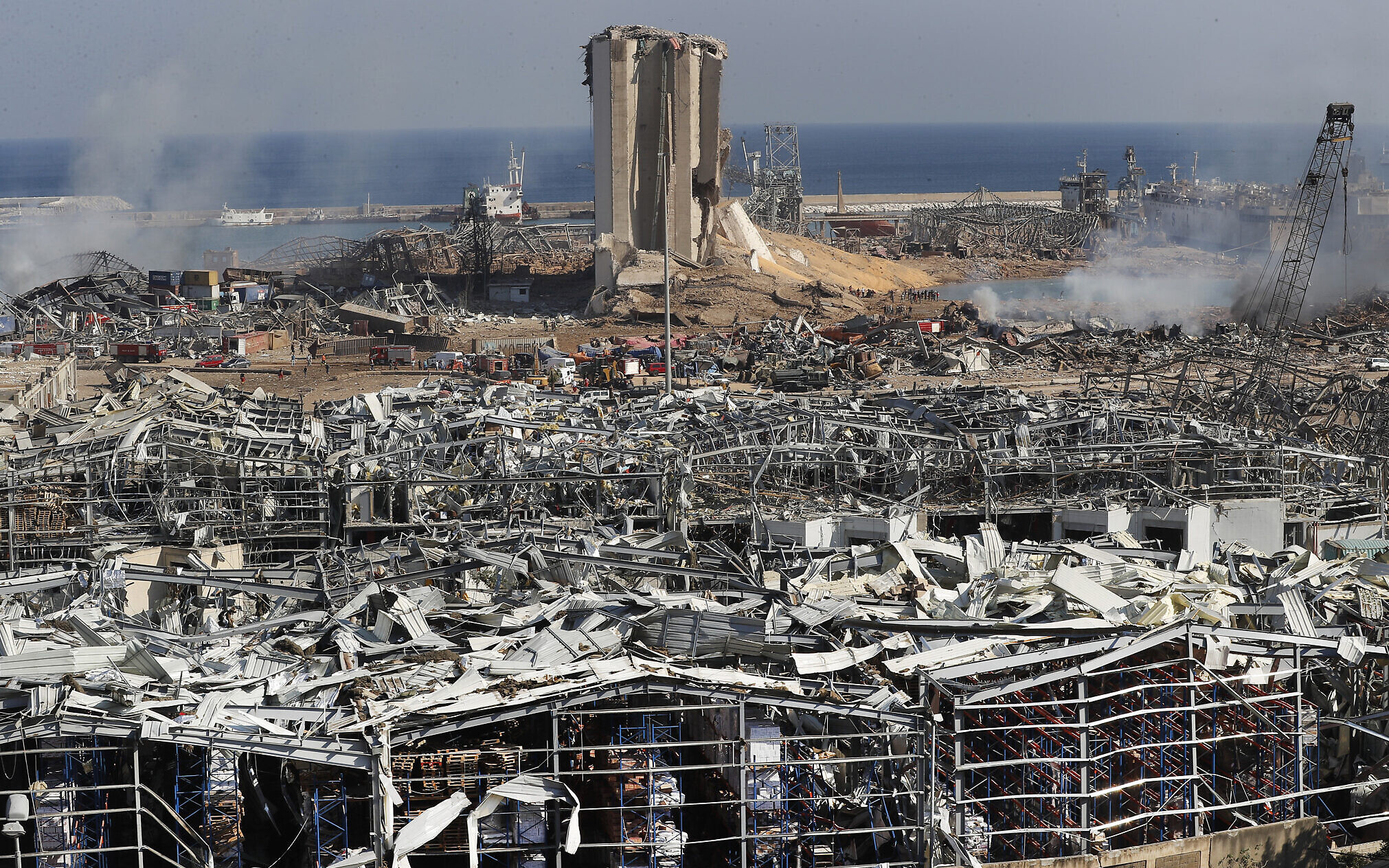
In August 2020, the largest man-made explosion since Hiroshima and Nagasaki ripped the heart out of Lebanon’s historic capital. Over two thousand tons of illegal, combustible, unstable, and almost forgotten ammonium nitrate, the stuff that brought down the Alfred C Murrah building in Oklahoma City in 1995 went up in a fireball that resembled an atomic blast. Hundreds perished and thousands were injured, whilst the port and its adjacent neighbourhoods, a crowded inner-city of apartments and cafes, were devastated. Lebanon’s people, already roiled by economic ruin and political paralysis, the trigger for months of civil unrest (see In That Howling Infinite’s Lebanon’s WhatsApp Intifada) and the chains of COVID19, blamed their corrupt and incompetent rulers and the archaic sectarian dispensation that kept them in power. Caught up in the cogs of Lebanon’s crooked system, the search for the perpetrators, justice and closure will grind on for years. Meanwhile, the dead have been buried, the wounded will recover, limp on or succumb, and the psychological damage will endure.
When the port went up, many Beirutis were cast back into what must have seem like a time tunnel, a harrowing vortex of memories and traumas inherited from the fifteen-year long civil war – a conflict that has left wounds that ache still (see In That Howling Infinite’s Pity The Nation (there is an extract from this at the end of this post).

Social media shared memes and messages, hearts and flags, and “we are all Lebanese” profiles. Expatriates and others wrote and spoke about the country’s present turmoil and fears of a return to the bad old days. Many shared YouTube videos featuring songs by Lebanon’s national cultural icon, Fairuz – and most particularly, her poignant Li Beirut, which she wrote during the civil war as a tribute to the city’s timeless beauty and the suffering of its people people: “From my heart, peace to Beirut, and kisses to the sea and to the houses, To a rock shaped liked the face of an old fisherman”.  Listen to it below, and to a lovely cover by a young Lebanese teenage – and yes, the tune is indeed Joaquin Rodrigo’s famous Concierto de Aranjuez.

Beirut-born Fairuz, already a renowned singer and songstress, celebrated and adored throughout the Middle East, chose to remain in her home-town throughout the civil war. But whilst she continued to tour the world as a performing artist, she declined  to sing in Lebanon, refusing to be seen to be as taking sides in the political and sectarian conflict. As a national, unifying and consoling figure, she sang Li Beirut in a charity concert for the victims of the explosion, and for the wounded city itself.
For much of the past year, I have been refreshing my Arabic under the mentorship of Ya’rob, a Syrian and former refugee from America’s invasion of Iraq in 2003. Working on my reading, I have spent time translating Arabic songs and poems into English – primarily Syrian poet Nizār Tawfīq Qabbānī, Palestinian poet Mahmoud Darwish, and Fairuz herself – and English poems and songs into Arabic for the benefit of my teacher – these have included my own, WH Auden, and Leonard Cohen, and even Redgum – in a study of Australian icon and bad boy Ned Kelly, I translated Poor Ned!

And lo’, here was Qabbani’s poem Ya Beirut, Ya Sit al Dunya – O Beirut, Mistress of the World, a bitter soulmate of Fairuz’  Li Beirut.

Nizār Tawfīq Qabbānī was a Syrian diplomat, poet, writer and publisher. He is considered one of the most revered contemporary poets in the  Arab world and is acclaimed as Syria’s National Poet. His poetic style combined simplicity and elegance in exploring themes of religion and Arab nationalism, and controversially, in the Middle East, of love, eroticism and feminism. It may say something about Arab culture, and it’s moralistic constraints, that Palestinian poet Mahmoud Darwish used his craft to navigate similar waters – although   never have had the opportunity to have had an Israeli lover like his contemporary (the inspiration for oud master and jazz great’s Anouar Brahem in his excellent The Astounding Eyes of Rita.

Qabbani was born in Syria but spent much of his life in Beirut, a city he adored. His iconic poem Ya Beirut, Ya Sit al Dunya was published in 1978, three years into the fifteen year long Lebanese Civil War (see Pity the Nation). In it he eloquently and emotionally described the malign impact that the Arab world was having on Beirut, a beautiful and historic coastal city that for centuries has been a cultural and economic entrepôt between east and west. It lamented how the city had been repeatedly colonised, invaded and oppressed by jostling regional powers. “We confess now that we gave you no justice, no mercy/That we misunderstood you and were not sorry/That we offered you a dagger in place of flowers”.

Three years later, he went into exile in Europe, heartbroken when his wife was killed in a suicide bombing at the Iraqi embassy in Beirut.

In Arabic, the title can read O Beirut, Lady of the World, But figuratively, it could be seen to imply that the city was indeed the “mistress’ or prostitute of the Levant, used and abused by many outside powers. “We confess before the just God”, he wrote,”that we were envious of you, that your beauty hurt us … that we hurt you and exhausted you, that we burned you and made you cry, that we weighed you down with our sins”. Fairuz was less brutal but no less angry when she asks of her city: ‘how did its taste become the taste of fire and smoke. “She has became alone at night, alone with the night.”

Contemplating Ya Beirut, I was reminded of Lebanese poet Khalil Gibran’s famous poem, Pity the Nation, published posthumously after his death in 1931, a sardonic and incisive commentary on the politics of his time and his homeland. It is chilling in its prescience with regard to contemporary politics in the Middle East and indeed, much, much closer to home in our liberal democracies wherein ‘populism and post-truth, allegations of ‘alternative facts’ and fake news’ are ubiquitous and duplicitous, and where, in a milieu of fear, anger and loathing, intolerance and ignorance appear to be on the rise. See In That Howling Infinite‘s Pity the Nation that is full of beliefs and empty of religion. It came as no surprise that in the Age of Trump, onetime beat poet Lawrence Ferlinghetti’s clone, also titled Pity The Nation, was circulating widely in anxious progressive circles.

I reproduce each of these poems and songs below, in English and also in Arabic. As I was working on this post, I recalled a song by Bruce Springsteen that echoed them in their blend of bitterness and optimism – My City In Ruins. Indeed, the play-out of Bruce’s song, “Come on, rise up!” is almost identical to the last part of Qabbani’s poem: “Rise from beneath the rubble like the almond flower in April. Rise from under your grief. Rise!”  So I’ve reproduced Bruce’s song too, with a video thereof.
© Paul Hemphill 2020.  All rights reserved
Author’s note:

I visited Beirut several times before the civil war; my last visit was about eighteen months before its outbreak. Those were days when the city still held on tight to the soubriquet “Paris of the Middle East”. I walked the fashionable Corniche past the high-end restaurants, bars and nightclubs that attracted the well-heeled of the Gulf each summer. I recall dining well – but not extravagantly – with Lebanese friends and sunbathing as a guest at a sports centre on the Mediterranean shore. I’ve travelled to the Levant many times since, but I never returned to Lebanon.


Qabbani’s and Fairuz’ are presented in the original Arabic; the translations are a blend of my own and the work others that I believe best reflect the imagery and intent of the writer. The Arabic versions of Gibran’s poem and of Springsteen’s song are my own, word, grammar and narrative-checked by my Syrian friend Ya’rob. He also checked the English translations for faithfulness to the original text.

“That which was the holiest and mightiest of all that the world has yet possessed has bled to death under our knives. Who will wipe this blood off us? With what water could we purify ourselves?”  Friedrich Nietzsche, The Parable of the Mad Man

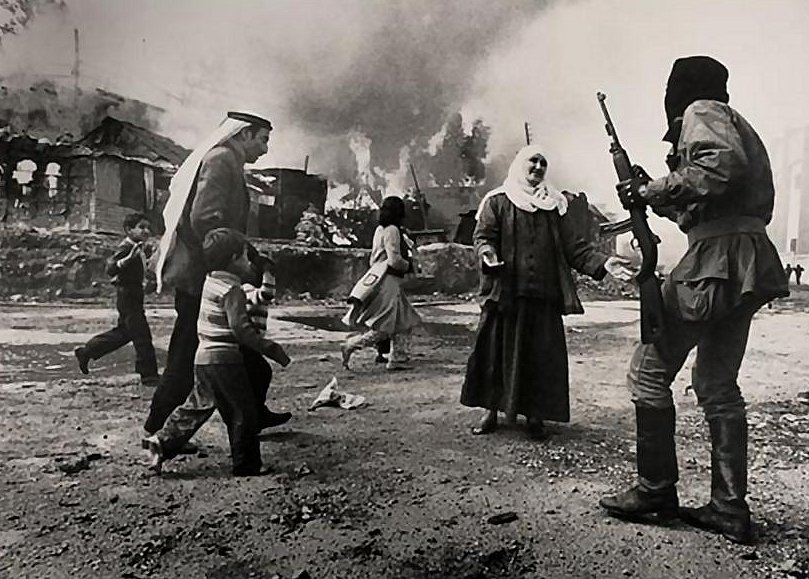
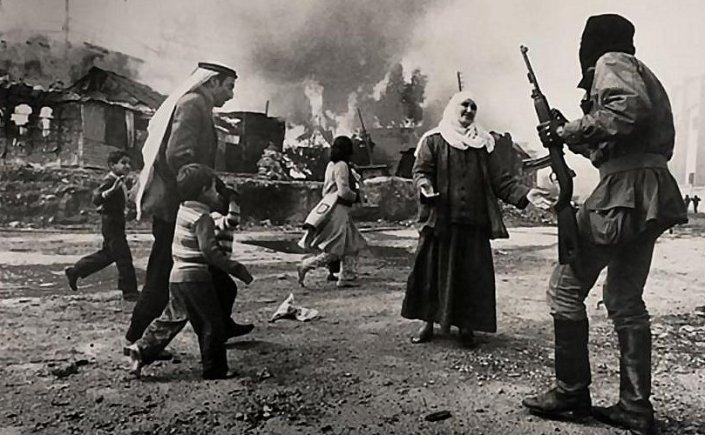
Muslim gunmen clash with right-wing Phalange militiamen outside the Phoenicia Intercontinental hotel in Beirut, December, 1975.


O Beirut, O Mistress of the World
O Beirut,
O Mistress of the World
We confess before the One God
That we were envious of you
That your beauty hurt us
We confess now
That we gave you no justice, no mercy
That we misunderstood you and were not sorry
That we offered you a dagger in place of flowers
We confess before the just God
That we hurt you and exhausted you
That we burned you and made you cry
That we weighed you down with our sins
O Beirut
Without you, the world is not enough
We know now that your roots run deep within us
We know now just what was done by our hands
Rise
Rise
Rise
Rise from beneath the rubble
Like the almond flower in April
Rise from under your grief
Rise
The revolution is born in the womb of sorrows
Rise from beneath the rubble
Rise in honour of the forests
Rise in honour of the rivers
Rise in honour of the rivers and the valleys
And of humanity
Rise in honour of humanity
Rise O Beirut
Rise
The revolution is born in the womb of sorrows
O Beirut
O Beirut

 يا بيروت
يا ست الدنيا

يا بيروت
يا ست الدنيا
يا بيروت
نعترف أمام الله الواحد
أنّْا كنا منك نغار
وكان جمالك يؤذينا
نعترف الآن
بأنّْا لم ننصفك ولم نرحمك
بأنّْا لم نفهمك ولم نعذرك
وأهديناك مكان الوردة سكيناً
نعترف أمام الله العادل
بأنّْا جرحناك واتعبناك
بأنّْا أحرقناك وأبكيناك
وحملناك أيا بيروت معاصينا
يا بيروت
إن الدنيا بعد ليست تكفينا
الآن عرفنا أن جذورك ضاربة فينا
الآن عرفنا ماذا إقترفت أيدينا
قومي
قومي
قومي
قومي من تحت الردم
كزهرة لوز في نيسان
قومي من حزنك قومي
إن الثورة تولد من رحم الاحزان
قومي من تحت الردم
قومي إكراماً للغابات
قومي إكراماً للأنهار
قومي إكراماً للأنهار والوديان
والإنسان
قومي إكراماً للإنسان
قومي يا بيروت
قومي
إن الثورة تولد من رحم الاحزان
يا بيروت
ا بيروت

Pity The Nation

Pity the nation that is full of beliefs and empty of religion.
Pity the nation that wears a cloth it does not weave
and eats a bread it does not harvest.

Pity the nation that acclaims the bully as hero,
and that deems the glittering conqueror bountiful.

Pity a nation that despises a passion in its dream,
yet submits in its awakening.

Pity the nation that raises not its voice
save when it walks in a funeral,
boasts not except among its ruins,
and will rebel not save when its neck is laid
between the sword and the block.

Pity the nation whose statesman is a fox,
whose philosopher is a juggler,
and whose art is the art of patching and mimicking

Pity the nation that welcomes its new ruler with trumpeting,
and farewells him with hooting,
only to welcome another with trumpeting again.

Pity the nation whose sages are dumb with years
and whose strongmen are yet in the cradle.

Pity the nation divided into fragments,
each fragment deeming itself a nation.

Kahlil Gibran, The Garden of The Prophet (1933)

رحم على الامة

ارحم على الأمة المليئة بالمعتقدات والخالية من الدين
ارحم على الأمة التي تلبس ثوبا لا يحاك
وتأكل خبزا لا تحصد.
ارحم على الأمة التي تعتبر المتنمر بطلاً
ويعتبر منتصرها رائعا.
ارحم أمة تحتقر الشغف في أحلامها
لكنه يخضع لها عندما تستيقظ.
ارحم على الأمة التي لا ترفع صوتها
إلا عندما تمشي في جنازة
وتفتخر فقط بين أطلالها
ولن تنقذ نفسها عندما توضع رقبتها
بين السيف والكتلة.
ارحم على الأمة التي فيها رجل الدولة وهو ثعلب
والفيلسوف مشعوذ
فنه من الترقيع والتقليد
ارحم على الأمة التي تستقبل حاكمها الجديد بصوت عالٍ
ويقول وداعا له بسخرية
فقط للترحيب بآخر من خلال الاحتفال الصاخب مرة أخرى
ارحم على أمة حكماؤها أغبياء السنين
وأولئك الذين لا يزال رجالهم الأقوياء في المهد.
ارحموا الأمة منقسمة
وكل قطعة تعتبر نفسها أمة

To Beirut
Fairuz

To Beirut,
From my heart, peace to Beirut
And kisses to the sea and to the houses,
To a rock shaped liked the face of an old fisherman
She is wine from the spirit of the people
From its sweat, she is bread and jasmine.
So how did its taste become the taste of fire and smoke

Glory from the ashes of Beirut
From the blood of a child held in its hand,
My city has extinguished its beacon,
She has closed her door,
She has became alone at night
Alone with the night.

You are mine, you are mine.
Oh, embrace me, you are mine
My banner, the rock of tomorrow, the waves of my travels.
The wounds of my people have blossomed
The mothers’ tears have blossomed
You, Beirut, are mine
You are mine
Oh, embrace me
You are mine.

 يا بيروت

فيروز

لبيروت
من قلبي سلامٌ لبيروت
و قُبلٌ للبحر و البيوت
لصخرةٍ كأنها وجه بحارٍ قديمِ
هي من روحِ الشعب خمرٌ
هي من عرقِهِ خبزٌ و ياسمين
فكيف صار طعمها طعم نارٍ و دخانِ

لبيروت
مجدٌ من رمادٍ لبيروت
من دمٍ لولدٍ حُملَ فوق يدها
أطفأت مدينتي قنديلها
أغلقت بابها
أصبحت في المساء وحدها
وحدها و ليلُ

لبيروت
من قلبي سلامٌ لبيروت
و قُبلٌ للبحر و البيوت
لصخرةٍ كأنها وجه بحارٍ قديمِ

أنتِ لي أنتِ لي
أه عانقيني أنتِ لي
رايتي و حجرُ الغدِ و موج سفري
أزهرت جراح شعبي
أزهرت دمعة الأمهات
أنتِ بيروت لي
أنتِ لي

Tell me, tell me about my country
Fairuz

Tell me, tell me about my country,
Tell me, O breeze blowing through the trees before me
Tell me stories of my family and of my home
Tell me a long story about me and my childhood sweetheart.

O breeze blowing through the laurel garden,
I beg you, come and play with me in my house
Tell me if he still remembers me in my country
Does he wait for me in the evening in my country
In these few hours happiness, tell me,
Habibi, tell me.

I beg you, tell me how are the olive trees
And the boy and girl in the shade of the windmill
And the almond trees and the earth and our sky
It is our our country, and our love
Blooms in these ungenerous times
Habibi, tell me

احكيلي احكيلي عن بلدي

فيروز

إحكيلي إحكيلي عن بلدي إحكيلي
يا نسيم اللي مارق عالشجر مقابيلي
عن أهلي حكايي عن بيتي حكايي
و عن جار الطفولي حكايي طويلي
يا نسيم اللي مارق عا أرض الغار
حلفتك تجي تلعب عندي بهالدار
خبرني ان كان بعدو بيذكرني
ببلدي و عالسهرة ناطرني
بساعات الفرح القليلي حبيبي إحكيلي
حلفتك خبرني كيف حال الزيتون
و الصبي و الصبيي بفيي الطاحون
و اللوزي و الأرض و سمانا
هو هني بلدنا و هوانا
زهر الأيام البخيلي حبيبي إحكيلي

My City In  Ruins

Bruce Springsteen
There’s a blood red circle
On the cold dark ground
My city of ruins
Young men on the corner
Like scattered leaves
While my brother’s down on his knees
Tell me how do I begin again?
My city of ruins
My city’s in ruins
Now with these hands
With these hands, I pray Lord
With these hands
I pray for the strength Lord
With these hands
I pray for the faith, Lord
With these hands
I pray for your love, Lord
With these hands
I  pray for the strength, Lord
With these hands
I pray for your love, Lord
With these hands
I pray for your faith, Lord
With these hands
I pray for the strength, Lord
With these hands
Come on, rise up
Come on, rise up
Come on, rise up
Come on, rise up
Come on, rise up

مدينتي في اخراب
بروس سبرينغستين

هناك دائرة حمراء بالدم
على الأرض المظلمة الباردة
مدينتي الخرائب
الشباب في الزاوية
مثل الأوراق المتناثرة
بينما أخي على ركبتيه
قل لي كيف أبدأ من جديد؟
مدينتي في الخراب

مدينتي في خراب
الآن بهذه الأيدي
بهذه الأيدي أدعو الله
بهذه الأيدي
أصلي من أجل القوة يا رب
بهذه الأيدي
أصلي من أجل الإيمان يا رب
بهذه الأيدي
أصلي من أجل حبك يا رب
بهذه الأيدي
أصلي من أجل القوة يا رب
بهذه الأيدي
أصلي من أجل حبك يا رب
بهذه الأيدي
أصلي من أجل إيمانك يا رب
بهذه الأيدي
أصلي من أجل القوة يا رب
بهذه الأيدي
تعال ، انهض
تعال ، انهض
تعال ، انهض
تعال ، انهض
تعال ، انهض

Postscript

Lebanese author Dominique Eddé has written: “We know more or less what constitutes Lebanon, but we don’t know how it works. If we had to send into space a country capable of containing the world, Lebanon would fit the bill. If we had to send one that did not contain what is needed to make a real country, Lebanon would also be the answer”. (See Lebanon’s WhatsApp Intifada

In April 2015 In That Howling Infinite  published a piece on Lebanon’s’ fifteen year long civil war. Named for Khalil Gibran’s iconic poem, it was entitled Pity The Nation.  It ran thus:

The Lebanese Civil War broke loose forty years ago this month. A cold war fuelled, by aggregating hostility between the Palestinian refugee community, a militarized state within a state, and their reluctant Lebanese hosts, became hot with deadly clashes between Palestinian and Maronite militias. Sects, clans, families, and the political parties and militias that gathered about them, went for their guns, the hounds of hell were loosed, and the massacres began.

In a Levantine echo of the Thirty Years War that raged through Western Europe from 1618, cities were destroyed and the countryside ravaged as armies, militias and gangsters fought over the fallen body of a divided and devastated land. Muslims fought Christians, Sunni fought Shi’a, Maronites fought Orthodox, Druze fought Muslims and Christians, communists fought nationalists, and Palestinians, at one time or other, fought everyone, including other Palestinians. And all changed partners and enemies in a bloody danse macabre that was at once mediaeval and mid-20th Century in its savagery.

This Hobbesian “war of all against all” drew in outsiders. Syrians, who during the course of their intervention, changed allies and adversaries as their political and strategic aims and interests mutated, and ruled the country until, implicated in the assassination of popular former prime Minister Rafik Hariri in 2005, beat an undignified retreat (whilst never quite relinquishing the levers of power). Israelis, threatened by guerrilla attacks in the Fatah land of southern Lebanon, ostensibly invaded Lebanon to destroy the Palestinian military machine, and as the midwife in the birth of the Shi’a Hezbollah, waded with eyes wide shut into a quagmire that many have viewed as their Vietnam. Americans and French, who intervened with the aim of separating the warring sides and pushing them towards a ceasefire, departed in the aftershock of Hezbollah bombs that killed hundreds of their servicemen. And United Nations Blue Berets who serve and die still in the hostile borderlands.

The war raged for the next fifteen years, staggering to an end in 1990 after claiming over 150,000 lives and destroying the lives of tens of thousands of others, including over 100,000 permanently handicapped. Nearly a million souls fled their homes, and some 76, 000 remain displaced to this day, now forgotten in the midst of the new and greater Syrian diaspora, whilst tens of thousands emigrated permanently. There are still some 17,000 “disappeared” who may be either still in Syrian or Lebanese jails, or more likely, in one of hundreds of unmarked graves scattered across this tiny country.  


Lebanon’s WhatApp intifada

We know more or less what constitutes Lebanon, but we don’t know how it works. If we had to send into space a country capable of containing the world, Lebanon would fit the bill. If we had to send one that did not contain what is needed to make a real country, Lebanon would also be the answer.   Lebanese author Dominique Eddé

The sparks which that lit the fire of the current protests in Lebanon were an increase in the price of using the WhatApp messaging, which many Lebanese preferred to the high rates charged by private telcos, and destructive wildfires on the iconic Chouf mountains which could not be tamed because the authorities had grounded the firefighting helicopters for want of routine maintenance. But the root of Lebanon’s autumn of discontent go much deeper.

Almost thirty years of stagnation characterized by high unemployment, particularly among the youth, increasing inequality, limited opportunities, rampant corruption, meagre infrastructural reform, and decaying administrative, social, and educational institutions, are bringing young and old from across Lebanon’s many confessional fault lines and clan and party loyalties (often the same thing) onto the streets of major major towns all over this tiny but divided country. They accuse the government being preoccupied with enriching its members and their supporters and neglecting the needs of ordinary Lebanese. See longtime Beirut resident Robert Fisk’s article in The Independent: I don’t blame the Lebanese rioters setting Beirut alight – they are hungry, poor and furious; and Beiruti journalist Samah Hadid’s piece: The protests in Lebanon have bridged social divides – now everyone is fighting against the corrupt elite.

There are many left-wing social media tropes that are blinkered by an obsession with theories of US, Saudi and Israeli conspiracy, accusing them of manipulating the Lebanese street to bring down the Hariri government. They are letting Lebanon’s corrupt and dysfunctional sectarian political establishment off the hook.

Other media are talking excitedly about this being Lebanon’s version of the 2011 Arab Spring – as illustrated by our featured image and the lass sporting the word thawra or ’revolution’’ on her tee shirt – a sure way of drawing the invidious “evil eye’ to the the Lebanese’ peaceful (so far) and convivial (again, so far) intifada, for we all know how the Arab Spring ended. And none have yet allocated this putative revolution a colour like those that popped up from Kiev to Kazakhstan in the early years of this century (the ‘Cedar Revolution’, anyone?). Which is probably wise, because we all should have learned by now to avoid the trap of false analogies.

The party atmosphere and the images of unity among Lebanese of all classes, clans and confessions can be deceptive. Three decades since the end of a brutal civil war, which left over 120,000 propel dead, and tens of thousands “disappeared”, and almost eighty years since the National Pact of 1943 laid the foundations for Lebanon’s shaky and perennially challenged multi-faith political dispensation, divisions run deep. Not only traditional clan and sectarian lines, and the inequitable distribution of power and wealth, but also, the deliberately indeterminate status of upwards of 170,000 Palestinians (the refugees of the 1948 war and their descendants), and upwards of 1.5 million increasingly unwelcome Syrian refugees.

There are many amongst the party faithful and their never quite disarmed militias who at a signal from above, could let lose the dogs of violence with infiltrated provocateurs or strategically placed snipers – we’ve seen this before, in Sarajevo and Kyiv, in Tahrir Square, and in Syria in 2011 when demonstrations had yet to morph into violence and civil war. This it is already happening in Iraq, where security forces and lone wolves affiliated with Iranian interests are alleged to have fired on protesters.

The Lebanese National Army and police force have been ordered to disperse the protesters, but as yet, are merely holding the line. Many on the streets are no doubt anxious about the role the powerful Shia Hezbollah will chose to play in the coming days. Its reclusive but undisputed leader Hasan Nasrallah has declared that the status quo should stand, that the government should hold firm because it would taken too long to form a new one, thus delaying the reforms that the demonstrators are demanding. Hezbollah, with thirteen seats in the parliament and three cabinet posts, is the most powerful political and military and an army stronger than the national army, and whilst bankrolled by Iran, is itself part of the establishment that the protesters and one of the parties that many protesters are demonstrating against – as part of the problem and not of the solution.

Calling for a non-confessional government of technocrats appointed on the basis of experience and not patronage and clan connections, the protesters paint Hezbollah with the same brush as the the Christian Phalange, the Shia Amal, and other self serving confessional parties – quite apart from its constant provocation of what many see as needless confrontation with Israel (and its western backers), and its deep involvement in the Syrian civil war.  Whilst there is no doubt a traditional prejudice towards the country’s Shia minority, many Lebanese resent Hezbollah for exposing their country to potential destruction at the hands of Israel, and for dragging it into the conflict in Syria, a country and a regime for which for which they retain bad memories and harbour little affection.

Meanwhile, there have been indications that Hezbollah’s hitherto uncritical mass following in the south is fraying somewhat as economic hardship bites, tarnishing even Hezbollah’s credentials as a provider of social and educational services. But there are now reports from Beirut of Hezbollah supporters attacking protesters. Dressed in black and wielding batons, they are chanting that their boss is not like the others, whilst he has declared that the protests are being fomented by his enemies (it’s all about him!) and that it could reignite the fifteen year long civil war that ended in 1990. There is also talk of supporters of Hsiang part Amal and of Hezbollah coming to break up the demonstrations. Ominously, they are being called ‘shabiya’, Arabic for ‘ghosts’, and also the name of the murderous Alawi militias unleashed by the regime in Syria. 

There is also talk of supporters of Hsiang part Amal and of Hezbollah coming to break up the demonstrations. Ominously, they are being called ‘shabiya’, Arabic for ‘ghosts’, and also the name of the murderous Alawi militias unleashed by the regime in Syria. 

As I watch from afar, I am reminded of the words of celebrated Lebanon’s national poet Khalil Gibran: “Pity the nation that raises not its voice save when it walks in a funeral, boasts not except among its ruins, and will rebel not save when its neck is laid between the sword and the block”.

 © Paul Hemphill 2019.  All rights reserved


For more on the Lebanese civil war, and the full text of Gibran’s poem, see In That Howling Infinites Pity the Nation

For other posts about the Middle East, see: A Middle East Miscellany

Afterword:  Lebanon’s  huge smallness

In a fascinating article in the New York Review of Books, The Compatibility of Opposites, Lebanese author and novelist Dominique Eddé  writes one of the most profound and insightful descriptions of her homeland, that you could ever read  – a portrait of what I would describe as Lebanon’s  huge smallness (after Walt Whitman’s  “I am small, I contain multitudes”):

“Every Lebanese invents a personal Lebanon for a country that does not exist”.
A Lebanese author writes … Lebanon is both the center of the world and a dead end. The broken little village of a planet that is sick. Chaotic, polluted, and corrupt beyond belief, this is a country where beauty and human warmth constantly find ways to break through” …All extremes and all clumped together. It is like a magician’s trick handkerchief: you simply unfold one end and it will stretch ad infinitum. Individual memories are rich and compelling while the collective memory is nowhere to be found, impossible to recount”.

She continues: “It would hardly be an exaggeration to say that in Lebanon, everything can be explained and nothing can be understood. All the decisions made for this country are made behind its back, and all that happens here epitomizes the rest of the world: the mix of populations, the vulnerability of borders, political lying at its worst, building the present by destroying the past, an utter lack of perspective … “With a total population of 4 to 5 million, Lebanon is home to 1.5 million refugees. Between a quarter and a third of the population is foreign: Palestinians displaced by the wars of 1948 and 1967, Syrians and Palestinians fleeing repression and the war in Syria that began in 2011, Iraqis displaced by the two Gulf wars. Lebanon’s degree of absorption and hospitality is almost proportional to its degree of intolerance. Ambivalence is everywhere, in everything”.

Postscript – the autumn of our discontent 

Last Sunday, a million people marched in London, demanding a second people’s vote on Brexit. In Britain and in Australia environmental protesters are disrupting city centres and enraging commuters. The “law and order brigade” in parliaments, press and social media have called down fire and brimstone upon climate activists’ heads, one television host going so far as suggesting that they should be used as speed bumps.

But in far-away places around the globe, popular protests are far from peaceful.

In Lebanon, Iraq, Ecuador and Chile, people of all ages, genders and political affiliations are on the streets. There are many common themes, including demands for education and employment, and an end to the incompetence, self-interest and corruption of ruling elites. Bolivians are on th streets protesting the ruction of its president. In Spain, Catalans protest jail sentences handed down to their separatist parliamentary leaders. And in Hong Kong, there is no let up to months of demonstrations against China’s relentless chipping away at the city’s tenuous autonomy. Young Indonesians have been on the streets of Jakarta protesting new laws that undermine civil rights and endemic corruption amongst elites, and in Indonesian-occupied Papua, calls for independence have been met with predictable brutality.
In most of these each these outbreaks of popular outrage and protest, the authorities are responding with heavy handed police tactics, tear gas, rubber bullets, water cannon, and mass arrests, and in some instances, deadly live fire.
See The Washington Post’s  The Common Factor Uniting Protesters … ; an Patrick Cockburn’s insightful analysis of the changing nature of the Middle East’s many ethnic and sectarian conflicts: Mass protests against corruption and deprivation are replacing an era of sectarian civil wars. 

Small stories – the odyssey of Assid Corban

Dhour  al Choueir ( ضهور الشوير ), or Shweir, is a small town on the flanks of Mount Lebanon, looking down on Lebanon’s capital Beirut and the Mediterranean Sea, some thirty kilometres to the west. ‘Dhour’ means ‘summit, or top of a mountain. Illustrative of Lebanon’s diverse demography, half of it’s inhabitants are Eastern Orthodox and the other half Melkite and Maronite. It lay on the front line of during Lebanon’s long and bloody civil war (see Pity the Nation).

Today, it is one of Mount Lebanon’s favoured summer resorts where well-off Beirutis keep apartments and enjoy the cool fresh air during the hot summer months. It is called the city of skyscrapers, due to its many tall buildings and also because up there on the mountainside, these literally touch the sky. But in the last century, people from al Choueir migrated throughout the world – and they and their descendants have retained close ties with their hometown through family contacts and visits home. The town is now famous for its annual August carnival, honouring Lebanon’s emigrants.

Assid Abraham Corban was born in Choueir, then but a village, on 25 August 1864, the son of Abraham Hannah Corban, a vigneron from a family of stone masons and wine-growers, and Helene Hannah Bousader. In those days, there was no Lebanon. Predominantly Christian Mount Lebanon was  a Mutasarrifat or governorate of the Vilayet of Beirut, a province of the Ottoman Empire. The empire had another fifty four years to run after which the mutasarrifat and the four others that were to become the Republic of Lebanon in 1943 became part of the French mandate of Syria. Young Assid worked principally as a stonemason, but he also pruned and ploughed the family vineyard. On 22 October 1887, he married Najibie Tanyus Ataia, the daughter of another respected local family. They had two children Khalil (1889-1975) and Wadiye (1891-1982).

In the winter of 1890 both of Assid’s parents died. Inspired by the tales of Lebanese emigrants of fortunes to be made in the New World, he set out on his own in 1891 for Australia, leaving his young family behind in Choueir. After waltzing through the outback as a pedlar, he crossed the Tasman Sea to New Zealand in 1892 where, still toting his pedlar’s pack, he travelled around the mining towns of the Coromandel Peninsula, Waikato and the Bay of Plenty. After working for a time as a haberdasher in Waihi, and later in Thames, in 1895, he opened a shop in Queen Street, Auckland, advertising himself as an ‘Eastern Importer of Fancy Goods, Jewellery, Drapery, etc.’ In the same year he became a naturalized British subject, and in 1897 sent for Najibie and the boys to join him.

Aetearoa – New Zealand, on the far side of the world, became the new home of the Lebanese stonemason turned haberdasher. Three further three children were born whilst the family lived in Queen Street. They named their first childborn in New Zealand, Zealandia (1898-1993) to celebrate their new home, then came Corban (1900-1974), Zarefy (1901-1978), and Annis (who died in infancy in 1903).

 In western Auckland,  at at the foot of the North Island’s scenic Waitakere Range, lies the suburb of Henderson. The land once belonged to the Te Kawerau ā Maki, the mana whenua (people of the land) of West Auckland, a distinct tribal entity since the early seventeenth century  when their ancestor Maki conquered and settled the Auckland isthmus and the land as far north as the Kaipara harbour. They sold much of their land of European settlers during the last decades of the Nineteenth Century.

And in 1902 Assid bought a scrubby ten acres of this land for £320 and planted a vineyard beside the O Panuku stream, on what is today the Great North Road. He named it Mount Lebanon Vineyards after the mountains of his birth. This became the celebrated Corbans Winery, one of New Zealand’s oldest. The property had a two-roomed cottage, an orchard and vines of the native American variety Isabella. Assid’s first 3½-acre vineyard was planted in a mix of wine grapes which included the classic red varieties Syrah, Meunier and Cabernet Sauvignon, and dual-purpose table grapes such as Black Hamburgh. It’s reputation was established swiftly. Romeo Bragato, government viticulturist from 1902 to 1909, was very impressed with Mt Lebanon Vineyards, praising it as ‘the model vineyard of New Zealand, and an object lesson to vine-growers’.

Assid, or AA as he was now known in the area, and his growing family first lived the cottage.  work on a three-level wine cellar started in 1903 and was completed in 1907. The first grapes were crushed by hand with a wooden club, and an open hogshead was used as the fermenting vat. By 1908 Assid had a simple crusher and two small presses for his first commercial vintage. Wine-making, however, was an extremely precarious pursuit in early twentieth-century New Zealand. In those early days, the family supplement wine-making with other forms of income: vegetable crops and tobacco were planted between the vines. A produce stall sold from the front gate and a handcart went out to sell fresh goods around Henderson. The industry’s most formidable foe was the temperance movement. Henderson became ‘dry’ in 1909, possibly due to alcohol-related problems at the local Falls Hotel. Assid built a small brick building outside the railway lines bordering his land which formed the dry boundary, and he was able to sell his wine legally from the small whitewashed building that still stands today.


The Corbin Winery’s first recorded sale, in September 1909, was to James Cottle of Taupaki who purchased two gallons of wine in his own jar at 10 shillings per gallon. Recognition of the quality of Corban’s wines came swiftly. The company won first prize for unsweetened red grape wine at the 1910 Henderson show. At the 1913–14 Auckland Exhibition, competing against wines from other countries in the British Empire, it won gold medals for its sherry and port and silver medals for its claret and red wine.

The Corban holdings steadily expanded. In 1909 Assid bought a neighbouring 20-acre property, planting the first five acres in vines in 1912. Eight years later he opened a wine depot in Auckland city and in 1923 built a two-storeyed, 17-room family homestead on the Great North Road. By the 1920s the firm was called A. A. Corban and Company.  In 1925 the Department of Agriculture’s vine and wine instructor, J. C. Woodfin, wrote that in the previous year ‘only twenty acres of vines were planted and one brave man was responsible for eight of these’. Corban’s had clearly become the largest winery in the country. It was also very much a family concern and in the 1930s became known as A. A. Corban and Sons Limited.

And there were indeed many sons. Four other children were born in Henderson: Annis (1905-1974), Annisie (1907-2002), Najib (1909) and Helena (1911). Other than Zealandia, all the Corban children lived in Henderson throughout their lives. The size of the family grew progressively as each of the children married and brought their spouses time to live in the homestead. Eventually some family members moved to other houses around the Henderson area. But they still maintained daily contact with the family, and the homestead remained a busy center for the family as well as for the wine business. The cooking of meals and other chores was shared, and all income was pooled. As the families grew, a system developed to fairly manage income and expenses. The costs were allocated with each adult counting as one unit, and with two children as one unit.

Although the arrival of a rotary hoe in 1934, and a caterpillar tractor soon after, greatly eased the vineyard toil, Assid Corban remained a patriarch in the Old Testament mould and a strong believer in the virtues of hard work. His work ethic inextinguishable, he never retired – every day of the year was a working day – except Sundays. His son Corban later described him as ‘well versed in the Scriptures and a staunch adherent of the Greek Orthodox Church’. He used to ‘bring out his treasured Bible and read to the family in Arabic’.

The end of an era came on December 2 1941when Assid suffered a stroke on his way home after a day working on a newly acquired property in Henderson Valley Road. He was in a coma for 12 days before finally passing away. His embalmed body lay in state in the homestead for a week whilst visitors filed past to pay their respects. In January 1943 work was completed on a classical tomb that had been erected in Waikumerte cemetery. And so, in a second funeral ceremony Assid Abraham Corban, villager, traveller, wanderer, immigrant, and pioneer was finally laid to rest. The respect this man commanded was evident in the large numbers who attended ceremonies in New Zealand and his hometown of Choueir where he still retained firm links.

Najibie became the head of the family, and just as her husband had been a powerful patriarch, she become the family’s powerful matriarch, leading it through some difficult times. The company continued to grow as the Corban family pioneered many new wine-making techniques. For much of the first half of the twentieth century the winery Corban founded dominated the New Zealand wine scene. When she passed away in 1957, the family had grown to include 32 grandchildren and 26 great-grandchildren. As a mark of respect, on the day of Madame Corban’s funeral, the shops in Henderson closed for half a day.

The growth of the winery continued as the Corban family pioneered many new wine-making techniques. With the ongoing expansion of the family owned winery, other companies began to buy shares during the 1960’s and 70’s. The business became a public company in 1963 and passed out of the family’s hands in the 1970s.y 1978, the Rothmans Corporation owned 78% of the company and took the company over. It remains one of New Zealand’s wine-making giants. The sturdy figure of Assid Abraham Corban, with his magnificent walrus moustache and trademark waistcoat and chains, gazes sternly down from a wall in the entrance to the head office of Corbans Wines Limited.

The Corban Winery continues to play a vibrant role in the cultural life of Henderson. Many of the extended Corban family became key figures in the local community. Most notable is Assid Abraham’s grandson, Assid Corban (Junior), who became the Mayor of Henderson Borough from 1974 to 1989, and the first Mayor of Waitakere City in 1989. When the Corban Estate site was sold in 1992, it was purchased by the Waitakere City Council and by the end of 2001, the Waitakere Arts and Cultural Development Trust had taken on the lease for much of the estate and established the Corban Estate Arts Centre. The land and winery buildings have been converted into a large multi-disciplinary arts centre that is visited by thousands of Aucklanders each year. The homestead is currently home to the galleries and reception area. Members of the Corban family contributed to the formation and development of the arts centre, and Brian Corban remains the Chair of the Trust Board.

References:

Assid Abraham Corban, Michael Cooper, Dictionary of New Zealand Biography. Te Ara – the Encyclopedia of New Zealand
Corban Estate Arts Centre (CEAC) 2004. A Brief History of the Corban Winery 

Photographs are sourced from the Corbans Wines website.

The wine vats at the Corban Estate Arts Centre

For other posts in our Small Stories series of ordinary folk doing extraordinary things, see:  A Tale of Twin Pines  , the story of a Lebanese migrant to New Zealand, and The Monarch of the Sea, the rollicking tale of an unlikely “pirate king”.

On a dry note:

Whilst New Zealand’s iconic band Split Enz once sung “history never repeats”, an official Auckland strategy to minimize alcohol related harm saw predominantly working class “Hindersin” once again designated a “dry zone” in August 2016. The public consumption of alcohol is banned. Only the Waitakere Licensing Trust can operate pubs and bottle shops, whilst supermarkets sell no alcohol. The trusts, administered by publically-elected trustees, return surplus profits to the community through grants, rebates to clubs, sponsorships and other support for community activities. One of the West Auckland-based Waitakere and Portage Licensing Trust’s most significant investments in the “The Trusts Stadium”. It attracts events from fashion shows to rock concerts, community gatherings to local sporting competitions. The venue has hosted several million visitors since opening in September 2004, attracting 600,000 visitors a year, thus making it one of the most accessible stadiums in New Zealand.

Pity The Nation … Lebanon’s war of all against all

The Lebanese Civil War broke loose forty years ago this month. A cold war fuelled, by aggregating hostility between the Palestinian refugee community, a militarized state within a state, and their reluctant Lebanese hosts, became hot with deadly clashes between Palestinian and Maronite militias. Sects, clans, families, and the political parties and militias that gathered about them, went for their guns, the hounds of hell were loosed, and the massacres began.

In a Levantine echo of the Thirty Years War that raged through Western Europe from 1618, cities were destroyed and the countryside ravaged as armies, militias and gangsters fought over the fallen body of a divided and devastated land. Muslims fought Christians, Sunni fought Shi’a, Maronites fought Orthodox, Druze fought Muslims and Christians, Syrians fought Lebanese and Palestinians, communists fought nationalists, and Palestinians, at one time or other, fought everyone, including other Palestinians. And all changed partners and enemies in a bloody danse macabre that was at once mediaeval and mid-20th Century in its savagery.

This Hobbesian “war of all against all” drew in outsiders. Syrians, who during the course of their intervention, changed allies and adversaries as their political and strategic aims and interests mutated, and ruled the country until, implicated in the assassination of popular former prime Minister Rafik Hariri in 2005, beat an undignified retreat (whilst never quite relinquishing the levers of power). Israelis, threatened by guerrilla attacks in the Fatah land of southern Lebanon, ostensibly invaded Lebanon to destroy the Palestinian military machine, and as the midwife in the birth of the Shi’a Hezbollah, waded with eyes wide shut into a quagmire that many have viewed as their Vietnam. Americans and French, who intervened with the aim of separating the warring sides and pushing them towards a ceasefire, departed in the aftershock of Hezbollah bombs that killed hundreds of their servicemen. And United Nations Blue Berets who serve and die still in the hostile borderlands.

The war raged for the next fifteen years, staggering to an end in 1990 after claiming over 150,000 lives and destroying the lives of tens of thousands of others, including over 100,000 permanently handicapped. Nearly a million souls fled their homes, and some 76, 000 remain displaced to this day, now forgotten in the midst of the new and greater Syrian diaspora, whilst tens of thousands emigrated permanently. There are still some 17,000 “disappeared” who may be either still in Syrian or Lebanese jails, or more likely, in one of hundreds of unmarked graves scattered across this tiny country.

There are no memorials, no cenotaphs, no national commission to trace the missing, and no Madiba to gather and reconcile the sundered tribes. Just memories of what those who endured call “the events”, and for some, a selective amnesia. A harrowing half-life endures, sleeping embers constantly being fanned to life by the ill winds that blow across the porous frontier with Syria and the iron curtain that separates Hezbollah from Israel. It said that old wars beget future wars. And in no land can this be more of a self-fulfilling prophecy if the Gods Of War have their way.

As well they might as the legacy lives on in the rise and rise of Hezbollah, a non-state that is stronger than the state. In the use of car bombs, suicide bombers, foreign hostages, and human shields as canny weapons in what we now call asymmetrical urban warfare. In the destruction of the Palestinians’ once formidable military muscle, now quarantined in the Gaza ghetto and the impotent Palestinian Authority. In remembrance of the massacres of Sabra and Shatilla that still haunt Israeli and Palestinian dreams, when Yasser Arafat decamped for Libya with his army and left his people at the mercy of the Phalange militia. The Palestinians are still in Lebanon, still yearning for their terra irredenta in the south.

And in Lebanon redux, some say the old hatreds linger still and could rekindle the fires of war. Others hope that a younger generation do not take the road to perdition travelled by their elders. Armed young men in Sunni Tripoli and in Beirut’s Shi’a suburbs, and fighting in Syria may disagree. Calmer countries chart their fortunes with the rise and fall of their financial indices, whilst Lebanese can check the political weather by watching the market price of hand-guns and Kalashnikovs. They may have buried the hatchets, but many know where they are buried.

The roots and fruits of the Lebanese civil war are myriad and complex. The redoubtable journalist Robert Fisk unravels them best in his tombstone of book, Pity The Nation. Read it and weep. For it is a bloody saga of trial and treachery, of enmity and endurance, of courage and cravenness, but most of all, of infinite sadness. And none more so than when he writes of a Lebanese doctor, Amal Shamaa: “I had to take the babies and put them in buckets of water to put out the flames. When I took them out half an hour after, they were still burning. Even in the mortuary, they smouldered for hours”. “Next morning”, Fisk continues, “Amal Shamaa took the tiny corpses out of the mortuary for burial. To her horror, they again burst into flames”. Such is the effect of phosphorous shells on mortal flesh.

The title of Fisk’s book is that of a poem written in 1931 by Khalil Gibran, Lebanon’s most celebrated poet, a poem that was both a prophetic testament and a testimony of times to come: “Pity the nation divided into fragments, each fragment deeming itself a nation”.

Pity the nation that is full of beliefs and empty of religion.
Pity the nation that wears a cloth it does not weave
and eats a bread it does not harvest.

Pity the nation that acclaims the bully as hero,
and that deems the glittering conqueror bountiful.

Pity a nation that despises a passion in its dream,
yet submits in its awakening.

Pity the nation that raises not its voice
save when it walks in a funeral,
boasts not except among its ruins,
and will rebel not save when its neck is laid
between the sword and the block.

Pity the nation whose statesman is a fox,
whose philosopher is a juggler,
and whose art is the art of patching and mimicking

Pity the nation that welcomes its new ruler with trumpeting,
and farewells him with hooting,
only to welcome another with trumpeting again.

Pity the nation whose sages are dumb with years
and whose strongmen are yet in the cradle.

Pity the nation divided into fragments,
each fragment deeming itself a nation.

Kahlil Gibran, The Garden of The Prophet (1933)

ارحم على الامة
ارحم على الأمة المليئة بالمعتقدات والخالية من الدين.
ارحم على الأمة التي تلبس ثوبا لا يحاك.
وتأكل خبزا لا تحصد.
أشفق على الأمة التي تعتبر المتنمر بطلاً ،
ويعتبر منتصرها رائعا.
ارحم أمة تحتقر الشغف في أحلامها
لكنه يخضع لها عندما تستيقظ.
ارحم على الأمة التي لا ترفع صوتها
إلا عندما تمشي في جنازة ،
وتفتخر فقط بين أطلالها ،
ولن تنقذ نفسها عندما توضع رقبتها
بين السيف والكتلة.
ارحم على الأمة التي فيها رجل الدولة وهو ثعلب ،
والفيلسوف مشعوذ
فنه من الترقيع والتقليد
ارحم على الأمة التي تستقبل حاكمها الجديد بصوت عالٍ ،
ويقول وداعا له بسخرية ،
فقط للترحيب بآخر من خلال الاحتفال الصاخب مرة أخرى
ارحم على أمة حكماؤها أغبياء السنين ،
وأولئك الذين لا يزال رجالهم الأقوياء في المهد.
ارحموا الأمة منقسمة ،
وكل قطعة تعتبر نفسها أمة.

خليل جبران

Muslim gunmen clash with right-wing Phalange militiamen outside the Phoenicia Intercontinental hotel in Beirut, December, 1975.

© Paul Hemphill 2015. All rights reserved.

http://dailystar.com.lb/News/Lebanon-News/2014/Apr-12/253085-decades-on-lebanon-still-struggles-to-heal-war-wounds.ashx
http://en.m.wikipedia.org/wiki/Pity_the_Nation