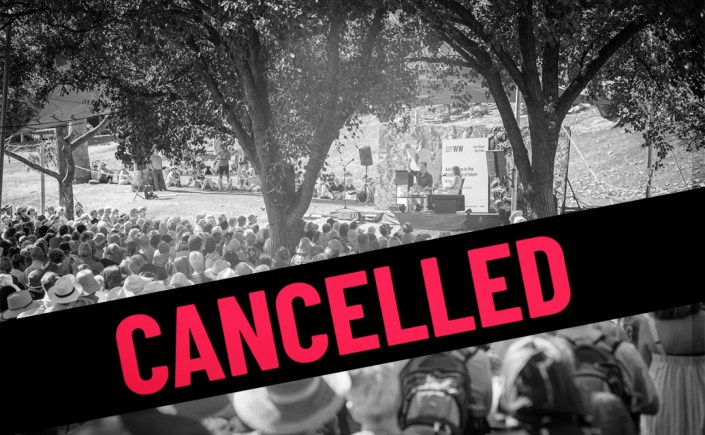
The most surprising thing about recent turmoil surrounding the Adelaide Writers Festival – its brief disinvitation of Australian Palestinian academic, author and activist Randa Abdel-Fattah, the rapid apology and reinstatement, the boycotts, denunciations, and counter-accusations – was these events generated so much newsprint, TV, radio, blogs, substacks, podcasts, memes and Facebook posts. It wasn’t because it’s summertime and the slow news weeks between Christmas and Australia Day. After all, there were some remarkable stories making their melancholy rounds: the Iranian bloodshed, Maduro kidnapping, Donald Trump’s Greenland fantasia … But this literary scandal held its own against all of these.
It was widely presented as yet another skirmish in the culture wars, a familiar clash between free speech and censorship, principle and power. But to read it that way is to miss what the episode actually illuminated. Beneath the noise lay a deeper unease about how cultural institutions confer legitimacy, how moral certainty now polices intellectual life, and how concepts such as freedom of speech, cancellation, and accountability have been stretched, moralised, and hollowed out by performative outrage. The Adelaide Writers’ Festival affair was not an aberration so much as a stress test – of institutional courage, historical understanding, and a cultural milieu increasingly unused to constraint, yet convinced of its own moral infallibility.
The brief removal of Randa Abdel-Fattah from the 2026 program – followed by an apology, a reinvitation, and institutional retreat – was framed almost instantly as a free-speech scandal, a cancellation, an act of racist silencing. In fact, it was something more revealing and more uncomfortable: a momentary hesitation by a cultural institution about whether platforming is neutral, and a swift lesson in how difficult it has become to impose even minimal constraints on those who speak in the language of moral certainty.
Cultural institutions do not merely host conversations; they legitimise them. To be invited onto a festival program is not simply to be given a microphone but to be publicly endorsed as a credible participant in civic discourse. That endorsement carries responsibilities, both for the institution and for those it platforms. One of them is to ensure that political critique does not slide into eliminationist moralism – particularly when that moralism operates in a social climate where anti-Jewish vilification is no longer theoretical but lived.
The reaction to the Adelaide Festival board’s initial decision was immediate and predictable. Abdel-Fattah accused the board of “stripping” her of humanity and agency. Fellow writers and cultural figures denounced the decision as betrayal, censorship, capitulation to dark forces. Boycotts were announced – 180 authors of all genres fled for the exits – solidarities declared, moral lines drawn. What was striking was not merely the ferocity of the response but its underlying assumption: that any boundary placed around speech—however provisional, however context-specific – was illegitimate by definition.
Their reaction demonstrates how unused some cultural actors have become to any constraint at all.
In fact, much of the subsequent withdrawal by authors – most of whom had never engaged with the specifics of Abdel-Fattah’s record or statements nor adopted a public stance with regard to one of the world’s most intractable conflicts – reflects a convergence of social, psychological, and institutional dynamics rather than principled assessment. This is tangentially corroborated by the ABC suggesting that many of its star presenters – including John Lyons, Laura Tingle and Louise Milligan – withdrew for various reasons and that actual support for Al Fattah was not one of them. However, Lyons has no love for the Israeli government and the occupation, and harbours an intense animus for “the Jewish Lobby” whilst Tingle strained credulity after December 7 when she stated that the atrocity was not Islamic terrorism.
A writer who did not pull out was Peter Goldsworthy, author, poet and general physician. He wrote in The Australian, 30 January 2026:
“Did I boycott this year’s event? Not a chance – too many writers, and too many audience members, and booksellers, had too much to lose. Again, I would have protested before my sessions, which is what I believe the other 180 writers might have been better off doing. I acknowledge they each made a big personal sacrifice, with honourable intentions, whether in the name of free speech, or solidarity with a colleague – and I know that many would have boycotted the 2024 event, too, if they had known that Friedman had effectively been cancelled. I also know that some of them, including several high-profile names, felt an overwhelming social media pressure to withdraw – and now regret it”.
“Who could blame them?”, he asked. “The lynch mobs of social media are implacable. The Iranian-Australian writer Shokoofeh Azar wrote in these pages of such pressures applied to her. A supporter of Palestinian rights but an opponent of Hamas, she received revolting threats because she refused to join the boycott. “You should be killed along with the Israelis,” one read. I hope she is reinvited next year. I hope Abdel-Fattah accepts the invitation that has already been extended to her. I hope more Jewish writers are invited. I hope Tony Abbott is reinvited. And Thomas Friedman. And yes, I hope I am reinvited.”
In contemporary literary culture, silence is read as complicity, and once the loudest voices framed the decision as racist censorship, a moral script snapped into place. Authors who had no prior engagement with the issue were suddenly presented with a binary: signal solidarity or risk suspicion. Pulling out became reputational insurance, a way to declare moral correctness without actually examining the facts. In such moments, gesture substitutes for judgment; moral theatre displaces deliberation.
The same pattern was reinforced by what can only be described as delegated thinking under moral capture. Once a cause is deemed righteous, individuals stop asking what actually happened and start asking what someone like them is supposed to do. The fact that Abdel-Fattah had previously advocated silencing others – the so-called silencing of critics, journalists, and even Jewish voices – was largely irrelevant. The narrative did not permit contradiction. Nor did the historical record: Jewish creatives had been mass-doxxed, their identities and private lives circulated as punishment for wrong beliefs, while the same festival had previously cancelled Thomas Friedman, a liberal American Jewish columnist, without similar outcry. Nor was there much opposition to the ejection of Jewish singer and author Deborah Conway and her partner from the Australian cultural space. Conway wrote in today’s Australian of how in February 2024, “I was eventually apprised of a letter circulating that was demanding Perth Writers Festival drop me from its speakers schedule. Entitled “Perth Festival and Writing WA’s decision to platform Deborah Conway causes suffering for Palestinians: an open letter from Australian writers and artists”, the letter would eventually garner 500 signatures, including Abdel-Fattah’s. To Writing WA’s credit it stood by its decision to book me and tried to ameliorate the pitchfork squad by including more diverse authors in the program. That and a lot of security”.
There was also an element of low-cost virtue in the withdrawals of most of the festival’s invited guests. Pulling out of a festival is a small personal inconvenience but a large symbolic payoff: moral courage performed for peer applause, self-indulgence masquerading as ethical clarity. Complexity, nuance, and historical literacy are optional; alignment, visibility, and performative righteousness are not. Once momentum builds, hesitation or refusal appears as betrayal, and the act of withdrawal is transformed into a statement of principle rather than a reflection of principle.
This is not a defence of state censorship; it is a recognition of institutional reality. No one in this episode was silenced in any meaningful sense. No books were banned, no speech criminalised, no platforms eradicated. What was briefly withdrawn was a single form of institutional endorsement. To describe this as an assault on free speech is to inflate a contingent editorial judgment into a moral catastrophe – and to quietly assert that some voices are entitled to public platforms as a matter of right.
That inflation depends on a broader cultural habit: the conflation of consequence with persecution. “Cancellation” has become a moralised misdescription, collapsing everything from online criticism to contractual decisions into a single melodrama of victimhood. In environments shaped by moral capture, refusal is reimagined as violence, disagreement as erasure, and restraint as dehumanisation. Withdrawal is not reluctant; it is theatrical. Boycott becomes a badge of purity. Moral signalling replaces argument.
The substance of what is being defended matters here. Criticism of Israeli policy – severe, uncompromising, even angry criticism – is not antisemitic in itself. But there is a line between critique and negation, and it is a line that has increasingly been crossed with impunity. Anti-Zionism, in its eliminationist form, does not argue with Israel’s conduct; it denies Jewish collective existence altogether, treating the very fact of a Jewish state as uniquely criminal among the world’s nations.
This distinction is not merely theoretical. Abdel-Fattah’s public record – celebration of October 7, denial or inversion of Jewish suffering, rhetoric of irredeemability, chants of “intifada” involving children – pushes beyond critique into erasure. Language of liberation becomes language of elimination, moralised as justice. “Resistance by any means necessary” is not an analytical position; it is a slogan that sanitises violence while denying responsibility for its consequences.
Here historical illiteracy and political naivety quietly do their work. Concepts such as genocide, apartheid, and colonialism are deployed as totalising metaphors, severed from their historical specificity and redeployed as instruments of moral annihilation. The irony – that Holocaust inversion once central to Soviet anti-Zionism has been seamlessly absorbed into contemporary activist rhetoric – is rarely acknowledged. That this rhetoric positions Jews everywhere as implicated in an illegitimate state is treated not as a problem but as a feature.
All of this unfolds within a broader climate of intimidation and fear. Jewish creatives have been mass-doxxed, their personal details circulated as punishment for wrong beliefs. Jewish students and artists conceal their identities. Synagogues are attacked. And yet, when institutions attempt – tentatively – to draw lines around eliminationist speech, they are accused of racism and cowardice. The harm that prompts boundary-setting is rendered invisible, while the discomfort of those encountering limits is elevated into moral injury.
The inconsistency is instructive. The same Adelaide Writers Festival that briefly balked at hosting Abdel-Fattah had no difficulty cancelling Thomas Friedman, a liberal American Jewish columnist, without comparable anguish or apology. Standing on the high moral ground is evidently easier when the cancellation flows in the culturally approved direction. Accountability, it seems, is only intolerable when it is applied to one’s own side.
This is where freedom of speech, cancellation, and intellectual honesty must be rescued from their rhetorical misuse. Freedom of speech protects expression from coercive suppression; it does not guarantee institutional endorsement. Cancellation is not a synonym for criticism or refusal; it is a narrative deployed to short-circuit scrutiny. And intellectual honesty requires more than fervour – it demands a willingness to distinguish critique from negation, to acknowledge historical complexity, and to accept that one’s own moral universe may contain blind spots.
What the Adelaide affair ultimately exposes is not a failure of liberalism but the strain placed upon it by cultures of moral purity and value signalling. In such cultures, self-indulgence masquerades as courage, self-importance as solidarity, and certainty as virtue. Institutions are pressured to choose between complicity and chaos, knowing that any attempt to impose standards will be met with outrage.
Had the Adelaide Festival held its ground, the resulting mess would not have been a tragedy but a clarification. It would have affirmed that legitimacy is not cost-free, that language has consequences, and that standing on the right side of history requires more than shouting one’s righteousness into the void. If accountability is uncomfortable – if it disrupts festivals, friendships, and reputations – that may be precisely the point.
The alternative is not harmony but habituation: a slow acclimatisation to eliminationist rhetoric wrapped in the language of justice, and an intellectual culture so unused to constraint that it mistakes every limit for oppression. In that light, the mess is not a sign of failure. It is the sound of a moral ecosystem being tested – and, however briefly, resisting capture.
To step back from the drama, the Adelaide affair is less a story about one author or one festival than a mirror held up to the cultural field itself. It reveals how easily moral certainty can ossify into capture, how virtue signalling can masquerade as courage, and how intellectual honesty can be sacrificed to the allure of alignment and applause.
Institutions, in turn, are forced into an ethical calculus: to platform freely is to risk complicity; to refuse is to provoke outrage. Standing on the high moral ground – truly standing, not merely performing – is therefore hard, uncomfortable, and rarely rewarded. Yet that difficulty is precisely its value. If accountability requires a mess, a moment of collective awkwardness and public testing, then enduring it may be the only way to cultivate a cultural ecosystem in which words are not cost-free, principles are not performative, and freedom of speech coexists with responsibility. In other words, the test of courage is not in the applause it earns, but in the restraint, discernment, and historical awareness it demands.
In That Howling Infinite December 2025
Author’s Note…
This opinion piece is one of several on the the attitudes of progressives towards the Israel, Palestine and the Gaza war. The first is Moral capture, conditional empathy and the failure of shock
There are moments when public argument stops being a search for truth and becomes a test of belonging. Facts are no longer weighed so much as auditioned; empathy is rationed; moral language hardens into a badge system, issued and revoked according to rules everyone seems to know but few are willing to articulate. One learns quickly where the trip-wires are, which sympathies are permitted, which questions are suspect, and how easily tone can outweigh substance.
What interests me here is not the quarrel itself – names, borders, histories—but the habits of mind it exposes. The ease with which conviction can slide into choreography. The way intellectual honesty is praised in the abstract and punished in practice. The curious transformation of empathy from a human reflex into a conditional licence, granted only after the correct declarations have been made.
Across these pieces I circle the same uneasy terrain: the shaping of facts to fit feelings; the capture of moral language by ideological gravity; the performance of righteousness as both shield and weapon. Cultural spaces that once prided themselves on curiosity begin to resemble courts, where innocence and guilt are presumed in advance and the labour lies not in thinking, but in signalling.
This is not an argument against passion, nor a plea for bloodless neutrality. It is, rather, a meditation on how quickly moral seriousness curdles into moral certainty – and how much intellectual work is required to stand on what we like to call the high ground without mistaking altitude for clarity.
The position of In That Howling Infinite with regard to Palestine, israel and the Gaza war is neither declarative nor devotional; it is diagnostic. Inclined – by background, sensibility, and experience – to hold multiple truths in tension, to see, as the song has it, the whole of the moon. It is less interested in arriving at purity than in resisting moral monoculture and the consolations of certainty. That disposition does not claim wisdom; it claims only a refusal to outsource judgment or to accept unanimity as a proxy for truth.
On Zionism, it treats it not as a slogan but as a historical fact with moral weight: the assertion – hard-won, contingent, imperfect – that Jews are entitled to collective political existence on the same terms as other peoples. According to this definition, this blog is Zionist. It is not interested in laundering Israeli policy, still less in romanticising state power, but rejects the sleight of hand by which Israel’s existence is transformed from a political reality into a metaphysical crime. Zionism is not sacred, but its delegitimisation is revealing – because it demands from Jews what is demanded of no other nation: justification for being.
On anti-Zionism, it has been unsparing. It sees it not as “criticism of Israel” (which you regard as both legitimate and necessary) but as a categorical refusal to accept Jewish collective self-determination. What troubles it most is not its anger but its certainty: its moral absolutism, its indifference to history, its willingness to borrow the language of justice to license erasure. It is attentive to how anti-Zionism recycles older antisemitic patterns – collectivisation of guilt, inversion of victimhood, and the portrayal of Jews as uniquely malignant actors – while insisting, with studied innocence, that none of this concerns Jews at all. If not outright antisemitism, the line separating it from anti-Zionism is wafer—thin, and too often crosses over.
The interest in moral capture is analytical rather than accusatory. It is not arguing that writers, academics, or institutions are malicious; rather, it are argues that they have become intellectually narrowed by the desire to belong to the “right side of history.” Moral capture explains how good intentions curdle into dogma, how solidarity becomes performative, and how the fear of social exile replaces the discipline of thought. It accounts for the strange phenomenon whereby intelligent people outsource their moral judgment to slogans, and experience constraint not as an intolerable injury to the self.
The Adelaide Writers’ Festival affairis seen not primarily about Randa Abdel-Fattah, nor even about free speech. It is a case study in institutional failure and cultural self-deception. The mass withdrawals are viewed not as acts of courage or principle but as gestures of affiliation – ritualised displays of virtue by people largely untouched by the substance of the dispute. What is disturbing is the asymmetry: the speed with which a festival collapsed to defend eliminationist rhetoric, and the silence that greeted the doxxing, intimidation, and quiet cancellation of Jewish writers and artists. Adelaide did not fall because standards were enforced, but because those standards were applied selectively and then disowned at the first sign of reputational discomfort.
Running through all of this is a consistent stance: a resistance to moral theatre, an impatience with historical amnesia, and a belief that intellectual honesty requires limits – on language, on fantasy, and on the indulgent belief that one’s own righteousness exempts one from consequence.
We are not asking culture to choose sides; you are asking it to recover judgment
.See in In That Howling Infinite, A Political World – Thoughts and Themes, and A Middle East Miscellany. and also: This Is What It Looks Like, “You want it darker?” … Gaza and the devil that never went away … , How the jihadi tail wags the leftist dog, The Shoah and America’s Shame – Ken Burns’ sorrowful masterpiece, and Little Sir Hugh – Old England’s Jewish Question
 In That Howling Infinite