The continuing battle for Australia’s history

British archaeologist, academic and historian David Breeze has argued that “the study of history best proceeds through controversy”, suggesting that scholarly debate and differing interpretations of historical events are vital for a deeper understanding of the past, that that confronting alternative perspectives, reinterpreting evidence, and engaging in critical analysis can lead to more nuanced and accurate historical narrative.

This is particularly relevant with regard to the study of the historical and contemporary relationship between Australia and its indigenous minority.

I’ve written often about the indigenous history of our country. The following passage from my piece on Australia’s The Frontier Wars encapsulates my perspective:

”There is a darkness at the heart of democracy in the new world “settler colonial” countries like Australia and New Zealand, America and Canada that we struggle to come to terms with. For almost all of our history, we’ve confronted the gulf between the ideal of political equality and the reality of indigenous dispossession and exclusion. To a greater or lesser extent, with greater or lesser success, we’ve laboured to close the gap. It’s a slow train coming, and in Australia in these divisive days, it doesn’t take much to reignite our “history wars” as we negotiate competing narratives and debate the “black armband” and “white blindfold” versions of our national story”.

The historical truth, elusive and subjective, lies in the wide no man’s land between them – a view subscribed to by economist and commentator Henry Ergas in an informative tribute to the role of the recently deceased historian Keneth Wind

shuttle in The Australian. Ergas maps the topography of the history wars, marking out the battle lines between the so-called “revisionist” historians who are said to see no good in our history as it related to indigenous Australians and those, often on the conservative side of Australian politics, who ostensibly see no evil.

He begins by citing the nineteenth century German historian Leopold von Ranke who held that the historian’s highest calling was to write about the past “wie es eigentlich gewesen” – “as it had really been”. To achieve that task, Ranke had observed, three qualities were indispensable – common sense, courage and honesty: the first, to grasp things at all; the second, to not become frightened at what one sees; the third, to avoid the temptations of self-deception. Most of all, however, the historian needed to recognise that “Every epoch is equally close to God”, equally infused by grandeur and equally scarred by tragedy. It is not “the office of judging the past, or of instructing the present for the benefit of future ages” that has been assigned to historians; it is that of carefully reconstructing, rationally analysing and dispassionately presenting the past in all of its remoteness and complexity.

Reading Ergas’s tribute, I was reminded of what George MacDonald Fraser, creator of the infamously funny Flashman diaries, wrote in his wartime memoir Quartered Safe Out Here:

“You cannot, you must not, judge the past by the present; you must try to see it in its own terms and values, if you are to have any inkling of it. You may not like what you see, but do not on that account fall into the error of trying to adjust it to suit your own vision of what it ought to have been.”

Below are pieces published in
In That Howling Infinite in regard to Australian history as it these relate to Indigenous Australians:

Keith Windschuttle and the continuing battle for history

Henry Ergas, The Australian, 18 April 2025

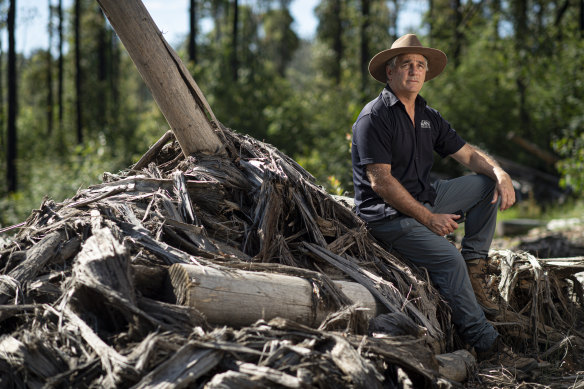
Historian Keith Windschuttle in Perth, 2004. Picture: Ross Swanborough

Historian Keith Windschuttle in Perth, 2004.Ross Swanborough

With the death last week of Keith Windschuttle Australia lost a scholar driven by the duty Leopold von Ranke famously defined as the historian’s highest calling: to write about the past “wie es eigentlich gewesen” – “as it had really been”.

To achieve that task, Ranke observed, three qualities were indispensable – common sense, courage and honesty: the first, to grasp things at all; the second, to not become frightened at what one sees; the third, to avoid the temptations of self-deception.

Most of all, however, the historian needed to recognise that “Every epoch is equally close to God”, equally infused by grandeur and equally scarred by tragedy. It is not “the office of judging the past, or of instructing the present for the benefit of future ages” that has been assigned to historians; it is that of carefully reconstructing, rationally analysing and dispassionately presenting the past in all of its remoteness and complexity.

Never was that task harder than in this country’s “history wars”. Triggered, in the self-congratulatory words of the ANU’s Tom Griffiths, by a “concerted scholarly quest to dismantle the Great Australian Silence” – a silence that had “hardened into denialism … denial of bloody warfare on Australian soil” – the revisionist historians’ portrayal of Australia’s history as a never-ending tale of murderous dispossession, cultural decimation and environmental destruction inevitably took its toll on accuracy and objectivity.

There was, in the revisionists’ onslaught, little room for the Rankean virtues, first and foremost that of meticulous attention to the documentary records. It was therefore unsurprising that The Fabrication of Aboriginal History’s relentless focus on those records thrust Windschuttle into the firing line.

Historians Keith Windschuttle and Henry Reynolds.

Historians Keith Windschuttle and Henry Reynolds.

Nor was it surprising that he paid a high price for his audacity. As Tim Rowse, one of Australia’s most distinguished scholars of Aboriginal history, noted, “at least one speaker” at a 2001 National Museum of Australia conference on Windschuttle’s work “was patronising towards Windschuttle to a degree that exceeded anything I’ve experienced in academic life”; instead of addressing his arguments, the focus was on comparing Windschuttle to David Irving, thereby placing him “outside the conversations of humanists”.

Yet it would be wrong to suggest Windschuttle’s colossal efforts were ignored. As Rowse, who could hardly be accused of being a reactionary, admitted, Windschuttle’s review of the NSW archival evidence on the Stolen Generations was “compelling”, raising real questions about an episode that has become emblematic of “the heavy-handed and insensitive management of Indigenous Australians”.

Moreover, even the attempts to debunk the Fabrication’s contentions yielded tangible benefits. Windschuttle’s Quadrant articles were “widely derided as politically mischievous”, writes Mark Finnane, a legal historian whose work on the interactions between Indigenous Australians and the law has reshaped the field; but their longer-term impact “has been to accelerate research in local and regional studies”, providing a sounder factual base for broader analyses.

At least partly as a result, there are some outstanding works, including by historians broadly on the left, that are far removed both from the revisionists’ overwhelming Manicheanism and from the flights of fancy of the post-modernists Windschuttle had so effectively denounced in The Killing of History (1994).

For example, Rowse’s White Flour, White Power (1998) – with its conclusion that “‘assimilation’ was in some respects a constructive policy era, not only a destructive onslaught on Indigenous ways of life” – remains an exceptionally fine book, and several of his more recent essays, such as the one on the “protection” policy’s role in reversing the decline in the Indigenous population, directly challenge the revisionists’ core assumptions.

Equally, Finnane’s Indigenous Crime and Settler Law (2012), co-authored with Heather Douglas, provides a balanced account of the repeated efforts the colonial authorities made – albeit with only mixed success – to deal sensitively and humanely with the gap between tribal custom and English law.

The Killing Of History by Keith WindschuttleThe Fabrication of Aboriginal History by Keith Windschuttle

Noting that putting “the colonial encounter in polarised terms” as a clash between black and white “is an abstraction from a complex and constantly shifting reality”, Finnane and Douglas highlight the need to recognise that “settlers were divided – convicts, free immigrants, military, governors”, as were “Indigenous peoples – jealous of their own country, accustomed in many places to constant warring, seeking advantage of alliances with settlers to advance or protect their own interests”.

And Andrew Fitzmaurice’s Sovereignty, Property and Empire, 1500–2000 (2014) is a deeply researched corrective to simple-minded claims (including, unfortunately, by the High Court) about the relevance of “terra nullius” to Britain’s assertion of sovereignty.

But despite those efforts, the sloppiness continues, as even a cursory glance at the ever-expanding literature on the Native Mounted Police shows.

For example, the military historian Peter Stanley – who has been influential in the Australian War Memorial’s portrayal of the “frontier wars” – has recently claimed that “the Native Police were Australia’s own Einsatzgruppen”, the Nazi murderers who machine-gunned hundreds of thousands of Jews that they had herded on to the edge of pits, stripped naked and beaten to within an inch of their lives. That Stanley’s claim is abhorrent for minimising the horrors of the Holocaust should not need to be said; that it is grotesque for its obvious historical inaccuracy ought to be apparent to even the least informed reader.

Striking too are the contentions of Queensland historian Raymond Evans. The mounted police, Evans claimed in 2010, were responsible for 24,000 deaths. But since then, Evans, in work with Robert Orsted-Jensen, has nearly doubled that estimate to 41,040, allegedly on the basis of a methodology that is “conservative” and “cautious”.

Peter Stanley

Peter Stanley

Keith Windschuttle

Keith Windschuttle

In an attempt to justify relying on highly selective samples and superficial extrapolations, Orsted-Jensen has claimed that there was a “a very systematic, deliberate and comprehensive destruction of virtually all sensitive flies stored in Queensland’s Police Department” – an accusation that has become one of the revisionist historians most widely repeated tropes.

However, a devastating review of Evans and Orsted-Jensen’s work by Finnane and Jonathan Richards not only points to the wealth of documentary material on which Evans and Orsted-Jensen could have drawn; it also concludes that any gaps in the records are more likely “an accumulated outcome of administrative culling, bureaucratic indifference, and misadventure” than of systematic destruction.

In fact, “rather than a history of cover-up, the entire administration of the Native Police from as early as 1861 on illustrates the concern of governing elites with the risk of unwarranted killing”.

As for Evans and Orsted-Jensen’s estimates of casualties, Finnane and Richards show that they are “highly subjective … and correspondingly unreliable”, while “the picture (Evans and Orsted-Jensen) paint of massive governmental indifference to or complicity in the deaths of tens of thousands of Aboriginal deaths does not stand up to scrutiny”.

But if questionable assertions remain common in the professional literature, they absolutely pervade the public commentary. Predictably, the ABC publicised Evans and Orsted-Jensen’s estimates; no less predictably, it has done nothing to correct the record. And if the academic historians are willing to rebut inaccuracies in scholarly publications, they are far more reluctant to do so when that involves intervening in the public debate.

That was apparent in the wake of Keryn Walshe and Peter Sutton’s Farmers or Hunter Gatherers? (2021), which vividly exposed the flaws of fact and analysis in Bruce Pascoe’s Dark Emu. The reviews in scholarly journals, such as that by Peter Veth in Australian Archaeology (2021), did not mince their words about Pascoe’s egregious errors; but more often than not, the media commentary by academic historians was cautiously circumspect.

There were, for sure, attacks on Walshe and Sutton that merely reproduced the left’s deeply engrained orthodoxy. To take but one example, Heidi Norman from UTS accused Walshe and Sutton of “wanting to strip the debate of contemporary meaning” by deploying a neo-colonial framework in which “Western definitions and labels are supreme”.

However, the academics’ dominant tone was mealy-mouthed, conceding that Pascoe had made mistakes but arguing that those mistakes counted less than Dark Emu’s merits in advancing reconciliation.

Peter Sutton

Peter Sutton

James Boyce

James Boyce

Thus, reviewing Farmers or Hunter Gatherers? in The Guardian, Sydney University’s Mark McKenna carefully put the word ‘fact’ in scare quotes, as if there was some doubt as to its meaning; while “at face value, this is a dispute about ‘facts’”, he wrote, the dry-as-dust issues of evidence and verisimilitude are far less important than “Pascoe’s ability to capture and move audiences desperate to hear his stories of Aboriginal ‘achievement’”.

In exactly the same way, the Tasmanian historian James Boyce recognised shortcomings in Pascoe’s work but nonetheless hailed it as a “significant cultural achievement”, whose “lifegiving” story “speaks to people for whom Aboriginal Australia remains a foreign country but want this to change”.

And Henry Reynolds, writing in Meanjin, essentially pooh-poohed the criticisms, arguing that Pascoe’s faux pas was primarily one of terminology: had Pascoe “declared that the First Nations peoples were not ‘just’ hunters and gatherers but graziers rather than farmers”, the problems with his account would have been largely overcome.

The undertone, in those comments, was clear: that it would be unfair to disabuse Pascoe’s adoring white fans, whose intentions were as pure as their thoughts were confused. Keeping faith with those intentions might involve distorting the truth; but the lie, like those Plato advocates in The Republic, would be a noble one, which ruling elites tell “in order to benefit the polis” by convincing citizens that “it is not pious to quarrel”.

Bruce Pascoe

Bruce Pascoe

Ironically, in their effort not to discomfort the masses, the revisionists had enveloped themselves in a Great Australian Silence of their own.

Yet the harm those deliberate distortions of the historical record cause is not just to truthfulness; it is to our ability to live with the past, rather than to live in the past. For so long as we cannot accurately and dispassionately view this country’s history, we will lack the foundations needed to better shape its future.

And it is not much comfort to know that when intellectual constructs stray too far from careful readings of the world, as they so tragically have in everything to do with Indigenous history and policy, reality has a nasty habit of biting back.

In the end, Nietzsche was right: the basic question societies, no less than individuals, must face, is “How much truth can we endure? Error is not blindness; it is cowardice.” Exposing cowardice takes courage. Now, with Keith Windschuttle gone, that duty must fall to others.
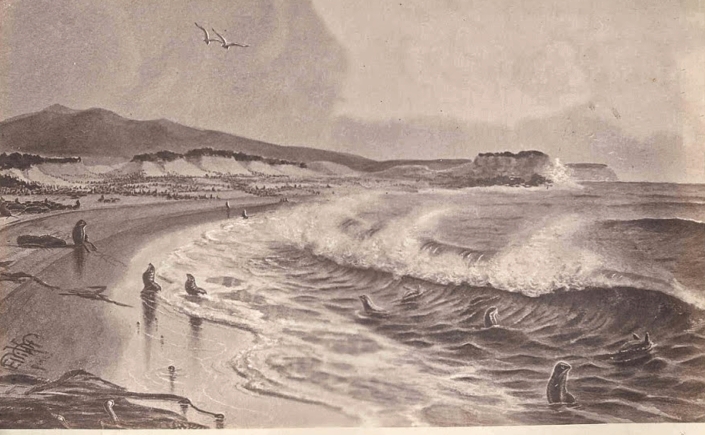
Lukannon … Rudyard Kipling’s deep sea song

You’ve got to feel sorry for Rudyard Kipling (1865-1936)

This remarkable poet and storyteller is today rarely read and is often vilified and dismissed as a jingoistic and chauvinistic booster of empire and white civilization. When critics reach for their guns, they “bring out the white man’s burden“and “east and west is west, and ne’er the Twain shall meet”. He is definitely guilty as charged, but he was of his time, and voiced what was then the imperial zeitgeist that enraptured his British constituency. The past, as they say, is another country – they thought much differently then.

But, as those who are familiar with his many poems and stories would attest, the poet was so much more than this.

It was Kipling’s habit to preface and bookend his remarkable if, to contemporary readers, politically incorrect stories with short poems of singular quality.

Lukannon is one of these. The story of The White Seal first appeared in print in the August 1893 issue of the London-based magazine National Review and published again in 1894 as part of the anthology The Jungle Book. Yes, that one. Mowgli, Wolf Cubs, Akela, and all. But, exceptionally for a story in The Jungle Book, none of the action in The White Seal  takes place in India. And, presaging the environmental activism and protests against the controversial seal hunts of the late 20th Century, it is remarkably prescient and pertinent.

The story is set on an island in the Aleutians in the Bering Sea between Russia and Alaska. It tells of a unique seal who, by leading his fellow seals to a secret hidden beach, saves his kind from the seal hunters. He referred to his poem as “a kind of national anthem for seals”. The title of the poem is the name of a Russian seal-fur trader, Lukanin, who gave his name to these lonely Aleutian beaches in 1788. Kipling wrote: “This is the great deep-sea song that all the St. Paul seals sing when they are heading back to their beaches in the summer. It is a sort of very sad seal National Anthem”.

Back in the day, I set the poem to music. It is featured on the rare recording HuldreFolk Live in London 1988, featuring Paul Hemphill, Victor Mishalow and Adèle Hemphill. During HuldreFolk’s tour of English folk clubs in the northern summer of 1988, it was recorded on a cheap audio cassette by a dinky, clunky old analogue tape recorder – and it shows. But the natural acoustics of the cellar at Bracknell Arts Centre, and the audience’s participation in the choruses made up for a multitude of sins.

© Paul Hemphill 2024. All rights reserved

Lukannon is such a lyrical poem that it lends itself effortlessly to musical settings. Apart from my own, i have discovered three alone, and I am pretty certain that there are many more out there on the world wide web. There is a version by folk duo William Pint and Felicia Dale set to a tune by American musician Bob Zentz from their 1997 album Round the Corner. There is also a contemporary “prog-rock” version by British band Shadows of the Sun.

In 1947, the eccentric Australian expatriate composer Percy Grainger composed a song cycle of The Jungle Book and chose as his centrepiece the story of The White Seal – and particularly, Lukannon “as a protest against civilization.” For more on Grainger’s opus, see below.

Lukannon

I met my mates in the morning (and oh, but I am old!)
Where roaring on the ledges the summer ground-swell rolled;
I heard them lift the chorus that dropped the breakers’ song –
The beaches of Lukannon – two million voices strong!

The song of pleasant stations beside the salt lagoons,
The song of blowing squadrons that shuffled down the dunes,
The song of midnight dances that churned the sea to flame –
The beaches of Lukannon — before the sealers came!

I met my mates in the morning (I’ll never meet them more!);
They came and went in legions that darkened all the shore.
And through the foam-flecked offing as far as voice could reach
We hailed the landing-parties and we sang them up the beach.

The beaches of Lukannon – the winter-wheat so tall –
The dripping, crinkled lichens, and the sea-fog drenching all!
The platforms of our playground, all shining smooth and worn!
The beaches of Lukannon — the home where we were born!

I meet my mates in the morning, a broken, scattered band.
Men shoot us in the water and club us on the land;
Men drive us to the Salt House like silly sheep and tame,
And still we sing Lukannon – before the sealers came.

Wheel down, wheel down to southward; oh, Gooverooska go!
And tell the Deep-Sea Viceroys! the story of our woe;
Ere, empty as the shark’s egg the tempest flings ashore,
The beaches of Lukannon shall know their sons no more!

Percy Grainger’s Jungle Book Cycle

In 1947, the eccentric Australian expatriate composer dedicated a song cycle of The Jungle Book and chose as his centrepiece the story of The White Seal – and particularly, Lukannon. My Kipling ‘Jungle Book’ Cycle, begun in 1898 and finished in 1947, was composed as a protest against civilization.” (Grainger’s programme note, 1947)

Grainger (1882-1961) studied at the Hoch Conservatory in Frankfurt, Germany from 1895-1901 (aged 13-19). Grainger’s mother Rose wrote to her husband John of her fears that young Percy was becoming “more Germanized every day.” In response to Rose’s concern, and to “tickle up the British Lion in him,” John (who was estranged from Rose) sent Percy, among other things, several books by Rudyard Kipling . Kipling’s writings captivated Percy immediately, and he soon started writing choral settings of the poetry, especially those of Kipling’s Jungle Books.

Grainger’s settings of the poetry of Kipling are as extensive as his settings of British folk music; Kay Freyfus’s catalog of Grainger’s manuscript scores lists 36 settings, though Grainger in a 1926 letter to Kipling mentions “some 40 or 50” settings. Grainger felt a strong kinship for Kipling’s writing, and Kipling appreciated and approved of Grainger’s work at setting his poetry. Grainger played several of his choral settings for Kipling during a meeting at Kipling’s home in 1905. Of Grainger’s settings of his poetry, Kipling said, “Till now I’ve had to reply on black and white, but you do the thing for me in colour.”

The Beaches of Lukannon is the centerpiece of the cycle, and arguably the strongest piece musically and emotionally. It tells us the tale of the tragic slaughter of seals by wicked sealers from the seals’ perspective. The opening section, told from the point of view of a seal elder, recounts what the beaches of the Bering Sea Island of Lukannon originally were for the seals – their annual meeting (and mating) opportunity. The central section, reminiscent of the music of Charles Ives in its shifting chromatics, conveys the beauty of the surroundings “before the sealers came.” The final section musically revisits the opening material, but in a smore somber mode.

For more on Rudyard Kipling in In That Howling Infinite, see A Son Goes To War – the grief of Rudyard Kipling 

The Forest Wars – myths, spin and bare-faced lies

What are the roots that clutch, what branches grow
Out of this stony rubbish? Son of man,
You cannot say, or guess, for you know only
A heap of broken images, where the sun beats,
And the dead tree gives no shelter, the cricket no relief,
And the dry stone no sound of water.
TS Elliot, The Wasteland

This murky world of (the state-owned forestry industries) is at best ignorant and self-interested and at worst sinister and corrupt. Its most cynical manoeuvres involve aggressively logging forest as soon as there is a movement for its protection. Another is co-opting First Nations groups under the guise of “forestry gardening” or “cultural thinning”. Here, business-as-usual logging becomes “healing Country”, an attempt to “blackwash” a calamitous PR image … Attempts to regulate have been underfunded and politically compromised … ‘if everyone is losing, why does it continue? When the answer arrives, it is depressingly banal: government capture by vested interests.
Professor David Lindenmayer

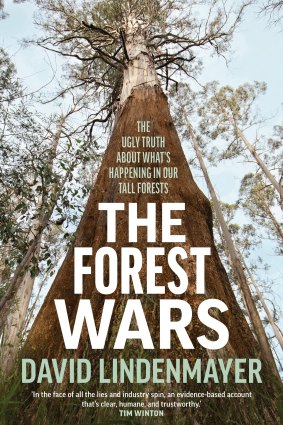
There is little that surprises in the following review of Forest Wars by environmental scientist David Lindenmayer.

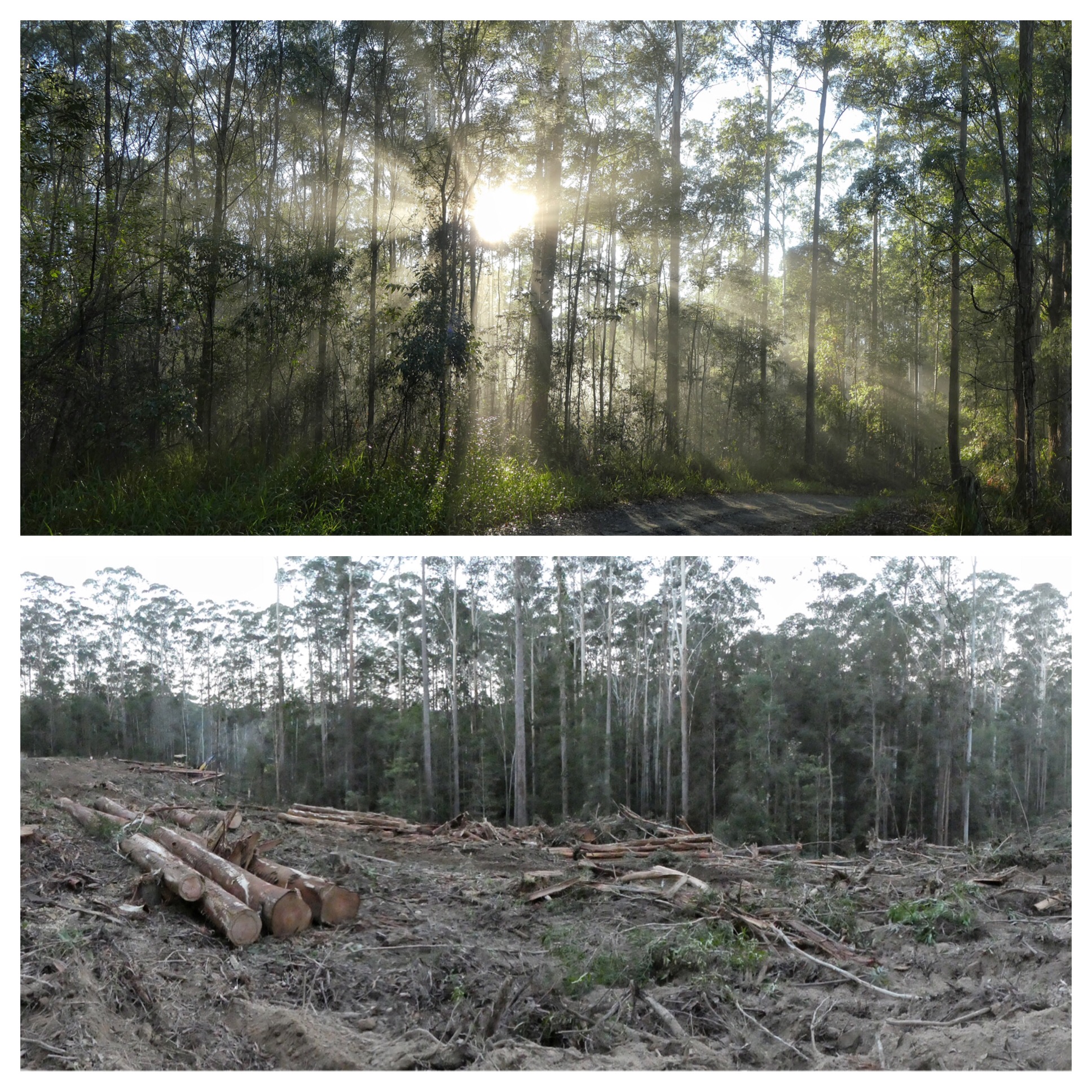
Eight years ago, In That Howling Infinite published If You Go Down to the Woods Today describing what was then happening to the forest in which we live. As logging has intensified throughout the mid-north coast over the last year, things have not changed, but rather, have gotten much, much worse. 

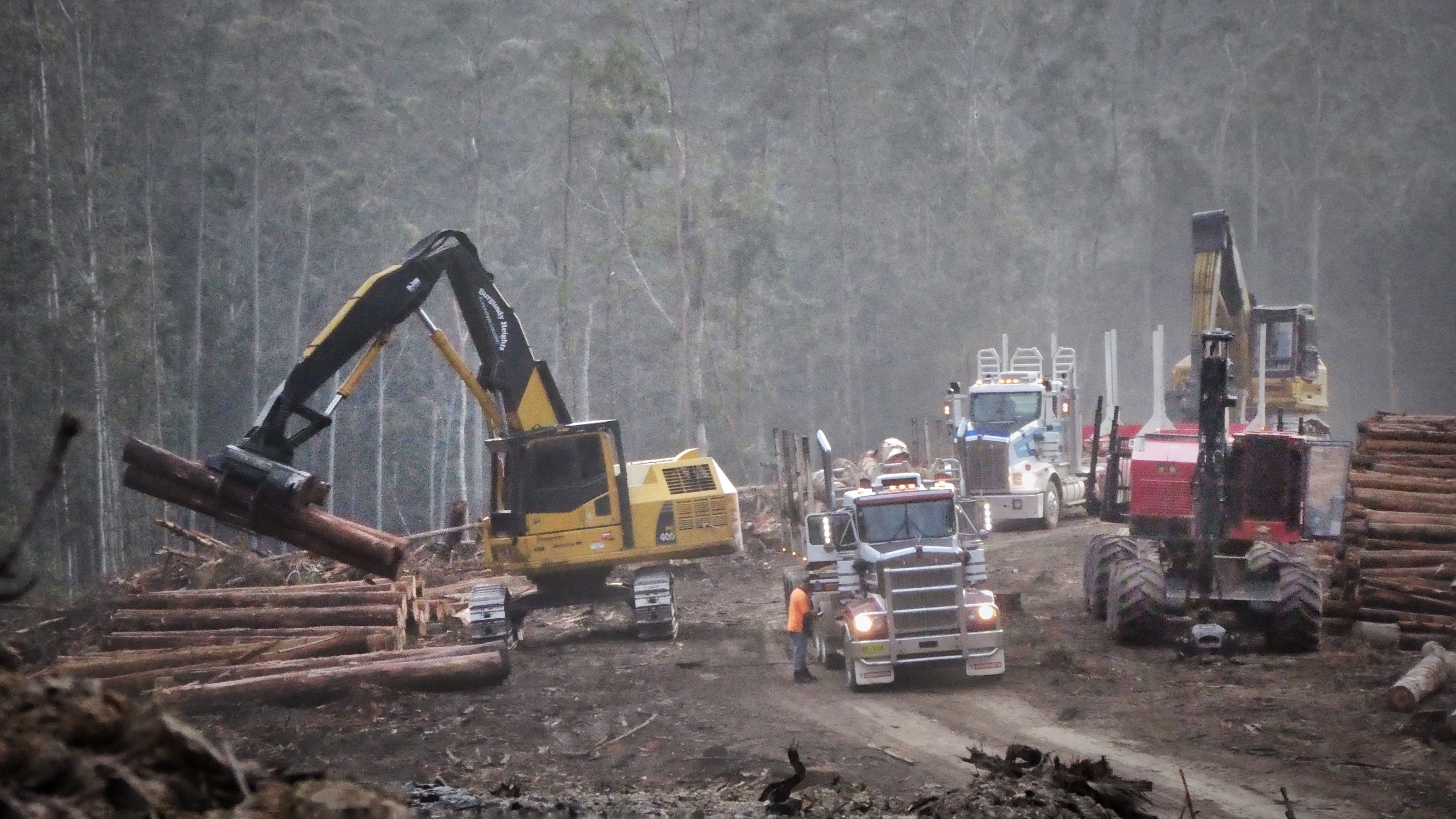
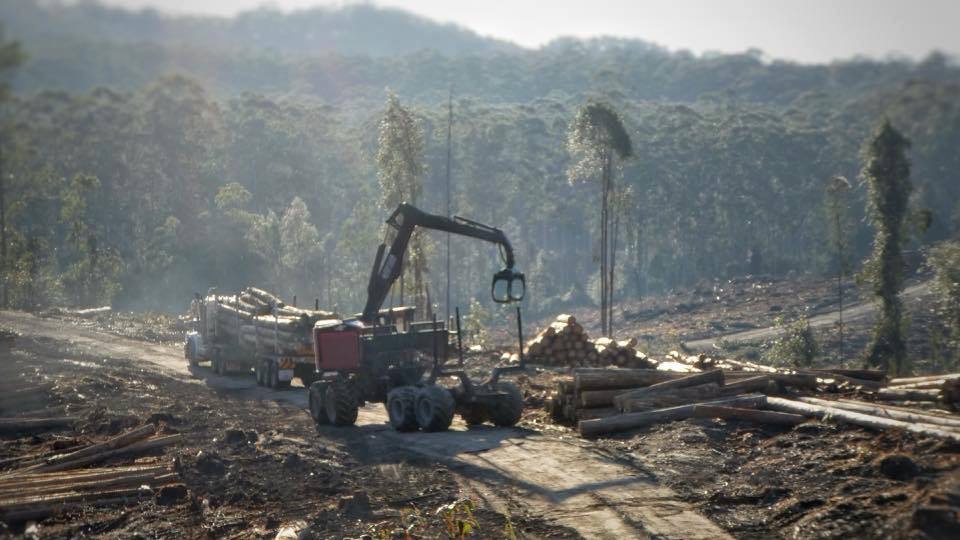
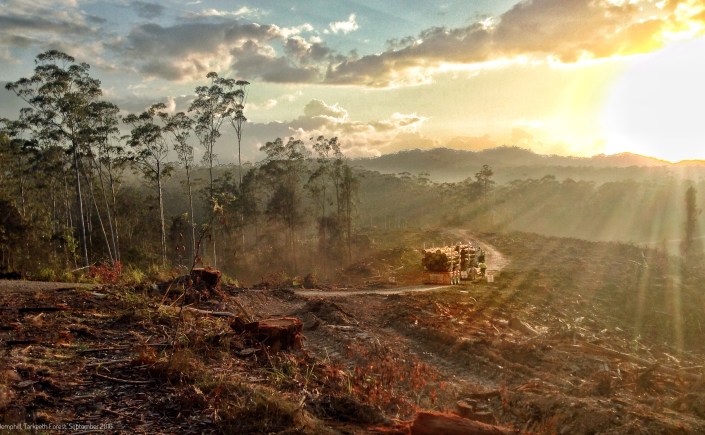
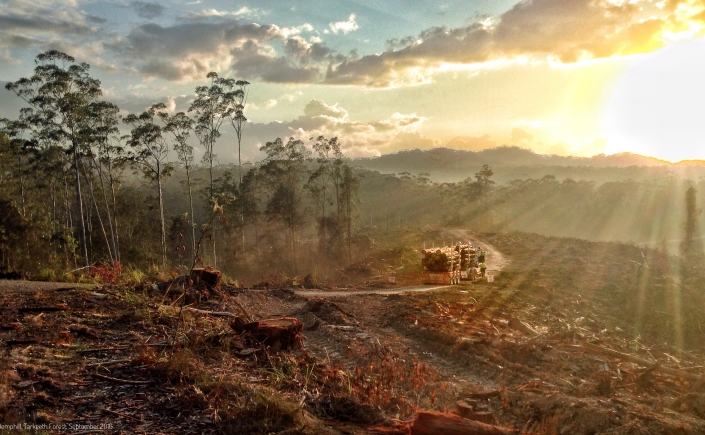
As we survey the desolation and devastation of state forests on the mid-north coast of New South Wales, we bear witness to his words at first hand. For years now we have witnessed the destruction of our ecosystems and critical wildlife habitat by large scale, broad acre industrial logging as harvesters as large as battle tanks camp upon the land like an occupying army. Forestry Corporation NSW’s operations on the Coffs Coast and its hinterland has left us and our precious ecosystem at the mercy of what is by any account a destructive and seemingly unaccountable extractive industry.

See also in In That Howling Infinite’s  Losing Earth series:

“Like an occupying army”


Tarkeeth morning, And Tarkeeth evening.
What a difference a day makes

Myths, spin and outright lies: the truth behind the logging industry

Kurt Johnson, Sydney Morning Herald 7th June 2024

The Forest Wars, by David Lindenmayer (Allen & Unwin 2024)

It was once possible to walk the 1500 kilometres from Melbourne to Brisbane enclosed in native forest. Today Australian forests have been pushed to the margins, surviving as scattered islands, logged around and through. In most states this continues, enabled by expedient myths about forest’s resilience and replaceability that have become entrenched in popular wisdom. These range from “logging is good for fire safety” to “wildlife can simply scuttle away to another tree as soon as one is felled”.

Renowned scientist David Lindenmayer confronts these fables that he was educated on as a young student in his latest offering, The Forest Wars. He is concerned with native forest, which provides a range of benefits beyond forest plantations. Tall, wet eucalypts in particular are not only habitats for native wildlife but are more resistant to fire, better sinks for carbon and can conserve clean water for cities.

Many myths rely on a neoliberal lexicon where native forests are “resources”, or “green capital” and logging can be “sustainable”. It assumes the fungibility of nature, as if one tree were as good as another. The author explains that native forests are complex ecosystems that have developed sometimes for hundreds of years, with ancients that cannot simply be bulldozed and replanted by saplings in another cycle.

Forest Wars begins with its author tracking wildlife, trudging around wet eucalypts and through mossy gullies, but soon evolves into a sustained and righteous tract as we follow him up the production line to the sheer waste at the heart of the enterprise. Another myth: old-growth forest will end as fine furniture. In fact, only four per cent becomes sawn lumber and half of that is used for beer pallets. A whopping 60 per cent is lost as waste, with most wood taken from the forest simply pulped for paper and packaging.

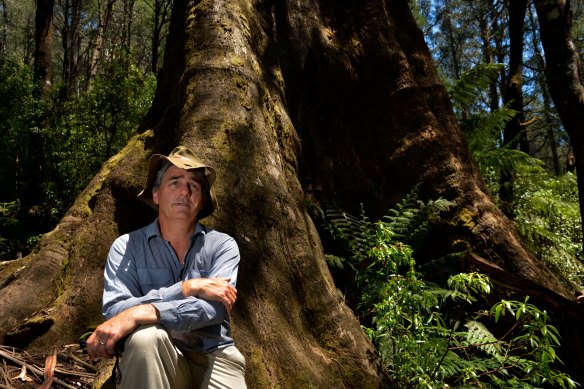
Scientist David Lindenmayer in Healesville.
David Lindenmayer in Healesville. Michael Clayton-Jones

The economics surrounding the destruction of native forests are obscene. State-run enterprises are loss-running, essentially charging taxpayers to destroy their own native forests. VicForests, for instance, has only once reported a profit, while Forestry Tasmania lost an eye-watering $1.3 billion in the decade from 1998. Over the years they have survived on generous loans from state treasuries that will never be repaid, with expenses that include settling lost court cases, and, in the case of VicForests, hiring a private investigator to spy on the author. “Melbourne is not Moscow,” Lindenmayer states.

This murky world is at best ignorant and self-interested and at worst sinister and corrupt. Its most cynical manoeuvres involve aggressively logging forest as soon as there is a movement for its protection. Another is co-opting First Nations groups under the guise of “forestry gardening” or “cultural thinning”. Here, business-as-usual logging becomes “healing Country”, an attempt to “blackwash” a calamitous PR image.

Attempts to regulate have been underfunded and politically compromised. In one instance the author meticulously investigates violations of logging boundaries and gradient guidelines, then submits the analysis to regulators, only to have his findings contradicted. Through an FOI request he discovers their results are nearly identical to his, entering a Kafkaesque netherworld.

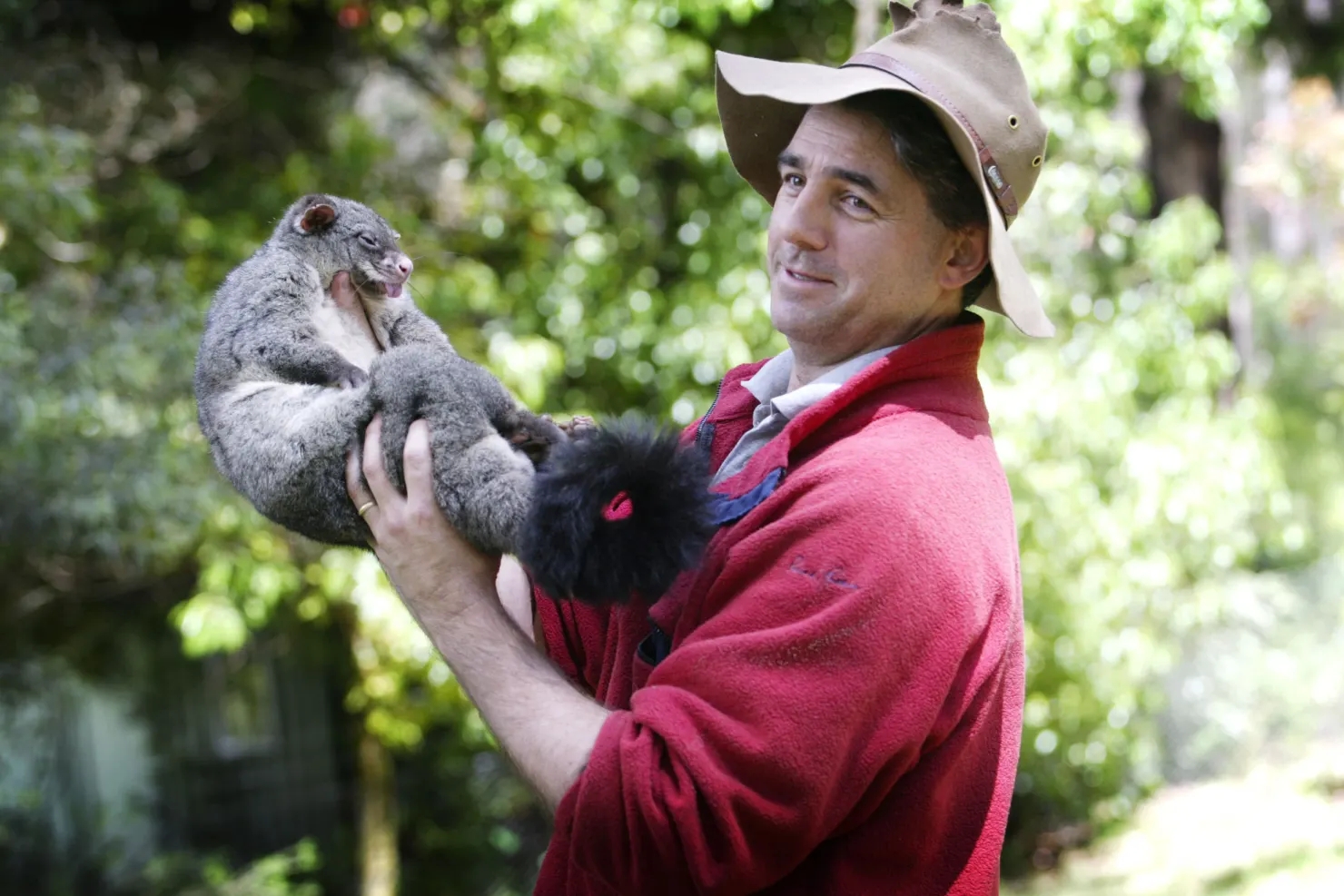
Lindenmayer with a mountain brushtail possum, 2004. Rebecca Halas

The most pressing question is left to the final chapter: if everyone is losing, why does it continue? When the answer arrives, it is depressingly banal: government capture by vested interests.

To lift us from our funk, Lindenmayer offers an invigorating alternate universe. Here forests are protected and valued. They provide habitat for endangered native species, income through carbon sequestering and tourism as well as jobs in management and conservation – far more than heavily mechanised logging provides at present.

As one of the most referenced researchers, Lindenmayer is a world-renowned scientist. Yet again he demonstrates that he is also an excellent science communicator. The book’s 37 myths are mostly treated soberly and, with the aid of diagrams, dispel many popular misconceptions without a hint of condescension. The reader will permit the author wandering from hard science to rhetoric to sum up in the final myths.

I found I was more comfortable in the forest’: The scientist who took on the logging industry

To be honest, the conversation did not begin promisingly.

Everything else was going well. I managed to get there on time and Professor David Lindenmayer was waiting out the front with a cheery grin. He had suggested we go for fish, but not too fancy. I had proposed Fich, which I’d heard was good – a takeaway joint adjoining a smart seafood restaurant in Sydney’s inner west.

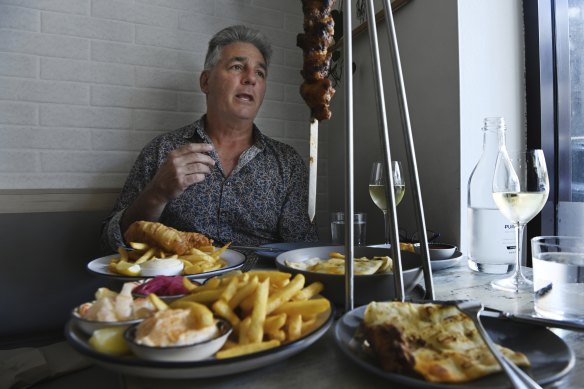
David Lindenmayer at lunch at Fich.

David Lindenmayer at lunch at Fich.Kate Gerachty

He looked neater than you’d expect from a bloke famous for the years he has spent deep in Australia’s oldest and wettest forests and for finding his way into the political heart of the sprawling battles fought over the industries that depend on cutting them down.

Tasmanian salmon is admired by conservationists about as much wood chipping is. The problem is, Lindenmayer explains with the sort of detail you’d expect from a scientist that the salmon are raised in great big floating pens in places like Macquarie Harbour.

There, he says, great clouds of fish poo sinks, sucking the oxygen and life out of the surrounds. Native species like the Maugon Skate, already threatened, are pushed towards extinction.

He explains that these salmon-farming fish-poo death clouds can also contain tiny parasitic worms called nematodes. A quick Wiki session later in the afternoon informs me that nematodes can be found in half the world’s population and that having travelled into space in the payload of the space shuttle Columbia, they are the first known life form to survive a virtually unprotected atmospheric descent to Earth’s surface.

Lindenmayer might be famous as (for a time) the nation’s single most-cited scientist (93,500) for his work on forests and regenerative farming, but he began his career in the water, and before that, he began to explore the natural world with his father, Bruce.

“He was a very, very difficult man to talk to,” recalls Lindenmayer when we get to the scallops.

The old man worked as a rocket scientist at the Woomera missile range and in Melbourne, helping to develop rockets and the propellant that would drive missiles into space or between continents. Eventually, disturbed by the machines’ violent potential, Bruce gave up the work and retrained as an economist.

Around this time, father and son began spending more time together, birdwatching in the bush. Men, says Lindenmayer, communicate better side-by-side, looking out at something rather than towards one another. “No bloke says, ’Let’s go and look at the sunset; they say, ‘let’s go fishing’.”

David Lindenmayer with a mountain brushtail possum in 2004.

Lindenmayer with a mountain brushtail possum in 2004. Rebecca Hallas

And so another world began to open somewhere between them. It was not just about what they saw but what they heard. Beside his father, Lindenmayer learned that the sounds birds made could reveal not just what species they were but what sex they were, what they were doing, and what was bothering them.

Those quiet moments resonated.

In the late 1970s, at school in Melbourne and then Canberra, Lindenmayer became a useful athlete, even playing for a graded football team in the Netherlands. Within a year, he realised he was not going to make it.

“I was a goalie. Everyone in the Netherlands has the perfect physique for a goalkeeper. I didn’t. I realised my hands are smaller than Donald Trump’s.” (First noted in the wild by Vanity Fair editor Grayden Carter, Trump’s small hands became a thing during the 2016 election.)

On his return to Australia, Lindenmayer dived into ecology, studying marine biology in Townsville and apprenticing himself to the famous reef ecologist Dr John “Charlie” Veron, the man who would become known as the “godfather to the corals” for his work in building the first expansive and accurate taxonomy of the Great Barrier Reef.

Lindenmayer volunteered on some of that world-leading work, trailing behind Veron underwater in Scuba gear, helping to gather and carry Veron’s coral samples. “He must have spent 10,000 hours underwater,” says Lindenmayer, who spent hundreds of hours in the sea with his mentor. He was calm, and he used less air than anyone. He must have had a set of gills or something. His breathing was incredible.”

Lindenmayer’s was not. “I found that I was more comfortable in the forest rather than in the water. I learnt I could see more in the forest than I could underwater,” he explains. “I didn’t have to concentrate on breathing.”

Our mains have arrived. Lindenmayer has ordered fish and chips and I have opted for a fish skewer. His plate lands like proper fish and chips should. The batter has erupted volcanically around the flesh, and the chips are holding up in the heat. My fish comes in spiced cubes impaled on a fat metal skewer hanging on its own scaffolding over a warm bed of flatbread, attended bowls of pickles and sauces.

It looks much like the famous beef and pork you get at Silvas, the famous old Portuguese joint a block up the road.

Reading Lindenmayer latest book (his 49th), The Forest Wars, you don’t get any sense of comfort. Lindenmayer’s description of his early work in the 1980s building a scientific baseline of how species like the Leadbeater possum, “the sweet-faced faunal emblem of Victoria”, use their habitat trees reads as deeply unpleasant.

The young scientist hauled bundles of traps and equipment, a tall ladder over one shoulder, deep into the dense understory of wattles and ferns, fallen logs and moss of Victoria’s central highlands to set traps, one for every 50 metres of forest. He soon discovered that the possums were “feisty and lighting fast” with a bite. By day’s end, his neck was garlanded with leeches, and in the shower, the water ran red “like a horror movie”.

He immediately fell in love with the work.

Lindenmayer’s work in those forests overturned how modern Australia understands them. When he began in the field, he believed, like everybody else, that trees would rejuvenate endlessly after their logging. His research shows the ecosystems they support are simply lost when they are felled.

His work reveals that rather than protecting us from fire, selective logging removes trees, drying forests out and creating highways for the infernos of the modern era. It has also shown that the animals that live in towering old trees do not move on from logged areas to reestablish themselves elsewhere but die in them when they are cut down.

Professor David Lindenmayer in a native forest near Currawon.

David Lindenmayer in a native forest near Currawon. Wolter Peeters

To establish this, Lindenmayer and the teams he has worked with over 40-odd years spent thousands of hours in the forests.

They sat in silence, watching the animals they had carefully caught, radio-tagged and released – birds, gliders and possums – return time and again to the same hollows high in the bows of the old mountain trees.


Blue remembered hills … memories of an old pal

That is the land of lost content,
I see it shining plain,
The happy highways where I went
And cannot come again
From The Shropshire Lad. AE Houseman

A few days ago, a Facebook message popped up out of the blue from England. It was from the niece of a friend – the daughter of his sister Jean. Heather wrote that they’d like to hear some stories of our time together. Predictably, as it so often is in these declining years, memories came flooding back.

Dave Shaw died suddenly of a brain hemorrhage in in the town of Pershore, Worcestershire, on Saturday 5th January 2013 at the age of 64. He was farewelled at his beloved Pershore Abbey, an historic church I knew well from many visits to his home, on Wednesday 23rd January. I hadn’t seen him since my visit to England in the summer of 2005, and I learnt of his passing by accident. My mother passed away in Nottingham at the end of January, and as Dave would often drop in and visit her when he passed through Birmingham, I rang him up to tell him of her death. I tried his home many times without answer, so I reckoned I’d contact Pershore Council to get in touch with him. My google inquiries ended up at The Evesham Journal, a local Worcestershire newspaper. And that’s when I learned that he had gone.

The following is an expanded version of a piece published in the Evesham Journal on1st February 2013

Our back pages

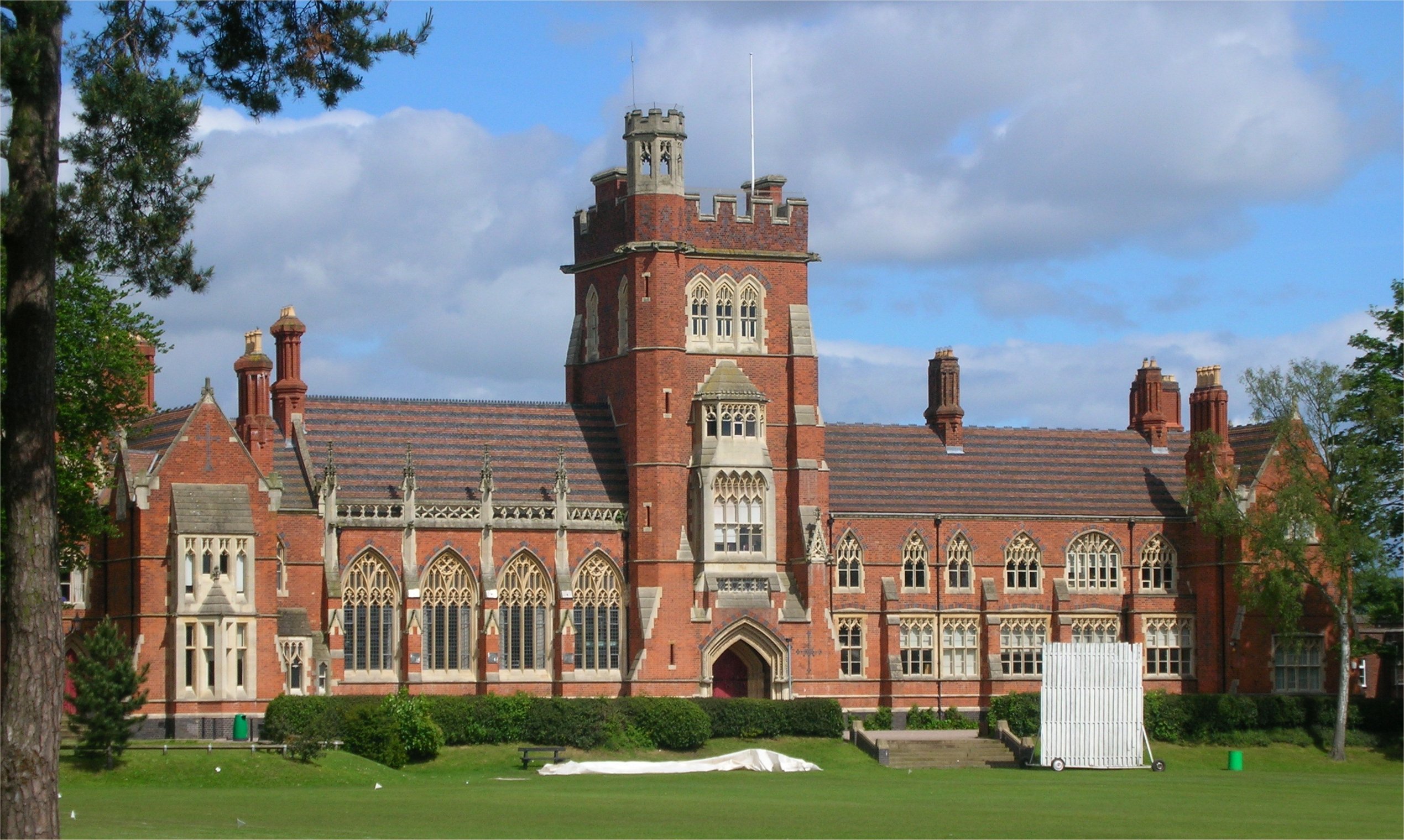
Dave was my oldest friend –  from when we entered Moseley Grammar School in Birmingham in September 1960.

Moseley Grammar School, Birmingham

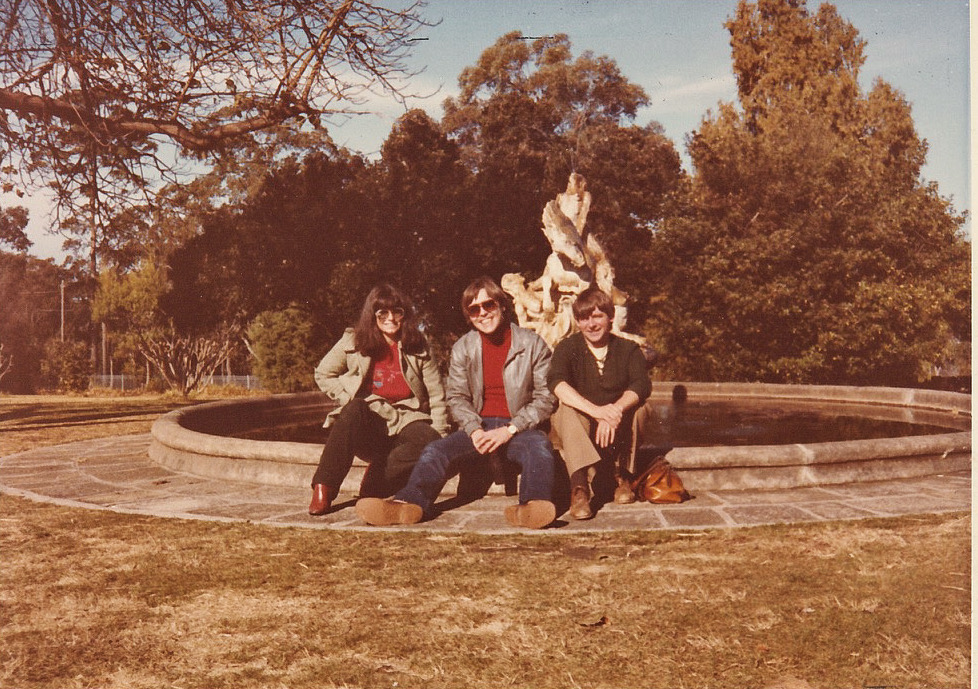
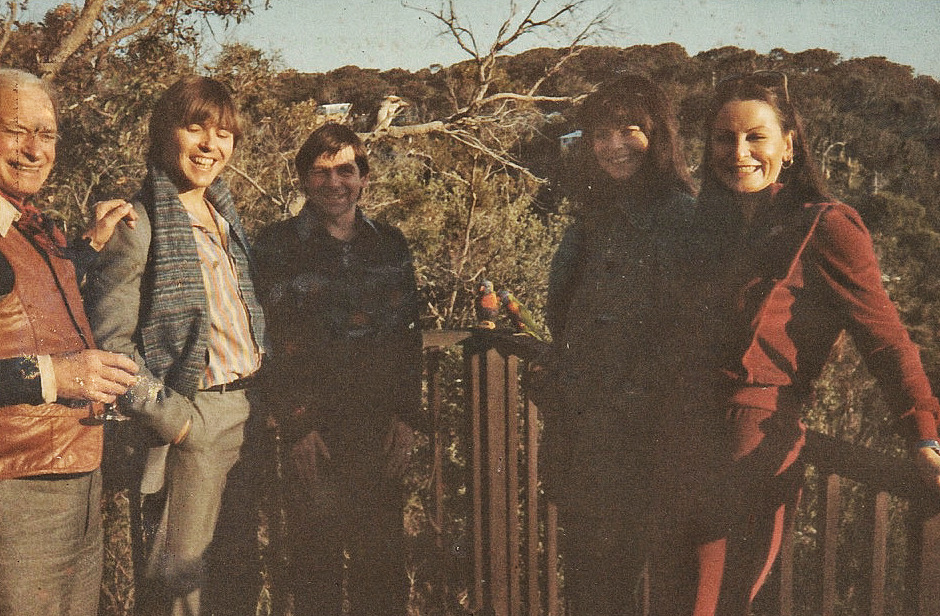
Through the Sixties, we came of age together, shared music, frequented folk clubs, did pub crawls through Birmingham, went to Birmingham City football matches (we were Blues fans and not supporters of Aston Villa, the other Brummie team) and hitchhiked to CND rallies and folk festivals. When we left Brum in 1967 and lived in other cities, we visited each other often and always remained in touch. Although I moved to Australia in 1978, I travelled to Pershore every time I returned to England and caught up with him and his family. One time, Dave came out to Australia. There’s a couple  of pictures here of that trip, featuring Dave, myself, my ex, Libby, and her sister Mary Jane, who was once a famous singer here in Australia but, sadly, took her own life in 1990. It must’ve been about 1982 as Libby and I separated the following year.

But let’s go back to the days when school chums became friends, the time when you began to address your mates by their christian names and not by surname, as was customary in grammar schools back then. Back to the Sixth Form when we began to “put off childish things” and as much as we could in our provincial and underage circumstances, “got with” the sixties zeitgeist and engaged with the wider world. We read the poetry of the American Beat Poets, our own Mersey Poets and John Lennon. We listened to the music, and particularly Bob Dylan. During school holidays, four of us, Dave, Peter Bussey, Malcom Easthope and myself, would go to the Jug o’ Punch in Digbeth run by the celebrated Ian Campbell Folk Group, to drink bitter, sing along to folk songs and listen to the likes of The Dubliners, Al Steward and Roy Harper, and, sigh, a young, gorgeous and melodious Joni Mitchell. We’d meet once a week at the Golden Eagle in Hill Street to talk politics and poetry, and read our own juvenile verse, before heading off to other pubs in the Birmingham CBD.

In those days, it was cool for teenagers to ride motor scooters – if they could get their parents permission. Several of my pals owned one, including Dave who’d bought a second hand lambretta. I recall this today because it reminded me of one of our better-heeled chums who had a brand new model. His dad was a publican, and one time, he threw a party at his father’s pub in Coventry and a mob of us got a lift there from another student who’d actually owned a car – a rare thing in those days. It came back to me today how that party ended for me and Dave. We both got very drunk, I tripped and sprained my ankle, and as we were driven back to Brum, I was sprawled in the back seat, and Dave, sitting beside me, chucked up. That wasn’t the last time I injured myself whilst inebriated. I can’t recall Dave getting as rat-arsed again. 

Later, we graduated to cannabis, and would toke at each other’s homes on weekends – one time, we hired a rowboat in Stratford on Avon and spent a stoned afternoon on the river. So Wind in the Willows. One lovely early summer’s day in 1969 when “we happy few, we band of brothers” camped out in my room at Reading uni, and dropped acid by the lake in nearby Whiteknights Park. It was a strange, trippy day, during which there was a police bust on my hall of residence, and we watched in amaze as people rushed down to the lake and threw many unidentified objects therein.

Fast forward to the eighties …

Though settled in Australia, I visited England often, and always took time out to catch up with Dave in either Birmingham or Pershore. When I was performing at folk clubs in 1987 and 1988, he acted as my local contact person. He also introduced me to his old friend Stan Banks, who’d served in World War II a bomb aimer and photographer on the night raids over Germany. On retirement from school teaching, Stan dedicated himself to the peace movement – which was how Dave came to meet him. Stan shared with us many enthralling and harrowing tales of his flying days.

Dave and I shared a common interest in the environment, cultural heritage and wildlife and we would exchange news on our endeavours. When we’d visit Pershore, he’d always take us out on a ramble or a drive to some out of the way place with an archaic name and take in a few nice country pubs on the way. On one visit, he gave me an instruction sheet for building boxes to shelter micro-bats. We have five of them around our home in northern New South Wales, and several of them are occupied all year around.

Green and progressive in word and deed, and dedicated to Pershore, Dave served as a Town Councillor for twenty-two years. Whenever we’d walk around town together or enter shops and pubs, folk would be always coming up to talk to him. At his funeral, the flag atop the abbey was flown at half-mast for the first time ever whilst fellow councillor Chris Parson praised him as “a giant of a man” – which I found apt but amusing considering Dave was short and slight of stature.

The feature photograph of him with his binoculars and bird book outside the glorious Pershore Abbey is a beautiful way to remember him.

Norman Linsday Gallery and Museum, Faulconbridge, NSW

Dave meets the Boyd Family, Palm Beach, NSW

When Heather read this story, she wrote:

“That is absolutely beautiful! Thank you so much, I hope you had as much pleasure from writing that as I did reading it. I laughed out loud and cried. Lovely. My mum will love this. ❤️ p.s I knew all along he was a stoner!! And with that asthma too? What was he like? I miss him a lot. X”

I replied:

“A lovely bloke. A gentle, laid back soul who was always in a calm, good mood. I recall a time when he visited me in London just as I was about to head off to the Middle East. I’d just had a typhoid shot and  was as sick as a dog – and he’d come all this way to see me off. He was so cool about it. What will be will be. Que sera sera! Did you know he was fluent in Spanish. It was one of his passions. He had Portuguese too, and I believe some Russian. I went through a “Russian phase” too in the early seventies, but ended up in the Middle East instead, by accident, and learned Arabic. Still learning. It’s effing difficult if you don’t have a gift for languages, but it keeps the old brain active.

Heather:

Sounds just like the Dave I knew. I am glad I found one person who he went to the Blues with him as I always wondered. Did you know we put some of his ashes at St. Andrews? Yes he was a language genius wasn’t he? Yes he was a language genius I think. Apparently he could get by in about 9 languages but he was very humble about it.

The ‘sixties … memories of London and Ireland

Dave is referenced many times in In That Howling Infinite, though, for privacy reasons, not by name. I also dedicated one of my poetry books to him: Tabula Rasa – Early Days. Below are a couple of extracts that are specifically talking about Dave.

“As I wrote in a recent trawl through my back pages, Song of the Road – my hitchhiking days: “… that motorway from Brum to London was a road well-traveled. In my final year at Moseley Grammar, I’d often hitch down to London for a weekend with pals who’d gone there before. We’d hang out at cheap and cheerful Pollo’s Italian restaurant in Old Compton Street in Soho and the Coach and Horses across the road and go to Cousin’s folk and blues joint in a cellar in nearby Greek Street, and the 101 Jazz Club off Oxford Street. Bunjies folk café and Ronnie Scott’s jazz club were just around the corner. After a meal or a pint, I’d often catch the last tube to the end of the line closest to the M1. I can’t recall how many times I headed off into the night; and there were always drivers on the road at the witching hour. I guess many folks “get the urge for going”, as Joni sang back then, “and they had to go …” And in those generous times, people were happy to offer a lift to a wayfaring stranger – gentle souls who would not leave strays stranded by the dark wayside; lonesome folks seeking company and conversation in the dark night of the soul; curious people wondering why a young man would hitch the highways in the middle of the English night. Yes, Café Pollo was indeed a significant landmark of my London days:. From Ciao Pollo di Soho – the cafe at the end of the M1

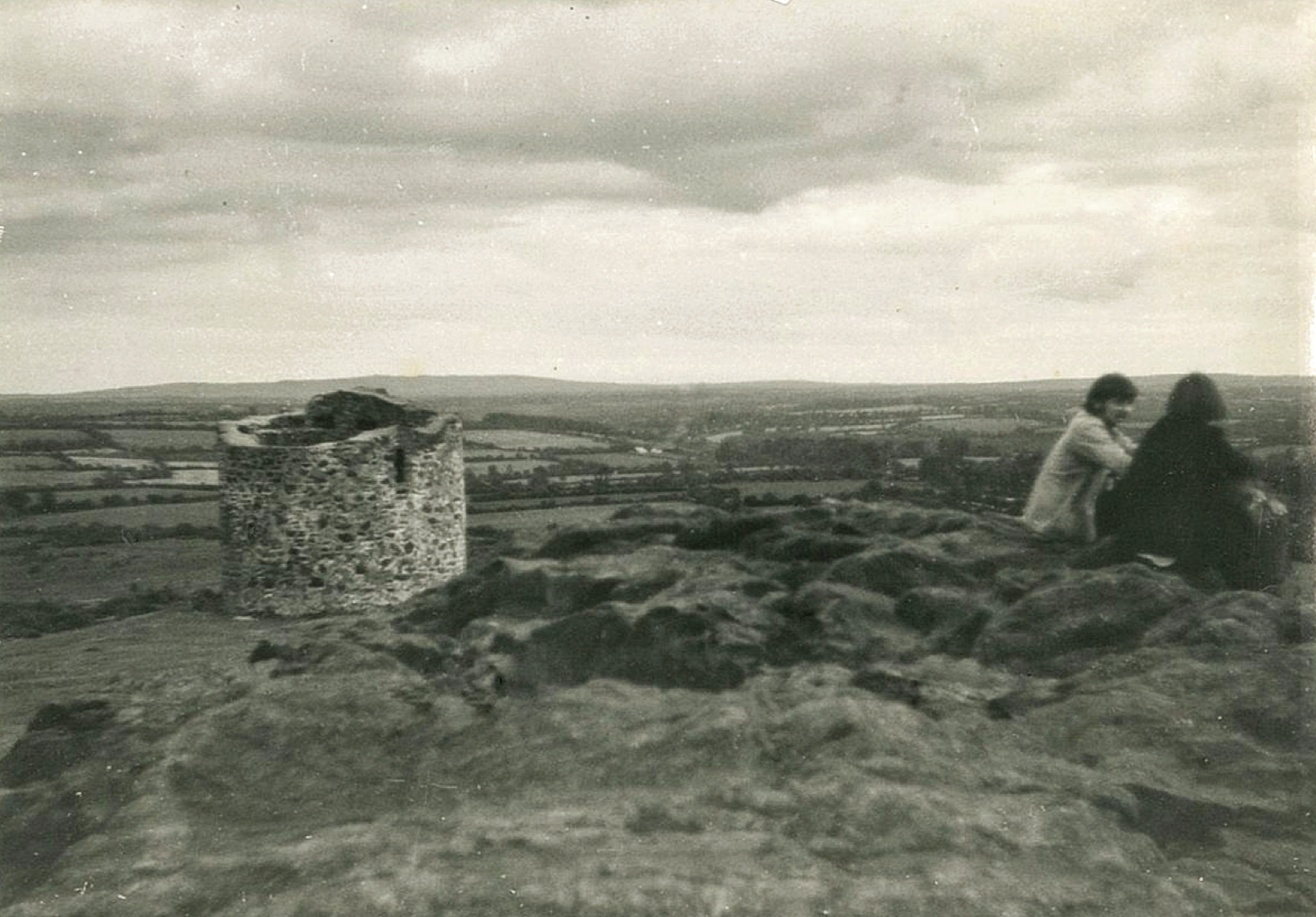
“In the summer of 1969, my brother and I and an old chum spent several weeks in an Enniscorthy that looked and felt like it had not changed since Aunty Mary’s day – so well portrayed in the academy award nominated film Brooklyn. Dressed as we were in hippie garb and sporting long locks, we cut incongruous figures in the pubs and at the local hop, and were so unsuccessful hitchhiking around the county that we walked many a long Irish mile. We hiked to Killane, Sean Kelly’s country, and inspired by the song, climbed upwards though heath and hedge to the top of Mount Leinster. We stayed at 13 Patrick Street and spent a lot of time sitting up on Vinegar Hill, beneath its round tower, looking down on the River Slaney and the town beyond. My brother was a keen photographer, and he took the following picture”. Thats Dave on the left, and me on the right. From The Boys of Wexford – memory and memoir 

“On Vinegar Hill o’er the pleasant Slaney”

And a final vignette, also featured in Song of the Road,from 1970, I think: 

One glorious English summer I arranged to meet up with my late pal Dave Shaw in Cambridge, where he was attending a summer school at the University, and go to the celebrated Cambridge Folk Festival. I clocked off from my work on the motorway, got home, just ten minutes away – I said we were close! – showered and packed, and headed to the Clock Garage roundabout and put out my thumb. I took the M1 to London’s North Circular, and cut across to the A10 (there was no M11 in those days) and, And, my stars were alignment on this night ride, arrived at Dave’s digs in time for breakfast.I don’t remember much of the festival bill, but American folk diva Odetta was singing, and also, our idol, Roy Harper, England’s high priest of angst.

I had to leave Cambridge around Sunday lunchtime, after Roy’s last set, to return to Brum for work on Monday. Rather than head back down to London, to save time – a quixotic idea when you are hitching – I decided to cut cross-country to connect with the M1 at Newport Pagnell – in those days before GPS and route planners, a cheap, creased road map from WH Smith was the best we had, plus a good sense of direction, fair weather and loads of luck. And such are the movements of the cosmos, that my one and only only ride took me to, yes, what was then the bucolic village of Newport Pagnell. It was one of those summer evenings in England, when the days are long, the air warm and languorous, and the light, luminous. Birds were singing and church bells were ringing for evensong, and in my mind’s ear, I’d like to imagine that cows were lowing and sheep were bleating. One could almost feel an ode coming on. So there I was, once more, at the services on-ramp, hitching a ride to Birmingham , and hopping aboard an old Land Rover for what was the slowest and noisiest ride ever – which took me almost to my door”.

Ciao Pollo di Soho – the café at the end of the M1

The Boys of Wexford – memory and memoir

Song of the Road (1) – my hitchhiking days

“When we were younger, time appeared to move more slowly than in our later years. It is in our nature to imagine and indeed, re-imagine our salad days as the best of times and the worst of times. But looking back through our back pages, these years was perhaps no better or worse, no more significant or seminal than any era fore or aft. Like objects seen through the rear-view mirror, memories always seem a lot closer and bigger. When I’ve revisited roads and streets where I grew up, playing or sauntering or rolling home with a skinful in the pale moonlight, they are no way as wide, long or spacious as they are to the mind’s eye. Vivid memories can distort time, making you feel that that weren’t that long ago”. From Blue remembered hills – a land of lost contentment 

Blue remembered hills – a land of lost contentment

Thinking globally, acting locally – how landowners can protect koalas

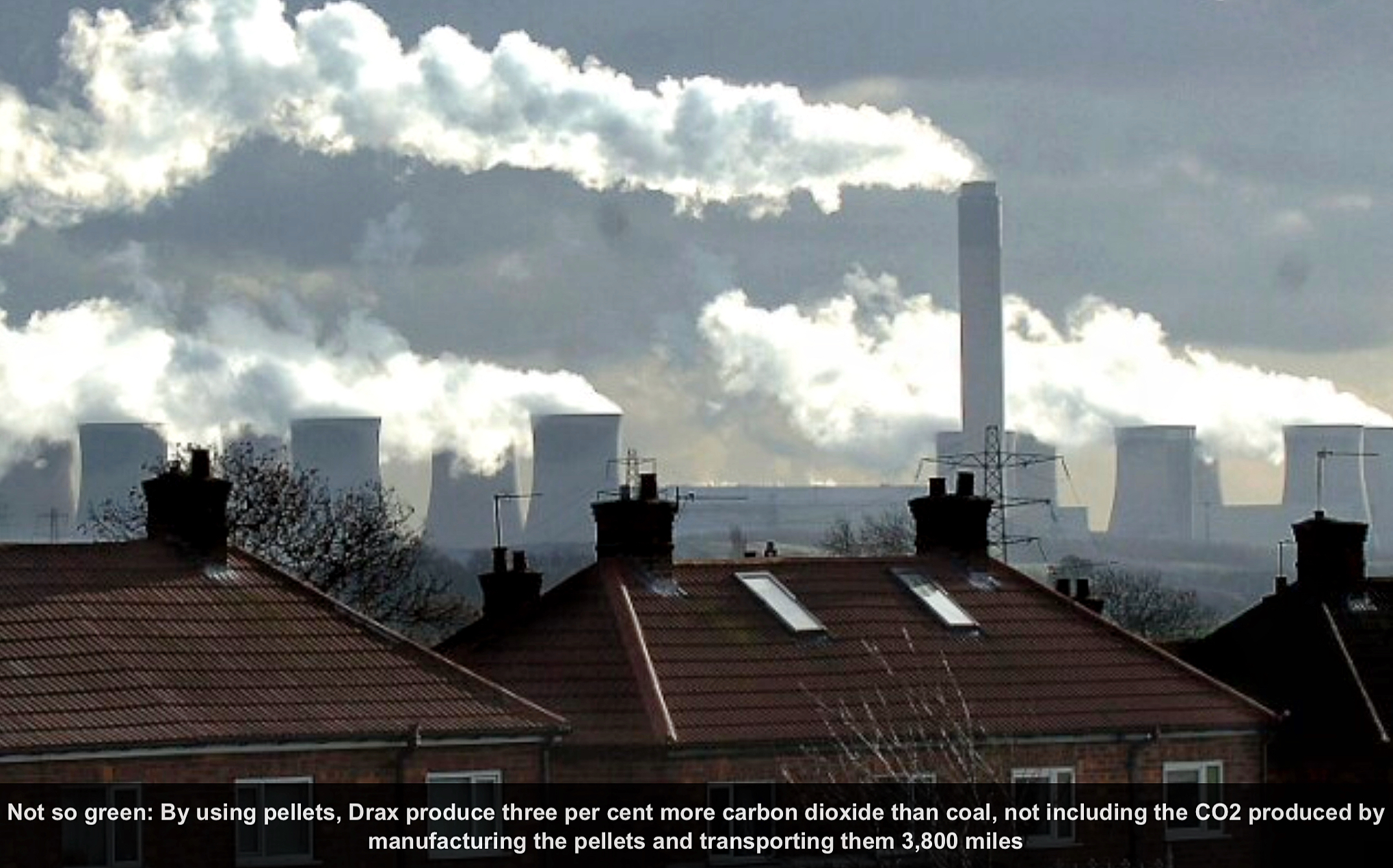
It is generally acknowledged that we in Australia, as elsewhere on Earth, are facing an extinction crisis brought on by climate change and environmental destruction. We see in our own little part of the planet the crisis in microcosm, with accelerated clear fell logging operations in the state forests immediately adjacent to our towns and villages, and in close proximity to our rivers and flood plains with most of the timber extracted from these forests destined for chipping on the wharfs of Port Brisbane for shipping to Asia, or to feed the ostensibly “green” bio-mass power plant at Broadwater, near Byron Bay.

Such harvesting is highly aggressive. It is clear-fell by highly sophisticated and costly harvesters rather than selectively harvest by chains saws as in the past, followed by burning of what cannot be sold off in windrows or in power stations, and ground-spraying of the naked land with a cocktail of toxic chemicals. There is then plantation re-establishment with highly flammable eucalyptus monoculture. All this on moist forest escarpments and lowlands bordering large rivers, where, with heavy rains and frequent flooding, everything – soil, ash, and poison, flows downhill. Ongoing clear-felling in the state forest plantations closely rounding Bellingen and its peri-urban areas adds to the cumulative impact of similarly aggressive harvesting operations in other forests in the Coffs Harbour and Bellingen region in recent years.

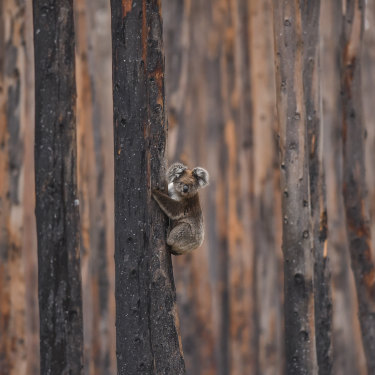
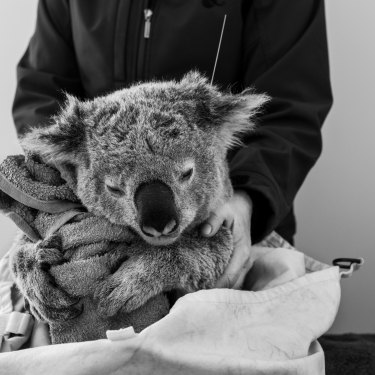
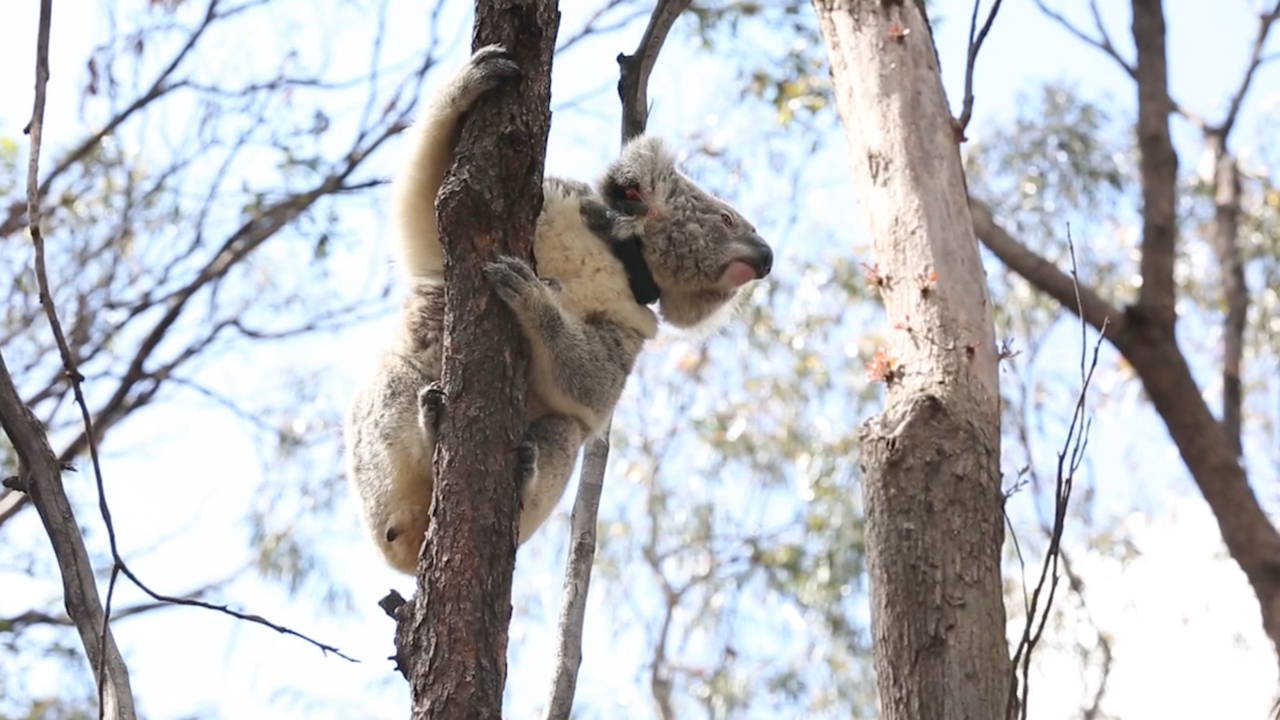
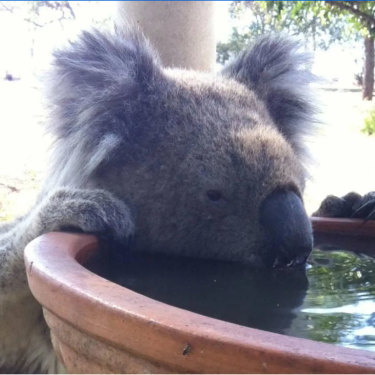
Here in Bellingen Shire, people report refugee koalas, many sick, injured and starving, koalas on roadways, in backyards, and on bush properties like our own that border the logging areas. And it is not just our iconic koalas who are threatened by what is in all but name a highly mechanised and relatively unregulated extractive industry. For residents close to and adjacent to these areas, it is equivalent to living next to a open-cut coal mine.

Sitting on the edge of the wilderness
An injured koala beside the clearfell

There are many other protected and endangered species living in the understory and old habitat trees in plantations that are “waiting for the chop”. These include koalas, quolls, sooty and powerful owls, great barred frogs, and fruit doves where forty years of native forest ingrowth and state plantation neglect have ensured the development of a biodiverse ecosystem. But the fragmentation of forest, logging in both state and private forests is destroying the connectivity of healthy koala populations, and koalas are increasingly forced forced to survive on the fringes of the state forests in private landholdings.

So, what can we who live on these borderlands do?

As habitats come increasingly under threat, and as reform and remediation take time, private landholders must do all they can for themselves and for the environment. One option available to them is a legally binding agreement between the landholder and the Biodiversity Conservation Trust under the NSW Biodiversity Conservation Act of 2016

Local Land Services NSW also offers partnerships concentrating specifically on the protection of koalas. It has successfully delivered a koala project, funded by the Australian Government, that focused on recovery actions that protect, enhance and restore Koala habitat on private land in four key Areas of Regional Koala Significance (ARKS) between Port Macquarie and Coffs Harbour. Below is a short video presented by LLS officer Asheley Goodwills about the project, focussing on Bellingen Shire.

LLS’ website notes:

“Koalas are uniquely Australian. They are one of our most loved and iconic animals and people come from all over the world to see them. Koalas, like all native animals, are culturally significant to the Indigenous People of the lands in which they live. Unfortunately, koala populations are more and more at risk of decline for a variety of reasons.

A growing human population, particularly in areas along Australia’s east coast, has led to large-scale clearing of better-quality koala habitats with many koala populations struggling within smaller, fragmented patches of poorer quality habitat. Other threats, such as drought, fire, climate change, disease, vehicle strike and dog attack are further impacting koala populations.

Creating ‘habitat refuges’ in areas remote from, and resilient to, such threats is extremely important for long-term koala persistence”.

What are Conservation Agreements? 

They are designed  and financed by NSW government’s department of environment and heritage, it is available to landholders who demonstrate that their property or part of has conservation value in flora or fauna or both and who wish to preserve its environmental integrity and biodiversity through an agreement creating a Wildlife Refuge or a Conservation Area.

What do they mean?

• The landholder establishes legal protection over a specific part of their property, effectively safeguarding it from logging and from development that might compromise its ecological integrity.

• Conservation agreements are entered on the property’s certificate of title.

• There are a range of options through the BCT or also private covenants that can be on title. Some conservation agreements are in perpetuity; others can be terminated by a future owner.

• In return for preserving part of the property, the landholder can obtain practical and financial help to preserve, protect and enhance its biodiversity.

What are the drawbacks to a conservation agreement?

• Landholders may be worried about an affectation on title and may therefore be reticent about entering into an agreement for perpetuity.

• Prospective buyers may also be reluctant to undertake the obligations under the agreement.

• But times are a’changin’ and increasingly, landholders and potential purchasers of properties in areas of ecological value are interested in conserving and enhancing our natural environment and are willing to do play their own part.

• Real estate agents, valuers and banks are becoming more and more accustomed to dealing with properties containing Wildlife Refuges and Conservation Areas.

What are the landholder’s obligations?

• To maintain the property and keep it in good order.

• To take practical steps to improve its conservation values and prevent harm to its biodiversity.

• To carrying out work where necessary to protect flora and fauna and soil and drainage, and to control invasive weeds and feral animals.

• To permit inspections by BCT to ensure compliance, review work, and undertake surveys and research.

What are the benefits to the landholder?

• The individual landholder can make an important contribution to the long-term conservation of biodiversity in NSW.

• An important incentive of the Conservation Partners Programme is that owners can apply for a conservation partner’s grant. Grants available for Conservation Areas are larger than those available for Wildlife Refuges. They are utilized to maintain and enhance the ecological integrity and biodiversity of the land.

• They can be applied to a range of activities, e.g. revegetation, weed and feral animal control, and infrastructural repairs and maintenance, including access trails, drainage and fencing.

• BCT provides advice and guidance throughout the process, including how to complete the application, recommending contractors, and assessing their quotations.

What is the agreement process?

• The landholder contacts BCT and submits an “expression of interest” in making an agreement. BCT arranges a site visit to explain the process and undertake a preliminary inspection.

• The landholder decides whether the agreement is for a Wildlife Refuge or a Conservation Area.

•An application is submitted providing property details, the area/areas proposed to be conserved, and the landholder’s assessment of the ecological values.

• BCT engages a professional ecologist to provide an expert opinion, make an assessment, draft supporting maps, and recommend whether an agreement should proceed after which BCT decides to make the agreement and commences its preparation.

• The landholder provides supplementary information and schedules, including maps showing what areas are included and which are excluded, e.g. buildings and infrastructure.

Who do you call?

• Bct.nsw.gov.au; info@bct.nsw.gov.nat; 1300 992 688

• You can also reach out to North Coast Local Land Services about natural resource management and funding opportunities. Call 1300 795 299 or emailadmin.northcoast@lls.nsw.gov.au

What are we doing in our Conservation Area?

• We are in year one of a three-year grant cycle with a grant of $15000 a year. and have engaged an experienced local regenerator recommended by BCT.

• The team is engaged in extensive vine and weed control (particularly lantana which may attract invasive bell myna).

• We are very pleased with its work, particularly as it provided good feedback on species present and has identified rare flora that we had not expected to find.

• BCT has been fabulous throughout the process, providing advice and encouragement.

Further posts in In That Howling InfiniteThe agony and extinction of Blinky Bill; Paradise Regained – back to nature in Queensland; The Bonfire of the Insanities – the biofuel greenwash

Koala Detection dogs

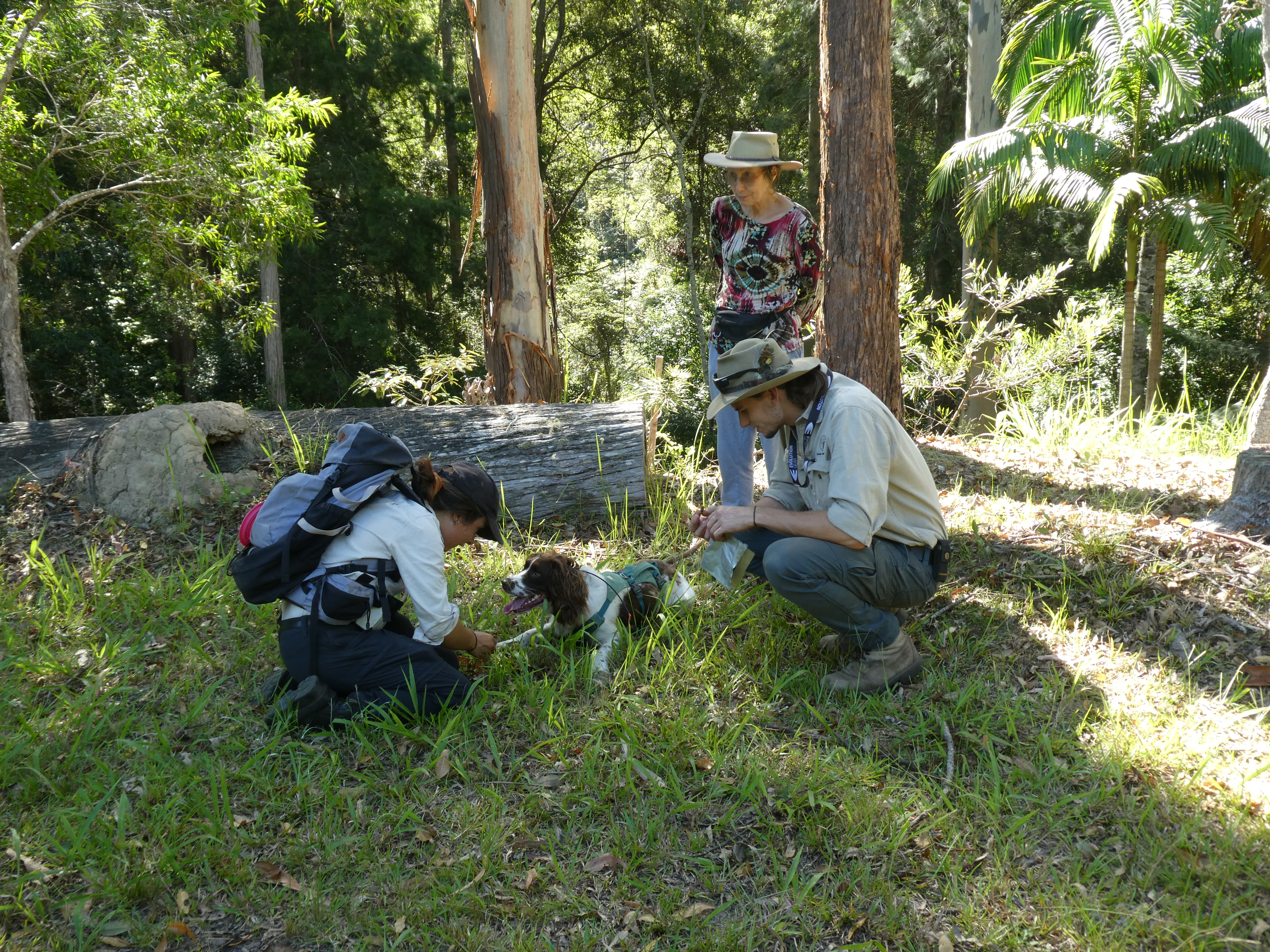
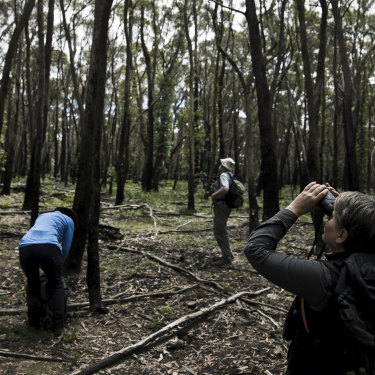
We have encountered two koalas on our property over the last two years, including a breeding female with a joey, and we’ve had the good fortune to have been assisted by Canines for Wildlife. 

Here is a lovely film of the detection dogs in action made by our friend Sarah George. They also feature in the LLS film featured above.

Scat hunting on our conservation area

Scats of a female koala and it’s joey found by Canines for Wildlife in our conservation area

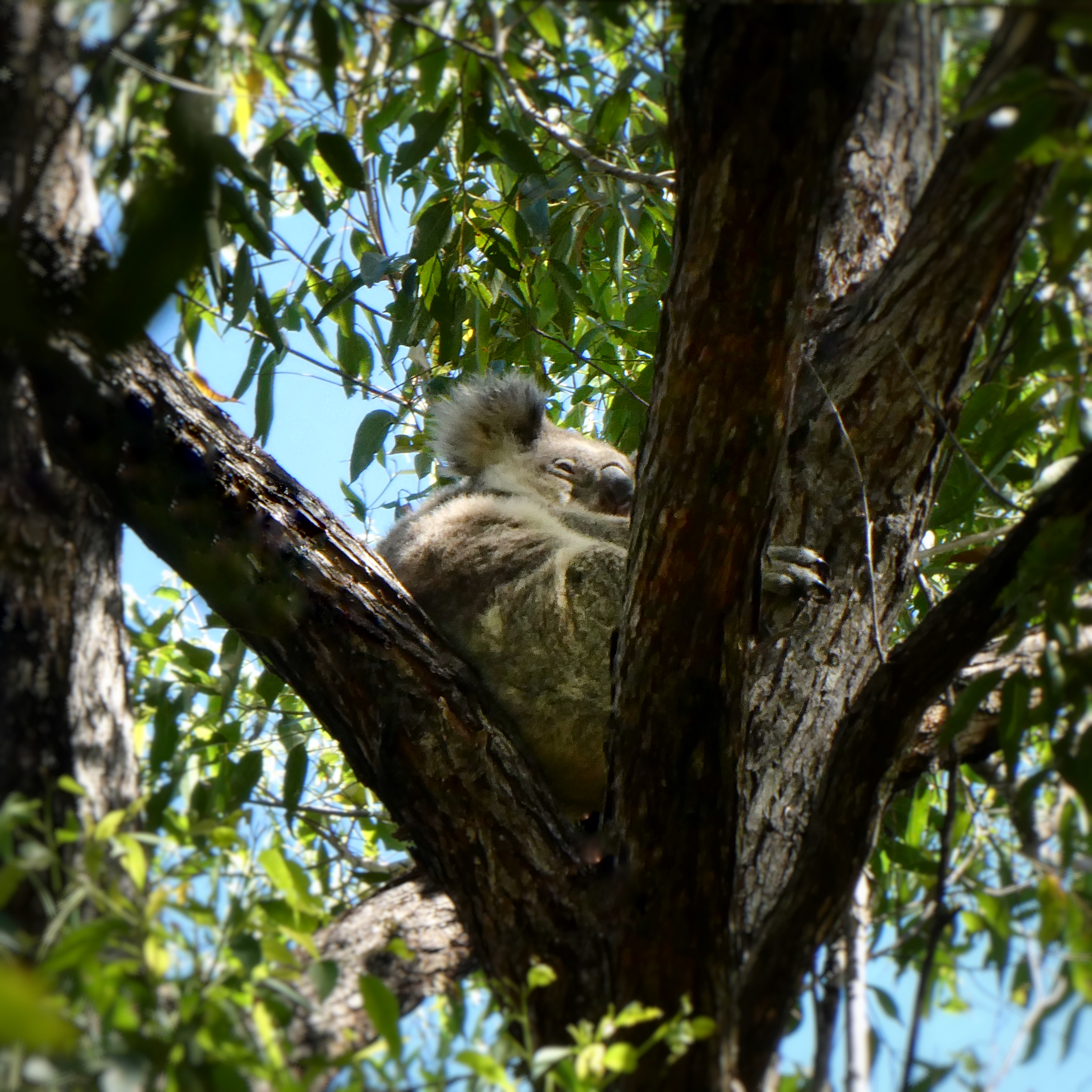
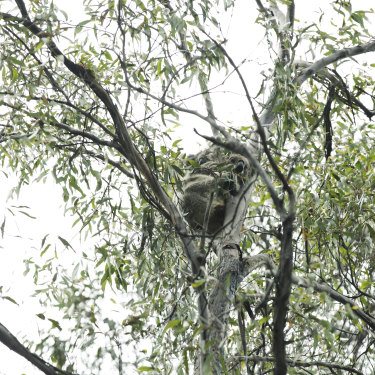
Our latest koala high up in a tallowood

Author’s note

We live in heart of the Tarkeeth Forest, some ten kilometers from the seaside town of Urunga on the mid north coast of New South Wales.

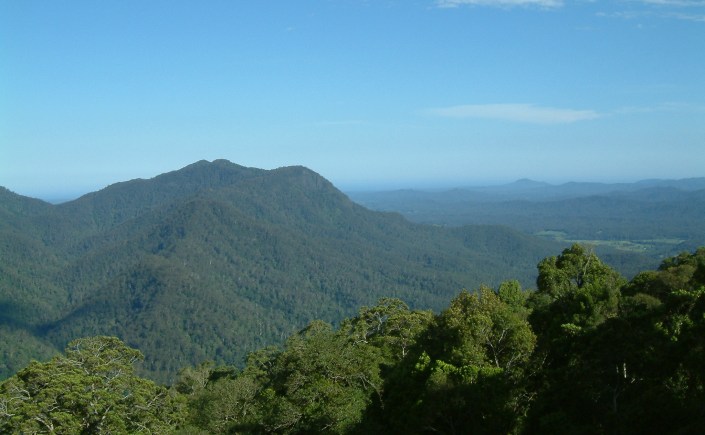
The forest rises on Fernmount Range from the Bellinger River to the north and Kalang River to the south forming a watershed and providing a vital connecting forested corridor for koalas between the habitats of the hinterland and coastal lowlands. Above and between the two rivers, the forest is an important rain-harvesting, filtration, and stabilization ecosystem vital to the wetlands and rivers. The lower estuary is formed where the two rivers converge, creating a large and dynamic system which flows into the Pacific Ocean at Urunga.

It is an important habitat for bird, reptilian, mammalian and marsupial wildlife, including koalas, quolls. wallabies, echidnas, goannas, owls, fruit doves, and cockatoos.

The east-west Fernmount Range Trail is an ancient highway from the plains to Urunga, known to the Gumbaynggirr nation as a “place of plenty”. The forest contains areas of significant indigenous culture, recalling song lines and stories of the Dreamtime, places of ceremony, of birth and burial, and of atrocity.

This land was rainforest once. In the late nineteenth and early twentieth centuries, much of it was cleared manually and laboriously for dairy farming, and in the late sixties, most of the landowners sold their farms to Australian Pulp Mills. APM cleared the farmland and established the flooded gum plantation that is now Tarkeeth State Forest to supply a paper mill that was to be built just south of Coffs Harbour. This never happened – the project’s planners had inexplicably overlooked the lack of a massive water supply. Eventually, the plantations were sold to the government-owned Forestry Commission of New South Wales – now Forestry Corporation NSW. The plantation has now been harvested – clear felled, actually, burned, sprayed, and replanted with a highly flammable eucalyptus monoculture. – a matter of considerable concern to us forest neighbours and to many in the Shire.

One ring to rule us all – does Tolkien matter?

The world was young, the mountains green,
No stain yet on the Moon was seen,
No words were laid on stream or stone,
When Durin woke and walked alone.

The Song of Durin, JRR Tolkien

In Innovation, the final installment of Peter Ackroyd’s entertaining and informative History of England, he writes:

“The post-war years had brought fables of splrltual or material collapse, from That Hideous Strength to Brave New World to Ninteen Eighty-Four. During the Fifties, the novel seemed to be settling back to its journalistic roots – quotidian in subject, unpretentious in style – but the zeitgeist is a wayward wind. Among writers of fiction, another response was offered to the bewilderments of the post-war world, which was to fly above it. In 1955, Return of the King, the last installment of R. R. Tolkien’s The Lord of the Rings, was published. It was the resurrection of heroic romance, tempered by its author’s memories of war. It tells of a small, unregarded race of Middle-earth, the ‘hobbits’,who ‘arise to shake the counsels of great’. The freedom of the world hinges upon the destruction of something tiny, beautiful and evil, evil, a ring forged by a fallen angel. While elves, men and dwarves fight, two hobbits are tasked with the destruction of the great destroyer. A whole world, formed of its author’s experiments in language came into being to the extent that if anyone were to point out that Middle-earth’ is only a translation of the Norse ‘Mittlegard’, the hearer would respond with a shrug. It was there, whatever its origins. For the English journalist Bernard Levin, it offered a beautiful and salutary reminder that the ‘meek will inherit the earth’; for the American critic Edward Wilson, it was “juvenile trash”, a story of good boys being rewarded. In spite of the naysayers, the popularity and influence of The Lord of the Rings grew to unprecedented heights. Tolkien himself, a scholar and devout Catholic, was later to find his work taken up as a banner by most unlikely allies, a group that came to be known as ‘hippies’”.

Whenever a survey or poll crowns JRR Tolkien’s The Lord of the Rings as the public’s favourite novel – and there have been many during the past seventy years – and lauds the author as one of the most influential writers of the twentieth century, the reaction has always been the same from critics who have been sneering at his books since their publication. The Lord of the Rings has been dismissed as trivial, juvenile even, and not worth arguing about. It has been called archaic, backward looking, nostalgist and sentimentalist, and has been gaslit for misogyny and homo-eroticism, violence and even racism (with its ethnocentric and androgynous elves and it’s Graeco-Roman Gondorians besieged by darker races from the south and east). Yet, most critics have probably never read it.

On the side of the angels (or is it the elves?) are the millions who came of age with and fell in love with the books and adopted a Tolkienesque taxonomy for viewing the world as a perpetual dialectic between the forces of light and of darkness. Some have even studied the lineages and languages. The actress Liv Tyler, who plays a luminous Arwen Evenstar in Peter Jackson’s award-winning film trilogy is said to have learned elven, and I sometimes see people on the street with elven rune tattoos. Liv probably has one too. I once spied a young lady walking down King Street in Newtown, the boulevard of Sydney’s myriad young tribes, sporting eleven runes on the backs of her suntanned calves. I was cheekily tempted to tell her that they were upside down, but let the moment go. I recall that as we queued at the cinema to see The Fellowship of the Ring, young folk rhapsodized among themselves on the delights about to unfold before their very eyes.

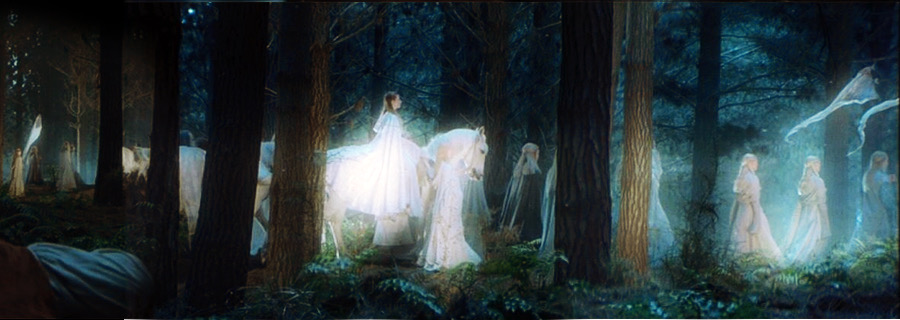
The Elves leave Middle Earth

The Hobbiton film-set on New Zealand’s North Island is one of that country’s premier tourist destinations – indeed, during the three years of the films’ successive release, a big sign at Auckland International Airport declared “Welcome to Orc Land!” The trilogy’s diverse film locations revealed to the world the exquisitely beautiful landscapes of Aotearoa.

The films’ casting prompted criticism in some quarters insofar as the elves, men and dwarves were played by predominantly white Anglo Celtic actors the dubious Hobbit films (included spook Richard Armitage, Poldark heart-throb Aiden Turner,” everyman” Benedict Cumberbatch, and angsty Scottish actor Ian Nesbitt, all shrunk-down) whilst New Zealand’s indigenous Māori portrayed the evil orcs and Uruk Hai. Nevertheless, hundreds of kiwis, Pakeha and Māori alike, were employed as extras, the scenery dazzled the world and the economy of Aotearoa, The Land of the Long White Cloud, enjoyed a Middle Earth boom.

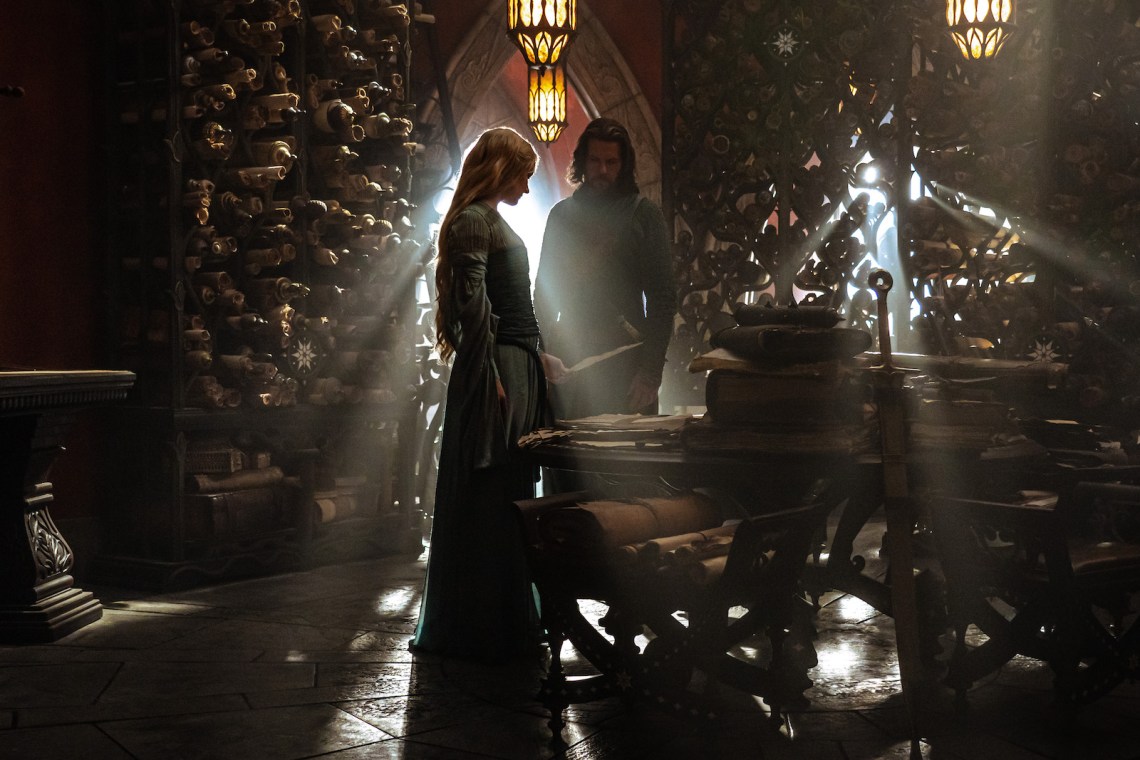
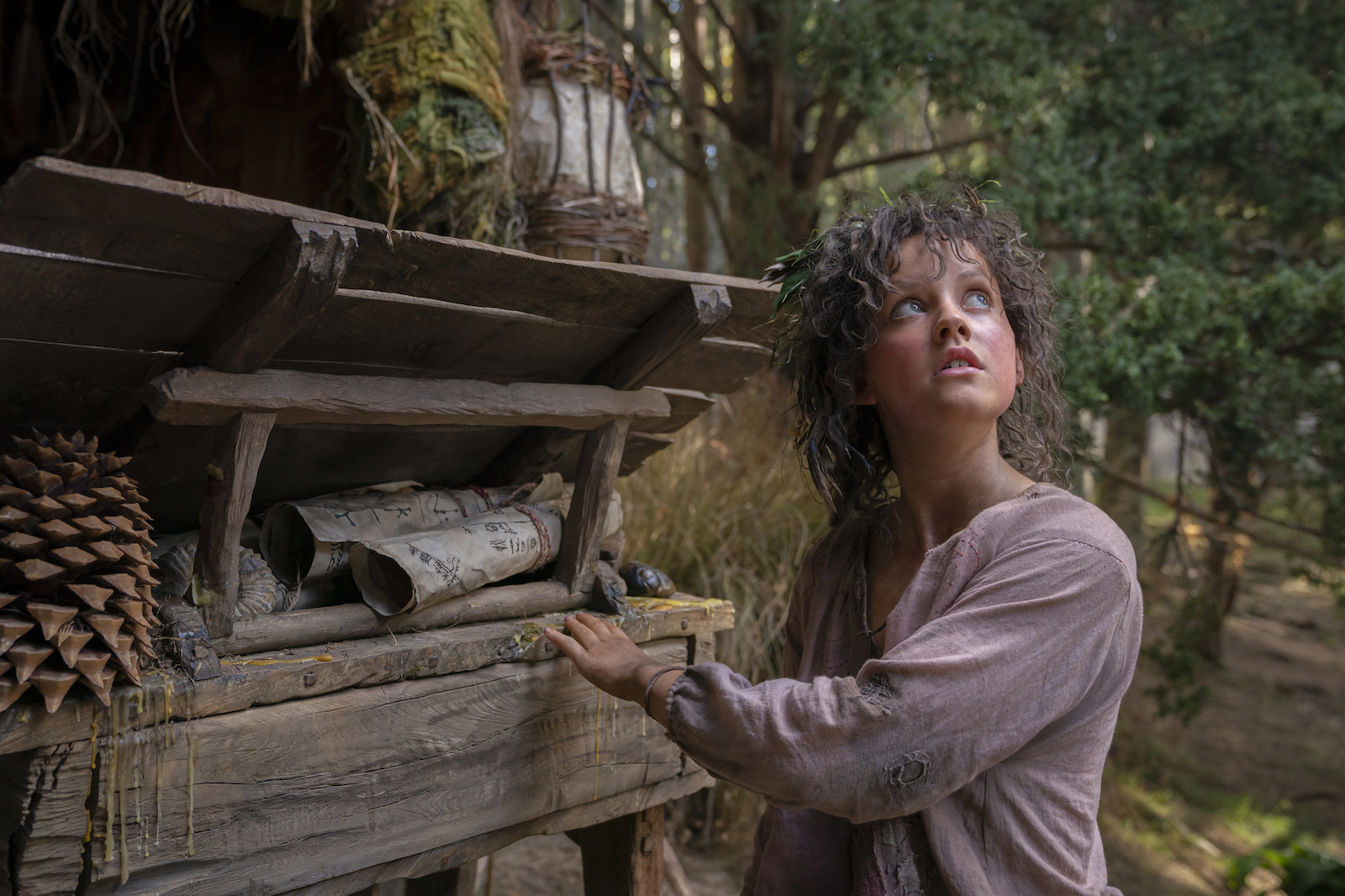
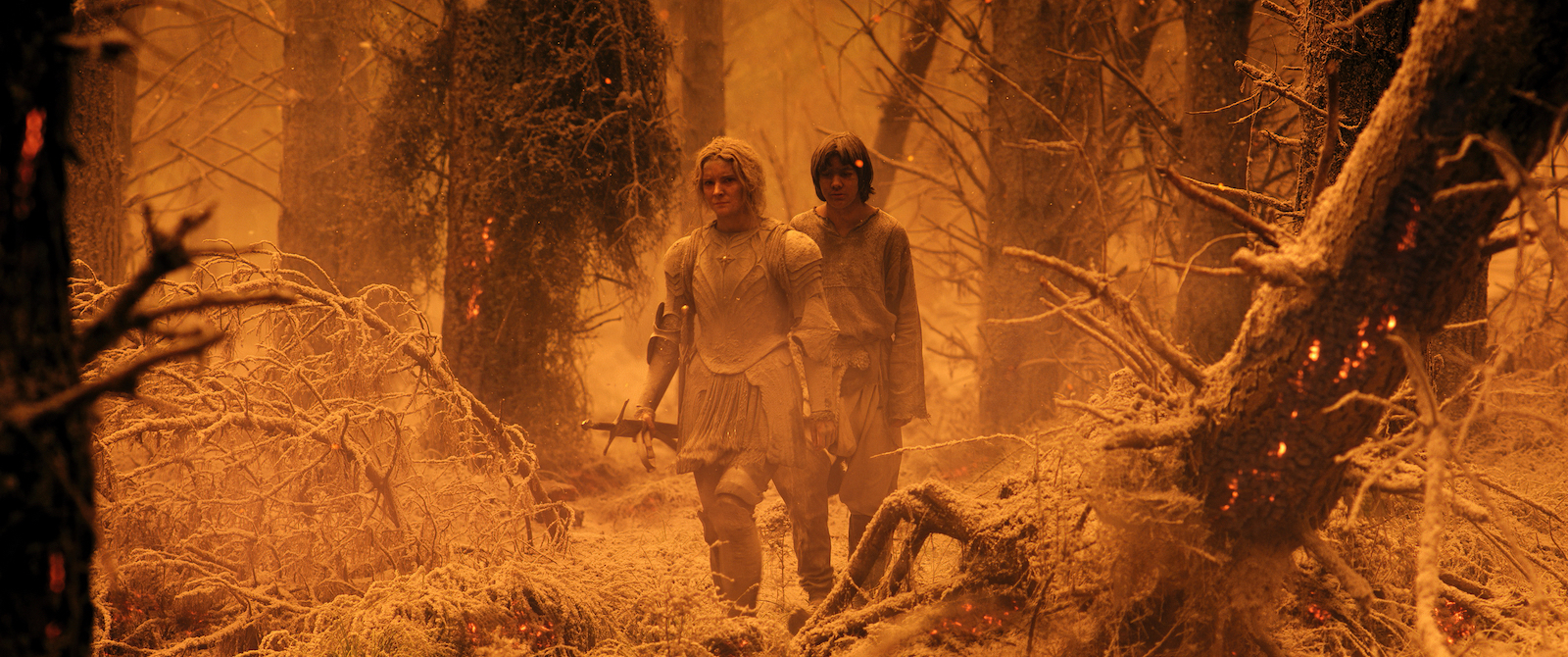
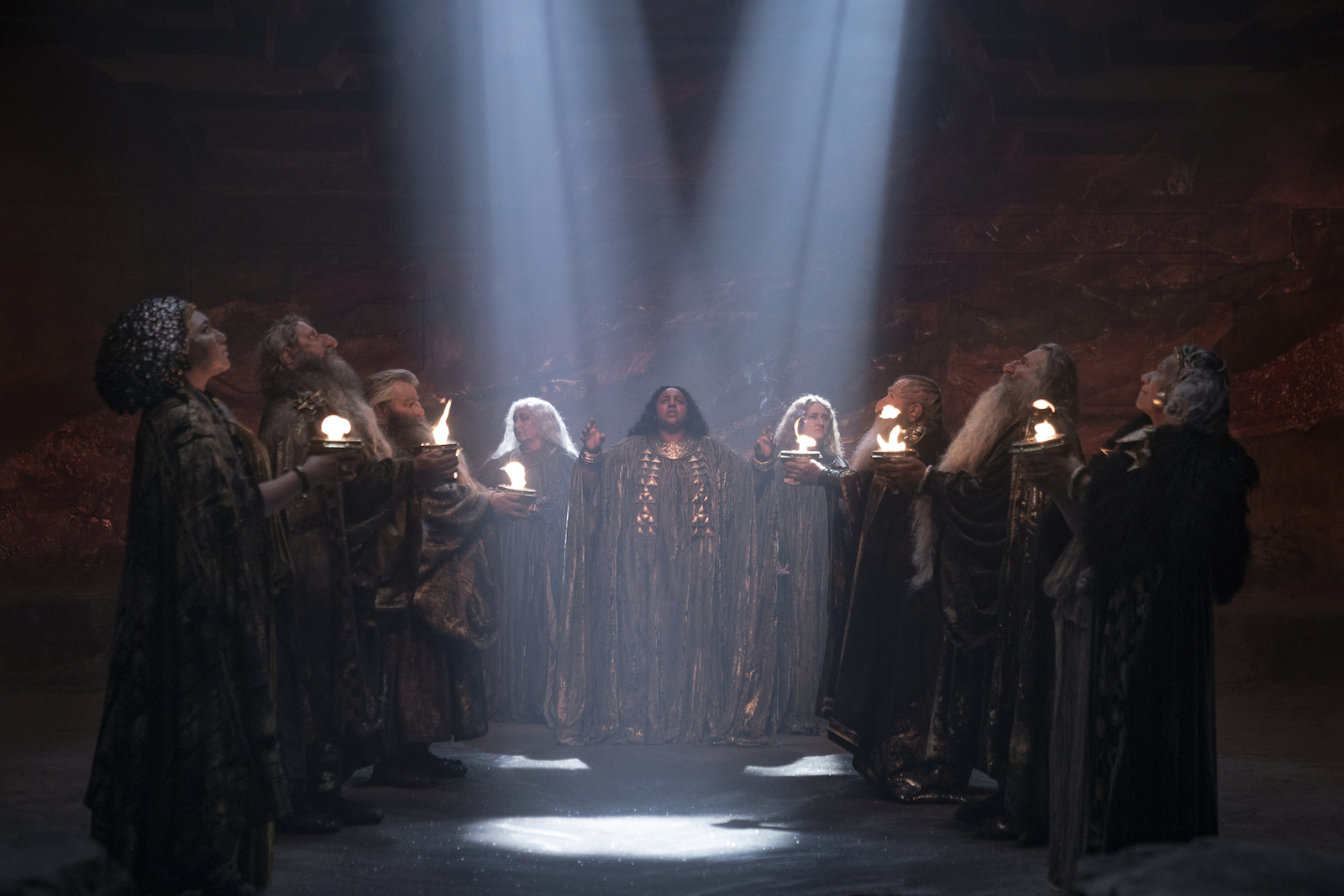
The recent streaming in 2022 of the extravagantly expensive prequel series The Rings of Power has stirred controversies of an altogether different variety insofar as many Tolkien die-hards and purists protested the acting of actors of colour as hobbits, dwarves and, heavens for it, elves! A most peculiar paradox, you might think, given those aforementioned condemnations of JRR’s ostensible racism. It just goes to show that you can please some of the people some of the time, but you can’t please all of the people all of the time. But more on Amazon’s epic later with an excellent article from the New York Review of Books.

Arwen Evenstar

In an opinion piece in the Unheard e-zine, republished below, British historian and author Dominic Sandbrook asks whether Tolkien’s works are indeed trivial. “Surely not”, he retorts. “Even if you can’t stand them, only a fool would deny that The Lord of the Rings occupies an extraordinary place in the modern imagination … he wasn’t just a man of his time; he remains a guide for our own … And his themes might have deliberately been chosen to appeal to modern readers, anxious about the consequences of science, the environmental costs of industry, the dangers of war and the fate of the individual in the face of the vast forces reshaping Western societies in the early 21st century.

I am reminded of a piece I read recently by writer, artist and Druid Cerri Lee:

” I suddenly realized it is a profound and overwhelming sense of loss for their world and mine that I feel as the Elves sail away from the Grey Havens.  When the Elves leave they take with them the enchantment from the land, something dies in it and I am left on the shores of Middle Earth amidst a fading beauty, as they sail on into the distance. The realization that now humans will have no restraints in their actions and will push forward the rise of mechanism, commerce on a global scale, and a discarding of anything that even looks like ‘fluffy’ thinking. My Middle Earth will never be the same again and I am constantly mourning its passing through this story. It leads me to wonder if some part of that feeling is what drove Tolkien to write his story”.

To put it simply, then, Tolkien matters. How many writers can you say that about, these days?”

Tolkien and me

The Road goes ever on and on
Down from the door where it began.
Now far ahead the Road has gone,
And I must follow, if I can,
Pursuing it with eager feet,
Until it joins some larger way
Where many paths and errands meet.
And whither then? I cannot say.
Walking Song, JRR Tolkien

My own life has intersected with JRR Tolkien on many serendipitous levels.

I first encountered The Lord of the Rings in my late teens when curiosity, imagination, and various substances bought me admission to his fantasy world, along with that of his fellow Inkling CS Lewis, creator of The Chronicles of NarniaI read all three books in the trilogy over a weekend in the autumn of 1968, and when I’d finished, I felt bereft and out of sorts. I reread it soon after, and again, and again – but didn’t we all in the days when Tolkien was king, and elves and ents walked among us. I set many of the songs to music – now long forgotten – and an apposite quotation was always on hand. I recall reciting the opening lines of The Song of Durin, which prefaces this piece, as I was walking home from a concert under a full moon on the eve of the landing of Apollo 11 upon the moon in July 1969. And many times as I headed eastwards on what we now call the hippie trail, I would recall Bilbo Baggin’s Walking Song.

In subsequent years as I evolved from naïf to cynical, and thence to other passions, the rereads slowed and then stopped, although I read and enjoyed The Silmarillion, and still treasure the opening chapter describing in a manner reminiscent of the St. James Bible of how the world was created by music. I began to pick holes in The Lord of the Rings’ story linewith its derivative ‘hero’s quest’, a monomyth popularised by Joseph Campbell in his celebrated book The Hero with a Thousand Faces; what I now viewed as stereotypical characters; the outdated and anachronistic perspectives of earlier generations; and what I perceived as old-school English prejudices. But, as Sandbrook points out, Tolkien was of his times, and those times were not kind to diversity and dissent.

And yet, The Lord of the Rings is ever present in my cultural and literary consciousness, and is often referred to and quoted. Here us one of my favourites:

It is not our part to master all the tides of the world, but to do what is in us for the succour of those years wherein we are set, uprooting the evil in the fields that we know, so that those who live after may have clean earth to till. What weather they shall have is not ours to rule.” The Return of the King

I have never lost my love for the poetry and the songs that complement the narrative  – the archaic syntax, rhyme, rhythm and balladry that I’ve incorporated into my own writing. There was a wonderful lyricism and, indeed, musicality to them that I still love. It’s as if they are just waiting for a tune to accompany them. Compare Tolkien’s Song of Ëarendil with own

– the style, that is, not the subject matter:

JRR:

In panoply of ancient kings,
in chainéd rings he armoured him;
his shining shield was scored with runes
to ward all wounds and harm from him;
his bow was made of dragon-horn,
his arrows shorn of ebony;
of silver was his habergeon,
his scabbard of chalcedony;
his sword of steel was valiant,
of adamant his helmet tall,
an eagle-plume upon his crest,
upon his breast an emerald.

Me:

With massive head,
And shoulders broad,
As lean and mean as Rambeau
(That’s Sly, and not that fey French bard
This bruiser was no bimbeau!).
His hide as dark as ebony,
As tough as old mahogany,
His horns shone like chalcedony,
This massif of solidity
Was built like a Pajero.

Years passed without a revisitation, but working for a publishing company that ‘owned’ the rights to his work, I collected the latest editions and often gave them away to young people who had yet to enter the magical world of Middle Earth. For all my later cynicism, I still regarded it as a book all young people ought to read. I read the whole thing once more prior to the release of Peter Jackson’s epic trilogy. The films were excellent, although I found the hobbits increasingly irritating, wishing that they’d all jump into the fires of Mount Doom, and the ents were a disappointment, a mob of corny and badly conceived muppets (they were indeed conceived by Jim Henson, the ‘father’ of Kermit and Miss Piggy). I am looking forward to the upcoming, uber-expensive television series – but I don’t reckon I’ll reread in preparation this time around. As for Jackson’s three part Hobbit extravaganza, in my opinion, it was a travesty.

Learning more about the author, I was to discover that he’d grown up in Birmingham, my hometown, first in leafy Edgbaston (the home of Cadbury and the Warwickshire County Cricket Club), where he’d attended the prestigious King Edward’s Grammar School – my own school, Moseley Grammar, was not in its league. He lived near Sarehole Mill, in present day Hall Green, around the turn of century, between the ages four and eight, and would have seen it from his house. The locale at that time was rural Worcestershire farmland and countryside and not in the Birmingham ‘burbs. He has said that he used the mill as a location in The Lord of the Rings for the Mill at Hobbiton: “It was a kind of lost paradise … There was an old mill that really did grind corn with two millers, a great big pond with swans on it, a sandpit, a wonderful dell with flowers, a few old-fashioned village houses and, further away, a stream with another mill … “

Sarehole Mill was just down the road from my school, and our sports field and cross-country tracks were adjacent to it. On many a wintry, cold, wet and windy Wednesday afternoon, I’d stagger past it on a muddy track. How I hated wet Wednesdays; dry ones were for rugby, and I hated them too!

Tolkien died aged 81 on September 2nd, 1973, in Bournemouth, Dorset, a town that I’ve visited infrequently. But I was actually in Bournemouth on that day to meet an old friend. Perchance his spirit swept passed me. On 2nd September 2017, the Oxford Oratory, Tolkien’s Roman Catholic parish church during his time in Oxford, offered its first Mass to advocate for his beatification, the first station on the road to canonisation, as an evangelist for nature, beauty and love.  A prayer was written for his cause:

“O Blessed Trinity, we thank You for having graced the Church with John Ronald Reuel Tolkien and for allowing the poetry of Your Creation, the mystery of the Passion of Your Son, and the symphony of the Holy Spirit, to shine through him and his sub-creative imagination. Trusting fully in Your infinite mercy and in the maternal intercession of Mary, he has given us a living image of Jesus the Wisdom of God Incarnate and has shown us that holiness is the necessary measure of ordinary Christian life and is the way of achieving eternal communion with You. Grant us, by his intercession, and according to Your will, the graces we implore [….], hoping that he will soon be numbered among Your saints. Amen.”

Just imagine, Saint John Ronald Reuel of Middle Earth!

© Paul Hemphill 2022.  All rights reserved

Read also in In That Howling Infinite, Tolkien’s Tarkeeth – in the darkest depths of Mordor and Better Read than Dead – books and reading

Gandalf the White

This is Tolkien’s World

The Lord of the Rings is more than nostalgic medievalism

Dominic Sandbrook, Unheard December 10th 2021

It’s exactly 20 years since I stood in line to see a film I had dreamed about since I was a little boy. Ever since I had first turned the pages of J. R. R. Tolkien’s The Lord of the Rings, I had wondered what it would be like to see it on the big screen: the hobbits, the battles, the sweeping landscapes, the blood and thunder. When I read that the director Peter Jackson was filming a trilogy of Tolkien’s masterpiece in New Zealand, I felt almost sick with anxiety. Would it be terrible? Would they sound like the All Blacks? What were they going to do about Tom Bombadil?

I need not have worried, of course. From the moment the lights dimmed in the Odeon, Leicester Square on 10 December 2001, the Lord of the Rings films were a phenomenal success. And although poor Tom B. never made it onto the screen, Jackson’s trilogy carried all before it, grossing a staggering $3 billion and winning a record-equalling 11 Oscars for the final instalment alone.

Two decades on, the films stand up remarkably well. As for the wider Tolkien industry, the bestselling books just keep on coming: The Fall of Arthur in 2013, Beren and Luthien in 2017, The Fall of Gondolin in 2018. And next autumn sees the release of Amazon’s Lord of the Rings prequel series – at a cool $1 billion over five seasons, the most expensive television project in history. Not bad for a writer who’s been dead since 1973.

To some people, all this could hardly be more infuriating. For as we all know, Tolkien is still associated in the public mind with a sweaty, furtive gang of misfits and weirdos — by which I mean those critics who, for more than half a century, have been sneering at his books and their readers.

As far back as the mid-Fifties, the American modernist Edmund Wilson published a comically wrong-headed review dismissing Tolkien’s work as “juvenile trash”, marked by — of all things! — an “impotence of imagination”. Decades later, Philip Pullman, never happier than when sneering at his Oxford forebears, called Tolkien’s efforts “trivial”, and “not worth arguing with”. And whenever some new survey crowns The Lord of the Rings as the public’s favourite novel, the reaction is always the same.

“Another black day for British culture” was Howard Jacobson’s verdict after a Waterstones poll put Tolkien’s work well clear at the top. “Ever since I arrived at Cambridge as a student in 1964,” agreed Germaine Greer, “it has been my nightmare that Tolkien would turn out to be the most influential writer of the 20th century. The bad dream has been realised.” Yet by her own admission, she had never even read him.

So are Tolkien’s works “trivial”, as Pullman claims? Surely not. Even if you can’t stand them, only a fool would deny that The Lord of the Rings occupies an extraordinary place in the modern imagination. Indeed, in his trenchant defence of Tolkien’s reputation, the literary scholar Tom Shippey suggests that much of the criticism is rooted in pure social and intellectual condescension, not unlike the rank snobbery that Virginia Woolf directed at Tolkien’s fellow Midlander Arnold Bennett. Shippey even argues that in the future, literary historians will rank The Lord of the Rings alongside post-war classics such as Nineteen Eighty-FourLord of the Flies and Slaughterhouse-Five. Who’s to say he’s wrong?

One reason highbrow people dislike The Lord of the Rings is that it is so backward-looking. But it could never have been otherwise. For good personal reasons, Tolkien was a fundamentally backward-looking person. He was born to English parents in the Orange Free State in 1892, but was taken back to the village of Sarehole, north Worcestershire, by his mother when he was three. His father was meant to join them later, but was killed by rheumatic fever before he boarded ship.

For a time, the fatherless Tolkien enjoyed a happy childhood, devouring children’s classics and exploring the local countryside. But in 1904 his mother died of diabetes, leaving the 12-year-old an orphan. Now he and his brother went to live with an aunt in Edgbaston, near what is now Birmingham’s Five Ways roundabout. In effect, he had moved from the city’s rural fringes to its industrial heart: when he looked out of the window, he saw not trees and hills, but “almost unbroken rooftops with the factory chimneys beyond”. No wonder that from the moment he put pen to paper, his fiction was dominated by a heartfelt nostalgia.

Nostalgia was in the air anyway in the 1890s and 1900s, part of a wider reaction against industrial, urban, capitalist modernity. As a boy, Tolkien was addicted to the imperial adventure stories of H. Rider Haggard, and it’s easy to see The Lord of the Rings as a belated Boy’s Own adventure. An even bigger influence, though, was that Victorian one-man industry, William Morris, inspiration for generations of wallpaper salesmen. Tolkien first read him at King Edward’s, the Birmingham boys’ school that had previously educated Morris’s friend Edward Burne-Jones. And what Tolkien and his friends adored in Morris was the same thing you see in Burne-Jones’s paintings: a fantasy of a lost medieval paradise, a world of chivalry and romance that threw the harsh realities of industrial Britain into stark relief.

It was through Morris that Tolkien first encountered the Icelandic sagas, which the Victorian textile-fancier had adapted into an epic poem in 1876. And while other boys grew out of their obsession with the legends of the North, Tolkien’s fascination only deepened. After going up to Oxford in 1911, he began writing his own version of the Finnish national epic, the Kalevala. When his college, Exeter, awarded him a prize, he spent the money on a pile of Morris books, such as the proto-fantasy novel The House of the Wolfings and his translation of the Icelandic Volsunga Saga. And for the rest of his life, Tolkien wrote in a style heavily influenced by Morris, deliberately imitating the vocabulary and rhythms of the medieval epic.

But there’s more to Tolkien than nostalgic medievalism. The Lord of the Rings is a war book, stamped with an experience of suffering that his modern-day critics can scarcely imagine. In his splendid book Tolkien and the Great War, John Garth opens with a rugby match between the Old Edwardians and the school’s first fifteen, played in December 1913. Tolkien captained the old boys’ team that day. Within five years, four of his teammates had been killed and four more badly wounded. The sense of loss haunted him for the rest of his life. “To be caught in youth by 1914 was no less hideous an experience than to be involved in 1939 and the following years,” he wrote in the second edition of The Lord of the Rings. “By 1918, all but one of my close friends were dead.”

Tolkien arrived on the Western Front in June 1916 as a signals officer in the 11th Lancashire Fusiliers, and experienced the agony of the Somme at first hand. In just three and a half months, his battalion lost 600 men. Yet it was now, amid the horror of the trenches, that he began work on his great cycle of Middle-earth stories. As he later told his son Christopher, his first stories were written “in grimy canteens, at lectures in cold fogs, in huts full of blasphemy and smut, or by candlelight in bell-tents, even some down in dugouts under shell fire”.

But he never saw his work as pure escapism. Quite the opposite. He had begun writing, he explained, “to express [my] feeling about good, evil, fair, foul in some way: to rationalise it, and prevent it just festering”. More than ever, he believed that myth and fantasy offered the only salvation from the corruption of industrial society. And far from shaking his faith, the slaughter on the Somme only strengthened his belief that to make sense of this broken, bleeding world, he must look back to the great legends of the North.

Yet The Lord of the Rings is not just a war book. There’s yet another layer, because it’s also very clearly an anti-modern, anti-industrial book, shaped by Tolkien’s memories of Edwardian Birmingham, with its forges, factories and chimneys. As a disciple of the Victorian medievalists, he was always bound to loathe modern industry, since opposition to the machine age came as part of the package. But his antipathy to all things mechanical was all the more intense because he identified them — understandably enough — with killing.

And although Tolkien objected when reviewers drew parallels between the events of The Lord of the Rings and the course of the Second World War, he often did the same himself. Again and again he told his son Christopher that by embracing industrialised warfare, the Allies had chosen the path of evil. “We are attempting to conquer Sauron with the Ring,” he wrote in May 1944. “But the penalty is, as you will know, to breed new Saurons, and slowly turn Men and Elves into Orcs.” Even as the end of the war approached, Tolkien’s mood remained bleak. This, he wrote sadly, had been, “the first War of the Machines … leaving, alas, everyone the poorer, many bereaved or maimed and millions dead, and only one thing triumphant: the Machines”.

Dominic Sandbrookis an author, historian and UnHerd columnist. His latest book is: Who Dares Wins: Britain, 1979-1982

Austin Gilkeson, New York Review of Books, January 24, 2023

Galadriel (Morfydd Clark) and Elendil (Lloyd Owen) in the archive of the Hall of Law in Númenor,  The Lord of the Rings: The Rings of Power, 2022

One September day in 1914, a young J.R.R. Tolkien, in his final undergraduate year at Oxford, came across an Old English advent poem called “Christ A.” Part of it reads, “Éalá Éarendel engla beorhtast/ofer middangeard monnum sended,” which he later rendered: “Hail Éarendel, brightest of angels/above the middle-earth sent unto men!” Safe in his aunt’s house in Nottinghamshire while battles raged on the continent, Tolkien took inspiration from this ode to the morning and evening star and wrote his own poem in modern English, “Éarendel the Mariner.” That poem was not published in his lifetime, but after it came the stories that would become The Silmarillion, The Hobbit, and The Lord of the Rings, which in turn inspired, to varying degrees, Earthsea, Star Wars, Dungeons & Dragons, Harry Potter, The Wheel of Time, The Witcher, Game of Thrones, and so on, an apostolic succession of fantasy.

The latest in the line is The Lord of the Rings: The Rings of Power. Amazon Studios does not have the rights to The Silmarillion, the posthumous collection of Tolkien’s mythology that serves as a sort of bible for Middle-earth, nor is it adapting The Lord of the Rings, Tolkien’s 1954 novel about the hobbit Frodo’s quest to save Middle-earth by destroying the One Ring, which holds the power of the Dark Lord Sauron. Peter Jackson’s film trilogy still looms too large. Instead, the showrunners, J.D. Payne and Patrick McKay, have crafted a prequel, set thousands of years before the events of the three-volume novel and drawn from bits of lore in its prologue, “Concerning Hobbits,” and extensive appendices on Middle-earth history and culture. It’s an undertaking not dissimilar from Tolkien’s own reworking of “Christ A,” spinning out a narrative from a few textual scraps—the kind of academic exercise an Oxford professor of Old English could appreciate.

It’s a pity the show doesn’t extend the same scholarly pleasures to its viewers. Its narrative conceits are those of big-budget TV: the so-called mystery boxes popularized by shows like Lost. What is the sigil that the elf warrior Galadriel (Morfydd Clark) finds carved in her dead brother’s flesh? Who is the stranger (Daniel Weyman) who falls from the sky and ends up living among a nomadic clan of proto-hobbits? Which character is really Sauron? Will the mortal Bronwyn (Nazanin Boniadi) and the elf Arondir (Ismael Cruz Córdova) kiss? The show hurries along toward the inevitable revelations: the sigil turns out to be a map of Sauron’s realm of Mordor; the magical stranger is almost certainly the wizard Gandalf; Sauron himself is the roguish drifter Halbrand (Charlie Vickers), who has a Forrest Gump–like ability to accidentally be in the right place at the right time. Beyond a few delightful glimpses of ancient hobbit culture, there is little sense of a deep past that can be excavated through careful reading.

This is partly a problem of translation. Contemporary television drives its narratives with its characters, by their arcs and inner conflicts. Tolkien’s characters remain largely static; it’s the world around them that changes. The concerns of the novel are civilizational rather than individual. What Aragorn thinks or wants in his personal life matters far less than the fact that he is descended from kings of Arnor, and before it Númenor and Beleriand. His fitness for the throne of Gondor is never in doubt, neither to himself nor to the reader. He’s simply the last pebble in a royal landslide that has been slowly rolling over Middle-earth for millennia.

The reader encounters this history in ruins and snippets of legendary songs. Galadriel speaks of her wanderings before the fall of the kingdoms of Nargothrond and Gondolin. Treebeard, an ancient tree-like creature, reminisces about long-lost forests and departed Entwives. Merry, whose hobbit-memory is not as long, wonders at the strange, weather-worn statues that line the path to Dunharrow in Rohan. Even the earthy Samwise sings about the death of the elf-king Gil-galad (played by Benjamin Walker in The Rings of Power). The songs, in particular, may seem like digressions or page-fillers, especially those sung in fictional languages, but they also provide a sense of Middle-earth’s cultures and history, stretching back into “the deeps of time.” The effect is like Tolkien’s description of the mines of Moria, where, “in the pale ray” of Gandalf’s illuminated staff, Frodo sees “glimpses of stairs and arches, and of other passages and tunnels, sloping up, or running steeply down, or opening blankly dark on either side. It was bewildering beyond hope of remembering.”

Nori Brandyfoot (Markella Kavenagh) in The Lord of the Rings: The Rings of Power, 2022

The novel evokes a wanderlust to go back and take those untrodden paths, but since its world exists only on paper all further discovery must be textual. In other words, it requires research. Payne and McKay understand the academic aspect of Tolkien’s work. Twice during the season, Galadriel goes to archives (one in the mortal kingdom of Númenor, another in the Elven Eregion) in search of the truth about Sauron. But there will be no flipping through card catalogs or paging through dusty tomes for our heroine—she has orcs to eviscerate. Galadriel has librarians pull the scrolls for her. Like the show itself, she’s afraid to sit still.

Tolkien’s books feature plenty of battles, but they also reflect the joys and pains of academic work. The Lord of the Rings is a novel “in which the scholarly rituals [are] observed; in which you flipped from index to text to appendix, cross-referring to maps,” as Jenny Turner wrote in 2001 in the London Review of Books. The book becomes, in her words, “a machine for the evocation of scholarly frisson. The thrills are the thrills of knowledge hidden, knowledge uncovered, knowledge that slips away.” Tolkien’s wizards are scholars first and sorcerers second. They each have areas of expertise and are renowned for their wisdom. And unlike Amazon’s Galadriel, they do their own research. Gandalf seeks out the history of the One Ring in the “hoards” of Gondor’s archives (a scene Jackson wisely kept in The Fellowship of the Ring, having Ian McKellen smoking a pipe and shuffling through piles of musty pages), while the arrogant Saruman turns traitor to the forces of good after delving too deep into the archives in an attempt to learn “the arts of the Enemy.” Tolkien’s greatest paean to academic pleasure is in the sprawling elf haven Rivendell, run by the “lore-master” Elrond and hidden in an alpine valley, which in The Silmarillion is described as “a refuge for the weary and the oppressed, and a treasury of good counsel and wise lore.” In Tolkien, refuge and research are bound together.

Tolkien’s brief respite at his aunt’s house, where he wrote “Éarendel the Mariner,” could not last. He belonged to what Angela Carter later described as “that generation for whom history [had] already prepared a special, exemplary fate in the trenches of France,” and soon he was on his way to the front. He fought at the Somme, a battle in which nearly 20,000 British soldiers, including one of his closest friends, were killed on the first day. He got lucky: he soon contracted trench fever in the lice-infested dugouts and was sent home to recuperate.

The Somme haunts Middle-earth, which is pocked with broken and drowned lands. “This is Mordor,” Frodo remarks on the ruins of his beloved home Bag-End when he returns to a scarred, occupied Shire at the end of The Lord of the Rings. After the war, Tolkien transformed Éarendel the Mariner from a celestial sailor into a warden on eternal watch, sailing over the Walls of Night to guard against the return of Morgoth, the Great Enemy, from out of the Void. The Rings of Power alludes to these wartime experiences. Early in the first episode, Galadriel wanders a devastated battlefield reminiscent of the Western Front. “We learned many words for death,” she says, and the show takes pains to demonstrate some of them in detail: stabbings, hackings, slashings, burnings, and decapitations. This is the visual language of contemporary prestige fantasy shows like Game of Thrones. Galadriel dispatches a snow-troll with John Wick–like elan—a far cry from the more measured violence of the novel, in which the soldier Faramir tells Frodo, after a battle against Sauron’s forces in his homeland of Gondor, “I do not love the bright sword for its sharpness, nor the arrow for its swiftness, nor the warrior for his glory. I love only that which they defend.”

Galadriel and Theo (Tyroe Muhafidin) in The Lord of the Rings: The Rings of Power, 2022

After the war Tolkien returned to academic work, first at the Oxford English Dictionary as a researcher and then as a professor at Leeds and Oxford. Besides enthralling some students, like W.H. Auden, and boring others, like Kingsley Amis, with his lectures on Old English, he translated Sir Gawain and the Green Knight and other Middle English texts. His greatest contribution to scholarship remains his 1936 lecture “Beowulf: The Monsters and the Critics,” which recast the Old English saga as a work of art rather than a historical document that served only as “a quarry of fact and fancy.”

To ennoble history and legend was also part of Tolkien’s fictional project: his books are stuffed with allusions to Old English texts. Bilbo’s burglary of Smaug’s hoard in The Hobbit mirrors a scene in Beowulf. Aragorn quotes a poem from Rohan that echoes the elegy “The Wanderer.” Elrond’s father is none other than Eärendil the Mariner. They also provide their own store of fictional lore. You can stop reading The Lord of the Rings when Samwise says, “Well, I’m back” by his hearth, or you can keep going, depending on how much you want to know about various elvish scripts and runes, or the differences between the calendars used in the Shire and the ones used in Númenor, or the fact that Merry Brandybuck’s actual name, in one of Tolkien’s invented languages, is “Kalimac Brandagamba.” “By the time the reader has finished the trilogy, including the appendices,” Auden wrote, “he knows as much about Tolkien’s Middle-earth, its landscape, its fauna and flora, its peoples, their languages, their history, their cultural habits, as, outside his special field, he knows about the actual world.”

This lore is essential to the structure and ultimate pleasure of the novel. Tolkien’s great theme is loss, the “inevitable overthrow in Time,” as he put it in his Beowulf lecture, fated for all cultures and civilizations. The reader can hardly be expected to feel that loss without some sense of its width and depth. Even the most casual reader can feel, as Frodo does in Galadriel’s forest of Lothlórien, that she has “stepped over a bridge of time…and was now walking in a world that was no more.”

*

The appendices are only the first step out the door. In the years after Tolkien’s death, in 1973, his son Christopher compiled, edited, and published a huge quantity of his father’s writing, starting with The Silmarillion in 1977 and later the twelve-volume History of Middle-earth. These books are labors of love. Much of what Tolkien left behind was disorganized and incongruent. He frequently switched characters’ names, rewrote and then left unfinished parts of stories and poems that contradicted what he’d written before, and changed his mind about such fundamental concepts as the origin of orcs, the nature of the sun and moon, and even the shape of the earth. Out of the drafts and notes, Christopher could have created any number of Silmarillions.

Tolkien’s original aim in his fiction was to craft a “a body of more or less connected legend…which I could dedicate simply to: to England; to my country,” which he felt lacked one beyond, as he wrote in a 1951 letter, “impoverished chap-book stuff.” This mythology would not be a political project like Virgil’s Aeneid, which tied Rome’s foundation to ancient Greek civilization, but an artistic attempt to capture “the tone and quality I desired, somewhat cool and clear…redolent of our ‘air.’” It was a particular and old air. The Englands of Dickens, Austen, Fielding, Milton, or even Chaucer are nowhere to be found. Instead, Tolkien’s is the England of the anonymous poets who wrote Beowulf and Pearl, largely bygone even by the time the English language settled into a familiar form, swamped by the Norman Conquests, great vowel shifts, gunpowder, and paper. There was no returning to that England, Tolkien knew, just as his characters could never return to the drowned lands of Beleriand and Númenor. “As the poet looks back into the past,” he wrote of Beowulf, “surveying the history of kings and warriors in the old traditions, he sees that all glory (or as we might say ‘culture’ and ‘civilization’) ends in night.” His project was to delay that night while he could—to preserve, not restore, what he felt was that older country’s “elusive beauty.”

Princess Disa (Sophia Nomvete) singing a funerary song in TThe Rings of Power

In the course of a few decades Tolkien achieved, quite by accident, what the Old English scribes, singers, and poets had taken centuries to create: a large, confused, and contradictory body of myths and legends. The mythology is unstable, snapping into whatever form one happens to be reading. Far from being frustrating, this has allowed for nearly endless exploration and debate: academic Tolkien journals, conferences, and societies—not to mention fan fiction, up to and including The Rings of Power—have sprouted around the world.

Amazon wants its own mythology, but for the same reason that Disney purchased Marvel and revived Star Wars and HBO spun off Game of Thronesinto House of the Dragon: there’s money to be made. However good their intentions, the showrunners’ ultimate task is to mine Tolkien’s works in order to create and expand the franchise. Tolkien’s “machine for the evocation of scholarly frisson” has been turned into an assembly line. The goal is to keep the machine running for as long as it is profitable, with no natural end in sight.

The Rings of Power does add its own bit of lore. In the fifth episode, Elrond (Robert Aramayo) recounts the legend of “The Roots of Hithaeglir,” according to which a lightning-struck tree creates the ore mithril, a powerful metal used in weapons and armor like the mail-shirt Frodo wears. Elrond calls the story “apocryphal,” a nod to the fact that it was invented whole-cloth for the show. It’s one of the writers’ attempts to tie various parts of Tolkien’s unwieldy legendarium together, in the same way that the show has Galadriel share a sea-tossed raft with Sauron and witness the creation of Mordor. Mithril, it is explained, is suffused with the light of a Silmaril, a holy jewel that can prevent the downfall of the Elves, who are otherwise due to suddenly “fade” in a matter of months (the show never tells us why or how).

This is an imperative of the contemporary franchise: everything must be connected somehow in an endless feedback loop (or ring). This is usually achieved through “fan service,” knowing winks and nods to characters and events the audience already knows, but an overreliance on such references seals the worlds off, and the air in them soon turns stale. There is no room for the organic happenstance of real life, for the inexplicable and strange, like Tolkien’s immortal weirdos Tom Bombadil and Goldberry, who were jettisoned from Jackson’s adaptation.

The show’s conceit about mithril also misunderstands the elegiac character of Tolkien’s novel. In the final episode, the elves create three rings—“Three Rings for the Elven kings under the sky,” in Tolkien’s lore—from mithril to stop the cataclysmic fading of their race (a fate clumsily literalized by diseased leaves falling from a magic tree). The Rings provide a convenient cure to the season’s contrived crisis, whereas in the book they were created, in Elrond’s words, for “understanding, making, and healing, to preserve all things unstained.” The tragedy is that the destruction of the One Ring, the only act that can save Middle-earth, will also mean the destruction of the Three, and “many fair things will fade and be forgotten.” The elves, like their creator did, understand that dwindling is inevitable. They just want to slow it and enjoy their works while they can, before they become, as Frodo thinks of Galadriel, “present and yet remote, a living vision of that which has already been left far behind by the flowing streams of Time.”

The Bonfire of the Insanities 2- the EU’s Biomass Dilemma

The Biomass Greenwash revisited

I believe in Santa, fairies, leprechauns and unicorns; I believe that politicians don’t lie, that the Pope is infallible, and that capitalism provides the greatest happiness for the greatest number

But I don’t buy the biofuel greenwash!

As Abe Lincoln, said, you can fool some of the people some of the time, and most of the people most of the time. And yet, never underestimate the capacity and willingness of some people to swallow bullshit for decades. Probably became they NEED to believe that something is being done about climate change and carbon emissions, and the boosters of biomass promise clean, green, renewable, carbon-neutral and sustainable power. As some wits might ask, what’s the point of having a big brain if we insist on not using it?

In an earlier article, The Bonfire of the Insanities – the Biomass Greenwash, we described how the European Union’s desperation to reduce carbon emissions and dependence on fossil fuels kicked off a demand for wood pellets for burning to generate electricity that in turn created an industry. Promising clean, green, renewable, carbon-neutral and sustainable power, it came for what it called forest waste, and then it came for the forest itself.

We revealed how a deliberate accounting error determined biomass burning to be carbon neutral, whilst a mechanism to prevent counting carbon twice became a rule that carbon wasn’t counted at all. Indeed, it was declared that the burning of biomass was “instant carbon sequestration” whilst emissions exuding from the new-age power stations were actually “biogenic carbon” – green power!

Since the widespread distribution of North Carolina’s Dogwood Alliance’s hard hitting film  BURNED: Are Trees the New Coal?the true scale of the biofuel greenwash is being given the publicity it needs. The true colours of rebadged, born-again power plants like Drax near Selby, Yorkshire, the world’s biggest and hungriest, and our own Redbank in the Hunter Valley (more on that later), are now there for all the world to see. And they are not green.

A backlash against this greenwash is growing apace in Europe and the USA. But not in Australia, it would appear. Government and industry are enchanted by the lure of biomass with its carbon credit rewards and the prospect of creating a dependent, profitable domestic supply chain.

“We, the people” have yet to cotton on to the biofuel industry’s corporate jiggerypokery and semantic sleight of hand. In Australia and elsewhere, the general public, forest industry nostalgists, conservative politicians, and, even, many environmentalists believe that we are saving forests from destruction by using plantations for jobs and construction timber, when in fact the former are few, supplanted by hi-tech mechanization, and latter is destined for pulp mills and power plants.

While we in northern New South Wales might be alarmed about re-tooled plants like Drax and those in Ireland’s Midlands, something wicked this way comes. There is little community awareness of what is looming, and state and federal politicians chose to keep quiet about it.

Our State government has started implementing its plan for 70-80% of renewable electricity in our region to be generated by burning trees. As we’ve seen in our own Tarkeeth State Forest, biomass extraction is a shockingly destructive practice, and it is one which is destroying environments and communities all over the world.

Biomass extraction in Tarkeeth Forest, Bellingen Shire

In this grave new world, whole log “residues” can be chipped and transported to power stations or transported and then chipped in the power station, as at Vales Point on NSW’s Central Coast and Cape Byron in the north. Native forest biomass burnt with or without coal or something else, props up emission intensive enterprises with its “carbon neutral, renewable energy, subsidy attracting” hypnotism. Or else, the forest biomass is exported, as pellets, woodchip or whole trees.

It is a new industry for our own Bellingen Shire which is now supplying biomass to Cape Byron Power’s co-generation plant at Broadwater south of Byron Bay, the north coast tourist mecca and real estate hot zone.

The plan for our region is for 70-80% of renewable energy to be generated from forest biomass. By the middle of the year the former coal-fired Redbank Power Station at Singleton in the Hunter Valley, will be rebooted and burning 100% biomass, most of it to be sourced from forests up the 400km away. Redbank will be one of the largest wood burning electricity generators in the world. At 151 megawats, it five times bigger than either Broadwater or Condong,

Paul Hemphill © 2021

See also in In That Howling Infinite, The Bonfire of the Insanities – the biofuel greenwash; The Return of the Forest Wars and If You Go Down to the Woods Today 

In a brief statement and a powerful interview on Bellingen Community Radio 2BBB, Bellingen academic Dr Tim Cadman makes the global  and local case against  burning trees for electricity. and here, you can watch his short FaceBook video about the Tarkeeth biomass and Broadwater power station here: ttps://fb.watch/v/3Is1JLwio/.  Follow the truck from forest to furnace

Tim Cadman: the truth about Biomass ‘Green Power’

My name is Tim Cadman, I am a Research Fellow in the Law Futures Centre at Griffith University,  specializing in environmental policy, governance, sustainability, natural resource management including  forestry, and climate change. I am a ‘pracademic’ and spend a lot of my time working in developing countries in practical on-the-ground action-based research, including Papua New Guinea and the Brazilian Amazon.

I have been following, and attending the international climate change negotiations since 2001, when I exposed how forestry companies were clearing ancient rainforest on behalf of energy companies to create plantations for ‘carbon credits.’ Sadly, over twenty years later, this same problem is still besetting meaningful action on climate change.

I want to address so-called bio-energy, or biomass energy, and how it has become central to the destruction of forests in developed countries such as the US, UK, Australia and Europe, all in the name of ‘green’ power.

In the early days of the international climate negotiations an unintentional ‘loophole’ was created in discussions around what was termed ‘land use, land-use change and forestry’ (LULUCF). In the debate around how to count emissions from land use for agriculture, policymakers made a decision that all crops were the same, and as they were planted, harvested, and grew back, these emissions did not need to be counted. This included forestry, and this decision made its way into the Kyoto Protocol, and carbon ‘offsets’.

It doesn’t make sense for forests, which are not crops, are full of biodiversity, regulate climate, filter water, and provide a range of what are called ecosystem services that a field of carrots do not. This same problem, now admitted as such by many policy makers, has been repeated in the new Paris Agreement.

The consequence is that forests have now become a major source of electricity in Europe, the UK, and elsewhere.

As much forest as is grown across the UK every year is now burnt in just one power station, Drax, and is imported from the forests of the South east of the US, and the inland ancient temperate rainforests of Canada.

This same problem is being repeated here. In the mid north coast of NSW, under the guise of making use of what are called forest ‘residues’, large areas of forests are being cleared and converted to hardwood plantations. As with wood-chipping for pulp and paper, which originally was designed to make use of branches, such activities become a driver of deforestation, and the processing of ‘waste’ becomes the tail that wags the dog.

To make matters worse, there are now two converted sugar mills in the region that are  burning this wood for so-called ‘green’ energy and feeding it into the national grid. In short, our renewable energy is  contaminated.

And finally, to things even more dire, burning forests for power is worse than coal. The wood is wet, it is transported often up to two hundred kilometres in huge trucks, the source forest is burnt as part of forestry management. Capturing these emissions is just not possible.

This is the danger facing the forests of NSW. Forests are worth so much more, and in this period of unprecedented climate change, we need forests standing tall, not sent up the chimney.

Dr Tim Cadman © 2021

Tim Cadman BA (Hons) MA (Cantab), PhD (Tasmania), Grad. Cert. Theol. (Charles Sturt) Senior Research Fellow, Earth Systems Governance Project. Research Fellow, Institute for Ethics, Governance and Law. Griffith University

The road to hell is paved with flawed intentions

We republish below the full text of an article that appeared in The Financial Times on 1st July. As the debate ramps up here in New South Wales, it is a timely and informative wake-up call for environmentalists and governments alike.

Like BURNED: Are Trees the New Coal?, it reveals how dirty fuel and dodgy mathematics, a generous subsidies system and stringent climate targets incentivises the use of biomass without adequate safeguards. It will require “large-scale logging  of the forests we need to store carbon”, says Almuth Ernsting, from the campaign group Biofuelwatch. And yet, current EU rules permit the use of whole trees for energy production.

Biomass fuels include pellets, organic waste and crops grown for energy. They produce around half of the world’s renewable energy, and 60 per cent of the EU’s, and are treated as carbon neutral if certain sustainability conditions are met. Across Europe and Asia, the two main markets for pellets, governments hand out billions in subsidies to the industry each year. And as the world races to decarbonise, the use of wood-based biomass is expected to increase. In a report this year about the pathway to net zero, the International Energy Agency said solid bioenergy could produce around 14 per cent of global energy in 2050, compared with just 5 per cent last year.

With a review of the bloc’s climate legislation imminent, ministers from countries including Finland, Estonia and Sweden asked for “all forms” of bioenergy currently labelled as renewable to also qualify as sustainable investments, “keeping in mind” the EU’s decarbonisation commitments. It was a none too subtle reminder that if the status of biomass is changed it may be almost impossible for the EU to meet its target for renewables to provide a third of all energy usage across the region by 2030. The politics of all this is perverse, says a former White House climate adviser.

According to a leaked commission document, Brussels plans to prevent some forms of wood-burning energy from counting towards the bloc’s green energy goals. Campaigners say the changes must go much further, by excluding forest biomass from the renewables list altogether. “We should not be subsidising people to cut down trees and burn them,” says Ariel Brunner, head of EU policy at conservation group BirdLife International. “The notion that you can save emissions by burning carbon fundamentally doesn’t work.”

Chopping down trees, shipping them around the world on carbon-intensive vessels and burning the wood for energy “doesn’t comport with the idea of clean energy”, says Sasha Stashwick, from the Natural Resources Defence Council, a US-based non-profit organisation.

Pellets can actually emit more carbon per unit of energy than fossil fuels when burnt, since wood is less dense. But the industry argues that those emissions are offset by the carbon absorbed by trees as they regrow. If the wood is being sourced from sustainably managed forests — where the volume of carbon stored in the trees is “stable or increasing” — the biomass is carbon neutral, the industry says. However, landscape assessments ignore the fact that trees would have grown more and absorbed extra carbon had they not been harvested, say some scientists and campaigners.

A reduction in the amount of carbon being absorbed “is effectively the same as a tonne more of emissions”, says Mary Booth, director of the Partnership for Policy Integrity, a climate campaign group.

The industry is keen to impress that it does not cut down trees that would otherwise remain standing. Instead, pellets are made largely from wood residues — such as offcuts from trees harvested for other purposes — that would normally go to waste or end up rotting.“The forest is never harvested for biomass,” since it is more profitable to use the wood for furniture or other products, says Jean-Marc Jossart, secretary-general of trade association Bioenergy Europe.

Non-profit environmental organisations dispute this, and point to photos of trucks piled high with tree trunks en route to pellet mills. Belinda Joyner, a resident of Garysburg, North Carolina, who has spoken out against the nearby Enviva mill, says the trucks driving through town carry “whole trees”, adding: “I’ve never seen a truck with little logs.”

Enviva says concerns about whole trees are “one of the most common misperceptions . . . An untrained or uneducated eye often mistakes low-value wood for high-value lumber.” Large logs might be diseased or deformed, and unable to be used for other purposes, the company adds.

Oh yeah!

The EU’s Biomass Dilemma – can burning trees ever be green?

Camilla Hodgson, Financial Times ,1 July 2021

In May, a billboard appeared outside the EU parliament in Brussels playing a video that showed sparse, deforested woodland, spliced together with footage of the bloc’s top climate official, and the words “the EU burns forests as fuel”.

The protest formed part of a campaign by green groups to force Frans Timmermans, executive vice-president for the EU’s green deal, to strip forest biomass — combustible pellets burnt for energy — from the list of energy sources classified in Europe as renewable. The argument goes beyond definitions. Weeks earlier, nervous about the growing pressure on policymakers to change the rules, ministers from 10 European countries wrote to Timmermans to stress the “crucial role” played by bioenergy fuels, such as pellets, in helping member states meet the EU’s climate goals.

With a review of the bloc’s climate legislation imminent, ministers from countries including Finland, Estonia and Sweden asked for “all forms” of bioenergy currently labelled as renewable to also qualify as sustainable investments, “keeping in mind” the EU’s decarbonisation commitments.

It was a none too subtle reminder that if the status of biomass is changed it may be almost impossible for the EU to meet its target for renewables to provide a third of all energy usage across the region by 2030.

The fact that biomass pellets are produced from carbon-absorbing trees makes them controversial Biomass fuels include pellets, organic waste and crops grown for energy. They produce around half of the world’s renewable energy, and 60 per cent of the EU’s, and are treated as carbon neutral if certain sustainability conditions are met. Across Europe and Asia, the two main markets for pellets, governments hand out billions in subsidies to the industry each year.

But what producers use to make pellets — carbon-absorbing trees, which governments and companies are turning to as part of the solution to runaway climate change — makes them highly controversial.

EU policymakers are now debating changes to the treatment of wood-burning energy as part of a wide-ranging package of measures to cut emissions, due to be published on July 14 — revisions that could wreak havoc with the bloc’s renewable energy target and commitment to more than halve emissions by 2030.

“Without relying heavily on wood biomass,” many member states “will find it very difficult to meet their future commitments, be it emissions reductions or renewable energy commitments,” says Jorgen Henningsen, former EU commission director responsible for climate change.

Climate Capital

Any changes could also call into question the legitimacy of EU countries having used the fuel to cut emissions up to now, and narrow the options for further decarbonising the power industry and other sectors.

“The politics of it is so perverse,” says Paul Bledsoe, a former Clinton White House climate adviser. The idea that national targets might determine the future for biomass, rather than its true environmental impact, is “absurd”.

According to a leaked commission document, Brussels plans to prevent some forms of wood-burning energy from counting towards the bloc’s green energy goals. Campaigners say the changes must go much further, by excluding forest biomass from the renewables list altogether. “We should not be subsidising people to cut down trees and burn them,” says Ariel Brunner, head of EU policy at conservation group BirdLife International. “The notion that you can save emissions by burning carbon fundamentally doesn’t work.”

A heavily subsidised sector

The multibillion-dollar market for pellets — the modern iteration of a centuries-old fuel — took off in 2009, after the EU classified biomass, at the time little used, as a renewable energy source alongside solar and wind. That incentivised countries with clean energy targets to adopt the fuel, and made the industry eligible for subsidies. In 2018 — the most recent year for which figures are available — EU countries handed out €10.3bn in support for the biomass sector.

Growth over the past decade “has been tremendous”, says Thomas Meth, executive vice-president of sales and marketing at Enviva, a major US-based pellet producer. The EU’s 2009 move was “certainly one of the catalysts”.

Energy is the world’s indispensable business and Energy Source is its newsletter. Every Tuesday and Thursday, direct to your inbox, Energy Source brings you essential news, forward-thinking analysis and insider intelligence. Sign up here.

Much of the millions of tonnes of pellets used globally is made and exported from expansive forests across the US south-east. The US, Vietnam and Canada were the largest exporters of wood pellets by volume in 2019, according to UN data.

And as the world races to decarbonise, the use of wood-based biomass is expected to increase. In a report this year about the pathway to net zero, the International Energy Agency said solid bioenergy could produce around 14 per cent of global energy in 2050, compared with just 5 per cent last year.

UK power company Drax,a major user and supplier of pellets, says the market will be driven by “increasingly ambitious global decarbonisation targets”.

The industry insists swelling demand for these small, cylindrical chips can be met sustainably, and that responsibly produced biomass is carbon neutral since the emissions generated by burning pellets are sucked up by regrowing trees.

Green groups challenge the neutrality argument, and warn that increasing production puts natural forests in jeopardy. Using more biomass will require “large-scale logging . . . of the forests we need to store carbon”, says Almuth Ernsting, from the campaign group Biofuelwatch.

Drax power station in Yorkshire. The industry insists responsibly produced biomass is carbon neutral, as emissions from burning pellets are sucked up by regrowing trees © Alamy ‘We need the right biomass’

The debate in the EU is coming to a head over possible changes to the bloc’s renewable energy framework — one of many pieces of legislation being updated to align with the region’s ambition to cut greenhouse gas emissions by 55 per cent by 2030.

“We are expecting an almighty fight,” says BirdLife’s Brunner. “There’s a very powerful bloc of European governments completely enslaved to the agricultural and forest lobby.”

A person familiar with the discussions in Brussels, who spoke on condition of anonymity, says the biomass question is “one of the most politically sensitive files” in the climate package. It has divided agencies, with the commission’s environment department wanting tougher biomass rules and the energy department pushing back.

But if European lawmakers strip “bio-based energy” from the renewables framework, “Europe will not meet any of its goals”, says Enviva’s Meth. Drastic changes are not “realistic”, he adds.

Timmermans himself has said that without biomass the EU will be unable to achieve its clean energy goals. “We need biomass in the mix, but we need the right biomass . . . I hate the images ofwhole forests being cut down to be put in an incinerator,” he told the Euractiv website in May.

Current EU rules permit the use of whole trees for energy production, though say this should be “minimised”. Critics say the rules are too lax, and that the combination of subsidies and climate targets incentivises the use of biomass without sufficient safeguards.

Under UN guidance, emissions from biomass are reported by countries in the land, rather than the energy, sector. As a result, importing nations can enjoy lower domestic emissions and rely on pellet-producing countries to count the carbon.

Although the rules should deter producing countries from over harvesting, counting land sector emissions accurately is notoriously difficult — a view disputed by some in the industry. “The level of accuracy and transparency with which different countries measure and report land use emissions varies,” says Claire Fyson, policy analyst at Climate Analytics, a non-profit organisation. The risk is of “importing biomass that hasn’t been sustainably produced, or whose emissions from harvesting haven’t been accurately measured”, she adds.
Incentives for ‘burning wood’

The backdrop to the political jostling is a longstanding argument between scientists, campaigners and the industry about whether biomass is carbon neutral.

In February, more than 500 scientists wrote to the European Commission and European Council presidents, urging them “not to undermine both climate goals and the world’s biodiversity by shifting from burning fossil fuels to burning trees”. They added: “Governments must end subsidies and other incentives that today exist for the burning of wood.”

Chopping down trees, shipping them around the world on carbon-intensive vessels and burning the wood for energy “doesn’t comport with the idea of clean energy”, says Sasha Stashwick, from the Natural Resources Defense Council, a US-based non-profit organisation.

Wood pellet plant in Ahoskie, North Carolina. © The Washington Post via Getty Images

Pellets can actually emit more carbon per unit of energy than fossil fuels when burnt, since wood is less dense. But the industry argues that those emissions are offset by the carbon absorbed by trees as they regrow. If the wood is being sourced from sustainably managed forests — where the volume of carbon stored in the trees is “stable or increasing” — the biomass is carbon neutral, the industry says.

The complex calculation of whether carbon measures are “stable or increasing” is done at a “landscape” level — vast areas surrounding pellet mills that can span millions of hectares. Enviva and Drax say assessments of the US forests they source from are done roughly every five years using the country’s Forest Service data, in addition to other monitoring.

However, landscape assessments ignore the fact that trees would have grown more and absorbed extra carbon had they not been harvested, say some scientists and campaigners. A reduction in the amount of carbon being absorbed “is effectively the same as a tonne more of emissions”, says Mary Booth, director of the Partnership for Policy Integrity, a climate campaign group.

Broad landscape assessments can also obscure the effects on forests of pellet production as opposed to other uses of the wood such as making furniture or paper, says Timothy Searchinger of Princeton University’s School of Public and International Affairs. If forests are managed so that “they have no net growth, that’s negative for climate change”, he adds. Preventing additional growth is “so obviously wrong. Why does [the industry’s argument] take people in?”

The industry is keen to impress that it does not cut down trees that would otherwise remain standing. Instead, pellets are made largely from wood residues — such as offcuts from trees harvested for other purposes — that would normally go to waste or end up rotting.

“The forest is never harvested for biomass,” since it is more profitable to use the wood for furniture  or other products, says Jean-Marc Jossart, secretary-general of trade association Bioenergy Europe.

Non-profit organisations dispute this, and point to photos of trucks piled high with tree trunks en route to pellet mills. Belinda Joyner, a resident of Garysburg, North Carolina, who has spoken out against the nearby Enviva mill, says the trucks driving through town carry “whole trees”, adding: “I’ve never seen a truck with little logs.”

Enviva says concerns about whole trees are “one of the most common misperceptions . . . An untrained or uneducated eye often mistakes low-value wood for high-value lumber.” Large logs might be diseased or deformed, and unable to be used for other purposes, the company adds.

Net zero emission plans around the world map out an increasing use of biomass as countries race to dump fossil fuel energy. The IEA’s latest decarbonisation report estimates that the amount of land dedicated to bioenergy production could rise from 330m hectares in 2020 to 410m in 2050 — an increase roughly equivalent to the size of Turkey — if bioenergy use jumps as expected Stressing the need to proceed carefully, the European Commission’s Joint Research Centre warned this year that most EU countries’ energy and climate plans did not “include an adequate assessment of the potential impacts of expanding forest bioenergy”. Only one out of the 24 woody biomass scenarios it modelled was likely to pose no risk to biodiversity and deliver short-term climate benefits, it concluded.

How the fuel is used may also change. Some strategies for reaching net zero talk about coupling biomass with nascent carbon capture and storage technology, which advocates say will generate “negative emissions”, in effect removing carbon from the atmosphere.

Critics say the technology is unproven at scale, and that negative emissions are only achievable if the biomass fuel is definitely carbon neutral. Without guarantees that it is, “we should certainly not be going full steam ahead” with the technology, says Phil MacDonald, chief operating officer at think-tank Ember Climate. “In theory, it can work,” he adds. But “you have to get things precisely correct along a complex supply chain.”

In its 2020 emissions inventory, the EU said the “very strong increase in the use of biomass for energy” had reduced carbon pollution across the region, though did not say by how much. will pay? Europe’s bold plan on emissions risks political blowback A lobbyist familiar with the discussions in Brussels, speaking on condition of anonymity, says changes beyond those outlined in the leaked document are likely, and that efforts are under way to limit which types of forest biomass are eligible for subsidies. “The challenge” for lawmakers is partly how drastic changes will be seen, he adds: the EU may have to “stand up in public and [say] what we have been doing . . . hasn’t worked”.

Martin Pigeon, from environmental campaign group Fern, says the  commission is “really split internally”, and there is “a serious fight going on” between the energy and environment departments. “Timmermans and [commission president Ursula] von der Leyen seem to be trying to broker a compromise,” he adds. But the risk is that the commission continues to “tinker at the edges of current sustainability criteria . . . without [producing] anything of substance”. In the US, green groups are hoping the Biden administration steers clear of biomass as it works towards its new goal of halving emissions by 2030.

The controversy in the EU over how biomass has been classified and used — including the subsidy system that incentivises its use — should be a “cautionary tale”, says Laura Haight, US policy director at the PFPI. “It’s essential that we define our policies carefully so that we don’t have the outcome that [they have] had.

Broadwater power station NSW

Dark Deeds in a Sunny Land – a poet’s memorial to a forgotten crime

… they were standin’ on the shore one day
Saw the white sails in the sun
Wasn’t long before they felt the sting
White man, white law, white gun
Solid Rock, Goanna 1982

The Great Australian Silence

Archaeologist WEH Stanner wrote in 1968 of “the great Australian silence – it was almost as if there was a “cult of forgetfulness”. And indeed, white historical memory is like a sieve. Give it a good shake and only the big chunks are left. For a long time in Australia, the story of our frontier wars was not one of those. But in recent decades, an ever-widening crack has let the light in.

The first hairline fissures appeared in the early years of settlement as a small number of humanitarians voiced their concerns, although not with enough impetus to cool our pioneer fervour. Henry Reynolds, acclaimed historian of the frontier wars, quotes one such: ‘How is it our minds are not satisfied? What means this whispering in the bottom of our hearts?’

I touched upon this paradox in a review I wrote of historian Peter Cochrane’s novel The Making of Martin Sparrow: – Martin Sparrow’s Blues:

“The country into which most characters venture is not, as we now acknowledge, an empty land. It was a peopled landscape, a much revered, well-loved, and worked terrain, its inhabitants possessed of deep knowledge, wisdom and respect for “country” … 

… Whilst many colonists, particularly the soldiery, regard the native peoples as savages and inflict savage reprisals upon them for their resistance to white encroachment, others, in the spirit of the contemporary ‘Enlightenment’ push back against the enveloping, genocidal tide with empathy and understanding …

… “It’s the first settlers do the brutal work. Them that come later, they get to sport about in polished boots and frock-coats … revel in polite conversation, deplore the folly of ill-manners, forget the past, invent some bullshit fable. Same as what happened in America. You want to see men at their worst, you follow the frontier”. “I don’t reckon we’re the Christians … We’re the Romans. We march in, seize the land, crucify them, stringing ‘em up in trees, mutilate their parts”.

… They knew in their hearts that this ancient people and its ancient ways are helpless against the relentless tide of the white man’s mission civilatrice. “It might be that the bolters have the ripest imagination, but sooner or later, an official party will get across the mountains and find useful country, and the folk and the flag will follow, that’s the way of the world. It’s a creeping flood tide and there’s no ebb, and there’s no stopping it. No amount of … goodwill”. 

At Bellingen’s  Readers and Writers Festival in July 2019, we attended a powerful “conversation” between Reynolds and indigenous activist and academic Marcia Langton. Reynolds reminded us that these wars raged for decades from Tasmania in our far south  to Queensland’s far north. It was a story of vicious raids and reprisals.

In August 2019, in a piece called The Frontier Wars – Australia’s heart of darkness, I wrote:

“Australia at the time of first settlement, and particularly on the frontier, was a brutal, violent place. It was colonized by soldiers and convicts, most of them young men chock-full of testosterone and aggression, bitterness and prejudice, greed and ambition. The conflict, which in Queensland, endured  into the last decades of the 19th Century, was a war of conquest and extrajudicial killings – or more bluntly, murders. The subdued territories were patrolled  by the native police – effectively paramilitary forces. The wars were waged by an outgunned people on the one hand, and, on the other, what were effectively robber bands raised and provisioned by the local magnates and squatters intent on seizing, holding and expanding their often enormous landholdings. There were to be no ceasefires, no parlays and no treaties. And no recognition of indigenous rights. None were ever on offer – not that that would’ve made a difference”.

We have come a long way in a short time; but we’re not there yet. There exists still a darkness at the heart of our democracy that we struggle to come to terms with; and in these divisive days, it doesn’t take much to reignite our “history wars” as we negotiate competing narratives and debate the “black armband” and “white blindfold” versions of our national story.

‘A sorry place’

We live in heart of the Tarkeeth Forest which lies between the Bellinger and Kalang Rivers in Bellingen Shire the mid north coast of New South Wales. Traversing the ridge just north of us is the east-west Fernmount Range Trail. In the days gone by, it was an ancient highway called the Yildaan Dreaming Track and Trade Route  which linked the plains beyond the Dorrigo massif to what is now the seaside town of Urunga, known then to the Gumbaynggirr people as a “place of plenty”. The first people would descend the spurs on the north and south flanks of the range for fishing and ceremonies on the riverside. The Tarkeeth Forest contains areas of significant indigenous culture, recalling song lines and stories of the Dreamtime, places of ceremony, of birth and burial, and of atrocity.

We have been told that the Gumbaynggirr regarded Bellingen and its environs as a “sorry place”, one of discrimination, expulsion and worse. But Bellingen Shire is just one of many places that have a dark history of which most  residents are unaware.

Three historic massacre sites committed against Gumbaynggirr and Bundjalung people of the Coffs Clarence region have been recorded on the Aboriginal massacres map, created by University of Newcastle researchers. They are listed as being near Bellingen, modern day Coutts Crossing, and near Seelands and Ramornie. [See below]

The scenic Waterfall Way linking Armidale to the coast is a drive we never get tired of as it winds along riverside meadowlands and climbs through world heritage rainforests to the Dorrigo Plateau with its windswept escarpments, clear creeks, and just off the beaten track, magnificent waterfalls, landmarks like Cathedral Rock, and stunning views. But, in the words of activist and academic and Ambēyang man Callum Clayton-Dixon, this highway conceals signposts to a bloody past. [We republish his article below]

One of these signposts points the way to north of Point Lookout on the New England Tableland, where, jutting out from the plateau and dropping in sheer cliffs into the thick rainforest below, is a place once known as Darkie Point.

Judith Wright was the first white Australian poet to publicly name and explore the experiences of its Indigenous people. Through her poetry, and especially in her later histories, Wright sought to confront the violence in Australian settler history and to re-imagine it through the eyes of the first Australians. Her words breathed sorrow and compassion into the early encounters between settlers and Indigenous people, evoking the tragedy of the Australian frontier. Her love of the New England highlands was bound to a creeping uneasiness about its past. As Billy Griffiths wrote in in his story of archaeologist Isabel McBryde, she lived in “haunted country.” In an early poem, Bora Ring(1946), she mourned the passing of a dynamic world:

The hunter is gone; the spear
is splintered underground; the painted bodies
a dream the world breathed sleeping and forgot.
The nomad feet are still.

She lived on New England  tablelands and camped at Point Lookout with her father, as he had with his mother. “She remembered being mesmerized by the splendour of the cliffs, the mystery of the thickly forested valley and the “the great blue sweep of the view from the Point to the sea.” But she saw a darkness here, too, at Darkie Pont. It is just north of Ebor and the scenic Waterfall Way linking Armidale to the Coast via Dorrigo and Bellingen.

Wright’s father told her the story of how it got its name: how, “long ago,” a group of Aboriginal people were driven over those cliffs by white settlers as reprisal for spearing cattle. Their sickening plunge was re-imagined in one of Wright’s early poems, “Nigger’s Leap, New England”, published in her first collection The Moving Image (1946). The story was later revealed to be an “abstracted and ahistoricised” account of a documented event. It was, in fact, August 1852, that scores of Aboriginal people were chased to the edge of a cliff, shot and pushed over. Some in this day and age may be offended by the use of what is now a forbidden word – but Wright chose it specifically for its shock effect, commemorating as it does what was then a forgotten crime. “Did we not know”, she asks, “their blood channelled our rivers, and the black dust our crops ate was their dust?”

In her short story, On Reading Nigger’s Leap, Teacher and writer Anne Vince asks her class – and  us, her readers – to imagine what Wright did describe in words words:

‘Local aborigines were driven over the falls. Stockmen from neighbouring stations rounded them up like cattle and beat them to the cliff’s edge. Mothers leapt, leaving their babies clinging to shrub roots. Some tried to hide their children in the burnt out husks of the giant gums that used to grow around here. After a while the riders would release their dogs…There is such a silence my words falter before tumbling forward. I have to breathe deeply to continue, to remember … How do we know this? Hard evidence. Skeletal remains at the bottom of the cliffs – and, yes – they are human remains. And, of course, oral history… Judith Wright had heard these stories.’  [We republish Vince’s story below]

© Paul Hemphill 2021 All rights reserved

Nigger’s Leap, New England

The eastward spurs tip backward from the sun.
Nights runs an obscure tide round cape and bay
and beats with boats of cloud up from the sea
against this sheer and limelit granite head.
Swallow the spine of range; be dark. O lonely air.
Make a cold quilt  across the bone and skull
that screamed falling in flesh from the lipped cliff
and then were silent, waiting for the flies.

Here is the symbol, and climbing dark
a time for synthesis. Night buoys no warning
over the rocks that wait our keels; no bells
sound for the mariners. Now must we measure
our days by nights, our tropics by their poles,
love by its end and all our speech by silence.
See in the gulfs, how small the light of home.

Did we not know their blood channelled our rivers,
and the black dust our crops ate was their dust?
O all men are one man at last. We should have known
the night that tidied up the cliffs and hid them
had the same question on its tongue for us.
And there they lie that were ourselves writ strange.

Never from earth again the coolamon
or thin black children dancing like the shadows
of saplings in the wind. Night lips the harsh
scarp of the tableland and cools its granite.
Night floods us suddenly as history
that has sunk many islands in its good time.

‘On Reading “Nigger’s Leap” by Judith Wright’ by Anne Vince

Judith Wright knifes the scab off an old, unhealed wound.

In the classroom I explain that this poem is set in their own backyard – at the local falls – where three generations ago white men, squatters and landowners alike, regularly went ‘hunting’ and it wasn’t for kangaroos.

A snarl sweeps across the pig-shooter’s son.  ‘Supposedly,’ he interjects.

I’m stunned. Not because it’s the first time I’ve heard four consecutive syllables from this boy – it’s the ferocity of the denial. There’s a history here, a hint of blood knowledge.

Under this remark I can hear the lazy slam of a fly screen door, the indignant scrape of a chair rasped over cracked, worn lino.

‘Yeah…’ drawls another student. Then another. The heat in the room builds. Even the incessant flies hesitate. ‘Well…?’

A sea of sun-scorched faces, eyes ready to pass judgment, stare.

To gather my thoughts, I glance outside. Massive cumulus clouds the colour of dark bruises roil and tumble over each other, mocking the scrubby horizon, piling higher and higher in the expectant sky.

I have to be careful. These are children well versed in suspicion. I know anything I say will make it back to shoddy verandahs and the town’s single, stainy-tiled bar.

I want to tell them their disbelief makes them complicit but that would mean slipping a fingernail under that lino, scraping at the decades of dirty reasoning and the trampled effort of surviving in a place like this.

The class waits – a collective held breath willing the relief of a reply.

I look at their hands. Some of them are men’s hands, thick-knuckled from weekend labour or cutting horses in low rent rodeos. Most of these students are already helping shoulder the burden of overgrazed, drought-stricken farms, riddled with dieback. They are tough kids from decent families who believe they’ve been given the whole country for their own.

‘No,’ I finally say. ‘Local aborigines were driven over the falls. Stockmen from neighbouring stations rounded them up like cattle and beat them to the cliff’s edge. Mothers leapt, leaving their babies clinging to shrub roots. Some tried to hide their children in the burnt out husks of the giant gums that used to grow around here. After a while the riders would release their dogs…’

There is such a silence my words falter before tumbling forward. I have to breathe deeply to continue, to remember.

‘How do we know this? Hard evidence. Skeletal remains at the bottom of the cliffs – and, yes – they are human remains. And, of course, oral history… Judith Wright had heard these stories.’ This is what I tell them.

I don’t tell them that swimming one afternoon in the dark pools of the falls, just as the sun slanted shadows through saplings at the water’s edge, I met those shrill, anguished spirits. I don’t tell them of the high-pitched keening and tortured wailing that filled my ears each time I dived, or of the roaring bush silence that greeted me when I emerged, clean-skinned and gutted. I don’t tell them how I choked, sick with sudden comprehension as I lay on the hard granite, resisting the pull of those blood channelled ghosts to join their sway and wander in the waters far under.

Now, Slessor they will understand. White man’s words. White man’s war.

They are excused by the bell.

To me it is the sound of alarm

Myall Creek, New England

At Myall Creek Station near Inverell, in 1838, twelve armed and mounted stockmen rounded up 28 unarmed Wirrayaraay people – largely women and children – and, without provocation, hacked them to death. This story, the Myall Creek massacre, is relatively well known because of John Plunkett’s heroic prosecution of the stockmen – several were hanged for murder – but numerous other, similar incidents in the area are less well known. These include the follow-up murder of thirty or so remaining Wirrayaraay men and killings of sometimes hundreds of people at sites such as Slaughterhouse Creek, Waterloo Creek and Terrible Creek.

Few locals know that Dangar Falls in Dorrego,  Dangarsleigh, and Armidale’s Dangar Street were all named in honour of Henry Dangar, a squatter known for his role in the attempted cover up of the atrocity, and for trying to pervert to course of justice in the subsequent trial.

We recently republished extracts for William Lines’ Taming of the Great South Land regarding the eradication koala and other wildlife in the earthy twentieth century. Here is what he had to say about Myall Creek and other massacres.

The Myall Creek Massacre

He wrote:

“Most squatters abhorred the Aborigines. They resented their “wandering propensities”, their independence, their pride and their unwillingness to accept the hierarchical authority Europeans equated with enlightenment. For 50 years Aborigines the civilisation Europeans had sought to impose on Australia, their inclination towards independence of action and refusal to accept the values of the invaders invaders greatly exasperated the British. Their disdain for European habits marked them as barbarians and supplied the Europeans with an antithesis – civilisation versus barbarism – highly useful as a rationalisation for aggression. To counter aboriginal resistance, the squatters appealed to the government to clear the land. When the colonial authorities equivocated,  the squatters adopted at their own solutions.

At Myle Creek, 650 km north of Sydney, shortly before sundown one day in June 1838, a group of mounted stockmen with muskets, swords and pistols, rounded up 30 or 40 aboriginals encamped at a sheep station. The Horseman roped the men, women and most of the children together and force them to march 4 kilometres into the bush. The untied children, crying, followed their mothers, who carried those too young to walk. One of the stockmen snatched up an untied boy of about seven ( a favourite of his), placed in behind a tree and told him to remain there until later. The child, however, ran back, crying “no, I will go with my mammy”. He was then fastened with rope to the adults.

A few days later the station manager became curious as to the whereabouts of the Aborigines previously camped in the area. The hovering of eagles, hawks and other birds of prey, directed him to a spot where he discovered the mangled and half burnt remains at least 28 people. For the most part, heads was separated from bodies, and fire marks appeared on the disjointed limbs. Charcoal and burnt logs indicated an attempt to efface all evidence. The manager, however, recognise 10 to 12 small heads he took to those of children, and a large body which he believed belonged to “Daddy”, an Aborigine know for his remarkably large frame.

When the government laid murder charges against the men responsible, squatters and the press screamed in outage at the absurdity of indicting civilised man for the deaths of creatures on the lowest rung of creation. A few of those associated with squatting have not killed aboriginals and they continued to declare their right to clear the land of an inferior race. One squatter boasted that he “would shoot a Blackfellow whenever he met him as he would a mad dog. The jury returned a verdict of not guilty. Once juror explained:

“I look to the blacks as a set of monkeys and I think the earlier they are exterminated, the better. I know well [the accused] are guilty of murder, but I, for one, would never consent to see a white man suffer for shooting black one”.

The government eventually obtained a conviction at a second trial. Before their execution , the seven condemned men acknowledged their guilt but stated in their defence “that in destroying the Aborigines, they were not aware that they had violated the law, or that it would take cognizance of their having done so, as it had been so frequently done in the colonies before”.

The Myall Creek massacre became notorious – not because of the murder of the aboriginals but because of the conviction and punishment of the murderers.It was only the second and the last time in Australian history that Europeans were executed for the murder of aborigines. Henceforward squatters acted with impunity; the Myall Creek trial only encouraged them to be more secretive and thorough. One recommended that, where the firearms failed or became too obvious, poison in the form of strychnine or arsenic mixed with flour be given to the aborigines.

Squatters believed that the £10 license fee and entitled them to the exclusive one of their use of the runs – a right which justified the violent expulsion of the original residents. In February 1840 the Whyte  brothers took up their Kooning-wootong run in the Western District. A month later they hunted down an aboriginal group suspected of stealing 127 sheep and killed between 20 and 30 of them. Although the Whytes admitted to the killings, the government failed to prosecute, and a month later the brothers pursued and killed members of another group of aborigines. In 1841 a party of seven settlers shot dead 51 aborigines on the banks of the Glenelg River near the South Australia-Victoria border, for abducting 50 sheep. Long after, according to a local squatter, the bones of the men and sheep lay mingled together bleaching in the sun at the Fighting Hills.

Taming The Great South Land – a history of the conquest of nature in Australia, William J Lines (Allen and Unwin 1991) p78-79

What to do with  signposts to New England’s bloody past?

View at Medium.com

Callum Clayton-Dixon

The names of various creeks, streets, parks, and pastoral properties across the Tableland hark back to New England’s violent colonial origins. In this unprecedented time of truth-telling, is taking down these symbols of past injustices enough?

Majors Creek, near the village of Ebor, named for squatter Major Edward Parke.

Travelling along Waterfall Way, not far from the village of Ebor, you’ll drive across Major’s Creek, and nearby there’s a signpost for Major’s Point Road which takes you towards Major’s Point bluff. These places were named after Major Edward Parke, who took up Guy Fawkes Station in the mid-1840s. Ebor itself has a Major Street, and a Parke Street. Parke, an ex-military man, acquired a reputation for his brutal treatment of local Aboriginal people. A profile of the New England district published by the Singleton Argus in 1883 referred to how Parke “established such a reign of terror…that for twenty-five years no Aboriginal would approach his run, although through it ran their favourite and most prolific fishing streams”.

“The name of the gentleman in question is held in awe by the darkeys till the present day, and to mention it is sufficient to induce any stray Aboriginal to make back tracks to the nearest shelter.” — Singleton Argus, 12/12/1883, p2

The Darkie Point Massacre illustrated by Narmi Collins-Widders

Just east of Major’s Point is Darkie Point. According to the well-known pastoralist P.A. Wright of Wallamumbi Station, this particular bluff was the site of a massacre —in August 1852, a large group of Aboriginal people were chased to the edge, shot and pushed over. An article about the history of the Dorrigo Plateau printed in the Dungog Chronicle in 1932 talked of Edward Parke’s involvement in this atrocity: “A great number of them were shot by Major Parke and other residents of the district who had joined the chase”. It’s likely that Michael Clogher of Bostobrick Station, a former convict and constable with the New England Border Police, was involved in the Darkie Point massacre as well. That same month, Clogher led a posse of settlers “in pursuit of the natives” on the Aberfoyle run, and “followed them to Paddy’s Land, where they shot down as many as they could”. Joshua Scholes’ account of this incident appeared in a 1923 issue of the Uralla Times; Scholes was a long-time resident of the Tableland “with a wealth of knowledge of the early days”. I suspect Clogher’s Creek at Nymboida is named after Michael Clogher, who was also notorious for terrorizing Aboriginal people; he would ride into camps brandishing his cavalry sword, and apparently didn’t hesitate to use his pistol or carbine.

“The name [Terrible Vale] was derived from one of the men working on the place in the early days and known as ‘Terrible Billy’, being a terror to the blacks.” —Uralla Times, 03/05/1923, p2

Terrible Vale, south of Uralla, took its name from William ‘Terrible Billy’ Stephenson, the head stockman during the mid-1830s. Elizabeth Gardner’s history of the Station documents a story “passed down through some people who worked on the station…that a large number of Aborigines were killed near the creek on Terrible Vale”, and it was Terrible Billy who shot a great many Aboriginal people there. Then there’s Macdonald Park in Armidale, which is named after the district’s first Crown Lands Commissioner George James Macdonald. Commissioner Macdonald commanded the New England Border Police, and over the course of two days of skirmishing on the Beardie Plains in March 1840, his troopers shot dead nine Aboriginal warriors and wounded a tenth. In reporting this to his superiors, Macdonald justified the slaughter, claiming that it had been “absolutely necessary…to check the boldness and daring of their attacks”.

Dangar Falls, Dangarsleigh, and Armidale’s Dangar Street were all named in honour of Henry Dangar, a squatter known for his role in the attempted cover up of the infamous 1838 Myall Creek Massacre, and for trying to pervert to course of justice in the subsequent trial. On the Macdonald River run — named after Henry Macdonald, Station manager there in the mid-1830s — colonists poisoned local Aboriginal people by giving them milk containing arsenic. This is, in all likelihood, why a waterway on the outskirts of Bendemeer is called Poison Swamp Creek.

Most New Englanders would be completely oblivious of the horrific history to which these signpost names point. Why? Wilful ignorance in some cases. Complete denial in others. Most have no idea because they’ve never had the opportunity to learn about it. But the thick fog of the great conspiracy of silence is lifting as the push for truth-telling advances. Bolstered by the global Black Lives Matter movement, calls for the removal of statues and place names honouring those who contributed to the violent colonization of Aboriginal lands and lives are gaining momentum. However, there are a whole raft of questions and issues that arise from this crucial conversation.
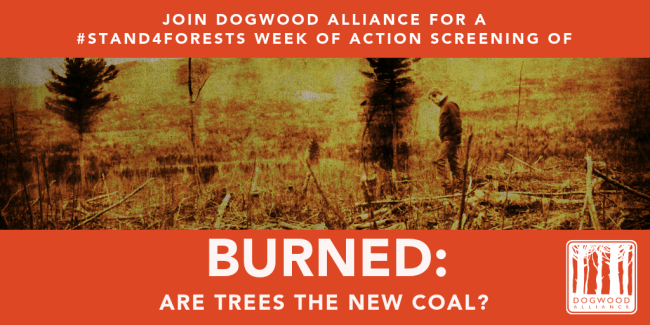
What, if anything, should replace these symbols of past injustices? Plaques acknowledging the atrocities committed by the likes of Major Parke? Memorials recognizing the pain and suffering endured by Aboriginal people at the hands of the New England colonial project? Or monuments to the warriors who laid down their lives to protect kin and country? After all, the massacres, the poisonings, and the campaigns of terror were often carried out in response to our ancestors’ fierce resistance to the invasion. Their courage and sacrifice must also be remembered.

And what shall replace names like ‘Macdonald Park’ and ‘Dangar Falls’? One of the most common suggestions has been to use words from the local Aboriginal language (Anēwan) for this purpose, thus paying respect to the traditional owners, and contributing to the revival of our ancestral tongue. But symbolic acts alone aren’t enough, nowhere near in fact. Symbolism has to be, in my view, accompanied by commitments to real change, tangible change.

The savagery of Parke, Clogher, Terrible Billy, and their ilk was foundational to the development of New England as a thriving pastoral district. So were government agents like Commissioner Macdonald, overseeing ruthless police repression, and administering the carving up of the Tableland into hundreds of stations. We have to go beyond statues and signposts to conversations about redress for the protracted dispossession and decimation of Aboriginal communities. Substantial reforms to the education system are, of course, a given. Let’s talk about the return of stolen lands. Let’s talk about reparations. And it’s vital that these conversations (and the actions they give rise to) take place locally, as well as at the state and national level. Truth and justice, from the ground up — a shattering of the colonial status quo, not a tinkering.

Callum Clayton-Dixon is an Ambēyang Aboriginal man whose people come from the southern end of the New England Tableland in New South Wales. He is the author of Surviving New England: A History of Aboriginal Resistance & Resilience through the First Forty Years of the Colonial Apocalypse (2019), and a PhD candidate at the University of Technology Sydney, working to develop a dictionary and grammar of his ancestral language.

The Colonial Frontier Massacres Map

The Coffs Coast Advocate reported  in November 2019, how stage one of the project has recorded 172 incidents across Eastern Australia between 1788 and 1872.  About 97% of people killed in these massacres were Aboriginal men, women and children Massacres became more violent, systematic and calculated over time. The average number of Indigenous deaths increased over time, before declining in the 1900s, but massacres continued up to 1928.  At least 65 massacres of Indigenous people were in retaliation for the killing or theft of livestock, or theft of property

Darkie Point, Bellinger River, near Ebor  

Ten people were killed at Darkie Point on the Bellingen River in May, 1841 with settlers and stockmen using firearms and muskets to attack a local Baanbay Aboriginal tribe in an act of reprisal. The narrative by the Colonial Frontier Massacres research team reads.  “Following the brutal murder of three shepherds on Eldershaw’s outstation in the north eastern part of New England and the taking of 2000 sheep by Bundjalung, Eldershaw organised a ‘pursuing party’ of ten men (including Eldershaw, three neighbours and six stockmen) … ‘Well mounted and accoutred’ and set off with ten days provisions for the south branch of the Clarence. According to Eldershaw they shot the entire group – ‘a great number’ in daylight.’

Orara River, near Seelands and Ramornie

More than 20 people were killed on the Orara River, near Sealands between April 1, 1841 and April 30, 1841. The attackers included colonisers, a government official and settlers and stockmen. “In response to stock theft, from Ramornie station, CLC Oakes of Clarence PD swore in stockmen as special constables to surround a Bundjalung (Ngarabal? speakers) camp at night and at daybreak charged and killed indiscriminately Aboriginal men, women and children.” A man named Lynch was later charged with the stock theft.

Kangaroo Creek, near today’s Coutts Crossing

An estimated 23 Gumabynggnir people were killed on November 29, 1847. “In February 1848, Crown Lands Commissioner, Oliver Fry, was told by a stockman and an Aboriginal man at Grafton that squatter Thomas Coutts had poisoned 23 Aboriginal people by offering them flour laced with arsenic at his station at Kangaroo Creek.” Fry set off for Kangaroo Creek Station to investigate. He found human remains, but they were too decomposed for analysis. Coutts was arrested and taken to Sydney where he was bailed for 1,000 pounds, but was discharged in May for lack of evidence.

The agony and extinction of Blinky Bill

In 1991, Australian publishers Allen & Unwin, the Aussie buyout of the antipodean subsidiary of the venerable British publisher that gave us JRR Tolkien, published an original political and environmental history of Australia: William J Lines’ Taming The Great South Land – a history of the conquest of nature in Australia.

It was, and remains, an eye-opener and a page-turner. All our past, present and future environmental hotspots are covered. Squatters and selectors,  rabbits and real estate, hydro and homosexuals, uranium and aluminium, environmental degradation and deforestation, and the trials of our indigenous fellow-citizens who up until a referendum in 1967 were excluded from the census – and therefore not counted [The referendum of October 14th 2023, rejecting the Indigenous Voice to Parliament and the inclusion of our First Nations in the Australian constitution, demonstrates that we have yet to come to terms with our past. See Silencing The Voice – the Anatomy of a No voter]

Behind many of the names that are attached to our suburbs, our highways, our rivers and our mountains are the names of dead white men who were aware of, even witnessed, and were often complicit in “dark deeds in a sunny land”. Perhaps I shall write more on this at a later date, but meanwhile, the following is what Lines has to say about our iconic wildlife, and particularly, our endangered koalas.

At the beginning of white settlement, it is believed that there were millions of koalas across Australia. But their’ perennial paradox and their doom has been that they and humans covet the same habitats – good land and good soil. We have always sought to acquire, clear and develop the land they like for timber, for farmland and for development. Research by the World Wildlife Fund has shown that eastern Australia is one of eleven deforestation hotspots in the world, the only OECD country on the list.

Lines writes that at the turn of the twentieth century, state governments were less concerned with planting trees than with “how to kill a forest quickly”. “Elsewhere in Australia, “settlers regarded native animals an obstacle to development, the equal of native trees. The morality of development sanctioned virtually unlimited increases in the quantity of humans and tolerated virtually any decrease in the populations of other life forms – except animals directly useful to humans, such as sheep and cattle”. 

Settlers and professional hunters therefore shot anything that moved in the bush. Around the turn of the century, encouraged by an international demand for fur – primarily for the fashionably consciousness in Britain and the US – hunters began killing large numbers of koalas. In 1908, 58,000 koalas passed through the Sydney markets. In1924 over two million were exported from the eastern states. By the late twenties, the total total nationwide is reckoned to have been about eight million. 

By the end of the Great War the koala was extinct in South Australia. Other native animals survived, however, so in 1920, SA removed the brush-tailed possum from the protected list. Within four months, hunters trapped more than 100 000. As a consequence of hunting and habitat destruction, over 70 percent of native land mammals in South Australia are now extinct, extremely rare or uncommon and endangered.

In 1927 the Queensland government declared open season on possums and koalas. The eradication of wild animals, the government believed, promoted closer settlement. Despite widespread protest the government persisted the slaughter, and within months 10 000 trappers disposed of over one million possums and 600 000 koalas – more than the total number of koalas which remain alive in the whole of Australia today. The carnage caused the virtual elimination of koalas from Queensland. 

Four years later New South Wales declared open season on possums and during June and July 1931, hunters and trappers brought over 800 000 possum skins to market. To avoid offending the sensibilities of city nature lovers, merchants marketed possum as chinchilla and koala skins as wombat. 

Efforts to protect the koala have and remain a matter of “one step forwards, two steps back”. To burnish their dubious environmental credentials, governments broadcast their good intentions, announce inquiries and censuses, and then withdraw discretely in the face of all-too-friendly fire from political and industrial interest groups and their lobbyists. A WWF scientist has remarked that ”drop bears have more teeth than of the (National Koala Conservation and Management) Strategy”. It was not just on the Big Rock Candy Mountain that the cops had wooden legs and the bulldogs, rubber teeth.

In her masterful and lyrically beautiful “Fathoms – the the world in the whale” (Scribe 2020), – the Sydney Morning Herald called it a “a marvelous work of haunted wonder” – Australian author Rebecca Griggs notes how we earthlings anthropomorphized the leviathan of the deep as the symbol and indeed monument to our fall from environmental grace and our quixotic hopes for a return to Eden. Writer and author Stephanie Wood attaches a similar symbolism to Australia’s iconic marsupial in a well-written feature on our koalas’ dire straits. We reproduce this in full below. 

“Whenever people are upset about protecting animals, it is usually because they’ve got a financial stake in not doing so”, she writes. Echoing Griggs, she asks: “if we can’t save koalas, it’s unlikely we’ll be able to save ourselves”.

See also In That Howling Infinite: Losing Earth – Tarkeeth and other matters environmental

Featured photograph: In the thirty years we have owned our property in Tarkeeth Forest, much of which has been designated primary koala habitat, we have heard koalas in the surrounding forest, but , we have never seen one – until the day after Christmas last year. Meet Chrissy Dunggir (that’s Gumbaynggirr for koala).

How good were koalas?’: A national treasure in peril

Dwindling habitat. Climate change. Mega-bushfires. Koalas face dire threats, yet politicians continue to obfuscate.

Stephanie Wood, Sydney Morning Herald 6th February 2021

A koala in a tree on Kangaroo Island, South Australia: “They were lying defeated on the ground, desperate for water. Usually they’d be doing all they could to get away from us.”

Kangaroo Island, South Australia: “They were lying defeated on the ground, desperate for water. Usually they’d be doing all they could to get away from us.” Ricky Carioti, Washington Post/Getty
Every summer for a decade now, the curious photos have surfaced: a koala gulping water from a firefighter’s bottle, a koala drinking from a watering can, another on its belly trying to slurp from a swimming pool. By late 2019, images were popping up daily: a koala clinging to a bike as a cyclist tipped water into its mouth, another drinking from a pot of water while a dog stood nearby. In northern NSW near Moree, one was photographed in the middle of a road after rain, its curling pink tongue licking a puddle.

The comments came from around the world: “OMG, so cute” and “How adorable!”

But there was something unsettling about the images; koalas don’t drink water, they get the moisture they need from gum leaves. Don’t they? Even scientists and koala experts who knew the species was in peril were unlikely to have realised just how portentous the images were.

In spring 2019, the fires started.

There was nothing cute about the new images, which came in a flood. Koalas with bandaged paws and scorched ears nestling in laundry baskets in a wildlife volunteer’s lounge room. A huddled koala trying to drink from a Kangaroo Island dam, the charred carcass of another nearby. A woman stripped down to her bra running out of a blaze near Port Macquarie holding a koala in her shirt; if you watched the video, you heard the koala mewling in pain as the woman doused it in water.

As the imagery spread and the world’s attention focused on this devastating escalation of the koala crisis, the animal became a global symbol of environmental grief and fear. Prayers and messages of love rained down. So did money. Port Macquarie’s Koala Hospital created a GoFundMe account with a $25,000 goal and got nearly $8 million. From Kazakhstan to Kentucky, people sewed mittens for burnt paws. A cosmetics firm made eucalyptus-scented, koala-shaped soap to raise funds. A little boy in Massachusetts moulded the marsupials in clay and his parents gave one to every person who donated more than $50 to the cause. A friend in London couldn’t stop crying. “You’re not looking at koala pics again, are you, Mum?” her daughter asked.

At the time of white settlement, it is believed there were millions of koalas across our continent. Two centuries later, before the 2019-20 fires, the most authoritative study available estimated 331,000 koalas remained in the wild nationally, 79,000 of which were in Queensland and 36,000 in NSW. But koala counting is a notoriously difficult exercise and the 2012 study, led by University of Queensland conservation biologist Dr Christine Adams-Hosking and drawing on the research of a number of koala experts, noted that in Queensland, population estimates ranged from 33,000 to 153,000, and in NSW from 14,000 to 73,000.

But if the numbers aren’t firm, one thing is: even before the fires, koala populations had been declining precipitously. Studies carried out in 2020 by Dr Steve Phillips, principal research scientist at environmental consultancy Biolink, found that in the past two decades, Queensland had lost half its koalas, and NSW a third. Experts are still trying to tally the full extent of Black Summer’s carnage but University of Sydney research found 61,000 koalas nationally and 8000 in NSW were injured, displaced or died during the fires.

We did this. Since settlement, our needs have always trumped those of koalas. We needed the land their trees were on. Sometimes we shot them to eat. In an article in The Sydney Morning Herald in June 1851, the author noted that Aboriginal people called the creature a “kola” and settlers described it as “the native bear or monkey”. It was an animal with a “singular aspect”, he wrote, “its appearance is a sort of caricature upon gentlemen of the legal profession with their wigs on. It is said to be good eating, but is not frequently met with …”

“The response to the majority of recommendations were ‘Support in principle’ or ‘Noted’, which to me is saying, ‘We’re doing nothing’.”

We wanted their furs. From the late 19th century to the end of the 1920s, hunters slaughtered up to eight million koalas nationally to supply a voracious international fur market. Most went to England and the US, where they were described as “wombat fur” and often became part of that Jazz Age wardrobe essential, the fur collar wrap coat. By the late 1930s, the animal was considered extinct in South Australia and critically depleted elsewhere.

Still we wanted more: more land for farms and tree plantations and highways and developments of massive houses with manicured gardens. Developers saw dollar signs, their bulldozers kept moving. With all that came fast cars, feral animals, family pets and disease. A submission from a koala activist in northern NSW’s Ballina to the NSW parliamentary inquiry listed in wretched detail the fate of some local creatures: “Healthy breeding female, hit by car”; “Female, dog attack, dead”; “Male, retrovirus, ulcers in mouth and throat, hadn’t eaten for probably [two] weeks, maggots down throat while still alive, found sitting on a road after a storm”.

Above all else, our insatiable needs have led to the greatest threats koalas face: climate change and its handmaidens, more extreme droughts and bushfires. But despite the international spotlight the 2019-20 fires threw on the urgency of the species’ plight, one year on, governments have taken little meaningful action to protect the marsupial and its habitat.

The NSW Environment Minister, Matt Kean, says he wants to double koala numbers in the state by 2050 but in January his government announced it would fully commit to only 11 of the upper house inquiry’s 42 recommendations designed to protect koalas. Conservationists and koala scientists were horrified. “It’s really disheartening that the response to the vast majority of recommendations were ‘Support in principle’ or ‘Noted’, which to me is saying, ‘We’re doing nothing’,” Port Macquarie Koala Hospital clinical director Cheyne Flanagan says. “In koala circles, everyone’s disgusted.”

Meanwhile, for months through 2020 the koala became a political football after the Deputy Premier and National Party Leader, John Barilaro, staged a failed rebellion against his own government over koala policy. The result of the subsequent political wrangling was that, by the end of the year, policy to protect the species was weaker than it had been at the start.

Experts also point to the federal government’s shilly-shallying. Key national measures to protect the koala are either out of date or yet to be completed. “The koala was listed as a vulnerable species by the federal government in 2012; seven years later, we’re still waiting for a national koala recovery plan,” says Biolink’s Steve Phillips.

And what of the three billion other animals killed or displaced by last summer’s fires? One million lumbering wombats. More than 100,000 echidnas. Millions of kangaroos and wallabies; bandicoots, quokkas and potoroos. A terrible number of birds, lizards and frogs. The uncounted pretty beetles, butterflies and bugs. Well, it’s hard to spare too much emotional energy for a frill-neck lizard. But a koala … we can mourn a koala.

Scientists who study other species despair at the attention the koala gets. But a koala is emblematic; we feel in our bones that it says something important about us as Australians. “Koalas are woven into the narrative of Australia,” says Danielle Celermajer, professor of sociology and social policy at the University of Sydney and the author of the recently released book Summertime: Reflections on a Vanishing Future. Dr Kellie Leigh, a koala scientist in the Blue Mountains west of Sydney, offers an anthropomorphic explanation for why they have such a profound place in our psyche. “The whole thing about koalas is the head shape, with the forward-facing eyes and the big round head that instinctively reminds people of a human baby,” she says, adding that mobilising resources for koalas is not a single-species approach.

“They get people engaged in conservation who otherwise wouldn’t be.” The koala is also an “umbrella species”, depending on a broad range of habitats which are home to many other species. Put measures in place to protect koalas in the wild and other creatures will also be saved.

Given that fact, perhaps we should ask an inverse question: if we can’t save koalas, what can we save? And if we can’t save koalas, can we save ourselves?

A rolled-up towel serves as a tree-trunk substitute for this sedated koala during ANU research into the impact of bushfires.
A rolled-up towel serves as a tree-trunk substitute for this sedated koala during ANU research into the impact of bushfires. Micheal Weinhardt

Kellie Leigh names many of the Blue Mountains koalas she studies after gods “because we’re on the Mount Olympus for koalas … we’ve had Medusa, Mars, Athena”. The Greek mountain is the home of the gods and famously biodiverse. The Blue Mountains is – was – home to a surprising and remarkable population of koalas.

The mountains were long thought not to be propitious koala habitat, although records show there were at least some in residence. In a letter to the Sydney weekly The Catholic Press in 1921, a reader described a “shooting expedition” to Hazelbrook, during which her uncle shot a koala. She added that at one time, her family had kept at their Paddington home in Sydney four “tame native bears”, which had been captured in the mountains. After a month, one by one, they died. The last survivor sat in a backyard peach tree crying all night until the family decided to liberate it and “one evening at dusk we took it to Bellevue Hill”. The fur trade was believed to have knocked out any remaining in the mountains.

In 2013, during the devastating Blue Mountains bushfires, three koalas were seen emerging to seek water around the town of Winmalee. Another climbed a pole in a backyard near Mountain Lagoon. “It was like, ‘Hey, there are koalas … they haven’t been on record for a long time, what’s going on?’ ”, says Leigh, executive director of the not-for-profit Science for Wildlife, which in 2014 started to survey koalas at five sites in the mountains.

This koala, named Medusa, is being monitored by Science for Wildlife in Kanangra-Boyd National Park in the Blue Mountains in NSW.
This koala,Medusa, is being monitored by Science for Wildlife in Kanangra-Boyd NP, the
Blue Mountains, NSW. Dominic Lorrimer

Their significance could not be understated: they were largely within national park boundaries so developers could not get near them, they seemed to be breeding like rabbits and, most importantly, a study with which Leigh was involved found they had the highest genetic diversity within a koala population of any in Australia. Darwin 101: genetic variation individuals in a species allows for its adaptation to changing environmental circumstances and so ensures the survival of the species. Leigh dared to hope that the Blue Mountains koalas might one day help recolonise the broader World Heritage area.

Photo: Eddie Jim.

But genetic variation is of no assistance to a koala in the event of a mega-fire. In late October 2019, Leigh’s teams were surveying sites in Kanangra-Boyd National Park and in the Megalong Valley when lightning ignited a blaze 100 kilometres or so to the north. That fire, dubbed the Gospers Mountain fire, or “the monster”, would become Australia’s largest ever. In the days that followed, it raced in from the north, licking up Leigh’s survey sites in the south-east Wollemi National Park and on Newnes Plateau. Leigh pulled her teams out of the bush.

She floated an idea with the NSW National Parks and Wildlife Service: could she attempt to rescue some of the koalas at the Kanangra-Boyd site? “At the 12th hour we got a ‘yes’. ” Within two days, a Victorian climbing team had flown in and volunteers had started to track the radio signals coming from the koalas’ collars and scour canopies for creatures without collars. Two days after that, 12 koalas had been temporarily moved to Taronga Zoo.

It was a small triumph in a great tragedy. Only one of Leigh’s study sites – in the Lower Blue Mountains, near where residential areas were protected by firefighting efforts – was unaffected by the fires. She estimates that 80 per cent of the mountains’ koala habitat was burnt and perhaps 1000 animals died, and is now madly working to assess what koalas remain and what potential there is for them to recolonise. “It totally changed this little picture of hope we had,” says Leigh. “It was like, ‘Okay, it’s not a source population any more.’”

Koalas rescued from bushfires returned to their native habitat

Pockets of optimism remain. In November, I followed Leigh and a VHF signal along a ridge line within the Kanangra-Boyd site looking for Kali, one of the 12 koalas which had a Taronga Zoo holiday. The lovely hum of the bush in late spring: rising warmth, birdsong, a darting dragonfly. Only months ago, soon after the 12 were rescued, fire raced through here; the trees are blackened still and there is a subliminal scent of something burnt. But the young epicormic shoots are lush and our feet crunch over new bracken fern and lomandra grass. And there, high in a narrow-leaved peppermint gum (Eucalyptus radiata), is Kali.

“Kali” is the Hindu goddess of death and destruction but is also associated with motherhood and rebirth. There could not be a more appropriate name for this creature half-concealed behind branches above us. Leigh “pouch-checked” Kali for a joey when she was rescued and was surprised not to find one. “I was like, ‘That’s unusual, she’s having a year off breeding.’ ” When Kali was returned to the wild in late March, a joey was in her pouch, that bonus baby peeking out now from her position snuggled on her mother’s back.

Leigh has tracked Kali for nearly four years. “If she was a person, she’d be sitting there with a crocheted rug and a cup of Earl Grey tea watching over the kids,” says Leigh. “She’s a homebody; she breeds every year, has a joey every year and doesn’t go far; she has one of the smaller home ranges of those we have tracked.” But for a homebody, Kali is a rule-breaker, as are the other koalas on the mountains.

Koalas are generally known to like trees on richer soils, but the mountains are sandstone country. Generally, the rule is that they live below 800 metres in altitude, but two of Leigh’s sites, including Kanangra-Boyd, are above 1000 metres and often white in winter. It was not thought that the silvertop ash (Eucalyptus sieberi) was a food source but here, they eat it delightedly. Additionally, the Kanangra-Boyd population is one of only two NSW koala populations to be chlamydia-free. “So it seems to be, or was, a thriving, growing population in an area that’s above the climate envelope for koalas, using tree species they shouldn’t,” says Leigh. “Yeah, they’re just a bunch of rule-breakers.”

The story of Kali and her compatriots is just one of dozens of koala stories to have emerged from the fire grounds. Taken together, they shed some light on the challenges of saving the species: there are hundreds of stakeholders working in the field, from wildlife rescuers to scientists and multiple points of disagreement; the science is dense but there are still big gaps in knowledge about the creature; and, depending on where they live, koalas have varying behaviours and face different threats.

Some of the most gut-wrenching images came out of Kangaroo Island, where tens of thousands of koalas are believed to have died from a pre-fire population of about 50,000. Evan Quartermain, head of programs for the Humane Society International Australia (HSI), travelled to the island to help with rescue attempts. “They were lying defeated on the ground, desperate for water. Usually they’d be doing all they could to get away from us.”

But it was a tragedy of animal welfare rather than species decline. In the late 19th century, three koalas were put on French Island in Victoria’s Western Port in an attempt to rescue the species from the fur trade’s devastation. Descendants of those koalas were later used to repopulate areas in Victoria and South Australia, including Kangaroo Island. But despite a widespread misconception that the island’s koalas can be used to replenish depleted mainland populations, they have issues resulting from inbreeding. “Their genetic diversity is very low,” says Sydney University associate professor and ecologist Mathew Crowther. “They’re a very bad source population.”

Additionally, before the fires, koala numbers on the island had ballooned to the point that they were putting unsustainable pressure on the environment. Some proposed culling. Likewise, in parts of South Australia and Victoria, introduced koala populations breed so prolifically that they put untenable pressure on native vegetation. In 2015, The Age revealed that wildlife officials secretly culled 600 koalas in Victoria’s Cape Otway area. The animals were starving as a result of over-population.

The complexity of the subject matter is matched only by the confounding nature of koala politics and bureaucracy across federal, state and local levels. Federally, there’s a National Koala Conservation and Management Strategy but it’s out of date: it was developed before the east coast koala population was listed as vulnerable in 2012 and does not take into account updated predictions about climate change. “Drop bears have more teeth than the strategy,” conservation scientist Dr Stuart Blanch from WWF-Australia says.

Similarly, a recovery plan to bring koala populations back to health, a legislative requirement that followed the koala’s 2012 vulnerable listing, was to be finalised two years ago but remains undone. In June last year, federal Environment Minister Sussan Ley told The Sydney Morning Herald and The Age that the government had been waiting on the states’ draft plans. In November, Ley announced an $18 million koala package, which will include a national audit of populations, health research and habitat restoration. But within days, 23 conservation groups had signed an open letter slamming the audit as a diversionary tactic and a waste of money. Research scientist Steve Phillips agrees. “It’s garbage … The numbers don’t matter, it’s about the rate of change that’s occurred. We already know what that rate of change is and the science is very strong that the animal is very clearly on a trajectory towards extinction.”

Meanwhile, the skirmishes that occupied the NSW government through 2020 showed the complexity of legislation governing environmental planning policy over koala habitats at a state level and the extent to which conservative ideology plays a role in the debate about saving the creature.

In September 2020, NSW Deputy Premier John Barilaro threatened to move his MPs to the crossbench over the State Environmental Planning Policy (SEPP) that, among other things, increased the number of tree species identified as koala feed and habitat trees from 10 to 123. Many described his move as a “dummy spit” but, seen in context, it was more understandable: since 2016 the Shooters, Fishers and Farmers Party has grabbed the heartland state electorates of Orange, Barwon and Murray and the Nationals are struggling to remain relevant. In claiming the policy was an assault on landholders’ property rights, Barilaro was appealing to his base (two-thirds of NSW’s koalas are on private land). He backed away from his threat but the political wounds were deep: a week or so later, the Nationals MP for Port Macquarie, Leslie Williams, defected to the Liberal Party. In a statement, Williams said her community rightly expected that policy should overshadow politics.

Related Article: Bushfires  Storms, tornadoes and explosions: Bushfires are getting stranger. How?

Dashcam Captures Speed Of Bushfire.

The machinations continued through spring as a bill amending the Local Land Services act (LLS), which regulates native vegetation management on private land, was passed by the lower house of Parliament but blocked in the upper house when Liberal MP Catherine Cusack crossed the floor to vote with Labor, the Greens and other crossbenchers. She told the chamber that she had never seen “such poor integrity of processes” which had “zero to do with protecting koalas”. She said: “It is to try to patch up a political disagreement … Far too many mistakes have been made already, many buried in regulatory complexity. But the trends, the science and the outcomes are very clear. We are failing, and this bill cannot possibly assist.”
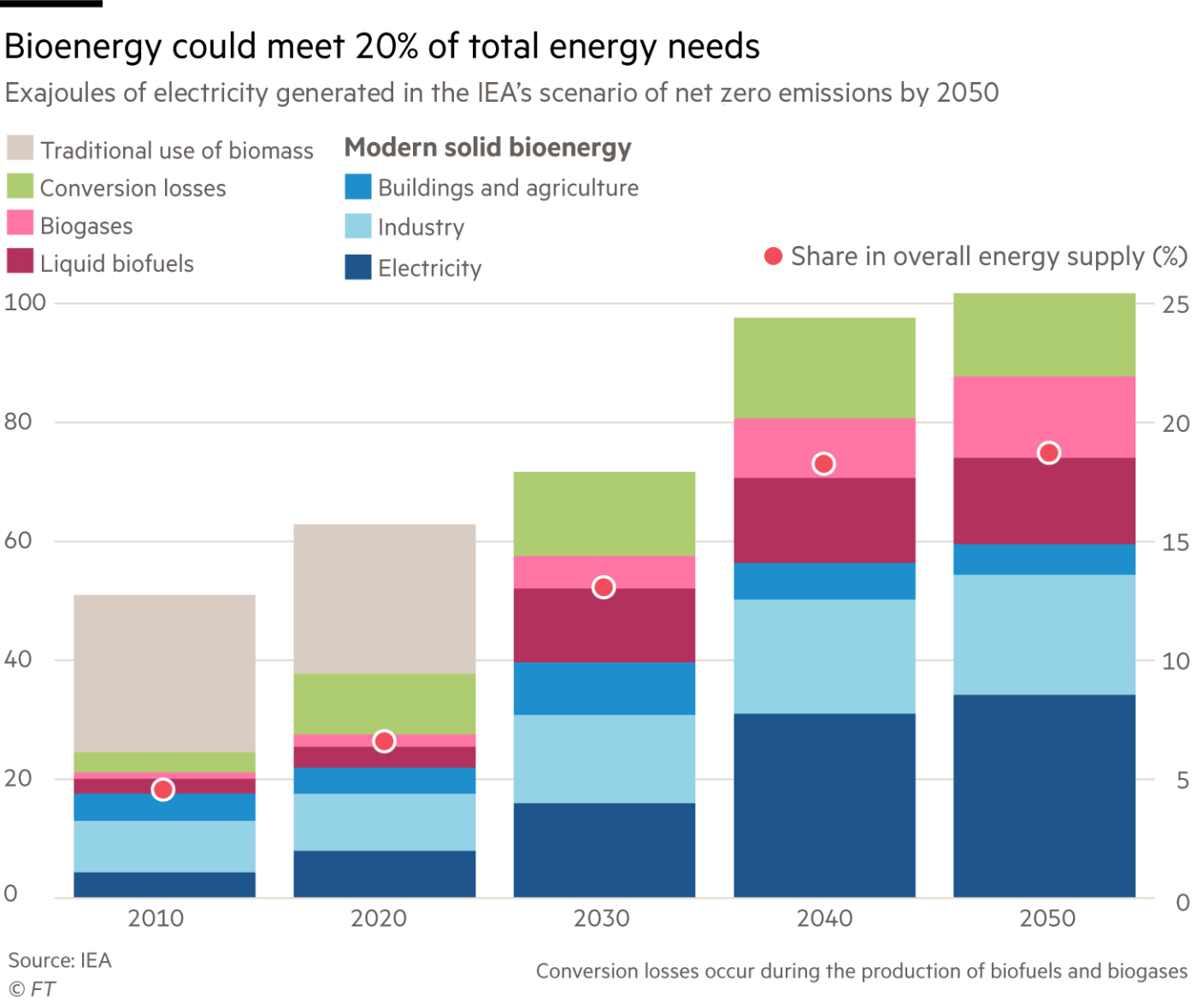
During the state’s hottest November on record, the Premier, Gladys Berejiklian, sacked Cusack as parliamentary secretary for voting against the government and announced she would scrap the SEPP and revert to its predecessor – a weaker, 25-year-old koala habitat policy – until a new one was developed.

Kellie Leigh, at right, surveys the koala population in Kanangra-Boyd National Park, NSW.
Kellie Leigh, at right, surveys the koala population in Kanangra-Boyd NP, NSW. Dominic Lorrimer

Kellie Leigh’s koalas might be rule-breakers but, mostly, koalas and people like the same habitats: good land, good soil types. “We always want to develop the land koalas like, that’s where we can grow our vegies and crops,” Leigh says. According to WWF international research, eastern Australia is one of 11 deforestation hotspots in the world, the only OECD country on the list.

Multiple koala experts I spoke to for this story noted that despite layers of bureaucracy and multiple koala plans and strategies, the hard decisions needed about the most important measure to save koalas aside from reversing climate change – habitat protection – are still not being taken. Port Macquarie Koala Hospital’s Cheyne Flanagan notes that the NSW government is taking some positive steps, including the development of a new koala strategy due to be released this year. But she says legislation to protect koala habitats is not tight enough.

“It’s still rape and pillage and open slather with regards to removal of habitat,” she says. NSW Greens MP Cate Faehrmann, who chaired the upper house inquiry into koalas, says that successive governments have made koala protection policies “complex and overlapping, but ultimately there’s hardly any of it that actually stops koala habitat being cleared”.

Meanwhile, Evan Quartermain from the Humane Society International Australia believes there is an untold element to the habitat loss story: “It’s the cumulative effect of smaller developments … death by a thousand cuts.” They don’t get much attention but they’re happening everywhere, all the time. Often, what is lost is the critical “corridors” koalas need to travel across the land.

But the overarching threat to koalas is climate change. Ahead of a firefront that ravaged the NSW Southern Tablelands in January 2020, more than 40 koalas were rescued and taken to the Australian National University for sanctuary. Scientists were appalled to discover that most were starving to death. “They were in that condition because of the extreme heat and the drought that set up those conditions for the fire to happen. The climate was killing them before the fires even got there,” says Dr Kara Youngentob, an ANU ecologist. Youngentob says she has now seen eucalypts, trees adapted to one of the driest climates in the world, dying from moisture stress. “Before this past summer happened, I had a hard time believing that eucalypts could get that desiccated … [they] can’t handle the type of climate they’re now experiencing.”

Conventional wisdom has long been that koalas don’t need to drink water because gum leaves provide all the moisture they need. But a new study led by Dr Valentina Mella, a research associate from the University of Sydney, captured koala drinking behaviour in the wild for the first time: researchers observed koalas licking water running down smooth tree trunks during rain.

Usually, koalas get enough hydration from gum leaves. A scene like this in Gunnedah, NSW “really tells you there’s something wrong”, says a researcher.
Usually, koalas get enough hydration from gum leaves. A scene like this in Gunnedah, NSW “really tells you there’s something wrong”.Kate Wilson

So what should we make of all the photographs of koalas drinking from humans’ water bottles and bird baths and pools? “That is very incredible behaviour; that really tells you there’s something wrong,” says Mella, who has preliminary data showing the moisture content of eucalyptus leaves is declining. “No wild animal would approach a human unless there was something to get from it … these animals can’t find water anywhere else.” (Experts caution against giving koalas water from a bottle because when they tip their head back to drink, water can get into their lungs, potentially causing aspiration pneumonia.) Youngentob says when koalas in the care of ANU during the fires drank a lot of water, it was an indication they’d sustained physiological stress. “Drinking is kind of their swansong,” she says. “When you see a koala drink a lot, it’s on its way out.”

“It’s about climate change … these extreme temperature differentials that are just beyond the koala’s ability to adapt to.”

Sometimes people try to tell Biolink’s Steve Phillips that the decline in koala numbers is primarily due to disease. “Oh, bullshit!” he replies. “Every time I see somebody try to hijack the koala conservation argument and mention disease as one of the driving factors, I go, ‘No, no, no.’ It’s about climate change, and the drying out of the landscape and these extreme temperature differentials that are just beyond the koala’s ability to adapt to.” Phillips has seen the climate envelope for where koalas can survive shrink dramatically. During surveys in the mid-1990s, he found thousands of koalas in the Pilliga forests of north-central NSW. He returned in 2019 and surveyed 108 sites. “We did not find one single bit of evidence of koalas being alive.” East of the Pilliga, the “koala capital” of Gunnedah had a koala population of nearly 13,000 in 2012. Phillips says that, by 2019, estimates were that about 90 per cent had gone. “This wave of extinction moving through from the west has taken out the Pilliga animals and now looks like it’s going to take out the Gunnedah population.”

What he says next makes me shiver. “I could go out into the Pilliga at night 15 years ago and drive along the road with a spotlight and see four koalas and three brushtail possums and a couple of ringtails and possibly a carpet snake and various other things. Now I can do that and I see nothing.” A night in the Australian bush, and there is no life.

Kellie Leigh releases Lakshmi and her joey, Ra, in Kanangra-Boyd National Park in NSW in March last year. The koalas had been evacuated to Taronga Zoo to escape the Gospers Mountain fire.
Kellie Leigh releases Lakshmi and her joey, Ra, in Kanangra-Boyd NP in NSW March2020. The koalas had been evacuated to Taronga Zoo to escape the Gospers Mountain fire.Ian Brown

Why do we place so little value on the glorious, pulsing, sweet-smelling beauty of our landscapes and the creatures rustling within them? Why do we argue with what scientists tell us, scientists whose research is not published until it has undergone rigorous, peer-reviewed assessment? Why do we imagine things will go on as they always have?

Is it about greed and self-interest? HSI’s Evan Quartermain observes: “Whenever people are upset about protecting animals, it’s usually because they’ve got a financial stake in not doing so.”

Is it about priorities? Kellie Leigh’s mad scramble to save some of the Blue Mountains’ koalas was done without assistance from authorities. “All the firefighters were out protecting people and property,” she says. “There were no resources for wildlife.” Firefighters call it “asset protection” – protecting people and property.

“Whenever people are upset about protecting animals, it’s usually because they’ve got a financial stake in not doing so.”

But we diminish ourselves and imperil our own future when we take such a narrow, short-sighted view of assets and self-interest. Professor Danielle Celermajer wants people to recognise “we’re all earth beings … We are woven in relationships with other earth beings: animals, rivers, forests, rainforests, gum trees.” She rejects the idea that humans are in a different realm. “It’s a very pernicious fantasy we continue to indulge that everything else can go but we’ll be okay.”

On November 30, The Guardian published a story noting that international lawyers were developing plans for a crime of ecocide: criminalising destruction of the world’s ecosystems. On Twitter, Matt Haig, the acclaimed English author of the 2016 book Reasons to Stay Alive, posted a link to the story with the comment: “Ecological destruction is ultimately self-harm.”

The day before The Guardian story was published, a video of a koala under a lawn sprinkler in Bowenville, near Dalby in south-east Queensland, travelled around the world. “Even the koala bears are coming up with ways to stay cool there,” a perky TV presenter in Oklahoma City said. “That’s pretty cute.”

Dalby’s average maximum November temperature is 30.6°C. In November 2020, the maximum average temperature was 33.9°C. On November 29, the day the video of the koala under a sprinkler was shot, the thermometer hit 38.5°C. Watch the video. The koala is guzzling from the sprinkler head.

In December 2019, as an apocalyptic haze of smoke blanketed Sydney, thousands of people marched through the city demanding action on climate change. An image of one person’s placard pinged around social media: “How great were koalas?”

Australia’s choice – survive by respect or die by stupid

Normally, the weeks preceding our national day see social and mainstream media, posturing politicians and personalities and cultural warriors of all our tribes caught up in argument and invective about its meaning and significance. And then, it’s all over. Calm is restored as summer winds down, the kids return to school, and the working year starts in earnest – until the next national shibboleth lumbers into view – Anzac Day in late April. 

This year, however, things are unseasonably quiet. As a nation and a community, we are too preoccupied with Australia’s unprecedented bush-fire crisis to wage our customary wars of words.

The fires have dominated the media space, with harrowing photographs and video footage of their impact on people, property, and wildlife, stories of heroism and resilience, and circular debates and divisions, political posturing and finger-pointing. They have crowded out others news and reportage from around Australia and overseas where much is happening, be it the US’ assassination of Iran’s foremost general, ongoing protests in Beirut and Baghdad, the continued pounding on tons and villages in Syria’s beleaguered Idlib province, devastating floods in Indonesia, and volcano eruptions in the Philippines and and Zealand – and, less catastrophic but infinitely entertaining, Britain’s imminent retreat from Europe, and Harry and Meghan’s divorce from the royal family.

The fires have also crowded out the predictable argy-bargy over our national identity. It’s as if the partisans and opinionistas right across our political spectrum have holstered their weapons in deference to our collective pyro-purgatory.

There is one piece, however, that I deem worthy of republishing in In That Howling Infinite insofar as it encapsulates perfectly a cognitive and cultural dissonance at the heart of our national identity that I touched upon recently in How the ‘Lucky Country’ lost its mojo.

Sydney journalist Elizabeth Farrelly is always worth reading for her perspective on our identity, our culture and our natural and built environment. On this Australia Day 2020, she asks the perennial rhetorical question: what does it mean to be Australian? Her observations are illuminating. Here is my summary – you can read it in full below.

“As the fires rage on, bringing little but anti-green and pro-coal propaganda from our governments, we have a choice. We can go on pretending that exploitation is a sustainable way of life. We can pursue this culture of denial, where truths about nature, climate, women and Indigenous peoples are held in contempt. Or we can smarten up …

Australian culture has always relied on easy exploitation. From the moment white people arrived, we’ve been kidding ourselves that arrogance and theft add up to a lifestyle with a future. We dig stuff up and flog it, no value added, no questions asked. We grow food in the most destructive possible manner – clear-felling, mono-culturing, irrigating and overgrazing; destroying soil, desertifying land and belching carbon. We crowd to the edge of the continent, gazing out to sea, chucking our trash over our shoulders, pretending it won’t come back to bite.

Even now, our Indigenous peoples are being displaced three and four times over. Last year we extinguished native title for Adani’s foreign coal-mining interests, making the Wangan and Jagalingou people trespassers on their own land. We relentlessly export such coal, helping drive temperatures in central Australia beyond the habitable, exiling people for a second time from their ancestral homelands. Then, should anyone dare critique this mindlessness, as Bruce Pascoe obliquely has, we label them non-Indigenous and  set the federal police onto determining their ancestry.

And we apply this domineering denialism, this refusal to listen, across the board. In agriculture it says, we don’t care what naturally grows here. We’re going to poison the insects, suck the water from ancient caverns and nuke the living daylights out of the soil with petroleum-based fertilizers. We’re going to burn oil and coal, and if we get fires that destroy our townships, we’ll clear the forests too. 

In politics and at home it says, if our women are troublesome, we’ll ridicule, intimidate and beat them into submission (with one woman murdered every week by her current or former partner and our political sphere internationally recognized for its misogyny).

In sport, it says it’s fine if our cricketers – so long as they don’t get caught. And in social relations, if people insist on different hierarchies – if they demand gender fluidity, or optional pronouns, or same-sex marriage or voluntary race-identity or anything else that questions our superiority we’ll come down on them like a ton of bricks.

It’s the arrogance we came with, two centuries back, but it’s getting worse, not better … God gave us white guys dominion and we’ve weaponized it. We’ll show this country who’s boss. 

Forget the Aussie flag, the flag of dominion. 

This we should carve on our hearts: there is no economy without ecology”.

See also: We got them Australia Day Blues;  and Down Under – Australian History and Politics

Survival-by-respect or death-by-stupid: your choice Straya

Elizabeth Farrrelly, Sydney Morning Herald 26th January 2020

It’s invasion day again only, this time, the eyes of the world are upon us. Under headlines like “Australia shows us the road to hell“, the world is wondering if our economy isn’t every bit as fragile as the landscape it routinely exploits. It’s wondering about our tourism, with massive cancellations already from China and a US travel warning putting Australia on par with Gaza and PNG. It’s asking how long Australia will be habitable. But beneath those questions lies another. What, at this crossroads, does it mean to be Australian?

The first three are questions of both fact and perception. As such they may be partly addressed by Scott Morrison’s $76m commitment to beef-up Australia as a brand. But the last is a question for us. Who are we, as a nation, and who do we wish to be going forward? 

Australia Bushfires: Tourism fire effects

The tourism industry has lost some $4.5 billion as overseas visitors cancel trips over bushfires.

As the fires rage on, bringing little but anti-green and pro-coal propaganda from our governments, we have a choice. We can go on pretending that exploitation is a sustainable way of life. We can pursue this culture of denial, where truths about nature, climate, women and Indigenous peoples are held in contempt. Or we can dust off our angel wings and smarten up.

Australian culture has always relied on easy exploitation. From the moment white people arrived, we’ve been kidding ourselves that arrogance and theft add up to a lifestyle with a future. We dig stuff up and flog it, no value added, no questions asked. We grow food in the most destructive possible manner – clear-felling, mono-culturing, irrigating and overgrazing; destroying soil, desertifying land and belching carbon. We crowd to the edge of the continent, gazing out to sea, chucking our trash over our shoulders, pretending it won’t come back to bite. 


Illustration: Simon Letch

Illustration: Simon Letch

And sure, to some extent, that’s just colonialism. Colonialism is inherently macho, and inherently denialist. But it should be transitional. Now, as the NY Times argues, our political denialism is “scarier than the fires”. Smarten up? It’s time we grew up.

This is Australia’s moment of reckoning. It’s time we lost the attitude. Time we made a clear, rational and collective choice between survival-by-respect and death-by-stupid.

On top of Auckland’s Maungakiekie, the volcanic Māori pa also known as One Tree Hill, stands an obelisk. The land was bequeathed to the city in the mid-19th century by the beloved Scot Sir John Logan Campbell, who designed the obelisk as a permanent record “of his admiration for the achievements and character of the great Maori people”. That was then – now, New Zealand has Jacinda. And yes, these dots are connected.

Australia has shown no such reverence. Indeed, unable even to express genuine remorse for our repeated attempts at genocide and erasure-by-other-means, we’re still doing arrogant displacement. And we, as a result, have Scott Morrison, who must live with the disparaging epithet concocted by the lads at the Betoota Advocate – Scotty from marketing – because many Australians believe there is a ring of truth to it.

Morrison who responds to bushfires by wanting to clear more land. Who thinks hazard reduction is climate action and more advertising can persuade them back to a charred continent. Death by stupid.

It’s the arrogance we came with, two centuries back, but it’s getting worse, not better. Even now, our Indigenous peoples are being displaced three and four times over.

Last year we extinguished native title for Adani’s filthy foreign coal-mining interests, making the Wangan and Jagalingou people trespassers on their own land. We relentlessly export such coal, helping drive temperatures in central Australia beyond the habitable (Alice had 55 days above 40 degrees last yearand recorded street-surface temperatures between 61 and 68 degrees celsius), exiling people for a second time from their ancestral homelands. Then, should anyone dare critique this mindlessness, as Bruce Pascoe obliquely has, we label them non-Indigenous and set the federal police onto determining their ancestry.  

As if that very ancestry, those very records, hadn’t been, for two centuries, the subject of our energetic erasure. As if being Indigenous had always yielded some special right to speak, instead of the precise opposite. As if the speaker’s genetic makeup validated or invalidated his speech. What?

And we apply this domineering denialism, this refusal to listen, across the board. In agriculture it says, we don’t care what naturally grows here. We’re going to poison the insects, suck the water from ancient caverns and nuke the living daylights out of the soil with petroleum-based fertilisers. We’re going to burn oil and coal, and if we get fires that destroy our townships, we’ll clear the forests too. That’ll show them. 

In politics and at home it says, if our women are troublesome, we’ll ridicule, intimidate and beat them into submission (with one woman murdered every week by her current or former partner and our political sphere internationally recognised for its misogyny).

In sport, it says it’s fine if our cricketers cheat – so long as they don’t get caught. And in social relations, if people insist on different hierarchies – if they demand gender fluidity, or optional pronouns, or same-sex marriage or voluntary race-identity or anything else that questions our superiority we’ll come down on them like a ton of bricks. 

God gave us white guys dominion and we’ve weaponised it. By golly we’ll show this country who’s boss. Then if things get really rough, we’ll pop to heaven. Let’s hear it. A recent street poster picturing Morrison declaring Pentecostals for a Warmer Planet! may seem extreme, but Meritus Professor of Religious Thought, Philip C. Almond, explains why Morrison’s faith meansreducing carbon emissions … may have little intellectual purchase with the PM” – because world’s end means the second coming and, for the chosen, salvation. It’s also why Morrison’s beloved Hillsong church can happily advertise its coming conference, called Breathe Again, with Bishop T D Jakes saying “it’s amazing how God can strike a match in Australia and the whole world catches on fire”. As if the fires were God given.

That’s choice A, Scott Morrison’s choice. Business as usual but with extra cheesy advertising. Choice B, survival-by-respect, recognizes that even cheese can’t sell a pile of ash.

Survival-by-respect means just that: respect for Indigenous peoples, for nature and for women. It means knowing that listening is no weakness, but a path to greater strength.

On the ground, the shift would be dramatic but not impossible. Zero carbon cities would become an immediate priority: solar vehicles, green roads, every surface productive of food or energy. It would mean ending coal production. Investing in renewables. Creating whole new industries. 

This would mean listening to people who’ve spent 60,000 years here. Not copying, necessarily, listening. And listening, above all, to nature, heeding the fires’ overwhelming lesson. Forget the Aussie flag, the flag of dominion. This we should carve on our hearts: there is no economy without ecology. 

Sure, we can stick with lazy old Plan A. We can bow to Brand Australia and trust our grandchildren’s futures to the Rapture Hypothesis. Good luck with that, and happy Straya Day!

Bare Dinkum

Elizabeth Farrelly is a Sydney-based columnist and author who holds a PhD in architecture and several international writing awards. She is a former editor and Sydney City Councilor. Her books include ‘Glenn Murcutt: Three Houses’, ‘Blubberland; the dangers of happiness’ and ‘Caro Was Here’, crime fiction for children (2014).