
In That Howling Infinite’ has written often about Russian and Ukrainian history, not only because personally it has been of long-term academic interest, but also, because of the ongoing Russia-Ukraine war.
In In That Howling Infinite’s post, Borderlands – Ukraine and the curse of mystical nationalism, we wrote:
“Like many countries on the borders of powerful neighbours, Ukraine has long endured the slings and arrows of outrageous history. Its story, like that its neighbours, is long and complex. In competing national narratives, Russians and Ukrainians both claim credit for the creation of the Russian state, though others attribute this, with some credence, to the Vikings. The historical reality of Ukraine is complicated, a thousand-year history of changing religions, borders and peoples. The capital, Kyiv, was established hundreds of years before Moscow, although both Russians and Ukrainians claim Kyiv as a birthplace of their modern cultures, religion and language.
I highly recommend Serhii Plokhy’s The Gates of Europe, a well told and fascinating story of the origins of Ukraine and Belarus, and how their histories were intertwined, and entwined with those of of Poland, Lithuania (which was a large and powerful state once) and Russia. Ukraine has historically been the border between the catholic west and the orthodox east, the division running virtually down the middle. The name Ukraine is Slav for border land. Its geopolitical location and natural resources have led to the land being inflicted by invaders, civil wars, man-made famine and repression.
Eastern European countries, Ukraine included, have with good reason no love for Russia, be it Czarist, Soviet or Putin’s. Hungarians, Czechs, Poles and East Germans have seen Russian “peacekeeping” troops and tanks on their city streets, as have the Baltic countries, Afghans and Chechens. Millions of Ukrainians died under Stalin’s rule (and many, many millions of fellow-Soviet citizens). The 20th Century was not kind to the countries of Central and Eastern Europe. Historian Timothy Snyder called them “the blood lands”.
We republish below a recent article in The Australian by Melbourne historian and academic Mark Edele. It gives the uninformed but interested reader a short but comprehensive history of the relationship between Russia and Ukraine from the ninth century to the present day.
Here are posts in In That Howling Infinite, about Russia, Ukraine and Eastern Europe:
-
- Ghosts of the Gulag
- The Death of Stalin is no laughing matter
- Borderlands – Ukraine and the curse of mystical nationalism
- The Russian Tradition – Russia, Ukraine and Tibor Szamuely
- The Roots and Fruits of Putin’s Irridentism
- Red and white terror – the Russian revolution and civil war
- Stalin’s Great Terror
- 2nd September 1939 – the rape of Poland (2)
- 17th September 199 – the rape of Poland (2)
- Tanks for the memory – how Brezhnev changed my life
Putin’s puppet sells out Ukraine
Donald Trump’s bullying ‘peace plans’ to end the Ukraine war will only embolden Vladimir Putin, who fancies himself a leading a great power with historical rights beyond his borders.
Mark Edele, The Australian, 8 March 2025
Last weekend, the United States vacated the post of leader of the free world. Supporters of democracy the world over watching in disbelief as the US President and Vice-President berated, belittled, and bullied the leader of a democracy at war. On Monday, then, followed what this “great television”, as Donald Trump called it, was all about: a pretext to halt military aid to Ukraine, followed soon by the end of intelligence-sharing. The end goal: force Ukraine to the negotiation table with no security guarantees included in a “deal” with Vladimir Putin.
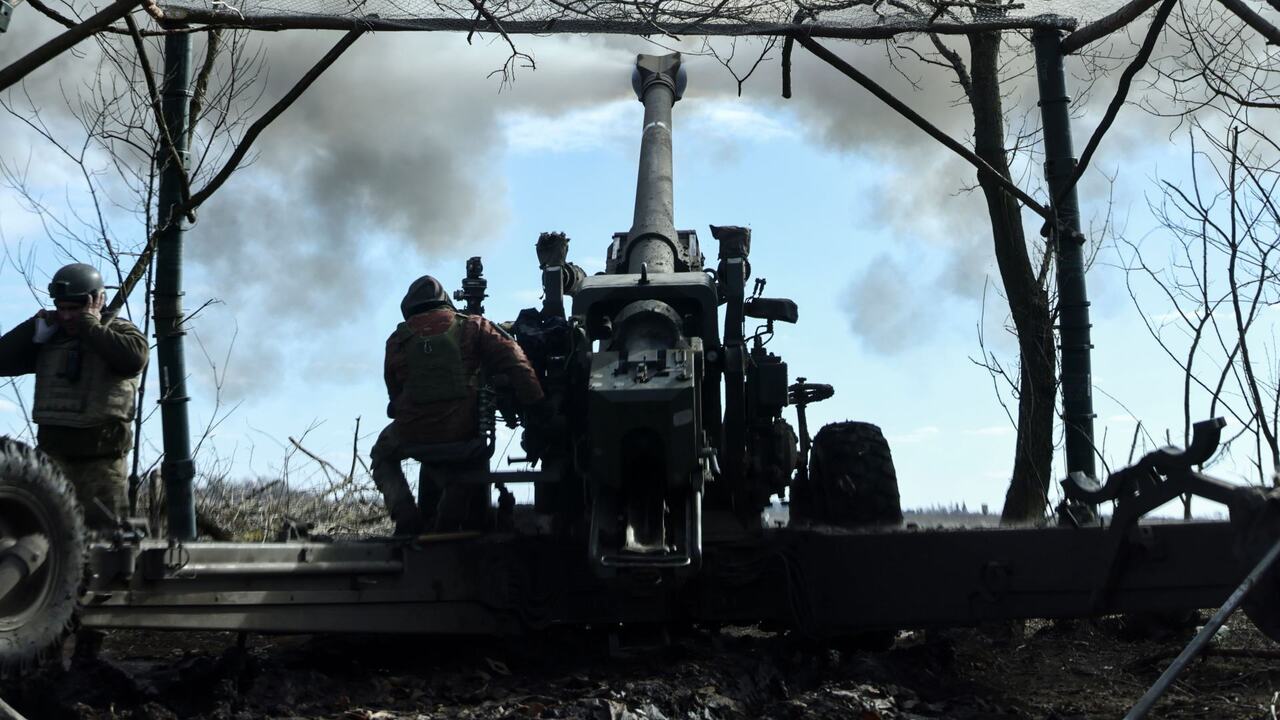
Four things will come out of an emboldened Russia now: more air raids on Ukraine’s civilians; a renewed push at the frontline; praise for the US administration and its visionary leader; and a disinformation campaign to convince the democratic world that black is white, up is down, left is right, Ukraine the aggressor and Russia the victim in this war. Astonishingly, we can also expect the White House to parrot such propaganda. Welcome to the era of strategic chaos.
Kremlin spokesman Dmitry Peskov noted the obvious: The US’s shift from supporting its allies to courting Moscow “largely coincides with our vision”. Foreign Ministry spokeswoman Maria Zakharova ladled on now familiar Russian propaganda. Volodymyr Zelensky, she claimed, was the head of a “neo-Nazi regime”, a “corrupt individual who lost his grip on reality”, whose “outrageously rude behaviour during his stay in Washington … reaffirmed his status of the most dangerous threat to the international community”. Zelensky was an “irresponsible figure”, a “terrorist leader” who had “built a totalitarian state” and is “ruthlessly sending millions of his fellow citizens to their deaths”.
Sigmund Freud would have classified these statements as “projection”: they are true, but apply to Zakharova’s boss, Vladimir Vladimirovich Putin. Born in 1952, Putin grew up in St Petersburg, then called Leningrad. Surrounded with stories of World War II, in which his father served and his brother perished, he came of age on the rough streets of Leningrad during the heydays of Soviet superpower. In 1975 he joined the KGB, an organisation that deeply formed his world view and behaviour. His sport is judo, a deeply tactical martial art focused on exploiting the opponent’s weaknesses and redirecting the adversary’s momentum.

After the breakdown of the Soviet empire in 1991, he served in the city administration of St Petersburg. Later he moved to Moscow to make a career in the administration of the first president of post-Soviet Russia. When Boris Yeltsin looked for a successor who would guarantee his own and his family’s safety, Putin’s name came up. He was seen as competent but unthreatening to the oligarchs running Russia at the time. In 1999, Putin became premier. Later the same year, he was appointed acting president. His tenure was defined by the brutal second Chechen War, which he prosecuted with utter ruthlessness. In 2000, he was elected President. He remained in this post until today, with a stint stepping back to the prime ministership in 2008-12, to get around term limitations in the constitution (subsequently changed).
In the quarter-century he ruled Russia, Putin broke the power of the oligarchs, rebuilt the state as a security organisation run by former KGB officers, suffocated free speech, pluralism and the opposition, and built one of the most unpleasant electoral dictatorships of the post-Soviet space. Despite an economy still only a quarter of that of the EU or the US (to say nothing of China’s), Putin fancies himself as leading a great power with a right to a sphere of influence and a major say in shaping the international order.
By the end of the second decade of his rule, however, the ageing dictator in the Kremlin began to worry about his legacy. His track record was mixed. The Russian population had been declining steadily until the 2010s. The following uptick was mostly undone again during and after the Covid pandemic, fuelling longstanding apocalyptic fears that the Russians would be dying out. The economy had grown significantly, but social inequality had exploded alongside, while political liberties continually atrophied. The Covid crisis was handled extremely poorly. Great-power status remained an aspiration. Putin worried what the history books would say about him. The answers respectable historians gave him when asked were evasive. And he was turning 70 in 2022.
History, and his place in it, obsessed Vladimir Vladimirovich. During his, quite extreme, Covid isolation, he read history books, immersing himself in the Russian imperialist tradition. Such historians had long denied that Ukraine was anything but a part of Russia. He summarised this traditional Russian view “on the historical unity of Russians and Ukrainians” in an essay of that title, published on July 12, 2021. It read like the musings of an ageing Russian imperialist. A bit over seven months later, it revealed itself as the ideological justification of a full-scale invasion of Ukraine.
Ukraine and Russia: histories entangled but separate
At the heart of Putin’s worldview is that Russia continues to be a great power with historical rights on Ukraine. It thus bears repeating that Russia and Ukraine are separate nations, which trace their heritage back to a common origin: a collection of principalities centred on Kyiv, known as the Rus of the ninth to 13th centuries. After the Mongol invasions of the 1220s and 1230s, however, the southwestern and the northeastern parts of this civilisation developed in different and quite separate ways, eventually leading to Russia and Ukraine as we know them today. As a result of such divergence, Russian and Ukrainian have developed as separate, if related, languages.

Putin attends the Victory Day military parade in Moscow on May 9, 2024. AFP
Overlapping histories and linguistic similarities are not unique among nations. Both Germany and France claim the Frankish empire under Charlemagne (French) or Karl (German) as part of their deeper history. Yet nobody would suggest (any more) that therefore France should be part of Germany or vice-versa. Likewise, French and Portuguese have related grammatical structures and some overlap in vocabulary. And yet nobody would argue that Portuguese is a French dialect.
Ukrainians formed a state twice: once in 1649, the Cossack-led “Hetmanate” fighting for its independence from Poland; the second time in 1917-21, after both the Russian and Austro-Hungarian empires had collapsed in World War I. Both were defeated militarily, but both were important inspirations for a democratically minded national movement.
Ukraine’s lands and peoples came into the Russian orbit in stages. First was the disastrous Treaty of Periaslav of 1654, when the Hetmanate joined a temporary military alliance with Muscovy against Poland, which the Muscovites read as a subjugation under the autocrat instead. After much fighting and diplomatic manoeuvring, Poland and Russia agreed in 1667 that Moscow could control the lands east of the Dnipro (“left bank Ukraine”) as well as Kyiv on the “right bank”. When Poland was partitioned at the end of the 18th century, what was left of Ukraine came partially under Habsburg and partially under Romanov rule. At the end of World War I, Ukraine emerged as one of the successor states of the Romanov empire, alongside Latvia, Lithuania, Estonia, Finland, Poland and Bolshevik Russia. In contrast to these states, however, it did not survive the wars and civil wars that followed the disintegration of the empire in 1917.
In 1921, it was divided between the newly resurrected state of Poland and the emergent successor of the vast majority of the lands of the Romanov empire: Bolshevik Russia. Within the latter, Ukraine was granted a pseudo independence as one of the Union republics making up the newly formed “Union of Soviet Socialist Republics”, or USSR.
The Ukrainian SSR was a Bolshevik ploy to disarm national sentiment while reasserting imperial, and increasingly totalitarian, control by Moscow. In the long run, however, it allowed not just the maintenance but even the growth of national culture and national self-awareness. Ukraine also grew geographically. During World War II, the Soviets gobbled up the rest of Ukraine from Poland and Romania. In 1954, the government transferred Crimea to Ukraine, to ease the economic development of a region with no geographic connection to Russia. Thus Ukraine acquired its current, internationally recognised borders. Eventually, they provided a ready-made demarcation of post-imperial Ukraine, once the Soviet empire collapsed in 1989-91.
After the Soviet Union
Of the 15 successor states of the Soviet Union, Russia is the largest in terms of territory (17.1 million square kilometres). Ukraine, with 0.6 million square kilometres, comes third after Kazakhstan (2.7 million square kilometres). In a comparison of population sizes, Ukraine occupies the second position, with 37.7 million in 2023, according to the World Bank, quite a way behind Russia with 143.8 million. By comparison, the most populous country of the EU, Germany, has 83.3 million, while the EU as a whole counts 448.8 million.

As the largest country in the post-Soviet region, in 2023 Russia had the largest GDP adjusted for purchasing power ($US6.5 trillion), followed by Kazakhstan ($US0.8 trillion) and Ukraine ($US0.6 trillion). Again, compare this to Germany ($US5.7 trillion) or Australia ($US1.9 trillion), to say nothing of the EU ($US26.4 trillion), the US ($US27.7 trillion) or China ($US34.7 trillion).
As far as the political system is concerned, between the breakdown of the Soviet empire and today Russia has been on a steady downwards slope, from some early democratic promises to ever darker authoritarianism. Ukraine, meanwhile, evolved in three waves of democratic surges followed by counter movements: the 1990s, the second half of the 2000s, and from the middle of the 2010s. While not the freest country in the post-Soviet space (that privilege belongs to the three Baltic republics of Latvia, Lithuania, and Estonia, all members of EU and NATO), it is in no way comparable to Russia. Zelensky was elected President in 2019 with 73 per cent of the vote. As of late February 2025, he had an approval rating of 52 per cent.

Zelensky was elected president in 2019 with 73 per cent of the vote. AFP
The latest report on Ukraine from a Washington-based independent watchdog, Freedom House, notes that both the President and the current legislative were elected in free, competitive, and fair elections. Since 2022, there was some deterioration of political freedoms because of the war, including the suspension of elections due to martial law, new restrictions against parties that support Russia’s aggression, and greater control of the reporting in the main news channels. However, opposition parties continue to sit in parliament and their political activities “are generally not impeded by administrative restrictions or legal harassment”. Communication channels outside the official network, such as social media platforms, remain available and used freely.
All of this contrasts sharply to the repressive nature of Russian rule, not just in the occupied territories of Ukraine, but also in Russia itself. For 2025, Freedom House categorised Ukraine as a “transitional or hybrid regime”, while Russia was a “consolidated authoritarian regime”.
The war
Russia invaded Ukraine in 2014 after a popular revolution in Kyiv had ousted pro-Russian president Viktor Yanukovych. Russia illegally annexed Crimea and fostered a proxy war in Ukraine’s east, the Donbas, at times fought with regular Russian troops; at others by Russia-sponsored rebels. Most observers at the time assumed that this was the endgame: taking over Crimea was popular among Russians who saw it as their own Riviera; the frozen conflict in Ukraine’s east served as a festering wound keeping the recalcitrant democracy down.

Ukrainian firefighters putout a fire after a strike in Zaporizhzhia in 2022. AFP
Two ceasefire agreements, Minsk I (September 5, 2014) and Minsk II (February 12, 2015), failed. After the first, Russia sent troops across the border to defeat Ukraine’s armed forces in the Second Battle of Donetsk Airport (September 2014 to January 2015) and the Battle of Debaltseve (January to February 2015). After the second, the frontlines remained frozen, but shelling and sporadic fighting continued. No part of the agreement was ever fully implemented and soldiers kept dying. The world, however, moved on.
Who had not moved on was Putin, dreaming of great power and empire. While convincing himself of the righteousness of his position by reading Russian imperial historiography, he observed “the West” move from crisis to crisis. In Europe, the liberal consensus was challenged by new-right populist movements. The UK was in political chaos. The US could not even execute an orderly withdrawal from Afghanistan, unlike the Soviet army in 1988. And that army, now Russia’s, had been modernised significantly under Putin’s watch. It was time to strike.
Preparations for the invasion started shortly after the fall of Kabul in August 2021. By October, the US had conclusive evidence that Russia planned an assault with the goal of controlling all of Ukraine and eliminating its President. Between then and the start of the war, the US tried repeatedly to create diplomatic off-ramps for the Kremlin. Putin was not interested.
On February 24, 2022, Putin unleashed his war of conquest. Within 10 days, Ukraine’s military was supposed to be disabled, the country’s leaders arrested or executed, pro-Russian popular support mobilised, and resisters detained. By mid-August, all of Ukraine would be occupied, the plan went. Then, it could be either annexed or given over to a puppet regime.
The plan failed. There were few collaborators and much resistance. The battle for Hostomel airport was lost by the Russian airborne forces sent in at short notice; two groups of assassins sent to kill Zelensky were hunted down and eliminated; the columns advancing towards Kyiv were stopped by the fire of artillery and main battle tanks, both of Ukrainian origin. While social media was obsessed by the David-versus-Goliath spectacle of US-made shoulder-launched missiles taking out Russian tanks, the real damage was done using Ukraine’s own resources. Victory in the battle of Kyiv was achieved by late March 2022.
Over the next three years, the war changed from a battle of movement to position warfare and a war of attrition. Russia began to rely on massed use of artillery and the liberal sacrifice of manpower. This looked like WWII: the frontal assaults, the artillery barrages, the utter disregard for human resources. But there was a new element as well: terror attacks on civilians and their infrastructure. This was not a Soviet tradition: during WWII, it was British and US air forces that had flattened German and Japanese cities. Such bombing was not part of the Red Army’s military repertoire. Its air forces were geared towards support of ground troops, not “strategic” bombing of civilians.
In its changed focus on hurting civilians from the air, Putin’s army drew on the neo-imperial wars he had overseen: Chechnya and Syria. It was here that the Russian air force first flattened cities (Grozny in 1999-2000 and Aleppo in 2015-16) and it was this experience that now came to bear on the war in Ukraine. Except that here they did not control the airspace and did not face defenceless civilians they could simply “de-house” at will. Instead, they had to deal with an enemy capable of shooting down not just bombers, which as a result were not sent into Ukraine’s airspace, but also many of the missiles and drones sent from a safe distance.
While air assaults on civilian targets became part of the normalcy of Russia’s changing way of war, tactics on the ground also evolved: rather than mass assaults after preliminary artillery preparation, increasingly Russia used surprise attacks by small groups of storm troopers to conduct reconnaissance by force. If they encountered major resistance, they would then call in airstrikes or artillery barrages. They also stopped frontal assaults on fortified positions, bypassing and encircling them instead.
But none of this led to major breakthroughs. The war bogged down.
Russia was better prepared than Ukraine for a war of attrition. It had long built a food system that could withstand international isolation, demonstrating that a major war had been on the minds of the planners in the Kremlin for a very long time. The discrepancy in the size of both the economy and the population also meant Russia had the edge in the long run. And while the militarisation of the economy came with increasingly serious economic imbalances, they were not serious enough to force Putin’s dictatorship to back down. Instead, military salaries and the growing investments in military industries led to economic mini-booms in several of the regions that supplied the volunteers and the weapons to fight in Ukraine. To many Russians, this continues to be a profitable war.
Putin’s overall strategy thus shifted from a lightning war of conquest to outlasting the democratic world. Having the Soviet experience of extreme suffering and endurance in mind, and construing “the West” as weak, effeminate and degenerate, he had every confidence that Russia would be successful in the long run. With Trump’s election victory, this confidence grew. With his behaviour in the first six weeks in office, it must have soared. Putin has less reason than ever to compromise. And he can achieve much by playing Trump diplomatically.
What now?
After the spectacular dust-up in the Oval Office a week ago, doom and gloom have descended over Ukraine and its supporters. A pouting US President seems to assume that if he pulls the plug on Ukraine, the war will simply end: “Zelensky better move fast or is not going to have a Country left,” he wrote a week before he ambushed him in front of the cameras.
The withdrawal of US support is a serious setback for Ukraine. The US and Europe have provided about equal amounts of money to Ukraine. If Europe were to try to replace US contributions, it thus would have to double its financial commitments at a time when the economy is not exactly booming and will soon be further hit by Trump’s trade wars.

The withdrawal of US support is a serious setback for Ukraine. AFP
The major victims of Trump’s retreat will be Ukraine’s civilians. The US air defence systems currently protecting cities cannot be replaced easily. An increase in civilian deaths is the inevitable result. The withdrawal of intelligence is also a serious blow and difficult to substitute.
However, the EU’s economy is big enough to replace US contributions. An increase equal to 0.12 per cent of Europe’s GDP would suffice. Germany’s taxpayers spend three times more on domestic subsidies for diesel fuel than they devote to military aid to Ukraine. And production capacity is growing. At the start of the war, most military aid came from quickly depleting stockpiles. By 2024, the vast majority of materiel fuelling Ukraine’s war effort are newly produced weapons and equipment.
More than half of Ukraine’s weaponry is produced in Ukraine, a further 25 per cent comes from Europe. The 20 per cent the United States contributes is particularly valuable and high-quality, but it is not the backbone of Ukraine’s capacity. In a war of attrition heavily dependent on artillery, Europe will produce some two million artillery shells for Ukraine this year. The US, before Trump pulled the plug, was expected to deliver less than one million. Elon Musk’s Starlink, providing communications at the frontline, can be replaced with alternatives.
Thus, Ukraine’s defences are unlikely to collapse. Russia has been advancing recently, but progress was slow. By the third anniversary of the invasion, Russia controlled about 20 per cent of Ukraine’s territory, including some 4000 square kilometres gained in 2024. However, Ukraine is a big country. Russia’s 2024 gains represent a mere 0.6 per cent of Ukraine’s territory. Russia has not taken major cities in 2024 and urban life continues everywhere.
Meanwhile, Russia lost parts of the Kursk region to a counteroffensive the Russian military was unable to reverse. Russia has likely enough materiel for at least another year of fighting, but not enough for a major breakthrough.
In an assessment of the war written at the end of 2024, one of the most perceptive analysts of the military side of the war in Ukraine, exiled Russian historian and former civil rights activist Nikolai Mitrokhin, developed four possible scenarios for what could happen in 2025. None of them included a complete breakdown. His “catastrophic” scenario was a “partial collapse of the front due to the reduction of Ukrainian forward units”, leading to a “rapid advance of Russian units to the left bank of the Dnipro”. He predicted that this might lead to a leadership change, but also a further rallying around the flag and a continuation of the fight.
Less catastrophic would be a return to a grinding Russian offensive, as in 2024. “At the current rate of advance,” wrote the Institute for the Study of War in its Ukraine Fact Sheet of February 21, 2025, “it would take Russian forces over 83 years to capture the remaining 80 per cent of Ukraine, assuming that they can sustain massive personnel losses indefinitely”.
This outlook explains why Putin is so enthusiastic about Trump’s “peace plans”. They might achieve diplomatically what he cannot achieve on the battlefield: the subjugation of Russia’s democratic neighbour to neo-imperial domination.
Mark Edele is a historian of the Soviet Union and its successor states, in particular Russia. He is Hansen Professor in History at the University of Melbourne. His latest book is Russia’s War Against Ukraine: The Whole Story (Melbourne University Press, 2023

Trump and Vance ambush Zelensky at the White House



 In That Howling Infinite