Trump presides over the death of the old conservatism. The Trumpian paradox is that Trump himself, elected off the back of a powerful conservative movement, is not an authentic conservative. Paul Kelly.
From time to time, In That Howling Infinite republishes articles by News Ltd commentators that I believe are worth sharing with those who cannot scale the News paywall – and those who, out of misguided principle, refuse to read articles by its more erudite and eloquent contributors. This, by The Australian’s editor at large Paul Kelly, is one of those. Regarding what many commentators see as the demise of traditional American conservatism and the advent of a right wing ‘enlightenment’, he writes:
“Trump won in 2024 on, among other things, conservative votes. Yet the conundrum of his presidency is that Trump is reinvigorating conservatism but trashing it at the same time. What will be left of the conservative remnant when he finishes? Trump’s brand of governance is unique, a blend of executive intervention, American nationalism, trade protectionism, contempt for democratic checks and balances, and retreat from US global leadership. None of his successors will replicate this model because it belongs to Trump’s personality. Have no doubt, Trump will permanently change America, but what stays and what goes cannot remotely be guessed at this stage, nor how US conservatism will emerge”.
This is In That Howling Infinite’s second post regarding the present and future ramifications of Donald Trump’s second presidency. We recently published Trumps second coming … a new American Revolution? It noted:
“America made its choice – most, for quite understandable reasons that have little to do with populism, racism, fascism or in fact any of the other “isms’ that are tossed about like confetti at a wedding – and must live with it. The march to the “right side of history” has turned out just to be to the right …
Commentators and author Troy Branston wrote in The Australian, on 9th November 2024: “It’ll be a wild four years with Trump back in power. He remains a despicable and disgusting man devoid of integrity and ethical values, is boorish, moronic, and unstable, and I fear, by a narrow margin, Americans have made the wrong decision. But it a decision that they must live with we must accept”.
We published a similar piece exactly six years ago at the commencement of Trump’s first term: The Ricochet of Trump’s Counter-revolution. Back then, we were unsure what the next three years would bring. This time around, we probably have a good idea, and it’s likely to be a wild ride for America and also the world.
Donald Trump is the ultimate transformational leader. He has been characterised as a conservative, a populist and a libertarian, but he transcends any philosophical brand. Trump is unique, a charismatic autocrat whose political essence lies in his idiosyncratic personality.
Trump presides over a political phenomenon – the cultural right is ascendant yet divided and agitated. Trump has a dominant political personality, rather than an ideology, but his personality inspires followers and generates hatred. Trump cannot unite America because his core method is divide and rule.
His path to power involved the hijacking of the Republican Party – once seen as the embodiment of conservative values, free-market capitalism, personal liberty and US global leadership. But Trump has devoured the Republican Party along with the honoured rituals that it championed.
Trump presides over the death of the old conservatism. The Trumpian paradox is that Trump himself, elected off the back of a powerful conservative movement, is not an authentic conservative.
He has empowered the combined forces of the New Right and the national conservative movement yet in his first three months of office Trump has assailed the core institutions of the American state: the judiciary, the federal bureaucracy, the intelligence agencies, individual liberties, and the foreign policy and economic settlements of the past two generations.
Historian and economist Niall Ferguson, who cheered Trump’s win, recently wrote in The Free Press that few Trump supporters grasped they were voting not just for lower inflation and higher border security “but for a radical project to turn back the economic clock”, with their hero aiming “to reverse at least four decades of American economic history”.
Ferguson said ordinary Americans elected Trump to punish the Democrats for 9 per cent inflation at its 2022 peak and millions of illegal border crossers. While they may not necessarily believe Trump’s claim of a new “golden age” they expect things to get better. But the Trump administration says it is doing things “the hard way”, and delivering “cheap goods” is not such a priority.
The President has now moved into negative territory on the approval/disapproval ratings.
Trump won in 2024 on, among other things, conservative votes. Yet the conundrum of his presidency is that Trump is reinvigorating conservatism but trashing it at the same time. What will be left of the conservative remnant when he finishes?
Trump’s brand of governance is unique, a blend of executive intervention, American nationalism, trade protectionism, contempt for democratic checks and balances, and retreat from US global leadership. None of his successors will replicate this model because it belongs to Trump’s personality. Have no doubt, Trump will permanently change America, but what stays and what goes cannot remotely be guessed at this stage, nor how US conservatism will emerge.
None of this is to deny the impact he will have – cutting federal spending, red and green tape, punishing the curse of identity politics, even perhaps restoring integrity to the education system and reviving a sense of pride and belief in the American dream.
There is a justification for Trump – as a necessary and powerful corrective mechanism for the arrogant over-reach of the progressive establishment in its control of public and private institutions and its attack on the foundations of liberalism. Trump is the figurehead for a cultural transformation driven by an American right that turned traditional conservatism to a radical counter-revolutionary movement. Trump did not create this movement but he has seized control of it through his charismatic appeal.
The extent of the transformation is best grasped in the comparison between Trump and Ronald Reagan, once seen as the best recent reflection of the American conservative presidency.
Reagan’s recent and best biographer, Max Boot, writes: “There were many obvious differences between Trump and Reagan, both in their policies and style. Reagan was pro-immigration, pro-free trade, pro-democracy and pro-NATO. He was also a consummate gentleman who never indulged in name-calling or acerbic putdowns. He was, moreover, a staunch believer in American democracy who would never have dreamed of instigating an insurrection to prevent a lawfully elected candidate from taking office.”
Ronald Reagan AFP
Reagan made Americans feel good about themselves – and, for better or worse, he was a two-term successful governing president while shifting the country decisively to the right.
Will Trump be a successful governing president? The jury is out but the omens aren’t encouraging. Interviewed by the author at an early stage of Trump’s first presidency, John Howard, issuing a warning, said: “It’s misleading the political landscape for conservative commentators in Australia to see Donald Trump as the embodiment of modern conservatism. Trump is not my idea of a conservative. Trump is no Reagan or Thatcher and they are the two most conservative lodestars in my lived political experience.”
Both Howard and Tony Abbott have a deeply conventional view of conservatism compared with the Trump project. Abbott previously said the conservative instinct “is to repair rather than to replace, it’s to leave well enough alone, it’s to fix only what needs to be fixing, it draws inspiration from the past and wants the future to be a better version of what we know and love”.
There are shades of Trump in this, but you need to look hard. Howard and Abbott had an orthodox interpretation of conservatism drawn heavily from Edmund Burke, who saw society as a partnership and espoused evolutionary change, backing the American Revolution but opposing the French Revolution.
But in the US this view was de-constructed pre-Trump by a new class of activists and apostles demanding a more radical conservatism. Indeed, Boot wrote: “If Reagan had been alive in 2016, he undoubtedly would have been derided by most Republicans as a RINO (Republican in Name Only) like the two Bushes, John McCain and Mitt Romney” – an accurate yet extraordinary situation.
Since Reagan there has been a mounting belief among US conservatives that they had lost their country; that even Reagan made too many compromises and look what happened! The view took hold that nearly all institutions were controlled by secular progressives hostile to notions of family, faith, nation and educational integrity.
Trump became the instrument of restoration. People with a grievance against the system flocked to him – from the displaced industrial worker to the world’s richest man, Elon Musk, forming an astonishing alliance to smash whatever they hated. And there was plenty of that.
Trump is a conqueror able to puncture and even dismantle an established progressive order – but he manifestly cannot create a replacement order.
Even in his first three months, this is the singular insight. It’s because his presidency is about himself and his colossal ego. Trump is not a builder. He lacks the institutional and policy capacity to strengthen America’s economic base; witness his misunderstanding about how high tariffs work given they will lift prices, penalise consumers and misdirect resources.
A former president of the American Enterprise Institute and self-declared “old establishment conservative” who shifted to the radical side, Christopher DeMuth, writing in 2021, outlined what drove the conservative reinvention: “Have you noticed that almost every progressive initiative subverts the American nation, as if by design?
Donald Trump’s presidency is about himself … and his colossal ego. Picture. AFP
“Explicitly so in opening national borders, disabling immigration controls and transferring sovereignty to international bureaucracies. But it also works from within – elevating group identity above citizenship; fomenting racial, ethnic and religious divisions; disparaging common culture and the common man; throwing away energy independence; defaming our national history as a story of unmitigated injustice; hobbling our national future with gargantuan debts that will constrain our capacity for action.”
So, the conservatives became the radicals.
Many became activists.
Manhattan Institute senior fellow Christopher Rufo, a leader in the fight against critical race theory in US institutions, outlined his manifesto for counter-revolution in January 2024: “The world of 18th and 19th-century liberalism is gone and conservatives must live with the world as it is – a status quo that requires not conservation but reform, and even revolt. For 50 years establishment conservatives have been retreating from the great political tradition of the West – republican self-government, shared moral standards and the pursuit of eudaimonia, or human flourishing – in favour of half-measures and cheap substitutes.
“The chief vectors for the transmission of values – the public school, the public university and the state – are not marketplaces at all. They are government-run monopolies. Conservatives can no longer be content to serve as the caretakers of their enemies’ institutions, or as gadflies who adopt the posture of the ‘heterodox’ while signalling to their left-wing counterparts that they have no desire to disrupt the established hegemony. We must recruit, recapture and replace existing leadership. We must produce knowledge and culture at a sufficient scale and standard to shift the balance of ideological power. Conservative thought has to move out of the ghetto and into the mainstream.
“My conviction is that ends will ultimately triumph over means; men will die for truth, liberty and happiness, but will not die for efficiency, diversity and inclusion.”
But will they die for Trumpian excesses?
Offering an alternative view, New York Times columnist David Brooks, a sympathiser with Burkean conservatism, warned in 2022 in The Atlantic that Trumpian Republicanism “plunders, degrades and erodes institutions for the sake of personal aggrandisement”. Brooks said, by contrast, the profound insight of conservatism “is that it’s impossible to build a healthy society on the principle of self-interest”.
In February, Brooks spoke to the Alliance for Responsible Citizenship conference in London – an organisation pledged to the revival of Western civilisational principles – saying of Trump, JD Vance and Musk: “They’re anti-left, they don’t have a positive, conservative vision for society, they just want to destroy the institutions that the left now dominates. I’m telling you as someone on the front row to what’s happening, do not hitch your wagon to that star.
President Donald Trump, Vice President JD Vance and Elon Musk. AFP
“Elite narcissism causes them to eviscerate every belief system they touch. Conservatives believe in constitutional government – Donald Trump says ‘I can fix this.’ Conservatives believe in moral norms – they’re destroying moral norms. The other belief system that they are destroying is Judeo-Christian faith – based on service to the poor, to the immigrant, and service to the stranger.”
Brooks highlighted the refrain: that Trump is not a conservative and it is folly for conservatives to claim him. In the end, they will be damaged.
Further evidence emerged this week when US Supreme Court Chief Justice John Roberts rebuked Trump – though not by name – after the President called for the impeachment of a federal judge who had ruled against the administration deporting to El Salvador nearly 300 alleged Venezuelan gang members.
An angry Trump called the judge a “Radical Left Lunatic”, pointed out the judge hadn’t won the election and nor did he win all seven swing states and should be impeached.
Roberts noted that “for more than two centuries” impeachment was not “an appropriate response to disagreement concerning a judicial decision”. Trump’s immigration tsar, Tom Homan, said: “We’re not stopping. I don’t care what the judges think.”
The Wall Street Journal asked in its editorial: “Are we already arriving at a constitutional impasse when the administration thinks it can ignore court orders?” It said: “What the administration can’t do is defy a court order without being lawless itself.”
Yet there is evidence Trump wants a showdown of sorts with the judiciary given a succession of court decisions that have restrained implementation of his executive decisions.
The messages from much of the MAGA (Make America Great Again) movement is that they want the executive to defy the courts. Trump’s line of attack – that Boasberg didn’t win an election – is revealing because it implies the executive has a legitimacy the judiciary lacks, rather than the two arms being co-equal branches in a separation of power.
Trump didn’t accept Joe Biden’s democratic election by the people; now the issue is whether he will accept decisions by the judiciary. These, obviously, are deep violations of conservative principles.
At the same time Trump and Musk in their campaign through the Department of Government Efficiency to dismantle the “deep state” and generate huge savings are guaranteed to provoke an electoral revolt, let alone make savings on the basis of efficiency.
In The Wall Street Journal, Peggy Noonan, summarised the epic lack of judgment on display. Noonan said: “Everyone knows DOGE will make mistakes, but that isn’t the point. You have to be a fool to think there won’t be dreadful mistakes with broad repercussions. To take on seemingly all parts of government at the same time is to unsettle and confuse the entire government at the same moment. That is dangerous. It was a mistake to announce going in that they’d find $2 trillion in savings.”
They can’t – or, if they do to keep face and honour their target, the issue will finish on the streets and Trump can kiss goodbye to ratings.
Governments around the world – led by Canada but also including Australia – are left with no option but to criticise or attack Trump’s tariff policy. He is bent upon penalising nations – whether friends or potential foes – as he acts on the conviction that America has been ripped off for decades by virtually everybody else. The steel and aluminium decisions have little direct impact on Australia. The issue is: what next? Might Trump damage our beef and pharmaceutical trade? Will he listen to US pharmaceutical company hostility to our Pharmaceutical Benefits Scheme? Will Trump listen to Musk’s demands and declare against Australia’s laws to rein in Big Tech through our ban on the use of social media by children under 16 and our proposed News Media Bargaining Incentive scheme to force digital companies to pay for the news they use?
This week, Jim Chalmers went hard against Trump’s tariff policies. The Treasurer said the decision not to exempt Australia was “disappointing, unnecessary, senseless and wrong”. Australia deserved better “as a long-term partner and ally”. Chalmers criticised Trump’s global policies – not by name – saying the rules underpinning “global economic engagement for more than 40 years are being rewritten”.
Australia’s attitude towards Trump – both the political response and public opinion – will move to resentment and anger if Australia faces more retaliation. Understand what is happening: Trump’s obsessive and flawed view of tariffs is damaging global trade, won’t deliver the gains he predicts for America and, on the way through, is punishing countries such as Australia.
Why would people in Australia support him?
How the Trumpian paradox plays out defies prediction. The movement that helped to put Trump into the White House was an authentic counter-revolution with deep roots in American culture. This is what makes Trump a complex historical figure. He is ignorant of history yet he sees himself as leading a historical revolution.
It is a revolution where Trump has scant interest in the limits to his power – executive power – within America’s constitutional democracy. It is a revolution that defies the basic principles of conservatism although it is given legitimacy by much of the conservative movement. US conservatives face tough political and moral choices ahead – whether to back a leader who has empowered them but thrashes the essence of conservatism.
In That Howling Infinite’ has written often about Russian and Ukrainian history, not only because personally it has been of long-term academic interest, but also, because of the ongoing Russia-Ukraine war.
“Like many countries on the borders of powerful neighbours, Ukraine has long endured the slings and arrows of outrageous history. Its story, like that its neighbours, is long and complex. In competing national narratives, Russians and Ukrainians both claim credit for the creation of the Russian state, though others attribute this, with some credence, to the Vikings. The historical reality of Ukraine is complicated, a thousand-year history of changing religions, borders and peoples. The capital, Kyiv, was established hundreds of years before Moscow, although both Russians and Ukrainians claim Kyiv as a birthplace of their modern cultures, religion and language.
I highly recommend Serhii Plokhy’s The Gates of Europe, a well told and fascinating story of the origins of Ukraine and Belarus, and how their histories were intertwined, and entwined with those of of Poland, Lithuania (which was a large and powerful state once) and Russia. Ukraine has historically been the border between the catholic west and the orthodox east, the division running virtually down the middle. The name Ukraine is Slav for border land. Its geopolitical location and natural resources have led to the land being inflicted by invaders, civil wars, man-made famine and repression.
Eastern European countries, Ukraine included, have with good reason no love for Russia, be it Czarist, Soviet or Putin’s. Hungarians, Czechs, Poles and East Germans have seen Russian “peacekeeping” troops and tanks on their city streets, as have the Baltic countries, Afghans and Chechens. Millions of Ukrainians died under Stalin’s rule (and many, many millions of fellow-Soviet citizens). The 20th Century was not kind to the countries of Central and Eastern Europe. Historian Timothy Snyder called them “the blood lands”.
We republish below a recent article in The Australian by Melbourne historian and academic Mark Edele. It gives the uninformed but interested reader a short but comprehensive history of the relationship between Russia and Ukraine from the ninth century to the present day.
Here are posts in In That Howling Infinite, about Russia, Ukraine and Eastern Europe:
Donald Trump’s bullying ‘peace plans’ to end the Ukraine war will only embolden Vladimir Putin, who fancies himself a leading a great power with historical rights beyond his borders.
Mark Edele, The Australian, 8 March 2025
Last weekend, the United States vacated the post of leader of the free world. Supporters of democracy the world over watching in disbelief as the US President and Vice-President berated, belittled, and bullied the leader of a democracy at war. On Monday, then, followed what this “great television”, as Donald Trump called it, was all about: a pretext to halt military aid to Ukraine, followed soon by the end of intelligence-sharing. The end goal: force Ukraine to the negotiation table with no security guarantees included in a “deal” with Vladimir Putin.
Four things will come out of an emboldened Russia now: more air raids on Ukraine’s civilians; a renewed push at the frontline; praise for the US administration and its visionary leader; and a disinformation campaign to convince the democratic world that black is white, up is down, left is right, Ukraine the aggressor and Russia the victim in this war. Astonishingly, we can also expect the White House to parrot such propaganda. Welcome to the era of strategic chaos.
Kremlin spokesman Dmitry Peskov noted the obvious: The US’s shift from supporting its allies to courting Moscow “largely coincides with our vision”. Foreign Ministry spokeswoman Maria Zakharova ladled on now familiar Russian propaganda. Volodymyr Zelensky, she claimed, was the head of a “neo-Nazi regime”, a “corrupt individual who lost his grip on reality”, whose “outrageously rude behaviour during his stay in Washington … reaffirmed his status of the most dangerous threat to the international community”. Zelensky was an “irresponsible figure”, a “terrorist leader” who had “built a totalitarian state” and is “ruthlessly sending millions of his fellow citizens to their deaths”.
Sigmund Freud would have classified these statements as “projection”: they are true, but apply to Zakharova’s boss, Vladimir Vladimirovich Putin. Born in 1952, Putin grew up in St Petersburg, then called Leningrad. Surrounded with stories of World War II, in which his father served and his brother perished, he came of age on the rough streets of Leningrad during the heydays of Soviet superpower. In 1975 he joined the KGB, an organisation that deeply formed his world view and behaviour. His sport is judo, a deeply tactical martial art focused on exploiting the opponent’s weaknesses and redirecting the adversary’s momentum.
After the breakdown of the Soviet empire in 1991, he served in the city administration of St Petersburg. Later he moved to Moscow to make a career in the administration of the first president of post-Soviet Russia. When Boris Yeltsin looked for a successor who would guarantee his own and his family’s safety, Putin’s name came up. He was seen as competent but unthreatening to the oligarchs running Russia at the time. In 1999, Putin became premier. Later the same year, he was appointed acting president. His tenure was defined by the brutal second Chechen War, which he prosecuted with utter ruthlessness. In 2000, he was elected President. He remained in this post until today, with a stint stepping back to the prime ministership in 2008-12, to get around term limitations in the constitution (subsequently changed).
In the quarter-century he ruled Russia, Putin broke the power of the oligarchs, rebuilt the state as a security organisation run by former KGB officers, suffocated free speech, pluralism and the opposition, and built one of the most unpleasant electoral dictatorships of the post-Soviet space. Despite an economy still only a quarter of that of the EU or the US (to say nothing of China’s), Putin fancies himself as leading a great power with a right to a sphere of influence and a major say in shaping the international order.
By the end of the second decade of his rule, however, the ageing dictator in the Kremlin began to worry about his legacy. His track record was mixed. The Russian population had been declining steadily until the 2010s. The following uptick was mostly undone again during and after the Covid pandemic, fuelling longstanding apocalyptic fears that the Russians would be dying out. The economy had grown significantly, but social inequality had exploded alongside, while political liberties continually atrophied. The Covid crisis was handled extremely poorly. Great-power status remained an aspiration. Putin worried what the history books would say about him. The answers respectable historians gave him when asked were evasive. And he was turning 70 in 2022.
History, and his place in it, obsessed Vladimir Vladimirovich. During his, quite extreme, Covid isolation, he read history books, immersing himself in the Russian imperialist tradition. Such historians had long denied that Ukraine was anything but a part of Russia. He summarised this traditional Russian view “on the historical unity of Russians and Ukrainians” in an essay of that title, published on July 12, 2021. It read like the musings of an ageing Russian imperialist. A bit over seven months later, it revealed itself as the ideological justification of a full-scale invasion of Ukraine.
Ukraine and Russia: histories entangled but separate
At the heart of Putin’s worldview is that Russia continues to be a great power with historical rights on Ukraine. It thus bears repeating that Russia and Ukraine are separate nations, which trace their heritage back to a common origin: a collection of principalities centred on Kyiv, known as the Rus of the ninth to 13th centuries. After the Mongol invasions of the 1220s and 1230s, however, the southwestern and the northeastern parts of this civilisation developed in different and quite separate ways, eventually leading to Russia and Ukraine as we know them today. As a result of such divergence, Russian and Ukrainian have developed as separate, if related, languages.
Putin attends the Victory Day military parade in Moscow on May 9, 2024. AFP
Overlapping histories and linguistic similarities are not unique among nations. Both Germany and France claim the Frankish empire under Charlemagne (French) or Karl (German) as part of their deeper history. Yet nobody would suggest (any more) that therefore France should be part of Germany or vice-versa. Likewise, French and Portuguese have related grammatical structures and some overlap in vocabulary. And yet nobody would argue that Portuguese is a French dialect.
Ukrainians formed a state twice: once in 1649, the Cossack-led “Hetmanate” fighting for its independence from Poland; the second time in 1917-21, after both the Russian and Austro-Hungarian empires had collapsed in World War I. Both were defeated militarily, but both were important inspirations for a democratically minded national movement.
Ukraine’s lands and peoples came into the Russian orbit in stages. First was the disastrous Treaty of Periaslav of 1654, when the Hetmanate joined a temporary military alliance with Muscovy against Poland, which the Muscovites read as a subjugation under the autocrat instead. After much fighting and diplomatic manoeuvring, Poland and Russia agreed in 1667 that Moscow could control the lands east of the Dnipro (“left bank Ukraine”) as well as Kyiv on the “right bank”. When Poland was partitioned at the end of the 18th century, what was left of Ukraine came partially under Habsburg and partially under Romanov rule. At the end of World War I, Ukraine emerged as one of the successor states of the Romanov empire, alongside Latvia, Lithuania, Estonia, Finland, Poland and Bolshevik Russia. In contrast to these states, however, it did not survive the wars and civil wars that followed the disintegration of the empire in 1917.
In 1921, it was divided between the newly resurrected state of Poland and the emergent successor of the vast majority of the lands of the Romanov empire: Bolshevik Russia. Within the latter, Ukraine was granted a pseudo independence as one of the Union republics making up the newly formed “Union of Soviet Socialist Republics”, or USSR.
The Ukrainian SSR was a Bolshevik ploy to disarm national sentiment while reasserting imperial, and increasingly totalitarian, control by Moscow. In the long run, however, it allowed not just the maintenance but even the growth of national culture and national self-awareness. Ukraine also grew geographically. During World War II, the Soviets gobbled up the rest of Ukraine from Poland and Romania. In 1954, the government transferred Crimea to Ukraine, to ease the economic development of a region with no geographic connection to Russia. Thus Ukraine acquired its current, internationally recognised borders. Eventually, they provided a ready-made demarcation of post-imperial Ukraine, once the Soviet empire collapsed in 1989-91.
After the Soviet Union
Of the 15 successor states of the Soviet Union, Russia is the largest in terms of territory (17.1 million square kilometres). Ukraine, with 0.6 million square kilometres, comes third after Kazakhstan (2.7 million square kilometres). In a comparison of population sizes, Ukraine occupies the second position, with 37.7 million in 2023, according to the World Bank, quite a way behind Russia with 143.8 million. By comparison, the most populous country of the EU, Germany, has 83.3 million, while the EU as a whole counts 448.8 million.
As the largest country in the post-Soviet region, in 2023 Russia had the largest GDP adjusted for purchasing power ($US6.5 trillion), followed by Kazakhstan ($US0.8 trillion) and Ukraine ($US0.6 trillion). Again, compare this to Germany ($US5.7 trillion) or Australia ($US1.9 trillion), to say nothing of the EU ($US26.4 trillion), the US ($US27.7 trillion) or China ($US34.7 trillion).
As far as the political system is concerned, between the breakdown of the Soviet empire and today Russia has been on a steady downwards slope, from some early democratic promises to ever darker authoritarianism. Ukraine, meanwhile, evolved in three waves of democratic surges followed by counter movements: the 1990s, the second half of the 2000s, and from the middle of the 2010s. While not the freest country in the post-Soviet space (that privilege belongs to the three Baltic republics of Latvia, Lithuania, and Estonia, all members of EU and NATO), it is in no way comparable to Russia. Zelensky was elected President in 2019 with 73 per cent of the vote. As of late February 2025, he had an approval rating of 52 per cent.
Zelensky was elected president in 2019 with 73 per cent of the vote. AFP
The latest report on Ukraine from a Washington-based independent watchdog, Freedom House, notes that both the President and the current legislative were elected in free, competitive, and fair elections. Since 2022, there was some deterioration of political freedoms because of the war, including the suspension of elections due to martial law, new restrictions against parties that support Russia’s aggression, and greater control of the reporting in the main news channels. However, opposition parties continue to sit in parliament and their political activities “are generally not impeded by administrative restrictions or legal harassment”. Communication channels outside the official network, such as social media platforms, remain available and used freely.
All of this contrasts sharply to the repressive nature of Russian rule, not just in the occupied territories of Ukraine, but also in Russia itself. For 2025, Freedom House categorised Ukraine as a “transitional or hybrid regime”, while Russia was a “consolidated authoritarian regime”.
The war
Russia invaded Ukraine in 2014 after a popular revolution in Kyiv had ousted pro-Russian president Viktor Yanukovych. Russia illegally annexed Crimea and fostered a proxy war in Ukraine’s east, the Donbas, at times fought with regular Russian troops; at others by Russia-sponsored rebels. Most observers at the time assumed that this was the endgame: taking over Crimea was popular among Russians who saw it as their own Riviera; the frozen conflict in Ukraine’s east served as a festering wound keeping the recalcitrant democracy down.
Ukrainian firefighters putout a fire after a strike in Zaporizhzhia in 2022. AFP
Two ceasefire agreements, Minsk I (September 5, 2014) and Minsk II (February 12, 2015), failed. After the first, Russia sent troops across the border to defeat Ukraine’s armed forces in the Second Battle of Donetsk Airport (September 2014 to January 2015) and the Battle of Debaltseve (January to February 2015). After the second, the frontlines remained frozen, but shelling and sporadic fighting continued. No part of the agreement was ever fully implemented and soldiers kept dying. The world, however, moved on.
Who had not moved on was Putin, dreaming of great power and empire. While convincing himself of the righteousness of his position by reading Russian imperial historiography, he observed “the West” move from crisis to crisis. In Europe, the liberal consensus was challenged by new-right populist movements. The UK was in political chaos. The US could not even execute an orderly withdrawal from Afghanistan, unlike the Soviet army in 1988. And that army, now Russia’s, had been modernised significantly under Putin’s watch. It was time to strike.
Preparations for the invasion started shortly after the fall of Kabul in August 2021. By October, the US had conclusive evidence that Russia planned an assault with the goal of controlling all of Ukraine and eliminating its President. Between then and the start of the war, the US tried repeatedly to create diplomatic off-ramps for the Kremlin. Putin was not interested.
On February 24, 2022, Putin unleashed his war of conquest. Within 10 days, Ukraine’s military was supposed to be disabled, the country’s leaders arrested or executed, pro-Russian popular support mobilised, and resisters detained. By mid-August, all of Ukraine would be occupied, the plan went. Then, it could be either annexed or given over to a puppet regime.
The plan failed. There were few collaborators and much resistance. The battle for Hostomel airport was lost by the Russian airborne forces sent in at short notice; two groups of assassins sent to kill Zelensky were hunted down and eliminated; the columns advancing towards Kyiv were stopped by the fire of artillery and main battle tanks, both of Ukrainian origin. While social media was obsessed by the David-versus-Goliath spectacle of US-made shoulder-launched missiles taking out Russian tanks, the real damage was done using Ukraine’s own resources. Victory in the battle of Kyiv was achieved by late March 2022.
Over the next three years, the war changed from a battle of movement to position warfare and a war of attrition. Russia began to rely on massed use of artillery and the liberal sacrifice of manpower. This looked like WWII: the frontal assaults, the artillery barrages, the utter disregard for human resources. But there was a new element as well: terror attacks on civilians and their infrastructure. This was not a Soviet tradition: during WWII, it was British and US air forces that had flattened German and Japanese cities. Such bombing was not part of the Red Army’s military repertoire. Its air forces were geared towards support of ground troops, not “strategic” bombing of civilians.
In its changed focus on hurting civilians from the air, Putin’s army drew on the neo-imperial wars he had overseen: Chechnya and Syria. It was here that the Russian air force first flattened cities (Grozny in 1999-2000 and Aleppo in 2015-16) and it was this experience that now came to bear on the war in Ukraine. Except that here they did not control the airspace and did not face defenceless civilians they could simply “de-house” at will. Instead, they had to deal with an enemy capable of shooting down not just bombers, which as a result were not sent into Ukraine’s airspace, but also many of the missiles and drones sent from a safe distance.
While air assaults on civilian targets became part of the normalcy of Russia’s changing way of war, tactics on the ground also evolved: rather than mass assaults after preliminary artillery preparation, increasingly Russia used surprise attacks by small groups of storm troopers to conduct reconnaissance by force. If they encountered major resistance, they would then call in airstrikes or artillery barrages. They also stopped frontal assaults on fortified positions, bypassing and encircling them instead.
But none of this led to major breakthroughs. The war bogged down.
Russia was better prepared than Ukraine for a war of attrition. It had long built a food system that could withstand international isolation, demonstrating that a major war had been on the minds of the planners in the Kremlin for a very long time. The discrepancy in the size of both the economy and the population also meant Russia had the edge in the long run. And while the militarisation of the economy came with increasingly serious economic imbalances, they were not serious enough to force Putin’s dictatorship to back down. Instead, military salaries and the growing investments in military industries led to economic mini-booms in several of the regions that supplied the volunteers and the weapons to fight in Ukraine. To many Russians, this continues to be a profitable war.
Putin’s overall strategy thus shifted from a lightning war of conquest to outlasting the democratic world. Having the Soviet experience of extreme suffering and endurance in mind, and construing “the West” as weak, effeminate and degenerate, he had every confidence that Russia would be successful in the long run. With Trump’s election victory, this confidence grew. With his behaviour in the first six weeks in office, it must have soared. Putin has less reason than ever to compromise. And he can achieve much by playing Trump diplomatically.
What now?
After the spectacular dust-up in the Oval Office a week ago, doom and gloom have descended over Ukraine and its supporters. A pouting US President seems to assume that if he pulls the plug on Ukraine, the war will simply end: “Zelensky better move fast or is not going to have a Country left,” he wrote a week before he ambushed him in front of the cameras.
The withdrawal of US support is a serious setback for Ukraine. The US and Europe have provided about equal amounts of money to Ukraine. If Europe were to try to replace US contributions, it thus would have to double its financial commitments at a time when the economy is not exactly booming and will soon be further hit by Trump’s trade wars.
The withdrawal of US support is a serious setback for Ukraine. AFP
The major victims of Trump’s retreat will be Ukraine’s civilians. The US air defence systems currently protecting cities cannot be replaced easily. An increase in civilian deaths is the inevitable result. The withdrawal of intelligence is also a serious blow and difficult to substitute.
However, the EU’s economy is big enough to replace US contributions. An increase equal to 0.12 per cent of Europe’s GDP would suffice. Germany’s taxpayers spend three times more on domestic subsidies for diesel fuel than they devote to military aid to Ukraine. And production capacity is growing. At the start of the war, most military aid came from quickly depleting stockpiles. By 2024, the vast majority of materiel fuelling Ukraine’s war effort are newly produced weapons and equipment.
More than half of Ukraine’s weaponry is produced in Ukraine, a further 25 per cent comes from Europe. The 20 per cent the United States contributes is particularly valuable and high-quality, but it is not the backbone of Ukraine’s capacity. In a war of attrition heavily dependent on artillery, Europe will produce some two million artillery shells for Ukraine this year. The US, before Trump pulled the plug, was expected to deliver less than one million. Elon Musk’s Starlink, providing communications at the frontline, can be replaced with alternatives.
Thus, Ukraine’s defences are unlikely to collapse. Russia has been advancing recently, but progress was slow. By the third anniversary of the invasion, Russia controlled about 20 per cent of Ukraine’s territory, including some 4000 square kilometres gained in 2024. However, Ukraine is a big country. Russia’s 2024 gains represent a mere 0.6 per cent of Ukraine’s territory. Russia has not taken major cities in 2024 and urban life continues everywhere.
Meanwhile, Russia lost parts of the Kursk region to a counteroffensive the Russian military was unable to reverse. Russia has likely enough materiel for at least another year of fighting, but not enough for a major breakthrough.
In an assessment of the war written at the end of 2024, one of the most perceptive analysts of the military side of the war in Ukraine, exiled Russian historian and former civil rights activist Nikolai Mitrokhin, developed four possible scenarios for what could happen in 2025. None of them included a complete breakdown. His “catastrophic” scenario was a “partial collapse of the front due to the reduction of Ukrainian forward units”, leading to a “rapid advance of Russian units to the left bank of the Dnipro”. He predicted that this might lead to a leadership change, but also a further rallying around the flag and a continuation of the fight.
Less catastrophic would be a return to a grinding Russian offensive, as in 2024. “At the current rate of advance,” wrote the Institute for the Study of War in its Ukraine Fact Sheet of February 21, 2025, “it would take Russian forces over 83 years to capture the remaining 80 per cent of Ukraine, assuming that they can sustain massive personnel losses indefinitely”.
This outlook explains why Putin is so enthusiastic about Trump’s “peace plans”. They might achieve diplomatically what he cannot achieve on the battlefield: the subjugation of Russia’s democratic neighbour to neo-imperial domination.
Mark Edele is a historian of the Soviet Union and its successor states, in particular Russia. He is Hansen Professor in History at the University of Melbourne. His latest book is Russia’s War Against Ukraine: The Whole Story (Melbourne University Press, 2023
Trump and Vance ambush Zelensky at the White House
Countless left-wing memes about American stupidity illustrate how out of touch, self righteous, arrogant and morally “superior” many of the so-called “left” have become – unlike the Democrats whom New York Times columnist Maureen Dowd said were “finally waking up and realizing that woke is broke” after having embraced a self-defeating world view of “hyper-political correctness, condescension and cancellation”.
The Democrats. – and indeed, our Labor party – would ignore the outcome of the presidential election at their peril. The people, for better or worse, have spoken, and it’s a pointless exercise for the Democrats to live in a fantasy world of denial, not accepting their own responsibility in the loss. The Sydney Morning Herald’s Peter Hartcher wrote on 12 November:“ It’s also extremely condescending and arrogant to assume you know better and anyone who didn’t agree must be an idiot. In that light, I’d suggest Trump didn’t win this. The Democrats lost it in a spectacular fashion, and if you can lose it to the likes of Trump, something is majorly wrong on the left side of politics”.
There are lessons aplenty for Australian politics. The Coalition wants to spend the months leading up to next year’s election talking about migration driving up household bills. It has no actual plan for decreasing immigration or reducing inflation, but voters don’t care. They don’t do nuance. They’re disatisfied with the status quo and disappointed in the government. They’ll just want to punish the mob in charge. Sure, they’ll be burning down the house, and they’ll be in the house when it burns down (two song references there!) but they won’t care. The question will be “are you better off today than you were four years ago?” And, like in America, for a great many, the answer will be a big “no!”
Waleed Ali’s recent article on why Trump won concurs with the above: “Last week, a historically unpopular government, presiding over a period of high inflation that saw food prices especially explode, got thrown out of office. There is quite simply nothing extraordinary about that”. Former Liberal attorney general and high commissioner to the UK George Brandis wrote similar in the Herald on 18 November:“… the sheer weirdness of Donald Trump himself: narcissistic, vulgar, bombastic, mendacious, idiosyncratic, outrageous; while at the same time flamboyant, mesmerizing and on occasions very funny. He broke every rule, told every lie, did the unthinkable, said the unsayable and still came up … (you complete the pun). The epic unconventionality of Trump’s campaign dramatised a result that would probably have been the same had the Republican candidate been less unorthodox. For that reason, the outcome is fertile ground for over-interpretation and exaggeration”.
On a different but not dissimilar tack, John Carroll, Professor Emeritus of Sociology at La Trobe University wrote in The Australian:
“The resounding Trump victory confirms the cardinal law: politics is about power. In times of peace and prosperity, such as we in Australia have enjoyed for almost 80 years, it is easy to forget, and continue along in the hopeful illusion that life is good, people are intrinsically nice, and problems can be solved amicably …
… One of the appeals of Donald Trump to the United States electorate – I suspect his main appeal – has been that, in his bluster and braggadocio, he flexes power muscles and seems to show he is unafraid to mobilise power for his own ends. There is an intuitive understanding across middle and lower-middle America that progressive posturing and feel-good speeches will not steer the ship of state safely through turbulent waters. In contrast, Trump policy appears clear, direct, and down-to-earth – booming economy, secure borders, and resolved international conflict. When 70 per cent of Americans feel worse off than they were four years ago, they want strength in leadership and focus on their everyday interests.
…The Trump persona – aggressive, confrontational, and petulant, not to mention pathologically narcissistic – also seems to have appealed to marginalised social strata. Those living in poorer states, young black and Latino males, recent immigrants, and the old city working classes resenting their decline, all seem to have been drawn to his maverick contempt for the trendy issues of the time. His character may be suspect – indeed he is widely disliked – but he appears powerful, practical, and not of the coterie elite. In politics, power eclipses niceness”.
I republish below an opinion piece by The Australian’s editor at large Paul Kelly. It is to my mind one if the best articles I have read to date regarding the outcome of the American elections and how this may impact Australian politics. It is particularly interesting insofar as Kelly pushes back against the conservative narrative prevalent in the Murdoch media and among more extreme right wing commentators, politicians and culture warriors. Regarding Australian politics, he writes:
“If Trump succeeds he will further undermine the shaky policy framework of the Labor Party. The optics will be: Trump’s strength versus Albanese’s weakness. In this situation, the pro-Trump media and conservative drum-beaters in this country – in effect the Trump Appeasement Syndrome lobby – will demand the Peter Dutton-led Coalition follow their messiah while they will use Trump’s success to undermine Albanese. Destroying former prime minister Kevin Rudd as ambassador to the US is just the first step”.
“So what’s driving the campaign to target Rudd”, asked Hartcher on 16 November. “The Murdoch media, in short. Some other commentators have been drawn into it, too, useful idiots for the Murdoch effort. Ostensibly they demand that Rudd go because he was critical of Trump, but in reality, “this is revenge”, as Malcolm Turnbull explained this week. “This is a campaign that News Corp kicked off, and they are running a vendetta,” he told my colleague Matthew Knott. Revenge for what? Rudd founded a movement called Australians for a Murdoch Royal Commission. Murdoch’s empire was “a cancer on our democracy”, he said. A royal commission would examine the level of concentration in Australian media ownership and the conduct of the Murdoch group in particular”.
“But the Murdoch media is not monolithic”, Hartcher continues.”Its éminence grise is Paul Kelly. Kelly has the stature to make his own judgment. The campaign to remove Rudd as “a ritual sacrifice before Trump has even said anything” is “part of Trump Appeasement Syndrome”. “This shows a contempt for Australian sovereignty and a craven weakness before Trump,” Kelly wrote this week. “For any Americans wasting their time following this saga, we must look a sad, pathetic little country.”
Trump and his cabinet picks Robert F Kennedy Jr and Elon Musk
Donald Trump’s revolution leaves Albanese exposed
Paul Kelly, The Australian, 16 November 2024
The Trump Revolution is coming and, like all revolutions, its outcome will fluctuate between a glorious remaking of the existing order or a spectacular overreach and fall – maybe even a contradictory mix of both – with Anthony Albanese and Australia in front-row seats for the drama.
[In the same issue as this article, national affairs editor Joe Kelly summed up this revolution: “Trump’s sweeping “day one agenda” includes dismantling the deep state, pursuing mass deportations, imposing across-the-board tariffs, scrapping the “Green New Scam”, withdrawing from the Paris Agreement, rolling back environmental regulations, ending the Ukraine conflict, unpicking pro-transgender policies, pardoning January 6 offenders, and rolling back the Biden health and education agendas. This is a blueprint to overhaul the country. Leading thinkers are already focused on which items are set in stone and which could merely be attempts to enhance Trump’s negotiating position. While Trump is a familiar political figure, this exercise reveals his policy agenda has still generated widespread uncertainty. Paradoxically, no one knows how the experiment will turn out or even exactly what it is – a recipe for a populist catastrophe, or a profound new American reinvention”.]
From the Trump appointments so far, the big “America First” play is on. The sharemarket has been excited, the bond market is wary, Big Tech is king, Beijing should be worried. President Trump Mark II is more resolute and revolutionary than Trump Mark I.
His hunger for change seems ferocious; his willingness to take risks is more pronounced. He is assembling a tribe of Trump loyalists to punch through the disintegrating Democratic scaffold. Trump demands loyalty and prioritises vindication.
Two lights are flashing – danger and opportunity. Some people will make a stack of money and others will be cast into painful obscurity.
Trump is going to remind everyone of the extent of power vested in the office of US president when pushed to the limit.
Consider the Elon Musk appointment. Surely this can’t be true. The world’s richest man, heading social-media platform X, hanging out at Mar-a-Lago, almost part of the Trump family, will now co-lead a Department of Government Efficiency – sitting outside the federal government – and while keeping all his existing corporate positions, he will pursue his pledge to cut US agency budgets by $US2 trillion ($3 trillion), or about one-third.
Tesla CEO Elon Musk will now co-lead a Department of Government Efficiency. Picture: AFP
Of course, it is true – only in America. Think about this marriage: Trump’s America meets the Big Tech oligarchs. This is a serious moment for US capitalism, great for innovation, bad for integrity. Trump likens Musk’s brief to “the Manhattan Project of our time”. How many struggling Americans are going to be punished in the process? Australian officials, long familiar with our experience of external budget audits (think Tony Shepherd in 2013), know Musk’s promise is impossible in delivery terms. It can’t be done, short of a massive anti-Trump electoral revolt from the public.
At this time, however, such quibbles don’t matter. Nothing seems impossible in the exaggerated hype of Trump’s vindication. A tariff of 60 per cent on China’s imports? Sure. Cutting a third off federal agency budgets? No problem. Licensing the king of Big Tech, loaded with conflict-of-interest federal contracts, to stage a shooting gallery across the entire federal bureaucracy? Great idea. It’s called purging the deep state.
Change on the scale Trump wants generates both high excitement and high risk. Nobody can be sure of the consequences because these things have never been tried before and we don’t know where the line will be drawn between impression and reality. How long before Trump and Musk fall out?
Trump’s appointments show his priority to purge the “deep state” institutions of justice and intelligence. Given his history, these seem non-negotiable personal passions for Trump. He appointed former Democrat, now Trump loyalist, Tulsi Gabbard as director of national security despite, or perhaps because of, her sustained support for Russian leader Vladimir Putin.
He appointed a professional provocateur, Republican congressman Matt Gaetz, as attorney-general with Gaetz, already at political war with the Justice Department he is supposed to run, praised by Trump, who said Gaetz will end “the partisan weaponisation of our justice system”. That means a purge.
Trump has appointed Republican congressman Matt Gaetz as attorney-general. AFP
The wilful naivety of Trump’s apologists in this country looks embarrassing given Trump’s resolve to impose his will on the intelligence community, justice and the FBI. Gabbard’s appointment is highly dubious and Gaetz’s should be overruled, with The Wall Street Journal saying it would “undermine confidence in the law” and would be used for “political revenge”.
Trump’s mind seems a cross between powerful insights into the flaws of the Obama-Biden-Harris age and the vindictive fantasies of all rebels pulling down the established order.
But Trump’s experiment will resonate far beyond America. Markets seem alert to the inflationary consequences of his fiscal policy. The combination of Trump and our tight labour market will further weaken Anthony Albanese’s hope of an interest-rate cut before the election.
But the big picture consequences are far larger. At a time when most Western democracies are burdened by disillusion, poor economic and social outcomes and leadership that lacks either conviction or courage, Trump arrives as a giant on the stage of history.
He mocks the orthodox governing model. Much of Trump’s appeal is because he presents as a change agent against leaders running a failed status quo, witness the dismissed Biden-Harris team. More than 70 per cent of Americans felt their country was going in the wrong direction.
Trump’s win is the antithesis of Albanese’s victory in 2022 when Albanese ran on reassurance, incrementalism and “safe change”. Trump consigns “safe change” to the dustbin of history. He will steamroll Albanese’s “safe change” into the gutter. Trump’s American political strategy is the complete opposite of Albanese’s Australian strategy.
Of course, America is not Australia; we are different countries and in different moods. Yet the stakes for Australia cannot be denied – the more Trump succeeds, the more Labor’s policies will look feeble, ineffective and missing the big picture.
At almost every point in his agenda, Trump is diametrically opposed to Labor’s framework.
Consider the list: Trump wants savage public-sector cuts, a reduction in federal bureaucratic numbers, a purging of regulation, cutting the corporate tax rate to 15 per cent (half that of Australia), extending income tax cuts, imposing punitive tariffs on China where Australia is just restoring trade normality, repudiating free trade by resurrecting across-the-board tariffs, more support for oil and gas, walking out of the Paris Agreement on climate, dismantling environmental obstacles to development, cracking down on immigration, launching a domestic war on all forms of identity politics, boosting US defence spending and disdaining global institutions.
It is folly to think Trump won’t be influenced by the chasm between himself and Albanese. It’s good he told Albanese on the phone that Australia was the “perfect friendship”. Let’s cut to reality – if Trump has initial success in fuelling the animal spirits of the US economy, the governance model for Western democracy will be shaken to its foundations. Parties of the radical right will gain fresh traction everywhere.
It is folly to think Trump won’t be influenced by the chasm between himself and Albanese. AFP
If Trump succeeds he will further undermine the shaky policy framework of the Labor Party. The optics will be: Trump’s strength versus Albanese’s weakness. In this situation, the pro-Trump media and conservative drum-beaters in this country – in effect the Trump Appeasement Syndrome lobby – will demand the Peter Dutton-led Coalition follow their messiah while they will use Trump’s success to undermine Albanese. Destroying Kevin Rudd as ambassador is just the first step.
Of course, it might not evolve this way. It might be the precise opposite. You never know with Trump. He may overreach from the start, prioritising vengeance, smash too many institutional norms and, drunk on hubris, alienate even his own voters.
But last week Trump sent another message of profound significance for Australia – he is riding with the China hawks. This means Trump will expect Albanese to muscle up and toughen up against China. Forget the idea of Trump going cool on Australia – he likes us, he’ll go hot on Australia and expect more action from us to reinforce his China hawks.
This is surely the coming message from the appointment of Senator Marco Rubio as Secretary of State and Congressman Mike Waltz as his National Security Adviser.
Waltz, in a jointly written essay for The Economist, said the US must wind up the Ukraine conflict and direct its assets towards confronting and deterrence of China. Rubio warns China is “far more dangerous” than the old Soviet Union and poses the central threat of the 21st century. They will drive deeper US rivalry with China.
Rubio supports AUKUS. That’s the good news – but under Trump the US support for AUKUS means more action and commitment from Australia against China. That’s the transactional deal, got it?
China’s President Xi Jinping. AFP
How does this fit with Albanese’s “stabilisation” agenda with China? Answer: not comfortably. History tells us that Australian domestic support for the US alliance falls when there’s a US president we don’t like, witness the fall in popular backing for the alliance under George W. Bush. Now we will likely have in Trump a US president who expects us to get more hawkish on China while domestic support for that Trump-induced option will plummet.
It’s better for Australia that Trump rides with the China hawks, not the China doves. But you cannot miss the problem. Paul Keating sees it and fell upon the remarkable political monitor poll in The Sydney Morning Herald showing that 57 per cent said Australia should avoid taking sides in any war between the US and China, with only 16 per cent disagreeing. Extraordinary stuff.
Keating said this repudiated Albanese’s “lock-in” military arrangement with the US, the AUKUS agreement and the assumption Australia is tied to the US in any conflict.
Trump’s China policy looks ominous for Labor – his tariff strategy will weaken our trade with China while his overall “get tough” strategy will intensify anti-Trump sentiments within the public in Australia and ignite a debate within Labor, with protests the party is too accommodating of Trump’s anti-China stand. It will be dangerous and unpredictable.
The broader political takeout from Trump’s victory is the failure of Democratic Party progressivism – economic and cultural. This is a mammoth event. Of course, direct political lessons cannot be simply transposed from America to Australia. These are very different countries. Yet it would be unwise to assume there is no connection point for Australia from this epic US election.
Here are three propositions – that US progressives are no longer the party of the working class or the non-college educated; that US progressivism contains the seeds of its own destruction, witness the Trump counter-revolution; and that the deepest faith of the progressives – that Trump is a threat to democracy – didn’t work because the progressives constitute their own threat to democracy.
Let’s consider the first proposition – in effect, the voter realignment. Australian pollster Kos Samaras wrote post-election that low-income, working-class voters were heading right-wing. This realignment would reshape politics including in Australia and was tied to the changing nature of left-wing politics with its new priorities around climate change, social justice, urban fashions and housing.
Analysis by the Financial Times shows that in the US poorer and less-educated voters think Republicans best represent them, with the Democrats now the party of high-income and college-educated voters.
Trump won a majority of households with incomes of less than $100,000 while the Democrats won more support from the top third of the income bracket. Education is a sharp line of division – nearly two-thirds of voters without a college degree supported Trump.
Samaras warns the realignment in Australia deepens the divide between urban and rural voters and between professional and low-income voters, “creating fertile ground for conservative and populist leaders”. Is the urban professional class slowly suffocating Labor? Obviously, Dutton will be exploiting this divide at the coming poll.
On the second proposition, most progressives and elites in Australia are in denial, unable to admit what is happening, despite the defeat of the voice referendum at home and the evidence in the American election – many people voted for Trump on cultural grounds, pointing to a counter-revolution.
There are numerous pro-Trump commentators hailing the moment. Many exaggerate, yet the trend is manifest. Writing in the Financial Times, respected analyst John B Judis said Democrats must dissociate themselves from support for “gender-affirming care”, their opposition to strong borders, their backing of equal outcomes rather than equal opportunity on racial issues, their indifference to the plight of working-class men, just dismissing Trump supporters as racists and sexists, and their focus on imminent planetary apocalypse to justify draconian climate action.
He said the priorities of many voters who deserted the Democrats are decent jobs, safe streets and a proper safety net. But Judis warns even action on these fronts will fail politically “if Democrats don’t sever their identification with cultural radicalism”.
Labor hasn’t gone as far as the Democrats – but it is largely and proudly a progressive party now, and this risk is potent. Most progressive leadership elites in Australia don’t understand the consequences of the cultural positions they champion. Their cultural ignorance is astonishing and dangerous. They need to read the long masterclass provided in July this year by David Brooks in The New York Times.
s
Brooks said that with the demise of religion, US public life became secular in recent decades with “science and reason” becoming the methods by which the nation could be held together. It is now obvious that this answer, championed by the elites, has failed. “By the 21st century, it became clear that Americans were no longer just disagreeing with one another,” Brooks said. “They didn’t even perceive the same reality.”
Was there anything to fill this moral void? As usual, the left produced an answer – identity politics. Brooks said: “This story provides a moral landscape – there are those bad guys over there and us good guys over here. The story provides a sense of belonging. It provides social recognition.” It is orientated around proper esteem for and inclusion of different identity groups.
The problem, however, is the incompatibility of identity politics with the liberal principle of equality – that regardless of identity we are bonded by a common humanity. This is the foundation stone of our liberal democracy. Undermine this principle and our society is undermined. As Brooks says, “the problem with this form of all-explaining identity politics is that it undermines democracy”.
Trump’s voters don’t offer such sophisticated reasoning for their vote. But their visceral distrust of how they are being treated says this is what they feel in their bones. It is reinforced by numerous examples across their lives, telling them they don’t really count.
The more progressives in Australia push this ideology, the more they guarantee a backlash. Dutton knows this – he just needs to judge how far it has gone in Australia and how much to advance the counter-revolution.
This leads directly to the third proposition. The Democrats were consumed by the idea of Trump as a threat to democracy. Ultimately, this was the Harris campaign – and the argument was correct. Watching Trump’s backers in this country trying to pretend black was white was pitiful intellectual dishonesty. Trump refused to concede he lost in 2020 – of course he was a threat to democracy.
But what the Democrats didn’t get was the point brilliantly made by political scientist Yascha Mounk – some exit polls suggested that people felt Harris was a greater threat to democracy than Trump. “This hints at the fundamental fact of the past decade,” Mounk said. “A fact that elite discourse still has not fully confronted: citizens’ trust in mainstream institutions has been absolutely shattered. Corporations and the military, universities and the courts, all used to enjoy a certain modicum of residual trust. That trust is now gone. It is unlikely to return any time soon.”
It is gone because of the left’s march through the institutions, the story in both America and Australia. Progressive activists took charge, while established leaders were weak and ignorant. When people look across the landscape – universities, bureaucracies, cultural bodies, corporates, government departments – they see progressive values, great and small, shoved in their faces. It’s not the democracy they voted for
You offspring of serpents who warned you of the wrath to come. Matthew 3:7
There was a land of Cavaliers and Cotton Fields called the Old South. Here in this pretty world, Gallantry took its last bow. Here was the last ever to be seen of Knights and their Ladies Fair, of Master and of Slave. Look for it only in books, for it is no more than a dream remembered, a Civilization gone with the wind. Prelude to the film of Gone with The Wind (1939)
… by the time you can no longer avoid thinking about your history, it has become so complex and confusing that you can no longer think about it clearly, and your morality is what is gone with the wind.
Sarah Churchwell, The Wrath to Come (2023)
American cultural historian Sarah Churchwell’s book The Wrath to Come – Gone With the Wind and the Myth of the Lost Cause or its alternative title, the Lies America Tells (tells itself” is more accurate) is a harrowing read about slavery, America’s original sin; about the civil war fought to end it; the brief Reconstruction years that followed; the lingering stain of white supremacism and racial violence; and of how discriminatory and oppressive Jim Crow laws of the late nineteenth century survived well into the twentieth with lynch law, segregation, vote suppression and the civil rights struggles of the sixties.
The Wrath to Come is also about how historiography – how historians analyze and interpret history, and how “we, the people” recall and retell history.
She quotes author and civil rights advocate James Baldwin’s essay The White Man’s Guilt:
“White man, Hear me! History, as nearly no one seems to know, is not merely something to be read. And it does not refer merely, or even principally, to the past. On the contrary, the great force of history comes from the fact that we carry it within us, are unconsciously controlled by it in many ways, and history is literally present in all we do”.
Churchwell notes how in 1935, Black writer WEB Du Bois warned “against writing history for our pleasure and amusement, for inflating our national ego”, or “using a version of historic fact, in order to influence and educate the new generation along the way we wish”. Such propaganda history is merely “lies agreed upon”, and had enabled a toxic mixture of libel, innuendo and silence to poison the well of American historiography”.
The Wrath to Come is also very much about today. Running right through the narrative are the currents and crises that culminated in the great American unraveling that led to the storming of the Capitol on January 6, 2021 – and as we know well, are yet to be fully played out in November 2024, and, as is most likely, beyond it. January 6th was, in her opinion the actualization of what Baldwin called “the wrath to come”, the moral derangement – spinning the nation off its axis. “Beyond the bars of our foolish little cages”, she writes, “a reckoning looms, at a scale we can’t assimilate”.
As an article in the New Yorker wrote recently, the pertinent issue now is not what caused the Civil War but what we should have learned from it. “January 6, 2021, is not an equivalent date in our history to April 12, 1861, but the radical Republican leaders who lived through the Civil War understood a principle that has been lost on their successors: that, if entrusted with power, leaders who commit assaults on the national government once may well attempt to do so again”. Many commentators remind Americans of the time when Benjamin Franklin, one of the original framers of the US Constitution, was walking out of Independence Hall after the Constitutional Convention in 1787, when someone shouted out, “Doctor, what have we got? A republic or a monarchy?” To which Franklin supposedly responded, with a rejoinder at once witty and ominous: “A republic, if you can keep it.”
“The past is not a prediction” Churchwell writes, “but it is a precedent, creating the possibilities for what the future will tolerate. The American future would, it turns out, tolerate a great deal”.
Gone with the myth
Gone with the Wind shows what white America has believed – and wanted to believe – about its own history; it’ curates and cultivates America’s great white myths about itself.
Churchwell anchors her history around one of the most well known and loved stories of the twentieth centuries – the novel and the film of Atlanta author Margaret Mitchell’s epical Gone With the Wind. But while she may be deconstructing the iconic motion picture, it is very evident that the real target of her thesis is number forty-seven, whom she sees as America’s chaos personified. Whilst describing the brief and ineffective Reconstruction years that followed the American Civil War, with its “scallywags and carpetbaggers”, she gaslights “the greatest grifter the Republic has ever seen”. Like slavers, abortion and Vietnam, Trump is an issue that divides Americans, splitting families, straining the mystic chords of memory.
Within six months of its release in June 1936, Mitchell’s tale of tangled love set against the northern invasion and fall of the Old South, sold one million copies, making it the biggest-selling American novel to that date. It won a Pulitzer Prize and National Book Award, and has sold more than 30 million copies internationally.
The 1939 film adaptation starring Vivien Leigh as willful anti-heroine Scarlett O’Hara and Clark Gable as her rakish third husband Rhett Butler, won eight Academy Awards, including best picture, best actress for Leigh and best supporting actress for African-American actress Hattie McDaniel. McDaniel portrayed Scarlett’s outspoken chief house slave, Mammy, and made film history as the first black woman to take home an Oscar (although she was colour-barred from attending the Atlanta world premier).
Churchwell mounts an excoriating critique of the novel-turned-film for its denialism of the horrors of slavery and “shameless” historical distortions about the civil war and its aftermath. Such denialism, she contends, continues to divide America today.
Churchwell’s book adds a contemporary, political twist to such criticism: she argues America’s “most famous epic romance … provides a kind of skeleton key, unlocking America’s illusions about itself” and she links its sanitized treatment of slavery and promotion of white nationalism to Trumpism and the January 6, 2021, attack on Washington’s Capitol.
“When we understand the dark truths of American experience that have been veiled by one of the nation’s favourite fantasies, we can see how the country travelled from the start of the Civil War in 1861 to parading the flag of the side that lost that war (the Confederate flag) through the US Capitol in 2021.’’
Gone with the Wind advances a misleading version of American history known as the Lost Cause. This is the notion that “the Confederacy fought the Civil War (1861–65) as a principled defense of a noble civilization (the Old South) and its democratic rights, rather than as an unprincipled defense of the white supremacist system of chattel slavery … The specific rights in question were individual states’ rights to keep and trade enslaved people, but the Lost Cause skipped that part.’’
Extending this mythology, the film’s opening title cards briefly mention slavery but also refer to the Old South – which was home to four million slaves – as “a land of Cavaliers and Cotton fields,” and a “pretty world where Gallantry took its last bow.”
Similarly, she writes that Gone with the Wind “marks a cultural breakdown, the point where mythology triumphed over history’’. Therefore, “urging the erasure of Gone with the Wind would simply reinforce that … “
“… when a nation’s myths, no longer make sense of its reality, violence erupts. That is one of the many things that has happened to America. Mythmaking and misinformation have been spinning wildly through American political discourse, so they can be hard to catcher as they float, disembodied across our conversations … Like a carnival magician, myth-making points at something with its right hand while picking our pockets, with its left stop. If we stop looking where it’s pointing, we might just manage to protect our valuables – in this case a republic, if we can keep it … It turns out that the heart of the myth, as well as its mind, and its nervous system, most of its arguments and beliefs, it’s loves and hates, it’s lies and confusions and defense mechanisms, and wish fulfilments, are all captured) for the most part in inadvertently) in America’s most famous epic romance: Gone with the Wind.
… and when a country, become so lost in dreams, that it can no longer see reality, it loses its moral sanity … This book follows American history back down into the myth, to excavate what’s been buried – not just the fact that historians have carefully been long, bringing to light … but also suppressed psycho political realities. The lies, the distortions, justifications, the half-truths, the rampant projections, the cognitive dissonances, the negations, the flat denials all the stinging truths Americans don’t want to admit about ourselves that Gone with the Wind caught like flypaper …
It has often been said that America had to imagine itself to existence. Less often remarked is the corollary, that America is, in a very real sense, mainly a story the nation tells itself. That makes the US singularly subject to the meanings of stories and myths – all nations tell stories about themselves, but America has little to hold it together beyond those stories (which is one of the reasons it fetishes its founding documents). If Gone with the Wind is one of the most popular stories America has ever told about itself, then it matters that it is a profoundly antidemocratic, and a moral horror Show … judgment has been remarkably absent from the stories we tell about ourselves.
While Churchwell hopes that Donald Trump loses the November election, she is hardly optimistic about the republic’s future. She sees the events of the last eight years, and indeed those preceding as “portents of a much deeper dislocation in American society. For over two decades now, Americans have been battered by non-stop crises at home and abroad – from the long War on Terror to Covid and the George Floyd protests – leading to what feels like national exhaustion and a deep pessimism about the future of democracy”.
The old revolution and The Lost Cause
Gone with the Wind took a series of historical forces, and made them seem only natural
Maybe we were on the losing side. Not quite sure it was the wrong one.
Captain Mal Reynolds, Firefly (episode 3)
From the beginning of Donald Trump‘s campaign to the turbulent end of his presidency, debates raged about whether his supporters were motivated by economic anxiety or racial animus. But in America the two are intertwined in a system of racial capitalism.
Gone with the Wind doesn’t just romanticize that system – it eroticizes it. The Lost Cause provided a genesis for modern America’s racialized economics and paramilitary white nationalism, in which racial segregation was the supposedly logical outcome of a fight over states’ rights. But the most vicious fights over these supposedly principled stances on states’ rights have always consistently been over racial power. In fact, states’ rights are almost never invoked in a context that is distinct from race. States’ rights created a fig leaf, an alibi from which white America benefits so deeply that the denials continue to this day.
Slavery was America’s Original Sin, a stain running through its technicolor grain. Over the period of the Atlantic Slave Trade, from approximately 1526 to 1867, some 12.5 million men, women, and children were taken in captivity from Africa; 10.7 million were taken aboard ship to the New World and placed in bondage in the Americas – possibly the costliest in human life of all long-distance global migrations. Four hundred years of slavery ended in civil war and a wasteland.
America’s road to the Civil War took decades. It is beyond the scope of this article. but within a month of Lincoln’s victory in the presidential election of 1861, South Carolina took the fatal step, followed over the next few months by the secession of most of the Lower South. A month after his inauguration, the Civil War erupted with the bombardment of Fort Sumter in Charleston harbour. As Churchwell recounts it, “…. once a people decides that it cannot live together or when a citizenry divides into clearly opposed blocs, it is impossible to predict just how conflict may erupt. But to say that it cannot happen is to ignore history. Even Lincoln downplayed the threat of southern secession during the 1860 campaign, not believing until it was too late that the South ever would take such a final step”.
The American Civil War claimed more than seven hundred thousand American lives, tore a young nation apart, and its echoes reverberate still one hundred and sixty years later, reflecting unresolved political fault lines that go back two centuries. years. Though the war ended slavery, there was still another hundred years of toiling towards true freedom. As Martin Luther King said, “Lord, we ain’t what we want to be; we ain’t what we ought to be; we ain’t what were gonna be, but thank God, we ain’t where we was”.
“The white South grabbed the moral high ground and clung on for dear life – while the white North met it more than halfway. By the turn of the century the south was winning the war of ideas, its big lie accepted across the United States”.
It used to be said that the South would rise again. It did, and indeed, some reckon, the South finally won the war.
Dixie rising
Predictably, the ghosts of the American civil war have been haunting the ongoing presidential campaign and have forced their way back into popular consciousness.
Statues depicting figures from the war – and even of founding fathers or older presidents – and even the names of the schools, military bases and streets, have increasingly become a flashpoints for a real political and cultural struggle. A low-intensity war on the past is now being waged across many states, with the effect of hardening hearts and solidifying the battle lines being drawn in the sand.
In May 2024, it was reported that the Shenandoah County School Board in Virginia would restore the names of Confederate generals Thomas “Stonewall” Jackson, Robert E. Lee and Turner Ashby to two local schools. The controversial reversal comes nearly four years after the names were changed.
“Residents speaking in favour of reverting to the Confederate names included Stuart Didawick, who noted that his family’s roots run deep in the community, where his ancestors received land grants in the decades before the American Revolution. “When you vote on the name restorations”, he asked board members, “will you listen to the opinions of woke outsiders who have for the most part no ties to the land, the history, or the culture of this county? Or will you listen to the voices of the people who elected you to represent them, the people whose families built and have sustained this county for generations?” To which a student and athlete responded: “I would have to represent a man that fought for my ancestors to be slaves,” adding that she would feel as if she’s being disrespectful both to her ancestors and her family’s values.
Another pervasive ghost of the Civil War, the battle flag of Dixie, has never gone away. It was long a favoured accessory above government buildings and at right wing rallies in The South, those former secessionists states that lay south of the Mason-Dixon Line. It played a cameo role in popular culture, flying in The Dukes of Hazzard, True Blood, and even The Walking Dead. The right to flaunt “the Stars and Bars”, an enduring symbol of the lost Confederate cause, and a rallying point for those who still believe the rebel cause to be just, those who take solace from an heroic defeat, and those who believed that “the South will rise again”, and indeed those who KNOW that the South has indeed risen again. For have not the white, right wing, God fearing, Clinton-baiting, and Obama-hating ‘Red’ states of the South conquered and colonized the American political system?
Failed Republican presidential hopeful Nikki Haley was governor of South Carolina, the first state to secede in 1861, in 2015, when in 2015, Dylann Roof, a young white supremacist who had draped himself in the Confederate flag, massacred nine African American parishioners at a Black church in Charleston, the state capital. Haley called for the removal of the Confederate flag from the grounds of the State House, where it had been hoisted in the early 1960s as a rebuke to the civil rights movement. When the flag came down, a ceremony that felt like the final surrender of the Civil War, little did we know that what we were actually witnessing that summer was the beginning of the white nationalist counter-offensive headed by Trump. In a strange quirk of history, he launched his presidential bid the very day before the Charleston massacre.
During the run up to the Republican primaries, POTUS aspirant and Florida Governor Ron DeSantis defended part of his state’s African American history curriculum standards that claimed some enslaved people developed skills that “could be applied for their personal benefit.” Flag-remover Nikki Haley omitted any mention of slavery when she was asked to explain the cause of the Civil War at a town hall event. It wasn’t until the next day that Haley acknowledged the war was “about slavery”. Both now failed candidates reflected unresolved political fault lines that go back nearly 200 years.
In !955, Ella Fitzgerald was jailed for singing to an integrated audience in Texas
Author’s note
Last year, my favorite podcast The Rest is Historybroadcast a long but informative interview with Churchwell herself. The link is below. I also republish a review of the book and its content that first appeared in The Australian in April 2023, and the unique story an escaped slave who found his way to Australia and lived to tell his tale in print – an 18,000-word essay about slavery, titled The United States Governed by Six Hundred Thousand Despots.
Such was my enthusiasm for Churchwell’s book, I transcribed many of what I considered to be memorable and cogent quotes. They are categorized and listed immediately after the following videos.
Like my father before me I will work the land And like my brother above me Who took a rebel stand He was just 18, proud and brave But a Yankee laid him in his grave I swear by the mud below my feet You can’t raise a Kane back up When he’s in defeat
Robbie Robertson, The Band
Churchwell quotes …
The Dixie Dreamtime
The story is cloaked in self-delusion far worse than Scarlet’s, and the film – which recognizes the novel’s flaws more clearly perpetuated these solutions out of commercial interests. This modern myth affirmed all the nation’s favorite illusions about itself, up to and including its faith in its own innocence – and then sold that bill of goods to all and sundry, making a fortune in the process. Scarlett’s blinkers are typical too – the willful ignorance in which American popular memory likes to trade. What she couldn’t or wouldn’t see is the subject of the rest of this book …
… the savage viciousness of Jim Crow produced the consoling legend of a noble land of Cavaliers, and ladies, who presided over loyal servants, with gentle benevolence, which would become America’s favourite story for decades to come. Listen closely to what a culture keeps telling itself, and you’ll know not only what’s on its mind, but what it needs to hear. Gone with the Wind told Americans that they could survive anything, especially if ignored it … the denialism of American culture (is) its refusal to face facts, to recognize that what it tells itself simply isn’t true …
Even as white Americans were sharply censoring the rise of Fascism in Europe, traveling to Spain to volunteer against Franco’s army, they were also longing for the good old days when the United States have enslaved millions of non-white Americans …
Good stock
Slavery was abolished by the war, but white supremacism was not. The problem was that white Americans could abhor slavery, and fight a war to end it, and also abhor Black people. They could believe that slavery was a moral abomination, and also believe in eugenicist racial science that claimed non-white people were biologically inferior to white people, and that racism was the natural order of things, even if slavery was not …
Gone with the Wind appeared a mere decade after the Scopes Monkey Trial took Darwinism to court to try to deny that humans will be related to apes. The immense anxiety sparked by this idea was bound up in older racist tropes which held the Black people were apes and white people were human. Proof that white people were also descended from apes challenged the racial hierarchy …
Once white people were forced to concede that they might’ve come out of jungles two, scientific gracious, and sort through that they had emerged much earlier, and how much farther and Black people
Playing along with lesser folks, taking from them what you can, and then, kicking them to the curb, is also the secret of social Darwinism, which is inextricable from the novels racism. Both preach survival of the fittest, defining fitness through biological determinism, as heritable traits that mean survivalism is a question of innate character rather than environmental good fortune These ideas are fundamentally eugenicist, claiming not only that some humans “stock” is biologically superior to others, but that such groups come racially and ethnically presorted. Presumptions of lesser and greater beings, the right of merit to rule, was at the heart of the argument: an aristocratic entitlement to title that claimed privilege was founded on inherited superiority, rather than brute force or the dumb luck of circumstance … the notion of “good stock” and “breeding” that underpinned scientific racism …
In the wake of first first world war and the Russian revolution, the “red scare” enabled the second Klan to maintained its white supremacism but expanded its list of enemies to include most foreigners, especially Catholics, Jews, eastern and southern Europeans, as well as communist, socialist and labor organizations, all of whom it generally equated. This broad, stroke nativism was strongly eugenicist, promising to protect the “pure stock” of white American Protestantism from the racial “pollution” of mixing with inferior breeds …
Heirs to the white supremacist cause, the replacement theorists, Tucker Carlson, Kyle Rittenhouse. Fox host Tucker Carlson professed to be “shocked” that “seventeen year olds with rifles decided they had to maintain order when no one else would”. This is precisely the alibi that was always offered for white supremacist violence, straight out of Gone with the Wind and the newspaper lynching reports that that accompanied it. Scapegoating makes violence redemptive, as savagery is projected onto its victims, who deserve what they’re getting. The Klan was a group shaped around projection and scapegoating. Apologists of white supremacist from Thomas Dixon and Margaret Mitchell to Tucker, Carlson and Ann Coulter to the hyper partisan mob that stormed the Capitol all insisted that they were defending “extralegal justice”, as if extralegal were not just another word for illegal …
History is endlessly revised, even when it’s been chiseled in stone. Newly discovered facts can improve our understanding of the past, and sometimes people even ask new questions about the same old facts.
… Black Americans are left arguing that they are the ones owed by a nation which is yet to redeem the promises it made to the makes to them. That is the entire import of Dr. King’s 1963 “I have a dream” speech, a metaphor of redemption that he makes explicit, and explicitly economic: “we’ve come to our national capital to cash a check”, King said, on the “promissory note” signed by the architects of our republic, a promise of “unalienable rights” to “life, liberty and the pursuit of happiness”. But America has “defaulted on this promissory note” King charged. “America has given the Negro people a bad check, a check which has come back marked “insufficient funds” .
… the seed of white grievance, a nostalgic, resentment that perceives only loss of individual power, refusing to consider the question of collective equality. Grievance is the politics of narcissism, the refusal to shift your ground, nursing your grudges, building spite into politics, while telling your enemies to move on in the interest of unity, a unity in which you do not believe, and which you have no intention of compromising.
Women’s rights and suffrage
Mitchell was outraged that Blacks could vote and women could not … Real estate was also entangled with women’s rights, as women gradually bou property and paid tax, but still could not vote. Her mother argued the women’s suffrage, and is very terms woman paid taxes, but we’re not allowed to vote drunken bums on the sidewalk because they were men that they haven’t paid a dime when titled to vote, and we are not …
White wealth through property ownership is what Gone with the Wind wants to exult – while trying, less than successfully, to ignore the role of slavery and it’s aftermath in the creation of that wealth.
Gone with the Wind Shows how the mythology of American success stories, including those of immigrants, were also inculpated in the bloody history of institutionalized slavery. The triumphalism of the end of the immigrant success story has worked to school the question of complicity, the suppose and dog in this town, making good does so at the expense, And More, senses of one, of an entire Other, racially marked, underclass.
Fascism and the kloning of the Klan
My summary: Fascism as represented by the KKK and the plethora of “clothes line” political groups distinguished by a colourful array of shirts was characterized by an American nativism, xenophobic, and white supremacist, conspiratorially anti-Semitic and anti-communist paramilitary groups, leveraging existing bigotries on behalf of state violence, consolidating power for one small group, while dehumanizing, persecuting, and annihilating – the eugenicist exultation of certain “bloodlines” of over others, white grievance displaced onto racialized enemies within.
Fascism as represented by the KKK and the plethora of “clothes line” political groups distinguished by a colourful array of shirts was characterized by an American nativism, xenophobic, and white supremacist, conspiratorially anti-Semitic and anti-communist paramilitary groups, leveraging existing bigotries on behalf of state violence, consolidating power for one small group, while dehumanizing, persecuting, and annihilating – the eugenicist exultation of certain “bloodlines” of over others, white grievance displaced onto racialized enemies within.
The affinities between the second Klan and European fascism had only grown clearer since they are simultaneous start in the early 20s, with their shared cults of paramilitary violence, legal apartheids, eugenicist, ideologies, and paranoid cultures … a mast native about the sacredness of the course, the purity of the nation, and the exultation of violence to defend against the enemy within.
… there is a strong case for the fascism of the Klan with its paramilitary violence, it’s extra-legal assertions of power, it’s uniforms and rituals, it’s love of esoterica, its nostalgic racial fantasies, its conspiracy theories, and its existential rejection of the legitimacy of any government that opposes it, as historians of fascism pointed out … It was ennobled by myths of national purity, performed by masculinist cults of the leader, and sold as the will of the people.
Robert O Paxton, in the five stages of fascism, characterized it as a politics, “marked by obsessive preoccupation with community decline, humiliation, or victimhood, and by compensatory cults of unity, energy, and purity, in which a mass based party of committed nationalist militants, working in un easy, but effective collaboration with traditional elites, abandons democratic liberties and pursues, with redemptive violence, and without ethical or legal restraints, goals of internal cleansing and external expansion“.
The Black and brown shirts of European fascism were met by America’s own clothesline politics, all declaring sympathy with European fascism and espousing the rights of the white Christian American herrenvolk to dominate their nation too. The American right wing “haberdashery brigade” includes silver shirts, white shirts, dress shirts, and gray shirts. They were joined by the black Legion, the order of ‘76 and as well as Cristo-fascist groups, including defenders of the Christian faith and the Christian Front, whose members called themselves the brown shirts. The Friends of the Hitler movement, the official Nazi Association in America, was established in 1933, eventually becoming the German American Bund.
Denialism it had nothing to do with European Fascism ….
Racial bigotry in America, the times insisted, was just unthinking in the good, old, thickheaded, prejudiced, irrational human fashion. Whether unthinking racism is preferable to thinking racism is probably immaterial to its victims, as if lynching would be less objectionable if it weren’t defended on the grounds of rationality … i.e. white supremacism was just good old thickheaded American prejudice.
If Gone with the Wind is broadly fascistic in its outlook, the lost cause is even more so, in its glorification of the confederate causus belli, the cults of its leaders of its dead, its propaganda, it’s wars for territorial expansion, and the insistence on the sacred rebirth of the nation in the ashes reconstruction, the new order founded on the ongoing defiance of the federalist government of the United States, and a fundamental rejection of pluralist democracy.
A collection of material at Ferris State’s Jim Crow Museum of Racist Memorabilia, Grand Rapids, Michigan, 2004. Jim Prichard/AP
The Grapes of Wrath
Eight months before the film premiered in Atlanta, John Steinbeck published the grapes of broth, which would become the most popular novel of 1939. Widely hailed as a testament to human endurance, the novel took its title from the battle hymn of the Republic, Julia Ward Howe’s mighty Civil War anthem …Howe’s Bible steeped language comes from the book of revelation, in invoking divine Justice, when God’s truth will force the wine of freedom from the grapes of wrath. It is an image of anger, accumulated, even cultivated, long march of times.
What defined fascist propaganda was never its lies, wrote Hannah Arendt in 1945, for all propaganda is based on lies. What distinguishes fascist lies is that they are intended to negate reality, making “that true, which, until then could only be stated as a lie”. Fascists don’t lie to deceive; they lie to change reality. Lies about the Lost Cause did just that, using fiction to displace reality until the fiction has become a reality. Soon that fiction spread beyond the cult of true believers, normalizing itself in the body, politic for the best part of the century, a cancer legitimating unreason that metastasized long ago Mythology replaced history as the arbiter of American truth.
Line is not only the Hitlerian big lie of propaganda, but a culture of perversive, lying, what a Arendt called “lying as a way of life” and “lying on principle”. It is a systematic dishonesty that destroys the collective space of historical-factual reality.
The Birth of a Nation
In February 1915, upon viewing The Birth of a Nation at a special White House screening, President Woodrow Wilson reportedly remarked, “It’s like writing history with lightning. My only regret is that it is all so terribly true. This line has appeared in numerous books and articles over the past seventy years. But it was appended twenty years after the event to add a spurious authority- from a former president no less – to the mythical account of reconstruction told in the birth of a nation that gone with the wind recycled, creating a very efficient closed circle of mythmaking.
The Birth of a Nation, by all accounts the first American blockbuster, the first historical epic, the first Hollywood film to resemble what movies are like today, premiered in Los Angeles exactly 100 years ago on Sunday. But the centennial won’t be celebratory. It will likely be awkward, sobering even — because in director D.W. Griffith’s 12-reel Civil War saga, the Ku Klux Klan members are the glorious heroes.
Since its premiere on Feb. 8, 1915, the film has been at once wildly popular and widely condemned. It inspired the revival of the KKK but also galvanized what was then a nascent NAACP into action. It helped define what cinema means for American audiences. It was the first film ever shown inside the White House.
After 100 years, it has left a complicated, powerful legacy, but a legacy of what, exactly?
“Excuses are sometimes made by scholars of film for the content, but I don’t think that for the last ten to 15 years there has been any doubt that this is an unequivocally, viciously racist film,” says Paul McEwan, Associate Professor of Media and Communications at Muhlenberg College. McEwan has been studying and writing about the history of Birth of a Nation for 12 years. “I mean, this film makes Gone With the Wind look very progressive.”
Griffith claimed to be filming history, but Birth of a Nation, based on the novel The Clansman by Thomas Dixon, features a stunning revision of Reconstruction. White actors in blackface portray members of a barbaric, sex-crazed militia of freedmen that terrorizes and disenfranchises cowering whites. Black men overtake South Carolina’s judicial system and legislature, swigging whiskey and eating fried chicken on the floor of the State House. After the blackface character Gus attempts to rape a white woman, the protagonists don their hoods and apprehend him, lynching him after their version of a fair trial. The film is ostensibly about white national reconciliation at the expense of emancipated black Americans. A title card punctuates the action toward the end of the silent film to declare, “The former enemies of North and South are united again in defense of their Aryan birthright.” Despite its objectionable content, the film remains an essential part of the discussion about American cinema because of Griffith’s pioneering technical innovations. Things that today are completely taken for granted — like close-ups, fade-outs and even varying camera angles — originated with The Birth of a Nation‘s director and crew.
From the poverty shacks, he looks from the cracks to the tracks And the hoofbeats pound in his brain And he’s taught how to walk in a pack Shoot in the back With his fist in a clinch To hang and to lynch To hide ‘neath the hood To kill with no pain Like a dog on a chain He ain’t got no name But it ain’t him to blame He’s only a pawn in their game
Bob Dylan
In the courtroom of honor, the judge pounded his gavel To show that all’s equal and that the courts are on the level And that the strings in the books ain’t pulled and persuaded And that even the nobles get properly handled Once that the cops have chased after and caught ’em And that the ladder of law has no top and no bottom Stared at the person who killed for no reason Who just happened to be feelin’ that way without warnin’ And he spoke through his cloak, most deep and distinguished And handed out strongly for penalty and repentance William Zanzinger with a six-month sentence
Bob Dylan, The Lonesome Death of Hattie Carroll
In !955, Ella Fitzgerald was jailed for singing to an integrated audience in Houston, Texas
Goosestepping back to political relevance
Artist Barry Blitt’s “Back to the Future.” In another year of political chaos, he “looks forward to depicting the pageantry, solemnity, and awe of the upcoming Presidential election”.
A slave writes to a Sydney paper
I’m trying to imagine what it might have been like to be the editor of a little Sydney newspaper called The Empire in the 1850s when a “fugitive slave” – owned from birth by the invalid daughter of an innkeeper in North Carolina – walked through the door, asking for a copy of the US Constitution.
He wanted to write about the slavery endured by whole branches of his family, and he needed the Constitution for reference.
It seems that this actually happened in Sydney in 1855. The New York Times had a story about it on the weekend. And you’re not going to believe how that story ends.
The slave in question was John Swanson Jacobs, described by the editors of The Empire (they are sadly not named) as “a man of colour, with bright intelligent eyes, a gentle firm voice, and a style of speech decidedly American.”
Jacobs had escaped bondage and made his way to Australia where he was desperate to find somebody willing to tell the story of slavery. By chance, the editors had “the last edition of the United States’ Constitution authorised by Congress” in their offices, and they agreed to lend it to Jacobs, who returned it after a fortnight, with an 18,000 word essay about slavery, titled The United States Governed by Six Hundred Thousand Despots.
The editors of The Empire agreed to publish it, and “scarcely altered a word”.
A first-hand account of slavery by an escaped slave has been found in an Australian newspaper archive.
“The writer is in Sydney; we understand he has been among the successful gold-diggers,” they said. “We shall be much mistaken if his narrative is not read with a lively interest.”
More than 160 years later, you are being offered the opportunity to read that essay, because it has rather amazingly been re-discovered, and published in book form, and oh, it’s so harrowing.
It begins: “I was born in Edenton, North Carolina, one of the oldest States in the Union, and had five different owners in 18 years.
“My first owner was Miss Penelope Hannablue, the invalid daughter of an innkeeper. After her death I became the property of her mother.”
He describes the slavery endured by his father: “To be a man, and not to be. A father without authority – a husband and no protector … Such is the condition of every slave throughout the United States; he owns nothing – he can claim nothing. His wife is not his – his children are not his; they can be taken from him, and sold at any minute, as far as the fleshmonger may see fit to carry them.
“Slaves are recognised as property by the law and can own nothing except at the consent of their masters.
“A slave’s wife or daughter may be insulted before his eyes with impunity; he himself may be called on to torture them, and dare not refuse. To raise his hand in their defence, is death by the law. He must bear all things and resist nothing. If he leaves his master’s premises at any time without a written permit, he is liable to be flogged; yet they say we are happy and contented.”
He describes the death of Mrs Hannablue, and the sale of her slaves: “Here they are, old and young, male and female, married and single, to be sold to the highest bidder … They began to sell off the old slaves first, as rubbish; one very old man sold for one dollar; the old cook sold for 17 dollars; from that to 1,600 dollars, which was the price of a young man who was a carpenter.
“Dr Norcom, whose daughter owned my sister, bought me for a shop boy. It would be in vain for me to attempt to give a description of my feelings while standing under the auctioneer’s hammer.”
Jacobs escaped, and spent years on a whaling ship before landing in Australia. His essay was discovered just a few years ago, by an American literary scholar, Jonathan D.S. Schroeder, who came across it while digging through the Australian online newspaper database, Trove.
It is being published by the University of Chicago Press, who says accounts of slavery by the slaves themselves are exceedingly rare, and precious. They believe that Jacob was the brother of Harriet Jacobs, whose 1861 autobiography, Incidents in the Life of a Slave Girl is revered in the US as one of the first, first-hand published accounts of slavery, and therefore a treasure, as this essay also so very clearly is. You may read the whole thing on Trove or buy the book here.
The 20th century’s most famous fictional lovers had ‘profoundly fascistic worldviews’, according to an author who has mounted an excoriating critique of the novel-turned-film for its denialism of the horrors of slavery.
Clark Gable and Vivien Leigh in Gone with the Wind
American author Margaret Mitchell expected her first and only novel, Gone With The Wind, to sell about 5000 copies. Yet from the day it was published on June 30 1936, Mitchell’s 1037-page fable about the American Civil War and the pampered, manipulative daughter of a Georgia plantation owner, was not merely a bestseller: it evolved into an enduring – and polarising – cultural phenomenon.
Within six months of its release, Mitchell’s tale of tangled love set against the northern invasion and fall of the Old South, sold one million copies, making it the biggest-selling American novel to that date. It won a Pulitzer Prize and National Book Award and has sold more than 30 million copies internationally.
The 1939 film adaptation starring Vivien Leigh as willful anti-heroine Scarlett O’Hara and Clark Gable as her rakish third husband Rhett Butler, won eight Academy Awards, including best picture, best actress for Leigh and best supporting actress for African American actress Hattie McDaniel. McDaniel portrayed Scarlett’s outspoken chief house slave, Mammy, and made film history as the first black woman to take home an Oscar.
The film’s melodramatic love story — Scarlett spends years pining for a man she cannot have — along with its elegant balls, burnt orange skies, hooped gowns and epic scenes of dead and injured Confederate troops, proved a hit with moviegoers around the world. When adjusted for inflation, Gone with the Wind, which tracks Scarlett’s journey through civil war, near-starvation, three marriages and the loss of her only child, remains the highest-grossing film of all time, ahead of Avatar and Titanic.
American author Sarah Churchwell recounts these milestones in her provocative book, The Wrath to Come: Gone with the Wind and the Lies America Tells — and goes on to mount an excoriating critique of the novel-turned-film for its denialism of the horrors of slavery and “shameless” historical distortions about the civil war and its aftermath. Such denialism, she contends, continues to divide America today.
In fact, Churchwell — one of the headline speakers at next month’s Melbourne Writers Festival — argues that society belle-turned-wily survivor, Scarlett O’Hara, and gambler turned doting father, Rhett Butler, are “homicidal white supremacists with profoundly fascistic worldviews’’. Not the kind of academic who pulls her punches, she adds that Mitchell’s novel is “about enslavers busily pretending that slavery doesn’t matter — which is pretty much the story of American history’’.
The novel and film’s depiction of loyal, happy enslaved people — neither Scarlett’s family nor their wealthy plantation neighbours mistreat their slaves — has long been criticised. “Gone with the Wind does such violence to American history that it practically lynches it,’’ black journalist Ben Davis Jr wrote in 1940.
Scarlett (Vivien Leigh) being laced into a corset by Mammy (Hattie McDaniel)
Churchwell’s book adds a contemporary, political twist to such criticism: she argues America’s “most famous epic romance … provides a kind of skeleton key, unlocking America’s illusions about itself” and she links its sanitised treatment of slavery and promotion of white nationalism to Trumpism and the January 6, 2021 attack on Washington’s Capitol. Significantly, just months before this attack, Donald Trump invoked Gone with the Wind at a rally while complaining about the South Korean film, Parasite, winning the Best Picture Oscar. Trump said he wished America would “bring back” films like the 1939 classic: “Can we get, like, Gone with the Wind back please?’’
As an American who lives in London and writes about US culture and history, Churchwell is often asked, “What has happened to America?”, since the 2016 election of Trump as US president “dumbfounded most of the watching world’’. She writes: “When we understand the dark truths of American experience that have been veiled by one of the nation’s favourite fantasies (Gone With The Wind), we can see how the country travelled from the start of the Civil War in 1861 to parading the flag of the side that lost that war (the Confederate flag) through the US Capitol in 2021.’’
In a Zoom interview, Review asks Churchwell whether she has faced pushback over her claims Scarlett and Rhett are homicidal white supremacists. A professor of American Literature at the University of London, she grins and says: “People have noticed it.’’
She says the book hasn’t come out in the US yet – it will be published there in June – “so we’ll see what they think’’ of her revisionist history of this popular American classic.
With her curtain of long blonde hair, Churchwell cuts a glamorous figure as she delivers her rapid-fire answers, which, like her writing, are mercifully free of academic jargon. She says of her denunciation of Scarlett and Rhett: “It is a statement of fact because they both espouse white supremacism over and over and over again. So it’s not an interpretation. It is a simple description of the things that they do and the things that they say.’’
The Wrath to Come – which British critics have described as “extraordinary” and as prising opening “often jaw-dropping history’’ – documents how, when under pressure, Scarlett uses the n-word in the novel. This racial slur appears in Mitchell’s book more than 100 times but was removed from the film’s script after black cast members and activists lobbied the blockbuster’s powerful producer, David O. Selznick.
In Mitchell’s novel, during one wartime crisis, Scarlett threatens to sell a young, flighty slave, Prissy, “down the river’’ and also threatens her with: “You’ll never see your mother again or anybody you know’’. Later, when Scarlett and her Tara household are facing starvation following the siege of Atlanta, she again loses her temper with Prissy, uses the n-word against her for the first time and threatens to “wear this whip out on you’’.
During Reconstruction, Scarlett refers in disparaging terms to “damned n—-r lovers” and when she starts a timber mill business, she is troubled by “free nxxxxrs’” who won’t work for her (because ex-slaves now have the right to resign). All of these racial insults are omitted or softened in the film.
As for those homicidal claims, Scarlett shoots a white Yankee deserter who invades her family’s plantation house, in self-defence, takes his money and hides the body. In the novel, she is initially shocked at her violence, but Churchwell notes how she later mused she “could have … taken sweet pleasure in the feel of his warm blood on her bare feet’’. Rhett Butler, a self-interested gambler who eventually joins the Confederacy, admits in the book he killed a Yankee soldier in a bar-room argument, and murdered a black man because “he was uppity to a lady, and what else could a Southern gentleman do?’’
Then there is the racist language of Mitchell’s novel, which is “far more extreme”, says Churchwell, “than those who haven’t read it probably imagine’’. She argues: “Gone with the Wind never once refers to Black people as people or human beings – not a single time. They are only dehumanised and generic racial categories. Black people are either (various) animals, especially all sorts of apes; or they are savages, just out of the jungle; or they are ‘slaves’, ‘blacks’, ‘darkies’, ‘pickaninnies’, ‘negroes’, ‘mulattos’, or ‘nxxxxrs’.
“ … Tara’s field hands have ‘huge black paws’ and ‘caper with delight’ at encountering Scarlett, while freed slaves run wild ‘like monkeys or small children’ after emancipation, ‘as creatures of small intelligence might naturally be expected to do’.’’
The film uses the now-objectionable term “darkies” and as mentioned above, dropped the n-word. This toning down of the book’s racism “had the perverse outcome of reinforcing the Lost Cause myth that white Southerners treated Black people courteously,’’ Churchwell argues.
For the academic and author, the novel’s racial prejudice goes beyond its extensive use of offensive words: “It’s unreflective in its racism. It thinks there’s such a thing as a willing slave without stopping to think about the fact that those two words literally mean the opposite.’’ Although slavery ended because of the Civil War, she also contends that Gone with the Wind presents America’s post-war reconstruction and new era of rights for freed slaves as a tragedy – for Scarlett, and her slave-owning plantation class.
Churchwell, who has also written cultural histories of other American icons Marilyn Monroe and The Great Gatsby, says Gone with the Wind advances a misleading version of American history known as the Lost Cause. This is the notion that “the Confederacy fought the Civil War (1861–65) as a principled defence of a noble civilisation (the Old South) and its democratic rights, rather than as an unprincipled defence of the white supremacist system of chattel slavery … The specific rights in question were individual states’ rights to keep and trade enslaved people, but the Lost Cause skipped that part.’’
Extending this mythology, the film’s opening title cards briefly mention slavery but also refer to the Old South – which was home to four million slaves – as “a land of Cavaliers and Cotton fields,” and a “pretty world where Gallantry took its last bow.”
Churchwell, who has a PhD in English and American literature from Princeton University, is not the only cultural expert to question Gone with the Wind’s use of racist terms and extreme euphemism. This month, British journalists revealed that Pan Macmillan, publisher of Mitchell’s epic, had added a detailed trigger warning to the 2022 edition, pointing out the novel “includes problematic elements including the romanticisation of a shocking era in our history and the horrors of slavery’’.
In 2020, HBO Max temporarily pulled the film in the wake of George Floyd’s murder. It has since been restored to the streaming service with accompanying videos that denounce its racial representations and examine the film’s historical context.
The African-American rapper Queen Latifah has said the film should have been permanently banned by HBO Max. “Let Gone with the Wind be gone with the wind,’’ she said. Actress and TV host Whoopi Goldberg – the second black woman to win an acting Oscar after McDaniel – disagreed. She favoured educating viewers on the film’s context, adding: “If you start pulling every film, you’re going to have to pull … a very long list of films.’’
Churchwell’s inspiration for her book, which took her five years to write, were the American and UK statue wars. “I initially envisioned it as a much shorter, faster book,’’ she says. “ … At the same time, history kept galloping forward and Gone With the Wind kept coming into the news and Donald Trump kept pushing things forward. And so it was like it had more and more to say to our moment.’’
Sarah Churchwell
She does not advocate cancelling Gone with the Wind or destroying statues. She argues it is better to place key statues of controversial historical figures in museums, with accurate contextual information. Similarly, she writes that Gone with the Wind “marks a cultural breakdown, the point where mythology triumphed over history’’. Therefore, “urging the erasure of Gone with the Wind would simply reinforce that failure’’.
Mitchell disliked nostalgic characterisations of the Old South as a land of “magnolias and moonlight’’. She describes Rhett – the embodiment of masculine virility – as “dark of face, swarthy as a pirate”, and conceived of Scarlett as a not especially beautiful anti-heroine: she was perplexed when her self-centred protagonist became a national heroine. An ex-journalist from Atlanta, Mitchell saw the adoration of Scarlett as “bad for the mental and moral attitude of a nation” and once complained: “The mythical Old South has too strong a hold on their (the public’s) imaginations to be altered by the mere reading of a 1037-page book.’’
The Wrath to Come acknowledges all this but notes that while Mitchell condemns Scarlett’s failings such as her greed and lack of self-awareness, she doesn’t challenge her racism. “Her white supremacism isn’t part of what makes her not admirable for Mitchell,’’ Churchwell tells Review.
Mitchell maintained that her black characters, including Tara’s slaves Mammy, Pork and Big Sam – the latter saves Scarlett’s life when she is attacked – behaved in a more noble manner than their white mistress. “It’s true most of the black characters in the novel are admirable in the sense they’re not evil,’’ responds Churchwell. However, she says that after the Civil War, as slaves were freed, Mitchell’s text often falsely characterised them as “a danger to civilised society’’.
Published in 27 languages, the novel has often been praised as a powerful account of the effects of war on innocent civilians, especially women, and Scarlett has been seen as a proto-feminist — a selfish but determined young woman who endures the chaos of war and flouts the stifling gender conventions of her time by going into business for herself. Former Democrat first lady Eleanor Roosevelt was a fan of the book, writing that it made the lingering enmity of the south “easy to understand … even to those who haven’t understood it before”. As a result, she sympathised, she said, with southern women whose “bitterness persisted so long” against the “northern invaders”.
Churchwell writes scornfully of this: “Even a white liberal like Eleanor Roosevelt sympathised after reading the novel not with enslaved people but with the women fighting to keep them in chains. This is what it means to naturalise a value system.’’ In our interview, Churchwell says Roosevelt’s sympathetic take “was obviously very representative of the ways that Americans read the book at that time’’.
The university professor concedes Scarlett has some winning qualities: “Vivien Leigh’s portrayal of Scarlett is one of the things that makes the film quite indelible. I think it’s an incredible performance. And she takes this character who is unlikable in all kinds of ways — is kind of stupid — and makes her a lot more interesting, charming and sympathetic.’’
McDaniel’s parents had been enslaved and she famously retorted to critics of her devoted house-slave role that she had chosen between $7 a week to be a maid, or $700 a week to play a maid. Even so, on the night she made Oscars history, McDaniel was forced to sit apart from white cast members during the awards ceremony in Los Angeles. Says Churchwell: “A lot of people now have the idea of a Jim Crow segregation in the US as being something that only happened in the south, but …. a kind of an apartheid line ran all the way across the US.’’
What about the notion Mitchell was a product of the early 20th century era, and that adult readers of her saga would understand this? “It’s true up to a point,” replies Churchwell. She says Mitchell’s contemporaries, Hemingway and Fitzgerald, also reflected the casual racism of their era, but “considerably less viciously” than she did. Unlike Mitchell, who defended her right to use the n-word, “they both evolved”.
Although Leigh’s Scarlett and Gable’s Rhett were arguably 20th century film’s most recognisable lovers, Churchwell maintains that Gone with the Wind’s historical distortions are still “vastly underestimated.’’.
“The book has always been recognised as racist,’’ she says. “I certainly didn’t write the book to be like, ‘Hey, I’ve got a revelation, ‘Gone With the Wind is racist – we never knew’.
“But the more that you go into it, the more you realise that there are ways in which we still haven’t reckoned with some of the truths about their (Scarlett and Rhett’s) positions. And (this is) despite the fact that they are both homicidal white supremacists — they just are.’’
… as of October 2023, the Anglosphere’s far-Left has neatly pivoted from the infantilization of black people to the Palestinian cause with the coordinated grace of a synchronized swimmer … Thus, an organization established for the defense of free speech of every sort – including the overtly Zionist kind – is necessarily obliged to openly advocate for Hamas, a murderous, cheerfully anti-Semitic cult whose interest in free speech on its home turf would fit in a thimble … For these authors, defense of free speech, promotion of tolerance, and opposition to violent political oppression – the very purpose of PEN – counted for nothing when weighed against any injury to the delicate feelings of fundamentalist Muslims
…Much has been written about the unholy and in some ways hilarious alliance developing between the progressive Left and Islam (Lesbians for Palestine, etc.). But for Western writers to embrace a restrictive, prescriptive, and stifling culture isn’t merely ironic or comical; it’s self-defeating. One needn’t consult a professor of Middle Eastern Studies to conclude that these fair-weather friends in Gaza may welcome useful idiocy, but the permissive ethos of the Anglo-Left is diametrically at odds with despotic Islamic theology. Moreover, for American writers to express increasingly shrill and little-disguised hostility to Jews is to disavow a substantial chunk of the country’s distinguished literary canon: Philip Roth, Saul Bellow, Isaac Bashevis Singer, Bernard Malamud, and Elie Weisel just for starters.
The term “luxury beliefs” was coined to describe how privileged progressives like to traffic in a kind of unhinged extremist rhetoric. Partly, it’s a byproduct of their insulation from ever having to experience the practical impact of what they advocate. When people in Australia chant “from the river to the sea”, and “gas the Jews”, relatively few are saying this because they have a material interest in obliterating the real Israel and rendering the land “Judenfrei” (remember that word!) More have no particular animus toward Jewish people – they just don’t care about them. But most are moved by a desire to weaken what Israel symbolizes: the US.
Many left-wing impressions are coloured by a an antipathy for the policies of the United States, an antipathy that for many was born of the Vietnam War and was perpetuated by America’s interference in the affairs of nations large and small since then – and of course, America’s strong ideological and military support for Israel. Uncle Sam certainly does have a case to answer. There’s no denying the hundreds of thousands, millions maybe, of bodies of men, women and children that could be laid at the foot of Abe Lincoln’s huge statue in Washington DC. But giving aid and comfort to a regime that is antithetical to your beliefs and also your lifestyle does not compute. It is an ideological stance uninformed by knowledge and awareness of the nature of the Israeli and Palestinian entities, their peoples, and their cultures in the 21st Century. None of these are what they were in the nineteen seventies and eighties.
Writing in The Australian on 29th October, commentator Gemma Tognini wrote: “As I watched mainly white, middle-class privileged (in the truest sense of that word, not the co-opted, cheapened version) people parade themselves around as soft apologists for a declared terror organization, I felt despair. How? How did we get here? … What’s been on display on university campuses since October 7 has been terrifying in its historical illiteracy, lack of humanity and ideological zealotry”.
It’s worthwhile quoting what else she had to say about such “luxury beliefs”:
“… This is the soft generation. Their grandparents fought type 2 diabetes, not Nazism. It was reported that (perhaps unsurprisingly) the University of Sydney Student Representative Council urged students to “stand against oppression … until Palestine is free”. Let me tell you one thing I’m willing to bet on. Not one of them would volunteer to go help the cause. Not one of them would give up their Uber eats, days at the pub and total freedom to go live in a place where being gay is an offence punishable by death, fewer than 20 per cent of women are allowed to work and more than 20 per cent of women are married under the age of 17. Good luck wearing a bikini or your active wear in downtown Gaza.
And then, there’s a punchline: “… this conflict in the Middle East, this visceral, existential attack on Israel, and on Jewish people the world over, seems to have ripped something open to reveal an ideological hatred that I don’t understand. It’s a good impetus to raise the voting age, to be honest. If your response to the fact that the Arab states are refusing to take refugees, that Egypt won’t open its northern border for the same reason, is “Israel’s committing genocide”, then sorry, you’re not intellectually agile enough to be in the conversation … If it were 1400 young people barbarically slaughtered anywhere else in the world, if it were any other ethnic cohort, these same junior cowards, and the universities they attend, would be condemning the act and the actors”
I couldn’t say it better, particularly her allusion to “historical illiteracy, lack of humanity and ideological zealotry”. Many people out there in the world of university politics, social media, and reflex virtue signalling, have, for a variety of reasons a limited, even cursory knowledge of the roots and fruits of intractable conflicts that originated decades, centuries, millennia ago. As the late Israeli Amos Oz explained in his excellent book, How to Cure a Fanatic, Arabs and Jews typically understand each other far better than westerners understand either of them. Cost-free wisdom from western liberals is so often pathetically ill-informed and bathing in self-righteousness.
When Western leftists celebrate an open defense of Hamas’ ‘exhilarating’ murder of civilians but censor texts that humanize Israelis or deplatform Jews, they’re not acting in solidarity with Palestinians. It’s an armchair glorification of faraway violence that could rightly be called colonial
Relatives of victims of October 7 at an installation bearing the photos of loved ones killed or kidnapped during the Nova festival. AFP
By now, it shouldn’t be surprising to anyone that there are those on the Western left who openly support the attacks of October 7 on Israeli civilians. The past six months have produced a long list of examples.
The latest came when Verso Books, easily the most renowned left-wing publishing house in the English-speaking world, released an article on its website by political theorist Jodi Dean.
Dean’s position was made clear from her opening sentence in which she announces the image of October 7 paragliders, those who would go on to help brutally murder more than 300 young participants in a trance music festival, were “exhilarating” for her. She goes on to criticize the Western left for not doing enough to support Hamas and making clear that “[by] defending Hamas, we take the side of the Palestinian resistance.”
She writes: “Which side are you on? Liberation or Zionism and imperialism? There are two sides and no alternative, no negotiation of the relation between oppressor and oppressed.”
Palestinians transport Noa Argamani, southern Israel to the Gaza Strip on October 7. AP
The article made even more news after Dean’s employer, Hobart and William Smith Colleges, started an investigation into her based on the article and temporarily relieved her of classroom duties.
Dean called the move “McCarthyism” and she has since become a cause in herself, with many among many well-known academics declaring their “solidarity” with her.
As an historian of political ideas, the fact that some human beings gleefully support brutalization and murder of others is, alas, not surprising to me. After all, the worst human atrocities, from the Cambodian genocide to Syria’s Bashar Assad‘s killing of hundreds of thousands of his own people, have long had their enthusiastic supporters, not least those on Western campuses
Images of Hamas militants parading the body of Shani Louk, a 22-year-old Israeli woman, on the back of a pickup truck, her body clad only in her underwear, while people take turn in spitting on her, were awful to many of us who could imagine in her, a sister, a cousin, a friend. To others, they could have been, well, “exhilarating,” justifiable as part of a broader political campaign. In the same way, some have rationalized any number of brutalities enacted upon Palestinian civilians.
So I am not writing these lines to profess my shock and disgust at Dean’s writing, but rather to place it in a political context and to show what it tells us about the state of the acceptable discourse on the Western left.
Just a month ago, about a dozen editors resigned from their unpaid positions at Guernica, a respected left-leaning American online magazine, over an essay published by Joanna Chen, an Israeli writer and peace activist.
Joanna Chen
The essay, which was soon retracted by Guernica, was denounced by one resignee as “hand-wringing apologia for Zionism and the ongoing genocide in Palestine.” In fact, Chen is pacifist enough to have refused mandatory service in the Israel Defense Forces.
When not translating Arabic and Hebrew poetry, she was volunteering to drive Palestinian children from the West Bank to Israeli hospitals. Her beautiful essay doesn’t give an ounce of support to Israel’s assault on Gaza and is instead brimming with humanity, full of empathy for all the people between river and the sea. As Guernica’s editor-in-chief, Jina Moore, who has since resigned herself amid the debacle, later put it, it addresses “caregiving as a political act as aligned with a long tradition of feminist writing.”
What was the controversy about then?
Simply put, Chen’s “crime” was that she is an Israeli who painted a humanized image of Israelis as real people; not nameless, faceless ‘settlers’ who are dehumanized enough so that a massacre of 1,200 of them, the kidnapping of over 230 be so boastfully celebrated.
Friday, Guernica’s founder Michael Archer, said Chen’s essay should have never been published, writing, “Rather than mine the personal to expose the political, individual angst was elevated above the collective suffering laid bare in the extensive body of work Guernica has published from the region.”
We saw another version of such controversy much earlier just after the October 7 attacks, when Canadian leftist writer Naomi Klein dared to write a piece in which she complained about “some of our supposed comrades on the left [who] continue to minimize massacres of Israeli civilians, and some even seem to celebrate them, as if doing so proves their bad-ass anti-Zionism.”
Even though Klein supports the boycott, divestment and sanctions movement and had gone out of her way to denounce Zionism in the very same piece, she met with such avalanche of opposition that she edited her piece within hours.
The new corrected version affirmed in a note at the bottom that “celebrations of the deaths were rare,” which begged the question: Why had she written it in the first place? She had now taken out the part about “bad-ass anti-Zionism” and added an acknowledgement about the “desire to celebrate the powerful symbolism of Palestinians escaping the open air prison that is Gaza – which occupied people have every right to do.”
The paragraph at the top is as it originally appeared in The Guardian by Naomi Klein on October 11, and below it is as it appeared after editing following pushback.
A bigger controversy is currently riling the literary world. Numerous writers, including many well-known names, resigned en masse from events and awards associated with PEN America, an association of writers dedicated to free speech.
This furor began in February when PEN America hosted an author’s event in Los Angeles for stand-up comedian Moshe Kasher’s memoir. He was joined on stage by his close friend, “The Big Bang Theory” actress Mayim Bialik whose pro-Israel commentary on the war has riled some. The event had nothing to do with the Middle East. The two were there to talk about the latter’s memoir which accounts his growing up in a deaf and Jewish household, journey through Alcoholics Anonymous and eventual landing in the world of comedy.
But PEN was accused of “platforming” Bialik, the implication being that she shouldn’t be allowed a platform to talk about anything, even if unrelated to the Middle East, not even her friend’s memoir.
Put together, these events show the framework of accepted discourse on Israel-Palestine on large sections of the American left and literary world. Publishing open defense of murdering Israeli civilians is hardly controversial and can even gain you “solidarity.” But publishing an essay that humanizes them is beyond the pale. This one-sided censoriousness is mirrored on the other side of the divide by those that ban any support to the Palestinian cause or sometimes a mere mention of Palestine, with the most extreme case being seen in Germany.
Turning to Dean’s essay itself, we find clues as to why some celebrations of violence against civilians are so welcome among parts of the Western left.
Dean calls herself a communist but what “communist” measure can she take that influences politics in the United States in any meaningful way? She is a member of the Party for Socialism and Liberation (PSL) which has runs in US elections for years. Its most spectacular success came in 2021 when a candidate it supported for city council in a small college town in Illinois got 40 percent of the vote (he still lost.) What better way to compensate for political irrelevance than by defending the most extreme position in support of Hamas?
Unsurprisingly, staunchly anti-Western PSL also supports Russia’s annexation of Ukrainian territory, Assad’s regime in Syria and North Korea’s nuclear weapons program. This all sure sound more “exhilarating” than running and losing in a city council race in Illinois.
In defense of her position, Dean cites the Western left’s adulation of Palestinian militants in the heady days of 1960s and 70s, specifically the left-wing Popular Front for Liberation of Palestine (PFLP) and its fabled plane hijackings including those by its most famous member, Leila Khaled. This works particularly well for her argument since PFLP continues to exist and celebrated the October 7 attacks.
This historical placing is also telling. Indeed, if the Western left then gave support to politically insane acts like PLFP plane hijackings, it was also to compensate for its lack of political relevance back home. Dean cites Khaled’s memoirs where she defended hijackings as “[acting] heroically in a cowardly world” and claimed that “the more spectacular the action the better the morale of our people.” With historical hindsight, we know that the “spectacular” actions of the militants produced a lot of “exhilaration,” but no progressive political change for Palestinians or anyone else. They arguably set back the Palestinian cause by decades.
The only difference is that, back then, those leftists actually took part in similar violent actions in home and abroad, putting their bodies on the line for their short-sighted political adventures. Now, a blog post is most they muster.
This isn’t about supporting the people of the Middle East, of which I am one, but using us as objects of amusement.
If Dean wanted to show solidarity to the Palestinian left, she could have done so by supporting Marxists such as those in the People’s Party of Palestine or the Palestinian-led Communist Party of Israel, both of whom have been on the forefront of countering the occupation and apartheid policies while also opposing the killing of civilians, whether in Gaza or in the kibbutzim.
But, in 2024 just like in 1970s, that would hardly provide much “exhilaration.” Dean’s act is not one of solidarity, but fetishization of violence in lands faraway. One might even call it colonial.
Arash Azizi is an Iranian historian and writer of “Shadow Commander: Soleimani, the US, and Iran’s Global Ambitions” (2020) and “Iran’s New Revolution: Women, Life, Freedom” (2023). Twitter: @arash_tehran
“America is in a mess. We need someone to clean it up. And his name is …”
So run the opening titles of Tim Robbin’s’ 1992 satire Bob Roberts. In a dark case of life imitating art, the story of a Wall Street millionaire who begins his political career as a reactionary folk singer foreshadows the rise of a uniquely American autocrat who channels the pain and anger of millions who feel that they’ve been left behind. The eponymous Bob Roberts is portrayed as a rightwing Bob Dylan, right down to a parody of the famous Subterranean Homesick Blues story boards to the iconoclastic song Times are a’changin’ … Back. Read a 2020 retrospective of this prescient film HERE
False prophets and siren songs
The only path to a subversion of the republican system of the Country is, by flattering the prejudices of the people, and exciting their jealousies and apprehensions, to throw affairs into confusion, and bring on civil commotion,”When a man unprincipled in private life[,] desperate in his fortune, bold in his temper … is seen to mount the hobby horse of popularity … It may justly be suspected that his object is to throw things into confusion that he may ‘ride the storm and direct the whirlwind. Alexander Hamilton to George Washington in 1792.
One cannot and ought not underestimate the power and sheer durability of populism – a political style offering unworkably simple solutions to complex problems, an ebullient rejection of elite expertise in defense of homespun obscurantism. It is a particularly attractive to the many who cleave to populism, nativism, tribalism and atavism, and equate these with nationalism and patriotism – and feel that, nay believe that they’ve been ignored by the powers that be and left behind in life’s rat-race. Trust is in short supply, and indeed, people’s faith in democratic traditions and processes is shaking as populism and a taste for autocracy spreads throughout the ostensibly democratic world. And as the old epigram runs, “cometh the hour, cometh the man” …
We live, it feels, in a time of false prophets. A generation of different and dangerous populists now moves to centre stage. Some like Trump, are undisguised in their racial, sexist and selfish pitches. Trump knows the key to being a successful fraud is to be a grand fraud. He pledges “to make America great again” and wins wide applause. This is because he is an anti-politician, shaking the system, abusing the established politicians, trashing their ideas. He thrives on shock and extravagance in a culture drunk with mindless celebrity. He stands for economic nationalism, trade protectionism, xenophobic hostility, towards Muslims particularly and a US strategic withdrawal from the world and much of its alliance system. As a wannabe autocrat, he admires actual autocrats, whom, he believes get things done because they break the rules and brook no dissent or contradiction. Nor Americans too averse to the prospect of an American strongman. For decades, polls have suggested that many Americans prefer the smack of strong leadership, even at the cost of jettisoning democratic norms. Back in the mid-1990s, for example, one in 16 Americans thought that a military dictatorship would be a “good” or “very good” thing. By 2014, two years before Trump’s shock victory over Hillary Clinton, that figure had leapt to one in six.
Trump is the vessel through which vast numbers of angry Americans can channel their rage with the establishment. Back in March 2023, he told a Texas rally: “For those who have been wronged and betrayed … I am your retribution!” His ascent reflects not so much his political brilliance but the absolute contempt an increasing share of Americans have for the nation’s institutions. Hugh Hewitt, in an opinion piece in The Washington Post, wrote recently: “Trump’s fervent supporters continue to believe he is a noble Jean Valjean of American politics being pursued by a mob of Javerts”. Columnist Maureen Dowd is more blunt: “His hallucinatory worshippers admire him as a strongman, even when he’s shown to be liable for sexual assault and an aggrandising con man whose real estate empire was a Potemkin village”.
Irish writer Fintan O’Toole wrote in the New York Review of Book on January 19th how Trump “… exudes a dark energy. His is perhaps the most radical mainstream presidential candidacy in US history. He offers a program of organized revenge, telling his fans that “I am your warrior. I am your justice. And for those who have been wronged and betrayed, I am your retribution.” He promises a transformation of democracy into authoritarianism. He envisages a war on all the “vermin” who have thwarted him. He plans, as The New York Times has reported, “to scour the country for unauthorized immigrants and deport people by the millions per year.” He wants to build giant camps to house those awaiting deportation and to vet would-be travelers to the US for political (and presumably also religious) purity: “US consular officials abroad will be directed to expand ideological screening of visa applicants to block people the Trump administration considers to have undesirable attitudes.” The relentlessness of this determination to reshape the US into an autocracy may be horrifying, but it has the vigor of grand ambition”.
Small wonder the US was recently named a “backsliding democracy” by a Swedish based think-tank, an assessment based on the attempted Capitol coup and restrictions on voting rights in Red states.
Trump could well win, against Biden or against another candidate. The issues he’s running on – illegal immigration, the cost of living, lawlessness and crime – are huge and real. Trump may defeat himself if he campaigns about the injustices done to him. If he campaigns on issues as the champion of ordinary Americans, he’s got a big chance. He is is both instinctively talented as a campaigner but also capable of grievous self harm through wildly undisciplined statements – as with NATO – and narcissistic self-absorption. Driven by grievance and will to power, and behaving, some say, like a mafia boss, he is in so many ways lawless and dangerous.
So dangerous indeed, that many pundits believe that individually, many of his positions and actions, actual and promised, pose existential threats to the United States and its institutions that are far more threatening than any concerns raised by Biden’s age. Some rush to remind Americans of the time when Benjamin Franklin, one of the original framers of the US Constitution, was walking out of Independence Hall after the Constitutional Convention in 1787, and someone shouted out, “Doctor, what have we got? A republic or a monarchy?” To which Franklin supposedly responded, with a rejoinder at once witty and ominous: “A republic, if you can keep it.”
If once elected, and at a second or third election outvoted by one or two votes, he will pretend false votes, foul play, hold possession of the reins of government, be supported by the States voting for him. Thomas Jefferson to James Madison in 1787
British writer and columnist Gerard Baker does not agree with these latter day Cassandras. I republish below an entertaining and informative article written by this self-ordained translator of Trumpspeak, who describes himself as a “right-wing curmudgeon, writer and media critic. Actually, he is quite Right, a Eurosceptic and according to some, a closet Trumpista. But his piece is quite perceptive.
“Parsing Donald Trump is a uniquely difficult linguistic task …There are multiple layers of challenge. First, you can never have more than 50 per cent confidence that what he is saying is true. Second, much of what he says is intended to entertain, rather than inform or inspire. Third, and most confoundingly, the meaning of what he says is often quite different from the actual content.
In what must be the only feature of Trump’s ministry on earth that is like that of Jesus Christ’s, the former president speaks in parables. Unlike Christ’s, Trump’s stories are primarily designed to showcase his own greatness but, crucially, like the Son of Man’s, they also convey an important larger message … in focusing just on the words – and frequently distorting them – to paint a picture of a deranged despot, they [his critics] miss the meaning, the meta-story, if you like. That is a problem because it means they miss a critical part of understanding what is happening in America.
The truth about Trump and his enduring appeal to so many Americans is that, beyond the unsettling mix of Borscht-belt schtick and Munich-beerhall menace, beyond the verbal minefields of untruths, half-truths and narcissistic bombast, is a serious message channeling the reasonable fears and doubts of at least half the country … Trump understands better than anyone the dissatisfaction of Americans, their weariness with burdens …Trump’s greatest political asset has always been an almost animal-like ability to sniff out public sentiment, and then, in hyperbolic manner, to articulate it; sentiments on immigration, crime or American self-identity that are unsayable, willfully ignored by the established political class”.
Trump flogging joggers at Sneaker Con, February 2024
Trumpspeak crazy but attuned to Americans’ dissatisfaction with their burdens
The Republican presidential hopeful at an event in Iowa in January. AFP
Parsing Donald Trump is a uniquely difficult linguistic task. There are multiple layers of challenge. First, you can never have more than 50 per cent confidence that what he is saying is true. Second, much of what he says is intended to entertain, rather than inform or inspire. Third, and most confoundingly, the meaning of what he says is often quite different from the actual content.
In what must be the only feature of Trump’s ministry on earth that is like that of Jesus Christ’s, the former president speaks in parables. Unlike Christ’s, Trump’s stories are primarily designed to showcase his own greatness but, crucially, like the Son of Man’s, they also convey an important larger message. The task of parsing this is so complicated that much of the media doesn’t even try. As with Pavlov’s dog, Trump rings their bell and away they go, barking like mad about some terrifying new thing the man is threatening.
“It is impacting the flow of support,” the NATO Secretary General said on Wednesday afternoon after a two-day meeting of defence ministers in Brussels. “To some extent, this can be compensated by increased support from… other allies. And European allies and Canada are stepping up, are doing more.
It’s understandable but in focusing just on the words – and frequently distorting them – to paint a picture of a deranged despot, they miss the meaning, the meta-story, if you like. That is a problem because it means they miss a critical part of understanding what is happening in America.
The truth about Trump and his enduring appeal to so many Americans is that, beyond the unsettling mix of Borscht-belt schtick and Munich-beerhall menace, beyond the verbal minefields of untruths, half-truths and narcissistic bombast, is a serious message channeling the reasonable fears and doubts of at least half the country.
So when the permanently unfinished Rubik’s cube of Trump’s mind last weekend produced another multisided Technicolor shocker of an outburst – this time on the subject of the US and NATO – the media as usual gave us the version they wanted us to hear: “Trump says he would encourage Russia to invade NATO countries who do not pay their bills,” says the headline on a story that is still on the BBC website. “I want Russia to invade Europe” in other words.
The first thing to point out is that Trump didn’t say this. He was instead recounting a story from his presidency – telling a campaign audience that when he was pressing European governments to spend more on their own defence, he was asked by a NATO country leader if the US would still protect them from Russian invasion if they didn’t pay up.
“No, I would not. In fact I would encourage them to do whatever they hell they wanted,” he said.
As your reliable translator of Trumpspeak, I’ll say there are three key takeaways from this. First, it didn’t happen. Don’t you think we might have heard about this some time in the past five years if it did?
Second, the point of the story is primarily to emphasise Trump’s own negotiating prowess. This has always been central to his bloated self-image. From casino construction to global security, it’s always about his unique ability to get the deal done. The irony is that the point of Trump’s story was precisely the opposite of what’s been said about it – instead of representing the end of NATO, it is about how (in his own mind) Trump saved the alliance with an act of bravado that forced Europeans to action.
But the most important truth in this fictional story is that Trump understands better than anyone the dissatisfaction of Americans, their weariness with burdens.
Trump’s greatest political asset has always been an almost animal-like ability to sniff out public sentiment, and then, in hyperbolic manner, to articulate it; sentiments on immigration, crime or American self-identity that are unsayable, wilfully ignored by the established political class.
One of these is the idea that the world Americans inhabit is dramatically changed. It is 75 years since the founding of NATO, more than 30 years since the end of the Cold War. It is remarkable how little the foreign policy establishment in the US, or America’s allies, understand the world as it appears to Americans themselves.
This is obviously true of the conspectus of global threats. In this century, first Islamist terrorism and then the rise of China have imposed themselves on the American consciousness. It’s true that NATO allies were reliable contributors to the war in Afghanistan. But that ended in disarray and disillusion – hardly an advertisement for the power of the alliance.
But more important than all that is Americans’ own, very new, sense of their own precariousness. This is not just about the changing global threats but their confidence in the success of their own country.
For more than two decades, with very brief exceptions, the vast majority of Americans have told pollsters they think their country is on the wrong track. For the first time in history most Americans think their children will be worse off than they are.
In these circumstances NATO is increasingly seen not as a critical part of America’s own security but as a costly obligation to others. The statistics – a US that contributes well beyond its economic resources – tell only half the story.
With a few exceptions, most European nations would be unable and even unwilling to stand up to an aggressor. Americans watch as Europeans have grown prosperous but dependent on US security and they resent the obligation, particularly from Europeans who seem to go out of their way to express disdain for America.
This isn’t 1930s isolationism, which reaped its own whirlwind in the 1940s. America then was an emerging superpower reluctant to get into another world war.
Today Americans see themselves as a nation in decline, under siege from global forces – uncontrolled immigration streaming across their southern border, terrorists pledging to murder them at home and abroad, a rising nuclear-armed superpower across the Pacific. And they don’t see where NATO fits in.
Trump’s words are typically extreme. Don’t let the crazy blind you to the deeper message.
And high up above my eyes could clearly see The Statue of Liberty Sailing away to sea And I dreamed I was flying
Paul Simon, American Tune
Ken Burns is a documentary maker and storyteller without equal. All his films are masterpieces of American history. I’ve watched much if not most of his work. They are among the most unforgettable histories I’ve ever viewed, high up in what I’d consider the pantheon of the genre, alongside The Sorrow and the Pity, The Battle of Algiers, Salvador and Waco – Terms of Engagement. The Civil War raised the bar so high that very few documentary filmmakers have reached it, with its mix of surviving photographic images (in an style that Apple now promotes as its “Ken Burns Effect”) and the mesmerizing recitation of diaries, letters home, and official communications. The West confronted his country’s enduring creation myth with an honesty balanced by empathy. The Dustbowl was breathtaking in its images, its narrative and the spoken testimonies it presented. The Vietnam War was a relentless, harrowing story told in pictures and the witness of the people ground zero of a a conflict that has been called “chaos without a compass”.
The US and the Holocaust is Burns’ latest film. It does not make for easy viewing being a searing indictment of America’s response to the catastrophe that was approaching for European Jewry. It’s a significant exposition centred on just how much evidence was accessible to Americans during that appalling time, and asks just why rescuing Jews was no priority, except for those few individuals who actually took risks to help. As Burns observed: “There is an American reckoning with this, and it had to be told. If we are an exceptional country, we have to be tough on ourselves and hold ourselves to the highest standard. We cannot encrust our story with barnacles or sanitise our history into a feel-good story”. As historian Rebecca Erbelding suggests, “There is no real perception in the 1930s that America is a force for good in the world or that we should be involved in the world at all. There is no sense among the American people, among the international community, that it is anyone else’s business what is happening in your own country”. There is indeed a disconnect between America’s self regard as the land of the free and the “light on the hill”, and the cold reality – and realpolitik – of its actual record at home and abroad. There is a none too subtle irony in the titles Burns has chosen for each two hour episode, drawn from extracts from the poem by Emily Lazarus that adorns the base of The Statue of Liberty (see below).
Burns work reminds us that historical memory in America, Europe, and indeed Australia is often like a sieve. Give it a good shake and only the big chunks are left. The story of the US’ public opinion and government policy regarding the worsening plight of European Jewry during the nineteen thirties and the a second World War is not one of those. When I posted an article about the film on Facebook, many Americans commented that they were unaware of their country’s disregard and outright obstruction. Burns has opened a crack that has let the light in.
The quotations cited above are from a review published recently in the Weekend Australian which I have republished below – it is an excellent and quite detailed account of the issues and the incidents featured in this sorry tale, and I cannot better it. But I will note one distinctive feature of Ken Burns’ documentaries – his skill at recounting unfolding stories which he interweaves through the ongoing narrative, drawing viewers inexorably in and acquainting them with the characters, their hopes and their fears, and ultimately, their fates be these tragic – alas. in the most part – or fortunate.
In The Vietnam War, I followed the journey of an eager and patriotic young soldier, Denton “Mogie” Crocker, as he roved out from mall town USA to the battlefields of Indochina. I recount it. in The Ballad of Denton Crocker – a Vietnam elegy.In America and the Holocaust, there is the story of Anne Frank’s family as they sought asylum in the USA from the moment the the Nazi regime started to come down hard on Germany’s Jewish community. We all know how that ended for Anne and her sister. There is also the saga of what Hollywood called “the voyage of the damned”, the subject of an overwrought and overacted feature film, which nevertheless was based upon the actual voyage of the SS St.Louis which departed Hamburg with nearly a thousand desperate but hopeful travellers, but was refused entry into American and Canadian ports, and returned eventfully to Rotterdam where Britain, Belgium, France and the Netherlands gave them shelter. The latter three were conquered by the Wehrmacht in 1940, with harrowing consequences for those passengers who settled there, but a half of the St. Louis’ human cargo survived the war, predominantly those who were permitted to settle in Britain.
On a personal note, whilst I am myself of Irish descent, Catholic and Protestant in equal measure on each side, my wife’s father’s family were Jews from eastern Germany and Czechoslovakia and experienced the same travails as those described in Burns’ film. Many, including her father’s elderly parents, perished in the death camps, and are memorialised the Yad Vashem shrine of remembrance in Jerusalem – which I have visited many times. Others managed to leave Germany, including her father, who settled in London, where she was born, and her uncle who a lawyer who left Germany in 1933 after the promulgation of the infamous Nuremberg Laws, who settled in England and and then made Aliyah to Palestine, ending his days in Haifa, in an independent Israel. Others headed westwards to Latin America in the hope of securing entry to the US from there.
Epilogue. Antisemitism, the devil that never dies
It has been said, with reason, that antisemitism is the devil that never dies. And yet, is antisemitism a unique and distinct form of racism, or a subset of a wider fear and loathing insofar as people who dislike Jews rarely dislike only Jews?
Fear of “the other” is a default position of our species wherein preconceptions, prejudice and politics intertwine – often side by side with ignorance and opportunism. it is no coincidence that what is regarded as a dangerous rise in antisemitism in Europe, among the extreme left as much as the extreme right, is being accompanied by an increase in Islamophobia, in racism against Roma people, and indeed, in prejudice in general, with an increase in hate-speech and incitement in the media and online, and hate-crimes.
We are seeing once again the rise of nationalism and populism, of isolationism and protectionism, of atavistic nativism and tribalism, of demagogic leaders, and of political movements wherein supporting your own kind supplants notions of equality and tolerance, and the acceptance of difference – the keystones of multicultural societies. It is as if people atomized, marginalized and disenfranchised by globalization, left behind by technological, social and cultural change, and marginalized by widening economic inequality, are, paradoxically, empowered, energized, and mobilized by social media echo-chambers, opportunistic politicians, and charismatic charlatans who assure them that payback time is at hand. These days, people want to build walls instead of bridges to hold back the perceived barbarians at the gates.
Also, on American history and politics, My country, ’tis of thee- on matters American
The New Colossus
Emily Lazarus
Not like the brazen giant of Greek fame,
With conquering limbs astride from land to land;
Here at our sea-washed, sunset gates shall stand
A mighty woman with a torch, whose flame
Is the imprisoned lightning, and her name
Mother of Exiles. From her beacon-hand
Glows world-wide welcome; her mild eyes command
The air-bridged harbor that twin cities frame.
“Keep, ancient lands, your storied pomp!” cries she
With silent lips. “Give me your tired, your poor,
Your huddled masses yearning to breathe free,
The wretched refuse of your teeming shore.
Send these, the homeless, tempest-tost to me,
I lift my lamp beside the golden door!”
Ken Burns’ “The US and the Holocaust” tells of a shameful past
Graeme Blundell, The Weekend Australian, 11th March 2023
A scene from The US and the Holocaust
The latest documentary series from Ken Burns’s Florentine Films, The US and the Holocaust, is inspired in part by the US Memorial Museum’s “America and the Holocaust” exhibition. The series was developed with the assistance of the museum’s historians (many of whom appear in it) and its extensive archives.
It’s a significant exposition centred on just how much evidence was accessible to Americans during that appalling time, and asks just why rescuing Jews was no priority, except for those few individuals who took the risk to help.
For Burns, the series is the most important work of his professional career.
“There is an American reckoning with this, and it had to be told,” he says. “If we are an exceptional country, we have to be tough on ourselves and hold ourselves to the highest standard. We cannot encrust our story with barnacles or sanitise our history into a feel-good story.”
The US and the Holocaust was originally supposed to be released in 2023 but Burns accelerated production by several months, “much to the consternation of my colleagues, just because I felt the urgency that we needed to be part of a conversation”. That conversation for Burns and his colleagues is about “the fragility of democracies” and demonstrating how, “we’re obligated then to not close our eyes and pretend this is some comfortable thing in the past that doesn’t rhyme with the present”.
The filmmaker is fond of quoting Mark Twain’s, “History doesn’t repeat itself but it often rhymes,” and like all his films he wants this one to rhyme with the present.
“We remind people that it’s important that these impulses are not relegated to a past historical event,” Burns says. “It’s important to understand the fragility of our institutions and the fragility of our civilised impulses.”
As Holocaust historian Deborah Lipstadt, a significant voice in Burns’s documentary, says with some alarm in the series, “The time to stop a genocide is before it starts”.
And Peter Hayes, also a revered historian, says, underling the subtext of the documentary, “exclusion of people, and shutting them out, has been as American as apple pie”.
The three-part, six-hour series is directed and produced by Burns, Lynn Novick and Sarah Botstein, two of his long-term collaborators, and beautifully written by another Burns regular, Geoffrey Ward. As always Burns manages to find major actors to play the parts of his central characters in voice over, including Liam Neeson, Matthew Rhys, Paul Giamatti, Meryl Streep, Werner Herzog, Elliott Gould, Joe Morton and Hope Davis.
And like so many of Burns’s films it’s narrated in that mesmerising way by Peter Coyote, who Burns calls “God’s stenographer”. Coyote is able to voice such complex ideas with authority and empathy, often with a kind of beguiling liturgical intonation.
Stylistically recognisable and cinematically audacious, Burns’s memorable documentaries (many of which he has co-produced with Lynn Novick) include The Civil War, Baseball, Jazz, The War, The National Parks, The Dust Bowl, Prohibition, Country Music and more recently Hemingway. He constructs a compelling narrative by using almost novelistic techniques, imaginatively selecting archival material, photographed in his now famous way, immersing us in photographs, developing characters and arranging details around their stories.
The filmmakers present their story in this new series across three overflowing episodes in six challenging, engrossing hours: the first The Golden Door (Beginnings-1938); the second Yearning to Breathe Free (1938-1942); and the final The Homeless, Tempest-Tossed (1941-).
There are two parallel storylines that continuously reverberate off each other – the American side details the history of American anti-Semitism, the notion of “race betterment” and the evolving immigration policy; the German narrative arc deals with the way hatred of the Jews sprouted over time, how the Nazis pursued the end of Jewish intellectualism, and of course the process of their extermination.
The first episode covers the period from roughly the end of the 19th century to the late 1930s, a historical background that delivers context and perspective for the complex narrative that follows.
A scene from The US and the Holocaust
It’s broken by a short pre-titles sequence that involves new archival material from the centre of Frankfurt in 1933 of Otto Frank, father of Anne, Hitler having been in power for some months. Otto is desperate to get his family to America, but in the absence of an asylum policy, Jews seeking to escape Nazi persecution in Europe had to go through a protracted emigration procedure. It’s an unanticipated and surprising piece of the Franks’s story highlighting an American connection to the Holocaust.
(It’s a lovely, if distressing, example of the way Burns likes compelling personal narrative to wrap his ideas around, finding “characters” who become involved as events dictate.)
There was limited willingness to accept Jewish refugees. America did not want them, as Coyote says. Frank would continue to apply when they moved to Amsterdam but his immigration visa application to the American consulate in Rotterdam was never processed.
As the filmmakers later show so tragically, existence for European Jews became a deadly, exhausting pursuit of passports, identification cards, transit visas, and affidavits. As the journalist Dorothy Thompson, who features in the series, said, “For thousands and thousands of people a piece of paper with a stamp on it is the difference between life and death.”
We then cut to a beautiful period film sequence of the Statue of Liberty, Mother of Exiles, surrounded by slowly floating clouds, and a beautiful reading of the famous poem by 19th-century poet Emma Lazarus printed on a bronze plaque mounted inside the lower level of the pedestal:
Give me your tired, your poor,
Your huddled masses yearning to breathe free …,
I lift my lamp beside the golden door!
But the Golden Door, which gives the title for the first episode, had begun to close. The filmmakers take us back through history at quotas and the favouring of northerners over immigrants from southern or eastern Europe. Asians were largely locked out by the time of the Chinese Exclusion Act of 1882.
A so-called “racial abyss” was feared by Americans as the new century began; white people feared they would be outbred by the newcomers and their offspring. The white Protestant majority at the end of 19th century was certain that unless things changed they were about to be replaced.
A US Nazi Party meeting with a sign reading “Kauft nicht bei Juden”- Don’t buy from Jews.
A “mordant sentimentalism” was blamed by some for the US becoming “a sanctuary for the oppressed”, and “suicidal ethics” were leading to the extermination of the white people.
Helen Keller called it “cowardly sentimentalism” and Henry Ford, the series reveals, blamed Jews “for everything from Lincoln’s assassination to the change he thought he detected in his favourite candy bar”. He even published a hugely successful newspaper to triumphantly publish anti-Semitic harangues.
Jews were dismissed as “uncouth Asiatics” and the hogwash “science” of eugenics, the theory that humans can be improved through selective breeding of populations, was promulgated by conservationist Madison Grant’s The Passing of the Great Race. The filmmakers show how it evolved and thrived in response to America’s changing demographics.
It was a concept taken up by Hitler who also admired America’s expansion across the continent from east to west, brushing aside those who were already there. This was manifest destiny. “The immense inner strength of the US came from the ruthless but necessary act of murdering native people and herding the rest into cages,” he wrote. His dream was of territorial expansion and Germany would in time conquer the wild east of Europe he believed. “Our Mississippi,” he said, “must be the Volga”.
Jews, scapegoats for centuries, watched as anti-Semitism was normalised in the US, in and out of Washington. Burns and his colleagues closely follow the complex manoeuvrings of President Roosevelt as he coped with the anti-immigrant xenophobiaas well as a wilful, and for many, all-consuming obsession with white supremacy.
As historian Rebecca Erbelding suggests, “There is no real perception in the 1930s that America is a force for good in the world or that we should be involved in the world at all. There is no sense among the American people, among the international community, that it is anyone else’s business what is happening in your own country”.
The series unfolds with Burns’s typical elegance: the stylised organisation of personal anecdote, Coyote’s sonorous narration, erudite, subdued commentary from historians and some ageing witnesses to atrocities, an elegiac soundtrack from Johnny Gandelsman, and gracefully realised visual documentation.
Much of the German archival footage is not unfamiliar but some new sequences horrify and disturb deeply. SS soldiers parade in the streets, chanting “When Jewish blood spurts off a knife, everything will be all right”. And the midnight book burnings on May 10, 1933, are a frenzied, phantasmagoria of volumes hurled into bonfires, including the works of Jewish authors like Albert Einstein and Sigmund Freud as well as blacklisted American authors such as Ernest Hemingway and Helen Keller.
The series is an extraordinary piece of work, resonant and at times frightening. As historian Nell Irvin Painter says, “Part of this nation’s mythology is that we’re good people. We are a democracy, and in our better moments we are very good people. But that’s not all there is to the story”.
The US and the Holocaust is streaming on SBS On Demand.
Actor, director, producer and writer, Graeme Blundell has been associated with many pivotal moments in Australian theatre, film and television. He has directed over 100 plays, acted in about the same number, appeared in more than 40 films and hundreds of hours of television. He is also a prolific reporter, and is the national television critic for The Australian.
Stop this day and night with me and you shall possess the origin of all poems.
Walt Whitman, Song of Myself.
The words of America’s national bard came to me as I read for the first time this very morning Last Thoughts on Woody Guthrie, written by Bob Dylan in honour of his idol Woody Guthrie, who at the time was dying from Huntington’s disease.
I hear America singing, the varied carols I hear, wrote Walt Whitman, setting song lines for a young nation, and what was seen at the time as its promise and its bold, independent identity. He reflected his country’s growing up and coming of age to his own personal awakening and awareness, in his seeing and being enlightened. Dylan was to become the young voice of an older but not wiser nation that seemed very much like it was not busy being born, but, rather, under the weight of its myriad contradictions – of the old and the new, the youth and their elders, of war and peace, black and white. Dylan heard the his country’s song in the turbulent, transformed and transforming sixties declaiming that he’d know my song well before I start singing.
In 1855, when Whitman published his first incarnation of Leaves of Grass, no one had yet heard anything like the raw, declamatory, and jubilant voice of this self- proclaimed “American”. And the same could be said of the young Bob Dylan when he broke out from the pack that had gathered in the folk cafés and clubs of New York City in the early years of the nineteen sixties, an enigmatic poetic figure whose songs spotlighted the chaos and division that have long defined what it meant to be an American. It is no wonder that in later years, Dylan would acknowledge his debt to Whitman in I Contain Multitudes – unoriginal and some would argue, pretentious, but then Bob has always borrowed, be it from the Anthology of American Folk Music, the British folk tradition, the avant guard poets of Europe, and the great books of the western literary canon.
Dylan read his poem for Woody aloud once only, reciting it at New York City’s Town Hall on April 12th 1963.
Introducing the poem, he told the audience he’d been asked to “write something about Woody … what does Woody Guthrie mean to you in twenty-five words,” for an upcoming book on the icon left wing singer-songwriter. He explained that he “couldn’t do it – I wrote out five pages, and, I have it here, have it here by accident, actually.” What followed was not a simple eulogy, but a lengthy, 1705 word stream of consciousness treatise on the importance of hope.
Dylan sets the scene by describing the stresses and strains of everyday life and challenging choices we have to make as we navigate it. He describes how these can cause us to feel alone, lost, and without direction. He then explains the need for hope and how we need something to give our lives meaning. He concludes by suggesting that, for him, Woody Guthrie is as much a source of hope and beauty in the world as God or religion.
Reading it for the first time ever this morning, I could hear words, lines and themes from songs that were yet to be written, songs that have followed me down these past sixty years, from those early albums of anger and introspection, protest and perception, through to My Rough And Rowdy Ways.
The recitation was recorded, but was not officially released until 1991, on The Bootleg Series Volumes 1-3 (Rare & Unreleased) 1961-1991, after circulating on bootleg releases for years. The poem is published in full below. The images in the video that follows it are clichéd and distracting; just shut your eyes and listen to the words. I prefer just reading and recalling all those uncounted ballads, songs and snatches and the improbable ‘echoes’ of things to come. I have added a gallery of favourite pictures of the man himself. Enjoy.
Time is an ocean but it ends at the shore
You may not see me tomorrow
Bob Dylan
Friends of acclaimed Anglo-Australian photographer, writer and humanist Tim Page, gathered from all across the shire, from the mountains to the sea, and from around Australia on Saturday 10th September to bid him farewell at his bush home in Fernmount next to Tarkeeth Forest to bid him farewell. Bellingen’s resident square-tailed kite did a fly past as if to salute him, and as we sat around the campfire under a full moon, a bevy of fireflies emerged from the forest like faeries coming for to carry him home.
Tim had departed this mortal realm at 4.15pm on Wednesday 24th August 2022, after a relatively short illness. He been sleeping most of the time during those last few days when we dropped by on our way over the hill. We knew it was very close as we’d visited several times, and almost at the exact time of his passing, we’re were actually driving by but decided not to disturb him.
The international and social media response to Tim’s death was astounding and almost instantaneous. Within hours, tributes had been published and posted all over the world. The New York Times published an excellent eulogy, as did the Sydney Morning Herald. The Guardian presented an excellent gallery of his work.An interview by the ABC with Ben Bohane, photojournalist and author and longtime friend and mentee, is both poignant and precise. We had the pleasure of meeting Ben when he visited Bellingen and spent several days with Tim immediately before his death.
He was given a fine send-off. As one mourner noted in a Facebook tribute, “It was a long, melancholic, yet kind of wonderful weekend … the kind of gathering he’d have loved, crammed with people he cared about, the Stones and Dylan rolling out over the Birds of Paradise grove in the gully, a grassy aroma in the air, and tales of his misdemeanours, wisdom and humanity prompting chuckles and affirmations as a light breeze loosened leaves and sent them down in lazy spirals onto his wicker casket …”
Fine eulogies were delivered by Tim’s “brothers” in photo-journalism who’d worked with him over all over the world and down the years. There were tales of battlefields and bar-rooms, of recovery and resilience, of road trips and revelries, of incidents and accidents.
Tim Page 1944-2022
I spoke too, as a friend and a forest neighbour, and also, as a resident of Bellingen Shire. We’d had the privilege and pleasure of sitting with Tim for many an hour during the three months of his decline. We talked of was and when, of our childhoods in Nineteen Fifties England, of life in our valley, of history and politics and of his long and colourful career – and we were able to say goodbye to him in person four days before the end.
This is what I said …
Journey’s End
Living just over the hill, and forever dropping in here at paradise park, Adèle and I spent many an hours sharing stories and gossip with Tim and his partner Marianne and her sister Annette, who we farewelled right here just over a year ago. We all shared a common English heritage, having all grown up in postwar Britain with its rationing, blandness and monochrome conformity – in the midst of the Cold War and under the shadow of the mushroom cloud.
During the three months of his decline, Tim and I would reminisce about our common boyhoods in nineteen fifties England before we both split for foreign parts.
We were into bicycles with drop handlebars and comics like The Beano and illustrated stories about “the war” – which was still a lived experience for the adults around us whilst the sons and brothers of our friends and acquaintances were called up for national service. We’d built the same Airfix aeroplane kits and hung our trophies from our bedroom ceilings – Tim’s are now hanging in his archive bunker over yonder. I believe he still has his Hornby train set and, no doubt, his Meccano – folks here of a certain vintage will know what I mean. He was and remained a great collector of stuff. He even picked up a UN Toyota “technical” utility truck in Bosnia and brought it back here. [Author’s note: he eventually gave the truck to a friend up the valley and it saw service as a water carrier during the devastating wildfires of our 2019-20 Black Summer]
In the sixties, we’d listened to the same music, and used some of the same drugs – me, much less than he. We both took to the Hippie Trail from Europe to Asia taking the ‘overland’ road that decades later would be called ‘the Hippie Trail’.
But Tim had already been two years “in country” when I was demonstrating in front of the US embassy in London’s Grosvenor Square against what Kenny Rodgers would call “that crazy Asian war”.
Tim virtually ambled into the Vietnam War, the last of the “great” wars of the Twentieth Century, and though photography was a teenage hobby, in Vietnam, he drifted into the profession almost by accident. The war was a conflict with many names, but the best is probably one from Ken Burns great documentary: “chaos without a compass”. Tim navigated it cannily if carelessly for several but left ‘Nam a few years later critically injured in a minefield and indeed clinically dead in a medivac chopper. Post-op and recuperating in the US, Tim took himself off to Woodstock, New York State. where it was being said that there was going be a cool scene – which indeed there was, as we all remember: the famous music festival held over three days in August 1969 on Max Yasgur’s dairy farm in Bethel, New York (65 km) southwest of the town of Woodstock. But Tim never got to hear any of the great music – complications from his injuries meant that he had to be medivacced out of Woodstock, probably on the same chopper that had just brought in the legendary Crosby, Stills and Nash.
Tim told us the clear-felled Tarkeeth Forest to our immediate south, just beyond those trees, reminded him of those Vietnam battlegrounds – indeed, the use of fires and herbicides in Forestry Corporation’s “forest re-establishment” reminded him of the devastation wrought by the defoliant Agent Orange in that unfortunate country. Ironically, Agent Orange may have contributed to his illness. He was unable to have MRI scans because of the shrapnel fragments in his liver from one of his many close encounters with the Grim Reaper.
Listening to Tim’s stories, you wonder whether this peregrinating, ever-restless bloke had more lives than a cat! When he was first diagnosed in early May, as Adèle and sat on his hospital bed, I remarked that he’d already used up his nine lives. He replied: “No matter how many times you’ve faced the prospect of death, you’re never prepared for it”.
But, when the end came, he faced it with stoicism and courage. I hope that when we get there, we’ll all be as brave.
Farewell wild rover.
Your’s was a life well lived, and to borrow from Rudyard Kipling, filling the unforgiving minute of the unrelenting day with sixty seconds worth of distance run.
As Bob Dylan sang, “Time is an ocean but it ends at the shore – you may not see me tomorrow”.
Of our elaborate plans, the end Of everything that stands, the end No safety or surprise, the end
Jim Morrison 1967
This painting by his friend Joanne Brooker portrays his long and colourful career.
Any good war picture is an anti-war picture. Tim Page
Almost exactly a year ago, In That Howling Infinite published a piece on Tim’s journey to a war. I had been editing one of his several autobiographical accounts of his adventures and reading Max Hastings’ tombstone of a book, Vietnam – an Epic Tragedy, and spent hours talking to Tim about his life and viewing his splendid if often harrowing pictures. In Tim’s words, written on his archive “bunker”, a converted shipping container that became his last great project (buoyed up on steroids, he’d risen from his bed finished unpacking his collection on the Saturday before he died), “Any good war picture is an anti-war picture”.
“For Tim, it was the worst of times, it was the best of times. “Hot and cold running …” he says, using the vernacular of those days … booze, drugs, girls, he meant – battle injuries and diseases – and action, lots of it, in the air in helicopters and on occasion, fighter bombers, on the land in jeeps, armoured vehicles, and motor bikes, on the rivers in patrol boats, and on foot. The lure of sex, drugs, and excitement – and paid work for a major news agency saw him wash up in Saigon and the celebrated, inebriated Frankie’s House, a kind of home-away-from home and party house for transiting bao chi – ‘round-eye’ newsmen – a decadent, dissolute, de facto foreign correspondents club. From here, they would fan out though war-wracked South Vietnam under the often dodgy and dangerous protection of Uncle Sam. Like the soldiers they accompanied, many came back in body bags or on stretchers. Many just disappeared, and it has been Tim’s mission in life to trace these lost souls. They include his best buddy Sean Flynn, the son of famous actor and pants man Errol Flynn”.
In the 1992 series of Frankie’s House, based on Tim’s Vietnam days, he was portrayed by the Scottish actor Iain Glen, famous nowadays for his role as Ser Jorah Mormont in Game of Thrones.
Iain Glen on the left as Tim Page in Frankie’s House
“Any good war picture is an anti-war picture”.
For what is it to die but to stand naked in the wind and to melt into the sun? And what is it to cease breathing, but to free the breath from its restless tides, that it may rise and expand and seek God unencumbered? Only when you drink from the river of silence shall you indeed sing. And when you have reached the mountain top, then you shall begin to climb. And when the earth shall claim your limbs, then shall you truly dance.
Khalil Gibran
We die with the dying:
See, they depart, and we go with them.
We are born with the dead:
See, they return, and bring us with them.
The moment of the rose and the moment of the yew-tree
Are of equal duration…
TS Elliot, Little Giddng
The best thing one can say about 2021 is that it is not 2020. i guess we’ll all be glad when twenty one is done.
There were no bushfires to entertain us like last year, but the pandemic hung like a dark cloud over our everyday lives. In this, the second year of the pandemic, economies continue to struggle, livelihoods continue threatened or destroyed, many borders remain closed, and cities, towns and homes continue to be locked-down and isolated, and restrictions and precautions are ever-present.
There’s a sense that time has stood still, as if nothing much has really happened since the pandemic struck and that we’ve been treading water, awaiting wake if not rescue, them at least, release.
Things have changed, of course. The affairs of gods and men carry on above it all. But in our personal lives, there have been changes too – our behaviour and the nature of our interactions with others and the outside world, have indeed changed utterly. And our outlook on life, the universe and everything has changed too.
Most of all, we’re all feeling tired. Burnt out. Disengaged. Cynical.
I noticed it during the recent local government election when otherwise astute and active folk could not summon up the energy and interest to involve themselves with the issues at stake. The elections had been cancelled twice due to COVID19, and many had just lost interest. “When is the election again?” they’d ask apathetically.
A year ago almost to the day, we wrote in our our review of 2020, A year of living dangerously: “Time during 2020 has been elastic and confused. On 21st December, The Guardian asked readers to sum up how they felt about 2020 in one word – and likewise their feelings for 2021. As of Xmas Eve, the standout words were respectively (a) shit, fucked and challenging and (b) hopeful and better. My poll responses were “fascinating” and “unpredictable”.
And a year hence, I would give much the same response. Compared to other folk here in Australia and overseas, we’ve had a “good” Covid – if that indeed is the most appropriate descriptor. We don’t have to earn a living and we live on a beautiful rural acreage that is totally stand-alone and off-grid – there couldn’t be a more congenial spot to self-isolate. But we’d love to be able to escape the padded cell – to exit the Australian bubble for a while, to visit friends and relatives in England and to reconnect with the history and geography that we love in the world outside. Perhaps in 2022, we’ll have that opportunity.
The title of this review is borrowed from the famous American baseball coach Yogi Berra. As we leave 2021, here’s another:
“Predictions are always very hard, especially when they’re about the future”
She’s a Rainbow
Paradise Park Fernmount
The World in review
It was for us personally the saddest of years. Our close friend, neighbour and forest warrior, Annette, departed our planet mid-year after what seemed like short, aggressive illness – although in retrospect, we know that it was a slow train coming for a long while. I wrote Farewell to a Tarkeeth Tigerin tribute to her. And in September, our beautiful, talented, wise friend and soul sister Krishna Sundari.
As for the world at large, COVID19 continues to dominate the news, with more contagious variants popping up all over the place lake a game of “whack a mole”. As does the ongoing struggle to reach global consensus on the need to confront climate change. Tackling both looks a little like the story of Sisyphus, the Greek King of old who was condemned by Zeus to spend eternity rolling a huge boulder to the top of a hill only to have it roll back down as soon as he reached the top.
The year kicked off to a fine start with the January 6th Insurrection in Washington DC as Donald Trump endeavoured to cling on to office by inciting his supporters and sundry militias to storm the Capitol to stop the count of electoral votes that would cede the presidency to Joe Biden. Though he failed, and was impeached
for a second time, and the Biden administration sought to calm America’s troubled waters, the Orange One haunts The US’ fractious and paralyzed politics and the prospect of a second Trump term is not beyond imagination.
Trump’s bestie, Benjamin Netanyahu, Israel’s longest serving Prime’s minister, also got the push in the wake of the third election in just over a year. The unique coalition that emerged from torturous negotiations spanned the political, social and religious spectrum – left and right, secular and orthodox, Arab and Jew, and promised little more than maintaining the unsatisfactory status quo, that pertaining to the occupation and the settlements, illegal migrants, and the disproportionate influence the Haredim, none of which are morally, politically, socially or economically sustainable.
China under would-be emperor Xi Jinping continues to aggressively build its military and economic power, determined to take its rightful and long overdue place at the top of the geopolitical ladder, causing consternation among its neighbours and also other powers and fears of war in our time. With Xinjiang’s Uighurs and Hong Kong firmly under its autocratic boot, it continues to expand its nautical footprint in the South China Sea and signals loudly that Taiwan’s days as a liberal democracy are numbered. Its belligerency is increasingly meeting blow-back as other nations react in various ways to what they perceive as clear and present danger. What happens next is anybody’s guess.
Russia under would-be czar Vladimir Putin continues to aggressively rebuild its military power and influence, determined to revive the glory days of the defunct Soviet Union, whist channeling memories of its former imperial glory. Whilst in no way as powerful as China, it is taking advantage of the the world’s preoccupation with the ascendancy of the Celestial Kingdom Redux to reassert its influence in its own backyard – including the veiled threat to reconquer Ukraine – and also in the world, particularly in Syria and through the use of shadowy proxies and mercenaries, in Africa. What happens next is anybody’s guess.
Turkey under would-be Sultan Recep Tayyip Erdogan continues to aggressively pull its self away from the west and towards some concept of a leadership role in the Muslim world.Its economy, meanwhile, is in free-fall, with unemployment and food prices rising and the lira tanking. At the heart of the problem is Erdogan’s attempt to take a sophisticated globalized economy and run it as an emirate does, replacing state institutions with personalized rule.You cannot run a sophisticated, modern economy on conspiracy theories and doctrines from the 7th century.But President Erdogan, having rigged the electoral system and cornered the religious and nationalist vote, and with no rivals in sight, isn’t gong anywhere soon.
America finally ended its “endless war” in Afghanistan, in a chaotic, deadly scramble that left that country’s forever unfortunate people in the hands of a resurgent and apparently unreformed and unrepentant Taliban. It’s over a 100 days since the last evacuation plane took off in scenes of chaos and misery, leaving behind thousands of employees and others at risk of retribution, and the new regime has yet to establish a working government. Meanwhile professionals, human rights workers, officials of the former regime, members if the old government’s security forces, and especially women and girls wait, many in hiding, for the worst. Meanwhile, winter is coming and the country is broke and on the brink of of starvation. A major humanitarian crisis is imminent. What happens next, everybody does indeed know. As St. Leonard said, “We have seen the future and it’s murder!”
Whilst the war in Afghanistan ended, there are still plenty to go around for the weapons manufacturers and arms dealers, the mercenaries and the proxies. The year began well for Azerbaijan when it emerged victorious from a vicious 44 day drone and missile war against Armenia for control of the Nagorno-Karabakh enclave that saw Turkish and Syrian proxies engaged each side of the conflict. An old War was rekindled in Ethiopia as a Nobel Peace Prize winner sent his troops to rake pillage and conquer a fractious province which turned the tables and is now poses to seize his capital. Hubris extremis? Meanwhile, war went on in the usual places – Syria, Libya, Yemen, Mali, the Central African Republic, and places too obscure to mention.
Meanwhile, back home DownUnder, the story that dominated political news – apart from COVID19 and the shmozzle of the vaccine roll-out, was the delinquent behaviour of politicians and their staffers in Parliament House – commentators have likened the goings-on in there to a school yard or frat house, and more bluntly, to a Roman orgy, with tales of bullying and sexual harassment, drunken parties, mutual masturbation sessions, and even rape. The prime minister huffed and puffed and asked his wife how he should deal with the situation; commissions of inquiries were set up; and reports handed down. The motto is “we must do better – and we shall!” But as with most things these days, nobody believes what politicians say anymore.
And not just here in Australia, but all over the world. Trust is in short supply, and indeed, people’s faith in democratic traditions and processes is shaking as populism and a taste for autocracy spreads like … well, a coronavirus. The US was recently named a “backsliding democracy” by a Swedish based think-tank, an assessment based on the attempted Capitol coup and restrictions on voting rights in Red states. In the bizarro conspiracy universe, American right-wing commentators and rabble-rousers are urging their freedom-loving myrmidons to rescue Australia from totalitarianism. Apparently we have established covid concentration camps and are forcible vaccinating indigenous people.
In early December, US President Joe Biden held a summit for democracy, and yet his administration are still determined to bring Julian Assange to trial, a case that, if it succeeds, will limit freedom of speech. The conduct of the trial also poses a threat to the US’s reputation because it could refocus attention on the ugly incidents during the US wars in Iraq and Afghanistan that were exposed by WikiLeaks. There is a strong humanitarian and pragmatic case to look for a way out of Assange’s Kafkaesque nightmare, but the bastions of freedom, America, Britain and Australia show no interest in doing so notwithstanding the harm it does to their democratic credentials.
I chose these invigorating times to stand as a Labor candidate for Bellingen Shire Council in those elections I referred to at the beginning of this review. What we thought would be a short, sharp two month campaign extended to an exhausting five month slog as the Delta variant necessitated delaying the elections for a second time.
Few in the Shire can remember the last time Labor candidate stood for council, so we began with a very low public recognition, but we ran a good, honest campaign and raised our profile.
But alas, we were outgunned, outspent and outnumbered by the well-funded, professionally organised chamber of commerce independents coordinated, advised and directed by the National Party, who played to a disengaged and cynical electorate by gas-lighting us with the claim that we were “infiltrators” from mainstream political parties, bankrolled by big party money, and dictated to by Macquarie Street (the NSW Parliament), and thence, with no entitlement to represent the Shire – even though we were long-standing residents well-known in the community. Progressives on council are now but two against five, and the Nationals have reclaimed the Shire for business, development and traditional values. Back to the future. There will be buyer’s remorse for many ho voted for them without checking their credentials. And meanwhile, I’m quite happy not to have to sit in the council chamber with a bunch of neo-Thatcherites.
And finally, on a bright note, in the arts world, there was Taylor Swift. Fresh from her Grammy award for the sublime Folklore, she released her re-recorded version of her copyright-purloined album Red. How can anyone improve on the fabulous original? Swift does! It’s brighter, shinier, sharper, bigger, beatier and bouncier (I stole the last alliterations from the Who album of yonks ago), and her mature voice is a pleasure. Released just over nine years ago, when she was 22, it feels as fresh today, and for all the gossip and innuendo that surrounded its conception and reception and endure to this day, even in the hallowed habitats of the New York Times, the Washington Post and Rolling Stone (the Economist hasn’t weighed in yet), I find it refreshing and encouraging to listen to an artist so articulate and audacious, precocious and prodigious for one so young. Tay Tay also delivered one of the pop culture moments of the year, beguiling us all with the adventures of her old scarf. It out that not only did actor Jake Gyllenhall take her innocence, but he nicked her scarf too, and for one weekend in November all the internet cared about was its whereabouts. Safe to say it was a bad 48 hours to be Gyllenhaal.
Our year in review …
True to its mission statement, In That Howling Infinite reflected the events of the year with an eclectic collection. But, curiously, deliberately or by mere circumstance, we published nothing about the plague that had dominated our lives.
In a year when the treatment of women dominated the Australian news, and Grace Tame and Brittany Hughes became household names, we look at the status of women and girls in less fortunate parts of the world. Facing the Music – no dance parties in Palestine tells the story of a young Palestinian DJ and her confrontation with social conservatism and religious orthodoxy. In Educate a girl and you educate a community – exclude her and you impoverish it, we discus how countries who exclude women from political, social and economic life are the worse for it.
As always, this blog has a strong history focus. I spent a lot of time conversing with our friend and forest neighbours, acclaimed photographer Tim Page about his adventures in Indochina during the Vietnam War. I’d edited his unpublished autobiography, and written a forward to open it. It ended up in Tim Page’s War – a photographer’s Vietnam journey. This was accompanied by a story told by Ken Burns in his excellent documentary The Vietnam War about a young man who went to war and did not return: The Ballad of Denton Crocker – a Vietnam elegy. Part memoir, part memory lane, i recall the story of my own youthful travels in Song of the Road – my hitchhiking days
A Celtic heartbeat inspired Over the Sea to Skye, the story of the famous folk song and of Bonnie Prince Charlie and Flora MacDonald, whilst a continuing interest in The Middle East saw the completion of a log-standing piece, a contemplation on the Crusade: Al Tarikh al Salabin – the Crusader’s Trail. Our Israeli friend and guide Shmuel Browns explored the Anzac Trail in the Negev Desert and discovered a forgotten battle that had a direct connection to our own neighbourhood and the ever-evolving story of Chris Fell of Twin Pines: Tel al Sabi’ – Tarkeeth’s Anzac Story.
The Crusades
Our own Kalang River was the subject of the latest in the Small Stories series, Crossing the South Arm– how that wide river was first spanned back in the day. On Christmas Eve last year, a koala took up residence on our property and stayed for several weeks – the only koala we have actually seen in forty years (we do hear them often). This led to a historical and contemporary commentary on the parlous predicament of our much-loved marsupial: The Agony and Extinction of Blinky Bill. Last year, we exposed the alarming reality that Tarkeeth Forest wood was being chipped and used to generate electricity. Our earlier The Bonfire of the Insanities- the Biomass Greenwash was followed by The Bonfire of the Insanities 2 – the EU’s Biomass Dilemma.
And finally to poetry and song. In Dark Deeds in a Sunny Land – a poet’s memorial to a forgotten crime, we looked at “the great Australian silence – what historian Henry Reynolds called “this whispering in the bottom of our hearts” in the context of a famous poem by Judith Wright and the almost forgotten secrets of our own hinterland here on the “holiday coast”. On a brighter note, we revisit the history and legacy of Banjo Paterson’s iconic poem Waltzing Matilda with Banjo’s not to jolly swagman – Australia’s could’ve been anthem.

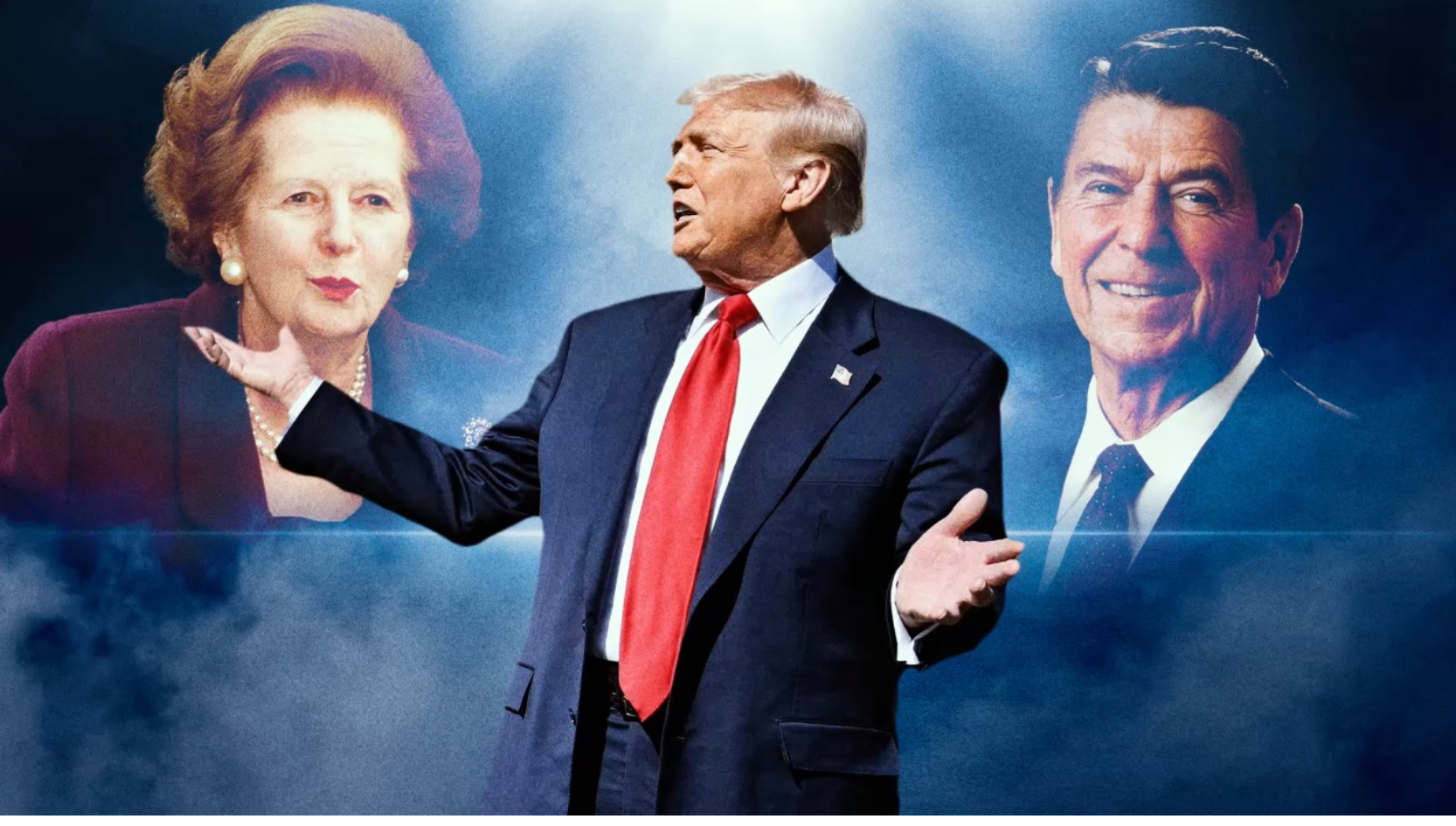


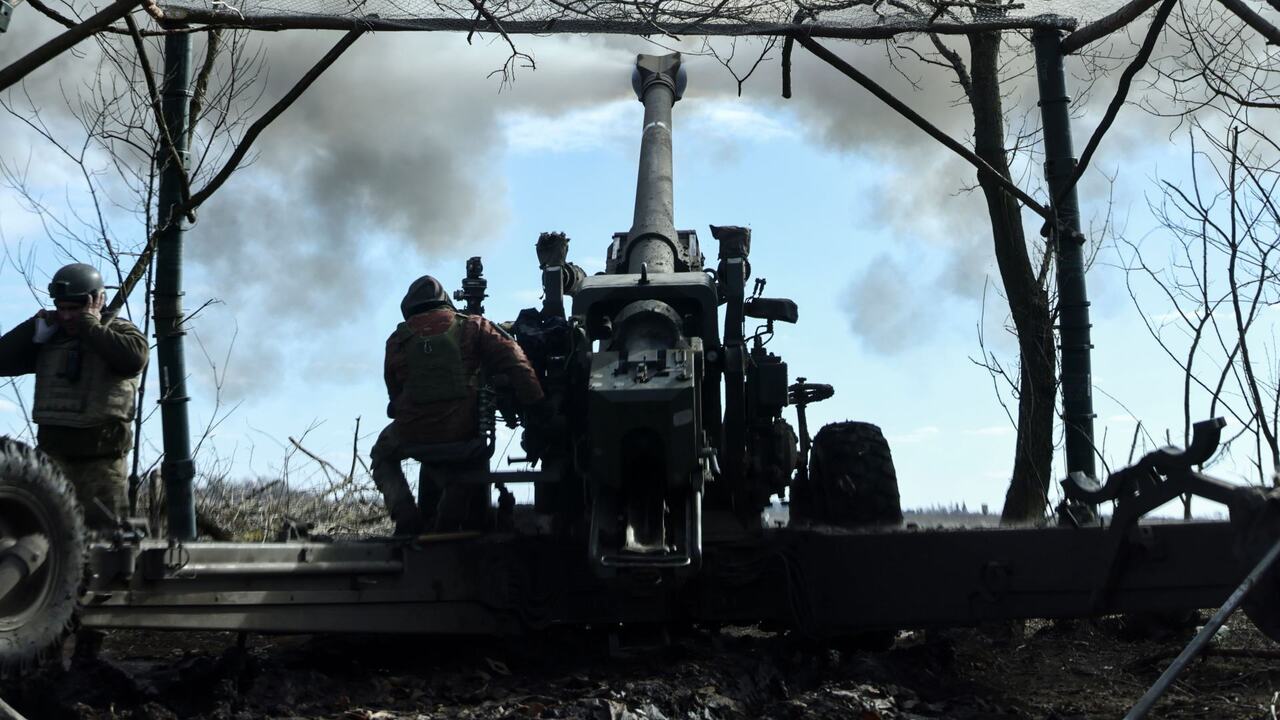



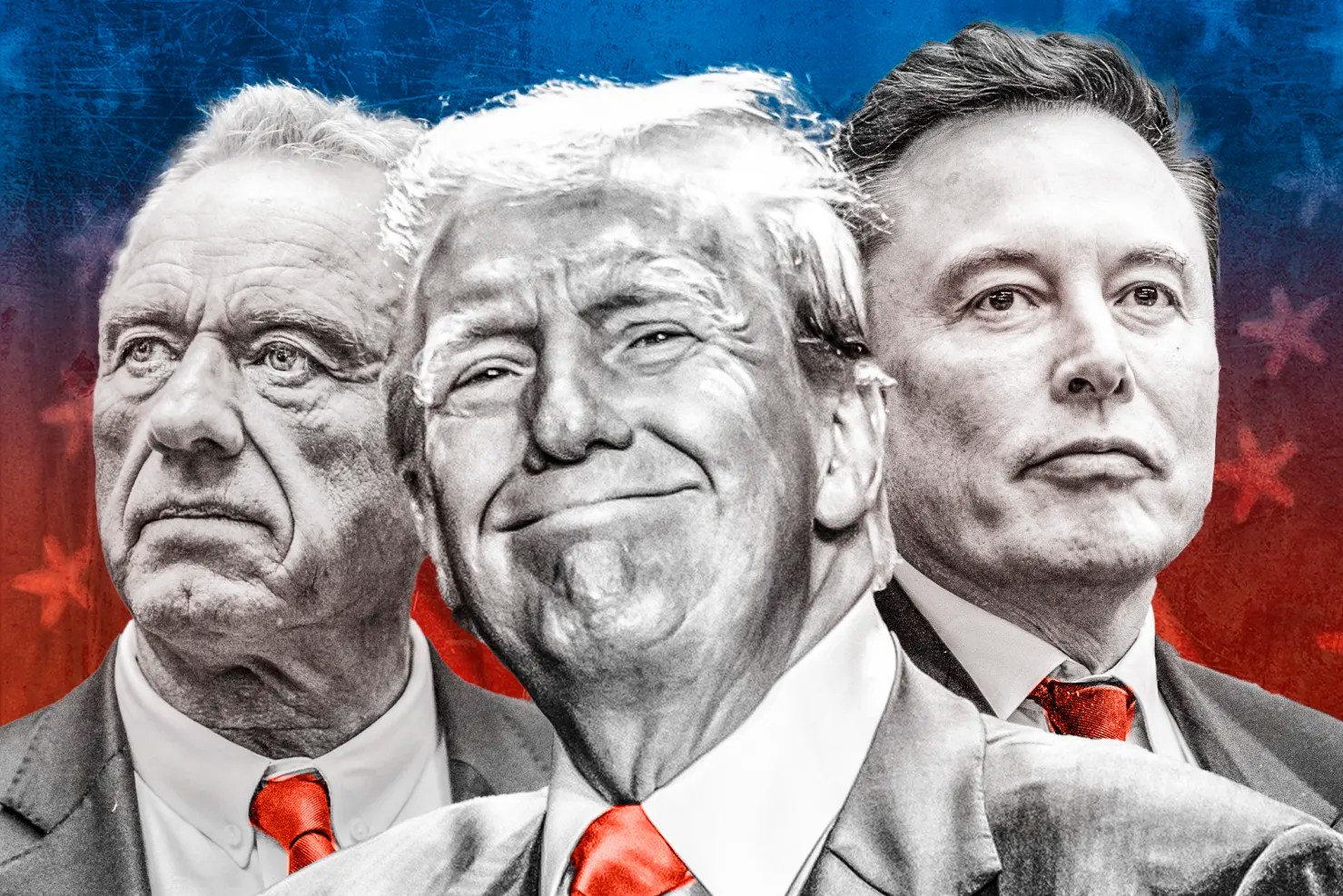




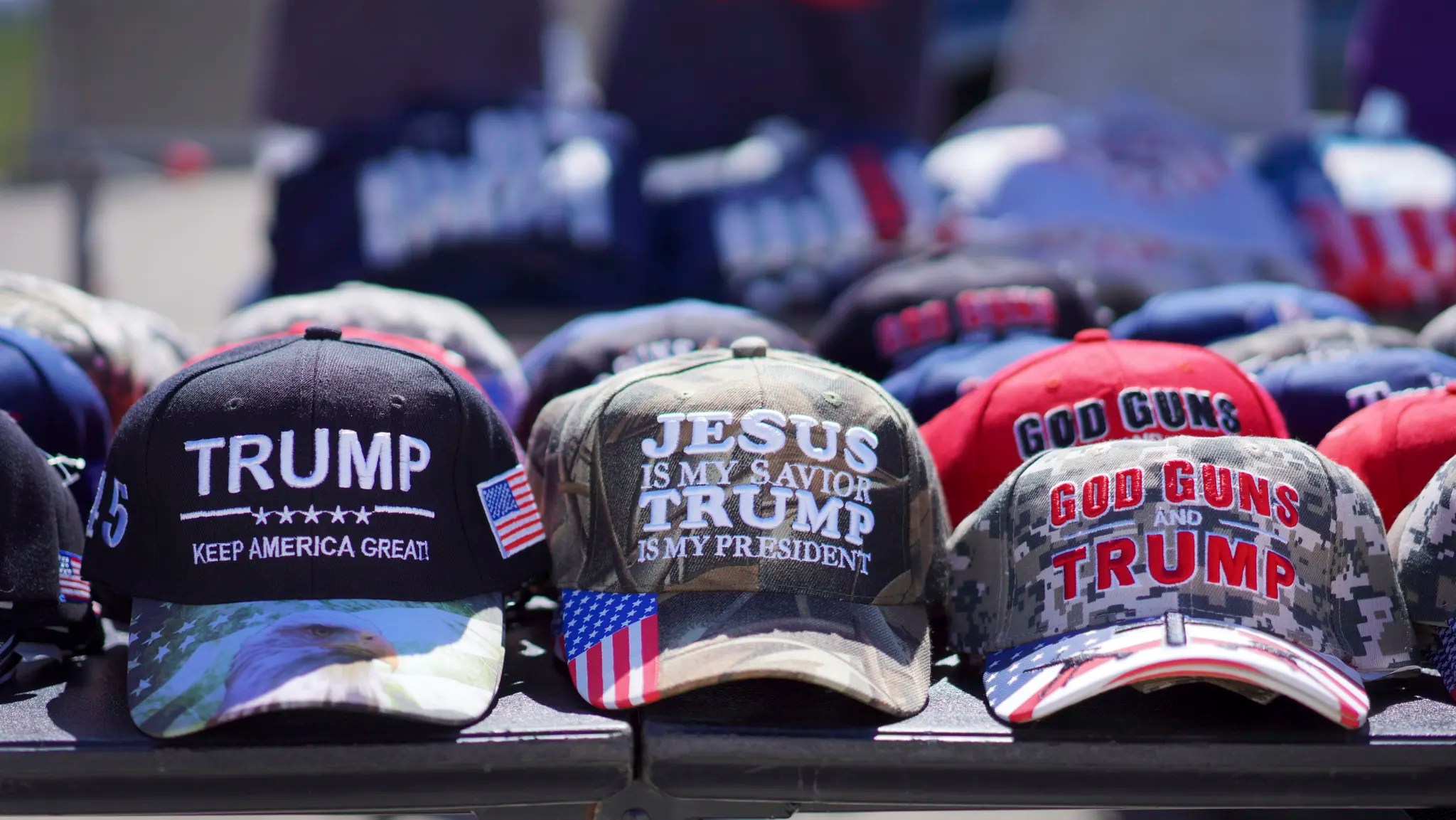


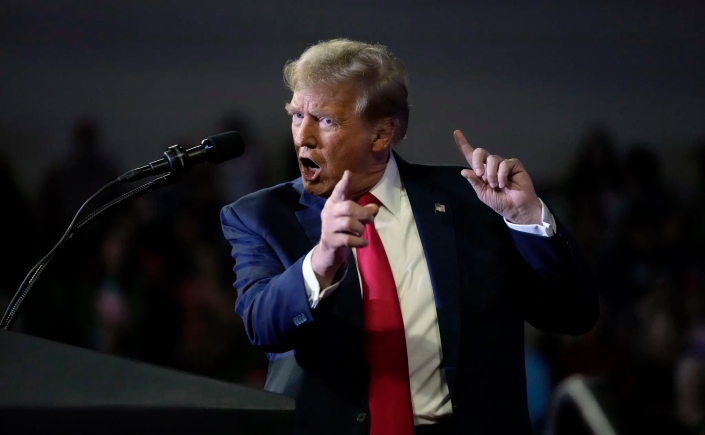




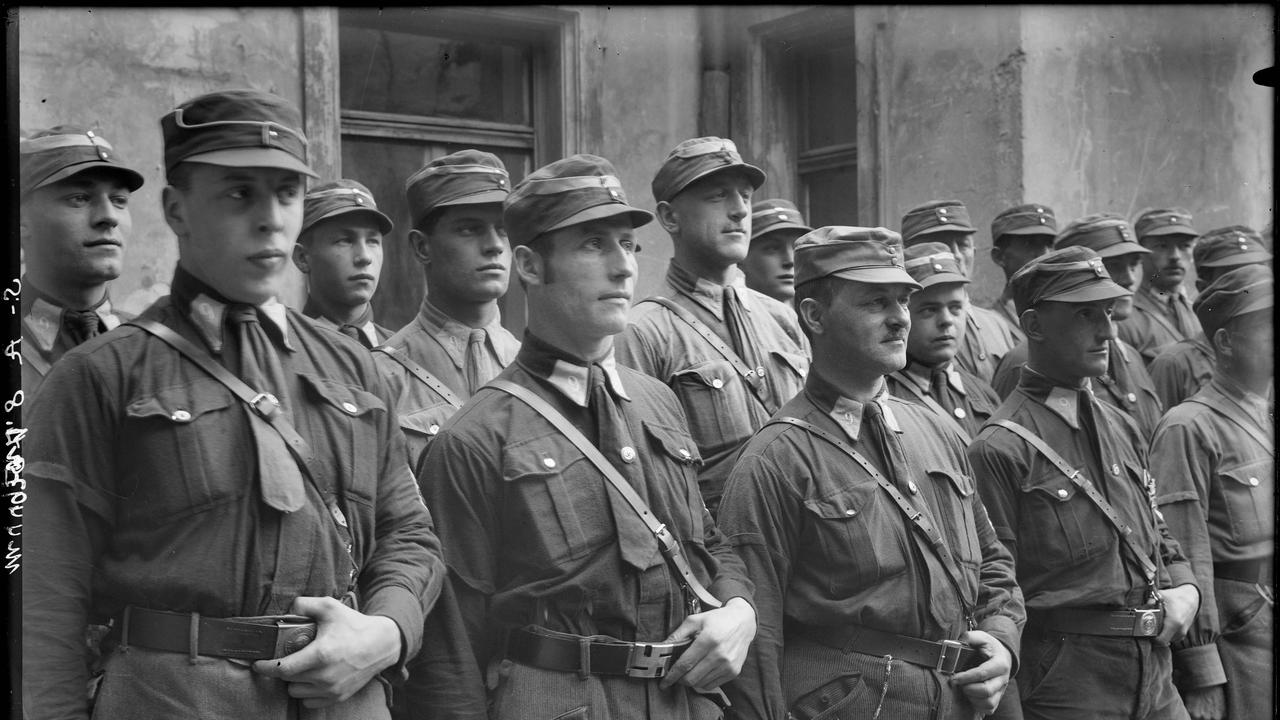
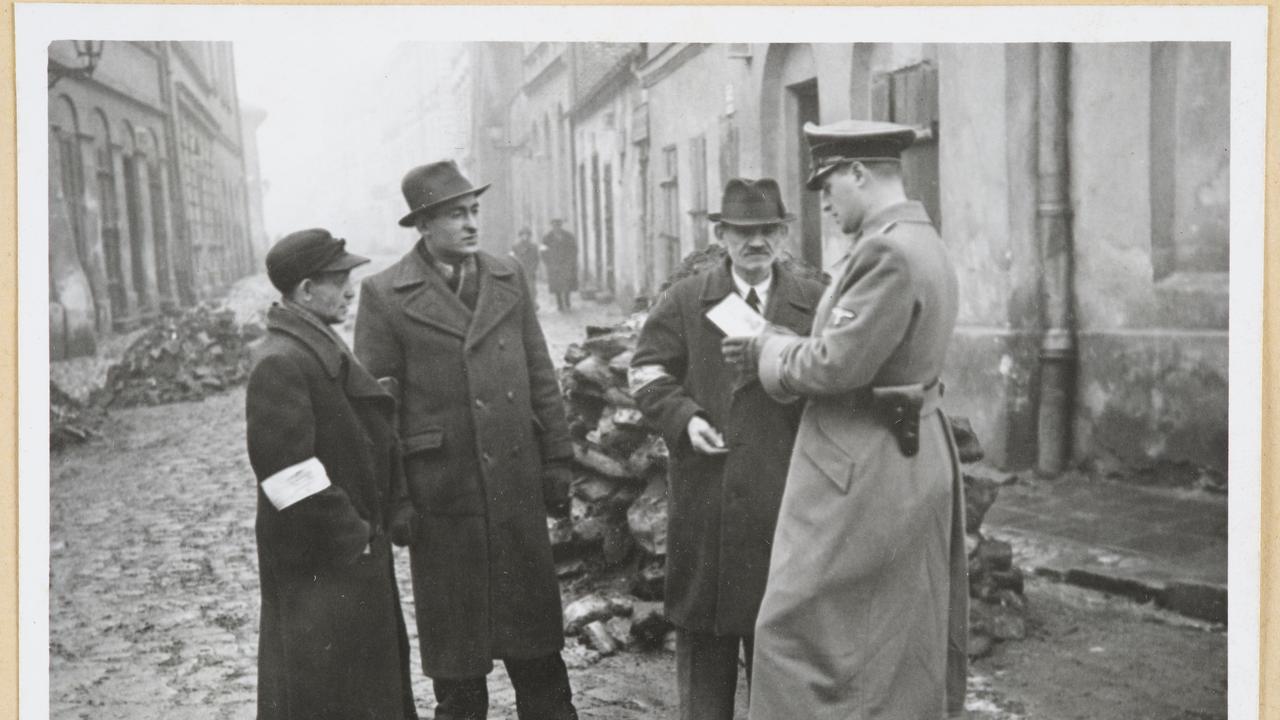
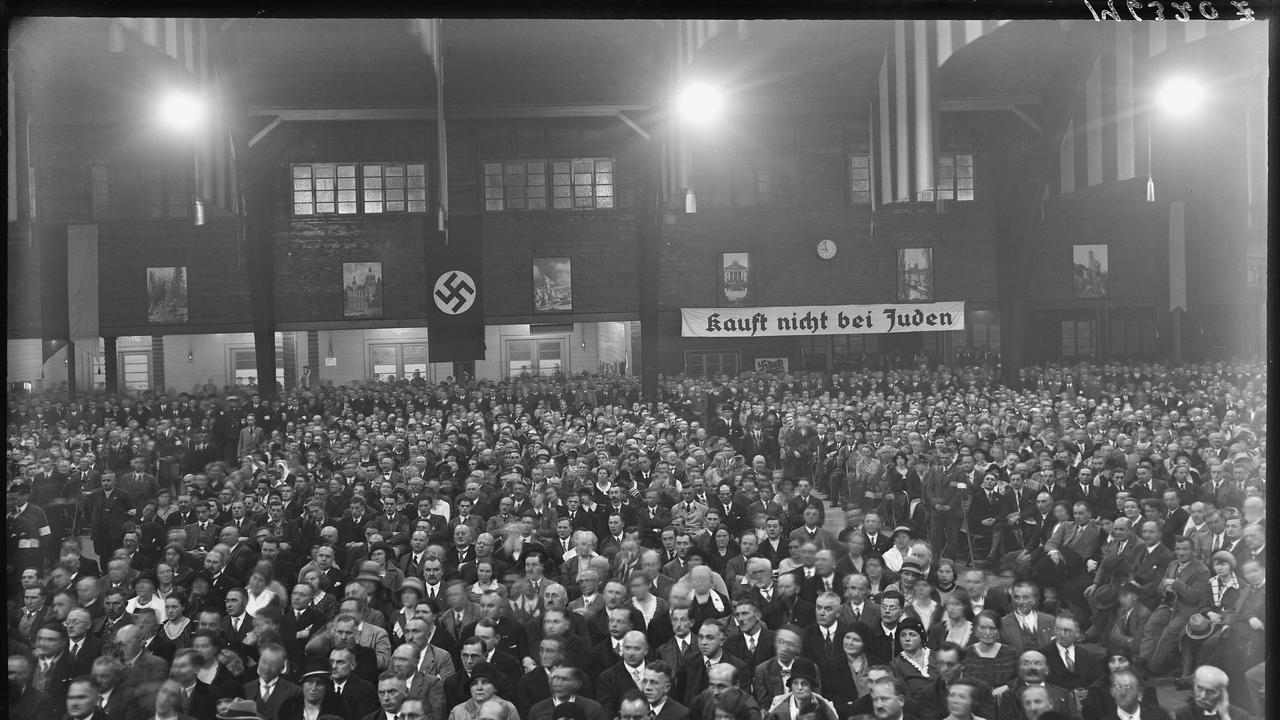
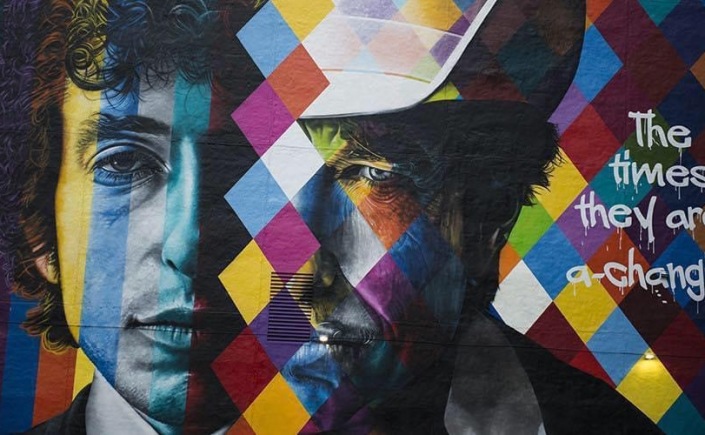
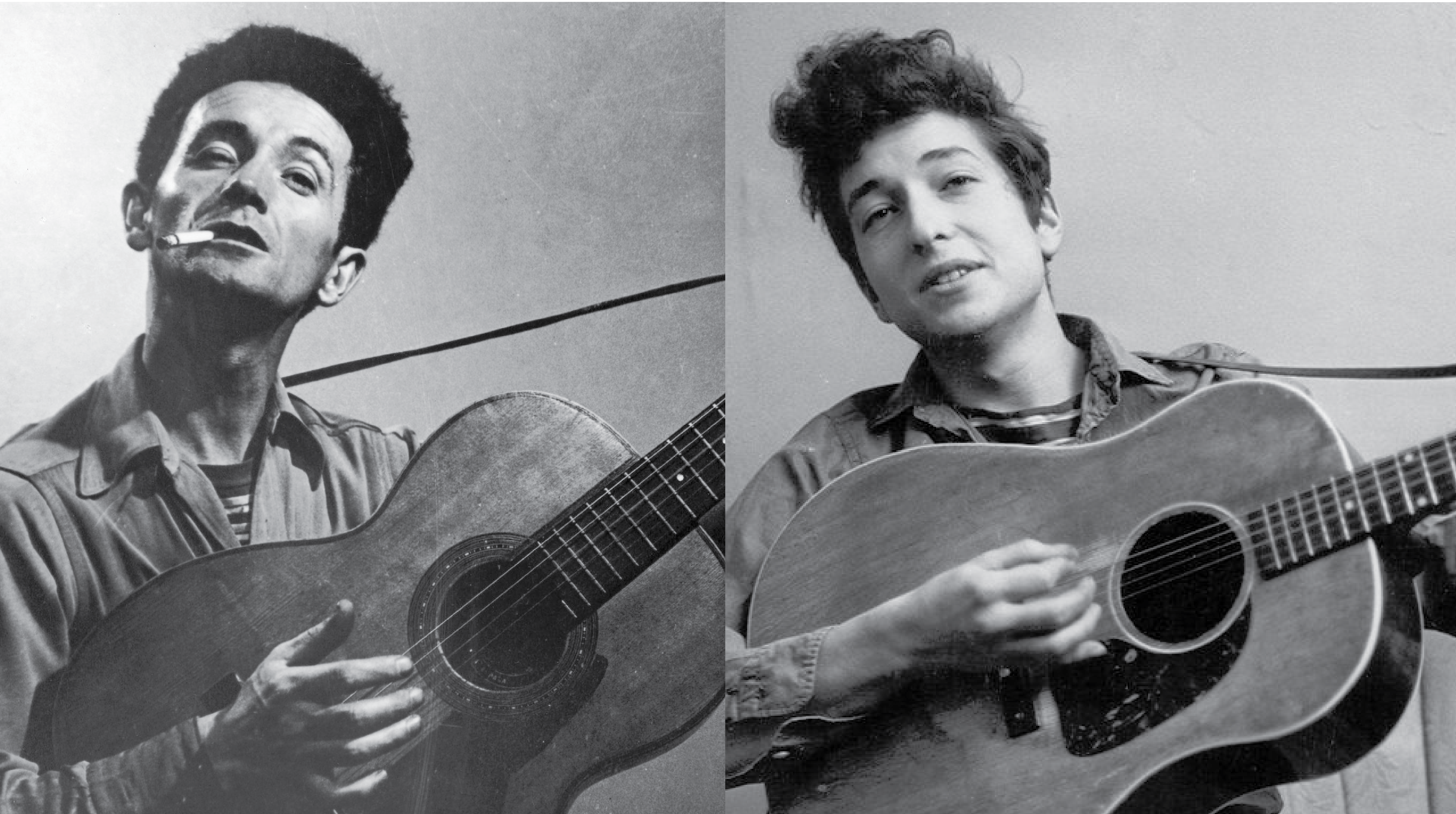

















 In That Howling Infinite