The Watchers Of The Water

A song about Gallipoli, sung by a Turkish soldier

Once upon a war…

Monday 25th April is Australia and New Zealand’s national day of remembrance for all Anzac solders killed and wounded in their nation’s wars, and to honour servicemen and women past and present. At first, the Anzacs fought in the British Empire’s Wars, beginning with the Boer War, and then through two World Wars. From the mid -twentieth century, they have fought and died in what could ostensibly be called America’s wars even though these were waged under UN, EU or western alliance auspices: Korea, Gulf Wars II and III, Afghanistan, and the current interventions in Syria and Iraq. Incidentally, Australian veterans commanded mercenary forces hired by Saudi Arabia and the United Arab Emirates that laid waste to towns and villages in Yemen during its recent civil way – with the help of American and British weaponry.

At the heart of the Anzac Day remembrance is the Australian and New Zealand Army Corps’ role the Dardanelles campaign of 1915-16, Winston Churchill’s grandiose and ill-conceived plan to take the Ottoman Empire out of the war by seizing the strategic strait between the Black Sea and the Mediterranean, thereby threatening Istanbul, the Ottoman capital. It was a military failure. From the initial seaborne assault to the evacuation, it lasted eight months and cost 114,000 lives with 230,000 wounded.

In 1915, Australians greeted the landings at Gallipoli with unbridled enthusiasm as a nation-making event. But it wasn’t long before they were counting the dreadful cost. More than 8000 Australians died during the Gallipoli campaign. As a loyal member of the British Empire, Australia eventually sent 330,000 men overseas to fight for the King. Volunteers all, not all of them white men – despite the authorities policy of recruiting only Australians of Anglo-Celtic stock, their ranks included many indigenous, Chinese and others. By the time the war ended in 1918, 60,000 of them were dead. As the late historian Ken Inglis once pointed out: “If we count as family a person’s parents, children, siblings, aunts and uncles and cousins, then every second Australian family was bereaved by the war.

[As for the Anzac Day march], I’d say only returned people could march. And then the day would come, I’d hope, when there’d be the last person marching, the last survivor as it were. And I’d think what a great day that would be … because it would mean we’d been at peace for a long time. And that’s what those men in the First World War were fighting for.”
Bill Gammage, historian and author of The Broken Years.

Gallipoli is cited as the crucible of Australian nationhood, but the Anzacs’ part in the doomed campaign was but a sideshow of the wider campaign. Although it is celebrated in Australian song and story, it was the Ottomans’ most significant victory in the war that was to destroy the seven hundred year old Ottoman Empire secure the reputation of its most successful general Mustafa Kemal, who as Ataturk, became the founder of modern Turkey.

Some thirty four thousand British soldiers died on the peninsula, including 3,400 Irishmen, and ten thousand Frenchmen – many of these latter being “colonial” troops from West and North Africa. Australia lost near on ten thousand and NZ three. Some 1,400 Indian soldiers perished for the King Emperor. Fifty seven thousand allied soldiers died, and seventy five thousand were wounded. The Ottoman army lost fifty seven thousand men, and one hundred and seven thousand were wounded (although these figures are probably much higher). An overlooked fact is that some two thirds of the “Turkish” solders in Kemal’s division were actually Arabs from present day Syria, Israel and Palestine – and  a small number of European Jews who had settled there and who as Ottoman citizens were subject to conscription.

Gallipoli was indeed a multicultural microcosm of a world at war.

Whilst the flower of antipodean youth is said to have perished on Gallipoli’s fatal shore, this was just the overture. Anzac troops were despatched to the Western Front, and between 1919 and 1918, 45,000 Aussies died there and 124,000 were wounded.

Once upon a war, the Dardanelles Campaign of 1915-16 was a sideshow to the bigger theatres of the Eastern and Western Fronts. To some, it was a reminder that they could not stomach Winston Churchill for this was said to be his greatest stuff up in a career replete with such (although they would admit that he more than exonerated himself his and Britain’s Finest Hour). For many Australians and New Zealanders, it was a national baptism of fire, of youthful sacrifice on the altar of Empire. And notwithstanding the  military defeat and retreat, the folly and foolhardiness, in the harrowing adversity and heroism, lay the bones of a young country’s enduring creation myth.
Former soldier James Brown, Anzac’s  Long Shadow

There are abundant primary and secondary sources relating to the Dardanelles campaign and the Anzacs, but here is a wiki primer: Gallipoli Campaign

The genesis of a song …

Back in the last century, before ANZAC Day became the secular Christmas that it has become, before marketing people and populist politicians saw its commercial and political potential, before the fatal shore became a crowded place of annual pilgrimage, my Turkish friend, the late Naim Mehmet Turfan, gave me a grainy picture of a Turkish soldier at Gelibolu carrying a large howitzer shell on his back. Then there was this great film by Australian director Peter Weir, starring young Mel Gibson and Mark Lee. There were these images of small boats approaching a dark and alien shore, of Lighthorsemen sadly farewelling their Walers as they embarked as infantry, and of the doomed Colonel Barton humming along to a gramophone recording of Bizet’s beautiful duet from The Pearl Fishers, ‘Au fond du temple saint’ before joining his men in the forlorn hope of The Nek.

There were other melodies I could never quite get out of my head. One I first heard in a musical in Beirut before that magical city entered its Dark Ages  –  Al Mahatta, written by the famous Rabbani Brothers and starring the Lebanese diva Fayrouz. And The Foggy Dew, one of the most lyrical and poignant of the Irish rebel songs:

Right proudly high over Dublin town, they hung out the flag of war. ‘Twas better to die ‘neath that Irish sky than at Suvla or at Sud el Bar…Twas England bade our Wild Geese go that small nations might be free,  But their lonely graves are by Suvla’s waves or the fringe of the grey North Sea.

Over three thousand Irishmen died at Gallipoli.

The song grew out of these many inspirations.

It was first performed in public by HuldreFolk in the closing concert of Coffs Harbour Folk Festival at the RSL on Australia Day 1984. When we had finished, there was absolutely silence in the hall. Then a voice cried out “the sky didn’t fall down!”, and the hall erupted with applause.

And here is HukdreFolk’s rendering of Russian poet Yevtushenko’s account of the parade of German prisoners of war through the streets of Moscow in 1941, juxtaposed with The Watchers of the Water.

Anthem for Doomed Youth
Wilfred Owen

What passing-bells for these who die as cattle?
Only the monstrous anger of the guns.
Only the stuttering rifles’ rapid rattle
Can patter out their hasty orisons.
No mockeries now for them; no prayers nor bells;
Nor any voice of mourning save the choirs,—
The shrill, demented choirs of wailing shells;
And bugles calling for them from sad shires.

What candles may be held to speed them all?
Not in the hands of boys, but in their eyes
Shall shine the holy glimmers of goodbyes.
The pallor of girls’ brows shall be their pall;
Their flowers the tenderness of patient minds,
And each slow dusk a drawing-down of blinds.


Dermott’s Last Ride

So, when my time it comes  and at last I leave this place, I’ll walk out past the charge hand’s gate and never turn my face. Up to the gates and into the sun, and I’ll leave it all behind, with one regret for the lads I’ve left to carry on their grind.    Factory Lad, Colin Dryden

Dermott Ryder, poet, writer, collector and chronicler of songs and stories, singer and songwriter, stalwart of the seventies and eighties Sydney folk scene, one-time manager of the legendary ‘‘Liz” Folk Club, and creator and longtime presenter of the iconic weekly folk radio programme Ryder ‘Round Folk, headed off to his big gig at the great folk club in the sky on the night of Tuesday 3rd March.

A retrospective follows, but first, enjoy two minutes of delight with the theme to Ryder Round Folk: a merrie morris, a hornpipe, and a hoot!

Dermott and I go back a long way, though not as long as most.

He arrived in Oz in 1968 as a Ten Pound Pom. Before that, he’d spent five years in the Royal Artillery on a short term commission, seeing service in Germany and in Malaya,  avoiding the nasty places that proliferated during the declining decades of the moribund British Empire. Trained in management, accounting and IT, he worked in Papua New Guinea before settling down in Sydney where he became a pillar of the folk music scene. Since his retirement, he has devoted his energies to his music and writing.

Dermott In Bougainville

It was Victor Mishalow who first introduced me to Dermott in 1983. He was dropping into 2MBS for an interview on Ryder Round Folk, and he brought me and Yuri the Russian Storyteller along too. We had just launched our short and almost illustrious career as HuldreFolk. Dermott, as guru, mentor, and propagandist for the Sydney folk scene, gave us our first radio appearance. There is a famous photograph to commemorate it (Dermott’s archive of folkdoms’ seventies and eighties should be a national treasure. All the wannabes and could’ve beens, the famous and almost famous are celebrated therein).

HuldreFolk - Early Days. Ryder Round Folk 1983

The live concerts at 2MBS’s Chandos Street studios were a must-listen on the monthly calendar, with the good and the great of Sydney’s folksingers and musicians doing their thing. Guests included Victor, Yuri, Jim Taylor, Robin Connaughton, Penny Davies, Roger Illot, John Broomhall, Gordon McIntyre and Kate Delaney, Phil Lobl, Mary Jane Field, and the Fagans.

This was when Adele and I got to know Dermott and Margaret Ryder for the first time. We then learnt of his history: his part in the famous folk revival of the late sixties and early seventies, the first Port Jackson Folk Festival, the foundation if the NSW Folk Federation, and the famous Liz Folk Club in the Sydney CBD. He was among that first golden generation of folkies, including Colin Dryden, Gary Shearston, Declan Affley, Warren Fahey, John Dengate, Danny Spooner, Mike McClellan, Bernard Bolan, and Judy Small. Many other performers moved in Dermott’s musical orbit, including Andy George, Rhonda Mawer and the Shackistas of Narrabeen, Jim Jarvis, Al Ward, John Summers, and many, many more.

Dermott and I bonded further with our shared origins in the old country. He of Lancashire Irish heritage (Widnes, actually), and me, an Irish Brummie. We had a shared love of traditional Irish and English folk music. We probably even crossed bars in one of the many English folk clubs, in the ‘sixties. Most notably, the celebrated Jug O’Punch in the Birmingham suburb of Digbeth, run by the famous Ian Campbell Folk Group.*

        The Parting Glass

        Trad. as sung by Liam Clancy and Tommy Makem

Oh all the money that e’er I had
I spent it in good company
And all the harm that e’er I’ve done
alas, it was to none but me
For all I’ve done for want of wit
to memory now I can’t recall
So fill to me the parting glass
good night and joy be with you all

Oh all the comrades that e’er I’ve had
they are sorry for my going away
And all the sweethearts that e’er I’ve had
they would wish me one more day to stay
But since it falls unto my lot that
that I should rise and you should not
I’ll gently rise and I’ll softly call
good night and joy be with you all

Farewell, old friend.

Dermott and Margaret Ryder

  Leaving Can Be Easy

  By Dermott Ryder

  Leaving can be easy, when the right time comes.                                                                               Many will have gone before, in a long, long line.                                                                                 When it’s your turn, you look back, and smile,                                                                                     then look forward to your own new, far horizon.

 There are people to tell, and books to return,                                                                                 Broken bridges to mend now, better this way,                                                                                   leave no hurt feelings behind at the end of the day.                                                                           We are all travellers, and we will meet again.

 Don’t think of sleep. Keep that for much later.                                                                                    Give and take addresses and phone numbers.                                                                                  Make promises you probably won’t remember.                                                                                 Be pleasantly surprised and strangely grateful.

Welcome the crowd come to see you on your way,                                                                             and to share this rite of passage, to keep the faith                                                                             in this next step in the long tradition of the traveller.                                                                         Shake hands, and know that you cannot return.

* What a club that was. Back in the day, it hosted the cream of British folk music, including the Dubliners, the Furey Brothers, Martin Carthy, Peter Bellamy, and a very young and acoustic Al Stewart. Overseas guests included Tom Rush, an unknown Paul Simon, a young goddess called Joni Mitchell, and on an antipodean note, Trevor Lucas, who went to marry Fairport’s fair maid, Sandy Denny, and later, become a founding member of The Bushwhackers before his untimely demise in 1989.

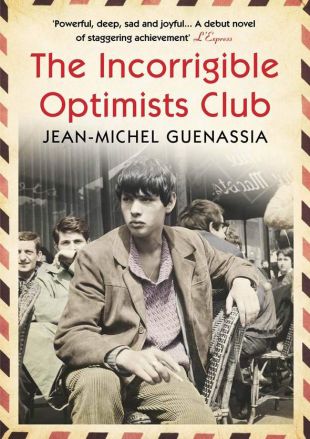
The Incorrigible Optimists Club

A story of exile and of exiles, of revolutions fought and betrayed, of wars and causes lost,  of faith and failure, of shame and regret, tolerance and redemption, of secrets and confidences kept and broken, of untold stories and restless ghosts.

And this winner of France’s prestigous Prix Goncourt is one of the best books I have read in years!

IOC

They say for every boy and girl there’s just one love in all the world and I know I’ve found mine.                                                                                       Carole Joyner and Ric Cartey, Young Love, 1956

Come mothers and fathers throughout the land, don’t criticize what you can’t understand. Your sons and your daughters are beyond your command. Your old road is rapdly agin’ . Please get out of the new one if you can’t lend your hand for your times they are a-changin’ .                                                                             Bob Dylan, 1964

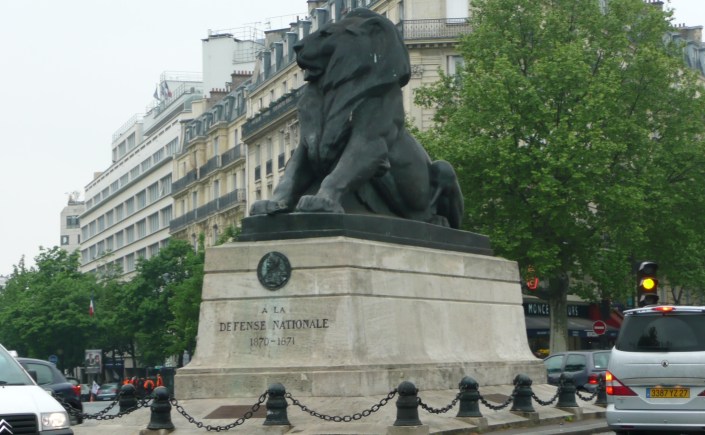
In Montparnasse, a metro station exits onto the wide Place Denfer-Rochereau, the centrepiece of which is a magnificent bronze lion, sculpted by Frédéric Bartholdi, creator of The Statue Of Liberty as a memorial to the heroic defence of Belfort during the Franco-Prussian Way of 1870-1871. Directly opposite is the entrance to the morbidly amazing Catacombes de Paris. On the Boulevard Raspail side of La Place is a big cafe where on a freezing, wet and windy May morning a few years back, Adele and I drank hot espresso whilst waiting for the Catacombs to open. I like to think that in the late fifties, this very cafe was indeed the Balto, where much of this magnificent novel is set:

Le Rive Gauche, as the ‘fifties gives way to the ‘sixties; as the crooners makes way for rock n’roll; as the Cold War divides a continent, sending dissidents and refugees fleeing to a safe haven in Paris; as the Algerian war divides and destroys families: and as the seeds of ‘les evenments de Mai 1968’ are sown in the hearts and souls of France’s young people

It is a coming of age book, of young hopes and fears, love and loss. It is book about writers and reading, and the magic and power of the written word in prose and poetry. Like the games of chess that punctuate the narrative, it is about how life and learning is characterized by strategy and tactics, calculated feints and moves, patience and passion. And the paradox that pervades the story: nothing happens by accident, but never underestimate the power of coincidence.

Michel Marini, our narrator, is a precocious twelve year old when we first meet him, navigating his rocky road through high school, addicted to reading, rock n’roll, playing table football in the local cafes, and his introduction to the club of the title. This gathering of argumentative, chess-playing, smoking and boozing, grumpy old émigrés become in many ways a surrogate family. Michel first encounters these outcasts of Eastern Europe in the back room of a bistro. They are The Incorrigible Optimists Club, where,  despite the ancient discord of its members, the club serves as thier sanctuary. “The Poles hated the Russians, who in turn loathed them; the Bulgarians detested the Hungarians, who ignored them; the Germans abhorred the Czechs, who despised the Romanians, who could not care a damn. Here, they were all stateless and equals in adversity.”

Lost souls, the flotsam Old Europe, hugging their faded and vanished dreams, their language, their culture, their sad and often traumatic memories of their past in a strange land. Men without women, stateless, penniless, jobless, homeless, dispossessed of their wives and children.  Bent, but not broken. These are memorable characters, each with his own colourful and poignant back story. The pilot who defects for love, the doctor who drives cabs because his qualifications are not recognised. The Hungarian movie idol and his enamoured agent. The mysterious photography expert who befriends and mentors the young narrator. They are trapped between worlds and irreconcilable desires: “When a man achieves his dream, there is neither reason, nor failure, nor victory. What is most important in the Promised Land is not the land, but the promise.”

And there is also Michel’s actual family, his mismatched, over-worked and out- of- time parents, each from a different class and station, and their parents and siblings, particularly Michel’s art-loving Italian grandfather, and his dislocated pied-noir uncle and cousins. His chatterbox little sister, and his tortured, intellectual brother Franck. And front and centre in Michel’s adolescent life, Franck’s girlfriend and her would-be-revolutionary brother, beautiful, intelligent, rebellious, orphaned rich kids who become young Michel’s muses: and literally colliding with him through serendipity and synchronicity, his first true love. And behind them all, casting ominous shadows and unleashing sundering storms, lurks the dangerous backdrop of the closing years of the bitter and bloody Algerian independence war.

A knowledge of the Russian Revolution and its dramatis personae, Stalin’s Terror, The Great Patriotic War, the Hungarian Revolution and the building of the Berlin Wall, and of the ‘savage war of peace’ that was Algeria, is not obligatory, but it certainly helps set the scene for the various stories and vignettes that unfold. Cameo roles include philosopher Jean Paul Sartre, novelist Joseph Kessell, and one Rudolf Khametovich Nureyev – and the sinister ghost at the feast, Iosif Vissarionovich Stalin.

Every now and then, your jaw drops and you say to yourself “this is a masterpiece”! Like when I first heard Keith Jarrett’s Koln Concert and Glen Hansard and Markéta Irglová’s The Swell Season. Sultans of Swing and The Boy in the Bubble. When I first read the opening paragraphs of Catch 22, and Chapter 41 of Moby Dick. The Incorrigible Optimists Club cast the same spell.

I leave the last words to the author: “Before you read a book, you can know immediately whether or not you are going to like it, just as with people, you can tell just from looking at them whether or not you’ll be their friend. You smell it, you sniff it, you wonder whether it’s worth spending time in its company. The pages of a book have an invisible alchemy that imprints itself on our brain. A book is a living creature”.

You cannot find a better testimonial for the printed word than that.

© Paul Hemphill 2015,  All rights reserved


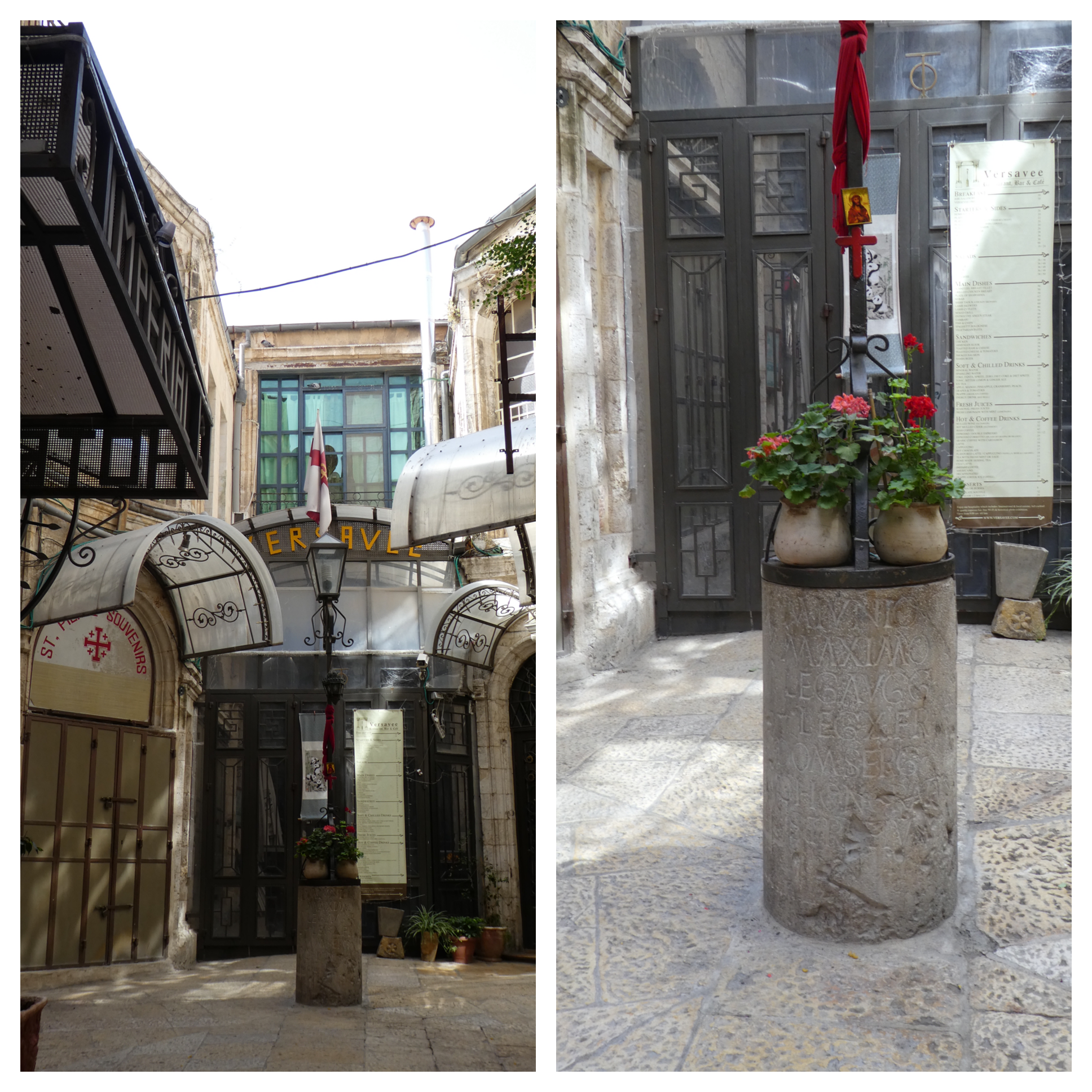
Nova Via Dolorosa

In my earlier blog, The Grand Old New Imperial Hotel, I wrote:

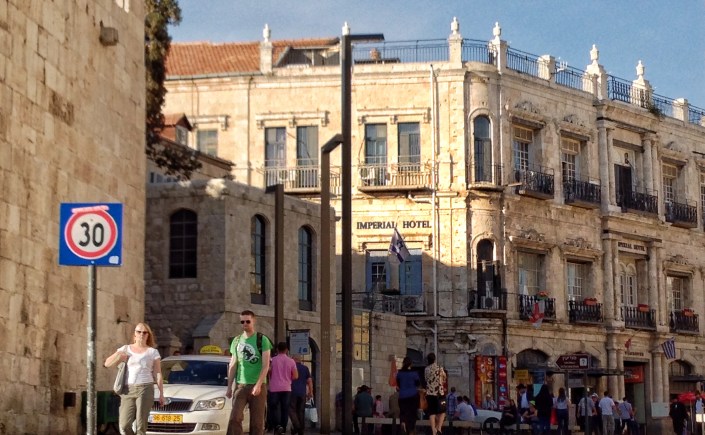
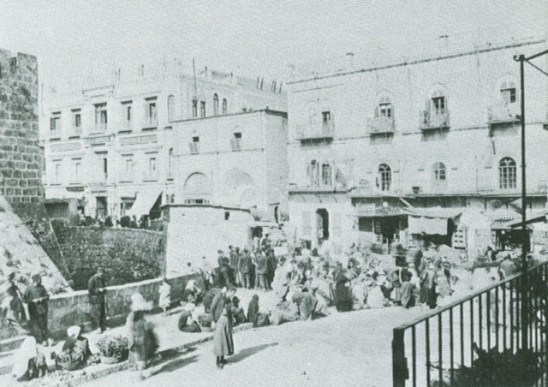
Had the hotel been there in Biblical times, what events we might have witnessed from our balcony. King Herod, the ostensibly psychotic master builder of Bible infamy dwelt opposite as he planned his Second Temple. So did Pontius Pilate. If one accepts the narrative of Simon Sebag-Montefiore, in his Jerusaelm : The Biography, we could also have watched the last journey of Jesus of Nazareth. It was but a short distance from the Citadel where he was condemned and Golgotha where he died: across the square, right at the New Imperial, left just past the Med, and straight on to the Hill of the Skull (where the Church of the Holy Sepulcher now stands). The present Via Dolorosa runs from the site of the Antonine Fortress, on the northern edge of the Haram ash Sharif, to The Church, its course set by custom and customers from Byzantine days.

https://howlinginfinite.wordpress.com/2014/09/01/the-grand-old-new-imperial-hotel/

And now it appears that this indeed might have been the case.

http://www.washingtonpost.com/world/middle_east/archaeologists-find-possible-site-of-jesuss-trial-in-jerusalem/2015/01/04/6d0ce098-7f9a-45de-9639-b7922855bfdb_story.html?hpid=z3

See also:

https://howlinginfinite.wordpress.com/2014/06/07/amazing-grace-theres-magic-in-the-air/

John Cleverley’s Long March

In memoriam for our old friend, scholar, wise man, and neighbour of 20 Watkin Street.

John Cleverley was a stalwart of many battles with Council, and indeed, with any overbearing and presumptuous authority. At his funeral service, his brother told the story of how his dad sent him to participate in the school nativity play dressed not in shepherd garb, but in the white shirt and red scarf of Mao’s little pioneers.

Adele and I first met John during one of those numerous stoushes we had with the now defunct South Sydney Council, and were good friends ever since. For many years, I would entertain his many Chinese visitors with a formal presentation on accounting in a publishing company. Whenever I would encounter John in the street, we would have a good yack about Australian politics, the doings of the Tories, and the manipulations of the Murdoch empire.

John lived a full and colourful life and left a very large footprint. The obituary tells a great story.

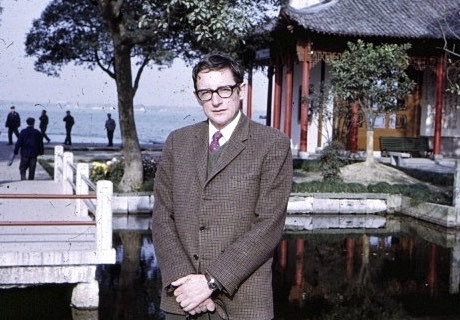
John Cleverley

JOHN CLEVERLEY 1931-2014    

Education Academic Reached Out To China

John Cleverley, formerly pro dean of the Faculty of Education at the University of Sydney, first visited China in 1972. He was an organising member of the first study tour led by Australian UNESCO education chairman, Professor of education Bill Connell. This group, the first delegation of Australian educators to visit China, was there when the Whitlam government recognised the People’s Republic of China. China was an abiding interest for the rest of Cleverley’s life.

John Farquhar Cleverley was born on June 4, 1931, in an England at peace, but ravished by the Depression. His early years were at Lime Grove in London, from which he was evacuated in 1939 at the outbreak of war. His education started at Lime Grove Preschool, which was followed by Canon Lane Elementary School and later the John Lyon School in Harrow, an endowed grammar school.

Cleverley began work in a cottage industry and progressed to be an office boy in publishing. His decision to migrate to Australia in 1949 with a £10 berth (halved as he was under 18), was fired by his reaction to post-war Britain. He once posed the question: “Why should the accident of status and birth accord status and arrogance?” He believed people should be their own masters, was uninterested in army service to uphold the Empire and hoped for a reconstructed world after the horrors of the war.

In Australia he became a grocery assistant, Commonwealth public servant and a sales representative in publishing. Although unaligned politically he actively opposed the Communist Dissolution Act Referendum in 1951. He wanted a better, fairer more just society based on social inclusion and the free exchange of ideas.

UIn 1951 Cleverley set out on a program of “self-improvement” which continued throughout his life. He took classes at Sydney Technical College, took the NSW Leaving Certificate, matriculated for university entry in 1954, and supported himself by working in a printing foundry at night.

He entered primary teacher training at Balmain Teachers College in 1952 and became president of the Student Representative Council in 1953. He taught at Randwick, Balmain Demonstration and Woollahra Public Schools (in the latter teaching the opportunity class) while he pursued part-time studies at the University of Sydney. In 1958, he married Cecily Kearney.

Work in teacher education followed at Wagga Wagga Teachers College, where the family moved in 1960, before a stint in the Commonwealth Department of Education supporting Colombo Plan students.

At the University of Sydney he systematically pursued his undergraduate and post-graduate studies – a BA, MEd (Hons), and PhD. He moved to Monash University in 1965 then back to Sydney in 1972 to teach international and comparative studies in education and to help Connell to organise the now famous China education study tour of 1972.

Another tour followed in 1976, then many others, as well as many personal visits, often instigated by the Chinese. As a result, Cleverley developed a prodigious network of institutional and personal contacts from which a sustained program of outreach and exchange grew.

With the establishment of the pioneering Sydney University China Education Society (SUCES) in 1972 and under Cleverley’s careful guidance, educational and cultural exchange between China and Australia flourished.

SUCES morphed into the University of Sydney China Education Centre (Australia) in 1986. Cleverley imprinted his view that the society/centre was an apolitical grouping that saw cultural exchange as a public good. Much of what the group did was enlivened by Cleverley’s commitment to “people to people” contact and exchange. This gave the group strong capacity to reach out and host Chinese students and visitors in Australian homes and help them to engage with the Australian community.

Cleverley saw this as a different but successful “relational” approach for sustained success, antithetical to the current “transactional” norm focused on short-term dollar returns. The benefits and value of such exchange have been recognised by successive Chinese ambassadors to Australia.

SUCES received its first guest “worker, peasant, soldier” Chinese students who were studying in Canberra in 1973/4. Then a famous group came in 1979. It was known in China as “Aobang” (The Australian Gang) and in Australia as the “Gang of 9” and the members primarily studied literature or linguistics.

When the group returned to China, six of them established Australian Studies Centres in their home universities. In 2009 there was a 30-year celebration in China of this group and Cleverley was invited and honoured there. Over the years he was appointed an honorary professor at East China Normal University, Jiangxi Agricultural University, Shanpou University and South China Normal University, positions he held until his death.

The education centre, led by Cleverley (who was promoted to professor and married Margaret Teo in 1986) until his retirement, became well-known in educational circles in China and Australia, in Commonwealth and state education departments and by the Chinese Ministry of Education and the consulate in Sydney. It brought prestigious visiting scholars to speak at the University of Sydney, ran cultural exhibitions and displays, obtained grants for cultural exchange, published books and newsletters, held conferences, and was supported by a loyal following of Australian and Chinese associates.

As well as his work with China, Cleverley developed a national social studies curriculum in Papua New Guinea with Gerald Johnston and Roger Hunter. He also did some educational consultancy work in Thailand.

When a new building was proposed and planned for the Faculty of Education at the University of Sydney, Cleverley was called on to oversee the project. The outcome (opened in 1993) gave the faculty excellent facilities, but this was not without rancour. Access to some of the building space was fiercely coveted by some outside the faculty. The battle was won but not without challenge but the Faculty of Education’s position was ably carried by Cleverley.

Cleverley was also active in supporting opportunity for indigenous Australians at the University of Sydney, especially through the Aboriginal Teachers Aides (ATA) program offered through the Koori Centre. In 1983 he was invited to take management responsibility for this program which, though 10 years old, had been poorly funded and was barely viable, running heavily on goodwill and dedication.

His view was that the “disadvantages and disabilities facing Aboriginal people were historic and continuing, and this was indisputable”. For Cleverley the ATA program represented a major social equity initiative. He championed the Koori Centre before and after Commonwealth funding was forthcoming in 1990, and led it until his retirement in 1993.

Cleverley contributed significantly to teaching, scholarship and research in a number of education fields especially in comparative and international studies, particularly Chinese education. At the time of his death two additional works on China were approaching completion. These will be carried to publication by his close colleagues.

John Cleverley is survived by Margaret, children Anne, Helen, Jane, David and Elizabeth, seven grandchildren and his many students, colleagues and friends.

John Barclay

Sydney Morning Herald December 17th 2014

http://www.smh.com.au/comment/obituaries/obituary-education-academic-john-cleverley-reached-out-to-china-20141216-1261wn.html

The Devil Drives

In a piece in this weekend’s Australian, historian David Pryce-Jones wrote: “A nation in which a self-appointed group such as the Taliban sets out to murder the young, and in the process blow some of its own to unrecognisable body parts, is not really a nation at all”.

I am reminded of Chaim Nachman Bialik’s poem, Al haShehita (On the Slaughter), about the Kishinev Pogrom in the spring of 1903: And cursèd be he that saith: avenge this! Such vengeance for blood of babe and maiden Hath yet to be wrought by Satan.

And also, of WH Auden’s Epitaph On A Tyrant :  Perfection, of a kind, was what he was after…When he laughed, respectable senators burst with laughter. And when he cried the little children died in the streets.

Read my earlier post on the plight of Syria’s children:

https://howlinginfinite.wordpress.com/2014/02/06/bombs-and-babies/

Massacre in Peshawar reflects disarray across the world of Islam

David Pryce-Jones, The Australian, December 20th 2014

Picture: Women at an anti-terrorist vigil in Lahore, Pakistan, after this week’s massacre in Peshawar. Source: AFP

The murder by Taliban suicide bombers of 132 children in a military school in Pakistan is grim evidence of the crisis destroying settled order in the world of Islam.

Whole populations are no longer willing to submit to the injustice and hypocrisy of their rulers. The Taliban is only one example of those who reject the structure of their state and fall back on primary identities of tribe and sect, oblivious to the even worse injustice and hypocrisy they are putting in place.

Taliban leaders embody the central paradox of Islamism, that they have a religious obligation to indoctrinate their rank and file with murderous rage and contempt. In most of the Middle East, the political process has narrowed to a version of civil war. Power is lying in the street and whoever is able to mobilise people of their own ethnicity or sect may seize it. Pakistan is a case in point.

A nation in which a self-appointed group such as the Taliban sets out to murder the young, and in the process blow some of its own to unrecognisable body parts, is not really a nation at all. The law of the jungle has become the sole moral code in operation. In the absence of social and institutional ties that bind together people of different origins, what can only be called the culture of killing drives everyone apart, brutalises their existence and ends in the delusion that victims are in fact martyrs.

“Those to whom evil is done,” in WH Auden’s much-quoted stanza, “do evil in return.” Sure enough, Taliban spokesmen are claiming that their suicide bombers killed these children only to make the military “feel the pain” for having killed the Taliban’s “loved ones”. In reality, the Taliban and the military are both armed gangs set on having exclusive power. Sponsoring or opposing one another in the permanent search for advantage, they have created a submerged underworld of violence, secret deals and even more secret betrayals.

It’s more or less impossible to judge whether the culture of killing depends more on Islamic faith or ethnic identity. Take the example of the so-called Islamic State, setting up its putative caliphate in what used to be Iraq and Syria.

Its appeal is to the Sunni branch of Islam, and its brutal pursuit of power is very like the Taliban’s. Its main enemy appears to be the Syrian regime of Bashar al-Assad that belongs to the Shia branch of Islam, but what may look primarily like a sectarian divide is also another fight between rival armed gangs for supremacy over the same territory; and going between the two is the usual murky underworld of various supposedly jihadi groups also engaged in secret deals and even more secret betrayals.

Islamic State certainly illustrates with a frightening brutality all its own the Koranic injunction to the faithful to “strike terror into the hearts of the enemies of Allah”. These enemies include all who do not enrol under its black flag. One Sunni tribe in Iraq that was prepared to oppose Islamic State has been almost wiped out in revenge. Kurds are mostly Sunni Muslims but on ethnic grounds Islamic State has been fighting them to a standstill for weeks. Although Yazidis are Arabs, it has driven them into exile because their faith derives from Zoroastrianism.

Christianity and the caliphate are of course incompatible. Islamic State beheaded four Christian children in Iraq because they refused to convert to Islam. Canon Andrew White, the representative in Iraq of the Archbishop of Canterbury, says of the violence done to Christians: “They killed in huge numbers, they chopped their children in half, they chopped their heads off, and they moved north, and it was so terrible …”

Horrific videos show lines of Islamic State executioners shooting prisoners so that their corpses fall into mass graves. Exactly as in similar footage of the SS on the Eastern front in World War II, the murderers appear completely calm, self-possessed, as though gratified by a job well done.

Al-Qa’ida has been the first to declare that terror publicity of this kind is counter-productive and gives infidels knowledge that should be kept from them.

The news from the Middle East bears out the observation made long ago by Job in the Bible and Homer in The Iliad that evil is limit­less, mankind is capable of any atrocity that serves his purpose and even divinities can do nothing much to reform this sad building block of human nature.

The vilest crime becomes permissible and even praiseworthy if it is presented as sacrosanct. Civilisation involves creating circumstances in which evil is suppressed or controlled so that evildoers are perceived as outsiders, removed to the margin of society where their capacity for harm is neutralised.

Now and again in history, someone with the necessary force of character has been able to build an ideology strong and coherent enough to persuade others that it is true, and a salvation. Ayatollah Ali Khamenei leading millions of Iranians to chant “death to America, the great Satan”, is replicating Joseph Goebbels whipping up war frenzy at mass meetings in Berlin. A month ago, a preacher by the name of Sheik Omar Abu Sara solemnly promised Jews, in the course of preaching a typical sermon in Jerusalem’s al-Aqsa mosque: “We shall slaughter you without mercy.” The culture of killing has taken hold.

In 1979 the trial took place in Germany of Ernst Heinrichsohn, a Nazi official who supervised the deportation of Jewish children from Paris to their death in Auschwitz. All had been separated from their parents; some were too young to know their names. Witnesses remembered Heinrichsohn hitting the children on the way to their deaths. In the courtroom he was insignificant, a nonentity, stupid, deceived by ideology. World war alone put an end to his evil.

Until such time as the Taliban, Islamic State, al-Qa’ida and the various other jihadi groups are confronted and brought to account, whatever the costs, Muslim civilisation will have to remain a contradiction in terms.

Historian David Pryce-Jones is a senior editor at National Review.

One, Two, Three, What are we fighting for?

In November, counter insurgency expert David Kilcullen delivered an excellent speech that is worth reading. It is reproduced here. He speaks of the origins and the ascendancy of Al Qa’ida and Daish, including the origin and meaning of Salafi Islam, and discusses the ideological, political and military basis of these organizations, and the effectiveness or otherwise of The West’s responses to the threat they present. Of many thoughtful observations, I note his thoughts concerning the radicalization of Muslim youth:

 “Western governments since 9/11 have had a bad habit of orientalizing Muslims, treating them as a special case, as an exotic, potentially violent minority, who need to be handled with kid gloves. Often governments have sought to deal with Muslims through traditional elders, appointed (sometimes self-appointed) leaders who the government treats as intermediaries, hoping they will keep their young men and women in line. This has three really bad effects. First, these so-called elders are often, by definition, more conservative, authoritarian and traditionalist, and by deferring to them were deepening the marginalization of young Muslims. Secondly, theres a moral hazard – people are encouraged to seek special treatment, to set themselves apart from the rest of society, leveraging the existence of extremist crazies as a way to advance their own agenda, and that tends to move entire communities in a more sectarian, segregated direction, and creates divisions in society that extremists can exploit. Finally, it creates the impression that a whole community is responsible for the actions of a lunatic, criminal fringe”.

Islamism and the threat to liberal values

David Kilcullen | 12 November 2014

2014 John Bonython Lecture, Sydney on November 12. The Centre for Independent Studies

 I want first to thank the Centre for Independent Studies for the opportunity to be part of this event, with its rich tradition of provocative debate. I want to thank the team for organizing this, and for your wonderful welcome. Most importantly, I want to thank all of you for coming out to be part of this discussion.

 My topic is “What are we fighting for? Islamism and the threat to liberal values.” I’m going to approach it through three questions that are simple to state, but extraordinarily complex to answer:

 What’s the ideology that drives groups like al Qaeda or the Islamic State?

Where did ISIS come from?

What should we be doing about it?

First, though, let me define my terms. By Islamic State, I mean the organization whose Arabic name is ad-Dawla al-Islamiyah fi ‘Iraq wal Sham, led by Abubakr al Baghdadi, now calling itself ad-Dawla al-Islamiyah or al-Khilafa, the Caliphate. I’ll use the acronym ISIS for this group, which fields more than 30,000 fighters. It controls a network of cities, populations and territory across about a third each of Iraq and Syria, owns economic assets that make it the richest terrorist group on the planet, and is expanding into the wider region, reinvigorating Islamist terrorism worldwide and radicalizing fringe members of our own societies, of whom thousands are fighting alongside the group.

 When I use the word Islam, I mean the second largest religion in the world, with 1.6 billion followers, founded by the prophet Muhammad. “Islamic” refers to characteristics of that religion, and a “Muslim” is someone who follows it. Islamism, on the other hand, is a political ideology that seeks to propagate a particular form of the religion, shape society around it, and (often) use violence to force it on others.

 Two other terms I’ll use are salafi-jihadist and takfir.  A salafi is someone who emulates early Muslims, as-salaf as-salih, the righteous ancestors, hence “salafi”. The salafi movement arose in the 19th century as an effort to reassert a strict interpretation of Islam in the face of colonialism, and experienced a revival—which some call neo-salafism—after the failure of Arab nationalism and socialism in the post-colonial Middle East. There are millions of Salafis, most of whom don’t personally use violence, but some do use violence to spread their beliefs within the framework of a global religious war—a jihad—and we call that subgroup salafi-jihadist. Finally, takfir is the practice of declaring other Muslims as apostates, liable to be killed.

 When I talk about liberal values, I’m not speaking of what people in the United States call “Progressive” politics, but about something older, more basic, namely the tenets of 19th and 20th century classical liberalism that shaped the societies we live in—individual freedom and accountability, civil liberties, limited government, the rule of law, free-market economics tempered by regulation, equality of opportunity, religious toleration, the removal of violence from politics. We differ about how to apply these ideas—how limited should government be, how much regulation is appropriate, what safety net should the state provide, how should we balance economic freedom with social justice—but these surface differences obscure a fundamental consensus in our societies around these values.

 As I’ll point out later, this set of unexamined assumptions about what society is, how it should be organized, and the bounds of acceptable conduct within it—assumptions shared across almost the entire political spectrum in our countries—are utterly foreign to Islamism, even in its non-violent form. It’s precisely these values that salafi-jihadists seek to destroy by killing or terrorizing all who hold them, and its these values that we ourselves can place at risk, depending on how we choose to react to the terrorist threat.

 Whats the ideology that drives groups like al Qaeda and ISIS?

 With that as context, what is ISIS? Is it just al Qaeda under another name? You could be forgiven for thinking that, if you listen to politicians talk about it. For diplomatic and legal reasons—because the U.S. Authorization for the Use of Military Force and UN Security Council Resolutions since 2001 were framed around al Qaeda—political leaders paint ISIS as an al Qaeda ally, but in fact the two are different. Let me explain, starting with al Qaeda.

Al Qaeda’s ideology has three components, only one of which is religious: the notion of defensive jihad. This idea is that when infidels attack an Islamic state, a defensive war becomes legitimate, and in defensive jihad (as distinct from offensive jihad, which can only be ordered by a Caliph, and fought by professional armies in accordance with Islamic norms of war) every Muslim has an individual obligation to participate.

Al Qaeda tacks onto this religious concept a second element—a political interpretation of current events—namely that the encroachment of western culture, values, and foreign policy into the Muslim world (by which Islamists mean all Muslim-majority countries, all countries with significant Muslim minorities, all countries with Islamic governments and all territories ever, at any time, controlled by the historical Caliphate) is so hostile to Islam that it represents an attack on an Islamic world community (which they call the ummah), that this is tantamount to infidel invasion of an Islamic state, and therefore a worldwide defensive jihad—endless war, everywhere, against all non-Muslims—is in effect, and is obligatory on all Muslims. Osama bin Laden declared the global jihad in two speeches during the 1990s.

Al Qaeda regards democracy—which organizes society around human rather than divine will, because individuals in democratic societies elect their governments, who set policies in line with public opinion—as idolatry, and holds every citizen of a democracy responsible for that country’s actions, those of its leaders (who every citizen elects) and of its allies. In other words, salafi jihadists hold every person here individually responsible for Australia’s actions and, by extension, those of the United States. In their view, that justifies violence against people we consider innocents—to them, in a democracy, there are no innocents because by voting in elections we are all responsible for our country’s policies. Further, some salafi-jihadists argue that modern connectivity is so pervasive, and the power of western ideas so insidious, that jihad cannot stop until every single person on the planet is converted or killed. Which, again, is all of us here tonight.

 To state the obvious, this stretches to breaking point the idea of defensive jihad in Islam—it broadens beyond all recognition the meaning of “invasion”; it holds every democratic citizen (as well as any Muslim who adopts democratic ideas) responsible for this supposed invasion, and posits the global ummah as a virtual state (with al Qaeda at its head) in defense of which this jihad takes place.

 I sometimes hear people ask: “If this idea’s so foreign to Islam, why don’t Muslims publicly reject it?” Actually, they have. Salafi-jihadist ideology has been repeatedly, publicly condemned by Islamic scholars and Muslim leaders worldwide. In 2005, for example, 200 Islamic scholars from 50 countries issued a religious ruling, the Amman Message, which condemned takfir and rejected jihadism. This message was reaffirmed in 2012.

 The final element of al Qaeda ideology is military. Remember the first element is that defensive jihad is legitimate (the religious component), and the second is that this is a defensive jihad (the political). The final component argues that because the West supports Israel and “apostate” governments in the Muslim world, and because Western militaries are so strong, conventional warfare—formed armies fighting openly, force-on-force, following international laws of war—is hopeless. But it also sees Westerners as weak, easily exhausted and intimidated, reliant on technology, unwilling to die for their beliefs. Hence terrorism, the killing of civilians, the torture and enslavement of non-combatants, intimidation through violence, become not only acceptable, but the military method of choice.

 This concept of a global guerrilla jihad led al Qaeda to a provocation strategy. Via the 9/11 attacks, al Qaeda sought to provoke a global religious war, dragging the West into protracted conflicts, exhausting our financial and military resources, sapping our political will, and ultimately forcing us to withdraw from the so-called “Muslim world”, leaving the field clear for a salafi jihadist takeover. Bin Laden outlined his strategy in 2004. He said:

 “All we have to do is to send two mujahideen to the furthest point East to raise a cloth on which is written al-Qaeda, in order to make the generals race there, to cause America to suffer human, economic and political losses without achieving for it anything of note . . . so we are continuing this policy of bleeding America to the point of bankruptcy. Allah willing and nothing is too great for Allah.”

 The idea was that intervention would bog us down in occupation warfare, which in turn would create a backlash that would allow al Qaeda to rally local groups (originally motivated by localized grievances) under the single explanatory narrative of a global Islamic jihad, and aggregate their effects into a worldwide uprising that would transform the planet, allowing a Caliphate to rise from the ashes.

 Notice that the Caliphate for al Qaeda was a distant future goal, deferred until after military victory—at different times, salafi-jihadist leaders spoke of it as being in Egypt, in Mecca, or in Baghdad—and its very vagueness allowed it to serve a unifying function as a kind of millennial jihadist utopia. Notice also a certain amount of what we might call “magical thinking” here: the idea that however powerful the enemy, truly Islamic fighters would demonstrate commitment to Allah by their effort, and Allah in turn would provide the victory.

 Thus while social movement theory, mass psychology and revolutionary warfare theory do indeed have something useful to say here, we can’t ignore the fact that Islam—a distorted version of Islam, to be sure, one most Muslims would scarcely recognize, a perversion perhaps, but Islam nonetheless—is fundamental to both the ideology and the strategy. There are plenty of murderous ideologies worldwide, but they’re not all the same. They reflect the ground from which they spring, and this one springs from Islam. To deny that just makes it harder to think clearly about the problem.

 On the other hand, holding something called “Islam” responsible for terrorism is as much an over-reach as holding Japanese culture responsible for the atrocities of World War Two, or blaming all Communists for Pol Pot. It not only accepts the al Qaeda line that there’s just one undifferentiated “true” Islam, whereas in fact Islam is massively diverse. It also treats non-violent Muslims the same as those who use violence in contravention of the Prophet Muhammad’s words that “there is no compulsion in religion” (al-Baqara, 256). And of course, it’s a logical fallacy to expect a constant cause to explain a variable effect: if Islam alone caused terrorism, we would have seen the same level of terrorism since the tenets of the religion were settled a thousand years ago, but we haven’t seen that—so other factors must also be at play.

 There’s a paradox here: on the one hand, only a tiny percentage of the world’s Muslims are involved in terrorist jihad. On the other, that jihad is real, it only takes a small number to sustain it, and of course everyone in it is a Muslim. This creates a fundamental tension—most Muslims aren’t’t jihadists, but all jihadists are Muslims—that can separate Muslims from society, create opportunities for authoritarian repression in the name of counterterrorism, and make every Muslim a target. It also creates a moral hazard: leaders of Muslim minorities in Western societies can demand special consideration, using the implied threat of violence by others as a way to get what they want, and that in turn can separate Muslims further from the rest of society. That’s what’s so insidious about this: not only terrorism, but also our reaction to it, can be equally destructive. I’d go further—our reaction has the potential to be vastly more destructive than the terrorism that gives rise to it. This paradox lies at the heart of al Qaeda’s strategy, in fact.

 Now, this is an obvious point, but the global uprising that bin Laden sought did not occur. After 9/11, the international community came down on al Qaeda like a ton of bricks. They were expelled from Afghanistan, damaged in Pakistan, defeated in Saudi Arabia, allied groups in Somalia, Yemen and North Africa were (temporarily) set back, affiliates in Southeast Asia lost support, and al Qaeda in Iraq was almost destroyed—by 2010, we’d reduced them to 5 per cent of their strength and banished the remnant from all major Iraqi cities. U.S.-led coalitions stabilized Iraq and Afghanistan, only to see Iraq unravel after leaving, and Afghanistan looking quite shaky as we exit.

 So, if al Qaeda’s strategy didn’t’t succeed, at least not in the way bin Laden intended, does that mean our strategy, the Global War on Terror, “overseas contingency operations”, worked? Well, unless you’ve been living under a rock, you would have to know that the answer to that question is a resounding NO. And that, of course, is because as al Qaeda has waned, we’ve seen the rise of ISIS.

 Let’s talk now about that group. ISIS comes from the same basic salafi-jihadist worldview as al Qaeda, and shares much of al Qaeda’s ideology, including the notion of defensive jihad and the focus on terrorism. It’s in the second component—the political interpretation—that it parts ways with al Qaeda, and that results in a starkly different strategy, and a different set of threats to our societies.

 ISIS is the successor to al Qaeda in Iraq. That might lead you to suppose that it was originally a branch of the wider al Qaeda movement, but actually its origin is independent. It came out of extremist circles in Jordan, propelled by anti-Shia sectarianism, and peaked in the intimately ferocious violence of the Iraq war.

 Its first leader, Abu Musab al-Zarqawi, emerged after the invasion of Iraq in 2003, when he formed terrorist cells to oppose the occupation, allied himself with Sunni nationalist and former regime fighters, took up the al Qaeda name as a branding exercise, and carried out attacks like the killing of UN Special Representative Sergio Vieira de Mello in 2003, the beheading of aid workers, the kidnapping, rape and murder of Shi’a children, and the 2006 Samarra bombing.

 Before he was killed in June 2006, Zarqawi unified several factions under the Islamic State of Iraq, part of the Mujahidin Shura Council, responsible for some of the most horrendous atrocities of the war. Zarqawi was succeeded by Omar al Baghdadi, himself killed in April 2010, to be followed by Abubakr al Baghdadi, the current leader of ISI, which expanded into Syria after the beginning of the Syrian Civil War, and now calls itself Islamic State.

 It was soon clear that there were ideological and strategic differences between al Qaeda and Zarqawi’s group. These emerged through a series of letters between Zarqawi and Ayman al-Zawahiri, then bin Laden’s deputy, which fell into the hands of western intelligence in 2005.

 Zarqawi viewed Shi’a Muslims and by extension their regional protector, Iran, as the greater threat. He saw Shi’a as apostates who should be slaughtered without mercy. He sought to provoke a sectarian civil war that would split Iraq, generate massive violence that would make the country ungovernable, drive out the occupation forces, collapse the state, and allow Zarqawi to inherit the wreckage. This translated into violence against Iraqi civilians, which for all its horror, was anything but random. Rather, it was designed to turn Shia and Sunni against each other, and both against the occupiers.

 Zawahiri and al Qaeda differed, not in terms of rejecting violence against Shi’a, but as a matter of strategy and timing. Zawahiri wanted Zarqawi to first rally all Iraqis against the occupation, and defer action against the Shi’a until after the invaders were expelled. He said, in effect, “form a popular front against the occupiers, you can always deal with the Shia later”. This was the classic al Qaeda aggregation strategy we’ve discussed, with a view to a global rather than a local agenda.

 Zarqawi and his successors reject that—not because they’re less opposed to the West, far from it, but because of a difference in strategic sequencing. They want to provoke an immediate sectarian war with the Shi’a, use that to unify Sunnis behind them, establish the Caliphate, build a powerful Islamic state, and then expand its territory by military conquest. What, for al Qaeda, is a distant millenarian utopia, is for ISIS an immediate, concrete, practical goal.

 That means a real state—with a territory, an army, a government, an economy, a population—and that makes ISIS a much more conventional state-building enterprise. Unlike al Qaeda with its post-modern notion of a virtual, non-territorial state, of guerrilla cells acting locally while thinking globally, and its call for an uprising by Muslims everywhere, ISIS wants the Caliphate now, as a real-world entity, in one territory, and then plans to expand it by military conquest. To use a Cold War analogy, if al Qaeda are Trotskyist, calling for world revolution, ISIS are Stalinist—socialism in one country.

 That’s why, whereas bin Laden said, “if you support al Qaeda, attack Westerners wherever they may be”, and sought to provoke our intervention in local conflicts so as to generate a global insurgency, al Baghdadi said “if you support ISIS, come to Syria and help us build the state.” He put out a call for doctors, engineers—and, of course, fighters—to join him. Far from wanting to provoke Western intervention, ISIS wants breathing space. It’s ultimately no less hostile to the West, but its sequencing is different: first build the Caliphate, then expand it, then take on the West. You can see the difference in al Qaeda’s English-language magazine, Inspire, which is full of tactical tips, articles on bomb-making, how to attack western societies from within, whereas the ISIS magazine, Dabiq, is full of propaganda about Syria and Iraq, and calls for people to travel to join the fight.

 If al Qaeda’s agenda is 21st century, ISIS looks, to many of my friends in Iraq and Syria, a lot like the 7th century. After Muhammad’s death in 632AD, his successors—the Caliphs—engaged in a campaign of military expansion that took them within a few decades to control vast territories in the Middle East, North Africa, South and Central Asia, and eventually into Spain and Southern Italy. These wars of Muslim Conquest, as they’re known, created the largest pre-Modern empire in history. The restoration of this Caliphate—as contrasted with the al Qaeda “virtual” Caliphate—lies at the heart of the ISIS agenda.

 ISIS has had a massively reinvigorating effect on the global jihad. We’ve seen groups in Indonesia, the Philippines, North Africa, and across the Middle East revive. Fighters have travelled to join ISIS from these areas, and from Europe, North America, Australia and New Zealand and Latin America—indeed, foreign fighter flows into Syria and Iraq are ten times what we saw at the height of the Iraq war.

 Where did ISIS come from?

 How did ISIS come to join al Qaeda at the peak of the global jihad? It resulted from two key events: the killing of Osama bin Laden, and the failure of the Arab Spring. Bin Laden’s death on the 2nd of May 2011 threw al Qaeda into disarray. The organization went through a succession struggle, and turned inward for several months before Ayman al-Zawahiri emerged as undisputed leader. Those months were critical, because mid-2011 was when the Arab Spring seemed to be succeeding—secular, democratic, largely peaceful protest movements in Tunisia, Egypt, Libya and Yemen had successfully thrown off dictatorships. For a time, this seemed to contradict al Qaeda’s argument that only terrorism against the West (the “far enemy”) could overthrow these regimes (the “near enemy”).

 But by late 2011, it was clear the Arab Spring was not going to deliver stable democracies. Egypt slipped back into authoritarianism, Yemen remained hugely violent, Libyans threw off Gaddafi but were left with an increasingly violent power vacuum, and a crackdown in Bahrain crushed protests there. Most importantly, in Syria, the early promise of a peaceful end to the Iranian-backed Damascus regime failed, the regime consolidated, and protests escalated into a horrific sectarian civil war.

 So peaceful methods failed (except in Tunisia, site of the original outbreak and, seemingly at present, the exception that proves the rule) and insurgencies emerged in Syria, Libya, Egypt’s Sinai desert, and Mali. al Qaeda, as I’ve mentioned, was in disarray: the Arab Spring seems to have caught them flat-footed. So as people turned back to violence, they didn’t’t look to al Qaeda: the group had lost credibility. That gap was increasingly filled by ISIS.

 ISIS, for its part, used Syria to reinvent itself after its defeat in Iraq. You recall the organization was down to only 5% of its strength by late 2011, it was scattered, on the run from U.S. and Iraqi forces. As the Syrian revolution unfolded, Abubakr al-Baghdadi sent a small cadre to Syria. They found sanctuary from pressure in Iraq, they could regroup and re-equip, and because of their battle experience, their financial backing from salafi donors, their tight organization, and their concrete, specific political program, they began to dominate. Three factors helped: the Assad regime, the West’s failure to support the secular democratic uprising, and the Iraqi government in Baghdad.

 In Syria, Assad claimed his opposition consisted entirely of jihadists. At first this was a lie: the same broad-based, secular, pro-democracy movement arose in Syria as elsewhere in the Arab Spring. But the violence of Assad’s crackdown turned protest into insurgency. Civil leaders were sidelined, armed groups began to grow, the movement became more extreme, and Assad’s lie became increasingly true. He maintained a de facto truce with ISIS until late 2013—the rise of ISIS helped prove his case about a jihadist enemy, ISIS spent most of its time attacking other rebel groups anyway, and avoided confronting the regime directly, so Assad in turn let ISIS gain control of Raqqa. Raqqa today is the ISIS capital, its major base, home to hundreds out of the thousands of foreign fighters who have flocked to join it.

 The second factor was our failure to support Syria’s democracy movement. It’s a self-serving myth that there was never a chance for the democracy movement to succeed. The democratic opposition to Assad was long-standing, it had significant popular support, and it was far stronger and better organized than Gaddafi’s opposition in Libya. Firm diplomatic pressure by the West in 2011, military support to democracy groups in 2012, and deterrent strikes against Assad when he began using chemical weapons against his own people in late 2012 and early 2013 could have made a real difference.

 Instead, we were tied up in Libya in 2011, gave virtually no support to the democracy movement, and offered too little help, too late, to the secular rebels. I’m not suggesting we should have invaded Syria—but I am suggesting that Western diplomatic efforts to ensure a political transition, backed by force if necessary to stop Assad’s violence against his people, in accordance with the established international principle of Responsibility to Protect, would have done a lot to prevent the emergence of ISIS. Even now, because Western countries have refused to come out strongly against Assad, and have yet to target any regime positions, many Syrians see our efforts as helping the regime. Few Syrians will back us against ISIS until we commit to overthrowing Assad, which for them is the whole point of the uprising.

 The final factor was the Iraqi government’s lurch into sectarianism at the end of 2011. It’s easy to blame Prime Minister Nuri al-Maliki here. I’ve heard people ask “What happened to Maliki? How did he go from being inclusive in 2007-8 to being sectarian in 2012”? That question bespeaks a lack of understanding of conditions in Iraq. Yes, Maliki was relatively inclusive in 2007-8: but that was when we had 165,000 U.S. troops in country, advisors embedded throughout his government and security forces, and were spending billions in assistance—we had huge leverage, and could ensure fair treatment for Sunnis, Shi’a and Kurds. Remember the Sunni community, by turning against al QaedaI  (now ISIS) during the Awakening, enabled a massive reduction in violence, allowing us to stabilize Iraq and start withdrawing. After the coalition withdrew, leaving zero troops behind, pulling out civilian advisers and cutting off assistance, we lost leverage. For his part, Maliki no longer had us to act as mediator or ensure fair outcomes. He was in a zero-sum game, where he could no longer afford to be inclusive—he had to consolidate his Shi’a support base, and seek Iranian support. He reneged on his deals with Sunnis and Kurds, and started sidelining professional military, police and administrative officials, and replacing them with sectarian (often corrupt) loyalists.

 As a result, by 2013, Iraq was in disarray, Kurds and Sunnis felt betrayed by Baghdad, tribal elders had been hung out to dry, the Iraqi security forces were engaged in what Sunnis saw as a sectarian version of ethnic cleansing, and there was space for a return of ISIS. And that created the environment that allowed the ISIS expansion in 2013, its jailbreaks, seizure of cities, expansion in Iraq and Syria, and its blitzkrieg-like breakout to Mosul and other cities in June 2014.

 What should we do about it?

 If that’s the threat, what should we do about it? We need to consider both the threat from Islamist terrorism, and the risk arising from our own reaction to that threat.

 We can break the terrorist threat into four components: domestic radicalization, foreign fighters, the effect on regional terror groups, and destabilization in the Middle East. Our strategic approach needs to address all four and, I would argue, in that order of priority.

 So, domestic radicalization first. What we see in Western societies is the seductive pull of ISIS on marginalized people, who feel themselves disenfranchised, losers in our society, and want to be part of something huge, successful, historical and important—ISIS offers them all that, a chance to validate themselves through action.

 Western governments since 9/11 have had a bad habit of orientalising Muslims, treating them as a special case, as an exotic, potentially violent minority, who need to be handled with kid gloves. Often governments have sought to deal with Muslims through traditional elders, appointed (sometimes self-appointed) leaders who the government treats as intermediaries, hoping they will keep their young men and women in line.

 This has three really bad effects. First, these so-called elders are often, by definition, more conservative, authoritarian and traditionalist, and by deferring to them we’re deepening the marginalization of young Muslims. Secondly, as I said earlier, there’s a moral hazard—people are encouraged to seek special treatment, to set themselves apart from the rest of society, leveraging the existence of extremist crazies as a way to advance their own agenda, and that tends to move entire communities in a more sectarian, segregated direction, and creates divisions in society that extremists can exploit. Finally, it creates the impression that a whole community is responsible for the actions of a lunatic, criminal fringe.

I think we need to do away with this approach. Repression, surveillance, and special intermediaries simply make the problem worse. We need to treat Australian Muslims like Australian Catholics, Australian Hindus or any other Australian—with all the rights, freedoms, expectations and responsibilities that come from free membership in a free society. If people engage in criminal acts, they need to be treated like any other criminal. We need to open up opportunities for self-expression and free agency within our own societies, so people can see that the answer to their problems lies here, not elsewhere. The answer to domestic radicalization, then, turns out to be more freedom, not less.

Likewise, though, with freedom comes responsibility. We need to be clear that we don’t plan to turn our societies inside out in order to make a disaffected minority more comfortable. The liberal values that lie at the heart of our society, on which our country is built, are not up for discussion. We can’t afford to be tolerant of intolerance, or to allow the implied threat of terrorism to let a minority (any minority) hold the rest of us to ransom.

The second threat is that of foreign fighters, and here the risk is that members of our own societies will join ISIS or al Qaeda, reinfiltrate back into our communities, and carry out attacks here. This threat is real, but we need to measure our response carefully lest we do more harm than good. I often hear people say “why do we need to intervene overseas? Let’s just pull up the drawbridge, take defensive measures to protect ourselves against domestic terrorism, and leave it at that.”

 I’m afraid that approach doesn’t really work. In the first place, there is no drawbridge. Australia is an open society, connected with the rest of the world, and our freedom and prosperity depends on maintaining that openness. Secondly, we need to be clear about what truly effective “defensive measures” would look like. These might include mass surveillance, collection of personal data, suppression of dissent, limits on free discussion, tracking of individuals on suspicion, detention without trial, travel and financial restrictions, and a pervasive police and security presence including fortified checkpoints in public places, heavily armed police and gun-carrying intelligence services with the power of arrest or to use lethal force. Since 9/11, many western countries have moved well on the way to some of these things in the name of protecting ourselves against terrorism. We may destroy our free and open society in order to save it: a fully protected society looks a lot like a police state.

 There’s a stark trade-off here. To put it one way, how many terrorist attacks, bombings or assassinations are we prepared to accept as the price of preserving our freedom? Conversely, how much privacy, freedom and civil liberty are we prepared to surrender in order to prevent those attacks? You can’t have your cake and eat it too. In a democracy, this is a decision that only the people can make. Technocrats—especially security professionals whose budget and advancement depend on the outcome, or politicians who know they will shoulder the blame for any attack—can’t be allowed to decide this for us. At the same time, if society decides a certain level of risk is acceptable, we can’t go back and retrospectively change our minds after the event, retroactively punishing security officials or political leaders for risk-management decisions we made as a society. What we need is a public, informed debate on this set of trade-offs, along with safeguards to protect ourselves and against unintended consequences.

 The third threat—the effect on regional terrorist groups—is something that Australia has done well since 9/11, and where current policy seems pretty well calibrated. Assistance to regional partners, information sharing, cooperation on regional security preparedness, and joint investigation when incidents occur, are all things that have been in place since 2003, after the first Bali bombing, and they have largely been effective in our region. We need to think about widening that regional network, and about how to react to increased threats, but in general terms I think we have those settings about right.

 The final threat—the destabilizing effect of ISIS in the Middle East and North Africa—is the one against which our troops are currently engaged in Iraq. To me, the logic of this is extremely clear. We’ve already talked about how attractive ISIS is to disaffected elements within our own society. It has an appeal precisely because of what seems to be an unbroken string of military victories, because it seems t successful, and it offers people the chance to share in that success and significance. We can turn our society upside down in order to deal with the threat from this side, or we can go to where ISIS is—currently, the Middle East and parts of North Africa—and inflict damage on the group that takes the shine off of it, shows people it can be defeated, and emphasizes that joining ISIS is a fool’s errand, it’s pretty dangerous over there, and you might not make it back. If we want to limit the restrictions to our freedom in this country, and relax those restrictions before they become permanent, we MUST deal with ISIS where it currently is.

 I am emphatically NOT talking about reinvading and reoccupying Iraq—that was a disaster the first time around, and doing it again wouldn’t make it any better. I’m also not talking a campaign destroy Assad militarily. I’m talking about a targeted effort using a combination of air power, special operations, military assistance and a limited number of combat troops to destroy the capacity of ISIS, break up the state it’s creating, encourage local opposition to take it down, and put enough pressure on Assad to force a negotiated settlement to the Syrian civil war, one in which secular democracy, with international support, plays a key role.

 I want to end with two concluding observations. The first is to re-emphasize something that I, and others, have been saying ever since 9/11, namely that this is a long war, a multi-generational struggle between two fundamentally opposed sets of values. It has already gone on for half a century, and it has just as long to run.

 One mistake we made after 9/11 was to focus too narrowly on al Qaeda, as if killing senior leaders equated to defeating the organization, and as if defeating al Qaeda equated to ending the terrorist threat. Let’s not make the same mistake again with ISIS. We will defeat ISIS, I have absolutely no doubt about that. But if we don’t also think more broadly, across all four of those threat categories, we’ll find ourselves back here again in another few years. Worse than that, al Qaeda hasn’t gone away, it’s eclipsed but far from defeated, and there’s every possibility it will compete with, or even partner with, the remnants of ISIS in the next phase of this long conflict.

 If we want to succeed in that conflict, we MUST find ways to deal with the threat that are cheap enough, non-intrusive enough, and sustainable enough, that we can maintain them essentially indefinitely, without destroying the free society we seek to protect.

And that’s my final point. I’ve spent a lot of time tonight speaking about what we’re fighting against, the enemy’s ideology and strategy. But let’s remember what we’re fighting for, those values on which our society is founded, and on which—whatever else we might disagree on—we have wide consensus.

 We believe in individual freedom, and the personal responsibility that comes with that. We believe in the pursuit of happiness, the sanctity of human life, in a secular state whose authority derives from consent of the governed, and whose purpose is to serve the needs of its citizens. We believe in a free market economy, as tempered by appropriate regulation, and in the rule of law as established by human society. We believe in respect for the rights of others, in gender equality including women’s autonomy, reproductive freedom, and freedom of sexual relations between consenting adults. We believe in social justice based on equality of opportunity and access, and in human progress through innovation and creativity.

 Yes, we disagree among ourselves on how to balance these values, and on what form they should take, and on their relative priority. But let’s recognize how utterly, and unalterably foreign these beliefs are to salafi-jihadists like al Qaeda, ISIS, or any of their fellow travellers, including even those who don’t actively use violence. Intolerance of difference, religion as a total explanation for all aspects of life, communal over individual purpose, the imposition of beliefs on others by force, the subjugation and oppression of women, a cult of death perpetrated by a hyperviolent nihilistic band of exterminators, a theocratic state whose authority derives from Allah rather than from its people, a non-rational cult of authority, intolerance of sexual or gender freedom, hostility to innovation and progress, and a return to the supposedly righteous ways of the seventh century.

 ISIS and groups like it are horrendous, but they’re not unique: in some ways, they’re just the latest in a long line of ideological enemies of liberal democracy, foes of the enlightenment that go back to 18th century Absolutist monarchism, Clericalism, and Authoritarianism, to 19th century ideas like Slavophilism and Communism, and to 20th century movements like the Nazi racial community of blood and soil, Fascism, Japanese militarism, or Stalinism. Today’s threat will go the way of those historical threats, I have no doubt about that—but it won’t happen without effort from all of us, a conscious effort to preserve our freedoms here at home, and to extend those freedoms to ALL members of our society, even as we defend them abroad.

http://www.cis.org.au/publications/speeches/article/5381-what-are-we-fighting-for-islamism-and-the-threat-to-liberal-values

 David John Kilcullen is an Australian author, strategist and counterinsurgency expert and is currently the non-executive Chairman of Caerus Associates, a strategy and design consulting firm that he founded. From 2005 to 2006, he was Chief Strategist in the Office of the Coordinator for Counterterrorism at the U.S. State Department. Kilcullen was a senior counter-insurgency advisor to General David Petraeus in 2007 and 2008, where he helped design and monitor the Iraq War troop surge, and was then a special advisor for counter-insurgency to Secretary of State Condoleezza Rice. He has has been a Senior Fellow of the Center for a New American Security, and an Adjunct Professor at the Paul H. Nitze School of Advanced International Studies at Johns Hopkins University. He has written three books: The Accidental Guerrilla, Counterinsurgency, and Out of the Mountains.

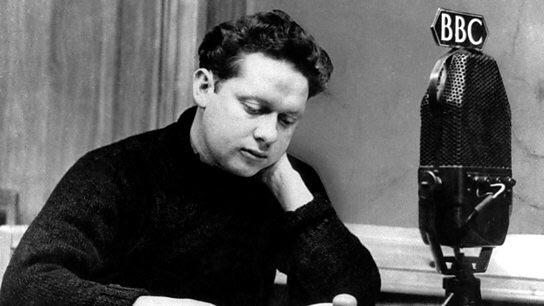
The Magic of Dylan Thomas

2013 was the sixtieth anniversary of the death peerless Welsh poet Dylan Thomas, one of the many famous artists who departed this planet in New York’s Chelsea Hotel.  The following piece by Peter Craven is a beautiful tribute, illustrating the magic of Dylan Thomas’ poetry. And listen, pray, to the man himself reciting his poems.

Welsh poet Dylan Thomas did not go gentle into that good night
Peter Craven, Weekend Australian, 29 November, 2014

ACCORDING to legend, Bob Dylan took his name from him and he was a kind of rock star: Dylan Thomas, the Welsh poet who gave to the people of Wales — and to that part of the world that reveres what they stand for — a poetry of such reverberating bardic magnificence that he became a popular poet long after the age of popular poetry was over.

Thomas, who died, reportedly of alcohol poisoning, in New York at 39 in 1953, has his centenary this year and for the Welsh there has been no ­tomorrow.

Michael Sheen (the Welsh actor who played Tony Blair and David Frost) has been doing Under Milk Wood, Thomas’s great dreamscape of a radio play, in New York with Kate Burton — daughter of Richard Burton, who first did it on the BBC and even made a film of it with Elizabeth Taylor as Rosie Probert and Peter O’Toole as Captain Cat.

And in Wales they’ve been reading every jot of verse that Thomas ever penned. Distinguished Welsh actors such as Jonathan Pryce have been part of the mass recital and even that northerner, Ian McKellen, old Gandalf himself, has been dragooned into the celebration as if that rhapsodic sense of wizardry could encompass an entire world.

And he was a wizard, Thomas. I remember a lifetime ago lying in the dark of my parents’ bungalow as a young teenager listening to the black graven voice of Burton as he recited:

In my craft or sullen art
Exercised in the still night
When only the moon rages
And the lovers lie abed
With all their griefs in their arms …

It was a poetry made out of mouthfuls of air, as poetry must be, and it was also full of a rich kaleidoscope of imagery, and that seemed to make perfect sense because the emotional thrust was clear from the power of the rhetoric that sustained it.

This was a poetry that was deeply traditional in its sound patterns. It had a romantic grandiloquence and an alliterative richness, a reckless audacity of effects that was a bit like that priestly poet who had anticipated modernism, Gerard Manley Hopkins.

And, of course, it’s that lassoing effect of poetry as a language of the gods that can encompass a universe of feeling and imagining. It can intoxicate itself with language but see the world with a radiant clarity as a consequence of the intoxication. That makes people surrender to Thomas, the way when they are young they surrender to the first stirring of ­desire, that strange sense of body and soul coming together at the prospect of love.

If that sounds a bit much for mere poetry to achieve, listen to the lilting lyricism of Fern Hill:

Now as I was young and easy under the apple boughs
About the lilting house and happy as the grass was green,
The night above the dingle starry,
Time let me hail and climb
Golden in the heydays of his eyes …

It’s poetry of almost total sensuous suggestion and it is saturated with the feeling of sap and possibility. In one way, it’s a poetry that seems to embody the idea of youth even though it is constantly talking about shadows and spectres of mortality. Indeed, Fern Hill ends with a great splash of verbal colour, and an intimation of how the erotic glory of the world, the sense of it as a many-shaped thing of wonder, is inseparable from the pang of transience.

Thomas led an irregular life and before he died in New York’s Chelsea Hotel he told someone he had had 18 consecutive whiskies in a bar. It couldn’t have been quite true but it had a poetic truth because Thomas and his wife Caitlin hit the bottle like a destiny.

Part of Thomas’s fame came from the fact he had a tremendous histrionic gift as a reader of poetry. He read in a very posh-sounding voice with a kind of conscious grandeur that gives a less sinewy sense of his music than Burton does, but has a majestical quality that many people find mesmerising. His reading style tilts towards the preacherly with its Welsh undertone as part of the incantatory quality. But, then, some of his greatest poetry projects a religious vision, which is why Thomas’s poems have become hymns for a modern world that may not know what it believes but has a deep sense of the resonance and the ­afterglow of belief.

Do not go gentle into that good night,
Old age should burn and rave at close of day;
Rage, rage against the dying of the light.

The language is magical in the way it creates, with a fierce flaming elegiac power, the refusal to accept the fact of death. And the fact the perspective is not Christian — we know the darkness does overcome — makes the poem a tremendous affirmation of the heroism of life in the face of death. It’s a poem with a reckless bravery and that urging to “rage” — that impossible, nearly preposterous imperative — sits in such tension with “the dying of the light” that the effect is very poignant.

Some people sneer at Thomas, sometimes in reaction to their own earlier infatuation with him. His poetry enthrals the mind (and heart) long before you know ­exactly what is being said or meant. Is that a disqualification for greatness? Isn’t it a version of what TS Eliot meant when he said that poetry communicates before it’s understood?

If you want the organ notes of elegy, the sombre power that comes from the breath of death on the backs of our necks, and at the same time the sense of the resurrection as always now, try this:

You can, if you like, say the trick is all in the one great line, the line Thomas uses as his refrain, and that he creates a decorative web around it.

And death shall have no dominion.
Dead men naked they shall be one
With the man in the wind and the west moon;
When their bones are picked clean and the clean bones gone,
They shall have stars at elbow and foot;
Though they go mad they shall be sane,
Though they sink through the sea they shall rise again;
Though lovers be lost
love shall not;
And death shall have no dominion.

But that’s not quite the effect of the poem when it is read aloud. If you listen to Burton recite it, for instance, you get a sense of rushing soliloquy, of confusion and conflict and spectacular profusion, resolving itself in the refrain, which becomes like a religious affirmation, a faith in what seems impossible, a refusal to be conquered by something that cannot fail to conquer.

This is compatible with a believer’s position or an atheist’s, because when it comes to poetry we all suspend disbelief. And Thomas’s poetry is such a headlong act of faith in the act of creating poetry that it presents this spectacle — it, in fact, dramatises it — with a sort of breathtaking self-confidence that goes a long way to explain why his poems seem so genuinely bardic, why the Welsh have taken to them like anthems. And also perhaps, commandeering the tragic fact of his early death, why it makes a kind of sense that Thomas died so young.

If your schtick is to give your audience another piece of your heart over and over, you will burn yourself out or you’ll have to change your art.

God knows what Thomas would have done if he had lived. “It was my 30th year to heaven,” he wrote in Poem in October, which with its wonderful sense of the self roaming like a god is one of the greatest lyrical poems of the 20th century.

My birthday began with the water
Birds and the birds of the winged trees flying my name
Above the farms and the white horses And I rose
In a rainy autumn
And walked abroad in shower of all my days.

It was his 30th year to heaven and he already wrote like an angel and he was already talking as if he were in the presence of his own tombstone.

It’s the hugeness of the gift that makes people back away from Thomas and makes them deny his achievement, partly because the mesmerism of his ­manner can create fear of the highest claims.

It makes sense, of course, that there was reaction against the rhetoric of poetry associated with the “New Apocalyptics”, as Thomas’s admirers called themselves and that was partly a reaction against the battering ram of rhetoric the world had suffered with Hitler and Churchill and World War II.

People were sceptical of majesty in poetry. They remembered that the “terrible beauty” of Yeats had been a landing field for a fascist politics. But how unfair to mix Thomas up with this.

Under Milk Wood is the most successful piece of poetic drama of a postwar period haunted by the idea. It has extraordinary brio, and the way Thomas manages to create this surrealist brew of poetic hocus-pocus with choruses of schoolkids and scolding old women and blind, mad Captain Cat and dead lovers, all within a circumambient poetic idiom that is at once rich and grounded in earth, is pretty stunning when you remember that it is also a credible evocation of a village in Wales.

It’s no wonder the Welsh have taken Thomas as their red dragon and their prize dreamer. He was an incomparable poet. He did not go gentle into that good night; he lived hard.

But when it comes to the kingdom of poetry, death shall have no dominion.


The Grand Old New Imperial Hotel

As I relate in my earlier post, ‘Amazing Grace – There’s Magic In The Air : “from the Jaffa Gate, we look out from our balcony in the Imperial Hotel, a late 19th Century mix of trash and treasure, five-star history, and ten-star views”.

Planning our 2014 visit to Jerusalem (we were there in May 2014) I wanted to book a hotel that was both historical and conveniently close to The Old City. I also fancied the idea of staying in a pilgrim hotel so we could witness at first hand the excited comings and goings of the faithful (see my post ‘Messianic Carpet Rides‘). The New Imperial Hotel, just inside the Jaffa Gate, was just the ticket. And we struck solid gold! Stepping down from the Nesher bus on the road outside the famed Walls of Jerusalem and  the Citadel (see: Once in Royals David’s Citadel), we looked up towards the Jaffa Gate and there, right above us was the imposing facade of the New Imperial Hotel.

The Jaffa Gate, in the western wall of the Old City (not to be confused with the ‘Western Wall’ or ‘Kotel’ so revered of Judaism), has traditionally been one of the busiest entrances to Jerusalem. Its Arabic name is Bab al Khalil (Gate of the Friend) a reference to Abraham, forefather of both Arabs and Jews. The wall bears the inscription in Arabic: “there is no god but Allah, and Abraham is the friend of Allah”. Topographically the Gate provided the easiest access, so it’s approaches provided a most convenient camping ground for the many invaders who sought to conquer the city. These included Greeks, Romans, Arabs, Frankish Crusaders, Turks, and finally, the British. Caliph Omar Ibn al Khatab entered through this gate after Jerusalem’s capture by the Muslims in 638AD. As did General Allenby, commander of the British forces which captured Jerusalem in December 1917.

Just inside the wall, there were fields of winter wheat until the late nineteenth century; and in summertime, the empty fields became dumping grounds for carcasses of donkeys, camels and horses. The Turkish authorities moved this ‘cemetery’ outside the wall, and what was forever the main thoroughfare, became the location for important commercial institutions, including the Banco de Roma, the Anglo-Palestine Bank, and the German bank of Johannes Frutiger, the Austrian Post Office, The Thomas Cook Tourism and Travel Company, and the studios of a number of Jerusalem’s famous photographers.

And also, several hotels catering for the growing tourist industry, including the Mediterranean Hotel (now called The Petra), and in 1884, the Grand New Hotel, built on land owned by the Greek Orthodox Patriarchate. According to the Thomas Cook Tourist Handbook in 1876, the Mediterranean was “the best in Jerusalem”. Travelers were however wont to damn the Med with faint praise, and soon began to write about the really new, really ‘grand’ hotel with great facilities, round arched windows, high roof pedestals topped by Grecian urns, imposing entrance staircase, and balconies looking right out over Omar Ibn al Khatab Square. See the pictures below from the end of the 19th Century,  showing the square in all variety of citizenry and costume.

Omperial 4 Imperial 2

The place comes with a history. During construction, builders uncovered what was believed to be the Pool of a Bathsheba. It was said that Uriah’s wife was bathing thereon when spied upon by a randy King David. David subsequently sent Uriah off on a suicide mission to clear the way for his own passions. The historical record is confused here. Leonard Cohen and the painter Jean-Léon Gérôme apparently got it wrong. They both placed her up on the roof. The Bible says he saw her from the roof.

The view from the rarely frequented roof terrace of the New Imperial itself, whilst not quite as picaresque as the vision that tempted the poet king, offers a splendid vista of the cupolas of the Church of the Holy Sepulcher and the Dome of the Rock – not to mention a fine peek at the battlements of the Citadel. On the western side, we look out over West Jerusalem and what was the old Arab neighbourhood of Mamilla, now totally rebuilt with a lux shopping mall, the rectangular bulk of the King David Hotel, once the HQ of the British military and bombed by Irgun terrorists in June 1946, and the iconic YMCA tower.

 Imperial 5

Anyhow, there is still an ancient cistern beneath the hotel. And also, part of the second wall. There are Roman tiles signifying the HQ the Roman Tenth Legion, and part a column erected by the legion, bearing a votive inscription honouring Emperor Augustus’ Legate, Marcus Julius Maximus. It stands there today as a pedestal for a street lamp, in the mews near the hotel front door and right in from of Versavee Restaurant and Bar, where the writer and his companions ate good Jerusalem fare and downed Israeli wine and Taybeh Palestinian beer.

Roman Colomn outside the New Imperial Hotel

Roman Column outside the New Imperial Hotel

Had the hotel been there in Biblical times, what events we might have witnessed from our balcony. King Herod, the ostensibly psychotic master builder of Bible infamy dwelt opposite as he planned his Second Temple (Herod might have murdered most of his nearest and dearest, but he was fitted up for the massacre of the innocents!). So did Pontius Pilate. If one accepts the narrative of Simon Sebag-Montefiore,  in his Jerusaelm : The Biography, we could also have watched the last journey of Jesus of Nazareth. It was but a short distance from the Citadel where he was condemned and Golgotha where he died: cross the square, turn right at the New Imperial, left just past the Med, and straight on to the Hill of the Skull (where the Church of the Holy Sepulcher now stands). The present Via Dolorosa runs from the site of the Antonine Fortress, on the northern edge of the Haram ash Sharif, to The Church, its course set by custom and customers from Byzantine days. But, the wrong side of town! (See Nova Via Dolorosa).

I digress…From rom our hypothetical balcony, we could watch the comings and goings of the conquerors: the entry of the Roman Titus’ legions; Omar Ibn Al Khatab entering al Quds on foot; the arrival of the First Crusade at the Gates of Jerusalem; the exit of the crusader garrison and the Christian inhabitants when the city fell to Salahuddin (portrayed in Ridley Scott’s Kingdom Of Heaven).  And thence, Mamlouks, Seljuks, and Ottomans. The last Kaiser, Wilhelm II, stayed at the hotel on his visit to the Holy Land in 1898. His bust still sits in the entrance hall. This is when The Grand became the New Imperial! Kaiser Bill came in style. No walking for him. The wall between the Jaffa Gate and citadel was torn down and its moat filled in on orders from Sultan Abdel Hamid II to enable the Kaiser and his wife and their huge entourage (looked after in grand style by Thomas Cook Tourism & Travel) to motor into the Old City (again, read Sebag-Montefiore’s  amusing account).

Twenty years later, General Allenby and his British Army marched through the gate. The good general entered on foot just like old Omar. It would be fun to imagine that he made his proclamation of the liberation of Jerusalem from one of those balconies (probably the big one in the centre, which now serves the office of the present proprietor Walid Dajani); but the reality is that he marched right past the hotel, veered right, and ascending the imposing steps of Kings David’s Citadel, deliver his oration there (although he may have indeed lodged at the New Imperial during his brief sojourn). He spoke of how the Holy City had now been freed from the Turkish yoke, and that, safe in the bosom of His Majesty’s forces, the Palestinians, in all their diversity, Jews, Christians and Muslims, would enter a new era of health, wealth and happiness. If he was aware of the nefarious dealings of Messrs Sykes and Picot, and the arrangement made by Lloyd George and Chaim Weizmann, he did not let on. He left the best news for the politicians to reveal a while later, and for the world to agonize over ever since.

So we enter the Twentieth Century, with its momentous political upheavals, the hotel having several changes of management but remaining largely unchanged, with its balconies, and its grand entry staircase. Walid Dajani’s father, Mohammed, took a “protected” tenancy” of the hotel from the Greek Orthodox Church in 1949, In the 1950s and 1960s, the hotel housed a small cinema, and its elegant ballroom was a favourite Palestinian wedding venue. It was damaged during the 1948 war, and during the 1967 Six-Day War, it was used as a base by Israeli troops, then returned to the Dajani family, the tenants of the property. It is, as far as we know, still owned by the Greek Orthodox Church, a status that ten years ago gave rise to a curious controversy about its future status, and in 2019, to a High Court appeal of its sale, and that of The Petra Hotel, to a shadowy right wing Jewish group – see the link below.

And thence to the present, with Sayyid Dajani greeting us like long-lost relatives, “ahlan wa sahlan bil Quds”.

Postscript

Such was our sojourn at the New Imperial in May 2014 – and our enjoyment of our room and its tiny balcony overlooking Omar Ibn Al Khattab Square, that we stayed there again for a month in 2016, booking the same room with its spectacular view of the comings and goings of all the tribes of Israel. In the warm evening, we’d sit in the roof garden directly across the street from King David’s Citadel with a good bottle of Israeli wine. Gazing on its towers, ramparts and gardens, we’d sense its story in our souls. We’d watch present generations passing beneath its walls, and the young folk dancing on the ramparts, all part of the passing parade of humanity that has lingered by and upon these ancient stones.

© Paul Hemphill 2014.  All rights reserved

Dancers promenade at the Son et Lumière

See also in In That Howling Infinite, A Middle East Miscellany

Imperial 7

https://howlinginfinite.wordpress.com/2014/06/07/amazing-grace-theres-magic-in-the-air   http://www.iaa-conservation.org.il/Projects_Item_eng.asp?subject_id=10&site_id=3&id=112  http://www.academia.edu/3677136/The_Mediterranean_Hotel_in_19th_Century_Jerusalem                    https://www.timesofisrael.com/greek-church-to-appeal-against-sale-of-old-city-hotels-to-right-wing-group/


 Imperial 1


Chanson – living next to Jim

P1050095

Paris has a myriad of attractions for history tragics. For me, there are three ‘must sees’ that are at the top of the ‘out there’ list. Les Catacombes de Pariss are one. The folk cabaret Au Lapin Agile is another. and the third is La Cimetière du Père-Lachaise, the most famous cemetery in the world.

For the dear departed, Père Lachaise is the best address in Paris. Some 300,000 people reste ici. A cavalcade of French cultural and political history, with a few foreign entombments, including the playwright Oscar Wild and Doors front-man and zeitgeist icon Jim Morrison.

CHANSON

I

Summer is the worst time – there never is a good time.
They come from all across the world just to visit him.
A lot has come and gone since nineteen seventy one,
But I’ve never ever gotten used to living next to Jim.

Why do they come and queue for a man they never knew
Who had gone to meet his maker before most of them were born?
I guess that it’s the fame, or the magic of a name,
Or a spirit never tamed, that brings them here to mourn.

The Poles will throw a party for their Chopin, and the arty
Bring flowers, poems and candles, and others’ wine and bread,
Why do young folk come to rave ‘round an ancient rocker’s grave?
Don’t they know how to behave in the presence of the dead?

It’s the best address in town, but I think I’d rather be
With Karl and all the comrades up in Highgate Cemetery.
Though there’s nothing to compare with this famous cemetaire,
There’s not much love to spare between the Lizard King et moi.

Pourquoi? Dites moi! Je vous dis que…

Living near the great is highly over-rated.
They stand upon my headstone just to get a better view.
If I was recreated, I’d sooner be cremated
And scattered on the river or some quiet avenue.

II

Yes, Père Lachaise is the most famous cemetery in the whole wide world. Therein recline some of the most famous names in French history and culture. And imports like Oscar Wilde and Jim Morrison. Edith Piaf, Marcel Marceau, Delacroix and Gericault, The man who built the Suez Canal, and Antoine Parmentier who popularised the heath benefits of the humble potato. Maria Callas’ ashes were there until some Greek stole her urn and scattered her on the Aegean Sea.

C’est vrai! C’est l’esprit de mort! Et maintenant, l’encore:

III

The singers, and the dancers, and the actors, and the chancers,
The rebels and the statesmen, and the fallen communards,
Napoleonic Generals and politicians’ wives.
The poets and the dreamers, all those other famous lives.

The writers, and the waiters, and those great large format painters,
Deportee commemorations, Oscar’s winged androgenoid,
The names no one remembers, and the ones no one forgets,
But Jim’s here with empty coke cans and the smell of cigarettes.

And, summer is the worst time – there never is a good time.
They come from all across the world just be with him.
A lot has come and gone since nineteen seventy one,
But I’ve never ever gotten used to living next to Jim.

From:  In That Howling Infinite – Poems of Paul Hemphill, Volume Five

© Paul Hemphill 2013. All rights reserved

  P1050093

P1050086

P1050079

P1050078

P1050076

P1050073

P1050092