There are moments in the Middle East when history suddenly shift gears and takes us all by surprise. Lenin knew the cadence: there are decades, he wrote, where nothing happens; and then, weeks in which decades happen. A year ago, Syria – trapped in the vortex of its civil war for almost fourteen years and virtually ignored by the rest of the world since October 7 2023 – suddenly leapt into one of those crazy weeks, leaving allies, enemies, and analysts alike blinking in the dust. Even now, a year after the astonishing fall of Damascus, the country sits like Kipling’s Tomlinson at the gates of judgement: not quite damned, not fully redeemed, suspended between heaven and hell.
Sleepers awake …
For years, as The Independent’s Bel Trew observed last December (see Syria. Illusion, delusion and the fall of tyrants) the world forgot about Syria – notwithstanding the courageous efforts of western and Syrian reporters and humanitarian workers who strove in perilous circumstances to bear witness. The civil war had become the background hum of the region, a grim drone many had learned to tune out as Ukraine and Gaza dominated the world stage. The regime of Hafez al Assad, brutal and immovable, bolstered by Russia, Iran and Hezbollah, looked set to endure indefinitely. The jihadi rebel enclave in Idlib, though supported by Türkiye, was dismissed as a besieged hold-out. Even those who professed expertise couldn’t reliably tell you whether the war was still ongoing, who was fighting whom, or what stage the conflict had reached. It was as if the wheels of war had stopped spinning.
Then, over the space of days – eleven, to be precise – the wheels spun again. Hay’at Tahrir al-Sham’s fighters burst from their confined redoubt with a momentum no one expected (including, it seems, themselves), sweeping through Aleppo and racing down the highway to the capital. Analysts reached instinctively for historical parallels: Havana 1959, Saigon 1975, Kabul 2021. Analyst David Kilcullen pointed instead to Timur Kuran’s theory of the “preference cascade”: the sudden collapse of a regime that had mistaken silence for loyalty and compliance for consent. Assad’s security apparatus – omnipresent, omniscient, yet somehow oblivious – realised too late that its soldiers had no stomach left for the fight. The all-powerful giant had feet of clay.
It didn’t help that Iran, Assad’s indispensable patron, had stumbled into the most grievous strategic miscalculation of its post-1979 history. Flush with revolutionary zeal, Tehran had kicked the hornet’s nest in Lebanon, prompting Israel to pivot from Gaza to Hezbollah with stunning force. Suddenly Iran’s expeditionary assets were exhausted, its proxies over-extended, and its clerical leadership exposed as both ageing and isolated. Even the Ayatollah’s conspiratorial refrain – that the fall of Damascus was all a plot by the Great Satan, the Little Satan, and the Sultan in Ankara – couldn’t mask the fact that this was less Zionist cunning than simple imperial overreach. When the rebels came, neither Iran nor Hezbollah, nor Russia, entangled in its Ukrainian quagmire, could ride to the rescue.
But the rebels, too, were surprised. Their mandate from Ankara was modest – expand the borders of their statelet a little, test the regime’s nerve. Instead, they found themselves virtually unopposed on the road to Damascus. In an Informative article in E-zine Unherd republished below, British writer and investigative journalist Tam Hussein writes how many of the fighters interpreted the victory as divine intervention – not jihadi zealotry, but a sincere theological attempt to explain the inexplicable. The suddenness of Damascus’s collapse felt, to them, like an echo of Muhammad’s bloodless conquest of Mecca. And in a land where the eschatological imagination has always saturated politics, it didn’t take long before social media brimmed with end-times speculation. Ahmed al Shara’a – formerly Abu Mohammad al-Jolani, with a $10 million American bounty on his head – was seen by some as “the one”, and the precursor of the Mahdi and the foretold end of days.
Yet as Hussein rightly notes, miracles make poor policy. The survival of the new Syrian administration will depend not on prophecy but on governance, and on whether Shara’a, interim president and ex-jihadi turned statesman, can transform a miraculous seizure into a sustainable state.
To his credit, he has avoided the catastrophic purges that helped destroy post-invasion Iraq. He has kept the civil service intact, flirted audaciously with Western diplomacy, and allowed at least the theatrical semblance of elections. He has restored the embassy in London, opened channels to Washington, even visiting the White House and played the charm-game with Gulf capitals that only recently readmitted Assad into their fold. As Hussein writes, he has shown political finesse: keeping the constitution, appointing seventy parliamentarians himself, and balancing piety with pragmatism.
But the tightrope is frayed. Sectarian wounds – Druze, Alawite, Sunni, Christian – remain raw and unstitched, with the Latakia massacres now entering their fraught judicial phase, and Israel stirring the Druze pot. Kurdish anxieties simmer: the old “Arab-first” chauvinism must be abandoned if Syria’s patchwork is ever to become a tapestry again. Foreign fighters, once lionised, now loiter between hero and hazard, implicated in sectarian atrocities. Kurds clash with Syrian forces; Turkish troops press deeper into Rojava; Israel remains the unpredictable neighbour bestride the Golan; and Iran, though weakened, is never entirely out of the game. It is not inconceivable that the forces that helped topple Assad could yet turn their sights toward Jerusalem in the belief that prophecy demands it.
And there are darker portents too – those flickering shadows that hint the wind of freedom may be blowing from the wrong quarter. The new government’s early gestures toward Islamisation – the hair-covering admonition, the curriculum purge, the dismissal of women from key posts, the torching of a Christmas tree in Hama – suggest that pro-Russia and anti-western platforms like RT and Mint may have a point when they warn that the leopard has not fully changed its theological spots. Shara’a’s declaration that elections may be four years away, the dissolution of the old constitution, and the folding of all rebel factions into state structures recall less a liberal transition than a consolidation of revolutionary power.
Meanwhile, the country remains a mosaic of mini-wars. In the north, Turkish proxies grind against Kurdish forces in Rojava. In the south, local militias continue to resist HTS’s claim to national authority. In the west, Alawite formations cling to their shrinking redoubts. To the east, Islamic State survivors eye the chaos, waiting for the prison gates to break. And overhead, as ever, the Americans and Israelis fly their competing deterrents, ensuring the war never quite ends.
So: Syria stands at the crossroads. Will Syria’s future be heaven, hell, or merely another circle of the inferno?
Optimism is possible – cautiously so. If the West can avoid its habitual fatalism, if, when sanctions are lifted, investment flows, if Turkey and Israel can be coaxed into tolerable coexistence, if Kurdish autonomy is honoured, if sectarian grievances are handled with equity and not vengeance — then Syria could, in time, become a conservatively stable hub. Shara’a’s Idlib experiment shows he can build an economy under duress.
But the inverse is equally imaginable: a Lebanon-style implosion, a Yugoslav-style partition, or a Gaza-style fortress of permanent mobilisation. As Isreali commentator and contributor to Haaretz Zvi Bar’el wrote a year ago, writes, the warm international “envelope” around Damascus is generous but tentative. Nobody quite knows where Shara’a is heading. They simply assume anyone is better than Assad – the same mistake Syrians once made about the old Ba’athi patriarch Hafez al-Assad himself.
Right now, the future’s not ours to see. Something’s happening, but we don’t know what it is, and anyone with a deep knowledge of the Middle East knows that one must expected the unexpected. The old regional wars – Gaza, Lebanon, the Red Sea, Iran’s Axis of Resistance – though seemingly on hold, have not paused to let Syria breathe. The war in Ukraine grinds into winter, the bizarre Gaza peace plan shuffles on, and there are constant political shifts in Washington. Each of these could rewrite the geopolitical chess board yet again.
Still, as Robert Fisk wrote in the final line of the final book he never lived to promote: all wars come to an end, and that’s where history restarts. Syria is restarting now – painfully, precariously, imprecisely – but restarting nonetheless.
Whether Syria walks toward heaven or hell remains to be seen. The choice – as ever in the Levant – will not be its alone.
Syria Today: Walking Through the Wreckage
A year after the Assads fell, Syria still moves through its own ruins – startled by its freedom, and half-afraid of it. The dynasty’s collapse ended the nightmare but did not usher in a dream; it simply exposed, in unforgiving daylight, the damage done over half a century of dictatorship and more than a decade of war. The smashed cities are visible to any passer-by; the deeper wreckage – the traumas, resentments, and debts of blood – is harder to map and harder still to mend.
Sednaya prison’s opened gates remain the sharpest indictment. The men who stumbled out were not just survivors but witnesses, their bodies forcing the nation to acknowledge what many had whispered and few had dared investigate. Yet even this reckoning has not united the country. Sectarian reprisals and atrocities on the coast, more atrocity and calls for Druze autonomy demands in Sweida, tribal restlessness in the south and northwest, Kurdish self-rule in the north, and Alawite fear of collective punishment keep the national psyche taut and divided. Bitterness circulates like a second economy.
The economy, meanwhile, balances on a fraying tightrope. Western aid and investment have brought cranes, reopened highways, and a flicker of commerce, but also inflation that is hollowing out households. Reconstruction glimmers like a desert mirage: real enough to chase, never close enough to touch. Corruption accompanying nepotism and patronage has survived the revolution, and many returnees discover that rebuilding a home now costs more than earning one.
Politically, the country sits in an improvised equilibrium. Al Shara’a rules as both liberator and question mark – trusted by some, tolerated by others, watched by all. His pivot toward Washington, his quiet coordination with US forces, and his break with former comrades offer a new direction, but also a gamble. Around him, sovereignty is nibbled at the edges: Israel digs deeper into Quneitra province; Türkiye tightens its grip in the Kurdish north. Liberation has shifted the map without fully restoring control over it.
So Syria stands on the threshold, like Tomlinson, neither damned nor redeemed, simply called to account. The war is over, but its aftershocks and tremors linger in regional loyalties, local vendettas and regional manoeuvres. The people are free, yet unsure of that freedom’s limits and what it asks of them. And the vast machinery of the state still creaks with old habits and temptation.
And yet – a small, highly qualified yet – Syrians are imagining a future again. Not the predetermined script of dictatorship, nor the fatalism of war, but something open, negotiable, theirs’. For a people long told that nothing changes, the mere possibility of change is its own quiet revolution. Hope is not guaranteed; neither is stability. But the impossible has already happened once, and that alone shifts the horizon.
Postscript: the strange, messianic weather of revolutions
Among the HTS fighters Tam Hussein describes, the astonishingly swift and almost bloodless collapse of Damascus could never be reduced to battlefield arithmetic. After over a decade of stalemate and slaughter, the conquest of Damascus and the fall of Assad felt too abrupt, too neat, too historically implausible to be merely human. And so they reached, perhaps instinctively, for the vocabulary of prophecy that has long circulated in the Levant: the old stories of tyrants toppled in the final days, of a just ruler rising at history’s eleventh hour, of a brief season of peace before a climactic confrontation with “the Romans,” a term that in popular imagination now stretches elastically to include Israel, America, or the West at large.
In this folk-level cosmology – not the carefully parsed doctrine of scholars, but the lived, emotional scripture of men who have lived too long fear, death and loss loss – the victory in Damascus reads like a prophetic epic ballad. When a fighter told Hussein that Syria would enjoy “ten years of peace before the war with Israel,” he was drawing from a hazy amalgam of hadith traditions and battlefield folklore to make sense if the improbable: the idea of a lull before the storm, a breathing space before the world tilts into its final reckoning. It is vernacular eschatology, shaped as much by trauma and longing as by text.
Within that register, the murmurs that Shara’a/Jolani might be “the one” carry an unmistakable Mahdist echo. No fatwas or proclamations like when Da’ish leader Abu Bakr al-Baghdadi famously declared the caliphate from the minbar of Mosul’s al-Nuri Mosque in 2014; but the emotional charge behind the phrase is unmistakabl: an intuitive reach for a Mahdi-shaped idea of the righteous restorer, the unifier, the man who appears when everything has fallen apart. It’s not that anyone literally thinks Jolani is the Mahdi; it’s that the mood of the moment makes such thoughts feel briefly within arm’s length. A silhouette on the horizon, nothing more.
And here, Syria is not unique. Revolutionary periods everywhere – the Protestant Reformation, the French Revolution, the Russian Revolution and Civil War, the Arab Spring even, have their magical phase — those jittery days when people begin to speak as if the world has cracked open, meaning is pouring through the seams, and events blur into myth. When a regime that seemed immovable collapses in a fortnight, people fall back on stories larger than themselves. Sudden upheaval, long suffering, and the ascent of a charismatic figure combine to crack open the ordinary world. Prophecy offers a narrative frame when history seems to be behaving like fable.
So the eschatological edge in these fighters’ conversations tells us less about doctrine and more about psychology. It’s a very human response: a form of magical thinking that arises when reality becomes too strange to process, a way of giving shape to chaos, of telling themselves that their suffering fits into a larger story. A coping mechanism, if you like – a mythic vocabulary for a moment when Damascus fell, and the ordinary rules stopped making sense and the earth seemed briefly to tilt on its axis.
A few months ago in Damascus, I discovered a medieval hospital. The door had been left slightly ajar, and I wandered in with my companion Hassan Idlibi — a rebel fighter and old friend. He hadn’t been in the Old City since the fall of Syria’s capital, exactly a year ago today. “When Damascus fell,” he told me, “we were at our lowest ebb. Even the attack on Aleppo was our last gasp. We wanted to break the stalemate. And then we just pushed and pushed, and we ended up sleeping inside the Umayyad Mosque. It was a miracle.”Idlibi, like many Syrians, did not interpret the taking of Damascus through geopolitics — but as divine intervention. This wasn’t because he was a mindless zealot. Far from it. He is one of the most well-read men I know. But, to his mind, the fall of Damascus was so sudden, so unexpected, that only the miraculous could explain it. The victory, he noted, had been achieved by those who had been motivated by Islam. Help had come from foreign fighters, the mujahideen, who travelled from across the globe to aid their co-religionists. And the campaign had been led by a former jihadi, Ahmed al-Sharaa, now the interim president of Syria. At the time, the old al-Qaeda operative, then known by his nom de guerre, Abu Mohammad al-Jolani, had a $10 million American bounty on his head.
After more than a decade of slaughter, no one had expected the capital to collapse. Assad, then president, had seemed like a stubborn wart: unpleasant but immovable. Jolani’s rebel enclave in the northern city of Idlib looked too small, too besieged, to pose a serious threat — though in fact it was performing better economically than inflation-ravaged Damascus, helped along by a reliable flow of Turkish hard currency. I myself expected the rebels to negotiate. What leverage did they have? Yet this rebel government, roughly the size of Croydon, took over the instruments of state, and since then has avoided stumbling into a new civil war.
The unexpected and largely peaceful victory was attributed to piety, prophecy, steadfastness. Some have even compared the final conquest of Damascus to Muhammad’s bloodless conquest of Mecca in 630. The idea of a “miracle”, here, is not mere rhetoric — it shapes political expectations. Some Syrians, at least based on my social media, think all this makes Sharaa “the one”, with my Facebook messages and WhatsApp chats awash with prophetic readings of the present. One believed Syria would now enjoy 10 years of peace before the war with Israel begins. Perhaps, he suggested, this was the prelude to the end of times. After all, so-called “Greater Syria” — encompassing much of the Levant — plays an important role in the Syrian and indeed Muslim sacral imagination. It is where prophets walked and is the place where many of the end of times narratives will play themselves out.
Yet if the fall of Damascus seemed miraculous to many Syrians, the survival of the new administration will depend less on providence than on governance. Despite his past, Sharaa has so far demonstrated an unexpected level of political finesse. He has kept the constitution, held elections — albeit with 70 seats appointed by himself — and all the while has acted the statesman. He is savvy enough to not mind having President Trump spray his latest fragrance on him in the Oval Office, or Syrian Jewish rabbis blessing him.
Sharaa has made some promising early decisions. By keeping the civil service intact, he has avoided the catastrophic purge that helped destroy post-invasion Iraq. He should continue recruiting highly-educated young Syrians from the diaspora — people familiar with Western administrations and political norms. Even so, the administration still has a tendency to fear scrutiny and behaves as if under siege. It should welcome a regulated free press, which would expose blind spots, not undermine authority. The British press has reported that Jonathan Powell’s Inter Mediate is working with the new government. This should be welcomed rather than criticised — not only for reasons of conflict resolution and soft power, but for its value in statecraft and building institutional capacity.
Sharaa’s priorities for the coming year are clear. The country remains immensely fragile, caught in a regional tug-of-war between Israel and its neighbours, and divided along ethnic and sectarian lines. The situation could easily drift into a reprise of Lebanon’s civil war. Sharaa’s first task is therefore to mend Syria’s sectarian and ethnic fractures with a sense of equity. The trials that began this month over the coastal massacres in Latakia will be an important test of how the country intends to move forward. The Druze and Alawite communities — already bruised by conflict and mistrust — require justice delivered without the language of sectarianism.
Meanwhile, Kurdish anxieties must be addressed by ending the Arab-first ideology of the old regime. Syria has never been a purely Arab country: even its favourite son, Saladin, the builder of that hospital I visited and whose grave in Damascus still draws multitudes, was a Kurd. Last year’s tentative permission for Kurdish new year celebrations (Newroz) suggests that a more pluralist future is possible. Yet it remains unclear how far Kurdish cultural expression will be allowed to develop. Already this month, exchanges of fire between Syrian government forces and Syrian Democratic Forces (SDF) units under Kurdish command show how fragile the situation is.
Perhaps the most difficult balancing act involves the foreign fighters who fought on Sharaa’s side. They carry immense symbolic weight in Syrian society — and are the cause of immense fear in the West. Many are ready to resume normal life, but others still see themselves as Islam’s warriors. Recent clashes in the Idlib countryside involving French foreign fighters reflect anxieties that any rapprochement with the West might see them handed over to their home governments. The image of Sharaa standing beside Trump, receiving a symbolic “anointing” of his new fragrance, alarms them even if such engagement is politically necessary.
Granting these fighters legal status, regularising their papers, integrating some into the national army or demobilising them with stipends and educational opportunities — not unlike the GI Bill for US veterans — could go a long way toward neutralising one of Syria’s most volatile pressures.
Then there is the conundrum of Israel. On this, Sharaa has cultivated deliberate ambiguity. At the United Nations, Syria has repeatedly noted its restraint regarding Israel’s illegal strikes on Syrian territory, yet Sharaa has resisted pressure to join Trump’s flagship Abraham Accords. Signing them now would be political suicide. But ambiguity buys him room to manoeuvre — and time to consolidate the state. The question is how long this can last.
For its part, the West has worked to prevent Syria from sliding into another civil war — one that would inevitably spill over into Europe, potentially replaying the exodus of 2015. With regional partners like Saudi Arabia and Turkey, Western governments have effectively restrained Israeli escalation, aware that renewed instability would eventually reach Jerusalem’s door. It’s not impossible to imagine rebels, having overthrown a “pro-Western stooge” like Sharaa and aided by foreign fighters, actually marching toward Israel, convinced that “the infidels” will never allow them to determine their own future. As they did in Damascus, so too — in their imagination — must they do in Jerusalem.
Thus far Sharaa has governed with surprising openness. He has welcomed Britain’s foreign secretary David Lammy, met American diplomats and General David Petraeus, played basketball with US soldiers, and cooperated in counter-terrorism operations. He has also restored relations with London, with foreign minister Asaad al-Shaibani reopening the Syrian embassy.
If Western governments refuse to work with him because of his Islamist roots, they will share responsibility should Syria fracture again. Sharaa’s past is not erased; he may remain an uncomfortable partner. But what is the alternative? That he be excluded from political life and drift into a Castro- or Maduro-like role on the sidelines? If the Saudi Crown Prince can be brought in from the cold after the Khashoggi murder, then almost anything is possible.
Here I recall a meeting with former Saudi spy chief Turki al-Faisal in his South Kensington apartment after the release of his memoir. Faisal lamented how his advice went unheeded after the Afghan-Soviet war. He had urged the international community to launch something akin to a Marshall Plan — an investment programme to stabilise Afghanistan. Had that happened, the region might not have unravelled. Instead, the country collapsed into years of civil war.
Likewise, fully lifting sanctions on Syria and providing a major investment programme, coupled with training and cultural exchange, could restrain the country’s more radical elements. Reining in Israeli escalation, de-escalating the Druze conflict, and mediating between the SDF and Damascus would all help prevent new wars. On this, the West could also spare itself a future security headache by helping Damascus regularise or demobilise foreign fighters rather than leaving them to drift. This would all help to displace messianism.
What, then, would such investment bring the West, beyond avoiding another gaping wound on its eastern flank? For sure, it will not turn Damascus into another Beirut, a place for foreign journalists to party, nor into a Deano-friendly Dubai. Syria will likely remain socially conservative, more like Muscat in Oman. Given time, however, it could become a commercial hub with a distinct cultural life, just as it has been for much of its epic history. This isn’t mere optimism: Sharaa turned Idlib, once a distant town, into a magnet for Damascenes seeking commercial opportunity. Investment now would bring the West a friendly partner, business prospects and political influence. The choice is stark. With support, Syria could become a kind of West Germany: rebuilt, integrated, and stable. Without it, the country risks becoming a new Jerusalem — a battleground charged with fire and prophecy.
Tam Hussein is an award winning investigative journalist and writer. His work has been recognised by the Royal Television Society Awards.
“All wars come to an end and that’s where history restarts”
“History stretches out into the future as well as the past”
“All wars may end in negotiations, but not all negotiations end wars”
The indefatigable British journalist, author, and longtime Beirut resident Robert Fisk Robert Fisk died of a stroke in St Vincent’s Hospital, Dublin, on October 30, 2020. He was 75. Fearless and inquisitive, often iconoclastic and controversial, “Mister Robert,” as he was known from Algeria to Afghanistan, was one of the finest journalists of his generation—the greatest reporter on the modern Middle East. There is probably no better body of work for understanding the region. Respected and reviled in equal measure by left and right alike, Fisk spoke truth to power for more than half a century.
He was obsessive, he was angry, and – having read many of his books – I believe he suffered from undiagnosed PTSD throughout his career in the Middle East. His lifelong obsessions were the arrogance and misuse of power, the lies and impunity of the rulers: presidents and prime ministers, kings and emirs, dictators and theocrats, torturers and murderers. And always the countless innocents who endured and suffered, dying in their tens – and tens – of thousands on the altar of power and greed.
The Night of Power
His last book, The Night of Power: The Betrayal of the Middle East, published posthumously in 2023, takes up where his monumental The Great War for Civilisation (2005) ended—with the contrived U.S.-British-Australian invasion of Iraq. The Great War for Civilisation was a tombstone of a book, literally and figuratively, as was its predecessor Pity the Nation (1990), his definitive history of the Lebanese civil war.
The Night of Power is no less harrowing, covering the occupation of Iraq, the 2006 Israel–Lebanon war, the Arab Spring, the rise of Egypt’s new pharaoh Abdel Fattah al-Sisi, the lonely death of Mohammed Morsi, Israel’s occupation of the West Bank and seize of Gaza, and the Syrian civil war. It ranges widely – but its coherence lies in Fisk’s unrelenting theme: the cycle of war, the corruption of power, and the persistence of memory. To read it is to feel Fisk’s own cynicism, sadness and anger.
The title is deeply symbolic. In Islamic tradition, Laylat al-Qadr, the Night of Power, is the night the Qur’an was first revealed to the Prophet Muhammad: “The Night of Power is better than a thousand months … Peace it is, until the rising of the dawn” (Qur’an 97). It is a night of blessing beyond measure, greater than a lifetime of devotion. The title is bitterly ironic: the “night of power” he recounts is one of betrayal, cruelty, and endless war.
It is both a summation of his life’s work and a testament to his method. Over four decades, Fisk was a witness to almost every major conflict in the Middle East — Lebanon, Iran, Iraq, Palestine, Algeria, Afghanistan, Syria, Egypt — and the wars of the Yugoslav succession. His dispatches carried both forensic detail and moral outrage. This last work, published in the year of his death, is less a memoir than a vast chronicle of empire, war, betrayal, and resistance.
Fisk had long insisted that reporters must “be on the side of those who suffer.” He was no neutral stenographer of official sources. He distrusted governments – Western and Arab alike – and prized first hand testimony, walking the ruins, speaking to survivors, writing down the words of the powerless. The Night of Power continues in this vein, but with a sharpened sense of history. Fisk threads together centuries of conquest and resistance, showing how imperial arrogance, local despotism, and religious zealotry have conspired to devastate the region.
The last two paragraphs Robert Fisk wrote before his death, closing The Night of Power, cut like a blade through the pieties of Western journalism:
“Failure to distinguish between absolute evil, semi-evil, corruption, cynicism and hubris produced strange mirages. Regimes which we favoured always possessed ‘crack’ army divisions, ‘elite’ security units, and were sustained by fatherly and much revered ruling families. Regimes we wished to destroy were equipped with third-rate troops, mutineers, defectors, corrupt cops, and blinded by ruling families. Egypt with its political prisoners, its police torture and fake elections, was a tourist paradise. Syria with its political prisoners, police torture and fake elections, would like to be. Iran, with its political prisoners, police torture and fake elections was not — and did not wish to — be a tourist paradise.” (p. 533)
In the end, according to those closest to him, including his wife Nelofer Pazira-Fisk, an award-winning Afghan-Canadian author, journalist and filmmaker, who edited the book and wrote its final chapter, Fisk despaired. He feared that nothing he had written over four decades had made any difference – that things had, in fact, grown worse. As Kent says to the blinded King Lear, “All is cheerless, dark, and deadly”.
And yet the worst was arguably still to come: the chaotic retreat of America and its allies from Afghanistan and the Taliban’s reimposition of rule, including the literal silencing of women’s voices; Russia’s invasion of Ukraine and its murderous war of attrition that has now passed its thousandth day; Hamas’s atrocity of October 7, 2023, Israel’s biblical-scale revenge, and the utter destruction of Gaza; and the latest Israel–Lebanon war that saw the decapitation and emasculation of Hezbollah.
The Legacy of a Fearless Reporter
The Night of Power stands as a testament to Robert Fisk’s fearless journalism and his relentless moral compass. Across decades of war reporting, Fisk bore witness to suffering few dared to confront. He was unflinching in exposing the hypocrisies of Western powers, the brutality of dictators, and the costs of occupation, war, and empire. Yet he also captured the human dimension: the courage, endurance, and resilience of those who suffered, whether in Iraq, Gaza, Egypt, or Syria.
This final work synthesizes Fisk’s signature qualities: exhaustive research, direct engagement with the people whose lives were upended, and an ethical rigor that held both oppressors and complicit outsiders accountable. The Night of Power is not merely a chronicle of events; it is a meditation on power, betrayal, and history itself.
Fisk’s prose, vivid and often lyrical, reminds readers that journalism can be a form of witness — bearing truth against overwhelming odds. Even in despair, he recognized the persistence of human agency, the cycles of history, and the moral imperative to see, to name, and to remember. His death in 2020 marked the end of a career unparalleled in courage and conscience, but his work, particularly this last book, endures as both a warning and a guide for understanding the Middle East and the forces that shape our world.
In reading The Night of Power, one cannot avoid Fisk’s central lesson: history may restart at the end of every war, but the witness to injustice is what shapes the moral memory of humanity. The quotations at the head of this review, indeed, the final words of the book, weary yet resolute, are a fitting epitaph. Fisk saw the world as it was, not as we wished it to be: corrupt, cruel, but always turning, always restarting.
All wars come to an end and that’s where history restarts
Robert Fisk, The Night of Power
Postscript
The final chapter of The Night of Power was written by Fisk’s wife Nelofer Pazira-Fisk, She was based in Beirut for fifteen years working alongside her late husband and reported from Iraq, Afghanistan, Turkey, Egypt and Syria. The following podcast by American war correspondent Chris Hedges, with Fisk’s first wife Lara Marlowe is a worthy tribute .
The following briefly summarizes the main themes of The Night of Power drawing largely upon his own words
Robert Fisk’s Catalogue of Carnage
Hear the cry in the tropic night, should be the cry of love but it’s a cry of fright Some people never see the light till it shines through bullet holes
Bruce Cockburn, Tropic Moon
Iraq: Catastrophe Foretold
Fisk argued that Iraq’s occupation was fraudulent from the start, brutal in execution, and ferocious in its response to insurgency. The Americans tolerated the inhuman behaviour of their own soldiers, relied on mercenaries and “greedy adventurers,” and mixed Christian religious extremism with an absurd political goal of “remaking the Middle East.” It was “tangled up in a web of political naivety and Christian muscularity”.It was bound, he wrote, to end in catastrophe.
“We were pulling at the threads of the society with no sense of responsibility as occupiers just as we had no serious plans for state reconstruction. Washington never wanted Iraq’s land. Of course the countries resources were a different matter, but its tactics did fit neatly into the prairies of the old West. The tribes could be divided and occupiers would pay less in blood. as long as they chose to stay. One set of tribes were bought off with guns and firewater the other with guns and dollar bills. Serious resistance, however, would invoke “the flaming imperial anger” of all occupation armies.
The rhetoric echoed the 19th century missionary zeal of empire. Western fascination with the Biblical lands was used to justify conquest: as Lieutenant General Stanley Maude told the people of Baghdad in 1917, the Allies wished them to “prosper even as in the past when your ancestors gave to the world Literature, Science, and Art, and when Baghdad city was one of the wonders of the world” (p. 92).
The modern occupation, Fisk observed, was nothing but “the rape of Iraq”. Oil wealth was divided up in a scandal of corruption involving US contractors and Iraqi officials. “The costs were inevitably as dishonest as the lies that created the war … I knew corruption was the cancer of the Arab world but I did not conceive of how occupying Power supposedly delivering Iraqi their long sort freedom could into a mafia and at such breathtaking speed”.
Security became a malignant industry; by 2006 mercenaries accounted for half of Western forces, sucking money out of the country. The food system, 10,000 years old, was destroyed by Paul Bremer’s infamous Order 81, which forbade farmers from saving their own seed. Iraq became a “giant live laboratory for GMO wheat,” its people “the human guinea pigs of the experiment”.
And through it all, a campaign of suicide bombings – unprecedented in scale – turned Iraq into the crucible of modern terror. Editors never tried to count them. The figures, Fisk noted, were historically unparalleled.
The trial of Saddam Hussein
The US ambassador to Iraq once claimed she had been “unable to convince Saddam that we would carry through what we warned we would.” Fisk dismissed this as absurd. Saddam, he argued, was well aware of Western threats, but the framing of his trial was designed to obscure deeper truths.
If Saddam had been charged with the chemical massacre at Halabja, defence lawyers could have pointed out that every US administration from 1980 to 1992 was complicit in his crimes. Instead, he was tried for the judicial murder of 148 men from Dujail — heinous, but “trifling in comparison” (p. 92). The great crimes of the Baathist regime — the 1980 invasion of Iran, the suppression of Shia and Kurdish revolts in 1991 — were deemed unworthy of the court’s attention.
Pakistan: Fragile State, Useful Pawn
Fisk’s lens widened to Pakistan, where he recorded with scorn the ISI’s admission that the reality of the state was defined not by American might but by “corrupt and low-grade governance”. A US intelligence officer boasted: “You’re so cheap … we can buy you with a visa, with a visit to the US, even with a dinner.”
This, Fisk suggested, was not just Pakistan but almost every Arab or Muslim state in thrall to Washington: Egypt, Jordan, Syria, the Gulf states under their dictators and kings, even Turkey. He wrote that Osama Bin Laden’s choice to hide in Pakistan embodied a weird symmetry: the man who dreamed of a frontierless caliphate sought refuge in the very sort of corrupt, Western-backed dictatorship he despised.
Rendition: Complicity in Torture
The “war on terror” extended beyond borders. CIA, MI5 and MI6 operatives were deeply involved in rendition. Prisoners were knowingly dispatched to states where torture was inevitable, even fatal. Fisk insisted on repeating this uncomfortable truth: Western democracies had integrated torture into their security architecture.
Israel and Palestine: The Last Colonial War
Fisk was unsparing in his treatment of Israel’s expansion. He rejected any obfuscation: Israel seized the opportunity to consolidate its control with a land grab for the most prominent hilltops and the most fertile property in the West Bank for settlements constructed on land legally owned for generations by Arabs, destroying any chance the Palestinian Arabs could have a viable state let alone a secure one.”). These settlements, he wrote, “would become the focus of the world’s last colonial war.”
He surmised: “Will the Jews of what was Palestine annex the West Bank and turn its inhabitants into voteless guest workers and all of mandate Palestine into an apartheid state? There was a mantra all repeat that only other way to resolve Israeli rule in the West Bank would be a transfer of the Palestinians across the Jordan into the Hashemite kingdom on the other side of the river. In other words, expulsion”
The Wall
Fisk’s Fisk’s description of the Separation Wall is dramatic and unforgettable: an “immense fortress wall” which snakes “firstly around Jerusalem but then north and south of the city as far as 12 miles deep into Palestine territory, cutting and escarping its way over the landscape to embrace most of the Jewish colonies … It did deter suicide bombers, but it was also gobbled up more Arab land. In places it is 26 feet or twice the height of the Berlin wall. Ditches, barbed wire, patrol roads and reinforced concrete watchtowers completed this grim travesty of peace. But as the wall grew to 440 miles in length, journalists clung to the language of ‘normalcy’ a ‘barrier’ after all surely is just a pole across the road, at most a police checkpoint, while a ‘fence’ something we might find between gardens or neighbouring fields. So why would we be surprised when Italian Prime Minister Silvio Berlisconi, traveling through the massive obstruction outside Bethlehem in February 2010 said that he did not notice it. But visitors to Jerusalem are struck by the wall’s surpassing gray ugliness. Its immensity dwarfed the landscape of low hills and Palestinian villages and crudely humiliated beauty of the original Ottoman walls Churches mosques and synagogues .. Ultimately the wall was found to have put nearly 15% of West Bank land on the Israeli side and disrupted the lives of a third of the Palestine population. It would, the UN discovered, entrap 274,000 Palestinians in enclaves and cut off another 400,000 from their fields, jobs, schools and hospitals. The UN concluded that many would “choose to move out.” Was that the true purpose?“.
Leftwing Israeli journalist Amira Haas, who lives in the West Bank, takes Fisk on a tour of the wall: “Towering 26 feet above us, stern, monstrous in its determination, coiling and snaking between the apartment blocks and skulking in wadis and turning back on itself until you have two walls, one after the other. You shake your head a moment – when suddenly through some miscalculation surely – there is no wall at all but a shopping street or a bare hillside of scrub and rock. And then the splash of red, sloping rooves and pools and trees of the colonies and yes, more walks and barbed wire fences and yet bigger walls. And then, once more the beast itself, guardian of Israel’s colonies: the Wall”.
Although Oslo’s creators fantasied that it would become part of the Palestinian state, Gaza’s destiny was isolation. It has been a junkyard of history variously ruled by Christians and Muslims, ruined and rebuilt under the Ottomans, and fought for by the British and Turks in the First World War, and now reduced to a prison state.,
Egypt: A Revolution Betrayed
Mohammed Morsi embodied both hope and tragedy. “An intelligent, honourable, obtuse, arrogant and naïve man”. No visionary, he was “was shambolic, inspiring, occasionally brutal and very arrogant”. He set off down the road to Egyptian democracy with no constitution no parliament and no right to command his own countries army …set off down the road to democracy “with no constitution, no parliament and no right to command his own country’s army”. And when the end came, as come it must, he could not smell trouble; he did not see what was coming.
In a coup that was not a coup, which former British prime minister Tony Blair called “an awesome manifestation of power”, “the democratically elected president was suspended, the constitution annulled, tekevion stations closed, the usual suspects arrested … Yet President Obama could not bring himself to admit this. He asked the Egyptian military “to return full authority back to a democratically elected civilian government… Through an inclusive and transparent process” without explaining which particular elected civil civilian government he had in mind”.
This was just the beginning. In the six years that followed, Egypt’s executioners and jailers were kept busy. “They hung 179 men, many of them tortured before confessing to murder, bomb attacks or other acts of terrorism”. It was claimed that Al Sisi had returned the country to a Mubarak style dictatorship in the seven years of his own war against the brotherhood between 1990 and 1997. Mubarak’s hangman had executed only 68 Islamists and locked up 15,000. By 2019 Al Sisi had 60,000 political prisoners
To Fisk, this was a sign of fear as much as it was evidence of determination to stamp out terror. Al Sisi had three separate conflict on his hands: his suppression of the brotherhood on the ground that they were themselves violent terrorists, the campaign by Islam extreme groups against Egypt’s minority Christian cops, and most frightening of all the very real al Qaeda and ISIS war against Al Sisi’s own regime. “The prisons of the Middle East, Fisk concluded, were “universities for future jihadi”.
The misogyny if the counterrevolution was stark. Fisk wrote: “… if the senior officers wished to prune the branches of the revolution the participation of women was something that could not be tolerated. Why did there suddenly occur without apparent reason a spate of sexual attacks by soldiers that were clearly intended to frighten young women off the street, revealing a side to the Egyptian military that none of us had recognised. The misogynistic and shocking display of brutality towards women that could not have been the work of a few indisciplined units”. With sexual assaults on women protesters, virginity tests and public humiliation, “heroes of the 1973 war had become molesters”.
The lonesome death of Muhammad Morsi
Morsi would struggle on for years before a series of mass trials would entrap him and his brotherhood colleagues and quite literally exhaust him to death. Morsi’s slow death in solitary confinement was, Fisk insisted, “utterly predictable, truly outrageous and arguably a case of murder”. He was denied treatment, denied family visits, denied a funeral. “To die in a dictator’s prison, or at the hands of a dictator’s security services”, Fisk wrote, “is to be murdered.”
It did not matter, he continued “if it was the solitary confinement, the lack of medical treatment or the isolation, or if Morsi had been broken by the lack of human contact for those whom he loved. “The evidence suggested that Morsi’s death must’ve been much sought after by his jailers, his judges, and the one man in Egypt who could not be contradicted. You don’t have to be tortured with electricity to be murdered”.
Fisk’s description of Morsi’s death is a sad one. “Symbolism becomes all”, he wrote. “The first and last elected president of a country dies in front of his own judges and is denied even a public funeral. The 67-year-old diabetic was speaking to the judges, on trial this time for espionage, when he fainted to the floor. Imagine the response of the judges when he collapsed. To be prepared to sentence a man to the gallows and to witness him meeting his maker earlier than planned must’ve provoked a unique concentration of judicial minds. could they have been surprised groups had complained of Morsi’s treatment for the world media and the world had largely ignored the denunciations. What might have been surprising to his judges was that he managed to talk for five minutes before he departed the jurisdiction forever?”
Regarding Russia’s critical intervention in the Syrian civil war, Fisk wrote:
“We Westerners have a habit of always looking at the Middle East through our own pious cartography, but tip the map 90° and you appreciate how close Syria is to Russia and its Chechen Muslim irredentists. No wonder Moscow watched the rebellion in Syria with the gravest of concern. Quoting Napoleon, who said “if everyone wants to understand the behaviour of a country, one has to look at a map”, my Israeli friend (the late) Uri Avnery wrote that “geography is more important than ideology, however fanatical. Ideology changed with time”.
The Soviet Union, he continued was most ideological country in the 20th century. “It abhorred it predecessor, Tsarist Russia. It would have abhorred its successor, Putin‘s Russia. But Lo and behold – the Tsars, Stalin and Putin conduct more or less the same foreign policy. I wrote that Russia is back in the Middle East. Iran is securing its political semicircle of Tehran, Baghdad Damascus, and Beirut. And if the Arabs – or the Americans – want to involve themselves, they can chat to Putin”.
Yarmouk camp, Damascus. Once the thriving home of Syria’s Palestinian refugees, September 2025
Author’s note
Laylatu al Qadri
لَْيلَُةاْلَقْدِر َخْيٌر ِّمْنأَْل ِف َشْھٍر. َسَلاٌم ِھَي َحَّتى َمْطلَِعاْلَفْجِر
Laylatu alqadri khayrun min alfi shahriin.Salamun hiya hatta matla’i alfajrii
The night of power is better than one thousand months.
(That night is) Peace until the rising of the dawn.
Al Qur’an al Karīm, Surat Al Qadr 97
I first learned about the Quran and The Night of Power in Cairo when I was staying at the home of Haji Abd al Sami al Mahrous a devout Muslim doctor who had cared for me when I had fallen ill. There was a particular beauty and magic about the idea of a night that surpassed all other nights in sacredness. The fascination stayed with me, and when I returned to London and was learning Arabic and studying Middle East politic at SOAS, it inspired a song.
Shape without form, a voice without sound,
He moves in an unseen way;
A night of power, eternal hour,
Peace until the break of day;
The doubter’s dart, the traveller’s chart,
An arrow piercing even to the coldest heart,
A hand surpassing every earthly art,
And shows everyone his own way
Paul Hemphill, Embryo
When Freedom Comes, She Crawls on Broken Glass
In an earlier post in In That Howling Infinite, I wrote:
My song When Freedom Comesis a tribute to Robert Fisk (1946-2020), indomitable, veteran British journalist and longtime resident of Beirut, who could say without exaggeration “I walk among the conquered, I walk among the dead” in “the battlegrounds and graveyards” of “long forgotten armies and long forgotten wars”. It’s all there, in his grim tombstone of a book, The Great War for Civilization (a book I would highly recommend to anyone wanting to know more about the history of the Middle East in the twentieth century – but it takes stamina – at near in 1,300 pages – and a strong stomach – its stories are harrowing).
The theme, alas, is timeless, and the lyrics, applicable to any of what Rudyard called the “savage wars of peace” being waged all across our planet, yesterday, today and tomorrow – and indeed any life-or-death battle in the name of the illusive phantom of liberty and against those intent on either denying it to us or depriving us of it. “When freedom runs through dogs and guns, and broken glass” could describe Paris and Chicago in 1968 or Kristallnacht in 1938. If it is about any struggle in particular, it is about the Palestinians and their endless, a fruitless yearning for their lost land. Ironically, should this ever be realized, freedom is probably the last thing they will enjoy. They like others before them will be helpless in the face of vested interest, corruption, and brute force, at the mercy of the ‘powers that be’ and the dead hand of history.
The mercenaries and the robber bands, the warlords and the big men, az zu’ama’, are the ones who successfully “storm the palace, seize the crown”. To the victors go the spoils – the people are but pawns in their game.
In 2005, on the occasion of the publication of his book, Fisk addressed a packed auditorium in Sydney’s Macquarie University. Answering a question from the audience regarding the prospects for democracy in the Middle East, he replied:
Theregoes the freedom fighter,
There blows the dragon’s breath.
There stands the sole survivor;
The time-worn shibboleth.
The zealots’ creed, the bold shahid,
Give me my daily bread
I walk amongst the conquered
I walk amongst the dead
Paul Hemphill, When Freedom Comes
I reference this melancholy state of affairs in man of my songs:
High stand the stars and moon, And meanwhile, down below, Towers fall and tyrants fade Like footprints in the snow. The bane of bad geography, The burden of topography. The lines where they’re not meant to be Are letters carved in stone. They’re hollowed of all empathy, And petrified through history, A medieval atrophy Defends a feeble throne. So order goes, and chaos flows Across the borderlines, For nature hates a vacuum, And in these shifting tides, Bombs and babies, girls and guns, Dollars, drugs, and more besides, Wash like waves on strangers’ shores, Damnation takes no sides.
Paul Hemphill, E Lucevan Le Stelle
In December, In That Howling Infinite published Syria. Illusion, delusion and the fall of tyrants, an analysis of the downfall of the Assad dynasty. It observed: “…the immediate future is far from clear. It is axiomatic to say that most commentators who say they understand what is going to happen in the Levant often don’t. To quote B Dylan, something’s happening, and we don’t yet know what it is … Syria now pauses at a crossroads, where both hope for a better future, and skepticism that it will be achieved, are equally warranted. Whether or not the new Syrian regime can succeed is an open question”.
Syria’s political transition is literally a regime change: not simply the switching out of personalities on the throne, but a total philosophical and conceptual reordering of governance. Maybe it’s not the wind of freedom that is blowing through the streets of Damascus.
Russian-oriented media platforms like RT and Mint have been saying for two months now that despite their friendly noises, including pragmatic contacts with western countries like the USA, Britain and France that once treated the Assad regime as a pariah and also regarded Hayat al Tahrir al Shams as a terrorist outfit, and wealthy Gulf states that had only just made up with the old regime, whilst hedging on the thorny issue of relations with Turkey and Israel on the one hand, and former enables of the regime, Russia, Iran and even Hezbollah, on the other, Syria’s new rulers are Islamists at heart and will soon show their true colours.
Maybe they have a point …
In late December, Obaida Arnout, a spokesperson for the Syrian transitional government, said that women’s “biological and physiological nature” rendered them unfit for certain governmental jobs, sparking demonstrations in Damascus and other cities. At a press conference, the new Syrian leader asked a female reporter to cover her hair. There are reportsthat the new authorities are purging the school curriculum of pre-Islamic history and content deemed contrary to Islamic strictures. Before Christmas, foreign jihadis allied to Hayat al Tahrir al Sham torched a Christmas tree in Hama, leading to protests by Syrian Christians.
Syria’s de facto ruler Ahmed al Shara’a declared that free elections could be four years away, and in late January, seven weeks after he led the rebel offensive that overthrew Bashar al-Assad. he was named president for the “transitional period“. Rebel military commander Hassan Abdul Ghani also announced the cancellation of Syria’s 2012 constitution and the dissolution of the former regime’s parliament, army and security agencies, according to the Sana news agency. As president, Sharaa would form an interim legislative council to help govern until a new constitution was approved, he said. Meanwhile, he added, all rebel groups which opposed Assad in the 13-year civil war would be dissolved and integrated into state institutions.
This may provie difficult if not impossible. in the north, Turkish proxy forces battle with Kurdish forces in semi-autonomous Rojava. in the south, rebel militias oppose the imposition of HTS authority. In the west, Alawite militias who supported the Assads engage in firefights with HTS. In the east, meanwhile, the Americans bombing surviving pockets of Islamic State fighters who may be encouraged by the chaos to stage a jailbreak of tens of thousands of jihadis held in camps guarded by the embattled Kurds.
Maybe it’ll be business as usual in the middle eastern axis of awful. It may be the wind of freedom that is blowing, but then again, maybe not. So far so bad …?
Women in Damascus celebrate the fall of the Assad regime
Fears Syria is the next Mid-East humanitarian nightmare
Henry Ergas, The Australian, December 13, 2024.
To describe the current Syria situation as combustible is consequently an understatement.
No one mourns the wicked, says the song. But, while the end of Bashar al-Assad’s blood-soaked rule is undoubtedly welcome, his overthrow is not likely to solve Syria’s crippling problems.
That Syria’s descent into a murderous civil war was partly triggered by economic factors is clear. Far-reaching land reforms in 1958 and 1962-63 created a vast number of small to very small farms, which accounted for 60 per cent of all agricultural holdings but only 23 per cent of cultivated land. That structure was always precarious; what destroyed it was a trebling in Syria’s population.
With inheritance laws subdividing those holdings as more and more sons survived into adulthood, the marginal farms, which accounted for the bulk of agricultural employment, became completely unviable. Steadily worsening water shortages, culminating in a disastrous drought from 2005 to 2010, then delivered the final blow, precipitating a flight to the cities, particularly from the Sunni areas, that left many rural villages without young men.
But Syria’s heavily regulated, corruption-ridden economy could scarcely absorb the inflow, so more than half of those young men became unemployed, eking out tenuous livelihoods in illegally built complexes on the urban fringes.
People gather to celebrate in Umayyad Square on December 11, 2024
None of that would have provoked the civil war had the rural collapse, and the subsequent rise in poverty, not aggravated deep-seated ethnic and religious conflicts. Exactly like Lebanon and Iraq, the country that gained independence in 1946 was a state without a nation. Nor were there any broadly shared goals or ideas that could shape a unifying national identity.
The extent of the differences became obvious in 1954, when a Sunni-dominated government enacted centralising laws that sparked a Druze revolt. The revolt was quickly suppressed but the inability to define a workable balance between the conflicting groups fuelled six military coups in rapid succession.
It was only in 1966, when the Baath (Resurrection) party seized power, and then in 1970, with the so-called Corrective Revolution, which vested undivided power in Hafez al-Assad, that a degree of stability prevailed. The Baath had secured just 15 per cent of the vote in 1963, the last more or less free election; but, at least initially, it managed to coalesce a viable, if never broad, base of support.
At the heart of that support was the army, whose officer corps, like the Baath, was dominated by Alawites, who replaced the Sunnis decimated in the military purges that followed the coups and countercoups of the previous decade. Complementing that core was a tidal wave of Baathist patronage as sweeping nationalisations in 1964-65 and a 20-fold increase in the size of the public service – enacted in the name of “the scientific Arab way to socialism” – politicised employment decisions.
There is, however, no doubt that the Sunnis, who derived few benefits from that patronage, were left behind, at a time when Islamic fundamentalism was gaining lavish funding from the newly wealthy petro-monarchies. Although a shadowy battle between the regime and the Muslim Brotherhood had raged for some years, the Hama revolt in 1982 proved the key turning point.
Suppressed in a sea of blood, the revolt of Hama’s Sunnis induced Assad to rely even more heavily on a pervasive security apparatus manned by Alawites and controlled by members of his family: of the 12 key officers who ran the military-security complex between 1970 and 1997, seven were linked to Assad by blood or marriage.
That pattern persisted when Bashar al-Assad acceded to the presidency in 2000. By then, however, the transition from “Arab socialism” to an especially degenerate form of crony capitalism had made the cracks in the regime’s foundations ever more glaring.
To begin with, because the Sunni birthrate was much higher than that of the ethnic and religious minorities, the minorities’ share of the Syrian population was a third lower than in 1980, narrowing the regime’s power base, heightening its paranoia and increasing its dependence on outside support (which eventually came from Iran and Russia).
At the same time, the growing concentration of young, unemployed Sunni men in the major towns created an immensely receptive audience for radical imams, who – repeating the Al-Jazeera sermons of Hamas’s spiritual leader, Sheik Youssef al-Qaradawi – denounced the Alawites as “even more defiled than the Jews”.
It is therefore no accident that it was a broadcast by al-Qaradawi, calling, on March 25, 2011, for an uprising to root out the unbelievers, that transformed highly localised demonstrations into a national civil war.
Retracing that civil war’s history would take too long. What matters is that each of its many protagonists sought to create a safe base for its constituency by ruthless ethnic cleansing.
The regime readily accepted – when it did not force – the displacement of some eight million people, mainly Sunnis, out of its area of control. That not only removed potential adversaries; it also allowed the regime, through a special law passed in mid-2018, to expropriate the displaced, reselling their assets (at bargain basement prices) to its Alawite, Christian and Druze supporters. That those minorities, which effected much of the regime’s dirty work, feel threatened by the victims’ return is readily understandable.
Nor was the ethnic cleansing any less brutal in the areas controlled by the regime’s Islamist opponents. In Turkish-controlled Afrin, for example, where Kurds previously comprised 90 per cent of the population, there are virtually no Kurds left, as Turkey’s military has replicated the “demolish and expel” strategy it implemented in Turkish-occupied Cyprus. To make things worse, it has, in what were relatively secular regions, enforced conformity to Islamic precepts to an extent unthinkable in Turkey itself.
Hayat Tahrir al-Sham chief Ahmed al-Sharaa
Equally, in Idlib, which is governed by HTS (the Movement for the Liberation of the Levant), Christians, who were treated as dhimmis, have fled, as have any surviving Alawite, Ismaili and Yazidi “heretics”. Ahmed al-Sharaa, who heads HTS, presents himself as a technocratic nation-builder; the reality is that he never abandoned his jihadi outlook, reined in the Islamist fanaticism of HTS’s followers or relaxed the sharia-inspired prohibitions that dominate Idlib’s daily life.
Far from being a model of modernity, Idlib under Sharaa (who has reverted from Abou Mohammed al-Jolani to his original name) closely resembles Gaza under Hamas – an authoritarian, Islamist enclave that survives by diverting humanitarian assistance to fund HTS’s operations. There is every reason to fear Sharaa will try to take Syria down that road, provoking (in a repeat of the Iraqi scenario) a renewed conflict with the former regime’s supporters, as well as with the US-backed Kurds.
To describe the current situation as combustible is consequently an understatement. And it is an understatement too to say that Israel’s precautionary measures, which include strengthening its grip on the Golan Heights, are eminently rational.
Of course, that won’t stop the UN, and Australia with it, condemning the Israeli moves, while staying mum about Turkey’s expansion of its so-called “self-protection zone” in Syria and its indiscriminate bombing of Kurdish villages. But if the Syrian tragedy has a lesson, it is this: in the Arab Middle East, with its deep hatreds, long memories and searing fractures, only sheer power counts. To believe anything else is just a childish fantasy
So we march to the rhythm of the revolution; Oh it is our shining hour. Move to the rhythm of the revolution, And the revolution’s power. Run with the rhythm of the revolution, Storm the palace, seize the crown. Rise to the rhythm of the revolution, Shake the system, break it down!
Paul Hemphill, Rhythm of the Revolution
Recent events in the Middle East seem to validate Vladimir Lenin’s aphorism, “there are decades where nothing happens; and there are weeks where decades happen”.
”For years” wrote Bel Tru, the Independent’s correspondent in the Levant, a worthy successor to the late Robert Fisk and now retired Patrick Cockburn.East, “the world forgot about Syria. Many believed it was lost in an unsolvable abyss following the collapse of the 2011 revolution into a bloody civil war – made increasingly complex by the intervention of a mess of internal and international actors. Most assumed that the immovable regime of Bashar al-Assad had won, and that nothing would ever change. Few could even tell you if the war was still ongoing, let alone what stage it was at”.
Until Syrian rebel fighters stormed out of their fastness in Idlib province, which had been besieged and contained and for years by government forces and Russian bombers, and in an off sense that too the world by surprise, they took control of Aleppo, Syria’s largest city?
Over the space of a week, it seemed as if the nightmares of the past had come rushing into the present as the current wars in Gaza and Lebanon were pushed to the sidelines.
Iran’s theocratic tyrant Ayatollah Khamenei declared that the rebel offensive that destroyed the 52-year-old Assad dynasty in a mere eleven days was all a foreign plot concocted by the Great Satan and the Little Satan, aided and abetted by the wannabe Sultan of Türkiye (and there might indeed be a kernel of truth in that). In his opinion, it had nothing to do with the fact that the brutal and irredeemably corrupt Syrian regime was rotten to its core and that like the Russian army in 1917, its reluctant conscript soldiers, neglected, poorly paid and hungry, refused to fight for it whilst its commanders ran for their lives. Built to fight Israel and then to subdue Syrians, it had over time ate itself in corruption, neglect and ineptitude. Western radicals of the regressive left will doubtless believe the good ayatollah because that is what they are conditioned to believe rather than learning anything about Syria or the region generally.
if Khamenei could only have removed the mote from his eye, he’d have seen that the fall of Bashar al Assad was the indirect result of the most disastrous series of foreign policy miscalculations since the theocratic regime took power in Tehran in 1979. In the wake of Hamas’s murderous attack on Israel on October 7, 2023, Iran made the fatal error of ordering its proxy Hezbollah in Lebanon to begin a low-level war against northern Israel, lobbing missiles and drones into it almost daily. What Tehran did not calculate was that once Israel had largely destroyed Hamas in Gaza it would turn its guns on to Hezbollah with stunning force. The indirect effect of Iran’s miscalculation was that neither Hezbollah nor Iran was in a position to help Assad repel the rebels when they launched their assault. Iran has now lost its regional ally Syria, in addition to Hezbollah and Hamas, leaving it unusually isolated in the region when its ageing clerical leadership is increasingly unpopular with its own people.
Over the coming weeks and months, commentators, pundits and so-called experts will ruminate on the causes of the fall of one of the Middle East’s most enduring and also, even by the region’s low standards, brutal regime, and on what may or may not happen now.
I republish below two excellent opinion pieces offering some answers to each question respectively. Each in their own way follow the advice of most scholars of the Middle East: expect the unexpected. And whilst most observers admit to having been taken by surprise when Hayat al Tahrir al Sham fell upon Aleppo, including intelligence organizations that ought to have known better, none were perhaps more surprised than the insurgents themselves when only a fortnight ago, they were given the nod by their Turkish patron to endeavour to expand the borders of their statelet and suddenly found themselves on an almost empty highway to Damascus.
Analyst and commentator David McCullen (who has featured prominently on this blog in the past) examines warning signs that may have indicated that all was not well in the Assad kingdom, drawing on on historical parallels to explain why the Bashar al Assad and his longtime all-pervasive and ever-watching security apparatus failed to see the gathering storm unlit it had engulfed them.
He references particularly the political scientist Timur Kuran, the originator of the concept of “preference cascade”: “… under repressive regimes (or ostensibly democratic ones that censor dissent) the gap between public pronouncements and private opinions increases over time, until many individuals dissent from the approved narrative and lose faith in institutions that promote it but remain reluctant to reveal their real views. This “preference falsification” creates a deceptive impression of consensus. It can make regimes believe they have more support than they really do, while convincing dissidents they are all alone so there is no point expressing a contrary opinion. But when an unexpected shock reduces the regime’s power to suppress dissent, people suddenly feel empowered to express their real opinions. They realise these opinions are widely shared and the false consensus evaporates. This can trigger a “preference cascade”, where individuals or institutions suddenly change sides and support for the government collapses overnight”.
Kilcullen concludes: “Given the speed and totality of Assad’s collapse, some observers seem to be assuming that HTS will now, by default, become the dominant player in Syria. On its face, this may seem a reasonable assumption, given what happened in similar situations – Havana 1959, Saigon 1975, Kabul 2021 and so on”. But he cautions that “it would be premature in Syria’s case since the war is very much ongoing. As the northern hemisphere winter closes in and Western allies prepare for a change of administration in Washington, Syria – along with Gaza, Lebanon, the Red Sea, Ukraine, Taiwan and the Korean peninsula – will remain a major flashpoint into the new year”.
Indeed, the immediate future is far from clear. It is axiomatic to say that most commentators who say they understand what is going to happen in the Levant often don’t. To quote B Dylan, something’s happening, and we don’t yet know what it is …
In the second article republished below, Israeli commentator Zvi Bar’el examines possibilities, including the Herculean task of putting the fractured state of Syria back together again. As Australian diplomat David Livingstone wrote in the Sydney Morning Herald on 3 December, “Syria and its conflict is a mosaic of combatants rather than a dichotomy of good versus evil. Loyalties usually reflect a person’s religion or ethnicity. The Sunnis hate the nominally Shiite regime of Assad; Assad himself is the inheritor of atrocities by his father’s regime against the Sunni, including the destruction of Hama and slaughter of many of its inhabitants in 1982; the Kurds want an autonomous homeland; and the Turkmen are no friends to Assad or extremist Sunnis”.
So, where to from here? Syria now pauses at a crossroads, where both hope for a better future, and scepticism that it will be achieved, are equally warranted. Whether or not the new Syrian regime can succeed is an open question.
There is much to be done, with little time and meagre resources to do it. Forces, factions and faiths will now have to be reconciled. The divided country is shattered physically, economically and psychologically. Some 410,000 Syrians are estimated to have been killed in war-related violence up to the end of last year making it the bloodiest conflict of the 21st century to date. The dead will have to counted and accounted for, including tens and tens of thousands lost in the regime’s jails and prisons, and the survivors of rehabilitated. Scores may have to be settled either in blood or in spirit. About half of the country’s pre-war population has either fled abroad or internally displaced. The new government will need to ensure civilians’ safety, enable the return of millions of refugees and internally displaced, and rehabilitate the infrastructure and civil services. But the country is broke, while one economist estimates that the physical damage across the country amounts to $150 billion.
What form will a government take? Does the new administration intend to hold elections? Will HTS leader Ahmed al Shara and his comrades set up a government that will be agreed on by all the communities, factions, militia, and foreign forces? Will the new constitution be Islamic? To this his new prime minister replies, “God willing, but clearly all these details will be discussed in the constitutional process.” When Italian journalist Andrea Nicastro asks him “do I understand correctly when I say you’re ready to make peace with Israel and that you’re hostile to Iran, Hezbollah and Russia?” Al-Bashir thanks him and leaves without answering.
Meanwhile, Arab states, who once spurned Assad’s regime and were tentatively cozying up to him only recently, having invited Syria back into the Arab League. European states are contemplating whether or not to remove HTS from their lists of proscribed terrorist organizations. Assad’s erstwhile backers, Iran and Russia, which in fact controlled large parts of Syria, left Dodge in haste and are now replaced by two new-old occupiers, Israel, and Turkey. One took over the “Syrian Hermon” and a little further – to the condemnation of Arab regimes and the United Nations, the other is completing the occupation of the Kurdish regions in northern Syria.
No love is lost between the two of them, but it seems fate insists on making them meet in war fronts. As Bar’el adds, “… once as partners when they helped Azerbaijan in its war against Armenia and once as enemies in the Gaza front or now on Syrian soil. There’s no knowing, maybe al Shara will be the best man who will get to reconcile between them. Miracles happen, even if under the nose of the best intelligence services in the world, who didn’t know and didn’t evaluate the complete collapse of the Assad regime”. “The warm Arab and international envelope tightening around Damascus”, he writes, “is ready to give him credit although it doesn’t know yet where he’s heading, assuming any leader will be better than Assad. That, by the way, is what the Syrians also believed Assad senior would be when he toppled the rule of General Salah Jedid, only to get a new mass murderer.
Right now, as the old song goes, “the future’s not ours to see …” But we might take hope from the last line of the late Robert Fisk‘s last book, The Night of Power, published posthumously earlier this year: “… all wars come to an end and that’s where history restarts”.
Author’s note
There have been many stunning pictures published to date of the Syrian revolution, but none that I’ve found as personally poignant as this one. It depicts jubilant Syrians lining the Roman archway that stands at the eastern end of Damascus’ historic Suq al Hamadiyah. When we were last in Syria, in the Spring of 2009, I photographed the arch from inside the darkened Suq (during one of the city’s frequent power cuts) , revealing the impressive remnants of the Roman Temple of Jupiter and the magnificent Omayyad Mosque, the fourth holiest place in Islam (after Mecca, Medina and Al Quds/Jerusalem).
Syrians atop the Roman archway at the end of Damascus’ historic Suq al Hamadiyah
The Suq Al Hamadiyah, Temple of Jupiter and the Umayyad Mosque Mosque. P Hemphill 2009
The Suq Al Hamadiyah, Temple of Jupiter and the Umayyad Mosque Mosque. P Hemphill 2009
Aleppo shock to Hama huge leap forward: triggers in Syria’s 11-day blitz that unravelled Assad
David Kilcullen, The Australian, 13th December 2024
The speed of the regime’s collapse was startling, but it should not have been. Beyond the general dynamics of government collapse, something else was happening.
The regime’s collapse accelerated dramatically after the fall of the central Syrian city of Hama on the evening of Thursday, December 5, Syria time. Picture: Emin Sansar/Anadolu via Getty Images
This was not strictly true: HTS had been biding its time in its stronghold of Idlib province, on Syria’s northwestern border with Turkey, for five years since a ceasefire brokered by Turkish and Russian negotiators in 2020, avoiding direct confrontation with the regime and building its own structure outside state control.
Its parallel government included several ministries and a civil administration, the Syrian Salvation Government, governing a population of four million, the size of Croatia or Panama. Though dominated by HTS, the SSG has been somewhat politically inclusive, and several non-HTS leaders have had key roles in its administration.
It sought to include the independent governance councils that had arisen organically during the early days of the anti-Assad rebellion, and it established local municipal managers to provide essential services across its territory.
HTS’s small combat groups operated like a fast-moving light cavalry force. Picture: Omar Haj Kadour / AFP
American analysts in 2020 assessed the SSG as technocratic, “post-jihadi”, focused on internal stability and non-ideological governance, seeking acceptance from Turkey and the US, and unlikely to become a launch pad for external attacks.
Aaron Zelin – the Western expert most familiar with HTS and the author of an important book on the organisation, The Age of Political Jihadism – has observed that despite still holding extremist beliefs, HTS acts more like a state than a jihadist group.
While the SSG was focusing on social services and economic activity, HTS commanders were investing in advanced military capabilities. Building on experience from before the 2020 ceasefire, HTS organised its forces into small combat groups of 20 to 40 fighters that could mass quickly to swarm a target using several teams, or disperse to avoid enemy airstrikes or artillery.
They were highly mobile, operating like a fast-moving light cavalry force, mounted in a mix of hard and soft-skinned vehicles that included captured armoured vehicles and armed pick-up trucks (known as technicals).
Reconnaissance teams, scouts and snipers moved in civilian cars or on motorcycles. HTS combat groups carried heavy and light weapons including rocket launchers, captured artillery pieces, mortars, recoilless rifles, anti-tank missiles and Soviet-bloc small arms seized from the government or rival resistance groups including Islamic State.
Rebel fighters stand next to the burning gravesite of Syria’s late president Hafez al-Assad at his mausoleum in the family’s ancestral village of Qardaha. Picture: Aaref Watad / AFP
HTS also used the ceasefire to professionalise itself, studying the wars in Ukraine, Gaza and Lebanon. It established a military academy to educate officers in “military art and science”, and created civil affairs units, humanitarian agencies and a specialised organisation to convince government supporters to defect.
It used drones for reconnaissance, for leaflet drops on regime-controlled areas and as one-way attack munitions to strike targets with explosive warheads. It manufactured weapons and drones, and modified technicals with additional armour. HTS leaders built intelligence networks and command-and-control systems while allegedly also forging relationships with regional intelligence services and special operations forces.
Thus, the strength of HTS was not unexpected in itself. On the other hand, the rapidity of the regime’s collapse – which accelerated dramatically after the fall of the central Syrian city of Hama on the evening of Thursday, December 5, Syria time – was startling. It probably should not have been. Governments, unlike resistance movements, are tightly coupled complex systems that rely on numerous institutions and organisations, all of which must work together for the state to function.
As Joseph Tainter showed in The Collapse of Complex Societies, once co-ordination begins to break down, these interdependent systems unravel, the collapse of each brings down the next, and the entire structure falls apart. For this reason, in a process familiar to practitioners of irregular warfare, resistance groups (which tend to be loosely structured and thus more resilient to chaos) degrade slowly under pressure – and rebound once it is relieved – whereas governments collapse quickly and irrevocably once initial cohesion is lost.
As a team led by Gordon McCormick showed in a seminal 2006 study, governments that are losing to insurgencies reach a tipping point, after which they begin to decay at an accelerating rate. The conflict then seems to speed up and the end “is typically decisive, sudden and often violent”.
This pattern was very noticeable during the fall of the Afghan republic in 2021, for example, which also occurred in an 11-day period. The final Taliban offensive captured every province but one, and took the capital, Kabul, in a series of victories between August 4 and 15, 2021. Many garrisons surrendered, fled without fighting or changed sides.
Initial rebel successes made the regime look weak, allies failed to offer support, the security forces defected and other rebel groups suddenly rose up across the country. Picture: Aaref Watad / AFP
To be sure, the Taliban’s final campaign was built on years of coalition-building and insurgent warfare. Similar to HTS, the Taliban relied on patient construction of parallel networks largely illegible to an Afghan state increasingly alienated from, and seen as illegitimate by, its own people.
It also was enabled by a stunningly shortsighted political deal with the US in 2020 and an incompetent US-led withdrawal in 2021. Even so, the collapse of the Kabul government was faster than expected, with president Ashraf Ghani fleeing by helicopter in a manner remarkably similar to Bashar al-Assad’s exit last weekend.
The fall of South Vietnam in 1975 was likewise extraordinarily rapid, occurring in just nine days after the decisive battle of Xuan Loc, with South Vietnam’s last president, Nguyen Van Thieu, fleeing for Taiwan on a military transport plane.
Similarly, Fulgencio Batista’s government in Cuba fell in only five days, between December 28, 1958 – when a rebel column under Che Guevara captured the town of Santa Clara – and the early hours of January 1, 1959, when Batista fled by aircraft to the Dominican Republic. He had announced his resignation to shocked supporters a few hours earlier at a New Year’s Eve party in Havana, starting a scramble for the airport.
In Syria’s case, beyond these general dynamics of government collapse, something else was happening: a military version of what political scientists call a “preference cascade”.
As Timur Kuran, originator of the concept, points out, under repressive regimes (or ostensibly democratic ones that censor dissent) the gap between public pronouncements and private opinions increases over time, until many individuals dissent from the approved narrative and lose faith in institutions that promote it but remain reluctant to reveal their real views. This “preference falsification” creates a deceptive impression of consensus. It can make regimes believe they have more support than they really do, while convincing dissidents they are all alone so there is no point expressing a contrary opinion.
But when an unexpected shock reduces the regime’s power to suppress dissent, people suddenly feel empowered to express their real opinions. They realise these opinions are widely shared and the false consensus evaporates. This can trigger a “preference cascade”, where individuals or institutions suddenly change sides and support for the government collapses overnight.
In particular, the moment when security forces, particularly police, refuse to fire on protesters is often decisive, as seen in the fall of the Suharto government in 1998, the overthrow of Hosni Mubarak in 2011 or the collapse of the East German regime in 1989.
Kuran’s initial work centred on the East European revolutions of 1989, which were unexpected at the time but seemed inevitable in retrospect, something Kuran later came to see as inherent in revolutionary preference cascades.
The most extreme case was the fall of Nicolae Ceausescu in Romania. During a mass rally on December 21, 1989 the dictator suddenly realised, his face on camera registering utter shock, that what he had initially perceived as shouts of support were actually calls for his downfall. When his security services refused to fire on the protesters, Ceausescu was forced to flee by helicopter. Four days later, he and his wife Elena were dead, executed after a brief military trial.
A woman poses for a photograph with a rebel fighter’s gun in Umayyad Square in Damascus. Syria’s population finally felt free to dissent from the dominant narrative. Picture: Chris McGrath/Getty Images
Syria this week was another example of a preference cascade. Initial rebel successes made the regime look weak, allies failed to offer support, the security forces defected and other rebel groups suddenly rose up across the country. Syria’s population – previously reluctant to express anti-regime sentiment for fear of repression or social ostracism – finally felt free to dissent from the dominant narrative. Assad lost control, was forced to flee, and his government collapsed. It is worth briefly recounting the sequence of events.
On November 27, the HTS offensive began with a sudden attack on Aleppo City. The outskirts of Aleppo are only 25km from the HTS stronghold in Idlib, so although the outbreak of violence was a surprise, there was little initial panic. The regime responded with airstrikes and artillery, with Russian warplanes in support.
The first major shock was the fall of Aleppo on November 30, after three days of heavy fighting. As Syria’s second largest city, scene of a bloody urban battle in 2012-16, Aleppo’s sudden collapse was a huge blow to the government. The HTS capture of Aleppo airport, east of the city, denied the regime a key airbase from which to strike the rebels, and cut the highway to northeast Syria. At this point the regime seemed capable of containing HTS, though clearly under pressure, and there was still relatively little panic.
But then on December 4, HTS attacked the city of Hama, which fell on the evening of December 5. This was a huge leap forward – Hama is 140km south of Aleppo down Syria’s main north-south M5 highway, meaning the rebel forces had covered a third of the distance to Damascus in a week. The fall of Hama was another political and psychological blow to Assad’s regime: Hama had never been under rebel control at any time since 2011.
Syrian rebel fighters at the town of Homs, 40km south of Hama, a critically important junction controlling the M5 and the east-west M1 highway that links Damascus and central Syria to the coast, and dominating Syria’s heavily populated central breadbasket. Picture: Aaref Watad / AFP
The collapse at Hama – and the perception of regime weakness this created – triggered a preference cascade. Immediately, commanders began negotiating with or surrendering to the rebels or evacuating their positions. Also, after Hama’s fall, Iranian forces negotiated safe passage and began withdrawing from Syria, denying the government one of its key allies, further weakening Assad’s credibility, and encouraging yet more supporters to defect.
The regime’s other main ally, Russia, had already retreated to its bases at Khmeimim and Tartous, on Syria’s Mediterranean coast, after losing large amounts of military equipment and a still-unknown number of casualties. The same day, Hezbollah declined to offer material assistance to the Syrian government, given that it was still under Israeli pressure and had taken significant damage in 66 days of conflict.
The town of Homs lay 40km south of Hama – not much closer to Damascus but a critically important junction controlling the M5 and the east-west M1 highway that links Damascus and central Syria to the coast, and dominating Syria’s heavily populated central breadbasket. By early Friday, December 6, HTS combat groups were massing to assault Homs, but the city’s defences collapsed and it fell without a significant fight. By this point, security forces were dispersing, some retreating to Damascus but many fleeing to coastal areas.
The fall of Hama and Homs in quick succession encouraged other rebel groups to pile on, with several now mounting their own offensives against the regime. Uprisings broke out in the southern cities of Daraa and As-Suwayda on Friday and Saturday, December 6 and 7. These were less of a shock than the loss of Hama – Daraa was, after all, the cradle of the revolution in 2011 – but given everything else that was happening, the government simply lacked the forces to suppress them.
Simultaneously, US-backed forces in the far south advanced north from their base at al-Tanf, near the Jordanian border, while US-allied Kurdish troops of the Syrian Democratic Forces attacked in the east, crossing the Euphrates and seizing regime-controlled territory near Deir Ezzour. American aircraft flew airstrikes to support the SDF, which also seized the border post at Bou Kamal, blocking access to Iraqi militias that had been crossing into Syria to support the regime.
By Sunday, the regime had collapsed and the rebels occupied Damascus without a fight. Picture: Louai Beshara / AFP
By this point – last Saturday evening, December 7, Syria time – the government was on its last legs. That night an uprising broke out in Damascus, launched by civilian resistance groups and disaffected military units keen to distance themselves from the regime as the rebels closed in. Government troops began abandoning their posts, changing into civilian clothes, ditching their equipment and disappearing into the night. Large numbers of armoured vehicles, including T-72 tanks, were abandoned in the streets of the capital. Assad had planned to address the nation that evening but did not appear.
Later that night, apparently without asking Assad, the high command of the Syrian armed forces issued an order to all remaining troops to lay down their weapons and disperse. Assad fled about 2am on Sunday, flying out in a Russian transport aircraft. Assad’s prime minister, Mohammed al-Jalali, announced that he was willing to act as caretaker during transition to a provisional government, showing that Syria’s civil government, like the regime’s military forces, had collapsed. Despite initial reports that Assad’s aircraft had been denied entry into Lebanese airspace then shot down over Homs, Russian media reported later on Sunday that he had arrived in Moscow.
By Sunday, the regime had completely collapsed and the rebels, led by HTS commander Ahmed al-Sharaa, formerly known as Abu Mohammed al-Jolani, occupied Damascus without a fight.
The same day, US aircraft mounted dozens of airstrikes across the country, targeting Islamic State or regime forces, while Israeli troops crossed the Golan Heights buffer zone and began advancing towards Damascus. By Monday, despite initially claiming their incursion was limited and temporary, Israeli forces were 25km from Damascus, Israeli politicians had announced the permanent annexation of the Golan, and Israeli aircraft were striking Syrian military bases and sinking Syrian ships at the Latakia naval base.
Israel has denied media reports that its troops have taken control of Syrian territory.
In addition to theIsraeli incursion through the Golan, Turkish-backed troops of the Syrian National Army are attacking the SDF across a strip of northern Syria, apparently attempting to create their own buffer zone separating the SDF – which Ankara sees as allied to the Kurdistan Workers Party – from Turkish territory.
The SDF has seized a chunk of eastern Syria, other US-allied rebel groups hold key parts of the south, and Islamic State still has numerous supporters and active cells in the country. Russia still controls its two Syrian bases, while Syria’s ethnic and religious minorities including Christians and Alawites are deeply anxious about the future, despite promises of tolerance from HTS.
Given the speed and totality of Assad’s collapse, some observers seem to be assuming that HTS will now, by default, become the dominant player in Syria. On its face, this may seem a reasonable assumption, given what happened in similar situations – Havana 1959, Saigon 1975, Kabul 2021 and so on.
But it would be premature in Syria’s case since the war is very much ongoing. As the northern hemisphere winter closes in and Western allies prepare for a change of administration in Washington, Syria – along with Gaza, Lebanon, the Red Sea, Ukraine, Taiwan and the Korean peninsula – will remain a major flashpoint into the new year.
David Kilcullen served in the Australian Army from 1985 to 2007 and was a senior counter-insurgency adviser to General David Petraeus in 2007 and 2008, when he helped design and monitor the Iraq War troop surge.
The Most Courted Leader in the Middle East Still Has No State
Arab and European heads of state are lining up to meet Ahmed A-Shara, the leader of the Syrian rebel organizations that ousted Assad, who has returned to his original name and is no longer calling himself al-Golani
After taking control, he hastened to renounce his underground name and resumed his local name, Ahmed A-Shara. He ousted Bashar Assad’s horror regime and started to sprout the first buds of “new Syria,” whose outcome is still hard to fathom. The race for shaking his hand is in full swing.
On Wednesday Qatar announced it would reopen its embassy in Damascus, after refusing to do so even when Assad was rehabilitated in the Arab World, returned to the warm bosom of the Arab League and even Saudi Arabia resumed diplomatic ties with him.
Qatar is an old friend of A-Shara (one has to practice the name) and during the years of his organization’s existence it supported the militias that made up Hayat Tahrir al-Sham, which he set up on the ruins of Jabhat a-Nusra and it’s also expected to help him rehabilitate his country.
Qatar isn’t alone. In the race to the presidential palace in Damascus the Turkish Foreign Minister Hakan Fidan came first to shake A-Shara’s hand. The foreign ministers of other Arab states, such as Egypt, Saudi Arabia, and the UAE are preparing to land in Damascus in the coming days to personally congratulate the leader of the sister state.
At the same time Biden’s administration is examining the possibility of removing A-Shara and his group from the terrorists’ list while European leaders, headed by Italian Prime Minister Giorgia Meloni, who only two weeks ago spoke of the possibility to normalize their relations with the Assad regime, are already trying to coordinate meetings with the new regime’s leadership.
The irony doesn’t stop there. Iran and Russia, which in fact controlled large parts of Syria, are now replaced by two new-old occupiers, Israel, and Turkey. One took over the “Syrian Hermon “and a little further, the other is completing the occupation of the Kurdish regions in North Syria. No love is lost between the two of them, but it seems fate insists on making them meet in war fronts.
Once as partners when they helped Azerbaijan in its war against Armenia and once as enemies in the Gaza front or now on Syrian soil. There’s no knowing, maybe A-Shara will be the best man who will get to reconcile between them. Miracles happen, even if under the nose of the best intelligence services in the world, who didn’t know and didn’t evaluate the complete collapse of the Assad regime.
The warm Arab and international envelope tightening around Damascus is ready to give him credit although it doesn’t know yet where he’s heading, assuming any leader will be better than Assad. That, by the way, is what the Syrians also believed Assad senior would be when he toppled the rule of General Salah Jedid, only to get a new mass murderer.
The first declarations and interviews of A-Shara and senior officials of his administration sound good and even encouraging. The temporary prime minister, Mohammed al-Bashir, said in an interview to the Italian newspaper Corriere della Sera on Wednesday that at this stage the new administration has three top goals – to ensure the civilians’ safety, to return the refugees and to rehabilitate the infrastructure and civil services.
How to achieve those goals? “It will take time but we’ll get there,” says the former prime minister of the Idlib region’s rescue government under A-Shara’s command and was blasted publicly for the brutal way he ran the rebel province.
Al-Bashir also says the temporary government will serve until the beginning of March, but does not clarify what will happen after that date. Will he manage to draft a new constitution and election law by then? Does the new administration even intend to hold elections, or does he hope within that time to set up a government that will be agreed on by all the communities, factions, militia, and foreign forces?
Will the new constitution be Islamic? To this he replies, “God willing, but clearly all these details will be discussed in the constitutional process.”
Journalist Andrea Nicastro asks him “do I understand correctly when I say you’re ready to make peace with Israel and that you’re hostile to Iran, Hezbollah and Russia?” Al-Bashir thanks him and leaves without answering.
There can be no complaints about a prime minister or organization head who only two weeks ago merely prepared to expand the borders of his control region and suddenly found himself on an empty highway to Damascus, for having no political, economic, or strategic plan and for having to wriggle around ideological and religious issues. A-Shara has more urgent business, for example, an empty state coffer.
If he wants to ensure civilian safety and public services he’ll have to pay wages to thousands of policemen, teachers, judges, garbage contractors, rebuild the crushed electric system, mend roads and traffic lights when not a single dollar, according to al-Bashir, remain in the till.
Head of the Syrian trade bureau said this week Syria will move from a state-controlled economy to a free market economy. This is encouraging but to apply it they will need investors and ensure their investment.
Government ministers, most of them served in the “rescue government” in Idlib, estimate they’d be able to raise funds from Arab countries and mainly the UAE and Turkey, persuade Syrian businesspeople in exile to invest in the homeland and also return to Syria funds that were smuggled out by the Assad regime. But Arab and international aid usually comes with a list of rigid conditions, like demands for a profound economic reform, preserving human rights and minority rights, civilian safety, and no less important a political agenda that is compatible with the donor states’ aspirations.
Syria is not an only child. Soon the donor states will be asked to help to rebuild Lebanon and perhaps later Gaza as well. A conservative estimate sets Syria’s national debt at some $31 billion, $5 billion of them to the IMF and $26 billion to Russia and to Iran.
More realistic estimates cite a debt of more than $30 billion to Iran alone, which invested some $50 billion in the last 14 years.
The oil wells that remained in the Assad regime’s control produced only some 9,000 oil barrels a day, now the new administration can produce oil from the oil fields controlled by the Kurds in the northeast of the state after they retreated from Dir A-Zur, which was reoccupied by the pro-Turkish militias.
But perhaps this will no longer be enough to reinstate the agriculture and food production industry, or to generate millions of workplaces that were lost during the war.
A-Shara portrays himself as “everyone'” leader and his prime minister aspires to set up an administration that represents all the ethnic communities and minorities. But will he gain the cooperation of the Alawite minority, which makes up 10 percent of the population? Will the Kurds in the north give up their aspirations for autonomy?
A large concentration of Alawites resides in the Latakia province on the Mediterranean coast, its people are well armed and afraid that armed militias or the regime itself would want to take revenge on them. Will they agree to disarm?
The Kurds are being pushed out of some of their provinces and only this week retreated from Manjib city west of the Euphrates River, after the Syrian National Army, the large pro-Turkish militia, conquered the city.
This retreat is the outcome of American mediation leaning on a Turkish commitment not to harm Kurdish civilians who leave the city. But Kurds continue to control the regions east of Euphrates, and Turkey wants to keep them away from those too. AT the same time their conduct has made it clear it is ready to cooperate with the A-Shara regime and be an integral part of Syria.
But it’s not clear yet under what terms. Will they want to preserve their provinces’ autonomy, and will the Syrian regime agree, when Turkey operates its military and economic leverages. Will the Kurds even have a bargaining chip left when Trump enters the White House? Trump tried already in 2019 to withdraw U.S. forces from Syria and was blocked by internal and external pressure. Now he may implement his wish with his ally Recep Erdogan.
Syrian commentators have begun to draw a map in which Syria could be a federation divided into autonomous cantons, Kurdish in the north, Sunni-Arab in the center, Alawite in the west and perhaps Druze in the south, a sort of expansion of the Iraqi model where an autonomous Kurdish region exists. The Shi’ites in the south are demanding their own province.
It is doubtful whether this model has a chance of being implemented in Syria but bringing it up in itself shows the explosives in store for the new Syrian regime. This is only a partial list because beyond the various ethnic communities and minorities, A-Shara will have to deal with a population that is mostly Sunni but secular. Will this population toe the line with a radical religious agenda, on which A-Shara was raised and has preached?
So far Syria has conveniently been attached to the “Shi’ite axis though it was an organ of Iran’s Islamic revolution.
But the Alawite faction doesn’t count in Iran as an authentic Shi’ite faction. Hafez Assad himself had to ask his friend, the influential religious leader Moussa al-Sader, to issue a ruling that the Alawite religion is part of the formal “Shi’a” and therefore part of the Islam religion.
This was after a long violent clash he conducted against Sunni and Shi’ite religious leaders who ruled the Alawite faction wasn’t Muslim at all and therefore Assad senior cannot be president, because the constitution stipulated the state’s president had to be Muslim.
A-Shara won’t have that dilemma, but as one who hasn’t concealed his aspiration to set up a religious state, he will have to decide how to settle between the religious vision and the character of the population and the state that hasn’t yet been established
Mainstream and social media are perennially focused on the plight of Palestinian civilians caught in the crossfire between the IDF and the Hamas terrorists embedded amongst and below them with total disregard for their safety and welfare. Negligible attention is paid to what is not in plain sight.
There have recently been reports of Israel endeavouring to recruit influential families and clans in Gaza who traditionally wield social and economic authority at the grassroots level and are often unaligned with groups such as Hamas and Islamic Jihad, to manage the distribution of humanitarian aid and ostensibly to form the nucleus of a future administration once the present hostilities cease. There have also been reports of Hamas operatives reacting violently against those believed to be assisting and indeed organizing the distribution of aid – including attacks on convoys that they are guarding, and the murder of such collaborators and of members of the Palestinian Authority who have also been co-opted to assist. Many may not recall in this febrile political environment that the Hamas and the PA have been mortal enemies for
There are also reports of members of elite families and the well-off paying their way out of Gaza into Egypt via the Rafah crossing, transits that are believed to cost many thousands of dollars to fixers with the appropriate connections.
Left-wing Israeli platform Haaretz reports that one of the recurring stories of the Israel-Gaza war has been the exorbitant fees being charged by Egyptian fixers to get Palestinians through the Rafah border crossing into Sinai. A report last month claimed that one Egyptian travel company has generated nearly $90 million in a few weeksby charging the desperate over $5,000 to leave the Strip. Gazans on social media have grown increasingly critical of the practice, which shows no sign of abating for those able to raise the hefty fees required to leave the war behind.
Many less well-off Palestinians have resorted to trying to raise money with desperate appeals on digital platforms such as GoFundMe. Over the past eight months, an estimated 100,000 people have left Gaza, Diab al-Louh, the Palestinian ambassador to Egypt, said in an interview. Though some got out through connections to foreign organisations or governments, for many Palestinians, exiting Gaza is possible only by way of Hala, a firm that appears to be closely connected to the Egyptian government. Hala charges $US5000 to co-ordinate the exits of most people 16 and older and $US2500 for most who are below that age, according to seven people who have gone through this process or tried to do so.
Other pathways out of Gaza exist, but many of them require large payments, too. One route is to pay unofficial middlemen in the enclave or in Egypt, who demand $US8000 ($12,000) to $US15,000 per person in exchange for arranging their departure within days, according to four Palestinians who had either made the payments or had tried to.
Palestinians connected to international organisations and governments, holders of foreign passports or visas, wounded people and some students enrolled in universities outside Gaza have been able to leave without paying large fees, but most of the more than 2 million people in the enclave do not fall into those categories.
Now the future of that avenue is uncertain, especially after the Israeli military launched an offensive against Hamas in Rafah and took over the crossing there, leading to its closure in May. No Palestinians have been allowed to pass through it since, and it is unclear when it will reopen.
That such stories are largely disseminated by Israeli media may lead outside observers unsympathetic to Israel to dismiss them as hasbara, derived from the Hebrew for explaining, but interpreted by many, particularly the lazy, as public diplomacy propaganda, public relations or spin. But to people with a deeper knowledge of Israeli and Palestinian history, politics, and society, and of the Middle East generally, they are potentially quite credible.
I personally surmised as much when the Australian authorities recently cancelled the visas of several Gaza residents whilst they were in transit from Cairo to Australia – much to the outrage of pro-Palestinian activists and NGOs down under. Our Department of Home Affairs intimated that the rushed visa assessment process raised questions of how the travelers in question had exited Gaza, not just through Egyptian and Hamas controlled checkpoints, but also underneath the border via the so-cheeked Gaza “metro”. These families were clearly well-turned out and well-nourished, looking nothing like the bloodied, hungry and traumatized souls we are seeing daily on our television and social media feeds. Straddling the fence between support for and condemnation of Israel, and running scared of pro-Palestinian public opinion, the Australian government let this matter go.
Haaretz reports that one of the recurring stories of the Israel-Gaza war has been the exorbitant fees being charged by Egyptian fixers to get Palestinians through the Rafah border crossing into Sinai. A report last month claimed that one Egyptian travel company has generated nearly $90 million in a few weeksby charging the desperate over $5,000 to leave the Strip. Gazans on social media have grown increasingly critical of the practice, which shows no sign of abating for those able to raise the hefty fees required to leave the war behind.
The “flight into Egypt” is actually the primary story of the long Haaretz article published below despite its catchy, sensationalist and potentially contentious title which refers to the “Promise of the Hereafter Post-Liberation Palestine” conference, held in Gaza on September 20, 2021, a gathering that has only now, in the wake of the Shabbat pogrom on October 7, received a modicum of media attention.
The promise of the hereafter
This conference was sponsored by the Hamas’ leader in Gaza Yahyah Al-Sinwar and attended by senior officials from Hamas and other Palestinian factions. It discussed preparations for the future administration of the state of Palestine following its “liberation” from Israel after the latter “disappears”.
It is, in essence, a kind of Lebensraum Redux.
Though reported in October 2021 by the Israel-aligned Middle East Media Research Institute (MEMRI), the conference did not attract mainstream and social media interest at the time. Even after October 7, it has received little coverage, with the exception of Israeli media including Haaretz and Times of Israel – presumably because it might have seemed to some as elaborate hasbara. The neglect is nonetheless surprising considering its clear exposition of the Islamist, genocidal intent of the Hamas and Islamic Jihad, and accords with view held by many knowledgeable and well-informed observers and commentators that the original intent of Operation Al Aqsa Flood was to race en masse across the Negev to the Occupied Territories and spark a general Palestinian rising which would precipitate an invasion of Israel by its Arab neighbours – a repeat of 1948 without its al Nakba outcome.
We’ll probably never really know why this scenario was not followed through, and what may have been the outcome. Some may argue that the militants who descended on the borderland kibbutzes and the Nova Trance Festival were distracted by the release of pent-up rage and brutal vengeance after years of siege in Gaza.
The conference’s concluding statement made clear the Resistance’s understanding of “from the river to the sea” and also its Islamist mission. Its very name originates in Quran 17:104: “And We said thereafter unto the Children of Israel, ‘Dwell in the land. And when the promise of the Hereafter comes to pass, We shall bring you as a mixed assembly”.
It claimed as its historical pedigree Muslim victories in the past – over Christians, not Jews, mind – and proposes what appears to be a “back to the future” plan for “the day after“. The following extract is taken from MEMRI’s report on the event:
“Immediately after the liberation, the liberation forces will issue a Palestinian independence document setting out the Palestinian principles, highlighting the Palestinian national identity and its Arab, Islamic, regional and international depth. The formulation of this document will be overseen by a team of experts in the spheres of politics, law and media, for this will be a historic document on the legal and humanitarian levels, a direct continuation of the Pact of ‘Umar Bin Al-Khattab and of the announcement issued by Salah Al-Din upon his liberation of the Al-Aqsa Mosque [in 1187].
The conference published a concluding statement listing “ideas and methods of operation [to be implemented] during the liberation of Palestine” after Israel ceases to exist. This list included, inter alia, a call for drafting a document of independence that will be “a direct continuation of the Pact of ‘Umar Bin Al-Khattab” concerning Byzantine Jerusalem’s surrender to the Muslim conquerors which took place apparently in 638; a definition of the leadership of the state until elections are held; recommendations for engagement with the international community and the neighboring states; a call for preparing in advance appropriate legislation for the transition to the new regime; a call for establishing apparatuses to ensure the continuation of economic activity once the Israeli shekel is no longer in use and to preserve the resources that previously belonged to Israel; and a call for compiling a guide for resettling the Palestinian refugees who wish to return to Palestine.
The conference also recommended that rules be drawn up for dealing with “Jews” in the country, including defining which of them will be killed or subjected to legal prosecution and which will be allowed to leave or to remain and be integrated into the new state. It also called for preventing a brain drain of Jewish professionals, and for the retention of “educated Jews and experts in the areas of medicine, engineering, technology, and civilian and military industry… [who] should not be allowed to leave.” Additionally, it recommended obtaining lists of “the agents of the occupation in Palestine, in the region, and [throughout] the world, and… the names of the recruiters, Jewish and non-Jewish, in the country and abroad” in order to “purge Palestine and the Arab and Islamic homeland of the hypocrite scum”.
Read the complete MEMRI report HERE. It is republished in full after the following Haaretz article.
A former high-ranking Fatah member from Gaza who was well acquainted with the Hamas leadership recently spoke to Haaretz about another aspect of Hamas’s scheme for the “day after,” namely the administrative division of “liberated Palestine” into cantons. He said he was contacted by a well-known Hamas figure who informed him that Hamas was “preparing a full list of committee heads for the cantons that will be created in Palestine.” In 2021, he was reportedly offered the chairmanship of the “Zarnuqa” committee, named after the Arab village where his family lived before 1948, that was slated to cover the cities of Ramle and Rehovot.
The Fatah official reportedly reacted to the Hamas offer in disbelief: “You’re out of your minds.”
The Middle East Media Research Institute (MEMRI), officially the Middle East Media and Research Institute, is an American non-profit press monitoring and analysis organization that was co-founded by Israeli ex-intelligence officer Yigal Carmon and Israeli-American political scientist Meyrav Wurmser in 1997. It publishes and distributes free copies of media reports that have been translated into English—primarily from Arabic and Persian, but also from Urdu, Turkish, Pashto, and Russian.
Critics describe MEMRI as a strongly pro-Israel advocacy group that, in spite of describing itself as being “independent” and “non-partisan” in nature, aims to portray the Arab world and the Muslim world in a negative light by producing and disseminating incomplete or inaccurate translations of the original versions of the media reports that it re-publishes.[9][10] It has also been accused of selectively focusing on the views of Islamic extremists while de-emphasizing or ignoring mainstream opinions.
Hamas believed it would conquer Israel. In preparation, it divided it into cantons
Tens of thousands of Gazans have fled to Egypt since the war broke out, many of them members of the elite who are able to pay the enormous costs. I met old friends in Cairo who were still astonished at the messianic insanity that seized Hamas’ leadership.
CAIRO – In Gaza, they’re known as the “new Jews.” They’re the rich merchants of the Gaza Strip who were the first to flee for their lives after October 7, managed to save themselves and their families, and are continuing to run their businesses safely by remote. While enjoying the good life in Cairo’s luxury hotels, they’re selling the Strip to the highest bidders. When a kilogram of sugar costs 70 shekels (almost $19) and a liter of gas 150 shekels, it’s only natural for the 1.5 million internal refugees in Gaza to add the profiteers to their list of enemies, after Israel and Hamas. Not necessarily in that order.
Escaping the inferno costs around $10,000 per person. It entails finding a wakil (Arabic for “macher”) who can organize entry to Egypt via the Rafah crossing, and getting there safely, hoping that you don’t run into the Israeli army on the way. Having done that, there’s a chance that the gates of paradise to the Land of the Nile will open wide for you. But that doesn’t yet ensure tranquility and security. Cairo is very cheap, by almost any measure, but it’s still expensive in terms of the Gaza Strip. And with no income, and your home in ruins, your property lost, your savings depleted from paying for the exit permits – what future, exactly, is there to dream about? Only a successful Gaza merchant who is adept at maneuvering and surviving between Hamas and Israel will be able to live in Cairo and enjoy its delights. And the city has plenty to offer.
The last time I was in Cairo was after the removal from power of Hosni Mubarak, in 2011. The city was turbulent and frightening. The millions of angry demonstrators who flooded the streets were a third way, beyond the corruption of the Mubarak regime and the fundamentalist takeover of the Muslim Brotherhood led by Mohammed Morsi. That ended with the Egyptian army taking matters into its hands and stifling the breezes of the Arab Spring. Today, photographs of President Abdel Fattah al-Sissi are ubiquitous in Cairo, but they are smaller and more modest than the likenesses of the ousted omnipotent president, who died a pariah.
Cairo has gone back to being a city that never stops, even during Ramadan. The appalling poverty and ostentatious wealth fuse into a bustling urban patchwork of vast shopping malls, narrow alleys, bicyclers precariously carrying sacks of food on their head as they ride, dangerously overloaded pickup trucks swaying to and fro, and packed minibuses carrying the dwellers of this dense city of 10 million through the congested streets.
It’s easy to get lost and disappear here, and that is exactly what thousands of Gazans who fled from the war are trying to do. Their hope is to stay under the radar until they can start a new life in some corner of the world that will agree to accept them. It’s clear to them that they will not be able to stay in Egypt indefinitely. Egypt is hosting them, legally, until things settle down, but it’s not an easy place for foreigners, certainly not for Palestinians.
I flew to Cairo to meet Gazans who fled from the war, some of them old friends from the years when I worked in the Gaza Strip – though not all of them were willing to meet with me. I began by calling S., the brother of my former late cameraman, who died of cancer a year and a half ago. S. was evasive and I couldn’t understand why. After all, I had often stayed in the family home when I was covering the second intifada for Israeli television. On the day of the coup led by Hamas in the Strip in 2007, when armed militants from the Iz al-Din al-Qassam Brigades tried to apprehend my colleague, I saved his life by getting him out of Gaza to Ramallah, in the West Bank. S.’s nephew Amjad explained to me now that S.’s daughter had been killed by an Israeli bomb; besides which, he didn’t want problems with the Egyptians. “It wouldn’t have been easy for him to tell you,” Amjad said apologetically and asked me to forgive S. I understood.
Arriving in Cairo around midday on a Friday, I made my way to the area around the Intercontinental Hotel where many of Gaza’s leading merchants are staying. It’s an extensive complex of structures that include luxury hotels and an immense mall – 10 floors of outlets carrying the world’s top labels and brands. Many young Gazans can be seen here riding the escalators up and down, some carrying bags stuffed with purchases, others just feasting their eyes on the shop windows and trying to digest the disparity between Gaza and Cairo, between a place where death lurks around every corner, and the place that signifies, perhaps, what Gaza could be if its leaders implemented just a fraction of the fantasies that they promised would materialize after the Oslo Accords were signed.
One of the big dreamers from the Oslo period is Sufyan Abu Zaydeh. How ironic it is that the man who dreamed that a Palestinian state would be established alongside Israel is now living in a gated neighborhood called Dreamland, which is about an hour’s drive from the center of Cairo and generations from Palestine Square in Gaza City.
Abu Zaydeh, who’s 64, was one of the first Palestinians to be released from Israeli incarceration following the White House ceremony in 1993. In short order he became something of a Palestinian media star among Israelis, analyzing on local television, in his fluent Hebrew, the complex situation that characterized the period after Oslo. Now, too, he quickly became something of a star on Egyptian TV. Back then he provided a running commentary on a collapsing peace process; today he’s doing the same for a war.
In a taxi on the way to meet him, I passed Ain Shams University, where Sheikh Ahmed Yassin was a student in the mid-1960s and where he hooked up with the Muslim Brotherhood, two decades before he founded Hamas. Along the way we also went by Al-Azhar University, the Muslim world’s most important academic center, which to this day turns out the religious sages shaping modern Islam, and which drove a wedge between the moderate Muslim world and fundamentalist Islam.
Not far from there is the stadium in which President Anwar Sadat was assassinated on October 6, 1981. Indeed, the month of October shouts from every corner of Cairo. For an Israeli, that shout resonates even more powerfully. The debacle and trauma of the Yom Kippur War blend into the trauma of a new, accursed October.
Sufyan Abu Zaydeh, at home in Cairo. His house in Gaza became the Israel Defense Forces’ headquarters in the Jabalya area.Credit: Shlomi Eldar
Wearing slippers, Abu Zaydeh was waiting for me on the shoulder of a side road in his neighborhood, a gated and guarded community of tall, desert-hued buildings. We hadn’t met in person since 2001, the period of the second intifada, and even then the encounter had been in England, where he was a doctoral student. As I stepped out of the cab, we both burst into liberating laughter at the vagaries of fate that have brought us together in different regions of the world.
“When I was released from your [Israel’s] prison in 1993, I was certain that the suffering and pain were over, that – enough – we were starting a life of quiet, peace and hope,” he said with a smile. “But since then I have known only wars. All the time, wars.”
Abu Zaydeh spent time studying Israeli history at Sapir College in Sderot, obtained a doctoral degree in England, and in 2005 was appointed minister of prisoner affairs in the Palestinian Authority. In 2006, he was abducted from his home by the Iz al-Din al-Qassam Brigades, and afterward was persecuted by Palestinian President Mahmoud Abbas, because he was considered loyal to Abbas’ rival, Mohammed Dahlan. Abbas deprived him of his salary and seized his pension and his house in Ramallah. In 2019, Abu Zaydeh was compelled to return to the Gaza Strip, from which he had fled after Hamas’ coup. He lived in Jabalya refugee camp in a closed enclave ruled by Yahya Sinwar‘s gang. “And when I thought I’d already endured everything,” he said, “the war broke out and I became a refugee again.”
He met with Sinwar on many occasions. Their talks, he says, dealt mainly with the economic aid, consisting of funds from the United Arab Emirates, that Dahlan – who himself went into exile in Abu Dhabi in 2011, where he became close to the ruler, Mohammed bin Zayed al Nahyan – sent to the inhabitants of Gaza, principally for projects in the Jabalya and Khan Yunis refugee camps. “We founded many projects and awarded study scholarships totaling millions of dollars to young people,” Abu Zaydeh says. “Hamas had a vested interest in this, because in practice we made things easier for them. That’s the reason they didn’t harass us.”
Not able to hold back, I said, “In other words, you were like [Israeli Prime Minister Benjamin] Netanyahu, who channeled Qatari money to Hamas that helped them build tunnels and establish an army? You also wanted quiet and got smacked in the face.”
But unlike Netanyahu, Abu Zaydeh does not shrink from taking responsibility. He admits his mistake and explains that the Dahlan group wanted to alleviate the distress in Gaza, because they saw themselves as being responsible for their people. They too believed that Hamas was aiming to arrive at a modus vivendi with Israel, and their ambition was to have as many Gazans as possible work in Israel.
On the morning of October 7, when he saw dozens of rockets being fired from the Strip, he thought that Israel had assassinated a top figure in Hamas and that this was the response. But when he saw a military jeep go by his home, and understood that it was carrying a woman abducted from Israel, and saw how dozens of jubilant local residents surrounded – he grasped the intensity of the storm that was about to engulf all of the Gaza Strip. “I knew that Gaza was finished. Gaza was on the road to perdition.”
A compulsive consumer of the Israeli media, Abu Zaydeh is well acquainted with the outlook of the public and the leadership. “I told my wife that the Israelis were going to run over us with tanks and that they would destroy everything. ‘All these tall buildings that you see around you,’ I told her, ‘the Israelis will topple them. One after the other. They will level all of Gaza.'”
Which is indeed what happened. The buildings are gone. Abu Zaydeh’s house became the Israel Defense Forces’ headquarters in the Jabalya area.
On the basis of his experience, observing previous IDF operations, he expected the army to split the Strip into two parts, and that if he did not move fast to leave the north, he would not make it to the Rafah crossing and get his family out. His primary concern was for the life of his daughter and her infant son: They had arrived from Boston for a visit a few days earlier and now were caught on the battlefield.
Only holders of Palestinian passports were being allowed to leave via Rafah, but his American-born grandson didn’t have a local passport. By the time his exit was arranged, the crossing to the south had been closed. But the Abu Zaydeh family hadn’t waited, having arrived at Rafah before the IDF blocked the passage from north to south.
“I had tears in my eyes,” Abu Zaydeh recalls. “I knew I would never return to that place.”
Sufyan Abu Zaydeh in his prison cell in 1993. He was one of the first Palestinians to be released from Israeli incarceration following the signing of the Oslo Accords.Credit: Courtesy of Kan
He was born in Jabalya, as were his children. At the beginning of the 1980s, he was imprisoned in Israel for his membership in Fatah. After his release, he returned to the alleyways of the refugee camp, determined to be a Palestinian leader who would change the world. And when he fled to Ramallah for fear of Hamas, the home in Jabalya remained the object of his longing.
“I didn’t cry only for the house,” he says. “I cried for the dreams that had vanished. For the state that would not be established, for the children who would die for no reason. I had many dreams and hopes – and nothing remains of them. Everything collapsed, together with my house.”
He took a few items, some clothes, photographs and keepsakes, all in one small suitcase for the family. As they entered the car, they still saw happy people around them. “I saw that they were pleased. I saw them and I told my wife that we were headed for perdition.”
I asked him whether he understood the jubilant shouts of many Palestinians when they saw the captives who were brought triumphantly into Gaza.
Not for a moment did he try to defend their reaction. “You can write it in capital letters,” he said. “From my point of view, it’s a disgrace.” He raised his voice so I would not miss his determination. “I, as a Palestinian, say to you in a loud voice: It is a disgrace. I am ashamed that they murdered and abducted people – children, women, old people. I am ashamed. That is not heroism. Absolutely not heroism.”
In the first two days of the war, he recalls, he heard even Hamas figures say that the civilians should be released. “If there was a little sense, the Israelis could have got back the women, the elderly and the children for free. I tell you this with certainty. From knowledge. But Israel thought that pressure would lead to the release of the captives. They didn’t understand what Hamas is.
“But again I say, and I am not afraid to say it: To kill civilians and to abduct women, old people and children is not heroism. And I tell you this as a Palestinian who knows that there are now 32,000 killed and at least 10,000 buried under the rubble. Ten people were killed in my family alone. Nine had nothing to do with Hamas, including a cousin and a nephew. They went to look for food and a missile was fired at them.”
Abu Zaydeh has never been one who feared to utter what he thinks, and from the time we first met, in 1993, I found that he could be unsparingly critical of both the Israelis and the Palestinians. He sometimes paid a price for that attitude. In 1996, after Israel assassinated Yahya Ayyash, the Hamas bombmaker nicknamed “The Engineer,” Abu Zaydeh told Israeli state television that the timing was wrong – not the act itself. (During the two months that followed the killing of Ayyash, Hamas carried out four suicide bombings in Israel, killing a total of 78 people.)
“I understand the Israeli response,” he says about the current, unprecedented round of violence. “I knew there would be a response. But I didn’t believe there would be a response of this cruelty. To kill Ahmed Andor you destroy a whole neighborhood? Have you gone mad?”
Andor was Hamas’ northern Gaza brigade commander, and the man in charge of developing the military wing’s rocket arsenal. On November 16, the IDF bombed the site where he was hiding along with other ranking personnel. IDF Spokesperson Daniel Hagari said afterward, “Two powerful attacks were carried out against two underground compounds.”
According to Abu Zaydeh, the IDF used tons of explosives in the attack, wiping out an entire neighborhood and killing about 250 Palestinians. It was later reported in Israel that three captives – Sgt. Ron Sherman, Cpl. Nick Beizer and civilian Elia Toledano – were killed in a nearby tunnel, apparently as a result of the attack.
“For one person whom you wanted to assassinate, you killed hundreds of people. Does that make sense to you?” Abu Zaydeh says accusingly. “Even if the goal was justified from your viewpoint, and you are fighting against Hamas, do you not have any limits? No red lines? Afterward you are amazed that the whole would comes out against you. Because from your perspective, there are no innocent people in Gaza. As you see it, compassion died and therefore you are shutting your eyes to what is happening in Gaza.”
Destruction in Rafah following the operation to rescue two Israeli captives, during which more than 100 people were killed, according to Palestinian reports .Credit: Ibrahim Abu Mustafa/Reuters
True, I reply. Many Israelis lost the little compassion they still had after seeing the atrocities that Hamas perpetrated in the communities adjacent to the Gaza Strip, and the shouts of joy in the Strip. Those who exulted are now crying, Abu Zaydeh says. “But you can’t undertake an angry response and revenge that go on for six months. Shlomi, for us every day has been an October 7 – every day, for half a year already.”
What riles him no less is the attitude of the Israeli media toward the events in Gaza. As an example, he cites the rescue of two Israeli captives, Fernando Merman and Luis Har, from a refugee camp in Rafah on February 11, in the course of which more than 100 people were killed, according to Palestinian reports.
“You undertook a heroic action to liberate captives who never should have been abducted,” Abu Zaydeh says. “But you also killed 100 civilians, [including] women and children, in order to provide cover for the Israeli force. Is that an act of heroism by the Israelis? To liberate two captives and to kill 100 innocent people?” Abu Zaydeh pounds the table with his fist. “And that doesn’t even merit a mention of one second in the Israeli media?”
I checked his allegation. With the notable exception of Jack Khoury in Haaretz, there was hardly any mention of the circumstances surrounding that rescue in the Israeli media. “So then you say that these are Hamas numbers, and they’re lying,” Abu Zaydeh continues. “Well, no. They are not Hamas numbers. We see it with our eyes. Watch television. Forget Al Jazeera; every other television channel in the world showed the images from Rafah – except for you. And then you say that the Israeli army is the most moral in the world. They are so trigger-happy, Shlomi. It’s wrong. You must not lose compassion.”
In fact, contrary to what is going on today in Gaza, Israel was careful for many years to avoid mass attacks on civilians. If civilians were hurt, Israel was quick to explain, express remorse and learn from the event. The Israeli media took a critical stance and asked questions. The best example is the response to the decision to assassinate Salah Shehadeh, the head of Hamas’ military wing, at the height of the second intifada, in July 2002. The missile that struck his home also killed another 14 civilians. The event caused a public furor in Israel, and 27 Israel Air Force pilots famously sent a letter to protest the action. The then-commander of the IAF, Maj. Gen. Dan Halutz, who defended the assassination, was asked about the event in an interview in Haaretz, and replied that in a situation of that kind, a pilot feels “a light tremor in the wing.” The phrase entered the language as a synonym for a loss of compassion and morality.
I asked Abu Zaydeh whether he had ever thought that Hamas was capable of perpetrating horrors like those of October 7. “If you had asked me,” he replied, “I would have answered like any Israeli intelligence officer: It’s inconceivable that this is what they’re planning. I would not have believed that they would not take into account what would happen to them on the day after.”
He adds, “There were many statements by Hamas before October 7, and we in Fatah would laugh. For example, someone from Hamas wrote on Facebook: ‘Remember, in another few months the al-Qassam men will get to Ashkelon, enter the jail and free all the prisoners.’ That was the atmosphere. It was hard for us to grasp that they believed that with 3,000, 5,000 or even 10,000 armed militants they would conquer Israel. That’s insane. But when you believe that God is sending you to do his bidding, there’s no one to argue with. The signs were out there the whole time.”
Indeed, Abu Zaydeh is well aware that for the past two years the Hamas leadership had been talking about implementing “the last promise” (alwaed al’akhir) – a divine promise regarding the end of days, when all human beings will accept Islam. Sinwar and his circle ascribed an extreme and literal meaning to the notion of “the promise,” a belief that pervaded all their messages: in speeches, sermons, lectures in schools and universities. The cardinal theme was the implementation of the last promise, which included the forced conversion of all heretics to Islam, or their killing.
In a militant speech Sinwar delivered in 2021, after the IDF’s Guardian of the Walls operation in Gaza, he made it clear that he was preparing for a broad war. “We stand before an open confrontation with the enemy, who is stubbornly insisting on transforming the battle into a religious war,” he screamed into the microphone. “We must be ready to defend Al-Aqsa. Our whole nation needs to be ready to march in a ‘raging flood’ in order to uproot this occupation from our land.”
But outside the hard core of the Hamas leadership, talk of an apocalyptic showdown was considered no more than a pipe dream in Gaza, nonsensical prattle that was intended to serve the PR purposes of Sinwar and his group, in order to divert public discussion away from the distress of Gazans. The group’s madness was apparent to many. In fact, anyone who watched the Hamas television channel, heard Sinwar’s speeches or followed his colleagues on Twitter, could have understood that a process was underway in Gaza of preparing people for a large-scale military operation. Yet only a few realized that these were not just fantasies, but a concrete ambition that would be translated into a concrete plan.
An Israeli tank captured near the Gaza border. Those who exulted are now crying”, Abu Zaydeh Credit: Yousef Masoud / AP
Another friend whom I met in Cairo made it clear to me just how operative the plan was.
“We’ve known each other for exactly 30 years and three months,” the friend said, and sat down next to me. Yes, we met in days of hope, when he was released from prison and I spent a night at home shooting a story for Israel TV. He’s 60, a former high-ranking figure in Fatah, who remained in Gaza even after the Hamas takeover. He arrived in Cairo with his family exactly a month ago, still looking for a direction and at pains to keep under the radar. As such, he agreed to speak freely but under an assumed name. I’ll call him “Iyad.”
He’s a well-known figure in Gaza. Despite the hardships there, he never aspired to leave. Not even now. But he had to save his family, he says. After being released from Israeli imprisonment during the Oslo period, he formally renounced the path of violence, and connected with many Israeli peace activists, who to this day call him “brother.” In the past, his son was wounded by an IDF missile, and his Israeli friends raised money to help pay for his medical treatment within Israel. That’s something he will never forget.
Over the years, in all the struggles between Hamas and Fatah, he tried to calm the situation and mediate between the sides, efforts that earned him the confidence of the moderate leaders in Hamas. They didn’t see him as one of theirs, but treated him with respect.
Iyad is well acquainted with Hamas and its leadership, and they with him. A few years ago, during a meeting with Sinwar, the latter crowed about Hamas’ achievements and showed him and a few others their vast tunnels project in Gaza. “He said they had invested $250 million in order to put Gaza under the ground,” Iyad relates. “I told him he was crazy.”
Already then, he says, he knew that Hamas had gone off the deep end. When they started talking about “the last promise,” he too didn’t think it was serious. But in 2021, his opinion changed. By then Iyad realized that this wasn’t some off-the-wall idea propounded by a coterie of “wild weeds,” but that the entire leadership had been taken captive by the Sinwar group’s deranged idea of an all-out battle. They had an orderly plan and they believed they were fulfilling a divinely ordained mission.
“So strongly did they believe in the idea that Allah was with them, and that they were going to bring Israel down, that they started dividing Israel into cantons, for the day after the conquest.”
Iyad describes an astonishing event, which demonstrates the scale of the madness in Hamas. “One day, a well-known Hamas figure calls and tells me with pride and joy that they are preparing a full list of committee heads for the cantons that will be created in Palestine. He offers me the chairmanship of the Zarnuqa committee, where my family lived before 1948.”
The Arab village of Zarnuqa lay about 10 kilometers southwest of Ramle; today the Kiryat Moshe neighborhood of Rehovot stands on its land. Iyad was being informed that he would lead the group that would be in charge of rehabilitating the Ramle-Rehovot area on the day after the realization of “the last promise.”
Iyad says he was flabbergasted. “You’re out of your minds,” he told the Hamas person, and asked him not to call him again.
Iyad’s account may sound wacky, but it will not surprise those who know what went on in “The Promise of the Hereafter Conference,” which was held on September 30, 2021, a few months after the end of Operation Guardian of the Walls. The event, which was held in the Commodore Hotel on the Gaza seashore, discussed in great detail the deployment ahead of the future management of the State of Palestine, following its “liberation” from Israel.
The conference was funded by Hamas and organized by the organization’s Kanaan Obeid. Obeid, who is not a member of the military wing and seems to be a bland, unthreatening administrator, is considered the progenitor of the idea that prepared the hearts of the Hamas leaders and the residents of Gaza for the “Judgment Day” takeover of Israel. He is currently imprisoned in Israel, having been captured as he tried to flee to the south of the Gaza Strip.
Kanaan Obeid at “The Promise of the Hereafter” conference. “We have a registry of the numbers of Israeli apartments and institutions … and we have no choice but to get ready to manage them,” Obeid told the conference.Credit: The Muthana Press’ Youtube account
In a written speech that Sinwar sent to the conference, the organization’s leader hinted that the campaign for the complete conquest of “the state of the Zionists” was “closer now than ever before.” He averred that “victory is nigh” and that the “full liberation of Palestine from the sea to the river” is “the heart of Hamas’ strategic vision… To this end, we are working hard and making many efforts on the ground and deep below it, in the heart of the sea, and in the heights of the heavens… We [can already] see with our eyes the [imminent] liberation and therefore we are preparing for what will come after it…”
Following a lengthy day of discussions, conclusions were reached – which were published at length on the website of MEMRI (the Middle East Media Research Institute), headed by Col. (res.) Yigal Carmon. They dealt with the question of how Hamas should prepare for the day after Israel’s conquest and destruction, and with the establishment of a different state on its ruins. (All quotes from the conference were translated by the institute.)
So detailed were the plans that participants in the conference began to draw up list of all the properties in Israel and appointed representatives to deal with the assets that would be seized by Hamas. “We have a registry of the numbers of Israeli apartments and institutions, educational institutions and schools, gas stations, power stations and sewage systems, and we have no choice but to get ready to manage them,” Obeid told the conference.
One issue was how to treat the Israelis. “In dealing with the Jewish settlers on Palestinian land, there must be a distinction in attitudes toward [the following]: a fighter, who must be killed; a [Jew] who is fleeing and can be left alone or be prosecuted for his crimes in the judicial arena; and a peaceful individual who gives himself up and can be [either] integrated or given time to leave.” They agreed that, “This is an issue that requires deep deliberation and a display of the humanism that has always characterized Islam.”
More specifically, the issue of a brain drain was discussed. “Educated Jews and experts in the areas of medicine, engineering, technology and civilian and military industry should be retained [in Palestine] for some time and should not be allowed to leave and take with them the knowledge and experience that they acquired while living in our land and enjoying its bounty, while we paid the price for all this in humiliation, poverty, sickness, deprivation, killing and arrests,” the conference’s concluding statement asserted.
The participants discussed the establishment of political apparatuses and decided that, “An announcement will be addressed to the United Nations declaring that the State of Palestine has succeeded the occupation state and will enjoy the rights of the occupation state.” They also assumed that the new state would inherit the border agreements with Egypt and Jordan, “as well as the economic zone delimitation agreements with Greece in the eastern Mediterranean, the passage and shipping rights in the Gulf of Aqaba, etc.” Because the shekel’s value was likely to be reduced to “zero,” they would recommend to Palestinians that they to convert all their savings “into gold, dollars or dinars.”
One day, a well-known Hamas figure calls and tells me they are preparing a full list of committee heads for the cantons that will be created in Palestine. He offers me the chairmanship of the Zarnuqa committee, where my family lived before 1948.
Iyad
The conference dealt with the need to recruit personnel for popular committees that would “secure the resources of the land… They will be trained and then assigned to [different] work teams,” the statement declared, adding, “Preparations for this will begin right now, first of all in the Gaza Strip.”
“We are headed for the victory that Allah promised his servants,” the summarizing statement asserted. “The time has come to act.”
“Everyone laughed when Kanaan organized that big show in Gaza,” I was told by a leading Fatah figure from Ramallah with whom I spoke after October 7. “But I didn’t laugh. I knew that the head [behind it] was the head of Sinwar.”
He also added details about the conference. “They invited refugees from 1948 [survivors or their descendants] who are considered to have high status, and gave them tasks in all seriousness. Not only as committee heads, but more than that, genuinely professional roles: handling of land, education, even transportation and communications.”
Because of this, the senior figure says, he was not in the least surprised by Hamas’ attack last October. “I knew where it was going, once Sinwar seized power and removed all his opponents,” he says. “If you’re talking about a blunder, the release of Sinwar from prison in Israel [in 2011] is the forefather of your blunder. You [in Israel] talk about Hamas all the time, and don’t understand that it’s Sinwar. As long as he’s breathing, he manages things, and he is an insane fanatic.” He notes that while Sinwar was “in prison in Israel, he only became more extreme, to the point where he believes truly and sincerely that he is ‘the helper of the prophet Mohammed.'”
The senior figure relates that on one occasion he met a ranking Israeli figure in a Jerusalem hotel and warned him about Sinwar’s character. Israel, he said, doesn’t know who it’s messing with.
Everything was out in the open, but Israel didn’t hear and didn’t see. The Hatzav group in Unit 8200, the signals intelligence division of IDF Military Intelligence, whose personnel collected open intelligence material, was shut down in 2021. Israeli intelligence completely missed the picture that was taking shape.
Volunteers pack food that is slated to be shipped to Gaza, in Cairo this week. Egypt isn’t promising security for those who fled Gaza.Credit: Shokry Hussien/Reuters
It didn’t have to be this way, Iyad relates sorrowfully. From his acquaintanceship with the people involved in Hamas, he notes that Sinwar actually lost the election for the top position that was held on March 10, 2021, half a year before the conference. Nizar Awadallah, from Hamas’ political wing, won the secretly held election by a narrow margin, but Marwan Issa, the No. 2 figure in the military wing, who was killed recently, and his personnel threatened the local members of the Shura Committee, who supervised the polling places, to induce them to change the results. That was done and Sinwar was declared the leader of Hamas for the second time, having previously won an election in 2017.
Reports published around that time contain clear hints about what was to come. In Haaretz, Jack Khoury noted on March 10, 2021, that according to unofficial reports, Sinwar lost to Awadallah in the first round of voting by a few votes. Hamas denied this, claiming that the vote was indecisive and therefore a second round had been declared, which was won by Sinwar. In the second round the fix was in. Awadallah, who was forced to concede defeat, fled from Gaza while he still could.
Nor was he the only one who left. Iyad relates that after Sinwar and his aides seized power, some of the pragmatic figures in the leadership realized that they were heading for a fall and abandoned the Gaza Strip. Although Hamas is a movement that sanctifies death, its leaders turn out to want to keep on living. Ismail Haniyeh, for example, the leader of the organization’s political bureau, settled in Qatar, as did his deputy, Khalil al-Haya. “They didn’t know the date. But they definitely knew where things were heading,” Iyad says.
Others fled from the Strip days before October 7. Dr. Razi Hamad, who was in charge of the negotiations for the release of the abducted soldier Gilad Shalit (held captive for five years, beginning in 2006), left Gaza a week before the invasion and has been in Beirut since then.
Haniyeh’s eldest son took a similar course of action. Around midday on October 2, Abed Haniyeh chaired a meeting of the Palestinian sports committee, which is headed by the minister of sports, Jibril Rajoub. Suddenly he received a phone call, left the room for a few minutes and then returned, pale and confused. He immediately informed the committee – whose members were in a Zoom conference with counterparts in the West Bank – that he had to leave for the Rafah crossing straightaway, as he had just learned that his wife had to undergo fertility treatment in the United Arab Emirates. (He was lying.) He granted full power of attorney to his deputy and left the Gaza Strip hurriedly.
“When the war broke out,” Iyad relates, “two of the committee members who had been at that meeting called me. ‘Look at that bastard,’ they said. ‘If he had told us, we would have run, too.'” Another person who called him said sadly, “Wallah, if we had known that they were going to implement their insane ‘promise,’ we wouldn’t have bought homes, wouldn’t have married, wouldn’t have had children. Now they are in Qatar and we are eating shit.”
This information casts doubt on the view that has prevailed since October 7, to the effect that the Qatar-based political leadership of Hamas wasn’t in on the attack. Even if Haniyeh and his staff weren’t part of the planning, they had advance information about the date of the attack. “Everyone knew the attack was coming,” Iyad says. “But they weren’t sure about the date. It was only on Monday, five days beforehand, that there was apparently a leak.”
“Tell me,” I asked him, “it is possible that everything you’re recounting wasn’t seen or heard by Israeli intelligence?”
Iyad paused for a minute and replied, “They didn’t take heed of the data. They knew about the conference at the Commodore Hotel, which was even reported in the Israeli media. But they didn’t attach any importance to it. It sounded so crazy, they thought it was nothing.”
On October 7, Iyad went to pick dates from the tree that grew in his backyard in Jabalya. When he grasped the scale of the invasion, and saw that abducted civilians and soldiers were being transported into the Strip, he drove his wife and relatives to his home in Sheikh Redwan, which was far from the border with Israel. He remained in the house for the time being. On Tuesday, when the din of the artillery, the tanks and the planes became unbearable, he tried to get into his car and flee, but then the ceiling of his house collapsed, with him inside. He was barely able to pull himself out.
As soon as I reached my daughter’s house, I saw that the house next door had been destroyed and had collapsed on its occupants. So I realized I had to start looking for a way to leave Gaza.”
He reached Cairo a month ago, and he too is troubled by a harsh feeling of defeat and discomfort for having left the people of Gaza to fend for themselves. “I had no choice,” he says. “My wife and my relatives had breakdowns. I couldn’t let that happen.”
Now he’s in Egypt. It’s not clear how and from what he will earn a living, or how he will pay for the house he’s rented on the outskirts of a neighborhood in the vast metropolis of Cairo.
It’s hard to estimate just how many Palestinians have been able to leave the Gaza Strip since the start of the war. Palestinians I spoke to think it’s between 30,000 and 50,000. Naturally, those who managed to get out are those with status and families who had the wherewithal “to buy” an exit ticket to Egypt. But there are also young people whose parents scraped together every dollar they could to send their children out of the Gaza inferno. I met two of them by chance.
When I got to Cairo, I promised myself that I would not approach Palestinians I didn’t already know. Even when I saw dozens of Gazans wandering about the mall in packs, and when I gazed from afar at Palestinian families who were strolling in Tahrir Square or along the Nile promenade, I was very tempted to approach them, but I overcame that journalistic instinct. Who knows? What if they had lost their homes or had people in their family who were killed? How could I introduce myself to them as an Israeli journalist? I was also very meticulous about upholding the terms of my entry visa to Egypt and not to do anything to irk my hosts. I tried to walk the streets of Cairo as though I were transparent.
One day I went for a walk in Tahrir Square. The place where the great revolution of the Arab Spring was launched has changed unrecognizably in the past 13 years. These days it’s neat and quiet. The Egyptians “planted” large concrete pots in which trees are now growing, so that the square will no longer be able to be accommodated large masses of people.
The issue of a brain drain was discussed. ‘Educated Jews and experts in medicine, engineering, technology and industry should be retained [in Palestine] for some time not be allowed to leave.’
Thousands of people come to the historic square every evening, and it wasn’t difficult for me to spot Palestinian families among them, with babies and small children. They didn’t mix with the Egyptians, but sat by the side, in the corners of the square, speaking among themselves.
I saw a group of young Egyptians who were repeatedly photographing their thumbs. I asked them, in English, what they were doing. Two inquisitive young people nearby the side listened to the conversation and laughed. They too thought it was a bizarre trend. Then we started to speak. They spoke fluent English, better than mine. We talked about Egypt. About the square, and they said enviously: If only we could have “Freedom” one day, like the Egyptians. That’s when the penny dropped for me.
They were brothers – Imad and Husam. Their family is from the Rimal neighborhood of Gaza City, their father worked in the Arab Bank, but the whole neighborhood had been destroyed. Their friends and neighbors had been killed. Their parents used all their savings to send them away from the battlefields of Gaza.
Before they could finish their story, I told them that I too had something to say. I told them that I was an Israeli, a Jew, a journalist by profession. The silence didn’t last long, and to my surprise they weren’t alarmed by my revelation. Imad, the older of the two, said he had suspected me from the start, because of the interest I showed in them. “What else do you want to hear?” he asked. I said I’d like to hear the whole story.
They suggested that we go to the bank of the river. So, two young Palestinians and an Israeli who had already seen a lot in Gaza went for an evening stroll to talk about war.
Imad, who’s 21, said that he had completed electrical engineering studies but hadn’t been able to find work and had taken odd jobs. His brother, Husam, 19, is studying computers. Now they have to rebuild their lives from the bottom up.
I asked whether their home is a “total loss.” They laughed at the expression, which of course generally refers to cars. “Why are you laughing?” I asked.
They replied that they were laughing on the outside, but crying inside. I couldn’t possibly know, they told me, how much crying they had accumulated over the years.”
They told me about the day when their mother decided that she had to part from her two older sons. By then, they were staying with an aunt in Dir al-Balah, in the south of the Strip. “We have two sisters and a 7-year-old brother who remained In Gaza, but we couldn’t get them out,” Imad said. To which his brother added, “Mom said that it was her duty to get out whomever she could. Dad was against it at first – he said everyone had to stay together. But when we heard that Israel had destroyed the whole Rimal neighborhood, Dad relented.”
They managed to leave three weeks ago. “Dad was silent, didn’t say a word. Mom cried. I asked her why – told her we’ll return and build a new house.” But their mother was determined. She brought a Quran and had them swear on it that they will never return to Gaza. “Don’t come back here,” she told them. “Look for somewhere else to work, to marry, to build, to live.”
And what did your father say?
“Nothing. Dad was silent. Maybe he knew that he would never see us again.”
Is there any chance of their getting out?
“No. Dad is looking after his mother. She’s 85. And our mother is tired. Where would they go? To Egypt? What’s for them here?”
Do they have food? Money? What will they do?
“What all the Gazans do. Live, die, it’s fate.”
And what about you two?
They referred the question back to me: “And what about you [Israelis]? How long will you go on killing us, huh?”
Their dream is to find a university that will award them a scholarship in Europe or in America. Or, as Husam said, laughing, even in the Congo – as long as there’s no shelling going on.
It was 1:30 A.M. when I got back to the hotel. Two Gazan merchants were sitting in the lobby. I didn’t approach them. Thy were busy selling Gaza to the highest bidder, and I didn’t want to disturb them. Let them go about their business, and I’ll tend to mine
‘Promise Of The Hereafter’ Conference For The Phase Following The Liberation Of Palestine And Israel’s ‘Disappearance’: We Must Differentiate Between Jews Who Should And Should Not Be Killed, And Prevent A Jewish ‘Brain Drain’ From Palestine
MEMRI October 4th 2024
The September 30, 2021 “Promise of the Hereafter[1] – Post-Liberation Palestine” conference, sponsored by Hamas leader in Gaza Yahyah Al-Sinwar and attended by senior officials from Hamas and other Palestinian factions, discussed preparations for the future administration of the state of Palestine following its “liberation” from Israel after the latter “disappears.”
The conference published a concluding statement listing “ideas and methods of operation [to be implemented] during the liberation of Palestine” after Israel ceases to exist. This list included, inter alia, a call for drafting a document of independence that will be “a direct continuation of the Pact of ‘Umar Bin Al-Khattab” concerning Byzantine Jerusalem’s surrender to the Muslim conquerors which took place apparently in 638; a definition of the leadership of the state until elections are held; recommendations for engagement with the international community and the neighboring states; a call for preparing in advance appropriate legislation for the transition to the new regime; a call for establishing apparatuses to ensure the continuation of economic activity once the Israeli shekel is no longer in use and to preserve the resources that previously belonged to Israel; and a call for compiling a guide for resettling the Palestinian refugees who wish to return to Palestine.
The conference also recommended that rules be drawn up for dealing with “Jews” in the country, including defining which of them will be killed or subjected to legal prosecution and which will be allowed to leave or to remain and be integrated into the new state. It also called for preventing a brain drain of Jewish professionals, and for the retention of “educated Jews and experts in the areas of medicine, engineering, technology, and civilian and military industry… [who] should not be allowed to leave.” Additionally, it recommended obtaining lists of “the agents of the occupation in Palestine, in the region, and [throughout] the world, and… the names of the recruiters, Jewish and non-Jewish, in the country and abroad” in order to “purge Palestine and the Arab and Islamic homeland of this hypocrite scum.”
The conference was organized by the Promise of the Hereafter Institute, which was established in 2014; the institute called it “a conference that looks to the future.” Dr. Issam Adwan, chairman of the conference’s preparatory committee and former head of Hamas’s department of refugee affairs, said that the conference’s recommendations would be presented to the Hamas leadership, which also funded the event.[2] The recommendations were also included in the strategies that the Promise of the Hereafter Institute had been drawing up since its establishment to address the phase following the liberation of Palestine.[3]
In his statements for the conference, which were delivered by Hamas political bureau member Kamal Abu Aoun, Hamas leader Al-Sinwar stressed that “we are sponsoring this conference because it is in line with our assessment that victory is nigh” and that “the full liberation of Palestine from the sea to the river” is “the heart of Hamas’s strategic vision.”
This report will review the concluding statement of the September 30, 2021 Promise of the Hereafter conference and statements by several participating officials.
The Concluding Statement Of The “Promise Of The Hereafter” Conference
“Today, on Safar 30, 1443 AH, September 30, 2021, under the generous sponsorship of the leader Yahya Al-Sinwar Abu Ibrahim, head of the Hamas movement in the Gaza Strip, the Promise of the Hereafter Institute held the first strategic vision conference of its kind: the Promise of the Hereafter Conference, which formulated ideas and methods of operation [to be implemented] during the liberation of Palestine in various areas that were discussed at the conference. This complements the strategies that have been formulated by the Promise of the Hereafter Institute since its establishmentin 2014, with the aim of providing a clearer vision for those in charge of liberating Palestine. The following are some of the recommendations [formulated at] the conference:
“1. The sovereign body that is to lead the liberation is the Council for the Liberation of Palestine, which is to include all the Palestinian and Arab forces who endorse the idea of liberating Palestine, with the backing of friendly countries.
“2. The liberation of Palestine is the collective duty of the entire [Islamic] nation, first and foremost of the Palestinian people. Its is [therefore] crucial to formulate a plan for utilizing the nation’s resources and dividing the labor among its different components, each according to its abilities. That is the responsibility of the Council for the Liberation of Palestine.
“3. The Council for the Liberation of Palestine will be headed by a general secretariat, led by a steering council, which, upon the liberation of Palestine, will become an executive council headed by an interim presidential council until the holding of presidential and parliamentary elections and the formation of a new government.
“4. Immediately after the liberation, the liberation forces will issue a Palestinian independence document setting out the Palestinian principles, highlighting the Palestinian national identity and its Arab, Islamic, regional and international depth. The formulation of this document will be overseen by a team of experts in the spheres of politics, law and media, for this will be a historic document on the legal and humanitarian levels, a direct continuation of the Pact of ‘Umar Bin Al-Khattab[4] and of the announcement issued by Salah Al-Din upon his liberation of the Al-Aqsa Mosque [in 1187].[5]
“5. Following the liberation, the Palestinian judicial system will be directly regulated by an interim basic law that will allow implementing the laws from before the establishment of the independent state, each in its area of application, as long as they do not contradict the content of the Palestinian Declaration of Independence or the laws that will be legislated and ratified by the judiciary authorities in Palestine during the interim period or after it, until the unification of the judiciary authorities in Palestine – because the disappearance of states [i.e. Israel] does not mean the disappearance of legal effects, for the law is not abolished but rather amended by another law.
“6. The liberation forces will declare a series of interim laws, to be formulated in advance, including a land and real estate law granting [these forces] control over all state lands and assets, as well as laws [regulating the activity of] the civil service, the interim government, the Palestinian army, the judiciary and security [apparatuses], the return [of the refugees], the [state] comptroller and the municipal authorities.
“7. A [document] will be prepared declaring the application of Palestinian sovereignty over the 1948 territories, setting out a position on various agreements and contracts.
“8. An announcement will be addressed to the UN declaring that the state of Palestine has succeeded the occupation state and will enjoy the rights of the occupation state, based on the articles of the 1978 Vienna Convention on Succession of States.[6]
“9. Upon the liberation, the fate of the national agreements signed by the occupation or the Palestinian Authority will be at the discretion of the Palestinian state, given that the circumstances that prevailed during the occupation of Palestine are not similar to the circumstances that will prevail later. Therefore, it will be possible to consider these agreements from a different perspective, should the [Palestinian] state be inclined to renounce these commitments, born of international agreements that are the basis for the changing circumstances addressed by the 1969 Vienna Convention on the Law of Treaties.[7]
“10. The state of Palestine is likely to inherit from the defunct state of ‘Israel’ the agreements delineating the borders with Egypt and Jordan, as well as the economic zone delimitation agreements with Greece in the eastern Mediterranean, the passage and shipping rights in the Gulf of Aqaba, etc. Wise diplomacy will surely find a way to ensure that no side’s interests in the international agreements will suffer, neither the [interests of] the succeeding state (Palestine) or of the other states.
“11. A committee of legal experts will be established today, to study all the agreements, contracts and organizations that the state of ‘Israel’ has joined, and submit recommendations regarding each of them, determining which agreements the state of Palestine [should] choose to inherit and which it [should] not.
“12. The international community and the peoples of the world will be addressed, in order to clarify Palestine’s foreign policy, based on cooperation and mutual respect; a first diplomatic meeting of the ambassadors and representatives of the [various] states will be held in Palestine, in Jerusalem, the city of peace and freedom, so as to underscore the adherence of the free state of Palestine to the international commitments that promote security, stability and development in the region and the world; letters will be sent to the UN, the ambassadors of the various states and the representatives of the various religions in Palestine.
“13. It is inconceivable that one should lose ownership over one’s land… Therefore, land must be restored to its owners as long as no strategically [important] buildings or facilities have been built on it, in which case the owners will receive fair compensation, in money or land.
“14. A basis for a financial administration must be established, which will be ready to start operating immediately, [even] during the liberation efforts… To this end, the new Palestinian junayh[8] should be circulated at the crucial juncture, in order to prevent a deterioration of the situation, and it should be introduced domestically even now, so that people will become accustomed to it. In addition, we may agree with one of the neighboring Arab countries on the use of its currency on a temporary basis during the interim period. In any case the conference advises the Palestinian people not to keep [Israeli] shekels but to change their savings into gold, dollars or dinars.
“15. In dealing with the Jewish settlers on Palestinian land, there must be a distinction in attitude towards [the following]: a fighter who must be killed; a [Jew] who is fleeing and can be left alone or be prosecuted for his crimes in the judicial arena; and a peaceful individual who gives himself up and can be [either] integrated or given time to leave. This is an issue that requires deep deliberation and a display of the humanism that has always characterized Islam.
“16. Educated Jews and experts in the areas of medicine, engineering, technology, and civilian and military industry should be retained [in Palestine] for some time and should not be allowed to leave and take with them the knowledge and experience that they acquired while living in our land and enjoying its bounty, while we paid the price for all this in humiliation, poverty, sickness, deprivation, killing and arrests.
“17. The return of the refugees must be prepared for gradually, by coordinating in advance with the host countries and establishing temporary absorption centers near the borders with these countries. In this interim period, [the refugees] will register with the census bureau and be issued identity cards, and the Law of Return will be applied to them.
“18. The minute ‘Israel’ collapses, the interim government’s security apparatuses must put their hands on the data regarding the agents of the occupation in Palestine, in the region and [throughout] the world, and [discover] the names of the recruiters, Jewish and non-Jewish, in the country and abroad. This is invaluable information that must not be lost, [for] using this information we can purge Palestine and the Arab and Islamic homeland of the hypocrite scum that spread corruption in the land. This important information will enable us to pursue the fleeing criminals who massacred our people.
“19. A guide book must be compiled explaining the mechanism for repatriating all the refugees who wish to return, and the international community must be charged to do its duty of helping in their repatriation and in realizing the plans for absorbing them in their cities. Wealthy Palestinians must be encouraged to contribute [to the repatriation project] through housing, employment, and investment activity.
“20. When the campaign for the liberation of Palestine begins, the Palestinian fighters will be too busy to secure Palestine’s resources. This means that there will be others not engaged in warfare but possessing physical and mental abilities and the required training who will be recruited to popular committees which can be called ‘guard teams.’ These will comprise men over 40 years of age, as well as women, Palestinians from inside and outside Palestine, whose main job will be to secure the resources of the land and monitor them. They will be trained and then assigned to [different] work teams. Each team will familiarize itself with the institutions and resources it must secure, and record their [status] in an application that will upload [the information] into a central database, part of an administrative system coordinated with the military commander. Preparations for this will begin right now, first of all in the Gaza Strip.
“In sum, the time has come to act. Preparations for the liberation of Palestine began with the spirit of liberation that emanated from this conference, and from the preparations of the fighters whose souls yearn to liberate the land of Palestine and its holy places. We are headed for the victory that Allah promised his servants: ‘O you who have believed, if you support Allah , He will support you and plant firmly your feet [Quran 47:7]’; “They will say, ‘When is that?’ Say, ‘Perhaps it will be soon.’ [Quran 17:51].”
The Promise of the Hereafter conference, sponsored by Al-Sinwar (Source: Palsawa.com, September 30, 2021)
Al-Sinwar’s Statements At The “Promise Of The Hereafter” Conference: Palestine’s Liberation From The Sea To The River Is The Heart Of Hamas’s Strategic Vision
Statements by Yahyah Al-Sinwar, delivered at the Promise of the Hereafter conference by Hamas political bureau member Kamal Abu Aoun, underlined that “the battle for the liberation and the return to Palestine has become closer now than ever before.” Al-Sinwar emphasized the importance of preparing for what was to come, giving as an example the Sword of Jerusalem battle – i.e. the May 2021 Hamas-Israel conflict – which, he said, “did not suddenly break out… rather, the resistance had prepared for it with years of planning, training, and military and intelligence development.” Noting that “the conflict can end only with the implementation of the promise of victory and control that Allah gave us – that our people will live with dignity in its independent state with Jerusalem as its capital. To this end, we are working hard and making many efforts on the ground and in its depths, in the heart of the sea, and in the heights of the heavens… We [can already] see with our eyes the [imminent] liberation and therefore we are preparing for what will come after it…”
He added: “Liberation is the heart of Hamas’s strategic vision, that speaks of the full liberation of Palestine from the sea to the river, the Palestinian refugees’ return to their homeland, and the establishment of a Palestinian state with full sovereignty over its lands, with Jerusalem as its capital… We are sponsoring this conference because it is in line with our assessment that victory is nigh.”[9]
Hamas political bureau member Mahmoud Al-Zahhar referred to the battle of the End of Days, saying in an interview with the Gaza Filastin daily that the Palestinian people and the entire Islamic nationstood at the beginning of a final battle in which Lebanon, Syria, and Jordan must participate. He added that “their participation will finish off the occupation entity in a single day.” The battle of the End of Days will, he said, be a bigger and more intense version of the May 2021 Sword of Jerusalem battle and that “Hamas’s dispute with the plan of [Palestinian Authority President] Mahmoud ‘Abbas and Fatah is that they are settling for the western side of Palestine being for the Jews and the eastern side for the Palestinians – what is known as the two-state solution… We must not relinquish a single inch of our land.”[10]
Palestinian Islamic Jihad Official At The “Promise Of The Hereafter” Conference: The Zionist Entity’s End Is Mentioned In The Quran
In statements on behalf of the National and Islamic Forces, Palestinian Islamic Jihad official Khader Habib said at the conference: “The resistance is engaged in an existential conflict with the Israeli occupation, and it will emerge victorious, as promised by Allah.” He added: “The only conflict which the Quran discusses in detail is the conflict between us and the Zionist enterprise, which is the pinnacle of evil on the global level.” Calling on the Palestinians to be prepared for the ramifications of the divine victory, he noted that the end of the Zionist entity is mentioned in the Quran, and is certain and credible.[11]
ConferenceChairman: Israel’s Disappearance Will Be An Historic Event; We Have A Registry Of Israeli Apartments, Institutions, And Resources
Also at the conference, conference chairman Kanaan Obeid explained: “The aim of establishing ‘The Promise of the Hereafter’ institute in 2014 was to act to implement in every way the vision of the phase that will follow liberation – with regard to the economy, politics, security, and society.” Stating that “liberating the Gaza Strip from the occupation in 2005 was an experience of liberation, and we learned a lesson from it – particularly when the resources of the [abandoned Israeli] settlements [in Gaza] were lost,” he added that following this, “we said [to ourselves] that there is no escape from establishing an institution that will be in charge of preparations and of drawing up the plans for the post-liberation stage.”
He added: “We have a registry of the numbers of Israeli apartments and institutions, educational institutions and schools, gas stations, power stations, and sewage systems, and we have no choice but to get ready to manage them… We believe that the liberation [will come] within a few years, [and] that the disappearance of Israel will be an unprecedented historic event on the regional and global levels will have global ramifications.”[12] He also called on the Palestinians “get rid of with the [Israeli] shekel, because it will have zero value – just as the occupation will have zero value.”[13]
[1] The name apparently originates in Quran 17:104: “And We said thereafter unto the Children of Israel, ‘Dwell in the land. And when the promise of the Hereafter comes to pass, We shall bring you as a mixed assembly.'”
[2]Al-Ayyam (Palestinian Authority), September 6, 2021.
[4] According to Islamic tradition, the Pact of ‘Umar was signed between the Second Caliph ‘Umar Bin Al-Khattab and Sophronius, the Christian patriarch of Jerusalem, upon the Islamic conquest of the city in 638.
[5] Apparently a reference to Salah Al-Din’s decision upon his conquest of Jerusalem to allow Christians and Jews to reside in the city under Islamic rule.
[6] Article 2b of this convention states that “‘succession of states’ means the replacement of one state by another in the responsibility for the international relations of territory.”
I wear the weave of history like a second skin, I wake with runes of mystery of how we all begin, I walk the paths of pioneers who watched the circus start, The past now beats within me like a second heart.
Paul Hemphill. E Lucivan Le Stelle
Whilst its scope is eclectic and wide ranging in content In That Howling Infinite is especially a history blog. It’s subject matter is diverse. Politics, literature, music, and memoir are featured – but it is at its most original and informative, a miscellany of matters historical, gathered in Foggy Ruins of Time – from history’s back pages– yes, an appropriation of lyrics from two Bob Dylan Songs.
In compiling the annual retrospective for 2022, I decided I would put together a list of my favourite posts in each of the categories described above, beginning with the history ones. My primary criteria were not so much the subject matter, which is diverse, as can be seen from the ten choices (shown here in alphabetical order) but firstly, what I most enjoyed writing and secondly, those I considered the most original insofar as I referenced and republished few other voices, other than direct quotations from the sources I was consulting and books I was reviewing.
Outlaw songs and outlaw gothic are as much apart if the mythic Wild West as cowboys and gunslingers. A nostalgic canter through some of my personal favourites on records and in movies.
Androids Dolores and Teddy enjoy the Westworld view
Western folk, long on romanticism and short on historical knowledge, associate crusades and crusaders with medieval knights, red crosses emblazoned on white surcoats and shields and wielding broadswords battling it out with swarthy scimitar-swinging, be-turbaned Saracens. Here, we widen that orientalist perspective.
“… one thing is for certain: we all love a good story. As they say, in Arabic, as indeed in all tongues, times and places, “ka-n ya ma ka-n bil ‘adim izzama-n wa sa-lifi al aSri wa la-wa-n”‘ or, “once upon an time”. An original, idiosyncratic and not strictly accurate journey through those foggy ruins of time.
We know how the story of Thomas Cromwell ends. It’s how Booker prize winner Hilary Mantel gets us there that matters. Our questions here are whether Thomas could sense where it was all headed, and whether he could have quit while he was ahead.
“A wide-ranging rural road trip through England’s green and pleasant land takes the traveller by antique and desolated abbeys and monasteries, their ageing walls crumbling and lichen covered, their vaulted pediments open to the English elements. The celebrated poets of the romantic era immortalized these relics in poetry, and even today, when one stands in grassy naves, gazing skywards through skeletal pillars, one can almost feel an ode coming on”. A brief dissertation on Thomas Cromwell’s English revolution.
It is late summer in 1806, in the colony of New South Wales. After he loses everything he owns in a disastrous flood, former convict, failed farmer, and all-round no-hoper and ne’er-do-well Martin Sparrow heads into the wilderness that is now the Wollemi National Park in the unlikely company of an outlaw gypsy girl and a young wolfhound. Historian Peter Cochrane’s tale of adventure and more often than not, misadventure, set on the middle reaches of the Hawkesbury River at time when two culturally and spiritually disparate peoples collided.
In the First century, the Roman Empire was a far-ranging and cosmopolitan polity extending from the shores of the Atlantic to the borders of Persia. As far as we can ascertain from the historical record, Meniscus Diabetes was born in Rome in 25 CE. His father was a Greek slave in the Imperial Household of Tiberius Caesar, Emperor of Rome. These were turbulent times for Rome and Romans, but our hero managed to navigate through them.
The Sport of Kings’ is not a history book – nor is it an historical novel. But it is most certainly about history. And about identity. As Morgan puts it: “You would never escape the category of your birth”. It is also about memory and myth: “Repeated long enough, stories become memory and memory becomes fact”. It is both a meditation on race, on slavery – America’s “original sin” – and a bitter inversion of the American dream.
An illuminating canter through the story of the “Centaurian Pact” between humans and horses. it is at once a ride andrevelation, and a reminiscence of my short-lived ‘cowboy’ days. The horse” has been man’s most important companion – forget cats and dogs – and the most durable of historical alliances, and yet, over the span of a few decades, a relationship that endured for six millennia went “to the dogs” – excuse my awful pet-food pun. And it happened almost unremarked, unnoticed, and unsung.
Our forest neighbour, recently deceased and internationally acclaimed English photojournalist Tim Page ran away from boring ‘sixties Britain to the exotic East at the age of seventeen, taking the ‘overland’ route that decades later would be called ‘the Hippie Trail’. He washed up in the great war of our generation, and left it critically injured and indeed clinically dead in a medivac chopper. This is the story of a war, and a young man who wandered into that war.
The caged bird sings with a fearful trill of things unknown but longed for still and his tune is heard on the distant hill for the caged bird sings of freedom Maya Angelou
زن زندگی آزادی Zan zandaky āzādy Women freedom life
In our relatively comfortable, free and still democratic countries, it is difficult to put ourselves in the position of people desperate and passionate enough to risk life and limb and to face the terrible consequences of potentially heroic failure. We can but sense, vicariously, the ache and the urge behind Maya Angelous’s poem The caged bird sings of freedom (above) and Lord Byron’s passionate couplet:
Yet, Freedom! thy banner, torn, but flying, Streams like the thunder-storm against the wind.
The courage of the of the Iranian protesters, and particularly the woman and girls who have been the vanguard of this unprecedented intifada cannot be exaggerated. For brave they are indeed. Having endured long years of a brutal and vengeful, corrupt and misogynistic theocratic regime and its security and paramilitary enforcers, they are fully aware of the consequences of their actions.
Several weeks, the nationwide protests that followed the murder in custody of a young woman arrested by the morality police after wearing her hijab inappropriately, and other young women and also, now, young men, who, officially, have died at their own hand or of pre-existing causes, have mobilized Iranians of all ethnicities, classes, ages and genders. And the security state us reacted predictably, red in tooth and claw. There is torture and death actual and awaiting on the streets of villages, towns and cities throughout the country, and the public trials with their black-garbed and turbaned hanging judges are in place and ready to protect the nation and the revolution in the name of Allah and the legacy of the canonised grey and dour uber-mullah Ayatollah Khomeini.
The perseverance and nihilistic exuberance of the Iranian street has reminded me of an exhilarating song and video created by a young Egyptian and his friends celebrating the demonstrations in Cairo’s Tahrir Square that precipitated the fall of practically Egyptian president-for-life Hosni Mubarak thirteen years ago last February. Sawt Al Huriya (The Voice of Freedom), went viral on YouTube after its release on 11 February 2011, the day before Mubarak’s departure?
Fast forward to the present, and we examine why the Islamic Republic’s sclerotic theocratic regime is so afraid of another song of revolution, the crowd sourced protest anthem, Baraya, which has become a thorn in the side of the government in Tehran.
Baraye, translated as “because of …” or “for …”,the anthem of Iran’s Woman, Life, Liberty protest movement grew organically from a Twitter hashtag trend in which Iranians expressed their uncountable discontents and their commitment to the protests. It continues to unite Iranians in their opposition to the rules, restriction nd repression of Islamic Republic weeks after it wasfirst releasedonline on an international and social media that the authorities have tried and failed to silence. To paraphrase Canadian songwriter and activist for injustice and the environment in his song Santiago Dawn (see below) to keep millions down “takes more than a strong arm up your sleeve”.
Bareya’s lyrics were created by the Iranians themselves and gathered and set to music , recorded, sung and shared by a young Iranian singer, Shervin Hajipour. Crazy brave, perhaps for predictably, he was detained by security operatives soon after he posted it on his Instagram page and forced to remove it from his feed. But it had already attracted millions of views worldwide and continued to be shared and shared and shared, and it has now been played and performed the world over as people across the glob empathize, identify with, and add to the images verbalised and the emotions these engender. We all have stories to relate of oppression and exclusion, of the abuse of power and privilege and the pervasiveness of prejudice and discrimination. To quote Bruce Cockburn once more about an earlier resistance, “see them matching home, see them rising like grass through cement in the Santiago dawn”.
Baraja gives voice to the voiceless – as Bob Dylan sang in another century, in comparatively straightened times:
For the countless confused, accused, misused, strung-out ones an’ worse An’ for every hung-up person in the whole wide universe An’ we gazed upon the chimes of freedom flashing
The Recording Academy, which hosts the annual Grammy Awards, announcedthat in its new merit category for best song for social change, more than 80% of nominations were for Baraye. Below is a video of the world-famous band Cold Play singing the song in Buenos Aires with Iranian actor Goldshifte Farahani.
The genesis of Baraya mirrors the organizational structure of the protests themselves insofar as like these, it is networked and leaderless, Ironically, however, David Patrikarakos editor of thee-zine Unherd wrote recently, this lack of leadership portends the protests’ doom:
“No leader has yet emerged. Instead, the protests are organised by different people or groups in different cities and towns on an almost ad hoc basis.The truth is that if the mullahs were to collapse tomorrow, there are no signs that a democratic movement would sweep to power …It is far more likely that the security state — led by the Revolutionary Guard Corps — would step into the void and make apparent what is already largely a fact: that Iran is no longer a clerical state but is now ruled by a Praetorian Guard …
… In 1979, Iranians held up images of Khomeini. In 2022, they tear them down. They know they want the regime gone but they have no one to hold up in its place. For a revolution to succeed, it’s not enough to be against someone; you have to be for someone else. It’s not enough that Khamenei loses. Someone else must win. Until that time, the mullahs will continue to cling on as murderously and barbarously as they always have, and Iranians will continue to die. For years Palestinians would say they needed a Saladin. They were wrong. What they need is a Ben Gurion. What the Iranian revolutionaries need now more than anything else is a Khomeini. Until that happens, this will only ever be half a revolution”.
At this moment in time, the outcome of that revolution hangs in the balance. The passion of the people for a better world is once again going up against the iron fist of the security state. Sadly, history past and present, in Iran and elsewhere, has shown us that when an irresistible force comes up against an immovable object, no matter how popular, righteous and justified that force may be, the immovable object invariably wins.
Meanwhile, hope springs eternal …
Our weapon was our dreams.
And we could see tomorrow clearly.
We have been waiting for so long.
Searching, and never finding our place.
In every street in my country,
The voice of freedom is calling.
Sawt al Huriya
Baraya … Because of
Because of dancing in the street
Because of fear while kissing
Because of my sister, your sister, our sister
Because of changing rotten minds
Because of shame for moneyless
Because of yearning for an ordinary life
Because of the scavenger kid and his dreams
Because of a command economy
Because of air pollution
Because of ‘Vali Asr’ Avenue, and its dying trees
Because of a cheetah (Pirouz) that may go extinct
Because of innocent, outlawed dogs
Because of the incessant crying
For the image to repeat this moment
Because of the smiling face
For students, for the future
Because of students, for the future
Because of this forced paradise
Because of the imprisoned elites
Because of Afghan kids
Because of all (Because of…) non-repetitive
Because of all these empty slogans
Because of the rubble of fake houses
Because of the feeling of peace
Because of the sun after a long night
Because of the nerve pills and insomnia
Because of man, country, rebuilding
Because of a girl who wished she was a boy
Because of woman, life, freedom
Nahid Shamdouz, assistant professor of Middle East and Media Studies at the University of Texas at Austin,Foreign Policy, 26th October 2022
Demonstrators sing “Baraye” while holding their phone lights high during a march in support of protests in Iran. Allison Bailey, Reuters. 26th October 2021
“Baraye,” the anthem of Iran’s “Woman, Life, Liberty” protest movement—a song woven together entirely from a Twitter hashtag trend in which Iranians express their investment in the current protests—continues to unite Iranians in their opposition to the Islamic Republic several weeks after it was first releasedonline.
For Iranians in Iran but also for the millions in the diaspora, this is the song of a generation, perfectly expressing this political moment and all that is at stake.
For dancing in the alleyways Because of the fear you feel when kissing For my sister, your sister, our sisters To change the minds that have rotted away Because of shame, because of being broke Because of yearning for an ordinary life
What makes this moment different from previous periods of protest is that the wall of acquiescence and pretense that maintained the state’s authority in the public realm has been torn down on a scale not seen since the 1979 revolution. In its recounting of all the painful grievances, “Baraye,” which translates in English to “for” or “because of,” signals the end of patience with the status quo and opens vistas onto a new future with a vocal crescendo that culminates in the word “freedom.”
The song reveals the simple, ordinary nature of the things that Iranians are aching for, asking for, and even dying for. It is radical in revealing on a national level the cruelty of a system that denies such basic demands—exposing the devastating conditions Iranians face under the current regime.
“Baraye” creates national intimacy by citing very specific events that all Iranians have suffered through together, in a palimpsest of collective traumas.
If “Baraye” reflects a different, perhaps unprecedented mood on a national level, it also mirrors the organizational structure of this recent protest movement. If it is networked and leaderless, so is the song. The lyrics were written by Iranians at large and merely set to music and vocalized by the young up-and-coming singer Shervin Hajipour. This explains why security forces detained Hajipour a couple of days after he posted it on his Instagram page, where it had already accrued millions of views. The regime has tried for years to push the apparent and already real aspects of people’s lives out of the public sphere.
On social media, Iranians have created a life that more closely mirrors their inner selves—replete with harsh criticism of leading clerics including Iran’s supreme leader, Ayatollah Ali Khamenei; female solo vocalists who are otherwise banned singing at the top of their lungs; and the exhibition of private lives that are anything but a reflection of the state’s projected pious paradise. Still, the state has sought to maintain a semblance of its ideology and control in actual public spaces and its media.
“Baraye” has broken that violently imposed wall between the state’s enforced reality and people’s real lives. It forced into the open, in the face of authority, all that people have known for long but were not supposed to express openly on such a national dimension.
For the sake of a laughing face For schoolkids, for the future Because of this mandatory paradise For imprisoned intellectuals
Since its release, the song has become the single most covered protest song in Iran’s history. Within a few short weeks after Hajipour composed the music for it, musicians across Iran and beyond its borders have sung it verbatim in their own voices, translated it, and sung it in other languages—and even universalized the lyrics for a more global audience.
There have now been many interpretive dance performances to it all over the world, and it is regularly blared from cars and balconies and open windows across Iranian cities and towns. Malala Yousafzai, the girls’ education activist and Nobel Peace Prize laureate, recently sent a video message of solidarity to Iranian women, with the track playing in the background.
Last week, the Iranian rapper Hichkas released a militant hip-hop trackreferencing “Baraye” through the more casual rap lingo “vase,” enumerating his reasons, starting with “vase Mahsa” (for Mahsa Jina Amini, whose death at the hands of Iran’s morality police sparked the protests) and ending with “for a good day,” in a nod to his own 2009 Green Movement protest song.
Mahsa Amini Protest in Iran
Protesters gather in London on Oct. 1 in solidarity with people protesting across Iran.
Indeed, the expressed concerns wrapped up in the short tweets shown in Hajipour’s video, and in the #Mahsa_Amini hashtag itself, are quite universal—the precarious condition of the planet, drastic inequalities, the desire for a peaceful life—which is why the song has become resonant with so many people around the world as well.
For the garbage-picking kid and her dreams Because of this command economy Because of this polluted air … For a feeling of peace For the sun after long nights
At the same time, “Baraye” creates national intimacy by citing very specific events that all Iranians have suffered through together, in a palimpsest of collective traumas. Hajipour sings “For the image of this moment repeating again,” drawn from a tweet with a photo of Hamed Esmaeilion and his young daughter relaxing together on a couch reading newspapers. (His wife and 9-year-old daughter were killed when Iran’s Revolutionary Guards mistakenly shot down a Ukrainian airliner leaving Tehran in January 2020, and Esmaeilion has become the face of the grief affecting all those who lost loved ones in the crash.)
This line resonates with Iranians because so many families have been torn apart by the country’s massive brain drain, caused by a closed and corrupt economy that offers few opportunities.
In other lines, Hajipour sings sarcastically “Because of this mandatory paradise,” referring to the theocratic state’s imposed restrictions, justified in the name of achieving an Islamic utopia.
In yet another, he sings of “houses in rubble,” pointing to collapsing buildings caused by the rampant nepotism and corruption that shield state-connected builders from transparency on safety measures. In another, he sings of the “imprisoned intellectuals,” in a nod not just to the hundreds of journalists, human rights lawyers, and filmmakers but even award-winning university students who have been locked up.
The chorus arising from hundreds of tweets is clear: This is a regime that seems to be against life itself, punishing dancing, kissing, and smiling faces.
The song’s singular overnight success is not a small achievement given the long, rich history of protest songs in Iran. Already at the time of Iran’s Constitutional Revolution in 1906, poets created songs about the spilled blood of the youth who agitated for representative government and, not long after, about the Morning Bird breaking the cage of oppression, which many decades later became one of the most intoned protest songs in post-revolutionary Iran.
The trajectory of Iran’s musical history clearly exhibited a century-long struggle for freedom and justice, not yet realized.
Although “Baraye” and other songs of the current protest movement continue this strong tradition, they break with the post-revolutionary legacy on one key point: They no longer call for reforms.
At the time of the last major convulsions in 2009, many activists and musicians of the Green Movement called forth songs from the 1979 revolution to stake a claim to the revolution’s original yet unattained promises. People wore headscarves and wristbands in the green of Imam Hussain and went to their rooftops to shout “Allahu akbar” to invoke God’s help against a corrupt, earthly power.
But this time around, there are no religious signifiers or any demands for reforms. If classical songs are performed, they are not the icon Mohammad Reza Shajarian’s conciliatory song Language of Fire in 2009, when Iranians were still agitating for reforms from within, but his militant 1979 song Night Traveler, (also known as “Give Me My Gun”) in which he calls “sitting in silence” a sin and asks for his gun so he can join the struggle. One of Shajarian’s masterful female protégés posted the song with the hashtag #Mahsa_Aminiand swapped “the brother” out of the verses to sing “The sister is an adolescent, the sister is drowning in blood,” in recognition of the teenage girls who have given their lives in the protests.
The state security system instantly understood the significance of “Baraye” as a protest song. Hajipour was forced to take it off his Instagram account; however, not only has his song already been shared widely by other accounts and on other platforms, but the sentiments behind the lyrics are within the millions of people who wrote them.
The chants of “Death to the Dictator” have reverberated from the streets to the universities, from oil refineries to urban rooftops, and from bazaars to school courtyards. And so have the haunting calls for freedom repeatedly intoned at the end of “Baraye,” pouring forth from every corner of the actual and virtual Iranian public sphere.
That song’s reality can no longer be repressed and hidden by force.
Song lyrics in this article are based in part on Zuzanna Olszewska’s translations.
Nahid Siamdoust is an assistant professor of Middle East and Media Studies at the University of Texas at Austin, and the author of Soundtrack of the Revolution: The Politics of Music in Iran.
The best thing one can say about 2021 is that it is not 2020. i guess we’ll all be glad when twenty one is done.
There were no bushfires to entertain us like last year, but the pandemic hung like a dark cloud over our everyday lives. In this, the second year of the pandemic, economies continue to struggle, livelihoods continue threatened or destroyed, many borders remain closed, and cities, towns and homes continue to be locked-down and isolated, and restrictions and precautions are ever-present.
There’s a sense that time has stood still, as if nothing much has really happened since the pandemic struck and that we’ve been treading water, awaiting wake if not rescue, them at least, release.
Things have changed, of course. The affairs of gods and men carry on above it all. But in our personal lives, there have been changes too – our behaviour and the nature of our interactions with others and the outside world, have indeed changed utterly. And our outlook on life, the universe and everything has changed too.
Most of all, we’re all feeling tired. Burnt out. Disengaged. Cynical.
I noticed it during the recent local government election when otherwise astute and active folk could not summon up the energy and interest to involve themselves with the issues at stake. The elections had been cancelled twice due to COVID19, and many had just lost interest. “When is the election again?” they’d ask apathetically.
A year ago almost to the day, we wrote in our our review of 2020, A year of living dangerously: “Time during 2020 has been elastic and confused. On 21st December, The Guardian asked readers to sum up how they felt about 2020 in one word – and likewise their feelings for 2021. As of Xmas Eve, the standout words were respectively (a) shit, fucked and challenging and (b) hopeful and better. My poll responses were “fascinating” and “unpredictable”.
And a year hence, I would give much the same response. Compared to other folk here in Australia and overseas, we’ve had a “good” Covid – if that indeed is the most appropriate descriptor. We don’t have to earn a living and we live on a beautiful rural acreage that is totally stand-alone and off-grid – there couldn’t be a more congenial spot to self-isolate. But we’d love to be able to escape the padded cell – to exit the Australian bubble for a while, to visit friends and relatives in England and to reconnect with the history and geography that we love in the world outside. Perhaps in 2022, we’ll have that opportunity.
The title of this review is borrowed from the famous American baseball coach Yogi Berra. As we leave 2021, here’s another:
“Predictions are always very hard, especially when they’re about the future”
She’s a Rainbow
Paradise Park Fernmount
The World in review
It was for us personally the saddest of years. Our close friend, neighbour and forest warrior, Annette, departed our planet mid-year after what seemed like short, aggressive illness – although in retrospect, we know that it was a slow train coming for a long while. I wrote Farewell to a Tarkeeth Tigerin tribute to her. And in September, our beautiful, talented, wise friend and soul sister Krishna Sundari.
As for the world at large, COVID19 continues to dominate the news, with more contagious variants popping up all over the place lake a game of “whack a mole”. As does the ongoing struggle to reach global consensus on the need to confront climate change. Tackling both looks a little like the story of Sisyphus, the Greek King of old who was condemned by Zeus to spend eternity rolling a huge boulder to the top of a hill only to have it roll back down as soon as he reached the top.
The year kicked off to a fine start with the January 6th Insurrection in Washington DC as Donald Trump endeavoured to cling on to office by inciting his supporters and sundry militias to storm the Capitol to stop the count of electoral votes that would cede the presidency to Joe Biden. Though he failed, and was impeached
for a second time, and the Biden administration sought to calm America’s troubled waters, the Orange One haunts The US’ fractious and paralyzed politics and the prospect of a second Trump term is not beyond imagination.
Trump’s bestie, Benjamin Netanyahu, Israel’s longest serving Prime’s minister, also got the push in the wake of the third election in just over a year. The unique coalition that emerged from torturous negotiations spanned the political, social and religious spectrum – left and right, secular and orthodox, Arab and Jew, and promised little more than maintaining the unsatisfactory status quo, that pertaining to the occupation and the settlements, illegal migrants, and the disproportionate influence the Haredim, none of which are morally, politically, socially or economically sustainable.
China under would-be emperor Xi Jinping continues to aggressively build its military and economic power, determined to take its rightful and long overdue place at the top of the geopolitical ladder, causing consternation among its neighbours and also other powers and fears of war in our time. With Xinjiang’s Uighurs and Hong Kong firmly under its autocratic boot, it continues to expand its nautical footprint in the South China Sea and signals loudly that Taiwan’s days as a liberal democracy are numbered. Its belligerency is increasingly meeting blow-back as other nations react in various ways to what they perceive as clear and present danger. What happens next is anybody’s guess.
Russia under would-be czar Vladimir Putin continues to aggressively rebuild its military power and influence, determined to revive the glory days of the defunct Soviet Union, whist channeling memories of its former imperial glory. Whilst in no way as powerful as China, it is taking advantage of the the world’s preoccupation with the ascendancy of the Celestial Kingdom Redux to reassert its influence in its own backyard – including the veiled threat to reconquer Ukraine – and also in the world, particularly in Syria and through the use of shadowy proxies and mercenaries, in Africa. What happens next is anybody’s guess.
Turkey under would-be Sultan Recep Tayyip Erdogan continues to aggressively pull its self away from the west and towards some concept of a leadership role in the Muslim world.Its economy, meanwhile, is in free-fall, with unemployment and food prices rising and the lira tanking. At the heart of the problem is Erdogan’s attempt to take a sophisticated globalized economy and run it as an emirate does, replacing state institutions with personalized rule.You cannot run a sophisticated, modern economy on conspiracy theories and doctrines from the 7th century.But President Erdogan, having rigged the electoral system and cornered the religious and nationalist vote, and with no rivals in sight, isn’t gong anywhere soon.
America finally ended its “endless war” in Afghanistan, in a chaotic, deadly scramble that left that country’s forever unfortunate people in the hands of a resurgent and apparently unreformed and unrepentant Taliban. It’s over a 100 days since the last evacuation plane took off in scenes of chaos and misery, leaving behind thousands of employees and others at risk of retribution, and the new regime has yet to establish a working government. Meanwhile professionals, human rights workers, officials of the former regime, members if the old government’s security forces, and especially women and girls wait, many in hiding, for the worst. Meanwhile, winter is coming and the country is broke and on the brink of of starvation. A major humanitarian crisis is imminent. What happens next, everybody does indeed know. As St. Leonard said, “We have seen the future and it’s murder!”
Whilst the war in Afghanistan ended, there are still plenty to go around for the weapons manufacturers and arms dealers, the mercenaries and the proxies. The year began well for Azerbaijan when it emerged victorious from a vicious 44 day drone and missile war against Armenia for control of the Nagorno-Karabakh enclave that saw Turkish and Syrian proxies engaged each side of the conflict. An old War was rekindled in Ethiopia as a Nobel Peace Prize winner sent his troops to rake pillage and conquer a fractious province which turned the tables and is now poses to seize his capital. Hubris extremis? Meanwhile, war went on in the usual places – Syria, Libya, Yemen, Mali, the Central African Republic, and places too obscure to mention.
Meanwhile, back home DownUnder, the story that dominated political news – apart from COVID19 and the shmozzle of the vaccine roll-out, was the delinquent behaviour of politicians and their staffers in Parliament House – commentators have likened the goings-on in there to a school yard or frat house, and more bluntly, to a Roman orgy, with tales of bullying and sexual harassment, drunken parties, mutual masturbation sessions, and even rape. The prime minister huffed and puffed and asked his wife how he should deal with the situation; commissions of inquiries were set up; and reports handed down. The motto is “we must do better – and we shall!” But as with most things these days, nobody believes what politicians say anymore.
And not just here in Australia, but all over the world. Trust is in short supply, and indeed, people’s faith in democratic traditions and processes is shaking as populism and a taste for autocracy spreads like … well, a coronavirus. The US was recently named a “backsliding democracy” by a Swedish based think-tank, an assessment based on the attempted Capitol coup and restrictions on voting rights in Red states. In the bizarro conspiracy universe, American right-wing commentators and rabble-rousers are urging their freedom-loving myrmidons to rescue Australia from totalitarianism. Apparently we have established covid concentration camps and are forcible vaccinating indigenous people.
In early December, US President Joe Biden held a summit for democracy, and yet his administration are still determined to bring Julian Assange to trial, a case that, if it succeeds, will limit freedom of speech. The conduct of the trial also poses a threat to the US’s reputation because it could refocus attention on the ugly incidents during the US wars in Iraq and Afghanistan that were exposed by WikiLeaks. There is a strong humanitarian and pragmatic case to look for a way out of Assange’s Kafkaesque nightmare, but the bastions of freedom, America, Britain and Australia show no interest in doing so notwithstanding the harm it does to their democratic credentials.
I chose these invigorating times to stand as a Labor candidate for Bellingen Shire Council in those elections I referred to at the beginning of this review. What we thought would be a short, sharp two month campaign extended to an exhausting five month slog as the Delta variant necessitated delaying the elections for a second time.
Few in the Shire can remember the last time Labor candidate stood for council, so we began with a very low public recognition, but we ran a good, honest campaign and raised our profile.
But alas, we were outgunned, outspent and outnumbered by the well-funded, professionally organised chamber of commerce independents coordinated, advised and directed by the National Party, who played to a disengaged and cynical electorate by gas-lighting us with the claim that we were “infiltrators” from mainstream political parties, bankrolled by big party money, and dictated to by Macquarie Street (the NSW Parliament), and thence, with no entitlement to represent the Shire – even though we were long-standing residents well-known in the community. Progressives on council are now but two against five, and the Nationals have reclaimed the Shire for business, development and traditional values. Back to the future. There will be buyer’s remorse for many ho voted for them without checking their credentials. And meanwhile, I’m quite happy not to have to sit in the council chamber with a bunch of neo-Thatcherites.
And finally, on a bright note, in the arts world, there was Taylor Swift. Fresh from her Grammy award for the sublime Folklore, she released her re-recorded version of her copyright-purloined album Red. How can anyone improve on the fabulous original? Swift does! It’s brighter, shinier, sharper, bigger, beatier and bouncier (I stole the last alliterations from the Who album of yonks ago), and her mature voice is a pleasure. Released just over nine years ago, when she was 22, it feels as fresh today, and for all the gossip and innuendo that surrounded its conception and reception and endure to this day, even in the hallowed habitats of the New York Times, the Washington Post and Rolling Stone (the Economist hasn’t weighed in yet), I find it refreshing and encouraging to listen to an artist so articulate and audacious, precocious and prodigious for one so young. Tay Tay also delivered one of the pop culture moments of the year, beguiling us all with the adventures of her old scarf. It out that not only did actor Jake Gyllenhall take her innocence, but he nicked her scarf too, and for one weekend in November all the internet cared about was its whereabouts. Safe to say it was a bad 48 hours to be Gyllenhaal.
Our year in review …
True to its mission statement, In That Howling Infinite reflected the events of the year with an eclectic collection. But, curiously, deliberately or by mere circumstance, we published nothing about the plague that had dominated our lives.
In a year when the treatment of women dominated the Australian news, and Grace Tame and Brittany Hughes became household names, we look at the status of women and girls in less fortunate parts of the world. Facing the Music – no dance parties in Palestine tells the story of a young Palestinian DJ and her confrontation with social conservatism and religious orthodoxy. In Educate a girl and you educate a community – exclude her and you impoverish it, we discus how countries who exclude women from political, social and economic life are the worse for it.
As always, this blog has a strong history focus. I spent a lot of time conversing with our friend and forest neighbours, acclaimed photographer Tim Page about his adventures in Indochina during the Vietnam War. I’d edited his unpublished autobiography, and written a forward to open it. It ended up in Tim Page’s War – a photographer’s Vietnam journey. This was accompanied by a story told by Ken Burns in his excellent documentary The Vietnam War about a young man who went to war and did not return: The Ballad of Denton Crocker – a Vietnam elegy. Part memoir, part memory lane, i recall the story of my own youthful travels in Song of the Road – my hitchhiking days
A Celtic heartbeat inspired Over the Sea to Skye, the story of the famous folk song and of Bonnie Prince Charlie and Flora MacDonald, whilst a continuing interest in The Middle East saw the completion of a log-standing piece, a contemplation on the Crusade: Al Tarikh al Salabin – the Crusader’s Trail. Our Israeli friend and guide Shmuel Browns explored the Anzac Trail in the Negev Desert and discovered a forgotten battle that had a direct connection to our own neighbourhood and the ever-evolving story of Chris Fell of Twin Pines: Tel al Sabi’ – Tarkeeth’s Anzac Story.
The Crusades
Our own Kalang River was the subject of the latest in the Small Stories series, Crossing the South Arm– how that wide river was first spanned back in the day. On Christmas Eve last year, a koala took up residence on our property and stayed for several weeks – the only koala we have actually seen in forty years (we do hear them often). This led to a historical and contemporary commentary on the parlous predicament of our much-loved marsupial: The Agony and Extinction of Blinky Bill. Last year, we exposed the alarming reality that Tarkeeth Forest wood was being chipped and used to generate electricity. Our earlier The Bonfire of the Insanities- the Biomass Greenwash was followed by The Bonfire of the Insanities 2 – the EU’s Biomass Dilemma.
And finally to poetry and song. In Dark Deeds in a Sunny Land – a poet’s memorial to a forgotten crime, we looked at “the great Australian silence – what historian Henry Reynolds called “this whispering in the bottom of our hearts” in the context of a famous poem by Judith Wright and the almost forgotten secrets of our own hinterland here on the “holiday coast”. On a brighter note, we revisit the history and legacy of Banjo Paterson’s iconic poem Waltzing Matilda with Banjo’s not to jolly swagman – Australia’s could’ve been anthem.
no one leaves home until home is a sweaty voice in your ear saying- leave, run away from me now i don’t know what i’ve become but i know that anywhere is safer than here
Somali poet Warsan Shire, Home
Outside my regular, earthy existence here on our acreage in the midst an Australian forest, where our days are largely dictated by the weather and the changes of the seasons, I have two extracurricular preoccupations. These are a lifelong passion for the Middle East – its history, it’s politics, its many faiths and cultures, and its people, supplemented and complemented by travel to those lands that are still safe and accessible for travellers; and working as a volunteer helping people who have come to our country town as refugees from war – and, increasingly of late, the displaced and damaged Yazidi Kurds from benighted Syria and Iraq. I’ve previously been written about this work in In That Howling Infinite: No Going Home – the refugee’s journey (1) and Hejira – the refugee’s journey (2).
And along comes a beautifully written story that speaks elegantly, poignantly, and yet, viscerally to the refugee experience. Mohsin Hamid writes: “… everyone migrates, even if we stay in the same houses our whole lives, because we can’t help it. We are all migrants through time”. Many of us are indeed temporal migrants, crossing the world to establish new lives far from home and “the fields that we know”, as Gandalf the Grey put it a long time ago in a land far, far away. And when we migrate, we leave former lives and loves behind. When Nadia promises her lover’s father that she will look after his only son, ”by making the promise he demanded she make, she was in a sense killing him, but that is the way of things, for when we migrate, we murder from our loves those we leave behind”.
Like Fahrenheit 451, Ray Bradbury’s dystopian novel of 1953, Mohsin Hamid’s novella Exit West is a fable and also, a parable. A tale of alternative futures that says much about ourselves, and sounds a warning about where we are headed. But unlike Bradbury’s incendiary scenarios, it also signposts paths that may lead to what may in dire circumstances be interpreted as happy endings.
Hamid also echoes the fantastical fancy of a “Time And Relative Dimension In Space” (yes, The Tardis!) storyline that once propelled Alice through the looking glass glass and the Pevensie children through their wardrobe, and the magical realism of our own times. It is a portal fantasy, straight out of speculative fiction and children’s literature, but the world on the far side is darker and more dangerous than either Wonderland or Narnia.
Like Bradbury’s, this is a book for the times. Then, it was the blinkered and poisonous groupthink that ensnared American politics, society and culture during the years of the McCarthy witch hunts (and indeed, anywhere past and present where straighteners endeavour to chain their compatriots with their own world view). Now, it is the unravelling of societies riven by politics, religion and war, a world in which millions of souls are cast adrift on the highways and the high seas.
Exit West begins, ironically for myself as an Australian and until quite recently a longtime resident of inner-city Newtown, in a terrace house in the neighbouring suburb of Surry Hills. An unidentified women is sleeping. A dark, disheveled stranger struggles out of the darkness of her closet door, crosses the bedroom and slips out of the window into the warm Sydney night.
Time and space shift – as they do over the next two hundred or so pages – and unexpected, strange, wonderful, frightening, dangerous things happen.
Arabian nights
Imagine a modern, cosmopolitan city in the Middle East, multi-ethnic, multi-faith, heterogenous, and relatively tolerant. People and their various communities get along with each other despite, in spite of, even, their differences. Secular and religious, rich and poor coexist in relative harmony. Alongside mosques and madrassas, there are cafes and coffee shops, colleges and campuses, banks and ATMs. There is the glitzy uptown with wide streets, hotels and department stores, and a picturesque and historic old town, the timeless jungle of suqs and alleyways, ancient mosques and churches, Ottoman and colonial-era mansions with their hidden courtyards now converted into boutique hotels, and the all-hours hustle and bustle, street sounds and smells. And beyond, the boulevards with their post-colonial apartment blocks, and outlying, sprawling slums and shanty towns that attract the dispossessed and destitute from the countryside, and the refugee camps that over time have become suburbs housing refugees from drought and financial misfortune and from wars past and present. It could be Damascus or Aleppo before the war, Baghdad or Mosul, Beirut or Istanbul.
There are the rich folks and there the poor folks, and in between, the relatively comfortable middle classes cleaving to their religious and political affiliations, and yet, getting along with each other, and striving to be part of the globalized world. Many are educated, some are affluent, multitudes struggle. But there is power and water, and in our wired age, good mobile and internet service and social media. People are able to communicate and connect with each other and with the wider world.
It is a time of turmoil and social and political unrest and the city is swollen by refugees but still mostly at peace, or at least not yet openly at war. A young man meets a young woman in a classroom, but doesn’t speak to her.
“It might seem odd” writes Hadid, “that in cities teetering at the edge of the abyss young people still go to class … but that is the way of things, with cities as with life, for one moment we are pottering about on errands and the next we are dying, and our eternally impending ending dies not put a stop to our transient beginnings and middles until the instant when it dies”.
Nadia and Saeed have met in an evening class “on corporate identity and product branding”. She wears a long black robe, he, a fashionable stubble rather than the required beard. When he follows he downstairs to ask her out, he is surprised to see her pick up a black motorcycle helmet. She rides around their city on a scruffy trail bike. Saeed is the only and late-life child of two educated parents whom he loves and respects. He lives with them in their flat in a once elegant part of the city. Nadia has broken with her religious, well-meaning family and lives alone in a rickety flat at the top of a house. Her dress, Saeed learns, is to protect her from men. They meet in coffee shops and a Chinese restaurant, and eventually, in Nadia’s tiny apartment. They play music on an old record player, smoke dope, eat magic mushrooms which Nadia has bought online, and fall in love.
In this urban landscape set in what could be the very recent past, the still unfolding present, or an impeding and dystopian future, things are falling apart and the centre is not holding. The distant drumbeats of civil strife get louder and closer. For all their weaponry and electronic sophistication, under the drone-crossed sky and in the invisible network of surveillance that radiated out from their phones, recording and capturing and logging everything…18, the forces of law and order are struggling to hold back the falling dark.
First there are “just some shootings and the occasional car bombing”. Then there are checkpoints, and soon the sky is full of helicopters as the army strikes at militants infiltrating the suburbs and attacking strategic locations. Law and order crumbles; there are power and internet outages; and a rush on food stores and banks. Battles rage. Buildings are bombed and shelled, and innocents are killed in the crossfire. The militants advance and inevitably, conquer, targeting those of other faiths and affiliations, and imposing their coded of conduct and costume.
In the pages that follow, ordinary chores and ordinary preoccupations of thoughts, feelings, emotions, fears and fantasies play out in uncertain, extraordinary and often magical circumstances.
As people adjust to the new reality of homelessness and danger, a new normalcy is created: “Refugees had occupied many of the open places in the city … some seemed to be trying to recreate the rhythms of a normal life, as though it was completely natural to be residing, a family of four under a sheet of plastic propped up by branches and a few chipped blocks. Others stared out at the city with what looked like anger, or surprise, or supplication, or envy”.
As the violence worsens, and lives are shattered, escape feels ever more urgent. War erodes the façade of Saeed’s building “as though it had accelerated time itself, a day’s toll outpacing that of a decade”. Nadia tapes up her windows against shattering glass. They hear of mysterious black doors appearing all over the city, all over the world. To walk through these doors is to escape into another part of the world and into a new life.
Led by a shadowy agent to a shattered dentist’s office and shown a door that once led to a supply cupboard, Saeed and Nadia go through the door, experience a passage of extreme stress and darkness “both like dying and like being born”, and miraculously arrive, exhausted, in a toilet block next to a beach club on Mykonos, Greece.
And thus, the narrative transforms into an antique story of lovers fleeing their homeland. From Mykonos the couple travel on several times, including through a startling vision of London in the near future …”The following evening helicopters filled the sky like birds startled by gunshot, or the blow of an axe at the base of their tree.”
Illustration, Jun Cen, The New Yorker
Slipping Away
But it is not just the abandoned and forsaked of Nadia and Saeed’s once cosmopolitan city that are falling apart.
“Rumours had begun to circulate of doors that could take you elsewhere, often to places far away, well removed from this death trap of a country … Most people thought these rumours to be nonsense, the superstitions of the feeble-minded. But most people began to gaze at their own doors a little differently nonetheless”.
“The news in those days was full of war and migrants and nativists, and it was full of fracturing too, of regions pulling away from nations, and cities pulling away from hinterlands, and it seemed that as everyone was coming together everyone was also moving apart. Without borders, nations appeared to be becoming somewhat illusory, and people were questioning what role they had to play. Many were arguing that smaller units made sense but others argued that smaller units could not defend themselves”.
Imagine then a world where the affluent, peaceful, economically and technologically advanced countries of Europe and North America, the so-called “north”, become a magnet to people who yearn to escape the poverty and violence, drought and famine, oppression and dispossession of the overpopulated “South”. Millions are on the move by land and by sea, and from the Rio Grand and the Sonora Desert to the Sahel and the Sinai, to the Aegean and Mediterranean seas, they are spilling over the borders, staggering across deserts, and washing up on the shores of the lands of milk and honey.
As Nadia and Saeed stagger into the Mykonos sunlight, elsewhere people are emerging in the same dazed way from garden sheds and bedroom closets all over the world. And the couple’s journey is punctuated with disconnected moments happening elsewhere on earth. “All over the world people were slipping away from where they had been, from once fertile plains cracking with dryness, from seaside villages gasping beneath tidal surges, from overcrowded cities and murderous battlefields,
But those who are slipping away are not trekking across deserts or taking perilous journeys on a lethally overcrowded dinghies across the Mediterranean or Walking the dusty, thirsty highways of the Balkans. They just step through a door. For those who are slipping away, there are no life-or-death journeys in the backs of lorries, trecks across rivers and desert, or perilous crossings on flimsy, overcrowded dinghies; No harrowing middle passages – just a swift, jarring stepping through a dark doorway, and the cognitive shock of having been freshly transplanted to tough new terrains.
Whilst the story highlights the triggers that impel or more often compel people to flee their homelands, it focuses more on the psychological consequences of dislocation – and then in a superficial romantic fashion – boy meets girl, boys runs away with girl, boy loses girl. It neglects the reality of the trials and vicissitudes of dislocation. As described in No Going Home:
What if you had to leave behind everything that you hold dear. Your identity, culture, language, faith. You job, your school. Your loved ones, your friends, and your play-mates. What if you have to sleep with your shoes on so you are ready to run if your enemies are approaching your village? And then you have to flee your home and climb the mountain to escape, helping your youngsters and old folk up the rocky slopes in the summer heat, and there is nothing to eat or drink, and nothing you can do except wait for capture or rescue. What would YOU do if you had but a short while to gather a few things together and run, leaving your whole life behind? What would you try and take with you? Then you wash up, literally and figuratively, on foreign shores – in border refugee camps, dusty border towns or urban slums. And there you stay, with other tens, hundreds, thousands, maybe hundreds of thousands in like dire straits.
Hejiras of Hope
For all the confusion, dislocation, disappointment, there is hopefulness. In one of the parallel but alternative universes a suicidal man chooses life. In another, two old men – one Dutch, one Brazilian – exchange a kiss. Most of all there is prayer – prayer for the loss that “unites humanity, unites every human being, the temporary nature of our being-ness, and our shared sorrow, the heartache we each carry”. Being human is the solitary commonality.
But as with most things in life, there is a reckoning. If you escape from your homeland with your romantic partner, through a door or otherwise, things get pretty intense pretty fast, and amidst countervailing currents and crosswinds, relationships slowly, sadly, and realistically unravel. Not only do emigres and refugees slip away form their former lives, they slip away from other people, people they had in some cases loved – “as Nadia was slipping away from Saeed, and Saeed from Nadia”.
For in this life and in the next, there are promise made and promises broken. Bonds forged and then loosened and broken – “eventually a month went by without any contact, and then a year, and then a lifetime”.
“She wondered whether she and Saeed had done anything by moving, whether the faces and buildings had changed but the basic reality of their predicament had not. But then around he she saw all these people of all these different colours in all their different attires and she was relieved, better here than there she thought, and it occurred to her that she had been stifled in the place of her birth for virtually her entire life, that its time for her had passed, and a new time was here …”
And in a world that is constantly changing, revolving evolving, sometimes it is better to travel hopefully than to arrive.
The following is a survey of the statistics of the world refugee crisis, published in In That Howling Infinite in June 2019 as an epilogue to No Going Home, and after that are tow reviews of Exit West
The Melancholy Mathematics of the World Refugee Crisis
Like death and taxes, the poor and racism, refugees have always been with us. But never in modern times – since the Second World War – have they been so many!
There are over sixty nine million people around the world on the move today – that have been forcibly displaced from their homes – fleeing from persecution or conflict.
This doesn’t count economic migrants who have hit the roads of sub Saharan Africa and Central America fleeing drought and crop failure, economic recession and unemployment, poverty, gangs and cartels, seeking a better life for themselves and the families in Europe or the USA.
Three quarters of a million ‘economic migrants’ are on the move in Central America, whilst the UN estimates that at least four million people have left Venezuela because of its political and economic crisis in what has been described as the biggest refuge crisis ever seen in the Americas. There are refugee camps on the Colombian border. Most are in Columbia but others have entered Brazil and Peru. But these are not by legal definition refugees – see below, The Refugees’ Journey .
Of those sixty nine million people over 11 million or 16% are Syrians. The numbers keep growing Thirty one people at being displaced every minute of the day. In 2018 alone, 16.2 million people were newly displaced.
Forty million people have been internally displaced within their own countries – this includes six million Syrians and off our radars, some two million souls who once lived in the contested regions of eastern Ukraine.
Over 25 million are refugees in neighbouring countries and further afield. 25% of them are in Turkey, Lebanon, Iran, Pakistan, and Uganda. Some 57% of them come from three countries: Syria, 6.3 million, Afghanistan 2.6 million and South Sudan 2.4 million. The top hosting counties are Turkey 3.5 million, Lebanon, 1 million, Pakistan 1.4 million, Uganda 1.4 million and Iran 1 million.
Jordan shelters over three quarters of a million Syrians; during the Iraq wars, this relatively poor country sheltered a similar number of Iraqis, and still hosts tens of thousands of Iraqi Christians who’ve fled persecution at home.
These figures are of those registered by the UNHCR. The real numbers are much higher. The Lebanese government estimates that there are more than 1.5 million Syrian refugees in the country.
Much of the focus these days is on the Middle East – Syria and its neighbours, on Libya and the frail boats crossing the Mediterranean, on the war in Yemen which has killed over thirteen thousand and displaced over two million.
But situation in Africa is as dire.
More than 2 million Somalis are currently displaced by a conflict that has lasted over two decades. An estimated 1.5 million people are internally displaced in Somalia and nearly 900,000 are refugees in the near region, including some 308,700 in Kenya, 255,600 in Yemen and 246,700 in Ethiopia.
By August 2018, the Democratic Republic of the Congo hosted more than 536,000 refugees from Burundi, the Central African Republic and South Sudan. And yet, there are over 4.5 million Congolese people displaced inside their own country and over 826,000 in neighbouring countries, including Namibia, Angola and Kenya.
Should the present situation in Sudan deteriorate into civil war, another tide of humanity will hit the road.
And closer to home, there are millions of refugees in Asia.
As of March 2019, there are over 100, 000 refugees in 9 refugee camps in Thailand (as of March 2019), mainly ethnic Karen and Shan. Refugees in Thailand have been fleeing ethnic conflict and crossing Myanmar’s eastern border jungles for the safety of Thailand for nearly 30 years.
There were an estimated 1 million Rohingya living in Myanmar before the 2016–17 crisis, and since August 2017, an estimated 625,000 refugees from Rakhine, had crossed the border into Bangladesh.
The top-level numbers are stupendous. The detail is scary.
Some 52% of the world’s refugees and displaced are children. And many are unaccompanied. Every hour, around 20 children run for their lives without their parents to protect them.
Children are the most vulnerable to disease and malnutrition and also to exploitation and lose years of schooling. Millions are elderly and are also face health problems.
And the problems facing young people and adults are all enormous. International aid is limited and host countries often unsympathetic. Work opportunities are few, some countries even forbidding refugees to take work, whilst unscrupulous employers exploit the desperate. Migrants are often encouraged, sometimes forcibly, to return to their countries of origin regardless of whether or not it is safe for them to return. There are reports that many have returned to Syria into the unwelcoming hands of the security services.
Refugees have lived in camps and towns in Pakistan and Thailand, Namibia and Kenyan for decades. Most refugee children were not born in their parents’ homelands.
And the camps are by no means safe havens. There may be no shelter or only basic shelter in tents; no privacy; a lack of clean water; meagre food; limited medical care; and the threat of injury, disease and epidemics. They may be poor physical security and armed attacks, and abuse by the authorities and officials. There may be organized crime, shakedowns and extortion, corruption and bribery.
Families may have become separated, exposing women and children without the protection of male family members to more fear and violence. Women are subsequently vulnerable to harsh conditions, including potential sexual and physical and abuse, poor healthcare, and unequal access to food and water. They may be coping with the loss of the head of the family and with the changing roles and responsibilities that come from being the sole parent. They may not know if their male family members will return to them safely and they must deal with the stress and anxiety, the grief and loss arising from their recent experiences. They might be fearful of the future, which in a camp is unknown and unpredictable.
This Syrian mother and her child were rescued by the Greek Coast Guard.
Exit West, a novel about migration and mutation, full of wormholes and rips in reality, begins as it mostly doesn’t go on. A man and a woman meet at an evening class on corporate identity and product branding. Saeed is down-to-earth, the son of a university professor, and works at an ad agency. Nadia, who wears a full black robe and is employed by an insurance company, lives alone, rides a motorbike, enjoys vinyl and psychedelic mushrooms. She doesn’t pray. We think we know what will happen next: a boy-girl love story, opposites attracting, secular individuals struggling with the shackles of a theological state.
Now, though, this unnamed city is filling with refugees. Militants are creating unrest. The old world was neither paradise nor hell – one of its parks tolerates “early morning junkies and gay lovers who had departed their houses with more time than they needed for the errands they had said they were heading out to accomplish” – but its terrors are driving out those with ambition and connections. Saeed and Nadia embark on a journey that, like the dream logic of a medieval odyssey, takes them to Mykonos, London, San Francisco.
Hamid, intentionally for the most part, doesn’t exert as tight a narrative grip as he did in previous novels such as The Reluctant Fundamentalistand How to Get Filthy Rich in Rising Asia.Exit West shifts between forms, wriggles free of the straitjackets of social realism and eyewitness reportage, and evokes contemporary refugeedom as a narrative hybrid: at once a fable about deterritorialisation, a newsreel about civil society that echoes two films – Kevin Brownlow’sIt Happened Here and Peter Watkins’s The War Game – and a speculative fiction that fashions new maps of hell.
All the same, the novel is often strongest in its documentation of life during wartime, as Hamid catalogues the casual devastation of a truck bomb, the sexual molestation that takes place as hundreds of city dwellers throng to take their life savings from a bank, and the supernatural elation of taking a warm shower after weeks on the road. This is annexed to elements of magical realism and even The Lion, the Witch and the Wardrobe-style children’s storytelling. A normal door, Saeed and Nadia’s colleagues start to discuss, “could become a special door, and it could happen without warning, to any door at all”.
Characters move through time and space like abrupt jump-cuts or skipping compact discs. There are no descriptions of life-or-death journeys in the backs of lorries or on flimsy dinghies. No middle passages. Just the cognitive shock of having been freshly transplanted to tough new terrains. Hamid is deft at evoking the almost contradictory nature of Nadia and Saeed’s digital life (their phones are “antennas that sniffed out an invisible world” and transported them “to places distant and near”), whose broadband freedoms contrast with the roadblocks, barbed wire and camps they face in what passes for reality.
Exit West is animated – confused, some may think – by this constant motion between genre, between psychological and political space, and between a recent past, an intensified present and a near future. It’s a motion that mirrors that of a planet where millions are trying to slip away “from once fertile plains cracking with dryness, from seaside villages gasping beneath tidal surges, from overcrowded cities and murderous battlefields”.
The skies in Hamid’s novel are as likely to be populated by helicopters, drones and bombs as they are by dreams and twinkling stars. Yet his vision is ultimately more hopeful than not. In one of the book’s parallel but alternative universes a suicidal man chooses life. In another, two old men – one Dutch, one Brazilian – exchange a kiss. Most of all there is prayer – prayer for the loss that “unites humanity, unites every human being, the temporary nature of our being-ness, and our shared sorrow, the heartache we each carry”.
Exit West by Mohsin Hamid is published by Hamish Hamilton (£12.99). To order a copy for £9.99 go to bookshop.theguardian.comor call 0330 333 6846. Free UK p&p over £10, online orders only. Phone orders min p&p of £1.99
American writer Richard Hoffman, judging the web ‘zine The Morning News’ Tournament of Books 2018, declared: “… Exit West is a full-fledged masterpiece; it’s necessary, timely, wise, and beautiful”.
Saeed and Nadia meet in a business class and begin dating just as war starts encroaching on their city:
“The following evening helicopters filled the sky like birds startled by a gunshot, or by the blow of an axe at the base of their tree. They rose, singly and in pairs, and fanned out above the city in the reddening dusk, as the sun slipped below the horizon, and the whir of their rotors echoed through windows and down alleys, seemingly compressing the air beneath them, as though each were mounted atop an invisible column, an invisible breathable cylinder, these odd, hawkish, mobile sculptures, some thin, with tandem canopies, pilot and gunner at different heights, and some fat, full of personnel, chopping, chopping through the heavens’.
The story is told in a lofty, mythical, religious tone. Sentences spool out like scripture. For the most part, I found this style beautiful. Occasionally, it would become too much, and I wished the story was more simply told. But that would only happen rarely, and the beautiful far outweighed the florid.
As things worsen in their city, the couple starts hearing rumors about the existence of doors that will magically lead them to a different place. I’d heard about this element of Exit West, and as that part of the story drew closer I found myself resisting the idea. I don’t know why that was. (Magical realism prudishness?) Whatever the case, I was dragging my feet. When it did finally occur, when they found a door, my stomach knotted up the way it does when your therapist or partner points out a flaw in your character. That knotted-up feeling was short-lived. The doors are a beautiful device. They make the reader feel—more clearly than straight realism ever could—precisely what refugees want. They want a door to take them from whatever frightening place they’re in, to a place that is safe. By skipping the realism we see it for what it is. The trick is high art.
There is a blurb on the back of the book that calls it “extraordinarily clever.” That is a gross understatement. Better than clever, the book is wise. Not only does it track Nadia and Saeed as they move through these doors, traveling first to a small island in Greece, then to London, then to Marin County, but it also tracks their relationship as it slowly, sadly, and realistically begins to unravel. There is no melodrama in this part of the story. When the two lovers lie in bed without touching, it feels as if they are true flesh-and-blood characters.
In the end, Exit West did that thing that only great literature can do: It made me feel more fully for humans writ large.
Ten years ago, people across the Middle East and North Africa rose up in protest against their corrupt, autocratic and repressive rulers, demanding freedom and democracy. Tyrants were toppled or feared that power was being torn from their grasp as millions of demonstrators surged through the streets, chanting that “the people demand the fall of the regime”.
Myth and memory often embellish the stories and the glories of oppressed people rising up against the power, but when we recall these oft-times forlorn hopes, from Spartacus to the Arab Spring, it is difficult to imagine ourselves, in our relatively comfortable, free and democratic countries, in the position of people desperate and passionate enough to risk life and limb and to face the terrible consequences of heroic failure.We can but sense, vicariously, the ache and the urge behind Lord Byron’s passionate couplet:
Yet, Freedom! thy banner, torn, but flying, Streams like the thunder-storm against the wind.
“There was nothing phoney about this mass yearning for liberty and social justice. Vast numbers of disenfranchised people briefly believed that they could overthrow dictatorships, both republican and monarchical. But …the dream of a better tomorrow expressed by herself and millions during the Arab Spring in 2011 was to be brutally dispelled as the old regimes counter-attacked. Crueler and more repressive than ever, they reasserted themselves, or where they had fallen, they were replaced by chaotic violence and foreign military intervention.
… none of the kleptocratic powers-that-be intended to give up without a fight. They soon recovered their nerve and struck back with unrestrained violence. … across the Middle East and North Africa, rulers used mass imprisonment, routine torture and summary executions to crush dissent. Repression not only affected places where the Arab Spring had been at its peak, but spread throughout the region, which is home to 600 million people, as frightened rulers sought to stamp out the slightest hint of dissent in case it could become a threat to their regimes …
… Could could the Arab Spring have ever succeeded against such odds? The question is highly relevant today because oppression by regimes, aptly described as “looting machines” on behalf of a tiny elite, is no less than it was in 2011. Even more people now live crammed into houses with raw sewage running down the middle of the street outside while their rulers loll on yachts anchored offshore.”
We published the following piece just over a year ago. Little has changed since them – if anything, with the world distracted by the pandemic and the US and its allies – and alsoadversaries, indifferent if not complicit, the situation has gotten much worse.
In Egypt, the grip of Egyptian strongman Abd al Fattah al Sisi has tightened. Civil wars rage still in Yemen and Libya exacerbated by outside interference (see Tangled – a cynic’s guide to alliances in the Middle East). Syria’s misery continues with the regime almost but not quite on the verge of victory, and the Kurds betrayed by the Trump administration and defeated by Turkish forces and their Syrian mercenaries. Lebanon, which avoided the fate of other Arab countries a decade ago, although enduring the influx of millions of Syrian refugees, in the wake of a winter of protests, economic meltdown and political paralysis, and the explosive destruction of Beirut’s port and environs, is on the edge of an abyss (see our Lebanon’s WhatsApp Intifada).
All is, as Kent lamented in King Lear, “cheerless, dark and deadly”.
Last month saw the death in exile of former Tunisian strongman, dictator and kleptocrat Zine el Abidine Ben Ali, and the resurgence on 20th September of Friday street protests in Cairo and smaller Egyptian towns – and around the world – against the corruption and oppression of Egyptian strongman Abd al Fattah al Sisi and his military cronies. Predictably, some three thousand people have been arrested – protesters, prominent activists, journalists, lawyers and politicians, including Islamist and leftists alike and dissenters in general. These have now been added to the tens of thousands that have already been incarcerated on conspiracy and terrorism charges, largely without trial.
it appears to be an indiscriminate backlash,The Independent’s Bel True writes: “… according to rights groups and people I’ve interviewed, among those haphazardly rounded up are children who were out buying school uniform, tourists holidaying in Cairo, human rights lawyers going to court to represent clients, confused bystanders, young men popping out for evening strolls, visiting foreign students and street vendors. All are now swallowed up in Egypt’s notoriously opaque justice system”.
The protests have for the moment been contained, but with a third of Egypt’s population below the poverty line (and that’s a government figure – it’s very likely much higher), about one-third of the total under age 14 and sixty percent under 30, one can’t help feeling a hint of déjà vu. It is hard to keep one hundred million people down with just a strong arm up your sleeve.
Meeting with al Sisi in New York, US President Donald Trump praised him for restoring order to Egypt. At this year’s G7 summit in Biarritz, Trump had referred to the Egyptian president as his “favourite dictator”, a comment that was met with stunned silence from American and Egyptian officials. Boris Johnson has likewise found a friend in Al Sisi. Tru quotes a British-Egyptian filmmaker: “There is a misconception that Sisi is a partner in stability which allows governments, particularly in Europe, to turn a blind eye to his behaviour: as long he keeps buying weapons and submarines and power stations”.
The Voice of Freedom
In our relatively comfortable, free and democratic countries, it is difficult to put ourselves in the position of people desperate and passionate enough to risk life and limb and to face the terrible consequences of potentially heroic failure. We can but sense, vicariously, the ache and the urge behind Lord Byron’s passionate couplet:
Yet, Freedom! thy banner, torn, but flying, Streams like the thunder-storm against the wind.
The courage of the of the Egyptian protesters – for brave they are indeed For having experienced six years of brutal and vengeful military regime, they are fully aware of the consequences of their actions – reminded me of an exhilarating song and video created by a young Egyptian and his friends, celebrating the demonstrations in Cairo’s Tahrir Square that precipitated the fall of practically president-for-life Hosni Mubarak eight years ago last February. Sawt Al Huriya (The Voice of Freedom)), went viral on YouTube after its release on 11 February 2011, the day before Mubarak’s departure.
Bur first, let us revisit those heady days and the doleful years that followed.
Remembering Tahrir Square
The self-immolation in December 20111 of young Tunisian Muhammed Bouazizi was the catalyst for the pent-up popular outrage that led to the heady days of January and February 2011, with the green of the Arab Spring fresh sprung from the soil of the economic and political bankruptcy of the Arab Middle East.
The fall of longtime dictators Zine el Abidine Ben Ali of Tunisia and Hosni Mubarak of Egypt, was precipitated by the yearning of their oppressed and impoverished people, and particularly the young, for freedom, justice, dignity and employment, and an end to endemic corruption, nepotism and brutality; for a society in which there were jobs and a decent living, where you could save up enough money to get married, where you didn’t have to bribe corrupt officials for everything from traffic fines to court decisions to business permits to jobs, where you could be arbitrarily arrested and/or beaten up or worse for speaking out against the government, the system, or just…speaking out.
Egypt had only known a handful of military rulers until Mubarak was ousted in February 2011, following weeks of protests centred around Cairo’s Tahrir Square.
When elections were held a year later, Mohammed Morsi, standing for the Muslim Brotherhood’s Freedom and Justice Party, emerged as president. After decades of repression of the Muslim Brotherhood under Egypt’s military rulers, Morsi promised a moderate agenda that would deliver an “Egyptian renaissance with an Islamic foundation”.
A year later, he was gone, replaced by Abd al Fatah al Sisi, his own defense minister, who threw him in jail and cracked down on the Muslim Brotherhood, putting hundreds of its members in front of courts that sentenced them to death in mass trials.
His year in office was turbulent, however, as Egypt’s competing forces struggled over the direction the country should go in. Opponents had accused him of trying to impose an Islamist agenda on the country and mass protests began on the anniversary of his election. After more than a week of spreading protests and violence and talks with Sisi in which Morsi reportedly was prepared to make concessions to the opposition, the army announced it had removed Morsi and taken control on 3rd July 2013.
Morsi’s supporters had gathered in Cairo’s Rabaa Square before he was toppled, and there they remained, demanding he be reinstated. On 13th August, the army moved in, clearing the square by force. More than a thousand people are believed to have been killed in the worst massacre of peaceful demonstrators since China’s Tienanmen Square in 1999.
Whereas Hosni Mubarak died in pampered confinement, Mohamed Morsi, Egypt’s only elected president, was held in solitary confinement for six years, and died in June 2019 after collapsing in a courtroom, the place where his face has been seen most often, behind metal bars, since he was removed from power. See: Nowhere Man – the lonesome death of Mohamed Morsi
Morsi’s fall led to a military regime more brutal and corrupt than any that preceded it, and with full support from the US and it’s European allies, and of the Egyptian elites, has consolidated the rise and rise of the new pharoah. Al Sisi and other US supporterd and armed Arab autocrats have transformed an already volatile Middle East into a powder keg.
Mohamed Morsi, Egypt’s only elected president died in June 2019 after collapsing in a courtroom, the place where his face has been seen most often, behind metal bars, since he was removed from power in 2013
The Arab Spring failed because its youthful vanguard were not prepared for the next stage. In reality, it only occurred in Tunisia and in Egypt. Like the Occupy movement in the west, it lacked coherent leadership and purpose, and in the end, unity against the forces of the establishment that were mobilized against them. But the young, inexperienced idealists were no match for the experienced activists of the Muslim brotherhood, the apparatchiks of the established political parties, and the cadres of the mukhabarat, the military, and the “deep state” that were able to hijack and subvert the revolution.
The Arab Spring was effectively over once the Tunisian and Egyptian dictators had departed and the counterrevolution had already begun – in Egypt particularly with the electoral success and later putsch of the Ikhwan, and finally the “tamarrud” or “rising” of the fearful and conservative middle classes that ushered in military rule.
The great unravelling
The Tunisian and Egyptian risings were followed rapidly by the outbreak of insurrections in Bahrain, Syria, Libya, and Yemen. These were more sectarian and tribal based, with less reliance on social media, and while media chose to consider them as part of the Arab Spring, in reality, they were not.
This was transformed into a long, hard and bloody winter., and eight years on, the wars of the Arab Dissolution have dragged the world into its vortex. Great Power politics and proxy wars are taxing intellectual and actual imaginations.
And they led to the virtual destruction and disintegration of these countries, the ongoing dismantling of Iraq, and an expanding arc of violence, bloodshed and repression from Morocco to Pakistan, extending southwards across Africa into Mali, Nigeria, Somalia and the Sudans, and their unfortunate neighbours.
Tunisia alone has held on to some of the gains of its “Spring”, but there it is often a case of two steps forward one step back. Nevertheless, the country is holding ostensibly free and fair elections as I write. Elsewhere, the misnamed Arab Spring entered into a cycle of protest and repression little different from earlier unrest, and also, as in the past, foreign intervention. And the story has still a long way to run…
Civil war and economic desperation propelled millions of refugees across the Mediterranean and the Aegean into Europe, threatening the unity and stability of the European Union. Islamic fundamentalism filled the vacuum created by crumbling dictatorships and vanishing borders, unleashing atavistic, uncompromising and vicious Jihadis against their own people and coreligionists, and onto the streets of cities as far apart as Paris, Istanbul, Beirut, Djakarta, and Mogadishu. In Syria particularly, but also in Iraq, Libya and Yemen, outsiders intervened to further complicate the chaos, rendering an early end to these wars a forlorn hope.
All is, as Kent lamented in King Lear, “cheerless, dark and deadly”.
Against this a back-drop of the revolution despoiled, hijacked, and betrayed, I share the song created by Seed Mostafa Fahmy and his friends and the video they shot in Tahrir Square during the demonstrations. “In every street in my country, the voice of Freedom is calling!”
Sawt al Hurriya
I went (to go protest), vowing not to turn back.
I wrote, in my blood, on every street.
We raised our voices, until those who had not heard us could.
We broke down all barriers.
Our weapon was our dreams.
And we could see tomorrow clearly.
We have been waiting for so long.
Searching, and never finding our place.
In every street in my country,
The voice of freedom is calling.
We raised our heads high into the sky.
And hunger no longer mattered to us.
Most important are our rights,
And that with our blood we write our history.
If you are one of us,
Stop your chattering,
Stop telling us to leave and abandon our dream.
Stop saying the word, “I”.
In every street in my country,
The voice of freedom is calling.
Brown Egyptian hands
Are outstretched amidst the roars (of the crowd)
Breaking barriers.
Our innovative youth
Have turned autumn into spring.
They have achieved the miraculous.
They have resurrected the dead,
Saying: “Kill me,
But my death will not resurrect YOUR country.
I am writing, with my blood,
A new life for my nation.
Is this my blood, or is it spring?
In color, they are both green.”
I do not know whether I smile from happiness,
Or from my sadnesses.
In every street in my country,
The voice of freedom is calling.
(Translated by Egyptian Seed Mariam Bazeed.)
Sout al-Hurriya صوت الحرية
Nezelt We qolt ana mesh rage3
نزلت وقلت انا مش راجع
I went out and said I would not return
we katabt bedamy fe kol share3
وكتبت بدمي في كل شارع
And I wrote on each street with my blood
Sama3na elli makansh same3
سمعنا اللي ما كمش سامع
We heard what was not heard
we etkasaret kol el mawane3
واتكسرت كل الموانع
And all the barriers were broken
sela7na kan a7lamna
سلحنا كان احلامنا
Our weapon was our dreams
we bokra wade7 odamna
وبكره واضح قدمنا
And tomorrow was clear ahead of us
men zaman benestana
من زمان بنستني
We’ve been waiting a long time
bendawar mesh la2een makkanna
بندور مش لاقيين مكانا
Seeking but not finding our place
fe kol share3 fe beladi
في كل شارع في بلادي
In every street of my country
sout el houriya beynadi
صوت الحريه بينادي
the voice of freedom is calling
……………….
rafa3na rasna fe elsama
رفعنا رسنا في السما
We lifted our heads high (in the sky)
we elgo3 maba2ash beyhemna
والجوع مبقاش بيهمنا
And hunger no longer bothered us
aham 7aga 7a2ena
اهم حاجه حقنا
What’s most important are our rights
wenekteb tarekhna be damena
ونكتب تاريخنا بدمنا
And to write our history with our blood
law kont wa7ed mnena
لو كنت واحد مننا
If you were really one of us
balash terghi we t2ol lena
بلاش ترغي وتقولنا
don’t blather and telling us
nemshy we neseeb &elmna
نمشي ونسيب حلمنا
To leave and abandon our dream
we batal te2ol kelmt ana
وبطل تقول كلمه انا
And stop saying the word “I”
fe kol share3 fe beladi
في كل شارع في بلادي
In every street of my country
Sout El-7ouria beynadi
صوت الحريه بينادي
the sound of freedom is calling
……………..
spoken poetry at 2:14:
ايادي مصريه سمره
Dark Egyptian arms
ليها في التمييز
knows how to characterize (against discrimination)
ممدوده وسط الذئير
reached out through the roar
بتكسر البراويز
breaking the frams
طلع الشباب البديع
the creative youth came out
قلبوا خريفها ربيع
turned it’s fall into spring
وحققوا المعجزه
and achieved the miracle
صحوا القتيل من القتل
awakinging the murdered from death
اقتلني , اقتلني
kill me , kill me
قتلي ما هايقيم دولتك تاني
killing me is not going to build up you regime again
بكتب بدمي حياه تانيه لوطاني
I am writing with my blood another life for my country
دمي ده ولا الربيع
is this my blood or the spring
اللي اتنين بلون اخضر
both seem green
وببتسم من سعادتي ولا أحزاني
am i smiling from my happiness or my sadness
في كل شارع في بلادي
In every street of my country
صوت الحريه بينادي
the sound of freedom is calling
في كل شارع في بلادي
In every street of my country
صوت الحريه بينادي
the sound of freedom is calling

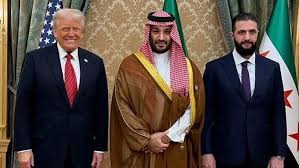


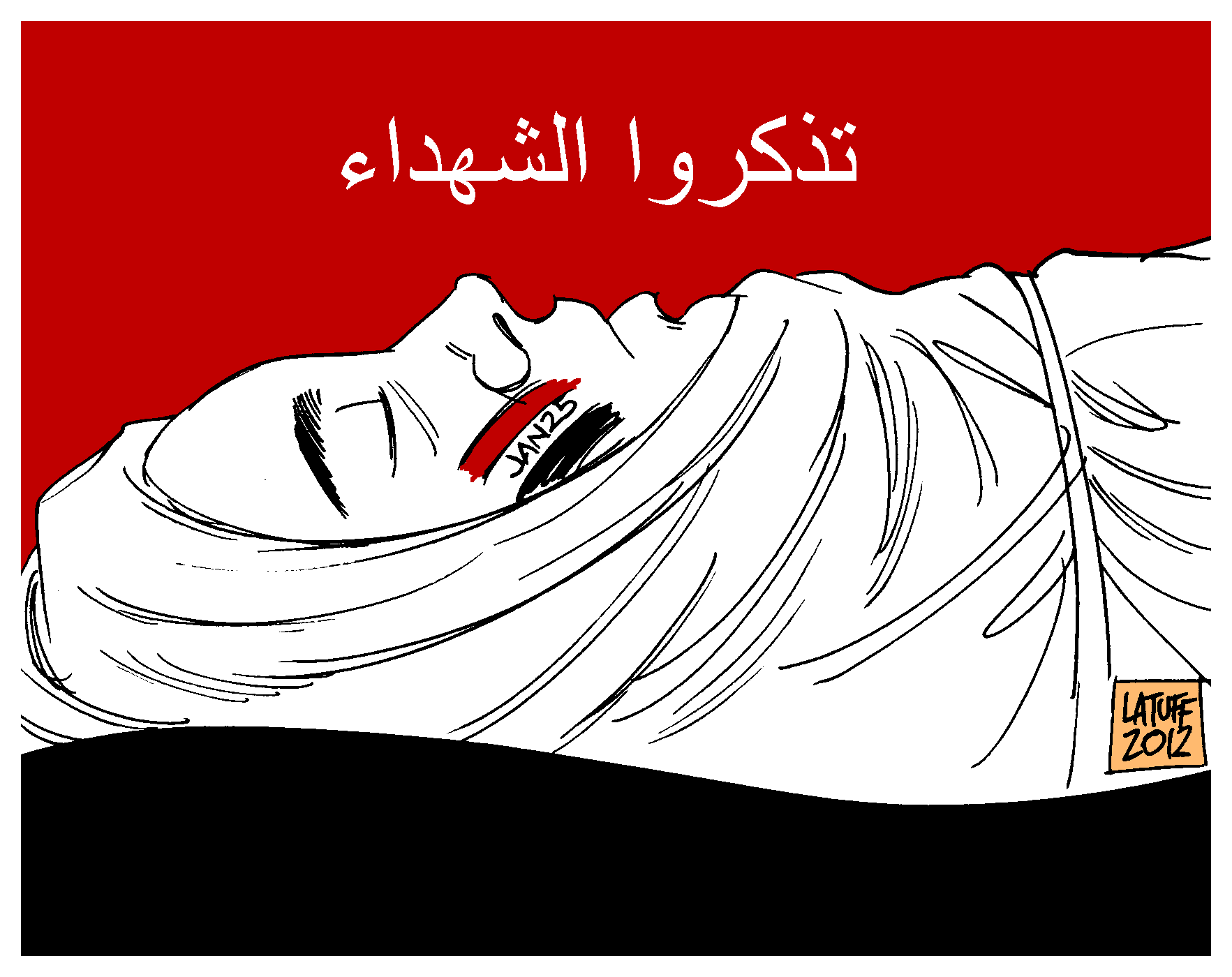


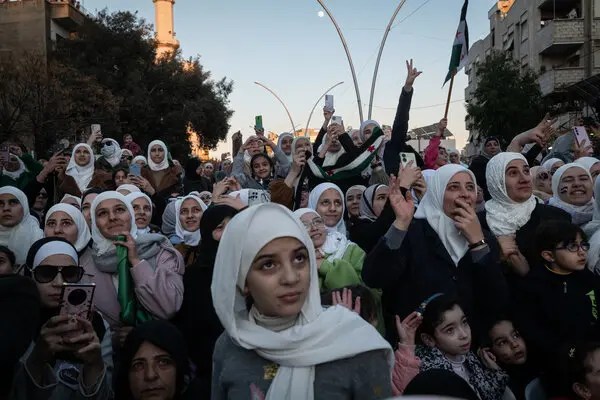


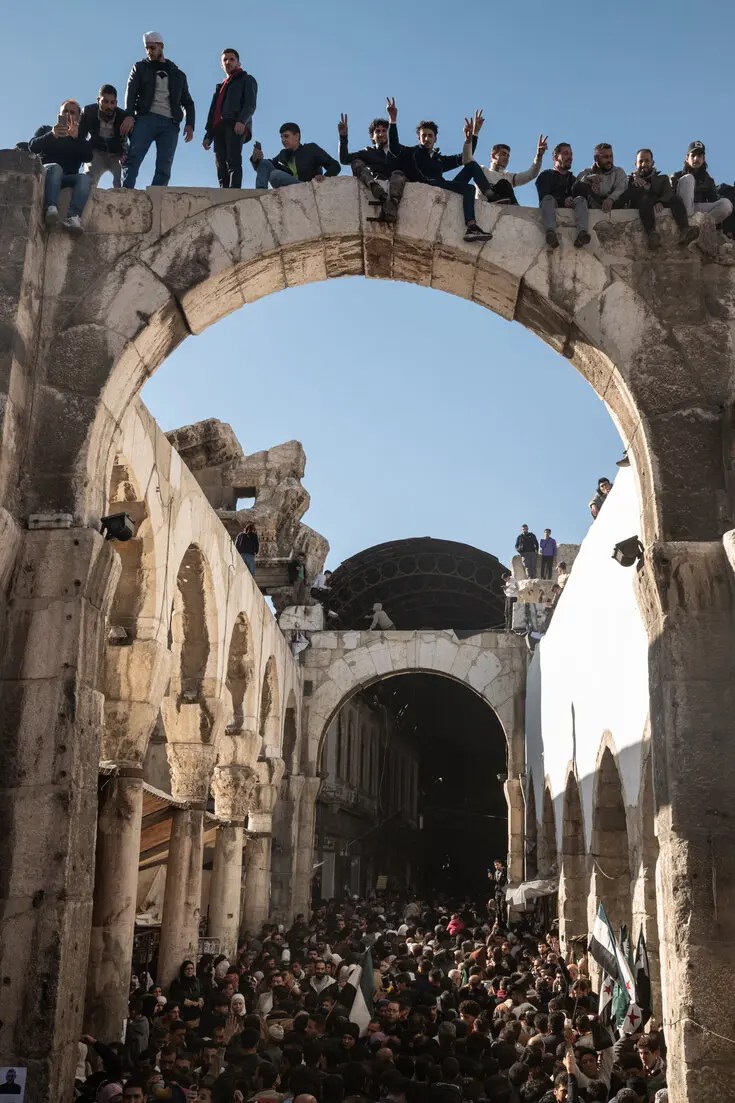


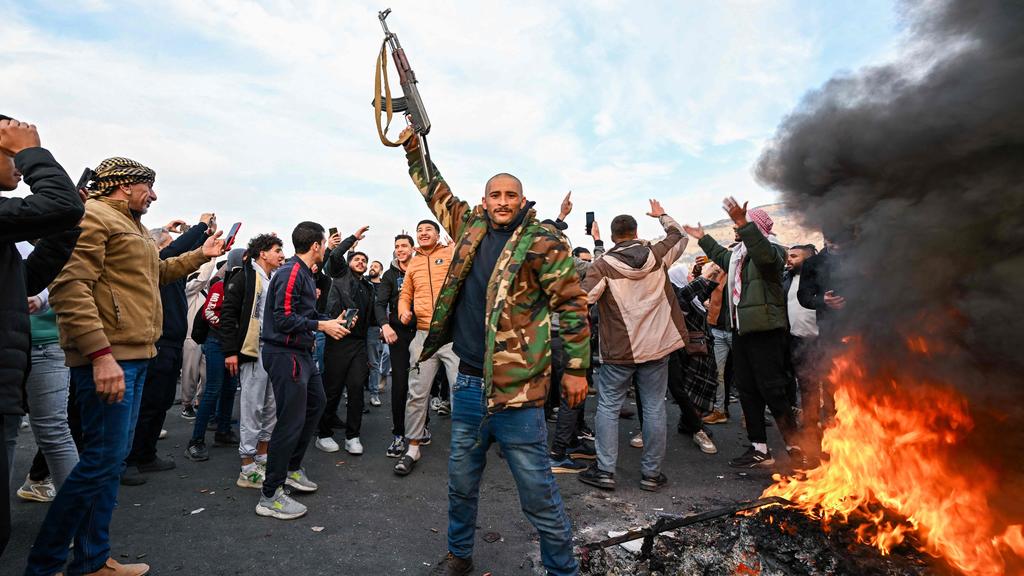
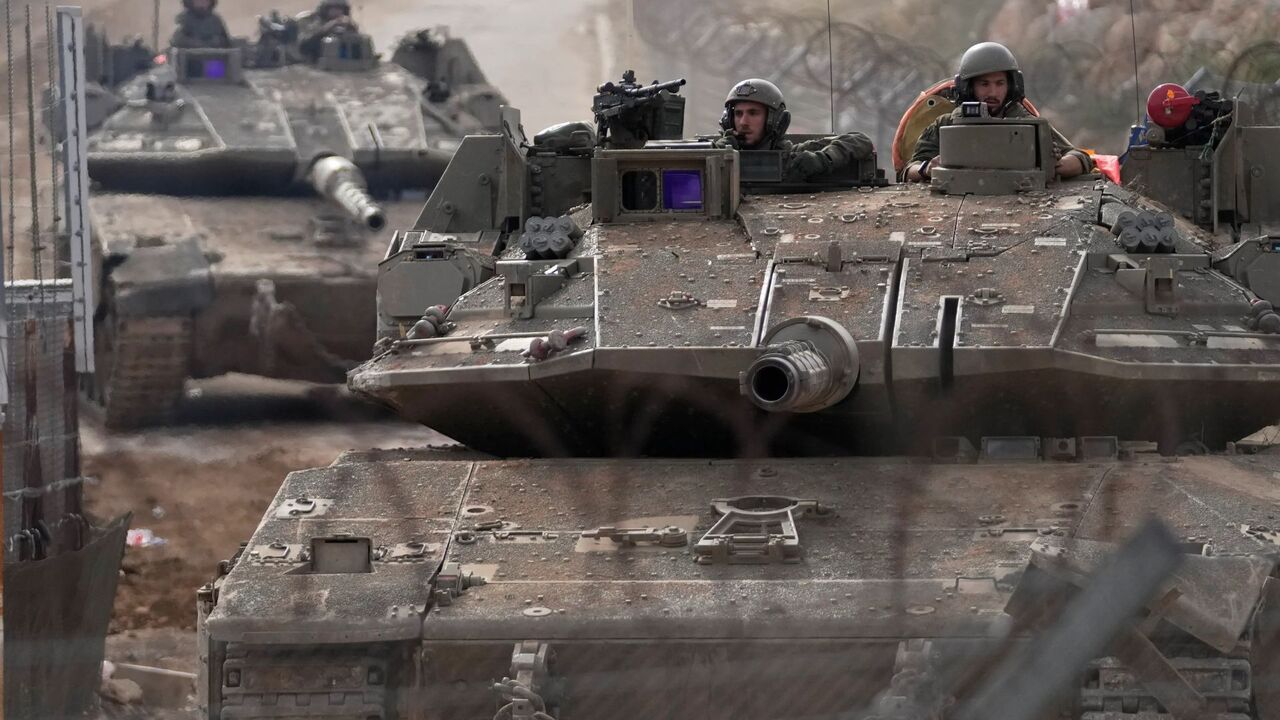
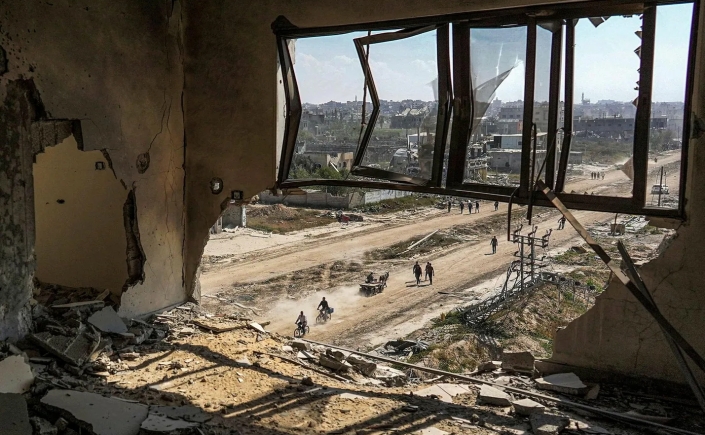
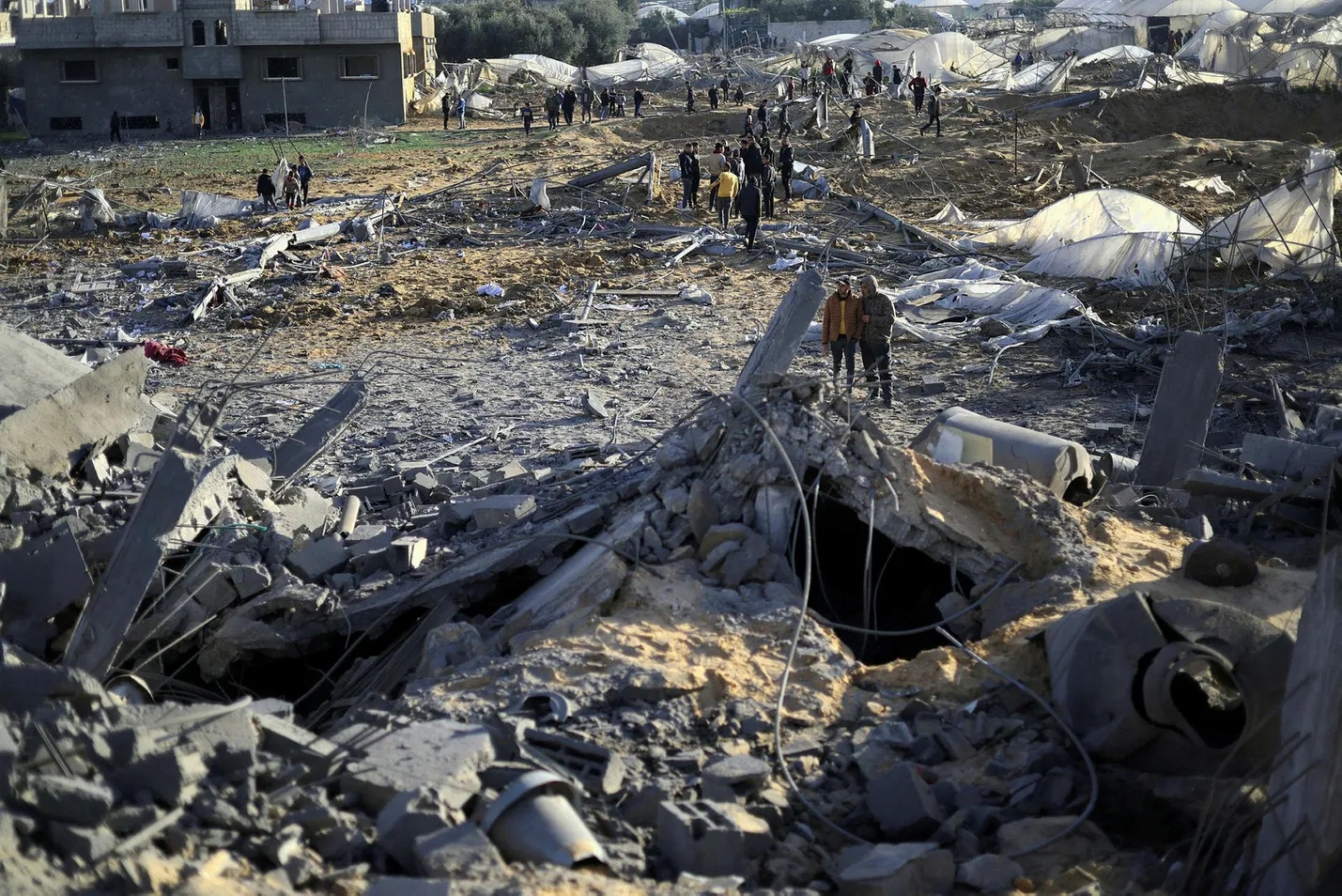
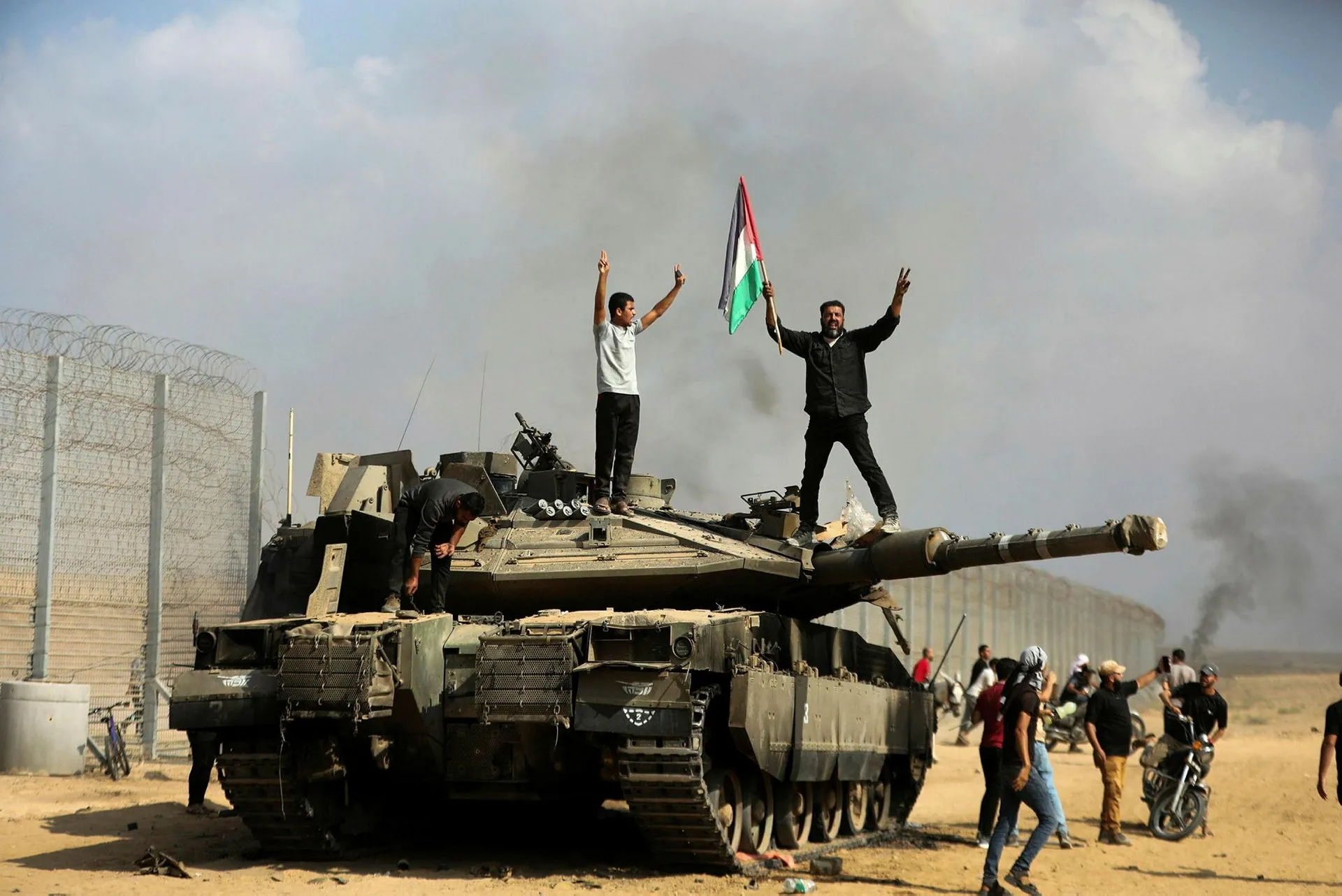
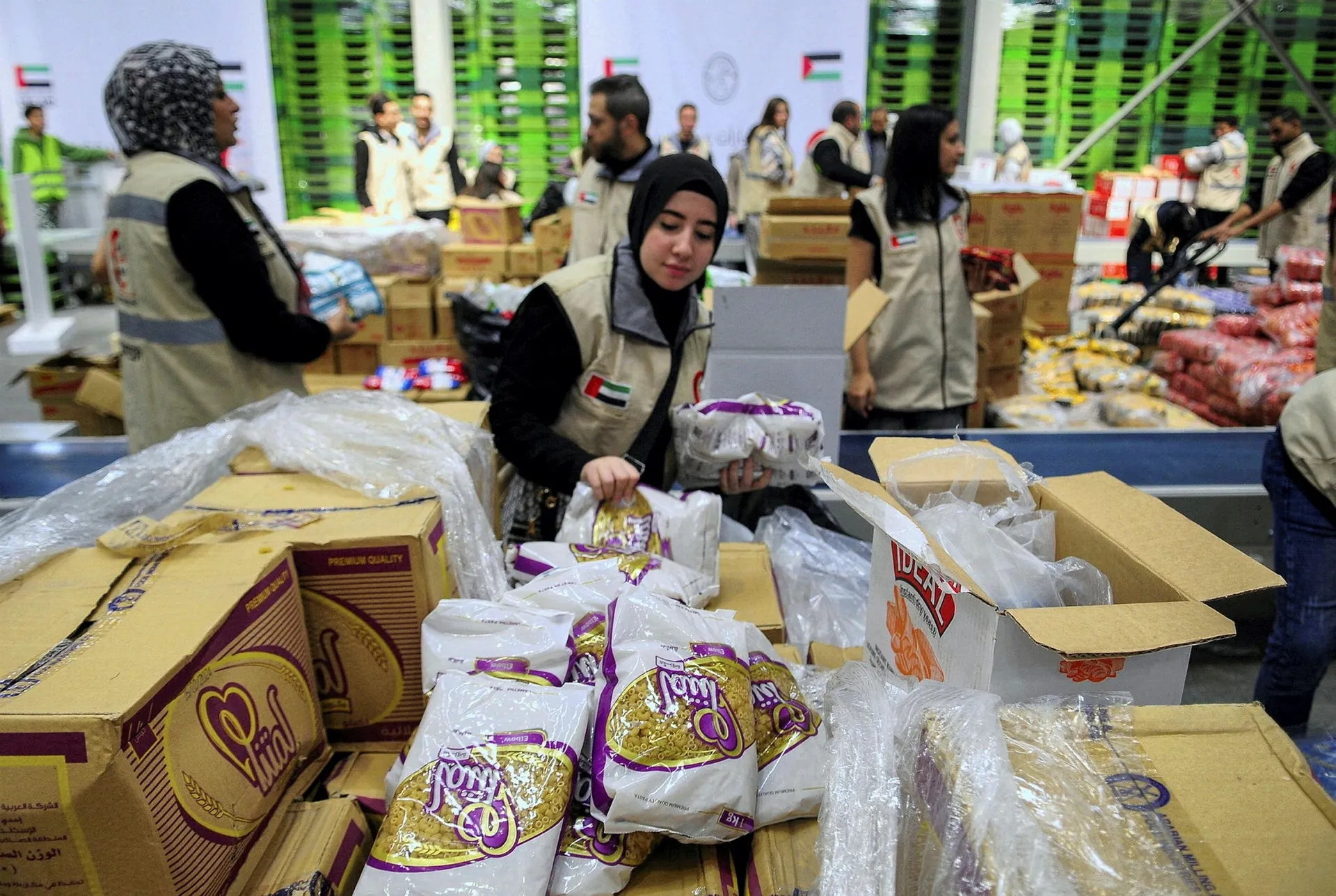




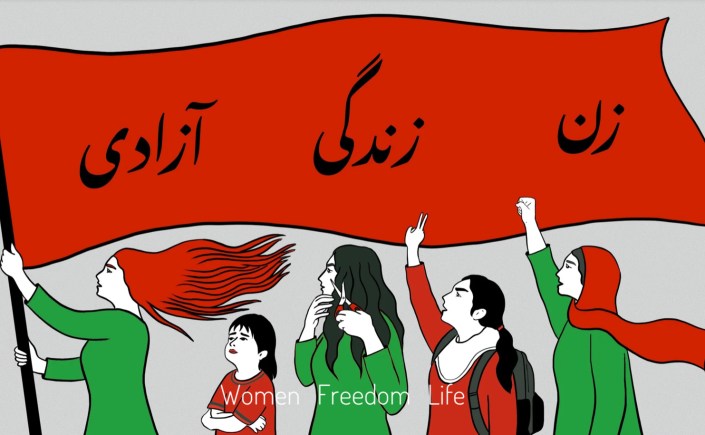


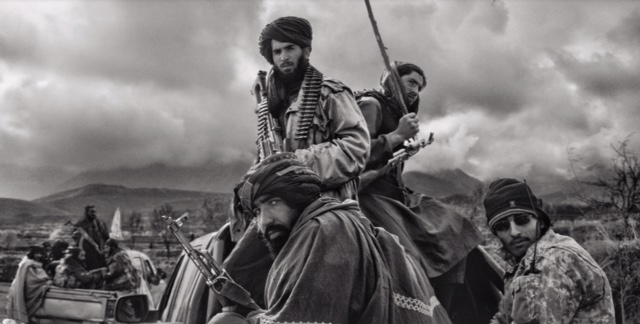


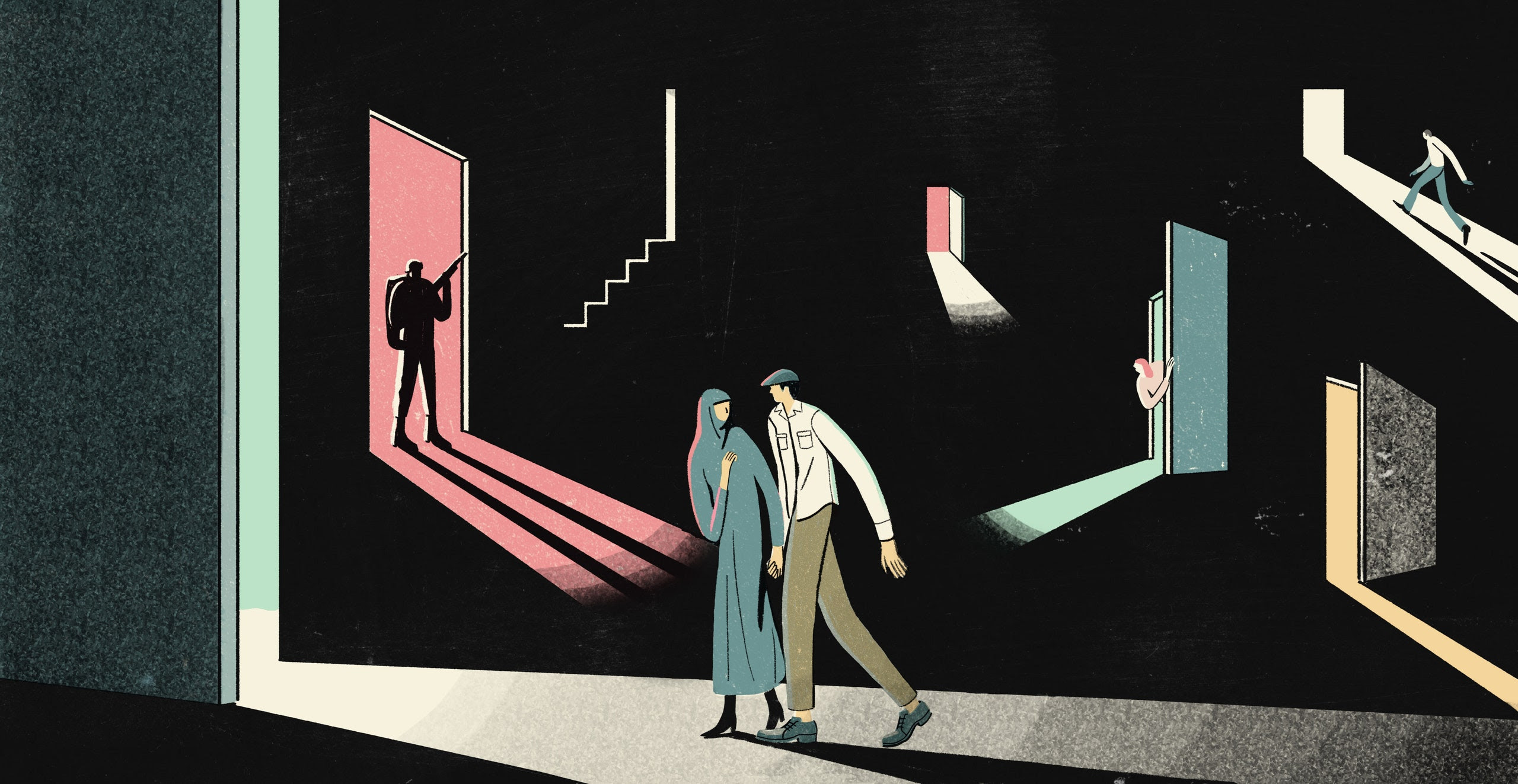

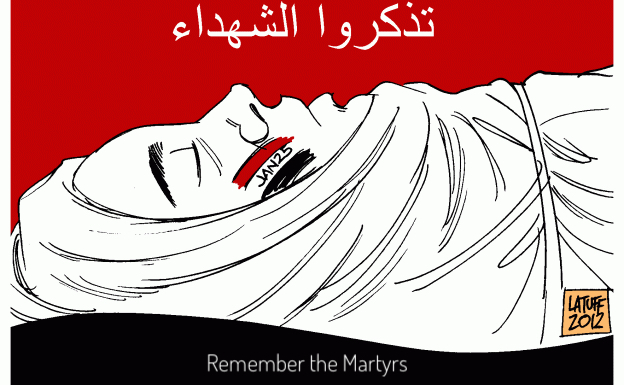

 In That Howling Infinite