Economist and commentator Henry Ergas wrote in The Australian recently: “With the Trump revolution wreaking havoc on conservative movements worldwide and the election rout leaving Liberals stunned, Australian conservatism faces an identity crisis it no longer can afford to ignore. Understanding its divergence from overseas traditions is vital to recovering and redefining the distinctive voice it needs to deal with the latest threat to its existence.” I have repolished it below.
Personally, I find the crisis in contemporary conservatism, particularly as it pertains to Australia politics, fascinating. Here it is in danger descending into a culture of grievance and of populism (- defined as the quest for simple solutions to complex problems).
These fast-moving times are shaky ground for the creed. People are losing faith in institutions; the church no longer has moral influence; the social norms that once tied the community together are changing at lightning speed. Even many within what can be classified as the centre-right acknowledge what might be described as the conservative movement is apparently on the back foot, scrambling to define itself by what it opposes rather than what it believes, plagued by self-doubt and confusion as to what to believe what to stand up for.
As younger voters in the Anglo-sphere veer away from conservative parties, old warhorses and young fogeys, an incongruous, anachronistic cabal of reactionaries if ever there was one, desperately seek relevance and comfort as they endeavour to beat back what they see as the rising tide of progressivism and the proliferation of what they condemned as “woke” – a portmanteau word for whatever that dislike and disdain in politics and society’s at large.
“Conservatism” is an intriguing concept. It can broadly be translated as “traditional” values, and can embrace a varied spectrum of “isms”, including authoritarianism, hierarchy, nationalism, nativism and ethnocentrism, and also, en passant, religiosity, homophobia, and indeed, anything deemed antithetical to the old, tried and true ways. In a general sense, it has gained traction across much of the world as people yearn for order and stability and belonging and identity that western-style liberalism with its ecumenical emphasis on identity, equity and diversity cannot satisfy. Many highlight what they see as to the erosion of national institutions, of Western culture and even morality itself. Some advocate a national conservatism that hold nations to be distinctive and to seek to protect this distinctiveness.
It is in essence an atavistic worldview, one which harks back to the ways of thinking and acting of a former time and a yearning for “la recherche du temps perdu”. In its modern manifestations, it is in many ways a belligerent, intolerant creed, quite distinct from the late 18th century English parliamentarian Edmund Burke’s benchmark conservatism, namely the preservation of principles of the past which emerge from “the nature of things by time, custom, succession, accumulation, permutation and improvement of property”, and in which institutions and customs were rendered sacred by longevity and continual use. The comfort of continuity, in fact.
And it is different to what perennial Australian prime minister Robert Menzies was alluding when he formed the Australian Liberal Party in 1945: “a healthy and proud sense of continuity, is one of the greatest steadying influences and a superb element of sanity in a mad world… “ in his Forgotten People speech of 1942, he invoked homes material, homes human and homes spiritual – the homes humans can live in and where families can be enriched spiritually – rather than the merits of some cold ideology. It was a uniquely reassuring doctrine for homely, ordinary folk opposed to change or frightened by it.
In his essay, “Why I Became A Conservative“, the late British philosopher Roger Scruton wrote that the romantic core of the creed was the search for the “lost experience of home”, the dream of a childhood that cannot ever be fully recaptured, but can be “regained and remodelled, to reward us for all the toil of separation through which we are condemned by our original transgression”. At the heart of conservatism, in other words, is love: love for things that exist or existed and must be saved.
In his introduction to A Political Philosophy, Scruton wrote: “the conservation of our shared resources — social, material, economic and spiritual — and resistance to social entropy in all its forms”. His conservatism was, above all, conservationist: constant care for institutions, customs, and family. His debt to Edmund Burke: society is a contract between the living, the dead and the unborn; a “civil association among neighbours” is superior to state intervention; “the most important thing a human being can do is to settle down, make a home and pass it on to one’s children”.
There is something quite benign about these concepts of conservatism. In stark contrast, conservatism that is gaining traction in many countries, particularly in eastern Europe, but also on the MAGA movement in the United States and on the far-right in Western Europe and also, Australia is a cold, atavistic and embittered beast. Populist in its nature, it appeals primarily to those who favour the reassuring hand of a paternal authority figure who is able to promise those aforementioned simple solutions to the modern world’s bewildering array of complex problems. Freethinkers, individuals, and all of heterodox opinions and practices, political, social, biological or spiritual – beware!
Disclaimer: the only thing this post has to do with Spanish director Luis Buñuel’s 1974 surrealist comedy drama Le Fantôme de la liberté is its title, although like the film, it challenges pre-conceived notions about the stability of social mores and reality.
With the Trump revolution wreaking havoc on conservative movements worldwide and the election rout leaving Liberals stunned, Australian conservatism faces an identity crisis it no longer can afford to ignore.
Henry Ergas and Alex McDermott, The Australian 10 May 2025
In the aftermath of last weekend’s devastating election loss it is easy to write off conservatism in Australia. This wouldn’t be for the first time. As historian Keith Hancock observed in Australia (1930), conservative, in this country, has always been a term of abuse, implying that its target is an out-and-out reactionary.
There is nonetheless a profound paradox. Although conservative may be a term of abuse, Australian politics has long had a marked conservative vein, even as its chief protagonists have studiously avoided the descriptor. A hardy perennial, with a distinctive voice that contrasts with overseas conservatism, the conservative instinct in Australia has run deep, dominating federal politics for decades – and recovering, time and again, from setbacks that had been claimed to foreshadow its demise.
US President Donald Trump and Vice-President JD Vance. Picture: AP
In part, that identity crisis reflects the factor that has made for conservatism’s enduring success: its infinite adaptability. Indeed, the term defies easy definition, just as the groups to which it has been applied defy ready categorisation, making the conservative identity inherently labile.
As Paul de Serville, a historian of Australian and British conservatism, has observed, every party that has emerged to represent conservatism’s interests and beliefs across the past 350 years “is a study in contradiction between opposing traditions and schools of thought”.
Even its founding parent, the movement that eventually became the Conservative Party in Britain, has “died or lain dormant” numerous times, split at least twice, and never settled on any singular set of policies, ideas and beliefs. Its capacity to incorporate diverse elements has in fact been one of its defining qualities. After all, “what other party has elected a Jewish novelist (Disraeli) to lead a group of wordless squires? Or a grocer’s daughter (Thatcher) to rule a sulky band of Tory Wets?”
But beneath the shifting terrain of cultural and political battlegrounds, there are in British conservatism some identifiable commitments. Originally, the commitment was above all to tradition. Born in the turmoil of the English civil war, the Tories (a term derived from the Middle English slang for outlaw) stood for loyalty to the Church of England and the crown. Unapologetic royalists, their clergy defended the church against the Puritans while stressing the values of family, home and nationhood. Over time, however, the primary emphasis of British conservatism changed into a commitment to the virtue of prudence.
Often associated with a sense of human limitations and the impossibility of achieving utopia, British conservatism became the embodiment of a Western intellectual tradition that extends back at least as far as St Augustine.
Former British Prime Minister Boris Johnson led a populist style Conservative Party. AFP
Conservatism in the US had a starkly different origin and trajectory. Far from being a reaction to the threat of change, it was a by-product of the American Revolution’s fight against the crown. Initially, what it sought to conserve was the ideal of a “mixed constitution” whose myriad checks and balances could prevent the development of an overmighty state. That coexisted with the agrarian conservatism of the south that feared, above all, the centralism that might abolish slavery and privilege northern manufacturers over southern primary exporters. Together, those foundations fuelled the development of a staunchly conservative, often highly formalistic legalism whose power – unrivalled in any other Western country – grew with the ascendancy of the Supreme Court.
But as early as the 1820s that version of conservatism faced a powerful challenge from Andrew Jackson’s radical populism. Jacksonian populism had more than its fair share of incoherence but its grassroots pugnacity spawned one of US politics’ most enduring and certainly most distinctive notions: the spectre of a “deep state” that was liberty’s greatest enemy.
Permeated by a Manichean friend-enemy dynamic that distinguishes what American historian Richard Hofstadter famously called the “paranoid style” in US politics, the Jacksonians portrayed the federal government as far worse than overbearing: having been hijacked by the enemies of the common man, it was an actively malevolent force hiding behind the facade of law and order. Only by dismantling it could freedom be preserved.
Former US President Andrew Jackson
The Jacksonians left a deep imprint on the American right and most notably on its rhetoric, but they never entirely conquered the field. The somewhat rigid constitutional conservatism that had preceded Jacksonianism survived and, inspired by intellectual leaders such as Supreme Court associate justice Antonin Scalia, flourished.
At the same time, many other varieties of conservatism appeared and at times reappeared after having gone into abeyance.
For instance, Vice-President JD Vance’scommitment to an intensely moralistic vision of politics – that privileges honest labour over endless consumption, security at home over adventures overseas, family and local community over wider notions of society – renews a Catholic tradition that had waned as the ethnic communities that were its original bearers assimilated into the American mainstream.
Vice-President JD Vance
In that sense American conservatism was always as mutable, open-ended and diverse as the US itself. But for all of that diversity, the nature of the presidential contest periodically forced its differing elements to coalesce around a leader who somehow embodied the spirit of the times.
As with all populisms, Trump’s message jumbles together contradictory, even irreconcilable, components. But it isn’t intended as a coherent intellectual project – it is not a politics of ideas that Trump pursues but of emotive response and instantaneous impact.
Even less is it a politics of cautious pragmatism, as was the conservatism of Republicans George HW Bush or John McCain, who also channelled one of American patriotism’s many styles. And least of all is it, like Vance’s, a politics of high moral purpose. Rather, it is a politics of personal power, deployed, often arbitrarily, to purposes that can change unpredictably from day to day.
That it is not to deny that there runs through Trump’s project American conservatism’s golden thread: the goal of restoring what his supporters view as the freedoms that were the original promise of the American founding and, later, the American Revolution.
But much as was the case with the Jacksonians, that goal is to be achieved by demolishing existing institutions, which are cast as having betrayed the original promise, rather than through their cautious reform. Trumpism’s intensely antinomian character is starkly antagonistic to the American tradition of constitutional conservatism, which is why a number of unquestionably conservative scholars are challenging the administration’s actions in the courts. At the same time, its messianic quality, imbued with visions of future glory, breeds a fanaticism entirely alien to the British conservative tradition.
Trumpism breeds a fanaticism alien to the British and Australian conservative tradition. AFP
It is entirely alien to the Australian conservative tradition too. Here the greatest difference lies in the fact the Australian political ethos has not seen the state as the enemy, much less as a malignant force. It has been regarded instead as a tool to be effectively used to benefit the people and help them flourish.
That difference from the US has profound historical roots. America’s initial European settlement occurred in the 1600s, a period distinguished in Britain by what became known as the “Old Corruption”. Government offices were chiefly sinecures, officially apportioned rackets for personal gain, propping up an oligarchy whose favours were openly for sale.
In contrast, European settlement in Australia and New Zealand began as sweeping reforms to Britain’s system of government were taking hold. For the first time it was becoming possible to treat the government as a utility, dispensing valued benefits, rather than as a lurking predator. Colonial governors’ administrations, while not without their own rackety aspects, were shaped by changes reducing royal patronage and improving government accountability. As Australian historian John Hirst argued, that laid the seeds of an enduring respect for impersonal authority, exercised, at least in theory, in the pursuit of prosperity and good order.
There were, for sure, periodic outbreaks of radical opposition. But the Australian approach was almost always to absorb the conflict by institutionalising its protagonists. Embedding the agitators within the system they were fighting against, that solution traded moderation for tangible gains.
For example, violent class war and mass strikes in the 1890s Depression culminated in the birth of the ALP as an official parliamentary party, changing laws and winning government. Later, the Arbitration Court became run largely by what had been the warring parties – the infamous “industrial relations club”, as columnist Gerard Henderson called it. In exchange for prestigious sinecures, the former enemies descended into what Hancock derided as a “pettifogging” legalism that suffocated the radicals.
Equally, landless gold-diggers demanded the squatters’ leases be ripped up, and stormed Victoria’s parliament in the 1850s. The Land Selection Acts in the subsequent decades established a regional population of often struggling farmers whose 20th-century political incarnation took the form of country parties.
Those parties not only secured “protection all round” in the 1920s, along with significant direct subsidies; they also ensured the establishment of marketing boards to which party worthies were invariably appointed. And much the same could be said of the Tariff Board, which shaped manufacturing protection for decades.
The corollary of that solution was a particular type of conservatism. Yes, in the early years of settlement there had been “real” conservatives of the Tory variety. But when self-government began, they were rudely jostled aside. Australian conservatism would not draw its strength from them.
It was instead the middle class that provided the dominating motifs of enduring Australian conservative strength. It isn’t difficult to understand why. The “workingman’s paradise” was a place where ordinary settlers and working men could get ahead, not rags-to-riches style, as the American dream pitched it, but enough to acquire comfort, leisure and independence.
Australian wages had been essentially the highest in the world since first settlement and the political victory of liberalism, which occurred during the 1850s gold rushes, ensured free markets and social mobility. To become an independent small business owner, to own your own home, to provide for your family, your children – this was the dream, and in Australia they by and large found it.
The conservatism that resulted from that success story incorporated the liberal beliefs and practices that proved so decisively triumphant in the colonial context. Historian Zachary Gorman observes that liberalism’s 19th-century victory in Australia was so comprehensive it became “less of a clear agenda and more of a pervasive political culture”. No longer conservatism’s upstart challenger as in Britain, liberalism here almost instantaneously became the established mainstream – it became what needed to be protected, as well as what conservatives sought to conserve.
Australian conservatism, then, sprang not out of reverence for the past or social hierarchy but from attachment to the enjoyments and freedoms of ordinary life that the most liberal polity in the world encouraged to flourish. It kept faith with ordinary experience and the socially durable values of an open society.
It soon came to shape the whole of the centre-right, underpinning both the twin liberal traditions of early 20th-century Australian life – the neo-Gladstonian free trade liberalism typified by NSW’s Henry Parkes, George Reid and Joseph Carruthers and the Deakenite liberalism protectionist Victoria championed.
More pragmatic and willing to innovate than, say, Britain’s Home Counties conservatism, Australian conservatism was dispositional rather than traditionalist – as a byproduct of urban, aspirational, middle-class Australia, generally inspired by the hope of improvement, it had no difficulty accommodating an uninterest in the past. The attachment to steady improvement was the important thing.
Robert Menzies’ pitch in his justly famous “Forgotten People” broadcast in 1942 captures this spirit perhaps better than any other significant Australian political testament. In it Menzies speaks directly to the attachment to the home and the family as the cornerstone of the “real life of the nation … in the homes of people who are nameless and unadvertised, and who … see in their children their greatest contribution to the immortality of their race”.
Accompanying that emphasis on home and family is a classically conservative sense of continuity.
“It’s only when we realise that we are a part of a great procession,” Menzies declared in laying the foundation stone of the National Library of Australia two months after he retired in March 1966, “that we’re not just here today and gone tomorrow, that we draw strength from the past and we may transmit some strength to the future.”
Across several decades of political leadership Menzies’ speeches pulsed with phrases that exemplified this disposition. His governments have been “sensible and honest”. He speaks “in realistic terms”, sustained “by an unshakeable belief in the good sense and honesty of our people”.
Former PM Robert Menzies is pictured in 1941. Picture: Herald Sun
Yet this stress on continuity in Menzies’ rhetoric complemented rather than contradicted a commitment to what he referred to as “solid progress”. This country was a settler society built by successive waves of migrants; since its earliest days, its life had been saturated with optimism: Australia, said Menzies, was “our young and vigorous land”, still embarking on its glad, confident morning.
It was the constant undercurrent of hope and aspiration that gave Menzies’ conservatism its distinctive flavour, making it more explicitly geared to the confident expectation of future possibility than its European or American counterparts.
And it was precisely because it was so oriented to progress that the term conservative was generally avoided by the movement he forged, even as a conservative disposition bubbled along beneath its immediate surface, and was mirrored in electoral preferences of voters – not simply by voting right of centre but by giving governments a second term even if their first had been somewhat disappointing, and by regularly knocking back proposed constitutional changes.
However, those two elements – continuity and change – were uneasy bedfellows: continuity could, and eventually did, act as an obstacle to indispensable change.
The institutionalisation of conflict through entities such as the arbitration tribunals and the Tariff Board had, for decades, moderated conflict – but only at the price of inefficiencies that became ever more unsustainable as the world economy globalised in the 1970s and 80s. At that point, Australian conservatism entered into a prolonged crisis, torn between the deeply embedded value of caution and the equally strong value of adaptation.
It was easy to repeat Edmund Burke’s axiom that “A state without the means of some change, is without the means of its own conservation”; but effecting sweeping change without destroying the party’s unity was of an entirely different order of difficulty.
Nothing more clearly highlighted the dilemma than Liberal leader John Hewson’s Fightback – a call to arms that was as close as the movement ever came to a truly Thatcherite policy revolution. Its failure had many causes but one was the complete absence of the sense of continuity and stability that has always been dear to the Australian middle class.
It lacked, too, the high Gladstonian moral clarity that Margaret Thatcher articulated in her heroic campaign to reverse Britain’s slide to socialised mediocrity. In fact, Thatcher’s argument for the moral basis of capitalism had far more in common with Menzies’ creed of “lifters not leaners” than with Hewson’s “economic rationalism”.
Former British PM Margaret Thatcher2001. Picture: AP
What was needed was a new synthesis. As Menzies had, John Howard, the first Liberal leader to actively identify himself as a conservative, provided it.
Nigel Lawson, who served as the Thatcher government’s most consequential chancellor of the exchequer, once commented that whereas “Harold Macmillan had a contempt for the (Conservative) party, Alec Home tolerated it, and Ted Heath loathed it, Margaret (Thatcher) genuinely liked it. She felt a communion with it.” Exactly the same could be said about Howard: his scrupulous respect for his party’s traditional ethos helped him succeed for as long as he did.
That is not to deny that Howard at times pursued dramatic change – a GST, industrial relations reform, gun ownership – but the approach was rarely radical in style, much less revolutionary in tone. It is telling that the one reform that failed was Work Choices, which went furthest in dismantling existing institutions. And it is telling, too, that subsequent Coalition governments tinkered with the arrangements Labor put in its place rather than seeking their wholesale removal.
Now the synthesis Howard forged between conservation and change is yet again under extreme stress. So, too, are its electoral foundations, as the bases of politics undergo a profound transformation.
Because of Australian conservatism’s pragmatic nature, marshalling broad alliances against those forces and movements that endanger the foundations of the polity has always been its signature approach. Finding some common ground among its constituents, each of those alliances combined the shared opposition to an adversary with a positive program based on overlapping, if not entirely shared, values. The way Liberals, free-traders and protectionists alike rallied alongside Conservatives when threatened by a new common enemy, the ALP in the early 20th century, is a classic example.
John Howard pictured in 1996 after claiming victory for the Coalition. Picture: Michael Jones
However, the dominant force in contemporary politics is fragmentation: the centrifugal pressures that make coalitions hard to assemble but easy to destroy have become ever stronger as social media and identity politics shatter politics’ traditional alignments.
The centre-right is far from being immune from those tendencies, as the emergence of the teals shows. And they are compounded by the pressures of Trumpian populism, which is as hostile to the compromises coalition-building entails as it is to inherited institutions. The only coalitions Trumpism can forge are those that aggregate resentments: against the arrogance of the “progressives”, the abuses of power that occurred during the pandemic, the perception that common values are denigrated and despised.
To use a phrase American constitutional lawyer Greg Lukianoff and social psychologist Jonathan Haidt coined for the left, Trumpism’s dominant mode of action is “common-enemy politics”, with the adversary being the principal factor unifying its disparate parts. There are no shared values, nor any shared aspirations; the glue comes from shared hatreds.
But intransigent oppositionalism is no basis for a viable politics. Regardless of what Trump’s Australian acolytes believe, its transposition to this country would make for a future of repeated failure.
Rather, for a broader alliance to be possible again, a new synthesis is needed. Australia’s two greatest prime ministers, Menzies and Howard, suggest the way. Both exemplified a social conservatism that drew from the distinctively Australian emphasis on the conservative temperament over and above distinctive philosophical creed. Both forged a synthesis that combined an attachment to liberal principles with a commitment to large-scale changes needed to underwrite prolonged prosperity and progress.
Now, after the rout of last weekend’s election, that synthesis desperately needs to be redefined.
In the end, politics is about argument and arguments are about ideas. When politics seems so entirely bereft of them, Australian conservatives have no choice but to think again.
Henry Ergas is a columnist with The Australian. Alex McDermott is an independent historian.
If I ruled the world
Every day would be the first day of Spring
Every heart would have a new song to sing
And we’d sing of the joy every morning would bring
If I ruled the world
Every man would be as free as a bird
Every voice would be a voice to be heard
Take my word, we would treasure each day that occurred
My world would be a beautiful place
Where we would weave such wonderful dreams
My world would wear a smile on its face
Like the man in the moon has when the moon beams
Leslie Bricusse and Cyril Ornadel
On his inauguration on January 20 2025, US President Donald Trump declared to the American people, “My fellow citizens, the golden age of America begins right now.”
Pundits and partisans right across the political spectrum, both at home and overseas, agree that Donald John Trump’s second presidential term is probably the most consequential since Franklin Delano Roosevelt. That is perhaps the only thing that they can agree on.
After 100 days in office, he is in command, testing the limits of executive power, resetting political and cultural perceptions and expectations, and reframing America’s role in the worked. But it would seem to many that having arguably declared war on America and the world, he is veering out of control.
There is almost no part of American society which has not felt the blizzard of change from the day he was sworn in. In a stand-over style that is more mob boss than head of state, he has forged a new American imperialism to project what he perceives as US interests, secure strategic assets and rebuild American economic self-sufficiency. The global trading system that has been in place for 75 years has been crippled, if not destroyed, and economists and stock markets surmise that the US economy is on the verge of crashing. America is no longer the leader of the free world because the world is no longer following America, but rather, is taking evasive action. Trump has united the people of most countries around the world around their political leadership, and yet he has not united America and Americans.
In a recent opinion piece in the Sydney Morning Herald, Bruce Wolpe, a senior fellow at the University of Sydney’s United States Studies Centre and former Congressional staffer, wrote a concise overview of Trump’s tumultuous first 100 Days. I have borrowed from it to write the following précis.
Trump is not governing by legislating but by an unprecedented exercise of executive power. He has signed fewer bills into law than any recent modern president while his 100 executive orders have triggered a tidal wave of new policies to change what the government can and cannot do. His political style of is marked by decrees coupled with complete domination of the airwaves for several hours each day, from greeting world leaders in the Oval Office to his televised cabinet meetings. For Trump, it is all streaming, all the time.as he remarked in the prime-time public takedown of the Ukrainian president in the Ovak Office, this it makes for “good television”.
On foreign policy, Trump promised groundbreaking early success on the world stage. But he has to date failed to end the wars in Ukraine and Gaza, come close to a nuclear deal with Iran , or settling the dozens of trade wars he launched against his allies. Instead, there are constant reversals in tactics and rhetoric. He has decoupled America from the wider world with ramifications which will be felt for many years, if not decades. He has treated allies like adversaries, withdrawn America from numerous global institutions and treaties, erected daunting tariff barriers on all US trading partners and slashed US foreign aid and the State Department, terminating foreign aid, vaccines and food programme. The cumulative effect has been to gravely weaken America’s ability to wield soft power at a time when China and Russia are rushing to fill the vacuum.
Aided and abetted by billionaire Elon Musk, the world’s richest man, Trump unleashed Project 2025’s sledgehammer to the bureaucracy with overriding acts of Congress to dismantle agencies and programmes, mass firings, loyalty oaths, and the seizure of databases. And, as he promised on the campaign trail, Trump is exacting vengeance on his enemies. He has called on judges who have ruled against him to be impeached. He has blacklisted law firms that worked with Democrats, or else shook them down for millions of dollars of free work. In a speech at the Department of Justice, Trump said his enemies were “scum”, that the cases brought against him were “bullshit”, that the judges who ruled against him were corrupt, his prosecutors were deranged, and that those who came after him should be imprisoned. In a war against the nation’s most prestigious universities, he is demanding their leftist woke elitism be expunged, or else research dollars and tax-free status will be eliminated. Meanwhile, he continues to target the media as the enemy of the people. The Associated Press has been excluded from presidential events; the Voice of America has been shut down; and Trump has asked the regulator to cancel the broadcast license of CBS whilst moving to defund public media’s NPR and PBS.
The Democrats in Washington meanwhile are adrift and effectively leaderless. With control of the House and the Senate, Trump dominates everything in the capital. The force, speed and scope of his administration’s actions are so intense that the Democrats cannot respond effectively. Its not as if everyone has been taken by surprise. If they had been paying attention, this is exactly what Trump and his team said they would do. It is the scale of this revolution that has put everyone into a spin. It is a time of everything happening everywhere all at once – in accordance with the MAGA mantra of “move fast and break things”.
But, say optimists, the pushback is coming. Every weekend, people are flooding the streets in cities across the country. That movement is growing. If all that Trump and his administration have let loose comes into full force but does not deliver the American miracle he promised – with recession, inflation, and chaos taking hold across the land – the midterm elections next year could be a turning point. The Democrats are in striking distance of retaking control of Congress. If so, Trump’s power may be checked and his golden age may be stillborn. And yet, nothing about Trump is certain. His approval ratings might now be at a historical low, but he has been wrongly written off many times before.
So, how did it come to this?
As the authors of the long but excellent opinion piece in The Atlantic published below explains, Donald Trump’s Second Coming began four years ago and took meticulous planning.
That’s right, it’s come to this Yes, it’s come to this And wasn’t it a long way down? Wasn’t it a strange way down?
L Cohen, Dress Rehearsal Rag
Postscript: a bad case of imperial purple …
The story goes that Roman Emperor and stoic “philosopher king” Marcus Aurelius engaged a slave to follow him as he walked around Rome; his only job, whenever his master was praised, was to whisper in his ear, “Remember, you are just a man, you are just a man”. Washington, meanwhile, is starting to resemble some of the more excruciating scenes from the BBC’s iconic sword and sandals series I Claudius.
‘Brazen transaction mixed with humbling obeisance is hardly unknown in Washington … In Trump’s Washington, the imperative has never been plainer: if you want to get ahead or stay out of trouble, praise the President as much as he praises himself … The gestures of servility come from all over. At a Cabinet meeting not long ago, Trump’s secretaries took turns: “Your vision is a turning point and inflection point in American history” (Brooke Rollins, Agriculture); “You were overwhelmingly elected by the biggest majority—Americans want you to be President” (Pam Bondi, Attorney General); “What you’re doing now is a great service to our country, but ultimately to the world” (Marco Rubio, State) … At a hearing of the House Committee on Natural Resources, where a dozen or so members were discussing the Gulf of America Act of 2025, sponsored by Marjorie Taylor Greene. Democrat congressman Jared Huffman said: “This is remarkable new stuff in this committee, just bootlicking sycophancy of the highest order,” he said. (Not long after the hearing, Huffman suggested an amendment to rename Earth “Planet Trump”.’
Illustration by Dale Stephanos. Source: Ethan Miller / Getty.
Before we begin, a primer on the science of arranging an interview with a sitting American president:
In ordinary times, reporters seeking an on-the-record encounter with the commander in chief first write an elaborate proposal. The proposal details the goals of the interview, the broad areas of concern, and the many reasons the president must, for his own good, talk to these particular reporters and not other, perfectly adequate but still lesser reporters. This pitch is then sent to White House officials. If the universe bends favorably, negotiations ensue. If the staff feel reasonably confident that the interview will somehow help their cause, they will ask the president—with trepidation, at times—to sit for the interview. Sometimes, the president will agree.
Such is what happened recently to us. We went through this process in the course of reporting the story you are reading. We made our pitch, which went like this: President Donald Trump, by virtue of winning a second term and so dramatically reshaping the country and the world, can now be considered the most consequential American leader of the 21st century, and we want to describe, in detail, how this came to be. Just four years ago, after the violent insurrection he fomented, Trump appeared to be finished. Social-media companies had banned or suspended him, and he had been repudiated by corporate donors. Republicans had denounced him, and the country was moving on to the fresh start of Joe Biden’s presidency. Then came further blows—the indictments, the civil judgments, and the endless disavowals by people who once worked for him.
And yet, here we are, months into a second Trump term. We wanted to hear, in his own words, how he’d pulled off one of the most remarkable comebacks in political history, and what lessons, if any, he’d internalized along the way.
Trump agreed to see us. We were tentatively promised a meeting and a photo shoot—likely in the Oval Office, though possibly the Lincoln Bedroom. But then, as is so often the case with this White House, everything went sideways.
The week our interview was supposed to occur, Trump posted a vituperative message on Truth Social, attacking us by name. “Ashley Parker is not capable of doing a fair and unbiased interview. She is a Radical Left Lunatic, and has been as terrible as is possible for as long as I have known her,” he wrote. “To this date, she doesn’t even know that I won the Presidency THREE times.” (That last sentence is true—Ashley Parker does not know that Trump won the presidency three times.) “Likewise, Michael Scherer has never written a fair story about me, only negative, and virtually always LIES.”
Apparently, as word of our meeting spread through Trump’s inner circle, someone had reminded him of some of the things we (specifically Ashley) had said and written that he didn’t like. We still don’t know who it was—but we immediately understood the consequences: no photo shoot, no tour of the newly redecorated Oval Office or the Lincoln Bedroom, and definitely no interview.
But we’ve both covered Trump long enough to know that his first word is rarely his final one. So at 10:45 on a Saturday morning in late March, we called him on his cellphone. (Don’t ask how we got his number. All we can say is that the White House staff have imperfect control over Trump’s personal communication devices.) The president was at the country club he owns in Bedminster, New Jersey. The number that flashed on his screen was an unfamiliar one, but he answered anyway. “Who’s calling?” he asked.
Despite his attacks on us a few days earlier, the president, evidently feeling buoyed by a week of successes, was eager to talk about his accomplishments. As we spoke, the sounds of another conversation, perhaps from a television, hummed in the background.
The president seemed exhilarated by everything he had managed to do in the first two months of his second term: He had begun a purge of diversity efforts from the federal government; granted clemency to nearly 1,600 supporterswho had participated in the invasion of the U.S. Capitol on January 6, 2021, including those caught beating police officers on camera; and signed 98 executive orders and counting (26 of them on his first day in office). He had fired independent regulators; gutted entire agencies; laid off great swaths of the federal workforce; and invoked 18th-century wartime powers to use against a criminal gang from Venezuela. He had adjusted tariffs like a DJ spinning knobs in the booth, upsetting the rhythms of global trade and inducing vertigo in the financial markets. He had raged at the leader of Ukraine, a democratic ally repelling an imperialist invasion, for not being “thankful”—and praised the leader of the invading country, Russia, as “very smart,” reversing in an instant 80 years of U.S. foreign-policy doctrine, and prompting the countries of NATO to prepare for their own defense, without the protective umbrella of American power, for the first time since 1945.
Donald Trump after being sworn in as president for his second term in the Rotunda of the United States Capitol (Shawn Thew / Reuters)
He had empowered one of his top political donors, Elon Musk, the richest man in the world, to slice away at the federal government and take control of its operating systems. He had disemboweled ethics and anti-corruption architecture installed after Watergate, and had declared that he, not the attorney general, was the nation’s chief law-enforcement officer. He had revoked Secret Service protection and security clearances from political opponents, including some facing Iranian death threats for carrying out actions Trump himself had ordered in his first term. He had announced plans to pave over part of the Rose Garden, and he had redecorated the Oval Office—gold trim and gold trophies and gold frames to go with an array of past presidential portraits, making the room look like a Palm Beach approximation of an 18th-century royal court.
Old foes were pleading for his grace. Meta—whose founder, Mark Zuckerberg, had become an enthusiastic supplicant—had paid $25 million to settle a civil lawsuit with Trump that many experts believed was meritless. Amazon’s founder, Jeff Bezos, the owner of The Washington Post, announced that he was banning his opinion writers from holding certain opinions—and then joined Trump for dinner the same night at the White House.
“He’s 100 percent. He’s been great,” the president told us, referring to Bezos. “Zuckerberg’s been great.”
We asked Trump why he thought the billionaire class was prostrating itself before him.
“It’s just a higher level of respect. I don’t know,” Trump said. “Maybe they didn’t know me at the beginning, and they know me now.”
“I mean, you saw yesterday with the law firm,” he said. He was referring to Paul, Weiss, Rifkind, Wharton & Garrison, one of the nation’s most prestigious firms, whose leader had come to the Oval Office days earlier to beg for relief from an executive order that could have crippled its business. Trump had issued the order at least partially because a former partner at the firm had in 2021 gone to work for the Manhattan District Attorney’s Office, where he was part of an investigation of the Trump Organization’s business practices. Also that week, an Ivy League institution, threatened with the cancellation of $400 million in federal funding, had agreed to overhaul its Middle Eastern–studies programs at the Trump administration’s request, while also acceding to other significant demands. “You saw yesterday with Columbia University. What do you think of the law firm? Were you shocked at that?” Trump asked us.
Yes—all of it was shocking, much of it without precedent. Legal scholars were drawing comparisons to Franklin D. Roosevelt and the early stages of the New Deal, when Congress had allowed FDR to demolish norms and greatly expand the powers of the presidency.
As ever, Trump was on the hunt for a deal. If he liked the story we wrote, he said, he might even speak with us again.
“Tell the people at The Atlantic, if they’d write good stories and truthful stories, the magazine would be hot,” he said. Perhaps the magazine can risk forgoing hotness, he suggested, because it is owned by Laurene Powell Jobs, which buffers it, he implied, from commercial imperatives. But that doesn’t guarantee anything, he warned. “You know at some point, they give up,” he said, referring to media owners generally and—we suspected—Bezos specifically. “At some point they say, No más, no más.” He laughed quietly.
Media owners weren’t the only ones on his mind. He also seemed to be referring to law firms, universities, broadcast networks, tech titans, artists, research scientists, military commanders, civil servants, moderate Republicans—all the people and institutions he expected to eventually, inevitably, submit to his will.
We asked the president if his second term felt different from his first. He said it did. “The first time, I had two things to do—run the country and survive; I had all these crooked guys,” he said. “And the second time, I run the country and the world.”
For weeks, we’d been hearing from both inside and outside the White House that the president was having more fun than he’d had in his first term. “The first time, the first weeks, it was just ‘Let’s blow this place up,’ ” Brian Ballard, a lobbyist and an ally of the president’s, had told us. “This time, he’s blowing it up with a twinkle in his eye.”
When we put this observation to Trump over the phone, he agreed. “I’m having a lot of fun, considering what I do,” he said. “You know, what I do is such serious stuff.”
EXILE
that trump now finds himself once again in a position to blow things up is astonishing, considering the depth of his fall. So much has happened so fast that the improbability of his comeback gets obscured. Perhaps no one in American history has had a political resurrection as remarkable as Donald Trump’s.
In the waning days of his first term, his approval rating stood at a pallid 34 percent. A few weeks earlier, he had watched on television while an insurrection he incited overran the Capitol; polls showed that a clear majority of Americans believed he bore responsibility for the attack. The House of Representatives had just impeached him for the second time—making him the only president to ever achieve that ignominy. And although the Senate failed to reach the two-thirds majority required for conviction, seven Republican senators voted to convict—the most members of a president’s own party to vote for an impeachment conviction in history.
Twitter and Facebook, his favorite social-media platforms, had banned or effectively silenced him, along with Instagram and YouTube. To try to reestablish direct connection with his followers, he would launch a blog, “From the Desk of Donald J. Trump.” But it gained little traction and was abandoned within weeks.
Major corporations announced that they were cutting off political contributions to officials who had supported Trump’s election lies. Deutsche Bank and Signature Bank decided to stop doing business with Trump and his companies. Perhaps most painful to the president, the PGA of America yanked its scheduled 2022 championship tournament from Trump’s Bedminster golf course. Former members of his own Cabinet and staff—people he had hired—would declare him, or had already declared him, “a moron” (Rex Tillerson, secretary of state), “more dangerous than anyone could ever imagine” (James Mattis, secretary of defense), “the most flawed person I have ever met” (John Kelly, chief of staff), and “a laughing fool” (John Bolton, national security adviser). And now longtime allies were abandoning him. Kevin McCarthy, the Republican House minority leader, had discussed pushing Trump to resign from office. On the evening of the insurrection, Senator Lindsey Graham, a compass reliably magnetized toward wherever power in the Republican Party lies, pointed away from Trump for the first time in four years. “Count me out,” Graham had declared on the Senate floor. “Enough is enough.” Rupert Murdoch, then the chairman of Fox Corporation, sent an email to a former Fox Broadcasting executive in which he declared, “We want to make Trump a non person.” Coming from Murdoch himself, the former Trump adviser Steve Bannon told us recently, “that’s a papal bull.”
On the morning of Joe Biden’s inauguration, Trump was a dozen miles southeast of the festivities, at Joint Base Andrews, preparing to depart for Florida. (Trump was the first president since Andrew Johnson, in 1869, to boycott the swearing-in of his successor.) Standing before a modest crowd, his dark overcoat a meager bulwark against the cold, the soon-to-be-former president cut a diminished figure.
Just before boarding Air Force One for the final time, to head to Mar-a-Lago, Trump spoke to those gathered to bid him farewell. “We will be back in some form,” he said, a notably modest framing from such a formerly oversize figure.
Few believed him. It didn’t even sound like he believed it himself. The Trump era was over.
Almost as soon as Trump arrived at his gilded Elba, he began plotting his return. He missed the press pool—the gaggle of reporters that tails every president—and once tried to summon it, only to be told that no such pool still existed. But it would turn out that the lack of attention in those first months—and the lack of access to social-media platforms—was a blessing. Enforced obscurity gave him the time and clarity he needed to plan his comeback.
To understand how Trump rose from the political dead, and how he set himself up to wield power in his second term, we spoke with dozens of top advisers, senior aides, allies, adversaries, and confidants. Many who talked with us did so only on the condition of anonymity, in order to be more candid or to avoid angering the president. The story they told us revealed that Trump’s time in the political wilderness is crucial to understanding the way he’s exercising power now.
He had been in Palm Beach a week when an opportunity presented itself. Trump heard that Kevin McCarthy would be in South Florida for fundraisers. Though the two men had clashed after the Capitol riot, Trump invited McCarthy to Mar-a-Lago. Even before the meeting happened, news of it leaked to The New York Times, shaking the political universe: Were Republican leaders, who had seemed so intent on purging Trump, embracing him again? When Trump and McCarthy met in person, the former president asked the minority leader who had tipped off the Times.
Donald Trump departed Washington in 2021 a pariah, twice impeached, abandoned by former allies, and banned or suspended from his favorite social-media platforms. (Photo-illustration by Paul Spella. Sources: Noam Galai / Getty; Alex Edelman / AFP / Getty; Sepia Times / Universal Images Group / Getty.)
“I know who leaked it—you did,” McCarthy replied, multiple people briefed on the exchange told us.
“It’s good for both of us,” Trump shot back.
Both men were right. McCarthy had already concluded that the path back to Republican control of the House in the 2022 midterms—and his own path to the speakership—required a unified party, one that included Trump and his MAGA base. After the meeting, each man separately released the same photo: the two of them grinning amid the ostentatious splendor of Mar-a-Lago. Trump had taken his first step toward political redemption.
It is a truism that Trump has never felt governed by the traditional rules of politics. And he has always been convinced of his own genius, his pure gut instincts. But never more so than today. The past four years have turned him into a Nietzschean cliché. Banishment, multiple indictments, a 34-count felony conviction, repeated brushes with assassins—all have combined to convince him that he is impervious to challenges that would destroy others. Those years also strengthened in him the salesman’s instinct that he can bend reality to his will—turn facts into “fake news,” make the inconceivable not just conceivable but actual, transform the Gulf of Mexico into the Gulf of America, make people believe what he’s selling in defiance of what they see with their own eyes. This is the core lesson that Trump and his acolytes internalized from the 2020 election and January 6. The real-estate mogul who branded buildings with his name everywhere from Turkey to Uruguay, who sold the “world’s greatest steaks” and the “finest” wine and “fantastic” mattresses, had mastered the alchemy of perception. Reality, to Trump, is fungible. While reporting on Trump over the past four years, we were repeatedly struck that, in failing to drive a stake directly through his heart, all of the would-be vampire slayers—Democrats, Never Trumpers, Republican-primary opponents, prosecutors, judges, media critics—only strengthened him. Which brings us to a second lesson: Trump and his team realized that they could behave with near impunity by embracing controversies and scandals that would have taken down just about any other president—as long as they showed no weakness.
Even now, Trump—who described himself to us as “a very positive thinker”—struggles to admit that his return to power was a comeback. To concede that he’d had to come back would be to admit that he had fallen in the first place.
Early in our reporting for this article, we asked the Trump loyalist and former Breitbart News editor Raheem Kassam to explain how the president had been able to bend the country, and the world, to his will. Over a meal of oysters brûlées, duck confit, and fries cooked in beef tallow at Butterworth’s, the new MAGA haunt on Capitol Hill, he responded crudely, if vividly. “He didn’t bend them to his will,” Kassam said. “He bent them over.”
When we spoke with Trump in late March, his approval ratings seemed steady, his political base apparently unshakable. Institution after institution was submitting to him—“obeying in advance,” as the historian of authoritarianism Timothy Snyder has put it. Trump was carrying out his agenda with surprisingly little resistance, even from Democrats. But in the days and weeks that followed, the patina of infallibility began to crack. At the instigation of Elon Musk’s DOGE team, critical workers had been getting fired—and then hired back. An embarrassing (and possibly illegal) operations-security snafu, in which the editor of this magazine was included on a Signal group chat that discussed imminent attack plans on Houthi targets in Yemen, made the administration look incompetent, in a fashion reminiscent of the clown-car chaos of Trump 1.0. The president’s tariff rollout was shambolic, tanking the stock market and causing even some loyalists to question him publicly. His approval rating on the economy, long a buttress of his polling support, went negative. Was this what happens when a feeling of indomitability curdles into hubris? Or was this just the next setback for Trump—some combination of Houdini and Lazarus—to recover from?
he had almost been destroyed before. After a real-estate downturn in the early 1990s, Trump found himself on the brink of financial ruin. His near bankruptcy and recovery led to his 1997 book, The Art of the Comeback. For his political advisers in exile, this book became essential reading.
The first pages list Trump’s “Top Ten Comeback Tips.” When we met one of his advisers recently, this person recounted from memory some of the rules on the list. “Rule 1 is: Play golf,” this adviser told us. “Rule 9 is: Get even.” (Rule 10, “Always have a prenuptial agreement,” seemed less applicable to politics.)
To stage a comeback, Trump would need the right staff. He had realized, in his exile, that at nearly every turn in his first term, someone on his own team—Reince Priebus, John Kelly, James Mattis, Bill Barr, Gary Cohn—had blocked him. He needed smart people who would figure out how to let him do everything that he wanted to do, in whatever way he wanted to do it. His first key hire was a political operative who had impressed the former president with her retrospective analysis of the 2020 election. Biden had won the election that year by flipping back into the Democratic column five key states—Arizona, Georgia, Michigan, Pennsylvania, and Wisconsin (along with a lone congressional district in Nebraska). One of the few bright spots for Trump in 2020 had been Florida, where he had increased his winning margin from 2016. What, Trump began asking his allies after the election, had he done right in Florida that he hadn’t done in the rest of the country?
The answer, in large part, boiled down to Susie Wiles, who had run Trump’s 2016 and 2020 campaigns in the state. Wiles, the daughter of the legendary NFL announcer Pat Summerall, is an experienced campaign operative (she was a scheduler for Ronald Reagan’s 1980 presidential campaign), who over the past three decades had developed deep Florida ties. After every campaign she runs, Wiles writes an “after action” report, documenting what worked and what didn’t. Over dinner with Trump on the patio at Mar-a-Lago in early 2021, she delivered “the Florida memo.” Soon after, he hired her to run his political operation, which eventually became his 2024 campaign.
Wiles saw that one thing that had held Trump back in 2020 was that he had not finished taking over the Republican Party during his first term. Part of Trump’s leverage had been his ability to endorse in Republican primaries—influence he was eager to reprise. “When I endorse somebody, they win,” Trump told us on the phone. “But even when I endorse them in the general election, mostly they win. It’s important.” (Now when Trump calls to pressure a fellow Republican about an issue or a vote, they are almost always grateful for his past support, or feel that they owe their seat to him.)
The Wiles process for evaluating potential endorsees—which she undertook with James Blair, now a deputy chief of staff in the White House, and Brian Jack, now a congressman representing Georgia—involved researching how they had spoken about Trump in the past. “The basic thing was their loyalty and their political viability,” one adviser told us. “So we were looking for things like: So, what did they say on J6? What did they say during the Access Hollywood tapes? What is their voting record with us?” Trump was building a coalition of loyalists, something he hadn’t sufficiently done during the first term.
Wiles had plenty of experience managing men with big personalities. But colleagues say a key reason she’s been successful working with Trump (she is now his White House chief of staff) is that she never tries to manage him. She does not imagine that she can control him, as some former top advisers attempted, and she tends not to offer advice unless specifically asked. Her primary role, as she sees it, is to set up processes to help ensure Trump’s success, and then to execute his directives, whatever they may be.
At first, Trump’s banishment from the big social-media platforms, along with mainstream media outlets’ reluctance—including Fox News’s—to give him much coverage, seemed potentially devastating. But Trump turned to the far-right platforms and activists still welcoming him. Taylor Budowich—now a White House deputy chief of staff—worked with MAGA influencers to evade the Twitter and Facebook bans: They would print out pro-Trump social-media posts; Budowich would have Trump sign the paper with his Sharpie, and then mail the signed post back to the influencer; almost invariably, the influencer would then post the signed missive, flexing their access and building their audience—while simultaneously amplifying Trump’s voice. At the same time, a video ecosystem grew up around Trump, with streaming platforms such as Right Side Broadcasting Network stepping in to cover his events when cable networks would not.
“Him being banned gave rise to people like me, because the president’s supporters followed me to find out what he was saying,” one MAGA influencer told us. “It backfired on the tech people who deplatformed him, because it platformed all of us.”
Trump, meanwhile, continued to promote the lie that he’d won the 2020 election, and that January 6 was just an ordinary Wednesday. Normal political logic suggested that this was a bad strategy. But his shamelessness, as ever, remained a strength. By repeating something frequently enough, he could slowly make it feel true, at least for his supporters.
Not long ago, we sat in Steve Bannon’s Capitol Hill rowhouse, where he records his War Room podcast, pressing him on Trump’s refusal to accept the results of the 2020 election, and his denial of what transpired on January 6. “Our reality is that we won” and that January 6 was a “fedsurrection,” Bannon said, referring to the conspiracy theory that FBI agents had incited the crowd on the Ellipse that day.
But this reality, we pointed out to Bannon, is simply not true.
“Now, here’s the interesting thing,” Bannon said. “Who’s won that argument? I think we have.”
“BE READY!”
the first televised hearing of the House select committee on January 6 was scheduled for the beginning of June 2022, and it was sure to be a spectacle that reminded viewers of the horror of the insurrection and emphasized the former president’s culpability. Trump’s team at Mar-a-Lago was desperate to distract attention from the hearing. At one point, someone proposed a brazen gambit: Trump could announce his 2024 bid for the presidency just minutes before the hearing gaveled in.
Trump’s response was telling. “I’m not ready for this,” he said. “We’re not ready for this right now.”
“That was the first moment of, like, ‘Okay, he’s not just thinking about it; he’s seriously thinking about how he wants to do it,’ ” one of his advisers told us. “He’s not going to just use it as a stunt to make a moment. He wants to win.”
Before long, Trump began emphasizing behind the scenes that he was serious. “Be ready,” he would repeat to people who had served with him the first time around. “Be ready! Be ready! We’re coming back! Be ready!”
Still, when Trump did launch his campaign, in November 2022, it did not get off to an auspicious start. Even his most fiercely supportive advisers concede that the announcement, in the form of an hour-long speech at Mar-a-Lago, was a dud.
Surprisingly few political reporters from major outlets were in attendance; it was as though the mainstream media still didn’t believe that Trump could be a viable candidate again. Worse, some members of Trump’s own family hadn’t bothered to show up. As the speech dragged on, even Fox News cut away, switching to what Bannon called “a C-level panel,” before returning for the final few minutes.
The campaign struggled to gain traction. Trump’s longtime pollster Tony Fabrizio told us that even months later, into early 2023, getting donors to attend the first big super-PAC event “was like pulling teeth.” And although Trump was now a declared presidential candidate, his team said it was still having trouble getting him booked even on shows such as Fox & Friends.
The first turning point, several advisers told us, came in February 2023. A Norfolk Southern train carrying hazardous chemicals derailed in East Palestine, Ohio, near the Pennsylvania border, spewing toxic material. Sitting in the West Palm Beach campaign headquarters one day, Trump’s team watched Joe Biden’s press secretary struggle to answer a question about the president’s plans for outreach to East Palestine. Soon after, Susie Wiles received a call from Trump’s oldest son, Don Jr., saying that his father ought to just show up there himself. When Wiles brought the suggestion to Trump, in the living room of Mar-a-Lago, his response was unequivocal: “That’s a great idea,” he enthused. “When can we go?”
Trump’s visit to East Palestine—and the footage of him buying McDonald’s for the first responders—had a potent effect. “It just reminded everyone that people still like this guy,” one adviser told us. “He’s still a draw.” Nearly two years later, Trump’s visit continued to resonate. “People are living their lives and they don’t delve that easily into policy,” a woman across the border in the swing state of Pennsylvania told our colleague George Packer before the election last fall. “All they know is that Trump was here buying everyone McDonald’s” and that Biden hadn’t visited for more than a year.
The halting start to the campaign kept Trump off the radar, giving his team time to plan. Former Trump advisers had used their years out of power to set up their own groups—America First Legal, America First Policy Institute, Center for Renewing America—to prepare for a second Trump administration.
“The people who were the true believers knew Trump was going to run again and win,” Caroline Wren, a former top Trump fundraiser, told us, adding that Trump’s policy loyalists “sat there and prepared executive orders for four years.”
The time out of the spotlight also allowed the team to build a new election strategy. By now, Trump had alienated a significant share of the voting public, and he was polling lower among some demographic groups than in previous elections. The conventional wisdom was that the criminal investigations and legal proceedings then under way would only increase that alienation. His campaign directors decided that the best tactic was to turn this problem into a strength. Chris LaCivita, who was a co–campaign manager alongside Susie Wiles and a military veteran wounded in the Gulf War in 1991, took to exhorting younger staffers with a Marine slogan: “Embrace the suck.”
The impulse to let Trump be Trump, so contrary to the instincts of much of the first-term staff, was laid out in a memo that James Blair and Tim Saler, the campaign’s lead data expert, sent to Wiles in early 2024. This became known around the campaign as the “gender memo.” “Instead of saying, ‘Look, we did two points worse with white suburban women between 2016 and 2020’ and ‘How do we get those points back?,’ what if we did it the other way?” an adviser familiar with the memo told us. “What if we said, ‘We gained eight points with non-college-educated men. What if we won them by 12?’ ”
During his brief political exile, Trump hired the campaign operative Susie Wiles. (Photo-illustration by Paul Spella. Sources: ablokhin / Getty; Tom Brenner / The Washington Post / Getty; ZUMA Press / Alamy.)
The strategy had the benefit of letting Trump be the version of himself that appealed to those men. In a moment when the Democratic Party often felt like an amalgamation of East Coast elitists, niggling scolds, and far-left activists, Trump appeared to offer judgment-free populism to a populace sick of being judged.
Trump’s own view, we were told, was more self-referential: “Why would I distance myself from my people? They love me.”
“IT MADE ME STRONGER”
on friday, may 31, 2024, the day after Trump was convicted of 34 felony charges in a New York City courtroom, the treasurer at Make America Great Again Inc., the main super PAC supporting the former president, called his boss, Taylor Budowich, with good news. A large wire transfer was incoming—a record $15 million. The call set off an internal scramble, because the bank needed the donor’s name to approve the transfer, and nobody knew who it was.
Shortly thereafter, the treasurer called back. “I’m so sorry,” he told Budowich. “I misheard him. It’s not $15 million—it’s $50 million.”
“Don’t be sorry!” Budowich said. (The donation was eventually traced to Timothy Mellon, an heir to the Mellon banking fortune.)
The Democrats assumed that Trump’s legal issues would politically neuter him. “A convicted felon is now seeking the office of the presidency,” Biden would say. But all the scandals and controversies that would have sunk a different candidate became background static. “The thing about the court cases is there were too many of them, and this is one of Trump’s superpowers—he never just breaks the law a little bit; he does it all over the place,” Sarah Longwell, a formerly Republican, anti-MAGA political strategist who regularly conducts focus groups, told us. “And as a result, there were so many court cases that it was just white noise to voters. They couldn’t tell them apart.”
The Democratic base remained outraged. Trump’s base continued to believe his claims that all the criminal investigations and January 6 hearings constituted a “witch hunt.” But for the sliver of voters who would actually decide the election, the Democratic argument that Trump was a threat to democracy was too far removed from their more urgent concerns about grocery prices. As time passed and Trump continued to rewrite history to turn insurrectionists into “patriots,” the events of January 6 receded into abstraction for many of these voters.
“If you said, ‘What’s J6?,’ it’s like, ‘What is that? Bingo? Are you playing Battleship?’ ” the adviser familiar with the gender memo told us, describing what the campaign’s voter research had found.
Trump’s felony conviction actually proved to be a boon. This did not surprise his advisers. A year earlier, in the spring of 2023, when Trump had been indicted over hush-money payments to a porn star, his support in Republican-primary polls jumped 10 points within a month, to more than 50 percent—a level it would never drop below again. In the first three months of 2023, MAGA Inc. had reported raising only about $600,000; in the three months following the indictment, the group took in nearly $13 million. “Democrats just played right into our hands,” Fabrizio, the Trump pollster, told us.
For Trump’s base, the cases were energizing, and they put his Republican-primary opponents in the difficult position of having to defend Trump against “lawfare” or risk being seen as supporting the Democrats’ position. So even while campaigning against him for the nomination, they were in effect campaigning for him.
During his 2016 campaign, Trump had ignored the traditional fundraising circuit, which increased donor skepticism of him. But during his time in the wilderness, he began to enjoy raising money. He asked advisers to schedule more call time for him with top donors. He wrote personal notes, and he regularly invited wealthy supporters and potential donors to dine with him at Mar-a-Lago. He judged generosity not by the size of the check, his allies told us, but by the size of the check relative to the donor’s net worth. He liked pressuring donors to bet on him—and watching them squirm if they hedged. Sometimes he was blunt, invoking the specter of a President Kamala Harris taking their wealth.
(“If I’m not president, you’re fucked,” he would tell a roomful of oil executives at Mar-a-Lago after the election. “Look at your profit-and-loss statements. You realize what would have happened to you if she was president? What’s wrong with you?”)
The Supreme Court decision in July 2024 regarding a legal challenge to the federal prosecution of Trump for interfering in the 2020 election gave Trump and his allies further momentum. Trump v. United States addressed the question of legal liability for a president, but Trump’s allies focused on how the Court described the presidency itself, suggesting that all the powers of the executive branch were imbued in the personage. “Unlike anyone else,” the Court wrote, “the President is a branch of government.” That the prosecution of Trump both revivified his candidacy and then gave him more executive power in his second term remains a stinging irony for Democrats.
When we talked with Trump, we asked him if he thought the criminal prosecutions had made him stronger. “Shockingly, yes,” he said. “Normally, it would knock you out. You wouldn’t even live for the next day. You know, you’d announce your resignation, and you’d go back and ‘fight for your name,’ like everybody says—you know, ‘fight for your name, go back to your family.’ ”
He paused. “Yeah, it made me stronger, made me a lot stronger.”
In the final months of the campaign, Democratic strategists working for Vice President Harris focused on seven swing states. Trump, by contrast, told aides that he wanted to put resources into picking up voters even in states he was already certain to win.
“We don’t want anyone to know—it’s a surprise—but I think we might win the popular vote,” Trump would say to his advisers. “We have got to run up the score.”
During breaks between events, his team would place calls to groups of voters in red states and put him on the line. “This is your favorite president, Donald Trump,” he’d say, before launching into brief remarks. They would make calls from the motorcade, from the campaign plane, as many as 10 a day. In this way, working around the old mass media, Trump reached thousands of voters directly.
“If there was someone in America in some state, still awake, Donald Trump would find a way to get to them,” Chris LaCivita told us.
In 2016, Trump had been so frustrated about losing the popular vote to Hillary Clinton that he’d falsely asserted, “I won the popular vote if you deduct the millions of people who voted illegally.” Eight years later, he didn’t have to pretend. As Election Night gave way to dawn in Palm Beach, Trump basked in the comprehensiveness of his victory—all seven swing states, and a strong showing in the popular-vote tally, which he ultimately won. Several aides got calls from him around 4 a.m. “You won’t believe it,” Trump crowed, according to one. “I’ve already had 20 world leaders call me. They all want to kiss my ass.”
Some time later, Trump addressed a gathering of supporters in the living room at Mar-a-Lago. During his first term people would say, “Yeah, he won, but he doesn’t have a mandate, ” Trump told the crowd. “Now they can’t say it anymore.”
THE TRANSITION
people who worked with Trump in his first term used to play a parlor game of sorts. What would happen, they wondered, if they, the human guardrails, weren’t there to correct the president’s errors, to explain to him all the things he did not know or understand, to talk him out of or slow-walk his most destructive impulses?
During his first term, he faced resistance and obstruction from all over the government: from the courts and from the Democrats, but also from Republicans in the House and Senate, who at times treated him like a floundering student. The contempt was mutual. “Paul Ryan was a stupid person,” Trump told us in March, referring to the former Republican speaker of the House. “And Mitch, Mitch wasn’t much better,” Trump said of Mitch McConnell, the former Senate Republican leader and, lately, the epicenter of GOP resistance to Trump, such as it is. But some of the most crucial pushback came from within the executive branch. At times, his chief of staff and his White House counsel declined to carry out his orders. Trump had been apoplectic when “his” Justice Department, under Jeff Sessions and Rod Rosenstein, opened an independent-counsel investigation into whether the Russians had influenced the 2016 election and whether the Trump campaign had colluded with them.
This time would be different, because he’d learned from experience. “When I did it before, I never did it, you know?” he told us. “I didn’t know people in Washington.”
On January 15, at 8 p.m., five days before the inauguration, Trump sent out an incendiary post on Truth Social. In it, he described the sorts of people his incoming administration would not be hiring—a list that included anyone who had ever worked for, in his words, “Americans for No Prosperity (headed by Charles Koch), ‘Dumb as a Rock’ John Bolton, ‘Birdbrain’ Nikki Haley, Mike Pence, disloyal Warmongerers Dick Cheney, and his Psycho daughter, Liz,” and anyone “suffering from Trump Derangement Syndrome.” For those staffing Trump’s second term, the missive was doctrine: This time, loyalty would be absolute.
In 2016, few experienced Republicans had been involved in Trump’s campaign, so the pool of presumptive loyalists to draw from was small. His incoming team also used key transition picks—Cabinet secretaries, West Wing advisers—to reassure a still-skeptical Republican Party that Trump was one of them. This produced a dysfunctional dichotomy in which Reince Priebus, a mild-mannered traditional Republican from Wisconsin, and Steve Bannon, a revolutionary hell-bent on dismantling the administrative state, shared top billing in the West Wing. The competing camps—the MAGA fire-breathers, the establishment swamp creatures, “Javanka” and the globalists—leaked relentlessly to the media and tried to knife one another. A miasma of chaos surrounded Trump, and impaired the administration’s ability to carry out its policy agenda.
But by 2024, Trump had effectively consumed the party, and he had no need to recruit traditional Republicans, if any even remained. Cliff Sims, who during Trump’s first term had served as a communications aide in the White House before going to work for the director of national intelligence, helped the transition team manage hiring for the second term. The formula for staffing the administration wasn’t hard this time, Sims told us: “Don’t hire anyone who wasn’t committed to the agenda last time.”
“I knew that Stephen Miller would ultimately run the policy operation, with immigration as a top priority,” Sims told us, referring to Trump’s senior domestic-policy adviser, who is, famously, an immigration hard-liner. “So I just asked him, ‘Who do you want? Who should prepare DHS? Who should prepare ICE? Who are the rock stars from your team? Let’s get them all rolling.’ ” Same, too, with trade. Sims called Jamieson Greer, who had served as the chief of staff to the U.S. trade representative in Trump’s first term before taking over the role himself this time around. He asked Greer who Trump’s pro-tariff “killers on trade” were. “And he’s like, ‘I’ve been sitting here hoping someone would call about this; I’ve already got a list ready,’ ” Sims told us.
Because the transition hiring for the second term harvested a uniformly loyalist crop of staffers, getting things done the way Trump wants became easier. In the first term, executive orders designed by the MAGA faction were sometimes rushed through without proper legal vetting, in an attempt to prevent a warring faction from killing the directive, someone familiar with this process told us—which made them vulnerable to court challenges. This time around, the process for generating the orders is more disciplined.
Trump’s aides and advisers also now understood the hydraulics of the government better. They’d learned, for instance, that immigration policy was not contained solely within the Department of Homeland Security, and that to curb the flow of immigrants across the southern border, they also needed to install loyalists in crucial roles at the Department of Health and Human Services. When it came to the Bureau of Western Hemisphere Affairs at the State Department, they now knew they needed MAGA diehards in key roles. This kind of knowledge would now be applied to thousands of hires across dozens of agencies.
When his cabinet nominees hit trouble in the Senate, Trump and his team were determined to test their new power. “It was ‘You’ll eat your breakfast and you’ll like it,’ ” a veteran Republican operative told us. The first major test came during the former Fox News host Pete Hegseth’s quest for confirmation as defense secretary.
Senator Joni Ernst of Iowa, a Republican, was skeptical about Hegseth’s qualifications. Ernst is the first female combat veteran to serve in the Senate; Hegseth had previously said that women should not serve in combat roles. Ernst is also a sexual-assault survivor; Hegseth has been accused of sexual assault and other misconduct, including alcohol abuse. (Hegseth has denied the accusations.) But when Ernst publicly signaled that she might not be able to support the nomination, Trump’s allies leaped into action. On private text chains, they talked about how failing to win confirmation for Hegseth was untenable. The consensus was clear: Because Matt Gaetz had already had to withdraw as Trump’s pick for attorney general, if they lost another major nominee, there would be blood in the water. Even the most controversial—Hegseth, Tulsi Gabbard, Robert F. Kennedy Jr., Kash Patel—needed to be muscled through.
Trump and his team saw the confirmation of their most controversial Cabinet nominees—Robert F. Kennedy Jr., Pete Hegseth, Tulsi Gabbard—as a chance to flex their power over the Republican Party. (Photo-illustration by Paul Spella. Sources: Rebecca Noble / Getty; Anna Moneymaker / Getty; Philip Yabut / Getty; Print Collector / Getty.)
They decided to make an example of Ernst, as a warning to other senators about what to expect if they stepped out of line. An op‑ed implicitly excoriating her appeared on Breitbart News ; Bannon and the gang on his War Room podcast hammered her relentlessly; and the powerful young conservative activist Charlie Kirk and his Turning Point USA team threatened to send resources to Iowa to oppose her reelection in 2026. Ernst’s effort to “end Pete Hegseth,” Kirk posted on X in early December, “is a direct attempt to undermine the President and his voters. Pete Hegseth is the redline. If you vote against him, primaries will ensue.”
Trump’s team knew that once the most prominent MAGA figures began their onslaught, second-tier influencers would follow. Ernst called around to Trump allies, begging them to stop the attacks. But they wouldn’t relent; she voted to confirm Hegseth.
Bill Cassidy, a Republican senator and physician from Louisiana, also briefly found himself in the hot seat as he struggled with his confirmation vote on Kennedy, a vaccine critic who has misstated scientific findings, to lead the nation’s top health agency. (Cassidy was also viewed as a problem by Trump supporters because he’d voted to convict the president for his role in the January 6 insurrection.)
Cassidy ultimately supported Kennedy’s nomination, though he maintained that the vote had nothing to do with his own reelection prospects in 2026. Afterward, in the course of general conversations about the midterms, Cassidy’s team sought Trump’s support in his upcoming GOP primary. Trump told an aide to relay to Cassidy: “I’ll think about it.” (A Trump adviser told us that, for the moment, the president and Cassidy have reached “an uneasy détente.”)
Business leaders fell more quickly in line. After the election, they descended on Mar-a-Lago.
At dinner with Silicon Valley moguls, Trump would sometimes play “Justice for All”—a song by the J6 Prison Choir that features men imprisoned for their actions on January 6 singing “The Star-Spangled Banner,” interspersed with Trump reciting the Pledge of Allegiance. One Trump adviser gleefully recounted how confused the tech billionaires appeared when “Justice for All” started, looking around for cues before inevitably rising and putting their hands over their hearts.
“The troll is strong,” the adviser told us.
The Thursday before the inauguration, a friend of Trump’s was sitting with him at Mar-a-Lago when the once and future president held up his phone to show off his recent-call log.
“Look who called in the past hour,” Trump boasted, then scrolled through a list that included Jeff Bezos, Elon Musk, Mark Zuckerberg, and Tiger Woods. Apart from Woods, all were former Trump critics who, eight years earlier, had tried to keep their distance.
SHOCK AND AWE
the start of a new presidency is a famously harried and jury-rigged affair. But Trump and his team had spent his time out of office preparing for his return. Longwell, the anti-MAGA strategist, told us—echoing something our colleague David Frum had warned about four years ago—that watching Trump’s second-term team attack the federal bureaucracy was like watching “the velociraptors who have figured out how to work the doorknobs.” Day one of the second term, the product of weeks of meticulous planning, was all about—in the Trump team’s words—“shock and awe.” “We did all the immigration and border executive orders,” an adviser told us. “If we just left it at that, all the stories would have been about what bad people we are—we’re kicking people out of this country. But then right after he signed those border executive orders, bam: the J6 pardons.” The adviser explained that, along with Trump’s multiple speeches that day and inaugural balls that evening, this meant “the media had to choose what to cover. It’s either the J6 pardons or the immigration executive orders.” This convulsion of activity, the adviser told us, was all “planned”—designed to overwhelm.
“We have everyone kind of in the barrel, like everyone’s on the spin cycle, just getting whipped around, and that’s advantageous for us,” another adviser told us.
In his first term, Trump had floated the idea of buying Greenland—speaking of it almost offhandedly as a potentially intriguing if unusual real-estate acquisition. But now, even before taking office again, he had suggested that Canada should be America’s 51st state, threatened to reclaim the Panama Canal, and vowed to gain control of Greenland—“one way or the other,” as he would later put it. He followed this during his inaugural address by invoking “manifest destiny,” the 19th-century idea that the United States has a divinely ordained right to control North America.
He added that many of the things that, in his first term, Trump had floated as provocations or trollings or idle musings are now things the president realizes he can actually do. “These are all doable,” Bannon told us. “When you’ve come back from such long odds, you clearly feel, ‘I can do anything.’ ”
In his first term, Trump and his team had not done certain things—fired key bureaucrats, upended certain alliances, overhauled various initiatives—because, as one former adviser told us, “we thought they were red-hot.
“And then you touch it,” the former adviser continued, “and you realize it’s actually not that hot.” This may be the key insight of Trump’s second term. The first time around, aides were constantly warning him that the stove was too hot. This time, no one is even telling him not to touch the stove.
Tradition holds that artists honored with lifetime-achievement awards at the Kennedy Center meet with the sitting president. During Trump’s first term, some of the most prominent artists refused to do so. He, in turn, didn’t attend a single performance there.
“I didn’t really get to go the first time, because I was always getting impeached or some bullshit, and I could never enjoy a show,” Trump said, according to an adviser familiar with the comments. But as planning for the second inauguration got under way, someone mentioned the possibility of holding an event there, impelling Trump to muse aloud about naming himself chairman of the Kennedy Center, a position that had long been held by the philanthropist and Carlyle Group founder David Rubenstein. Trump ordered, “Call David Rubenstein and tell him he’s fired.”
Overnight, Trump’s cultural remit went from queuing oldies on his iPad on the patio of Mar-a-Lago to being chairman of the Kennedy Center, one of the nation’s premier arts institutions. (Chip Somodevilla / Getty)
Some of Trump’s advisers have learned to operate by an unofficial rule: They make sure to do things after he says them twice. This is a necessary and important rule because, as one adviser explained, “he says a lot of shit.” So the second time Trump mentioned wanting to take over the Kennedy Center, his aides got to work, and in early February, Trump fired most of the board and named himself chairman. His cultural remit had gone overnight from entertaining his aides by playing oldies on his iPad on the patio of Mar-a-Lago to being chairman of the board of one of the nation’s premier arts institutions.
One of the most chaotic departures from convention has been Elon Musk’s prominent role in the administration. The disruption Musk has unleashed through DOGE, putting swaths of government “into the wood chipper,” as he described it, has tended to obscure the fact that the richest man in the world, who is one of Trump’s biggest financial donors, is attending Cabinet meetings while continuing to run his private businesses, which benefit from billions of dollars in federal contracts. The conflicts of interest here run fathoms deep. But Trump has confidently normalized all of it, even going so far as to conduct an infomercial for Tesla on the White House grounds.
In previous presidencies, Musk’s role in the administration would have been a scandal that dominated the media and congressional hearings for months. In Trump’s second term, this—by design—gets drowned out by everything else.
So, too, does Trump’s complete departure from convention regarding the Justice Department, which has historically had some independence from the president. In April, Trump ordered the DOJ to investigate Chris Krebs, who in Trump’s first term ran the Cybersecurity and Infrastructure Security Agency, which declared the 2020 election secure and Biden the legitimate winner. Trump, in short, wanted to prosecute Krebs for accepting reality. He has also made clear that he wants the attorney general to protect his supporters, including Musk, whose Tesla dealerships and charging stations have been targeted by vandals. “When I see things going on like what they’re doing to Elon, that’s terrible,” Trump told us. “That’s a terrible thing. That’s terrorism.”
Trump boasted to us of Musk’s private business successes as if they were his own. One of Musk’s companies, SpaceX, had just helped to retrieve astronauts who had been marooned for months on the International Space Station. “They don’t come out of there at some point, you know, the bones start to break down,” Trump said.
Trump marveled at the media’s coverage of the splashdown. “They said, ‘And the rocket’s coming down in the Gulf of America.’ They didn’t make a big deal. They didn’t say Trump named it,” he told us. “It was like it was old hat. And it’s been the Gulf of Mexico for hundreds of years, literally hundreds of years. The Gulf of Mexico, before our country was formed. It’s been a long time. And that’s good.”
“THAT IS NOT WHAT THEY SIGNED UP FOR”
for all of trump’s success in dominating the political sphere, Democrats have grown more optimistic that his political fortunes may be changing. Senator Elissa Slotkin of Michigan, who gave the Democratic rebuttal to Trump’s address to Congress in early March, told us that some of her constituents say their votes for Trump were born of despair. “They’ll say to me, ‘Look, it’s like I’m a Stage 4 cancer patient. My life has been getting worse, from my grandfather to my father, from my father to me, and my kids are going to do worse than me, so I need experimental chemo. Trump is my experimental chemo. It may hurt like hell. It may not work at all. But I’m at the end of my rope, and I’ll try anything.’ ”
We asked her whether now, several months into the second Trump administration, her constituents think the chemo is working. “I can’t tell you how many Trump voters have said to me, like, ‘Look, I voted for him to make the economy work. I did not vote for all of this craziness, and I certainly didn’t vote, for instance, for cuts to the VA,’ ” Slotkin said. “That is not what they signed up for.”
But in nearly every conversation we had with various Trump advisers, they told us that delivering on what people had voted for was in fact essential to holding the House and the Senate in the 2026 midterms. Trump himself has his eyes on a larger, long-term political realignment. “It’s a much different party,” he told us. “I got 38 percent of the male Black vote. Nobody knew that was possible. That’s a lot. I got 56 percent of Hispanics. How about that one? Every county along the Texas border is Hispanic. I won every one of them.” Though every single number he cited was wrong, the general thrust of his observation was correct.
Delivering on Trump’s campaign promises, his advisers told us, was the key not only to securing his legacy but to transforming the MAGA base into Republican voters for decades to come. (This project—persuading MAGA supporters to vote for Republicans even when Trump is not on the ballot—is a “central theme” of this presidency, one adviser repeatedly told us.) During the campaign and then the transition, Trump’s aides kept a shared document that meticulously cataloged and updated his promises for what he would do on day one, as well as what he’d promised to do more generally. The advisers we spoke with said that voters had absolutely known what they were asking for when they pulled the lever for Trump—and Trump’s team was determined to deliver.
But this is where the now nationally ingrained tendency to take Trump seriously but not literally may have created a disconnect between what Trump’s supporters thought they were voting for and what they are now getting, even among his most committed base. Over the years, Trump said many things that never came to fruition. Or he spoke with such hyperbole that everyone substantially discounted the reality of what he was ostensibly committing to. Or the policy implications of what he said would get obscured in the cloud of his ruminations about shark attacks and electrocutions and Hannibal Lecter—allowing voters to focus on what they liked and to ignore the riskier, more worrisome aspects of his promises. So although it’s true that Trump is delivering on commitments to impose tariffs, cut government waste, and aggressively deport immigrants, many of his voters are only now beginning to realize the effect these policies will have on their daily lives.
Several months into his second chance, the blitzkrieg of the early days continues—but it seems to be meeting more substantial resistance. Federal courts are once again blocking—or at least trying to block—Trump plans that flout the Constitution or stretch legal reasoning. The repeated rollouts and rollbacks and re-rollouts of his tariff measures have pushed the world toward an economic breaking point. (Even in the best-case scenario, any renaissance of the U.S. industrial base remains a long way off.) The Federal Reserve recently adjusted short-term-inflation projections higher, and GDP projections are getting lower. Financial analysts say the odds of a recession have risen significantly. The stock market just had its worst quarter in three years. When we talked with him in March, Trump had told us that Vladimir Putin “is going to be fine” in the Ukraine peace negotiations—but Putin has thwarted Trump’s promise of a quick deal. (“I’m trying to save a lot of lives in the world,” Trump told us. “You know, Ukraine and Russia—it’s not our lives, but it could end up in a Third World War.”)
The Signalgate fiasco appalled even a majority of Republicans. (Here Trump has so far stuck to his second-term policy of conceding essentially nothing, of never admitting weakness or a lie. To date, no one has been fired over Signalgate—though advisers we spoke with privately predicted that National Security Adviser Michael Waltz, who inadvertently added The Atlantic’s editor in chief to the attack-planning chain, would exit the administration by the end of the year, if not much sooner.) Mass anti-Trump protests, notably absent during the first two months of this term, have become more frequent, including in red states.
Even as Trump continually seeks to expand his presidential powers, he at times seems to acknowledge that they have limits. In our March conversation, he seemed frustrated at the notion that a court might try to curb his ability to deport anyone he wanted, however he wanted. Yet when we asked if he would go so far as to actively disregard a judicial order, his answer suggested that he understood the Constitution would not allow that. “I think the judge is horrible,” he said, referring to James Boasberg, the federal-district-court judge who had tried to stop deportations of Venezuelan migrants to El Salvador. But Trump then referenced the Supreme Court’s more congenial opinion in Trump v. United States, which had given him immunity from criminal prosecution for anything he does as part of his core “official” duties as president. “But I’ve had a lot of horrible judges, and I won on appeal, right? I got immunity on appeal,” he said. He told us that the Court is “going to do what’s right” when reviewing his expansive use of executive power, and he spoke with uncharacteristic charity about the Court’s Democratic appointees. “I see them at the State of the Union, things that I do, and I think they’re very good people,” he said.
When questioned, Trump has sought to evade direct responsibility for individual deportations by his administration, legal challenges to which are wending their way through the courts.
“You know, I’m not involved in that. I have many people, many layers of people that do that,” Trump told us when we asked if he was worried that he may have mistakenly deported innocent people. “I would say they are all extremely tough, dangerous people. I would say that. And, don’t forget, they came in the country illegally.”
Trump’s advisers argue that, overall, the shock-and-awe approach is working. “Think about everything that’s happened immediately on immigration,” Cliff Sims told us. “Oh, we’re just going to ship gang members to a prison in El Salvador? ‘Sure.’ We’re going to send Tom Homan”—Trump’s border czar—“to kick down the door of every criminal illegally in the country? ‘Have at it.’ It is the ultimate example of the ruthless efficiency of Trump 2.0.”
We asked Trump about the portraits on the walls of the Oval Office. Who, we wondered, had a legacy that he himself might like to have? “Ronald Reagan, I like in terms of style. But he was not good on trade—terrible on trade,” Trump replied. We pointed out that Reagan was also far more welcoming of immigrants. “Well, the toughest one in immigration was Eisenhower, believe it or not,” Trump said. “He was tough, and he just didn’t want people to come in illegally, like, you know, me. Well, I’m great on trade.”
Trump has also started talking publicly about running for a third term, which the Twenty-Second Amendment clearly prohibits. This started as joking comments with advisers—before making them, he would sometimes teasingly instruct the sober-minded Wiles, “Susie, close your ears”—but now seems to have become more serious. MAGA acolytes outside the administration have said they’ve been investigating ways of getting around the Twenty-Second Amendment, and an adviser acknowledged that if Trump thought a third term could somehow be made feasible, he would likely consider it.
We asked Trump about a rumor we’d heard that he had tasked his Justice Department with looking into the legality of his running again in 2028. He said he hadn’t, but then seemed to leave open the possibility. Was this the rare democratic norm he was unwilling to shatter? “That would be a big shattering, wouldn’t it?” he mused, laughing. “Well, maybe I’m just trying to shatter.” He noted, twice, that his supporters regularly shout for him to seek a third term, but concluded, “It’s not something that I’m looking to do. And I think it would be a very hard thing to do.” But not, it appears, a hard thing to profit from: The Trump Organization is now selling “Trump 2028” hats.
As a final question during our conversation in March, we asked the president whether he had concerns that his successor will follow his precedent and directly steer the powers of the presidency against his opponents, something he had accused Biden of doing against him. Wasn’t he laying the groundwork for an endless cycle of tit-for-tat retribution?
“Oh, I don’t know. I’ve already gone through it,” the president told us. “I got indicted five different times by five different scumbags, and they’re all looking for jobs now, so it’s one of those things. Who would have thought, right? It’s been pretty amazing.”
Three weeks after our initial phone call, the political complexion of the moment seemed to have shifted rather dramatically, and we wondered if that had changed Trump’s thinking. So we called the president’s cellphone, hoping to ask some follow-up questions. He didn’t answer. We left a voicemail.
That night, Saturday, April 12, Trump traveled from Mar-a-Lago to Miami to watch the mixed-martial-arts spectacle of UFC 314. He entered the arena like a conquering general, surrounded by a coterie of Cabinet secretaries and other high-level advisers and officials. The cheers from the adoring fans were uproarious. After some of the fights, the winner would rush to the side of the ring where Trump was sitting, to demonstrate fealty.
When the fights were over, well after midnight, Trump’s motorcade headed back to Air Force One, at the Miami airport. The next morning, one of us awoke to find that, at 1:28 a.m., the president had called, just as the pool report showed he was getting back in his motorcade. He hadn’t left a message. Had he been calling to ask if we’d seen what had transpired—the display of obeisance from these gladiators, and from his base? Or was this merely a late-night pocket dial? His team declined to clarify.
We made another appeal for an in-person interview. Later that day, an aide told us Trump was denying our request. But the rejection came with a message from the president—a message, Trump specified, only for Michael, not Ashley, with whom he was still annoyed. If the article we were working on really told the remarkable story of how he had come back from the political dead, “maybe The Atlantic will survive after all.” As is often the case with Trump, his business advice could also be interpreted as a kind of a threat.
The president had one last message for us. “What can be said?” Trump had instructed his aide to tell us. “I won the election in a landslide, and there isn’t anyone who can say anything about that. What can they write about?”
We thought we’d finished our story. But for Trump, negotiation is a perpetual state, and nine days later, he reversed himself again. We were asked to report to the Oval Office on the afternoon of April 24 for the interview we had first requested two months earlier. Trump also invited the editor in chief of this magazine, Jeffrey Goldberg, whom he had recently attacked as a “total sleazebag,” to join the meeting. Then, hours before we arrived, the president announced the interview to the world.
“I am doing this interview out of curiosity,” he wrote on Truth Social, “and as a competition with myself, just to see if it’s possible for The Atlantic to be ‘truthful.’ ” Goldberg, he added falsely, was a writer of “many fictional stories about me.” (Several White House aides, upon reading the message, joked about playing a prank on National Security Adviser Michael Waltz, the official who had accidentally added Goldberg to the Signal chat. “Tell Waltz to go into the Oval,” they dared one another, “but don’t tell him who’s in there.”)
“This will be very, very interesting,” Trump said, by way of greeting us as we approached the Resolute Desk. “You think Biden would do this? I don’t think so.”
In private, Trump often plays against the bombastic persona he projects in larger settings—at rallies, on television, on social media. He was launching a charm offensive, directed mainly at Goldberg. There was none of the name-calling or hostility he regularly levels at our magazine. He boasted about the 24-karat gold leaf he’d had imported from Palm Beach to decorate the Oval Office. “The question is: Do I do a chandelier?” he asked. “Beautiful crystal chandelier, top of the line.”
“I am in the first group, believe it or not,” he said. (This was indeed difficult to believe, we interjected.) “But a lot of people that are in the administration aren’t. They feel that I was really badly treated.” In our presence, he seemed inclined to outsource his retributive id to others. But soon after we left the Oval Office, Trump sought to exact further political revenge on his foes by directing the Justice Department to investigate ActBlue, the main Democratic fundraising platform.
When we mentioned the turmoil at the Pentagon, including recent reporting that Pete Hegseth had installed a makeup room in the building, the president smiled. “I think he’s gonna get it together,” Trump said of Hegseth. “I had a talk with him, a positive talk, but I had a talk with him.” Trump also said that Waltz was “fine” despite being “beat up” by accidentally adding Goldberg to the Signal chat. What had Trump told his staff after the controversy? “Maybe don’t use Signal, okay?”
He spoke of his opposition with earnest befuddlement, if not actual pity. “I think that the Democrats have lost their confidence in the truest sense,” he said. “I don’t think they know what they’re doing. I think they have no leader. You know, if you ask me now, I know a lot about the Democrat Party, right? I can’t tell you who their leader is. I can’t tell you that I see anybody on the horizon.”
Trump pushed back on the notion, popular among some Wall Street analysts, that financial turmoil—plummeting markets, the threat of a recession, a weakened dollar—would cause him to roll back his tariff policies. “It always affects you a little bit,” he said, but there’s no red line, no “certain number” at which he would feel compelled to change course.
We asked about the concern that his administration was pushing the country toward authoritarianism, where politicians use the power of their office to punish their enemies for speaking their minds, as Trump was attempting to do to Chris Krebs, Harvard, law firms, universities, and news outlets. He did not answer the question directly, but instead talked about how he’d been wronged.
We pressed further, again bringing up his efforts to deport undocumented immigrants without due process. What would happen, we asked, if his administration accidentally got the wrong person—a legal resident, or even an American citizen? “Let me tell you that nothing will ever be perfect in this world,” he said.
Near the end of the interview, we asked Trump why, given that he’s now definitively won a second term, he can’t just let go of the claim that he won the 2020 election.
The president told us it would “be easier” for him to just accept our assertion. But he couldn’t. “I’m a very honest person, and I believe it with all my heart,” he said. “And I believe it with fact—you know, more important than heart. I believe it with fact.”
“I’d like to say that that is reality,” Trump said. “Probably I do create some things, but I didn’t create that.”
Never mind that the votes had been counted, the court cases concluded. He was still trying to shift perceptions, make a sale, bend the world to his will.
This article appears in the June 2025 print edition with the headline “Donald Trump Is Enjoying This.”
“America is in a mess. We need someone to clean it up. And his name is …”
So run the opening titles of Tim Robbin’s’ 1992 satire Bob Roberts. In a dark case of life imitating art, the story of a Wall Street millionaire who begins his political career as a reactionary folk singer foreshadows the rise of a uniquely American autocrat who channels the pain and anger of millions who feel that they’ve been left behind. The eponymous Bob Roberts is portrayed as a rightwing Bob Dylan, right down to a parody of the famous Subterranean Homesick Blues story boards to the iconoclastic song Times are a’changin’ … Back. Read a 2020 retrospective of this prescient film HERE. [From In That Howling Infinite‘s Deconstructing Donald – translating Trumpspeak]
Fast track to the present day as second coming began with a barnstorming inaugural address:
“ … the United States will once again consider itself a growing nation, one that increases our wealth, expands our territory, builds our cities, raises our expectations and carries our flag into new and beautiful horizons [and] will pursue our Manifest Destiny into the stars, launching American astronauts to plant the Stars and Stripes on the planet Mars”.
In a pugnacious declaration of American exceptionalism and, dare we say it, Magafest Destiny, he said: “Nothing will stand in our way because we are Americans, the future is ours, and our Golden Age has just begun.”
His first press conference followed shortly afterwards as he signed off on a plethora of executive orders and bantered with the assembled Fourth Estate. Apart from his customary vindictiveness, grievance-driven musings and hyperbole, he was clearly in good humour, folksy even. We were, against our better instincts, bemused, amused, entertained even.
Whatever comes next – and the hectic events of the last fortnight have provided many clues. Along with the name “Gulf of Mexico”, it’s out with the old and in with the new. Tech billionaire Elon Musk has moved into the White House as the new power behind the throne; the purge of public servants and the deportation of illegal migrants have begun; foreign aid is suspended; and “woke” programmes and pronouns are cactus. Panama and Greenland are on the president’s shopping list, and the trade wars are now on: “This will be the golden age of America,” Trump posted on his Truth Social account. “Will there be some pain? Yes, maybe (and maybe not!) But we will make America great again, and it will all be worth the price that must be paid.”
America made its choice – most, for quite understandable reasons that have little to do with populism, racism, fascism or in fact any of the other “isms’ that are tossed about like confetti at a wedding – and must live with it.
Meanwhile there’s predictable faux panic on the left, in Australia and elsewhere, as armchair and keyboard warriors whinge from the sidelines with the same old discussions, the same old articles, serviced by the same bias-confirming algorithms, denigrate and demean America and Americans, and endeavour to tar our own ostensibly “trumpian” conservatives with the same tired brush. Countless social media memes and comments about American stupidity illustrate how out of touch, self-righteous, arrogant and morally “superior” many of the so-called “left” have become. But while they may derive some vicarious satisfaction from their predictable put-downs, they are just pissing in the wind.
America made its choice – most, for quite understandable reasons that have little to do with populism, racism, fascism or in fact any of the other “isms’ that are tossed about like confetti at a wedding – and must live with it. The march to the “right side of history” has turned out just to be to the right. And there’s nothing we can about it. As a Facebook friend commented recently, ” … it’s like watching the Titanic sail away knowing it’s going to sink, but the details of where and when are unknown. But it keeps our old brains active”.
It’s not that people are unaware of Trump’s faults. They harbour no illusions that he will behave any better this time around. They know he will never change; he is erratic, unhinged and foments chaos; he is arrogant, has no sense of history, and is completely transactional. He never apologises, recants or retreats. He never expresses regret for his actions. When under attack for scandalous behaviour or abuse of power, Trump has one playbook: deny, denounce, discredit, defame.
Even dyed-in-the-wool conservatives acknowledge this. Former Australian attorney general George Brandis wrote in the Sydney Morning Herald on 18 November:
“… the sheer weirdness of Donald Trump himself: narcissistic, vulgar, bombastic, mendacious, idiosyncratic, outrageous; while at the same time flamboyant, mesmerising and on occasions very funny. He broke every rule, told every lie, did the unthinkable, said the unsayable and still came up … (you complete the pun). The epic unconventionality of Trump’s campaign dramatised a result that would probably have been the same had the Republican candidate been less unorthodox. For that reason, the outcome is fertile ground for over-interpretation and exaggeration”.
Commentators and author Troy Branston wrote in The Australian, on 9th November 2024: “It’ll be a wild four years with Trump back in power. He remains a despicable and disgusting man devoid of integrity and ethical values, is boorish, moronic, and unstable, and I fear, by a narrow margin, Americans have made the wrong decision. But it a decision that they must live with we must accept”.
We are on the threshold of a consequential four years. Like it or not, we are in interesting times.
From time to time, I republish articles by News Ltd commentators that I believe are worth sharing with those who cannot scale the News paywall – and those who, out of misguided principle, refuse to read articles by its more erudite and eloquent contributors. This, by The Australian’s Greg Sheridan, is one of those.
We published a similar piece exactly six years ago at the commencement of Trump’s first term:The Ricochet of Trump’s Counter-revolution. Back then, we were unsure what the next three years would bring. This time around, we probably have a good idea, and it’s likely to be a wild ride for America and also the world.
I find it hard to tell you, ’cause I find it hard to take
When people run in circles, it’s a very very mad world
Trump remakes America with a revolution in common sense
Greg Sheridan, The Australian 25 January 2025
Boom. Boom. Boom. The second presidency of Donald Trump burst like a clap of thunder across the whole American nation, across the whole world.
Here is the Donald in unimagined glory, the victor of all he surveys, not just embarking on the latest unbelievable chapter in a completely unbelievable American life, from reality TV to the White House, via porn star dalliances, assassin’s bullets and politicised felony convictions that voters rightly ignored, but promising the very reinvention, the historic renewal, of America itself.
It’s a scene with biblical resonance.
But is Trump a modern Moses leading his people into the promised land? Or is he the Apocalypse? It’s too early to tell, but the blizzard of activity in Trump’s first few days demonstrates he is changing America, probably fundamentally. As with all things Trump, there will be good and bad, courageous and cringeworthy, inspiring and implausible.
The dangers are manifold: that Trump goes too far; that his administration is ill-disciplined if not incoherent; that the opposition in the courts and Democrat-controlled states frustrates his program; that he ignores the law; that he confuses personal profit with public policy; that America’s adversaries, wise to Trump this time, less intimidated by his bluster, refuse him the deals he wants, the deals he needs; that the meanness inherent in parts of Trump’s program becomes exaggerated or dominant; that he encompasses some monumental blunder.
But the promise is also manifold: that Trump unleashes the entrepreneurial spirits of the American economy; that the US military streaks ahead of the rest, providing unassailable deterrence; that the US sets up a huge lead in artificial intelligence and other areas of hi-tech; that America leads the West out of the debilitating ideologies of self-hatred and identity politics that grip the Western academy; that race is delegitimised as a central feature of Western politics and culture; that inflation is slayed; that bureaucracy is tamed, government spending reduced; that deregulation liberates business and slashes costs.
The frisson of danger that always accompanies Trump is palpable. It’s tied up not only with Trump’s personality but with his essential modus operandi. Everything is psycho-drama. Everything is a deal. So everything is unpredictable. Positions that seem solid, change in a minute, sacrificed as leverage in a deal. Strategic unpredictability can be an asset in negotiation, but as former diplomat Peter Varghese has argued, strategic unpredictability can easily become strategic unreliability.
To take one relatively minor example, Trump’s Vice-President, JD Vance, a few days before the inauguration, said any of the January 6, 2021, rioters who had attacked police wouldn’t be pardoned. Then Trump pardoned them anyway, saying they’d been in jail long enough. Vance surely had spoken to Trump before he made his public comments. Trump presumably was undecided until the last minute, characteristically. He certainly wasn’t fussed about embarrassing Vance.
US Secretary of State Marco Rubio and his wife Jeanette AFP
Still, stepping back from the sheer volume and speed of action in the first days, you can see that Trump’s election, notwithstanding the new/old President’s many foibles, represents a characteristic American response to perceived decline and stagnation. The old left liberal orthodoxy that was strangling America, its economy and its society, just as it’s strangling Europe and even Australia, just wasn’t working. Everyone could see that except left-liberal ideologues. Crime. Homelessness. Skyrocketing energy prices. Uncontrolled illegal immigration. These things were a mess.
No nation suffers paradigm paralysis less willingly than the US. If things really aren’t working, its voters have a visceral reaction: throw the bums out! And if the next lot don’t work, throw them out too.
Often the US has looked permanently crippled by its internal difficulties – after the civil war in the 19th century, or the savage internal polarisation over Vietnam in the 1960s, or the stagflation of the ’70s. But every time, America comes roaring back.
Is it roaring back now? America certainly has profound social problems – drug abuse, especially fentanyl, gun violence, homelessness, inner-city crime, obesity. Ruinous inflation. But never forget the incredible American achievement.
Psychologist Jordan Peterson claimed recently that by the end of 2024, the poorest US state, Mississippi, was richer than the richest province of social democratic Canada, after a decade of enlightened left-liberal incompetence and ideological posturing from Prime Minister Justin Trudeau. The poorest American state enjoys a higher per capita income than Britain or France. The US is about $US30,000 ($47,700) richer per head than Canada, about twice as rich per capita as the EU. Even when America is doing poorly, it’s doing better than almost everybody else. Nonetheless, America has dangerously lost much of its manufacturing industry. In today’s militarily fraught environment, that’s dangerous.
A homeless encampment in San Francisco. Getty Images
But the modern world was still made in America – from Silicon Valley to Hollywood, from Pulitzer prizes to nation-shifting podcasts, from the internet to space travel. So while left-liberal formulas are failing, Trump inherits an America still possessed of profound strengths. Nonetheless, he’s going to change its direction and, if he can, its character. He’s attacking every issue with frightening energy.
His first week was political shock and awe: dozens of presidential executive orders; two states of emergency, energy and the southern border; two big international withdrawals, from the Paris climate accords and the World Health Organisation; a string of important appointments; a half-trillion-dollar AI investment announcement; the establishment of a new agency, the Department of Government Efficiency, to slash government spending; and the greatest repudiation of racial preferences by abolishing every program of the federal US government implementing or promoting diversity, equity and inclusion initiatives.
Trump gave us real actions in a dizzy range of policy areas. These include: the economy, including tariffs, energy policy, climate change, tax cuts, deregulation; foreign policy, including China, Russia, Israel and the Middle East; immigration, especially the southern border; and every aspect of identity politics, to promote “a colourblind society based on merit”.
It’s a cultural revolution, perhaps as Tesla boss and Trump bestie Elon Musk, head of DOGE, claimed, “a fork in the road of human civilisation”.
There will be plenty of resistance, even if Democrats rightly feel like idiots at the moment, demoralised at their loss, stunned at the people’s rejection, humiliated that the majority did not regard Trump in anything like the lurid light that Democrats had painted for eight years.
Nonetheless, although Trump’s victory was clear, it was relatively narrow. Trump got 77.3 million votes to Kamala Harris’s 75 million. That’s good but not landslide territory. He won 49.8 per cent of a relatively low turnout to Harris’s 48.3 per cent. Trump didn’t win a majority of the popular vote as George W. Bush did in 2004.
The result was, in the prescient phrase of former Trump campaign manager and adviser Kellyanne Conway, a “narrow landslide”.
Trump won all the battleground states, but narrowly. If Harris had won Pennsylvania, Michigan and Wisconsin, she would be president. She lost those states respectively by 120,000, 80,000 and 29,000. So if just 115,000 votes in three key states, out of a total of more than 155 million votes cast, had gone the other way, the Trump revolution would be just one of the ghostly ifs of history.
None of this diminishes Trump’s victory. Given everything thrown against him, it was a magnificent triumph. But America is still a 50-50 nation. Trump will need to score successes that affect people’s lives to cement his political revolution. Just as conservatives were energised by Joe Biden’s appalling presidency, radical activists will be motivated to oppose Trump. Though not just yet, perhaps.
What do Trump’s early actions tell us about how he’ll govern? Stylistically, they’re revealing. This will be a personalised presidency where all big policy issues are deals, supervised by the President.
Some specific policies are clear. Trump will secure US borders. The American people want that. He says he will deport people who are in the US illegally. That’s more than 12 million people. He can’t physically deport that many. But he can deport a lot if he wants to.
Barack Obama, liberal hero, deported hundreds of thousands of people every year. That’s what it means to enter the US illegally. You don’t have the right to be there. If Trump concentrates on illegal immigrants who have committed serious crimes, and the more than a million who have been ordered to be deported but have not actually been removed, that’s likely to maintain strong support.
US Customs and Border Protection officers. AFP
For the moment, Trump has stopped all refugee arrivals. That surely must be temporary. Attempting to end automatic citizenship for babies born in the US appears unconstitutional. The constitutional amendment was first introduced to allow slaves and ex-slaves to become citizens. That will be fought legally.
Energy policy is clear. Trump withdrew from the Paris Agreement, ended federal mandates for electric vehicles and reversed every one of Biden’s multitudinous executive orders restricting fossil fuel exploration and exploitation. During the election, Harris did not campaign on climate change at all. This issue could be gone for the left.
Most politicians try to sniff the breeze. Some politicians make the weather. Trump is doing this, perhaps literally and figuratively, on climate change and energy. His administration will promote the use of every source of energy – oil, gas, coal, nuclear, wind, solar – everything altogether all at once. There will be a lot of legal battles but the direction is clear. And the US taxpayer won’t contribute a dime to green energy funds.
There are only a couple of nations formally outside the Paris Agreement. But Trump’s action demolishes global climate plans as they exist and demonstrates the extreme folly of the Albanese government bankrupting our economy to pursue the fantasy chimera of net zero.
Most developed nations have substantially deindustrialised because of crazy net-zero targets and the consequent spiralling costs of energy. This week’s Spectator magazine contains a mournful essay outlining the process in Britain. A recently returned European diplomat observes to me that climate action and green energy policies have damaged German industry more than the Royal Air Force did in World War II.
Trump won’t let this happen in America. Further, the big greenhouse gas emitters, whose emissions are growing most strongly, are not developed economies but nations such as China, India, Indonesia and so on. These nations are part of the Paris accords but don’t face any serious burdens under them. They use every source of energy they can.
The US Mexico border at El Paso, Texas. AFP
With the US effectively joining them, it’s the failing economies of Europe, and not much better performing Australia, that look out of touch with reality and committed to self-destruction. Anthony Albanese and Peter Dutton are both right to say Australia can’t exit Paris like the US has done. This would be to become a target. It should instead do what so many do: stay notionally in Paris but maintain the economy anyway with traditional energy sources. And it should embrace nuclear.
Trump wants to cut taxes and attract foreign investment into the US. None of this foreign investment will hesitate for a nano-second because of ethical concerns about climate. Trump will face his greatest opposition in the courts, from some Democrat states such as California; and, if Republicans lose congress in two years, from congress as well.
On tariffs, Trump is still a mystery. He says punitive tariffs may begin against Canada and Mexico in a week or two. He’s unhappy that they let too many people, and too much fentanyl, cross into the US. Such tariffs would devastate Mexico and Canada. The slight delay seems to be an invitation to their governments to make him an offer he can’t refuse.
He has delayed the giant tariffs he was planning on China even further. Though Trump said he would impose such tariffs, it’s clear they were always essentially a bargaining ploy. He’s open to deals.
Trump offered actions and indications of direction on the Middle East, Russia and China. The actions are unified by Trump’s deal-making and by his America first predilections, but they can’t be connected by coherent policy otherwise.
On the Middle East, he forced a welcome ceasefire between Israel and Hamas in Gaza. If Hamas comes back to dominate Gaza, Trump will likely back Israel if it decides it must resume military action.
Trump and Russia’s President Vladimir Putin in 2018. AFP
On Russia, Trump wants a deal. However bad it is in principle, in that Ukraine should not have had to give up any territory, in reality the shape of the deal is obvious. Russia gets to keep the Ukrainian territory it has already conquered and Ukraine gets genuine security guarantees – if not NATO membership, perhaps the presence of British and French troops on its soil.
Trump began by hectoring Russia’s Vladimir Putin, saying he was destroying Russia and waging a ridiculous war. He threatened more sanctions if Putin didn’t make a deal. That seems a hollow threat but Trump’s deals typically begin with a lot of bluster. Trump wants this deal very badly.
On China, Trump has sent mixed and confusing signals. His decision to save TikTok is extremely perplexing. Congress passed legislation to force TikTok to sever its connection with its Chinese owner, ByteDance, or cease operations in the US. Trump has delayed enforcement of this law, and that in itself seems highly dubious legally. Trump also says he would accept a deal in which the US, whether government or private companies, owned 50 per cent of TikTok. But that would still be in breach of the law, which Trump himself called for way back in 2020, and would not stop China from harvesting all the user data from TikTok.
As a result of Trump’s stay of execution, TikTok has been lavishing praise on him. That’s pretty dubious from every point of view.
Trump has appointed genuine and profound China hawks such as new Secretary of State Marco Rubio and Elbridge Colby, the new Under Secretary of Defence for Policy at the Pentagon. But he also has appointed business-as-usual types to Treasury. Similarly, he has talked of wanting to visit China soon, which would seem unlikely if he’s levying punishing tariffs. The best you can say is that China policy is a movable feast, likely to harden over the course of Trump’s presidency, as it did during his first term.
Trump wants to renovate, modernise and expand American power. He’s greatly drawn to tariffs and economic sanctions as his “hard” power tools of choice. He’s pro-business, pro-hi tech, pro-patriotic and in alliance with many good forces in US society. And of course, he has his dark side and his share of very bad hangers-on.
History has often used much worse men than this to conduct necessary national renovations. Trump is planning to reinvent himself and reinvent America. The world awaits the reinvention.
Countless left-wing memes about American stupidity illustrate how out of touch, self righteous, arrogant and morally “superior” many of the so-called “left” have become – unlike the Democrats whom New York Times columnist Maureen Dowd said were “finally waking up and realizing that woke is broke” after having embraced a self-defeating world view of “hyper-political correctness, condescension and cancellation”.
The Democrats. – and indeed, our Labor party – would ignore the outcome of the presidential election at their peril. The people, for better or worse, have spoken, and it’s a pointless exercise for the Democrats to live in a fantasy world of denial, not accepting their own responsibility in the loss. The Sydney Morning Herald’s Peter Hartcher wrote on 12 November:“ It’s also extremely condescending and arrogant to assume you know better and anyone who didn’t agree must be an idiot. In that light, I’d suggest Trump didn’t win this. The Democrats lost it in a spectacular fashion, and if you can lose it to the likes of Trump, something is majorly wrong on the left side of politics”.
There are lessons aplenty for Australian politics. The Coalition wants to spend the months leading up to next year’s election talking about migration driving up household bills. It has no actual plan for decreasing immigration or reducing inflation, but voters don’t care. They don’t do nuance. They’re disatisfied with the status quo and disappointed in the government. They’ll just want to punish the mob in charge. Sure, they’ll be burning down the house, and they’ll be in the house when it burns down (two song references there!) but they won’t care. The question will be “are you better off today than you were four years ago?” And, like in America, for a great many, the answer will be a big “no!”
Waleed Ali’s recent article on why Trump won concurs with the above: “Last week, a historically unpopular government, presiding over a period of high inflation that saw food prices especially explode, got thrown out of office. There is quite simply nothing extraordinary about that”. Former Liberal attorney general and high commissioner to the UK George Brandis wrote similar in the Herald on 18 November:“… the sheer weirdness of Donald Trump himself: narcissistic, vulgar, bombastic, mendacious, idiosyncratic, outrageous; while at the same time flamboyant, mesmerizing and on occasions very funny. He broke every rule, told every lie, did the unthinkable, said the unsayable and still came up … (you complete the pun). The epic unconventionality of Trump’s campaign dramatised a result that would probably have been the same had the Republican candidate been less unorthodox. For that reason, the outcome is fertile ground for over-interpretation and exaggeration”.
On a different but not dissimilar tack, John Carroll, Professor Emeritus of Sociology at La Trobe University wrote in The Australian:
“The resounding Trump victory confirms the cardinal law: politics is about power. In times of peace and prosperity, such as we in Australia have enjoyed for almost 80 years, it is easy to forget, and continue along in the hopeful illusion that life is good, people are intrinsically nice, and problems can be solved amicably …
… One of the appeals of Donald Trump to the United States electorate – I suspect his main appeal – has been that, in his bluster and braggadocio, he flexes power muscles and seems to show he is unafraid to mobilise power for his own ends. There is an intuitive understanding across middle and lower-middle America that progressive posturing and feel-good speeches will not steer the ship of state safely through turbulent waters. In contrast, Trump policy appears clear, direct, and down-to-earth – booming economy, secure borders, and resolved international conflict. When 70 per cent of Americans feel worse off than they were four years ago, they want strength in leadership and focus on their everyday interests.
…The Trump persona – aggressive, confrontational, and petulant, not to mention pathologically narcissistic – also seems to have appealed to marginalised social strata. Those living in poorer states, young black and Latino males, recent immigrants, and the old city working classes resenting their decline, all seem to have been drawn to his maverick contempt for the trendy issues of the time. His character may be suspect – indeed he is widely disliked – but he appears powerful, practical, and not of the coterie elite. In politics, power eclipses niceness”.
I republish below an opinion piece by The Australian’s editor at large Paul Kelly. It is to my mind one if the best articles I have read to date regarding the outcome of the American elections and how this may impact Australian politics. It is particularly interesting insofar as Kelly pushes back against the conservative narrative prevalent in the Murdoch media and among more extreme right wing commentators, politicians and culture warriors. Regarding Australian politics, he writes:
“If Trump succeeds he will further undermine the shaky policy framework of the Labor Party. The optics will be: Trump’s strength versus Albanese’s weakness. In this situation, the pro-Trump media and conservative drum-beaters in this country – in effect the Trump Appeasement Syndrome lobby – will demand the Peter Dutton-led Coalition follow their messiah while they will use Trump’s success to undermine Albanese. Destroying former prime minister Kevin Rudd as ambassador to the US is just the first step”.
“So what’s driving the campaign to target Rudd”, asked Hartcher on 16 November. “The Murdoch media, in short. Some other commentators have been drawn into it, too, useful idiots for the Murdoch effort. Ostensibly they demand that Rudd go because he was critical of Trump, but in reality, “this is revenge”, as Malcolm Turnbull explained this week. “This is a campaign that News Corp kicked off, and they are running a vendetta,” he told my colleague Matthew Knott. Revenge for what? Rudd founded a movement called Australians for a Murdoch Royal Commission. Murdoch’s empire was “a cancer on our democracy”, he said. A royal commission would examine the level of concentration in Australian media ownership and the conduct of the Murdoch group in particular”.
“But the Murdoch media is not monolithic”, Hartcher continues.”Its éminence grise is Paul Kelly. Kelly has the stature to make his own judgment. The campaign to remove Rudd as “a ritual sacrifice before Trump has even said anything” is “part of Trump Appeasement Syndrome”. “This shows a contempt for Australian sovereignty and a craven weakness before Trump,” Kelly wrote this week. “For any Americans wasting their time following this saga, we must look a sad, pathetic little country.”
Trump and his cabinet picks Robert F Kennedy Jr and Elon Musk
Donald Trump’s revolution leaves Albanese exposed
Paul Kelly, The Australian, 16 November 2024
The Trump Revolution is coming and, like all revolutions, its outcome will fluctuate between a glorious remaking of the existing order or a spectacular overreach and fall – maybe even a contradictory mix of both – with Anthony Albanese and Australia in front-row seats for the drama.
[In the same issue as this article, national affairs editor Joe Kelly summed up this revolution: “Trump’s sweeping “day one agenda” includes dismantling the deep state, pursuing mass deportations, imposing across-the-board tariffs, scrapping the “Green New Scam”, withdrawing from the Paris Agreement, rolling back environmental regulations, ending the Ukraine conflict, unpicking pro-transgender policies, pardoning January 6 offenders, and rolling back the Biden health and education agendas. This is a blueprint to overhaul the country. Leading thinkers are already focused on which items are set in stone and which could merely be attempts to enhance Trump’s negotiating position. While Trump is a familiar political figure, this exercise reveals his policy agenda has still generated widespread uncertainty. Paradoxically, no one knows how the experiment will turn out or even exactly what it is – a recipe for a populist catastrophe, or a profound new American reinvention”.]
From the Trump appointments so far, the big “America First” play is on. The sharemarket has been excited, the bond market is wary, Big Tech is king, Beijing should be worried. President Trump Mark II is more resolute and revolutionary than Trump Mark I.
His hunger for change seems ferocious; his willingness to take risks is more pronounced. He is assembling a tribe of Trump loyalists to punch through the disintegrating Democratic scaffold. Trump demands loyalty and prioritises vindication.
Two lights are flashing – danger and opportunity. Some people will make a stack of money and others will be cast into painful obscurity.
Trump is going to remind everyone of the extent of power vested in the office of US president when pushed to the limit.
Consider the Elon Musk appointment. Surely this can’t be true. The world’s richest man, heading social-media platform X, hanging out at Mar-a-Lago, almost part of the Trump family, will now co-lead a Department of Government Efficiency – sitting outside the federal government – and while keeping all his existing corporate positions, he will pursue his pledge to cut US agency budgets by $US2 trillion ($3 trillion), or about one-third.
Tesla CEO Elon Musk will now co-lead a Department of Government Efficiency. Picture: AFP
Of course, it is true – only in America. Think about this marriage: Trump’s America meets the Big Tech oligarchs. This is a serious moment for US capitalism, great for innovation, bad for integrity. Trump likens Musk’s brief to “the Manhattan Project of our time”. How many struggling Americans are going to be punished in the process? Australian officials, long familiar with our experience of external budget audits (think Tony Shepherd in 2013), know Musk’s promise is impossible in delivery terms. It can’t be done, short of a massive anti-Trump electoral revolt from the public.
At this time, however, such quibbles don’t matter. Nothing seems impossible in the exaggerated hype of Trump’s vindication. A tariff of 60 per cent on China’s imports? Sure. Cutting a third off federal agency budgets? No problem. Licensing the king of Big Tech, loaded with conflict-of-interest federal contracts, to stage a shooting gallery across the entire federal bureaucracy? Great idea. It’s called purging the deep state.
Change on the scale Trump wants generates both high excitement and high risk. Nobody can be sure of the consequences because these things have never been tried before and we don’t know where the line will be drawn between impression and reality. How long before Trump and Musk fall out?
Trump’s appointments show his priority to purge the “deep state” institutions of justice and intelligence. Given his history, these seem non-negotiable personal passions for Trump. He appointed former Democrat, now Trump loyalist, Tulsi Gabbard as director of national security despite, or perhaps because of, her sustained support for Russian leader Vladimir Putin.
He appointed a professional provocateur, Republican congressman Matt Gaetz, as attorney-general with Gaetz, already at political war with the Justice Department he is supposed to run, praised by Trump, who said Gaetz will end “the partisan weaponisation of our justice system”. That means a purge.
Trump has appointed Republican congressman Matt Gaetz as attorney-general. AFP
The wilful naivety of Trump’s apologists in this country looks embarrassing given Trump’s resolve to impose his will on the intelligence community, justice and the FBI. Gabbard’s appointment is highly dubious and Gaetz’s should be overruled, with The Wall Street Journal saying it would “undermine confidence in the law” and would be used for “political revenge”.
Trump’s mind seems a cross between powerful insights into the flaws of the Obama-Biden-Harris age and the vindictive fantasies of all rebels pulling down the established order.
But Trump’s experiment will resonate far beyond America. Markets seem alert to the inflationary consequences of his fiscal policy. The combination of Trump and our tight labour market will further weaken Anthony Albanese’s hope of an interest-rate cut before the election.
But the big picture consequences are far larger. At a time when most Western democracies are burdened by disillusion, poor economic and social outcomes and leadership that lacks either conviction or courage, Trump arrives as a giant on the stage of history.
He mocks the orthodox governing model. Much of Trump’s appeal is because he presents as a change agent against leaders running a failed status quo, witness the dismissed Biden-Harris team. More than 70 per cent of Americans felt their country was going in the wrong direction.
Trump’s win is the antithesis of Albanese’s victory in 2022 when Albanese ran on reassurance, incrementalism and “safe change”. Trump consigns “safe change” to the dustbin of history. He will steamroll Albanese’s “safe change” into the gutter. Trump’s American political strategy is the complete opposite of Albanese’s Australian strategy.
Of course, America is not Australia; we are different countries and in different moods. Yet the stakes for Australia cannot be denied – the more Trump succeeds, the more Labor’s policies will look feeble, ineffective and missing the big picture.
At almost every point in his agenda, Trump is diametrically opposed to Labor’s framework.
Consider the list: Trump wants savage public-sector cuts, a reduction in federal bureaucratic numbers, a purging of regulation, cutting the corporate tax rate to 15 per cent (half that of Australia), extending income tax cuts, imposing punitive tariffs on China where Australia is just restoring trade normality, repudiating free trade by resurrecting across-the-board tariffs, more support for oil and gas, walking out of the Paris Agreement on climate, dismantling environmental obstacles to development, cracking down on immigration, launching a domestic war on all forms of identity politics, boosting US defence spending and disdaining global institutions.
It is folly to think Trump won’t be influenced by the chasm between himself and Albanese. It’s good he told Albanese on the phone that Australia was the “perfect friendship”. Let’s cut to reality – if Trump has initial success in fuelling the animal spirits of the US economy, the governance model for Western democracy will be shaken to its foundations. Parties of the radical right will gain fresh traction everywhere.
It is folly to think Trump won’t be influenced by the chasm between himself and Albanese. AFP
If Trump succeeds he will further undermine the shaky policy framework of the Labor Party. The optics will be: Trump’s strength versus Albanese’s weakness. In this situation, the pro-Trump media and conservative drum-beaters in this country – in effect the Trump Appeasement Syndrome lobby – will demand the Peter Dutton-led Coalition follow their messiah while they will use Trump’s success to undermine Albanese. Destroying Kevin Rudd as ambassador is just the first step.
Of course, it might not evolve this way. It might be the precise opposite. You never know with Trump. He may overreach from the start, prioritising vengeance, smash too many institutional norms and, drunk on hubris, alienate even his own voters.
But last week Trump sent another message of profound significance for Australia – he is riding with the China hawks. This means Trump will expect Albanese to muscle up and toughen up against China. Forget the idea of Trump going cool on Australia – he likes us, he’ll go hot on Australia and expect more action from us to reinforce his China hawks.
This is surely the coming message from the appointment of Senator Marco Rubio as Secretary of State and Congressman Mike Waltz as his National Security Adviser.
Waltz, in a jointly written essay for The Economist, said the US must wind up the Ukraine conflict and direct its assets towards confronting and deterrence of China. Rubio warns China is “far more dangerous” than the old Soviet Union and poses the central threat of the 21st century. They will drive deeper US rivalry with China.
Rubio supports AUKUS. That’s the good news – but under Trump the US support for AUKUS means more action and commitment from Australia against China. That’s the transactional deal, got it?
China’s President Xi Jinping. AFP
How does this fit with Albanese’s “stabilisation” agenda with China? Answer: not comfortably. History tells us that Australian domestic support for the US alliance falls when there’s a US president we don’t like, witness the fall in popular backing for the alliance under George W. Bush. Now we will likely have in Trump a US president who expects us to get more hawkish on China while domestic support for that Trump-induced option will plummet.
It’s better for Australia that Trump rides with the China hawks, not the China doves. But you cannot miss the problem. Paul Keating sees it and fell upon the remarkable political monitor poll in The Sydney Morning Herald showing that 57 per cent said Australia should avoid taking sides in any war between the US and China, with only 16 per cent disagreeing. Extraordinary stuff.
Keating said this repudiated Albanese’s “lock-in” military arrangement with the US, the AUKUS agreement and the assumption Australia is tied to the US in any conflict.
Trump’s China policy looks ominous for Labor – his tariff strategy will weaken our trade with China while his overall “get tough” strategy will intensify anti-Trump sentiments within the public in Australia and ignite a debate within Labor, with protests the party is too accommodating of Trump’s anti-China stand. It will be dangerous and unpredictable.
The broader political takeout from Trump’s victory is the failure of Democratic Party progressivism – economic and cultural. This is a mammoth event. Of course, direct political lessons cannot be simply transposed from America to Australia. These are very different countries. Yet it would be unwise to assume there is no connection point for Australia from this epic US election.
Here are three propositions – that US progressives are no longer the party of the working class or the non-college educated; that US progressivism contains the seeds of its own destruction, witness the Trump counter-revolution; and that the deepest faith of the progressives – that Trump is a threat to democracy – didn’t work because the progressives constitute their own threat to democracy.
Let’s consider the first proposition – in effect, the voter realignment. Australian pollster Kos Samaras wrote post-election that low-income, working-class voters were heading right-wing. This realignment would reshape politics including in Australia and was tied to the changing nature of left-wing politics with its new priorities around climate change, social justice, urban fashions and housing.
Analysis by the Financial Times shows that in the US poorer and less-educated voters think Republicans best represent them, with the Democrats now the party of high-income and college-educated voters.
Trump won a majority of households with incomes of less than $100,000 while the Democrats won more support from the top third of the income bracket. Education is a sharp line of division – nearly two-thirds of voters without a college degree supported Trump.
Samaras warns the realignment in Australia deepens the divide between urban and rural voters and between professional and low-income voters, “creating fertile ground for conservative and populist leaders”. Is the urban professional class slowly suffocating Labor? Obviously, Dutton will be exploiting this divide at the coming poll.
On the second proposition, most progressives and elites in Australia are in denial, unable to admit what is happening, despite the defeat of the voice referendum at home and the evidence in the American election – many people voted for Trump on cultural grounds, pointing to a counter-revolution.
There are numerous pro-Trump commentators hailing the moment. Many exaggerate, yet the trend is manifest. Writing in the Financial Times, respected analyst John B Judis said Democrats must dissociate themselves from support for “gender-affirming care”, their opposition to strong borders, their backing of equal outcomes rather than equal opportunity on racial issues, their indifference to the plight of working-class men, just dismissing Trump supporters as racists and sexists, and their focus on imminent planetary apocalypse to justify draconian climate action.
He said the priorities of many voters who deserted the Democrats are decent jobs, safe streets and a proper safety net. But Judis warns even action on these fronts will fail politically “if Democrats don’t sever their identification with cultural radicalism”.
Labor hasn’t gone as far as the Democrats – but it is largely and proudly a progressive party now, and this risk is potent. Most progressive leadership elites in Australia don’t understand the consequences of the cultural positions they champion. Their cultural ignorance is astonishing and dangerous. They need to read the long masterclass provided in July this year by David Brooks in The New York Times.
s
Brooks said that with the demise of religion, US public life became secular in recent decades with “science and reason” becoming the methods by which the nation could be held together. It is now obvious that this answer, championed by the elites, has failed. “By the 21st century, it became clear that Americans were no longer just disagreeing with one another,” Brooks said. “They didn’t even perceive the same reality.”
Was there anything to fill this moral void? As usual, the left produced an answer – identity politics. Brooks said: “This story provides a moral landscape – there are those bad guys over there and us good guys over here. The story provides a sense of belonging. It provides social recognition.” It is orientated around proper esteem for and inclusion of different identity groups.
The problem, however, is the incompatibility of identity politics with the liberal principle of equality – that regardless of identity we are bonded by a common humanity. This is the foundation stone of our liberal democracy. Undermine this principle and our society is undermined. As Brooks says, “the problem with this form of all-explaining identity politics is that it undermines democracy”.
Trump’s voters don’t offer such sophisticated reasoning for their vote. But their visceral distrust of how they are being treated says this is what they feel in their bones. It is reinforced by numerous examples across their lives, telling them they don’t really count.
The more progressives in Australia push this ideology, the more they guarantee a backlash. Dutton knows this – he just needs to judge how far it has gone in Australia and how much to advance the counter-revolution.
This leads directly to the third proposition. The Democrats were consumed by the idea of Trump as a threat to democracy. Ultimately, this was the Harris campaign – and the argument was correct. Watching Trump’s backers in this country trying to pretend black was white was pitiful intellectual dishonesty. Trump refused to concede he lost in 2020 – of course he was a threat to democracy.
But what the Democrats didn’t get was the point brilliantly made by political scientist Yascha Mounk – some exit polls suggested that people felt Harris was a greater threat to democracy than Trump. “This hints at the fundamental fact of the past decade,” Mounk said. “A fact that elite discourse still has not fully confronted: citizens’ trust in mainstream institutions has been absolutely shattered. Corporations and the military, universities and the courts, all used to enjoy a certain modicum of residual trust. That trust is now gone. It is unlikely to return any time soon.”
It is gone because of the left’s march through the institutions, the story in both America and Australia. Progressive activists took charge, while established leaders were weak and ignorant. When people look across the landscape – universities, bureaucracies, cultural bodies, corporates, government departments – they see progressive values, great and small, shoved in their faces. It’s not the democracy they voted for
You offspring of serpents who warned you of the wrath to come. Matthew 3:7
There was a land of Cavaliers and Cotton Fields called the Old South. Here in this pretty world, Gallantry took its last bow. Here was the last ever to be seen of Knights and their Ladies Fair, of Master and of Slave. Look for it only in books, for it is no more than a dream remembered, a Civilization gone with the wind. Prelude to the film of Gone with The Wind (1939)
… by the time you can no longer avoid thinking about your history, it has become so complex and confusing that you can no longer think about it clearly, and your morality is what is gone with the wind.
Sarah Churchwell, The Wrath to Come (2023)
American cultural historian Sarah Churchwell’s book The Wrath to Come – Gone With the Wind and the Myth of the Lost Cause or its alternative title, the Lies America Tells (tells itself” is more accurate) is a harrowing read about slavery, America’s original sin; about the civil war fought to end it; the brief Reconstruction years that followed; the lingering stain of white supremacism and racial violence; and of how discriminatory and oppressive Jim Crow laws of the late nineteenth century survived well into the twentieth with lynch law, segregation, vote suppression and the civil rights struggles of the sixties.
The Wrath to Come is also about how historiography – how historians analyze and interpret history, and how “we, the people” recall and retell history.
She quotes author and civil rights advocate James Baldwin’s essay The White Man’s Guilt:
“White man, Hear me! History, as nearly no one seems to know, is not merely something to be read. And it does not refer merely, or even principally, to the past. On the contrary, the great force of history comes from the fact that we carry it within us, are unconsciously controlled by it in many ways, and history is literally present in all we do”.
Churchwell notes how in 1935, Black writer WEB Du Bois warned “against writing history for our pleasure and amusement, for inflating our national ego”, or “using a version of historic fact, in order to influence and educate the new generation along the way we wish”. Such propaganda history is merely “lies agreed upon”, and had enabled a toxic mixture of libel, innuendo and silence to poison the well of American historiography”.
The Wrath to Come is also very much about today. Running right through the narrative are the currents and crises that culminated in the great American unraveling that led to the storming of the Capitol on January 6, 2021 – and as we know well, are yet to be fully played out in November 2024, and, as is most likely, beyond it. January 6th was, in her opinion the actualization of what Baldwin called “the wrath to come”, the moral derangement – spinning the nation off its axis. “Beyond the bars of our foolish little cages”, she writes, “a reckoning looms, at a scale we can’t assimilate”.
As an article in the New Yorker wrote recently, the pertinent issue now is not what caused the Civil War but what we should have learned from it. “January 6, 2021, is not an equivalent date in our history to April 12, 1861, but the radical Republican leaders who lived through the Civil War understood a principle that has been lost on their successors: that, if entrusted with power, leaders who commit assaults on the national government once may well attempt to do so again”. Many commentators remind Americans of the time when Benjamin Franklin, one of the original framers of the US Constitution, was walking out of Independence Hall after the Constitutional Convention in 1787, when someone shouted out, “Doctor, what have we got? A republic or a monarchy?” To which Franklin supposedly responded, with a rejoinder at once witty and ominous: “A republic, if you can keep it.”
“The past is not a prediction” Churchwell writes, “but it is a precedent, creating the possibilities for what the future will tolerate. The American future would, it turns out, tolerate a great deal”.
Gone with the myth
Gone with the Wind shows what white America has believed – and wanted to believe – about its own history; it’ curates and cultivates America’s great white myths about itself.
Churchwell anchors her history around one of the most well known and loved stories of the twentieth centuries – the novel and the film of Atlanta author Margaret Mitchell’s epical Gone With the Wind. But while she may be deconstructing the iconic motion picture, it is very evident that the real target of her thesis is number forty-seven, whom she sees as America’s chaos personified. Whilst describing the brief and ineffective Reconstruction years that followed the American Civil War, with its “scallywags and carpetbaggers”, she gaslights “the greatest grifter the Republic has ever seen”. Like slavers, abortion and Vietnam, Trump is an issue that divides Americans, splitting families, straining the mystic chords of memory.
Within six months of its release in June 1936, Mitchell’s tale of tangled love set against the northern invasion and fall of the Old South, sold one million copies, making it the biggest-selling American novel to that date. It won a Pulitzer Prize and National Book Award, and has sold more than 30 million copies internationally.
The 1939 film adaptation starring Vivien Leigh as willful anti-heroine Scarlett O’Hara and Clark Gable as her rakish third husband Rhett Butler, won eight Academy Awards, including best picture, best actress for Leigh and best supporting actress for African-American actress Hattie McDaniel. McDaniel portrayed Scarlett’s outspoken chief house slave, Mammy, and made film history as the first black woman to take home an Oscar (although she was colour-barred from attending the Atlanta world premier).
Churchwell mounts an excoriating critique of the novel-turned-film for its denialism of the horrors of slavery and “shameless” historical distortions about the civil war and its aftermath. Such denialism, she contends, continues to divide America today.
Churchwell’s book adds a contemporary, political twist to such criticism: she argues America’s “most famous epic romance … provides a kind of skeleton key, unlocking America’s illusions about itself” and she links its sanitized treatment of slavery and promotion of white nationalism to Trumpism and the January 6, 2021, attack on Washington’s Capitol.
“When we understand the dark truths of American experience that have been veiled by one of the nation’s favourite fantasies, we can see how the country travelled from the start of the Civil War in 1861 to parading the flag of the side that lost that war (the Confederate flag) through the US Capitol in 2021.’’
Gone with the Wind advances a misleading version of American history known as the Lost Cause. This is the notion that “the Confederacy fought the Civil War (1861–65) as a principled defense of a noble civilization (the Old South) and its democratic rights, rather than as an unprincipled defense of the white supremacist system of chattel slavery … The specific rights in question were individual states’ rights to keep and trade enslaved people, but the Lost Cause skipped that part.’’
Extending this mythology, the film’s opening title cards briefly mention slavery but also refer to the Old South – which was home to four million slaves – as “a land of Cavaliers and Cotton fields,” and a “pretty world where Gallantry took its last bow.”
Similarly, she writes that Gone with the Wind “marks a cultural breakdown, the point where mythology triumphed over history’’. Therefore, “urging the erasure of Gone with the Wind would simply reinforce that … “
“… when a nation’s myths, no longer make sense of its reality, violence erupts. That is one of the many things that has happened to America. Mythmaking and misinformation have been spinning wildly through American political discourse, so they can be hard to catcher as they float, disembodied across our conversations … Like a carnival magician, myth-making points at something with its right hand while picking our pockets, with its left stop. If we stop looking where it’s pointing, we might just manage to protect our valuables – in this case a republic, if we can keep it … It turns out that the heart of the myth, as well as its mind, and its nervous system, most of its arguments and beliefs, it’s loves and hates, it’s lies and confusions and defense mechanisms, and wish fulfilments, are all captured) for the most part in inadvertently) in America’s most famous epic romance: Gone with the Wind.
… and when a country, become so lost in dreams, that it can no longer see reality, it loses its moral sanity … This book follows American history back down into the myth, to excavate what’s been buried – not just the fact that historians have carefully been long, bringing to light … but also suppressed psycho political realities. The lies, the distortions, justifications, the half-truths, the rampant projections, the cognitive dissonances, the negations, the flat denials all the stinging truths Americans don’t want to admit about ourselves that Gone with the Wind caught like flypaper …
It has often been said that America had to imagine itself to existence. Less often remarked is the corollary, that America is, in a very real sense, mainly a story the nation tells itself. That makes the US singularly subject to the meanings of stories and myths – all nations tell stories about themselves, but America has little to hold it together beyond those stories (which is one of the reasons it fetishes its founding documents). If Gone with the Wind is one of the most popular stories America has ever told about itself, then it matters that it is a profoundly antidemocratic, and a moral horror Show … judgment has been remarkably absent from the stories we tell about ourselves.
While Churchwell hopes that Donald Trump loses the November election, she is hardly optimistic about the republic’s future. She sees the events of the last eight years, and indeed those preceding as “portents of a much deeper dislocation in American society. For over two decades now, Americans have been battered by non-stop crises at home and abroad – from the long War on Terror to Covid and the George Floyd protests – leading to what feels like national exhaustion and a deep pessimism about the future of democracy”.
The old revolution and The Lost Cause
Gone with the Wind took a series of historical forces, and made them seem only natural
Maybe we were on the losing side. Not quite sure it was the wrong one.
Captain Mal Reynolds, Firefly (episode 3)
From the beginning of Donald Trump‘s campaign to the turbulent end of his presidency, debates raged about whether his supporters were motivated by economic anxiety or racial animus. But in America the two are intertwined in a system of racial capitalism.
Gone with the Wind doesn’t just romanticize that system – it eroticizes it. The Lost Cause provided a genesis for modern America’s racialized economics and paramilitary white nationalism, in which racial segregation was the supposedly logical outcome of a fight over states’ rights. But the most vicious fights over these supposedly principled stances on states’ rights have always consistently been over racial power. In fact, states’ rights are almost never invoked in a context that is distinct from race. States’ rights created a fig leaf, an alibi from which white America benefits so deeply that the denials continue to this day.
Slavery was America’s Original Sin, a stain running through its technicolor grain. Over the period of the Atlantic Slave Trade, from approximately 1526 to 1867, some 12.5 million men, women, and children were taken in captivity from Africa; 10.7 million were taken aboard ship to the New World and placed in bondage in the Americas – possibly the costliest in human life of all long-distance global migrations. Four hundred years of slavery ended in civil war and a wasteland.
America’s road to the Civil War took decades. It is beyond the scope of this article. but within a month of Lincoln’s victory in the presidential election of 1861, South Carolina took the fatal step, followed over the next few months by the secession of most of the Lower South. A month after his inauguration, the Civil War erupted with the bombardment of Fort Sumter in Charleston harbour. As Churchwell recounts it, “…. once a people decides that it cannot live together or when a citizenry divides into clearly opposed blocs, it is impossible to predict just how conflict may erupt. But to say that it cannot happen is to ignore history. Even Lincoln downplayed the threat of southern secession during the 1860 campaign, not believing until it was too late that the South ever would take such a final step”.
The American Civil War claimed more than seven hundred thousand American lives, tore a young nation apart, and its echoes reverberate still one hundred and sixty years later, reflecting unresolved political fault lines that go back two centuries. years. Though the war ended slavery, there was still another hundred years of toiling towards true freedom. As Martin Luther King said, “Lord, we ain’t what we want to be; we ain’t what we ought to be; we ain’t what were gonna be, but thank God, we ain’t where we was”.
“The white South grabbed the moral high ground and clung on for dear life – while the white North met it more than halfway. By the turn of the century the south was winning the war of ideas, its big lie accepted across the United States”.
It used to be said that the South would rise again. It did, and indeed, some reckon, the South finally won the war.
Dixie rising
Predictably, the ghosts of the American civil war have been haunting the ongoing presidential campaign and have forced their way back into popular consciousness.
Statues depicting figures from the war – and even of founding fathers or older presidents – and even the names of the schools, military bases and streets, have increasingly become a flashpoints for a real political and cultural struggle. A low-intensity war on the past is now being waged across many states, with the effect of hardening hearts and solidifying the battle lines being drawn in the sand.
In May 2024, it was reported that the Shenandoah County School Board in Virginia would restore the names of Confederate generals Thomas “Stonewall” Jackson, Robert E. Lee and Turner Ashby to two local schools. The controversial reversal comes nearly four years after the names were changed.
“Residents speaking in favour of reverting to the Confederate names included Stuart Didawick, who noted that his family’s roots run deep in the community, where his ancestors received land grants in the decades before the American Revolution. “When you vote on the name restorations”, he asked board members, “will you listen to the opinions of woke outsiders who have for the most part no ties to the land, the history, or the culture of this county? Or will you listen to the voices of the people who elected you to represent them, the people whose families built and have sustained this county for generations?” To which a student and athlete responded: “I would have to represent a man that fought for my ancestors to be slaves,” adding that she would feel as if she’s being disrespectful both to her ancestors and her family’s values.
Another pervasive ghost of the Civil War, the battle flag of Dixie, has never gone away. It was long a favoured accessory above government buildings and at right wing rallies in The South, those former secessionists states that lay south of the Mason-Dixon Line. It played a cameo role in popular culture, flying in The Dukes of Hazzard, True Blood, and even The Walking Dead. The right to flaunt “the Stars and Bars”, an enduring symbol of the lost Confederate cause, and a rallying point for those who still believe the rebel cause to be just, those who take solace from an heroic defeat, and those who believed that “the South will rise again”, and indeed those who KNOW that the South has indeed risen again. For have not the white, right wing, God fearing, Clinton-baiting, and Obama-hating ‘Red’ states of the South conquered and colonized the American political system?
Failed Republican presidential hopeful Nikki Haley was governor of South Carolina, the first state to secede in 1861, in 2015, when in 2015, Dylann Roof, a young white supremacist who had draped himself in the Confederate flag, massacred nine African American parishioners at a Black church in Charleston, the state capital. Haley called for the removal of the Confederate flag from the grounds of the State House, where it had been hoisted in the early 1960s as a rebuke to the civil rights movement. When the flag came down, a ceremony that felt like the final surrender of the Civil War, little did we know that what we were actually witnessing that summer was the beginning of the white nationalist counter-offensive headed by Trump. In a strange quirk of history, he launched his presidential bid the very day before the Charleston massacre.
During the run up to the Republican primaries, POTUS aspirant and Florida Governor Ron DeSantis defended part of his state’s African American history curriculum standards that claimed some enslaved people developed skills that “could be applied for their personal benefit.” Flag-remover Nikki Haley omitted any mention of slavery when she was asked to explain the cause of the Civil War at a town hall event. It wasn’t until the next day that Haley acknowledged the war was “about slavery”. Both now failed candidates reflected unresolved political fault lines that go back nearly 200 years.
In !955, Ella Fitzgerald was jailed for singing to an integrated audience in Texas
Author’s note
Last year, my favorite podcast The Rest is Historybroadcast a long but informative interview with Churchwell herself. The link is below. I also republish a review of the book and its content that first appeared in The Australian in April 2023, and the unique story an escaped slave who found his way to Australia and lived to tell his tale in print – an 18,000-word essay about slavery, titled The United States Governed by Six Hundred Thousand Despots.
Such was my enthusiasm for Churchwell’s book, I transcribed many of what I considered to be memorable and cogent quotes. They are categorized and listed immediately after the following videos.
Like my father before me I will work the land And like my brother above me Who took a rebel stand He was just 18, proud and brave But a Yankee laid him in his grave I swear by the mud below my feet You can’t raise a Kane back up When he’s in defeat
Robbie Robertson, The Band
Churchwell quotes …
The Dixie Dreamtime
The story is cloaked in self-delusion far worse than Scarlet’s, and the film – which recognizes the novel’s flaws more clearly perpetuated these solutions out of commercial interests. This modern myth affirmed all the nation’s favorite illusions about itself, up to and including its faith in its own innocence – and then sold that bill of goods to all and sundry, making a fortune in the process. Scarlett’s blinkers are typical too – the willful ignorance in which American popular memory likes to trade. What she couldn’t or wouldn’t see is the subject of the rest of this book …
… the savage viciousness of Jim Crow produced the consoling legend of a noble land of Cavaliers, and ladies, who presided over loyal servants, with gentle benevolence, which would become America’s favourite story for decades to come. Listen closely to what a culture keeps telling itself, and you’ll know not only what’s on its mind, but what it needs to hear. Gone with the Wind told Americans that they could survive anything, especially if ignored it … the denialism of American culture (is) its refusal to face facts, to recognize that what it tells itself simply isn’t true …
Even as white Americans were sharply censoring the rise of Fascism in Europe, traveling to Spain to volunteer against Franco’s army, they were also longing for the good old days when the United States have enslaved millions of non-white Americans …
Good stock
Slavery was abolished by the war, but white supremacism was not. The problem was that white Americans could abhor slavery, and fight a war to end it, and also abhor Black people. They could believe that slavery was a moral abomination, and also believe in eugenicist racial science that claimed non-white people were biologically inferior to white people, and that racism was the natural order of things, even if slavery was not …
Gone with the Wind appeared a mere decade after the Scopes Monkey Trial took Darwinism to court to try to deny that humans will be related to apes. The immense anxiety sparked by this idea was bound up in older racist tropes which held the Black people were apes and white people were human. Proof that white people were also descended from apes challenged the racial hierarchy …
Once white people were forced to concede that they might’ve come out of jungles two, scientific gracious, and sort through that they had emerged much earlier, and how much farther and Black people
Playing along with lesser folks, taking from them what you can, and then, kicking them to the curb, is also the secret of social Darwinism, which is inextricable from the novels racism. Both preach survival of the fittest, defining fitness through biological determinism, as heritable traits that mean survivalism is a question of innate character rather than environmental good fortune These ideas are fundamentally eugenicist, claiming not only that some humans “stock” is biologically superior to others, but that such groups come racially and ethnically presorted. Presumptions of lesser and greater beings, the right of merit to rule, was at the heart of the argument: an aristocratic entitlement to title that claimed privilege was founded on inherited superiority, rather than brute force or the dumb luck of circumstance … the notion of “good stock” and “breeding” that underpinned scientific racism …
In the wake of first first world war and the Russian revolution, the “red scare” enabled the second Klan to maintained its white supremacism but expanded its list of enemies to include most foreigners, especially Catholics, Jews, eastern and southern Europeans, as well as communist, socialist and labor organizations, all of whom it generally equated. This broad, stroke nativism was strongly eugenicist, promising to protect the “pure stock” of white American Protestantism from the racial “pollution” of mixing with inferior breeds …
Heirs to the white supremacist cause, the replacement theorists, Tucker Carlson, Kyle Rittenhouse. Fox host Tucker Carlson professed to be “shocked” that “seventeen year olds with rifles decided they had to maintain order when no one else would”. This is precisely the alibi that was always offered for white supremacist violence, straight out of Gone with the Wind and the newspaper lynching reports that that accompanied it. Scapegoating makes violence redemptive, as savagery is projected onto its victims, who deserve what they’re getting. The Klan was a group shaped around projection and scapegoating. Apologists of white supremacist from Thomas Dixon and Margaret Mitchell to Tucker, Carlson and Ann Coulter to the hyper partisan mob that stormed the Capitol all insisted that they were defending “extralegal justice”, as if extralegal were not just another word for illegal …
History is endlessly revised, even when it’s been chiseled in stone. Newly discovered facts can improve our understanding of the past, and sometimes people even ask new questions about the same old facts.
… Black Americans are left arguing that they are the ones owed by a nation which is yet to redeem the promises it made to the makes to them. That is the entire import of Dr. King’s 1963 “I have a dream” speech, a metaphor of redemption that he makes explicit, and explicitly economic: “we’ve come to our national capital to cash a check”, King said, on the “promissory note” signed by the architects of our republic, a promise of “unalienable rights” to “life, liberty and the pursuit of happiness”. But America has “defaulted on this promissory note” King charged. “America has given the Negro people a bad check, a check which has come back marked “insufficient funds” .
… the seed of white grievance, a nostalgic, resentment that perceives only loss of individual power, refusing to consider the question of collective equality. Grievance is the politics of narcissism, the refusal to shift your ground, nursing your grudges, building spite into politics, while telling your enemies to move on in the interest of unity, a unity in which you do not believe, and which you have no intention of compromising.
Women’s rights and suffrage
Mitchell was outraged that Blacks could vote and women could not … Real estate was also entangled with women’s rights, as women gradually bou property and paid tax, but still could not vote. Her mother argued the women’s suffrage, and is very terms woman paid taxes, but we’re not allowed to vote drunken bums on the sidewalk because they were men that they haven’t paid a dime when titled to vote, and we are not …
White wealth through property ownership is what Gone with the Wind wants to exult – while trying, less than successfully, to ignore the role of slavery and it’s aftermath in the creation of that wealth.
Gone with the Wind Shows how the mythology of American success stories, including those of immigrants, were also inculpated in the bloody history of institutionalized slavery. The triumphalism of the end of the immigrant success story has worked to school the question of complicity, the suppose and dog in this town, making good does so at the expense, And More, senses of one, of an entire Other, racially marked, underclass.
Fascism and the kloning of the Klan
My summary: Fascism as represented by the KKK and the plethora of “clothes line” political groups distinguished by a colourful array of shirts was characterized by an American nativism, xenophobic, and white supremacist, conspiratorially anti-Semitic and anti-communist paramilitary groups, leveraging existing bigotries on behalf of state violence, consolidating power for one small group, while dehumanizing, persecuting, and annihilating – the eugenicist exultation of certain “bloodlines” of over others, white grievance displaced onto racialized enemies within.
Fascism as represented by the KKK and the plethora of “clothes line” political groups distinguished by a colourful array of shirts was characterized by an American nativism, xenophobic, and white supremacist, conspiratorially anti-Semitic and anti-communist paramilitary groups, leveraging existing bigotries on behalf of state violence, consolidating power for one small group, while dehumanizing, persecuting, and annihilating – the eugenicist exultation of certain “bloodlines” of over others, white grievance displaced onto racialized enemies within.
The affinities between the second Klan and European fascism had only grown clearer since they are simultaneous start in the early 20s, with their shared cults of paramilitary violence, legal apartheids, eugenicist, ideologies, and paranoid cultures … a mast native about the sacredness of the course, the purity of the nation, and the exultation of violence to defend against the enemy within.
… there is a strong case for the fascism of the Klan with its paramilitary violence, it’s extra-legal assertions of power, it’s uniforms and rituals, it’s love of esoterica, its nostalgic racial fantasies, its conspiracy theories, and its existential rejection of the legitimacy of any government that opposes it, as historians of fascism pointed out … It was ennobled by myths of national purity, performed by masculinist cults of the leader, and sold as the will of the people.
Robert O Paxton, in the five stages of fascism, characterized it as a politics, “marked by obsessive preoccupation with community decline, humiliation, or victimhood, and by compensatory cults of unity, energy, and purity, in which a mass based party of committed nationalist militants, working in un easy, but effective collaboration with traditional elites, abandons democratic liberties and pursues, with redemptive violence, and without ethical or legal restraints, goals of internal cleansing and external expansion“.
The Black and brown shirts of European fascism were met by America’s own clothesline politics, all declaring sympathy with European fascism and espousing the rights of the white Christian American herrenvolk to dominate their nation too. The American right wing “haberdashery brigade” includes silver shirts, white shirts, dress shirts, and gray shirts. They were joined by the black Legion, the order of ‘76 and as well as Cristo-fascist groups, including defenders of the Christian faith and the Christian Front, whose members called themselves the brown shirts. The Friends of the Hitler movement, the official Nazi Association in America, was established in 1933, eventually becoming the German American Bund.
Denialism it had nothing to do with European Fascism ….
Racial bigotry in America, the times insisted, was just unthinking in the good, old, thickheaded, prejudiced, irrational human fashion. Whether unthinking racism is preferable to thinking racism is probably immaterial to its victims, as if lynching would be less objectionable if it weren’t defended on the grounds of rationality … i.e. white supremacism was just good old thickheaded American prejudice.
If Gone with the Wind is broadly fascistic in its outlook, the lost cause is even more so, in its glorification of the confederate causus belli, the cults of its leaders of its dead, its propaganda, it’s wars for territorial expansion, and the insistence on the sacred rebirth of the nation in the ashes reconstruction, the new order founded on the ongoing defiance of the federalist government of the United States, and a fundamental rejection of pluralist democracy.
A collection of material at Ferris State’s Jim Crow Museum of Racist Memorabilia, Grand Rapids, Michigan, 2004. Jim Prichard/AP
The Grapes of Wrath
Eight months before the film premiered in Atlanta, John Steinbeck published the grapes of broth, which would become the most popular novel of 1939. Widely hailed as a testament to human endurance, the novel took its title from the battle hymn of the Republic, Julia Ward Howe’s mighty Civil War anthem …Howe’s Bible steeped language comes from the book of revelation, in invoking divine Justice, when God’s truth will force the wine of freedom from the grapes of wrath. It is an image of anger, accumulated, even cultivated, long march of times.
What defined fascist propaganda was never its lies, wrote Hannah Arendt in 1945, for all propaganda is based on lies. What distinguishes fascist lies is that they are intended to negate reality, making “that true, which, until then could only be stated as a lie”. Fascists don’t lie to deceive; they lie to change reality. Lies about the Lost Cause did just that, using fiction to displace reality until the fiction has become a reality. Soon that fiction spread beyond the cult of true believers, normalizing itself in the body, politic for the best part of the century, a cancer legitimating unreason that metastasized long ago Mythology replaced history as the arbiter of American truth.
Line is not only the Hitlerian big lie of propaganda, but a culture of perversive, lying, what a Arendt called “lying as a way of life” and “lying on principle”. It is a systematic dishonesty that destroys the collective space of historical-factual reality.
The Birth of a Nation
In February 1915, upon viewing The Birth of a Nation at a special White House screening, President Woodrow Wilson reportedly remarked, “It’s like writing history with lightning. My only regret is that it is all so terribly true. This line has appeared in numerous books and articles over the past seventy years. But it was appended twenty years after the event to add a spurious authority- from a former president no less – to the mythical account of reconstruction told in the birth of a nation that gone with the wind recycled, creating a very efficient closed circle of mythmaking.
The Birth of a Nation, by all accounts the first American blockbuster, the first historical epic, the first Hollywood film to resemble what movies are like today, premiered in Los Angeles exactly 100 years ago on Sunday. But the centennial won’t be celebratory. It will likely be awkward, sobering even — because in director D.W. Griffith’s 12-reel Civil War saga, the Ku Klux Klan members are the glorious heroes.
Since its premiere on Feb. 8, 1915, the film has been at once wildly popular and widely condemned. It inspired the revival of the KKK but also galvanized what was then a nascent NAACP into action. It helped define what cinema means for American audiences. It was the first film ever shown inside the White House.
After 100 years, it has left a complicated, powerful legacy, but a legacy of what, exactly?
“Excuses are sometimes made by scholars of film for the content, but I don’t think that for the last ten to 15 years there has been any doubt that this is an unequivocally, viciously racist film,” says Paul McEwan, Associate Professor of Media and Communications at Muhlenberg College. McEwan has been studying and writing about the history of Birth of a Nation for 12 years. “I mean, this film makes Gone With the Wind look very progressive.”
Griffith claimed to be filming history, but Birth of a Nation, based on the novel The Clansman by Thomas Dixon, features a stunning revision of Reconstruction. White actors in blackface portray members of a barbaric, sex-crazed militia of freedmen that terrorizes and disenfranchises cowering whites. Black men overtake South Carolina’s judicial system and legislature, swigging whiskey and eating fried chicken on the floor of the State House. After the blackface character Gus attempts to rape a white woman, the protagonists don their hoods and apprehend him, lynching him after their version of a fair trial. The film is ostensibly about white national reconciliation at the expense of emancipated black Americans. A title card punctuates the action toward the end of the silent film to declare, “The former enemies of North and South are united again in defense of their Aryan birthright.” Despite its objectionable content, the film remains an essential part of the discussion about American cinema because of Griffith’s pioneering technical innovations. Things that today are completely taken for granted — like close-ups, fade-outs and even varying camera angles — originated with The Birth of a Nation‘s director and crew.
From the poverty shacks, he looks from the cracks to the tracks And the hoofbeats pound in his brain And he’s taught how to walk in a pack Shoot in the back With his fist in a clinch To hang and to lynch To hide ‘neath the hood To kill with no pain Like a dog on a chain He ain’t got no name But it ain’t him to blame He’s only a pawn in their game
Bob Dylan
In the courtroom of honor, the judge pounded his gavel To show that all’s equal and that the courts are on the level And that the strings in the books ain’t pulled and persuaded And that even the nobles get properly handled Once that the cops have chased after and caught ’em And that the ladder of law has no top and no bottom Stared at the person who killed for no reason Who just happened to be feelin’ that way without warnin’ And he spoke through his cloak, most deep and distinguished And handed out strongly for penalty and repentance William Zanzinger with a six-month sentence
Bob Dylan, The Lonesome Death of Hattie Carroll
In !955, Ella Fitzgerald was jailed for singing to an integrated audience in Houston, Texas
Goosestepping back to political relevance
Artist Barry Blitt’s “Back to the Future.” In another year of political chaos, he “looks forward to depicting the pageantry, solemnity, and awe of the upcoming Presidential election”.
A slave writes to a Sydney paper
I’m trying to imagine what it might have been like to be the editor of a little Sydney newspaper called The Empire in the 1850s when a “fugitive slave” – owned from birth by the invalid daughter of an innkeeper in North Carolina – walked through the door, asking for a copy of the US Constitution.
He wanted to write about the slavery endured by whole branches of his family, and he needed the Constitution for reference.
It seems that this actually happened in Sydney in 1855. The New York Times had a story about it on the weekend. And you’re not going to believe how that story ends.
The slave in question was John Swanson Jacobs, described by the editors of The Empire (they are sadly not named) as “a man of colour, with bright intelligent eyes, a gentle firm voice, and a style of speech decidedly American.”
Jacobs had escaped bondage and made his way to Australia where he was desperate to find somebody willing to tell the story of slavery. By chance, the editors had “the last edition of the United States’ Constitution authorised by Congress” in their offices, and they agreed to lend it to Jacobs, who returned it after a fortnight, with an 18,000 word essay about slavery, titled The United States Governed by Six Hundred Thousand Despots.
The editors of The Empire agreed to publish it, and “scarcely altered a word”.
A first-hand account of slavery by an escaped slave has been found in an Australian newspaper archive.
“The writer is in Sydney; we understand he has been among the successful gold-diggers,” they said. “We shall be much mistaken if his narrative is not read with a lively interest.”
More than 160 years later, you are being offered the opportunity to read that essay, because it has rather amazingly been re-discovered, and published in book form, and oh, it’s so harrowing.
It begins: “I was born in Edenton, North Carolina, one of the oldest States in the Union, and had five different owners in 18 years.
“My first owner was Miss Penelope Hannablue, the invalid daughter of an innkeeper. After her death I became the property of her mother.”
He describes the slavery endured by his father: “To be a man, and not to be. A father without authority – a husband and no protector … Such is the condition of every slave throughout the United States; he owns nothing – he can claim nothing. His wife is not his – his children are not his; they can be taken from him, and sold at any minute, as far as the fleshmonger may see fit to carry them.
“Slaves are recognised as property by the law and can own nothing except at the consent of their masters.
“A slave’s wife or daughter may be insulted before his eyes with impunity; he himself may be called on to torture them, and dare not refuse. To raise his hand in their defence, is death by the law. He must bear all things and resist nothing. If he leaves his master’s premises at any time without a written permit, he is liable to be flogged; yet they say we are happy and contented.”
He describes the death of Mrs Hannablue, and the sale of her slaves: “Here they are, old and young, male and female, married and single, to be sold to the highest bidder … They began to sell off the old slaves first, as rubbish; one very old man sold for one dollar; the old cook sold for 17 dollars; from that to 1,600 dollars, which was the price of a young man who was a carpenter.
“Dr Norcom, whose daughter owned my sister, bought me for a shop boy. It would be in vain for me to attempt to give a description of my feelings while standing under the auctioneer’s hammer.”
Jacobs escaped, and spent years on a whaling ship before landing in Australia. His essay was discovered just a few years ago, by an American literary scholar, Jonathan D.S. Schroeder, who came across it while digging through the Australian online newspaper database, Trove.
It is being published by the University of Chicago Press, who says accounts of slavery by the slaves themselves are exceedingly rare, and precious. They believe that Jacob was the brother of Harriet Jacobs, whose 1861 autobiography, Incidents in the Life of a Slave Girl is revered in the US as one of the first, first-hand published accounts of slavery, and therefore a treasure, as this essay also so very clearly is. You may read the whole thing on Trove or buy the book here.
The 20th century’s most famous fictional lovers had ‘profoundly fascistic worldviews’, according to an author who has mounted an excoriating critique of the novel-turned-film for its denialism of the horrors of slavery.
Clark Gable and Vivien Leigh in Gone with the Wind
American author Margaret Mitchell expected her first and only novel, Gone With The Wind, to sell about 5000 copies. Yet from the day it was published on June 30 1936, Mitchell’s 1037-page fable about the American Civil War and the pampered, manipulative daughter of a Georgia plantation owner, was not merely a bestseller: it evolved into an enduring – and polarising – cultural phenomenon.
Within six months of its release, Mitchell’s tale of tangled love set against the northern invasion and fall of the Old South, sold one million copies, making it the biggest-selling American novel to that date. It won a Pulitzer Prize and National Book Award and has sold more than 30 million copies internationally.
The 1939 film adaptation starring Vivien Leigh as willful anti-heroine Scarlett O’Hara and Clark Gable as her rakish third husband Rhett Butler, won eight Academy Awards, including best picture, best actress for Leigh and best supporting actress for African American actress Hattie McDaniel. McDaniel portrayed Scarlett’s outspoken chief house slave, Mammy, and made film history as the first black woman to take home an Oscar.
The film’s melodramatic love story — Scarlett spends years pining for a man she cannot have — along with its elegant balls, burnt orange skies, hooped gowns and epic scenes of dead and injured Confederate troops, proved a hit with moviegoers around the world. When adjusted for inflation, Gone with the Wind, which tracks Scarlett’s journey through civil war, near-starvation, three marriages and the loss of her only child, remains the highest-grossing film of all time, ahead of Avatar and Titanic.
American author Sarah Churchwell recounts these milestones in her provocative book, The Wrath to Come: Gone with the Wind and the Lies America Tells — and goes on to mount an excoriating critique of the novel-turned-film for its denialism of the horrors of slavery and “shameless” historical distortions about the civil war and its aftermath. Such denialism, she contends, continues to divide America today.
In fact, Churchwell — one of the headline speakers at next month’s Melbourne Writers Festival — argues that society belle-turned-wily survivor, Scarlett O’Hara, and gambler turned doting father, Rhett Butler, are “homicidal white supremacists with profoundly fascistic worldviews’’. Not the kind of academic who pulls her punches, she adds that Mitchell’s novel is “about enslavers busily pretending that slavery doesn’t matter — which is pretty much the story of American history’’.
The novel and film’s depiction of loyal, happy enslaved people — neither Scarlett’s family nor their wealthy plantation neighbours mistreat their slaves — has long been criticised. “Gone with the Wind does such violence to American history that it practically lynches it,’’ black journalist Ben Davis Jr wrote in 1940.
Scarlett (Vivien Leigh) being laced into a corset by Mammy (Hattie McDaniel)
Churchwell’s book adds a contemporary, political twist to such criticism: she argues America’s “most famous epic romance … provides a kind of skeleton key, unlocking America’s illusions about itself” and she links its sanitised treatment of slavery and promotion of white nationalism to Trumpism and the January 6, 2021 attack on Washington’s Capitol. Significantly, just months before this attack, Donald Trump invoked Gone with the Wind at a rally while complaining about the South Korean film, Parasite, winning the Best Picture Oscar. Trump said he wished America would “bring back” films like the 1939 classic: “Can we get, like, Gone with the Wind back please?’’
As an American who lives in London and writes about US culture and history, Churchwell is often asked, “What has happened to America?”, since the 2016 election of Trump as US president “dumbfounded most of the watching world’’. She writes: “When we understand the dark truths of American experience that have been veiled by one of the nation’s favourite fantasies (Gone With The Wind), we can see how the country travelled from the start of the Civil War in 1861 to parading the flag of the side that lost that war (the Confederate flag) through the US Capitol in 2021.’’
In a Zoom interview, Review asks Churchwell whether she has faced pushback over her claims Scarlett and Rhett are homicidal white supremacists. A professor of American Literature at the University of London, she grins and says: “People have noticed it.’’
She says the book hasn’t come out in the US yet – it will be published there in June – “so we’ll see what they think’’ of her revisionist history of this popular American classic.
With her curtain of long blonde hair, Churchwell cuts a glamorous figure as she delivers her rapid-fire answers, which, like her writing, are mercifully free of academic jargon. She says of her denunciation of Scarlett and Rhett: “It is a statement of fact because they both espouse white supremacism over and over and over again. So it’s not an interpretation. It is a simple description of the things that they do and the things that they say.’’
The Wrath to Come – which British critics have described as “extraordinary” and as prising opening “often jaw-dropping history’’ – documents how, when under pressure, Scarlett uses the n-word in the novel. This racial slur appears in Mitchell’s book more than 100 times but was removed from the film’s script after black cast members and activists lobbied the blockbuster’s powerful producer, David O. Selznick.
In Mitchell’s novel, during one wartime crisis, Scarlett threatens to sell a young, flighty slave, Prissy, “down the river’’ and also threatens her with: “You’ll never see your mother again or anybody you know’’. Later, when Scarlett and her Tara household are facing starvation following the siege of Atlanta, she again loses her temper with Prissy, uses the n-word against her for the first time and threatens to “wear this whip out on you’’.
During Reconstruction, Scarlett refers in disparaging terms to “damned n—-r lovers” and when she starts a timber mill business, she is troubled by “free nxxxxrs’” who won’t work for her (because ex-slaves now have the right to resign). All of these racial insults are omitted or softened in the film.
As for those homicidal claims, Scarlett shoots a white Yankee deserter who invades her family’s plantation house, in self-defence, takes his money and hides the body. In the novel, she is initially shocked at her violence, but Churchwell notes how she later mused she “could have … taken sweet pleasure in the feel of his warm blood on her bare feet’’. Rhett Butler, a self-interested gambler who eventually joins the Confederacy, admits in the book he killed a Yankee soldier in a bar-room argument, and murdered a black man because “he was uppity to a lady, and what else could a Southern gentleman do?’’
Then there is the racist language of Mitchell’s novel, which is “far more extreme”, says Churchwell, “than those who haven’t read it probably imagine’’. She argues: “Gone with the Wind never once refers to Black people as people or human beings – not a single time. They are only dehumanised and generic racial categories. Black people are either (various) animals, especially all sorts of apes; or they are savages, just out of the jungle; or they are ‘slaves’, ‘blacks’, ‘darkies’, ‘pickaninnies’, ‘negroes’, ‘mulattos’, or ‘nxxxxrs’.
“ … Tara’s field hands have ‘huge black paws’ and ‘caper with delight’ at encountering Scarlett, while freed slaves run wild ‘like monkeys or small children’ after emancipation, ‘as creatures of small intelligence might naturally be expected to do’.’’
The film uses the now-objectionable term “darkies” and as mentioned above, dropped the n-word. This toning down of the book’s racism “had the perverse outcome of reinforcing the Lost Cause myth that white Southerners treated Black people courteously,’’ Churchwell argues.
For the academic and author, the novel’s racial prejudice goes beyond its extensive use of offensive words: “It’s unreflective in its racism. It thinks there’s such a thing as a willing slave without stopping to think about the fact that those two words literally mean the opposite.’’ Although slavery ended because of the Civil War, she also contends that Gone with the Wind presents America’s post-war reconstruction and new era of rights for freed slaves as a tragedy – for Scarlett, and her slave-owning plantation class.
Churchwell, who has also written cultural histories of other American icons Marilyn Monroe and The Great Gatsby, says Gone with the Wind advances a misleading version of American history known as the Lost Cause. This is the notion that “the Confederacy fought the Civil War (1861–65) as a principled defence of a noble civilisation (the Old South) and its democratic rights, rather than as an unprincipled defence of the white supremacist system of chattel slavery … The specific rights in question were individual states’ rights to keep and trade enslaved people, but the Lost Cause skipped that part.’’
Extending this mythology, the film’s opening title cards briefly mention slavery but also refer to the Old South – which was home to four million slaves – as “a land of Cavaliers and Cotton fields,” and a “pretty world where Gallantry took its last bow.”
Churchwell, who has a PhD in English and American literature from Princeton University, is not the only cultural expert to question Gone with the Wind’s use of racist terms and extreme euphemism. This month, British journalists revealed that Pan Macmillan, publisher of Mitchell’s epic, had added a detailed trigger warning to the 2022 edition, pointing out the novel “includes problematic elements including the romanticisation of a shocking era in our history and the horrors of slavery’’.
In 2020, HBO Max temporarily pulled the film in the wake of George Floyd’s murder. It has since been restored to the streaming service with accompanying videos that denounce its racial representations and examine the film’s historical context.
The African-American rapper Queen Latifah has said the film should have been permanently banned by HBO Max. “Let Gone with the Wind be gone with the wind,’’ she said. Actress and TV host Whoopi Goldberg – the second black woman to win an acting Oscar after McDaniel – disagreed. She favoured educating viewers on the film’s context, adding: “If you start pulling every film, you’re going to have to pull … a very long list of films.’’
Churchwell’s inspiration for her book, which took her five years to write, were the American and UK statue wars. “I initially envisioned it as a much shorter, faster book,’’ she says. “ … At the same time, history kept galloping forward and Gone With the Wind kept coming into the news and Donald Trump kept pushing things forward. And so it was like it had more and more to say to our moment.’’
Sarah Churchwell
She does not advocate cancelling Gone with the Wind or destroying statues. She argues it is better to place key statues of controversial historical figures in museums, with accurate contextual information. Similarly, she writes that Gone with the Wind “marks a cultural breakdown, the point where mythology triumphed over history’’. Therefore, “urging the erasure of Gone with the Wind would simply reinforce that failure’’.
Mitchell disliked nostalgic characterisations of the Old South as a land of “magnolias and moonlight’’. She describes Rhett – the embodiment of masculine virility – as “dark of face, swarthy as a pirate”, and conceived of Scarlett as a not especially beautiful anti-heroine: she was perplexed when her self-centred protagonist became a national heroine. An ex-journalist from Atlanta, Mitchell saw the adoration of Scarlett as “bad for the mental and moral attitude of a nation” and once complained: “The mythical Old South has too strong a hold on their (the public’s) imaginations to be altered by the mere reading of a 1037-page book.’’
The Wrath to Come acknowledges all this but notes that while Mitchell condemns Scarlett’s failings such as her greed and lack of self-awareness, she doesn’t challenge her racism. “Her white supremacism isn’t part of what makes her not admirable for Mitchell,’’ Churchwell tells Review.
Mitchell maintained that her black characters, including Tara’s slaves Mammy, Pork and Big Sam – the latter saves Scarlett’s life when she is attacked – behaved in a more noble manner than their white mistress. “It’s true most of the black characters in the novel are admirable in the sense they’re not evil,’’ responds Churchwell. However, she says that after the Civil War, as slaves were freed, Mitchell’s text often falsely characterised them as “a danger to civilised society’’.
Published in 27 languages, the novel has often been praised as a powerful account of the effects of war on innocent civilians, especially women, and Scarlett has been seen as a proto-feminist — a selfish but determined young woman who endures the chaos of war and flouts the stifling gender conventions of her time by going into business for herself. Former Democrat first lady Eleanor Roosevelt was a fan of the book, writing that it made the lingering enmity of the south “easy to understand … even to those who haven’t understood it before”. As a result, she sympathised, she said, with southern women whose “bitterness persisted so long” against the “northern invaders”.
Churchwell writes scornfully of this: “Even a white liberal like Eleanor Roosevelt sympathised after reading the novel not with enslaved people but with the women fighting to keep them in chains. This is what it means to naturalise a value system.’’ In our interview, Churchwell says Roosevelt’s sympathetic take “was obviously very representative of the ways that Americans read the book at that time’’.
The university professor concedes Scarlett has some winning qualities: “Vivien Leigh’s portrayal of Scarlett is one of the things that makes the film quite indelible. I think it’s an incredible performance. And she takes this character who is unlikable in all kinds of ways — is kind of stupid — and makes her a lot more interesting, charming and sympathetic.’’
McDaniel’s parents had been enslaved and she famously retorted to critics of her devoted house-slave role that she had chosen between $7 a week to be a maid, or $700 a week to play a maid. Even so, on the night she made Oscars history, McDaniel was forced to sit apart from white cast members during the awards ceremony in Los Angeles. Says Churchwell: “A lot of people now have the idea of a Jim Crow segregation in the US as being something that only happened in the south, but …. a kind of an apartheid line ran all the way across the US.’’
What about the notion Mitchell was a product of the early 20th century era, and that adult readers of her saga would understand this? “It’s true up to a point,” replies Churchwell. She says Mitchell’s contemporaries, Hemingway and Fitzgerald, also reflected the casual racism of their era, but “considerably less viciously” than she did. Unlike Mitchell, who defended her right to use the n-word, “they both evolved”.
Although Leigh’s Scarlett and Gable’s Rhett were arguably 20th century film’s most recognisable lovers, Churchwell maintains that Gone with the Wind’s historical distortions are still “vastly underestimated.’’.
“The book has always been recognised as racist,’’ she says. “I certainly didn’t write the book to be like, ‘Hey, I’ve got a revelation, ‘Gone With the Wind is racist – we never knew’.
“But the more that you go into it, the more you realise that there are ways in which we still haven’t reckoned with some of the truths about their (Scarlett and Rhett’s) positions. And (this is) despite the fact that they are both homicidal white supremacists — they just are.’’
… as of October 2023, the Anglosphere’s far-Left has neatly pivoted from the infantilization of black people to the Palestinian cause with the coordinated grace of a synchronized swimmer … Thus, an organization established for the defense of free speech of every sort – including the overtly Zionist kind – is necessarily obliged to openly advocate for Hamas, a murderous, cheerfully anti-Semitic cult whose interest in free speech on its home turf would fit in a thimble … For these authors, defense of free speech, promotion of tolerance, and opposition to violent political oppression – the very purpose of PEN – counted for nothing when weighed against any injury to the delicate feelings of fundamentalist Muslims
…Much has been written about the unholy and in some ways hilarious alliance developing between the progressive Left and Islam (Lesbians for Palestine, etc.). But for Western writers to embrace a restrictive, prescriptive, and stifling culture isn’t merely ironic or comical; it’s self-defeating. One needn’t consult a professor of Middle Eastern Studies to conclude that these fair-weather friends in Gaza may welcome useful idiocy, but the permissive ethos of the Anglo-Left is diametrically at odds with despotic Islamic theology. Moreover, for American writers to express increasingly shrill and little-disguised hostility to Jews is to disavow a substantial chunk of the country’s distinguished literary canon: Philip Roth, Saul Bellow, Isaac Bashevis Singer, Bernard Malamud, and Elie Weisel just for starters.
The term “luxury beliefs” was coined to describe how privileged progressives like to traffic in a kind of unhinged extremist rhetoric. Partly, it’s a byproduct of their insulation from ever having to experience the practical impact of what they advocate. When people in Australia chant “from the river to the sea”, and “gas the Jews”, relatively few are saying this because they have a material interest in obliterating the real Israel and rendering the land “Judenfrei” (remember that word!) More have no particular animus toward Jewish people – they just don’t care about them. But most are moved by a desire to weaken what Israel symbolizes: the US.
Many left-wing impressions are coloured by a an antipathy for the policies of the United States, an antipathy that for many was born of the Vietnam War and was perpetuated by America’s interference in the affairs of nations large and small since then – and of course, America’s strong ideological and military support for Israel. Uncle Sam certainly does have a case to answer. There’s no denying the hundreds of thousands, millions maybe, of bodies of men, women and children that could be laid at the foot of Abe Lincoln’s huge statue in Washington DC. But giving aid and comfort to a regime that is antithetical to your beliefs and also your lifestyle does not compute. It is an ideological stance uninformed by knowledge and awareness of the nature of the Israeli and Palestinian entities, their peoples, and their cultures in the 21st Century. None of these are what they were in the nineteen seventies and eighties.
Writing in The Australian on 29th October, commentator Gemma Tognini wrote: “As I watched mainly white, middle-class privileged (in the truest sense of that word, not the co-opted, cheapened version) people parade themselves around as soft apologists for a declared terror organization, I felt despair. How? How did we get here? … What’s been on display on university campuses since October 7 has been terrifying in its historical illiteracy, lack of humanity and ideological zealotry”.
It’s worthwhile quoting what else she had to say about such “luxury beliefs”:
“… This is the soft generation. Their grandparents fought type 2 diabetes, not Nazism. It was reported that (perhaps unsurprisingly) the University of Sydney Student Representative Council urged students to “stand against oppression … until Palestine is free”. Let me tell you one thing I’m willing to bet on. Not one of them would volunteer to go help the cause. Not one of them would give up their Uber eats, days at the pub and total freedom to go live in a place where being gay is an offence punishable by death, fewer than 20 per cent of women are allowed to work and more than 20 per cent of women are married under the age of 17. Good luck wearing a bikini or your active wear in downtown Gaza.
And then, there’s a punchline: “… this conflict in the Middle East, this visceral, existential attack on Israel, and on Jewish people the world over, seems to have ripped something open to reveal an ideological hatred that I don’t understand. It’s a good impetus to raise the voting age, to be honest. If your response to the fact that the Arab states are refusing to take refugees, that Egypt won’t open its northern border for the same reason, is “Israel’s committing genocide”, then sorry, you’re not intellectually agile enough to be in the conversation … If it were 1400 young people barbarically slaughtered anywhere else in the world, if it were any other ethnic cohort, these same junior cowards, and the universities they attend, would be condemning the act and the actors”
I couldn’t say it better, particularly her allusion to “historical illiteracy, lack of humanity and ideological zealotry”. Many people out there in the world of university politics, social media, and reflex virtue signalling, have, for a variety of reasons a limited, even cursory knowledge of the roots and fruits of intractable conflicts that originated decades, centuries, millennia ago. As the late Israeli Amos Oz explained in his excellent book, How to Cure a Fanatic, Arabs and Jews typically understand each other far better than westerners understand either of them. Cost-free wisdom from western liberals is so often pathetically ill-informed and bathing in self-righteousness.
When Western leftists celebrate an open defense of Hamas’ ‘exhilarating’ murder of civilians but censor texts that humanize Israelis or deplatform Jews, they’re not acting in solidarity with Palestinians. It’s an armchair glorification of faraway violence that could rightly be called colonial
Relatives of victims of October 7 at an installation bearing the photos of loved ones killed or kidnapped during the Nova festival. AFP
By now, it shouldn’t be surprising to anyone that there are those on the Western left who openly support the attacks of October 7 on Israeli civilians. The past six months have produced a long list of examples.
The latest came when Verso Books, easily the most renowned left-wing publishing house in the English-speaking world, released an article on its website by political theorist Jodi Dean.
Dean’s position was made clear from her opening sentence in which she announces the image of October 7 paragliders, those who would go on to help brutally murder more than 300 young participants in a trance music festival, were “exhilarating” for her. She goes on to criticize the Western left for not doing enough to support Hamas and making clear that “[by] defending Hamas, we take the side of the Palestinian resistance.”
She writes: “Which side are you on? Liberation or Zionism and imperialism? There are two sides and no alternative, no negotiation of the relation between oppressor and oppressed.”
Palestinians transport Noa Argamani, southern Israel to the Gaza Strip on October 7. AP
The article made even more news after Dean’s employer, Hobart and William Smith Colleges, started an investigation into her based on the article and temporarily relieved her of classroom duties.
Dean called the move “McCarthyism” and she has since become a cause in herself, with many among many well-known academics declaring their “solidarity” with her.
As an historian of political ideas, the fact that some human beings gleefully support brutalization and murder of others is, alas, not surprising to me. After all, the worst human atrocities, from the Cambodian genocide to Syria’s Bashar Assad‘s killing of hundreds of thousands of his own people, have long had their enthusiastic supporters, not least those on Western campuses
Images of Hamas militants parading the body of Shani Louk, a 22-year-old Israeli woman, on the back of a pickup truck, her body clad only in her underwear, while people take turn in spitting on her, were awful to many of us who could imagine in her, a sister, a cousin, a friend. To others, they could have been, well, “exhilarating,” justifiable as part of a broader political campaign. In the same way, some have rationalized any number of brutalities enacted upon Palestinian civilians.
So I am not writing these lines to profess my shock and disgust at Dean’s writing, but rather to place it in a political context and to show what it tells us about the state of the acceptable discourse on the Western left.
Just a month ago, about a dozen editors resigned from their unpaid positions at Guernica, a respected left-leaning American online magazine, over an essay published by Joanna Chen, an Israeli writer and peace activist.
Joanna Chen
The essay, which was soon retracted by Guernica, was denounced by one resignee as “hand-wringing apologia for Zionism and the ongoing genocide in Palestine.” In fact, Chen is pacifist enough to have refused mandatory service in the Israel Defense Forces.
When not translating Arabic and Hebrew poetry, she was volunteering to drive Palestinian children from the West Bank to Israeli hospitals. Her beautiful essay doesn’t give an ounce of support to Israel’s assault on Gaza and is instead brimming with humanity, full of empathy for all the people between river and the sea. As Guernica’s editor-in-chief, Jina Moore, who has since resigned herself amid the debacle, later put it, it addresses “caregiving as a political act as aligned with a long tradition of feminist writing.”
What was the controversy about then?
Simply put, Chen’s “crime” was that she is an Israeli who painted a humanized image of Israelis as real people; not nameless, faceless ‘settlers’ who are dehumanized enough so that a massacre of 1,200 of them, the kidnapping of over 230 be so boastfully celebrated.
Friday, Guernica’s founder Michael Archer, said Chen’s essay should have never been published, writing, “Rather than mine the personal to expose the political, individual angst was elevated above the collective suffering laid bare in the extensive body of work Guernica has published from the region.”
We saw another version of such controversy much earlier just after the October 7 attacks, when Canadian leftist writer Naomi Klein dared to write a piece in which she complained about “some of our supposed comrades on the left [who] continue to minimize massacres of Israeli civilians, and some even seem to celebrate them, as if doing so proves their bad-ass anti-Zionism.”
Even though Klein supports the boycott, divestment and sanctions movement and had gone out of her way to denounce Zionism in the very same piece, she met with such avalanche of opposition that she edited her piece within hours.
The new corrected version affirmed in a note at the bottom that “celebrations of the deaths were rare,” which begged the question: Why had she written it in the first place? She had now taken out the part about “bad-ass anti-Zionism” and added an acknowledgement about the “desire to celebrate the powerful symbolism of Palestinians escaping the open air prison that is Gaza – which occupied people have every right to do.”
The paragraph at the top is as it originally appeared in The Guardian by Naomi Klein on October 11, and below it is as it appeared after editing following pushback.
A bigger controversy is currently riling the literary world. Numerous writers, including many well-known names, resigned en masse from events and awards associated with PEN America, an association of writers dedicated to free speech.
This furor began in February when PEN America hosted an author’s event in Los Angeles for stand-up comedian Moshe Kasher’s memoir. He was joined on stage by his close friend, “The Big Bang Theory” actress Mayim Bialik whose pro-Israel commentary on the war has riled some. The event had nothing to do with the Middle East. The two were there to talk about the latter’s memoir which accounts his growing up in a deaf and Jewish household, journey through Alcoholics Anonymous and eventual landing in the world of comedy.
But PEN was accused of “platforming” Bialik, the implication being that she shouldn’t be allowed a platform to talk about anything, even if unrelated to the Middle East, not even her friend’s memoir.
Put together, these events show the framework of accepted discourse on Israel-Palestine on large sections of the American left and literary world. Publishing open defense of murdering Israeli civilians is hardly controversial and can even gain you “solidarity.” But publishing an essay that humanizes them is beyond the pale. This one-sided censoriousness is mirrored on the other side of the divide by those that ban any support to the Palestinian cause or sometimes a mere mention of Palestine, with the most extreme case being seen in Germany.
Turning to Dean’s essay itself, we find clues as to why some celebrations of violence against civilians are so welcome among parts of the Western left.
Dean calls herself a communist but what “communist” measure can she take that influences politics in the United States in any meaningful way? She is a member of the Party for Socialism and Liberation (PSL) which has runs in US elections for years. Its most spectacular success came in 2021 when a candidate it supported for city council in a small college town in Illinois got 40 percent of the vote (he still lost.) What better way to compensate for political irrelevance than by defending the most extreme position in support of Hamas?
Unsurprisingly, staunchly anti-Western PSL also supports Russia’s annexation of Ukrainian territory, Assad’s regime in Syria and North Korea’s nuclear weapons program. This all sure sound more “exhilarating” than running and losing in a city council race in Illinois.
In defense of her position, Dean cites the Western left’s adulation of Palestinian militants in the heady days of 1960s and 70s, specifically the left-wing Popular Front for Liberation of Palestine (PFLP) and its fabled plane hijackings including those by its most famous member, Leila Khaled. This works particularly well for her argument since PFLP continues to exist and celebrated the October 7 attacks.
This historical placing is also telling. Indeed, if the Western left then gave support to politically insane acts like PLFP plane hijackings, it was also to compensate for its lack of political relevance back home. Dean cites Khaled’s memoirs where she defended hijackings as “[acting] heroically in a cowardly world” and claimed that “the more spectacular the action the better the morale of our people.” With historical hindsight, we know that the “spectacular” actions of the militants produced a lot of “exhilaration,” but no progressive political change for Palestinians or anyone else. They arguably set back the Palestinian cause by decades.
The only difference is that, back then, those leftists actually took part in similar violent actions in home and abroad, putting their bodies on the line for their short-sighted political adventures. Now, a blog post is most they muster.
This isn’t about supporting the people of the Middle East, of which I am one, but using us as objects of amusement.
If Dean wanted to show solidarity to the Palestinian left, she could have done so by supporting Marxists such as those in the People’s Party of Palestine or the Palestinian-led Communist Party of Israel, both of whom have been on the forefront of countering the occupation and apartheid policies while also opposing the killing of civilians, whether in Gaza or in the kibbutzim.
But, in 2024 just like in 1970s, that would hardly provide much “exhilaration.” Dean’s act is not one of solidarity, but fetishization of violence in lands faraway. One might even call it colonial.
Arash Azizi is an Iranian historian and writer of “Shadow Commander: Soleimani, the US, and Iran’s Global Ambitions” (2020) and “Iran’s New Revolution: Women, Life, Freedom” (2023). Twitter: @arash_tehran
“America is in a mess. We need someone to clean it up. And his name is …”
So run the opening titles of Tim Robbin’s’ 1992 satire Bob Roberts. In a dark case of life imitating art, the story of a Wall Street millionaire who begins his political career as a reactionary folk singer foreshadows the rise of a uniquely American autocrat who channels the pain and anger of millions who feel that they’ve been left behind. The eponymous Bob Roberts is portrayed as a rightwing Bob Dylan, right down to a parody of the famous Subterranean Homesick Blues story boards to the iconoclastic song Times are a’changin’ … Back. Read a 2020 retrospective of this prescient film HERE
False prophets and siren songs
The only path to a subversion of the republican system of the Country is, by flattering the prejudices of the people, and exciting their jealousies and apprehensions, to throw affairs into confusion, and bring on civil commotion,”When a man unprincipled in private life[,] desperate in his fortune, bold in his temper … is seen to mount the hobby horse of popularity … It may justly be suspected that his object is to throw things into confusion that he may ‘ride the storm and direct the whirlwind. Alexander Hamilton to George Washington in 1792.
One cannot and ought not underestimate the power and sheer durability of populism – a political style offering unworkably simple solutions to complex problems, an ebullient rejection of elite expertise in defense of homespun obscurantism. It is a particularly attractive to the many who cleave to populism, nativism, tribalism and atavism, and equate these with nationalism and patriotism – and feel that, nay believe that they’ve been ignored by the powers that be and left behind in life’s rat-race. Trust is in short supply, and indeed, people’s faith in democratic traditions and processes is shaking as populism and a taste for autocracy spreads throughout the ostensibly democratic world. And as the old epigram runs, “cometh the hour, cometh the man” …
We live, it feels, in a time of false prophets. A generation of different and dangerous populists now moves to centre stage. Some like Trump, are undisguised in their racial, sexist and selfish pitches. Trump knows the key to being a successful fraud is to be a grand fraud. He pledges “to make America great again” and wins wide applause. This is because he is an anti-politician, shaking the system, abusing the established politicians, trashing their ideas. He thrives on shock and extravagance in a culture drunk with mindless celebrity. He stands for economic nationalism, trade protectionism, xenophobic hostility, towards Muslims particularly and a US strategic withdrawal from the world and much of its alliance system. As a wannabe autocrat, he admires actual autocrats, whom, he believes get things done because they break the rules and brook no dissent or contradiction. Nor Americans too averse to the prospect of an American strongman. For decades, polls have suggested that many Americans prefer the smack of strong leadership, even at the cost of jettisoning democratic norms. Back in the mid-1990s, for example, one in 16 Americans thought that a military dictatorship would be a “good” or “very good” thing. By 2014, two years before Trump’s shock victory over Hillary Clinton, that figure had leapt to one in six.
Trump is the vessel through which vast numbers of angry Americans can channel their rage with the establishment. Back in March 2023, he told a Texas rally: “For those who have been wronged and betrayed … I am your retribution!” His ascent reflects not so much his political brilliance but the absolute contempt an increasing share of Americans have for the nation’s institutions. Hugh Hewitt, in an opinion piece in The Washington Post, wrote recently: “Trump’s fervent supporters continue to believe he is a noble Jean Valjean of American politics being pursued by a mob of Javerts”. Columnist Maureen Dowd is more blunt: “His hallucinatory worshippers admire him as a strongman, even when he’s shown to be liable for sexual assault and an aggrandising con man whose real estate empire was a Potemkin village”.
Irish writer Fintan O’Toole wrote in the New York Review of Book on January 19th how Trump “… exudes a dark energy. His is perhaps the most radical mainstream presidential candidacy in US history. He offers a program of organized revenge, telling his fans that “I am your warrior. I am your justice. And for those who have been wronged and betrayed, I am your retribution.” He promises a transformation of democracy into authoritarianism. He envisages a war on all the “vermin” who have thwarted him. He plans, as The New York Times has reported, “to scour the country for unauthorized immigrants and deport people by the millions per year.” He wants to build giant camps to house those awaiting deportation and to vet would-be travelers to the US for political (and presumably also religious) purity: “US consular officials abroad will be directed to expand ideological screening of visa applicants to block people the Trump administration considers to have undesirable attitudes.” The relentlessness of this determination to reshape the US into an autocracy may be horrifying, but it has the vigor of grand ambition”.
Small wonder the US was recently named a “backsliding democracy” by a Swedish based think-tank, an assessment based on the attempted Capitol coup and restrictions on voting rights in Red states.
Trump could well win, against Biden or against another candidate. The issues he’s running on – illegal immigration, the cost of living, lawlessness and crime – are huge and real. Trump may defeat himself if he campaigns about the injustices done to him. If he campaigns on issues as the champion of ordinary Americans, he’s got a big chance. He is is both instinctively talented as a campaigner but also capable of grievous self harm through wildly undisciplined statements – as with NATO – and narcissistic self-absorption. Driven by grievance and will to power, and behaving, some say, like a mafia boss, he is in so many ways lawless and dangerous.
So dangerous indeed, that many pundits believe that individually, many of his positions and actions, actual and promised, pose existential threats to the United States and its institutions that are far more threatening than any concerns raised by Biden’s age. Some rush to remind Americans of the time when Benjamin Franklin, one of the original framers of the US Constitution, was walking out of Independence Hall after the Constitutional Convention in 1787, and someone shouted out, “Doctor, what have we got? A republic or a monarchy?” To which Franklin supposedly responded, with a rejoinder at once witty and ominous: “A republic, if you can keep it.”
If once elected, and at a second or third election outvoted by one or two votes, he will pretend false votes, foul play, hold possession of the reins of government, be supported by the States voting for him. Thomas Jefferson to James Madison in 1787
British writer and columnist Gerard Baker does not agree with these latter day Cassandras. I republish below an entertaining and informative article written by this self-ordained translator of Trumpspeak, who describes himself as a “right-wing curmudgeon, writer and media critic. Actually, he is quite Right, a Eurosceptic and according to some, a closet Trumpista. But his piece is quite perceptive.
“Parsing Donald Trump is a uniquely difficult linguistic task …There are multiple layers of challenge. First, you can never have more than 50 per cent confidence that what he is saying is true. Second, much of what he says is intended to entertain, rather than inform or inspire. Third, and most confoundingly, the meaning of what he says is often quite different from the actual content.
In what must be the only feature of Trump’s ministry on earth that is like that of Jesus Christ’s, the former president speaks in parables. Unlike Christ’s, Trump’s stories are primarily designed to showcase his own greatness but, crucially, like the Son of Man’s, they also convey an important larger message … in focusing just on the words – and frequently distorting them – to paint a picture of a deranged despot, they [his critics] miss the meaning, the meta-story, if you like. That is a problem because it means they miss a critical part of understanding what is happening in America.
The truth about Trump and his enduring appeal to so many Americans is that, beyond the unsettling mix of Borscht-belt schtick and Munich-beerhall menace, beyond the verbal minefields of untruths, half-truths and narcissistic bombast, is a serious message channeling the reasonable fears and doubts of at least half the country … Trump understands better than anyone the dissatisfaction of Americans, their weariness with burdens …Trump’s greatest political asset has always been an almost animal-like ability to sniff out public sentiment, and then, in hyperbolic manner, to articulate it; sentiments on immigration, crime or American self-identity that are unsayable, willfully ignored by the established political class”.
Trump flogging joggers at Sneaker Con, February 2024
Trumpspeak crazy but attuned to Americans’ dissatisfaction with their burdens
The Republican presidential hopeful at an event in Iowa in January. AFP
Parsing Donald Trump is a uniquely difficult linguistic task. There are multiple layers of challenge. First, you can never have more than 50 per cent confidence that what he is saying is true. Second, much of what he says is intended to entertain, rather than inform or inspire. Third, and most confoundingly, the meaning of what he says is often quite different from the actual content.
In what must be the only feature of Trump’s ministry on earth that is like that of Jesus Christ’s, the former president speaks in parables. Unlike Christ’s, Trump’s stories are primarily designed to showcase his own greatness but, crucially, like the Son of Man’s, they also convey an important larger message. The task of parsing this is so complicated that much of the media doesn’t even try. As with Pavlov’s dog, Trump rings their bell and away they go, barking like mad about some terrifying new thing the man is threatening.
“It is impacting the flow of support,” the NATO Secretary General said on Wednesday afternoon after a two-day meeting of defence ministers in Brussels. “To some extent, this can be compensated by increased support from… other allies. And European allies and Canada are stepping up, are doing more.
It’s understandable but in focusing just on the words – and frequently distorting them – to paint a picture of a deranged despot, they miss the meaning, the meta-story, if you like. That is a problem because it means they miss a critical part of understanding what is happening in America.
The truth about Trump and his enduring appeal to so many Americans is that, beyond the unsettling mix of Borscht-belt schtick and Munich-beerhall menace, beyond the verbal minefields of untruths, half-truths and narcissistic bombast, is a serious message channeling the reasonable fears and doubts of at least half the country.
So when the permanently unfinished Rubik’s cube of Trump’s mind last weekend produced another multisided Technicolor shocker of an outburst – this time on the subject of the US and NATO – the media as usual gave us the version they wanted us to hear: “Trump says he would encourage Russia to invade NATO countries who do not pay their bills,” says the headline on a story that is still on the BBC website. “I want Russia to invade Europe” in other words.
The first thing to point out is that Trump didn’t say this. He was instead recounting a story from his presidency – telling a campaign audience that when he was pressing European governments to spend more on their own defence, he was asked by a NATO country leader if the US would still protect them from Russian invasion if they didn’t pay up.
“No, I would not. In fact I would encourage them to do whatever they hell they wanted,” he said.
As your reliable translator of Trumpspeak, I’ll say there are three key takeaways from this. First, it didn’t happen. Don’t you think we might have heard about this some time in the past five years if it did?
Second, the point of the story is primarily to emphasise Trump’s own negotiating prowess. This has always been central to his bloated self-image. From casino construction to global security, it’s always about his unique ability to get the deal done. The irony is that the point of Trump’s story was precisely the opposite of what’s been said about it – instead of representing the end of NATO, it is about how (in his own mind) Trump saved the alliance with an act of bravado that forced Europeans to action.
But the most important truth in this fictional story is that Trump understands better than anyone the dissatisfaction of Americans, their weariness with burdens.
Trump’s greatest political asset has always been an almost animal-like ability to sniff out public sentiment, and then, in hyperbolic manner, to articulate it; sentiments on immigration, crime or American self-identity that are unsayable, wilfully ignored by the established political class.
One of these is the idea that the world Americans inhabit is dramatically changed. It is 75 years since the founding of NATO, more than 30 years since the end of the Cold War. It is remarkable how little the foreign policy establishment in the US, or America’s allies, understand the world as it appears to Americans themselves.
This is obviously true of the conspectus of global threats. In this century, first Islamist terrorism and then the rise of China have imposed themselves on the American consciousness. It’s true that NATO allies were reliable contributors to the war in Afghanistan. But that ended in disarray and disillusion – hardly an advertisement for the power of the alliance.
But more important than all that is Americans’ own, very new, sense of their own precariousness. This is not just about the changing global threats but their confidence in the success of their own country.
For more than two decades, with very brief exceptions, the vast majority of Americans have told pollsters they think their country is on the wrong track. For the first time in history most Americans think their children will be worse off than they are.
In these circumstances NATO is increasingly seen not as a critical part of America’s own security but as a costly obligation to others. The statistics – a US that contributes well beyond its economic resources – tell only half the story.
With a few exceptions, most European nations would be unable and even unwilling to stand up to an aggressor. Americans watch as Europeans have grown prosperous but dependent on US security and they resent the obligation, particularly from Europeans who seem to go out of their way to express disdain for America.
This isn’t 1930s isolationism, which reaped its own whirlwind in the 1940s. America then was an emerging superpower reluctant to get into another world war.
Today Americans see themselves as a nation in decline, under siege from global forces – uncontrolled immigration streaming across their southern border, terrorists pledging to murder them at home and abroad, a rising nuclear-armed superpower across the Pacific. And they don’t see where NATO fits in.
Trump’s words are typically extreme. Don’t let the crazy blind you to the deeper message.
They’re lining up the prisoners And the guards are taking aim I struggle with some demons They were middle-class and tame I didn’t know I had permission To murder and to maim
Leonard Cohen, You want it darker?
There is no decent place to stand in a massacre”.
Leonard Cohen, The Captain
The events of the past four weeks in Israel should make us all question our previous assessments and assumptions. One assumption is that antisemitism is no longer a major threat to Diaspora Jews, and that much of the talk about it was an obsession and distraction from much weightier issues that Jews should be focusing on.
The Hamas’ assault was almost perfect act of Taqiyyah, deception and dissimulation in an ostensibly Islamic cause. The term تقیة taqiyyah is derived from the trilateral root wāw-qāf-yā, literally denoting caution, fear, prudence, guarding against a danger), carefulness and wariness. It used unprecedented intelligence tactics to mislead Israel over past last months, by giving a public impression that it was not willing to go into a fight or confrontation with Israel while preparing for this massive operation. As part of its subterfuge over the past two years, Hamas refrained from military operations against Israel even as another Gaza-based armed group known as Islamic Jihad launched a series of its own assaults or rocket attacks.
One of the reasons Israel was caught unaware was because its security apparatus believed Hamas had changed its ways. Contrary to all the evidence afforded by a long history and a painful present, a belief emerged that its leaders are at least somewhat “like us” – they want the same things, they act the same way. Israel watched Hamas train for October 7 believing that the training for the real thing was itself the deception. All of the country’s formidable military technology meant nothing for the simple reason that — despite decades filled with thousands upon thousands of Hamas-directed attacks and kidnappings — they believed there was nothing on the other side of that fence to be overly alert to.
The audacity and brutality of the attack were as astonishing as its secrecy. The images of fear and bloodletting, of ecstatic attack and capture, guarantee that October 7, 2023, will become an indelible tragedy in Jewish history. Hamas probably succeeded beyond their expectation. Now they are having to deal with an Israel determined to decimate them
Since the Simhat Torah massacre, which mirrored in so many ways the pogroms inflicted upon Jewish communities in Eastern Europe in the late nineteenth and early twentieth centuries, what we’ve been seeing in cities around the world is that antisemitism is the devil that never goes away. One could also ask whether anti-Zionism is but an old hatred clad in new clothes. One phenomenon of anti-Semitism is its ability to mutate over history: from religious hatred to ethnic hatred to hatred of Israel in any form. If the marchers want a two-state solution, a pathway to peace, they do not say so. They chant “From the river to the sea”, which is a call for ethnic cleansing at best, and genocide at worst, though many do not know the name of the river, or the name of the sea.
Hamas recorded and broadcast the images of its atrocities on October 7 to make sure Israel and the world knew exactly what it had done. Israel has struck back hard on Gaza, killing many civilians in the densely populated region to reach Hamas targets. The Palestinian authorities say over 10,000 civilians have been killed, over a third of them children, and about two-thirds of Gaza’s 2.3 million people have been made homeless, unable to escape the territory. As tens of thousands flee and the bodies pile up, the brief moment of sympathy for Israel has receded and a tide of anti-Jewish sentiment is rising around the world.
International political theorist Arta Moeini wrote in Unherd on 4th November: “The moment Hamas carried out its heinous terror attacks against Israel, the war in Gaza was instantly globalised, reverberating in the hearts and minds of people oceans away who were neither Israeli nor Gazan. Millions on social media picked a side, proudly displaying their solidarity flags and condemning their opponents as either evil terrorists or genocidal oppressors. Both foreign states and populations assumed reflexive positions, railing against antisemitism or settler-colonialism and identifying with the “victims” in a Manichaean struggle that cares little for historical context, nuance or open debate. They became virtual participants in the conflict, as if their own lives and futures depended on it, cancelling and dehumanizing their opposition other just as the most extreme Hamasi Islamist or Israeli Zionist would do”.
In western, Liberal-democratic countries with some of the largest Jewish communities there are mass marches with open calls to kill Jews; there is the defacement and removal of posters of hostages being held in Gaza; and Israel is being held responsible by mainstream politicians and media figures for war crimes committed by Hamas; and there’s a flood of antisemitic poison on social media. It appears to have given permission for progressive activists to clothe antisemitism as anti-colonialism, and indeed, an alibi to say the most racist of things, and yet to retain all innocence in their own minds. And the more morally certain people are that they are right, the easier it is for them to miss their own complicity.
Rare is the criticism of the less savoury aspects of Muslim religion and society, like its patriarchal authoritarianism, its latent misogyny, and its antisemitism and homophobia. The intersectional narrative inhaled by activists, giving comfort to the “oppressed” legitimizes unspeakable cruelty against the “oppressor”. Hence, we have the sublimation of antisemitism into support and justification for the atrocities of the Hamas. [Pogrom, by the way, is a Russian-Yiddish word derived from “to destroy by violence]
Many people, particularly on the left, have forgotten or just ignore what triggered the latest bloody episode in the long running bloody saga. If you deliberately target civilians, regardless of your ideology, religion or ethnicity, you have lost all moral authority whatsoever. There are no excuses, no mitigations and no explanations. You have become the very thing you purport to hate.
For sure, an almost sixty year long occupation of the West Bank and the ongoing blockade of Gaza are criminal, and Israel’s behaviour thereby, is inexcusable. We can argue forever whether it is justifiable or necessary. But remember that in Gaza, the Hamas is a quasi-government, and a reactionary, exclusivist outfit with a “post-Israel” vision that will produce an ethnically cleansed theocratic dictatorship. And when it launched its troops on the kibbutzs of the Negev twith orders to behave like Da’ish, murdering kids at a music festival killing, raping, mutilating, and abducting unarmed men, women, children and babies, the opprobrium inevitably and unfortunately attaches to all Palestinians.
It is not helped when in the West Bank and elsewhere, such “bravery” is celebrated with sweets, ululation and “happy shots”, when people in a crowd in the forecourt of the iconic Sydney Opera House chant from the river to the sea” and “gas the Jews”, and social media is awash with memes that display but limited knowledge of the history and politics of the Middle East.
The Hamas now holds some 250 Israeli men, women and children captive in Gaza, adding to over two million Palestinians that are serving as human shields against what it knew would be inevitable Israeli vengeance. It has reportedly three months of supplies in its tunnels whilst above them, the Gazans run out of gas, food and water and medical facilities are brought to a standstill. Hundreds of thousands of civilians are now caught in a crossfire of Hamas’ making. There are reports that the Hamas is preventing Gazans from leaving, determined to use them as human shields, and has actually fired on fleeing convoys. They need to be protected, but how? We need to seek justice for Palestinians without glorifying unspeakable violence.
Luxury beliefs and historical illiteracy
The term “luxury beliefs” was coined to describe how privileged progressives like to traffic in a kind of unhinged extremist rhetoric. Partly, it’s a byproduct of their insulation from ever having to experience the practical impact of what they advocate. When people in Australia chant “from the river to the sea”, and “gas the Jews”, relatively few are saying this because they have a material interest in obliterating the real Israel and rendering the land “Judenfrei” (remember that word!) More have no particular animus toward Jewish people – they just don’t care about them. But most are moved by a desire to weaken what Israel symbolizes: the US.
Many left-wing impressions are coloured by a an antipathy for the policies of the United States, an antipathy that for many was born of the Vietnam War and was perpetuated by America’s interference in the affairs of nations large and small since then – and of course, America’s strong ideological and military support for Israel. Uncle Sam certainly does have a case to answer. There’s no denying the hundreds of thousands, millions maybe, of bodies of men, women and children that could be laid at the foot of Abe Lincoln’s huge statue in Washington DC. But giving aid and comfort to a regime that is antithetical to your beliefs and also your lifestyle does not compute. It is an ideological stance uninformed by knowledge and awareness of the nature of the Israeli and Palestinian entities, their peoples, and their cultures in the 21st Century. None of these are what they were in the nineteen seventies and eighties.
Writing in The Australian on 29th October, commentator Gemma Tognini wrote: “As I watched mainly white, middle-class privileged (in the truest sense of that word, not the co-opted, cheapened version) people parade themselves around as soft apologists for a declared terror organization, I felt despair. How? How did we get here? … What’s been on display on university campuses since October 7 has been terrifying in its historical illiteracy, lack of humanity and ideological zealotry”.
It’s worthwhile quoting what else she had to say about such “luxury beliefs”:
“… This is the soft generation. Their grandparents fought type 2 diabetes, not Nazism. It was reported that (perhaps unsurprisingly) the University of Sydney Student Representative Council urged students to “stand against oppression … until Palestine is free”. Let me tell you one thing I’m willing to bet on. Not one of them would volunteer to go help the cause. Not one of them would give up their Uber eats, days at the pub and total freedom to go live in a place where being gay is an offence punishable by death, fewer than 20 per cent of women are allowed to work and more than 20 per cent of women are married under the age of 17. Good luck wearing a bikini or your active wear in downtown Gaza.
And then, there’s a punchline: “… this conflict in the Middle East, this visceral, existential attack on Israel, and on Jewish people the world over, seems to have ripped something open to reveal an ideological hatred that I don’t understand. It’s a good impetus to raise the voting age, to be honest. If your response to the fact that the Arab states are refusing to take refugees, that Egypt won’t open its northern border for the same reason, is “Israel’s committing genocide”, then sorry, you’re not intellectually agile enough to be in the conversation … If it were 1400 young people barbarically slaughtered anywhere else in the world, if it were any other ethnic cohort, these same junior cowards, and the universities they attend, would be condemning the act and the actors”
I couldn’t say it better, particularly her allusion to “historical illiteracy, lack of humanity and ideological zealotry”. Many people out there in the world of university politics, social media, and reflex virtue signalling, have, for a variety of reasons a limited, even cursory knowledge of the roots and fruits of intractable conflicts that originated decades, centuries, millennia ago. As the late Israeli Amos Oz explained in his excellent book, How to Cure a Fanatic, Arabs and Jews typically understand each other far better than westerners understand either of them. Cost-free wisdom from western liberals is so often pathetically ill-informed and bathing in self-righteousness.
Russia’s invasion of Ukraine did not originate in 2022 or 2014 or even 1991 when Ukraine departed the defunct Soviet Union. The wars of the Yugoslav secession did not begin when Serbia attacked the newly independent states of Slovenia, Croatia, Bosnia and Kosovo from 1991. The seeds of the Syrian civil war were sown well before 2011. So too with the story of Israel and Palestine, one of the world’s most intractable conflicts, did not begin on October 7th.
A war of words
Understanding is not enhanced when a conflict morphs into a battle of words as well as weapons, the words invariably loaded with emotional and ideological weight. Enter the old adage “one person’s terrorist in another’s freedom fighter. The Hamas calls itself almuqawamah, resistance – it’s the “m” in its acronymic name – see below) as also does Hezbollah, which means literally Party of God (though the deity him/herself has no say in the matter). Türkiye’s opportunistic president calls Hamas fighters mujahidin, holy warriors, a name that recalls Afghanistan resistance to Russia’s invasion in the eighties. Whilst some refer to a terrorist attack, many pro-Palestinian groups have called it an intifada, as have memes and posters put up by “progressives” recalling the two earlier risings against the occupation, implying that it was the work of freedom fighters resisting colonialism. Some have even called for a “global intifada”, though against what and whom is unclear.
Then there’s the sad semantics around other descriptors, each loaded with partisanship and emotion. Self-defense. Proportionate or disproportionate response. Collective punishment. Moral equivalence. Human shields. Hostages. Refugees. Collateral damage. Just war. War crimes. Genocide. Justice, Revenge. Warriors. Executioners. Shahidiin (or martyrs). Thugs. Pick a side, pick your vocabulary to suit. It makes you wish for the now depleted ammo of syntax like “shock and awe” and “war on terror” – though we’re getting plenty of both right now as “we sit back and watch while the death count gets higher”.
Only two things are certain: antisemitism is the devil that has never gone away, and everything is broken.
As Leonard Cohen sang, “There is no decent place to stand in a massacre”.
Meanwhile, in the corridors of power
On 24th October, Antonio Gutierrez, the perennially exasperated and disappointed secretary general of the United Nations, told the Security Council that “it is important to also recognize the attacks by Hamas did not happen in a vacuum. The Palestinian people have been subjected to 56 years of suffocating occupation. They have seen their land steadily devoured by settlements and plagued by violence; their economy stifled; their people displaced, and their homes demolished.
Truth be told, it has indeed been the past that has brought us to this. Lost in the miasma of violence is the fact that Israel has occupied the West Bank for 56 years and, along with Egypt, maintained a cordon sanitaire around the Gaza Strip. Prominent features of life for Palestinians in these areas are violence, dispossession, and dehumanization. Under these circumstances, there are few Palestinians who regard resistance as illegitimate. The ‘Hamas attack was a reaction to many things, including settler attacks on and evictions of Palestinians in the West Bank; attacks on Muslim and Christian holy sites by Israeli extremists; and Israel’s normalization with Arab countries, that is seen as an attempt by Israeli Prime Minister Benjamin Netanyahu to “liquidate” Palestinian rights and the Palestinian cause.
“But” as Guterres then stressed, “the grievances of the Palestinian people cannot justify the appalling attacks by Hamas. And those appalling attacks cannot justify the collective punishment of the Palestinian people”. Their hopes for a political solution to their plight have been vanishing”.
Israel’s delegate was predictably enraged. But Guterres’ statement at least condemned the Hamas – unlike a UN General Assembly resolution a few days later which condemned Israel for its collective punishment of defenseless Gazans whilst completely ignoring the direct causus bellum. Making no reference to the barbarous attack by the Hamas was an absurdist denial of reality, as if Israel had decided to bomb Gaza on a whim, unprovoked.
Like Guterres, politicians across the western world endeavour to straddle the barbed wire fence, calling almost out of habit for the elusive “two state solution” as a panacea for the Palestinians’ plight. But in reality, there can be no two-state solution when an immovable and irredentist Hamas remains as a powerful if beleaguered “third state”. As Australian prime minister Anthony Albanese stated, “we have picked a side against Hamas. And we did that very clearly and unequivocally because the actions of Hamas are against the interests of both the Israeli population, clearly, but also against the interests of Palestinians”.
Calls for a ceasefire by world leaders and humanitarian organization’s go unheeded in the stark reality that a ceasefire would effectively give the Hamas the justification to declare victory whist permitting the mortal threat it poses to Israel to continue. Israel knows that if its response to the terrorists is unconvincing, the attacks on it on all sides will redouble. The sharp rise in global antisemitism reminds Jewish people that they may never be truly safe anywhere., and this intensifies, rather than weakens, the desire for a defendable homeland.
The Hamas and together with the ineffectual, corrupt and discredited Palestinian Authority which ostensibly governs the West Bank, and Hezbollah, the Lebanese paramilitary force on Israel’s northern border, most Arab states, Iran, and their western and southern sympathizers blame the situation on the historical behaviour and present policies of Israel and the US, implying that really, Israel had it coming.
There is much discussion in the mainstream media about what comes next if the Hamas is destroyed or effectively neutered and Gaza is “liberated” from its thrall. Should the IDF reinstate the occupation it ended two decades ago? Should Israel hand the enclave over to the Palestinian Authority, to use a decidedly un-Muslim analogy, organize a piss up in a brewery? Or should the UN, or at a stretch, the Arab League, a club of autocrats and tyrants, assume military and political administration until it can be reincorporated into a reformed and workable Palestine?
And even then, should any of these scenarios work out, would Israel be in the mood to make nice? The Hamas pogrom has not helped Palestinians in besieged Gaza, nor will it help those in the occupied West Bank who have been subjected to IDF incursions and vigilante violence by angry settlers. Nor will it encourage Israel to moderate its draconian policies and end the occupation.
Little mention has been made, both before and after outbreak of war of what may have been going on in the PA’s domain. The old, ineffectual and rejected Mahmoud Abbas, “emir” of Palestine, in the eighteenth year of his four-year term, is ill and probably dying, so there is a power struggle already underway in what are in fact three Palestines, Gaza, the West Bank, and the Diaspora (principally Syria, Lebanon and Jordan) over the succession. Meanwhile, Iran and its proxy, Hezbollah are stirring the pot, whilst even the Yemeni Houthis, who you’d think were busy with their own nasty civil war, the third strand, with Hezbollah and the Hamas of Iran’s “Axis of Resistance”, are lobbying missiles Israel’s way up the Red Sea.
The whole thing is a bloody mess (literally and figuratively) and the implications for Israel, Palestine and others unpredictable. The violence reminded me of the Lebanese civil war, and particularly, of Maronite Christian militia’s massacre of Palestinians in Sabra and Chatila (ironically, with Israeli connivance) in 1982. I am reminded also of Chaim Nachman Bialik’s poem, Al haShehita (On the Slaughter), about the Kishinev Pogrom in present day Moldova in the spring of 1903:
And cursèd be he that saith: avenge this! Such vengeance for blood of babe and maiden Hath yet to be wrought by Satan.
Whosoever sows the wind reaps the whirlwind.
Rafah, Gaza
From the river to the sea, Palestine will be free
It is much more than a snappy chant. The Hamas’ stated goal is the “liberation” of what is presently Israel and the expulsion annihilation of its people, and it pays little heed for the suffering of the people of Gaza – Hamas leader Moussa Abu Marzouk, for example, in a recent interview on Russia Today’s Arabic channel, told an interviewer that his movement had not built bomb shelters in Gaza for its population because it was the job of the UN and the “occupation” – that is, Israel – to look after the civilians of the Strip.
In an interview on October 24, 2 on Lebanon’s LBC TV. Ghazi Hamad of the Hamas political bureau declared that the Hamas, was prepared to repeat the October 7 “Al-Aqsa Flood” Operation time and again until Israel is annihilated. He added that Palestinians are willing to pay the price and that they are “proud to sacrifice martyrs.” He said that Palestinians are the victims of the occupation, therefore no one should blame them for the events of October 7 or anything else, adding: “Everything we do is justified.”
Some extracts:
“We must teach Israel a lesson, and we will do this again and again. The Al-Aqsa Flood is just the first time, and there will be a second, a third, a fourth, because we have the determination, the resolve, and the capabilities to fight. Will we have to pay a price? Yes, and we are ready to pay it. We are called a nation of martyrs, and we are proud to sacrifice martyrs”.
“We did not want to harm civilians, but there were complications on the ground, and there was a party in the area, with [civilian] population … It was a large area, across 40 kilometres”.
“The existence of Israel is illogical. The existence of Israel is what causes all that pain, blood, and tears. It is Israel, not us. We are the victims of the occupation. Period. Therefore, nobody should blame us for the things we do. On October 7, October 10, October the millionth – everything we do is justified”.
Hamad: “The occupation must come to an end … I am talking about all the Palestinian lands”
News anchor: “Does that mean the annihilation of Israel?”
Hamad: “Yes, of course”.
If the Arabs put down their weapons today, there would be no more violence. If the Jews put down their weapons today, there would be no more Israel.
Golda Meir, Israeli prime minister, 1973
Note: al Hamas is the Arabic word for ‘zeal’ and also, an acronym for Ḥarakah al-Muqāwamah al-ʾIslāmiyyah, the “Islamic Resistance Movement”; Hezbollah means ‘Party of God’.
Why are Americans tearing down posters of children held hostage by Hamas?
Linda Dayan wrote in Haaretz on 26th October:
Those removing flyers may not be ready to look into the eyes of ‘the other side’ and acknowledge that they are people. But the consequences of this lack of introspection go far beyond posters
If you’re a Jew on Instagram, you’ve probably seen a particular genre of video going around: a shaky phone camera follows a person, either in a big city or on a college campus, as they tear down posters bearing the names and faces of Israeli civilians kidnapped by Hamas.
Sometimes they’re smiling, sometimes they’re defiant, sometimes they hide their faces from the person filming them. In one, the person says “kalba” (the Arabic word for bitch) while tearing down a flyer. In another, a man holding a wad of posters says he is doing so because “Jews in Israel – I mean, the Israeli government – are bombing Gaza.” When the cameraman asks, in a thick Israeli accent, why Hamas killed babies and even pets, he responds: “I can’t explain what people filled with rage do.”
Channel 12’s Yuna Leibzon tweeted photos from New York of posters that had been defaced – instead of “kidnapped,” they now read “occupier.” (If the person who did this is not Algonquian, I have unfortunate news for them about their own status.)
It is clear that the posters rouse discomfort in these people, and not in the “this could have been me” way that many Jews view them. Some, like the aforementioned man, look into the faces of abducted children and see the airstrikes that followed. Others have mentally transformed them into human embodiments of the occupation. A few accounts state that the people tearing down the posters do not believe that Hamas took hostages at all.
The people kidnapped by Hamas, much like the October 7 atrocities, represent a kink in a very clear narrative thread. The people holding tight to this thread might not be ready to face the realization that not all acts are justified so long as they bear the banner of “resistance.” They might not be ready to hold the idea that it’s okay to say out loud that the occupation is wrong, but so is holding an infant hostage. They might not be ready to look into the eyes of “the other side,” and acknowledge that they are people.
But the consequences of this lack of introspection go far beyond posters and posing. After a silent vigil in which they held photos of the kidnapping victims, Jewish students at the Cooper Union had to barricade themselves into the library as anti-Israel protesters stormed the building. The Anti-Defamation League reported 193 antisemitic incidents since October 7 – a 21 percent spike in the United States. A University of California, Davis, professor posted online against “all these Zionist journalists who spread propaganda and misinformation,” and noted that their children are vulnerable.
It is good, correct and just to stand up for Palestinians, to make the plight of Gazan civilians known, to mourn for the innocent lives lost. None of that demands erasing the reality of Hamas’ campaign of kidnapping and murder. And none of that demands harassing, threatening and attacking Jewish institutions and individuals, wherever they may be.
Of course, this may not be about Palestinians at all: Alawi and Shi’ite students in America did not have to barricade themselves in after Bashar Assad’s airstrikes on the Yarmouk Palestinian refugee camp. And in that case, perhaps these people can leave the Palestinians out of such campaigns, and be open about the narratives and ideologies that drive them to erase the faces of our children.
A defaced poster depicting a woman held captive by Hamas is seen as people attend a pro-Palestinian rally as part of a walkout by New York University students
Authors Note
Whenever In That Howling Infinite posts commentaries such as this, people ask why I rarely forward my own opinion on the issues I am presenting or discussing. On the contrary, I would argue that my views are fairly transparent in in the subjects I chose to engage with, the words I use, and the vein in which I use them.
The following is an updated version of a postscript I wrote six years ago after I’d last visited Israel. It does not mention in detail the events since then, including the Israel’s rapprochement with its autocratic neighbours, the political paralysis that has afflicted Israeli politics for several years, and the war now being wages in the besieged enclave of Gaza. The rest still holds true.
With respect to my numerous posts about Israel and Palestine, and the Middle East in general, I come to my conclusions from a political science and sociology perspective – that’s where my academic experience came from – and a background in conflict resolution, supported by study and travel. If I do on occasions display any particular bias, it originates in my longtime interest, understanding and affection for the history, politics, and culture of the region, of its geography and archeology, and of its people of all faiths and nationalities.
I believe that the systematic dispossession of almost a million Palestinians and the destruction of half of their towns and villages in 1948 is Israel’s original sin. It is the primal stain that colours and corrupts all that followed. And yet, if not for the actions, often daring, often brave, often questionable, and often deplorable, of the politicians and soldiers of 1948 – and of the generations that followed – Israel would not exist today. This paradox is addressed sympathetically by Avi Shalit In My Promised Land, referred to above, and scathingly by ‘new history’ scholar Ilan Pappe in TheEthnic Cleansing of Palestine.
The Occupation, fifty-six years old this year, which grew out of the unexpectedly total victory of June 1967, has taken on strategic, ideological and indeed messianic dimensions by many in the Israeli government and political elite. It compounded the original sin, deepened the primal stain, released the demons of messianic fervour, and wounded Israel’s soul. The settlements locked the nation into the colonialist project. With the close call of the Yom Kippur War, the violence and murder of the first and second Intifadat, and present Palestinian jacquerie, Israel’s heart has not just hardened, it has become sclerotic.
I admit that I have always been sympathetic towards Israel – from my first visit in 1972. I’ve travelled its length and breadth and also visited the major Palestinian cities of the West Bank. But mine is not a blinkered viewpoint. I am deeply critical of Israeli politics and policies and have no respect for many of its leaders. Yet there are hundreds of thousands of Israelis who oppose the present government and long for justice and peace. And if – a very big “if” – Arab Israelis and the Israeli left could work together, they could obtain a majority in the Knesset and change Israel’s politics.
Meanwhile, Binyamin Netanyahu and his nationalist coalition allies call all the shots, the Israelis continue to control and exploit the land, its people, and its resources, whilst varying degrees of annexation are on the cards. The settlements are an abomination, as are the policies and practices of the state and its occupying army. There’s no escaping these facts.
But I am likewise critical of Palestinian governance, politics and politicians. The Hamas and the PA are on the nose in their respective fiefdoms, and if a moderate “third force” were to arise – and survive, because sure as hell, they would risk being murdered – Palestinians who just want a quiet, normal life, adequate services, and opportunities for their children, and Israelis who want likewise, might – just might – reject their extremist, dogmatic, entrenched leaders and reach some form of modus vivendi.
Palestinians themselves have to take control of their own lives, kick out their corrupt leaders, cease inculcating their children with hatred and jihadism, and use all that international good will and dollars to build a viable economy that can provide jobs, opportunities, and security, economic and physical to the people. Only this way will they be inoculated against cronyism, corruption and extremism. And yet, the dead hand of a moribund, patriarchal, conservative and ethnocentric culture holds them back – but that is the subject of another, future discussion for In That Howling Infinite.
Today, the ‘powers that be’, defenders and beneficiaries of a status quo that looks more like a cul de sac, predominate over a dispiriting array of competing, clamouring factions, left, right, nationalist, secular, tribal, Haredi, and Islamist alike. New, young, brace, local voices in both Israel and Palestine, are not heard.
So what happens next?
I get that question too. And I am perennially reluctant to venture an answer beyond one that runs like “on the one hand…but then on the other”. I inevitably fall back on Robert Fisk’s response to the same question with regard to the calamitous freezing over of the Arab Spring and the fall and rise again of the same old autocrats and tyrants: “my crystal ball is broken”. It’s a cop out, really, but just as cogent as that famous line in that UK spy drama Spooks: “What’s going to happen to me?” “Bad things!”
One thing is for sure: as songwriter Warren Zevon sang, “the hurt gets worse, and the heart get harder”.
October 8th, 2017, and 6th November 2023
The new anti-Semitism looks a lot like the old hatred
The current wave of anti-Jewish hostility did not originate with the Gaza war, and its horrors. It has been building for decades.
Anti-Israel signs are held at a Palestine rally in Melbourne’s CBD. Picture: NCA NewsWire / David Crosling
Since the Hamas mass terrorist attack on October 7 and Israel’s military response, we have witnessed an explosion of anti-Jewish hatred. It is frequently mixed in with legitimate expressions of support for Palestinian civilians suffering the terrible violence of a protracted conflict. The Netanyahu government’s conduct of the war is certainly a reasonable target for trenchant criticism, including by Israel’s own citizens.
The combination of these themes makes the public response to the Gaza war complex and difficult to process. For most Jews it is nothing short of a continuing nightmare.
Deep anti-Semitism has been on vivid display in certain parts of the movement leading the anti-Israel protests. This has been explicit in celebrations of Hamas and its terrorist massacre of Israeli civilians as a heroic act of resistance, together with calls for such attacks to be repeated. This has been paired with simultaneous insistence, in some quarters, that no atrocities were committed. The dual response is reminiscent of a certain type of Holocaust denial. On one hand the mass violence that the Nazis committed against European Jewry is justified as a response to the odious behaviour of the Jews, and the threat that they posed to their host societies. On the other the historical reality of the Nazi genocide is questioned, or it is denied entirely.
Shalom Lappin.
The New Antisemitism by Shalom Lappin
Some anti-Israel demonstrations have skidded into violent assaults on local Jewish communities, and harassment of Jewish students on campuses around the world. Boycotts, exclusions, and “political” acceptability tests in the academic, publishing and entertainment worlds are now common phenomena. They recall darker periods of Jewish history. No other diaspora ethnic group associated with a country run by a widely censured regime is subject to this sort of marginalisation.
When racists target Muslims, or other immigrant groups after terrorist attacks, or the misdeeds of a foreign government, broad segments of public opinion, particularly on the liberal left, defend the victims of prejudice, precisely as they should. By contrast, attacks on Jews are explained away as possibly misguided expressions of fully comprehensible outrage at Israel’s egregious behaviour.
The current wave of anti-Jewish hostility did not originate with the Gaza war, and its horrors. It has been building for decades, as indicated by the steady annual increase in anti-Semitic incidents across the globe, at least since 2000. This has now become a flood. It is the result of deeper economic and political forces that have undermined the social contract that once defined the post-war era. A sharp rise in economic inequality within countries across the world is a major factor driving the unravelling of the post-war era. The unconstrained globalisation of financial markets and trade has been largely responsible for the skewed within-country (as opposed to between-country) distribution of wealth. It is creating a cleavage of populations into a comparatively small group of wealthy beneficiaries of economic growth, and increasingly large groups of people who endure a declining standard of living and jarring social dislocation. This disaffection has provided the basis for a variety of extremist anti-globalisation movements that exploit identity politics as the focus of their reaction to the chaos and instability that is attending the collapse of the post-war order.
A pro-Palestine activist in New York. Picture: AFP
These movements thrive on the sense of powerlessness among electorates. This is feeding a breakdown of mainstream political institutions, which are increasingly perceived as unable to respond effectively to the pressing problems that people are contending with in their daily lives. Polarisation between far-right and far-left anti-globalisation movements has now become a defining feature in the political life of many countries, with traditional centrist parties fading into irrelevance in a variety of places. The alliance of much of the far left with radical Islamist movements (also a form of anti-globalist, identity-focused reaction) has accentuated this clash. The nature of the alliance has come sharply into view in the course of the ongoing anti-Israel protests over the past 10 months.
The far-right threat has emerged in recent European elections, in Trump’s current presidential campaign, and in the current riots sweeping the UK. It is also apparent in the authoritarian regimes that control Russia, Hungary and Turkey, as well as in Modi’s Hindu nationalist government.
Anti-Semitism is a central feature of the anti-globalisation movements of the far right, the far left and radical Islamism. This is due to the fact that it is deeply entrenched within both Western and Middle Eastern cultures. It encodes myths of power and conspiracy that provide simple, satisfying answers to complex problems in times of severe crisis. It turns on the notion that the Jews are an illicit collectivity whose continued existence as a group obstructs the realisation of the respective (and mutually incompatible) utopian programs to which each of these movements is dedicated.
Anti-Semitism was marginalised in the West during the post-war period. It has now flooded back into mainstream discourse as a potent factor in mobilising support for totalising ideologies across the political spectrum. In its capacity to cross political boundaries from right to left, anti-Semitism is a unique form of racism. To identify it properly, it is necessary to understand its history throughout the millennia that it has plagued the societies where it has taken root. It is essential to recognise its very specific expression as a reaction to the current political and social crisis. It is also important to combat it in its current manifestation, rather than through the backward-looking ideologies of the past.
For the most part the gate keepers of liberal opinion and the custodians of public discourse have simply stepped aside while anti-Jewish campaigns, often packaged as “anti-Zionism”, have been raging in their institutions. They issue pious incantations of their commitment to banishing racism, gender discrimination, anti-Semitism and Islamophobia, while doing nothing to implement this commitment in the current crisis. They take strong action against assaults on other embattled ethnic minorities and gender groups, as ought to be the case. They assume the role of neutral moderators when such attacks are launched against Jews. They frequently sanitise these attacks as an exercise of the right to free speech, even when this speech crosses into active incitement to hatred and violence.
The current wave of anti-Jewish racism is not only a threat to Jews. It is a challenge to the survival of democracy and the viability of liberal values. Political leaders are singularly failing to address this threat, and the forces that have produced it. They are largely content to step back and allow the manifestations of anti-Semitism to multiply, as long as the appearance of public peace is maintained. In fact, this peace is increasingly frayed. The extremist movements that converge on the Jews as the source of their problems have much larger agendas. They seek to transform the social order in their own image, overturning the foundations of liberal democracy.
In treating anti-Semitism as a parochial development, threatening only Jews, current political and cultural leaders are allowing large swathes of public life to be taken over by movements that are determined to overturn democracy. Recent history is littered with precedents that warn of the dangers involved in ignoring the larger threat that anti-Semitism presages. By failing to address these movements, and the deeper causes of the crisis that generated them, political and cultural leaders in the West risk repeating past historical errors that have led to disastrous consequences. It is long past time to address this issue honestly and effectively. To start to do so requires that we acknowledge the extent of the problem, and that we describe it accurately. Most people who shape mainstream opinion in the West have yet to take this initial step.
Shalom Lappin’s The New Antisemitism (Polity Books, 1 September) investigates the upsurge of anti-Jewish racism now manifest across the world
It’s good I’m Scottish. I’m Scottish. I am Scottish. I can complain about things, I can really complain about things. Peter Capaldi, the Twelfth Doctor, discovers he has a Scottish accent
The pipes, the pipes are calling …
Well, after nearly a decade, we heard them at last and surrendered to Outlander
The promise of exotic Celtic locations, steamy sex scenes, and graphic violence was too irresistible – all this and the fact that we’d run out of tempting things to watch on Foxtel, SBS and Netflix … And so we settled down to what would be eight seasons of the celebrated time-shifting highland fling (before bingeing on Game of Thrones for the umpteenth time. By happenstance, the final episodes dropped on Netflix on the same day as GoT’s imaginative prequel The House of the Dragons – a fine time for fantasy fans.
If you’re into stories with eye-candy, period costume, great music, loads of gratuitous violence and soft porn garnished with some history, this one’s for you. It’s a bit like reading Playboy for the stories.
And, of course, there’s time-travel, a perennial fantasy and science fiction trope. Nor is time travel involving Scotland original. The many incarnations of Doctor Who have made many visits to Scotland during their adventures. Way back in 1966 The Highlanders saw Patrick Troughton’s Second Doctor arrive in the Scottish Highlands in 1746 just after the Battle of Culloden. It was here that The Doctor met Jamie McCrimmon (actually, Yorkshire actor, Frazer Hines), a piper of the Clan MacLeod who would go on to be a regular and popular companion to the Doctor. Since then, there have been four Scottish Doctors and many Scottish lead characters. American author Diana Gabaldon says she created the Outlander stories (on which the series is based – there are nine of them) after watching Hines inDoctor Who and based her leading man on him. Hines actually has a role in the 21st century Doctor, Season 1, episode 11.
Fraser Hines as Jamie, 1966
The Whovian Paradox
So, here we were, time-hopping back and forth between 1745 and 1945, the ‘45 Scottish Highland rising and the end of WWII, and then, the American colonies before and during the American War of Independence, the late nineteen sixties and early eighties. The traffic at the magical stone rings of Craigh na Dun, somewhere near Inverness (they’re actually on Lewis in the Outer Hebrides) and North Carolina (apparently, they’re styrofoam) reaches rush hour proportions as one, two, one again, three and four, family members and other sundry “travelers” pass to and fro’.
The title of this piece, as everybody ought to know, is borrowed from the old blues song Born Under A Bad Sign, immortalised, of course by the best rock trio ever, Cream. It describes a narrative arc which follows a “Groundhog Day” formula. The heroine Clare Fraser late of 1945, a former WWII battlefield nurse, after landing in the Scottish Highlands in 1744, is over ensuing years captured by British Army Redcoats, press-ganged by the Royal Navy, arrested by colonial vigilantes, almost burnt for a witch by superstitious puritans, has sex with Bonnie Prince Charlie, and is serially rescued in the nick of time by her husband, rebellious and handsome highlander Jamie Fraser. Jamie is captured, arrested, flogged, enslaved, kidnapped and worse, and is rescued, in the nick of time by his resilient spouse. This happens numerous times, with sundry villains outwitted, overcome and served their just desserts – with plenty of time to spare for many interminable sex-scenes (why take five minutes of screen time when you’ve seven seasons to fill), and one excruciatingly graphic and gratuitous episode of sexual violence which, counting flashbacks, must’ve taken up to a hour or more of screen time. It must have caused consumer conniptions because by series seven, the show runners had seriously toned down the adult content.
Their ill-starred son in law Roger Mackenzie endures a similar helter-skelter ride as he embarks on a literal “hero’s journey” from academic and folksinger to preacher to late twentieth century “househusband” – his adventures including being press-ganged by pirates, “sold” to native Americans, and fighting successively for the British army and the insurgent Continental Army.
For all the back and forth, the melodramatic fol-de-rol, the surfeit of rumpy-pumpy and violence, and the gorgeous highland and American scenery, as a historical and well-costumed drama, it presents a well-researched and historically accurate – if simplified – portrayal of society and politics leading up to the Jacobite Rebellion of 1745-46, including a brutal reenactment of the Battle of Culloden, the last battle fought on British soil, and the American Revolutionary War, of the French court at Versailles, of medical techniques in the 18th Century (Clare is an experienced battlefield nurse and qualified twentieth century doctor), and of the original sins that still haunt the United States today: the institution of slavery and the fate of the indigenous Americans. There are many historical characters including an unflattering portrayal of Bonnie Prince Charlie, the leader of the Jacobite forces, and a more sympathetic George Washington (but not his alleged wooden teeth). There is also a brief cameo for the not yet treasonous Benedict Arnold.
There was an original and to my mind amusing walk-on role which may have gone over the heads of most viewers, particularly as no reference is made to her back story. When Charles Stewart was on the run after Culloden, he was aided in his flight by minor aristocrat Flora MacDonald who was subsequently arrested for her role and consigned to the Tower of London, but later amnestied. She married an army captain also named McDonald, and they emigrated to the American colonies, where she is fleetingly introduced to our Jamie at a society soirée. Her captain actually served with the British forces during the American War of Independence, and as a result, their property was confiscated. They relocated to Canada and soon, after, returned to Scotland.
One early criticism I had of Outlander was that the highlanders all spoke Scottish Gaelic. Not that I’ve a problem with the tongue because it’s a beautiful language and I wish I could’ve learned Gaelic in the past – it was my Irish mother’s native tongue, though she lost it after years of living in England. But because there were no subtitles. I realized very soon that this was intentional as it emphasised just how alien the whole scene must’ve been to English Claire, now dependent upon Jamie, who, like Mel Gibson’s William Wallace, was multilingual, and a handful of bilingual clansmen to understand what was being said around and about her. Jamie’s pet name for her is Sassenach, meaning foreigner or, indeed, Outlander, derived from the English saxonīs or saxons, and used by Catholic highlanders for protestants of the Anglican persuasion. By the second season, to borrow from Jamie, I “dinnae fash”.
Many books and films of the fantasy genre have endeavoured to resolve what one could call the Whovian Paradox – the desire to go back and change history for the better. But, as the ever-regenerating Doctor himself always cautioned his constantly changing and ever-enthusiastic companions, you can’t just go back and alter history. We’ve seen it often in films like Terminator, 12 Monkeys and Looper. For all its melodrama and conjecture, Outlander manages to weave, at times clumsily, through the conundrums and contradictions. But no spoilers here …
Songs of Rebellion
Now, let’s talk about the music. The Outlander books by Diana Gabaldon make constant references to songs and music from the periods in which the stories are set, be these eighteenth century Scotland and America or the twentieth century. The series’ soundtrack created by American composer and musician Bear McCreary works well in providing a sense of place and time. As an old folkie of Celtic blood, I enjoyed hearing snippets of songs and tunes that I’ve known since childhood, including Marie’s Wedding and Johnny Cope.
The main theme, in the opening TikTok’s, and as a leitmotif throughout story is the ersatz Jacobite song Over The Sea to Skye. It’s a grand old song, and I’ve written about it before:
There are many folk songs that we are convinced are authentically “traditional”, composed in the days gone by an unknown hand and passed down to us by word of mouth and then, perhaps, by broadsheets and handbills, rustic kitchens and Victorian parlours, until finally pressed into vinyl during the mid-twentieth century folk revival. And yet many such songs were indeed written by poets and songwriters of variable fame. One such is The Skye Boat Song.
This famous song is one of many inspired by the Scottish Jacobite Rising against Protestant England’s rule in 1745. It recalls the journey of Prince Charles Edward Stuart, “Bonny Prince Charlie”, from Benbecula to the Isle of Skye as he evaded capture by government troops after his defeat at the Battle of Culloden in 1746. The Jacobite Rebellion was sparked by many political, cultural and economic factors. but essentially, it was a dynastic civil war.
Songwriter and philanthropist Sir Harold Boulton, 2nd Baronet composed the lyrics to an air collected by Anne Campbelle MacLeod in the 1870s. According to Andrew Kuntz, a collector of folk music lore, MacLeod was on a trip to the isle of Skye and was being rowed over Loch Coruisk (Coire Uisg, the “Cauldron of Waters”) when the rowers broke into a Gaelic rowing song “Cuachag nan Craobh” (“The Cuckoo in the Grove”). MacLeod set down what she remembered of the air, with the intention of using it later in a book she was to co-author with Boulton.
It was first published in 1884 Around 1885 the famed author Robert Louis Stevenson, considering Boulton’s lyrics words “ unworthy”, composed verses “more in harmony with the plaintive tune”. Purged of Jacobite content, these mentioned neither Charlie nor Culloden.
Boulton’s is the one that endured, along with the sentimental perspective Bonny Prince Charlie
But historical fact has never dimmed the popularity of the song. It is often played as a slow lullaby or waltz in many and varied contexts including soundtracks, including Outlander (adapting the text of the text Robert Lewis Stevenson’s poem “Sing Me a Song of a Lad That Is Gone” (1892).
Billow and breeze, islands and seas,
Mountains of rain and sun,
All that was good, all that was fair,
All that was me is gone.
The rendering of the song changes through the seasons, with female and male solos, a capella and choral. The most poignant is that of season 7, featuring as it does Irish singer Sinéad O’Connor, who passed away this July , not long after the season aired fir the first time. Listen to it below.
There was another piece that was used to excellent and atmospheric effect in the lead up to the Battle of Culloden. Bear McCreary has written: “To properly underscore these episodes, I needed a song that was written during the Jacobite uprising as opposed to after it, a song that makes no comment about loss, only promises of victory. I turned to famed Scottish composer and music historian John Purser, who was gracious with his time and assembled a collection a historically-accurate songs for me. I was immediately drawn to the soaring melody in Moch Sa Mhadainn, song composed by Scottish Gaelic poet Alasdair mac Mghaighstir Alasdair (known in English as Alexander MacDonald), a member of Clan MacDonald of Clanranald). A celebrated poet of the Jacobite era, Alasdair composed this song upon hearing the news that Prince Charles Edward Stuart had landed at Glenfinnan. That was perfect! When Jamie opens the letter in “The Fox’s Lair” and learns he has been roped into the revolution, this song was actually being composed somewhere in Scotland at that very moment.“ Moch sa Mhadainn ‘s Mi a’ Dùsgadh (Early As I Awaken), also known as Oran Eile Don Phrionnsa (Song to the Prince) or Clan Ranald’s Welcome. I have published it at the end of this post.
A Scottish footnote
The two Scottish rebellions of the 18th century were as much civil wars as insurrections against the English Crown. Lowland Scots of the south were against the highlanders of the north. Catholics fought Presbyterians – but many Protestants fought the Crown, a legacy perhaps of the English Civil War, Cromwell’s Commonwealth, the Restoration in the previous century. Clan chiefs allied themselves to the Crown or to the Jacobite cause based upon family ties and self interest. The Crown’s forces at Culloden contained many Scottish soldiers, including senior commanders. Irish Catholic forces who had no love for protestant England fought on the side of the Jacobites. The forces who tracked down the rebels after the battle were often Scots, as were the soldiers and officers carrying out the reprisals and infamous Highland Clearances that followed – the latter being dictated by economics as much as politics, often in the interests of Glasgow and Edinburgh landowners who wanted the land cleared of residents so they could run lucrative sheep farms. A larger than life character like the celebrated Rob Roy MacGregor was very much a charming scoundrel who always had some sort of scheme going, and like most clan leaders, he had contacts in the highest places, including the palace.
I recently rewatched a televisual recreation of the battle of Culloden that I’d first seen in 1964 by British film maker Peter Watkins. For its time, it was a well-balanced account, featuring “interviews” with the principal protagonists on both sides, an engrossing narrative, and some pretty harrowing scenes of the carnage inflicted on the Highland forces by the well-armed and well-trained Redcoats. There is a link to the full film below.
The Jacobite Rebellion itself was sparked by many political, cultural and economic factors. but essentially, it was a dynastic civil war. The battle on Culloden Moor dashed for two and a half centuries the Scots’ dreams of independence. Charles Edward Stuart, the “Young Pretender” to the Protestant Hanoverian English throne that once belonged to the Roman Catholic Stuart clan, fled into exile in France. And that’s where he remained, although his last resting place is in the crypt of Saint Peter’s Basilica in Rome – an ironic ending for this could’ve been champion of Catholic hopes. Bonny Prince Charlie had many romantic and rousing songs written about him. But in reality he wasn’t the dashing, gallant leader that the songs portrayed and that the Scots and their Celtic Irish allies yearned for. He was an indecisive and vacillating leader who thought himself much cleverer and popular than he actually was. portrayal in Outlander is most unflattering. When the going got rough, he got going – and left the the Scots and Irish who supported him with blood and treasure to the tender mercies of the Sassenach foe”.
And yet, the songs live on to this day, most notably in The Skye Boat Song, Mo Gile Mear,Will Ye No Come Back Again. The old and well-recorded favourite Óró sé do bheatha ‘bhaile has also been associated with the Jacobite cause as Séarlas Óg (“Young Charles” in Gaelic). The poet Padraig Pearse, leader of the doomed intifada we know as the Easter Rising of 1916, added new verses, and so the song entered the rebel canon.
Thou art the choicest of all rulers Here’s a health to thy returning, Charlie His the royal blood unmingled Great the modesty in his visage Moch Sa Mhadainn (Song to the Prince)
The Jacobites: ‘Don’t let romanticism obscure the threat they posed
Alison Campsie, 19th Nov 2020
The Battle of Culloden, David Morier, who was paid a pension by the Duke of Cumberland, the commander of the British Army at the battle. PIC: Creative Commons.
The romanticism of Jacobites should not obscure the threat they posed to the British Army in the years following the Battle of Culloden, a leading historian has said.
Professor Murray Pittock, Pro Vice Principal at Glasgow University, said that Jacobites had to be contained “so extensively, and so completely” after the battle in April 1746 with some 12,000 British Army soldiers remaining in Scotland – around 25 per cent of the regular army’s strength at the time.
They soldiers were stationed in 400 cantonment camps – from forts to staging posts – from Lerwick to the Western Isles and from Aberdeen to Gretna, with 60 patrols remaining in Scotland a decade after the battle.
Professor Pittock, in an online lecture hosted by History Scotland magazine, said: “Although Jacobitism became romanticized, that romanticism should not be obscured by its reality.
“Its reality was that it had to be contained so extensively in such a prolonged way and so completely.”
He added: “Although the Jacobites became romanticised the romanticisation was itself a reaction to the seriousness of the threat it was seen as posing at the time.
“Romanticism kept the Jacobites alive but it also kept it at a safe distance.”
Prof Pittock noted that around 1,000 Jacobites died at Culloden with another 2,000 killed in the days that followed given the army’s ‘licence to kill’ supporters of the cause.
By the end of April, British Army soldiers were occupying towns and villages in all corners of the country.
Soldiers were paid 16 guineas for the capture of Jacobite colours and 2s and 6d for every Jacobite musket or broadsword seized, Prof Pittock said.
He added that Cumberland and his commanders rotated their soldiers every three months in order to prevent connections being forged with local people.
Their longer term role was to police ‘Highland dress’, protect the collection of taxes and “overawe the local population”.
But residents chose not to help the soldiers in some cases with a report from Glen Dessary noting that ‘the people are unwilling to part with any provisions’ for the forces.
Desertions were not uncommon, with two deserters from Pulteney’s Regiment sentenced to death. However, it was decided that one should be spared, with a roll of a dice determining who should live, research by Prof Pittock found.
He pointed to the building of Fort George at Arderseir, which served as a British Army garrison from 1757, which cost around £2m to build at a time when Britain was heading into the Seven Years War while servicing a massive national debt.
“What that should tell us that whatever people might think about the Jacobite cause being romanticised, or it being wrong, it was not what their enemies thought at the time,” Prof Pittock added.
“That is extremely important. You cannot understand Jacobitism by looking down the wrong end of a telescope,” he said.
Details of the British Army occupation of Scotland following Culloden have also been brought to light by the Stennis Historical Society, which has researched and digitised hundreds of records of cantonment camps set up across the country post-Culloden.
The Jacobites who fought on after Culloden
The Scotsman, 16th Apr 2019
The battle was lost, the rising was over, and the rebels were told by their leader to go home. But for hundreds of Jacobites, the fight was still on, despite their defeat at the Battle of Culloden, with many remaining armed and engaged long after Bonnie Prince Charlie went on the run on April 16, 1746.
Around 1000 Jacobites gathered the following day at Ruthven Barracks, where a written order from Prince Charles Edward Stuart told them to “seek their own safety” and disband,
But, for many, surrendering was too dangerous an option, according to Professor Murray Pittock, historian and pro-vice principal of Glasgow University.
As time went on, the risks of Jacobites handing themselves in became clear.
Prof Pittock said: “The mood of the Ruthven meetings was downcast. Many fought on to avoid capture or because the risk of surrendering was high.
“To see how the British Army is dealing with people, there is not really a lot of incentive to go home. They think they will be at more risk.
“In June, a number of Jacobites went into Fort William after the British government promised six weeks’ immunity. Captain Scott drowned them in a salmon net.”
Jacobites engaged in low-level disruption, raiding and protection of vulnerable tenantry as well as recruitment to the Irish Brigade and probably Scottish regiments in French service, including Ecossais Royales.
Assassinations of unpopular government officers or sympathizers were also recorded. The British government still considered the Jacobite threat to be “major” at this time with around 12,000 to 13,000 soldiers deployed across the entire country – from Berwick and Stranraer to Elgin, Forres, Stonehaven, Inverbervie and Montrose – by the end of August 1746.
As government forces mobilized, significant units of armed Jacobites continued to appear in the field, said Prof Pittock, who is due to publish a book on the British Army between 1746 and 1760.
At the end of April, 120 armed MacGregor men were recorded in Balqhuidder after marching home ‘colours flying and pipes playing’ with the Army unwilling to tackle or pursue Jacobite units that maintained discipline, Prof Pittock said.
One battalion of Lochiel’s regiment was still operational in May – as were 500 men under Clanranald. Orkney remained under Jacobite control until late that month and, despite British attacks, four local Jacobite lairds remained successfully hidden.
Clans made concerted attempts to resist Cumberland and his men with around a dozen chiefs meeting at Mortlaig in early May.
“At the meeting… they entered into a bond for their mutual defence and agreed never to lay down their arms, or make a general peace without the consent of the whole,” according to an 1832 account by James Browne.
“By the bond of association, the chiefs agreed…to raise on behalf of the prince and in defense of their country, as many able-bodied armed men as they could on their respective properties.”
Around 600 men gathered later that month across the north and west but the clans “ultimately did not have the time or morale to raise or retain enough men in the field,” Prof Pittock said.
Although a unified response failed to materialize, Jacobites remained active across Scotland. Jacobite expresses – the non-stop delivery of letters by horse – continued until August. A British regiment was deployed across Banffshire in the summer of 1746 with insurgents reported in Argyll that September.
Arms were surrendered in the Mearns right into the summer of 1748.
“British atrocities may have been carried out against innocent victims, but there were plenty of continuing Jacobite threats,” Prof Pittock said.
And high up above my eyes could clearly see The Statue of Liberty Sailing away to sea And I dreamed I was flying
Paul Simon, American Tune
Ken Burns is a documentary maker and storyteller without equal. All his films are masterpieces of American history. I’ve watched much if not most of his work. They are among the most unforgettable histories I’ve ever viewed, high up in what I’d consider the pantheon of the genre, alongside The Sorrow and the Pity, The Battle of Algiers, Salvador and Waco – Terms of Engagement. The Civil War raised the bar so high that very few documentary filmmakers have reached it, with its mix of surviving photographic images (in an style that Apple now promotes as its “Ken Burns Effect”) and the mesmerizing recitation of diaries, letters home, and official communications. The West confronted his country’s enduring creation myth with an honesty balanced by empathy. The Dustbowl was breathtaking in its images, its narrative and the spoken testimonies it presented. The Vietnam War was a relentless, harrowing story told in pictures and the witness of the people ground zero of a a conflict that has been called “chaos without a compass”.
The US and the Holocaust is Burns’ latest film. It does not make for easy viewing being a searing indictment of America’s response to the catastrophe that was approaching for European Jewry. It’s a significant exposition centred on just how much evidence was accessible to Americans during that appalling time, and asks just why rescuing Jews was no priority, except for those few individuals who actually took risks to help. As Burns observed: “There is an American reckoning with this, and it had to be told. If we are an exceptional country, we have to be tough on ourselves and hold ourselves to the highest standard. We cannot encrust our story with barnacles or sanitise our history into a feel-good story”. As historian Rebecca Erbelding suggests, “There is no real perception in the 1930s that America is a force for good in the world or that we should be involved in the world at all. There is no sense among the American people, among the international community, that it is anyone else’s business what is happening in your own country”. There is indeed a disconnect between America’s self regard as the land of the free and the “light on the hill”, and the cold reality – and realpolitik – of its actual record at home and abroad. There is a none too subtle irony in the titles Burns has chosen for each two hour episode, drawn from extracts from the poem by Emily Lazarus that adorns the base of The Statue of Liberty (see below).
Burns work reminds us that historical memory in America, Europe, and indeed Australia is often like a sieve. Give it a good shake and only the big chunks are left. The story of the US’ public opinion and government policy regarding the worsening plight of European Jewry during the nineteen thirties and the a second World War is not one of those. When I posted an article about the film on Facebook, many Americans commented that they were unaware of their country’s disregard and outright obstruction. Burns has opened a crack that has let the light in.
The quotations cited above are from a review published recently in the Weekend Australian which I have republished below – it is an excellent and quite detailed account of the issues and the incidents featured in this sorry tale, and I cannot better it. But I will note one distinctive feature of Ken Burns’ documentaries – his skill at recounting unfolding stories which he interweaves through the ongoing narrative, drawing viewers inexorably in and acquainting them with the characters, their hopes and their fears, and ultimately, their fates be these tragic – alas. in the most part – or fortunate.
In The Vietnam War, I followed the journey of an eager and patriotic young soldier, Denton “Mogie” Crocker, as he roved out from mall town USA to the battlefields of Indochina. I recount it. in The Ballad of Denton Crocker – a Vietnam elegy.In America and the Holocaust, there is the story of Anne Frank’s family as they sought asylum in the USA from the moment the the Nazi regime started to come down hard on Germany’s Jewish community. We all know how that ended for Anne and her sister. There is also the saga of what Hollywood called “the voyage of the damned”, the subject of an overwrought and overacted feature film, which nevertheless was based upon the actual voyage of the SS St.Louis which departed Hamburg with nearly a thousand desperate but hopeful travellers, but was refused entry into American and Canadian ports, and returned eventfully to Rotterdam where Britain, Belgium, France and the Netherlands gave them shelter. The latter three were conquered by the Wehrmacht in 1940, with harrowing consequences for those passengers who settled there, but a half of the St. Louis’ human cargo survived the war, predominantly those who were permitted to settle in Britain.
On a personal note, whilst I am myself of Irish descent, Catholic and Protestant in equal measure on each side, my wife’s father’s family were Jews from eastern Germany and Czechoslovakia and experienced the same travails as those described in Burns’ film. Many, including her father’s elderly parents, perished in the death camps, and are memorialised the Yad Vashem shrine of remembrance in Jerusalem – which I have visited many times. Others managed to leave Germany, including her father, who settled in London, where she was born, and her uncle who a lawyer who left Germany in 1933 after the promulgation of the infamous Nuremberg Laws, who settled in England and and then made Aliyah to Palestine, ending his days in Haifa, in an independent Israel. Others headed westwards to Latin America in the hope of securing entry to the US from there.
Epilogue. Antisemitism, the devil that never dies
It has been said, with reason, that antisemitism is the devil that never dies. And yet, is antisemitism a unique and distinct form of racism, or a subset of a wider fear and loathing insofar as people who dislike Jews rarely dislike only Jews?
Fear of “the other” is a default position of our species wherein preconceptions, prejudice and politics intertwine – often side by side with ignorance and opportunism. it is no coincidence that what is regarded as a dangerous rise in antisemitism in Europe, among the extreme left as much as the extreme right, is being accompanied by an increase in Islamophobia, in racism against Roma people, and indeed, in prejudice in general, with an increase in hate-speech and incitement in the media and online, and hate-crimes.
We are seeing once again the rise of nationalism and populism, of isolationism and protectionism, of atavistic nativism and tribalism, of demagogic leaders, and of political movements wherein supporting your own kind supplants notions of equality and tolerance, and the acceptance of difference – the keystones of multicultural societies. It is as if people atomized, marginalized and disenfranchised by globalization, left behind by technological, social and cultural change, and marginalized by widening economic inequality, are, paradoxically, empowered, energized, and mobilized by social media echo-chambers, opportunistic politicians, and charismatic charlatans who assure them that payback time is at hand. These days, people want to build walls instead of bridges to hold back the perceived barbarians at the gates.
Also, on American history and politics, My country, ’tis of thee- on matters American
The New Colossus
Emily Lazarus
Not like the brazen giant of Greek fame,
With conquering limbs astride from land to land;
Here at our sea-washed, sunset gates shall stand
A mighty woman with a torch, whose flame
Is the imprisoned lightning, and her name
Mother of Exiles. From her beacon-hand
Glows world-wide welcome; her mild eyes command
The air-bridged harbor that twin cities frame.
“Keep, ancient lands, your storied pomp!” cries she
With silent lips. “Give me your tired, your poor,
Your huddled masses yearning to breathe free,
The wretched refuse of your teeming shore.
Send these, the homeless, tempest-tost to me,
I lift my lamp beside the golden door!”
Ken Burns’ “The US and the Holocaust” tells of a shameful past
Graeme Blundell, The Weekend Australian, 11th March 2023
A scene from The US and the Holocaust
The latest documentary series from Ken Burns’s Florentine Films, The US and the Holocaust, is inspired in part by the US Memorial Museum’s “America and the Holocaust” exhibition. The series was developed with the assistance of the museum’s historians (many of whom appear in it) and its extensive archives.
It’s a significant exposition centred on just how much evidence was accessible to Americans during that appalling time, and asks just why rescuing Jews was no priority, except for those few individuals who took the risk to help.
For Burns, the series is the most important work of his professional career.
“There is an American reckoning with this, and it had to be told,” he says. “If we are an exceptional country, we have to be tough on ourselves and hold ourselves to the highest standard. We cannot encrust our story with barnacles or sanitise our history into a feel-good story.”
The US and the Holocaust was originally supposed to be released in 2023 but Burns accelerated production by several months, “much to the consternation of my colleagues, just because I felt the urgency that we needed to be part of a conversation”. That conversation for Burns and his colleagues is about “the fragility of democracies” and demonstrating how, “we’re obligated then to not close our eyes and pretend this is some comfortable thing in the past that doesn’t rhyme with the present”.
The filmmaker is fond of quoting Mark Twain’s, “History doesn’t repeat itself but it often rhymes,” and like all his films he wants this one to rhyme with the present.
“We remind people that it’s important that these impulses are not relegated to a past historical event,” Burns says. “It’s important to understand the fragility of our institutions and the fragility of our civilised impulses.”
As Holocaust historian Deborah Lipstadt, a significant voice in Burns’s documentary, says with some alarm in the series, “The time to stop a genocide is before it starts”.
And Peter Hayes, also a revered historian, says, underling the subtext of the documentary, “exclusion of people, and shutting them out, has been as American as apple pie”.
The three-part, six-hour series is directed and produced by Burns, Lynn Novick and Sarah Botstein, two of his long-term collaborators, and beautifully written by another Burns regular, Geoffrey Ward. As always Burns manages to find major actors to play the parts of his central characters in voice over, including Liam Neeson, Matthew Rhys, Paul Giamatti, Meryl Streep, Werner Herzog, Elliott Gould, Joe Morton and Hope Davis.
And like so many of Burns’s films it’s narrated in that mesmerising way by Peter Coyote, who Burns calls “God’s stenographer”. Coyote is able to voice such complex ideas with authority and empathy, often with a kind of beguiling liturgical intonation.
Stylistically recognisable and cinematically audacious, Burns’s memorable documentaries (many of which he has co-produced with Lynn Novick) include The Civil War, Baseball, Jazz, The War, The National Parks, The Dust Bowl, Prohibition, Country Music and more recently Hemingway. He constructs a compelling narrative by using almost novelistic techniques, imaginatively selecting archival material, photographed in his now famous way, immersing us in photographs, developing characters and arranging details around their stories.
The filmmakers present their story in this new series across three overflowing episodes in six challenging, engrossing hours: the first The Golden Door (Beginnings-1938); the second Yearning to Breathe Free (1938-1942); and the final The Homeless, Tempest-Tossed (1941-).
There are two parallel storylines that continuously reverberate off each other – the American side details the history of American anti-Semitism, the notion of “race betterment” and the evolving immigration policy; the German narrative arc deals with the way hatred of the Jews sprouted over time, how the Nazis pursued the end of Jewish intellectualism, and of course the process of their extermination.
The first episode covers the period from roughly the end of the 19th century to the late 1930s, a historical background that delivers context and perspective for the complex narrative that follows.
A scene from The US and the Holocaust
It’s broken by a short pre-titles sequence that involves new archival material from the centre of Frankfurt in 1933 of Otto Frank, father of Anne, Hitler having been in power for some months. Otto is desperate to get his family to America, but in the absence of an asylum policy, Jews seeking to escape Nazi persecution in Europe had to go through a protracted emigration procedure. It’s an unanticipated and surprising piece of the Franks’s story highlighting an American connection to the Holocaust.
(It’s a lovely, if distressing, example of the way Burns likes compelling personal narrative to wrap his ideas around, finding “characters” who become involved as events dictate.)
There was limited willingness to accept Jewish refugees. America did not want them, as Coyote says. Frank would continue to apply when they moved to Amsterdam but his immigration visa application to the American consulate in Rotterdam was never processed.
As the filmmakers later show so tragically, existence for European Jews became a deadly, exhausting pursuit of passports, identification cards, transit visas, and affidavits. As the journalist Dorothy Thompson, who features in the series, said, “For thousands and thousands of people a piece of paper with a stamp on it is the difference between life and death.”
We then cut to a beautiful period film sequence of the Statue of Liberty, Mother of Exiles, surrounded by slowly floating clouds, and a beautiful reading of the famous poem by 19th-century poet Emma Lazarus printed on a bronze plaque mounted inside the lower level of the pedestal:
Give me your tired, your poor,
Your huddled masses yearning to breathe free …,
I lift my lamp beside the golden door!
But the Golden Door, which gives the title for the first episode, had begun to close. The filmmakers take us back through history at quotas and the favouring of northerners over immigrants from southern or eastern Europe. Asians were largely locked out by the time of the Chinese Exclusion Act of 1882.
A so-called “racial abyss” was feared by Americans as the new century began; white people feared they would be outbred by the newcomers and their offspring. The white Protestant majority at the end of 19th century was certain that unless things changed they were about to be replaced.
A US Nazi Party meeting with a sign reading “Kauft nicht bei Juden”- Don’t buy from Jews.
A “mordant sentimentalism” was blamed by some for the US becoming “a sanctuary for the oppressed”, and “suicidal ethics” were leading to the extermination of the white people.
Helen Keller called it “cowardly sentimentalism” and Henry Ford, the series reveals, blamed Jews “for everything from Lincoln’s assassination to the change he thought he detected in his favourite candy bar”. He even published a hugely successful newspaper to triumphantly publish anti-Semitic harangues.
Jews were dismissed as “uncouth Asiatics” and the hogwash “science” of eugenics, the theory that humans can be improved through selective breeding of populations, was promulgated by conservationist Madison Grant’s The Passing of the Great Race. The filmmakers show how it evolved and thrived in response to America’s changing demographics.
It was a concept taken up by Hitler who also admired America’s expansion across the continent from east to west, brushing aside those who were already there. This was manifest destiny. “The immense inner strength of the US came from the ruthless but necessary act of murdering native people and herding the rest into cages,” he wrote. His dream was of territorial expansion and Germany would in time conquer the wild east of Europe he believed. “Our Mississippi,” he said, “must be the Volga”.
Jews, scapegoats for centuries, watched as anti-Semitism was normalised in the US, in and out of Washington. Burns and his colleagues closely follow the complex manoeuvrings of President Roosevelt as he coped with the anti-immigrant xenophobiaas well as a wilful, and for many, all-consuming obsession with white supremacy.
As historian Rebecca Erbelding suggests, “There is no real perception in the 1930s that America is a force for good in the world or that we should be involved in the world at all. There is no sense among the American people, among the international community, that it is anyone else’s business what is happening in your own country”.
The series unfolds with Burns’s typical elegance: the stylised organisation of personal anecdote, Coyote’s sonorous narration, erudite, subdued commentary from historians and some ageing witnesses to atrocities, an elegiac soundtrack from Johnny Gandelsman, and gracefully realised visual documentation.
Much of the German archival footage is not unfamiliar but some new sequences horrify and disturb deeply. SS soldiers parade in the streets, chanting “When Jewish blood spurts off a knife, everything will be all right”. And the midnight book burnings on May 10, 1933, are a frenzied, phantasmagoria of volumes hurled into bonfires, including the works of Jewish authors like Albert Einstein and Sigmund Freud as well as blacklisted American authors such as Ernest Hemingway and Helen Keller.
The series is an extraordinary piece of work, resonant and at times frightening. As historian Nell Irvin Painter says, “Part of this nation’s mythology is that we’re good people. We are a democracy, and in our better moments we are very good people. But that’s not all there is to the story”.
The US and the Holocaust is streaming on SBS On Demand.
Actor, director, producer and writer, Graeme Blundell has been associated with many pivotal moments in Australian theatre, film and television. He has directed over 100 plays, acted in about the same number, appeared in more than 40 films and hundreds of hours of television. He is also a prolific reporter, and is the national television critic for The Australian.

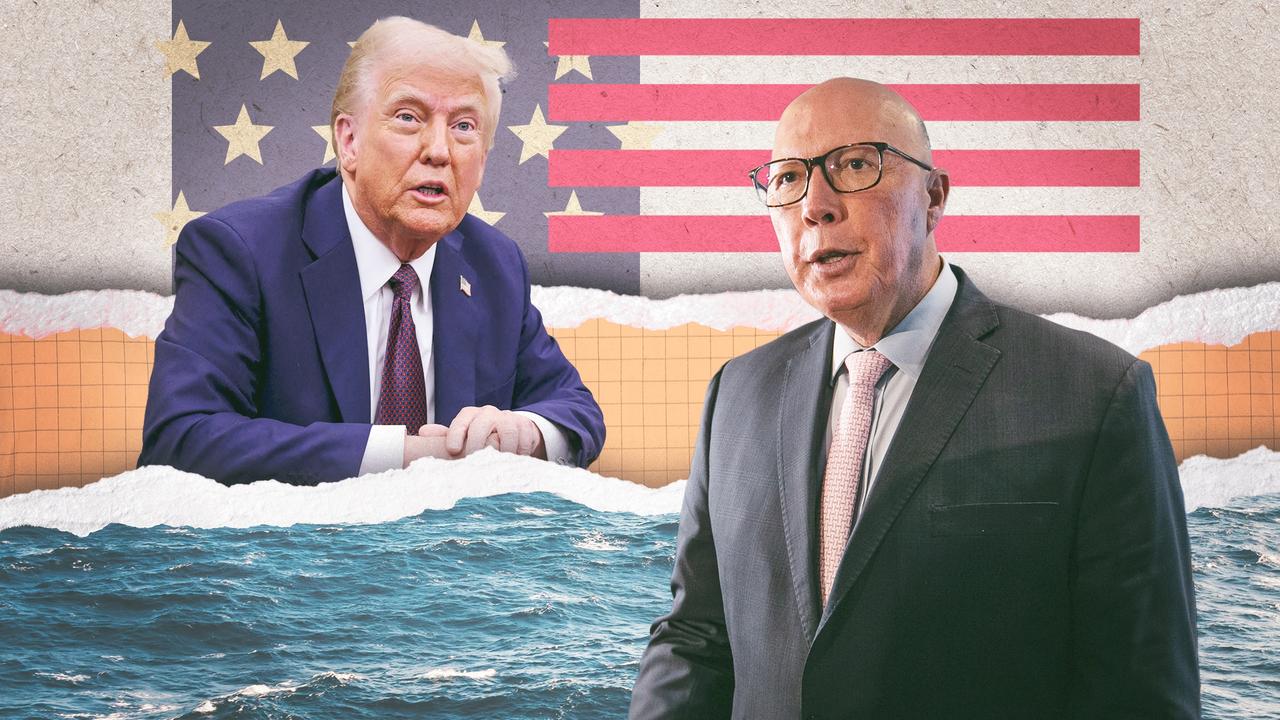







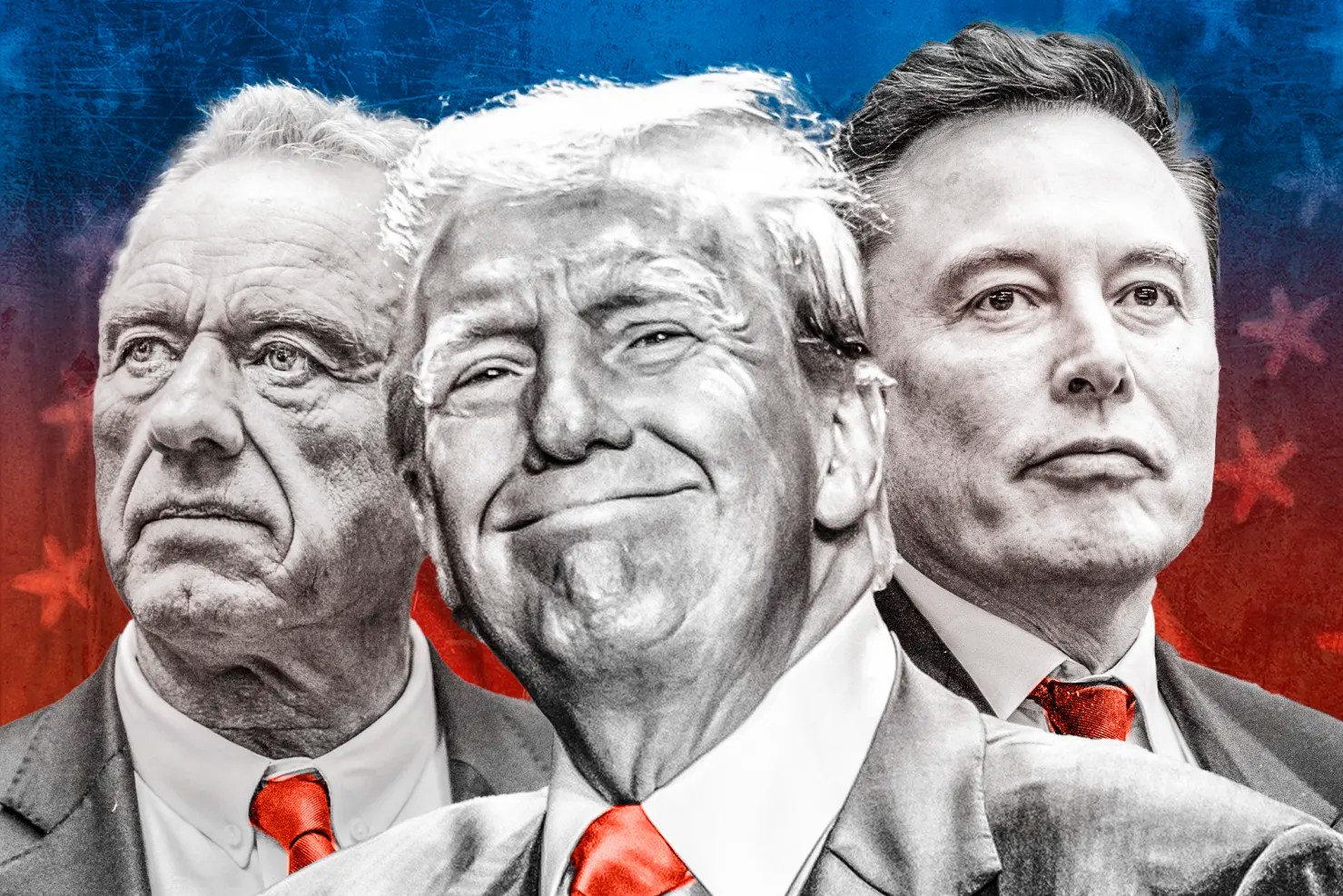




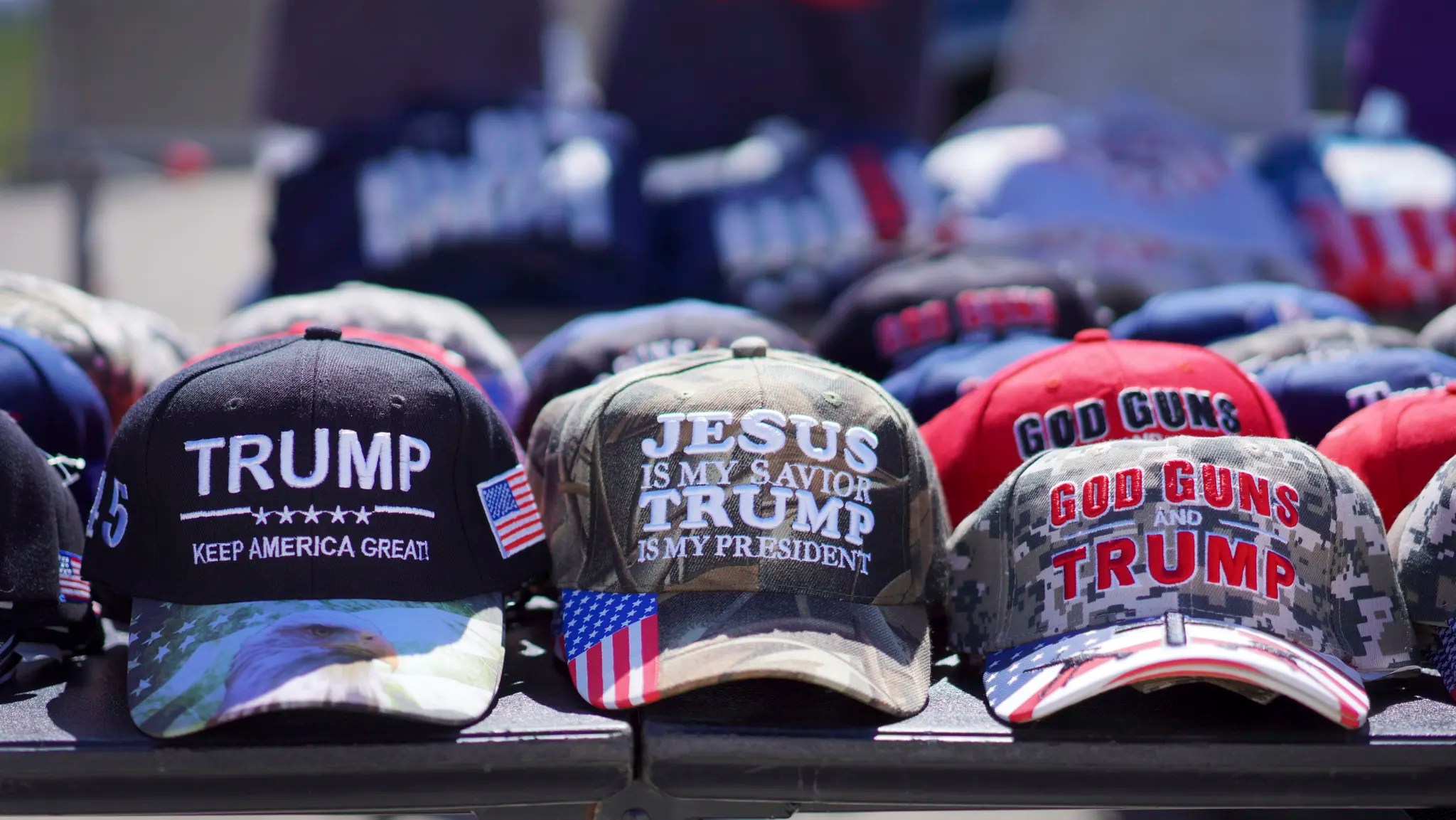


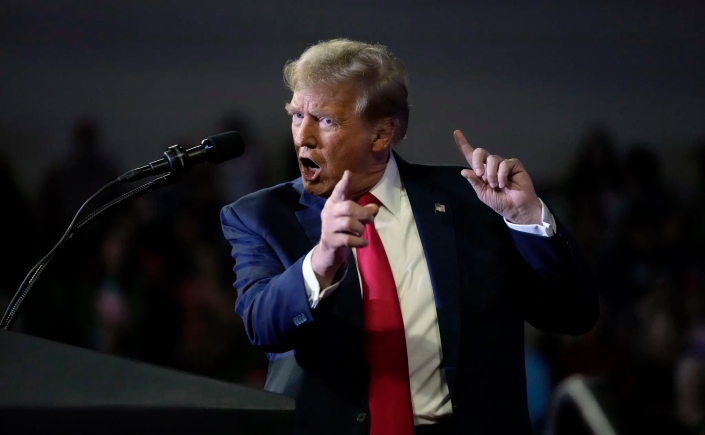

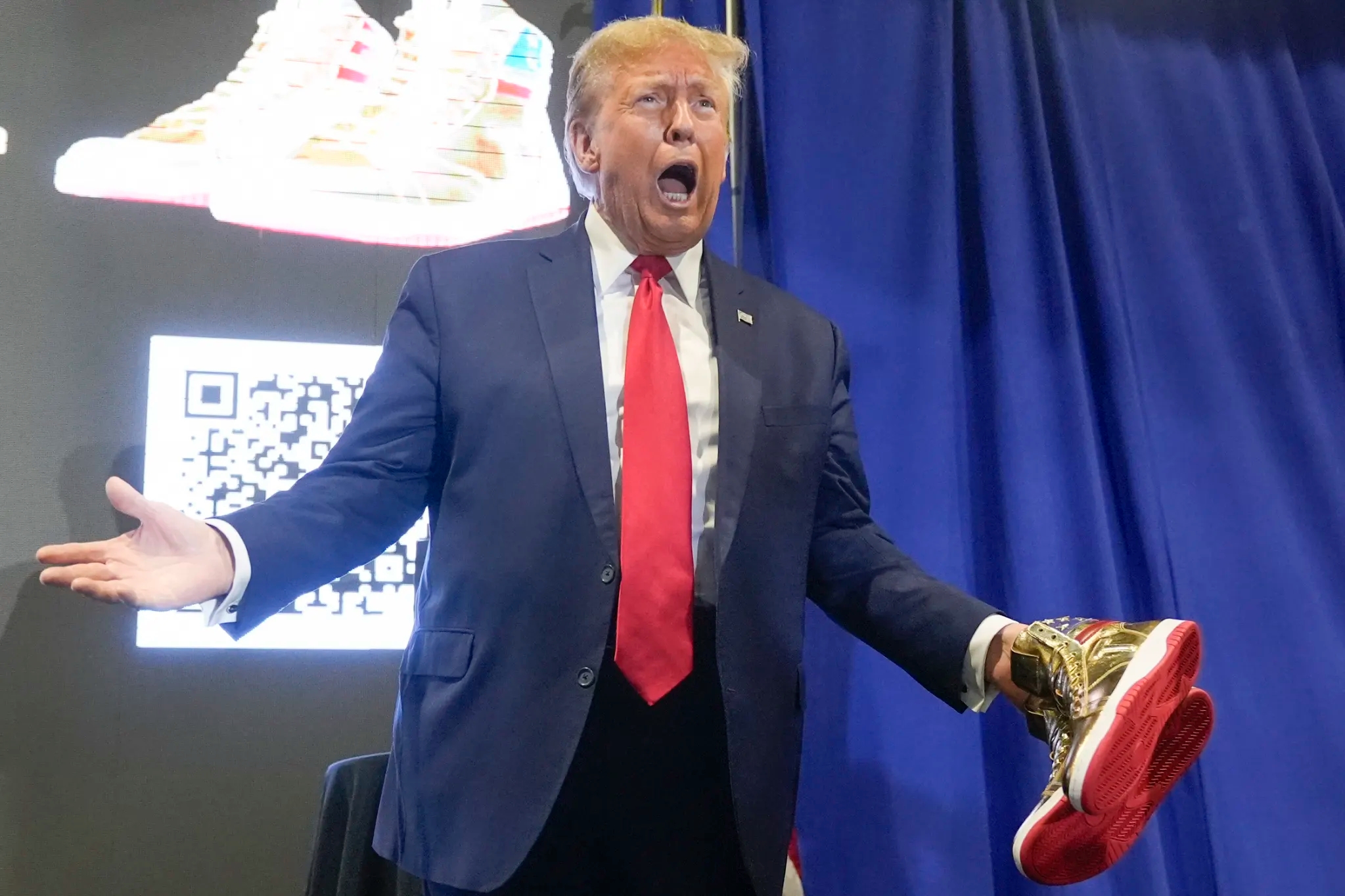





 In That Howling Infinite
Boom. Boom. Boom. The second presidency of Donald Trump burst like a clap of thunder across the whole American nation, across the whole world.