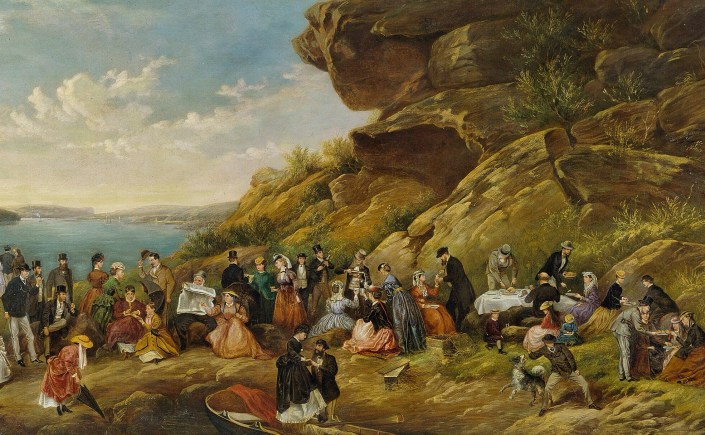
There are paintings that record a place, and there are paintings that quietly stage a civilisation. One such is Montague Scott’s “A Day’s Picnic on Clark Island, Sydney Harbour, 1870”. It is not only a picture, but also, a social map disguised as a picnic. This a small, almost incidental scrap of sandstone, sandstone, scrub and sunlight, a nine hectare punctuation mark in the long sentence of Port Jackson, is made to carry the full theatre of colonial aspiration.
One visualises it from the comfort of a Bondi Junction hotel room where we have scored a harbour view. As the Sydney Harbour ferries slide between headland and bridge, homing to Circular Quay and small boats scurry hither and thither, there it sits, Clark Island, one small outcrop among many. Part of the Sydney Harbour National Park, it lies off the suburb of Darling Point, in the eastern part of the harbour between the famous bridge and The Heads. Rocky and uninhabited, no ferry goes to it. To picnic there, or to get wed, bring your own boat, and like Scott’s picnickers, your own, your own provisions, and indeed, your own little piece of Sydney civilisation.
It was not always leisure. The island bears the name of Lieutenant Ralph Clark, an officer of the First Fleet of 1798. In the early days of the Crown colony New South Wales, when food was scarce, naval officers were allowed to keep their own vegetable gardens – were tended by convicts. Ralph established one such garden on the island, but it failed as any produce was soon stolen on an account the limited rations available at the time. In February 1790, Clark wrote: “some boat had landed since I had been there last and taken away the greatest part … it is impossible for anybody to attempt to raise any Garden stuff here, before it comes to perfection, they will steal it”. who attempted -heroically, futilely- to grow vegetables there. The garden failed as hunger prevailed.
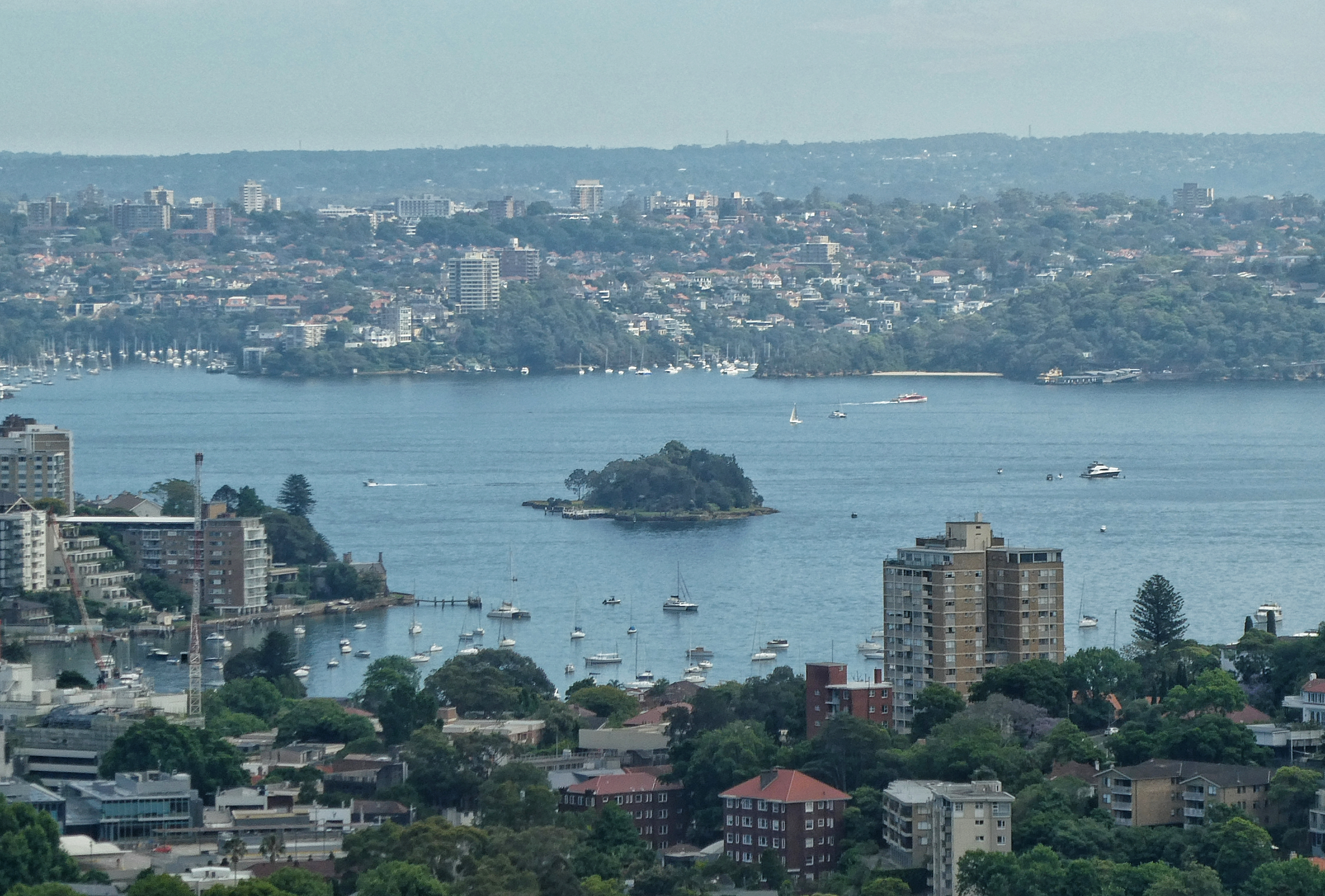
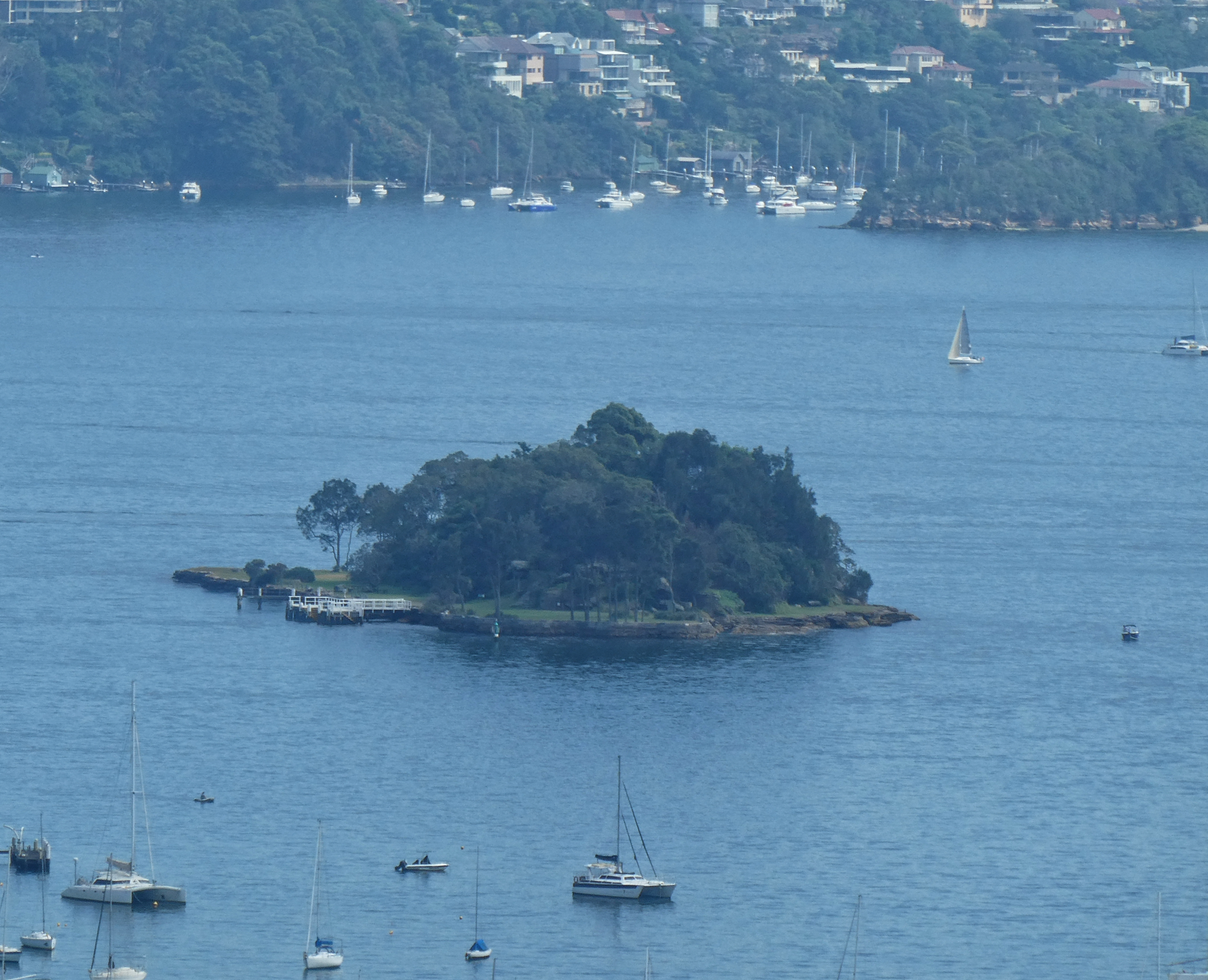
And yet, less than a century later, here we are with tablecloths laid, champagne poured, parasols unfurled against a sun that has forgotten entirely the desperation that once haunted this same rock.
We can see it now – the harbour, not yet surrounded by an affluent built-environment, breathing in the background, indifferent and immense, while the island hosts its temporary republic of manners.
Let’s take an imaginary walk among the picnickers.
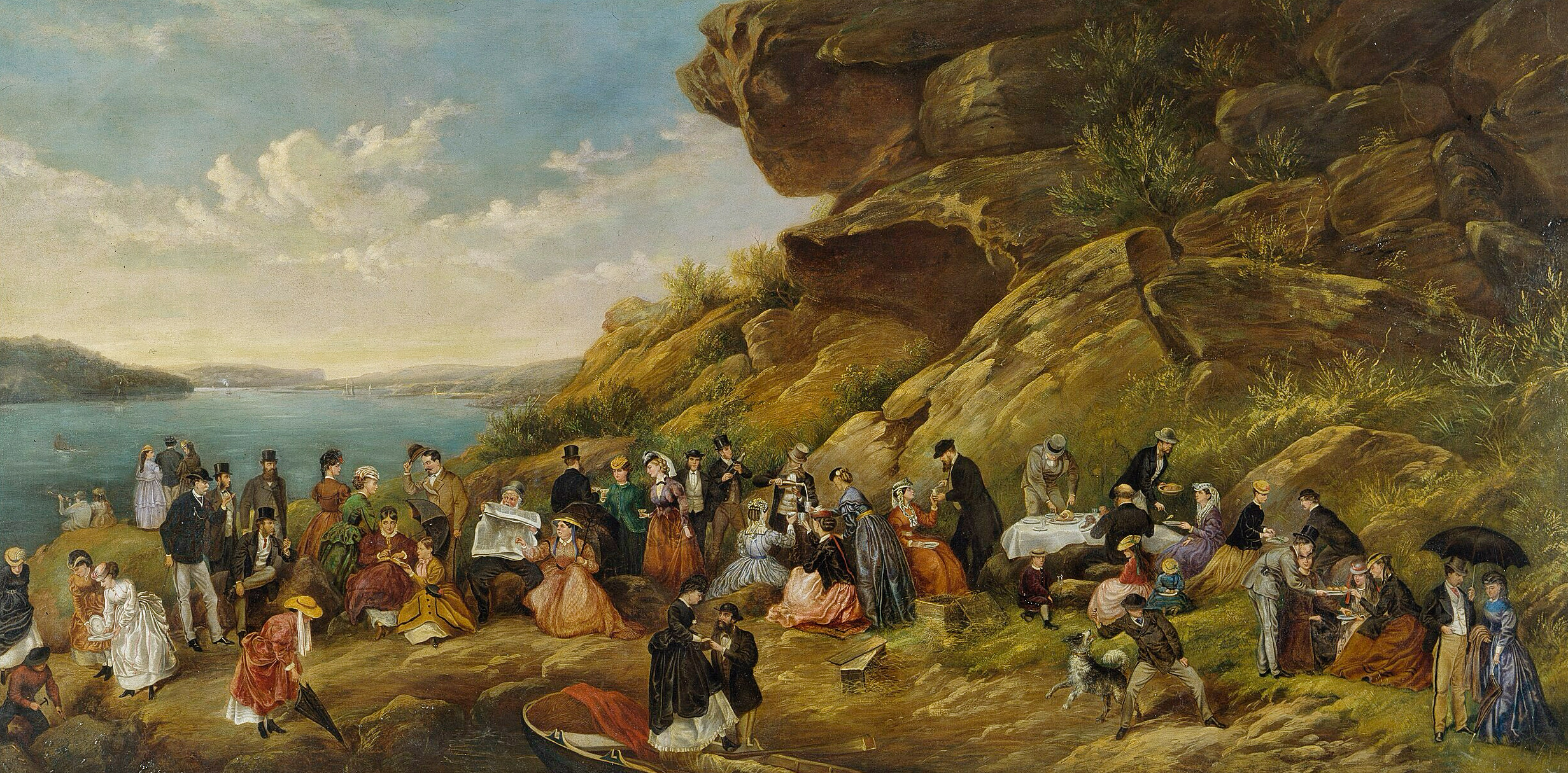
A Day’s Picnic on Clark Island, Sydney Harbour, Montague Scott 1870. State Library of NSW
Beginning on the far right – though one is tempted to say at the edge of the performance – there stands that overdressed couple, composed as if for a portrait rather than a picnic. They are ready for weather, for scrutiny, perhaps even for judgement, but not, it seems, for enjoyment. He carries seriousness like a second coat; she, something quieter, more dutiful. They stand apart, as though unsure whether to join the play or merely observe it.
Moving inward, the mood softens. Three ladies sit upon a rocky ledge, receiving the attentions of a young man who has understood, at least, the basic social contract: bring pastries. They accept with visible pleasure. His binoculars hang at his waist – a curious detail, suggesting that between flirtations he might survey the harbour, indulge in a little birdwatching, a bush walk maybe, though brief given the geography, or simply give to the impression of purpose. Behind them, a couple dine more privately, their bone china and cutlery asserting that intimacy, like civilisation, is portable.
In front, a young man plays with his dog. Two truths present themselves: first, that the artist cannot do dogs for quids; and second, that across centuries and continents, dogs will always be suckers for a tossed twig.
Directly behind, the full apparatus of domestic order has been unpacked and assembled. A family sits to Sunday lunch as if the island had always intended to host them. They’ve brought the works – table, tablecloth, and tableware and, it seems, a Sunday roast or two. The lady of the house looks on as hubbie carves, and a friend or relative serves. Three children amuse themselves, one absorbed in a book, already drifting into another world. It is less a picnic than a transplantation: the home, briefly uprooted and replanted on rock.
Nearby, another couple negotiate the rituals of courtship and consumption. He pours her a glass of something nice – “don’t mind if I do” says she. His frock coat and her Sunday Best – even here, leisure must be properly dressed. There is a an open picnic basket in front of them, although it could be a relic of a previous shindig – like the overturned box that lies near it.
To their left, a more expansive gathering unfolds. A bearded gentleman in a fine top hat dispenses champagne to three ladies, who hold out their glasses – those broad, shallow ones said to be modelled on doomed Queen Marie Antoinette’s breast. Behind him, another gentleman hovers with another bottle, whilst a manservant waits impassively or merely bored. Further along, a smaller cluster echoes the same ritual – three figures, more champagne, more conversation. The island, it seems, runs on effervescence.
Down at the waterline, a new arrival: a woman being helped from a boat by a gentleman whose striped trousers and careful posture suggest both elegance and intent. There is something faintly theatrical about it – an entrance posed and painted, a tableau within a tableau.
To the left again, a quieter duet: a bewhiskered elderly man with his newspaper, momentarily lowering it to engage with the world beyond print, as his companion points something out across the harbour. News meets horizon, the immediate interrupts the reported.
Beyond them, a small drama of manners: a gentleman doffing his hat to two ladies, while in front a young girl reads aloud, her mother listening beneath a black parasol. The mother’s gaze, however, is not wholly on the page; it slips sideways, catching something – or someone – of interest. Perhaps the gentleman with the pipe nearby, who seems poised between contemplation and flirtation. He belongs to a group of men engaged in what could be a discussion of life, the universe, and everything – or, more likely, the women within earshot.
In front of this cluster, a young woman wrestles with a parasol that refuses to cooperate – an object lesson in the limits of decorum when confronted with mechanism. And just beyond, one of the painting’s more revealing episodes: a young man kneeling with hammer and chisel, chipping at the island itself, while three ladies watch and collect the fragments. Souvenirs. Pieces of place extracted and preserved. It is hard not to see in this a miniature of the larger colonial habit: encounter, remove, remember.
In the background, figures gather at the shoreline—two women and a man, their attention directed outward, though at what precisely we cannot say. To their left, two young people sit looking over the harbour, the young man holding a telescope, extending his vision beyond the island’s modest boundaries. Even here, even now, the horizon calls.
And so the painting resolves itself not into a single scene but into a series of conversations and negotiations between formality and ease, between intimacy and display, between possession and transience. Clark Island, once the site of a failed garden and the small thefts of hungry men, has become a stage on which a different kind of appetite is satisfied: for leisure, for status, for connection, for the fleeting illusion that one can, for an afternoon, arrange the world to one’s liking.
From a harbour-view room in Bondi Junction, one might look out and imagine the same island, still there, still waiting. No ferry goes to it. You must choose to arrive, as they did, with your provisions and your intentions. And when you leave, you take something with you – not vegetables, not even stone, but impressions: polished, selective, and just a little illusory.
The island remains. The picnic disperses. The performance, as ever, was the point.
Acknowledgement
Clark Island – traditionally known as Billong-olola or Be-lang-le-wool – is part of the Gadigal people’s country within the Eora Nation.
Today, its history is not just remembered but performed and taught through Aboriginal-owned Tribal Warrior Cultural Cruises, which bring visitors to the island for a living cultural experience. These tours showcase traditional coastal life – fishing, food gathering, dance, and storytelling – while educating visitors about the island’s pre-European history, environment, and enduring cultural meaning. This picturesque outcrop in Sydney Harbour is, in fact, an active site of cultural memory and renewal, where the oldest story of the island continues to be told.
Paul Hemphill, Sydney November 2025
For other incidental stories in In That Howling Infinite, see Tall tales, small stories, obituaries and epiphanies. https://howlinginfinite.com/tall-tales-small-stories-obituaries-epiphanies/
Islands, from the first time we saw,
We could wait for this moment, like rocks on the shore.
We can never be closer, somehow,
For the moment that lasts, is this moment now.
Mike Oldfield
Apart from its title, this song is totally unrelated to this story, but I republish it here because I like it a lot. I could’ve chosen Islands in the Stream, or I am Sailing, but these would’ve been even more incongruous. Enjoy.
 In That Howling Infinite