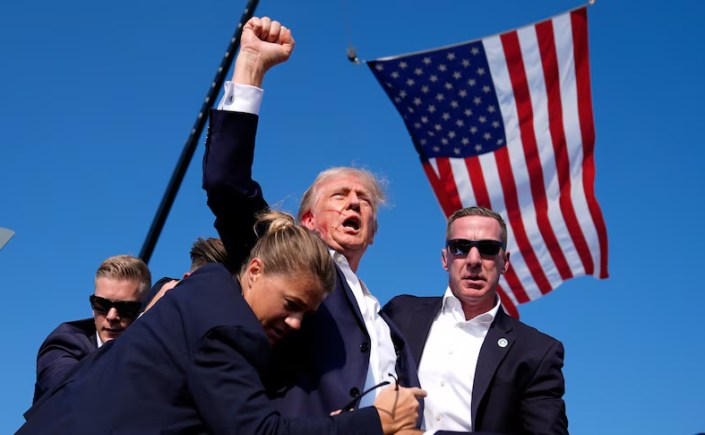
In That Howling Infinite celebrated its tenth anniversary in 2024, and we have we have published an annual roundup since 2015. they can be viewed HERE.
The title of 2024’s That was that Year that was is taken from an opinion piece by Australian commentator and author Nick Bryant in the Sydney Morning Herald on 10th December when summing up the tumultuous events of the year, and particularly the last three months.
“The war in the Middle East. The battle for Ukraine. The departure of Bashar al-Assad. The restoration of Donald Trump. The ground is shifting everywhere. Nothing is fixed and certain. Perhaps we should rethink the designation of 2024 as the year of democracy. Maybe we should think of it as the year of everything, everywhere, all at once”.

It’s a mad world …
And I find it kind of funny, I find it kind of sad
The dreams in which I’m dying are the best I’ve ever had
I find it hard to tell you, ’cause I find it hard to take
When people run in circles, it’s a very very mad world
Roland Orzabal, Tears for Fears
It might indeed have been year of democracy, as it had ibeen designated by Time Magazine last January because more than half of the world’s population – across 72 countries – went to the polls, but most of these polls produced right wing governments with populist and increasingly authoritarian governments leading commentators to lament the decline of democracy. As political strongmen maintained their grip on power, providing role models for wannabe autocrats the world over. The wars of 2022 and 2023 dragged on in Gaza and Ukraine, Sudan and Myanmar without any resolution in sight, whilst old wars reheated in Lebanon and in Syria, although by years end, appeared to have cooled down, though whether permanently, no one can say. The year ended on an epic and frenetic note with events moving at such a hurtling pace and history coming at us so thick and fast as we headed towards 2025.
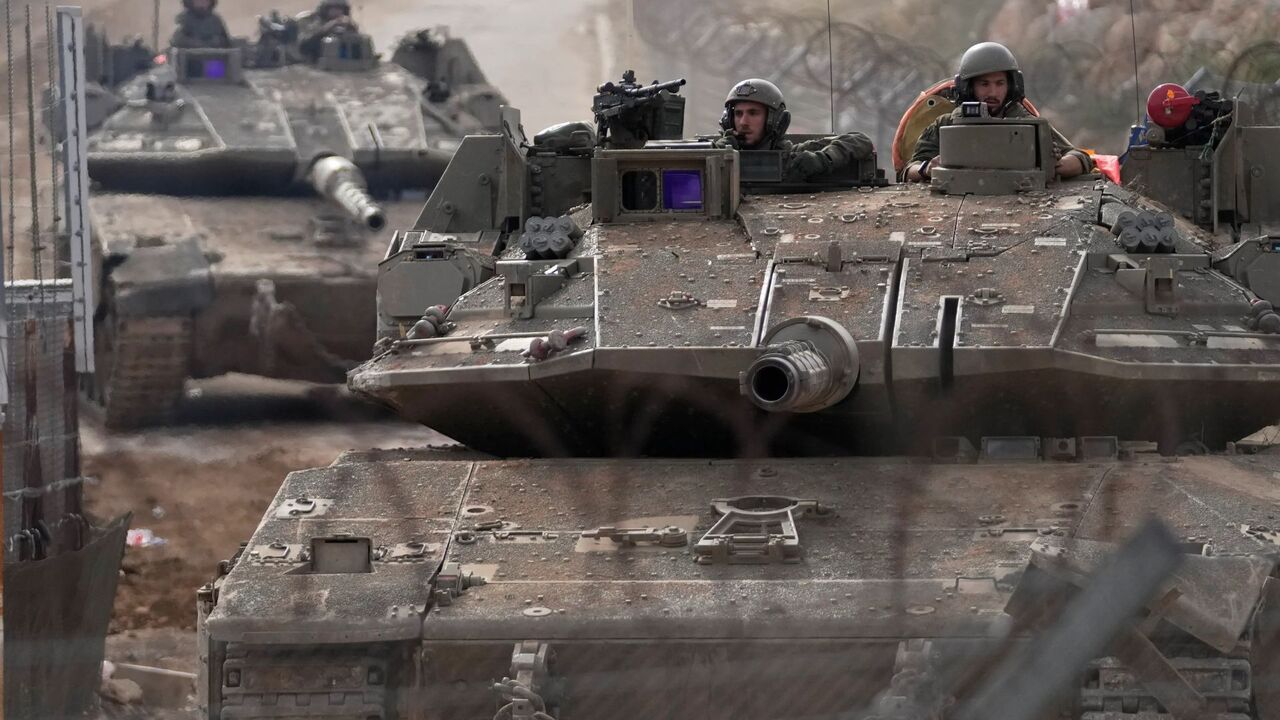
Just think about all that has happened since Donald Trump’s unexpectedly clear and indisputable election victory in November. First, there was the collapse of the German government and the sacking of Israel’s defense secretary, Yoav Gallant, on the very day of the American election, the latter having prosecuted Israel’s war of vengeance in Gaza. Then came Israeli prime minister Binyamin Netanyahu’s ceasefire-deal with a dazed and confused Hezbollah after the IDF’s elimination of much of the Iranian proxy’s chain of command and hitherto formidable arsenal. Iran hurled hundreds of missiles at Israel in response to the elimination of Hezbollah leader Hassan Nasrallah and Israel responded by destroying the Islamic Republic’s air defense system and seriously damaging its drone and missile manufacturing capacity. One could argue that Iran, the instigator of much of the region’s woes, had a very bad year. Its president Ebrahim Raisi died in a helicopter crash in May, and things only got worse from there for the hard-line rulers in Tehran.
As Ukraine endured relentless Russian military pressure in the Donbas quagmire, the Pentagon’ authorised of the firing of long-range American missiles into Russia after a year of American procrastination. Then there was the publication of Ukrainian president Volodymyr Zelensky’s peace plan in anticipation of what Donald Trump may or may not do to end the war, and the collapse in the value of the Russian rouble under fresh American sanctions. There was then the collapse of the French government, and an almost comic-opera attempted coup d’état by South Korea’s autocratic president.
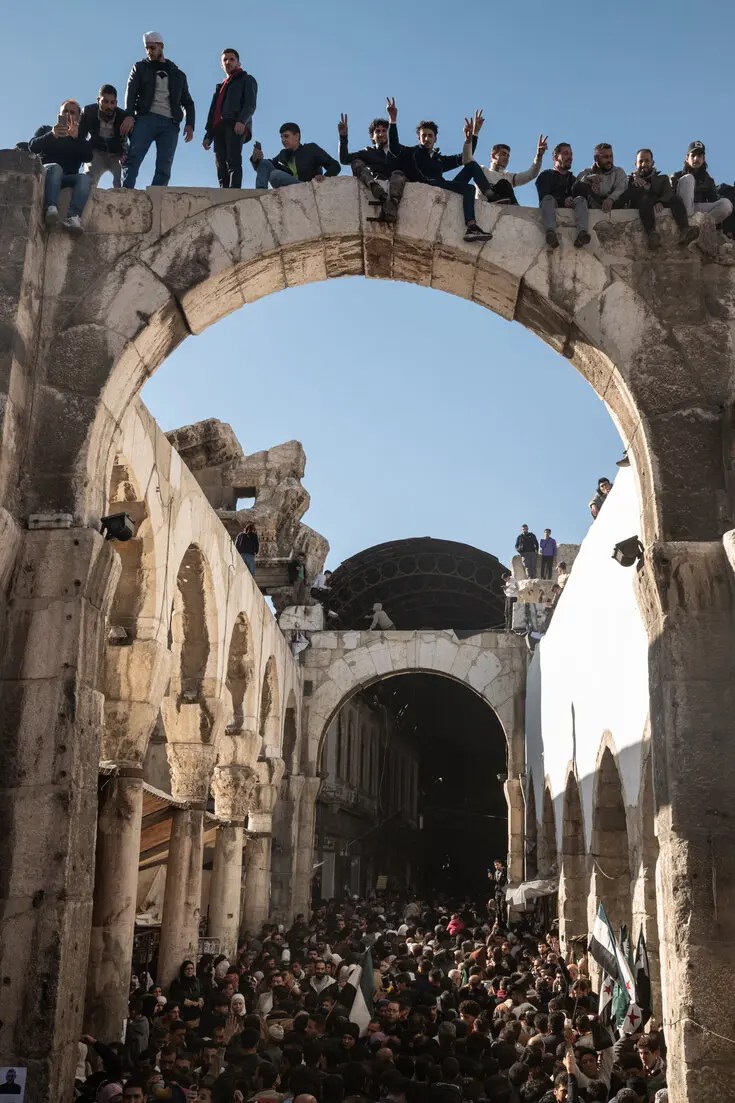
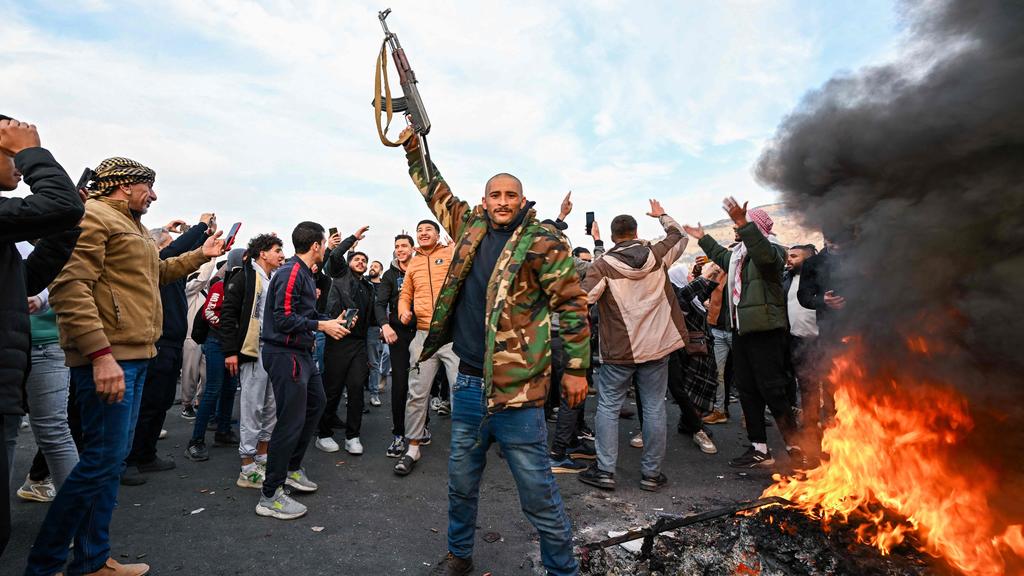
And finally, in just twelve days, the sudden implosion of the fifty-four-year-old Syrian regime literally and figuratively resetting the geopolitics of the Middle East as erstwhile friends and foes scramble to recalibrate. To borrow from the late Donald Rumsfeld, Syria is one of 2025’s “known unknowns” – as is the upcoming and predictably unpredictable reign of the 47th president of the USA.
In an opinion piece in The Free Press in mid-December,https://www.thefp.com/p/niall-ferguson-the-vibe-shift-goes-global-assad-putin-trump British historian Niall Ferguson wrote:
“The vibe shift hit American politics on the night of November 5. What no one foresaw was that it would almost immediately go global, too. The crude way to think about this is just geopolitical physics. The American electorate decisively reelects Donald Trump. Ergo: The German government falls, the French government falls, the South Korean president declares martial law, Bashar al-Assad flees Syria. There’s an economic chain reaction, too. Bitcoin rallies, the dollar rallies, U.S. stocks rally, Tesla rallies. Meanwhile, the Russian currency weakens, China slides deeper into deflation, and Iran’s economy reels. If the vibe shift in culture is about founder mode versus diversity, equity, and inclusion committees, the global vibe shift is about peace through strength versus chaos through de-escalation. It’s Daddy’s Home—not the fraying liberal international order”.
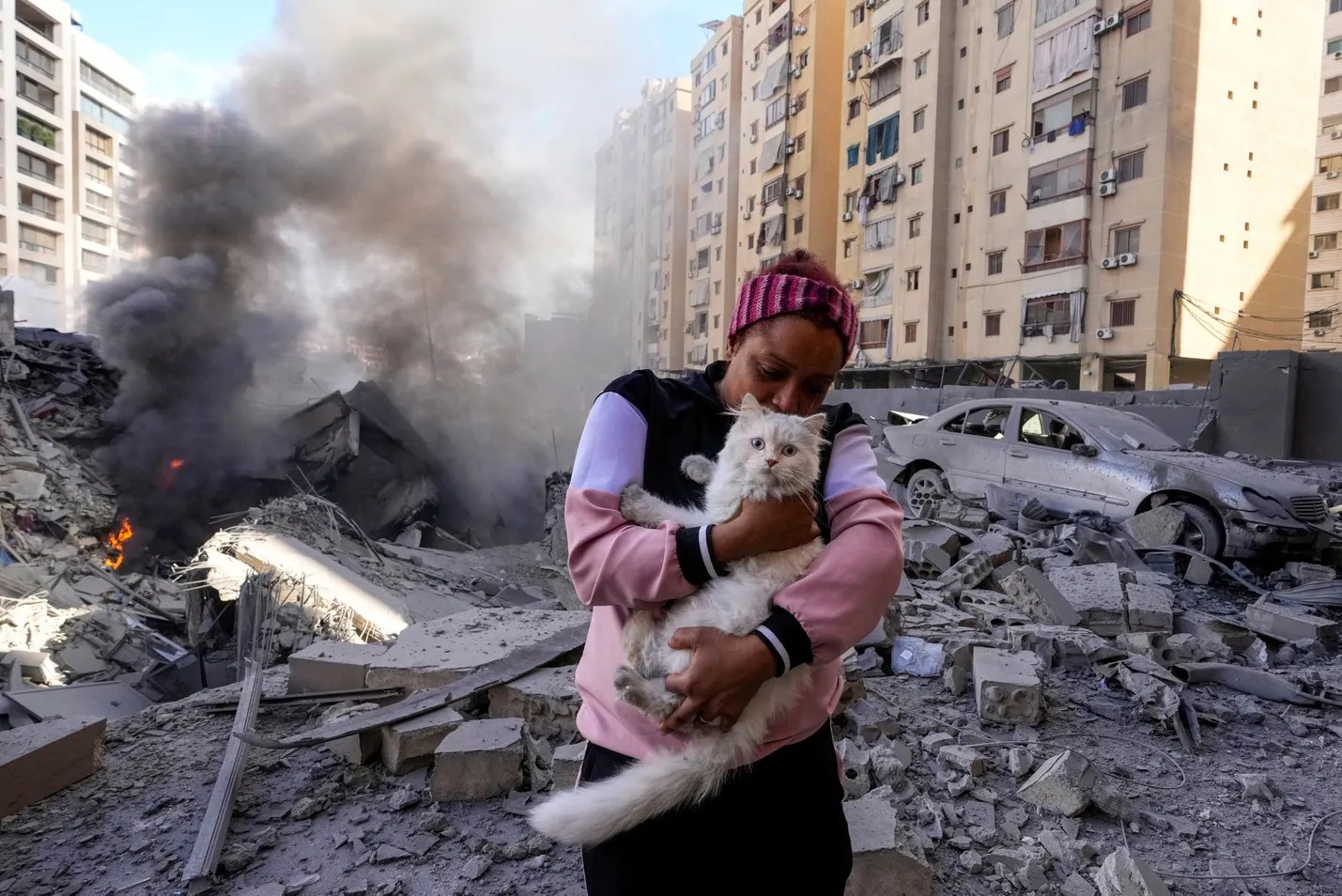
A woman outside a destroyed building Wednesday after an Israeli airstrike in Dahiyeh, south Beirut, a Hezbollah stronghold. Hassan Ammar/AP
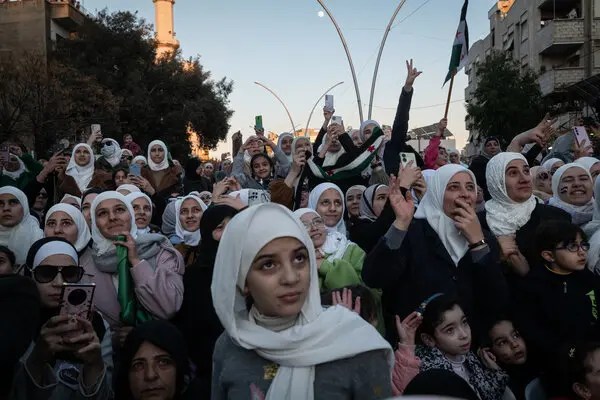
Women in Damascus celebrate the fall of the Assad regime
When I heard the following song by American “newgrass” artist Sierra Hull two weeks ago, I had it in my head all day. I thought it an apt if angsty, lyrical commentary on the turbulent political events of 2024. It’s a beautiful cover, and Hull’s mandolin solo is exquisite.
Australia’s year of nastiness
Meanwhile, Australia and Australians have rarely as a nation been as deeply divide as they are today as they continue to struggle with a multitude of economic and social crises, while, as if we did not have troubles enough of our own, we’ve been sucked down by the undertow of events thousands of miles away in countries of which we know very little.
To quote academic and sociologist John Carroll, it has been “an ugly year – the habitat fouled, the odour sour. The time is one of degraded public spaces, smeared with grunge, grimed with graffiti, potholed roads, uncollected rubbish littering country roads, bronze statues of national heroes such as James Cook hacked down and stolen, police horses attacked with stones and acid, slovenly governments squandering their power, citizens ditching the ethos of tolerance and a fair go that has made the country one of the best places in the world to live. Then, pressing at the desolate limits of civic rupture, the firebombing of a synagogue”.
“The ancient Greeks”, Carroll wrote, “imagined this kind of obscure force as a miasma, a kind of dark mist or oppressive supernatural vapour settling over humans and their doings, discombobulating them, making them behave badly and do stupid things”.
In this miasma, we watch social cohesion breaking down with covert and open anti-Semitism simmering away among well-educated professionals who ought to know better question Israel’s legitimacy and historically illiterate, omni-cause activists of the regressive left who are manipulated by Islamist extremists into giving aid and comfort to the misogynistic and murderous “resistance” groups who perpetrated last year’s bloody pogrom in the Negev. As the jihadi tail wags the leftist dog, neighbourhoods are vandalized and imams are allowed to preach genocidal hatred echoing Nazi doctrine in public mosques. [There was even an outbreak of antisemitism in our own ostensibly “caring and sharing” quasi-hippie rural town – see the postscript at the end of this review]
All the while, governments and police timidly look away or make token gestures, in effect colluding in social division. The majority of Australians who disapprove of keffiyeh cosplay and disruptive and often violent Free Palestine demonstrations are left perplexed by what they perceive as their now leaderless country.
Social cohesion is also under stress with the country having experienced the most drastic, confidence-shaking drop in living standards since the recession of the late 1950. We are in the midst of what seem like multiple domestic crises – basic needs are not being met, a seemingly insoluble cost of living crisis, led by affordable gas and electricity, housing availability and affordability, and declining levels of service in health and social services, and deteriorating education standards. are punished by interest rates significantly higher than in equivalent developed countries. Australians, young people especially, are increasingly pessimistic, and their perceptions are well-justified perception.
It is a time of increasing disengagement in our politics and beset by a seemingly endless cost of living crisis, voters want to punish somebody, anybody. A year of parliamentary stalemate and obstructionism hasn’t helped, and to cap it all, as Herald political correspondent David Crowe put it, exchanges between senators Thorpe and Hanson “created a televised drama that told voters the story of a dysfunctional parliament that was utterly out of touch with ordinary Australians”.
And the powers that be do not seem either willing or able to do anything about it. As Crowe observes, “… we are governed by politicians too nervous to do what’s necessary to wake our economy out if its torpor. As long as our demand for relief from cost-of-living pressures and improved services from government grows, without structural changes to our system of taxation, politicians are going to struggle to make ends meet, fiscally and politically … There is a case to consider tax reform to encourage work, federation reform to curb the waste of federal and state duplication, housing reform so people can afford to live, and competition reform to make sure the economy works for consumers rather than the duopolies that dominate most markets. But the political risks are formidable on every front”.
We opened this retrospective of 2024 with reference to the Year of Democracy and the number of elections worldwide. The outcome was that governments around the Western world, and of all colours, are being thrown out – they are perceived as failing to be looking after their people. There was much talk amongst the commentary about the “crisis of democracy” – but easier this is Different guy who killed Richard overwhelmingly a crisis of the Left.
The Trump victory was carried by a revolt right across middle America and, irrespective of gender, ethnicity and location, against government that it saw as lost in faddish causes instead of attending to basic needs. And, as we in Australia enter an election year, there are lessons aplenty for Australian politics from events in the United States. Voters don’t do nuance. They’re dissatisfied with the status quo and disappointed in the government. They’ll just want to punish the mob in charge. Sure, they’ll be burning down the house, and they’ll be in the house when it burns down (two song references there!) but they won’t care. The question will be “are you better off today than you were four years ago?” And, like in America, for a great many, the answer will be a big “no!”
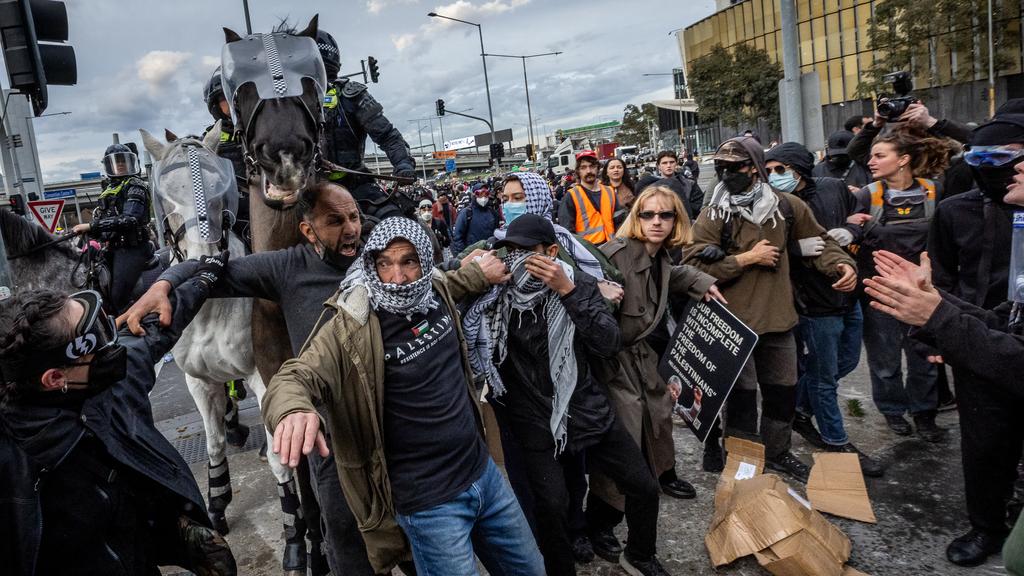
Anti-war activists protest the Land Forces 2024 International Land Defence Exposition at the Melbourne Convention. Jake Nowakowski
Because there’s something in the air
We got to get together sooner or later
Because the revolution’s here
And you know it’s right
And you know that it’s right
We have got to get it together
We have got to get it together now
Thunderclap Newman 1969
Events in America have been interpreted by numerous pundits and commentators as a backlash on the part of the electorate against the Democratic Party and what was perceived as its pandering to the “fashionable beliefs” of the political and intellectual establishment and the “progressive left: with identity politics and value signalling, and with the interests of minorities and special interests while neglecting the values and needs of the populace at large. A similar development has been at play here in Australia, beginning with the defeat of last year’s referendum on the Indigenous Voice to Parliament, and building exponentially since. Niall Ferguson referred to this in the opinion piece mentioned above. https://www.thefp.com/p/niall-ferguson-the-vibe-shift-goes-global-assad-putin-trump
Yes, indeed, there is something in the air!
But, rumours of the death of Woke are probably, as they say, exaggerated, and may be attributed to a surfeit of schadenfreude on the part of cultural warriors who see the outcome of the recent us election as turning the clock back to what they regarded as the way things were.
Technically, according to the dictionary definition, woke is a political term of African American vernacular which means being aware of and actively attentive to important facts and issue, especially issues of racial and social justice, and other forms of oppression. And yet, it has been weaponized as a term of opprobrium by those of an extreme conservative worldview, an all-purpose epithet to be flung at the left.
What is perceived as “woke” provokes the easily offended who see woke in every dissenting post, tweet, or opinion piece, whilst rightwing commentators endeavour to trump (no pun intended) their peers in paroxysms of partisan contempt, condescension and self-righteousness.
Invariably, their perceived targets are the young and the restless, the idealistic and the naive who are transmogrified into the ignorant, the selfish and the deluded – rebels without a clue, indeed. And their faceless handlers, enablers, ideologues and puppet-masters – to wit, the anonymous leaders of amorphous mobs like antifa and Extinction Rebellion, university deans and the supine mainstream media.
In many ways, extreme wokesters have only themselves to blame for the perceived pushback against many of the more outlandish expressions of identity politics and value signaling. “Wokeness” indeed became an embarrassing parody of itself rendering it an easy target for rebuke and ridicule, a now, in the wake of the US election, active resistance.
But like Hippiedom, traces will linger on and become mainstream. The tide of woke was receding before the Trump victory, mainly through ridicule and ridiculousness. A lot of its shibboleths were about “doing the right thing” and these will remain when the anti-woke wave breaks, the tribal wars stutter to a close, and commonsense, tolerance and some semblance of cultural consensus reasserts itself in calmer times. But right now, to bowdlerize Old Abe, the bitter angels of our nature are savouring their victory lap and will sound their “barbarian yawp”. To gainsay the old song, happy days are not yet here again.
At the end of one year and at the beginning of a new one we are expected to look back with a critical eye and yet, forward with optimism. Nowadays we don’t generally hear too much optimistic talk or feel much optimism. We seem to hear of nothing except wars, disaster and mayhem in world affairs. To which we can add our own domestic worries about the cost of living, housing affordability, energy confusion and uncertainty, failing health and other social services, and declining educational standards. Have I missed anything?
As we enter the second quarter of the 22nd century, what do we have to look forward to? Will it be, to quote the unfortunate Kent in King Lear, “… cheerless, dark and deadly”? Or have we reasons to be cheerful?
I’ll sign off with a quote from one of my favourite films, the 1970 classic war movie Kelly’s Heroes, by the eccentric tank commander Oddball, portrayed by the wonderful Donald Sutherland who passed this year: “Why don’t you knock it off with them negative waves? Why don’t you dig how beautiful it is out here? Why don’t you say something righteous and hopeful for a change? To which his driver Moriarty responds: “Crap!”
What We Wrote in 2024
It seems that we published a record number of articles in In That Howling Infinite in 2024 on a wide variety of subjects.
Given its prominence in wired affairs this year, and my own special interest in the region, the Middle East featured in eleven posts, with Gaza and Hamas particularly, and Lebanon, inevitably, to the fore, and at year-end, the Syrian shock or surprise (depending on how one interprets it): Syria. Illusion, delusion and the fall of tyrants
Australian history and politics accounted for seven posts, including three on the dark side of Australia’s fractured relationship with our indigenous compatriots, and a reappraisal of Robert Hughes’ iconic history of the conviction days, The Fatal Shore.
There were five pieces on poets and poetry, including a profile of Palestinian poet Taha Muhammad Ali, and a look at iconic Australian poet AD Hope’s very original poem Man Friday; and four on books, including a long essay of the genesis, context and content of the famous “Arabian Nights”, and an even longer one on Sarah Churchwell’s enthralling polemic The Wrath to Come. Gone With the Wind and America’s Big Lie .
There were three pieces on music, and three also in our Small stories, tall tales, eulogies and epiphanies series, including an eclectic appraisal (or reappraisal?) of Lucifer, the famous fallen angel. Lucifer Descending … encounters with the morning star was particularly tremendous fun to write.
Unusually for In That Howling Infinite, non-Australian history merited but four, including Blood and Brick … a world of walls, a wide-ranging and eclectic journey through history and popular culture that was a long time in the writing; and world politics but two, both relating to the now president-elect Donald Trump.
Books
Music
Reminiscing
History
Politics
Down Under
- Welcome to country, a symbol of mutual respect
- The Many Lives of an Unsung Anzac Hero
- Farewell to Old England forever … reappraising The Fatal Shore
- A bridge from past to present – the forgotten memoirs of Alice Duncan-Kemp
- Killing for Country … dark deeds in a sunny land
- Arguments of Monumental Importance – statuary declarations
- The Forest Wars – myths, spin and bare-faced lies
- Total war in an urban landscape – Israel’s military quandary
- The flight into Egypt … a modern riff on an old tale
- How the jihadi tail wags the leftist dog
- Lebensraum Redux – Hamas’ promise of the hereafter
- A Messiah is needed – so that he will not come
- Al Aqsa Flood and the Hamas holy war.
- Is Qatar playing a Taqiyyah double game?
- Can Lebanon free itself from Hezbollah’s grip?
- The first Intifada … Palestine 1936
- Syria. Illusion, delusion and the fall of tyrants
- Messing with the Mullahs – misreading the Islamic revolution
- Qatar’s caliphate – taqiyyah or hasbara?
- When Freedom Comes, she crawls on broken glass
- The sickness at the heart of the international order
Postscript … a Bellingen epilogue
For us, personally, it has been an unusual year of disengagement from matters local insofar as we have very much withdrawn from our very active involvement with the local branch of the Australian Labor Party. It seems that we have spent most of our time maintaining our grounds and enhancing the biodiversity of our bush property and conservation area, the Tarkeeth Wildlife Refuge – with the help of a team of bush regenerators financed by a three-year grant from the Biodiversity Conservation Trust of New South Wales. We’ve just completed Year 2 with excellent results. As Friends of Tarkeeth Koalas, we are also founder members of a close-knit community endeavour to protect and preserve the endangered koalas of our region.
With respect to “news” on our block, I’d like place on record here in In That Howling Infinite two items of local import that have not received the attention they deserve in either local or national media, mainstream or social. Both were certainly quite out of place in a small country town, and yet stirred little interest among its ostensibly easy-going residents.
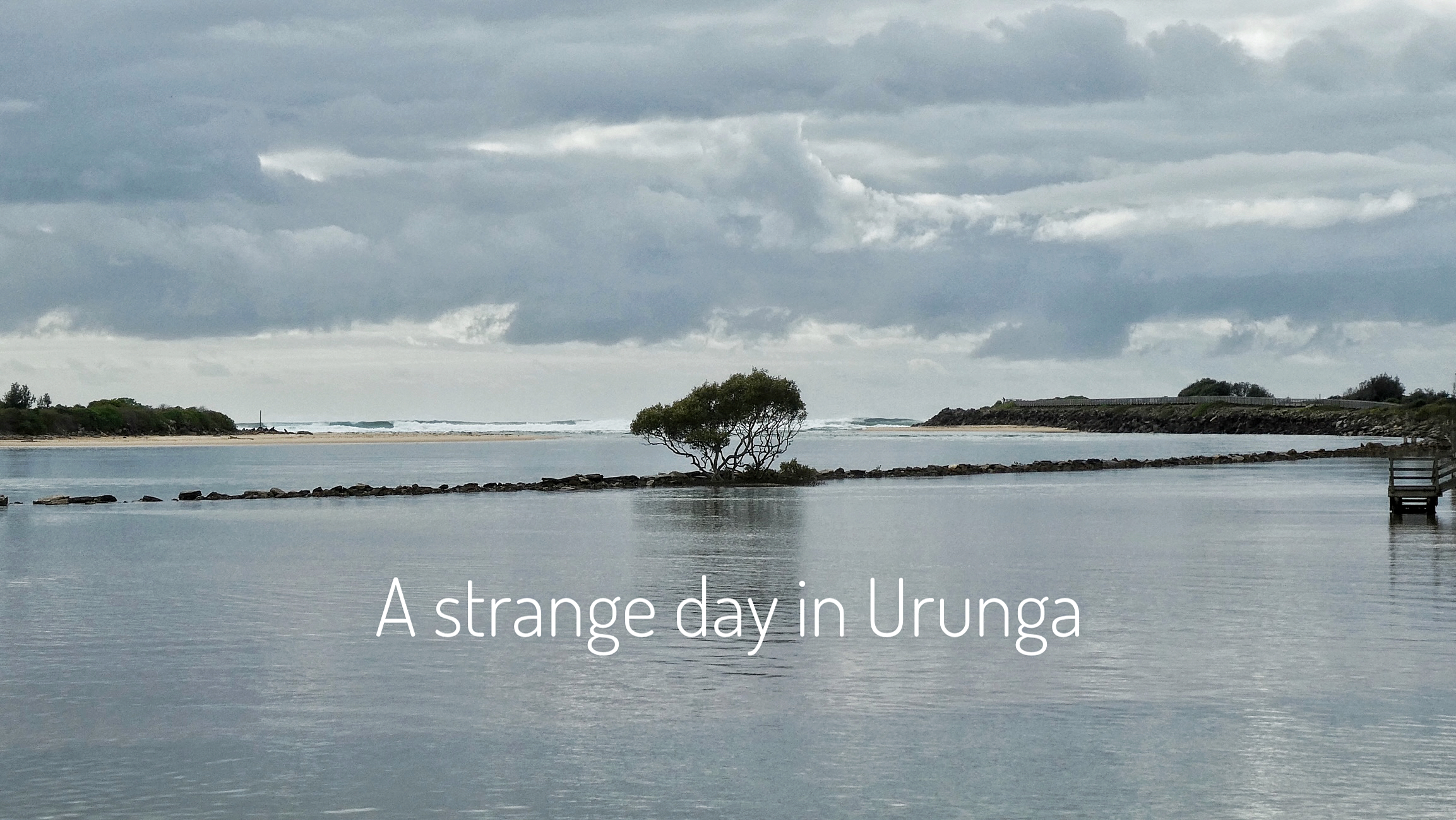
A strange day in Urunga
The strangest of events occurred a month ago in a quiet street in an outlying suburb of the our sleepy mid-north coast town of Urunga, some 28 km south of the regional centre of Coffs Harbour.
At two o’clock in the morning a family in an ordinary suburban house was awakened to what they thought were a series of gun shots and fled to the shelter of their bathroom. When the racket subsided, they peered out of their window into the driveway between their house and the next and beheld a cohort of dark figures surrounding their neighbour’s cottage.
The neighbour, meanwhile, was asleep in his office/bedroom while his house guest lay abed in the master bedroom. What the neighbours had heard was the front door being smashed down and the window to the master bedroom demolished as stun grenades were hurled into the room in a shower of shattered glass and splintered wood followed immediately by armed men in combat gear, helmets, masks, respirators and night vision who pointed their automatic weapons at the house guest – he, as if by premonition, avoided serious injury by fleeing into the corridor seconds ahead of the onslaught and stood there motionless with red laser dots on his chest.
When the ninjas discovered that there were no hostile elements likely to fire back, they settled in for the day as other strangers arrived and departed in shifts, searching through devices, papers, books and sundry stuff. Though they actually have a warrant, no charges were laid, nor have there been since. The circus left town late afternoon, taking with it the devices, files, and the householder’s passport.
If all this seems like an unusual occurrence, what was happening outside the house whilst all this was going on was just as remarkable. According to eyewitnesses who had been roused from slumber by the events of the wee small hours, some thirty sundry vehicles were lined up and down a usually deserted street. Residents, promenaders, exercisers and dog walkers passed the day standing around gossiping and gawking and exchanging theories as to what was going on – the owner of the suspect house remained indoors all day and no one was provided with an official explanation.
And yet, in these magical days of instant communication, social media and smartphones, no-one was live-streaming or facebooking or instagramming. There was no mention of the incident in the two local newspapers or in mainstream media (the ABC called the owner but never called back). I am informed that people connected to the operation strolled among the rubber-necking throng advising that they refrain from saying anything to anyone anywhere or anyhow …
A couple of alternative media platforms did pick up the story and suggested some hypothetical reasons for the why, when and how – particularly as it may or may not be connected to our country’s relationships with Indonesia and New Zealan, as the links below explain. I’d suggest also that the news blackout might also associated with the need to avoid complicating current negotiations with Indonesia regarding the release of the Bali Five.
“Strange days, indeed. Most peculiar, mama!” JW Lennon
Postscript
At the time, the ostensible target of the raid was told that he could have his computer and phone back in a week. When he called later to arrange this, he was told that he’d have to go to Brisbane to pick them up personally. Apparently, there wasn’t a budget for bringing them back down to Urunga – not even a certified postal delivery.
Bigotry in Byron and Bello …
There have been many instances of antisemitic graffiti and threats of boycotts in ostensibly tolerant and easygoing Byron Bay and Bellingen (yes, that’s right, Bellingen!) over the past year.
Notwithstanding the rights and wrongs of a conflict being waged a world away, bullying Jewish residents and business owners in rural towns on the basis of their race or religion is a cowardly, low mongrel thing, and potentially illegal.
The following was published in today’s Coffs Coast Advocate.
“Regional tourist hotspot Byron Bay ‘at war’ amid spike in anti-Semitism”
Jewish families facing devastating doxxings and appearing on “mass-circulated boycott lists” are learning self-defense or fleeing the communities they call home, amid a shocking rise in anti-Semitism creeping out of cities and into regional Australia.
As NSW Police descend on Sydney’s eastern suburbs in a show of force to stamp out targeted anti-Semitic attacks, Jewish leaders have revealed to The Saturday Telegraph the holiday haven of Byron Bay is “at war” and descending into chaos as fearful families prepare to pack up and leave.
“Byron was once a relaxed, tourist town,” Northern Rivers Jewish Community Association head Annalee Atia said. “But this community is now at war with itself. We know of people who are actively campaigning and spreading disgusting messages of hate against Jewish families in the community. They are hosting anti-Israeli events. There is a growing Jewish business boycott list. It is completely devastating”. Ms. Atia said she had been doxxed by members of her own community.
The Saturday Telegraph has seen evidence of multiple Jewish business boycott lists, as well as anti-Semitic graffiti scattered across the tourist town. One example in recent weeks includes a massive yellow swastika spray-painted in the heart of Byron, alongside signs which claim: “Isreael (sic) burns babies”.
“My kids are born here, we love this place and the majority of the people – but it’s longer safe,” Ms Atia said. “So many are fearful for our lives, we are taking self defense classes, my Jewish friends are studying French in order to disguise where we are from. We have people renting out their homes or selling up and fleeing Australia. They don’t want to be in the community because of this rise in anti-Semitic attacks. The local Jewish community is resilient and under the circumstances, community members have been amazing at taking care of each other. But we have seen a direct link between lack of leadership on anti-Semitism from local and federal government and other institutions and certain actions taken by these (such as condemning Israel but not other conflicts), leading to increased impacts in communities on the ground.”
Byron Bay business owner Yonit Oakley said she was aware her shop had been listed on multiple “Israeli business boycott lists”.
“A member of the community approached one of my employees and questioned her repeatedly about where she and her parents were born,” Ms. Oakley said. “Members of our own community are even targeting Australian-born residents because of where their parents are from. They told her they were adding our small business, a locally-run, AustraliFan business, to a boycott list.”
She said Jewish communities across the northern rivers had sounded the alarm over incidents of doxxing, where personal details are released publicly.
Special envoy to combat anti-Semitism, Jillian Segal, confirmed Jewish-Australian families had told her they were preparing to pack up their lives and leave their homes if attacks escalated: “There are instances of community members who do feel extremely threatened and unsafe because that’s what terrorism is about, it is to terrorize people and to make them feel unsafe, and they’re looking to leave,” she said.
The special envoy, appointed by the Albanese government in July, said parents were fearful about sending their children to school, university, and overseas. “That’s shameful”, she said. “I have experienced anti-Semitism in small ways, small insults, comments and how you look, and this kind of stuff, but I’ve never experienced the sort of anti-Semitism that everyday Jewish Australians are experiencing. It’s more extreme than ever before, it’s certainly escalated dramatically, and it must be condemned.”
NSW Jewish Board of Deputies president David Ossip said the organisation had reported incidents of doxxing and Jewish business boycott lists, as well as a growing list of anti-Semitic incidents in regional communities, to NSW Police. The Jewish leader said Sydney families had expressed fears the mezuzah – a parchment featuring Hebrew verses from the Torah, which Jews affix in a small case to the doorposts of their homes, was placing a target on places “families should feel safe”.
NSW Jewish Board of Deputies chief executive Michele Goldman doubled down on the rise in anti-Semitism across the state amid a list of incidents reported to the organisation since the Melbourne Synagogue terror attack earlier this month.
“Jewish people have been working and contributing to this nation since the First Fleet, we’ve never seen this kind of open bigotry and hatred before,” she said. “This goes beyond the Jewish community, when places of worship are being burnt down and threats of violence are being chanted openly, our nation’s multicultural values are under attack. is simply outrageous and beyond intolerable that this week we saw groups who felt entirely safe to chant slogans on the streets of Sydney calling for the massacre of another group of Australians.”
Ms. Goldman said while Jewish people were “proud to call Australia home … there are growing fears about where this escalating campaign of targeted harassment and incitement could lead”.
In recent months the organisation has received a dramatic rise in anti-Semitic incident reports. It is understood police and council workers have repeatedly removed anti-Semitic graffiti across Byron over the past 12 months.
NSW Police said it had planned high-visibility patrols of key locations across the Northern Rivers region. “NSW Police will not tolerate any behaviour that incites, or advocates violence or hatred based on race and religion,” a spokesman said.
Daily Telegraph, 14 December. 2024
Kiwi pilot kidnapped in West Papua leads to police raids in Australia
howlnginfinite.com



 In That Howling Infinite