The quality of mercy … looking beyond Iran’s ghost republic

The quality of mercy is not strained;
It droppeth as the gentle rain from heaven
Upon the place beneath. It is twice blest;
It blesseth him that gives and him that takes.
William Shakespeare, The Merchant of Venice

Whilst most media commentary focuses on questions like “will it be any different this time?”, “will outside incitement or intervention actually work?” , and “who can or will replace the current regime?”, this article by Unherd’s Us editor Sohrab Ahmari, and the comments thereon go variously beyond, behind, or beneath, to consider the potential, if any, for those famous “bright sunny uplands” that Churchill foresaw at the end of mortal strife. A précis follows, and also, a discussion of past, recent and contemporary efforts to realise the quality of mercy.

Beyond Iran’s Ghost Republic 

What persists, for now, is a ghost regime: a sad remnant of the last of the great modern revolutions that, like some apparition in a haunted house, is condemned to remain at the scene of its own demise …The Islamic Republic clamoured so much for death, sweet and glorious death, it lost sight of the basics of life: bread, water, electricity. Ghosts don’t need such things, but people do
Sohrab Ahmari, Unherd, 8 January 2026

Most media attention on Iran’s latest unrest fixes on the usual coordinates: will this time be any different from 1999, 2009, 2017, or 2022? Will foreign powers, quietly nudging or overtly intervening, succeed where the street protests have failed? And, inevitably, who might step into the vacuum should the current regime falter? These questions, while immediate and superficially urgent, only scratch the surface. Beneath them lies a far subtler and, perhaps, more consequential inquiry: what kind of life, if any, might the Iranian people permit themselves once the machinery of coercion is loosened? Where, if anywhere, are the “bright sunny uplands” that journalists, analysts, and policymakers treat as both metaphorical and material destinations?

The Islamic Republic has already, in practical terms, collapsed into a ghost. Its proxies lie defanged, its currency teeters toward ruin, and the strictures of ideological policing have been quietly suspended in many cities. It clings to slogans, chants, and ceremonial gestures – Death to Israel! Death to the Great Satan! –  long after the infrastructure, credibility, and political capital to back them have evaporated. Ghosts do not need electricity, or potable water, or functioning hospitals, but living people do. And the contrast between the familiar deprivation of Tehran and the gleaming towers, highways, and shopping malls of Istanbul, Dubai, and Riyadh is almost unbearable: the regime sold transcendence and martyrdom, but delivered only rationed life, graft, and perpetual economic anxiety.

Yet a collapse of the state apparatus does not automatically produce moral renewal. This is where both the film It Was Just an Accident and the commentary converge. The plot of Jafar Panahi’s latest work stages a moral test familiar to anyone who has witnessed, read, or lived through the aftermath of institutionalized terror: a man who suffered under the regime confronts a former torturer. The temptation to exact revenge – to allow history’s pain to be paid back in equal or greater measure – is immediate and compelling. Some characters urge restraint, others insist that justice without retribution is an idle abstraction. The film’s tension mirrors a larger societal question: can a people accustomed to cycles of repression, humiliation, and ideological fervour imagine a life beyond revenge, beyond the simple arithmetic of punishment and vengeance?

The comments on Ahmari’s article highlight the same moral and civic dimensions. Several voices underscore a paradox that no headline can capture: the Islamic Republic’s obsession with death and martyrdom was not merely symbolic; it was infrastructurally catastrophic. Water systems were ignored, electricity grids left to decay, the economy warped around fantasies of resistance and martyrdom. Yet, this same absolutist, apocalyptic impulse is not unique to Iran. As some observers wryly note, the West is not immune to ideologies that glorify moral purity and abstract heroism at the expense of lived reality. Certainty, as one commentator put it, often replaces curiosity; neat explanations flatter intelligence and virtue, while obscuring the messy work of sustaining life.

History offers uncomfortably blunt lessons. After the Khmer Rouge, Cambodia did not attempt exhaustive justice; it largely absorbed foot soldiers back into ordinary life, relying on a rough amnesty and the communal refusal of vengeance.   This might be Iran’s imagined future: to survive and flourish, ordinary citizens may need to exercise a similarly imperfect, sometimes clumsy, forgiveness. And yet the impulse to retribution is alive and articulate: Hamid in Panahi’s film embodies the argument that the fanatics who ran the Islamic Republic had no regard for life, and must be repaid in like coin.

Here, we converge on a truth both grim and hopeful: Iran’s fate will not be determined by foreign powers, strikes, or special forces. The country’s reckoning cannot be outsourced. The only way to allow the blood to run dry, to create the possibility –  however tenuous – of “bright sunny uplands,” is through an internal moral negotiation: a willingness to forgive, to rebuild, to live with one another despite the weight of memory and injustice. Forgiveness, in this context, is not an ideal; it is a strategic, civic, and existential necessity. Anything else risks a continuation of cycles that have already brought the country to the nadir described in headlines, film, and commentary alike.

The wider reflection, then, is less about predicting the regime’s fall than understanding the texture of human life that might emerge afterward. If Iranian society cannot cultivate mechanisms for restraint, empathy, and imperfect justice, then the collapse of the ghostly structures of the Islamic Republic will be little more than a ceremonial end to one cycle of totalising politics – ready to be replaced by another. Yet, if these “bright sunny uplands” are glimpsed, they will be the product not of weapons, tweets, or sanctions, but of courage, patience, and the audacious, often maddeningly slow, work of ordinary humans learning to forgive. In that possibility – fragile, improbable, and entirely human –  lies the truer story of Iran, past, present, and perhaps future.

Forgiveness and the Possibility of Civic Renewal

Forgiving is not forgetting; it’s actually remembering –  remembering and not using your right to hit back. It’s a second chance for a new beginning. And the remembering part is particularly important. Especially if you don’t want to repeat what happened.
Attributed to South African Bishop Desmond Tutu

When societies emerge from cycles of repression, violence, and ideological zeal, the first question is often: who will exact justice? Who will punish, and who will pay? Yet history and moral reflection suggest that the question of revenge is only the beginning. More crucial is the question of forgiveness: whether communities traumatized by systemic harm can find a way to release the past, preserve dignity, and allow life to take root. Iran, in the aftermath of decades of ideological extremism, structural neglect, and repeated cycles of protest and repression, faces precisely this moral crossroads.

Desmond Tutu, whose work with South Africa’s Truth and Reconciliation Commission helped a nation emerge from the moral abyss of apartheid, offers a clarifying lens. He reminds us that forgiveness is not weakness, nor a cover-up, nor the erasure of injustice. “To forgive is not just to be altruistic; it is the best form of self-interest,” he said. “If you can find it in yourself to forgive, then you are no longer chained to the perpetrator.” Forgiveness, in this sense, liberates the victim as much as it addresses the harm done. It is a deliberate, often risky act that preserves dignity, confronts wrongdoing honestly, and opens space for a new civic beginning. True reconciliation, Tutu insists, does not soften the truth: “Superficial reconciliation can bring only superficial healing. True reconciliation exposes the awfulness, the abuse, the hurt, the truth.” Forgiving does not mean forgetting; it is remembering without exercising the right to strike back, allowing life to continue without being perpetually tethered to past harm.

Archbishop Desmond Tutu 1931-21

The necessity of forgiveness becomes clearer when we look beyond Iran to societies that have struggled with similar dilemmas. South Africa’s post-apartheid transition, Northern Ireland’s gradual peace after the Troubles, and the painstaking reconciliation efforts in postwar Bosnia demonstrate that societies can arrest cycles of revenge when moral courage is coupled with institutional frameworks. Mechanisms such as truth commissions, negotiated agreements, or cultural rituals allow communities to confront trauma without succumbing to vengeance.

In South Africa, perpetrators were not erased from memory, but acknowledging harm, offering testimony, and sometimes asking for forgiveness created a space in which ordinary life could resume without blood-soaked reprisals. In Northern Ireland, decades of sectarian violence required not only formal accords like the Good Friday Agreement but persistent civic labor, everyday compromises, and the cultivation of mutual recognition across communities. Peace did not arrive because conflict ended; it arrived because people, institutions, and leaders collectively committed to the moral and civic work of restraint, remembrance, and imperfect forgiveness. Bosnia, by contrast, demonstrates how fragile such processes can be: tribunals, localized reconciliation projects, and political compromises made progress possible, but resentment and mistrust lingered for decades.

The lesson is that the labor of forgiveness is painstaking, morally taxing, and never complete; it requires social frameworks, cultural patience, and individual courage.

Other contemporary crises provide a darker counterpoint. Syria, ravaged by civil war, sectarian fragmentation, and foreign intervention, shows how cycles of violence can ossify when forgiveness is absent and survival becomes the primary moral calculus. Gaza and the Palestinian territories, trapped in occupation, blockade, and repeated military incursions, reveal how structural oppression perpetuates the need for revenge, making reconciliation seem both urgent and impossible. Myanmar and Sudan illustrate what happens when accountability fails entirely: persecution, displacement, and entrenched cycles of terror prevent civic life from taking root, leaving ordinary people imprisoned by histories they cannot escape.

In the Iranian context, the challenge is both urgent and intimate. A society habituated to ideological terror and systemic neglect faces a moral crossroads: the temptation of revenge is immediate, visceral, and understandable, but it risks reproducing the very cycles of harm that have brought the country to its present nadir. Panahi’s film It Was Just an Accident dramatizes this dilemma: victims confront their former torturer and wrestle with the question of retribution versus restraint. It is a moral negotiation that mirrors the broader societal question. True recovery cannot be imposed from the outside; no foreign military, sanctions regime, or spectacular intervention can replace the painstaking, often agonizing internal work that forgiveness demands.

Tutu’s reflections provide a moral compass for this work. Forgiveness is neither altruistic fantasy nor moral softening; it is self-liberating, dignity-affirming, and socially generative. “When we see others as the enemy, we risk becoming what we hate. When we oppress others, we end up oppressing ourselves. All of our humanity is dependent upon recognizing the humanity in others.” For Iran, the stakes of this insight are enormous. The collapse of the regime, already a ghost of its former ideological self, creates the space for moral and civic imagination, but it is up to the Iranian people whether that space becomes a playground for revenge or a canvas for rebuilding.

Viewed comparatively, Iran’s predicament is neither unique nor exceptional. Across South Africa, Northern Ireland, Bosnia, Syria, Gaza, Myanmar, and Sudan, we see the same pattern: cycles of violence thrive when forgiveness is absent and collapse is coupled with fear, trauma, and structural weakness. Yet the examples of South Africa and Northern Ireland also offer hope. Even societies deeply scarred by ideology and systemic harm can, through deliberate moral labor, cultivate restraint, empathy, and civic imagination. The “bright sunny uplands” are not gifts of fortune or foreign intervention; they are the product of human choice, moral courage, and the willingness – however faltering and tentative –  to forgive, remember, and begin again.

For Iran, the possibility of civic renewal rests on this moral labor. To forgive is to free oneself from the chains of the past, to preserve human dignity, and to allow ordinary life – bread, water, work, community – to flourish once more. It is difficult, risky, and imperfect work, but it is the only path to a society that can move beyond the cycles of ideological terror, revenge, and ruin. In choosing forgiveness, Iranians do not erase the horrors of the past; they confront them honestly, remember them fully, and, in so doing, claim a future that is no longer dictated by blood, fear, or vengeance.

For more on the Middle East in In That Howling Infinite, see A Middle East Miscellany, Messing with the Mullahs – America’s phoney war? and “Because of …” Iran’s voice of freedom

The cycle of revenge. Iranians must learn to forgive

Iran’s cycle of revenge

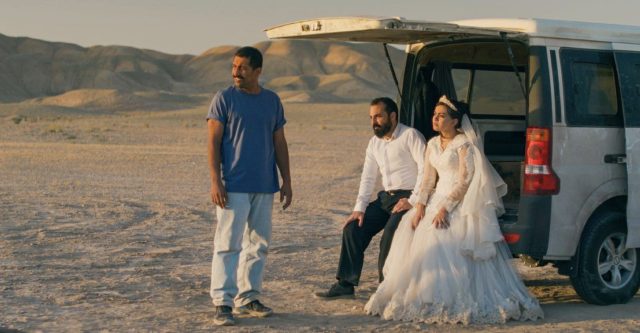
A still from the film ‘It was Just an Accident,’ directed by Jafar Panahi. mk2 Films

Sohrab Ahmari, Unherd, 8 January 2026

It’s become a running joke on Iranian social media — screen captures of Western headlines regarding previous popular uprisings in the country that read: “This isn’t like previous protests in Iran.” The message is that this latest tumult spells the end of the Islamic Republic. Except those earlier headlines appeared in 1999, 2009, 2017, 2022. The storms of popular discontent raged and then dissipated, but the regime didn’t budge.

We are told that the current uprising, sparked initially by anger over inflation, is different. But contrary to expectations, we’re unlikely to see a spectacular end to the regime in the manner of the ouster of Ceaușescu or the fall of the Berlin Wall — the 1989 moment whose eternal return liberals the world over yearn for. No, there won’t be a spectacular collapse, because the Islamic Republic of Iran has, in a sense, already fallen.

Its Arab proxies are defanged. Its nuclear program is partially buried under President Trump’s bunker busters. Its currency is reaching Zimbabwean levels. And it has largely given up enforcing its hijab and other Shiite morality norms in many urban centers. A much more likely ending is one in which more nationalist elements within the current regime take over, with or without a little push by outside powers.

What persists, for now, is a ghost regime: a sad remnant of the last of the great modern revolutions that, like some apparition in a haunted house, is condemned to remain at the scene of its own demise, faintly repeating the slogans of its former vitality, wondering if anyone still cares. Death to Israel! Death to the enemies of the jurisconsult! Death to the Great Satan!

The Islamic Republic clamored so much for death, sweet and glorious death, it lost sight of the basics of life: bread, water, electricity. . . . Ghosts don’t need such things, but people do. Especially people who look around at the likes of Turkey, the United Arab Emirates, and Saudi Arabia, and behold gleaming prosperity, rising living standards, normality. Their own lot, meanwhile, is defined by diminished expectations, massive graft, and life and treasure wasted on building an arc of “resistance” against the Jewish state that was destroyed in a matter of months.

Against this haunted backdrop, it’s up to the Iranian people to decide, now, how they want to live together, and with their region and the world. Will they forgive each other? Or repeat the cycle of totalizing politics, repression, and revenge that brought them to their current nadir in the first place? As it happens, Iran’s greatest living director, Jafar Panahi, addresses these questions in his latest film, It Was Just an Accident, which hit the screen in major cities just as the latest unrest began.

A taut thriller in the style of Jean-Pierre Melville, the film tells the story of Vahid (Vahid Mobasseri in a quietly stunning performance), a worker who happens upon, and kidnaps, Eghbal (Ebrahim Azizi), the intelligence officer who’d tortured him when Vahid joined a labor strike over unpaid wages.

Vahid is about to bury Eghbal in the middle of the desert when he’s gripped by doubt. The real Eghbal had lost a leg fighting in the Syrian Civil War. But the man in the shallow grave insists that his prosthetic leg — whose squeaking sound led Vahid to believe he’d found his erstwhile torturer — is a recent addition. What if he’s got the wrong man? What if he’s about to murder an innocent? This simple doubt becomes the driving force of the film’s plot.

Vahid reunites with a fellow prisoner — Salar, a dissident intellectual — who urges him to free Eghbal, or whoever he is. “This business doesn’t have an ending,” Salar warns Vahid. This could mean that Vahid could face real-world consequences. But it also suggests that the blood in Iran will never run dry if people continually seek revenge. Vahid isn’t convinced. He’s lost everything to the regime Eghbal represents, and he’s bent on making him pay.

Salar refuses to help directly, but he introduces Vahid to a photographer, Shiva, who was also imprisoned for her political activities and tortured by Eghbal. Other former prisoners soon join the group. One of them, Hamid (Mohammad Ali Elyasmehr), instantly identifies the man in Vahid’s van as their torturer (by his smell) and thrills at the thought of inflicting suffering and death upon Eghbal.

Others are more hesitant, partly out of the same doubt that initially stays Vahid’s hand, but partly over deeper qualms: Will torturing and murdering a killer improve anything? No, Shiva and others begin to think. But Hamid is adamant, and it’s notable that while the rest of them are professional-class types who’ve landed on their feet, he’s been less fortunate (and, the film suggests, he was something of a loser even before his prison stint).

Thus unfolds the unlikely moral and philosophical debate folded into the film’s thriller script — a debate that confronts many ordinary Iranians opposed to the Islamic regime. Panahi, to his credit, gives Hamid a decent chance to make his case: to wit, the fanatics who run the Islamic Republic have no regard for the lives they ruin, and anything short of a willingness to act politically — in the Schmittian, friend-enemy sense of the term — is just playing around.

But in the end, the other side “wins” the debate. The kidnapped man’s phone rings. It’s his daughter, crying for her father to come home because her pregnant mother is unresponsive. The gang treks over to his house and drives mother and child to the hospital, where the baby is safely delivered. The group even pools cash to tip the nurses, as custom demands.

Only afterward is it revealed that — spoiler alert — the man in the van really is the torturer who’d subjected them to dozens of mock executions; who’d beaten Vahid so badly, he’s developed kidney problems; who threatened to rape the women before killing them (since, under Shariah law, virgins go straight to paradise).

I won’t spoil more of the plot. What matters is that the Hamid temptation — let us torture the former torturers, execute the executioners — is all too real, and it can derail whatever comes next into another national dead-end. No foreign intervention and no Trumpian Delta Force can save Iran from that outcome. It is up to Iranians themselves to forgive each other, and finally permit the blood to run dry.

Sohrab Ahmari is the US editor of UnHerd and the author, most recently, of Tyranny, Inc: How Private Power Crushed American Liberty — and What To Do About I

Messing with the Mullahs – misreading the Islamic revolution

Most folk who are into history like to draw parallels and identify patterns in the past that reflect upon the present. As I do also, albeit in a more ambivalent way. Cleaving to Mark (Twain, that is). am fascinated more by the rhymes than the repetitions. Five years ago, i wrote Messing with the Mullahs – America’s phoney war? Events in the Middle East since October 7 2023, not least tit-for-tat aerial exchanges on we have seen in recent months between Israel and Iran, and the potential return of the unreformed and unchained prodigal son on January 6th 2025 render it relevant still. How long will it be before the war drums start beating on the Potomac and the Iran hawks circle over Washington DC seeking the restored king’s feckless and fickle ear? As they say, fools rush in where angels fear to tread.

Back then, I wrote:

“The story of the Iranian Revolution is a complex, multidimensional one, and it is difficult for its events and essence to be compressed into brief opinion pieces of any political flavour, no matter how even-handed they endeavour to be.

The revolution began slowly in late 1977 when demonstrations against Shah Reza Pahlevi, developed into a campaign of civil resistance by both secular and religious groups. These intensified through 1978, culminating In strikes and demonstrations that paralyzed the country. Millennia of monarchy in Iran ended in January 1979 when the Shah and his family fled into exile. By April, exiled cleric and longtime dissident Ayatollah Khomeini returned home to a rapturous welcome. Activist fighters and rebel soldiers overwhelmed troops loyal to the Shah, and Iran voted by national referendum to become an Islamic republic on April 1st, 1979. A new constitution saw Khomeini became Supreme Leader in December 1979.

The success and continuing durability of the Iranian Revolution derived from many sources, and many are not touched upon by commentators and pundits.

One can’t ignore the nature of the monarchy that preceded it – modernist on the one hand, and brutally repressive on the other; nor the unwavering and hypocritical support (including infrastructure, weapons, and intelligence) provided to it by western “democracies” since Britain and the US placed Reza Shah Pahlevi on the throne in 1953.

Nor should we ignore the nature of the unprecedented regime and state that was established forty years ago – a brutal, theocratic, patriarchal, quasi-totalitarian system that endeavours to control all aspects of its citizens’ lives, its rule enforced by loyal militias like the ruthless Basij and by the Revolutionary Guard, a military-industrial complex more powerful than the regular army.

The support and succour that the US gave to the deposed Shah and his family and entourage, and later, to the opponents of the revolution, served to unite the population around a dogmatic, cruel and vengeful regime, which, in the manner of revolutions past and present, “devoured its children”, harrying, jailing, exiling and slaughtering foes and onetime allies alike. One of the ironies of the early days of the revolution was its heterodox complexion – a loose and unstable alliance between factions of the left, right and divine. History is replete with examples of how a revolution besieged within and without by enemies actual and imagined mobilizes it people for its support, strength and survival.”

This brief outline summarises the events of 1979 and the decades which followed. It does not elaborate in any detail on the reasons for the downfall of the Shah and the durability of the regime that succeeded him. An impressive essay in the Jewish cultural e-zine Mosaic endeavours to do just that, providing as it does, insights into the history of modern Iranian history that few people today would be familiar with.

In it, the author suggests that “the most impressive of our experts persist in downplaying or ignoring the Islamic Republic of Iran’s driving forces can lead to misunderstandings of current affairs that are far from academic. Both nuclear negotiations and the sanctions, for instance, are premised on the assumption that Tehran is eager above all else to improve its country’s economy. While Ayatollah Khamenei and his minions doubtless care about trade and finances, they care much more about advancing their religious ideology across the Middle East, and like most religious believers, feel that spiritual concerns must ultimately trump material ones. It’s even possible that some might find the idea of suffering material hardships to achieve ideological goals appealing …

… If I’m right that Iranians didn’t rise up en masse because of the rising costs of onions or because they wanted to drive nicer cars, but because they were passionately opposed to secularization and American influence, then the U.S. cannot make peace with Iran even if the nuclear deal succeeds. The Islamic regime doesn’t oppose America because it supports Israel or Saudi Arabia, but because it represents Western secularism. Unless mass-conversion to Islam is in America’s future, that’s not something that’s likely to go away …

… One hopes that the loss of Afghanistan will finally hammer home the truth that the loss of Iran (in 1979) so signally failed to do: it’s religion, stupid.”

On matters messianic in In That Howling Infinite, see A Messiah is needed – so that he will not come and Al Aqsa Flood and the Hamas holy war. On the Middle East generally, see  A Middle East Miscellany:  

How Iran Thinks

Ze’ev Maghen, Mosaic, 7th March 2022

With a new nuclear deal on the way, attention is again turning to Iran. Four recent books, plus the deal itself, suggest that America and Europe are blind to the regime’s motivating spirit.

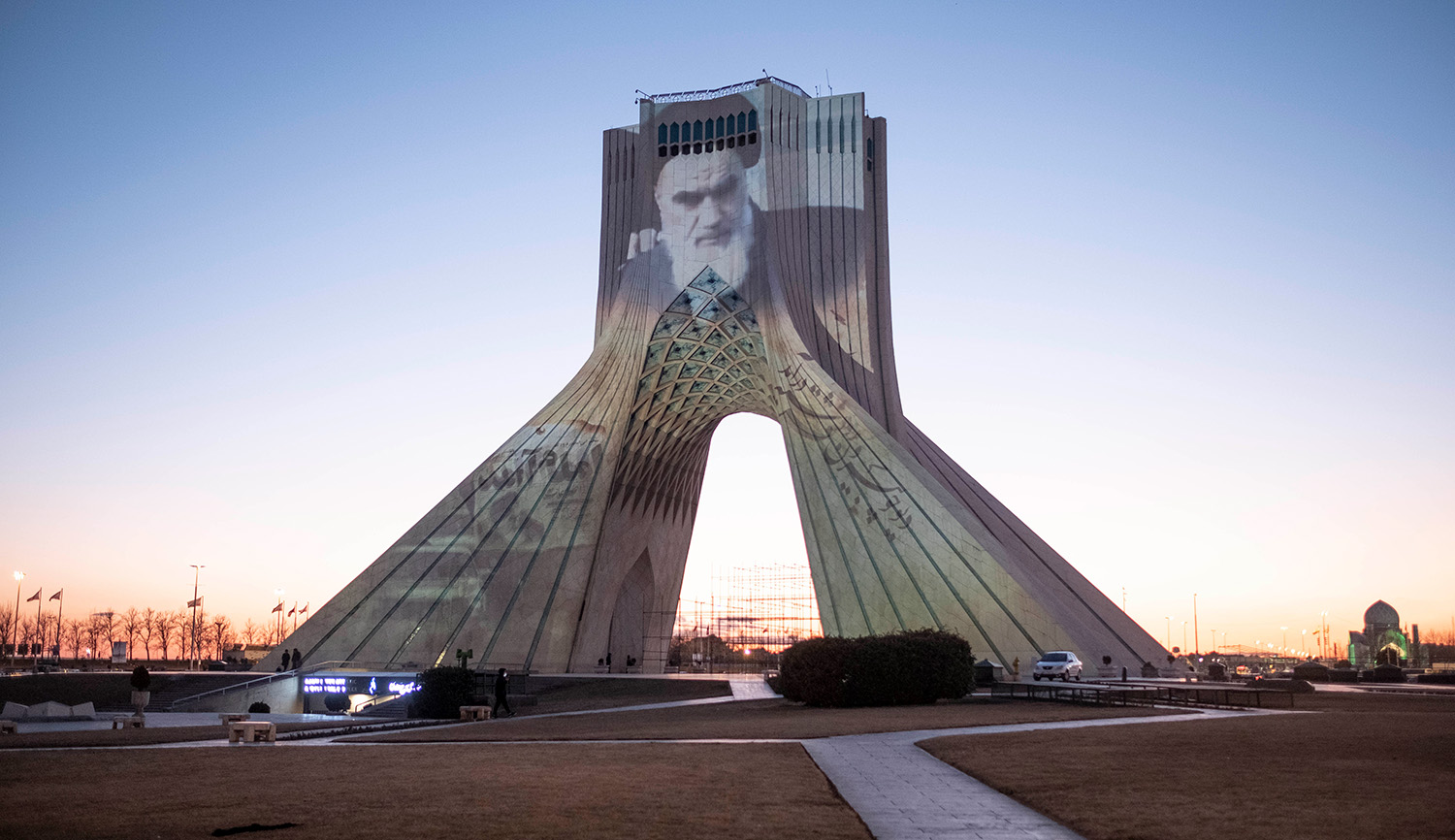
A portrait of the late Ayatollah Khomeini projected on the Azadi (Freedom) Monument in western Tehran on the 43rd anniversary of Iran’s 1979 Islamic Revolution in February 2022. Morteza Nikoubazl/NurPhoto via Getty Images.

A portrait of the late Ayatollah Khomeini projected on the Azadi (Freedom) Monument in western Tehran on the 43rd anniversary of Iran’s 1979 Islamic Revolution in February 2022. Morteza Nikoubazl/NurPhoto via Getty Images.

There is a well-known Persian children’s game in which a parent recites limerick-like poems while engaging in horseplay. One version, popular in the mid-20th century, had the father of the household seat himself on a carpet in the living room with one of his progeny standing to his right and the other to his left. The father would declaim:

There once was a cat (yek gorbeh bud)
Poor and miserable (bichareh bud)
A dog came and bit him in the belly (delash-o sag gaz gerefte bud)

(At this point the first child charges across the room and dives headlong into his father’s stomach.)

Next came a bear from behind and nearly killed the cat (khers az poshtesh taghriban koshtesh)

(The second son now bounds over and leaps onto his father’s back.)

But that cat, he rose, and he roared, and . . . turned himself into a lion! (gorbeh beh shir avaz shodeh bud)

(This being the signal for the father to get up and hurl his offspring this way and that onto the soft furniture.) 

More than just child’s play, this post-dinner diversion harbored an obvious historical-ideological meaning—a meaning as relevant today as it was 130 years ago. Anyone looking at a map of modern Iran will perceive the lineaments of what the country’s inhabitants call “the sleeping cat.” This cat—the Iranian state—was indeed in miserable shape domestically and geopolitically by the reign of Naser al-Din Shah (1848-1897). What little authority this Qajar king still possessed over his realm was retained by a method that a 20th-century Iranian intellectual would dub “positive equilibrium”: the sovereign survived by parceling out large swaths of Persian territory and granting irresponsibly generous economic concessions to local potentates and foreign powers so that each would defend the capital and environs against the encroachments of his counterparts. Of the many forces that Naser al-Din Shah had to “buy off” in this manner, none was more menacing than Russia, the bear that jumped onto the cat’s back, or more influential than Britain, the (bull)dog that bit the cat’s belly.

Before ousting the last Qajar ruler in a bloodless coup, the founder of the Pahlavi dynasty (1925-1979), Reza Shah, had risen through the ranks to become commander of the only serious military force in the country, the Cossack Brigade, created with Russian assistance decades earlier by that same Naser al-Din Shah. While in this post, Reza is said to have engaged every morning in a ritual reading of the newspaper, his face waxing redder with each account of Iranian failure or humiliation until finally, in a fit of rage, he would stand up and rip the tabloid to shreds. Soon, this determined corporal would rewrite the headlines that had so dismayed him, and do much to turn the sleeping cat into a rising lion.

Assisted by a cadre of military comrades and nationalist intellectuals, the new monarch set about pacifying the countryside, developing infrastructure, implementing reforms in fields like education, sanitation, technology, agriculture, and women’s rights, and in general shoving Iran, kicking and screaming, into the 20th century. He even gave his subjects three days to come up with last names for purposes of taxation, conscription, and general modernization (hitherto everyone had been known as “so-and-so son or daughter of so-and-so” or by a nickname reflecting his profession, town of origin, or infirmity). For all that Reza Shah has been depicted in post-revolutionary Khomeinist retrospect as the epitome of an incorrigible Westernizer, it cannot be denied that he raised Iran from a trampled and torn-apart virtual protectorate and a conspicuous consumer of European goods to the status of an essentially independent and self-respecting polity boasting border integrity and assiduously cultivating import-substitution industry. That the method employed to achieve all this progress was despotic was a price that even many liberal Iranian thinkers of the time were willing to pay.

Ousted by the allies in 1941 on the pretext of harboring Nazi sympathies—sympathies partially tied to the “Aryan Thesis” that made Germans and Persians ethnolinguistic cousins and that was all the rage in both countries at the time—Reza Shah was replaced by his twenty-one-year-old son Mohammad Reza Shah. In awe of his father, and having spent his teenage years in Switzerland at an elite boarding school, the new king was prepped to take up where the dynasty’s founder had left off. His career, and his overthrow in 1979 by the Islamist movement that now rules Iran, is at the center of four books published in the past decade which I will consider here. These books offer much in the way of fresh insights and original research, correcting some of the misconceptions that plague commentary about the country. And yet, for all their merits, they fail to grasp fully why the shah fell, what motivated the revolutionaries, and by extension, what motivates the current regime. For if we want to be able to make sense of the revolutionary ideologues who now rule Iran, we have to understand the political and cultural order they rebelled against, and why they rose up against it.

By looking at what these four works get right and, more importantly, what they get wrong, we can also better understand why so many Western experts and policymakers so consistently misread the Islamic Republic, its sensitivities, its hierarchies of honor and shame, holy and profane, just and unjust—and why academics are so ill-equipped to figure out a society that doesn’t conform to their own ideas of secular rationalism. With the U.S. about to conclude a second nuclear deal with the Islamic Republic, if press reports are to be believed, it’s worth considering how this regime came to be, and what makes it tick.

I. The Last Shah

As the Council on Foreign Relations scholar Ray Takeyh has shown better than any previous author in The Last Shah, Mohammad Reza’s reign began with an impressive geostrategic victory: with a little help from astute advisors at home and a determined postwar American administration, the fledgling Iranian sovereign induced no less a megalomaniacal expansionist than Joseph Stalin, at the zenith of his power, to pull his troops out of the northwestern province of Azarbayjan (not to be confused with the neighboring Soviet Republic of the same name), where they had supported local socialist secessionist movements. The cold war had begun, and Tehran was poised to reap the benefits.

Mohammad Reza’s next major challenge came from within, in the person of the charismatic prime minister Mohammad-e Mosaddeq (in office 1951-3), perceived ever since in popular imagination—and in much scholarship—as Iran’s fatefully foregone hope for true democracy.

Takeyh sets the record straight, demonstrating more effectively than any writer to date that Mosaddeq was, to the contrary, a highly unstable personality with dangerous dictatorial tendencies. (He also quashes once and for all the myth that the CIA and MI6 were primarily responsible for the 1953 coup that removed him.) The shah, argues this author, though no friend of democracy himself, was ultimately better for Iran than the prime minister. Indeed, Mohammad Reza eventually realized the very dream that Mosaddeq had failed so badly to achieve: not just oil independence, but oil hegemony for Iran. (Remember when we switched the limousine-like sedans we used to drive for the cramped, sardine-cans-on-wheels that we squeeze into today? That was because of the shah.)

Surrounding himself instead with one-dimensional, sycophantic technocrats, the shah soon became the lonely autocrat, a one-man-show.

The second Pahlavi sovereign got so good at his job, Takeyh maintains, that he felt he could dispense with the independent aristocratic elite whose corruption, bickering, and jostling for advantage threw a spoke into his rapidly rotating wheel of progress—even though it was just these aristocrats who had been the agents of his success, and had saved his throne on more than one occasion. Surrounding himself instead with one-dimensional, sycophantic technocrats, he soon became the lonely autocrat, a one-man-show. When the Middle East-wide, and worldwide, revolutionary fever of the second half of the 20th century finally caught up with him in 1979—another significant connection Takeyh makes—Iran’s ruler faced it bereft of the crucial assistance he needed to weather the storm.

II. The Fall of Heaven

The inability to delegate and insistence upon ruling instead of merely reigning that Takeyh perceives as a shortcoming, Andrew Scott Cooper sees as a strength: Mohammad Reza’s hands-on approach to monarchy got things done for his country. To Cooper, the shah is something very different from the corrupt autocrat of most histories, whose disastrous mistakes supposedly smothered democracy and brought about the revolution. Indeed, in The Fall of Heaven, Cooper’s 2016 history of the decline and fall of the Pahlavi dynasty, there is little that has traditionally been held against this despot that isn’t deftly turned into a virtue, or at worst a well-intentioned miscalculation. The abolition of the multiparty system in 1975, itself largely nominal by that time, and the inauguration in its place of the single Rastakhiz (“Resurrection”) party to which all citizens were obligated to pledge allegiance, is presented as a (botched) stepping-stone toward democracy—a claim doubly audacious since, as Takeyh had shown, Rastakhiz’s own leaders admitted that it was a bad joke from day one. Cooper does not scruple to attribute the refusal of Iran’s Westernizing monarch to rule constitutionally to “his skeptical attitude to the 1906 constitution, which he regarded as a European invention imposed on Iran by former colonial powers.” The shah’s innumerable affairs with married women and regular visits to Paris prostitutes were evidence of his “boundless energy,” and usefully cleared his head to attend to matters of state. Even the king’s leisurely helicopter rides (and those of his siblings) over a capital city choked to a stand-still by some of the worst traffic jams in history are depicted by this creative and sometimes credulous author as his majesty’s noble attempt to help alleviate that same congestion.

These impressive feats of legerdemain aside, however, Cooper is no cheap apologist. The Fall of Heaven is a stunning achievement, and will go down in literary-scholarly history as the book that did more to rehabilitate the Pahlavi family’s reputation than any volume published before or since the revolution. Cooper accomplishes this formidable task—punching a corridor through decades of pervasive and unrelenting vilification—primarily by amassing, organizing, analyzing, and presenting in vivid color an unprecedented amount of detail surrounding the final years of the monarchy. On top of play-by-play accounts of the political ins-and-outs, the economic ups-and-downs, the burgeoning unrest and the frantic diplomatic maneuverings, Cooper can tell us for any given date of 1978 what pop song topped the charts, which jewels Queen Farah Diba was wearing, whose child was killed in a hit-and-run accident, what TV series garnered the highest ratings, whether the king had indigestion (and what he took for it), which night-club was the hottest in town, and what the weather and pollution levels were like. Who knew, for instance, that on November 5, 1978, as the Khomeinist tidal wave crested and began to break over the Land of the Lion and the Sun, Fiddler on the Roof was playing to a full house at the Goldis movie theater in Tehran?

Cooper’s broad and meticulous sweep allows him to put a human face to Iranian society on the eve of what may plausibly be called the first genuinely popular revolution in modern times.

Such an accumulation of detail may seem frivolous; it is anything but. Cooper’s broad and meticulous sweep allows him to put a human face to Iranian society on the eve of what may plausibly be called the first genuinely popular revolution in modern times. It also allows him to put a human face to the royal couple—Mohammad Reza and his wife Farah Diba—painting them convincingly as benevolent, idealistic, patriotic, hard-working, fragile but fortitudinous, beleaguered but long-suffering, intelligent and generally likeable. Finally, this author’s wide grasp facilitates the assembly of an incomparably variegated collage of factors that, so he maintains, together contributed to the uprising of 1979. Beyond the usual suspects—a regime that educated the hell out of its subjects but denied them political participation; rapidly rising but no less rapidly disappointed economic expectations; the alienation and radicalization accompanying mass urbanization—Cooper adduces: a milk shortage, an egg shortage, a power outage, a cholera outbreak, a heatwave, a UFO sighting, an earthquake, a tax increase, the kidnapping and murder of a young boy, drought (on the one hand), unseasonably heavy rains (on the other), “a slew of disaster movies” that “emphasized failure of leadership, loss of control, and public panic,” the fact that according to the Asian zodiac 1978 was the Year of the Horse when people are prone to ”let loose” and “ignore the consequences of their actions,” and, to top it off, a plague of locusts.

The present writer admits to entertaining doubts about the “coalescence of causes” approach to historical convulsions. I remain convinced that people make history, and on the rare occasions when the particular person typing these lines does anything at all important, I tend to feel like I do it for one reason. Extrapolating to the relevant macrocosm, I’m basically with Ruhollah Khomeini, who famously remarked that “the Iranian people did not make the Islamic revolution to lower the price of watermelons” but rather did so “for the sake of throwing off the foreign yoke and restoring their kidnapped culture and creed.” (That’s two reasons, but they are closely related). Nevertheless, it cannot be denied that the human will, independent and focused though it may be, is nourished, guided, and battered this way and that by the context surrounding it, and for this reason Cooper’s litany is highly enlightening. Ironically, the only one of our four authors who is not Iranian digs more deeply into daily Iranian reality than any of his colleagues.

III. Moods of Self-Assurance and Insecurity

Louis XIV’s famous quip, L’etat c’est moi (“the state—is me”), rarely rang as true as it did in Iran of the 1960s and 70s. Flush with eleven-figure oil revenues and spoiled rotten by U.S. support that had gone from conditional to unconditional, Mohammad Reza neutered the government apparatuses, military command structures, and traditional pillars of the Persian state—court, bazaar, and mosque—that he saw as so many obstacles to his imperious charge in the direction of the “Great Civilization.” The king became the only game in town, his picture on the wall of every home and business, his decisions the only ones that mattered. Thus, an intimate biography of the man on the throne is essential to an understanding of the state of the Iranian nation in the decades immediately prior to the Khomeinist debacle. In his 2012 The Shah, Abbas Milani—a Stanford political scientist and Hoover Institution fellow—provides us with the best example of such a biography.

Milani chronicles the initially reluctant sovereign’s rise to power with an apposite mixture of objectivity, sympathy, and drama. He masterfully interweaves the personal and political, offering probing analyses of Mohammad Reza’s ambitions and inhibitions, phantoms and phobias, worldviews and prejudices. He covers more widely and perceptively than any earlier scholar the experiences and influences of the prince’s formative years, and arrays before the reader the alternating moods of self-assurance and insecurity, tenaciousness and irresolution, optimism and depression that helped make his reign something akin to a non-stop roller-coaster ride. Milani aptly points out that “many of [the shah’s] weaknesses as a leader were his virtues as a human being,” referring, inter alia, to this embattled ruler’s unwillingness to spill gallons of his countrymen’s blood in order to stay in power.

The king made use of authoritarian methods to propel Iranian society forward—which set that society on a direct collision course with those same authoritarian methods.

No work details and dissects to the same degree the myriad challenges facing this well-meaning monarch on the foreign and domestic scenes (not the least of which was the rampant corruption of his own family), challenges which—by exploiting the cold war, dispersing petrodollars, repressing Communists and clergymen, and generally playing his cards right—he faced down successfully for almost four decades. His inability to face down the final challenge Milani ascribes to a paradox: the king had made use of authoritarian methods to propel Iranian society forward in the direction of literacy, industry, professionalism, research, technology, consumerism, capitalism, nationalism, intellectualism, secularism, and individualism—all of which set that society on a direct collision course with those same authoritarian methods. (Or as Takeyh puts it, the shah “built the modern middle class, but refused to grant it a voice in national affairs.”) Indeed, Milani asserts, monarchy itself as an institution, and the squelching of political participation it inevitably entails, was fast becoming an anachronism by the mid-20th century, especially in the countries that Mohammad Reza held up to his subjects as models, and to whose universities he sent thousands of college students.

IV. Reasons for Ruination

Whereas from Milani we learn about the general from the particular—about the situation in the country from the personality of its ruler—the Yale historian Abbas Amanat, in Iran: A Modern History(2012), takes the reader on an oceanic voyage in the opposite direction. One of the many advantages of this impressively ambitious magnum opus is the historical depth and topical breadth it brings to bear on the issues that have preoccupied us so far, and that preoccupy all who think about contemporary Iran: Mohammad Reza’s record as leader, and the reasons for his ruination.

Amanat, one of the premier Iranologists of our time, whose vast and diverse erudition is matched only by the humanity that permeates his texts, is uniquely qualified to construct the stage upon which the 20th-century showdown between Pahlavism and Khomeinism would be played out. By the time we reach the reign of Mohammad Reza Shah—some 500 pages into the book—we have been exposed repeatedly to an interlocking network of patterns and trends that have functioned as the matrix of Iranian history for centuries, sometimes millennia. Many of these are couched in terms of dichotomies: centripetal versus centrifugal forces, tribal versus sedentary existence, antinomian heterodoxy versus a state-supported clerical establishment, Persian versus Arab, Turk versus Persian, Russian versus British, religion versus nationalism, tyranny versus just rule.

Amanat tackles the tenure of the “King of Kings, Light of the Aryans” (Mohammad Reza’s self-chosen moniker) with all these tensions in mind, while simultaneously illuminating the political, economic, social, and especially cultural mise en scene of the period. We do not get the shah as a willful individual, as a volatile jumble of psychological traits, as with Milani, but the shah as one actor among hundreds of others, in what sometimes feels like a non-fiction Persian version of War and Peace. The dense tangle of processes that eventually led to the fall of the monarchy cannot be easily untangled here, but it should be said that unlike Tolstoy, Amanat does not present the tragic denouement of 1979 as the inevitable result of an amalgam of impersonal forces. The hundreds of authors, artists, ambassadors, academics, activists, and agitators, together with no few vendors, workers, thugs, and other ordinary Iranians who contributed to this momentous event are more often than not introduced by name, their dreams and activities fleshed out, and these many human threads woven together into a kaleidoscopic revolutionary tapestry.

Amanat’s presentation is painfully balanced: he rakes the post-revolutionary regime over the coals for its many human-rights violations, but criticizes the Western supporters of Iraq during its war with Iran in the same breath, and no less fiercely. He takes Mohammad Reza to task for curtailing liberty and stifling creativity, but overall—as with Takeyh, Cooper, and Milani—appreciates much of what the ill-fated Pahlavi sovereign did for Iran, depicting him as a driven reformer with high ideals who transformed his country so profoundly that even the Islamists could not turn back the clock.

Certainly, one must be careful not to overdo such revisionist rehabilitation. It is one thing to debunk Amnesty International’s ridiculous claim— popularized with most effect by Reza Barahani’s powerful but unreliable 1977 Crowned Cannibals—that over 100,000 political prisoners were tortured in the shah’s jails. It is quite another to claim—as does Ervand Abrahamian, the highly regarded scholar who literally wrote the book on the subject—that torture as a method of repression virtually disappeared from the Iranian scene under the Pahlavis, re-emerging with a vengeance only with the onset of the Islamic Republic. The shah was a more benevolent dictator than the image conjured up for the West by the various shrill (and ungrateful) Iranian Students Associations that regularly marred his visits to Europe and the United States; but no small number of atrocities were carried out in his name and with his knowledge. Even Cooper, the Pahlavis’ biggest fan, saddles the king with the ultimate responsibility for decades of state-sponsored prisoner abuse, including not a few extrajudicial murders.

Women in today’s Iran may have to cover their hair, but they vote like maniacs and there are more of them in the universities and in a whole slew of prestigious professions than their male counterparts.

Still, to read these four authors, Iran’s final monarch did far more good than harm. He took a particularly ignorant populace (tellingly, Jewish academicians concluded that even Persian Jews were less knowledgeable than their co-religionists anywhere on the planet) and increased their literacy level sevenfold in less than two decades. He used the endless supply of black gold that percolated up through the Khuzestan flats not just to purchase tanker-loads of state-of-the-art weaponry (useless, in the event, as they had been for his father), but also to build schools, roads, hospitals, clinics, orphanages, universities, vocational colleges, sports centers, airports, sea-ports, factories, research laboratories, parks, zoos, commercial centers, chemical plants, railroads, theaters, galleries, and museums by the thousands. He divvied up latifundia all over the country, compensating the owners fairly and doling out hundreds of thousands of acres to the peasantry. (The fact that these peasants often preferred migration to shantytowns on the edge of big cities to farming their newly acquired plots was a worldwide problem, and not Mohammad Reza’s fault). He protected minorities—Jews, Bahais, Sunni Muslims—and, though a dyed-in-the-wool chauvinist himself, energetically promoted women’s causes. The last achievement was one that Khomeinism could not roll back: women in today’s Iran may have to cover their hair, but they vote like maniacs and there are more of them in the universities and in a whole slew of prestigious professions than their male counterparts.

The king made Iran into a respected player on the international scene, encouraging and inspiring other third-world countries by example, to say nothing of financing their development projects. Though easily irritated by independent thinking among his subordinates, he tolerated more societal dissent than is generally acknowledged, and his “liberalization program” of the late 1970s, as Takeyh points out, actually saw that tolerance increase just before things got really hairy. When the revolutionary tsunami finally hit, thousands of oppositionist intellectuals and activists were of sound enough body and mind to surf on it all the way to victory.

V. Economy or Religion?

So why did the tsunami hit at all? Why, in the end, did the country choose Islamist rule instead? If so many impressive accomplishments can be laid at Mohammad Reza’s door—and they indubitably can—then why did his people, whom he had benefited so greatly, give him the heave-ho in such a peremptory and humiliating fashion? For many, the answer revolves around the bottom line. Despite the dazzling economic success story that was Pahlavi Iran—between 1957 and 1977 the standard of living among the Persian populace rose no less than 500 percent—many Middle East specialists persist in seeking the underlying causes of the Khomeinist revolution in economic woes of one sort or another. Scores of analysts have proffered such confident assertions as the following, from the pen of the astute student of Islamism Nazih Ayubi, drawing on the no-less-astute Iran expert Fred Halliday:

“The revolution was the outcome of a complex and painful process of rapid and uneven economic development. The main reason why it occurred was that “conflicts generated in capitalist development intersected with resilient institutions and popular attitudes which resisted the transformation process.” (Political Islam: Religion and Politics in the Arab World, p. 387)

Takeyh himself opens his study with a question, “Why did Iran have a revolution in 1979?,” and an answer: “The immediate causes can be easily summarized: the economic recession of the mid-1970s had halted the shah’s development projects and created expectations that the state could not meet.” (This is the well-known but discredited “J-curve” theory, which states that an economic boom followed by a sudden downturn tends to cause revolution and unrest.) To his credit, Takeyh contradicts his own assessment at the very end of the book: “The economic recession of the mid-1970s is sometimes casually blamed for the revolution, but the Iranian people were frustrated with the shah’s dictatorship even when the economy was performing well.”

The main problem with such claims is that the various processes they blame for engendering discontent and consequent unrest in Iran—including “inflationary pressures,” “rising expectations,” and the catch-all urbanization and its manifold consequences—were in no way unique to Iran, and were in many if not most cases more moderate versions of simultaneous developments in other third-world polities where no comparable revolutions ensued. One of Amanat’s arguments, for instance, is not only questionable in itself, but could be applied just as well to any other country in the developing world:

”Since the beginning of the Pahlavi era, the Iranian population had improved in every generation physically, hygienically, and medically, from the frail, malnourished, and diseased population at the turn of the 20th century . . . to a relatively healthy, sanitary, and better nourished people in the last quarter of the century. The need for greater quantities and greater varieties of food, home appliances, electronics, and cars thus was bound to become a burden for a government anxious to keep its population economically content. “(p. 655)

None of this holds water. The citizens of Iran did not bare their chests to the bullets of the largest and best-equipped army in the region, overthrow their sovereign, and put an end to a millennia-old monarchical tradition, all for the lack of a toaster oven. The Washington Post had it right way back in 1978: “Rarely would contemporary history appear to provide such an example of a people’s ingratitude towards a leader who has brought about an economic miracle of similar proportions.”

The citizens of Iran did not bare their chests to the bullets of the largest and best-equipped army in the region all for the lack of a toaster oven.

Though no amount of counterargument will eliminate the widespread post-facto imagining of Iranian economic distress (which somehow went unnoticed before the revolution), if we seek to isolate the sui-generis ingredients that went into making the Khomeinist upheaval of 1979, we must look elsewhere. Admittedly, this additionally rules out factors like irritation on the part of the educated classes at the lack of opportunities for political participation: such irritation, too, existed in spades in other countries, and although secular democracy-seekers had kept the embers of Iranian dissidence glowing for years, it was not they who ignited the conflagration. The central motivations for the mass revolutionary action of 1978-9 must be sought in factors more specific to Iran, or at least more unique to the situation in the country at the time.

Where shall we look? Here our masters all fall short. Ask the average Joe who was compos mentis 40 years ago why the Iranians rose up against their ruler. (Mind you, not your average Iranian Joe: Persian-speakers are conspiracy freaks of a caliber beyond anything one finds in the West, and they are convinced to a man that the U. S. was behind the whole thing. Even the shah thought so.) Anyone who paid attention at the time—and who was not an academic and could therefore think straight—was cognizant of the simple truth that the king got canned because he had spat on his people’s most hallowed traditions. He and his coterie of “Westoxified” sophisticates had mocked their rituals, stripped their women, insulted their clergymen, blasphemed their god, replaced their sacred paragons with pagan nymphomaniacs, gotten drunk on their solemn holidays, razed their mosques (sometimes building banks and stadiums in their place), and made common cause with heretics and infidels—all in the name of progress.

We should pause to admit that Milani, Cooper, and others don’t see it this way: they make much of what they claim was the second Pahlavi sovereign’s backpedaling of his father’s harsh secularizing policies, pointing to everything from the son’s oath of office, which included appeals to Allah and commitments to promote Shiism; the widely publicized visit paid by the new monarch to the hospitalized Grand Ayatollah Borujerdi, head of the seminary system in the holy city of Qom; mystical experiences in which Mohammad Reza claimed to have received blessings from this or that imam; his habit of carrying a mini-Quran into his breast pocket; and a significant increase in the number of new places of worship, and a partial easing of the restrictions on the veil, under his reign.

While there is truth to all of this, the broader picture tells a different story. Oaths of office and hospital visits are recognized by the genuinely pious for just what they are: lip service. While assertions of dream visitations by saintly figures can be a feather in the turban of a respected theologian, in the case of non-observant ignoramuses like Mohammad Reza Shah—who once boasted to a gathering of Muslim divines that “I say my prayers every night before bed,” a decidedly non-Muslim comment—such claims merely point to the claimant’s abject irreligiosity. And, one might add, the irreligiosity of those who record and build theories upon such empty gestures.

More importantly, while the father’s anti-clericalism and march toward modernization may have been gruffer, under the son these tendencies matured and expanded relentlessly, to a large extent due to Iran’s exponentially proliferating contacts with Europe and even more so the United States. There were, albeit, more mosques built during this period, but the mushrooming cinemas were the up-and-coming place to be. The veil, it is true, could now be worn, but it was scorned by refined society, and more and more women preferred bouffant hairdos and mini-skirts. As uncomfortable and un-moored as traditional members of Iranian society began to feel in the 1930s, they would feel so to a far greater extent in the 1960s, and if they did not, that was because they had grown accustomed to the direction the country had been taking for decades, not because that direction had changed or been reversed.

The few supposedly regressive features that characterized the reign of the second Pahlavi monarch in connection with religion were offset ten times over by the juggernaut of modernization that was the hallmark of the era. And while traditionalism would on occasion receive disingenuous royal support as a counterweight to radicalism, the shah and his governments were, if anything, more inclined toward socialism than Shiism. Above all, as all our authors readily admit, their lodestar was always the West. In the eyes of the vast conservative sector of Iranian society, Pahlavism was hedonism, plain and simple. In the eyes of the increasing number of students who subscribed to the lay theoretician Ali Shari’ati’s militant neo-Shiiism—young people for whom faith had become cool again, and for whom the imperative of the hour was “the return to ourselves”—Pahlavism was the contemptible, traitorous antithesis of religio-cultural authenticity.

Political Islam has been eulogized by untold analysts almost since its birth, the classic example being Olivier Roy’s 1992 L’échec de l’islam politique (“The Failure of Political Islam”), a book that, given all that has transpired since its publication, should long ago have been renamed “My Failure as a Middle East Expert.” Incurable rationalist-materialists that so many Western thinkers are, it is extremely difficult for them to credit the power of the spiritual or theological, and they accordingly search high and low for alternate motivations, especially economic ones, to explain the behavior of individuals and collectives. Such an approach both informs, and is informed by, schools of thought like Marxism and realpolitik, as well as no few social sciences. Immune to religious passions themselves, scholars and journalists simply can’t accept that these passions can motivate tens of thousands of people.

If there is one deficiency common to the four undeniably outstanding studies we have been reviewing, it is that whereas Ayatollah Khomeini and company were sure that they had risen in revolt because Westernization in Iran had gone too far, our authors are all convinced that the revolution occurred because Westernization had not gone far enough. A related argument has been advanced by the prominent postmodernist scholar Ali Mirsepassi in his 2019 Iran’s Quiet Revolution. Mirsepassi notes correctly that intellectuals close to the Pahlavi court, and the sovereign himself, sometimes coopted the anti-“Westoxification” discourse of leftists and Islamists in order to take the wind out of their sails and, at the same time, delegitimize democracy as a foreign implant. He then maintains, based on this paradox, that it was the Pahlavi rejection rather than the Pahlavi adoption of modernity that led to the dynasty’s destruction, a theory as creative and counterintuitive as it is utterly spurious.

Islam as the central propelling factor in the resistance movement to the shah receives extremely short shrift from Takeyh, Cooper, Milani, and even Amanat. The last scholar’s profound knowledge of Shiism is matched only by his dislike for it: for instance, he calls the premier intellectual pursuit of the ayatollahs in their seminaries “tedious” on no less than four separate occasions in his massive tome. The revolutionaries aver in no uncertain terms that they did it for Islam; but our four authors, and scores of their colleagues, claim to know better.

Certainly, there were other modernizing rulers in other Middle Eastern countries who antagonized their Muslim constituents, both before and after the Iranian revolution. Taking Islam seriously as a motivating and enabling factor means, however, familiarizing ourselves with this confession’s considerable inner diversity. Iranian Islam has been Shiite Islam for over 500 years, and Shiism is a revolutionary vehicle like no other. Thanks to the circumstances of its evolution, the slogan “Fight the Powers that Be” is virtually encoded on its DNA. Moreover, Shiite clerics are comparatively independent of temporal rulers, while enjoying the wall-to-wall obedience of their flocks. Not for nothing did Khomeinism succeed so spectacularly where other Islamist movements had succeeded only partially or failed: the creed on which it is based provided both the impetus and the instrument for its triumph.

VI. Missing the Point

That the most impressive of our experts persist in downplaying or ignoring the Islamic Republic of Iran’s driving forces can lead to misunderstandings of current affairs that are far from academic. Both nuclear negotiations and the sanctions, for instance, are premised on the assumption that Tehran is eager above all else to improve its country’s economy. While Ayatollah Khamenei and his minions doubtless care about trade and finances, they care much more about advancing their religious ideology across the Middle East, and like most religious believers, feel that spiritual concerns must ultimately trump material ones. It’s even possible that some might find the idea of suffering material hardships to achieve ideological goals appealing.

Likewise, President Obama’s negotiations with Iran sought to recognize the country’s “equities” in the Middle East, with the ultimate aim of creating a balance among Iranian, Saudi, and Israeli spheres of influence. Again, Tehran may not be immune to such realpolitik considerations. But ultimately the Islamic Republic is engaged militarily in Yemen, Iraq, and Lebanon to advance the Islamic Revolution. The idea that well-meaning Western diplomats can simply sit Iranian diplomats down with their Saudi, Emirati, and Yemeni counterparts and work out a compromise based on mutual interests completely ignores the theological aspect of Khomeinist foreign policy.

Both nuclear negotiations and the sanctions are premised on the assumption that Tehran is eager above all else to improve its country’s economy.

And all this is even more true when it comes to Israel. Economics and power politics simply fail to explain the conflict between the two countries, which share no borders and had cordial relations under the shah. While Shiism historically contains ample anti-Semitic currents, it is not indelibly anti-Semitic—but Khomeinism is. And it views Jewish sovereignty in the Middle East as an unacceptable offense, which must be eradicated at almost any cost.

But Israel is only the Little Satan. The Great Satan is America, the main driver of “Westoxification.” If I’m right that Iranians didn’t rise up en masse because of the rising costs of onions or because they wanted to drive nicer cars, but because they were passionately opposed to secularization and American influence, then the U.S. cannot make peace with Iran even if the nuclear deal succeeds. The Islamic regime doesn’t oppose America because it supports Israel or Saudi Arabia, but because it represents Western secularism. Unless mass-conversion to Islam is in America’s future, that’s not something that’s likely to go away.

Only several months have elapsed since the richest and most powerful country in the world, having spent $300 million per day for twenty consecutive years on the restoration of the various branches of the national economy and on the creation of a 300,000-strong national army, was sent ignominiously packing with its tail between its legs by a bunch of ill-equipped local amateurs wearing turbans, robes, and sandals. One hopes that the loss of Afghanistan will finally hammer home the truth that the loss of Iran so signally failed to do: it’s religion, stupid

Ze’ev Maghen is chair of the department of Arab and Islamic studies at Bar-Ilan University. His latest book is Reading the Ayatollahs: The Worldview of Iran’s Religio-Political Elite. He is also the author of John Lennon and the Jews: A Philosophical Rampage.

“Because of …” Iran’s voice of freedom

The caged bird sings
with a fearful trill
of things unknown
but longed for still
and his tune is heard
on the distant hill
for the caged bird
sings of freedom
Maya Angelou

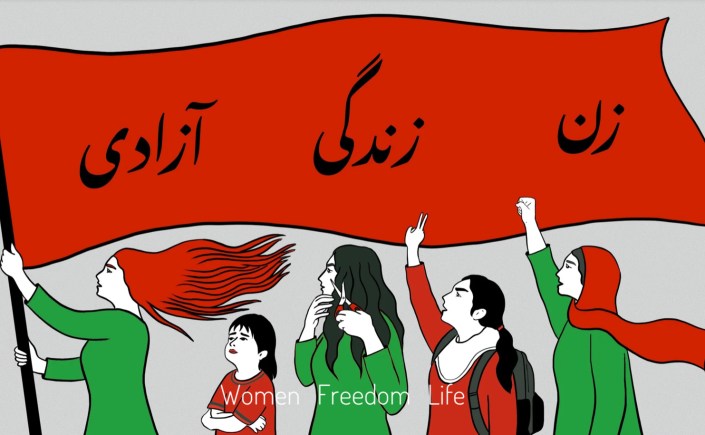
زن زندگی آزادی  Zan zandaky āzādy  Women freedom life

In our relatively comfortable, free and still democratic countries, it is difficult to put ourselves in the position of people desperate and passionate enough to risk life and limb and to face the terrible consequences of potentially heroic failure. We can but sense, vicariously, the ache and the urge behind Maya Angelous’s poem The caged bird sings of freedom (above) and Lord Byron’s passionate couplet:

Yet, Freedom! thy banner, torn, but flying,
Streams like the thunder-storm against the wind.

The courage of the of the Iranian protesters, and particularly the woman and girls who have been the vanguard of this unprecedented intifada cannot be exaggerated. For brave they are indeed. Having endured long years of a brutal and vengeful, corrupt and misogynistic theocratic regime and its security and paramilitary enforcers, they are fully aware of the consequences of their actions.

Several weeks, the nationwide protests that followed the murder in custody of a young woman arrested by the morality police after wearing her hijab inappropriately, and other young women and also, now, young men, who, officially, have died at their own hand or of pre-existing causes, have mobilized Iranians of all ethnicities, classes, ages and genders. And the security state us reacted predictably, red in tooth and claw. There is torture and death actual and awaiting on the streets of villages, towns and cities throughout the country, and the public trials with their black-garbed and turbaned hanging judges are in place and ready to protect the nation and the revolution in the name of Allah and the legacy of the canonised grey and dour uber-mullah Ayatollah Khomeini.

The perseverance and nihilistic exuberance of the Iranian street has reminded me of an exhilarating song and video created by a young Egyptian and his friends celebrating the demonstrations in Cairo’s Tahrir Square that precipitated the fall of practically Egyptian president-for-life Hosni Mubarak thirteen  years ago last February. Sawt Al Huriya (The Voice of Freedom), went viral on YouTube after its release on 11 February 2011, the day before Mubarak’s departure?

Fast forward to the present, and we examine why the Islamic Republic’s  sclerotic theocratic regime is so afraid of another song of revolution, the crowd sourced protest anthem, Baraya, which has become a thorn in the side of the government in Tehran.

Baraye, translated as “because of …” or “for …”, the anthem of Iran’s Woman, Life, Liberty protest movement grew organically from a Twitter hashtag trend in which Iranians expressed their uncountable discontents and their commitment to the protests. It continues to unite Iranians in their opposition to the rules, restriction nd repression of Islamic Republic weeks after it was first released online on an international and social media that the authorities have tried and failed to silence. To paraphrase Canadian songwriter and activist for injustice and the environment in his song Santiago Dawn (see below) to keep millions down “takes more than a strong arm up your sleeve”.

Bareya’s lyrics were created by the Iranians themselves and gathered and set to music , recorded, sung and shared by a young Iranian singer, Shervin Hajipour. Crazy brave, perhaps for predictably, he was detained by security operatives soon after he posted it on his Instagram page and forced to remove it from his feed. But it had already attracted millions of views worldwide and continued to be shared and shared and shared, and it has now been played and performed the world over as people across the glob empathize, identify with, and add to the images verbalised and the emotions these engender. We all have stories to relate of oppression and exclusion, of the abuse of power and privilege and the pervasiveness of prejudice and discrimination. To quote Bruce Cockburn once more about an earlier resistance, “see them matching home, see them rising like grass through cement in the Santiago dawn”.

Baraja gives voice to the voiceless – as Bob Dylan sang in another century, in comparatively  straightened times:

For the countless confused, accused, misused, strung-out ones an’ worseAn’ for every hung-up person in the whole wide universeAn’ we gazed upon the chimes of freedom flashing

The Recording Academy, which hosts the annual Grammy Awards, announced that in its new merit category for best song for social change, more than 80% of nominations were for Baraye. Below is a video of the world-famous band Cold Play singing the song in Buenos Aires with Iranian actor Goldshifte Farahani.

The genesis of Baraya mirrors the organizational structure of the protests themselves insofar as like these, it is networked and leaderless, Ironically, however, David Patrikarakos editor of the e-zine Unherd wrote recently, this lack of leadership portends the protests’ doom:

“No leader has yet emerged. Instead, the protests are organised by different people or groups in different cities and towns on an almost ad hoc basis.The truth is that if the mullahs were to collapse tomorrow, there are no signs that a democratic movement would sweep to power …It is far more likely that the security state — led by the Revolutionary Guard Corps — would step into the void and make apparent what is already largely a fact: that Iran is no longer a clerical state but is now ruled by a Praetorian Guard …

… In 1979, Iranians held up images of Khomeini. In 2022, they tear them down. They know they want the regime gone but they have no one to hold up in its place. For a revolution to succeed, it’s not enough to be against someone; you have to be for someone else. It’s not enough that Khamenei loses. Someone else must win. Until that time, the mullahs will continue to cling on as murderously and barbarously as they always have, and Iranians will continue to die. For years Palestinians would say they needed a Saladin. They were wrong. What they need is a Ben Gurion. What the Iranian revolutionaries need now more than anything else is a Khomeini. Until that happens, this will only ever be half a revolution”.

At this moment in time, the outcome of that revolution hangs in the balance. The passion of the people for a better world is once again going up against the iron fist of the security state. Sadly, history past and present, in Iran and elsewhere, has shown us that when an irresistible force comes up against an immovable object, no matter how popular, righteous and justified that force may be, the immovable object invariably wins.

Meanwhile, hope springs eternal …

Our weapon was our dreams.
And we could see tomorrow clearly.
We have been waiting for so long.
Searching, and never finding our place.
In every street in my country,
The voice of freedom is calling.

Sawt al Huriya

Baraya … Because of 

Because of dancing in the street
Because of fear while kissing
Because of my sister, your sister, our sister
Because of changing rotten minds

Because of shame for moneyless
Because of yearning for an ordinary life
Because of the scavenger kid and his dreams
Because of a command economy

Because of air pollution
Because of ‘Vali Asr’ Avenue, and its dying trees
Because of a cheetah (Pirouz) that may go extinct
Because of innocent, outlawed dogs

Because of the incessant crying
For the image to repeat this moment
Because of the smiling face
For students, for the future
Because of students, for the future

Because of this forced paradise
Because of the imprisoned elites
Because of Afghan kids
Because of all (Because of…) non-repetitive

Because of all these empty slogans
Because of the rubble of fake houses
Because of the feeling of peace
Because of the sun after a long night

Because of the nerve pills and insomnia
Because of man, country, rebuilding
Because of a girl who wished she was a boy
Because of woman, life, freedom

Because of freedom

Because of Mahsa Amini

See also in In That Howling Infinite, Sawt al Hurriya – remembering the Arab Spring, Messing with the Mullahs – America’s phoney war?. and A Middle East Miscellany

Why Is Iran’s Regime So Afraid Of This Song?

Nahid Shamdouz,  assistant professor of Middle East and Media Studies at the University of Texas at Austin, Foreign Policy, 26th October 2022
Demonstrators sing "Baraye" while holding their phone lights high during a march in support of protests in Iran.

Demonstrators sing “Baraye” while holding their phone lights high during a march in support of protests in Iran. Allison Bailey, Reuters. 26th October 2021

“Baraye,” the anthem of Iran’s “Woman, Life, Liberty” protest movement—a song woven together entirely from a Twitter hashtag trend in which Iranians express their investment in the current protests—continues to unite Iranians in their opposition to the Islamic Republic several weeks after it was first released online.

For Iranians in Iran but also for the millions in the diaspora, this is the song of a generation, perfectly expressing this political moment and all that is at stake.

For dancing in the alleyways
Because of the fear you feel when kissing
For my sister, your sister, our sisters
To change the minds that have rotted away
Because of shame, because of being broke
Because of yearning for an ordinary life  

What makes this moment different from previous periods of protest is that the wall of acquiescence and pretense that maintained the state’s authority in the public realm has been torn down on a scale not seen since the 1979 revolution. In its recounting of all the painful grievances, “Baraye,” which translates in English to “for” or “because of,” signals the end of patience with the status quo and opens vistas onto a new future with a vocal crescendo that culminates in the word “freedom.”

The song reveals the simple, ordinary nature of the things that Iranians are aching for, asking for, and even dying for. It is radical in revealing on a national level the cruelty of a system that denies such basic demands—exposing the devastating conditions Iranians face under the current regime.

“Baraye” creates national intimacy by citing very specific events that all Iranians have suffered through together, in a palimpsest of collective traumas.

If “Baraye” reflects a different, perhaps unprecedented mood on a national level, it also mirrors the organizational structure of this recent protest movement. If it is networked and leaderless, so is the song. The lyrics were written by Iranians at large and merely set to music and vocalized by the young up-and-coming singer Shervin Hajipour. This explains why security forces detained Hajipour a couple of days after he posted it on his Instagram page, where it had already accrued millions of views. The regime has tried for years to push the apparent and already real aspects of people’s lives out of the public sphere.

On social media, Iranians have created a life that more closely mirrors their inner selves—replete with harsh criticism of leading clerics including Iran’s supreme leader, Ayatollah Ali Khamenei; female solo vocalists who are otherwise banned singing at the top of their lungs; and the exhibition of private lives that are anything but a reflection of the state’s projected pious paradise. Still, the state has sought to maintain a semblance of its ideology and control in actual public spaces and its media.

“Baraye” has broken that violently imposed wall between the state’s enforced reality and people’s real lives. It forced into the open, in the face of authority, all that people have known for long but were not supposed to express openly on such a national dimension.

For the sake of a laughing face
For schoolkids, for the future
Because of this mandatory paradise
For imprisoned intellectuals

Since its release, the song has become the single most covered protest song in Iran’s history. Within a few short weeks after Hajipour composed the music for it, musicians across Iran and beyond its borders have sung it verbatim in their own voices, translated it, and sung it in other languages—and even universalized the lyrics for a more global audience.

Last week, the Iranian rapper Hichkas released a militant hip-hop track referencing “Baraye” through the more casual rap lingo “vase,” enumerating his reasons, starting with “vase Mahsa” (for Mahsa Jina Amini, whose death at the hands of Iran’s morality police sparked the protests) and ending with “for a good day,” in a nod to his own 2009 Green Movement protest song.

Mahsa Amini Protest in Iran

Protesters gather in London on Oct. 1 in solidarity with people protesting across Iran.

Protesters gather in London on Oct. 1 in solidarity with people protesting across Iran.

For the garbage-picking kid and her dreams
Because of this command economy
Because of this polluted air …
For a feeling of peace
For the sun after long nights

At the same time, “Baraye” creates national intimacy by citing very specific events that all Iranians have suffered through together, in a palimpsest of collective traumas. Hajipour sings “For the image of this moment repeating again,” drawn from a tweet with a photo of Hamed Esmaeilion and his young daughter relaxing together on a couch reading newspapers. (His wife and 9-year-old daughter were killed when Iran’s Revolutionary Guards mistakenly shot down a Ukrainian airliner leaving Tehran in January 2020, and Esmaeilion has become the face of the grief affecting all those who lost loved ones in the crash.)

This line resonates with Iranians because so many families have been torn apart by the country’s massive brain drain, caused by a closed and corrupt economy that offers few opportunities.

In other lines, Hajipour sings sarcastically “Because of this mandatory paradise,” referring to the theocratic state’s imposed restrictions, justified in the name of achieving an Islamic utopia.

In yet another, he sings of “houses in rubble,” pointing to collapsing buildings caused by the rampant nepotism and corruption that shield state-connected builders from transparency on safety measures. In another, he sings of the “imprisoned intellectuals,” in a nod not just to the hundreds of journalists, human rights lawyers, and filmmakers but even award-winning university students who have been locked up.

The chorus arising from hundreds of tweets is clear: This is a regime that seems to be against life itself, punishing dancing, kissing, and smiling faces.

The song’s singular overnight success is not a small achievement given the long, rich history of protest songs in Iran. Already at the time of Iran’s Constitutional Revolution in 1906, poets created songs about the spilled blood of the youth who agitated for representative government and, not long after, about the Morning Bird breaking the cage of oppression, which many decades later became one of the most intoned protest songs in post-revolutionary Iran.

The trajectory of Iran’s musical history clearly exhibited a century-long struggle for freedom and justice, not yet realized.

Although “Baraye” and other songs of the current protest movement continue this strong tradition, they break with the post-revolutionary legacy on one key point: They no longer call for reforms.

At the time of the last major convulsions in 2009, many activists and musicians of the Green Movement called forth songs from the 1979 revolution to stake a claim to the revolution’s original yet unattained promises. People wore headscarves and wristbands in the green of Imam Hussain and went to their rooftops to shout “Allahu akbar” to invoke God’s help against a corrupt, earthly power.

But this time around, there are no religious signifiers or any demands for reforms. If classical songs are performed, they are not the icon Mohammad Reza Shajarian’s conciliatory song Language of Fire in 2009, when Iranians were still agitating for reforms from within, but his militant 1979 song Night Traveler, (also known as “Give Me My Gun”) in which he calls “sitting in silence” a sin and asks for his gun so he can join the struggle. One of Shajarian’s masterful female protégés posted the song with the hashtag #Mahsa_Amini and swapped “the brother” out of the verses to sing “The sister is an adolescent, the sister is drowning in blood,” in recognition of the teenage girls who have given their lives in the protests.

The state security system instantly understood the significance of “Baraye” as a protest song. Hajipour was forced to take it off his Instagram account; however, not only has his song already been shared widely by other accounts and on other platforms, but the sentiments behind the lyrics are within the millions of people who wrote them.

The chants of “Death to the Dictator” have reverberated from the streets to the universities, from oil refineries to urban rooftops, and from bazaars to school courtyards. And so have the haunting calls for freedom repeatedly intoned at the end of “Baraye,” pouring forth from every corner of the actual and virtual Iranian public sphere.

That song’s reality can no longer be repressed and hidden by force.

Song lyrics in this article are based in part on Zuzanna Olszewska’s translations.

Nahid Siamdoust is an assistant professor of Middle East and Media Studies at the University of Texas at Austin, and the author of Soundtrack of the Revolution: The Politics of Music in Iran.

Messing with the Mullahs – America’s phoney war?

“The Iranian regime took action today to increase its uranium enrichment.  It was a mistake under the Iran nuclear deal to allow Iran to enrich uranium at any level.  There is little doubt that even before the deal’s existence, Iran was violating its terms”. Statement from the White House Press Secretary 1st July 2019

The White House has not subsequently explained how a country can violate the terms of a deal before that deal existed. But, as New York Times commentator Roger Cohen wrote recently, ”President Donald Trump has been all over the place on Iran, which is what happens when you take a serious subject, treat it with farcical superficiality, believe braggadocio will sway a proud and ancient civilisation, approach foreign policy like a real-estate deal, defer to advisers with Iran Derangement Syndrome, refuse to read any briefing papers and confuse the American national interest with the Saudi or Israeli”.

There is transparent angst and disappointment among many in the US Administration that that Iran’s Islamic Republic has endured for forty years with no sign of collapse (there are parallel palpitations and peregrinations with regard to Cuba and more recently, to Venezuela). Iran ‘hawk’ John Bolton might declare that the Islamic Republic would not celebrate its fortieth anniversary the Iranian Revolution. But the anniversary is upon us already. Iran is not going anywhere else soon.

Presently, it would appear that the administration is backpedaling on its bellicose rhetoric as it responds to Congress’ concerns about what is perceived as a lack of a unified US strategy. The dispatch of an American battle fleet to the Persian Gulf in response to unexplained and indeterminate Iranian threats and provocations has now been re-framed as having successfully deterred Iran’s hardliners from miscellaneous mischiefs and miscalculations. And yet, others in the US and elsewhere are attributing such follies to the US itself?

By ironic synchronicity, I am rereading historian Barbara W Tuchman’s acclaimed The March of Folly – From Troy to Vietnam. Her opening sentence reads: ‘A phenomenon noticeable throughout history regardless of place or or period is the pursuit by governments of policies contrary to their own interests. Mankind, it seems, makes a poorer performance of government than most any other human activity’. Her many definitions of folly include dangerous delusions of grandeur and “and obstinate attachment to unserviceable goals”. History has shown us – I refrain from saying “taught us” because we rarely learn from history – the consequences of single-minded determination amounting to a tunnel vision that is akin to stupidity. Charging ahead regardless only works for those who are stronger than all obstacles. Only those holding all the trump cards can ignore the other players at the table. With the US ratchetting up the pressure on Iran, the law of unintended consequences is in play with many observers perceiving the American leadership as part of the problem and not part of the solution.

In recent moves that recall the US’ lurch into Iraq sixteen years ago on the basis of nonexistent – or at the least very well hidden – weapons of mass destruction, war drums are beating across the Potomac as Iran hawks boost the potential for war with the Islamic Republic. Curiously identical damage to Saudi and Emiratis vessels in the strategically important Persian Gulf point to Iranian sabotage. rather than signally Iran’s provocative intent, it looks more like a clumsy false-flag frolic by the geniuses who gave us thrillers like “how to murder a dissident journalist in plain sight”, “let’s bomb one of the poorest countries on earth back into the Stone Age”.

This can be set against a historical record that the US has not initiated a major war – that is one with congressional approval – without a false flag since the USS Maine blew up in Havana Harbour in 1898, thus taking the US into a war with Spain that resulted in the colonization the Philippines, Puerto Rico and Cuba. This includes the fabricated Gulf of Tonkin incident 1964 escalated an ongoing “skirmish” in Vietnam into an all-out conflict, and those Iraqi weapons of mass destruction that arguably brought us to where we are now.

Most folk who are into history like to draw parallels and identify patterns in the past that reflect upon the present. As I do also, albeit in a more ambivalent way. Cleaving to Mark (Twain, that is) rather than Marx, I am fascinated more by the rhymes than the repetitions. But “remembering’, as Taylor Swift sings. “comes in flashbacks and echoes”. Over to Bob Dylan:

Now the bricks lay on Grand Street
Where the neon madmen climb
They all fall there so perfectly
It all seems so well timed
An’ here I sit so patiently
Waiting to find out what price
You have to pay to get out of
Going through all these things twice
Oh, Mama, can this really be the end
To be stuck inside of Mobile
With the Memphis blues again

The story of the Iranian Revolution is a complex, multidimensional one, and it is difficult for its events and essence to be compressed into brief opinion pieces of any political flavour, no matter how even-handed they endeavour to be.

The revolution began slowly in late 1977 when demonstrations against Shah Reza Pahlevi, developed into a campaign of civil resistance by both secular and religious groups. These intensified through 1978, culminating In strikes and demonstrations that paralyzed the country. Millennia of monarchy in Iran ended in January 1979 when the Shah and his family fled into exile. By April, exiled cleric and  longtime dissident Ayatollah Khomeini returned home to a rapturous welcome. Activist fighters and rebel soldiers overwhelmed troops loyal to the Shah, and Iran voted by national referendum to become an Islamic republic on April 1st 1979. A new constitution saw Khomeini became Supreme Leader in December 1979.

The success and continuing durability of the Iranian Revolution derived from many sources, and many are not touched upon by commentators and pundits. Here are some of my own thoughts on disparate but intrinsic parts of the Islamic Republic’s story.

One can’t ignore the nature of the monarchy that preceded it – modernist on the one hand, and brutally repressive on the other; nor the unwavering and hypocritical support (including infrastructure, weapons, and intelligence) provided to it by western “democracies” since Britain and the US placed Reza Shah Pahlevi on the throne in 1953. And nor should we ignore the nature of the unprecedented regime and state that was established forty years ago – a brutal, theocratic, patriarchal, quasi-totalitarian system that endeavours to control all aspects of its citizens’ lives, its rule enforced by loyal militias like the ruthless Basij and by the Revolutionary Guard, a military-industrial complex more powerful than the regular army.

The support and succour that the US gave to the deposed Shah and his family and entourage, and later, to the opponents of the revolution, served to unite the population around a dogmatic, cruel and vengeful regime, which, in the manner of revolutions past and present, “devoured its children”, harrying, jailing, exiling and slaughtering foes and onetime allies alike. One of the ironies of the early days of the revolution was its heterodox complexion – a loose and unstable alliance between factions of the left, right and divine. History is replete with examples of how a revolution besieged within and without by enemies actual and imagined mobilizes it people for its support, strength and survival. Recall France after 1789 and Russian after 1917.  The outcome in both was foreign intervention and years of war and repression.

I fought in the old revolution 
on the side of the ghost and the King. 
Of course I was very young 
and I thought that we were winning; 
I can’t pretend I still feel very much like singing 
as they carry the bodies away.
Leonard Cohen

Too often, in modern times, the US administration of the day has been called upon by a new and potentially radical regime to take sides, and indeed, to accept a tentative hand of friendship. And too often, for reasons political, ideological, economic, religious even, the US has made what historians of all colours would deduce was the wrong call – with disastrous consequences for the  newly freed nation and, with perfect if partisan hindsight, the world. Think Vietnam, Egypt and Cuba. In each, there was a pivotal moment when the US could have given its support to the new rulers and potentially changed the course of the revolution, and the freshly “liberated” people, and our world, might have been better off for it. And, so it was in 1979, with Iran.

The US’ steadfast support for the Shah during his reign, and its enmity towards Iran’s new rulers, predictably reciprocated by the mullahs and their zealous supporters, created “the Great Satan”, a symbolism sustained by the reality that many in US political circles actively sought to undermine and destroy the revolution (and still do, championing the late Shah’s son as their annointed one.

Time and folly have not softened the fear and the fervour.

Here are but a selection from a sorry catalogue: the long-running embassy hostage drama, and failed and ignominious rescue attempts; the subsequent and continuing economic sanctions; the moral and material support provided to Saddam Hussein during the bloody eight year Iran-Iraq war (1980-88) which cost the lives of over half a million soldiers on both sides; the years of wrestling and wrangling, politicking and posturing over Iran’s quest for a nuclear deterrent against perceived US aggression, and the western powers’ push-back; the expansion of Iranian influence in the Middle East and beyond through proxies and patronage, subterfuge and subversion – often through those latter day sell-swords the Revolutionary Guards – a form of what strategic analysts now call “offshore balancing”, or, simply put, fighting your foes outside rather than within your own borders; and today’s quixotic tango in which a false move or miscalculation could have catastrophic consequences.

There have been moments of what reasonable folk might perceive as farce, such as when in February 1989, Ayatollah Khomeini issued a fatwa calling for the death of Salman Rushdie, author of The Satanic Verses, sparking violence and protests around the world. Or as tragedy, as in July 1988, when the USS Vincennes blew Iranian Flight 655 out of the sky above the Persian Gulf, killing 290 men, women and children. The ship’s captain was exonerated.

In February 2019, a Middle East Security Conference was convened in Warsaw by Secretary of State Mike Pompeo. It brought together sixty countries, including Arab states and Israel, ostensible to discuss a range of issues, including Syria and Palestine, but in reality, it was always about Iran. The Warsaw gathering was a strange beast – its very title was a misnomer, Vice President Pence making it quite clear Iran was the ‘greatest threat’ to peace and stability in Middle East that it’s transgressions be punished. He even implied that it was God’s will.

The conference was most notable for who wasn’t there – Russia, Turkey, China, and the EU leaders British, France and Germany, all of whom are opposed to Trump’s decision to withdraw from the 2015 Joint Comprehensive Plan of Action, the Iran nuclear deal to restrict Iran’s nuclear program. It is indicative of the US’ isolation with regard to Iran, and its inability to call the shots in a Middle East where Russian, Turkey and Iran hold all the cards. Pence and Pompeo meanwhile talk about regime change and democracy in Iran but ignore what is going on in the US’ lacklustre autocratic allies Egypt, Saudi Arabia, and Bahrain – this and international reaction to the US’ alleged complicity a slow-motion, as yet unresolved and unconsummated “coup” in Venezuela only serve to remind the world of Uncle Sam’s not altogether successful track-record of hypocrisy and hubris, interference and inconsistency.

Israeli prime minister Netanyahu had initially tweeted that the conference was convened to discuss what he called the “war with Iran”. Although he amended his tweet soon afterwards, he was not exaggerating. There is indeed a war between Iran on one hand and Israel and the Gulf monarchies on the other with other countries lending their support to one side or the other. America and its Middle East allies have been at war with Iran for forty years, and Iran has reciprocated.

It is said, not without reason, that Iran has long been preparing for a war with the US, and that the US has psyched itself into a martial mindset that justifies Iranian fears. If push did indeed come to shove and the present cold war turned hot, Iran might appear to be at a disadvantage. Compared to the US, its forces are poorly equipped and lacking in battle experience, although they are indeed well-provided for by the sanctions-hit regime, whilst the Revolutionary Guard’s Al Quds brigade has been given real battlefield experience in Syria and Iraq’s civil wars. They would however be defending their homeland, which for Iranians is holy ground regardless of who rules it.

The American people are weary and wary of foreign military commitments, and doubtless confused by the administration’s mix of pullback and push-back. For all it’s manpower and materiel, it’s experience and equipage, after its problematic excursions in Iraq and Afghanistan, the US armed forces cannot be said to be a uniformly committed, effective and high-morale fighting force. It would be dependent on allies of dubious intent and ability, and on free-booting contractors and mercenaries like Erik Prince’s hired guns and sell-swords.

As the Warsaw talk fest demonstrated, the US would have to act very much on its own against Iran, with Israel being its only potential partner of any value. And yet, even Israel appears to be reticent, having of late toned down its bellicose rhetoric.

Despite Bibi’s bark and bluster, Israel does not want anyone to go to war with Iran, and it does not want to be blamed if a conflict does erupt. Nothing focuses the mind more than the thought of thousands of Hezbollah’s Iranian-sourced precision missiles raining down on the Galilee. The Gulf states are tin-pot tyrants with meagre military skill and no desire to throw away their toys when the US (and Israel?) will do the fighting for them. Russia, Turkey, and, potentially, China, would be implacably opposed and would indeed run interference, and provide diplomatic, economic, military and logistical support.

Iran itself is not without the ability and the means to set up a multitude of diversions and distractions, whether it is playing with the US administration’s head, as it has been for forum decades, encouraging Hezbollah and Bashar Assad to make mischief on Israel’s northern border and the Golan, inciting its Palestinian pawn Islamic Jihad in Gaze, providing Yemen’s Houthis with the means to better target Saudi cities, or, perhaps counter-productively, initiating espionage and terrorist incidents on the US mainland and in Western Europe.

The US may opt for measures short of a “hot” war, as it doing right now with limited success, but the hawks are circling over Washington DC and may have the President’s feckless and fickle ear – and, as they say, fools rush in where angels fear to tread.


Here are some recent articles on the latest Iran-US  tango:

For more on the Middle East in in In That Howling Infinite, see A Middle East Miscellany