Why Osama bin Laden lost the battle but won the war

In a recent opinion piece in The Australian conservative British historian and US resident Niall Ferguson reflects on the legacy of 9/11 and concludes – after two decades of analysis – that the attacks on 11 September 2001 signaled not merely terrorism but a broader clash of civilisations that the West is now losing. Recalling his own reactions on that momentous day, Ferguson admits that he initially sought secular explanations for the attacks: economic downturns, American imperial overreach, and global political fragmentation. Yet re-examining Osama bin Laden’s statements, he recognises that the al-Qa’ida leader framed his actions as a religious war against “crusaders,” rooted in Islamic grievance over Palestine and Western dominance. Bin Laden’s explicit appeal to faith, not politics, aligns with Samuel Huntington’s much-criticised thesis that post–Cold War conflict would be cultural, with Islam and the West as enduring antagonists.

Although the United States and its allies largely defeated jihadist terrorism within their own borders—terrorism in Iraq has plummeted and attacks in the U.S. remain rare—Ferguson argues that Islamism has advanced through dawa (non-violent proselytising) and political penetration. Organisations such as the Council on American-Islamic Relations, linked to the Muslim Brotherhood, exploit Western legal and educational institutions while Gulf states like Qatar fund universities and shape intellectual climates. Meanwhile, demographic trends favour Islam: global Muslim populations are rising rapidly and will nearly equal Christians by mid-century, while Western societies grow more secular and internally divided.

Geopolitically, the West faces a resurgent “axis of upheaval”—China, Russia, Iran, and North Korea—while allies waver. The international solidarity that followed 9/11 contrasts sharply with the fragmented reaction to Hamas’s October 7, 2023 attacks on Israel, where UN resolutions condemned Israeli actions more than Islamist violence and several states recognised Palestinian statehood. Public opinion, especially among younger generations, has shifted sharply against Israel and, in some cases, towards open antisemitism; bin Laden’s anti-Western rhetoric even circulates approvingly on platforms like TikTok.

Ferguson concedes that bin Laden lost the “war on terror,” but claims he is winning the longer contest Huntington foresaw. Islamism thrives without spectacular violence, demographic momentum favours Muslim societies, and Western civilisation—once confident in its Judeo-Christian identity—is fractured and uncertain. Two decades after 9/11, Ferguson concludes that the clash of civilisations is real, and the West is no longer clearly ahead.

Also, in In That Howling Infinite, see A Short History of the Rise and Fall of the West , and A Middle East Miscellany

Osama bin Laden’s Posthumous Victory  

Niall Ferguson, The Australian, 19 September 2025
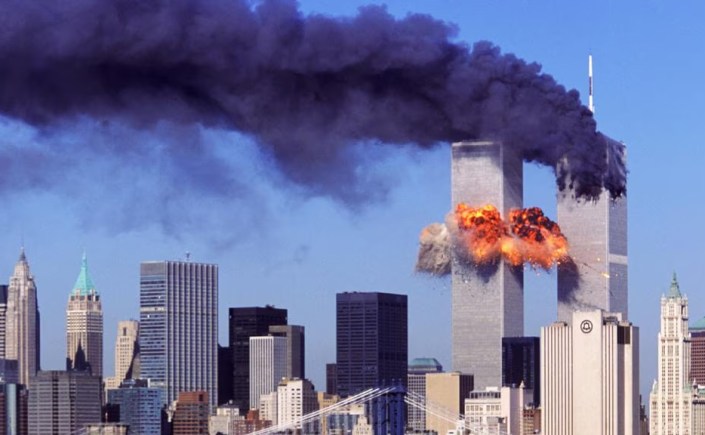
Last week’s azure September skies over New York brought back memories. Twenty-four years ago I was due to give a lecture at New York University. The date of the lecture was September 12. I never flew.

On the day of the attacks, I sat in my study at Jesus College, Oxford, staring incredulously at the pixelated live video of the World Trade Centre twin towers first blazing, then collapsing. Not long after, in April 2002, I accepted a chair at the Stern School of Business at New York University and resigned my Oxford professorship.

My motivation was partly the hereditary Scottish tendency to march towards the sound of gunfire. As a teenager in 1914, my grandfather John Ferguson had volunteered to fight the Germans. This seemed easier.

Regardless of the 9/11 attackers’ motives, I had a strong objection to terrorism as a political method – a result of growing up in Glasgow in the 1970s, when “the Troubles” in nearby Northern Ireland did more than merely resonate.

My first impulse after the attacks, in a piece for The New York Times, was to liken the sympathetic British reaction to 9/11 to the American reaction to the Blitz of 1940-41.

A man stands in the rubble, and calls out asking if anyone needs help, after the collapse of the first World Trade Center Tower. Picture: Doug Kanter / AFP

In the rubble, after the collapse of the first World Trade Center Tower. Doug Kanter / AFP

But I also warned Americans to “steel themselves for a long, inglorious kind of war that governments in Europe already know only too well”. In wars against terrorists, I wrote, “there are no quick victories. The foe does not line up his tanks for you to flatten, his ships for you to sink. His troops live among you.”

Yet this was not the Provisional IRA. Re-reading a transcript of Osama bin Laden’s first post-9/11 video, from November 3, 2001, I am reminded of how explicitly he declared a war of religion. “People were divided into two parts” after 9/11, he declared. “The first part supported these strikes against US tyranny, while the second denounced them.

“The vast majority of the sons of the Islamic world were happy about these strikes,” bin Laden went on, “because they believe that the strikes were in reaction to the huge criminality practised by Israel and the United States in Palestine and other Muslim countries.”

Al-Qaeda mastermind Osama bin Laden.

Al-Qaeda mastermind Osama bin Laden.

There were demonstrations of support for his action “from the farthest point in the eastern part of the Islamic world to the farthest point in the western part of the Islamic world”. This revealed the key reality: “This war is fundamentally religious. The people of the East are Muslims. They sympathised with Muslims against the people of the West, who are the crusaders.”

With the passage of 2½ decades, it is startling just how unambiguous bin Laden was about his religious motive. “Under no circumstances,” he declared, “should we forget this enmity between us and the infidels. For the enmity is based on creed … It is a question of faith, not a war against terrorism.” The goal of all Muslims should now be to “resist the most ferocious, serious and violent Crusade campaign against Islam ever since the message was revealed” to Mohammed.

Bin Laden saw the war he was waging as a counter-attack – “to take revenge for those innocent children in Palestine, Iraq, southern Sudan, Somalia, Kashmir and The Philippines”. The US president, George W. Bush, might be the latest “crusader”, who “carried the cross and raised its banner high”, but bin Laden traced his war back to the aftermath of World War I when “the whole Islamic world fell under the crusader banner … and Palestine was occupied by the British”. Now the tables had been turned. And he had turned them with just 19 men whose faith exalted martyrdom.

George W Bush standing next to retired firefighter Bob Beckwith, speaks to volunteers and firemen as he surveys the damage at the site of the World Trade Center in on September 14 2001. Picture: AFP

George W Bush and retired firefighter Bob Beckwith, September 14, 2001, AFP

You can see why, at the time, many commentators saw 9/11 as vindicating Harvard political scientist Samuel Huntington, whose seminal essay on The Clash of Civilisations had been published in 1993, as well as Princeton scholar Bernard Lewis, who had long argued that Islam was chronically unable to modernise.

My wife, Ayaan Hirsi Ali, was born in Somalia and shared this view, not because she was a scholar of Islam but because she was a Muslim – and, indeed, a former member of the Muslim Brotherhood. In September 2001, she was working at a political think tank in the Netherlands, having sought asylum there in 1992 to escape war-torn Mogadishu and an arranged marriage.

Author Ayaan Hirsi Ali

Author Ayaan Hirsi Ali

In her memoir, Infidel, she recalls how, after hearing bin Laden’s video, she “picked up the (Koran) and the hadith and started looking through them, to check. I hated to do it, because I knew that I would find bin Laden’s quotations in there.” She shot to notoriety by telling the Dutch that the 9/11 attackers were simply following the Prophet Mohammed’s injunction to wage holy war.

Over the past 24 years I have valiantly tried to see 9/11 differently – not as a civilisational clash between Islam and “the West” but as something that fit better into my own secular frame of reference. Raised an atheist, trained as an economic historian, I felt obliged to look behind what I took to be the facade of religious zealotry.

A decade after the attacks, in a piece I wrote for The New York Times Magazine, I portrayed them as the product of four underlying historical trends. First, the spread of terrorism from the Middle East and Europe to the US. Second, the post-2000 economic downturn, combined with widening inequality between nations and a coming oil shock, possibly compounded by a Saudi revolution akin to the one that overthrew the shah in Iran in 1979. (I completely failed to foresee the shale oil revolution and bought into the “peak oil” myth.) Third, the transition of American global power from informal to formal imperialism. And last, the fragmentation of the multicultural polity. (“Rather than anticipating a clash between monolithic civilisations, we should expect a continued process of political disintegration as religious and ethnic conflicts challenge the integrity of existing multicultural nation-states.”)

Missing in this – and in much of my work that followed – was Islam.

In The War of the World (2006), I got a little closer to Huntington, portraying 1979 as a much bigger turning point than 2001 in terms of the demographic as well as political rise of Islam, a point I returned to in Civilization: The West and the Rest (2011). However, laboriously quantifying every war since Huntington’s essay had appeared, I argued that most conflicts since 1993 had, in reality, been within rather than between civilisations. In The Square and the Tower (2017), I applied network theory to the problem, showing how al-Qaeda itself was a network within a much larger network of Islamist organisations; and that its expansion in response to the invasion of Iraq ultimately necessitated a networked response (in the form of General Stan McChrystal’s Joint Special Operations Command). Most recently, in Doom (2021), I downgraded 9/11 to just another disaster, and not a very big one: “In terms of excess mortality, April 2020 in New York City was … three and a half times worse than September 2001, the month of the 9/11 terrorist attack.”

Huntington, Lewis and my wife were right.

In Huntington’s original formulation, “the fundamental source of conflict” in the world after the Cold War would be cultural; “the principal conflicts of global politics” would be “between nations and groups of different civilisations” – “Western, Confucian, Japanese, Islamic, Hindu, Slavic-Orthodox, Latin American, and possibly African”. In particular, Huntington predicted, the “centuries-old military interaction between the West and Islam” could become “more virulent”. He also foresaw a “Confucian-Islamic military connection” that would culminate in a conflict between “The West and the Rest”.

Among the younger generation of proto-woke Ivy League professors, Huntington was widely mocked for his “essentialism”. But consider, with Huntington’s argument in mind, all that has happened since September 2001.

Terrorism has largely been contained in the US and EU, though not globally. In that sense, we won the “war on terror”, which was successfully displaced from the US to the periphery. It was ultimately defeated in Iraq, though not in Afghanistan. Today, as a result, terrorism in the world looks very different from what I foresaw in 2001. According to the Global Terrorism Index 2025, published by the Institute for Economics & Peace, the top five countries most impacted by terrorism last year were: Burkina Faso, Pakistan, Syria, Mali and Niger. Globally, terrorism peaked in 2014-15. In countries such as Iraq, it has declined dramatically. (In 2007, terrorists claimed 6249 lives in Iraq. Last year, the total was just 59.)

In the US, it is widely asserted, white supremacists now pose a bigger terrorist threat than Islamists – although the attack in New Orleans on January 1, 2025, when Shamsud-Din Jabbar killed 14 people by driving a pick-up truck into a crowd on Bourbon Street, is a reminder that Islamic State has not entirely gone away. We now know who murdered Charlie Kirk, and a white supremacist he was not.

Still, the latest Global Terrorism Threat Assessment by the Centre for Strategic and International Studies makes clear just how wrong I was in 2001 to anticipate a sustained campaign of jihadist terrorism in the US. Say what you like about our national security agencies, they won that war.

Yet nonviolent radicalisation (what Islam calls dawa as opposed to violent jihad) has advanced significantly everywhere in the Western world, wherever there are Muslim communities. The critical point – as my wife explained in a book on the subject – is that Islamism as a deeply illiberal political ideology does not need to engage in acts of terrorism to spread.

I never cease to marvel at the ingenuity with which the Muslim Brotherhood and other proselytising organisations spread their networks, through mosques, Islamic centres, schools, colleges and local politics. Consider only the effectiveness of the Council of American-Islamic Relations, founded in 1994, which today boasts on its website of having “100+ active lawsuits” and “600,000+ Legislative Action Alerts”, whatever that means. It has almost 30 offices throughout the country.

Most people who encounter CAIR take it to be something like the Anti-Defamation League for Muslims – a civil rights organisation that just happens to be concerned about the rights of Muslims. But it is not that at all.

Ten countries have recognised the non-existent Palestinian state since October 7, including three European Union EU member states, Ireland, Slovenia, and Spain. Canada, France, Australia and the United Kingdom Britain are itching to join them. Picture: AFP

Ten countries have recognized the non-existent Palestinian state since October 7, including three European Union EU member states, Ireland, Slovenia, and Spain. Canada, France, Australia and the United Kingdom Britain are itching to join them. Picture: AFP

Rather, it is more like a front organisation for the Muslim Brotherhood of America. In a recent article, Ayaan has brilliantly described the many ingenious ways that CAIR exploits the institutions of our open society, most recently settling a lawsuit to avoid revealing its sources of funding.

Good luck following the money. In her words: “The North American Islamic Trust (NAIT) controls mosque properties and financial assets. The Islamic Society of North America (ISNA) lends the Brotherhood a degree of religious legitimacy. The American Muslim Council (AMC) works the political front, cutting deals and building alliances. The Muslim American Society (MAS) runs operations on the ground, embedding itself firmly in local communities. In universities, the International Institute of Islamic Thought (IIIT) shapes the narrative. On campuses, the Muslim Students’ Association (MSA) targets the next wave of recruits. The Islamic Circle of North America (ICNA) and Young Muslims (YM) focus on families and youth.”

Even the United Arab Emirates has proscribed CAIR as a terrorist organisation. Yet dozens of Democratic legislators are on the record on the CAIR website, praising its work as they doubtless also praise the National Association for the Advancement of Colored People.

A complementary effort is the way Qatar – the largest source of foreign donations to US universities since reporting began in 1986 – funnels money into academia. According to the Network Contagion Research Institute, as reported in The Free Press, nearly a third of Qatari donations to American colleges – more than $US2bn – were given between 2021 and 2024. As Mitchell G. Bard shows in Arab Funding of American Universities (2025), this money is one of the reasons college campuses have become such hotbeds of anti-Semitism in recent years.

It is not just that the West has been successfully penetrated by an antagonistic civilisation that fundamentally rejects the fundamental division between religion and politics – church and state – that lies at the heart of both Christianity and Judaism. The West is also being geopolitically outmanoeuvred by “the rest” in just the way Huntington foresaw.

Former Hamas leaders Ismail Haniya and Yahya Sinwar wave during a rally marking the 30th anniversary of the founding of the Islamist movement in 2017. Picture: AFP

Late Hamas leaders Ismail Haniya and Yahya Sinwar during a rally marking the 30th anniversary of the founding of Hamas in 2017. AFP

Contrast the global order after 9/11 with the global order today. We have come a long way since NATO secretary-general George Robertson’s statement on September 11, 2001: “Our message to the people of the United States is … ‘We are with you’.”

In the past three years, Zbig Brzezinski’s worst-case scenario has come about. “Potentially, the most dangerous scenario,” he wrote in The Grand Chessboard (1997), “would be a grand coalition of China, Russia, and perhaps Iran, an ‘antihegemonic’ coalition united not by ideology but by complementary grievances”.

Since the Russian invasion of Ukraine, that grand coalition has come into being, with North Korea as a fourth member. The “axis of upheaval” (China, Russia, Iran, and North Korea) is now co-operating in military, economic and diplomatic ways.

Moreover, the Trump administration’s combative treatment of US allies (the EU, Japan, South Korea) and neutrals (Brazil, India and Switzerland), not least with respect to trade policy, is alienating not only the traditionally non-aligned but also key partners.

The upshot is that Israel is now virtually alone in fighting against the Islamists, so that even the US wants plausible deniability when, as earlier this month, the Israeli Air Force strikes the leadership of Hamas in the Qatari capital, Doha.

The point is that the clash of civilisation continues. Now ask yourself: Who’s winning?

The Hamas attack on Israel two years ago was essentially an Israeli 9/11 (worse in relative terms). But compare the global reactions.

UN Security Council Resolution 1373, adopted unanimously on September 28, 2001, called on all member states to freeze terrorist financing, pass anti-terrorism laws, prevent suspected terrorists from travelling across international borders, and screen asylum-seekers for possible terrorist ties. This was an unprecedented show of international unity.

By contrast, no Security Council resolution could be passed in the wake of October 7. UN General Assembly Resolution ES-10/21 – which called for an “immediate” and “sustained” humanitarian truce and “cessation of hostilities” in Gaza and condemned “all acts of violence aimed at Palestinian and Israeli civilians” – was introduced by Jordan on behalf of a group of Arab states. When it was adopted on October 27, 2023, 121 voted in favour, 44 abstained, 14 absented themselves and only 14 (including Israel and the US) voted against.

This video grab from footage released by the Israeli Hostage and Missing Families Forum campaign group shows what the group described as Israeli female soldiers being captured by Hamas during the October 7 attack on Israel

Video grab from footage released by the Israeli Hostage and Missing Families Forum campaign shows what the group described as Israeli female soldiers being captured by Hamas on 10/7

Ten countries have recognised the non-existent Palestinian state since October 7, including three EU member states, Ireland, Slovenia, and Spain. Canada, France, Australia and Britain are itching to join them.

In short, comparing the world today with that of 24 years ago, I am tempted to say bin Laden lost the war on terror but is winning the clash of civilisations. That’s not to say his particular brand of Salafist jihadism is winning; it can even be argued that it’s in decline. Bin Laden’s creed was always too uncompromising to form alliances of convenience. By contrast, the pro-Palestinian “global intifada” is much more omnivorous, and can easily absorb the old left (Marxism and pan-Arabism) and the new (anti-globalism and wokeism).

Demographically, Islam is certainly winning. According to Pew Research (June 2025), “The number of Muslims around the world grew 21 per cent between 2010 and 2020, from 1.7 billion to 2.0 billion.” That was twice as fast as the rest of the world’s population, increasing the Muslim share from 24 per cent to 26 per cent. Earlier research by Pew (from 2015) forecast that “if current trends continue, by 2050 the number of Muslims will nearly equal the number of Christians around the world”. In Europe, Pew estimated, Muslims would make up 10 per cent of the overall population, up from 5.9 per cent in 2010. In the US, Muslims would outnumber Jews. This does not seem implausible.

At the same time, Western civilisation today is so much more divided than it was 24 years ago. The public response to October 7 illuminated the divisions. Whereas older voters generally remain more pro-Israel than pro-Palestinian, younger cohorts have swung the other way. Perhaps that’s because to Gen Z, September 11 is a faint memory – as distant as the Cuban missile crisis and John F. Kennedy’s assassination were to my generation. But it’s also because the Islamists have done such a good job of co-opting the campus radicals, somehow overriding the cognitive dissonance in slogans such as “Queers for Palestine”, while tapping the anti-Semitism that still lurks on the far right.

According to Brookings, “young Republicans aged 18-49 have shifted from 35 per cent having an unfavourable view of Israel to 50 per cent unfavourable … Among Democrats, there has been an increase of 62 per cent to 71 per cent (with an unfavourable view of Israel) in the 18 to 49-year-old demographic … Only 9 per cent of those aged 18 to 34 approve of Israel’s military actions in Gaza.”

Supporters of Yemen's Houthi’s gather with pictures of Hamas' slain leader Yahya Sinwar during a rally last year. Picture: AFP

Supporters of Yemen’s Houthi’s with pictures of Hamas’ slain leader Yahya Sinwar2024: AFP

A recent poll in Britain by Campaign Against Anti-Semitism revealed a striking shift in attitudes towards Jews. Once again, the swing towards anti-Semitism is more pronounced among the young: “Forty-five per cent of the British public … believes that Israel treats the Palestinians like the Nazis treated the Jews … 60 per cent of young people believe this.

“Forty-nine per cent of 18-24-year-olds are uncomfortable spending time with people who openly support Israel.

“Only 31 per cent of young voters agree that Israel has a right to exist as a homeland for the Jewish people.

“Twenty-six per cent of the British public believes that Israel can get away with anything because its supporters control the media.

“Nineteen per cent of young people believe that the Hamas attack on Israel was justified.”

Such attitudes can be found in Britain on both the political left and the political right. A third of Labour voters say they are uncomfortable spending time with people who openly support Israel, as do 54 per cent of Green Party voters, 15 per cent of whom believe Hamas’s attack on Israel was justified. But almost one in four supporters of the rapidly growing Reform UK party, led by Nigel Farage, believe Jewish people “chase money more than other people do”.

During the Cold War, the West was often referred to as a “Judaeo-Christian” civilisation. That term is starting to seem like an anachronism. Two years ago, another bin Laden pronouncement – his Letter to America, originally published on the first anniversary of September 11 – enjoyed a sudden resurgence of interest, not least because its attacks on the power of American Jews seemed to strike a chord with young users of TikTok.

Palestinians celebrate their return after crossing the border fence with Israel on October 7, 2023. Picture: AFP

Palestinians celebrate their return after crossing the border fence with Israel on 10/7. AFP

One popular video showed a young woman brushing her hair with the caption, “When you read Osama bin Laden’s letter to America and you realise you’ve been lied to your whole entire life.” At one point in November 2023, a TikTok search for #lettertoamerica found videos with 14.2 million views. In total, about 300 videos were posted under that hashtag.

Walking the streets of New York last week, I felt old. To my children, my students and my employees, September 11 is not a memory. It is not even a historical fact. It is something people argue about on social media.

As I write, Tucker Carlson has just told Piers Morgan that an “FBI document” indicated “an Israeli spy ring in the United States … knew 9/11 was coming”. The reality is, of course, that only the conspirators themselves knew that. They also knew, very clearly, why they were going to do it.

It has taken me all these years to understand that 9/11 really was a clash of civilisations. And it has taken me until now finally to face the reality that ours is losing.

Niall Ferguson is the Milbank Family senior fellow at the Hoover Institution, Stanford University, and a senior faculty fellow of the Belfer Centre for Science and International Affairs at Harvard. He is the author of 16 books, including The Pity of War, The House of Rothschild, and Kissinger, 1923-1968: The Idealist. This essay originally was published in The Free Press


The phantom of liberty … the paradoxes of conservatism

Economist and commentator Henry Ergas wrote in The Australian recently: “With the Trump revolution wreaking havoc on conservative movements worldwide and the election rout leaving Liberals stunned, Australian conservatism faces an identity crisis it no longer can afford to ignore. Understanding its divergence from overseas traditions is vital to recovering and redefining the distinctive voice it needs to deal with the latest threat to its existence.”  I have repolished it below.
Personally, I find the crisis in contemporary conservatism, particularly as it pertains to Australia politics, fascinating. Here it is in danger descending into a culture of grievance and of populism (- defined as the quest for simple solutions to complex problems).

These fast-moving times are shaky ground for the creed. People are losing faith in institutions; the church no longer has moral influence; the social norms that once tied the community together are changing at lightning speed. Even many within what can be classified as the centre-right acknowledge  what might be described as the conservative movement is apparently on the back foot, scrambling to define itself by what it opposes rather than what it believes, plagued by self-doubt and confusion as to what to believe what to stand up for.

As younger voters in the Anglo-sphere veer away from conservative parties, old warhorses and young fogeys, an incongruous, anachronistic cabal of reactionaries if ever there was one, desperately seek relevance and comfort as they endeavour to beat back what they see as the rising tide of progressivism and the proliferation of what they condemned as “woke” – a portmanteau word for whatever that dislike and disdain in politics and society’s at large.

“Conservatism” is an intriguing concept. It can broadly be translated as “traditional” values, and can embrace a varied spectrum of “isms”, including authoritarianism, hierarchy, nationalism, nativism and ethnocentrism, and also, en passant, religiosity, homophobia, and indeed, anything deemed antithetical to the old, tried and true ways. In a general sense, it has gained traction across much of the world as people yearn for order and stability and belonging and identity that western-style liberalism with its ecumenical emphasis on identity, equity and diversity cannot satisfy. Many highlight what they see as to the erosion of national institutions, of Western culture and even morality itself. Some advocate a national conservatism that hold nations to be distinctive and to seek to protect this distinctiveness.

It is in essence an atavistic worldview, one which harks back to the ways of thinking and acting of a former time and a yearning for “la recherche du temps perdu”. In its modern manifestations, it is in many ways a belligerent, intolerant creed, quite distinct from the late 18th century English parliamentarian Edmund Burke’s benchmark conservatism, namely the preservation of principles of the past which emerge from “the nature of things by time, custom, succession, accumulation, permutation and improvement of property”, and in which institutions and customs were rendered sacred by longevity and continual use. The comfort of continuity, in fact.

And it is different to what perennial Australian prime minister Robert Menzies was alluding when he formed the Australian Liberal Party in 1945: “a healthy and proud sense of continuity, is one of the greatest steadying influences and a superb element of sanity in a mad world… “ in his Forgotten People speech of 1942, he invoked homes material, homes human and homes spiritual – the homes humans can live in and where families can be enriched spiritually – rather than the merits of some cold ideology. It was a uniquely reassuring doctrine for homely, ordinary folk opposed to change or frightened by it.

In his essay, “Why I Became A Conservative“, the late British philosopher Roger Scruton wrote that the romantic core of the creed was the search for the “lost experience of home”, the dream of a childhood that cannot ever be fully recaptured, but can be “regained and remodelled, to reward us for all the toil of separation through which we are condemned by our original transgression”. At the heart of conservatism, in other words, is love: love for things that exist or existed and must be saved.

In his introduction to A Political Philosophy, Scruton wrote: “the conservation of our shared resources — social, material, economic and spiritual — and resistance to social entropy in all its forms”. His conservatism was, above all, conservationist: constant care for institutions, customs, and family. His debt to Edmund Burke: society is a contract between the living, the dead and the unborn; a “civil association among neighbours” is superior to state intervention; “the most important thing a human being can do is to settle down, make a home and pass it on to one’s children”.

There is something quite benign about these concepts of conservatism. In stark contrast, conservatism that is gaining traction in many countries, particularly in eastern Europe, but also on the MAGA movement in the United States and on the far-right in Western Europe and also, Australia is a cold, atavistic and embittered beast. Populist in its nature, it appeals primarily to those who favour the reassuring hand of a paternal authority figure who is able to promise those aforementioned simple solutions to the modern world’s bewildering array of complex problems. Freethinkers, individuals, and all of heterodox opinions and practices, political, social, biological or spiritual – beware!

© Paul Hemphill 2025. All rights reserved

Disclaimer: the only thing this post has to do with Spanish director Luis Buñuel’s 1974 surrealist comedy drama Le Fantôme de la liberté is its title, although like the film, it challenges pre-conceived notions about the stability of social mores and reality.

See also in In That Howling Infinite, A Political World – thoughts and themes

Existential dilemma: the great conservative split

With the Trump revolution wreaking havoc on conservative movements worldwide and the election rout leaving Liberals stunned, Australian conservatism faces an identity crisis it no longer can afford to ignore.

Henry Ergas and Alex McDermott, The Australian 10 May 2025

The Trump revolution is wreaking havoc on conservative movements worldwide. Artwork: Frank Ling

In the aftermath of last weekend’s devastating election loss it is easy to write off conservatism in Australia. This wouldn’t be for the first time. As historian Keith Hancock observed in Australia (1930), conservative, in this country, has always been a term of abuse, implying that its target is an out-and-out reactionary.

There is nonetheless a profound paradox. Although conservative may be a term of abuse, Australian politics has long had a marked conservative vein, even as its chief protagonists have studiously avoided the descriptor. A hardy perennial, with a distinctive voice that contrasts with overseas conservatism, the conservative instinct in Australia has run deep, dominating federal politics for decades – and recovering, time and again, from setbacks that had been claimed to foreshadow its demise.

Now, however, with the Trump revolution wreaking havoc on conservative movements worldwide and the election rout leaving Liberals stunned, Australian conservatism faces an identity crisis it no longer can afford to ignore. Understanding its divergence from overseas traditions is vital to recovering and redefining the distinctive voice it needs to deal with the latest threat to its existence.

US President Donald Trump and Vice-President JD Vance. Picture: AP

US President Donald Trump and Vice-President JD Vance. Picture: AP

In part, that identity crisis reflects the factor that has made for conservatism’s enduring success: its infinite adaptability. Indeed, the term defies easy definition, just as the groups to which it has been applied defy ready categorisation, making the conservative identity inherently labile.

As Paul de Serville, a historian of Australian and British conservatism, has observed, every party that has emerged to represent conservatism’s interests and beliefs across the past 350 years “is a study in contradiction between opposing traditions and schools of thought”.

Even its founding parent, the movement that eventually became the Conservative Party in Britain, has “died or lain dormant” numerous times, split at least twice, and never settled on any singular set of policies, ideas and beliefs. Its capacity to incorporate diverse elements has in fact been one of its defining qualities. After all, “what other party has elected a Jewish novelist (Disraeli) to lead a group of wordless squires? Or a grocer’s daughter (Thatcher) to rule a sulky band of Tory Wets?”

But beneath the shifting terrain of cultural and political battlegrounds, there are in British conser­vatism some identifiable commitments. Originally, the commitment was above all to tradition. Born in the turmoil of the English civil war, the Tories (a term derived from the Middle English slang for outlaw) stood for loyalty to the Church of England and the crown. Unapologetic royalists, their clergy defended the church against the Puritans while stressing the values of family, home and nationhood. Over time, however, the primary emphasis of British conservatism changed into a commitment to the virtue of prudence.

Often associated with a sense of human limitations and the impossibility of achieving utopia, British conservatism became the embodiment of a Western intellectual tradition that extends back at least as far as St Augustine.

Former British Prime Minister Boris Johnson picture in 2019, led a populist style Conservative Party. Picture: AFP

Former British Prime Minister Boris Johnson led a populist style Conservative Party. AFP

Conservatism in the US had a starkly different origin and trajectory. Far from being a reaction to the threat of change, it was a by-product of the American Revolution’s fight against the crown. Initially, what it sought to conserve was the ideal of a “mixed constitution” whose myriad checks and balances could prevent the development of an overmighty state. That coexisted with the agrarian conservatism of the south that feared, above all, the centralism that might abolish slavery and privilege northern manufacturers over southern primary exporters. Together, those foundations fuelled the development of a staunchly conservative, often highly formalistic legalism whose power – unrivalled in any other Western country – grew with the ascendancy of the Supreme Court.

But as early as the 1820s that version of conservatism faced a powerful challenge from Andrew Jackson’s radical populism. Jacksonian populism had more than its fair share of incoherence but its grassroots pugnacity spawned one of US politics’ most enduring and certainly most distinctive notions: the spectre of a “deep state” that was liberty’s greatest enemy.

Permeated by a Manichean friend-enemy dynamic that distinguishes what American historian Richard Hofstadter famously called the “paranoid style” in US politics, the Jacksonians portrayed the federal government as far worse than overbearing: having been hijacked by the enemies of the common man, it was an actively malevolent force hiding behind the facade of law and order. Only by dismantling it could freedom be preserved.

Former US President Andrew Jackson. Jacksonian populism spawned one of US politics’ most enduring and distinctive notions: the spectre of a ‘deep state’. Picture: News Corp

Former US President Andrew Jackson

The Jacksonians left a deep imprint on the American right and most notably on its rhetoric, but they never entirely conquered the field. The somewhat rigid constitutional conservatism that had preceded Jacksonianism survived and, inspired by intellectual leaders such as Supreme Court associate justice Antonin Scalia, flourished.

At the same time, many other varieties of conservatism appeared and at times reappeared after having gone into abeyance.

For instance, Vice-President JD Vance’scommitment to an intensely moralistic vision of politics – that privileges honest labour over endless consumption, security at home over adventures overseas, family and local community over wider notions of society – renews a Catholic tradition that had waned as the ethnic communities that were its original bearers assimilated into the American mainstream.

Vice-President JD Vance’s commitment to an intensely moralistic vision of politics renews a Catholic tradition that had waned. Picture: AFP

Vice-President JD Vance

In that sense American conservatism was always as mutable, open-ended and diverse as the US itself. But for all of that diversity, the nature of the presidential contest periodically forced its differing elements to coalesce around a leader who somehow embodied the spirit of the times.

Seen in that perspective, Donald Trump’s ascendancy reflects the triumphant resurgence of the movement’s radical populist streak.

As with all populisms, Trump’s message jumbles together contradictory, even irreconcilable, components. But it isn’t intended as a coherent intellectual project – it is not a politics of ideas that Trump pursues but of emotive response and instantaneous impact.

Even less is it a politics of cautious pragmatism, as was the conservatism of Republicans George HW Bush or John McCain, who also channelled one of American patriotism’s many styles. And least of all is it, like Vance’s, a politics of high moral purpose. Rather, it is a politics of personal power, deployed, often arbitrarily, to purposes that can change unpredictably from day to day.

That it is not to deny that there runs through Trump’s project American conservatism’s golden thread: the goal of restoring what his supporters view as the freedoms that were the original promise of the American founding and, later, the American Revolution.

But much as was the case with the Jacksonians, that goal is to be achieved by demolishing existing institutions, which are cast as having betrayed the original promise, rather than through their cautious reform. Trumpism’s intensely antinomian character is starkly antagonistic to the American tradition of constitutional conservatism, which is why a number of unquestionably conservative scholars are challenging the administration’s actions in the courts. At the same time, its messianic quality, imbued with visions of future glory, breeds a fanaticism entirely alien to the British conservative tradition.

Trumpism breeds a fanaticism entirely alien to the British and Australian conservative tradition. Picture: AFP

Trumpism breeds a fanaticism alien to the British and Australian conservative tradition. AFP

It is entirely alien to the Australian conservative tradition too. Here the greatest difference lies in the fact the Australian political ethos has not seen the state as the enemy, much less as a malignant force. It has been regarded instead as a tool to be effectively used to benefit the people and help them flourish.

That difference from the US has profound historical roots. America’s initial European settlement occurred in the 1600s, a period distinguished in Britain by what became known as the “Old Corruption”. Government offices were chiefly sinecures, officially apportioned rackets for personal gain, propping up an oligarchy whose favours were openly for sale.

In contrast, European settlement in Australia and New Zealand began as sweeping reforms to Britain’s system of government were taking hold. For the first time it was becoming possible to treat the government as a utility, dispensing valued benefits, rather than as a lurking predator. Colonial governors’ administrations, while not without their own rackety aspects, were shaped by changes reducing royal patronage and improving government accountability. As Australian historian John Hirst argued, that laid the seeds of an enduring respect for impersonal authority, exercised, at least in theory, in the pursuit of prosperity and good order.

There were, for sure, periodic outbreaks of radical opposition. But the Australian approach was almost always to absorb the conflict by institutionalising its protagonists. Embedding the agitators within the system they were fighting against, that solution traded moderation for tangible gains.

For example, violent class war and mass strikes in the 1890s Depression culminated in the birth of the ALP as an official parliamentary party, changing laws and winning government. Later, the Arbitration Court became run largely by what had been the warring parties – the infamous “industrial relations club”, as columnist Gerard Henderson called it. In exchange for prestigious sinecures, the former enemies descended into what Hancock derided as a “pettifogging” legalism that suffocated the radicals.

Equally, landless gold-diggers demanded the squatters’ leases be ripped up, and stormed Victoria’s parliament in the 1850s. The Land Selection Acts in the subsequent decades established a regional population of often struggling farmers whose 20th-century political incarnation took the form of country parties.

Those parties not only secured “protection all round” in the 1920s, along with significant direct subsidies; they also ensured the establishment of marketing boards to which party worthies were invariably appointed. And much the same could be said of the Tariff Board, which shaped manufacturing protection for decades.

The corollary of that solution was a particular type of conservatism. Yes, in the early years of settlement there had been “real” conservatives of the Tory variety. But when self-government began, they were rudely jostled aside. Australian conservatism would not draw its strength from them.

It was instead the middle class that provided the dominating motifs of enduring Australian conservative strength. It isn’t difficult to understand why. The “workingman’s paradise” was a place where ordinary settlers and working men could get ahead, not rags-to-riches style, as the American dream pitched it, but enough to acquire comfort, leisure and independence.

Australian wages had been essentially the highest in the world since first settlement and the political victory of liberalism, which occurred during the 1850s gold rushes, ensured free markets and social mobility. To become an independent small business owner, to own your own home, to provide for your family, your children – this was the dream, and in Australia they by and large found it.

The conservatism that resulted from that success story incorporated the liberal beliefs and practices that proved so decisively triumphant in the colonial context. Historian Zachary Gorman observes that liberalism’s 19th-century victory in Australia was so comprehensive it became “less of a clear agenda and more of a pervasive political culture”. No longer conservatism’s upstart challenger as in Britain, liberalism here almost instantaneously became the established mainstream – it became what needed to be protected, as well as what conservatives sought to conserve.

Australian conservatism, then, sprang not out of reverence for the past or social hierarchy but from attachment to the enjoyments and freedoms of ordinary life that the most liberal polity in the world encouraged to flourish. It kept faith with ordinary experience and the socially durable values of an open society.

It soon came to shape the whole of the centre-right, underpinning both the twin liberal traditions of early 20th-century Australian life – the neo-Gladstonian free trade liberalism typified by NSW’s Henry Parkes, George Reid and Joseph Carruthers and the Deakenite liberalism protectionist Victoria championed.

More pragmatic and willing to innovate than, say, Britain’s Home Counties conservatism, Australian conservatism was dispositional rather than traditionalist – as a byproduct of urban, aspirational, middle-class Australia, generally inspired by the hope of improvement, it had no difficulty accommodating an uninterest in the past. The attachment to steady improvement was the important thing.

Robert Menzies’ pitch in his justly famous “Forgotten People” broadcast in 1942 captures this spirit perhaps better than any other significant Australian political testament. In it Menzies speaks directly to the attachment to the home and the family as the cornerstone of the “real life of the nation … in the homes of people who are nameless and unadvertised, and who … see in their children their greatest contribution to the immortality of their race”.

Accompanying that emphasis on home and family is a classically conservative sense of continuity.

“It’s only when we realise that we are a part of a great procession,” Menzies declared in laying the foundation stone of the National Library of Australia two months after he retired in March 1966, “that we’re not just here today and gone tomorrow, that we draw strength from the past and we may transmit some strength to the future.”

Across several decades of political leadership Menzies’ speeches pulsed with phrases that exemplified this disposition. His governments have been “sensible and honest”. He speaks “in realistic terms”, sustained “by an unshake­able belief in the good sense and honesty of our people”.

It was the constant undercurrent of hope and aspiration that gave Robert Menzies’ conservatism its distinctive flavour. Former PM Robert Menzies is pictured in 1941. Picture: Herald Sun

 Former PM Robert Menzies is pictured in 1941. Picture: Herald Sun

Yet this stress on continuity in Menzies’ rhetoric complemented rather than contradicted a commitment to what he referred to as “solid progress”. This country was a settler society built by successive waves of migrants; since its earliest days, its life had been saturated with optimism: Australia, said Menzies, was “our young and vigorous land”, still embarking on its glad, confident morning.

It was the constant undercurrent of hope and aspiration that gave Menzies’ conservatism its distinctive flavour, making it more explicitly geared to the confident expectation of future possibility than its European or American counterparts.

And it was precisely because it was so oriented to progress that the term conservative was generally avoided by the movement he forged, even as a conservative disposition bubbled along beneath its immediate surface, and was mirrored in electoral preferences of voters – not simply by voting right of centre but by giving governments a second term even if their first had been somewhat disappointing, and by regularly knocking back proposed constitutional changes.

However, those two elements – continuity and change – were uneasy bedfellows: continuity could, and eventually did, act as an obstacle to indispensable change.

The institutionalisation of conflict through entities such as the arbitration tribunals and the Tariff Board had, for decades, moderated conflict – but only at the price of inefficiencies that became ever more unsustainable as the world economy globalised in the 1970s and 80s. At that point, Australian conservatism entered into a prolonged crisis, torn between the deeply embedded value of caution and the equally strong value of adaptation.

It was easy to repeat Edmund Burke’s axiom that “A state without the means of some change, is without the means of its own conservation”; but effecting sweeping change without destroying the party’s unity was of an entirely different order of difficulty.

Nothing more clearly highlighted the dilemma than Liberal leader John Hewson’s Fightback – a call to arms that was as close as the movement ever came to a truly Thatcherite policy revolution. Its failure had many causes but one was the complete absence of the sense of continuity and stability that has always been dear to the Australian middle class.

It lacked, too, the high Gladstonian moral clarity that Margaret Thatcher articulated in her heroic campaign to reverse Britain’s slide to socialised mediocrity. In fact, Thatcher’s argument for the moral basis of capitalism had far more in common with Menzies’ creed of “lifters not leaners” than with Hewson’s “economic rationalism”.

Former British PM Margaret Thatcher addresses an election rally for Conservative Party leader William Hague in 2001. Picture: AP

Former British PM Margaret Thatcher2001. Picture: AP

What was needed was a new synthesis. As Menzies had, John Howard, the first Liberal leader to actively identify himself as a conservative, provided it.

Nigel Lawson, who served as the Thatcher government’s most consequential chancellor of the exchequer, once commented that whereas “Harold Macmillan had a contempt for the (Conservative) party, Alec Home tolerated it, and Ted Heath loathed it, Margaret (Thatcher) genuinely liked it. She felt a communion with it.” Exactly the same could be said about Howard: his scrupulous respect for his party’s traditional ethos helped him succeed for as long as he did.

That is not to deny that Howard at times pursued dramatic change – a GST, industrial relations reform, gun ownership – but the approach was rarely radical in style, much less revolutionary in tone. It is telling that the one reform that failed was Work Choices, which went furthest in dismantling existing institutions. And it is telling, too, that subsequent Coalition governments tinkered with the arrangements Labor put in its place rather than seeking their wholesale removal.

Now the synthesis Howard forged between conservation and change is yet again under extreme stress. So, too, are its electoral foundations, as the bases of politics undergo a profound transformation.

Because of Australian conservatism’s pragmatic nature, marshalling broad alliances against those forces and movements that endanger the foundations of the polity has always been its signature approach. Finding some common ground among its constituents, each of those alliances combined the shared opposition to an adversary with a positive program based on overlapping, if not entirely shared, values. The way Liberals, free-traders and protectionists alike rallied alongside Conservatives when threatened by a new common enemy, the ALP in the early 20th century, is a classic example.

John Howard pictured in 1996 after claiming victory for the Coalition. His scrupulous respect for his party’s traditional ethos helped him succeed for as long as he did. Picture: Michael Jones

John Howard pictured in 1996 after claiming victory for the Coalition. Picture: Michael Jones

However, the dominant force in contemporary politics is fragmentation: the centrifugal pressures that make coalitions hard to assemble but easy to destroy have become ever stronger as social media and identity politics shatter politics’ traditional alignments.

The centre-right is far from being immune from those tendencies, as the emergence of the teals shows. And they are compounded by the pressures of Trumpian populism, which is as hostile to the compromises coalition-building entails as it is to inherited institutions. The only coalitions Trumpism can forge are those that aggregate resentments: against the arrogance of the “progressives”, the abuses of power that occurred during the pandemic, the perception that common values are denigrated and despised.

To use a phrase American constitutional lawyer Greg Lukianoff and social psychologist Jonathan Haidt coined for the left, Trumpism’s dominant mode of action is “common-enemy politics”, with the adversary being the principal factor unifying its disparate parts. There are no shared values, nor any shared aspirations; the glue comes from shared hatreds.

But intransigent oppositionalism is no basis for a viable politics. Regardless of what Trump’s Australian acolytes believe, its transposition to this country would make for a future of repeated failure.

Rather, for a broader alliance to be possible again, a new synthesis is needed. Australia’s two greatest prime ministers, Menzies and Howard, suggest the way. Both exemplified a social conservatism that drew from the distinctively Australian emphasis on the conservative temperament over and above distinctive philosophical creed. Both forged a synthesis that combined an attachment to liberal principles with a commitment to large-scale changes needed to underwrite prolonged prosperity and progress.

Now, after the rout of last weekend’s election, that synthesis desperately needs to be redefined.

In the end, politics is about argument and arguments are about ideas. When politics seems so entirely bereft of them, Australian conservatives have no choice but to think again.

Henry Ergas is a columnist with The Australian. Alex McDermott is an independent historian.

The continuing battle for Australia’s history

British archaeologist, academic and historian David Breeze has argued that “the study of history best proceeds through controversy”, suggesting that scholarly debate and differing interpretations of historical events are vital for a deeper understanding of the past, that that confronting alternative perspectives, reinterpreting evidence, and engaging in critical analysis can lead to more nuanced and accurate historical narrative.

This is particularly relevant with regard to the study of the historical and contemporary relationship between Australia and its indigenous minority.

I’ve written often about the indigenous history of our country. The following passage from my piece on Australia’s The Frontier Wars encapsulates my perspective:

”There is a darkness at the heart of democracy in the new world “settler colonial” countries like Australia and New Zealand, America and Canada that we struggle to come to terms with. For almost all of our history, we’ve confronted the gulf between the ideal of political equality and the reality of indigenous dispossession and exclusion. To a greater or lesser extent, with greater or lesser success, we’ve laboured to close the gap. It’s a slow train coming, and in Australia in these divisive days, it doesn’t take much to reignite our “history wars” as we negotiate competing narratives and debate the “black armband” and “white blindfold” versions of our national story”.

The historical truth, elusive and subjective, lies in the wide no man’s land between them – a view subscribed to by economist and commentator Henry Ergas in an informative tribute to the role of the recently deceased historian Keneth Wind

shuttle in The Australian. Ergas maps the topography of the history wars, marking out the battle lines between the so-called “revisionist” historians who are said to see no good in our history as it related to indigenous Australians and those, often on the conservative side of Australian politics, who ostensibly see no evil.

He begins by citing the nineteenth century German historian Leopold von Ranke who held that the historian’s highest calling was to write about the past “wie es eigentlich gewesen” – “as it had really been”. To achieve that task, Ranke had observed, three qualities were indispensable – common sense, courage and honesty: the first, to grasp things at all; the second, to not become frightened at what one sees; the third, to avoid the temptations of self-deception. Most of all, however, the historian needed to recognise that “Every epoch is equally close to God”, equally infused by grandeur and equally scarred by tragedy. It is not “the office of judging the past, or of instructing the present for the benefit of future ages” that has been assigned to historians; it is that of carefully reconstructing, rationally analysing and dispassionately presenting the past in all of its remoteness and complexity.

Reading Ergas’s tribute, I was reminded of what George MacDonald Fraser, creator of the infamously funny Flashman diaries, wrote in his wartime memoir Quartered Safe Out Here:

“You cannot, you must not, judge the past by the present; you must try to see it in its own terms and values, if you are to have any inkling of it. You may not like what you see, but do not on that account fall into the error of trying to adjust it to suit your own vision of what it ought to have been.”

Below are pieces published in
In That Howling Infinite in regard to Australian history as it these relate to Indigenous Australians:

Keith Windschuttle and the continuing battle for history

Henry Ergas, The Australian, 18 April 2025

Historian Keith Windschuttle in Perth, 2004. Picture: Ross Swanborough

Historian Keith Windschuttle in Perth, 2004.Ross Swanborough

With the death last week of Keith Windschuttle Australia lost a scholar driven by the duty Leopold von Ranke famously defined as the historian’s highest calling: to write about the past “wie es eigentlich gewesen” – “as it had really been”.

To achieve that task, Ranke observed, three qualities were indispensable – common sense, courage and honesty: the first, to grasp things at all; the second, to not become frightened at what one sees; the third, to avoid the temptations of self-deception.

Most of all, however, the historian needed to recognise that “Every epoch is equally close to God”, equally infused by grandeur and equally scarred by tragedy. It is not “the office of judging the past, or of instructing the present for the benefit of future ages” that has been assigned to historians; it is that of carefully reconstructing, rationally analysing and dispassionately presenting the past in all of its remoteness and complexity.

Never was that task harder than in this country’s “history wars”. Triggered, in the self-congratulatory words of the ANU’s Tom Griffiths, by a “concerted scholarly quest to dismantle the Great Australian Silence” – a silence that had “hardened into denialism … denial of bloody warfare on Australian soil” – the revisionist historians’ portrayal of Australia’s history as a never-ending tale of murderous dispossession, cultural decimation and environmental destruction inevitably took its toll on accuracy and objectivity.

There was, in the revisionists’ onslaught, little room for the Rankean virtues, first and foremost that of meticulous attention to the documentary records. It was therefore unsurprising that The Fabrication of Aboriginal History’s relentless focus on those records thrust Windschuttle into the firing line.

Historians Keith Windschuttle and Henry Reynolds.

Historians Keith Windschuttle and Henry Reynolds.

Nor was it surprising that he paid a high price for his audacity. As Tim Rowse, one of Australia’s most distinguished scholars of Aboriginal history, noted, “at least one speaker” at a 2001 National Museum of Australia conference on Windschuttle’s work “was patronising towards Windschuttle to a degree that exceeded anything I’ve experienced in academic life”; instead of addressing his arguments, the focus was on comparing Windschuttle to David Irving, thereby placing him “outside the conversations of humanists”.

Yet it would be wrong to suggest Windschuttle’s colossal efforts were ignored. As Rowse, who could hardly be accused of being a reactionary, admitted, Windschuttle’s review of the NSW archival evidence on the Stolen Generations was “compelling”, raising real questions about an episode that has become emblematic of “the heavy-handed and insensitive management of Indigenous Australians”.

Moreover, even the attempts to debunk the Fabrication’s contentions yielded tangible benefits. Windschuttle’s Quadrant articles were “widely derided as politically mischievous”, writes Mark Finnane, a legal historian whose work on the interactions between Indigenous Australians and the law has reshaped the field; but their longer-term impact “has been to accelerate research in local and regional studies”, providing a sounder factual base for broader analyses.

At least partly as a result, there are some outstanding works, including by historians broadly on the left, that are far removed both from the revisionists’ overwhelming Manicheanism and from the flights of fancy of the post-modernists Windschuttle had so effectively denounced in The Killing of History (1994).

For example, Rowse’s White Flour, White Power (1998) – with its conclusion that “‘assimilation’ was in some respects a constructive policy era, not only a destructive onslaught on Indigenous ways of life” – remains an exceptionally fine book, and several of his more recent essays, such as the one on the “protection” policy’s role in reversing the decline in the Indigenous population, directly challenge the revisionists’ core assumptions.

Equally, Finnane’s Indigenous Crime and Settler Law (2012), co-authored with Heather Douglas, provides a balanced account of the repeated efforts the colonial authorities made – albeit with only mixed success – to deal sensitively and humanely with the gap between tribal custom and English law.

The Killing Of History by Keith WindschuttleThe Fabrication of Aboriginal History by Keith Windschuttle

Noting that putting “the colonial encounter in polarised terms” as a clash between black and white “is an abstraction from a complex and constantly shifting reality”, Finnane and Douglas highlight the need to recognise that “settlers were divided – convicts, free immigrants, military, governors”, as were “Indigenous peoples – jealous of their own country, accustomed in many places to constant warring, seeking advantage of alliances with settlers to advance or protect their own interests”.

And Andrew Fitzmaurice’s Sovereignty, Property and Empire, 1500–2000 (2014) is a deeply researched corrective to simple-minded claims (including, unfortunately, by the High Court) about the relevance of “terra nullius” to Britain’s assertion of sovereignty.

But despite those efforts, the sloppiness continues, as even a cursory glance at the ever-expanding literature on the Native Mounted Police shows.

For example, the military historian Peter Stanley – who has been influential in the Australian War Memorial’s portrayal of the “frontier wars” – has recently claimed that “the Native Police were Australia’s own Einsatzgruppen”, the Nazi murderers who machine-gunned hundreds of thousands of Jews that they had herded on to the edge of pits, stripped naked and beaten to within an inch of their lives. That Stanley’s claim is abhorrent for minimising the horrors of the Holocaust should not need to be said; that it is grotesque for its obvious historical inaccuracy ought to be apparent to even the least informed reader.

Striking too are the contentions of Queensland historian Raymond Evans. The mounted police, Evans claimed in 2010, were responsible for 24,000 deaths. But since then, Evans, in work with Robert Orsted-Jensen, has nearly doubled that estimate to 41,040, allegedly on the basis of a methodology that is “conservative” and “cautious”.

Peter Stanley

Peter Stanley

Keith Windschuttle

Keith Windschuttle

In an attempt to justify relying on highly selective samples and superficial extrapolations, Orsted-Jensen has claimed that there was a “a very systematic, deliberate and comprehensive destruction of virtually all sensitive flies stored in Queensland’s Police Department” – an accusation that has become one of the revisionist historians most widely repeated tropes.

However, a devastating review of Evans and Orsted-Jensen’s work by Finnane and Jonathan Richards not only points to the wealth of documentary material on which Evans and Orsted-Jensen could have drawn; it also concludes that any gaps in the records are more likely “an accumulated outcome of administrative culling, bureaucratic indifference, and misadventure” than of systematic destruction.

In fact, “rather than a history of cover-up, the entire administration of the Native Police from as early as 1861 on illustrates the concern of governing elites with the risk of unwarranted killing”.

As for Evans and Orsted-Jensen’s estimates of casualties, Finnane and Richards show that they are “highly subjective … and correspondingly unreliable”, while “the picture (Evans and Orsted-Jensen) paint of massive governmental indifference to or complicity in the deaths of tens of thousands of Aboriginal deaths does not stand up to scrutiny”.

But if questionable assertions remain common in the professional literature, they absolutely pervade the public commentary. Predictably, the ABC publicised Evans and Orsted-Jensen’s estimates; no less predictably, it has done nothing to correct the record. And if the academic historians are willing to rebut inaccuracies in scholarly publications, they are far more reluctant to do so when that involves intervening in the public debate.

That was apparent in the wake of Keryn Walshe and Peter Sutton’s Farmers or Hunter Gatherers? (2021), which vividly exposed the flaws of fact and analysis in Bruce Pascoe’s Dark Emu. The reviews in scholarly journals, such as that by Peter Veth in Australian Archaeology (2021), did not mince their words about Pascoe’s egregious errors; but more often than not, the media commentary by academic historians was cautiously circumspect.

There were, for sure, attacks on Walshe and Sutton that merely reproduced the left’s deeply engrained orthodoxy. To take but one example, Heidi Norman from UTS accused Walshe and Sutton of “wanting to strip the debate of contemporary meaning” by deploying a neo-colonial framework in which “Western definitions and labels are supreme”.

However, the academics’ dominant tone was mealy-mouthed, conceding that Pascoe had made mistakes but arguing that those mistakes counted less than Dark Emu’s merits in advancing reconciliation.

Peter Sutton

Peter Sutton

James Boyce

James Boyce

Thus, reviewing Farmers or Hunter Gatherers? in The Guardian, Sydney University’s Mark McKenna carefully put the word ‘fact’ in scare quotes, as if there was some doubt as to its meaning; while “at face value, this is a dispute about ‘facts’”, he wrote, the dry-as-dust issues of evidence and verisimilitude are far less important than “Pascoe’s ability to capture and move audiences desperate to hear his stories of Aboriginal ‘achievement’”.

In exactly the same way, the Tasmanian historian James Boyce recognised shortcomings in Pascoe’s work but nonetheless hailed it as a “significant cultural achievement”, whose “lifegiving” story “speaks to people for whom Aboriginal Australia remains a foreign country but want this to change”.

And Henry Reynolds, writing in Meanjin, essentially pooh-poohed the criticisms, arguing that Pascoe’s faux pas was primarily one of terminology: had Pascoe “declared that the First Nations peoples were not ‘just’ hunters and gatherers but graziers rather than farmers”, the problems with his account would have been largely overcome.

The undertone, in those comments, was clear: that it would be unfair to disabuse Pascoe’s adoring white fans, whose intentions were as pure as their thoughts were confused. Keeping faith with those intentions might involve distorting the truth; but the lie, like those Plato advocates in The Republic, would be a noble one, which ruling elites tell “in order to benefit the polis” by convincing citizens that “it is not pious to quarrel”.

Bruce Pascoe

Bruce Pascoe

Ironically, in their effort not to discomfort the masses, the revisionists had enveloped themselves in a Great Australian Silence of their own.

Yet the harm those deliberate distortions of the historical record cause is not just to truthfulness; it is to our ability to live with the past, rather than to live in the past. For so long as we cannot accurately and dispassionately view this country’s history, we will lack the foundations needed to better shape its future.

And it is not much comfort to know that when intellectual constructs stray too far from careful readings of the world, as they so tragically have in everything to do with Indigenous history and policy, reality has a nasty habit of biting back.

In the end, Nietzsche was right: the basic question societies, no less than individuals, must face, is “How much truth can we endure? Error is not blindness; it is cowardice.” Exposing cowardice takes courage. Now, with Keith Windschuttle gone, that duty must fall to others.

Trump’s revolution … he can destroy, but he cannot create

Trump presides over the death of the old conservatism. The Trumpian paradox is that Trump himself, elected off the back of a powerful conservative movement, is not an authentic conservative. Paul Kelly.

From time to time, In That Howling Infinite republishes articles by News Ltd commentators that I believe are worth sharing with those who cannot scale the News paywall – and those who, out of misguided principle, refuse to read articles by its more erudite and eloquent contributors. This, by The Australian’s editor at large Paul Kelly, is one of those. Regarding what many commentators see as the demise of traditional American conservatism and the advent of a right wing ‘enlightenment’, he writes:

“Trump won in 2024 on, among other things, conservative votes. Yet the conundrum of his presidency is that Trump is reinvigorating conservatism but trashing it at the same time. What will be left of the conservative remnant when he finishes? Trump’s brand of governance is unique, a blend of executive intervention, American nationalism, trade protectionism, contempt for democratic checks and balances, and retreat from US global leadership. None of his successors will replicate this model because it belongs to Trump’s personality. Have no doubt, Trump will permanently change America, but what stays and what goes cannot remotely be guessed at this stage, nor how US conservatism will emerge”.

This is In That Howling Infinite’s second post regarding the present and future ramifications of Donald Trump’s second presidency. We recently published Trumps second coming … a new American Revolution? It noted:

“America made its choice – most, for quite understandable reasons that have little to do with populism, racism, fascism or in fact any of the other “isms’ that are tossed about like confetti at a wedding – and must live with it. The march to the “right side of history” has turned out just to be to the right …

Commentators and author Troy Branston wrote in The Australian, on 9th November 2024: “It’ll be a wild four years with Trump back in power. He remains a despicable and disgusting man devoid of integrity and ethical values, is boorish, moronic, and unstable, and I fear, by a narrow margin, Americans have made the wrong decision. But it a decision that they must live with we must accept”.

We published a similar piece exactly six years ago at the commencement of Trump’s first term: The Ricochet of Trump’s Counter-revolution. Back then, we were unsure what the next three years would bring. This time around, we probably have a good idea, and it’s likely to be a wild ride for America and also the world.

On other matters American in In That Howling Infinite, see My Country ’tis of thee

Trump can dismantle … but he cannot build

Paul Kelly, Th3 Australian, 22 March 2025

Donald Trump is the ultimate transformational leader. He has been characterised as a conservative, a populist and a libertarian, but he transcends any philosophical brand. Trump is unique, a charismatic autocrat whose political essence lies in his idiosyncratic personality.

Trump presides over a political phenomenon – the cultural right is ascendant yet divided and agitated. Trump has a dominant political personality, rather than an ideology, but his personality inspires followers and generates hatred. Trump cannot unite America because his core method is divide and rule.

His path to power involved the hijacking of the Republican Party – once seen as the embodiment of conservative values, free-market capitalism, personal liberty and US global leadership. But Trump has devoured the Republican Party along with the honoured rituals that it championed.

Trump presides over the death of the old conservatism. The Trumpian paradox is that Trump himself, elected off the back of a powerful conservative movement, is not an authentic conservative.

The Trumpian paradox is that Trump himself is not an authentic conservative. Picture: AFP

He has empowered the combined forces of the New Right and the national conservative movement yet in his first three months of office Trump has assailed the core institutions of the American state: the judiciary, the federal bureaucracy, the intelligence agencies, individual liberties, and the foreign policy and economic settlements of the past two generations.

Historian and economist Niall Ferguson, who cheered Trump’s win, recently wrote in The Free Press that few Trump supporters grasped they were voting not just for lower inflation and higher border security “but for a radical project to turn back the economic clock”, with their hero aiming “to reverse at least four decades of American economic history”.

Ferguson said ordinary Americans elected Trump to punish the Democrats for 9 per cent inflation at its 2022 peak and millions of illegal border crossers. While they may not necessarily believe Trump’s claim of a new “golden age” they expect things to get better. But the Trump administration says it is doing things “the hard way”, and delivering “cheap goods” is not such a priority.

The President has now moved into negative territory on the approval/disapproval ratings.

Trump won in 2024 on, among other things, conservative votes. Yet the conundrum of his presidency is that Trump is reinvigorating conservatism but trashing it at the same time. What will be left of the conservative remnant when he finishes?

Trump’s brand of governance is unique, a blend of executive intervention, American nationalism, trade protectionism, contempt for democratic checks and balances, and retreat from US global leadership. None of his successors will replicate this model because it belongs to Trump’s personality. Have no doubt, Trump will permanently change America, but what stays and what goes cannot remotely be guessed at this stage, nor how US conservatism will emerge.

None of this is to deny the impact he will have – cutting federal spending, red and green tape, punishing the curse of identity politics, even perhaps restoring integrity to the education system and reviving a sense of pride and belief in the American dream.

There is a justification for Trump – as a necessary and powerful corrective mechanism for the arrogant over-reach of the progressive establishment in its control of public and private institutions and its attack on the foundations of liberalism. Trump is the figurehead for a cultural transformation driven by an American right that turned traditional conservatism to a radical counter-revolutionary movement. Trump did not create this movement but he has seized control of it through his charismatic appeal.

The extent of the transformation is best grasped in the comparison between Trump and Ronald Reagan, once seen as the best recent reflection of the American conservative presidency.

Reagan’s recent and best biographer, Max Boot, writes: “There were many obvious differences between Trump and Reagan, both in their policies and style. Reagan was pro-immigration, pro-free trade, pro-democracy and pro-NATO. He was also a consummate gentleman who never indulged in name-calling or acerbic putdowns. He was, moreover, a staunch believer in American democracy who would never have dreamed of instigating an insurrection to prevent a lawfully elected candidate from taking office.”

Ronald Reagan was once seen as the best recent reflection of the American conservative presidency. Picture: AFP

Ronald Reagan AFP

Reagan made Americans feel good about themselves – and, for better or worse, he was a two-term successful governing president while shifting the country decisively to the right.

Will Trump be a successful governing president? The jury is out but the omens aren’t encouraging. Interviewed by the author at an early stage of Trump’s first presidency, John Howard, issuing a warning, said: “It’s misleading the political landscape for conservative commentators in Australia to see Donald Trump as the embodiment of modern conservatism. Trump is not my idea of a conservative. Trump is no Reagan or Thatcher and they are the two most conservative lodestars in my lived political experience.”

Both Howard and Tony Abbott have a deeply conventional view of conservatism compared with the Trump project. Abbott previously said the conservative instinct “is to repair rather than to replace, it’s to leave well enough alone, it’s to fix only what needs to be fixing, it draws inspiration from the past and wants the future to be a better version of what we know and love”.

There are shades of Trump in this, but you need to look hard. Howard and Abbott had an orthodox interpretation of conservatism drawn heavily from Edmund Burke, who saw society as a partnership and espoused evolutionary change, backing the American Revolution but opposing the French Revolution.

But in the US this view was de-constructed pre-Trump by a new class of activists and apostles demanding a more radical conservatism. Indeed, Boot wrote: “If Reagan had been alive in 2016, he undoubtedly would have been derided by most Republicans as a RINO (Republican in Name Only) like the two Bushes, John McCain and Mitt Romney” – an accurate yet extraordinary situation.

Since Reagan there has been a mounting belief among US conservatives that they had lost their country; that even Reagan made too many compromises and look what happened! The view took hold that nearly all institutions were controlled by secular progressives hostile to notions of family, faith, nation and educational integrity.

Trump became the instrument of restoration. People with a grievance against the system flocked to him – from the displaced industrial worker to the world’s richest man, Elon Musk, forming an astonishing alliance to smash whatever they hated. And there was plenty of that.

Trump is a conqueror able to puncture and even dismantle an established progressive order – but he manifestly cannot create a replacement order.

Even in his first three months, this is the singular insight. It’s because his presidency is about himself and his colossal ego. Trump is not a builder. He lacks the institutional and policy capacity to strengthen America’s economic base; witness his misunderstanding about how high tariffs work given they will lift prices, penalise consumers and misdirect resources.

A former president of the American Enterprise Institute and self-declared “old establishment conservative” who shifted to the radical side, Christopher DeMuth, writing in 2021, outlined what drove the conservative reinvention: “Have you noticed that almost every progressive initiative subverts the American nation, as if by design?

Donald Trump’s presidency is about himself ... and his colossal ego. Picture: AFP

Donald Trump’s presidency is about himself … and his colossal ego. Picture.  AFP

“Explicitly so in opening national borders, disabling immigration controls and transferring sovereignty to international bureaucracies. But it also works from within – elevating group identity above citizenship; fomenting racial, ethnic and religious divisions; disparaging common culture and the common man; throwing away energy independence; defaming our national history as a story of unmitigated injustice; hobbling our national future with gargantuan debts that will constrain our capacity for action.”

So, the conservatives became the radicals.

Many became activists.

Manhattan Institute senior fellow Christopher Rufo, a leader in the fight against critical race theory in US institutions, outlined his manifesto for counter-revolution in January 2024: “The world of 18th and 19th-century liberalism is gone and conservatives must live with the world as it is – a status quo that requires not conservation but reform, and even revolt. For 50 years establishment conservatives have been retreating from the great political tradition of the West – republican self-government, shared moral standards and the pursuit of eudaimonia, or human flourishing – in favour of half-measures and cheap substitutes.

“The chief vectors for the transmission of values – the public school, the public university and the state – are not marketplaces at all. They are government-run monopolies. Conservatives can no longer be content to serve as the caretakers of their enemies’ institutions, or as gadflies who adopt the posture of the ‘heterodox’ while signalling to their left-wing counterparts that they have no desire to disrupt the established hegemony. We must recruit, recapture and replace existing leadership. We must produce knowledge and culture at a sufficient scale and standard to shift the balance of ideological power. Conservative thought has to move out of the ghetto and into the mainstream.

“My conviction is that ends will ultimately triumph over means; men will die for truth, liberty and happiness, but will not die for efficiency, diversity and inclusion.”

But will they die for Trumpian excesses?

Offering an alternative view, New York Times columnist David Brooks, a sympathiser with Burkean conservatism, warned in 2022 in The Atlantic that Trumpian Republicanism “plunders, degrades and erodes institutions for the sake of personal aggrandisement”. Brooks said, by contrast, the profound insight of conservatism “is that it’s impossible to build a healthy society on the principle of self-interest”.

In February, Brooks spoke to the Alliance for Responsible Citizenship conference in London – an organisation pledged to the revival of Western civilisational principles – saying of Trump, JD Vance and Musk: “They’re anti-left, they don’t have a positive, conservative vision for society, they just want to destroy the institutions that the left now dominates. I’m telling you as someone on the front row to what’s happening, do not hitch your wagon to that star.

US Vice President JD Vance exits the Oval Office in the opposite direction as US President Donald Trump and Elon Musk. Picture: AFP

President Donald Trump, Vice President JD Vance and Elon Musk. AFP

“Elite narcissism causes them to eviscerate every belief system they touch. Conservatives believe in constitutional government – Donald Trump says ‘I can fix this.’ Conservatives believe in moral norms – they’re destroying moral norms. The other belief system that they are destroying is Judeo-Christian faith – based on service to the poor, to the immigrant, and service to the stranger.”

Brooks highlighted the refrain: that Trump is not a conservative and it is folly for conservatives to claim him. In the end, they will be damaged.

Further evidence emerged this week when US Supreme Court Chief Justice John Roberts rebuked Trump – though not by name – after the President called for the impeachment of a federal judge who had ruled against the administration deporting to El Salvador nearly 300 alleged Venezuelan gang members.

When Judge James Boasberg issued an order to temporarily block the move and the administration said the planes were already in the air, the judge verbally ordered the planes to turn around. That didn’t happen.

An angry Trump called the judge a “Radical Left Lunatic”, pointed out the judge hadn’t won the election and nor did he win all seven swing states and should be impeached.

Roberts noted that “for more than two centuries” impeachment was not “an appropriate response to disagreement concerning a judicial decision”. Trump’s immigration tsar, Tom Homan, said: “We’re not stopping. I don’t care what the judges think.”

The Wall Street Journal asked in its editorial: “Are we already arriving at a constitutional impasse when the administration thinks it can ignore court orders?” It said: “What the administration can’t do is defy a court order without being lawless itself.”

Yet there is evidence Trump wants a showdown of sorts with the judiciary given a succession of court decisions that have restrained implementation of his executive decisions.

The messages from much of the MAGA (Make America Great Again) movement is that they want the executive to defy the courts. Trump’s line of attack – that Boasberg didn’t win an election – is revealing because it implies the executive has a legitimacy the judiciary lacks, rather than the two arms being co-equal branches in a separation of power.

Trump didn’t accept Joe Biden’s democratic election by the people; now the issue is whether he will accept decisions by the judiciary. These, obviously, are deep violations of conservative principles.

At the same time Trump and Musk in their campaign through the Department of Government Efficiency to dismantle the “deep state” and generate huge savings are guaranteed to provoke an electoral revolt, let alone make savings on the basis of efficiency.

In The Wall Street Journal, Peggy Noonan, summarised the epic lack of judgment on display. Noonan said: “Everyone knows DOGE will make mistakes, but that isn’t the point. You have to be a fool to think there won’t be dreadful mistakes with broad repercussions. To take on seemingly all parts of government at the same time is to unsettle and confuse the entire government at the same moment. That is dangerous. It was a mistake to announce going in that they’d find $2 trillion in savings.”

They can’t – or, if they do to keep face and honour their target, the issue will finish on the streets and Trump can kiss goodbye to ratings.

Governments around the world – led by Canada but also including Australia – are left with no option but to criticise or attack Trump’s tariff policy. He is bent upon penalising nations – whether friends or potential foes – as he acts on the conviction that America has been ripped off for decades by virtually everybody else. The steel and aluminium decisions have little direct impact on Australia. The issue is: what next? Might Trump damage our beef and pharmaceutical trade? Will he listen to US pharmaceutical company hostility to our Pharmaceutical Benefits Scheme? Will Trump listen to Musk’s demands and declare against Australia’s laws to rein in Big Tech through our ban on the use of social media by children under 16 and our proposed News Media Bargaining Incentive scheme to force digital companies to pay for the news they use?

This week, Jim Chalmers went hard against Trump’s tariff policies. The Treasurer said the decision not to exempt Australia was “disappointing, unnecessary, senseless and wrong”. Australia deserved better “as a long-term partner and ally”. Chalmers criticised Trump’s global policies – not by name – saying the rules underpinning “global economic engagement for more than 40 years are being rewritten”.

Australia’s attitude towards Trump – both the political response and public opinion – will move to resentment and anger if Australia faces more retaliation. Understand what is happening: Trump’s obsessive and flawed view of tariffs is damaging global trade, won’t deliver the gains he predicts for America and, on the way through, is punishing countries such as Australia.

Why would people in Australia support him?

How the Trumpian paradox plays out defies prediction. The movement that helped to put Trump into the White House was an authentic counter-revolution with deep roots in American culture. This is what makes Trump a complex historical figure. He is ignorant of history yet he sees himself as leading a historical revolution.

It is a revolution where Trump has scant interest in the limits to his power – executive power – within America’s constitutional democracy. It is a revolution that defies the basic principles of conservatism although it is given legitimacy by much of the conservative movement. US conservatives face tough political and moral choices ahead – whether to back a leader who has empowered them but thrashes the essence of conservatism.

Better read than dead … where have all the big books gone?

The big books. The ambitious books, the life-changing books, the long books, the time-consuming books, the dense books. Not the “classics” because classics aren’t necessarily big and big isn’t necessarily classic (whatever that means, anyway) but the important books our culture used to produce but, today, we rarely see on bookshelves, where have they gone?

My mother used to tell me I was reading almost as soon as I could walk, and I was enrolled in libraries at an early age. In my lifetime, I’ve probably gone through tens of thousands of books of all sizes and genres. Now in my twilight years, though I still I love reading books, I would no longer regard reading as a hobby like I would be in the past, and I do not consume as many books as I did in earlier days. I often feel that I have lost the appetite for “big books” – big in the dimension and the number of pages, but not in the sense of scope and content and the literary reputation of the author. Back in day, I would tackle both the size and the sensibility of books with alacrity and and excitement, eager as I was then for knowledge and insight – those lengthy, complicated, and yes, ambitious, life-changing and time-consuming books that novelist Steve Orr name-checks in the opinion piece republished below.

As for those “big books”, I started early. Grammar School curricula mandated “set books” from the “canon” of English literature. William Shakespeare and Charles Dickens, of course, and also, among others, Christopher Marlowe, Geoffrey Chaucer, Oscar Wilde, GB Shaw, and John Steinbeck. Although we deep-dived into specific books, we were encouraged to read their other works, and more besides. So, I came to know The Iliad, The Odyssey and The Aenead, and also the French ‘greats’ Alexander Dumas and Victor Hugo. I can’t recall how I came to discover Mikhail Sholokov’s dramatic tales of the Don Cossacks, but they gave me a fascination with Russian history that has endured to this day, and introduced me to the Russian Revolution and Civil War – and socialism (see The Russian Tradition – Russia, Ukraine and Tibor Szamuely and other pieces).

During my university years, few non-fiction works of note come to mind though I’m sure I’d have read a few – including all three books of Tolkien’s trilogy which I binged on over one cold and rainy English weekend in Reading. Three years later, whilst traveling the celebrated Hippie Trail to India and back, I’d pick up random tomes in hotels and doss houses along the road. It was between Kashmir and Istanbul, I met James Joyce’s Leopold Bloom and Dostoevsky’s melancholy Prince Mishkin.

Moving to London in the early seventies, I spent hours traveling back and forth on the London Underground – always with a good book in hand. I went through phases. The Russian canon of Tolstoy, Dostoevsky, Pasternak, and Solzhenitsyn, all angst and agony, suited me well in my restless years. When my mood changed from melancholy to mellow, from the blues to the bucolic, I worked through all of Thomas Hardy’s tales of rural England, and discovered that Rudyard Kipling was much, much more than Mowgli. I encountered Milton’s fallen angel ( see Lucifer Descending … encounters with the morning star) whilst Don Quixote and Captain Ahab gave me a good literary workout. The name of this blog is taken from Moby-Dick. Meanwhile, the current best-seller lists provided many worthy reads.

Through the eighties and nineties, I would have several books on the go and would plough through several works of fiction and non-fiction each month. With the onset of the internet and the social media age, my decades long passion for history and politics superseded my fondness for a good book or two as I dedicated more of my leisure hours to news media and on-line feeds. The acquisition of an iPad in 2011 accelerated the demise of the actual printed word. I have never, however, read an e-book, and probably never will, and I buy books still, including several I would argue fitted Orr’s criteria of “big” – particularly CE Morgan’s “great American novel” The Sport of Kings and Hilary Mantel’s Wolf Hall trilogy. But since retiring to the bush, my reading capacity is down to a book every one or two months, depending in on its size.

Orr’s piece reminded me of my once prevailing but receding passion for the tangible printed word, providing not so much an obituary to the “big books” but a wake-up call.

“Maybe it’s time to commit”, he writes, “Maybe it’s time to (re-)rewire our brains to work in years, months, instead of fractions of seconds. Maybe it’s time to stop saying, “I’ll wait for the movie”. Maybe it’s time to admit we all have a little of Ahab’s obsession, Humbert’s lustings – maybe there’s a bit of Christian Stead’s controlling Sam Pollit in all us’.

“In short’, he concludes, “maybe we are the book and the book is us. Let’s admit, as Stead did when writing The Man Who Loved Children, the best way to exorcise the past is to write (and read) about it. This, as it turns out, isn’t a desirable but a necessary thing. Shall we admit, in the end, the questions the big books pose no longer interest us because we no longer interest ourselves?”

Postscript

From Better read than dead – are books the footprints from our past?

Last year, I jettisoned half of a book collection I’d accumulated over sixty years, more went this year – books that had followed me as I moved from Birmingham to Reading to London in the sixties and seventies, migrated to Australia, and moved from house to house in Sydney and finally settled in the midst of a forest in northern New South Wales.

Out went books of all formats and genres. Mementos of former passions and fashions. Relics of past courses and careers. Old school textbooks, university texts, fiction, nonfiction, dictionaries, coffee table books. I’d worked for years in publishing, so the complimentary copies alone were colossal..

I’d already culled boxes of books a decade ago when we’d last moved house and home, and this time, I was determined to downsize further. My primary criteria was that if I hadn’t looked inside the covers of a book for twenty, thirty, fifty years, then I wasn’t likely to do so in the next five, ten, twenty years I have left on this planet.

Nevertheless, I kept back five full shelves Books of poetry, some of them a century old. All-time favourite novels, including the iconic Russians, Hardy, Herbert and Heinlein. Non-fiction histories I regard with particular nostalgia or think might be of use again one day. Books about music and musicians, particularly the Beatles and the Bobster. Recent purchases. And, books I consider “rare” – a subjective descriptor that I can only explain as old books which I picked up in secondhand bookshops when I lived in London in the sixties and seventies. Some, I reckon, are actually rare!

For more on books and reading in In That Howling Infinite, see Better Read Than Dead – the joy of public libraries

Where have all the big books gone?

The big books. The ambitious books, the life-changing books, the long books, the time-consuming books, the dense books. Not the “classics” because classics aren’t necessarily big and big isn’t necessarily classic (whatever that means, anyway) but the important books our culture used to produce but, today, we rarely see on bookshelves, where have they gone?

Why aren’t (many) people writing them? And more importantly, why aren’t people reading them?

This is a not a new concern. Charles Bukowski in 1990 asked: “… well, where are they?/ the Hemingways, the T.S. Eliots, the Pounds … dead, I know/ but where are the re-/ placements, where are the new/ others?’

Poet and writer Charles Bukowski.

Poet and writer Charles Bukowski.

What was a casual question back then seems to have a new ­urgency now.

There are lots of reasons, and I’d like to explore some of them here. I suspect technology, in its various forms, is taking over the jobs we used to trust our brains to do: critical thinking, imagination, reasoning and speech and (civilised) argument and social intercourse at a personal and public level. We say, “Oh, well, I’m too busy to tackle Anna Karenina,” then pick up our phone to check the latest tweet.

We don’t value time in the same way we used to – slow, precious, filled with good smells and sounds and ideas and meaningful things. We’re happy to waste time. Like, surely, we’ll get it back? We’re happy to fill the gap with more technology, updated phones and watches. And the result? We’ve become lazy, and lonely. We’ve privatised our inner spaces, sold off our opinions, let someone else make Pixar and Marvel dreams for us. And worse, for too many people now, everything’s about money. We’ve shat on our curiosity, given up on the daily awe that came from sensing our place in nature, the consolations and compromises that made civilisation possible, and pleasant. The result? Each new generation bleeding out its limited reserves of empathy, understanding and wisdom.

Readers seem hung up on plot. Easy plots. Familiar plots. Plots that come from and return to a screen. Problem being, the big books are about big characters: Miss Havisham, Elizabeth Hunter, Captain Ahab, Tom Joad. It takes time to build up a complex, flawed life on a page, each verb and adjective competing for the smallest breath and bit of meaning. Even when contemporary writers have a crack, readers falter, stray, give up. There’s something easier, more immediate to hand. Something involving the discovery of a body on a beach and working out how it go there. Harold Bloom: “I am not unique in my elegiac sadness at watching reading die, in the era that celebrates Stephen King and J.K. Rowling rather than Charles Dickens and Lewis Carroll.”

Ironically, it’s the loss of critics like Bloom that’s allowed the problem to fester. The loss of literary criticism generally, space in newspapers, reviews themselves (ironically, surviving in 50-word online grabs where they’re easily ignored).

Today, there are fewer places to publish extracts, to make meandering explorations that interrogate context, subtext, the way authors’ lives morph onto the page, how we needn’t make the mistakes of the past, how too many of our views are founded on faulty assumptions.

All of this might seem ho-hum: “It’s a shame but, you know, the world’s changing.”

If it wasn’t for what we risked losing. That is, the understanding of what it means to be a human on Earth, a human among millions who’ve lived and died with the same urges and joys and terrors and disappointments. How else to connect with the tribe of humanity that’s fallen through time’s long ruin? Bloom again: “We read deeply for various reasons, most of them familiar: that we cannot know enough people profoundly enough; that we need to know ourselves better.”

Keira Knightley in a scene from film Anna Karenina.

Keira Knightley in a scene from film Anna Karenina.

Or as Jonathan Franzen put it in How to Be Alone: “Readers and writers are united in their need for solitude … in their reach inward, via print, for a way out of loneliness.”

The very idea of reading deeply; of making connections in order to become better people (or at least remain sane, or maybe even happy). But now, visual seems to have won out over text; we have a poorer understanding of irony, sarcasm, the art of persuasion, voice, a well-turned sentence, the art of choosing the best word (even grammar, spelling); we can’t grasp complex sentences, let alone the formal language that glues so many big books together. In short, we’re out of practice. Kids grow up without books in the house, without reading role models (family, let alone politicians and public figures, having been replaced with sporty types). No one demands sustained reading and schools are too busy teaching “multi-modal” texts (more screens) while avoiding quality books lest they disadvantage non-readers. Meanwhile, the books that are read are short, plotish, weighed down with well-meaning but yawn-worthy attempts at solving the world’s problems. Despite schools’ mission to create readers, at the end of the day they leave more waiting for a bus that’ll never come. Apart from this, schools and universities are busy “de-colonising” bookshelves, removing Pip because (I suspect) the local gauleiter has never read Great Expectations. In short, there goes the Western canon. Anyway, chances are younger English teachers haven’t read much, or they’ve been co-opted from the geography department to make up the numbers.

And what about the writers? Bukowski: “I don’t ask for Dostoevsky, there’s no replacement for Feodor Mikhailovich. But these now, what are/ they: making their tiny splashes, what practiced ineptness, what boredom of language, what a/ crass bastardly trick against print against pages …”

The reasons are complex, but the outcomes clear: writers are no longer culturally important; big books are rarely produced by profit-driven publishers, therefore fewer are written, creating a self-fulfilling Coriolis effect of big books down little drains. But mostly, big books are hard to write. Think of Patrick White churning out an Eye of the Storm or Riders in the Chariot: a hundred thousand-plus handwritten words, typed up, corrected, typed again, “oxy-welded”, years and years of solid, thankless, grinding warfare with an Olivetti and the English language to produce a masterpiece that, even then, required a visionary ­publisher (Ben Huebsch) and well-read public to give it any chance at all.

And talking about the journey. Perhaps part of the problem is that we’ve lost interest in the journey on which writers can take us over our lives. From comics, to pre-franchised, pre-teen Tolkien, the discovery of Holden Caulfield, the oh-so-clever twenty-something Infinite Jest, then to something serious, Bolano, perhaps, and on and on it goes, the road less travelled that’s no longer travelled at all. And what have we lost? The unbroken chain of meaning from Homer to Dante, Chaucer to Shakespeare, to a 20th century profusion of styles that offered Joyce in the morning and Hesse in the afternoon.

For me, as a 12- or 13-year-old, it was Dickens. To think, someone had actually dreamed up Micawber and Betsey Trotwood! Without that narrative, that connection, how do we even know what we’re missing, or misunderstanding? Are we ready to give up the collective memory that, according to Italo Calvino, holds together “the imprint of the past and the plan for the future …”

Or is it simply that we no longer know how to be alone anymore? Bloom said it was all about finding a mind “more original than our own”. But now, we’re all creators, posting a hundred daily autobiographies on TikTok. Ironically, this seems to be leaving us more lonely than ever and, having withdrawn within ourselves, having discovered we’re bored with what’s being said and sung and tweeted, we can’t work out what’s next?

Maybe it’s time to commit. Maybe it’s time to (re-)rewire our brains to work in years, months, instead of fractions of seconds. Maybe it’s time to stop saying, “I’ll wait for the movie”. Maybe it’s time to admit we all have a little of Ahab’s obsession, Humbert’s lustings – maybe there’s a bit of Christian Stead’s controlling Sam Pollit in all us.

In short, maybe we are the book and the book is us. Let’s admit, as Stead did when writing The Man Who Loved Children, the best way to exorcise the past is to write (and read) about it. This, as it turns out, isn’t a desirable but a necessary thing. Shall we admit, in the end, the questions the big books pose no longer interest us because we no longer interest ourselves?

Stephen Orr is an award-winning novelist. He will be a guest at Adelaide Writers’ Week on Wednesday 5 March.

Trumps second coming … a new American Revolution?

America is in a mess. We need someone to clean it up. And his name is …”

So run the opening titles of Tim Robbin’s’ 1992 satire Bob Roberts. In a dark case of life imitating art, the story of a Wall Street millionaire who begins his political career as a reactionary folk singer foreshadows the rise of a uniquely American autocrat who channels the pain and anger of millions who feel that they’ve been left behind. The eponymous Bob Roberts is portrayed as a rightwing Bob Dylan, right down to a parody of the famous Subterranean Homesick Blues story boards to the iconoclastic song Times are a’changin’ … Back. Read a 2020 retrospective of this prescient film HERE. [From In That Howling Infinite‘s Deconstructing Donald – translating Trumpspeak]

Fast track to the present day as second coming began with a barnstorming inaugural address:

“ … the United States will once again consider itself a growing nation, one that increases our wealth, expands our territory, builds our cities, raises our expectations and carries our flag into new and beautiful horizons [and] will pursue our Manifest Destiny into the stars, launching American astronauts to plant the Stars and Stripes on the planet Mars”.

In a pugnacious declaration of American exceptionalism and, dare we say it, Magafest Destiny, he said: “Nothing will stand in our way because we are Americans, the future is ours, and our Golden Age has just begun.”

His first press conference followed shortly afterwards as he signed off on a plethora of executive orders and bantered with the assembled Fourth Estate. Apart from his customary vindictiveness, grievance-driven musings and hyperbole, he was clearly in good humour, folksy even. We were, against our better instincts, bemused, amused, entertained even.

Whatever comes next – and the hectic events of the last fortnight have provided many clues. Along with the name “Gulf of Mexico”, it’s out with the old and in with the new. Tech billionaire Elon Musk has moved into the White House as the new power behind the throne; the purge of public servants and the deportation of illegal migrants have begun; foreign aid is suspended; and “woke” programmes and pronouns are cactus. Panama and Greenland are on the president’s shopping list, and the trade wars are now on: “This will be the golden age of America,” Trump posted on his Truth Social account. “Will there be some pain? Yes, maybe (and maybe not!) But we will make America great again, and it will all be worth the price that must be paid.”

America made its choice – most, for quite understandable reasons that have little to do with populism, racism, fascism or in fact any of the other “isms’ that are tossed about like confetti at a wedding – and must live with it.

Meanwhile there’s predictable faux panic on the left, in Australia and elsewhere, as armchair and keyboard warriors whinge from the sidelines with the same old discussions, the same old articles, serviced by the same bias-confirming algorithms, denigrate and demean America and Americans, and endeavour to tar our own ostensibly “trumpian” conservatives with the same tired brush. Countless social media memes and comments about American stupidity illustrate how out of touch, self-righteous, arrogant and morally “superior” many of the so-called “left” have become. But while they may derive some vicarious satisfaction from their predictable put-downs, they are just pissing in the wind.

America made its choice – most, for quite understandable reasons that have little to do with populism, racism, fascism or in fact any of the other “isms’ that are tossed about like confetti at a wedding – and must live with it. The march to the “right side of history” has turned out just to be to the right. And there’s nothing we can about it. As a Facebook friend commented recently, ” … it’s like watching the Titanic sail away knowing it’s going to sink, but the details of where and when are unknown. But it keeps our old brains active”.

It’s not that people are unaware of Trump’s faults. They harbour no illusions that he will behave any better this time around. They know he will never change; he is erratic, unhinged and foments chaos; he is arrogant, has no sense of history, and is completely transactional. He never apologises, recants or retreats. He never expresses regret for his actions. When under attack for scandalous behaviour or abuse of power, Trump has one playbook: deny, denounce, discredit, defame.

Even dyed-in-the-wool conservatives acknowledge this. Former Australian attorney general George Brandis wrote in the Sydney Morning Herald on 18 November:

“… the sheer weirdness of Donald Trump himself: narcissistic, vulgar, bombastic, mendacious, idiosyncratic, outrageous; while at the same time flamboyant, mesmerising and on occasions very funny. He broke every rule, told every lie, did the unthinkable, said the unsayable and still came up … (you complete the pun). The epic unconventionality of Trump’s campaign dramatised a result that would probably have been the same had the Republican candidate been less unorthodox. For that reason, the outcome is fertile ground for over-interpretation and exaggeration”.

Commentators and author Troy Branston wrote in The Australian, on 9th November 2024: “It’ll be a wild four years with Trump back in power. He remains a despicable and disgusting man devoid of integrity and ethical values, is boorish, moronic, and unstable, and I fear, by a narrow margin, Americans have made the wrong decision. But it a decision that they must live with we must accept”.

We are on the threshold of a consequential four years. Like it or not, we are in interesting times.

© Paul Hemphill 2025. All rights reserved

On other matters American in In That Howling Infinite, see My Country ’tis of thee

From time to time, I republish articles by News Ltd commentators that I believe are worth sharing with those who cannot scale the News paywall – and those who, out of misguided principle, refuse to read articles by its more erudite and eloquent contributors. This, by The Australian’s Greg Sheridan, is one of those.

We published a similar piece exactly six years ago at the commencement of Trump’s first term:The Ricochet of Trump’s Counter-revolution. Back then, we were unsure what the next three years would bring. This time around, we probably have a good idea, and it’s likely to be a wild ride for America and also the world.

I find it hard to tell you, ’cause I find it hard to take
When people run in circles, it’s a very very mad world


Trump remakes America with a revolution in common sense

Boom. Boom. Boom. The second presidency of Donald Trump burst like a clap of thunder across the whole American nation, across the whole world.

Here is the Donald in unimagined glory, the victor of all he surveys, not just embarking on the latest unbelievable chapter in a completely unbelievable American life, from reality TV to the White House, via porn star dalliances, assassin’s bullets and politicised felony convictions that voters rightly ignored, but promising the very reinvention, the historic renewal, of America itself.

It’s a scene with biblical resonance.

But is Trump a modern Moses leading his people into the promised land? Or is he the Apocalypse? It’s too early to tell, but the blizzard of activity in Trump’s first few days demonstrates he is changing America, probably fundamentally. As with all things Trump, there will be good and bad, courageous and cringeworthy, inspiring and implausible.

The unifying theme is America first, American power and destiny, the revolution of common sense, the bonfire of woke vanities, the immola­tion of the influence of the Western left-liberal elite with its increasing­ly out-of-touch values, nonsensical culture and ineffective policies.

The dangers are manifold: that Trump goes too far; that his administration is ill-disciplined if not incoherent; that the opposition in the courts and Democrat-controlled states frustrates his program; that he ignores the law; that he confuses personal profit with public policy; that America’s adversaries, wise to Trump this time, less intimidated by his bluster, refuse him the deals he wants, the deals he needs; that the meanness inherent in parts of Trump’s program becomes exaggerated or dominant; that he encompasses some monumental blunder.

But the promise is also manifold: that Trump unleashes the entrepreneurial spirits of the American economy; that the US military streaks ahead of the rest, providing unassailable deterrence; that the US sets up a huge lead in artificial intelligence and other areas of hi-tech; that America leads the West out of the debilitating ideologies of self-hatred and identity politics that grip the Western academy; that race is delegitimised as a central feature of Western politics and culture; that inflation is slayed; that bureaucracy is tamed, government spending reduced; that dereg­ulation liberates business and slashes costs.

The frisson of danger that always accompanies Trump is palpable. It’s tied up not only with Trump’s personality but with his essential modus operandi. Everything is psycho-drama. Everything is a deal. So everything is unpredictable. Positions that seem solid, change in a minute, sacrificed as leverage in a deal. Strategic unpredictability can be an asset in negotiation, but as former diplomat Peter Varghese has argued, strategic unpredictability can easily become strategic unreliability.

To take one relatively minor example, Trump’s Vice-President, JD Vance, a few days before the inauguration, said any of the January 6, 2021, rioters who had attacked police wouldn’t be pardoned. Then Trump pardoned them anyway, saying they’d been in jail long enough. Vance surely had spoken to Trump before he made his public comments. Trump presumably was undecided until the last minute, characteristically. He certainly wasn’t fussed about embarrassing Vance.

US Secretary of State Marco Rubio and his wife Jeanette arrive to speak to employees at the State Department in Washington. Picture: AFP

US Secretary of State Marco Rubio and his wife Jeanette AFP

Still, stepping back from the sheer volume and speed of action in the first days, you can see that Trump’s election, notwithstanding the new/old President’s many foibles, represents a characteristic American response to perceived decline and stagnation. The old left liberal orthodoxy that was strangling America, its economy and its society, just as it’s strangling Europe and even Australia, just wasn’t working. Everyone could see that except left-liberal ideologues. Crime. Homelessness. Skyrocketing energy prices. Uncontrolled illegal immigration. These things were a mess.

No nation suffers paradigm paralysis less willingly than the US. If things really aren’t working, its voters have a visceral reaction: throw the bums out! And if the next lot don’t work, throw them out too.

Often the US has looked permanently crippled by its internal difficulties – after the civil war in the 19th century, or the savage internal polarisation over Vietnam in the 1960s, or the stagflation of the ’70s. But every time, America comes roaring back.

Is it roaring back now? America certainly has profound social problems – drug abuse, especially fentanyl, gun violence, homelessness, inner-city crime, obesity. Ruinous inflation. But never forget the incredible American achievement.

Psychologist Jordan Peterson claimed recently that by the end of 2024, the poorest US state, Mississippi, was richer than the richest province of social democratic Canada, after a decade of enlightened left-liberal incompetence and ideological posturing from Prime Minister Justin Trudeau. The poorest American state enjoys a higher per capita income than Britain or France. The US is about $US30,000 ($47,700) richer per head than Canada, about twice as rich per capita as the EU. Even when America is doing poorly, it’s doing better than almost everybody else. Nonetheless, America has dangerously lost much of its manufacturing industry. In today’s militarily fraught environment, that’s dangerous.

A homeless encampment in San Francisco. Picture: Getty Images

A homeless encampment in San Francisco. Getty Images

But the modern world was still made in America – from Silicon Valley to Hollywood, from Pulitzer prizes to nation-shifting podcasts, from the internet to space travel. So while left-liberal formulas are failing, Trump inherits an America still possessed of profound strengths. Nonetheless, he’s going to change its direction and, if he can, its character. He’s attacking every issue with frightening energy.

His first week was political shock and awe: dozens of presidential executive orders; two states of emergency, energy and the southern border; two big international withdrawals, from the Paris climate accords and the World Health Organisation; a string of important appointments; a half-trillion-dollar AI investment announcement; the establishment of a new agency, the Department of Government Efficiency, to slash government spending; and the greatest repudiation of racial preferences by abolishing every program of the federal US government implementing or promoting diversity, equity and inclusion initiatives.

Trump gave us real actions in a dizzy range of policy areas. These include: the economy, including tariffs, energy policy, climate change, tax cuts, deregulation; foreign policy, including China, Russia, Israel and the Middle East; immigration, especially the southern border; and every aspect of identity politics, to promote “a colourblind society based on merit”.

It’s a cultural revolution, perhaps as Tesla boss and Trump bestie Elon Musk, head of DOGE, claimed, “a fork in the road of human civilisation”.

There will be plenty of resistance, even if Democrats rightly feel like idiots at the moment, demoralised at their loss, stunned at the people’s rejection, humiliated that the majority did not regard Trump in anything like the lurid light that Democrats had painted for eight years.

Nonetheless, although Trump’s victory was clear, it was relatively narrow. Trump got 77.3 million votes to Kamala Harris’s 75 million. That’s good but not landslide territory. He won 49.8 per cent of a relatively low turnout to Harris’s 48.3 per cent. Trump didn’t win a majority of the popular vote as George W. Bush did in 2004.

The result was, in the prescient phrase of former Trump campaign manager and adviser Kellyanne Conway, a “narrow landslide”.

Trump won all the battleground states, but narrowly. If Harris had won Pennsylvania, Michigan and Wisconsin, she would be president. She lost those states respectively by 120,000, 80,000 and 29,000. So if just 115,000 votes in three key states, out of a total of more than 155 million votes cast, had gone the other way, the Trump revolution would be just one of the ghostly ifs of history.

None of this diminishes Trump’s victory. Given everything thrown against him, it was a magnificent triumph. But America is still a 50-50 nation. Trump will need to score successes that affect people’s lives to cement his political revolution. Just as conservatives were energised by Joe Biden’s appalling presidency, radical activists will be motivated to oppose Trump. Though not just yet, perhaps.

What do Trump’s early actions tell us about how he’ll govern? Stylistically, they’re revealing. This will be a personalised presidency where all big policy issues are deals, supervised by the President.

Some specific policies are clear. Trump will secure US borders. The American people want that. He says he will deport people who are in the US illegally. That’s more than 12 million people. He can’t physically deport that many. But he can deport a lot if he wants to.

Barack Obama, liberal hero, deported hundreds of thousands of people every year. That’s what it means to enter the US illegally. You don’t have the right to be there. If Trump concentrates on illegal immigrants who have committed serious crimes, and the more than a million who have been ordered to be deported but have not actually been removed, that’s likely to maintain strong support.

US Customs and Border Protection officers. Picture: AFP

US Customs and Border Protection officers. AFP

For the moment, Trump has stopped all refugee arrivals. That surely must be temporary. Attempting to end automatic citizenship for babies born in the US appears unconstitutional. The constitutional amendment was first introduced to allow slaves and ex-slaves to become citizens. That will be fought legally.

Energy policy is clear. Trump withdrew from the Paris Agreement, ended federal mandates for electric vehicles and reversed every one of Biden’s multitudinous executive orders restricting fossil fuel exploration and exploitation. During the election, Harris did not campaign on climate change at all. This issue could be gone for the left.

Most politicians try to sniff the breeze. Some politicians make the weather. Trump is doing this, perhaps literally and figuratively, on climate change and energy. His administration will promote the use of every source of energy – oil, gas, coal, nuclear, wind, solar – everything altogether all at once. There will be a lot of legal battles but the direction is clear. And the US taxpayer won’t contribute a dime to green energy funds.

There are only a couple of nations formally outside the Paris Agreement. But Trump’s action demolishes global climate plans as they exist and demonstrates the extreme folly of the Albanese government bankrupting our economy to pursue the fantasy chimera of net zero.

Most developed nations have substantially deindustrialised because of crazy net-zero targets and the consequent spiralling costs of energy. This week’s Spectator magazine contains a mournful essay outlining the process in Britain. A recently returned European diplomat observes to me that climate action and green energy policies have damaged German industry more than the Royal Air Force did in World War II.

Trump won’t let this happen in America. Further, the big greenhouse gas emitters, whose emissions are growing most strongly, are not developed economies but nations such as China, India, Indonesia and so on. These nations are part of the Paris accords but don’t face any serious burdens under them. They use every source of energy they can.

The border between the US and Mexico as seen in El Paso, Texas. Picture: AFP

The US Mexico border at El Paso, Texas. AFP

With the US effectively joining them, it’s the failing economies of Europe, and not much better performing Australia, that look out of touch with reality and committed to self-destruction. Anthony Albanese and Peter Dutton are both right to say Australia can’t exit Paris like the US has done. This would be to become a target. It should instead do what so many do: stay notionally in Paris but maintain the economy anyway with traditional energy sources. And it should embrace nuclear.

Trump wants to cut taxes and attract foreign investment into the US. None of this foreign investment will hesitate for a nano-second because of ethical concerns about climate. Trump will face his greatest opposition in the courts, from some Democrat states such as California; and, if Republicans lose congress in two years, from congress as well.

On tariffs, Trump is still a mystery. He says punitive tariffs may begin against Canada and Mexico in a week or two. He’s unhappy that they let too many people, and too much fentanyl, cross into the US. Such tariffs would devastate Mexico and Canada. The slight delay seems to be an invitation to their governments to make him an offer he can’t refuse.

He has delayed the giant tariffs he was planning on China even further. Though Trump said he would impose such tariffs, it’s clear they were always essentially a bargaining ploy. He’s open to deals.

Trump offered actions and indications of direction on the Middle East, Russia and China. The actions are unified by Trump’s deal-making and by his America first predilections, but they can’t be connected by coherent policy otherwise.

On the Middle East, he forced a welcome ceasefire between Israel and Hamas in Gaza. If Hamas comes back to dominate Gaza, Trump will likely back Israel if it decides it must resume military action.

Trump and Russia's President Vladimir Putin in 2018. Picture: AFP

Trump and Russia’s President Vladimir Putin in 2018. AFP

On Russia, Trump wants a deal. However bad it is in principle, in that Ukraine should not have had to give up any territory, in reality the shape of the deal is obvious. Russia gets to keep the Ukrainian territory it has already conquered and Ukraine gets genuine security guarantees – if not NATO membership, perhaps the presence of British and French troops on its soil.

Trump began by hectoring Russia’s Vladimir Putin, saying he was destroying Russia and waging a ridiculous war. He threatened more sanctions if Putin didn’t make a deal. That seems a hollow threat but Trump’s deals typically begin with a lot of bluster. Trump wants this deal very badly.

On China, Trump has sent mixed and confusing signals. His decision to save TikTok is extremely perplexing. Congress passed legislation to force TikTok to sever its connection with its Chinese owner, ByteDance, or cease operations in the US. Trump has delayed enforcement of this law, and that in itself seems highly dubious legally. Trump also says he would accept a deal in which the US, whether government or private companies, owned 50 per cent of TikTok. But that would still be in breach of the law, which Trump himself called for way back in 2020, and would not stop China from harvesting all the user data from TikTok.

As a result of Trump’s stay of execution, TikTok has been lavishing praise on him. That’s pretty dubious from every point of view.

Trump has appointed genuine and profound China hawks such as new Secretary of State Marco Rubio and Elbridge Colby, the new Under Secretary of Defence for Policy at the Pentagon. But he also has appointed business-as-usual types to Treasury. Similarly, he has talked of wanting to visit China soon, which would seem unlikely if he’s levying punishing tariffs. The best you can say is that China policy is a movable feast, likely to harden over the course of Trump’s presidency, as it did during his first term.

Trump wants to renovate, modernise and expand American power. He’s greatly drawn to tariffs and economic sanctions as his “hard” power tools of choice. He’s pro-business, pro-hi tech, pro-patriotic and in alliance with many good forces in US society. And of course, he has his dark side and his share of very bad hangers-on.

History has often used much worse men than this to conduct necessary national renovations. Trump is planning to reinvent himself and reinvent America. The world awaits the reinvention.

Cold wind in Damascus … Syria at the crossroads

In December, In That Howling Infinite published Syria. Illusion, delusion and the fall of tyrants, an analysis of the downfall of the Assad dynasty. It observed: “…the immediate future is far from clear. It is axiomatic to say that most commentators who say they understand what is going to happen in the Levant often don’t. To quote B Dylan, something’s happening, and we don’t yet know what it is … Syria now pauses at a crossroads, where both hope for a better future, and skepticism that it will be achieved, are equally warranted. Whether or not the new Syrian regime can succeed is an open question”.

Syria’s political transition is literally a regime change: not simply the switching out of personalities on the throne, but a total philosophical and conceptual reordering of governance. Maybe it’s not the wind of freedom that is blowing through the streets of Damascus.

Russian-oriented media platforms like RT and Mint have been saying for two months now that despite their friendly noises, including pragmatic contacts with western countries like the USA, Britain and France that once treated the Assad regime as a pariah and also regarded Hayat al Tahrir al Shams as a terrorist outfit, and wealthy Gulf states that had only just made up with the old regime, whilst hedging on the thorny issue of relations with Turkey and Israel on the one hand, and former enables of the regime, Russia, Iran and even Hezbollah, on the other, Syria’s new rulers are Islamists at heart and will soon show their true colours.

Maybe they have a point …

In late December, Obaida Arnout, a spokesperson for the Syrian transitional government, said that women’s “biological and physiological nature” rendered them unfit for certain governmental jobs, sparking demonstrations in Damascus and other cities. At a press conference, the new Syrian leader asked a female reporter to cover her hair. There are reports that the new authorities are purging the school curriculum of pre-Islamic history and content deemed contrary to Islamic strictures. Before Christmas, foreign jihadis allied to Hayat al Tahrir al Sham torched a Christmas tree in Hama, leading to protests by Syrian Christians.

Syria’s de facto ruler Ahmed al Shara’a declared that free elections could be four years away, and in late January, seven weeks after he led the rebel offensive that overthrew Bashar al-Assad. he was named president for the “transitional period“. Rebel military commander Hassan Abdul Ghani also announced the cancellation of Syria’s 2012 constitution and the dissolution of the former regime’s parliament, army and security agencies, according to the Sana news agency. As president, Sharaa would form an interim legislative council to help govern until a new constitution was approved, he said. Meanwhile, he added, all rebel groups which opposed Assad in the 13-year civil war would be dissolved and integrated into state institutions.

This may provie difficult if not impossible. in the north, Turkish proxy forces battle with Kurdish forces in semi-autonomous Rojava. in the south, rebel militias oppose the imposition of HTS authority. In the west, Alawite militias who supported the Assads engage in firefights with HTS. In the east, meanwhile, the Americans bombing surviving pockets of Islamic State fighters who may be encouraged by the chaos to stage a jailbreak of tens of thousands of jihadis held in camps guarded by the embattled Kurds.

Maybe it’ll be business as usual in the middle eastern axis of awful. It may be the wind of freedom that is blowing, but then again, maybe not. So far so bad …?

© Paul Hemphill 2025. All rights reserved

For more on the Middle East in in That Howling Infinite, see A Middle East Miscellany.

Women in Damascus celebrate the fall of the Assad regime

Fears Syria is the next Mid-East humanitarian nightmare

To describe the current Syria situation as combustible is consequently an understatement.

To describe the current Syria situation as combustible is consequently an understatement.

No one mourns the wicked, says the song. But, while the end of Bashar al-Assad’s blood-soaked rule is undoubtedly welcome, his overthrow is not likely to solve Syria’s crippling problems.

That Syria’s descent into a murderous civil war was partly triggered by economic factors is clear. Far-reaching land reforms in 1958 and 1962-63 created a vast number of small to very small farms, which accounted for 60 per cent of all agricultural holdings but only 23 per cent of cultivated land. That structure was always precarious; what destroyed it was a trebling in Syria’s population.

With inheritance laws subdividing those holdings as more and more sons survived into adulthood, the marginal farms, which accounted for the bulk of agricultural employment, became completely unviable. Steadily worsening water shortages, culminating in a disastrous drought from 2005 to 2010, then delivered the final blow, precipitating a flight to the cities, particularly from the Sunni areas, that left many rural villages without young men.

But Syria’s heavily regulated, corruption-ridden economy could scarcely absorb the inflow, so more than half of those young men became unemployed, eking out tenuous livelihoods in illegally built complexes on the urban fringes.

People gather to celebrate in Umayyad Square on December 11, 2024 in Damascus, Syria.

People gather to celebrate in Umayyad Square on December 11, 2024

None of that would have provoked the civil war had the rural collapse, and the subsequent rise in poverty, not aggravated deep-seated ethnic and religious conflicts. Exactly like Lebanon and Iraq, the country that gained independence in 1946 was a state without a nation. Nor were there any broadly shared goals or ideas that could shape a unifying national identity.

The extent of the differences became obvious in 1954, when a Sunni-dominated government enacted centralising laws that sparked a Druze revolt. The revolt was quickly suppressed but the inability to define a workable balance between the conflicting groups fuelled six military coups in rapid succession.

It was only in 1966, when the Baath (Resurrection) party seized power, and then in 1970, with the so-called Corrective Revolution, which vested undivided power in Hafez al-Assad, that a degree of stability prevailed. The Baath had secured just 15 per cent of the vote in 1963, the last more or less free election; but, at least initially, it managed to coalesce a viable, if never broad, base of support.

At the heart of that support was the army, whose officer corps, like the Baath, was dominated by Alawites, who replaced the Sunnis decimated in the military purges that followed the coups and countercoups of the previous decade. Complementing that core was a tidal wave of Baathist patronage as sweeping nationalisations in 1964-65 and a 20-fold increase in the size of the public service – enacted in the name of “the scientific Arab way to socialism” – politicised employment decisions.

There is, however, no doubt that the Sunnis, who derived few benefits from that patronage, were left behind, at a time when Islamic fundamentalism was gaining lavish funding from the newly wealthy petro-monarchies. Although a shadowy battle between the regime and the Muslim Brotherhood had raged for some years, the Hama revolt in 1982 proved the key turning point.

Suppressed in a sea of blood, the revolt of Hama’s Sunnis induced Assad to rely even more heavily on a pervasive security apparatus manned by Alawites and controlled by members of his family: of the 12 key officers who ran the military-security complex between 1970 and 1997, seven were linked to Assad by blood or marriage.

That pattern persisted when Bashar al-Assad acceded to the presidency in 2000. By then, however, the transition from “Arab socialism” to an especially degenerate form of crony capitalism had made the cracks in the regime’s foundations ever more glaring.

To begin with, because the Sunni birthrate was much higher than that of the ethnic and religious minorities, the minorities’ share of the Syrian population was a third lower than in 1980, narrowing the regime’s power base, heightening its paranoia and increasing its dependence on outside support (which eventually came from Iran and Russia).

At the same time, the growing concentration of young, unemployed Sunni men in the major towns created an immensely receptive audience for radical imams, who – repeating the Al-Jazeera sermons of Hamas’s spiritual leader, Sheik Youssef al-Qaradawi – denounced the Alawites as “even more defiled than the Jews”.

It is therefore no accident that it was a broadcast by al-Qaradawi, calling, on March 25, 2011, for an uprising to root out the unbelievers, that transformed highly localised demonstrations into a national civil war.

Retracing that civil war’s history would take too long. What matters is that each of its many protagonists sought to create a safe base for its constituency by ruthless ethnic cleansing.

The regime readily accepted – when it did not force – the displacement of some eight million people, mainly Sunnis, out of its area of control. That not only removed potential adversaries; it also allowed the regime, through a special law passed in mid-2018, to expropriate the displaced, reselling their assets (at bargain basement prices) to its Alawite, Christian and Druze supporters. That those minorities, which effected much of the regime’s dirty work, feel threatened by the victims’ return is readily understandable.

Nor was the ethnic cleansing any less brutal in the areas controlled by the regime’s Islamist opponents. In Turkish-controlled Afrin, for example, where Kurds previously comprised 90 per cent of the population, there are virtually no Kurds left, as Turkey’s military has replicated the “demolish and expel” strategy it implemented in Turkish-occupied Cyprus. To make things worse, it has, in what were relatively secular regions, enforced conformity to Islamic precepts to an extent unthinkable in Turkey itself.

Hayat Tahrir al-Sham chief Ahmed al-Sharaa

Hayat Tahrir al-Sham chief Ahmed al-Sharaa

Equally, in Idlib, which is governed by HTS (the Movement for the Liberation of the Levant), Christians, who were treated as dhimmis, have fled, as have any surviving Alawite, Ismaili and Yazidi “heretics”. Ahmed al-Sharaa, who heads HTS, presents himself as a technocratic nation-builder; the reality is that he never abandoned his jihadi outlook, reined in the Islamist fanaticism of HTS’s followers or relaxed the sharia-inspired prohibitions that dominate Idlib’s daily life.

Far from being a model of modernity, Idlib under Sharaa (who has reverted from Abou Mohammed al-Jolani to his original name) closely resembles Gaza under Hamas – an authoritarian, Islamist enclave that survives by diverting humanitarian assistance to fund HTS’s operations. There is every reason to fear Sharaa will try to take Syria down that road, provoking (in a repeat of the Iraqi scenario) a renewed conflict with the former regime’s supporters, as well as with the US-backed Kurds.

To describe the current situation as combustible is consequently an understatement. And it is an understatement too to say that Israel’s precautionary measures, which include strengthening its grip on the Golan Heights, are eminently rational.

Of course, that won’t stop the UN, and Australia with it, condemning the Israeli moves, while staying mum about Turkey’s expansion of its so-called “self-protection zone” in Syria and its indiscriminate bombing of Kurdish villages. But if the Syrian tragedy has a lesson, it is this: in the Arab Middle East, with its deep hatreds, long memories and searing fractures, only sheer power counts. To believe anything else is just a childish fantasy

The Gaza war – there are no winners in a wasteland

The Gaza quagmire is a forever war without winners but with the ceasefire yet to go into effect, if indeed it actually happens, Hamas and its supporters are already declaring victory. As the ceasefire was announced, senior Hamas leader Khalil al-Hayya responded by praising the October 7 massacre as a major achievement that would be taught with pride to future generations of Palestinians. He went on to say that the next step is to rid Jerusalem of all Jews. In Gaza, fighters are openly displaying weapons and firing off “Happy shots” into the air accompanied by the takbirs of cheering onlookers. There are celebrations in the West Bank and in Teheran and Kabul whilst social media resounds with triumphalism by Muslims and western progressives alike. Critics argue that as the deal doesn’t require Hamas to be dismantled. this “victory” sets Gaza and Hamas up for the next war.

Commentator Armin Rosen wrote in Unherd on 18 January:

“Hamas’s reaction to the ceasefire agreement, with its leaders celebrating amid devastation, raises fundamental questions about the meaning of victory. Are wars still won by the usual measures of blood and territory, or is victory now more notional and slippery, a condition existing in the mind above all? Given the sheer scale of destruction over the past year, it seems crass for either side to claim victory. And as one Israeli official told me in early 2024: “You have won when no one has to ask whether you have won or not.”

An end to the war is a long way off and a long-term peace agreement of any kind between Israel and the Palestinians remains a hope and a dream, and in this long and bitter conflict hopes and dreams have so often ended in nightmares. The prospective ceasefire will bring relief and also, grief, to both Israelis and Palestinians, but a large majority of each, in their post-October 7 world, see the conflict as a zero-sum game with no end to it except victory for their side.

If this is a victory, we’d hate to see what defeat looked like.

We republish below an appraisal of the circumstances that have produced the prospective ceasefire at this particular stage in the present conflict and including the realities of multiple battlefields and the wider regional and global events that have compelled it.

© Paul Hemphill 2025. All rights reserved

For more on the Middle East in in That Howling Infinite, see A Middle East Miscellany:  


The battlefield reality behind the Gaza ceasefire

For its part, Israel is victorious on the battlefield – and recognition of that probably accounts for the willingness on both sides to negotiate a ceasefire.

For its part, Israel is victorious on the battlefield – and recognition of that probably accounts for the willingness on both sides to negotiate a ceasefire.

Politicians in Washington are indulging in a certain amount of unseemly grandstanding about who deserves credit for the Gaza ceasefire, provisionally agreed in Qatar this week and announced on Thursday. Outgoing US President Joe Biden boasts of his patient diplomacy through 15 months of war. President-elect Donald Trump touts his threat of “all hell to pay” if Hamas does not free its hostages before his inauguration on Monday (Tuesday AEDT), and the role his newly appointed envoy, Steve Witkoff, played in clinching the agreement.

Israel Prime Minister Benjamin Netanyahu meets US President-elect Donald Trump's Mideast envoy Steve Witkoff at his office in Jerusalem.

Netanyahu meets US President-elect Donald Trump’s Mideast envoy Steve Witkof

These claims are, of course, exaggerated and wildly premature. This is a complex three-stage ceasefire agreement, only the first stage of which has been approved, and whose implementation will be extraordinarily contentious and difficult. The political pointscoring also obscures the military facts on the ground that drove the deal, which resulted less from deft diplomacy than from brutal battlefield reality.

That reality is obvious if we consider that only two of the principals who were in office when the war began will be alive still and in power when any ceasefire takes effect: Israel’s Prime Minister Benjamin Netanyahu and Yemen’s Ansarallah (Houthi) leader Abdul-Malik al-Houthi.

Hamas military commander Yayha Sinwar has been killed, wounded by an airstrike then finished off, live on social media, by an Israeli first-person-view drone in October. His counterpart, Hamas political chief Ismail Haniyeh, also is dead, assassinated by Israel in Tehran in July.

Slain Hamas military commander Yayha Sinwar. Picture: AFP

Slain Hamas military commander Yayha Sinwar. AFP

Many other senior Hamas commanders are dead, as is Hassan Nasrallah, head of Hezbollah, killed in an airstrike that collapsed his headquarters last September.

Nasrallah’s successor, Hashem Safieddine, died days later in another Israeli strike, along with Hezbollah’s intelligence chief, Hussein Hazimah. Dozens of other Hezbollah leaders were killed, thousands wounded and Iran’s ambassador to Lebanon, Mojtaba Amini, blinded in an earlier Israeli covert operation that concealed explosives in pagers and radio transceivers.

Syrian President Bashar al-Assad, a Hezbollah partner and Iranian ally, was overthrown last month and is exiled in Moscow. Iranian president Ebrahim Raisi, a crucial Hamas and Hezbollah sponsor and Assad’s principal backer, died in a helicopter crash last May. Several Iranian Islamic Revolutionary Guards Corps generals – advisers to Hamas, Hezbollah, the Houthis and the Syrian regime – also have been killed. These include the IRGC’s commander in Syria, Razi Mousavi, killed in an airstrike in Damascus shortly after the war began. Iran’s senior adviser to Hezbollah, Abbas Nilforoushan, died in the same strike that killed Nasrallah.

This decapitation of Iranian, Syrian, Hezbollah and Hamas leadership reflects the broader beating that Israel – with extensive non-combat assistance from the US – has dealt its regional adversaries.

Syria’s army evaporated when Assad fled; its navy was sunk at its moorings by Israeli jets and its air force destroyed on its runways in the days after the regime fell. Hezbollah lost thousands, killed and wounded in its two-month war with Israel in 2024, while expending a significant portion of its missile arsenal, to lesser effect than many analysts (including me) expected before the war.

Hamas started the war with its own extensive rocket arsenal and perhaps 40,000 fighters at its disposal between its own military wing, the al-Qassam Brigades, and allies such as Palestinian Islamic Jihad. At least half these fighters have been killed and others scattered or forced underground.

The Gaza Strip is de-urbanised, depopulated and extensively damaged, whole settlements bombed and bulldozed, and millions of civilians displaced to makeshift camps in horrific conditions. It is claimed up to 50,000 Gazans have been killed in the conflict and many times more wounded.

Large areas of Lebanon – especially in the southern region, in Beirut and in Hezbollah strongholds of the Bekaa Valley – have been extensively damaged in Israeli airstrikes. Syria’s cities were battered by more than a decade of war but the final campaign inflicted even further damage.

The exception to this picture is Yemen’s Houthi movement. The Houthis entered the war in late 2023 with a campaign against commercial shipping in the Bab el-Mandab Strait, a chokepoint that carried, before the conflict, 13 per cent of total ship traffic. Their stated intent was to pressure Israel and Israel-friendly nations by holding ships and trade routes at risk until a ceasefire was agreed and Israeli troops withdrew from Gaza. Using aerial drones, missiles, uncrewed surface vessels, armed speedboats and helicopters, the Houthis succeeded in reducing shipping through the strait, costing billions of dollars, disrupting supply chains and damaging more than 87 ships while sinking two and capturing one.

Houthi supporters raise their machine guns during an anti-US and Israel rally in Sanaa, Yemen, in November. Picture: AP

Houthi supporters rally in Sanaa, Yemen, in November. AP

Despite two naval taskforces – one US-led and one assembled by the EU – deploying to protect commercial shipping in the strait, along with extensive airstrikes and a blockade against Yemen’s port of Hudaydah, the Houthis continue their campaign. Their reaction to the news of this week’s tentative ceasefire, so far, has been to threaten that they will resume their efforts if the deal collapses while in fact persisting in their attacks. Iran’s proxies in Yemen remain defiant even as Iran and the others in its self-styled Axis of Resistance are on the back foot.

For its part, Israel is victorious on the battlefield – and recognition of that, rather than fancy footwork by Western diplomats, probably accounts for the willingness on both sides to negotiate a ceasefire. Indeed, it’s possible Israel’s main motivation for a ceasefire arose from the combination of clear battlefield victory close to home along with equally clear inability to suppress the Houthis, who continue launching long-range missiles against Tel Aviv. Benjamin Netanyahu is personally triumphant, albeit facing political and legal challenges.

None of this assuages the pain of Israeli families whose loved ones were massacred in the initial attacks or have been held by Hamas since October 2023. As few as 20 of the roughly 250 hostages taken at the outset of the war may remain alive, though it is almost impossible to say. In Israel, about 980 civilians and an equal number of military personnel have been killed, more than 13,000 wounded and up to a 500,000 displaced from their homes because of ground attacks at the start of the conflict and rocket and missile attacks since then.

Israel also faces difficult decisions, even if the ceasefire is confirmed and broadly holds. Hamas can survive with largely uncontested control over Gazans; there were no significant incidents of anti-Hamas unrest in Gaza at any time during the war. In the displaced persons camps and ruined cities of the Gaza Strip, Hamas maintains political authority. It also has sufficient military potential – at least 10,000 fighters still at large – to maintain the fight in the form of a guerrilla campaign or terrorist activity. Permanent Israeli occupation of Gaza would face an insurgency, while full Israeli withdrawal risks resurgence of conventional capability on the part of Hamas. And Israeli forces are still heavily committed in Lebanon, the Golan and the West Bank, with no immediate end to these deployments in sight.

All of which is to say that, even if this week’s ceasefire does indeed stick, what comes next will be the hardest thing. We can only hope the region’s innocent civilian populations – in Israeli, Palestinian, Lebanese, Syrian and Yemeni territory – receive some measure of relief, however temporary. Who, if anyone, gets the credit for a ceasefire matters far less than the possibility that one may finally be at hand.

David Kilcullen served in the Australian Army from 1985 to 2007. He was a senior counter-insurgency adviser to General David Petraeus in Iraq in 2007-08, followed by special adviser for counter-insurgency to secretary of state Condoleezza Rice. He is the author of six books including most recently The Dragons and the Snakes: How the Rest Learned to Fight the West and The Ledger: Accounting for Failure in Afghanistan.

The way we were … reevaluating The Lucky Country sixty years on

When I first arrived in Australia in April 1978, I was keen to know more about the country I had unexpectedly migrated to – as a matter of fact, apart from what I’d learned from my then-wife, who was a Sydneysider, I knew very little. Donald Horne’s The Lucky Country was highly recommended. And yet, the Australia Horne described therein did not seem like the country I was about to call home. It was a critique of “the way we were” – the somnolent fifties and sixties that preceded its publication – a society and a culture that ceased to be relevant in the decades that followed. As author and columnist Nick Bryant writes in a reevaluation republished below: “Just as the title has been misappropriated – it was meant sardonically.  its subtitle has been mislaid: Australia in the Sixties. Though many insights proved prescient and perennial, Horne was describing a different land”.
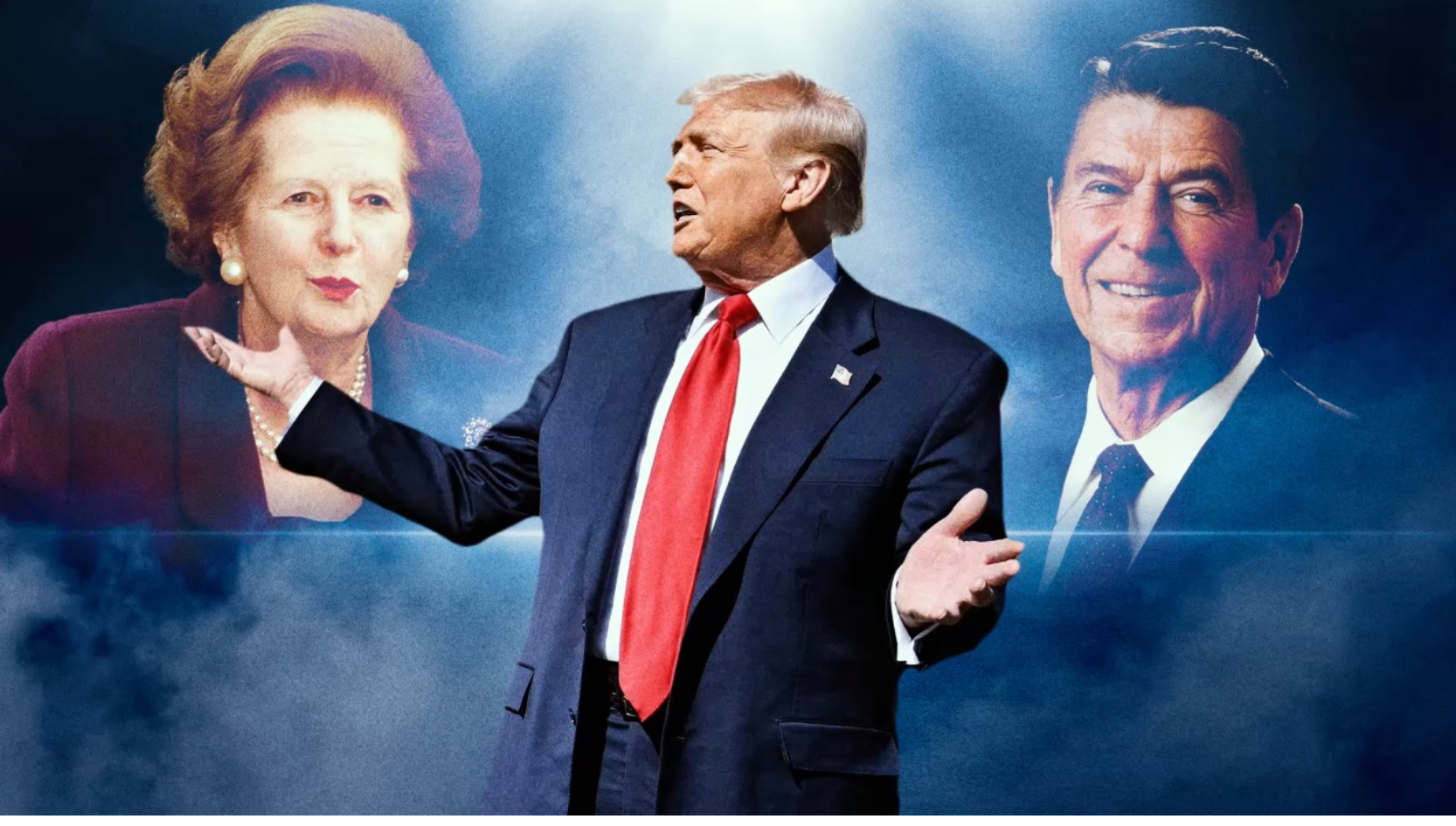
Indeed, the book had appeared as the Australia Horne described and condemned had already begun to change. An imperceptible social revolution had already been pushing against the rigid morality of the war-time generation. The comforting but constraining ties of the traditional family, religious observance and community obligation which were regarded as unreasonably oppressive by his generation and many in the one before it, were breaking down, to be replaced in the seventies by a more open, more travelled and and inquisitive society and a paternal and benevolent social welfare state which provided free healthcare and for a generation of Australians, free tertiary education – from which I, once naturalised, benefitted. Much if this change was not all that recognisable  at the time – transformations of this kind are mostly visible only with the benefit of hindsight.

The Lucky Country nevertheless continues to dominate the intellectual landscape; but 60 years after its publication, and as Bryant notes, it’s one that Australia mistakenly takes too seriously.

In a piece I wrote five years ago, How the “Lucky Country” lost its mojo. I quoted author and onetime publisher Steve Harris:

“Many who use the terms “lucky country” or “tyranny of distance” have probably not even read the books or understand their original context or meaning. If they read the books today, they might see that almost every form of our personal, community, national and global interests still involve “distance” as much as ever, and that notions of “the lucky country” ­remain ironic. ” The result, he laments, is a re-run of issues revisited but not ­resolved, opportunities not seized, and challenges not confronted … it is no surprise that the distance ­between word and deed on so many fronts, and so often, has created its own climate change, one of a collective vacuum or vacuousness. An environment where it is too easy to become disinterested, or be distracted by, or attracted to, those offering an “answer”, even if it is often more volume, ideology, self-interest, simplicity, hype and nonsense than validity, ideas, public­ interest, substance, hope and common sense. A 24/7 connected world where we drown in words and information but thirst for bona fide truth, knowledge and understanding, and more disconnectedness and disengagement”.

We republish below two retrospectives we’ll worth reading, one written from a conservative perspective, the other, by Bryant, from a relatively progressive viewpoint (there are some great pictures too). Both agree however that it is a book that can be read in a slightly or very different way by each generation, always having something new to say. As columnist Henry Ergas notes therein: “For all of its shortcuts and grievous errors, its insights still dazzle, no matter how often they are read or reread. So does its freshness, its sense of humour and perhaps most of all, its eager hopefulness and sense of aspiration”.

© Paul Hemphill 2025. All rights reserved

Sixty years on from Donald Horne’s instant classic, has The Lucky Country run out of luck?

Has a nation of gamblers with a disdain for ‘theory’ ridden its luck for too long?

“Join the Lucky Ones” ran the front-page headline of The Australian on Tuesday, December 1, 1964. Starting the next day, readers could enjoy “the first big instalment of Donald Horne’s controversial new book The Lucky Country”, which was being published that week.

Horne had a long association with Frank Packer and Australian Consolidated Press, but in a publishing coup Rupert Murdoch’s new national newspaper had secured exclusive rights for “the most candid, controversial book of the year”.

The Australian had begun life less than six months previously as a daring experiment, the first nationally circulated newspaper in a country beginning to fizz with a sense of expanding possibilities yet faced with new, sometimes daunting prospects in a dramatically changing world.

Horne’s much-anticipated “witty and irreverent study of Australians and their way of life” couldn’t have found a stage better suited to its bold approach or for the questions it was firing, at point-blank range, into the national conversation.

Australians were reintroduced to themselves in the weeks that followed as a people who “hate discussion and ‘theory’ but can step quickly out of the way if events are about to smack them in the face”.

Join the Lucky Ones: Page 11 from The Australian newspaper on December 2, 1964 featuring an extract of Donald Horne's 'The Lucky Country'

The Australian newspaper on December 2, 1964 featured an extract of ‘The Lucky Country’

They found out that “to understand Australian concepts of enjoyment one must understand that in Australia there is a battle between puritanism and a kind of paganism and that the latter is beginning to win”. Competitive sport, they were now given to understand, had all the qualities of “a ruthless, quasi-military operation”, making it “one of the disciplinary sides of Australian life”.

As for mateship, it reflected “a socially homosexual side to Australian male life” that involved “prolonged displays of toughness” in pubs, where men “stand around bars asserting their masculinity with such intensity that you half expect them to unzip their flies”.

Perhaps most arresting was the argument that went with the title’s assertion. Australian life, combining scepticism and “delight in improvisation”, had resulted in dependence on a type of gambler’s luck.

As circumstances shifted, Australians’ “saving characteristic, ‘the gambler’s coolness’ ”, had helped them to “change course quickly, even at the last moment”.

But the aim of those swerves had always been to “seek a quick easy way out”. Now that strategy needed to be reconsidered.

Abrupt changes

The Lucky Country packed many punches – and they landed at the perfect moment.

The tremendous post-war growth of an educated and engaged public had been evident since the mid-1950s as new magazines proliferated and the market for Australian books expanded more prodigiously than at any other time in the century.

Coupled with that were global shifts even more dramatic and described in The Australian’s first editorial, which spelled out both the paper’s vision and the challenges the nation faced.

Since the end of World War II all the major European empires had ceded or lost control of the lands and people to Australia’s immediate north. As British, Dutch and French imperial power in Southeast Asia collapsed, new nations – including Indonesia, Malaysia and Vietnam – were born and ancient ones, such as Burma and Thailand, reshaped. Behind them lay “the brooding power and intelligence of the new China, a land with whose people’s desires and plans our own future is deeply entwined”.

All the way with LBJ: The first Australian visit by a US President. United States President Lyndon B Johnson greets the crowd in Swanston Street, Melbourne. Picture: Ken Wheeler

The first Australian visit by a US President. United States President Lyndon B Johnson greets the crowd in Swanston Street, Melbourne. Ken Wheeler

These abrupt changes coincided with Britain trying to join the European Common Market, making it clear that wherever the United Kingdom saw its future, it was not primarily with the Commonwealth.

Losing the blanket of certainty that Australia’s close relationship with Britain had long provided was a blow. But, The Australian insisted, it could prove “a salutary shock”, as it helped us realise “that now, as never before in our history, we stand alone”.

Collection of snapshots

The Lucky Country’s impact was immediate and all-pervasive. Despite some scathing reviews (one confidently predicted the book would have been forgotten by the next football season), it flew off the shelves. Its initial print run of 18,000 sold out in nine days and the pace showed no sign of flagging.

In 1965 it sold another 40,000 copies before repeating the feat in 1966, a staying power beyond its publisher’s wildest dreams.

One of the books that truly defined the decade, it entrenched itself in the national consciousness in a way similar to Geoffrey Blainey’s The Tyranny of Distance, published two years later, another title that instantly entered the national lexicon.

Blainey’s deeply researched work, which reflected his training as a historian, was tightly argued. In contrast, even Horne admitted that his book was “a collection of snapshots of Australia”. An assemblage of ideas and insights that had been amassing for a decade, Horne thought it was part of the book’s success, handing readers a host of opinionated pages of observation and commentary.

Donald Horne at home: the author constantly fretted that his seminal book’s title had been misunderstood and misused.

Donald Horne at home

More than the loose structure, though, the book’s style was crucial to its impact. That style came from Horne’s long spell as a journalist, editor and advertising man.

Horne had a keen understanding of what readers wanted to know and talk about. He had spent years honing his approach, addressing Australia’s burgeoning magazine and newspaper readers, and recognised their hunger for a new type of journalism that The Australian sought to embody: urbane, expository, intelligent, sparky, informed.

And if it worked for magazines and papers, why not for a serious – if chronically irreverent – book about who we were and how we now lived?

The Lucky Country introduced this sharp change in tone to Australia in the 1960s, marking it as ineradicably as David Williamson’s plays would do. The content matched the tone, too, aggressively insisting that the way we lived had changed so abruptly that the nation could no longer be served by the standard-issue ideas.

The national mythology, populated by bush legend figures (shearers, bushrangers, drovers) and grizzled Anzacs, had no relevance to daily reality.

Australians were urbanites and suburbanites, and increasingly so: from 1947 to 1966 the percentage of Australian living in cities leapt from 68 per cent to 83 per cent.

Misappropriated and misunderstood

Horne’s coup was to bridge this gap between myth and reality. Certainly to his mind The Lucky Country’s success came from the fact it captured Australia as Australians experienced it, not through the fake lenses of a glorified past.

It was, Horne claimed, the first book to reflect “the suburban nature of the lives of most Australians without jeering at them”. What really cut through, however, was the book’s underlying thesis.

Despite its gadfly-like style, the book worked off a set of powerful assumptions that constituted a strong, even startling, argument.

Horne would complain ever after that its title had been misappropriated and misunderstood. But it is hard to deny that the title itself made the argument palpably clear.

Earlier exercises in self-reflection generally portrayed Australia’s journey to nationhood as a process of maturation. Nurtured under the shelter of Britain’s wing, foresight, hard work and inspired guidance had allowed the infant nation to grow into a strapping adult, capable of standing on its own feet.

Horne knocked that narrative for six. Australia’s prosperity and stability were not, he argued, the result of increasing national maturity, much less diligence and determination. They were due to sheer good fortune. To make things worse, it was a good fortune the country didn’t deserve – or know how to use.

The problem wasn’t the bulk of ordinary Australians, who weren’t a bad lot. It was “the people on top”. Our leaders and elites were second-rate provincial mediocrities who had got stuck in a groove some 50 or 60 years earlier and never budged out of it, even as one generation passed to another and still another.

Premature senility

Thanks to them, the nation was in a time warp, living out a fantasy that bore no relation to its realities – or its challenges.

The proper national metaphor, in Horne’s eyes, was not a maturational shift from boisterous youth to fully fledged adulthood; it was a leap from childhood to premature senility. Without “a radical overthrow and destruction of the prevailing attitudes of most of the nation’s masters” the decades to come would likely witness “a general demoralisation; the nation may become run down, old-fashioned, puzzled, and resentful”.

The radical overthrow and destruction of Australia’s outmoded approach, and the subsequent renewal, could, Horne speculated, possibly come through the rising generation. He was drawn to generational explanations of change, citing Walter Bagehot’s comment that “generally one generation succeeds another almost silently.

But sometimes there is an abrupt change. In that case the affairs of the country are apt to alter much, for good or for evil; sometimes it is ruined, sometimes it becomes more successful, but it hardly ever stays as it was.”

Modern classic: Cover of The Lucky Country, featuring the painting of the same title by Albert Tucker. Picture: Supplied

The Lucky Country, featuring the painting of the same title by Albert Tucker

Generational change had salvaged the national project before. The great Australian initiative, when Britain and other outside models of development had been energetically rejected, had emerged in the decades at the turn of the 20th century. This was when a nationalism of mateship represented “the general egalitarian position” that, flecked with Irish anti-English hostility, had formed an explicit contrast to an England of wealth and privilege. To those who had experienced that earlier time, “this present pause would be unbelievable”.

Robert Menzies epitomised everything that had gone wrong. He had absorbed too much of the pro-British obsequiousness of the post-World War I world, notably “the ceremonial clinging to Britain” that was “part of the delusional structure of the people who were running Australia”.

Unable to escape that delusional structure’s grip, subsequent generations had fallen into Menzies’ stride rather than broken it. And while Menzies’ leading rival, Arthur Calwell, could not be accused of being unduly pro-British, he was no better able “to recognise and dramatise the new strategic environment of Australia”.

Fresh start

As a result, “the nation that saw itself in terms of unique hope for a better way of life is becoming reactionary – or its masters are – addicted to the old, conformist” ways of doing things. The inability to cope with change meant the “momentum towards concepts of independent nationhood has slowed down, or stopped”.

There were, however, inklings of a fresh start. Although “still full of mystery”, the generation born during and immediately after the war “seems fresher”. Who knew, “it may be the generation that changes Australia”.

Expressing the egalitarian pragmatism that Horne identified as the quintessential philosophy of the national consciousness, the baby boomers would be socially progressive, tertiary-educated, technocratic pagans and managerially gifted hedonists. As they gained control, the better qualities of the Australian people, sprawling and sunburnt on the nation’s beaches, would finally be able to express themselves unencumbered by the tired leftovers of a bygone era.

Exactly how this revolution would occur was left unclear.

Bathers at Bronte Beach, Sydney, 1964, from John William's new book Line Zero: Photo-reportage 1958-2003. Picture: Supplied

Bathers at Bronte Beach, Sydney, 1964, John William’s Line Zero: Photo-reportage 1958-2003

Horne’s career had to this point been on the political right. He was still editor of Quadrant whenThe Lucky Country came out, a vigorous anti-communist who had run as a Conservative in an English election while living there in the 1950s.

In some ways, he might still have been a conservative – for example, in his identification of the ideals of egalitarianism and fraternity as the essence of a national culture that needed to be preserved.

What is certain, however, is that by the time of The Lucky Country, Horne was no conservator. His conservativism was what he now described as being of the “radical”, even “anarchist”, variety. Enormous social and political renovation was the order of the day and the book’s task, Horne said, was “to produce ideas that may prompt action at some later time” – but that would need a change agent only the future would disclose.

Whitlam the messiah

Given that sense of anticipation, it is unsurprising that Horne drank the Gough Whitlam Kool-Aid deeply and early. When Whitlam replaced Calwell as ALP leader, Horne declared that he “seemed to understand that not only the Labor Party but Australia as a whole needed a psychological reorientation, a new tone and style to make it adaptable in the modern world”.

In April 1973, less than six months after the federal election that brought “the ludicrous Menzies era” to a close, Horne predicted that Whitlam could easily become Australia’s greatest prime minister. Until then, it had begun to seem “as if our sense of nationality was going to remain rather grisly: a fairly second-rate European-type society cutting itself off from its environment and from the mainstreams of the age, trying to keep up its spirits by boasting about its material success, its mines and its quarries”.

Now he predicted a new national anthem within 12 months and a republic within 10 years. The eternal “tomorrow” of utopian political vision had suddenly become, as it were, Monday morning – and Whitlam was its messiah.

Inevitably, having soared to such heights, the deflation when the curtains fell on the new dawn was all the more traumatic. It exploded into visceral anger in the book Horne wrote immediately after the 1975 dismissal.

Whitlam, Horne said in Death of the Lucky Country, had been doubly “assassinated” – once by the governor-general, then again “by his defeat in an illegitimately called election, done in by strong and powerful enemies”.

In Gough we trust: Horne remained incandescent with rage long after the end of the Whitlam experiment. PIcture: Sunday Telegraph

Gough and singer Little Pattie. Sunday Telegraph


Donald Horne, centre, with union leader John Halfpenny, left, and authors Patrick White (right) and Frank Hardy in the background, leading the singing of Advance Australia Fair at Sydney Town Hall in 1976. They were “maintaining the rage” over the dismissal of prime minister Gough Whitlam one year earlier.. Kevin Berry

The elites had had their revenge. Public violence, Horne suggested, would be an entirely understandable response. Horne’s own response was unending, incandescent, outrage.

Mingled with bitterness, that outrage pervades everything Horne wrote after Whitlam’s ignominious end: largely second-rate works that have faded from memory. He had, it turned out, only one book in him – but it was, nonetheless, a book of immense importance, not least because of its tough-minded approach to Asia and its adamant rejection of non-alignment as a bastardised form of neutralism.

To say that is not to ignore the paradox that underpins the book. Horne’s discussion in The Lucky Country of Australia’s British inheritance was rich and nuanced. But as the years passed Britishness became a birth flaw to be denounced with ever greater ferocity.

Yet for all of Horne’s strident nationalism, The Lucky Country is redolent, if not derivative, of the Britain of the mid to late ’50s.

During his stint in Britain, Horne had fully absorbed the new concept of “the establishment”, coined by London columnist Henry Fairlie in 1955 to describe not simply the individuals who held and exerted political power but the whole network of institutions, practices and attitudes through which those in or near power maintained their ascen­dancy.

By 1960, denouncing the dead hand and crippling impact of a musty, hidebound elite had become the stock in trade of an emerging class of British com­mentators.

Horne brilliantly transposed that leitmotiv to Australia, just as he transposed those commentators’ biting tone and the advertising-influenced writing style of the new American journalism.

A front page story pointing readers to an extract from Donald Horne's 'The Lucky Country' to be published in the Australian; the next day, on December 2, 1964.

A front-page story pointing readers to an extract ‘The Lucky Country’ published in the Australian; the next day, on December 2, 1964.

But jingles are no substitute for deep analysis – and The Lucky Country’s marvellous hits come amid some disastrous misses.

No miss weighs more greatly, or has had more deleterious consequences, than Horne’s easy, airy dismissal of the extraordinary economic advance Australia had experienced since the ’40s. To describe that achievement as due to blind luck is simply absurd.

It was, in fact, achieved in the face of a world economy profoundly and increasingly adverse to primary exporters, who had to deal with plunging commodity prices, as well as the relatively slow growth, and chronic balance of payments problems, of Britain, which was still Australia’s crucial export market.

That Australia managed to not merely cope with that environment but grow rapidly was no gift of nature: it reflected the remarkable adjustment capability of its primary exporters, who, as well as turning to Asia’s emerging markets, reduced their costs more rapidly than prices were falling.

And it was the adaptiveness of its primary exporters, along with the entrepreneurship of towering giants such as Lang Hancock and Arvi Parbo, that set the foundations for the mining booms Horne derided as just due to luck.

Party’s over: Bronte Beach, Boxing Day 2024. Picture: NewsWire / Flavio Brancaleone

Party’s over: Bronte Beach, Boxing Day 2024. Picture: NewsWire / Flavio Brancaleone

The belief that Australia’s prosperity was the result of good fortune rather than entrepreneurship and aspiration became one of the left’s key illusions. It framed Whitlam’s disastrous economic policies, which assumed the Australian economy was “indestructible”; it has recurred in recent years as successive Labor governments have dismissed mining, low-cost energy and agriculture as mere residues of earlier ages. The blind luck thesis had a natural appeal to the new elites who, in the decades after Whitlam’s fall, committed themselves to the fundamental remaking of Australia.

So did the overestimate of the merits of technocratic bureaucracy and the underestimate of the merits of Australian traditions that permeates Horne’s work. In that respect, Horne was right: the baby boomer generation changed Australia. And it was armed with the Whitlam-Horne vision that its leading scions became the new establishment.

By the late ’80s this new order had almost entirely replaced Horne’s reviled old second-rate elites, taking the commanding heights of cultural institutions and regulatory bodies, as well as dominating acceptable political discourse.

Undoubtedly a classic

Under first the boomers, and then their children’s generation, the longstanding policies, prac­tices, norms and pronouns that had framed Australian life were upended, reversed, junked, repudiated.

In 1964, Horne declared that ordinary Australian people were not the problem: the elites were. Sixty years later that seems truer than at any other time in Australian history, but the elites in question are those whom Horne heralded and championed.

The great irony, though, is that the ordinary suburban Australians Horne brought to the forefront of national conversation have proven the immovable bulwark against which those new elites have collided, as they repeatedly rejected the new establishment’s wishes and projects.

Horne himself may not have appreciated this irony. But he can claim the credit for foretelling the two great protagonists in the national drama that continues to play itself out in the public square.

In the end, it is the hallmark of a classic that it is a book that can be read in a slightly or very different way by each generation, always having something new to say. Set against that test, The Lucky Country is undoubtedly a classic.

For all of its shortcuts and grievous errors, its insights still dazzle, no matter how often they are read or reread. So does its freshness, its sense of humour and perhaps most of all, its eager hopefulness and sense of aspiration.

On this joint birthday of The Lucky Country and of the newspaper that, 60 years ago, launched its career, renewing that spirit remains a task worthy of giants.

Henry Ergas is a columnist with The Australian. Alex McDermott is an independent historian.

Australia’s fortune was never dumb luck 

Nick Bryant, Sydney Morning Herald, 20 December 2024
Sixty summers ago, thousands of Australians were devouring a book published in the lead-up to Christmas which became an instant Aussie classic. Unveiled in December 1964, Donald Horne’s masterwork, The Lucky Country, soon became postwar Australia’s most intellectually influential book. When I first came to live here almost 20 years ago, I consumed it in one gulp, flying, fittingly enough, from Sydney to Perth. Nothing I had ever read so brilliantly encapsulated the vast and confounding continent down below.

Not only did his polemic meet the moment – its first print run sold out in less than a fortnight – in many ways it stood the test of time. Just consider the opening riff, which finds Horne, whisky in hand, on the terrace of a hotel in Hong Kong, considering the regional implications of China: “Australia’s problem is that it now exists in a new and dangerous power situation and its people and policies are not properly re-oriented towards the fact.” He could be describing this very instant.

If Horne had received royalties for every time his most quotable line was re-quoted – “Australia is a lucky country run mainly by second-rate people who share its luck” – his bank balance would have rivalled his analytical clout. But other Horneian bon mots were also worthy of repetition. “Many of the nation’s affairs are conducted by racketeers of the mediocre,” he wrote, in another skewering putdown. No wonder the book remains such a literary landmark.

Yet while the prose was scintillating and the thinking of the highest order, Horne had not produced a biblical text: sacred words by which we should continue to live our national intellectual life, a work that was doctrinal and everlasting.

Like his long-forgotten subtitle, the words Horne penned after his famous political sledge also need rescuing from obscurity. Not only were politicians second-rate, he said, but the country “lives on other people’s ideas”. In other words, it was second-hand. As he explained in the mid-1970s, “I had in my mind the idea of Australia as a derived society … In the lucky style, we have never ‘earned’ our democracy. We simply went along with some British habits”.

At first glance, Canberra seemed to prove this aphorism. The chambers of the old Parliament House looked like a loving recreation of the Palace of Westminster. But study more closely the history of Australian democracy, and a different story emerges. Rather than being slavishly imitative, Australia has a long history of democratic innovation. It pioneered the secret ballot, female enfranchisement, preferential voting and another essential safeguard against modern-day polarisation: compulsory voting. The history of Australia’s democracy is as much singular as derivative. It speaks of Australian exceptionalism and subverts Horne’s overarching thesis that the country was lazily derivative.

Even more problematic than Horne’s original thesis is the bastardised version of his thesis, which sees Australia as being unusually lucky because it was essentially a mine and paddock with glorious views. “I didn’t mean that it had a lot of material resources,” Horne was at pains to point out in the mid-70s. Yet, it’s precisely this interpretation that continues to exert such a vice-like grip on national thinking. What makes this false rendition so crippling and self-belittling is that it underestimates the extent to which Australia has made its own luck.

For much of the past half-century, however, that is precisely what has happened. The reform era of the Hawke, Keating and Howard years created an Australian model, blending government regulation, free enterprise and social welfare provisions such as Medicare, which underpinned decades of uninterpreted economic growth. Australia survived both the 1997 Asian financial crisis and the dot com recession at the turn of the century before the resources boom kicked in. Other countries have tried to decipher the success of the “wonder Down Under” economy, which is based as much on smart policy settings, such as the Four Pillar banking structure, as coal and iron ore.

In a complete upending of Horne’s thesis, Britain has regularly pilfered Australian ideas – from Tony Blair mimicking Hawke and Keating’s “Third Way” to the Conservatives replicating Howard’s “Pacific Solution”. The Albanese government’s social media ban for children below the age of 16 is being closely monitored by other countries. Whether it’s bans on cigarette advertising or forcing tech giants to pay news organisations for access to their journalism, Australia is looked upon globally as a laboratory of reform. The historian Geoffrey Blainey was onto something when he described Australia as “one of the most experimental, and one of the most exceptionalist, countries in the history of the modern world”.

For sure, Australia can too easily succumb to the influence of others. The Trumpification of Australian conservative politics offers a timely case in point. But this is not a country, as Horne put it 60 years ago, that simply “lives off other people’s ideas”. Far from it. Indeed, as well as the 60th anniversary of Horne’s opus, this month marks the 50th anniversary of the groundbreaking work that made solar a viable source of renewable energy. It was pioneered at the University of NSW by one of Australia’s unsung heroes, Professor Martin Green.

The Lucky Country is not the only book from that era that has shaped Australia’s modern-day sense of itself. Published two years later, Geoffrey Blainey’s The Tyranny of Distance reinforced the sense of geographic remoteness and geopolitical irrelevance. These two precepts have become increasingly obsolete, as the locus of the world has shifted from the Atlantic to the Indo-Pacific, but also proven surprisingly obdurate.

Cultural-cringe thinking, that “disease of the Australian mind” identified by A. A. Phillips in his 1950 Meanjin essay, also feels redundant. Far more significant a force is Australia’s cultural clout, as demonstrated this year by the First Nations artist Archie Moore, who became the first Australian to win the coveted Golden Lion award at the Venice Biennale.

Another overly influential work, Robin Boyd’s The Australian Ugliness, which was published in 1960, also feels outdated at a time when local architects are winning such global acclaim with their emphatically Australian aesthetic. The 2024 World Building of the Year, for example, is a public school in Sydney’s inner city designed by the local firm FJC Studio.

Too much of Australia’s postwar intellectual architecture relies on design work from a bygone age. The problem, moreover, is compounded by mutual reinforcement. Lucky Country thinking, Tyranny of Distance thinking and Cultural Cringe thinking have created a superstructure of national self-deprecation.

The good news is that applying a wrecking ball to this kind of antique thinking creates a knock-on effect. Pillars start collapsing on each other. Edifices crumble. Consider this passage penned 20 years ago by Clive James: “When my generation of expatriates went sailing to adventure, most of us believed that what we were leaving behind was a political backwater. In fact, it was one of the most highly developed liberal democracies on Earth, a fitting framework for the cultural expansion that has since made it the envy of nations many times its size.”

As James shows here, when you demolish one shibboleth – the idea that the polity is second rate – others come tumbling down.

Australia’s self-belittling streak has its uses. It requires a leap of imagination to see a Trump-like demagogue ever emerging here, given the enduring power of the tall-poppy syndrome and the scything down of puffed-up poseurs who take themselves too seriously.

The problem is that tall-poppy thinking is too often applied to the country as a whole. That, I would suggest, is a product of how Horne’s The Lucky Country still dominates the intellectual landscape. It is a brilliant book, but 60 years after its publication, it’s one that Australia mistakenly takes too seriously.

Donald Horne, centre, with union leader John Halfpenny, left, and authors Patrick White (right) and Frank Hardy in the background, leading the singing of Advance Australia Fair at Sydney Town Hall in 1976. They were “maintaining the rage” over the dismissal of prime minister Gough Whitlam one year earlier.Kevin Berry

Nick Bryant, a former BBC Washington correspondent, is the author of The Forever War: America’s Unending Conflict with Itself.

Syria. Illusion, delusion and the fall of tyrants

So we march to the rhythm of the revolution;
Oh it is our shining hour.
Move to the rhythm of the revolution,
And the revolution’s power.
Run with the rhythm of the revolution,
Storm the palace, seize the crown.
Rise to the rhythm of the revolution,
Shake the system, break it down!
Paul Hemphill, Rhythm of the Revolution

Recent events in the Middle East seem to validate Vladimir Lenin’s aphorism, “there are decades where nothing happens; and there are weeks where decades happen”.

For years” wrote Bel Tru, the Independent’s correspondent in the Levant, a worthy successor to the late Robert Fisk and now retired Patrick Cockburn.East, “the world forgot about Syria. Many believed it was lost in an unsolvable abyss following the collapse of the 2011 revolution into a bloody civil war – made increasingly complex by the intervention of a mess of internal and international actors. Most assumed that the immovable regime of Bashar al-Assad had won, and that nothing would ever change. Few could even tell you if the war was still ongoing, let alone what stage it was at”.

Until Syrian rebel fighters stormed out of their fastness in Idlib province, which had been besieged and contained and for years by government forces and Russian bombers, and in an off sense that too the world by surprise, they took control of Aleppo, Syria’s largest city?

Over the space of a week, it seemed as if the nightmares of the past had come rushing into the present as the current wars in Gaza and Lebanon were pushed to the sidelines.

Iran’s theocratic tyrant Ayatollah Khamenei declared that the rebel offensive that destroyed the 52-year-old Assad dynasty in a mere eleven days was all a foreign plot concocted by the Great Satan and the Little Satan, aided and abetted by the wannabe Sultan of Türkiye (and there might indeed be a kernel of truth in that). In his opinion, it had nothing to do with the fact that the brutal and irredeemably corrupt Syrian regime was rotten to its core and that like the Russian army in 1917, its reluctant conscript soldiers, neglected, poorly paid and hungry, refused to fight for it whilst its commanders ran for their lives. Built to fight Israel and then to subdue Syrians, it had over time ate itself in corruption, neglect and ineptitude. Western radicals of the regressive left will doubtless believe the good ayatollah because that is what they are conditioned to believe rather than learning anything about Syria or the region generally.

if Khamenei could only have removed the mote from his eye, he’d have seen that the fall of Bashar al Assad was the indirect result of the most disastrous series of foreign policy miscalculations since the theocratic regime took power in Tehran in 1979. In the wake of Hamas’s murderous attack on Israel on October 7, 2023, Iran made the fatal error of ordering its proxy Hezbollah in Lebanon to begin a low-level war against northern Israel, lobbing missiles and drones into it almost daily. What Tehran did not calculate was that once Israel had largely destroyed Hamas in Gaza it would turn its guns on to Hezbollah with stunning force. The indirect effect of Iran’s miscalculation was that neither Hezbollah nor Iran was in a position to help Assad repel the rebels when they launched their assault. Iran has now lost its regional ally Syria, in addition to Hezbollah and Hamas, leaving it unusually isolated in the region when its ageing clerical leadership is increasingly unpopular with its own people.

Over the coming weeks and months, commentators, pundits and so-called experts will ruminate on the causes of the fall of one of the Middle East’s most enduring and also, even by the region’s low standards, brutal regime, and on what may or may not happen now.

I republish below two excellent opinion pieces offering some answers to each question respectively. Each in their own way follow the advice of most scholars of the Middle East: expect the unexpected. And whilst most observers admit to having been taken by surprise when Hayat al Tahrir al Sham fell upon Aleppo, including intelligence organizations that ought to have known better, none were perhaps more surprised than the insurgents themselves when only a fortnight ago, they were given the nod by their Turkish patron to endeavour to expand the borders of their statelet and suddenly found themselves on an almost empty highway to Damascus.

Analyst and commentator David McCullen (who has featured prominently on this blog in the past) examines warning signs that may have indicated that all was not well in the Assad kingdom, drawing on on historical parallels to explain why the Bashar al Assad and his longtime all-pervasive and ever-watching security apparatus failed to see the gathering storm unlit it had engulfed them.

He references particularly the political scientist Timur Kuran, the originator of the concept of “preference cascade”: “… under repressive regimes (or ostensibly democratic ones that censor dissent) the gap between public pronouncements and private opinions increases over time, until many individuals dissent from the approved narrative and lose faith in institutions that promote it but remain reluctant to reveal their real views. This “preference falsification” creates a deceptive impression of consensus. It can make regimes believe they have more support than they really do, while convincing dissidents they are all alone so there is no point expressing a contrary opinion. But when an unexpected shock reduces the regime’s power to suppress dissent, people suddenly feel empowered to express their real opinions. They realise these opinions are widely shared and the false consensus evaporates. This can trigger a “preference cascade”, where individuals or institutions suddenly change sides and support for the government collapses overnight”.

Kilcullen concludes: “Given the speed and totality of Assad’s collapse, some observers seem to be assuming that HTS will now, by default, become the dominant player in Syria. On its face, this may seem a reasonable assumption, given what happened in similar situations – Havana 1959, Saigon 1975, Kabul 2021 and so on”. But he cautions that “it would be premature in Syria’s case since the war is very much ongoing. As the northern hemisphere winter closes in and Western allies prepare for a change of administration in Washington, Syria – along with Gaza, Lebanon, the Red Sea, Ukraine, Taiwan and the Korean peninsula – will remain a major flashpoint into the new year”.

Indeed, the immediate future is far from clear. It is axiomatic to say that most commentators who say they understand what is going to happen in the Levant often don’t. To quote B Dylan, something’s happening, and we don’t yet know what it is …

In the second article republished below, Israeli commentator Zvi Bar’el examines possibilities, including the Herculean task of putting the fractured state of Syria back together again. As Australian diplomat David Livingstone wrote in the Sydney Morning Herald on 3 December, “Syria and its conflict is a mosaic of combatants rather than a dichotomy of good versus evil. Loyalties usually reflect a person’s religion or ethnicity. The Sunnis hate the nominally Shiite regime of Assad; Assad himself is the inheritor of atrocities by his father’s regime against the Sunni, including the destruction of Hama and slaughter of many of its inhabitants in 1982; the Kurds want an autonomous homeland; and the Turkmen are no friends to Assad or extremist Sunnis”.

So, where to from here? Syria now pauses at a crossroads, where both hope for a better future, and scepticism that it will be achieved, are equally warranted. Whether or not the new Syrian regime can succeed is an open question.

There is much to be done, with little time and meagre resources to do it. Forces, factions and faiths will now have to be reconciled. The divided country is shattered physically, economically and psychologically. Some 410,000 Syrians are estimated to have been killed in war-related violence up to the end of last year making it the bloodiest conflict of the 21st century to date. The dead will have to counted and accounted for, including tens and tens of thousands lost in the regime’s jails and prisons, and the survivors of rehabilitated. Scores may have to be settled either in blood or in spirit. About half of the country’s pre-war population has either fled abroad or internally displaced. The new government will need to ensure civilians’ safety, enable the return of millions of refugees and internally displaced, and rehabilitate the infrastructure and civil services. But the country is broke, while one economist estimates that the physical damage across the country amounts to $150 billion.

What form will a government take? Does the new administration intend to hold elections? Will HTS leader Ahmed al Shara and his comrades set up a government that will be agreed on by all the communities, factions, militia, and foreign forces? Will the new constitution be Islamic? To this his new prime minister replies, “God willing, but clearly all these details will be discussed in the constitutional process.” When Italian journalist Andrea Nicastro asks him “do I understand correctly when I say you’re ready to make peace with Israel and that you’re hostile to Iran, Hezbollah and Russia?” Al-Bashir thanks him and leaves without answering.

Meanwhile, Arab states, who once spurned Assad’s regime and were tentatively cozying up to him only recently, having invited Syria back into the Arab League. European states are contemplating whether or not to remove HTS from their lists of proscribed terrorist organizations. Assad’s erstwhile backers, Iran and Russia, which in fact controlled large parts of Syria, left Dodge in haste and are now replaced by two new-old occupiers, Israel, and Turkey. One took over the “Syrian Hermon” and a little further – to the condemnation of Arab regimes and the United Nations, the other is completing the occupation of the Kurdish regions in northern Syria.

No love is lost between the two of them, but it seems fate insists on making them meet in war fronts. As Bar’el adds, “… once as partners when they helped Azerbaijan in its war against Armenia and once as enemies in the Gaza front or now on Syrian soil. There’s no knowing, maybe al Shara will be the best man who will get to reconcile between them. Miracles happen, even if under the nose of the best intelligence services in the world, who didn’t know and didn’t evaluate the complete collapse of the Assad regime”. “The warm Arab and international envelope tightening around Damascus”, he writes, “is ready to give him credit although it doesn’t know yet where he’s heading, assuming any leader will be better than Assad. That, by the way, is what the Syrians also believed Assad senior would be when he toppled the rule of General Salah Jedid, only to get a new mass murderer.

Right now, as the old song goes, “the future’s not ours to see …” But we might take hope from the last line of the late Robert Fisk‘s last book, The Night of Power, published posthumously earlier this year: “… all wars come to an end and that’s where history restarts”. 

Author’s note

There have been many stunning pictures published to date of the Syrian revolution, but none that I’ve found as personally poignant as this one. It depicts jubilant Syrians lining the Roman archway that stands at the eastern end of Damascus’ historic Suq al Hamadiyah. When we were last in Syria, in the Spring of 2009, I photographed the arch from inside the darkened Suq (during one of the city’s frequent power cuts) , revealing the impressive remnants of the Roman Temple of Jupiter and the magnificent Omayyad Mosque, the fourth holiest place in Islam (after Mecca, Medina and Al Quds/Jerusalem).

For more on the Middle East in in That Howling Infinite, see A Middle East Miscellany:  

Syrians atop the Roman archway at the end of Damascus’ historic Suq al Hamadiyah

The Suq Al Hamadiyah, Temple of Jupiter and the Umayyad Mosque Mosque. P Hemphill 2009

The Suq Al Hamadiyah, Temple of Jupiter and the Umayyad Mosque Mosque. P Hemphill 2009

Aleppo shock to Hama huge leap forward: triggers in Syria’s 11-day blitz that unravelled Assad

David Kilcullen, The Australian, 13th December 2024

The speed of the regime’s collapse was startling, but it should not have been. Beyond the general dynamics of government collapse, something else was happening.

The regime’s collapse accelerated dramatically after the fall of the central Syrian city of Hama on the evening of Thursday, December 5, Syria time. Picture: Emin Sansar/Anadolu via Getty Images

The regime’s collapse accelerated dramatically after the fall of the central Syrian city of Hama on the evening of Thursday, December 5, Syria time. Picture: Emin Sansar/Anadolu via Getty Images

This was not strictly true: HTS had been biding its time in its stronghold of Idlib province, on Syria’s northwestern border with Turkey, for five years since a ceasefire brokered by Turkish and Russian negotiators in 2020, avoiding direct confrontation with the regime and building its own structure outside state control.

Its parallel government included several ministries and a civil administration, the Syrian Salvation Government, governing a population of four million, the size of Croatia or Panama. Though dominated by HTS, the SSG has been somewhat politically inclusive, and several non-HTS leaders have had key roles in its administration.

It sought to include the independent governance councils that had arisen organically during the early days of the anti-Assad rebellion, and it established local municipal managers to provide essential services across its territory.

HTS’s small combat groups operated like a fast-moving light cavalry force. Picture: Omar Haj Kadour / AFP

HTS’s small combat groups operated like a fast-moving light cavalry force. Picture: Omar Haj Kadour / AFP

American analysts in 2020 assessed the SSG as technocratic, “post-jihadi”, focused on internal stability and non-ideological governance, seeking acceptance from Turkey and the US, and unlikely to become a launch pad for external attacks.

Aaron Zelin – the Western expert most familiar with HTS and the author of an important book on the organisation, The Age of Political Jihadism – has observed that despite still holding extremist beliefs, HTS acts more like a state than a jihadist group.

While the SSG was focusing on social services and economic activity, HTS commanders were investing in advanced military capabilities. Building on experience from before the 2020 ceasefire, HTS organised its forces into small combat groups of 20 to 40 fighters that could mass quickly to swarm a target using several teams, or disperse to avoid enemy airstrikes or artillery.

They were highly mobile, operating like a fast-moving light cavalry force, mounted in a mix of hard and soft-skinned vehicles that included captured armoured vehicles and armed pick-up trucks (known as technicals).

Reconnaissance teams, scouts and snipers moved in civilian cars or on motorcycles. HTS combat groups carried heavy and light weapons including rocket launchers, captured artillery pieces, mortars, recoilless rifles, anti-tank missiles and Soviet-bloc small arms seized from the government or rival resistance groups including Islamic State.

Rebel fighters stand next to the burning gravesite of Syria's late president Hafez al-Assad at his mausoleum in the family's ancestral village of Qardaha. Picture: Aaref Watad / AFP

Rebel fighters stand next to the burning gravesite of Syria’s late president Hafez al-Assad at his mausoleum in the family’s ancestral village of Qardaha. Picture: Aaref Watad / AFP

HTS also used the ceasefire to professionalise itself, studying the wars in Ukraine, Gaza and Lebanon. It established a military academy to educate officers in “military art and science”, and created civil affairs units, humanitarian agencies and a specialised organisation to convince government supporters to defect.

It used drones for reconnaissance, for leaflet drops on regime-controlled areas and as one-way attack munitions to strike targets with explosive warheads. It manufactured weapons and drones, and modified technicals with additional armour. HTS leaders built intelligence networks and command-and-control systems while allegedly also forging relationships with regional intelligence services and special operations forces.

Thus, the strength of HTS was not unexpected in itself. On the other hand, the rapidity of the regime’s collapse – which accelerated dramatically after the fall of the central Syrian city of Hama on the evening of Thursday, December 5, Syria time – was startling. It probably should not have been. Governments, unlike resistance movements, are tightly coupled complex systems that rely on numerous institutions and organisations, all of which must work together for the state to function.

As Joseph Tainter showed in The Collapse of Complex Societies, once co-ordination begins to break down, these interdependent systems unravel, the collapse of each brings down the next, and the entire structure falls apart. For this reason, in a process familiar to practitioners of irregular warfare, resistance groups (which tend to be loosely structured and thus more resilient to chaos) degrade slowly under pressure – and rebound once it is relieved – whereas governments collapse quickly and irrevocably once initial cohesion is lost.

As a team led by Gordon McCormick showed in a seminal 2006 study, governments that are losing to insurgencies reach a tipping point, after which they begin to decay at an accelerating rate. The conflict then seems to speed up and the end “is typically decisive, sudden and often violent”.

This pattern was very noticeable during the fall of the Afghan republic in 2021, for example, which also occurred in an 11-day period. The final Taliban offensive captured every province but one, and took the capital, Kabul, in a series of victories between August 4 and 15, 2021. Many garrisons surrendered, fled without fighting or changed sides.

Initial rebel successes made the regime look weak, allies failed to offer support, the security forces defected and other rebel groups suddenly rose up across the country. Picture: Aaref Watad / AFP

Initial rebel successes made the regime look weak, allies failed to offer support, the security forces defected and other rebel groups suddenly rose up across the country. Picture: Aaref Watad / AFP

To be sure, the Taliban’s final campaign was built on years of coalition-building and insurgent warfare. Similar to HTS, the Taliban relied on patient construction of parallel networks largely illegible to an Afghan state increasingly alienated from, and seen as illegitimate by, its own people.

It also was enabled by a stunningly shortsighted political deal with the US in 2020 and an incompetent US-led withdrawal in 2021. Even so, the collapse of the Kabul government was faster than expected, with president Ashraf Ghani fleeing by helicopter in a manner remarkably similar to Bashar al-Assad’s exit last weekend.

The fall of South Vietnam in 1975 was likewise extraordinarily rapid, occurring in just nine days after the decisive battle of Xuan Loc, with South Vietnam’s last president, Nguyen Van Thieu, fleeing for Taiwan on a military transport plane.

Similarly, Fulgencio Batista’s government in Cuba fell in only five days, between December 28, 1958 – when a rebel column under Che Guevara captured the town of Santa Clara – and the early hours of January 1, 1959, when Batista fled by aircraft to the Dominican Republic. He had announced his resignation to shocked supporters a few hours earlier at a New Year’s Eve party in Havana, starting a scramble for the airport.


In Syria’s case, beyond these general dynamics of government collapse, something else was happening: a military version of what political scientists call a “preference cascade”.

As Timur Kuran, originator of the concept, points out, under repressive regimes (or ostensibly democratic ones that censor dissent) the gap between public pronouncements and private opinions increases over time, until many individuals dissent from the approved narrative and lose faith in institutions that promote it but remain reluctant to reveal their real views. This “preference falsification” creates a deceptive impression of consensus. It can make regimes believe they have more support than they really do, while convincing dissidents they are all alone so there is no point expressing a contrary opinion.

But when an unexpected shock reduces the regime’s power to suppress dissent, people suddenly feel empowered to express their real opinions. They realise these opinions are widely shared and the false consensus evaporates. This can trigger a “preference cascade”, where individuals or institutions suddenly change sides and support for the government collapses overnight.

In particular, the moment when security forces, particularly police, refuse to fire on protesters is often decisive, as seen in the fall of the Suharto government in 1998, the overthrow of Hosni Mubarak in 2011 or the collapse of the East German regime in 1989.

Kuran’s initial work centred on the East European revolutions of 1989, which were unexpected at the time but seemed inevitable in retrospect, something Kuran later came to see as inherent in revolutionary preference cascades.

The most extreme case was the fall of Nicolae Ceausescu in Romania. During a mass rally on December 21, 1989 the dictator suddenly realised, his face on camera registering utter shock, that what he had initially perceived as shouts of support were actually calls for his downfall. When his security ser­vices refused to fire on the protesters, Ceausescu was forced to flee by helicopter. Four days later, he and his wife Elena were dead, executed after a brief military trial.

A woman poses for a photograph with a rebel fighter's gun in Umayyad Square in Damascus. Syria’s population finally felt free to dissent from the dominant narrative. Picture: Chris McGrath/Getty Images

A woman poses for a photograph with a rebel fighter’s gun in Umayyad Square in Damascus. Syria’s population finally felt free to dissent from the dominant narrative. Picture: Chris McGrath/Getty Images

Syria this week was another example of a preference cascade. Initial rebel successes made the regime look weak, allies failed to offer support, the security forces defected and other rebel groups suddenly rose up across the country. Syria’s population – previously reluctant to express anti-regime sentiment for fear of repression or social ostracism – finally felt free to dissent from the dominant narrative. Assad lost control, was forced to flee, and his government collapsed. It is worth briefly recounting the sequence of events.

On November 27, the HTS offensive began with a sudden attack on Aleppo City. The outskirts of Aleppo are only 25km from the HTS stronghold in Idlib, so although the outbreak of violence was a surprise, there was little initial panic. The regime responded with airstrikes and artillery, with Russian warplanes in support.

The first major shock was the fall of Aleppo on November 30, after three days of heavy fighting. As Syria’s second largest city, scene of a bloody urban battle in 2012-16, Aleppo’s sudden collapse was a huge blow to the government. The HTS capture of Aleppo airport, east of the city, denied the regime a key airbase from which to strike the rebels, and cut the highway to northeast Syria. At this point the regime seemed capable of containing HTS, though clearly under pressure, and there was still relatively little panic.

But then on December 4, HTS attacked the city of Hama, which fell on the evening of December 5. This was a huge leap forward – Hama is 140km south of Aleppo down Syria’s main north-south M5 highway, meaning the rebel forces had covered a third of the distance to Damascus in a week. The fall of Hama was another political and psychological blow to Assad’s regime: Hama had never been under rebel control at any time since 2011.

Syrian rebel fighters at the town of Homs, 40km south of Hama, a critically important junction controlling the M5 and the east-west M1 highway that links Damascus and central Syria to the coast, and dominating Syria’s heavily populated central breadbasket. Picture: Aaref Watad / AFP

Syrian rebel fighters at the town of Homs, 40km south of Hama, a critically important junction controlling the M5 and the east-west M1 highway that links Damascus and central Syria to the coast, and dominating Syria’s heavily populated central breadbasket. Picture: Aaref Watad / AFP

The collapse at Hama – and the perception of regime weakness this created – triggered a preference cascade. Immediately, commanders began negotiating with or surrendering to the rebels or evacuating their positions. Also, after Hama’s fall, Iranian forces negotiated safe passage and began withdrawing from Syria, denying the government one of its key allies, further weakening Assad’s credibility, and encouraging yet more supporters to defect.

The regime’s other main ally, Russia, had already retreated to its bases at Khmeimim and Tartous, on Syria’s Mediterranean coast, after losing large amounts of military equipment and a still-unknown number of casualties. The same day, Hezbollah declined to offer material assistance to the Syrian government, given that it was still under Israeli pressure and had taken significant damage in 66 days of conflict.

The town of Homs lay 40km south of Hama – not much closer to Damascus but a critically important junction controlling the M5 and the east-west M1 highway that links Damascus and central Syria to the coast, and dominating Syria’s heavily populated central breadbasket. By early Friday, December 6, HTS combat groups were massing to assault Homs, but the city’s defences collapsed and it fell without a significant fight. By this point, security forces were dispersing, some retreating to Damascus but many fleeing to coastal areas.

The fall of Hama and Homs in quick succession encouraged other rebel groups to pile on, with several now mounting their own offensives against the regime. Uprisings broke out in the southern cities of Daraa and As-Suwayda on Friday and Saturday, December 6 and 7. These were less of a shock than the loss of Hama – Daraa was, after all, the cradle of the revolution in 2011 – but given everything else that was happening, the government simply lacked the forces to suppress them.

Simultaneously, US-backed forces in the far south advanced north from their base at al-Tanf, near the Jordanian border, while US-allied Kurdish troops of the Syrian Democratic Forces attacked in the east, crossing the Euphrates and seizing regime-controlled territory near Deir Ezzour. American aircraft flew airstrikes to support the SDF, which also seized the border post at Bou Kamal, blocking access to Iraqi militias that had been crossing into Syria to support the regime.

By Sunday, the regime had collapsed and the rebels occupied Damascus without a fight. Picture: Louai Beshara / AFP

By this point – last Saturday evening, December 7, Syria time – the government was on its last legs. That night an uprising broke out in Damascus, launched by civilian resistance groups and disaffected military units keen to distance themselves from the regime as the rebels closed in. Government troops began abandoning their posts, changing into civilian clothes, ditching their equipment and disappearing into the night. Large numbers of armoured vehicles, including T-72 tanks, were abandoned in the streets of the capital. Assad had planned to address the nation that evening but did not appear.

Later that night, apparently without asking Assad, the high command of the Syrian armed forces issued an order to all remaining troops to lay down their weapons and disperse. Assad fled about 2am on Sunday, flying out in a Russian transport aircraft. Assad’s prime minister, Mohammed al-Jalali, announced that he was willing to act as caretaker during transition to a provisional government, showing that Syria’s civil government, like the regime’s military forces, had collapsed. Despite initial reports that Assad’s aircraft had been denied entry into Lebanese airspace then shot down over Homs, Russian media reported later on Sunday that he had arrived in Moscow.

By Sunday, the regime had completely collapsed and the rebels, led by HTS commander Ahmed al-Sharaa, formerly known as Abu Mohammed al-Jolani, occupied Damascus without a fight.

The same day, US aircraft mounted dozens of airstrikes across the country, targeting Islamic State or regime forces, while Israeli troops crossed the Golan Heights buffer zone and began advancing towards Damascus. By Monday, despite initially claiming their incursion was limited and temporary, Israeli forces were 25km from Damascus, Israeli politicians had announced the permanent annexation of the Golan, and Israeli aircraft were striking Syrian military bases and sinking Syrian ships at the Latakia naval base.

Israel has denied media reports that its troops have taken control of Syrian territory.
In addition to the Israeli incursion through the Golan, Turkish-backed troops of the Syrian National Army are attacking the SDF across a strip of northern Syria, apparently attempting to create their own buffer zone separating the SDF – which Ankara sees as allied to the Kurdistan Workers Party – from Turkish territory.

The SDF has seized a chunk of eastern Syria, other US-allied rebel groups hold key parts of the south, and Islamic State still has numerous supporters and active cells in the country. Russia still controls its two Syrian bases, while Syria’s ethnic and religious minorities including Christians and Alawites are deeply anxious about the future, despite promises of tolerance from HTS.

Given the speed and totality of Assad’s collapse, some observers seem to be assuming that HTS will now, by default, become the dominant player in Syria. On its face, this may seem a reasonable assumption, given what happened in similar situations – Havana 1959, Saigon 1975, Kabul 2021 and so on.

But it would be premature in Syria’s case since the war is very much ongoing. As the northern hemisphere winter closes in and Western allies prepare for a change of administration in Washington, Syria – along with Gaza, Lebanon, the Red Sea, Ukraine, Taiwan and the Korean peninsula – will remain a major flashpoint into the new year.

David Kilcullen served in the Australian Army from 1985 to 2007 and was a senior counter-insurgency adviser to General David Petraeus in 2007 and 2008, when he helped design and monitor the Iraq War troop surge.

The Most Courted Leader in the Middle East Still Has No State

Arab and European heads of state are lining up to meet Ahmed A-Shara, the leader of the Syrian rebel organizations that ousted Assad, who has returned to his original name and is no longer calling himself al-Golani

Zvi Bar’el, Haaretz ,Dec 13, 2024
After taking control, he hastened to renounce his underground name and resumed his local name, Ahmed A-Shara. He ousted Bashar Assad’s horror regime and started to sprout the first buds of “new Syria,” whose outcome is still hard to fathom. The race for shaking his hand is in full swing.
Qatar is an old friend of A-Shara (one has to practice the name) and during the years of his organization’s existence it supported the militias that made up Hayat Tahrir al-Sham, which he set up on the ruins of Jabhat a-Nusra and it’s also expected to help him rehabilitate his country.

Qatar isn’t alone. In the race to the presidential palace in Damascus the Turkish Foreign Minister Hakan Fidan came first to shake A-Shara’s hand. The foreign ministers of other Arab states, such as Egypt, Saudi Arabia, and the UAE are preparing to land in Damascus in the coming days to personally congratulate the leader of the sister state.

At the same time Biden’s administration is examining the possibility of removing A-Shara and his group from the terrorists’ list while European leaders, headed by Italian Prime Minister Giorgia Meloni, who only two weeks ago spoke of the possibility to normalize their relations with the Assad regime, are already trying to coordinate meetings with the new regime’s leadership.

The irony doesn’t stop there. Iran and Russia, which in fact controlled large parts of Syria, are now replaced by two new-old occupiers, Israel, and Turkey. One took over the “Syrian Hermon “and a little further, the other is completing the occupation of the Kurdish regions in North Syria. No love is lost between the two of them, but it seems fate insists on making them meet in war fronts.

Once as partners when they helped Azerbaijan in its war against Armenia and once as enemies in the Gaza front or now on Syrian soil. There’s no knowing, maybe A-Shara will be the best man who will get to reconcile between them. Miracles happen, even if under the nose of the best intelligence services in the world, who didn’t know and didn’t evaluate the complete collapse of the Assad regime.

The warm Arab and international envelope tightening around Damascus is ready to give him credit although it doesn’t know yet where he’s heading, assuming any leader will be better than Assad. That, by the way, is what the Syrians also believed Assad senior would be when he toppled the rule of General Salah Jedid, only to get a new mass murderer.

The first declarations and interviews of A-Shara and senior officials of his administration sound good and even encouraging. The temporary prime minister, Mohammed al-Bashir, said in an interview to the Italian newspaper Corriere della Sera on Wednesday that at this stage the new administration has three top goals – to ensure the civilians’ safety, to return the refugees and to rehabilitate the infrastructure and civil services.
How to achieve those goals? “It will take time but we’ll get there,” says the former prime minister of the Idlib region’s rescue government under A-Shara’s command and was blasted publicly for the brutal way he ran the rebel province.
Al-Bashir also says the temporary government will serve until the beginning of March, but does not clarify what will happen after that date. Will he manage to draft a new constitution and election law by then? Does the new administration even intend to hold elections, or does he hope within that time to set up a government that will be agreed on by all the communities, factions, militia, and foreign forces?
Will the new constitution be Islamic? To this he replies, “God willing, but clearly all these details will be discussed in the constitutional process.”
Journalist Andrea Nicastro asks him “do I understand correctly when I say you’re ready to make peace with Israel and that you’re hostile to Iran, Hezbollah and Russia?” Al-Bashir thanks him and leaves without answering.
There can be no complaints about a prime minister or organization head who only two weeks ago merely prepared to expand the borders of his control region and suddenly found himself on an empty highway to Damascus, for having no political, economic, or strategic plan and for having to wriggle around ideological and religious issues. A-Shara has more urgent business, for example, an empty state coffer.
If he wants to ensure civilian safety and public services he’ll have to pay wages to thousands of policemen, teachers, judges, garbage contractors, rebuild the crushed electric system, mend roads and traffic lights when not a single dollar, according to al-Bashir, remain in the till.
Head of the Syrian trade bureau said this week Syria will move from a state-controlled economy to a free market economy. This is encouraging but to apply it they will need investors and ensure their investment.
Government ministers, most of them served in the “rescue government” in Idlib, estimate they’d be able to raise funds from Arab countries and mainly the UAE and Turkey, persuade Syrian businesspeople in exile to invest in the homeland and also return to Syria funds that were smuggled out by the Assad regime. But Arab and international aid usually comes with a list of rigid conditions, like demands for a profound economic reform, preserving human rights and minority rights, civilian safety, and no less important a political agenda that is compatible with the donor states’ aspirations.
Syria is not an only child. Soon the donor states will be asked to help to rebuild Lebanon and perhaps later Gaza as well. A conservative estimate sets Syria’s national debt at some $31 billion, $5 billion of them to the IMF and $26 billion to Russia and to Iran.
More realistic estimates cite a debt of more than $30 billion to Iran alone, which invested some $50 billion in the last 14 years.
The oil wells that remained in the Assad regime’s control produced only some 9,000 oil barrels a day, now the new administration can produce oil from the oil fields controlled by the Kurds in the northeast of the state after they retreated from Dir A-Zur, which was reoccupied by the pro-Turkish militias.
But perhaps this will no longer be enough to reinstate the agriculture and food production industry, or to generate millions of workplaces that were lost during the war.
A-Shara portrays himself as “everyone'” leader and his prime minister aspires to set up an administration that represents all the ethnic communities and minorities. But will he gain the cooperation of the Alawite minority, which makes up 10 percent of the population? Will the Kurds in the north give up their aspirations for autonomy?
A large concentration of Alawites resides in the Latakia province on the Mediterranean coast, its people are well armed and afraid that armed militias or the regime itself would want to take revenge on them. Will they agree to disarm?
The Kurds are being pushed out of some of their provinces and only this week retreated from Manjib city west of the Euphrates River, after the Syrian National Army, the large pro-Turkish militia, conquered the city.
This retreat is the outcome of American mediation leaning on a Turkish commitment not to harm Kurdish civilians who leave the city. But Kurds continue to control the regions east of Euphrates, and Turkey wants to keep them away from those too. AT the same time their conduct has made it clear it is ready to cooperate with the A-Shara regime and be an integral part of Syria.

But it’s not clear yet under what terms. Will they want to preserve their provinces’ autonomy, and will the Syrian regime agree, when Turkey operates its military and economic leverages. Will the Kurds even have a bargaining chip left when Trump enters the White House? Trump tried already in 2019 to withdraw U.S. forces from Syria and was blocked by internal and external pressure. Now he may implement his wish with his ally Recep Erdogan.

Syrian commentators have begun to draw a map in which Syria could be a federation divided into autonomous cantons, Kurdish in the north, Sunni-Arab in the center, Alawite in the west and perhaps Druze in the south, a sort of expansion of the Iraqi model where an autonomous Kurdish region exists. The Shi’ites in the south are demanding their own province.
It is doubtful whether this model has a chance of being implemented in Syria but bringing it up in itself shows the explosives in store for the new Syrian regime. This is only a partial list because beyond the various ethnic communities and minorities, A-Shara will have to deal with a population that is mostly Sunni but secular. Will this population toe the line with a radical religious agenda, on which A-Shara was raised and has preached?
So far Syria has conveniently been attached to the “Shi’ite axis though it was an organ of Iran’s Islamic revolution.
But the Alawite faction doesn’t count in Iran as an authentic Shi’ite faction. Hafez Assad himself had to ask his friend, the influential religious leader Moussa al-Sader, to issue a ruling that the Alawite religion is part of the formal “Shi’a” and therefore part of the Islam religion.
This was after a long violent clash he conducted against Sunni and Shi’ite religious leaders who ruled the Alawite faction wasn’t Muslim at all and therefore Assad senior cannot be president, because the constitution stipulated the state’s president had to be Muslim.
A-Shara won’t have that dilemma, but as one who hasn’t concealed his aspiration to set up a religious state, he will have to decide how to settle between the religious vision and the character of the population and the state that hasn’t yet been established