Why Osama bin Laden lost the battle but won the war

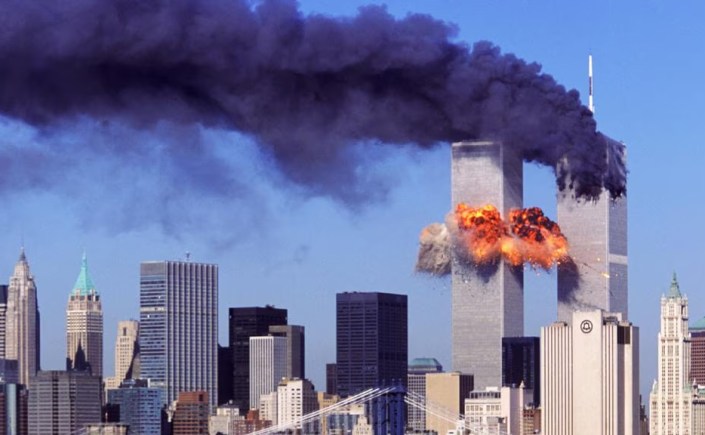
In a recent opinion piece in The Australian conservative British historian and US resident Niall Ferguson reflects on the legacy of 9/11 and concludes – after two decades of analysis – that the attacks on 11 September 2001 signaled not merely terrorism but a broader clash of civilisations that the West is now losing. Recalling his own reactions on that momentous day, Ferguson admits that he initially sought secular explanations for the attacks: economic downturns, American imperial overreach, and global political fragmentation. Yet re-examining Osama bin Laden’s statements, he recognises that the al-Qa’ida leader framed his actions as a religious war against “crusaders,” rooted in Islamic grievance over Palestine and Western dominance. Bin Laden’s explicit appeal to faith, not politics, aligns with Samuel Huntington’s much-criticised thesis that post–Cold War conflict would be cultural, with Islam and the West as enduring antagonists.

Although the United States and its allies largely defeated jihadist terrorism within their own borders—terrorism in Iraq has plummeted and attacks in the U.S. remain rare—Ferguson argues that Islamism has advanced through dawa (non-violent proselytising) and political penetration. Organisations such as the Council on American-Islamic Relations, linked to the Muslim Brotherhood, exploit Western legal and educational institutions while Gulf states like Qatar fund universities and shape intellectual climates. Meanwhile, demographic trends favour Islam: global Muslim populations are rising rapidly and will nearly equal Christians by mid-century, while Western societies grow more secular and internally divided.

Geopolitically, the West faces a resurgent “axis of upheaval”—China, Russia, Iran, and North Korea—while allies waver. The international solidarity that followed 9/11 contrasts sharply with the fragmented reaction to Hamas’s October 7, 2023 attacks on Israel, where UN resolutions condemned Israeli actions more than Islamist violence and several states recognised Palestinian statehood. Public opinion, especially among younger generations, has shifted sharply against Israel and, in some cases, towards open antisemitism; bin Laden’s anti-Western rhetoric even circulates approvingly on platforms like TikTok.

Ferguson concedes that bin Laden lost the “war on terror,” but claims he is winning the longer contest Huntington foresaw. Islamism thrives without spectacular violence, demographic momentum favours Muslim societies, and Western civilisation—once confident in its Judeo-Christian identity—is fractured and uncertain. Two decades after 9/11, Ferguson concludes that the clash of civilisations is real, and the West is no longer clearly ahead.

Also, in In That Howling Infinite, see A Short History of the Rise and Fall of the West , and A Middle East Miscellany

Osama bin Laden’s Posthumous Victory  

Niall Ferguson, The Australian, 19 September 2025
Last week’s azure September skies over New York brought back memories. Twenty-four years ago I was due to give a lecture at New York University. The date of the lecture was September 12. I never flew.

On the day of the attacks, I sat in my study at Jesus College, Oxford, staring incredulously at the pixelated live video of the World Trade Centre twin towers first blazing, then collapsing. Not long after, in April 2002, I accepted a chair at the Stern School of Business at New York University and resigned my Oxford professorship.

My motivation was partly the hereditary Scottish tendency to march towards the sound of gunfire. As a teenager in 1914, my grandfather John Ferguson had volunteered to fight the Germans. This seemed easier.

Regardless of the 9/11 attackers’ motives, I had a strong objection to terrorism as a political method – a result of growing up in Glasgow in the 1970s, when “the Troubles” in nearby Northern Ireland did more than merely resonate.

My first impulse after the attacks, in a piece for The New York Times, was to liken the sympathetic British reaction to 9/11 to the American reaction to the Blitz of 1940-41.

A man stands in the rubble, and calls out asking if anyone needs help, after the collapse of the first World Trade Center Tower. Picture: Doug Kanter / AFP

In the rubble, after the collapse of the first World Trade Center Tower. Doug Kanter / AFP

But I also warned Americans to “steel themselves for a long, inglorious kind of war that governments in Europe already know only too well”. In wars against terrorists, I wrote, “there are no quick victories. The foe does not line up his tanks for you to flatten, his ships for you to sink. His troops live among you.”

Yet this was not the Provisional IRA. Re-reading a transcript of Osama bin Laden’s first post-9/11 video, from November 3, 2001, I am reminded of how explicitly he declared a war of religion. “People were divided into two parts” after 9/11, he declared. “The first part supported these strikes against US tyranny, while the second denounced them.

“The vast majority of the sons of the Islamic world were happy about these strikes,” bin Laden went on, “because they believe that the strikes were in reaction to the huge criminality practised by Israel and the United States in Palestine and other Muslim countries.”

Al-Qaeda mastermind Osama bin Laden.

Al-Qaeda mastermind Osama bin Laden.

There were demonstrations of support for his action “from the farthest point in the eastern part of the Islamic world to the farthest point in the western part of the Islamic world”. This revealed the key reality: “This war is fundamentally religious. The people of the East are Muslims. They sympathised with Muslims against the people of the West, who are the crusaders.”

With the passage of 2½ decades, it is startling just how unambiguous bin Laden was about his religious motive. “Under no circumstances,” he declared, “should we forget this enmity between us and the infidels. For the enmity is based on creed … It is a question of faith, not a war against terrorism.” The goal of all Muslims should now be to “resist the most ferocious, serious and violent Crusade campaign against Islam ever since the message was revealed” to Mohammed.

Bin Laden saw the war he was waging as a counter-attack – “to take revenge for those innocent children in Palestine, Iraq, southern Sudan, Somalia, Kashmir and The Philippines”. The US president, George W. Bush, might be the latest “crusader”, who “carried the cross and raised its banner high”, but bin Laden traced his war back to the aftermath of World War I when “the whole Islamic world fell under the crusader banner … and Palestine was occupied by the British”. Now the tables had been turned. And he had turned them with just 19 men whose faith exalted martyrdom.

George W Bush standing next to retired firefighter Bob Beckwith, speaks to volunteers and firemen as he surveys the damage at the site of the World Trade Center in on September 14 2001. Picture: AFP

George W Bush and retired firefighter Bob Beckwith, September 14, 2001, AFP

You can see why, at the time, many commentators saw 9/11 as vindicating Harvard political scientist Samuel Huntington, whose seminal essay on The Clash of Civilisations had been published in 1993, as well as Princeton scholar Bernard Lewis, who had long argued that Islam was chronically unable to modernise.

My wife, Ayaan Hirsi Ali, was born in Somalia and shared this view, not because she was a scholar of Islam but because she was a Muslim – and, indeed, a former member of the Muslim Brotherhood. In September 2001, she was working at a political think tank in the Netherlands, having sought asylum there in 1992 to escape war-torn Mogadishu and an arranged marriage.

Author Ayaan Hirsi Ali

Author Ayaan Hirsi Ali

In her memoir, Infidel, she recalls how, after hearing bin Laden’s video, she “picked up the (Koran) and the hadith and started looking through them, to check. I hated to do it, because I knew that I would find bin Laden’s quotations in there.” She shot to notoriety by telling the Dutch that the 9/11 attackers were simply following the Prophet Mohammed’s injunction to wage holy war.

Over the past 24 years I have valiantly tried to see 9/11 differently – not as a civilisational clash between Islam and “the West” but as something that fit better into my own secular frame of reference. Raised an atheist, trained as an economic historian, I felt obliged to look behind what I took to be the facade of religious zealotry.

A decade after the attacks, in a piece I wrote for The New York Times Magazine, I portrayed them as the product of four underlying historical trends. First, the spread of terrorism from the Middle East and Europe to the US. Second, the post-2000 economic downturn, combined with widening inequality between nations and a coming oil shock, possibly compounded by a Saudi revolution akin to the one that overthrew the shah in Iran in 1979. (I completely failed to foresee the shale oil revolution and bought into the “peak oil” myth.) Third, the transition of American global power from informal to formal imperialism. And last, the fragmentation of the multicultural polity. (“Rather than anticipating a clash between monolithic civilisations, we should expect a continued process of political disintegration as religious and ethnic conflicts challenge the integrity of existing multicultural nation-states.”)

Missing in this – and in much of my work that followed – was Islam.

In The War of the World (2006), I got a little closer to Huntington, portraying 1979 as a much bigger turning point than 2001 in terms of the demographic as well as political rise of Islam, a point I returned to in Civilization: The West and the Rest (2011). However, laboriously quantifying every war since Huntington’s essay had appeared, I argued that most conflicts since 1993 had, in reality, been within rather than between civilisations. In The Square and the Tower (2017), I applied network theory to the problem, showing how al-Qaeda itself was a network within a much larger network of Islamist organisations; and that its expansion in response to the invasion of Iraq ultimately necessitated a networked response (in the form of General Stan McChrystal’s Joint Special Operations Command). Most recently, in Doom (2021), I downgraded 9/11 to just another disaster, and not a very big one: “In terms of excess mortality, April 2020 in New York City was … three and a half times worse than September 2001, the month of the 9/11 terrorist attack.”

Huntington, Lewis and my wife were right.

In Huntington’s original formulation, “the fundamental source of conflict” in the world after the Cold War would be cultural; “the principal conflicts of global politics” would be “between nations and groups of different civilisations” – “Western, Confucian, Japanese, Islamic, Hindu, Slavic-Orthodox, Latin American, and possibly African”. In particular, Huntington predicted, the “centuries-old military interaction between the West and Islam” could become “more virulent”. He also foresaw a “Confucian-Islamic military connection” that would culminate in a conflict between “The West and the Rest”.

Among the younger generation of proto-woke Ivy League professors, Huntington was widely mocked for his “essentialism”. But consider, with Huntington’s argument in mind, all that has happened since September 2001.

Terrorism has largely been contained in the US and EU, though not globally. In that sense, we won the “war on terror”, which was successfully displaced from the US to the periphery. It was ultimately defeated in Iraq, though not in Afghanistan. Today, as a result, terrorism in the world looks very different from what I foresaw in 2001. According to the Global Terrorism Index 2025, published by the Institute for Economics & Peace, the top five countries most impacted by terrorism last year were: Burkina Faso, Pakistan, Syria, Mali and Niger. Globally, terrorism peaked in 2014-15. In countries such as Iraq, it has declined dramatically. (In 2007, terrorists claimed 6249 lives in Iraq. Last year, the total was just 59.)

In the US, it is widely asserted, white supremacists now pose a bigger terrorist threat than Islamists – although the attack in New Orleans on January 1, 2025, when Shamsud-Din Jabbar killed 14 people by driving a pick-up truck into a crowd on Bourbon Street, is a reminder that Islamic State has not entirely gone away. We now know who murdered Charlie Kirk, and a white supremacist he was not.

Still, the latest Global Terrorism Threat Assessment by the Centre for Strategic and International Studies makes clear just how wrong I was in 2001 to anticipate a sustained campaign of jihadist terrorism in the US. Say what you like about our national security agencies, they won that war.

Yet nonviolent radicalisation (what Islam calls dawa as opposed to violent jihad) has advanced significantly everywhere in the Western world, wherever there are Muslim communities. The critical point – as my wife explained in a book on the subject – is that Islamism as a deeply illiberal political ideology does not need to engage in acts of terrorism to spread.

I never cease to marvel at the ingenuity with which the Muslim Brotherhood and other proselytising organisations spread their networks, through mosques, Islamic centres, schools, colleges and local politics. Consider only the effectiveness of the Council of American-Islamic Relations, founded in 1994, which today boasts on its website of having “100+ active lawsuits” and “600,000+ Legislative Action Alerts”, whatever that means. It has almost 30 offices throughout the country.

Most people who encounter CAIR take it to be something like the Anti-Defamation League for Muslims – a civil rights organisation that just happens to be concerned about the rights of Muslims. But it is not that at all.

Ten countries have recognised the non-existent Palestinian state since October 7, including three European Union EU member states, Ireland, Slovenia, and Spain. Canada, France, Australia and the United Kingdom Britain are itching to join them. Picture: AFP

Ten countries have recognized the non-existent Palestinian state since October 7, including three European Union EU member states, Ireland, Slovenia, and Spain. Canada, France, Australia and the United Kingdom Britain are itching to join them. Picture: AFP

Rather, it is more like a front organisation for the Muslim Brotherhood of America. In a recent article, Ayaan has brilliantly described the many ingenious ways that CAIR exploits the institutions of our open society, most recently settling a lawsuit to avoid revealing its sources of funding.

Good luck following the money. In her words: “The North American Islamic Trust (NAIT) controls mosque properties and financial assets. The Islamic Society of North America (ISNA) lends the Brotherhood a degree of religious legitimacy. The American Muslim Council (AMC) works the political front, cutting deals and building alliances. The Muslim American Society (MAS) runs operations on the ground, embedding itself firmly in local communities. In universities, the International Institute of Islamic Thought (IIIT) shapes the narrative. On campuses, the Muslim Students’ Association (MSA) targets the next wave of recruits. The Islamic Circle of North America (ICNA) and Young Muslims (YM) focus on families and youth.”

Even the United Arab Emirates has proscribed CAIR as a terrorist organisation. Yet dozens of Democratic legislators are on the record on the CAIR website, praising its work as they doubtless also praise the National Association for the Advancement of Colored People.

A complementary effort is the way Qatar – the largest source of foreign donations to US universities since reporting began in 1986 – funnels money into academia. According to the Network Contagion Research Institute, as reported in The Free Press, nearly a third of Qatari donations to American colleges – more than $US2bn – were given between 2021 and 2024. As Mitchell G. Bard shows in Arab Funding of American Universities (2025), this money is one of the reasons college campuses have become such hotbeds of anti-Semitism in recent years.

It is not just that the West has been successfully penetrated by an antagonistic civilisation that fundamentally rejects the fundamental division between religion and politics – church and state – that lies at the heart of both Christianity and Judaism. The West is also being geopolitically outmanoeuvred by “the rest” in just the way Huntington foresaw.

Former Hamas leaders Ismail Haniya and Yahya Sinwar wave during a rally marking the 30th anniversary of the founding of the Islamist movement in 2017. Picture: AFP

Late Hamas leaders Ismail Haniya and Yahya Sinwar during a rally marking the 30th anniversary of the founding of Hamas in 2017. AFP

Contrast the global order after 9/11 with the global order today. We have come a long way since NATO secretary-general George Robertson’s statement on September 11, 2001: “Our message to the people of the United States is … ‘We are with you’.”

In the past three years, Zbig Brzezinski’s worst-case scenario has come about. “Potentially, the most dangerous scenario,” he wrote in The Grand Chessboard (1997), “would be a grand coalition of China, Russia, and perhaps Iran, an ‘antihegemonic’ coalition united not by ideology but by complementary grievances”.

Since the Russian invasion of Ukraine, that grand coalition has come into being, with North Korea as a fourth member. The “axis of upheaval” (China, Russia, Iran, and North Korea) is now co-operating in military, economic and diplomatic ways.

Moreover, the Trump administration’s combative treatment of US allies (the EU, Japan, South Korea) and neutrals (Brazil, India and Switzerland), not least with respect to trade policy, is alienating not only the traditionally non-aligned but also key partners.

The upshot is that Israel is now virtually alone in fighting against the Islamists, so that even the US wants plausible deniability when, as earlier this month, the Israeli Air Force strikes the leadership of Hamas in the Qatari capital, Doha.

The point is that the clash of civilisation continues. Now ask yourself: Who’s winning?

The Hamas attack on Israel two years ago was essentially an Israeli 9/11 (worse in relative terms). But compare the global reactions.

UN Security Council Resolution 1373, adopted unanimously on September 28, 2001, called on all member states to freeze terrorist financing, pass anti-terrorism laws, prevent suspected terrorists from travelling across international borders, and screen asylum-seekers for possible terrorist ties. This was an unprecedented show of international unity.

By contrast, no Security Council resolution could be passed in the wake of October 7. UN General Assembly Resolution ES-10/21 – which called for an “immediate” and “sustained” humanitarian truce and “cessation of hostilities” in Gaza and condemned “all acts of violence aimed at Palestinian and Israeli civilians” – was introduced by Jordan on behalf of a group of Arab states. When it was adopted on October 27, 2023, 121 voted in favour, 44 abstained, 14 absented themselves and only 14 (including Israel and the US) voted against.

This video grab from footage released by the Israeli Hostage and Missing Families Forum campaign group shows what the group described as Israeli female soldiers being captured by Hamas during the October 7 attack on Israel

Video grab from footage released by the Israeli Hostage and Missing Families Forum campaign shows what the group described as Israeli female soldiers being captured by Hamas on 10/7

Ten countries have recognised the non-existent Palestinian state since October 7, including three EU member states, Ireland, Slovenia, and Spain. Canada, France, Australia and Britain are itching to join them.

In short, comparing the world today with that of 24 years ago, I am tempted to say bin Laden lost the war on terror but is winning the clash of civilisations. That’s not to say his particular brand of Salafist jihadism is winning; it can even be argued that it’s in decline. Bin Laden’s creed was always too uncompromising to form alliances of convenience. By contrast, the pro-Palestinian “global intifada” is much more omnivorous, and can easily absorb the old left (Marxism and pan-Arabism) and the new (anti-globalism and wokeism).

Demographically, Islam is certainly winning. According to Pew Research (June 2025), “The number of Muslims around the world grew 21 per cent between 2010 and 2020, from 1.7 billion to 2.0 billion.” That was twice as fast as the rest of the world’s population, increasing the Muslim share from 24 per cent to 26 per cent. Earlier research by Pew (from 2015) forecast that “if current trends continue, by 2050 the number of Muslims will nearly equal the number of Christians around the world”. In Europe, Pew estimated, Muslims would make up 10 per cent of the overall population, up from 5.9 per cent in 2010. In the US, Muslims would outnumber Jews. This does not seem implausible.

At the same time, Western civilisation today is so much more divided than it was 24 years ago. The public response to October 7 illuminated the divisions. Whereas older voters generally remain more pro-Israel than pro-Palestinian, younger cohorts have swung the other way. Perhaps that’s because to Gen Z, September 11 is a faint memory – as distant as the Cuban missile crisis and John F. Kennedy’s assassination were to my generation. But it’s also because the Islamists have done such a good job of co-opting the campus radicals, somehow overriding the cognitive dissonance in slogans such as “Queers for Palestine”, while tapping the anti-Semitism that still lurks on the far right.

According to Brookings, “young Republicans aged 18-49 have shifted from 35 per cent having an unfavourable view of Israel to 50 per cent unfavourable … Among Democrats, there has been an increase of 62 per cent to 71 per cent (with an unfavourable view of Israel) in the 18 to 49-year-old demographic … Only 9 per cent of those aged 18 to 34 approve of Israel’s military actions in Gaza.”

Supporters of Yemen's Houthi’s gather with pictures of Hamas' slain leader Yahya Sinwar during a rally last year. Picture: AFP

Supporters of Yemen’s Houthi’s with pictures of Hamas’ slain leader Yahya Sinwar2024: AFP

A recent poll in Britain by Campaign Against Anti-Semitism revealed a striking shift in attitudes towards Jews. Once again, the swing towards anti-Semitism is more pronounced among the young: “Forty-five per cent of the British public … believes that Israel treats the Palestinians like the Nazis treated the Jews … 60 per cent of young people believe this.

“Forty-nine per cent of 18-24-year-olds are uncomfortable spending time with people who openly support Israel.

“Only 31 per cent of young voters agree that Israel has a right to exist as a homeland for the Jewish people.

“Twenty-six per cent of the British public believes that Israel can get away with anything because its supporters control the media.

“Nineteen per cent of young people believe that the Hamas attack on Israel was justified.”

Such attitudes can be found in Britain on both the political left and the political right. A third of Labour voters say they are uncomfortable spending time with people who openly support Israel, as do 54 per cent of Green Party voters, 15 per cent of whom believe Hamas’s attack on Israel was justified. But almost one in four supporters of the rapidly growing Reform UK party, led by Nigel Farage, believe Jewish people “chase money more than other people do”.

During the Cold War, the West was often referred to as a “Judaeo-Christian” civilisation. That term is starting to seem like an anachronism. Two years ago, another bin Laden pronouncement – his Letter to America, originally published on the first anniversary of September 11 – enjoyed a sudden resurgence of interest, not least because its attacks on the power of American Jews seemed to strike a chord with young users of TikTok.

Palestinians celebrate their return after crossing the border fence with Israel on October 7, 2023. Picture: AFP

Palestinians celebrate their return after crossing the border fence with Israel on 10/7. AFP

One popular video showed a young woman brushing her hair with the caption, “When you read Osama bin Laden’s letter to America and you realise you’ve been lied to your whole entire life.” At one point in November 2023, a TikTok search for #lettertoamerica found videos with 14.2 million views. In total, about 300 videos were posted under that hashtag.

Walking the streets of New York last week, I felt old. To my children, my students and my employees, September 11 is not a memory. It is not even a historical fact. It is something people argue about on social media.

As I write, Tucker Carlson has just told Piers Morgan that an “FBI document” indicated “an Israeli spy ring in the United States … knew 9/11 was coming”. The reality is, of course, that only the conspirators themselves knew that. They also knew, very clearly, why they were going to do it.

It has taken me all these years to understand that 9/11 really was a clash of civilisations. And it has taken me until now finally to face the reality that ours is losing.

Niall Ferguson is the Milbank Family senior fellow at the Hoover Institution, Stanford University, and a senior faculty fellow of the Belfer Centre for Science and International Affairs at Harvard. He is the author of 16 books, including The Pity of War, The House of Rothschild, and Kissinger, 1923-1968: The Idealist. This essay originally was published in The Free Press
 

Rainer Maria Rilke … three poems

Austrian Rainer Maria Rilke is one of my favourite poets. In 1969, a Christian friend gave me a Penguin Modern Poets edition of his poems. Here are three sublime spiritual pieces from this treasured book, beautifully translated by JB Leishman. No other translations are as lovely as his.

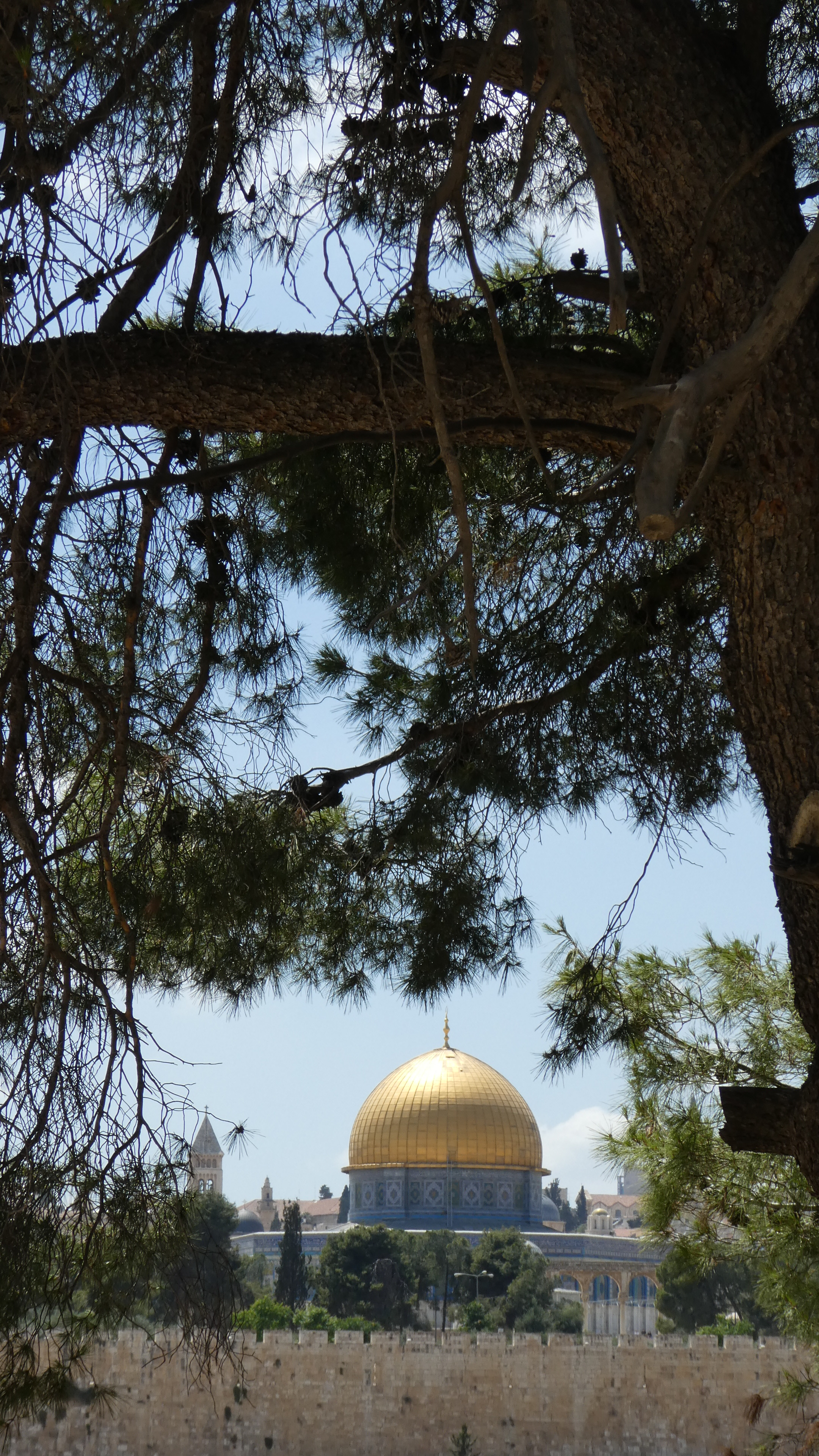
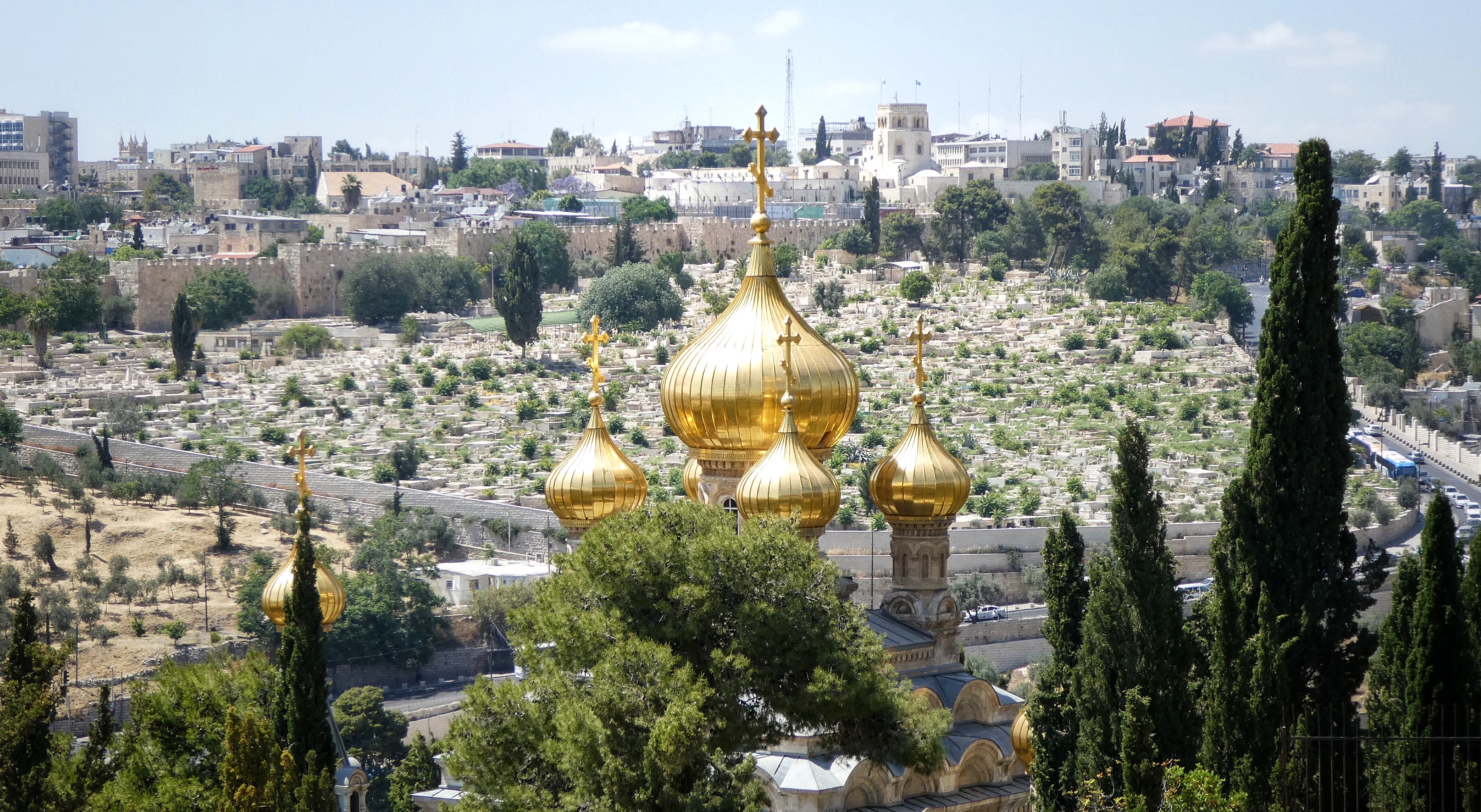
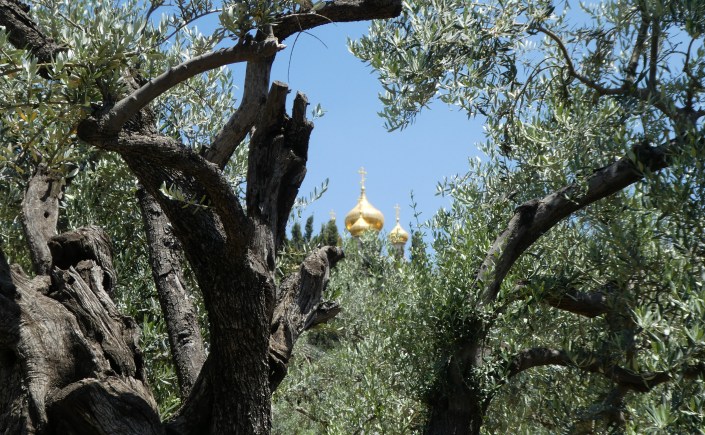
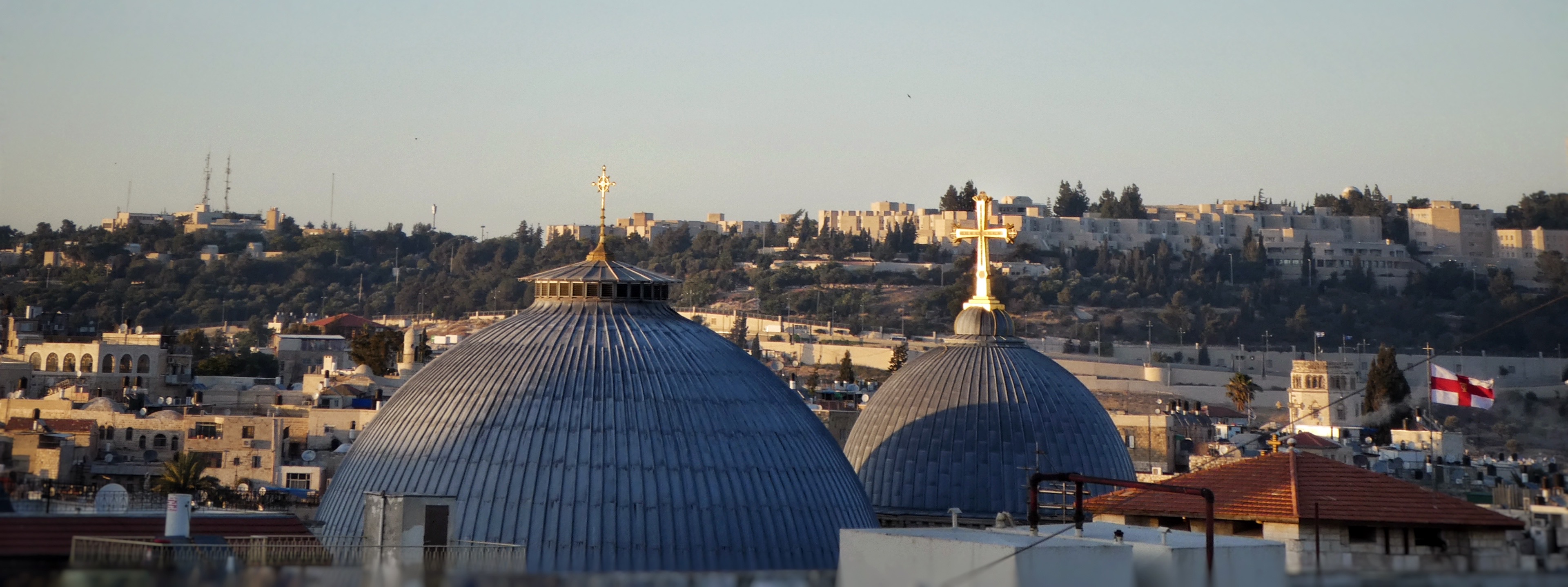
I would always recall these poems when visiting the Holy Land, and since my very first visit in 1971, I have associated them particularly with the Old City of Jerusalem. I took the photographs accompanying this piece in that exquisite place.

The Olive Garden

And still he climbed, and through the grey leaves thrust,
quite grey and lost in the grey olive lands,
and laid his burning forehead full of dust
deep in the dustiness of burning hands.

After all, this.
And this, this, then was the end
Now I’m to go, while I am going blind,
and, oh, why wilt Thou now have me still contend
Thou art, whom I myself no longer find.

No more I find thee. In myself no tone
of Thee; nor in the rest; nor in this stone.
I can find Thee no more. I am alone.

I am alone with all that human fate
I undertook through Thee to mitigate,
Thou who art not. Oh, shame too consummate…

An angel came, those afterwards relate.

Wherefore an angel? Oh, there came the night,
and turned the leaves trees indifferently,
and the disciples stirred uneasily.
Wherefore an angel? Oh, there came the night.

The night that came requires no specifying;
just so a hundred nights and nights go by,
while dogs are sleeping and while stones are lying –
just any melancholy night that, sighing,
lingers till morning mount the sky.

For Angels never never come to such men’s prayers
nor nights for them mix glory with their gloom,
Forsakenness is the self-loser’s doom
and such are absent from their fathers cares
and disincluded from their mothers womb.

The Spectator

I watched the storms in the tree above:
after days of mild decaying
my windows shrink from there assaying,
and the things I hear the distant saying,
without a friend I find dismaying,
without a sister I cannot love.

There goes the storm to urge and alter,
through forest trees and through time’s tree;
and nothing seems to age or falter:
the landscape like an open psalter,
speaks gravely of eternity.

How small the strife that’s occupied us,
how great is all that strives within us!
We might, if, like the things inside us,
we let the great storm over-ride us grow
spacious and anonymous.

We conquer littleness, obtaining
success that only makes a small,
while unconstrained and unconstraining,
The permanent alludes us all:

that angel who, through loath, yet lingers
to wrestle with mortality,
and, when opponents’ sinews settle
in strife and stretch themselves to metal,
can feel it move beneath his fingers
like strings in some deep melody.

The challenger who failed to stand
that trial so constantly rejected
goes forth upright and resurrected
and great from that hard, forming hand
that clasped about him and completed.
Conquests no longer fascinate.
His growth consists in being defeated
by something ever-grandlier great.


The Annunciation

   (Words of the Angel)

You are not nearer God then we;
he’s far from everyone .
And yet, your hands most wonderfully
Reveal his benison.
From woman’s sleeve none ever grew
so ripe, so shimmeringly:
I am the day, I am the dew,
you, Lady, are the tree.

Pardon, now my long journey’s done,
I had forgot to say
what he who sat as in the sun,
grand in his gold array ,
told me to tell you, pensive one
(space has bewildered me)
I am the start of what’s begun,
you, Lady, are the tree.

I spread my wings and wide and rose,
the space around grew less;
your little house quite overflows
with my abundant dress.
But still you keep your solitude
And hardly notice me:
I’m but a breeze within the wood,
you, Lady, are the tree.

The angels tremble in their choir,
grow pale, and separate:
never were longing and desire
so vague and yet, so great.
Something perhaps is going to be
that you perceived in dream.
Hail to you! for my soul can see
that you are ripe and teem.

You lofty gate, that any day
may open for our good:
Your ear my longing songs assay
My word – I know now – lost its way
in you as in a wood.

And thus your last dream was designed
to be fulfilled by me.
God looked at me: he made me blind…
You, Lady, are the tree.

René Karl Wilhelm Johann Josef Maria Rilke (4 December 1875 – 29 December 1926), known as Rainer Maria Rilke,  was an Austrian poet and novelist. Acclaimed as an idiosyncratic and expressive poet, he is widely recognized as a significant writer in the German language. His work is viewed by critics and scholars as possessing undertones of mysticism, exploring themes of subjective experience and disbelief.

See also in In That Howling Infinite, Better read than dead – books, poems and reading  and Paul Hemphill’s Poetry and Verse

John Waterhouse, The Annunciation, 1914

The Annunciation. Dante Gabriel Rossetti

راينر ماريا ريلكه
ترجمه ج ب ليشمان

الشاعر الألماني راينر ماريا ريلكه هو أحد المفضلين لدي .. هذان اثنان من أعماله الروحية السامية ، تمت ترجمتها بشكل جميل من قبل ج ب ليشمان في أول إصدار لي من سلسلة بنجوين الشعراء المعاصري. لا توجد ترجمات أخرى جميلة مثل ترجماته.

حديقة الزيتون

وما زال يتسلق ، ومن خلال الأوراق الرمادية ،
رمادية تمامًا وفقدت في أراضي الزيتون الرمادية ،
ووضع جبهته المشتعلة مملوءة بالتراب
في أعماق غبار الأيدي المحترقة.

بعد كل هذا.
وهذه كانت النهاية
الآن سأذهب ، بينما أنا أعمى ،
و ، أوه ، لماذا تريد الآن أن أجادلني
أنت الذي لم أعد أجده بنفسي.

لا أجدك بعد الآن. في نفسي لا لهجة
منك. ولا في البقية. ولا في هذا الحجر.
لا يمكنني العثور عليك أكثر. انا وحيد.

أنا وحدي مع كل هذا المصير البشري
لقد تعهدت من خلالك بالتخفيف ،
أنت الذي ليس كذلك. أوه ، العار بارع جدا …

جاء ملاك ، فيما بعد.

لماذا ملاك؟ أوه ، جاء الليل ،
وقلبت أوراق الأشجار بلا مبالاة ،
وكان التلاميذ يتقلبون بقلق.
لماذا ملاك؟ أوه ، جاء الليل.

الليلة التي جاءت لا تحتاج إلى تحديد ؛
فقط حتى تمر مائة ليلة وليلة ،
بينما الكلاب نائمة وحجارة الكذب –
فقط أي ليلة حزينة ، تنهد ،
باقية حتى الصباح جبل السماء.

لأن الملائكة لا يأتون أبدًا إلى صلاة مثل هؤلاء الرجال
ولا تخلط الليالي لهم المجد بكآبتهم ،
التهور هو عذاب الخاسر
ومثل هؤلاء غائبون عن اهتمامات آبائهم
واستثنوا من رحم أمهاتهم.

المشاهد

شاهدت العواصف في الشجرة أعلاه:
بعد أيام من التحلل الخفيف
تتقلص نوافذي من هناك ،
والأشياء التي أسمعها تقول من بعيد ،
بدون صديق أجده مخيفًا ،
بدون أخت لا أستطيع أن أحب.

هناك تذهب العاصفة للحث والتغيير ،
من خلال أشجار الغابات وعبر شجرة الزمن ؛
ولا شيء يبدو أنه يتقدم في العمر أو يتعثر:
المناظر الطبيعية مثل سفر المزامير المفتوح ،
يتحدث بجدية عن الخلود.

كم هو صغير الفتن الذي شغلنا ،
ما أعظم كل ما يجتهد فينا!
قد نحب الأشياء التي بداخلنا ،
تركنا العاصفة العظيمة تطوف بنا تنمو
فسيحة ومجهولة.

نحن نتغلب على الصغر ، ونكتسب
النجاح الذي يصنع فقط القليل ،
بينما غير مقيد وغير مقيد ،
الدائم يلمح لنا جميعًا:

ذلك الملاك الذي ، من خلال الكراهية ، باقٍ
تتصارع مع الموت ،
وعندما تستقر أعصاب الخصوم
في الفتنة وتمتد إلى المعدن ،
يمكن أن يشعر أنه يتحرك تحت أصابعه
مثل الأوتار في بعض اللحن العميق.

المتحدي الذي فشل في الوقوف
تلك المحاكمة حتى رفضت باستمرار
يذهب منتصبا ويقوم
وعظيم من تلك اليد الصلبة المشكّلة
التي تشبثت عنه وانتهت.
الفتوحات لم تعد ساحرة.
نموه يتمثل في الهزيمة
بشيء أعظم من أي وقت مضى.

البشارة

(كلمات الملاك)

لستم قريبين من الله منا نحن.
إنه بعيد عن الجميع.
ومع ذلك ، يديك بشكل رائع
تكشف له بنيسون.
من كم المرأة لم ينمو أي شيء
ناضجة جدًا ، ومتألقة جدًا:
انا اليوم انا الندى
أنتِ يا سيدتي الشجرة.

عفوا ، الآن انتهت رحلتي الطويلة ،
لقد نسيت أن أقول
ما هو الذي جلس في الشمس ،
كبير في مجموعته الذهبية ،
أخبرني أن أخبرك ، متأملًا
(الفضاء حيرني)
أنا بداية ما بدأ ،
أنتِ يا سيدتي الشجرة.

بددت أجنحتي واسعة وردية ،
نمت المساحة المحيطة أقل ؛
بيتك الصغير يفيض تمامًا
مع ثوبي الوفير.
لكن ما زلت تحافظ على وحدتك
وبالكاد تلاحظني:
أنا مجرد نسيم داخل الغابة ،
أنتِ يا سيدتي الشجرة.

ترتجف الملائكة في كورالهم ،
تصبح شاحبة ومنفصلة:
لم يكن هناك شوق ورغبة
غامضة جدًا لكنها رائعة جدًا.
ربما شيء ما سيكون
التي تراها في الحلم.
تحية لك! لروحي تستطيع أن ترى
أنك ناضج ومزدحم.

أنت بوابة عالية ، في أي يوم
قد تفتح لمصلحتنا:
أذنك مقايسة أغاني الحنين
كلمتي – أعرف الآن – ضلت طريقها
فيك كما في الخشب.

وهكذا تم تصميم حلمك الأخير
ليحققها لي.
نظر إليّ الله: جعلني أعمى …
أنتِ يا سيدة الشجرة.

Lucifer descending … encounters with the morning star

Please allow me to introduce myself
I’m a man of wealth and taste
I’ve been around for a long, long year
Stole many a man’s soul and faith
The Rolling Stones, Sympathy for the Devil (1968)

Strange things happen If you stay
The devil will catch you anyway
He’ll seek you here he’ll seek you there
The devil will seek you everywhere.
Gun. Race with the Devil (1968)

My words appear to leave you cold;
Poor babes, I will not be your scolder:
Reflect, the Devil, he is old,
To understand him, best grow older.
Goethe, Faust

Say what you like about The Devil, he does at least give a fair price for souls. Faust got twenty four years of worldly knowledge and pleasure in exchange for his (more about him later). When Robert Johnson met him at the crossroads, he mastered the blues overnight. When it comes to music, he’s a hot fiddler – though when he came down to Georgia “lookin’ for a soul to steal”, young Johnny whupped him good. Leonard Cohen reversed this analogy when in one of his last songs, he sang “now the angel’s got a fiddle and the devil’s got a harp”. So, a warning to all: “Beelzebub has a devil put aside for me” and thee.

It is said the Devil “gets all the best songs”. He also gets a good few stories, in the form of “biographies” both scholarly and light-hearted and novels and movies that range from allegory to fantasy, depicting him the personification of evil or as a clever and entertaining trickster. In some, he is the ageless hornèd one, and in others, he is just plain horny – I’m thinking here of Jack Nicholson’s scene-stealing performance in the 1987 adaptation of John Updike’s The Witches of Eastwick, all wicked grins, lecherous asides and comedic menace. That’s actually one of the better films in a catalogue of cinematic corn that features Satan, to use another of his many names, in person, through a proxy or in psychic proximity to an endangered mortal soul.

Closer to home, my friend and budding author John Rosley, published a novella called A Touch of Sulphur before he passed on in 2022. Its narrator, an incarnated Satan, boasts about his achievements on earth. He has strong and politically incorrect views, particularly regarding the Catholic Church and its clergy whom he regards as his bitterest enemies, ripe for degradation in ways only a devil may invent. I hope that his story, available on Kindle via Amazon, didn’t cause him too many problems when he arrived at Saint Peter’s Gate and knocked on Heaven’s Door.

In the interest of balance, I must note that there been plenty of books written about the old fellow’s nemesis and arch-adversary – including those claimed to have been written by or on behalf of himself. The Almighty, Our Lord, Yahweh, Jehovah, Allah, Big Hughie, and more. There are, as Muslims rightly aver, a thousand names for God. Many contemporary scholars have penned biographies, and so has another friend of mine. This I actually proof-read, but it remains to this day unpublished.

The following, however, is a contemplation of Lucifer, biblical bête noir and literary anti-hero (he, like God goes by a multitude of soubriquets; but I like Lucifer best). It leans more to light-hearted than to outer darkness and neither scholarly nor theological, it is slightly iconoclastic, and, I hope, informative and entertaining. It describes my long and enduring artistic relationship with the “great tempter”, a literary fancy rather than some kind of weird bond with the evil one – neither amoral, immoral nor menacing, but more like a muse.

And …

It all began with Christopher Marlowe 

Dr Faustus. Was not that Lucifer an angel once?
Mephistopheles. Yes, Faustus, and most dearly loved of God.
Faust. How comes it then that he is Prince of Devils?
Meph. O, by aspiring pride and insolence,
For which God threw him from the face of heaven.
Faust. And what are you that live with Lucifer?
Meph. Unhappy spirits that live with Lucifer,
Conspired against our God with Lucifer,
And are for ever damned with Lucifer.
Faust. Where are you damned?
Meph. In hell.
Faust. How comes it then that thou art out of hell?
Meph. Why this is hell, nor am I out of it.
Think’st thou that I that saw the face of God
And tasted the eternal joys of heaven
Am not tormented with ten thousand hells,
In being deprived of everlasting bliss?
O, Faustus, leave these frivolous demands,
Which strike a terror to my fainting soul.
Christopher Marlowe, The Tragicall History of D. Faustus

That was Kit Marlowe, the Elizabethan playwright who gave us the story of Doctor Faust, the ambitious alchemist who “sold his soul to the Devil” – a salty tale taken up centuries later by German poet Friedrich Goethe and French composer Charles Gounod. His play is best known for his description of the legendary Helen of Troy as “the face that launched a thousand ships”: Marlowe may not have been the first to give us Faust, and nor was he to be the last. German polymath and write Johann Wolfgang Von Goethe took him in the early nineteenth century as did French composer Charles Gounod in 1859: a wonderful opera with a fabulous “soldiers’ chorus”. German author Thomas Mann published Doctor Faustus in 1947 wherein a gifted composer strikes a “Faustian bargain” for creative genius. These tales always end badly, their protagonists forgetting the maxim that those who sup with the devil should use a long spoon.

As for Marlowe, this sixteenth century “rake and rambling boy”, alleged bisexual and also government secret agent, was also an accomplished playwright, recognized as one of the most accomplished in a crowded Elizabethan field, and a master of blank verse – it’s still called “Marlowe’s mighty line”. In the perennial debate about whether or the Bard of Avon wrote the plays attributed to him, Marlowe’s name pops up as one of the prime candidates. A bit of a cruiser, a bit of a bruiser, he died in a tavern brawl in Deptford, southeast London.

It was through Marlowe that I first made a literary acquaintance with Lucifer – back in Moseley Grammar School in the mid-sixties when Kit got himself on to our A Level syllabus, and though one of our set plays was Edward II, the sad tale of a conflicted and controversial king, we were encouraged to read some of his plays. And I’ve always remembered the following exquisite demonstration of his “mighty line” as the medieval Mongol conqueror Amir Tamburlane grieves for his dying wife:

Black is the beauty of the brightest day;
The golden ball of heaven’s eternal fire,
That danc’d with glory on the silver waves,
Now wants the fuel that inflam’d his beams;
And all with faintness, and for foul disgrace,
He binds his temples with a frowning cloud,
Ready to darken earth with endless night.

Zenocrate, that gave him light and life,
Whose eyes shot fire from their ivory brows,
And temper’d every soul with lively heat,
Now by the malice of the angry skies,
Whose jealousy admits no second mate,
Draws in the comfort of her latest breath,
All dazzled with the hellish mists of death.
Now walk the angels on the walls of heaven,
As sentinels to warn th’ immortal souls
To entertain divine Zenocrate …

The crystal springs, whose taste illuminates
Refined eyes with an eternal sight,
Like tried silver run through Paradise
To entertain divine Zenocrate:

The cherubins and holy seraphins,
That sing and play before the King of Kings,
Use all their voices and their instruments
To entertain divine Zenocrate;

And, in this sweet and curious harmony,
The god that tunes this music to our souls
Holds out his hand in highest majesty
To entertain divine Zenocrate.

Then let some holy trance convey my thoughts
Up to the palace of th’ empyreal heaven,
That this my life may be as short to me
As are the days of sweet Zenocrate.

But back to Lucifer …

Lucifer and me

I heard the snake was baffled by his sin
He shed his scales to find the snake within
But born again is born without a skin
The poison enters into everything
Leonard Cohen, Treaty

As a nipper, I was well aware of his bad reputation. Brought up Irish catholic in Birmingham, there was no way that I could’ve missed him – it was always a “him” back then and never “her”, though our childhood was replete with biblical archetypes of amorally lapsed ladies with exotic names like Salome, Delilah, and Jezebel who often had songs, plays or movies written about them. Often, they too were portrayed as “the devil incarnate”. Elvis Presley sang about The devil in Disguise. Cliff Richard whinged about his Devil Woman. Fifties crooner Frankie Laine of High Noon and Rawhide fame sang about his unfaithful girlfriend: “if ever a devil was born without a pair of horns, it was you, Jezebel, it was you!”

That business in the Garden of Eden assured us that it was a woman who had committed the “original sin” and that all women were per se “the root of all evil”. This was when Satan earned his reputation as a tempter (nice apple), deceiver (Adam needn’t know) and liar (God won’t mind), and with it, the tag “Prince of Lies”. The implication was, that, if you fucked up, like evangelist preachers today who are caught with their pants down, “the devil made me do it”.

We were taught that Old Nick, as he was called, was forever lying in wait to divert us from the straight and narrow, and that the holier you were, indefinable though that was, the greater the effort he put into suborning you and the greater the rejoicing in the infernal realms should you stumble and fall. He isn’t alone, mind; look at the vicarious  pleasure we take in seeing the high and mighty brought low by human failings, particularly politicians and clerics who lecture us on old values like family, neighbourliness, decency, courtesy, and self-control. The internet preys upon everything vile in the human spirit and can corrupt what is good into that vileness, which would certainly be the work of Satan.

A comment in the e-zine Unherd recently described this well: “… what is evil within humanity is only there because of Satan in the first place, having been the one who tempted Adam and Eve into eating the fruit of the Tree of the Knowledge of Good and Evil that placed within us the seeds of his own evil and the root of our corruption. The knowledge of Evil is what spurs us to such negative and destructive impulses, but the knowledge of Good would pull us towards something higher. This of course would be abhorrent to the Dark Prince, thus necessitating the construction of such and infernal mechanism as this to further debase and erode God’s creation, to ‘finish the job’ as it were.”

By coincidence, I was only just listening to The Rest is History podcast about Martin Luther, and Dom and Tom recounted how the Reformation’s progenitor believed the evil one to be intensely real, a clear and present danger. Rantings about Satan were virulent and often quite alimentary, featuring lots of bodily fluids. There is an apocryphal story of how one time, assailed by Satan, Luther threw an inkwell at him. another time, when during an hallucinatory episode, Lucifer appeared to him as a little dog, though an avowed dog-lover, Martin flung unlucky Rover out of the window. A sad case of being in the wrong place at the wrong time. 

But I’d never encountered him represented as an actual person. Until I met Christopher Marlowe in Lower Sixth. Along with Kit, I also met Mephistopheles, a demonic go-between tasked by Lucifer to purchase the soul of the ambitious Dr Faustus. Admittedly, M was merely the middleman, but he gave his crew a bad name and literary fame. 

About the same time, I happened to bump into him at the amazing Birmingham Museum and Art Gallery – the magnificent statue of Lucifer that stood imperiously in the centre of the central hall. The winged bronze oversized figure (11 feet tall, weighing in at 2,000kg) is Jacob Epstein’s depiction of the Archangel  Lucifer, inspired by the renowned sculptor’s fascination with John Milton’s epic poem Paradise Lost (1667). It has stood at the heart of the museum, tall, stern and perhaps androgynous, a custodian of the gallery’s collection, an affirmation of the artist’s genius, and its value to the museum.

And so it was that at Moseley Grammar we learned through the unfortunate Faustus that Lucifer was an actual person, and an untrustworthy one at that. A fellow student, whom I did not know too well, and who was in fact one of the few Jewish students, wrote a poem for our school magazine (of which I was one of the editors). I remember but the last stanza (and later in life, used it as the last verse of a song).

But my literary liaison with Lucifer did not end there. Flatting in London in the early seventies, a friend introduced be to Lucifer’s Cage, a fiery instrumental by English guitarist Gordon Giltrap (who, incidentally, grew up in Deptford, the place of Kit Marlowe’s demise). The tune and its title, and that one verse slept in my imagination for decades, until they crystallized in a song.

Lucifer, star of the morning
Lucifer, prince of the night
Lucifer falling through darkness
Lucifer cast from the light.

Lucifer sits in his wasteland
Trapped in the cage of his pride
The sirens of importunate circumstance
Reclining in ranks by his side
Plots he has made, so ingenuous.
Dangerous follies and schemes
For he has stage-managed quite strenuous
Drunken prophecies, libels and dreams.

Lucifer frets in the wasteland
Locked in a pillar of ice
We know of this only to well
We have visited him there once or twice
For his is the language of liars
And his is the honour of thieves
And he is the master of eloquence
As the last of the honest men leaves.

Lucifer crawls from the wasteland
No solace or peace or rest.
For he has corrupted the wisest
And he has co-opted the best.
And all that is good has since vanished
And with it, the fair and the true
And the silences hurting his demon heart
Are haunting, haunting you.

And the road that winds out of Meggido
Is the path that leads to the pit
For Lucifer prizes a web of disguises
He merely selects one to fit.
And the road that runs down to Jericho
Is the path that leads him to you
And the paradox searing his demon soul
Is hunting, hunting you.

So make you no truce with Lucifer
Lucifer of fiery breath
For Lucifer is treachery
And treachery is death.

Lucifer, star of the morning
Lucifer, prince of the night
Lucifer falling through darkness
Lucifer cast from the light.

The “pillar of ice”, by the way, is borrowed from the fourteenth century Italian poet Dante Alighiari’s Inferno. In his account of life after death, the ninth and last of the concentric spheres of hell, is where betrayers and traitors languish.  It is presided over by the man himself, the greatest betrayer of all, though now impotent, encased up to chest in ice, a giant, bat-winged demon with with one head and three faces. Each weeps as it chews on a notorious sinner: Jesus’ betrayer Judas Iscariot, and Julius Caesar’s backstabbers Brutus and Cassius. His wing-beats raise a chill wind that continues to freeze the ice surrounding himself and the other sinners in the Ninth Circle, a wind that is felt throughout the other circles of Hell. In contrast to depictions of the devil in Dante’s day as a cunning foe ever ready to prey on human weakness, his Lucifer is strikingly modern, a metaphor for nothingness. Dribbling and speechless, he is all hat and no horse, or more apposite, all horns and no hellfire.

The Emperor of the kingdom dolorous
From his mid-breast forth issued from the ice …
Consider now how great must be that whole,
Which unto such a part conforms itself.
Were he as fair once, as he now is foul.

Doré’s Dante – Satan in Hell

Jacob Epstein’s Lucifer

Fallen Angels

So who exactly was this Lucifer, the biblical sum of all our fears?

Many Christians, whom I do not profess to be (I gave up practicing when I was good enough), believe that Satan, or “the devil” as he is commonly known, was once upon an eon ago a gorgeous angel much loved by God and named Lucifer – which means “star (or ‘son’) of the morning” – on account of his exemplary luminescence. No wonder early marketing folk got the idea of naming a brand of matches “Lucifers” – a tag memorialized in the First World War song It’s a long way to Tipperary and the soldiers’ trench superstition from the Crimean War to World War II  of “Three on a match.

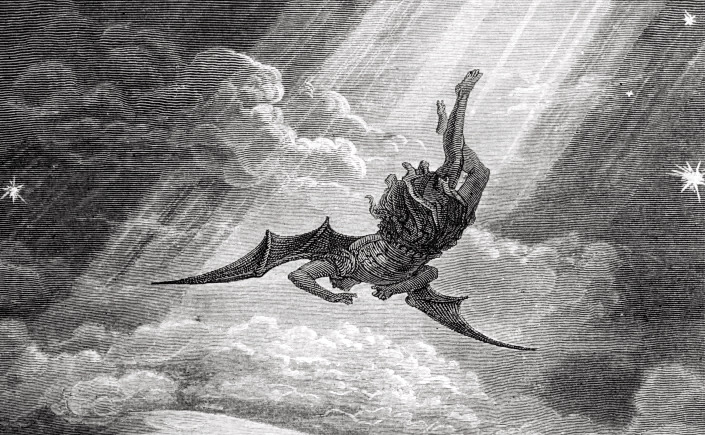
He’d got tickets on himself, defied the boss and fell from grace. “Cast out into the Outer Darkness”, in fact. Hence French illustrator Gustave Doré’s striking image of him descending to Earth to fracture a cozy de facto relationship between Adam and Eve, the first human beings, a perfect pair “created in God’s image”, and thereafter to inflict mayhem upon mankind, including, as we have noted above, the concept of “original sin” which broadly defined all humanity as damned until it accepted the dominion of an almighty creator and condemned womankind to an eternity of subjugation to the patriarchy.

This assumption that he is a fallen angel is, scripturally, based the Book of Isaiah in the Old Testament of The Bible: “How art thou fallen from heaven, O Lucifer, son of the morning! How art thou cut down to the ground, which didst weaken the nations” (14:12).

But the tabloid story that has been handed down to us through the ages arguably originated in the apocryphal Book of Enoch, written sometime between 300-100 BCE and quite popular around the time of Jesus. It was widely circulated although it was considered a heretical text by the religious authorities on account of its opposition to mainstream Rabbinical Judaism. Whilst referenced a few times in the New Testament, it was rejected by the ecclesiastical canon, (though not, apparently, in Ethiopia – to this day, a unique African outlier to Christianity, and indeed, Judaism). But it’s from Enoch that we’ve inherited most of our mythology of the fallen angels, and also, a lot of apocalyptic imagery and millenarian or “end times” belief. 

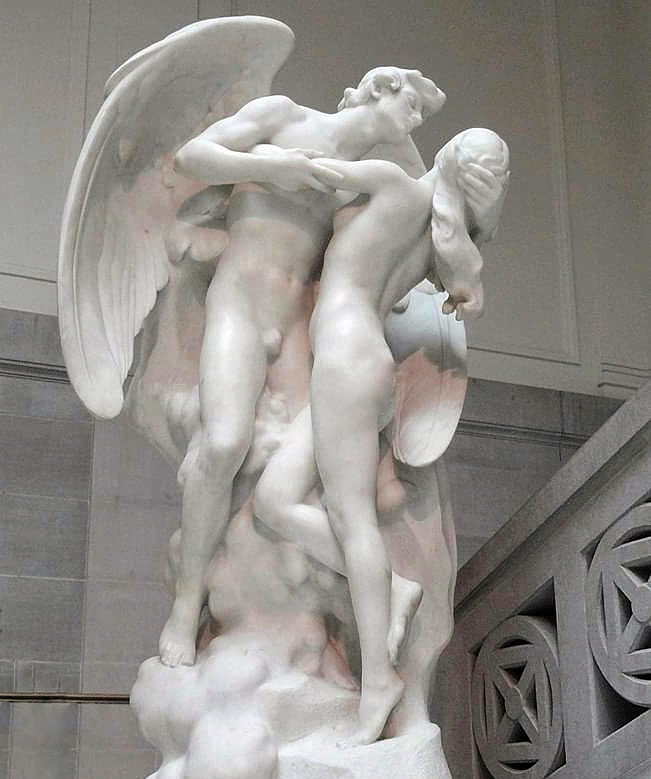
The apocalyptic Book of Enoch gave names to the Sons of God – Lucifer and his comrades, and also, a mob called the Nephilim. The eponymous Enoch understood them to be fallen angels who, having fallen to Earth, had sex with human women – beautifully portrayed in Daniel Chester French’s sculpture, which has been described as the sexiest statue in Washington DC. God, naturally, punished them, and, their behaviour, it is said, in Noah’s flood.  So, it would seem, the fall of the angels related more to sexual sin than to Lucifer’s pride.

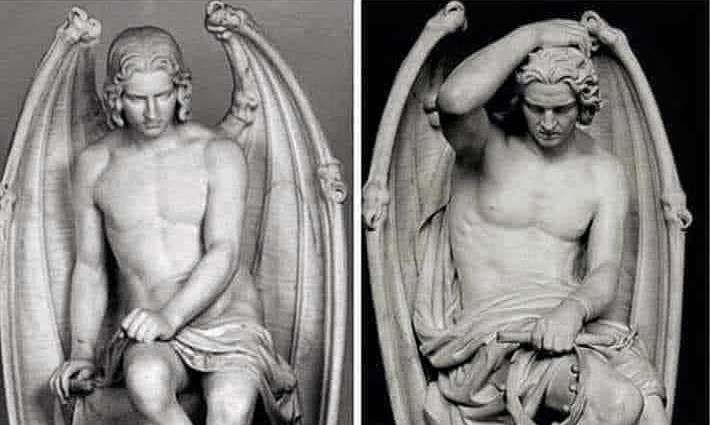
The Sons of God Saw the Daughters of Men That They Were Fair.

An artist made a sculpture of Lucifer that was too hot for the church so it commissioned his brother. He made an even hotter one!

Regarding the above picture, a Facebook comment read: “The depiction of Lucifer on the right looks exactly like the one in my dream.  I dreamt that I was in very dark hallway or corridor and suddenly the room lit up, not a very divine bright light but more like a very dim light, lit enough to see what was going on. There was this huge very tall, partially robed angel in crimson red. He raised his hands in the air, and when he did, blood exploded out of the walls. It scared the shit out of me. I jumped up out of bed and didn’t go back sleep until the next day. Satan is definitely real, and he isn’t a red goat with horns – he’s a very tall, nice-looking angel with wavy blonde hair – and very very powerful he has wavy blonde hair sort of like Logan Paul’s (an American social media influencer, professional wrestler, YouTuber, entrepreneur, and actor). Though this may sound silly or fun,  I’m not joking. I’ve I seen this m…..f…..r in my dream! It was Lucifer!”

And with regard to artistic depictions, there is the amazing sculpture The Fall of the Rebel Angels” created by sculptor Agostino Fasolato in the eighteenth-century. Almost two meters high and carved from a single block of Carrara marble, it is a pyramid of sixty contorted figures. At the top, wielding his sword of fire, is the archangel Michael who, according to religious tradition, led to forces of light in the tumultuous battle that saw Lucifer and his rebel angels consigned to hell. It an extraordinary intertwining of bodies, depicting the falling angels at the moment of their transformation into demons. So, there they are, agonised faces, hornèd heads, and serpents’ tails, rocking and rolling, tossing and turning, tumbling down, down, down into the infernal pit.

Paradise lost

The story of the fall of Lucifer is actually underpinned by not one but two works of fiction: Enoch’s, and the English puritan poet and pamphleteer John Milton’s imaginative and lyrical masterpiece Paradise Lost (1667) which has dominated our perspective of the story ever since.

Milton gave us the first lyrically and psychologically compelling portrait of Lucifer. He was not the sly predator of myth and menace but rather, (initially, at least) an edgy seductive hero. With his fine words, theatricality and swagger, the only ostensible sign of evil within, a lightning scar on his face: “He above the rest, in shape and gesture proudly eminent, stood like a tow’r”. And yet, he winds up as a washed out up idealist and revanchist cynic, “dismay mixt with obdurate pride and steadfast hate”.

Although I was familiar with Paradise Lost, I did not read Milton’s prose opus until the late seventies, encouraged by the the work of nineteenth century French lithographer Gustave Doré who rendered the poet’s words into pictorial flesh. That’s his iconic image of Lucifer descending to Earth at the head of this story.

Sometime in the early eighties, 83 or 84 I think, my old pal and provocateur Yuri the Storyteller introduced me to Lilith.

Lilith has been around for thousands of years. In the Talmud, she is described as a winged demoness with a human appearance. She appears in the bible, in the Dead Sea Scrolls, and in Hebrew folklore, and has been mentioned in black magic treatises. The apocryphal story is that Lilith was Adam’s first wife. God made Adam from dirt and clay. Adam bored, requested a companion, and God obliged with Lilith. Legend has it that her dirt was dirtier than Adam’s, but put that down to patriarchal prejudice and propaganda. More likely, she had the dirt on him! But I digress. Apparently, Lilith was not as inferior to Adam as he wanted. She wanted to be her own person, not Adam’s wife-slave. The story is that when Adam insisted on the missionary position, Lilith refused, saying “Why must I lie beneath you? We are both equal. We come from the same earth”. Adam got mad, and Lilith took off.

Because of this, she was banished from Eden and became a spirit associated with the seductive side of a woman. Eve came in her place to stand behind Adam, not beside him. Lilith became the timeless femme fatale, preying on the easily tempted weaker sex, the fabled incubus who comes at night upon men as they sleep. It is not for nothing that she has been hailed the (informal) goddess of wet dreams.

The legends are many and various. If you buy into the Lilith theory, you will see her cropping up throughout history in a variety of guises. In biblical times: Delilah, Salome, and Potophar’s wife. In fact and fable: Sheherazade, Lucrezia Borgia, Mata Hari, Evita Peron. Hollywood’s screen ‘sirens’ like Vivien Leigh, Elizabeth Taylor, and Marilyn Monroe. All of them antitheses to secular saints like Eve, Mary Magdalene, Joan of Arc, Florence Nightingale, Jackie Onassis, Mother Theresa, and Princess Diana.

Lilith’s story deserved an epic poem, so borrowing from Milton and the opening chapter of JRR Tolkien’s Silmarillion, I duly wrote Lilith – a poem of the fall. It was attributed to a Roman poet celebrated during the reigns of emperors Claudius and Nero. It’s forward read:

“The style of Lilith differs markedly from that of other poems attributed to Meniscus – most notably the Hebrew Heroes cycle and was evidently written for a different manner of presentation. It was most likely written to be recited rather than sang (as were his other “story songs”). Recitations were a common form of entertainment in the middle Roman period, owing their popularity to the enduring reputations of the “classical” writers of the time, Ovid, Horace and the like. It was not uncommon for such recitations to last several hours. But Meniscus, mindful of the fast-moving times, and also of the attention span of his audiences, appears to have honed his pieces down to between ten or fifteen minutes”.

It debuted at Victoria’s Port Fairy Folk Festival in about 1986 in a shambolic busy poetry competition – it came first, I recall, but the event was so poorly organized that I received neither award or recognition.


It began in suitably histrionic Genesis style:

Long time ago In a time before time,
When man was an atom in primeval slime,
When darkness lay hard on the face of the deep,
God called for his angels to sing him to sleep.

I hadn’t finished with Lucifer, however. He reappeared as metaphor in a gloomy commentary of the state of humanity in Devil’s Work, published in full at the end of this article. The narrative actually came to me in a dream – though this was not the nightmarish image of the sleepless Facebook commenter quoted above:

For what you’ve done to you own kind, you’ve done of your own will.
If I went away on a holiday, you’d be malignant still.
For all you’ve done unto yourselves, you’ve done because you must –
A self-destructive legacy to bring yourselves to dust.
To render you to dust.

The implication here is that we actually know Lucifer, Satan, the Devil, because, to use a an enduring aphorisms, “we have seen the enemy and he is us!”. Many writers have implied this. In 1942, not long after his return to the Anglican faith in which he’d been raised, my favourite poet WH Auden asked a Sunday School class: “Do you know what the Devil looks like? The Devil looks like me.” As an informative piece in The Daily Beast observed, “his sensitivity and acuity as a poet made him aware that the pathologies of ideology are first manifest in the pathologies of individuals, including and especially himself, a character he never shied from satirizing or indeed using as a template for the doomed romantic or cruel authoritarian he took as the protagonist of so many of his poems”.

And finally,Lucifer is also name checked in a sprawling ballad about Herman Melville’s Captain Ahab and his obsessive hunt for Moby-Dick, the famous white whale:

Down, down, deep down we dove
In a tangle of rigging and rage –
Down to the deep where the dead sailors sleep
In the darkness of Lucifer’s cage.
From Chapter Forty One – In That Howling Infinite 

A brief satanography

The following is an updated version in the introduction to Roman Holiday: The Poems of Meniscus Diabetes (1989). Most of it is compiled from Wikipedia.

‘Satanic’ implies the old God-Satan contradiction – and yet it is a paradox. You can’t really have the idea of a universal, omnipotent a God AND a universal, quite potent black hat opposing both Him and Man.

Indeed, we tend to anthropomorphize Old Nick more than we do his rival and nemesis God, although Jesus and Satan often have their own Fight Club going in the New Testament – the ostensibly “evil one” doesn’t get much of a gig in the Old Testament, which is not to say that Jewish folklore didn’t quite ignore him, as I will explain in eccentric detail below. The Essenes of old, who left us a heap of important written material in caves overlooking the Dead Sea, bought into the idea of a conflict between the spirit Princes of Light (God, and in time, Jesus) and of Darkness (Satan – which might’ve come from the ancient Persian Zoroastrian spirit of light and wisdom, Ahura Mazda (remember the light bulbs back in the day?) the Zoroastrian present day heirs are the persecuted Baha’i of Iran (though their HQ is in Haifa, Israel. Ironic, eh?) and the Parsi in India and Pakistan, a name derived from Farsi, now the language Iran and much of Afghanistan.

Then we have the old Parthian prophet Mani who, according to Wikipedia, sought to synthesize the teachings of most of the faiths in vogue from Europe to China and all places betwixt during the third century CE. He gave us Manichaeism, which teaches an elaborate dualistic cosmology that describes a struggle between a good, spiritual world of light, and an evil, material world of darkness. It’s not an optimistic one – through an ongoing historical process, light is gradually removed from the world of matter and returned to the world of light, whence it came. The Manicheans believed that God was just, and kind, and loving. He was forgiving God who would forgive us our trespasses. It was the Devil, therefore, who had to be propitiated with prayers and amulets and so on – averting “the Evil Eye”. The Manicheans were accordingly persecuted as heretics at best, and as devil-worshipers at worst.

Lucifer, of course, derived from the Latin, meant “light”. He was, of course, an angel. In angelology – yes, there is indeed such a field of study, angels were, or are, because quite a few folk believe that they are real, God’s bodyguards (assuming he was corporeal) and cops before the Jesuits took over. They are categorised by power, authority and also, light. Lucifer was “top gun”, the bee’s knees, dog’s balls, the primus inter pares. Until he got to big for his wings and staged a rebellion.

There is a downside to doing deals with the devil, unless you’re Robert Johnson at the famous Crossroads, or successfully challenging him to a duel like the young fiddler in The Devil Came Down to Georgia or the likely lad in the old English folk song False Knight on the Road. Look what happened to the ambitious Marlowevian sybarite Doctor Faustus.

The unfortunate Yazidi people of Iraqi Kurdistan and northern Syria, ethnically Kurdish, but an ancient religion in an intolerant sea of Islam, were long accused of being “devil worshippers” because they believe that whilst God is benevolent and will not do us intentional harm, the Devil can be quite malevolent and hence needs propitiating. This was how others perceived it back in the dark day, although more enlightened times have emphasized that the Yezidi Peacock Angel is a beautiful and as benign and benevolent a deity as any other in the deities beloved of the world’s believers.

The Peacock Angel,
 Deviant Art

There was no diabolical god in the Roman and Greek pantheon – or amongst the Norse Gods for that matter. There were gods who did nasty things, but that was because they are annoyed, or angered, or moved to vengeance or malice, or even, envy and lust. These, one placated to restore them to a better humour. Nor is the Satan, the principle of evil personified, actually in the bible. This was a later construct that was read back into it. In the bible according to the poet John in Milton, the devil, whilst not exactly pleasant and delightful, is either on the side of the heavenly authorities at the least, or at the least, not destructively opposed to them. In the words of that great song out of the Brill Building, NYC, “I’m just a boy whose intentions are good. Please don’t let me be misunderstood”.

© Paul Hemphill 2024. All rights reserved

For other indulgences in In That Howling Infinite. see It’s 3am and an hour of existential angst, Blue remembered hills – a land of lost contentment and The quiet teatime of the soul

Devil’s Work

I dreamt I fought the Devil and I bound him in strong chains
To answer for our consciences, to blame for mankind’s stains;
For all pain and perversion, crime and atrocity,
I brought the criminal to trial in the name of humanity.
This bane of humanity.

In judgement of the power man who makes us fight his fights,
And the holy men in uniform who trample on our rights;
To exact compensation for his prey alive and dead.
But when I brought him to the dock, this is what he said…
He said: “I had no part on what you say I’ve done to hapless man.
He’s master of his destiny – he does the worst he can.
I did not set the fires that burn – I only tend the flames.
Men forged the swords and lit the brands, wrought carnage my name.
They conquered in my name.

“The tyrants and oppressors who jockey for control,
Are of mankind’s own substance, the product of his soul.
The torturers and murderers – in these, I had no part.
They spring from man’s perverse desires and his infernal heart.
Damn his eternal heart.

“The tyrant is not guilty and the killer has clean hands.
They are but pawns of the soul of man and the fruits of his demands.
One half of mankind does not think, the other does not care –
And the sheep go to the slaughter when the wolf pack leaves the lair.
The wolf has left his lair.

“And I am but an image, a figment of your mind;
I am but the whipping boy your hide your sins behind.
I was here before you came to Earth, I’ll be here when you’re gone.
I don’t ask your forgiveness when you’re deserving none!
My undeserving son.

“For what you’ve done to you own kind, you’ve done of your own will.
If I went away on a holiday, you’d be malignant still.
For all you’ve done unto yourselves, you’ve done because you must –
A self-destructive legacy to bring yourselves to dust.
To render you to dust.

So when you say I want to rule a realm of ash and bones,
Let he who is devoid of sin go cast self-righteous stones.
I stand upon the sidelines, contemptuous, aloof.
I won’t condemn all that you’ve done.
I may condone all that you’ve done.
I’m quite content with what you’ve done. But cause it?
Give me proof!”

Islam’s house of many mansions

Islam, the faith of some two hundred million souls, has a long and well-documented history of pluralism and tolerance, and indeed, learning. But in recent decades, the faith has been hijacked by the punitive and literalist proclivities of the Salafis, condoned, coopted and championed by the conservative, corrupt, brutal, patriarchal and misogynistic autocracies of Saudi Arab and other Gulf States and ostensibly Islamic states like Iran. If ever there were exemplars for the “religion of peace”, and followers of a “merciful and compassionate” God, these are certainly not. To borrow another faith’s noun, theirs’ is in so many ways a gospel of bondage. [read Alastair Crooke’s excellent article on the history of Wahhabism]

[This, by the way, is a book review and not a theological critique. I neither profess nor profane, although my personal opinions might occasionally intrude. I admit to a sound but not specialist familiarity with and knowledge of Islam and Muslims, and a wide but not expert knowledge of the Middle East]

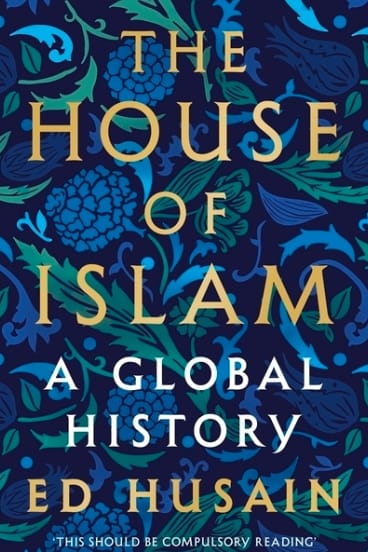
In The House of Islam – a global history  offers the potential for a softer, kinder, spiritual  Islam.  Author Ed Husain, British-born of Indian heritage, wears his Sufi heart on his sleeve.  “Preoccupied with spiritual awareness and depth, Sufi Islam transcends the performative trappings of superficial appearances such as beards and head-coverings, fixation with the simplistic binaries of haram and halal (what is forbidden and not forbidden in Islam) and the state’s imposition of sharia law.”

Little wonder that in many rooms in the House of Islam, Sufis are suspect, sanctioned and silenced – often brutally. As are many “heterogeneous” offshoots of this one true faith, including for many,  more than two hundred million Shiah.

It is the authoritarian, mediaeval Salafi-Wahhabi Arabian Peninsula theology and culture that has become commonly adopted as a marker of Muslim authenticity and has assumed the status of the ideal religious identity – notwithstanding the historical preeminence of Cairo, Damascus and Baghdad as centres of Muslim learning – and even though Arabs constitute a numerical minority in the Muslim world.

This “Arabization” and indeed, “Saudification” of Islam has colonized, distorted and, indeed, contorted and corrupted the spiritual message of Islam, and with the concurrent attractions and challenges of westernization, has, in Husain’s words, “disoriented the traditional Muslim equilibrium”, and brought forth jihadi abominations like al-Qaeda and Da’ish.

With the spread of ultra-conservative Salafi theology in many parts of the Arab and non-Arab Muslim world, Muslims are expected to dress in accordance with “modest” traditional Arabic attire and women are under pressure to wear the headscarf and other more extreme coverings – the latter never sanctioned by either Qur’an or Hadith writ. The writ runs deeper than outward appearance, as exemplified by the subordinate status of women in most Muslim societies. Moreover,  Arab and non-Arab Muslims are also expected to abandon their pre-Islamic history and culture – derided as remnants from pre-Islamic ignorance. In its most extreme manifestation, this saw the destruction of humanity’s priceless heritage at Palmyra and Nineveh. Some salafis call for the razing of Egypt’s pyramids.

Muslims in their glory days would refer to what went before as al Jahiliyya, the age of ignorance. But in so many ways, multitudes have returned there, helped in no small part by their more atavistic coreligionists who see salvation, wisdom and benefit to all in reverting to a medieval ethos and lifestyle of some golden age of faith which most scholars maintain never existed.

Islamists are intolerant of anything resembling a free exchange of ideas and information – the very concept of democracy is haram as the Prophet and his successors never thought of it – and possess a cultural antipathy, and iconoclastic rage for all things western, including, in some places,  western education (the derivation of the name ’Boko Haram’  for Nigeria’s ISIS franchise). The fundamentalist mindset in all its patriarchal intolerance, prejudice and misogyny is itself often embraced by the ignorant and the uneducated, the downcast and dispossessed, the bitter and the bigoted.

Husain points out that “not every Salafi is a jihadi, but every jihadi is a Salafi. Today’s jihadism, violating all the ethics of Islam, is nothing more than the continuation of the puritanism of the Salafi-Wahhabis“, which originated from the Saudi kingdom – guardian of Mecca and Medina, Islam’s most revered cities. There is no space for plurality and doubt in Salafi theology, rooted as it is in the discourse of yaqeen (certainty) and the propagation of an authoritarian one-dimensional piety.

This said, there are many more Muslim-majority states such as Turkey, Indonesia, Malaysia and Tunisia – countries that were conceived as secular states, and have largely remained secular or quasi-secular) , and indeed, have and made considerable democratic breakthroughs via the ballot box. Indonesia (the most populous Muslim-majority country) and Malaysia (one of the most industrialised Muslim-majority countries) are not located in the Arab Middle East. And yet, as events in Turkey and Indonesia have shown, the lure of radical Islam and its cultural and moral strictures is an attractive one to would-be authoritarians and to governments fearful of rising populist and nationalist tides.

And herein lies another portend. Just as the Muslim world has its share of religious and political extremists, so do an alarming number of Western democracies that are dominated by populists and ethno-nationalists who often do not hesitate to use religion as a blunt instrument of groupthink. I am thinking here of Russia and its Othodox Church, and of Polish Catholicism, but even ostensibly democratic USA and Israel are subject to the overweening influence of powerful evangelical and Haredim interest groups that endeavour to stamp their moral code on the more temporal majority. As radical British playwright Dennis Potter once remarked, “religion is the wound, not the bandage”.

Academic Lily Rahim notes in he review, published below, that this calls for a systematic analysis of the economic, socio-political, structural and institutional factors that have fueled the ascendancy of all forms of extremism, intolerance and exclusion, often rooted in authoritarian beliefs and systems. And that is a huge, multifaceted project, taking in the economic and social inequality that persists in countries rich and poor, the gap between the few ‘haves’ and the many ‘have-nots’, the power imbalances between the ‘North’ and the ‘South’, the pernicious rise of sectarianism and ethnocentrism, the mirage of ‘manifest destiny’, and the historical habit of the strong to bomb the weak and the poor to blazes.

Civil war and economic desperation have propelled millions of refugees across the Mediterranean and the Aegean Sea into Europe, threatening the unity and stability of the European Union. Islamic fundamentalism has filled the vacuum created by crumbling dictatorships and vanishing borders, unleashing atavistic, uncompromising and vicious Jihadis against their own people and co-religionists, and onto the streets of cities as far apart as Paris and Brussels, Istanbul and Baghdad, Jakarta and Mogadishu. In Syria particularly, but also in Iraq, Libya, Yemen, and Afghanistan, the longest war in the 21st Century, outsiders have intervened to further complicate the chaos, rendering an early end to what Rudyard Kipling called these “savage wars of peace” a forlorn hope.

“In many respects, the House of Islam is a microcosm of The House of Human History”.

Two other reviews of Ed Husain’s informative and illuminating boo follow.

For other posts regarding the Middle East in Into That Howling Infinite, see A Middle East Miscellany.  And, for a long view, read: A Brief History of the Rise and Fall of the West.

The House of Islam by Ed Husain.


The House of Islam by Ed Husain review – a powerful corrective

Boys prepare food for devout Muslims to break their day-long fast on the last Friday of the holy month of Ramadan in Mumbai, India.
         Boys prepare food for devout Muslims to break their day-long fast on the last Friday of  Ramadan in Mumbai, India ( Rajanish Kakade/AP)

Of the world’s 1.6 billion Muslims a very large number – perhaps a majority – observed the Ramadan fast last month. This doesn’t simply mean abstaining from food and water during the hours of daylight (as well as sex and cigarettes), but in many cases involves a deliberate reappraisal of one’s relation to God and the world, with more prayers and philanthropy and less shopping.

Of all the obligations that define Islam, Ramadan arouses perhaps the most irritation among some outsiders. A practice that places such a strain on the body is surely an affront to reason. Nor does it seem to make economic sense for workers to be tired and unproductive while declining to perform their allotted roles as consumers with credit ratings. And yet the west has absorbed Ramadan, if uneasily, with supermarket promotions for dates (the Prophet’s favoured breakfast), school assemblies on the subject and “What is Ramadan?” features even in the Sun.

Knowledge about Islam may have improved, but the speed with which relations are changing between Muslims and non-Muslims, and between Muslims, necessitates a constant reassessment of different worldviews and the way they interrelate. Isis’s defeat in Mesopotamia has not led to any meaningful dialogue between cultures. On the contrary, with Gaza aflame, the Iran nuclear accord uprooted and Sunni-Shia tensions at an all-time high, the prospects for detente have rarely been bleaker.

An airstrike on Islamic State militants in Sirte, Libya in 2016.
                      Airstrike on Islamic State militants in Sirte, Libya in 2016 )Manu Brabo/AP)

It’s an illustration of the insincerity of many world leaders that more than 250 French public figures, including former president Nicolas Sarkozy and three former prime ministers, recently demanded that Qur’anic verses endorsing the killing of non-Muslims be “struck down” – just as the Second Vatican Council expurgated elements of Catholic doctrine in the early 1960s. This meretricious proposal affects to assume that Islam is a centralised religion like Catholicism (it isn’t), that the Qur’an can be snipped and remain the Qur’an (it can’t), and that because they recognise the same holy book the Islam of the jihadi is the same as that of the Sufi or the Europeanised Muslim with his Qur’an on the top shelf and his bottle of burgundy on the bottom. When will someone put these contradictions of text, practice and culture into terms accessible to the layperson? Who will speak across the divides?

Enter Ed Husain. A Briton of Indian parentage, a Muslim whose bestselling book, The Islamist described his temporary embrace of the values of global jihad in the 90s, Husain retained his religious faith even after he became a government adviser on deradicalisation. Since then he has lived off the fat of the neoliberal establishment that ran the world before the age of Trump, working for Tony Blair’s Faith Foundation as well as several other well‑heeled thinktanks on both sides of the Atlantic. The anti-extremism organisation he co-founded in 2007, Quilliam, is considered by many to be hopelessly compromised by its support for government efforts to squeeze Muslims into the corset of “British” values.

Ed Husain in Brick Lane, London, May 2018.
                            Husain in Brick Lane, London, May 2018 (Andy Hall, The Observer)

Husain’s politics and the company he keeps may be questioned, but they evidently haven’t stopped him from thinking productively about Islam as a force for good in the world. An account of the compassion, reason and wonderment that Islam has exhibited for much of its history, this book is a powerful corrective to the widespread perception, fostered by jihadis and Islamophobes alike, that it’s a belief system for misanthropes.

Ever since its inception Islam’s ethos had been contested, but a disastrous turn came with rejection of the printing press and the triumph of scholasticism over independent reasoning, exacerbated by a morale-sapping struggle against European expansionism in the 19th and 20th centuries.

Husain rightly says that the root of much Muslim confusion is a sense that a glorious past has soured into defeat and humiliation, but fallen prestige is hardly the monopoly of Muslims. The West has also lost ground, particularly its white males; dealing with changes in status is a part of being human. In general, Husain is too apt to view Muslims and their dignity as qualitatively different from those of other people. His modern politics can also be sketchy. With justification he criticises Saudi Arabia for its promotion of bigotry – less understandable is his soft spot for the  Turkey of Recep Tayyip Erdogan –  less a paragon of generous Islam than thuggish majoritarianism. His insistence that Muslim nations accommodate the tiny Jewish state in their midst is common sense but a suggestion of a Middle Eastern union including Israel reads somewhat grotesquely in the light of the recent carnage in Gaza.

For all that, Husain has written a valuable book, full of suggestions for Islam’s implementation from a position of magnanimity and love. Then the confidence will return.

 The House of Islam: A Global History is published by Bloomsbury. To order a copy for £21.25 (RRP £25) go to guardianbookshop.com or call 0330 333 6846. Free UK p&p over £10, online orders only. Phone orders min p&p of £1.99.

Muslim pilgrims pray on the Mountain of Mercy during The Haj. Mount Arafat, marked by a white pillar, is where Prophet Muhammad is believed to have delivered his last sermon to tens of thousands of followers some 1400 years ago, calling on Muslims to unite.
Muslim pilgrims pray on the Mountain of Mercy during The Haj. Mount Arafat, marked by a white pillar, is where Prophet Muhammad is believed to have delivered his last sermon to tens of thousands of followers some 1400 years ago, calling on Muslims to unite ( Nariman El-Mofty/AP)

In The House of Islam, Ed Husain affirms the centrality of the pluralist foundations and principles of Islam. Pluralism has also been rooted in Husain’s “lived reality”. His book opens powerfully, with Husain affirming his plural identity: “I am a Westerner and an observant Muslim. Caught between two worlds, I have learnt to dovetail the two facets of my identity. This book is a reflection of that inner bridge between Islam and the West”.

Yet, as the inflections of this superbly written book suggest, Husain’s “inner bridge” extends beyond “Islam and the West” and incorporates “the West” (Britain where he was born and raised), Islam (his faith) and India, his ancestral homeland.

A Turkish Muslim woman prays inside Hiraa cave, where Prophet Muhammad received his first revelation from God to preach Islam, on Noor Mountain, on the outskirts of Mecca, Saudi Arabia.
A Turkish Muslim woman prays inside Hiraa cave, where Prophet Muhammad received his first revelation from God to preach Islam, on Noor Mountain, on the outskirts of Mecca, Saudi Arabia.Photo: AP

Husain’s Indian heritage comes across in his whimsical ruminations of Mughal Sufi history, in particular the riveting narrative of Jahanara Begum – the complex and colourful Sufi-inspired daughter of the Mughal emperor Shah Jahan (1592–1666), who built the Taj Mahal in memory of his beloved wife.

Hussain’s Sufi proclivities are apparent in the chapter “Who is a Sufi”, arguably one of the most engaging chapters. Husain describes the Sufi as one who “seeks only to please God, and does so in secret as often as possible”, grapples with “the heart and soul of Islam” and strives towards “maintaining equilibrium while swimming in deep oceans of spiritual awareness, and the ways in which the human ego could be crushed”.

Preoccupied with spiritual awareness and depth, Sufi Islam transcends the performative trappings of superficial appearances such as beards and head-coverings, fixation with the simplistic binaries of haram and halal (what is forbidden and not forbidden in Islam) and the state’s imposition of sharia law.

In contrast to the rigid, punitive and literalist tendencies of Salafi Islam, as promoted by the conservative monarchies in Saudi Arabia and other Gulf states and supposed Islamic states such as Iran, Sufi Islam’s leanings are inclusive, compassionate and speak to the complex yearnings of the human soul.

These leanings are evident in Rumi’s message of learning, hope and redemption, as the renowned Sufi poet ruminated: “Come. Come, whoever you are./ Wanderer, worshipper, lover of learning./ It doesn’t matter./ Ours is not a caravan of despair./ Come, even if you have broken your vows a thousand times./ Come, yet again, come, come.”

Husain’s considerable insights on the house of Islam, made up of more than 1.5 billion Muslims, have been shaped by his lived incarnations as an Islamist, Salafist and current abode in mystical Sufi Islam. His destiny within Sufi Islam culminated after many years of study under the guidance of Islamic scholars and living in the Middle East.

Enriched by these experiences, Husain notes that he has the “rare privilege of being an insider both in the West and in the Muslim World”. Yet, it could also be deduced that his acute insights have been cultivated by his status as an “outsider” in both the West and the Arab Middle East – stemming from his minority Indian ethnicity in both domains.

The House of Islam is understandably concerned with authoritarian and Salafi-Wahhabi Gulf Arab theology and culture that has become commonly adopted as a marker of Muslim authenticity. This peculiarity has assumed the status of the ideal religious identity – even though Arabs constitute a numerical minority in the Muslim world.

Husain insightfully asserts that Arabisation as well as Westernisation has “disoriented the traditional Muslim equilibrium”, as manifested by the rise of Salafi jihadi groups such as Isis and al-Qaeda.

With the spread of ultra-conservative Salafi theology in many parts of the Arab and non-Arab Muslim world, Muslims are expected to dress in accordance with “modest” traditional Arabic attire and women are under pressure to wear the headscarf and other coverings. Arab and non-Arab Muslims are also expected to jettison their pre-Islamic history and culture – derided as remnants from pre-Islamic ignorance or jahiliyya.

Husain reminds us of the paradox of the current Salafi dominance by noting that in the 1790s, Salafis were not even considered Muslims by the chief qadi (cleric) of Mecca; indeed, for several years Salafis were kept away from the holy cities and The Haj.

He highlights the theological ties between Salafi Islam and jihadi Islamists, such as Isis and al-Qaeda, by pointing out that “not every Salafi is a jihadi, but every jihadi is a Salafi…. Today’s jihadism, violating all the ethics of Islam, is nothing more than the continuation of the puritanism of the Salafi-Wahhabis”, which originated from the Saudi kingdom – guardian of Mecca and Medina, Islam’s most revered cities.

There is no space for plurality and doubt in Salafi theology, rooted as it is in the discourse of yaqeen (certainty) and the propagation of an authoritarian one-dimensional piety.

The House of Islam is a valuable read, particularly for those with some understanding of Islam and the Muslim world. Husain is a gifted writer and perceptive observer particularly of the Arab Middle East.

That said, the book makes minimal references to the more dynamic and democratising Muslim-majority states such as Indonesia, Malaysia and Tunisia – countries that were conceived as secular states (have largely remained secular or quasi-secular) and made considerable democratic breakthroughs via the ballot box. Instructively, Indonesia (the most populous Muslim-majority country) and Malaysia (one of the most industrialised Muslim-majority countries) are not located in the Arab Middle East.

Instead of pointing to Israel as a source of emulation for the Muslim world, Husain could well have highlighted these consolidating democracies. All three countries boast a vibrant civil society, coalition governments based on power-sharing and political systems based on secular constitutionalism.

Despite the penetrating insights in The House of Islam, Husain’s narrative of the myriad hurdles confronting the Palestinian struggle for self-determination, and Israel’s role in this struggle, is somewhat disappointing.

Just as the Muslim world has its share of religious and political extremists, so does Israel and an alarming number of Western democracies that are dominated by populists and ethno-nationalists. This calls for a systematic analysis of the economic, socio-political, structural and institutional factors that have fuelled the ascendency of all forms of extremism, intolerance and exclusion, often rooted in authoritarian beliefs and systems. In many respects, the House of Islam is a microcosm of The House of Human History.

https://www.smh.com.au/entertainment/books/the-house-of-islam-review-ed-husain-on-the-history-of-a-welcoming-religion-20180809-h13r0w.htm

Lily Rahim is an Associate Professor at the University of Sydney, where she teaches Political Islam and Southeast Asian Politics. Her more recent books include Muslim Secular Democracy and The Politics of Islamism. Ed Husain is a guest at the Melbourne Writers Festival (mwf.com.au).

Yiddish – the language that won’t go away

The past and present of a language that refuses to disappear. An iluminating post from Matt Adler’s excellent blog planting Roots Bearing Fruits.

Matt Adler - מטע אדלר's avatarPlanting Roots Bearing Fruits

One might be surprised to hear this, but Yiddish lives in Israel- and not just among Hasidim.  Yiddish is the traditional language of Ashkenazi Jews like me.  Before someone says something stupid, let me clarify something- Yiddish is NOT a “mixture of German and Hebrew”.  It is also not only a Hasidic language- it has existed for at least a thousand years as a distinct language, whereas Hasidism has been around for about 400.  On the eve of the Holocaust, 13 million Jews- socialists, communists, Zionists, anti-Zionists, Hasidim, secularists- spoke the language.

Yiddish is an archaeology of the Jewish people and linguistic proof of our ties to the Land of Israel.  About 2000 years ago, Romans expelled Jews from Israel and destroyed the Temple in Jerusalem.  The Jews who weren’t executed were expelled or enslaved.  Many eventually made their way to other parts of the Roman Empire, where their Aramaic…

View original post 1,716 more words