How’s your ebb tide? Do you sign on the dotted lion? Is your tea nature Orpheus Rocker? Who is Charlie Charm Puck in ‘Waltzing Matilda’
Back in London in the early seventies, when Earl’s Court in Kensington was such a mecca for itinerant Australians that it was known in London and in Australia as Kangaroo Valley, I was acquainted with many expatriate and transient Aussies. Indeed, I married one I’d met at the School of Oriental and African Studies where we were both studying.
Breaking free of the cultural confines of their conservative country, many young Aussies overcame historian Geoffrey Blainey called “the tyranny of distance” by flying across it or joining the famous Hippie Trail from Southeast Asia to what many still referred to as “The Old Country”. Some became household names, including actor Barry Humphries, writer Clive James, art critic Robert Hughes, journalists John Pilger, lawyer Geoffrey Robertson, fashion designer Jenny Kee and sociologist Germaine Greer, and bands like The Easy Beats and The Bee Gees, who were actually Poms returning home, and the Seekers. By far the most controversial were the editors of Oz Magazine, Richard Neville, Richard Walsh and Martin Sharpe, the defendants in the infamous Oz Trial of 1970, at the time, the longest obscenity trial in British legal history, and the first time that an obscenity charge was combined with the charge of conspiring to corrupt public morals. See The Australians who set 60s Britain swinging
Most, however, were just ordinary folk, and they were so ubiquitous in London that they were often the butt of jokes (mostly good natured) and comedies, as personified in the cringeworthy uber-Coker Barry McKenzie which featured in Nicholas Garland’s comic strip in the satirical magazine Private Eye and Bruce Beresford’s dubious directorial debut, The Adventures of Barry McKenzie.
I was fascinated and highly amused by the Aussie’s accents and their many hilarious colloquialisms, including “I’m as dry as a dingo’s conger” and “flat out as a lizard drinking”. To assist my communication with these antipodean strangers, I purchased a little lexicon assembled by Professor Afferbeck Lauder of the University of Sinny. I was assured that this was exactly how Strine was spoke by dinkum Strayans.
When I emigrated DownUnder a few years later, I found that very few natives spoke proper Strine – though there was The Paul Hogan Show – that the Australian accent was perpetually evolving due to the country’s exposure to outside cultural influences – especially American and British – and its increasing multiculturalism.
Rereading Let Stalk Strine recently, I found was a little like opening a time capsule or deciphering a text of Chaucerian English, though vagrant traces of the old vernacular linger still in such “Australianisms” as nukelar, envimint, gomint, and, of course, Straya. But even the use of words such as these is not widespread, and usually confined to interviews with National Party politicians and Pauline Hanson.
The book is still available, and although air fridge Strines and new Strines no longer speak the lingo, it is picture of the strine wire flife half a century ago.
Here are some of my personal favourites. They’re still pretty grouse after all these years.
There’s “baked necks” and “egg nishner”, “garbled mince” and “nairm semmitch”, the public speaking opener “laze and gem…”, and the nursery rhyme Chair Congeal. There’s idioms like “fitwer smeeide” and “fiwers youide”, translated as “if I were you, I would” and “if I were you, I’d…” as in “fitwer smeeide leave him. He saw-way sonn the grog” and “fiwers youide leave him anode goan livener unit”. And there’s the prefix didjerie as in “didgerie dabout it in the piper” and “ didgerie lee meenit or were you kidding”, and, of course, “he plays the didgerie do real good”.
My personal favourite, relevant, apt even, to this day is “Aorta”.
To quote the author, it is “the personification of the benevolently paternal welfare state to which all Strines – being fiercely independent and individualistic- appeal for help and comfort in moments of frustration and anguish. The following are typical examples of such appeals. They reveal the innate reasonableness and sense of justice which all Strines possess to such a marked degree: “Aorta build another arber bridge. An aorta stop half these cars from cummer ninner the city – so a fella can get twerk on time”. “Aorta have more buses. An aorta mikey smaller so they don’t take up half the road. An aorta put more seats in ‘em so you do a tester stand all the time. An aorta put more room in ‘em. You can tardily move in ‘em air so cradled. Aorta do summing about it.”
For more on Australia in In That Howling Infinite, see Down Under
The big books. The ambitious books, the life-changing books, the long books, the time-consuming books, the dense books. Not the “classics” because classics aren’t necessarily big and big isn’t necessarily classic (whatever that means, anyway) but the important books our culture used to produce but, today, we rarely see on bookshelves, where have they gone?
My mother used to tell me I was reading almost as soon as I could walk, and I was enrolled in libraries at an early age. In my lifetime, I’ve probably gone through tens of thousands of books of all sizes and genres. Now in my twilight years, though I still I love reading books, I would no longer regard reading as a hobby like I would be in the past, and I do not consume as many books as I did in earlier days. I often feel that I have lost the appetite for “big books” – big in the dimension and the number of pages, but not in the sense of scope and content and the literary reputation of the author. Back in day, I would tackle both the size and the sensibility of books with alacrity and and excitement, eager as I was then for knowledge and insight – those lengthy, complicated, and yes, ambitious, life-changing and time-consuming books that novelist Steve Orr name-checks in the opinion piece republished below.
As for those “big books”, I started early. Grammar School curricula mandated “set books” from the “canon” of English literature. William Shakespeare and Charles Dickens, of course, and also, among others, Christopher Marlowe, Geoffrey Chaucer, Oscar Wilde, GB Shaw, and John Steinbeck. Although we deep-dived into specific books, we were encouraged to read their other works, and more besides. So, I came to know The Iliad, The Odyssey and The Aenead, and also the French ‘greats’ Alexander Dumas and Victor Hugo. I can’t recall how I came to discover Mikhail Sholokov’s dramatic tales of the Don Cossacks, but they gave me a fascination with Russian history that has endured to this day, and introduced me to the Russian Revolution and Civil War – and socialism (see The Russian Tradition – Russia, Ukraine and Tibor Szamuely and other pieces).
During my university years, few non-fiction works of note come to mind though I’m sure I’d have read a few – including all three books of Tolkien’s trilogy which I binged on over one cold and rainy English weekend in Reading. Three years later, whilst traveling the celebrated Hippie Trail to India and back, I’d pick up random tomes in hotels and doss houses along the road. It was between Kashmir and Istanbul, I met James Joyce’s Leopold Bloom and Dostoevsky’s melancholy Prince Mishkin.
Moving to London in the early seventies, I spent hours traveling back and forth on the London Underground – always with a good book in hand. I went through phases. The Russian canon of Tolstoy, Dostoevsky, Pasternak, and Solzhenitsyn, all angst and agony, suited me well in my restless years. When my mood changed from melancholy to mellow, from the blues to the bucolic, I worked through all of Thomas Hardy’s tales of rural England, and discovered that Rudyard Kipling was much, much more than Mowgli. I encountered Milton’s fallen angel ( see Lucifer Descending … encounters with the morning star) whilst Don Quixote and Captain Ahab gave me a good literary workout. The name of this blog is taken from Moby-Dick. Meanwhile, the current best-seller lists provided many worthy reads.
Through the eighties and nineties, I would have several books on the go and would plough through several works of fiction and non-fiction each month. With the onset of the internet and the social media age, my decades long passion for history and politics superseded my fondness for a good book or two as I dedicated more of my leisure hours to news media and on-line feeds. The acquisition of an iPad in 2011 accelerated the demise of the actual printed word. I have never, however, read an e-book, and probably never will, and I buy books still, including several I would argue fitted Orr’s criteria of “big” – particularly CE Morgan’s “great American novel” The Sport of Kings and Hilary Mantel’s Wolf Hall trilogy. But since retiring to the bush, my reading capacity is down to a book every one or two months, depending in on its size.
Orr’s piece reminded me of my once prevailing but receding passion for the tangible printed word, providing not so much an obituary to the “big books” but a wake-up call.
“Maybe it’s time to commit”, he writes, “Maybe it’s time to (re-)rewire our brains to work in years, months, instead of fractions of seconds. Maybe it’s time to stop saying, “I’ll wait for the movie”. Maybe it’s time to admit we all have a little of Ahab’s obsession, Humbert’s lustings – maybe there’s a bit of Christian Stead’s controlling Sam Pollit in all us’.
“In short’, he concludes, “maybe we are the book and the book is us. Let’s admit, as Stead did when writing The Man Who Loved Children, the best way to exorcise the past is to write (and read) about it. This, as it turns out, isn’t a desirable but a necessary thing. Shall we admit, in the end, the questions the big books pose no longer interest us because we no longer interest ourselves?”
Last year, I jettisoned half of a book collection I’d accumulated over sixty years, more went this year – books that had followed me as I moved from Birmingham to Reading to London in the sixties and seventies, migrated to Australia, and moved from house to house in Sydney and finally settled in the midst of a forest in northern New South Wales.
Out went books of all formats and genres. Mementos of former passions and fashions. Relics of past courses and careers. Old school textbooks, university texts, fiction, nonfiction, dictionaries, coffee table books. I’d worked for years in publishing, so the complimentary copies alone were colossal..
I’d already culled boxes of books a decade ago when we’d last moved house and home, and this time, I was determined to downsize further. My primary criteria was that if I hadn’t looked inside the covers of a book for twenty, thirty, fifty years, then I wasn’t likely to do so in the next five, ten, twenty years I have left on this planet.
Nevertheless, I kept back five full shelves Books of poetry, some of them a century old. All-time favourite novels, including the iconic Russians, Hardy, Herbert and Heinlein. Non-fiction histories I regard with particular nostalgia or think might be of use again one day. Books about music and musicians, particularly the Beatles and the Bobster. Recent purchases. And, books I consider “rare” – a subjective descriptor that I can only explain as old books which I picked up in secondhand bookshops when I lived in London in the sixties and seventies. Some, I reckon, are actually rare!
The big books. The ambitious books, the life-changing books, the long books, the time-consuming books, the dense books. Not the “classics” because classics aren’t necessarily big and big isn’t necessarily classic (whatever that means, anyway) but the important books our culture used to produce but, today, we rarely see on bookshelves, where have they gone?
Why aren’t (many) people writing them? And more importantly, why aren’t people reading them?
This is a not a new concern. Charles Bukowski in 1990 asked: “… well, where are they?/ the Hemingways, the T.S. Eliots, the Pounds … dead, I know/ but where are the re-/ placements, where are the new/ others?’
Poet and writer Charles Bukowski.
What was a casual question back then seems to have a new urgency now.
There are lots of reasons, and I’d like to explore some of them here. I suspect technology, in its various forms, is taking over the jobs we used to trust our brains to do: critical thinking, imagination, reasoning and speech and (civilised) argument and social intercourse at a personal and public level. We say, “Oh, well, I’m too busy to tackle Anna Karenina,” then pick up our phone to check the latest tweet.
We don’t value time in the same way we used to – slow, precious, filled with good smells and sounds and ideas and meaningful things. We’re happy to waste time. Like, surely, we’ll get it back? We’re happy to fill the gap with more technology, updated phones and watches. And the result? We’ve become lazy, and lonely. We’ve privatised our inner spaces, sold off our opinions, let someone else make Pixar and Marvel dreams for us. And worse, for too many people now, everything’s about money. We’ve shat on our curiosity, given up on the daily awe that came from sensing our place in nature, the consolations and compromises that made civilisation possible, and pleasant. The result? Each new generation bleeding out its limited reserves of empathy, understanding and wisdom.
Readers seem hung up on plot. Easy plots. Familiar plots. Plots that come from and return to a screen. Problem being, the big books are about big characters: Miss Havisham, Elizabeth Hunter, Captain Ahab, Tom Joad. It takes time to build up a complex, flawed life on a page, each verb and adjective competing for the smallest breath and bit of meaning. Even when contemporary writers have a crack, readers falter, stray, give up. There’s something easier, more immediate to hand. Something involving the discovery of a body on a beach and working out how it go there. Harold Bloom: “I am not unique in my elegiac sadness at watching reading die, in the era that celebrates Stephen King and J.K. Rowling rather than Charles Dickens and Lewis Carroll.”
Ironically, it’s the loss of critics like Bloom that’s allowed the problem to fester. The loss of literary criticism generally, space in newspapers, reviews themselves (ironically, surviving in 50-word online grabs where they’re easily ignored).
Today, there are fewer places to publish extracts, to make meandering explorations that interrogate context, subtext, the way authors’ lives morph onto the page, how we needn’t make the mistakes of the past, how too many of our views are founded on faulty assumptions.
All of this might seem ho-hum: “It’s a shame but, you know, the world’s changing.”
If it wasn’t for what we risked losing. That is, the understanding of what it means to be a human on Earth, a human among millions who’ve lived and died with the same urges and joys and terrors and disappointments. How else to connect with the tribe of humanity that’s fallen through time’s long ruin? Bloom again: “We read deeply for various reasons, most of them familiar: that we cannot know enough people profoundly enough; that we need to know ourselves better.”
Keira Knightley in a scene from film Anna Karenina.
Or as Jonathan Franzen put it in How to Be Alone: “Readers and writers are united in their need for solitude … in their reach inward, via print, for a way out of loneliness.”
The very idea of reading deeply; of making connections in order to become better people (or at least remain sane, or maybe even happy). But now, visual seems to have won out over text; we have a poorer understanding of irony, sarcasm, the art of persuasion, voice, a well-turned sentence, the art of choosing the best word (even grammar, spelling); we can’t grasp complex sentences, let alone the formal language that glues so many big books together. In short, we’re out of practice. Kids grow up without books in the house, without reading role models (family, let alone politicians and public figures, having been replaced with sporty types). No one demands sustained reading and schools are too busy teaching “multi-modal” texts (more screens) while avoiding quality books lest they disadvantage non-readers. Meanwhile, the books that are read are short, plotish, weighed down with well-meaning but yawn-worthy attempts at solving the world’s problems. Despite schools’ mission to create readers, at the end of the day they leave more waiting for a bus that’ll never come. Apart from this, schools and universities are busy “de-colonising” bookshelves, removing Pip because (I suspect) the local gauleiter has never read Great Expectations. In short, there goes the Western canon. Anyway, chances are younger English teachers haven’t read much, or they’ve been co-opted from the geography department to make up the numbers.
And what about the writers? Bukowski: “I don’t ask for Dostoevsky, there’s no replacement for Feodor Mikhailovich. But these now, what are/ they: making their tiny splashes, what practiced ineptness, what boredom of language, what a/ crass bastardly trick against print against pages …”
The reasons are complex, but the outcomes clear: writers are no longer culturally important; big books are rarely produced by profit-driven publishers, therefore fewer are written, creating a self-fulfilling Coriolis effect of big books down little drains. But mostly, big books are hard to write. Think of Patrick White churning out an Eye of the Storm or Riders in the Chariot: a hundred thousand-plus handwritten words, typed up, corrected, typed again, “oxy-welded”, years and years of solid, thankless, grinding warfare with an Olivetti and the English language to produce a masterpiece that, even then, required a visionary publisher (Ben Huebsch) and well-read public to give it any chance at all.
And talking about the journey. Perhaps part of the problem is that we’ve lost interest in the journey on which writers can take us over our lives. From comics, to pre-franchised, pre-teen Tolkien, the discovery of Holden Caulfield, the oh-so-clever twenty-something Infinite Jest, then to something serious, Bolano, perhaps, and on and on it goes, the road less travelled that’s no longer travelled at all. And what have we lost? The unbroken chain of meaning from Homer to Dante, Chaucer to Shakespeare, to a 20th century profusion of styles that offered Joyce in the morning and Hesse in the afternoon.
For me, as a 12- or 13-year-old, it was Dickens. To think, someone had actually dreamed up Micawber and Betsey Trotwood! Without that narrative, that connection, how do we even know what we’re missing, or misunderstanding? Are we ready to give up the collective memory that, according to Italo Calvino, holds together “the imprint of the past and the plan for the future …”
Or is it simply that we no longer know how to be alone anymore? Bloom said it was all about finding a mind “more original than our own”. But now, we’re all creators, posting a hundred daily autobiographies on TikTok. Ironically, this seems to be leaving us more lonely than ever and, having withdrawn within ourselves, having discovered we’re bored with what’s being said and sung and tweeted, we can’t work out what’s next?
Maybe it’s time to commit. Maybe it’s time to (re-)rewire our brains to work in years, months, instead of fractions of seconds. Maybe it’s time to stop saying, “I’ll wait for the movie”. Maybe it’s time to admit we all have a little of Ahab’s obsession, Humbert’s lustings – maybe there’s a bit of Christian Stead’s controlling Sam Pollit in all us.
In short, maybe we are the book and the book is us. Let’s admit, as Stead did when writing The Man Who Loved Children, the best way to exorcise the past is to write (and read) about it. This, as it turns out, isn’t a desirable but a necessary thing. Shall we admit, in the end, the questions the big books pose no longer interest us because we no longer interest ourselves?
Stephen Orr is an award-winning novelist. He will be a guest at Adelaide Writers’ Week on Wednesday 5 March.
You won’t have to worry anymore When you hear the cry for home Van Morrison
Alec Derwent Hope (21 July 1907 – 13 July 2000) was an Australian poet and essayist known for his satirical slant, and also, a critic, teacher and academic: He ended his career as Professor of English at the Australian National University, Canberra. He was referred to in an American journal as “the 20th century’s greatest 18th-century poet”.
Man Friday, published in 1958, is actually set in those faraway days of Georgian England. It begins where English novelist and journalist Daniel Defoe leaves off his 1719 tale of the iconic castaway Robinson Crusoe. Readers will recall that Crusoe was shipwrecked and subsequently spent 28 years on a remote tropical desert island near the coasts of Venezuela and Trinidad, encountering cannibals, captives, and mutineers before being rescued. To refresh memories, there is a 200 word synopsis at the end of this post.
Hope takes up the story of Crusoe’s companion and servant Friday after he is brought by his “master” and sole companion to live in England. The completely alien culture that Friday, now a stranger in a strange land, encounters on this new “desert island” requires a huge and disturbing recalibration of his temporal, cultural and spiritual compass. He gradually arrives at an acceptance of the way of life that has been imposed upon him by circumstance.
His transformation and quiet resignation into an upper-class servant and his subsequent marriage and children take him farther and farther away from his memories and encase him within an artificial persona – until the day he accompanies Crusoe to an English sea port and hears the ocean’s beckoning roar for the first time in many years. The song of the ocean, the rush of memory, and Friday’s response to the call of the sea crystalizing in the poem’s ending.
It is a remarkably imaginative work juxtaposing Friday’s former life on an idyllic “island in the sun” (to quote the late Harry Belafonte’s lovely rhapsody’) to the stitched-up, hung-up, and in his perception, confined world of polite Georgian society. It is also captivating insofar it employs the sea as an extended metaphor (a device that I myself have used in poems and songs – see the Sound Cloud audio clips at the end of this post).
The sea runs like a leitmotif throughout the poem even when it is not mentioned explicitly. It has multiple associations: journeys by sea, separation and exile, isolation and loneliness, and the idea of home as an anchor, a goal, a safe haven, and as a longing. AD Hope further infuses it with the cultural differences and divisions, of social and spiritual barriers, of acclimatisation and assimilation of a kind. And in the end, an atavistic crying for home.
Saved, at long last through Him whose power to save Kept from the walking, as the watery grave, Crusoe returned to England and his kind, Proof that an unimaginative mind And sober industry and common sense May supplement the work of Providence. He, no less providential and no less Inscrutably resolved to save and bless, Eager to share his fortune with the weak And faithful servants whom he taught to speak, By all his years of exile undeterred, Took into exile Friday and the bird.
The bird no doubt was well enough content. She had her corn – what matter where she went? Except when once a week he walked to church, She had her master’s shoulder as a perch. She shared the notice of the crowds he drew Who praised her language and her plumage too, And like a rational female could be gay On admiration and three meals a day.
But Friday the Dark Caribbean Man, Picture of his situation if you can: The gentle savage, taught to speak and pray On England’s Desert Island cast away, No God like Crusoe is issuing from his cave Comes with his thunder-stick to slay and save; Instead from caves of stone, as thick as trees, More dreadful than ten thousand savages, In their strange clothes and monstrous mats of hair, The pale-eyed English swarm to joke and stare With endless questions round him crowd and press, Curious to see and touch his loneliness. Unlike his master Crusoe long before, Crawling half drowned upon the desolate shore, Mere ingenuity useless in his need, No wreck supplies him biscuits, nails and seed, No fort to builds, no call to bake, to brew, Make pots and pipkins, cobble coat and shoe, Gather his rice and milk his goats and rise Daily to some absorbing enterprise.
And yet no less than Crusoe so he must find Some shelter for the solitary mind; Some daily occupation to contrive To warm his wits and keep the heart alive; Protect among the cultured, if he can, The “noble savage” and the “natural man”. As Crusoe made his clothes, so he no less Must labour to invent his nakedness And, lest their alien customs without trace Absorb him, tell the legends of his race Each night aloud in the soft native tongue That filled his world when, bare and brown and young, His brown, bare mother held him to her breast, Then say his English prayers and sink to rest. And each day waking in his English sheets, Hearing the wagons in the cobble streets, The morning bells, the clatter and cries of trade, He must recall, within their palisade, The sleeping cabins in the tropic dawn, The wrapt leaf-breathing silence, and the yawn Of naked children as they wait and drowse, The women chattering around their fires, the prows Of wet canoes nosing the still lagoon; At each meal, handling alien fork and spoon, Remember the spice mess of yam and fish And the brown fingers meeting in the dish: Remember too those island feasts, the sweet Blood frenzy and the taste of human meat.
He piled memories against his need; In vain! for still he found the past recede Try as he would, recall, relieve rehearse, The cloudy images would still disperse., Till as in dreams, the island world hecknew Confounded the fantastic with the true While England, less unreal day by day, The cannibal Island ate his past away. But for the brooding eye, the swarthy skin, Witness to the Natural Man within, Year following year, by inches, as they ran Transformed the savage to an English man Brushed, barbered, hatted, trousered and baptised, He looked, if not completely civilised, What came increasingly to be the case: An upper servant, conscious of his place, Friendly but not familiar in address And prompt to please, without obsequiousness Adept to dress , to shave, to carve, to pour And skilled to open or refuse the door, To keep on terms with housekeeper and cook, But quell maids and footman with a look. And now his master, thoughtful for his need, Bought him a wife and gave him leave to breed. A fine mulatto, once a ladies maid, She thought herself superior to Trade And, reared on a Plantation, much too good for a low native Indian from the wood; Yet they contrived at last to rub along For he was strong and kind, and she was young And soon a father, then a family man Friday took root in England and began To be well thought of in the little town, And quoted in discussions at The Crown Whether the Funds would fall, the French would treat Or the new ministry could hold its seat For though he seldom spoke, the rumour ran The master had no secrets from his man And Crusoe’s ventures prospered so, in short, It was concluded he had friends at Court.
Yet, as the years of exile came and went, Though first he was he grew resigned and then content, Had you observed him close, you might surprise A stranger looking through the servant’s eyes. Some colouring of speech , some glint of pride, Not born of hope, for hope had long since had died, Not even desire, scarce memory at last Preserved that stubborn vestige of the past.
It happened once that man and master made A trip together on affairs of trade; A ship reported founding in the Down Brought them to visit several seaport towns. At one of these great Yarmouth or Kings Lynn, Their business done, they baited at an inn, And in the night were haunted by the roar Of a wild wind and tide against the shore. Crusoe soon slept again but Friday lay Awake and listening till the dawn of day. For the first time in all his exiled years The thunder of the ocean filled his ears; And that tremendous voice so long unheard Released and filled and drew him till he stirred And left the house and passed the town, to reach At last the dunes and rocks and open beach: Pale bare and gleaming in the break of day A sweep of new-washed sand around the bay, and spindrift arriving up the bluffs like smoke As the long combers reared their crests and broke. There, in the sand beside him, Friday saw A single naked footprint on the shore His heart stood still, for as he stared, he knew The foot made it never had worn shoe And, at glance, that no such walker could Have been a man of European blood. From such a footprint once he could describe If not the owner’s name, at least his tribe, And tell his purpose as men read a face And still his skill sufficed to know the race; For this for this was such a print as long ago He too had made and taught his eyes to know. There could be no mistake. A while he stood Staring at that great German Ocean’s flood; And suddenly he saw those shores again Where Orinoco flows into the main, And, stunned with an incredible surmise, Heard it his native tongue once more the cries Of spirits silent now for many a day; And all his years of exile fell away.
The sun was nearly to the height before Crusoe arrived hallowing at the shore, Followed the footprints to the beach and found The clothes and shoes and thought his servant drowned Much grieved he sought saw him up and down the bay But never guessed, when later in the day They found the body drifting in the foam, That Friday had been rescued and gone home.
Robinson Crusoe is an English adventure novel by Daniel Defoe (1660- 1731. an English novelist, journalist, merchant, pamphleteer and spy. First published on 25 April 1719, it is claimed to be second only to the Bible in its number of translations.
Written with a combination of epistolary, confessional, and didactic forms, the book follows the title character (born Robinson Kreutznaer) after he is cast away and spends 28 years on a remote tropical desert island near the coasts of Venezuela and Trinidad, encountering cannibals, captives, and mutineers before being rescued. The story has been thought to be based on the life of Alexander Selkirk, a Scottish castaway who lived for four years on a Pacific island called “Más a Tierra” (now part of Chile) which was renamed Robinson Crusoe Island in 1966. Pedro Serrano is another real-life castaway whose story might have inspired the novel.
The first edition credited the work’s protagonist Robinson Crusoe as its author, leading many readers to believe he was a real person and that the book was a non-fiction travelogue.Despite its simple narrative style, Robinson Crusoe was well received in the literary world and is often credited as marking the beginning of realistic fiction as a literary genre. Some allege it is a contender for the first English novel.
It tells the story of one Robinson Crusoe, a young and impulsive wanderer who, having his defied his parents, ran away to sea.
He was rescued by a Portuguese ship and started a new adventure. He landed in Brazil, and, after some time, he became the owner of a sugar plantation. Hoping to increase his wealth by buying slaves, he aligned himself with other planters and undertook a trip to Africa in order to bring back a shipload of slaves. After surviving a storm, Crusoe and the others were shipwrecked. He was thrown upon shore only to discover that he was the sole survivor of the wreck.
Crusoe made immediate plans for food, and then shelter, to protect himself from wild animals. He brought as many things as possible from the wrecked ship, things that would be useful later to him. In addition, he began to develop talents that he had never used in order to provide himself with necessities. Cut off from the company of men, he began to communicate with God, thus beginning the first part of his religious conversion. To keep his sanity and to entertain himself, he began a journal. In the journal, he recorded every task that he performed each day since he had been marooned.
As time passed, Crusoe became a skilled craftsman, able to construct many useful things, and thus furnished himself with diverse comforts. He also learned about farming, as a result of some seeds which he brought with him. An illness prompted some prophetic dreams, and Crusoe began to reappraise his duty to God. Crusoe explored his island and discovered another part of the island much richer and more fertile, and he built a summer home there.
One of the first tasks he undertook was to build himself a canoe in case an escape became possible, but the canoe was too heavy to get to the water. He then constructed a small boat and journeyed around the island. Crusoe reflected on his earlier, wicked life, disobeying his parents, and wondered if it might be related to his isolation on this island.
After spending about fifteen years on the island, Crusoe found a man’s naked footprint, and he was sorely beset by apprehensions, which kept him awake many nights. He considered many possibilities to account for the footprint and he began to take extra precautions against a possible intruder. Sometime later, Crusoe was horrified to find human bones scattered about the shore, evidently the remains of a savage feast. He was plagued again with new fears. He explored the nature of cannibalism and debated his right to interfere with the customs of another race.
Crusoe was cautious for several years, but encountered nothing more to alarm him. He found a cave, which he used as a storage room, and in December of the same year, he spied cannibals sitting around a campfire. He did not see them again for quite some time.
Later, Crusoe saw a ship in distress, but everyone was already drowned on the ship and Crusoe remained companionless. However, he was able to take many provisions from this newly wrecked ship. Sometime later, cannibals landed on the island and a victim escaped. Crusoe saved his life, named him Friday, and taught him English. Friday soon became Crusoe’s humble and devoted slave.
Crusoe and Friday made plans to leave the island and, accordingly, they built another boat. Crusoe also undertook Friday’s religious education, converting the savage into a Protestant. Their voyage was postponed due to the return of the savages. This time it was necessary to attack the cannibals in order to save two prisoners since one was a white man. The white man was a Spaniard and the other was Friday’s father. Later the four of them planned a voyage to the mainland to rescue sixteen compatriots of the Spaniard. First, however, they built up their food supply to assure enough food for the extra people. Crusoe and Friday agreed to wait on the island while the Spaniard and Friday’s father brought back the other men.
A week later, they spied a ship but they quickly learned that there had been a mutiny on board. By devious means, Crusoe and Friday rescued the captain and two other men, and after much scheming, regained control of the ship. The grateful captain gave Crusoe many gifts and took him and Friday back to England. Some of the rebel crewmen were left marooned on the island.
Crusoe returned to England and found that in his absence he had become a wealthy man. After going to Lisbon to handle some of his affairs, Crusoe began an overland journey back to England. Crusoe and his company encountered many hardships in crossing the mountains, but they finally arrived safely in England. Crusoe sold his plantation in Brazil for a good price, married, and had three children. Finally, however, he was persuaded to go on yet another voyage, and he visited his old island, where there were promises of new adventures to be found in a later account.
So off and on you go The seconds tick the time out There’s so much left to know And I’m on the road to find out … the answer lies within So why not take a look now Kick out the devil’s sin Pick up, pick up a good book now Cat Stevens
Who among us hasn’t revisited a favourite book years after reading it, only to wonder why you read it and what you thought about in the first place.
I first read Robert M Pirsig’s iconic road novel Zen and the Art of Motorcycle Maintenance back in the 1976 – a barely fictional meditation on fatherhood, Zen, tools, and the idea that quality – the main conceptual preoccupation of Pirsig’s life – lay in the repetition of right actions.
I can’t remember why I bought it, and indeed, read it all – other than perhaps because reviewers were raving about it. I had no interest nor aptitude in matters mechanical – I couldn’t even drive in those days. I recall that I found it quite mesmerising in its meticulous “naming of parts”, to quote the WWII poem by Henry Reed juxtaposing the mechanical and natural worlds that encapsulated the urge we have to see significance in the ordinary, the routine, “the drill”.
The blurb on the front cover declared: “this book will change the way you think and feel about your life”. But it didn’t – not a jot. I didn’t say to myself “I want to read a book that will change my life”. At the time, I didn’t reckon I was particularly searching for meaning or enlightenment or anything like that. Life in London was relaxed, comfortable, and interesting. Considering that it was the political and economically unstable mid-seventies, things were moving along quite smoothly. The inevitable speed hump and reset with their disruptions and discontents and an abrupt and unexpected change of location and lifestyle, career and country were a couple of years down the track.
Today, I recall that reading it was a bit of a chore and that the narrative was like watching paint dry, a kind of biker’s Proust. I don’t remember very much of at all – although there’s one thing I relate to this this day – the narrator’s observation that the writing of technical instruction manuals was always delegated to the least productive and capable member of the the production line – which explains why so many are so difficult to follow. Most folk can certainly agree with that.
The book remained on my bookshelf through many moves, including to the other side of the world, and in the last relocation eight years ago, from an inner city terrace to a forest in northern New South Wales, for which I’d culled some two thirds of a library accumulated over half a century. This thumbed, battered and faded paperback hung in there in its creased and purple glory with the image of a wrench morphing into what looks to me like a lotus flower.
Perhaps it survived because I’d always unconsciously resolved to return to it one fine day when I’d reread it and discover a meaning of the universe. I’m nowhere near ready for that reunion. But the retrospective republished below prompted me to pick up the old book – if only because thought I might’ve written some comments on the insides of the cover as was my habit back in the day, and obtain an inkling of what was going on in my younger head I might back in the day. But there was nothing, nada, nix! I was quite disappointed.
My eyes were drawn, however, to the raves on the back cover: “The most exciting book I have read in years” declared a reviewer in Vogue. Newsweek called it “the most explosive detective story of high ideas in recent years”. And inside, before we get to the story, there are three pages of accolades, many in upper case – were this online today, we’d call that shouting! “A miracle that sparkles like an electric dream”. “Exhilarating, dramatic, classic”. “Brilliant and original”. “Profoundly important”. “It lodges in the mind as few recent novels have”. “An unforgettable trip”. The long gone Sydney Sun Herald called it a work of art.
The author of the Pirsig retrospective republished below appears to hold the same opinion. “I am not particularly self-aware” he writes, “nor do I have much memory for the person I was at the time. So I can’t really explain to you why “Zen and the Art of Motorcycle Maintenance” had such a hold on me”. What follows is a philosophical riff on Robert Lewis Stevenson’s well-worn adage that it’s better to travel hopefully than to arrive – even when getting there, like Bono, you still haven’t found what you’re looking for. I do like his last sentence: “If there’s one thing I would say to Pirsig, or even that younger self driving across Montana whose head was filled with a vain, almost-inhuman spirituality, is that everyone, in their way, is trying to find the thing you’re trying to find”. I guess in our own way, we are all seekers.
Earlier this year, I jettisoned half of what remained of what remained of my book collection – books that had followed me as moved from Birmingham to Reading to London, migrated to Australia, and moved from house to house in Sydney and finally settled in the midst of the forest. Out went books of all formats and genres. Mementos of former passions and fashions. Relics of past courses and careers. Old school textbooks, university texts, fiction, nonfiction, dictionaries, coffee table books. I’d worked for years in publishing so the complimentary copies alone were colossal.
My primary criteria was that if I hadn’t looked inside the covers of a book for twenty, thirty, fifty years, then I wasn’t likely to do so in the next five, ten, twenty years I have left on this planet.
And out went Zen and the Art of Motorcycle Maintenance.
Every writer I know has memories they return to in their work over and over again. There is rarely much logic to the choices, nor do such memories tend to align with the sorts of significant events that traditionally make up the timeline of one’s life. My point of fixation, one that’s appeared a few times in my writing, occurred during a solo cross-country road trip I took at the age of nineteen. I was driving to Seattle, where I knew nobody, and was planning to stop for the night in Billings, Montana. It was already late, and I had been keeping myself awake with a non-stop chain of cigarettes and vending-machine coffee I’d dutifully bought at every rest stop along the way. I had a pile of books on tape on the passenger’s seat. About an hour outside of Billings, I put in “Zen and the Art of Motorcycle Maintenance,” which, coincidentally, starts out on a road trip to Montana. The first line—“I can see by my watch, without taking my hand from the left grip of the cycle, that it is eight-thirty in the morning”—had a hypnotic effect on me. I blew through Billings that night, and for the next six hours I listened to Robert M. Pirsig’s barely fictional meditation on fatherhood, Chautauquas, Zen, tools, and the idea that quality—the main conceptual preoccupation of Pirsig’s life—lay in the repetition of right actions.
I am not particularly self-aware, nor do I have much memory for the person I was at the time. So I can’t really explain to you why “Zen and the Art of Motorcycle Maintenance” had such a hold on me. Even back then, I knew that the book was considered a bit gauche—a manual for the type of seekers who plumb out all the parts of Eastern religions that justify their own selfish behavior, who spend their days walking the earth in a fog of patchouli oil and immense self-regard. But I was also captivated by the idea that dharma demanded a sense of conscientious and careful action, whether maintaining a 1966 Honda Super Hawk, shooting free throws, or writing. I was, and I suppose still am, deeply suspicious of the life of the mind, and wanted to believe that enlightenment existed elsewhere.
Over time, I distilled my particular reading of Pirsig down to a line from “I am I be,” a song by De La Soul in which Posdnuos raps, “If I was a rug cleaner / Bet you Pos’d have the cleanest rugs.” The point, as far as I could tell at that young age, wasn’t the competition for the cleanest rugs but, rather, that the dedication to expertly cleaning a rug would yield moments in which the body would fall away from the mind, and you could touch the outer edges of enlightenment.
“On Quality,” a collectionof Pirsig’s speeches, fiction, letters, and musings that was posthumously published last month, might not satisfy the reader seeking a nostalgic return to the road or the mechanic’s shop. The text, instead, reads like a notebook from a life spent pondering: What does “quality” mean? Why are some things better than others? What is it about humans that causes us to recognize the difference? His answer is that quality “is a characteristic of thought and statement that is recognized by a non-thinking or intuitive process.” He continues, “Because definitions are a product of rigid reasoning, quality can never be rigidly defined. But everyone knows what it is.”
As in “Zen and the Art of Motorcycle Maintenance,” Pirsig mostly defines “quality” by what it is not. That book starts with a dichotomy: on one side is the narrator, who maintains his own motorcycle and understands its every function; on the other is his riding partner John, who owns a high-priced BMW and can’t even be bothered to learn how to fix it. The narrator doesn’t understand John’s relationship to his machine and realizes that, whereas the narrator can see the Buddha in the gears of an engine, John believes that technology or man-made things are anathema to the spiritual reasons why he rides his bike. Who, then, is correct—the logician or the romantic? Who is closer to quality? The answer, according to Pirsig, is neither, but also everything:
Quality is the Buddha. Quality is scientific reality. Quality is the goal of Art. It remains to work these concepts into a practical, down-to-earth context, and for this there is nothing more practical or down-to-earth than what I have been talking about all along—the repair of an old motorcycle.
There’s a very good chance that unless you spent a decent portion of your life thinking about dharma, reading the Upanishads, or discussing the works of Shunryu Suzuki, there will be very little in “On Quality” that will be of interest to you. The collection almost reads like a scientific proof that tries to identify the exact location of quality while also arguing, somewhat more convincingly, that such a task is impossible. What the reader is left with, then, are a series of word puzzles and contradictions that can be frustrating, but which reveal a lifelong search for what moves Pirsig in a way he cannot explain. In the book’s preface, Wendy Pirsig tells the story of what happened when her late husband joined the army and was stationed in Korea:
Stepping off the train in South Korea when the troops first arrived, he saw a dusting of snow over the nearby mountains that was so beautiful and strange and reflected such a different culture that he became almost ecstatic. “I walked around. It was like Shangri La,” he recalled years later. “I think I was crying. I just stared at the roofs wondering what kind of culture could have built roofs like that,” he said.
In the lineage of Eastern philosophy in American letters—see the works of Pirsig, J. D. Salinger, Kenneth Rexroth, Gary Snyder, or Jack Kerouac—you’ll often find a desire to negate the innate hunger of life. The authors try to find something better in the image of, say, a red wheelbarrow glazed with rain water next to white chickens. This country, they say, is dull and greedy and always misses the point. The possibility of a new type of ecstatic vision and a life filled with meaningful tasks, I imagine, is what drew me and so many other readers to “Zen and the Art of Motorcycle Maintenance.” We believed Pirsig could see the Buddha in a well-maintained carburetor. We wanted to see it, too, and we wanted to work as he did, perhaps in large part because we saw very little future for ourselves in the striving world.
But, as I read all this back today, I was mostly struck by a central contradiction that appears not only in Pirsig’s writing but also in the work of so many of his fellow literary Zen seekers. On the one hand, Pirsig believes that the universality of quality means that everyone can access it. But he also seems to have very little faith that the people around him—whether John, his motorcycling buddy, or even his readers—can actually see quality in the wild. At times Pirsig treats the task of explaining it like his burden to bear. Yet the idea that something is just good and true for ineffable reasons that defy both logical explanation and romantic self-projection should be familiar to anyone who has listened to Nina Simone sing “I Wish I Knew How It Would Feel to Be Free.” As Pirsig himself acknowledges: we all know.
Sometimes, while scrolling through TikTok late at night, I’ll come across a genre of video in which vocal coaches analyze viral clips of performances by young, effusive singing machines who have been through years of training. Nothing could be more annoying or besides the point than the coaches’ gushings over the control of the upper registers, or the clean transitions in the runs. Pirsig would probably say that these sorts of categorizations are purely an intellectual, and ultimately futile, exercise: he argues—correctly—that only pedants feel the need to contextualize every quality moment into a narrative that tries to discern its truth. But it’s perhaps even more pedantic to process so much of this idea through lengthy, philosophical treatises that try to obscure and make unknowable something we feel nearly every day.
Quality, Pirsig says, surrounds us. It is in a rug cleaned with care, a well-maintained garden, and the order of words in a sentence. I do not know if there is a way to trick oneself into noticing more of these instances of quality, nor do I know if enlightenment rests on the accumulation of little ecstasies, nor do I believe—at least anymore—that those of us who have sought the path through books, meditation, or study have any more access to “quality” than those who have not. If there’s one thing I would say to Pirsig, or even that younger self driving across Montana whose head was filled with a vain, almost-inhuman spirituality, is that everyone, in their way, is trying to find the thing you’re trying to find.
… she is accumulating stories, adding them to the library of self, becoming larger. She might become as large as all literature. She will, at any rate, have a voyager’s easy wherewithal among this society of the unread and unworldly
Thus did an author describe an anonymous young woman he encountered on a Melbourne tram.
It got me thinking, and I asked my self a question: If our books are the footprints of our past, when you discard those books, are you discarding that past?
Earlier this year, I’d jettisoned half of a book collection I’d accumulated over sixty years – books that have followed me as moved from Birmingham to reading to London, migrated to Australia, and moved from house to house in Sydney and finally settled in the midst of a forest in northern New South Wales.
Out went books of all formats and genres. Mementos of former passions and fashions. Relics of past courses and careers. Old school textbooks, university texts, fiction, nonfiction, dictionaries, coffee table books. I’d worked for years in publishing so the complimentary copies alone were colossal. .
I’d already culled box-fulls of books a decade ago when we’d last moved house and home, and this time, I was determined to downsize further.
My primary criteria was that if I hadn’t looked inside the covers of a book for twenty, thirty, fifty years, then I wasn’t likely to do so in the next five, ten, twenty years I have left on this planet.
Nevertheless, I kept back five full shelves.
Books of poetry, some of them a century old. All-time favourite novels, including the iconic Russians, Hardy, Herbert and Heinlein. Non-fiction histories I regard with particular nostalgia or think might be of use again one day. Books about music and musicians, particularly the Beatles and the Bobster. Recent purchases. And, books I consider “rare” – a subjective descriptor that I can only explain as old books which I picked up in secondhand bookshops when I lived in London in the sixties and seventies. Some, I reckon, are actually rare!
Sooner or later, these too may go.
When I review my remaining shelves, all bending under the weight of their contents, I contemplate the next cut.
Do I feel I am discarding my past?
I was unsure.
Since the great clean out, I’ve been reminded often, out of the blue – by a film, perhaps, a podcast or an article I’ve read online – of a particular ex-book or two or three. I’ve mourned their departure and wished that I’d kept them. It’s like a bibliographical version of a phantom limb.
Last night I asked a friend and fellow-bibliophile the question I posed at the head of this piece.
He replied with a question. “Where did your books end up?”
“At the Coffs Harbour Rotary Club’s annual charity bookfest”, I replied.
“Then you did the right thing”, he said.
“Your books will enjoy a new life. They will continue their work, giving pleasure and knowledge to new readers”.
I made that last bit up – poetic license, familiar to all book lovers.
Below are a selection of recent articles from the Sydney Morning Herald on the joys of books and of reading. The first is the story I referred to above. It illustrates beautifully how books lead you into imaginary worlds, or, as the author puts it, “the limitless wonderland of all I’ve read”. The second tells the story of the “street libraries” that have proliferated in recent years. Here on the Coffs Coast, there are shelves in in the two main shopping malls where folk can donate, swap or borrow books of all genres or simply browse whilst shopping, whilst there are several tiny libraries in our local towns of Bellingen and Urunga. The last considers the changing faces, forms and functions of public libraries. “These aren’t libraries your parents or older siblings may have visited”, the writer observes. A visit to Coffs Harbour’s new, beaut library would confirm that.
The featured image and that below are of the Coffs Harbour Rotary Club’s annual Bookfest, a hugely popular event on the Mid North Coast of New South Wales that raises thousands of dollars for Rotary’s charitable works. I’ve taken home some surprising “finds” in recent years.
Australia’s last reader was on my tram, travelling to another world
Anson Cameron, Sydney Morning Herald, June 28, 2024
The last reader in Australia turns out to be a young woman. No surprise. John Logie Baird rendered men illiterate at a stroke when he invented the TV in 1926.
She sits on the 109 heading for Box Hill reading a paperback, her mind pincered and freed by noise-cancelling headphones. Look at her face – she is not here, she is there, in that world she and the author have agreed on. I can’t see the book’s cover – hence it is all books to me. It’s an Indian novel, an anthology of verse, a cavernous collection of short stories – it’s the limitless wonderland of all I’ve read.
She’s deeply engaged, attendant to the thousand tasks that go to running a fictional state. She is raising castles, razing San Francisco, riding a dragon or a night train, watching lords and ladies gavotte clockwise to chamber music, lying in a military hospital in Milan wounded and in love. But her face is frustratingly passive.
I’m waiting for her eyes to widen as Oliver Twist asks for more. I’m waiting for her to shake her head and hold the book out and stare at its cover and silently mouth the words, “Doris Lessing … girl, what the absolute f—?”
A block further on up Collins Street she nearly laughs, but catches herself, because … these 109 riders, these TikTokettes who surround her – they are not to know or understand that Quixote has taken his sword to puppets while believing them men.
If she is an assiduous reader, the young woman on 109, (and I believe she is: look at her bend to the page) she is accumulating stories, adding them to the library of self, becoming larger. She might become as large as all literature. She will, at any rate, have a voyager’s easy wherewithal among this society of the unread and unworldly, these cerebral homebodies, her fellow tram riders, these addicts stoned by the blizzard of micro-vids blowing from their phones.
Reading requires sharp neurological footwork. It is not a passive activity. Scans of the brain show areas of it are lit like aurora when you are reading. Imagining 1930s Maycombe, Alabama during the Depression, its streets and stores, its loungers and livery, is a mental workout that the cleavage vignettes on OnlyFans and the skateboard pratfalls of TikTok don’t require and can’t supply.
Rates of literacy were low before the printing press. Reading was confined to clerks, diplomats and priests – a tool-of-trade, and a skill as rare and dubious as clairvoyance. Guttenberg enabled the novel – a new handheld entertainment, a portable story for which you didn’t need a whole theatre – you could now hold escapades and hemispheres in your hand.
Australia is about to re-enter the pre-Gutenberg darkness. This young woman on the 109, turning a page hurriedly, greedy to keep the scene running, is the last reader. She is a throwback, perhaps a Morris Dancer on weekends, maybe a pigeon-fancier. Any minute she’ll start singing a hymn or powdering her nose. Her fellow commuters are unsettled because reading a book has become a small piety, a way of claiming intellectual and cultural superiority over the phone-fed drones around you. The sooner she reaches her stop the better they’ll feel.
People now see reading as a quaint, historical diversion, a pastime for those who lacked more splendid options, a drag, something akin to needlepoint or whittling, a distraction for castaways and folk who got snowed-in for long winters without power, a hobby for paranoid misanthropes, abandoned widows and anti-social geeks – for Victorians, Edwardians and colonials. The citizens of the TikTok epoch think of libraries as a type of asylum.
Watching her read her paperback, this young woman on the 109, I know she is a juggler of empires, a traveller in limitless cities, is becoming wise in love, and steeped in tragedy’s lore, and, as well, is an addict of hilarity, and goes to sleep listening to orchestras play at unsuspecting ducal balls held on the eve of revolutions.
I also know she is the final ambassador sent by Australia to the country of Fiction to represent us there, to meet its ancient and vibrant people and assure its VIPs we love reading and will always be their allies. But this is mere diplomacy. It is not true. She will be the last visitor from here. That place’s splendours are undiminished, but superseded – and Australians do not go there any more.
Anson Cameron is a columnist for Spectrum in The Age and the author of several books, including Boyhoodlum and Neil Balme: A Tale of Two Men.
My street library was just a family project. What happened next, well, you wouldn’t read about it
Amy Adeney, Sydney Morning Herald, June 28, 2024
I’ll be honest – my motives for installing a street library outside my house were not particularly community-minded. At the time I was really into “projects”. We’d just finished transforming our swimming pool into a trout pond (yes, really), and I was looking for something new to keep my kids busy during the summer holidays. As a picture book reviewer, my bookshelves were overflowing, so a street library felt like a two-birds-one-stone solution.
I’d heard about street libraries and noticed the occasional book box on side streets – but I didn’t know much about the movement, or how they worked. I purchased a large ready-made raw timber unit from the Street Library Australia website and got to work on the fun bit – bringing it to life. We chose a deep purple paint colour called Dumbledore and adorned the doorframe with mirrors and jewels.
Dumbledore the street library
The website advises that it’s a good idea to give your street library a name, and Dumbledore felt perfect – a font of wisdom and knowledge, like the books that it would hold. When the paint and glue were dry, Dumbledore was glorious to behold, and once it was installed on a post behind our front fence with a bunch of books inside, I dropped a note in every letterbox on the street informing residents of the new street library. At that point I was ready to sign off – mission accomplished.
What came next was entirely unexpected. Notes and cards began to appear in our letterbox, thanking me for “adding a touch of beauty to our neighbourhood,” for initiating such a “fabulous venture,” and promising to add and swap books. The cards were mainly from strangers. We had lived in the house for six years but had never spoken to many of our neighbours.
Suddenly, we found ourselves striking up conversations with people as they browsed the library, chatting about books and offering recommendations. On days when the box was full, small piles of books would be left on our doorstep, to be squished into the shelves when there was space available.
Amy Adeney is a Melbourne-based children’s authorand teacher. Her book, The Little Street Library, is published by Affirm Press.
The little library that has a 20 per cent chance of winning best in world
At Sydney’s Marrickville Library, you can get pizza delivered to your lounge chair or secret nook. Even better, you can eat it there or in the sunken garden while using the wifi.
In China, the 31,800 square metre New Ningbo Library is open 24 hours a day and will serve around 8000 visitors a day.
These two libraries are among five finalists announced last Friday for the International Public Library of the Year Award 2021 to be announced in August.
Marrickville Library. These aren’t libraries your parents or older siblings may have visited.
Another finalist, the new Deichman Bjørvika in Oslo Norway, includes a secret and hidden library for the future. The six-storey building has a gaming zone, secret rooms for children and views of the fjord. As well as borrowing from the collection of 450,000 books, locals can learn to sew or play the piano.
Its “Future Library” project has commissioned authors including Margaret Atwood to write novels that won’t be published – or even available to be read – until 100 years from now.
Oslo’s new library is called the library with a view. Eric Thaulung
Another finalist, the library and cultural centre Forum Groningen in the Netherlands, is based on the Roman forum. And the Het Predikheren, the new library in Belgium, incorporates a Baroque monastery. It was described by judges as “poetic” with a sense of “mystique”.
Nearly all have cinemas, play and meeting areas and public spaces.
Even 20 years ago, many libraries were “supermarkets of books” with rows of dimly lit books, said Cameron Morley, the manager of public library services with the State Library of NSW.
Today’s libraries had a greater variety of nuanced spaces for different types of visitors with different needs and differing amounts of tolerance for noise. They had also made it easier to find items in the collection, he said.
Many libraries were now being designed with increased outdoor space where patrons could use the wifi but still be safely spaced, he said.
Marrickville Library, designed by architects BVN, has already won nine national architecture awards, three National Trust heritage awards and a NSW landscaping award.
Announcing the shortlist, the judges admired Marrickville’s beautiful adaptive re-use of the old Marrickville hospital. The floating canopy roof originates from the pitched roof of the existing building.
Since the announcement that the Australian library was a finalist for the international award, staff have been awed by the quality and size of the international competitors.
So what does Marrickville have that they don’t?
Heart, said Inner West council mayor Darcy Byrne. “It’s not just a library, it is the town square. It is the heart of Marrickville. It is such a lively place. There are so many young people coming in. It is not quiet or old or dead. It is lively and youthful.”
Inner West Mayor Darcy Byrne . Kate Gerachty
Last October, the 3600 square metre library had 53,000 visitors, including a record number of young people studying at university or the HSC. It’s become so popular that the council’s senior manager of libraries Caroline McLeod has had to place three orders for additional chairs.
SInce it opened in late 2019, visitors numbers have more than doubled. Many come for the day. “It’s a joyous thing to see how many people are in the library,” said Ms McLeod.
Ms McLeod said it might not have a hidden library like Norway’s. But it did “have secret spots or secluded spots where you can be alone”.
Ningbo’s new library is one of five finalists for the International Federation of Library Associations (IFLA) library of the year. Hammer Lassen Architects
Het Predikheren Library in Belgium,built to incorporate an old Baroque monastery. Stadmechelen
The Forum Groningen, Netherlands is competing against Marrickville’s library for best library in the world 2021. Deon Prins
May the road rise up to meet you. May the wind be always at your back. May the sun shine warm upon your face, The rains fall soft upon your fields And until we meet again, May God hold you in the palm of His hand.
An old Irish blessing
You just picked up a hitcher A prisoner of the white lines on the freeway
Joni Mitchell, Coyote
Whilst hitching has lost much of its allure in the west, it remains very popular in Israel. From my very first visit, There are always young people waiting by the roadside – it has always been so for young conscripts travelling home on leave, and motorists have traditionally been comfortable with picking up soldiers waiting with their rifles and kit bags (all non-Haredi or ultra orthodox Israelis must complete national service when they reach 18, and are required to carry their weapons with them at all times if these can’t be securely stored). It is also a popular mode of travel in the occupied West Bank where settlers regard hitching a ride as a political statement of sovereignty and freedom to travel through all of HaAretz, “the land”, and as an economical means of reaching scattered and often isolated (not to mention illegal under international law) settlements. Many drivers regard picking up fellow-settlers as a political and religious duty.
Hitching in the West Bank
This attachment to hitchhiking harbours a strong sense of community, but also, a delusion of safety – it can and does have deadly consequences.For example, in June 2014, three Israeli teenagers were kidnapped by Hamas operatives at the bus/hitching stop at the Alon Shvut settlements in Gush Etzion and subsequently murdered. The atrocity precipitated Operation Protective Edge, an Israeli bombardment of Gaza which resulted in thousands of civilian deaths, and the kidnap and murder of a Palestinian boy by Jewish extremists. But that is not what this story is about …
In the second decade of the 21st century, hitchhiking is widely viewed as an edgy, even dangerous, activity to be avoided by both a potential hitcher and a prospective motorist contemplating whether to pull over or to drive on. For some, it also carries undertones of bludging and of indigence, although in rural areas like where I live, during these straightened times with high youth unemployment and poor public transport, many young people hitch out of necessity.
But the practice flourished for several decades, particularly during the fifties and sixties when few people owned vehicles and catching a ride with a friendly stranger was means of adventure as well as a mode of travel. Hitchhikers did so for a variety of reasons – a combination of thrift, expedience, and necessity, but also, a sense of romantic adventure – buoyed by what seems in retrospect, a naive sense of invulnerability.
More than just a means of transportation, it was also about social interaction and the opportunity for conversations with strangers. Jack Kerouac, American beat poet and secular patron saint of hitchers. begged to differ. In his seminal On the Road, a book revered more than read, he whinged: “One of the biggest troubles hitchhiking is having to talk to innumerable people, make them feel that they didn’t make a mistake picking you up, even entertain them almost, all of which is a great strain when you are going all the way and don’t plan to stay in hotels”.
In his recent Roadside Americans – the rise and fall of hitchhiking in a changing nation, North Carolina historian Jack Reid writes: “The waning of hitchhiking in the 1980s was a result of social change, but the main reason was related to the economy and to engineering. The highways changed. At the exits from cities, there are now huge interchanges rather than simple junctions, where it was easy to stop a car. Added to that was a sense of alienation, a growing fear of strangers and a loss of intimacy. Another reason was that years of economic prosperity and a significant reduction in car prices enabled many young people to buy their own cars”.
Allons! the road is before us!
Afoot and light-hearted I take to the open road, Healthy, free, the world before me, The long brown path before me leading wherever I choose. Strong and content I travel the open road.
Walt Whitman, Song of the Open Road
I was thumbing lifts before I’d even heard of Jack Kerouac, It seemed like the easiest and cheapest thing to do when cash was scarce and modes of carriage were few, and the open road and the horizon beckoned.
.In the days gone by, when money was tight and adventure beckoned, I hitched all-over England – visiting friends in far-flung towns and villages, attending music festivals and anti-war and anti-nuclear demonstrations, and often, simply for the joy of travelling and exploration.
Looking back, my hitching was destination focused, getting to where I wanted to go and the route that would take me there rather than exploring the highways and byways, the towns and village in between and the folk therein – although I would take in appreciatively the landscapes and cityscapes I would pass through. The roadside and the adjoining nature strip, were, on the other hand, a world of their own. Between rides, standing at a place I’d never been and to which I would not return, I’d note the micro-milieu – the grass and the wildflowers, the flotsam and jetsam, the discarded bottles and butt ends, the empty cigarette packets and the candy bar wrappers. Vehicles whizzed by and I’d observe their type and frequency to calculate when I’d likely be picked up. And then, destination in mind’s eye, like stepping into a cold pool,or breaking into a run, I’d extend my arm and raise a thumb, gingerly at first and then with bravado.
Living on the northeastern edge of Birmingham, close to the motorways heading north and south, I’d simply pack a bag, walk to the nearby roundabout, and put out my thumb. It was, after it own fashion, a kind of commuting between hometown domesticity and the great beyond.
When first I roved out, the M1 started on the outskirts of London at Watford, and ended between Coventry and Rugby. The first section of the M1 Motorway between Watford and Crick, Rugby opened in 1959. Watford Gap Services, known then as The Blue Boar Services, opened on the same day. It was long hailed as the unofficial boundary between the North and South parts of the Britain.
The Coventry Road in south west Birmingham was my launching pad. Watford Gap services was like a transit lounge, as was Newport Pagnell. The large road sign Hatfield and the North was a landmark on the road to home. Daytime, nighttime, the wee small hours, in spring and summer sunshine or winter rain, it didn’t really matter – the M1 never slept.
In time,the road system extendedand the M1-M6 link lay just a hundred metres in front my family home. One summer, I worked on that section of the motorway as an “on the lump” casual navvy. No workers comp,or occupational health and safety in those days. Helmets and gloves were optional. My blood, and that of many others, including some who clocked one fine summer morning and never clocked off, is in that concrete.
As a sixth former, I’d often hitch to “swinging” London for the weekend, to explore the capital and visit folk and jazz clubs, kipping in shop door-ways and underground car parks under cardboard and napping wrapped in newspapers, and eating at Wimpy bars and Lyons teas houses.
A few years later, whilst at Reading University, the M4 began near Maidenhead and finished at Chiswick, and every few weekends, I’d stand opposite the cemetery in eastern Reading and hitch a ride to London and back – for sit-ins, marches, happenings at The Roundhouse, free open-air concerts (including the famous Rolling Stones concert in Hyde Park), and to hang with my London girlfriend.
The Roundhouse, Chalk Farm
When first I roved abroad, I thumbed my way from Budapest to Athens via Yugoslavia and thence back to Blighty, and the following year, on a side-step from the famous hippie trail, from Beirut to Aqaba and back via Petra and Wadi Rum. I slept a night in Petra itself – in those days, a deserted and un-restored hideaway for fugitive Palestinian fedayeen after the Black September intifada. For reasons that I can not fully explain, I took my future first wife down the same road two years later, including sleeping out among Petra’s Nabatean tombs. And this was to be the end of my gypsy ways and hitching days. They lasted eight years. Thereafter, the famous “open road” was replaced by planes and trains, buses and cars – and one agonizingly crippled Ford transit van (to … an old saying, when life gives you a lemon, you’d wish you’d’ve been willing to spend more on a reliable motor).
If you’ve taken all you need from this post already, off you go … What follows now are an assortment of self-indulgent reminiscences of my hitchhiking days.
From this hour I ordain myself loos’d of limits and imaginary lines, Going where I list, my own master total and absolute, Listening to others, considering well what they say, Pausing, searching, receiving, contemplating, Gently,but with undeniable will, divesting myself of the holds that would hold me. I inhale great draughts of space, The east and the west are mine, and the north and the south are mine.
Walt Whitman,Song of the Open Road
Travellers’ Tales
Well I left my happy home To see what I could find out I left my folk and friends With the aim to clear my mind out Well I hit the rowdy road And many kinds I met there And many stories told me on the way to get there So on and on I go, the seconds tick the time out So much left to know, and I’m on the road to find out
Cat Stevens, Tea for the Tillerman
The toad road licked my wheels like a sabre. Marc Bolan
And what should they know of England …
There’s always a first time. We’d all like to daydream that we’d be picked up by Joni Mitchell, like she picked up that scallywag Coyote on her sublime Hejiraalbum. Mine, alas, was as as stocky sixth former with long hair (long for those days) and horn-rims, heading down to London to meet meet up with school chums for the CND Easter March (that was a first too). Standing at the roundabout where the M1 and the world began, having already thumbed from the Coventry Road roundabout opposite the old Swan public house at Yardley, It wasn’t long before a Rolls Royce pulled up. “WTFl!” is what I’d say today A handsome bloke with shades and sideburns who looked like Englebert Humperdinck asked me where I was heading. “London”, I replied. “Of course – where else? Get in”, he said. It was all the way to Marble Arch with pop star Don Fardon – whom I’d never heard of at the time – he later entered the hit parade with a cover of John Loudermilk’s song Indian Reservation. Not a good song, I would say – with many similarly empathetic ballads, it is long on heartstring-pulling and fucked on imagery and lyrics. If you want to listen to a good song, check out Bruce Cockburn’s evocative Indian Wars and the Australian Goanna Band’s anthemic Solid Rock.
Henceforward, that motorway from Brum to London was a road well-traveled. In my final year at Moseley Grammar, I’d often hitch down to London for a weekend with pals who’d gone there before. We’d hang out at cheap and cheerful Pollo’s Italian restaurant in Old Compton Street in Soho and the Coach and Horses right across the road, and go to Cousins folk and blues joint in a cellar in nearby Greek Street and the 101 Jazz Club off Oxford Street. Bunjies folk club and Ronnie Scott’s jazz Club were just around the corner. After a meal or a pint, I’d often catch the last tube to the end of the line closest to the M1. I can’t recall how many times I headed off into the night; and and there were always drivers on the road at the witching hour. I guess many folks “get the urge for going”, as Joni sang back then, “and they had to go …” And in those generous times, folks were willing to offer a lift to a wayfaring stranger – gentle souls who would not leave strays stranded by the dark wayside; lonesome folks seeking company and conversation in the dark night of the soul; curios people wondering why a young man would hitch the highways in the middle of the night.
It is now early spring of 1968. I’d repeated my last year at Grammar School, and with assignments completed, an amenable headmaster let me take a week off to travel. This time, I headed northwest across Brum to Darkaston, near Walsall, and what was then the beginning of the M6 – it ended at Lancaster. Travelling through Lancashire, Cumbria and the Lowlands, I reached the outskirts of Glasgow by nighttime. Hitching across the city, I was picked up by a young couple who insisted that I spend the night at their place – they reckoned the green scarf I’d worn around my hat was a risky proposition in that part of sectarianist Glasgow. I loved that old brown fedora; it traveled with me all over England, to Greece and Yugoslavia, and the Middle East until it was stolen along with my harmonica at Wadi Musa, near Petra. Next morning, I was on the road to Edinburgh, crossed the silvery Tay of bad poet William McGonagall fame, transited the granite city of Aberdeen, and by nightfall, I was on the road into Inverness, where I slept by the roadside and woke up covered in snow. Next morning, I was on Culloden field, and thence, continued on my journey. It took me through the Great Glen where I’d caught a local bus that delivered the mail to isolated homesteads, a journey so slow that I was hallucinating mountains and braes for days, and thence to to Loch Lomond and beyond, southering homewards.
The brown fedora, Giza 1971
During my first year at the University of Reading, I kept on hitching – many more journeys to London and back and day trips to nearby Oxford and Windsor. In a cold and rainy April, with first year exams done, I headed east to London and north to the Humber and the port of Hull, to drop on a good friend who had dropped out of uni and to visit an former school chum. In a student share-house near the university, I took my first mescaline trip to the soundtrack of Roy Harper’s sang McGoohan’s Blues’, a twenty minute digression from the concept if not the plot of an iconic if indecipherable television series. “The Prisoner is taking his shoes off to walk in the rain”. For 1,200 blissful seconds of cosmic consciousness, I found the meaning of life down that wonderful rabbit hole – and had forgotten what I’d found when I’d resurfaced the next morning. Peyote is a very colourful hallucinogenic. I still recall the Fantasia images that passed before my eyes as Roy sang:
Daffodil April petal hiding the game Forests of restless chessmen life is the same Tides in the sand sun lover watching us dream Covered in stars and clover rainbows downstream … Under the toadstool lover down by the dream Everything flowing over rainbows downstream Silver the turning water flying away I’ll come to see you sooner I’m on my way
As I headed back down south, the wet and windy old weather changed and as I rode through rural Oxfordshire, all a sudden, the sun came out for behind dull English clouds and and Springtime came in verdant glory – as doomed young Robert Browning once declaimed
Oh to be in England now that April ’s there And whoever wakes in England sees, some morning, unaware, That the lowest boughs and the brushwood sheaf Round the elm-tree bole are in tiny leaf, While the chaffinch sings on the orchard bough In England—now!
On arrival at my digs in Reading, there was a note from friends telling me that they’d headed off to Devon to spend a weekend with a fellow student’s farming family, and that me and my friend Jean should join them. So within minutes of arriving home, we were off into the west. Navigating Bristol where, I recall for no apparent reason, that on impulse. I’d bought a copy of The Beano comic) and Somerset. Late that night, we arrived in the tiny town Cullompton in the heart of rustic Devon. After some now forgotten but fun times, including a trip to the seaside and getting blotto on local cider, we hitched home. I don’t recall too much of the journey except that it took us through Basingstoke.
Cullompton 1969
One glorious English summer I arranged to meet up with my late pal Dave Shaw in Cambridge, where he was attending a summer school at the University, and go to the celebrated Cambridge Folk Festival. I clocked off from my work on the motorway, got home, just ten minutes away – I said we were close! – showered and packed, and headed to the Clock Garage roundabout and put out my thumb. I took the M1 to London’s North Circular, and cut across to the A10 (there was no M11 in those days) and, And, my stars were alignment on this night ride, arrived at Dave’s digs in time for breakfast.I don’t remember much of the festival bill, but American folk diva Odetta was singing, and also, our idol, Roy Harper, England’s high priest of angst.
I had to leave Cambridge around Sunday lunchtime, after Roy’s last set, to return to Brum for work on Monday. Rather than head back down to London, to save time – a quixotic idea when you are hitching – I decided to cut cross-country to connect with the M1 at Newport Pagnell – in those days before GPS and route planners, a cheap, creased road map from WH Smith was the best we had, plus a good sense of direction, fair weather and loads of luck. And such are the movements of the cosmos, that my one and only only ride took me to, yes, what was then the bucolic village of Newport Pagnell. It was one of those summer evenings in England, when the days are long, the air warm and languorous, and the light, luminous. Birds were singing and church bells were ringing for evensong, and in my mind’s ear, I’d like to imagine that cows were lowing and sheep were bleating. One could almost feel an ode coming on. So there I was, once more, at the services on-ramp, hitching a ride to Birmingham , and hopping aboard an old Land Rover for what was the slowest and noisiest ride ever – which took me almost to my door.
… who only England know
The above header is the second half of Rudyard Kipling’s well known if oft misunderstood poem The English Flag, in which the old Imperialist exhorts his insular countrymen to go forth and conquer … In later and less jingoism times, it has been given a more benign slant, along the lines of the adages like “travel broadens the mind” to which I readily subscribe, or as Cat Stevens was to sing at the time “the road to find out”.
And so it was during the holidays before my final year at Grammar School that I tried my thumb on the Continent. With another school pal, I hopped across La Manche to Belgium with the idea of hitching to Amsterdam. Why we chose Belgium, I can’t recall, but my brother had been there shortly before and he reckoned it was a great place for art and architecture (that was his thing – he scored a rare First in architecture at Uni and went to become the chief architect for Nottingham City Council, designing the international ice rink in partnership with Jane Torvill of of skating icons Torvill and Dean fame). We did a lot of beer and chips and saw a lot of great art and architecture in Bruges, Ghent and Brussels – and we visited the Waterloo battlefield, as one would. As for the Netherlands, we got as far as Antwerp but gave up on Amsterdam after a long day of futile thumbing. We were, however, adopted by a young Belgian lass who took us home to meet her ma and pa. We enjoyed a bucolic Sunday picnic on the banks of a tributary of the Scheldt before heading back to Oostende and England. In retrospect, I regretted that hadn’t turned south south and set a course for Paris, a pleasure which would have to wait several more years.
My next “big hitch” was by happenstance in Eastern Europe. I’ve written of this before in In That Howling Infinite in Tanks for the Memory – how Brezhnev changed my life. Therein, I recalled how I’d flown to Prague on the first anniversary of the Soviet Invasion for Czechoslovakia, only to have the flight diverted to Budapest in Hungary.
“Given the circumstances of our arrival, and the atmosphere prevailing in the Bloc on the anniversary of Prague invasion, the authorities had given me a visa for four days only. I had therefore to depart the country quick-smart. I had effectively two choices of non-Soviet countries – westwards to Austria, or south to what was then Yugoslavia. In a split second decision, I took the road less traveled – south to Szeged and the Serbian border. Wondering through the rural outskirts of Novi Sad, I was taken home by a pair of Serbian boys. I spent my first evening with their most hospitable family and slept that night on a bed of furs. “Novi Sad, Beograd” the lads had chanted, and so, instead of setting my direction home, I hitch-hiked south to the ancient Danube city of Belgrade. In the Yugoslav capital, I resolved to keep going southwards. Over the next two weeks, I transited Yugoslavia to Thessaloniki, where decided to continue with my southern odyssey – to Athens and the Greek Islands. At journeys end, I hitchhiked back the way I’d come, only this time, reaching Austria via the Croatian capital of Zagreb”.
My Balkan and Aegean adventures included that aforesaid sleepover in Novi Sad; sleeping by the highway south of Niš where I was awoken in the middle of the night by military police who reckoned I was a security risk; being propositioned – solicited more like – by a gypsy girl whose favours I forsook as she mustn’t have showered for a week; picked up by a Greek lorry-driver near the famous pass of Thermopylae who insisted we skinny-dip in the aquamarine Adriatic; and heading out of Thessaloniki on the road to Macedonia (the Slav one), I was picked by a bus load of frisky young Greek conscripts – I jumped out quicksmart into the night.
By the time I reached Zagreb, I’d had enough of the road and took the train to Vienna and thence to Calais and Albion. But, as I wrote in Tanks for the Memory, my southwards diversion to the Mediterranean fixed my gaze on other pastures and inspired a lifetime interest in the Middle East. For that is where I roved next: “… the clear Hellenic sky and the cobalt blue of the Mediterranean, the parched hills and pine woods of the Peloponnese, the dazzling light and the warm sun on my body, and the ruins and bones of antiquity sang a siren’s song. As Jack Bruce warbled: You thought the leaden winter would bring you down forever, but you rode upon a steamer to the violence of the sun. And the colours of the sea bind your eyes with trembling mermaids, and you touch the distant beaches with tales of brave Ulysses. My thoughts and dreams no longer ranged eastwards. My next journey took me back to the Mediterranean, and thence, following in the footsteps of Alexander the Great – the golden hero of legend, not the “mad, bad and dangerous to know” destroyer – through the Middle East and on to the famous well-trodden Hippie Trail to India”.
I’d never intended to hit the Hippie Trail back then, in the northern summer of 1971. In fact, I didn’t even know it existed.
I’d just finished my final exams and graduated with a good degree, and after three exciting and formative years, it was as if everything had suddenly ground to a halt. Uni was over; a romantic relationship was on the rocks; I was footloose and free, floating and feeling the urge to escape elsewhere, somewhere, anywhere. I’d no idea at all what I would do next, other than an inchoate plan to undertake post-graduate study – guided by my tutor and mentor exiled Hungarian academic Tibor Szamuely, my academic interest was Eastern Europe and the Soviet Union, but that was to be down the track.
When the finals results came out, I spent the evening at the student union with friends, unwinding and getting pissed; and the very next day, I walked into the Student Travel office and booked a one-way air ticket to Athens, passage by steamer from Piraeus to Alexandria via Limassol, Cyprus, and from Egypt to Piraeus and thence to Tel Aviv, Israel, with no bookings for onward travel.
Seized by the idea of visiting the two principal antagonists of the almost recent Six Day War, I’d a naive and uninformed notion to view both sides of the Arab-Israeli puzzle. Within a few weeks, I’d bought a second-hand rucksack and sleeping bag, converted my savings to traveller’s cheques – there were still currency restrictions in the UK on how much cash you could take out of the country – packed a few things, and in the words of Cat Stevens, I was “on the road to find out”. That road took me through the Middle East, and on and on, until I reached Kolkata in Bengal. What was planned as but a two month holiday to “clear my mind out”, to quote Cat again, extended to over six months as the appetite grew with the eating.
And so I travelled through lands of which I knew little, picking up fragments of history and heritage, parables and politics as onwards I roamed
My final hitching hejiras were played out in the Levant – an Indian traveller I’d met in a Cairo youth hostel had told me that if I thought the slums of Cairo were bad – and to a naive Brummie, they were – I should see those in Kolkata. So that is what I resolved to do. Leaving Egypt, I found my way to Damascus by way of Beirut, with a side-trip to Israel via Cyprus, and on a quixotic notion, I resolved to visit Aqaba, and also Petra, the ancient “rose” city. Back then, I knew next to nothing about the Middle East. I’d recalled Aqaba from the film Lawrence of Arabia; and I’d been told that Petra was a “must see” by a fellow traveller in my Damascus hostel. So, I set off south, to Dara’a, a border town where Lawrence was allegedly captured and buggered by the Turks, and which was, in recent times, the spark that ignited the Syrian civil war.
The Jordanian border lay just beyond Dera’a, but all traffic thereto was forbidden – the Syrian and Jordanian army had just fought a desultory tank battle in one of the many ricochets of the latter’s suppression of the Palestinian Liberation Organisation after the failed Black September intifada the year before. The border checkpoints were still open, however, to traffic from Jordan only. So I walked across a kind of no man’s land, past tank tracks and the occasional military wreck. There was a large concrete marker at the actual borderline, with “welcome to jordan” on one side and “welcome to Syria” on the other. It was a surreal space. It’s was twilight and high summer. The air was hot and still and there was almost total silence. No birdsong, an imperceptible warm wind. And of a sudden, there was a buzzing of flies which which swarmed all about me and the marker. I walked on and before too long, passed through passport control with a tourist visa, and thumbed a ride to Amman, the capital.
I slept that night on the outskirts of Amman and continued on to Ma’an, the jump-off point for the village of Wadi Musa and Petra. Onwards then to Aqaba where, having paddled in the sea and walked about the town, I headed back straightaway the way I’d come, to Ma’an, Amman, Dera’a and Damascus – from whence I took the fabled Nairn Bus across the desert to Baghdad. From there, I traveled by bus through Iran, Afghanistan, and Pakistan, and finally, by train, to Delhi and journey’s end, Kolkata, in the midst of a cholera epidemic and a refugee crisis that was a prelude to the Indo-Pakistan war that led to the birth of Bangladesh.
By the rivers of Babylon, August 1971 Agra September 1971 Srinegar, October 1971 Petra 1973
If you never go, you’ll never grow
With that, I’ll conclude these travellers’ tales, observing in the present how in all my journeying, I never came to harm, whether by accident, misadventure or malignancy.
As noted in opening paragraphs, there was the “combination of thrift, expedience, and necessity, but also, a sense of romantic adventure – buoyed by what seems in retrospect, a naive sense of invulnerability” .
Back in the day, hitchhiking in Britain and on the continent was taken for granted and hitchers were commonplace, even if the practice was frowned upon by the straighteners and the fearful. In the Levant, it was a rare thing. Passers-by would often ask what I was doing, and why I traveled thus. Saving money, I’d reply, I was on a budget and had a long way to go – which was indeed the case in the days when credit cards had yet to be invented and the cash and travellers’ cheques in your body belt were all you had to get your thousands of miles. But you come from a rich country, they’d say, adding that there were cheap service-taxis and buses, and that it was dangerous and there were men out there who would rob you or do you harm. Yes, but I have a long way to go. A policeman in Jerash in northern Jordan served me Arab tea and cakes and sat me down on a bench outside the police station whilst he flagged down a driver he considered to be a decent man.
Like those Israelis hitching between towns and villages in Israel and between settlements in the Occupied Territories, we who traveled the world before jumbo jets and cruise ships understood that bad things could happen and that they sometimes did whether you journeyed by thumb, van, bus or train. In hotels and hostels from Beirut to Baghdad, Kabul to Kolkata, you’d pick up word-of-mouth “travel advisories”, warnings and “war stories”. In India, I’d been told of a chap who’d been robbed and stranded in Afghanistan, and I actually met him when I bunked down in Sultanahmet, Istanbul, on my way back to Britain.
So yes, there always was a risk; but if you think too much about it, you’d never go, and if you never go, you’ll never grow.

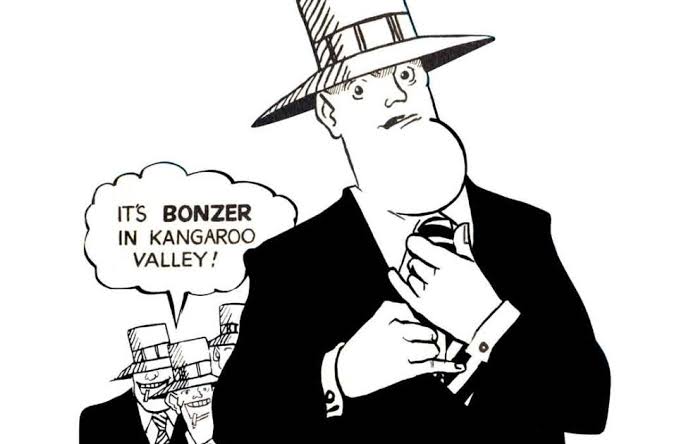


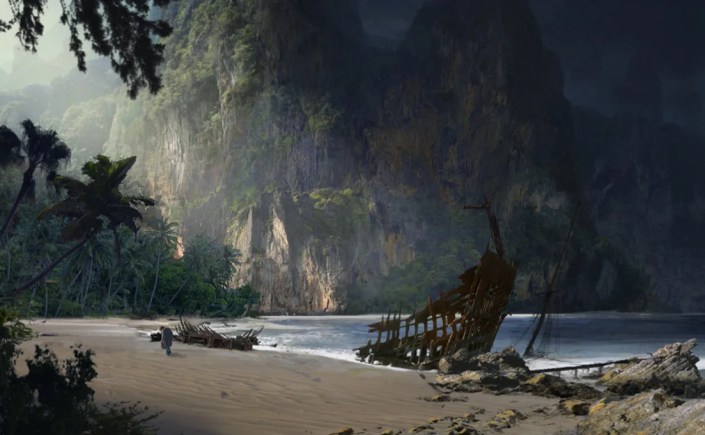
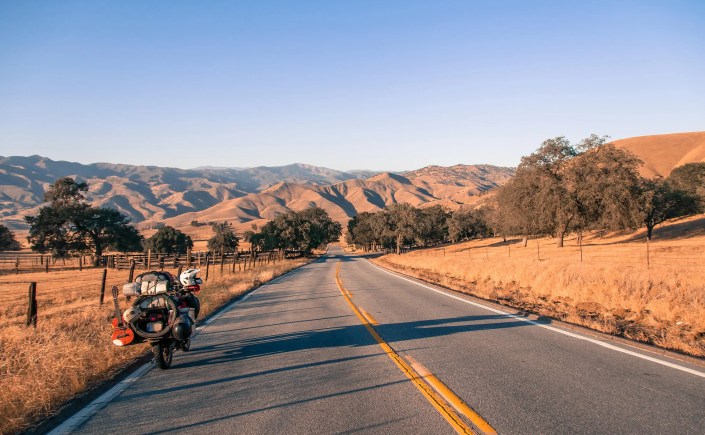

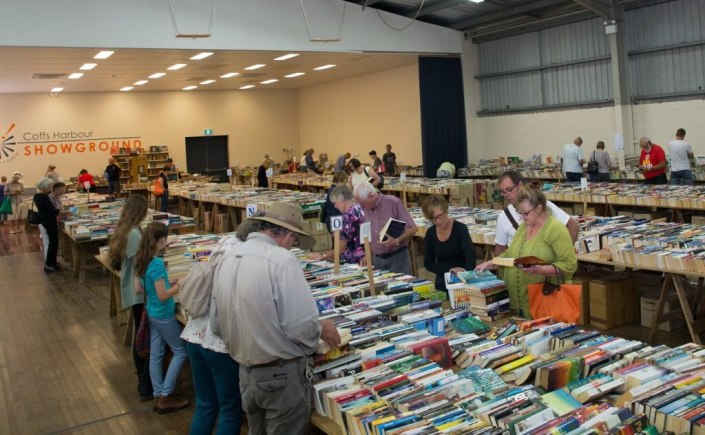
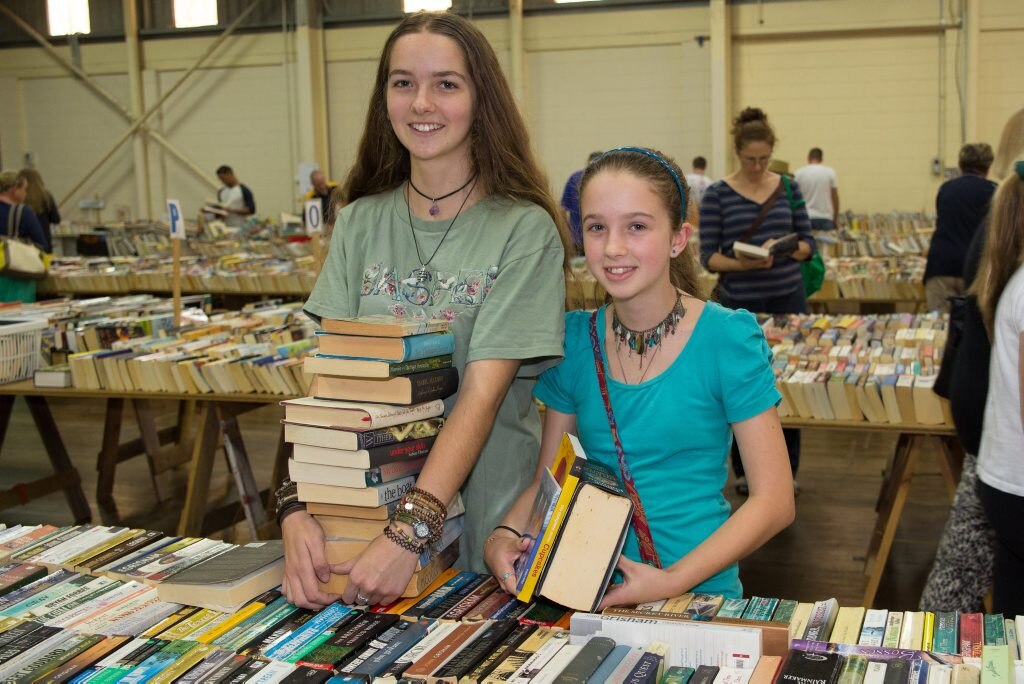

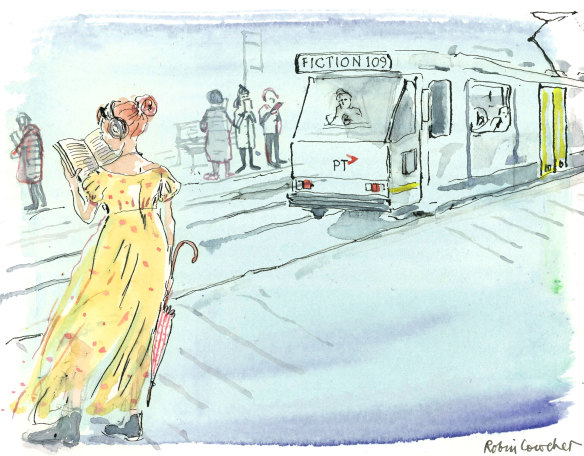
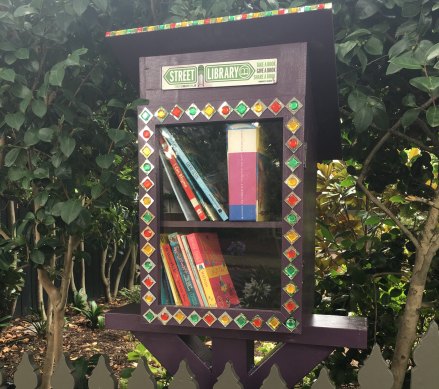

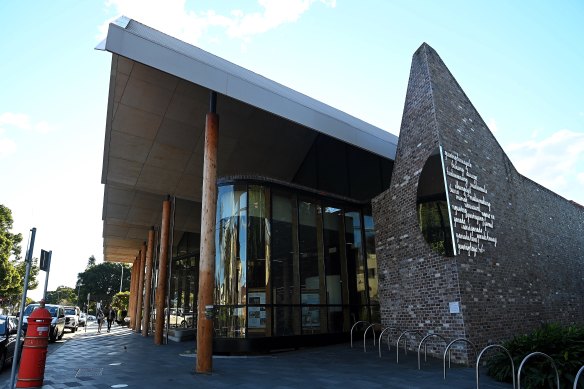
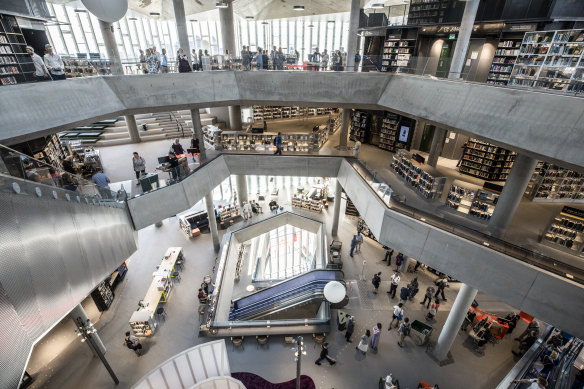
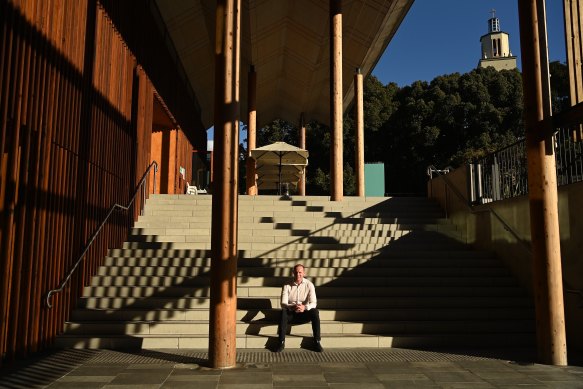


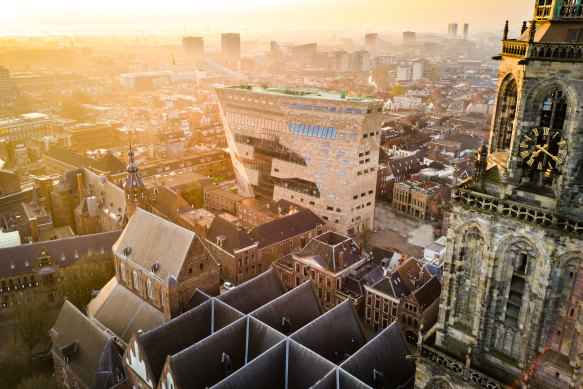


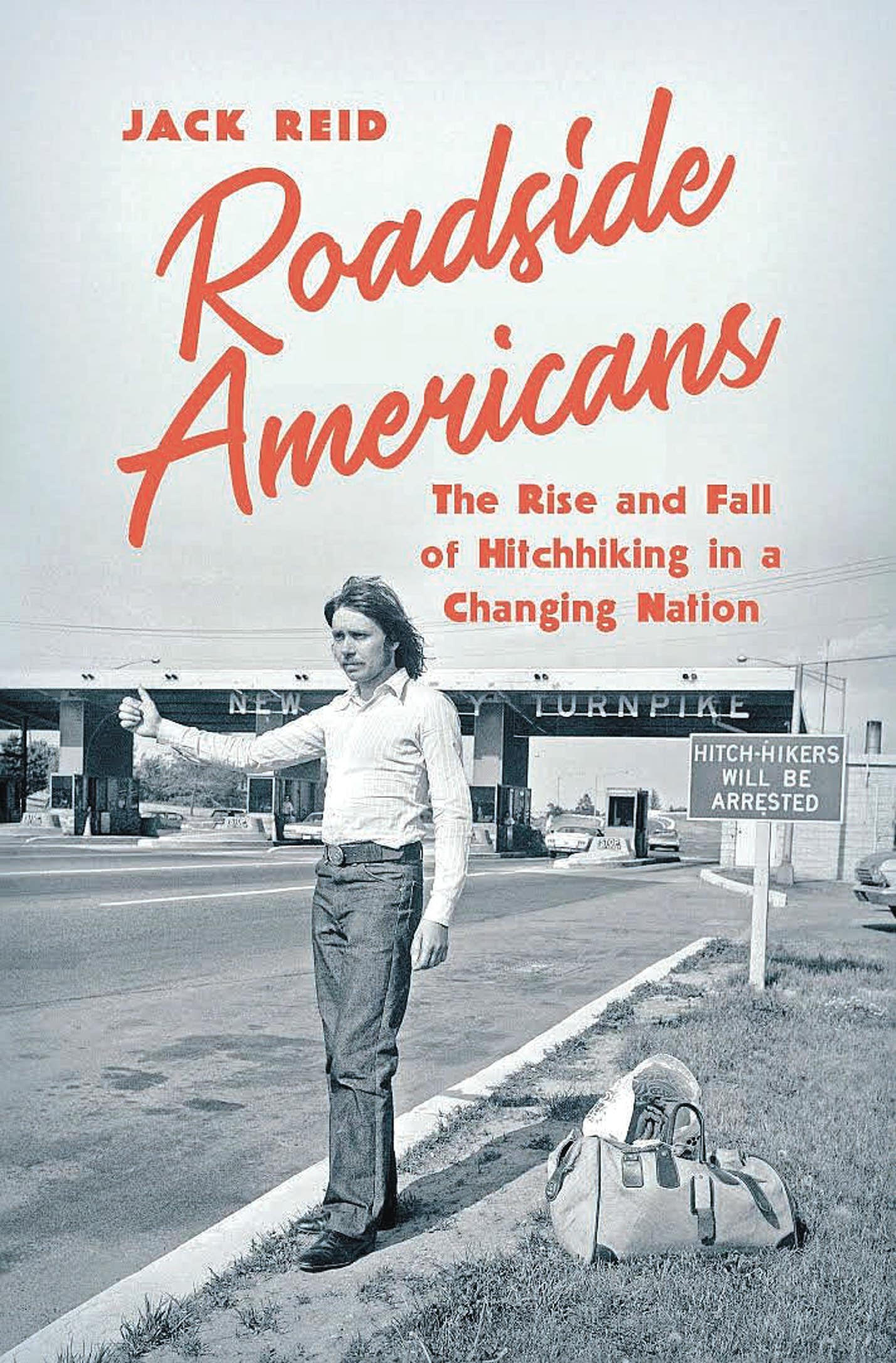


 In That Howling Infinite
Gregory Peck as Captain Ahab