Better read than dead … where have all the big books gone?

The big books. The ambitious books, the life-changing books, the long books, the time-consuming books, the dense books. Not the “classics” because classics aren’t necessarily big and big isn’t necessarily classic (whatever that means, anyway) but the important books our culture used to produce but, today, we rarely see on bookshelves, where have they gone?

My mother used to tell me I was reading almost as soon as I could walk, and I was enrolled in libraries at an early age. In my lifetime, I’ve probably gone through tens of thousands of books of all sizes and genres. Now in my twilight years, though I still I love reading books, I would no longer regard reading as a hobby like I would be in the past, and I do not consume as many books as I did in earlier days. I often feel that I have lost the appetite for “big books” – big in the dimension and the number of pages, but not in the sense of scope and content and the literary reputation of the author. Back in day, I would tackle both the size and the sensibility of books with alacrity and and excitement, eager as I was then for knowledge and insight – those lengthy, complicated, and yes, ambitious, life-changing and time-consuming books that novelist Steve Orr name-checks in the opinion piece republished below.

As for those “big books”, I started early. Grammar School curricula mandated “set books” from the “canon” of English literature. William Shakespeare and Charles Dickens, of course, and also, among others, Christopher Marlowe, Geoffrey Chaucer, Oscar Wilde, GB Shaw, and John Steinbeck. Although we deep-dived into specific books, we were encouraged to read their other works, and more besides. So, I came to know The Iliad, The Odyssey and The Aenead, and also the French ‘greats’ Alexander Dumas and Victor Hugo. I can’t recall how I came to discover Mikhail Sholokov’s dramatic tales of the Don Cossacks, but they gave me a fascination with Russian history that has endured to this day, and introduced me to the Russian Revolution and Civil War – and socialism (see The Russian Tradition – Russia, Ukraine and Tibor Szamuely and other pieces).

During my university years, few non-fiction works of note come to mind though I’m sure I’d have read a few – including all three books of Tolkien’s trilogy which I binged on over one cold and rainy English weekend in Reading. Three years later, whilst traveling the celebrated Hippie Trail to India and back, I’d pick up random tomes in hotels and doss houses along the road. It was between Kashmir and Istanbul, I met James Joyce’s Leopold Bloom and Dostoevsky’s melancholy Prince Mishkin.

Moving to London in the early seventies, I spent hours traveling back and forth on the London Underground – always with a good book in hand. I went through phases. The Russian canon of Tolstoy, Dostoevsky, Pasternak, and Solzhenitsyn, all angst and agony, suited me well in my restless years. When my mood changed from melancholy to mellow, from the blues to the bucolic, I worked through all of Thomas Hardy’s tales of rural England, and discovered that Rudyard Kipling was much, much more than Mowgli. I encountered Milton’s fallen angel ( see Lucifer Descending … encounters with the morning star) whilst Don Quixote and Captain Ahab gave me a good literary workout. The name of this blog is taken from Moby-Dick. Meanwhile, the current best-seller lists provided many worthy reads.

Through the eighties and nineties, I would have several books on the go and would plough through several works of fiction and non-fiction each month. With the onset of the internet and the social media age, my decades long passion for history and politics superseded my fondness for a good book or two as I dedicated more of my leisure hours to news media and on-line feeds. The acquisition of an iPad in 2011 accelerated the demise of the actual printed word. I have never, however, read an e-book, and probably never will, and I buy books still, including several I would argue fitted Orr’s criteria of “big” – particularly CE Morgan’s “great American novel” The Sport of Kings and Hilary Mantel’s Wolf Hall trilogy. But since retiring to the bush, my reading capacity is down to a book every one or two months, depending in on its size.

Orr’s piece reminded me of my once prevailing but receding passion for the tangible printed word, providing not so much an obituary to the “big books” but a wake-up call.

“Maybe it’s time to commit”, he writes, “Maybe it’s time to (re-)rewire our brains to work in years, months, instead of fractions of seconds. Maybe it’s time to stop saying, “I’ll wait for the movie”. Maybe it’s time to admit we all have a little of Ahab’s obsession, Humbert’s lustings – maybe there’s a bit of Christian Stead’s controlling Sam Pollit in all us’.

“In short’, he concludes, “maybe we are the book and the book is us. Let’s admit, as Stead did when writing The Man Who Loved Children, the best way to exorcise the past is to write (and read) about it. This, as it turns out, isn’t a desirable but a necessary thing. Shall we admit, in the end, the questions the big books pose no longer interest us because we no longer interest ourselves?”

Postscript

From Better read than dead – are books the footprints from our past?

Last year, I jettisoned half of a book collection I’d accumulated over sixty years, more went this year – books that had followed me as I moved from Birmingham to Reading to London in the sixties and seventies, migrated to Australia, and moved from house to house in Sydney and finally settled in the midst of a forest in northern New South Wales.

Out went books of all formats and genres. Mementos of former passions and fashions. Relics of past courses and careers. Old school textbooks, university texts, fiction, nonfiction, dictionaries, coffee table books. I’d worked for years in publishing, so the complimentary copies alone were colossal..

I’d already culled boxes of books a decade ago when we’d last moved house and home, and this time, I was determined to downsize further. My primary criteria was that if I hadn’t looked inside the covers of a book for twenty, thirty, fifty years, then I wasn’t likely to do so in the next five, ten, twenty years I have left on this planet.

Nevertheless, I kept back five full shelves Books of poetry, some of them a century old. All-time favourite novels, including the iconic Russians, Hardy, Herbert and Heinlein. Non-fiction histories I regard with particular nostalgia or think might be of use again one day. Books about music and musicians, particularly the Beatles and the Bobster. Recent purchases. And, books I consider “rare” – a subjective descriptor that I can only explain as old books which I picked up in secondhand bookshops when I lived in London in the sixties and seventies. Some, I reckon, are actually rare!

For more on books and reading in In That Howling Infinite, see Better Read Than Dead – the joy of public libraries

Where have all the big books gone?

The big books. The ambitious books, the life-changing books, the long books, the time-consuming books, the dense books. Not the “classics” because classics aren’t necessarily big and big isn’t necessarily classic (whatever that means, anyway) but the important books our culture used to produce but, today, we rarely see on bookshelves, where have they gone?

Why aren’t (many) people writing them? And more importantly, why aren’t people reading them?

This is a not a new concern. Charles Bukowski in 1990 asked: “… well, where are they?/ the Hemingways, the T.S. Eliots, the Pounds … dead, I know/ but where are the re-/ placements, where are the new/ others?’

Poet and writer Charles Bukowski.

Poet and writer Charles Bukowski.

What was a casual question back then seems to have a new ­urgency now.

There are lots of reasons, and I’d like to explore some of them here. I suspect technology, in its various forms, is taking over the jobs we used to trust our brains to do: critical thinking, imagination, reasoning and speech and (civilised) argument and social intercourse at a personal and public level. We say, “Oh, well, I’m too busy to tackle Anna Karenina,” then pick up our phone to check the latest tweet.

We don’t value time in the same way we used to – slow, precious, filled with good smells and sounds and ideas and meaningful things. We’re happy to waste time. Like, surely, we’ll get it back? We’re happy to fill the gap with more technology, updated phones and watches. And the result? We’ve become lazy, and lonely. We’ve privatised our inner spaces, sold off our opinions, let someone else make Pixar and Marvel dreams for us. And worse, for too many people now, everything’s about money. We’ve shat on our curiosity, given up on the daily awe that came from sensing our place in nature, the consolations and compromises that made civilisation possible, and pleasant. The result? Each new generation bleeding out its limited reserves of empathy, understanding and wisdom.

Readers seem hung up on plot. Easy plots. Familiar plots. Plots that come from and return to a screen. Problem being, the big books are about big characters: Miss Havisham, Elizabeth Hunter, Captain Ahab, Tom Joad. It takes time to build up a complex, flawed life on a page, each verb and adjective competing for the smallest breath and bit of meaning. Even when contemporary writers have a crack, readers falter, stray, give up. There’s something easier, more immediate to hand. Something involving the discovery of a body on a beach and working out how it go there. Harold Bloom: “I am not unique in my elegiac sadness at watching reading die, in the era that celebrates Stephen King and J.K. Rowling rather than Charles Dickens and Lewis Carroll.”

Ironically, it’s the loss of critics like Bloom that’s allowed the problem to fester. The loss of literary criticism generally, space in newspapers, reviews themselves (ironically, surviving in 50-word online grabs where they’re easily ignored).

Today, there are fewer places to publish extracts, to make meandering explorations that interrogate context, subtext, the way authors’ lives morph onto the page, how we needn’t make the mistakes of the past, how too many of our views are founded on faulty assumptions.

All of this might seem ho-hum: “It’s a shame but, you know, the world’s changing.”

If it wasn’t for what we risked losing. That is, the understanding of what it means to be a human on Earth, a human among millions who’ve lived and died with the same urges and joys and terrors and disappointments. How else to connect with the tribe of humanity that’s fallen through time’s long ruin? Bloom again: “We read deeply for various reasons, most of them familiar: that we cannot know enough people profoundly enough; that we need to know ourselves better.”

Keira Knightley in a scene from film Anna Karenina.

Keira Knightley in a scene from film Anna Karenina.

Or as Jonathan Franzen put it in How to Be Alone: “Readers and writers are united in their need for solitude … in their reach inward, via print, for a way out of loneliness.”

The very idea of reading deeply; of making connections in order to become better people (or at least remain sane, or maybe even happy). But now, visual seems to have won out over text; we have a poorer understanding of irony, sarcasm, the art of persuasion, voice, a well-turned sentence, the art of choosing the best word (even grammar, spelling); we can’t grasp complex sentences, let alone the formal language that glues so many big books together. In short, we’re out of practice. Kids grow up without books in the house, without reading role models (family, let alone politicians and public figures, having been replaced with sporty types). No one demands sustained reading and schools are too busy teaching “multi-modal” texts (more screens) while avoiding quality books lest they disadvantage non-readers. Meanwhile, the books that are read are short, plotish, weighed down with well-meaning but yawn-worthy attempts at solving the world’s problems. Despite schools’ mission to create readers, at the end of the day they leave more waiting for a bus that’ll never come. Apart from this, schools and universities are busy “de-colonising” bookshelves, removing Pip because (I suspect) the local gauleiter has never read Great Expectations. In short, there goes the Western canon. Anyway, chances are younger English teachers haven’t read much, or they’ve been co-opted from the geography department to make up the numbers.

And what about the writers? Bukowski: “I don’t ask for Dostoevsky, there’s no replacement for Feodor Mikhailovich. But these now, what are/ they: making their tiny splashes, what practiced ineptness, what boredom of language, what a/ crass bastardly trick against print against pages …”

The reasons are complex, but the outcomes clear: writers are no longer culturally important; big books are rarely produced by profit-driven publishers, therefore fewer are written, creating a self-fulfilling Coriolis effect of big books down little drains. But mostly, big books are hard to write. Think of Patrick White churning out an Eye of the Storm or Riders in the Chariot: a hundred thousand-plus handwritten words, typed up, corrected, typed again, “oxy-welded”, years and years of solid, thankless, grinding warfare with an Olivetti and the English language to produce a masterpiece that, even then, required a visionary ­publisher (Ben Huebsch) and well-read public to give it any chance at all.

And talking about the journey. Perhaps part of the problem is that we’ve lost interest in the journey on which writers can take us over our lives. From comics, to pre-franchised, pre-teen Tolkien, the discovery of Holden Caulfield, the oh-so-clever twenty-something Infinite Jest, then to something serious, Bolano, perhaps, and on and on it goes, the road less travelled that’s no longer travelled at all. And what have we lost? The unbroken chain of meaning from Homer to Dante, Chaucer to Shakespeare, to a 20th century profusion of styles that offered Joyce in the morning and Hesse in the afternoon.

For me, as a 12- or 13-year-old, it was Dickens. To think, someone had actually dreamed up Micawber and Betsey Trotwood! Without that narrative, that connection, how do we even know what we’re missing, or misunderstanding? Are we ready to give up the collective memory that, according to Italo Calvino, holds together “the imprint of the past and the plan for the future …”

Or is it simply that we no longer know how to be alone anymore? Bloom said it was all about finding a mind “more original than our own”. But now, we’re all creators, posting a hundred daily autobiographies on TikTok. Ironically, this seems to be leaving us more lonely than ever and, having withdrawn within ourselves, having discovered we’re bored with what’s being said and sung and tweeted, we can’t work out what’s next?

Maybe it’s time to commit. Maybe it’s time to (re-)rewire our brains to work in years, months, instead of fractions of seconds. Maybe it’s time to stop saying, “I’ll wait for the movie”. Maybe it’s time to admit we all have a little of Ahab’s obsession, Humbert’s lustings – maybe there’s a bit of Christian Stead’s controlling Sam Pollit in all us.

In short, maybe we are the book and the book is us. Let’s admit, as Stead did when writing The Man Who Loved Children, the best way to exorcise the past is to write (and read) about it. This, as it turns out, isn’t a desirable but a necessary thing. Shall we admit, in the end, the questions the big books pose no longer interest us because we no longer interest ourselves?

Stephen Orr is an award-winning novelist. He will be a guest at Adelaide Writers’ Week on Wednesday 5 March.
Man Friday … a poet’s Robinson Crusoe sequel

You won’t have to worry anymore
When you hear the cry for home

Van Morrison

Alec Derwent Hope (21 July 1907 – 13 July 2000) was an Australian poet and essayist known for his satirical slant, and also, a critic, teacher and academic: He ended his career as Professor of English at the Australian National University, Canberra. He was referred to in an American journal as “the 20th century’s greatest 18th-century poet”.

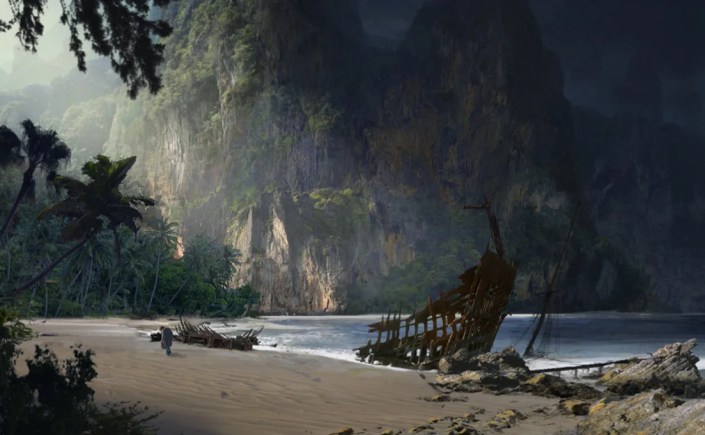
Man Friday, published in 1958, is actually set in those faraway days of Georgian England. It begins where English novelist and journalist Daniel Defoe leaves off his 1719 tale of the iconic castaway Robinson Crusoe. Readers will recall that Crusoe was shipwrecked and subsequently spent 28 years on a remote tropical desert island near the coasts of Venezuela and Trinidad, encountering cannibals, captives, and mutineers before being rescued. To refresh memories, there is a 200 word synopsis at the end of this post.

Hope takes up the story of Crusoe’s companion and servant Friday after he is brought by his “master” and sole companion to live in England. The completely alien culture that Friday, now a stranger in a strange land, encounters on this new “desert island” requires a huge and disturbing recalibration of his temporal, cultural and spiritual compass. He gradually arrives at an acceptance of the way of life that has been imposed upon him by circumstance.

His transformation and quiet resignation into an upper-class servant and his subsequent marriage and children take him farther and farther away from his memories and encase him within an artificial persona – until the day he accompanies Crusoe to an English sea port and hears the ocean’s beckoning roar for the first time in many years. The song of the ocean, the rush of memory, and Friday’s response to the call of the sea crystalizing in the poem’s ending. 

It is a remarkably imaginative work juxtaposing Friday’s former life on an idyllic “island in the sun” (to quote the late Harry Belafonte’s lovely rhapsody’) to the stitched-up, hung-up, and in his perception, confined world of polite Georgian society. It is also captivating insofar it employs the sea as an extended metaphor (a device that I myself have used in poems and songs – see the Sound Cloud audio clips at the end of this post).

The sea runs like a leitmotif throughout the poem even when it is not mentioned explicitly. It has multiple associations: journeys by sea, separation and exile, isolation and loneliness, and the idea of home as an anchor, a goal, a safe haven, and as a longing. AD Hope further infuses it with the cultural differences and divisions, of social and spiritual barriers, of acclimatisation and assimilation of a kind. And in the end, an atavistic crying for home.

Saved, at long last through Him whose power to save
Kept from the walking, as the watery grave,
Crusoe returned to England and his kind,
Proof that an unimaginative mind
And sober industry and common sense
May supplement the work of Providence.
He, no less providential and no less
Inscrutably resolved to save and bless,
Eager to share his fortune with the weak
And faithful servants whom he taught to speak,
By all his years of exile undeterred,
Took into exile Friday and the bird.

The bird no doubt was well enough content.
She had her corn – what matter where she went?
Except when once a week he walked to church,
She had her master’s shoulder as a perch.
She shared the notice of the crowds he drew
Who praised her language and her plumage too,
And like a rational female could be gay
On admiration and three meals a day.

But Friday the Dark Caribbean Man,
Picture of his situation if you can:
The gentle savage, taught to speak and pray
On England’s Desert Island cast away,
No God like Crusoe is issuing from his cave
Comes with his thunder-stick to slay and save;
Instead from caves of stone, as thick as trees,
More dreadful than ten thousand savages,
In their strange clothes and monstrous mats of hair,
The pale-eyed English swarm to joke and stare
With endless questions round him crowd and press,
Curious to see and touch his loneliness.
Unlike his master Crusoe long before,
Crawling half drowned upon the desolate shore,
Mere ingenuity useless in his need,
No wreck supplies him biscuits, nails and seed,
No fort to builds, no call to bake, to brew,
Make pots and pipkins, cobble coat and shoe,
Gather his rice and milk his goats and rise
Daily to some absorbing enterprise.

And yet no less than Crusoe so he must find
Some shelter for the solitary mind;
Some daily occupation to contrive
To warm his wits and keep the heart alive;
Protect among the cultured, if he can,
The “noble savage” and the “natural man”.
As Crusoe made his clothes, so he no less
Must labour to invent his nakedness
And, lest their alien customs without trace
Absorb him, tell the legends of his race
Each night aloud in the soft native tongue
That filled his world when, bare and brown and young,
His brown, bare mother held him to her breast,
Then say his English prayers and sink to rest.
And each day waking in his English sheets,
Hearing the wagons in the cobble streets,
The morning bells, the clatter and cries of trade,
He must recall, within their palisade,
The sleeping cabins in the tropic dawn,
The wrapt leaf-breathing silence, and the yawn
Of naked children as they wait and drowse,
The women chattering around their fires, the prows
Of wet canoes nosing the still lagoon;
At each meal, handling alien fork and spoon,
Remember the spice mess of yam and fish
And the brown fingers meeting in the dish:
Remember too those island feasts, the sweet
Blood frenzy and the taste of human meat.

He piled memories against his need;
In vain! for still he found the past recede
Try as he would, recall, relieve rehearse,
The cloudy images would still disperse.,
Till as in dreams, the island world hecknew
Confounded the fantastic with the true
While England, less unreal day by day,
The cannibal Island ate his past away.
But for the brooding eye, the swarthy skin,
Witness to the Natural Man within,
Year following year, by inches, as they ran
Transformed the savage to an English man
Brushed, barbered, hatted, trousered and baptised,
He looked, if not completely civilised,
What came increasingly to be the case:
An upper servant, conscious of his place,
Friendly but not familiar in address
And prompt to please, without obsequiousness
Adept to dress , to shave, to carve, to pour
And skilled to open or refuse the door,
To keep on terms with housekeeper and cook,
But quell maids and footman with a look.
And now his master, thoughtful for his need,
Bought him a wife and gave him leave to breed.
A fine mulatto, once a ladies maid,
She thought herself superior to Trade
And, reared on a Plantation, much too good
for a low native Indian from the wood;
Yet they contrived at last to rub along
For he was strong and kind, and she was young
And soon a father, then a family man
Friday took root in England and began
To be well thought of in the little town,
And quoted in discussions at The Crown
Whether the Funds would fall, the French would treat
Or the new ministry could hold its seat
For though he seldom spoke, the rumour ran
The master had no secrets from his man
And Crusoe’s ventures prospered so, in short,
It was concluded he had friends at Court.

Yet, as the years of exile came and went,
Though first he was he grew resigned and then content,
Had you observed him close, you might surprise
A stranger looking through the servant’s eyes.
Some colouring of speech , some glint of pride,
Not born of hope, for hope had long since had died,
Not even desire, scarce memory at last
Preserved that stubborn vestige of the past.

It happened once that man and master made
A trip together on affairs of trade;
A ship reported founding in the Down
Brought them to visit several seaport towns.
At one of these great Yarmouth or Kings Lynn,
Their business done, they baited at an inn,
And in the night were haunted by the roar
Of a wild wind and tide against the shore.
Crusoe soon slept again but Friday lay
Awake and listening till the dawn of day.
For the first time in all his exiled years
The thunder of the ocean filled his ears;
And that tremendous voice so long unheard
Released and filled and drew him till he stirred
And left the house and passed the town, to reach
At last the dunes and rocks and open beach:
Pale bare and gleaming in the break of day
A sweep of new-washed sand around the bay,
and spindrift arriving up the bluffs like smoke
As the long combers reared their crests and broke.
There, in the sand beside him, Friday saw
A single naked footprint on the shore
His heart stood still, for as he stared, he knew
The foot made it never had worn shoe
And, at glance, that no such walker could
Have been a man of European blood.
From such a footprint once he could describe
If not the owner’s name, at least his tribe,
And tell his purpose as men read a face
And still his skill sufficed to know the race;
For this for this was such a print as long ago
He too had made and taught his eyes to know.
There could be no mistake. A while he stood
Staring at that great German Ocean’s flood;
And suddenly he saw those shores again
Where Orinoco flows into the main,
And, stunned with an incredible surmise,
Heard it his native tongue once more the cries
Of spirits silent now for many a day;
And all his years of exile fell away.

The sun was nearly to the height before
Crusoe arrived hallowing at the shore,
Followed the footprints to the beach and found
The clothes and shoes and thought his servant drowned
Much grieved he sought saw him up and down the bay
But never guessed, when later in the day
They found the body drifting in the foam,
That Friday had been rescued and gone home.

See also in In That Howling Infinite, Better read than Dead – books, poems and reading

Daniel Defoe’s Robinson Crusoe in 200 words

Courtesy of the Cliff’s Notes blog  

Robinson Crusoe is an English adventure novel by Daniel Defoe (1660- 1731. an English novelist, journalist, merchant, pamphleteer and spy. First published on 25 April 1719, it is claimed to be second only to the Bible in its number of translations.

Written with a combination of epistolary, confessional, and didactic forms, the book follows the title character (born Robinson Kreutznaer) after he is cast away and spends 28 years on a remote tropical desert island near the coasts of Venezuela and Trinidad, encountering cannibals, captives, and mutineers before being rescued. The story has been thought to be based on the life of Alexander Selkirk, a Scottish castaway who lived for four years on a Pacific island called “Más a Tierra” (now part of Chile) which was renamed Robinson Crusoe Island in 1966. Pedro Serrano is another real-life castaway whose story might have inspired the novel.

The first edition credited the work’s protagonist Robinson Crusoe as its author, leading many readers to believe he was a real person and that the book was a non-fiction travelogue.Despite its simple narrative style, Robinson Crusoe was well received in the literary world and is often credited as marking the beginning of realistic fiction as a literary genre. Some allege it is a contender for the first English novel.

It tells the story of one Robinson Crusoe, a young and impulsive wanderer who, having his defied his parents, ran away to sea. 

He was rescued by a Portuguese ship and started a new adventure. He landed in Brazil, and, after some time, he became the owner of a sugar plantation. Hoping to increase his wealth by buying slaves, he aligned himself with other planters and undertook a trip to Africa in order to bring back a shipload of slaves. After surviving a storm, Crusoe and the others were shipwrecked. He was thrown upon shore only to discover that he was the sole survivor of the wreck.

Crusoe made immediate plans for food, and then shelter, to protect himself from wild animals. He brought as many things as possible from the wrecked ship, things that would be useful later to him. In addition, he began to develop talents that he had never used in order to provide himself with necessities. Cut off from the company of men, he began to communicate with God, thus beginning the first part of his religious conversion. To keep his sanity and to entertain himself, he began a journal. In the journal, he recorded every task that he performed each day since he had been marooned.

As time passed, Crusoe became a skilled craftsman, able to construct many useful things, and thus furnished himself with diverse comforts. He also learned about farming, as a result of some seeds which he brought with him. An illness prompted some prophetic dreams, and Crusoe began to reappraise his duty to God. Crusoe explored his island and discovered another part of the island much richer and more fertile, and he built a summer home there.

One of the first tasks he undertook was to build himself a canoe in case an escape became possible, but the canoe was too heavy to get to the water. He then constructed a small boat and journeyed around the island. Crusoe reflected on his earlier, wicked life, disobeying his parents, and wondered if it might be related to his isolation on this island.

After spending about fifteen years on the island, Crusoe found a man’s naked footprint, and he was sorely beset by apprehensions, which kept him awake many nights. He considered many possibilities to account for the footprint and he began to take extra precautions against a possible intruder. Sometime later, Crusoe was horrified to find human bones scattered about the shore, evidently the remains of a savage feast. He was plagued again with new fears. He explored the nature of cannibalism and debated his right to interfere with the customs of another race.

Crusoe was cautious for several years, but encountered nothing more to alarm him. He found a cave, which he used as a storage room, and in December of the same year, he spied cannibals sitting around a campfire. He did not see them again for quite some time.

Later, Crusoe saw a ship in distress, but everyone was already drowned on the ship and Crusoe remained companionless. However, he was able to take many provisions from this newly wrecked ship. Sometime later, cannibals landed on the island and a victim escaped. Crusoe saved his life, named him Friday, and taught him English. Friday soon became Crusoe’s humble and devoted slave.

Crusoe and Friday made plans to leave the island and, accordingly, they built another boat. Crusoe also undertook Friday’s religious education, converting the savage into a Protestant. Their voyage was postponed due to the return of the savages. This time it was necessary to attack the cannibals in order to save two prisoners since one was a white man. The white man was a Spaniard and the other was Friday’s father. Later the four of them planned a voyage to the mainland to rescue sixteen compatriots of the Spaniard. First, however, they built up their food supply to assure enough food for the extra people. Crusoe and Friday agreed to wait on the island while the Spaniard and Friday’s father brought back the other men.

A week later, they spied a ship but they quickly learned that there had been a mutiny on board. By devious means, Crusoe and Friday rescued the captain and two other men, and after much scheming, regained control of the ship. The grateful captain gave Crusoe many gifts and took him and Friday back to England. Some of the rebel crewmen were left marooned on the island.

Crusoe returned to England and found that in his absence he had become a wealthy man. After going to Lisbon to handle some of his affairs, Crusoe began an overland journey back to England. Crusoe and his company encountered many hardships in crossing the mountains, but they finally arrived safely in England. Crusoe sold his plantation in Brazil for a good price, married, and had three children. Finally, however, he was persuaded to go on yet another voyage, and he visited his old island, where there were promises of new adventures to be found in a later account.

When Freedom comes, she crawls on broken glass

Flashing for the warriors whose strength is not to fight
Flashing for the refugees on the unarmed road of flight
An’ for each an’ ev’ry underdog soldier in the night
An’ we gazed upon the chimes of freedom flashing
Bob Dylan, Chimes of Freedom

Hear the cry in the tropic night, should be the cry of love but it’s a cry of fright
Some people never see the light till it shines through bullet holes
Bruce Cockburn, Tropic Moon

When Freedom Comes is a tribute to Robert Fisk (1946-2020), indomitable, veteran British journalist and longtime resident of Beirut, who could say without exaggeration “I walk among the conquered, I walk among the dead” in “the battlegrounds and graveyards” of “long forgotten armies and long forgotten wars”. It’s all there, in his grim tombstone of a book, The Great War for Civilization (a book I would highly recommend to anyone wanting to know more about the history of the Middle East in the twentieth century – but it takes stamina – at near in 1,300 pages – and a strong stomach – its stories are harrowing).

The theme, alas, is timeless, and the lyrics, applicable to any of what Rudyard called the “savage wars of peace” being waged all across our planet, yesterday, today and tomorrow – and indeed any life-or-death battle in the name of the illusive phantom of liberty and against those intent on either denying it to us or depriving us of it. “When freedom runs through dogs and guns, and broken glass” could describe Paris and Chicago in 1968 or Kristallnacht in 1938. If it is about any struggle in particular, it is about the Palestinians and their endless, a fruitless yearning for their lost land. Ironically, should this ever be realized, freedom is probably the last thing they will enjoy. They like others before them will be helpless in the face of vested interest, corruption, and brute force, at the mercy of the ‘powers that be’ and the dead hand of history.

The mercenaries and the robber bands, the warlords and the big men, az zu’ama’, are the ones who successfully “storm the palace, seize the crown”. To the victors go the spoils – the people are but pawns in their game.

In 2005, on the occasion of the publication of his book, Fisk addressed a packed auditorium in Sydney’s Macquarie University. Answering a question from the audience regarding the prospects for democracy in the Middle East, he replied:

“Freedom must crawl over broken glass”

Freedom Comes 

… all wars come to an end. And that’s where history restarts.  Robert Fisk

There goes the freedom fighter,
There blows the dragon’s breath.
There stands the sole survivor;
The time-worn shibboleth.
The zealots’ creed, the bold shahid,
Give me my daily bread
I walk amongst the conquered
I walk amongst the dead

Here comes the rocket launcher,
There runs the bullets path,
The revolution’s father,
The hero psychopath.
The wanting seed, the aching need
Fulfill the devil’s pact,
The incremental balancing
Between the thought and act.

The long-forgotten army
In the long-forgotten war.
Marching to a homeland.
We’ve never seen before.
We feel the wind that blows so cold amidst
The leaves of grass.
When freedom comes to beating drums
She crawls on broken glass

There rides the mercenary,
Here roams the robber band.
In flies the emissary
With claims upon our land.
The lesser breed with savage speed
Is slaughtered where he stands.
His elemental fantasy
Felled by a foreign hand.

The long-forgotten army
In the long-forgotten war.
Marching to a homeland.
We’ve never seen before.
We feel the wind that blows so cold amidst
The leaves of grass.
When freedom comes to beating drums
She crawls on broken glass.

Thy kingdom come, thy will be done
On heaven and on earth,
And each shall make his sacrifice,
And each shall know his worth.
In stockade and on barricade
The song will now be heard
The incandescent energy
Gives substance to the word.

Missionaries, soldiers,
Ambassadors ride through
The battlegrounds and graveyards
And the fields our fathers knew.
Through testament and sacrament,
The prophecy shall pass.
When freedom runs through clubs and guns,
She crawls on broken glass.

The long-forgotten army
In the long-forgotten war.
Marching to a homeland.
We’ve never seen before.
We feel the wind that blows so cold amidst
The leaves of grass.
When freedom comes to beating drums
She crawls on broken glass
When freedom comes to beating drums
She crawls on broken glass

© Paul Hemphill 2012

From: In That Howling Infinite – Poems of Paul Hemphill Volume 5

See also in In That Howling Infinite, A Middle East Miscellany, See also: East – An Arab Anthology and   A Short History of the Rise and Fall of the West

Rainer Maria Rilke … three poems

Austrian Rainer Maria Rilke is one of my favourite poets. In 1969, a Christian friend gave me a Penguin Modern Poets edition of his poems. Here are three sublime spiritual pieces from this treasured book, beautifully translated by JB Leishman. No other translations are as lovely as his.

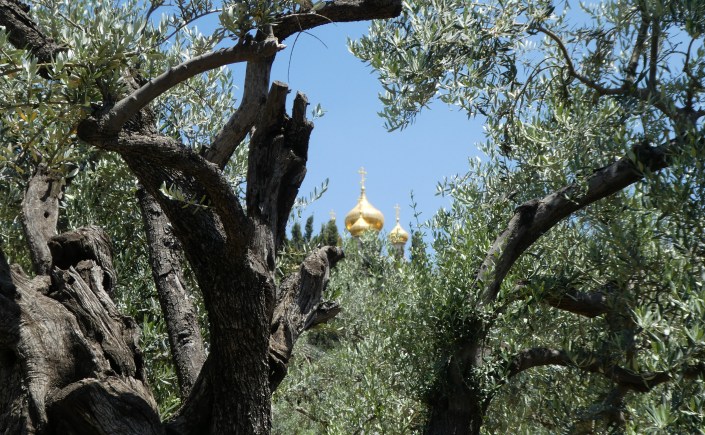
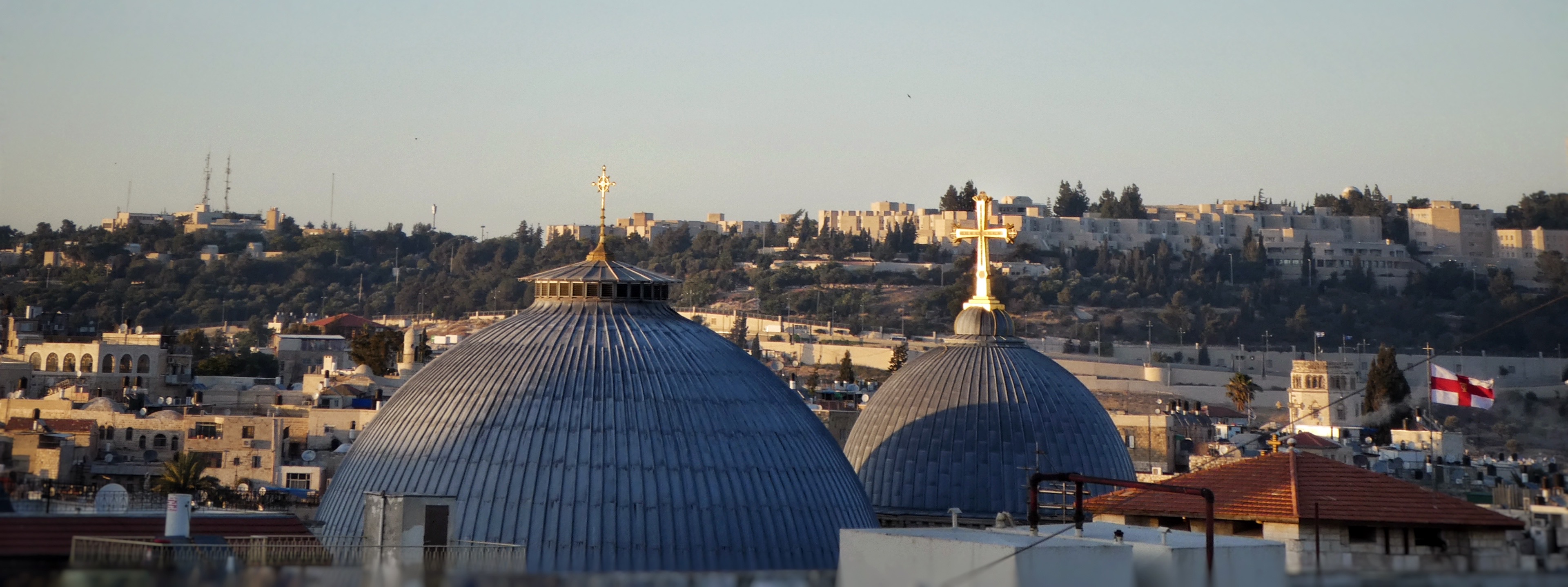
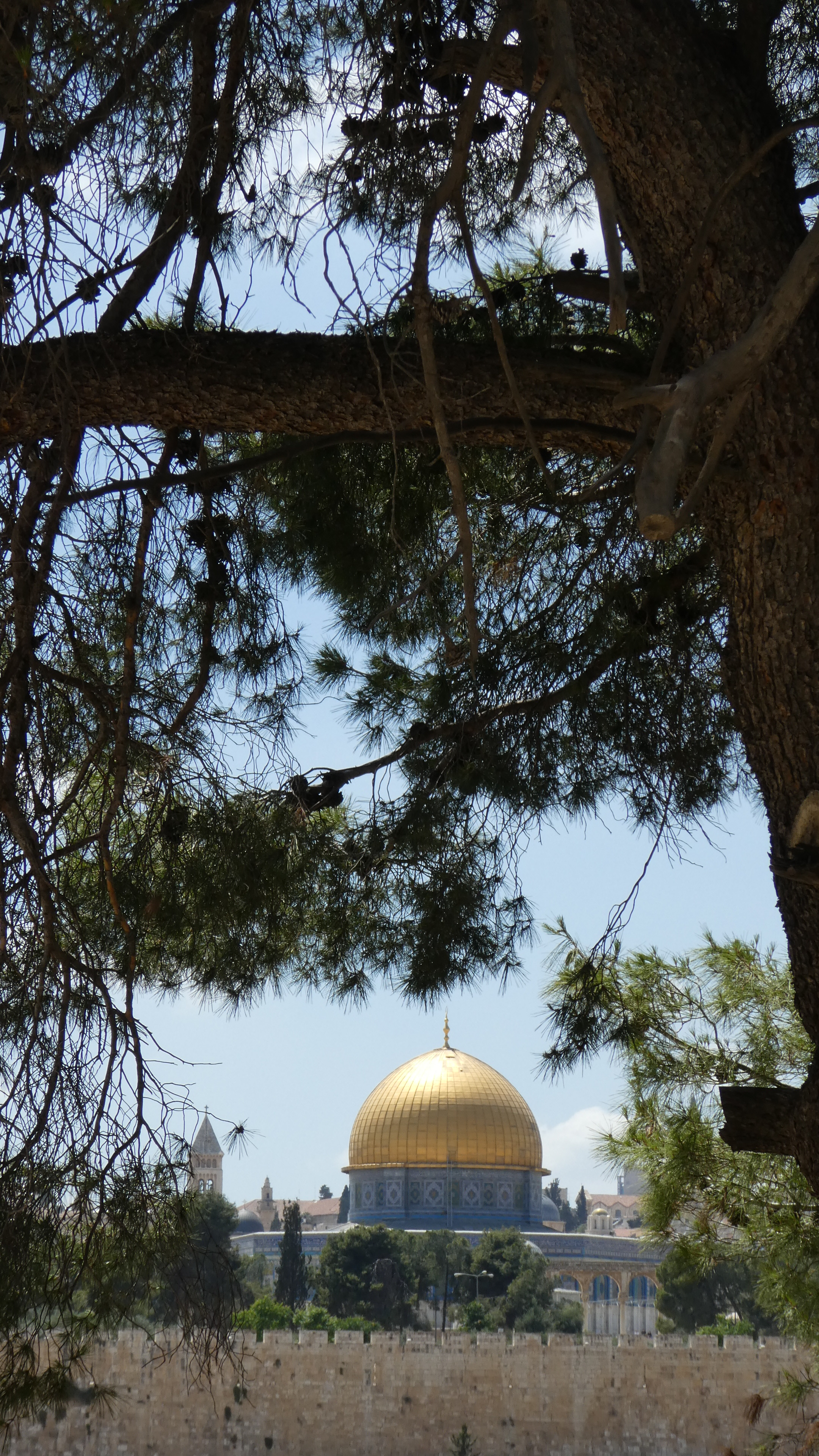
I would always recall these poems when visiting the Holy Land, and since my very first visit in 1971, I have associated them particularly with the Old City of Jerusalem. I took the photographs accompanying this piece in that exquisite place.

The Olive Garden

And still he climbed, and through the grey leaves thrust,
quite grey and lost in the grey olive lands,
and laid his burning forehead full of dust
deep in the dustiness of burning hands.

After all, this.
And this, this, then was the end
Now I’m to go, while I am going blind,
and, oh, why wilt Thou now have me still contend
Thou art, whom I myself no longer find.

No more I find thee. In myself no tone
of Thee; nor in the rest; nor in this stone.
I can find Thee no more. I am alone.

I am alone with all that human fate
I undertook through Thee to mitigate,
Thou who art not. Oh, shame too consummate…

An angel came, those afterwards relate.

Wherefore an angel? Oh, there came the night,
and turned the leaves trees indifferently,
and the disciples stirred uneasily.
Wherefore an angel? Oh, there came the night.

The night that came requires no specifying;
just so a hundred nights and nights go by,
while dogs are sleeping and while stones are lying –
just any melancholy night that, sighing,
lingers till morning mount the sky.

For Angels never never come to such men’s prayers
nor nights for them mix glory with their gloom,
Forsakenness is the self-loser’s doom
and such are absent from their fathers cares
and disincluded from their mothers womb.

The Spectator

I watched the storms in the tree above:
after days of mild decaying
my windows shrink from there assaying,
and the things I hear the distant saying,
without a friend I find dismaying,
without a sister I cannot love.

There goes the storm to urge and alter,
through forest trees and through time’s tree;
and nothing seems to age or falter:
the landscape like an open psalter,
speaks gravely of eternity.

How small the strife that’s occupied us,
how great is all that strives within us!
We might, if, like the things inside us,
we let the great storm over-ride us grow
spacious and anonymous.

We conquer littleness, obtaining
success that only makes a small,
while unconstrained and unconstraining,
The permanent alludes us all:

that angel who, through loath, yet lingers
to wrestle with mortality,
and, when opponents’ sinews settle
in strife and stretch themselves to metal,
can feel it move beneath his fingers
like strings in some deep melody.

The challenger who failed to stand
that trial so constantly rejected
goes forth upright and resurrected
and great from that hard, forming hand
that clasped about him and completed.
Conquests no longer fascinate.
His growth consists in being defeated
by something ever-grandlier great.


The Annunciation

   (Words of the Angel)

You are not nearer God then we;
he’s far from everyone .
And yet, your hands most wonderfully
Reveal his benison.
From woman’s sleeve none ever grew
so ripe, so shimmeringly:
I am the day, I am the dew,
you, Lady, are the tree.

Pardon, now my long journey’s done,
I had forgot to say
what he who sat as in the sun,
grand in his gold array ,
told me to tell you, pensive one
(space has bewildered me)
I am the start of what’s begun,
you, Lady, are the tree.

I spread my wings and wide and rose,
the space around grew less;
your little house quite overflows
with my abundant dress.
But still you keep your solitude
And hardly notice me:
I’m but a breeze within the wood,
you, Lady, are the tree.

The angels tremble in their choir,
grow pale, and separate:
never were longing and desire
so vague and yet, so great.
Something perhaps is going to be
that you perceived in dream.
Hail to you! for my soul can see
that you are ripe and teem.

You lofty gate, that any day
may open for our good:
Your ear my longing songs assay
My word – I know now – lost its way
in you as in a wood.

And thus your last dream was designed
to be fulfilled by me.
God looked at me: he made me blind…
You, Lady, are the tree.

René Karl Wilhelm Johann Josef Maria Rilke (4 December 1875 – 29 December 1926), known as Rainer Maria Rilke,  was an Austrian poet and novelist. Acclaimed as an idiosyncratic and expressive poet, he is widely recognized as a significant writer in the German language. His work is viewed by critics and scholars as possessing undertones of mysticism, exploring themes of subjective experience and disbelief.

See also in In That Howling Infinite, Better read than dead – books, poems and reading  and Paul Hemphill’s Poetry and Verse

John Waterhouse, The Annunciation, 1914

The Annunciation. Dante Gabriel Rossetti

راينر ماريا ريلكه
ترجمه ج ب ليشمان

الشاعر الألماني راينر ماريا ريلكه هو أحد المفضلين لدي .. هذان اثنان من أعماله الروحية السامية ، تمت ترجمتها بشكل جميل من قبل ج ب ليشمان في أول إصدار لي من سلسلة بنجوين الشعراء المعاصري. لا توجد ترجمات أخرى جميلة مثل ترجماته.

حديقة الزيتون

وما زال يتسلق ، ومن خلال الأوراق الرمادية ،
رمادية تمامًا وفقدت في أراضي الزيتون الرمادية ،
ووضع جبهته المشتعلة مملوءة بالتراب
في أعماق غبار الأيدي المحترقة.

بعد كل هذا.
وهذه كانت النهاية
الآن سأذهب ، بينما أنا أعمى ،
و ، أوه ، لماذا تريد الآن أن أجادلني
أنت الذي لم أعد أجده بنفسي.

لا أجدك بعد الآن. في نفسي لا لهجة
منك. ولا في البقية. ولا في هذا الحجر.
لا يمكنني العثور عليك أكثر. انا وحيد.

أنا وحدي مع كل هذا المصير البشري
لقد تعهدت من خلالك بالتخفيف ،
أنت الذي ليس كذلك. أوه ، العار بارع جدا …

جاء ملاك ، فيما بعد.

لماذا ملاك؟ أوه ، جاء الليل ،
وقلبت أوراق الأشجار بلا مبالاة ،
وكان التلاميذ يتقلبون بقلق.
لماذا ملاك؟ أوه ، جاء الليل.

الليلة التي جاءت لا تحتاج إلى تحديد ؛
فقط حتى تمر مائة ليلة وليلة ،
بينما الكلاب نائمة وحجارة الكذب –
فقط أي ليلة حزينة ، تنهد ،
باقية حتى الصباح جبل السماء.

لأن الملائكة لا يأتون أبدًا إلى صلاة مثل هؤلاء الرجال
ولا تخلط الليالي لهم المجد بكآبتهم ،
التهور هو عذاب الخاسر
ومثل هؤلاء غائبون عن اهتمامات آبائهم
واستثنوا من رحم أمهاتهم.

المشاهد

شاهدت العواصف في الشجرة أعلاه:
بعد أيام من التحلل الخفيف
تتقلص نوافذي من هناك ،
والأشياء التي أسمعها تقول من بعيد ،
بدون صديق أجده مخيفًا ،
بدون أخت لا أستطيع أن أحب.

هناك تذهب العاصفة للحث والتغيير ،
من خلال أشجار الغابات وعبر شجرة الزمن ؛
ولا شيء يبدو أنه يتقدم في العمر أو يتعثر:
المناظر الطبيعية مثل سفر المزامير المفتوح ،
يتحدث بجدية عن الخلود.

كم هو صغير الفتن الذي شغلنا ،
ما أعظم كل ما يجتهد فينا!
قد نحب الأشياء التي بداخلنا ،
تركنا العاصفة العظيمة تطوف بنا تنمو
فسيحة ومجهولة.

نحن نتغلب على الصغر ، ونكتسب
النجاح الذي يصنع فقط القليل ،
بينما غير مقيد وغير مقيد ،
الدائم يلمح لنا جميعًا:

ذلك الملاك الذي ، من خلال الكراهية ، باقٍ
تتصارع مع الموت ،
وعندما تستقر أعصاب الخصوم
في الفتنة وتمتد إلى المعدن ،
يمكن أن يشعر أنه يتحرك تحت أصابعه
مثل الأوتار في بعض اللحن العميق.

المتحدي الذي فشل في الوقوف
تلك المحاكمة حتى رفضت باستمرار
يذهب منتصبا ويقوم
وعظيم من تلك اليد الصلبة المشكّلة
التي تشبثت عنه وانتهت.
الفتوحات لم تعد ساحرة.
نموه يتمثل في الهزيمة
بشيء أعظم من أي وقت مضى.

البشارة

(كلمات الملاك)

لستم قريبين من الله منا نحن.
إنه بعيد عن الجميع.
ومع ذلك ، يديك بشكل رائع
تكشف له بنيسون.
من كم المرأة لم ينمو أي شيء
ناضجة جدًا ، ومتألقة جدًا:
انا اليوم انا الندى
أنتِ يا سيدتي الشجرة.

عفوا ، الآن انتهت رحلتي الطويلة ،
لقد نسيت أن أقول
ما هو الذي جلس في الشمس ،
كبير في مجموعته الذهبية ،
أخبرني أن أخبرك ، متأملًا
(الفضاء حيرني)
أنا بداية ما بدأ ،
أنتِ يا سيدتي الشجرة.

بددت أجنحتي واسعة وردية ،
نمت المساحة المحيطة أقل ؛
بيتك الصغير يفيض تمامًا
مع ثوبي الوفير.
لكن ما زلت تحافظ على وحدتك
وبالكاد تلاحظني:
أنا مجرد نسيم داخل الغابة ،
أنتِ يا سيدتي الشجرة.

ترتجف الملائكة في كورالهم ،
تصبح شاحبة ومنفصلة:
لم يكن هناك شوق ورغبة
غامضة جدًا لكنها رائعة جدًا.
ربما شيء ما سيكون
التي تراها في الحلم.
تحية لك! لروحي تستطيع أن ترى
أنك ناضج ومزدحم.

أنت بوابة عالية ، في أي يوم
قد تفتح لمصلحتنا:
أذنك مقايسة أغاني الحنين
كلمتي – أعرف الآن – ضلت طريقها
فيك كما في الخشب.

وهكذا تم تصميم حلمك الأخير
ليحققها لي.
نظر إليّ الله: جعلني أعمى …
أنتِ يا سيدة الشجرة.

Wystan and Christopher’s excellent adventure

As evening fell the day’s oppression lifted
Far peaks came into focus, it had rained.
Across wide lawns and cultured flowers drifted
The conversation of the highly trained.
Two gardeners watched them pass and priced their shoes
A chauffeur waited, reading in the drive
For them to finish their exchange of views.
It seemed a picture of the private life.
Far off, no matter what good they intended
The armies waited for a verbal error
With all the instruments for causing pain
And on the issue of their charm depended
A land laid waste, its towns in terror
And all its young men slain.
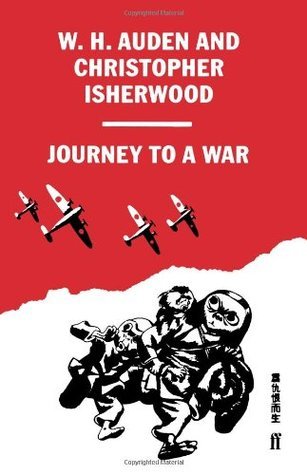
Embassy, WH Auden, from Journey to a War

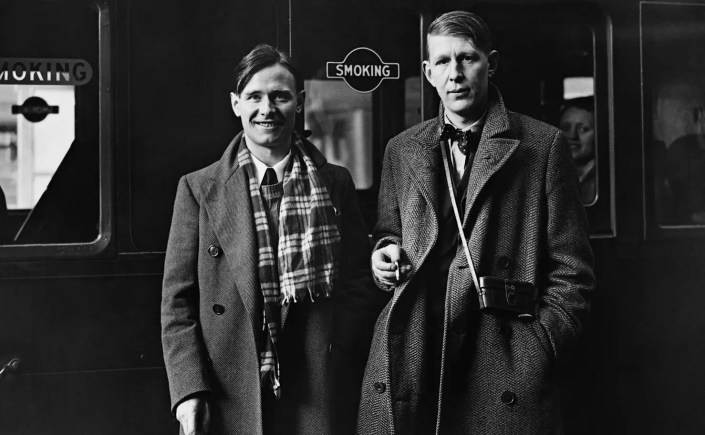
In 1938, English writers WH Auden and  Christopher Isherwood were commissioned by their publishers to write a travel book about the East. Auden was already established as one of Britain’s foremost poets whilst his friend and onetime lover Isherwood was acclaimed as an author and dramatist. His Berlin Stories, two novels set in the last days of the Weimar Republic and today acclaimed as classics of modern fiction; the semi autobiographical Goodbye to Berlin (1939) inspired the remarkable musical Cabaret (1966).

By adventurous choice they went to China for six months, their journey coinciding with Imperial Japan’s brutal invasion. American poet and educator Mildred Boie, reviewing the book for Atlantic in November 1939, takes up the story:  

“With the good fortune of famous and attractive young men they were helped and shown about by everybody from coolies to ambassadors, journalists to generals. They behaved, as they observed and wrote (to judge from the diary), with the engaging frankness and immaturity of English schoolboys, with the ingenious confidence and casual incompleteness of amateurs. But these qualities are inadequate for reporting war, for evaluating life and death in so desperate and disastrously complicated a country as China. The authors were not only amateurs as foreign correspondents, they were also dilettantes: they played at getting to the front, at taking notes on slums, at dashing from formal garden parties to meetings with intellectuals and busy military and diplomatic leaders. They suffered almost as much, certainly as consciously, from blisters, constipation, boredom, sleeplessness, and hangovers as from the shape of poverty, the taste of fear, the sight and smell of death. They were always safe, always outside.” 

Collectively, perhaps, we most resemble a group of characters in one of Jules Verne’s stories about lunatic English explorers. 

War is bombing an already disused arsenal, missing it and killing a few old women. War is lying in a stable with a gangrenous leg. War is drinking hot water in a barn and worrying about one’s wife. War is a handful of lost and terrified men in the mountains, shooting at something moving in the undergrowth. War is waiting for days with nothing to do; shouting down a dead telephone; going without sleep, or sex, or a wash. War is untidy, inefficient, obscure, and largely a matter of chance. 

On their safe return, the pair put together Journey to a War, travel book in prose and verse that was published in 1939. The book is in three parts: a series of poems by Auden describing his and Isherwood’s journey to China in 1938; a “Travel-Diary” by Isherwood (including material first drafted by Auden) about their travels in China itself, and their observations of the Sino-Japanese War; and “In Time of War: A Sonnet Sequence with a Verse Commentary” by Auden, with reflections on the contemporary world and their experiences in China. The book also contains a selection of photographs by Auden.

I am never much good at defending the British Empire, even when drunk
Christopher Isherwood

I republish below an excellent article in the blog Books and Boots – Reflections on Books and Art. It provides a more detailed background to the genesis of the book, setting the geopolitical scene, describing  Auden’s  anticlimactic and, it would seem, personally disappointing visit to Spain during its civil war, and the poetry within.

See also in In That Howling Infinite, Better read than dead … books, poetry and reading


WH Auden and Christopher Isherwood

Journey To A War by W.H. Auden and Christopher Isherwood (1939)

When we awoke early next morning the train was crossing a wide valley of paddy fields. The rising sun struck its beams across the surfaces of innumerable miniature lakes; in the middle distance farmhouses seemed actually to be floating on water. Here and there a low mound rose a few feet above the level of the plain, with a weed-grown, ruinous pagoda, standing upon it, visible for miles around. Peasants with water-buffaloes were industriously ploughing their arable liquid into a thick, brown soup.
(Journey To A War, p.191)

Collectively, perhaps, we most resemble a group of characters in one of Jules Verne’s stories about lunatic English explorers. (p.104)

The Sino-Japanese War

In July 1937 – exactly a year after the start of the Spanish Civil War – Japan attacked China. It was hardly a surprise. In 1931 the so-called ‘Mukden Incident’ had helped spark the Japanese invasion of Manchuria (the large area to the north east of China, just above Beijing). The Chinese were defeated and Japan created a new puppet state, Manchukuo (setting up the last Qing emperor as its puppet ruler) through which to rule Manchuria.

Going further back, in 1894–1895 China, then still under the rule of the Qing dynasty, was defeated by Japan in what came to be called the First Sino-Japanese War. China had been forced to cede Taiwan to Japan and to recognise the independence of Korea which had, in classical times, been under Chinese domination.

In other words, for 40 years the rising power of militaristic, modernising Japan had been slowly nibbling away at rotten China, seizing Taiwan, Korea and Manchuria. Now the military junta in Tokyo decided the time was right to take another bite, engineered an ‘incident’ at the Marco Polo bridge on the trade route to Beijing, and used this as a pretext to attack Beijing in the north and Shanghai in the south.

Thus there was quite a lot of military and political history to get to grips with in order to understand the situation in China, but what made it even more confusing was the fact that China itself was a divided nation. First, the nominal government – the Chinese Nationalist Party or Kuomintang under its leader Chiang Kai-shek – had only with difficulty put down or paid off the powerful warlords who for decades had ruled local regions of China after the collapse of the Qing Dynasty in 1911.

But second, Chiang faced stiff competition from the Chinese Communist Party. The two parties had lived in uneasy alliance until Chiang staged a massacre of communists in Shanghai in 1927 which brought the tension between Chinese nationalists and communists into the open.

It was the three-way destabilisation of China during this period – warlords v. Nationalists v. Communists – which had helped Japan invade and take over Manchuria. Prompted by the 1937 Japanese attack the Nationalists and Communists formed an uneasy alliance.

Auden in Spain

Meanwhile, back in Europe, the great political issue of the age was the Spanish Civil War which began when General Franco led a military uprising against the democratically elected government in July 1936. Like many high-minded, middle class liberals, Auden and Isherwood both felt the time had come to put their money where their mouths were. Auden did actually travel to Spain in January 1937 and was there till March, apparently trying to volunteer to drive an ambulance in the medical service. Instead, red tape and the communists who were increasingly running the Republican forces apparently blocked him from getting a useful job. He tried to help out at the radio station but discovered its broadcasts were weak and there were no vacancies.

Frustrated and embarrassed, Auden was back in England by mid-March 1937. The long-term impact of the trip was his own surprise at how much it upset him to see the churches of Barcelona which had all been torched and gutted by a furious radical populace as symbols of oppression. Auden was shocked, and then shocked at his reaction. Wasn’t he meant to be a socialist, a communist even, like lots of other writers of his generation? The Spain trip was the start of the slow process of realisation which was to lead him back to overt Christian faith in the 1940s.

Also Auden saw at first hand the infighting on the Republican side between the communist party slavishly obeying Stalin’s orders, and the more radical Trotskyite and Anarchist parties who, later in 1937, it would crush. Later he paid credit to George Orwell’s book Homage To Catalonia for explaining the complex political manoeuvring far better than he could have. But watching the Republicans fight among themselves made him realise it was far from being a simple case of black and white, of Democracy against Fascism.

So by March 1938 Auden had returned to Britain, where he was uncharacteristically silent about his experiences, and got on with writing, editing new works for publication (not least an edition of his play The Ascent of F6 and Letters From Iceland).

Meanwhile, Christopher Isherwood was living in Paris managing his on-again, off-again relationship with his German boyfriend Heinz. And although he had accommodated Auden on an overnight stop in the French capital and waved him off on the train south to Spain, Isherwood hadn’t lifted a finger for the Great Cause.

Then, in June 1937, Auden’s American publisher, Bennet Cerf of Random House, had suggested that after the reasonable sales of his travel book about Iceland, maybe Auden would be interested in writing another travel book, this time travelling to the East. Isherwood was a good suggestion as collaborator because they had just worked closely on the stage play, The Ascent of F6 and had begun work on a successor, which was to end up becoming the pay On The Frontier. The pair were considering the travel idea when the Japanese attacked China, quickly took Beijing and besieged Shanghai.

At once they seized on this as the subject of the journey and the book. Neither had really engaged with the war in Spain; travelling east would be a way to make amends and to report on what many people considered to be the Eastern Front of what was developing into a worldwide war between Fascism (in this case Japan) and Democracy (in this case the Chinese Nationalists).

China also had the attraction that, unlike Spain, it wouldn’t be stuffed full of eminent literary figures falling over themselves to write poems and plays and novels and speeches. Spain had been a very competitive environment for a writer. Far fewer people knew or cared about China: it would be their own little war.

And so Auden and Isherwood left England in January 1938, boat from Dover then training it across France, then taking a boat from Marseilles to Hong Kong, via Egypt, Colombo and Singapore.

Journey to a War

Journey To A War is not as good as Letter From Iceland, it’s less high spirited and funny. There isn’t a big linking poem like Letter To Lord Byron to pull it together, and there isn’t the variety of all the different prose and verse forms Auden and MacNeice cooked up for the earlier book.

Instead it overwhelmingly consists of Isherwood’s very long prose diary of what happened to them and what they saw in their three months journey around unoccupied China.

The book opens with a series of sonnets and this was the form Auden chose to give the book poetic unity – sonnets, after all, lend themselves to sequences which develop themes and ideas, notably the Sonnets of Shakespeare, or his contemporaries Spencer and Sidney. There’s a collection of half a dozen of them right at the start, which give quick impressions of places they visited en route to China (Macau, Hong Kong). Then, 250 pages of Isherwood prose later, there’s the sonnet sequence titled In Time of War.

But instead of the bright and extrovert tone of Letters From Iceland, Auden’s sonnets are often obscure. They are clearly addressing some kind of important issues but it’s not always clear what. This is because they are very personal and inward-looking. Auden is clearly wrestling with his sense of liberal guilt. The results are rather gloomy. Spain had disillusioned him immensely. He went to Spain thinking the forces of Evil were objective and external. But his first-hand experience of the internecine bickering on the Republican side quickly showed him there is no Good Side, there are no Heroes. History is made by all of us and so – all of us are to blame for what happens. Travel as far as you want, you’re only running away from the truth. If we want to cure the world, it is we ourselves that we need to cure first.

Where does this journey look which the watcher upon the quay,
Standing under his evil star, so bitterly envies,
As the mountains swim away with slow calm strokes
And the gulls abandon their vow? Does it promise a juster life?

Alone with his heart at last, does the fortunate traveler find
In the vague touch of a breeze, the fickle flash of a wave,
Proofs that somewhere exists, really, the Good Place,
Convincing as those that children find in stones and holes?

No, he discovers nothing: he does not want to arrive.
His journey is false, his unreal excitement really an illness
On a false island where the heart cannot act and will not suffer:
He condones his fever; he is weaker than he thought; his weakness is real…

(from The Voyage by W.H. Auden)

‘An illness on a false island’ which is clearly England, a place ‘where the heart cannot act’. The traveller is trying to escape himself but cannot and glumly realises ‘he is weaker than he thought’. Or the thumping final couplet of the sonnet about Hong Kong:

We cannot postulate a General Will;
For what we are, we have ourselves to blame.

Isherwood’s diary

Luckily, the prose sections of the book are written by Isherwood and these are much more fun. He keeps up the giggling schoolboy persona of the novel he’d recently published, Mr Norris Changes Trains (1935), he notes the way the Chinese pronounce their names Au Dung and Y Hsaio Wu, he sounds wide-eyed and optimistic. He hadn’t seen what Auden had seen in Spain, wasn’t struggling with the same doubts.

On February 28 1938 they leave Hong Kong by steamer for Canton and Isherwood finds everyone and everything hilarious. Look a Japanese gunboat! Listen, the sound of bombs falling! He has same facility for the disarmingly blunt image which he deploys in the Berlin stories. The mayor of Canton (Mr Tsang Yan-fu) is always beaming, has a face like a melon with a slice cut out of it. After dinner the Chinese general entertains them by singing Chinese opera, showing how different characters are given different tones and registers (‘the romantic hero emits a sound like a midnight cat’).

He refers to the whole trip as a dream and as a landscape from Alice in Wonderland – they expected Chinese people to behave as in a Gilbert & Sullivan opera and had rehearsed elaborate compliments, and are disarmed when they’re much more down to earth. The train journey on through Hunan province is boring, the tea tastes of fish, they amuse themselves by reading out an Anthony Trollope novel or singing in mock operatic voices.

But this sense of unreality which dogs them is simply because both of them didn’t have a clue what was going on, what was at stake, the military situation,  had never seen fighting or battle and weren’t proper journalists. They were privileged dilettantes, ‘mere trippers’, as Isherwood shamefacedly explains when they meet real war correspondents at a press conference (p.53).

In Hankow the Consul gives them Chiang, a middle-aged man with the manners of a perfect butler to be their guide. They attend the official war briefings alongside American and Australian journalists, they meet Mr Donald, Chiang Kai-shek’s military adviser, the German adviser General von Falkenhausen, Agnes Smedley, Madame Chiang Kai-shek herself, and with delight are reunited with Robert Capa, the soon-to-be legendary American war photographer who’d they’d met on the boat out. They attend traditional Chinese opera, which Isherwood observes with the eye of a professional playwright.

They catch the train to Cheng-chow which has been repeatedly bombed by the Japanese, capably looked after by their ‘boy’, Chiang. They are heading north on the train when they learn that Kwei-teh has fallen, nonetheless they decide to press on to Kai-feng. With them is an exuberant and seasoned American doctor, McClure, who takes them to watch some operations. They walk round the stinking foetid town. They go to the public baths which stink of urine. Then they catch a train to Sü-chow. And then onto Li Kwo Yi where they argue with Chinese commanding officers (General Chang Tschen) to allow them to go right up to the front line, a town divided by the Great Canal.

If you’ve no idea where any of these places are, join the club. I was reading an old edition but, even so, it had no map at all of any part of the journey. Which is ludicrous. The only map anywhere appears to have been on the front cover of the hardback edition, replaced (uselessly) by an anti-war cartoon on the paperback editions, and even this doesn’t show their actual route.

First US edition (publ. Random House)

With no indication where any of these places are, unless you are prepared to read it with an atlas open at your side, Isherwood’s long prose text becomes a stream of clever observations largely divorced from their context. Even an atlas is not that useful given that Isherwood uses the old form of the placenames, all of which, along with most people’s names, have changed. Thus Sian, capital of Shen-si province, is now Xian, capital of Shaanxi Province, Sü-chow is now Suzhou, and so on.

We are intended to enjoy the surreal aspects of travelling in a deeply foreign land – the village restaurant which was papered entirely with pages of American tabloid magazines, and so covered with photos of gangsters and revelations about fashionable divorcees (p.126); or the expensive hotel in Sian whose menu included ‘Hat cake’ and ‘FF potatoes’ (p.141). Beheading is a common punishment because the Chinese believe a body needs to be complete to enter the afterlife. They meet lots of tough and brave American missionaries, mostly from the American south.

Finally, back in Hankow (Hankou) they become part of polite society again, are invited to a party of Chinese intellectuals, a party given by the British admiral and consul, where they meet the legendary travel writer Peter Fleming and his actress wife Celia Johnson, the British ambassador Archibald Kerr, the American communist-supporting journalist, Agnes Smedley (p.156). Fleming pops up a lot later at their hotel in Tunki, and is too suave, handsome and self-assured to possibly be real.

Militarily, Journey To A War confirms the opinions of the modern histories of the war I’ve read, namely that the Nationalist side was hampered by corruption, bad leadership and, above all, lack of arms & ammunition. When they retook cities which had been under communist influence the Chiang’s Nationalists realised they needed some kind of ideology which matched the communists’ emphasis on a pure life and so, in 1934, invented the New Life Movement i.e. stricter morals, which Madame Chiang politely explains.

Isherwood notices the large number of White Russian exiles, often running shops, come down in the world. This reminds me of the Russian nanny J.G. Ballard had during his boyhood in 1930s Shanghai, as described in his autobiography Miracles of Life.

From pages 100 to 150 or so our intrepid duo had hoped to approach the front line in the north and had crept up to it in a few places, but ultimately refused permission to go further, to visit the Eighth Route Army, and so have come by boat back down the Yangtze River to Hankou. Now they plan to travel south-east towards the other main front, where the Japanese have taken Shanghai and Nanjing.

On the Emperor of Japan’s birthday there is a particularly large air-raid on Hankow and they make themselves comfortable on the hotel lawn to watch it. The Arsenal across the river takes a pasting and they go to see the corpses. 500 were killed. Nice Emperor of Japan.

They take a river steamer to Kiukiang and stay at the extraordinary luxury hotel named Journey’s End and run by the wonderfully eccentric Mr Charleton. They catch the train from Kiukiang to Nanchang, stay there a few days, then the train on to Kin-hwa (modern Jinhua). Here they are horrified to discover their arrival has been anticipated and they are treated like minor royalty, including a trip to the best restaurant in town with 12 of the city’s top dignitaries.

Auden and I developed a private game: it was a point of honour to praise most warmly the dishes you liked least. ‘Delicious,’ Auden murmured, as he munched what was, apparently, a small sponge soaked in glue. I replied by devouring, with smiles of exquisite pleasure, an orange which taste of bitter aloes and contained, at its centre, a large weevil. (p.195)

They are taken by car to the town of Tunki. They try to get permission to push on to see the front near the Tai Lake, They have to cope with the officious newspaperman, A.W. Kao. This man gives a brisk confident explanation of what’s happening at the front. Neither Auden nor Isherwood believe it. Isherwood’s explanation describes scenes they’ve seen on their visit, but also hints at what Auden might have seen on his (mysterious) trip to civil war Spain. Auden is given a speech defining the nature of modern war:

War is bombing an already disused arsenal, missing it and killing a few old women. War is lying in a stable with a gangrenous leg. War is drinking hot water in a barn and worrying about one’s wife. War is a handful of lost and terrified men in the mountains, shooting at something moving in the undergrowth. War is waiting for days with nothing to do; shouting down a dead telephone; going without sleep, or sex, or a wash. War is untidy, inefficient, obscure, and largely a matter of chance. (p.202)

Peter Fleming turns up looking gorgeous, professional, highly motivated, speaking good Chinese. He attends briefings, manages the locals with perfect manners. They organise an outing towards the front, with sedan chairs, bearers, two or three local notables (T.Y. Liu, A.W. Kao, Mr Ching, Major Yang, Shien), Fleming is indefatigable. On they plod to Siaofeng, Ti-pu and Meiki. Here the atmosphere is very restless, the miltary authorities are visibly unhappy to see them, half their own Chinese want to get away. The spend a troubled night, with people coming and going at the military headquarters where they’ve bivouaced and, after breakfast, they give in to the Chinese badgering, turn about, and retrace their steps. Twelve hours later the town of Meiki fell to the Japanese. On they plod up a steep hillside, carried by coolies, and down the precipitous other side, down to Tien-mu-shan and then by car to Yu-tsien (p.229).

We stopped to get petrol near a restaurant where they were cooking bamboo in all its forms – including the strips used for making chairs. That, I thought, is so typical of this country. Nothing is specifically either eatable or uneatable. You could being munching a hat, or bite a mouthful out of a wall; equally, you could build a hut with the food provided at lunch. Everything is everything. (p.230)

Isherwood hates Chinese food and, eventually, Auden agrees. At Kin-hwa Fleming leaves them. It’s a shame they’ve ended up getting on famously. It’s interesting that both Auden and Isherwood initially were against him because he went to Eton. The narcissism of minor differences knows no limits.

They say goodbye to all the people they’ve met in Kin-hwa and set off by bus for Wenchow. They take a river steamer from Wenchow to Shanghai.

Arrival in Shanghai on 25 May signals the end of their adventures. They stay in the chaotic, colourful, corrupt city till 12 June. Fascinating to think that over in his house in the International Settlement, young James Graham Ballard was playing with his toy soldiers, dreaming about flying and laying the grounds for one of the most distinctive and bizarre voices in post-war fiction.

And Isherwood confirms the strange, deliriously surreal atmosphere of a Chinese city which had been invaded and conquered by the Japanese, who had destroyed a good deal of the Chinese city but left the International and the French Settlements intact. They attend receptions at the British Embassy, are the guest of a British businessman hosting high-level Japs.

There is no doubt Auden and Isherwood hate the Japanese, can’t see the flag hanging everywhere without thinking about all the times in the past four months when they’ve ducked into cover as Japanese bombers rumbled overhead and fighters swooped to strafe the roads.

This is the only section of this long book with real bite. Isherwood interviews a British factory inspector who describes the appalling conditions Chinese workers endure and notes that they’ll all be made much worse by the Japanese conquerors.

Schoolboys

It’s a truism to point out that the Auden Generation was deeply marked by its experience of English public schools, but it is still striking to see how often the first analogy they reach for is from their jolly public schools, endless comparisons with school speeches and prize days and headmasters.

  • Under the camera’s eye [Chiang kai-shek] stiffened visibly like a schoolboy who is warned to hold himself upright (p.68)
  • Mission-doctors [we were told] were obliged to smoke in secret, like schoolboys (p.88)
  • They scattered over the fields, shouting to each other, laughing, turning somersaults, like schoolboys arriving at the scene of a Sunday school picnic (p.142)
  • The admiral, with his great thrusting naked chin… and the Consul-General, looking like a white-haired schoolboy, receive their guests. (p.156)
  • [Mr A.O. Kao] has a smooth, adolescent face, whose natural charm is spoiled by a perpetual pout and by his fussy school-prefect’s air of authority (p.201)
  • Producing a pencil, postulating our interest as a matter of course, he drew highroads, shaded in towns, arrowed troop movements; lecturing us like the brilliant sixth-form boy who takes the juniors in history while the headmaster is away. (p.200)
  • The cling and huddle in the new disaster
    Like children sent to school (p.278)
  • With those whose brains are empty as a school in August (p.291)

The photos

At the end of the huge slab of 250 pages of solid text, the book then had 31 pages of badly reproduced black and white photos taken by Auden. In fact there are 2 per page, so that’s 62 snaps in all.

I don’t think there’s any getting round the fact that they’re average to poor. Some are portraits of people they met, notably Chiang kai-shek and Madame Chiang, Chou en-lai of the communists, and celebrities such as Peter Fleming the dashing travel writer and Robert Capa the handsome war photographer. A dozen or more named people, Chinese, missionaries and so on. And then lots of anonymous soldiers and scenes, the dead from an air raid, the derailed steam train, coolies in poverty, a Japanese prisoner of war, a Japanese soldier keeping guard in Shanghai, Auden with soldiers in a trench and so on.

Remarkably, few if any of these seem to be online. I can’t imagine they’re particularly valuable and their only purpose would be to publicise the book and promote Auden and Isherwood’s writings generally, so I can’t imagine why the copyright holders have banned them. If I owned them, I’d create a proper annotated online gallery for students and fans to refer to.

In Time of War

The book then contains a sequence of 27 sonnets by Auden titled In Time of War. In later collections he retitled them Sonnets from China. They are, on the whole, tiresomely oracular, allegorical and obscure. The earlier ones seem to be retelling elements of the Bible, Genesis etc as if recapitulating the early history of mankind. These then somehow morph into the ills of modern society with its bombers.

But one of them stands out from the rest because it reports real details and rises to real angry eloquence.

Here war is simple like a monument:
A telephone is speaking to a man;
Flags on a map assert that troops were sent;
A boy brings milk in bowls. There is a plan

For living men in terror of their lives,
Who thirst at nine who were to thirst at noon,
And can be lost and are, and miss their wives,
And, unlike an idea, can die too soon.

But ideas can be true although men die,
And we can watch a thousand faces
Made active by one lie:

And maps can really point to places
Where life is evil now:
Nanking; Dachau.

(Sonnet XVI from In Time of War)

Those last lines have stayed with me all my life. Nanking. Dachau. The darkness at the heart of the twentieth century.

Commentary

The last thing in the book is a long poem in triplets, from pages 289 to 301 and titled simply Commentary.

It’s a sort of rewrite of Spain, again giving a hawk’s eye view of history and society, the world and human evolution. It starts off describing what they’ve seen in Auden’s characteristic sweeping style, leaping from one brightly described detail to another, before wandering off to give snapshots of great thinkers from Plato to Hegel.

But at quite a few points voices emerge to deliver speeches. Then, on the last page, the Commentary becomes extremely didactic, ending with a speech by the Voice of Man, no less, the kind of speech he turned out by the score for his plays and choruses and earlier 1930s poems.

But in this context it seems inadequate to the vast and catastrophic war in China which they have just glimpsed, and which was to last for another seven years (till Japan’s defeat in 1945) and was itself followed by the bitter civil war (1945-48) which was only ended by the triumph of Mao Zedong’s communist party early in 1949.

The Japanese invasion of 1937 turned out to be just the start of a decade of terror and atrocity, and Auden’s response is to have the ‘Voice of Man’ preach:

O teach me to outgrow my madness.

It’s better to be sane than mad, or liked than dreaded;
It’s better to sit down to nice meals than nasty;
It’s better to sleep two than single; it’s better to be happy.

Ruffle the perfect manners of the frozen heart,
And once again compel it to be awkward and alive,
To all it suffered once a silent witness.

Clear from the head the masses of impressive rubble;
Rally the lost and trembling forces of the will,
Gather them up and let them loose upon the earth,

Till they construct at last a human justice,
The contribution of our star, within a shadow
Of which uplifting, loving, and constraining power
All other reasons may rejoice and operate.

It yet another of his prayers, deliberately personal in scale, addressed mostly to chums from public school, fellow poets, friendly dons and reviewers. It is calling on people who are already well-fed, well-educated and mostly decent chaps to be a bit more decent, if that’s alright. But ‘ruffling up your perfect manners’ wasn’t going to stop Franco or the Japs, Hitler or Stalin.

It is ironic of Auden to ask people to remove from their heads ‘impressive rubble’, which I take to mean the luggage of an expensive education in the arts – as that is precisely what he was going to use to make a living out of for the next 35 years and which was to underpin and inform all his later works.

And there are numerous small but characteristic examples of learnèd wit it here, such as when they light a fire which is so smokey that it forces them out of the room and Auden wittily remarks, ‘Better to die like Zola than Captain Scott’ (i.e. of smoke asphyxiation rather than from freezing).

In this respect the Commentary is another grand speech which, like the grand speeches in the plays he’d just written with Isherwood, was, in the end, addressed to himself. Once again, as with Spain, Auden has used a huge historical event to conduct a lengthy self-analysis.

Auden’s contemporary readers were impressed, as ever, by his style and fluency but, as ever, critical of his strange inability to engage with anything outside himself and, specifically, to rise to the occasion of such a massive historical event.

Half way through the text Isherwood tells a story about Auden’s complete conviction that the train they’re on won’t be shot at by the Japanese, whose lines they are going to travel very close to. Sure enough the train emerges on to a stretch of line where it is clearly visible from the forward Japanese lines, which they know to contain heavy artillery, and so they pass a few minutes of terror, petrified that the Japanese might start shelling any second. In the event, there is no shelling, and the train veers away to safety. ‘See. I told you so,’ says Auden, and Isherwood reflects that there’s no arguing with ‘the complacency of a mystic’.

It’s a joke at his old mate’s expense and yet I thought, yes – complacency – in Auden’s case complacency means undeviating confidence in his own mind and art to hold off, inspect and analyse. He creates a rhetoric of concern but it is nothing more than that, a poet’s rhetoric, fine to admire but which changes nothing.

And he knew this, had realised it during the trip to Spain, and had lost heart in the political verse of the 1930s. The pair returned from China via America, where all mod cons were laid on by his American publishers and Auden realised that here was a much bigger, richer, more relaxed, open, friendly and less politically pressurised environment in which to think and write.

He returned to England just long enough to wind up his affairs, pack his bags, then in January 1939 he and Isherwood sailed back to the States which would become his home for the next 30 years, and set about rewriting or suppressing many of his most striking poems from the troubled Thirties, trying to rewrite and then censor what he came to think of as his own dishonesty, pursuing a quest for his own personal version of The Truth.


Related links

1930s reviews

Journey To A War by W.H. Auden and Christopher Isherwood (1939)

Lukannon … Rudyard Kipling’s deep sea song

You’ve got to feel sorry for Rudyard Kipling (1865-1936)

This remarkable poet and storyteller is today rarely read and is often vilified and dismissed as a jingoistic and chauvinistic booster of empire and white civilization. When critics reach for their guns, they “bring out the white man’s burden“and “east and west is west, and ne’er the Twain shall meet”. He is definitely guilty as charged, but he was of his time, and voiced what was then the imperial zeitgeist that enraptured his British constituency. The past, as they say, is another country – they thought much differently then.

But, as those who are familiar with his many poems and stories would attest, the poet was so much more than this.

It was Kipling’s habit to preface and bookend his remarkable if, to contemporary readers, politically incorrect stories with short poems of singular quality.

Lukannon is one of these. The story of The White Seal first appeared in print in the August 1893 issue of the London-based magazine National Review and published again in 1894 as part of the anthology The Jungle Book. Yes, that one. Mowgli, Wolf Cubs, Akela, and all. But, exceptionally for a story in The Jungle Book, none of the action in The White Seal  takes place in India. And, presaging the environmental activism and protests against the controversial seal hunts of the late 20th Century, it is remarkably prescient and pertinent.

The story is set on an island in the Aleutians in the Bering Sea between Russia and Alaska. It tells of a unique seal who, by leading his fellow seals to a secret hidden beach, saves his kind from the seal hunters. He referred to his poem as “a kind of national anthem for seals”. The title of the poem is the name of a Russian seal-fur trader, Lukanin, who gave his name to these lonely Aleutian beaches in 1788. Kipling wrote: “This is the great deep-sea song that all the St. Paul seals sing when they are heading back to their beaches in the summer. It is a sort of very sad seal National Anthem”.

Back in the day, I set the poem to music. It is featured on the rare recording HuldreFolk Live in London 1988, featuring Paul Hemphill, Victor Mishalow and Adèle Hemphill. During HuldreFolk’s tour of English folk clubs in the northern summer of 1988, it was recorded on a cheap audio cassette by a dinky, clunky old analogue tape recorder – and it shows. But the natural acoustics of the cellar at Bracknell Arts Centre, and the audience’s participation in the choruses made up for a multitude of sins.

© Paul Hemphill 2024. All rights reserved

Lukannon is such a lyrical poem that it lends itself effortlessly to musical settings. Apart from my own, i have discovered three alone, and I am pretty certain that there are many more out there on the world wide web. There is a version by folk duo William Pint and Felicia Dale set to a tune by American musician Bob Zentz from their 1997 album Round the Corner. There is also a contemporary “prog-rock” version by British band Shadows of the Sun.

In 1947, the eccentric Australian expatriate composer Percy Grainger composed a song cycle of The Jungle Book and chose as his centrepiece the story of The White Seal – and particularly, Lukannon “as a protest against civilization.” For more on Grainger’s opus, see below.

Lukannon

I met my mates in the morning (and oh, but I am old!)
Where roaring on the ledges the summer ground-swell rolled;
I heard them lift the chorus that dropped the breakers’ song –
The beaches of Lukannon – two million voices strong!

The song of pleasant stations beside the salt lagoons,
The song of blowing squadrons that shuffled down the dunes,
The song of midnight dances that churned the sea to flame –
The beaches of Lukannon — before the sealers came!

I met my mates in the morning (I’ll never meet them more!);
They came and went in legions that darkened all the shore.
And through the foam-flecked offing as far as voice could reach
We hailed the landing-parties and we sang them up the beach.

The beaches of Lukannon – the winter-wheat so tall –
The dripping, crinkled lichens, and the sea-fog drenching all!
The platforms of our playground, all shining smooth and worn!
The beaches of Lukannon — the home where we were born!

I meet my mates in the morning, a broken, scattered band.
Men shoot us in the water and club us on the land;
Men drive us to the Salt House like silly sheep and tame,
And still we sing Lukannon – before the sealers came.

Wheel down, wheel down to southward; oh, Gooverooska go!
And tell the Deep-Sea Viceroys! the story of our woe;
Ere, empty as the shark’s egg the tempest flings ashore,
The beaches of Lukannon shall know their sons no more!

Percy Grainger’s Jungle Book Cycle

In 1947, the eccentric Australian expatriate composer dedicated a song cycle of The Jungle Book and chose as his centrepiece the story of The White Seal – and particularly, Lukannon. My Kipling ‘Jungle Book’ Cycle, begun in 1898 and finished in 1947, was composed as a protest against civilization.” (Grainger’s programme note, 1947)

Grainger (1882-1961) studied at the Hoch Conservatory in Frankfurt, Germany from 1895-1901 (aged 13-19). Grainger’s mother Rose wrote to her husband John of her fears that young Percy was becoming “more Germanized every day.” In response to Rose’s concern, and to “tickle up the British Lion in him,” John (who was estranged from Rose) sent Percy, among other things, several books by Rudyard Kipling . Kipling’s writings captivated Percy immediately, and he soon started writing choral settings of the poetry, especially those of Kipling’s Jungle Books.

Grainger’s settings of the poetry of Kipling are as extensive as his settings of British folk music; Kay Freyfus’s catalog of Grainger’s manuscript scores lists 36 settings, though Grainger in a 1926 letter to Kipling mentions “some 40 or 50” settings. Grainger felt a strong kinship for Kipling’s writing, and Kipling appreciated and approved of Grainger’s work at setting his poetry. Grainger played several of his choral settings for Kipling during a meeting at Kipling’s home in 1905. Of Grainger’s settings of his poetry, Kipling said, “Till now I’ve had to reply on black and white, but you do the thing for me in colour.”

The Beaches of Lukannon is the centerpiece of the cycle, and arguably the strongest piece musically and emotionally. It tells us the tale of the tragic slaughter of seals by wicked sealers from the seals’ perspective. The opening section, told from the point of view of a seal elder, recounts what the beaches of the Bering Sea Island of Lukannon originally were for the seals – their annual meeting (and mating) opportunity. The central section, reminiscent of the music of Charles Ives in its shifting chromatics, conveys the beauty of the surroundings “before the sealers came.” The final section musically revisits the opening material, but in a smore somber mode.

For more on Rudyard Kipling in In That Howling Infinite, see A Son Goes To War – the grief of Rudyard Kipling 

Dark Deeds in a Sunny Land – a poet’s memorial to a forgotten crime

… they were standin’ on the shore one day
Saw the white sails in the sun
Wasn’t long before they felt the sting
White man, white law, white gun
Solid Rock, Goanna 1982

The Great Australian Silence

Archaeologist WEH Stanner wrote in 1968 of “the great Australian silence – it was almost as if there was a “cult of forgetfulness”. And indeed, white historical memory is like a sieve. Give it a good shake and only the big chunks are left. For a long time in Australia, the story of our frontier wars was not one of those. But in recent decades, an ever-widening crack has let the light in.

The first hairline fissures appeared in the early years of settlement as a small number of humanitarians voiced their concerns, although not with enough impetus to cool our pioneer fervour. Henry Reynolds, acclaimed historian of the frontier wars, quotes one such: ‘How is it our minds are not satisfied? What means this whispering in the bottom of our hearts?’

I touched upon this paradox in a review I wrote of historian Peter Cochrane’s novel The Making of Martin Sparrow: – Martin Sparrow’s Blues:

“The country into which most characters venture is not, as we now acknowledge, an empty land. It was a peopled landscape, a much revered, well-loved, and worked terrain, its inhabitants possessed of deep knowledge, wisdom and respect for “country” … 

… Whilst many colonists, particularly the soldiery, regard the native peoples as savages and inflict savage reprisals upon them for their resistance to white encroachment, others, in the spirit of the contemporary ‘Enlightenment’ push back against the enveloping, genocidal tide with empathy and understanding …

… “It’s the first settlers do the brutal work. Them that come later, they get to sport about in polished boots and frock-coats … revel in polite conversation, deplore the folly of ill-manners, forget the past, invent some bullshit fable. Same as what happened in America. You want to see men at their worst, you follow the frontier”. “I don’t reckon we’re the Christians … We’re the Romans. We march in, seize the land, crucify them, stringing ‘em up in trees, mutilate their parts”.

… They knew in their hearts that this ancient people and its ancient ways are helpless against the relentless tide of the white man’s mission civilatrice. “It might be that the bolters have the ripest imagination, but sooner or later, an official party will get across the mountains and find useful country, and the folk and the flag will follow, that’s the way of the world. It’s a creeping flood tide and there’s no ebb, and there’s no stopping it. No amount of … goodwill”. 

At Bellingen’s  Readers and Writers Festival in July 2019, we attended a powerful “conversation” between Reynolds and indigenous activist and academic Marcia Langton. Reynolds reminded us that these wars raged for decades from Tasmania in our far south  to Queensland’s far north. It was a story of vicious raids and reprisals.

In August 2019, in a piece called The Frontier Wars – Australia’s heart of darkness, I wrote:

“Australia at the time of first settlement, and particularly on the frontier, was a brutal, violent place. It was colonized by soldiers and convicts, most of them young men chock-full of testosterone and aggression, bitterness and prejudice, greed and ambition. The conflict, which in Queensland, endured  into the last decades of the 19th Century, was a war of conquest and extrajudicial killings – or more bluntly, murders. The subdued territories were patrolled  by the native police – effectively paramilitary forces. The wars were waged by an outgunned people on the one hand, and, on the other, what were effectively robber bands raised and provisioned by the local magnates and squatters intent on seizing, holding and expanding their often enormous landholdings. There were to be no ceasefires, no parlays and no treaties. And no recognition of indigenous rights. None were ever on offer – not that that would’ve made a difference”.

We have come a long way in a short time; but we’re not there yet. There exists still a darkness at the heart of our democracy that we struggle to come to terms with; and in these divisive days, it doesn’t take much to reignite our “history wars” as we negotiate competing narratives and debate the “black armband” and “white blindfold” versions of our national story.

‘A sorry place’

We live in heart of the Tarkeeth Forest which lies between the Bellinger and Kalang Rivers in Bellingen Shire the mid north coast of New South Wales. Traversing the ridge just north of us is the east-west Fernmount Range Trail. In the days gone by, it was an ancient highway called the Yildaan Dreaming Track and Trade Route  which linked the plains beyond the Dorrigo massif to what is now the seaside town of Urunga, known then to the Gumbaynggirr people as a “place of plenty”. The first people would descend the spurs on the north and south flanks of the range for fishing and ceremonies on the riverside. The Tarkeeth Forest contains areas of significant indigenous culture, recalling song lines and stories of the Dreamtime, places of ceremony, of birth and burial, and of atrocity.

We have been told that the Gumbaynggirr regarded Bellingen and its environs as a “sorry place”, one of discrimination, expulsion and worse. But Bellingen Shire is just one of many places that have a dark history of which most  residents are unaware.

Three historic massacre sites committed against Gumbaynggirr and Bundjalung people of the Coffs Clarence region have been recorded on the Aboriginal massacres map, created by University of Newcastle researchers. They are listed as being near Bellingen, modern day Coutts Crossing, and near Seelands and Ramornie. [See below]

The scenic Waterfall Way linking Armidale to the coast is a drive we never get tired of as it winds along riverside meadowlands and climbs through world heritage rainforests to the Dorrigo Plateau with its windswept escarpments, clear creeks, and just off the beaten track, magnificent waterfalls, landmarks like Cathedral Rock, and stunning views. But, in the words of activist and academic and Ambēyang man Callum Clayton-Dixon, this highway conceals signposts to a bloody past. [We republish his article below]

One of these signposts points the way to north of Point Lookout on the New England Tableland, where, jutting out from the plateau and dropping in sheer cliffs into the thick rainforest below, is a place once known as Darkie Point.

Judith Wright was the first white Australian poet to publicly name and explore the experiences of its Indigenous people. Through her poetry, and especially in her later histories, Wright sought to confront the violence in Australian settler history and to re-imagine it through the eyes of the first Australians. Her words breathed sorrow and compassion into the early encounters between settlers and Indigenous people, evoking the tragedy of the Australian frontier. Her love of the New England highlands was bound to a creeping uneasiness about its past. As Billy Griffiths wrote in in his story of archaeologist Isabel McBryde, she lived in “haunted country.” In an early poem, Bora Ring(1946), she mourned the passing of a dynamic world:

The hunter is gone; the spear
is splintered underground; the painted bodies
a dream the world breathed sleeping and forgot.
The nomad feet are still.

She lived on New England  tablelands and camped at Point Lookout with her father, as he had with his mother. “She remembered being mesmerized by the splendour of the cliffs, the mystery of the thickly forested valley and the “the great blue sweep of the view from the Point to the sea.” But she saw a darkness here, too, at Darkie Pont. It is just north of Ebor and the scenic Waterfall Way linking Armidale to the Coast via Dorrigo and Bellingen.

Wright’s father told her the story of how it got its name: how, “long ago,” a group of Aboriginal people were driven over those cliffs by white settlers as reprisal for spearing cattle. Their sickening plunge was re-imagined in one of Wright’s early poems, “Nigger’s Leap, New England”, published in her first collection The Moving Image (1946). The story was later revealed to be an “abstracted and ahistoricised” account of a documented event. It was, in fact, August 1852, that scores of Aboriginal people were chased to the edge of a cliff, shot and pushed over. Some in this day and age may be offended by the use of what is now a forbidden word – but Wright chose it specifically for its shock effect, commemorating as it does what was then a forgotten crime. “Did we not know”, she asks, “their blood channelled our rivers, and the black dust our crops ate was their dust?”

In her short story, On Reading Nigger’s Leap, Teacher and writer Anne Vince asks her class – and  us, her readers – to imagine what Wright did describe in words words:

‘Local aborigines were driven over the falls. Stockmen from neighbouring stations rounded them up like cattle and beat them to the cliff’s edge. Mothers leapt, leaving their babies clinging to shrub roots. Some tried to hide their children in the burnt out husks of the giant gums that used to grow around here. After a while the riders would release their dogs…There is such a silence my words falter before tumbling forward. I have to breathe deeply to continue, to remember … How do we know this? Hard evidence. Skeletal remains at the bottom of the cliffs – and, yes – they are human remains. And, of course, oral history… Judith Wright had heard these stories.’  [We republish Vince’s story below]

© Paul Hemphill 2021 All rights reserved

Nigger’s Leap, New England

The eastward spurs tip backward from the sun.
Nights runs an obscure tide round cape and bay
and beats with boats of cloud up from the sea
against this sheer and limelit granite head.
Swallow the spine of range; be dark. O lonely air.
Make a cold quilt  across the bone and skull
that screamed falling in flesh from the lipped cliff
and then were silent, waiting for the flies.

Here is the symbol, and climbing dark
a time for synthesis. Night buoys no warning
over the rocks that wait our keels; no bells
sound for the mariners. Now must we measure
our days by nights, our tropics by their poles,
love by its end and all our speech by silence.
See in the gulfs, how small the light of home.

Did we not know their blood channelled our rivers,
and the black dust our crops ate was their dust?
O all men are one man at last. We should have known
the night that tidied up the cliffs and hid them
had the same question on its tongue for us.
And there they lie that were ourselves writ strange.

Never from earth again the coolamon
or thin black children dancing like the shadows
of saplings in the wind. Night lips the harsh
scarp of the tableland and cools its granite.
Night floods us suddenly as history
that has sunk many islands in its good time.

‘On Reading “Nigger’s Leap” by Judith Wright’ by Anne Vince

Judith Wright knifes the scab off an old, unhealed wound.

In the classroom I explain that this poem is set in their own backyard – at the local falls – where three generations ago white men, squatters and landowners alike, regularly went ‘hunting’ and it wasn’t for kangaroos.

A snarl sweeps across the pig-shooter’s son.  ‘Supposedly,’ he interjects.

I’m stunned. Not because it’s the first time I’ve heard four consecutive syllables from this boy – it’s the ferocity of the denial. There’s a history here, a hint of blood knowledge.

Under this remark I can hear the lazy slam of a fly screen door, the indignant scrape of a chair rasped over cracked, worn lino.

‘Yeah…’ drawls another student. Then another. The heat in the room builds. Even the incessant flies hesitate. ‘Well…?’

A sea of sun-scorched faces, eyes ready to pass judgment, stare.

To gather my thoughts, I glance outside. Massive cumulus clouds the colour of dark bruises roil and tumble over each other, mocking the scrubby horizon, piling higher and higher in the expectant sky.

I have to be careful. These are children well versed in suspicion. I know anything I say will make it back to shoddy verandahs and the town’s single, stainy-tiled bar.

I want to tell them their disbelief makes them complicit but that would mean slipping a fingernail under that lino, scraping at the decades of dirty reasoning and the trampled effort of surviving in a place like this.

The class waits – a collective held breath willing the relief of a reply.

I look at their hands. Some of them are men’s hands, thick-knuckled from weekend labour or cutting horses in low rent rodeos. Most of these students are already helping shoulder the burden of overgrazed, drought-stricken farms, riddled with dieback. They are tough kids from decent families who believe they’ve been given the whole country for their own.

‘No,’ I finally say. ‘Local aborigines were driven over the falls. Stockmen from neighbouring stations rounded them up like cattle and beat them to the cliff’s edge. Mothers leapt, leaving their babies clinging to shrub roots. Some tried to hide their children in the burnt out husks of the giant gums that used to grow around here. After a while the riders would release their dogs…’

There is such a silence my words falter before tumbling forward. I have to breathe deeply to continue, to remember.

‘How do we know this? Hard evidence. Skeletal remains at the bottom of the cliffs – and, yes – they are human remains. And, of course, oral history… Judith Wright had heard these stories.’ This is what I tell them.

I don’t tell them that swimming one afternoon in the dark pools of the falls, just as the sun slanted shadows through saplings at the water’s edge, I met those shrill, anguished spirits. I don’t tell them of the high-pitched keening and tortured wailing that filled my ears each time I dived, or of the roaring bush silence that greeted me when I emerged, clean-skinned and gutted. I don’t tell them how I choked, sick with sudden comprehension as I lay on the hard granite, resisting the pull of those blood channelled ghosts to join their sway and wander in the waters far under.

Now, Slessor they will understand. White man’s words. White man’s war.

They are excused by the bell.

To me it is the sound of alarm

Myall Creek, New England

At Myall Creek Station near Inverell, in 1838, twelve armed and mounted stockmen rounded up 28 unarmed Wirrayaraay people – largely women and children – and, without provocation, hacked them to death. This story, the Myall Creek massacre, is relatively well known because of John Plunkett’s heroic prosecution of the stockmen – several were hanged for murder – but numerous other, similar incidents in the area are less well known. These include the follow-up murder of thirty or so remaining Wirrayaraay men and killings of sometimes hundreds of people at sites such as Slaughterhouse Creek, Waterloo Creek and Terrible Creek.

Few locals know that Dangar Falls in Dorrego,  Dangarsleigh, and Armidale’s Dangar Street were all named in honour of Henry Dangar, a squatter known for his role in the attempted cover up of the atrocity, and for trying to pervert to course of justice in the subsequent trial.

We recently republished extracts for William Lines’ Taming of the Great South Land regarding the eradication koala and other wildlife in the earthy twentieth century. Here is what he had to say about Myall Creek and other massacres.

The Myall Creek Massacre

He wrote:

“Most squatters abhorred the Aborigines. They resented their “wandering propensities”, their independence, their pride and their unwillingness to accept the hierarchical authority Europeans equated with enlightenment. For 50 years Aborigines the civilisation Europeans had sought to impose on Australia, their inclination towards independence of action and refusal to accept the values of the invaders invaders greatly exasperated the British. Their disdain for European habits marked them as barbarians and supplied the Europeans with an antithesis – civilisation versus barbarism – highly useful as a rationalisation for aggression. To counter aboriginal resistance, the squatters appealed to the government to clear the land. When the colonial authorities equivocated,  the squatters adopted at their own solutions.

At Myle Creek, 650 km north of Sydney, shortly before sundown one day in June 1838, a group of mounted stockmen with muskets, swords and pistols, rounded up 30 or 40 aboriginals encamped at a sheep station. The Horseman roped the men, women and most of the children together and force them to march 4 kilometres into the bush. The untied children, crying, followed their mothers, who carried those too young to walk. One of the stockmen snatched up an untied boy of about seven ( a favourite of his), placed in behind a tree and told him to remain there until later. The child, however, ran back, crying “no, I will go with my mammy”. He was then fastened with rope to the adults.

A few days later the station manager became curious as to the whereabouts of the Aborigines previously camped in the area. The hovering of eagles, hawks and other birds of prey, directed him to a spot where he discovered the mangled and half burnt remains at least 28 people. For the most part, heads was separated from bodies, and fire marks appeared on the disjointed limbs. Charcoal and burnt logs indicated an attempt to efface all evidence. The manager, however, recognise 10 to 12 small heads he took to those of children, and a large body which he believed belonged to “Daddy”, an Aborigine know for his remarkably large frame.

When the government laid murder charges against the men responsible, squatters and the press screamed in outage at the absurdity of indicting civilised man for the deaths of creatures on the lowest rung of creation. A few of those associated with squatting have not killed aboriginals and they continued to declare their right to clear the land of an inferior race. One squatter boasted that he “would shoot a Blackfellow whenever he met him as he would a mad dog. The jury returned a verdict of not guilty. Once juror explained:

“I look to the blacks as a set of monkeys and I think the earlier they are exterminated, the better. I know well [the accused] are guilty of murder, but I, for one, would never consent to see a white man suffer for shooting black one”.

The government eventually obtained a conviction at a second trial. Before their execution , the seven condemned men acknowledged their guilt but stated in their defence “that in destroying the Aborigines, they were not aware that they had violated the law, or that it would take cognizance of their having done so, as it had been so frequently done in the colonies before”.

The Myall Creek massacre became notorious – not because of the murder of the aboriginals but because of the conviction and punishment of the murderers.It was only the second and the last time in Australian history that Europeans were executed for the murder of aborigines. Henceforward squatters acted with impunity; the Myall Creek trial only encouraged them to be more secretive and thorough. One recommended that, where the firearms failed or became too obvious, poison in the form of strychnine or arsenic mixed with flour be given to the aborigines.

Squatters believed that the £10 license fee and entitled them to the exclusive one of their use of the runs – a right which justified the violent expulsion of the original residents. In February 1840 the Whyte  brothers took up their Kooning-wootong run in the Western District. A month later they hunted down an aboriginal group suspected of stealing 127 sheep and killed between 20 and 30 of them. Although the Whytes admitted to the killings, the government failed to prosecute, and a month later the brothers pursued and killed members of another group of aborigines. In 1841 a party of seven settlers shot dead 51 aborigines on the banks of the Glenelg River near the South Australia-Victoria border, for abducting 50 sheep. Long after, according to a local squatter, the bones of the men and sheep lay mingled together bleaching in the sun at the Fighting Hills.

Taming The Great South Land – a history of the conquest of nature in Australia, William J Lines (Allen and Unwin 1991) p78-79

What to do with  signposts to New England’s bloody past?

View at Medium.com

Callum Clayton-Dixon

The names of various creeks, streets, parks, and pastoral properties across the Tableland hark back to New England’s violent colonial origins. In this unprecedented time of truth-telling, is taking down these symbols of past injustices enough?

Majors Creek, near the village of Ebor, named for squatter Major Edward Parke.

Travelling along Waterfall Way, not far from the village of Ebor, you’ll drive across Major’s Creek, and nearby there’s a signpost for Major’s Point Road which takes you towards Major’s Point bluff. These places were named after Major Edward Parke, who took up Guy Fawkes Station in the mid-1840s. Ebor itself has a Major Street, and a Parke Street. Parke, an ex-military man, acquired a reputation for his brutal treatment of local Aboriginal people. A profile of the New England district published by the Singleton Argus in 1883 referred to how Parke “established such a reign of terror…that for twenty-five years no Aboriginal would approach his run, although through it ran their favourite and most prolific fishing streams”.

“The name of the gentleman in question is held in awe by the darkeys till the present day, and to mention it is sufficient to induce any stray Aboriginal to make back tracks to the nearest shelter.” — Singleton Argus, 12/12/1883, p2

The Darkie Point Massacre illustrated by Narmi Collins-Widders

Just east of Major’s Point is Darkie Point. According to the well-known pastoralist P.A. Wright of Wallamumbi Station, this particular bluff was the site of a massacre —in August 1852, a large group of Aboriginal people were chased to the edge, shot and pushed over. An article about the history of the Dorrigo Plateau printed in the Dungog Chronicle in 1932 talked of Edward Parke’s involvement in this atrocity: “A great number of them were shot by Major Parke and other residents of the district who had joined the chase”. It’s likely that Michael Clogher of Bostobrick Station, a former convict and constable with the New England Border Police, was involved in the Darkie Point massacre as well. That same month, Clogher led a posse of settlers “in pursuit of the natives” on the Aberfoyle run, and “followed them to Paddy’s Land, where they shot down as many as they could”. Joshua Scholes’ account of this incident appeared in a 1923 issue of the Uralla Times; Scholes was a long-time resident of the Tableland “with a wealth of knowledge of the early days”. I suspect Clogher’s Creek at Nymboida is named after Michael Clogher, who was also notorious for terrorizing Aboriginal people; he would ride into camps brandishing his cavalry sword, and apparently didn’t hesitate to use his pistol or carbine.

“The name [Terrible Vale] was derived from one of the men working on the place in the early days and known as ‘Terrible Billy’, being a terror to the blacks.” —Uralla Times, 03/05/1923, p2

Terrible Vale, south of Uralla, took its name from William ‘Terrible Billy’ Stephenson, the head stockman during the mid-1830s. Elizabeth Gardner’s history of the Station documents a story “passed down through some people who worked on the station…that a large number of Aborigines were killed near the creek on Terrible Vale”, and it was Terrible Billy who shot a great many Aboriginal people there. Then there’s Macdonald Park in Armidale, which is named after the district’s first Crown Lands Commissioner George James Macdonald. Commissioner Macdonald commanded the New England Border Police, and over the course of two days of skirmishing on the Beardie Plains in March 1840, his troopers shot dead nine Aboriginal warriors and wounded a tenth. In reporting this to his superiors, Macdonald justified the slaughter, claiming that it had been “absolutely necessary…to check the boldness and daring of their attacks”.

Dangar Falls, Dangarsleigh, and Armidale’s Dangar Street were all named in honour of Henry Dangar, a squatter known for his role in the attempted cover up of the infamous 1838 Myall Creek Massacre, and for trying to pervert to course of justice in the subsequent trial. On the Macdonald River run — named after Henry Macdonald, Station manager there in the mid-1830s — colonists poisoned local Aboriginal people by giving them milk containing arsenic. This is, in all likelihood, why a waterway on the outskirts of Bendemeer is called Poison Swamp Creek.

Most New Englanders would be completely oblivious of the horrific history to which these signpost names point. Why? Wilful ignorance in some cases. Complete denial in others. Most have no idea because they’ve never had the opportunity to learn about it. But the thick fog of the great conspiracy of silence is lifting as the push for truth-telling advances. Bolstered by the global Black Lives Matter movement, calls for the removal of statues and place names honouring those who contributed to the violent colonization of Aboriginal lands and lives are gaining momentum. However, there are a whole raft of questions and issues that arise from this crucial conversation.

What, if anything, should replace these symbols of past injustices? Plaques acknowledging the atrocities committed by the likes of Major Parke? Memorials recognizing the pain and suffering endured by Aboriginal people at the hands of the New England colonial project? Or monuments to the warriors who laid down their lives to protect kin and country? After all, the massacres, the poisonings, and the campaigns of terror were often carried out in response to our ancestors’ fierce resistance to the invasion. Their courage and sacrifice must also be remembered.

And what shall replace names like ‘Macdonald Park’ and ‘Dangar Falls’? One of the most common suggestions has been to use words from the local Aboriginal language (Anēwan) for this purpose, thus paying respect to the traditional owners, and contributing to the revival of our ancestral tongue. But symbolic acts alone aren’t enough, nowhere near in fact. Symbolism has to be, in my view, accompanied by commitments to real change, tangible change.

The savagery of Parke, Clogher, Terrible Billy, and their ilk was foundational to the development of New England as a thriving pastoral district. So were government agents like Commissioner Macdonald, overseeing ruthless police repression, and administering the carving up of the Tableland into hundreds of stations. We have to go beyond statues and signposts to conversations about redress for the protracted dispossession and decimation of Aboriginal communities. Substantial reforms to the education system are, of course, a given. Let’s talk about the return of stolen lands. Let’s talk about reparations. And it’s vital that these conversations (and the actions they give rise to) take place locally, as well as at the state and national level. Truth and justice, from the ground up — a shattering of the colonial status quo, not a tinkering.

Callum Clayton-Dixon is an Ambēyang Aboriginal man whose people come from the southern end of the New England Tableland in New South Wales. He is the author of Surviving New England: A History of Aboriginal Resistance & Resilience through the First Forty Years of the Colonial Apocalypse (2019), and a PhD candidate at the University of Technology Sydney, working to develop a dictionary and grammar of his ancestral language.

The Colonial Frontier Massacres Map

The Coffs Coast Advocate reported  in November 2019, how stage one of the project has recorded 172 incidents across Eastern Australia between 1788 and 1872.  About 97% of people killed in these massacres were Aboriginal men, women and children Massacres became more violent, systematic and calculated over time. The average number of Indigenous deaths increased over time, before declining in the 1900s, but massacres continued up to 1928.  At least 65 massacres of Indigenous people were in retaliation for the killing or theft of livestock, or theft of property

Darkie Point, Bellinger River, near Ebor  

Ten people were killed at Darkie Point on the Bellingen River in May, 1841 with settlers and stockmen using firearms and muskets to attack a local Baanbay Aboriginal tribe in an act of reprisal. The narrative by the Colonial Frontier Massacres research team reads.  “Following the brutal murder of three shepherds on Eldershaw’s outstation in the north eastern part of New England and the taking of 2000 sheep by Bundjalung, Eldershaw organised a ‘pursuing party’ of ten men (including Eldershaw, three neighbours and six stockmen) … ‘Well mounted and accoutred’ and set off with ten days provisions for the south branch of the Clarence. According to Eldershaw they shot the entire group – ‘a great number’ in daylight.’

Orara River, near Seelands and Ramornie

More than 20 people were killed on the Orara River, near Sealands between April 1, 1841 and April 30, 1841. The attackers included colonisers, a government official and settlers and stockmen. “In response to stock theft, from Ramornie station, CLC Oakes of Clarence PD swore in stockmen as special constables to surround a Bundjalung (Ngarabal? speakers) camp at night and at daybreak charged and killed indiscriminately Aboriginal men, women and children.” A man named Lynch was later charged with the stock theft.

Kangaroo Creek, near today’s Coutts Crossing

An estimated 23 Gumabynggnir people were killed on November 29, 1847. “In February 1848, Crown Lands Commissioner, Oliver Fry, was told by a stockman and an Aboriginal man at Grafton that squatter Thomas Coutts had poisoned 23 Aboriginal people by offering them flour laced with arsenic at his station at Kangaroo Creek.” Fry set off for Kangaroo Creek Station to investigate. He found human remains, but they were too decomposed for analysis. Coutts was arrested and taken to Sydney where he was bailed for 1,000 pounds, but was discharged in May for lack of evidence.

I hear America singing – happy birthday Walt Whitman

I hear America singing, the varied carols I hear,
Those of mechanics, each one singing his as it should be blithe and strong,
The carpenter singing his as he measures his plank or beam,
The mason singing his as he makes ready for work, or leaves off work,
The boatman singing what belongs to him in his boat, the deckhand singing on the steamboat deck,
The shoemaker singing as he sits on his bench, the hatter singing as he stands,
The wood-cutter’s song, the ploughboy’s on his way in the morning, or at noon intermission or at sundown,
The delicious singing of the mother, or of the young wife at work, or of the girl sewing or washing,
Each singing what belongs to him or her and to none else,
The day what belongs to the day—at night the party of young fellows, robust, friendly,
Singing with open mouths their strong melodious songs. 

America’s national bard set the song lines for a young nation, and what was seen at the time as its  promise and its bold, independent identity. He reflected his country’s growing up and coming of age to his own personal awakening and awareness, in his seeing and being enlightened. “Afoot and light-hearted, I take to the open road, healthy, free, the world before me, the long brown path before me, leading wherever I choose” (Song of the Open Road).

From his rural roots on Long Island, where, in youth and early adulthood, he lived and worked as an itinerant schoolteacher and newspaper editor, Walt Whitman would go on to become one of the most influential and significant American poets. He’s viewed today as a modern voice even though he lived two centuries ago, a poet of the people for the people, without pretension or pomp, who wrote verse that captured everyday speech, both its fluency and its clank. “The best writing,” Whitman would say, “has no lace on its sleeves.”

Whitman eschewed rhyme but there is strong rhythm and musicality in much of it. At its best, Whitman’s emotional rawness and willingness to look upon every soul – including prostitutes, lunatics, and outcasts, slaves and slavemasters alike – claim kinship, has enduring power.

Whitman scholar Brenda Wineapple has written of how the poet was unequivocally declaring his own independence from poetic conventions and niceties:

”In 1855 no one had yet heard anything like the raw, declamatory, and jubilant voice of the self- proclaimed “American, one of the roughs, a kosmos” – Walt Whitman, who in Leaves of Grass, his dazzling poetic debut, announced, ‘I celebrate myself,/And what I assume you shall assume,/For  every atom belonging to me as good belongs to you’.”

Whitman’s reputation as an innovator, she says, is partly based on Whitman’s then-radical use of free verse – poems that are not developed around a rhyming structure. “Every poet that comes along is looking for his new voice, and their own tradition and they look to Whitman to see how he did it”.

Regarding his “American-ness”, author Karen Karbenier asks us “… to approach Whitman and his work not as a hero or a villain but as a mirror. “Do I contradict myself? / Very well then I contradict myself, / (I am large, I contain multitudes),” announces the narrator of “Song of Myself.” Walt Whitman the man was as conflicted and complex as the country he sought to embody. He may still be regarded as a representative American — but representative of who we have been and continue to be, not just who we claim we are … When examining Whitman’s racial slurs alongside his most egalitarian poetic lines, we should feel discomfort and regret and the need for renewal and change. This complicated and conflicted American also envisioned, described and celebrated a truly democratic society that neither his era nor our own has yet realized. What could America need more right now than a poetic figure whose work spotlights the chaos and division that have long defined what it means to be an American?”

Celebrating the two hundredth anniversary of his birth, I republish below one of my favourite Whitman poems, Out of the Cradle Restlessly Rocking. Here is my own oblique musical tribute.

The poem contained three intertwined motifs: the boy, awakening to nature and himself; the bereaved mockingbird, futilely hopeful and lost in his loneliness; and the sea, it’s waves forever breaking on the shore. It is a bittersweet song, an aria transforming, expanding, transcending into a pantheistic opera. That encompasses the wheel of life: the child, the youth, the lover, the man, the poet awakening – discovering, uncovering, and learning, sensing and seeing and being.

When first published in 1859 (it was included in the 1860 and subsequent editions of Leaves of Grass), A reviewer called it “unmixed and hopeless drivel” and a disgrace to its publisher.

More recently, American playwright, author and Pullitzer Prize winner David Mamet wrote in Unherd  (https://unherd.com/2024/09/will-trump-make-me-poet-laureate/):

“… what passes as American poetry leaves me unfulfilled. That represented, of old, to school children is largely drivel – Walt Whitman and Robert Frost’s work would not be out of place on greeting cards. Whitman’s grand but unfortunate contribution to the genre was the abandonment of rhyme, form and rhythm. Whitman heard America singing, and he sang about it himself; but poetry would have been better off if he’d limited his singing to the shower”.

Such is the lot of the poet …

See also, Walt Whitman – Citizen Poet; and,  in In That Howling Infinite,  The last rains came gently – Steinbeck’s dustbowl ballad, and The Sport of Kings – CE Morgan’s “great American novel” ; and, listen to my musical tribute to Walt Whitman; Valances (early in the morning at break of day)

Out of the Cradle Endlessly Rocking

Out of the cradle endlessly rocking,
Out of the mocking-bird’s throat, the musical shuttle,
Out of the Ninth-month midnight,
Over the sterile sands and the fields beyond, where the child leaving his bed wander’d alone, bareheaded, barefoot,
Down from the shower’d halo,
Up from the mystic play of shadows twining and twisting as if they were alive,
Out from the patches of briers and blackberries,
From the memories of the bird that chanted to me,
From your memories sad brother, from the fitful risings and fallings I heard,
From under that yellow half-moon late-risen and swollen as if with tears,
From those beginning notes of yearning and love there in the mist,
From the thousand responses of my heart never to cease,
From the myriad thence-arous’d words,
From the word stronger and more delicious than any,
From such as now they start the scene revisiting,
As a flock, twittering, rising, or overhead passing,
Borne hither, ere all eludes me, hurriedly,
A man, yet by these tears a little boy again,
Throwing myself on the sand, confronting the waves,
I, chanter of pains and joys, uniter of here and hereafter,
Taking all hints to use them, but swiftly leaping beyond them,
A reminiscence sing.
Once Paumanok,
When the lilac-scent was in the air and Fifth-month grass was growing,
Up this seashore in some briers,
Two feather’d guests from Alabama, two together,
And their nest, and four light-green eggs spotted with brown,
And every day the he-bird to and fro near at hand,
And every day the she-bird crouch’d on her nest, silent, with bright eyes,
And every day I, a curious boy, never too close, never disturbing them,
Cautiously peering, absorbing, translating.
Shine! shine! shine!
Pour down your warmth, great sun!
While we bask, we two together.
 
Two together!
Winds blow south, or winds blow north,
Day come white, or night come black,
Home, or rivers and mountains from home,
Singing all time, minding no time,
While we two keep together.
Till of a sudden,
May-be kill’d, unknown to her mate,
One forenoon the she-bird crouch’d not on the nest,
Nor return’d that afternoon, nor the next,
Nor ever appear’d again.
And thenceforward all summer in the sound of the sea,
And at night under the full of the moon in calmer weather,
Over the hoarse surging of the sea,
Or flitting from brier to brier by day,
I saw, I heard at intervals the remaining one, the he-bird,
The solitary guest from Alabama.
Blow! blow! blow!
Blow up sea-winds along Paumanok’s shore;
I wait and I wait till you blow my mate to me.
Yes, when the stars glisten’d,
All night long on the prong of a moss-scallop’d stake,
Down almost amid the slapping waves,
Sat the lone singer wonderful causing tears.
He call’d on his mate,
He pour’d forth the meanings which I of all men know.
Yes my brother I know,
The rest might not, but I have treasur’d every note,
For more than once dimly down to the beach gliding,
Silent, avoiding the moonbeams, blending myself with the shadows,
Recalling now the obscure shapes, the echoes, the sounds and sights after their sorts,
The white arms out in the breakers tirelessly tossing,
I, with bare feet, a child, the wind wafting my hair,
Listen’d long and long.
Listen’d to keep, to sing, now translating the notes,
Following you my brother.
Soothe! soothe! soothe!
Close on its wave soothes the wave behind,
And again another behind embracing and lapping, every one close,
But my love soothes not me, not me.
 
Low hangs the moon, it rose late,
It is lagging—O I think it is heavy with love, with love.
 
O madly the sea pushes upon the land,
With love, with love.
 
O night! do I not see my love fluttering out among the breakers?
What is that little black thing I see there in the white?
 
Loud! loud! loud!
Loud I call to you, my love!
 
High and clear I shoot my voice over the waves,
Surely you must know who is here, is here,
You must know who I am, my love.
 
Low-hanging moon!
What is that dusky spot in your brown yellow?
O it is the shape, the shape of my mate!
O moon do not keep her from me any longer.
 
Land! land! O land!
Whichever way I turn, O I think you could give me my mate back again if you only would,
For I am almost sure I see her dimly whichever way I look.
 
O rising stars!
Perhaps the one I want so much will rise, will rise with some of you.
 
O throat! O trembling throat!
Sound clearer through the atmosphere!
Pierce the woods, the earth,
Somewhere listening to catch you must be the one I want.
 
Shake out carols!
Solitary here, the night’s carols!
Carols of lonesome love! death’s carols!
Carols under that lagging, yellow, waning moon!
O under that moon where she droops almost down into the sea!
O reckless despairing carols.
 
But soft! sink low!
Soft! let me just murmur,
And do you wait a moment you husky-nois’d sea,
For somewhere I believe I heard my mate responding to me,
So faint, I must be still, be still to listen,
But not altogether still, for then she might not come immediately to me.
 
Hither my love!
Here I am! here!
With this just-sustain’d note I announce myself to you,
This gentle call is for you my love, for you.
 
Do not be decoy’d elsewhere,
That is the whistle of the wind, it is not my voice,
That is the fluttering, the fluttering of the spray,
Those are the shadows of leaves.
 
O darkness! O in vain!
O I am very sick and sorrowful.
 
O brown halo in the sky near the moon, drooping upon the sea!
O troubled reflection in the sea!
O throat! O throbbing heart!
And I singing uselessly, uselessly all the night.
 
O past! O happy life! O songs of joy!
In the air, in the woods, over fields,
Loved! loved! loved! loved! loved!
But my mate no more, no more with me!
We two together no more.
The aria sinking,
All else continuing, the stars shining,
The winds blowing, the notes of the bird continuous echoing,
With angry moans the fierce old mother incessantly moaning,
On the sands of Paumanok’s shore gray and rustling,
The yellow half-moon enlarged, sagging down, drooping, the face of the sea almost touching,
The boy ecstatic, with his bare feet the waves, with his hair the atmosphere dallying,
The love in the heart long pent, now loose, now at last tumultuously bursting,
The aria’s meaning, the ears, the soul, swiftly depositing,
The strange tears down the cheeks coursing,
The colloquy there, the trio, each uttering,
The undertone, the savage old mother incessantly crying,
To the boy’s soul’s questions sullenly timing, some drown’d secret hissing,
To the outsetting bard.
Demon or bird! (said the boy’s soul,)
Is it indeed toward your mate you sing? or is it really to me?
For I, that was a child, my tongue’s use sleeping, now I have heard you,
Now in a moment I know what I am for, I awake,
And already a thousand singers, a thousand songs, clearer, louder and more sorrowful than yours,
A thousand warbling echoes have started to life within me, never to die.
O you singer solitary, singing by yourself, projecting me,
O solitary me listening, never more shall I cease perpetuating you,
Never more shall I escape, never more the reverberations,
Never more the cries of unsatisfied love be absent from me,
Never again leave me to be the peaceful child I was before what there in the night,
By the sea under the yellow and sagging moon,
The messenger there arous’d, the fire, the sweet hell within,
The unknown want, the destiny of me.
O give me the clew! (it lurks in the night here somewhere,)
O if I am to have so much, let me have more!
A word then, (for I will conquer it,)
The word final, superior to all,
Subtle, sent up—what is it?—I listen;
Are you whispering it, and have been all the time, you sea-waves?
Is that it from your liquid rims and wet sands?
Whereto answering, the sea,
Delaying not, hurrying not,
Whisper’d me through the night, and very plainly before day-break,
Lisp’d to me the low and delicious word death,
And again death, death, death, death,
Hissing melodious, neither like the bird nor like my arous’d child’s heart,
But edging near as privately for me rustling at my feet,
Creeping thence steadily up to my ears and laving me softly all over,
Death, death, death, death, death.
Which I do not forget,
But fuse the song of my dusky demon and brother,
That he sang to me in the moonlight on Paumanok’s gray beach,
With the thousand responsive songs at random,
My own songs awaked from that hour,
And with them the key, the word up from the waves,
The word of the sweetest song and all songs,
That strong and delicious word which, creeping to my feet,
(Or like some old crone rocking the cradle, swathed in sweet garments, bending aside,)
The sea whisper’d me.

Dulce et decorum est – the death of Wilfred Owen

Poet Wilfred Owen died on 4 November 1918 – seven days before the guns fell silent. The centenary of his death was marked in the village where he died by a ceremony in which the Last Post was played on a bugle Owen took from a German soldier killed during the battle to cross the nearby Sambre-Oise.

A poignant, fitting tribute by Gerry Condon of Liverpool to all the “doomed youth” of all wars. Lest we forget …

On the road to the last resting place of Wilfred Owen

Ors Communal Cemetery, the last resting place of Wilfred Owen

See also in Into That Howling Infinite,: In the dark times, will there also be singing?, a selection of poetry compiled by Gerry Cordon around the theme of “undefeated despair”

https://youtu.be/GRkQIxwE5lk

A Parting Glass – farewell to an old friend


We shall not cease from exploration, and the end of all our exploring will be to arrive where we started and know the place for the first time.
TS. Elliot, Little Gidding

“One of those days in England, with a sword in every pond”, sang Roy Harper, the high priest of anglo-angst. And so it was when we looked out on England and imagined a wider world. Our journey took us to this farthest shore on the brink of the mighty Pacific.

This month saw the passing of a fine old friend whom I’d first met fifty years ago this September when we arrived as young freshmen at the provincial red-brick university in Reading, Berkshire, a provincial southern town on the banks of the River Thames, less salubrious than its famous riverine neighbours Oxford and Windsor, and noted mainly for biscuits and beer. Fate determined that a bunch of disparate ingenues from all parts of the island boarded at the same ‘hall of residence’.

It was there that John and I bonded through folk music. I had a battered Spanish guitar that I’d strung  with steel strings, and had started writing songs and playing them to our friends. One day,  I left my guitar with John and headed to Hull to visit an old school chum and do my first trip (“those were days, yes they were, those were the days”). When I’d landed and hitch-hiked home, John had not only mastered the instrument, but was able to play me a couple of his favourite songs – Ralph McTell’s Streets of  London and Michael Chapman’s One Time Thing (see below). Very soon, he could play them note-perfect from just listening to the vinyl. Instead of me showing him chords and finger picking, he was teaching me. And whilst emulating his guitar idols, over time he assembled a fine repertoire of his own songs.

With a bunch of university friends, we later flatted in London whilst they earned enough money to get themselves overland to Australia. There, two of the fellowship settled down, built families and careers, and raised a mob of clever, creative and beautiful children. I was never born to follow; but life seeks out its own highways and byways, and in time these led me also DownUnder.

Those London days inspired my Harperesque, navel-gazing epic London John (see below).

Though his later life rendered him victim to a treasonous DNA, he fostered and followed through a passion for the wide, dry flatlands west of the Great Divide. He would undertake long-distance solo driving tours “beyond the Black Stump” (which is to say “the back of beyond”, or more prosaically,  “to buggery”); and would send us dispatches of his journeying, with beautiful photographs and stories of shooting the breeze with the locals and playing his guitar in pubs and by camp fires. When driving was physically no longer an option, he’d catch the train to outback Broken Hill.

Like Banjo Paterson, one of our national bards, and his poetic alter-ego Clancy of the Overflow, he treasured “the vision splendid of the sunlit plains extended, and at night, the wond’rous glory of the everlasting stars.

Listen to John’s songs on SoundCloud.

Farewell to North Finchley 1992

Back in the Day …

All those years ago …
Northern lads in a southern town.
Working-class in a middle-class world.
To Reading we’d come and then to London Town.
We are all compadres still.

Lent you my old guitar when I was roved out.
I came home and you’d played like a pro.
Streets of London and One Time Thing.
Note perfect played by ear.
And you were teaching me.

In London we busked on the Undergound
Got busted when playing Pavan.
Bow Street Magistrates Court.
“Soliciting reward without license”.
The only record we’d make together.

You took the hippie trail to Asia and beyond.
Bound for Bondi Beach.
Sang of mushrooms and a dog on the shore.
Four amigos washed ashore DownUnder.
Where you found your true home.

I came hither by another road.
Our paths forever criss-crossed.
Like ships passing in the night.
You headed always to the bush
But got to see our forest home.

Once you lent me your Martin guitar.
And I  went and lost it.
You probably never forgave me for that.
But maybe you’ll find it again in the valley beyond.
Because old friends always meet again.

There’s a song we’d all sung
When we were all young.
Of when we were no longer so.
Written by an ancient Greek
Over two thousand years ago.

I’d rolled it into a song of my own
As bold songwriters do.
And as years run us down and transfigure us
It echoes through the foggy ruins of time.
I hear it now as clear as the days we sang:

In those days when were men,
Ah, you should’ve seen us then.
We were noted our for our courage and agility.
We carried all before us
In battle and in chorus,
And no one could’ve doubted our virility.
But those days are past and gone
And the feathers of the swan
Are no whiter than our heads
For now we’re old.
And yet, as you can see,
Thinning relics we may be,
In spirit, we’re still
Manly, young and bold.

Farewell, old friend,
And flights of angels sing you to your rest.

Vale John Rugg 1949 -2018

Valances

                  (early in the morning at break of day)

Valance: The capacity of something to unite, react, or interact with something; connections; relationships.

In the afternoon they came upon a land in which it seemed always afternoon.
Lord Alfred Tennyson, The Lotus Eaters

Out of the cradle so restlessly rocking,
Ringing the changes that resonate still,
The rolling momentum of memory sailing
Like some graceful galleon, onwards until

We came in due course to harmonious havens,
Seeking the warmth of another land’s sun –
Such was the feeling, and such was the motion
Of onwards, and upwards, and endlessly on,

Out of those valances, casual, knowing,
Seeking out payments for debts never due,
The curious cadence of melodies flowing,
Gathering vagrants in pastures anew,

Forgotten weekends of such transient yearnings,
The edginess felt as we near a strange land,
Vanishing echoes of strange dreams returning,
Just out of reach of the memory’s hand,

They’re falling like mist through my arms,
Flowing like mist through my arms,
Broken memories, fractured songs
Are flowing like mist,

Flowing like mist through my arms,
Broken memories, fractured songs
Are flowing like mist, like mist through my arms.

Out of the days of such recklessly wandering,
Seeking sensation and stretching the mind,
Journeying aimlessly, canyons and castles
Pass ageless and ageing and captive in time,

What lies before us and what lies behind us
Are little compared to the treasures we find,
Are nothing compared to what’s lying within us
As secrets unfold and the stories unwind,

And down through the ages, the prophets and sages
Set beacons to guide us both forward and aft,
We rise on the billow, descend to the hollow,’
Climb to the top-mast, or we cling to the raft,

And when all is unravelled, the road that’s less travelled
Winds back to the start, and we know it again
For the first time, and we know that there’s no more to say,
So early in the morning, at breaking of day.

Falling like mist through my arms,
Flowing like mist through my arms,
Broken memories, fractured songs
Are flowing like mist,

Flowing like mist through my arms,
Broken memories, fractured songs
Are flowing like mist, like mist through my arms.

© Paul Hemphill 2012

Other memories of the ‘Sixties in Into That Howling Infinite: Back in the day: and A Window On A Gone World

  The Old Man’s Tale

Part One

In those days when men were men,
Ah, you should have seen us then
We were noted for our courage and agility.
How we carried all before us,
Both in battle and in chorus,
And no-one one could have questioned our virility.

But those days are past and gone,
And the feathers of the swan
Are no whiter than our heads, for we are old;
And yet as you may see,
Thinning relics we may be,
In spirit we’re still manly young and bold.

Though we may be phased out crocks,
The whiteness of our locks,
Does the country better credit, I should say,
Than the ringlets and the fashions
And the wild immoral passions
Of the namby-pamby youngsters of today.

But for all our sacrifice for to make a better life,
For those who followed to be proud and free.
Oh, we had to watch you grow
Into some horticultural show.
“Was it thus worth all our toil?” The dead ask me.

We lived like men, we looked the part;
We held our country to our heart;
We always did our best and better still;
But you who came too late to fight,
You’re living off the state alright,
And from our hard exertions, take your fill.

But those days, alas, are gone,
And the feathers of the swan
Are no whiter than our heads for now we’re old.
But if we could have seen
What the fruits of toil would’ve been,
Would we still have been so manly, young and bold?

Part Two

The image of my life is laid out before me:
It shows how well I fate, how hard I fall;
How people curse and jibe, how friends ignore me;
And I scream in a soundless voice, “I don’t care at all”.

You look at the world through different eyes to me:
You see life in a greyer shade of white;
Embrace the past, dictating what is there for me;
Telling me what is wrong and just what is right.

But I tell you I just don’t care.
You can’t change my mind.
And all your stories just won’t wear.
Let se speak my mind.

So i don’t fit your picture of the ideal man,
And if I don’t impress your sight – you say I must.
If I don’t don’t suit your taste like so many others can,
Must I conform to gain your meaningless trust?

I tell you I just don’t care.
You can’t harm my mind.
And all your fictions just won’t wear;
Let me speak my mind.

You say my behaviour’s a disgrace to modern life.
This permissive way of living’s got to stop!
“Why can’t you accept the guidance
Of those who are older and wiser?”

But then I just don’t have a wife to swap,
Or the guns to kill,
Or the power to guide men’s lives,
Or to bend their will,

And I don’t have the blood on my hands,
And I don’t have lies in my mind,
And your explanations won’t wear,
And  you won’t change my nine.

And my ears are not deaf to the tears,
And my eyes are not blind to the plight,
And my senses not numb to a world
That has yet to emerge from its night.

Put me on the road to God;
I know it’s the path to Hell;
Ins if I fall, don’t  heed my call.
Just say it was just as well.

© Paul Hemphill, September 1969

Some of John’s favourite songs:

Michael Chapman: One Time Thing. This was one of John’s early favourites back in the day. He’d borrowed guitar when I’d gone off on a frolic and when I’d got back. he’d not only learned how to play guitar, but he played this note perfect – and sang it much better than Chapman.

 Amazing Blondel : Pavan. We got busted when we played this on the London Underground. John used to play the flute riff on his guitar. It was the only record we made together – in Bow Streets Magistrates Court!

Al Stewart. Ivich. Al was a longtime favourite of John’s, from Reading days, and we used to go to see him in Cousins in Soho when we lived in London.  John admired his excellent guitar-work.  A friend of ours – ex-GF of one of our flatmates, actually – went out with Al for a while. I think John had left for Australia by then, but I got to know him. He even came for supper at my folks’ home in Birmingham when he played there once. And most amusing, that was.

Here’s another Al Stewart song that John liked, In Brooklyn

Roy Harper, the English High Priest of Angst, was another of John’s favourites. Here’s one of his ‘softer’ songs. Very nice. Another Day.

And probably, John’s all time favourite, Ralph McTell’s Streets of London. John played this note perfect too, from the get-go. I hated it, but there’s no accounting for bad taste.

Photo Gallery

Picnic in Whiteknights Park 1969. 
The M1, Summer 1972. Brendan, John, Eric and Paul
Hemphill Family Home, Birmingham, Summer 1972
Bardwell Park, October 1983 Paul, John, Andrew, Damian, Christian and Jean
Federal Hotel, Bellingen, December 2013

https://soundcloud.com/user6120518-1/london-john-freefall