This remarkable poet and storyteller is today rarely read and is often vilified and dismissed as a jingoistic and chauvinistic booster of empire and white civilization. When critics reach for their guns, they “bring out the white man’s burden“and “east and west is west, and ne’er the Twain shall meet”. He is definitely guilty as charged, but he was of his time, and voiced what was then the imperial zeitgeist that enraptured his British constituency. The past, as they say, is another country – they thought much differently then.
But, as those who are familiar with his many poems and stories would attest, the poet was so much more than this.
It was Kipling’s habit to preface and bookend his remarkable if, to contemporary readers, politically incorrect stories with short poems of singular quality.
Lukannon is one of these. The story of The White Seal first appeared in print in the August 1893 issue of the London-based magazine National Review and published again in 1894 as part of the anthology The Jungle Book. Yes, that one. Mowgli, Wolf Cubs, Akela, and all. But, exceptionally for a story in The Jungle Book, none of the action in The White Seal takes place in India. And, presaging the environmental activism and protests against the controversial seal hunts of the late 20th Century, it is remarkably prescient and pertinent.
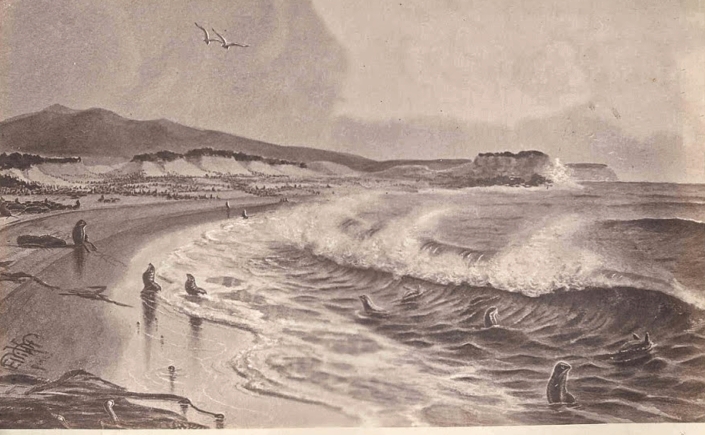
The story is set on an island in the Aleutians in the Bering Sea between Russia and Alaska. It tells of a unique seal who, by leading his fellow seals to a secret hidden beach, saves his kind from the seal hunters. He referred to his poem as “a kind of national anthem for seals”. The title of the poem is the name of a Russian seal-fur trader, Lukanin, who gave his name to these lonely Aleutian beaches in 1788. Kipling wrote: “This is the great deep-sea song that all the St. Paul seals sing when they are heading back to their beaches in the summer. It is a sort of very sad seal National Anthem”.
Back in the day, I set the poem to music. It is featured on the rare recording HuldreFolk Live in London 1988, featuring Paul Hemphill, Victor Mishalow and Adèle Hemphill. During HuldreFolk’s tour of English folk clubs in the northern summer of 1988, it was recorded on a cheap audio cassette by a dinky, clunky old analogue tape recorder – and it shows. But the natural acoustics of the cellar at Bracknell Arts Centre, and the audience’s participation in the choruses made up for a multitude of sins.
Lukannon is such a lyrical poem that it lends itself effortlessly to musical settings. Apart from my own, i have discovered three alone, and I am pretty certain that there are many more out there on the world wide web. There is a version by folk duo William Pint and Felicia Dale set to a tune by American musician Bob Zentz from their 1997 album Round the Corner. There is also a contemporary “prog-rock” version by British band Shadows of the Sun.
In 1947, the eccentric Australian expatriate composer Percy Grainger composed a song cycle of The Jungle Book and chose as his centrepiece the story of The White Seal – and particularly, Lukannon “as a protest against civilization.” For more on Grainger’s opus, see below.
Lukannon
I met my mates in the morning (and oh, but I am old!)
Where roaring on the ledges the summer ground-swell rolled;
I heard them lift the chorus that dropped the breakers’ song –
The beaches of Lukannon – two million voices strong!
The song of pleasant stations beside the salt lagoons,
The song of blowing squadrons that shuffled down the dunes,
The song of midnight dances that churned the sea to flame –
The beaches of Lukannon — before the sealers came!
I met my mates in the morning (I’ll never meet them more!);
They came and went in legions that darkened all the shore.
And through the foam-flecked offing as far as voice could reach
We hailed the landing-parties and we sang them up the beach.
The beaches of Lukannon – the winter-wheat so tall –
The dripping, crinkled lichens, and the sea-fog drenching all!
The platforms of our playground, all shining smooth and worn!
The beaches of Lukannon — the home where we were born!
I meet my mates in the morning, a broken, scattered band.
Men shoot us in the water and club us on the land;
Men drive us to the Salt House like silly sheep and tame,
And still we sing Lukannon – before the sealers came.
Wheel down, wheel down to southward; oh, Gooverooska go!
And tell the Deep-Sea Viceroys! the story of our woe;
Ere, empty as the shark’s egg the tempest flings ashore,
The beaches of Lukannon shall know their sons no more!
Percy Grainger’s Jungle Book Cycle
In 1947, the eccentric Australian expatriate composer dedicated a song cycle of The Jungle Book and chose as his centrepiece the story of The White Seal – and particularly, Lukannon. My Kipling ‘Jungle Book’ Cycle, begun in 1898 and finished in 1947, was composed as a protest against civilization.” (Grainger’s programme note, 1947)
Grainger (1882-1961) studied at the Hoch Conservatory in Frankfurt, Germany from 1895-1901 (aged 13-19). Grainger’s mother Rose wrote to her husband John of her fears that young Percy was becoming “more Germanized every day.” In response to Rose’s concern, and to “tickle up the British Lion in him,” John (who was estranged from Rose) sent Percy, among other things, several books by Rudyard Kipling . Kipling’s writings captivated Percy immediately, and he soon started writing choral settings of the poetry, especially those of Kipling’s Jungle Books.
Grainger’s settings of the poetry of Kipling are as extensive as his settings of British folk music; Kay Freyfus’s catalog of Grainger’s manuscript scores lists 36 settings, though Grainger in a 1926 letter to Kipling mentions “some 40 or 50” settings. Grainger felt a strong kinship for Kipling’s writing, and Kipling appreciated and approved of Grainger’s work at setting his poetry. Grainger played several of his choral settings for Kipling during a meeting at Kipling’s home in 1905. Of Grainger’s settings of his poetry, Kipling said, “Till now I’ve had to reply on black and white, but you do the thing for me in colour.”
The Beaches of Lukannon is the centerpiece of the cycle, and arguably the strongest piece musically and emotionally. It tells us the tale of the tragic slaughter of seals by wicked sealers from the seals’ perspective. The opening section, told from the point of view of a seal elder, recounts what the beaches of the Bering Sea Island of Lukannon originally were for the seals – their annual meeting (and mating) opportunity. The central section, reminiscent of the music of Charles Ives in its shifting chromatics, conveys the beauty of the surroundings “before the sealers came.” The final section musically revisits the opening material, but in a smore somber mode.
The caged bird sings with a fearful trill of things unknown but longed for still and his tune is heard on the distant hill for the caged bird sings of freedom Maya Angelou
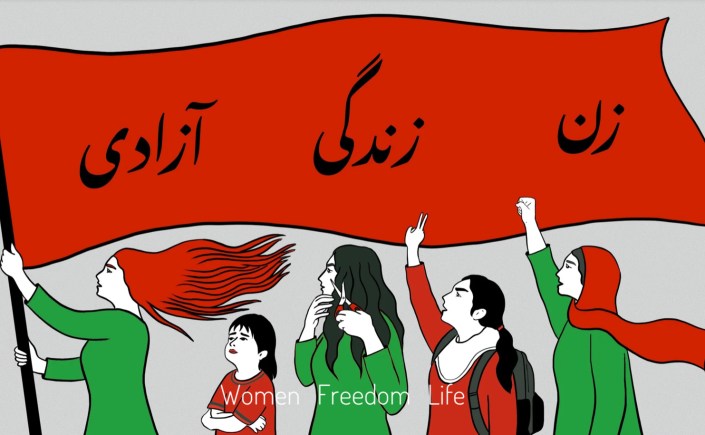
زن زندگی آزادی Zan zandaky āzādy Women freedom life
In our relatively comfortable, free and still democratic countries, it is difficult to put ourselves in the position of people desperate and passionate enough to risk life and limb and to face the terrible consequences of potentially heroic failure. We can but sense, vicariously, the ache and the urge behind Maya Angelous’s poem The caged bird sings of freedom (above) and Lord Byron’s passionate couplet:
Yet, Freedom! thy banner, torn, but flying, Streams like the thunder-storm against the wind.
The courage of the of the Iranian protesters, and particularly the woman and girls who have been the vanguard of this unprecedented intifada cannot be exaggerated. For brave they are indeed. Having endured long years of a brutal and vengeful, corrupt and misogynistic theocratic regime and its security and paramilitary enforcers, they are fully aware of the consequences of their actions.
Several weeks, the nationwide protests that followed the murder in custody of a young woman arrested by the morality police after wearing her hijab inappropriately, and other young women and also, now, young men, who, officially, have died at their own hand or of pre-existing causes, have mobilized Iranians of all ethnicities, classes, ages and genders. And the security state us reacted predictably, red in tooth and claw. There is torture and death actual and awaiting on the streets of villages, towns and cities throughout the country, and the public trials with their black-garbed and turbaned hanging judges are in place and ready to protect the nation and the revolution in the name of Allah and the legacy of the canonised grey and dour uber-mullah Ayatollah Khomeini.
The perseverance and nihilistic exuberance of the Iranian street has reminded me of an exhilarating song and video created by a young Egyptian and his friends celebrating the demonstrations in Cairo’s Tahrir Square that precipitated the fall of practically Egyptian president-for-life Hosni Mubarak thirteen years ago last February. Sawt Al Huriya (The Voice of Freedom), went viral on YouTube after its release on 11 February 2011, the day before Mubarak’s departure?
Fast forward to the present, and we examine why the Islamic Republic’s sclerotic theocratic regime is so afraid of another song of revolution, the crowd sourced protest anthem, Baraya, which has become a thorn in the side of the government in Tehran.
Baraye, translated as “because of …” or “for …”,the anthem of Iran’s Woman, Life, Liberty protest movement grew organically from a Twitter hashtag trend in which Iranians expressed their uncountable discontents and their commitment to the protests. It continues to unite Iranians in their opposition to the rules, restriction nd repression of Islamic Republic weeks after it wasfirst releasedonline on an international and social media that the authorities have tried and failed to silence. To paraphrase Canadian songwriter and activist for injustice and the environment in his song Santiago Dawn (see below) to keep millions down “takes more than a strong arm up your sleeve”.
Bareya’s lyrics were created by the Iranians themselves and gathered and set to music , recorded, sung and shared by a young Iranian singer, Shervin Hajipour. Crazy brave, perhaps for predictably, he was detained by security operatives soon after he posted it on his Instagram page and forced to remove it from his feed. But it had already attracted millions of views worldwide and continued to be shared and shared and shared, and it has now been played and performed the world over as people across the glob empathize, identify with, and add to the images verbalised and the emotions these engender. We all have stories to relate of oppression and exclusion, of the abuse of power and privilege and the pervasiveness of prejudice and discrimination. To quote Bruce Cockburn once more about an earlier resistance, “see them matching home, see them rising like grass through cement in the Santiago dawn”.
Baraja gives voice to the voiceless – as Bob Dylan sang in another century, in comparatively straightened times:
For the countless confused, accused, misused, strung-out ones an’ worse An’ for every hung-up person in the whole wide universe An’ we gazed upon the chimes of freedom flashing
The Recording Academy, which hosts the annual Grammy Awards, announcedthat in its new merit category for best song for social change, more than 80% of nominations were for Baraye. Below is a video of the world-famous band Cold Play singing the song in Buenos Aires with Iranian actor Goldshifte Farahani.
The genesis of Baraya mirrors the organizational structure of the protests themselves insofar as like these, it is networked and leaderless, Ironically, however, David Patrikarakos editor of thee-zine Unherd wrote recently, this lack of leadership portends the protests’ doom:
“No leader has yet emerged. Instead, the protests are organised by different people or groups in different cities and towns on an almost ad hoc basis.The truth is that if the mullahs were to collapse tomorrow, there are no signs that a democratic movement would sweep to power …It is far more likely that the security state — led by the Revolutionary Guard Corps — would step into the void and make apparent what is already largely a fact: that Iran is no longer a clerical state but is now ruled by a Praetorian Guard …
… In 1979, Iranians held up images of Khomeini. In 2022, they tear them down. They know they want the regime gone but they have no one to hold up in its place. For a revolution to succeed, it’s not enough to be against someone; you have to be for someone else. It’s not enough that Khamenei loses. Someone else must win. Until that time, the mullahs will continue to cling on as murderously and barbarously as they always have, and Iranians will continue to die. For years Palestinians would say they needed a Saladin. They were wrong. What they need is a Ben Gurion. What the Iranian revolutionaries need now more than anything else is a Khomeini. Until that happens, this will only ever be half a revolution”.
At this moment in time, the outcome of that revolution hangs in the balance. The passion of the people for a better world is once again going up against the iron fist of the security state. Sadly, history past and present, in Iran and elsewhere, has shown us that when an irresistible force comes up against an immovable object, no matter how popular, righteous and justified that force may be, the immovable object invariably wins.
Meanwhile, hope springs eternal …
Our weapon was our dreams.
And we could see tomorrow clearly.
We have been waiting for so long.
Searching, and never finding our place.
In every street in my country,
The voice of freedom is calling.
Sawt al Huriya
Baraya … Because of
Because of dancing in the street
Because of fear while kissing
Because of my sister, your sister, our sister
Because of changing rotten minds
Because of shame for moneyless
Because of yearning for an ordinary life
Because of the scavenger kid and his dreams
Because of a command economy
Because of air pollution
Because of ‘Vali Asr’ Avenue, and its dying trees
Because of a cheetah (Pirouz) that may go extinct
Because of innocent, outlawed dogs
Because of the incessant crying
For the image to repeat this moment
Because of the smiling face
For students, for the future
Because of students, for the future
Because of this forced paradise
Because of the imprisoned elites
Because of Afghan kids
Because of all (Because of…) non-repetitive
Because of all these empty slogans
Because of the rubble of fake houses
Because of the feeling of peace
Because of the sun after a long night
Because of the nerve pills and insomnia
Because of man, country, rebuilding
Because of a girl who wished she was a boy
Because of woman, life, freedom
Nahid Shamdouz, assistant professor of Middle East and Media Studies at the University of Texas at Austin,Foreign Policy, 26th October 2022
Demonstrators sing “Baraye” while holding their phone lights high during a march in support of protests in Iran. Allison Bailey, Reuters. 26th October 2021
“Baraye,” the anthem of Iran’s “Woman, Life, Liberty” protest movement—a song woven together entirely from a Twitter hashtag trend in which Iranians express their investment in the current protests—continues to unite Iranians in their opposition to the Islamic Republic several weeks after it was first releasedonline.
For Iranians in Iran but also for the millions in the diaspora, this is the song of a generation, perfectly expressing this political moment and all that is at stake.
For dancing in the alleyways Because of the fear you feel when kissing For my sister, your sister, our sisters To change the minds that have rotted away Because of shame, because of being broke Because of yearning for an ordinary life
What makes this moment different from previous periods of protest is that the wall of acquiescence and pretense that maintained the state’s authority in the public realm has been torn down on a scale not seen since the 1979 revolution. In its recounting of all the painful grievances, “Baraye,” which translates in English to “for” or “because of,” signals the end of patience with the status quo and opens vistas onto a new future with a vocal crescendo that culminates in the word “freedom.”
The song reveals the simple, ordinary nature of the things that Iranians are aching for, asking for, and even dying for. It is radical in revealing on a national level the cruelty of a system that denies such basic demands—exposing the devastating conditions Iranians face under the current regime.
“Baraye” creates national intimacy by citing very specific events that all Iranians have suffered through together, in a palimpsest of collective traumas.
If “Baraye” reflects a different, perhaps unprecedented mood on a national level, it also mirrors the organizational structure of this recent protest movement. If it is networked and leaderless, so is the song. The lyrics were written by Iranians at large and merely set to music and vocalized by the young up-and-coming singer Shervin Hajipour. This explains why security forces detained Hajipour a couple of days after he posted it on his Instagram page, where it had already accrued millions of views. The regime has tried for years to push the apparent and already real aspects of people’s lives out of the public sphere.
On social media, Iranians have created a life that more closely mirrors their inner selves—replete with harsh criticism of leading clerics including Iran’s supreme leader, Ayatollah Ali Khamenei; female solo vocalists who are otherwise banned singing at the top of their lungs; and the exhibition of private lives that are anything but a reflection of the state’s projected pious paradise. Still, the state has sought to maintain a semblance of its ideology and control in actual public spaces and its media.
“Baraye” has broken that violently imposed wall between the state’s enforced reality and people’s real lives. It forced into the open, in the face of authority, all that people have known for long but were not supposed to express openly on such a national dimension.
For the sake of a laughing face For schoolkids, for the future Because of this mandatory paradise For imprisoned intellectuals
Since its release, the song has become the single most covered protest song in Iran’s history. Within a few short weeks after Hajipour composed the music for it, musicians across Iran and beyond its borders have sung it verbatim in their own voices, translated it, and sung it in other languages—and even universalized the lyrics for a more global audience.
There have now been many interpretive dance performances to it all over the world, and it is regularly blared from cars and balconies and open windows across Iranian cities and towns. Malala Yousafzai, the girls’ education activist and Nobel Peace Prize laureate, recently sent a video message of solidarity to Iranian women, with the track playing in the background.
Last week, the Iranian rapper Hichkas released a militant hip-hop trackreferencing “Baraye” through the more casual rap lingo “vase,” enumerating his reasons, starting with “vase Mahsa” (for Mahsa Jina Amini, whose death at the hands of Iran’s morality police sparked the protests) and ending with “for a good day,” in a nod to his own 2009 Green Movement protest song.
Mahsa Amini Protest in Iran
Protesters gather in London on Oct. 1 in solidarity with people protesting across Iran.
Indeed, the expressed concerns wrapped up in the short tweets shown in Hajipour’s video, and in the #Mahsa_Amini hashtag itself, are quite universal—the precarious condition of the planet, drastic inequalities, the desire for a peaceful life—which is why the song has become resonant with so many people around the world as well.
For the garbage-picking kid and her dreams Because of this command economy Because of this polluted air … For a feeling of peace For the sun after long nights
At the same time, “Baraye” creates national intimacy by citing very specific events that all Iranians have suffered through together, in a palimpsest of collective traumas. Hajipour sings “For the image of this moment repeating again,” drawn from a tweet with a photo of Hamed Esmaeilion and his young daughter relaxing together on a couch reading newspapers. (His wife and 9-year-old daughter were killed when Iran’s Revolutionary Guards mistakenly shot down a Ukrainian airliner leaving Tehran in January 2020, and Esmaeilion has become the face of the grief affecting all those who lost loved ones in the crash.)
This line resonates with Iranians because so many families have been torn apart by the country’s massive brain drain, caused by a closed and corrupt economy that offers few opportunities.
In other lines, Hajipour sings sarcastically “Because of this mandatory paradise,” referring to the theocratic state’s imposed restrictions, justified in the name of achieving an Islamic utopia.
In yet another, he sings of “houses in rubble,” pointing to collapsing buildings caused by the rampant nepotism and corruption that shield state-connected builders from transparency on safety measures. In another, he sings of the “imprisoned intellectuals,” in a nod not just to the hundreds of journalists, human rights lawyers, and filmmakers but even award-winning university students who have been locked up.
The chorus arising from hundreds of tweets is clear: This is a regime that seems to be against life itself, punishing dancing, kissing, and smiling faces.
The song’s singular overnight success is not a small achievement given the long, rich history of protest songs in Iran. Already at the time of Iran’s Constitutional Revolution in 1906, poets created songs about the spilled blood of the youth who agitated for representative government and, not long after, about the Morning Bird breaking the cage of oppression, which many decades later became one of the most intoned protest songs in post-revolutionary Iran.
The trajectory of Iran’s musical history clearly exhibited a century-long struggle for freedom and justice, not yet realized.
Although “Baraye” and other songs of the current protest movement continue this strong tradition, they break with the post-revolutionary legacy on one key point: They no longer call for reforms.
At the time of the last major convulsions in 2009, many activists and musicians of the Green Movement called forth songs from the 1979 revolution to stake a claim to the revolution’s original yet unattained promises. People wore headscarves and wristbands in the green of Imam Hussain and went to their rooftops to shout “Allahu akbar” to invoke God’s help against a corrupt, earthly power.
But this time around, there are no religious signifiers or any demands for reforms. If classical songs are performed, they are not the icon Mohammad Reza Shajarian’s conciliatory song Language of Fire in 2009, when Iranians were still agitating for reforms from within, but his militant 1979 song Night Traveler, (also known as “Give Me My Gun”) in which he calls “sitting in silence” a sin and asks for his gun so he can join the struggle. One of Shajarian’s masterful female protégés posted the song with the hashtag #Mahsa_Aminiand swapped “the brother” out of the verses to sing “The sister is an adolescent, the sister is drowning in blood,” in recognition of the teenage girls who have given their lives in the protests.
The state security system instantly understood the significance of “Baraye” as a protest song. Hajipour was forced to take it off his Instagram account; however, not only has his song already been shared widely by other accounts and on other platforms, but the sentiments behind the lyrics are within the millions of people who wrote them.
The chants of “Death to the Dictator” have reverberated from the streets to the universities, from oil refineries to urban rooftops, and from bazaars to school courtyards. And so have the haunting calls for freedom repeatedly intoned at the end of “Baraye,” pouring forth from every corner of the actual and virtual Iranian public sphere.
That song’s reality can no longer be repressed and hidden by force.
Song lyrics in this article are based in part on Zuzanna Olszewska’s translations.
Nahid Siamdoust is an assistant professor of Middle East and Media Studies at the University of Texas at Austin, and the author of Soundtrack of the Revolution: The Politics of Music in Iran.
Of all the trees that are in the wood, the holly bears the crown
A Christmas gift from In That Howling Infinite.
Probably one of the loveliest traditional English carols, sung by melodious English song-bird Kate Rusby.
Written by Thom Hickey in his excellent blog The Immortal Jukebox – a treasure trove of well-written words and excellent music.The post is below the lyrics. Wander through it and enjoy.
The holly and the ivy,
When they are both full grown
Of all the trees that are in the wood
The holly bears the crown
O the rising of the sun
And the running of the deer
The playing of the merry organ
Sweet singing of the choir
The holly bears a blossom
As white as lily flower
And Mary bore sweet Jesus Christ
To be our sweet Saviour
O the rising of the sun
And the running of the deer
The playing of the merry organ
Sweet singing of the choir
The holly bears a berry
As red as any blood
And Mary bore sweet Jesus Christ
To do poor sinners good
O the rising of the sun
And the running of the deer
The playing of the merry organ
Sweet singing of the choir
The holly bears a prickle
As sharp as any thorn;
And Mary bore sweet Jesus Christ
On Christmas Day in the morn.
O the rising of the sun
And the running of the deer
The playing of the merry organ
Sweet singing of the choir
The holly bears a bark
As bitter as any gall;
And Mary bore sweet Jesus Christ
For to redeem us all.
O the rising of the sun
And the running of the deer
The playing of the merry organ
Sweet singing of the choir
The holly and the ivy
Now both are full well grown,
Of all the trees that are in the wood,
The holly bears the crown.
O the rising of the sun
And the running of the deer
The playing of the merry organ
Sweet singing of the choir
There is a power beyond all analysis in the Christmas Carol – especially those which emerged from the folkloric tradition of England’s rural heartlands.
I could give you a learned analysis of, ‘The Holly and the Ivy’ noting it is numbered 514 in the Roud Folk Song Index and waxing lyrical on its symbolism and use of Christian iconography.
Somehow, as soon as Kate Rusty starts to sing all that appears superfluous.
For Kate is for my money the finest English Folk Singer since Sandy Denny and you would have to be made of stone not to be moved by the tender beauty of her voice.
Hearing her singing such a song I feel as if I had wandered from the snow into a Yorkshire Romanesque church.
Resting in a time worn pew, hunched against the draughts all around I am startled by the emerging sound of a rustic band…
In the dark times will there also be singing? Yes, there will also be singing. About the dark times.
Berthold Brecht
Rhiannon Giddens, a multifaceted singer, musician, folklorist and storyteller brings American history alive in her her drive to unearth the stories of forgotten people so that her audiences and listeners may remember them.
On Moon Meets The Sun, a defiantly joyous song, Giddens and her comrades of Our Native Daughters sing in the round over a polyrhythmic lacework of banjo and guitar, vowing not to let radical suffering diminish humanity. “You put the shackles on our feet, but we’re dancing”, she sings, “You steal our very tongue, but we’re dancing” “Ah, you sell our work for your profit, but we’re dancing,” she scoffs. “Ah, you think our home we have forgotten, but we’re dancing.” Then she recedes into the jubilant tangle of voices: “You can’t stop us now (We’ll be dancing). You can’t keep us down (We’ll be dancing)”.
Rhiannon Giddens: “There is surely racism in this country — it’s baked into our oldest institutions – just as there is sexism, millennia old. At the intersection of the two stands the African American woman. Used, abused, ignored and scorned, she has in the face of these things been unbelievably brave, groundbreaking and insistent. Black women have historically had the most to lose, and have therefore been the fiercest fighters for justice — in large, public ways that are only beginning to be highlighted, and in countless domestic ways that will most likely never be acknowledged.”
Quasheba, Quasheba
You’re free now, you’re free now
How does your spirit fly?
Blood of your blood
Bone of your bone
By the grace of your strength we have life
From the Golden Coast of Ghana
To the bondage of Grenada
You kept the dream of hope alive
They burned your body
They cursed your blackness
But they could not take your lights
Raped and beaten, your babies taken
Starved and sold and sold again
Ain’t you a woman, of love deserving
Ain’t it somethin’ you survived?
Quasheba, Quasheba
You’re free now, you’re free now
How does your spirit fly?
Blood of your blood
Bone of your bone
By the grace of your strength we have life
You dreamt of home, you dreamt of freedom
You died a slave, you died alone
You came from warriors who once built empires
Ashanti’s kingdom carries on
You were forgotten, almost forsaken
Your children founded generations
Your strength sustained them
They won their freedom
Traced their roots to find you [waiting?]
Quasheba, Quasheba
You’re free now, you’re free now
How far your spirit’s flown
Blood of your blood
Bone of your bone
By the grace of your strength we are home
Blood of your blood
Bone of your bone
By the grace of your strength we are home
By the grace of your strength we are home
We are home
We are home
We are home
I am reminded of Pete Seeger’s adaptation of the old Baptist hymn:
” My life flows on in endless song
Above earth’s lamentation.
I hear the real, thought far off hymn
That hails the new creation
Above the tumult and the strife,
I hear the music ringing;
It sounds an echo in my soul
How can I keep from singing?”
Here is the wondrous Éabha McMahon of Celtic Woman:
In the dark times
Will there also be singing?
Yes, there will also be singing
About the dark times.
– Bertolt Brecht, motto to Svendborg Poems, 1939
In an essay called ‘Undefeated Despair’, John Berger wrote of ‘Despair without fear, without resignation, without a sense of defeat.’ ‘However you look at it’, the Guardian editorialised a few days ago, ‘2017 offers a fearful prospect for America and the world.’ In the words of Paul Simon’s ‘American Tune’, I don’t have a friend who feels at ease when weighing the prospects for the year ahead. In the spirit that some solace may be found in poetry in these dark times, I offer a selection of poems or brief extracts – some have which have appeared in posts here before – which seem to offer meaning and hope; they may reflect Berger’s stance of undefeated despair, offering not ‘a promise, or a consolation, or an oath…







 In That Howling Infinite