Better read than dead … where have all the big books gone?

The big books. The ambitious books, the life-changing books, the long books, the time-consuming books, the dense books. Not the “classics” because classics aren’t necessarily big and big isn’t necessarily classic (whatever that means, anyway) but the important books our culture used to produce but, today, we rarely see on bookshelves, where have they gone?

My mother used to tell me I was reading almost as soon as I could walk, and I was enrolled in libraries at an early age. In my lifetime, I’ve probably gone through tens of thousands of books of all sizes and genres. Now in my twilight years, though I still I love reading books, I would no longer regard reading as a hobby like I would be in the past, and I do not consume as many books as I did in earlier days. I often feel that I have lost the appetite for “big books” – big in the dimension and the number of pages, but not in the sense of scope and content and the literary reputation of the author. Back in day, I would tackle both the size and the sensibility of books with alacrity and and excitement, eager as I was then for knowledge and insight – those lengthy, complicated, and yes, ambitious, life-changing and time-consuming books that novelist Steve Orr name-checks in the opinion piece republished below.

As for those “big books”, I started early. Grammar School curricula mandated “set books” from the “canon” of English literature. William Shakespeare and Charles Dickens, of course, and also, among others, Christopher Marlowe, Geoffrey Chaucer, Oscar Wilde, GB Shaw, and John Steinbeck. Although we deep-dived into specific books, we were encouraged to read their other works, and more besides. So, I came to know The Iliad, The Odyssey and The Aenead, and also the French ‘greats’ Alexander Dumas and Victor Hugo. I can’t recall how I came to discover Mikhail Sholokov’s dramatic tales of the Don Cossacks, but they gave me a fascination with Russian history that has endured to this day, and introduced me to the Russian Revolution and Civil War – and socialism (see The Russian Tradition – Russia, Ukraine and Tibor Szamuely and other pieces).

During my university years, few non-fiction works of note come to mind though I’m sure I’d have read a few – including all three books of Tolkien’s trilogy which I binged on over one cold and rainy English weekend in Reading. Three years later, whilst traveling the celebrated Hippie Trail to India and back, I’d pick up random tomes in hotels and doss houses along the road. It was between Kashmir and Istanbul, I met James Joyce’s Leopold Bloom and Dostoevsky’s melancholy Prince Mishkin.

Moving to London in the early seventies, I spent hours traveling back and forth on the London Underground – always with a good book in hand. I went through phases. The Russian canon of Tolstoy, Dostoevsky, Pasternak, and Solzhenitsyn, all angst and agony, suited me well in my restless years. When my mood changed from melancholy to mellow, from the blues to the bucolic, I worked through all of Thomas Hardy’s tales of rural England, and discovered that Rudyard Kipling was much, much more than Mowgli. I encountered Milton’s fallen angel ( see Lucifer Descending … encounters with the morning star) whilst Don Quixote and Captain Ahab gave me a good literary workout. The name of this blog is taken from Moby-Dick. Meanwhile, the current best-seller lists provided many worthy reads.

Through the eighties and nineties, I would have several books on the go and would plough through several works of fiction and non-fiction each month. With the onset of the internet and the social media age, my decades long passion for history and politics superseded my fondness for a good book or two as I dedicated more of my leisure hours to news media and on-line feeds. The acquisition of an iPad in 2011 accelerated the demise of the actual printed word. I have never, however, read an e-book, and probably never will, and I buy books still, including several I would argue fitted Orr’s criteria of “big” – particularly CE Morgan’s “great American novel” The Sport of Kings and Hilary Mantel’s Wolf Hall trilogy. But since retiring to the bush, my reading capacity is down to a book every one or two months, depending in on its size.

Orr’s piece reminded me of my once prevailing but receding passion for the tangible printed word, providing not so much an obituary to the “big books” but a wake-up call.

“Maybe it’s time to commit”, he writes, “Maybe it’s time to (re-)rewire our brains to work in years, months, instead of fractions of seconds. Maybe it’s time to stop saying, “I’ll wait for the movie”. Maybe it’s time to admit we all have a little of Ahab’s obsession, Humbert’s lustings – maybe there’s a bit of Christian Stead’s controlling Sam Pollit in all us’.

“In short’, he concludes, “maybe we are the book and the book is us. Let’s admit, as Stead did when writing The Man Who Loved Children, the best way to exorcise the past is to write (and read) about it. This, as it turns out, isn’t a desirable but a necessary thing. Shall we admit, in the end, the questions the big books pose no longer interest us because we no longer interest ourselves?”

Postscript

From Better read than dead – are books the footprints from our past?

Last year, I jettisoned half of a book collection I’d accumulated over sixty years, more went this year – books that had followed me as I moved from Birmingham to Reading to London in the sixties and seventies, migrated to Australia, and moved from house to house in Sydney and finally settled in the midst of a forest in northern New South Wales.

Out went books of all formats and genres. Mementos of former passions and fashions. Relics of past courses and careers. Old school textbooks, university texts, fiction, nonfiction, dictionaries, coffee table books. I’d worked for years in publishing, so the complimentary copies alone were colossal..

I’d already culled boxes of books a decade ago when we’d last moved house and home, and this time, I was determined to downsize further. My primary criteria was that if I hadn’t looked inside the covers of a book for twenty, thirty, fifty years, then I wasn’t likely to do so in the next five, ten, twenty years I have left on this planet.

Nevertheless, I kept back five full shelves Books of poetry, some of them a century old. All-time favourite novels, including the iconic Russians, Hardy, Herbert and Heinlein. Non-fiction histories I regard with particular nostalgia or think might be of use again one day. Books about music and musicians, particularly the Beatles and the Bobster. Recent purchases. And, books I consider “rare” – a subjective descriptor that I can only explain as old books which I picked up in secondhand bookshops when I lived in London in the sixties and seventies. Some, I reckon, are actually rare!

For more on books and reading in In That Howling Infinite, see Better Read Than Dead – the joy of public libraries

Where have all the big books gone?

The big books. The ambitious books, the life-changing books, the long books, the time-consuming books, the dense books. Not the “classics” because classics aren’t necessarily big and big isn’t necessarily classic (whatever that means, anyway) but the important books our culture used to produce but, today, we rarely see on bookshelves, where have they gone?

Why aren’t (many) people writing them? And more importantly, why aren’t people reading them?

This is a not a new concern. Charles Bukowski in 1990 asked: “… well, where are they?/ the Hemingways, the T.S. Eliots, the Pounds … dead, I know/ but where are the re-/ placements, where are the new/ others?’

Poet and writer Charles Bukowski.

Poet and writer Charles Bukowski.

What was a casual question back then seems to have a new ­urgency now.

There are lots of reasons, and I’d like to explore some of them here. I suspect technology, in its various forms, is taking over the jobs we used to trust our brains to do: critical thinking, imagination, reasoning and speech and (civilised) argument and social intercourse at a personal and public level. We say, “Oh, well, I’m too busy to tackle Anna Karenina,” then pick up our phone to check the latest tweet.

We don’t value time in the same way we used to – slow, precious, filled with good smells and sounds and ideas and meaningful things. We’re happy to waste time. Like, surely, we’ll get it back? We’re happy to fill the gap with more technology, updated phones and watches. And the result? We’ve become lazy, and lonely. We’ve privatised our inner spaces, sold off our opinions, let someone else make Pixar and Marvel dreams for us. And worse, for too many people now, everything’s about money. We’ve shat on our curiosity, given up on the daily awe that came from sensing our place in nature, the consolations and compromises that made civilisation possible, and pleasant. The result? Each new generation bleeding out its limited reserves of empathy, understanding and wisdom.

Readers seem hung up on plot. Easy plots. Familiar plots. Plots that come from and return to a screen. Problem being, the big books are about big characters: Miss Havisham, Elizabeth Hunter, Captain Ahab, Tom Joad. It takes time to build up a complex, flawed life on a page, each verb and adjective competing for the smallest breath and bit of meaning. Even when contemporary writers have a crack, readers falter, stray, give up. There’s something easier, more immediate to hand. Something involving the discovery of a body on a beach and working out how it go there. Harold Bloom: “I am not unique in my elegiac sadness at watching reading die, in the era that celebrates Stephen King and J.K. Rowling rather than Charles Dickens and Lewis Carroll.”

Ironically, it’s the loss of critics like Bloom that’s allowed the problem to fester. The loss of literary criticism generally, space in newspapers, reviews themselves (ironically, surviving in 50-word online grabs where they’re easily ignored).

Today, there are fewer places to publish extracts, to make meandering explorations that interrogate context, subtext, the way authors’ lives morph onto the page, how we needn’t make the mistakes of the past, how too many of our views are founded on faulty assumptions.

All of this might seem ho-hum: “It’s a shame but, you know, the world’s changing.”

If it wasn’t for what we risked losing. That is, the understanding of what it means to be a human on Earth, a human among millions who’ve lived and died with the same urges and joys and terrors and disappointments. How else to connect with the tribe of humanity that’s fallen through time’s long ruin? Bloom again: “We read deeply for various reasons, most of them familiar: that we cannot know enough people profoundly enough; that we need to know ourselves better.”

Keira Knightley in a scene from film Anna Karenina.

Keira Knightley in a scene from film Anna Karenina.

Or as Jonathan Franzen put it in How to Be Alone: “Readers and writers are united in their need for solitude … in their reach inward, via print, for a way out of loneliness.”

The very idea of reading deeply; of making connections in order to become better people (or at least remain sane, or maybe even happy). But now, visual seems to have won out over text; we have a poorer understanding of irony, sarcasm, the art of persuasion, voice, a well-turned sentence, the art of choosing the best word (even grammar, spelling); we can’t grasp complex sentences, let alone the formal language that glues so many big books together. In short, we’re out of practice. Kids grow up without books in the house, without reading role models (family, let alone politicians and public figures, having been replaced with sporty types). No one demands sustained reading and schools are too busy teaching “multi-modal” texts (more screens) while avoiding quality books lest they disadvantage non-readers. Meanwhile, the books that are read are short, plotish, weighed down with well-meaning but yawn-worthy attempts at solving the world’s problems. Despite schools’ mission to create readers, at the end of the day they leave more waiting for a bus that’ll never come. Apart from this, schools and universities are busy “de-colonising” bookshelves, removing Pip because (I suspect) the local gauleiter has never read Great Expectations. In short, there goes the Western canon. Anyway, chances are younger English teachers haven’t read much, or they’ve been co-opted from the geography department to make up the numbers.

And what about the writers? Bukowski: “I don’t ask for Dostoevsky, there’s no replacement for Feodor Mikhailovich. But these now, what are/ they: making their tiny splashes, what practiced ineptness, what boredom of language, what a/ crass bastardly trick against print against pages …”

The reasons are complex, but the outcomes clear: writers are no longer culturally important; big books are rarely produced by profit-driven publishers, therefore fewer are written, creating a self-fulfilling Coriolis effect of big books down little drains. But mostly, big books are hard to write. Think of Patrick White churning out an Eye of the Storm or Riders in the Chariot: a hundred thousand-plus handwritten words, typed up, corrected, typed again, “oxy-welded”, years and years of solid, thankless, grinding warfare with an Olivetti and the English language to produce a masterpiece that, even then, required a visionary ­publisher (Ben Huebsch) and well-read public to give it any chance at all.

And talking about the journey. Perhaps part of the problem is that we’ve lost interest in the journey on which writers can take us over our lives. From comics, to pre-franchised, pre-teen Tolkien, the discovery of Holden Caulfield, the oh-so-clever twenty-something Infinite Jest, then to something serious, Bolano, perhaps, and on and on it goes, the road less travelled that’s no longer travelled at all. And what have we lost? The unbroken chain of meaning from Homer to Dante, Chaucer to Shakespeare, to a 20th century profusion of styles that offered Joyce in the morning and Hesse in the afternoon.

For me, as a 12- or 13-year-old, it was Dickens. To think, someone had actually dreamed up Micawber and Betsey Trotwood! Without that narrative, that connection, how do we even know what we’re missing, or misunderstanding? Are we ready to give up the collective memory that, according to Italo Calvino, holds together “the imprint of the past and the plan for the future …”

Or is it simply that we no longer know how to be alone anymore? Bloom said it was all about finding a mind “more original than our own”. But now, we’re all creators, posting a hundred daily autobiographies on TikTok. Ironically, this seems to be leaving us more lonely than ever and, having withdrawn within ourselves, having discovered we’re bored with what’s being said and sung and tweeted, we can’t work out what’s next?

Maybe it’s time to commit. Maybe it’s time to (re-)rewire our brains to work in years, months, instead of fractions of seconds. Maybe it’s time to stop saying, “I’ll wait for the movie”. Maybe it’s time to admit we all have a little of Ahab’s obsession, Humbert’s lustings – maybe there’s a bit of Christian Stead’s controlling Sam Pollit in all us.

In short, maybe we are the book and the book is us. Let’s admit, as Stead did when writing The Man Who Loved Children, the best way to exorcise the past is to write (and read) about it. This, as it turns out, isn’t a desirable but a necessary thing. Shall we admit, in the end, the questions the big books pose no longer interest us because we no longer interest ourselves?

Stephen Orr is an award-winning novelist. He will be a guest at Adelaide Writers’ Week on Wednesday 5 March.

Man Friday … a poet’s Robinson Crusoe sequel

You won’t have to worry anymore
When you hear the cry for home

Van Morrison

Alec Derwent Hope (21 July 1907 – 13 July 2000) was an Australian poet and essayist known for his satirical slant, and also, a critic, teacher and academic: He ended his career as Professor of English at the Australian National University, Canberra. He was referred to in an American journal as “the 20th century’s greatest 18th-century poet”.

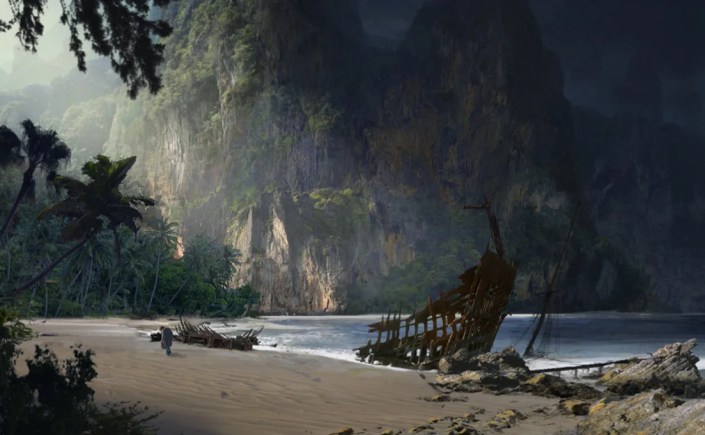
Man Friday, published in 1958, is actually set in those faraway days of Georgian England. It begins where English novelist and journalist Daniel Defoe leaves off his 1719 tale of the iconic castaway Robinson Crusoe. Readers will recall that Crusoe was shipwrecked and subsequently spent 28 years on a remote tropical desert island near the coasts of Venezuela and Trinidad, encountering cannibals, captives, and mutineers before being rescued. To refresh memories, there is a 200 word synopsis at the end of this post.

Hope takes up the story of Crusoe’s companion and servant Friday after he is brought by his “master” and sole companion to live in England. The completely alien culture that Friday, now a stranger in a strange land, encounters on this new “desert island” requires a huge and disturbing recalibration of his temporal, cultural and spiritual compass. He gradually arrives at an acceptance of the way of life that has been imposed upon him by circumstance.

His transformation and quiet resignation into an upper-class servant and his subsequent marriage and children take him farther and farther away from his memories and encase him within an artificial persona – until the day he accompanies Crusoe to an English sea port and hears the ocean’s beckoning roar for the first time in many years. The song of the ocean, the rush of memory, and Friday’s response to the call of the sea crystalizing in the poem’s ending. 

It is a remarkably imaginative work juxtaposing Friday’s former life on an idyllic “island in the sun” (to quote the late Harry Belafonte’s lovely rhapsody’) to the stitched-up, hung-up, and in his perception, confined world of polite Georgian society. It is also captivating insofar it employs the sea as an extended metaphor (a device that I myself have used in poems and songs – see the Sound Cloud audio clips at the end of this post).

The sea runs like a leitmotif throughout the poem even when it is not mentioned explicitly. It has multiple associations: journeys by sea, separation and exile, isolation and loneliness, and the idea of home as an anchor, a goal, a safe haven, and as a longing. AD Hope further infuses it with the cultural differences and divisions, of social and spiritual barriers, of acclimatisation and assimilation of a kind. And in the end, an atavistic crying for home.

Saved, at long last through Him whose power to save
Kept from the walking, as the watery grave,
Crusoe returned to England and his kind,
Proof that an unimaginative mind
And sober industry and common sense
May supplement the work of Providence.
He, no less providential and no less
Inscrutably resolved to save and bless,
Eager to share his fortune with the weak
And faithful servants whom he taught to speak,
By all his years of exile undeterred,
Took into exile Friday and the bird.

The bird no doubt was well enough content.
She had her corn – what matter where she went?
Except when once a week he walked to church,
She had her master’s shoulder as a perch.
She shared the notice of the crowds he drew
Who praised her language and her plumage too,
And like a rational female could be gay
On admiration and three meals a day.

But Friday the Dark Caribbean Man,
Picture of his situation if you can:
The gentle savage, taught to speak and pray
On England’s Desert Island cast away,
No God like Crusoe is issuing from his cave
Comes with his thunder-stick to slay and save;
Instead from caves of stone, as thick as trees,
More dreadful than ten thousand savages,
In their strange clothes and monstrous mats of hair,
The pale-eyed English swarm to joke and stare
With endless questions round him crowd and press,
Curious to see and touch his loneliness.
Unlike his master Crusoe long before,
Crawling half drowned upon the desolate shore,
Mere ingenuity useless in his need,
No wreck supplies him biscuits, nails and seed,
No fort to builds, no call to bake, to brew,
Make pots and pipkins, cobble coat and shoe,
Gather his rice and milk his goats and rise
Daily to some absorbing enterprise.

And yet no less than Crusoe so he must find
Some shelter for the solitary mind;
Some daily occupation to contrive
To warm his wits and keep the heart alive;
Protect among the cultured, if he can,
The “noble savage” and the “natural man”.
As Crusoe made his clothes, so he no less
Must labour to invent his nakedness
And, lest their alien customs without trace
Absorb him, tell the legends of his race
Each night aloud in the soft native tongue
That filled his world when, bare and brown and young,
His brown, bare mother held him to her breast,
Then say his English prayers and sink to rest.
And each day waking in his English sheets,
Hearing the wagons in the cobble streets,
The morning bells, the clatter and cries of trade,
He must recall, within their palisade,
The sleeping cabins in the tropic dawn,
The wrapt leaf-breathing silence, and the yawn
Of naked children as they wait and drowse,
The women chattering around their fires, the prows
Of wet canoes nosing the still lagoon;
At each meal, handling alien fork and spoon,
Remember the spice mess of yam and fish
And the brown fingers meeting in the dish:
Remember too those island feasts, the sweet
Blood frenzy and the taste of human meat.

He piled memories against his need;
In vain! for still he found the past recede
Try as he would, recall, relieve rehearse,
The cloudy images would still disperse.,
Till as in dreams, the island world hecknew
Confounded the fantastic with the true
While England, less unreal day by day,
The cannibal Island ate his past away.
But for the brooding eye, the swarthy skin,
Witness to the Natural Man within,
Year following year, by inches, as they ran
Transformed the savage to an English man
Brushed, barbered, hatted, trousered and baptised,
He looked, if not completely civilised,
What came increasingly to be the case:
An upper servant, conscious of his place,
Friendly but not familiar in address
And prompt to please, without obsequiousness
Adept to dress , to shave, to carve, to pour
And skilled to open or refuse the door,
To keep on terms with housekeeper and cook,
But quell maids and footman with a look.
And now his master, thoughtful for his need,
Bought him a wife and gave him leave to breed.
A fine mulatto, once a ladies maid,
She thought herself superior to Trade
And, reared on a Plantation, much too good
for a low native Indian from the wood;
Yet they contrived at last to rub along
For he was strong and kind, and she was young
And soon a father, then a family man
Friday took root in England and began
To be well thought of in the little town,
And quoted in discussions at The Crown
Whether the Funds would fall, the French would treat
Or the new ministry could hold its seat
For though he seldom spoke, the rumour ran
The master had no secrets from his man
And Crusoe’s ventures prospered so, in short,
It was concluded he had friends at Court.

Yet, as the years of exile came and went,
Though first he was he grew resigned and then content,
Had you observed him close, you might surprise
A stranger looking through the servant’s eyes.
Some colouring of speech , some glint of pride,
Not born of hope, for hope had long since had died,
Not even desire, scarce memory at last
Preserved that stubborn vestige of the past.

It happened once that man and master made
A trip together on affairs of trade;
A ship reported founding in the Down
Brought them to visit several seaport towns.
At one of these great Yarmouth or Kings Lynn,
Their business done, they baited at an inn,
And in the night were haunted by the roar
Of a wild wind and tide against the shore.
Crusoe soon slept again but Friday lay
Awake and listening till the dawn of day.
For the first time in all his exiled years
The thunder of the ocean filled his ears;
And that tremendous voice so long unheard
Released and filled and drew him till he stirred
And left the house and passed the town, to reach
At last the dunes and rocks and open beach:
Pale bare and gleaming in the break of day
A sweep of new-washed sand around the bay,
and spindrift arriving up the bluffs like smoke
As the long combers reared their crests and broke.
There, in the sand beside him, Friday saw
A single naked footprint on the shore
His heart stood still, for as he stared, he knew
The foot made it never had worn shoe
And, at glance, that no such walker could
Have been a man of European blood.
From such a footprint once he could describe
If not the owner’s name, at least his tribe,
And tell his purpose as men read a face
And still his skill sufficed to know the race;
For this for this was such a print as long ago
He too had made and taught his eyes to know.
There could be no mistake. A while he stood
Staring at that great German Ocean’s flood;
And suddenly he saw those shores again
Where Orinoco flows into the main,
And, stunned with an incredible surmise,
Heard it his native tongue once more the cries
Of spirits silent now for many a day;
And all his years of exile fell away.

The sun was nearly to the height before
Crusoe arrived hallowing at the shore,
Followed the footprints to the beach and found
The clothes and shoes and thought his servant drowned
Much grieved he sought saw him up and down the bay
But never guessed, when later in the day
They found the body drifting in the foam,
That Friday had been rescued and gone home.

See also in In That Howling Infinite, Better read than Dead – books, poems and reading

Daniel Defoe’s Robinson Crusoe in 200 words

Courtesy of the Cliff’s Notes blog  

Robinson Crusoe is an English adventure novel by Daniel Defoe (1660- 1731. an English novelist, journalist, merchant, pamphleteer and spy. First published on 25 April 1719, it is claimed to be second only to the Bible in its number of translations.

Written with a combination of epistolary, confessional, and didactic forms, the book follows the title character (born Robinson Kreutznaer) after he is cast away and spends 28 years on a remote tropical desert island near the coasts of Venezuela and Trinidad, encountering cannibals, captives, and mutineers before being rescued. The story has been thought to be based on the life of Alexander Selkirk, a Scottish castaway who lived for four years on a Pacific island called “Más a Tierra” (now part of Chile) which was renamed Robinson Crusoe Island in 1966. Pedro Serrano is another real-life castaway whose story might have inspired the novel.

The first edition credited the work’s protagonist Robinson Crusoe as its author, leading many readers to believe he was a real person and that the book was a non-fiction travelogue.Despite its simple narrative style, Robinson Crusoe was well received in the literary world and is often credited as marking the beginning of realistic fiction as a literary genre. Some allege it is a contender for the first English novel.

It tells the story of one Robinson Crusoe, a young and impulsive wanderer who, having his defied his parents, ran away to sea. 

He was rescued by a Portuguese ship and started a new adventure. He landed in Brazil, and, after some time, he became the owner of a sugar plantation. Hoping to increase his wealth by buying slaves, he aligned himself with other planters and undertook a trip to Africa in order to bring back a shipload of slaves. After surviving a storm, Crusoe and the others were shipwrecked. He was thrown upon shore only to discover that he was the sole survivor of the wreck.

Crusoe made immediate plans for food, and then shelter, to protect himself from wild animals. He brought as many things as possible from the wrecked ship, things that would be useful later to him. In addition, he began to develop talents that he had never used in order to provide himself with necessities. Cut off from the company of men, he began to communicate with God, thus beginning the first part of his religious conversion. To keep his sanity and to entertain himself, he began a journal. In the journal, he recorded every task that he performed each day since he had been marooned.

As time passed, Crusoe became a skilled craftsman, able to construct many useful things, and thus furnished himself with diverse comforts. He also learned about farming, as a result of some seeds which he brought with him. An illness prompted some prophetic dreams, and Crusoe began to reappraise his duty to God. Crusoe explored his island and discovered another part of the island much richer and more fertile, and he built a summer home there.

One of the first tasks he undertook was to build himself a canoe in case an escape became possible, but the canoe was too heavy to get to the water. He then constructed a small boat and journeyed around the island. Crusoe reflected on his earlier, wicked life, disobeying his parents, and wondered if it might be related to his isolation on this island.

After spending about fifteen years on the island, Crusoe found a man’s naked footprint, and he was sorely beset by apprehensions, which kept him awake many nights. He considered many possibilities to account for the footprint and he began to take extra precautions against a possible intruder. Sometime later, Crusoe was horrified to find human bones scattered about the shore, evidently the remains of a savage feast. He was plagued again with new fears. He explored the nature of cannibalism and debated his right to interfere with the customs of another race.

Crusoe was cautious for several years, but encountered nothing more to alarm him. He found a cave, which he used as a storage room, and in December of the same year, he spied cannibals sitting around a campfire. He did not see them again for quite some time.

Later, Crusoe saw a ship in distress, but everyone was already drowned on the ship and Crusoe remained companionless. However, he was able to take many provisions from this newly wrecked ship. Sometime later, cannibals landed on the island and a victim escaped. Crusoe saved his life, named him Friday, and taught him English. Friday soon became Crusoe’s humble and devoted slave.

Crusoe and Friday made plans to leave the island and, accordingly, they built another boat. Crusoe also undertook Friday’s religious education, converting the savage into a Protestant. Their voyage was postponed due to the return of the savages. This time it was necessary to attack the cannibals in order to save two prisoners since one was a white man. The white man was a Spaniard and the other was Friday’s father. Later the four of them planned a voyage to the mainland to rescue sixteen compatriots of the Spaniard. First, however, they built up their food supply to assure enough food for the extra people. Crusoe and Friday agreed to wait on the island while the Spaniard and Friday’s father brought back the other men.

A week later, they spied a ship but they quickly learned that there had been a mutiny on board. By devious means, Crusoe and Friday rescued the captain and two other men, and after much scheming, regained control of the ship. The grateful captain gave Crusoe many gifts and took him and Friday back to England. Some of the rebel crewmen were left marooned on the island.

Crusoe returned to England and found that in his absence he had become a wealthy man. After going to Lisbon to handle some of his affairs, Crusoe began an overland journey back to England. Crusoe and his company encountered many hardships in crossing the mountains, but they finally arrived safely in England. Crusoe sold his plantation in Brazil for a good price, married, and had three children. Finally, however, he was persuaded to go on yet another voyage, and he visited his old island, where there were promises of new adventures to be found in a later account.

Now and Zen … on the road with Robert M Pirsig

So off and on you go
The seconds tick the time out
There’s so much left to know
And I’m on the road to find out
… the answer lies within
So why not take a look now
Kick out the devil’s sin
Pick up, pick up a good book now
Cat Stevens

Who among us hasn’t revisited a favourite book years after reading it, only to wonder why you read it and what you thought about in the first place.

I first read Robert M Pirsig’s iconic road novel Zen and the Art of Motorcycle Maintenance  back in the 1976a barely fictional meditation on fatherhood,  Zen, tools, and the idea that quality – the main conceptual preoccupation of Pirsig’s life – lay in the repetition of right actions.

I can’t remember why I bought it, and indeed, read it all – other than perhaps because reviewers were raving about it. I had no interest nor aptitude in matters mechanical – I couldn’t even drive in those days. I recall that I found it quite mesmerising in its meticulous “naming of parts”, to quote the WWII poem by Henry Reed juxtaposing the mechanical and natural worlds that encapsulated the urge we have to see significance in the ordinary, the routine, “the drill”. 

The blurb on the front cover declared: “this book will change the way you think and feel about your life”. But it didn’t – not a jot. I didn’t say to myself “I want to read a book that will change my life”. At the time, I didn’t reckon I was particularly searching for meaning or enlightenment or anything like that. Life in London was relaxed, comfortable, and interesting. Considering that it was the political and economically unstable mid-seventies, things were moving along quite smoothly. The inevitable speed hump and reset with their disruptions and discontents and an abrupt and unexpected change of location and lifestyle, career and country were a couple of years down the track.

Today, I recall that reading it was a bit of a chore and that the narrative was like watching paint dry, a kind of biker’s Proust. I don’t remember very much of at all – although there’s one thing I relate to this this day – the narrator’s observation that the writing of technical instruction manuals was always delegated to the least productive and capable member of the the production line – which explains why so many are so difficult to follow. Most folk can certainly agree with that.

The book remained on my bookshelf through many moves, including to the other side of the world, and in the last relocation eight years ago, from an inner city terrace to a forest in northern New South Wales, for which I’d culled some two thirds of a library accumulated over half a century. This thumbed, battered and faded paperback hung in there in its creased and purple glory with the image of a wrench morphing into what looks to me like a lotus flower.

Perhaps it survived because I’d always unconsciously resolved to return to it one fine day when I’d reread it and discover a meaning of the universe. I’m nowhere near ready for that reunion. But the retrospective republished below prompted me to pick up the old book – if only because thought I might’ve written some comments on the insides of the cover as was my habit back in the day, and obtain an inkling of what was going on in my younger head I might back in the day. But there was nothing, nada, nix! I was quite disappointed. 

My eyes were drawn, however, to the raves on the back cover: “The most exciting book I have read in years” declared a reviewer in Vogue. Newsweek called it “the most explosive detective story of high ideas in recent years”. And inside, before we get to the story, there are three pages of accolades, many in upper case – were this online today, we’d call that shouting! “A miracle that sparkles like an electric dream”. “Exhilarating, dramatic, classic”. “Brilliant and original”. “Profoundly important”. “It lodges in the mind as few recent novels have”. “An unforgettable trip”. The long gone Sydney Sun Herald called it a work of art.

The author of the Pirsig retrospective republished below appears to hold the same opinion. “I am not particularly self-aware” he writes, “nor do I have much memory for the person I was at the time. So I can’t really explain to you why “Zen and the Art of Motorcycle Maintenance” had such a hold on me”.  What follows is a philosophical riff on Robert Lewis Stevenson’s well-worn adage that it’s better to travel hopefully than to arrive – even when getting there, like Bono, you still haven’t found what you’re looking for. I do like his last sentence: “If there’s one thing I would say to Pirsig, or even that younger self driving across Montana whose head was filled with a vain, almost-inhuman spirituality, is that everyone, in their way, is trying to find the thing you’re trying to find”. I guess in our own way, we are all seekers.

Earlier this year, I jettisoned half of what remained of what remained of my book collection –  books that had followed me as moved from Birmingham to Reading to London, migrated to Australia, and moved from house to house in Sydney and finally settled in the midst of the forest. Out went books of all formats and genres. Mementos of former passions and fashions. Relics of past courses and careers. Old school textbooks, university texts, fiction, nonfiction, dictionaries, coffee table books. I’d worked for years in publishing so the complimentary copies alone were colossal. 

My primary criteria was that if I hadn’t looked inside the covers of a book for twenty, thirty, fifty years, then I wasn’t likely to do so in the next five, ten, twenty years I have left on this planet.

And out went Zen and the Art of Motorcycle Maintenance.

© Paul Hemphill 2024.  All rights reserved

See also in In That Howling Infinite, Better Read Than Dead – books, poems and reading


Returning, Again, to Robert M. Pirsig

All roads lead to Zen and the Art of Motorcycle Maintenance.

Jay Caspian Kang, New Yorker, October 25, 2022

Every writer I know has memories they return to in their work over and over again. There is rarely much logic to the choices, nor do such memories tend to align with the sorts of significant events that traditionally make up the timeline of one’s life. My point of fixation, one that’s appeared a few times in my writing, occurred during a solo cross-country road trip I took at the age of nineteen. I was driving to Seattle, where I knew nobody, and was planning to stop for the night in Billings, Montana. It was already late, and I had been keeping myself awake with a non-stop chain of cigarettes and vending-machine coffee I’d dutifully bought at every rest stop along the way. I had a pile of books on tape on the passenger’s seat. About an hour outside of Billings, I put in “Zen and the Art of Motorcycle Maintenance,” which, coincidentally, starts out on a road trip to Montana. The first line—“I can see by my watch, without taking my hand from the left grip of the cycle, that it is eight-thirty in the morning”—had a hypnotic effect on me. I blew through Billings that night, and for the next six hours I listened to Robert M. Pirsig’s barely fictional meditation on fatherhood, Chautauquas, Zen, tools, and the idea that quality—the main conceptual preoccupation of Pirsig’s life—lay in the repetition of right actions.

I am not particularly self-aware, nor do I have much memory for the person I was at the time. So I can’t really explain to you why “Zen and the Art of Motorcycle Maintenance” had such a hold on me. Even back then, I knew that the book was considered a bit gauche—a manual for the type of seekers who plumb out all the parts of Eastern religions that justify their own selfish behavior, who spend their days walking the earth in a fog of patchouli oil and immense self-regard. But I was also captivated by the idea that dharma demanded a sense of conscientious and careful action, whether maintaining a 1966 Honda Super Hawk, shooting free throws, or writing. I was, and I suppose still am, deeply suspicious of the life of the mind, and wanted to believe that enlightenment existed elsewhere.

Over time, I distilled my particular reading of Pirsig down to a line from “I am I be,” a song by De La Soul in which Posdnuos raps, “If I was a rug cleaner / Bet you Pos’d have the cleanest rugs.” The point, as far as I could tell at that young age, wasn’t the competition for the cleanest rugs but, rather, that the dedication to expertly cleaning a rug would yield moments in which the body would fall away from the mind, and you could touch the outer edges of enlightenment.

“On Quality,” a collection of Pirsig’s speeches, fiction, letters, and musings that was posthumously published last month, might not satisfy the reader seeking a nostalgic return to the road or the mechanic’s shop. The text, instead, reads like a notebook from a life spent pondering: What does “quality” mean? Why are some things better than others? What is it about humans that causes us to recognize the difference? His answer is that quality “is a characteristic of thought and statement that is recognized by a non-thinking or intuitive process.” He continues, “Because definitions are a product of rigid reasoning, quality can never be rigidly defined. But everyone knows what it is.”

As in “Zen and the Art of Motorcycle Maintenance,” Pirsig mostly defines “quality” by what it is not. That book starts with a dichotomy: on one side is the narrator, who maintains his own motorcycle and understands its every function; on the other is his riding partner John, who owns a high-priced BMW and can’t even be bothered to learn how to fix it. The narrator doesn’t understand John’s relationship to his machine and realizes that, whereas the narrator can see the Buddha in the gears of an engine, John believes that technology or man-made things are anathema to the spiritual reasons why he rides his bike. Who, then, is correct—the logician or the romantic? Who is closer to quality? The answer, according to Pirsig, is neither, but also everything:

Quality is the Buddha. Quality is scientific reality. Quality is the goal of Art. It remains to work these concepts into a practical, down-to-earth context, and for this there is nothing more practical or down-to-earth than what I have been talking about all along—the repair of an old motorcycle.

There’s a very good chance that unless you spent a decent portion of your life thinking about dharma, reading the Upanishads, or discussing the works of Shunryu Suzuki, there will be very little in “On Quality” that will be of interest to you. The collection almost reads like a scientific proof that tries to identify the exact location of quality while also arguing, somewhat more convincingly, that such a task is impossible. What the reader is left with, then, are a series of word puzzles and contradictions that can be frustrating, but which reveal a lifelong search for what moves Pirsig in a way he cannot explain. In the book’s preface, Wendy Pirsig tells the story of what happened when her late husband joined the army and was stationed in Korea:

Stepping off the train in South Korea when the troops first arrived, he saw a dusting of snow over the nearby mountains that was so beautiful and strange and reflected such a different culture that he became almost ecstatic. “I walked around. It was like Shangri La,” he recalled years later. “I think I was crying. I just stared at the roofs wondering what kind of culture could have built roofs like that,” he said.

In the lineage of Eastern philosophy in American letters—see the works of Pirsig, J. D. Salinger, Kenneth Rexroth, Gary Snyder, or Jack Kerouac—you’ll often find a desire to negate the innate hunger of life. The authors try to find something better in the image of, say, a red wheelbarrow glazed with rain water next to white chickens. This country, they say, is dull and greedy and always misses the point. The possibility of a new type of ecstatic vision and a life filled with meaningful tasks, I imagine, is what drew me and so many other readers to “Zen and the Art of Motorcycle Maintenance.” We believed Pirsig could see the Buddha in a well-maintained carburetor. We wanted to see it, too, and we wanted to work as he did, perhaps in large part because we saw very little future for ourselves in the striving world.

But, as I read all this back today, I was mostly struck by a central contradiction that appears not only in Pirsig’s writing but also in the work of so many of his fellow literary Zen seekers. On the one hand, Pirsig believes that the universality of quality means that everyone can access it. But he also seems to have very little faith that the people around him—whether John, his motorcycling buddy, or even his readers—can actually see quality in the wild. At times Pirsig treats the task of explaining it like his burden to bear. Yet the idea that something is just good and true for ineffable reasons that defy both logical explanation and romantic self-projection should be familiar to anyone who has listened to Nina Simone sing “I Wish I Knew How It Would Feel to Be Free.” As Pirsig himself acknowledges: we all know.

Sometimes, while scrolling through TikTok late at night, I’ll come across a genre of video in which vocal coaches analyze viral clips of performances by young, effusive singing machines who have been through years of training. Nothing could be more annoying or besides the point than the coaches’ gushings over the control of the upper registers, or the clean transitions in the runs. Pirsig would probably say that these sorts of categorizations are purely an intellectual, and ultimately futile, exercise: he argues—correctly—that only pedants feel the need to contextualize every quality moment into a narrative that tries to discern its truth. But it’s perhaps even more pedantic to process so much of this idea through lengthy, philosophical treatises that try to obscure and make unknowable something we feel nearly every day.

Quality, Pirsig says, surrounds us. It is in a rug cleaned with care, a well-maintained garden, and the order of words in a sentence. I do not know if there is a way to trick oneself into noticing more of these instances of quality, nor do I know if enlightenment rests on the accumulation of little ecstasies, nor do I believe—at least anymore—that those of us who have sought the path through books, meditation, or study have any more access to “quality” than those who have not. If there’s one thing I would say to Pirsig, or even that younger self driving across Montana whose head was filled with a vain, almost-inhuman spirituality, is that everyone, in their way, is trying to find the thing you’re trying to find. 

Lukannon … Rudyard Kipling’s deep sea song

You’ve got to feel sorry for Rudyard Kipling (1865-1936)

This remarkable poet and storyteller is today rarely read and is often vilified and dismissed as a jingoistic and chauvinistic booster of empire and white civilization. When critics reach for their guns, they “bring out the white man’s burden“and “east and west is west, and ne’er the Twain shall meet”. He is definitely guilty as charged, but he was of his time, and voiced what was then the imperial zeitgeist that enraptured his British constituency. The past, as they say, is another country – they thought much differently then.

But, as those who are familiar with his many poems and stories would attest, the poet was so much more than this.

It was Kipling’s habit to preface and bookend his remarkable if, to contemporary readers, politically incorrect stories with short poems of singular quality.

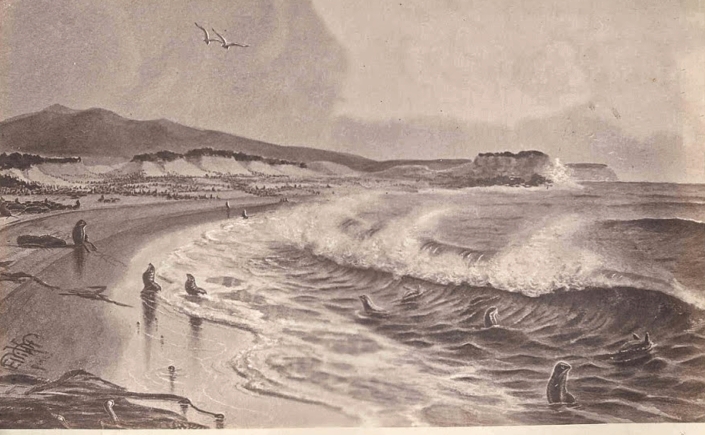
Lukannon is one of these. The story of The White Seal first appeared in print in the August 1893 issue of the London-based magazine National Review and published again in 1894 as part of the anthology The Jungle Book. Yes, that one. Mowgli, Wolf Cubs, Akela, and all. But, exceptionally for a story in The Jungle Book, none of the action in The White Seal  takes place in India. And, presaging the environmental activism and protests against the controversial seal hunts of the late 20th Century, it is remarkably prescient and pertinent.

The story is set on an island in the Aleutians in the Bering Sea between Russia and Alaska. It tells of a unique seal who, by leading his fellow seals to a secret hidden beach, saves his kind from the seal hunters. He referred to his poem as “a kind of national anthem for seals”. The title of the poem is the name of a Russian seal-fur trader, Lukanin, who gave his name to these lonely Aleutian beaches in 1788. Kipling wrote: “This is the great deep-sea song that all the St. Paul seals sing when they are heading back to their beaches in the summer. It is a sort of very sad seal National Anthem”.

Back in the day, I set the poem to music. It is featured on the rare recording HuldreFolk Live in London 1988, featuring Paul Hemphill, Victor Mishalow and Adèle Hemphill. During HuldreFolk’s tour of English folk clubs in the northern summer of 1988, it was recorded on a cheap audio cassette by a dinky, clunky old analogue tape recorder – and it shows. But the natural acoustics of the cellar at Bracknell Arts Centre, and the audience’s participation in the choruses made up for a multitude of sins.

© Paul Hemphill 2024. All rights reserved

Lukannon is such a lyrical poem that it lends itself effortlessly to musical settings. Apart from my own, i have discovered three alone, and I am pretty certain that there are many more out there on the world wide web. There is a version by folk duo William Pint and Felicia Dale set to a tune by American musician Bob Zentz from their 1997 album Round the Corner. There is also a contemporary “prog-rock” version by British band Shadows of the Sun.

In 1947, the eccentric Australian expatriate composer Percy Grainger composed a song cycle of The Jungle Book and chose as his centrepiece the story of The White Seal – and particularly, Lukannon “as a protest against civilization.” For more on Grainger’s opus, see below.

Lukannon

I met my mates in the morning (and oh, but I am old!)
Where roaring on the ledges the summer ground-swell rolled;
I heard them lift the chorus that dropped the breakers’ song –
The beaches of Lukannon – two million voices strong!

The song of pleasant stations beside the salt lagoons,
The song of blowing squadrons that shuffled down the dunes,
The song of midnight dances that churned the sea to flame –
The beaches of Lukannon — before the sealers came!

I met my mates in the morning (I’ll never meet them more!);
They came and went in legions that darkened all the shore.
And through the foam-flecked offing as far as voice could reach
We hailed the landing-parties and we sang them up the beach.

The beaches of Lukannon – the winter-wheat so tall –
The dripping, crinkled lichens, and the sea-fog drenching all!
The platforms of our playground, all shining smooth and worn!
The beaches of Lukannon — the home where we were born!

I meet my mates in the morning, a broken, scattered band.
Men shoot us in the water and club us on the land;
Men drive us to the Salt House like silly sheep and tame,
And still we sing Lukannon – before the sealers came.

Wheel down, wheel down to southward; oh, Gooverooska go!
And tell the Deep-Sea Viceroys! the story of our woe;
Ere, empty as the shark’s egg the tempest flings ashore,
The beaches of Lukannon shall know their sons no more!

Percy Grainger’s Jungle Book Cycle

In 1947, the eccentric Australian expatriate composer dedicated a song cycle of The Jungle Book and chose as his centrepiece the story of The White Seal – and particularly, Lukannon. My Kipling ‘Jungle Book’ Cycle, begun in 1898 and finished in 1947, was composed as a protest against civilization.” (Grainger’s programme note, 1947)

Grainger (1882-1961) studied at the Hoch Conservatory in Frankfurt, Germany from 1895-1901 (aged 13-19). Grainger’s mother Rose wrote to her husband John of her fears that young Percy was becoming “more Germanized every day.” In response to Rose’s concern, and to “tickle up the British Lion in him,” John (who was estranged from Rose) sent Percy, among other things, several books by Rudyard Kipling . Kipling’s writings captivated Percy immediately, and he soon started writing choral settings of the poetry, especially those of Kipling’s Jungle Books.

Grainger’s settings of the poetry of Kipling are as extensive as his settings of British folk music; Kay Freyfus’s catalog of Grainger’s manuscript scores lists 36 settings, though Grainger in a 1926 letter to Kipling mentions “some 40 or 50” settings. Grainger felt a strong kinship for Kipling’s writing, and Kipling appreciated and approved of Grainger’s work at setting his poetry. Grainger played several of his choral settings for Kipling during a meeting at Kipling’s home in 1905. Of Grainger’s settings of his poetry, Kipling said, “Till now I’ve had to reply on black and white, but you do the thing for me in colour.”

The Beaches of Lukannon is the centerpiece of the cycle, and arguably the strongest piece musically and emotionally. It tells us the tale of the tragic slaughter of seals by wicked sealers from the seals’ perspective. The opening section, told from the point of view of a seal elder, recounts what the beaches of the Bering Sea Island of Lukannon originally were for the seals – their annual meeting (and mating) opportunity. The central section, reminiscent of the music of Charles Ives in its shifting chromatics, conveys the beauty of the surroundings “before the sealers came.” The final section musically revisits the opening material, but in a smore somber mode.

For more on Rudyard Kipling in In That Howling Infinite, see A Son Goes To War – the grief of Rudyard Kipling 

Rider Haggard and the book that launched a genre

In 2014, English author and academic Katherine Rundell published an entertaining article in the London Review of Books entitled Fashionable Gore. It served recently as the primarily source and backdrop for a podcast in the highly addictive podcast The Rest is History. The hosts, historians Tom Holland and Dominic Sandbrook, specialist in ancient and modern history respectively, have a jolly good time  discussing the legacy of English fin de siècle author Henry Rider Haggard, and particularly, his hugely popular adventure yarn King Solomon’s Mines.

Rundell writes: “King Solomon’s Mines is a very Victorian fable of endurance but it’s also a glorious romp, if you don’t mind your romps racist, sexist and tin-eared … It would be surprising if any white man born in 1856 had written non-racist, non-sexist fiction, whether it was set in Africa or not … You make a choice with Haggard: if you suspend not just disbelief but politics, logic and taste, the rewards are very real”. She first encountered the novel as a liberal-minded, educated adult when she could judge a book on its merits and its shortcomings. I was a pubescent early teen when it was recommended to us schoolboys by our English teacher, and was soon hooked on the adventure, the exotic settings and, especially the violence – and quickly moved on to its sequel, Alan Quartermain, follow up and 

I republish Fashionable Gore below. It’s a very good read.  Here is The Tom and Dom Show. But read on …

As a young man, in January 1879, Henry Rider Haggard walked the field of Isandlwana in present day in Kwa-Zulu Natal Province, South Africa just days after the battle in which a Zulu army totally destroyed – indeed, massacred – a British army. He was fascinated by and enamoured with Africa, the “dark continent” of myth and story. Having spent but a few weeks in the African bush, I fully under it – though I was accustomed to Australia’s big sky, the “vision splendid of the western plains extended” (that’s the “banjo”), the eldritch aura of Uluru, and the primeval magic of the coastal rain forest, we too succumbed to its spell.

To Henry, Africa was the “heart of darkness”, and yet also, a Garden of Eden, the home of the “noble savage” where a white Englishman, freed of the bonds of straightened Victorian Britain, could walk unexplored and uncharted lands, encounter many wonders, and in “proving” himself and testing his mettle, find himself and weigh his own worth.

You could say King Solomon’s Mines, his third of many adventure novels, could be said to have launched a thousand clichés and I’ve used a swag of them just then …

It all started with a bet …

Henry did not bide long in Africa, though long enough to be involved in the annexation of the Boer state of the Transvaal after the first Boer War in 1881, one of the triggers for the second and greater Boer War in 1899. He’d returned to England by 1885 when his elder brother pledged him five bob if the he could write a book half as good as Robert Lewis Stevenson’s hugely popular pirate jaunt “Treasure Island”.

By the end of the year, he had penned a novel that would become the foundational text of the lost world literary genre. King Solomon’s Mines was one of the first English adventure novels set in Africa, a story brimming with treasure, bravery and romance, and featuring all-action hero and big game hunter (naturally) Allan Quartermain and his conflicted band of British brothers (Scots and English to be precise – Stevenson, and before him, Sir Walter Scott

It was a romantic and what we call today white supremacist, man’s world of Britishness and brotherhood, martial prowess and manliness (or as Tom and Tom jest, “men in tight trousers”) in which the plucky British adventurer bested beast and barbarian and laughed in the face of fear. A “boy’s own” universe indeed, which I and my school chums lapped up with vicarious pubescent relish in the early sixties. All this “derring-do” is now dismissed as an outdated and anachronistic perspective of earlier generations, and what I perceived early on in my coming of age, as old-school Englishness. It was, of course, of its times. It lacked none of the sardonic ‘seventies irony of George McDonald Fraser’s celebrated Flashman comi-tragic adventures in which the eponymous antihero, the unreconstructed villain of Thomas Hughes’ Victorian yarn Tom Brown’s Schooldays, roves and rogers his way through the wars of the nineteenth century, somehow managing to escape by the skin of his teeth from one military disaster after another, including Custer’s famous “Last Stand” at Little Big Horn, the Charge of the Light Brigade, and the last stand of the 44th Foot at Gandamak during the disastrous First Afghan War of 1842.

In his turn-of-the-century prudish, Henry would never have let Quartermain and his pals go forth in such amours and priapic array as the nineteen seventies unchained and unzipped Harry Flashman. Though he shyly dallied with the picaresque – like Fraser, his few female characters were either portrayed as drop-dead gorgeous and dangerous or as plug-ugly and dangerous. But he views womenfolk with an almost schoolboy insouciance and deflection. Rundell observes that “the noble native woman always dies in Haggard – Quatermain feels ‘bound to say … that I consider her removal a fortunate occurrence, since, otherwise, complications would have been sure to ensue’, whilst she and the podcast pals chuckle over the male protagonists’ “euphoric homosociality”, taking great pleasure in quoting at length the following mellifluous piece of Victorian soft porn from King Solomon’s Mines: 

I am impotent even before its memory. Straight before us, rose two enormous mountains, the like of which are not, I believe, to be seen in Africa, if indeed there are any other such in the world, measuring each of them at least fifteen thousand feet in height, standing not more than a dozen miles apart, linked together by a precipitous cliff of rock, and towering in awful white solemnity straight into the sky. These mountains placed thus, like the pillars of a gigantic gateway, are shaped after the fashion of a woman’s breasts, and at times the mists and shadows beneath them take the form of a recumbent woman, veiled mysteriously in sleep. Their bases swell gently from the plain, looking at that distance perfectly round and smooth; and upon the top of each is a vast hillock covered with snow, exactly corresponding to the nipple on the female breast. The stretch of cliff that connects them appears to be some thousands of feet in height, and perfectly precipitous, and on each flank of them, so far as the eye can reach, extend similar lines of cliff, broken only here and there by flat table-topped mountains, something like the world-famed one at Cape Town; a formation, by the way, that is very common in Africa. To describe the comprehensive grandeur of that view is beyond my powers.

Much to my surprise and mirth, I’ve learnt that Shebas Breasts actually do exist.

Sheba’s Breasts Ezulwini Valley Swaziland

Rundell wrote of the titular character of She, Rider Haggard’s follow up adventure yarn, “she was wise and beautiful beyond imagining: a sultry multilingual virgin, wish-fulfillment made flesh … and even more than King Solomon’s Mines, it’s a book out of which obsessions and anxieties leak”. More into power than sex, she was, of course, the original “She Who Must Be Obeyed”. A Hammer horror film version released in 1965 starring pneumatic Bond siren Ursula Andress was an international success and notwithstanding the dusty demise of Ayesha, led to a 1968 sequel, The Vengeance of She, with another femme fatale from Mitteleuropa, Olinka Berova, in the title role. Neither film has aged well, though both ladies are still with us today. 

Ursula Andress as Ayesha

Rider Haggard’s work, particularly King Solomon’s Mines and She, would would inspire authors from the late nineteenth century to the early twenty first. His literary legacy can be tracked from his contemporaries and pen pals Conan Doyle and Rudyard Kipling, both of whom were to visit South Africa during the Boer War, including the former’s Lost World and Kipling’s Gunga Din and Kim, through early twentieth century early Irish Republican Army “martyr” Erskine Childers’ Riddle of the Sands, John Buchan’s Thirty Nine Steps and Prester John, and Edgar Rice Burroughs Tarzan series, to JRR Tolkien’s The Lord of the Rings (to many, regarded as the pinnacle of the adventure novel genre). Grahame Greene and Ian Fleming have acknowledged their debt to Rider Haggard, whilst the book has inspired movies from the beginning of the art form, including several remakes of King Solomon’s Mines and (the featured picture is from a loose British adaptation of 1937 starring Cedric Hardwicke, Anna Lee, and my namesake Africa American crooner and socialist Paul Robeson – unlike the movies, Henry would never have countenanced “leading ladies” in his manly romps) and latter day day blockbusters like the original Star Wars , and the Indiana Jones and Tomb Raider film series.

King Solomon’s Mines, its follow-ups and the many subsequent imitators are all variations on the derivative ‘hero’s quest’, the mono-myth popularized by by Joseph Campbell in his celebrated book The Hero with a Thousand Faces.That author described it thus:

A hero ventures forth from the world of common day into a region of supernatural wonder: fabulous forces are there encountered, and a decisive victory is won: the hero comes back from this mysterious adventure with the power to bestow boons on his fellow man.

Campbell borrowed the term monomyth from Irish author James Joyce’s Finnegans Wake – Joyce’s Ulysses was also highly influential in the structuring of the archetypal motif. He published The Hero’s Quest in 1949 but the idea behind the monomyth preceded him by millennia – think Odysseus and Aeneas, Beowulf and Sigurd/Siegfried, contemporaries like JRR, and latter-day film makers and authors. Star Wars creator George Lucas and Richard Adams, bunny-quest Watership Down have both acknowledged their debt to his book.

And so, to Fashionable Gore. The title refers to what Rundell refers to as a particularly Victorian fascination with bloodshed: “Second only to the relish of battle is Henry’s fascination with unusual ways a man might die”. A bit like Vikings, really, without the bonking …

© Paul Hemphill 2023 All rights reserved

See other stories of Africa in In That Howling Infinite: Johnny Clegg’s Impi – the Washing of the Spears and The ballad of ‘the Breaker’ – Australia’s Boer War and for more on “the hero’s quest”, see One ring to rule us all – does Tolkien matter? 

Fashionable Gore

Katherine Randell, London Review of Books, 3rd April 2014

I first encountered King Solomon’s Mines in the children’s section of a public library in Harare. Most of the books smelled of water damage and many had been taken out so rarely that the last ‘return by’ stamp pre-dated Mugabe and decimalisation. I was working through shelves of books about horses and morality tales written by women who manifestly did not like children, and took King Solomon’s Mines because it’s set in ‘the Manica country’, a province a few hundred miles east of Harare. It seemed run of the mill at the time, much like the other books in the library: it was tightly plotted, suspense-driven, lavishly sexist and racist. In fact, though it is often read as a children’s book, it isn’t; nor is it run of the mill. It is the book which sowed the seed for John Buchan’s Richard Hannay, for Indiana Jones and James Bond, and though less slick than its successors, its anxieties and lunacies are more interesting. It isn’t suitable for children; perhaps not suitable at all.

As a child Henry Rider Haggard was believed to be stupid: his father told him he was destined to become a greengrocer. The books aren’t proof that he wasn’t stupid; but they are proof that he was dogged and canny, with a strange and lurid imagination. Haggard’s father lived long enough to see his son become wealthier than he was and the author of a 15-volume series which ran for forty years; he was dead by the time his son was knighted in 1912 (a knighthood for services to literature was at the time largely unheard of, so his was given for services to the development of agriculture in Norfolk). King Solomon’s Mines was written in answer to a bet Haggard had made with his brother that he could write a book as good as Treasure Island. He said it took him six weeks (though novelists always lie about that sort of thing) and it was an immediate bestseller. The 1870 Education Act had produced a large cohort of literate citizens with an appetite for fiction. There was much in the book to be admired by the stay-at-home population of late 19th-century England: in the world Haggard created the governing principle was survival, not class or intellect, and the rewards for bravery were blood (other people’s) and diamonds. Graham Greene said that he valued Haggard’s book ‘a good deal higher than Treasure Island’.

The story follows the narrator Allan Quatermain – an elephant hunter with good manners – and his colleagues, Sir Henry Curtis and Captain Good, on a journey into Mashukulumbwe country. Quatermain early on stakes his claim to heroic status when he says that he has already killed, but always with the stern regret of the Victorian imperialist: ‘I have killed many men in my time, yet I have never slain wantonly or stained my hand in innocent blood, but only in self-defence.’ The men’s aim is to find Curtis’s estranged brother, about which they are guardedly optimistic, and to discover King Solomon’s diamonds, about which – not knowing the title of the book – they are sceptical.

The novel is peppered with geographical detail conveyed in the confident vernacular of contemporary explorers’ reports, though the information itself is often mildly insane. In Manicaland, only the Chimanimani mountains and Mount Nyangani, Zimbabwe’s highest peak, could serve as the basis for ‘Suliman’s Mountains’. The heroes expend much blood and sweat traversing snowy terrain (which, in real life, 11-year-old schoolchildren climb as a matter of routine). In a crevice Quatermain’s hired bearer freezes to death (‘like most Hottentots, he cannot stand cold’) and deep inside a cavern the explorers discover a dead body three hundred years old, preserved ‘fresh as New Zealand mutton’ in the atmosphere. Even in the coldest months the temperature in the Chimanimanis is between 12 and 15 degrees Celsius; Nyangani last had snow in 1935. Haggard knew Southern Africa – he made his first trip to South Africa as secretary to the governor of Natal at 19 and was later master and registrar of the High Court in the Transvaal – but the land he paints is as lurid and fantastical as the witches and secret kings who populate it.

Following an ancient Portuguese map, the three men and their servant, Umbopa, walk into the territory of a hostile tribe, who are awed out of their murderous intentions by the spectacle of Good’s false teeth and white legs. Good, the light-relief character, is forced to walk much of the journey without his trousers, so enamoured of his lower half are the Kukuana people. The tribesmen are also impressed by Quatermain’s gun, as he picks off an antelope from seventy yards with childlike pleasure. ‘“Bang! thud!” The antelope sprang in the air and fell on the rock dead as a door nail. A groan of simultaneous terror burst from the group before us.’ The Kukuanans, Quatermain learns, are ruled by an impostor king called Twala, who is in thrall to Gagool, a witch so pocked and wizened by age that Quatermain mistakes her for ‘a withered-up monkey, wrapped in a fur cloak’. Luckily, Umbopa turns out to be the rightful king of the Kukuana people: a snake tattooed around his middle is the proof. The next night, under cover of a convenient lunar eclipse, Umbopa unveils himself and declares war on the usurper king.

Most of the book focuses on the Kukuana kraal and the battlefield; despite the title, the quest to find the stones takes up only the last fifty pages. When the diamonds are found, in a cave with a hidden door, the moment is muted: ‘The chest was three-parts full of uncut diamonds, most of them of considerable size. Stooping, I picked some up. Yes, there was no doubt about it, there was the unmistakeable soapy feel about them.’ In the novel it isn’t the diamonds that shine but the sweat of male bodies at war. There’s no sex in the book: where there is delight in things bodily, it’s in the euphoric homosociality of the post-battle glow. Haggard’s reluctance to involve women is the most obvious difference between the Quatermain books and those of the writers who emulated them. John Buchan followed Haggard’s adventure-suspense formula closely and self-consciously: in The 39 Steps, the hero’s story is said to be ‘pure Rider Haggard’. But Buchan moistens his stories with sensual descriptions of food – particularly ham – and of beautiful women. Haggard’s heroes are small, bluff men, part of a literary tradition of beta males performing great feats, but the companions – Henry Curtis in King Solomon’s Mines, Leo Vincey in She –have beautiful bodies:

Round his throat he fastened the leopard-skin cloak of a commanding officer … the dress was, no doubt, a savage one, but I am bound to say that I seldom saw a finer sight than Sir Henry Curtis presented … It showed off his magnificent physique to the greatest advantage, and when [Umbopa] arrived presently, arrayed in similar costume, I thought to myself that I had never before seen two such splendid men.

Second only to the relish of battle is Haggard’s fascination with unusual ways a man might die. The highlight of King Solomon’s Mines for most children is the moment when a bull elephant, wounded by a bullet, attacks Good’s servant: ‘The brute seized the poor Zulu, hurled him to the earth, and placing one huge foot onto his body about the middle, twined its trunk around his upper part and tore him in two.’ It was in part because of the death of the poor Zulu that the manuscript was rejected by one of the first publishers to see it: ‘Never has it been our fate to wade through such a farrago of obscene witlessness …nothing is likely in the hands of the young to do so much injury as this recklessly immoral book.’ But it was a fashionable kind of gore. At the Colonial and Indian Exhibition, held at South Kensington in 1886, the entrance was taken up by a diorama depicting a stuffed tiger attacking a stuffed elephant. The exhibition attracted more than five and a half million visitors. Like Haggard’s fiction, it was lit by the radiance of Livingstone, Richard Burton and other empire-building Übermenschen. King Solomon’s Mines is a very Victorian fable of endurance but it’s also a glorious romp, if you don’t mind your romps racist, sexist and tin-eared.

It would be surprising if any white man born in 1856 had written non-racist, non-sexist fiction, whether it was set in Africa or not. Quatermain says of the Kukuana people: ‘These women, for a native race, are exceedingly handsome … the lips are not unpleasantly thick as is the case among African races.’ Narrators, of course, are not spokespersons for their authors and Haggard certainly wrote in the idiom of the time; the explorer Mungo Park, in the purportedly factual Travels in the Interior Districts of Africa, wrote in similar vein: ‘The noses of the Jaloffs are not so much depressed, nor the lips so protuberant, as among the generality of Africans … they are considered by the white traders as the most sightly Negroes in this part of the continent.’ You could say that if we excised all patriarchal books from the canon we would be left with The Very Hungry Caterpillarand little else, but few writers have embraced the status quo with such conviction. The racism in King Solomon’s Mines takes the form mainly of exhaustingly oracular pronouncements: there is none of Forster’s anxiety, or Kipling’s affection. Foulata is a tribeswoman who falls in love with Good, and risks her life to save him. When she dies – the noble native woman always dies in Haggard – Quatermain feels ‘bound to say … that I consider her removal a fortunate occurrence, since, otherwise, complications would have been sure to ensue’. The Quatermain novels become more explicitly unsettling as the series progresses; in a diary entry written in 1924, the year before his death, Haggard foresaw conflict between races as inevitable and bloody: ‘The great ultimate war, as I have always held, will be that between the white and coloured races.’ The sexism, on the other hand, is glossed as a charming foible: ‘I can safely say there is not a petticoat in the whole history.’ His characters describe themselves as misogynists with the same irritating coyness with which people today describe themselves as chocoholics.

She (1887) is a very different book; it certainly isn’t coy. It follows wise but ugly Ludwig Holly and beautiful but slow Leo Vincey to unknown lands on the east coast of Africa. Leo’s dying father bequeaths him a potsherd on which is written in Greek a family history showing that Leo is descended from the royal house of pharaohs, and an instruction that he seek out a beautiful white sorceress and her fiery pillar of eternal life. Haggard gives the Greek in full, in both uncial and cursive, and some of the earliest jacket covers used a photograph of a potsherd, made by Haggard’s sister-in-law, to add verisimilitude. (Vintage Classics has rejected the pot in favour of an orgasmic-looking woman.) The men travel by sea and land to find Ayesha, also known as She Who Must Be Obeyed: an all-powerful ruler, her beauty so terrible she is concealed from face to foot in ‘corpse-like wrappings’. She is wise – ‘the wisest man up on earth was not one-third as wise’ – and beautiful beyond imagining: a sultry multilingual virgin, wish-fulfilment made flesh. She, like King Solomon’s Mines, was written in six weeks and even more than King Solomon’s Mines, it’s a book out of which obsessions and anxieties leak. As Kipling wrote to Haggard, ‘you are a whale at parables and allegories and one thing reflecting another.’

The plot is as simple and linear as that of the earlier book: Queen Ayesha believes that Leo is the reincarnated soul of Kallikrates, a man she had loved and murdered when he remained loyal to another woman. When she learns that Leo too is in love with another woman, Ustane, Ayesha kills her with a gesture. Ayesha’s beauty is so overwhelming that Leo forgives her and kneels at her feet. The terrifying power of female beauty shapes the book. ‘No doubt she was a wicked person,’ Holly says, ‘and no doubt she had murdered Ustane when she stood in her path, but then she was very faithful, and by a law of nature man is apt to think but lightly of a woman’s crimes, especially if that woman be beautiful.’ And later: ‘What a terrifying reflection it is, by the way, that nearly all our deep love for women who are not our kindred depends … upon their personal appearance.’ Ayesha offers to reveal the source of her absolute power, and leads the men to the Fountain and Heart of Life. She bathes first, unclothing herself and re-wrapping her snake belt around her falling hair. It’s the only erotic moment in the book. Suddenly, as the men watch, she begins to shrivel in the flames, ageing before their eyes until she is ‘no larger than a monkey, skin puckered into a million wrinkles’. The powerful monkey-like woman seems to be a keystone of Haggard’s imagination: Gagool, unidentifiable as a woman when first encountered, is ‘so shrunken in size that it seemed no larger than the face of a year-old child’, ‘a withered-up monkey’ with ‘a skinny claw’; Ayesha’s body becomes ‘no bigger than that of a two-months’ child …the delicate hand was nothing but a claw now.’ Holly and Leo flee; Holly’s servant, Job, has died of fright, and they leave his corpse behind.

At the heart of the book is the sense that women, given power, will reign like despots or fail like children. As Margaret Atwood points out in her introduction, Haggard and his siblings had a doll called She Who Must Be Obeyed, who lived in a cupboard and whom the children both tortured and were haunted by. Read as an embodiment of Victorian neuroses and desires, She is a marvel. There are good feminist interpretations: Sandra Gilbert and Susan Gubar connect the witch-goddess figure with the newly fierce debates over the rights of women in Victorian England, and the proliferation of semi-scientific studies of woman’s ‘true nature’. With or without this reading, Shehas extraordinary moments. You make a choice with Haggard: if you suspend not just disbelief but politics, logic and taste, the rewards are very real. There is a peculiar and beautiful scene in which tribesmen, at Ayesha’s command, dance an ‘infernal and fiendish cancan’ in a room lit by burning corpses. ‘As soon as ever a mummy had burned down to the ankles, which it did in about twenty minutes, the feet were kicked away, and another put in its place.’ She burns the body of her two-thousand-year-old embalmed lover with acid: there is ‘a fierce fizzing and cracking sound’ and the man is turned into ‘a few handfuls of smoking white powder’. V.S.Pritchett wrote: ‘Mr E.M. Forster once spoke of the novelist sending down a bucket into the subconscious; the author of She installed a suction pump.’

The trouble with She is that it’s structured around a blank face. We are told that Ayesha had beauty ‘greater than the loveliness of the daughters of men’, but her beauty is sketchily imagined, asserted but never depicted. The result is that she is impossible to desire; a problem exacerbated by her voice and what she has to say. She rants like Nigel Farage, and has only one point to make: men are powerless in the face of beautiful women, women desire not men but power. The greatest woman to have lived is a disappointment, a heckling sex witch. Haggard would think I’m jealous. He says as much, near the end:

Of course, I am speaking of any man. We never had the advantage of a lady’s opinion of Ayesha, but I think it quite possible that she would have regarded the Queen with dislike, would have expressed her disapproval in some more or less pointed manner, and ultimately have got herself blasted.

Well, quite.