The quality of mercy is not strained;
It droppeth as the gentle rain from heaven
Upon the place beneath. It is twice blest;
It blesseth him that gives and him that takes.
William Shakespeare, The Merchant of Venice
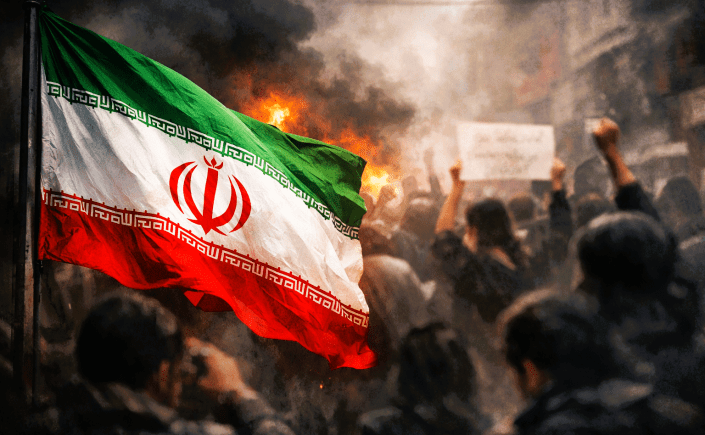
Whilst most media commentary focuses on questions like “will it be any different this time?”, “will outside incitement or intervention actually work?” , and “who can or will replace the current regime?”, this article by Unherd’s Us editor Sohrab Ahmari, and the comments thereon go variously beyond, behind, or beneath, to consider the potential, if any, for those famous “bright sunny uplands” that Churchill foresaw at the end of mortal strife. A précis follows, and also, a discussion of past, recent and contemporary efforts to realise the quality of mercy.
Beyond Iran’s Ghost Republic
What persists, for now, is a ghost regime: a sad remnant of the last of the great modern revolutions that, like some apparition in a haunted house, is condemned to remain at the scene of its own demise …The Islamic Republic clamoured so much for death, sweet and glorious death, it lost sight of the basics of life: bread, water, electricity. Ghosts don’t need such things, but people do
Sohrab Ahmari, Unherd, 8 January 2026
Most media attention on Iran’s latest unrest fixes on the usual coordinates: will this time be any different from 1999, 2009, 2017, or 2022? Will foreign powers, quietly nudging or overtly intervening, succeed where the street protests have failed? And, inevitably, who might step into the vacuum should the current regime falter? These questions, while immediate and superficially urgent, only scratch the surface. Beneath them lies a far subtler and, perhaps, more consequential inquiry: what kind of life, if any, might the Iranian people permit themselves once the machinery of coercion is loosened? Where, if anywhere, are the “bright sunny uplands” that journalists, analysts, and policymakers treat as both metaphorical and material destinations?
The Islamic Republic has already, in practical terms, collapsed into a ghost. Its proxies lie defanged, its currency teeters toward ruin, and the strictures of ideological policing have been quietly suspended in many cities. It clings to slogans, chants, and ceremonial gestures – Death to Israel! Death to the Great Satan! – long after the infrastructure, credibility, and political capital to back them have evaporated. Ghosts do not need electricity, or potable water, or functioning hospitals, but living people do. And the contrast between the familiar deprivation of Tehran and the gleaming towers, highways, and shopping malls of Istanbul, Dubai, and Riyadh is almost unbearable: the regime sold transcendence and martyrdom, but delivered only rationed life, graft, and perpetual economic anxiety.
Yet a collapse of the state apparatus does not automatically produce moral renewal. This is where both the film It Was Just an Accident and the commentary converge. The plot of Jafar Panahi’s latest work stages a moral test familiar to anyone who has witnessed, read, or lived through the aftermath of institutionalized terror: a man who suffered under the regime confronts a former torturer. The temptation to exact revenge – to allow history’s pain to be paid back in equal or greater measure – is immediate and compelling. Some characters urge restraint, others insist that justice without retribution is an idle abstraction. The film’s tension mirrors a larger societal question: can a people accustomed to cycles of repression, humiliation, and ideological fervour imagine a life beyond revenge, beyond the simple arithmetic of punishment and vengeance?
The comments on Ahmari’s article highlight the same moral and civic dimensions. Several voices underscore a paradox that no headline can capture: the Islamic Republic’s obsession with death and martyrdom was not merely symbolic; it was infrastructurally catastrophic. Water systems were ignored, electricity grids left to decay, the economy warped around fantasies of resistance and martyrdom. Yet, this same absolutist, apocalyptic impulse is not unique to Iran. As some observers wryly note, the West is not immune to ideologies that glorify moral purity and abstract heroism at the expense of lived reality. Certainty, as one commentator put it, often replaces curiosity; neat explanations flatter intelligence and virtue, while obscuring the messy work of sustaining life.
History offers uncomfortably blunt lessons. After the Khmer Rouge, Cambodia did not attempt exhaustive justice; it largely absorbed foot soldiers back into ordinary life, relying on a rough amnesty and the communal refusal of vengeance. This might be Iran’s imagined future: to survive and flourish, ordinary citizens may need to exercise a similarly imperfect, sometimes clumsy, forgiveness. And yet the impulse to retribution is alive and articulate: Hamid in Panahi’s film embodies the argument that the fanatics who ran the Islamic Republic had no regard for life, and must be repaid in like coin.
Here, we converge on a truth both grim and hopeful: Iran’s fate will not be determined by foreign powers, strikes, or special forces. The country’s reckoning cannot be outsourced. The only way to allow the blood to run dry, to create the possibility – however tenuous – of “bright sunny uplands,” is through an internal moral negotiation: a willingness to forgive, to rebuild, to live with one another despite the weight of memory and injustice. Forgiveness, in this context, is not an ideal; it is a strategic, civic, and existential necessity. Anything else risks a continuation of cycles that have already brought the country to the nadir described in headlines, film, and commentary alike.
The wider reflection, then, is less about predicting the regime’s fall than understanding the texture of human life that might emerge afterward. If Iranian society cannot cultivate mechanisms for restraint, empathy, and imperfect justice, then the collapse of the ghostly structures of the Islamic Republic will be little more than a ceremonial end to one cycle of totalising politics – ready to be replaced by another. Yet, if these “bright sunny uplands” are glimpsed, they will be the product not of weapons, tweets, or sanctions, but of courage, patience, and the audacious, often maddeningly slow, work of ordinary humans learning to forgive. In that possibility – fragile, improbable, and entirely human – lies the truer story of Iran, past, present, and perhaps future.
Forgiveness and the Possibility of Civic Renewal
Forgiving is not forgetting; it’s actually remembering – remembering and not using your right to hit back. It’s a second chance for a new beginning. And the remembering part is particularly important. Especially if you don’t want to repeat what happened.
Attributed to South African Bishop Desmond Tutu
When societies emerge from cycles of repression, violence, and ideological zeal, the first question is often: who will exact justice? Who will punish, and who will pay? Yet history and moral reflection suggest that the question of revenge is only the beginning. More crucial is the question of forgiveness: whether communities traumatized by systemic harm can find a way to release the past, preserve dignity, and allow life to take root. Iran, in the aftermath of decades of ideological extremism, structural neglect, and repeated cycles of protest and repression, faces precisely this moral crossroads.
Desmond Tutu, whose work with South Africa’s Truth and Reconciliation Commission helped a nation emerge from the moral abyss of apartheid, offers a clarifying lens. He reminds us that forgiveness is not weakness, nor a cover-up, nor the erasure of injustice. “To forgive is not just to be altruistic; it is the best form of self-interest,” he said. “If you can find it in yourself to forgive, then you are no longer chained to the perpetrator.” Forgiveness, in this sense, liberates the victim as much as it addresses the harm done. It is a deliberate, often risky act that preserves dignity, confronts wrongdoing honestly, and opens space for a new civic beginning. True reconciliation, Tutu insists, does not soften the truth: “Superficial reconciliation can bring only superficial healing. True reconciliation exposes the awfulness, the abuse, the hurt, the truth.” Forgiving does not mean forgetting; it is remembering without exercising the right to strike back, allowing life to continue without being perpetually tethered to past harm.

Archbishop Desmond Tutu 1931-21
The necessity of forgiveness becomes clearer when we look beyond Iran to societies that have struggled with similar dilemmas. South Africa’s post-apartheid transition, Northern Ireland’s gradual peace after the Troubles, and the painstaking reconciliation efforts in postwar Bosnia demonstrate that societies can arrest cycles of revenge when moral courage is coupled with institutional frameworks. Mechanisms such as truth commissions, negotiated agreements, or cultural rituals allow communities to confront trauma without succumbing to vengeance.
In South Africa, perpetrators were not erased from memory, but acknowledging harm, offering testimony, and sometimes asking for forgiveness created a space in which ordinary life could resume without blood-soaked reprisals. In Northern Ireland, decades of sectarian violence required not only formal accords like the Good Friday Agreement but persistent civic labor, everyday compromises, and the cultivation of mutual recognition across communities. Peace did not arrive because conflict ended; it arrived because people, institutions, and leaders collectively committed to the moral and civic work of restraint, remembrance, and imperfect forgiveness. Bosnia, by contrast, demonstrates how fragile such processes can be: tribunals, localized reconciliation projects, and political compromises made progress possible, but resentment and mistrust lingered for decades.
The lesson is that the labor of forgiveness is painstaking, morally taxing, and never complete; it requires social frameworks, cultural patience, and individual courage.
Other contemporary crises provide a darker counterpoint. Syria, ravaged by civil war, sectarian fragmentation, and foreign intervention, shows how cycles of violence can ossify when forgiveness is absent and survival becomes the primary moral calculus. Gaza and the Palestinian territories, trapped in occupation, blockade, and repeated military incursions, reveal how structural oppression perpetuates the need for revenge, making reconciliation seem both urgent and impossible. Myanmar and Sudan illustrate what happens when accountability fails entirely: persecution, displacement, and entrenched cycles of terror prevent civic life from taking root, leaving ordinary people imprisoned by histories they cannot escape.
In the Iranian context, the challenge is both urgent and intimate. A society habituated to ideological terror and systemic neglect faces a moral crossroads: the temptation of revenge is immediate, visceral, and understandable, but it risks reproducing the very cycles of harm that have brought the country to its present nadir. Panahi’s film It Was Just an Accident dramatizes this dilemma: victims confront their former torturer and wrestle with the question of retribution versus restraint. It is a moral negotiation that mirrors the broader societal question. True recovery cannot be imposed from the outside; no foreign military, sanctions regime, or spectacular intervention can replace the painstaking, often agonizing internal work that forgiveness demands.
Tutu’s reflections provide a moral compass for this work. Forgiveness is neither altruistic fantasy nor moral softening; it is self-liberating, dignity-affirming, and socially generative. “When we see others as the enemy, we risk becoming what we hate. When we oppress others, we end up oppressing ourselves. All of our humanity is dependent upon recognizing the humanity in others.” For Iran, the stakes of this insight are enormous. The collapse of the regime, already a ghost of its former ideological self, creates the space for moral and civic imagination, but it is up to the Iranian people whether that space becomes a playground for revenge or a canvas for rebuilding.
Viewed comparatively, Iran’s predicament is neither unique nor exceptional. Across South Africa, Northern Ireland, Bosnia, Syria, Gaza, Myanmar, and Sudan, we see the same pattern: cycles of violence thrive when forgiveness is absent and collapse is coupled with fear, trauma, and structural weakness. Yet the examples of South Africa and Northern Ireland also offer hope. Even societies deeply scarred by ideology and systemic harm can, through deliberate moral labor, cultivate restraint, empathy, and civic imagination. The “bright sunny uplands” are not gifts of fortune or foreign intervention; they are the product of human choice, moral courage, and the willingness – however faltering and tentative – to forgive, remember, and begin again.
For Iran, the possibility of civic renewal rests on this moral labor. To forgive is to free oneself from the chains of the past, to preserve human dignity, and to allow ordinary life – bread, water, work, community – to flourish once more. It is difficult, risky, and imperfect work, but it is the only path to a society that can move beyond the cycles of ideological terror, revenge, and ruin. In choosing forgiveness, Iranians do not erase the horrors of the past; they confront them honestly, remember them fully, and, in so doing, claim a future that is no longer dictated by blood, fear, or vengeance.
For more on the Middle East in In That Howling Infinite, see A Middle East Miscellany, Messing with the Mullahs – America’s phoney war? and “Because of …” Iran’s voice of freedom
The cycle of revenge. Iranians must learn to forgive
It’s become a running joke on Iranian social media — screen captures of Western headlines regarding previous popular uprisings in the country that read: “This isn’t like previous protests in Iran.” The message is that this latest tumult spells the end of the Islamic Republic. Except those earlier headlines appeared in 1999, 2009, 2017, 2022. The storms of popular discontent raged and then dissipated, but the regime didn’t budge.
We are told that the current uprising, sparked initially by anger over inflation, is different. But contrary to expectations, we’re unlikely to see a spectacular end to the regime in the manner of the ouster of Ceaușescu or the fall of the Berlin Wall — the 1989 moment whose eternal return liberals the world over yearn for. No, there won’t be a spectacular collapse, because the Islamic Republic of Iran has, in a sense, already fallen.
Its Arab proxies are defanged. Its nuclear program is partially buried under President Trump’s bunker busters. Its currency is reaching Zimbabwean levels. And it has largely given up enforcing its hijab and other Shiite morality norms in many urban centers. A much more likely ending is one in which more nationalist elements within the current regime take over, with or without a little push by outside powers.
What persists, for now, is a ghost regime: a sad remnant of the last of the great modern revolutions that, like some apparition in a haunted house, is condemned to remain at the scene of its own demise, faintly repeating the slogans of its former vitality, wondering if anyone still cares. Death to Israel! Death to the enemies of the jurisconsult! Death to the Great Satan!
The Islamic Republic clamored so much for death, sweet and glorious death, it lost sight of the basics of life: bread, water, electricity. . . . Ghosts don’t need such things, but people do. Especially people who look around at the likes of Turkey, the United Arab Emirates, and Saudi Arabia, and behold gleaming prosperity, rising living standards, normality. Their own lot, meanwhile, is defined by diminished expectations, massive graft, and life and treasure wasted on building an arc of “resistance” against the Jewish state that was destroyed in a matter of months.
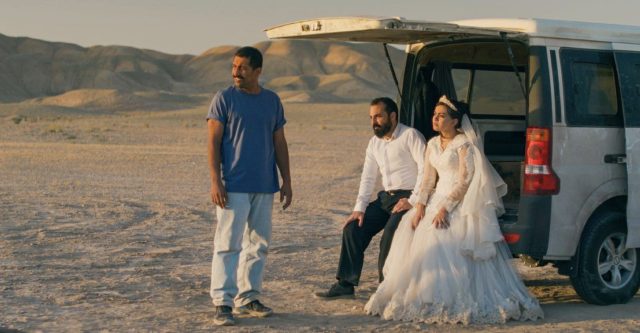
A taut thriller in the style of Jean-Pierre Melville, the film tells the story of Vahid (Vahid Mobasseri in a quietly stunning performance), a worker who happens upon, and kidnaps, Eghbal (Ebrahim Azizi), the intelligence officer who’d tortured him when Vahid joined a labor strike over unpaid wages.
Vahid is about to bury Eghbal in the middle of the desert when he’s gripped by doubt. The real Eghbal had lost a leg fighting in the Syrian Civil War. But the man in the shallow grave insists that his prosthetic leg — whose squeaking sound led Vahid to believe he’d found his erstwhile torturer — is a recent addition. What if he’s got the wrong man? What if he’s about to murder an innocent? This simple doubt becomes the driving force of the film’s plot.
Vahid reunites with a fellow prisoner — Salar, a dissident intellectual — who urges him to free Eghbal, or whoever he is. “This business doesn’t have an ending,” Salar warns Vahid. This could mean that Vahid could face real-world consequences. But it also suggests that the blood in Iran will never run dry if people continually seek revenge. Vahid isn’t convinced. He’s lost everything to the regime Eghbal represents, and he’s bent on making him pay.
Salar refuses to help directly, but he introduces Vahid to a photographer, Shiva, who was also imprisoned for her political activities and tortured by Eghbal. Other former prisoners soon join the group. One of them, Hamid (Mohammad Ali Elyasmehr), instantly identifies the man in Vahid’s van as their torturer (by his smell) and thrills at the thought of inflicting suffering and death upon Eghbal.
Others are more hesitant, partly out of the same doubt that initially stays Vahid’s hand, but partly over deeper qualms: Will torturing and murdering a killer improve anything? No, Shiva and others begin to think. But Hamid is adamant, and it’s notable that while the rest of them are professional-class types who’ve landed on their feet, he’s been less fortunate (and, the film suggests, he was something of a loser even before his prison stint).
Thus unfolds the unlikely moral and philosophical debate folded into the film’s thriller script — a debate that confronts many ordinary Iranians opposed to the Islamic regime. Panahi, to his credit, gives Hamid a decent chance to make his case: to wit, the fanatics who run the Islamic Republic have no regard for the lives they ruin, and anything short of a willingness to act politically — in the Schmittian, friend-enemy sense of the term — is just playing around.
But in the end, the other side “wins” the debate. The kidnapped man’s phone rings. It’s his daughter, crying for her father to come home because her pregnant mother is unresponsive. The gang treks over to his house and drives mother and child to the hospital, where the baby is safely delivered. The group even pools cash to tip the nurses, as custom demands.
Only afterward is it revealed that — spoiler alert — the man in the van really is the torturer who’d subjected them to dozens of mock executions; who’d beaten Vahid so badly, he’s developed kidney problems; who threatened to rape the women before killing them (since, under Shariah law, virgins go straight to paradise).
I won’t spoil more of the plot. What matters is that the Hamid temptation — let us torture the former torturers, execute the executioners — is all too real, and it can derail whatever comes next into another national dead-end. No foreign intervention and no Trumpian Delta Force can save Iran from that outcome. It is up to Iranians themselves to forgive each other, and finally permit the blood to run dry.
Sohrab Ahmari is the US editor of UnHerd and the author, most recently, of Tyranny, Inc: How Private Power Crushed American Liberty — and What To Do About I
 In That Howling Infinite