How’s your ebb tide? Do you sign on the dotted lion? Is your tea nature Orpheus Rocker? Who is Charlie Charm Puck in ‘Waltzing Matilda’
Back in London in the early seventies, when Earl’s Court in Kensington was such a mecca for itinerant Australians that it was known in London and in Australia as Kangaroo Valley, I was acquainted with many expatriate and transient Aussies. Indeed, I married one I’d met at the School of Oriental and African Studies where we were both studying.
Breaking free of the cultural confines of their conservative country, many young Aussies overcame historian Geoffrey Blainey called “the tyranny of distance” by flying across it or joining the famous Hippie Trail from Southeast Asia to what many still referred to as “The Old Country”. Some became household names, including actor Barry Humphries, writer Clive James, art critic Robert Hughes, journalists John Pilger, lawyer Geoffrey Robertson, fashion designer Jenny Kee and sociologist Germaine Greer, and bands like The Easy Beats and The Bee Gees, who were actually Poms returning home, and the Seekers. By far the most controversial were the editors of Oz Magazine, Richard Neville, Richard Walsh and Martin Sharpe, the defendants in the infamous Oz Trial of 1970, at the time, the longest obscenity trial in British legal history, and the first time that an obscenity charge was combined with the charge of conspiring to corrupt public morals. See The Australians who set 60s Britain swinging
Most, however, were just ordinary folk, and they were so ubiquitous in London that they were often the butt of jokes (mostly good natured) and comedies, as personified in the cringeworthy uber-Coker Barry McKenzie which featured in Nicholas Garland’s comic strip in the satirical magazine Private Eye and Bruce Beresford’s dubious directorial debut, The Adventures of Barry McKenzie.
I was fascinated and highly amused by the Aussie’s accents and their many hilarious colloquialisms, including “I’m as dry as a dingo’s conger” and “flat out as a lizard drinking”. To assist my communication with these antipodean strangers, I purchased a little lexicon assembled by Professor Afferbeck Lauder of the University of Sinny. I was assured that this was exactly how Strine was spoke by dinkum Strayans.
When I emigrated DownUnder a few years later, I found that very few natives spoke proper Strine – though there was The Paul Hogan Show – that the Australian accent was perpetually evolving due to the country’s exposure to outside cultural influences – especially American and British – and its increasing multiculturalism.
Rereading Let Stalk Strine recently, I found was a little like opening a time capsule or deciphering a text of Chaucerian English, though vagrant traces of the old vernacular linger still in such “Australianisms” as nukelar, envimint, gomint, and, of course, Straya. But even the use of words such as these is not widespread, and usually confined to interviews with National Party politicians and Pauline Hanson.
The book is still available, and although air fridge Strines and new Strines no longer speak the lingo, it is picture of the strine wire flife half a century ago.
Here are some of my personal favourites. They’re still pretty grouse after all these years.
There’s “baked necks” and “egg nishner”, “garbled mince” and “nairm semmitch”, the public speaking opener “laze and gem…”, and the nursery rhyme Chair Congeal. There’s idioms like “fitwer smeeide” and “fiwers youide”, translated as “if I were you, I would” and “if I were you, I’d…” as in “fitwer smeeide leave him. He saw-way sonn the grog” and “fiwers youide leave him anode goan livener unit”. And there’s the prefix didjerie as in “didgerie dabout it in the piper” and “ didgerie lee meenit or were you kidding”, and, of course, “he plays the didgerie do real good”.
My personal favourite, relevant, apt even, to this day is “Aorta”.
To quote the author, it is “the personification of the benevolently paternal welfare state to which all Strines – being fiercely independent and individualistic- appeal for help and comfort in moments of frustration and anguish. The following are typical examples of such appeals. They reveal the innate reasonableness and sense of justice which all Strines possess to such a marked degree: “Aorta build another arber bridge. An aorta stop half these cars from cummer ninner the city – so a fella can get twerk on time”. “Aorta have more buses. An aorta mikey smaller so they don’t take up half the road. An aorta put more seats in ‘em so you do a tester stand all the time. An aorta put more room in ‘em. You can tardily move in ‘em air so cradled. Aorta do summing about it.”
For more on Australia in In That Howling Infinite, see Down Under
The big books. The ambitious books, the life-changing books, the long books, the time-consuming books, the dense books. Not the “classics” because classics aren’t necessarily big and big isn’t necessarily classic (whatever that means, anyway) but the important books our culture used to produce but, today, we rarely see on bookshelves, where have they gone?
My mother used to tell me I was reading almost as soon as I could walk, and I was enrolled in libraries at an early age. In my lifetime, I’ve probably gone through tens of thousands of books of all sizes and genres. Now in my twilight years, though I still I love reading books, I would no longer regard reading as a hobby like I would be in the past, and I do not consume as many books as I did in earlier days. I often feel that I have lost the appetite for “big books” – big in the dimension and the number of pages, but not in the sense of scope and content and the literary reputation of the author. Back in day, I would tackle both the size and the sensibility of books with alacrity and and excitement, eager as I was then for knowledge and insight – those lengthy, complicated, and yes, ambitious, life-changing and time-consuming books that novelist Steve Orr name-checks in the opinion piece republished below.
As for those “big books”, I started early. Grammar School curricula mandated “set books” from the “canon” of English literature. William Shakespeare and Charles Dickens, of course, and also, among others, Christopher Marlowe, Geoffrey Chaucer, Oscar Wilde, GB Shaw, and John Steinbeck. Although we deep-dived into specific books, we were encouraged to read their other works, and more besides. So, I came to know The Iliad, The Odyssey and The Aenead, and also the French ‘greats’ Alexander Dumas and Victor Hugo. I can’t recall how I came to discover Mikhail Sholokov’s dramatic tales of the Don Cossacks, but they gave me a fascination with Russian history that has endured to this day, and introduced me to the Russian Revolution and Civil War – and socialism (see The Russian Tradition – Russia, Ukraine and Tibor Szamuely and other pieces).
During my university years, few non-fiction works of note come to mind though I’m sure I’d have read a few – including all three books of Tolkien’s trilogy which I binged on over one cold and rainy English weekend in Reading. Three years later, whilst traveling the celebrated Hippie Trail to India and back, I’d pick up random tomes in hotels and doss houses along the road. It was between Kashmir and Istanbul, I met James Joyce’s Leopold Bloom and Dostoevsky’s melancholy Prince Mishkin.
Moving to London in the early seventies, I spent hours traveling back and forth on the London Underground – always with a good book in hand. I went through phases. The Russian canon of Tolstoy, Dostoevsky, Pasternak, and Solzhenitsyn, all angst and agony, suited me well in my restless years. When my mood changed from melancholy to mellow, from the blues to the bucolic, I worked through all of Thomas Hardy’s tales of rural England, and discovered that Rudyard Kipling was much, much more than Mowgli. I encountered Milton’s fallen angel ( see Lucifer Descending … encounters with the morning star) whilst Don Quixote and Captain Ahab gave me a good literary workout. The name of this blog is taken from Moby-Dick. Meanwhile, the current best-seller lists provided many worthy reads.
Through the eighties and nineties, I would have several books on the go and would plough through several works of fiction and non-fiction each month. With the onset of the internet and the social media age, my decades long passion for history and politics superseded my fondness for a good book or two as I dedicated more of my leisure hours to news media and on-line feeds. The acquisition of an iPad in 2011 accelerated the demise of the actual printed word. I have never, however, read an e-book, and probably never will, and I buy books still, including several I would argue fitted Orr’s criteria of “big” – particularly CE Morgan’s “great American novel” The Sport of Kings and Hilary Mantel’s Wolf Hall trilogy. But since retiring to the bush, my reading capacity is down to a book every one or two months, depending in on its size.
Orr’s piece reminded me of my once prevailing but receding passion for the tangible printed word, providing not so much an obituary to the “big books” but a wake-up call.
“Maybe it’s time to commit”, he writes, “Maybe it’s time to (re-)rewire our brains to work in years, months, instead of fractions of seconds. Maybe it’s time to stop saying, “I’ll wait for the movie”. Maybe it’s time to admit we all have a little of Ahab’s obsession, Humbert’s lustings – maybe there’s a bit of Christian Stead’s controlling Sam Pollit in all us’.
“In short’, he concludes, “maybe we are the book and the book is us. Let’s admit, as Stead did when writing The Man Who Loved Children, the best way to exorcise the past is to write (and read) about it. This, as it turns out, isn’t a desirable but a necessary thing. Shall we admit, in the end, the questions the big books pose no longer interest us because we no longer interest ourselves?”
Last year, I jettisoned half of a book collection I’d accumulated over sixty years, more went this year – books that had followed me as I moved from Birmingham to Reading to London in the sixties and seventies, migrated to Australia, and moved from house to house in Sydney and finally settled in the midst of a forest in northern New South Wales.
Out went books of all formats and genres. Mementos of former passions and fashions. Relics of past courses and careers. Old school textbooks, university texts, fiction, nonfiction, dictionaries, coffee table books. I’d worked for years in publishing, so the complimentary copies alone were colossal..
I’d already culled boxes of books a decade ago when we’d last moved house and home, and this time, I was determined to downsize further. My primary criteria was that if I hadn’t looked inside the covers of a book for twenty, thirty, fifty years, then I wasn’t likely to do so in the next five, ten, twenty years I have left on this planet.
Nevertheless, I kept back five full shelves Books of poetry, some of them a century old. All-time favourite novels, including the iconic Russians, Hardy, Herbert and Heinlein. Non-fiction histories I regard with particular nostalgia or think might be of use again one day. Books about music and musicians, particularly the Beatles and the Bobster. Recent purchases. And, books I consider “rare” – a subjective descriptor that I can only explain as old books which I picked up in secondhand bookshops when I lived in London in the sixties and seventies. Some, I reckon, are actually rare!
The big books. The ambitious books, the life-changing books, the long books, the time-consuming books, the dense books. Not the “classics” because classics aren’t necessarily big and big isn’t necessarily classic (whatever that means, anyway) but the important books our culture used to produce but, today, we rarely see on bookshelves, where have they gone?
Why aren’t (many) people writing them? And more importantly, why aren’t people reading them?
This is a not a new concern. Charles Bukowski in 1990 asked: “… well, where are they?/ the Hemingways, the T.S. Eliots, the Pounds … dead, I know/ but where are the re-/ placements, where are the new/ others?’
Poet and writer Charles Bukowski.
What was a casual question back then seems to have a new urgency now.
There are lots of reasons, and I’d like to explore some of them here. I suspect technology, in its various forms, is taking over the jobs we used to trust our brains to do: critical thinking, imagination, reasoning and speech and (civilised) argument and social intercourse at a personal and public level. We say, “Oh, well, I’m too busy to tackle Anna Karenina,” then pick up our phone to check the latest tweet.
We don’t value time in the same way we used to – slow, precious, filled with good smells and sounds and ideas and meaningful things. We’re happy to waste time. Like, surely, we’ll get it back? We’re happy to fill the gap with more technology, updated phones and watches. And the result? We’ve become lazy, and lonely. We’ve privatised our inner spaces, sold off our opinions, let someone else make Pixar and Marvel dreams for us. And worse, for too many people now, everything’s about money. We’ve shat on our curiosity, given up on the daily awe that came from sensing our place in nature, the consolations and compromises that made civilisation possible, and pleasant. The result? Each new generation bleeding out its limited reserves of empathy, understanding and wisdom.
Readers seem hung up on plot. Easy plots. Familiar plots. Plots that come from and return to a screen. Problem being, the big books are about big characters: Miss Havisham, Elizabeth Hunter, Captain Ahab, Tom Joad. It takes time to build up a complex, flawed life on a page, each verb and adjective competing for the smallest breath and bit of meaning. Even when contemporary writers have a crack, readers falter, stray, give up. There’s something easier, more immediate to hand. Something involving the discovery of a body on a beach and working out how it go there. Harold Bloom: “I am not unique in my elegiac sadness at watching reading die, in the era that celebrates Stephen King and J.K. Rowling rather than Charles Dickens and Lewis Carroll.”
Ironically, it’s the loss of critics like Bloom that’s allowed the problem to fester. The loss of literary criticism generally, space in newspapers, reviews themselves (ironically, surviving in 50-word online grabs where they’re easily ignored).
Today, there are fewer places to publish extracts, to make meandering explorations that interrogate context, subtext, the way authors’ lives morph onto the page, how we needn’t make the mistakes of the past, how too many of our views are founded on faulty assumptions.
All of this might seem ho-hum: “It’s a shame but, you know, the world’s changing.”
If it wasn’t for what we risked losing. That is, the understanding of what it means to be a human on Earth, a human among millions who’ve lived and died with the same urges and joys and terrors and disappointments. How else to connect with the tribe of humanity that’s fallen through time’s long ruin? Bloom again: “We read deeply for various reasons, most of them familiar: that we cannot know enough people profoundly enough; that we need to know ourselves better.”
Keira Knightley in a scene from film Anna Karenina.
Or as Jonathan Franzen put it in How to Be Alone: “Readers and writers are united in their need for solitude … in their reach inward, via print, for a way out of loneliness.”
The very idea of reading deeply; of making connections in order to become better people (or at least remain sane, or maybe even happy). But now, visual seems to have won out over text; we have a poorer understanding of irony, sarcasm, the art of persuasion, voice, a well-turned sentence, the art of choosing the best word (even grammar, spelling); we can’t grasp complex sentences, let alone the formal language that glues so many big books together. In short, we’re out of practice. Kids grow up without books in the house, without reading role models (family, let alone politicians and public figures, having been replaced with sporty types). No one demands sustained reading and schools are too busy teaching “multi-modal” texts (more screens) while avoiding quality books lest they disadvantage non-readers. Meanwhile, the books that are read are short, plotish, weighed down with well-meaning but yawn-worthy attempts at solving the world’s problems. Despite schools’ mission to create readers, at the end of the day they leave more waiting for a bus that’ll never come. Apart from this, schools and universities are busy “de-colonising” bookshelves, removing Pip because (I suspect) the local gauleiter has never read Great Expectations. In short, there goes the Western canon. Anyway, chances are younger English teachers haven’t read much, or they’ve been co-opted from the geography department to make up the numbers.
And what about the writers? Bukowski: “I don’t ask for Dostoevsky, there’s no replacement for Feodor Mikhailovich. But these now, what are/ they: making their tiny splashes, what practiced ineptness, what boredom of language, what a/ crass bastardly trick against print against pages …”
The reasons are complex, but the outcomes clear: writers are no longer culturally important; big books are rarely produced by profit-driven publishers, therefore fewer are written, creating a self-fulfilling Coriolis effect of big books down little drains. But mostly, big books are hard to write. Think of Patrick White churning out an Eye of the Storm or Riders in the Chariot: a hundred thousand-plus handwritten words, typed up, corrected, typed again, “oxy-welded”, years and years of solid, thankless, grinding warfare with an Olivetti and the English language to produce a masterpiece that, even then, required a visionary publisher (Ben Huebsch) and well-read public to give it any chance at all.
And talking about the journey. Perhaps part of the problem is that we’ve lost interest in the journey on which writers can take us over our lives. From comics, to pre-franchised, pre-teen Tolkien, the discovery of Holden Caulfield, the oh-so-clever twenty-something Infinite Jest, then to something serious, Bolano, perhaps, and on and on it goes, the road less travelled that’s no longer travelled at all. And what have we lost? The unbroken chain of meaning from Homer to Dante, Chaucer to Shakespeare, to a 20th century profusion of styles that offered Joyce in the morning and Hesse in the afternoon.
For me, as a 12- or 13-year-old, it was Dickens. To think, someone had actually dreamed up Micawber and Betsey Trotwood! Without that narrative, that connection, how do we even know what we’re missing, or misunderstanding? Are we ready to give up the collective memory that, according to Italo Calvino, holds together “the imprint of the past and the plan for the future …”
Or is it simply that we no longer know how to be alone anymore? Bloom said it was all about finding a mind “more original than our own”. But now, we’re all creators, posting a hundred daily autobiographies on TikTok. Ironically, this seems to be leaving us more lonely than ever and, having withdrawn within ourselves, having discovered we’re bored with what’s being said and sung and tweeted, we can’t work out what’s next?
Maybe it’s time to commit. Maybe it’s time to (re-)rewire our brains to work in years, months, instead of fractions of seconds. Maybe it’s time to stop saying, “I’ll wait for the movie”. Maybe it’s time to admit we all have a little of Ahab’s obsession, Humbert’s lustings – maybe there’s a bit of Christian Stead’s controlling Sam Pollit in all us.
In short, maybe we are the book and the book is us. Let’s admit, as Stead did when writing The Man Who Loved Children, the best way to exorcise the past is to write (and read) about it. This, as it turns out, isn’t a desirable but a necessary thing. Shall we admit, in the end, the questions the big books pose no longer interest us because we no longer interest ourselves?
Stephen Orr is an award-winning novelist. He will be a guest at Adelaide Writers’ Week on Wednesday 5 March.
So off and on you go The seconds tick the time out There’s so much left to know And I’m on the road to find out … the answer lies within So why not take a look now Kick out the devil’s sin Pick up, pick up a good book now Cat Stevens
Who among us hasn’t revisited a favourite book years after reading it, only to wonder why you read it and what you thought about in the first place.
I first read Robert M Pirsig’s iconic road novel Zen and the Art of Motorcycle Maintenance back in the 1976 – a barely fictional meditation on fatherhood, Zen, tools, and the idea that quality – the main conceptual preoccupation of Pirsig’s life – lay in the repetition of right actions.
I can’t remember why I bought it, and indeed, read it all – other than perhaps because reviewers were raving about it. I had no interest nor aptitude in matters mechanical – I couldn’t even drive in those days. I recall that I found it quite mesmerising in its meticulous “naming of parts”, to quote the WWII poem by Henry Reed juxtaposing the mechanical and natural worlds that encapsulated the urge we have to see significance in the ordinary, the routine, “the drill”.
The blurb on the front cover declared: “this book will change the way you think and feel about your life”. But it didn’t – not a jot. I didn’t say to myself “I want to read a book that will change my life”. At the time, I didn’t reckon I was particularly searching for meaning or enlightenment or anything like that. Life in London was relaxed, comfortable, and interesting. Considering that it was the political and economically unstable mid-seventies, things were moving along quite smoothly. The inevitable speed hump and reset with their disruptions and discontents and an abrupt and unexpected change of location and lifestyle, career and country were a couple of years down the track.
Today, I recall that reading it was a bit of a chore and that the narrative was like watching paint dry, a kind of biker’s Proust. I don’t remember very much of at all – although there’s one thing I relate to this this day – the narrator’s observation that the writing of technical instruction manuals was always delegated to the least productive and capable member of the the production line – which explains why so many are so difficult to follow. Most folk can certainly agree with that.
The book remained on my bookshelf through many moves, including to the other side of the world, and in the last relocation eight years ago, from an inner city terrace to a forest in northern New South Wales, for which I’d culled some two thirds of a library accumulated over half a century. This thumbed, battered and faded paperback hung in there in its creased and purple glory with the image of a wrench morphing into what looks to me like a lotus flower.
Perhaps it survived because I’d always unconsciously resolved to return to it one fine day when I’d reread it and discover a meaning of the universe. I’m nowhere near ready for that reunion. But the retrospective republished below prompted me to pick up the old book – if only because thought I might’ve written some comments on the insides of the cover as was my habit back in the day, and obtain an inkling of what was going on in my younger head I might back in the day. But there was nothing, nada, nix! I was quite disappointed.
My eyes were drawn, however, to the raves on the back cover: “The most exciting book I have read in years” declared a reviewer in Vogue. Newsweek called it “the most explosive detective story of high ideas in recent years”. And inside, before we get to the story, there are three pages of accolades, many in upper case – were this online today, we’d call that shouting! “A miracle that sparkles like an electric dream”. “Exhilarating, dramatic, classic”. “Brilliant and original”. “Profoundly important”. “It lodges in the mind as few recent novels have”. “An unforgettable trip”. The long gone Sydney Sun Herald called it a work of art.
The author of the Pirsig retrospective republished below appears to hold the same opinion. “I am not particularly self-aware” he writes, “nor do I have much memory for the person I was at the time. So I can’t really explain to you why “Zen and the Art of Motorcycle Maintenance” had such a hold on me”. What follows is a philosophical riff on Robert Lewis Stevenson’s well-worn adage that it’s better to travel hopefully than to arrive – even when getting there, like Bono, you still haven’t found what you’re looking for. I do like his last sentence: “If there’s one thing I would say to Pirsig, or even that younger self driving across Montana whose head was filled with a vain, almost-inhuman spirituality, is that everyone, in their way, is trying to find the thing you’re trying to find”. I guess in our own way, we are all seekers.
Earlier this year, I jettisoned half of what remained of what remained of my book collection – books that had followed me as moved from Birmingham to Reading to London, migrated to Australia, and moved from house to house in Sydney and finally settled in the midst of the forest. Out went books of all formats and genres. Mementos of former passions and fashions. Relics of past courses and careers. Old school textbooks, university texts, fiction, nonfiction, dictionaries, coffee table books. I’d worked for years in publishing so the complimentary copies alone were colossal.
My primary criteria was that if I hadn’t looked inside the covers of a book for twenty, thirty, fifty years, then I wasn’t likely to do so in the next five, ten, twenty years I have left on this planet.
And out went Zen and the Art of Motorcycle Maintenance.
Every writer I know has memories they return to in their work over and over again. There is rarely much logic to the choices, nor do such memories tend to align with the sorts of significant events that traditionally make up the timeline of one’s life. My point of fixation, one that’s appeared a few times in my writing, occurred during a solo cross-country road trip I took at the age of nineteen. I was driving to Seattle, where I knew nobody, and was planning to stop for the night in Billings, Montana. It was already late, and I had been keeping myself awake with a non-stop chain of cigarettes and vending-machine coffee I’d dutifully bought at every rest stop along the way. I had a pile of books on tape on the passenger’s seat. About an hour outside of Billings, I put in “Zen and the Art of Motorcycle Maintenance,” which, coincidentally, starts out on a road trip to Montana. The first line—“I can see by my watch, without taking my hand from the left grip of the cycle, that it is eight-thirty in the morning”—had a hypnotic effect on me. I blew through Billings that night, and for the next six hours I listened to Robert M. Pirsig’s barely fictional meditation on fatherhood, Chautauquas, Zen, tools, and the idea that quality—the main conceptual preoccupation of Pirsig’s life—lay in the repetition of right actions.
I am not particularly self-aware, nor do I have much memory for the person I was at the time. So I can’t really explain to you why “Zen and the Art of Motorcycle Maintenance” had such a hold on me. Even back then, I knew that the book was considered a bit gauche—a manual for the type of seekers who plumb out all the parts of Eastern religions that justify their own selfish behavior, who spend their days walking the earth in a fog of patchouli oil and immense self-regard. But I was also captivated by the idea that dharma demanded a sense of conscientious and careful action, whether maintaining a 1966 Honda Super Hawk, shooting free throws, or writing. I was, and I suppose still am, deeply suspicious of the life of the mind, and wanted to believe that enlightenment existed elsewhere.
Over time, I distilled my particular reading of Pirsig down to a line from “I am I be,” a song by De La Soul in which Posdnuos raps, “If I was a rug cleaner / Bet you Pos’d have the cleanest rugs.” The point, as far as I could tell at that young age, wasn’t the competition for the cleanest rugs but, rather, that the dedication to expertly cleaning a rug would yield moments in which the body would fall away from the mind, and you could touch the outer edges of enlightenment.
“On Quality,” a collectionof Pirsig’s speeches, fiction, letters, and musings that was posthumously published last month, might not satisfy the reader seeking a nostalgic return to the road or the mechanic’s shop. The text, instead, reads like a notebook from a life spent pondering: What does “quality” mean? Why are some things better than others? What is it about humans that causes us to recognize the difference? His answer is that quality “is a characteristic of thought and statement that is recognized by a non-thinking or intuitive process.” He continues, “Because definitions are a product of rigid reasoning, quality can never be rigidly defined. But everyone knows what it is.”
As in “Zen and the Art of Motorcycle Maintenance,” Pirsig mostly defines “quality” by what it is not. That book starts with a dichotomy: on one side is the narrator, who maintains his own motorcycle and understands its every function; on the other is his riding partner John, who owns a high-priced BMW and can’t even be bothered to learn how to fix it. The narrator doesn’t understand John’s relationship to his machine and realizes that, whereas the narrator can see the Buddha in the gears of an engine, John believes that technology or man-made things are anathema to the spiritual reasons why he rides his bike. Who, then, is correct—the logician or the romantic? Who is closer to quality? The answer, according to Pirsig, is neither, but also everything:
Quality is the Buddha. Quality is scientific reality. Quality is the goal of Art. It remains to work these concepts into a practical, down-to-earth context, and for this there is nothing more practical or down-to-earth than what I have been talking about all along—the repair of an old motorcycle.
There’s a very good chance that unless you spent a decent portion of your life thinking about dharma, reading the Upanishads, or discussing the works of Shunryu Suzuki, there will be very little in “On Quality” that will be of interest to you. The collection almost reads like a scientific proof that tries to identify the exact location of quality while also arguing, somewhat more convincingly, that such a task is impossible. What the reader is left with, then, are a series of word puzzles and contradictions that can be frustrating, but which reveal a lifelong search for what moves Pirsig in a way he cannot explain. In the book’s preface, Wendy Pirsig tells the story of what happened when her late husband joined the army and was stationed in Korea:
Stepping off the train in South Korea when the troops first arrived, he saw a dusting of snow over the nearby mountains that was so beautiful and strange and reflected such a different culture that he became almost ecstatic. “I walked around. It was like Shangri La,” he recalled years later. “I think I was crying. I just stared at the roofs wondering what kind of culture could have built roofs like that,” he said.
In the lineage of Eastern philosophy in American letters—see the works of Pirsig, J. D. Salinger, Kenneth Rexroth, Gary Snyder, or Jack Kerouac—you’ll often find a desire to negate the innate hunger of life. The authors try to find something better in the image of, say, a red wheelbarrow glazed with rain water next to white chickens. This country, they say, is dull and greedy and always misses the point. The possibility of a new type of ecstatic vision and a life filled with meaningful tasks, I imagine, is what drew me and so many other readers to “Zen and the Art of Motorcycle Maintenance.” We believed Pirsig could see the Buddha in a well-maintained carburetor. We wanted to see it, too, and we wanted to work as he did, perhaps in large part because we saw very little future for ourselves in the striving world.
But, as I read all this back today, I was mostly struck by a central contradiction that appears not only in Pirsig’s writing but also in the work of so many of his fellow literary Zen seekers. On the one hand, Pirsig believes that the universality of quality means that everyone can access it. But he also seems to have very little faith that the people around him—whether John, his motorcycling buddy, or even his readers—can actually see quality in the wild. At times Pirsig treats the task of explaining it like his burden to bear. Yet the idea that something is just good and true for ineffable reasons that defy both logical explanation and romantic self-projection should be familiar to anyone who has listened to Nina Simone sing “I Wish I Knew How It Would Feel to Be Free.” As Pirsig himself acknowledges: we all know.
Sometimes, while scrolling through TikTok late at night, I’ll come across a genre of video in which vocal coaches analyze viral clips of performances by young, effusive singing machines who have been through years of training. Nothing could be more annoying or besides the point than the coaches’ gushings over the control of the upper registers, or the clean transitions in the runs. Pirsig would probably say that these sorts of categorizations are purely an intellectual, and ultimately futile, exercise: he argues—correctly—that only pedants feel the need to contextualize every quality moment into a narrative that tries to discern its truth. But it’s perhaps even more pedantic to process so much of this idea through lengthy, philosophical treatises that try to obscure and make unknowable something we feel nearly every day.
Quality, Pirsig says, surrounds us. It is in a rug cleaned with care, a well-maintained garden, and the order of words in a sentence. I do not know if there is a way to trick oneself into noticing more of these instances of quality, nor do I know if enlightenment rests on the accumulation of little ecstasies, nor do I believe—at least anymore—that those of us who have sought the path through books, meditation, or study have any more access to “quality” than those who have not. If there’s one thing I would say to Pirsig, or even that younger self driving across Montana whose head was filled with a vain, almost-inhuman spirituality, is that everyone, in their way, is trying to find the thing you’re trying to find.
… she is accumulating stories, adding them to the library of self, becoming larger. She might become as large as all literature. She will, at any rate, have a voyager’s easy wherewithal among this society of the unread and unworldly
Thus did an author describe an anonymous young woman he encountered on a Melbourne tram.
It got me thinking, and I asked my self a question: If our books are the footprints of our past, when you discard those books, are you discarding that past?
Earlier this year, I’d jettisoned half of a book collection I’d accumulated over sixty years – books that have followed me as moved from Birmingham to reading to London, migrated to Australia, and moved from house to house in Sydney and finally settled in the midst of a forest in northern New South Wales.
Out went books of all formats and genres. Mementos of former passions and fashions. Relics of past courses and careers. Old school textbooks, university texts, fiction, nonfiction, dictionaries, coffee table books. I’d worked for years in publishing so the complimentary copies alone were colossal. .
I’d already culled box-fulls of books a decade ago when we’d last moved house and home, and this time, I was determined to downsize further.
My primary criteria was that if I hadn’t looked inside the covers of a book for twenty, thirty, fifty years, then I wasn’t likely to do so in the next five, ten, twenty years I have left on this planet.
Nevertheless, I kept back five full shelves.
Books of poetry, some of them a century old. All-time favourite novels, including the iconic Russians, Hardy, Herbert and Heinlein. Non-fiction histories I regard with particular nostalgia or think might be of use again one day. Books about music and musicians, particularly the Beatles and the Bobster. Recent purchases. And, books I consider “rare” – a subjective descriptor that I can only explain as old books which I picked up in secondhand bookshops when I lived in London in the sixties and seventies. Some, I reckon, are actually rare!
Sooner or later, these too may go.
When I review my remaining shelves, all bending under the weight of their contents, I contemplate the next cut.
Do I feel I am discarding my past?
I was unsure.
Since the great clean out, I’ve been reminded often, out of the blue – by a film, perhaps, a podcast or an article I’ve read online – of a particular ex-book or two or three. I’ve mourned their departure and wished that I’d kept them. It’s like a bibliographical version of a phantom limb.
Last night I asked a friend and fellow-bibliophile the question I posed at the head of this piece.
He replied with a question. “Where did your books end up?”
“At the Coffs Harbour Rotary Club’s annual charity bookfest”, I replied.
“Then you did the right thing”, he said.
“Your books will enjoy a new life. They will continue their work, giving pleasure and knowledge to new readers”.
I made that last bit up – poetic license, familiar to all book lovers.
Below are a selection of recent articles from the Sydney Morning Herald on the joys of books and of reading. The first is the story I referred to above. It illustrates beautifully how books lead you into imaginary worlds, or, as the author puts it, “the limitless wonderland of all I’ve read”. The second tells the story of the “street libraries” that have proliferated in recent years. Here on the Coffs Coast, there are shelves in in the two main shopping malls where folk can donate, swap or borrow books of all genres or simply browse whilst shopping, whilst there are several tiny libraries in our local towns of Bellingen and Urunga. The last considers the changing faces, forms and functions of public libraries. “These aren’t libraries your parents or older siblings may have visited”, the writer observes. A visit to Coffs Harbour’s new, beaut library would confirm that.
The featured image and that below are of the Coffs Harbour Rotary Club’s annual Bookfest, a hugely popular event on the Mid North Coast of New South Wales that raises thousands of dollars for Rotary’s charitable works. I’ve taken home some surprising “finds” in recent years.
Australia’s last reader was on my tram, travelling to another world
Anson Cameron, Sydney Morning Herald, June 28, 2024
The last reader in Australia turns out to be a young woman. No surprise. John Logie Baird rendered men illiterate at a stroke when he invented the TV in 1926.
She sits on the 109 heading for Box Hill reading a paperback, her mind pincered and freed by noise-cancelling headphones. Look at her face – she is not here, she is there, in that world she and the author have agreed on. I can’t see the book’s cover – hence it is all books to me. It’s an Indian novel, an anthology of verse, a cavernous collection of short stories – it’s the limitless wonderland of all I’ve read.
She’s deeply engaged, attendant to the thousand tasks that go to running a fictional state. She is raising castles, razing San Francisco, riding a dragon or a night train, watching lords and ladies gavotte clockwise to chamber music, lying in a military hospital in Milan wounded and in love. But her face is frustratingly passive.
I’m waiting for her eyes to widen as Oliver Twist asks for more. I’m waiting for her to shake her head and hold the book out and stare at its cover and silently mouth the words, “Doris Lessing … girl, what the absolute f—?”
A block further on up Collins Street she nearly laughs, but catches herself, because … these 109 riders, these TikTokettes who surround her – they are not to know or understand that Quixote has taken his sword to puppets while believing them men.
If she is an assiduous reader, the young woman on 109, (and I believe she is: look at her bend to the page) she is accumulating stories, adding them to the library of self, becoming larger. She might become as large as all literature. She will, at any rate, have a voyager’s easy wherewithal among this society of the unread and unworldly, these cerebral homebodies, her fellow tram riders, these addicts stoned by the blizzard of micro-vids blowing from their phones.
Reading requires sharp neurological footwork. It is not a passive activity. Scans of the brain show areas of it are lit like aurora when you are reading. Imagining 1930s Maycombe, Alabama during the Depression, its streets and stores, its loungers and livery, is a mental workout that the cleavage vignettes on OnlyFans and the skateboard pratfalls of TikTok don’t require and can’t supply.
Rates of literacy were low before the printing press. Reading was confined to clerks, diplomats and priests – a tool-of-trade, and a skill as rare and dubious as clairvoyance. Guttenberg enabled the novel – a new handheld entertainment, a portable story for which you didn’t need a whole theatre – you could now hold escapades and hemispheres in your hand.
Australia is about to re-enter the pre-Gutenberg darkness. This young woman on the 109, turning a page hurriedly, greedy to keep the scene running, is the last reader. She is a throwback, perhaps a Morris Dancer on weekends, maybe a pigeon-fancier. Any minute she’ll start singing a hymn or powdering her nose. Her fellow commuters are unsettled because reading a book has become a small piety, a way of claiming intellectual and cultural superiority over the phone-fed drones around you. The sooner she reaches her stop the better they’ll feel.
People now see reading as a quaint, historical diversion, a pastime for those who lacked more splendid options, a drag, something akin to needlepoint or whittling, a distraction for castaways and folk who got snowed-in for long winters without power, a hobby for paranoid misanthropes, abandoned widows and anti-social geeks – for Victorians, Edwardians and colonials. The citizens of the TikTok epoch think of libraries as a type of asylum.
Watching her read her paperback, this young woman on the 109, I know she is a juggler of empires, a traveller in limitless cities, is becoming wise in love, and steeped in tragedy’s lore, and, as well, is an addict of hilarity, and goes to sleep listening to orchestras play at unsuspecting ducal balls held on the eve of revolutions.
I also know she is the final ambassador sent by Australia to the country of Fiction to represent us there, to meet its ancient and vibrant people and assure its VIPs we love reading and will always be their allies. But this is mere diplomacy. It is not true. She will be the last visitor from here. That place’s splendours are undiminished, but superseded – and Australians do not go there any more.
Anson Cameron is a columnist for Spectrum in The Age and the author of several books, including Boyhoodlum and Neil Balme: A Tale of Two Men.
My street library was just a family project. What happened next, well, you wouldn’t read about it
Amy Adeney, Sydney Morning Herald, June 28, 2024
I’ll be honest – my motives for installing a street library outside my house were not particularly community-minded. At the time I was really into “projects”. We’d just finished transforming our swimming pool into a trout pond (yes, really), and I was looking for something new to keep my kids busy during the summer holidays. As a picture book reviewer, my bookshelves were overflowing, so a street library felt like a two-birds-one-stone solution.
I’d heard about street libraries and noticed the occasional book box on side streets – but I didn’t know much about the movement, or how they worked. I purchased a large ready-made raw timber unit from the Street Library Australia website and got to work on the fun bit – bringing it to life. We chose a deep purple paint colour called Dumbledore and adorned the doorframe with mirrors and jewels.
Dumbledore the street library
The website advises that it’s a good idea to give your street library a name, and Dumbledore felt perfect – a font of wisdom and knowledge, like the books that it would hold. When the paint and glue were dry, Dumbledore was glorious to behold, and once it was installed on a post behind our front fence with a bunch of books inside, I dropped a note in every letterbox on the street informing residents of the new street library. At that point I was ready to sign off – mission accomplished.
What came next was entirely unexpected. Notes and cards began to appear in our letterbox, thanking me for “adding a touch of beauty to our neighbourhood,” for initiating such a “fabulous venture,” and promising to add and swap books. The cards were mainly from strangers. We had lived in the house for six years but had never spoken to many of our neighbours.
Suddenly, we found ourselves striking up conversations with people as they browsed the library, chatting about books and offering recommendations. On days when the box was full, small piles of books would be left on our doorstep, to be squished into the shelves when there was space available.
Amy Adeney is a Melbourne-based children’s authorand teacher. Her book, The Little Street Library, is published by Affirm Press.
The little library that has a 20 per cent chance of winning best in world
At Sydney’s Marrickville Library, you can get pizza delivered to your lounge chair or secret nook. Even better, you can eat it there or in the sunken garden while using the wifi.
In China, the 31,800 square metre New Ningbo Library is open 24 hours a day and will serve around 8000 visitors a day.
These two libraries are among five finalists announced last Friday for the International Public Library of the Year Award 2021 to be announced in August.
Marrickville Library. These aren’t libraries your parents or older siblings may have visited.
Another finalist, the new Deichman Bjørvika in Oslo Norway, includes a secret and hidden library for the future. The six-storey building has a gaming zone, secret rooms for children and views of the fjord. As well as borrowing from the collection of 450,000 books, locals can learn to sew or play the piano.
Its “Future Library” project has commissioned authors including Margaret Atwood to write novels that won’t be published – or even available to be read – until 100 years from now.
Oslo’s new library is called the library with a view. Eric Thaulung
Another finalist, the library and cultural centre Forum Groningen in the Netherlands, is based on the Roman forum. And the Het Predikheren, the new library in Belgium, incorporates a Baroque monastery. It was described by judges as “poetic” with a sense of “mystique”.
Nearly all have cinemas, play and meeting areas and public spaces.
Even 20 years ago, many libraries were “supermarkets of books” with rows of dimly lit books, said Cameron Morley, the manager of public library services with the State Library of NSW.
Today’s libraries had a greater variety of nuanced spaces for different types of visitors with different needs and differing amounts of tolerance for noise. They had also made it easier to find items in the collection, he said.
Many libraries were now being designed with increased outdoor space where patrons could use the wifi but still be safely spaced, he said.
Marrickville Library, designed by architects BVN, has already won nine national architecture awards, three National Trust heritage awards and a NSW landscaping award.
Announcing the shortlist, the judges admired Marrickville’s beautiful adaptive re-use of the old Marrickville hospital. The floating canopy roof originates from the pitched roof of the existing building.
Since the announcement that the Australian library was a finalist for the international award, staff have been awed by the quality and size of the international competitors.
So what does Marrickville have that they don’t?
Heart, said Inner West council mayor Darcy Byrne. “It’s not just a library, it is the town square. It is the heart of Marrickville. It is such a lively place. There are so many young people coming in. It is not quiet or old or dead. It is lively and youthful.”
Inner West Mayor Darcy Byrne . Kate Gerachty
Last October, the 3600 square metre library had 53,000 visitors, including a record number of young people studying at university or the HSC. It’s become so popular that the council’s senior manager of libraries Caroline McLeod has had to place three orders for additional chairs.
SInce it opened in late 2019, visitors numbers have more than doubled. Many come for the day. “It’s a joyous thing to see how many people are in the library,” said Ms McLeod.
Ms McLeod said it might not have a hidden library like Norway’s. But it did “have secret spots or secluded spots where you can be alone”.
Ningbo’s new library is one of five finalists for the International Federation of Library Associations (IFLA) library of the year. Hammer Lassen Architects
Het Predikheren Library in Belgium,built to incorporate an old Baroque monastery. Stadmechelen
The Forum Groningen, Netherlands is competing against Marrickville’s library for best library in the world 2021. Deon Prins
In 1839, in the midst of a half-century of post-Napoleonic political ferment and incipient revolution, English author Edward Bulwer-Lytton coined the adage “the pen is mightier than the sword”, implying that the written word is more effective than violence as a tool for communicating a point. It’s no wonder that the straighteners, the autocrats and the fundamentalists want to ban and even burn books. In his dystopian novel Fahrenheit 451, published in 1953 at the height of America’s McCarthy anti-communist witch-hunts, Ray Bradbury wrote: “The problem in our country isn’t with books being banned, but with people no longer reading. You don’t have to burn books to destroy a culture. Just get people to stop reading them”.
But, encouragingly, reports of the demise of the written word in the form of the humble published book are exaggerated and premature.
Which brings us to keepers of the flame – the torch of knowledge and not the bearers of the fire-brands, the people who look after our public libraries. Oscar-winning documentary-maker Michael Moore once said admiringly that librarians were a more dangerous group than he had realized: “You think they’re just sitting there at the desk, all quiet and everything. They’re, like, plotting the revolution, man.”
To the American industrialist and philanthropist Andrew Carnegie, libraries were temples of learning and self-improvement. “A library outranks any other one thing a community can do to benefit its people,” said Carnegie, who put his money where his mouth was. By 1929, he had paid for the construction of more than 2500 libraries, most of them in the USA.
Back in the day …
I reckon that I was visiting libraries even before I could read, but that could well be my mind playing tricks on my memory. But once I commenced grammar school, the local library, but a short walk away, was a world of wonders. Yardley Wood Library, in south Birmingham on the quiet northerly extension of busy Highfield Road, between a small housing estate of postwar prefabs on the east and a large expanse of recreation field at its rear, and but ten minutes from home, was the grail of my early education and my widening general knowledge of the outside world.
As an early teen, I’d stay weekends at my Aunt Mary’s house in the inner city on the border of Moseley and Balsall Heath, and the Victorian grandeur and shadowy interior of Balsall Heath Library became yet another “garden of earthly delights”. This library is the featured picture of this post. The tall chimney on the left belongs to the immediately adjacent Balsall Heath swimming baths, where my uncles and aunts who shared our home would take their weekly baths (even if they didn’t need them, as the old saw goes), where I’d go in my weekend sleep-overs, and where, when struggling with my Boy Scout swimming test, I’d push myself through the pool. And loathed every minute, Although I now live in a land blessed with beautiful beaches, I still hate being in water any deeper than my bath!
Yardley Wood Library, Birmingham
In these two “houses of wisdom”, I’d browse the stacks, thumbing through art books and atlases, encyclopaedias and illustratatives, and I’d always have three or four books on loan, with a particular interest in history, biographies and historical fiction. My reading was eclectic ab initio, from the early adolescent “he went with … “ great explorer adventures by Louse Andrews Kent and the many books of H Rider Haggard, both quite politically incorrect and vulnerable to ‘cancellation’ in today’s prescriptive cultural climate, to the relatively anodyne French ‘soft-porn’ of Anne Golon’s Angélique series, to Mikhail Sholokhov’s AndQuiet Flows the Don and its sequel The Don Flows Home to the Sea, which introduced me to Russian history and politics and a youthful dalliance with The Communist Manifesto and the Communist Party. I remain very interested, and have written often on the subject. For example, Stalin’s Great Terror, The Russian Tradition – Russia, Ukraine and Tibor Szamuely, and Red and white terror – the Russian revolution and civil war
Eventually, as I studied for A Levels in the late ‘sixties, I entered Birmingham’s cavernous Central Library in the heart of the Second City. Opening in 1865 and rebuilt in 1882: it was a magnificent edifice within and without. I recall it when I rewatch the Game of Thrones episode in which would-be meister Sam Tarly enters the Citadel in Old Town for the first time. This Victorian relic was replaced by a brand new, brutalist building in 1974 – which I never saw as this too was closed in 2013 and replaced by the present Birmingham Library – which I visited when I was in Birmingham two years later.
Birmingham Central Library
The interior of Birmingham Central Library
The William Shakespeare Room reconstructed atop the new BirminghamLibrary, 2015
My alma mater, Moseley Grammar School boasted a small but diverse library that beckoned during lunch breaks, with its high, wooden-beamed ceiling, it’s wrought iron balcony and the spiral staircase that led up to the landmark school tower in subsequent years, the library was closed for safety reasons, but a recently completed renovation project has brought it back into use as the photo of former pupils gathered therein on the occasion of Heritage Day 2022 shows.
I’ve written fleetingly of this library before: “It was one of those beautiful late-spring evenings that you would get in the England of youthful memory. The evening sun poured through the gothic stained glass windows of the school library – it was one of those schools. A group of lower sixth lads, budding intellectuals all, as lower sixth tended to be, gathered for a ‘desert island disks” show-and tell of their favourite records. Mine was Wishin’ and Hopin’ (by (Dusty Springfield). Then it was on to the next. Clunk, hiss, electric guitar intro, and: “My love she speaks like silence, without ideas or violence, she doesn’t have to say she’s faithful, but she’s true like ice, like fire…” I was gone, far gone. So was Dusty”. From Whats Bob Got To Do With It?
It is one of those instances of serendipity we encounter on our journey through life that the first serious love of my life was studying to be … drum roll! …a librarian, and in time became the chief librarian of a major English university, whilst one of my oldest London friends rose to a that position in the university I attended in the ‘seventies. How about that?
Moseley Grammar School, Birmingham
Former pupils of Moseley Grammar School gather in the refurbished library, 2022
Here in the now …
In Australia, if attendance figures are any indication, the public library is our most valued cultural institution. In the year to July 2018, about 7.6 million people visited Australian libraries – more than went to museums (6.7 million), art galleries (6.3 million), plays (3.9 million) or musicals and opera (3.5 million). But it was the return rate that really set libraries apart. Whereas at least half of those who visited museums or the theatre went only once in the year, three-quarters of library visitors went back at least three times, and one-third visited more than 10 times. Australians make about 114 million visits to public libraries annually.
Here where I now live in Australia, on the Mid North Coast of New South Wales, Coffs Harbour library is the mother ship with satellites at the outlying townships of Woolgoolga and Toormina – the latter is named for Taormina in Sicily, the site of one of the most famous theatres of Greek antiquity. Our own shire has libraries in Bellingen, Dorrigo and Urunga.
I get to the library nearly every time I’m in Coffs Harbour, just to browse the stacks (there is something there for everyone) and check out the history books – as ever – and the large collection of cds. I almost always come away with something I had not intended to read or listen too. It’s a calm and peaceful space, with friendly and helpful staff, and yet always quite busy – particularly at its free computer and wi-fi benches. Members can even borrow ukuleles! [Since this article was written, the library has relocated to brand new premises, and it is even better than before, with a more computers for public use, study rooms off-side for small groups, and meeting rooms available to the public. The ukulele shelf is still there]
As a volunteer with Settlement Services International, before Covid 19 closed our office and cut the flow of refugees to Australia, I often took newly-arrived refugee families there as part of their orientation. I’d help them enroll and give them a brief tour of the facilities, and particularly the computers, the foreign language section which houses a growing collection, including books in Arabic and Farsi, and the children’s section (which hosts regular and free storytelling and craft sessions for preschools kiddies), and encourage them to return – it’s such an excellent introduction to our language, society and culture.
The old Coffs Harbour Library
As the following essay shows, libraries are much much more than their books and their educational and technical resources and facilities. They are not just a reference service but also a place for the vulnerable and the lonely, a “shelter from the storm” for people of all ages and circumstances. In a world where social and community services are being ground down, and loneliness and isolation are endemic, libraries provide vital lifelines for all manner of folk. from elderly people who value the human interaction with library staff and with other visitors, to the isolated young mother who enjoys the support and friendship that grows from a baby rhyme time session, to people who want to play the ukulele (visitors can actually borrow ukuleles as one would borrow books), to people like me just seeking time out time in a peaceful and welcoming space.
I wrote recently about Moseley Grammar School in an article on JRR Tolkien:
“Learning more about the author, I was to discover that he’d grown up in Birmingham, my home town, first in leafy Edgbaston (the home of Cadbury and the Warwickshire County Cricket Club), where he’d attended the prestigious King Edward’s Grammar School – my own school, Moseley Grammar, was not in its league. He lived near Sarehole Mill, in present day Hall Green, around the turn of century, between the ages four and eight, and would have seen it from his house. The locale at that time was rural Worcestershire farmland and countryside and not in the Birmingham ‘burbs. He has said that he used the mill as a location in The Lord of the Rings for the Mill at Hobbiton: “It was a kind of lost paradise … There was an old mill that really did grind corn with two millers, a great big pond with swans on it, a sandpit, a wonderful dell with flowers, a few old-fashioned village houses and, further away, a stream with another mill … “ Sarehole Mill was just down the road from my school, and our sports field and cross country tracks were adjacent to it. On many a wintry, cold, wet and windy Wednesday afternoon, I’d stagger past it on a muddy track. How I hated wet Wednesdays; dry ones were for rugby, and I hated them too!” From: One ring to rule us all – does Tolkein matter?
With the rise of the internet, public libraries were supposed to be on borrowed time. But they’re thriving – their renaissance as much about community as the literary riches they contain. It’s enough to make you Dewey-eyed.
By Jane Cadzow, Sydney Morning Herald, September 28th 2019
Don Royce had an exceptionally happy marriage. “I was the luckiest person I knew,” says the 72-year-old former school principal. When his wife, Laura, died in 2016, Royce felt as if the ground had gone from beneath his feet: “We had been together for nearly 50 years, and suddenly my life … It was like I went over a cliff.” What saved him, or at least cushioned his fall, was his local library.
Australia has about 1500 public lending libraries. Royce, who lives in the Victorian city of Geelong, is one of the nine million of us – more than one-third of the population – who are card-carrying library members. When Laura was alive, he would duck in, grab a few books or magazines, and head home. After her death, he was in less of a hurry. “I wasn’t loitering at the library,” he says, “but I was spending more time there than I had.”
He discovered that his library and others in Geelong offered free tuition on a range of subjects, from tracing family history to efficiently operating a laptop, and he started signing up for classes: “They were useful information sessions. And they were valuable distractions.” Having somewhere to be at a particular time forced him out of bed in the mornings, and into the world. “It just got me up and about.”
Since then, Royce has recovered his equilibrium. He is back to being an occasional rather than constant visitor to the library, but whenever he goes, he is struck anew by how cheering the place is. “Young mothers with their babies meet there,” he says. “I walk past the open windows and see some old guy with a bunch of young people playing chess.” What Royce understands is that local libraries have many different purposes. People go to them for company as well as for literature. They’re centres for research, for recreation, for respite from the daily slog. They’re refuges for the broken-hearted. “They’re really important,” he says.
If attendance figures are any indication, the public library is our most valued cultural institution. In the year to July 2018, about 7.6 million people visited Australian libraries – more than went to museums (6.7 million), art galleries (6.3 million), plays (3.9 million) or musicals and opera (3.5 million). But it was the return rate that really set libraries apart. Whereas at least half of those who visited museums or the theatre went only once in the year, three-quarters of library visitors went back at least three times, and one-third visited more than 10 times. Australians make about 114 million visits to public libraries annually.
“Thirty years ago, people were thinking libraries wouldn’t survive the internet – that they’d just die out,” says NSW State Librarian John Vallance, who supervises NSW’s public library network. “A lot of city planners and council planners were actually planning for a future without local libraries, because the assumption was that everyone would be at home looking at their screens. It’s hard to imagine pundits getting something more wrong.” Far from losing relevance, “libraries are undergoing a renaissance”, says Vallance. It turns out that people love being around books. “And around other people. In fact, I would say the people are just as important as the books. That’s something the planners never really understood.”
Being with people in a pleasant indoor setting usually carries a price of admission, whether it’s $5 for a cup of coffee in a cafe or $100 for a theatre ticket. Even in shopping malls, security guards are likely to ask you to move on if you look like hanging about indefinitely without spending money. “The public library,” says Vallance, “is the one place where absolutely everyone – regardless of their background, their wealth, their status – can be assured of a respectful welcome and a friendly reception.”
Entry to the library is free. You need a (free) library card to borrow items, but anyone can amble in and stay for as long as they like, reading the newspapers, browsing through the books, using the computers, cramming for exams or just occupying a comfortable chair. “You don’t have to buy anything,” says Patti Manolis, chief executive of the Geelong Regional Library Corporation, who, like most librarians she knows, is driven by the conviction that every member of the community deserves access to knowledge and culture. “In Geelong, just under 40 per cent of our members are on incomes of less than $30,000,” Manolis says. “That makes me really happy, because it means our services are reaching those who I believe need them most.”
Oscar-winning documentary maker Michael Moore once said admiringly that librarians were a more dangerous group than he had realised: “You think they’re just sitting there at the desk, all quiet and everything. They’re, like, plotting the revolution, man.” Manolis laughs when I remind her of the quote. “That’s right!” she says. “That’s us.” Chris Buckingham, president of Public Libraries Victoria, agrees that when it gets right down to it, libraries are about people power: “The pursuit of a just and fair society sits at the very core of what we do.” Buckingham thinks of librarians as subversives with big hearts. And a lot of patience. “I mean, they get a thousand questions a day.”
Some of which aren’t easy to answer. “The other day someone came to the desk and asked, ‘How do you have a good life?’ ” says Monica Dullard, who works at inner Melbourne’s St Kilda Library. The inquirer was a middle-aged woman. The librarians on duty found her some books and articles they thought might be enlightening. Also, “they had a nice chat to her,” Dullard says. “The thing is, we take the time.”
People phone with questions, too. “We had someone ring up and ask us how to make chicken soup, because he was feeling a bit poorly,” Dullard says. “We’ve got a huge collection of Jewish cookbooks, so we got a recipe from one of the books we knew was really good and talked this bloke through it, step by step. He made the soup and came in the next week saying he felt much better.”
Even now, in the digital age, the thousands of volumes that line a library’s shelves are its greatest asset. As NSW State Librarian John Vallance likes to point out, “the most cost-effective, long-lasting and energy-efficient form of data storage is paper”. People with library cards have the option of downloading digital versions of books, magazines, music or movies to their electronic devices. But of the 41 million loans a year from NSW public libraries, less than 5 per cent are in digital format. “People still love having something that they can hold in their hands,” Vallance says.
If it’s a real page-turner, all the better. The most borrowed books in Australian libraries in the 12 months to March were The Midnight Lineand Night School, both by bestselling British thriller writer Lee Child. (It was the third year in a row that Child topped the chart.) Next came two Australian novels: Tim Winton’s The Shepherd’s Hut and Jane Harper’s Force of Nature. The most borrowed non-fiction book – the 10th most popular book overall – was The Barefoot Investor, by money-management adviser Scott Pape
For those who visit libraries to use the computers and free WiFi – one in seven Australian households aren’t connected to the internet – the bonus is having someone on hand to help with, say, navigating a job-search website, preparing a resumé or filling in an online citizenship application form. Through necessity, librarians have become tech experts, says Dullard. “At Mother’s Day and Christmas, we get a flood of people coming in, 65-plus, who have been given an iPad as a present and don’t know how to use it. They’re too embarrassed to tell their children, so they sneak into the library and we teach them how to set it up.”
Sometimes staff have to intuit what it is that customers require. Hobart librarian Ryan Burley was shelving books one afternoon when a man who looked to be in his late 20s asked where he could find something to read on anger management. Burley led him to the right area and pulled out a few titles. Sensing that the man wanted to talk, he asked him if he was okay. The customer said he had lost jobs and girlfriends because of his inability to control his anger. Burley said he himself had suffered from depression. The ensuing conversation was long and candid, and by the end of it, the man seemed relieved. “It was like he had actually been heard for the first time,” Burley says. “One key thing stands out to me: libraries are safe spaces. We don’t judge. We don’t discriminate. What that guy needed was empathy, and to know that he wasn’t alone.”
At Burwood Library in inner-western Sydney, librarian Helen Kassidis formed an instant bond with a woman who, after asking for information on divorce, confided that she was going through a painful marriage break-up. “I said to her, ‘Look, I know how you feel,’ ” says Kassidis, who had been through a divorce of her own. Library visitors spill out their troubles quite often, in Kassidis’s experience. “Sometimes there are tears, theirs and mine. Sometimes all I can say is ‘I’m sorry’. ” But usually she can point them toward a possible source of assistance – be it a book title, a website address or the phone number of a government agency. Librarians are in the business of helping people make informed choices, she says. “Whether it’s a kid who chooses that they’re going to read Harry Potter or Enid Blyton, or somebody who’s making massive life decisions, you are, in a small way, empowering them.”
Burwood Library, like others around the country, has customers who practically live there. “Our regulars have formed friendships among themselves,” Kassidis says. “They read the papers and they all have a chat. It’s super-cool.” Over the years, this loose-knit band has contained some colourful characters. “One person we called Cardboard Man, because he made sleeves and collars out of cardboard and wore them every day. He also wore a black cardboard moustache, beard and eyebrows. We totally understood why he never came to the library in a downpour.”
The tide of humanity that washes in and out of the library engenders both fondness and fascination in Kassidis. “I think a lot of people are lonely,” she says. “And working in a library, there is the privilege of helping somebody not feel so lonely, even if it’s just for a couple of minutes.” Basically, she regards her job as a gift. “People and books! It doesn’t get much better than that.”
NSW State Librarian John Vallance
When John Vallance was a boy in Sydney, lending libraries were parsimonious with their books. “You weren’t allowed to borrow more than three at a time,” the NSW State Librarian says. Similar restrictions applied in Brisbane, where I grew up. My mother, a former librarian and voracious reader, would be at the library to swap her books for new ones the minute the fortnightly borrowing period elapsed. When my uncle died, my aunt kept the news from the library so that he could take out books on both their library cards. These days, the sky’s the limit for borrowers. When Vallance visited the NSW Hunter Valley town of Raymond Terrace, which is serviced by a mobile library, he saw an old man with a suitcase leaving the converted semitrailer. “He opened the suitcase and there would have been about 50 books that he’d borrowed,” Vallance says. “The suitcase was so heavy that he had it in a wheelbarrow.”
I admire that fellow’s style. The thrill of knowing I can borrow anything I like hits me every time I walk into my local library. I’m usually there to collect a book I have reserved online, having read a review of it somewhere, but I can rarely resist picking up a couple of extras. What’s most exhilarating is that the system runs on trust: I take the books on the understanding that I will return them on time, in good condition, for others to enjoy. The library lifts my spirits because it makes me feel that I live in a civilised society.
Most people do bring books back by the due date, says Public Libraries Victoria’s Chris Buckingham, who applauds a trend to abolish fines for late returns. The sums may seem low – about 25¢ a day – but some people are on such tight budgets that every cent counts, Buckingham argues, and if they forget to return a book, racking up a few dollars’ debt, it can be enough to stop them going back to the library. In places where financial penalties have been scrapped, he says, the number of people borrowing books has risen.
It seems to Jenny Thompson, of Wollongong City Libraries, that library patrons overwhelmingly want to do the right thing: “There’s a lot of respect there from most people.” In Wollongong, south of Sydney, the central library’s most loyal customers gather outside each morning, waiting to be admitted. On the days it doesn’t open, they have to find somewhere else to go.
“But one public holiday, something went wrong and the electronic doors opened anyway,” Thompson says. “The regulars were able to come in, even though the library was supposed to be closed.” The absence of librarians was barely noticed: “The people who use the computers just went upstairs and got themselves onto the computers. The newspaper-reading guys sat down and started the newspapers. It was really quite funny.”
Though well-ordered – the Dewey Decimal classification system still holds sway – libraries are less hushed and hidebound than they used to be. “We call it the community living-space,” says Monica Dullard, who doesn’t blink when backpackers use the bathrooms at the St Kilda Library to have a wash and rinse out their underwear, then emerge fresh and clean to Skype their parents on the computers. She loves that people now eat in libraries, even sending out for takeaway if they forget to bring a snack: occasionally a pizza delivery guy appears at the desk and asks loudly who ordered the margherita. “Sometimes you see people cooking,” she says. “There are power points all over the place, and we have people who heat up rice, or two-minute noodles.”
So relaxed is the atmosphere that when someone produced a foot spa, plugged it in and started using it, others presumed this was a new service the library was offering. According to Dullard, a queue quickly formed at the counter. “People were saying, ‘Where’s my foot spa?’ ”
To the American industrialist Andrew Carnegie, libraries were temples of learning and self-improvement. “A library outranks any other one thing a community can do to benefit its people,” said Carnegie, who put his money where his mouth was. By 1929, he had paid for the construction of more than 2500 libraries, most of them in the US.
Six years later, a report funded by the Carnegie Corporation painted a bleak picture of the situation in Australia. We had subscription libraries, but they charged membership fees and their collections were pitifully inadequate (“Wretched little institutes which have long since become cemeteries of old and forgotten books”, the report called them). We had a public reference library in each state capital – the oldest and grandest being Melbourne’s, with its magnificent domed reading room – but borrowing from these was not permitted. The books had to be read on the premises. In all of Australia, there were fewer than half a dozen free lending libraries.
Concerned citizens responded to the report by founding the Free Library Movement, and in 1939 NSW became the first jurisdiction to take decisive action, introducing legislation that promised state government financial backing to local councils that opened free lending libraries. As a nation, we haven’t looked back. In the US, the Trump Administration has proposed eliminating almost all federal library funding. In the UK, funding cuts by the Conservative government have seen more than 800 libraries closed or handed to volunteers to run. Here, though, public libraries are not only surviving but thriving. Total government expenditure on libraries has risen to more than $1.2 billion a year, or just less than $50 per person. “In Australia, we’re actually in a very good position,” says Sue McKerracher, chief executive of the Australian Library and Information Association.
Librarians aren’t by nature publicity-seekers. “They go to work each day in the knowledge that they make a difference in people’s lives, and for them that’s enough,” says Public Libraries Victoria president Chris Buckingham. “They’re not necessarily big on making a lot of noise about it.” But when word goes out that this piece is being written, library staff across the country contact me, eager to pass on anecdotes.
From Port Stephens, north of Newcastle on the NSW coast, I get a message about Les, the library regular who brings a bunch of flowers for the desk each week, and Lorna, who brings the librarians baked goods, and Frank, the keen gardener who presents them with home-grown produce. From Tasmania comes the tale of John, the retired butcher, who asked the library for help earning to read and write. Assigned a voluntary tutor, John made good progress. Within a couple of years, he was whipping through Agatha Christie novels and writing his life story for his grandson to read.
From Darwin comes news of a refugee couple who took their daughter to story-time sessions at the library and asked if they could celebrate her birthday there, because the place meant so much to them. “They brought a cake and the father gave a speech and thanked everyone,” says Karen Conway, executive manager of library services in the Northern Territory’s capital city. Obviously there wasn’t a dry eye in the house.
I get emails about libraries that host concerts, book club meetings, knitting circles, author talks, English-language classes, puppet shows and Girl Guides’ sleep-overs. Several correspondents impress on me that libraries are havens for the homeless – cool in summer, warm in winter and dry when it rains. Tracy Fraser, a librarian at Broken Hill, in far-western NSW, talks enthusiastically about the Outback Letterbox Library, a scheme that delivers parcels of books to people living in remote settlements across a 240,000-square-kilometre swathe of inland Australia. “We get letters saying it’s like Christmas every time the books arrive,” Fraser says.
Ed Oberg and Nathalie Fritzen met in the library at Thirroul, a suburb of Wollongong. Ed, a retired mechanical and industrial engineer, had long been an almost daily visitor to the library. On this particular morning, he arrived with his laptop a little later than usual and found all the tables already occupied. He asked Nathalie, an unfamiliar face, if he could share her table. She agreed, though he has since learnt she wasn’t happy about it. “She wanted to be working there by herself,” he says.
Ed noticed that Nathalie’s laptop was a Toshiba, like his. That was an excuse to strike up a conversation, during which he discovered she was visiting from France. “She had a few issues with her computer and I was able to help her,” he tells me. Romance blossomed, and 18 months later, in 2016, the two invited the Thirroul librarians to their wedding. Ed still spends most of his time at the library. Nathalie often joins him. “It’s fantastic,” he says. “We typically know everybody there, she and I.”
The world was young, the mountains green,
No stain yet on the Moon was seen,
No words were laid on stream or stone,
When Durin woke and walked alone.
The Song of Durin, JRR Tolkien
“The post-war years had brought fables of splrltual or material collapse, from That Hideous Strength to Brave New World to Ninteen Eighty-Four. During the Fifties, the novel seemed to be settling back to its journalistic roots – quotidian in subject, unpretentious in style – but the zeitgeist is a wayward wind. Among writers of fiction, another response was offered to the bewilderments of the post-war world, which was to fly above it. In 1955, Return of the King, the last installment of R. R. Tolkien’s The Lord of the Rings, was published. It was the resurrection of heroic romance, tempered by its author’s memories of war. It tells of a small, unregarded race of Middle-earth, the ‘hobbits’,who ‘arise to shake the counsels of great’. The freedom of the world hinges upon the destruction of something tiny, beautiful and evil, evil, a ring forged by a fallen angel. While elves, men and dwarves fight, two hobbits are tasked with the destruction of the great destroyer. A whole world, formed of its author’s experiments in language came into being to the extent that if anyone were to point out that Middle-earth’ is only a translation of the Norse ‘Mittlegard’, the hearer would respond with a shrug. It was there, whatever its origins. For the English journalist Bernard Levin, it offered a beautiful and salutary reminder that the ‘meek will inherit the earth’; for the American critic Edward Wilson, it was “juvenile trash”, a story of good boys being rewarded. In spite of the naysayers, the popularity and influence of The Lord of the Rings grew to unprecedented heights. Tolkien himself, a scholar and devout Catholic, was later to find his work taken up as a banner by most unlikely allies, a group that came to be known as ‘hippies’”.
Whenever a survey or poll crowns JRR Tolkien’s The Lord of the Rings as the public’s favourite novel – and there have been many during the past seventy years – and lauds the author as one of the most influential writers of the twentieth century, the reaction has always been the same from critics who have been sneering at his books since their publication. The Lord of the Rings has been dismissed as trivial, juvenile even, and not worth arguing about. It has been called archaic, backward looking, nostalgist and sentimentalist, and has been gaslit for misogyny and homo-eroticism, violence and even racism (with its ethnocentric and androgynous elves and it’s Graeco-Roman Gondorians besieged by darker races from the south and east). Yet, most critics have probably never read it.
On the side of the angels (or is it the elves?) are the millions who came of age with and fell in love with the books and adopted a Tolkienesque taxonomy for viewing the world as a perpetual dialectic between the forces of light and of darkness. Some have even studied the lineages and languages. The actress Liv Tyler, who plays a luminous Arwen Evenstar in Peter Jackson’s award-winning film trilogy is said to have learned elven, and I sometimes see people on the street with elven rune tattoos. Liv probably has one too. I once spied a young lady walking down King Street in Newtown, the boulevard of Sydney’s myriad young tribes, sporting eleven runes on the backs of her suntanned calves. I was cheekily tempted to tell her that they were upside down, but let the moment go. I recall that as we queued at the cinema to see The Fellowship of the Ring, young folk rhapsodized among themselves on the delights about to unfold before their very eyes.
The Elves leave Middle Earth
The Hobbiton film-set on New Zealand’s North Island is one of that country’s premier tourist destinations – indeed, during the three years of the films’ successive release, a big sign at Auckland International Airport declared “Welcome to Orc Land!” The trilogy’s diverse film locations revealed to the world the exquisitely beautiful landscapes of Aotearoa.
The films’ casting prompted criticism in some quarters insofar as the elves, men and dwarves were played by predominantly white Anglo Celtic actors the dubious Hobbit films (included spook Richard Armitage, Poldark heart-throb Aiden Turner,” everyman” Benedict Cumberbatch, and angsty Scottish actor Ian Nesbitt, all shrunk-down) whilst New Zealand’s indigenous Māori portrayed the evil orcs and Uruk Hai. Nevertheless, hundreds of kiwis, Pakeha and Māori alike, were employed as extras, the scenery dazzled the world and the economy of Aotearoa, The Land of the Long White Cloud, enjoyed a Middle Earth boom.
The recent streaming in 2022 of the extravagantly expensive prequel series The Rings of Power has stirred controversies of an altogether different variety insofar as many Tolkien die-hards and purists protested the acting of actors of colour as hobbits, dwarves and, heavens for it, elves! A most peculiar paradox, you might think, given those aforementioned condemnations of JRR’s ostensible racism. It just goes to show that you can please some of the people some of the time, but you can’t please all of the people all of the time. But more on Amazon’s epic later with an excellent article from the New York Review of Books.
Arwen Evenstar
In an opinion piece in the Unheard e-zine, republished below, British historian and author Dominic Sandbrook asks whether Tolkien’s works are indeed trivial. “Surely not”, he retorts. “Even if you can’t stand them, only a fool would deny that The Lord of the Rings occupies an extraordinary place in the modern imagination … he wasn’t just a man of his time; he remains a guide for our own … And his themes might have deliberately been chosen to appeal to modern readers, anxious about the consequences of science, the environmental costs of industry, the dangers of war and the fate of the individual in the face of the vast forces reshaping Western societies in the early 21st century.
” I suddenly realized it is a profound and overwhelming sense of loss for their world and mine that I feel as the Elves sail away from the Grey Havens. When the Elves leave they take with them the enchantment from the land, something dies in it and I am left on the shores of Middle Earth amidst a fading beauty, as they sail on into the distance. The realization that now humans will have no restraints in their actions and will push forward the rise of mechanism, commerce on a global scale, and a discarding of anything that even looks like ‘fluffy’ thinking. My Middle Earth will never be the same again and I am constantly mourning its passing through this story. It leads me to wonder if some part of that feeling is what drove Tolkien to write his story”.
To put it simply, then, Tolkien matters. How many writers can you say that about, these days?”
Tolkien and me
The Road goes ever on and on Down from the door where it began. Now far ahead the Road has gone, And I must follow, if I can, Pursuing it with eager feet, Until it joins some larger way Where many paths and errands meet. And whither then? I cannot say.
Walking Song, JRR Tolkien
My own life has intersected with JRR Tolkien on many serendipitous levels.
I first encountered The Lord of the Rings in my late teens when curiosity, imagination, and various substances bought me admission to his fantasy world, along with that of his fellow Inkling CS Lewis, creator of TheChronicles of Narnia. I read all three books in the trilogy over a weekend in the autumn of 1968, and when I’d finished, I felt bereft and out of sorts. I reread it soon after, and again, and again – but didn’t we all in the days when Tolkien was king, and elves and ents walked among us. I set many of the songs to music – now long forgotten – and an apposite quotation was always on hand. I recall reciting the opening lines ofThe Song of Durin, which prefaces this piece, as I was walking home from a concert under a full moon on the eve of the landing of Apollo 11 upon the moon in July 1969. And many times as I headed eastwards on what we now call the hippie trail, I would recall Bilbo Baggin’s Walking Song.
In subsequent years as I evolved from naïf to cynical, and thence to other passions, the rereads slowed and then stopped, although I read and enjoyed TheSilmarillion, and still treasure the opening chapter describing in a manner reminiscent of the St. James Bible of how the world was created by music. I began to pick holes in The Lord of the Rings’ story line, with its derivative ‘hero’s quest’, a monomyth popularised by Joseph Campbellin his celebrated book The Hero with a Thousand Faces; what I now viewed as stereotypical characters; the outdated and anachronistic perspectives of earlier generations; and what I perceived as old-school English prejudices. But, as Sandbrook points out, Tolkien was of his times, and those times were not kind to diversity and dissent.
And yet, The Lord of the Rings is ever present in my cultural and literary consciousness, and is often referred to and quoted. Here us one of my favourites:
It is not our part to master all the tides of the world, but to do what is in us for the succour of those years wherein we are set, uprooting the evil in the fields that we know, so that those who live after may have clean earth to till. What weather they shall have is not ours to rule.” The Return of the King
I have never lost my love for the poetry and the songs that complement the narrative – the archaic syntax, rhyme, rhythm and balladry that I’ve incorporated into my own writing. There was a wonderful lyricism and, indeed, musicality to them that I still love. It’s as if they are just waiting for a tune to accompany them. Compare Tolkien’s Song of Ëarendilwith own
– the style, that is, not the subject matter:
JRR:
In panoply of ancient kings, in chainéd rings he armoured him; his shining shield was scored with runes to ward all wounds and harm from him; his bow was made of dragon-horn, his arrows shorn of ebony; of silver was his habergeon, his scabbard of chalcedony; his sword of steel was valiant, of adamant his helmet tall, an eagle-plume upon his crest, upon his breast an emerald.
Me:
With massive head,
And shoulders broad,
As lean and mean as Rambeau
(That’s Sly, and not that fey French bard
This bruiser was no bimbeau!).
His hide as dark as ebony,
As tough as old mahogany,
His horns shone like chalcedony,
This massif of solidity
Was built like a Pajero.
Years passed without a revisitation, but working for a publishing company that ‘owned’ the rights to his work, I collected the latest editions and often gave them away to young people who had yet to enter the magical world of Middle Earth. For all my later cynicism, I still regarded it as a book all young people ought to read. I read the whole thing once more prior to the release of Peter Jackson’s epic trilogy. The films were excellent, although I found the hobbits increasingly irritating, wishing that they’d all jump into the fires of Mount Doom, and the ents were a disappointment, a mob of corny and badly conceived muppets (they were indeed conceived by Jim Henson, the ‘father’ of Kermit and Miss Piggy). I am looking forward to the upcoming, uber-expensive television series – but I don’t reckon I’ll reread in preparation this time around. As for Jackson’s three part Hobbit extravaganza, in my opinion, it was a travesty.
Learning more about the author, I was to discover that he’d grown up in Birmingham, my hometown, first in leafy Edgbaston (the home of Cadbury and the Warwickshire County Cricket Club), where he’d attended the prestigious King Edward’s Grammar School – my own school, Moseley Grammar, was not in its league. He lived near Sarehole Mill, in present day Hall Green, around the turn of century, between the ages four and eight, and would have seen it from his house. The locale at that time was rural Worcestershire farmland and countryside and not in the Birmingham ‘burbs. He has said that he used the mill as a location in The Lord of the Rings for the Mill at Hobbiton: “It was a kind of lost paradise … There was an old mill that really did grind corn with two millers, a great big pond with swans on it, a sandpit, a wonderful dell with flowers, a few old-fashioned village houses and, further away, a stream with another mill … “
Sarehole Mill was just down the road from my school, and our sports field and cross-country tracks were adjacent to it. On many a wintry, cold, wet and windy Wednesday afternoon, I’d stagger past it on a muddy track. How I hated wet Wednesdays; dry ones were for rugby, and I hated them too!
Tolkien died aged 81 on September 2nd, 1973, in Bournemouth, Dorset, a town that I’ve visited infrequently. But I was actually in Bournemouth on that day to meet an old friend. Perchance his spirit swept passed me. On 2nd September 2017, the Oxford Oratory, Tolkien’s Roman Catholic parish church during his time in Oxford, offered its first Mass to advocate for his beatification, the first station on the road to canonisation, as an evangelist for nature, beauty and love. A prayer was written for his cause:
“O Blessed Trinity, we thank You for having graced the Church with John Ronald Reuel Tolkien and for allowing the poetry of Your Creation, the mystery of the Passion of Your Son, and the symphony of the Holy Spirit, to shine through him and his sub-creative imagination. Trusting fully in Your infinite mercy and in the maternal intercession of Mary, he has given us a living image of Jesus the Wisdom of God Incarnate and has shown us that holiness is the necessary measure of ordinary Christian life and is the way of achieving eternal communion with You. Grant us, by his intercession, and according to Your will, the graces we implore [….], hoping that he will soon be numbered among Your saints. Amen.”
Just imagine, Saint John Ronald Reuel of Middle Earth!
It’s exactly 20 years since I stood in line to see a film I had dreamed about since I was a little boy. Ever since I had first turned the pages of J. R. R. Tolkien’s The Lord of the Rings, I had wondered what it would be like to see it on the big screen: the hobbits, the battles, the sweeping landscapes, the blood and thunder. When I read that the director Peter Jackson was filming a trilogy of Tolkien’s masterpiece in New Zealand, I felt almost sick with anxiety. Would it be terrible? Would they sound like the All Blacks? What were they going to do about Tom Bombadil?
I need not have worried, of course. From the moment the lights dimmed in the Odeon, Leicester Square on 10 December 2001, the Lord of the Rings films were a phenomenal success. And although poor Tom B. never made it onto the screen, Jackson’s trilogy carried all before it, grossing a staggering $3 billion and winning a record-equalling 11 Oscars for the final instalment alone.
Two decades on, the films stand up remarkably well. As for the wider Tolkien industry, the bestselling books just keep on coming: The Fall of Arthur in 2013, Beren and Luthien in 2017, The Fall of Gondolin in 2018. And next autumn sees the release of Amazon’s Lord of the Rings prequel series – at a cool $1 billion over five seasons, the most expensive television project in history. Not bad for a writer who’s been dead since 1973.
To some people, all this could hardly be more infuriating. For as we all know, Tolkien is still associated in the public mind with a sweaty, furtive gang of misfits and weirdos — by which I mean those critics who, for more than half a century, have been sneering at his books and their readers.
As far back as the mid-Fifties, the American modernist Edmund Wilson published a comically wrong-headed review dismissing Tolkien’s work as “juvenile trash”, marked by — of all things! — an “impotence of imagination”. Decades later, Philip Pullman, never happier than when sneering at his Oxford forebears, called Tolkien’s efforts “trivial”, and “not worth arguing with”. And whenever some new survey crowns The Lord of the Rings as the public’s favourite novel, the reaction is always the same.
“Another black day for British culture” was Howard Jacobson’s verdict after a Waterstones poll put Tolkien’s work well clear at the top. “Ever since I arrived at Cambridge as a student in 1964,” agreed Germaine Greer, “it has been my nightmare that Tolkien would turn out to be the most influential writer of the 20th century. The bad dream has been realised.” Yet by her own admission, she had never even read him.
So are Tolkien’s works “trivial”, as Pullman claims? Surely not. Even if you can’t stand them, only a fool would deny that The Lord of the Rings occupies an extraordinary place in the modern imagination. Indeed, in his trenchant defence of Tolkien’s reputation, the literary scholar Tom Shippey suggests that much of the criticism is rooted in pure social and intellectual condescension, not unlike the rank snobbery that Virginia Woolf directed at Tolkien’s fellow Midlander Arnold Bennett. Shippey even argues that in the future, literary historians will rank The Lord of the Rings alongside post-war classics such as Nineteen Eighty-Four, Lord of the Flies and Slaughterhouse-Five. Who’s to say he’s wrong?
One reason highbrow people dislike The Lord of the Rings is that it is so backward-looking. But it could never have been otherwise. For good personal reasons, Tolkien was a fundamentally backward-looking person. He was born to English parents in the Orange Free State in 1892, but was taken back to the village of Sarehole, north Worcestershire, by his mother when he was three. His father was meant to join them later, but was killed by rheumatic fever before he boarded ship.
For a time, the fatherless Tolkien enjoyed a happy childhood, devouring children’s classics and exploring the local countryside. But in 1904 his mother died of diabetes, leaving the 12-year-old an orphan. Now he and his brother went to live with an aunt in Edgbaston, near what is now Birmingham’s Five Ways roundabout. In effect, he had moved from the city’s rural fringes to its industrial heart: when he looked out of the window, he saw not trees and hills, but “almost unbroken rooftops with the factory chimneys beyond”. No wonder that from the moment he put pen to paper, his fiction was dominated by a heartfelt nostalgia.
Nostalgia was in the air anyway in the 1890s and 1900s, part of a wider reaction against industrial, urban, capitalist modernity. As a boy, Tolkien was addicted to the imperial adventure stories of H. Rider Haggard, and it’s easy to see The Lord of the Rings as a belated Boy’s Own adventure. An even bigger influence, though, was that Victorian one-man industry, William Morris, inspiration for generations of wallpaper salesmen. Tolkien first read him at King Edward’s, the Birmingham boys’ school that had previously educated Morris’s friend Edward Burne-Jones. And what Tolkien and his friends adored in Morris was the same thing you see in Burne-Jones’s paintings: a fantasy of a lost medieval paradise, a world of chivalry and romance that threw the harsh realities of industrial Britain into stark relief.
It was through Morris that Tolkien first encountered the Icelandic sagas, which the Victorian textile-fancier had adapted into an epic poem in 1876. And while other boys grew out of their obsession with the legends of the North, Tolkien’s fascination only deepened. After going up to Oxford in 1911, he began writing his own version of the Finnish national epic, the Kalevala. When his college, Exeter, awarded him a prize, he spent the money on a pile of Morris books, such as the proto-fantasy novel The House of the Wolfingsand his translation of the Icelandic Volsunga Saga. And for the rest of his life, Tolkien wrote in a style heavily influenced by Morris, deliberately imitating the vocabulary and rhythms of the medieval epic.
But there’s more to Tolkien than nostalgic medievalism. The Lord of the Rings is a war book, stamped with an experience of suffering that his modern-day critics can scarcely imagine. In his splendid book Tolkien and the Great War, John Garth opens with a rugby match between the Old Edwardians and the school’s first fifteen, played in December 1913. Tolkien captained the old boys’ team that day. Within five years, four of his teammates had been killed and four more badly wounded. The sense of loss haunted him for the rest of his life. “To be caught in youth by 1914 was no less hideous an experience than to be involved in 1939 and the following years,” he wrote in the second edition of The Lord of the Rings. “By 1918, all but one of my close friends were dead.”
Tolkien arrived on the Western Front in June 1916 as a signals officer in the 11th Lancashire Fusiliers, and experienced the agony of the Somme at first hand. In just three and a half months, his battalion lost 600 men. Yet it was now, amid the horror of the trenches, that he began work on his great cycle of Middle-earth stories. As he later told his sonChristopher, his first stories were written “in grimy canteens, at lectures in cold fogs, in huts full of blasphemy and smut, or by candlelight in bell-tents, even some down in dugouts under shell fire”.
But he never saw his work as pure escapism. Quite the opposite. He had begun writing, he explained, “to express [my] feeling about good, evil, fair, foul in some way: to rationalise it, and prevent it just festering”. More than ever, he believed that myth and fantasy offered the only salvation from the corruption of industrial society. And far from shaking his faith, the slaughter on the Somme only strengthened his belief that to make sense of this broken, bleeding world, he must look back to the great legends of the North.
Yet The Lord of the Rings is not just a war book. There’s yet another layer, because it’s also very clearly an anti-modern, anti-industrial book, shaped by Tolkien’s memories of Edwardian Birmingham, with its forges, factories and chimneys. As a disciple of the Victorian medievalists, he was always bound to loathe modern industry, since opposition to the machine age came as part of the package. But his antipathy to all things mechanical was all the more intense because he identified them — understandably enough — with killing.
And although Tolkien objected when reviewers drew parallels between the events of The Lord of the Rings and the course of the Second World War, he often did the same himself. Again and again he told his son Christopher that by embracing industrialised warfare, the Allies had chosen the path of evil. “We are attempting to conquer Sauron with the Ring,” he wrote in May 1944. “But the penalty is, as you will know, to breed new Saurons, and slowly turn Men and Elves into Orcs.” Even as the end of the war approached, Tolkien’s mood remained bleak. This, he wrote sadly, had been, “the first War of the Machines … leaving, alas, everyone the poorer, many bereaved or maimed and millions dead, and only one thing triumphant: the Machines”.
Dominic Sandbrookis an author, historian and UnHerd columnist. His latest book is: Who Dares Wins: Britain, 1979-1982
The Lore of the Rings
J.R.R. Tolkien’s fiction is suffused with the pleasures of scholarship and study. Amazon’s new franchise The Rings of Power can’t sit still.
Galadriel (Morfydd Clark) and Elendil (Lloyd Owen) in the archive of the Hall of Law in Númenor, The Lord of the Rings: The Rings of Power, 2022
One September day in 1914, a young J.R.R. Tolkien, in his final undergraduate year at Oxford, came across an Old English advent poem called “Christ A.” Part of it reads, “Éalá Éarendel engla beorhtast/ofer middangeard monnum sended,” which he later rendered: “Hail Éarendel, brightest of angels/above the middle-earth sent unto men!” Safe in his aunt’s house in Nottinghamshire while battles raged on the continent, Tolkien took inspiration from this ode to the morning and evening star and wrote his own poem in modern English, “Éarendel the Mariner.” That poem was not published in his lifetime, but after it came the stories that would become The Silmarillion, The Hobbit, and The Lord of the Rings, which in turn inspired, to varying degrees, Earthsea, Star Wars, Dungeons & Dragons, Harry Potter, The Wheel of Time, The Witcher, Game of Thrones, and so on, an apostolic succession of fantasy.
The latest in the line is The Lord of the Rings: The Rings of Power. Amazon Studios does not have the rights to The Silmarillion, the posthumous collection of Tolkien’s mythology that serves as a sort of bible for Middle-earth, nor is it adapting The Lord of the Rings, Tolkien’s 1954 novel about the hobbit Frodo’s quest to save Middle-earth by destroying the One Ring, which holds the power of the Dark Lord Sauron. Peter Jackson’s film trilogy still looms too large. Instead, the showrunners, J.D. Payne and Patrick McKay, have crafted a prequel, set thousands of years before the events of the three-volume novel and drawn from bits of lore in its prologue, “Concerning Hobbits,” and extensive appendices on Middle-earth history and culture. It’s an undertaking not dissimilar from Tolkien’s own reworking of “Christ A,” spinning out a narrative from a few textual scraps—the kind of academic exercise an Oxford professor of Old English could appreciate.
It’s a pity the show doesn’t extend the same scholarly pleasures to its viewers. Its narrative conceits are those of big-budget TV: the so-called mystery boxes popularized by shows like Lost. What is the sigil that the elf warrior Galadriel (Morfydd Clark) finds carved in her dead brother’s flesh? Who is the stranger (Daniel Weyman) who falls from the sky and ends up living among a nomadic clan of proto-hobbits? Which character is really Sauron? Will the mortal Bronwyn (Nazanin Boniadi) and the elf Arondir (Ismael Cruz Córdova) kiss? The show hurries along toward the inevitable revelations: the sigil turns out to be a map of Sauron’s realm of Mordor; the magical stranger is almost certainly the wizard Gandalf; Sauron himself is the roguish drifter Halbrand (Charlie Vickers), who has a Forrest Gump–like ability to accidentally be in the right place at the right time. Beyond a few delightful glimpses of ancient hobbit culture, there is little sense of a deep past that can be excavated through careful reading.
This is partly a problem of translation. Contemporary television drives its narratives with its characters, by their arcs and inner conflicts. Tolkien’s characters remain largely static; it’s the world around them that changes. The concerns of the novel are civilizational rather than individual. What Aragorn thinks or wants in his personal life matters far less than the fact that he is descended from kings of Arnor, and before it Númenor and Beleriand. His fitness for the throne of Gondor is never in doubt, neither to himself nor to the reader. He’s simply the last pebble in a royal landslide that has been slowly rolling over Middle-earth for millennia.
The reader encounters this history in ruins and snippets of legendary songs. Galadriel speaks of her wanderings before the fall of the kingdoms of Nargothrond and Gondolin. Treebeard, an ancient tree-like creature, reminisces about long-lost forests and departed Entwives. Merry, whose hobbit-memory is not as long, wonders at the strange, weather-worn statues that line the path to Dunharrow in Rohan. Even the earthy Samwise sings about the death of the elf-king Gil-galad (played by Benjamin Walker in The Rings of Power). The songs, in particular, may seem like digressions or page-fillers, especially those sung in fictional languages, but they also provide a sense of Middle-earth’s cultures and history, stretching back into “the deeps of time.” The effect is like Tolkien’s description of the mines of Moria, where, “in the pale ray” of Gandalf’s illuminated staff, Frodo sees “glimpses of stairs and arches, and of other passages and tunnels, sloping up, or running steeply down, or opening blankly dark on either side. It was bewildering beyond hope of remembering.”
Nori Brandyfoot (Markella Kavenagh) in The Lord of the Rings: The Rings of Power, 2022
The novel evokes a wanderlust to go back and take those untrodden paths, but since its world exists only on paper all further discovery must be textual. In other words, it requires research. Payne and McKay understand the academic aspect of Tolkien’s work. Twice during the season, Galadriel goes to archives (one in the mortal kingdom of Númenor, another in the Elven Eregion) in search of the truth about Sauron. But there will be no flipping through card catalogs or paging through dusty tomes for our heroine—she has orcs to eviscerate. Galadriel has librarians pull the scrolls for her. Like the show itself, she’s afraid to sit still.
Tolkien’s books feature plenty of battles, but they also reflect the joys and pains of academic work. The Lord of the Rings is a novel “in which the scholarly rituals [are] observed; in which you flipped from index to text to appendix, cross-referring to maps,” as Jenny Turner wrote in 2001 in the London Review of Books. The book becomes, in her words, “a machine for the evocation of scholarly frisson. The thrills are the thrills of knowledge hidden, knowledge uncovered, knowledge that slips away.” Tolkien’s wizards are scholars first and sorcerers second. They each have areas of expertise and are renowned for their wisdom. And unlike Amazon’s Galadriel, they do their own research. Gandalf seeks out the history of the One Ring in the “hoards” of Gondor’s archives (a scene Jackson wisely kept in The Fellowship of the Ring, having Ian McKellen smoking a pipe and shuffling through piles of musty pages), while the arrogant Saruman turns traitor to the forces of good after delving too deep into the archives in an attempt to learn “the arts of the Enemy.” Tolkien’s greatest paean to academic pleasure is in the sprawling elf haven Rivendell, run by the “lore-master” Elrond and hidden in an alpine valley, which in The Silmarillion is described as “a refuge for the weary and the oppressed, and a treasury of good counsel and wise lore.” In Tolkien, refuge and research are bound together.
Tolkien’s brief respite at his aunt’s house, where he wrote “Éarendel the Mariner,” could not last. He belonged to what Angela Carter later described as “that generation for whom history [had] already prepared a special, exemplary fate in the trenches of France,” and soon he was on his way to the front. He fought at the Somme, a battle in which nearly 20,000 British soldiers, including one of his closest friends, were killed on the first day. He got lucky: he soon contracted trench fever in the lice-infested dugouts and was sent home to recuperate.
The Somme haunts Middle-earth, which is pocked with broken and drowned lands. “This is Mordor,” Frodo remarks on the ruins of his beloved home Bag-End when he returns to a scarred, occupied Shire at the end of The Lord of the Rings. After the war, Tolkien transformed Éarendel the Mariner from a celestial sailor into a warden on eternal watch, sailing over the Walls of Night to guard against the return of Morgoth, the Great Enemy, from out of the Void. The Rings of Power alludes to these wartime experiences. Early in the first episode, Galadriel wanders a devastated battlefield reminiscent of the Western Front. “We learned many words for death,” she says, and the show takes pains to demonstrate some of them in detail: stabbings, hackings, slashings, burnings, and decapitations. This is the visual language of contemporary prestige fantasy shows like Game of Thrones. Galadriel dispatches a snow-troll with John Wick–like elan—a far cry from the more measured violence of the novel, in which the soldier Faramir tells Frodo, after a battle against Sauron’s forces in his homeland of Gondor, “I do not love the bright sword for its sharpness, nor the arrow for its swiftness, nor the warrior for his glory. I love only that which they defend.”
Galadriel and Theo (Tyroe Muhafidin) in The Lord of the Rings: The Rings of Power, 2022
After the war Tolkien returned to academic work, first at the Oxford English Dictionary as a researcher and then as a professor at Leeds and Oxford. Besides enthralling some students, like W.H. Auden, and boring others, like Kingsley Amis, with his lectures on Old English, he translated Sir Gawain and the Green Knight and other Middle English texts. His greatest contribution to scholarship remains his 1936 lecture “Beowulf: The Monsters and the Critics,” which recast the Old English saga as a work of art rather than a historical document that served only as “a quarry of fact and fancy.”
To ennoble history and legend was also part of Tolkien’s fictional project: his books are stuffed with allusions to Old English texts. Bilbo’s burglary of Smaug’s hoard in The Hobbit mirrors a scene in Beowulf. Aragorn quotes a poem from Rohan that echoes the elegy “The Wanderer.” Elrond’s father is none other than Eärendil the Mariner. They also provide their own store of fictional lore. You can stop reading The Lord of the Rings when Samwise says, “Well, I’m back” by his hearth, or you can keep going, depending on how much you want to know about various elvish scripts and runes, or the differences between the calendars used in the Shire and the ones used in Númenor, or the fact that Merry Brandybuck’s actual name, in one of Tolkien’s invented languages, is “Kalimac Brandagamba.” “By the time the reader has finished the trilogy, including the appendices,” Auden wrote, “he knows as much about Tolkien’s Middle-earth, its landscape, its fauna and flora, its peoples, their languages, their history, their cultural habits, as, outside his special field, he knows about the actual world.”
This lore is essential to the structure and ultimate pleasure of the novel. Tolkien’s great theme is loss, the “inevitable overthrow in Time,” as he put it in his Beowulf lecture, fated for all cultures and civilizations. The reader can hardly be expected to feel that loss without some sense of its width and depth. Even the most casual reader can feel, as Frodo does in Galadriel’s forest of Lothlórien, that she has “stepped over a bridge of time…and was now walking in a world that was no more.”
*
The appendices are only the first step out the door. In the years after Tolkien’s death, in 1973, his son Christopher compiled, edited, and published a huge quantity of his father’s writing, starting with The Silmarillion in 1977 and later the twelve-volume History of Middle-earth. These books are labors of love. Much of what Tolkien left behind was disorganized and incongruent. He frequently switched characters’ names, rewrote and then left unfinished parts of stories and poems that contradicted what he’d written before, and changed his mind about such fundamental concepts as the origin of orcs, the nature of the sun and moon, and even the shape of the earth. Out of the drafts and notes, Christopher could have created any number of Silmarillions.
Tolkien’s original aim in his fiction was to craft a “a body of more or less connected legend…which I could dedicate simply to: to England; to my country,” which he felt lacked one beyond, as he wrote in a 1951 letter, “impoverished chap-book stuff.” This mythology would not be a political project like Virgil’s Aeneid, which tied Rome’s foundation to ancient Greek civilization, but an artistic attempt to capture “the tone and quality I desired, somewhat cool and clear…redolent of our ‘air.’” It was a particular and old air. The Englands of Dickens, Austen, Fielding, Milton, or even Chaucer are nowhere to be found. Instead, Tolkien’s is the England of the anonymous poets who wrote Beowulf and Pearl, largely bygone even by the time the English language settled into a familiar form, swamped by the Norman Conquests, great vowel shifts, gunpowder, and paper. There was no returning to that England, Tolkien knew, just as his characters could never return to the drowned lands of Beleriand and Númenor. “As the poet looks back into the past,” he wrote of Beowulf, “surveying the history of kings and warriors in the old traditions, he sees that all glory (or as we might say ‘culture’ and ‘civilization’) ends in night.” His project was to delay that night while he could—to preserve, not restore, what he felt was that older country’s “elusive beauty.”
Princess Disa (Sophia Nomvete) singing a funerary song in TThe Rings of Power
In the course of a few decades Tolkien achieved, quite by accident, what the Old English scribes, singers, and poets had taken centuries to create: a large, confused, and contradictory body of myths and legends. The mythology is unstable, snapping into whatever form one happens to be reading. Far from being frustrating, this has allowed for nearly endless exploration and debate: academic Tolkien journals, conferences, and societies—not to mention fan fiction, up to and including The Rings of Power—have sprouted around the world.
Amazon wants its own mythology, but for the same reason that Disney purchased Marvel and revived Star Wars and HBO spun off Game of Thronesinto House of the Dragon: there’s money to be made. However good their intentions, the showrunners’ ultimate task is to mine Tolkien’s works in order to create and expand the franchise. Tolkien’s “machine for the evocation of scholarly frisson” has been turned into an assembly line. The goal is to keep the machine running for as long as it is profitable, with no natural end in sight.
The Rings of Power does add its own bit of lore. In the fifth episode, Elrond (Robert Aramayo) recounts the legend of “The Roots of Hithaeglir,” according to which a lightning-struck tree creates the ore mithril, a powerful metal used in weapons and armor like the mail-shirt Frodo wears. Elrond calls the story “apocryphal,” a nod to the fact that it was invented whole-cloth for the show. It’s one of the writers’ attempts to tie various parts of Tolkien’s unwieldy legendarium together, in the same way that the show has Galadriel share a sea-tossed raft with Sauron and witness the creation of Mordor. Mithril, it is explained, is suffused with the light of a Silmaril, a holy jewel that can prevent the downfall of the Elves, who are otherwise due to suddenly “fade” in a matter of months (the show never tells us why or how).
This is an imperative of the contemporary franchise: everything must be connected somehow in an endless feedback loop (or ring). This is usually achieved through “fan service,” knowing winks and nods to characters and events the audience already knows, but an overreliance on such references seals the worlds off, and the air in them soon turns stale. There is no room for the organic happenstance of real life, for the inexplicable and strange, like Tolkien’s immortal weirdos Tom Bombadil and Goldberry, who were jettisoned from Jackson’s adaptation.
The show’s conceit about mithril also misunderstands the elegiac character of Tolkien’s novel. In the final episode, the elves create three rings—“Three Rings for the Elven kings under the sky,” in Tolkien’s lore—from mithril to stop the cataclysmic fading of their race (a fate clumsily literalized by diseased leaves falling from a magic tree). The Rings provide a convenient cure to the season’s contrived crisis, whereas in the book they were created, in Elrond’s words, for “understanding, making, and healing, to preserve all things unstained.” The tragedy is that the destruction of the One Ring, the only act that can save Middle-earth, will also mean the destruction of the Three, and “many fair things will fade and be forgotten.” The elves, like their creator did, understand that dwindling is inevitable. They just want to slow it and enjoy their works while they can, before they become, as Frodo thinks of Galadriel, “present and yet remote, a living vision of that which has already been left far behind by the flowing streams of Time.”
The listing and rating of comedy books – any books, really, and indeed, “best of” lists of anything, be it music or movies, holiday choices or cheeses, is a highly selective and subjective exercise that says more about the compilers of the lists than about the quality of the books themselves. A demonstration of their erudition, perhaps, and their eclectic tastes? Or is it pomposity and pretentiousness, or worse, that put-down so beloved nowadays of shock-jocks, populists and self-styled”outsiders”: elitism.
I must confess that whilst I have heard of most of the books in these lists, I have read only a handful. And with the exception of Catch22, The Hitchhikers Guide to The Galaxy, I would not rank these in a list of my own – which I will get to shortly.
Humour, comedy, call it what you will, is a funny business. Sorry. Bad pun.
There is a wide gap between a wry grin and a guffaw. One man’s cringe is another man’s belly laugh. And whilst whoopee cushions are anachronisms, remembered only by over-sixties, some folk actually DO like fart jokes. And age is no barrier – last week in Big W, I marveled (I think “winced with incredulity” is more apt) at a “fart blaster”, a promotional spin-off from the Despicable Me film franchise.
Humour works in many ways and on many levels. Sometimes, it doesn’t work at all. I recall my schooldays back in England, and being obliged to write essays explaining and analyzing the humour in Henry IV Part One (a title that doesn’t suggest a lot of laughs, although this is the play that gave world that lovable old rogue Sir John Falstaff and his motley crew) , The Pickwick Papers, and the plays of George Bernard Shaw (I can still sing all the songs from My Fair Lady). Like numberless students before me, I tried unsuccessfully to explain to “Sir” that I just didn’t find them “funny”. As did most of my classmates. So we settled for memorizing the different “types” of “humour” (as if being “funny” was not really a part of it). These were usually words of Greek and Latin origin (these old folk invented it, you see – the classical “commedia” that is ), and classifying the Bard, Boz and GBS according to this scholarly taxonomy. Which, incidentally, is summarized beautifully in Monty Python’s classic Piranha Brothers sketch as an a witness describes the negotiating techniques of the demented and dangerous Douglas Dinsdale:
“Well, I was terrified. Everyone was terrified of Doug. I’ve seen grown men pull their own heads off rather than see Doug. Even Dinsdale was frightened of Doug…He used… sarcasm. He knew all the tricks, dramatic irony, metaphor, pathos, puns, parody, litotes and… satire. He was vicious”.
Some may find the concept and realization of this ice-thinly disguised and ridiculous send-up of the notorious and seriously brutal Kray Brothers to be in dubious taste (it would never get up today, what with political correctness and defamation laws). But that was the way the Python crew worked. You really had to “get” it. The same could be said of its predecessors, The Goon Show, Beyond the Fringe, That Was The Week That Was, and Pete and Dud’s Not Only But Also. And it’s successors, The Young Ones, Bottom, Black Adder, and Ab Fab. What is hilarious to some is puerile to others. What is deep and meaningful to serious aficionados is lightweight, trite and pointless to high and low-brow grumps alike – who “just don’t get it”.
And “getting it” too is selective and subjective. Some people “get” Woody Allen, and see all his stuff (and believe me, it can be patchy, and as he gets older, you do have to kiss a lot of frogs before you find the prince of the Annie Hall and Manhattan days), and others just don’t see the point (quite apart from expressing discomfort with his private life). So you can see how subjective it all is.
Humour in radio, film and television is in the eye, ear and imagination of the beholder. It is audiovisual as well as textual, the one often illustrating and enhancing the other. Expressing humour on the printed page is an altogether different and difficult endeavour.
Which brings me back to books, and to those lists.
I could never get into the lightweight upper-class comedies of manners so beloved of many English people, the Jeeveses and the Woosters and the Three Men in a Boat, or the precocious, neurotic memories of New York Jewish writers and intellectuals (although I do “get” Woody, as I mentioned earlier, I couldn’t abide Portnoy’sComplaint), nor the chatty, revelatory memoirs and faux-memoirs of celebrities of stage, screen and standup (I did however enjoy David Niven’s Bring on theEmpty Horses, back in the day, and Clive James’ UnreliableMemoirs). Yet these and their ilk would appear to dominate the “best comedy books” lists. And I wondered why classics like Cervante’s Don Quixote and Lewis Carroll’s Alice’s Adventures in Wonderland, surreal and eccentric as they are, didn’t make the team – nor old GeorgeBernard or the now rehabilitated Oscar Wilde. But then again, these worthies were so weighed down with social and political comment that the humour often got side-tracked. I mean, who wants to hear about madness and despair, class prejudice, the privileged few and the downtrodden masses? Who needs to read about what happens when “the white knight is talking backwards and the Red Queen’s off her head”. Sorry about that, but I couldn’t resist bringing Grace Slick into this.. “Remember! What te dormouse said”:
Back to those lists. Compiled several years apart, they contain quite a few of the same titles. Which might suggest one of several things: that intelligent, well-read, journalists and reviewers are into much the same kind of books as their peers; that their literary tastes are not at all like mine – I am very much a “I like what I like” person, are many other readers; and that people who put together such lists google others’ lists in order to draw up their own – so perhaps there are some lazy compilers out there who have not even read the books that they are listing.
Anyhow, in no particular order, here are my top five:
1. Jospeh Heller, Catch22
The adventures of an American airman who maintains his sanity in an insane WW2 by endeavouring by fair means or foul to get discharged from the forces on grounds of insanity, and gives the world an iconic catchphrase for paradoxical double-binds and vicious circles. It was mean to be “Catch 18”, but Heller was gazzumped by Leon Uris’ Warsaw Ghetto soap opera Mila 18.
2. Thomas Pynchon, The Cryingof Lot 49
Oedipa Maas returns home from a Tupperware party to discover that she has been appointed executrix of a former lover’s estate, and embarks on a strangely strange quest in which she encounters an exotic bunch of people with equally exotic names, like fascist Mike Fallopian, philatelist Ghengis Cohen, and a shrink named Doctor Hilarius.
3. Michael Chabon, The YiddishPolicemen’s Union
An alternative history set in the Yishuv of Sitka, Alaska where the Jews of Palestine were settled after being expelled by the victorious Arabs in 1948, as alcoholic detective Meyer Landsmen struggles with his personal demons, broken relationships, Hassidic gangsters, Jewish-Inuit mixed-bloods, and timeless Jewish customs and traditions whilst investigating a gruesome mob murder.
4. David Barret’s Penguin Books translation of Aristophanes’ The Frogs and Other Plays Written by an Old Greek in the Fourth Century BC, these camp and corny, political satires, replete with cross-dressing, bawdy repartee, catchy choruses, and yes, fart jokes, are sharp and acerbic, and readily applicable to the politics of today. “Not my circus”, his over-the-top characters seem to say, “not my monkeys”.
5. Fyodor Mikhailovich Dostoyevsky, Crime and Punishment.
Impoverished, arrogant, misanthropic, know-it-all Russian student plots the perfect murder. And, doesn’t get away with it. Just kidding.
Seriously though, here is number five:
5. George McDonald Fraser,The GeneralDanced at Dawn
GMF Is better know for his Flashman books, in which the unreconstructed villain of Thomas Hughes’ Victorian yarn “Tom Brown’s Schooldays” roves and rogers his way through the late nineteenth century, managing to escape by the skin of his teeth from one military disaster after another. But Fraser’s semi-autographical memoir as a young officer in Egypt during WW2, recounted in a series of short stories, is an absolute delight. The title story of The General Danced At Dawn contains one of my unforgettable “almost pissed myself laughing” moments. It goes like this:
The inspecting General MacCrimmon is unimpressed with the Battalion until he watches a display of the regiment’s officers performing Highland dancing. He joins in, becoming more and more excited, and recruiting more and more soldiers and passers-by to join in, by dawn the next morning, a mob of Highlanders, Fusiliers who share their base, military policemen, Egyptian locals, an Italian cafe proprietor, a some Senussi Arabs from the west in burnouses, and three German prisoners of war make history by dancing ‘a one hundred and twenty-eightsome reel’. The General’s inspection report “congratulated the battalion, and highly commended the pipe-sergeant on the standard of the officers’ dancing.” The pipey’s opinion was that as a dancer, the General was “no’ bad … for a Campbell.
I “got it”. And still smile whenever recall that strange ceilidh.
Didn’t I say that lists can be selective and subjective.

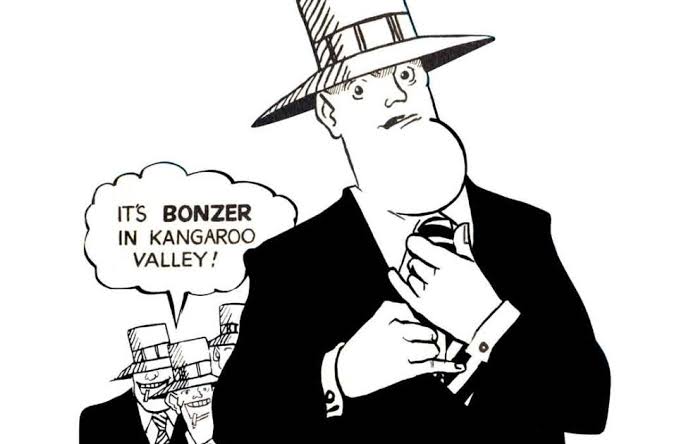




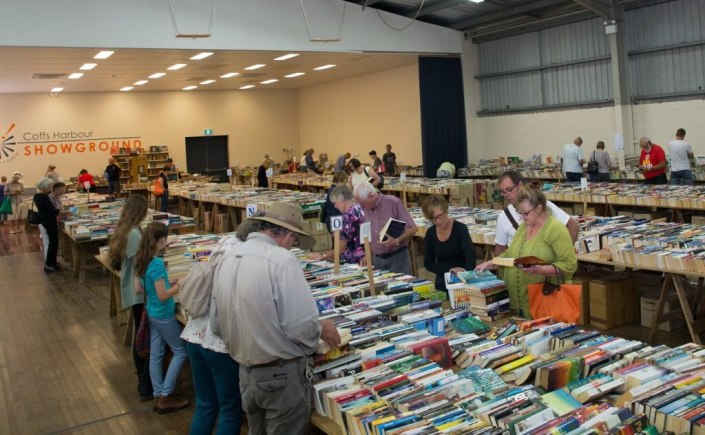
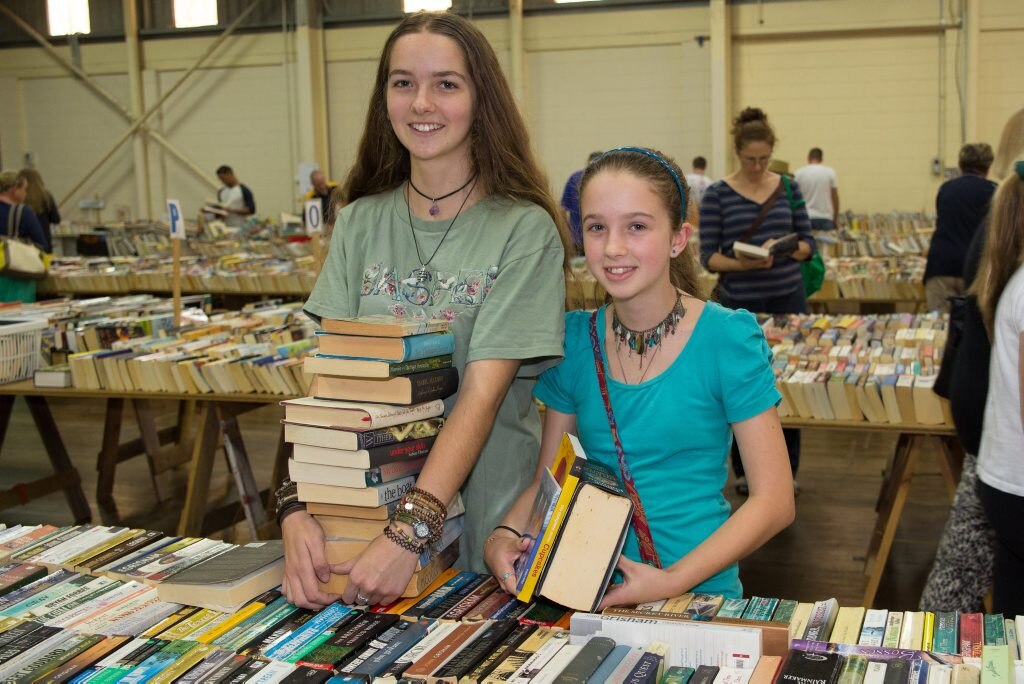

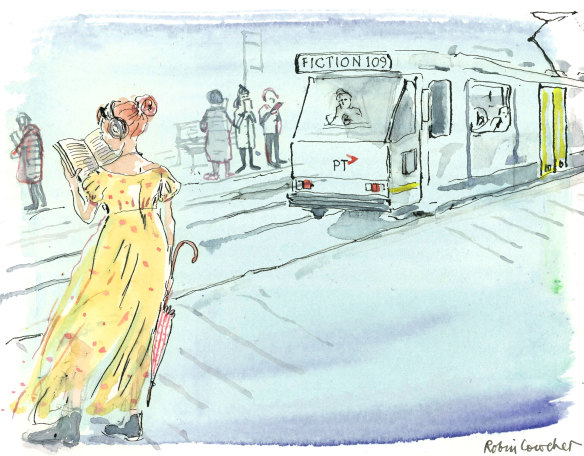
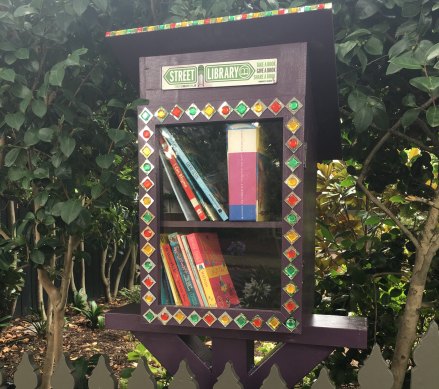

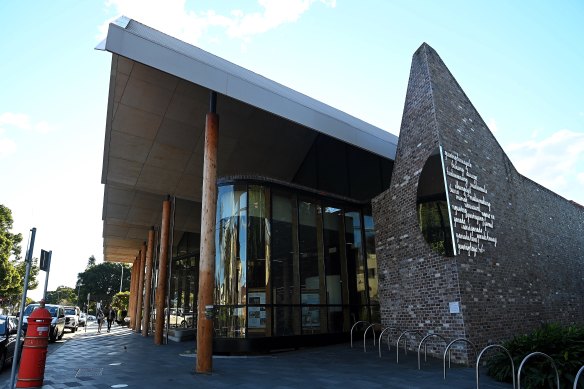
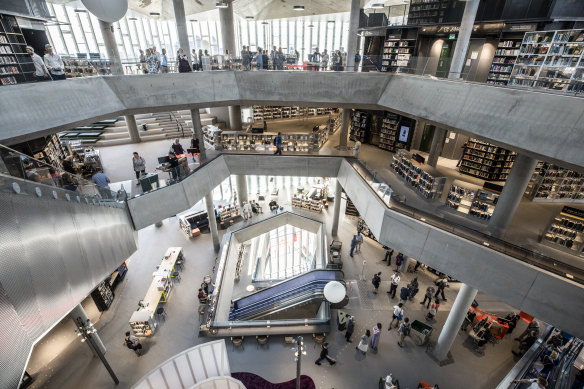
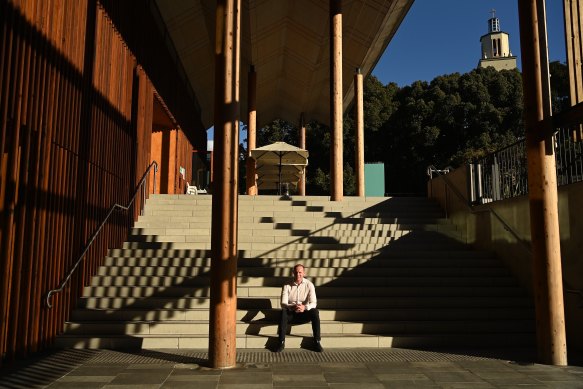


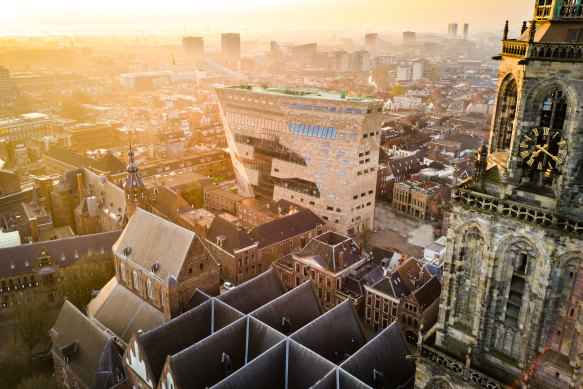


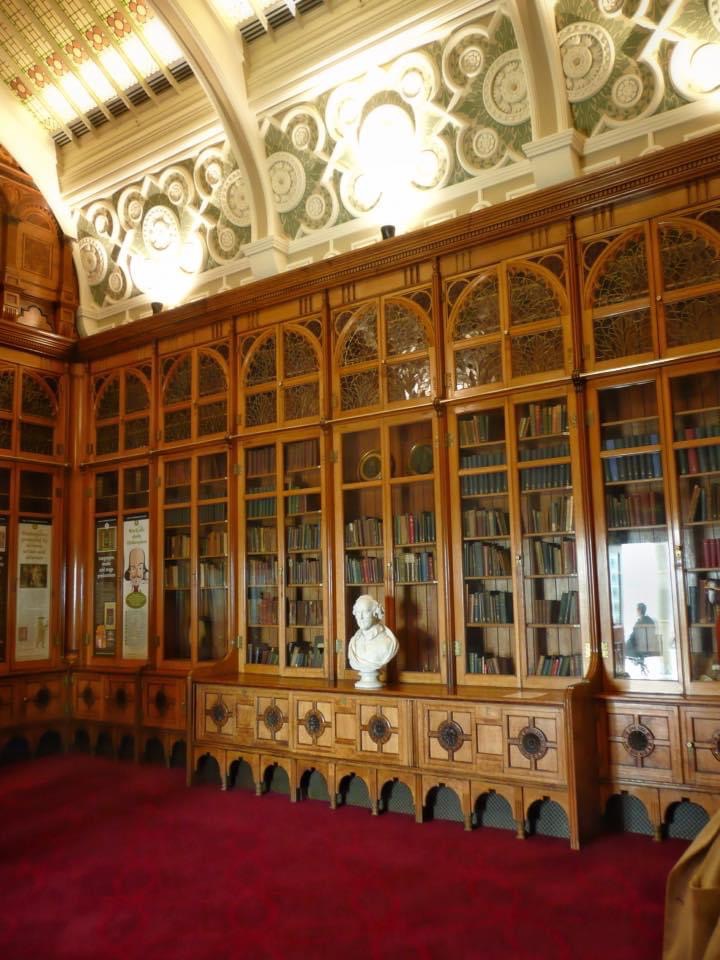
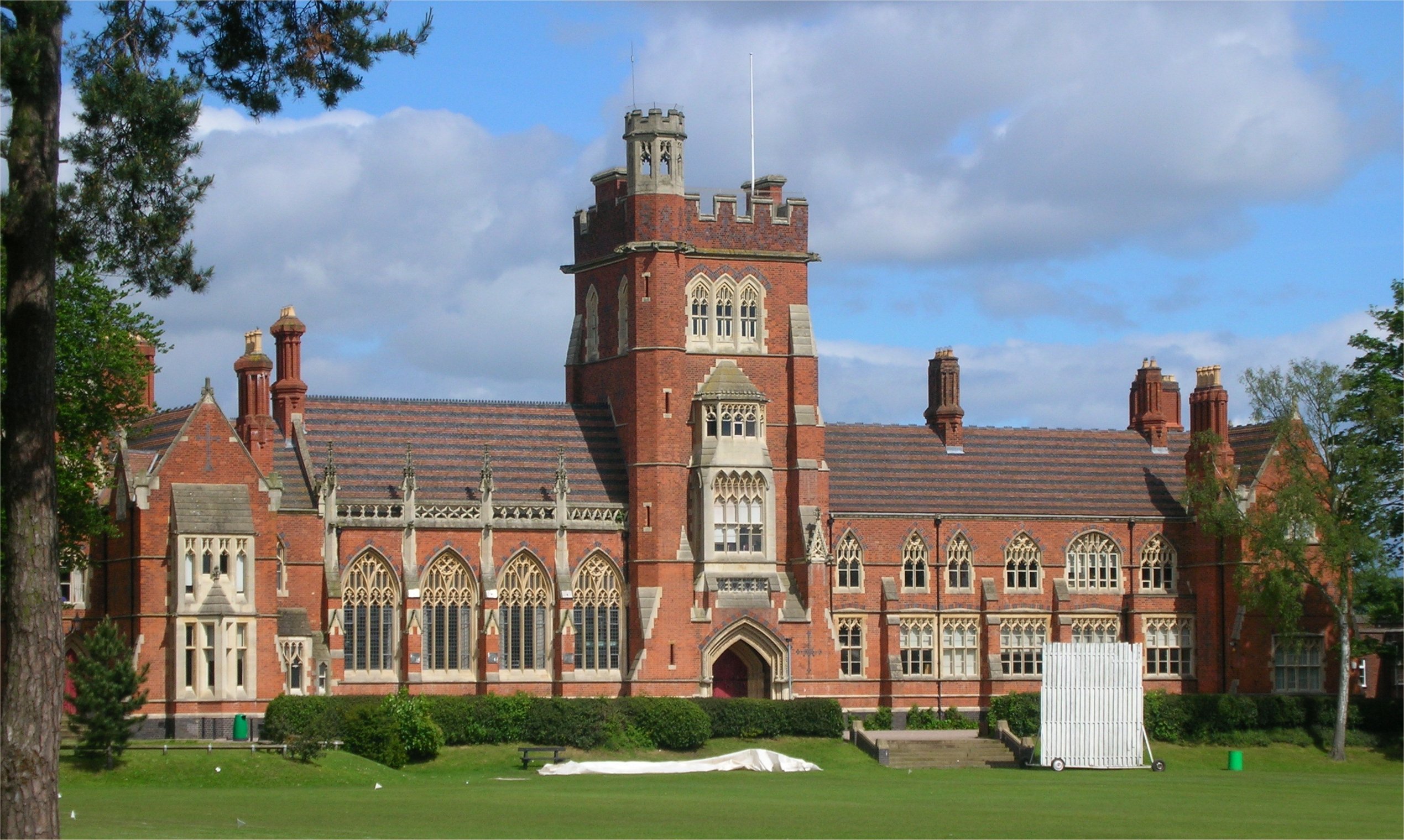
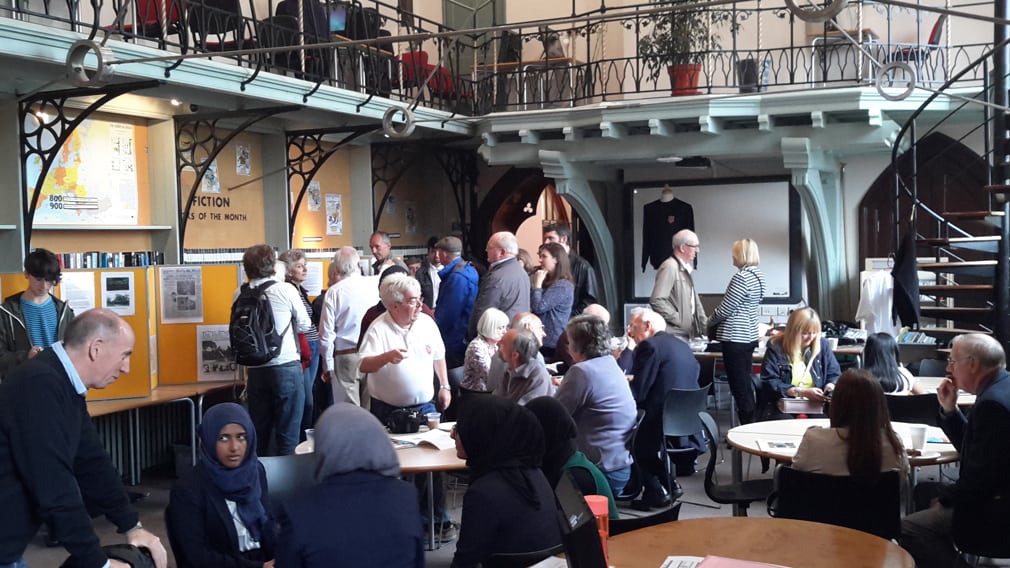


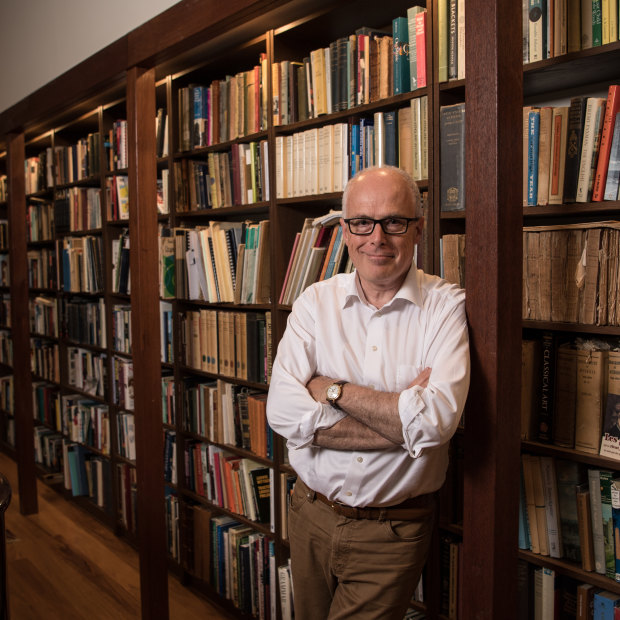






 In That Howling Infinite
Gregory Peck as Captain Ahab