Flashing for the warriors whose strength is not to fight Flashing for the refugees on the unarmed road of flight An’ for each an’ ev’ry underdog soldier in the night An’ we gazed upon the chimes of freedom flashing
Bob Dylan, Chimes of Freedom
Hear the cry in the tropic night, should be the cry of love but it’s a cry of fright Some people never see the light till it shines through bullet holes
Bruce Cockburn, Tropic Moon
When Freedom Comesis a tribute to Robert Fisk (1946-2020), indomitable, veteran British journalist and longtime resident of Beirut, who could say without exaggeration “I walk among the conquered, I walk among the dead” in “the battlegrounds and graveyards” of “long forgotten armies and long forgotten wars”. It’s all there, in his grim tombstone of a book, The Great War forCivilization (a book I would highly recommend to anyone wanting to know more about the history of the Middle East in the twentieth century – but it takes stamina – at near in 1,300 pages – and a strong stomach – its stories are harrowing).
The theme, alas, is timeless, and the lyrics, applicable to any of what Rudyard called the “savage wars of peace” being waged all across our planet, yesterday, today and tomorrow – and indeed any life-or-death battle in the name of the illusive phantom of liberty and against those intent on either denying it to us or depriving us of it. “When freedom runs through dogs and guns, and broken glass” could describe Parisand Chicago in 1968orKristallnacht in 1938. If it is about any struggle in particular, it is about the Palestinians and their endless, a fruitless yearning for their lost land. Ironically, should this ever be realized, freedom is probably the last thing they will enjoy. They like others before them will be helpless in the face of vested interest, corruption, and brute force, at the mercy of the ‘powers that be’ and the dead hand of history.
The mercenaries and the robber bands, the warlords and the big men, az zu’ama’, are the ones who successfully “storm the palace, seize the crown”. To the victors go the spoils – the people are but pawns in their game.
In 2005, on the occasion of the publication of his book, Fisk addressed a packed auditorium in Sydney’s Macquarie University. Answering a question from the audience regarding the prospects for democracy in the Middle East, he replied:
“Freedom must crawl over broken glass”
Freedom Comes
… all wars come to an end. And that’s where history restarts. Robert Fisk
There goes the freedom fighter,
There blows the dragon’s breath.
There stands the sole survivor;
The time-worn shibboleth.
The zealots’ creed, the bold shahid,
Give me my daily bread
I walk amongst the conquered
I walk amongst the dead
Here comes the rocket launcher,
There runs the bullets path,
The revolution’s father,
The hero psychopath.
The wanting seed, the aching need
Fulfill the devil’s pact,
The incremental balancing
Between the thought and act.
The long-forgotten army
In the long-forgotten war.
Marching to a homeland.
We’ve never seen before.
We feel the wind that blows so cold amidst
The leaves of grass.
When freedom comes to beating drums
She crawls on broken glass
There rides the mercenary,
Here roams the robber band.
In flies the emissary
With claims upon our land.
The lesser breed with savage speed
Is slaughtered where he stands.
His elemental fantasy
Felled by a foreign hand.
The long-forgotten army
In the long-forgotten war.
Marching to a homeland.
We’ve never seen before.
We feel the wind that blows so cold amidst
The leaves of grass.
When freedom comes to beating drums
She crawls on broken glass.
Thy kingdom come, thy will be done
On heaven and on earth,
And each shall make his sacrifice,
And each shall know his worth.
In stockade and on barricade
The song will now be heard
The incandescent energy
Gives substance to the word.
Missionaries, soldiers,
Ambassadors ride through
The battlegrounds and graveyards
And the fields our fathers knew.
Through testament and sacrament,
The prophecy shall pass.
When freedom runs through clubs and guns,
She crawls on broken glass.
The long-forgotten army
In the long-forgotten war.
Marching to a homeland.
We’ve never seen before.
We feel the wind that blows so cold amidst
The leaves of grass.
When freedom comes to beating drums
She crawls on broken glass
When freedom comes to beating drums
She crawls on broken glass
Back in the last century, before ANZAC Day became the secular Christmas that it has become, before marketing people and populist politicians saw its commercial and political potential, before the fatal shore became a crowded place of annual pilgrimage, my Turkish friend, the late Naim Mehmet Turfan, gave me a grainy picture of a Turkish soldier at Gelibolu carrying a large howitzer shell on his back. Then there was this great film by Australian director Peter Weir, starring young Mel Gibson and Mark Lee. There were these images of small boats approaching a dark and alien shore, of Light Horsemen sadly farewelling their Walers as they embarked as infantry, and of the doomed Colonel Barton humming along to a gramophone recording of Bizet’s beautiful duet from The Pearl Fishers, ‘Au fond du temple saint’ before joining his men in the forlorn hope of The Nek …
At the heart of the Anzac Day remembrance is the Australian and New Zealand Army Corps’ role the Dardanelles campaign of 1915-16, Winston Churchill’s grandiose and ill-conceived plan to take the Ottoman Empire out of the war by seizing the strategic strait between the Black Sea and the Mediterranean, thereby threatening Istanbul, the Ottoman capital. It was a military failure. From the initial seaborne assault to the evacuation, it lasted eight months and cost 114,000 lives with 230,000 wounded.
In 1915, Australians greeted the landings at Gallipoli with unbridled enthusiasm as a nation-making event. But it wasn’t long before they were counting the dreadful cost. More than 8000 Australians died during the Gallipoli campaign. As a loyal member of the British Empire, Australia eventually sent 330,000 men overseas to fight for the King. Volunteers all, not all of them white men – despite the authorities’ policy of recruiting only Australians of Anglo-Celtic stock, their ranks included many indigenous, Chinese and others. By the time the war ended in 1918, 60,000 of them were dead. As the late historian Ken Inglis once pointed out: “If we count as family a person’s parents, children, siblings, aunts and uncles and cousins, then every second Australian family was bereaved by the war.
Gallipoli is cited as the crucible of Australian nationhood, but the Anzacs’ part in the doomed campaign was but a sideshow of the wider campaign. Although it is celebrated in Australian song and story, it was the Ottomans’ most significant victory in the war that was to destroy the seven-hundred-year-old Ottoman Empire secure the reputation of its most successful general Mustafa Kemal, who as Ataturk, became the founder of modern Turkey.
Some thirty-four thousand British soldiers died on the peninsula, including 3,400 Irishmen who are remembered In The Foggy Dew, one of the most lyrical and poignant of the Irish rebel songs: Right proudly high over Dublin town, they hung out the flag of war. ‘Twas better to die ‘neath that Irish sky than at Suvla or at Sud el Bar…Twas England bade our Wild Geese go that small nations might be free, But their lonely graves are by Suvla’s waves or the fringe of the grey North Sea.
Ten thousand Frenchmen perished too, many of these being “colonial” troops from West and North Africa. Australia lost near on ten thousand and New Zealand three. Some 1,400 Indian soldiers perished for the King Emperor. Fifty seven thousand allied soldiers died, and seventy five thousand were wounded. The Ottoman army lost fifty seven thousand men, and one hundred and seven thousand were wounded (although these figures are probably much higher). An overlooked fact is that some two thirds of the “Turkish” solders in Kemal’s division were actually Arabs from present day Syrian and Palestine. Gallipoli was indeed a multicultural microcosm of a world at war.
Whilst the flower of antipodean youth is said to have perished on Gallipoli’s fatal shore, this was just the overture. Anzac troops were dispatched to the Western Front, and between 1919 and 1918, 45,000 Aussies died there and 124,000 were wounded.
Once upon a war, the Dardanelles Campaign of 1915-16 was a sideshow to the bigger theatres of the Eastern and Western Fronts. To some, it was a reminder that they could not stomach Winston Churchill for this was said to be his greatest stuff up in a career replete with such (although they would admit that he more than exonerated himself his and Britain’s Finest Hour). For many Australians and New Zealanders, it was a national baptism of fire, of youthful sacrifice on the altar of Empire. And notwithstanding the military defeat and retreat, the folly and foolhardiness, in the harrowing adversity and heroism, lay the bones of a young country’s enduring creation myth.
Former soldier James Brown, Anzac’s Long Shadow
Official war historian Charles Beanwent ashore at Anzac Cove on 25 April, more than 5 hours after the first troops. Here is his first dispatch (it was not published in Australia until 13th May):
It was eighteen minutes past four on the morning of Sunday, 25th April, when the first boat grounded. So far not a shot had been fired by the enemy. Colonel McLagan’s orders to his brigade were that shots, if possible, were not to be fired till daybreak, but the business was to be carried through with the bayonet. The men leapt into the water, and the first of them had just reached the beach when fire was opened on them from the trenches on the foothills which rise immediately from the beach. The landing place consists of a small bay about half-a-mile from point to point with two much larger bays north and south. The country rather resembles the Hawkesbury River country in New South Wales, the hills rising immediately from the sea to 600 feet [183m]. To the north these ridges cluster to a summit nearly 1,000 feet [305m] high. Further northward the ranges become even higher. The summit just mentioned sends out a series of long ridges running south-westward, with steep gullies between them, very much like the hills and gullies about the north of Sydney, covered with low scrub very similar to a dwarfed gum tree scrub. The chief difference is that there are no big trees, but many precipices and sheer slopes of gravel. One ridge comes down to the sea at the small bay above mentioned and ends in two knolls about 100 feet [30m] high, one at each point of the bay.
It was from these that fire was first opened on the troops as they landed. Bullets struck fireworks out of the stones along the beach. The men did not wait to be hit, but wherever they landed they simply rushed straight up the steep slopes. Other small boats which had cast off from the warships and steam launches which towed them, were digging for the beach with oars. These occupied the attention of the Turks in the trenches, and almost before the Turks had time to collect their senses, the first boatloads were well up towards the trenches. Few Turks awaited the bayonet. It is said that one huge Queenslander swung his rifle by the muzzle, and, after braining one Turk, caught another and flung him over his shoulder. I do not know if this story is true, but when we landed some hours later, there was said to have been a dead Turk on the beach with his head smashed in. It is impossible to say which battalion landed first, because several landed together. The Turks in the trenches facing the landing had run, but those on the other flank and on the ridges and gullies still kept up a fire upon the boats coming in shore, and that portion of the covering force which landed last came under a heavy fire before it reached the beach. The Turks had a machine gun in the valley on our left, and this seems to have been turned on to the boats containing part of the Twelfth Battalion. Three of these boats are still lying on the beach some way before they could be rescued. Two stretcher-bearers of the Second Battalion who went along the beach during the day to effect a rescue were both shot by the Turks. Finally, a party waited for dark, and crept along the beach, rescuing nine men who had been in the boats two days, afraid to move for fear of attracting fire. The work of the stretcher-bearers all through a week of hard fighting has been beyond all praise.
On 27th July 2024, the Australian published extracts from a recently published biography of Henry Koba Freame, adventurer, soldier, orchardist and interpreter. It provides such a stirring account of the landing of Australian soldiers at what is now Anzac Cove on 25th April 2015 and the subsequent Gallipoli campaign that it was worth republishing below. But first, a brief summary of Freame’s eventful life.
The road to Gallipoli
Wykeham Henry Koba Freame is believed to have been born on 28 February 1885 at Osaka, Japan, though on his enlistment in the Australian Imperial Force he gave his birthplace as Kitscoty, Canada. He was the son of Henry Freame, sometime teacher of English at the Kai-sei Gakko in Japan, and a Japanese woman, Shizu, née Kitagawa. As he was fluent in Japanese and spoke English with an accent it is likely that he was brought up in Japan. In 1906 he was a merchant seaman and on 19 July of that year married Edith May Soppitt at St John’s Anglican Church, Middlesbrough, England.
Freame probably came to Australia in 1911 and on enlisting in the A.I.F. on 28 August 1914 described himself as a horse-breaker of Glen Innes, New South Wales. Posted to the 1st Battalion as a private, he embarked for Egypt on the troopship Afric on 18 October and was promoted lance corporal on 7 January 1915. On 25 April he landed at Anzac and after three days of heavy fighting was promoted sergeant. He was awarded one of the A.I.F.’s first Distinguished Conduct Medals for ‘displaying the utmost gallantry in taking water to the firing-line although twice hit by snipers’. He was mentioned in dispatches for his work at Monash Valley in June when Charles Bean described him as ‘probably the most trusted scout at Anzac’.
Having served in the Hottentot rising of 1904-06 in German East Africa and in the Mexican wars, Freame was an accomplished scout before joining the A.I.F. He had an uncanny sense of direction and would wriggle like an eel deep into no man’s land, and at night even into enemy trenches, to pick up information. His dark complexion and peculiar intonation of speech had led his companions to believe that he was Mexican—an impression which he reinforced at Anzac where, in cowboy fashion, he carried two revolvers in holsters on his belt, another in a holster under his armpit and a bowie knife in his boot pocket. On 15 August he was wounded during operations at Lone Pine and was evacuated to Australia. He was discharged as medically unfit on 20 November 1916.
Freame settled on the Kentucky estate in New England, New South Wales, when the estate was subdivided for a soldier settlement scheme, and was appointed government storekeeper. He eventually acquired a Kentucky block and was a successful orchardist. His wife died in 1939 and on 16 August 1940 he married Harriett Elizabeth Brainwood, nurse and divorced petitioner, at St John’s Anglican Church, Milson’s Point, Sydney. With the outbreak of World War II he offered his services to the Australian Military Forces and in December 1939 was planted among the Japanese community in Sydney as an agent by military intelligence. In September 1940 he was appointed as an interpreter on the staff of the first Australian legation to Tokyo.
Early in April 1941, however, Freame returned to Australia because of ill health and was admitted to North Sydney Hospital suffering from a severe throat condition which greatly impaired his speech. He died on 27 May and was buried in Northern Suburbs cemetery with Anglican rites. His death certificate records the cause of death as cancer though Freame himself and later his wife alleged that he had been the victim of a garrotting in Japan. He considered that the attack was the consequence of the injudicious wording of the announcement in the Australian press of his posting to Tokyo. He had been described as employed by the Defence Department at a time when he was telling his Japanese acquaintances another story. Extant evidence provides no definite clarification of the circumstances of his death, though the claim of garrotting was investigated, and rejected, at the time.
Harry Freame in 1915 before departing for Gallipoli
In the years after World War I, Harry Freame had a legitimate claim to be considered the most famous Anzac soldier to have landed at Gallipoli. Born in Japan and raised as a Samurai, he was the recipient of the first Distinguished Conduct Medal to be awarded to an Australian soldier for his efforts in those first bloody days of Gallipoli, and his name was legend among the Australian troops who had fought that tragic battle. As the landing turned into trench warfare, the troops knew Harry risked his neck each night to venture out into no-man’s land and map the Turkish defences.
Harry was on personal terms with the key Anzac commanders, and in the postwar years generals would visit him and reminisce about the war. Australia’s official war historian for World War I, Charles Bean, who first met Harry in June 1915, was fascinated by Harry his whole life. The Australian public came to know Harry through the newspapers of the day that splashed his wartime exploits of courage and daring across their pages.
What became of him?
Harry Freame’s boots hit the sands of Anzac Cove at around 7.40am on April 25, 1915. He was part of D Company, 1st Battalion. By the time they landed, Anzac Beach, as it came to be known, was already strewn with the broken and bloodied bodies of the men and pack animals that had come before them on that infamous morning.
It wasn’t Harry’s first sight of the region – he had sailed this way before – and it wasn’t his first taste of war.
There is a picture of Harry taken before the landing, most likely in Egypt. In it he is in full uniform, flat-brimmed hat, a bandana tied around his neck, wire clippers and binoculars attached to his belt. He holds his Lee–Enfield full wood .303 rifle by the barrel, the butt resting on the ground. He is looking slightly downwards at the camera. There is none of the naive merriment so often seen in the pictures of young Australian soldiers who had mistaken war for a great boys’ own adventure. But nor is there any fear in those eyes. Harry knew what he was in for, and he was ready for it.
As he waded through the waist-high water towards the sand, Harry carried in his pack three days’ rations and an extra 150 rounds of ammunition. He would have heeded the warning of Lieutenant General William Birdwood, the British officer in overall command of the ANZAC (Australian and New Zealand Army Corps) forces, who had advised the troops prior to landing to drink as much water as they could, as once ashore supply of food and water could not be guaranteed for at least three days.
The landing itself had been rehearsed as much as possible on the nearby Greek islands, under conditions nothing like what Harry and the rest of the Anzacs would soon face, but as the 1st Battalion’s official war diary records, “we knew very little of the actual plans for the attack – in fact, the whole thing seemed to be rather in the air, and so it proved”.
All that the officers of the 1st Battalion knew was that the 3rd Brigade was to land first and rush the enemy positions. When Harry and D Company landed on Anzac Beach, they had no idea what success, if any, the 3rd Brigade had had. Judging by the dead and dying who littered the beach, staining the Aegean waters red, and the enemy bullets and shells that whistled around their heads and whipped the waves to foam, it could be easily believed that none of the 3rd Brigade had survived that hellfire of a dawn.
Harry at age the age of 24
■ ■ ■
Harry’s battalion formed up just north of Anzac Beach, in the shadow of Ari Burnu, sheltered from the murderous fire being poured down upon the landing from the peaks of Gaba Tepe, and waited for orders. When the orders came, they “were very vague”, alluding to nothing more than the need for the battalion to reinforce the firing line. But to reinforce a firing line, you needed to first find the firing line, and when the men looked up towards the imposing ridges and valleys that confronted them, there was no firing line.
The ridges above the beaches were crawling with pockets of men, some engaged in isolated fights, hand-to-hand combat wherein they lived or died by the thrust of their bayonets or the quickness of their wits.
Recalling that bloody morning, poet John Masefield wrote:
“All over the broken hills there were isolated fights to the death, men falling into gullies and being bayoneted, sudden duels, point blank, where men crawling through the scrub met each other and life went to the quicker finger, heroic deaths, where some half section which had lost touch were caught by ten times their strength and charged and died.
“No man of our side knew that cracked and fissured jungle. Men broke through it on to machine guns, or showed up on a crest and were blown to pieces, or leaped down from it into some sap or trench, to catch the bombs flung at them and hurl them at the thrower.
“Going as they did, up cliffs, through scrub, over ground … they passed many hidden Turks, who were thus left to shoot them in the back or to fire down at the boats, from perhaps only fifty yards away.”
■ ■ ■
The firing line, a concept easily imagined in the safety of an officer’s headquarters, was non-existent on the actual field of battle. On that first morning there was just a mad rush for high ground, up the forbidding slopes and into the ridges and valleys that held not only Turkish and German and Syrian troops and gunners but also the hope of cover and survival.
A primeval need to push further and further inland gripped the soldiers, in the hope that there, beyond the next valley, the next ridge, lay safety.
By 10am, with clothes still heavy with sea water after the landing and many of their rifles jammed with sand, now useful only for bayonet thrusts and charges, Harry and what elements of D Company were able to be formed up left the beach and set off for the ridges. Coming upon officers from the 3rd Battalion, D Company was redirected to the hill known as Baby 700, where reinforcements were urgently needed.
Through dense, waist-high scrub of gorse-like bushes and along the dried-up water courses littered with boulders, the men forged ahead uphill, legs heavy but the words of the commanding officers to advance, advance, advance running through their heads. Many of the men of D Company who fought their way up towards Baby 700 that clear bright morning would etch their names into the history of the Anzacs and the 1st Battalion: Major FJ Kindon, second-in-command of 1st Battalion; Major Blair Swannell, commanding officer of D Company; Captain Harold Jacobs, second-in-command of D Company; Lieutenant Geoffrey Street; and Captain Alfred Shout, the man who would leave Gallipoli the most decorated soldier of all, though sadly not with his life. And beside Shout, as was so often the case in the blood-soaked months that followed, in lock step, there was Lance Corporal Harry Freame.
Strategically important, Baby 700 had been the focus of intense fighting all morning, with remnants of the Australian 9th, 11th and 12th battalions all joining the battle as the Turkish troops advanced and retreated in a series of intense skirmishes conducted under the continuous hail of shrapnel fire from unseen Turkish positions. The approaches to Baby 700 were complicated by folds of ridges and valleys, and in these the Australian men became detached from their companies and lost until they could connect up with other Australian soldiers, sometimes from their own company, sometimes not.
Freame at his final Anzac Day march, in 1940.
By 11am, Harry and D Company had reached The Nek, a thin strip of ridge that connected to Baby 700. The area was being held by Captain Lalor and men of the 12th Battalion. Lalor was the grandson of Peter Lalor, the man who had led the revolt at Eureka. With him on that morning on the approaches to Baby 700, Lalor carried a magnificent sword, said to be the one used by his grandfather at that famous stockade. Swords had been prohibited to be carried during the landing, but Lalor had disregarded the order.
Across The Nek on the slopes of Baby 700, Turkish troops were gathering. Joining up with Lalor’s group, the newly arrived men of D Company formed up and charged the Turkish troops, driving them back into a gully before advancing up Baby 700.
After reaching the summit, D Company started to dig into that hardscrabble ground. The Turkish troops they had driven before them had retreated, but only to a previously unseen trench, and from here they poured heavy fire on the entrenching D Company. It was here that D Company’s commander, Major Blair Swannell, was killed on that first morning, shot dead just as he had earlier predicted he would be to his mates aboard the Minnewaska in the predawn fog before the landing.
Against the fierce Turkish assault, the Australians had only their rifles (when they worked), bayonets and pistols. The naval guns offered no support, as those manning them were afraid of firing on their own troops in the complicated mess of invaders and invaded that swarmed the hills of the peninsula.
A few artillery guns had been brought ashore at midday but were then ordered to be sent back out to the boats. Other commanders had refused to allow their guns to be landed, such was the chaos on the beaches, and it wasn’t until dusk that the first artillery guns came into action in support of the Australian troops.
The Australian firing line on Baby 700 could not hold, and over the course of the morning the Australian troops moved over the summit only to be thrown back by vicious counterattacks no fewer than five times.
In the midst of the fighting, there was Harry Freame, moving from position to position, scouting the ground and enemy positions, running messages between commanding officers.
At one point Harry and a small group of men drove a contingent of Turkish troops from a trench. But having gained the trench they found they were then held in place by persistent enemy fire. The men hadn’t heeded the words of Lieutenant General Birdwood, and who could blame them, and they were out of water, exhausted and near death. Without water they felt that they would soon perish or be forced to surrender.
Harry called for volunteers to brave the bullets and shrapnel and go for water. None raised a hand or spoke a word, so over the side of the trench he went, collecting water bottles from those who would never thirst again, fallen soldiers whose twisted repose could never be mistaken for the sleeping, a last look, a last thought of home or their best girl held fast in a glassy eye like a butterfly trapped in amber.
When Harry returned, he brought not only precious water but food and pickaxes for the grateful men.
All day the fighting raged on Baby 700, with ground taken then lost, the attackers and counterattackers continually changing roles, the air perfumed with the smell of the wild thyme that had been lashed by the bullets and shrapnel bursts. And as the day stretched on, still the men had no idea where the firing line was, only supposing that it was somewhere ahead of them, always somewhere over the next ridge, and that they must get to it. And if they could not advance, then at all costs they tried to hold on to whatever patch of land they had come to stop on.
At around 4.30pm, as D Company, reinforced now with New Zealand troops, fought to hold the right side of the Baby 700 slope, a massive Turkish counterattack was launched that peeled the Australians off the slope. Alfred Shout, who had been with Lalor when he was killed, had earlier left Harry and fourteen men at The Nek with orders to hold it no matter what. The small group came under intense fire and before long only nine men were left, and by the time Shout returned, retreating from Baby 700, only Harry and one other man held the position. The rest lay dead or dying about them. Shout ordered them both to follow him in retreat towards the beach.
After regrouping on the beach, Shout and Harry then set about rounding up men from various battalions, a combination of the stragglers and shirkers, the lost and the shell-shocked. Harry collected around two hundred men and led them back up the slopes to reinforce the New Zealand troops who were holding Walker’s Ridge, a key position leading back to Baby 700, which was by now firmly in Turkish hands.
■ ■ ■
Recording the efforts of Lance Corporal Harry Freame on that chaotic first day at Anzac Cove, official war correspondent Charles Bean wrote:
“With such fighters as Lieutenant A.J. Shout, Lieutenant G.A. Street and Lieutenant Jacobs, all of his own battalion, he and others held vital positions in that constantly moving and changing fight but none was so ubiquitous as he, now holding a key position on The Nek leading to Baby 700, now finding for his commander the scattered parts of his battalion.”
As night fell on the evening of April 25, the fighting abated only somewhat; rifle fire and shrapnel bursts echoed through the night. At around midnight, Lieutenant General Birdwood sent an urgent message to his commander-in-chief, Sir Ian Hamilton, urging an immediate evacuation of the peninsula. Hamilton, from the comfort of the HMS Queen Elizabeth, was having none of it, advising Birdwood that he had “got through the difficult business and you have only to dig, dig, dig until you are safe”.
Freame with his stepsister in 1898.
The following morning, April 26, the hills of the peninsula rang with the sounds of shovels, digging, digging, digging. Those not digging or engaged in holding a position were out scouring the ravines and hillsides for the wounded and missing, and it was while thus engaged that Harry came across a detachment of men under the command of Captain Harold Jacobs sheltering in a trench at Quinn’s Post. The men had had no water to drink and were in a desperate state. Harry offered to go for water and without a second thought braved the enemy fire that came in from unseen snipers and dashed back down the valley from where he had just come. He soon returned with the promised water, allowing the position to be held.
Realising that Lieutenant-Colonel Leonard Dobbin, the company commander, would need information on Captain Jacobs’ position and situation, Harry was again up and over the side of the trench, making his way back down the valley to where Lieutenant-Colonel Dobbin was located. As Harry approached Dobbin’s trench, he was heard to yell out, ‘All right!’ Arriving, he delivered his message to Dobbin. Mission accomplished, it was only then that Harry revealed that on the descent he’d been struck twice by snipers’ bullets, once through the fingers of the left hand and once through the left arm.
For the duration of the fighting at Gallipoli, Quinn’s Post remained the Anzacs’ most advanced position and the key to their defensive positions. It would never have been held if not for the bravery of Harry Freame.
Charles Bean later noted that very few men received decorations for the deeds performed at the Anzac Cove landings. But when the recommendations came out, the name Harry Freame was first among them. His citation read: “Has displayed the utmost gallantry in taking water to the firing line, though twice hit by sniper fire.” Harry’s commanding officer further reported: “Since I have assumed command of the Brigade, Serjeant Freame has almost daily performed some action worthy of recognition in the shape of carrying out night reconnaissance, conveying messages through dangerous zones etc etc. He is a fine fearless soldier who I strongly recommend for recognition.”
■ ■ ■
The recommendation was heeded and Harry, for his work over those first days of Gallipoli, was awarded the Distinguished Conduct Medal. Writing both publicly and privately years after the war, Bean offered the view that Harry should have been awarded the Victoria Cross and that the only reason he wasn’t awarded the VC was because, “Australian commanders hesitated to set up for that hallowed decoration any standard short of the impossible. I think that it is safe to say but for that Harry would have been awarded the highest decoration”.
When I set out to write this book, I wanted to discover why we had forgotten Harry Freame. Why, when our schoolchildren learn of the history of the Anzacs, do they learn more about a donkey than a man who was known at the time as the Marvel of Gallipoli? And I wanted to know why the Australian government covered up their role in the death of Harry Freame, why the man Charles Bean described as probably the most trusted scout at Gallipoli was never believed when he said, “They got me”.
This is an extract from The Bravest Scout At Gallipoli by Ryan Butta (Affirm Press) out now.
How do you see my country? Dusky maidens in desert tents offering dates on golden plates? Algerian secret agent Mohammed Ibn Khaldun to Tom Quinn, Spooks, 2,Ep 2
How often have we heard the exclamation “it’s like something out of the Arabian Nights”? We’ve said it ourselves as we walked down the Suq al Hamadiyya in Old Damascus and al Wad and Daoud Street in Old Jerusalem, in an ersatz Bedouin tent-restaurant just down the road from Palmyra and a similar night out near Petra. It’s as if the local tourist industry folk expect us westerners to enjoy, nay, expect this kind of entertainment.
But whereas since the translation of The Arabian Nights, we have loved the tales, we have also taken from them a distorted impression of the Middle East, a pastiche of palm trees, minarets and camels like the illustrations of the old boxes of figs and of Fry’s Turkish Delight.
So, how did we get here?
From a historical European perspective, the East or Orient has long been perceived as an unknown, alien, and, therefore, alluring world, that has existed for centuries, even millennia. It’s spell persists to this day, enchanting, seducing, and seducing soldiers, adventurers, travelers, troublemakers, writers, artists, and musicians.
This enduring fascination with the East gave rise to the descriptor Orientalism. In art history, literature, and cultural studies it described the imitation or depiction of aspects of the Eastern world largely by writers, designers, and artists from the Western world. Since the publication Palestinian America academic Edward Said’s seminal work Orientalism (1978) much of academic discourse has begun to use the term to refer to the generally nurturing though patronizing Western attitude toward societies in the Middle East, Asia, and North Africa.
But more on Orientalism and Edward Said later. First, we’ll take look at one of the most popular manifestations of western culture’s relationship with the East.
One Thousand and One Nights (أَلْفُ لَيْلَةٍ وَلَيْلَةٌ, Alf Laylah wa-Laylah) is a collection of folk tales compiled in Arabic during medieval times in what is recognized as the Islamic Golden Age, a period of scientific, economic and cultural flourishing in the history of Islam, traditionally dated from the 8th century to the 13th century. It known in English as The Arabian Nights – from the first English-language edition in the early eighteenth century entitled The Arabian Nights’ Entertainment. Many European translations followed, but none more racy and picaresque that of English explorer, polymath and enfant terrible Richard Burton in 1885; it was an abridged version of this, purchased from a budget book store in King Street, Sydney, that I read the first time i got to meet Mademoiselle Scheherazade. The featured image is from that book’s dust cover.
It has been acknowledged that Burton’s gaudy and bawdy English bears little relation to the Arabic of the Nights, which tends to be plain, conversational, and even a little threadbare – in other words, the idiom of folk literature. Some would dismiss it as Orientalist camp. Others would say it was just what would be expected from the infamous translator of The Kama Sutra. His translation included virtually every tale he could find a manuscript for – as well as some that he made up, such as my personal favourite How Abu Hasan Broke Wind.
The stories were gathered over many centuries by various authors, translators, and scholars across the Middle East and South Asia, and North Africa. They originated in ancient and medieval Arabic, Egyptian, Indian, Persian, and even Mesopotamian folklore and literature. Many were originally folk stories from the Abbasid and Mamluk eras, while others, especially the central story of Scheherazade are most likely drawn from the Pahlavi Persian work Hezār Afsān (Persian: هزار افسان, A Thousand Tales), which in turn contained Indian elements.
Charting the timeline, English scholar, author and Sufi adept Robert Irwin has written: “In the 1880s and 1890s a lot of work was done on the Nights by Zotenberg and others, in the course of which a consensus view of the history of the text emerged. Most scholars agreed that the Nights was a composite work and that the earliest tales in it came from India and Persia. At some time, probably in the early 8th century, these tales were translated into Arabic under the title Alf Layla, or ‘The Thousand Nights’. This collection then formed the basis of The Thousand and One Nights. The original core of stories was quite small. Then, in Iraq in the 9th or 10th century, this original core had Arab stories added to it—among them some tales about the CaliphHarun al-Rashid. Also, perhaps from the 10th century onwards, previously independent sagas and story cycles were added to the compilation … Then, from the 13th century onwards, a further layer of stories was added in Syria and Egypt, many of these showing a preoccupation with sex, magic or low life. In the early modern period, yet more stories were added to the Egyptian collections so as to swell the bulk of the text sufficiently to bring its length up to the full 1,001 nights of storytelling promised by the book’s title”.
Sheherazade (Fine Art Images/Heritage Images via Getty Images)
The Thousand And One Arabian Nights has been so appropriated by our culture that it is a de facto member of our so-called Western Canon. It is the source of so many of our fairy tales and boy’s own adventures with its magic lamps and genies, giant birds and winged horses, flying carpets and gorgeous girls in rich silks and ethereal damask. In our pubescent days, did we not “dream of Jeannie”?
Harem pants and turbans, belly dancers and serpentine melodies, and a “nudge, nudge, wink, wink” of vicarious naughtiness (itself a word of Indian origin) – an exotic, “orientalist” retro-zeitgeist that drew artists, poets, writers and composers to this inexhaustible source of narrative, inspiration and titillation. Recall, back in those thankfully long gone more repressed days, the risqué, soft porn imaginings of European artists, including the Pre-Raphaelites and Orientalists who also elided into similar fever dreams of Babylonian and Roman erotica.
Musicians too got in on the act. In 1782, Wolfgang Amadeus Mozart premiered Entführung aus dem Serail, The Abduction from the Seraglio, and Gioachino Rossini presented his L’italiana in Algerior An Italian Girl in Algiers in 1813. These lightweight comic operas featured many of the tropes that entered the cinematic lexicon in the twentieth century, and whilst musically endearing and entertaining, their Orient was a mix of slapstick and exotic, and by today’s standards, condescending in their portrayal of lascivious sultans and their flunkies so easily outwitted by occidental heroes and heroines. Much grander and imposing is Russian composer Nikolai Rimsky-Korsakov’s splendid Scheherazade suite, otherwise known as “the Sultan is coming”. There’s an orchestral rendering of this masterpiece below.
The stories rattle through English pantomimes, Hollywood fantasias, Walt Disney, and even the avant-garde Pier Paulo Pasolini: Alāʼu d-Dīn and Sindibādu l-Bahriyy (these were indeed their original names), Ali Baba and those bandits in huge pots – the inspiration and the storylines for all those boy gets girl cosplay, rom-com, adventure and fantasy films like The Thief of Baghdad and Prince of Persia, and musicals like Kismet – and many more besides, most of them ordinary and many, bad (go Google!). Baubles, bangles and beads indeed (see, below, the Clio from the film). It was a pleasant, picturesque oriental world, the Middle East as Hollywood imagined it before it hit the headlines with its oil, its tyrants, and it internecine wars, a world sans Hamas, Hezbollah, the Taliban, Da’ish and the Al Quds Brigade.
To illustrate the potential for satire, smut and downright silliness – a veritable “Carry on In The Casbah”. The nearest the famous British comedy series came to anything like this was the one film that didn’t have “Carry on” in its title: Follow That Camel in 1967. Though based on the French Foreign Legion adventures of Beau Geste, it doesn’t waste time getting to the suq and, predictably, the generic harem and the usual, well, carry on. Apropos this, there’s a clip below from the BBC production of British playwright Denis Potter’s excellent faux-musical Lipstick on Your Collar, set during the Suez Crisis of 1956, replete with orientalist imaginings and straight-out smut.
The Blue Sultana by Léon Bakst
The spell of the orient also lured adventurers and chancers to the canyons and the castles, the deserts and the oases of the Levant, Mesopotamia, Persia, Afghanistan and India. And, I have to declare, yours truly – not without incident but no match for derring-do of Brits who went before. Like Irwin himself, I was of a generation with no more deserts to conquer, no fabled cities to administer. See Song of the Road (2) – The Accidental Traveller.
It’s a part of the world that has captivated much of my intellectual life for I too like many others before me was lured by the spell of the Orient.
I wrote before, in East, “I was drawn to the Middle East in another age, when it was the land of myth and magic, of dreamers and adventurers, of quixotic tilters at windmills, of pioneers who would make the deserts bloom, of dissemblers and deceivers bearing false promises. The ancient lands of the bible, the fabled realm of A Thousand and One Nights, and the restless quests of Richard Burton, Charles Doughty, and TE Lawrence. The pulp fiction fantasies of Frank Herbert, James Michener and Leon Uris, and the celluloid myths of Peter O’Toole, Omar Sharif, and Paul Newman”.
Middle East folk have taken to the stories too, and as in the West, it has inspired books, poems, plays and movies. Lebanese diva Fairuz played Scheherazade in a Beiruti musical back in the seventies, and Umm Kulthum, dead nearly five decades and still indisputably the Arab world’s most renowned and beloved singer, sang about the lass for forty minutes, which was not unusual for her, without saying too much about the story. There is a statue of Scheherazade and the sultan on the banks of the Tigris in Baghdad.
And yet, the whole glittering, fairytale artifice was built upon dubious foundations of misogyny and murder.
Scrumptious Scheherazade’s “cunning plan” was nothing more or less than that of distracting Shahriya, a randy psychopath of a sultan, from dispatching her (and her sister) – as he had done with his many short-lived exes. The premise is that his former missus cheated on him with a cavalcade of lovers, including slaves and persons of colour. To use the words of an old song by latter day philosopher Hal David and his sidekick Burt Bacharach,, he resolved that he was “never gonna love again”. And no doubt, in true oriental fashion, he was fearful of rival claimants and suspicious of all, including his paramours conspiring against him. Yet, he nonetheless constantly needs to get his end in. So whomsoever he selects to join him in his boudoir – and no one says no to the sultan – gets the chop the morning after. When Schezza gets the royal nod, she is determined not to go the way of her predecessors, and to preserve the lives of future bedmates. Accordingly, she keeps his lascivious lordship so distracted with her storytelling that he will refrain from slayage because he wants to hear how her tale ends. And yes, indeed, he forswears his murderous ways and settles into connubial bliss.
Oh, East is East, and West is West, and never the twain shall meet,
Till Earth and Sky stand presently at God’s great Judgment Seat
Rudyard Kipling, The Ballad of East and West
The term Orientalism gained its modern definition through the writing of the Palestinian academic and cultural critic Edward Said, especially his famous book Orientalism, published in 1978, which sparked controversy among scholars of Oriental studies, philosophy, and literature. It was a critique of cultural perceptions of how the Western world – primarily the white and Judeo-Christian world – perceives the East – or specifically lands and cultures that lie outside the borders of southern and southwestern Europe.
From a historical European perspective, the East has long been perceived as an unknown, alien, and, therefore, alluring world, that has existed for centuries, even millennia. The Greeks and Romans longed for the silk and spices of the East. To satisfy our human craving for the good things of life, busy trade routes stretched from China and Java to present-day Russia, Scandinavia, the Iberian Peninsula and the British Isles.
The term orient is derived from Latin, oriens meaning “east” (literally “sunrise”, from aurior, rising, and its geographical use of the word “rising” to refer to the east, where the sun rises). The term Levant is in turn derived from Old French, and Italian in origin, to refer to the lands of the rising sun – specifically the historical lands of Syria (in Roman times, specifically’ that included the modern states of Lebanon, Syria, Jordan, Israel, Palestine and most of Turkey. In its broad historical sense, it came to include Greece, the islands of the eastern Mediterranean, modern Egypt and North Africa. And with the emergence of European empires in the east, Persia, Afghanistan, India, China, and the East Indies.
Along with east, west, or west, derived, again, from Old French, via Latin, Occidentem, west, or “sky where the sun goes down”, as in occido, to go down or set, was originally synonymous with Christianity which in the Middle Ages were the states that followed the Roman Catholic faith and which for various centuries considered themselves superior to the Eastern Orthodox faith of the Byzantine Empire and the lands of Russia.
The Levant was widely used after the fifteenth century. During the two hundred years of the Crusades, during which the French knights and their retinue took control, the lands that became the crusader kingdoms were referred to as Outremer, meaning the lands beyond the sea. And through the Crusades, the love affair of Christian Europe with the East began. And it was to continue to this day, enchanting, seducing, and seducing soldiers, adventurers, travelers, troublemakers, writers, artists, and musicians.
Edward Said and Orientalism
Original cover art of Orientalism, Jean Leon Gerome’s Le charmeur de serpents, 1870
Edward Wadih Said Edward Wadih Said (November 1935 – September 24, 2003) was a Professor of Literature at Columbia University, a public intellectual, and a founder of the academic field of Postcolonial Studies. A Palestinian-American born in Mandatory Palestine, he was a citizen of the United States through his father, a US Army veteran.
Educated in British and American schools, Said applied his pedagogical and cultural perspective to highlight the gaps of cultural and political understanding between the Western world and the Eastern world, especially with regard to the Israeli-Palestinian conflict in the Middle East.
As a public intellectual Said was a controversial member of the Palestinian National Council, due to his public criticism of Israel and Arab countries, especially the political and cultural policies of Islamic regimes that work against the national interests of their people. He called for the establishment of a Palestinian state to guarantee equal political and human rights for Palestinians in Israel, including the right to return to the homeland.
Orientalism in art history, literature, and cultural studies is the imitation or depiction of aspects of the Eastern world. These drawings are usually made by writers, designers, and artists from the Western world. In particular, Orientalist painting, more specifically depicting the ‘Middle East’, was one of the many disciplines of academic art in the nineteenth century, and the literature of Western countries showed a similar interest in Eastern themes.
Since the publication of Orientalism, much of academic discourse has begun to use the term “Orientalism” to refer to the generally nurturing Western attitude toward societies in the Middle East, Asia, and North Africa. In Said’s analysis, the West classifies these societies as static and undeveloped, thus creating a vision of Eastern culture that can be studied, photographed, and reproduced in the service of imperial power. Implicit in this is the idea that Western society is sophisticated, rational, flexible, and superior, Said writes.
His book redefines the term Orientalism to describe the Western tradition – academic and artistic – of biased interpretations of the Eastern world shaped by the cultural attitudes of European imperialism in the eighteenth and nineteenth centuries.
Said said that Orientalism as “the idea of representation is a theoretical idea: the Orient is a stage in which the whole of the Orient is confined” to make the Eastern world “less intimidating to the West.” And that the developed world, and the West in the first place, is the cause of colonialism, and that Western countries and their empires arose by exploiting backward countries and extracting wealth and labor from one country to another. Academically, the book has become a foundational text for postcolonial cultural studies.
While Said’s analysis relates to Orientalism in European literature, especially French literature, the historical view identified and described can also be applied to representations of the Orient in other art forms, including visual art – most notably in Orientalist painting, which was popular among artists And with galleries during the nineteenth century, which modern scholars see as depicting myth and fantasy that has little connection with reality, and also in other art forms that come like music and film.
Such representations drew criticism as much as before and after World War II, they perpetuated the imagined trend, giving generations of Westerners a distorted impression of the Middle East adorned with palm trees, minarets, and camels like illustrations of old chests of figs and boxes of Turkish delight and serpentine melodies. Such images directly connected in Western minds with the trappings of orientalists.
Fun, romantic and fascinating, this Middle East as imagined by artists and Hollywood – to quote from above, “harem pants and turbans, belly dancers and serpentine melodies, and a “nudge, nudge, wink, wink” of vicarious naughtiness (itself a word of Indian origin) an exotic, “orientalist” retro- zeitgeist that drew artists, poets, writers and composers to this inexhaustible source of narrative, inspiration and titillation”.
Inevitably, a backlash arose in the developing world, both in the Islamic world, and in Asian and African countries in general, and the term Western is now often used to refer to the negative views of the Western world found in Eastern societies, and is based on the nationalism that spread as a response to colonialism. Furthermore, Edward Said himself has been accused of Westernizing the West in his critique of Orientalism. He is guilty of falsely describing the West in the same way that Western scholars are accused of falsely describing the East. Said is said to have encouraged a homogenous picture of the West, which no longer consisted not only of Europe, but also of the United States, Canada and Australia which became more culturally influential over the years.
[This profile of Edward Said and Orientalistism is drawn largely from Wikipedia. For an interesting account of Robert Irwin’s take down of Said’s opus, see The man who defeated Orientalism The man who defended Orientalism]
Austrian Rainer Maria Rilke is one of my favourite poets. In 1969, a Christian friend gave me a Penguin Modern Poets edition of his poems. Here are three sublime spiritual pieces from this treasured book, beautifully translated by JB Leishman. No other translations are as lovely as his.
I would always recall these poems when visiting the Holy Land, and since my very first visit in 1971, I have associated them particularly with the Old City of Jerusalem. I took the photographs accompanying this piece in that exquisite place.
The Olive Garden
And still he climbed, and through the grey leaves thrust,
quite grey and lost in the grey olive lands,
and laid his burning forehead full of dust
deep in the dustiness of burning hands.
After all, this.
And this, this, then was the end
Now I’m to go, while I am going blind,
and, oh, why wilt Thou now have me still contend
Thou art, whom I myself no longer find.
No more I find thee. In myself no tone
of Thee; nor in the rest; nor in this stone.
I can find Thee no more. I am alone.
I am alone with all that human fate
I undertook through Thee to mitigate,
Thou who art not. Oh, shame too consummate…
An angel came, those afterwards relate.
Wherefore an angel? Oh, there came the night,
and turned the leaves trees indifferently,
and the disciples stirred uneasily.
Wherefore an angel? Oh, there came the night.
The night that came requires no specifying;
just so a hundred nights and nights go by,
while dogs are sleeping and while stones are lying –
just any melancholy night that, sighing,
lingers till morning mount the sky.
For Angels never never come to such men’s prayers
nor nights for them mix glory with their gloom,
Forsakenness is the self-loser’s doom
and such are absent from their fathers cares
and disincluded from their mothers womb.
The Spectator
I watched the storms in the tree above:
after days of mild decaying
my windows shrink from there assaying,
and the things I hear the distant saying,
without a friend I find dismaying,
without a sister I cannot love.
There goes the storm to urge and alter,
through forest trees and through time’s tree;
and nothing seems to age or falter:
the landscape like an open psalter,
speaks gravely of eternity.
How small the strife that’s occupied us,
how great is all that strives within us!
We might, if, like the things inside us,
we let the great storm over-ride us grow
spacious and anonymous.
We conquer littleness, obtaining
success that only makes a small,
while unconstrained and unconstraining,
The permanent alludes us all:
that angel who, through loath, yet lingers
to wrestle with mortality,
and, when opponents’ sinews settle
in strife and stretch themselves to metal,
can feel it move beneath his fingers
like strings in some deep melody.
The challenger who failed to stand
that trial so constantly rejected
goes forth upright and resurrected
and great from that hard, forming hand
that clasped about him and completed.
Conquests no longer fascinate.
His growth consists in being defeated
by something ever-grandlier great.
The Annunciation
(Words of the Angel)
You are not nearer God then we;
he’s far from everyone .
And yet, your hands most wonderfully
Reveal his benison.
From woman’s sleeve none ever grew
so ripe, so shimmeringly:
I am the day, I am the dew,
you, Lady, are the tree.
Pardon, now my long journey’s done,
I had forgot to say
what he who sat as in the sun,
grand in his gold array ,
told me to tell you, pensive one
(space has bewildered me)
I am the start of what’s begun,
you, Lady, are the tree.
I spread my wings and wide and rose,
the space around grew less;
your little house quite overflows
with my abundant dress.
But still you keep your solitude
And hardly notice me:
I’m but a breeze within the wood,
you, Lady, are the tree.
The angels tremble in their choir,
grow pale, and separate:
never were longing and desire
so vague and yet, so great.
Something perhaps is going to be
that you perceived in dream.
Hail to you! for my soul can see
that you are ripe and teem.
You lofty gate, that any day
may open for our good:
Your ear my longing songs assay
My word – I know now – lost its way
in you as in a wood.
And thus your last dream was designed
to be fulfilled by me.
God looked at me: he made me blind…
You, Lady, are the tree.
René Karl Wilhelm Johann Josef Maria Rilke (4 December 1875 – 29 December 1926), known as Rainer Maria Rilke, was an Austrian poet and novelist. Acclaimed as an idiosyncratic and expressive poet, he is widely recognized as a significant writer in the German language. His work is viewed by critics and scholars as possessing undertones of mysticism, exploring themes of subjective experience and disbelief.
الشاعر الألماني راينر ماريا ريلكه هو أحد المفضلين لدي .. هذان اثنان من أعماله الروحية السامية ، تمت ترجمتها بشكل جميل من قبل ج ب ليشمان في أول إصدار لي من سلسلة بنجوين الشعراء المعاصري. لا توجد ترجمات أخرى جميلة مثل ترجماته.
حديقة الزيتون
وما زال يتسلق ، ومن خلال الأوراق الرمادية ،
رمادية تمامًا وفقدت في أراضي الزيتون الرمادية ،
ووضع جبهته المشتعلة مملوءة بالتراب
في أعماق غبار الأيدي المحترقة.
بعد كل هذا.
وهذه كانت النهاية
الآن سأذهب ، بينما أنا أعمى ،
و ، أوه ، لماذا تريد الآن أن أجادلني
أنت الذي لم أعد أجده بنفسي.
لا أجدك بعد الآن. في نفسي لا لهجة
منك. ولا في البقية. ولا في هذا الحجر.
لا يمكنني العثور عليك أكثر. انا وحيد.
أنا وحدي مع كل هذا المصير البشري
لقد تعهدت من خلالك بالتخفيف ،
أنت الذي ليس كذلك. أوه ، العار بارع جدا …
جاء ملاك ، فيما بعد.
لماذا ملاك؟ أوه ، جاء الليل ،
وقلبت أوراق الأشجار بلا مبالاة ،
وكان التلاميذ يتقلبون بقلق.
لماذا ملاك؟ أوه ، جاء الليل.
الليلة التي جاءت لا تحتاج إلى تحديد ؛
فقط حتى تمر مائة ليلة وليلة ،
بينما الكلاب نائمة وحجارة الكذب –
فقط أي ليلة حزينة ، تنهد ،
باقية حتى الصباح جبل السماء.
لأن الملائكة لا يأتون أبدًا إلى صلاة مثل هؤلاء الرجال
ولا تخلط الليالي لهم المجد بكآبتهم ،
التهور هو عذاب الخاسر
ومثل هؤلاء غائبون عن اهتمامات آبائهم
واستثنوا من رحم أمهاتهم.
المشاهد
شاهدت العواصف في الشجرة أعلاه:
بعد أيام من التحلل الخفيف
تتقلص نوافذي من هناك ،
والأشياء التي أسمعها تقول من بعيد ،
بدون صديق أجده مخيفًا ،
بدون أخت لا أستطيع أن أحب.
هناك تذهب العاصفة للحث والتغيير ،
من خلال أشجار الغابات وعبر شجرة الزمن ؛
ولا شيء يبدو أنه يتقدم في العمر أو يتعثر:
المناظر الطبيعية مثل سفر المزامير المفتوح ،
يتحدث بجدية عن الخلود.
كم هو صغير الفتن الذي شغلنا ،
ما أعظم كل ما يجتهد فينا!
قد نحب الأشياء التي بداخلنا ،
تركنا العاصفة العظيمة تطوف بنا تنمو
فسيحة ومجهولة.
نحن نتغلب على الصغر ، ونكتسب
النجاح الذي يصنع فقط القليل ،
بينما غير مقيد وغير مقيد ،
الدائم يلمح لنا جميعًا:
ذلك الملاك الذي ، من خلال الكراهية ، باقٍ
تتصارع مع الموت ،
وعندما تستقر أعصاب الخصوم
في الفتنة وتمتد إلى المعدن ،
يمكن أن يشعر أنه يتحرك تحت أصابعه
مثل الأوتار في بعض اللحن العميق.
المتحدي الذي فشل في الوقوف
تلك المحاكمة حتى رفضت باستمرار
يذهب منتصبا ويقوم
وعظيم من تلك اليد الصلبة المشكّلة
التي تشبثت عنه وانتهت.
الفتوحات لم تعد ساحرة.
نموه يتمثل في الهزيمة
بشيء أعظم من أي وقت مضى.
البشارة
(كلمات الملاك)
لستم قريبين من الله منا نحن.
إنه بعيد عن الجميع.
ومع ذلك ، يديك بشكل رائع
تكشف له بنيسون.
من كم المرأة لم ينمو أي شيء
ناضجة جدًا ، ومتألقة جدًا:
انا اليوم انا الندى
أنتِ يا سيدتي الشجرة.
عفوا ، الآن انتهت رحلتي الطويلة ،
لقد نسيت أن أقول
ما هو الذي جلس في الشمس ،
كبير في مجموعته الذهبية ،
أخبرني أن أخبرك ، متأملًا
(الفضاء حيرني)
أنا بداية ما بدأ ،
أنتِ يا سيدتي الشجرة.
بددت أجنحتي واسعة وردية ،
نمت المساحة المحيطة أقل ؛
بيتك الصغير يفيض تمامًا
مع ثوبي الوفير.
لكن ما زلت تحافظ على وحدتك
وبالكاد تلاحظني:
أنا مجرد نسيم داخل الغابة ،
أنتِ يا سيدتي الشجرة.
ترتجف الملائكة في كورالهم ،
تصبح شاحبة ومنفصلة:
لم يكن هناك شوق ورغبة
غامضة جدًا لكنها رائعة جدًا.
ربما شيء ما سيكون
التي تراها في الحلم.
تحية لك! لروحي تستطيع أن ترى
أنك ناضج ومزدحم.
أنت بوابة عالية ، في أي يوم
قد تفتح لمصلحتنا:
أذنك مقايسة أغاني الحنين
كلمتي – أعرف الآن – ضلت طريقها
فيك كما في الخشب.
وهكذا تم تصميم حلمك الأخير
ليحققها لي.
نظر إليّ الله: جعلني أعمى …
أنتِ يا سيدة الشجرة.
Living on a dream ain’t easy But the closer the knit the tighter the fit (closer the knit) And the chills stay away ‘Cause we take ’em in stride for family pride You know that faith is in your foundation With a whole lot of love and a warm conversation But don’t forget to pray (forget to pray) It’s makin’ it strong, where you belong And we’re living in the love of the common people Smiles from the heart of a family man (good to know) Daddy’s gonna buy you a dream to cling to Mama’s gonna love you just as much as she can (it’s so cold) And she can …
John Hurley and Ronnie Wilkins
This Town, set in run down, depressed and depressing Birmingham in 1981, the early years of the Thatcher counterrevolution, is Peaky Blinders Lite meets the old Rooney-Garland “let’s put on a show” genre (it is created by the Peakies’ and Rogue Heroes’ David Knight). But, instead, we get the story of a colourful extended family – broken, defiant, beset by demons, embroiled with the IRA (or “Ra” as it was called in both Northern Ireland and the mainland) and yet for all that, loyal and loving. The band formed by the young protagonists, Fuck the Factory! emerges out of all that.
As a glowing review in The Guardian republished below wrote, “the series is examination of art as an escape, of suffering and despair as a crucible in which talent can become genius”. This is not to say that This Town is perfect. The socialist e-zine Culture Mattersexhorts us to doff our rose-tinted spectacles, damning it as “trite, tropey and racist guff” – see below. The writer has a point: “The setting is glorious, and the soundtrack is obviously banging, but these things are being asked to do all the heavy lifting, she writes, admitting however that she’d only seen one episode; “I’m happy to hope that the show will develop in complexity and depth as it progresses”. I’m not too sure she’d have liked the remaining five episodes – the “feel good” factor definitely outweighs any pretence to socialist realism.
We first meet the main character, Dante Williams, in a Birmingham record shop hoping to listen to Leonard Cohen’s 1974 classic New Skin for the Old Ceremony – the one featuring Take This Longing, Who By Fire, and Chelsea Hotel #2, Leonard’s sardonic ode to Janis Joplin. That this would-be, mildly on the spectrum poet (a fairly ordinary one at that) and wannabe pop star of Jamaican and Irish parentage and his ex-British Army brother are named Dante and Virgil are probably lost on most viewers. Virgil is Dante Alighieri’s guide through Hell and Purgatory inThe DivineComedy].
Dante lives with his dad in a high-rise council flat in what is portrayed as Chelmsley Wood, a sprawling late-sixties council estate on the northeastern edge of Brum. It is not actually Chelmsley Wood – the tower blocks have long gone, like those on the Bromford where I spent my late teens before heading south. It was actually filmed on Druids Heath, just up the road from where my brother still lives. But it looks like Chelmsley Wood back in the day when, as a summertime labourer, I worked on the building sites of the now demolished tower identical tower blocks of the Bromford and the system-built houses of the Chelmsley. You could say that my sweat and blood is in those bricks.
Chelmsley Wood council estate as God would have seen it back in my day
Another God’s eye view of Chelmsley Wood
The sound track of This Town is fabulous, mixing contemporary top twenty hits by Blondie and Brum’s own UB40 with Caribbean reggae and ska so popular in the Birmingham of my youth. Bob Marley, Desmond Dekker, Toots and the Maytells, Jimmy Cliff. I couldn’t help but sing along. It reminded me of just how good a singer and songwriter is Jimmy Cliff – the song list includes The Harder they Come, Many Rivers, Wonderful World Beautiful People, and his covers of Cat Stevens’s Wild World and Johnny Nash’s I Can See Clearly Now. Nicky Thomas’ 1970 cover of Living in the Love of the Common People encapsulates the whole show.
Bardon Quinn (Ben Rose), Gregory/Virgil Williams (Jordan Bolger), Dante Williams (Levi Brown) (IBBC/Banijay Rights/Kudos)
So far there’s a lot to loathe about this bafflingly feted BBC drama. I need to get it off my chest, so I’m going to start with the biggest and work backwards. Okay? No? Great.
From the moment Bardon Quinn’s (Ben Rose’s) father walks into “The Well Hung Gate” we know he’s a Provo. How do we know? Because he looks like every other Provo in the history of British television. He’s got the stare, the swagger, the unofficial uniform. Of course, every member of the Provisional IRA operating in the 1980s had one of those long, brown leather coats. It’s like a mating display. It’s how they recognised each other. Deep sigh. We also know because of the way he is back-slapped and glad-handed up to the front of the room, where Bardon is completing a vigorous bit of competitive feis. Dad’s late. Bad Dad. But not late enough to prevent him from generating a clunky bit of expository strop to the effect he needn’t have bothered turning up to “play the big Provo” because Bardon would have won the feis anyway without his sinister influence.
And so it begins. Is the basic set-up (if not the details) credible? Sure. But it’s hardly nuanced, and already the show has succumbed to the lazy, racist default of much British television, dividing the Irish into two categories: the “good” Irish, defined by a cute, consumable performance of picturesque traditions, who have nevertheless assimilated the social norms and (a)political aspirations of mainstream British society. And bad “paddies”, a rotating cast of religious zealots, hard-cases, ‘ead-the-balls, terrorists and terrorist sympathisers, living like vipers at the tit of the British state. This was established – hell, this was old – when Shakespeare was writing. And Shakespeare this very much is not. Bardon and his Nan represent the former category, with his Dad (and from the look of things, pretty much the entire Irish community of the West Midlands) firmly in the latter.
There are so many problems with this, it’s hard to know where to start. Perhaps with the implication that to be working-class, Irish, and living in Birmingham in the 1980s was to be uniformly PIRA-adjacent. I think some folk would strongly dispute that. Then there’s the fact that the Provisional IRA itself presents alternately as an elite crew of near-omniscient comic-book baddies, and as the kind of grubby, small-time thugs who interest themselves in putting the fright’ners on little old ladies.
Even Nan’s confessor is a morally compromised conduit between his flock and PIRA Area Commanders. Yeah. Let’s leave the relative shoe-horniness of that particular conceit to one side for a minute, and focus on the massive tap-dancing elephant in the room: if Birmingham in the 1980s was such a hot-bed of PIRA radicalisation, why was this the case? It didn’t take place in a vacuum, did it? Nobody joins the Provos recreationally.
While This Town is happy to depict senseless (and institutional) anti-black racism, with a cop walloping an innocent Dante (Levi Brown) during the opening scene, we get no sense of what it was like to experience anti-Irish racism in Birmingham during the 80s. We get no sense of the police brutality meted out to Irish people in the Midlands. Daily. For generations. You don’t need to take my word for that. For a big, obvious Googleable instance of anti-Irish racism in action, look no further than the arrest, wrongful conviction (and subsequent decades-long imprisonment) of the Birmingham Six in 1974. Seriously, look it up. I’ll wait.
Consider also, the fallout from the 1981 hunger strike in Long Kesh. This had an enormous impact on both the treatment of Irish persons in Britain and on the recruitment of young men and women into PIRA. By June of 1981, all ten of the hunger strikers in Long Kesh – young men between the ages of 23 and 29 – were dead. The media coverage of the strike galvanised support for the Irish Republican cause and generated an equal and opposite quantity anti-Irish sentiment in the UK. The only nod This Town makes to any of this is when the female IRA enforcer threatening Dear Auld Nan sticks a Bobby Sands poster on Bardon’s wall over his more traditional pictures of popstars and footballers.
I have a lot of feelings about this scene, not least the implicit link the show makes between support for the Long Kesh hunger strikers and the ruthless cruelty of this female operative, but I’ll stow that one for a minute. The most germane and troubling issue with this episode is that because This Town is devoid of any political context, the motivations and behaviours of the characters are reduced to two-dimensional stereotypes, stereotypes that paint the Irish as inherently thuggish and violent. Worse, the violence and cruelty of these Irish-at-home becomes a tacit justification for the presence and behaviour of the British armed forces in the North of Ireland. Let’s talk about that, shall we? Because this is the point at which I was swearing volubly at the TV.
We’re introduced to Belfast, and the Falls Road in particular, through the eyes of Dante’s brother Vigil/ Gregory (Jordan Bolger), a somewhat queer-coded eccentric who wishes “both sides” would just “sing to each other”. These scenes raise further questions. Chiefly: what the actual f*ck? Because who is genuinely buying the British armed forces in Belfast as a group of weirdly affable peacekeepers? Christ. Artistic licence is one thing, but this is dangerously (and insultingly) ahistorical. It’s also a strange denial of documented historical reality that Virgil/Gregory, a sensitive, black sergeant in the 1980s, doesn’t appear to be experiencing any racial tension within his unit. Meanwhile, the Irish get to be characterised as a homogenous balaclavaed mob, and the complexities of the civil war are rendered with about as much subtlety and depth as Boney M’s deservedly forgotten, imaginatively, titled disco single, ‘Belfast’.
On the subject of music, I also want to give a special shout out to what has to be one of the stupidest scenes in recent television: the sing-off in a dodgy lock-up between Bardon and his Dad. On the father’s side the haunting rebel standard The Fields of Athenry. On the son’s, Desmond Dekker’s civil rights Trojan banger You Can Get It If You Really Want. Presumably, the latter is a declaration of allegiance to the culture, politics, and social concerns of a forward-facing multicultural Birmingham; the former representing the regressive and parochial nationalism of the Irish past. In which case: did anyone with a hand in this show actually listen to either track?
Both songs are about enduring through injustice and retaining one’s dignity in the face of persecution. Both songs posit a future the speaker themselves might never get to inhabit, but a future nonetheless in which victory over the forces of oppression is assured. The most charitable spin you can put on this scene is that we, the audience, are supposed to understand the common root of these songs in a way the characters do not. But if it’s truly being played for dramatic irony, then that’s not coming across. My take-away here was that there are some minority struggles the BBC deems acceptable, and some it clearly does not.
As a side note: growing up in a PIRA saturated landscape where every third person is either an operative or an informer, does it not seem odd how politically disengaged Bardon is? I mean, not just apolitical, not just apathetic, but almost supernaturally ignorant? Actually, this weirdly disconnected quality filters through the entire episode like an irritating beige mist. Dante is obviously supposed to be disconnected, he’s the dreamy, vaguely spectrum (in a cute, audience-friendly way) wannabe poet, who somnambulates into a riot because he’s pining over a girl who wouldn’t join him for a cup of tea. But it’s not just him. It’s the whole sodding thing. “Birmingham just exploded” says Dante’s Dad. And as audience members that’s all we’re given: spontaneous combustion.
I’d also like to point out that the only people expressing strong political sentiments at all are the aforementioned murderous Irish and Jeannie (Eve Austin), whose poorly defined anarcho-socialism is played for laughs as a front for opportunistic thievery. This character has great potential, but she’s coming across like a bovver girl version of Wolfie Smith, and it’s kind of annoying. My point is that throughout the episode political conviction is depicted as being either risible or dangerous, while to be apolitical or politically ambivalent is coded as a mark of intellectual and spiritual superiority. Hummm.
I know we’re supposed to find Dante relatable, quirky and charming, but because he’s so shut off from the world around him the character can’t help but coming across as self-involved and ultimately kind of unlikeable. None of this is Levi Brown’s fault. He’s clearly doing his best, and in places is compellingly unknowable, but the script is hot dogshit (more anon), and the poems it has Dante write are the worst kind of bunkum. While this kid’s city is burning he’s arse-farting on about having his heart broken with about as much sense of urgency as limestone eroding. He’s not even doing it well. Quite apart from how painful it is for me to listen to bad poetry, if any of us are supposed to believe in Dante as this smouldering enigmatic presence, he needs to be penning something of a like credible intensity.
I’m telling you now, speaking from my position of embodied authority as a formerly pretentious self-involved little feck myself, that a smart kid who listens to Leonard Cohen would be capable of writing something a million times more interesting (I don’t say “better”, but more interesting) than the pallid twaddle Brown is being asked to deliver with such conviction. As a working-class kid who wrote poetry, I actually find the lack of lyric reach, the narrowness of his expressions and concerns, pretty frustrating, pretty insulting. If the logic is that Dante’s poetry needs to be something the average BBC audience can “identify with” or “understand”, than God in heaven, the team behind This Town can’t have a very high opinion of the average BBC audience.
Which brings us neatly back to the dialogue. Oh my God, the dialogue. Which reads like Steve Knight might have seen a working-class person in a field, at a distance, once, although on reflection that might just have been a big cow. There are the moments when the characters discuss how working-class they are and how shit it is in a painfully contrived and unconvincing manner; there are the over-wrought scenes with “broken hearts” flopping about all over the shop. The best/ worst of which is when Nan actually declares “my heart may be bad, but it’s also broken”, dissolving what might have been a fruitfully tense scene into a big gooey bathetic mess.
I also found myself cringing when Dante tells his Dad: “A girl at college said people like me don’t write poetry. I said Joan Armatrading’s lyrics are poetry, and she’s from Wolverhampton.” Clunk. Clunk. Clunk. That’s not a real, organic conversation, that’s a shoe-horned author insert, at best. It’s feeding Dante a line, it’s making a none-too-subtle point. One that didn’t need making in the first place. And no, dialogue doesn’t need to be a perfect simulacrum of real speech, some of the best shows around have played precisely with highly stylised dialogue, but there does need to be a bit of verisimilitude, there does need to be internal consistency. This Town is all over the map, unable to decide between social realism and whimsical melodrama.
Melodrama is a good word in general, I think, for a show that has walking tropes rather than characters. We know from the minute Dante appears on screen in his ugly duffle coat that he’s going to be our nerdy, slightly spectrum, sensitive everyman. From Jeannie’s oxbloods, bomber and bleachers we know she’s going to be the street-smart toughie with the heart of gold. Bardon is obviously the tortured libertine. God, even David Dawson’s thin-lipped sinisterly camp “gangster” is an unconvincing take on Mark Strong’s much meatier portrayal of Harry Starks over twenty years previous. And of course, the straw Provos.
We’ve seen it before, is my point. Ad nauseam. The setting is glorious, and the soundtrack is obviously banging, but these things are being asked to do all the heavy lifting. This is supposed to be a “love letter” to the Midlands, but the Midlands deserves better than a few lines scribbled in biro on a beer mat. While I’m willing to admit that this is only episode one, and happy to hope that the show will develop in complexity and depth as it progresses, having only one unique, precious human life, I don’t propose to waste any more of it on this.
Fran Lock Ph.D. is a writer, activist, and the author of seven poetry collections and numerous chapbooks. She is an Associate Editor of Culture Matters.
All songs in the BBC drama
The soundtrack features songs from artists including Bob Marley, Ray Charles and UB40.
Prolific screenwriter Steven Knight has always known how to utilise a strong soundtrack in his projects, but This Town is a particularly noteworthy example as music plays a “central” role in the story.
Set in the 1980s across Birmingham and the Midlands, the story follows a young poet named Dante (Levi Brown), who forms a band that quickly finds itself at the centre of a growing yet volatile music scene.
The soundtrack includes a diverse list of iconic artists that really breathes life into the era, from Bob Marley to Blondie and from Talking Heads to Toots and the Maytals – it really is a stellar line-up.
Alongside the jukebox of timeless hits, This Town has also enlisted several contemporary artists to provide cover versions of popular tracks as well as to lend their vocals to original songs penned by Dan Carey and Kae Tempest.
Read on for a full list of the songs featured in This Town – and everything you need to know about the original soundtrack.
This Town episode 1
Jamaica Ska by Byron Lee & The Dragonaires
You Can Get It If You Really Want by Desmond Dekker
Food For Thought by UB40
Broadway Jungle by Toots & The Maytals
Fly Me to the Moon by Tom Jones
Don’t Stay Away by Phyllis Dillon
Take This Longing by Leonard Cohen
The Tide Is High by Blondie
I Think It’s Going to Rain Today by UB40
Levi Brown as Dante Williams and Eve Austin as Jeannie Keefe. Banijay Rights/Kudos/Robert Viglasky
This Town episode 2
Pressure Drop by Toots & The Maytals
Chase the Devil/Croaking Lizard (feat Prince Jazzbo) by Max Romeo & The Upsetters
Many Rivers to Cross by Jimmy Cliff
Somewhere Over the Rainbow by Judy Garland (performed by Michelle Dockery)
Enjoy Yourself by Prince Buster
Son of a Preacher Man by The Gaylettes
I Can See Clearly Now by Ray Charles
This Town episode 3
Are ‘Friends’ Electric? by Tubeway Army & Gary Numan
Fu Manchu by Desmond Dekker & The Aces
The House of the Rising Sun by The Animals
A Message to You Rudy (feat Rico Rodriguez) by The Specials
Clampdown by The Clash
Love of the Common People by Nicky Thomas
Cissy Strut by The Meters
This Town episode 4
The Foggy Dew by Odetta
When You’re in Love with a Beautiful Woman by Dr Hook
On My Radio by The Selecter
Israelites by Desmond Dekker
Sun Is Shining by Bob Marley
Hong Kong Garden by Siouxsie and the Banshees
Danny Boy by Jackie Wilson
Since You’ve Been Gone by Rainbow
This Town episode 5
Heart of Glass by Blondie
Dream Baby Dream by Suicide
007 (Shanty Town) by Desmond Dekker
Take Me to the River by Talking Heads
54-46 Was My Number by Toots & The Maytals
This Town episode 6
Papa Was a Rolling Stone by Jackie Robinson, George Agard and Sydney Crooks
Stand Down Margaret (Dub) by The Beat
Jezahel by Shirley Bassey
Three Little Birds by Bob Marley and The Wailers (performed by Michelle Dockery)
Rock & Roll by The Velvet Underground
Who composed the soundtrack for This Town?
Ben Rose as Bardon Quinn. BBC/Banijay Rights/Kudos
As well as featuring a host of well-known popular songs from the ’80s and before, This Town also features a number of covers and original songs composed for the series.
Six major artists provided covers for the show, each of whom feature over the credits of the episodes. These artists are: Celeste, Gregory Porter, Olivia Dean, Ray Laurél, Sekou and Self Esteem.
Meanwhile, the original songs for the series have been written by Dan Carey and Kae Tempest, and the show has been co-produced with Mercury Studios (part of the Universal Music Group), which has, according to the BBC, “helped create the musical backdrop for Knight’s incredible story”.
Carey is a producer who has worked with the likes of Kylie Minogue, Lily Allen, Sia and Franz Ferdinand, while Tempest is a poet, recording artist, novelist and playwright.
The show has been described as a “love letter to Birmingham and the Midlands” by star Shyvonne Ahmmad. She added: “And it’s a love letter to that time. So those who grew up during that time, or even children of parents who grew up in that time, it’s so exciting to get to step into it.” She went on to say that “it’s all about self-expression, it’s all about figuring out who you are. So step into it, I’d say for audience members, and remember who you were trying to be at that time and who you thought you were”.
“And if you are still figuring out, like all of us, I think it’s a lifelong endeavour to try and figure out who you are and what you want and who your tribe is,” Ahmmad continued. “Step into it and just enjoy it.”
Her co-star Ben Rose also explained to RadioTimes.com how the show is bothsimilar and different to Peaky Blinders, saying: “It’s just the writing. Steven Knight, the writer, he has a really incredible sort of voice, I think, and he’s able to create really grounded, naturalistic characters who all speak in poetry, and all have a heightened sense of reality within this really gritty, very earthly world.
“His language is sort of otherworldly. And the way Peaky uses contemporary popular music to contrast with the era, our show kind of has the opposite, because it’s using music of the time, of the era, to make you feel even more immersed in that world.”
… she is accumulating stories, adding them to the library of self, becoming larger. She might become as large as all literature. She will, at any rate, have a voyager’s easy wherewithal among this society of the unread and unworldly
Thus did an author describe an anonymous young woman he encountered on a Melbourne tram.
It got me thinking, and I asked my self a question: If our books are the footprints of our past, when you discard those books, are you discarding that past?
Earlier this year, I’d jettisoned half of a book collection I’d accumulated over sixty years – books that have followed me as moved from Birmingham to reading to London, migrated to Australia, and moved from house to house in Sydney and finally settled in the midst of a forest in northern New South Wales.
Out went books of all formats and genres. Mementos of former passions and fashions. Relics of past courses and careers. Old school textbooks, university texts, fiction, nonfiction, dictionaries, coffee table books. I’d worked for years in publishing so the complimentary copies alone were colossal. .
I’d already culled box-fulls of books a decade ago when we’d last moved house and home, and this time, I was determined to downsize further.
My primary criteria was that if I hadn’t looked inside the covers of a book for twenty, thirty, fifty years, then I wasn’t likely to do so in the next five, ten, twenty years I have left on this planet.
Nevertheless, I kept back five full shelves.
Books of poetry, some of them a century old. All-time favourite novels, including the iconic Russians, Hardy, Herbert and Heinlein. Non-fiction histories I regard with particular nostalgia or think might be of use again one day. Books about music and musicians, particularly the Beatles and the Bobster. Recent purchases. And, books I consider “rare” – a subjective descriptor that I can only explain as old books which I picked up in secondhand bookshops when I lived in London in the sixties and seventies. Some, I reckon, are actually rare!
Sooner or later, these too may go.
When I review my remaining shelves, all bending under the weight of their contents, I contemplate the next cut.
Do I feel I am discarding my past?
I was unsure.
Since the great clean out, I’ve been reminded often, out of the blue – by a film, perhaps, a podcast or an article I’ve read online – of a particular ex-book or two or three. I’ve mourned their departure and wished that I’d kept them. It’s like a bibliographical version of a phantom limb.
Last night I asked a friend and fellow-bibliophile the question I posed at the head of this piece.
He replied with a question. “Where did your books end up?”
“At the Coffs Harbour Rotary Club’s annual charity bookfest”, I replied.
“Then you did the right thing”, he said.
“Your books will enjoy a new life. They will continue their work, giving pleasure and knowledge to new readers”.
I made that last bit up – poetic license, familiar to all book lovers.
Below are a selection of recent articles from the Sydney Morning Herald on the joys of books and of reading. The first is the story I referred to above. It illustrates beautifully how books lead you into imaginary worlds, or, as the author puts it, “the limitless wonderland of all I’ve read”. The second tells the story of the “street libraries” that have proliferated in recent years. Here on the Coffs Coast, there are shelves in in the two main shopping malls where folk can donate, swap or borrow books of all genres or simply browse whilst shopping, whilst there are several tiny libraries in our local towns of Bellingen and Urunga. The last considers the changing faces, forms and functions of public libraries. “These aren’t libraries your parents or older siblings may have visited”, the writer observes. A visit to Coffs Harbour’s new, beaut library would confirm that.
The featured image and that below are of the Coffs Harbour Rotary Club’s annual Bookfest, a hugely popular event on the Mid North Coast of New South Wales that raises thousands of dollars for Rotary’s charitable works. I’ve taken home some surprising “finds” in recent years.
Australia’s last reader was on my tram, travelling to another world
Anson Cameron, Sydney Morning Herald, June 28, 2024
The last reader in Australia turns out to be a young woman. No surprise. John Logie Baird rendered men illiterate at a stroke when he invented the TV in 1926.
She sits on the 109 heading for Box Hill reading a paperback, her mind pincered and freed by noise-cancelling headphones. Look at her face – she is not here, she is there, in that world she and the author have agreed on. I can’t see the book’s cover – hence it is all books to me. It’s an Indian novel, an anthology of verse, a cavernous collection of short stories – it’s the limitless wonderland of all I’ve read.
She’s deeply engaged, attendant to the thousand tasks that go to running a fictional state. She is raising castles, razing San Francisco, riding a dragon or a night train, watching lords and ladies gavotte clockwise to chamber music, lying in a military hospital in Milan wounded and in love. But her face is frustratingly passive.
I’m waiting for her eyes to widen as Oliver Twist asks for more. I’m waiting for her to shake her head and hold the book out and stare at its cover and silently mouth the words, “Doris Lessing … girl, what the absolute f—?”
A block further on up Collins Street she nearly laughs, but catches herself, because … these 109 riders, these TikTokettes who surround her – they are not to know or understand that Quixote has taken his sword to puppets while believing them men.
If she is an assiduous reader, the young woman on 109, (and I believe she is: look at her bend to the page) she is accumulating stories, adding them to the library of self, becoming larger. She might become as large as all literature. She will, at any rate, have a voyager’s easy wherewithal among this society of the unread and unworldly, these cerebral homebodies, her fellow tram riders, these addicts stoned by the blizzard of micro-vids blowing from their phones.
Reading requires sharp neurological footwork. It is not a passive activity. Scans of the brain show areas of it are lit like aurora when you are reading. Imagining 1930s Maycombe, Alabama during the Depression, its streets and stores, its loungers and livery, is a mental workout that the cleavage vignettes on OnlyFans and the skateboard pratfalls of TikTok don’t require and can’t supply.
Rates of literacy were low before the printing press. Reading was confined to clerks, diplomats and priests – a tool-of-trade, and a skill as rare and dubious as clairvoyance. Guttenberg enabled the novel – a new handheld entertainment, a portable story for which you didn’t need a whole theatre – you could now hold escapades and hemispheres in your hand.
Australia is about to re-enter the pre-Gutenberg darkness. This young woman on the 109, turning a page hurriedly, greedy to keep the scene running, is the last reader. She is a throwback, perhaps a Morris Dancer on weekends, maybe a pigeon-fancier. Any minute she’ll start singing a hymn or powdering her nose. Her fellow commuters are unsettled because reading a book has become a small piety, a way of claiming intellectual and cultural superiority over the phone-fed drones around you. The sooner she reaches her stop the better they’ll feel.
People now see reading as a quaint, historical diversion, a pastime for those who lacked more splendid options, a drag, something akin to needlepoint or whittling, a distraction for castaways and folk who got snowed-in for long winters without power, a hobby for paranoid misanthropes, abandoned widows and anti-social geeks – for Victorians, Edwardians and colonials. The citizens of the TikTok epoch think of libraries as a type of asylum.
Watching her read her paperback, this young woman on the 109, I know she is a juggler of empires, a traveller in limitless cities, is becoming wise in love, and steeped in tragedy’s lore, and, as well, is an addict of hilarity, and goes to sleep listening to orchestras play at unsuspecting ducal balls held on the eve of revolutions.
I also know she is the final ambassador sent by Australia to the country of Fiction to represent us there, to meet its ancient and vibrant people and assure its VIPs we love reading and will always be their allies. But this is mere diplomacy. It is not true. She will be the last visitor from here. That place’s splendours are undiminished, but superseded – and Australians do not go there any more.
Anson Cameron is a columnist for Spectrum in The Age and the author of several books, including Boyhoodlum and Neil Balme: A Tale of Two Men.
My street library was just a family project. What happened next, well, you wouldn’t read about it
Amy Adeney, Sydney Morning Herald, June 28, 2024
I’ll be honest – my motives for installing a street library outside my house were not particularly community-minded. At the time I was really into “projects”. We’d just finished transforming our swimming pool into a trout pond (yes, really), and I was looking for something new to keep my kids busy during the summer holidays. As a picture book reviewer, my bookshelves were overflowing, so a street library felt like a two-birds-one-stone solution.
I’d heard about street libraries and noticed the occasional book box on side streets – but I didn’t know much about the movement, or how they worked. I purchased a large ready-made raw timber unit from the Street Library Australia website and got to work on the fun bit – bringing it to life. We chose a deep purple paint colour called Dumbledore and adorned the doorframe with mirrors and jewels.
Dumbledore the street library
The website advises that it’s a good idea to give your street library a name, and Dumbledore felt perfect – a font of wisdom and knowledge, like the books that it would hold. When the paint and glue were dry, Dumbledore was glorious to behold, and once it was installed on a post behind our front fence with a bunch of books inside, I dropped a note in every letterbox on the street informing residents of the new street library. At that point I was ready to sign off – mission accomplished.
What came next was entirely unexpected. Notes and cards began to appear in our letterbox, thanking me for “adding a touch of beauty to our neighbourhood,” for initiating such a “fabulous venture,” and promising to add and swap books. The cards were mainly from strangers. We had lived in the house for six years but had never spoken to many of our neighbours.
Suddenly, we found ourselves striking up conversations with people as they browsed the library, chatting about books and offering recommendations. On days when the box was full, small piles of books would be left on our doorstep, to be squished into the shelves when there was space available.
Amy Adeney is a Melbourne-based children’s authorand teacher. Her book, The Little Street Library, is published by Affirm Press.
The little library that has a 20 per cent chance of winning best in world
At Sydney’s Marrickville Library, you can get pizza delivered to your lounge chair or secret nook. Even better, you can eat it there or in the sunken garden while using the wifi.
In China, the 31,800 square metre New Ningbo Library is open 24 hours a day and will serve around 8000 visitors a day.
These two libraries are among five finalists announced last Friday for the International Public Library of the Year Award 2021 to be announced in August.
Marrickville Library. These aren’t libraries your parents or older siblings may have visited.
Another finalist, the new Deichman Bjørvika in Oslo Norway, includes a secret and hidden library for the future. The six-storey building has a gaming zone, secret rooms for children and views of the fjord. As well as borrowing from the collection of 450,000 books, locals can learn to sew or play the piano.
Its “Future Library” project has commissioned authors including Margaret Atwood to write novels that won’t be published – or even available to be read – until 100 years from now.
Oslo’s new library is called the library with a view. Eric Thaulung
Another finalist, the library and cultural centre Forum Groningen in the Netherlands, is based on the Roman forum. And the Het Predikheren, the new library in Belgium, incorporates a Baroque monastery. It was described by judges as “poetic” with a sense of “mystique”.
Nearly all have cinemas, play and meeting areas and public spaces.
Even 20 years ago, many libraries were “supermarkets of books” with rows of dimly lit books, said Cameron Morley, the manager of public library services with the State Library of NSW.
Today’s libraries had a greater variety of nuanced spaces for different types of visitors with different needs and differing amounts of tolerance for noise. They had also made it easier to find items in the collection, he said.
Many libraries were now being designed with increased outdoor space where patrons could use the wifi but still be safely spaced, he said.
Marrickville Library, designed by architects BVN, has already won nine national architecture awards, three National Trust heritage awards and a NSW landscaping award.
Announcing the shortlist, the judges admired Marrickville’s beautiful adaptive re-use of the old Marrickville hospital. The floating canopy roof originates from the pitched roof of the existing building.
Since the announcement that the Australian library was a finalist for the international award, staff have been awed by the quality and size of the international competitors.
So what does Marrickville have that they don’t?
Heart, said Inner West council mayor Darcy Byrne. “It’s not just a library, it is the town square. It is the heart of Marrickville. It is such a lively place. There are so many young people coming in. It is not quiet or old or dead. It is lively and youthful.”
Inner West Mayor Darcy Byrne . Kate Gerachty
Last October, the 3600 square metre library had 53,000 visitors, including a record number of young people studying at university or the HSC. It’s become so popular that the council’s senior manager of libraries Caroline McLeod has had to place three orders for additional chairs.
SInce it opened in late 2019, visitors numbers have more than doubled. Many come for the day. “It’s a joyous thing to see how many people are in the library,” said Ms McLeod.
Ms McLeod said it might not have a hidden library like Norway’s. But it did “have secret spots or secluded spots where you can be alone”.
Ningbo’s new library is one of five finalists for the International Federation of Library Associations (IFLA) library of the year. Hammer Lassen Architects
Het Predikheren Library in Belgium,built to incorporate an old Baroque monastery. Stadmechelen
The Forum Groningen, Netherlands is competing against Marrickville’s library for best library in the world 2021. Deon Prins
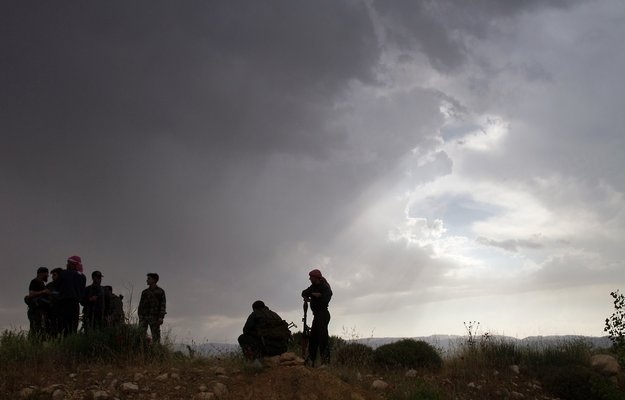


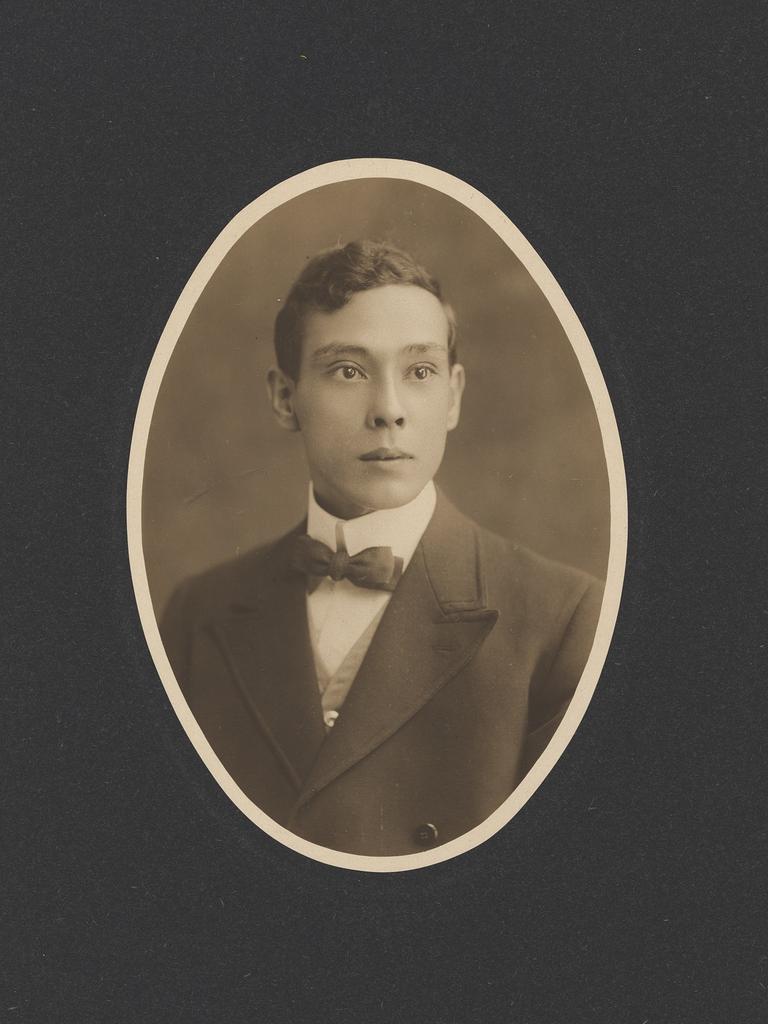


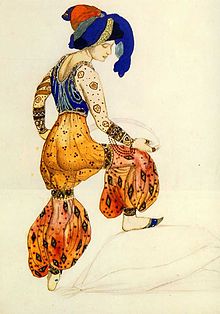

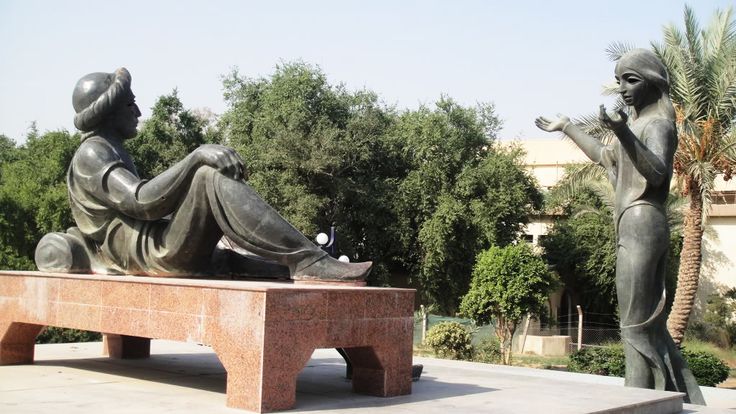
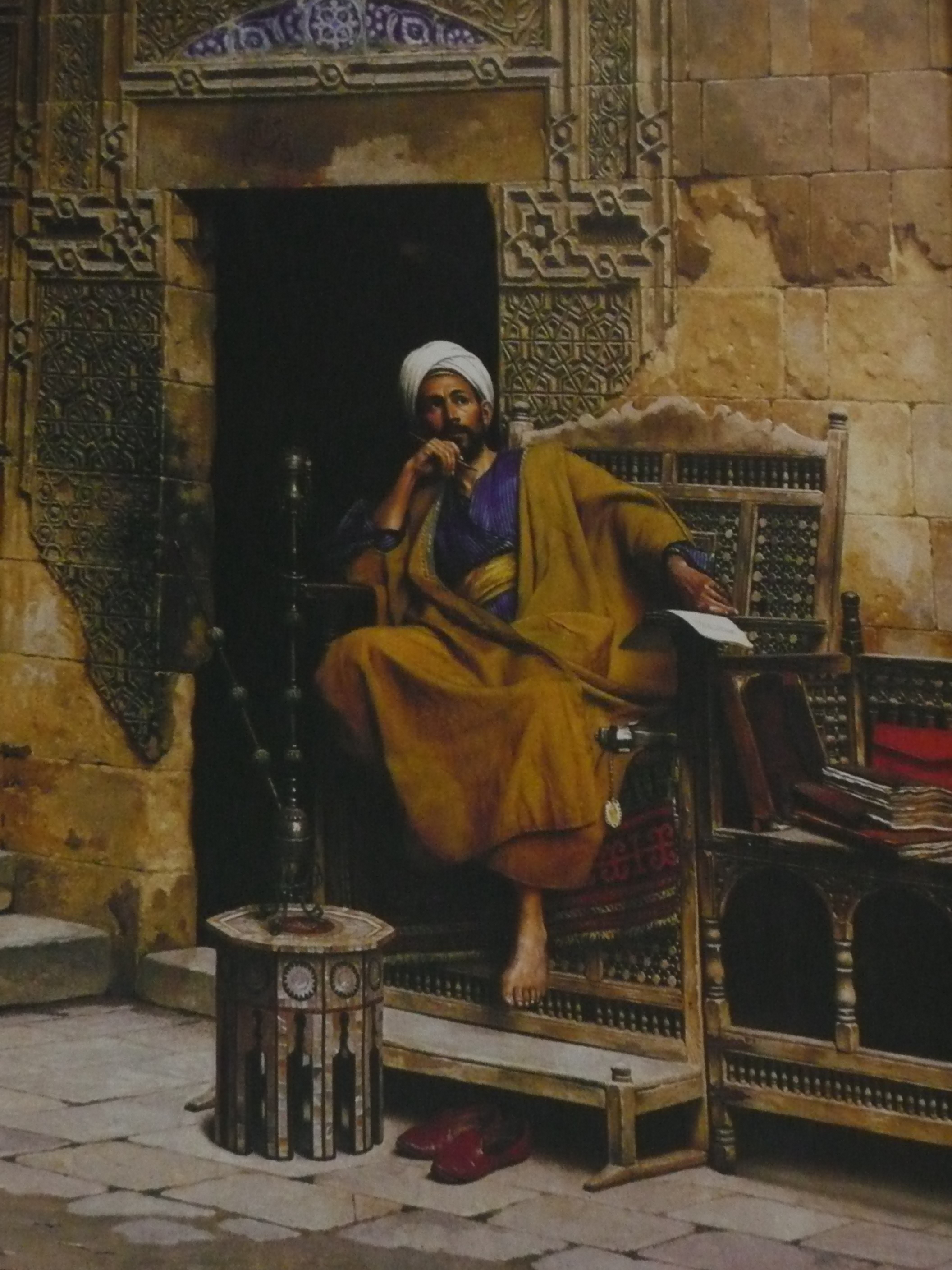

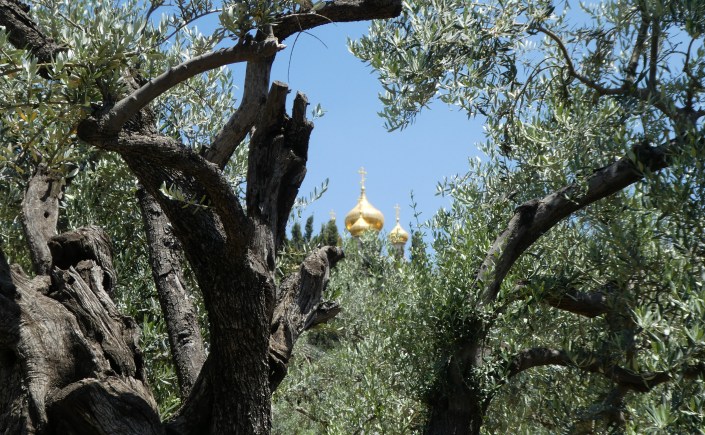
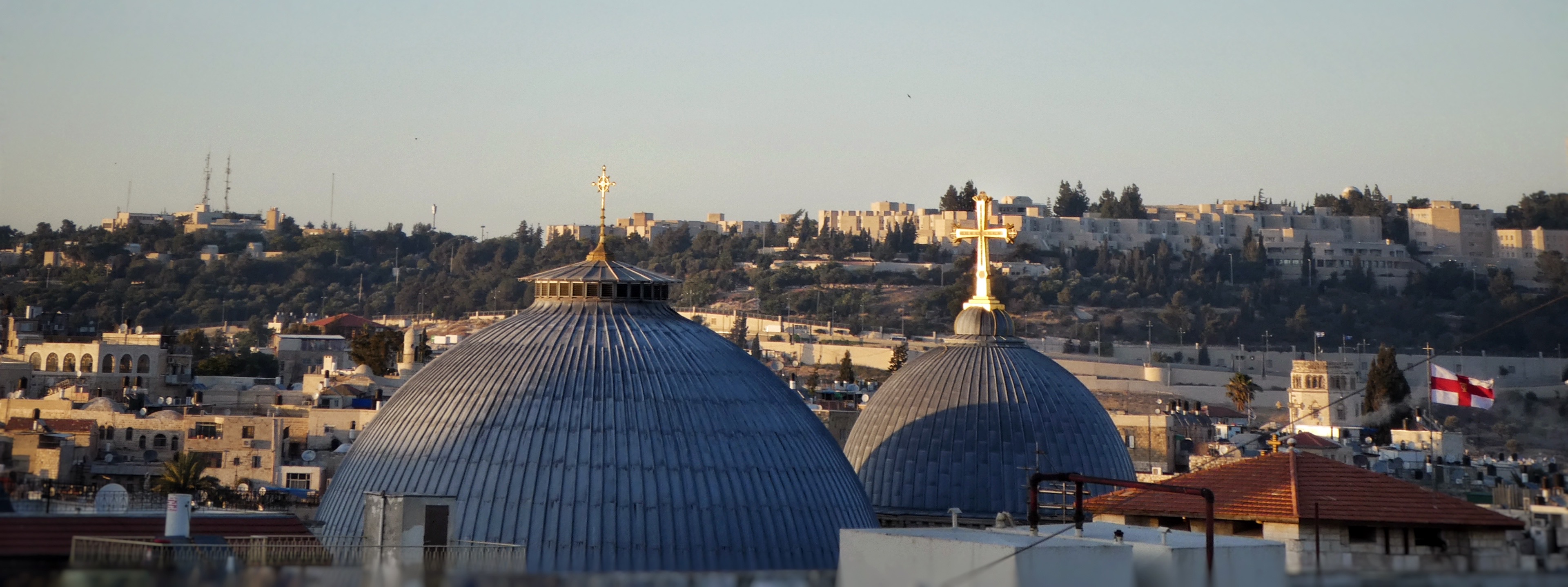

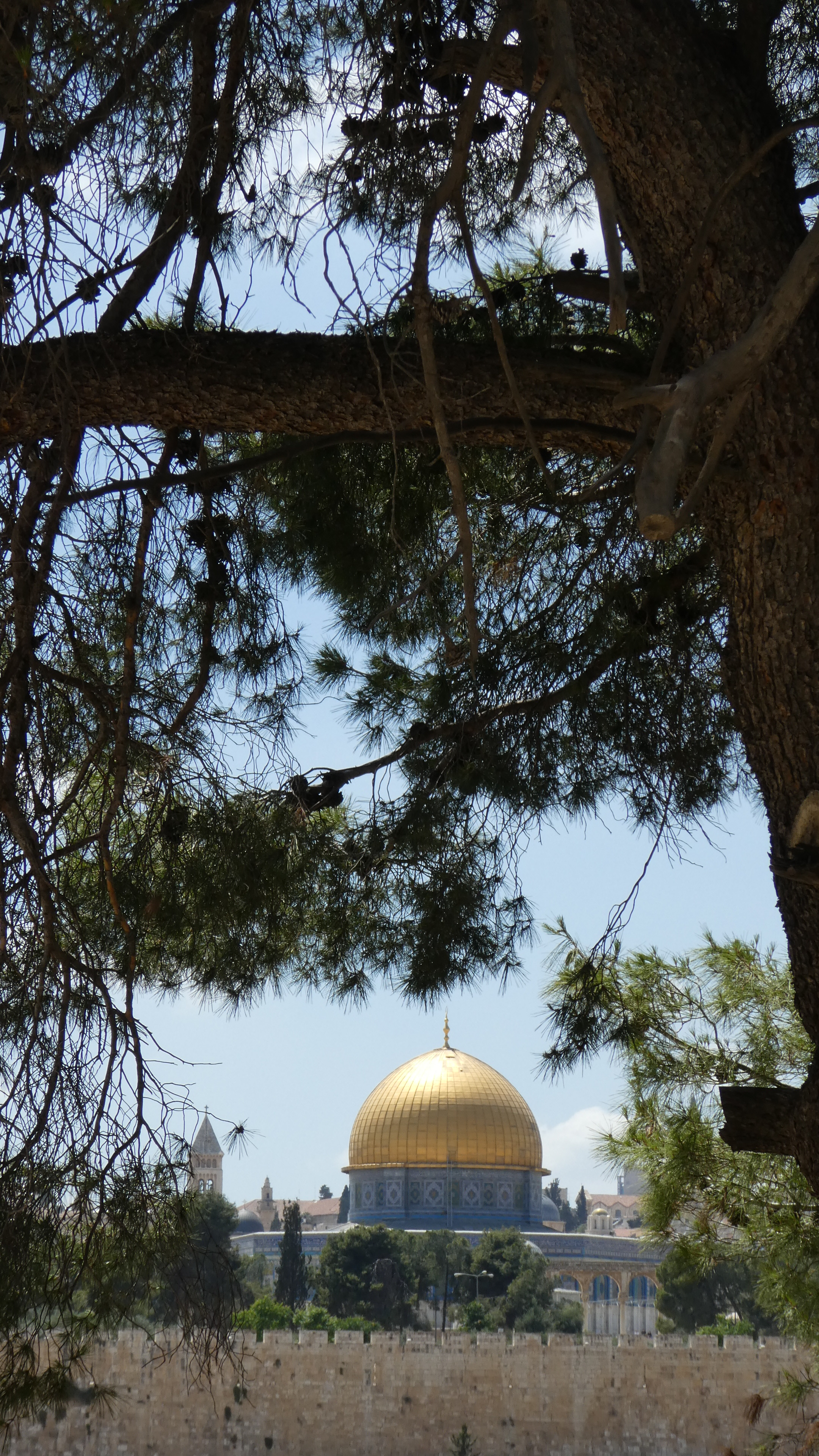

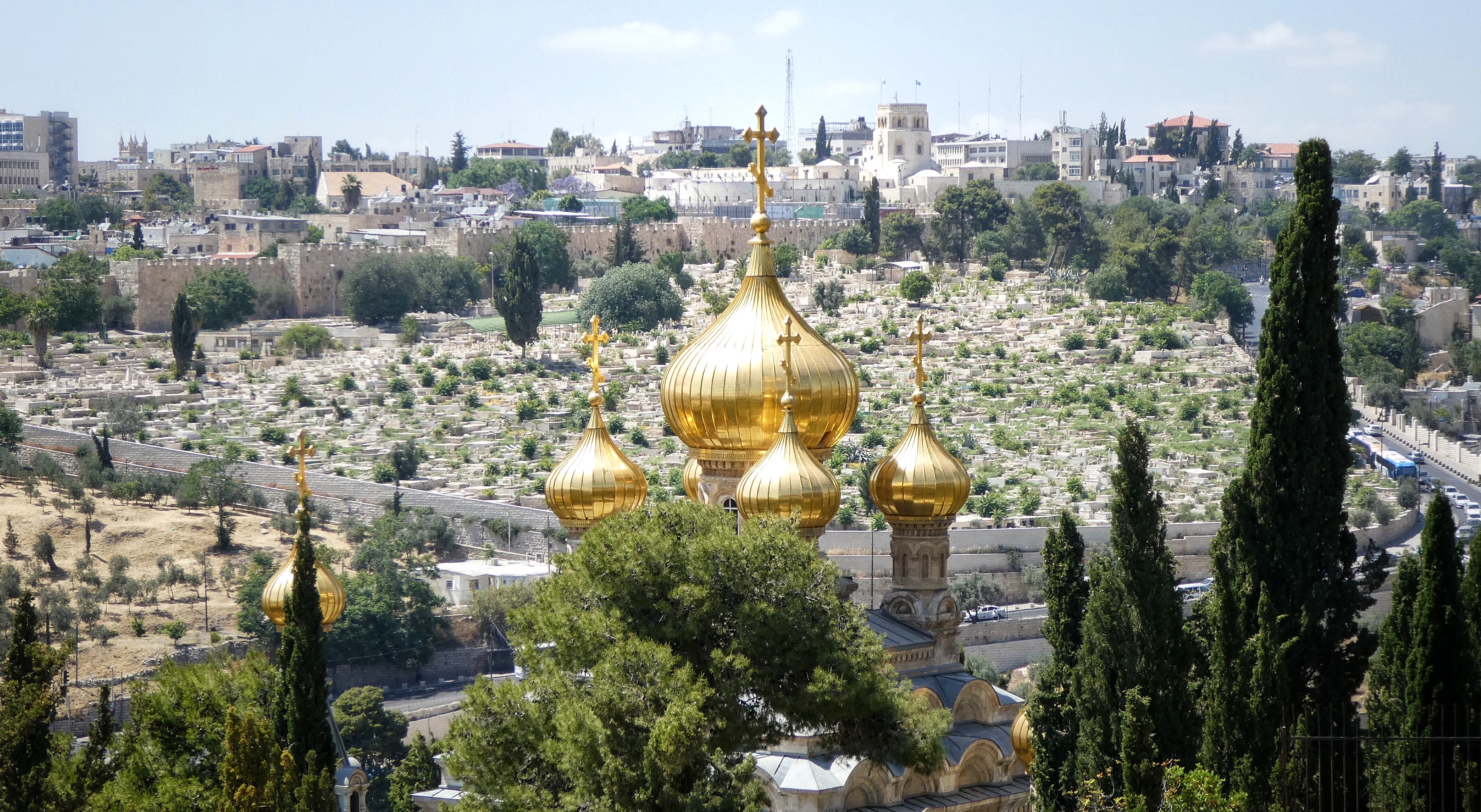






 In That Howling Infinite